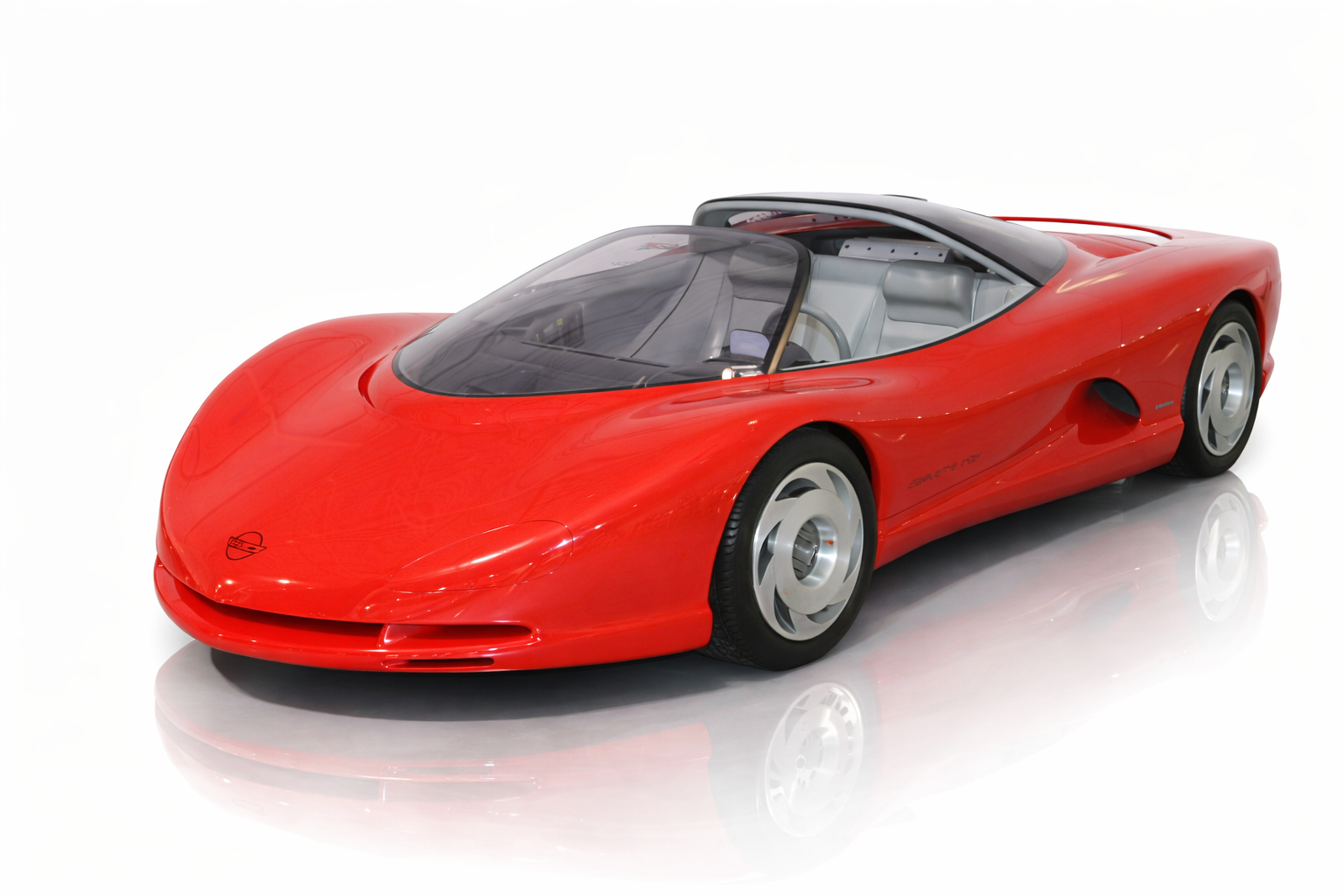
At the 1986 Detroit Auto Show, Chevrolet pulled the cover off a vehicle that looked less like the next Corvette and more like a visiting prototype from a near-future racing series. The Corvette Indy was long, low, and impossibly sleek—a mid-engine technology demonstrator intended to show what General Motors, newly intertwined with Lotus and deeply invested in IndyCar, could do when freed from production constraints. It wasn’t just theater. The Indy previewed materials, electronics, chassis systems, and even powertrains that would ripple through GM and motorsport for years.
The Brief: Build a Rolling Technology Showcase
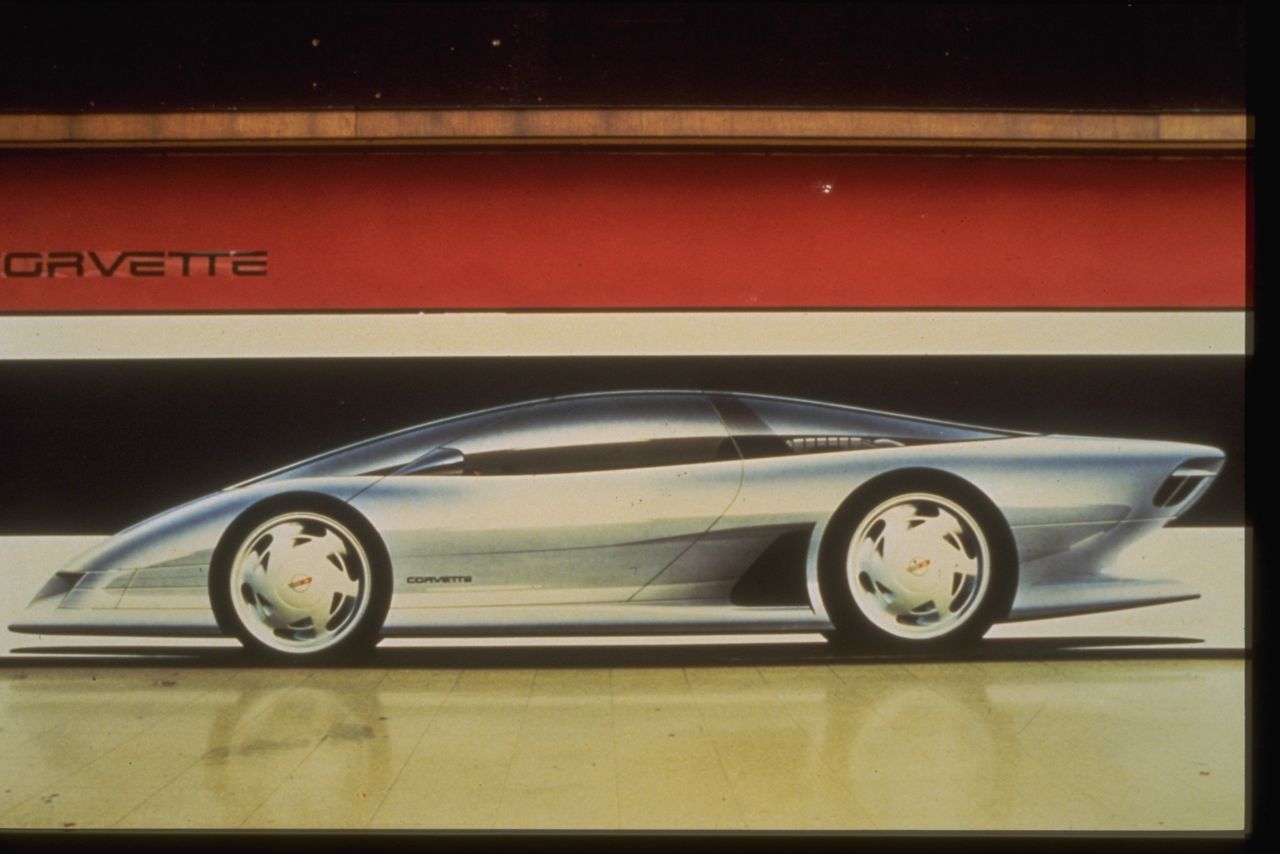
Inside GM Design, the 1986 Corvette Indy Concept car project was deliberately framed as an exercise in restraint-free imagination. Leadership made it clear that this was not a styling preview for an upcoming production Corvette, nor a feasibility study meant to survive the usual engineering vetoes. Instead, the assignment was to wrap radical, forward-looking hardware in a body that felt unapologetically exotic—something closer to an Italian show car than a Midwestern production proposal. Under Vice President of Design Charles M. “Chuck” Jordan, the studio was encouraged to ignore the compromises that normally define road cars: regulatory constraints, manufacturing tolerances, ease of entry, and even basic usability were secondary to impact, proportion, and presence.
Tom Peters, still early in what would become a storied career, took the lead on the exterior design, pushing the form toward extreme cab-forward proportions and a low, flowing silhouette that visually erased the distinction between nose, canopy, and tail. Jerry Palmer, then head of Chevrolet Design, provided strategic oversight, helping guide the proposal as it matured from a provocative sketch into a fully realized concept. The result was a mid-engine super-coupe that looked purpose-built for speed, with dramatic surface tension and an almost organic continuity from front to rear. The Indy didn’t merely suggest advanced performance—it insisted upon it through stance alone.
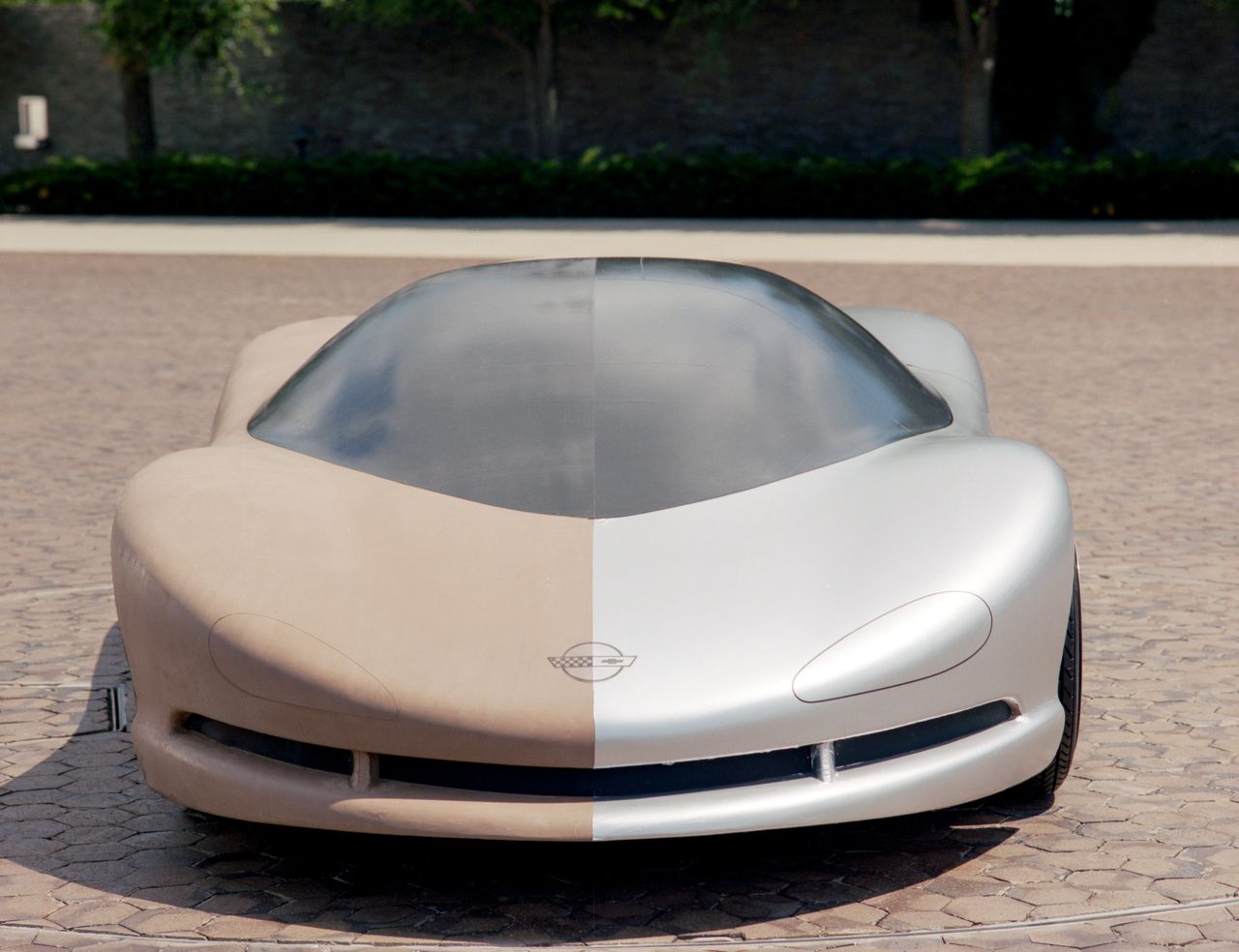
What remains most remarkable is the speed at which the project came together. Period accounts consistently describe an almost unheard-of development timeline, with Jack Schwartz’s studio reportedly carrying the car from initial clay to a full-size, show-ready concept in approximately six weeks. In an era before digital surfacing and rapid prototyping, this pace bordered on the impossible. Designers worked long hours refining the surfaces directly in clay, while engineers and model makers translated those forms into a tangible object with show-car credibility. The urgency was driven by a hard deadline: the 1986 Detroit auto show, where the Indy needed to stand shoulder-to-shoulder with the world’s most advanced concept vehicles.
To meet that deadline, GM enlisted outside expertise. Cecomp in Italy—already well known for its work on high-end prototypes and concept cars—assisted in fabricating a realistic model that faithfully captured the studio’s surfaces. This transatlantic collaboration underscored how seriously GM was taking the program. The Corvette Indy was not intended to be a styling exercise that looked good from twenty feet away; it needed to hold up under close scrutiny from designers, engineers, journalists, and competitors alike. When it finally rolled onto the show floor, the car felt less like a speculative dream and more like a glimpse into an alternate future—one where Corvette design was free to chase pure performance theater without apology.
In that sense, the Indy succeeded exactly as intended. It wasn’t constrained by what Chevrolet could build in 1986, but by what GM Design could imagine when permitted to ignore the rulebook. The car’s very impracticality—its tight cockpit, limited visibility, and uncompromising form—was part of the statement. Corvette Indy wasn’t about selling cars; it was about resetting expectations, both inside GM and across the industry, for what an American performance concept could look like when ambition outran caution.
Structure & Materials: Composite Thinking, Circa 1986
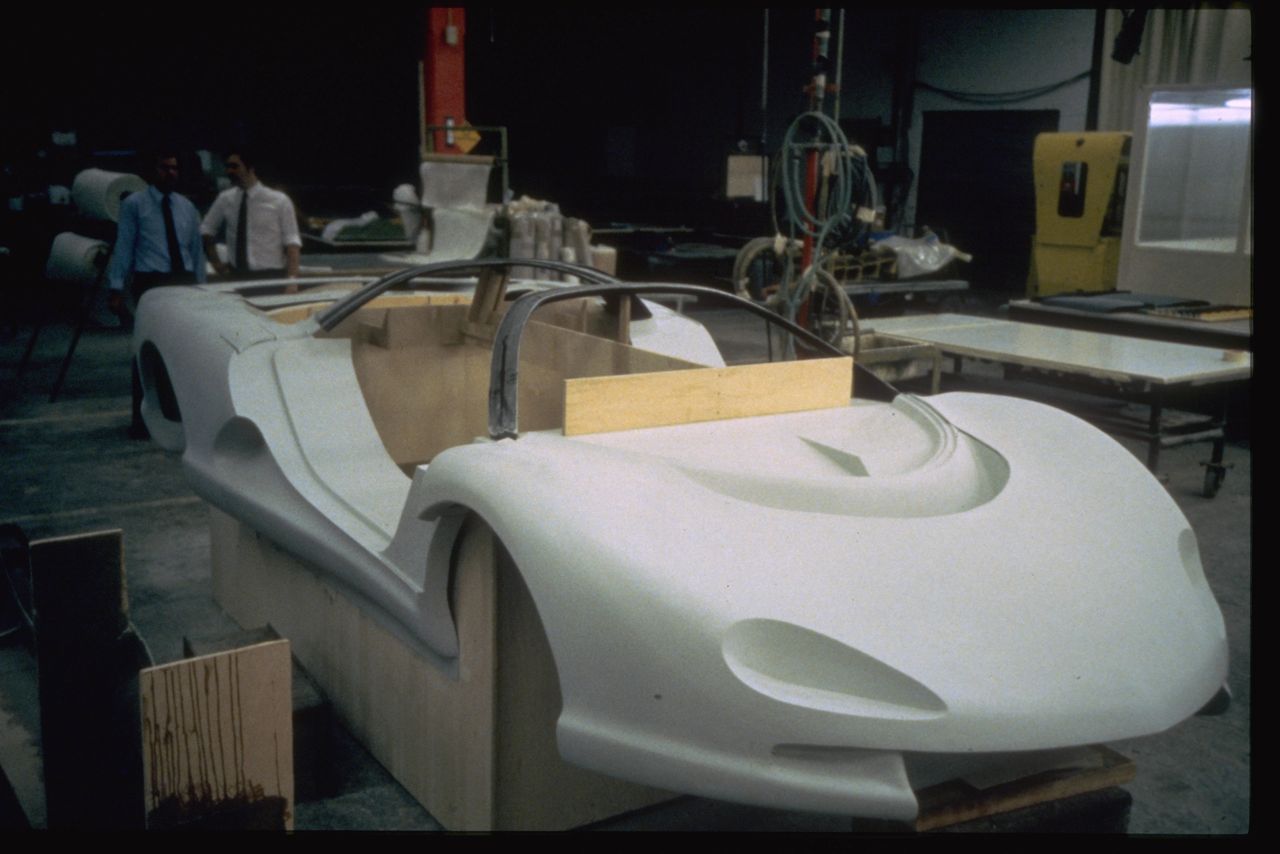
Beneath the Indy’s smooth, almost aeronautical skin was a construction story that mattered as much as the styling. Contemporary accounts describe a body executed in Kevlar and carbon fiber, wrapped over a bespoke composite monocoque—an approach that, in the mid-1980s, read less like typical GM practice and more like something borrowed from racing and aerospace. It wasn’t simply a conventional chassis wearing a “show car” suit; the materials and the method were part of the statement: lightweight, exotic, and technically audacious.
The glasswork reinforced that intent. GM leaned hard into a “cockpit under glass” theme, stretching the windshield and wraparound glazing into the doors and carrying the transparency deep into the rear. The effect was pure theater—an uninterrupted bubble that made the Indy feel like a single continuous volume rather than a body with separate windows. It also served a purpose: the mid-engine layout wasn’t hidden away. The car’s mechanical reality was meant to be seen, not implied.
The dimensions reinforce why the Indy reads like a supercar even when it’s sitting still. At roughly 189 inches long and just under 43 inches tall, with a wheelbase right around 98 inches, the proportions are all drama—low roof, long body, and a stance that looks built for speed. That height alone tells you everything about the priorities: visual impact first, practicality somewhere far down the list. It’s the kind of packaging that looks perfectly at home on a circuit and only reluctantly compatible with ordinary roads.
What’s harder to pin down—at least in the clean, quotable way historians love—is the exact moment the materials decision was made and who, in the room, pushed it over the line. The best-documented sources confirm the Kevlar/carbon-fiber body and composite monocoque, and they’re consistent about the broader mission: to build a no-compromises shell around cutting-edge hardware and let the Indy be as advanced as it appears. In that context, the construction choices make perfect sense. They weren’t just engineering flex—they were design language, translated into structure.
Electronics Before Their Time
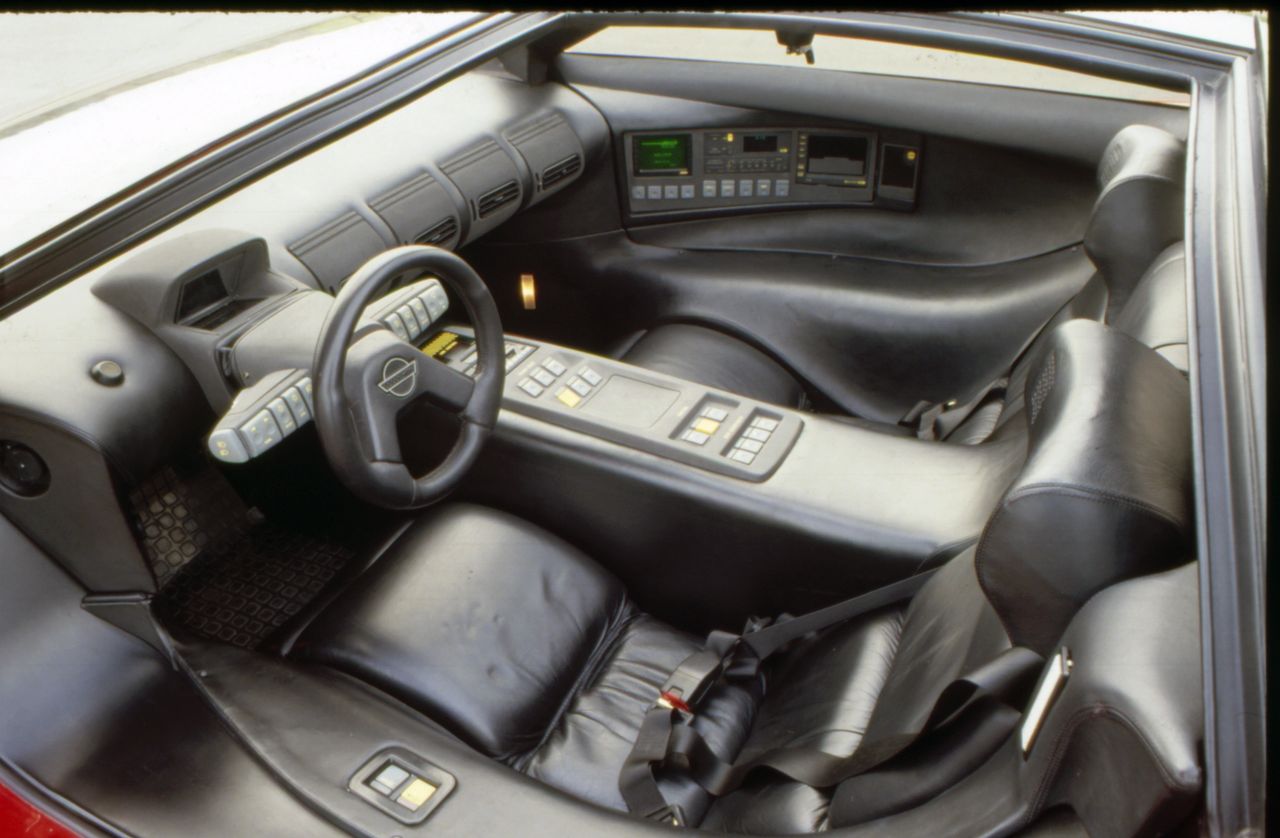
Even viewed through a modern lens, it’s hard not to appreciate just how ambitious the Corvette Indy’s cockpit was in 1986. Yes, the hardware now looks unmistakably late-20th-century, but at the time it represented a serious attempt to rethink how a driver interacted with a high-performance car. Indy wasn’t just a styling exercise—it was a rolling laboratory, deliberately packed with emerging technologies that GM wanted to explore, validate, and, just as importantly, show off.
Open the door, and the intent was immediate. Traditional gauges were replaced by a CRT-based instrument display, anchoring a fully digital dashboard concept that felt closer to a fighter jet than a production Corvette. Climate control and audio functions migrated to electronic door-mounted modules, pushing physical switches out of the central console entirely. A rear-view television camera replaced conventional mirrors, and the broader philosophy leaned heavily toward drive-by-wire thinking—minimizing mechanical linkages in favor of sensors, processors, and electronic mediation.
Perhaps the most forward-looking element was the ETAK navigation system. Long before GPS was widely approved for civilian use, ETAK relied on dead-reckoning and digital mapping to provide turn-by-turn guidance. It wasn’t perfect, but perfection wasn’t the point. GM and later museum documentation consistently emphasized these systems to underline a larger message: the Corvette Indy wasn’t predicting a single future interface—it was previewing an entire digital mindset that would take decades to fully mature in production vehicles.
Chassis Wizardry: Lotus Active Ride, AWD, and 4-Wheel Steering
The Indy’s ambition didn’t stop at the dashboard. Beneath the bodywork, the car doubled as a showcase for GM’s expanding technical reach, particularly following its acquisition of a controlling stake in Group Lotus. That relationship paid immediate dividends in the form of Lotus’s active ride suspension—an electronically controlled hydraulic system derived from Formula 1 research and adapted here for a roadgoing concept.
Unlike conventional springs and dampers, the active ride system actively managed body motion, maintaining a level attitude under braking, acceleration, and cornering while optimizing tire contact with the road. In the mid-1980s, this technology bordered on science fiction for a streetcar, yet Indy presented it as an integrated part of a broader chassis philosophy rather than a standalone novelty.
That philosophy extended further. The Corvette Indy combined all-wheel drive with four-wheel steering, traction control, and anti-lock brakes—features that, at the time, rarely appeared together even in isolation. Seen collectively, they read less like a production preview and more like a checklist of future performance-car fundamentals. Indy wasn’t claiming these systems were ready for showrooms; it was demonstrating how they could coexist in a single, cohesive platform.
The Engine Story: From IndyCar Mock-Up to LT5 Reality
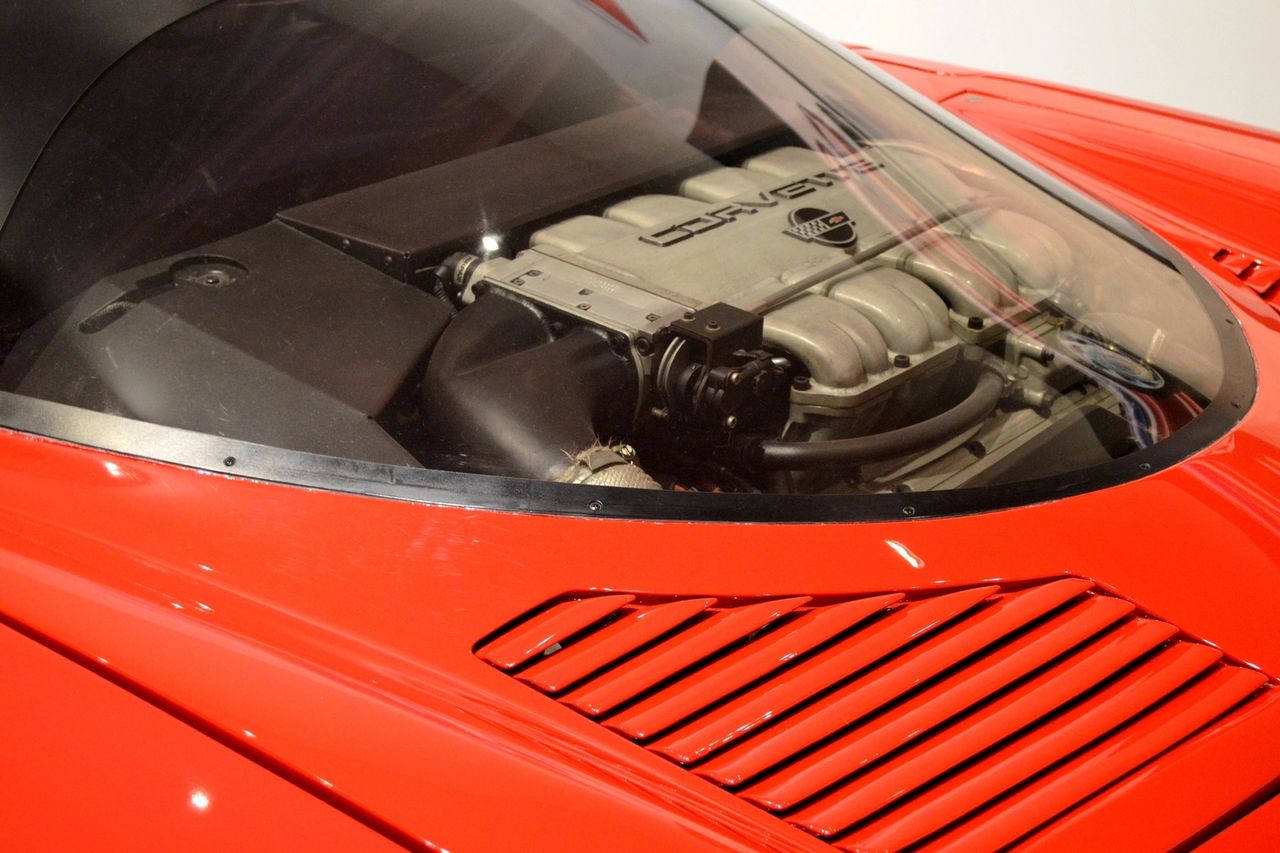
At its Detroit debut, the 1986 Corvette Indy Concept did not attempt to hide the theatrical nature of its powertrain. Installed—and clearly labeled—was a mock-up of a transversely mounted, twin-turbocharged 2.65-liter DOHC V-8 derived from the Ilmor-Chevrolet IndyCar engine. With race versions rumored to produce well north of 600 horsepower, the engine’s presence was less about dyno figures and more about signaling intent. This was a Corvette concept fluent in the language of professional motorsport, particularly IndyCar, and unafraid to say so.
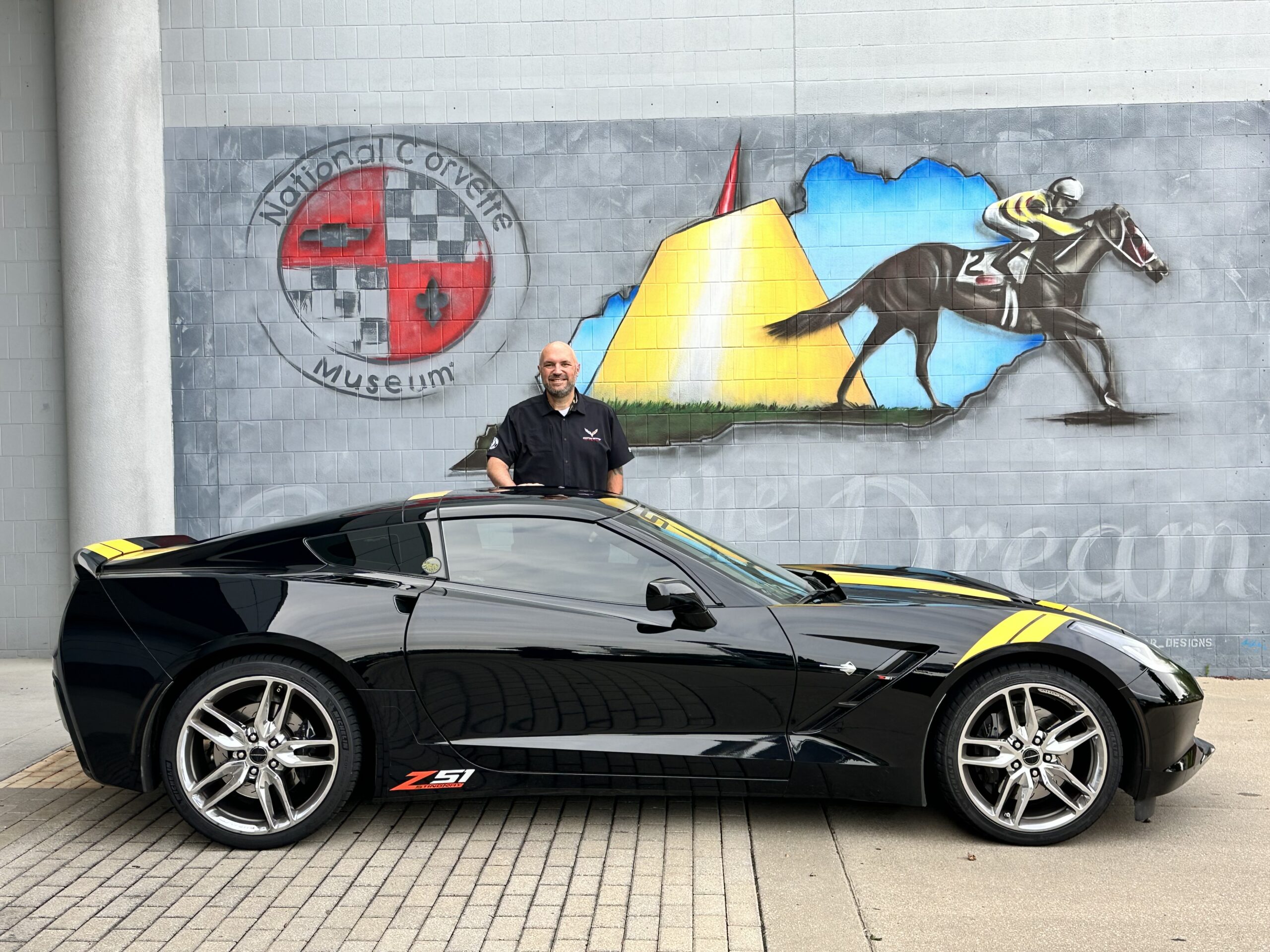
What makes the story more compelling is what happened next. Public reaction was strong enough that GM authorized the construction of additional Indys. One became a fiberglass, non-operational red car used extensively for publicity and display—today appearing on loan at the National Corvette Museum. The other was far more significant: a functional engineering prototype built to be driven and evaluated.
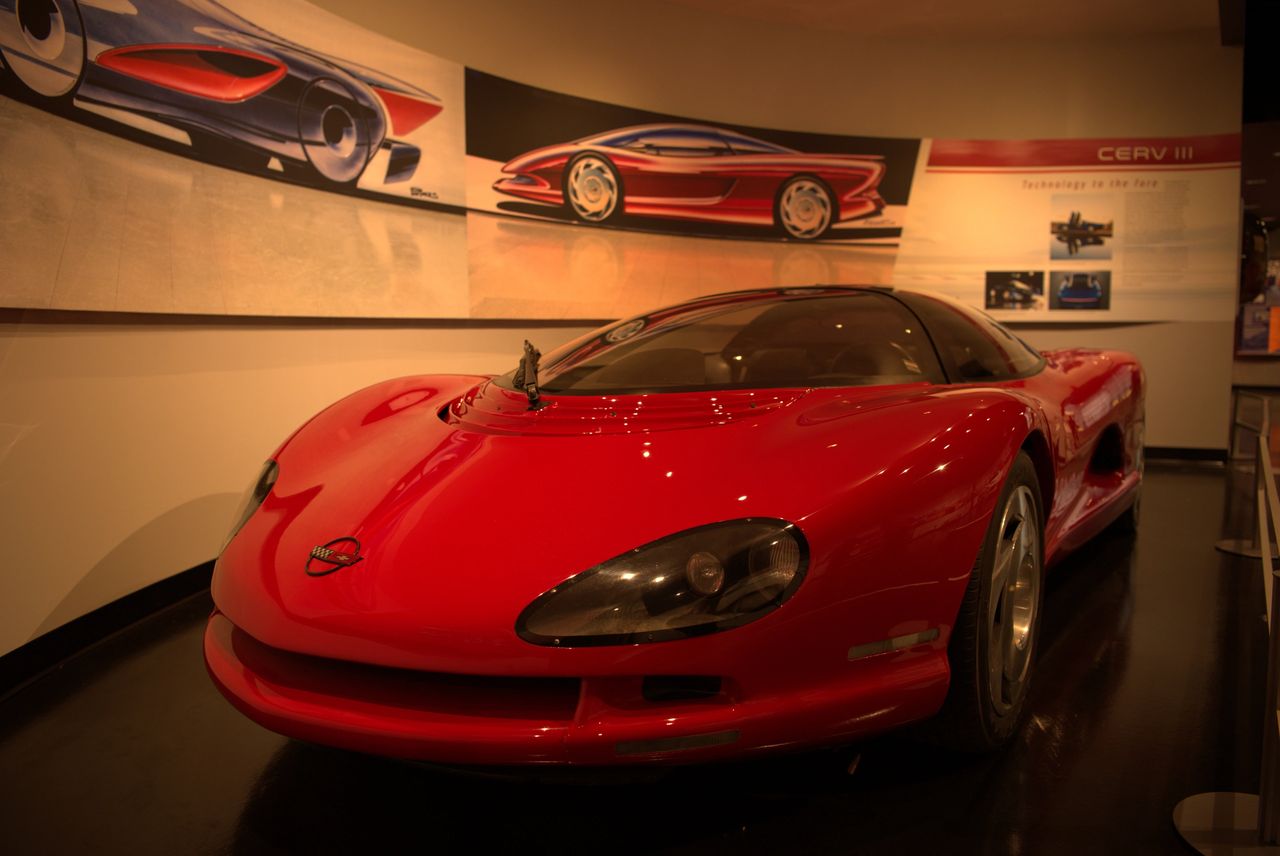
For that running car, GM made a pragmatic but historically important change. The exotic turbocharged IndyCar V-8 gave way to a Lotus-designed, 32-valve 5.7-liter V-8—an early form of what would become the LT5 engine for the C4 ZR-1. Rated at approximately 380 horsepower and 370 lb-ft of torque, it provided real-world drivability while preserving the concept’s technical credibility. Contemporary accounts also note the use of a modified Oldsmobile Toronado transaxle to accommodate the all-wheel-drive layout, underscoring how much creative engineering was required simply to make the package work.
Taken together, these choices reveal the Indy’s true role. It wasn’t just a dream car frozen in time—it was a bridge between speculation and execution, pointing directly toward technologies that would define GM’s performance ambitions well into the next decade.
What It Could Do (On Paper)
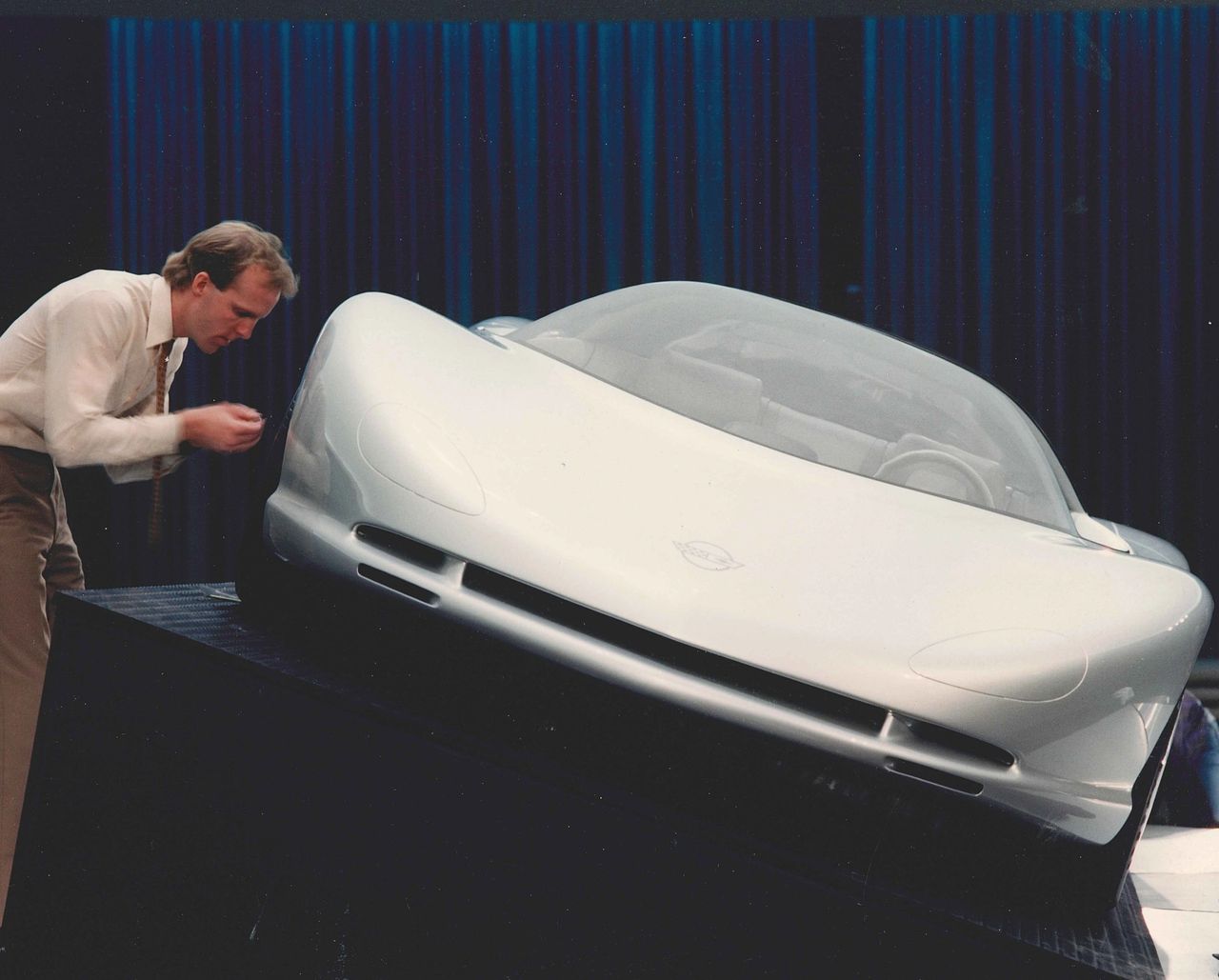
Because the original silver Corvette Indy was a non-running showpiece, any hard performance data lives in that hazy space between engineering intent and marketing ambition. There were no independent instrumented tests, no magazine drag-strip slips, and no manufacturer-certified numbers to treat as gospel. What survives instead are period “claimed” figures—useful, telling, and directionally believable, but still claims all the same.
Those claims were not modest. Contemporary sources floated 0–60 mph in under five seconds and top speed figures near or north of 180 mph for the running Indys. On paper, that kind of performance tracks with what GM was packaging: a ~380-horsepower, Lotus-developed DOHC 5.7-liter V-8 related to the LT5 family, paired with all-wheel drive to turn power into forward motion instead of wheelspin. In an era when many high-end exotics still fought for traction, AWD wasn’t just a feature—it was the difference between theoretical horsepower and usable acceleration.
Aerodynamics were the other half of the argument. The Indy’s shape wasn’t simply dramatic; it was purposefully low, clean, and tapered, the kind of form that implies stability at speed and reduced drag. Even without a verified coefficient of drag or downforce figure attached to the car in period testing, the design logic is easy to read: minimize frontal area, keep the profile slick, and let the body do the work at triple-digit speeds. That’s why the 180-mph talk, while unproven, doesn’t feel outlandish in context.
And that’s the key point with the Indy: even the skeptics didn’t dismiss the numbers as fantasy. When a concept sits this low, carries this much tire, and is backed by a real, high-output DOHC V-8 and an AWD driveline, the posture matches the promise. The claims may remain unverified, but nothing about the stance or the spec suggests timid capability—only a machine that, if fully developed, was aiming squarely at the supercar conversation.
Why GM Built It
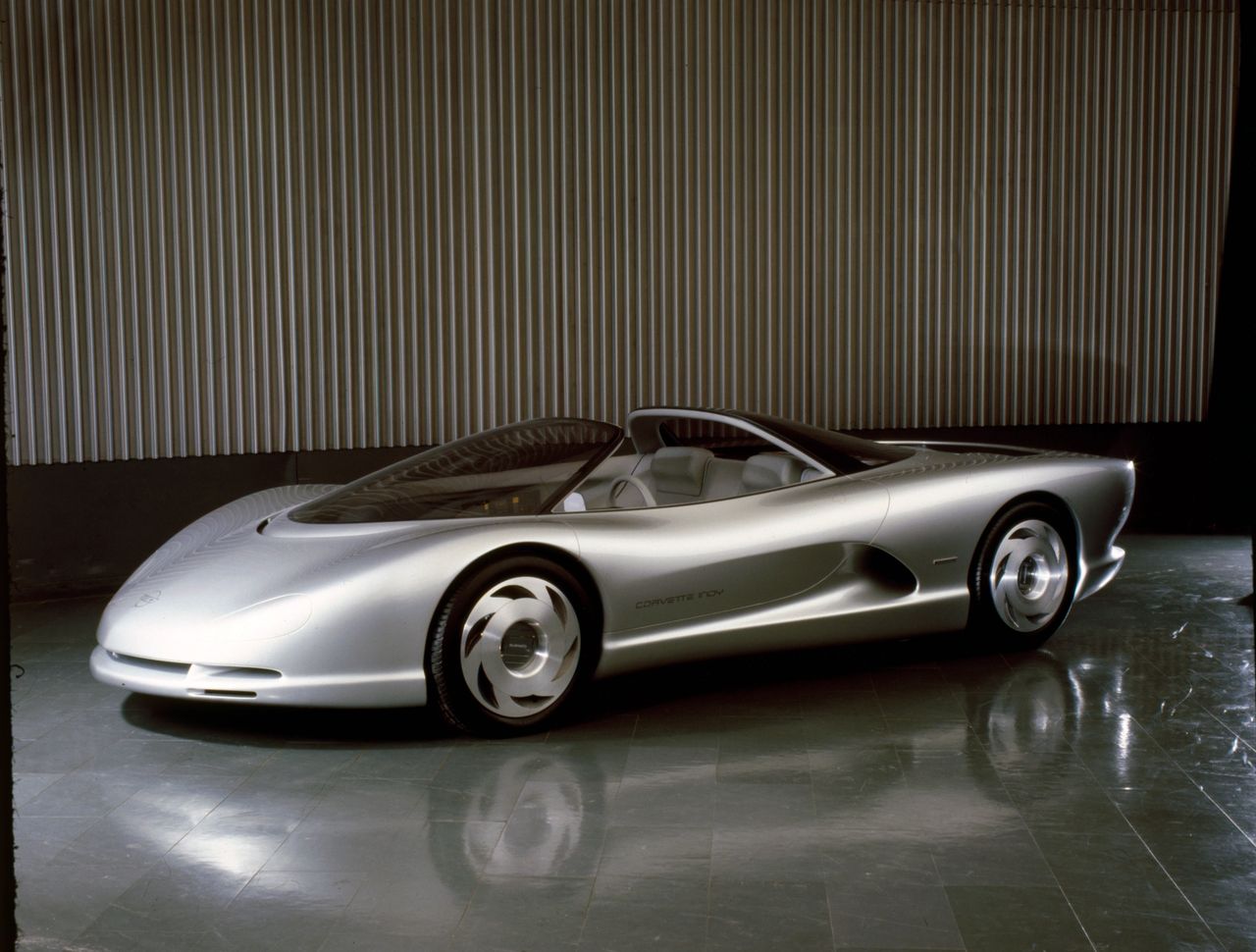
The 1986 Corvette Indy Concept was as much a corporate strategy statement as a car. Lotus’s active suspension needed a glamorous American stage; GM’s nascent four-wheel steering and electronic control ambitions needed a halo; and Chevrolet’s growing alliance with Ilmor in open-wheel racing was paying dividends that deserved a Corvette-shaped spotlight. Within a few years of the concept’s debut, Ilmor-Chevrolet V-8s would dominate CART—winning five consecutive Indy 500s from 1988–1992 and piling up titles in the process—validating the “Indy” part of the Corvette Indy name.
From Indy to CERV III (and Beyond)
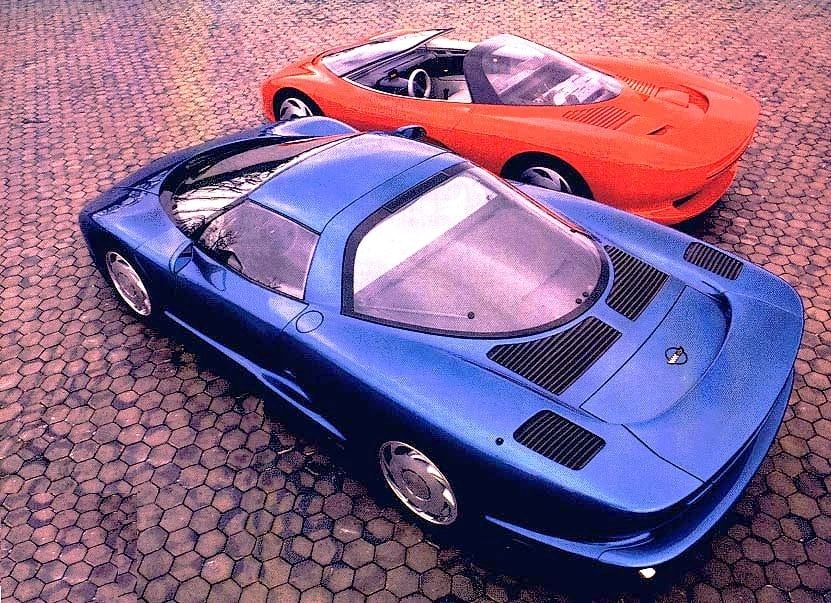
If the Indy was the thesis, 1990s CERV III was the dissertation: a fully functional mid-engine research vehicle that realized many of the Indy’s theoretical systems—active suspension, four-wheel steering, and twin-turbo LT5 power—at a level suitable for rigorous testing. The family resemblance is unmistakable, and the technology handoff is direct. While neither car previewed a production mid-engine Corvette at the time, both kept the idea alive inside GM until the C8 arrived decades later.
The Indy’s influence wasn’t limited to research mules. GM design watchers have long noted echoes of its surfacing and graphic themes in later production cars; even the National Corvette Museum points to the fourth-generation Camaro (1993–2002) as picking up notes from the Indy’s nose and lamp graphics. The original silver concept resides with the GM Heritage collection today, while the red publicity car continues to draw crowds at the NCM—tangible reminders of a moment when GM let its imagination run.
The Experience Inside
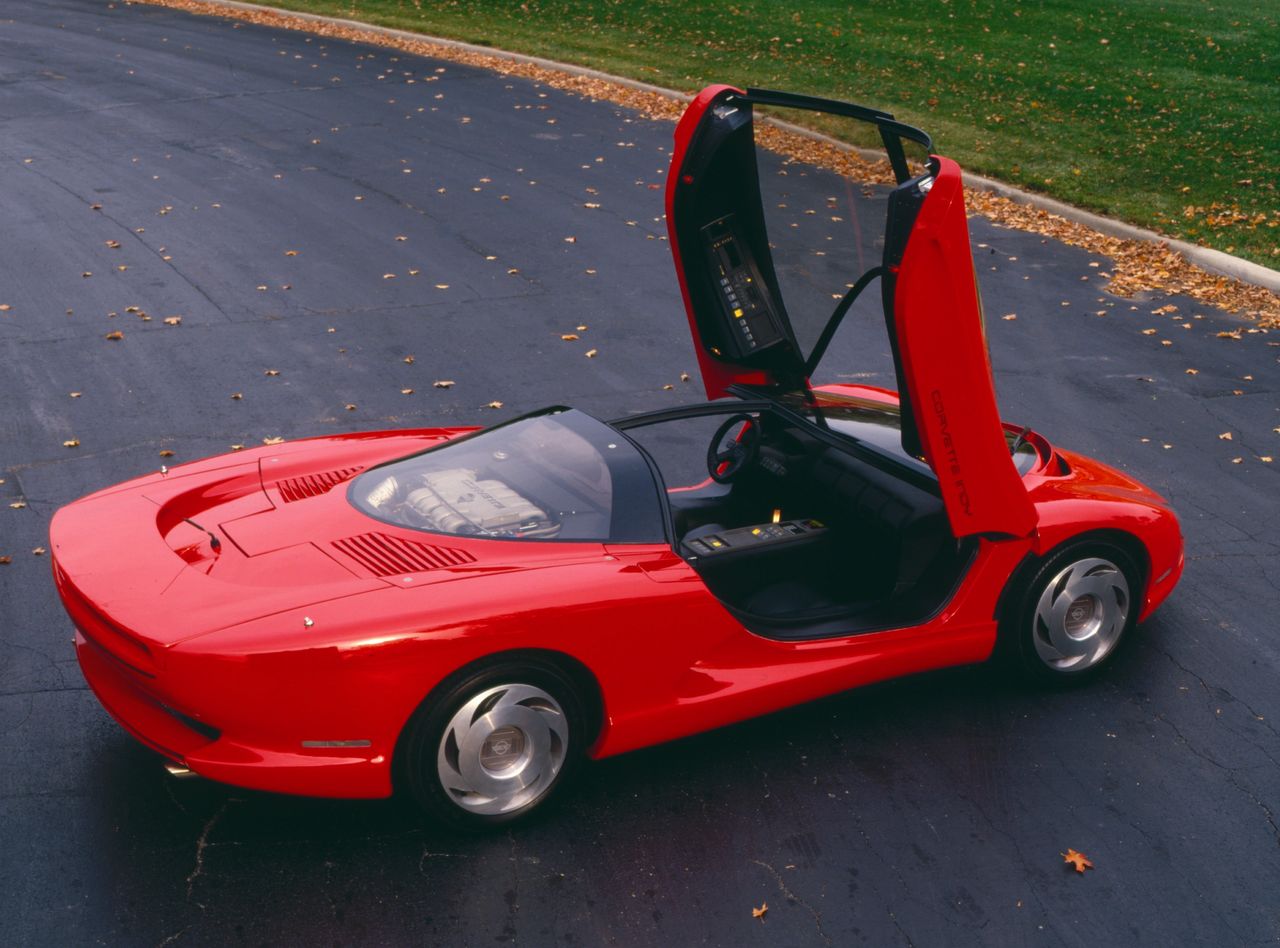
Sit in the Indy and the speculative tech becomes the story. The CRT cluster condensed vehicle data into a single, reconfigurable display—decades before configurable LCDs became commonplace. The door modules put HVAC and audio right at the driver’s elbow. A rear-view camera replaced a conventional mirror, again anticipating a feature that wouldn’t become mainstream until the 2010s. And the ETAK system—an early, pre-GPS navigation technology relying on dead-reckoning and digitized map tapes—hinted at a world where the Corvette could guide you across town as confidently as it could lap a circuit.
What It Wasn’t
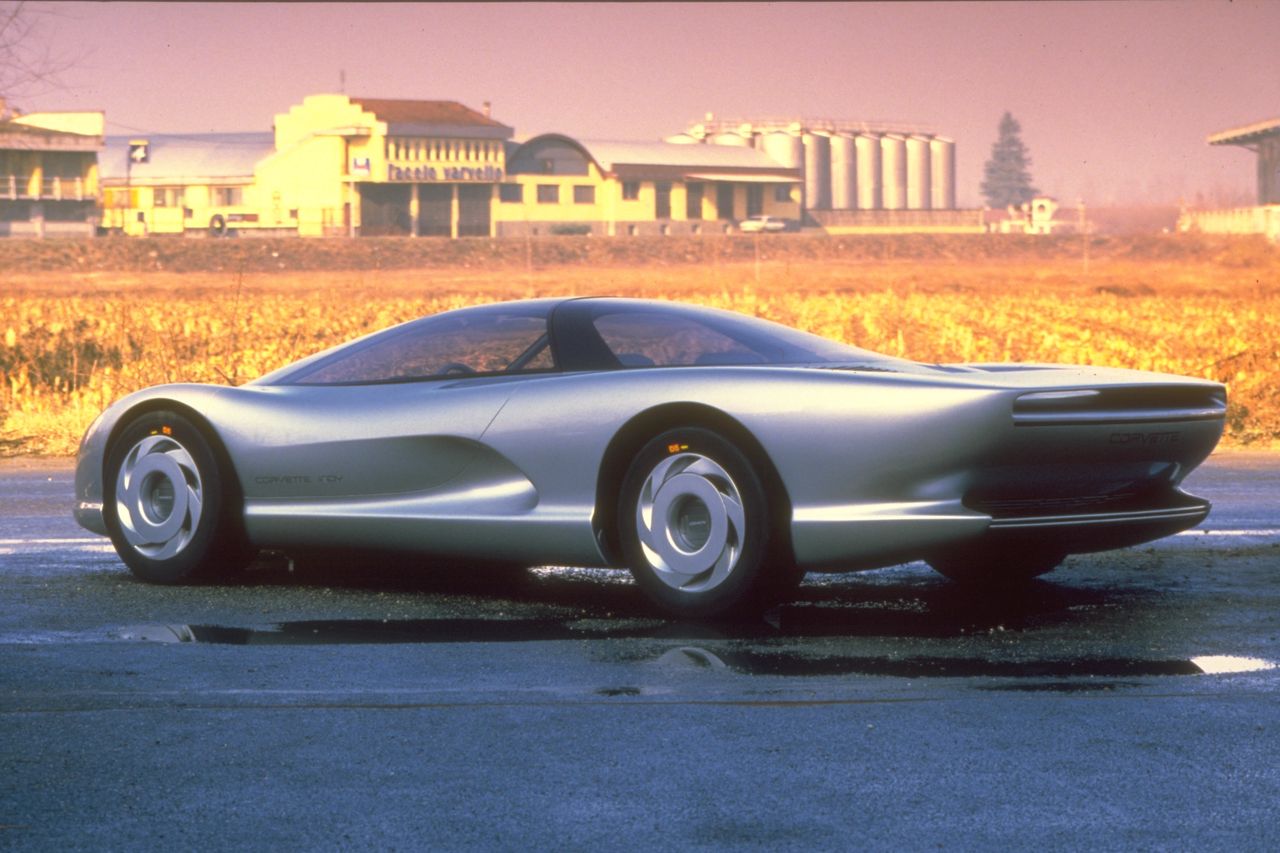
For all its brilliance, the Indy was never a production prototype. At barely 43 inches tall and so wide it filled a lane like a Group C racer, it was ergonomically and practically extreme. Packaging AWD, active hydraulics, and four-wheel steering around a mid-mounted V-8 in a road-worthy, warrantyable package simply outstripped what was feasible for late-1980s Chevrolet. Still, as a corporate experiment and a North Star for designers and engineers, it did exactly what it needed to do. Supercars.net
Fast Facts (Period/Conceptual)
- Debut: 1986 Detroit Auto Show (NAIAS)
- Layout: Mid-engine, composite monocoque; AWD with four-wheel steering (concept)
- Suspension: Lotus active hydraulic system (concept)
- Powertrains: Show car with mock 2.65-L twin-turbo Ilmor-Chevy Indy V-8 (rumored 600+ hp); running prototypes with Lotus-designed 5.7-L DOHC V-8 (~380 hp/370 lb-ft)
- Electronics: CRT cluster, rear-view camera, ETAK navigation, drive-by-wire elements, traction control, ABS
- Dimensions (approx.): 189 in L / 98.2 in WB / 42.9 in H
- Legacy: Direct stepping-stone to 1990 CERV III; long-term tech influence across GM; original car at GM Heritage; red car on loan and displayed at the National Corvette Museum.
Why the 1986 Corvette Indy Still Matters Today
The 1986 Corvette Indy Concept matters because it proved—decades before the C8—that General Motors was not philosophically opposed to a mid-engine Corvette. It demonstrated that the idea wasn’t a late-2010s epiphany; it was a serious internal exploration that had already reached the fully realized concept stage by the mid-1980s. The Indy didn’t invent the mid-engine Corvette dream, but it legitimized it inside GM and in the public imagination.
It also matters because of what it previewed technically. The Lotus-designed 32-valve V-8 that powered the running Indys evolved into the LT5 that would headline the C4 ZR-1. The active ride experiments, the electronic driver aids, the digital cockpit philosophy—these weren’t gimmicks. They were early chapters in stories that would unfold across decades of GM performance engineering. In that sense, the Indy wasn’t a dead-end show car; it was a technology incubator wearing dramatic bodywork.
Culturally, the car reset expectations. In 1986, the Corvette brand was respected, but it wasn’t automatically mentioned in the same breath as Europe’s most exotic machinery. The Indy forced that comparison. With its carbon-fiber bodywork, aerospace-inspired canopy, all-wheel drive, and Formula 1-derived suspension concepts, it told the world that Chevrolet could think—and build—at a different altitude. Even as a concept, it expanded the ceiling of what an American performance car could be.
And then there’s the long arc of history. When the C8 Corvette Stingray debuted in 2019, the headlines focused on revolution. But to those who had studied the Indy, it felt more like a resolution. The mid-engine layout, the supercar proportions, the driver-centric digital cockpit—those seeds were visible more than thirty years earlier under the lights in Detroit. The 1986 Corvette Indy Concept still matters because it reminds us that bold ideas rarely arrive overnight. Sometimes they wait patiently for the right moment to become real.