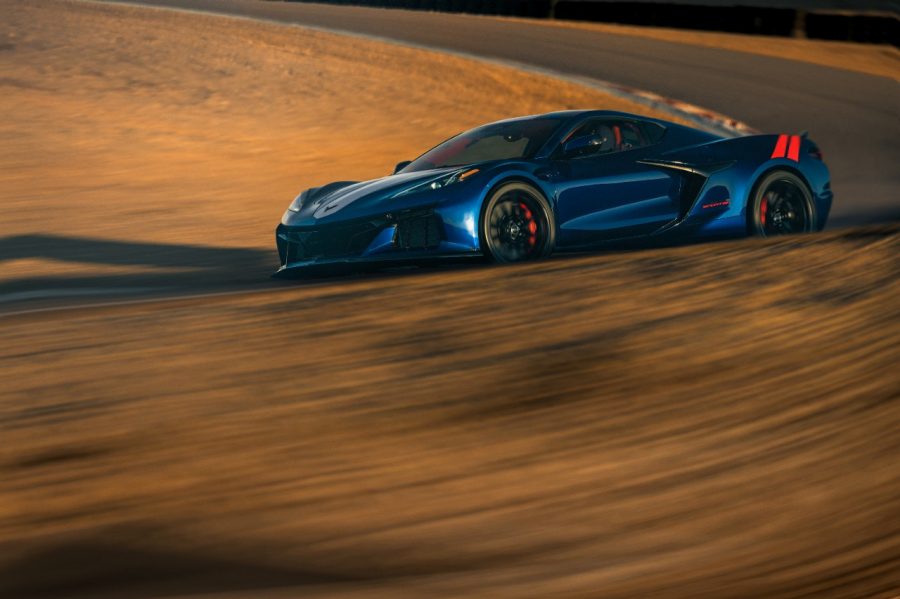
The 2027 Chevrolet Corvette Grand Sport did not arrive all at once. It arrived in two acts, and that matters.
The first came on March 21, 2026, at the 74th Mobil 1 Twelve Hours of Sebring, where Chevrolet gave enthusiasts their first public look at the new Grand Sport in the most appropriate place imaginable. Sebring is not just another racetrack in Corvette history. It is one of the places where the Grand Sport name first earned its meaning, and Chevrolet leaned directly into that legacy by revealing the new C8 Grand Sport on the 62nd anniversary of Roger Penske and Jim Hall’s class win at Sebring in a C2 Corvette Grand Sport on March 21, 1964.
The second act came five days later. On March 26, 2026, Chevrolet pulled the curtain all the way back and formally revealed the car’s specifications, structure, positioning, and the bigger story behind it. That is where the announcement became much more than a heritage moment. It became one of the most important Corvette product reveals in recent memory, because the return of the Grand Sport also introduced Corvette’s new 6.7-liter LS6 small-block V-8 and confirmed that Chevrolet is reshaping the heart of the Corvette lineup for 2027.
Sebring Was the Right Place to Start
Chevrolet’s choice to debut the new Grand Sport at Sebring was deliberate, and frankly, it was smart.
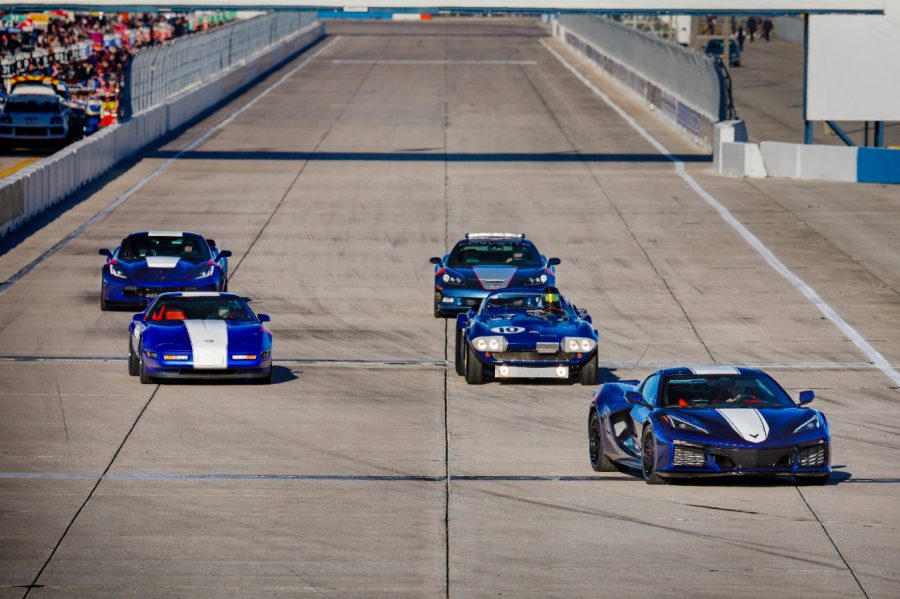
Rather than opening with a sterile studio reveal, Chevrolet put the car in front of enthusiasts at one of Corvette racing’s sacred grounds and surrounded it with the generations that gave the badge its weight. The C8 Grand Sport appeared alongside its predecessors, including the original C2 Grand Sport, the 1996 C4 Grand Sport, the C6 Grand Sport, and the C7 Grand Sport, reinforcing the idea that this was not a marketing resurrection. It was a continuation of a Corvette formula that has repeatedly worked: give buyers a car that blends the broad capability and daily approachability of the standard Corvette with much of the visual drama, stance, and chassis edge of the higher-performance model.
That Sebring reveal also let Chevrolet establish the tone before the specifications ever arrived. The message was clear even before the press release filled in the blanks. Grand Sport was coming back not as a nostalgia exercise, but as a serious volume model in the C8 family. Chevrolet said as much in its Sebring material, calling the new Grand Sport a model built by and for enthusiasts and signaling that it would be a major part of the range rather than some limited-run sideshow.
The Formal Reveal Confirmed the Real Headline
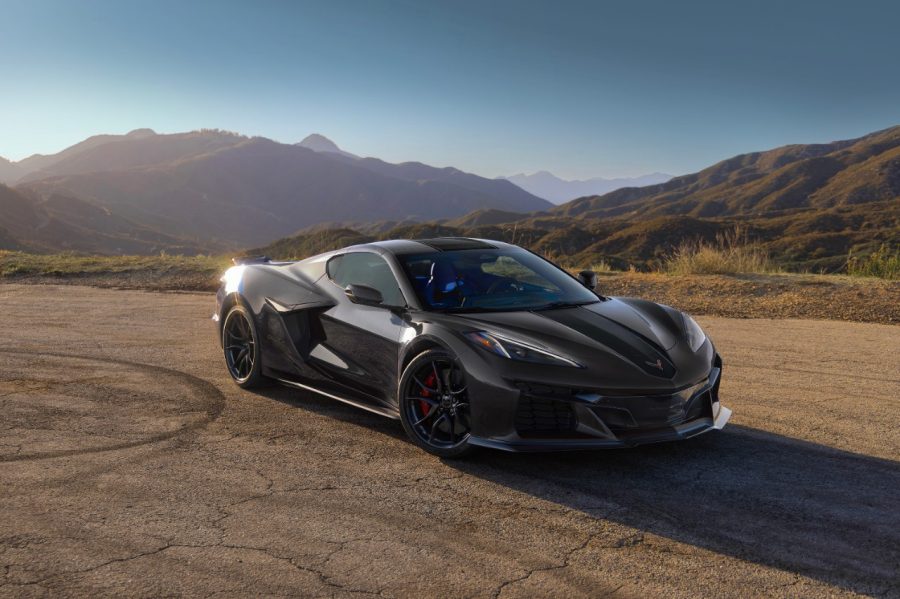
When Chevrolet issued the formal reveal on March 26, the biggest news was not simply that Grand Sport had returned. The biggest news was what powered it.
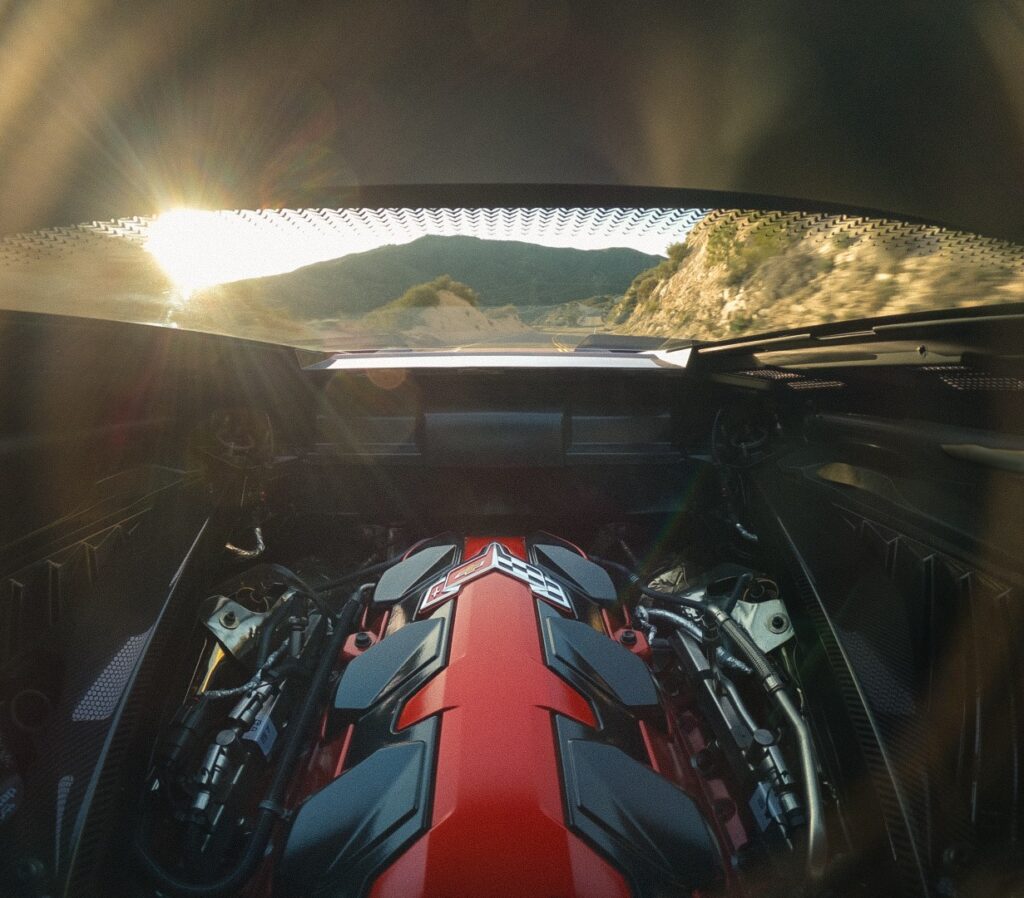
At the center of every 2027 Corvette Grand Sport is Chevrolet’s new naturally aspirated 6.7-liter LS6 V-8, rated at 535 horsepower and 520 lb-ft of torque. Chevrolet says the engine displaces 409 cubic inches, uses a 100 mm stroke, a 13.0:1 compression ratio, a 95 mm throttle body, and a tunnel-ram intake with high-velocity ports. GM also describes this engine as the start of the sixth generation of the Small Block V-8, which is significant well beyond this one model.
That last point is the one Corvette enthusiasts should really pay attention to. Chevrolet is not treating the pushrod small-block as a relic it is reluctantly dragging into the future. It is investing in it, modernizing it, and making it central to the Corvette lineup again. GM’s own engine deep dive says the LS6 will serve as the primary engine for the 2027 Stingray, Grand Sport, and Grand Sport X, which means this reveal was not just about adding another trim level. It was about redefining the core of Corvette’s mainstream performance lineup.
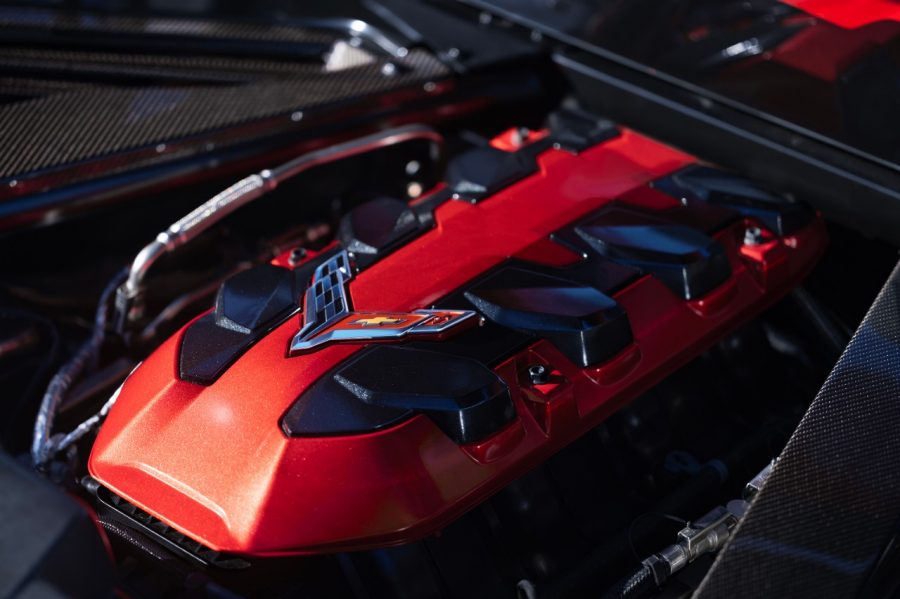
There is symbolism here too. GM says the LS6 will be assembled at Flint Engine Operations in Flint, Michigan, the same city where the first Corvette V-8s were assembled in 1955. Corvette has always lived in tension between reinvention and tradition. This announcement feels like Chevrolet trying to prove it can still do both at the same time.
Grand Sport Still Occupies Corvette’s Sweet Spot
In many ways, Chevrolet has stayed faithful to what Grand Sport has historically represented.
The new Grand Sport sits between the Stingray and the Z06, pairing the new LS6 with the wider body architecture and much of the more aggressive visual and chassis attitude Corvette buyers associate with the upper tier of the range. Chevrolet’s own product page describes the formula plainly: the power of the Stingray combined with the wider body, aerodynamics, and track-focused hardware of the Z06. That has been the Grand Sport recipe before, and Chevrolet clearly believes it still has real value in the mid-engine era.
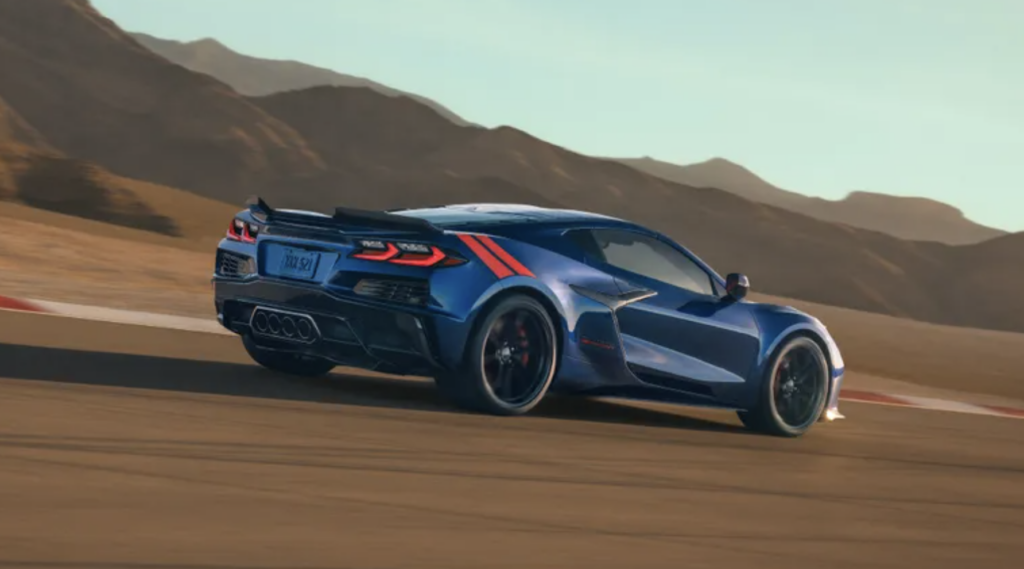
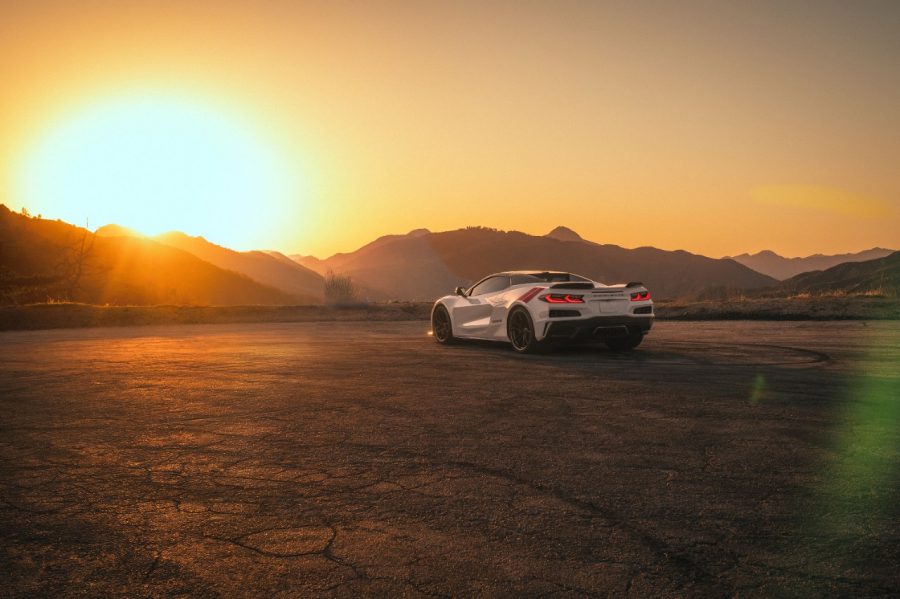
Visually, the car gets the wide-body stance, integrated rear spoiler, large side inlets, forged aluminum wheels, and the familiar Grand Sport hash marks — though for the first time, Chevrolet has moved those hash marks to the rear of the car, a nod to the C8’s mid-engine layout. Admiral Blue Metallic also returns, which will instantly register with anyone who knows the visual language of earlier Grand Sports.
The standard chassis setup also reinforces Chevrolet’s attempt to keep Grand Sport broad in its appeal. Magnetic Ride Control is standard, along with a Touring suspension and Michelin Pilot Sport All Season 4 tires. Buyers who want more edge can step into the Z52 Sport Performance Package, which adds a firmer setup, Michelin Pilot Sport 4S summer tires, and iron brakes from the Z06. The Z52 Track Performance Package goes further with carbon-ceramic brakes, Michelin Pilot Sport Cup 2R tires, carbon aero, and an available quad center exhaust, which Chevrolet says is the first center-exit exhaust offered on a pushrod-engined C8.
Grand Sport X Expands the Formula
The March 26 reveal also confirmed something enthusiasts had been suspecting after Sebring: Grand Sport would not be a one-car story.
Chevrolet introduced the Grand Sport X, an electrified all-wheel-drive companion model that combines the 535-horsepower LS6 with a front-axle electric motor and compact battery derived from the ZR1X system. Chevrolet says the front motor contributes 186 horsepower and 145 lb-ft of torque, bringing total system output to 721 horsepower. In other words, the Grand Sport name now stretches across both a traditional rear-drive car and a hybrid AWD variant.
That is a meaningful shift in how Chevrolet is using the Grand Sport badge. Traditionally, Grand Sport has represented the purist’s middle ground — the car for the buyer who wanted more than a base Corvette but less complication than the flagship. Chevrolet still describes the standard Grand Sport as the purist’s choice, but Grand Sport X broadens the concept for modern Corvette buyers who want all-wheel-drive traction, additional performance, and the kind of electrified capability Chevrolet has already been building into the upper reaches of the C8 family.
The Grand Sport X also appears to signal a broader realignment in the lineup. Several major outlets have reported that Grand Sport X effectively takes over the territory previously occupied by the E-Ray in the 2027 range, though Chevrolet’s own public-facing language is more focused on describing Grand Sport X on its own terms than explicitly calling it a replacement.
The Latest Details Add Real Texture
Since the Sebring debut, Chevrolet has also filled in a number of smaller but still important details.
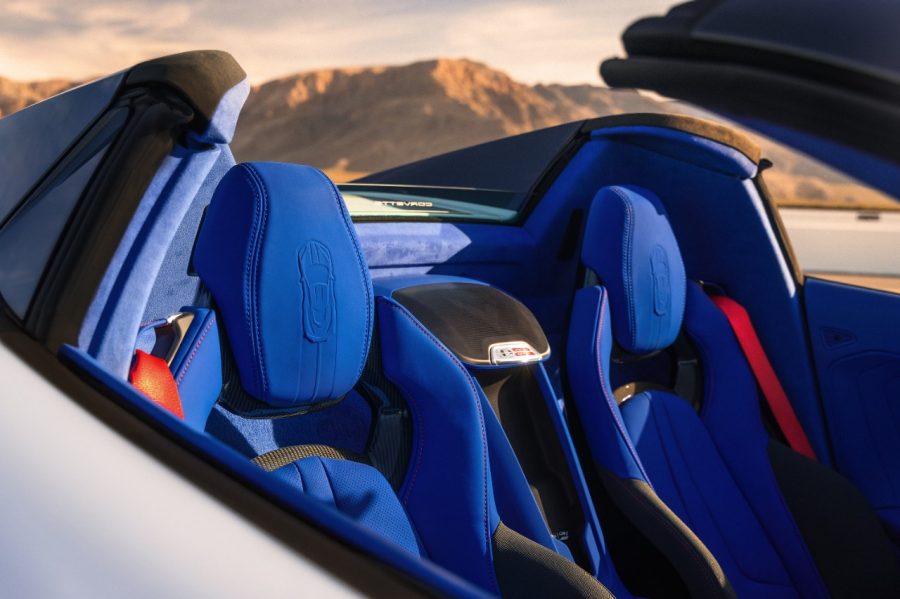
The company has shown a Launch Edition finished with a Santorini Blue-dipped interior, embossed headrests, special trim details, and unique badging that underline Chevrolet’s intent to give the Grand Sport a strong launch identity right out of the gate. Chevrolet has also emphasized that buyers will have a broad range of stripe and hash-mark combinations, suggesting that personalization will remain a meaningful part of the Grand Sport’s appeal.
Production is expected to begin in summer 2026, with sales following in the second half of the year, though Chevrolet has not yet released official pricing. Several outlets expect the Grand Sport to land around the mid-$90,000 range, but that remains informed industry expectation rather than confirmed Chevrolet guidance, so it should be treated that way until the company publishes final numbers.
Why This Matters Now
The reason this story has continued to evolve beyond Sebring is simple: Sebring gave us the emotion, but March 26 gave us the substance.
And taken together, those two announcements tell a bigger story than either one could have told alone. Chevrolet used Sebring to anchor the Grand Sport in history, then used the formal reveal to explain why the badge still deserves to exist in the modern Corvette era. The result is a car that looks positioned to become one of the most relevant models in the 2027 lineup: a naturally aspirated, wide-body, mid-engine Corvette that aims squarely at the sweet spot many enthusiasts have always believed Corvette does best.
That may ultimately be the smartest thing Chevrolet has done here. It did not diminish the Sebring reveal by following it with a more formal announcement. It strengthened it. Sebring gave the Grand Sport its emotional legitimacy. The March 26 reveal gave it mechanical credibility. Put the two together, and the 2027 Corvette Grand Sport already looks like one of the defining Corvette stories of 2026.
Sources
- General Motors / Chevrolet Newsroom — “Chevrolet Introduces 2027 Corvette Grand Sport at Sebring”
- General Motors / Chevrolet Newsroom — “Grand Sport returns with 6.7-liter, 535-horsepower V-8”
- General Motors / Chevrolet Newsroom — LS6 engine deep dive
- Chevrolet.com — 2027 Corvette Grand Sport product page
- Car and Driver coverage of the 2027 Corvette Grand Sport reveal