
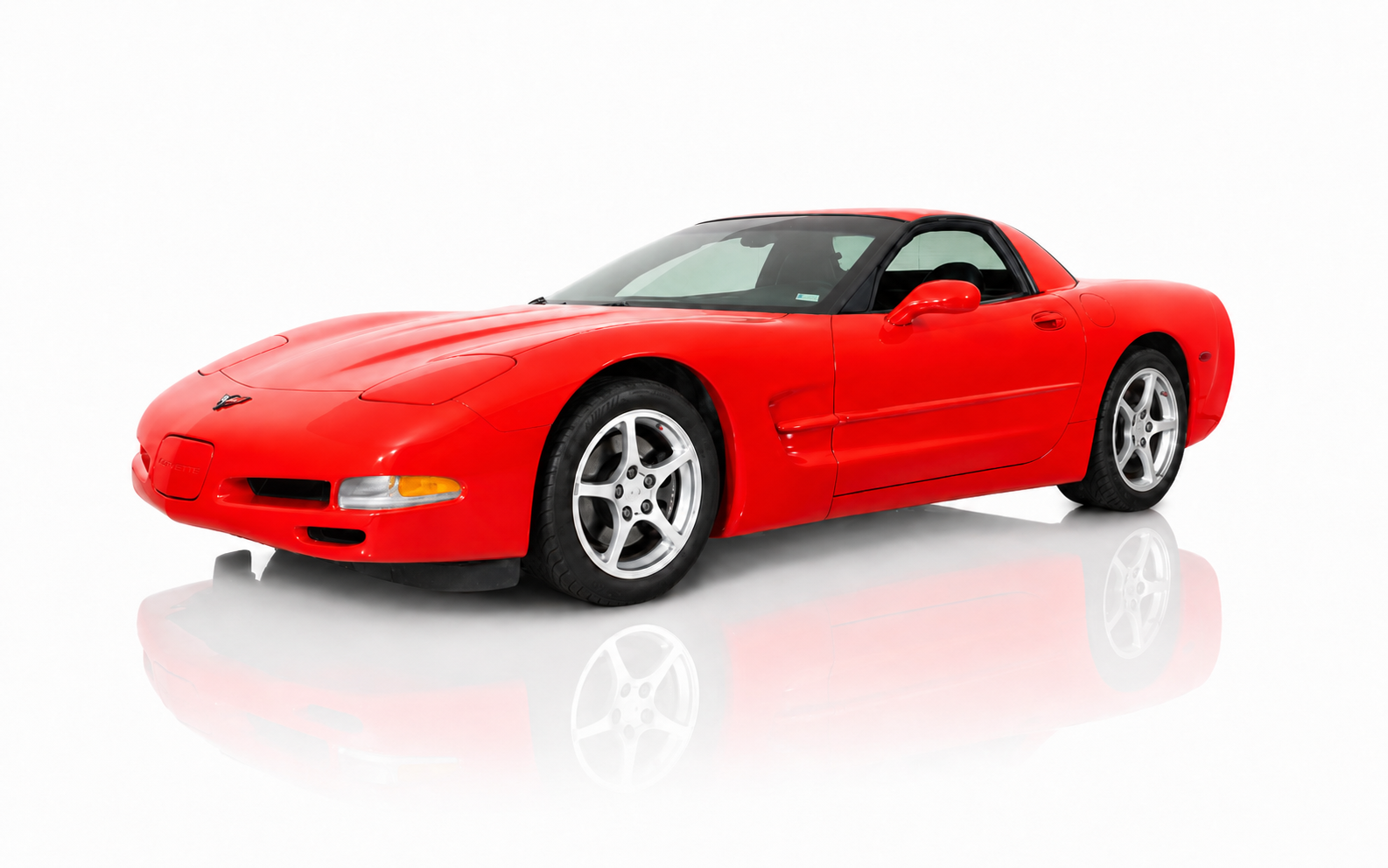
At first glance, the 2000 Corvette looks like a holdover year.
There was no radical redesign. No new production engine. No anniversary package. No pace car graphics. No dramatic bodywork change. The C5 Corvette had already done the heavy lifting when it arrived for 1997, bringing with it a stiffer structure, a rear-mounted transaxle, a new LS1 small-block V-8, better weight distribution, and a level of real-world refinement that moved Corvette into a different league.
But that is also what makes the 2000 Corvette so interesting.
The 2000 model year was not about reinventing the C5. It was about sharpening it. Chevrolet made a series of thoughtful changes to the production car, quietly improved some of the areas that mattered most to owners, gave the Corvette two memorable new paint colors, continued to refine the hardtop formula, and, perhaps most importantly, watched the C5-R racing program begin to deliver on the promise that had been building since the factory’s return to serious sports-car competition.
By the end of 2000, the Corvette was no longer just America’s sports car with a new chassis and a modern engine. It was becoming something bigger: a credible road car, a legitimate grand tourer, a performance bargain, and a factory-backed endurance-racing threat.
That is the real story of the 2000 Corvette. It was the year the C5 stopped having to prove the idea and started building the legacy.
The C5 Had Already Changed the Corvette Conversation
To understand the 2000 Corvette, you have to understand where Chevrolet was by the end of the 1990s.
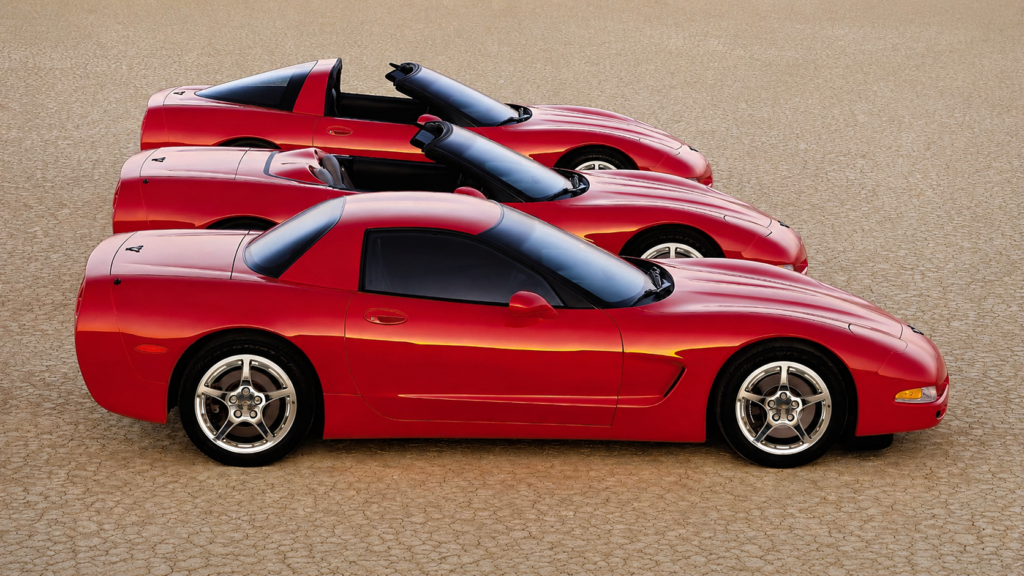
The fifth-generation Corvette had arrived for 1997 as one of the most substantial re-engineering efforts in Corvette history. It was not simply a new body over the old car. The C5 brought a new structure, a rear transaxle layout, a torque-tube driveline, improved packaging, more usable cargo space, better ride quality, and the all-aluminum LS1 V-8. That combination gave Corvette buyers something the nameplate had always promised but had not always delivered in such balanced form: everyday usability and serious performance in the same package.
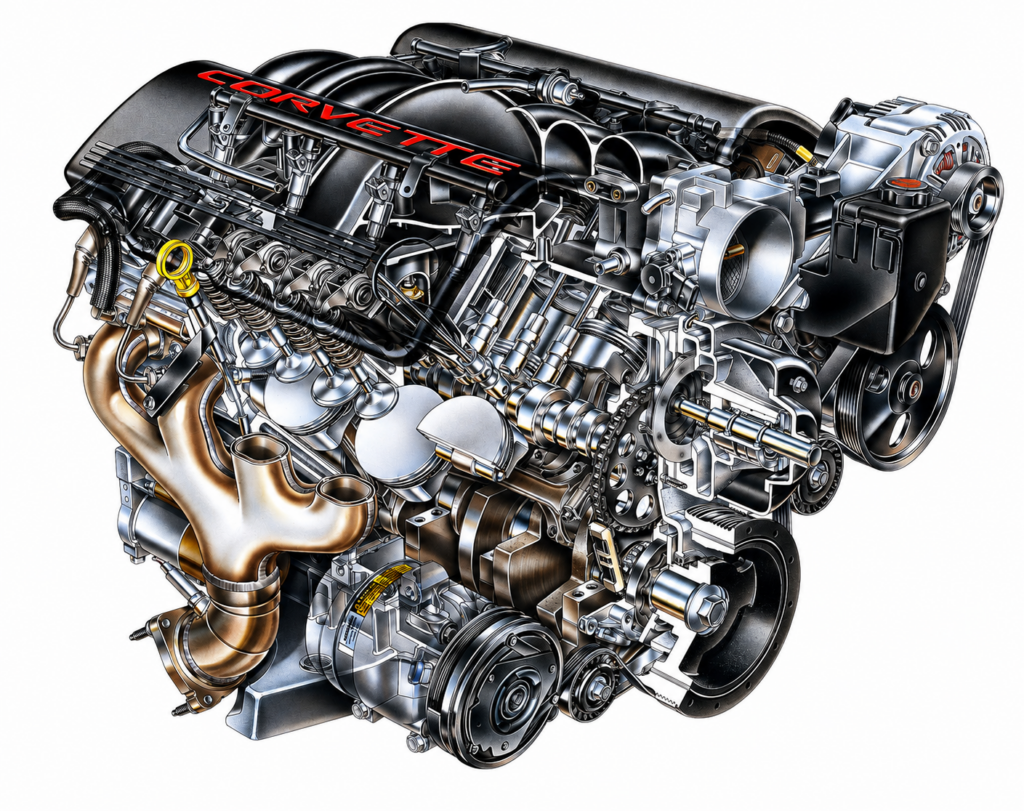
The LS1 remained the centerpiece. For the 2000 model year, the 5.7-liter, 346-cubic-inch V-8 was rated at 345 horsepower at 5,600 rpm and 350 lb-ft of torque at 4,400 rpm. It used an aluminum block and heads, sequential fuel injection, coil-near-plug ignition, and the now-familiar two-valve pushrod architecture that would become one of the great modern Chevrolet performance signatures. MotorTrend’s retrospective comparison of the C5 LS1 against classic big-block muscle-era powerplants framed the engine well, noting that the LS1 delivered “real-world horsepower” in a modern, efficient, tractable package.
This is significant because the C5 Corvette did not need to win on nostalgia. It won on performance. Period reviews repeatedly showed that the car could run with much more expensive machinery while remaining civilized enough for long-distance use. Car and Driver’s testing of the C5 hardtop placed the car comfortably in the high-four-second 0-to-60-mph range, with quarter-mile performance in the low 13s and a top speed near 170 mph. MotorTrend’s performance data for a 2000 Corvette convertible equipped with the automatic transmission showed 0 to 60 mph in 4.9 seconds, the quarter mile in 13.4 seconds at 105.5 mph, 60-to-0 braking in 113 feet, and 0.88 g on the skidpad.
That was the baseline entering 2000. The Corvette was fast, efficient for its output, comfortable, and broadly competitive. Chevrolet did not need to change everything. It needed to keep polishing the car until the rest of the world had to take it seriously.
What Changed for 2000
The 2000 Corvette did not receive a new production powertrain, and that is important to state clearly. The LS1 carried over, still rated at 345 horsepower and 350 lb-ft of torque. The four-speed automatic remained standard on coupe and convertible models, while the six-speed manual was optional on those body styles and standard on the fixed-roof hardtop.
The changes were more subtle, but they were not insignificant.
In 2000, Chevrolet focused first on making the C5 Corvette sharper without compromising the balance that had made the fifth-generation car such a major step forward. The Z51 Performance Handling Package received thicker front and rear anti-roll bars along with revised shock-absorber damping, changes intended to reduce body roll, improve transient response, and give the car a more planted feel during quick directional changes. As seen on this 2000 Corvette Z51 Coupe, the goal was not to turn the Corvette into a harsh, single-purpose track machine. Instead, Chevrolet refined the car’s already capable chassis so it felt more precise while still retaining the long-distance grand-touring character that defined the C5.
The optional Selective Real-Time Damping system, RPO F45, was also updated in 2000. Chevrolet revised the system’s control algorithms and added softer jounce bumpers, giving the electronically controlled suspension a broader operating range between comfort and control. The changes helped the Corvette respond more cleanly to road conditions while improving ride quality over rough surfaces. Manual-transmission cars received a smaller but useful driver-interface update as well, with increased shifter spring tension to better locate the lever between the first-second and fifth-sixth gear gates. It was the kind of detail improvement that did not change the car on paper, but made the Corvette feel more confident and deliberate from behind the wheel.

Chevrolet also gave the 2000 Corvette several livability and safety updates, many of them aimed at making the C5 feel more refined in everyday use. One of the more noticeable changes was the move away from the earlier passive keyless-entry system. On 1997–1999 Corvettes, the system could automatically unlock or lock the car based on the driver’s proximity to the vehicle when the passive feature was enabled. In 2000, Chevrolet replaced that arrangement with a more conventional active keyless-entry setup, meaning the driver now locked or unlocked the doors by pressing a button on the transmitter. Replacement parts listings can make this change a little confusing, since later GM remote listings often group 1997–2000 Corvettes together, but the functional change for 2000 was clear: proximity operation was gone, and the system now relied on deliberate button input from the driver.
A tire-pressure monitoring system also became standard equipment, giving drivers active information about tire inflation conditions at a time when high-performance run-flat tires were becoming a central part of the Corvette ownership experience. Inside, the car received electronic dual-zone air conditioning, revised seat materials and seat construction, seat-belt changes, and improved windshield seals, all of which helped make the cabin feel more polished, quieter, and better suited to regular use.
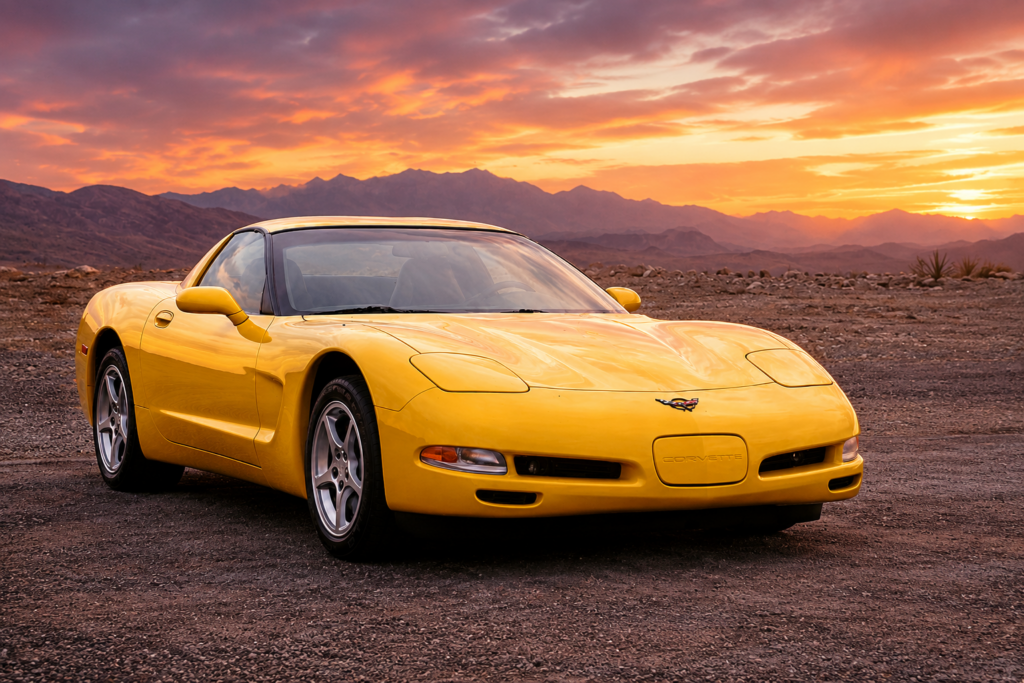
The 2000 model year also brought several visual and technical updates. The previous “wagon wheel” design was replaced by new five-spoke forged aluminum wheels, available in painted silver or optional high-polish finishes, giving the C5 a cleaner and more contemporary appearance. Millennium Yellow, offered as a premium tint coat, and Dark Bowling Green Metallic joined the exterior color palette, while Torch Red replaced Firethorn Red in the interior lineup. Chevrolet also deleted the passenger-side exterior door lock cylinder, leaving the driver-side lock as the mechanical backup and giving the passenger door a cleaner appearance. Under the skin, powertrain revisions allowed properly equipped Corvettes to meet government-mandated Low Emissions Vehicle standards in California-emissions states. None of these changes reinvented the C5, but together they showed Chevrolet steadily refining the Corvette into a more polished, more modern, and more complete performance car.
Powertrain: The LS1 Was Still the Right Engine
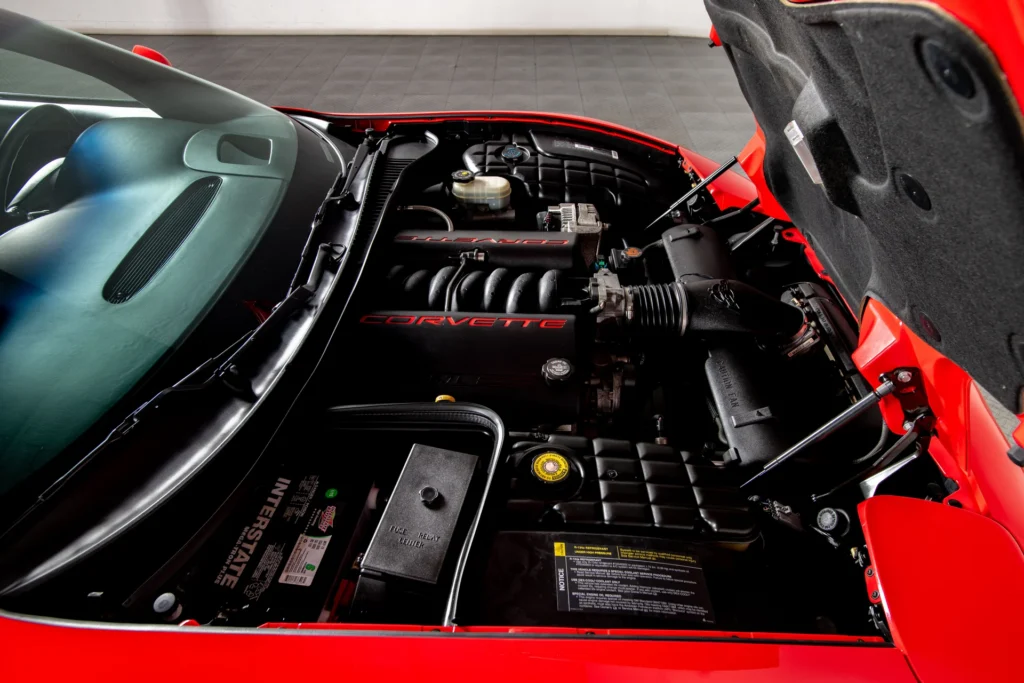
By 2000, the LS1 had already proven itself as one of the most important Corvette engines since the original small-block.
It was compact, relatively light, powerful, and durable. It gave the C5 the performance Corvette buyers expected while also helping the car deliver surprising highway efficiency. Under modern adjusted EPA reporting, the 2000 Corvette with the six-speed manual is listed at 16 mpg city, 25 mpg highway, and 19 mpg combined on premium fuel. Period figures were often reported differently under older EPA methods, but the bigger point remains: the C5 delivered legitimate performance without the fuel-economy penalties once associated with big-displacement sports cars.
The LS1 also fits the Corvette’s personality. It made its torque down low, revved willingly, and gave the car a broad operating range that made it quick in almost any situation. It did not require exotic maintenance. It did not hide behind forced induction. It was a modern small-block with enough sophistication to satisfy the late 1990s and enough simplicity to earn the long-term loyalty of owners, racers, and tuners.
In production form, every 2000 Corvette used the same basic LS1 rating, whether coupe, convertible, or hardtop. That is an important distinction when discussing the C5-R race program, because the race cars were a different story entirely. The 2000 C5-Rs moved to a larger 7.0-liter race engine, while the production car retained the 5.7-liter LS1.
That separation is part of what makes the 2000 model year so compelling. Chevrolet was selling a refined 345-horsepower street car while developing a factory race program that was becoming more serious, more powerful, and more credible with every outing.
Chassis, Suspension, and the C5 Balance
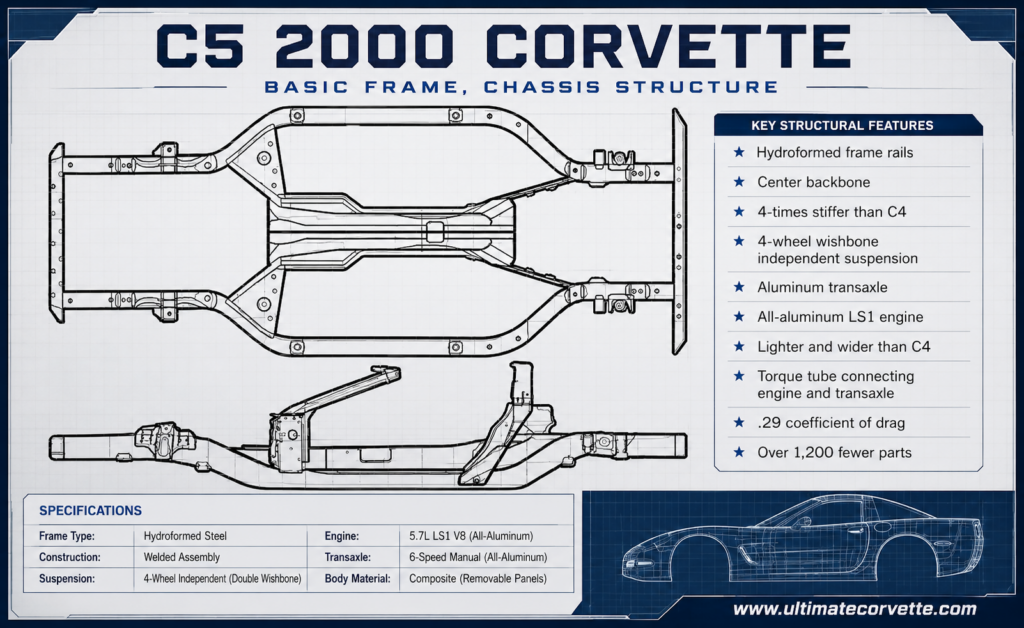
The C5’s chassis was the car’s real breakthrough.
Previous Corvettes had been fast, and many had been genuinely capable, but the C5 brought a new level of balance. The rear-mounted transaxle helped improve weight distribution. The structure was stiffer. The suspension geometry was cleaner. The steering was more precise. The car felt less like a traditional American performance car trying to compete with Europe and more like a Corvette that had finally stopped apologizing for being a Corvette.
The 2000 revisions to Z51 and F45 worked within that framework.
Z51 remained the choice for buyers who wanted a sharper Corvette without moving into a dedicated race-prep environment. For 2000, it received larger front and rear stabilizer bars and revised shocks. Chevrolet’s goal was improved body control, particularly during quick directional changes. The package remained affordable, listed at $350, and was ordered on 7,775 cars according to the option figures included in the original production data.
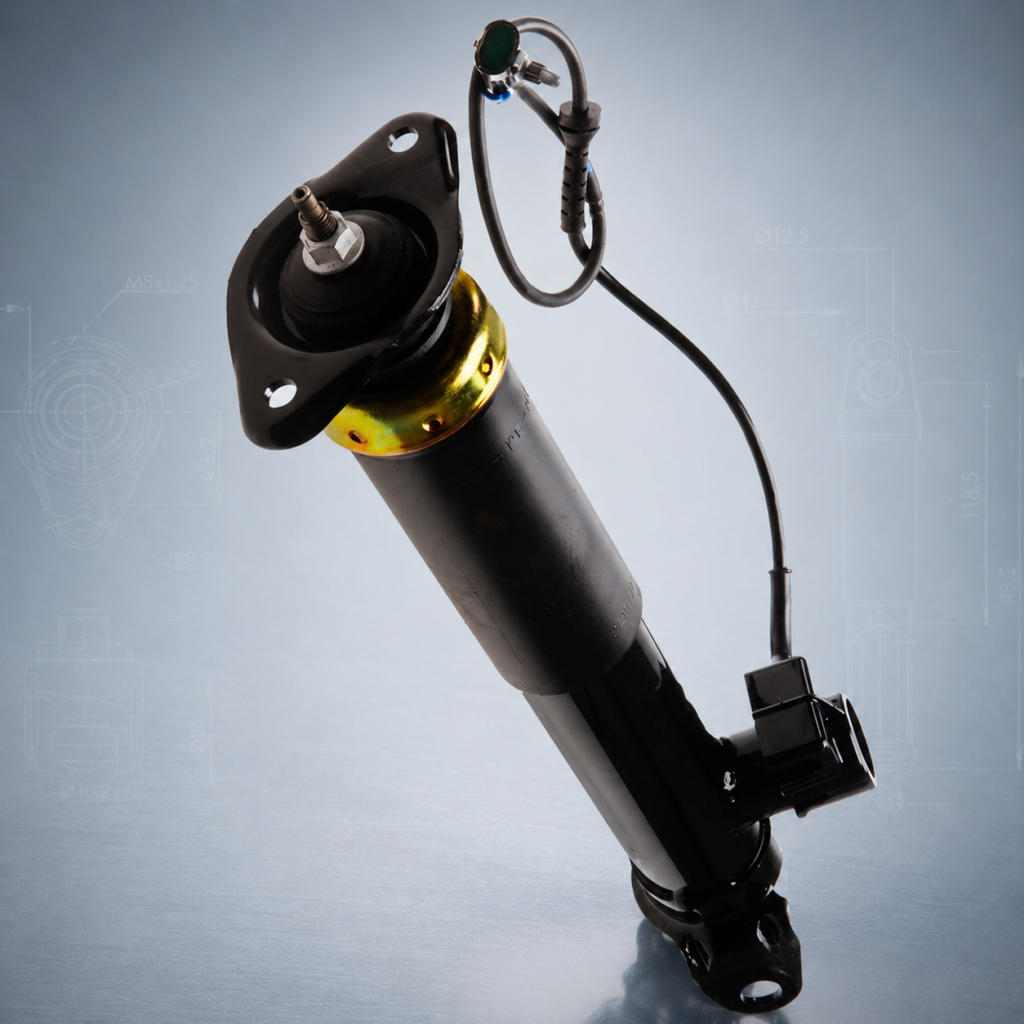
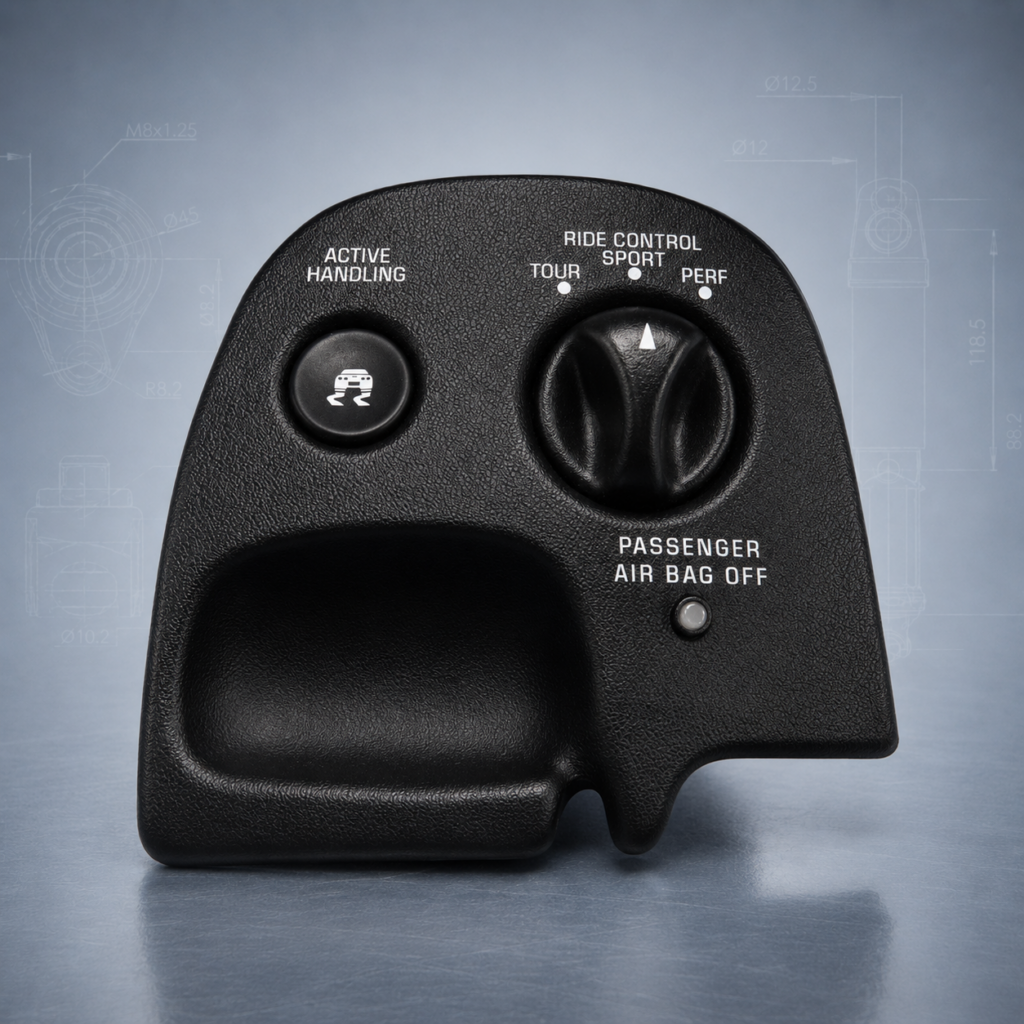
F45 Selective Real Time Damping occupied a different space. It was more expensive, listed at $1,695, and appeared on 6,724 cars. It gave the Corvette an adaptive character, allowing the car to better reconcile ride comfort and performance control. The 2000 recalibration and revised jounce bumpers were exactly the kind of changes that rarely make headlines but can meaningfully alter the ownership experience.
Active Handling, RPO JL4, also continued to define the C5’s move into the modern performance era. Introduced in 1998 and still optional in 2000, it brought a stability-control layer to the Corvette without stripping away the driver’s role. It was ordered on 22,668 cars for 2000, making it one of the more significant technology options of the year.
This was the balance Chevrolet was chasing: a car that could be fast, comfortable, controllable, and forgiving without feeling numb. That balance is one reason the C5 aged so well.
The 2000 Corvette Hardtop: Last Call Before the Z06
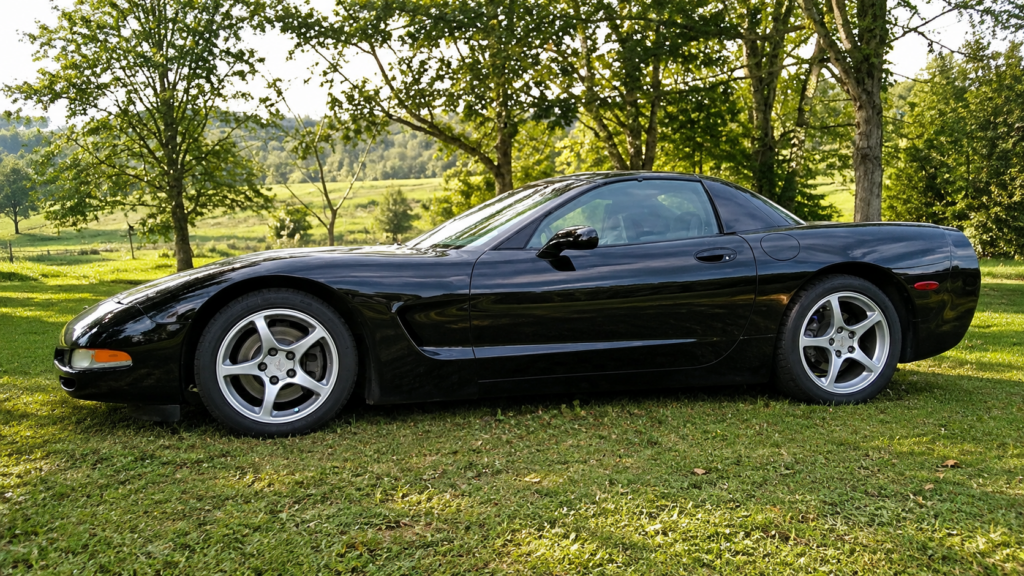
The fixed-roof hardtop, often referred to as the FRC, is one of the most important parts of the 2000 Corvette story.
Introduced for 1999, the hardtop was originally rooted in the idea of a lower-cost, lighter, more focused Corvette. Chevrolet had considered a more stripped-down version of the C5, but the final production car was not a bare-bones special. It came with the LS1, a six-speed manual transmission, performance-oriented suspension tuning, and a fixed roof bonded to the convertible-style body structure.
Car and Driver reported that the hardtop was 79 pounds lighter than a comparable hatchback coupe, largely because it eliminated the removable roof panel and heavy rear glass hatch. The magazine also noted that it was the first fixed-roof Corvette coupe since the 1963-1967 Sting Ray. MotorTrend’s retrospective on the FRC added another key figure, stating that the fixed-roof structure generated a 12-percent increase in chassis stiffness while removing roughly 80 pounds.
That made the hardtop more than a price play. It was the lightest and most focused C5 configuration available before the Z06 arrived.
It was also short-lived. Chevrolet built 4,031 hardtops for 1999 and only 2,090 for 2000. Production data sources also confirm 2,090 hardtops out of 33,682 total 2000 Corvettes. That 2,090 figure is worth emphasizing because it is sometimes confused with 2,941, which was the production count for Magnetic Red Metallic paint in 2000, not the hardtop body style count.
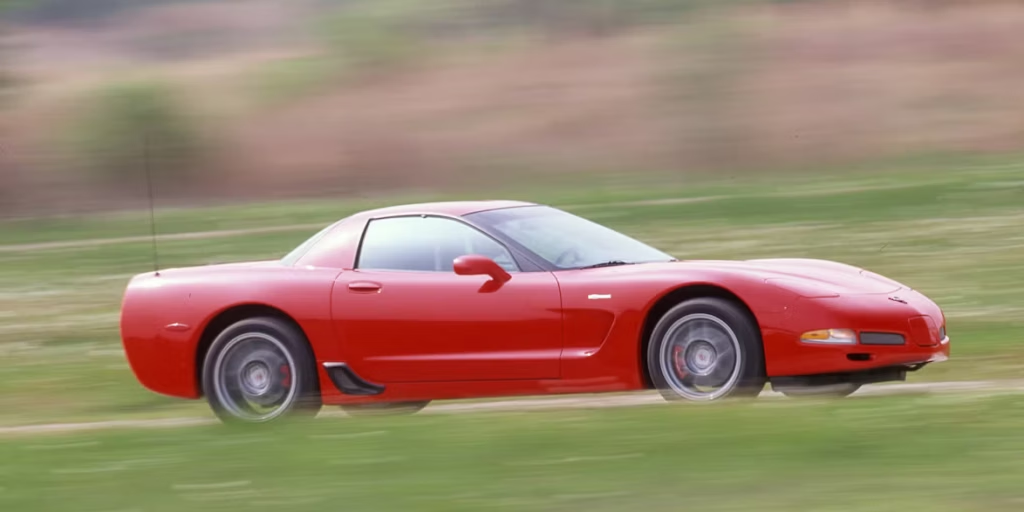
The hardtop also gave Chevrolet a platform for something more serious. In 2001, the FRC body style evolved into the Z06, complete with the LS6 engine, more aggressive chassis tuning, and a sharper performance mission. In hindsight, the 2000 hardtop is not just the last FRC. It is the bridge between the standard C5 and the Z06 era.
Car and Driver understood the appeal. Dave Hill, then Corvette chief engineer, rejected the idea that the hardtop was simply a low-budget Corvette, telling the magazine, “This is not a stripper.” The same review concluded, “We love the concept of cheaper and lighter.”
That is the hardtop in one sentence. Cheaper and lighter, yes. But not less.
Wheels, Paint, and the Look of the 2000 Corvette
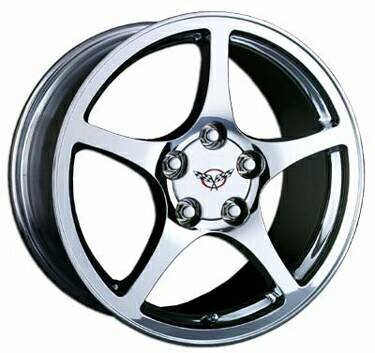
Cosmetically, the 2000 Corvette remained familiar, but there were meaningful detail changes.
The most visible change was the new standard five-spoke aluminum wheel. The earlier “wagon wheel” design gave way to a thinner-spoke design that looked cleaner and more modern. The standard wheel was fully forged with a flow-formed rim for added durability. A polished version, RPO QF5, was available for $895 and proved popular enough that Chevrolet had to adjust wheel sourcing during the model year to support demand.
The polished aluminum wheel was ordered on 15,204 cars. The magnesium wheel option, RPO N73, remained available at $2,000 and appeared on 2,652 cars. Those numbers tell us something about how buyers viewed the C5. They were willing to spend money on appearance and performance-adjacent upgrades, even when the base car was already strong.
Color was another major 2000 story.
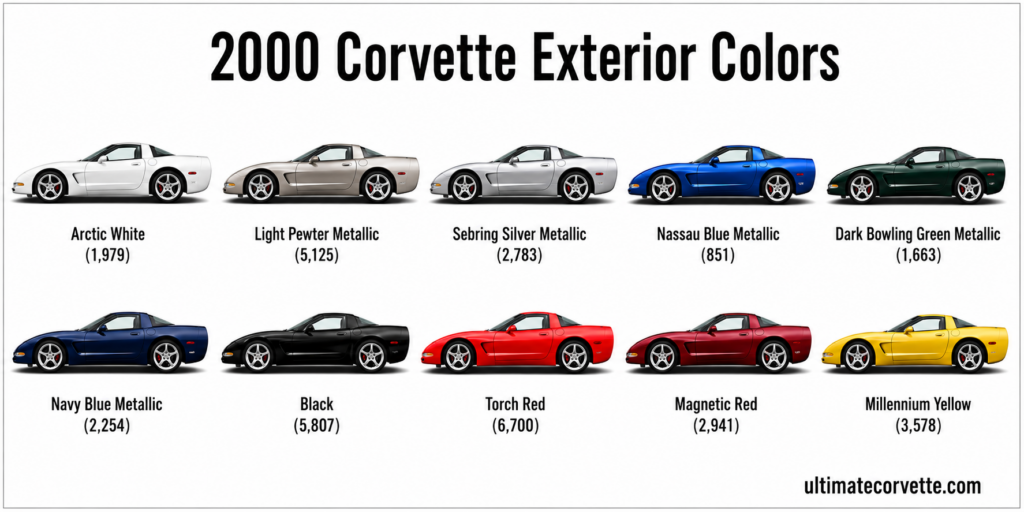
Chevrolet added two new exterior colors: Millennium Yellow and Dark Bowling Green Metallic. The National Corvette Museum’s 2000 Corvette color reference notes that Millennium Yellow and Magnetic Red carried a $500 surcharge because they required extra tinted clear coat and special application equipment.
Millennium Yellow quickly became one of the signature C5 colors. It was bold, modern, and perfectly suited to the turn-of-the-century moment. Chevrolet built 3,578 Corvettes in Millennium Yellow for 2000. Dark Bowling Green Metallic, meanwhile, offered a more subtle connection to Corvette’s Kentucky home. Production reached 1,663 units.
The most popular 2000 color was Torch Red at 6,700 units, followed by Black at 5,807 and Light Pewter Metallic at 5,125. Nassau Blue Metallic was the rarest regular-production color, with just 851 cars built.
The color lineup gave the 2000 Corvette a broad personality. Buyers could choose traditional Corvette flash, understated metallics, or new-millennium drama. That range helped the C5 appeal to more than one kind of Corvette buyer.
Interior and Technology: Corvette Keeps Growing Up
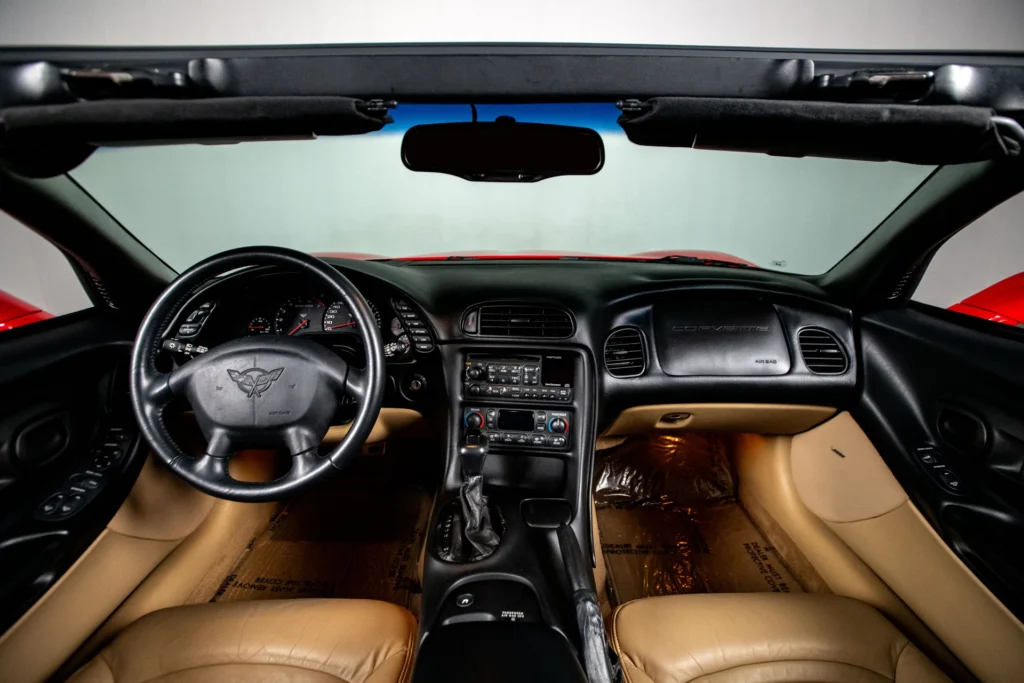
Inside, the 2000 Corvette continued the C5’s gradual move toward a more livable cabin.
The most notable addition was electronic dual-zone air conditioning. RPO CJ2 was listed at $365 and was installed on 29,428 cars, making it one of the more commonly selected comfort features of the year. For a car that was increasingly being used for long-distance trips, weekend travel, and daily driving, that kind of feature mattered.
The Head-Up Display, RPO UV6, also remained a defining C5 technology feature. It appeared on 26,482 cars for 2000. The HUD helped reinforce the idea that the Corvette was both driver-focused and technologically current. It was not just a gimmick. It kept speed and key information in the driver’s line of sight, which suited the Corvette’s grand-touring mission.
The Memory Package, power seats, sport seats, Bose audio, CD changer, Twilight Sentinel, fog lamps, and luggage convenience options all continued to build out the Corvette as a car people could tailor to their intended use. Some buyers wanted a lightweight hardtop with a manual transmission and few extras. Others wanted a convertible with polished wheels, dual-zone climate control, sport seats, a premium audio system, and the HUD.
That breadth is easy to overlook today, but it was part of the C5’s success. The 2000 Corvette could be a weekend toy, a cross-country car, a track-day platform, or a collector-grade garage queen. Chevrolet had finally given the model enough bandwidth to satisfy multiple audiences without losing the central Corvette identity.
Production, Pricing, and Option Highlights
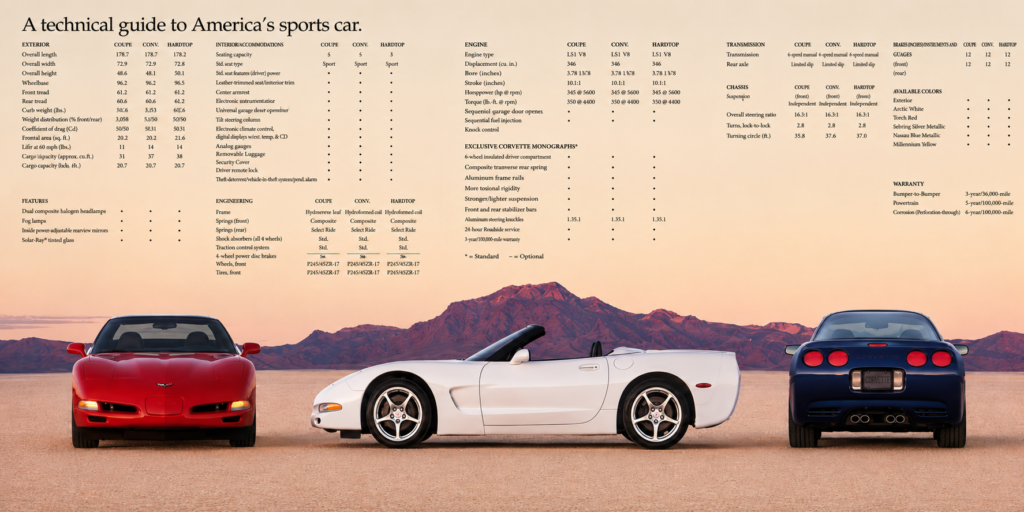
Chevrolet built 33,682 Corvettes for the 2000 model year.
The coupe remained the volume leader with 18,113 units. The convertible followed closely with 13,479. The hardtop accounted for just 2,090 units, making it the rarest body style by a wide margin.
Base pricing was also part of the story. The 2000 Corvette coupe listed at $39,475. The convertible listed at $45,900. The hardtop, positioned as the lowest-priced and most focused model, listed at $38,900.
Those prices made the Corvette one of the strongest performance values in the world. It could deliver acceleration, braking, handling, and top-speed capability that embarrassed cars costing far more. That had always been part of Corvette’s appeal, but the C5 made the value argument harder to dismiss because the car was no longer relying on straight-line speed alone.
A few option numbers help define what buyers wanted in 2000. The floor-mat option, RPO B34, appeared on 33,188 cars, almost the entire production run. Fog lamps, RPO T96, appeared on 31,992. The power passenger seat option, RPO AG2, appeared on 29,462 coupe and convertible models. Sport seats, RPO AQ9, appeared on 27,103. The HUD appeared on 26,482. The Memory Package appeared on 26,595.
Performance-minded buyers also had plenty to choose from. The six-speed manual transmission, RPO MN6, was ordered on 13,320 coupes and convertibles in addition to being standard on the hardtop. The G92 performance axle ratio for automatic cars appeared on 14,090. Z51 appeared on 7,775. F45 appeared on 6,724. Active Handling appeared on 22,668.
Taken together, those numbers show a Corvette buyer base that wanted both speed and comfort. The C5 was no longer a car people bought only for the engine. They were ordering technology, convenience, appearance upgrades, and chassis systems. The Corvette was becoming a complete product.
No Official Special Edition, But Several Special-Interest Stories
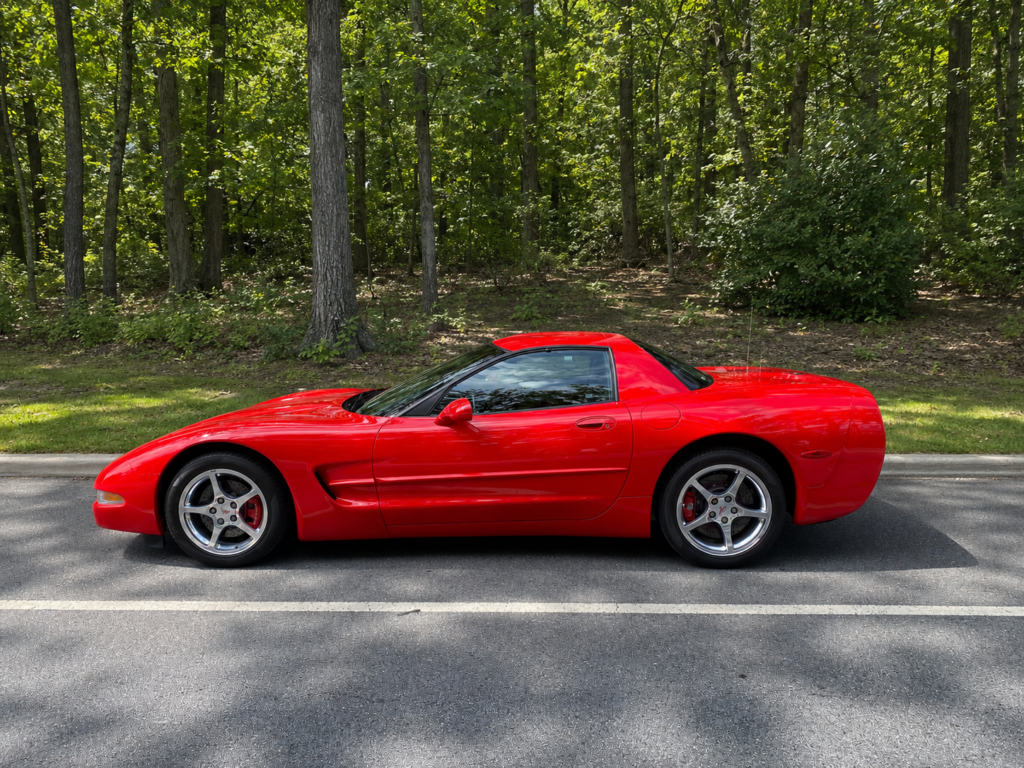
The 2000 Corvette did not have an official commemorative edition, pace car replica, or anniversary package.
That does not mean the year lacked special-interest cars.
The first and most important is the fixed-roof hardtop. With just 2,090 built for 2000, it is one of the key collector configurations of the model year. It was the last C5 hardtop before the Z06 arrived, and it represents the moment immediately before Chevrolet transformed the FRC concept into a true performance sub-brand.
The second is Millennium Yellow. It was not a special edition, but it was a special color. It arrived at exactly the right time, carried an added cost, and became one of the visual signatures of the C5 generation. The color’s 3,578-unit production total makes it common enough to be recognized but still distinct enough to stand out.
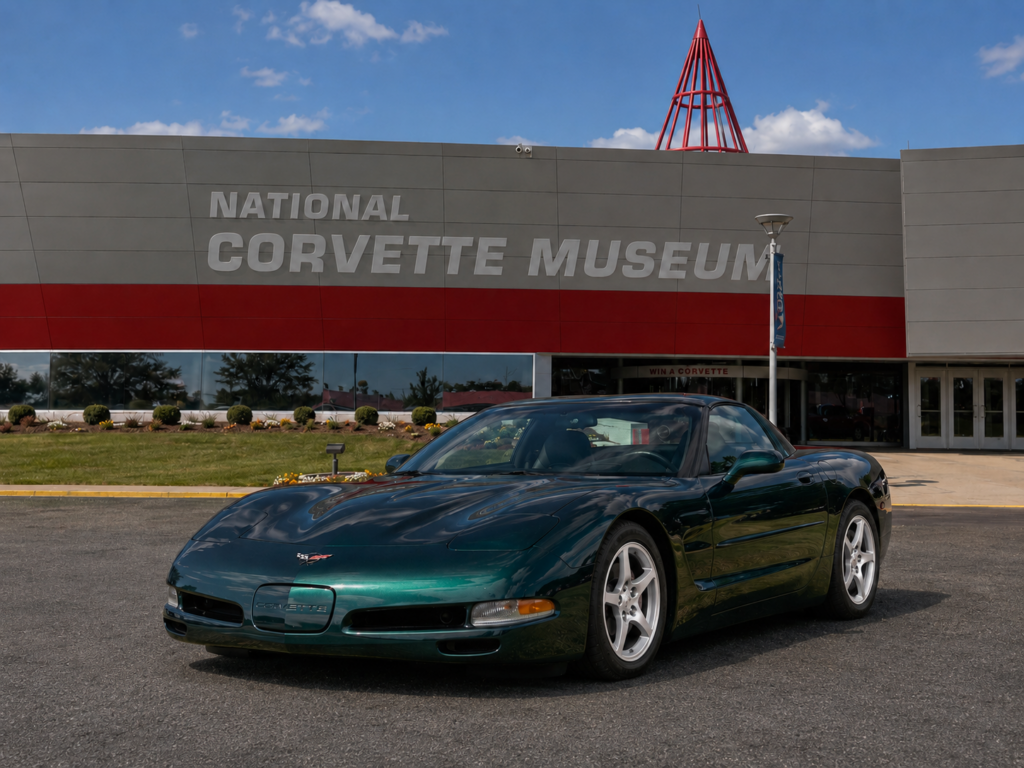
The third is Dark Bowling Green Metallic. It was subtle, elegant, and deeply tied to Corvette geography. Bowling Green was not just a production location. By 2000, it was the center of the Corvette world, home to the assembly plant and the National Corvette Museum. A Corvette painted Dark Bowling Green Metallic carries that connection in a way no other 2000 color does.
The fourth is the C5-R, though it was obviously not a production special edition. The race cars gave the 2000 model year its defining historical energy. They connected the showroom Corvette to a factory-backed motorsports program that was about to reshape the way the world viewed American endurance racing.
Corvette Racing in 2000: The Breakthrough Year
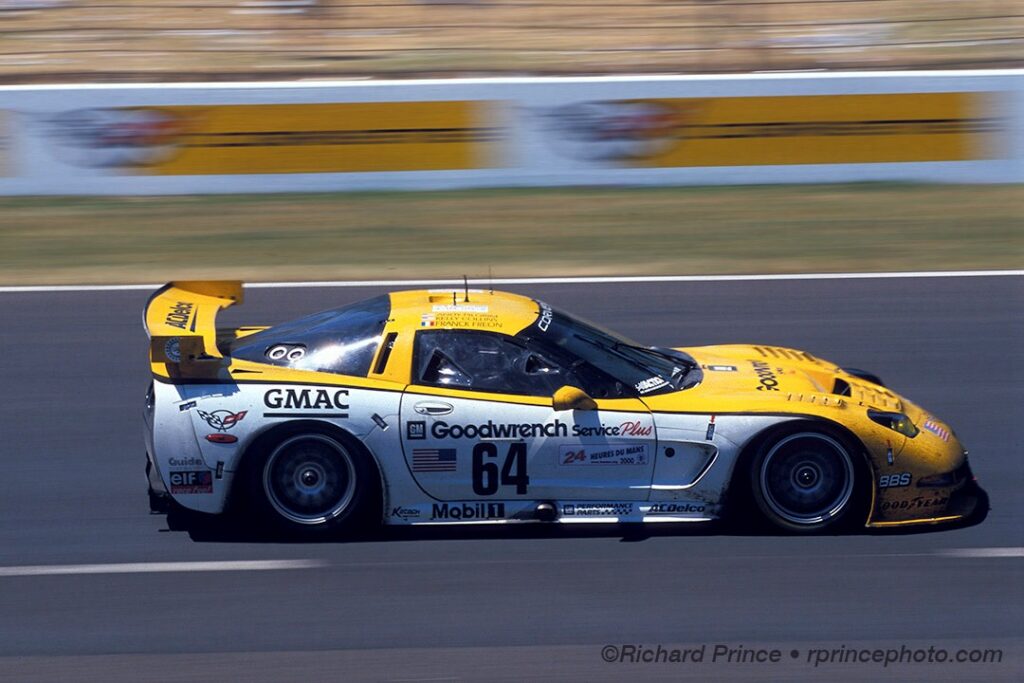
If the production 2000 Corvette was a refinement year, Corvette Racing’s 2000 season was anything but quiet.
The C5-R had debuted in 1999 as Chevrolet’s factory-backed return to top-level sports-car racing. By 2000, the program was stronger, more experienced, and more ambitious. The race car’s engine displacement increased from 6.0 liters to 7.0 liters, giving the C5-R additional power and helping it better match the demands of endurance racing.
Le Mans was a major step. In June 2000, Corvette Racing entered the 24 Hours of Le Mans and finished third and fourth in the GTS class. Official Le Mans historical summaries list Corvette Racing’s 2000 result as third and fourth in GTS, followed by class wins in 2001 and 2002. Contemporary race-entry summaries identify the third-place GTS car as the No. 64 Corvette driven by Andy Pilgrim, Kelly Collins, and Franck Fréon, with the No. 63 car of Ron Fellows, John Paul Jr./Chris Kneifel, and Justin Bell finishing fourth in class.
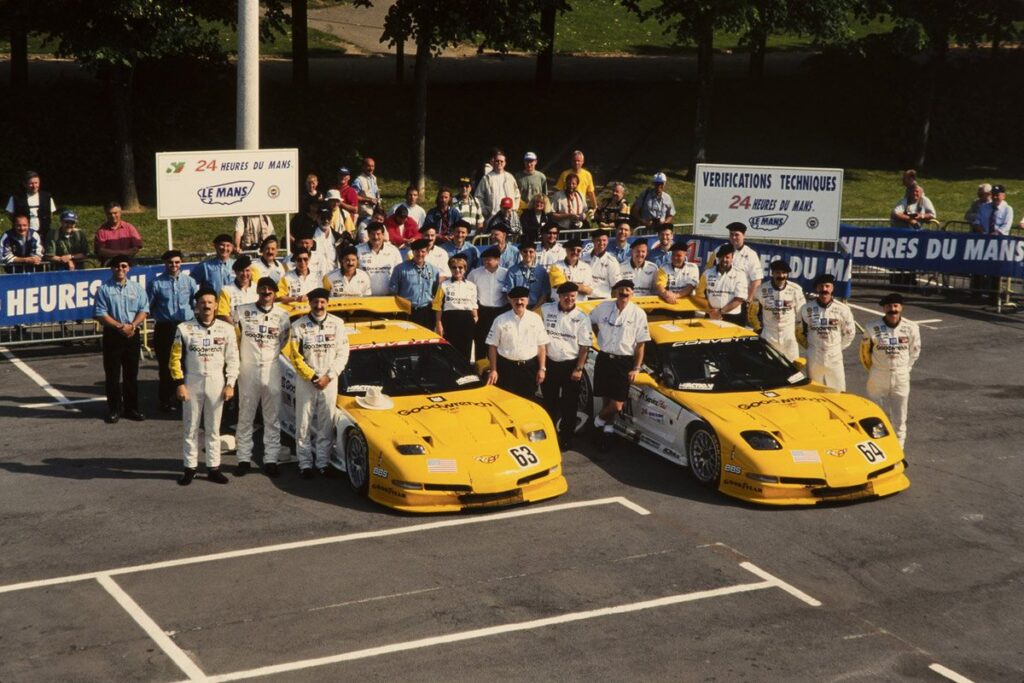
The result was not a win, but it was hugely important. Corvette Racing had gone to Le Mans and survived. It had run against serious international competition. It had proven that the program belonged.
Ron Fellows later remembered Corvette Racing’s first trip to Le Mans in 2000 as the “hottest Le Mans on record.” The team was quick, he said, and “learned a ton,” even while working through the kind of “mechanical gremlins” that define a young endurance program. Even so, the debut was hardly a failure: the two Corvette C5-Rs finished third and fourth in GTS, giving Chevrolet a credible first showing on the world’s biggest sports-car stage. One year later, in a race Fellows recalled as one of the wettest Le Mans events he had experienced, Corvette Racing returned with a sharper program, better-prepared cars, and a revised driver lineup—and won the GTS class.
The first victory came before that.
On September 2, 2000, Corvette Racing scored its first win at Texas Motor Speedway. Pratt Miller’s official history of the program identifies that race as Corvette Racing’s first victory. The conditions were brutal. Doug Fehan later recalled that it was “117 degrees at 7 p.m.” for the race, and Andy Pilgrim joked that Ron Fellows was “a friggin’ reptile” because Fellows seemed able to tolerate the heat better than anyone.
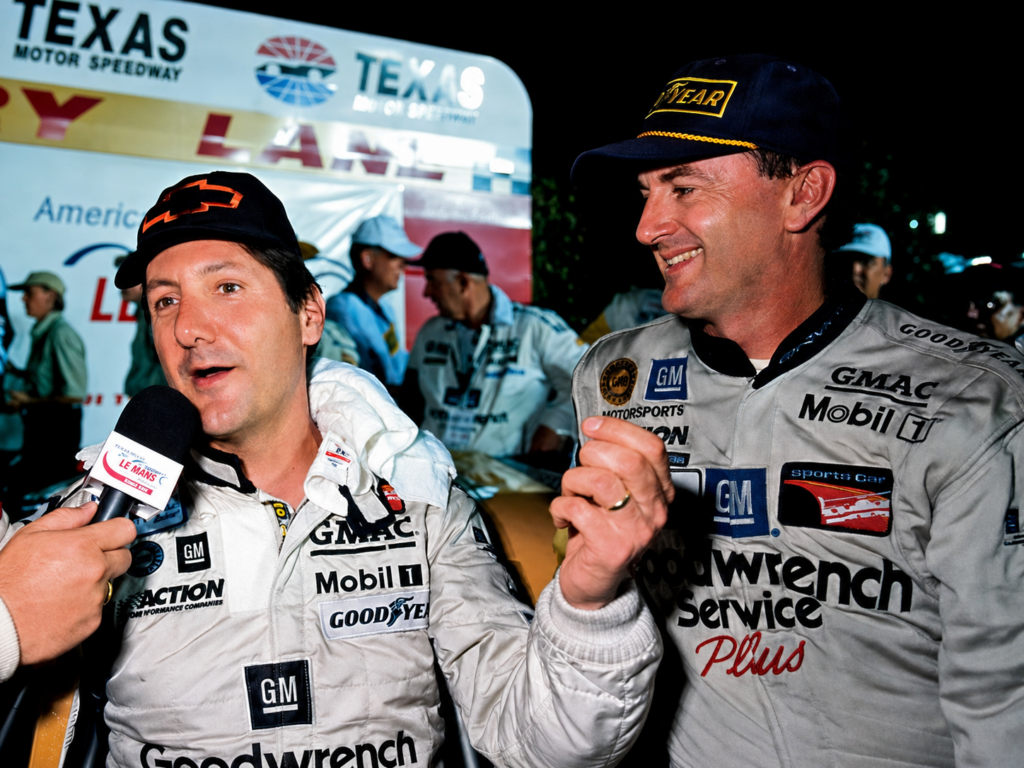
Pilgrim brought the car home, and the win gave the factory program the breakthrough it needed. He later called it “a great night” and a privilege to win with Fellows.
Corvette Racing followed with another major GTS victory at Road Atlanta in the 2000 Petit Le Mans, further cementing the idea that the C5-R was no longer merely a promising new car. It was a contender.
That matters because the racing program changed the Corvette’s public identity. Chevrolet could point to Le Mans, the American Le Mans Series, and factory-supported endurance competition as proof that the C5 platform had genuine motorsports credibility. Jim Campbell later summarized Chevrolet’s view of the program, saying that racing’s “technical learnings” directly benefit production Corvette and powertrains.
For the 2000 Corvette, that connection is central. The production car and race car were not the same machine, but they were part of the same larger strategy. Chevrolet was using racing to sharpen the Corvette brand, and by 2000, the effort was visibly working.
What the Reviews Understood
The strongest reviews of the C5 Corvette understood that Chevrolet had changed the formula without abandoning the car’s identity.
Car and Driver’s hardtop review is especially useful because it captured the logic behind the FRC. The magazine described a car that was lighter, more rigid, less expensive, and still fully equipped enough to be a real Corvette. It also emphasized the car’s long-distance character, quoting Corvette assistant chief engineer Mike Neal as saying the goal was to cover “hundreds and hundreds of miles” without driver fatigue.
That is the C5 in miniature. It was not just faster than before. It was easier to use.
MotorTrend’s work around the C5 also shows how the Corvette’s reputation was changing. The LS1 was no longer being treated as a crude American V-8. It was being discussed as a compact, efficient, highly effective modern performance engine. The hardtop was no longer dismissed as a cheap variant. It was recognized as a lighter, stiffer, more focused C5 that helped set the stage for the Z06.
The press did not view the 2000 Corvette as a radical model-year leap because it was not one. But the best reviews recognized that the C5 was already good enough that refinement was the story. Chevrolet had built a car that could accelerate hard, stop well, corner with confidence, carry luggage, run highway miles, and still feel like a Corvette.
That combination was not accidental. It was the result of Chevrolet finally aligning Corvette engineering, product planning, and motorsports ambition around a modern platform.
The 2000 Corvette in Historical Context
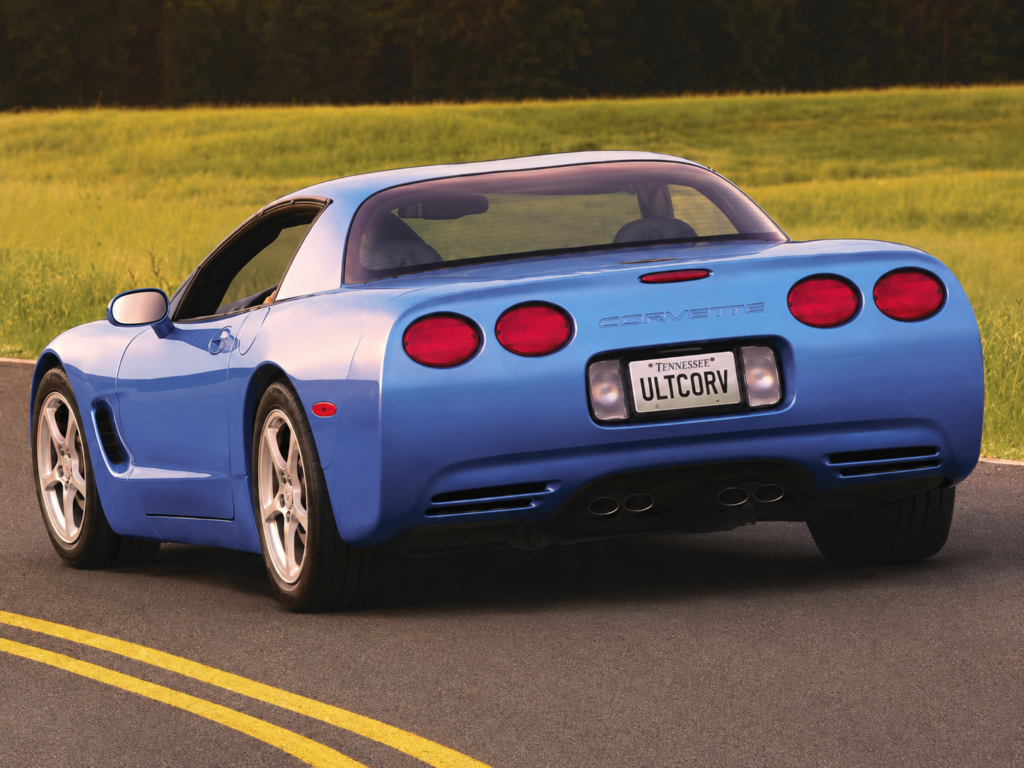
The 2000 Corvette occupies a unique position in C5 history.
It was the fourth model year of the generation, which meant the original launch excitement had passed. It was also the final year before the Z06 arrived and changed the C5 conversation again. That makes the 2000 model year a hinge point.
The 1997 Corvette introduced the C5 coupe.
The 1998 Corvette brought back the convertible and introduced Active Handling, along with the highly visible Indianapolis 500 Pace Car story.
The 1999 Corvette added the fixed-roof hardtop.
The 2000 Corvette refined all of it.
Then the 2001 Z06 took the fixed-roof idea and turned it into a factory performance weapon.
DID YOU KNOW?
A single C5 Corvette took roughly 55 hours to build from start to finish, according to period Corvette production commentary cited in the original model-year overview. That was approximately 15 hours less than a C4 Corvette, helped by the C5’s more efficient design and reduced mechanical complexity.
The 2000 Corvette hardtop was also far rarer than many casual enthusiasts realize. Chevrolet built only 2,090 hardtops for the model year, compared with 18,113 coupes and 13,479 convertibles.
And while Millennium Yellow tends to get more attention today, Nassau Blue Metallic was actually the rarest 2000 exterior color, with only 851 cars produced.
That sequence makes 2000 easy to overlook, but it should not be. It represents the fully matured pre-Z06 C5. It was the last year of the standard hardtop. It was the first year Corvette Racing won. It was the year Le Mans became part of the modern Corvette story again. It was the year Chevrolet added one of the C5’s defining colors. It was also a year when the production car became more polished without becoming softer.
For collectors, that gives the 2000 Corvette several identities.
A well-optioned coupe or convertible represents the refined grand-touring side of the C5. A six-speed car with Z51 and Active Handling represents the enthusiast spec. A Millennium Yellow or Dark Bowling Green Metallic car tells a model-year-specific story. A 2000 hardtop is the purist play, especially because it was built in such small numbers and directly precedes the Z06.
No single version defines the whole model year. That is part of the appeal.
Why the 2000 Corvette Still Matters Today
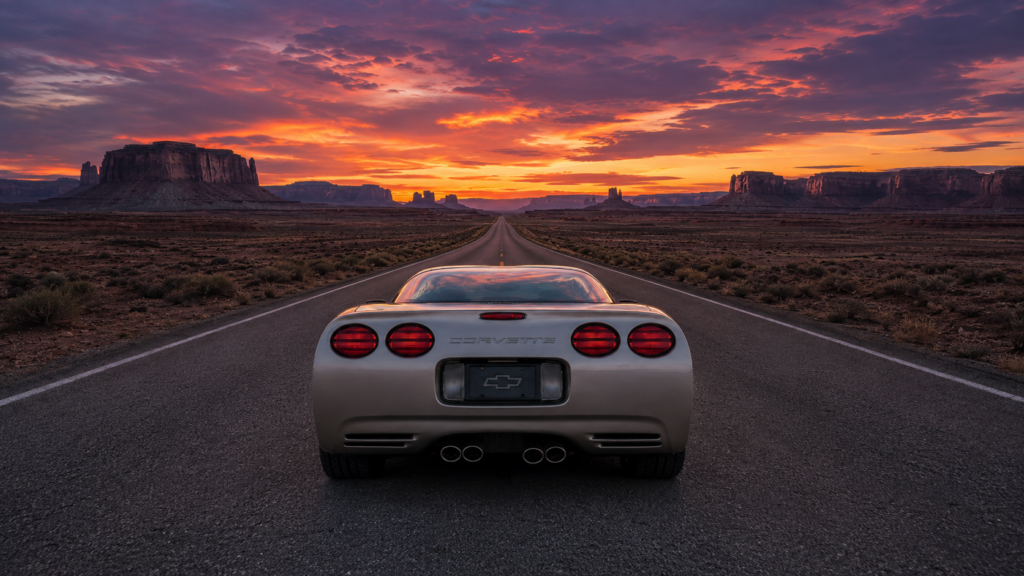
The 2000 Corvette still matters because it captures the C5 at a fascinating moment: mature, confident, and just one step away from becoming something even more focused.
It was not the first C5. It was not the first C5 convertible. It was not the first hardtop. It was not the Z06. But it was the year all of those pieces came together just before Chevrolet changed the Corvette performance hierarchy again.
As a production car, the 2000 Corvette showed how complete the C5 had become. The LS1 still delivered serious speed. The chassis still felt balanced and modern. The revised Z51 and F45 tuning sharpened the car without spoiling it. Active Handling, the HUD, dual-zone climate control, polished and magnesium wheels, sport seats, and a wide range of options allowed buyers to configure the Corvette in ways that suited their real lives. This was not a one-dimensional sports car. It was a Corvette that could cross states, run back roads, commute, autocross, and still look right parked at a weekend show.
As a collector car, the 2000 model year has several hooks. The hardtop was built in very small numbers and stands as the final stop before the Z06. Millennium Yellow gave the C5 one of its signature turn-of-the-century looks. Dark Bowling Green Metallic gave buyers a subtle color with a direct emotional tie to Corvette’s Kentucky home. Nassau Blue Metallic gave rarity seekers a low-production color. And the overall production mix offers today’s enthusiasts enough variety to choose the version that best fits their tastes.
As a racing-year milestone, 2000 is even more important. This was the season Corvette Racing went to Le Mans and finished third and fourth in GTS. It was the season the C5-R scored the program’s first victory at Texas Motor Speedway. It was the season the factory Corvette effort stopped looking like an experiment and started looking like a dynasty in the making. Everything that followed, including Le Mans victories, ALMS championships, and Corvette’s modern endurance-racing credibility, traces through this period.
That is why the 2000 Corvette deserves more attention than it usually receives. It was quiet on the surface, but historically important underneath. It refined the road car, closed the book on the short-lived fixed-roof coupe, introduced memorable colors, and helped launch the Corvette Racing era that would redefine the brand’s global reputation.
The 2000 Corvette was not a loud model-year reset. It was something better: proof that the C5 had become the Corvette Chevrolet always wanted it to be.