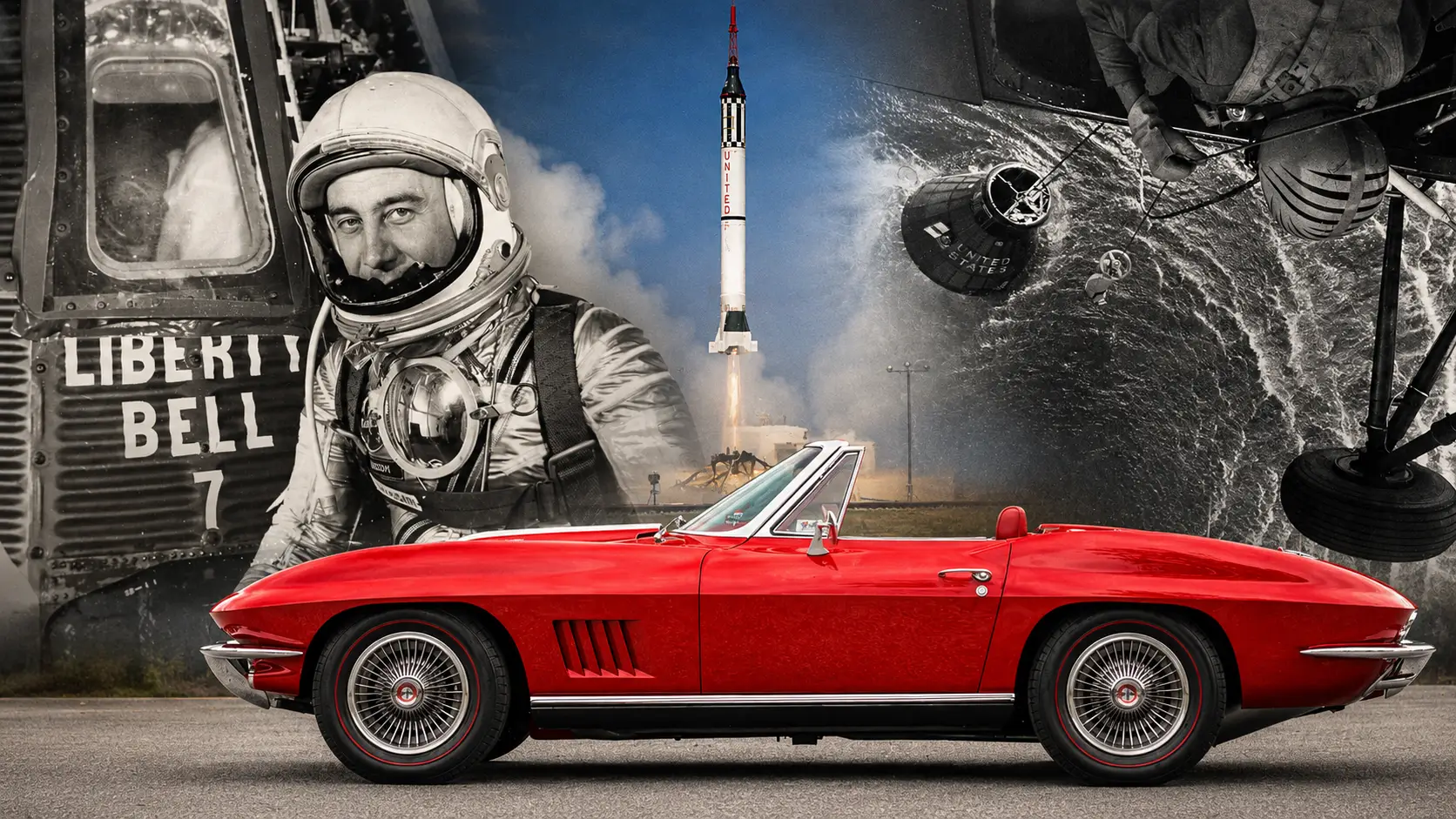
On July 21, 1961, Virgil “Gus” Grissom climbed aboard Liberty Bell 7 and became the second American to travel into space. His Mercury-Redstone 4 mission was only the second crewed American spaceflight, following Alan Shepard’s Freedom 7 flight less than three months earlier, but it represented another critical step toward NASA’s larger objective: placing an American astronaut into orbit.
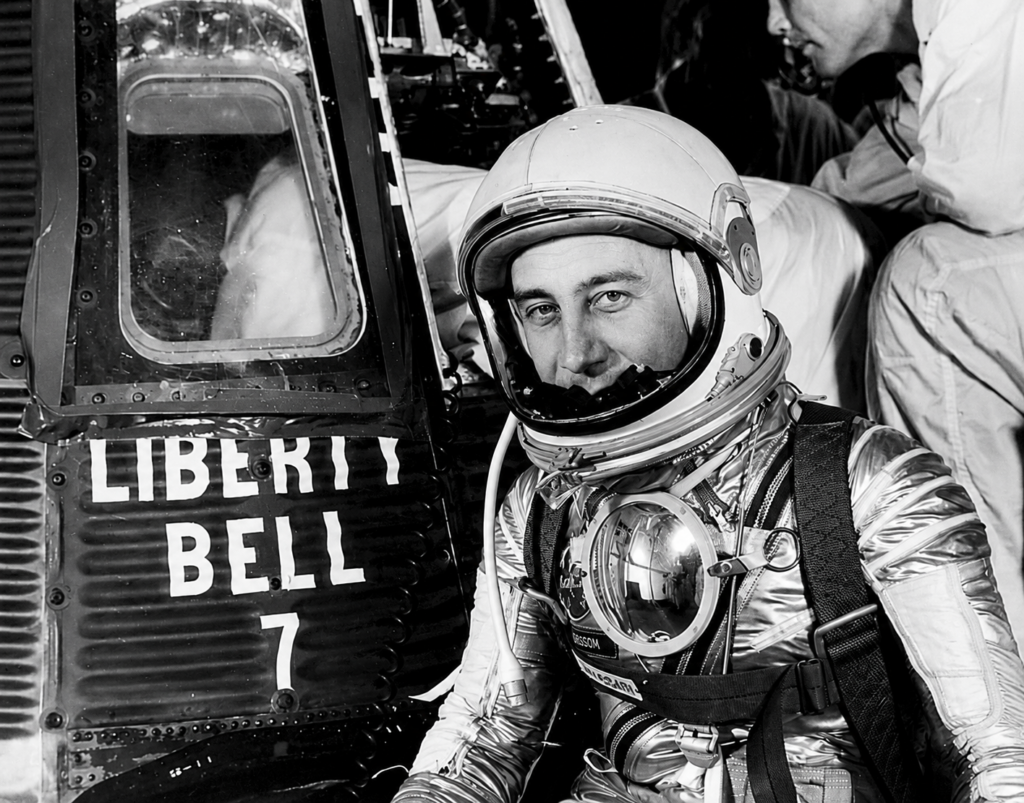
Virgil “Gus” Grissom (1926–1967) was one of the toughest, most accomplished pioneers of America’s early Space Age, a test pilot whose courage helped carry NASA from its first suborbital missions toward the Moon. As the second American in space and later the first man to fly in space twice, Grissom stood at the very center of the Mercury and Gemini programs at a time when every mission pushed into the unknown. His life was tragically cut short during the Apollo 1 fire, but his legacy remains deeply woven into the story of American exploration, determination, and technological progress. Few men better embodied the bold, forward-looking spirit that also made Corvette such a natural symbol of the era. (Image courtesy of the National Aeronautics and Space Administration (NASA)).
Launched from Cape Canaveral, Liberty Bell 7 accelerated beyond 5,100 mph and carried Grissom to an altitude of approximately 118 miles. The suborbital flight lasted just 15 minutes and 37 seconds, yet it gave NASA valuable experience with spacecraft control, reentry and human performance beyond Earth’s atmosphere. Grissom manually maneuvered the capsule during portions of the flight and observed the Florida coastline through a larger window that had been added at the astronauts’ request.
The mission proceeded almost exactly as planned until splashdown.
As a recovery helicopter approached the capsule in the Atlantic Ocean, Liberty Bell 7’s explosively actuated side hatch suddenly separated. Water immediately began pouring into the spacecraft. Grissom escaped through the open hatch, but water entering his pressure suit caused him to sink progressively lower in the ocean. He struggled to remain afloat beneath the helicopter’s rotor wash until the recovery crew finally pulled him to safety.

The precise reason the hatch released was never conclusively established. Grissom consistently maintained that he had not activated it, and NASA leadership was inclined to believe him. Triggering the hatch manually frequently left a severe bruise on the astronaut’s hand, but Grissom had no such injury. Even after the spacecraft was recovered decades later, investigators found no conclusive evidence proving what caused the hatch to fire.
Meanwhile, the waterlogged capsule became too heavy for the recovery helicopter to lift. With the aircraft’s engine beginning to overheat, the crew was forced to release it. Liberty Bell 7 slipped beneath the waves and sank more than three miles to the bottom of the Atlantic.
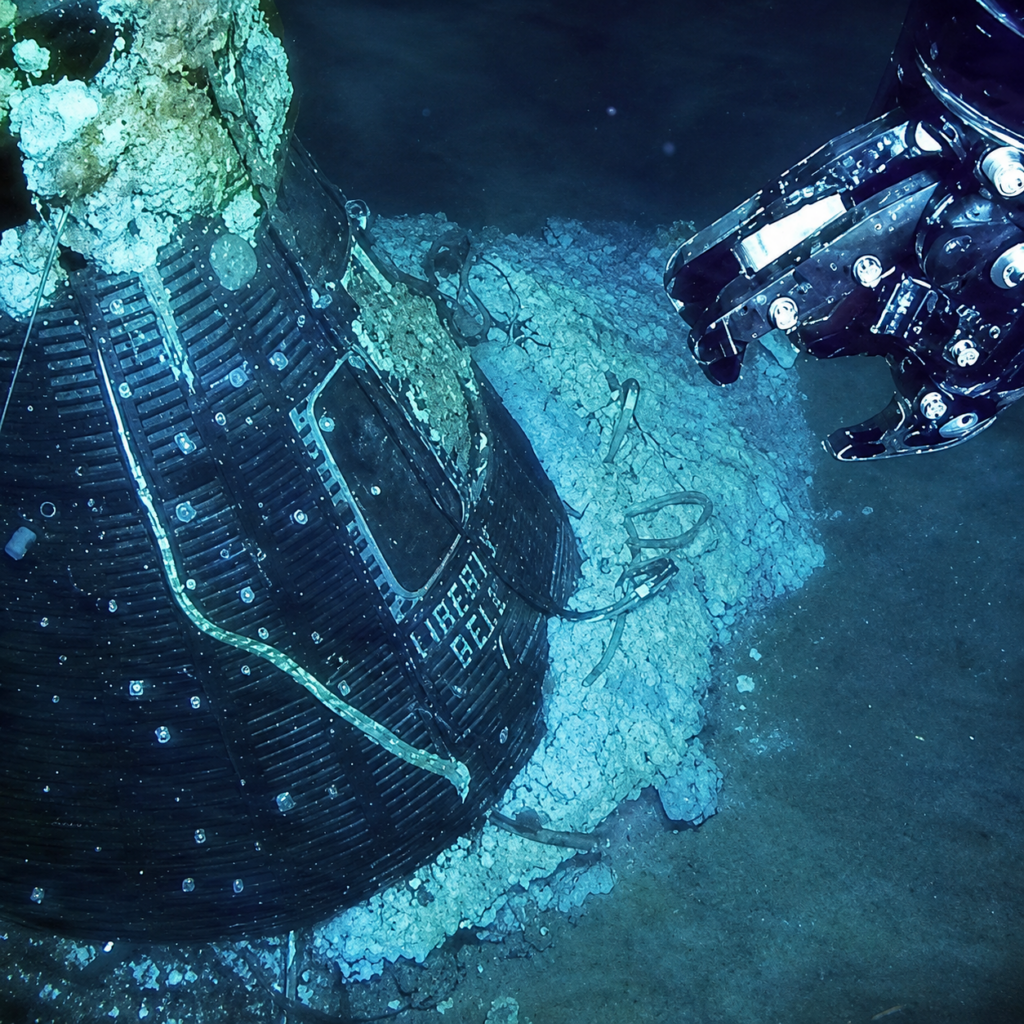
The spacecraft remained on the floor of the Atlantic for nearly 38 years, resting more than three miles beneath the surface in one of the most difficult environments on Earth to reach. Although its location was narrowed over time, finding and recovering the capsule required advanced deep-sea search technology, careful planning and a willingness to confront the same kinds of technical uncertainty that had defined the original Mercury program. When Liberty Bell 7 was finally located at a depth of more than 15,000 feet, it was partially buried in sediment and bore the unmistakable evidence of nearly four decades beneath the ocean.
The capsule was raised on July 20, 1999—just one day before the anniversary of Grissom’s historic flight—and its recovery immediately became one of the most remarkable preservation stories in spaceflight history. After an extensive conservation effort, Liberty Bell 7 emerged as a remarkably intact artifact from America’s earliest years in space. Today, the spacecraft is preserved and displayed at the Cosmosphere in Hutchinson, Kansas.
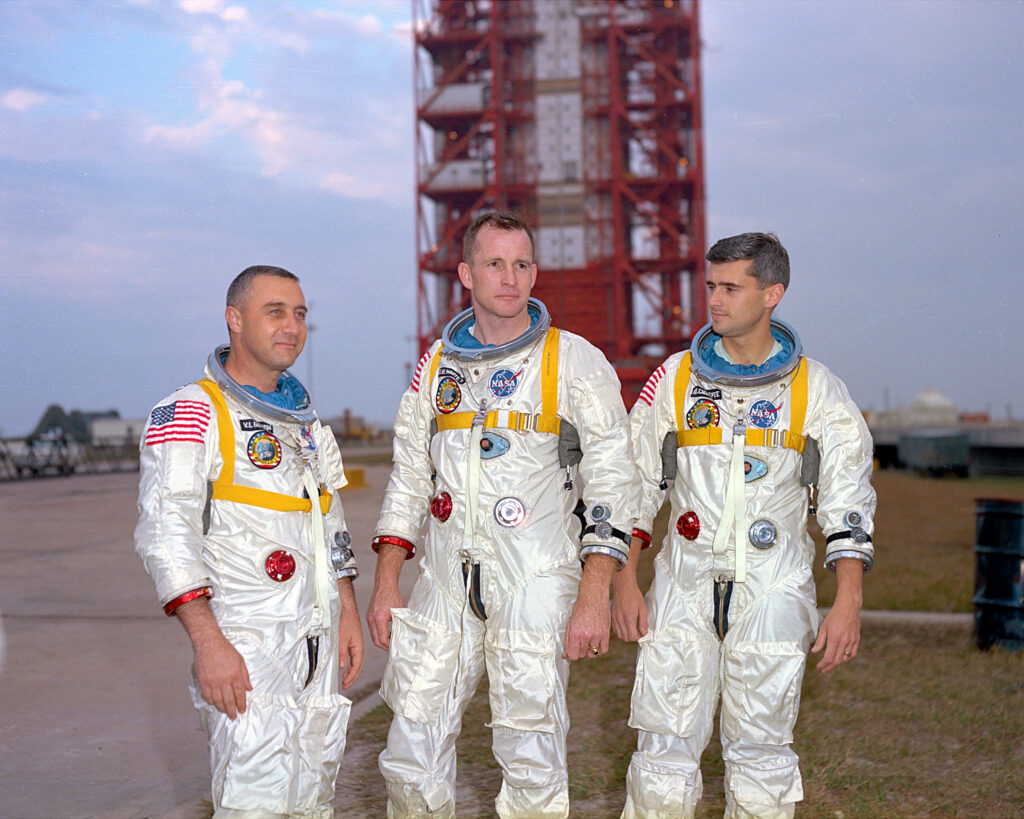
Grissom’s career did not end with Mercury. On March 23, 1965, he commanded Gemini 3, NASA’s first crewed Gemini mission, and became the first person to travel into space twice. He was later selected to command the first crewed Apollo mission. Grissom, Ed White and Roger Chaffee were killed on January 27, 1967, when a fire swept through their Apollo command module during a launch-pad test. The investigation that followed led to substantial spacecraft, manufacturing and testing changes before the Apollo program resumed.
Like several of his fellow astronauts, Grissom also became closely associated with the Chevrolet Corvette. The connection grew through Jim Rathmann, the 1960 Indianapolis 500 winner who operated a Chevrolet dealership near Cape Canaveral. Through an arrangement with Chevrolet, astronauts could lease a new vehicle for the symbolic price of one dollar per year. Most naturally gravitated toward Corvette.

For men who lived at the intersection of engineering, speed and calculated risk, the attraction was understandable. Corvette offered advanced American performance in a shape that looked every bit as modern as the rockets rising from Florida’s launch pads. These were not simply celebrity endorsements. Many of the astronauts were military pilots and test pilots who understood machinery, respected performance and genuinely enjoyed driving fast cars.
Grissom drove several Corvettes during his NASA career, including a Glen Green 1965 Sting Ray coupe delivered through Jim Rathmann Chevrolet. The car was equipped with Chevrolet’s L76 327-cubic-inch V8, rated at 365 horsepower, along with a four-speed manual transmission, factory air conditioning and a 3.55:1 rear axle. Grissom had previously driven fuel-injected Corvettes, but the L76 was the most powerful small-block available with air conditioning for 1965, making it a particularly logical choice for a car used in Florida. Its history was later reconstructed through delivery records, period photographs, identifying numbers found on the car and confirmation from Grissom’s son, Scott, who remembered the coupe and its specifications in remarkable detail.
The most famous Corvette associated with Grissom, however, remains his 1967 Sting Ray convertible. Originally finished in Lynndale Blue, it carried Chevrolet’s formidable L71 427-cubic-inch Tri-Power V8, factory-rated at 435 horsepower and paired with a four-speed manual transmission. The car was later fitted with a steep 4.56:1 rear axle that gave Grissom a considerable advantage during the informal acceleration contests enjoyed by several of the astronauts. Extensively documented through its original title, correspondence, photographs and other historical material, the convertible has become one of the strongest surviving links between Corvette and America’s early space program—a machine whose speed, engineering and unmistakable confidence reflected the character of the man who drove it.

Gus Grissom’s 1967 Corvette Sting Ray convertible was one of the most formidable road-going Corvettes of its era, powered by Chevrolet’s L71 427-cubic-inch Tri-Power V8 and backed by a four-speed manual transmission. Rated at 435 horsepower, the car matched Grissom’s appetite for speed, engineering and machines that demanded the driver’s full attention. Today, it stands as one of the most important surviving links between America’s early astronauts and the Corvette, preserving the spirit of a remarkable man whose life was defined by courage, precision and forward momentum.
It was one of the most formidable road-going Corvettes Chevrolet had produced to that point: loud, mechanically direct and brutally quick. Grissom’s time with the car was tragically brief, but the Corvette remains a tangible link to a man who helped move the United States from short suborbital flights toward the Moon.
On July 21, we remember Liberty Bell 7, the courage required to fly it and the astronaut whose life connected two enduring symbols of American ambition—the spacecraft that carried the nation upward and the Corvette that carried its pioneers across the ground. Gus Grissom was more than the second American in space; he was one of the men who helped transform spaceflight from an uncertain experiment into a disciplined national effort. His calm under pressure, technical judgment and willingness to accept extraordinary risk helped NASA build the confidence and operational experience it would need for Gemini, Apollo and, ultimately, the journey to the Moon.
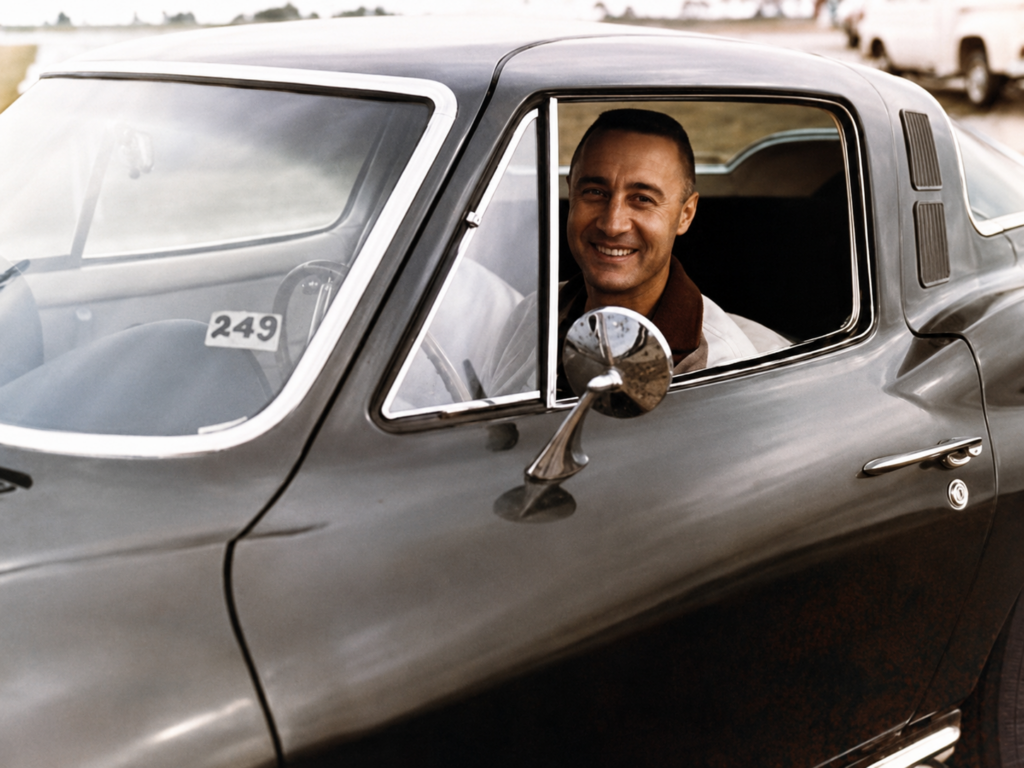
Virgil “Gus” Grissom’s story remains inseparable from the boldness of the era in which he lived. He represented a generation that believed limits were meant to be tested, whether at the controls of a rocket-powered spacecraft or behind the wheel of a high-performance Corvette. His life was cut tragically short, but his influence endured in the missions that followed, the safety improvements born from Apollo 1, and the achievements of the astronauts who carried the program forward. On this anniversary, we honor not only the flight of Liberty Bell 7, but the man whose courage, skill and relentless forward momentum helped shape the earliest chapters of America’s space program.
This article is respectfully dedicated, first and foremost, to Virgil “Gus” Grissom and to the family who shared in both his extraordinary service and his loss. His courage, discipline and commitment helped shape the earliest years of America’s space program, while the sacrifice borne by those who loved him remains an inseparable part of that legacy. Neither his contributions nor the cost of them will ever be forgotten.
It is also dedicated to my father, Joe Kolecki, who devoted more than 30 years of his professional life to NASA and to the advancement of numerous initiatives within America’s space program. Through his work on several unmanned missions and related programs, he contributed in his own way to the larger effort of exploration, discovery and progress. Just as importantly, he gave our family the rare privilege of experiencing NASA from a perspective few people will ever fully know or appreciate.
Thank you, Dad, for the work you did, for the example you set and for sharing that remarkable world with us. I love you.
—Your son, Scott