By the middle of the first decade of the twenty-first century, the Chevrolet Corvette had accomplished something that would have seemed improbable to many of the engineers and executives who had worked to keep the automobile alive during its earliest years. What began in 1953 as General Motors’ tentative experiment with an American two-seat sports car had evolved into one of the world’s most formidable performance automobiles. It had survived corporate uncertainty, tightening emissions regulations, economic recessions, changing consumer tastes, and periods when its continued existence was anything but assured. Through it all, the Corvette remained unmistakably American, built around a front-mounted V8 engine, rear-wheel drive, and a philosophy that prioritized performance without demanding the extraordinary prices associated with Europe’s most prestigious sports cars.
The introduction of the sixth-generation Corvette for the 2005 model year represented another important step in that evolution. Chevrolet had taken the considerable achievements of the C5 generation and refined them into a smaller, more sophisticated, and more aggressively styled automobile. The new Corvette was faster, more responsive, and better suited to the demands of an increasingly competitive global performance-car market. Its fixed headlights marked a dramatic visual departure from decades of Corvette tradition, while its 400-horsepower LS2 V8, improved chassis, and substantially revised interior demonstrated that General Motors intended to compete on more than horsepower alone.
Yet the C6’s introduction was only the beginning. As impressive as the 2005 Corvette had been, the following model year would reveal the true extent of Chevrolet’s ambitions.
For 2006, the standard Corvette coupe and convertible returned with additional refinements, including a new six-speed automatic transmission that offered both fully automatic operation and driver-controlled paddle shifting. It was a meaningful improvement that broadened the Corvette’s appeal without compromising the performance characteristics that had defined the model. Meanwhile, Chevrolet’s engineers were preparing something considerably more ambitious: an automobile that would combine the company’s most advanced production chassis technology with a hand-built, 427-cubic-inch V8 engine inspired by the lessons learned through international endurance racing.
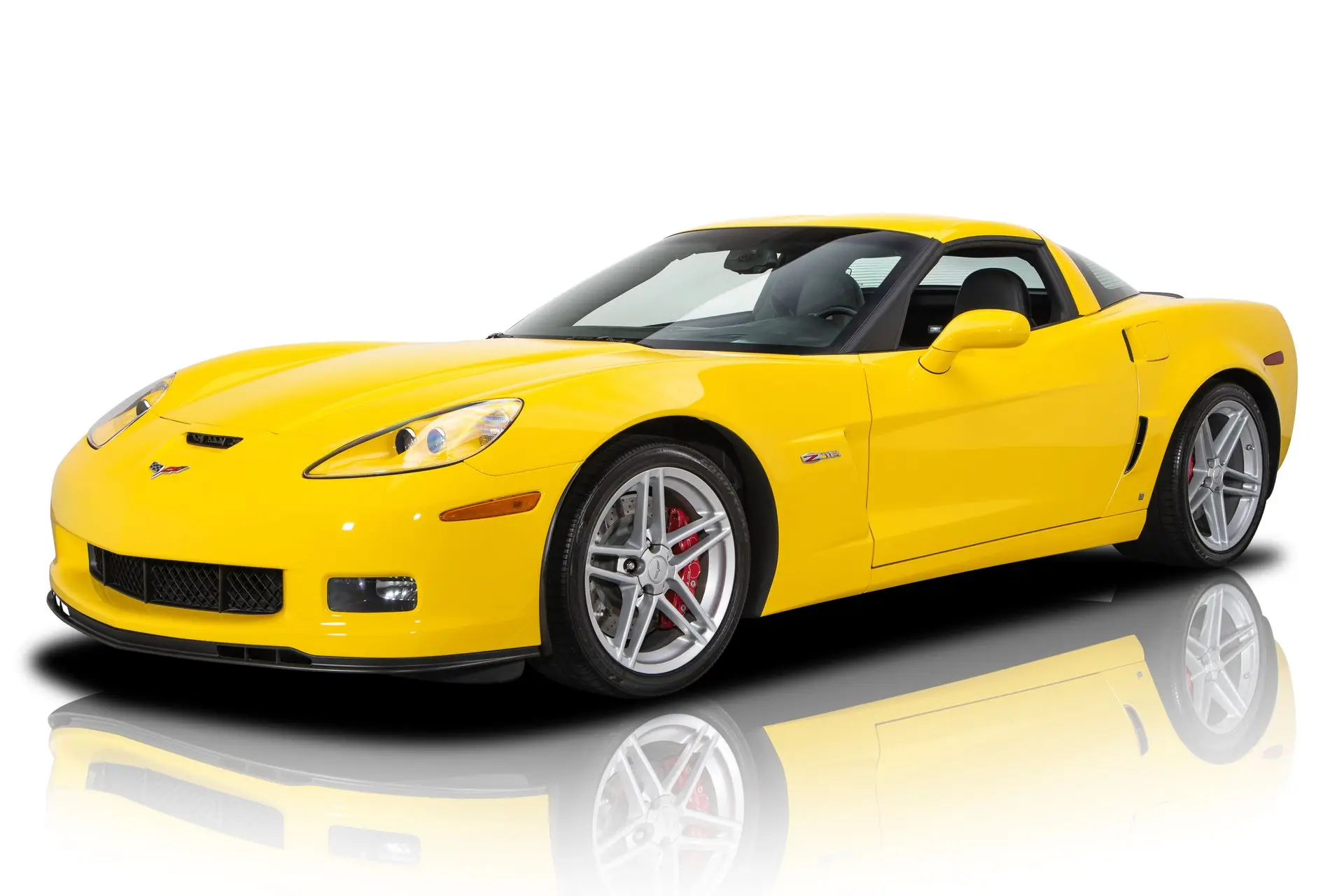
That automobile was the 2006 Corvette Z06.

With 505 horsepower, a lightweight aluminum chassis, carbon-fiber body components, an advanced dry-sump lubrication system, and performance capabilities that rivaled automobiles costing considerably more, the new Z06 represented a watershed moment in Corvette development. It was not simply a more powerful version of the standard car. It was the culmination of a coordinated engineering effort involving General Motors‘ production development teams, its Powertrain organization, specialized manufacturing operations, and the men and women responsible for Corvette Racing’s international success.
The relationship between those organizations was particularly important. For decades, racing had provided Chevrolet with opportunities to test new ideas, demonstrate the durability of its engineering, and strengthen the Corvette’s performance credentials. By the time the C6 Z06 reached production, however, the exchange between racing and road-car development had become far more sophisticated. Engineers moved between programs, materials and manufacturing techniques were evaluated for use in both environments, and knowledge gained under the extraordinary demands of endurance racing helped inform the development of automobiles intended for everyday roads. Chevrolet’s own contemporary engineering documentation described this exchange as flowing in both directions, with the production and competition programs benefiting from one another’s expertise.
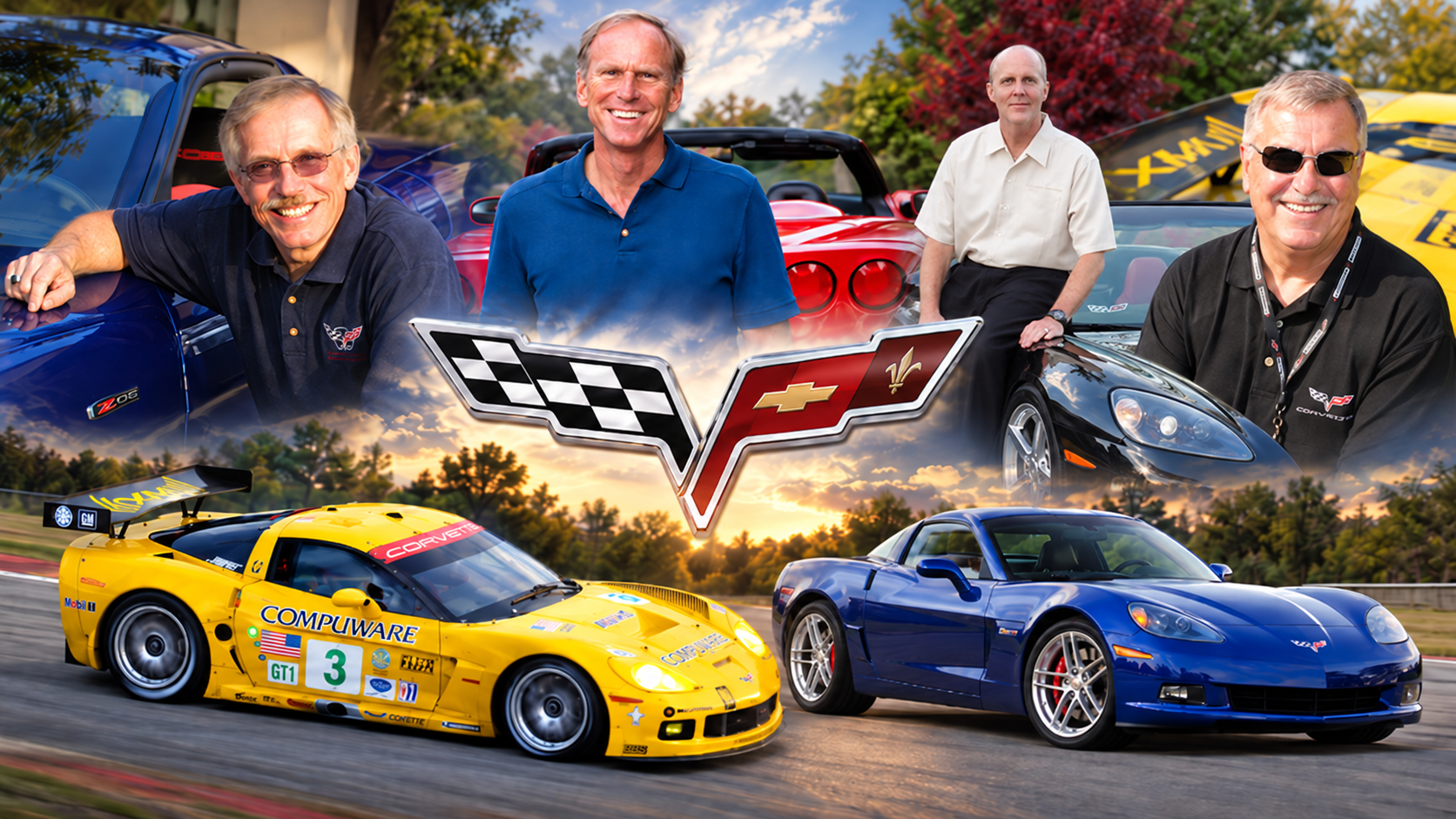
Just as important were the people who made these achievements possible. Corvette chief engineer Dave Hill had spent years transforming the automobile into a genuinely world-class sports car. His successor, Tom Wallace, would inherit a program operating at an extraordinarily high level of technical sophistication. Engineers such as Tadge Juechter were helping shape the Corvette’s future, while the specialists responsible for the LS7 engine were pushing the traditional Chevrolet small-block architecture into territory once considered the exclusive domain of far more exotic engine designs. Across the racing program, engineers, drivers, mechanics, and team managers were demonstrating what the Corvette could accomplish against some of the world’s most respected manufacturers.
Their accomplishments were taking place against a complicated corporate backdrop. General Motors was confronting serious financial pressures, structural challenges, and increasing scrutiny of its product strategy. The American automotive industry was changing, and the company’s leadership faced difficult decisions about where to invest its resources. Against that uncertainty, the Corvette stood as a particularly visible demonstration of what General Motors could achieve when talented people were given the opportunity to pursue a clear engineering objective.
The 2006 Corvette was therefore more than an automobile distinguished by exceptional acceleration figures or an impressive collection of technical specifications. It was a product of institutional knowledge accumulated over more than half a century, a testament to the engineers who continued refining Chevrolet’s small-block V8, and evidence of the growing influence of international motorsport on the Corvette’s development.
To appreciate the significance of the 2006 model year, however, it is necessary to understand the circumstances that produced it. The story begins not with the Z06’s 505-horsepower engine or its aluminum chassis, but with the changing automotive landscape of the early 2000s and the decisions that positioned the Corvette for one of the most remarkable periods in its history.
General Motors and the American Automotive Industry in 2006
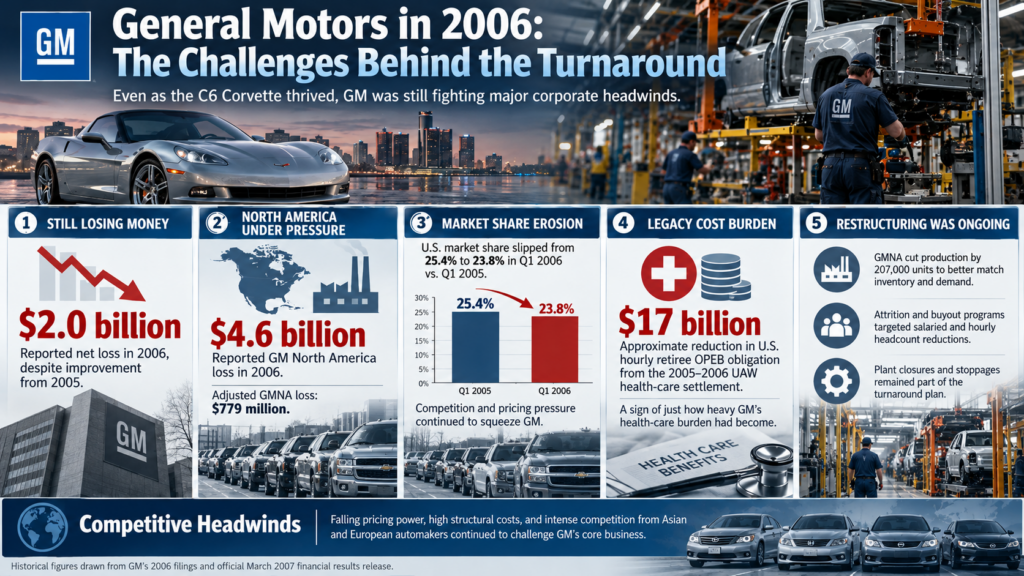
Image Note: The accompanying infographic incorporates historically documented financial data alongside AI-generated illustrative imagery. The factory scenes, vehicles, and other background elements are artistic representations and should not be interpreted as authentic archival photographs from 2006.
The American automobile industry entered 2006 facing a collection of challenges that had been building for years. Rising healthcare and pension obligations, intense competition from overseas manufacturers, fluctuations in energy prices, and changing consumer preferences were placing considerable pressure on Detroit’s traditional automakers. General Motors, once the unquestioned symbol of American industrial dominance, was struggling to reconcile its enormous manufacturing infrastructure with a marketplace that was becoming increasingly fragmented and competitive.
For Chevrolet, these pressures created a complicated environment in which to market a two-seat sports car. The Corvette was never intended to generate the sales volumes associated with mainstream sedans, pickup trucks, or sport utility vehicles. Its value to General Motors extended beyond the number of vehicles leaving the Bowling Green assembly plant. The Corvette served as a technological showcase, a source of engineering prestige, and an important symbol of Chevrolet’s performance heritage.
That role had become increasingly important as General Motors worked to demonstrate that it could produce automobiles capable of competing with the best vehicles offered by manufacturers around the world. The Corvette provided a particularly compelling example because it combined exceptional performance with a pricing strategy that remained substantially more accessible than many of its European competitors.
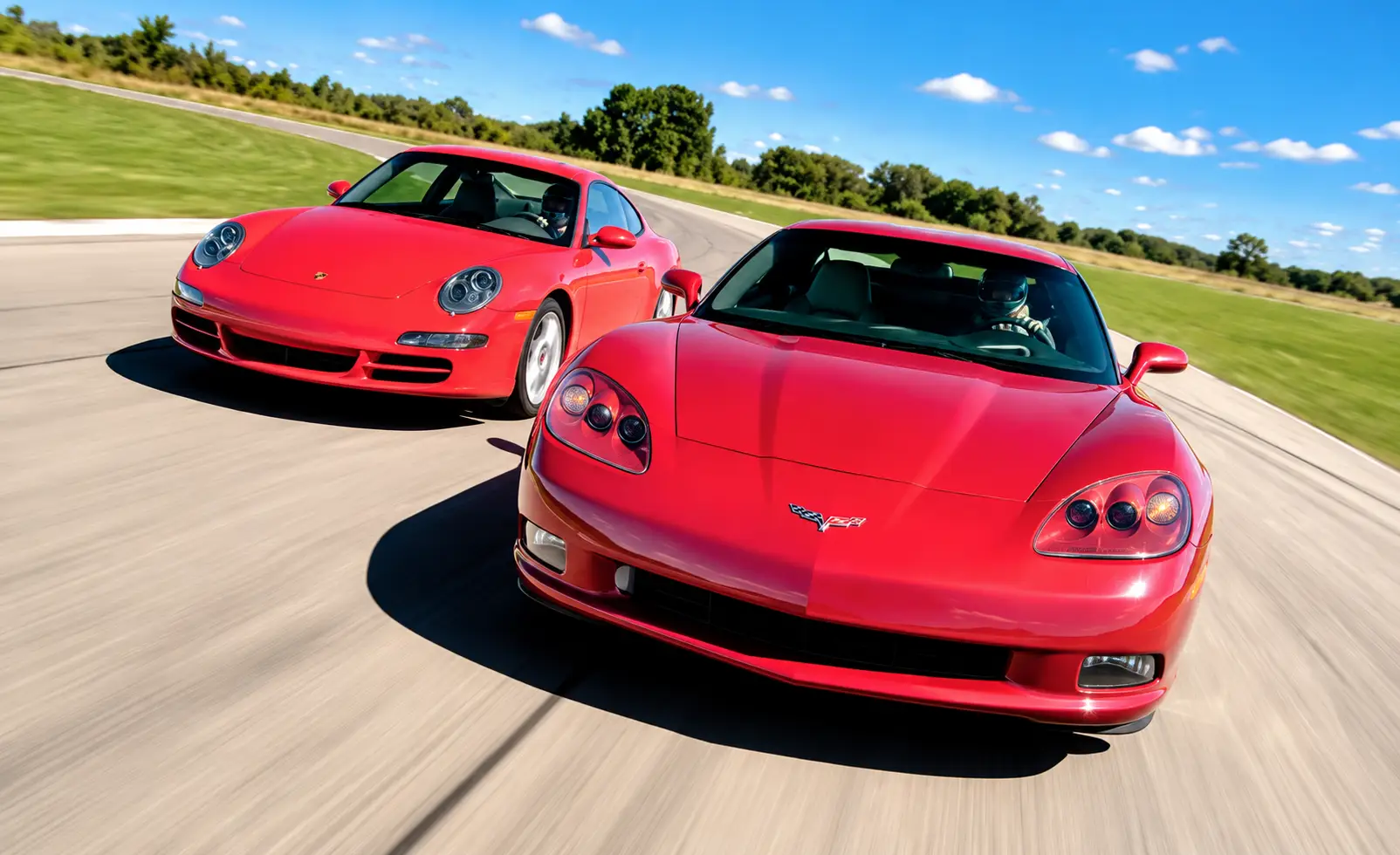
The Porsche 911, for example, had long represented one of the benchmarks against which the Corvette was judged. Both automobiles offered substantial performance, established enthusiast communities, and decades of competition heritage. Yet they approached the sports-car formula from fundamentally different engineering traditions. Porsche continued refining its rear-engine architecture, while Chevrolet relied on the advantages of a front-mounted V8, a rear-mounted transaxle, and an increasingly sophisticated chassis structure.
Ferrari occupied a different position in the market, emphasizing exclusivity, advanced engine technology, and an ownership experience associated with the upper reaches of the exotic-car world. The Dodge Viper, meanwhile, represented perhaps the Corvette’s most direct domestic performance rival, pairing aggressive styling with a large-displacement V10 engine and a more uncompromising driving character.
The Corvette’s challenge was to compete convincingly against these automobiles without abandoning the qualities that made it appealing to American buyers. It needed to deliver extraordinary acceleration and handling, but it also needed to remain practical enough for regular use. Its occupants expected effective climate control, reasonable luggage capacity, highway comfort, and the kind of mechanical dependability associated with a major automobile manufacturer.
This balance between performance and usability was central to the philosophy that had guided the Corvette’s development through the C5 and into the C6 generation. Chevrolet‘s engineers were not interested in producing a vehicle that excelled exclusively under ideal testing conditions. They wanted an automobile that could withstand the demands of prolonged high-speed driving, deliver predictable handling in a variety of environments, and provide owners with a rewarding experience regardless of whether they were commuting to work or participating in a weekend track event.
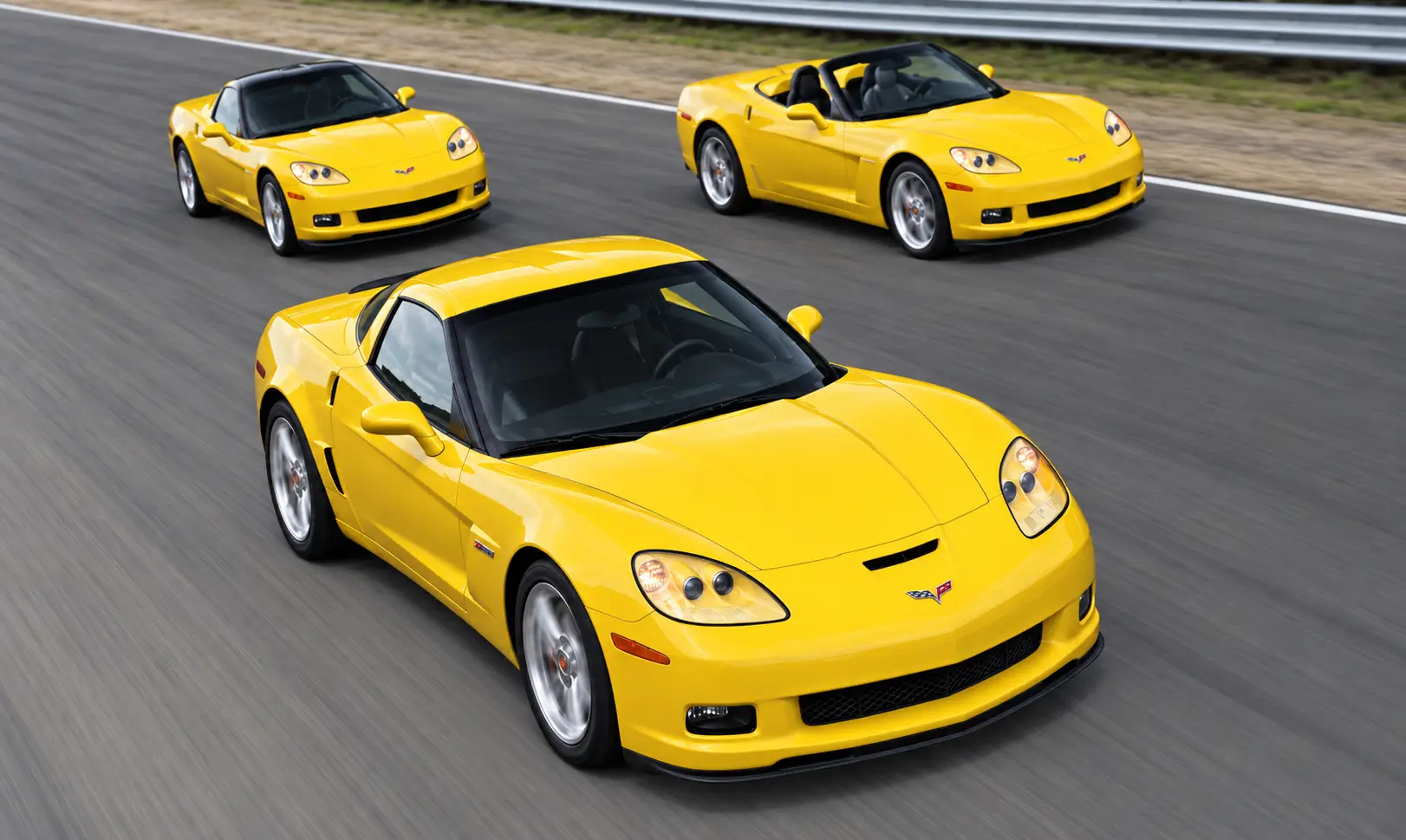
For 2006, that philosophy would be expressed through two complementary approaches. The standard Corvette coupe and convertible continued to emphasize accessible, everyday performance, while the new Z06 demonstrated how far the underlying architecture could be developed when maximum capability became the primary objective.
The distinction was significant because it allowed Chevrolet to serve different segments of the sports-car market without abandoning the Corvette’s fundamental identity. Buyers seeking a refined, powerful grand-touring automobile could choose the coupe or convertible, while enthusiasts demanding more extreme performance could purchase a Z06 developed with an unmistakable emphasis on competition.
In that respect, the 2006 Corvette lineup reflected a level of maturity that would have been difficult to imagine during the model’s early decades. Chevrolet was no longer attempting merely to establish the Corvette’s legitimacy as a sports car. It was offering a family of automobiles capable of satisfying different interpretations of what a world-class performance machine should be.
From the C5 to the C6: Building on a Successful Formula
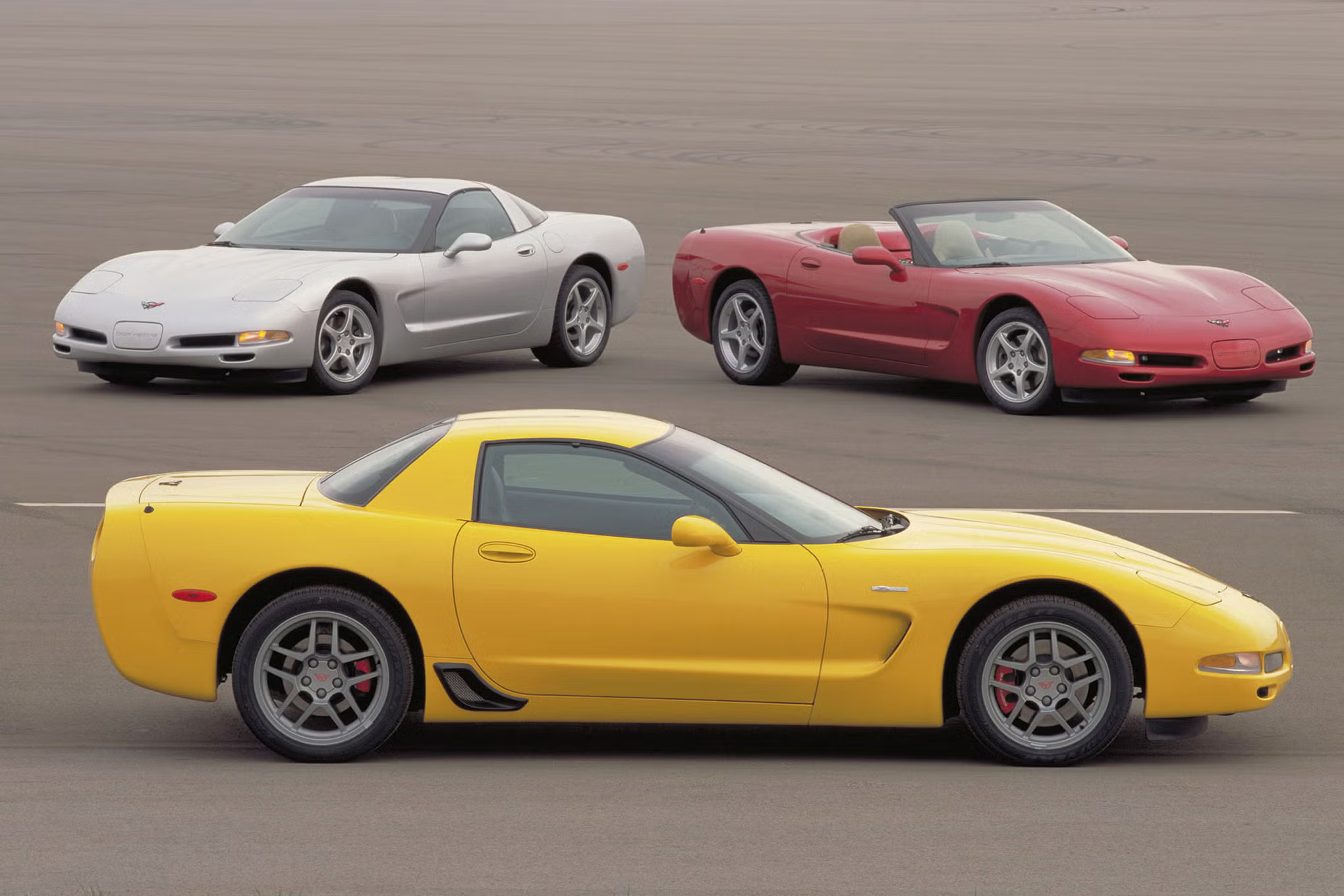
To understand the engineering achievements of the 2006 Corvette, it is useful to return briefly to the development of the fifth-generation car. When the C5 debuted for the 1997 model year, it introduced a substantially different structural philosophy from the C4 it replaced. Its hydroformed frame rails, central structural tunnel, rear-mounted transaxle, and newly developed LS1 V8 established an architecture that would influence Corvette engineering for decades.
The C5‘s development had been driven by the recognition that the Corvette needed more than incremental improvements to remain competitive. Its predecessor had enjoyed considerable success, but the demands placed on modern sports cars were increasing. Structural rigidity, crashworthiness, refinement, manufacturing efficiency, and aerodynamic performance all required greater attention. Engineers needed a platform capable of accommodating future increases in horsepower without introducing unacceptable compromises in handling or durability.
The resulting C5 architecture provided that foundation. Its rear-mounted transaxle contributed to balanced weight distribution, while the hydroformed perimeter rails and central tunnel created a structure that was both comparatively lightweight and exceptionally rigid. The introduction of the LS-series small-block V8 also represented an important departure from earlier Chevrolet engine designs. Although it retained the traditional cam-in-block configuration, the LS1 incorporated an all-new architecture with substantial potential for further development.

That potential became increasingly apparent as the C5 generation matured. The introduction of the Z06 for 2001 demonstrated that Chevrolet could transform the standard Corvette into a substantially more focused performance machine without abandoning the basic architecture. The Z06 combined reduced weight, revised suspension tuning, improved braking, and the higher-output LS6 engine to create one of the most capable Corvettes of its era.
By the end of C5 production in 2004, Chevrolet had established a formula that was difficult to dismiss. The Corvette offered genuine high-performance capability, relatively accessible pricing, and an increasingly impressive record in international motorsport. The challenge facing the engineers responsible for its successor was therefore different from the one that had confronted the C5 development team. They were no longer attempting to correct fundamental weaknesses in an aging platform. Instead, they needed to take an already successful automobile and make it substantially better.
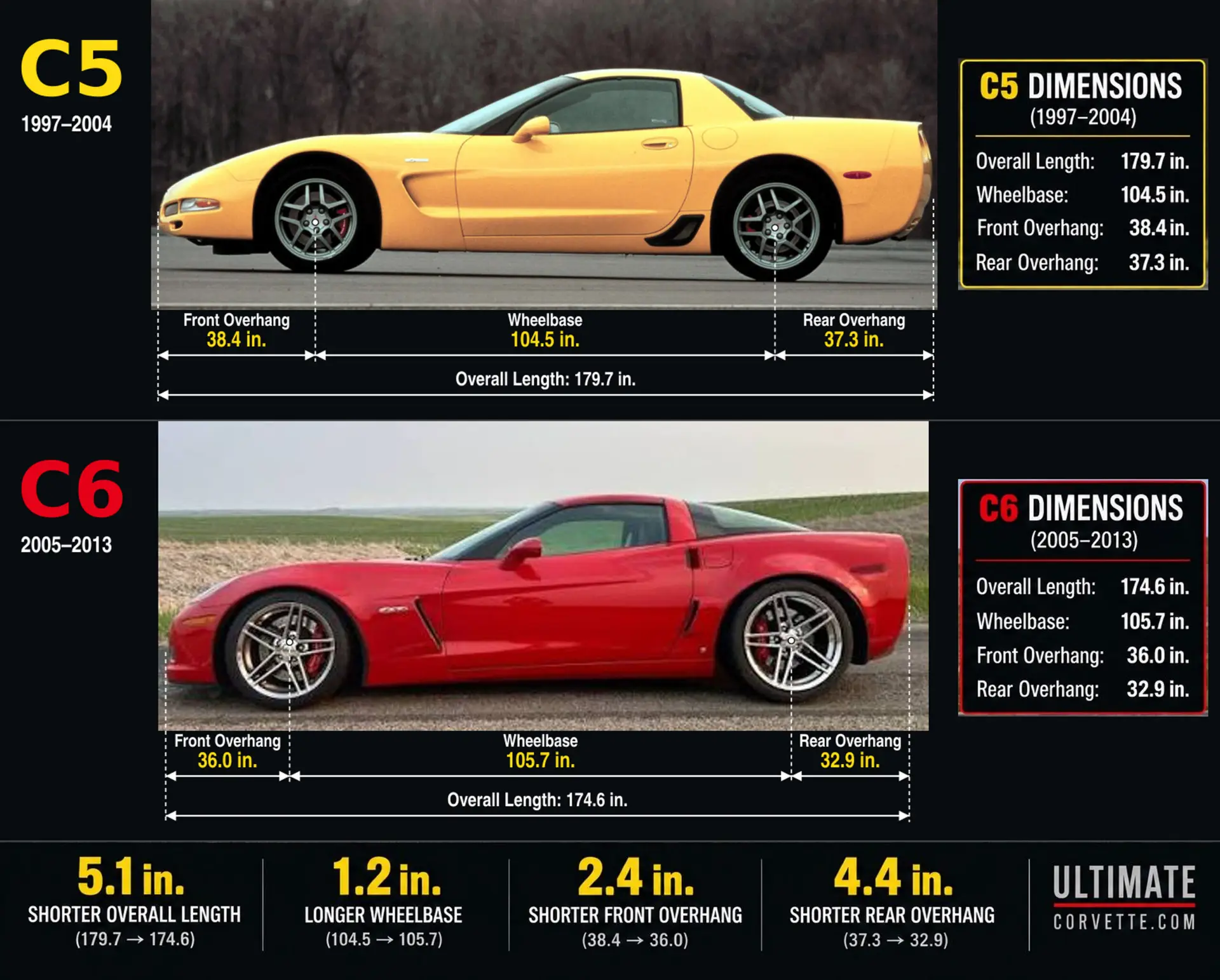
The sixth-generation Corvette that emerged for 2005 was the product of that philosophy. Its wheelbase remained 105.7 inches, preserving the basic proportions and structural advantages of the C5, but its overall length was reduced, and its exterior design became more compact and aggressive. Fixed headlights, a revised front fascia, sharply defined fenders, and a cleaner rear treatment gave the C6 a distinctive identity, while extensive underbody development improved the automobile’s handling, performance, and refinement.
Chevrolet also recognized that the C6 needed to appeal to a broader range of buyers. For some enthusiasts, the Corvette’s principal attraction remained its extraordinary performance potential. For others, the automobile represented an opportunity to enjoy a powerful, stylish, and relatively comfortable sports car that could be driven regularly. The C6’s engineering therefore reflected an effort to accommodate both expectations.
That philosophy carried directly into the 2006 model year. The LS2-powered coupe and convertible continued to deliver 400 horsepower and 400 lb-ft of torque, paired with a six-speed manual transmission or the newly available six-speed automatic. Buyers could select from different suspension configurations, including the more aggressive Z51 Performance Package and the electronically controlled Magnetic Selective Ride Control system. These choices allowed the Corvette to accommodate different driving preferences without requiring Chevrolet to develop entirely separate automobiles.
Meanwhile, the Z06 program demonstrated the underlying architecture’s extraordinary development potential. Chevrolet retained the basic front-engine, rear-transaxle configuration but substantially reengineered the automobile’s structure, powertrain, braking system, suspension, and aerodynamics. The result was a machine that shared the standard Corvette’s fundamental identity while operating at a markedly higher level of performance.
The significance of this approach extended beyond the 2006 model year. It established a development strategy in which the Corvette could serve as both a highly capable everyday sports car and the foundation for increasingly specialized performance variants. That strategy would become an essential characteristic of the C6 generation and would influence the direction of the Corvette program for years to come.
The People Behind the Sixth-Generation Corvette: Leadership, Engineering, and the Pursuit of Excellence
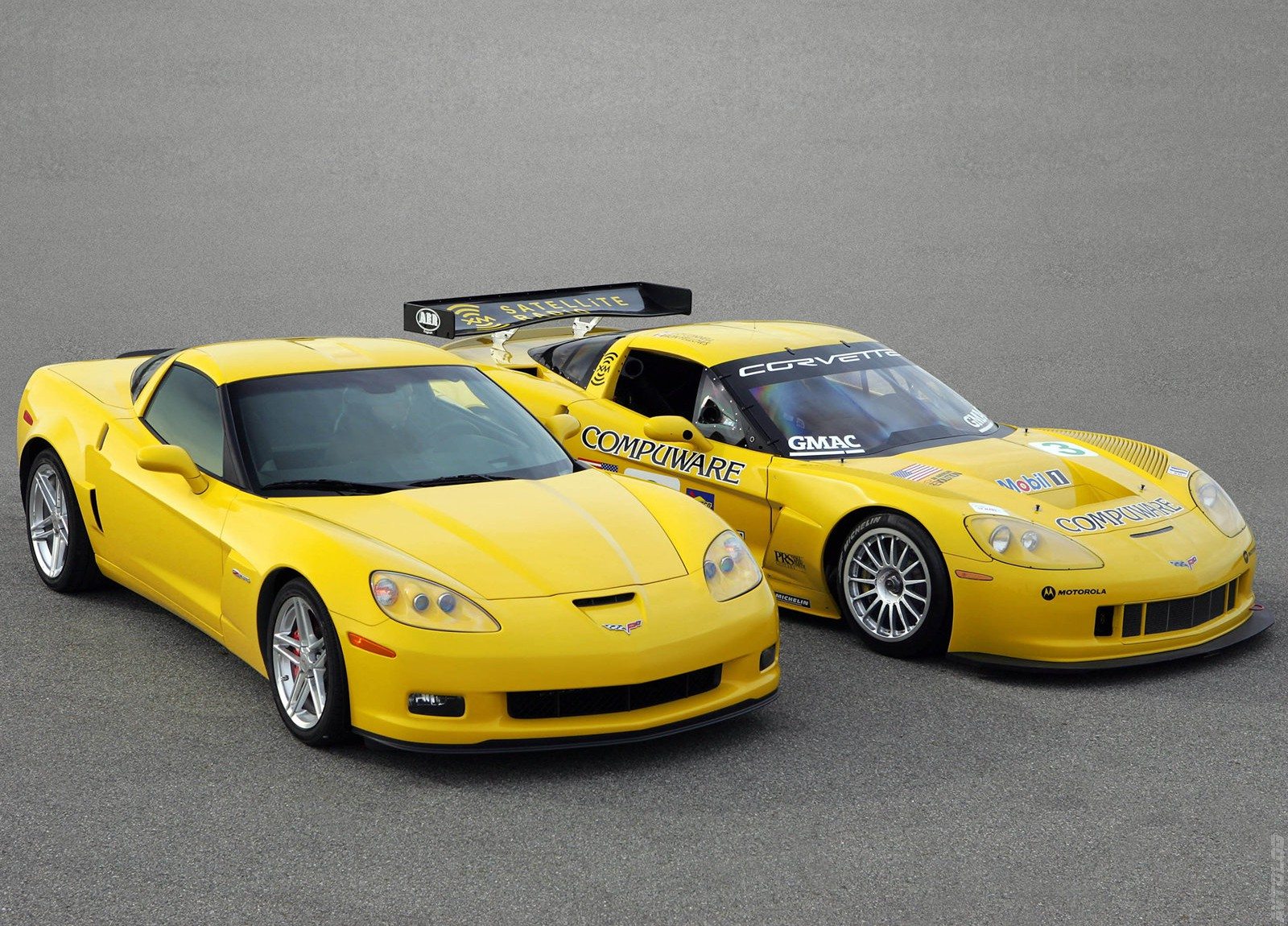
The development of the 2006 Corvette involved considerably more than the engineers responsible for its engine, suspension, and chassis. Behind the finished automobile stood an organization of designers, manufacturing specialists, test drivers, executives, and technical leaders whose individual contributions were essential to the success of the sixth-generation program. Their work required cooperation across multiple General Motors divisions, specialized suppliers, and the Corvette Racing organization. The challenge was not simply to produce a faster automobile, but to coordinate hundreds of technical decisions into a vehicle that could be manufactured consistently, satisfy increasingly demanding regulatory requirements, and compete against the world’s most respected sports cars.
By the time the 2006 model year arrived, Corvette engineering had developed an unusually cohesive institutional culture. Many of the individuals responsible for the C6 had participated in earlier development programs, allowing them to draw upon years of experience with the Corvette’s distinctive mechanical architecture. They understood the advantages of its front-engine, rear-transaxle configuration, the characteristics of its composite body construction, and the demands imposed by customers who expected both extraordinary performance and everyday reliability. That continuity helped the organization pursue ambitious engineering objectives without losing sight of the qualities that distinguished the Corvette from its competitors.

Dave Hill’s influence remained particularly important. Although his leadership of the Corvette program had already been discussed in connection with the C5, his contribution to the sixth-generation automobile extended into the details of its development and the organizational structure that supported it. Hill encouraged engineers to evaluate improvements in terms of their effect on the complete vehicle rather than treating individual performance figures as independent objectives. A more powerful engine, for example, offered little benefit if the cooling system could not sustain its output under prolonged operation, or if the chassis could not translate the additional torque into usable acceleration. This emphasis on systems integration helped establish the engineering discipline that characterized the C6.
Hill was also an advocate for preserving the Corvette’s unusual combination of performance and value. Within General Motors, engineering resources were never unlimited, and the Corvette’s comparatively modest production volume required careful decisions about investment. Expensive materials or specialized components could be justified when they delivered measurable performance advantages, but their adoption needed to support the automobile’s broader objectives. This philosophy became particularly important during the development of the Z06, where engineers pursued substantial weight reductions and increased performance without allowing the vehicle’s price to approach the exotic-car territory occupied by Ferrari and other limited-production manufacturers.
The transition from Hill to Tom Wallace represented an important moment in the Corvette’s leadership history. Wallace brought extensive experience in vehicle development, performance engineering, and motorsport-related activities. His responsibilities included maintaining the momentum established during the C5 and early C6 programs while overseeing continued development of the sixth-generation automobile. The change occurred at a time when Chevrolet was preparing to introduce one of the most technically ambitious Corvettes ever offered, making continuity within the engineering organization especially valuable.

Wallace’s background provided an appreciation for the relationship between production-vehicle engineering and competition. Racing environments expose weaknesses that may remain hidden during conventional road testing, particularly in areas involving sustained thermal loads, component fatigue, lubrication, and braking performance. The ability to translate those observations into meaningful production improvements required engineers who understood both environments. Although a road-going Corvette could not be engineered exclusively around racing requirements, the lessons learned through competition helped inform decisions about durability and high-performance capability.
Tadge Juechter represented another important element of that continuity. His involvement with Corvette engineering extended through the C5 program and into the development of the C6, where he contributed to the vehicle’s architecture and engineering direction. Juechter’s work reflected the increasing sophistication of modern vehicle development, in which structural analysis, vehicle dynamics, packaging, and manufacturing considerations had to be evaluated simultaneously. The Corvette’s performance depended on the relationship among these systems, and decisions made early in the development process could influence the automobile’s capabilities years later.

Juechter would become Corvette chief engineer in July 2006, following Wallace’s brief tenure in the position. This transition occurred after the principal engineering decisions defining the 2006 production Corvette had already been made, but it placed Juechter in a position to guide subsequent development of the C6 platform. His later association with the Corvette’s increasingly ambitious performance programs reflected the importance of retaining experienced technical leadership within an organization whose products evolved over long development cycles.
The design organization operated under equally demanding expectations. Tom Peters and his colleagues were responsible for creating an exterior appearance that communicated the Corvette’s performance potential while satisfying increasingly complex aerodynamic, safety, and manufacturing requirements. The C6’s shorter overhangs, pronounced fenders, exposed headlights, and carefully controlled body surfaces reflected a deliberate effort to create a more compact and athletic automobile. However, those elements also required close cooperation with engineers responsible for cooling airflow, crash structures, lighting, and vehicle packaging.
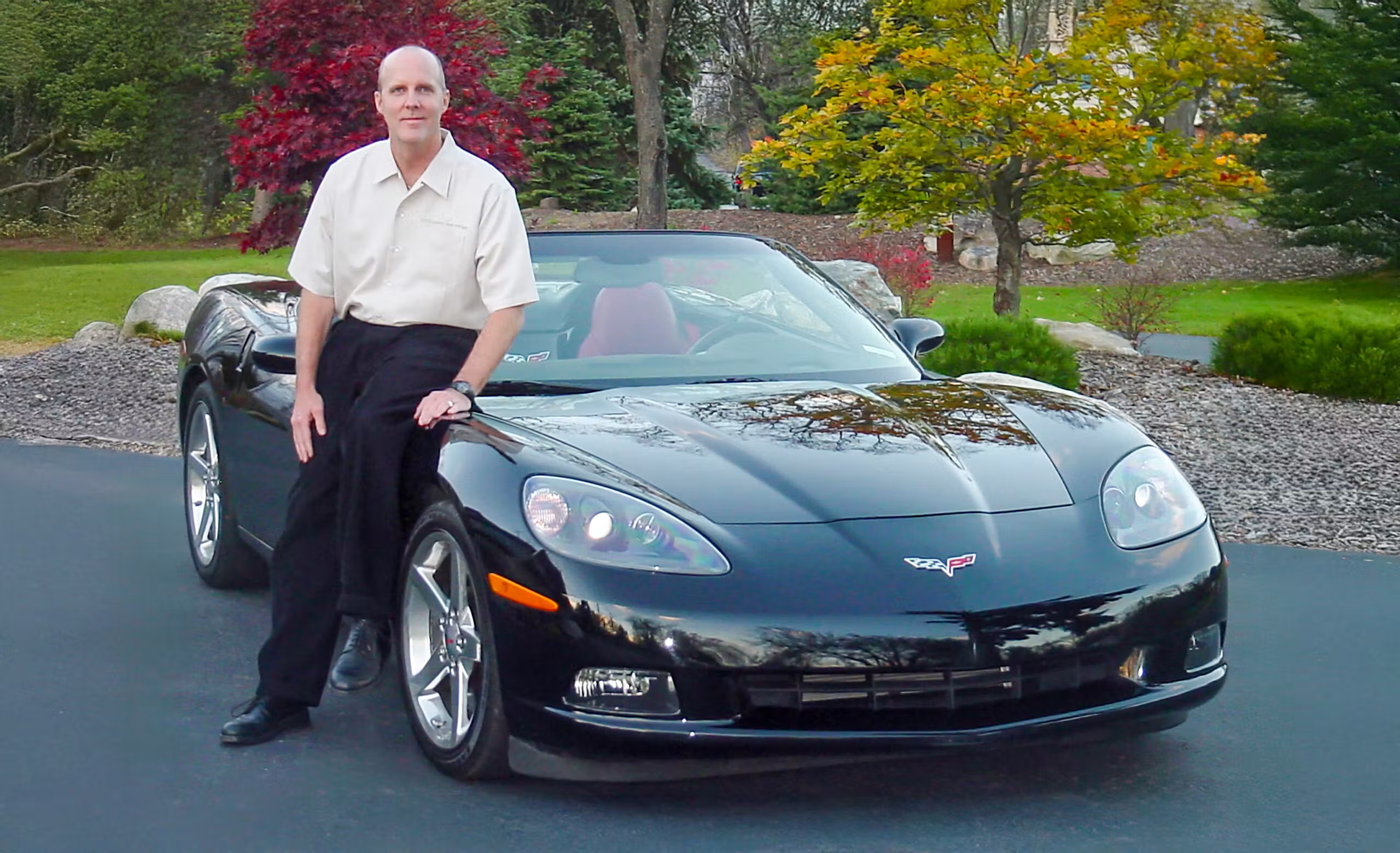
Peters’ approach emphasized the Corvette’s established visual characteristics without treating them as restrictions that prevented further development. The automobile retained its long hood, broad shoulders, low roofline, and distinctive rear lighting arrangement, but its proportions were revised to create a more concentrated expression of performance. The C6’s appearance was therefore the result of both artistic judgment and engineering necessity. Its designers needed to preserve a recognizable identity while allowing the vehicle to evolve beyond the styling conventions of earlier generations.
The Z06 created additional challenges for the design organization. Its wider rear bodywork, functional cooling openings, specialized front fascia, and aerodynamic features needed to communicate a more aggressive character without appearing disconnected from the standard Corvette. These elements also served practical purposes, helping accommodate wider tires, increased cooling demands, and the airflow requirements associated with sustained high-speed operation. The result was an automobile whose appearance reflected its mechanical capabilities rather than relying entirely on decorative performance cues.
General Motors Powertrain engineers faced a different set of challenges. The LS7 engine represented an ambitious expansion of the small-block V8’s capabilities, requiring extensive development in areas involving airflow, combustion efficiency, valvetrain durability, lubrication, and materials. Engineers had to reconcile the demands of a 7.0-liter naturally aspirated engine producing more than 500 horsepower with the requirements imposed on a modern production powertrain. The finished engine needed to meet emissions standards, operate reliably in widely varying climates, tolerate prolonged high-speed use, and provide acceptable drivability under ordinary conditions.
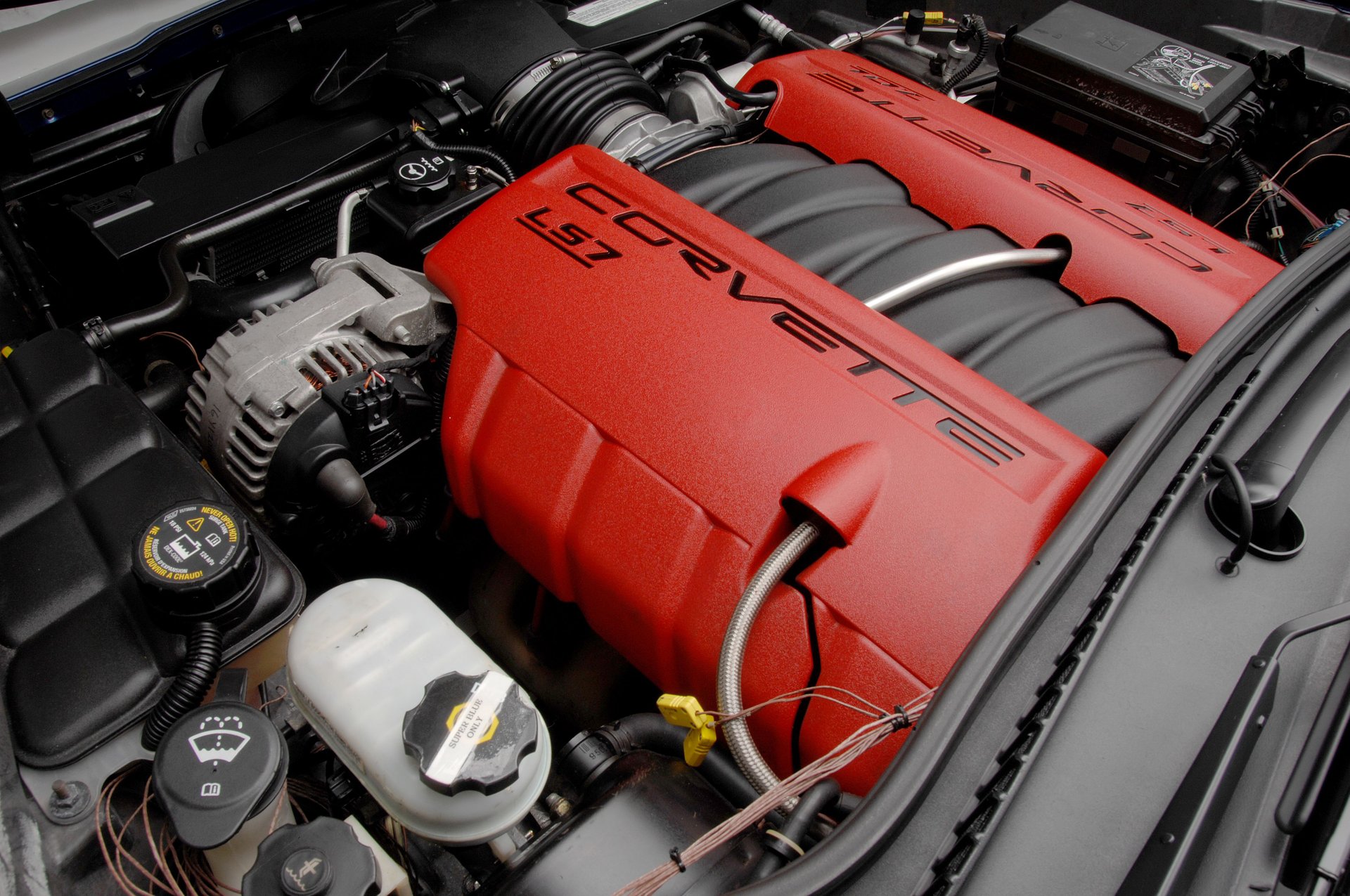
The LS7 program required close cooperation among specialists whose responsibilities were highly specific. Cylinder-head development involved airflow analysis and combustion-chamber design, while valvetrain engineers evaluated the stresses associated with high engine speeds and aggressive camshaft profiles. Lubrication specialists developed a dry-sump system capable of maintaining oil pressure during sustained cornering, braking, and acceleration. Materials engineers evaluated lightweight components, including titanium connecting rods and intake valves, to reduce reciprocating mass and improve durability at elevated engine speeds.
These efforts were supported by extensive computer modeling, laboratory testing, and physical development work. Modern engine engineering increasingly relied on sophisticated simulation techniques, but actual testing remained essential. Components that appeared satisfactory under theoretical conditions could behave differently when exposed to thermal cycling, vibration, combustion pressure, and repeated high-load operation. The LS7’s development therefore required engineers to balance analytical predictions with observations gathered from test engines operating under demanding conditions.
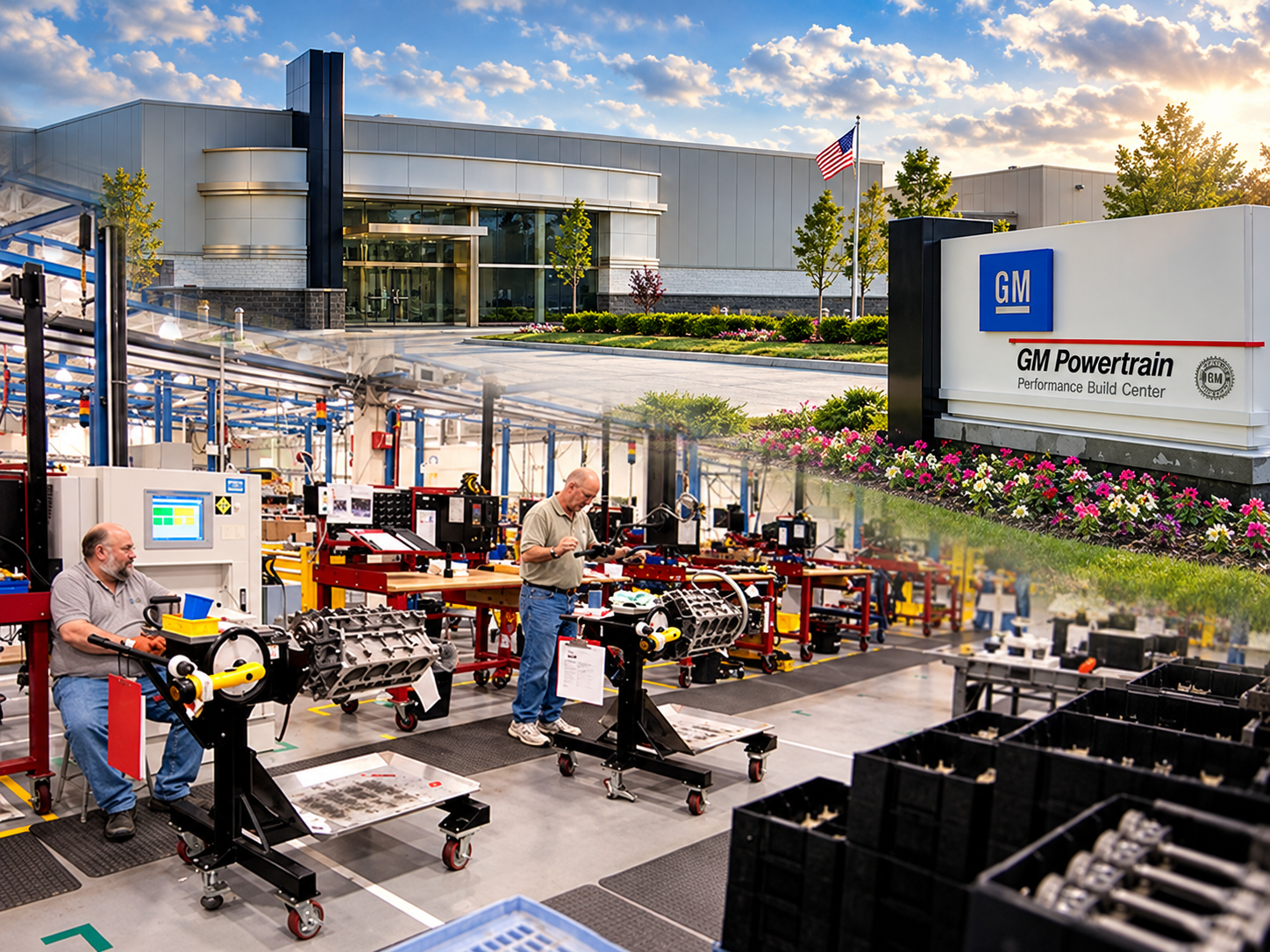
Manufacturing specialists played an equally important role. The decision to assemble LS7 engines at the Performance Build Center in Wixom, Michigan, reflected the engine’s specialized construction and comparatively limited production volume. Rather than relying entirely on conventional high-volume assembly methods, the program employed trained technicians responsible for assembling individual engines through carefully controlled procedures. This approach allowed greater attention to specialized components and assembly requirements while reinforcing the LS7’s identity as a premium performance engine.
The relationship between the engine-development organization and the assembly operation was essential. A technically advanced design could not succeed unless it could be manufactured repeatedly within established tolerances. Engineers needed to consider how components would be machined, inspected, assembled, and serviced. Manufacturing personnel, in turn, provided practical feedback concerning production processes and potential improvements. The finished LS7 was therefore not simply the product of a design office, but the result of cooperation between engineering and manufacturing organizations.
At Bowling Green Assembly, the introduction of the Z06 required further coordination. The standard Corvette employed a hydroformed steel frame, while the Z06 utilized a specialized aluminum structure. These differences affected manufacturing processes, component handling, body assembly, and quality-control procedures. The plant needed to accommodate the requirements of both vehicles while maintaining production efficiency and consistent build quality. The successful integration of these operations demonstrated the flexibility of the Corvette’s manufacturing organization.
Testing personnel formed another essential part of the development effort. Engineers and professional drivers evaluated prototype vehicles under conditions ranging from ordinary highway operation to sustained high-speed track testing. Their observations helped refine steering response, suspension calibration, braking performance, cooling capacity, and powertrain behavior. The objective was not simply to establish impressive performance figures, but to ensure that the Corvette behaved predictably and consistently across a broad range of operating conditions.
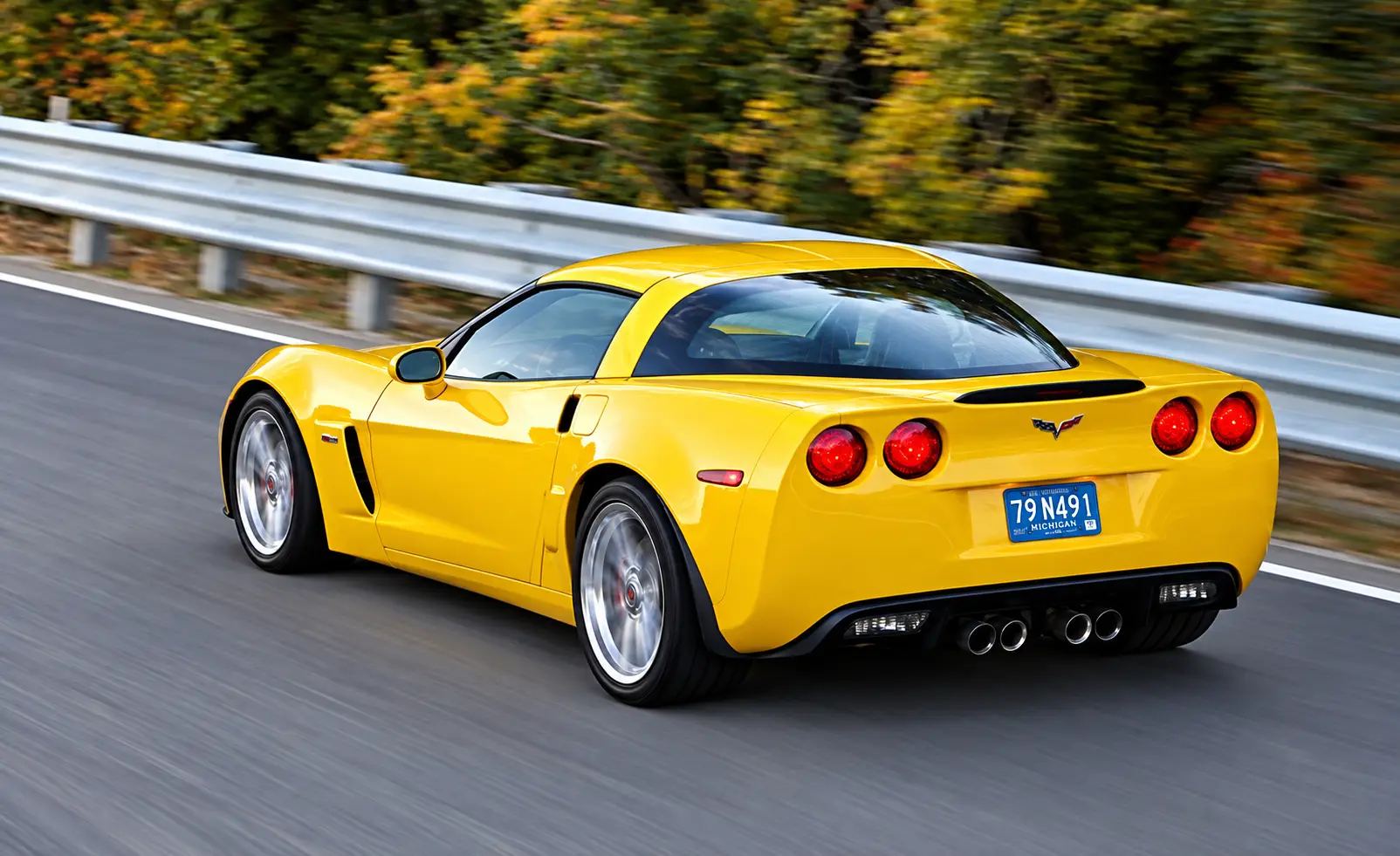
The Nürburgring Nordschleife in Germany became an especially important development environment. Its combination of high-speed sections, severe elevation changes, uneven pavement, and demanding corners exposed weaknesses that might not become apparent on smoother proving-ground surfaces. Testing at the Nürburgring allowed Corvette engineers to evaluate the interaction among suspension geometry, damping, tires, aerodynamics, and structural rigidity under sustained high-performance conditions.
The relationship with Corvette Racing added another dimension to the development organization. Doug Fehan and the personnel responsible for the competition program operated in an environment where mechanical failures could determine the outcome of major international races. Their experience with cooling systems, lubrication, braking, aerodynamics, and structural durability provided valuable knowledge for engineers developing the production Corvette. At the same time, advances in production engineering could inform the development of racing components and systems.
The cooperation between General Motors and Pratt & Miller was particularly important because it created a framework for exchanging technical knowledge across organizational boundaries. Racing engineers approached problems from the perspective of maximum performance under sustained competition conditions, while production engineers needed to account for durability, emissions compliance, cost, manufacturing consistency, and customer expectations. The interaction between these perspectives helped produce solutions that were both technically ambitious and suitable for their intended applications.
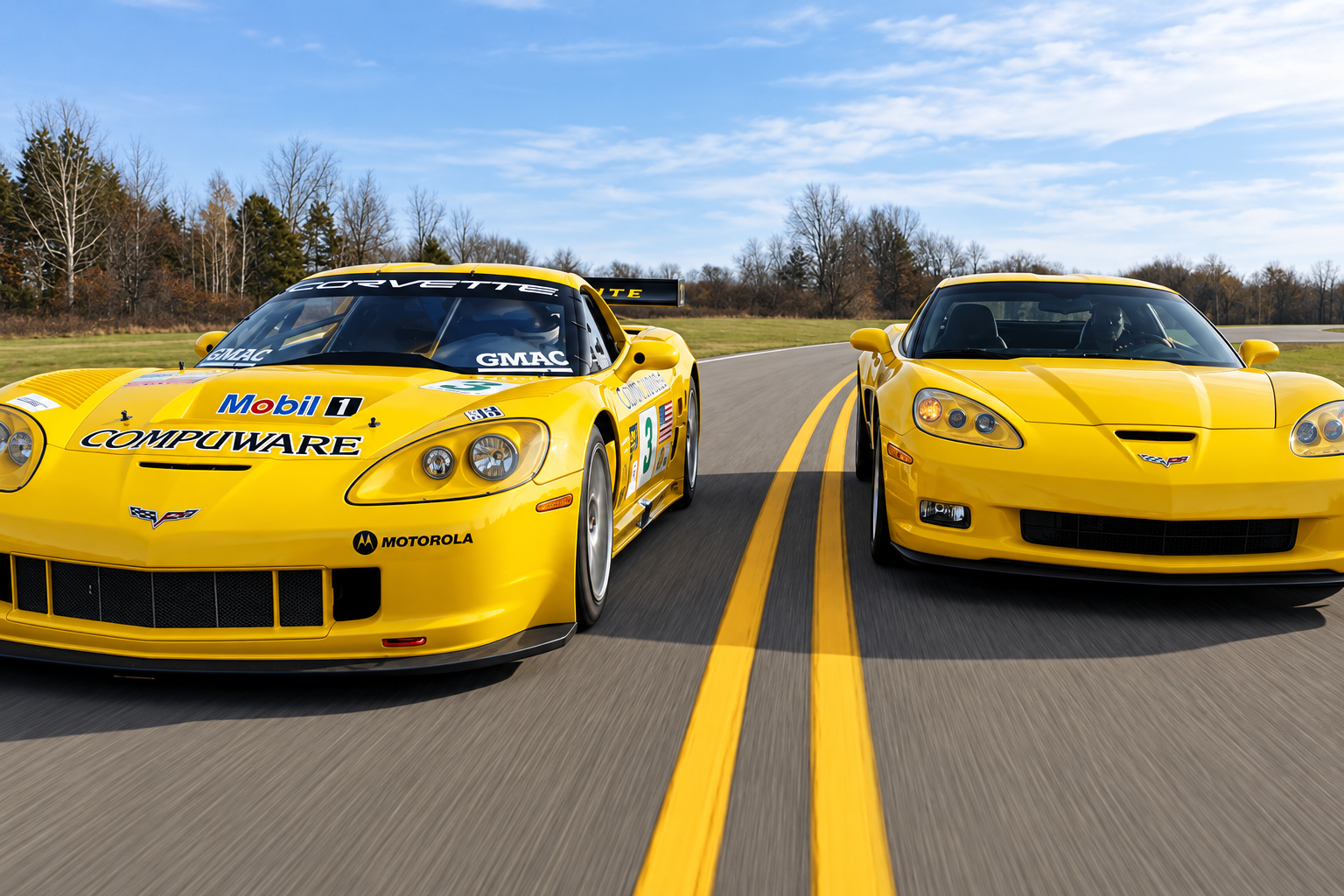
The people behind the 2006 Corvette were therefore united by a common engineering objective, even when their individual responsibilities differed considerably. Designers sought an appearance that communicated performance and preserved the automobile’s identity. Powertrain engineers pursued greater output without sacrificing reliability. Chassis specialists worked to improve handling and braking while maintaining acceptable ride quality. Manufacturing personnel ensured that sophisticated designs could be assembled consistently, and racing engineers contributed knowledge gained under some of the most demanding operating conditions imaginable.
Their combined work produced an automobile that could not be adequately explained through any single specification. The 2006 Corvette represented the integration of advanced engineering, disciplined manufacturing, and decades of accumulated experience. Its success depended on the ability of talented individuals to recognize the relationship between their own work and the performance of the complete vehicle.
The 2006 Corvette Coupe and Convertible: Design, Architecture, and Everyday Performance
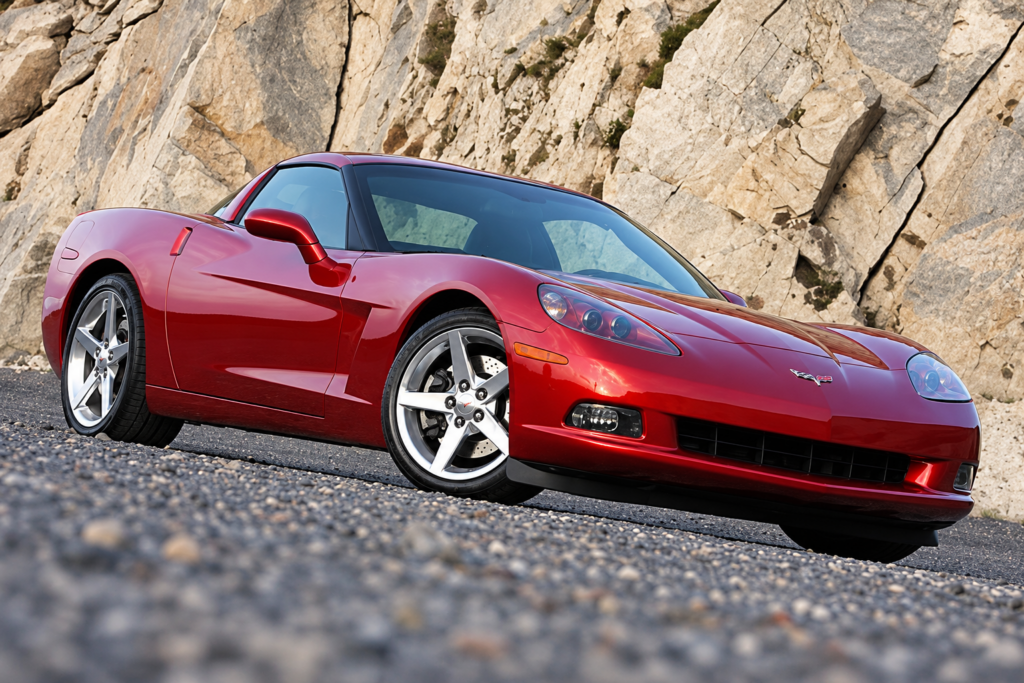
Although the introduction of the Z06 dominated much of the attention surrounding the 2006 model year, the standard Corvette coupe and convertible remained the foundation of Chevrolet’s sports-car lineup. These automobiles represented the more versatile interpretation of the C6 platform, combining substantial V8 performance with comfort, convenience, and the ability to function as practical grand-touring vehicles. Their importance should not be overshadowed by the extraordinary capabilities of the Z06, because the standard Corvette demonstrated how effectively Chevrolet had refined the fundamental sports-car formula.
The 2006 Corvette coupe retained the removable roof panel that had become a defining characteristic of the modern Corvette. Unlike a conventional fixed-roof sports car, the coupe allowed owners to remove the central roof section and enjoy an open-air driving experience without sacrificing the structural advantages of the surrounding roof framework. The arrangement provided a degree of versatility that distinguished the Corvette from many competitors, allowing the same automobile to serve as both an enclosed grand tourer and a partially open sports car.
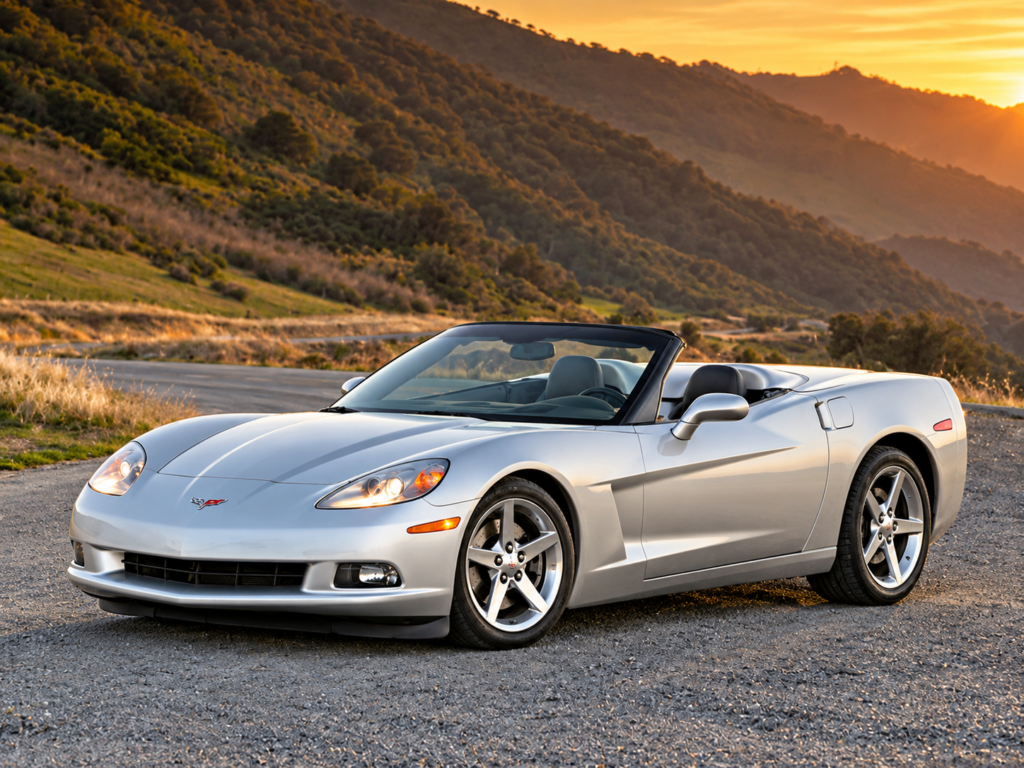
The convertible offered a more traditional open-air experience. Its folding fabric top could be lowered to expose the entire passenger compartment, creating a driving environment that emphasized the sound and character of the V8 engine. For 2006, Chevrolet continued offering a power-operated convertible top as optional equipment, providing greater convenience than the standard manually operated arrangement. The power top could be operated through controls within the passenger compartment, allowing the roof to be raised or lowered without the physical effort associated with a conventional manual mechanism.
Both body styles shared the C6’s basic dimensions and mechanical architecture. The 105.7-inch wheelbase provided a stable foundation, while the automobile’s relatively low overall height and broad stance contributed to its aggressive proportions. The body was constructed primarily from composite materials mounted over a hydroformed steel frame, continuing the Corvette’s longstanding use of lightweight, corrosion-resistant exterior panels.
The composite body construction offered several advantages. Unlike conventional steel body panels, the Corvette’s exterior surfaces were not susceptible to ordinary rust corrosion, and their manufacturing processes allowed designers to create complex shapes without relying entirely on traditional sheet-metal stamping. However, composite construction also introduced specialized repair requirements, and the materials needed to satisfy strict standards for dimensional accuracy, surface finish, and long-term durability.

The C6‘s exterior styling reflected the design direction established for the 2005 model year. Its exposed headlights, sharply defined front fenders, sculpted hood, and distinctive rear treatment gave it a more contemporary look than the C5. The shorter overhangs made the automobile appear more compact, while the pronounced wheel arches emphasized its wide tires and performance-oriented chassis.
The front fascia incorporated a central grille opening and lower air intake designed to provide cooling airflow while minimizing unnecessary aerodynamic drag. The hood’s contours contributed to the Corvette’s muscular appearance, but they also reflected the packaging requirements of the LS2 engine and associated components. The side profile emphasized the relationship between the front wheels, passenger compartment, and rear axle, creating proportions that remained unmistakably Corvette.
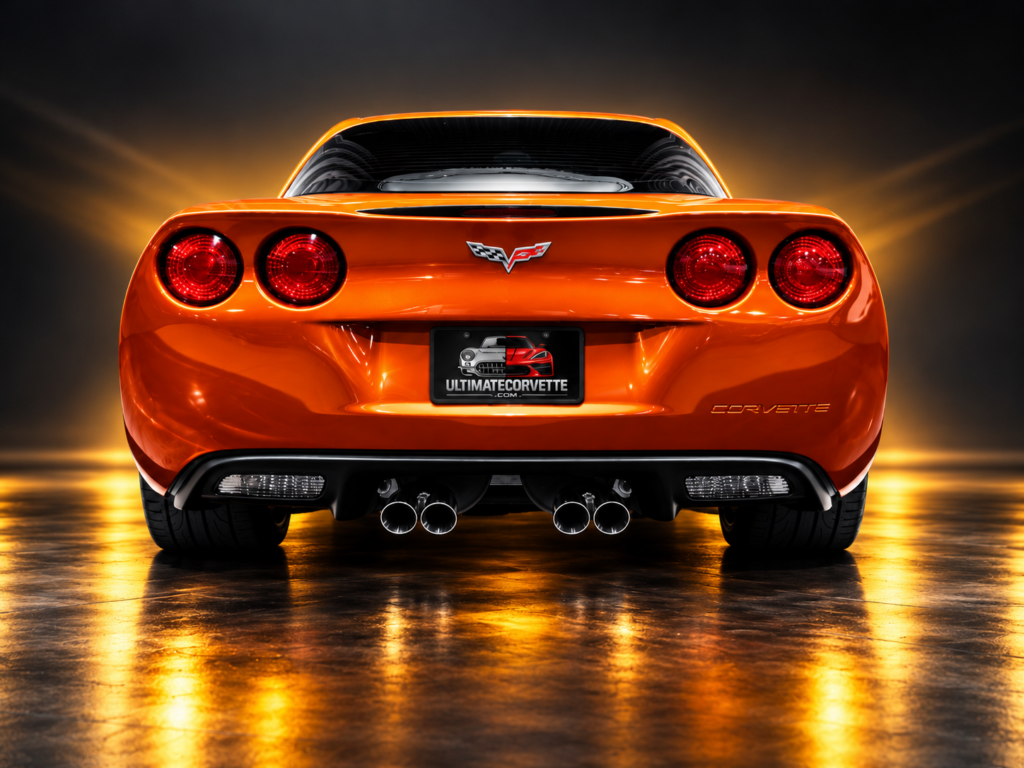
At the rear, the traditional four circular taillamps preserved an important visual connection to earlier generations. The rear fascia incorporated the Corvette’s centrally located exhaust outlets, reinforcing the automobile’s performance character while allowing the exhaust system to be packaged efficiently beneath the body. The broad rear shoulders and relatively short deck contributed to the C6’s planted appearance.
The standard Corvette rode on 18-inch front wheels and 19-inch rear wheels, with staggered tire sizes intended to balance steering response, traction, and handling stability. The front tires measured P245/40ZR18, while the rear tires were P285/35ZR19. This arrangement provided substantial rear traction for the LS2’s 400 lb-ft of torque while preserving responsive steering characteristics at the front axle.
Run-flat tire technology remained an important feature of the standard Corvette. By using tires capable of supporting the vehicle for a limited distance after a loss of inflation pressure, Chevrolet could eliminate the need for a conventional spare tire. This saved weight and preserved valuable luggage space, although the tires introduced compromises involving ride quality, replacement cost, and the characteristics of the reinforced sidewalls.
The standard suspension employed unequal-length aluminum control arms at all four corners, transverse composite leaf springs, and gas-charged shock absorbers. This configuration reflected decades of Corvette suspension development and provided a combination of low weight, efficient packaging, and predictable handling. The transverse composite springs were particularly effective in allowing engineers to position suspension components within the limited vertical space available beneath the Corvette’s low bodywork.
The suspension’s performance depended on more than its basic geometry. Control-arm lengths, pivot locations, spring rates, shock absorber calibration, anti-roll bars, and tire characteristics all influenced the automobile’s behavior. Chevrolet’s engineers refined these elements to create a vehicle capable of substantial lateral acceleration while remaining comfortable enough for extended highway driving.
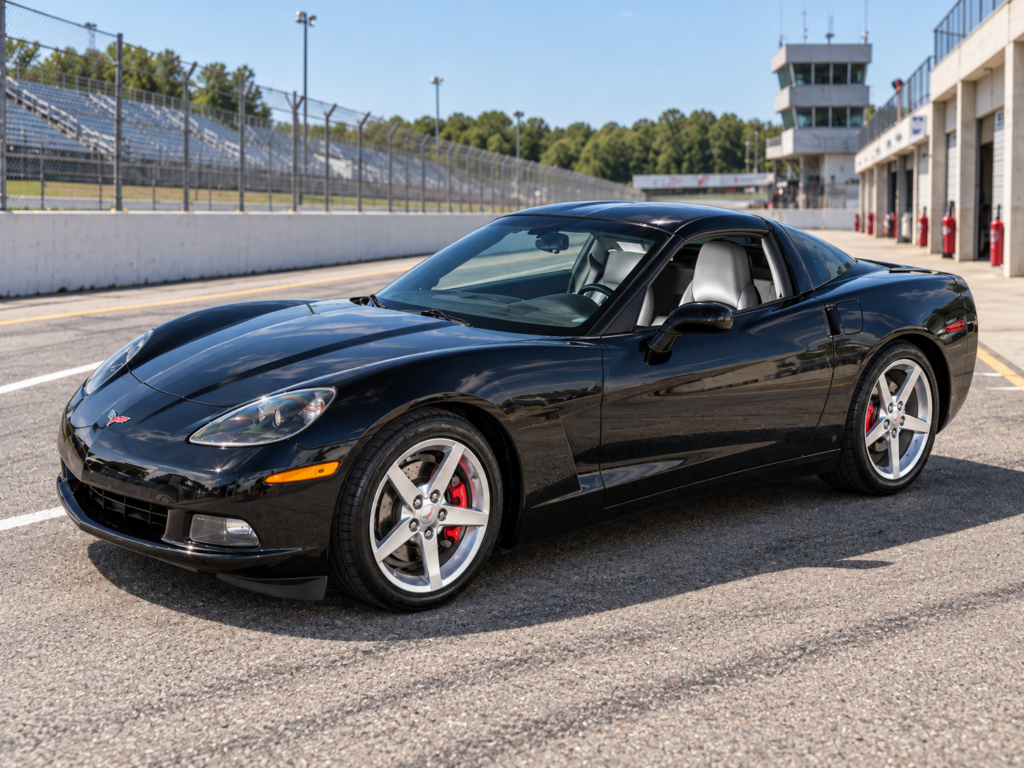
For buyers seeking more aggressive handling, the Z51 Performance Package offered a series of chassis and drivetrain improvements. These included revised suspension calibration, larger brake components, enhanced cooling provisions, and other performance-oriented equipment. The package was intended to improve the Corvette’s capabilities during spirited driving and occasional track use without imposing the more specialized character of the Z06.
Magnetic Selective Ride Control offered a different approach to suspension tuning. Rather than relying exclusively on fixed damper characteristics, the system employed magnetorheological fluid within electronically controlled shock absorbers. By adjusting the magnetic field applied to the fluid, the system could rapidly change damping resistance in response to operating conditions. This allowed the suspension to provide greater compliance during ordinary driving while increasing damping control when the vehicle encountered more demanding conditions.
The system represented an important example of Chevrolet’s willingness to incorporate advanced technology when it delivered meaningful benefits. The Corvette’s traditional composite leaf springs were retained because they continued to serve the automobile’s engineering objectives effectively, while electronically controlled dampers were introduced to expand the range of suspension behavior available to the driver. The combination demonstrated that modern vehicle dynamics did not require every established mechanical principle to be abandoned.
Steering response was another area of continued refinement. The C6 employed a power-assisted rack-and-pinion system calibrated to provide direct response and appropriate effort. Engineers sought to minimize unwanted compliance and improve the relationship between steering-wheel movement and vehicle response. The objective was to create an automobile that felt precise during aggressive cornering without becoming unnecessarily demanding during ordinary driving.
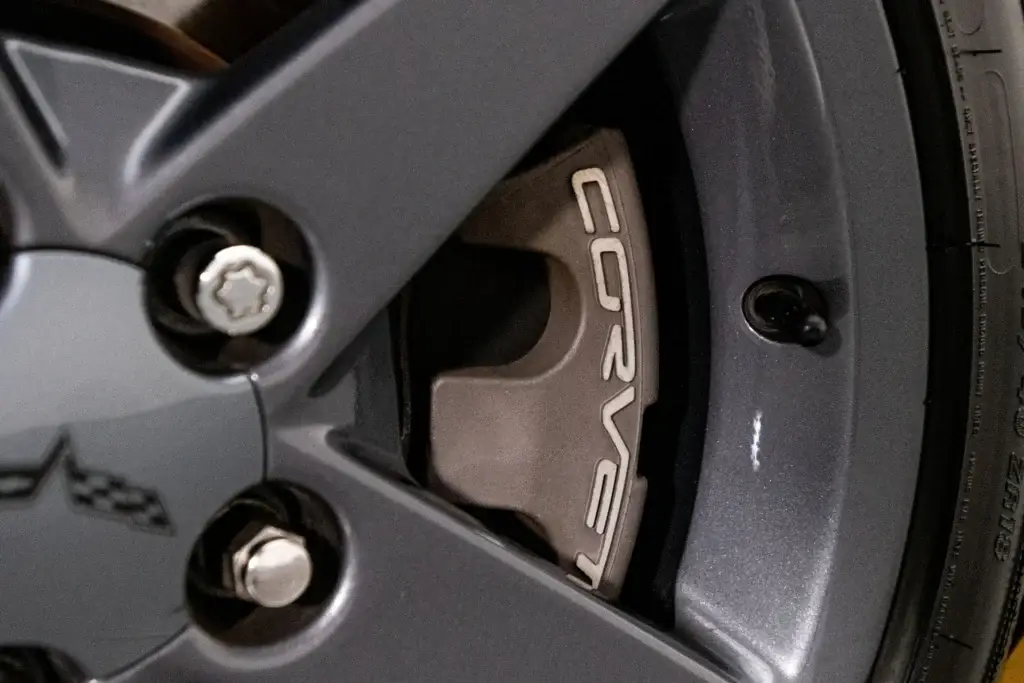
The Corvette’s braking system was designed to accommodate its substantial performance capabilities. Four-wheel ventilated disc brakes provided consistent stopping power, supported by an antilock braking system and electronic brake-force distribution. The standard system offered strong braking performance for road use, while the Z51 package provided additional capacity for more demanding operation.
Electronic stability and traction-control systems contributed to the Corvette’s usability. Active Handling monitored vehicle behavior and could intervene through selective braking to help maintain directional control when the automobile approached or exceeded its intended path. Traction control reduced excessive wheelspin during acceleration, helping drivers manage the substantial torque produced by the LS2 engine.
These systems were particularly valuable because the Corvette combined high performance with a relatively broad customer base. Not every owner possessed extensive experience driving powerful rear-wheel-drive sports cars, and electronic assistance could help reduce the consequences of sudden traction loss. At the same time, the systems were calibrated to preserve the responsive character expected of a Corvette.
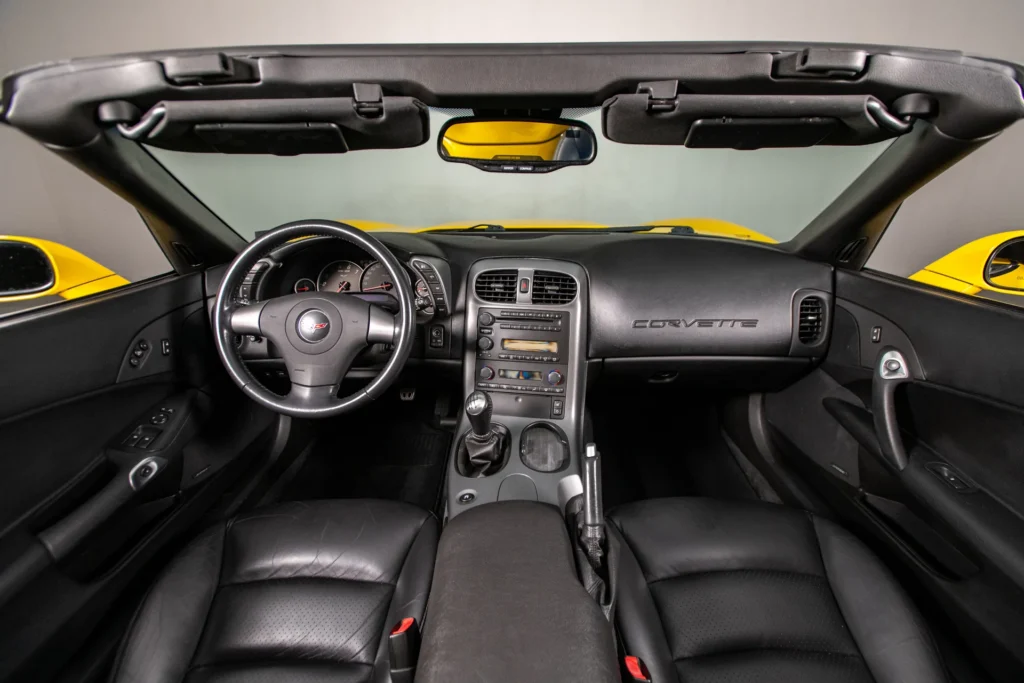
Inside the passenger compartment, the 2006 Corvette continued the C6’s emphasis on driver-oriented ergonomics. The instrument panel featured large analog gauges, including a centrally positioned tachometer and speedometer, while a driver information display provided access to vehicle operating data. The controls were arranged to support straightforward operation, with particular attention to the functions most frequently used during driving.
The seats were designed to provide a compromise between lateral support and long-distance comfort. Their relatively low mounting position contributed to the Corvette’s sports-car driving posture, while available power adjustments allowed occupants to tailor their seating positions. Leather upholstery and a range of interior color combinations reinforced the automobile’s premium positioning.
The interior also reflected Chevrolet’s efforts to improve perceived quality. Although the C6 continued to receive criticism for some materials and trim details when compared with more expensive European competitors, it represented a meaningful improvement over earlier Corvettes. Revised surfaces, updated controls, and improved assembly quality contributed to a more contemporary environment.
The Corvette’s dual-zone automatic climate-control system allowed the driver and passenger to select individual temperature settings, while the available audio systems provided entertainment appropriate for long-distance travel. A Bose premium audio system was available, and buyers could select a factory navigation system incorporating a color display.

Keyless Access and Push-Button Start were among the C6’s most distinctive convenience features. The system allowed drivers to unlock and start the automobile without inserting a conventional ignition key, provided the electronic transmitter was within the required proximity. Electronically operated door releases contributed to the exterior’s clean appearance, while mechanical emergency-release provisions were incorporated for situations in which electrical power was unavailable.
The Corvette’s luggage capacity remained unusually generous for a two-seat sports car. The coupe’s rear cargo compartment provided approximately 22.4 cubic feet of space, making it possible to accommodate luggage for extended trips. The convertible offered less cargo capacity because of the space required for its folding roof mechanism, but it remained practical enough for weekend travel and everyday use.
This practicality was an important element of the Corvette’s appeal. Many high-performance automobiles required owners to accept substantial compromises involving visibility, luggage capacity, cabin comfort, or maintenance requirements. The standard Corvette offered exceptional acceleration and handling while remaining capable of ordinary transportation duties. Its relatively comfortable seating position, effective climate control, and substantial cargo capacity made it possible to use the automobile in circumstances where more specialized sports cars might prove inconvenient.
The 2006 model year also introduced important refinements to the Corvette’s equipment and available features. The most significant was the new six-speed automatic transmission, which replaced the previous four-speed automatic and introduced steering-wheel-mounted paddle controls. This development substantially changed the character of the automatic-equipped Corvette, providing improved gear selection and a greater degree of driver involvement.
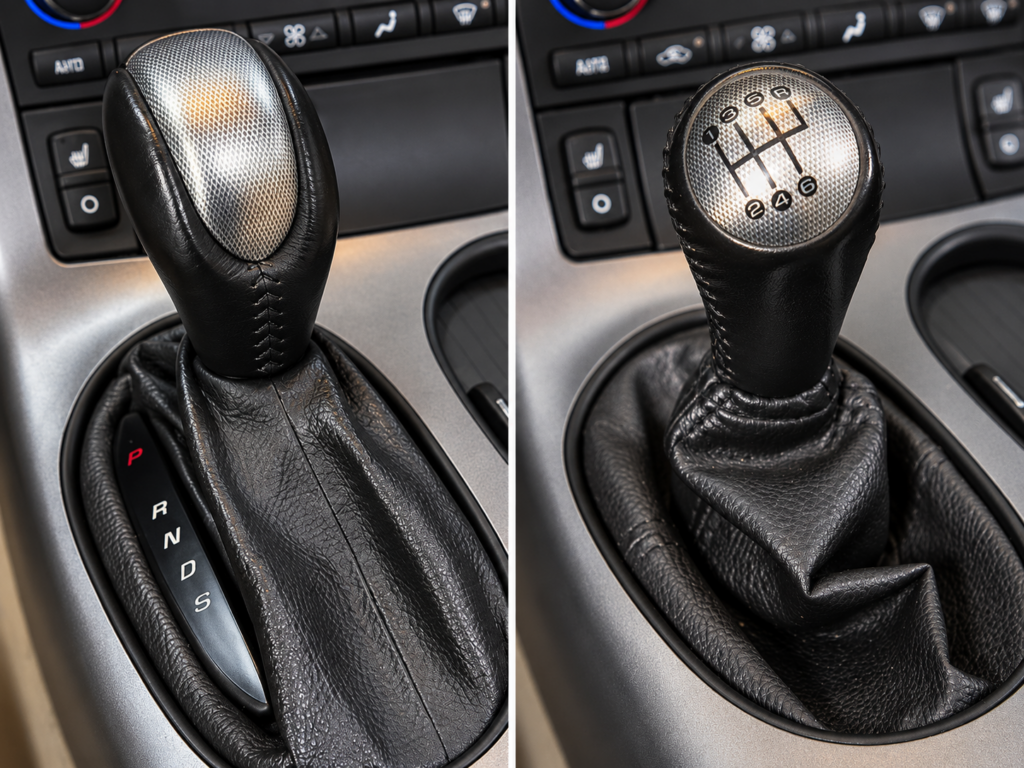
The six-speed automatic was particularly important because it broadened the Corvette’s appeal without requiring buyers to sacrifice as much performance as earlier automatic transmissions had demanded. Its closer gear ratios helped keep the LS2 operating within an effective portion of its power band, while electronic controls allowed more sophisticated shift scheduling. The paddle-shift function gave drivers greater control over gear selection during spirited driving, even though the system retained the characteristics and operating logic of a conventional torque-converter automatic transmission.
The standard six-speed manual remained available for enthusiasts who preferred direct mechanical involvement. Its shift mechanism had been refined during C6 development, and the transmission’s ratios were selected to take advantage of the LS2’s broad torque delivery. The manual gearbox reinforced the Corvette’s traditional sports-car character, allowing drivers to manage engine speed and power delivery through their own gear selections.
The 2006 Corvette coupe and convertible therefore represented a mature and highly capable interpretation of Chevrolet’s performance philosophy. Their appeal did not depend exclusively on acceleration figures or maximum speed. Instead, they combined substantial power, sophisticated chassis engineering, contemporary convenience features, and practical accommodations in a package that remained comparatively affordable.
While the Z06 would become the defining performance story of the 2006 model year, the standard Corvette was no less important to the automobile’s broader success. It demonstrated that Chevrolet could deliver an exceptional sports-car experience without demanding the compromises associated with a narrowly focused track machine. For many owners, the coupe and convertible represented the ideal balance between performance and usability, offering the unmistakable character of a Corvette in an automobile that could be enjoyed every day.
The LS2 V8: Refining the Standard Corvette’s Performance Formula
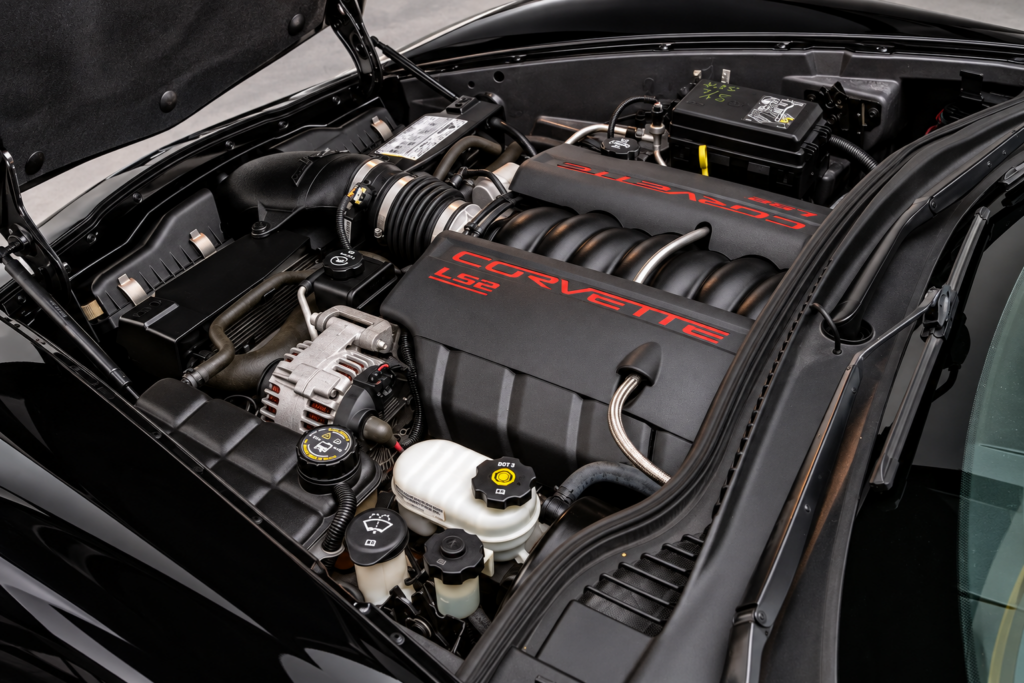
For all the attention devoted to the Corvette’s styling, chassis, and increasingly sophisticated electronics, the engine remained central to the automobile’s identity. Since the introduction of Chevrolet’s small-block V8 in the 1955 Corvette, successive generations of engineers had refined the relationship between displacement, horsepower, torque, efficiency, and durability. By 2006, that philosophy had produced an engine that combined the familiar mechanical character of a traditional American V8 with the precision and sophistication required of a modern high-performance automobile.
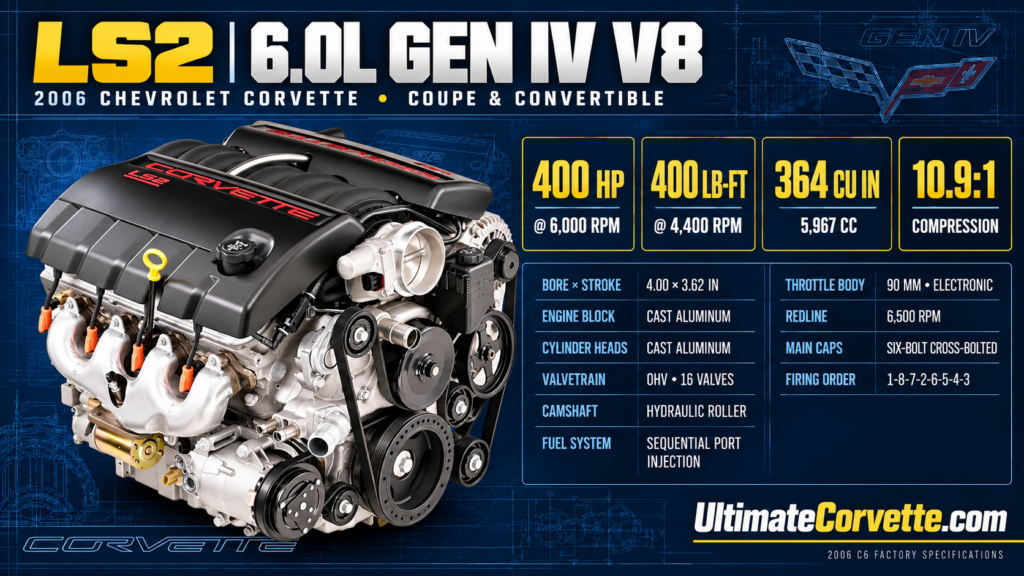
The 6.0-liter LS2 represented the next stage in the development of General Motors’ small-block architecture. Introduced with the sixth-generation Corvette for the 2005 model year, the LS2 was the first production member of the Generation IV small-block family. It retained many of the fundamental characteristics that had made the LS1 and LS6 successful, including an aluminum block, overhead-valve configuration, and compact external dimensions, but incorporated changes intended to improve performance, durability, emissions compliance, and future development potential.
Displacing 364 cubic inches, or 5,967 cubic centimeters, the LS2 produced 400 horsepower at 6,000 rpm and 400 lb-ft of torque at 4,400 rpm in the 2006 Corvette. These figures represented a substantial improvement over the standard C5’s LS1 and placed the base Corvette in a performance category that would have been considered extraordinary only a few years earlier. More importantly, the engine delivered its power through a broad operating range, providing strong acceleration without requiring the driver to maintain exceptionally high engine speeds.
The LS2’s displacement was achieved through a bore of 4.000 inches and a stroke of 3.622 inches. The 4.000-inch bore represented an increase over the LS1’s 3.898-inch bore, while the stroke remained unchanged. This allowed engineers to increase displacement without substantially altering the engine’s external dimensions. The resulting configuration preserved the compact packaging advantages of the LS architecture while providing additional cylinder volume and improved torque potential.
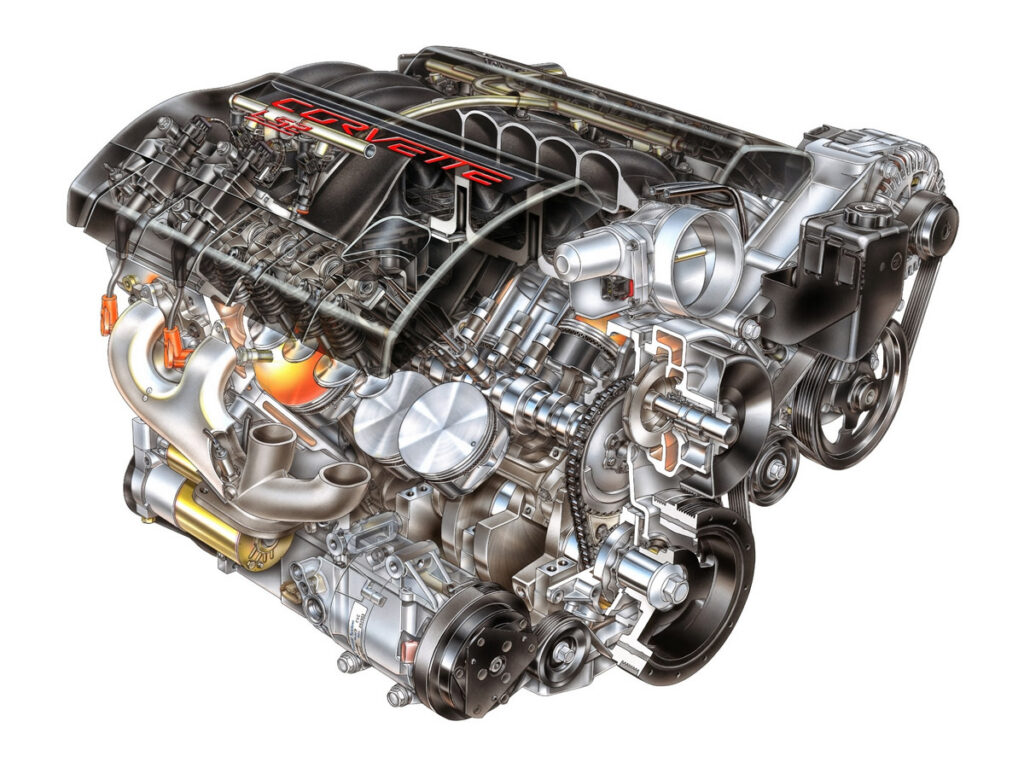
The engine employed a cast-aluminum block with deep-skirt construction and six-bolt main bearing retention, incorporating four vertical bolts and two cross-bolts at each main bearing cap. This arrangement provided a rigid foundation for the crankshaft and helped control movement under high combustion loads. Structural rigidity within the engine was particularly important because the LS2 needed to operate reliably under the sustained acceleration, braking, and cornering forces encountered in a high-performance sports car.
The crankshaft was manufactured from nodular iron, while powdered-metal connecting rods and aluminum pistons provided an effective balance between strength, weight, and production cost. The LS2’s compression ratio was 10.9:1, allowing engineers to extract substantial power from the naturally aspirated engine while maintaining compatibility with premium unleaded gasoline. The engine’s combustion characteristics were carefully managed through electronic fuel injection, ignition timing, and combustion-chamber design.
Cylinder-head development played an important role in the LS2’s performance. The engine employed aluminum cylinder heads with two valves per cylinder, operated through a single camshaft located within the engine block. Although this configuration was mechanically simpler than the dual-overhead-camshaft arrangements employed by many competitors, it allowed Chevrolet to create an engine with relatively compact dimensions and a low center of gravity.
The LS2’s cylinder heads incorporated revised intake and exhaust passages intended to improve airflow. Larger intake valves and optimized combustion-chamber geometry contributed to the engine’s ability to generate substantial horsepower while maintaining strong low- and midrange torque. The relationship between airflow, valve timing, and combustion efficiency was central to the engine’s performance, and engineers carefully calibrated these elements to produce a broad, usable power band.
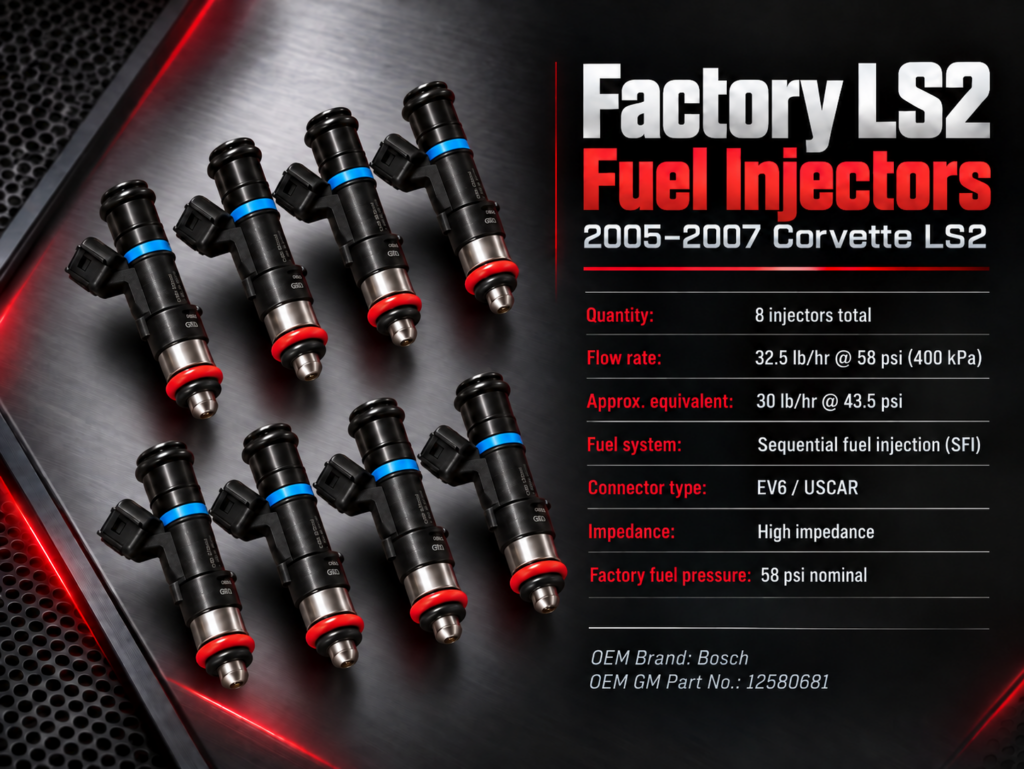
The engine employed sequential electronic fuel injection, with individual injectors supplying fuel to each cylinder. A sophisticated engine control module monitored operating conditions and adjusted fuel delivery, ignition timing, and other parameters to maintain performance, efficiency, and emissions compliance. Electronic throttle control replaced a conventional mechanical cable connection between the accelerator pedal and throttle body, allowing the engine management system to coordinate throttle response with traction control, cruise control, and other vehicle systems.
The electronic throttle system also provided engineers with greater flexibility in calibrating the engine’s response. Rather than relying exclusively on a fixed mechanical relationship between pedal movement and throttle opening, the control system could interpret driver demand and adjust throttle operation according to operating conditions. This allowed Chevrolet to refine drivability while preserving the immediate response expected of a performance automobile.
Lubrication was provided through a conventional wet-sump system, with an engine-driven oil pump circulating lubricant through the crankshaft bearings, valvetrain, and other critical components. The system was engineered to accommodate the acceleration and cornering forces expected during normal and spirited driving. For the Z51 Performance Package, Chevrolet incorporated additional oil-cooling provisions to help maintain appropriate operating temperatures during more demanding use.
Cooling was another important consideration. The LS2’s substantial power output generated considerable heat, particularly during sustained high-speed operation. Engineers developed the engine’s cooling system in conjunction with the C6’s revised front-end airflow management, ensuring that the radiator and associated components could maintain acceptable temperatures under a broad range of operating conditions.
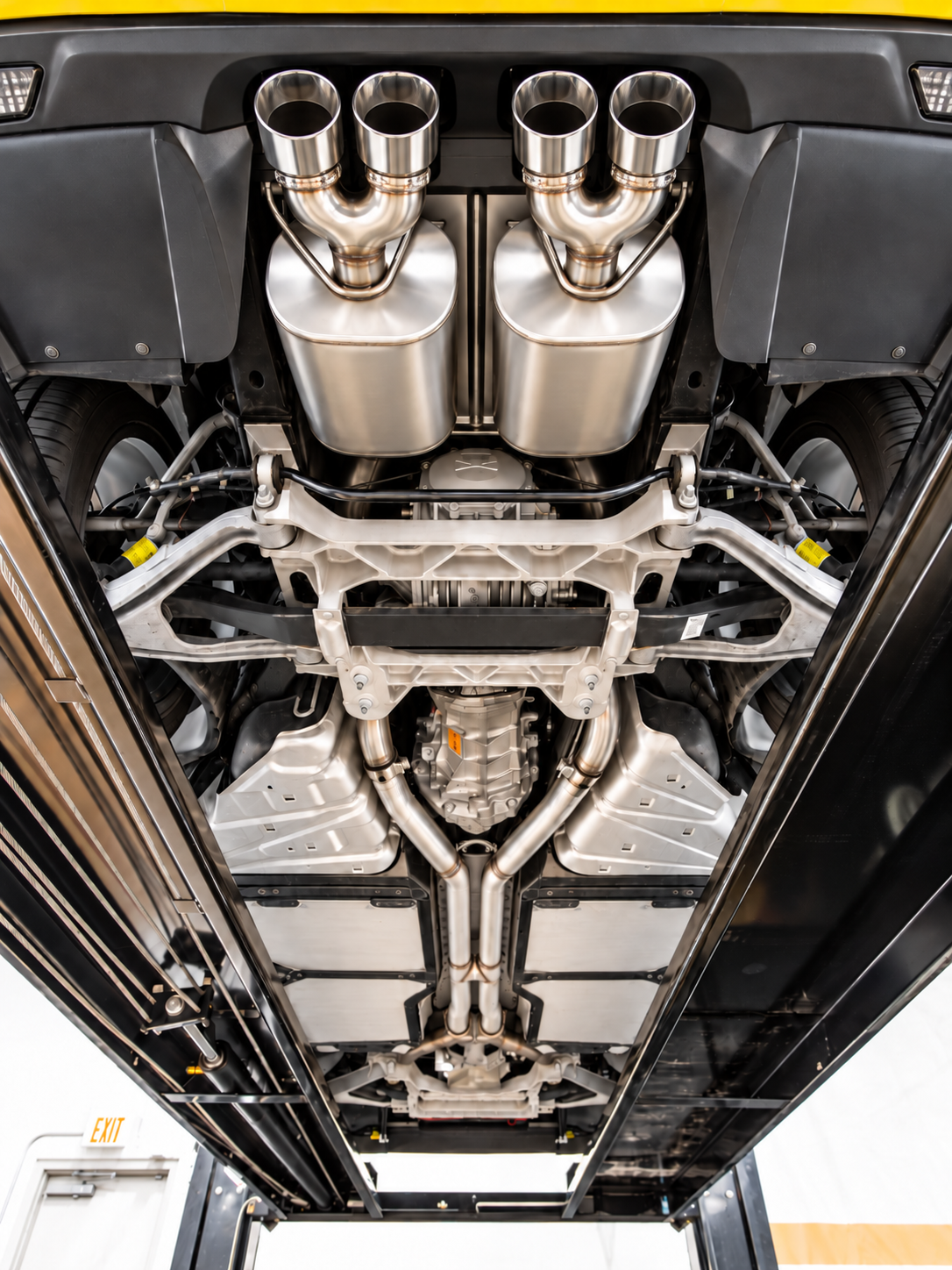
The exhaust system was designed to balance performance, emissions compliance, sound quality, and durability. Exhaust manifolds directed combustion gases through catalytic converters and into the Corvette’s distinctive rear-mounted exhaust outlets. The system needed to minimize unnecessary restriction while maintaining compliance with noise and emissions requirements. Its acoustic character was also important, because the sound of a Chevrolet V8 remained an essential part of the Corvette driving experience.
For 2006, the LS2 continued to demonstrate the advantages of a large-displacement, naturally aspirated engine. Its 400 lb-ft of torque provided strong acceleration at moderate engine speeds, reducing the need for frequent downshifts during ordinary driving. At the same time, the engine remained willing to operate at higher speeds, delivering its peak horsepower at 6,000 rpm.
This combination made the LS2 particularly well suited to the Corvette’s dual role as a performance machine and grand-touring automobile. Drivers could enjoy relaxed highway operation with the engine turning at relatively modest speeds, yet substantial acceleration was available whenever additional power was required. The broad torque curve also complemented both the manual and automatic transmissions, allowing Chevrolet to offer different driving experiences without fundamentally changing the engine’s character.
The Six-Speed Manual Transmission
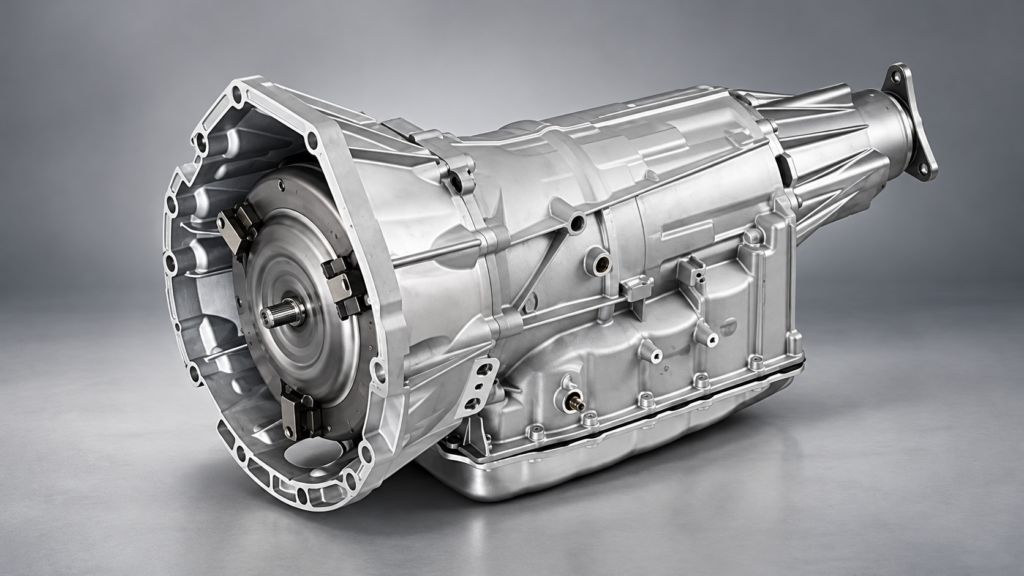
The standard transmission for the 2006 Corvette was a six-speed manual transaxle, continuing the rear-mounted configuration established with the C5. The transmission was connected to the engine through a torque tube, which enclosed the driveshaft and formed an important part of the drivetrain’s structural arrangement.
Positioning the transmission at the rear of the automobile helped distribute weight more evenly between the front and rear axles. This was particularly valuable in a sports car with a relatively large V8 engine, because concentrating the engine and transmission at the front could increase the burden placed on the front tires during cornering and braking.
The manual transmission provided six forward ratios selected to complement the LS2’s broad torque delivery. First gear offered strong initial acceleration, while the intermediate ratios allowed the engine to remain within its effective power band during spirited driving. The upper gears provided relaxed cruising characteristics, reducing engine speed during highway operation and contributing to fuel efficiency.
The transmission’s shift mechanism had been refined during the development of the C6, with attention devoted to reducing shift effort and improving precision. Although the Corvette’s rear-mounted transaxle required a relatively long mechanical linkage between the driver and transmission, engineers worked to provide a direct and satisfying shift action.
The manual transmission also incorporated a Computer-Aided Gear Selection system, commonly known as CAGS. Under specific light-throttle operating conditions, the system directed the driver from first gear to fourth gear rather than allowing a conventional first-to-second shift. The feature was intended to improve fuel economy and support emissions-related requirements, although it was not universally appreciated by enthusiasts who preferred complete control over gear selection.
For drivers seeking maximum involvement, the manual transmission remained an essential part of the Corvette’s character. It allowed direct control over engine speed and gear selection, reinforcing the mechanical relationship between driver and automobile. The LS2’s broad torque curve made the transmission forgiving during ordinary driving, while its closely spaced performance ratios supported aggressive acceleration.
The New 6L80 Six-Speed Automatic Transmission
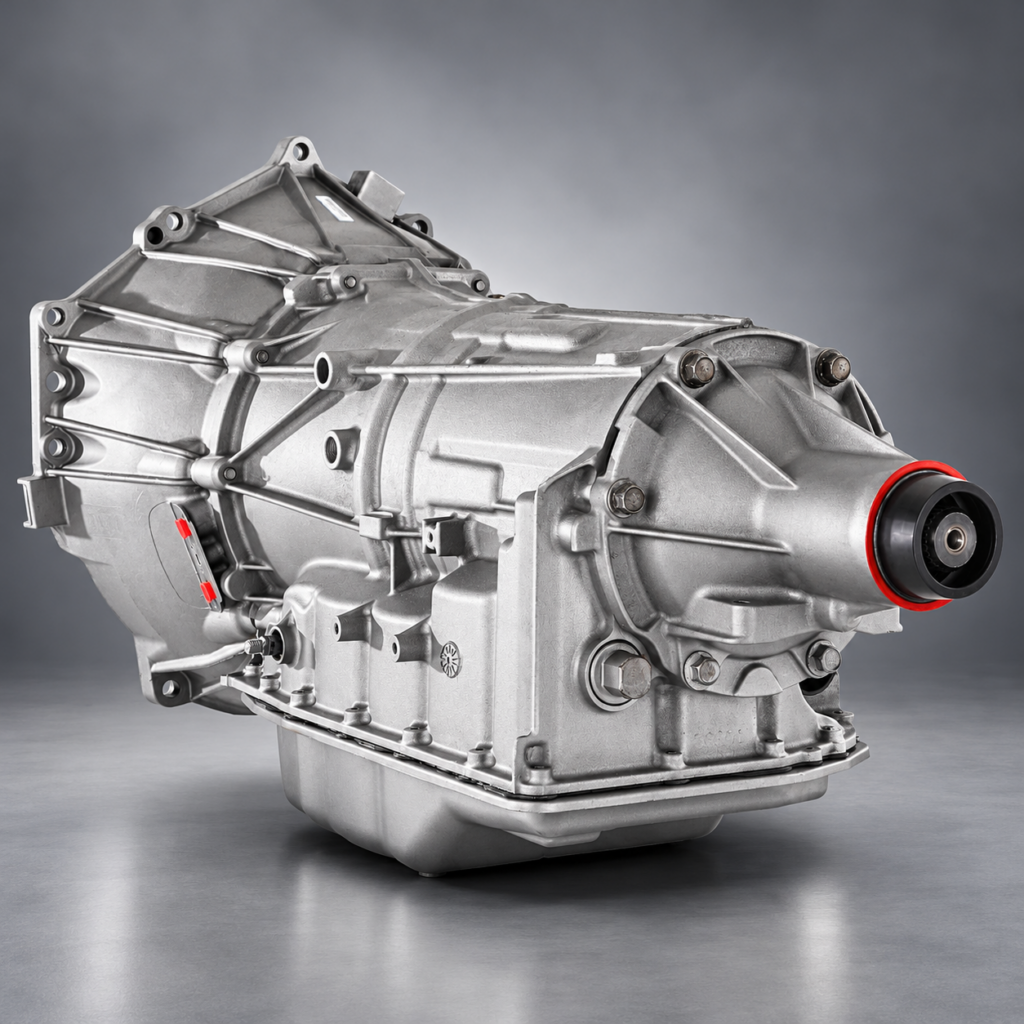
One of the most important mechanical changes introduced for the 2006 model year was the replacement of the previous four-speed automatic transmission with General Motors’ new 6L80 six-speed automatic. The new transmission represented a substantial technological improvement, offering additional gear ratios, more sophisticated electronic control, and steering-wheel-mounted paddle shifting.
The introduction of the 6L80 was particularly significant because automatic transmissions had historically involved compromises in Corvette performance. Earlier automatic-equipped models could deliver impressive acceleration, but their wider gear spacing and comparatively limited driver control often made them less engaging than manual-transmission counterparts.
The 6L80 addressed many of these limitations through its six forward ratios and advanced electronic management. The additional gears allowed engineers to provide a relatively low first-gear ratio for strong initial acceleration while retaining higher ratios suitable for efficient highway cruising. Closer spacing between intermediate gears helped keep the LS2 operating within a favorable portion of its torque curve during acceleration.
The transmission employed a torque converter and planetary gearsets, with electronically controlled hydraulic systems managing gear changes. Its control module monitored vehicle speed, engine load, throttle position, and other operating conditions to determine appropriate shift timing. The result was a transmission capable of adapting its behavior to different driving situations.
During ordinary driving, the 6L80 emphasized smoothness and efficiency. Gear changes were calibrated to occur with minimal disruption to passenger comfort, while the additional ratios allowed the engine to operate at lower speeds during steady cruising. Under aggressive acceleration, the transmission could hold lower gears longer and execute downshifts to maintain stronger performance.
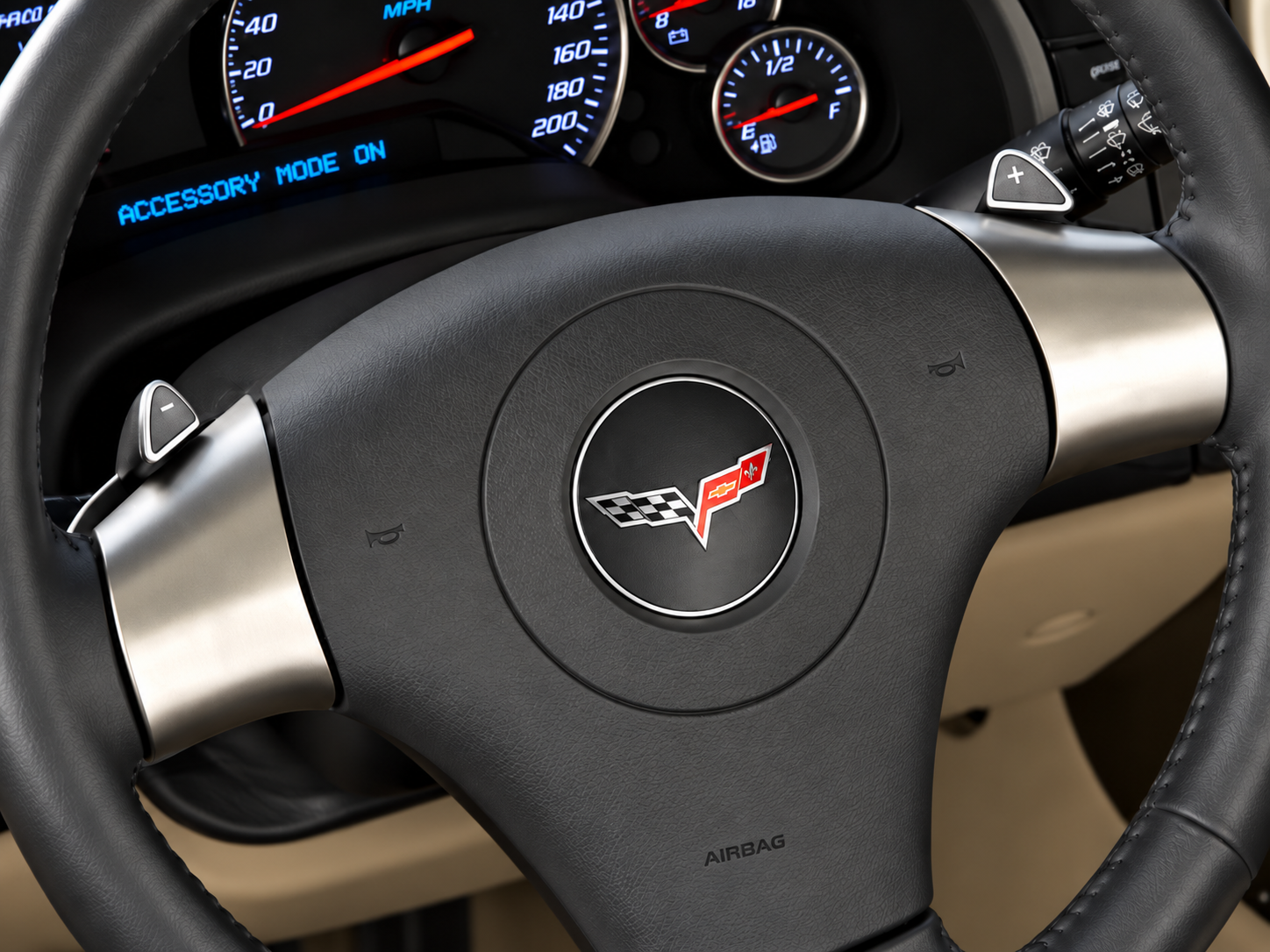
The most visible new feature was the introduction of steering-wheel-mounted paddle controls. These allowed drivers to request gear changes without moving their hands from the steering wheel, providing a greater degree of involvement than a conventional automatic selector.
The system was marketed as a manual-shift capability, although it remained fundamentally different from a traditional manual gearbox or the automated dual-clutch transmissions that would become increasingly common in later performance cars. The 6L80 retained a torque converter and conventional automatic transmission architecture, with electronic controls interpreting driver requests and executing gear changes.
The transmission’s control system also incorporated safeguards intended to prevent inappropriate shifts that could damage the powertrain or compromise vehicle stability. Requested downshifts could be delayed or rejected if they would cause excessive engine speed, while the transmission retained the ability to manage certain operating conditions automatically.
These characteristics reflected Chevrolet‘s effort to combine driver involvement with the convenience and protection offered by modern electronic controls. The paddle-shift system did not transform the Corvette into a race car, but it provided an important improvement in the experience of driving an automatic-equipped performance automobile.
The 6L80 also represented a broader development within General Motors Powertrain. Its architecture was intended to support a range of rear-wheel-drive applications, demonstrating how advanced transmission technology could be developed across multiple vehicle programs. For the Corvette, the transmission provided a meaningful improvement in performance and refinement without requiring the development of an entirely unique gearbox.
The new automatic also broadened the Corvette’s appeal. Buyers who preferred automatic operation because of commuting conditions, personal preference, or physical convenience no longer needed to accept the limitations of a four-speed transmission. The six-speed automatic provided a more contemporary driving experience and helped the Corvette remain competitive with sports cars offering increasingly sophisticated transmission options.
Differential, Gearing, and Power Delivery
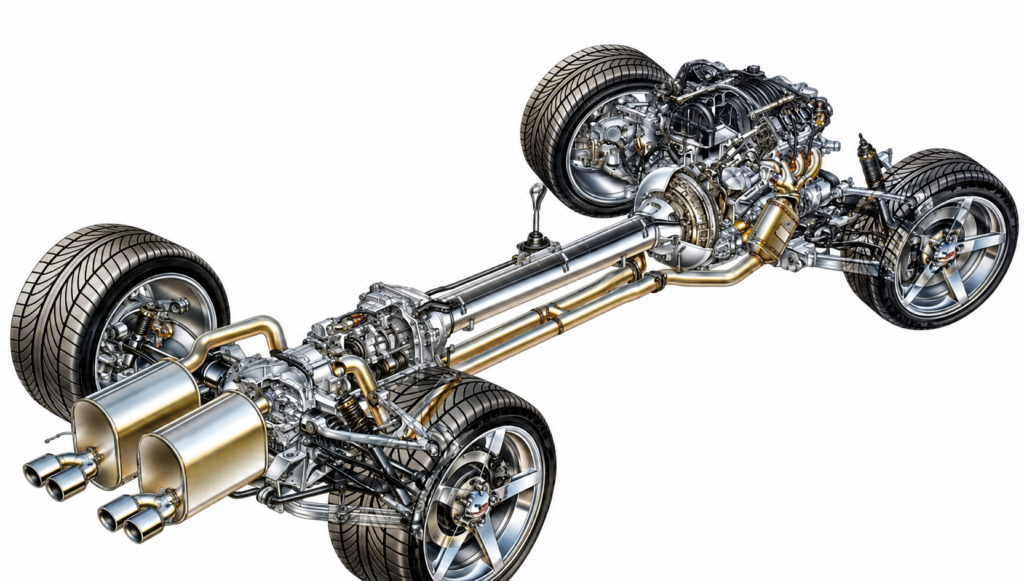
Both transmission configurations delivered power to the rear wheels through a limited-slip differential integrated with the rear transaxle assembly. The differential was designed to distribute torque between the rear wheels while limiting excessive speed differences under certain traction conditions.
A limited-slip differential is particularly valuable in a powerful rear-wheel-drive automobile because the inside rear tire can become unloaded during aggressive cornering. Without a mechanism to limit differential action, that tire may spin excessively, reducing the amount of power transmitted to the road. The Corvette’s differential helped improve traction during acceleration and cornering, contributing to more predictable handling.
Final-drive gearing varied according to transmission and equipment configuration, allowing Chevrolet to balance acceleration, cruising characteristics, and fuel economy. The relationship between transmission ratios and final-drive gearing was particularly important because the LS2 produced substantial torque across a broad operating range.
The drivetrain also needed to accommodate the Corvette’s electronic traction-control and stability-management systems. These systems could intervene when excessive wheelspin or instability was detected, coordinating engine output and selective braking to help maintain control. The integration of mechanical and electronic systems reflected the increasing sophistication of modern performance-car engineering.
Performance of the Standard 2006 Corvette
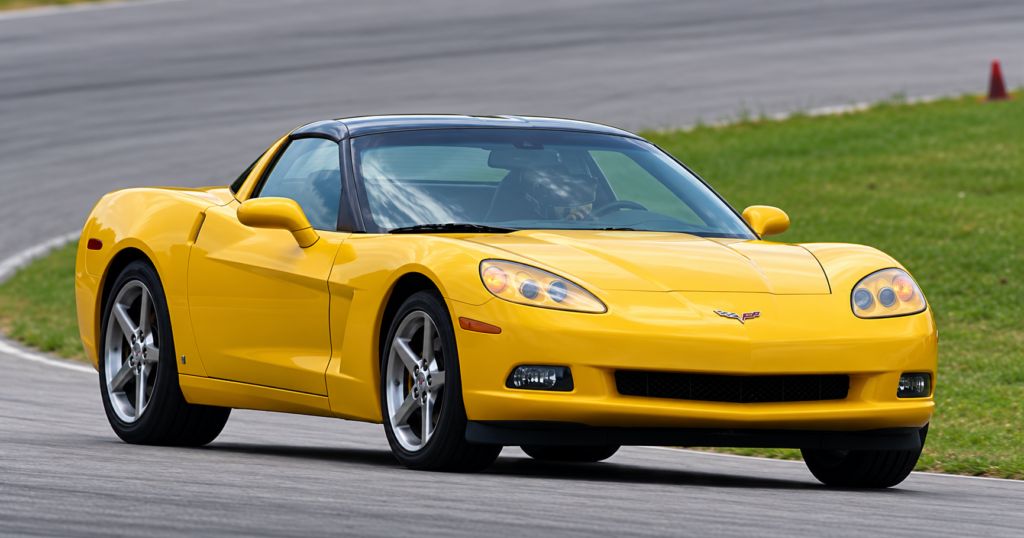
With 400 horsepower and a relatively low curb weight, the standard 2006 Corvette delivered acceleration that placed it among the most capable production sports cars of its era. Depending on transmission, equipment, testing conditions, and driver technique, contemporary performance testing commonly recorded zero-to-60-mph times in the low-to-mid-four-second range.
Quarter-mile performance was similarly impressive, with well-driven examples capable of completing the distance in approximately 12.6 to 13.0 seconds. These figures demonstrated that the standard Corvette possessed performance capabilities that would have been associated with specialized high-performance models only a decade earlier.
Top speed was another important measure of the Corvette’s engineering sophistication. The coupe was capable of approaching 186 mph under suitable conditions, a figure that reflected not simply engine output but the effectiveness of the automobile’s aerodynamics, gearing, cooling, and high-speed stability.

The Corvette’s performance was especially notable because it remained comparatively comfortable and practical. Its suspension provided substantial grip without imposing the harshness associated with some track-focused automobiles, while its engine delivered strong acceleration without requiring constant high-rpm operation.
The LS2 also contributed to the Corvette’s long-distance touring capabilities. Its substantial torque allowed relaxed highway driving, while the six-speed transmissions provided ratios suitable for efficient cruising. The engine’s relatively compact dimensions and straightforward mechanical architecture helped maintain the Corvette’s favorable weight distribution and serviceability.
2006 Corvette Fuel Economy and Emissions Compliance
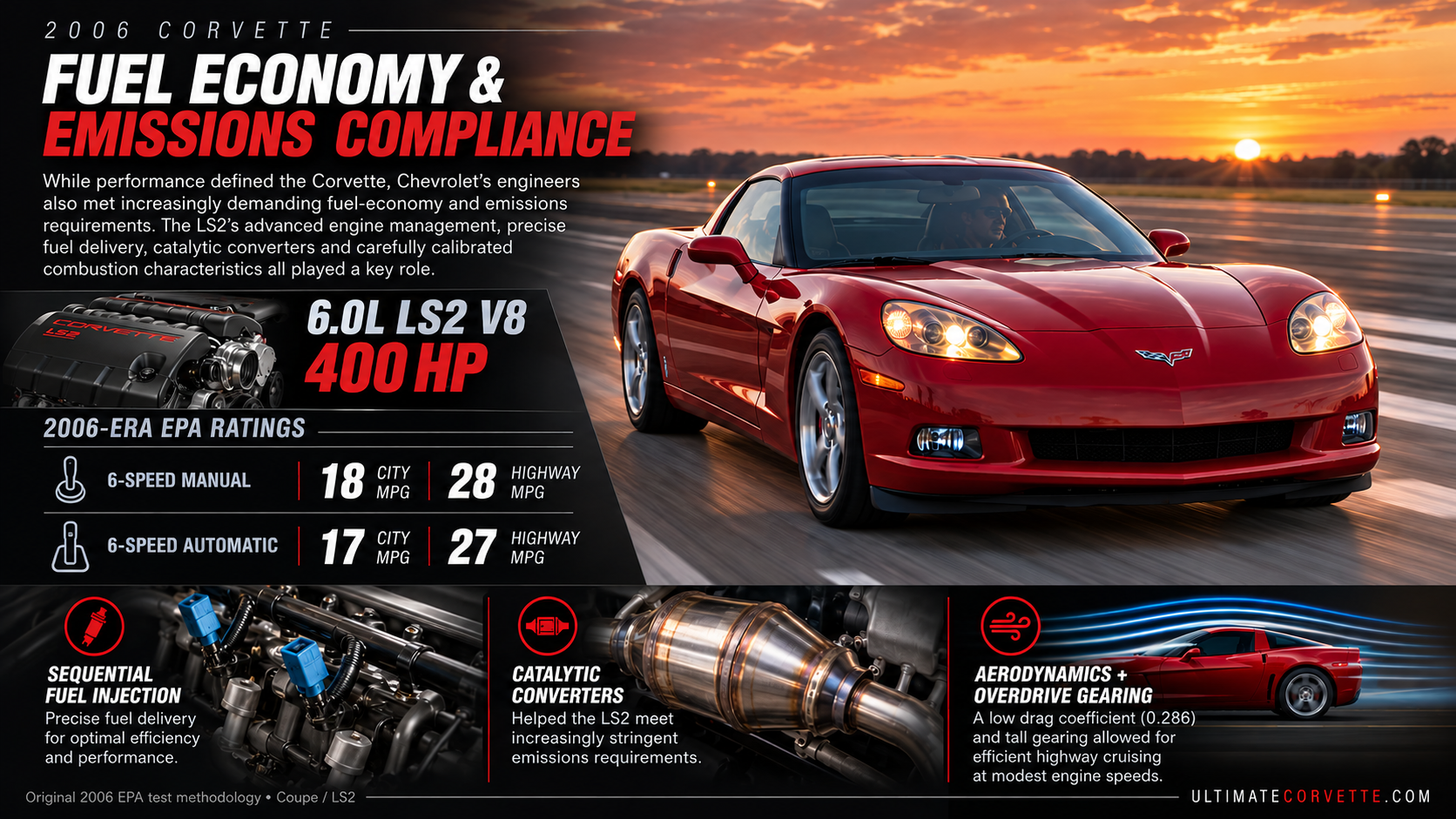
Although performance remained the Corvette’s defining characteristic, Chevrolet’s engineers also needed to satisfy increasingly demanding fuel-economy and emissions requirements. The LS2’s electronic fuel injection, engine management system, catalytic converters, and carefully calibrated combustion characteristics were essential to meeting those obligations.
The engine’s large displacement did not automatically translate into poor highway efficiency. During steady cruising, the Corvette’s aerodynamic body and relatively tall transmission gearing allowed the engine to operate at modest speeds. This contributed to highway fuel-economy figures that were competitive with, and sometimes superior to, those of smaller-displacement performance engines operating at higher speeds.
The manual-transmission Corvette carried EPA fuel-economy ratings of approximately 18 mpg city and 28 mpg highway under the testing methodology used at the time. Automatic-equipped models received slightly different ratings, reflecting the characteristics of the new transmission and its calibration.
These figures were significant because they demonstrated the effectiveness of Chevrolet’s broader engineering philosophy. The Corvette could deliver extraordinary acceleration while maintaining fuel consumption that was reasonable for a 400-horsepower sports car. The combination reinforced the advantages of efficient packaging, favorable aerodynamics, and a large-displacement engine capable of operating at relatively low speeds during ordinary driving.
The LS2’s Place in Corvette History
The LS2’s historical significance is sometimes overshadowed by the extraordinary achievements of the LS7-powered Z06. Yet the 6.0-liter engine played an essential role in establishing the C6 as a world-class sports car.
Its 400-horsepower output provided a substantial improvement over the standard C5, while its broad torque delivery made the Corvette exceptionally responsive during everyday driving. The engine also demonstrated the continued development potential of General Motors’ small-block architecture, proving that traditional mechanical principles could remain competitive when supported by modern materials, manufacturing techniques, and electronic controls.
For many enthusiasts, the LS2 represented an ideal balance between performance and usability. It delivered the unmistakable character of a naturally aspirated Chevrolet V8 without the more specialized maintenance and operating considerations associated with the Z06’s LS7.
The 2006 model year was particularly important because the introduction of the six-speed automatic transmission improved the overall driving experience for a substantial portion of Corvette buyers. The combination of the LS2 and 6L80 created a more sophisticated automatic-equipped Corvette, while the six-speed manual preserved the traditional relationship between driver and machine.
The LS2 would remain in Corvette production through the 2007 model year before being replaced by the larger-displacement LS3 for 2008. Its relatively brief tenure should not diminish its importance. It served as the foundation for the early C6 generation, established the standard Corvette’s performance credentials, and demonstrated the effectiveness of General Motors’ Generation IV small-block architecture.
By 2006, however, Chevrolet’s engineers were preparing to demonstrate how far that architecture could be pushed. The standard Corvette’s 400 horsepower was already impressive, but the new Z06 would introduce an engine and chassis combination that operated at an entirely different level.
The Return of the Z06: Chevrolet’s Most Ambitious Performance Corvette

The introduction of the 2006 Corvette Z06 represented one of the most consequential developments in the history of America’s sports car. Although the Z06 designation had already been revived during the C5 generation, the sixth-generation version was conceived with a level of ambition that extended far beyond the improvements traditionally associated with a higher-performance model. Chevrolet’s engineers were not simply seeking additional horsepower or more aggressive suspension calibration. They were developing an automobile intended to challenge the world’s most capable production sports cars while retaining the fundamental character and relative affordability of the Corvette.
The significance of the Z06 designation extended back more than four decades. Its origins lay in the early 1960s, when Chevrolet engineers were working to establish the newly introduced Sting Ray as a competitive platform for serious motorsport participation. Although General Motors maintained an official prohibition on factory racing involvement, the Corvette program continued developing equipment that would allow private competitors to race the automobile successfully.
Zora Arkus-Duntov, the influential engineer whose work helped establish the Corvette’s performance identity, played a central role in those efforts. Duntov understood that competition success could strengthen the Corvette’s reputation and demonstrate the capabilities of its engineering. He also recognized that private racers needed access to specialized equipment if they were to compete effectively against purpose-built sports cars.
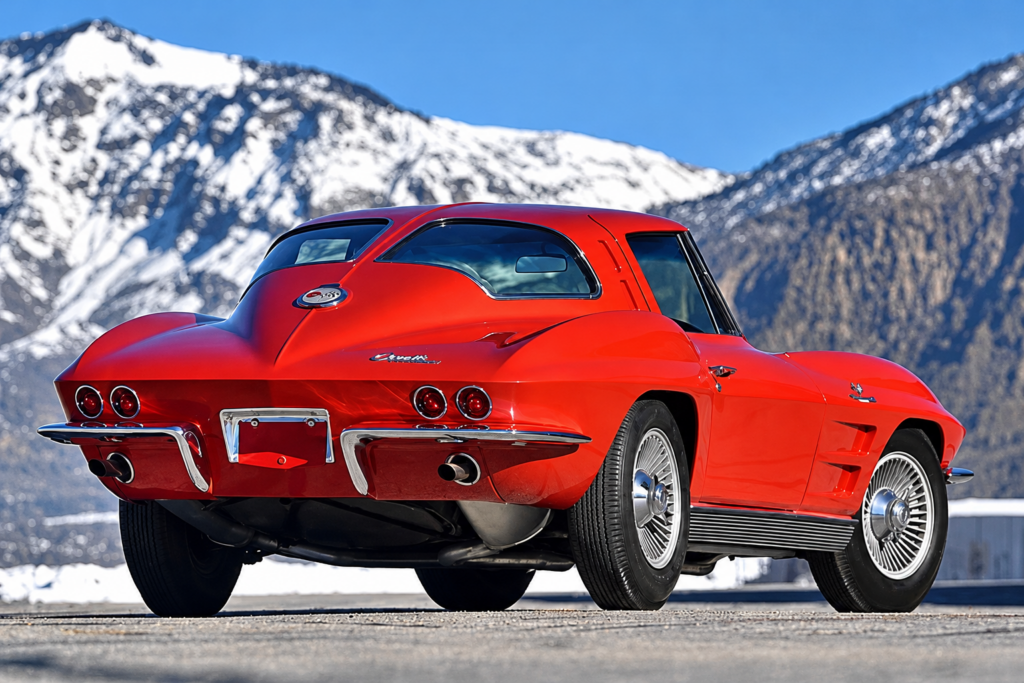
For the 1963 model year, Chevrolet introduced Regular Production Option Z06, a special equipment package intended for serious competition. The original Z06 incorporated heavy-duty braking components, revised suspension equipment, and other modifications designed to improve durability and performance under racing conditions. Its availability was limited, and relatively few examples were produced, but the package established a designation that would become synonymous with the Corvette’s most focused performance variants.
The original Z06 was not simply a more powerful Corvette. Its purpose was to provide the equipment necessary for sustained competition, particularly in areas where ordinary production components might prove inadequate. Braking performance, suspension control, and mechanical durability were central to its design. That philosophy would become an important reference point when Chevrolet revived the designation decades later.
The modern Z06 returned for the 2001 model year as part of the fifth-generation Corvette lineup. It employed the fixed-roof body configuration, a higher-output LS6 engine, specialized suspension calibration, and weight-saving measures intended to improve performance. The automobile quickly established itself as one of the most capable American sports cars of its era.
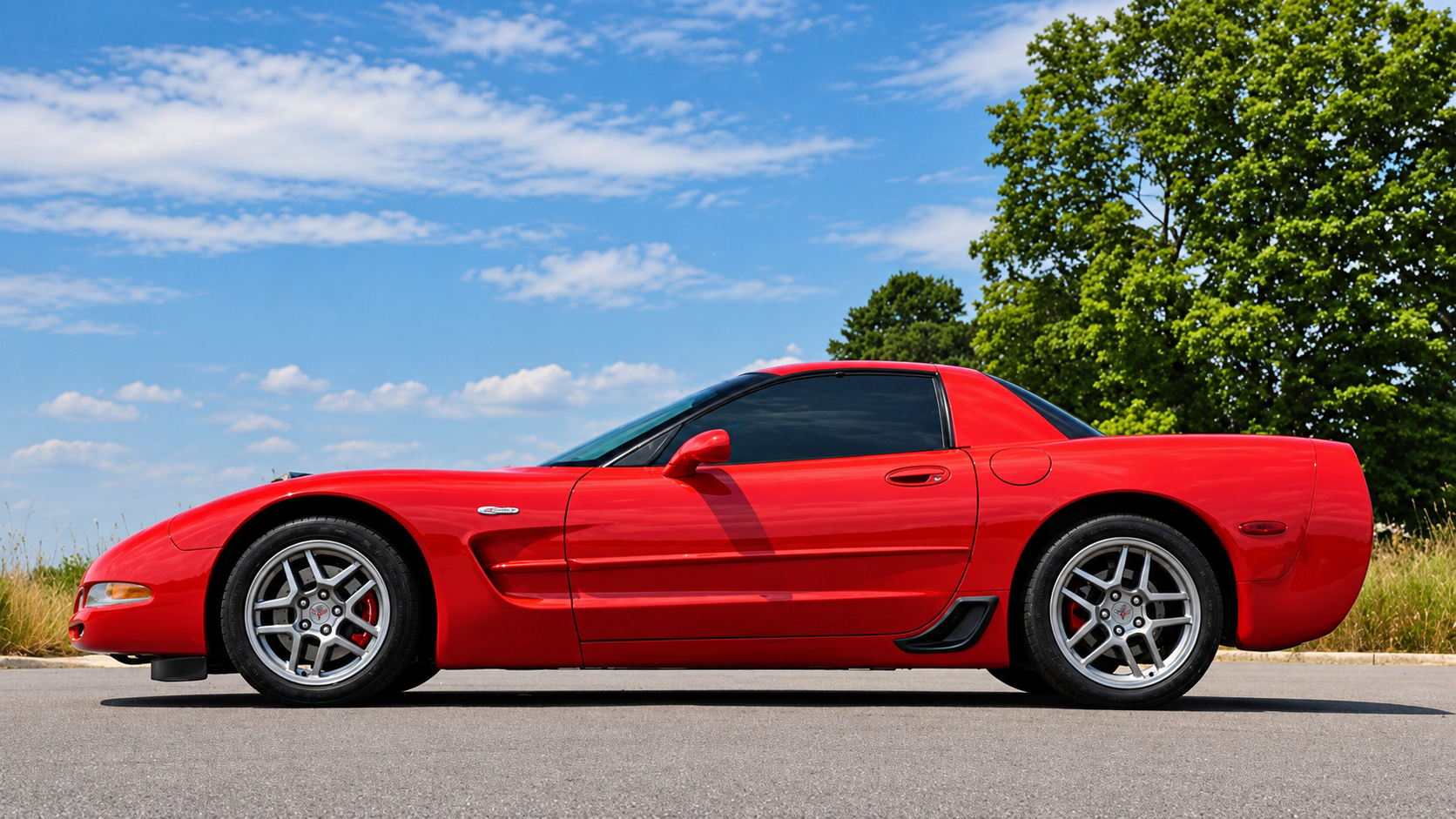
By the end of C5 production, the Corvette Z06 had earned a reputation as one of America’s most capable performance cars. With 405 horsepower, relatively low weight, and handling that impressed enthusiasts and automotive journalists alike, it offered a level of performance few cars could match for the money. More importantly, the C5 Z06 demonstrated that Chevrolet could build a truly specialized Corvette without abandoning the basic architecture of its production sports car.
That success presented the C6 engineering team with a challenge. The next Z06 could not simply offer a larger engine or a more aggressive appearance. Buyers expected a meaningful improvement over the standard Corvette, and the sixth-generation platform gave Chevrolet an opportunity to reconsider nearly every element of the car. Power, weight, structural rigidity, suspension, braking, aerodynamics, and sustained high-speed durability all became part of the development program.
The result was the 2006 Corvette Z06, a car that shared the basic layout of the C6 coupe but was engineered for an entirely different level of performance. Chevrolet’s objective was not just to improve acceleration or top speed. The Z06 needed to deliver the kind of balance and consistency expected of a serious road-and-track machine while remaining comfortable and reliable enough to be driven every day.
There was also a historical dimension to the assignment. The original 1963 Z06 had been created with competition in mind, and the C5 had reintroduced that familiar designation for a road car with a decidedly sharper edge. For 2006, Chevrolet sought to bring those ideas together. The new Z06 would remain a production Corvette, but its specifications and capabilities needed to reflect the kind of thorough engineering normally reserved for competition machinery. That objective shaped decisions long before the first completed cars reached showrooms.
Bringing Back the 427
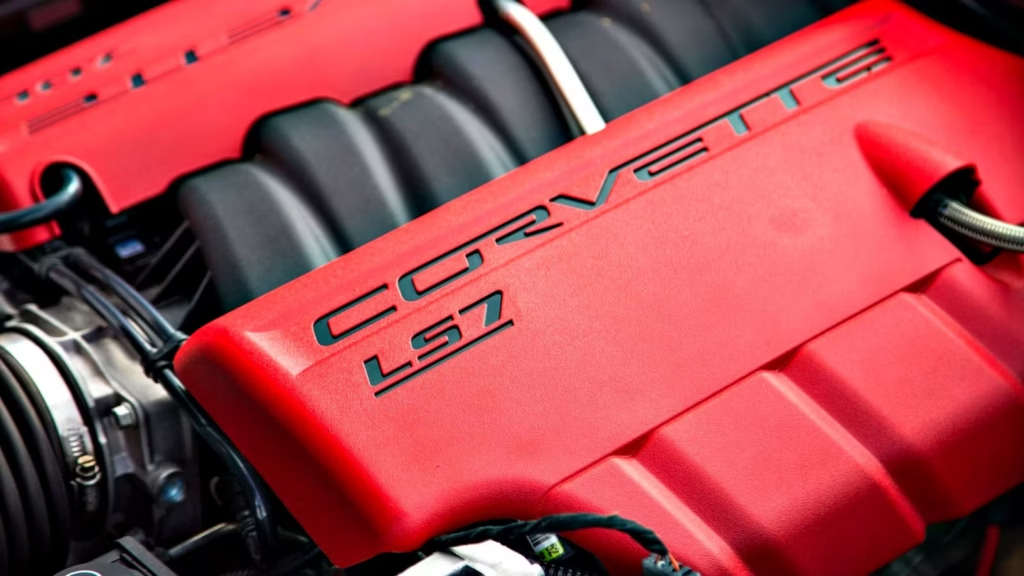
The standard Corvette’s LS2 was already a formidable engine, producing 400 horsepower and 400 lb-ft of torque. But the Z06 needed a powerplant that clearly separated it from the rest of the lineup. Chevrolet elected to stay with a naturally aspirated V8, preserving the immediate throttle response and broad torque delivery that had long been part of the Corvette’s character.
The answer was the LS7, a 7.0-liter engine rated at 505 horsepower at 6,300 rpm and 470 lb-ft of torque at 4,800 rpm. Its 427-cubic-inch displacement revived one of the most celebrated numbers in Corvette history, recalling the big-block machines of the 1960s. Yet the new engine was a fundamentally different design: an aluminum small-block, compact enough to fit within the Corvette’s existing engine architecture and sophisticated enough to meet contemporary emissions, durability, and drivability requirements.
That distinction was central to the Z06’s appeal. Chevrolet had delivered 105 additional horsepower over the LS2 without relying on a supercharger or turbocharger. The LS7 also offered a remarkable 7,000-rpm redline for an engine of its displacement, giving drivers access to a wide power band and an unusually aggressive character for a production pushrod V8.
A Lighter, Stronger Foundation
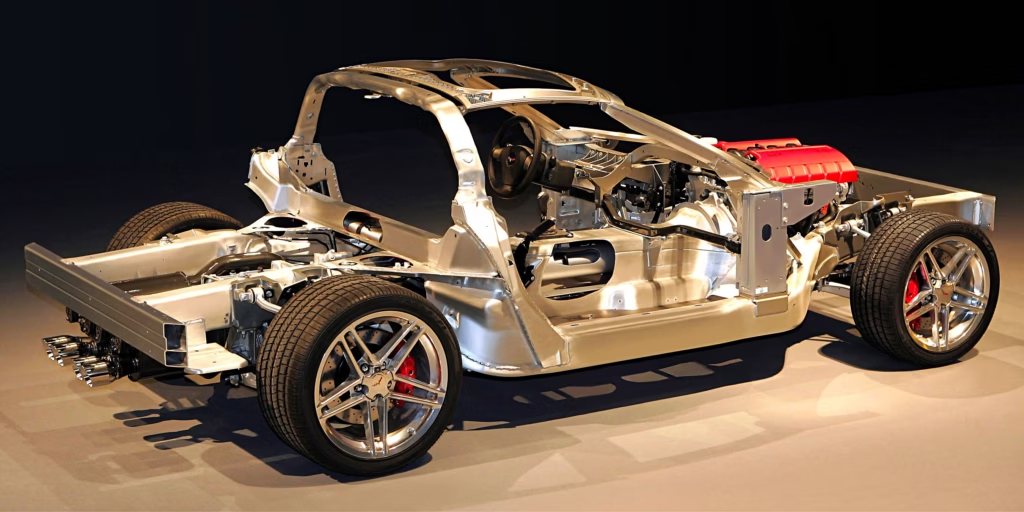
The engine was only part of the story. To manage its additional performance, the Z06 received a specialized aluminum frame in place of the standard Corvette’s steel structure. Chevrolet reported that the aluminum frame was approximately 30 percent lighter than the comparable steel frame, a substantial savings in one of the car’s largest structural components. Hydroformed rails and carefully developed joining processes gave the chassis the strength and rigidity needed for higher cornering and braking loads.
Aluminum demanded a different manufacturing approach from steel. Welding, dimensional control, and durability had to be addressed with processes specific to the material, rather than simply reproducing conventional steel-frame construction. The result was a lighter structure that remained suitable for production and contributed directly to the Z06’s responsiveness.
Chevrolet looked beyond the frame for additional weight savings. A magnesium engine cradle, carbon-fiber front fenders, and carbon-fiber front wheelhouses reduced mass in carefully selected areas. These materials were not included merely to give the Z06 an exotic specification sheet; they served the practical objective of removing weight without compromising the rigidity, strength, or durability expected of the finished car.
The 2006 Z06 also adopted a fixed-roof configuration rather than the standard coupe’s removable roof panel. That decision improved structural stiffness and allowed the suspension to work from a more stable foundation. When a car generates substantial cornering forces, even relatively small amounts of chassis flex can affect suspension geometry and driver feedback. The fixed roof was therefore a functional engineering decision, as well as one of the Z06’s defining visual characteristics.
The structure and the engine could not be treated as separate achievements. A chassis that was lighter but insufficiently rigid would make it more difficult to exploit the tires and suspension, while a powerful engine without appropriate cooling and drivetrain support would struggle during repeated hard use. Chevrolet therefore approached the Z06 as an integrated program, evaluating how each engineering decision affected the whole car. The benefit was not merely faster lap times; it was greater consistency and a more reassuring response when the driver began to approach the car’s limits.
Suspension, Brakes, and Aerodynamics
The Z06 retained the Corvette’s unequal-length control-arm suspension layout, but its springs, dampers, anti-roll bars, and other components received specialized calibration. Engineers needed to match the car’s lower weight and greater power with a suspension that would remain predictable at high speed and under sustained cornering loads. The goal was exceptional control without making the Z06 needlessly punishing on ordinary roads.
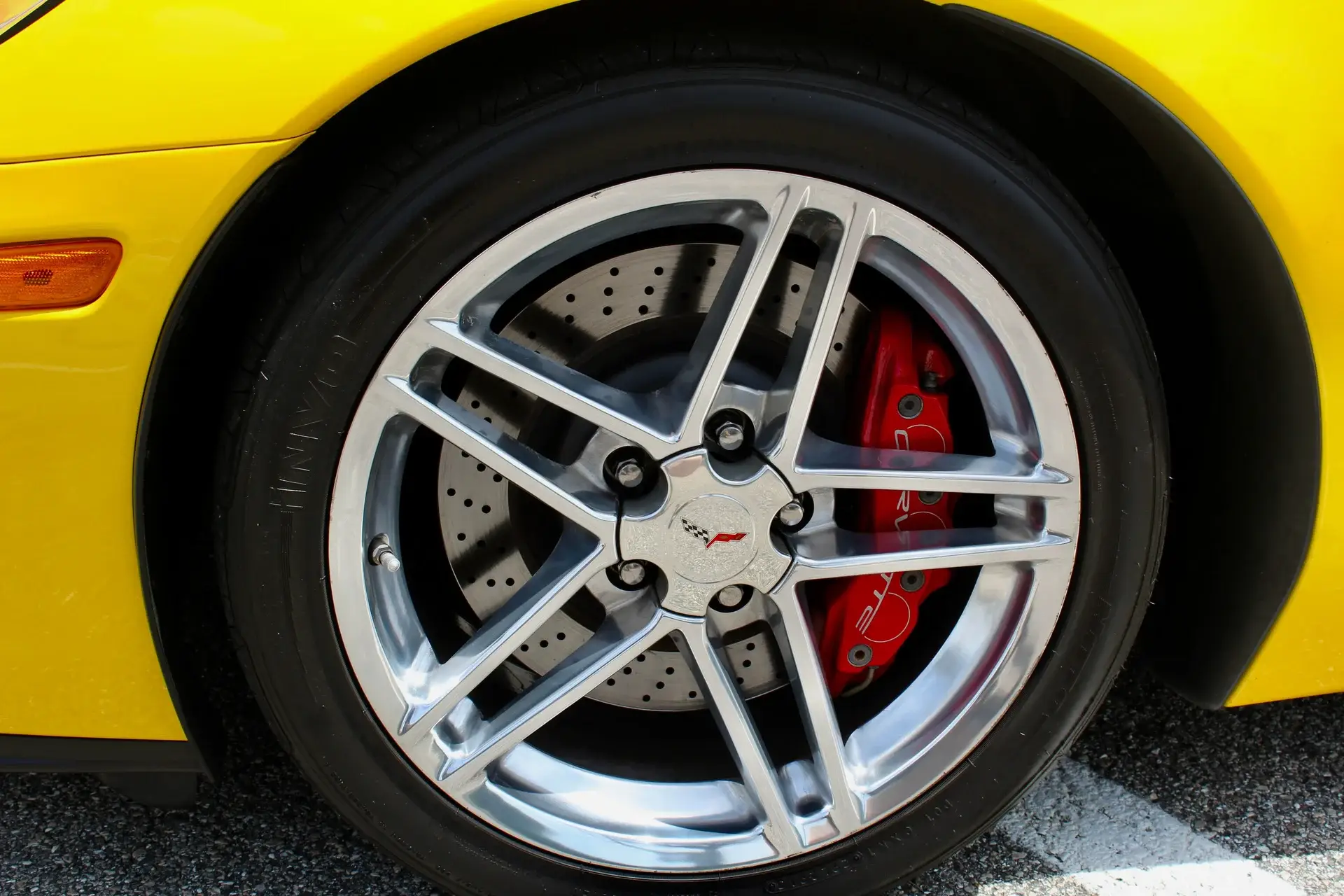
A wider stance and substantially larger tires were equally important. The car rode on 18-inch front wheels wearing P275/35ZR18 tires and 19-inch rear wheels fitted with P325/30ZR19 tires. The additional contact patch helped put the LS7’s 470 lb-ft of torque to the pavement and provided the lateral grip necessary to exploit the chassis. The broader rear bodywork made room for the larger tires while giving the Z06 a noticeably more muscular appearance.
Braking capability needed to keep pace. Chevrolet equipped the Z06 with six-piston front and four-piston rear calipers, along with approximately 14-inch front and 13.4-inch rear rotors. Their purpose extended beyond impressive stopping distances during a single test. Repeated braking from high speeds produces tremendous heat, and maintaining consistent pedal feel and braking performance under those conditions was essential to the car’s intended use.
The exterior was shaped by equally practical demands. Revised front and rear fascias, the prominent hood opening, and functional body vents helped manage cooling air and airflow around the car. At speeds approaching 200 mph, aerodynamic lift, drag, and stability become as important as raw horsepower. The Z06 therefore required a body that could deliver engine and brake cooling while remaining composed at speeds few production cars of the period could achieve.
The Z06’s drivetrain reinforced that purpose. Chevrolet equipped the car exclusively with a strengthened six-speed manual transaxle, with gear ratios selected to make use of the LS7’s broad torque curve. A limited-slip differential helped distribute power across the rear axle, while additional provisions for drivetrain cooling supported sustained operation. These details rarely attract as much attention as horsepower ratings, but they made a substantial difference to how effectively that horsepower could be used. The transmission also preserved an engaging, mechanical driving experience at a time when increasingly sophisticated performance automobiles were beginning to place more of the driving process under electronic control.
Performance That Challenged the Exotics

Chevrolet quoted a 0–60-mph time of approximately 3.7 seconds and a top speed near 198 mph. Contemporary testing placed the quarter-mile in the low-12-second range, figures that put the Z06 into competition with considerably more expensive European sports cars. With a base price of approximately $65,800, its performance-to-price ratio became one of the automobile’s most compelling attributes.
Yet the 2006 Z06 was not defined by any one number. Its achievement was the way Chevrolet integrated the LS7, lightweight chassis, wide tires, uprated brakes, and aerodynamic package into a car that could accelerate, corner, stop, and endure demanding use. The standard Corvette provided the starting point, but the Z06 had been engineered as a complete performance system rather than a collection of upgrades.
Corvette Racing‘s experience played an important role in that approach. Engineers working on the C6.R program, alongside Pratt & Miller, brought extensive knowledge of lightweight construction, cooling, aerodynamics, and component durability to Chevrolet‘s performance efforts. The road car and race car were different machines, but the exchange of engineering experience helped reinforce the idea that track performance and production-car development could inform one another.
For longtime enthusiasts, the return of the 427 added an unmistakable emotional connection. The Z06 brought a famous Corvette displacement into an era of aluminum structures, electronically managed powertrains, and sophisticated chassis development. For buyers encountering the Corvette for the first time, its broader significance was simpler: Chevrolet had produced an American sports car capable of competing with some of the finest performance machines in the world.
By the mid-2000s, Corvette engineering had reached a level of sophistication that would have been difficult to imagine when the first Z06 package appeared decades earlier. The 2006 car did not depend on one breakthrough. It reflected years of accumulated experience in vehicle development and factory-supported racing, applied to a road-going package that still met Chevrolet’s expectations for production quality and everyday practicality. That combination helps explain why the Z06’s introduction drew attention far beyond the established Corvette enthusiast community. It also explains why comparisons with expensive European sports cars were no longer based primarily on acceleration figures. Chevrolet could point to a complete automobile whose brakes, tires, structural design, and powertrain were developed to work together, and whose performance was available to customers through an ordinary Chevrolet dealership.
The LS7: Engineering the 2006 Corvette’s 505-Horsepower V8
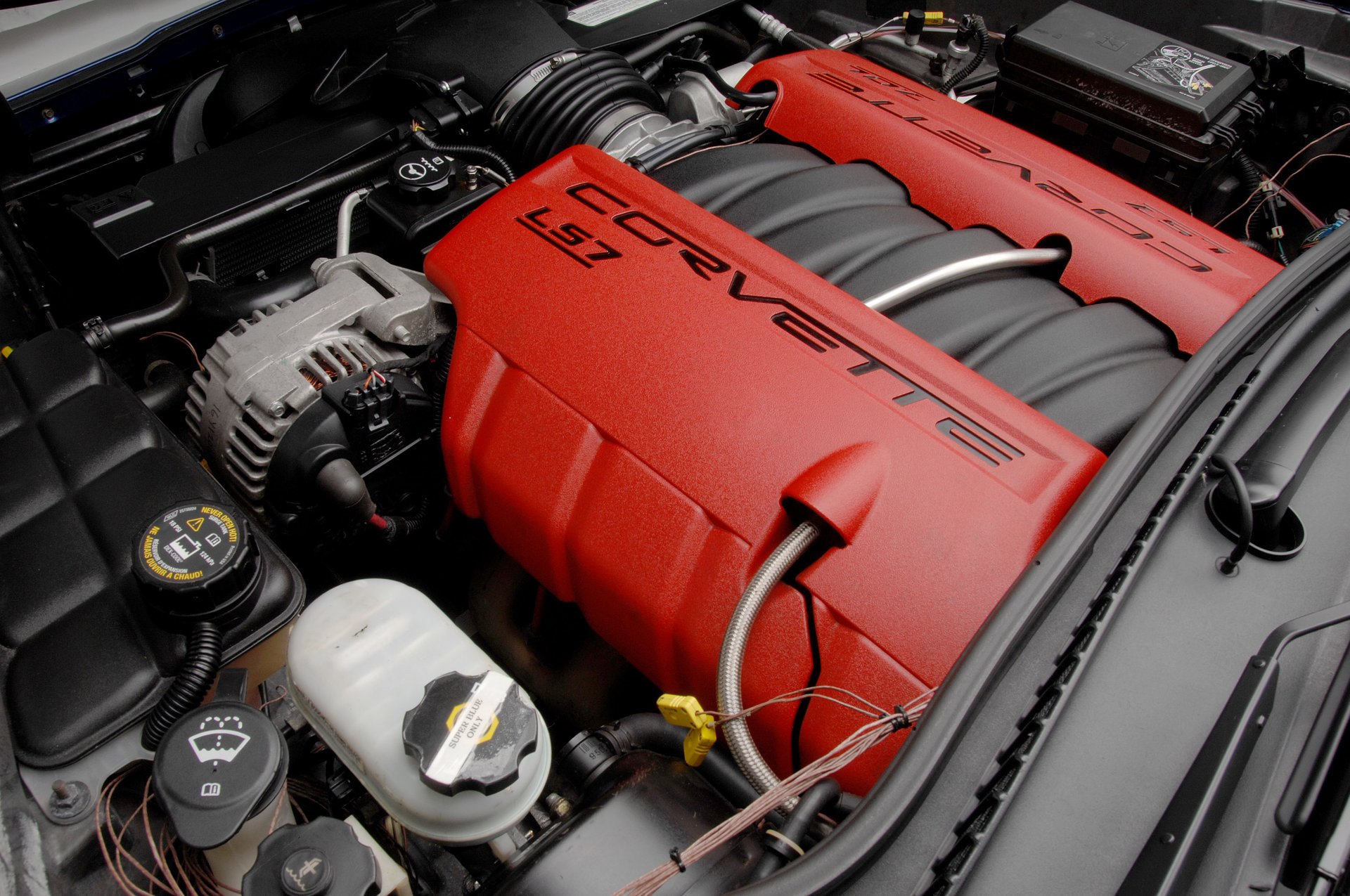
Developing the LS7 was one of the most ambitious undertakings in the modern history of Chevrolet’s small-block V8. Although it shared the basic architecture of the LS engine family, achieving more than 500 naturally aspirated horsepower required extensive work on its block, rotating assembly, cylinder heads, valvetrain, lubrication system, and engine controls. Chevrolet needed to deliver extraordinary output without sacrificing the compact dimensions and mechanical simplicity that made the small-block so effective in a Corvette.
The LS7 also had to function as a genuine production engine. It would be sold through Chevrolet dealerships and expected to start in cold weather, idle through traffic, operate reliably on premium pump gasoline, and satisfy federal emissions requirements. At the same time, it had to endure repeated acceleration, high engine speeds, heavy braking, and the substantial lateral forces generated during serious track driving. Meeting both sets of expectations demanded more than simply increasing displacement.
Seven Liters in a Compact Small-Block
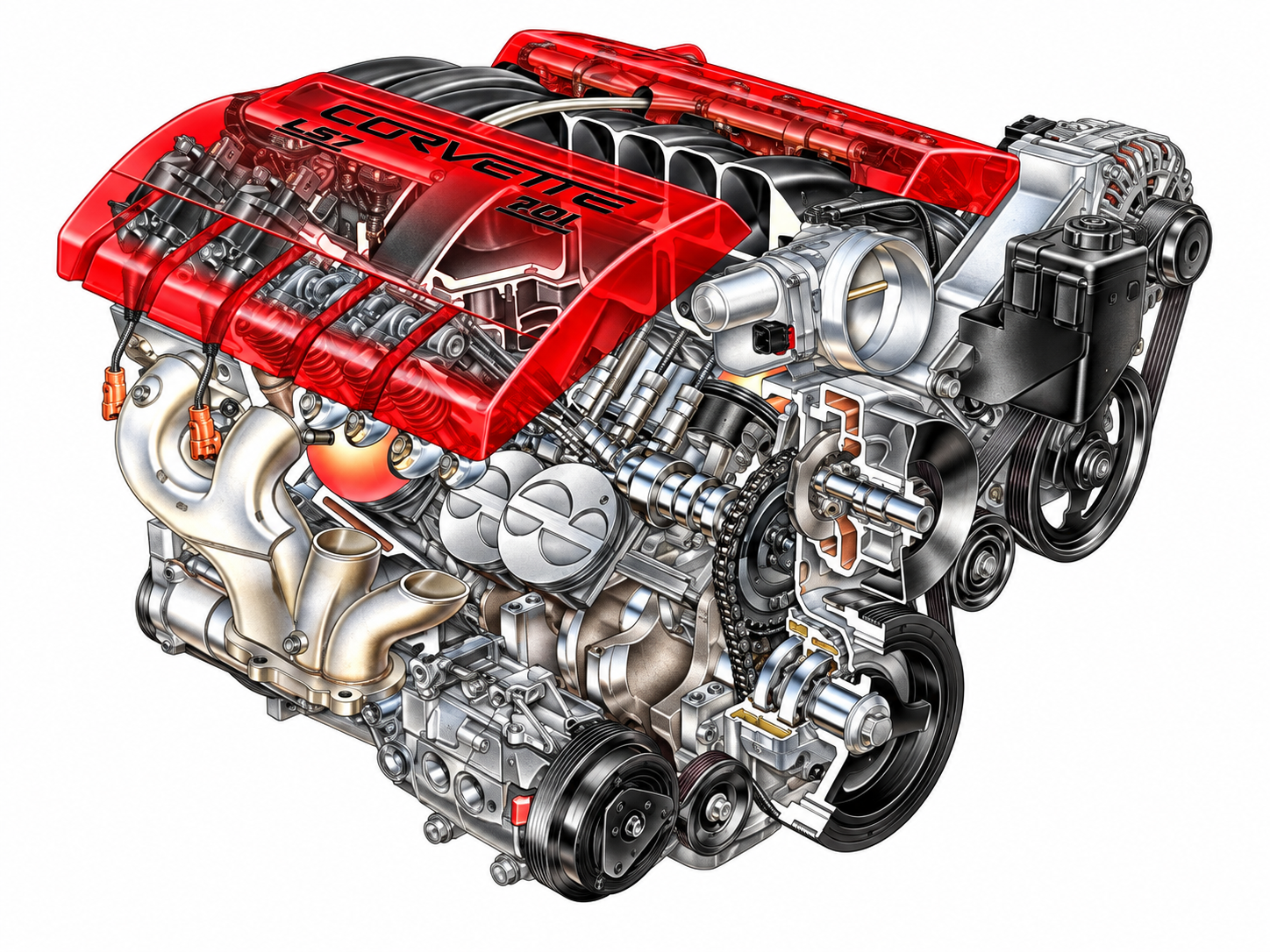
The LS7’s 7.0-liter displacement came from a 4.125-inch bore and a 4.000-inch stroke, compared with the LS2’s 4.000-inch bore and 3.622-inch stroke. Increasing both dimensions pushed the small-block architecture toward its practical limits. Engineers needed to control cylinder-wall strength, piston speed, crankshaft loads, and cooling while retaining the engine’s compact external dimensions.
Its specially developed aluminum block employed a deep-skirt design and cast-in iron cylinder liners. The aluminum reduced overall mass, while the liners provided durable surfaces for the pistons and rings. Accommodating the larger bores required careful attention to the material between adjacent cylinders and to the coolant passages surrounding them. The engine might have shared an architectural family with earlier LS V8s, but many of its major components were developed specifically for the LS7’s demands.
A forged-steel crankshaft handled the forces created by the engine’s long stroke and 11.0:1 compression ratio. Titanium connecting rods reduced reciprocating mass without sacrificing the strength required for high-speed operation. The aluminum-alloy pistons were designed to balance low weight with resistance to the pressures and temperatures generated under sustained load, while also maintaining effective ring sealing and oil control.
The combination was especially important at the LS7’s 7,000-rpm redline. With a 4.000-inch stroke, mean piston speed reached approximately 4,667 feet per minute, or 23.7 meters per second. That is a demanding operating speed for a large-displacement production engine, making the lightweight connecting rods, carefully developed rotating assembly, and robust block construction essential to long-term durability.
The use of titanium also reflected Chevrolet’s willingness to accept higher manufacturing costs in pursuit of performance. Titanium is difficult and expensive to machine, and its properties call for specialized handling and assembly procedures. In the LS7, however, reducing connecting-rod mass helped manage the enormous forces acting on the crankshaft and bearings at elevated engine speeds.
Those mechanical choices required close coordination among General Motors Powertrain engineers, component suppliers, and the Corvette development organization. A change to the crankshaft, connecting rods, pistons, or combustion chambers could affect not only engine output but also vibration, durability, emissions, and cooling. Engineers had to balance each of those requirements while maintaining a relatively compact engine package. The finished LS7 was therefore not simply an enlarged LS2. It was a substantially specialized member of the Gen IV family, developed around the particular requirements of the 2006 Z06.
Cylinder Heads Designed to Breathe
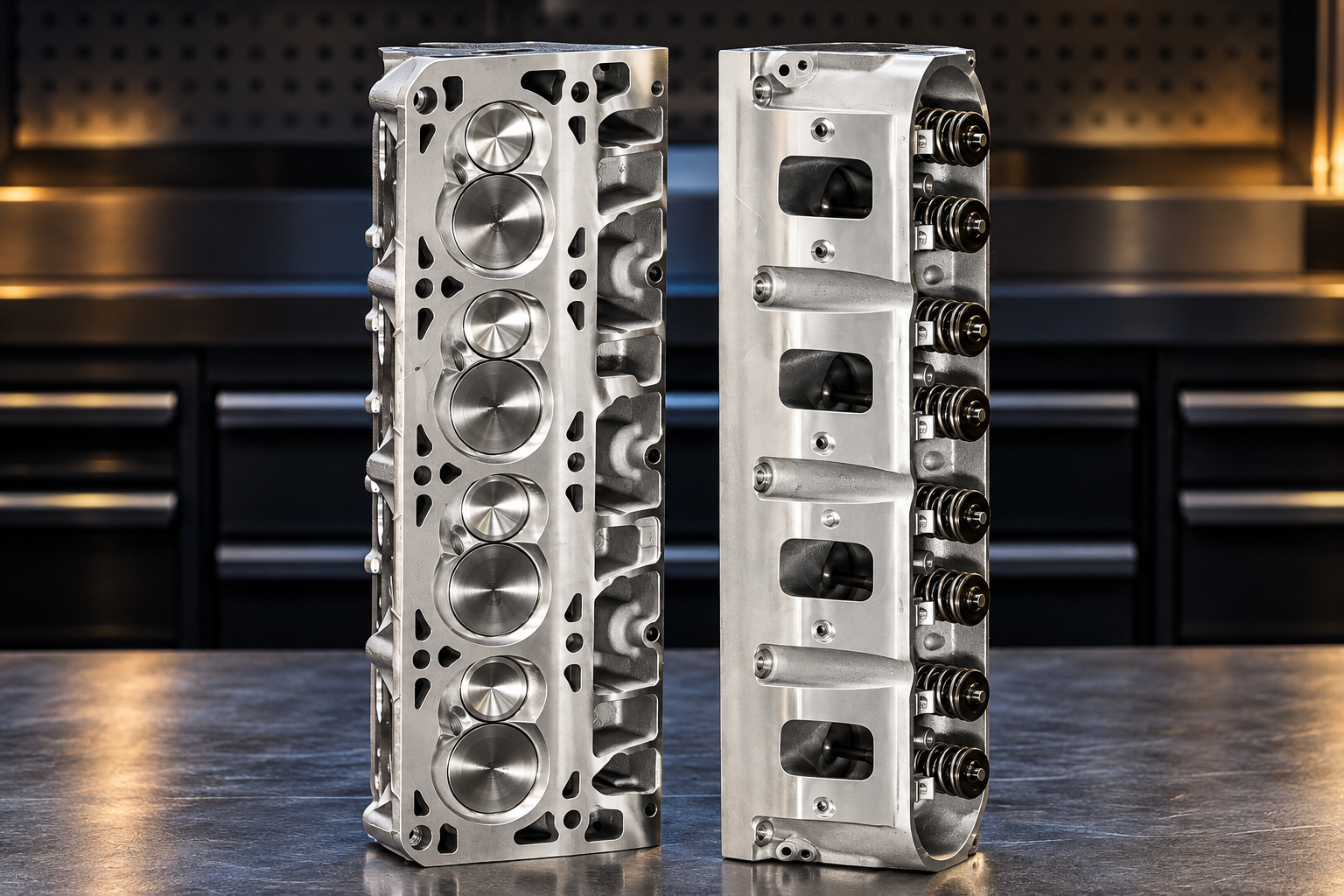
Displacement created the potential for 505 horsepower, but airflow allowed the LS7 to realize it. The engine used specially developed aluminum cylinder heads with CNC-machined intake and exhaust ports. Computer-controlled machining helped ensure consistent port geometry and airflow from one cylinder to the next, an important consideration when extracting maximum output from a naturally aspirated engine.
The intake valves measured 2.20 inches, while the exhaust valves measured 1.61 inches. Both were unusually large for a production two-valve cylinder head. Chevrolet used titanium intake valves to reduce valvetrain weight and sodium-filled exhaust valves to improve heat transfer away from the hottest parts of the engine. At operating temperature, the sodium within each exhaust valve helps carry heat from the valve head toward its stem and guide.
The combustion chambers, intake runners, and port shapes were engineered as a coordinated system. Chevrolet needed strong airflow at high rpm without sacrificing the broad torque delivery expected from a 7.0-liter V8. An electronically controlled 90-millimeter throttle body helped reduce intake restriction while allowing the engine management system to regulate airflow precisely. Paired with the 11.0:1 compression ratio, these measures helped the LS7 develop substantial power without forced induction.
The machining process also highlighted a larger change in the way Chevrolet approached performance-engine production. Rather than rely on the natural variation inherent in cast passages, CNC finishing gave engineers greater control over critical airflow dimensions. That consistency supported repeatable engine output and helped ensure that the behavior developed during testing could be reproduced in customer engines. It was an example of advanced manufacturing doing work that was every bit as important as the highly visible titanium components or the impressive horsepower rating.
Traditional Pushrods, Untraditional Performance
Despite the advanced materials used throughout the engine, the LS7 retained Chevrolet’s overhead-valve design. A single camshaft located in the block operated the 16 valves through hydraulic roller lifters, pushrods, and rocker arms. That configuration kept the engine relatively low and narrow compared with many overhead-cam designs, preserving an important packaging advantage for the Corvette’s low hood and front-mid-engine layout.
The camshaft profile was developed to support the LS7’s airflow and high-rpm capability while still providing acceptable idle quality, low-speed response, and emissions performance. Lift, duration, and timing had to work with the cylinder heads and intake system rather than simply favor peak horsepower. The result was an engine that pulled strongly through the middle of its operating range and continued building power toward its 6,300-rpm peak.
The lightweight titanium intake valves also helped the valve springs maintain control at higher engine speeds. Preventing valve float was critical because uncontrolled valve motion could reduce performance and cause serious mechanical damage. Chevrolet’s careful attention to component mass, spring requirements, and valvetrain geometry allowed the LS7 to reach speeds that were exceptional for a production 427-cubic-inch pushrod engine.
Hydraulic roller lifters contributed to reduced friction and eliminated the routine valve-lash adjustments associated with some specialized racing valvetrains. This detail illustrates the broader design philosophy behind the engine: impressive track capability was essential, but so was the ability to live with the car in everyday use.
Dry-Sump Lubrication: Built for the Racetrack
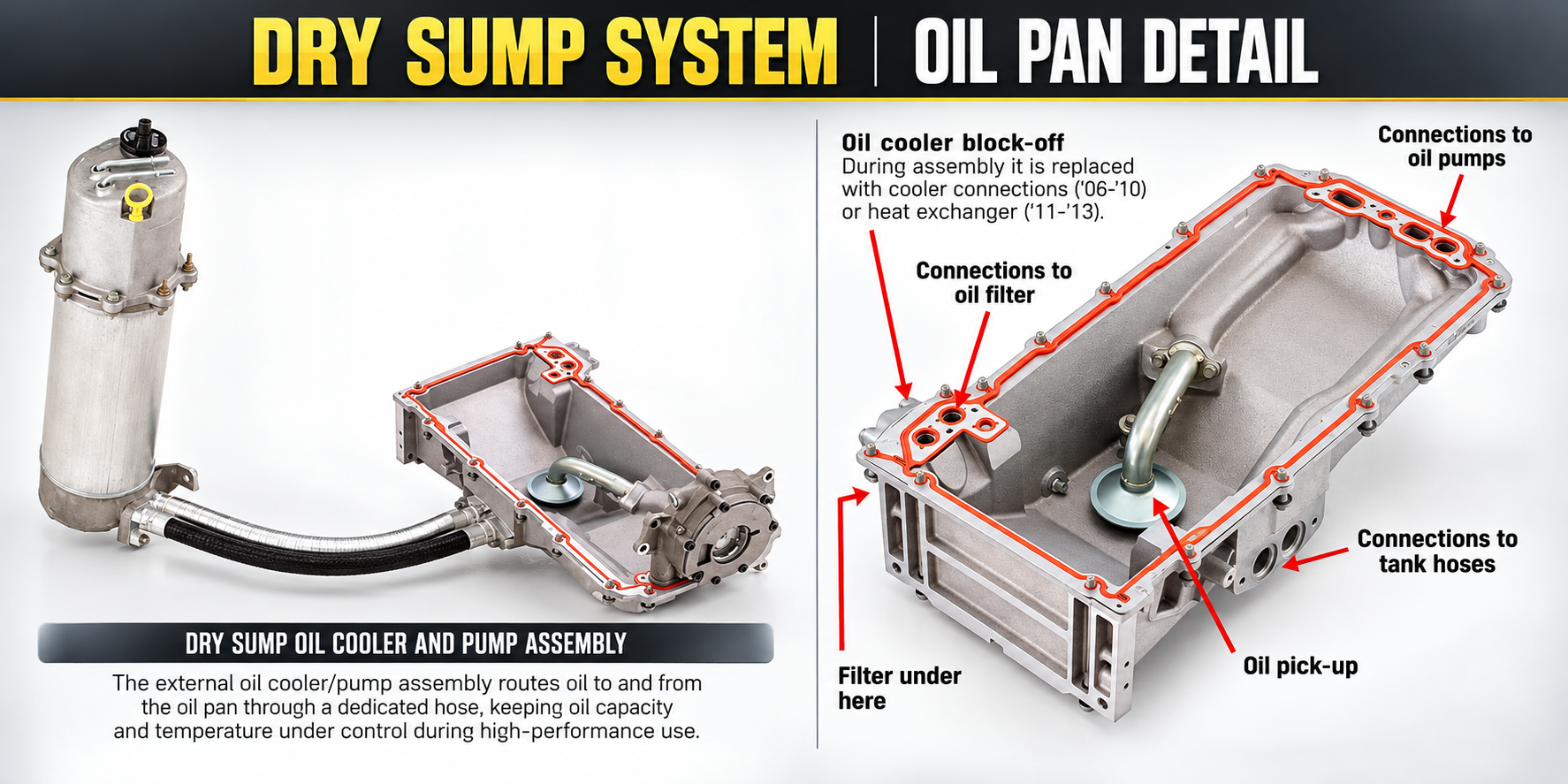
One of the LS7’s most important engineering features was its dry-sump lubrication system. Unlike the conventional wet-sump arrangement used by the standard LS2, the LS7 stored its primary oil supply in a separate reservoir. Scavenge pumps moved oil away from the crankcase, while a pressure stage supplied lubricant to the engine’s critical internal components.
The arrangement addressed a serious concern for a car capable of generating substantial cornering forces. In a traditional wet-sump engine, oil collects in a pan beneath the crankshaft. Under sustained lateral acceleration, it can move away from the pickup, potentially interrupting the supply to bearings and other components. At high rpm, even a brief loss of pressure can be costly. The LS7’s separate reservoir helped maintain a more consistent supply under demanding track conditions.
Dry-sump lubrication also allowed the use of a shallower oil pan. By reducing the space required beneath the crankshaft, Chevrolet could position the engine lower in the chassis, benefiting the Z06’s center of gravity and overall handling. This was a particularly useful advantage in a car where engineers were working to reduce weight and improve the distribution of mass throughout the vehicle.
Separating the oil supply from the crankcase also improved control over oil management and operating temperature. Combined with the LS7’s specialized cooling provisions, the system was designed for conditions far beyond an occasional full-throttle acceleration run. It reflected Chevrolet’s determination to build an engine that could deliver its performance repeatedly, not just briefly during a magazine test.
A dry-sump system brought its own engineering demands. The separate reservoir, lines, pumps, and associated plumbing had to fit within the Corvette’s tightly packaged engine compartment while remaining serviceable and reliable. The oil system also needed to function properly during ordinary driving, when the car might spend more time in stop-and-go traffic than near its maximum cornering capability. Chevrolet’s challenge was to make a competition-inspired solution behave like normal production equipment in the hands of an owner.
Managing Heat and Engine Electronics
An engine producing 505 horsepower generates substantial heat, particularly during prolonged high-load operation. The LS7’s liquid-cooling system relied on carefully designed coolant passages through the aluminum block and heads, supported by a high-capacity radiator and electronically controlled fans. Engineers paid particular attention to areas surrounding the combustion chambers and exhaust valves, where temperature control was critical to reliability.
Lubricant temperature was equally important. The dry-sump system’s oil-management provisions supported consistent oil supply and thermal control when the car was driven hard. The Z06’s functional body openings complemented these systems by moving cooling air through the radiator, toward the brakes, and around other components. Managing that airflow required a balance: larger openings could improve cooling but also influence aerodynamic drag and high-speed stability.
Mechanical engineering alone could not make the LS7 suitable for daily production use. Its engine control module continually adjusted fuel delivery, ignition timing, and electronic throttle response to suit operating conditions. Sequential fuel injection, knock-control strategies, and carefully developed calibration allowed the engine to function at varying temperatures, altitudes, and loads while meeting emissions requirements.
The 11.0:1 compression ratio made that calibration especially important. Chevrolet needed to extract the efficiency and performance benefits of high compression without compromising reliability on commercially available premium gasoline. Catalytic converters and other emissions equipment remained part of the finished package, underscoring how much work was required to deliver 505 horsepower in a road-legal production vehicle.
The system also had to support a broad range of environmental conditions. A 2006 Corvette could be driven on a cold morning, climb a mountain highway, idle for an extended period, or run hard in summer heat. Combustion efficiency, exhaust temperatures, and oil viscosity all varied with those conditions. The LS7’s electronic controls and thermal-management hardware were designed to respond to them without demanding special procedures from the driver. This ability to combine extraordinary output with ordinary usability was one of the quiet achievements of the program.
The Performance Build Center at Wixom
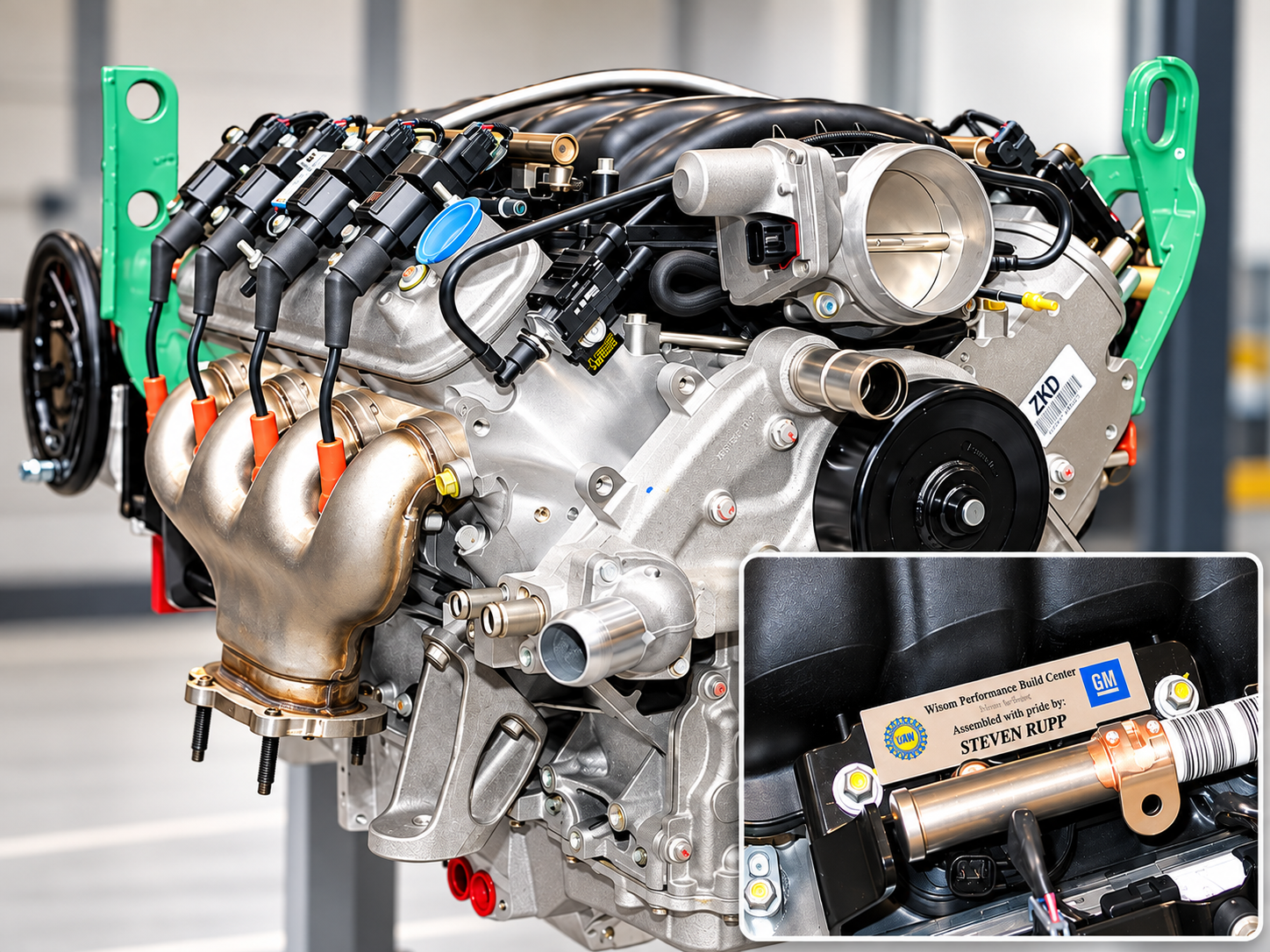
The LS7’s specialized components and relatively limited production volume led General Motors to assemble the engine at its Performance Build Center in Wixom, Michigan. Unlike a conventional high-volume engine line, the facility employed a process in which a trained technician assembled an individual engine from beginning to end. The builder followed prescribed procedures, checked critical measurements, and remained responsible for that engine throughout the assembly process.
This approach was particularly well suited to the LS7. Its titanium connecting rods, specialized cylinder heads, tight mechanical tolerances, and demanding operating requirements called for careful inspection and assembly. The crankshaft, pistons, connecting rods, camshaft, and valvetrain all required precisely controlled installation procedures, while component clearances and fastener torque had to meet established engineering standards.
Each engine also carried a record of its individual builder, creating a connection between the people assembling the LS7 and the customers who would eventually drive it. Although Chevrolet promoted the hand-built process as a mark of exclusivity, it also had a practical purpose. The engine’s design and production volume justified a more specialized assembly method than the processes used for Chevrolet’s mainstream V8s.
For Z06 owners, the Performance Build Center became part of the car’s identity. It was one more indication that the LS7 had been developed as something distinct from the standard production small-block, even as it retained the basic architectural principles that made Chevrolet’s V8 engines so recognizable.
Building one engine at a time also put unusual emphasis on the people responsible for its assembly. The technician needed to understand not only the order in which parts were installed but why tolerances and handling procedures were critical. An engine capable of operating at 7,000 rpm with titanium rods and large, lightweight valves allowed little room for inconsistency. The Performance Build Center’s methods gave Chevrolet a way to manage those demands within a production program, without treating the LS7 as a hand-built racing engine exempt from road-car expectations.
The Experience Behind the Numbers
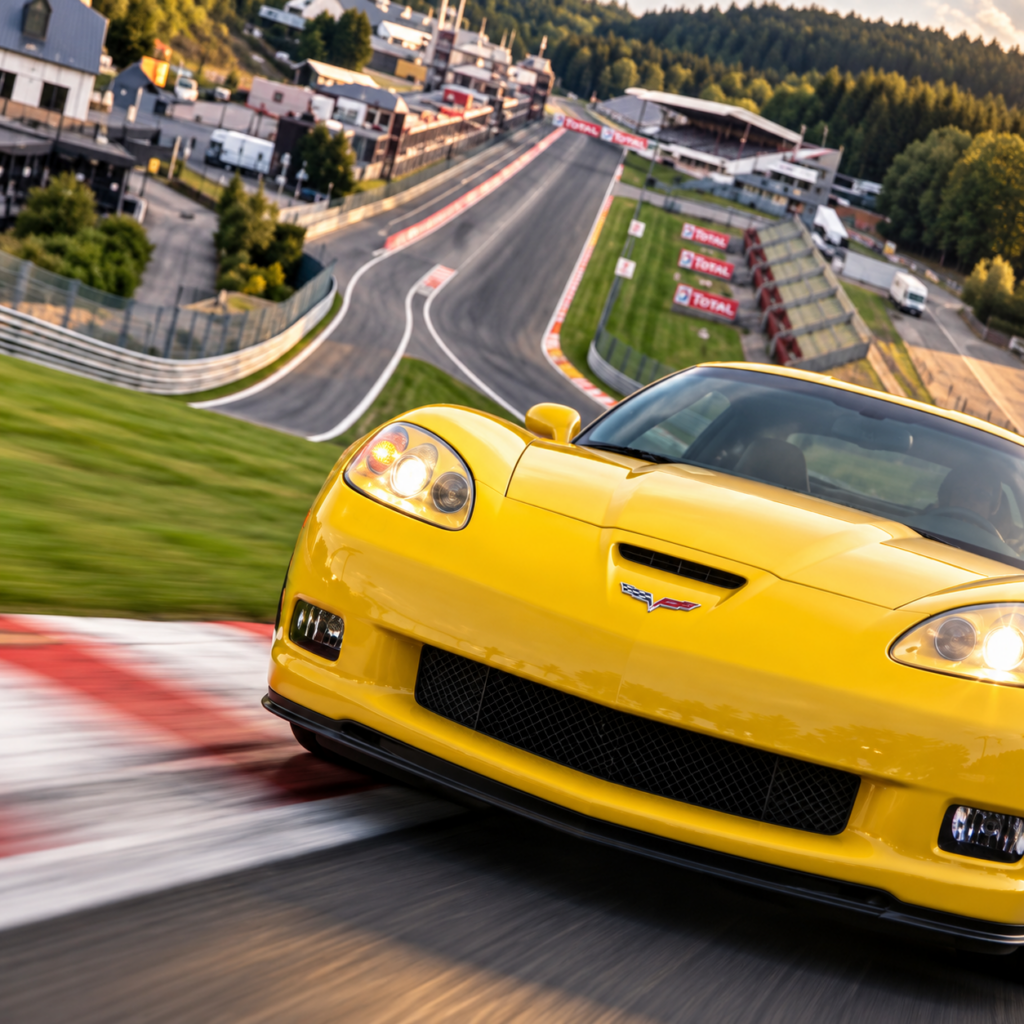
On paper, the LS7’s 505 horsepower and 470 lb-ft of torque were remarkable. From behind the wheel, its defining quality was the way it delivered that performance. Seven liters of displacement produced strong response at modest engine speeds, while the high-flow cylinder heads and specialized valvetrain encouraged drivers to continue accelerating toward the upper end of the tachometer.
Its naturally aspirated configuration gave the LS7 an immediate relationship between throttle input and engine response. There was no need to wait for a turbocharger to build boost, and no forced-induction system shaping the engine’s delivery. The driver controlled a broad, readily available supply of torque through the Z06’s six-speed manual transaxle, the only transmission offered for the 2006 model year.
The LS7 had a sound to match its performance. The combination of large displacement, camshaft tuning, and a freer-flowing exhaust gave the engine the familiar deep voice of a Chevrolet V8, with a harder, more urgent character as engine speed increased. It felt connected to Corvette tradition, but its willingness to rev and the precision of its response made clear just how far that tradition had progressed.
Ultimately, the 2006 Corvette Z06 was a remarkable accomplishment because its capabilities extended beyond the engine compartment. Chevrolet surrounded the LS7 with an aluminum chassis, carefully chosen lightweight materials, serious brakes, wide tires, and a suspension developed to take advantage of them. The collaboration among vehicle engineers, powertrain specialists, manufacturing personnel, and Corvette Racing helped produce a car that was equally compelling for its engineering and its performance.
The 427 badge carried more than four decades of Corvette history, but the LS7 was not an exercise in nostalgia. It was a modern, naturally aspirated small-block engineered to compete with the world’s best performance engines. In the 2006 Z06, Chevrolet proved that it could deliver exotic-car capability without abandoning the fundamental character of America’s sports car.
Engineering the Complete Z06: Chassis, Materials, Suspension, Braking, and Aerodynamics
The extraordinary performance of the 2006 Corvette Z06 cannot be attributed solely to its 505-horsepower LS7 engine. Although the powerplant represented one of Chevrolet’s most impressive engineering achievements, its capabilities would have been of limited value without a chassis, suspension, braking system, and aerodynamic package capable of translating that power into controlled, repeatable performance. The Z06 was therefore developed as a complete vehicle, with virtually every major system evaluated in relation to the demands imposed by its extraordinary power-to-weight ratio.
Chevrolet’s engineers understood that simply installing the LS7 in a standard Corvette would not produce the automobile they intended to build. The additional horsepower and torque would place greater demands on the frame, suspension, drivetrain, tires, and braking system. Sustained high-speed operation would also increase thermal loads, while the vehicle’s greater acceleration and cornering capabilities would expose structural weaknesses that might remain unnoticed in ordinary driving.
The development team consequently pursued a comprehensive engineering strategy centered on reducing weight, increasing structural rigidity, improving mechanical grip, and maintaining predictable handling under demanding conditions. The resulting Z06 shared the standard Corvette’s basic front-engine, rear-transaxle architecture, but its specialized construction distinguished it from the coupe and convertible in numerous important ways.
The Aluminum Frame: Reducing Weight Without Sacrificing Strength
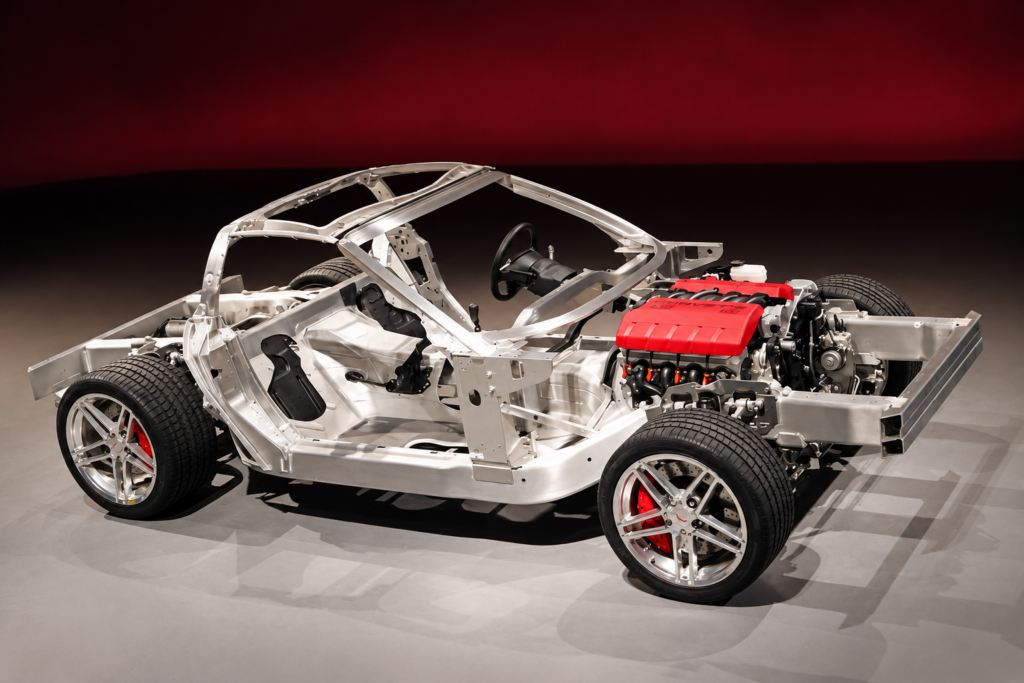
One of the Z06’s most significant engineering features was its aluminum frame. While the standard Corvette employed a hydroformed steel perimeter structure, the Z06 utilized a specialized aluminum frame designed to provide comparable structural performance at substantially reduced weight.
The aluminum structure weighed approximately 136 pounds, compared with approximately 300 pounds for the standard steel frame. This represented a reduction of roughly 164 pounds in one of the automobile’s largest structural components, contributing significantly to the Z06’s overall weight advantage.
Achieving this reduction required more than simply substituting aluminum for steel. Aluminum possesses different mechanical characteristics, including lower elastic modulus and different fatigue behavior, meaning that components must be designed specifically around the material’s properties. A structure made from aluminum cannot necessarily duplicate the dimensions of a steel component and provide equivalent stiffness or durability.
The Z06’s frame therefore employed carefully engineered sections, including hydroformed aluminum rails and specialized cast and extruded components. Hydroforming allowed engineers to create complex structural shapes by using pressurized fluid to form metal within a die. The process provided considerable flexibility in controlling cross-sectional geometry, allowing material to be distributed efficiently according to structural requirements.
The aluminum frame also required specialized joining techniques. Welding aluminum presents different challenges from welding steel, particularly because of its thermal conductivity, oxide layer, and sensitivity to heat input. Manufacturing engineers needed to develop processes capable of producing consistent joints while maintaining dimensional accuracy and structural integrity.
The resulting frame demonstrated the effectiveness of designing around a material’s specific characteristics rather than treating it as a direct replacement for another. Its reduced mass contributed to improved acceleration, braking, and handling, while its structural rigidity supported the suspension’s ability to maintain precise wheel control under load.
Magnesium Components and Additional Weight Reduction
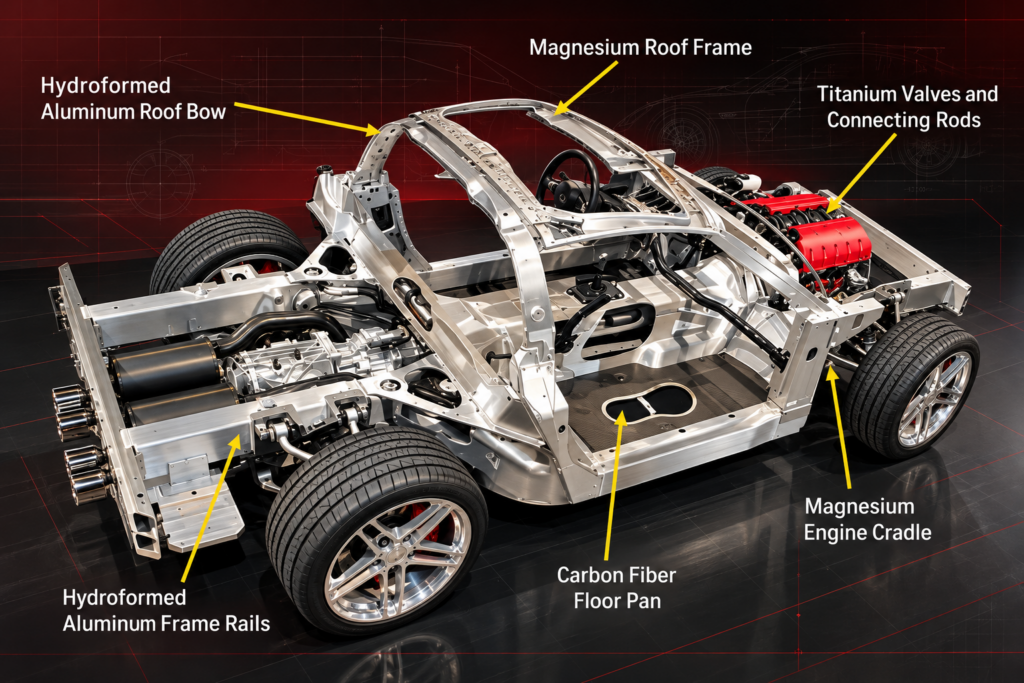
The Z06’s weight-reduction strategy extended beyond the frame. Chevrolet incorporated magnesium and carbon-fiber components in areas where their properties offered meaningful advantages.
The engine cradle was manufactured from magnesium, providing a substantial reduction in weight compared with a conventional steel component. Magnesium is one of the lightest structural metals used in automotive applications, offering considerable opportunities for mass reduction when properly engineered.
However, magnesium also presents challenges involving corrosion resistance, manufacturing processes, and material cost. Its use therefore required careful evaluation of the component’s operating environment and structural requirements.
The Z06’s magnesium engine cradle was particularly valuable because it reduced mass near the front of the automobile, contributing to favorable weight distribution and reducing the burden placed on the front suspension.
Additional weight reductions were achieved through the use of carbon-fiber components, including the front fenders and front wheelhouses. Carbon-fiber-reinforced composites offer exceptional strength-to-weight characteristics, allowing engineers to produce lightweight components with substantial stiffness.
The use of carbon fiber in a production Corvette represented an important step in the adoption of advanced materials. Although the material had long been associated with racing and exotic automobiles, its manufacturing cost and complexity limited widespread use in conventional production vehicles.
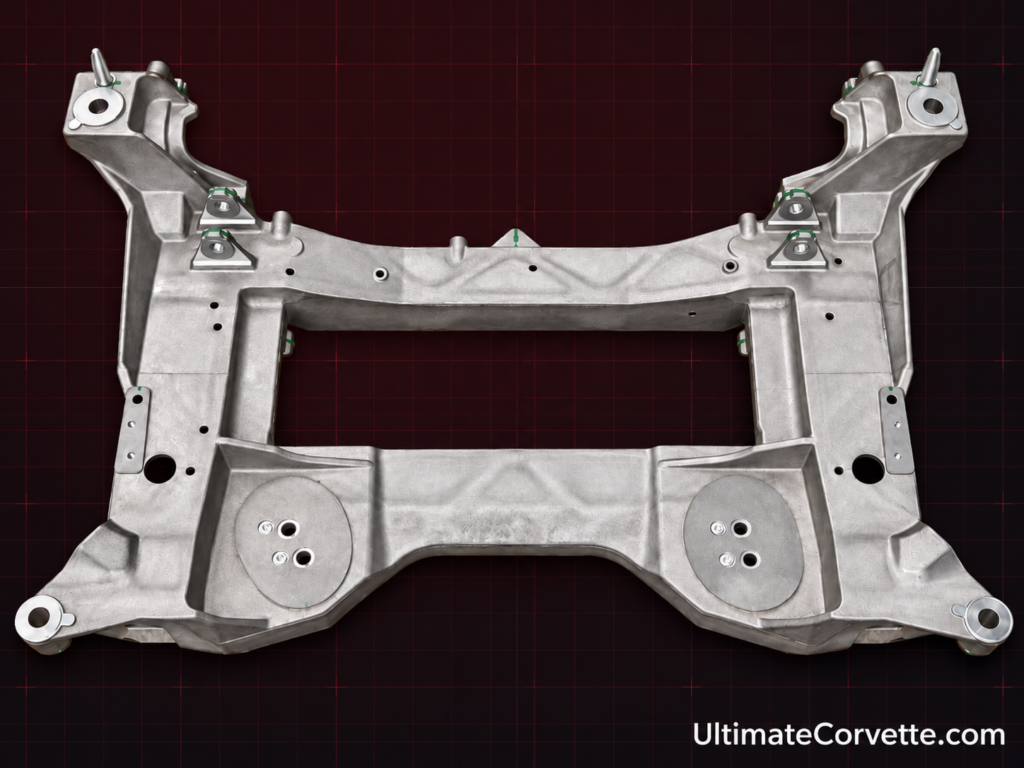
Chevrolet’s decision to incorporate carbon-fiber components reflected the Z06’s specialized character. The materials were selected because they contributed to measurable weight savings and performance improvements, not simply because they carried an association with expensive racing machinery.
The cumulative effect of these measures was substantial. The 2006 Z06 had a published curb weight of approximately 3,132 pounds, making it lighter than the standard Corvette despite its larger engine, wider tires, upgraded brakes, and additional performance equipment.
This relatively low weight was central to the automobile’s extraordinary performance. Reducing mass improves acceleration, braking, and cornering simultaneously, while also reducing the loads imposed on tires, suspension components, and drivetrain systems.
The Fixed-Roof Structure
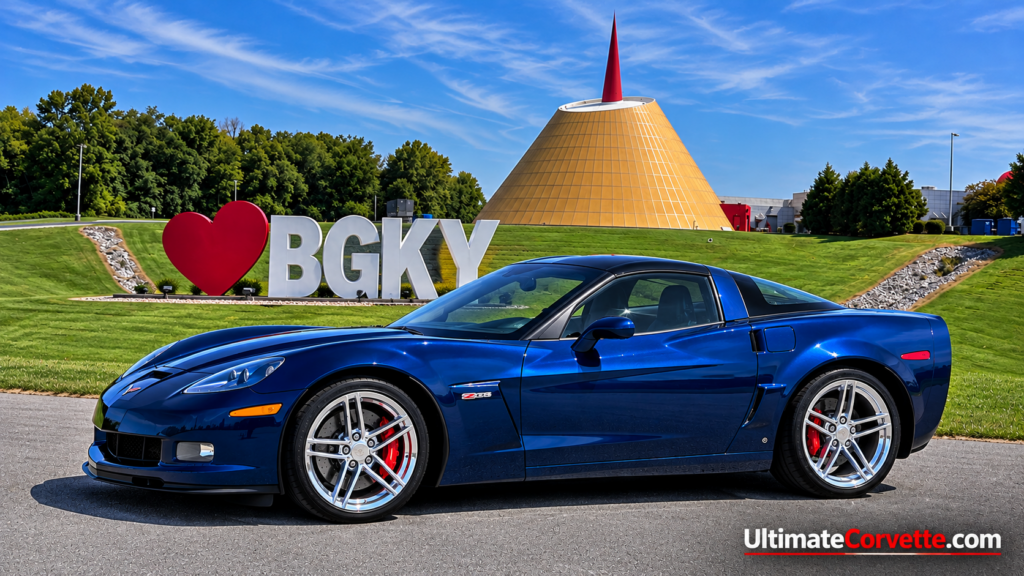
Unlike the standard Corvette coupe, which featured a removable roof panel, the Z06 employed a permanently attached roof structure. This configuration provided important advantages in structural rigidity and weight.
The roof formed part of the automobile’s overall load-bearing structure, helping resist torsional deformation during cornering and other high-load conditions. By integrating the roof into the chassis, engineers could improve structural stiffness without relying entirely on additional reinforcement elsewhere in the body.
This was particularly important because the Z06’s suspension and tires were capable of generating substantial lateral forces. Under aggressive cornering, those forces travel through the wheels, suspension components, and chassis. Excessive structural flex can alter suspension geometry and reduce the consistency of the vehicle’s response.
The fixed-roof configuration helped minimize these effects, allowing the suspension to operate more precisely. It also reinforced the Z06’s specialized character, distinguishing it from the standard coupe’s more versatile removable-roof arrangement.
The decision involved a deliberate compromise. Buyers who wanted open-air driving could choose the standard coupe or convertible, but the Z06 prioritized structural performance over that convenience.
Suspension Geometry and Calibration
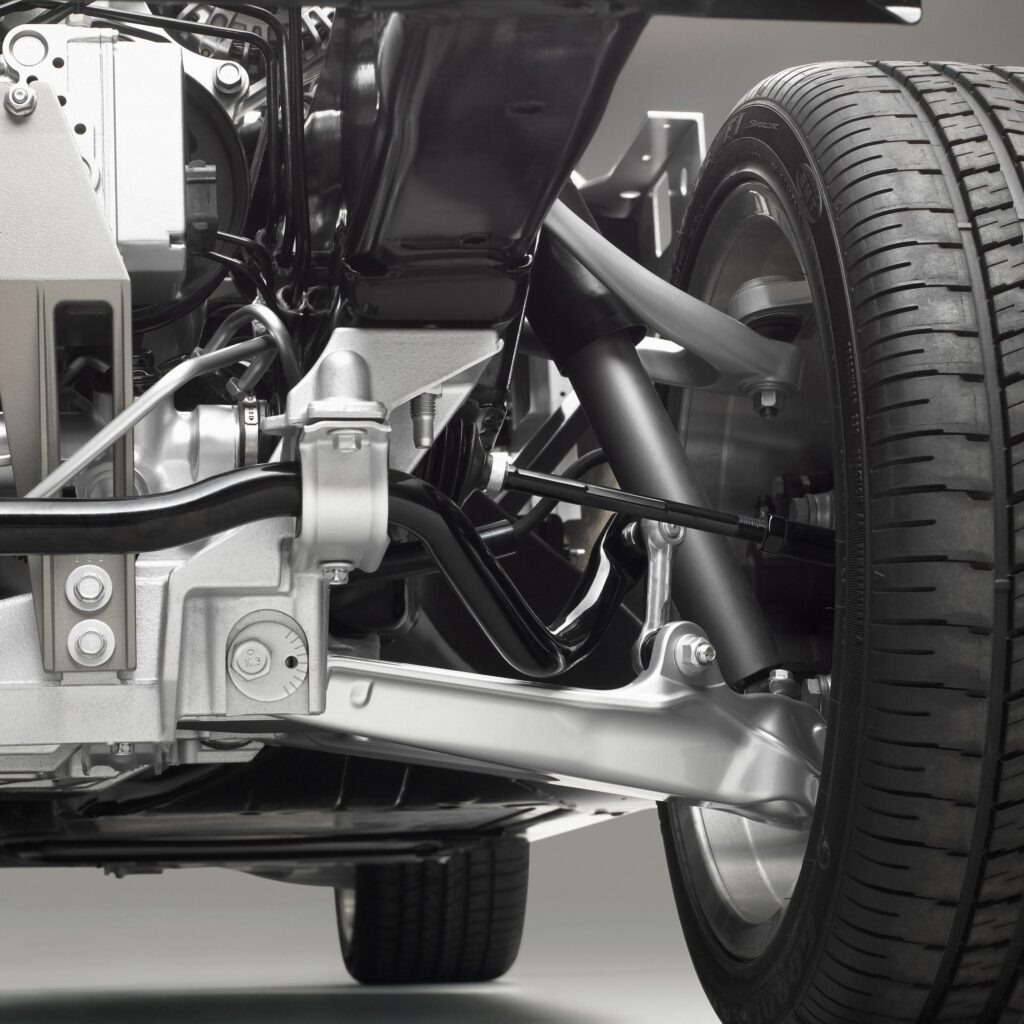
The Z06 retained the Corvette’s established unequal-length control-arm suspension architecture, but its components and calibration were extensively revised to accommodate the automobile’s reduced weight, increased power, and greater tire grip.
At each corner, aluminum control arms helped reduce unsprung mass while providing precise wheel location. The unequal-length arrangement allowed engineers to control camber change as the suspension moved through its travel, helping maintain favorable tire contact with the road during cornering.
The suspension continued to employ transverse composite leaf springs, a configuration that had become an important characteristic of modern Corvette engineering. Although sometimes criticized by observers who associated leaf springs with older automotive designs, the composite transverse springs offered meaningful advantages in weight, packaging, and suspension efficiency.
The Z06’s spring rates were selected to provide greater body control during aggressive driving, while revised shock absorbers and anti-roll bars helped manage pitch, roll, and transient response. The calibration was intended to provide exceptional handling without creating an automobile that was excessively harsh or unpredictable during ordinary road use.
The relationship between spring rates and damping was particularly important. Springs determine how the suspension supports the vehicle and responds to displacement, while dampers control the rate at which the suspension moves. An effective performance suspension requires these elements to work together, maintaining tire contact with the road while controlling unwanted body motion.
The Z06’s engineers also needed to consider the effects of its lighter frame and body components. Reducing vehicle mass changes the loads imposed on the suspension and can alter the relationship between spring rates, damping, and ride frequency. The Z06’s suspension was therefore calibrated specifically for its weight distribution and performance characteristics rather than simply adopting more aggressive versions of the standard Corvette’s components.
Steering and Driver Feedback
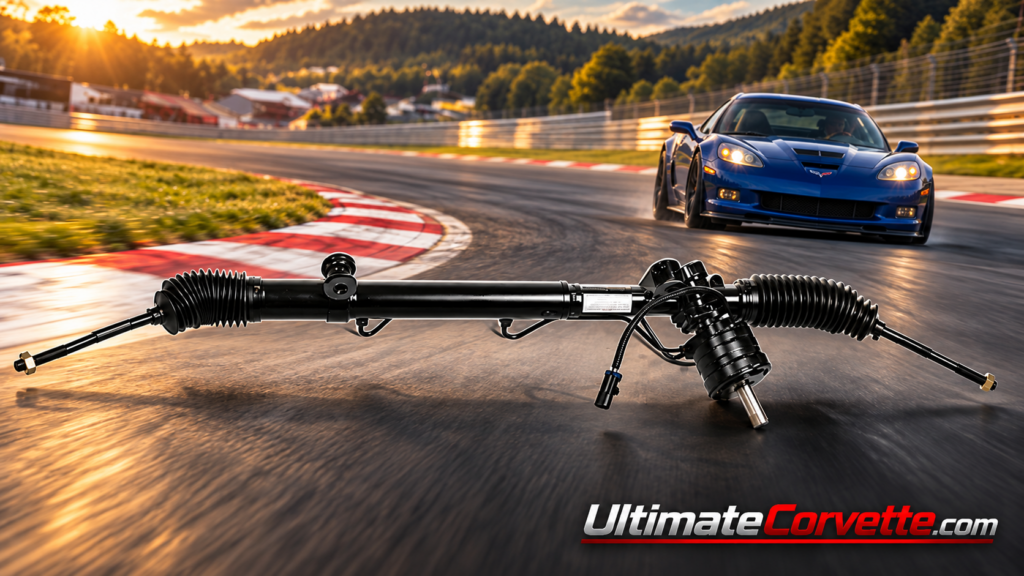
The Z06’s steering system was designed to provide direct response and predictable feedback during high-performance driving. Its power-assisted rack-and-pinion configuration allowed engineers to calibrate steering effort and response according to the automobile’s specialized suspension and tire characteristics.
The wider front tires increased available grip but also influenced steering effort and sensitivity to road-surface irregularities. Engineers needed to balance these characteristics to create a system that communicated useful information without becoming excessively demanding.
Steering precision was particularly important because the Z06 could generate substantial cornering forces. Small steering inputs at high speed could produce significant changes in vehicle direction, making predictable response essential to driver confidence.
The system’s effectiveness depended on the relationship among steering geometry, suspension compliance, tire construction, and chassis rigidity. The Z06’s lightweight frame and specialized suspension helped maintain consistent alignment under load, contributing to a more precise connection between steering input and vehicle response.
Wheels and Tires: Translating Power into Grip
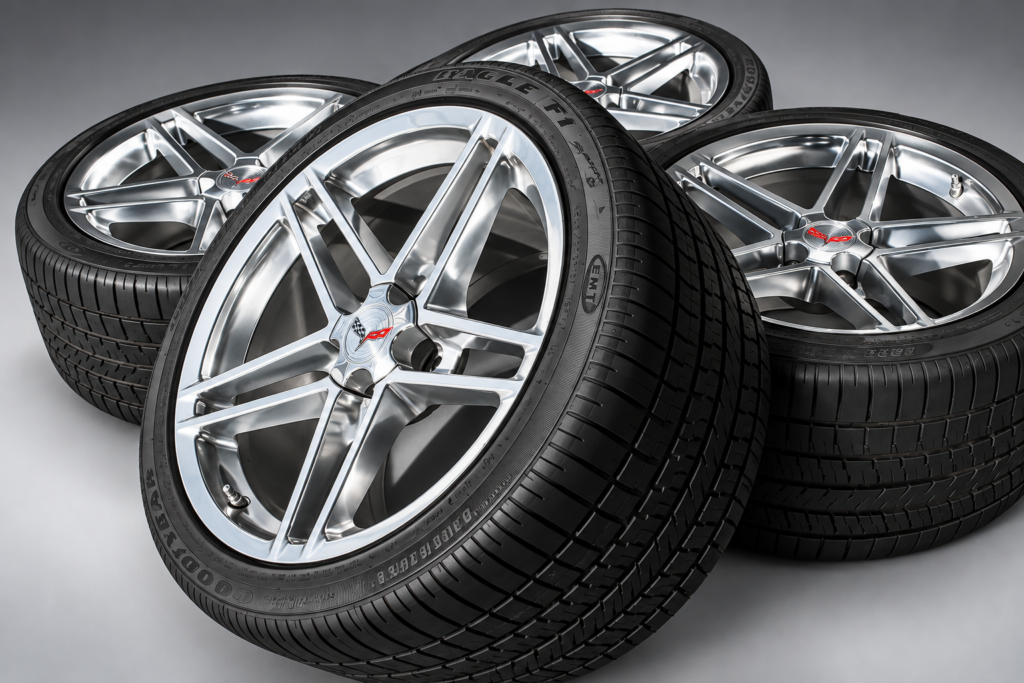
The Z06’s wheels and tires were essential to its performance. The automobile employed 18-inch front wheels and 19-inch rear wheels, with substantially wider tires than those fitted to the standard Corvette.
The front tires measured P275/35ZR18, while the rear tires measured P325/30ZR19. These dimensions provided large contact patches capable of managing the LS7’s substantial torque and the lateral forces generated during aggressive cornering.
The rear tires were particularly important because the Z06 delivered 470 lb-ft of torque through the rear wheels. Under hard acceleration, the tires needed to convert that torque into forward motion without excessive wheelspin. Their width, construction, and compound were therefore critical elements of the automobile’s acceleration performance.
The front tires were selected to provide strong lateral grip and responsive steering while accommodating the substantial braking loads generated by the Z06’s upgraded brake system.
The tires also influenced ride quality, road noise, and steering behavior. Their relatively short sidewalls improved response but reduced the amount of compliance available to absorb road irregularities. Engineers needed to account for these characteristics when calibrating the suspension.
The Z06 employed specialized Goodyear Eagle F1 Supercar tires developed to support its performance objectives. Their construction and compound reflected the demands of high-speed operation and aggressive cornering, while retaining the durability and road-use characteristics required of production tires.
Braking System: Controlling Extraordinary Performance
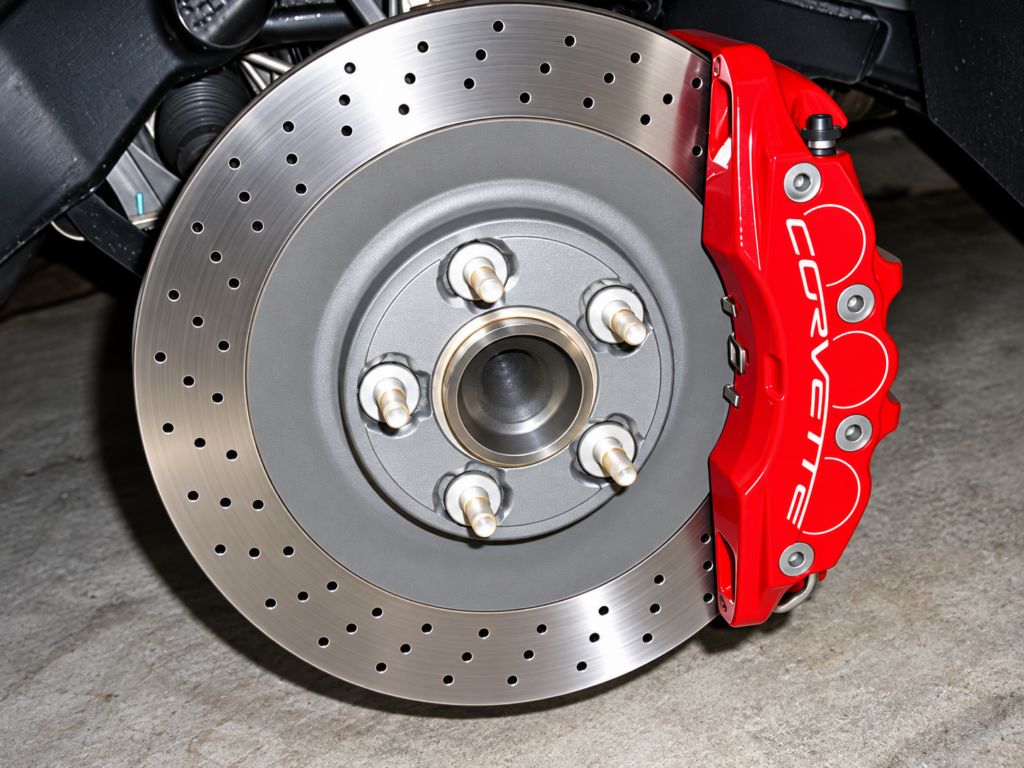
The Z06’s braking system was developed to provide the stopping power and thermal capacity necessary for an automobile capable of approaching 200 mph.
At the front, the Z06 employed 14.0-inch ventilated brake rotors with six-piston calipers. The rear brakes utilized 13.4-inch ventilated rotors with four-piston calipers. This arrangement provided substantially greater braking capacity than the standard Corvette’s system.
The use of multiple pistons allowed braking force to be distributed more evenly across the brake pads, helping maintain consistent contact with the rotor surface. Larger rotors increased the available friction area and provided greater thermal mass, improving the system’s ability to absorb and dissipate heat.
Thermal management was particularly important because repeated high-speed braking generates enormous quantities of heat. During a single stop from very high speed, the brakes must convert a substantial amount of the vehicle’s kinetic energy into thermal energy. If the system cannot dissipate that heat effectively, brake fade, fluid boiling, or component damage may occur.
The Z06’s brake system was therefore engineered for repeatability rather than simply achieving impressive stopping distances during isolated tests. Cooling airflow, rotor design, pad materials, and caliper construction all contributed to maintaining performance during demanding operation.
The system also incorporated antilock braking and electronic brake-force distribution, helping maintain directional control during aggressive braking. These technologies were calibrated to work with the Z06’s specialized tires and suspension characteristics.
Aerodynamic Development
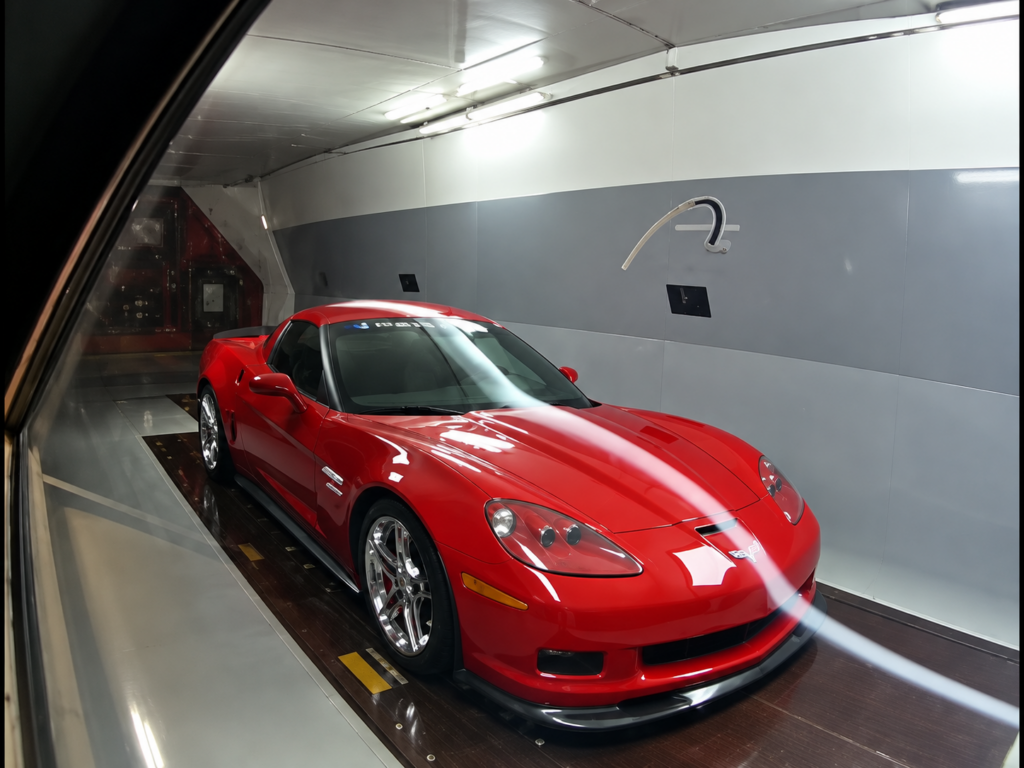
Aerodynamics played a central role in the Z06’s engineering because the automobile was capable of speeds approaching 200 mph. At such velocities, aerodynamic forces become increasingly important, influencing stability, cooling, drag, and the loads imposed on the suspension.
The Z06’s exterior incorporated numerous functional features intended to manage airflow. The front fascia was revised to improve cooling and aerodynamic performance, while the hood incorporated an opening associated with the engine’s induction and thermal-management requirements.
The front splitter helped manage airflow beneath the vehicle, reducing unwanted lift and contributing to high-speed stability. Side openings assisted in directing air through and around the engine compartment, while the rear bodywork was shaped to accommodate the wider tires and manage airflow leaving the vehicle.
The rear spoiler was another important component. Its shape and position were selected to influence airflow over the rear of the automobile, helping maintain stability at high speeds.
The development team needed to balance aerodynamic drag against downforce and cooling requirements. Increasing downforce can improve high-speed grip, but often introduces additional drag that reduces maximum speed and increases fuel consumption. The Z06’s aerodynamic package was therefore developed to provide an effective compromise among these competing objectives.
Wind-tunnel testing and computational analysis helped engineers evaluate airflow patterns and refine the bodywork. However, physical testing remained essential because the interaction among airflow, vehicle attitude, suspension movement, and cooling systems can be difficult to predict entirely through simulation.
The Z06’s aerodynamic development also benefited from knowledge gained through Corvette Racing. Although the production automobile and C6.R competition car operated under different regulatory and performance requirements, their engineers confronted many of the same fundamental challenges involving airflow management, cooling, and high-speed stability.
Weight Distribution and Vehicle Dynamics
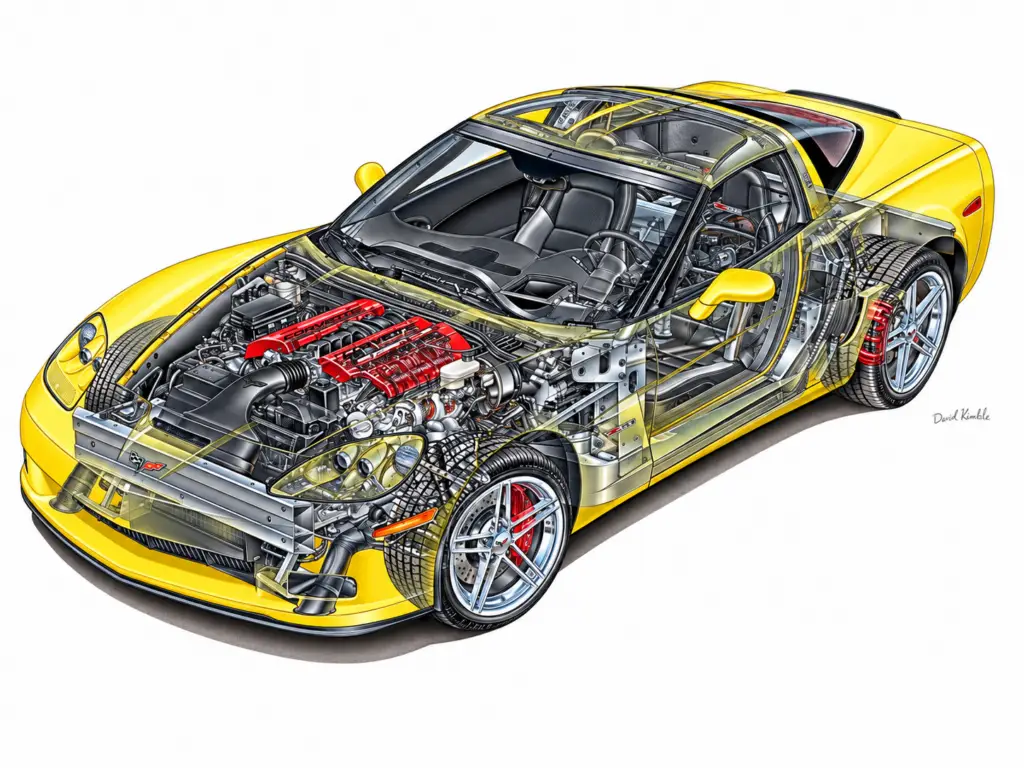
The Z06’s front-engine, rear-transaxle architecture contributed to a relatively balanced distribution of mass between the front and rear axles. Positioning the transmission and differential at the rear helped offset the weight of the LS7 engine, while the aluminum frame and lightweight front-end components reduced unnecessary mass.
Weight distribution influences how a vehicle responds to acceleration, braking, and cornering. Excessive front weight can increase the demands placed on the front tires, while excessive rear weight can alter traction and handling characteristics. The Corvette’s architecture allowed engineers to manage these relationships effectively.
The Z06’s reduced overall weight also improved its power-to-weight ratio. With 505 horsepower and a curb weight of approximately 3,132 pounds, the automobile carried roughly 6.2 pounds per horsepower. This figure placed it among the most capable production sports cars of its era.
The relationship between power and weight was particularly important because it influenced acceleration across the entire speed range. A lighter automobile requires less energy to accelerate, allowing a given engine output to produce greater performance.
Reduced mass also benefited braking and cornering. The brakes needed to dissipate less kinetic energy during deceleration, while the tires and suspension experienced lower loads during directional changes.
The Z06’s engineering team therefore treated weight reduction as a fundamental performance strategy rather than a secondary objective.
Cooling, Durability, and Track Capability
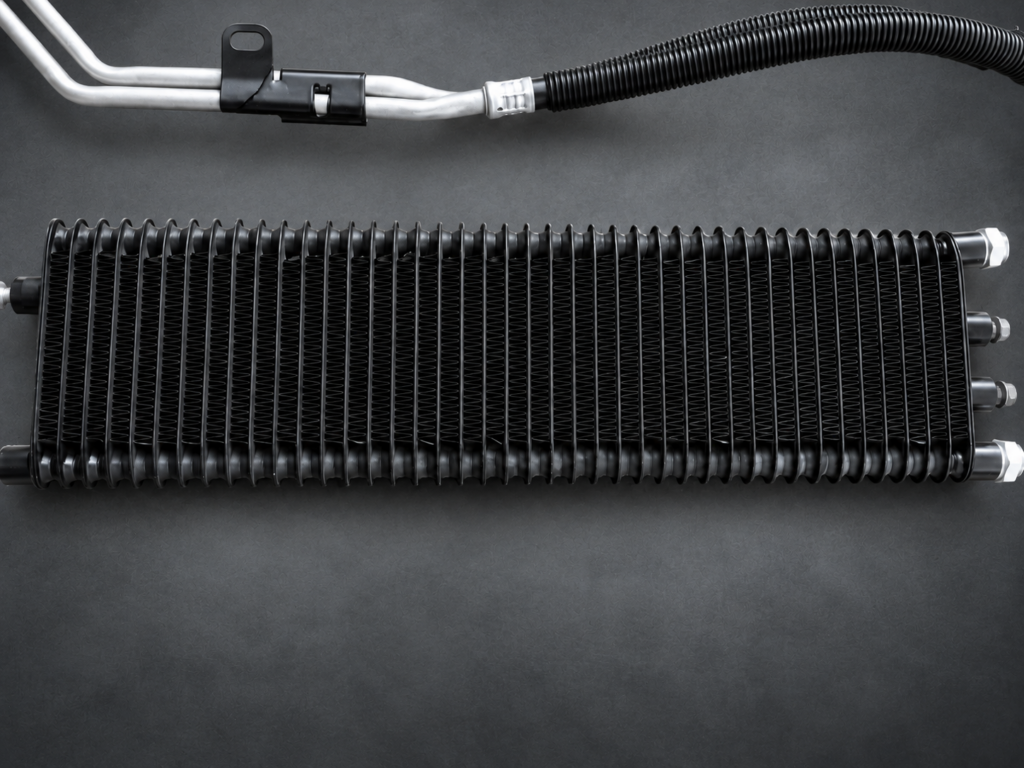
The Z06’s performance capabilities created substantial thermal demands throughout the vehicle. The LS7 engine generated considerable heat, while the transmission, differential, brakes, and tires were subjected to elevated operating temperatures during sustained high-speed driving.
Engine cooling was supported by the Z06’s revised front-end airflow management, while the dry-sump lubrication system helped maintain oil supply and temperature control under demanding conditions.
The drivetrain incorporated cooling provisions intended to support prolonged high-performance operation. These systems were particularly important because the Z06 was designed to withstand conditions that could exceed the demands of ordinary road use.
Brake cooling was another priority. The aerodynamic package needed to provide sufficient airflow to help manage rotor and caliper temperatures during repeated high-speed braking.
The development team’s emphasis on durability reflected the Z06’s intended character. It was not enough for the automobile to produce impressive acceleration figures during a single test. Chevrolet wanted a vehicle capable of delivering consistent performance over repeated laps and extended periods of aggressive driving.
This requirement influenced component selection, structural design, cooling capacity, and calibration throughout the automobile.
The Z06 as a Complete Engineering Achievement
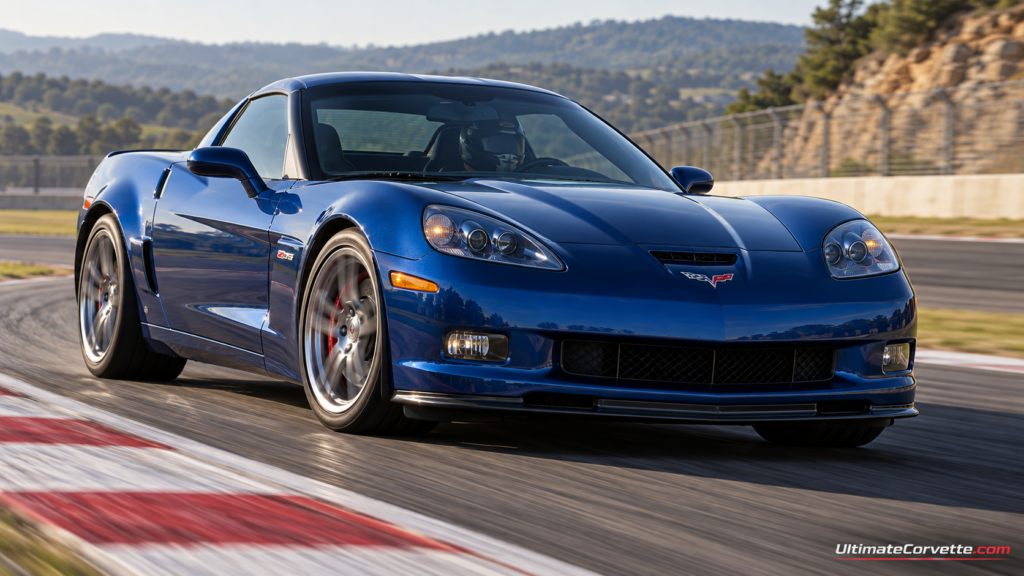
The 2006 Corvette Z06 demonstrated the importance of treating high-performance vehicle development as an integrated engineering discipline. Its LS7 engine provided extraordinary power, but that power became useful only because the chassis, suspension, tires, brakes, and aerodynamic systems were developed to accommodate it.
The aluminum frame reduced weight while maintaining structural rigidity. Magnesium and carbon-fiber components contributed additional mass savings. The fixed-roof configuration improved chassis stiffness, while the specialized suspension and tires provided the mechanical grip necessary to exploit the engine’s output.
The braking system offered the thermal capacity required for repeated high-speed deceleration, and the aerodynamic package helped maintain stability while supporting the vehicle’s cooling requirements.
The result was an automobile that could deliver exceptional performance across multiple disciplines. Its acceleration was extraordinary, but so were its handling, braking, and high-speed capabilities.
Perhaps most importantly, the Z06 demonstrated that Chevrolet could incorporate advanced materials and sophisticated engineering into a production sports car without abandoning the Corvette’s fundamental identity. The automobile retained a front-mounted, naturally aspirated V8, rear-wheel drive, and a manual transmission, yet its construction and performance placed it among the most technically impressive sports cars of its era.
The Z06’s significance therefore extended beyond its specifications. It represented a mature engineering philosophy in which power, weight, structure, suspension, braking, and aerodynamics were treated as interconnected elements of a complete vehicle.
That philosophy would become increasingly important as the Corvette program continued developing more powerful and sophisticated automobiles. The 2006 Z06 established a benchmark that subsequent generations would be expected to surpass, while demonstrating the extraordinary potential of the sixth-generation platform.
For Chevrolet, it was proof that the Corvette could compete against the world’s most respected performance automobiles through disciplined engineering rather than exclusivity or extravagant pricing. For enthusiasts, it was the realization of a long-standing ambition: a modern, 427-cubic-inch Corvette capable of delivering performance that honored the nameplate’s racing heritage while establishing an entirely new standard for America’s sports car.
Testing the 2006 Corvette: Nürburgring Development, Performance, and the World’s Motoring Press
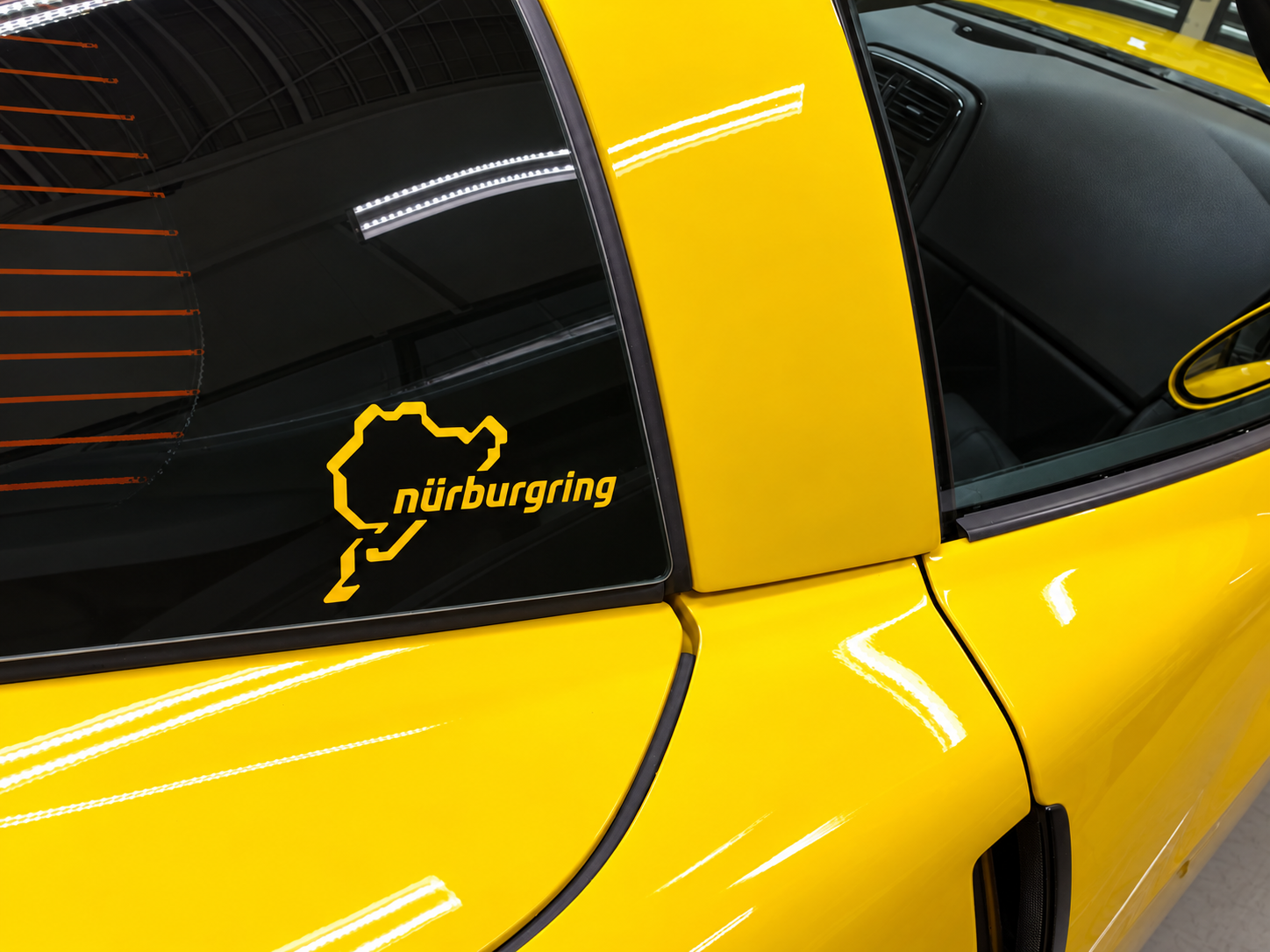
By the time the 2006 Corvette reached Chevrolet dealerships, its engineering had already been subjected to an extensive development program involving laboratory testing, proving-ground evaluation, public-road driving, and high-speed circuit work. The objective was not simply to establish impressive acceleration figures or demonstrate the automobile’s capabilities under ideal conditions. Chevrolet’s engineers needed to ensure that the Corvette could deliver consistent performance across an extraordinarily broad range of operating environments, from everyday commuting and long-distance highway travel to sustained high-speed operation on some of the world’s most demanding racing circuits.
This requirement was especially important for the newly introduced Z06. Its 505-horsepower LS7 engine, lightweight aluminum frame, specialized suspension, and substantial braking capabilities placed demands on the automobile that extended well beyond those associated with the standard coupe and convertible. A vehicle capable of approaching 200 mph needed exceptional aerodynamic stability, predictable steering response, effective thermal management, and mechanical components capable of withstanding repeated exposure to extreme loads. The Z06’s development therefore required Chevrolet to evaluate not only the performance of individual systems, but the way those systems behaved together when the automobile was driven near its limits.
The engineering team approached these challenges through a combination of computer simulation, controlled laboratory testing, instrumented vehicle evaluation, and extensive driving. Modern analytical methods allowed engineers to predict structural loads, suspension movement, airflow behavior, and powertrain performance before physical prototypes were completed. Nevertheless, the relationship between an automobile and the road remained too complex to be understood entirely through calculations. Tires behaved differently as temperatures changed, suspension components responded to variations in pavement, and aerodynamic forces interacted with vehicle attitude in ways that required direct observation.
The Corvette’s development drivers played an essential role in translating those observations into meaningful engineering improvements. Their responsibilities extended beyond driving quickly. They needed to identify subtle changes in steering response, suspension behavior, brake-pedal feel, powertrain calibration, and vehicle stability, then communicate those observations in a manner that engineers could use to refine individual systems. A driver who could consistently reproduce a particular handling characteristic was especially valuable because repeatability allowed engineers to evaluate whether a modification had produced the intended result.
Among the most important individuals involved in Corvette performance development was Jim Mero, whose work as a General Motors development engineer and driver became closely associated with the C6 generation. Mero possessed the ability to combine technical understanding with exceptional driving skill, allowing him to evaluate vehicle behavior under conditions that approached the limits of available traction. His work at the Nürburgring and other test facilities helped demonstrate the importance of experienced development drivers in creating a modern high-performance automobile.
Mero’s role also illustrated the increasingly specialized nature of Corvette engineering. Developing a vehicle capable of exceptional lap times required more than selecting powerful engines and aggressive suspension settings. Engineers needed to understand how the automobile responded during corner entry, how weight transferred under braking, how the differential influenced acceleration out of corners, and how changes in tire temperature affected available grip. Skilled drivers could identify these characteristics and help engineers distinguish between problems caused by suspension geometry, damping, tires, or other components.
The Nürburgring: A Proving Ground for the Modern Corvette
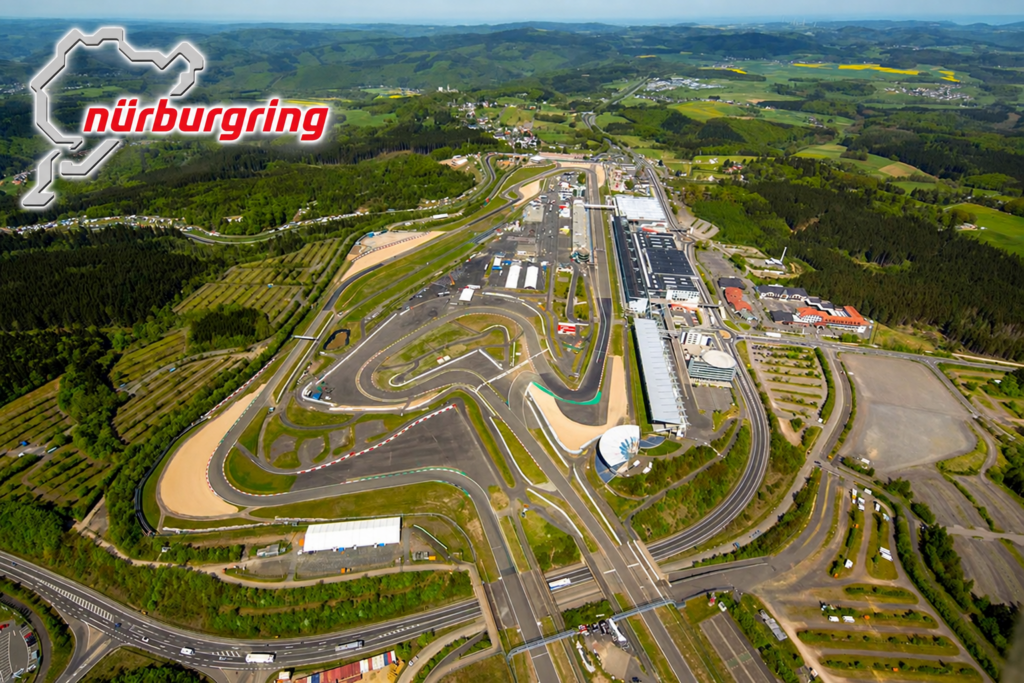
Few facilities played a more visible role in establishing the C6 Corvette‘s international performance credentials than Germany’s Nürburgring Nordschleife. The legendary circuit, located in the Eifel Mountains, had long served as a demanding test environment for European manufacturers. Its extraordinary length, substantial elevation changes, uneven pavement, and combination of high-speed and technically challenging corners made it particularly valuable for evaluating the behavior of performance automobiles.
Unlike a relatively short and smooth proving-ground circuit, the Nordschleife subjected vehicles to an unusually broad range of conditions within a single lap. Fast sections demanded aerodynamic stability and sustained engine performance, while tight corners and abrupt elevation changes exposed weaknesses in suspension control and chassis balance. Heavy braking zones placed substantial thermal loads on the brakes, and the circuit’s uneven surfaces tested the ability of dampers and tires to maintain consistent contact with the pavement.
For Corvette engineers, the Nürburgring provided an opportunity to evaluate the C6 against the same environment used by many of its most respected international competitors. The circuit was not simply a venue for publicity or the pursuit of a headline lap time. It offered a concentrated collection of demanding operating conditions that could reveal weaknesses difficult to reproduce during conventional road testing.
The standard Corvette’s development benefited from this approach, but the Z06 placed even greater emphasis on sustained performance. Its lighter structure, wider tires, higher engine output, and specialized suspension allowed it to generate substantial cornering forces, while its braking system needed to remain effective through repeated high-speed deceleration. Engineers evaluated how these systems behaved as temperatures increased and mechanical components were subjected to prolonged loading.
The circuit’s elevation changes were particularly useful for assessing suspension control. As a vehicle transitions through crests and compressions, the loads acting on its tires can change rapidly. A suspension that performs effectively on smooth pavement may struggle to maintain control when subjected to these conditions. The Z06’s engineers therefore needed to balance spring rates, damper calibration, suspension travel, and aerodynamic characteristics to create predictable behavior throughout the circuit.
The Nürburgring also provided a demanding environment for evaluating the LS7’s lubrication system. Sustained high-speed cornering, heavy braking, and rapid changes in direction created conditions under which conventional oil-management systems could experience significant challenges. The LS7’s dry-sump lubrication arrangement was designed to maintain a consistent supply of oil under these circumstances, protecting the engine during prolonged high-performance operation.
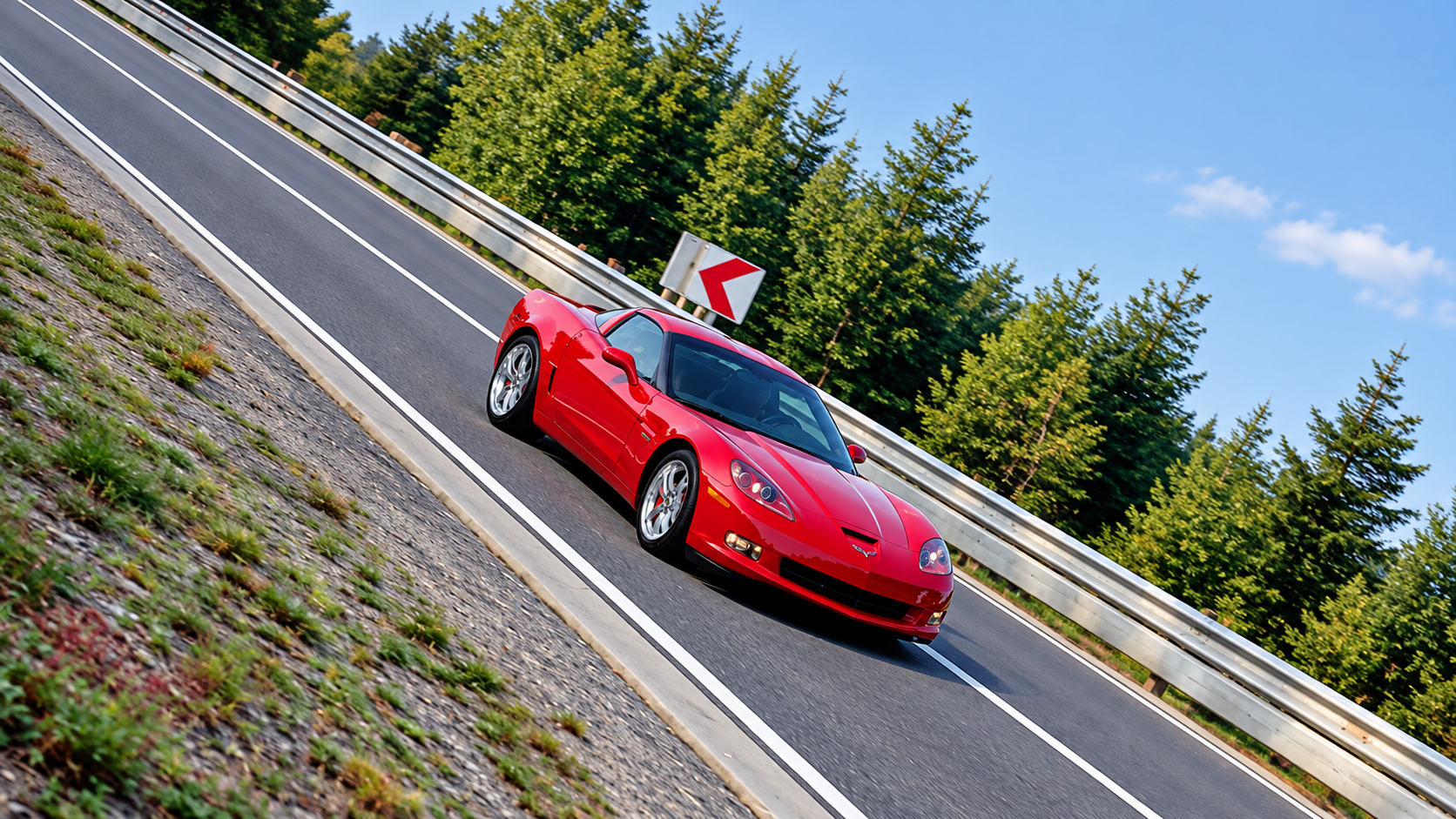
Cooling performance was another important consideration. A single acceleration run might demonstrate an engine’s peak output, but repeated operation at high loads could expose limitations involving coolant temperature, oil temperature, intake-air temperature, or drivetrain cooling. Engineers monitored these systems to ensure that the Z06 could maintain performance without exceeding acceptable operating limits.
The development program culminated in a widely publicized Nürburgring lap completed by Jan Magnussen, the Danish racing driver who was also a member of Corvette Racing’s factory-supported driver lineup. Driving a production-specification C6 Z06, Magnussen recorded a lap time of approximately 7 minutes and 43 seconds, an extraordinary achievement for a front-engine, rear-wheel-drive production automobile of the period.
That result was particularly significant because the Nürburgring had become an important reference point in international performance-car comparisons. Manufacturers increasingly used lap times to demonstrate the capabilities of their vehicles, and the Corvette’s performance placed it in the company of considerably more expensive sports cars.
However, Nürburgring lap times require careful interpretation. Differences in circuit configuration, weather conditions, tire specifications, vehicle preparation, and driver experience can influence results substantially. A single lap time should therefore not be treated as an absolute measurement of one automobile’s superiority over another. Its value lies in demonstrating the capabilities of a particular vehicle under a specific set of conditions.
For the 2006 Z06, the significance of the Nürburgring achievement extended beyond the numerical result. It demonstrated that Chevrolet had developed an automobile capable of combining extraordinary acceleration with the handling, braking, and durability required to perform convincingly on one of the world’s most demanding circuits. The Corvette was no longer competing exclusively through horsepower or straight-line speed. Its engineering had reached a level that allowed it to challenge established international benchmarks across a much broader range of performance characteristics.
Acceleration: Measuring the LS2 and LS7 on the Road
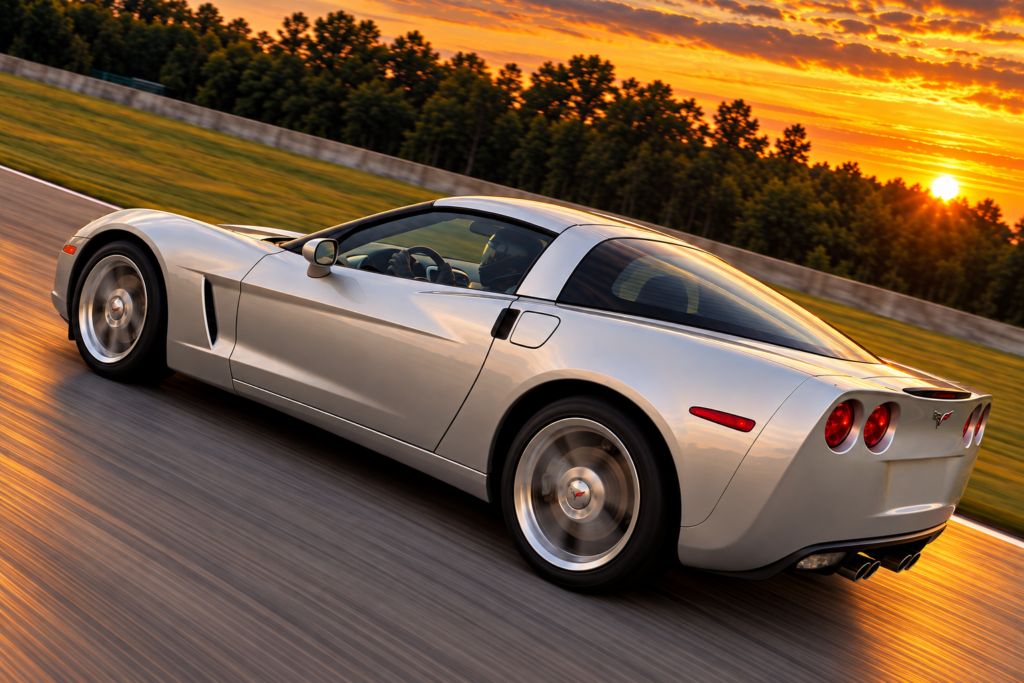
The performance capabilities of the 2006 Corvette were immediately apparent in contemporary instrumented testing. The standard LS2-powered coupe and convertible offered acceleration that would have been associated with specialized high-performance automobiles only a few years earlier. With 400 horsepower and 400 lb-ft of torque, the standard Corvette delivered strong acceleration throughout its operating range, supported by favorable weight distribution and substantial rear-tire traction.
Contemporary road tests commonly recorded zero-to-60-mph times in the low-to-mid-four-second range for manual-transmission Corvettes, although results varied according to testing procedures, tire conditions, vehicle equipment, and driver technique. Quarter-mile times generally fell into the high-12-second range, with some tests recording slightly quicker or slower results depending on conditions.
These figures were particularly impressive because the standard Corvette remained a relatively comfortable and practical automobile. Its suspension was not calibrated exclusively for drag-strip acceleration, and its engine was designed to provide smooth operation, emissions compliance, and long-term durability. The ability to deliver such performance while maintaining everyday usability reinforced the effectiveness of Chevrolet’s engineering philosophy.
The introduction of the 6L80 six-speed automatic transmission for 2006 added another dimension to these comparisons. Earlier automatic Corvettes had generally been disadvantaged by wider gear spacing and less sophisticated shift control. The new six-speed automatic provided closer ratios, improved electronic management, and more effective use of the LS2’s broad torque curve.
Although the automatic transmission introduced additional mechanical losses compared with a conventional manual gearbox, its ability to execute consistent shifts offered advantages during acceleration testing. The driver no longer needed to coordinate clutch engagement and manual gear changes, reducing the variability associated with shifting technique. As a result, automatic-equipped Corvettes could deliver acceleration figures that compared favorably with their manual-transmission counterparts.
The Z06 operated at an entirely different performance level. Chevrolet advertised a zero-to-60-mph time of approximately 3.7 seconds, and contemporary testing demonstrated that the automobile was capable of achieving that figure under favorable conditions. The combination of 505 horsepower, 470 lb-ft of torque, relatively low curb weight, and substantial rear-tire traction produced acceleration that rivaled some of the world’s most expensive production sports cars.
Quarter-mile performance was equally impressive. Contemporary tests commonly recorded elapsed times in the low-12-second range, with trap speeds exceeding 120 mph. The Z06’s substantial power-to-weight ratio allowed it to continue accelerating strongly after the initial launch, distinguishing it from automobiles whose performance depended primarily on aggressive gearing or exceptionally strong low-speed traction.
The LS7’s broad torque delivery contributed to these results. Although peak horsepower occurred at 6,300 rpm, the engine produced substantial torque throughout much of its operating range. This allowed the Z06 to accelerate forcefully without requiring the driver to maintain the engine continuously near its 7,000-rpm redline.
The six-speed manual transmission reinforced the automobile’s performance-oriented character, but it also placed greater responsibility on the driver. Achieving the quickest acceleration times required effective clutch engagement, careful management of wheelspin, and precise shifts. Excessive throttle application could overwhelm the rear tires, while overly aggressive clutch engagement could disrupt traction and reduce acceleration.
This relationship between driver skill and performance was an important part of the Z06’s appeal. Unlike later high-performance automobiles equipped with sophisticated launch-control systems and rapidly shifting dual-clutch transmissions, the 2006 Z06 required the driver to participate directly in extracting its maximum capabilities.
High-Speed Performance and Aerodynamic Stability
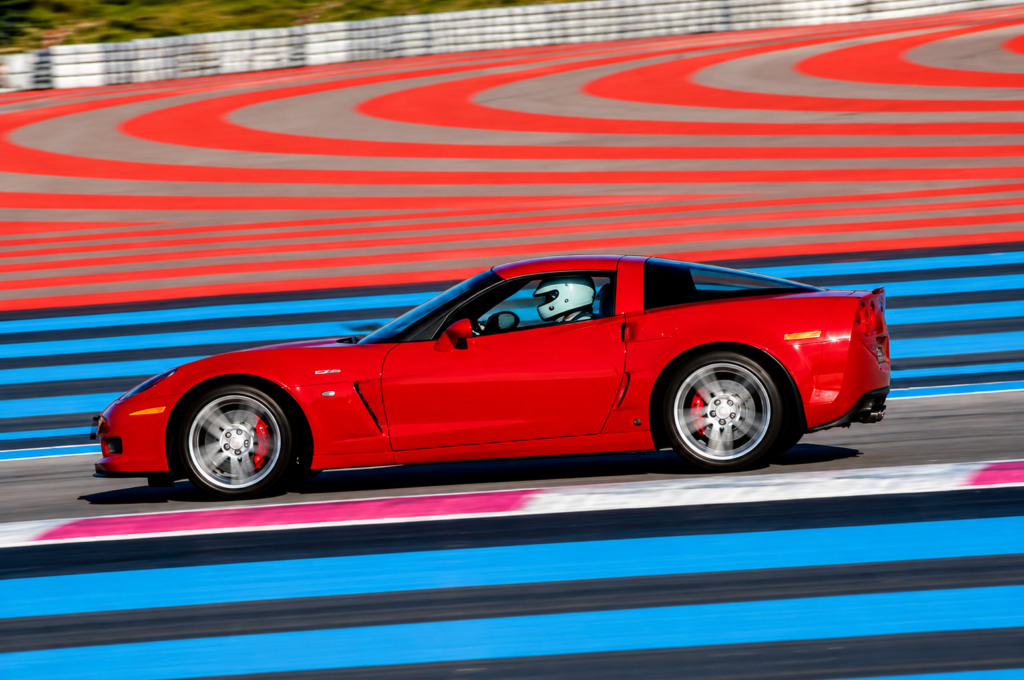
The Z06’s maximum-speed capability was among its most extraordinary achievements. Chevrolet quoted a top speed of approximately 198 mph, placing the automobile within reach of the 200-mph threshold that had long been associated with the world’s most exclusive exotic cars.
Achieving such a speed required considerably more than sufficient engine horsepower. Aerodynamic drag increases rapidly as velocity rises, and the power required to overcome that drag grows approximately with the cube of speed under otherwise similar conditions. As a result, relatively small improvements in aerodynamic efficiency can become increasingly important at very high speeds.
The C6’s compact body, carefully developed front fascia, controlled underbody airflow, and rear aerodynamic treatment contributed to its high-speed performance. Engineers needed to minimize unnecessary drag while ensuring that the automobile remained stable and that sufficient cooling air reached the engine and other mechanical systems.
The Z06’s specialized aerodynamic features introduced additional considerations. Its front splitter, wider bodywork, functional openings, and rear spoiler were intended to improve stability and cooling, but each also influenced aerodynamic drag. The engineering team needed to balance these competing requirements to create an automobile capable of sustained high-speed operation without sacrificing handling confidence.
The LS7’s power output provided the necessary performance margin. With 505 horsepower available, the Z06 possessed sufficient power to overcome substantial aerodynamic resistance while continuing to accelerate at speeds far beyond those encountered during ordinary road driving.
The standard Corvette was also an exceptionally fast automobile. Depending on body style, transmission, and equipment, the LS2-powered coupe was capable of reaching approximately 186 mph under suitable conditions. This placed even the base Corvette among the fastest production sports cars available in its price category.
These maximum-speed figures were not intended to suggest that owners could safely explore such capabilities on public roads. Rather, they demonstrated the engineering sophistication of automobiles designed to remain stable, adequately cooled, and mechanically reliable at speeds that imposed extraordinary demands on every major vehicle system.
Braking Performance and Repeatability
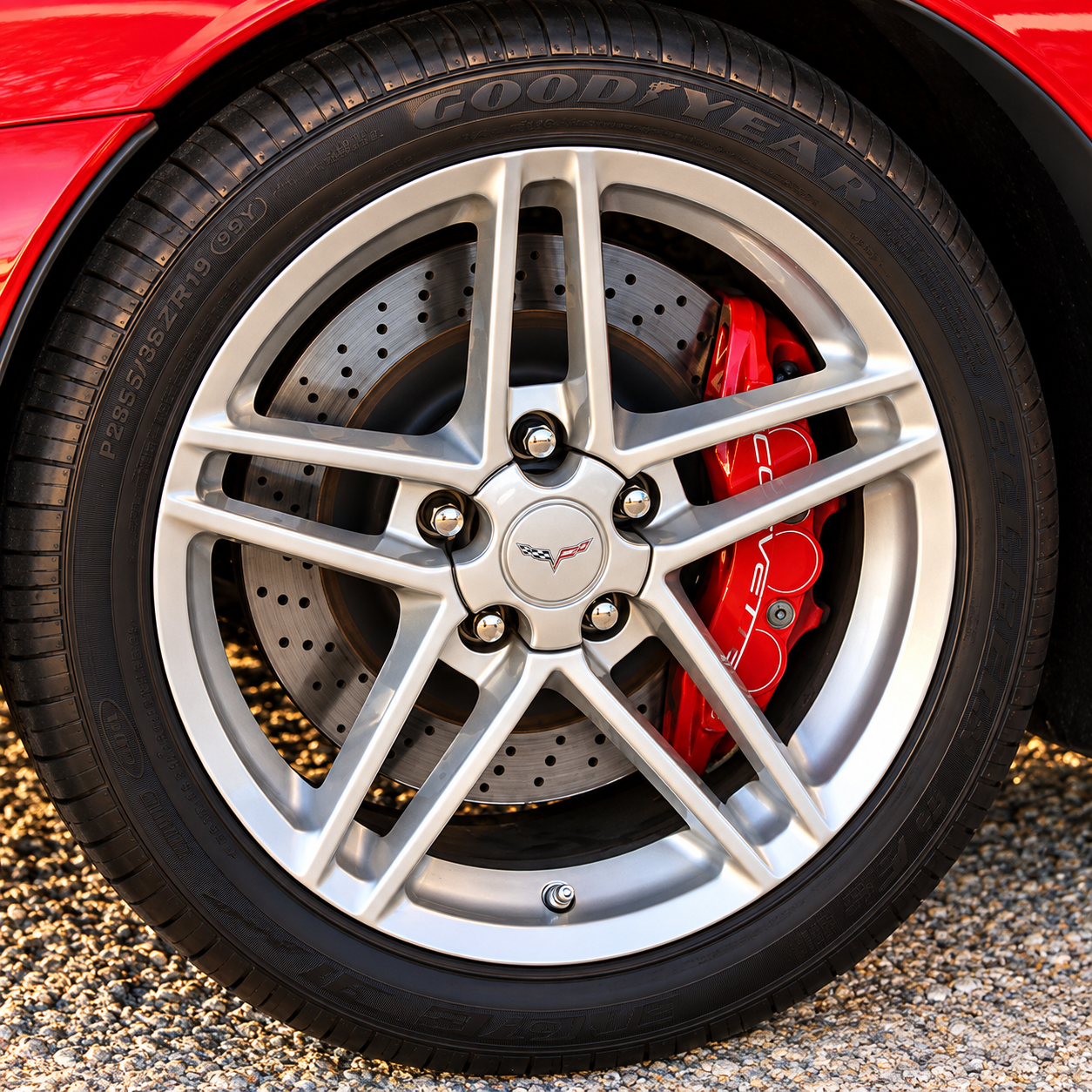
Acceleration figures attracted considerable attention, but braking performance was equally important to the Corvette’s overall capabilities. The ability to decelerate repeatedly from high speeds depended on the interaction among tire grip, brake-system capacity, suspension geometry, weight distribution, and electronic control systems.
The standard Corvette’s four-wheel ventilated disc brakes provided strong stopping performance, with contemporary road tests commonly recording 60-to-zero-mph distances in the range of approximately 110 to 120 feet, depending on equipment and conditions. These results placed the Corvette among the more capable production sports cars of its era.
The Z06’s upgraded braking system delivered additional capacity. Its large ventilated rotors, six-piston front calipers, and four-piston rear calipers provided the thermal mass and clamping force necessary for repeated high-speed braking. Contemporary testing frequently recorded stopping distances near or below 110 feet from 60 mph, although tire conditions, road surface, and testing methodology influenced the results.
The most important distinction between the standard Corvette and Z06 was not necessarily the difference in a single stopping distance. The Z06’s braking system was designed to maintain performance during repeated use, particularly under the sustained thermal loads associated with track driving.
During aggressive braking, the vehicle’s kinetic energy is converted into heat through friction between the brake pads and rotors. Repeated stops can cause temperatures to rise substantially, potentially reducing friction effectiveness, increasing pedal travel, or damaging components. The Z06’s larger rotors, specialized calipers, and cooling provisions helped manage these conditions.
The automobile’s relatively low curb weight also contributed to braking performance. A lighter vehicle carries less kinetic energy at a given speed, reducing the amount of heat the brakes must absorb during deceleration. The Z06’s weight-reduction strategy therefore provided benefits that extended beyond acceleration and handling.
Handling, Cornering Grip, and Vehicle Balance
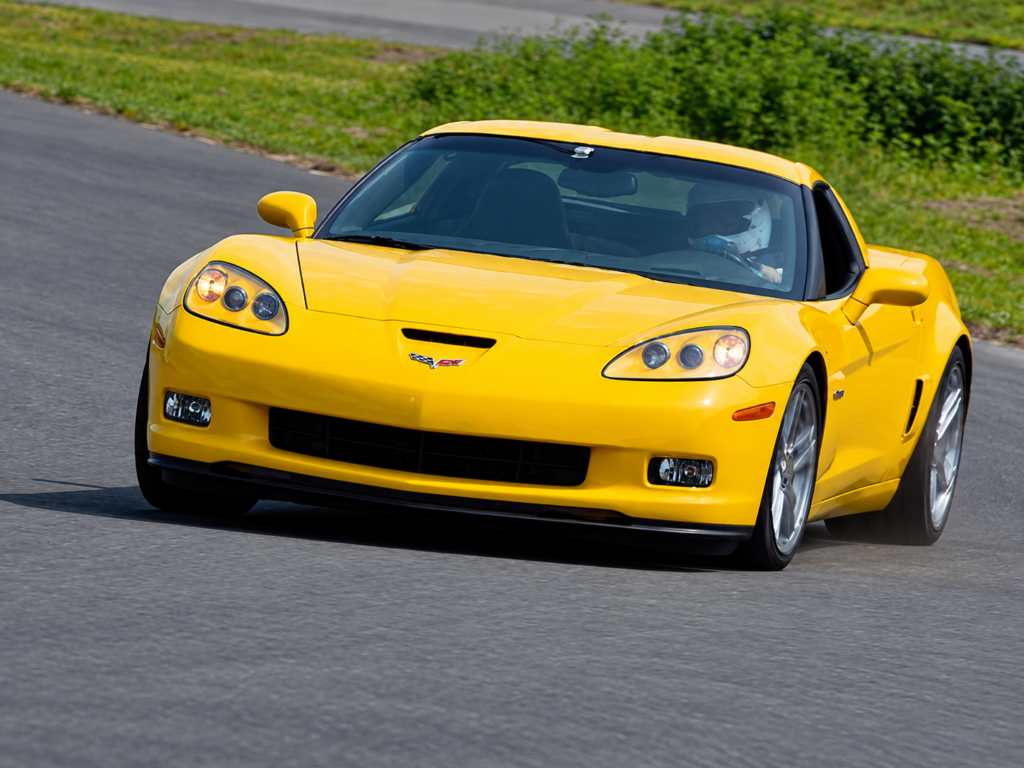
The Corvette’s handling capabilities were central to its growing international reputation. Although earlier generations had sometimes been criticized for relying heavily on engine output, the C5 and C6 demonstrated that Chevrolet could develop sophisticated chassis systems capable of competing with established European sports cars.
The standard 2006 Corvette offered substantial lateral grip, with contemporary testing commonly recording skidpad figures approaching or exceeding 0.90 g. The Z51 Performance Package provided additional capability through more aggressive suspension calibration, improved braking equipment, and other performance-oriented modifications.
The Z06 delivered still greater performance. Its wider tires, specialized suspension, reduced weight, and rigid aluminum frame allowed it to generate lateral acceleration figures around or above 1.0 g under favorable testing conditions.
These numbers were impressive, but they represented only one aspect of handling performance. A skidpad test measures steady-state cornering grip under relatively controlled conditions. It does not fully describe how an automobile responds during rapid changes of direction, braking while cornering, or acceleration over uneven pavement.
The Z06’s development therefore emphasized transient response and predictability. Engineers sought to create a vehicle that responded quickly to steering inputs without becoming excessively nervous or difficult to control. The relationship between front and rear tire grip was carefully managed to provide a balance that experienced drivers could exploit while retaining a reasonable margin of stability.
The rear-mounted transaxle contributed to this balance by distributing drivetrain mass more evenly between the axles. The aluminum frame and lightweight front-end components reduced unnecessary mass, while the suspension geometry helped maintain tire contact during cornering.
The Z06’s steering was calibrated to provide direct response and useful feedback, although contemporary reviewers did not universally consider its steering feel equal to that of the most highly regarded European competitors. Some journalists praised its precision and responsiveness while observing that the steering communicated less subtle information than systems found in certain Porsche models.
Such criticism was important because it demonstrated that the Corvette’s development had reached a level where reviewers were evaluating refinements rather than questioning its fundamental capabilities. The Z06’s acceleration, grip, and braking performance were beyond serious dispute. The remaining comparisons increasingly involved subjective qualities such as steering communication, interior refinement, and the relationship between driver inputs and vehicle response.
The Corvette Against Porsche, Ferrari, and Dodge

The 2006 Corvette entered a competitive environment populated by some of the most respected sports cars in the world. Porsche’s 911 continued to serve as a benchmark for precision handling and driver involvement, while Ferrari’s mid-engine automobiles represented the combination of exotic engineering, exclusivity, and motorsport heritage. The Dodge Viper offered a more direct domestic challenge, emphasizing substantial displacement, aggressive styling, and uncompromising performance.
The standard Corvette competed particularly well against the Porsche 911 Carrera and Carrera S. Its 400-horsepower LS2 provided substantial acceleration, while its chassis delivered handling and braking capabilities that compared favorably with the German sports car. The Porsche generally commanded a higher price and offered a more carefully finished interior, but the Corvette provided an exceptional performance value.
The Z06 changed the competitive equation considerably. Its 505 horsepower placed it in a performance category occupied by automobiles such as the Ferrari F430, Porsche 911 Turbo, and Dodge Viper SRT-10. The Ferrari F430 produced approximately 483 horsepower from its 4.3-liter V8, while the Viper’s 8.3-liter V10 generated approximately 500 horsepower.
The Z06’s performance was especially remarkable because it achieved its capabilities at a substantially lower price than many of its European competitors. The Ferrari F430 cost well over twice as much as the Chevrolet, while Porsche’s highest-performance models also occupied significantly more expensive market segments.
The Dodge Viper offered a closer comparison in both philosophy and pricing. Like the Corvette, it relied on a large-displacement engine, rear-wheel drive, and a relatively straightforward mechanical configuration. However, the Viper’s more uncompromising character, substantial engine dimensions, and different chassis philosophy produced a driving experience that contrasted with the Corvette’s more refined approach.
The Z06’s combination of relatively low weight, strong acceleration, sophisticated suspension, and substantial braking capability allowed it to compete convincingly against these automobiles. In some instrumented tests, it matched or exceeded the performance of considerably more expensive competitors.
Nevertheless, contemporary reviewers frequently identified areas where the Corvette remained less polished. Interior materials, seat support, steering communication, and certain aspects of refinement were recurring subjects of criticism. These observations did not negate the automobile’s performance achievements, but they illustrated the distinction between exceptional engineering capability and the broader qualities associated with premium sports-car ownership.
The Corvette’s value proposition remained extraordinary. Buyers could obtain acceleration, handling, and braking performance comparable to exotic automobiles while paying a fraction of their prices. For enthusiasts primarily interested in driving capability, the Z06 represented one of the most compelling automobiles available.
The Motoring Press Responds
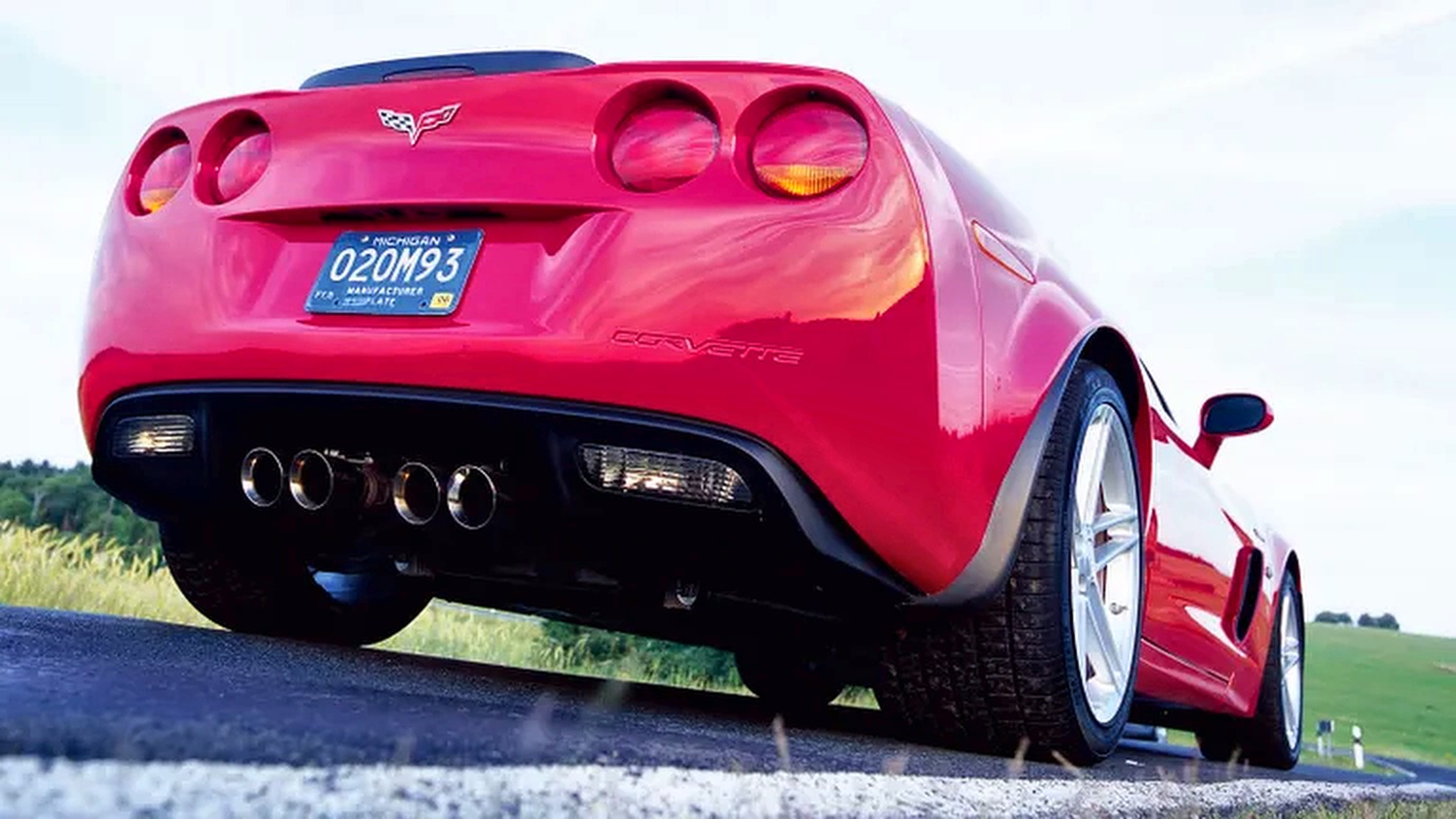
The introduction of the 2006 Z06 generated substantial attention from the American and international automotive press. Publications that had long evaluated the Corvette against European competitors now found themselves confronting an automobile whose performance figures challenged established assumptions about the relationship between price and capability.
Car and Driver, Motor Trend, Road & Track, and other major publications subjected the Z06 to instrumented testing and comparative evaluations. Their assessments consistently emphasized the automobile’s extraordinary acceleration, substantial grip, powerful brakes, and remarkable performance value.
The LS7 engine received particular praise. Reviewers noted its combination of enormous torque and willingness to operate at high engine speeds, characteristics that distinguished it from traditional large-displacement American V8 engines. Its immediate throttle response and naturally aspirated power delivery contributed to a driving experience that was both forceful and predictable.
The Z06’s relatively low weight was another recurring theme. Although the automobile carried a large V8 engine and substantial performance equipment, its aluminum frame and specialized materials allowed it to maintain a favorable power-to-weight ratio. This contributed to the responsiveness that reviewers experienced during acceleration, braking, and cornering.
The automobile’s handling also earned considerable respect. Its wide tires and specialized suspension provided extraordinary grip, while the rigid chassis helped maintain predictable behavior under demanding conditions. Reviewers who had previously associated Corvettes primarily with straight-line performance increasingly recognized the sophistication of Chevrolet‘s chassis engineering.
At the same time, the press did not overlook the automobile’s shortcomings. Interior quality remained a frequent criticism, particularly when compared with Porsche and Ferrari. Some reviewers found the seats insufficiently supportive for sustained aggressive driving, while others questioned the steering’s ability to communicate subtle changes in front-tire grip.
The manual transmission also received mixed assessments. Its mechanical durability and ability to handle the LS7’s substantial torque were important strengths, but its shift action was not universally considered as precise or refined as the best European alternatives.
These criticisms reflected the Corvette’s unusual position in the market. Chevrolet had created an automobile capable of competing with exotic sports cars in performance, but its pricing and manufacturing philosophy imposed different priorities. The Z06 did not attempt to duplicate every aspect of the Ferrari or Porsche ownership experience. Instead, it concentrated on delivering extraordinary mechanical capability at a comparatively accessible price.
For many enthusiasts, that emphasis was precisely what made the Corvette appealing.
The Standard Corvette’s Continued Importance
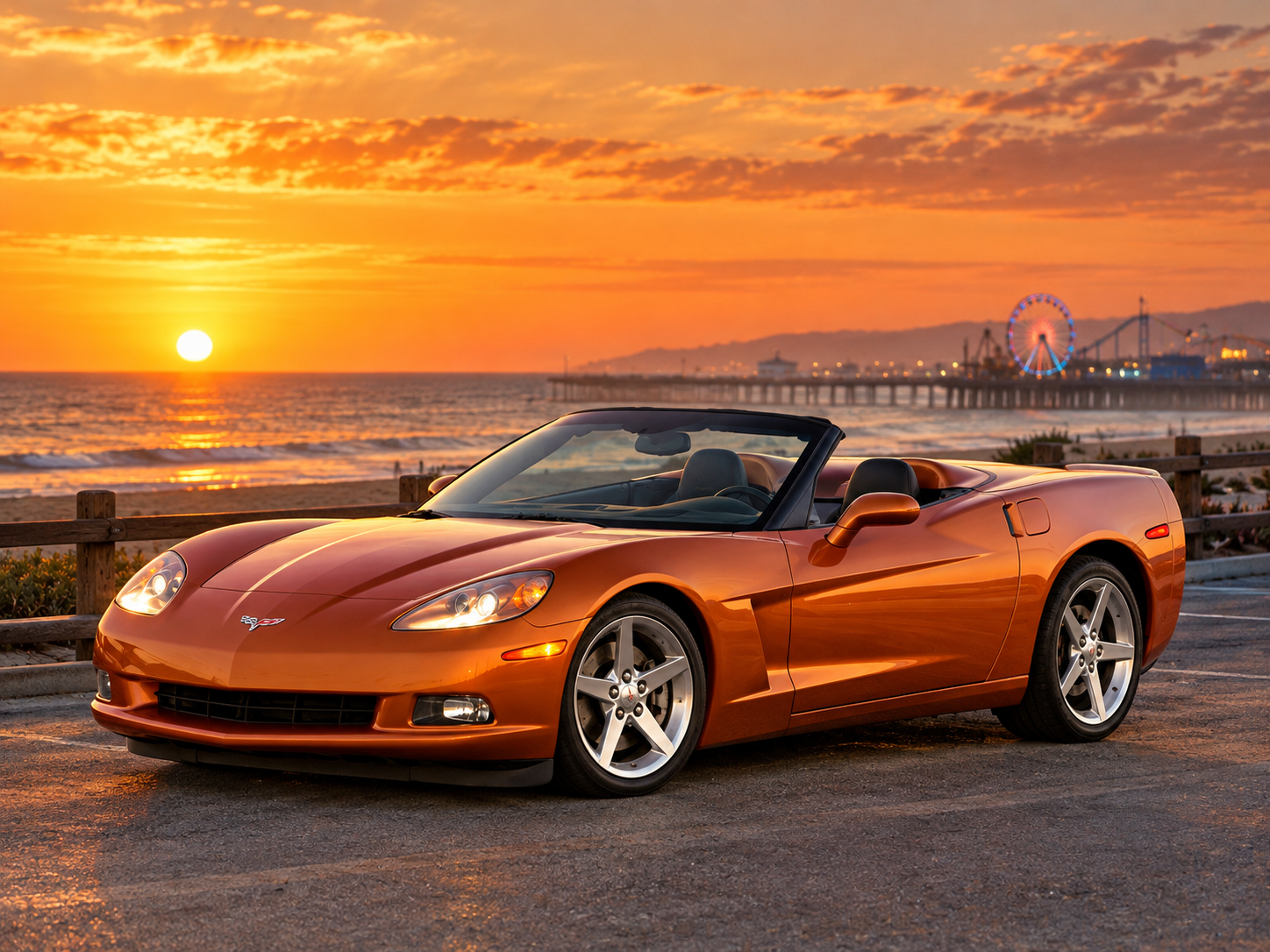
The attention surrounding the Z06 sometimes obscured the accomplishments of the standard 2006 Corvette. The LS2-powered coupe and convertible remained exceptionally capable automobiles, offering performance that exceeded the needs of most drivers and compared favorably with many specialized sports cars.
The introduction of the six-speed automatic transmission improved the standard Corvette’s competitiveness, particularly among buyers who preferred automatic operation. Its closer gear ratios and paddle-shift capability provided a more engaging experience than the previous four-speed transmission, while retaining the convenience expected of an automatic.
The standard Corvette also offered advantages in ride comfort, versatility, and everyday usability. Its suspension was less aggressive than the Z06’s, its tires were narrower and generally more forgiving, and buyers could select from a broader range of comfort-oriented equipment.
The removable-roof coupe and convertible body styles provided open-air driving experiences unavailable in the fixed-roof Z06. For owners who valued touring capability as much as maximum performance, these configurations offered a compelling alternative.
The standard Corvette’s performance also demonstrated the extraordinary progress achieved since the C5’s introduction. A 400-horsepower base Corvette capable of reaching 60 mph in approximately four and a half seconds would have represented an exceptional high-performance model during the previous decade. By 2006, those capabilities were available in Chevrolet’s standard production sports car.
What the Testing Revealed

The development and contemporary evaluation of the 2006 Corvette demonstrated that Chevrolet had achieved a level of engineering sophistication that extended well beyond traditional American performance-car expectations. The standard coupe and convertible combined substantial acceleration, capable handling, and genuine everyday usability, while the Z06 established a new benchmark for naturally aspirated Corvette performance.
The Nürburgring testing program reinforced the importance of sustained performance and durability. Instrumented road tests demonstrated the effectiveness of the LS2 and LS7 engines, while comparative evaluations placed the Corvette alongside some of the world’s most respected sports cars.
The criticisms expressed by contemporary reviewers were also significant. They identified areas where Chevrolet could continue improving the Corvette, particularly in interior refinement, seating, and steering communication. These observations would influence the program’s subsequent development, helping engineers refine the C6 throughout its production life.
The most important conclusion was that the Corvette had become a genuinely complete performance automobile. Its capabilities were no longer defined primarily by engine displacement or acceleration figures. Chevrolet had developed a platform capable of delivering extraordinary performance across a broad range of conditions, supported by sophisticated engineering and extensive validation.
For the 2006 model year, that achievement represented a major milestone. The Corvette had demonstrated that it could compete convincingly against established international rivals while retaining the mechanical character, relative affordability, and distinctive identity that had defined America’s sports car for more than half a century.
Corvette Racing in 2006: The C6.R, Le Mans, and the Competition Program That Helped Shape the Z06
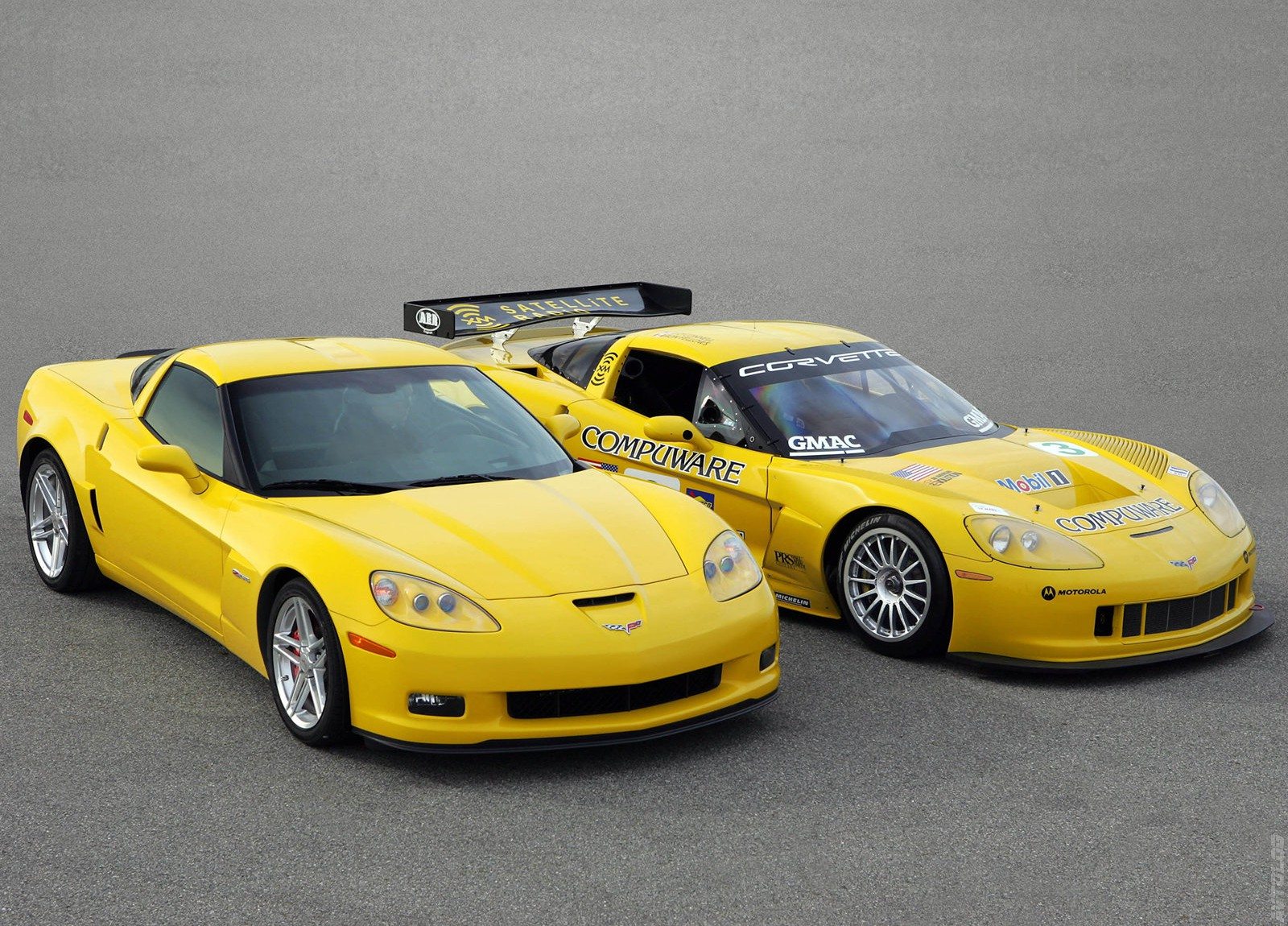
The development of the 2006 Corvette cannot be fully understood without examining the racing program that helped establish Chevrolet’s international performance credentials. By the middle of the 2000s, Corvette Racing had evolved into one of the most successful factory-supported sports-car racing organizations in the world. Its accomplishments extended far beyond the trophies collected at individual events. The program provided General Motors with a demanding engineering environment, a platform for demonstrating the capabilities of its performance technology, and an opportunity to compete directly against manufacturers whose reputations had been built through decades of international motorsport.
The relationship between the production Corvette and its racing counterpart had become increasingly important during the C5 generation. The C5-R, introduced in 1999, established the foundation for a sustained factory-supported endurance-racing effort. Developed and campaigned through a partnership between General Motors and Pratt & Miller, the program demonstrated that the Corvette could compete successfully against established European manufacturers in events where reliability, strategy, and engineering discipline were as important as outright speed.
By 2006, the program had transitioned to the C6.R, a purpose-built racing automobile developed around the sixth-generation Corvette’s design and engineering direction. Although the C6.R shared its visual identity and certain architectural principles with the production Corvette, it was a specialized competition machine engineered to satisfy the requirements of international GT1 racing.
The distinction between the production and racing automobiles was important. The C6.R was not simply a road-going Z06 fitted with racing tires and safety equipment. Its chassis, suspension, aerodynamics, drivetrain, and mechanical systems were developed specifically for competition. Nevertheless, the relationship between the two programs provided opportunities for engineers to exchange knowledge, evaluate advanced materials, and develop solutions that could influence future production automobiles.
The Origins of Corvette Racing’s Modern Success
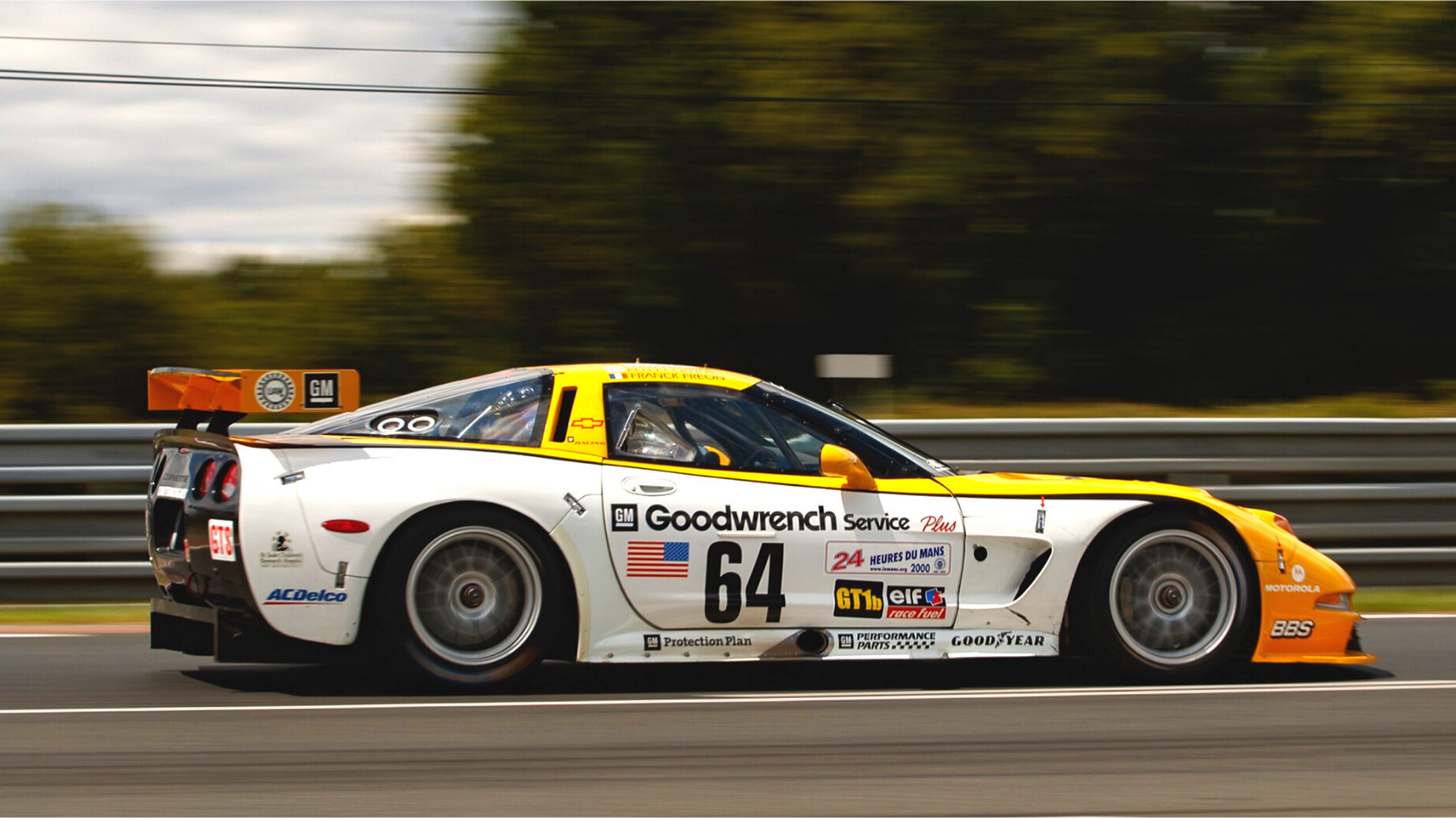
The modern Corvette Racing program emerged during the late 1990s, when General Motors recognized an opportunity to strengthen the Corvette’s international reputation through sustained participation in professional sports-car racing. Although Chevrolet had enjoyed a long and varied competition history, much of that success had been achieved through private teams and independent competitors rather than a continuous factory-supported program.
The introduction of the C5 created a new foundation for competition. Its structural architecture, rear-mounted transaxle, and advanced small-block V8 provided characteristics that could be developed into a formidable endurance-racing platform.
General Motors partnered with Pratt & Miller, a Michigan-based engineering and motorsport organization, to develop and operate the C5-R. The relationship combined Chevrolet’s production-engineering resources with Pratt & Miller’s specialized experience in race-car design, fabrication, testing, and competition management.
The C5-R made its competition debut in 1999 and progressively established itself as a serious contender in international endurance racing. The program achieved major victories in the American Le Mans Series and at the 24 Hours of Le Mans, demonstrating the effectiveness of its engineering and the strength of its operational organization.
The program’s success was particularly important because endurance racing imposes demands that differ substantially from those encountered in shorter sprint events. A competitive automobile must deliver strong lap times, but it must also maintain mechanical reliability over extended periods, accommodate rapid servicing, and operate effectively under changing weather and track conditions.
The C5-R’s accomplishments demonstrated that Corvette Racing had developed expertise in all these areas. Its engineers understood how to balance maximum performance against mechanical durability, while its drivers and crew members developed the operational discipline necessary to compete successfully in major international events.
By the time the C6.R entered competition, Corvette Racing possessed a substantial foundation of experience and institutional knowledge.
Doug Fehan and the Development of a Winning Organization

Doug Fehan played a central role in the modern Corvette Racing program. As program manager, he helped guide the organization’s development and establish the relationships among General Motors, Pratt & Miller, technical suppliers, drivers, and other participants.
Fehan’s responsibilities extended beyond overseeing individual races. The program required long-term planning, engineering coordination, financial management, personnel development, and the ability to maintain a consistent competitive philosophy across multiple seasons.
The relationship between General Motors and Pratt & Miller was particularly important because it allowed the racing organization to operate with a high degree of technical specialization while remaining connected to Chevrolet’s broader engineering resources.
Pratt & Miller’s personnel were responsible for many aspects of race-car design, development, preparation, and trackside operation. Their work involved structural engineering, aerodynamics, suspension development, powertrain integration, electronics, and the countless details required to maintain competitive endurance-racing machinery.
The organization also benefited from experienced technical leadership. Engineers and team managers needed to coordinate development priorities while responding to changing regulations, competitive pressures, and the practical demands of racing.
Fehan helped establish a culture that emphasized preparation, consistency, and teamwork. The objective was not simply to produce the fastest automobile for a single qualifying session, but to create an organization capable of delivering competitive results repeatedly over the course of an entire season.
This philosophy was especially effective in endurance racing, where operational errors, mechanical failures, or poor strategic decisions could erase the advantages of a technically superior automobile.
The C6.R: A New Generation of Corvette Competition
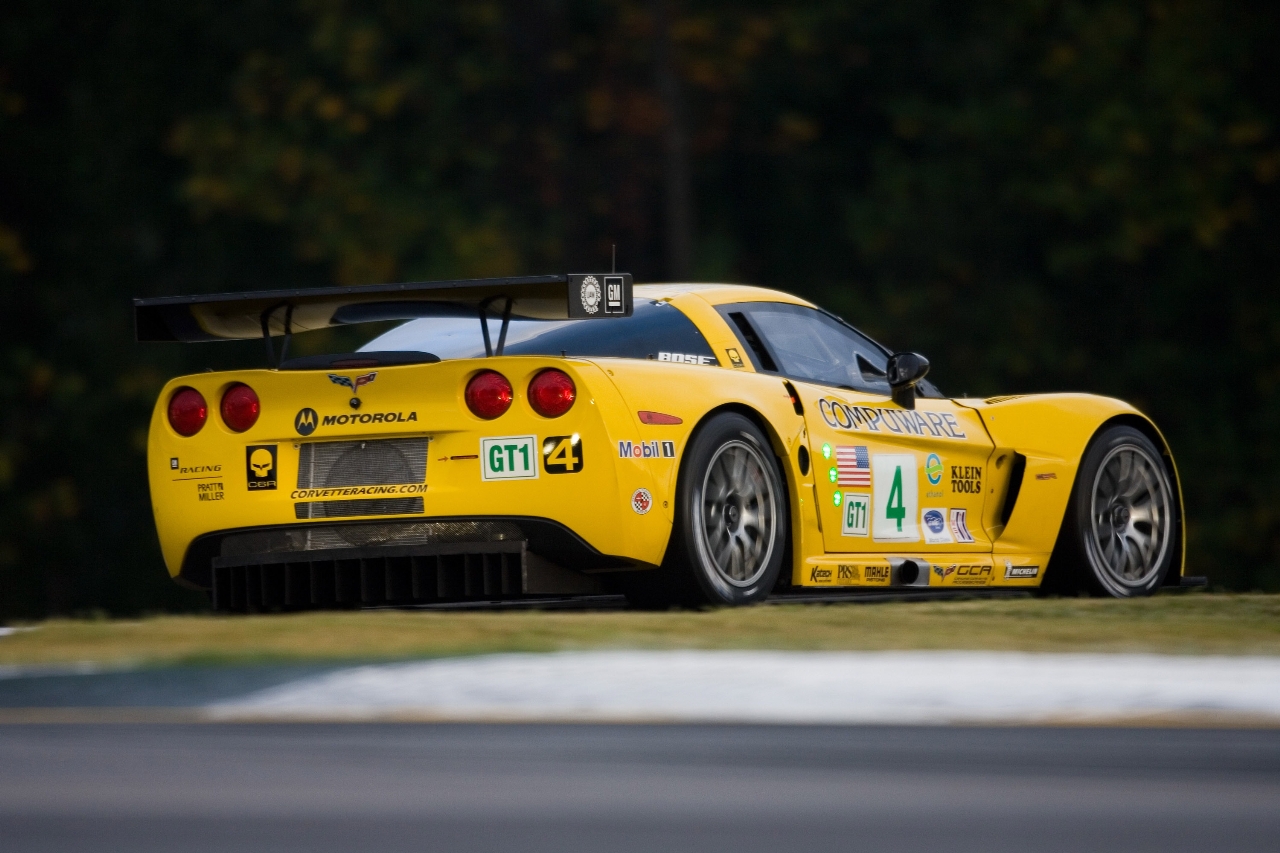
The C6.R entered competition for the 2005 season, succeeding the highly successful C5-R. Its development reflected the sixth-generation Corvette’s revised exterior design while incorporating the specialized engineering required for GT1 competition.
The racing automobile retained the recognizable proportions of the production C6, including its exposed headlights, low roofline, broad fenders, and distinctive rear treatment. However, its bodywork was extensively modified to accommodate aerodynamic requirements, wider racing tires, specialized cooling systems, and competition regulations.
The C6.R’s chassis incorporated a purpose-built racing structure with an integrated safety cage, providing the rigidity and occupant protection required for professional motorsport. Its suspension was developed specifically for competition, with adjustable geometry, specialized dampers, racing springs, and components designed to withstand the loads generated by high-grip racing tires.
The engine was a racing-developed Chevrolet V8 with displacement and specifications determined by the applicable GT1 regulations. Although the C6.R’s engine shared the broad architectural philosophy of Chevrolet’s small-block family, it was not identical to the production LS7.
The racing powerplant was designed for sustained high-output operation, incorporating specialized internal components, lubrication systems, induction equipment, and electronic controls. Its development emphasized the ability to deliver competitive performance over extended periods rather than simply achieving the highest possible peak horsepower.
The C6.R also employed a sequential racing transmission, allowing rapid gear changes under competition conditions. Its drivetrain, differential, and cooling systems were developed to withstand the substantial loads imposed by endurance racing.
Aerodynamics represented another major area of development. The C6.R incorporated a large rear wing, specialized front splitter, underbody components, and bodywork designed to generate substantial downforce while managing aerodynamic drag.
Unlike the production Z06, which needed to satisfy road-use requirements involving ground clearance, noise, emissions, and customer convenience, the C6.R could be optimized specifically for racing. This allowed engineers to pursue aerodynamic and mechanical solutions that would not have been practical or appropriate for a production automobile.
The Drivers: Experience, Speed, and Endurance






The success of Corvette Racing depended heavily on its drivers, whose responsibilities extended beyond achieving quick lap times. Endurance racing required competitors who could maintain consistent performance over long periods, preserve mechanical components, communicate effectively with engineers, and adapt to changing track conditions.
The 2006 program featured an exceptionally experienced driver lineup, including Ron Fellows, Johnny O’Connell, Oliver Gavin, Olivier Beretta, Jan Magnussen, and Max Papis in its endurance-racing roster.
Fellows had been closely associated with Corvette Racing since the program’s early years and played an important role in establishing its competitive reputation. His experience, technical understanding, and ability to communicate vehicle behavior made him valuable both during races and throughout development.
O’Connell was another central figure, combining substantial endurance-racing experience with a consistent and disciplined driving style. His partnership with Fellows became one of the defining relationships of Corvette Racing’s early success.
Gavin and Beretta formed another highly successful pairing. Their ability to deliver consistent lap times while managing the demands of long-distance competition contributed significantly to the program’s championship achievements.
Magnussen brought extensive international racing experience, including Formula One and sports-car competition. His technical understanding and driving skill also made him valuable in Corvette development activities, particularly those involving high-performance vehicle evaluation.
Papis contributed additional endurance-racing experience, reinforcing the team’s ability to maintain a strong driver lineup for major events requiring three drivers per automobile.
The relationships among these drivers were important because endurance racing depends on cooperation rather than individual achievement alone. Drivers sharing an automobile need to agree on setup direction, communicate changing track conditions, and manage the vehicle in ways that preserve its performance for subsequent stints.
The 2006 American Le Mans Series Campaign
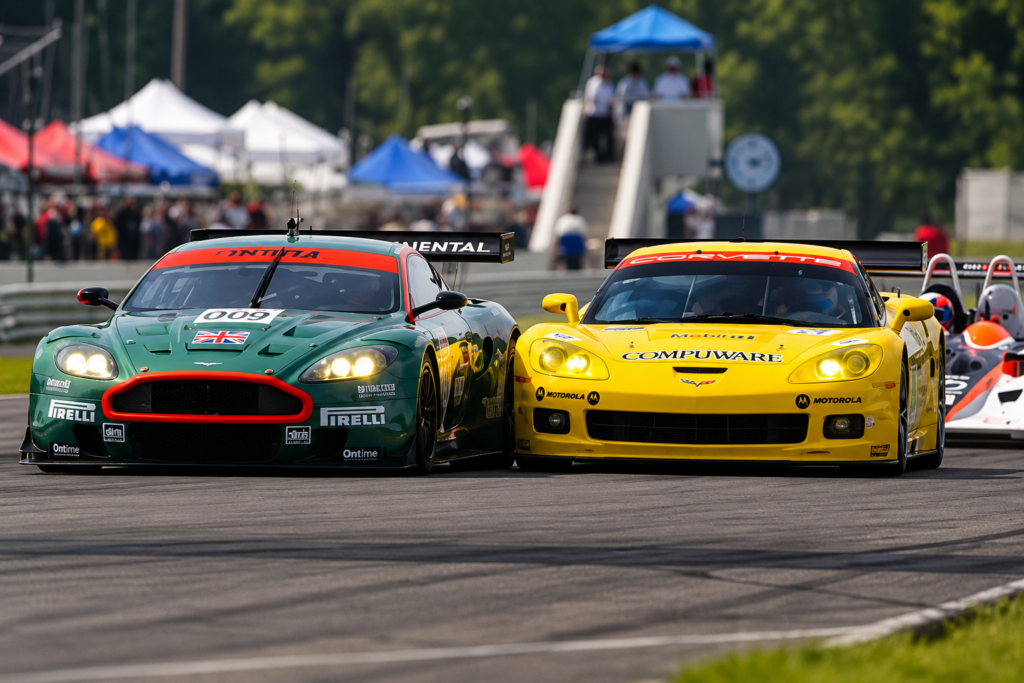
The 2006 American Le Mans Series season provided Corvette Racing with an opportunity to defend its position among the leading GT1 competitors. The championship featured demanding circuits and a mixture of race durations, requiring teams to balance outright speed with mechanical reliability and strategic execution.
The most significant competitive challenge came from Aston Martin Racing, whose DBR9 had emerged as a formidable rival. The Aston Martin combined a powerful V12 engine with sophisticated chassis engineering and substantial factory support, creating a competition environment that demanded continued development from Corvette Racing.
The rivalry between Corvette and Aston Martin became one of the defining stories of GT1 competition during this period. Both manufacturers possessed strong engineering resources, experienced drivers, and well-organized teams, making the outcome of individual races dependent on relatively small differences in performance and execution.
Corvette Racing’s C6.R demonstrated strong performance throughout the season, but its success was not automatic. The team needed to adapt to different circuits, manage tire performance, respond to changing conditions, and maintain reliability under sustained competition loads.
The season included major events such as the Mobil 1 Twelve Hours of Sebring, where the demands of the circuit and race duration provided an early test of the teams’ preparations. Sebring’s rough surface, heavy braking zones, and long race distance made it particularly demanding on suspension components, drivetrain systems, and mechanical durability.
Corvette Racing continued competing through the American Le Mans Series calendar, confronting Aston Martin and other GT1 competitors at circuits that emphasized different aspects of vehicle performance.
The championship battle reinforced the importance of consistent results. A single victory could provide valuable points, but sustained success required teams to finish races reliably and avoid the mechanical failures or operational mistakes that could compromise an entire season.
By the conclusion of the 2006 campaign, Corvette Racing had secured another GT1 championship, reinforcing the C6.R’s reputation as one of the most successful competition automobiles of its era.
The 2006 24 Hours of Le Mans
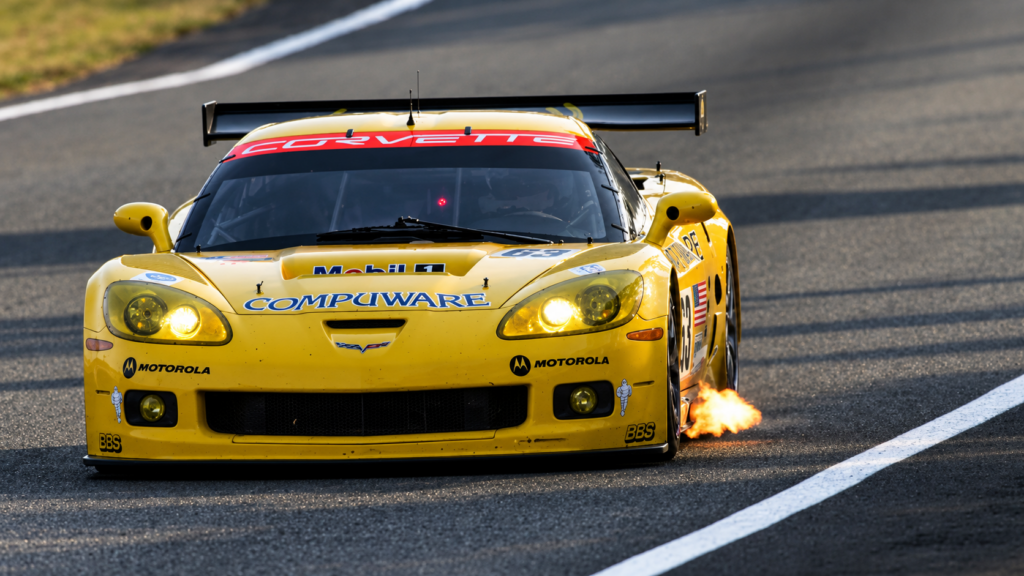
The 24 Hours of Le Mans remained the most prestigious event on Corvette Racing’s calendar. Held annually at the Circuit de la Sarthe in France, the race represented one of the most demanding challenges in international motorsport.
Le Mans required automobiles to operate at high speeds for an entire day, combining long straights, high-speed corners, heavy braking zones, and the unpredictable conditions associated with overnight competition. Mechanical reliability was essential, but success also depended on fuel strategy, tire management, driver consistency, and efficient pit-stop execution.
For 2006, Corvette Racing entered two C6.Rs in the GT1 class, competing against a strong field that included Aston Martin’s DBR9.
The No. 64 Corvette was driven by Oliver Gavin, Olivier Beretta, and Jan Magnussen, while the No. 63 entry featured Ron Fellows, Johnny O’Connell, and Max Papis.
The competition between Corvette and Aston Martin was particularly intense because both manufacturers viewed Le Mans as an opportunity to demonstrate the capabilities of their engineering and racing organizations on an international stage.
Throughout the race, the leading GT1 competitors maintained a demanding pace while managing the mechanical and operational challenges associated with endurance racing. The Corvette team relied on its experience, preparation, and the proven durability of the C6.R to remain competitive.
The No. 64 Corvette ultimately secured victory in the GT1 class, with Gavin, Beretta, and Magnussen delivering another major international success for Chevrolet. The result represented Corvette Racing’s fifth class victory at Le Mans since the program began competing in the event.
The achievement was particularly significant because it demonstrated the C6.R’s ability to withstand the demands of sustained competition against highly capable international rivals. The victory was not simply a reflection of engine output or maximum speed, but the result of coordinated engineering, driver performance, race strategy, and mechanical reliability.
For Chevrolet, the result reinforced the Corvette’s growing international reputation. The automobile that had once struggled to establish itself as a credible sports car had become a repeated winner at one of the world’s most prestigious endurance races.
Racing Technology and the Production Z06
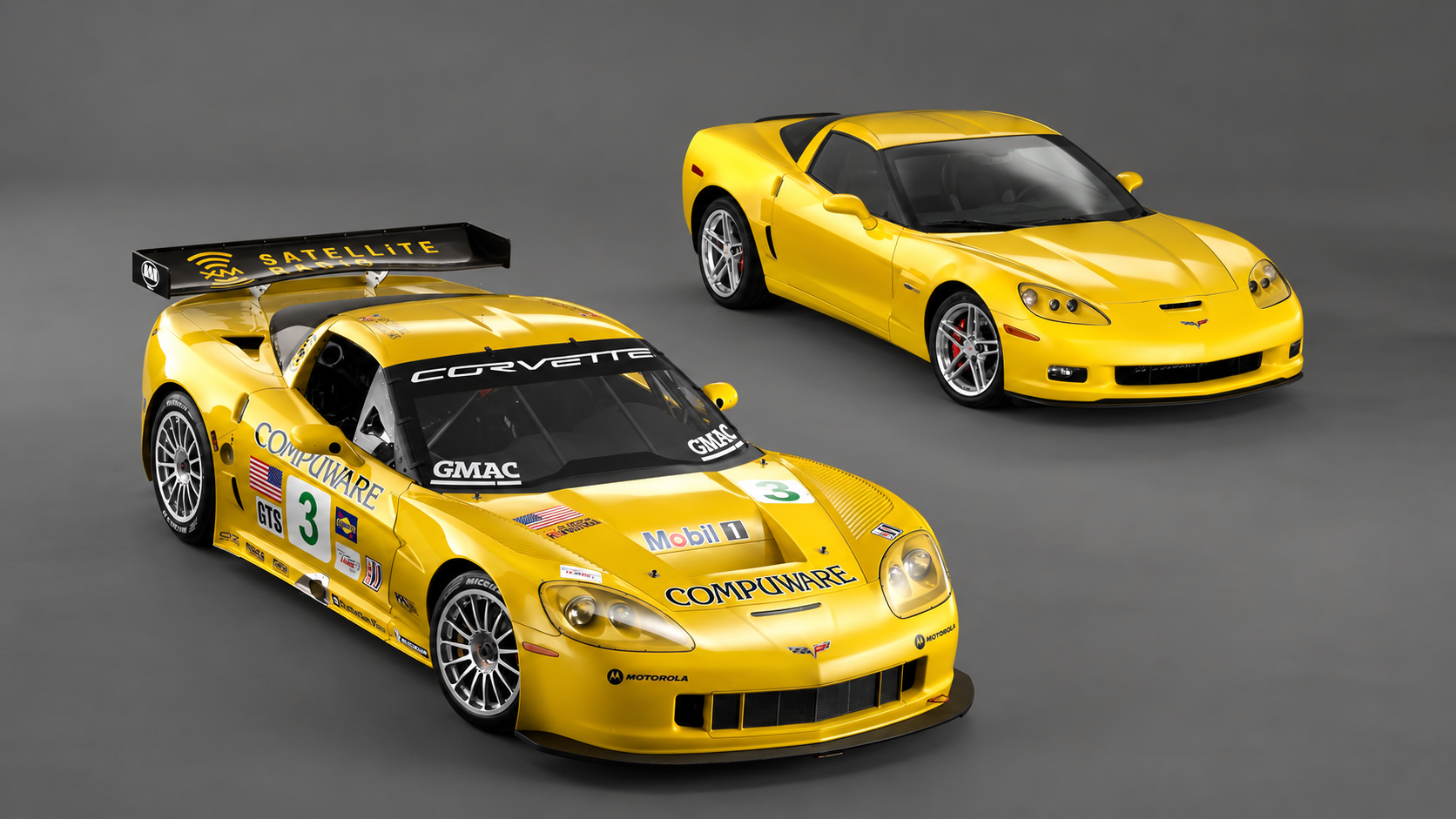
The relationship between the C6.R and the production Z06 was one of the most important elements of the 2006 Corvette story. Although the automobiles were developed for different purposes, their engineering programs shared knowledge involving materials, structural design, aerodynamics, cooling, lubrication, and durability.
The production Z06’s aluminum frame and lightweight components reflected the broader emphasis on mass reduction that characterized modern racing engineering. While the specific construction methods and regulatory requirements differed, both programs recognized the importance of reducing unnecessary weight without compromising structural integrity.
The LS7’s dry-sump lubrication system also reflected principles familiar to racing engineers. Maintaining consistent oil supply under sustained high-g conditions was essential to both competition engines and high-performance production powertrains.
Cooling systems represented another area of shared interest. Racing automobiles operate under severe thermal loads, and the ability to manage engine, drivetrain, and brake temperatures is critical to reliability. Production engineers developing the Z06 benefited from the broader knowledge accumulated through Corvette Racing’s experience.
Aerodynamic development provided additional opportunities for technical exchange. Both programs needed to manage airflow around the vehicle while balancing drag, stability, and cooling requirements. Although the C6.R employed substantially greater downforce than the production Z06, the underlying engineering principles were closely related.
The relationship also extended to vehicle dynamics. Racing engineers possessed extensive experience evaluating suspension behavior, tire performance, and chassis response under demanding conditions. Production engineers could apply relevant lessons while accounting for the different requirements imposed by road use.
The exchange was not exclusively from racing to production. Advances in production materials, manufacturing processes, and analytical methods could also inform the racing program. General Motors’ broader engineering resources provided access to technologies and expertise that supported competition development.
Corvette Racing’s Broader Influence
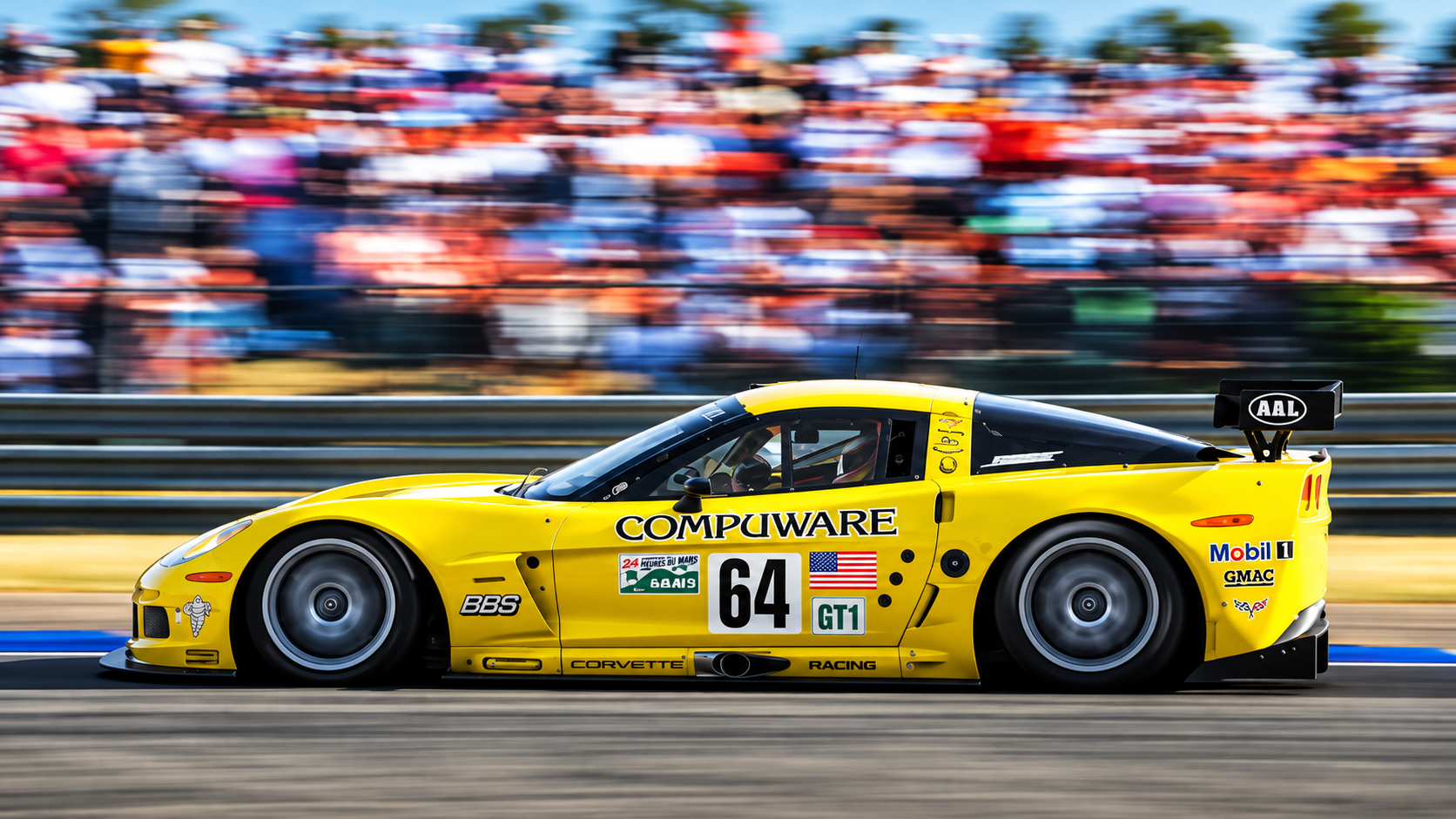
The significance of Corvette Racing extended beyond its technical contributions to the production automobile. The program played an important role in changing the Corvette’s international reputation.
For decades, American sports cars had sometimes been characterized as powerful but comparatively unsophisticated machines. Corvette Racing challenged that perception through sustained success against respected European manufacturers.
Its victories demonstrated that Chevrolet could develop reliable, competitive endurance-racing machinery capable of performing under some of the most demanding conditions in motorsport. The program also established a visible connection between the Corvette’s production engineering and its competition heritage.
This relationship strengthened the automobile’s appeal among enthusiasts. Buyers of the standard Corvette and Z06 could identify with a racing program that competed successfully at Le Mans, Sebring, and other major events.
The C6.R’s distinctive yellow livery, aggressive appearance, and recognizable Corvette proportions became powerful symbols of Chevrolet’s performance identity. The racing program provided a public demonstration of the engineering capabilities that General Motors wanted associated with the production automobile.
The success also helped justify continued investment in Corvette development. A strong international racing reputation reinforced the value of the Corvette as a technological and marketing flagship, particularly during a period when General Motors faced substantial financial challenges.
The Legacy of the 2006 Racing Season
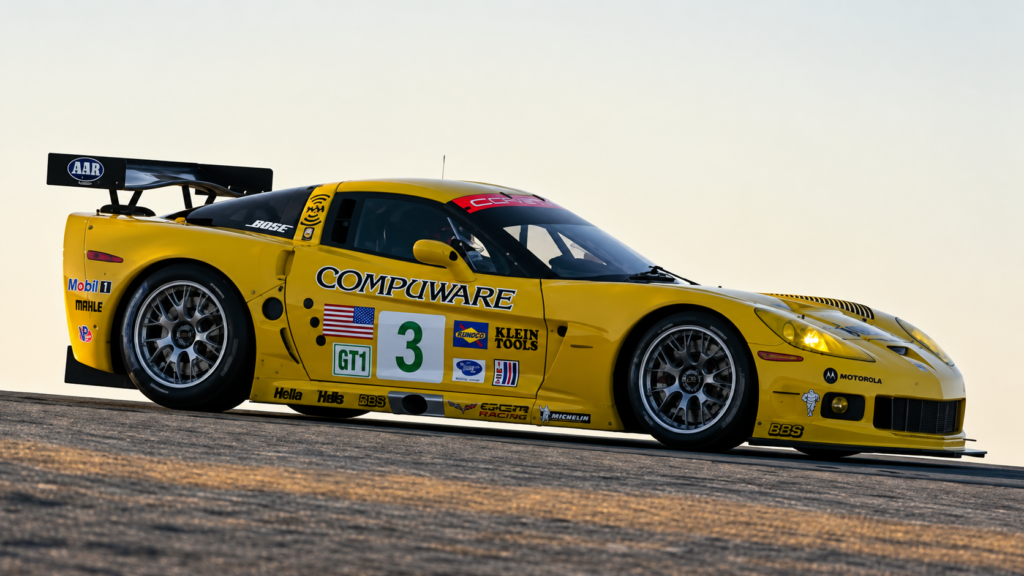
The 2006 season reinforced Corvette Racing’s position among the leading organizations in international GT competition. Its success at Le Mans and in the American Le Mans Series demonstrated the effectiveness of the C6.R and the strength of the partnership between General Motors and Pratt & Miller.
The program’s achievements were the result of sustained organizational development rather than isolated technical breakthroughs. Engineers, drivers, mechanics, strategists, and team managers worked together to produce competitive results under demanding conditions.
For the production Corvette, the racing program provided an important source of credibility and technical knowledge. The Z06’s extraordinary performance was not simply a marketing exercise inspired by racing imagery. It emerged from an engineering culture that increasingly recognized the value of competition experience.
The 2006 Corvette therefore occupied a particularly important position in Chevrolet’s motorsport history. The production Z06 demonstrated the capabilities of advanced materials, a highly developed naturally aspirated V8, and sophisticated chassis engineering, while the C6.R continued proving the Corvette’s competitiveness on the international stage.
Together, these automobiles represented complementary expressions of the same philosophy: exceptional performance achieved through disciplined engineering, careful attention to durability, and the coordinated efforts of talented people.
The achievements of Corvette Racing in 2006 helped establish expectations that would influence the program for years to come. The C6.R would continue competing successfully, while the production Corvette would evolve through increasingly ambitious performance variants.
For Chevrolet, the relationship between the racing and production programs had become one of the Corvette’s greatest strengths. It provided a foundation for continued innovation, reinforced the automobile’s international reputation, and demonstrated that America’s sports car could compete successfully against the world’s most respected manufacturers both on the road and on the racetrack.
The 2006 Corvette by the Numbers: Production, Pricing, Options, and Equipment
The 2006 Corvette occupied an important position in Chevrolet’s product lineup, offering three distinct configurations that appealed to different types of sports-car buyers. The standard coupe provided the most affordable entry into Corvette ownership, combining substantial performance with the versatility of a removable roof panel and generous luggage capacity. The convertible offered a more traditional open-air experience, while the Z06 represented the most focused and technically ambitious interpretation of the sixth-generation platform.
These three configurations allowed Chevrolet to address a broad range of customer preferences without abandoning the Corvette’s fundamental identity. Buyers could prioritize comfort, touring capability, open-air driving, or maximum performance, yet every version retained the essential characteristics of a front-engine, rear-wheel-drive American sports car powered by a naturally aspirated V8.
Production Totals
Chevrolet produced 34,021 Corvettes for the 2006 model year, reflecting continued demand for the sixth-generation automobile and the introduction of the highly anticipated Z06.
The production breakdown was as follows:
| 2006 Corvette model | Production |
|---|---|
| Coupe | 16,598 |
| Convertible | 11,151 |
| Z06 coupe | 6,272 |
| Total | 34,021 |
The standard coupe remained the most popular configuration, accounting for nearly half of total production. Its combination of performance, practicality, and comparatively accessible pricing made it attractive to a broad range of buyers.
The convertible represented approximately one-third of production, demonstrating the continued importance of open-air driving to Corvette enthusiasts. Although it carried a higher base price than the coupe, its traditional sports-car character and available power-operated top made it a compelling choice for buyers who valued the experience of driving with the roof lowered.
The Z06 accounted for approximately 18 percent of production, an impressive figure considering its specialized construction and substantially higher price. Demand reflected the extraordinary attention generated by the LS7 engine, aluminum frame, and performance capabilities.
Base Pricing
The 2006 Corvette’s pricing reinforced Chevrolet’s commitment to delivering exceptional performance value. Although the automobile incorporated increasingly sophisticated engineering, its base prices remained substantially below those of many international competitors offering comparable capabilities.
| Model | Base MSRP |
|---|---|
| Corvette coupe | $44,600 |
| Corvette convertible | $52,335 |
| Corvette Z06 | $65,800 |
These figures exclude destination charges, taxes, dealer fees, and optional equipment. Actual transaction prices could vary considerably according to vehicle configuration, dealership practices, and market demand.
The Z06’s approximately $65,800 base price was particularly significant because it placed a 505-horsepower sports car within reach of buyers who could not realistically consider the considerably more expensive exotic automobiles against which it was frequently compared.
The standard Corvette offered a similarly compelling proposition. Its 400-horsepower LS2 engine, sophisticated chassis, and extensive standard equipment provided performance that rivaled many premium sports cars costing substantially more.
Standard Equipment
The 2006 Corvette coupe and convertible included a substantial range of standard equipment intended to combine performance with modern convenience.
The LS2 V8 produced 400 horsepower and 400 lb-ft of torque, while the standard six-speed manual transmission provided direct driver involvement. Buyers could select the new six-speed automatic transmission with paddle-shift capability as optional equipment.
Four-wheel independent suspension, ventilated disc brakes, antilock braking, traction control, and Active Handling stability management contributed to the Corvette’s performance and safety.
The interior included leather seating surfaces, air conditioning, power accessories, and a driver-oriented instrument panel. Keyless Access and Push-Button Start provided a contemporary convenience feature that distinguished the C6 from earlier generations.
The coupe’s removable roof panel offered versatility, while the convertible provided a manually operated folding top with an available power-operated mechanism.
Major Options and Equipment Packages
Chevrolet offered several equipment packages and individual options that allowed buyers to tailor the Corvette to their preferences.
The Z51 Performance Package remained one of the most important options for buyers seeking enhanced handling and track capability. Its revised suspension calibration, upgraded braking equipment, and additional cooling provisions provided meaningful improvements without requiring the purchase of a Z06.
Magnetic Selective Ride Control offered electronically adjustable damping, allowing the suspension to respond to changing operating conditions. The system was particularly attractive to buyers who wanted strong handling performance without sacrificing everyday ride comfort.
The 6L80 six-speed automatic transmission represented one of the most significant new options for 2006. Its paddle-shift controls and improved gear spacing provided a more engaging driving experience than the previous four-speed automatic.
Interior options included upgraded seating equipment, premium audio systems, navigation, and additional convenience features. The available Head-Up Display projected selected information into the driver’s forward field of view, allowing important operating data to be monitored without looking away from the road.
The convertible’s available power-operated top provided additional convenience, while various wheel finishes and appearance options allowed buyers to personalize the exterior.
Exterior Colors
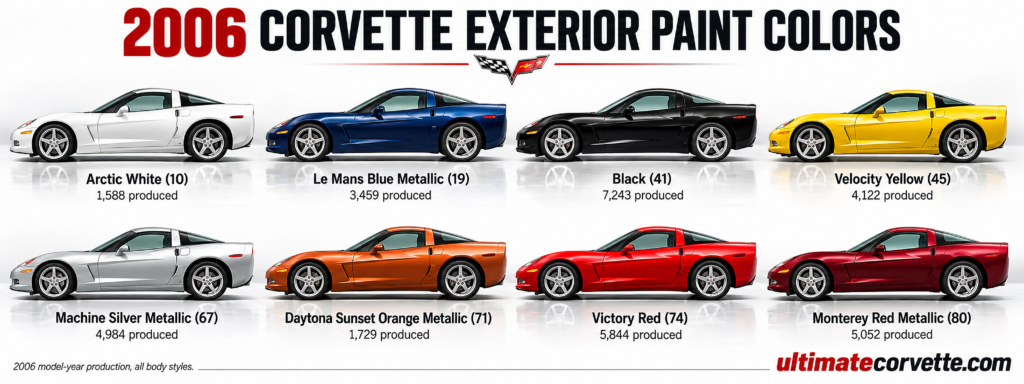
The 2006 Corvette was offered in a range of exterior colors intended to appeal to both traditional enthusiasts and buyers seeking a more contemporary appearance.
The palette included familiar Corvette colors such as Victory Red, Black, Machine Silver Metallic, and Le Mans Blue Metallic, along with other finishes that emphasized the C6’s sculpted bodywork.
The Z06’s exterior colors helped reinforce its distinctive appearance, particularly when combined with its wider rear bodywork, specialized front fascia, and performance-oriented wheels.
Color selection was an important element of Corvette ownership because the automobile’s styling relied heavily on the relationship between body contours, light, and surface reflections. Darker colors emphasized the C6’s aggressive proportions, while brighter finishes highlighted its sculpted fenders and aerodynamic features.
Interior Colors and Trim
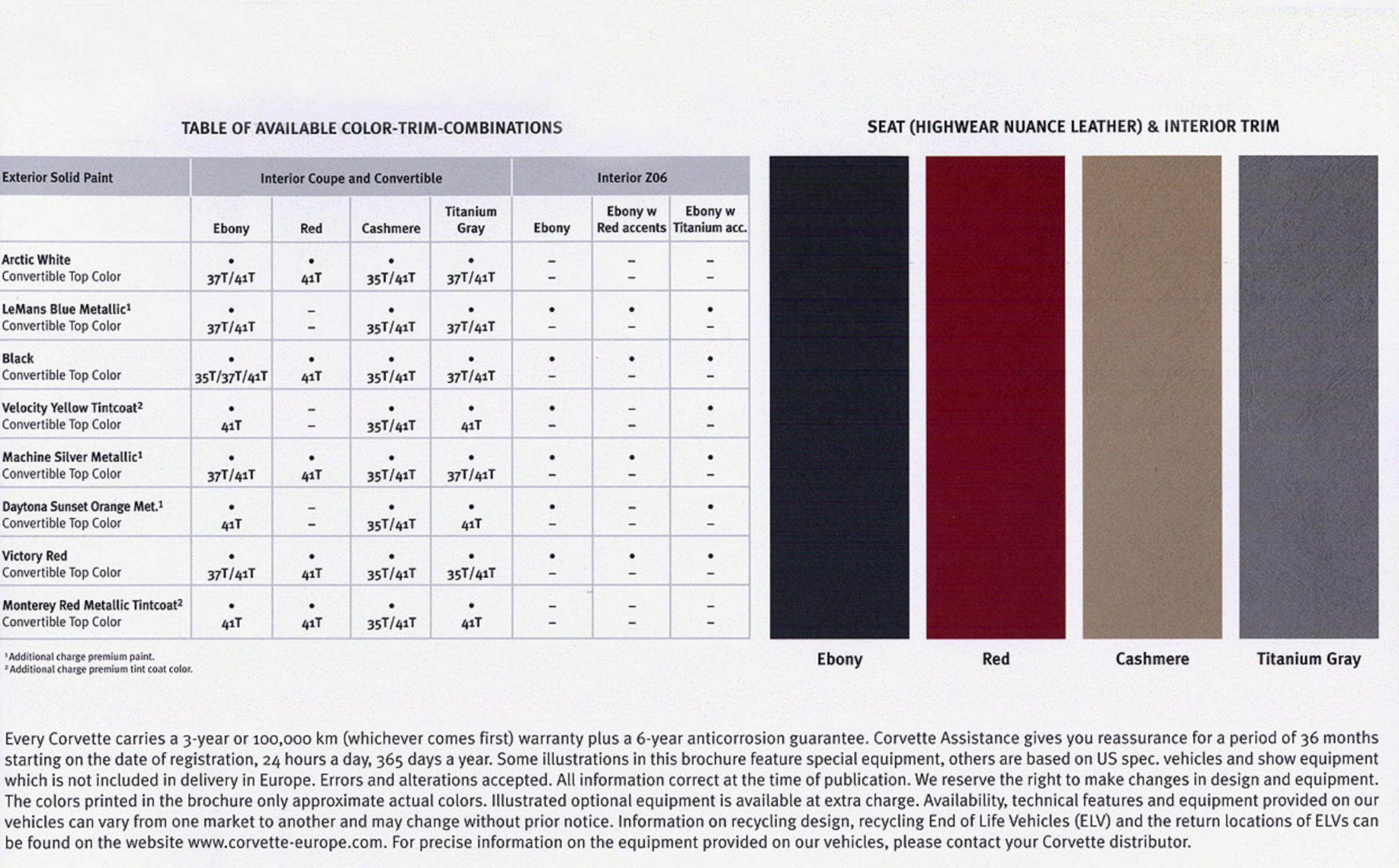
The 2006 Corvette offered several interior color combinations, allowing buyers to select finishes that complemented their exterior choices.
Black remained a popular option, providing a traditional performance-oriented appearance. Other available interior treatments introduced lighter or contrasting colors, creating a more distinctive environment.
Leather seating surfaces were standard, while optional equipment packages provided additional adjustments and convenience features.
Although contemporary reviewers sometimes criticized the Corvette’s interior materials when compared with more expensive European competitors, the C6 represented a meaningful improvement over earlier generations. Its controls, instrumentation, and seating accommodations reflected Chevrolet’s efforts to create a more refined and contemporary sports-car environment.
Complete 2006 Chevrolet Corvette Specifications: Coupe, Convertible, and Z06
The 2006 Chevrolet Corvette lineup consisted of three distinct models: the standard coupe, the convertible, and the high-performance Z06. Although all three shared the sixth-generation Corvette’s fundamental front-engine, rear-wheel-drive architecture, their mechanical specifications, structural construction, equipment, and intended driving characteristics differed in important ways.
The following technical reference consolidates the factory specifications for all three models, including engines, transmissions, gearing, dimensions, suspension, brakes, wheels, tires, capacities, production totals, and available equipment. Figures reflect the 2006 model year and original factory configurations, rather than specifications introduced during later C6 production.
Model Identification and Production
| Specification | Coupe | Convertible | Z06 |
|---|---|---|---|
| Model year | 2006 | 2006 | 2006 |
| Generation | C6 | C6 | C6 |
| GM model code | 1YY07 | 1YY67 | 1YY87 |
| Body style | Two-door hatchback coupe | Two-door soft-top convertible | Two-door fixed-roof coupe |
| Seating | 2 | 2 | 2 |
| Drivetrain | Front-engine, rear-wheel drive | Front-engine, rear-wheel drive | Front-engine, rear-wheel drive |
| Assembly location | Bowling Green, Kentucky | Bowling Green, Kentucky | Bowling Green, Kentucky |
| Production | 16,598 | 11,151 | 6,272 |
| Share of production | 48.8% | 32.8% | 18.4% |
| Original base MSRP | $44,600 | $52,335 | $65,800 |
Total 2006 Corvette production: 34,021 vehicles. Base prices exclude optional equipment, destination charges, taxes, and dealer fees.
Engine Specifications
The standard coupe and convertible were powered by Chevrolet’s 6.0-liter LS2 V8, while the Z06 received the specialized 7.0-liter LS7. Both engines belonged to General Motors’ Generation IV small-block family, employed aluminum blocks and cylinder heads, and used sequential electronic fuel injection.
| Specification | Coupe / Convertible | Z06 |
|---|---|---|
| Engine designation | LS2 | LS7 |
| Engine family | Gen IV small-block | Gen IV small-block |
| Configuration | Naturally aspirated 90° V8 | Naturally aspirated 90° V8 |
| Displacement | 5,967 cc / 364 cu. in. | 7,011 cc / 427 cu. in. |
| Bore | 4.000 in. (101.6 mm) | 4.125 in. (104.8 mm) |
| Stroke | 3.622 in. (92.0 mm) | 4.000 in. (101.6 mm) |
| Block | Cast aluminum | Cast aluminum |
| Cylinder heads | Cast aluminum | Cast aluminum, CNC-machined ports |
| Valvetrain | OHV, 2 valves/cylinder | OHV, 2 valves/cylinder |
| Total valves | 16 | 16 |
| Compression ratio | 10.9:1 | 11.0:1 |
| Horsepower | 400 hp @ 6,000 rpm | 505 hp @ 6,300 rpm |
| Torque | 400 lb-ft @ 4,400 rpm | 470 lb-ft @ 4,800 rpm |
| Fuel delivery | Sequential fuel injection | Sequential fuel injection |
| Throttle | Electronic | Electronic |
| Lubrication | Wet sump | Dry sump |
| Connecting rods | Powdered metal | Titanium |
| Intake valves | Steel alloy | Titanium |
| Exhaust valves | Steel alloy | Sodium-filled |
| Engine assembly | GM Powertrain production | Performance Build Center, Wixom, Michigan |
| Recommended fuel | Premium unleaded | Premium unleaded |
The LS7’s 505-horsepower output represented a 26.25 percent increase over the LS2, while its 427-cubic-inch displacement revived one of the most celebrated figures in Corvette history. Its titanium connecting rods, specialized cylinder heads, and dry-sump lubrication system were engineered to accommodate the substantially greater demands of the Z06’s intended performance envelope.
Transmission and Drivetrain
All three 2006 Corvette variants employed a rear-mounted transaxle connected to the front-mounted engine through a torque tube. A six-speed manual was standard throughout the lineup, while the coupe and convertible could be ordered with Chevrolet’s new six-speed paddle-shift automatic transmission.
| Specification | Coupe | Convertible | Z06 |
|---|---|---|---|
| Standard transmission | 6-speed manual | 6-speed manual | 6-speed manual |
| Optional automatic | 6L80 6-speed | 6L80 6-speed | Not available |
| Paddle shifting | With automatic | With automatic | Not available |
| Transmission location | Rear transaxle | Rear transaxle | Rear transaxle |
| Drive wheels | Rear | Rear | Rear |
| Differential | Limited-slip | Limited-slip | Limited-slip |
| Standard manual axle ratio | 3.42:1 | 3.42:1 | 3.42:1 |
| Automatic axle ratio | 2.56:1 | 2.56:1 | Not applicable |
| Z51 performance manual | Available | Available | Not applicable |
Transmission Gear Ratios
| Gear | Standard 6-speed manual | Z51 / Z06 performance manual | 6L80 automatic |
|---|---|---|---|
| First | 2.66 | 2.97 | 4.02 |
| Second | 1.78 | 2.07 | 2.36 |
| Third | 1.30 | 1.43 | 1.53 |
| Fourth | 1.00 | 1.00 | 1.15 |
| Fifth | 0.74 | 0.71 | 0.85 |
| Sixth | 0.50 | 0.57 | 0.67 |
| Reverse | 2.90 | 3.28 | 3.06 |
| Final drive | 3.42 | 3.42 | 2.56 |
The new 6L80 automatic was one of the defining mechanical changes for 2006. Its 4.02:1 first gear improved initial acceleration, while fifth and sixth gears provided overdrive ratios for relaxed cruising. The transmission offered Drive, Sport, and driver-commanded Paddle Shift operation.
Body and Chassis Construction
| Specification | Coupe | Convertible | Z06 |
|---|---|---|---|
| Frame | Hydroformed steel | Hydroformed steel | Hydroformed aluminum |
| Body panels | Composite | Composite | Composite and carbon fiber |
| Roof | Removable panel | Folding fabric soft top | Fixed roof |
| Roof operation | Manual removal | Manual; optional power operation | Not applicable |
| Front engine cradle | Production alloy structure | Production alloy structure | Magnesium |
| Roof structural material | Composite removable panel | Convertible structure | Magnesium roof panel |
| Front fenders | Composite | Composite | Carbon-fiber composite |
| Front wheelhouses | Composite | Composite | Carbon-fiber composite |
| Floor construction | Cored composite | Cored composite | Carbon-fiber composite sections |
| Rear-mounted transaxle | Yes | Yes | Yes |
| Independent suspension | Four-wheel | Four-wheel | Four-wheel |
The Z06’s aluminum frame, magnesium components, and carbon-fiber body elements contributed to its lower curb weight despite the additional equipment required to support its performance. Its fixed roof was engineered to maximize structural rigidity, while the standard coupe and convertible emphasized greater versatility.
Dimensions and Weight
| Specification | Coupe | Convertible | Z06 |
|---|---|---|---|
| Wheelbase | 105.7 in. | 105.7 in. | 105.7 in. |
| Overall length | 174.6 in. | 174.6 in. | 175.6 in. |
| Overall width, excluding mirrors | 72.6 in. | 72.6 in. | 75.9 in. |
| Overall height, nominal | 49.0 in. | 49.0 in. | 49.0 in. |
| Curb weight | 3,179 lb | 3,199 lb | Approx. 3,130–3,132 lb |
| Seating capacity | 2 | 2 | 2 |
| Interior passenger volume | Approx. 52 cu. ft. | Approx. 52 cu. ft. | Approx. 52 cu. ft. |
Published dimensions and curb weights may vary slightly among factory releases and specification databases because of rounding, equipment assumptions, and measurement conventions.
Passenger Compartment and Cargo Capacity
| Specification | Coupe | Convertible | Z06 |
|---|---|---|---|
| Headroom | Approx. 37.7 in. | Approx. 37.7 in. | Approx. 37.7 in. |
| Legroom | Approx. 43.1 in. | Approx. 43.1 in. | Approx. 43.1 in. |
| Shoulder room | Approx. 55.2 in. | Approx. 55.2 in. | Approx. 55.2 in. |
| Hip room | Approx. 53.6 in. | Approx. 53.6 in. | Approx. 53.6 in. |
| Cargo volume | Approx. 22.4 cu. ft. | Approx. 11 cu. ft., top raised | Approx. 22.4 cu. ft. |
| Cargo volume, top lowered | Not applicable | Approx. 5 cu. ft. | Not applicable |
The coupe and Z06 retained substantial rear luggage compartments, contributing to the Corvette’s unusual practicality for a two-seat high-performance automobile. The convertible’s roof mechanism reduced available storage space, particularly when the top was lowered.
Suspension and Steering
All 2006 Corvettes employed four-wheel independent suspension with short/long-arm geometry, aluminum control arms, transverse composite springs, and monotube dampers. The suspension calibration differed according to model and equipment.
| Specification | Coupe | Convertible | Z06 |
|---|---|---|---|
| Front suspension | Independent SLA | Independent SLA | Independent SLA |
| Rear suspension | Independent SLA | Independent SLA | Independent SLA |
| Control arms | Aluminum | Aluminum | Aluminum |
| Springs | Transverse composite | Transverse composite | Transverse composite |
| Dampers | Monotube | Monotube | Z06-specific monotube |
| Standard suspension | FE1 | FE1 | FE4 |
| Z51 Performance Package | Available | Available | Not applicable |
| Magnetic Selective Ride Control | Available | Available | Not available |
| Steering | Speed-sensitive power rack-and-pinion | Speed-sensitive power rack-and-pinion | Speed-sensitive power rack-and-pinion |
| Traction control | Standard | Standard | Standard |
| Active Handling | Standard | Standard | Standard |
| Four-wheel ABS | Standard | Standard | Standard |
The standard FE1 suspension prioritized a balance between ride quality and responsive handling. The optional Z51 package provided more aggressive spring, damper, and stabilizer-bar calibration, together with larger brakes and additional cooling equipment. The Z06’s FE4 suspension was developed specifically for its lower weight, wider tires, and higher performance.
Braking System
| Specification | Standard coupe / convertible | Coupe / convertible with Z51 | Z06 |
|---|---|---|---|
| Front brakes | Ventilated discs | Cross-drilled ventilated discs | Cross-drilled ventilated discs |
| Front rotor diameter | 12.8 in. | 13.4 in. | 14.0 in. |
| Rear brakes | Ventilated discs | Cross-drilled ventilated discs | Cross-drilled ventilated discs |
| Rear rotor diameter | 12.0 in. | 13.0 in. | 13.4 in. |
| Front calipers | Production sliding-caliper system | Production performance system | Fixed six-piston |
| Rear calipers | Production sliding-caliper system | Production performance system | Fixed four-piston |
| ABS | Standard | Standard | Standard |
| Power assist | Standard | Standard | Standard |
The Z06’s six-piston front and four-piston rear calipers, together with larger rotors, were designed to provide greater thermal capacity during repeated high-speed braking. The Z51 package offered a meaningful intermediate upgrade for standard Corvette buyers interested in more demanding driving.
Wheels and Tires
| Specification | Coupe / Convertible | Z06 |
|---|---|---|
| Front wheel size | 18 × 8.5 in. | 18 × 9.5 in. |
| Rear wheel size | 19 × 10.0 in. | 19 × 12.0 in. |
| Front tire size | P245/40ZR18 | P275/35ZR18 |
| Rear tire size | P285/35ZR19 | P325/30ZR19 |
| Tire configuration | Extended Mobility run-flat | Goodyear Eagle F1 Supercar EMT |
| Z51-specific tires | Goodyear Eagle F1 Supercar EMT | Not applicable |
| Optional wheel finishes | Polished, chrome, Competition Gray | Polished, Competition Gray |
The Z06’s substantially wider rear tires were necessary to manage the LS7’s 470 lb-ft of torque, while its wider front tires contributed to the exceptional cornering grip and braking capability.
Fuel, Lubrication, and Operating Capacities
| Specification | Coupe | Convertible | Z06 |
|---|---|---|---|
| Fuel tank | 18.0 US gal. | 18.0 US gal. | 18.0 US gal. |
| Recommended gasoline | Premium unleaded | Premium unleaded | Premium unleaded |
| Engine oil system | Wet sump | Wet sump | Dry sump |
| Published engine oil capacity | 5.5 qt. | 5.5 qt. | 8.0 qt. |
| Engine cooling | Liquid cooled | Liquid cooled | Liquid cooled |
| Engine oil cooling | Enhanced with Z51 | Enhanced with Z51 | Standard performance cooling |
| Transmission/differential cooling | Enhanced with Z51 | Enhanced with Z51 | Standard performance cooling |
Oil capacities are factory reference figures. Actual service-fill quantities and checking procedures should always follow the 2006 owner’s manual, particularly for the LS7 dry-sump system.
Factory Performance Figures
| Performance measure | Coupe | Convertible | Z06 |
|---|---|---|---|
| Horsepower | 400 hp | 400 hp | 505 hp |
| Power-to-weight ratio | 7.95 lb/hp | 8.00 lb/hp | 6.20 lb/hp |
| 0–60 mph | Approximately 4.2–4.5 sec. | Approximately 4.3–4.7 sec. | Approximately 3.7–3.9 sec. |
| Quarter mile | Approximately 12.6–13.0 sec. | Approximately 12.7–13.1 sec. | Approximately 11.7–12.2 sec. |
| Maximum speed | Approximately 186 mph | Varies by configuration | Approximately 198 mph |
| Aerodynamic drag coefficient | Approximately 0.286 | Configuration dependent | Approximately 0.34 |
These performance figures combine Chevrolet’s published claims with representative contemporary instrumented testing. They are not guaranteed results for every vehicle. Acceleration and maximum speed vary with transmission, equipment, tire condition, road surface, atmospheric conditions, and testing methodology.
Exterior Colors and Production
Eight exterior colors were produced for the 2006 Corvette. The Z06 was offered in six of them; Arctic White and Monterey Red Metallic Tintcoat were not available on that model.
| Exterior color | RPO | Total produced | Z06 availability |
|---|---|---|---|
| Arctic White | 10U | 1,588 | No |
| Le Mans Blue Metallic | 19U | 3,459 | Yes |
| Black | 41U | 7,243 | Yes |
| Velocity Yellow Tintcoat | 45U | 4,122 | Yes |
| Machine Silver Metallic | 67U | 4,984 | Yes |
| Daytona Sunset Orange Metallic | 71U | 1,729 | Yes |
| Victory Red | 74U | 5,844 | Yes |
| Monterey Red Metallic Tintcoat | 80U | 5,052 | No |
Black was the most frequently selected exterior color across the entire 2006 lineup, while Victory Red was second. Among Z06 buyers, Black and Velocity Yellow were especially popular.
Interior Colors
| Interior color | RPO | Total production |
|---|---|---|
| Red | 02I | 2,028 |
| Ebony | 19I | 19,974 |
| Cashmere | 31I | 7,175 |
| Titanium Gray | 84I | 4,844 |
Interior color availability varied by model, seating configuration, and equipment package. Cashmere, for example, was not offered on the Z06.
The convertible was also available with Black, Beige, and Gray soft-top colors, subject to exterior and interior combination restrictions.
Principal Factory Options and Packages
| Equipment or option | RPO | Application |
|---|---|---|
| Z51 Performance Package | Z51 | Coupe and convertible |
| Magnetic Selective Ride Control | F55 | Coupe and convertible |
| Six-speed paddle-shift automatic | MX0 | Coupe and convertible |
| Power-operated convertible top | CM7 | Convertible |
| Transparent removable roof panel | CC3 | Coupe |
| Dual removable roof panels | C2L | Coupe |
| Head-Up Display | UV6 | Equipment-package dependent |
| Navigation system | U3U | Available across lineup |
| XM Satellite Radio | U2K | Equipment-package dependent |
| OnStar | UE1 | Available |
| Polished aluminum wheels | QG7 / QL9 | Model dependent |
| Competition Gray wheels | QX1 / Q44 | Model dependent |
| Chrome aluminum wheels | QX3 | Coupe and convertible |
| Museum Delivery | R8C | Available |
Equipment availability was organized through preferred-equipment groups, including 1LT, 2LT, and 3LT for the standard models and 1LZ and 2LZ for the Z06. Certain features were included within packages rather than offered individually, and availability could change during the production year.
Safety and Driver-Assistance Equipment
All three models incorporated antilock braking, electronic traction control, Active Handling stability management, dual-stage frontal airbags, and GM’s Passenger Sensing System. Side-impact airbags were available through specified equipment configurations.
The 2006 model year also introduced a revised three-spoke steering wheel across the Corvette lineup. Fixed xenon high-intensity-discharge headlights, electronic door releases, Keyless Access, and push-button starting reflected the increasing technological sophistication of the C6.
Production Significance
The 2006 Corvette’s production figures demonstrated the strength of the C6 platform during its early years. Chevrolet successfully maintained demand for the standard coupe and convertible while introducing a specialized performance model that attracted considerable attention.
The Z06’s production volume was especially important because its aluminum frame, hand-built engine, and specialized components required manufacturing processes that differed substantially from those of the standard Corvette.
The ability to produce more than 6,000 Z06s during the model year demonstrated that Chevrolet could incorporate advanced materials and specialized engineering into a production automobile at a scale considerably greater than that associated with many exotic manufacturers.
The 2006 Corvette therefore represented an important balance between exclusivity and accessibility. The Z06 offered extraordinary performance and specialized construction, yet remained a vehicle that could be purchased through Chevrolet dealerships and serviced within the manufacturer’s broader support network.
That combination helped establish the Corvette’s distinctive position in the performance-car market.
Living with the 2006 Corvette: Ownership, Reliability, Maintenance, and Known Problems
The 2006 Corvette’s extraordinary performance and technical sophistication were important achievements, but its long-term reputation would ultimately depend on the experiences of the people who owned and maintained it. An automobile capable of exceptional acceleration, handling, and braking must also function reliably during ordinary use, tolerate years of mechanical wear, and remain practical to service. These considerations were particularly important for the Corvette because its appeal extended beyond collectors and track-day enthusiasts to owners who expected to drive their cars regularly.
Two decades after its introduction, the 2006 Corvette occupies an interesting position in the enthusiast market. It is modern enough to offer substantial performance, electronic stability management, and contemporary convenience features, yet sufficiently mechanical in character to provide an experience that differs from increasingly computerized modern sports cars. Its naturally aspirated engines, hydraulic power steering, conventional manual transmission, and relatively straightforward drivetrain architecture have helped sustain its appeal.
However, age has introduced considerations that were not necessarily apparent when these automobiles were new. Rubber seals deteriorate, suspension bushings wear, electronic components become more difficult to replace, and maintenance histories vary considerably. The most desirable surviving examples are therefore not always those with the lowest mileage, but those that have been maintained consistently and preserved with an understanding of the Corvette’s specialized engineering.
The LS2’s Long-Term Reputation
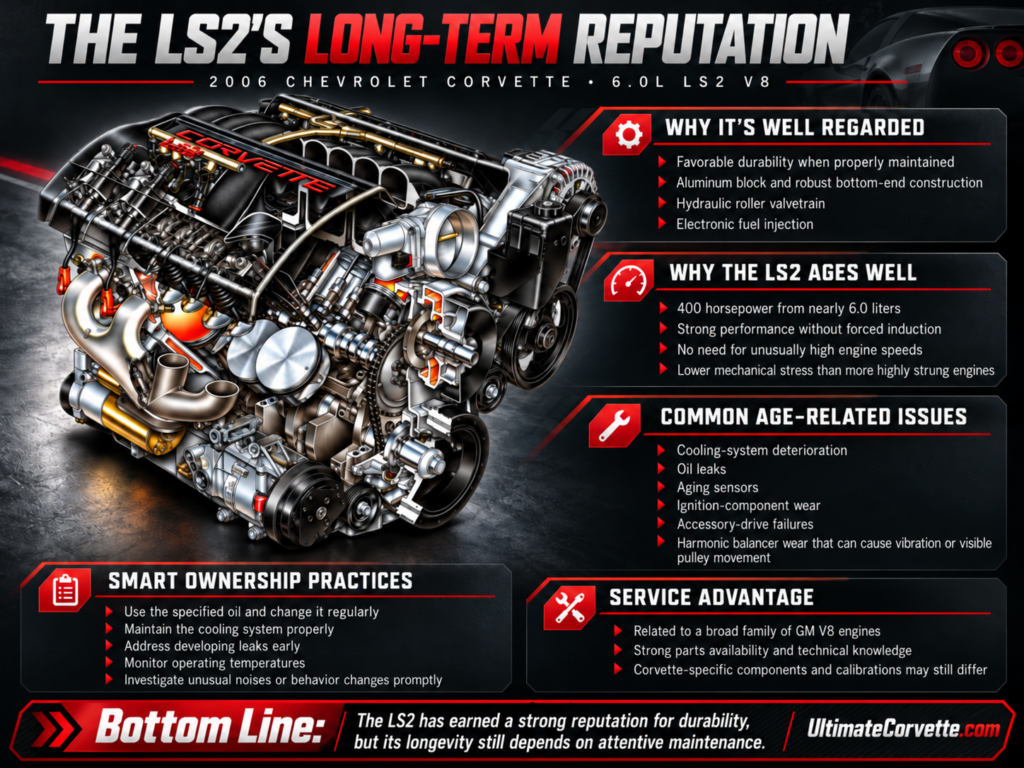
The standard Corvette’s LS2 engine has developed a generally favorable reputation for durability when properly maintained. Its aluminum block, robust bottom-end construction, hydraulic roller valvetrain, and electronic fuel-injection system reflect the accumulated development experience of General Motors’ small-block engine family.
The LS2’s relatively modest specific output is an important consideration. Although 400 horsepower represented substantial performance in 2006, the engine produced that output from nearly six liters of displacement. It did not depend on unusually high engine speeds or forced induction to achieve its performance objectives, helping reduce some of the mechanical demands associated with more highly stressed engines.
This does not mean the LS2 is immune to problems. Cooling-system deterioration, oil leaks, aging sensors, ignition components, and accessory-drive failures can occur as mileage and age accumulate. Some owners also encounter issues involving the harmonic balancer, whose deterioration can produce vibration or visible pulley movement.
Regular oil changes using the specified lubricant, proper cooling-system maintenance, and attention to developing leaks remain important. Owners should also monitor operating temperatures and investigate unusual noises or changes in engine behavior rather than assuming that the LS2’s reputation for durability makes preventative maintenance unnecessary.
The LS2’s widespread relationship to other General Motors V8 engines can provide advantages in parts availability and technical knowledge. Although Corvette-specific components and calibrations may differ, many service professionals are familiar with the broader engine architecture.
The LS7 and the Cylinder-Head Question
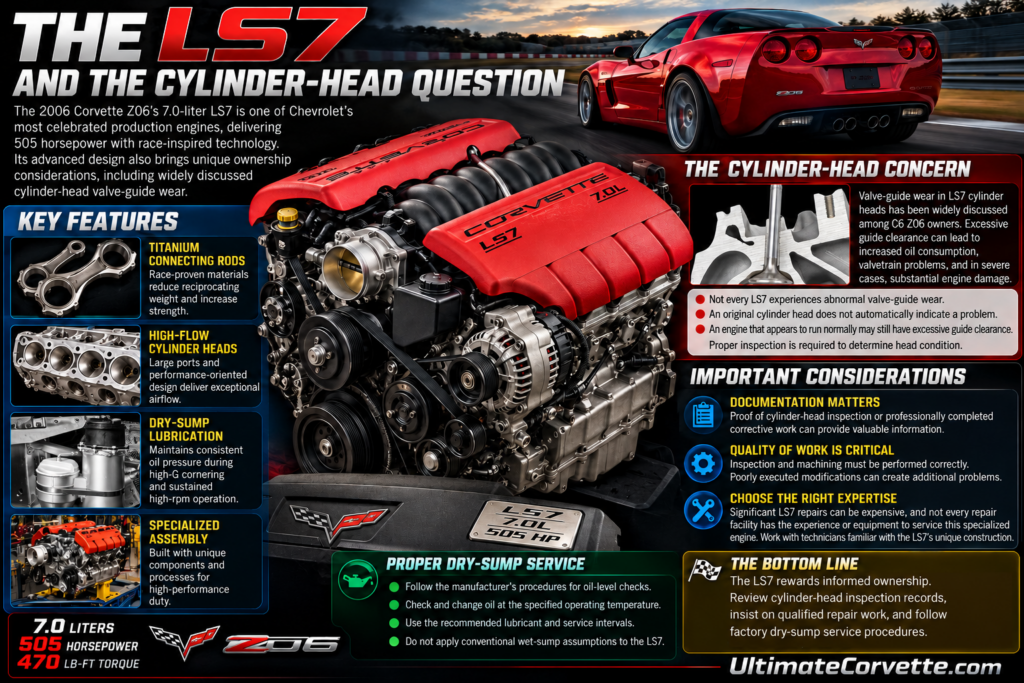
The 2006 Chevrolet Corvette Z06’s 7.0-liter LS7 V8 was an extraordinary achievement in performance engineering, but its specialized construction also introduced important considerations for long-term ownership. This detailed illustration highlights several of the engine’s defining features, including its titanium connecting rods, high-flow cylinder heads, specialized assembly, and dry-sump lubrication system. Particular attention is given to the widely discussed issue of excessive valve-guide wear, a condition that can develop in some LS7 cylinder heads and potentially lead to serious engine damage if left unaddressed. Although not every LS7 experiences abnormal wear, professional inspection and properly documented corrective work can provide valuable reassurance to owners and prospective buyers. The graphic also highlights the importance of following Chevrolet’s specific dry-sump servicing procedures and relying on technicians familiar with the LS7’s unique construction. For enthusiasts considering a 2006 Z06, understanding these considerations is an essential part of preserving one of Chevrolet’s most remarkable naturally aspirated engines. (Image credit: UltimateCorvette.com)
The LS7 presents a different ownership proposition. Its titanium connecting rods, high-flow cylinder heads, dry-sump lubrication system, and specialized assembly make it one of Chevrolet’s most celebrated production engines, but these characteristics also introduce considerations that prospective owners should understand.
One of the most widely discussed concerns involves LS7 cylinder-head valve-guide wear. Reports of excessive guide clearance and related valvetrain problems have become an important subject among C6 Z06 owners, particularly because severe failures can result in substantial engine damage.
The issue requires careful treatment. Not every LS7 engine experiences abnormal valve-guide wear, and the presence of an original cylinder head does not establish that an engine is defective. Conversely, an engine that appears to operate normally cannot be assumed to have ideal guide clearances without appropriate inspection.
For prospective buyers, documentation of cylinder-head inspection or professionally completed corrective work can provide valuable information. However, the quality of the inspection and any subsequent machining is essential. Poorly performed modifications can introduce problems of their own, and replacement components should be selected according to the engine’s intended operating conditions.
The LS7’s dry-sump lubrication system also requires proper service procedures. Oil-level checks and lubricant changes must follow the manufacturer’s instructions, including the specified operating-temperature and measurement conditions. Applying conventional wet-sump assumptions to the LS7 can produce inaccurate readings and inappropriate servicing decisions.
Because the LS7 is a specialized engine, significant repairs can be expensive. Its components and assembly requirements differ from those of a conventional LS2, and not every repair facility possesses the experience necessary to service it correctly. Owners contemplating major engine work should seek technicians familiar with the LS7’s particular construction.
The Six-Speed Manual and 6L80 Automatic
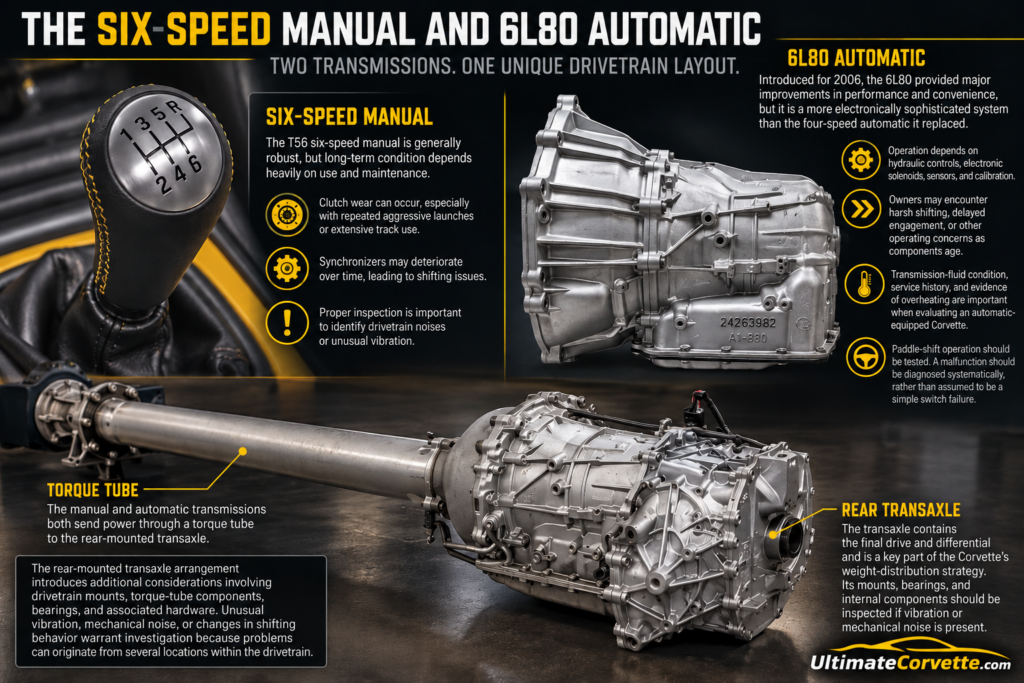
Illustration Note: The components shown are representative visualizations intended to illustrate the Corvette’s drivetrain architecture and major mechanical systems. While based on actual components, these images are illustrative rather than exact engineering reproductions and may differ from production hardware in certain details.
The Corvette’s transmissions are generally robust, but their long-term condition depends heavily on use and maintenance. Manual-transmission cars may exhibit clutch wear, synchronizer deterioration, or shifting problems, particularly if they have experienced repeated aggressive launches or extensive track use.
The rear-mounted transaxle arrangement introduces additional considerations involving drivetrain mounts, torque-tube components, bearings, and associated hardware. Unusual vibration, mechanical noise, or changes in shifting behavior warrant investigation because problems can originate from several locations within the drivetrain.
The 6L80 automatic transmission introduced for 2006 provided substantial improvements in performance and convenience, but it also represented a more electronically sophisticated system than the four-speed automatic it replaced. Its operation depends on hydraulic controls, electronic solenoids, sensors, and transmission calibration.
Owners may encounter harsh shifting, delayed engagement, or other operating concerns as components age. Proper diagnosis is essential because similar symptoms can result from different mechanical or electronic causes. Transmission-fluid condition, service history, and evidence of overheating are important considerations when evaluating an automatic-equipped Corvette.
The 6L80’s paddle-shift controls should also be tested during a pre-purchase inspection. Their operation depends on the relationship between the steering-wheel controls, transmission electronics, and vehicle operating conditions. A malfunction should be diagnosed systematically rather than assumed to be a simple switch failure.
The Removable Roof Recall
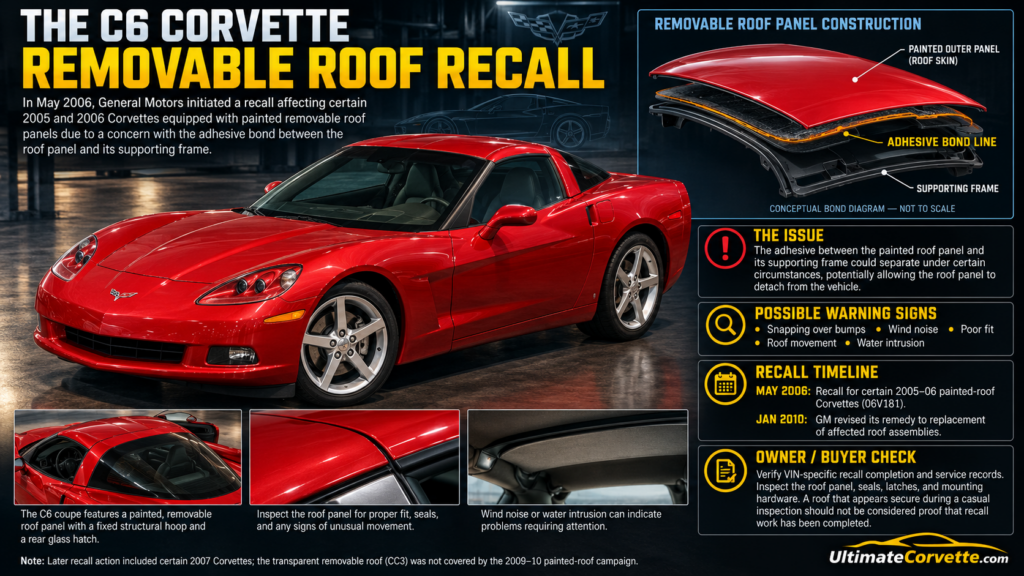
One of the most significant safety-related issues affecting certain early C6 Corvettes involved the removable roof panel. In May 2006, General Motors initiated a recall affecting certain 2005 and 2006 Corvettes equipped with painted removable roof panels.
The concern involved the adhesive bond between the roof panel and its supporting frame. Under certain circumstances, the adhesive could separate, potentially allowing the roof panel to detach from the vehicle. A complete separation could create a hazard for other motorists and result in injury or property damage.
The recall required dealers to inspect affected vehicles and perform the prescribed remedy, which could involve additional adhesive foam or replacement of the roof assembly.
For current owners and prospective buyers, recall completion should be verified through the vehicle’s identification number and available service records. A roof that appears secure during a casual inspection should not be treated as proof that all applicable recall work has been completed.
Because the Corvette’s removable roof is a distinctive feature, owners should also inspect its seals, latches, and mounting hardware. Wind noise, water intrusion, or unusual movement can indicate problems requiring attention.
Electronic Door Releases and Battery Condition
The C6’s electronic door-release system represented a contemporary convenience feature when the automobile was introduced, but it also created an ownership consideration that differs from conventional mechanical door handles.
The exterior and interior release controls depend on electrical power to operate normally. If the battery becomes discharged or an electrical fault occurs, the standard release buttons may not function.
Chevrolet incorporated mechanical emergency-release provisions to address this possibility. Owners should understand their locations and operation before an emergency occurs, and prospective buyers should confirm that the releases remain accessible and functional.
Battery condition is particularly important because a weak or failing battery can produce symptoms involving multiple electronic systems. The Corvette’s keyless access, instrument cluster, door releases, and control modules all depend on stable electrical power.
Vehicles that are driven infrequently may benefit from appropriate battery-maintenance practices, provided the equipment and procedures are compatible with the vehicle. Owners should also inspect battery connections and investigate unexplained electrical behavior before replacing individual electronic components.
Suspension, Steering, and Brake Maintenance
The C6’s suspension architecture is fundamentally durable, but its performance depends on components that deteriorate with age and use. Control-arm bushings, ball joints, shock absorbers, wheel bearings, and anti-roll-bar links can develop wear that affects steering precision and ride quality.
Because the Corvette is capable of substantial cornering forces, even relatively modest deterioration can influence vehicle behavior. A car with worn bushings or incorrect alignment may feel nervous, exhibit uneven tire wear, or respond inconsistently during braking and cornering.
Magnetic Selective Ride Control introduces additional considerations for equipped vehicles. The electronically controlled dampers are more specialized than conventional shock absorbers, and replacement costs can be higher. Faults may involve the dampers themselves, wiring, sensors, or control systems.
The Z06’s suspension and braking components also require attention to their specialized characteristics. Its wider tires, aggressive alignment, and substantial braking capacity can produce greater operating costs than those associated with the standard Corvette.
Brake-fluid maintenance is particularly important for vehicles used on track. Repeated high-temperature operation can degrade fluid performance, and the appropriate service interval may be considerably shorter than that required for ordinary road use.
Owners should also inspect brake rotors for cracking, unusual wear, or other damage, particularly when evaluating a vehicle with a history of aggressive driving.
Tires and the Importance of Correct Fitment
Tires are among the most important components influencing the Corvette’s performance and safety. The C6’s chassis was developed around specific tire dimensions and characteristics, and inappropriate replacements can alter handling, steering response, traction-control behavior, and braking performance.
The standard Corvette employed run-flat tires, while the Z06 used specialized high-performance tires suited to its greater capabilities. Replacement tires should be selected with attention to size, load rating, speed rating, and intended use.
Age is also important. A Corvette that has accumulated relatively little mileage may still be equipped with tires that are too old for safe high-performance use. Rubber compounds deteriorate over time, and a tire’s apparent tread depth does not establish that it remains suitable for demanding driving.
Prospective buyers should inspect tire date codes and evaluate the condition of the sidewalls, tread, and surrounding wheel assemblies. Evidence of uneven wear may indicate alignment problems, worn suspension components, or previous damage.
Body, Paint, and Interior Aging
The Corvette’s composite body panels resist conventional rust corrosion, but they are not immune to damage or deterioration. Paint defects, panel cracks, previous collision repairs, and improper refinishing can affect appearance and value.
Because composite repairs require specialized techniques, prospective buyers should inspect body panels carefully for inconsistent surface finish, unusual gaps, and evidence of previous repairs. The relationship between the body and underlying frame is particularly important because significant structural damage can compromise the automobile’s handling and safety.
Interior components also reflect the passage of time. Seat upholstery, bolsters, trim coatings, switches, and electronic displays may show wear, particularly in vehicles exposed to substantial sunlight or high temperatures.
The C6’s seats were already a subject of contemporary criticism, and worn cushions or damaged bolsters can further reduce comfort and support. Replacement or restoration should preserve the correct relationship between the seat structure, occupant-restraint systems, and associated electronics.
Evaluating a Surviving 2006 Corvette
A thorough pre-purchase inspection should begin with the vehicle’s identity and history. The VIN, factory equipment codes, service records, accident history, and evidence of modifications can help establish whether the automobile remains consistent with its original configuration.
For a standard coupe or convertible, particular attention should be devoted to engine condition, transmission operation, suspension wear, electronic systems, and the condition of the removable or folding roof.
For a Z06, the inspection should extend to the LS7’s cylinder heads, lubrication system, clutch, drivetrain, specialized suspension, and evidence of previous track use. Track use does not automatically make a Corvette undesirable, but it increases the importance of maintenance documentation and careful mechanical evaluation.
Modifications require equally careful consideration. The LS engine family responds well to performance upgrades, and many C6 Corvettes have received changes involving intake systems, exhaust components, engine calibration, camshafts, suspension equipment, or forced induction.
Some modifications may improve performance when properly engineered and installed. Others can compromise reliability, emissions compliance, drivability, or long-term value. Buyers should evaluate modifications according to their quality, documentation, and compatibility with the vehicle’s intended use.
Originality can be particularly important for collectors seeking historically representative examples. A well-preserved 2006 Z06 retaining its original LS7, factory bodywork, and correct equipment offers a direct connection to the automobile as Chevrolet originally developed it.
The Ownership Experience Today
Despite the considerations associated with age, the 2006 Corvette remains an exceptionally compelling automobile. Its performance continues to exceed what most drivers can safely explore on public roads, while its mechanical character provides an experience that differs from many modern performance cars.
The standard LS2-powered coupe and convertible offer a particularly attractive combination of performance, comfort, and relative simplicity. Their naturally aspirated engines, available manual transmissions, and practical accommodations make them suitable for enthusiasts who want to drive their Corvettes regularly.
The Z06 occupies a more specialized position. Its LS7 engine, lightweight construction, and extraordinary capabilities make it particularly appealing to drivers who value mechanical engagement and high-performance engineering. However, its specialized components and potential repair costs require a greater commitment to informed ownership.
The strongest surviving examples are those that have been maintained with an appreciation for their engineering. Regular servicing, appropriate replacement parts, careful inspections, and attention to developing problems can help preserve the qualities that made the 2006 Corvette remarkable when new.
For enthusiasts willing to provide that care, the automobile continues to offer an experience that remains distinctive even in an era of substantially more powerful and technologically sophisticated sports cars.
The 2006 Corvette as a Modern Collector Car
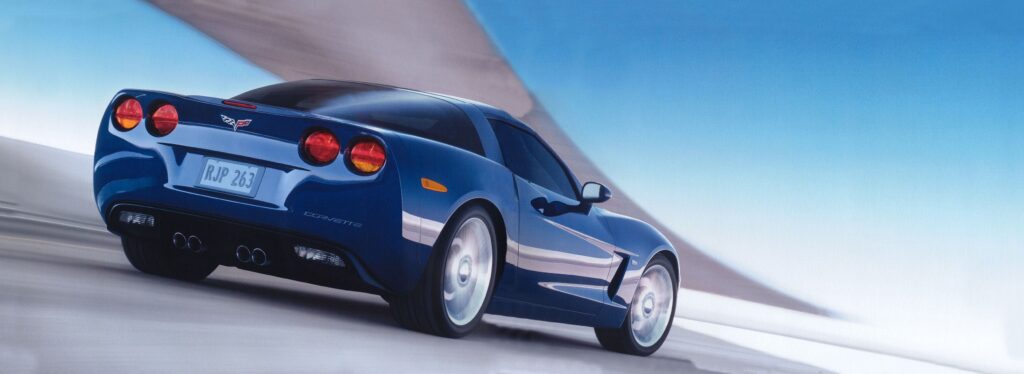
As the 2006 Corvette approaches its third decade, its historical significance is becoming increasingly apparent. The automobile represents an important transition between the comparatively straightforward performance cars of the late twentieth century and the increasingly sophisticated machines that would follow. Its engineering incorporated advanced materials, electronic controls, and highly developed powertrains, yet it retained a level of mechanical directness that has become less common in modern high-performance automobiles.
For collectors, this combination creates several distinct areas of interest. The standard LS2-powered coupe and convertible offer an accessible entry into sixth-generation Corvette ownership, while the Z06 represents one of the most historically significant performance models of the era.
The Appeal of the Standard Coupe and Convertible

While the Z06 understandably attracted considerable attention for its extraordinary performance capabilities, the standard 2006 Corvette coupe and convertible offered their own compelling reasons for ownership. Both models delivered an impressive combination of performance, comfort, and everyday usability, making them particularly attractive to enthusiasts who wanted a Corvette they could drive and enjoy regularly rather than preserve exclusively for display.
The 6.0-liter LS2 V8 provided more than enough power to satisfy most performance enthusiasts without the additional complexity and specialized components associated with the Z06. Its broad torque delivery, proven small-block architecture, and relatively straightforward maintenance requirements contributed to the standard Corvette’s appeal as a long-term ownership proposition. Buyers could select the traditional six-speed manual transmission for a more engaging, driver-focused experience or opt for the new six-speed automatic introduced for 2006, which offered improved responsiveness and convenience without significantly compromising performance.
The coupe was particularly versatile. Its removable roof panel allowed owners to experience much of the freedom associated with open-air driving while retaining the structural characteristics, weather protection, and practicality of an enclosed sports car. With the roof secured in place, the coupe remained a comfortable and capable grand tourer, while its generous rear luggage compartment provided considerably more cargo capacity than many competing performance cars. These qualities made it equally suitable for weekend drives, extended road trips, and ordinary daily use.
The convertible offered a different, but equally appealing, ownership experience. With its folding soft top, distinctive proportions, and available power-operated roof, the open-air Corvette emphasized the sensory pleasures of driving. The sound of the LS2 V8, the experience of traveling with the top lowered, and the car’s comfortable interior combined to create a more traditional grand-touring character. For buyers who valued the experience of driving as much as outright performance, the convertible offered an especially attractive interpretation of the C6 platform.
From a collector’s perspective, both body styles have qualities that can influence their long-term desirability. Originality, overall condition, documented ownership history, and factory-installed equipment are particularly important considerations. Examples retaining their original drivetrains, factory-correct bodywork, interior components, and mechanical equipment provide a more authentic representation of the 2006 Corvette as Chevrolet originally produced it. Supporting documentation, including maintenance records and original sales paperwork, can further strengthen a car’s appeal by establishing its history and demonstrating responsible ownership.
Unlike the comparatively specialized Z06, however, the standard Corvette was produced in substantial numbers. Consequently, rarity alone is unlikely to be the primary factor determining the long-term collectibility of most 2006 coupes and convertibles. Instead, the strongest examples will generally be those combining exceptional preservation, desirable factory specifications, comprehensive maintenance histories, and minimal evidence of improper modification or neglect.
Ultimately, the appeal of the standard 2006 Corvette lies in its accessibility and versatility. It remains a genuinely capable performance car that can be appreciated without the expectation that every mile driven diminishes its significance. For enthusiasts seeking an enjoyable modern Corvette with strong performance credentials, recognizable styling, and the potential for long-term collector interest, the 2006 coupe and convertible represent compelling choices within the sixth-generation lineup.
The First-Year C6 Z06
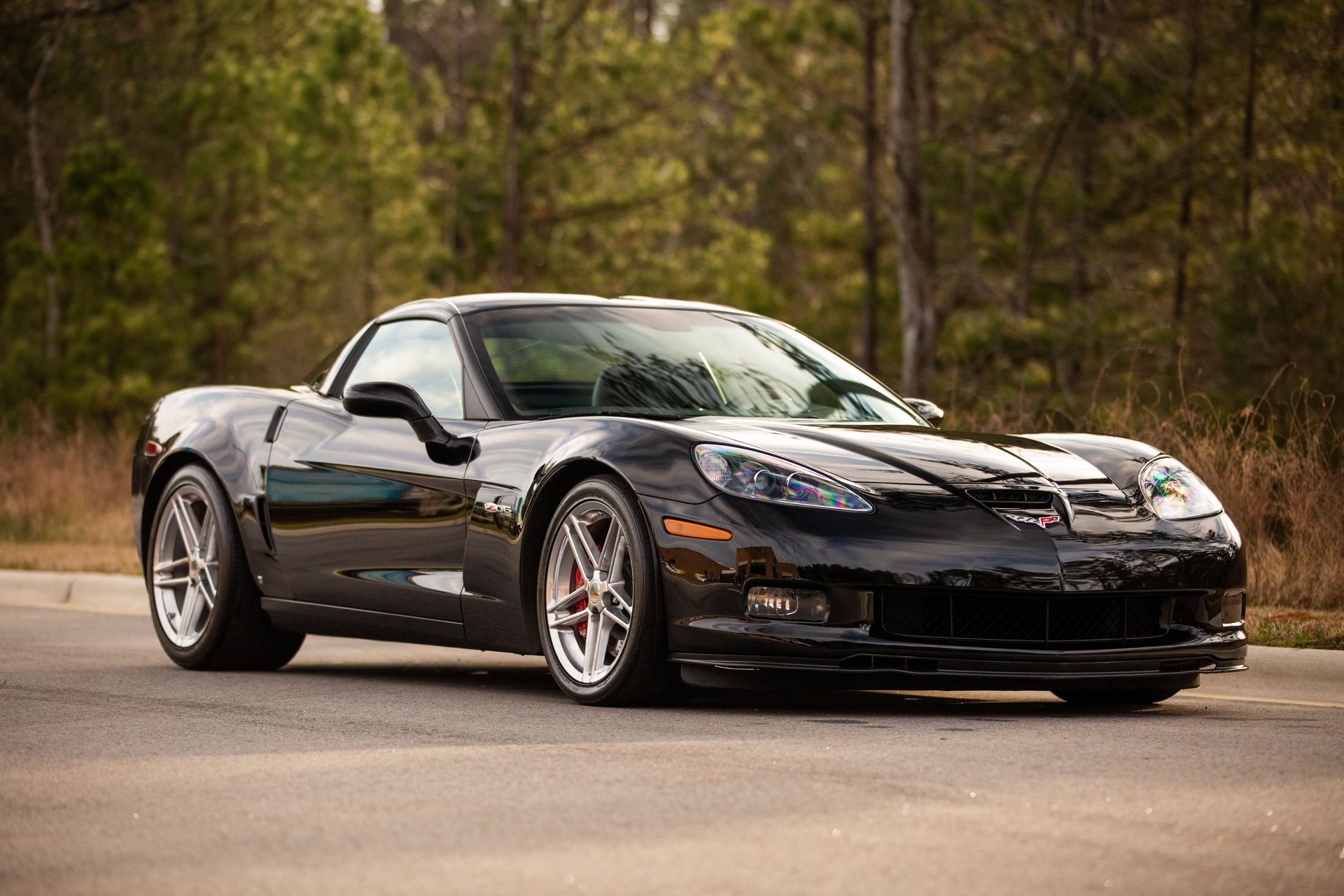
The 2006 Z06 occupies a more specialized position in Corvette collecting. As the first model year of the C6 Z06, it introduced the LS7 engine, aluminum frame, and numerous technical features that would define one of Chevrolet’s most celebrated performance automobiles.
Its 427-cubic-inch displacement provides an immediate connection to Corvette history, while its naturally aspirated 505-horsepower output represents a significant engineering achievement.
The LS7’s hand-built construction adds another dimension to its appeal. The engine’s specialized components and assembly process distinguish it from the standard LS2, creating a direct connection to the engineering and manufacturing decisions that shaped the Z06 program.
The Z06’s fixed-roof configuration, widened bodywork, and distinctive aerodynamic features also make it readily identifiable. Its appearance communicates the automobile’s specialized purpose without abandoning the fundamental design language of the C6.
For collectors, the first-year designation is significant, but it should be considered alongside condition and mechanical integrity. A poorly maintained Z06 may require substantial investment, particularly if its engine, drivetrain, or specialized suspension components need attention.
Documentation of the original engine, factory equipment, service history, and any cylinder-head work can therefore be especially valuable.
Originality Versus Modification
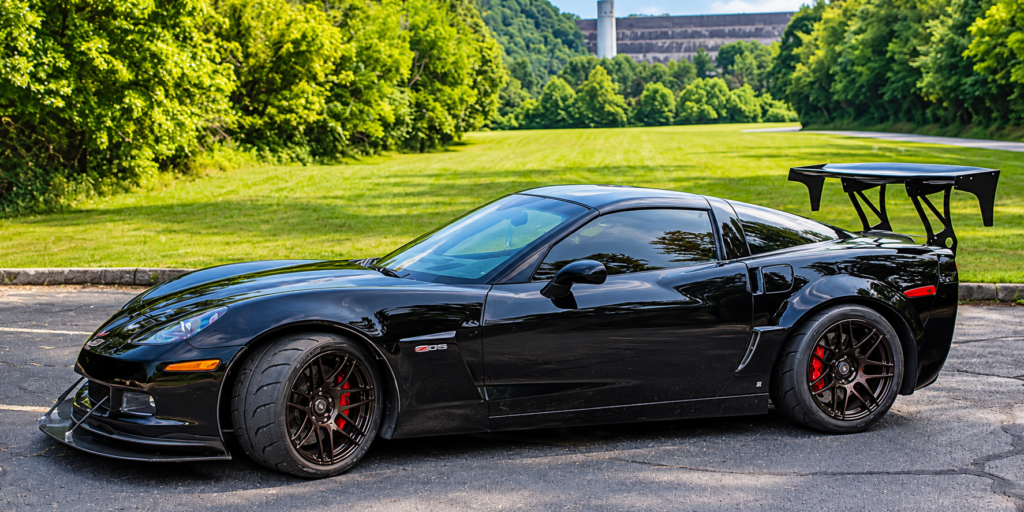
The C6 Corvette has become a popular platform for performance modifications. Its LS-series engines respond well to upgrades, and the availability of aftermarket components has encouraged owners to pursue substantial increases in horsepower and handling capability.
These modifications can produce impressive results, but they complicate the automobile’s position as a historical artifact.
A heavily modified Corvette may be exceptionally capable, yet it no longer represents precisely what Chevrolet engineered and sold in 2006. For collectors interested in preserving the automobile’s original historical character, factory specifications and correct components carry particular importance.
This does not mean every modification diminishes desirability. Carefully selected changes intended to improve reliability or address known weaknesses may be viewed differently from alterations that fundamentally change the automobile’s character.
The quality of the work, its documentation, and its reversibility are important considerations. A professionally maintained Z06 with properly documented mechanical improvements may be more desirable to some buyers than an entirely original example with unresolved problems.
The appropriate balance depends on the owner’s priorities. Collectors seeking historical authenticity may prefer originality, while enthusiasts planning regular driving or track use may place greater emphasis on mechanical condition and appropriate reliability improvements.
The Importance of Documentation
As the 2006 Corvette ages, documentation becomes increasingly valuable. Original window stickers, build records, owner manuals, service receipts, and other historical materials help establish a vehicle’s identity and provenance.
For the Z06, documentation associated with the LS7 engine can be particularly interesting. The engine-builder identification provides a connection to the specialized assembly process, while records of maintenance and inspection can help establish the engine’s history.
Factory equipment information is also important because the 2006 Corvette was available with numerous options and packages. Confirming a vehicle’s original configuration can help distinguish factory equipment from later modifications.
The National Corvette Museum and established Corvette registries provide resources that can assist enthusiasts in researching production information and documenting individual vehicles.
A Corvette That Still Invites Driving
One of the most appealing characteristics of the 2006 Corvette is that its historical significance does not depend on keeping it stationary.
The standard coupe and convertible remain capable grand-touring automobiles, offering comfortable highway performance and substantial acceleration. Their mechanical architecture is familiar to many service professionals, and their driving characteristics remain accessible to enthusiasts accustomed to modern vehicles.
The Z06 provides a more demanding but exceptionally rewarding experience. Its naturally aspirated LS7, manual transmission, and relatively low weight create a direct relationship between driver inputs and vehicle response.
Unlike many contemporary performance automobiles, which employ increasingly complex electronic systems to manage enormous power outputs, the 2006 Z06 places substantial responsibility on the driver. Its capabilities are extraordinary, but extracting them requires judgment, mechanical sympathy, and skill.
That character has become an important part of its appeal. The automobile represents a period when advanced engineering and direct driver involvement existed in a particularly compelling balance.
The Question of Future Value
Predicting the future value of any collectible automobile involves considerable uncertainty. Market conditions, demographic changes, maintenance costs, production volume, and shifting enthusiast preferences can all influence demand.
The 2006 Z06 possesses several characteristics traditionally associated with collectible performance cars: a historically significant engine, specialized construction, strong contemporary performance, recognizable styling, and a direct connection to a successful racing program.
However, its production volume was considerably greater than that of many limited-production exotic automobiles, and Chevrolet continued producing related Z06 models for several subsequent years. Consequently, its long-term value will likely depend heavily on condition, originality, mileage, documentation, and the broader market for analog performance cars.
The standard coupe and convertible occupy a different position. Their relatively high production numbers may limit rarity-driven appreciation, but their performance and usability can sustain demand among enthusiasts seeking an affordable and engaging sports car.
In either case, the strongest reason to own a 2006 Corvette remains the experience it provides. Its historical importance is meaningful, but the automobile was developed to be driven, and its engineering is best appreciated through direct engagement with the road.
Why the 2006 Corvette Still Matters Today
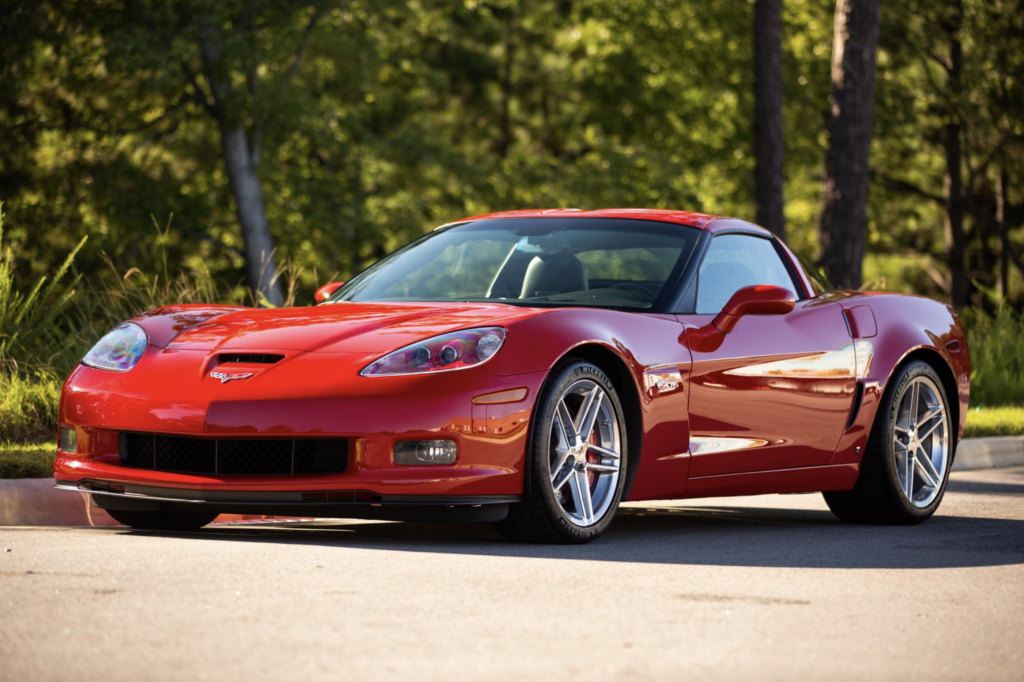
There is a tendency to measure the significance of a performance automobile by comparing its specifications with those of the machines that followed it. Horsepower increases, acceleration times fall, braking systems improve, and technologies that once seemed extraordinary eventually become commonplace. Viewed exclusively through that lens, the 2006 Corvette might appear to be another milestone along an uninterrupted path of automotive progress. Yet such a comparison overlooks what made the automobile important when it was introduced and why its achievements continue to resonate nearly two decades later.
The 2006 Corvette arrived at a moment when General Motors was confronting some of the most difficult challenges in its history. The corporation faced financial uncertainty, growing international competition, and fundamental questions about its future. Against that backdrop, Chevrolet produced an automobile that demonstrated the extraordinary capabilities of its engineers, designers, manufacturing personnel, and racing organization. The Corvette was proof that American automotive engineering could compete at the highest levels, even when the company responsible for it was struggling elsewhere.
The standard coupe and convertible embodied a philosophy that had matured over successive generations. They offered substantial performance without abandoning the qualities that made the Corvette accessible to a broad community of enthusiasts. Their naturally aspirated V8 engines, balanced chassis, comfortable accommodations, and practical luggage capacity created automobiles capable of delivering exceptional performance while remaining genuinely enjoyable to own. They were not machines intended exclusively for racetracks or occasional displays. They were sports cars designed to be driven.
The Z06 carried that philosophy into territory few would have imagined possible only a decade earlier. Its 505-horsepower LS7, lightweight aluminum frame, specialized suspension, and extraordinary braking capabilities established a level of performance that challenged some of the world’s most expensive sports cars. Yet its achievement was not simply that it could accelerate to 60 mph in less than four seconds or approach 200 mph. Its significance lay in the engineering discipline required to make those capabilities available in a production automobile that remained recognizably and unmistakably a Corvette.
The LS7 deserves particular recognition because it represented the culmination of an engineering tradition stretching back to Chevrolet’s original small-block V8. Its 427-cubic-inch displacement evoked the legendary big-block Corvettes of the 1960s, but its aluminum construction, titanium components, sophisticated cylinder heads, and dry-sump lubrication system demonstrated how dramatically the technology had evolved. It was an engine that honored the Corvette’s past while proving that the traditional pushrod V8 still possessed extraordinary development potential.
The automobile’s connection to Corvette Racing added another dimension to its historical importance. The C6.R’s success at Le Mans and in the American Le Mans Series demonstrated that Chevrolet’s performance capabilities extended beyond the showroom. Racing victories provided international credibility, while the exchange of technical knowledge helped strengthen the broader engineering organization. The relationship between the production and competition programs reinforced the idea that the Corvette was not simply a marketing exercise built around impressive specifications, but the product of a sustained commitment to performance.
Equally important were the people who made the automobile possible. Dave Hill, Tom Wallace, Tadge Juechter, Tom Peters, the engineers responsible for the LS2 and LS7, the specialists at Pratt & Miller, and the employees at Bowling Green and the Performance Build Center all contributed to an achievement that extended far beyond any individual component. Their work reflected decades of accumulated knowledge and a shared belief that the Corvette could continue improving without abandoning the principles that had made it successful.
The 2006 model year also helped establish the direction of the Corvette’s future. The aluminum-frame Z06 demonstrated the advantages of advanced structural materials, the LS7 established new expectations for naturally aspirated performance, and the C6 architecture provided the foundation for increasingly ambitious models. The ZR1, Grand Sport, and subsequent generations would build upon lessons learned during this period, extending the Corvette’s capabilities while preserving its fundamental identity.
Today, the 2006 Corvette occupies a distinctive position in the automobile’s history. It belongs to an era when electronic technology had become sophisticated enough to enhance performance and safety, but had not yet transformed the driving experience into one dominated by automated systems. Its hydraulic steering, naturally aspirated engines, available manual transmissions, and direct mechanical character provide an experience that feels increasingly different from that of modern performance cars.
For enthusiasts, that experience is an important part of its enduring appeal. The standard Corvette remains a remarkably capable sports car, while the Z06 offers a level of performance that continues to command respect. Neither automobile requires an appreciation of its historical significance to be enjoyable, but understanding the circumstances surrounding its development makes the experience richer.

The 2006 Corvette matters because it demonstrated what could be achieved when an engineering organization refused to accept the limitations traditionally associated with its products. Chevrolet took an automobile that had already earned considerable respect and elevated it into a category previously occupied by far more expensive and exclusive machines. It accomplished that feat without abandoning the compact pushrod V8, the front-engine layout, or the fundamental belief that extraordinary performance should remain attainable.
Perhaps most importantly, the 2006 Corvette represents a moment when the ambitions that had sustained America’s sports car for more than half a century were fully realized. The engineers who developed the original Corvette could scarcely have imagined a production descendant capable of exceeding 190 mph, generating more than 500 horsepower, and competing convincingly against the finest sports cars in the world. Yet the automobile that emerged in 2006 remained connected to their original vision: a distinctly American sports car built around performance, innovation, and the pleasure of driving.
That is why the 2006 Corvette deserves to be remembered as more than another successful model year. It marked the arrival of a Corvette that no longer needed to justify its place among the world’s great sports cars. Through the combined achievements of its production models, the extraordinary Z06, and the internationally successful C6.R, Chevrolet had demonstrated that America’s sports car belonged in that company on its own merits.
And for the enthusiasts who continue to preserve, drive, and celebrate these automobiles, the 2006 Corvette remains a powerful reminder that the greatest achievements in automotive history are not always defined by the most advanced technology or the highest price. Sometimes they emerge from a familiar idea, pursued with extraordinary determination, until it becomes something the world can no longer overlook.
Sources and Historical References
The following references support the historical, technical, production, and ownership material presented throughout this overview. Factory documentation and original production records should take precedence when reconciling discrepancies among secondary sources.
- General Motors / Chevrolet: 2006 Corvette model specifications, original product information, owner’s manual, and contemporary technical materials.
- National Corvette Museum: 2006 Model Year Corvette Production and Option Statistics — production totals, model breakdowns, exterior and interior colors, and equipment penetration.
- Corvette Action Center: 2006 Corvette Production Numbers — model-year production and option-code information.
- Corvette Racing / General Motors Motorsport: Contemporary C6.R race reports, American Le Mans Series championship records, and 2006 24 Hours of Le Mans results.
- Car and Driver, Road & Track, and Motor Trend: Contemporary road tests and comparative evaluations of the 2006 Corvette coupe, convertible, and Z06.
- National Highway Traffic Safety Administration: Safety recall documentation and manufacturer communications concerning affected 2006 Corvettes.
- Cars.com recall archive: 2006 Chevrolet Corvette Recall Records — summaries of safety recalls, including the removable-roof-panel adhesive issue.
- Corvette engineering and historical publications: Technical discussions and interviews involving Dave Hill, Tom Wallace, Tadge Juechter, Tom Peters, and the engineering organizations responsible for the C6.