25 Years Later — Never Forget
This is not the kind of story we normally publish at Ultimate Corvette.
There will be no celebration of horsepower today, no discussion of engineering milestones, racing victories, rare options, production numbers or any of the extraordinary people who helped transform the Corvette into America’s sports car. There are other days for those stories, and there will be many more of them to come.
Today is September 11, 2026.
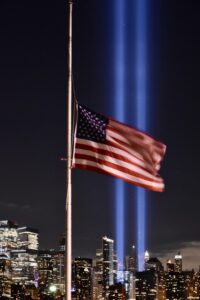
Twenty-five years have passed since a beautiful late-summer Tuesday morning became one of the darkest days in American history. For those of us old enough to remember September 11, 2001, the memories remain extraordinarily vivid. We remember where we were when we first heard that an airplane had struck the World Trade Center. We remember the confusion when the second aircraft appeared, and the terrible realization that what we were witnessing was not an accident. We remember watching the towers burn, watching people flee Lower Manhattan and, ultimately, watching buildings that had defined the New York skyline collapse before our eyes.
We remember the Pentagon. We remember the passengers and crew of United Airlines Flight 93, who learned what was happening elsewhere and fought back against their hijackers, preventing that aircraft from reaching its intended target before it crashed into a field near Shanksville, Pennsylvania. Most of all, we remember the people: those trying desperately to escape and those moving in the opposite direction because somebody inside needed their help.
The terrorist attacks of September 11 killed 2,977 people from more than 90 nations. Among them were 343 members of the New York City Fire Department, along with members of the New York Police Department, Port Authority Police Department and other emergency services who entered buildings thousands of others were desperately trying to escape.
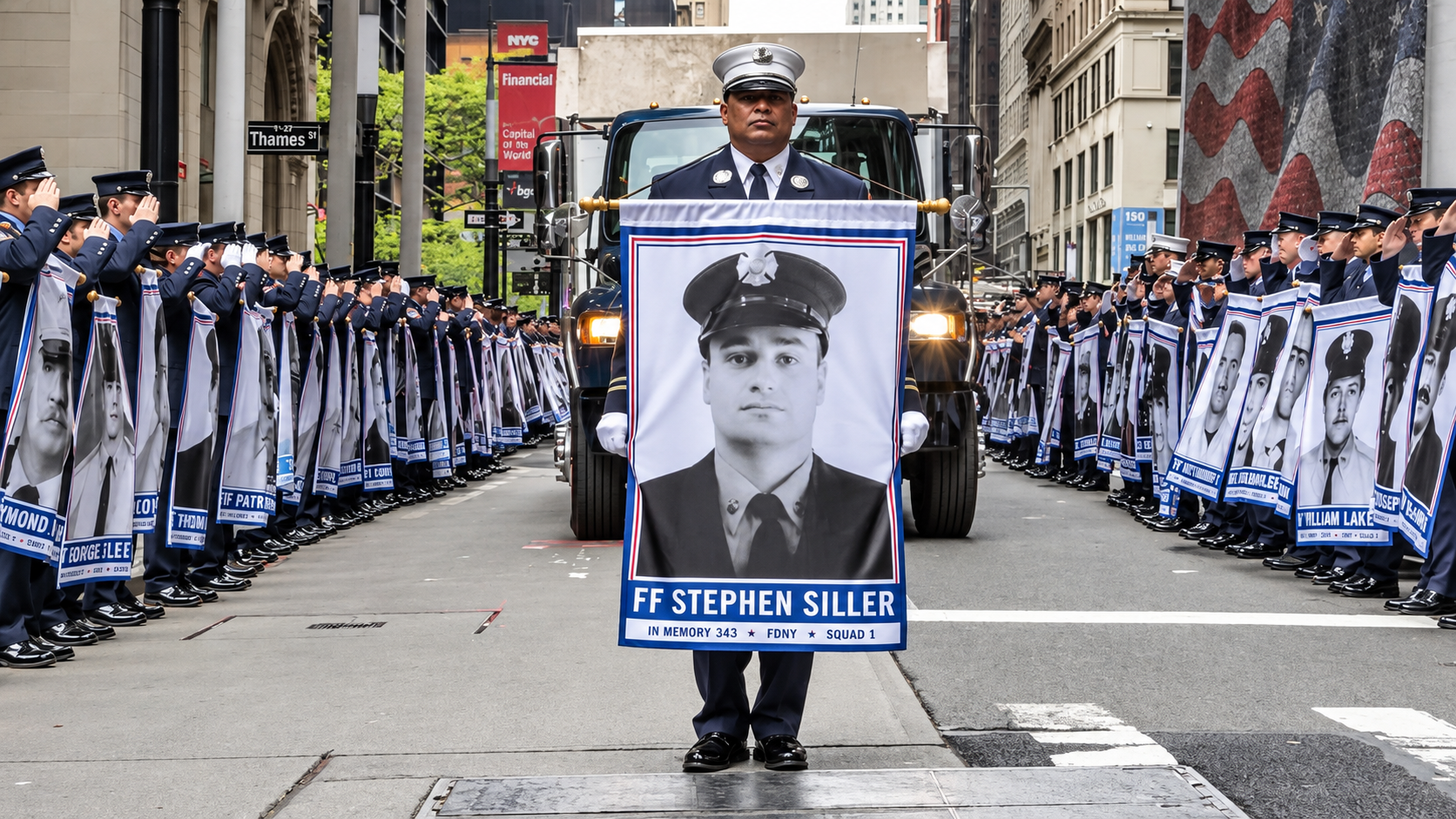
One of those firefighters was a 34-year-old member of FDNY Squad 1 in Brooklyn named Stephen Gerard Siller.
His story would eventually intersect with the Corvette in a way nobody could possibly have imagined on the morning of September 11. Before we get there, however, we need to understand the man whose final journey would inspire one of America’s most recognizable charitable organizations.
Stephen Siller
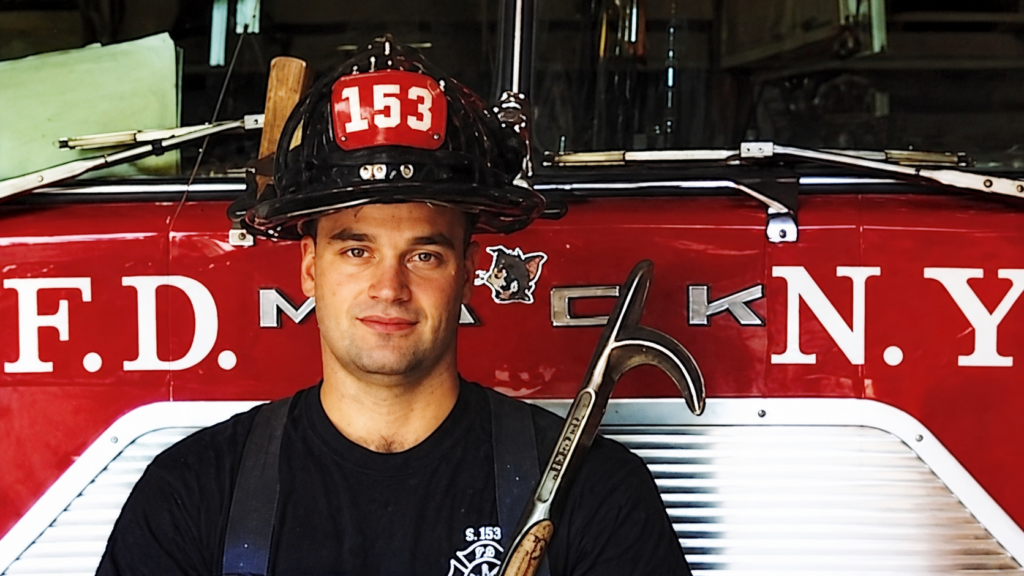
Stephen Gerard Siller (1966–2001) was a devoted husband, father of five, brother and FDNY firefighter assigned to Brooklyn’s Squad 1. Orphaned as a child and raised largely by his older siblings, Stephen grew into a man deeply committed to family, faith and service. Those closest to him remembered someone who embraced life fully and lived by a simple principle passed down through his family: while we have time, let us do good.
Stephen Siller was the youngest of seven children born to Mae and George Siller, and he became familiar with loss at an age when most children should still feel protected from it. His father died when Stephen was eight years old. His mother died roughly a year and a half later, leaving Stephen to be raised with the help of his older siblings.
Family became one of the defining elements of his life. Stephen grew up, married his wife Sally and became the father of five children. He ultimately joined the New York City Fire Department, finding a profession centered on many of the same values that had helped shape him from childhood: service, loyalty, responsibility and the willingness to show up when others needed help.
On the morning of September 11, Stephen had finished his night tour with FDNY Squad 1. He was off duty and planning to meet three of his brothers for a round of golf when word came over his scanner that an aircraft had struck the North Tower of the World Trade Center.
Whatever plans existed for the rest of his day ended at that moment.
Stephen called Sally and asked her to tell his brothers that he would catch up with them later. He returned to Squad 1, collected his firefighting equipment and drove toward Lower Manhattan, where the scale of what was happening was still only beginning to become clear.
By the time he reached the Brooklyn-Battery Tunnel, now known as the Hugh L. Carey Tunnel, authorities had already closed it to vehicular traffic. Under almost any other circumstance, that would have been the end of the journey.
Stephen got out of his vehicle instead.
With approximately 60 pounds of firefighting gear strapped to his back, he began running through the tunnel on foot toward Manhattan and the burning World Trade Center. He emerged from the tunnel and continued toward the towers, where he joined his fellow firefighters from Squad 1.
Stephen Siller never came home.
There is something almost impossible to comprehend about that decision when considered from the comfortable distance of 25 years. Stephen’s shift was over. His wife and five children were waiting for him. His brothers expected to see him on a golf course that morning. He had every reason in the world to continue driving away from danger, yet the moment he realized people needed help, he turned around and went back.
When the road ended, he ran.
The Siller family has long associated Stephen’s life with a simple Franciscan expression he had grown up hearing: “While we have time, let us do good.”
Few statements could better describe the final hours of his life.
Turning Grief Into Purpose
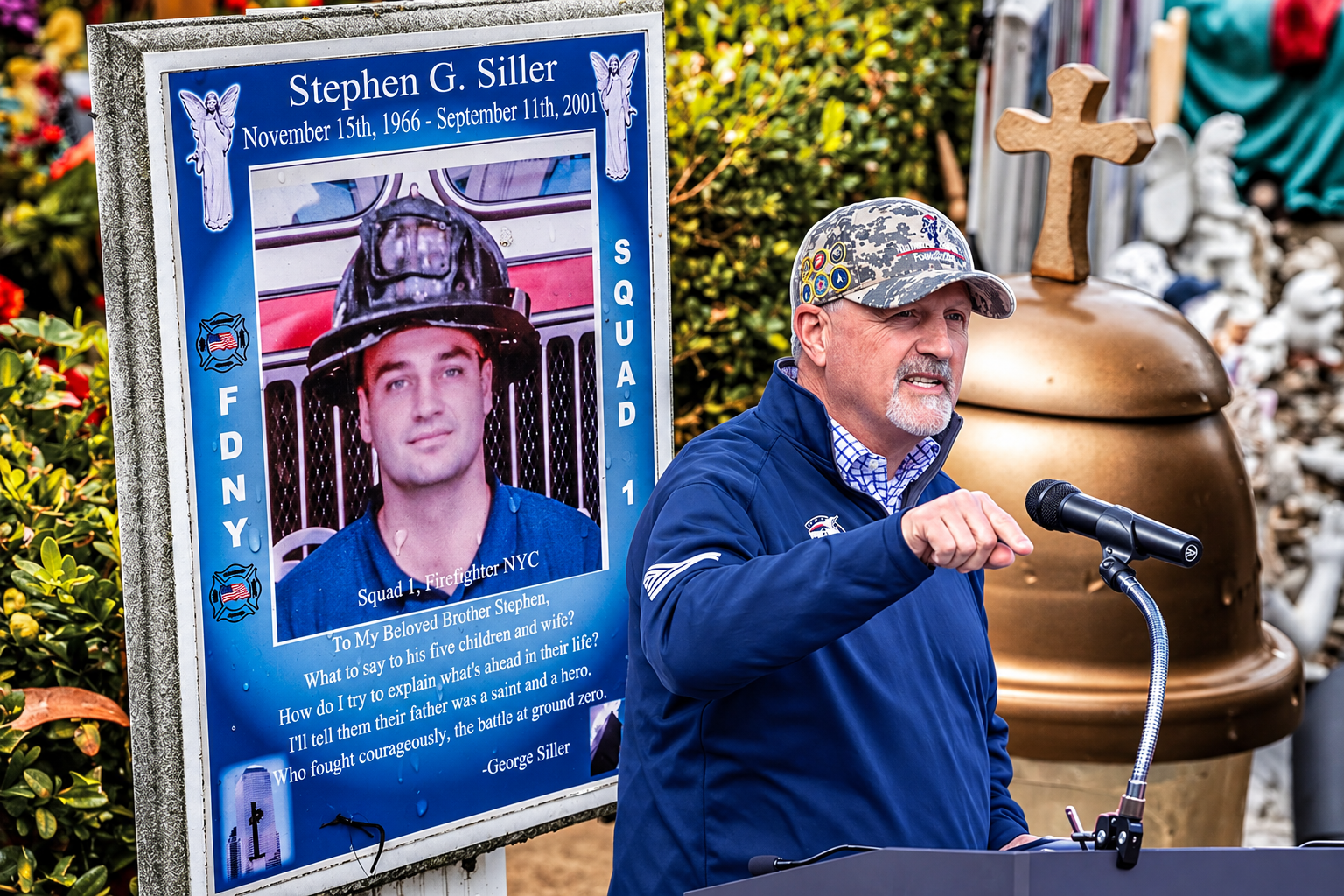
The Siller family suffered the same devastating loss endured by thousands of families after September 11. There was no undoing what had happened and no replacing a husband, father, brother or friend. In time, however, Stephen’s family decided that his story could not be allowed to end beneath the rubble of the World Trade Center.
Frank Siller and the rest of the family began working to establish an organization that would keep Stephen’s spirit of service alive. The resulting Tunnel to Towers Foundation took its name directly from his final journey, from the tunnel he ran through to the Twin Towers he was trying to reach.
The foundation began modestly, but the idea behind it resonated almost immediately. In 2002, approximately 1,500 people participated in the first Tunnel to Towers 5K Run & Walk in New York City, retracing Stephen’s route from Brooklyn through the tunnel and toward Lower Manhattan.
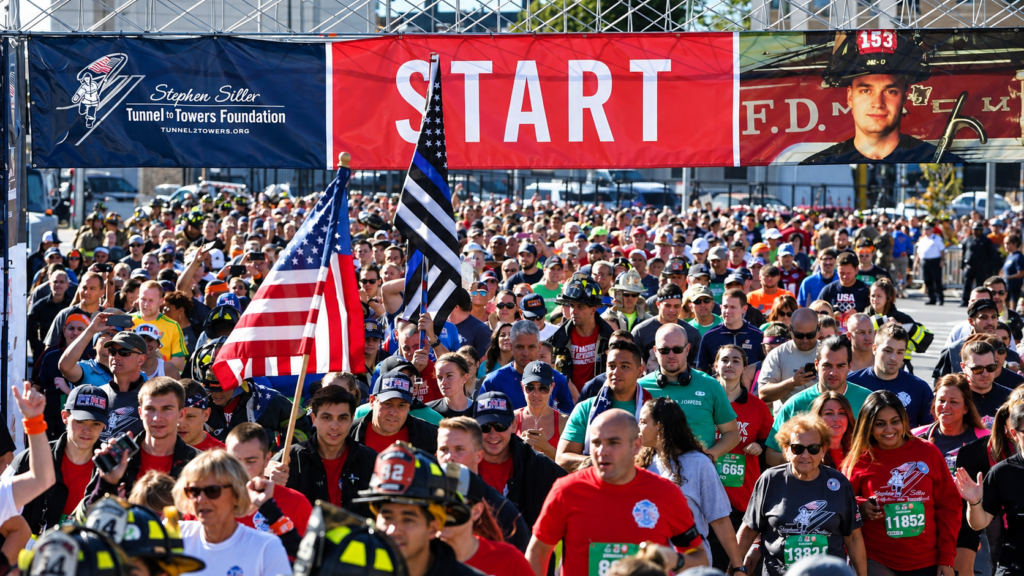
The event grew dramatically in the years that followed. Firefighters, police officers, military veterans, families of the fallen and ordinary Americans began traveling the same path Stephen had taken on September 11. What emerged was something considerably more meaningful than a road race because the course itself became part of the memorial. Participants were not simply covering a distance. They were following Stephen Siller’s final footsteps.
On September 27, 2026, the 25th Tunnel to Towers 5K Run & Walk will once again begin in Brooklyn and travel through the same tunnel Stephen entered with his firefighting gear 25 years earlier. Tens of thousands of people are expected to participate.
They cannot change where Stephen’s journey ended, but each year they make certain the world remembers how and why it began.
A Mission That Continued to Grow
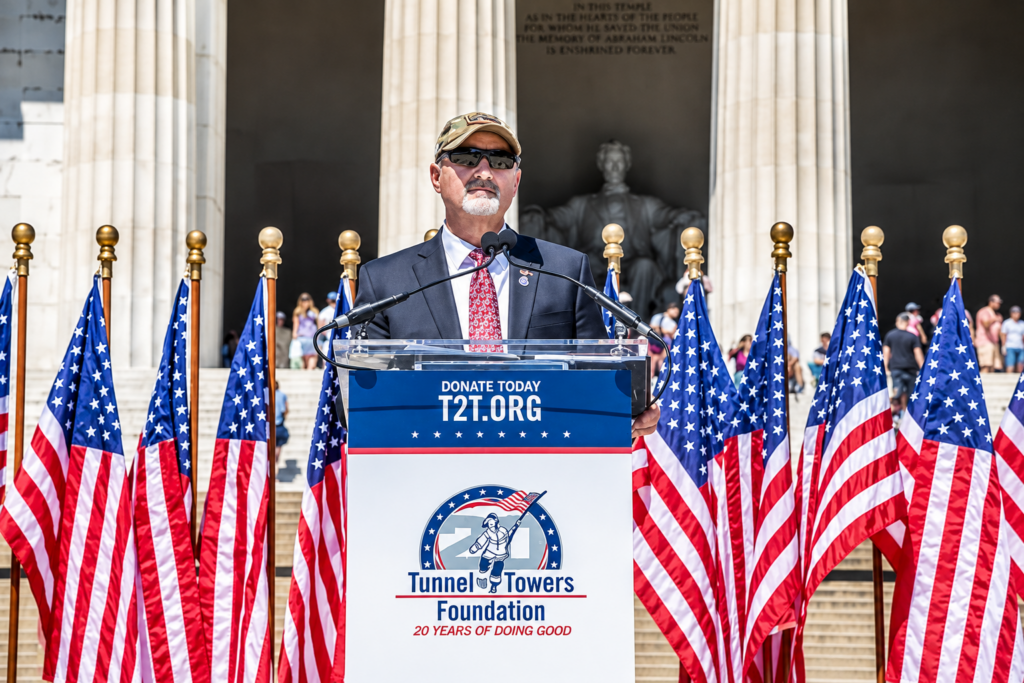
As Tunnel to Towers expanded, so did its mission. The foundation began assisting Gold Star families who had lost loved ones serving in the military and families of first responders killed in the line of duty. Through its Smart Home Program, it began constructing specially adapted, mortgage-free homes for catastrophically injured veterans and first responders, designing those homes around the individual needs of men and women whose lives had been permanently altered through their service to others.
The foundation’s work eventually expanded to include homeless veterans as well, providing housing assistance and support services intended to help those who had served the country regain stability and independence.
The individual stories are different, but the philosophy connecting them is remarkably consistent. Someone served. Someone sacrificed. A family was left carrying a burden it never expected to carry, and Tunnel to Towers tries to make certain that family does not carry it alone.
That mission is where another American institution eventually became part of Stephen Siller’s story.
The Chevrolet Corvette.
When America’s Sports Car Became Something More
For 73 years, the Corvette has represented many things to those of us who love it. It has represented American ingenuity, performance and ambition. It became Chevrolet’s engineering laboratory, a championship-winning race car, an international performance benchmark and a cultural icon. For generations of owners, it has also represented something much more personal: the fulfillment of a dream, the reward for years of work or simply the incomparable pleasure of an open road disappearing beneath the nose of America’s sports car.
Every so often, however, an important Corvette becomes valuable for reasons that have very little to do with the automobile itself.
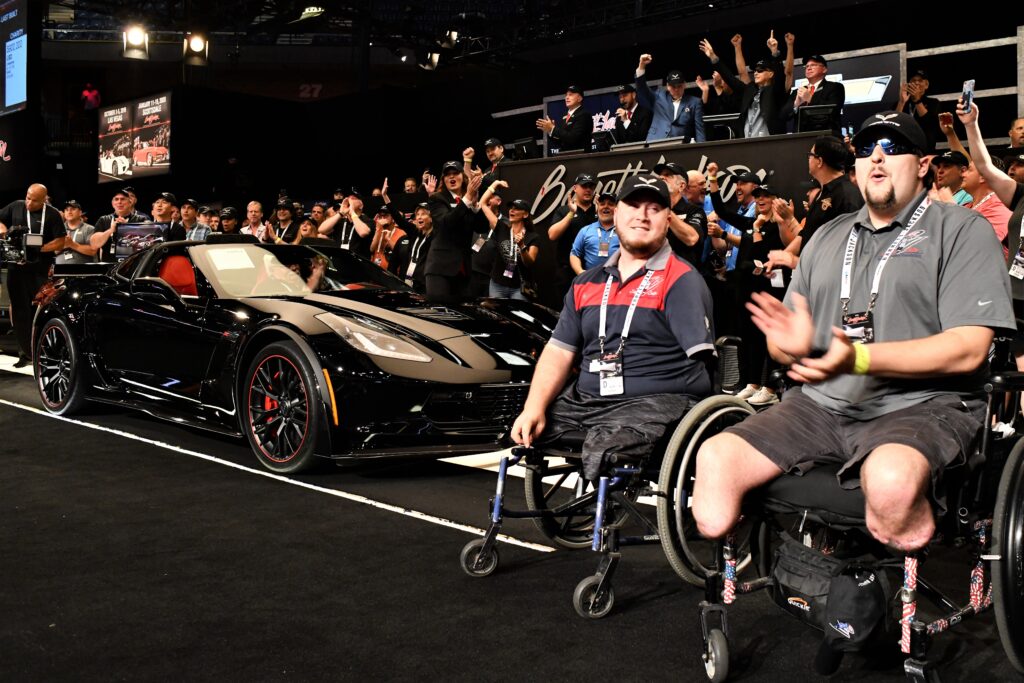
General Motors and Chevrolet have repeatedly used historically significant vehicles as fundraising instruments, placing special cars on the auction block and directing the proceeds toward charitable causes. One of the most meaningful of those relationships has been with Tunnel to Towers.
It is an interesting inversion of what normally happens at a collector-car auction. A bidder may arrive because a particular Corvette has extraordinary historical significance, a rare VIN or a place in the evolution of the marque. Yet when the hammer falls during one of these charity auctions, the value of the car becomes something else entirely. The money can become a home for a Gold Star family, specially adapted living space for an injured veteran or financial security for the family of a first responder who never made it home.
The Corvette becomes the mechanism rather than the destination.
That distinction has produced some extraordinary moments.
The First 2019 Corvette ZR1
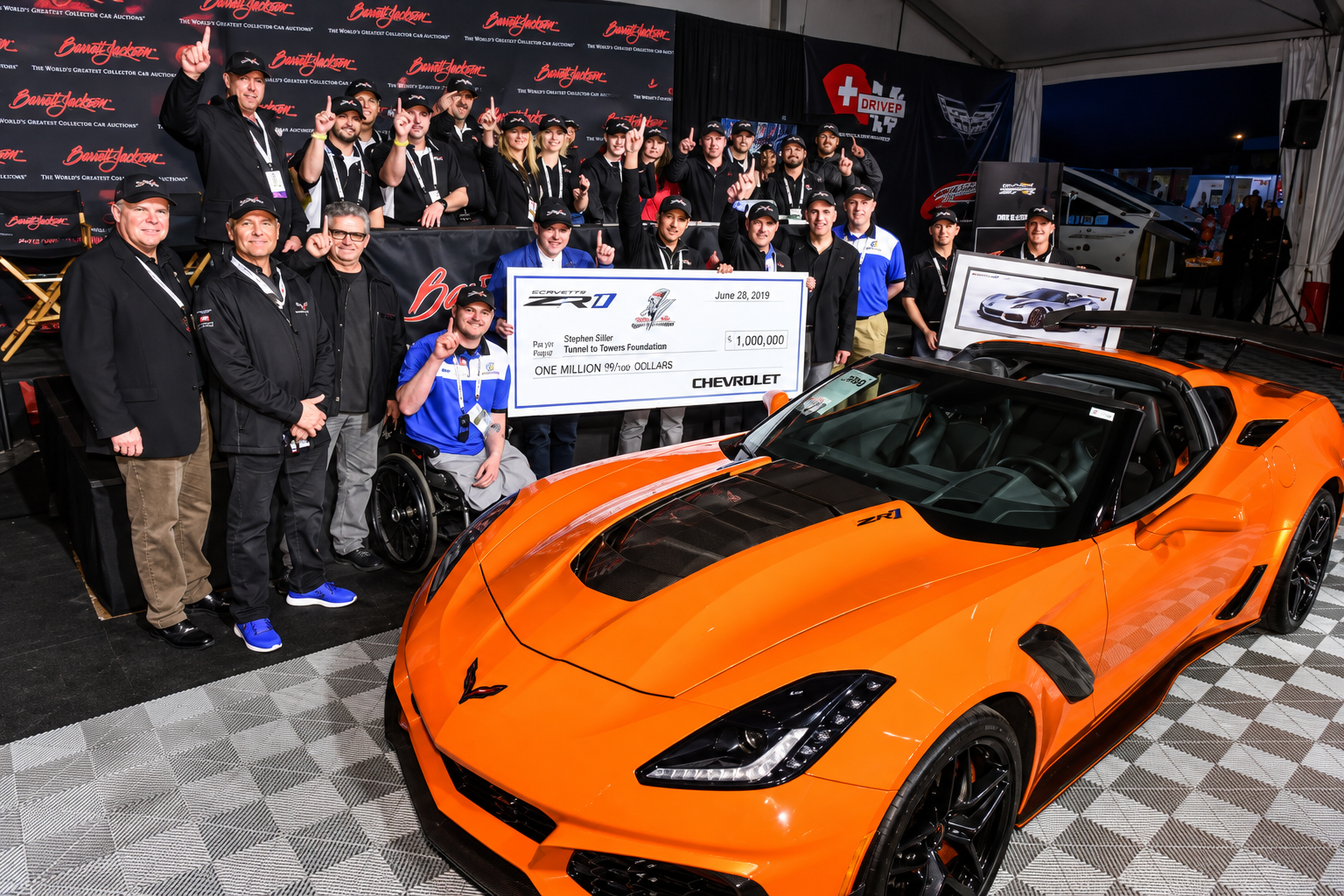
In January 2018, one of the most formidable production Corvettes Chevrolet had ever created arrived at Barrett-Jackson’s Scottsdale auction.
It was the first retail-production 2019 Chevrolet Corvette ZR1.
Powered by Chevrolet’s supercharged LT5 V8 producing 755 horsepower, the C7 ZR1 represented the ultimate development of the front-engine Corvette platform. It was faster, more powerful and more technically sophisticated than any regular-production Corvette that had preceded it, and the significance of VIN 001 was immediately apparent to collectors.
Chevrolet, however, had another purpose in mind for the car.
The first retail ZR1 was offered as a charity vehicle, with its proceeds benefiting the organization then known as the Stephen Siller Tunnel to Towers Foundation. When the bidding was finished, Chevrolet dealer, collector and Hendrick Motorsports owner Rick Hendrick had purchased the car for $925,000.
Every dollar of the hammer price went to Tunnel to Towers.
For a car celebrated largely because of what it could do on a racetrack, that particular ZR1 accomplished something considerably more important without ever turning a wheel in competition.
And Chevrolet was not finished.
The Final Front-Engine Corvette
By 2019, one of the longest chapters in Corvette history was rapidly approaching its conclusion.
Since production began in 1953, every Corvette had carried its engine ahead of the passenger compartment. The formula had evolved enormously over six decades, from the original Blue Flame six-cylinder roadster through fuel injection, big-block muscle cars, increasingly sophisticated chassis technology and eventually supercharged performance machines like the C7 ZR1.
Now Chevrolet was finally preparing to make the leap that Zora Arkus-Duntov and generations of Corvette engineers had investigated for decades.
The next Corvette would be mid-engine.
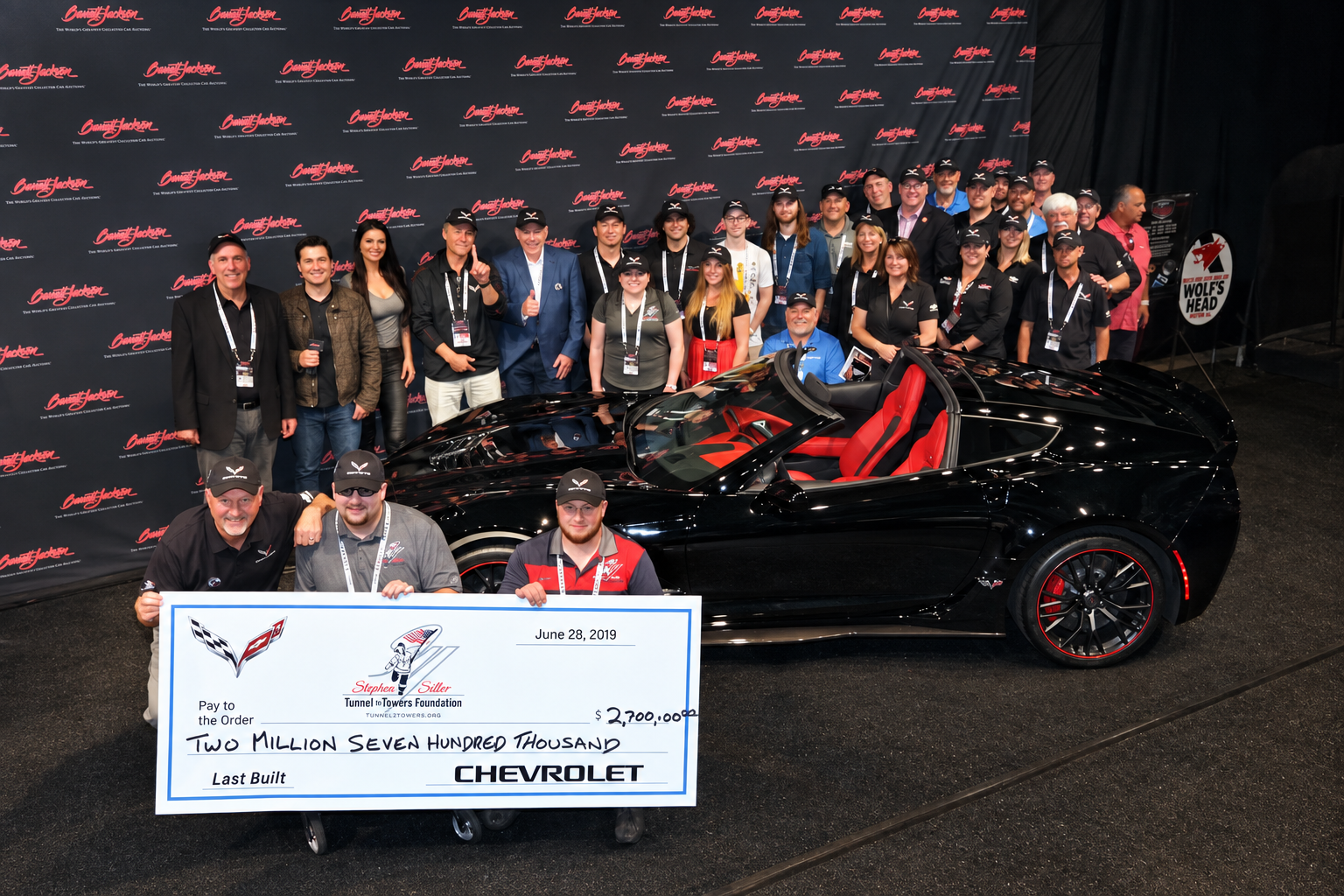
That meant the final C7 would represent far more than the end of another model generation. It would become the final production front-engine Corvette in an uninterrupted lineage stretching back 66 years.
Chevrolet decided that historically significant car would benefit Tunnel to Towers.
The actual final-production Corvette had not yet been assembled when the opportunity crossed the Barrett-Jackson Northeast auction block in June 2019. A representative black Z06 appeared at the sale while bidders competed for the right to own the real final C7 once it completed production at Bowling Green Assembly.
The bidding climbed rapidly before finally stopping at an extraordinary $2.7 million.
At the time, the result established a Barrett-Jackson record for an automaker-donated vehicle, but the number itself tells only part of the story. Tunnel to Towers said the contribution would allow its Smart Home Program to begin construction on additional mortgage-free homes for catastrophically injured service members.
In other words, one of the most important Corvette milestones of the modern era was used to create new beginnings for families who had already sacrificed more than most of us can imagine.
The final front-engine Corvette represented an ending.
What its auction proceeds provided was precisely the opposite.
Stars & Steel
Seven years later, Chevrolet returned to Barrett-Jackson with another extraordinary Corvette, although almost everything about America’s sports car had changed by then.
The engine had moved behind the passenger compartment. Corvette performance had entered territory once reserved almost exclusively for Europe’s most exotic machines, and sitting near the top of the new mid-engine hierarchy was the Corvette ZR1X.
The ZR1X paired the twin-turbocharged V8 power of the ZR1 with an electrically driven front axle, creating a 1,250-horsepower, all-wheel-drive hybrid capable of performance that would have seemed almost unimaginable during the C7 era.
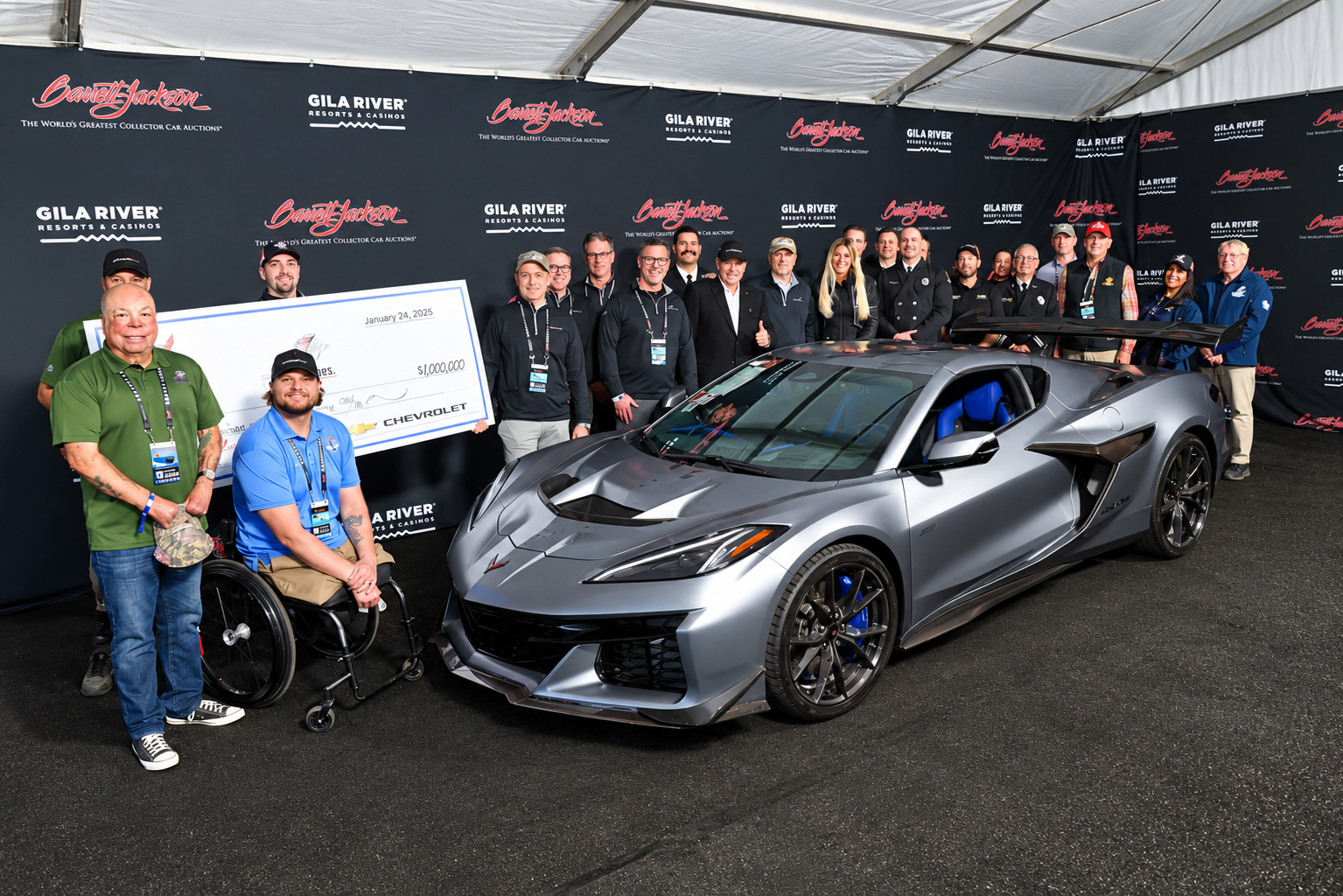
For America’s 250th anniversary in 2026, Chevrolet created a bespoke, one-of-one Stars & Steel-inspired Corvette ZR1X, hand-finished in Dark Satin Steel paint by GM’s Design Fabrication team and accented throughout with patriotic detailing.
On January 24, 2026, that Corvette crossed the Barrett-Jackson Scottsdale auction block.
Once again, 100 percent of the hammer price was designated for Tunnel to Towers, and once again Rick Hendrick placed the winning bid.
The final number was $2.6 million.
By the time of the auction, General Motors and Chevrolet said their relationship with Tunnel to Towers over the preceding 12 years had already helped generate more than $11.6 million in support of wounded veterans and America’s heroes. The ZR1X auction added another $2.6 million to that extraordinary legacy.
The figures are impressive, but dollars alone can make a story like this feel unnecessarily abstract. What matters is what those dollars eventually become. They become mortgage-free homes. They become accessibility modifications for catastrophically injured veterans and first responders. They become housing and services for homeless veterans and financial security for families suddenly facing a future without someone they loved.
Cars built to travel very quickly have helped people rebuild their lives one careful step at a time.
That is a chapter of Corvette history every bit as worthy of preservation as any racing victory, production milestone or engineering breakthrough.
343 Homes for 343 Heroes
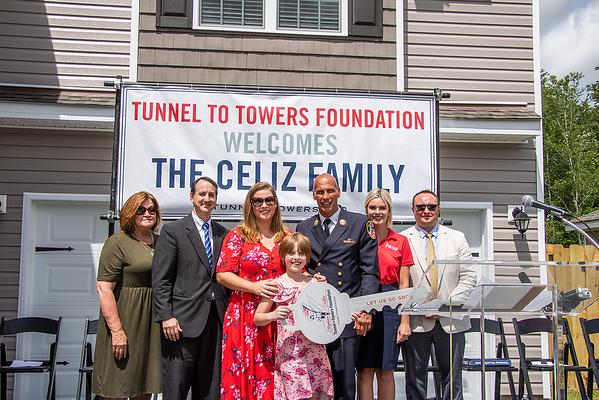
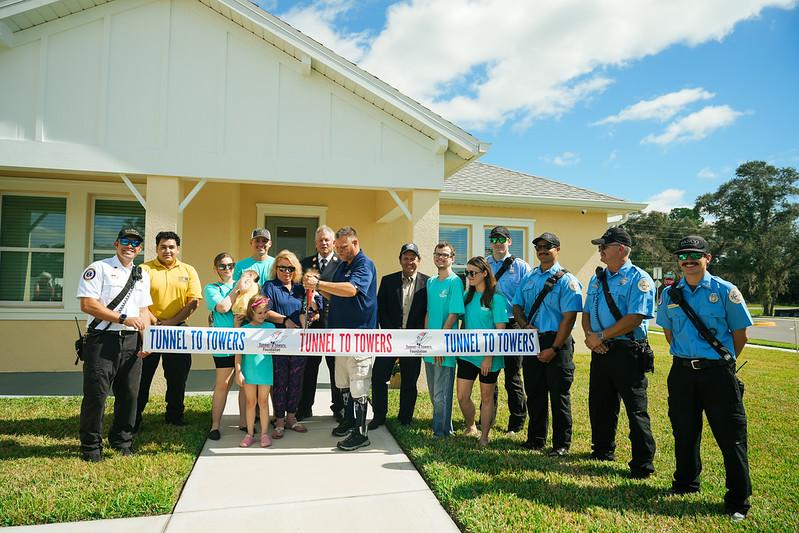
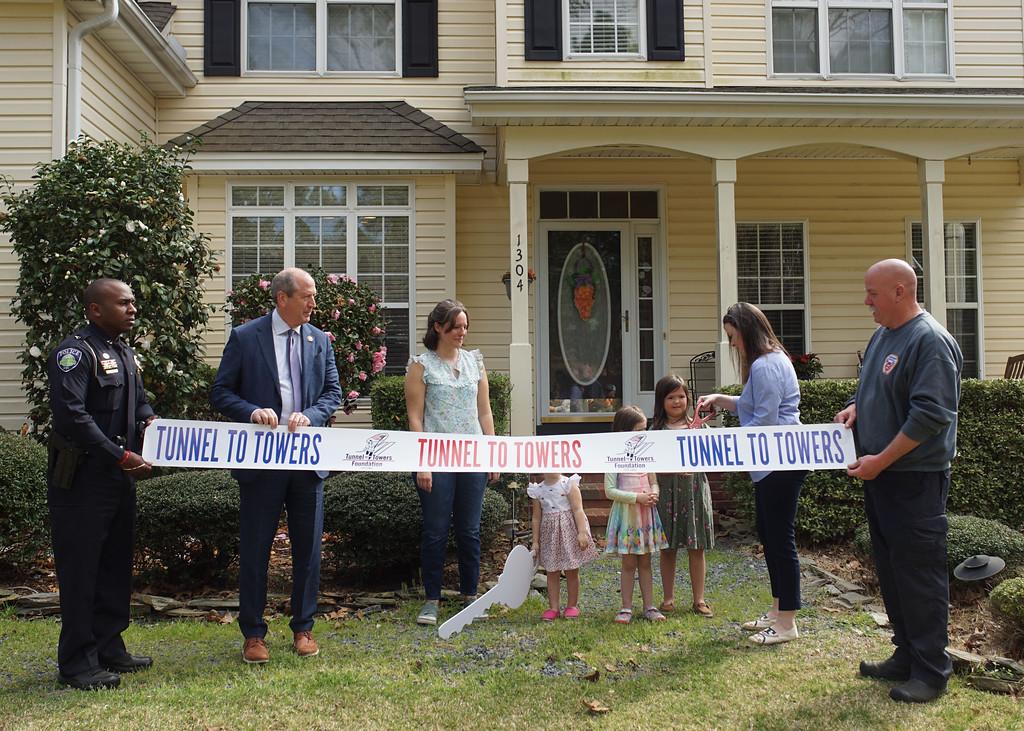
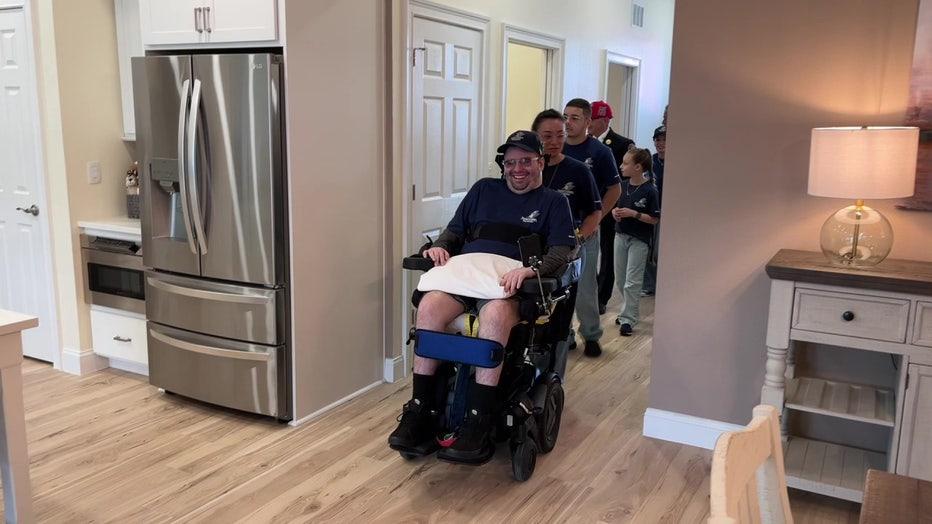
The 25th anniversary of September 11 gives the Tunnel to Towers mission particular significance in 2026.
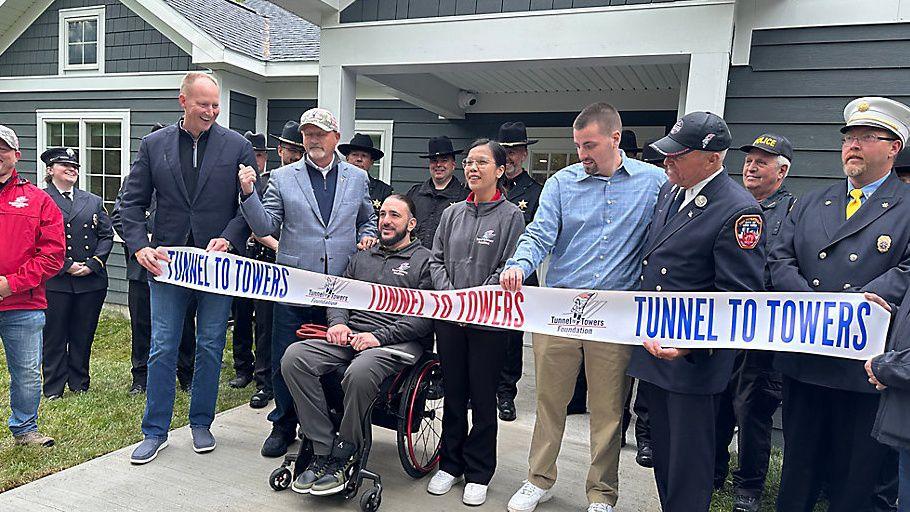
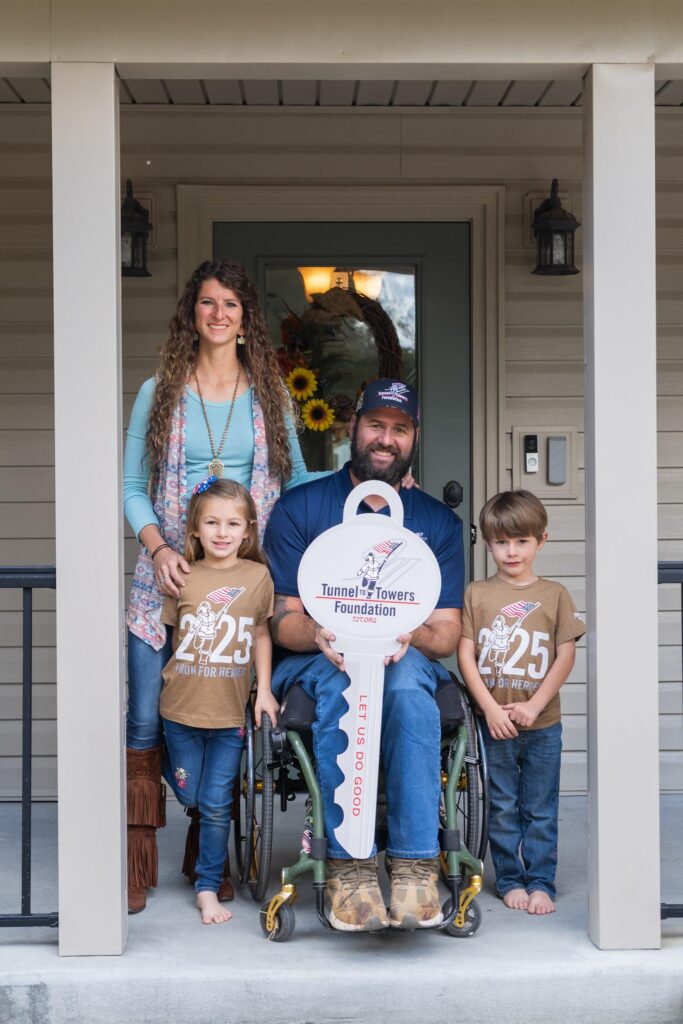
To commemorate the 343 members of the FDNY who died on September 11, 2001, the foundation committed to delivering 343 mortgage-free homes during 2026, with one home representing each firefighter who answered the call that morning and never returned home.
Those homes are being provided through several Tunnel to Towers initiatives, including its Smart Home Program for catastrophically injured veterans and first responders, its Gold Star Family Home Program for families of fallen military heroes and its Fallen First Responder Home Program for families left behind when a first responder dies in the line of duty. In each case, the objective extends far beyond simply putting a roof over someone’s head. It is about providing security after loss, restoring independence after catastrophic injury and giving families room to begin rebuilding lives forever changed by sacrifice.
The scale of the undertaking is remarkable, but its true significance becomes clearer when the numbers are stripped away. Behind each of those 343 homes is a family with its own story—a spouse learning to navigate a future that was never supposed to happen, children growing up without a parent or a wounded veteran or first responder adapting to a body and a life profoundly changed in service to others.
Each home means a family receives a place where a child can sleep without a surviving parent worrying about how the mortgage will be paid. It can mean a catastrophically injured veteran is able to move independently through a kitchen, bedroom or bathroom specifically designed around injuries that changed virtually every aspect of daily life. For the family of a police officer, firefighter or other first responder who left for work expecting to come home at the end of the day, it removes at least one enormous uncertainty from a future suddenly filled with them.
And there is something especially powerful about the number itself.
Twenty-five years after 343 New York City firefighters ran toward the World Trade Center and gave their lives trying to save people they had never met, 343 other families will receive homes in their honor. The foundation cannot return those firefighters to the families who lost them, nor can any memorial undo what happened on September 11. But it can ensure that their sacrifice continues to produce something meaningful in the lives of others.
In that sense, these homes become more than houses. Each is a living memorial—one built not simply from wood, concrete and steel, but from remembrance, gratitude and the conviction that the best way to honor extraordinary sacrifice is through extraordinary service.
It is difficult to imagine a more tangible expression of “Never Forget.”
When Memory Becomes History
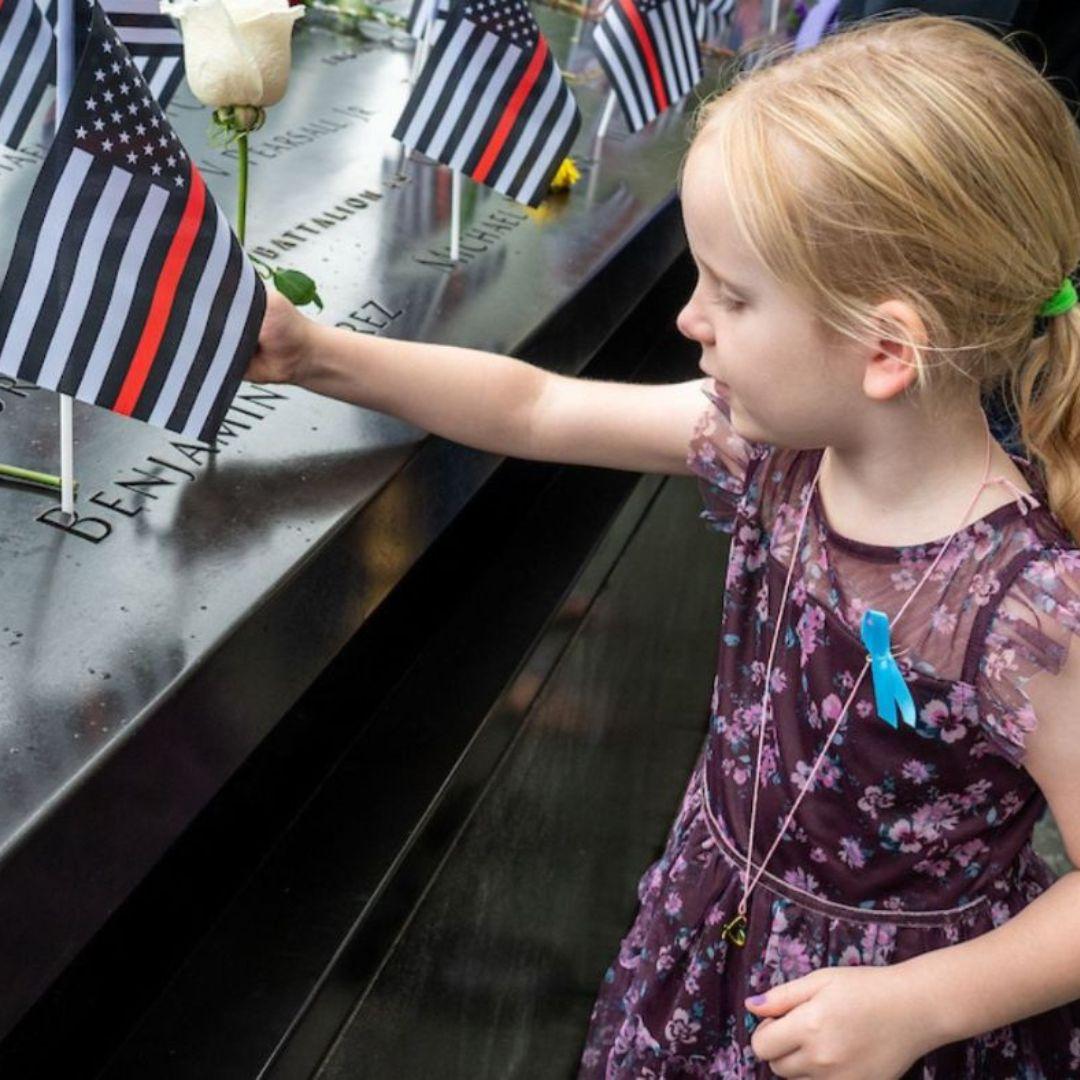
There is another reason this anniversary feels different.
An entire generation of Americans has now reached adulthood with no personal memory of September 11. For them, the Twin Towers exist primarily in photographs and video footage. The smoke over Lower Manhattan is something they have seen in documentaries and history lessons rather than something they watched unfolding on live television. Flight 93, the Pentagon and the names of the first responders who died that morning belong to history rather than lived experience.
That progression is inevitable, but it creates a responsibility for those of us who remember. Memories eventually become history, and history survives only when one generation considers it important enough to pass along to the next. As the distance between September 11 and the present continues to grow, “Never Forget” becomes more than a phrase. It becomes an obligation.
We need to continue telling these stories, and not simply the story of buildings falling. September 11 cannot be fully understood only through images of destruction, because some of the most important things that happened that day were acts of extraordinary courage and humanity. The horror of what happened is inseparable from the remarkable ways ordinary people responded to it.
Firefighters climbed stairwells while thousands of people were coming down them. Police officers entered buildings knowing they might not return. Passengers aboard Flight 93 learned what had happened elsewhere and decided to fight back. Strangers helped strangers. Doctors, nurses and emergency workers prepared for casualties on a scale they could scarcely imagine, while volunteers appeared wherever they were needed. Americans lined up to donate blood. Families searched hospitals and streets for people they loved. In the midst of one of the darkest days in our history, there were countless reminders of what human beings are capable of doing for one another.
Those are the stories younger generations deserve to inherit alongside the terrible images of that morning. They should know not only what was taken from us, but who stepped forward when others needed them most. They should understand that the names engraved into memorials belonged to husbands and wives, mothers and fathers, sons and daughters, friends and coworkers—people whose ordinary lives suddenly demanded extraordinary courage.
Stephen Siller’s story belongs within that larger history because his final decision captured something essential about the day. He had finished his shift. He could have remained safely where he was. Instead, when he learned that people were in danger, he retrieved his gear and headed toward Manhattan. When the Brooklyn Battery Tunnel prevented him from driving any farther, he put that gear on his back and continued on foot.
When he learned people were in danger, he went toward them.
Perhaps that is one of the most important lessons September 11 can offer a generation that did not witness it. Remembering the day should mean more than knowing the date, recognizing the photographs or understanding the sequence of events. It should mean remembering the choices people made when confronted by unimaginable circumstances—and recognizing that courage, compassion and service remain choices available to each of us.
Twenty-five years later, the foundation carrying the name of Stephen’s final journey continues to ask essentially the same question: Who needs us now, and what can we do to help?
That may ultimately be one of the most meaningful ways to ensure September 11 is never forgotten. We tell the next generation what happened, we teach them about the people who stepped forward, and then we show them that remembrance does not have to be passive. It can live in service, generosity and compassion. It can become something we do.
How You Can Help
Ultimate Corvette exists to preserve and celebrate the history of an automobile we love. Most days, that means telling stories about designers, engineers, racers, assembly plants, prototypes and the remarkable machines that have carried the Corvette crossed-flags emblem for more than seven decades.
Occasionally, however, Corvette history gives us an opportunity to point beyond the automobile.
This is one of those occasions.
If Stephen Siller’s story has moved you, or if you would simply like to help Tunnel to Towers continue supporting Gold Star families, families of fallen first responders, catastrophically injured veterans and first responders, and homeless veterans, we encourage you to learn more directly from the foundation.
Tunnel to Towers Foundation
Learn more about Stephen Siller, the foundation and its programs:
https://t2t.org/
Donate Directly to Tunnel to Towers
Those wishing to make a contribution can do so through the foundation’s official donation page:
https://t2t.org/donate/
Tunnel to Towers 25th Anniversary
Learn more about the foundation’s programs and initiatives commemorating the 25th anniversary of September 11:
https://t2t.org/25-anniversary/
2026 Tunnel to Towers 5K Run & Walk — New York City
Learn more about the September 27 event that retraces Stephen Siller’s final journey:
https://nycrun.t2t.org/
No donation is necessary to remember September 11, and remembrance should never be reduced to a financial contribution. But for those who wish to turn that remembrance into something tangible, Tunnel to Towers offers an opportunity to help families whose lives have been permanently altered by service and sacrifice.
That is precisely what Stephen’s family chose to do with their own grief.
Never Forget
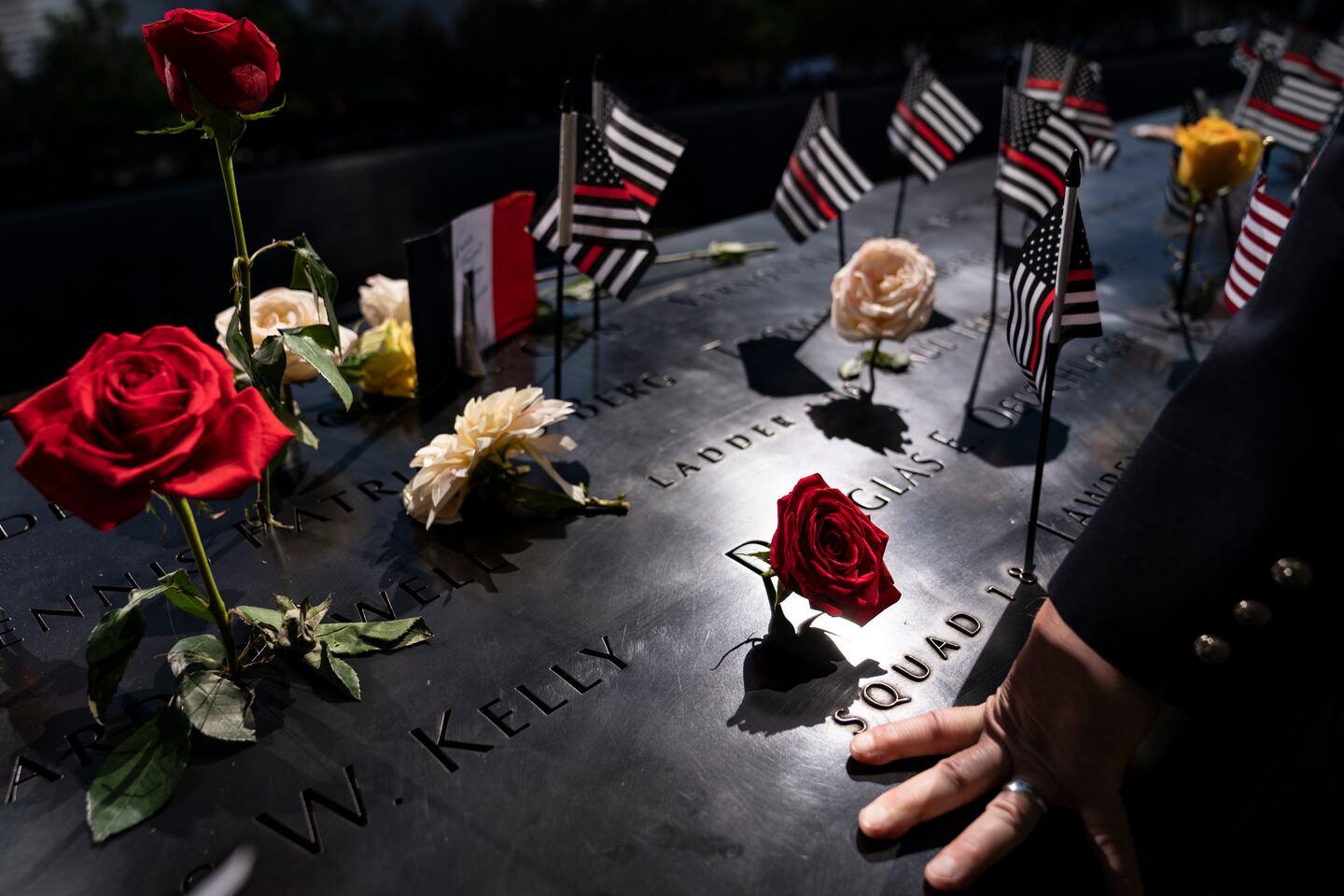
For 73 years, Corvette has represented American engineering, performance, competition, freedom, beauty and innovation. It has also represented the persistent belief that something already good can always be made better, an attitude that has pushed America’s sports car forward through eight generations and countless challenges.
Today, however, we are proud of the Corvette for an entirely different reason.
We are proud that automobiles we admire because of their historical significance have been used to help people whose sacrifices are far more significant than any automobile could ever be. We are proud that some of the most important Corvettes ever produced have generated millions of dollars for veterans, first responders and families who have lost someone in service to others. And we are proud that a small chapter of Corvette history has become intertwined with the extraordinary legacy of a New York City firefighter most of us never had the privilege to meet.
Twenty-five years have passed since September 11, 2001, but the responsibility to remember has not diminished with time.
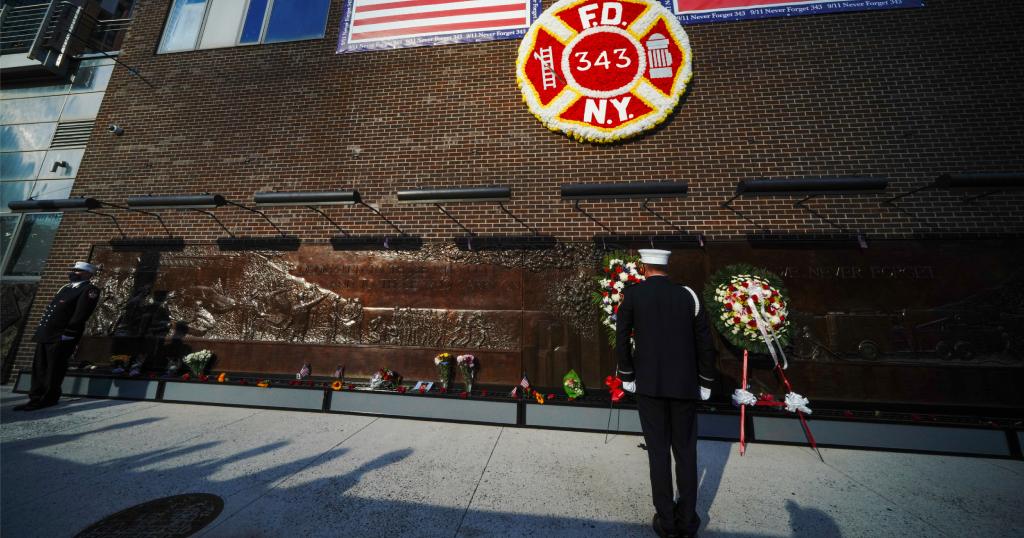
We remember the 2,977 people whose lives were taken that morning. We remember those who went to work and never came home, the passengers and crews aboard American Airlines Flight 11, United Airlines Flight 175, American Airlines Flight 77 and United Airlines Flight 93, those killed at the Pentagon and the thousands of people caught inside the World Trade Center.
We remember the firefighters, police officers, paramedics and other first responders who moved toward danger because someone on the other side of it needed them. We remember the families whose lives were divided forever into everything that happened before that Tuesday morning and everything that came afterward.
And today, we especially remember FDNY firefighter Stephen Gerard Siller of Squad 1: a husband, a father of five, a brother and a firefighter whose shift had already ended.
Stephen had every reason to go home that morning.
Instead, he strapped approximately 60 pounds of firefighting equipment to his back and ran through a tunnel toward people who needed his help.
The buildings he was running toward are gone, and Stephen has been gone for 25 years. Yet people are still following his footsteps. Families are receiving homes. Veterans are regaining independence. Children of fallen heroes are being cared for. First responder families are receiving help at the moment they need it most, and millions of Americans now know the story of a firefighter from Brooklyn who refused to turn away when others were in danger.
Perhaps that is what Never Forget must ultimately mean as September 11 moves farther from memory and deeper into history.
We should remember how these men and women died, certainly.
But we should also remember how they lived, what they did for others and what their examples continue to ask of us.
And while we still have time, we should continue to do some good in their name.
September 11, 2001 — Never Forget.