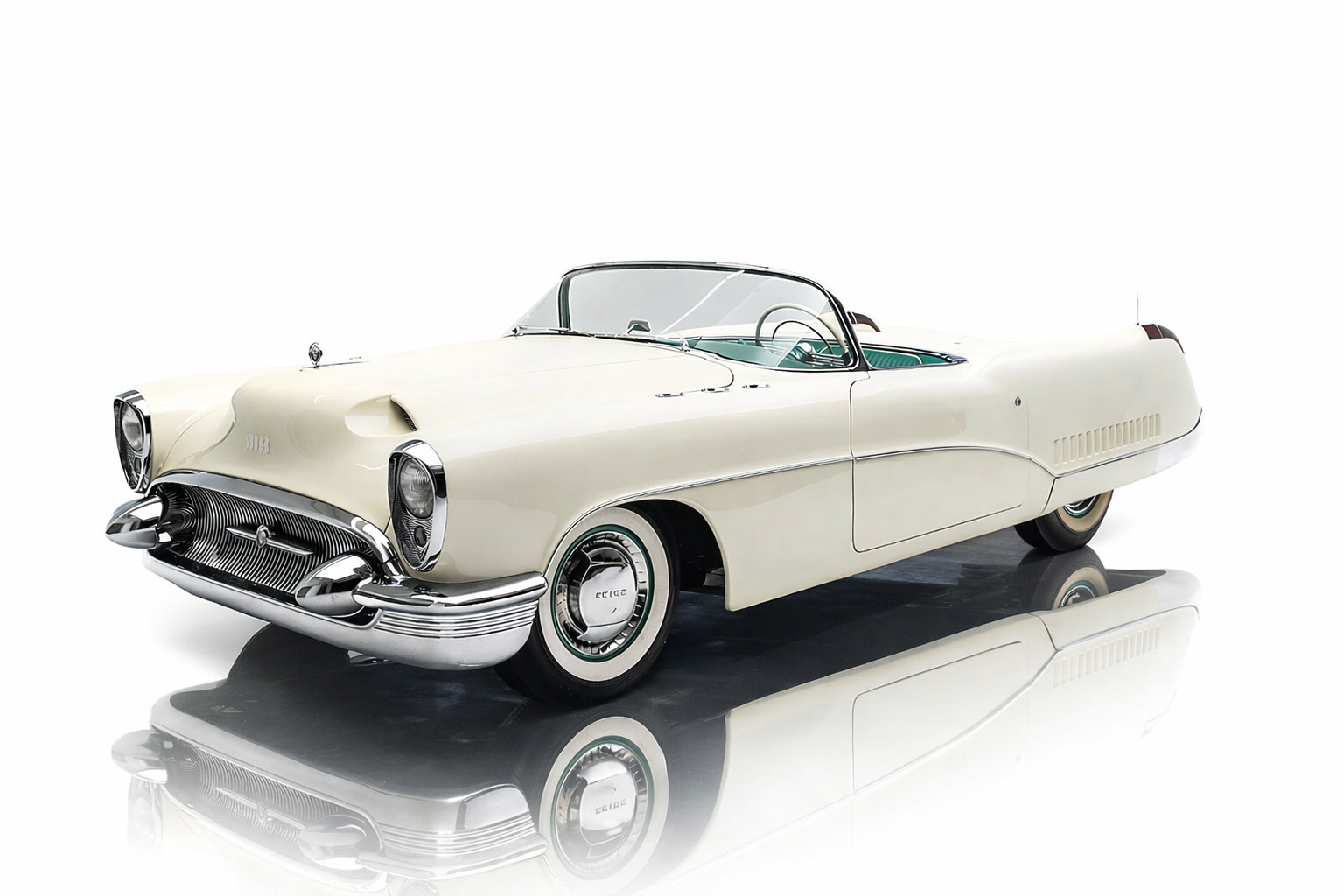
In 1953, Buick rolled a low, sleek two-seat roadster onto GM’s Motorama stage and called it Wildcat. Buick stated that the division could do “sporting” just as boldly as anyone, while using Motorama to test public reaction to radical ideas and new materials. The Wildcat’s body was fiberglass, a “dream-car” choice that let stylists push curves and tooling far faster than steel—very much in the spirit of the period’s experimental showcases.
Design: jet-age cues and dramatic surfacing
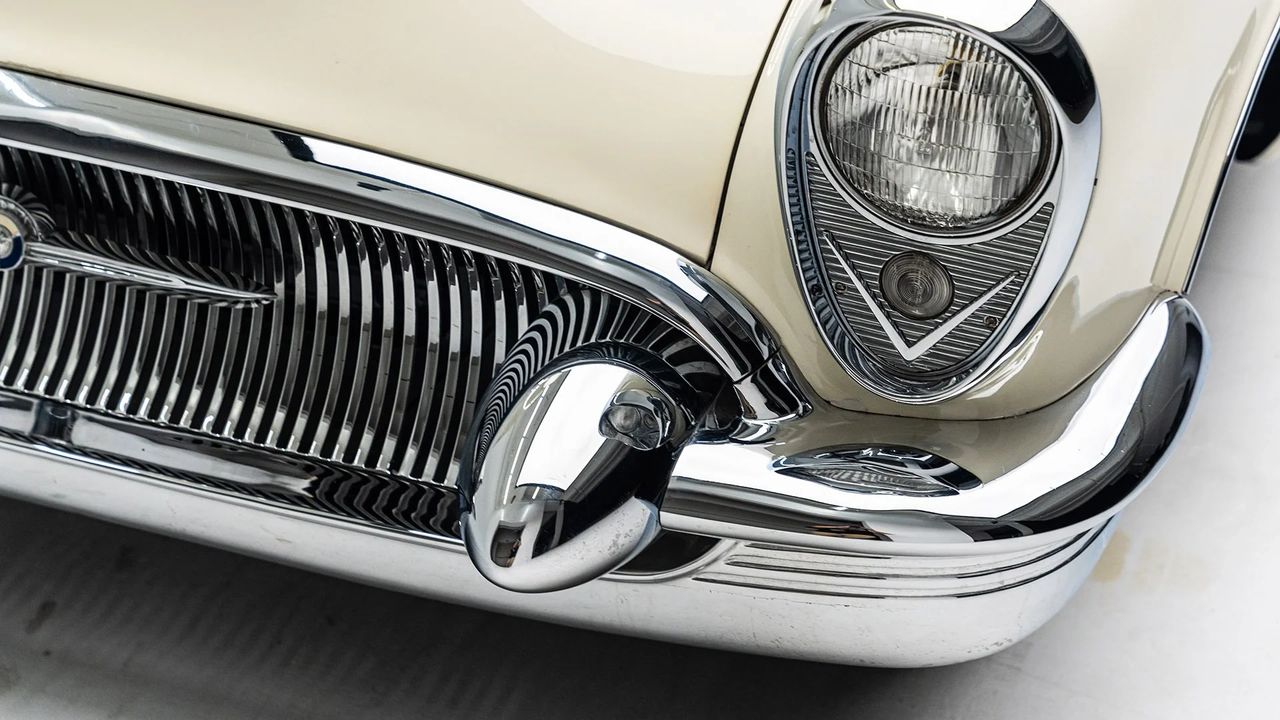
Harley Earl’s team gave the Wildcat a dramatic wraparound windshield, a clean fender line with the signature Buick sweep spear, and a deck with twin “spines” culminating in integrated taillamps and through-fascia dual exhausts. The nose was especially theatrical: a concave grille flanked by massive wrap-around bumper pods nicknamed “buffer bombs.” Up front, the Wildcat also wore Buick’s intriguing “Roto-Static” wheel hubs—center caps that stayed still while the wheels turned, with a leading-edge scoop intended to aid brake cooling.
Fiberglass let Buick try show-car packaging tricks, too. The power top retracted beneath a hard panel for a clean profile (no boot), and the car featured push-button door releases, along with hydraulically operated windows and seat adjustments—lavish touches for a two-seater in 1953.
Under the skin: Buick’s new V-8 and Dynaflow
Power came from Buick’s then-new 322-cid “Fireball”overhead-valve V-8, an engine that had just arrived in production Buicks for 1953. Period material and later references list output at about 188 hp, paired with Buick’s Dynaflow automatic transmission—emphasizing smoothness and effortless torque over rowdy, manual-gearbox athletics. That combination made sense: Wildcat was meant as a dramatic, drivable showpiece previewing technology and style, not a homologation racer.
Why fiberglass—and why Motorama?
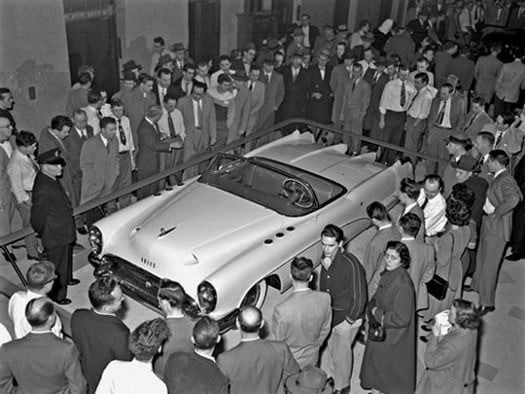
GM used Motorama to shorten the loop between blue-sky design and the showroom—putting experimental shapes in front of crowds to measure their reactions, then incorporating what worked back into production. Buick’s own brochure language for the Wildcat leaned heavily on fiberglass’s speed and flexibility for trying out ideas and “pre-testing” them with the public. That philosophy is exactly how Wildcat’s cues flowed into later Buicks.
Influence on mid-’50s Buicks
The Wildcat wasn’t just a pretty one-off. Its face—that grinning, deeply sculpted grille and bumper treatment—previewed the 1954 Buick look, and its overall surfacing helped set Buick’s direction for the middle of the decade. In other words, the Motorama car did its job: test an adventurous theme, then translate it for volume cars.
The Wildcat family
Because Buick followed up with Wildcat II (1954) and Wildcat III (1955), the original car later picked up the informal tag “Wildcat I.” Each successive concept refined the sporty-Buick idea, but the 1953 original remains the purest statement of the fiberglass, jet-age roadster that Buick envisioned at Motorama.
Where to see one today
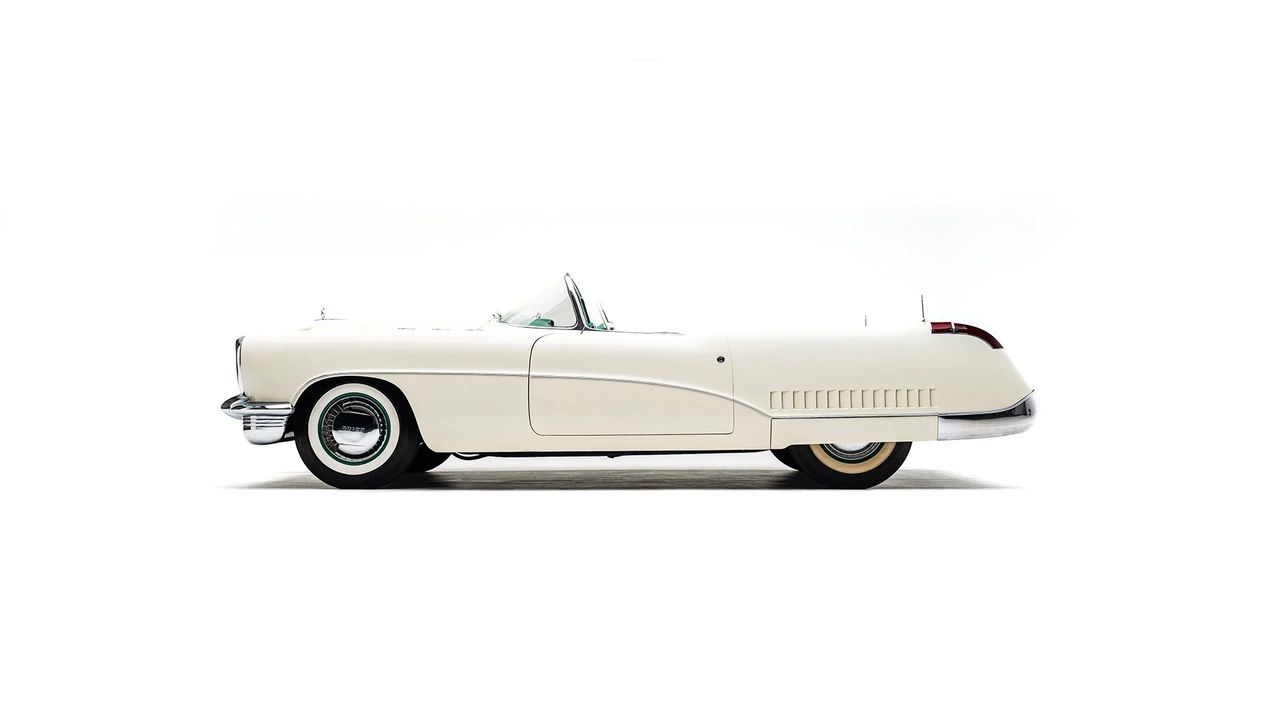
The 1953 Wildcat has appeared at major events like Pebble Beach and the Meadow Brook Concours, and it has been exhibited in museum settings celebrating GM’s Motorama era—proof of its enduring pull as a design landmark and an emblem of Harley Earl’s show-car magic.
Key specs & features (period-correct, as exhibited)
- Body: fiberglass two-seat roadster; power top stows under a hard panel
- Powertrain: 322-cid Buick Fireball OHV V-8 (~188 hp) with Dynaflow automatic
- Signature cues: wraparound windshield; concave grille with “buffer bombs”; Roto-Static front wheel hubs; push-button doors; hydraulically operated windows/seat
- Influence: front-end theme echoed on 1954 Buicks; helped define Buick’s mid-’50s design direction. Several of the Wildcat’s design elements, including the “buffer bombs” and the side sweep lines, would appear on Buicks for years to come.
Author’s Note:
It is worth noting that while the Buick Wildcat I did not directly contribute to the creation of the Chevrolet Corvette, its introduction, along with the Oldsmobile F88 and the Pontiac Bonneville Special, helped Harley Earl more fully realize his vision of an affordable, two-seat sporty car. In exploring the evolution of the Corvette through the lens of the concept cars that inspired it, Ultimate Corvette has elected to include any/all cars in this website that influenced (no matter how directly/indirectly) the creation of “America’s Sports Car.”