
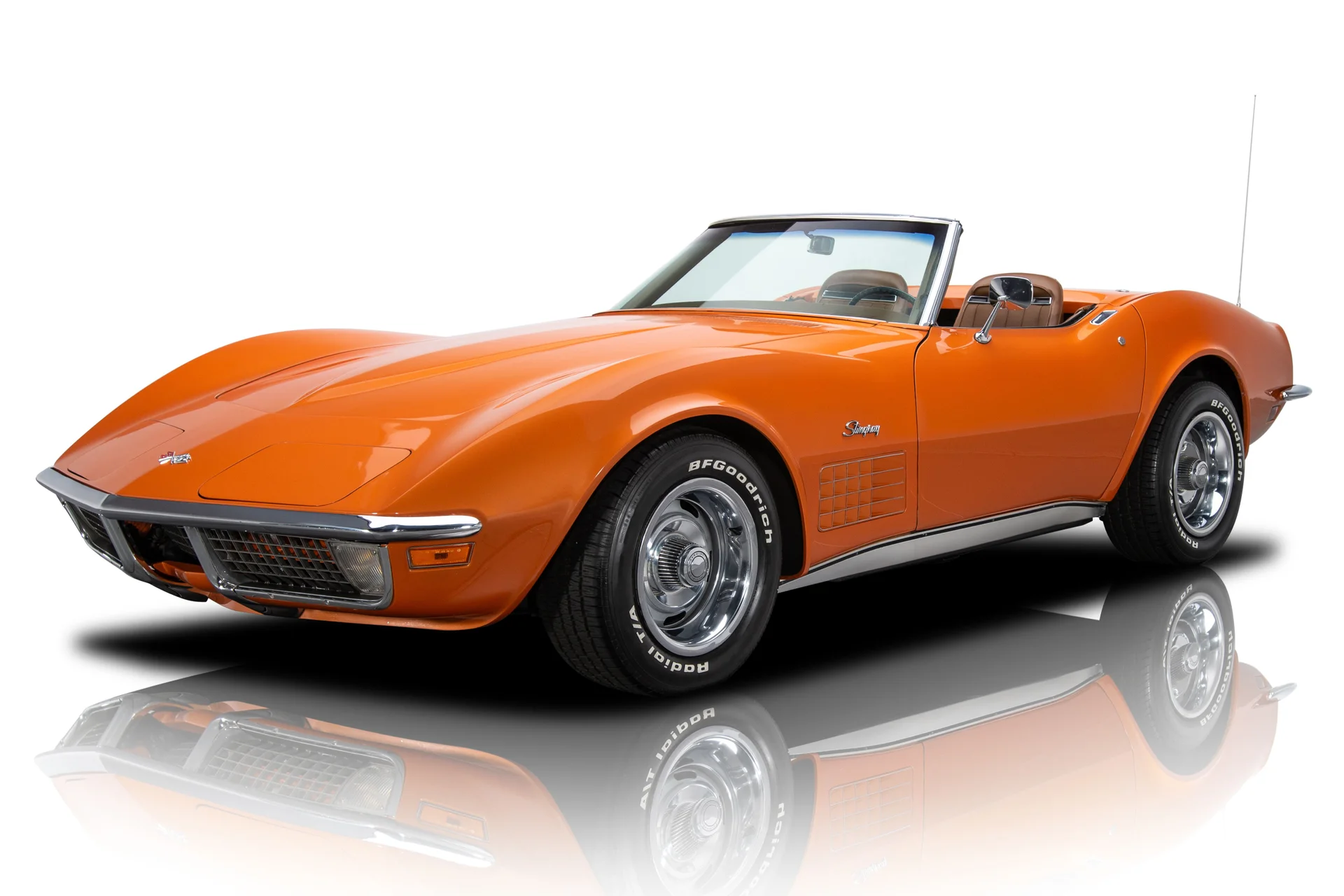
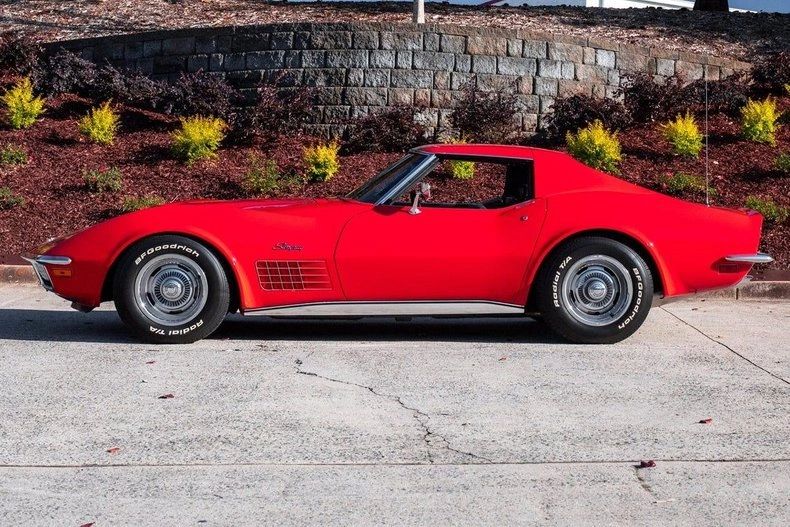
One of the curious things about the 1971 Corvette is that, at first glance, nothing appears to have changed from the previous model year. Park a ’71 Stingray next to a ’70 and even seasoned Corvette enthusiasts have to squint to tell them apart: same chrome bumpers, the same Coke-bottle hips, the same fanged fender vents and eggcrate grille. But the world swirling around that familiar fiberglass shape was changing fast—politically and economically—and those pressures were already reaching into GM’s engineering war rooms, quietly reshaping the future of America’s sports car in ways that wouldn’t fully reveal themselves for years.
What we think of as the “1971 model year” Corvette is actually the second act of the 1970 car, spanning a turbulent moment in American industry. A United Auto Workers strike that began in May 1969 forced Chevrolet to keep building 1969 Corvettes for roughly four extra months, pushing the changeover to the 1970 model into early 1970 and compressing that model year. With the 1970 car barely on sale before the calendar flipped again, Chevrolet management made a pragmatic decision: instead of rushing an all-new package for 1971, treat the ’71 as a continuation of the ’70 and use the breathing room to fix what was already on the car.
That choice—one of those unglamorous product-planning calls nobody writes press releases about—ended up defining the ’71 as a “carryover” year visually, but also as a kind of hinge point between the wild, free-breathing Corvettes of the late 1960s and the more constrained, regulated cars that would follow.
St. Louis, Strikes, and a Workforce Proud of “Corvette”
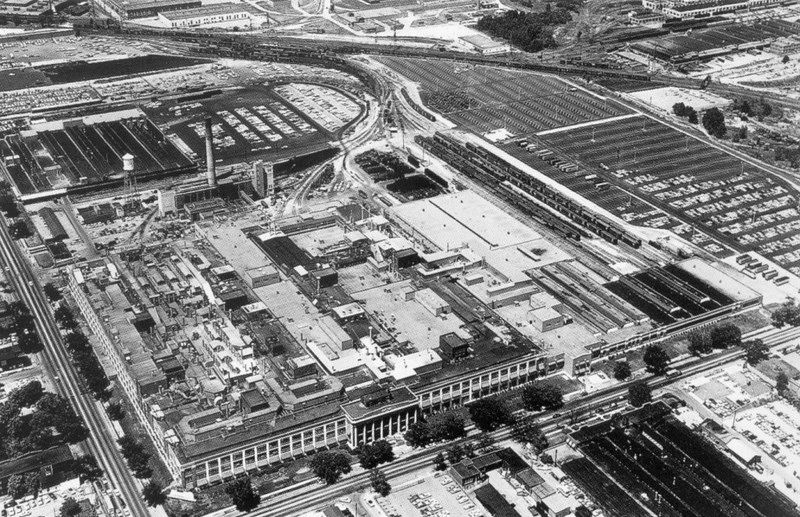
For the people building Corvettes in St. Louis, the decision to hold the line on styling was less about missed excitement and more about finally getting a clean shot. With the sheetmetal, interior, and basic hardware effectively frozen from 1970 to 1971, the more than 500 workers on each shift could focus on quality instead of scrambling to learn new parts every few months.
Unlike many GM plants that cranked out what one writer memorably called “faceless utility cars,” the St. Louis operation lived and died with a single product. The plant’s manager, Vince Shanks, summed up the culture with a simple line: “Every Corvette he sees on the road is one he’s worked on,” he said of his people—and that, he added, “is quite an incentive.”
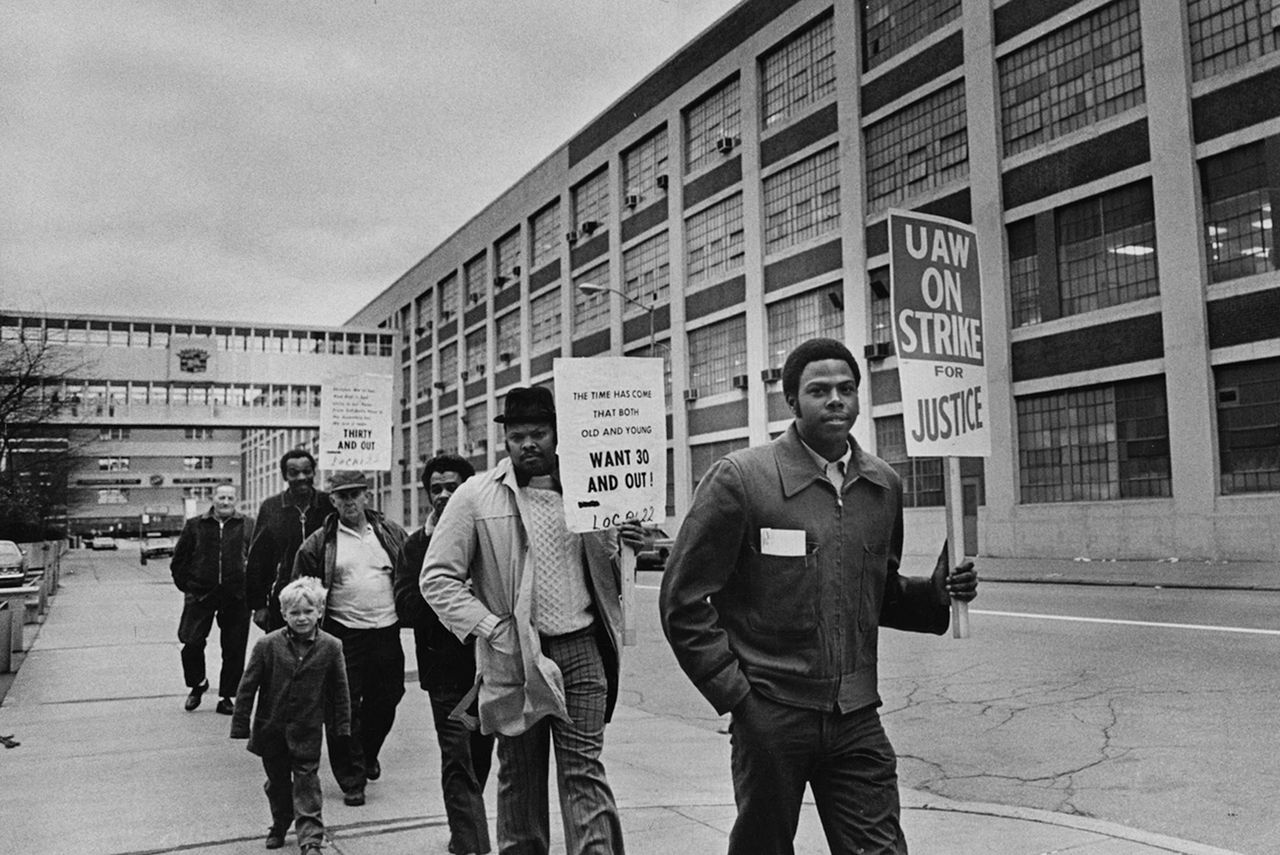
Chevrolet needed that pride, because labor unrest wasn’t done with GM. A company-wide strike in the fall of 1970 shut down production for more than two months and briefly interrupted 1971 model-year output across several divisions. Even so, Corvette managed a relatively smooth run: 21,801 cars were built for 1971—up sharply from the strike-shortened 1970 total of 17,316 and the best proof that Corvette demand was still healthy even as the broader muscle-car market started to wobble.
Two-thirds of those 21,801 Corvettes were coupes (14,680), and just over a third (7,121) were convertibles—a complete reversal of the early C3 years, when drop-tops had outsold coupes. The T-top roof introduced for 1968 had done more than add drama; it had given buyers the open-air experience with the perceived security of a hard roof, and by 1971, that formula was firmly in control of the Corvette sales mix. GM would file that away for later, when the convertible itself came under the microscope.
The World is Changing: Emissions, Octane, and OPEC in the Wings
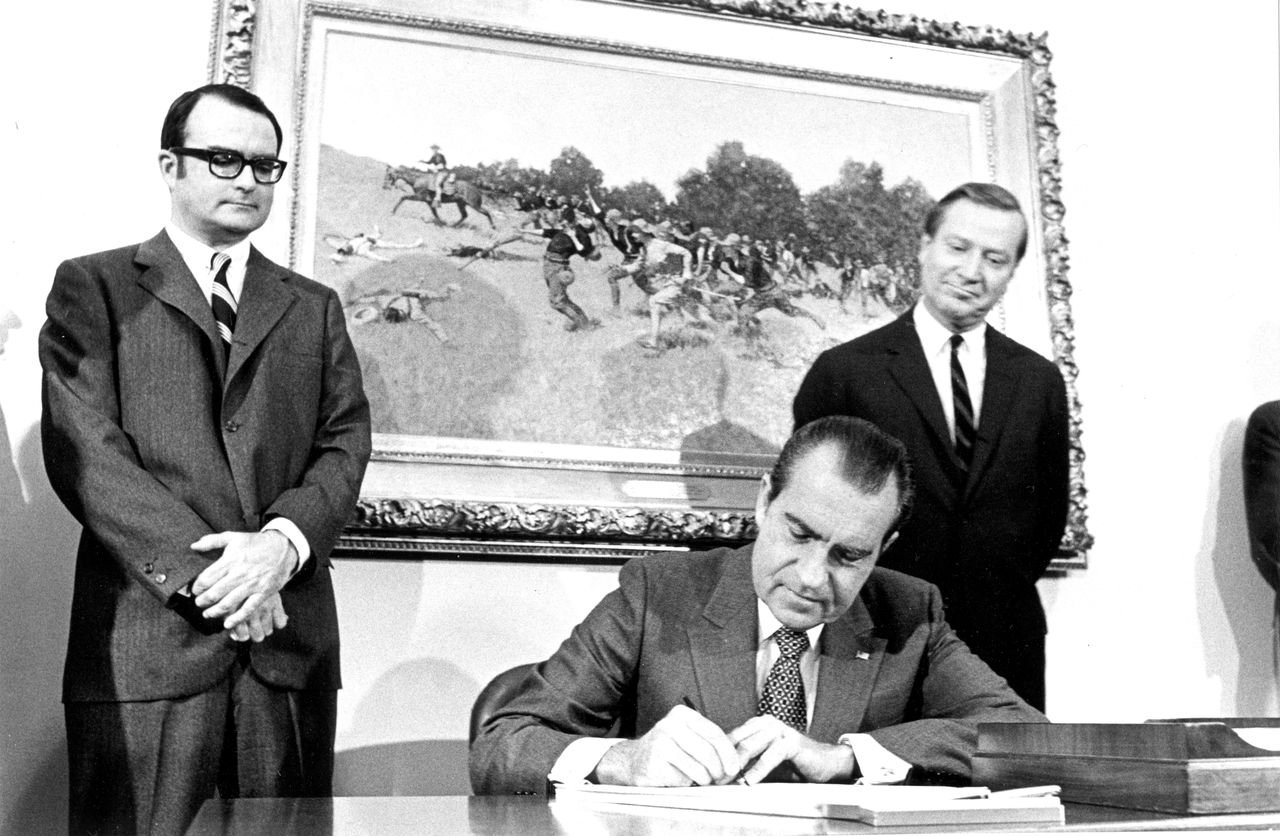
If the fiberglass shell was stable, the landscape around it was anything but. In 1970, the U.S. Congress passed a dramatically strengthened Clean Air Act, giving the newly formed Environmental Protection Agency teeth and setting strict standards for tailpipe emissions in the 1970s. Automakers had several tools available—air-injection pumps, exhaust gas recirculation, and, looming on the horizon, catalytic converters—but all of them worked better if engines were gentler on fuel and less prone to detonation.
At the same time, the oil world was quietly tilting under Detroit’s feet. OPEC—the coalition of oil-producing nations formed a decade earlier—won a series of victories in 1971 with the so-called Tehran and Tripoli agreements, which substantially raised posted oil prices and shifted control of pricing away from Western oil companies and toward producing governments. American domestic oil production had already peaked around 1970; from here on, the United States would grow more dependent on imported crude, and the cheap, premium fuel that had nourished the first muscle-car wave was suddenly not a sure thing.

Inside GM, Edward N. Cole—now the company’s president and a former Chevrolet general manager—could see these storm clouds gathering. Determined to get ahead of both emissions rules and future catalytic-converter requirements, Cole decreed that all 1971 GM engines would be capable of running on fuel with a Research Octane Number of just 91, compatible with the low-lead or unleaded gas that refiners were being pressured to introduce.
For Corvette, that single edict had enormous consequences. Higher-compression small-blocks and big-blocks had defined the late-’60s Stingray; now, compression ratios were going to be cut across the board. Lower compression meant lower cylinder pressure, less thermal efficiency—and, inevitably, lower power ratings.
Power Rewritten: Gross vs. Net and the 1971 Engine Lineup
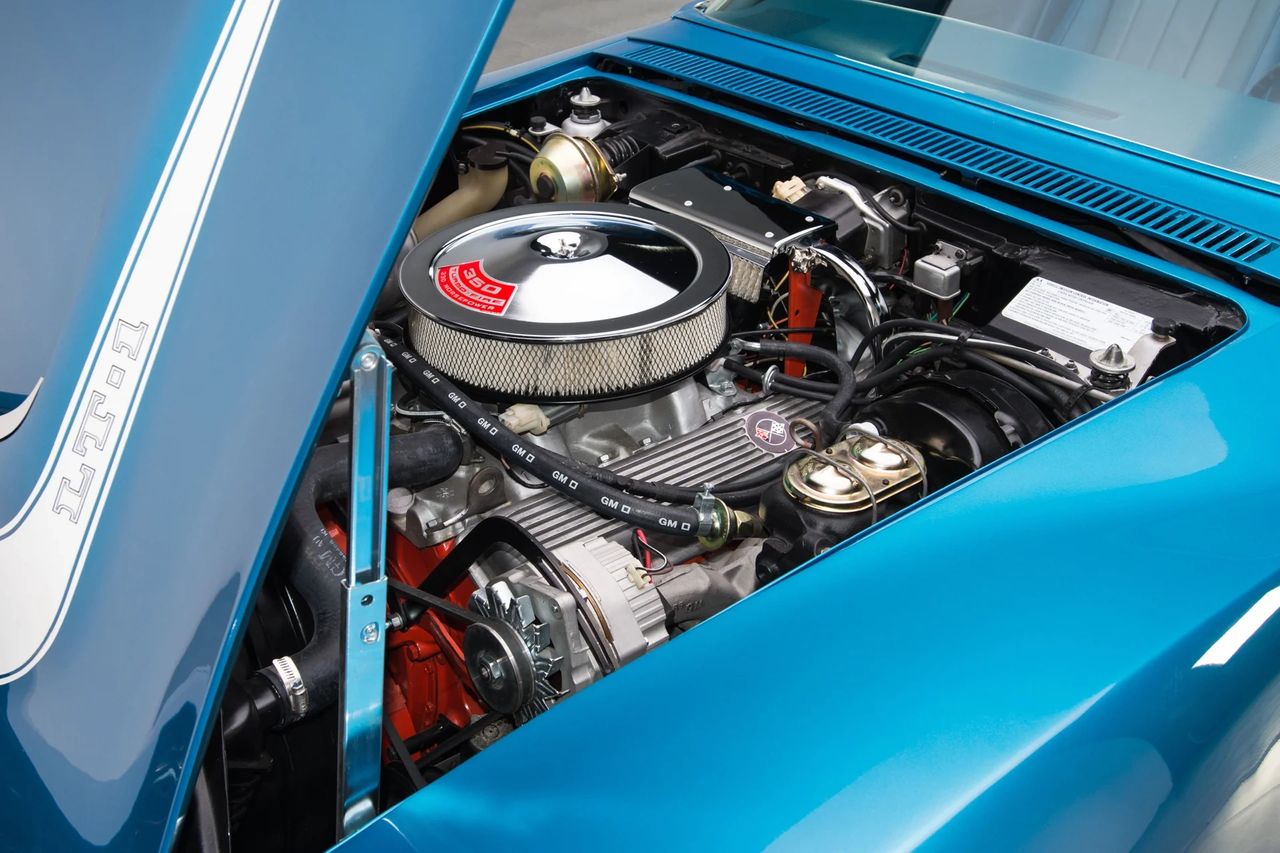
There’s another wrinkle that makes 1971 a confusing year for Corvette performance stats: it’s the only year where Chevrolet published both “gross” and “net” horsepower figures for its engines. Up through 1970, Detroit typically quoted gross horsepower—an engine on a dyno, with no accessories, free-flowing headers, and optimized ignition. Starting in 1972, the industry switched to net ratings, measured with full accessories, stock exhaust, and emissions equipment installed.
To help buyers bridge that shift, Chevrolet published dual figures for 1971: the old gross numbers everyone knew and the newer, lower net ones. On paper, it made the drop look even more severe than the compression changes alone would suggest, and it fed the popular narrative that “all the power disappeared overnight”—even though the car in the showroom didn’t instantly become 30 percent slower.
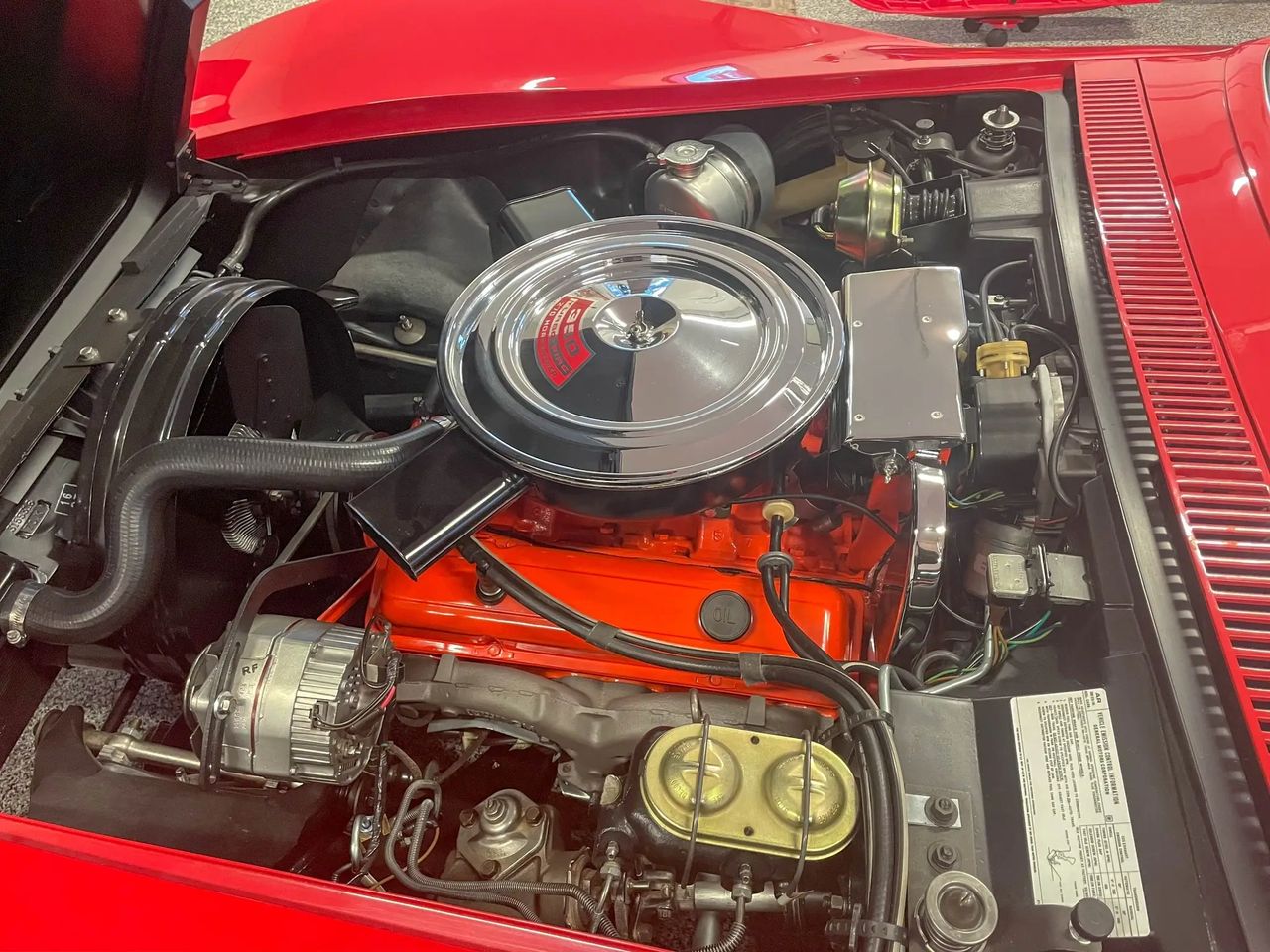
Still, there’s no way around it: the 1971 Corvette engine chart was the first sign that the wide-open horsepower party was winding down. The base L48 350-cubic-inch small-block, which had been advertised at 300 gross horsepower in 1970, now carried a gross rating of 270 hp and 360 lb-ft of torque, thanks in large part to its newly lowered 8.5:1 compression ratio.
Above that sat the LT1, the high-revving, solid-lifter small-block that had debuted in 1970 as one of the most hardcore small-blocks ever offered in a production Corvette. Its 11.0:1 compression and 370-hp rating in 1970 had made headlines; for 1971, compression dropped to 9.0:1, and gross output fell to 330 hp, with a net rating of 275 hp. Even so, the hardware remained pure muscle-car: forged crank, big Holley 4-barrel, aluminum intake, solid lifters, and the same wild mechanical camshaft.
It’s telling that collectors today are often more interested in how the LT1 feels than what the brochure says. Contemporary road tests made it clear that, even with the compression drop, the LT1 still spun to the far side of 6,000 rpm with real enthusiasm and made a Corvette feel far more like a big-bore road-racer than a boulevard cruiser.
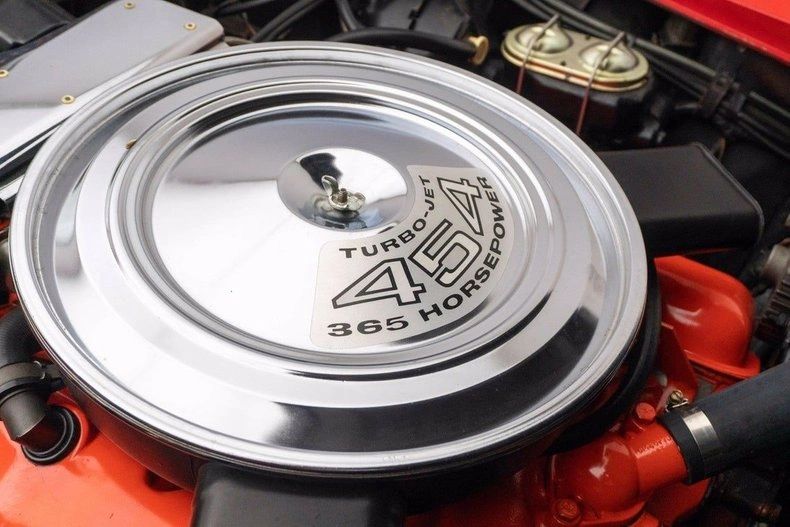
On the big-block side, the familiar LS5 454 returned as the primary torque monster, but its tune was also softened for 1971. Compression fell, timing curves were tamed, and the advertised gross rating slid from 390 hp in 1970 to 365 hp in 1971—on paper, a concession to unleaded fuel, emissions, and nervous insurance underwriters. In practice, the LS5 was still a sledgehammer, pouring out a steam-hammer 465 lb-ft of torque just off idle and turning the Stingray into an effortless point-and-shoot missile. It was the big-block you ordered if you wanted brutal shove wrapped in a thin layer of civility: it was happy to loaf along at highway rpm, then haze the rear tires with a casual flex of your right foot.
And above that, towering over the spec chart like a last defiant shout, was one of the rarest Corvette production engines ever built: the LS6 454.
LS6: The Last Big-Block Thunderclap
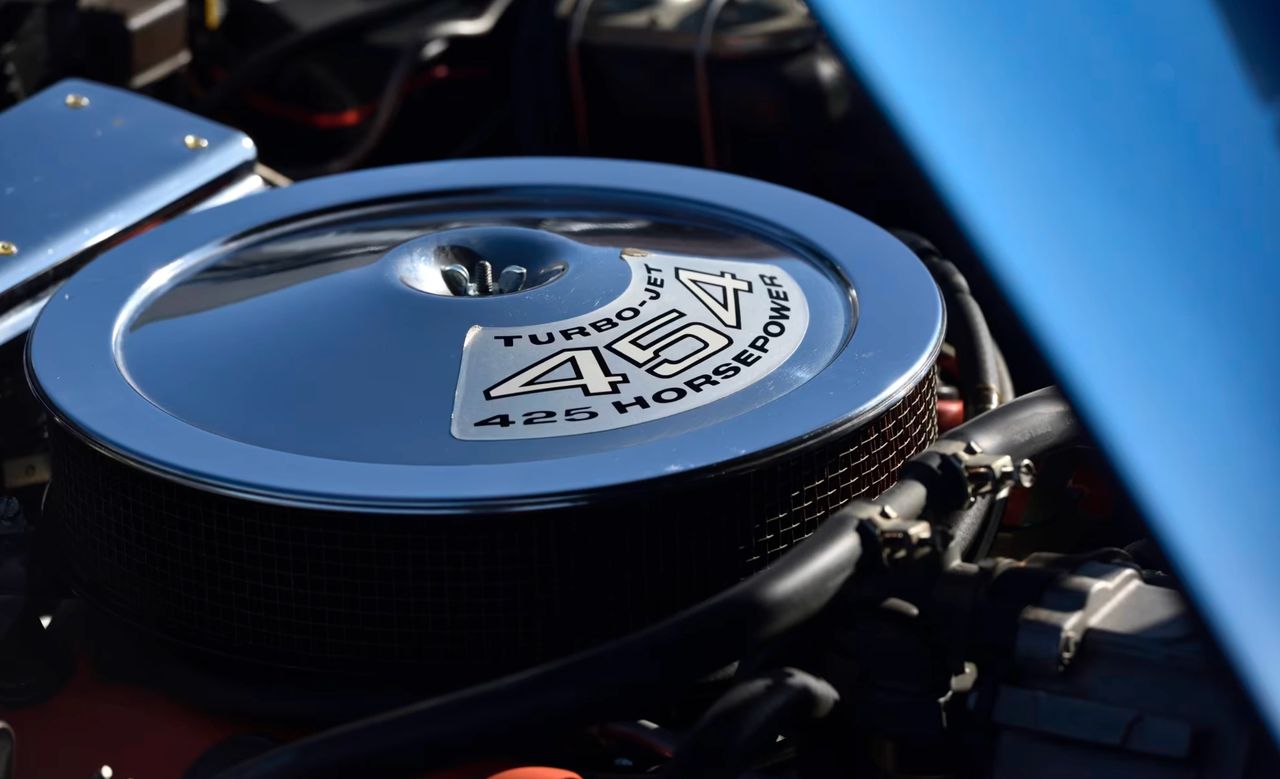
The LS6 name had already circulated in Corvette lore. For 1970, Chevrolet had planned a 454-cubic-inch LS7 engine rated around 460 hp, but it never made it past the order sheet; emissions pressure and corporate caution killed it before regular production. Instead, for 1971, engineers reworked the concept into a more emissions-friendly package with aluminum cylinder heads, 9.0:1 compression, and a slightly tamer cam profile—the LS6 we actually got.
Even in detuned form, the LS6 was no paper tiger. The official 425-hp gross figure made it the most powerful of the 1970–71 Corvette big-blocks, and period tests back that up. Quarter-mile times in the low-14-second range at around 102 mph placed the 1971 LS6 right alongside the baddest big-blocks of just a year or two prior.
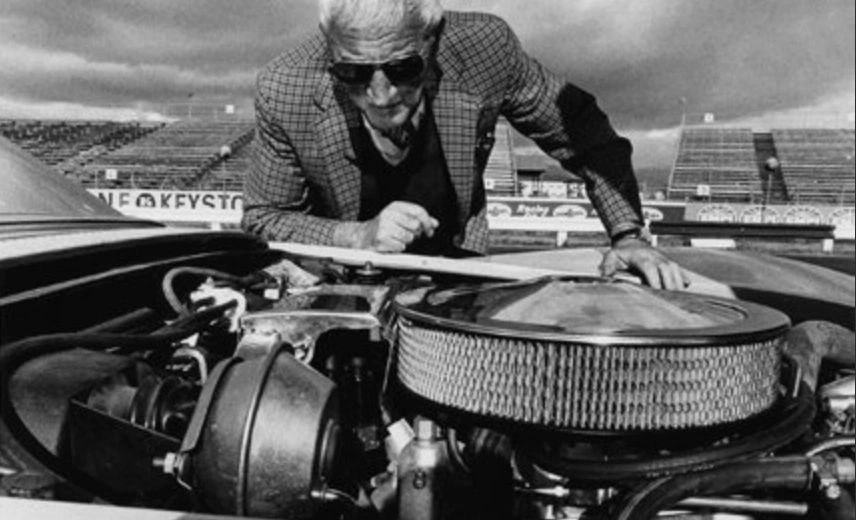
Zora Arkus-Duntov pushed hard for the LS6, seeing it as a way to keep Corvette’s performance credentials intact in an increasingly regulated market. But even he later wondered whether the program had been wise. Reflecting on the cost and complexity of aluminum heads for a street car, he admitted, “Maybe I make mistake. Aluminum heads are expensive and that weight doesn’t matter on the street.”
Buyers seemed to agree that the LS6 was both thrilling and over the top. Checking the LS6 added more than $1,200 to the window sticker—on a car that already started around $5,500—and it could only be had in limited drivetrain combinations. In the end, just 188 Corvettes left St. Louis with an LS6 under the hood. That makes the 1971 LS6 not only the most powerful Corvette of the early 1970s, but also one of the rarest big-block production Corvettes, period—and the last factory Corvette rated at more than 400 gross horsepower until the ZR-1 arrived in 1990.
ZR1 and ZR2: Homologation Specials in a Tightening World
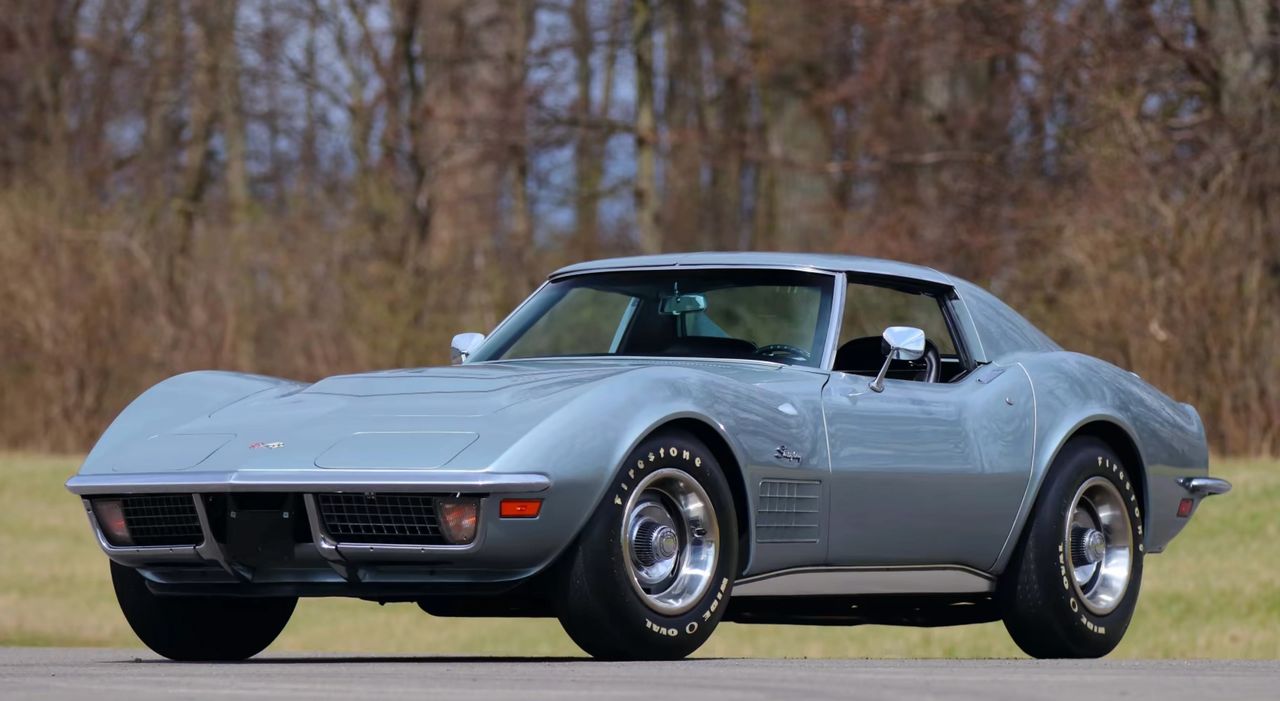
If the LS6 was the headline, the ZR1 and ZR2 were the fine print only racers read—and they are a huge part of why the 1971 model year matters.
The RPO ZR1 “Special Purpose LT1 Engine Package” was fundamentally a homologation kit for SCCA racing. Built around the LT1 small-block, it combined the solid-lifter engine with the M22 “Rock Crusher” close-ratio four-speed, heavy-duty brakes, an aluminum radiator with a metal shroud, a transistorized ignition, and a stiffened suspension package with revised springs, shocks, and stabilizer bars.
Luxury and convenience were deliberately left on the cutting-room floor. If you ticked the ZR1 box, you could not order power steering, air conditioning, a radio, power windows, rear-window defogger, deluxe wheel covers, or even the alarm system. This was not a Corvette for date night or cross-country cruises; it was a factory-blessed race car in street clothes.
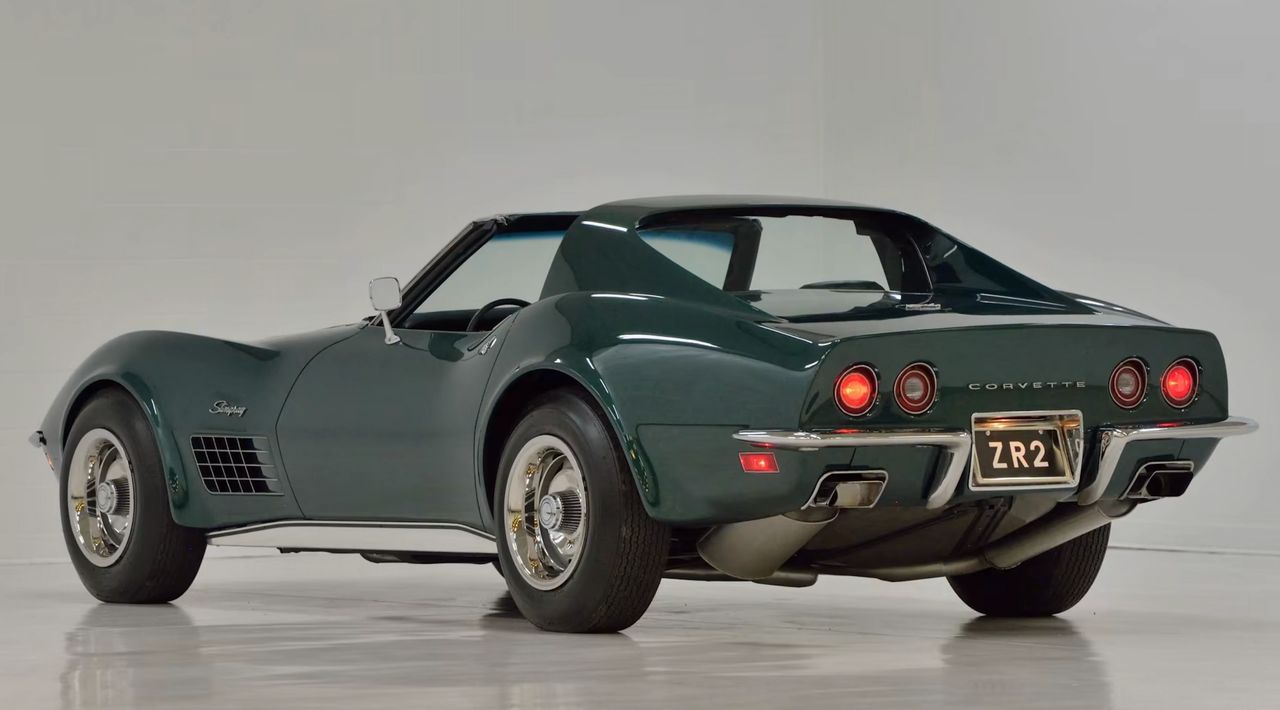
The ZR2 did the same thing, only with more cubic inches. Officially dubbed the “Special Purpose LS6 Engine Package,” it substituted the 454-cid LS6 big-block for the LT1 but retained the same collection of heavy-duty cooling, braking, and suspension parts—and the same ruthlessly stripped options sheet. You couldn’t even pair the LS6/ZR2 combination with an automatic; a four-speed manual was mandatory.
Given those compromises—and the cost—it’s no surprise that both packages stayed rare. Just eight 1971 Corvettes were built with the ZR1 package and only twelve with the ZR2, making them some of the rarest regular-production Corvettes ever assembled. In hindsight, they also represent the end of an era. After 1972, as compression ratios fell further and emissions hardware multiplied, GM would never again offer such unfiltered, racing-oriented equipment on a stock Corvette in quite the same way.
Subtle Tweaks: Fiber Optics, Headlamp Washers, and Interior Detail
Because so much engineering bandwidth was consumed by emissions calibration and fuel compatibility, visible changes to the 1971 Corvette were almost comically minor. Produced from August 1970, the ’71 cars were virtually identical to the 1970 models inside and out.
A few details are worth noting, though—especially for restorers and judges. Factory specs called for amber parking-lamp lenses in front, but in practice many 1971 Corvettes left the line with carryover clear lenses and amber bulbs, just like the 1970 examples. A revised fuel-filler door made refueling easier, and the automatic transmission’s selector quadrant now lit up at night for better visibility.
More significantly, 1971 marked the final year for several bits of distinctly late-’60s Corvette tech:
- The fiber-optic lamp-monitoring system, which displayed tiny light “echoes” from the exterior lamps on a panel atop the console, disappeared after 1971.
- The headlamp washer system—already fussy and rarely used—was also dropped, simplifying the front-end plumbing.
- The M22 “Rock Crusher” heavy-duty four-speed made its last appearance in 1971, before GM quietly retired it from the options list.
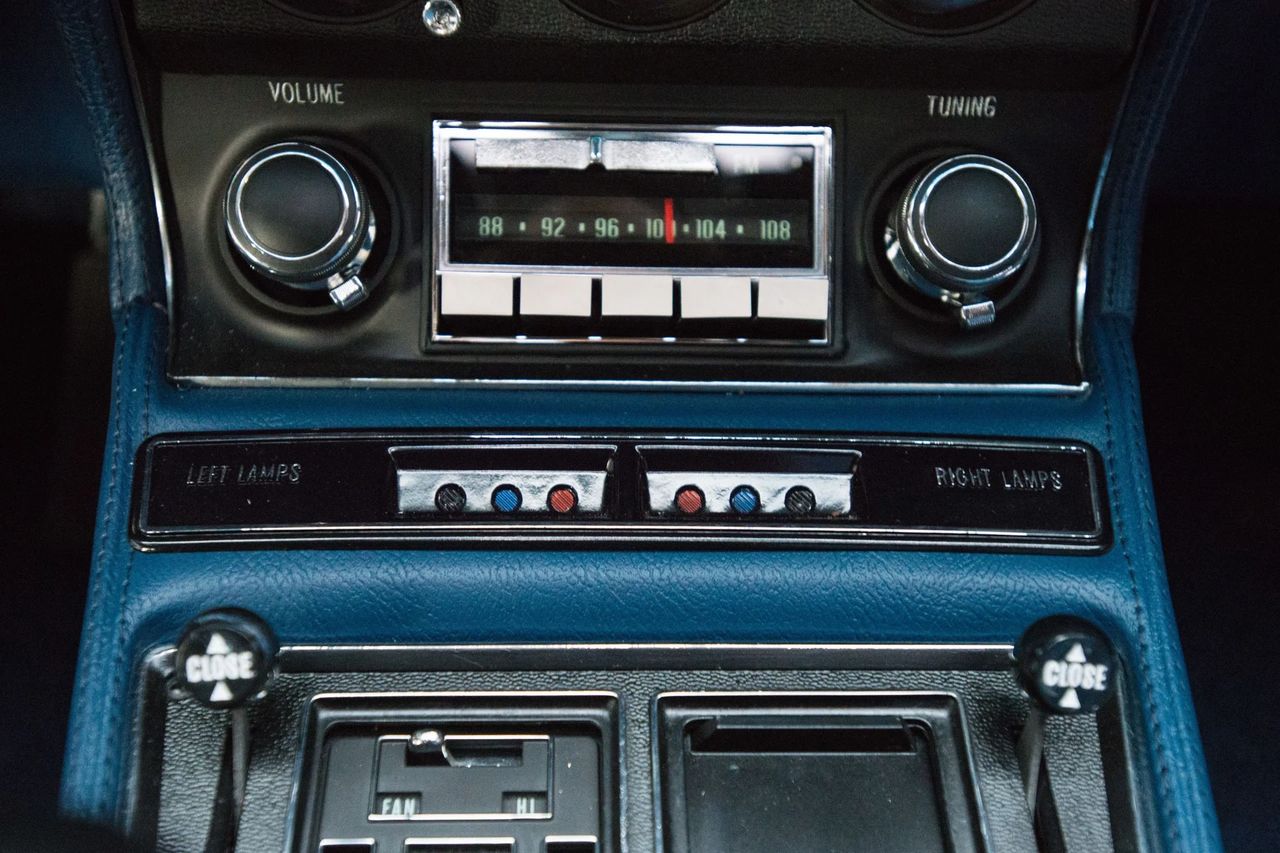
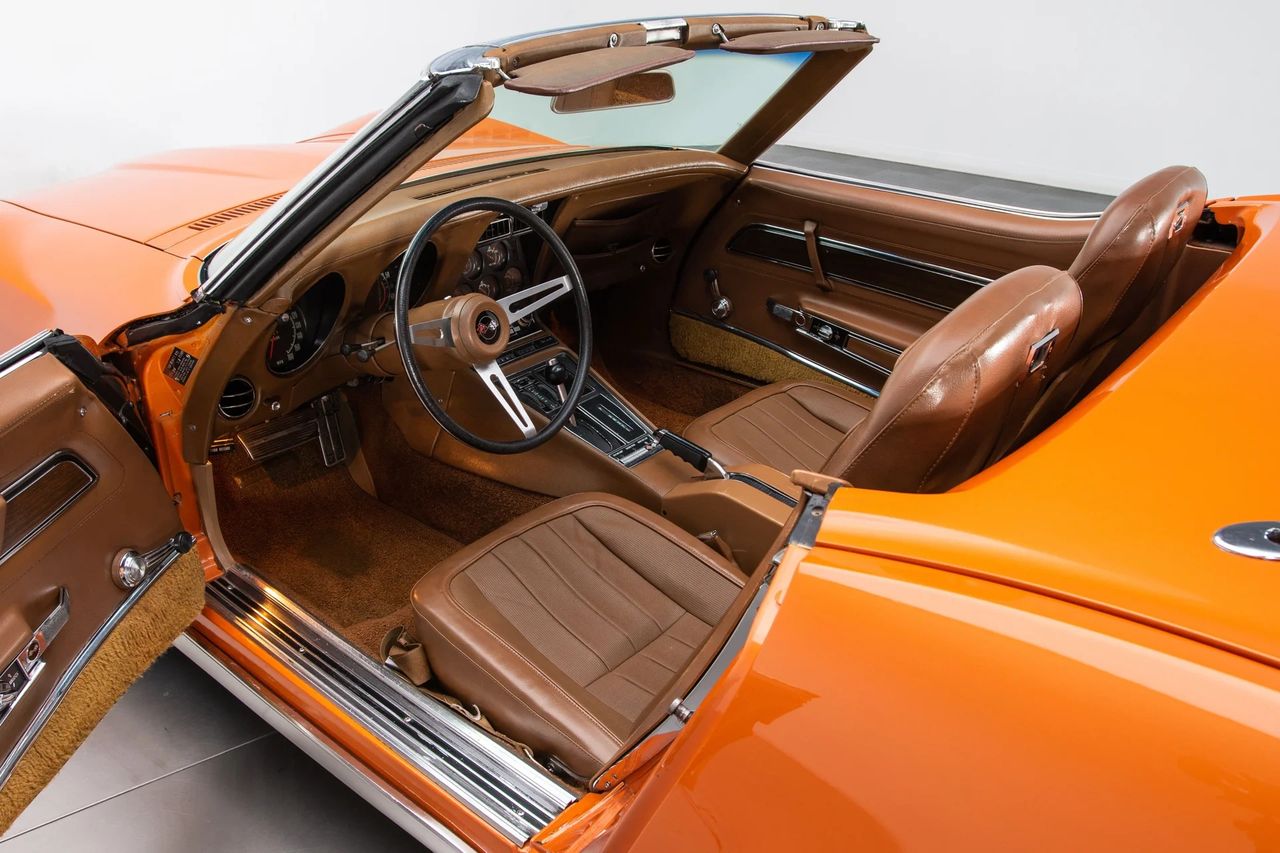
Inside, buyers could still opt for the Custom Interior Trim package, an upgrade that added leather seat surfaces, deeper cut-pile carpeting, lower-door carpeting, and wood-grain appliqués on the console and door panels. It was a subtle step toward the plusher, more GT-like Corvette interiors of the mid-1970s, and it did a lot to dress up what could otherwise be a fairly stark black cockpit.
And if there was any doubt that Corvette was inching from weekend racer toward all-season grand-tourer, the option take-rates tell the story. Air conditioning was ordered on 11,000-plus cars—just over half of production—and power steering appeared on the vast majority of 1971 Corvettes. Power brakes, tilt-telescopic steering columns, power windows, and AM/FM radios (including stereo) all posted strong numbers. By 1971, the majority of Corvettes were being built as genuinely comfortable, fully optioned cars, even if the ZR1 and ZR2 reminded everyone that a race-bred Stingray still lurked underneath.
1971 CORVETTE PAINT OPTIONS: War Bonnet, Brands Hatch, and the Firemist Palette
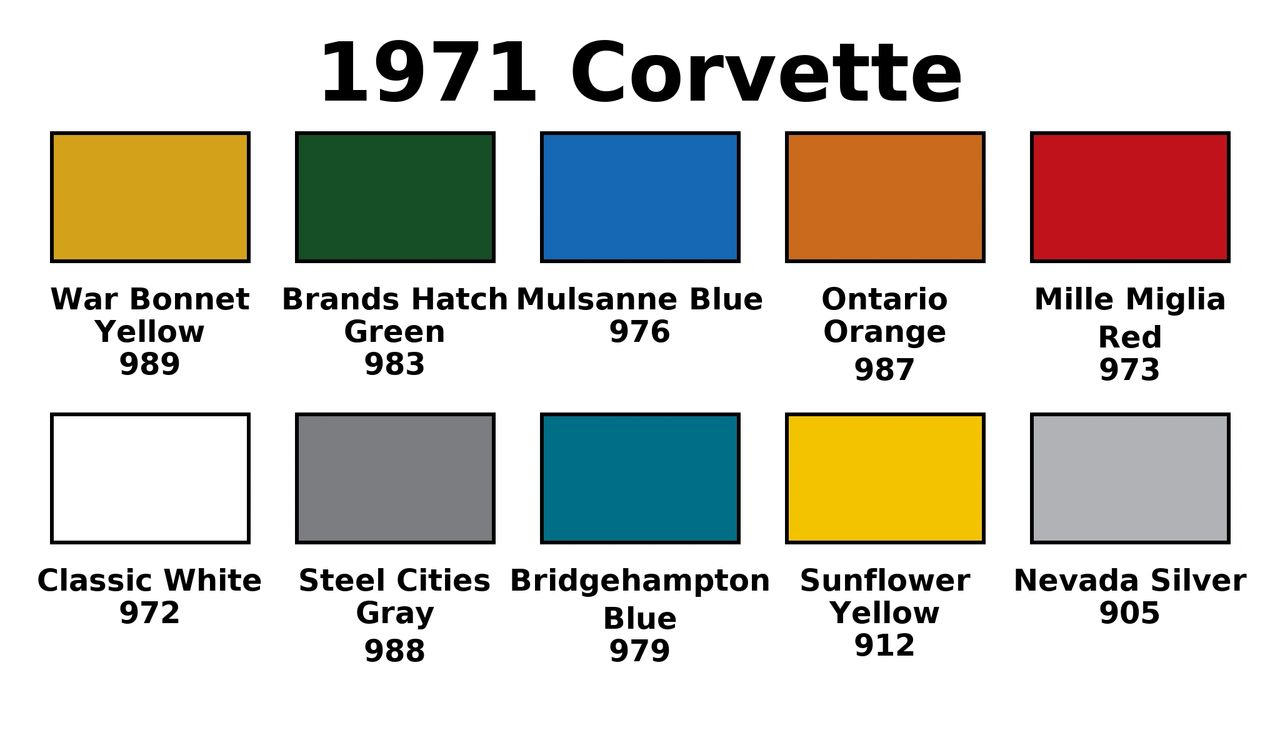
If Chevrolet wasn’t changing the shape of the Corvette for 1971, it was at least willing to play with the paint. The 1971 palette is a time capsule of early-’70s taste—part holdover late-’60s brashness, part new metallic sophistication. Ten exterior colors were offered:
- War Bonnet Yellow
- Brands Hatch Green
- Mulsanne Blue
- Ontario Orange
- Mille Miglia Red
- Classic White
- Steel Cities Gray
- Bridgehampton Blue
- Nevada Silver
- Sunflower Yellow
Three of those finishes—Ontario Orange, Steel Cities Gray, and War Bonnet Yellow—used extra metallic “firemist” content to give the C3’s curves more sparkle under showroom lights, something the period brochures leaned on heavily. Seen today, a War Bonnet Yellow or Brands Hatch Green ’71 with the right stance and wheels still looks every bit the early-’70s icon: equal parts muscle car and high-fashion GT.
On the Road: Performance in Context
So what was a 1971 Corvette actually like to drive?
With the compression cuts and emissions hardware, raw numbers did slip—especially compared with the fireworks of 1969–70. A 270-hp base L48 car was no longer a dragstrip terror, but it remained respectably quick in the real world, especially when paired with a four-speed and a sensible axle ratio. The LT1 cars, despite their reduced output on paper, still revved freely and transformed the Stingray into a sharp-edged, small-block sports car rather than a big-block bruiser.
The LS5 454, at 365 gross horsepower and mountains of torque, delivered exactly what buyers expected: effortless, tire-melting thrust at any sane rpm, with quarter-mile times in the low-14-second range in magazine tests. The LS6, when you could find one, shaved a few tenths more—period numbers in the 13.7-second, 102-mph range have become the oft-quoted benchmark.
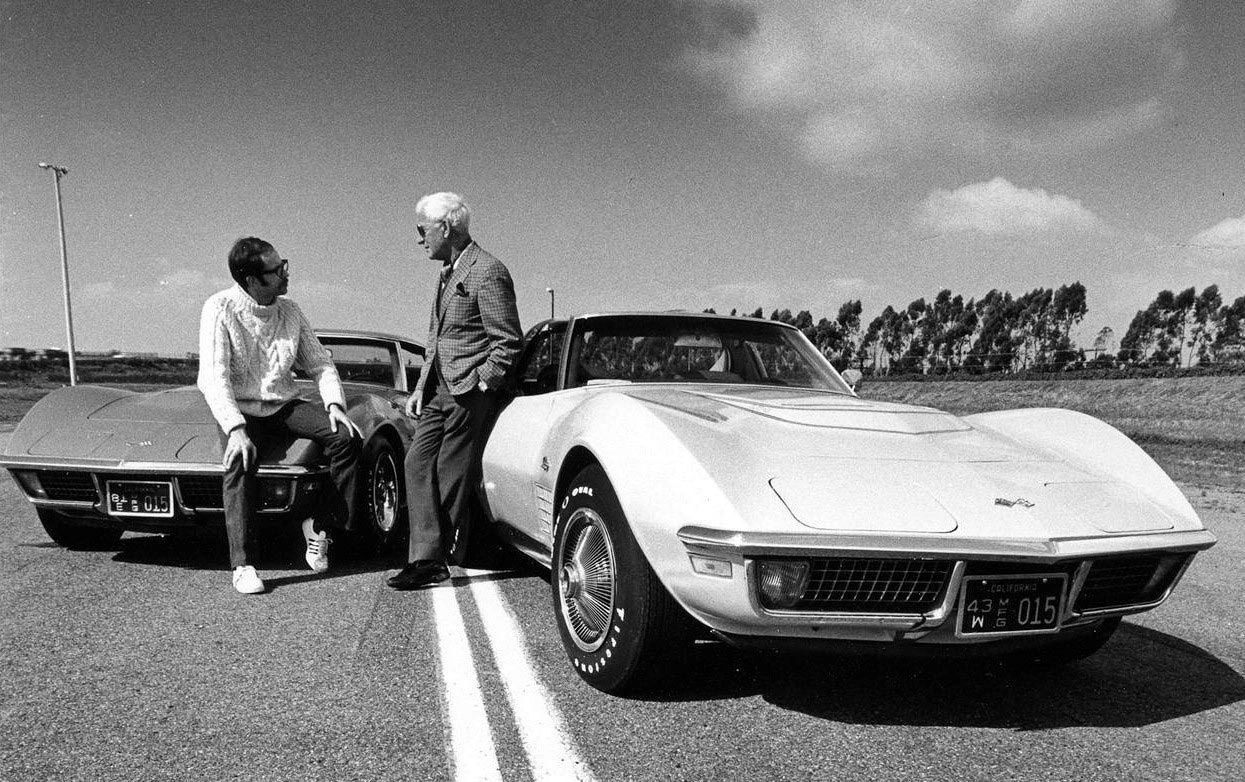
Chassis changes were minimal, but by this point, the C3’s basic handling package was well sorted. Independent rear suspension, four-wheel disc brakes, and a long wheelbase gave the Corvette a blend of stability and agility that contemporary testers continued to praise, even as they started to note that build quality and ergonomics lagged behind some European competitors. With the right tires and suspension options, a 1971 Corvette could still run hard on a road course, and that underlying competence is precisely why teams like John Greenwood’s continued to use C3s as racing platforms well into the decade.
1971 in the Bigger Corvette Story
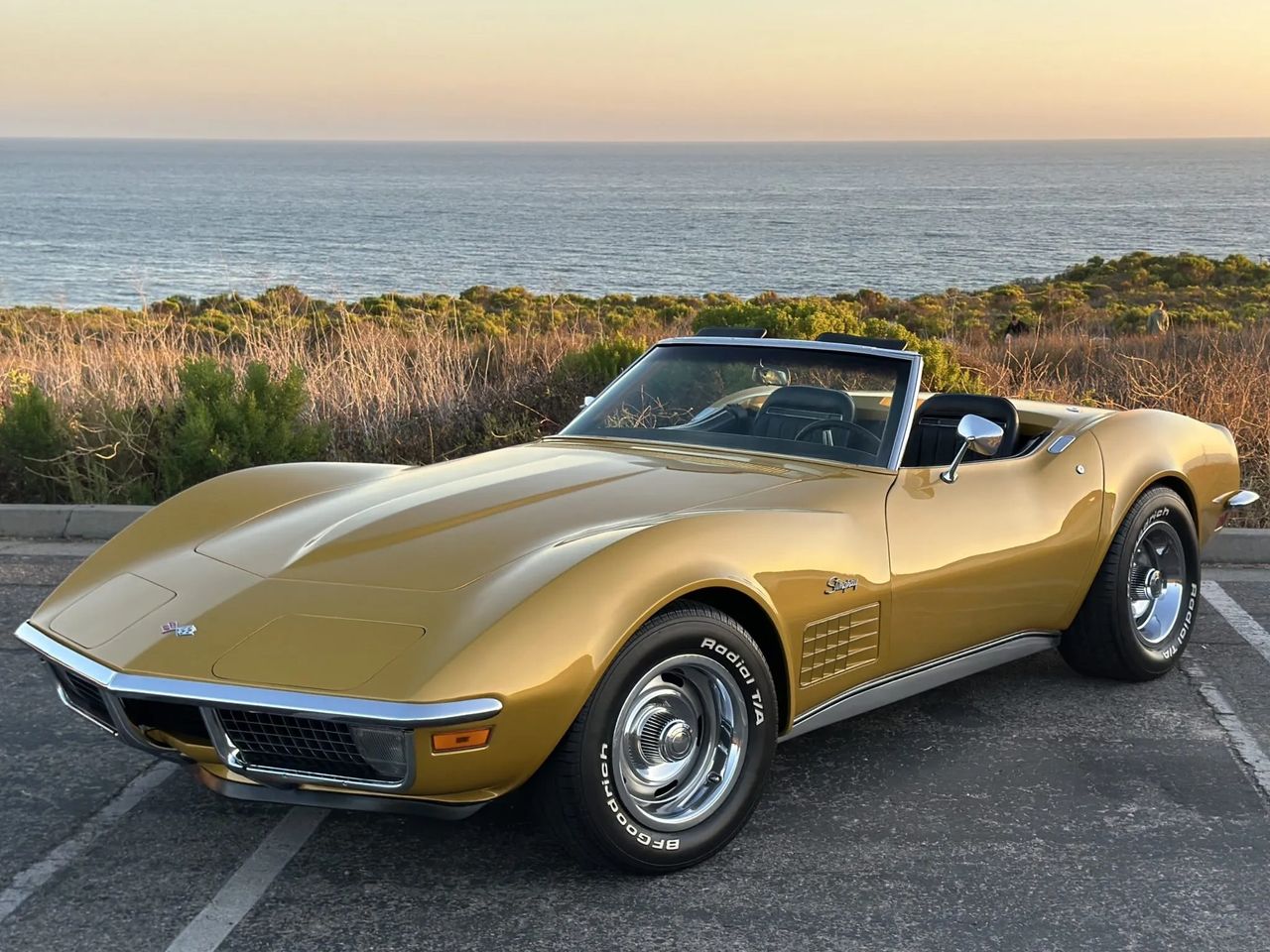
If you judge Corvettes purely by horsepower numbers and cosmetic novelty, the 1971 model can look like a lull—sandwiched between the peak-muscle 1970 cars and the more dramatically restyled (and bumper-revised) mid-’70s Stingrays. But in the broader Corvette arc, 1971 is much more important than that.
It is the year when GM’s corporate response to a changing world—environmental regulation, fuel uncertainty, and looming insurance pressure—fully reaches America’s sports car. Compression ratios drop, engines are recalibrated for low-lead fuel, and the company begins the transition from gross to net horsepower ratings. At the same time, the Corvette’s customer base continues to evolve, with more buyers ordering air conditioning, power steering, and luxury trim than ever before.
Yet the car still carries all the visual and mechanical drama of the late-’60s C3: chrome bumpers front and rear, side-swept fender lines, available high-compression big-blocks, and racing-oriented packages like ZR1 and ZR2. It’s the last time you could walk into a Chevrolet dealer and order, in essentially the same shape, a Corvette that could serve as a comfortable air-conditioned cruiser or an almost unstreetable road-racing weapon.
In that sense, the 1971 Corvette is less a “forgotten” or “least-changed” model than it is a snapshot taken at the precise moment when two eras overlap. On one side, the wide-open performance culture that produced Tri-Power 427s and solid-lifter 302s; on the other, the regulated, efficiency-minded, globally entangled world that would shape the Corvette’s next half-century.
The men and women in St. Louis may not have known all of that as they tightened bolts and checked gaps on War Bonnet Yellow coupes and Brands Hatch Green convertibles. But they did know that every Corvette they built carried their fingerprints—and that the car rolling past the end of the line was still, unmistakably, America’s sports car, even as the rules started to change.