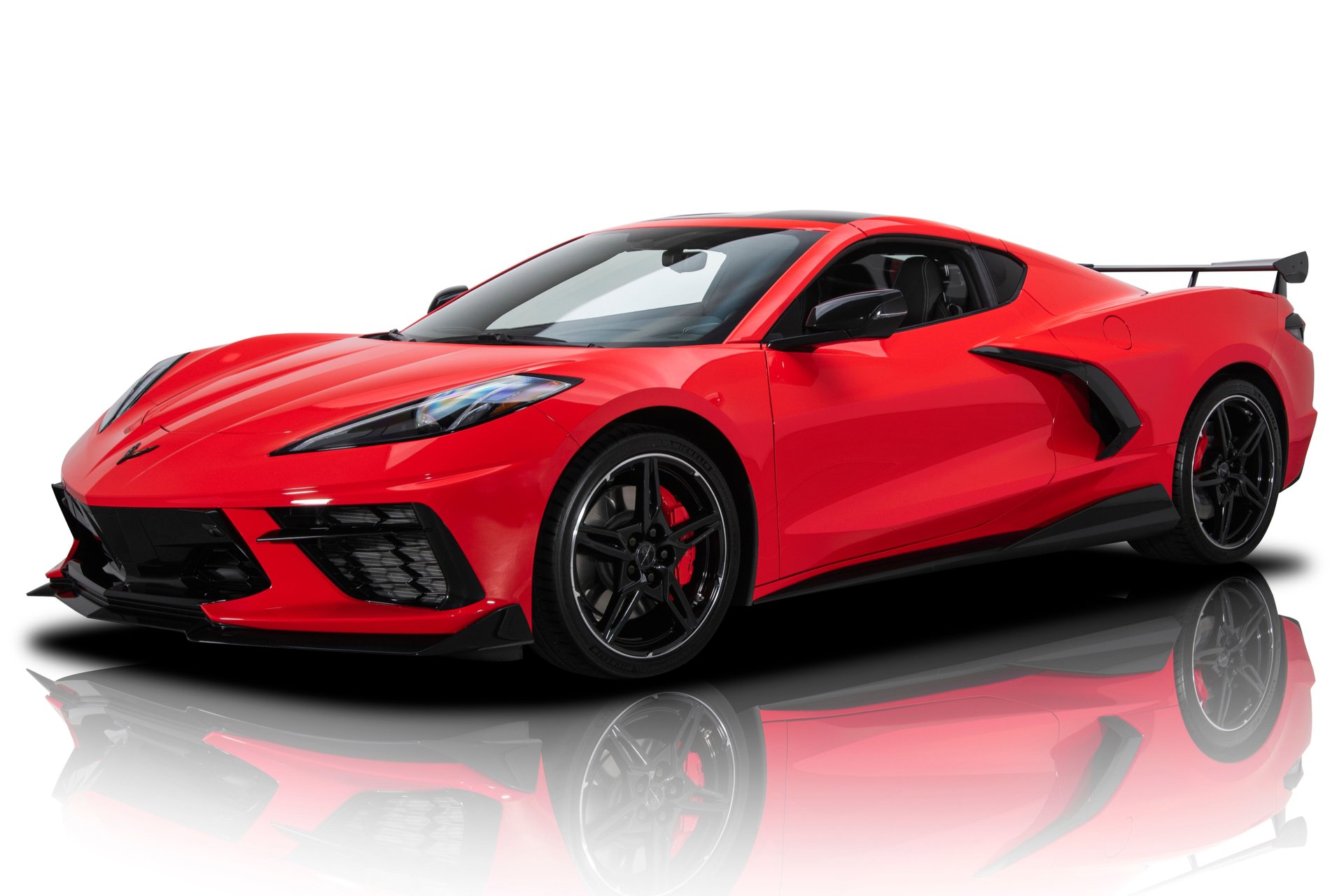
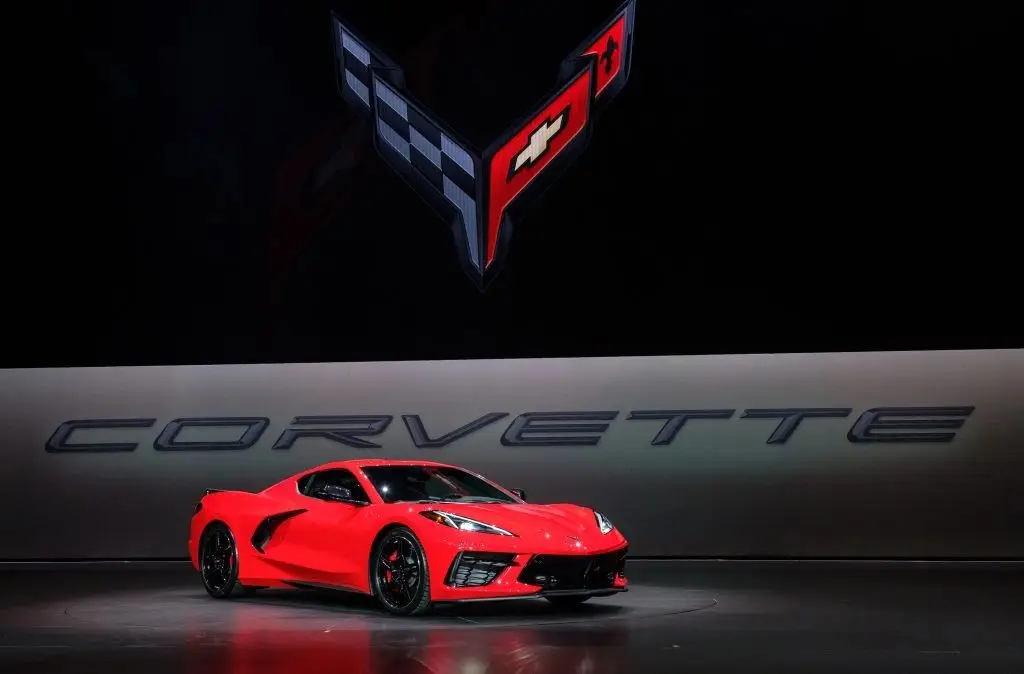
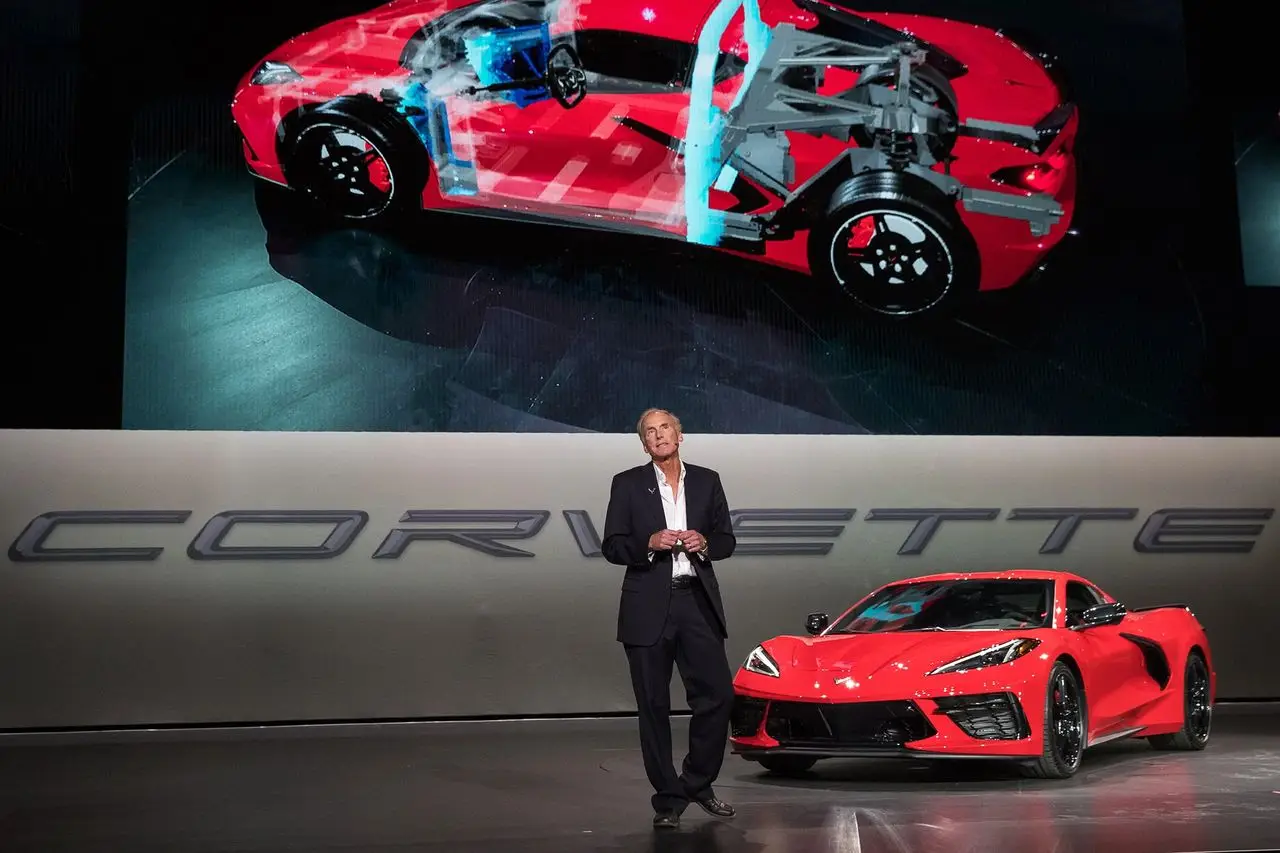
On July 18, 2019, beneath the soaring arches of a World War II–era blimp hangar in Tustin, California, Chevrolet finally pulled the covers off a car that had existed for decades as rumor, prototype, and dream. The eighth-generation Corvette, designated C8, emerged into the spotlight as the first production mid-engine Corvette in history. It was a seismic moment — one that simultaneously honored Zora Arkus-Duntov’s long-held vision and rewrote the DNA of America’s sports car.
For 66 years, Corvette had adhered to the same basic design formula: front-engine, rear-drive, small-block V-8. It was a recipe perfected over generations, honed on racetracks, refined in wind tunnels, and cherished on highways. But as Chief Engineer Tadge Juechter admitted bluntly, the C7 had taken that configuration as far as physics would allow. “We had taken (the) front-engine Corvette as far as it could go. The next level of performance demanded something new.” That something new was bold, risky, and unprecedented: a complete re-imagining of America’s favorite sports car.
The timing of its arrival was almost surreal. What should have been a moment of unbroken triumph collided with real-world crises. A strike by the United Auto Workers in late 2019 delayed the start of production. Then, just as Bowling Green Assembly finally began building the C8 in February 2020, the COVID-19 pandemic shut down the world. Orders piled up. Dealers were overwhelmed. Buyers who had placed sizable deposits could only watch and wait.
And yet, even as chaos swirled around it, the C8 Stingray emerged not only as a new Corvette, but as a declaration that Chevrolet could build a true supercar — and sell it for under $60,000.
The Mid-Engine Dream Fulfilled
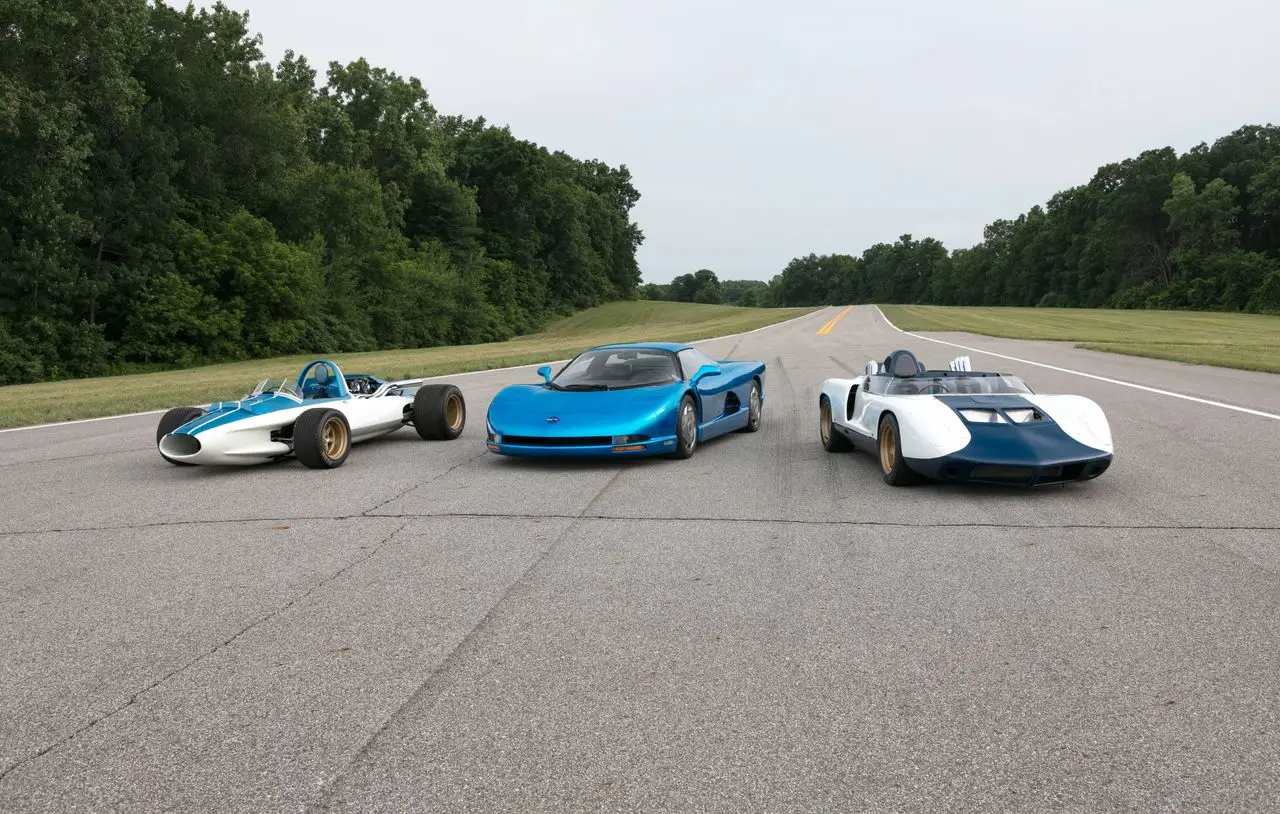
To understand why the C8 mattered so deeply, one must trace Corvette history back through its most daring experiments. Zora Arkus-Duntov, the “Father of the Corvette,” had pushed for a mid-engine layout since the late 1950s. He believed it was the only way to keep Corvette competitive with Europe’s finest. Through the decades, GM teased enthusiasts with mid-engine prototypes: the CERV I in 1960, a rolling test bed for chassis concepts; the sleek CERV II in 1964, intended as a potential Le Mans contender; the radical XP-882 and XP-895 concepts of the early 1970s, which previewed layouts and body proportions that looked more Ferrari than Chevrolet. The 1977 Aerovette hinted at the exotic but never saw production. Even the CERV III of the late 1980s, with its twin-turbo V-8 and all-wheel drive, reminded fans of what could be — and what never would.
But cost, tradition, and market positioning always intervened. Corvette was America’s attainable sports car, and Chevrolet wasn’t willing to gamble it on exotic architecture. Not until the limits of the front-engine layout were finally undeniable. The seventh-generation Corvette, the C7, had delivered staggering performance, but Juechter and his team knew they were boxed in. To move forward, the mid-engine leap could no longer be avoided.
The Tustin Reveal
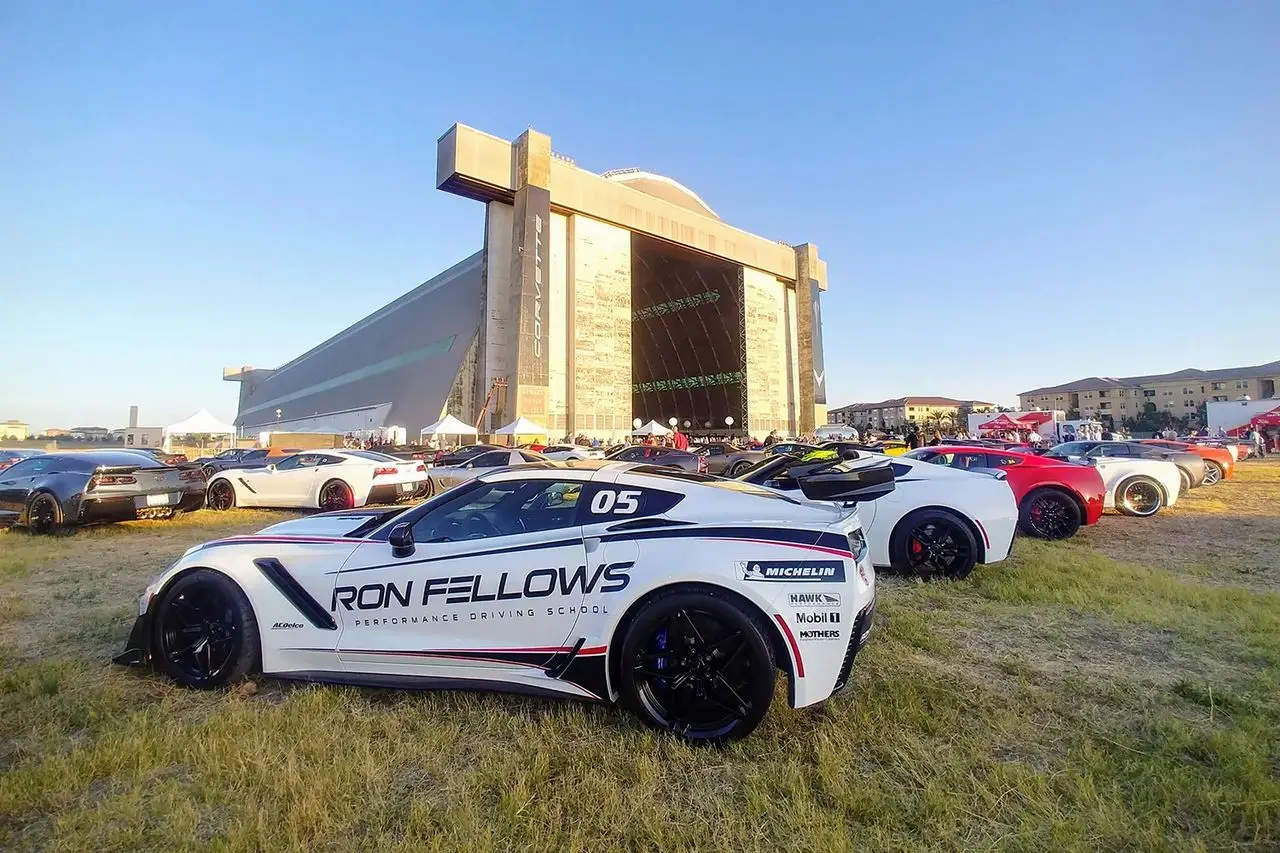
The reveal itself was as theatrical as the car. A cavernous hangar, dramatic lighting, and a crowd of journalists and enthusiasts set the stage for what GM President Mark Reuss described as nothing less than Corvette’s rebirth. When the car rolled onto the stage, the audience gasped. Shorter hood, cockpit pushed dramatically forward, muscular haunches over massive rear tires — it was instantly clear this was no mere evolution.
Chevrolet executives were quick to frame the shift. “Corvette has always represented the pinnacle of innovation and boundary-pushing at GM. The traditional front-engine vehicle reached its limits of performance, necessitating the new layout,” said Reuss. “In terms of comfort and fun, it still looks and feels like a Corvette, but drives better than any vehicle in Corvette history.”
The most shocking moment of the night came at the end, when Chevrolet announced pricing. Base MSRP: $59,995. For a mid-engine car with performance figures that rivaled supercars ten times its price, the announcement sent shockwaves through the industry. While Porsche, Ferrari, and McLaren had long commanded six-figure sums for similar performance, Corvette once again held to its contract with enthusiasts: world-class performance at an attainable price.
2020 CORVETTE Production Delays: Strikes, Shutdowns, and Restart
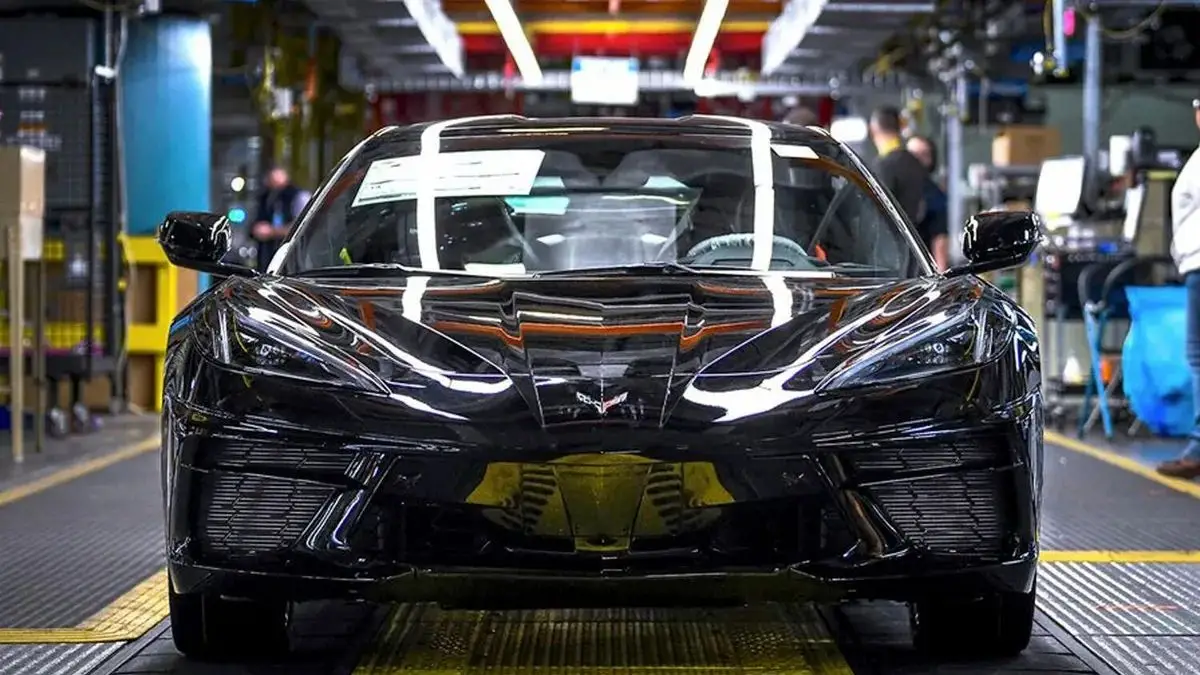
Even before the pandemic hit, the C8’s launch was complicated. A UAW strike in the fall of 2019 halted re-tooling of Bowling Green Assembly, delaying production until February 2020. Chevrolet marked the start of production with a tweet on February 3, accompanied by photos from the line. Buyers, some of whom had placed deposits the night of the reveal, finally had hope their cars were on the way.
But barely a month later, COVID-19 forced General Motors to suspend operations. On March 18, 2020, the company announced that no more 2020 Corvette orders would be taken. Dealers were instructed to convert unbuilt orders into 2021 models. For a moment, it seemed the 2020 model year might become one of the shortest and rarest in Corvette history.
By May, as case counts ebbed and the U.S. began reopening, Bowling Green cautiously restarted production. In August, the convertible variant entered assembly, proof that GM intended to honor its 2020 commitments. By September, reports surfaced of second shifts running deep into the night, with as many as 140 cars being built in a single day. In the end, 20,368 Corvettes were produced for 2020 — making it one of the rarest model years in modern Corvette history.
A New Shape: Form Follows Function
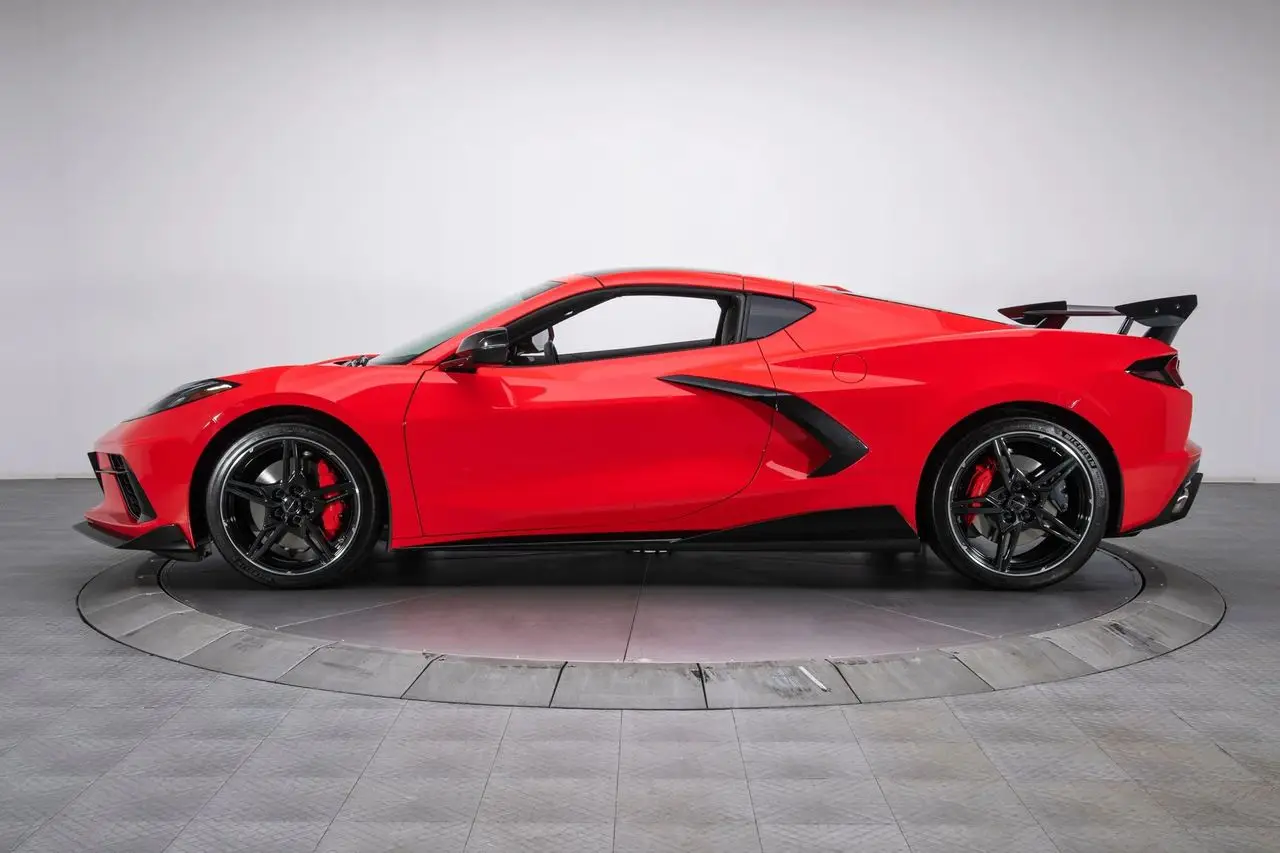
The C8’s styling was a revelation, but every angle was dictated by necessity. With the engine relocated behind the driver, the proportions shifted radically: a low hood, cabin thrust forward 16.5 inches, and wide rear quarters sculpted to manage airflow.

Exterior Design Manager Kirk Bennion put it simply: “We worked very hard to incorporate low drag and manipulate downforce. Every line serves airflow, cooling, or stability.”
The front end was defined by three large heat exchangers, channeling air to radiators and brakes. Massive side scoops funneled air to rear-mounted coolers. Underbody panels directed flow to generate stability, while the Z51 package added a rear spoiler capable of generating nearly 400 pounds of downforce.
Despite the radical departure, Corvette DNA was preserved. Longtime design head Tom Peters described it best: “The new Corvette is the culmination of all that it has ever been, refined by all we’ve learned and imagined. Done correctly, something magic happens — it becomes timeless.”
Distinctive cues marked the C8’s new era: low-profile LED headlights, hidden releases for doors and hatches, dual-element LED taillamps with animated turn signals, quad exhaust tips pushed to the outer edges, and a massive rear hatch that proudly displayed the LT2 engine through glass.
Chevrolet offered 12 colors, including classics like Torch Red, Arctic White, and Black, alongside new hues like Rapid Blue, Zeus Bronze, and Accelerate Yellow. Torch Red proved dominant, accounting for a quarter of production, while Rapid Blue emerged as a fan favorite. Zeus Bronze, polarizing though it was, stood out as one of the rarest.
Inside the Cockpit
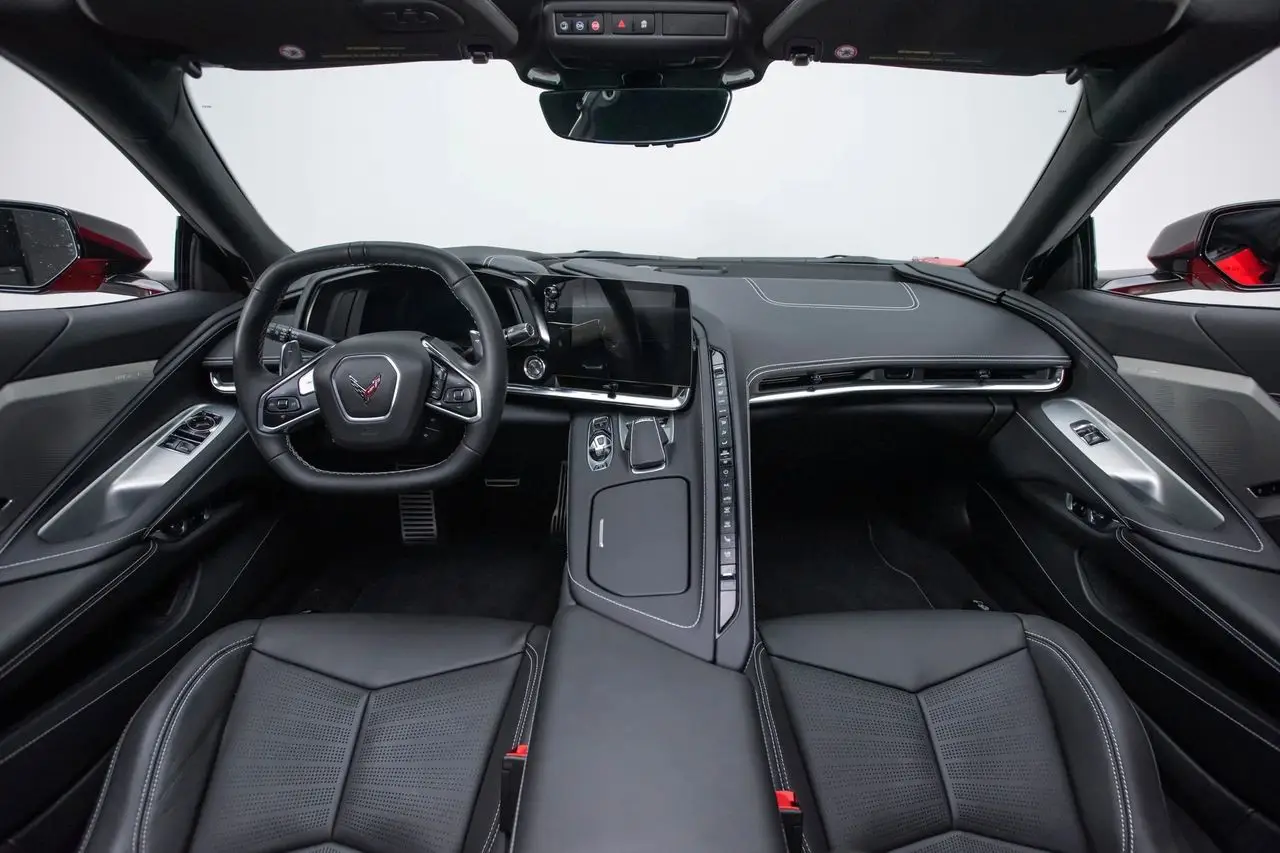
If the exterior was dramatic, the interior was revolutionary. Gone was the traditional American GT layout. In its place: a cockpit inspired by fighter jets. The steering wheel was squared off for improved sightlines, framing a 12-inch reconfigurable digital cluster. A narrow vertical strip of climate controls rose along the center console, recalling the switch stacks of aircraft cockpits.
Materials were elevated throughout. Hand-stitched leather, aluminum and carbon-fiber trim, and stainless steel Bose speaker grilles replaced the plastics of previous generations. Buyers could choose from six interior themes — from Jet Black to Morello Red — and personalize further with six seatbelt colors and optional contrast stitching.
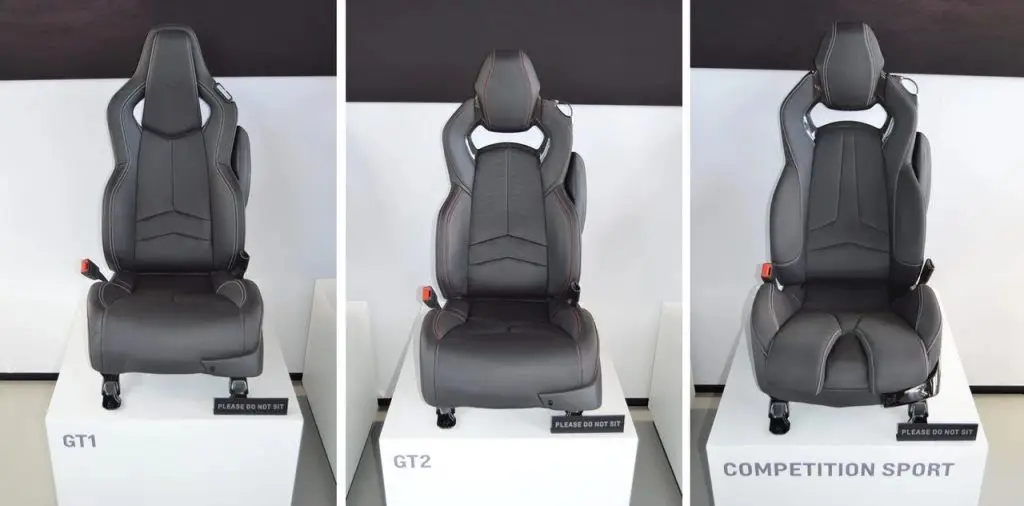
Three seat options defined the experience. GT1 provided comfort for everyday use. GT2 blended long-distance touring support with racing cues, featuring carbon-fiber trim and dual-density foam. Competition Sport, the most aggressive, offered bolstering for track duty and materials inspired by racing harnesses and protective textiles.
The overall effect was immersive. Drivers weren’t merely operating a machine; they were piloting it.
The LT2: Jewel in the Center
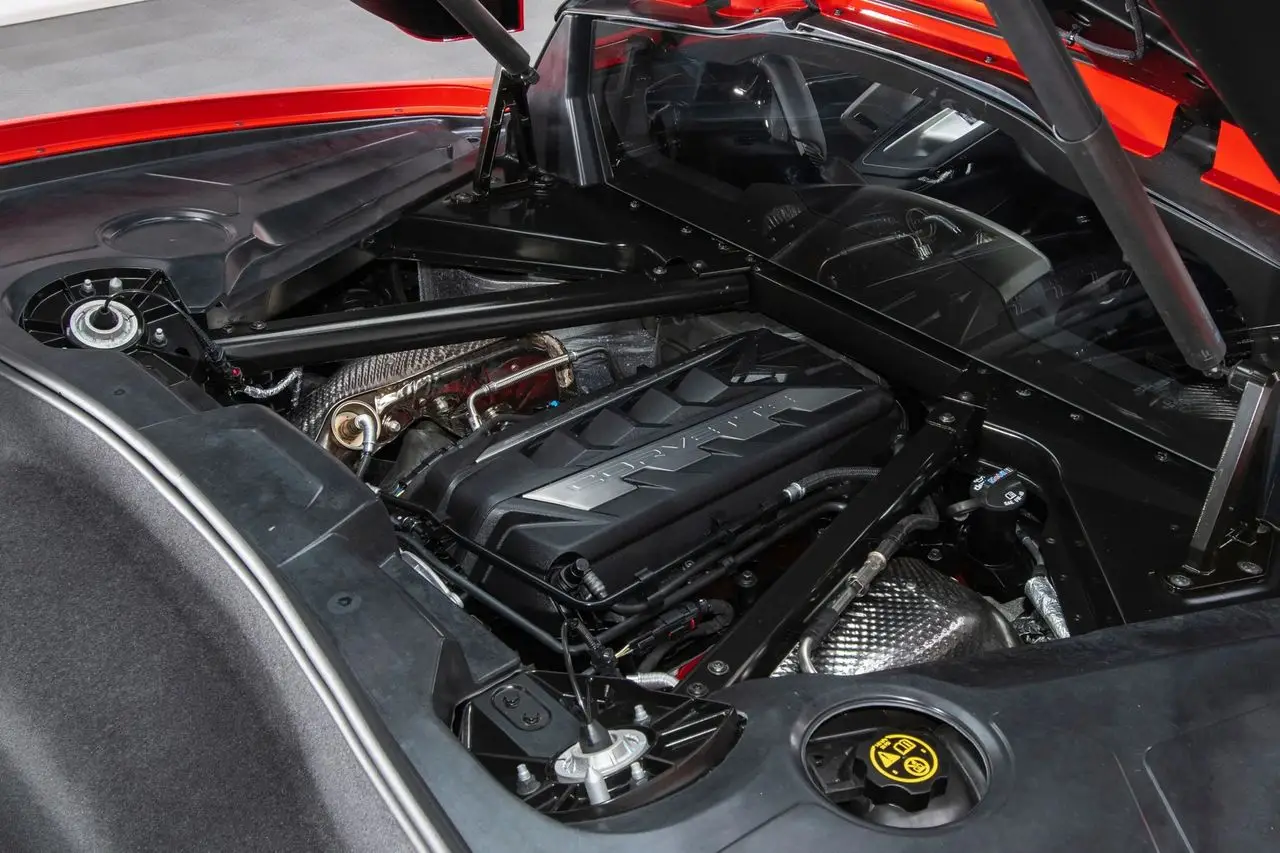
At the heart of the C8 was the LT2, a 6.2-liter small-block V-8 that represented both continuity and evolution. Rated at 490 horsepower and 465 lb-ft of torque in standard form — or 495 and 470 with the Z51 package — it was the most powerful base Corvette engine in history.
For the first time, the base Corvette featured a dry-sump oiling system. Three scavenge pumps ensured lubrication even under sustained lateral loads beyond 1g, while also allowing the engine to be mounted lower in the chassis. The result: a reduced center of gravity and improved handling balance.
Engineers treated the LT2 not just as a power plant but as a centerpiece. A 3.2-mm glass hatch displayed the engine, with details down to fasteners and heat shields designed for visual appeal. Jordan Lee, GM’s global chief engineer of small-block engines, summarized the philosophy: “Though now placed behind the driver, the LT2 gives the same visceral experience we all expect from Corvette.”
The Dual-Clutch Transmission
For the first time in Corvette history, no manual was offered. Instead, Chevrolet partnered with Tremec to develop an eight-speed dual-clutch transmission. It was a controversial decision — Corvette had long been associated with manual shifting — but the reasoning was sound. The DCT delivered near-instant gear changes, maintained packaging efficiency, and provided both the convenience of an automatic and the engagement of paddle-shift control.
Juechter explained: “The performance shift algorithms are so driver-focused, they can sense when you’re doing spirited driving — regardless of driving mode — and will hold lower gears longer for more throttle response.”
Drivers also gained new tools. A double-paddle declutch feature allowed manual clutch disengagement. Drive modes expanded to include MyMode, which saved personalized settings, and Z Mode, named after Corvette’s storied performance packages, which provided instant access to aggressive configurations.
Performance figures validated the choice: 0–60 mph in 2.8 seconds with Z51, quarter-mile runs in 11.2 seconds at 122 mph, and a top speed of 194 mph.
The Chassis: Bedford Six and Beyond
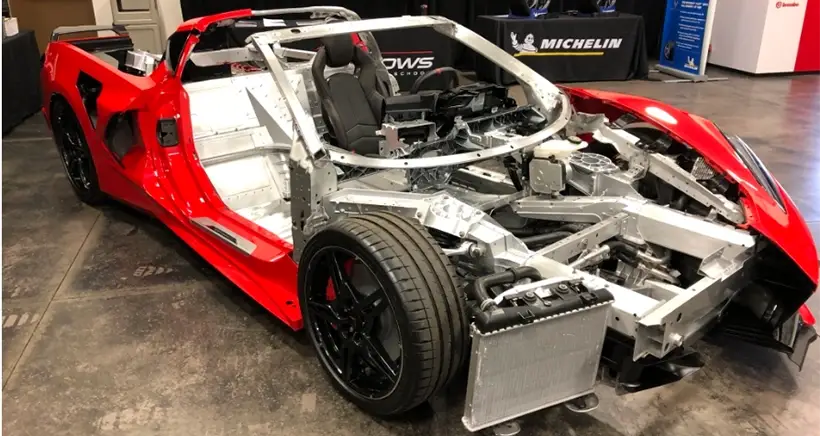
The C8’s chassis, designated Y2, was a clean-sheet design. At its core were six massive aluminum die-cast nodes, nicknamed the “Bedford Six” after the Indiana plant where they were produced. These structural elements tied the car together with remarkable rigidity, eliminating the need for a transverse leaf spring. In its place, Corvette engineers adopted coil-over suspension for greater flexibility and precision.
Steering benefited from the forward-set cockpit, enabling a shorter, stiffer column and quicker ratio. The brake system adopted electronic eBoost assist, replacing vacuum with by-wire precision. Magnetic Ride Control, updated to version 4.0, became available for even faster damping response — adjusting every millisecond to road conditions.
The result was a car that felt sharper, more responsive, and more stable than any Corvette before it.
Practicality Intact
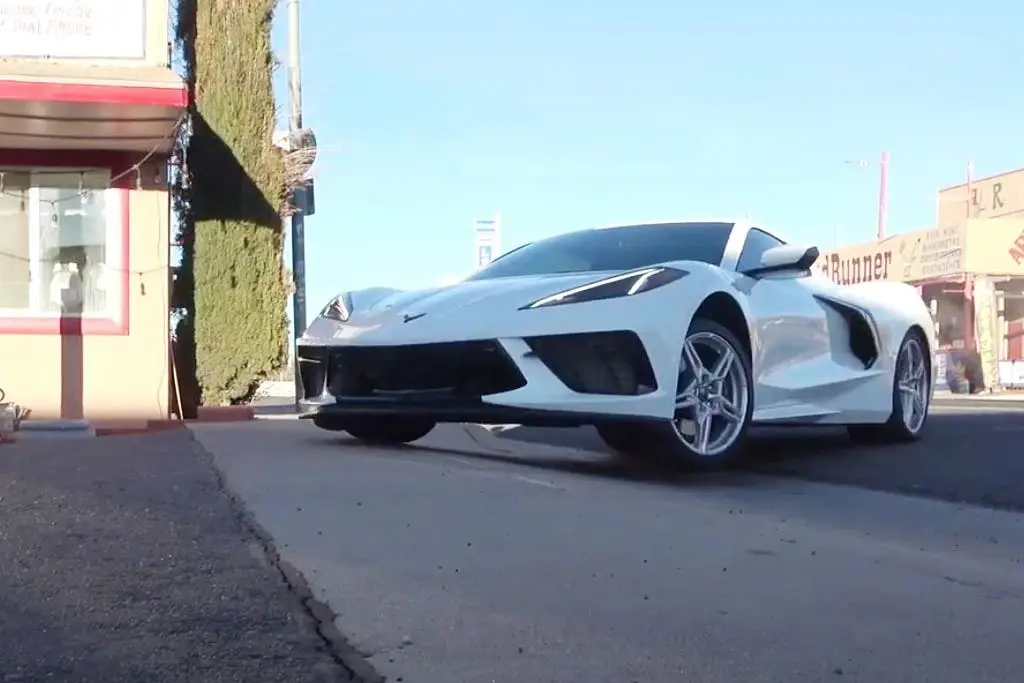
Despite its exotic layout, the C8 remained faithful to Corvette’s promise of practicality. The coupe retained a removable targa roof. Luggage capacity, split between a front trunk and rear compartment, totaled 12.6 cubic feet — enough for two golf bags, a point Chevrolet proudly emphasized.
The front-lift system, one of its most ingenious features, raised the nose 40 mm (1.6 inches) in less than three seconds and could memorize up to 1,000 GPS locations, automatically lifting at familiar obstacles like driveways or speed bumps. In Tour mode, ride comfort remained supple enough for cross-country travel. In every sense, this was still a Corvette you could live with daily.
Convertible at the Kennedy Space Center
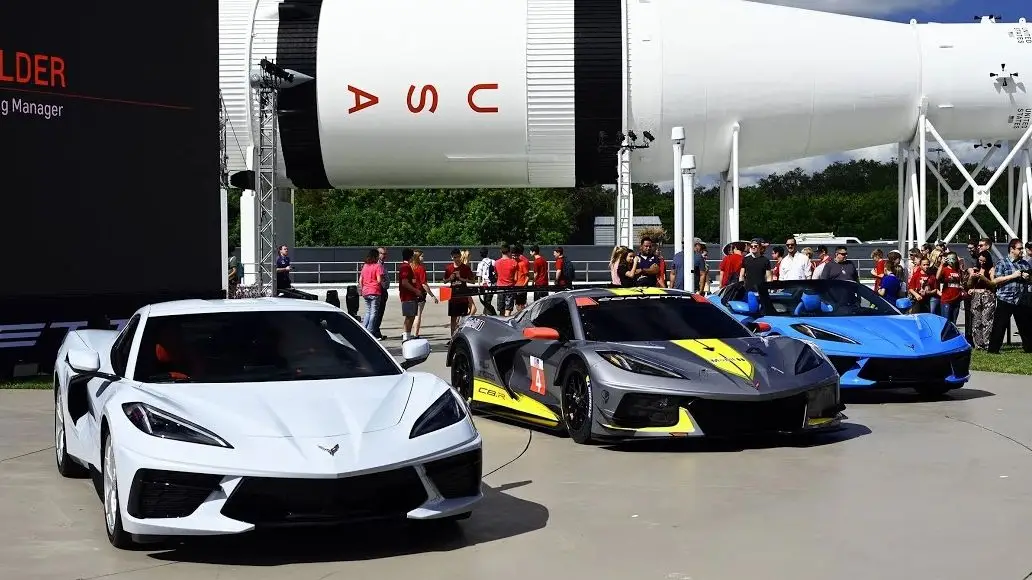
Just months after the coupe’s reveal, Chevrolet unveiled the convertible version at NASA’s Kennedy Space Center, a nod to Corvette’s long association with astronauts. For the first time, Corvette offered a power-retractable hardtop. Folding in just 16 seconds at speeds up to 30 mph, it preserved both aerodynamics and visibility of the LT2 engine under glass.
Reception and Demand
Critical response was almost universally glowing. The C8 was praised for its performance, refinement, and value. It was named MotorTrend’s 2020 Car of the Year, with testers marveling at its stability and comfort at speed. Other outlets echoed the sentiment: the C8 wasn’t just a great Corvette — it was a world-class sports car.
Owners embraced it with equal enthusiasm. Most opted for the Z51 Performance Package. The most popular configuration? A Torch Red coupe with Z51, GT2 seats, and the Performance Data Recorder. Nearly three-quarters of all 2020 Corvettes carried Z51, while more than half were ordered with front lift.
Demand outstripped supply almost immediately. With production constrained by strikes and the pandemic, resale values skyrocketed, with many cars selling well over $100,000 on the secondary market.
Legacy
The 2020 Corvette Stingray was more than a generational change. It was a philosophical leap — one that fulfilled Zora Arkus-Duntov’s mid-engine dream, reset expectations of what Corvette could be, and established a foundation for future models like the Z06, E-Ray, and beyond.
It launched into chaos, but it emerged triumphant. Against strikes, shutdowns, and global uncertainty, it proved that Corvette’s essence — value, ingenuity, and unrelenting performance — could survive even the most turbulent of times.
Closing Thoughts
To drive a 2020 Corvette today is to experience both engineering ambition and historical significance. It represents the end of one era and the beginning of another. Where earlier Corvettes proved America could build a sports car, the 2020 Corvette proved America could build a supercar — and sell it for the price of a loaded pickup.
That is the enduring contract of the Corvette. Engine behind the driver, but heart still exactly where it belongs.