
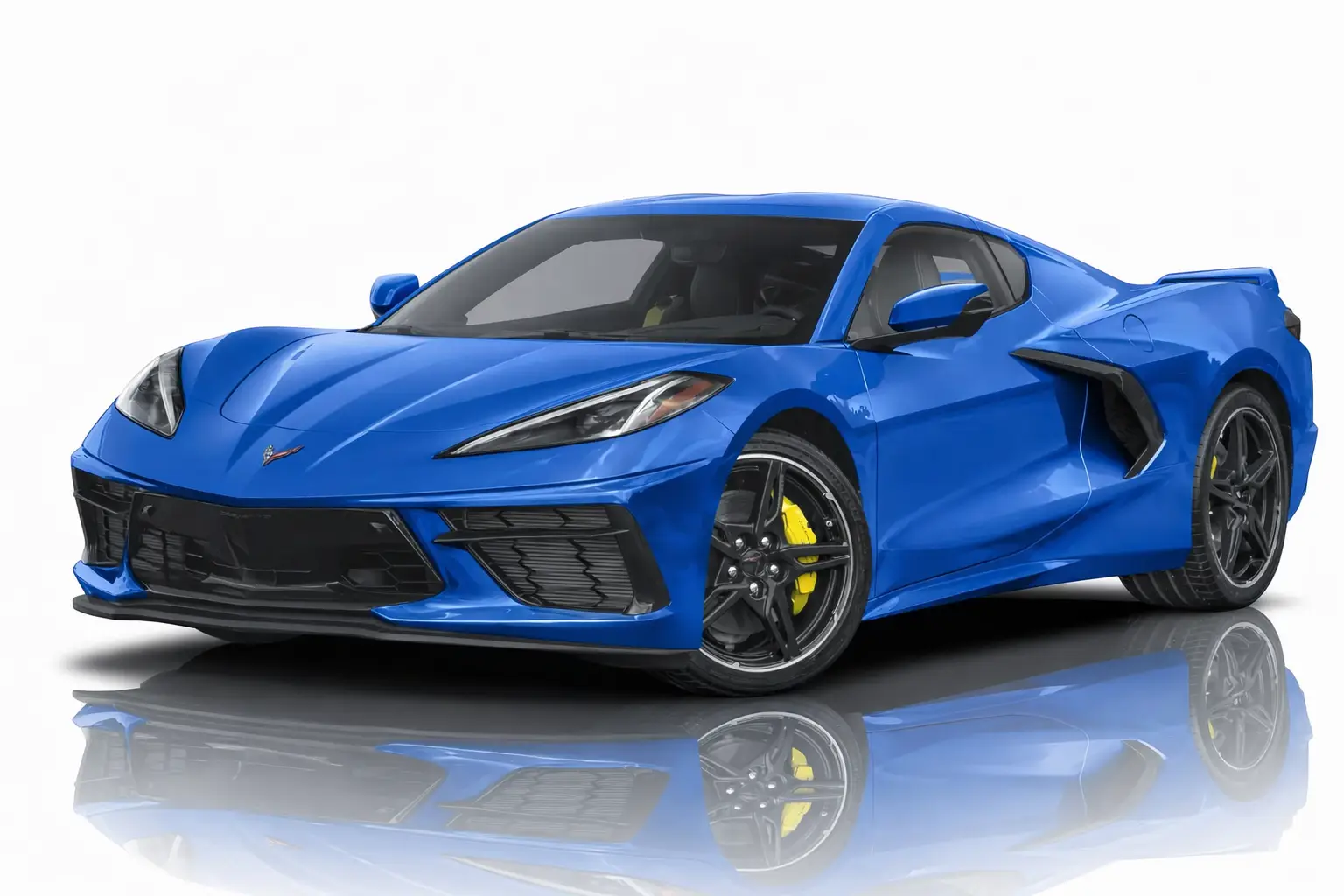
There are new-car years, and then there are years that change the orbit of a nameplate. The 2021 Corvette Stingray is the latter: a second-year car that had to shoulder first-year expectations, sustain global demand, and keep the mid-engine revolution on boil—while the world kept moving the goalposts. With a starting base price of less than sixty thousand dollars when the model year began, the rest of the experience—supply chains, allocations, recalls, take-rates, colors, tech—became a living case study in how a modern halo car evolves in real time. This is that story, told through the facts, the data, and the lived experience of the people who tried to buy one.
From Strike to Shutdown: How 2021 Became the C8’s Real Launch Year

The C8’s path to “normal” was anything but. The runway everyone expected in late 2019 evaporated when the 40-day nationwide UAW strike shut GM’s plants from September 16 to October 25, 2019, idling Bowling Green before the mid-engine car ever saw a regular build. Local coverage in Kentucky captured the moment the lights came back on—October 29, 2019, the Corvette plant returned to full operations after “nearly six weeks” on pause—but the calendar damage was done. What had been penciled as a December start was pushed.
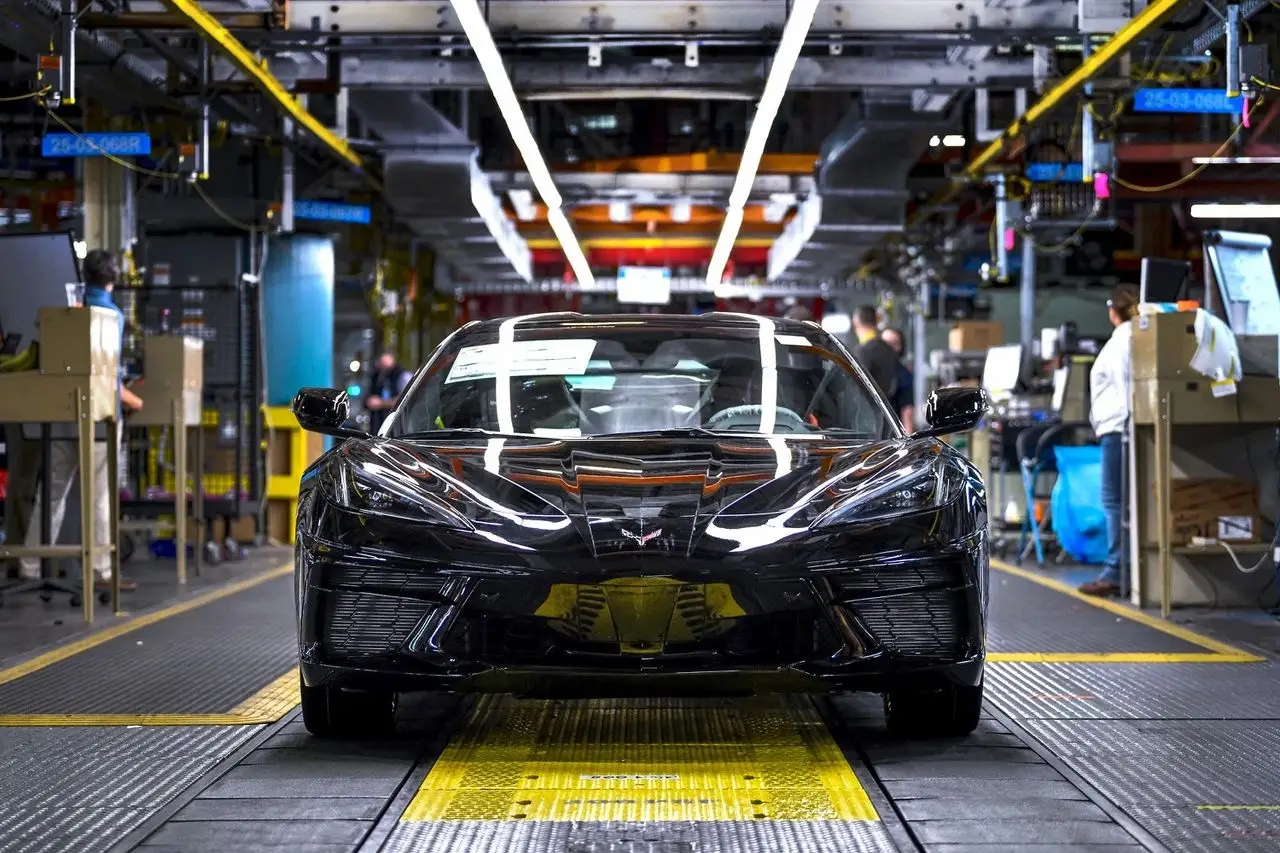
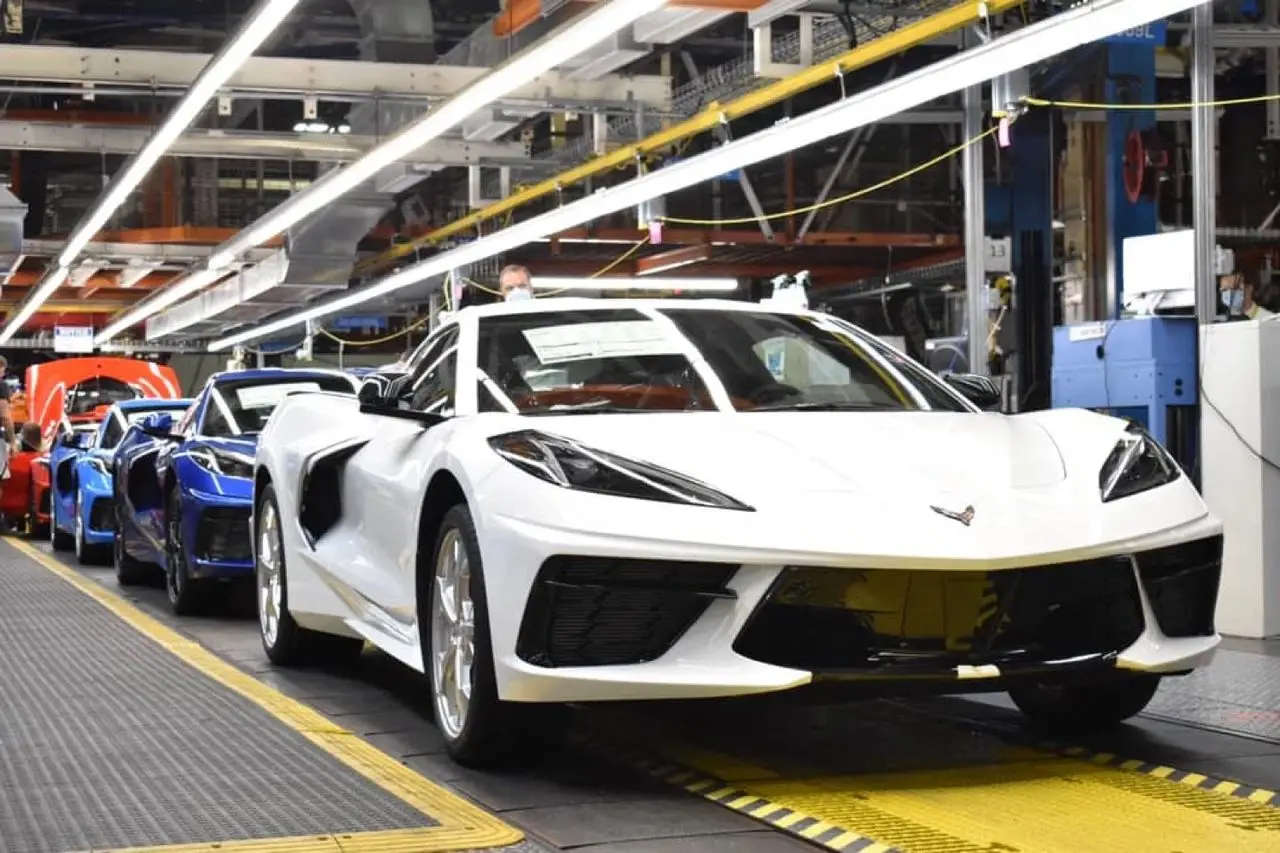
Inside dealer circles, the target had been clear: Start of Regular Production (SORP) was originally slated for the week of December 2, 2019. That plan—already tight for a clean-sheet car—slipped with the strike. Chevrolet regrouped, finished validation, and officially began 2020 C8 production on February 3, 2020. The first regular-production Stingray, a black-on-black coupe, rolled off the line that Monday morning—an image that ran everywhere from MotorWeek to The Drive—and shipments to dealers were slated for late February/early March. It felt like the real launch at last.
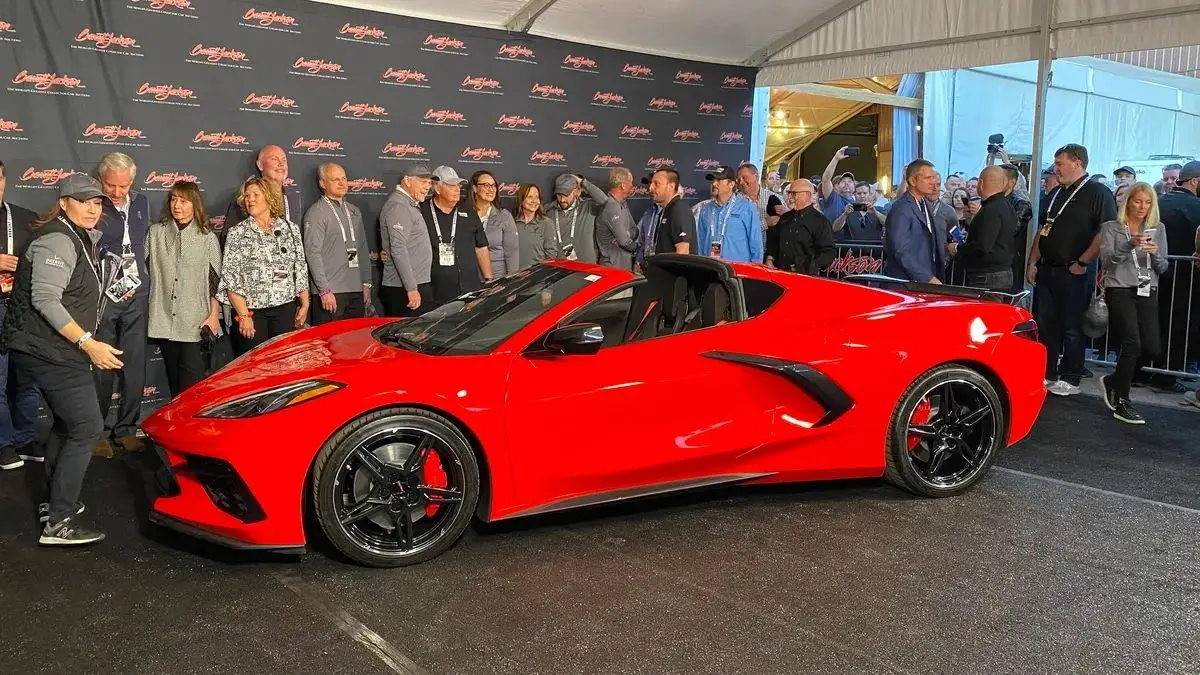
Even before that first car moved, the opening act had a headline: VIN 0001 sold for $3 million at Barrett-Jackson in January 2020, with Rick Hendrick winning the hammer and the money benefiting the Detroit Children’s Fund. It was theater with purpose, and a signal that the C8’s cultural wattage extended well beyond the spec sheet.
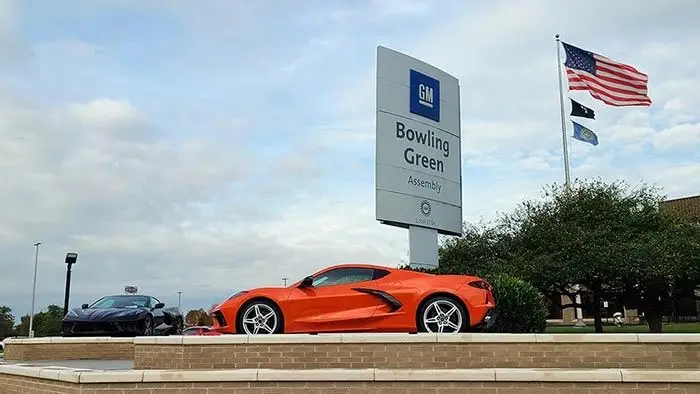
Then the world changed. March 2020 brought COVID-19, and with it, a company-wide production halt. Bowling Green’s line shut down at the end of the shift on Friday, March 20, just weeks after SOP. Chevy simultaneously closed the 2020 order books—the stated reasons: overwhelming demand and a launch already shortened by the six-week strike—while also simultaneously hinting that 2021 ordering would open in late May. Public-health orders, parts logistics, and a suddenly fragile supply chain turned the rest of the inaugural C8 model year into a salvage operation.
The restart was tentative. Kentucky’s phased reopening allowed manufacturing to resume in late May; local reporting and enthusiast outlets pointed to the week of May 25, 2020 for Bowling Green’s return, with GM Authority noting that even if the plant turned on, upstream components—LT2 engines from Tonawanda in New York, among others—could govern the actual cadence. What had looked like a sprint became meter-in, meter-out production. Convertible builds didn’t join the party until August 3, 2020.
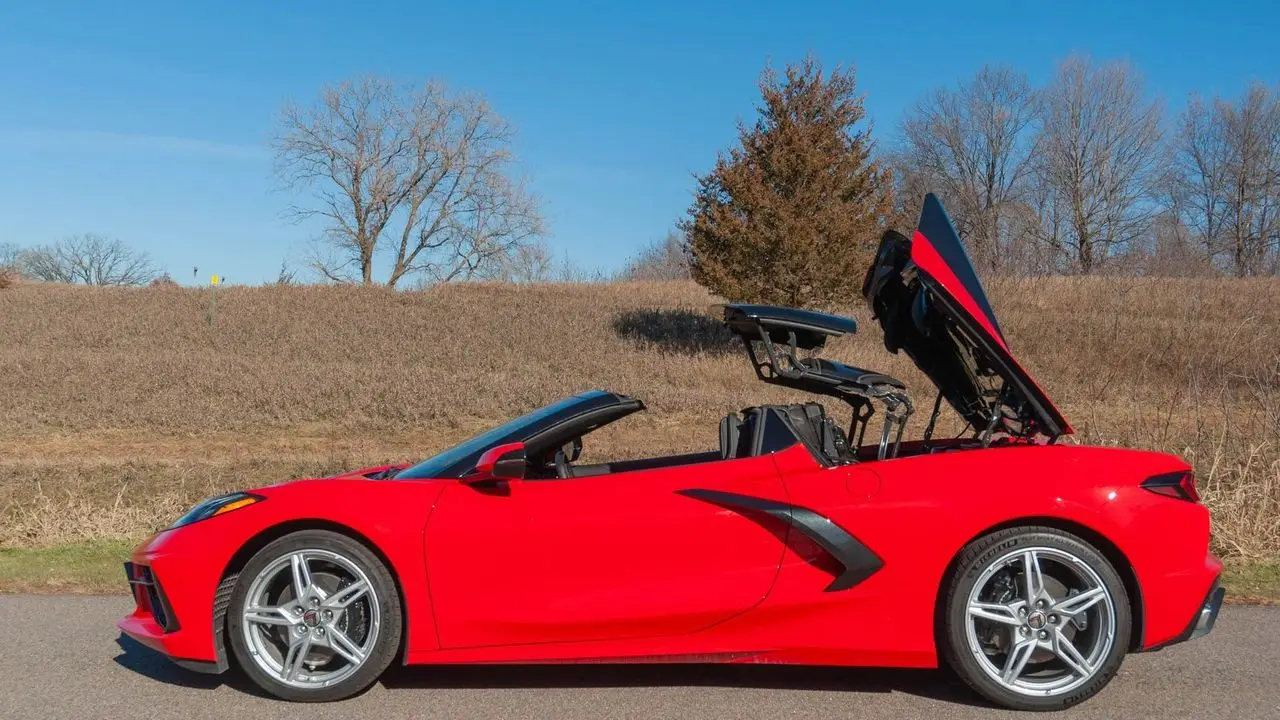
By late summer, Chevrolet started leveling with customers: some 2020 sold orders would be moved to 2021. The base price held, but a few options—Z51 pieces, Front Lift, certain wheels—carried 2021 pricing when those builds flipped model years. On forums and in inboxes, it stung, but the intent was straightforward: finish the first-year cars you can, secure parts, and get the rest built under a 2021 VIN before momentum is lost.
The numbers tell you how compressed 2020 really was: 20,368 total Stingrays built for the inaugural year (16,787 coupes, 3,581 convertibles), versus 26,216 for 2021 after the line stabilized. Chevrolet and local media telegraphed the baton pass in plain language that spring—close out 2020 early; build the 2021s and keep the line moving—and that’s exactly what happened. In practice, 2021 became the C8’s first full-throttle production year, the moment demand that had backed up behind a strike and a pandemic finally met sustained supply.
Even then, headwinds lingered. As 2021 wore on, unplanned downtime and parts constraints forced GM to do what it had avoided the year before: suspend new sold orders for 2021 on March 26, 2021, and later cancel the June allocation cycle, with a promise to build only those orders already at status 3000 or higher. It wasn’t the victory lap anyone wanted, but it spared buyers a second round of false starts—and it closed the loop on a two-year launch defined more by resilience than by ribbon-cuttings.
What reads like a simple paragraph in retrospect was, in the moment, a rolling triage: a strike that stole the runway, a virus that shut the runway, and a manufacturer determined to get the airplane airborne anyway. That’s why the 2021 Stingray feels like the true beginning. It wasn’t just “year two.” It was the year Chevrolet finally got to build the mid-engine Corvette at speed—and the year thousands of buyers who’d been stuck on the wrong side of timing finally got their keys.
What Actually Changed for 2021 (and Why It Mattered)
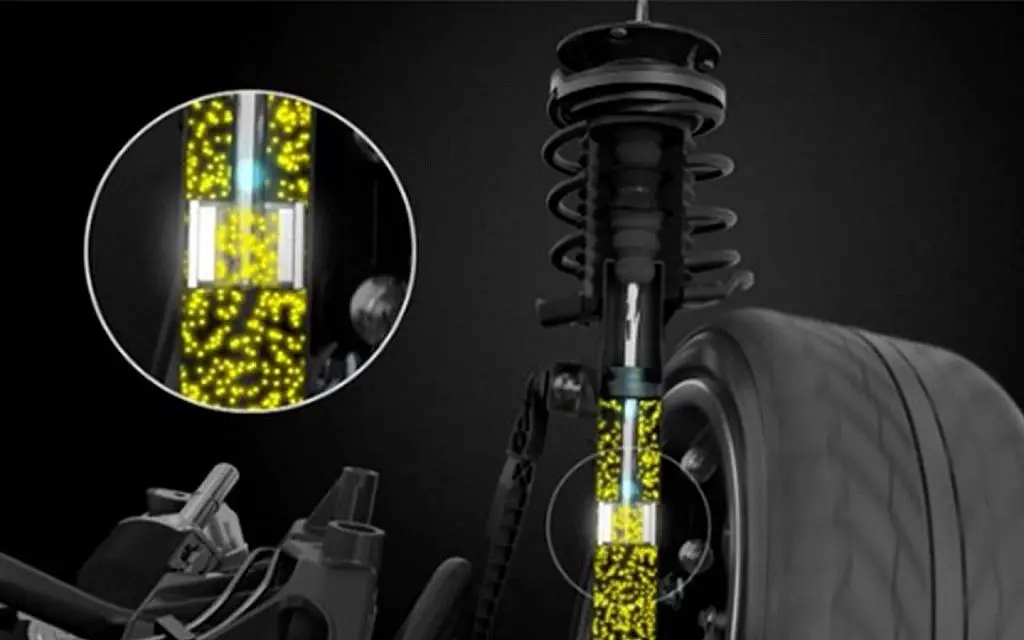
Chevrolet smartest move for year two wasn’t a flashy horsepower bump—it was discipline. By holding the line at launch—$59,995 for the coupe and $67,495 for the hardtop convertible, destination included—the team protected the C8’s value story while spending effort where owners actually live: ride quality, daily tech, and thoughtful customization. The headline example is Magnetic Selective Ride Control uncoupled from Z51. In 2020, those fourth-gen magnetorheological dampers were essentially a track-rat ticket; in 2021, FE2 let you spec the magic without the rest of the performance bundle. The hardware itself is deeply clever: a fluid seeded with microscopic iron particles flows through electronically controlled valves; when the controller sends current, the particles align and thicken the fluid, stiffening the damper in milliseconds. Wheel and body sensors continuously feed that controller, so Tour can breathe over broken pavement, Sport trims out secondary motions, and Track locks the car down with the kind of body control that makes mid-engine geometry feel inevitable. Owners could now build two very different Corvettes off the same core—one tuned for long, quiet miles and another eager for curbing—without giving up the essential character either way.
The cabin updates were small on paper and big in practice. Wireless Apple CarPlay and Android Auto removed the last cable from a driver-centric cockpit where real estate matters, turning the phone from a dangling accessory into a background utility that just works. The drive-mode visualization matured from “menu” to “mindset,” with clearer graphics that show what’s changing as you roll the mode wheel—steering effort, throttle mapping, exhaust, eLSD behavior, and, if you’ve chosen MRC, damping character. Flip into the new track-spec digital tach and the cluster prioritizes the LT2’s sweep and shift cues at a glance—exactly what you want the moment your world narrows to apexes and brake markers. All of this layers perfectly with Z-Mode, the one-button preset that lets you save your own blend of chassis and powertrain personality; it’s how owners made “their” C8 feel instant every time they climbed in.
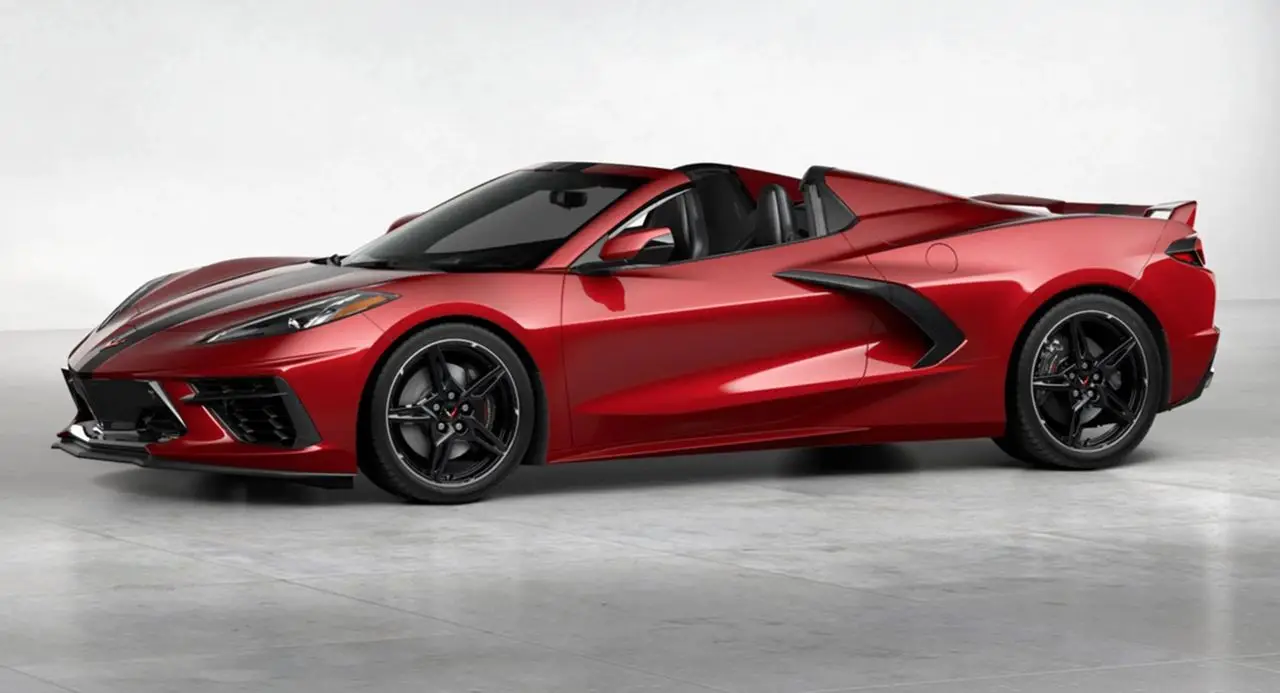
Outside, Chevrolet treated the C8 like the design statement it is. Red Mist Metallic Tintcoat didn’t just replace Long Beach Red—it brought a deep, candy-like glow that rides the C8’s hard creases and long highlights. Silver Flare Metallic gave buyers a high-flake silver that pops under LEDs and never looks flat in shade, a subtle nod to the car’s aero-carved surfacing. Factory graphics finally matched the attitude: full-length dual stripes in bold primaries and Stinger accents that trace the Carbon Flash nacelles. The message was clear—you didn’t have to go aftermarket to make a Stingray look like your Stingray.
Safety and habit-forming UX got the same intentional treatment. Buckle to Drive is the sort of feature you barely notice after day two, but it quietly changes behavior: if the driver’s belt isn’t latched, the car briefly locks out the shift from Park. It’s selectable, integrates with Teen Driver, and shows how Chevrolet used software to make good habits the path of least resistance rather than an admonition on a sticker.
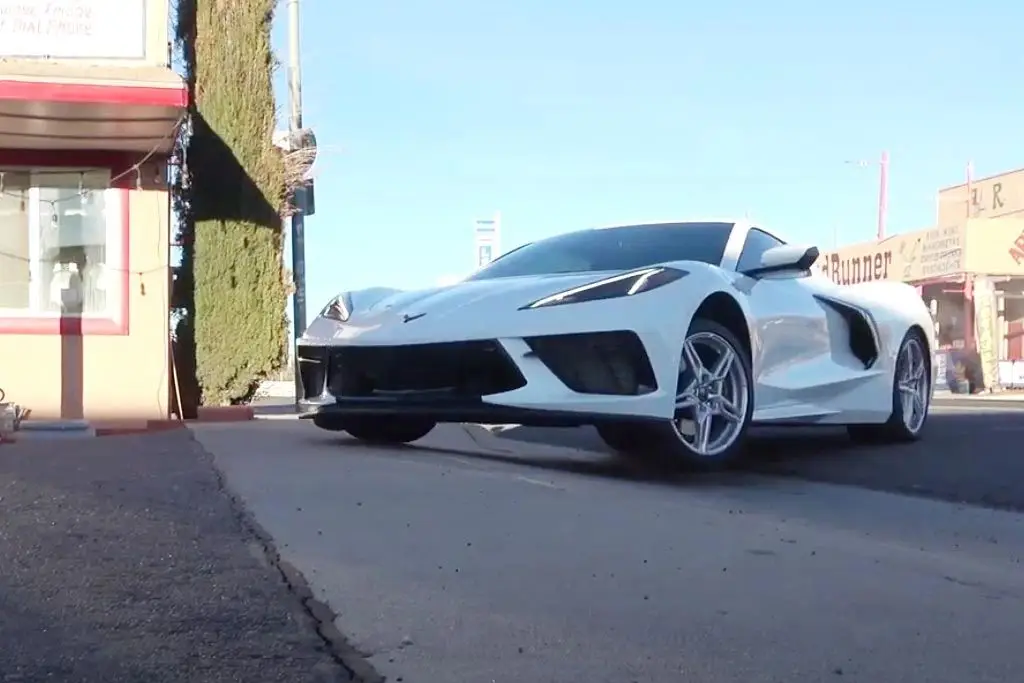
And none of this was brochure theater. The factory Front Lift with memory solved the one anxiety every low-nose, mid-engine owner shares: approach angles. Tap the switch and the nose rises roughly 40 mm in a couple of seconds; tell it to remember, and the system geo-tags up to 1,000 locations. From then on, your Corvette quietly takes care of itself—your steep driveway at dawn, that notorious speed hump by the coffee shop, the shop apron you visit every Saturday—no fumbling for a button, no white-knuckle diagonals. It’s a small interaction that changes how and where you use the car, turning “supercar stance” into “everyday confidence.”
Taken together, the 2021 changes read like a values statement. Chevrolet didn’t chase headlines; it refined ownership. The C8 stayed ferociously quick and scalpel-precise when you asked for it, but it became calmer, cleaner, and more intuitive in the spaces between the hero moments. That’s what a great second-year car does: it doesn’t rewrite the story—it makes the story easier to live every mile.
The Performance Truth: What the Numbers Say
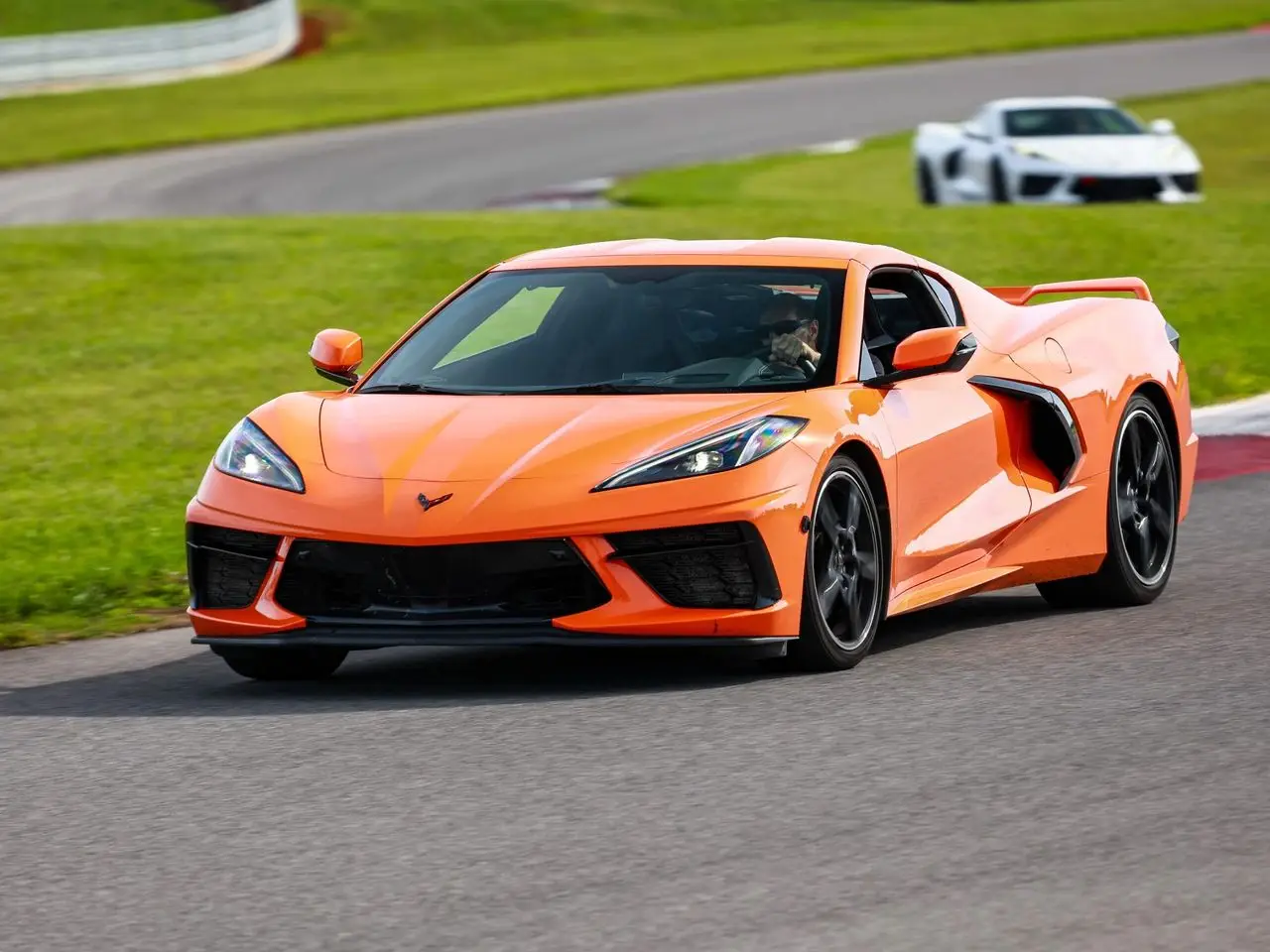
If you came for the stopwatch, the numbers really are the point—and the reason they kept repeating is baked into the car. Chevrolet’s own spec drew the outline—0–60 mph in 2.9 seconds with Z51, 11.2 in the quarter, 194 mph v-max for the standard-aero car—and independent tests lived right on top of those claims. The Stingray launches like it means it because the mass sits where physics wants it: weight on the driven tires, a quick, progressive torque feed from the DCT, and an eLSD that meters thrust instead of wasting it in drama. Most outlets use a 1-foot rollout like a drag strip, which explains why you keep seeing 2.8–2.9 to 60 and 11.1–11.2 quarters from Z51 cars on summer rubber. The surprising part isn’t the first number you run; it’s how easy it is to run it again.
Launch control is the quiet enabler. Stand on the brake, pin the throttle, and the LT2 stabilizes at an algorithmic launch rpm shaped by surface grip and mode. Come off the brake and the Tremec clutches “quick-fill” and then slip just enough to ride the tire at peak mu. The diff shuffles torque across the axle as the car takes a breath of yaw, so it leaves straight even on a less-than-perfect street. On VHT (a sticky, resin-based traction compound sprayed on drag-strip launch areas to increase grip), the thing is violent; on an average back road, it’s simply efficient. Either way, there’s no histrionics—just a short, hard shove toward the horizon.
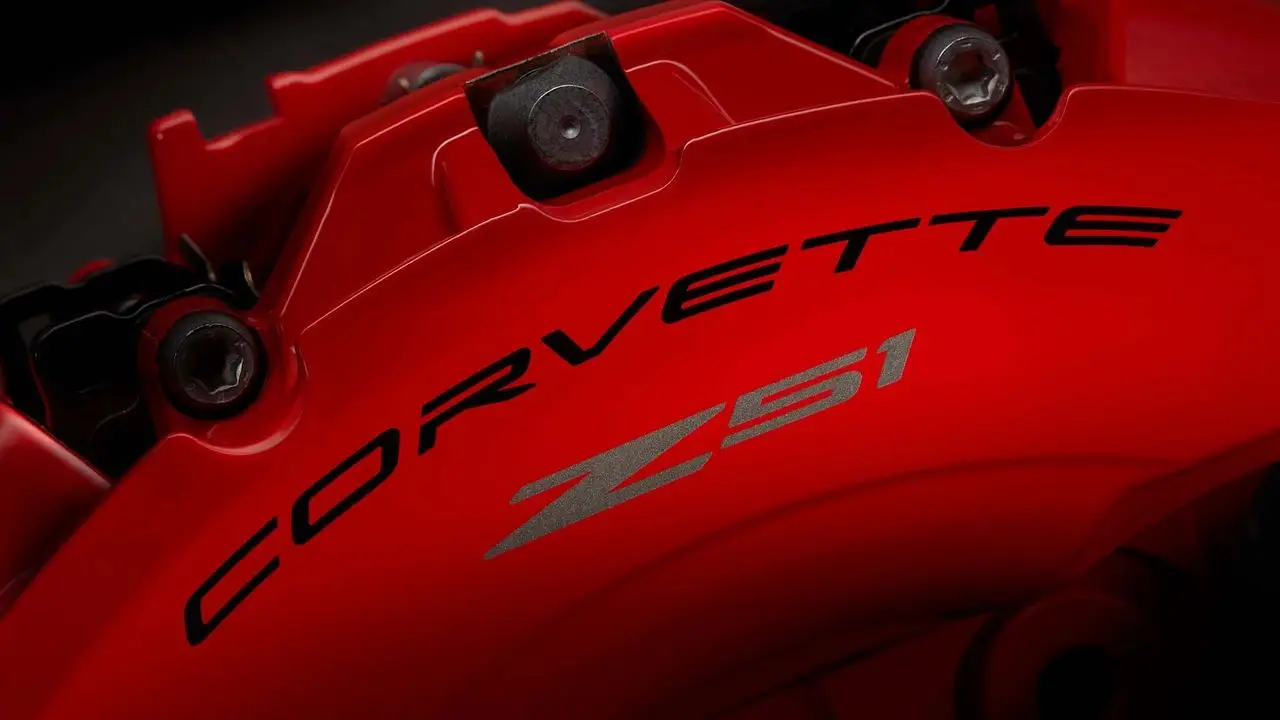
Z51 posts the staunchest short-track times for predictable reasons. You trade a slice of v-max for what matters below triple digits: shorter effective gearing, stickier Michelin Pilot Sport 4S tires, bigger brakes and more cooling, and the aero that helps the chassis settle when the speed climbs. It’s exactly how owners use the car, which is why the package shows up on build sheets at a rate that would make a marketing VP blush. Base cars keep the long legs and the 194-mph bragging rights; Z51 owns the spaces between 30 and 130.
The unsung star here is Tremec’s TR-9080 dual-clutch. It packages the clutches, gears, differential, and mechatronics in one compact transaxle tucked tight behind the LT2. Two wet clutches split duty—odds on one, evens on the other—so the next gear is always staged. When you pull a paddle (or when the Performance Shift Algorithm decides you’re driving as you should have), one clutch blends on as the other releases, the engine never falls off its cam, and you get that clean “single shove” upshift or crisp, rev-matched downshift that makes the car feel expensive. The unit runs a single high-spec fluid that cools, lubricates, and feeds the hydraulics, which simplifies thermal management; add the Z51 coolers, and you get a driveline that feels the same on lap twelve as it did on lap three.
Year two sharpened the calibration in ways you feel every day. Creep is natural in a parking garage, hill-hold grabs with authority, and the box’s PSA logic in Sport/Track holds gears under load and downshifts under braking exactly where your right hand would have. Tie that to the improved track-spec tach graphic in the cluster, and you stop thinking about gear charts altogether; you’re just placing the car and letting the LT2 pull.
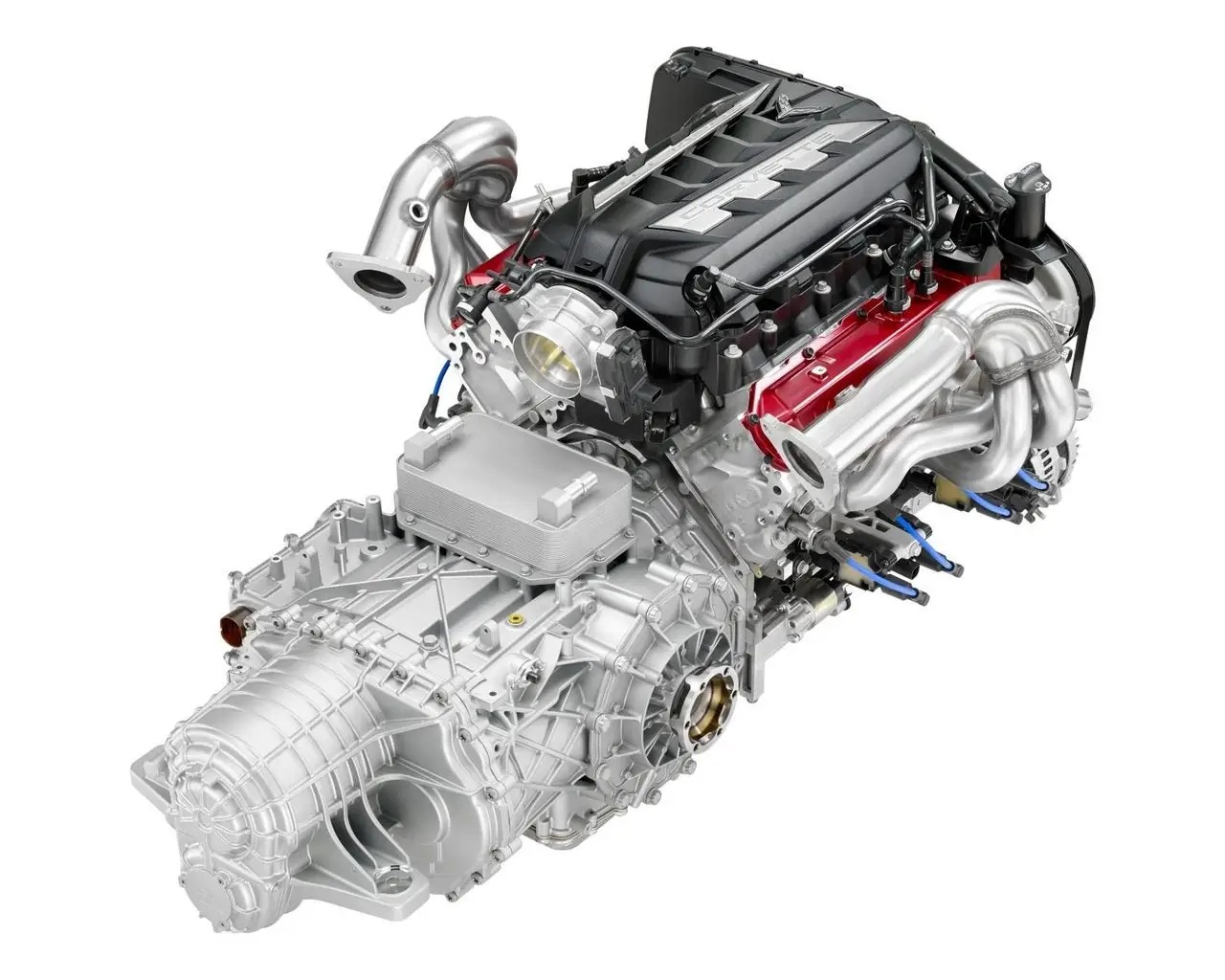
That engine is the other half of the trick. The low-mount dry-sump and rearward placement help the car plant; the LT2’s broad, linear torque lets the DCT work any of the middle ratios without hunting. The soundtrack has theater at full chat, but the real magic is how invisible the powertrain is at three-tenths. Ruthless at ten-tenths, unbothered the rest of the time—that duality is why the 2021 Stingray’s numbers weren’t one-off unicorn passes. They were the natural consequence of a layout that favors traction, a gearbox that never loses the thread, and a calibration that grew up nicely for year two.
The Year of Headwinds: Microchips, Memos, and a Price Nudge
Now the hard part. The same 2021 that brought features also brought scarcity. The industry-wide semiconductor shortage collided with Corvette’s demand curve; internal memos landed; allocation math hardened. On March 25, 2021, GM told dealers to stop taking new orders for MY21 Stingrays. The car remained buildable for those already in the system, especially those at Event Code 3000 (accepted by production control), but for others, it meant rolling to 2022. Then GM canceled the June 2021 allocation cycle altogether, effectively calling the model year.
Chevrolet held the line at launch, but the math caught up. On March 1, 2021, the base MSRP moved up $1,000, nudging the coupe past the psychological $60K mark. For customers already deep in the order pipeline, many dealers honored price protection tied to status codes; for shoppers still waiting on allocation, the bump simply became the new floor. Chevy’s explanation—rising supplier costs and a volatile logistics picture—tracked with the times, and it didn’t change the core value proposition of a mid-engine V-8 at this price. What it did change was sentiment: anyone who’d watched their place in line creep from winter into spring felt the sting of paying a little more for the same spec.
The rest was pure supply and demand. Allocation stayed tight, production pulsed with parts interruptions, and market adjustments filled the gap between appetite and availability. By mid-year, it wasn’t uncommon to see $20,000–$75,000 add-ons posted right on dealer listings, sometimes accompanied by “first in line” promises or out-of-state shipping offers. Enthusiast forums split into camps—MSRP-only purists versus “pay to play” realists—while a handful of dealers earned folk-hero status for refusing ADMs and letting the queue run clean. Most buyers navigated it pragmatically: keep a deposit with a dealer you trust, know your status code by heart, and be ready to pounce when your allocation finally hit. In a year defined by scarcity, the pricing story wasn’t about greed so much as gravity—too many hands, not enough cars, and a halo product that everyone wanted right now.
By the Numbers: Production, Take-Rates, Tires, and the Color Story
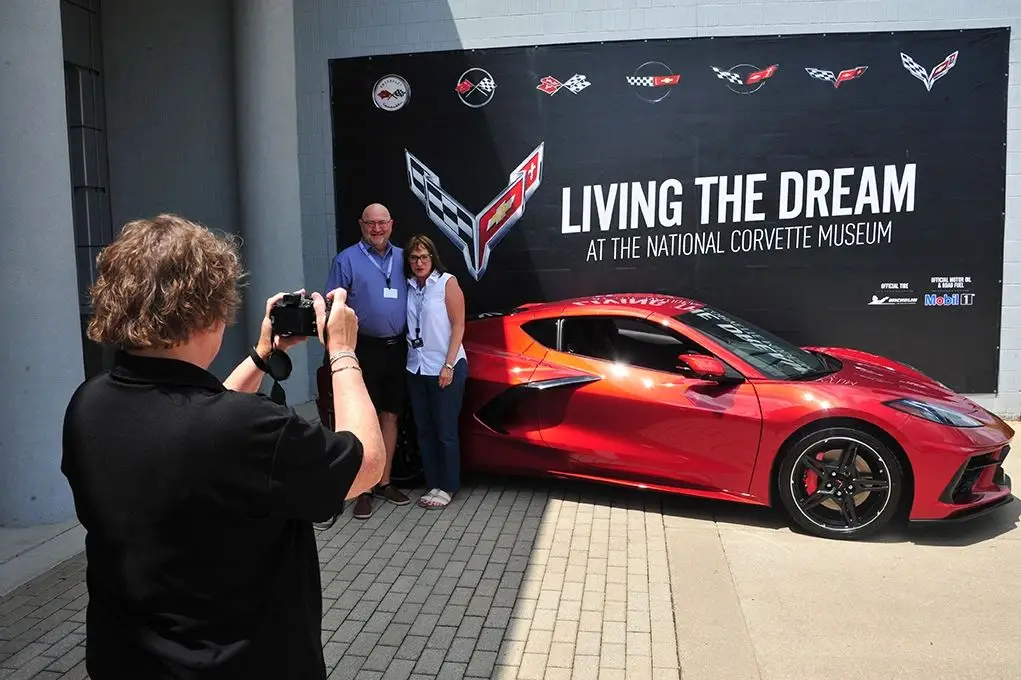
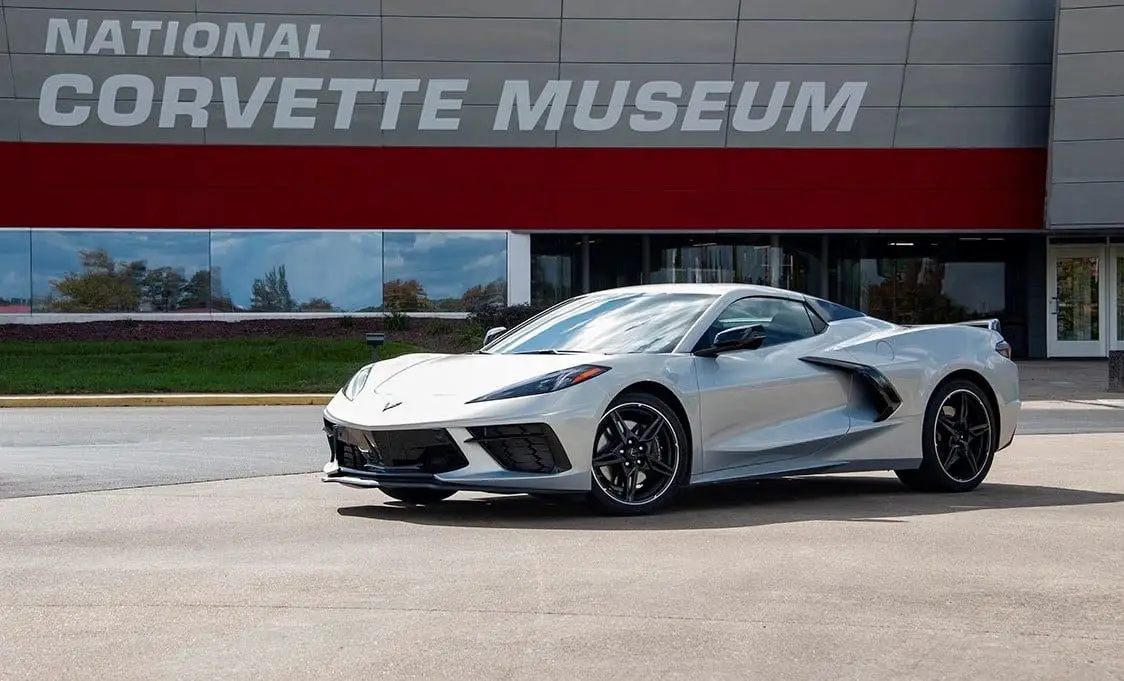
The National Corvette Museum’s year-end ledger is the definitive snapshot of 2021. Total production landed at 26,216 Stingrays. Of those, 13,787 were coupes, and 12,429 were hardtop convertibles—an almost even split and, crucially, among the highest convertible shares of the modern era. The car went truly global: 23,573 stayed in the U.S., 1,887 went to Canada, 149 to Mexico, and 607 to other export markets. R8C Museum Delivery remained a flex for enthusiasts, with 1,387 cars delivered through the program.
Option behavior told a clear story about how owners actually used their cars. The Z51 package appeared on 18,223 cars—about 69.5% of the run—and with it, the Michelin Pilot Sport 4S summer tire spec dominated. Magnetic Ride’s new freedom showed up in the ledger too: FE4 (Z51 with MRC) appeared 12,785 times, FE2 (MRC without Z51) on 3,419, and FE1 (standard) on 10,012 cars. Front Lift? Owners checked it 9,028 times—more than a third of the run—because life has curbs.
The paint chart doubled as a heat map of Corvette culture. Torch Red led the line, with Arctic White and the newcomer Red Mist right behind. Silver Flare—the other new color—punched above its weight for a gray-silver, while Rapid Blue and Black continued to be safe harbors. However you chart it, 2021 didn’t play it safe: buyers explored.
Living Within It: Cabin, Cargo, and the Everyday Supercar Brief
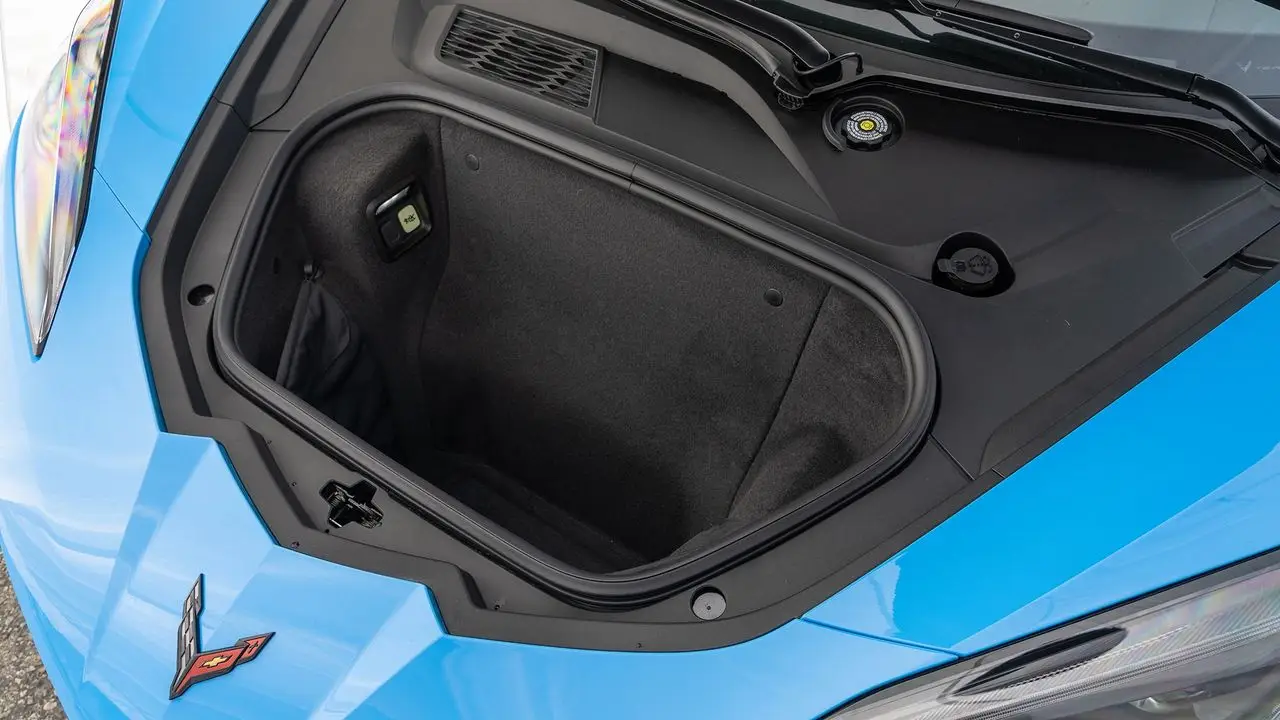
Mid-engine or not, the Stingray still had to do chores—and it did. The two-trunk layout delivered a real 12.6 cu ft of usable space: a squared-off frunk that easily fit a roll-aboard and backpack, plus a rear trunk shaped for duffels or a golf bag on the diagonal. In the coupe, dropping the roof panel into the rear bay ate most of that aft volume, but the frunk stayed free, so a quick weekend away didn’t require Tetris. The hardtop convertible kept the same combined capacity thanks to smart packaging, so top-down owners didn’t have to travel light.
Inside, the trim walk let you tune the cabin to your life. 1LT set the baseline with Mulan leather and straightforward Bose audio—clean, focused, no fluff—making a great canvas for people who planned to drive more than they planned to show. 2LT layered in richer touch points and the Bose Performance Series setup, plus the head-up display that makes long miles and spirited runs easier on your eyes. 3LT went full dress uniform with Nappa leather and stitched/wrapped surfaces across the dash, console, and doors, the kind of execution that made even a daily commute feel considered.
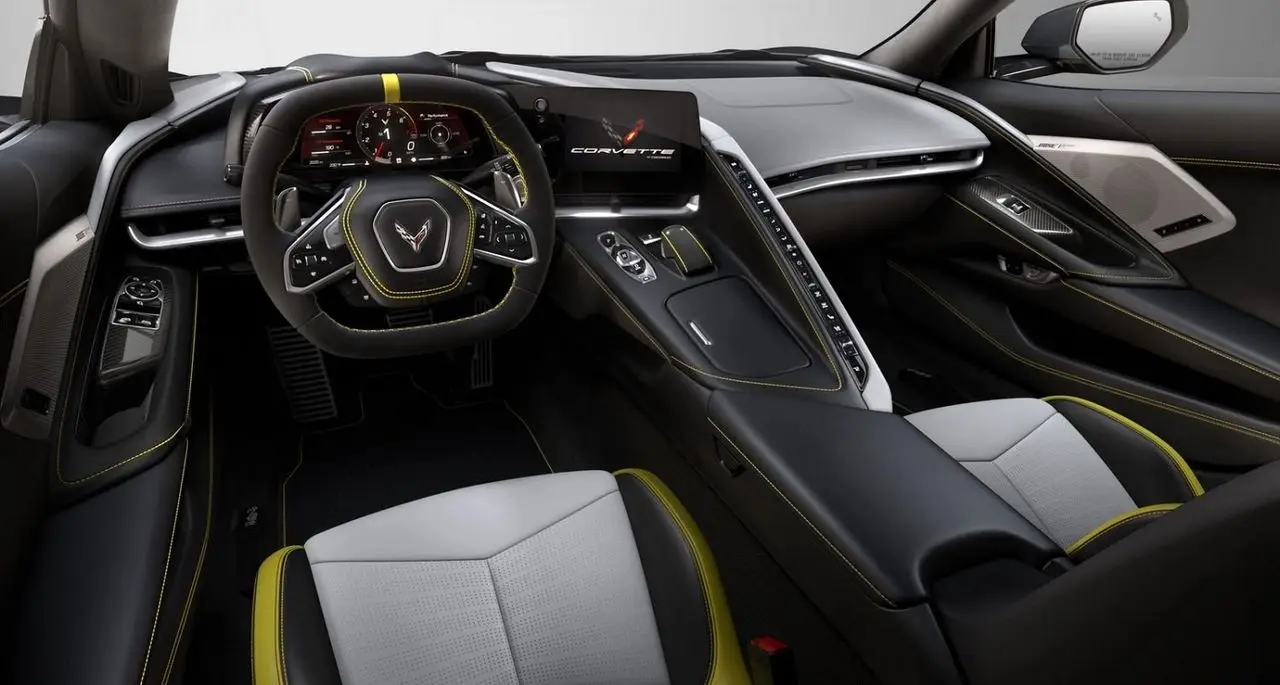
Color and character were part of the story, too. The 2021 palette added Sky Cool Gray/Yellow Strike, a scheme that looked polarizing in the configurator but came alive in person—cool, modern base tones traced by precise yellow accents on the seats, console, and door panels. It paired beautifully with the year’s new exteriors—Red Mist Metallic Tintcoat and Silver Flare Metallic—whether you wanted a quiet, technical vibe or something that popped in late-day light.
The point is simple: you could spec a C8 to be loud or low-key, track-tuned or boulevard-composed, and none of it diluted the car’s dynamic core. The storage was honest, the ergonomics worked, and the cabin scaled from purposeful to premium without losing the driver-first feel that made the 2021 Stingray more than just quick—it was easy to live with.
Recalls and Maturity: OTA as a Safety Valve
No modern car gets through a launch cycle without some field learning. The 2021 Stingray was part of a GM safety recall (21V-421) in June 2021 addressing an airbag indicator light behavior caused by a communications fault. The notable bit wasn’t just the scope—13,119 Corvettes included—but the remedy: a software update deliverable over-the-air via the car’s gateway module, with dealers as a fallback. For owners, it was a glimpse of how the C8’s electrical architecture could fix itself at home. Contextually, Chevrolet had already been through the 2020 “frunk release” FMVSS recall—so by 2021, both the hardware and the update playbook were better aligned.
The Tornado That Bent the Next Chapter

What happened on December 11, 2021 wasn’t just a footnote to a production schedule—it was a night Kentucky won’t forget. A violent tornado outbreak tore across the state, leveling neighborhoods in towns like Mayfield and Dawson Springs, killing dozens and injuring many more, and leaving thousands without homes or power. Warren County—home to Bowling Green Assembly and the National Corvette Museum—took a direct hit. Sirens sounded before dawn; debris fields crossed major roads; entire blocks were peeled open. Against that backdrop, the Corvette story is only one thread, but it helps explain why the moment still echoes for owners.
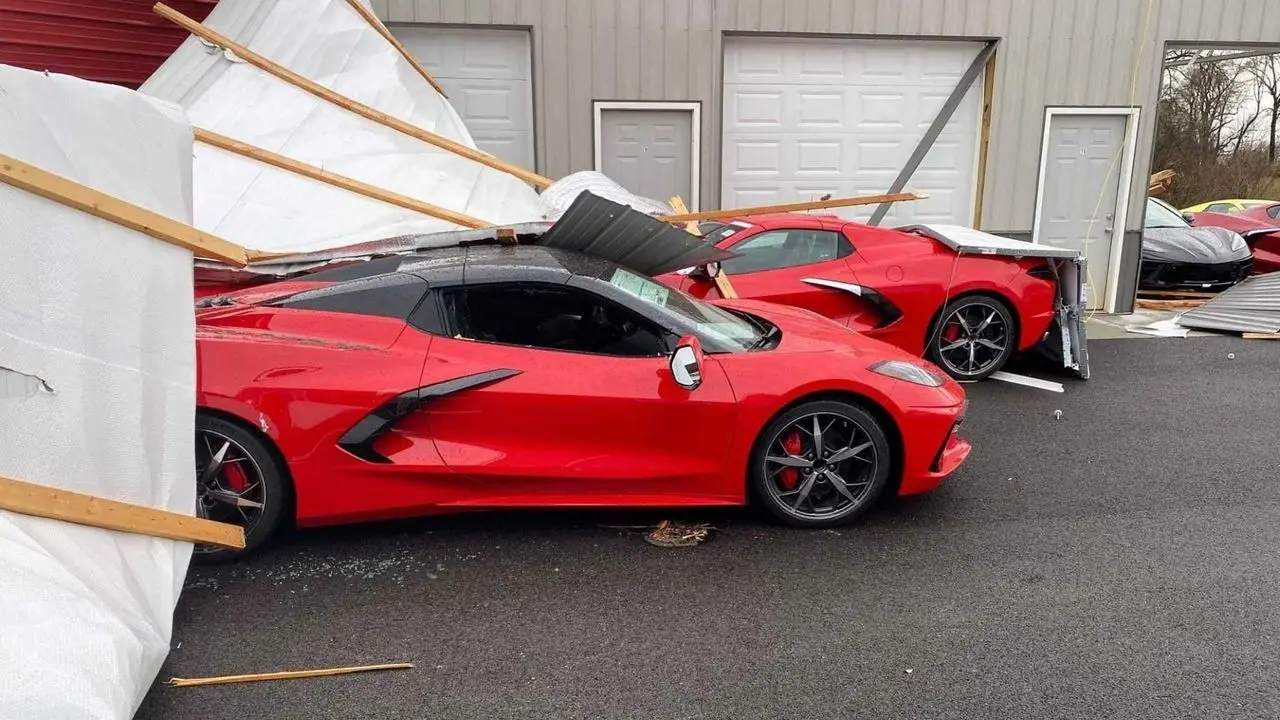
At the plant, the storm ripped portions of the roof and damaged entrances, sprinklers, and utilities. Water and debris reached cars on the line; after inspections, Chevrolet deemed more than a hundred in-process Stingrays beyond safe repair and scrapped them. Production was stopped, the building was stabilized, and customers with affected build numbers were re-slotted into future weeks. Nobody at Bowling Green tried to “polish through” it; the message to dealers and buyers was pragmatic and clear—fix the facility, build safe cars, and make every customer whole.
Across the street, the Museum fared better than you might expect from the aerial photos that morning. The main galleries were spared major structural harm, but campus clean-up was significant, and the NCM Motorsports Park took the brunt—roofs and outbuildings damaged, fencing and lighting down, and the track closed until repairs were complete. Staff who would normally be staging R8C deliveries spent that week securing the grounds, checking on members, and coordinating with city crews while the community at large dug out.
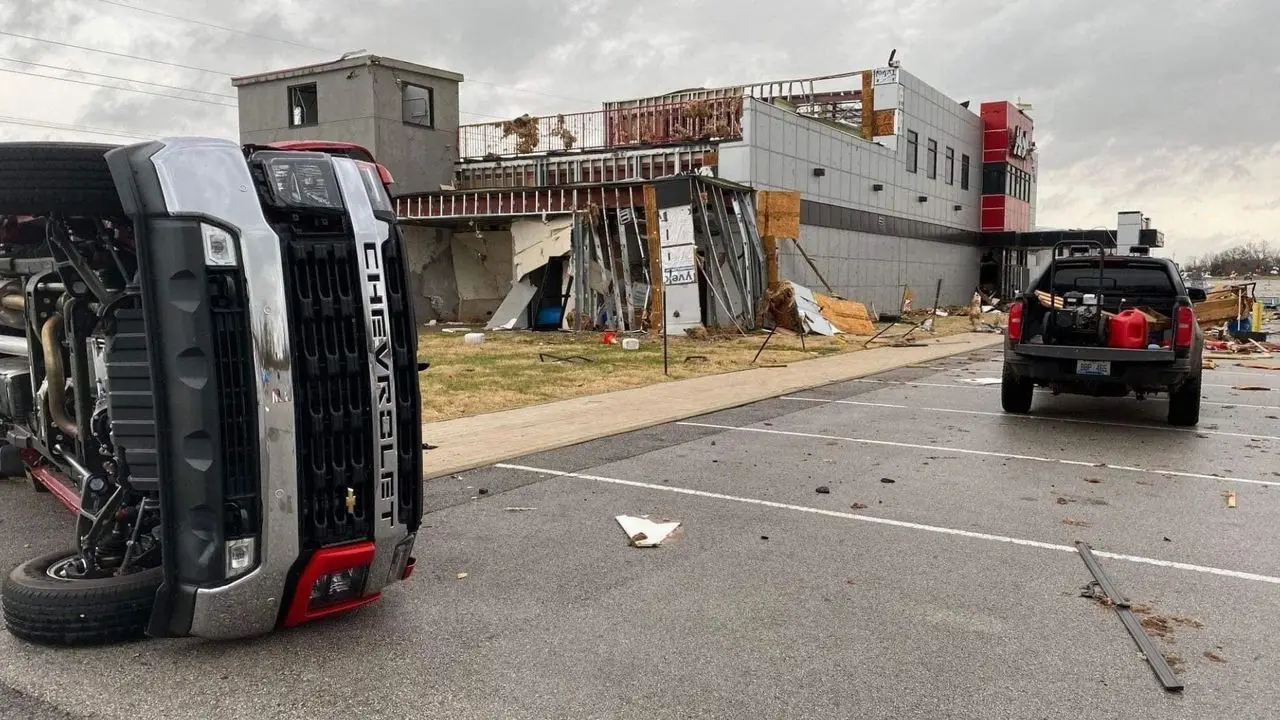
If there was a silver lining, it was how quickly the Corvette ecosystem moved. GM facilities teams and local contractors worked through the holidays to stabilize the plant; museum volunteers and club members organized supply drives; owners offered lodging and truckloads of essentials. Production restarted only after safety systems and inspections were signed off, and the Museum returned to welcoming deliveries once the campus was ready. It was a stark reminder that even a well-oiled manufacturing program lives in the real world—and that the Corvette community extends far beyond an assembly line or a VIN list when that world is hurting.
The Customer Journey: Allocations, Status Codes, and the Long Wait
Ask any 2021 buyer about “Event Codes,” and you’ll get a masterclass. For many, 3000 status became the psychological finish line: once GM accepted the order into production control, the odds improved dramatically—even as that pivotal March 25 memo closed the door to new 2021 sold orders and the June allocation cancellation froze the last cycle. Add a modest MSRP bump and heavy markups at some stores, and you had a year where patience and dealer relationships mattered as much as spec sheets.
Engineering, Explained Where It Counts
Corvette people love the “why,” not just the “what.” So the essentials: the LT2’s low-mount dry-sump and rearward weight bias let the Stingray launch harder than any base Corvette before it. The TR-9080’s closely stacked ratios keep the 495-hp (with performance exhaust/Z51) small-block in its fat torque. The eLSD integrates seamlessly with Performance Traction Management, and MRC’s magnetorheological fluid gives the car its dual personality—calm on broken pavement, taut on curbing. None of it is theoretical; it’s why magazine numbers were repeatable, not unicorn one-offs.
Strip away the drama, and the 2021 Stingray did exactly what a year-two car should do: it added usability, broadened choice, and kept the stopwatch honest, all while absorbing and navigating through one of the most chaotic supply climates in modern automotive history. The numbers back it up—26,216 units built in 2021; nearly 70% Z51; a convertible mix approaching half; thousands of owners voting with options for MRC and Front Lift. If 2020 proved the concept, 2021 proved the platform: that the mid-engine Corvette wasn’t a stunt, but a foundation that could evolve, scale, and satisfy, whether your use case was apexes or airport runs.
Specifications (key 2021 Stingray data)
- Engine: 6.2-L LT2 V-8 (490 hp/465 lb-ft; 495 hp/470 lb-ft with performance exhaust/Z51)
- Transmission: Tremec TR-9080 8-speed dual-clutch (integrated diff), assembled in Wixom, MI
- Official Performance: 0–60 mph 2.9 sec (Z51); quarter-mile 11.2 sec; top speed 194 mph (standard suspension)
- Curb Weights (dry): Coupe 3,366 lb, Convertible 3,467 lb
- Cargo Volume: 12.6 cu ft (combined frunk/trunk)
- EPA: 15/27 mpg (city/hwy)
- 2021 Production: 26,216 total (13,787 coupes; 12,429 convertibles)
- Key Take-Rates: Z51 18,223 (~69.5%); MRC FE2 3,419; MRC FE4 12,785; Front Lift 9,028
- Top Colors by Volume: Torch Red, Arctic White, Red Mist, Black, Rapid Blue, Silver Flare.
Epilogue: Why 2021 STILL MATTERS TODAY
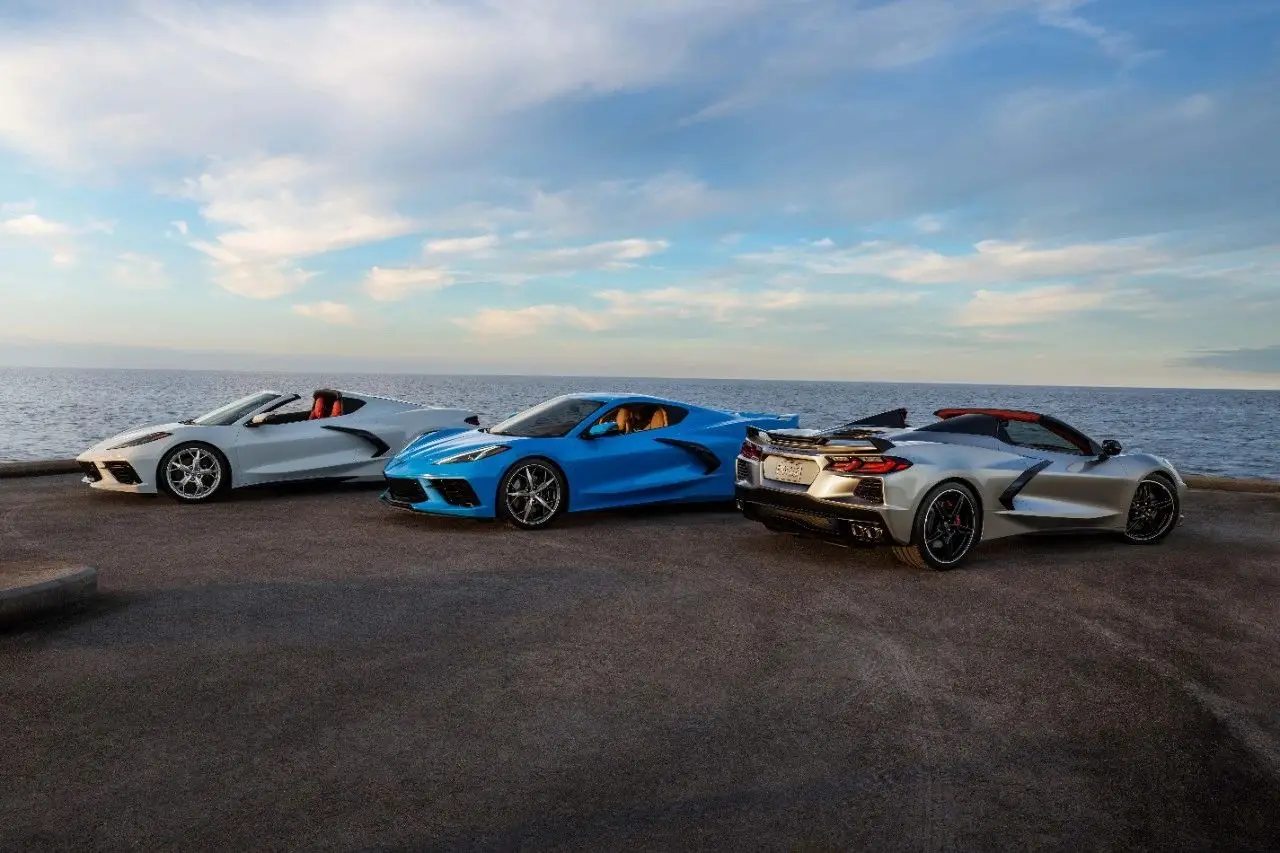
The C8 story is already into spicy chapters—Z06s singing to 8,600 rpm, E-Rays demoing hybrid cleverness, ZR1 setting headlines on fire—but the 2021 Corvette Stingray is the volume pillar that made the rest possible. It normalized mid-engine Corvette ownership, proved the architecture’s daily-driver brief, and made good on the promise that supercar pace and blue-collar pragmatism can share the same VIN. In the data, the reviews, and the order banks that kept refilling, the verdict is the same: 2021 wasn’t just a mid-cycle year. It was the moment the mid-engine Corvette became the Corvette!