
There are Corvette model years that feel like a launch, and there are model years that feel like a landing. The 2022 Corvette was the latter—the point at which the C8 stopped being viewed primarily as the radical new mid-engine Corvette and began establishing itself as the Corvette’s new normal.
That change marked an important turning point. When Chevrolet unveiled the eighth-generation Corvette in July 2019, nearly every conversation about the car began and ended with the location of its engine. After more than six decades of front-engine production, the Corvette had adopted the basic architecture associated with Ferrari, Lamborghini, McLaren, and the world’s most sophisticated racing machinery. It was a transformation so fundamental that the early C8 was often discussed more as an idea than as an automobile.
By 2022, however, the big idea had already been proven. The mid-engine layout worked. The cabin was no longer regarded as an experiment. The eight-speed dual-clutch transmission had demonstrated that it was not merely a concession to modernity but one of the car’s defining strengths. Owners had accumulated real miles, dealers had learned the product, and buyers were no longer asking whether Chevrolet could build a credible mid-engine Corvette. They were deciding which version they wanted.
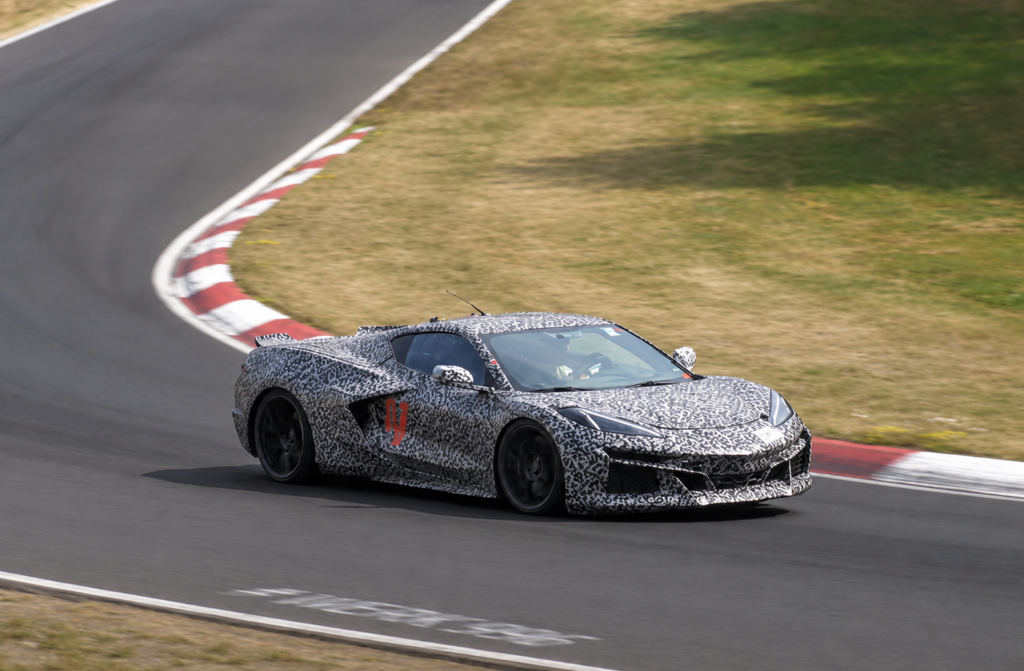

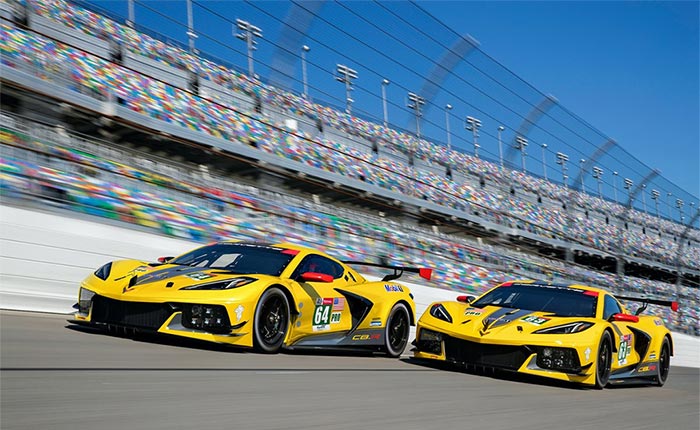
At the same time, the 2022 Corvette story extended well beyond the Stingray carrying a 2022 vehicle identification number. Calendar year 2022 became one of the most consequential periods in the C8’s development. Chevrolet was preparing the 670-horsepower Z06 for production, engineers were validating the Corvette variant that would become the first all-wheel-drive and electrified Corvette, and Corvette Racing was taking the C8.R into a new international campaign shaped by changing regulations and increasingly global ambitions.
In other words, two Corvette stories were unfolding simultaneously. The 2022 Corvette Stingray represented the maturation of the original C8 formula, while the Z06, E-Ray, and racing program revealed just how much performance potential Chevrolet had built into the platform from the beginning.
Taken together, they made 2022 the year the C8 Corvette stopped being a single revolutionary model and began becoming a complete family of cars.
The Long Road to a Mid-Engine Corvette

The Corvette’s move to a mid-engine configuration was not a sudden attempt to imitate European exotics. It was the result of an engineering argument that had been unfolding inside General Motors for generations.
Zora Arkus-Duntov, the engineer whose influence helped transform the early Corvette from a stylish boulevard cruiser into a legitimate performance car, recognized the advantages of placing the engine behind the driver decades before the C8 entered production. Through experimental vehicles such as the Chevrolet Engineering Research Vehicles—better known as the CERV I and CERV II—Duntov and his colleagues explored the traction, balance, packaging, and aerodynamic possibilities offered by a mid-engine platform.
Those vehicles were never direct production proposals in the conventional sense. They were laboratories—machines built to answer questions about chassis configuration, suspension geometry, cooling, weight distribution, and the future of high-performance automobiles. Later concepts, including the rotary-powered XP-882 and the technologically ambitious CERV III, kept the idea alive even as Chevrolet continued developing increasingly capable front-engine production Corvettes.
The resistance to a mid-engine Corvette was never simply a matter of engineering conservatism. Chevrolet had to protect the qualities that made the Corvette successful in the first place. The car needed to remain fast but also be usable. It needed enough luggage space for a road trip, sufficient ground clearance for ordinary streets, and a cabin that could accommodate owners who were not built like professional racing drivers. Most importantly, it needed to deliver world-class performance without abandoning the value proposition that had always set Corvette apart from traditional exotics.
Every generation of Corvette pushed the front-engine layout farther. The C5 introduced a hydroformed frame, rear-mounted transaxle, and dramatically improved chassis structure. The C6 refined that formula, while the C7 brought advanced aerodynamics, direct injection, sophisticated electronic controls, and performance variants capable of competing with almost anything in the world.
Yet the limits were becoming increasingly clear. As power climbed, the front-engine Corvette’s ability to put that power to the pavement became one of the platform’s defining constraints. Adding more horsepower was comparatively easy. Using it effectively—particularly from a standing start and during corner exit—was becoming more difficult.
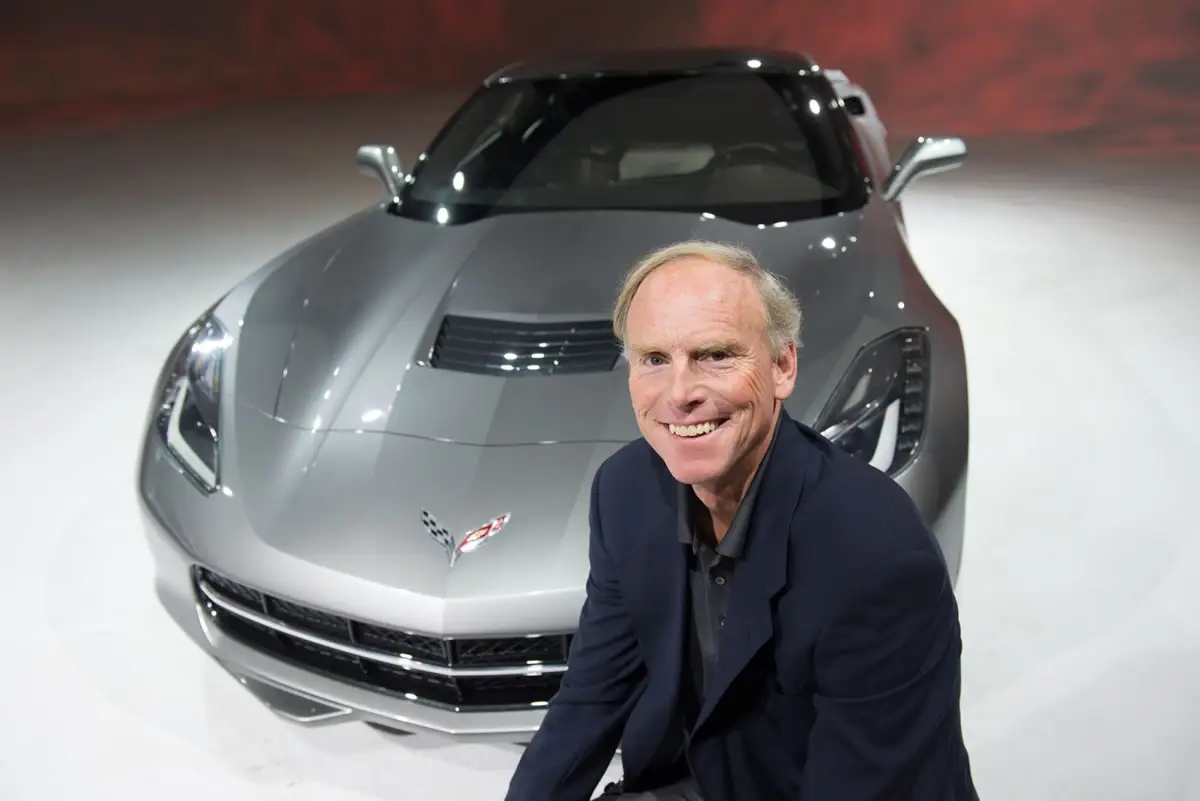
Tadge Juechter understood that challenge better than almost anyone. Juechter joined the Corvette program in 1993, became its assistant chief engineer in 1999, and was appointed executive chief engineer in 2006. During his tenure, he helped oversee the maturation of the C6, the development of the C7, and ultimately the most dramatic architectural change in Corvette history.
Under Juechter’s leadership, the mid-engine Corvette was not developed merely to produce exotic proportions or an attention-grabbing launch. The architecture was intended to give the program room to grow. By moving the engine behind the passenger compartment, Chevrolet improved rear-wheel traction, centralized the car’s mass, and opened new possibilities for aerodynamics, cooling, suspension design, and future powertrains.
Just as important, the team preserved the car’s everyday usefulness. The C8 retained front and rear luggage compartments offering a combined 12.6 cubic feet of cargo capacity. The coupe kept a removable roof panel that could be stored in the rear compartment, while the convertible gained a fully retractable hardtop that did not consume the primary luggage space. The driver still sat in a comfortable, climate-controlled cabin rather than an uncompromising racing cell.
That balance was the C8’s real achievement. Chevrolet had not merely built an inexpensive alternative to a European supercar. It had created a mid-engine automobile that still behaved like a Corvette: powerful, approachable, practical enough to use, and attainable enough to be driven rather than hidden.
The 2020 Stingray introduced that formula. The shortened 2020 production run and the industry-wide upheaval that followed prevented the first two C8 model years from ever settling into anything resembling normal production. By 2022, however, the engineering foundation was established, customers understood the car, and Chevrolet could begin refining the details rather than defending the decision to move the engine.
Launching the 2022 Corvette Stingray

Chevrolet introduced the 2022 Corvette Stingray on June 9, 2021, against the unmistakable backdrop of Detroit’s Belle Isle circuit. The presentation brought the production Stingray together with the C8.R and the newly announced IMSA GTLM Championship Edition, visually reinforcing the growing connection between Corvette’s road and racing programs. More than a routine model-year unveiling, the event celebrated the C8’s successful transition to mid-engine performance while previewing the colors, equipment, and racing-inspired identity that would define the 2022 lineup. (Image credit: GM)
Chevrolet introduced the 2022 Corvette Stingray on June 9, 2021, during the week of the Detroit Grand Prix on Belle Isle. The setting was intentional. Instead of treating the new model year as a routine collection of colors and option changes, Chevrolet connected it directly to the C8.R and Corvette Racing’s championship-winning first season with the mid-engine race car.
The centerpiece was the 2022 Corvette Stingray IMSA GTLM Championship Edition. Chevrolet initially announced plans to build 1,000 left-hand-drive examples, although final production records show that 1,007 cars received the package. It was available on 3LT coupes and convertibles equipped with the Z51 Performance Package and was offered in two race-inspired configurations: Accelerate Yellow with gray graphics, reflecting the No. 3 C8.R, or Hypersonic Gray with yellow accents, reflecting the No. 4 car.
The package included a high-wing rear spoiler, Carbon Flash exterior mirrors, black rocker extensions, yellow brake calipers, black Trident-design wheels, Jake-logo center caps, and Corvette Racing graphics. Inside, the cars received a Strike Yellow and Sky Cool Gray color combination, GT2 seats, yellow seat belts, and a numbered plaque. Chevrolet priced the Championship Edition package at $6,595, making it more than just a simple decal package yet still accessible to dedicated Corvette Racing enthusiasts.

The special edition also served as a snapshot of the relationship between Corvette’s production and racing programs. Laura Klauser, General Motors’ sports car racing program manager, and her team were overseeing the C8.R’s transition into an evolving global racing environment. The Championship Edition gave street-car buyers a tangible connection to that effort at a moment when the production Corvette and its racing counterpart shared more visual and architectural DNA than at any previous point in the nameplate’s history.
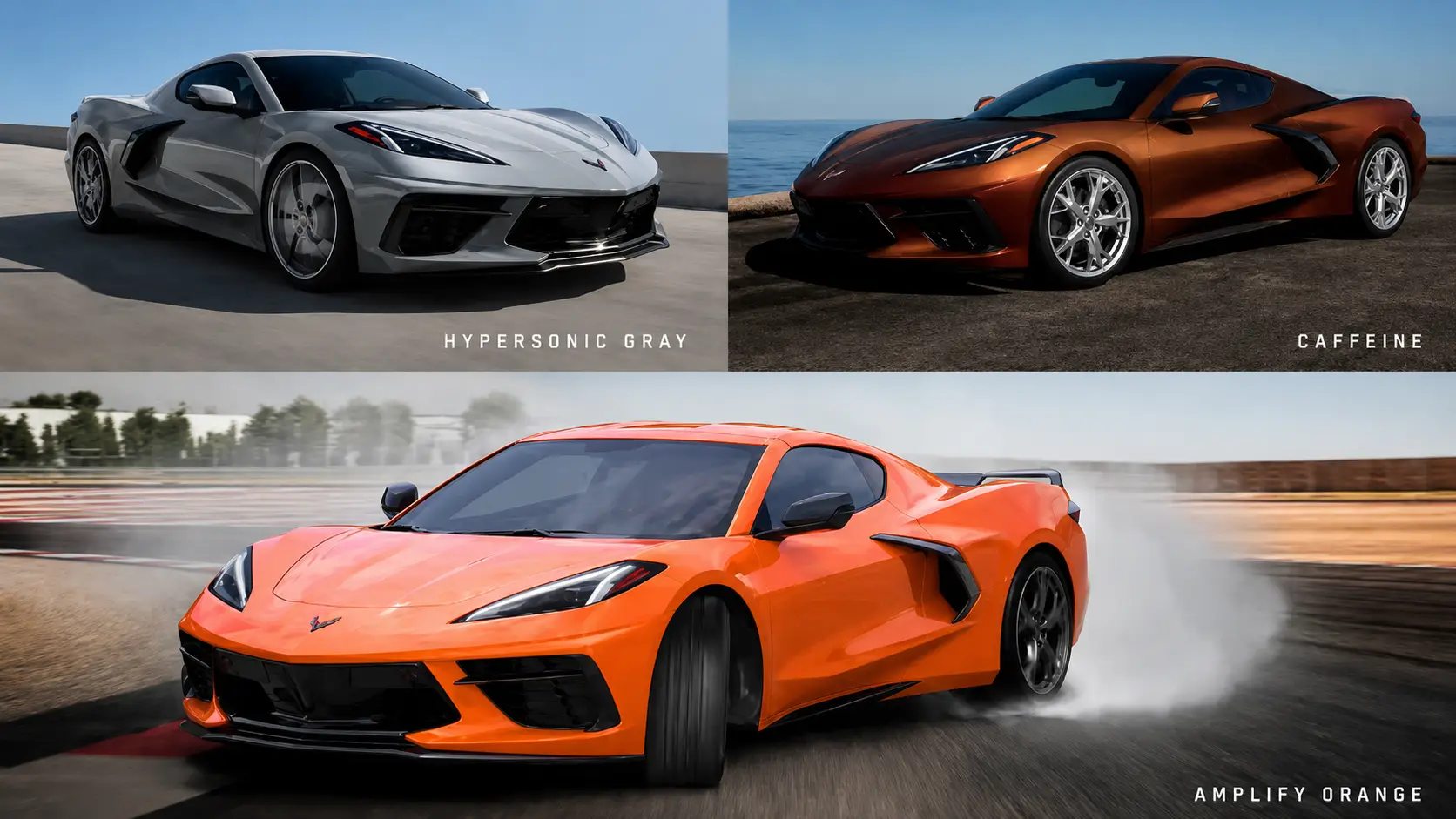
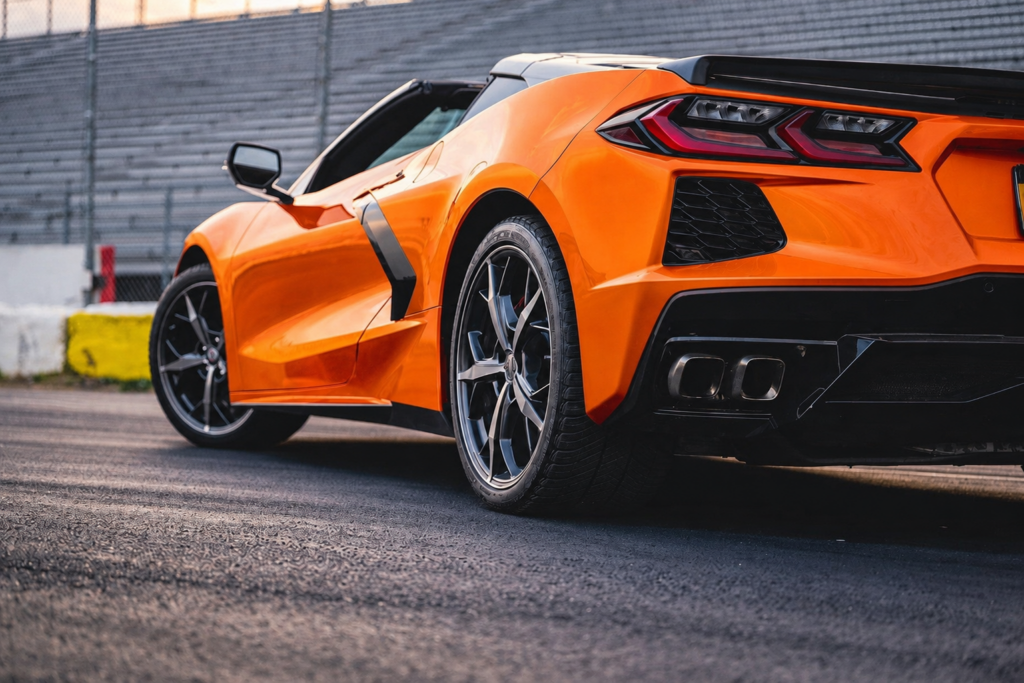
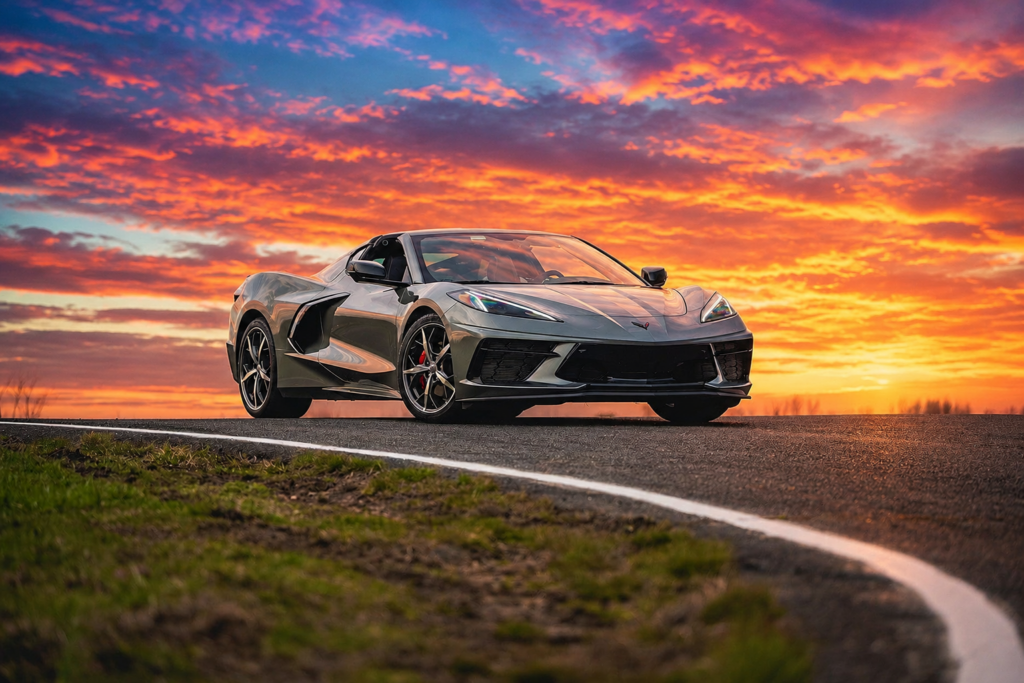
Beyond the Championship Edition, the 2022 Stingray received three significant new exterior colors. Hypersonic Gray Metallic replaced Shadow Gray, Amplify Orange Tintcoat succeeded Sebring Orange, and Caffeine Metallic introduced an unusually rich bronze-brown tone to the C8 palette. The complete color range also included Black, Arctic White, Ceramic Matrix Gray Metallic, Silver Flare Metallic, Torch Red, Red Mist Metallic Tintcoat, Rapid Blue, Elkhart Lake Blue Metallic, and Accelerate Yellow Metallic.
These additions were more consequential than paint changes sometimes appear. The C8’s body is highly sensitive to color. Its deep side intakes, sharply defined fenders, horizontal body lines, and contrasting aerodynamic elements can make the same basic design appear elegant, technical, aggressive, or almost theatrical. Hypersonic Gray emphasized the car’s architecture. Amplify Orange highlighted its exotic proportions. Caffeine Metallic offered something more understated and mature.

Chevrolet also made the low-profile rear spoiler and front splitter associated with the Z51 appearance available on non-Z51 Stingrays. That decision gave buyers greater freedom to separate the car’s appearance from its mechanical configuration. An owner who wanted the visual attitude of the aero components without the complete track-oriented package could now order the car accordingly.
Pricing began at $62,195 for the coupe and $69,695 for the retractable-hardtop convertible, including destination charges. Chevrolet opened the initial order process on July 1, 2021, with model-year production scheduled to begin during the third quarter. Although the advertised base price had risen from the C8’s original sub-$60,000 launch figure, the Stingray remained an extraordinary proposition: a 490-horsepower mid-engine sports car with a sophisticated dual-clutch transmission and supercar-level acceleration for considerably less than almost any direct competitor.
Refinement Without Reinvention
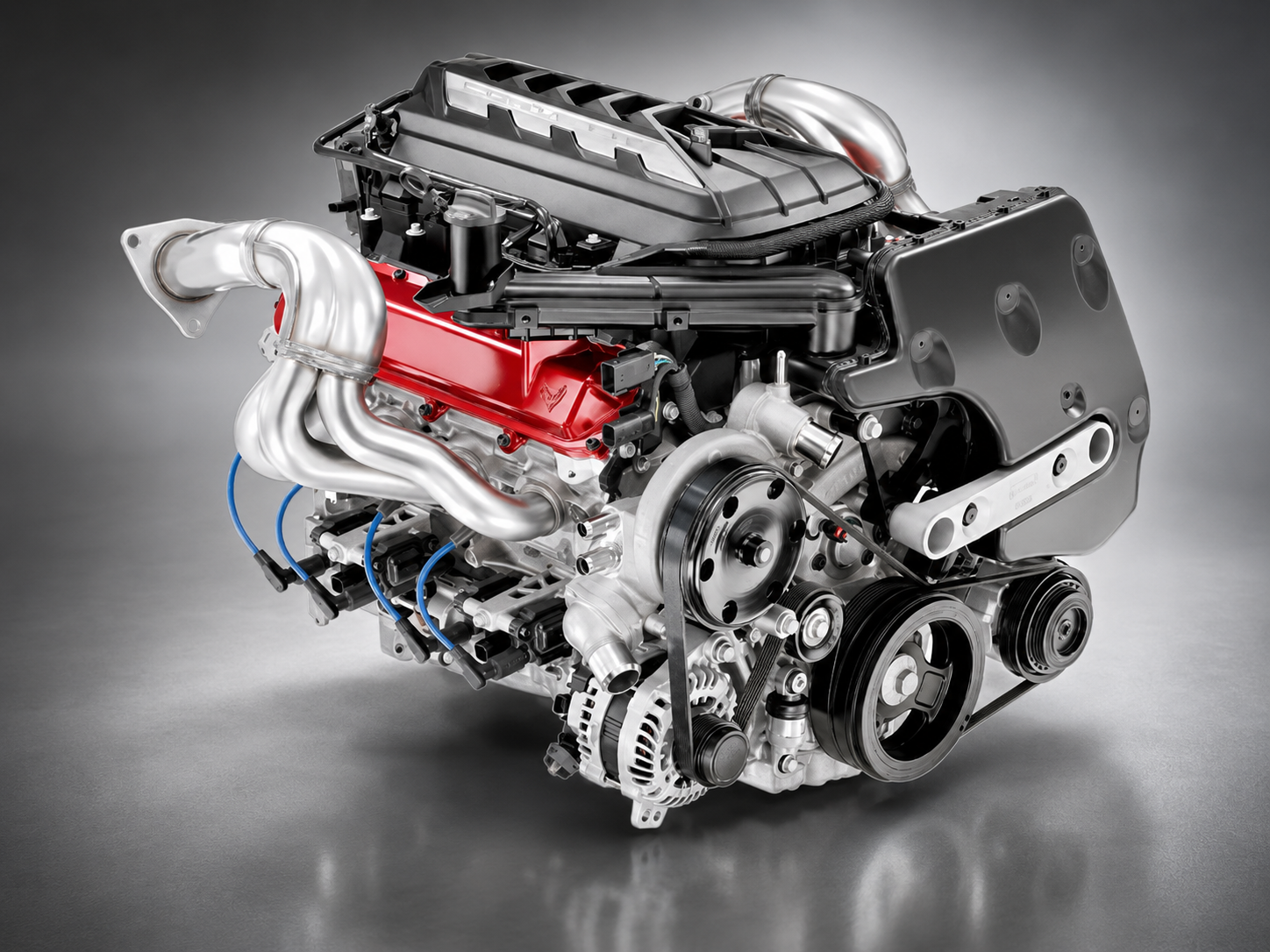
The 2022 Stingray did not receive a headline-grabbing power increase, and it did not need one. Its naturally aspirated 6.2-liter LT2 V8 continued to produce 490 horsepower and 465 lb-ft of torque with the standard exhaust. Cars equipped with the NPP performance exhaust were rated at 495 horsepower and 470 lb-ft.
For 2022, Chevrolet revised the direct-injection fuel system, recalibrated the engine, and expanded the operating range of Active Fuel Management. The changes were primarily intended to improve emissions performance, idle quality, and efficiency without reducing output or changing the character of the engine.
That character remained central to the Stingray’s appeal. The LT2 was derived from Chevrolet’s long-running small-block V8 architecture, but its installation in the C8 required extensive changes. Mounted behind the passenger compartment, the engine used a low-profile intake arrangement, dry-sump lubrication, and cooling systems designed around the demands of the new layout. The result was an engine that delivered immediate throttle response and a broad wave of torque without relying on turbochargers to generate its performance.
The LT2 also preserved an important connection to Corvette history. At a time when many competing performance cars were moving toward smaller turbocharged engines, the Stingray retained the sound, response, and mechanical directness of a large-displacement naturally aspirated V8. It was modern in its management systems and packaging, but familiar in the way it built power.

All 2022 Stingrays used the M1L eight-speed dual-clutch transmission. Developed with Tremec for the C8’s rear transaxle configuration, the transmission employed two clutches to preselect the next gear, allowing shifts to occur with almost no interruption in power delivery. In automatic operation, it could behave smoothly enough for traffic and long-distance travel. In manual mode, steering-wheel-mounted paddles gave the driver direct control with shift speeds no conventional manual gearbox could match.
The absence of a manual transmission remained controversial among traditionalists, but the dual-clutch unit was fundamental to what the C8 had become. It contributed to the car’s acceleration, allowed the engine to remain within its most effective operating range, and gave the control systems much greater authority over traction and vehicle dynamics. Rather than treating the transmission as a substitute for something the Corvette had lost, the engineering team treated it as an enabler of the new platform.
With the Z51 Performance Package, Chevrolet claimed a 0–60 mph time of 2.9 seconds. That number placed the Stingray in territory once reserved for all-wheel-drive exotics and extremely specialized performance machines. More important, the acceleration was repeatable and accessible. The driver did not need to manage wheelspin through delicate throttle modulation or execute a perfect manual launch. The engine, transmission, electronic differential, tires, and launch-control strategy worked as a coordinated system.
One Performance Foundation, Three Trim Levels
Chevrolet offered the 2022 Stingray in 1LT, 2LT, and 3LT trim levels, each available as a coupe or convertible. The trims did not represent different engine outputs or fundamentally different versions of the car. Instead, they allowed buyers to choose how much technology, comfort, and interior finish they wanted, all around the same basic performance architecture.
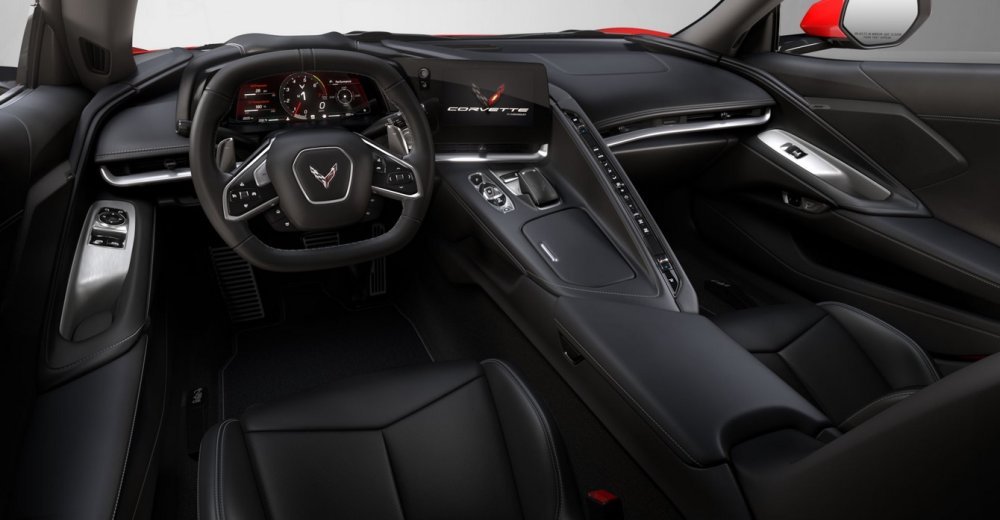
The 1LT remained the most direct path into the C8. It included the LT2 engine, dual-clutch transmission, digital instrument display, Chevrolet infotainment system, removable roof panel on the coupe, and the essential chassis and structural content that defined every Stingray. For an owner primarily interested in the driving experience—or one who intended to direct the budget toward Z51 hardware and exterior options—the 1LT was anything but a stripped car.
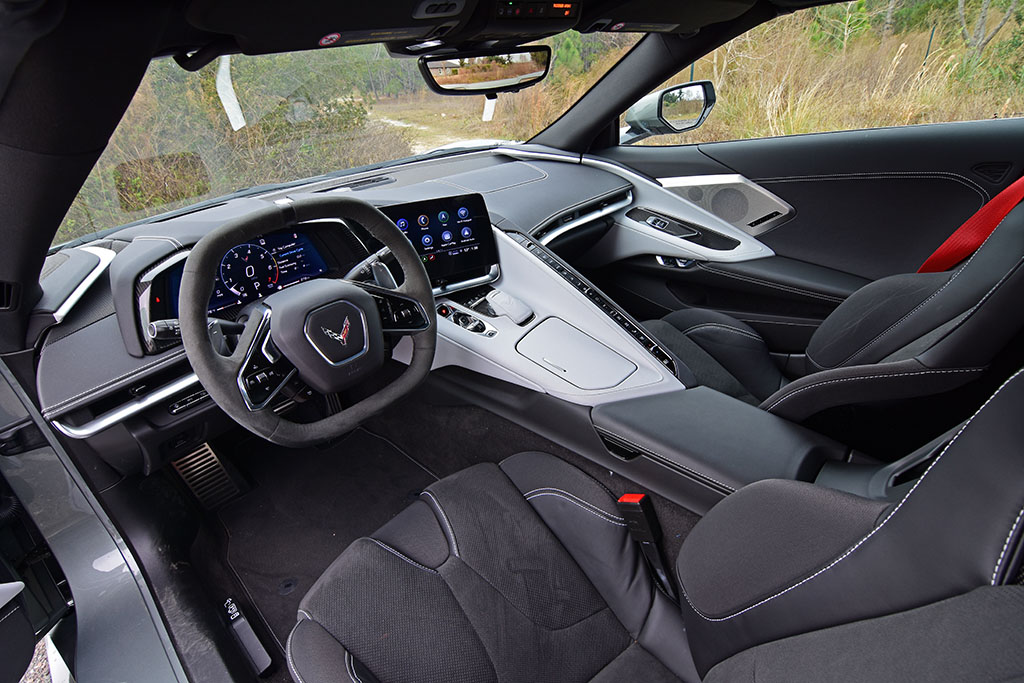
The 2LT added the equipment that made the Corvette easier to use as an everyday automobile. Features such as the head-up display, Performance Data Recorder, navigation, heated and ventilated seats, upgraded audio system, additional driver-assistance technology, and enhanced visibility equipment addressed the realities of living with a low, wide mid-engine car. This was the trim that made the Corvette feel less like an occasional indulgence and more like a genuine grand tourer.

The 3LT retained the 2LT’s technology while substantially upgrading the cabin materials. Additional leather wrapping and richer surface treatments gave the cockpit a more handcrafted appearance. Because the C8 interior surrounds the driver with a tall center console, sweeping instrument panel, and prominent structural forms, those material changes had a greater visual effect than they might in a more conventional cabin.
The seat choices provided another layer of personalization. GT1 seats emphasized comfort and accessibility. GT2 seats added more pronounced bolstering and premium construction without becoming difficult to live with. Competition Sport seats provided the greatest lateral support for track use and aggressive driving. As with the trim levels, the choice was less about declaring one seat objectively superior and more about matching the car to the owner’s intended use.
Z51 and the Hardware That Mattered
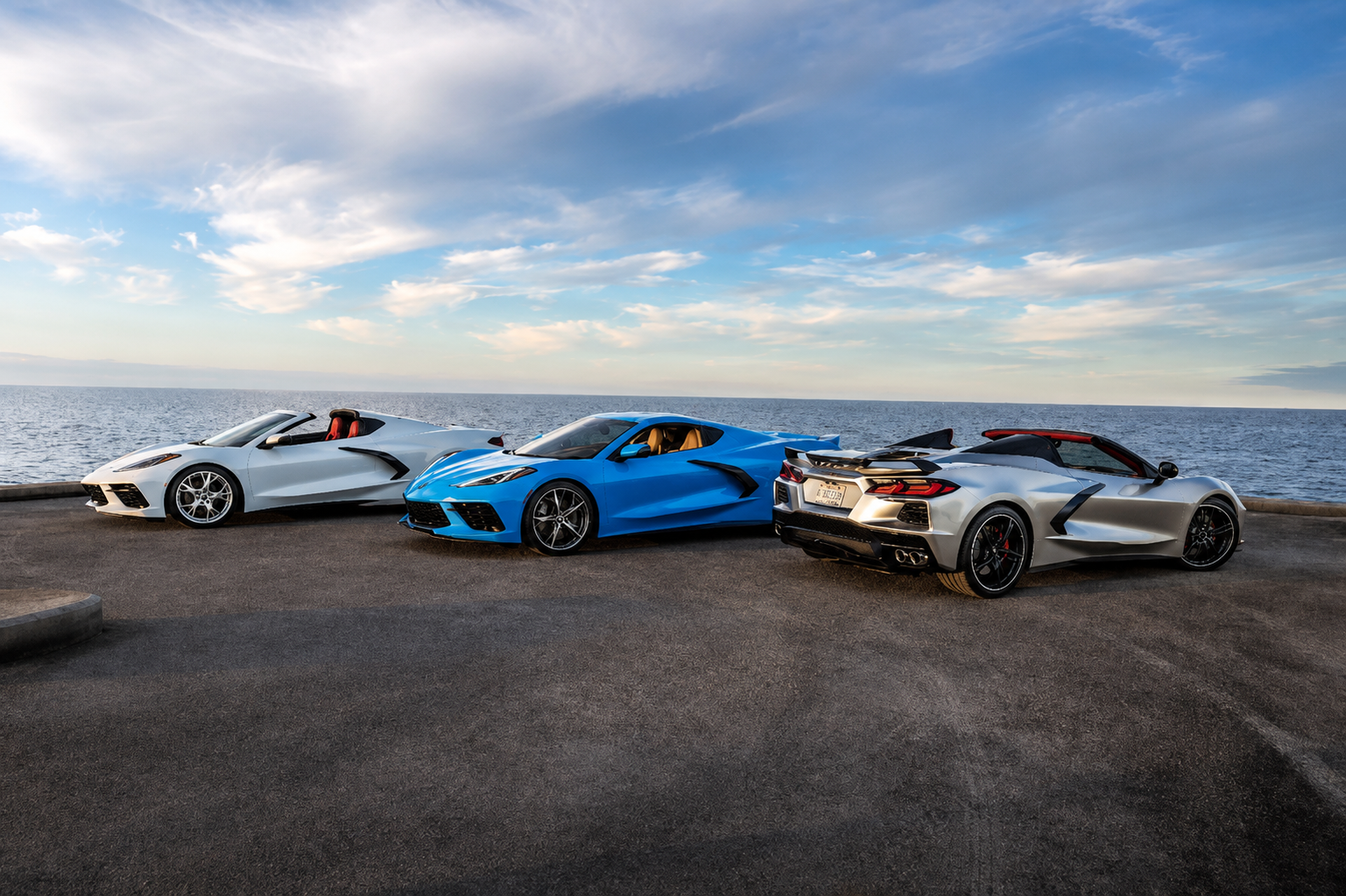
The Z51 Performance Package was the most important mechanical option available on the Stingray. It added performance-oriented suspension tuning, larger Brembo brakes, an electronic limited-slip differential, a shorter performance rear-axle ratio, enhanced cooling, Michelin Pilot Sport 4S summer tires, the NPP performance exhaust, and functional aerodynamic components.
No single component defined Z51. Its value came from the way the parts worked together.
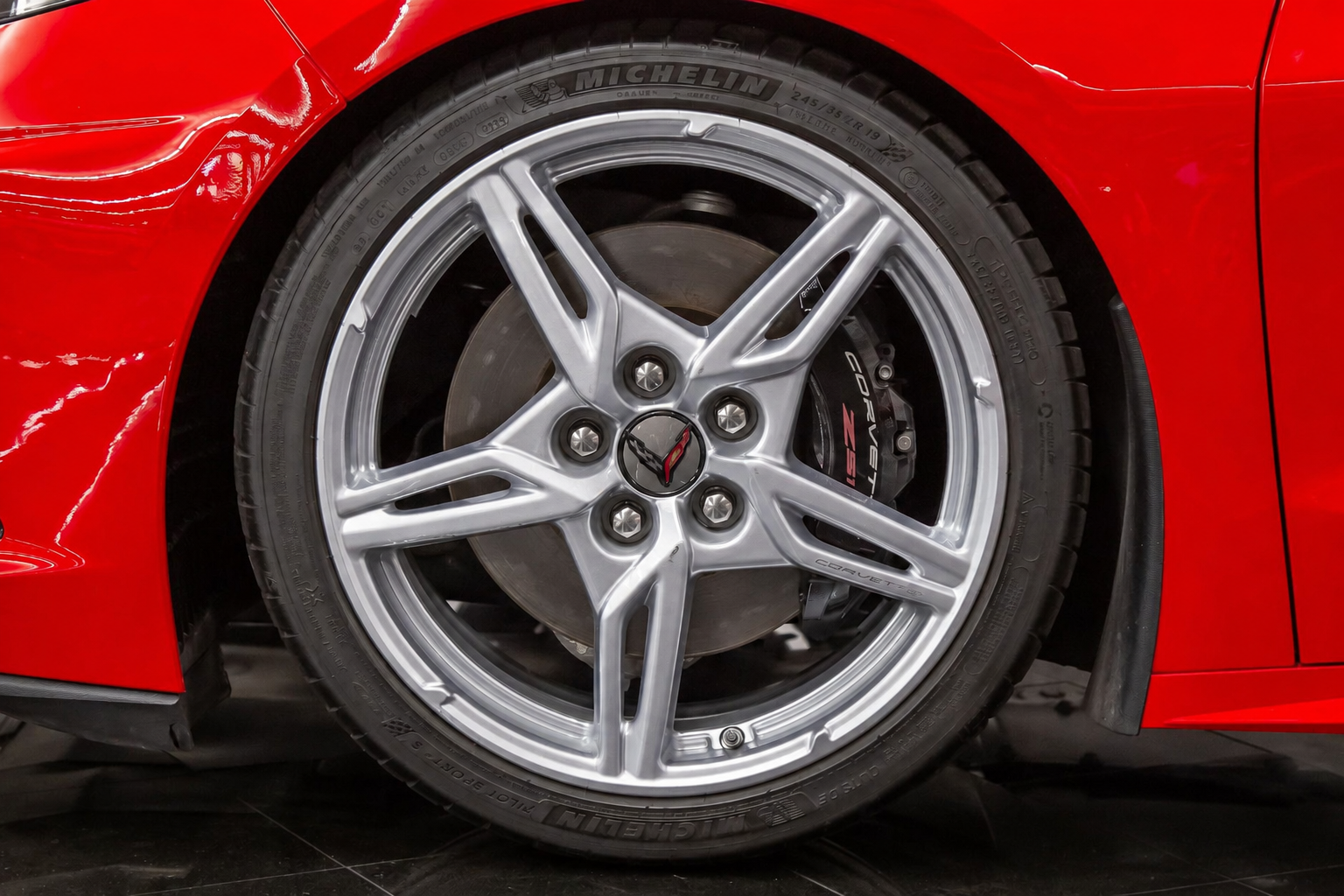
The larger brakes increased thermal capacity during repeated high-speed stops. The additional cooling supported sustained operation under track conditions. The electronic limited-slip differential could actively manage torque distribution across the rear axle, improving stability under braking and helping the car deploy power during corner exit. The summer tires increased dry grip, while the axle ratio and transmission calibration sharpened acceleration.
The package did not turn the Stingray into a Z06, nor was it intended to. What it did was increase repeatability. A standard Stingray was already extremely fast on the street. A Z51-equipped car was better prepared to sustain that performance through a full track session, a demanding mountain drive, or repeated hard use in high temperatures.
Magnetic Selective Ride Control could be ordered with or without Z51, giving buyers the ability to combine adaptive damping with either chassis configuration. The magnetorheological dampers continuously adjusted to road conditions and driving inputs, allowing the car to provide more disciplined body control when driven aggressively without becoming unnecessarily harsh during ordinary use.
The available front lift system addressed a less glamorous but equally real element of supercar ownership. By raising the front of the car to clear steep driveways, ramps, and abrupt transitions, it reduced the anxiety associated with using a low vehicle in the real world. It did not improve a lap time, but it often determined whether an owner felt comfortable driving the car to a particular destination.
That distinction says something important about the C8. Chevrolet understood that usability was not separate from performance. A car that is too delicate, too inconvenient, or too intimidating to drive regularly cannot fully deliver on its capabilities. The 2022 Stingray’s most successful options were often those that helped it perform one moment and integrate into ordinary life the next.
What Buyers Chose—and What Those Choices Revealed
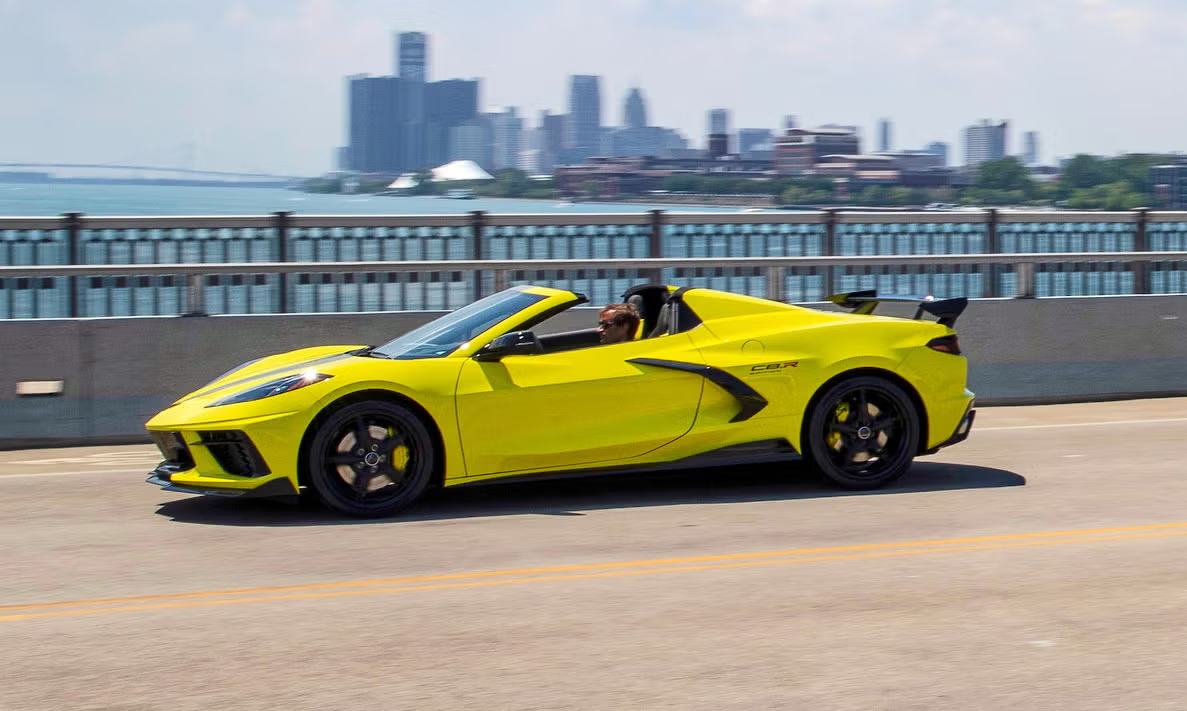
Chevrolet built 25,831 Corvettes for the 2022 model year. Of those, 13,451 were coupes and 12,380 were convertibles, producing a remarkably close 52.1-to-47.9-percent split.
That near-even division between body styles marked a significant shift from earlier generations, when the convertible generally represented a much smaller share of production. The C8 retractable hardtop changed the calculation. It offered open-air driving without the visual or security compromises associated with a traditional fabric roof, and its operation did not eliminate the car’s primary rear luggage compartment. The convertible was no longer a secondary derivative. It had become one of the C8’s core identities.
The trim breakdown was equally revealing. Chevrolet produced 3,982 cars in 1LT form, accounting for 15.4 percent of the model-year total. The 2LT represented 11,060 cars, or 42.8 percent, while the 3LT accounted for 10,789 cars, or 41.8 percent. More than four out of every five buyers, therefore, selected one of the two upper trims.
That was not the behavior of a market interested only in obtaining the least expensive mid-engine car available. Buyers were adding technology, premium materials, upgraded seating, and convenience equipment because they viewed the Stingray as a complete ownership proposition. The C8 was not merely being purchased for a single spectacular acceleration run. Owners expected to travel in it, commute in it, display it, track it, and live with it.
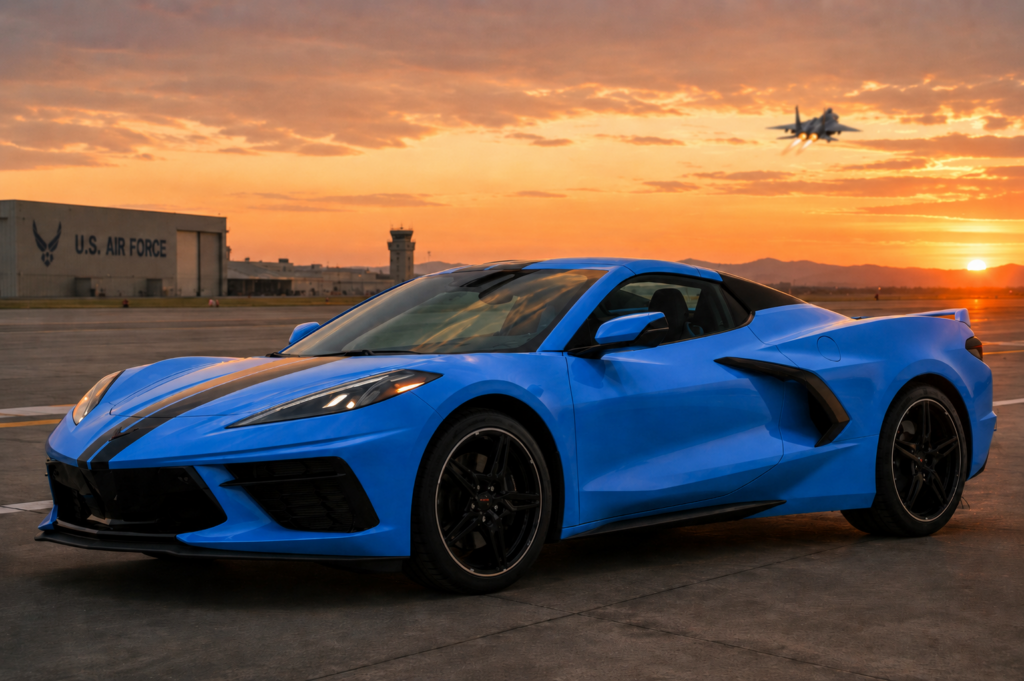
The option rates reinforced the same conclusion. Approximately 68.6 percent of 2022 Corvettes received the Z51 Performance Package. The NPP performance exhaust appeared on 86.9 percent, while the front lift system was installed on 58.8 percent. Magnetic Ride Control paired with Z51 appeared on 11,757 cars, representing 45.5 percent of total production. The Performance Data Recorder was installed in 22,167 cars—an extraordinary 85.8-percent take rate for equipment originally conceived as a specialized driver-development and track-analysis tool.
Buyers also showed a strong preference for familiar Corvette colors. Torch Red led production with 4,147 cars, followed by Arctic White with 3,603. Hypersonic Gray, new for 2022, finished close behind with 3,291 examples, demonstrating how quickly the metallic gray connected with buyers. Red Mist Metallic Tintcoat accounted for 3,274 cars, while Black appeared on 2,766. At the opposite end of the spectrum, Caffeine Metallic was selected for only 385 cars, making it the rarest exterior color of the model year.
Most production remained in the United States, where Chevrolet delivered 23,503 of the 25,831 cars. Canada received 1,014, while additional cars were allocated to Mexico, the Middle East, Japan, Europe, Australia, and New Zealand. Chevrolet built 442 right-hand-drive Corvettes, evidence that the C8 was becoming more than an American performance car exported in limited numbers. It was being engineered and distributed as an increasingly global product.
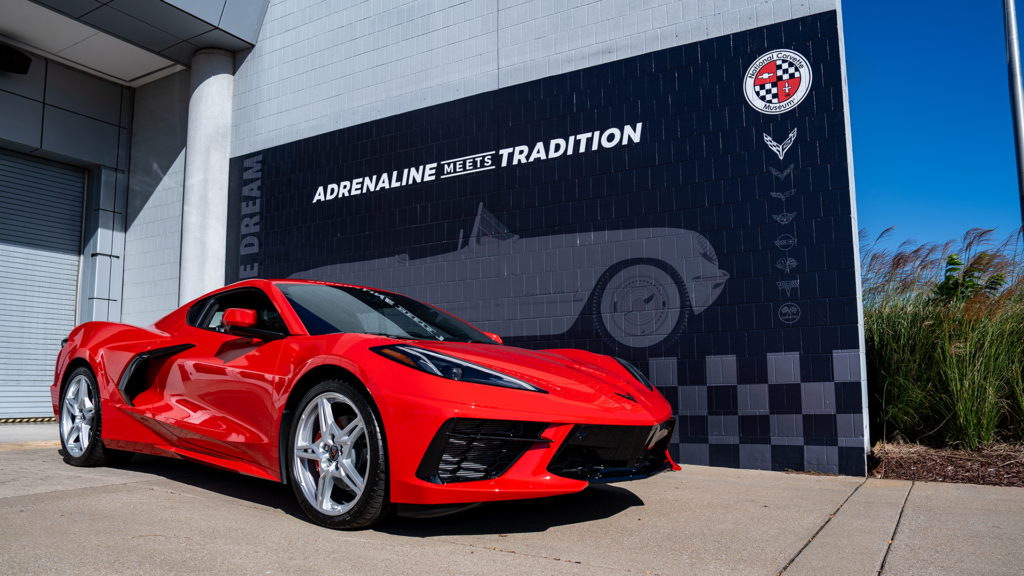
The National Corvette Museum’s R8C delivery program accounted for 1,146 cars. For those owners, the transaction became part of the experience: traveling to Bowling Green, seeing the museum and assembly complex, and taking delivery near the plant where every production Corvette had been built since 1981.
The numbers tell a consistent story. Buyers did not simply accept the mid-engine Corvette. They embraced its most sophisticated forms. They selected convertibles almost as frequently as coupes, favored the premium trims, ordered the performance hardware, and invested heavily in personalization.
By 2022, the novelty of the engine’s location was no longer carrying the car. The product itself was.
Bowling Green Under Pressure

In the early morning hours of December 11, 2021, a violent EF3 tornado tore through Bowling Green with winds approaching 150 mph, destroying homes, businesses, and entire neighborhoods while claiming 17 lives across Warren County. The National Corvette Museum was spared significant structural damage; its collection remained secure, and employees were safe, though the amphitheater area was damaged and the facility temporarily closed as crews restored power and cleared debris. Across Interstate 65, the NCM Motorsports Park suffered a far harsher blow as roofs and exterior walls were ripped from buildings, garages and storage structures were heavily damaged, debris was scattered for more than half a mile, and several vehicles were struck or displaced. Nearby, Bowling Green Assembly sustained extensive roof and infrastructure damage, while more than one hundred completed or partially built Corvettes were ultimately deemed unsalvageable. For a community inseparably linked to America’s sports car, the storm was more than a production disruption—it was a night of terrible loss that tested the resilience of Bowling Green, its people, and the institutions that preserve Corvette’s legacy.
The 2022 Corvette was built during a period when consistency could not be taken for granted.
The global automotive industry was still dealing with semiconductor shortages, transportation problems, supplier disruptions, and the lingering effects of the COVID-19 pandemic. Corvette production was particularly vulnerable because every car came from a single plant: General Motors’ Bowling Green Assembly facility in Kentucky.
Then, in the early morning hours of December 11, 2021, a devastating tornado passed through Bowling Green. The storm damaged the assembly plant, the surrounding community, and portions of the nearby National Corvette Museum Motorsports Park. More than one hundred completed or partially completed 2022 Corvettes inside the facility were damaged beyond repair. Contemporary reports placed the number at approximately 122, although early accounts varied as the plant assessed the damage.
The destruction occurred in the middle of a model year already facing overwhelming demand. Chevrolet halted production while the building was inspected and repaired, then resumed operations with the added burden of replacing damaged equipment and managing an unstable supply chain.
Temporary parts constraints led to additional shutdowns in March and April 2022. Chevrolet confirmed that both shifts would be idled during the week of March 21, with production expected to resume the following week. Another interruption arrived in late April, adding further pressure to a schedule that was already being adjusted around the transition to the 2023 model year.
Constraints could also affect how individual cars were configured. Equipment availability changed as particular components moved on and off restriction, forcing some customers to choose between delaying an order and accepting a build without a desired option. For historians and future collectors, that makes the build records of 2022 cars particularly important. Two Stingrays ordered at different points in the year could reflect not only different customer preferences, but different realities within the production system.
Despite those difficulties, Bowling Green completed 25,831 cars before 2022-model production ended on May 13, 2022. Production of the 2023 Stingray began the following Monday, May 16.
That total was not simply a measure of demand. It represented the ability of the plant, its workforce, suppliers, and the broader Corvette organization to continue building a complex, highly personalized sports car through one of the most disrupted manufacturing periods in modern automotive history.
The Z06 Becomes Real

Although the Stingray was the only Corvette carrying a 2022 model-year designation, the development and launch of the 2023 Z06 became one of the defining Corvette stories of calendar-year 2022.
Chevrolet had officially revealed the new Z06 on October 26, 2021. What followed was a year of final validation, public demonstrations, production preparation, charity auctions, customer anticipation, and an extraordinary level of scrutiny. The Stingray had proven that Chevrolet could build a convincing mid-engine Corvette. The Z06 now had to prove that the architecture could support a genuine American supercar.

The responsibility rested with the team led by Tadge Juechter and a broad group of engineers specializing in powertrain development, aerodynamics, chassis control, thermal management, manufacturing, and motorsports. Mark Reuss, General Motors’ president and a committed high-performance enthusiast, served as one of the program’s most visible executive advocates. Together, they positioned the Z06 not as a modified Stingray, but as a separate expression of the C8 platform.
Its defining component was the LT6 engine.
The 5.5-liter naturally aspirated V8 abandoned the traditional pushrod configuration used by the Stingray’s LT2 in favor of dual overhead camshafts, four valves per cylinder, and a flat-plane crankshaft. It produced 670 horsepower at 8,400 rpm and 460 lb-ft of torque at 6,300 rpm, with an 8,600-rpm redline. At its introduction, Chevrolet identified it as the most powerful naturally aspirated V8 offered in a production automobile.
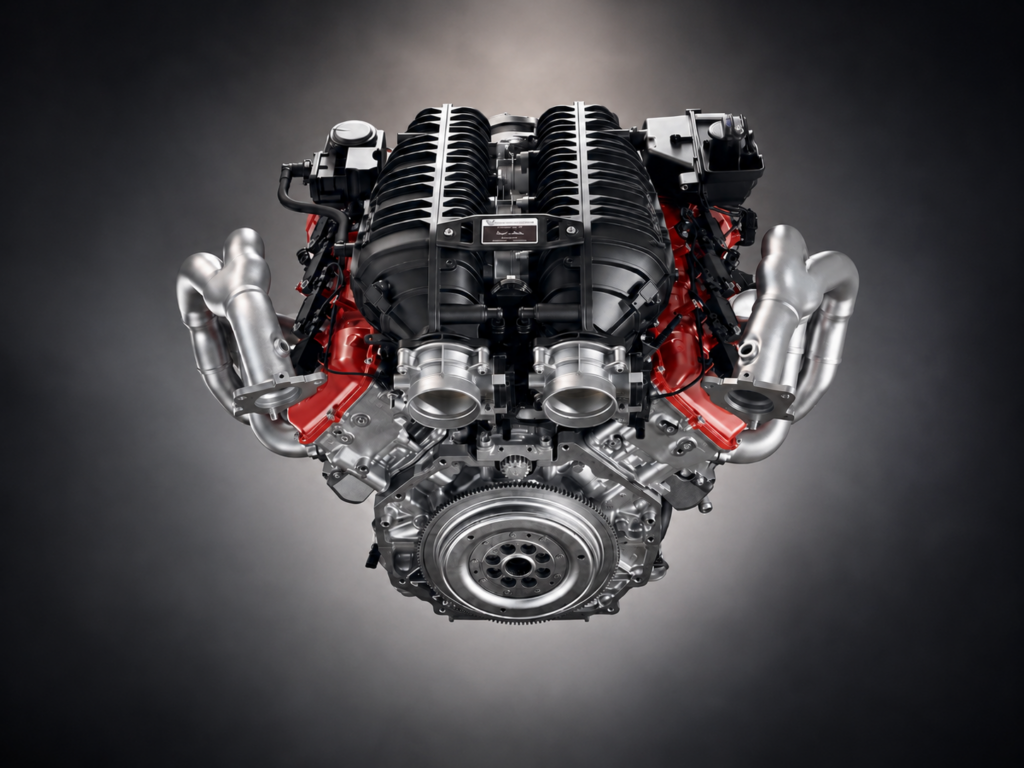
That specification represented a philosophical departure from every previous production Corvette engine. Rather than using large displacement, supercharging, or turbocharging to generate massive low- and mid-range torque, the LT6 relied on airflow, reduced rotating mass, and engine speed. Its flat-plane crankshaft allowed a firing order and exhaust pulse arrangement suited to high-rpm breathing, while its oversquare bore-and-stroke dimensions helped the engine rev with an urgency unlike the familiar cadence of a traditional small-block.
Yet the LT6 was not an attempt to erase Corvette history. It extended the same principle that had always driven the best versions of the car: apply the most effective technology available to produce performance that could challenge far more expensive machinery.
The engine’s relationship to the C8.R was critical. Corvette Racing had been competing with a racing version of the same basic 5.5-liter, flat-plane-crank architecture since the C8.R’s 2020 debut. The competition engine was not identical to the production LT6, but the racing program exposed the architecture to endurance events, heat cycles, vibration, sustained high rpm, and the unforgiving operational demands of international sports-car competition.
That did not mean the Z06 received a racing engine with license plates attached. It meant that Chevrolet had already spent years learning how the configuration behaved under pressure before the first customer car reached production.
Each LT6 was hand-assembled at the Performance Build Center within the Bowling Green plant. The process reinforced the engine’s specialized nature and connected each unit to the technicians responsible for its assembly.
The rest of the Z06 was developed around the engine’s capabilities. Its body measured 3.6 inches wider than the Stingray’s, accommodating broader wheels, 345-section rear tires, and larger side openings required to feed additional air into the cooling system. A shorter 5.56:1 final-drive ratio helped keep the LT6 in its high-rpm operating range, while revised transmission calibration matched the engine’s very different torque curve.
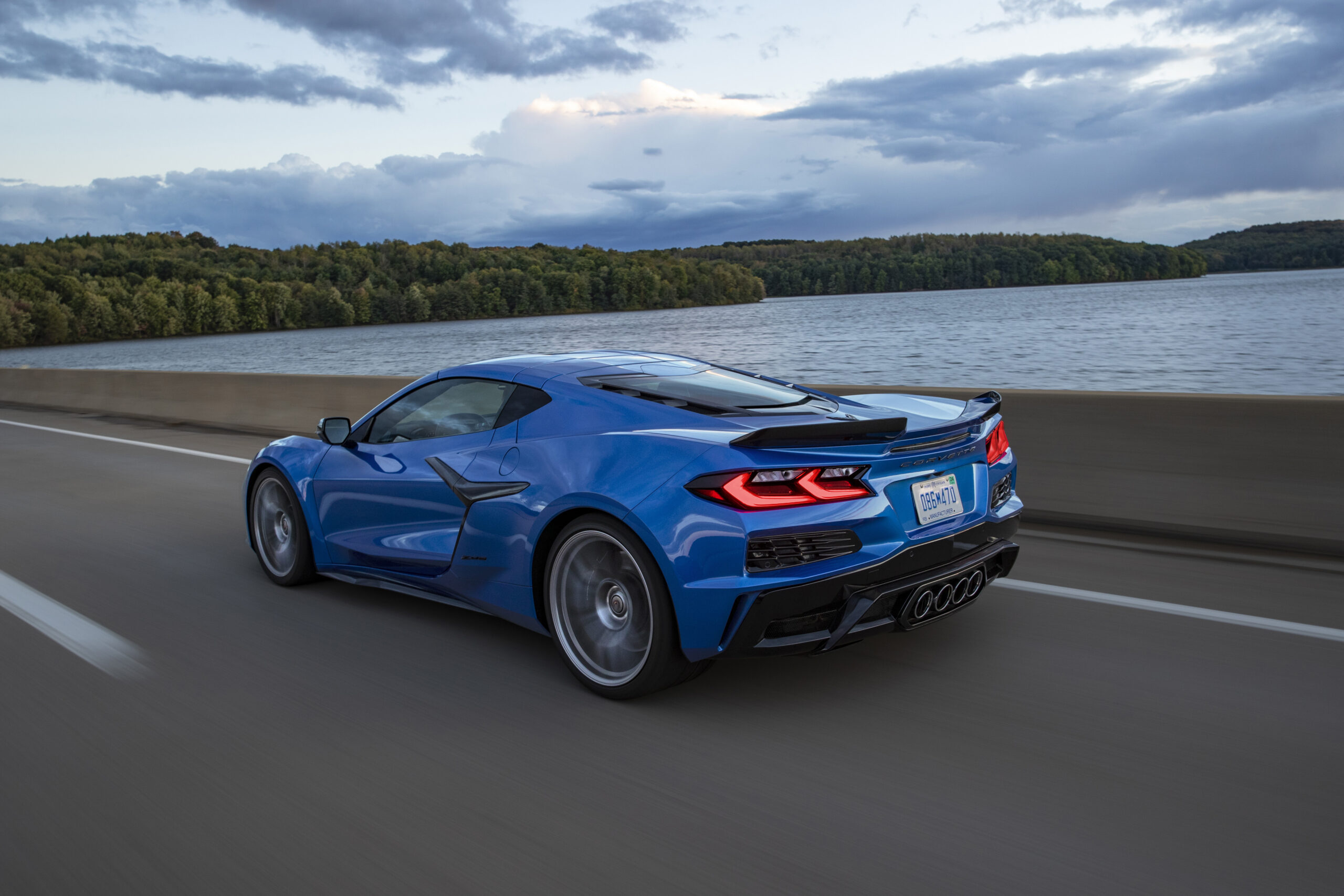
Even in its standard form, the Z06 incorporated larger brakes, additional cooling capacity, model-specific suspension calibration, and bodywork designed to generate useful aerodynamic stability. Buyers seeking the most aggressive configuration could select the Z07 Performance Package.
Z07 added carbon-ceramic brakes, Michelin Pilot Sport Cup 2 R ZP tires, specific Magnetic Ride Control calibration, and an available carbon-fiber aerodynamic package. With the complete aero configuration installed, Chevrolet claimed 734 pounds of downforce at 186 mph. Available carbon-fiber wheels reduced total unsprung and rotating mass by approximately 41 pounds, improving steering response, acceleration, braking, and the suspension’s ability to follow the road surface. Chevrolet reported lateral acceleration of up to 1.22 g for the Z07-equipped car.
Those numbers were impressive, but the deeper achievement was integration. The wider tires, brakes, differential, dampers, cooling systems, aerodynamics, transmission, and engine had to operate as one vehicle. The Z06 could not merely feel like a powerful Stingray. It needed to feel coherent at speeds where minor weaknesses become major problems.
The 70th Anniversary and the First Z06 Auctions

Chevrolet used 2022 to connect the forthcoming Z06 with another important milestone. On January 24, the company announced the Corvette 70th Anniversary Edition, which would be available on 2023 Stingray 3LT and Z06 3LZ coupes and convertibles.
The package commemorated the seven decades separating the first Corvette’s 1953 debut from the 2023 model year. It included exclusive exterior colors, distinctive striping, special wheels, anniversary badging, red brake calipers, unique interior details, and a coordinated luggage set. The first retail-production Z06 would be built as a 70th Anniversary Edition model.
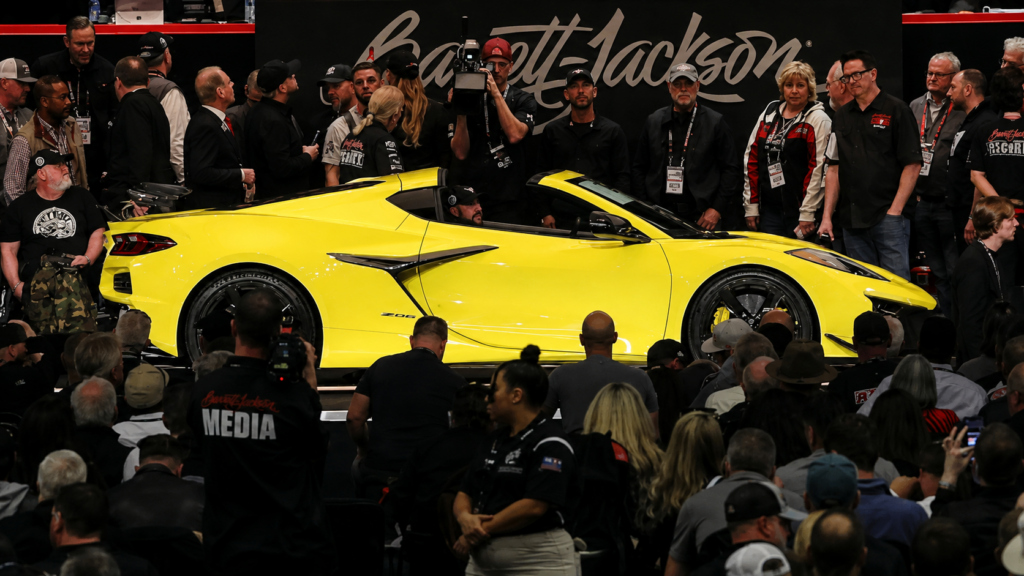
Five days after the announcement, the rights to that first retail-production Z06 crossed the Barrett-Jackson auction block in Scottsdale. Retired Corvette Racing driver Oliver Gavin drove the car onto the stage, and Rick Hendrick ultimately placed the winning bid of $3.6 million. Hendrick, the chairman and chief executive officer of Hendrick Automotive Group and owner of Hendrick Motorsports, had already acquired several historically significant first-production Corvettes at charity auctions. The full Z06 bid benefited Operation Homefront, an organization supporting military families.
In April, Hendrick also paid $1 million for the first retail-production Z06 convertible, with proceeds benefiting the Thurgood Marshall College Fund. Together, the two auctions generated $4.6 million for charity before regular customer deliveries had begun.
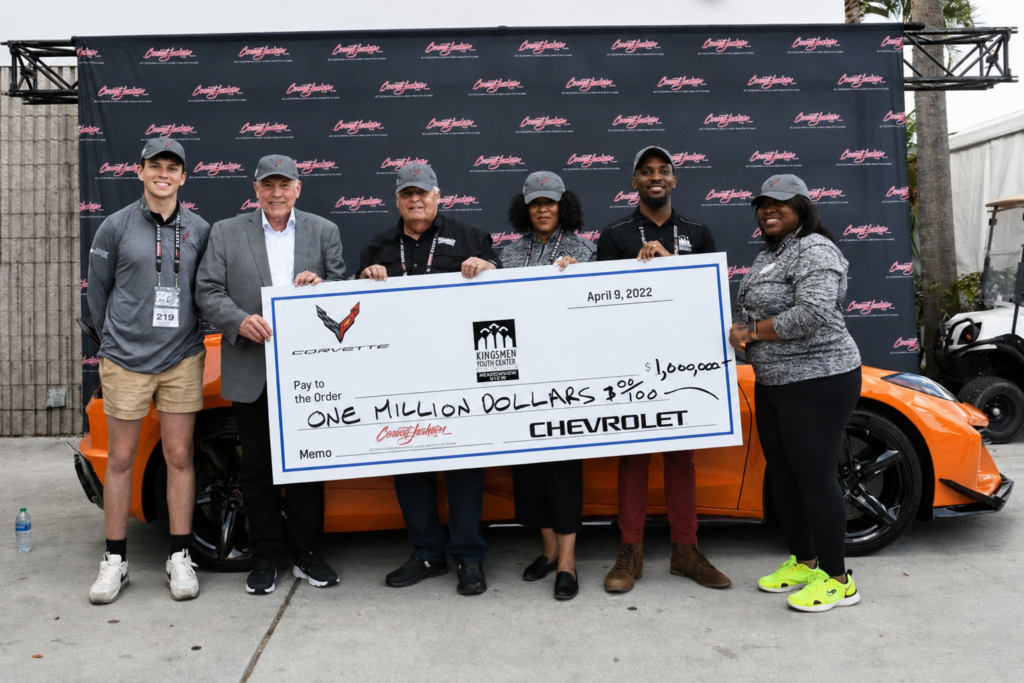
The events created enormous visibility, but they also illustrated the unusual position the Z06 occupied. It was simultaneously a new production automobile, a symbol of Corvette’s 70-year history, a flagship for American engineering, and a cultural artifact valuable enough to raise millions before its first owner had driven it home.
Production began in limited quantities during September 2022. The first completed cars began shipping to dealerships in early November, finally moving the Z06 from years of engineering, testing, speculation, and carefully managed previews into customer hands.
The volumes were initially small, and the demand was extraordinary. Chevrolet temporarily stopped accepting additional orders after determining that the existing pipeline would fill the available 2022 calendar-year production slots. That scarcity produced frustration, but it also reflected the magnitude of what the team had created.
The Z06 did more than add power to the C8 range. It validated the entire decision to move the Corvette’s engine. The architecture had not been developed simply to make the Stingray quicker from a stop. It had been created so that a car like the Z06 could exist.
The E-Ray Develops in Public
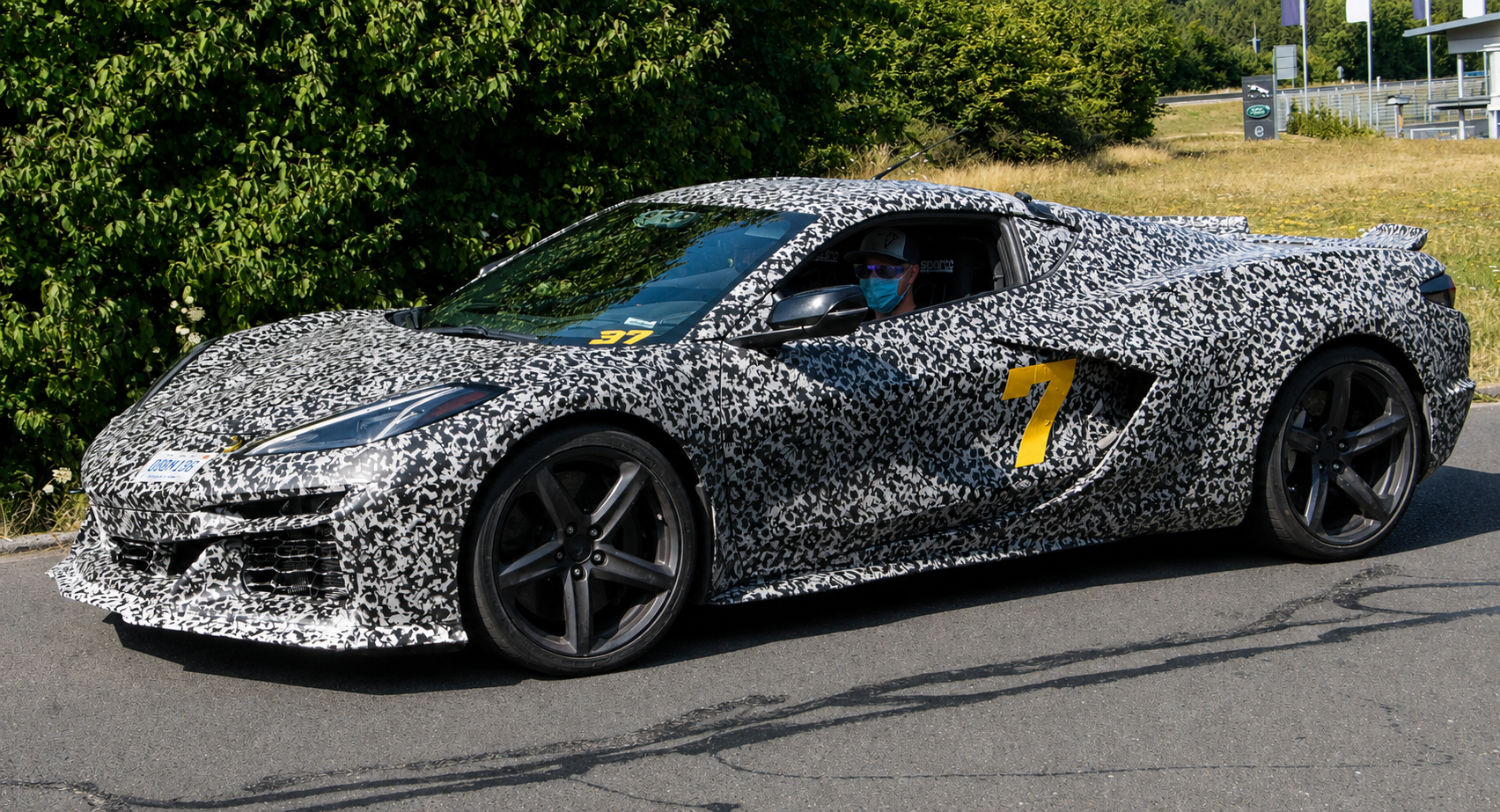
While the Z06 commanded most of the attention, another Corvette was being developed more quietly.
During 2022, camouflaged wide-body C8 prototypes were photographed testing at the Nürburgring and elsewhere. They resembled the Z06 in width but lacked its center-mounted exhaust outlets and carried subtle differences that suggested another powertrain was under development. Contemporary reports increasingly identified the prototypes as an electrified, all-wheel-drive Corvette commonly referred to as the E-Ray.
At the time, many details remained speculative. Reports correctly anticipated an electric motor driving the front axle and the Stingray’s LT2 V8 powering the rear, but other predictions—including the possibility of plug-in capability—proved inaccurate. The distinction is important. The 2022 test cars confirmed that Chevrolet was actively validating an electrified Corvette, but the production specifications did not become official until January 17, 2023.
When Chevrolet finally revealed the 2024 Corvette E-Ray, it confirmed that the car combined the Stingray’s 495-horsepower LT2 with a front electric motor producing 160 horsepower and 125 lb-ft of torque. Total system output was rated at 655 horsepower. A 1.9-kWh lithium-ion battery was mounted within the structural tunnel between the seats, and the system replenished itself through regenerative braking and normal driving rather than external charging.
The resulting e-AWD system gave the Corvette front-wheel drive for the first time. It also produced the quickest acceleration figure Chevrolet had claimed for a production Corvette to that point: 0–60 mph in 2.5 seconds and a quarter-mile in 10.5 seconds.
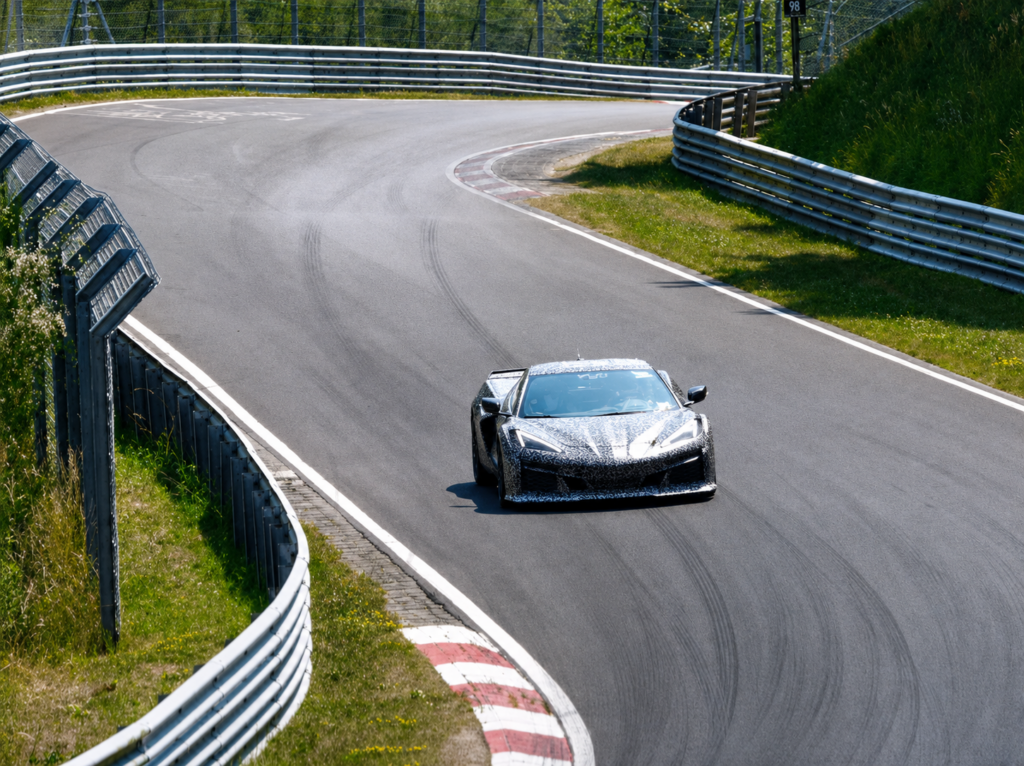
Yet the E-Ray was not developed simply to win a launch-control comparison. The electric front axle provided traction on wet, cold, and imperfect surfaces where a powerful rear-drive car could not always use its full output. Standard carbon-ceramic brakes, Magnetic Ride Control 4.0, and all-season tires supported a broader mission than the Z06’s uncompromising track focus.
Tadge Juechter described the E-Ray as a Corvette intended to provide greater all-season confidence, while lead development engineer Mike Kutcher and the engineering team calibrated the battery and motor for rapid deployment and recovery of energy. It was a performance hybrid rather than an economy-focused one—a car that used electrification to increase capability instead of replacing the V8 experience.
The front motor also enabled a limited Stealth Mode, allowing the car to move at low speeds under electric power for short distances. This was not meaningful electric-only transportation in the conventional sense. It was a practical feature for quietly leaving a neighborhood or garage before the LT2 came to life.
In retrospect, the E-Ray prototypes circulating during 2022 revealed the breadth of the C8 program. Chevrolet was developing two radically different high-performance variants on the same platform at the same time. The Z06 pursued engine speed, aerodynamics, and track performance. The E-Ray used electrification and all-wheel drive to expand traction, acceleration, and year-round usability.
Neither car was an afterthought. Both had been made possible by decisions embedded in the C8’s structure years earlier.
Corvette Racing Goes Global
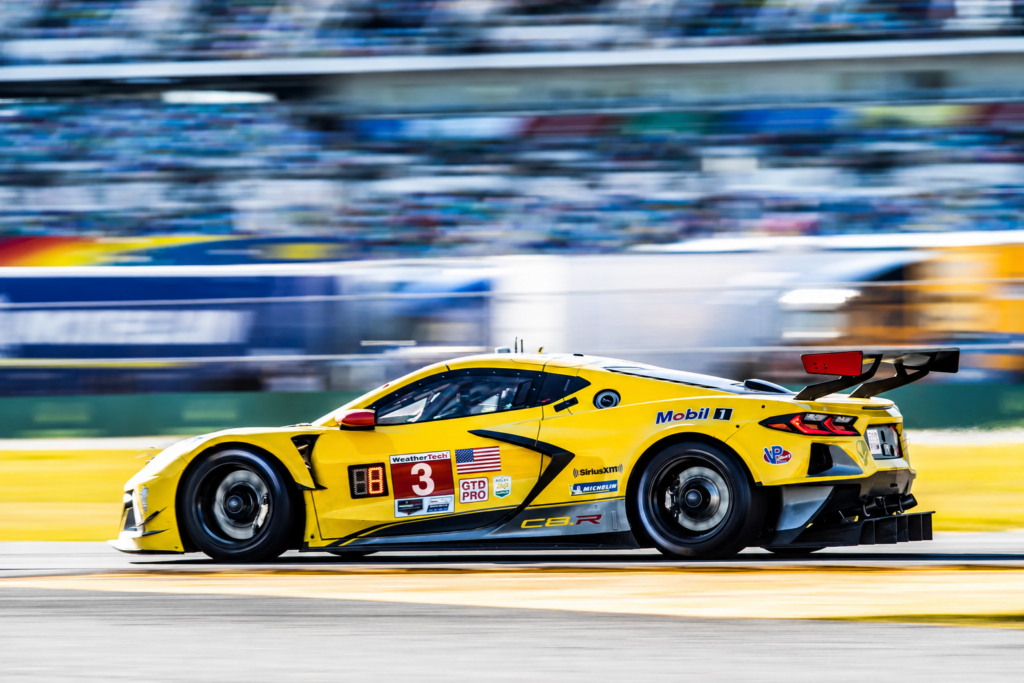
The production cars told only part of the 2022 story. Corvette Racing entered the year facing one of the most significant transitions in the program’s modern history.
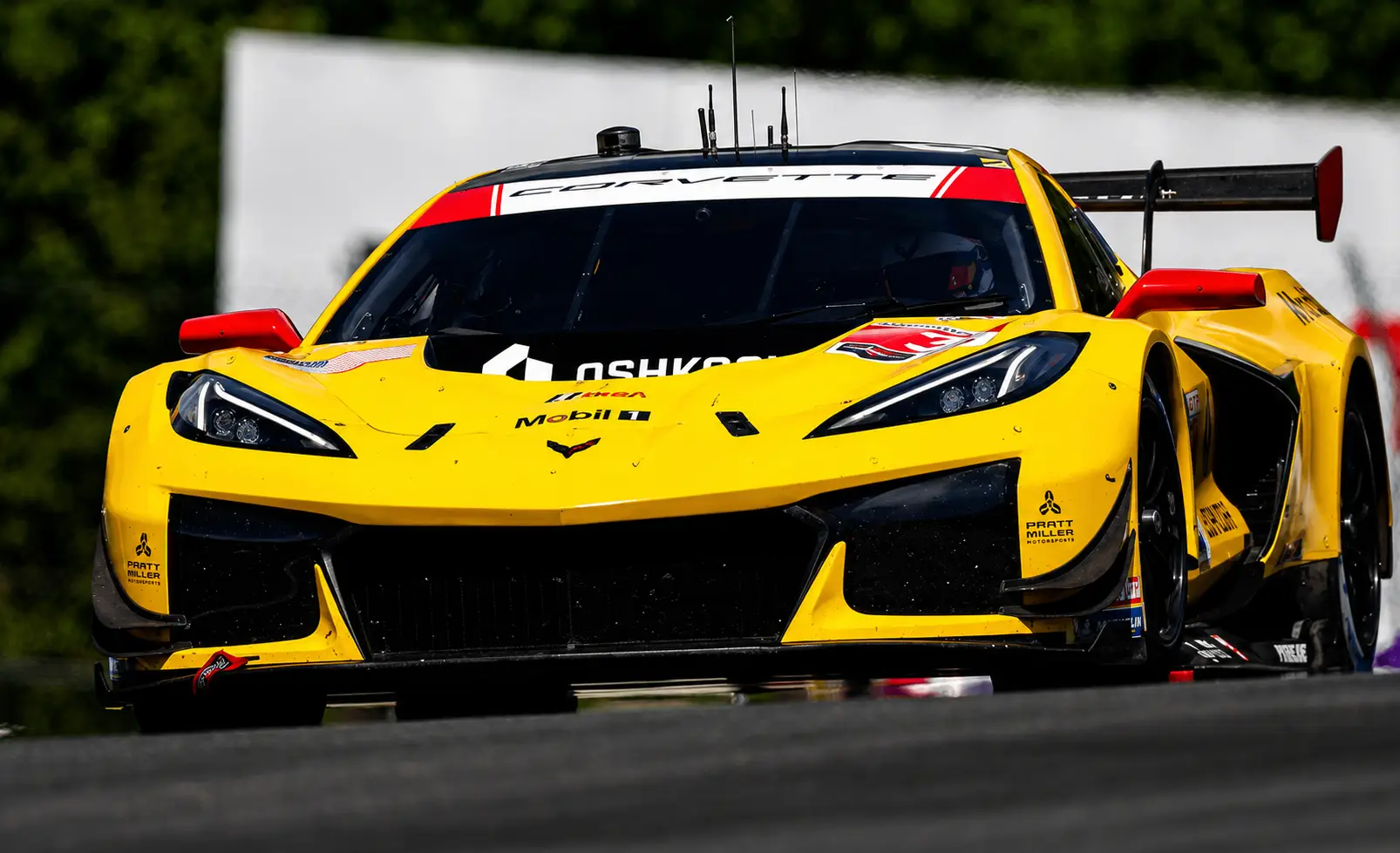
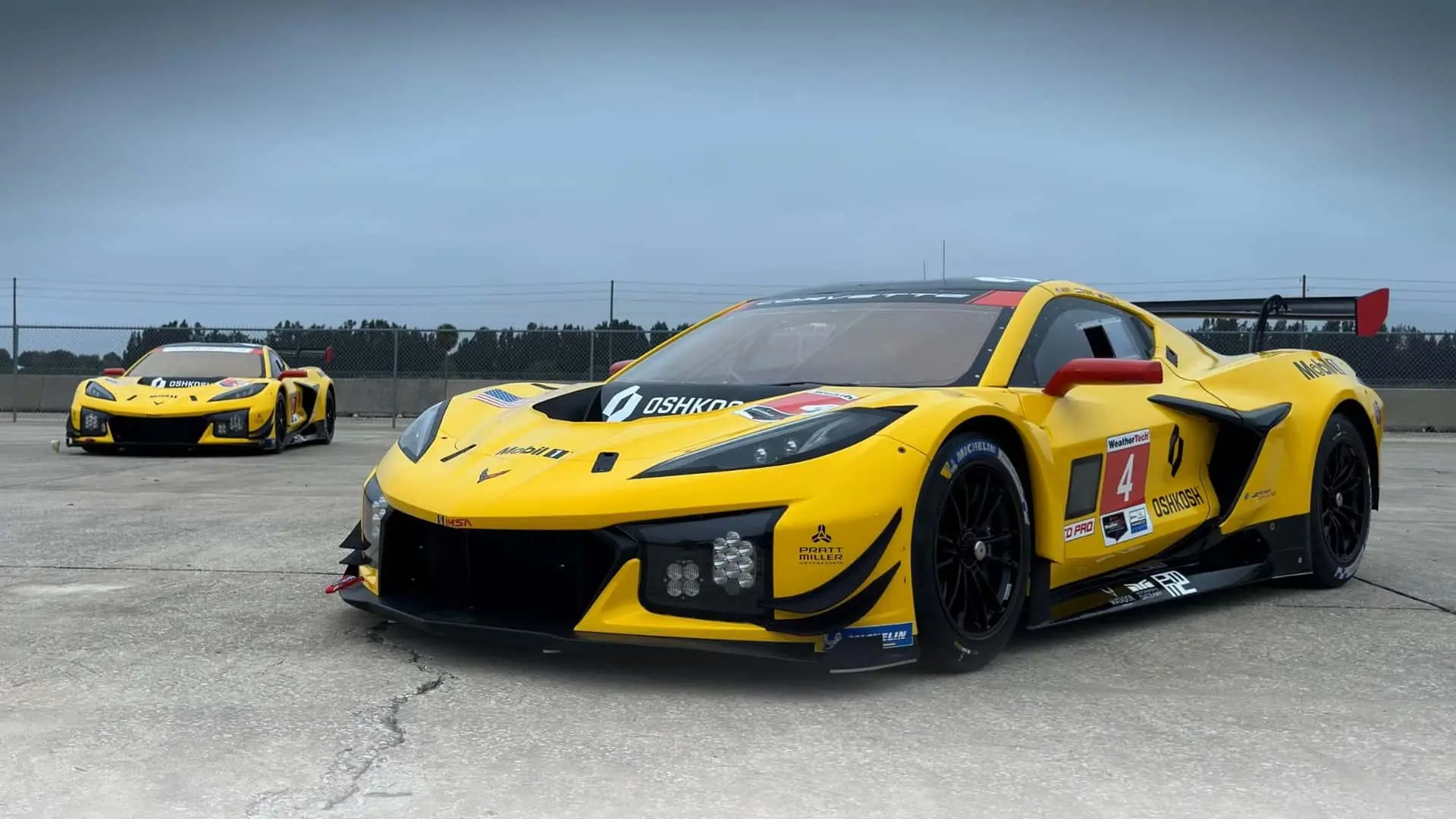
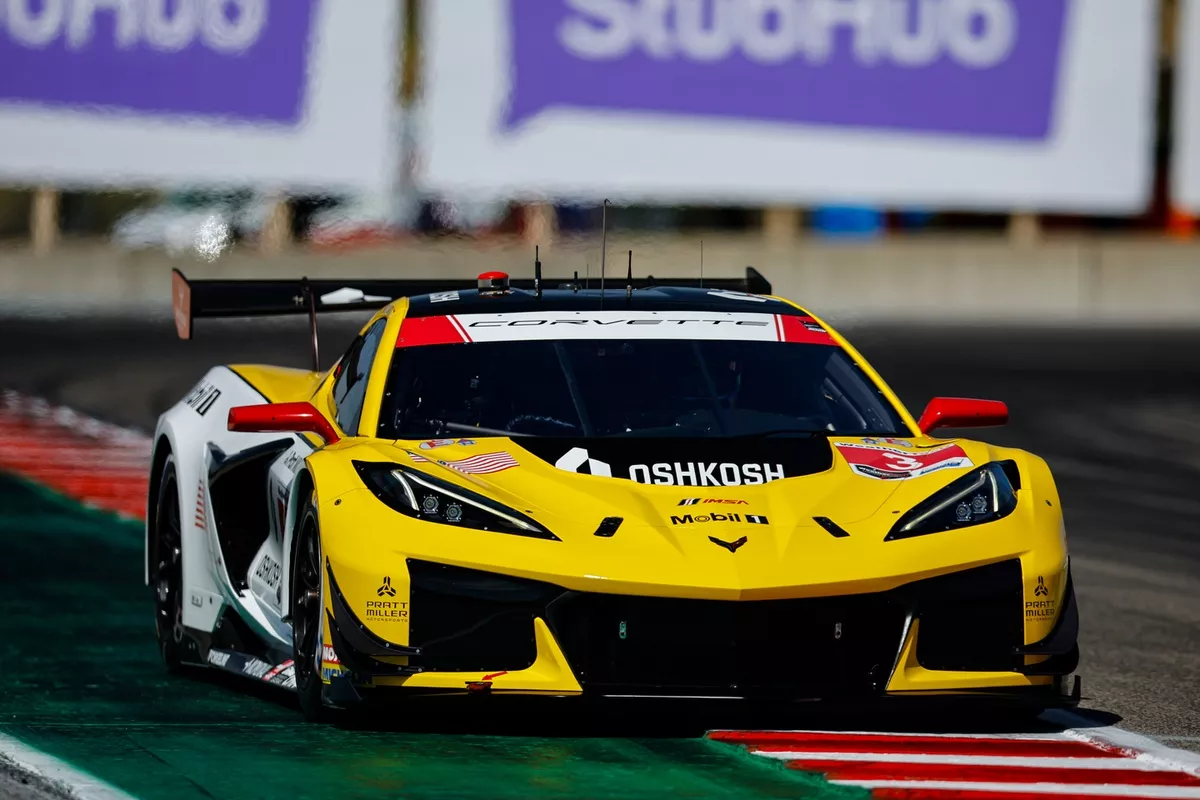
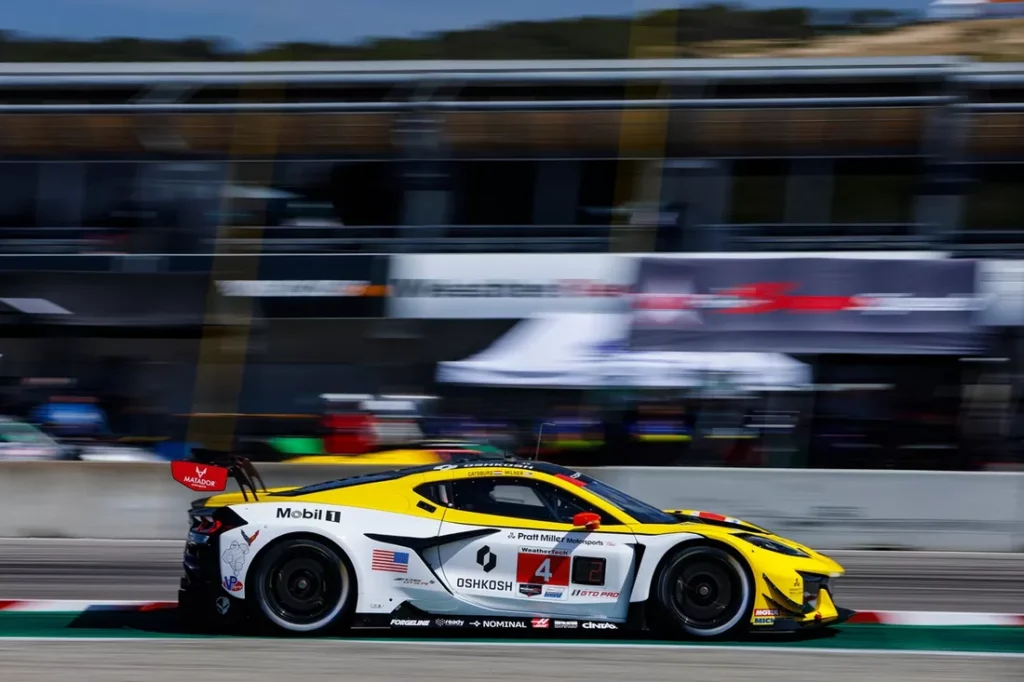
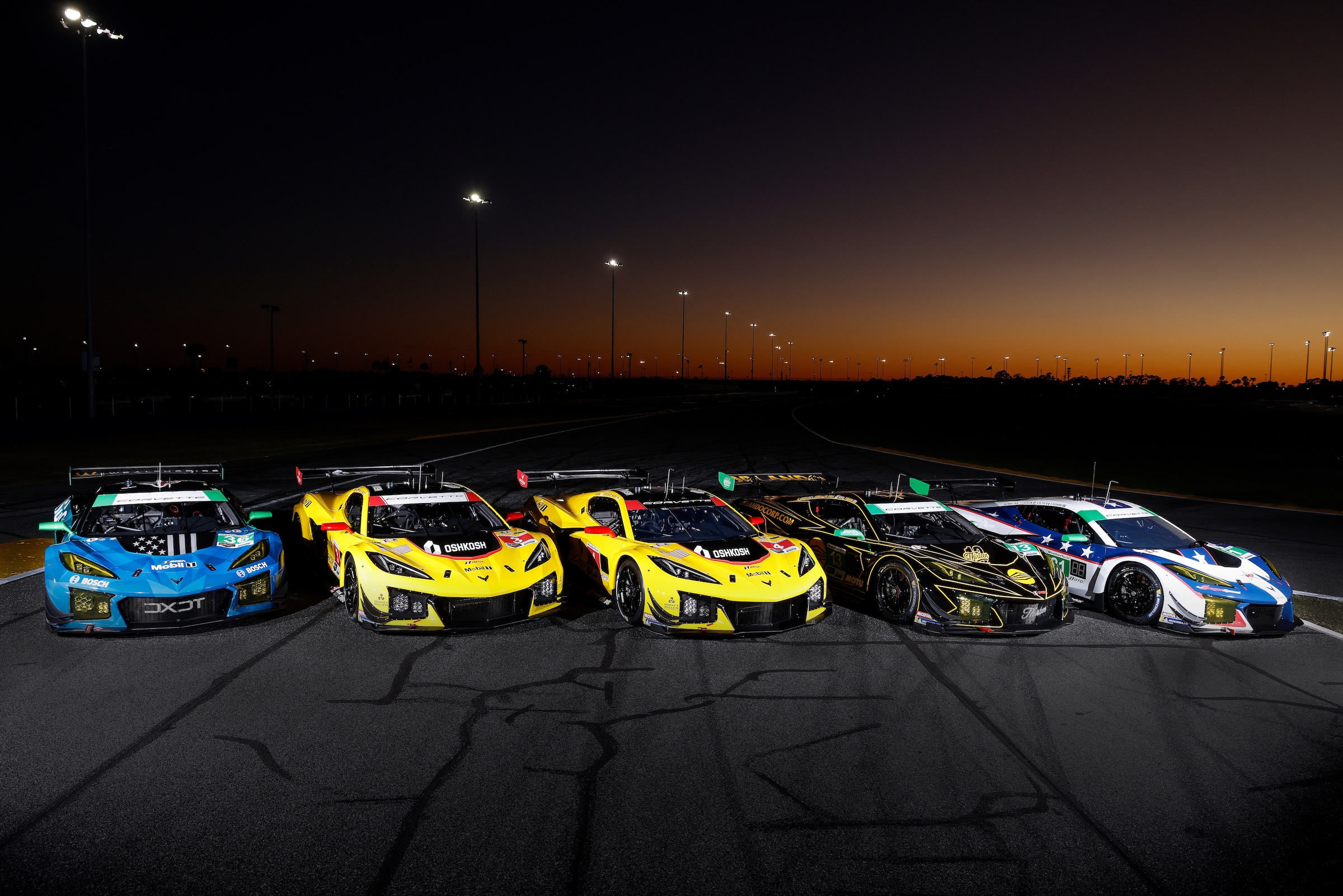
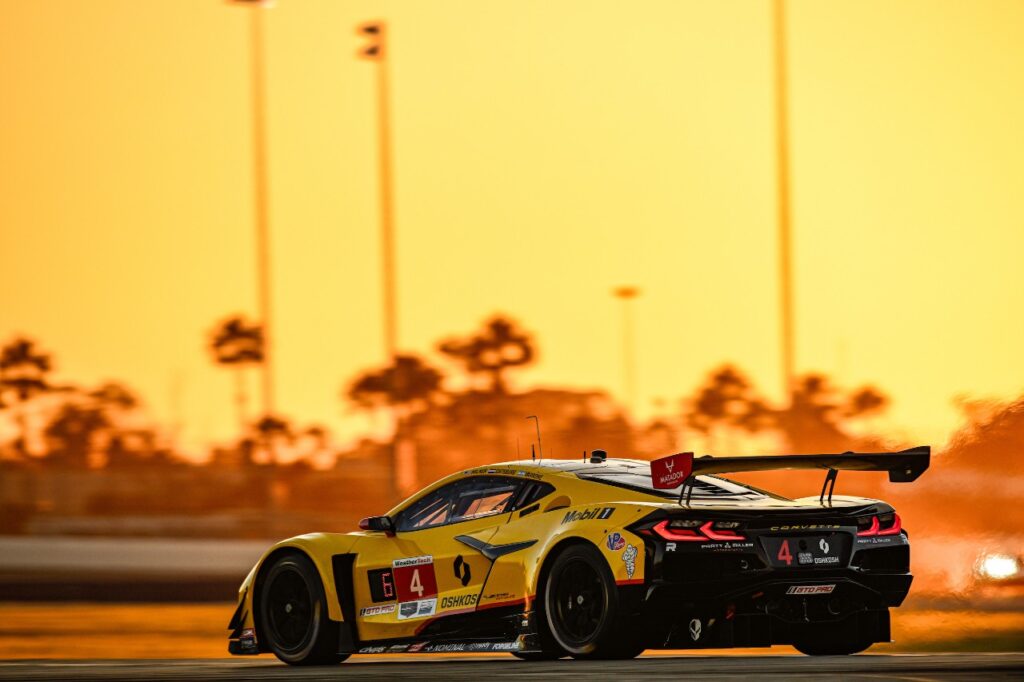
Since its factory return in 1999, Corvette Racing had become one of the world’s most successful sports-car operations. Developed in partnership with Pratt Miller Engineering, the program had accumulated victories at Daytona, Sebring, Le Mans, and throughout the American Le Mans Series and IMSA competition. Its yellow race cars had become as central to the modern Corvette identity as crossed-flags emblems and small-block V8s.
The arrival of the mid-engine C8.R in 2020 represented another major departure. Chevrolet had designed the race car alongside the production C8, allowing both programs to benefit from shared architectural development. The C8.R won the IMSA GT Le Mans manufacturers’, drivers’, and team championships during its first season, providing the basis for the Championship Edition offered for 2022.
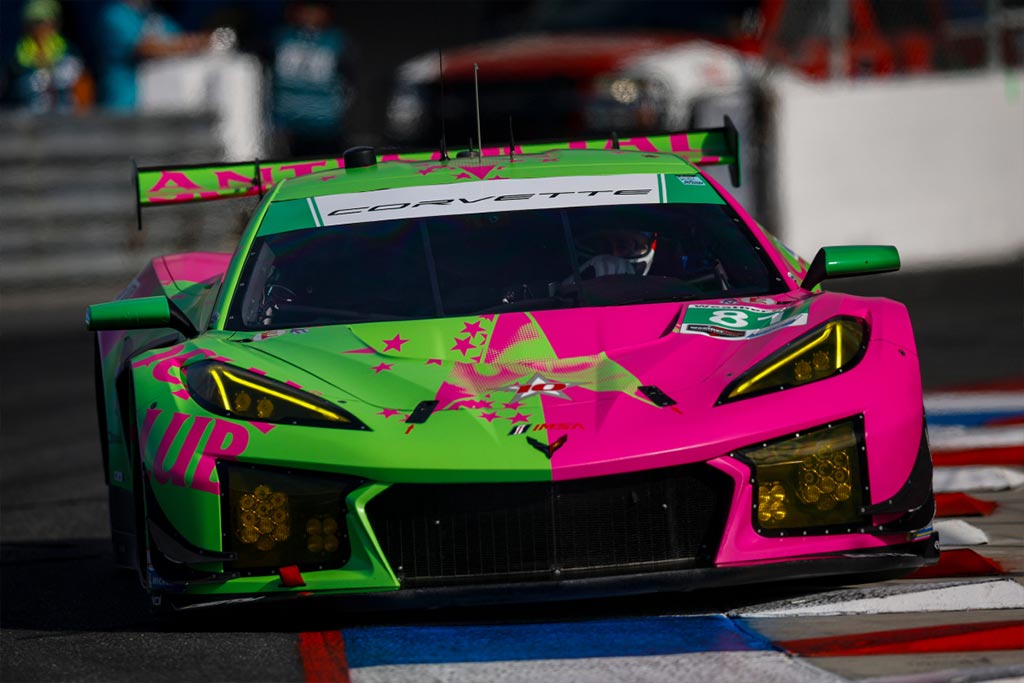
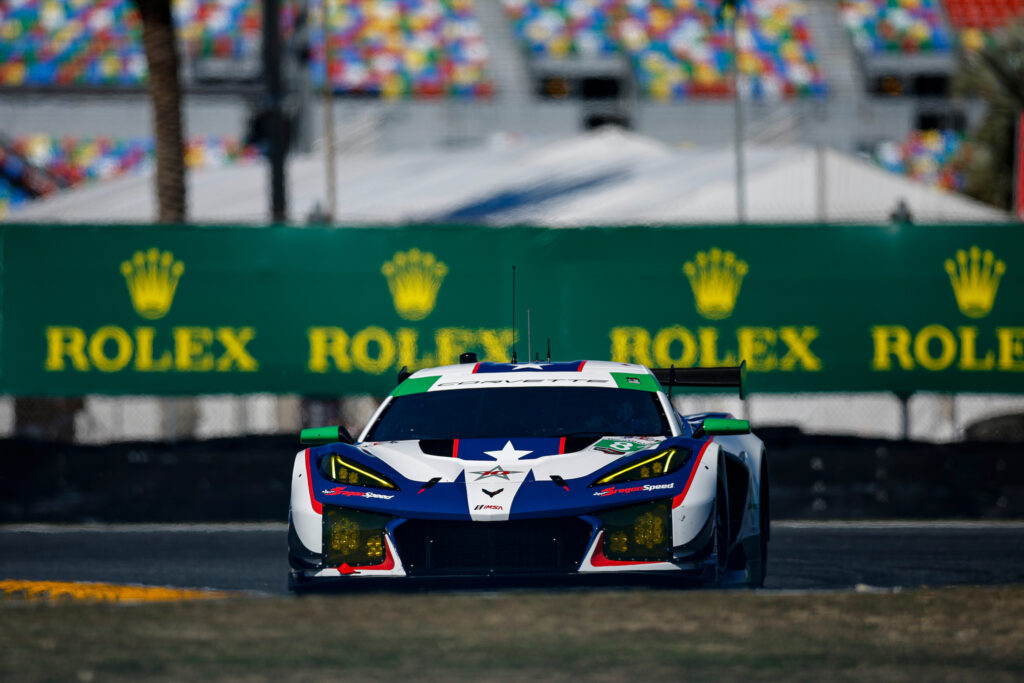
The racing environment, however, was changing. IMSA discontinued the GTLM category after 2021 and replaced it with GTD PRO, a class based on global GT3 regulations. The C8.R had been constructed for the outgoing GTE rules rather than GT3, so Chevrolet had to adapt the existing car to compete during the transition.
Changes included revised aerodynamics, reduced engine output, antilock braking, driver-assistance systems permitted by GT3 regulations, and customer-specification Michelin tires rather than the confidential development tires used in GTLM. Those revisions changed the way the car behaved and forced the team to learn a new competitive framework while racing against established GT3 machinery.
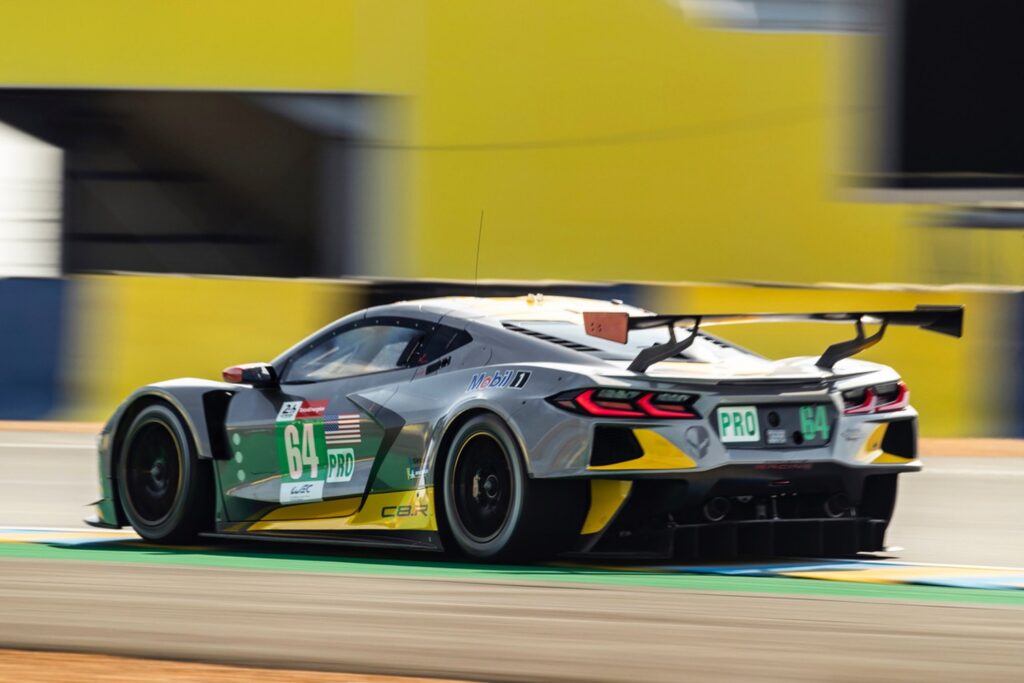
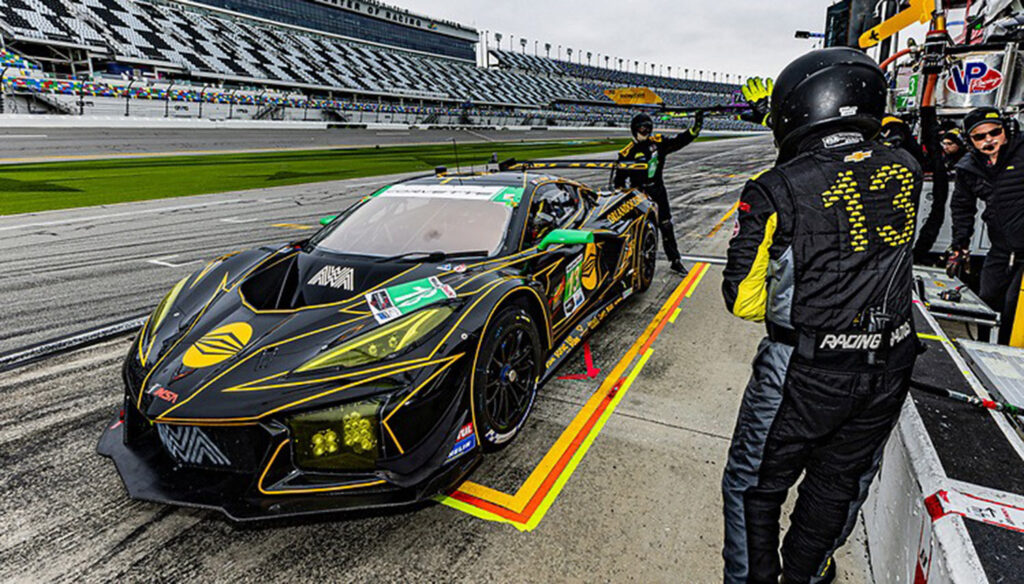
At the same time, Chevrolet committed to the C8.R’s first full-season FIA World Endurance Championship campaign. For the first time in Corvette Racing’s history, the program would contest complete seasons in both IMSA and the WEC.
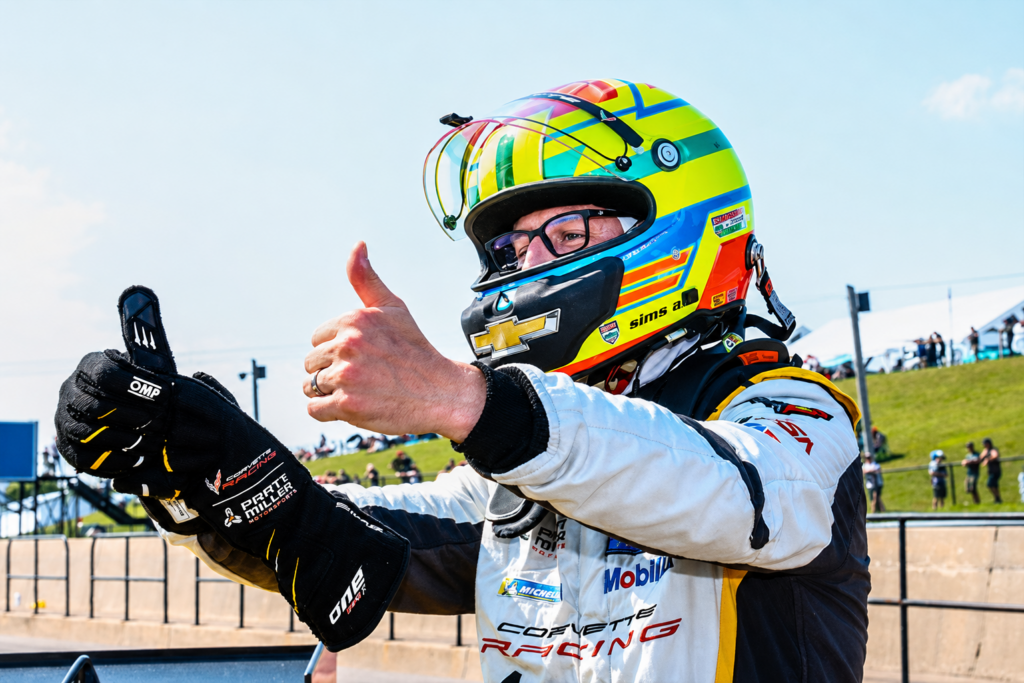
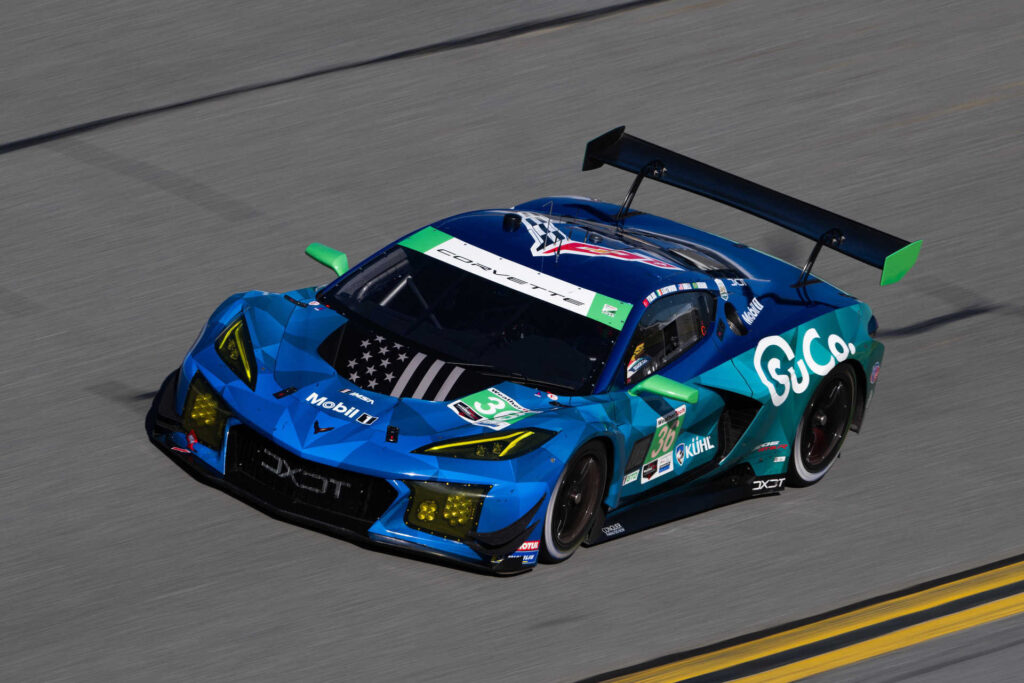
The organizational challenge was enormous. Corvette Racing split its resources between a single full-season IMSA entry and a separate WEC car, while preparing two C8.Rs for the 24 Hours of Le Mans. The American No. 3 entry would be led by Antonio García and Jordan Taylor, with Nicky Catsburg joining for endurance events. The WEC No. 64 brought together Tommy Milner and Nick Tandy, with Alexander Sims added for Le Mans.
García, a Spanish endurance-racing veteran, had been part of Corvette Racing since 2009 and had built a reputation for speed, consistency, and exceptional racecraft. Taylor, a second-generation American racer and son of championship-winning driver and team owner Wayne Taylor, joined the factory Corvette program in 2020. Catsburg brought extensive international GT experience and had already proven himself in Corvette endurance competition.
Milner had been a Corvette Racing fixture since 2011 and had won at both Le Mans and Sebring. Tandy arrived with an overall Le Mans victory and extensive factory Porsche experience, while Sims contributed years of international GT and prototype competition. This was not a collection of celebrity names assembled for publicity. It was a group built to manage traffic, changing conditions, tire degradation, mechanical sympathy, and the mental strain of races measured in hours rather than laps.
Learning GTD PRO the Hard Way

The season began with the Rolex 24 at Daytona, where the converted C8.R faced its first GTD PRO race. The event exposed the scale of the adjustment. The Corvette lacked straight-line performance relative to portions of the field and experienced mechanical difficulties, eventually finishing sixth in class.
Daytona made clear that prior GTLM success did not guarantee immediate GTD PRO dominance. The team was competing with a car adapted to a ruleset for which it had not originally been designed, using different tires, revised aerodynamics, and a performance balance intended to equalize several very different automobiles.
Corvette Racing responded at the 12 Hours of Sebring.
The Florida circuit is among the most physically punishing permanent tracks in the world. Its concrete sections, abrupt surface changes, heavy braking zones, and relentless traffic test far more than outright speed. A car must remain mechanically intact while drivers, engineers, strategists, and pit crews execute for half a day without allowing small problems to become decisive ones.
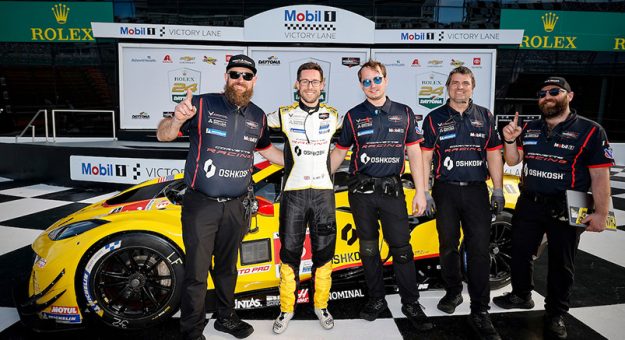
García, Taylor, and Catsburg delivered exactly that kind of performance. The No. 3 Corvette led 247 of the race’s 323 laps and won GTD PRO by 5.464 seconds. It was the first victory for the C8.R in its revised configuration and the twelfth Sebring class win in Corvette Racing history.
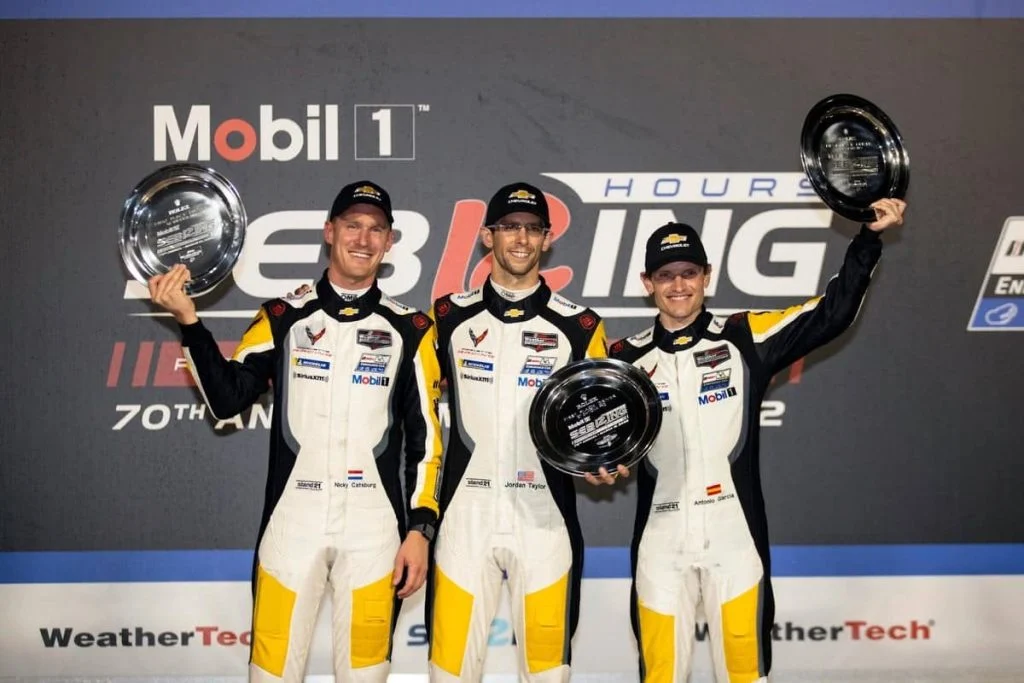
The victory mattered because it was earned through adaptation. Corvette was not operating from a position of established technical advantage. The team had to understand the control tire, manage the car’s revised braking systems, learn how the Balance of Performance affected race strategy, and compete against cars developed specifically around GT3 regulations.
The remainder of the IMSA season demonstrated how competitive that environment had become. The No. 3 continued collecting valuable results, but Corvette did not secure the inaugural GTD PRO championship. The season was therefore not one of overwhelming statistical dominance. It was something more instructive: a year in which the organization absorbed a new formula, proved it could still win one of endurance racing’s hardest events, and gathered the knowledge required for the next phase of the program.
A Full World Championship Campaign
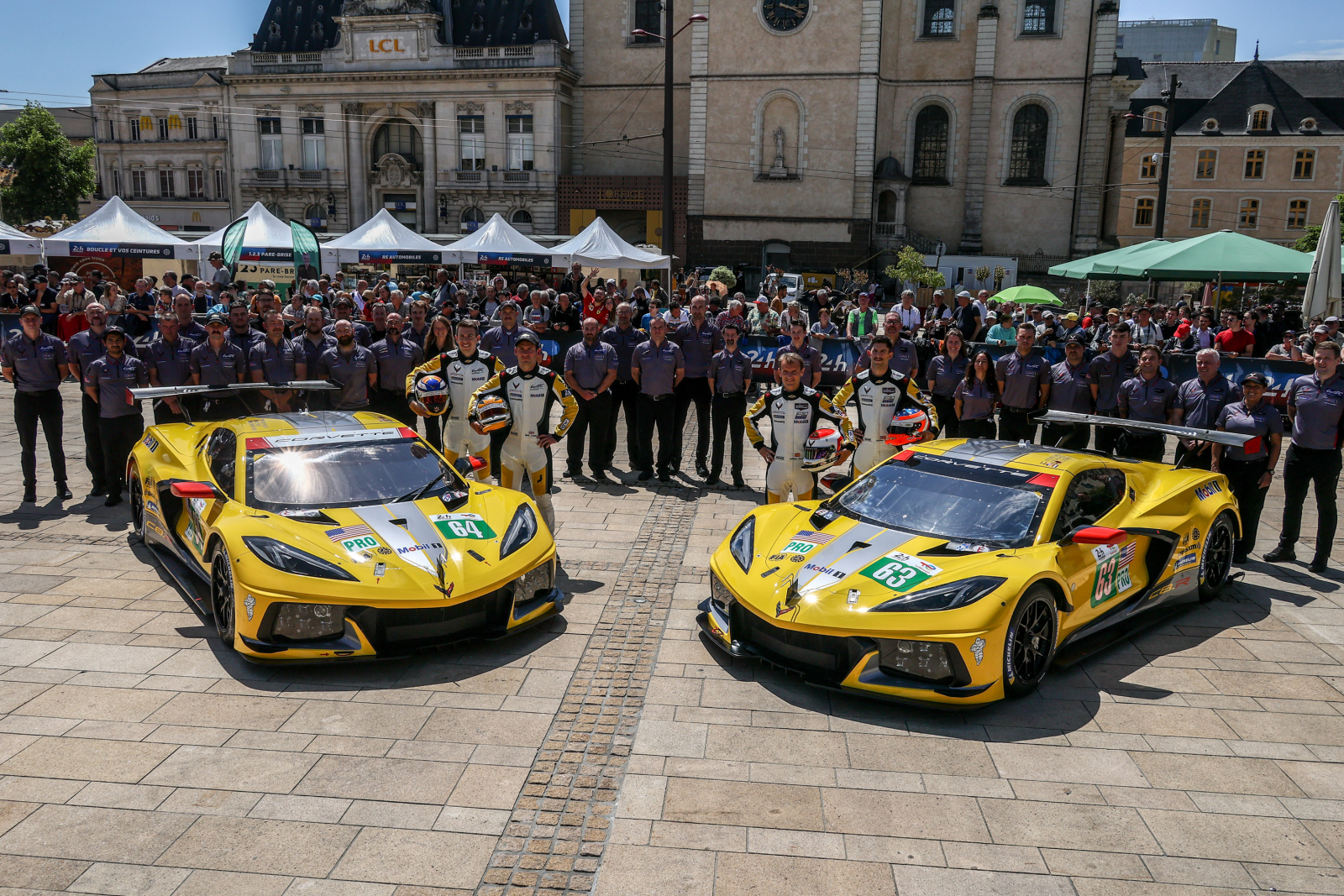
The WEC effort exposed Corvette Racing to a different collection of circuits, strategic demands, and competitors. Instead of making selected appearances at Le Mans and occasional overseas rounds, the team committed to the complete championship.
That decision brought Corvette into sustained competition at tracks where the program had comparatively little recent experience. It also required the team to operate across international logistics, regulatory structures, and race formats while sharing technical resources with the IMSA effort.
The centerpiece remained the 24 Hours of Le Mans.
For Corvette, Le Mans has always been more than another race. Its combination of history, international visibility, extreme speed, and mechanical attrition makes it one of the clearest measures of a manufacturer’s competence. Corvette Racing had already earned multiple class victories there, helping establish the C5-R, C6.R, and C7.R as internationally respected competition cars.
The 2022 race initially offered reason for optimism. Both C8.Rs showed competitive speed, and the program appeared capable of fighting for a GTE Pro victory. Le Mans, however, has never rewarded expectation.
Both Corvettes ultimately retired. The loss was particularly painful because the result did not reflect the pace the team had demonstrated. One car suffered mechanical trouble, while the other sustained terminal damage in an incident. Years of preparation were undone within the compressed and often brutal logic of endurance racing.
That disappointment could have defined the international season. Instead, Corvette responded at Monza.

The six-hour race developed into a strategic contest in which fuel management became as important as outright speed. Nick Tandy and Tommy Milner brought the No. 64 C8.R into contention, and the closing laps became a calculation of pace, remaining fuel, and track position. The Corvette reached the finish and secured the GTE Pro victory in dramatic fashion.
Winning at Monza did not erase Le Mans, nor did it need to. It proved something different: the team could recover. It could take the operational knowledge gathered through a demanding international campaign, place itself in position, and execute when the opportunity arrived.
That resilience has always been one of Corvette Racing’s defining qualities. The program’s reputation was not built solely through victories. It was built through its response to failures, accidents, unfavorable regulations, and the thousand unpredictable events that make endurance racing different from every other form of motorsport.
Racing Toward the GT3 Era
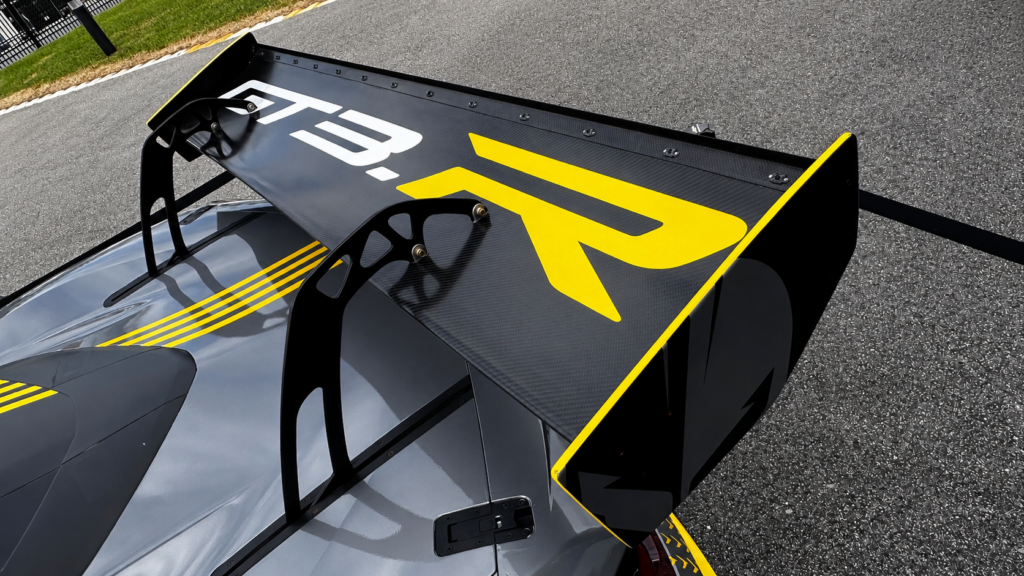
The adapted C8.R was always an interim solution. Chevrolet had already announced development of the Corvette Z06 GT3.R, a new customer racing car intended to comply fully with global GT3 regulations beginning in 2024.
The Z06 GT3.R would use a production-based version of the LT6 engine architecture, along with chassis and aerodynamic lessons drawn from the C8.R. Unlike the traditional factory-only Corvette Racing model, it would be available to approved customer teams, allowing Corvettes to compete in GT3 championships around the world.
That made 2022 a bridge between eras. The C8.R was completing the GTE story while learning the realities of GTD PRO, and Chevrolet was preparing to move Corvette racing into a customer-supported global structure.
For production-car owners, the significance extended beyond trophies. The racing program provided an environment in which ideas about cooling, aerodynamics, engine durability, braking, control systems, serviceability, and driver ergonomics could be tested under extraordinary pressure. Not every racing component migrated directly to the road car, but the knowledge moved through the organization.
The Stingray, Z06, E-Ray, C8.R, and forthcoming GT3.R were not isolated projects carrying a common badge. They were branches of the same engineering program.
The 2022 Stingray in Technical Detail
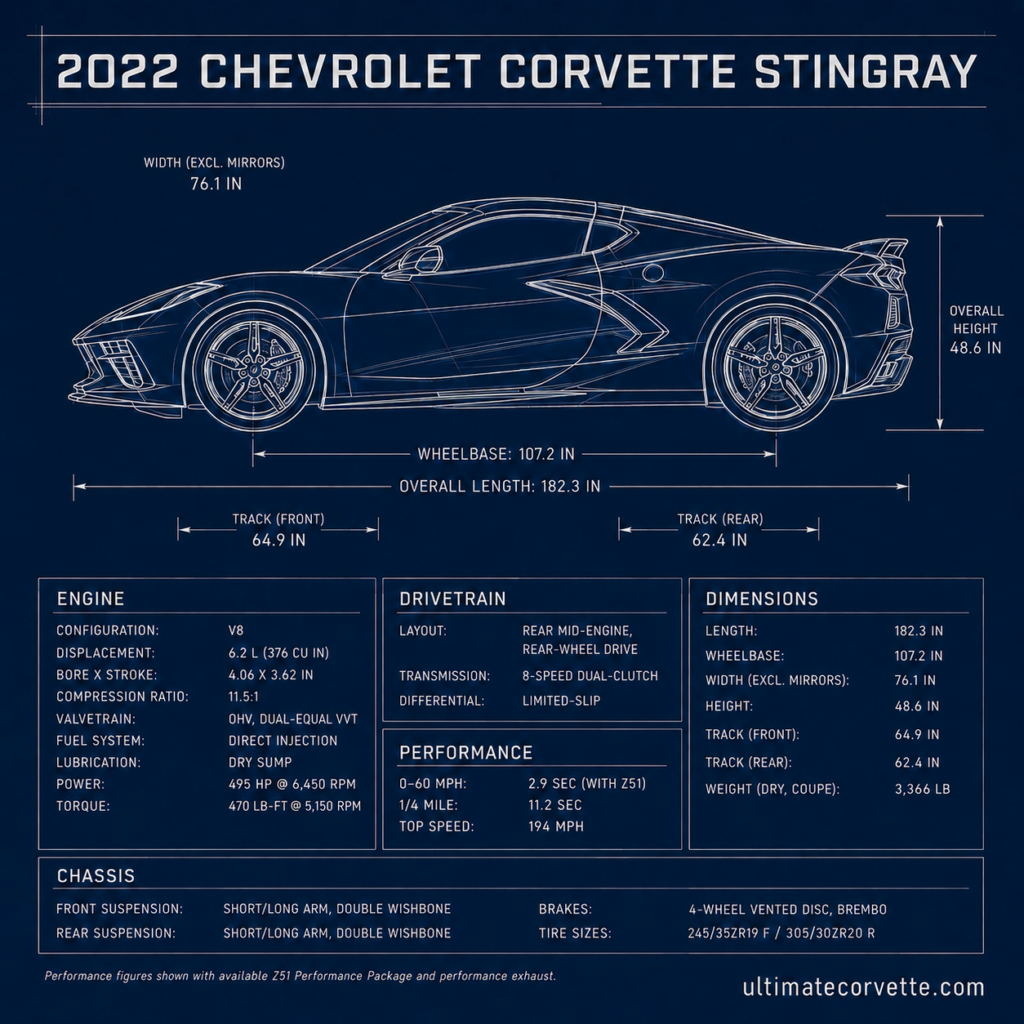
Beneath its composite body panels, the 2022 Stingray was built around a mixed-material structure designed to provide the stiffness required by both the coupe and convertible. Short-long-arm double-wishbone suspension was used at all four corners, with forged and cast aluminum components chosen to balance strength, mass, and production cost.
The standard car employed a mechanical limited-slip differential, while Z51 models received the electronically controlled unit. Electric power-assisted steering used a 15.7:1 ratio, and available Magnetic Selective Ride Control adjusted damping continuously according to road conditions and vehicle behavior.
Standard Stingray brakes used four-piston Brembo calipers with 12.6-inch front and 13.6-inch rear rotors. The Z51 package increased rotor diameter to approximately 13.3 inches in front and 13.8 inches at the rear while using monobloc four-piston calipers at both ends.
Every Stingray used staggered wheels and tires. The front wheels measured 19 by 8.5 inches and carried 245/35ZR19 tires, while the rear wheels measured 20 by 11 inches with 305/30ZR20 tires. Standard cars used Michelin Pilot Sport All Season 4 rubber, while Z51 brought Pilot Sport 4S summer tires.
The car’s 107.2-inch wheelbase was contained within an overall length of approximately 182.3 inches. It measured 76.1 inches wide and just 48.6 inches tall. Those dimensions created the C8’s low, cab-forward stance without making it dramatically longer than the C7 it replaced.
The LT2 displaced 6,162 cubic centimeters through a 4.06-inch bore and 3.62-inch stroke. Its aluminum block used cast-in iron cylinder liners, while the two-valve overhead-valve cylinder heads incorporated variable valve timing. The engine’s 11.5:1 compression ratio, direct injection, dry-sump oiling, and 6,600-rpm redline reflected the blend of traditional architecture and modern control that defined the Stingray.
The eight-speed dual-clutch transaxle used tightly spaced lower gears for acceleration and extremely tall upper ratios for relaxed cruising. Its 5.17:1 final-drive ratio worked with the transmission’s internal gearing to provide both the hard launch expected of the car and reasonable engine speed during highway travel.
Fuel capacity was 18.5 gallons. Combined front and rear cargo volume measured 12.6 cubic feet, and the cabin provided 42.8 inches of legroom—an important number in a car intended to accommodate a wide range of drivers rather than only those who fit the physical profile of a racing professional.
These specifications explain part of the Stingray’s character, but not all of it. The car succeeded because none of its individual systems operated in isolation. The engine’s torque, the transmission’s shift logic, the differential’s response, the suspension geometry, the brake-by-wire system, and the stability controls were calibrated as a single performance network.
That integration allowed the Corvette to behave differently according to circumstance. It could navigate traffic without protesting, settle into a long highway drive, absorb imperfect pavement, and then become dramatically more alert when placed in Sport, Track, or a personalized Z Mode.
This breadth—not any single performance statistic—was the defining achievement of the 2022 Stingray.
Key Specifications
- Vehicle configuration
- Generation: Eighth-generation Corvette, commonly identified as the C8
- Body styles: Two-door coupe with a removable roof panel or two-door convertible with a power-retractable hardtop
- Passenger capacity: Two
- Trim levels: 1LT, 2LT, and 3LT
- Drivetrain layout: Longitudinally mounted rear-mid-engine, rear-wheel drive
- Assembly location: General Motors Bowling Green Assembly Plant, Bowling Green, Kentucky
- Engine
- Engine designation: LT2
- Configuration: Naturally aspirated 90-degree V8
- Displacement: 6.2 liters
- Exact displacement: 6,162 cc
- Approximate displacement: 376 cubic inches
- Bore: 4.06 inches, or 103.25 mm
- Stroke: 3.62 inches, or 92.0 mm
- Compression ratio: 11.5:1
- Block construction: A319-T7 cast aluminum with cast-in iron cylinder liners and nodular-iron main bearing caps
- Cylinder-head construction: Cast aluminum
- Combustion-chamber volume: 59 cc
- Valvetrain: Overhead-valve design with two valves per cylinder
- Camshaft location: Single camshaft mounted within the engine block
- Valve timing: Dual-equal variable valve timing
- Intake-valve diameter: 2.13 inches, or 54 mm
- Exhaust-valve diameter: 1.59 inches, or 40.4 mm
- Intake valves: Hollow-stem construction
- Exhaust valves: Sodium-filled construction
- Fuel delivery: High-pressure direct injection
- Throttle body: 87-mm electronically controlled single-bore unit
- Cylinder-management system: Active Fuel Management, capable of deactivating four cylinders under lighter operating loads
- Standard firing order: 1-8-7-2-6-5-4-3
- Active Fuel Management firing sequence: 1-7-6-4
- Maximum engine speed: 6,600 rpm
- Engine-management system: GM E99 electronic control module
- Model-year changes: The 2022 LT2 received an upgraded direct-injection system, revised engine calibration, and a broader Active Fuel Management operating range.
- Engine output
- Standard exhaust:
- 490 horsepower at 6,450 rpm
- 465 lb-ft of torque at 5,150 rpm
- NPP dual-mode performance exhaust:
- 495 horsepower at 6,450 rpm
- 470 lb-ft of torque at 5,150 rpm
- The NPP system used electronically controlled valves to alter exhaust flow and sound according to the selected drive mode, engine load, and driver input.
- Standard exhaust:
- Lubrication and cooling
- Lubrication system: Dry-sump
- Piston cooling: Dedicated oil-spray jets
- Engine-oil capacity with filter: 7.5 quarts, or 7.1 liters
- Factory-specified oil: dexos2-approved 0W-40 synthetic
- Cooling-system capacity without the Performance Package: Approximately 21.7 quarts, or 20.5 liters
- Cooling-system capacity with the Performance Package: Approximately 22.7 quarts, or 21.5 liters
- Z51-equipped cars received additional cooling capability intended to support sustained high-load and track operation.
- Transmission
- Transmission designation: M1L
- Type: Tremec TR-9080 eight-speed dual-clutch transaxle
- Clutch arrangement: Electronically controlled wet dual-clutch system
- Driver controls: Fully automatic operation or manual shifting through steering-wheel-mounted paddles
- First gear: 2.905:1
- Second gear: 1.759:1
- Third gear: 1.220:1
- Fourth gear: 0.878:1
- Fifth gear: 0.653:1
- Sixth gear: 0.508:1
- Seventh gear: 0.397:1
- Eighth gear: 0.329:1
- Reverse: 2.632:1
- The tightly spaced lower ratios supported acceleration, while the extremely tall seventh and eighth gears reduced engine speed during highway cruising.
- Final drive and differential
- Standard effective final-drive ratio: 4.89:1
- Z51 effective final-drive ratio: 5.17:1
- Standard differential: Mechanical limited-slip differential
- Z51 differential: Electronically controlled limited-slip differential
- The Z51 electronic differential varied clutch engagement according to throttle position, steering input, vehicle speed, yaw, wheel slip, and the selected drive mode, improving both corner-entry stability and power delivery at corner exit.
- Suspension
- Front suspension: Short-long-arm double-wishbone arrangement
- Rear suspension: Short-long-arm double-wishbone arrangement
- Front upper control arms: Forged aluminum
- Front lower control arms: Cast-aluminum L-shaped design
- Rear upper control arms: Forged aluminum
- Rear lower control arms: Cast-aluminum L-shaped design
- Dampers: 46-mm monotube shock absorbers
- Standard suspension: FE1 touring suspension
- Standard suspension with Magnetic Ride Control: FE2
- Z51 performance suspension: FE3
- Z51 suspension with Magnetic Ride Control: FE4
- Magnetic Ride Control used magnetorheological fluid and electronically managed damping to adjust each shock absorber continuously.
- Available front lift raised the front of the car by approximately two inches in less than three seconds at speeds below approximately 24 mph. Its location-memory function could automatically recognize frequently encountered obstacles.
- Steering
- Type: Variable-ratio rack-and-pinion steering
- Power assistance: Electric
- Steering ratio: 15.7:1
- Turning circle without Magnetic Ride Control: Approximately 38.1 feet
- Turning circle with Magnetic Ride Control and Active Steer Stops: Approximately 36.4 feet
- The steering system was mounted ahead of the front axle and calibrated specifically around the C8’s rearward weight distribution.
- Brakes
- General configuration: Four-wheel ventilated disc brakes with electronic brake boost
- Caliper supplier: Brembo
- Standard front calipers: Four-piston, two-piece fixed calipers
- Standard rear calipers: Four-piston monobloc fixed calipers
- Z51 front and rear calipers: Four-piston monobloc fixed calipers
- Standard front rotors:
- 12.6 inches in diameter
- 1.18 inches thick
- 321 x 30 mm
- Standard rear rotors:
- 13.3 inches in diameter
- 1.02 inches thick
- 339 x 26 mm
- Z51 front rotors:
- 13.6 inches in diameter
- 1.18 inches thick
- 345 x 30 mm
- Z51 rear rotors:
- 13.8 inches in diameter
- 1.06 inches thick
- 350 x 27 mm
- Z51 increased both braking capacity and resistance to heat buildup during repeated high-speed stops.
- Wheels and tires
- Front-wheel dimensions: 19 x 8.5 inches
- Rear-wheel dimensions: 20 x 11 inches
- Bolt pattern: 5 x 120 mm
- Front-tire size: 245/35ZR19
- Rear-tire size: 305/30ZR20
- Standard tire: Michelin Pilot Sport All Season 4
- Z51 tire: Michelin Pilot Sport 4S high-performance summer tire
- Wheel construction and finish varied according to the wheel design selected, with multiple painted, polished, machined-face, and accessory wheel options offered during the model year.
- Z51 Performance Package
- FE3 performance suspension with track-oriented calibration
- Electronic limited-slip differential
- 5.17:1 effective final-drive ratio
- Larger Brembo brakes
- Additional engine and transmission cooling
- NPP dual-mode performance exhaust
- Michelin Pilot Sport 4S summer tires
- Functional front splitter
- Performance rear spoiler
- Z51-specific chassis and electronic-control calibration
- The package was designed around repeatable performance rather than a single acceleration run, giving the Stingray the cooling, braking, traction, and tire capacity required for sustained track use.
- Factory performance
- Chevrolet-quoted 0–60 mph time with the Z51 Performance Package: 2.9 seconds
- Chevrolet-quoted quarter-mile time: 11.2 seconds
- Maximum factory-quoted top track speed: Up to 194 mph
- Top speed varied with body style, aerodynamic equipment, temperature, altitude, tire specification, and vehicle configuration.
- Approximate maximum lateral acceleration with Z51 equipment: 1.03 g
- Launch Control coordinated engine output, clutch engagement, transmission operation, traction management, and the electronic differential to provide consistent standing-start acceleration.
- Exterior dimensions
- Wheelbase: 107.2 inches, or 2,722 mm
- Overall length: Approximately 182.3 inches, or 4,630 mm
- Overall width without mirrors: 76.1 inches, or 1,934 mm
- Overall height:
- Coupe: Approximately 48.6 inches
- Convertible: Approximately 48.6 inches
- Front track: Approximately 64.9 inches, or 1,648 mm
- Rear track: Approximately 62.4 inches, or 1,586 mm
- Front overhang: Approximately 40.8 inches
- Rear overhang: Approximately 34.4 inches
- Published ground clearance:
- Between the axles: Approximately 3.2 inches
- Beneath the front axle: Approximately 5.3 inches
- Beneath the rear axle: Approximately 5.0 inches
- Approach angle at base curb weight: Approximately 8 degrees
- Departure angle at base curb weight: Approximately 13.8 degrees
- Interior dimensions
- Headroom: 37.9 inches
- Legroom: 42.8 inches
- Shoulder room: 54.4 inches
- Hip room: 52.0 inches
- Seating capacity: Two
- Available seats: GT1, GT2, or Competition Sport
- Instrument display: 12-inch reconfigurable digital driver-information display
- Center display: Eight-inch Chevrolet Infotainment touchscreen
- Weight and distribution
- Chevrolet-published base dry weight: Approximately 3,366 pounds for the coupe
- Actual curb weight varied according to body style, trim level, wheels, seats, suspension, and optional equipment.
- Approximate front-to-rear weight distribution: 40/60
- The rearward weight bias helped the Stingray transfer power to the pavement during acceleration while reducing the traction limitations associated with earlier front-engine Corvettes.
- Fuel and capacities
- Fuel-tank capacity: 18.5 gallons, or 70 liters
- Recommended fuel: Premium unleaded for maximum performance
- Total cargo volume: 12.6 cubic feet
- Cargo areas: Separate front and rear storage compartments
- Engine-oil capacity with filter: 7.5 quarts
- Factory wheel-nut torque specification: 140 lb-ft
- EPA-estimated fuel economy: 16 mpg city, 24 mpg highway, and 19 mpg combined; actual economy varied significantly with conditions and driving style.
- Coupe roof and cargo configuration
- The coupe’s removable roof panel could be stored within the rear cargo compartment.
- The rear trunk was designed to accommodate the roof panel, while the front compartment provided additional storage for smaller luggage.
- Combined cargo volume remained 12.6 cubic feet.
- Convertible roof system
- Power-retractable two-piece hardtop
- Six electric motors controlled roof operation
- The top could be raised or lowered in approximately 16 seconds.
- Roof operation was possible at vehicle speeds of up to approximately 30 mph.
- Unlike many convertibles, the C8’s primary rear cargo space remained available whether the roof was raised or lowered.
Why the 2022 Corvette Matters
The 2022 Corvette does not occupy the same historical position as the first C8 Stingray, the first Z06, or the first electrified Corvette. It was not the model year that introduced Chevrolet’s long-awaited mid-engine architecture, nor was it the moment when every major branch of the C8 family had reached customer hands.
Its importance lies in the way those stories began to converge.
By 2022, the Stingray had moved beyond the novelty of its engine placement and matured into a broadly understood, deeply configurable sports car. Buyers were no longer approaching the C8 simply because it was new; they were choosing among premium trim levels, the Z51 Performance Package, Magnetic Ride Control, the front-lift system, racing-derived technology, and two genuinely desirable body styles. Chevrolet had created a Corvette that could be tailored as a relatively straightforward performance car, a long-distance grand tourer, or a serious track-day machine without compromising the integrity of the underlying platform.
That growing confidence was reflected in the way customers embraced both the coupe and retractable-hardtop convertible. The C8 was no longer selling on the strength of a single configuration or headline specification. It had become a complete product line—one broad enough to appeal to traditional Corvette loyalists, first-time buyers, and drivers who might previously have looked exclusively toward European performance marques.
Bowling Green continued building the car amid tornado damage, supply-chain constraints, component shortages, production interruptions, and demand that remained greater than the plant could readily satisfy. Corvette Racing simultaneously adapted the C8.R to a changing regulatory landscape while undertaking its first full-season FIA World Endurance Championship campaign. On the road-car side, the 2023 Z06 began translating its extraordinary engineering promise into production reality, while camouflaged E-Ray prototypes demonstrated that electrification and all-wheel drive were already advancing through Chevrolet’s development program. The Z06 brought a hand-built, 670-horsepower LT6 V8 capable of reaching 8,600 rpm, while the E-Ray would later emerge as the first electrified, all-wheel-drive production Corvette.
Each of those developments traced back to the same foundational decision. The C8 had never been engineered merely as a familiar Stingray with its engine relocated behind the passengers. It had been conceived as an expandable architecture with the structural strength, cooling capacity, aerodynamic potential, electrical capability, and electronic sophistication necessary to support multiple forms of Corvette performance.
That is what became unmistakably clear during 2022.
The mid-engine Corvette was no longer an unanswered question, an engineering experiment, or a dramatic break with tradition that still needed to justify itself. It was a successful production sports car, an evolving international racing platform, the basis of a 670-horsepower naturally aspirated supercar, and the foundation for an electrified all-wheel-drive grand tourer. Chevrolet had not simply changed where the engine lived; it had fundamentally expanded what a Corvette could be.
That makes the 2022 model year more significant than its place between major debuts might initially suggest. It was the year the C8 stopped feeling like a singular revolution and began revealing itself as something larger: the opening movement of an entirely new era.
The mid-engine Corvette had landed. More importantly, it had survived the turbulence surrounding its arrival, earned the confidence of its customers, and begun stretching toward possibilities that would once have seemed incompatible with the Corvette name.
And as 2022 drew to a close, one truth had become impossible to ignore: the C8 had already changed Corvette forever—and it had only begun to show the world what it could become.