
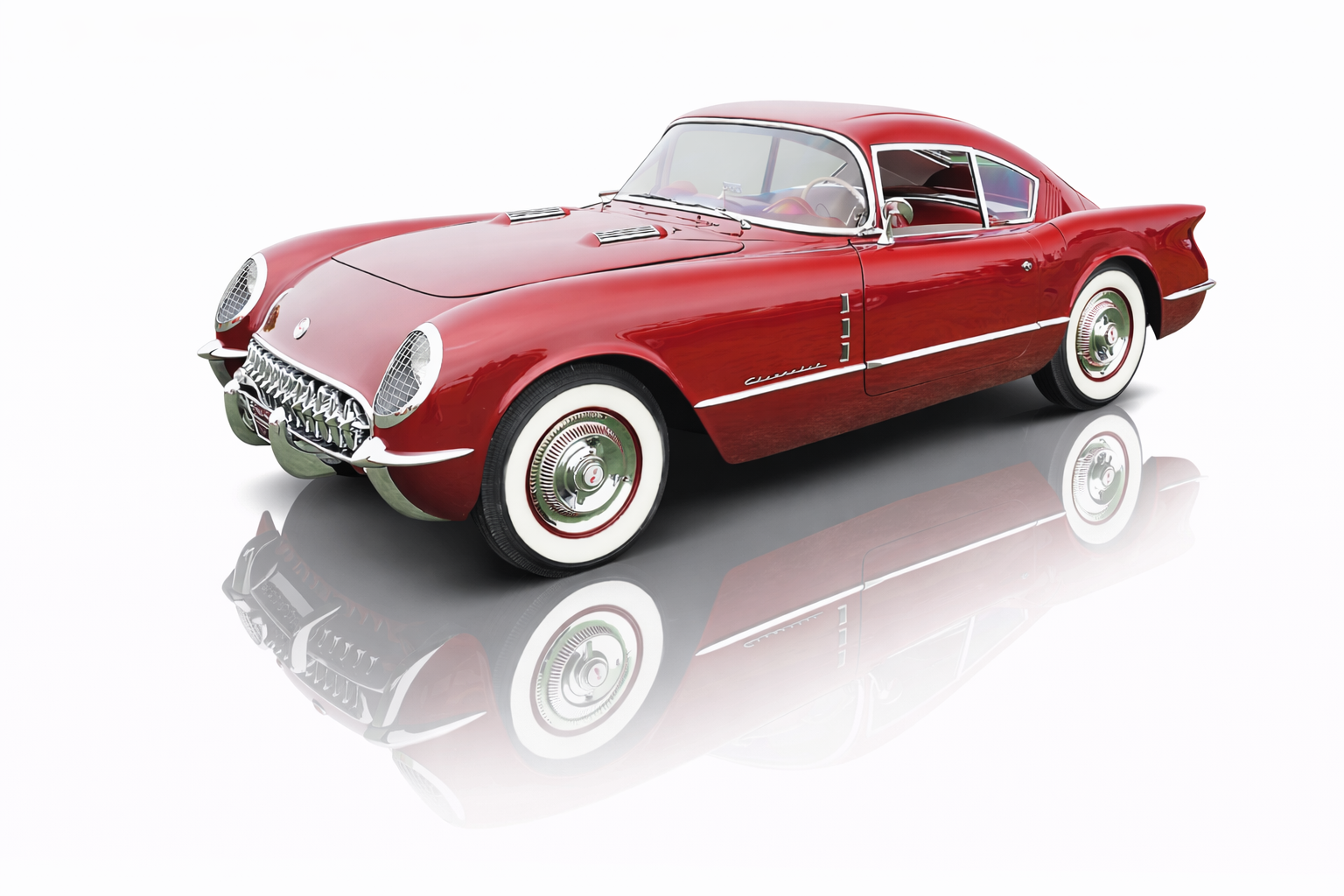
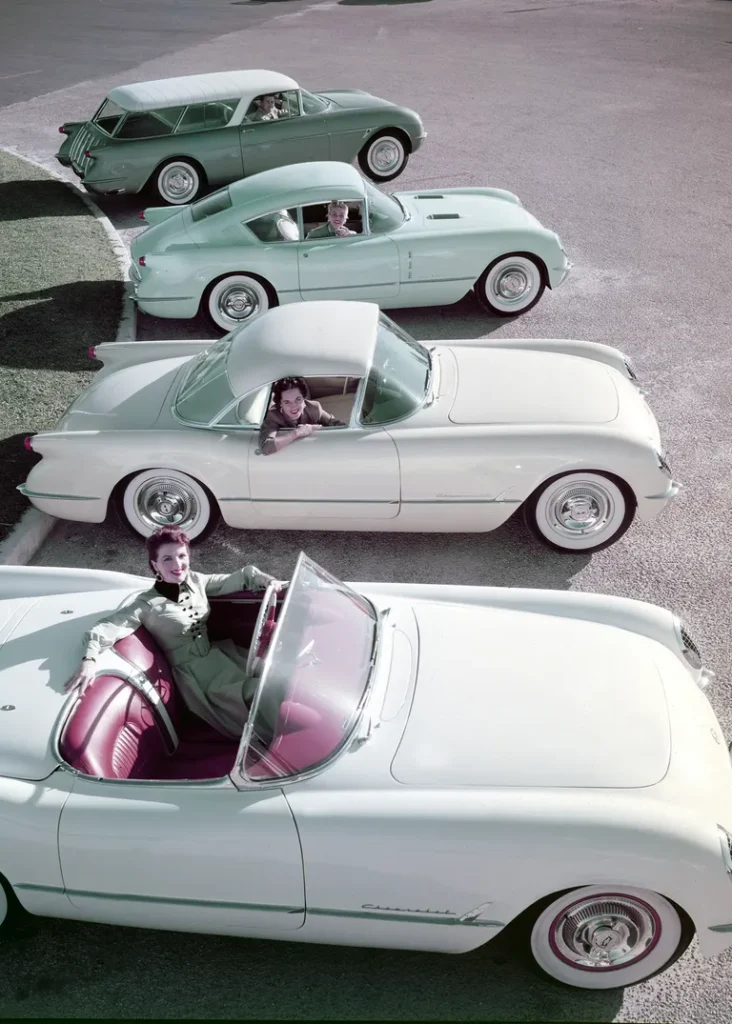
When General Motors flung open the doors of the Waldorf-Astoria on January 26, 1954, for the first stop of its traveling Motorama extravaganza, it wasn’t just showing next year’s showroom iron. Motorama was GM’s rolling theater: orchestras and dancers, revolving platforms, and—most memorably—“dream cars” that tested the limits of styling, materials, and ideas. The 1954 tour drew more than 1.9 million visitors across its cities, with New York as the kickoff venue, and it served up some of the most influential concepts of the decade: Buick’s Wildcat II, Pontiac’s Bonneville Special, Oldsmobile’s F-88, a trio of fiberglass Cadillacs—and the jet-inspired Firebird XP-21 that looked ready to lift off.
Amid that spectacle, Chevrolet used the stage to answer a pressing question: what’s next for Corvette? The fiberglass-bodied two-seater had stunned crowds at the 1953 show, but in production form, the early C1 struggled. Built first in Flint and then at St. Louis, the ’53–’54 cars kept the “Blue Flame” 235-cu-in inline-six and a Powerglide two-speed automatic, and they retained side curtains rather than roll-up glass. Sales were tepid: just 3,640 were built for 1954, and period accounts note that a significant number remained unsold at year’s end. Against that backdrop, Harley Earl’s Styling Section arrived at the 1954 Motorama with three Corvette-based concepts to re-ignite excitement: a detachable-hardtop prototype, a fastback coupe called Corvair, and a sleek sport wagon named Nomad.
1954 Corvette Hardtop
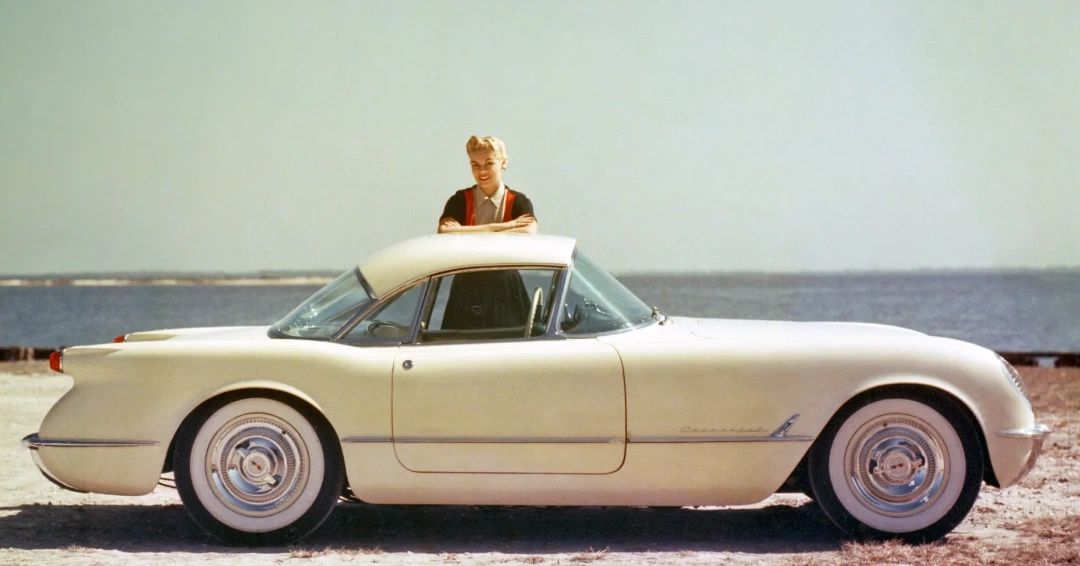
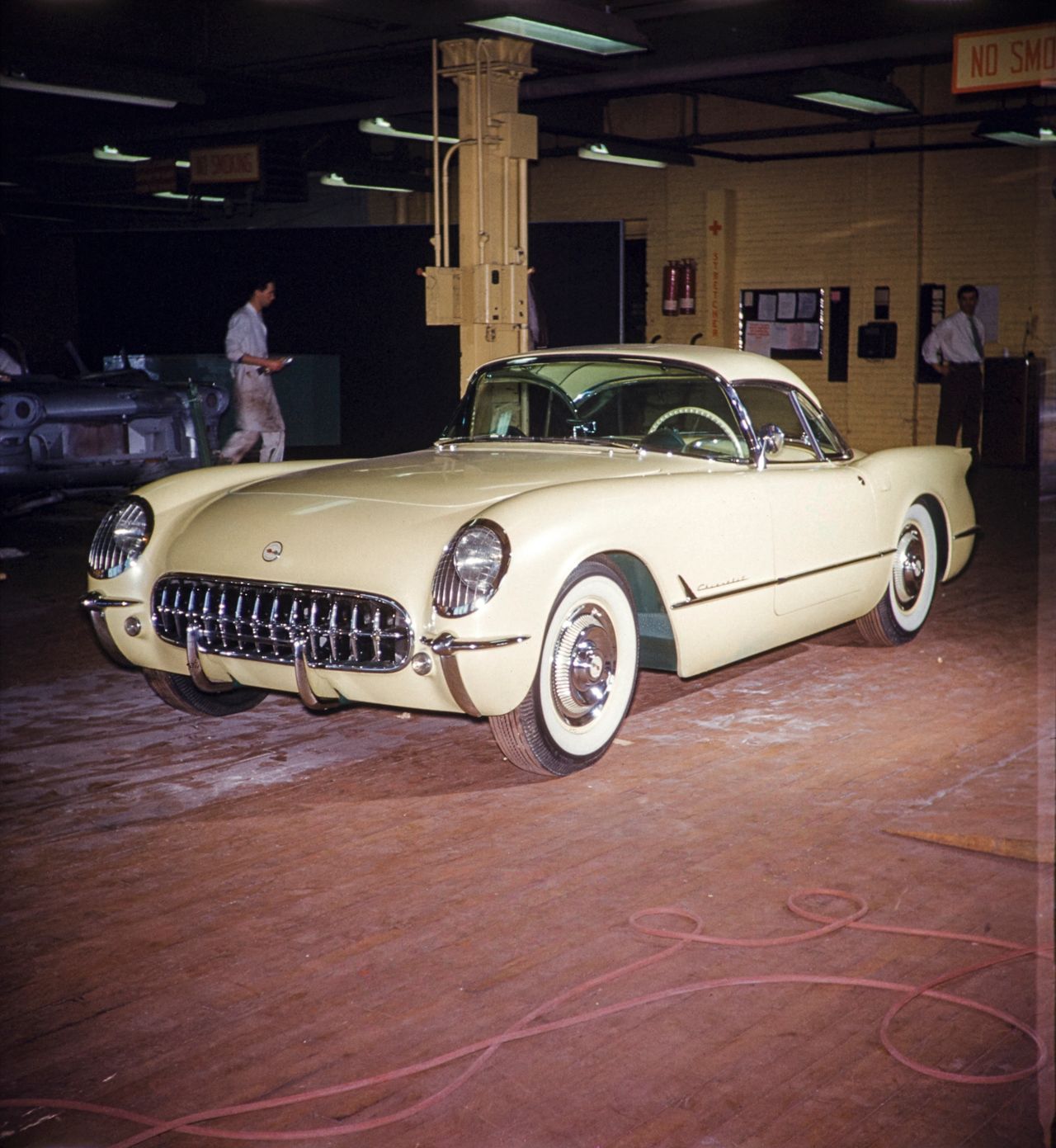
Of Earl’s three, the Corvette Hardtop was the most conservative—and arguably the most prophetic. At a glance it looked much like a production ’53/’54 roadster, but it wore a rounded, fixed-but-detachable fiberglass roof and, critically, it previewed features Corvette would not offer until 1956: roll-up side windows and outside door locks/handles. Contemporary and retrospective write-ups describe taller glass and a revised windshield frame to accommodate real roll-ups (a major upgrade from the snap-in curtains the early C1s used). That same wave of sources notes the presence of outside locks/handles, another feature that production Corvettes didn’t adopt until the 1956 redesign. In other words, the “Hardtop” was a preview of the daily-livability fixes that enthusiasts had been begging for.
Why did those details matter? As period testers (and plenty of later owners) observed, 1953–55 Corvettes lacked exterior door handles and roll-up windows, which made everyday use finicky; you reached inside via the curtain’s wind-wing to pull an interior knob. The 1956 restyle finally cured that. The Hardtop effectively showed the cure two years early, within a package that otherwise looked familiar enough to convince skeptics that Corvette could be a comfortable, weather-tight sports car as well as a glamorous showpiece.
1954 Corvette Corvair (Fastback Coupe)
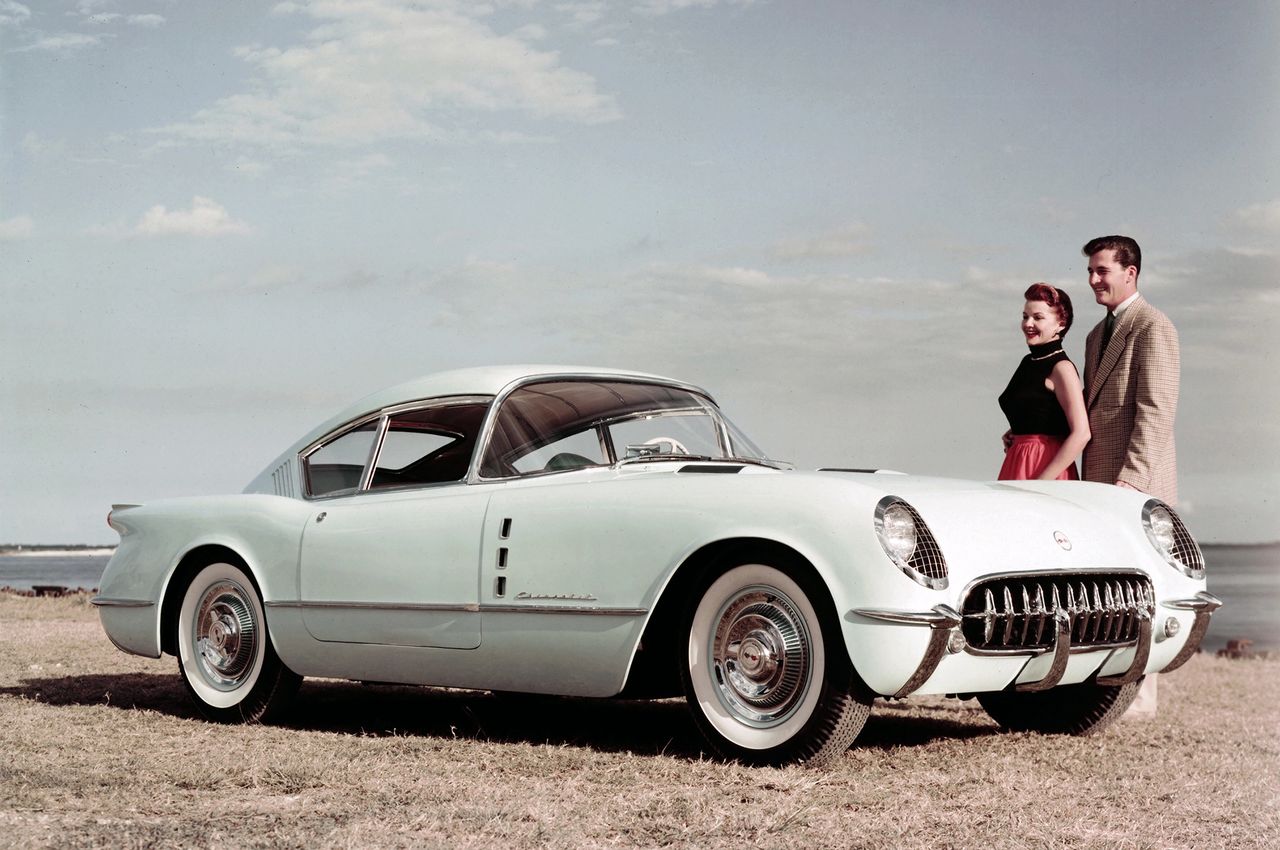
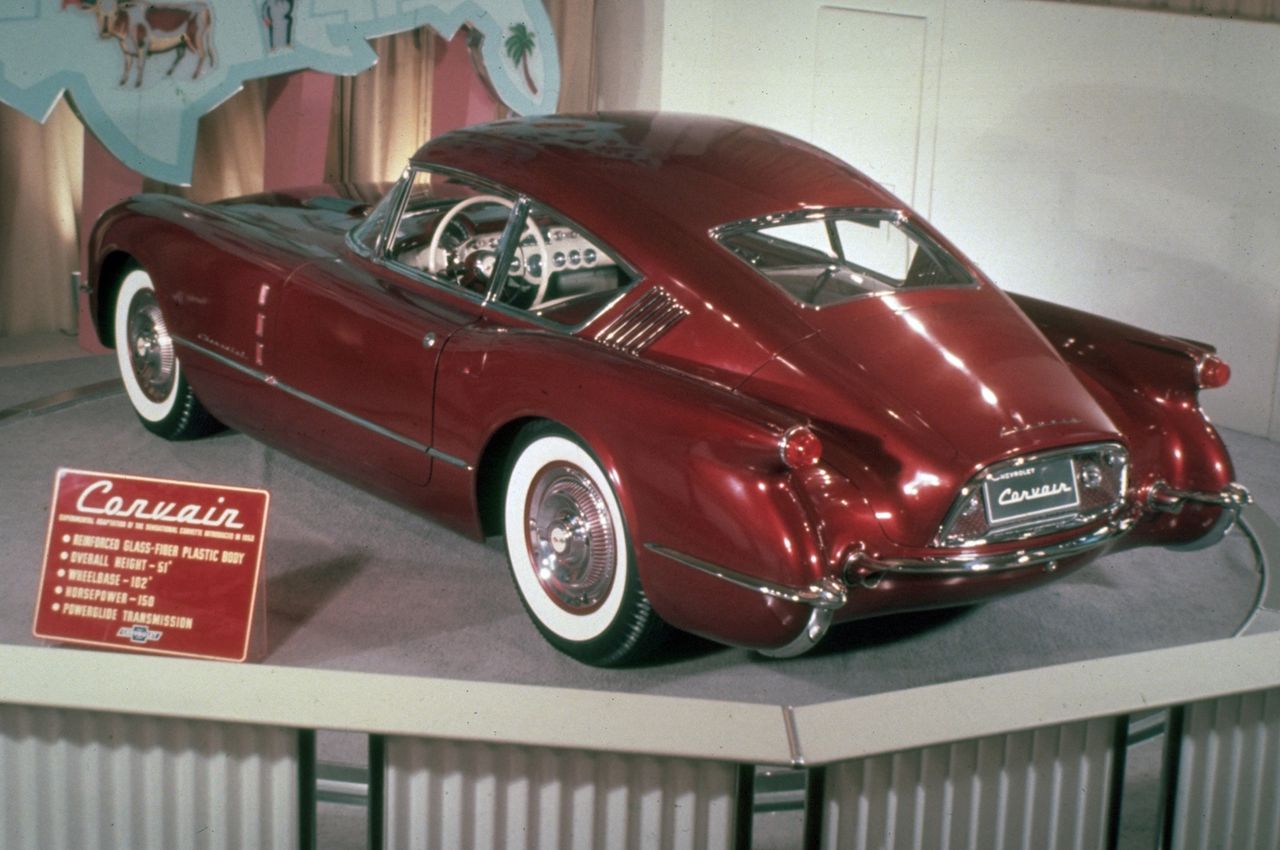
If the Hardtop whispered, the Corvair shouted. Built from a 1953 Corvette donor, the fastback coupe kept the stock front clip, doors, and rear quarters, but everything around the greenhouse was new. The forward-leaning A-pillars of the roadster were replaced by nearly vertical pillars that blended into the leading edge of a dramatic fastback roof, carrying the eye cleanly to a reworked tail. City-traffic practical? Not really. Visually arresting? Absolutely. Contemporary observers and later historians have likened the afterbody to jet-age forms, an impression Chevy amplified with a “cowled” rear license-plate enclosure styled like a turbine exhaust. That bright metal panel was etched with approximately 270 Chevy bowtie emblems and framed the plate and a pair of backup lamps.
The jet language didn’t stop there. The Corvair’s hood carried slotted chrome vents intended to draw off engine-bay heat. Ventilation for the cabin was handled by a clever fresh-air/exit-air system: three small rectangular intake slots stacked at the trailing edge of each front fender and manually controlled slatted vents in the C-pillars for exhaust. Air conditioning wouldn’t reach a production Corvette until 1963, so this was a pragmatic way to improve comfort while keeping the body lithe. Inside, the Corvair largely resembled its ’53 foundation, save for controls to operate those vents—and of course the fastback’s unique headliner and rear deck treatment.
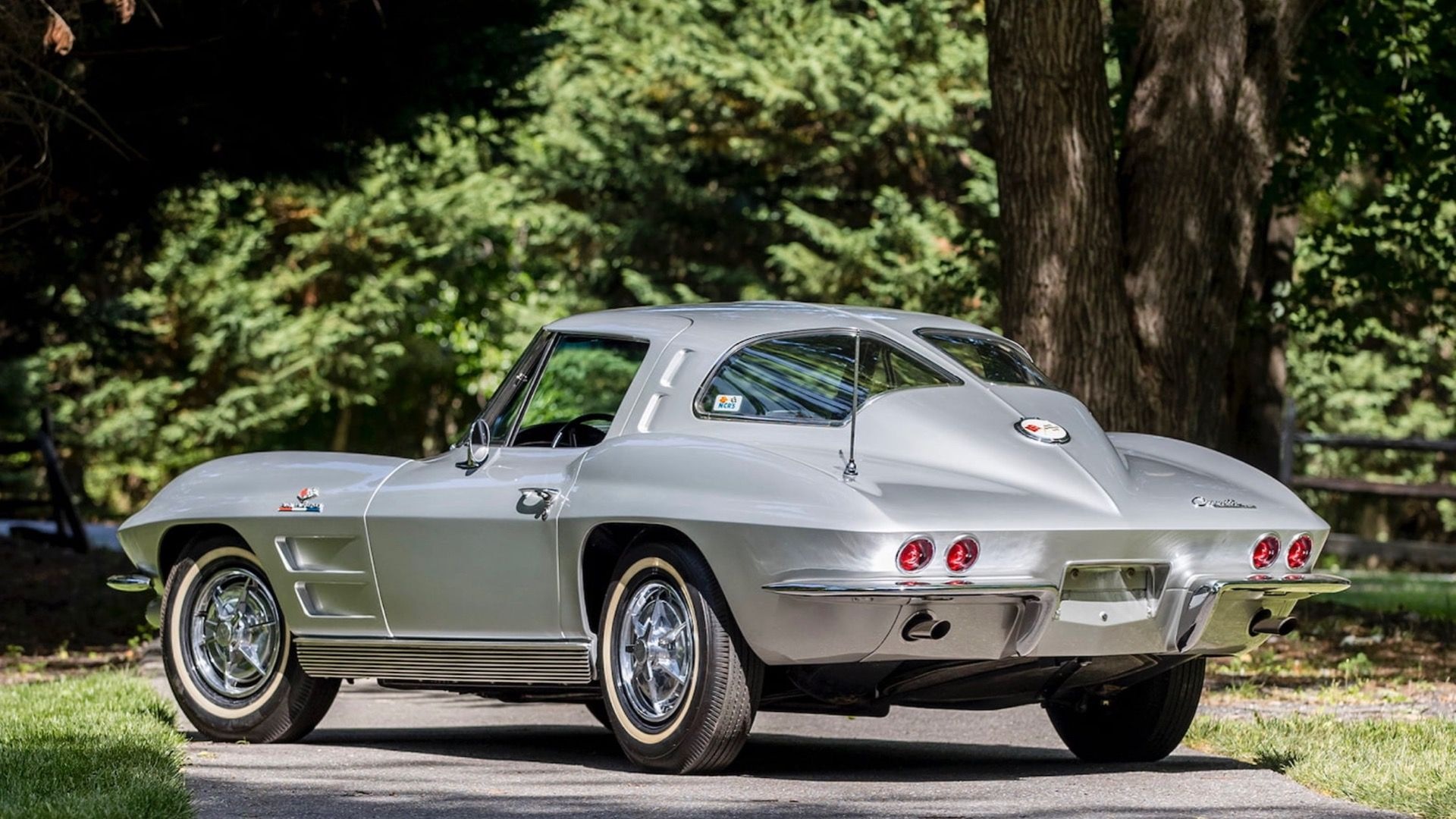
As with many Motorama showstoppers, GM seriously considered a limited production run. According to period coverage and later research, management wavered more than once, even exploring the possibility of adapting the Corvair’s afterbody elements as a 1955 styling update. Ultimately, 1954’s slow Corvette sales—and the strategic decision to focus on a V-8-powered ma keover—killed the idea. The Corvair’s fate remains murky. Some sources assert at least two were built for the tour; others say one. Most accounts agree the coupe was destroyed (reportedly by the mid-to-late 1950s), though rumors of a survivor have bubbled up for decades without proof.
1954 Corvette Nomad (Sport Wagon)
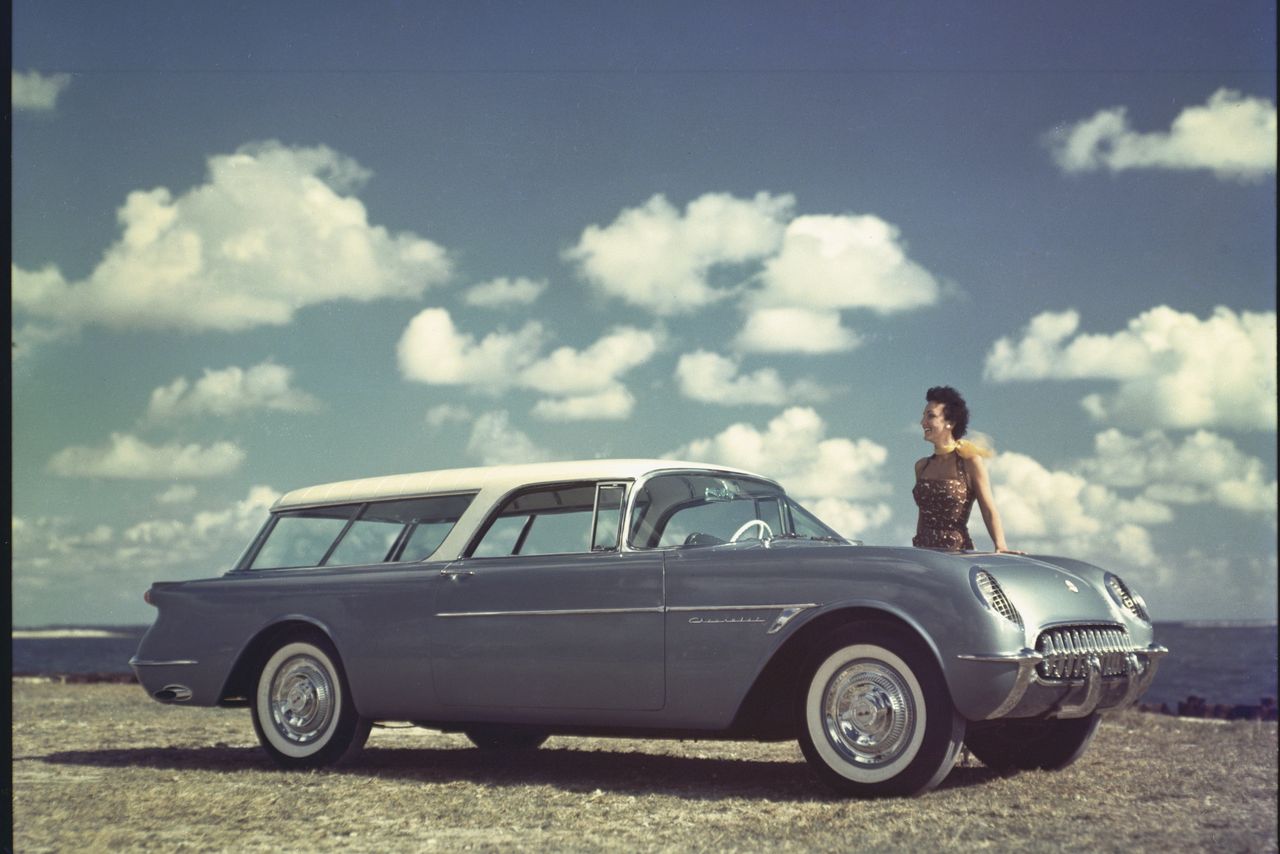
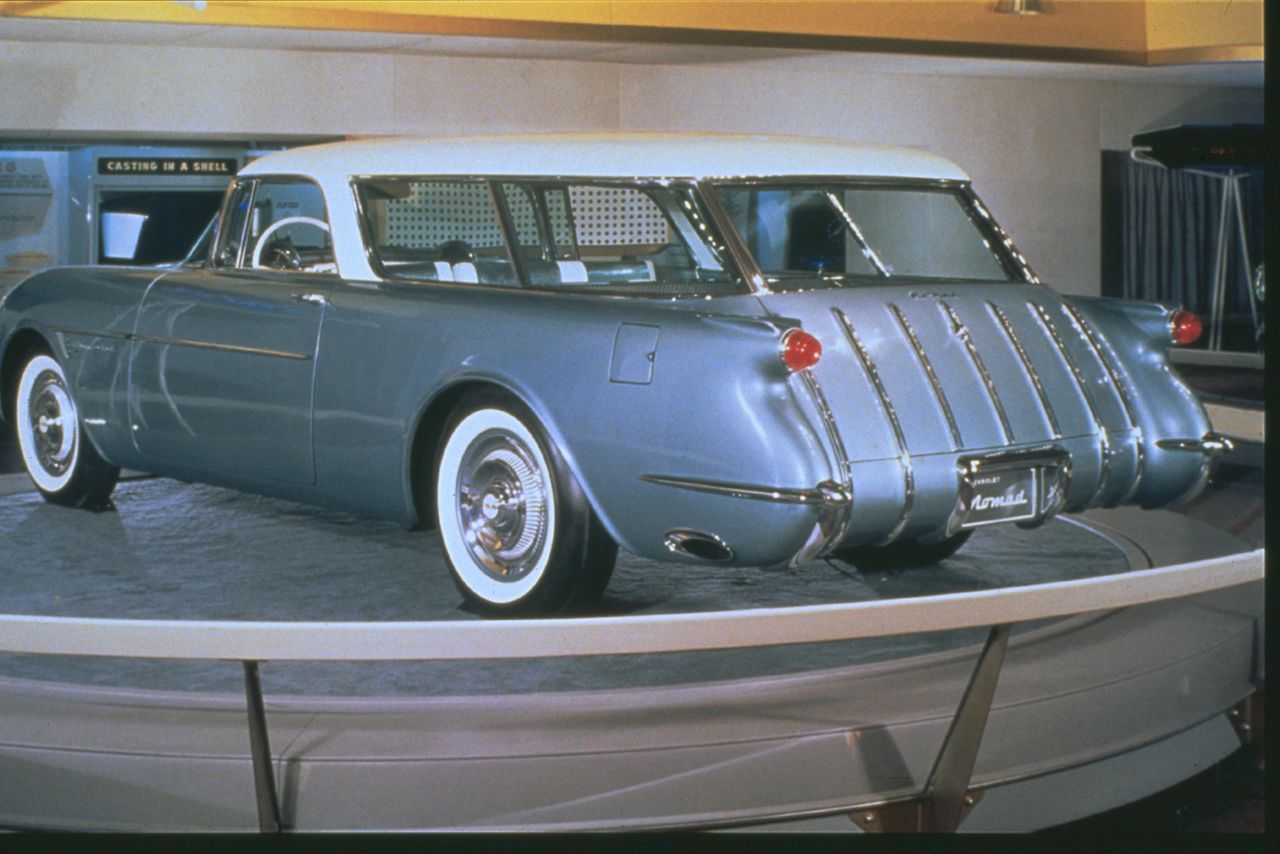
If the Corvair made an emotional case, the Nomad made a practical one—without losing an ounce of style. Conceived by designer Carl Renner in one of Chevrolet’s special styling studios and developed under Harley Earl’s direction, the Nomad took the Corvette’s face and grafted it to a lithe two-door wagon body with a forward-slanting B-pillar and wraparound rear glass. It was a sport wagon in the literal sense: low, sleek, and purposeful—but with genuine utility built in.
Unlike the roadster’s 102-inch wheelbase, the Nomad rode on a 115-inch Chevrolet passenger-car chassis—more room for people and luggage. Under the skin, it kept the familiar “Blue Flame” six with a Powerglide automatic, just like the production ’53–’54 Corvette. The interior mixed show-car flourish with real functionality: blue-and-white leather trim, a distinctive ribbed headliner, and (most talked-about) an electric tailgate window. Unlock the tailgate, and the glass automatically retracted; there was also a dashboard button to raise or lower it. With a fold-flat rear seat, the Nomad could seat six and still swallow cargo—a package that no other “sports car” of the era could come close to matching.
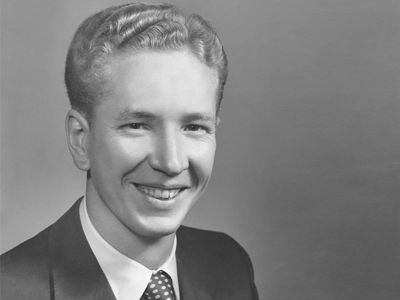
Renner’s clean sketch work and Earl’s showmanship were deliberate misdirection.“Nobody would expect to see a wagon version of the Corvette,” Chevrolet Studio chief designer Clare “Mac” MacKichan later recalled—an insight Karl Ludvigsen captured in Corvette: America’s Star-Spangled Sports Car. It was precisely that surprise that made the Nomad a sensation at the Waldorf and beyond. And unlike the Corvair, elements of the Nomad did reach production—just not on a Corvette. GM redirected the idea to its higher-volume A-body platform, yielding the 1955 Chevrolet Bel Air Nomad (and Pontiac’s related Safari) with a roofline that tracked the Motorama original astonishingly closely. The change in platform made financial sense and delivered one of the most recognizable silhouettes of the Tri-Five era.
How many Corvette-based Nomads existed? Here, the historical record gets fuzzy. Some sources claim three were built for the traveling show; others say five. Publicly accessible evidence of a complete surviving original has never surfaced, and several reputable publications treat the car(s) as lost to the scrapper—standard practice for many one-off show cars of the 1950s. Today’s “Corvette Nomads” are typically faithful recreations built from period photos and specs.
The 1954 Tour, the Crowd, and the Context
Motorama ’54 wasn’t just New York. After the Waldorf-Astoria opener, the show moved to Miami’s Dinner Key Auditorium, then west to Los Angeles and San Francisco, and on to Chicago—hauling over 100 truckloads of exhibit gear and cars from city to city. In aggregate, the tour pulled nearly two million visitors that year, and for many, these dream cars were their first encounter with fiberglass bodies, power amenities you couldn’t yet buy, and styling that looked equal parts Paris and pilot’s lounge. It’s telling that GM put all three Corvette concepts into that mix: the company was both selling the Corvette of today and auditioning the Corvette of tomorrow.
Outside the Chevrolet corner of the floor, 1954 Motorama also set the tone for the industry’s full-tilt “Jet Age” fascination. Pontiac’s glass-domed Bonneville Special and Oldsmobile’s golden-hued F-88 carried exotic aircraft cues into swoopy fiberglass bodies, while the Firebird XP-21 went all the way—single seat, delta-like wings, vertical fin, and a Whirlfire gas turbine. The Firebird wasn’t meant for production; it was a laboratory on wheels and a statement of GM’s technological ambition. But the press coverage it drew helped legitimize the “experimental” status of Motorama concepts—including the Corvette trio—as more than simple eye candy.
Why the Corvette Trio Mattered
They answered the comfort/utility critique head-on. Early road tests and owner surveys praised the Corvette’s style but dinged its day-to-day usability—especially the side curtains and fiddly door access. The Hardtop directly previewed roll-up windows and exterior handles/locks that arrived with the 1956 redesign, addressing those pain points in exactly the way customers wanted.
They explored body styles that could broaden Corvette’s appeal without abandoning its character. The Corvair coupe posed a question Corvette wouldn’t revisit until the 1963 Sting Ray: what if a Corvette had a fastback roof? Even if the XP-series and Bill Mitchell’s later work were separate lineages, the Corvair made the coupe concept “thinkable” within Chevrolet. The Nomad, meanwhile, suggested an enthusiast’s family car long before “sport wagon” was a marketing term—an idea so compelling that GM found it a bigger home on its mainstream platform.
They kept Corvette in the conversation during a fragile moment. With 1954 sales lagging and V-8 power not yet in the lineup (that would come in 1955, with roll-up glass in 1956), the Motorama concepts reminded the public—and perhaps GM brass—that Corvette could be aspirational, adaptable, and American and modern. In that sense, the cars weren’t merely design studies; they were confidence builders.
Legacy: The “What-Ifs” That Shaped What Was
It’s easy to dismiss Motorama cars as styling flights of fancy. Yet the Corvette Hardtop, Corvair, and Nomad show how GM used the tour as a true product lab. Within two years of their debut, production Corvettes had glass roll-up windows and a detachable hardtop on the order sheet. Within one year, Chevrolet launched a V-8 that altered the Corvette’s destiny. And within that same 1955 model year, Chevrolet and Pontiac were selling Nomads and Safaris that traced a straight line to Renner’s Motorama roofline.
Add the broader 1954 context—Firebird I’s turbine bravado, the fiberglass Cadillacs, the Bonneville Special’s bubble canopies—and you see why Motorama mattered. It gave GM permission to fail in public and to succeed in pieces. The 1954 Corvette trio didn’t roll straight from the Waldorf to the dealer lot, but their ideas absolutely did.
Why the Corvette Hardtop, Corvair, and Nomad Concepts Still Matter Today
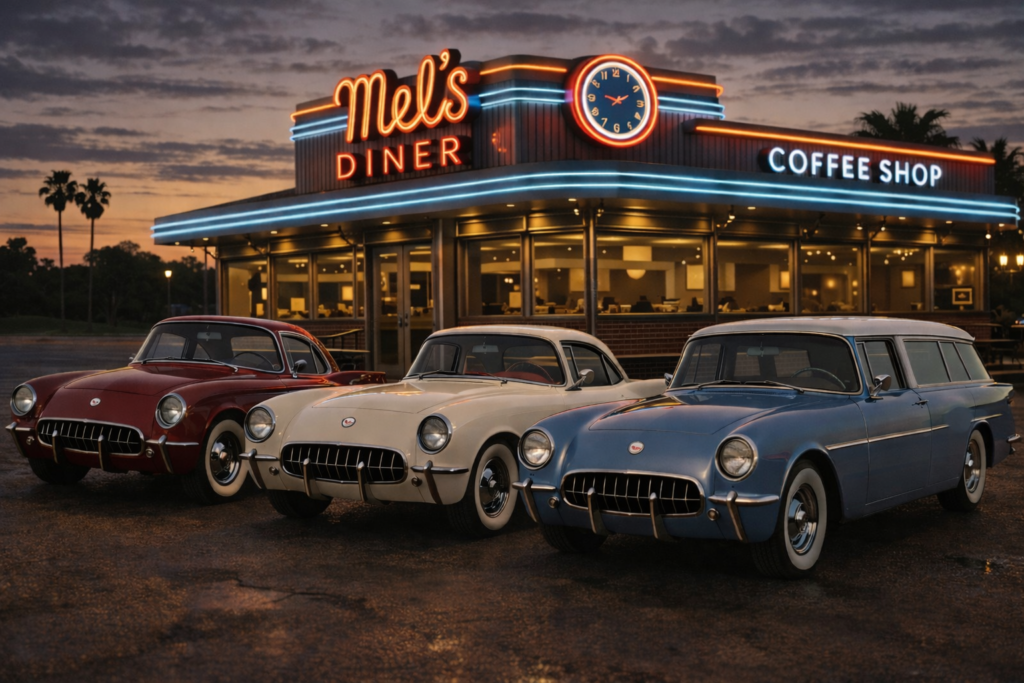
Today, we know the Corvette as America’s great high-performance sports car, but these early concepts remind us that its path was never inevitable. They were not styling dead ends, but bold design studies that tested new ideas about form, function, and possibility. In at least one important case, they also helped shape what came next, as the production Chevrolet Nomad emerged as a clear and intentional descendant of the original Corvette Nomad shown here in blue. That is why these concepts still matter today: they prove that what one generation of designers imagines can become the catalyst for the production of cars that future generations come to know, admire, and remember. (Image courtesy of the author/ChatGPT.)
What made the 1954 Motorama trio so important was not simply that Chevrolet built three more dream cars around the Corvette name. It was that each one tested a different possible future for America’s sports car at the exact moment the division was still deciding what Corvette could become. The Corvette Corvair pushed the idea toward European-style fastback sophistication. The Corvette Nomad explored whether Corvette DNA could stretch into a sporty, style-forward utility car years before that kind of crossover thinking became common. And the Hardtop Corvette addressed something more immediate, but no less important: how to make the open Corvette feel more complete, more usable, and more appealing to buyers who wanted sports-car glamour without giving up year-round practicality. Taken together, they were not random showpieces. They were design proposals, market experiments, and strategic thought exercises wearing Motorama sheetmetal.
That is why the trio still matters today. These cars remind us that Corvette’s survival was never guaranteed by the production car alone. It endured because Chevrolet kept imagining beyond the car it already had. In the Corvair, Nomad, and Hardtop concepts, we can see a brand trying to find its shape in real time—testing elegance, versatility, and refinement before those ideas fully matured in production. They show us that even in Corvette’s infancy, the people guiding the program were already wrestling with the same question that has followed the car through every generation since: how do you protect the soul of America’s sports car while still allowing it to evolve?
Seen through that lens, the 1954 Motorama trio was more than a sideshow to the early Corvette story. It was part of the argument for why Corvette deserved a future at all. These concepts expanded the public’s understanding of what the Corvette name could mean and, in doing so, helped keep the conversation alive at a moment when the car itself was still finding its footing. That distinction still matters. Because long before Corvette became an institution, these three dream cars helped prove it had the imagination to become one.