Tag: CERV II

  • 1965 Corvette Overview: The Sting Ray Perfected

    1965 Corvette Overview: The Sting Ray Perfected

    Four-wheel disc brakes, six available engines, the final Rochester fuel-injected 327, and the arrival of big-block power transformed Chevrolet’s familiar second-generation sports car into the most complete Sting Ray yet.

    From across a parking lot, the 1965 Corvette did not look like a revolution. Its basic shape had already stopped traffic for two years, and the revisions Chevrolet made for its third season were subtle enough that a casual observer could miss most of them. The familiar peaked fenders, hidden headlights, fastback roofline, and tightly drawn convertible body remained, as did the compact 98-inch wheelbase and the independent rear suspension that had defined the Sting Ray from the beginning.

    From the driver’s seat, however, 1965 was anything but a minor update. Four-wheel disc brakes were now standard, finally giving the Corvette stopping power that matched the speed it had been accumulating since the V-8 arrived a decade earlier. A six-engine lineup stretched from an agreeable 250-horsepower 327 to the new 350-horsepower L79, the fierce fuel-injected L84, and, later in the model year, the 425-horsepower L78 396. By the time production ended, the Corvette had crossed into the big-block era without surrendering the small-block combinations that had made it such a versatile road car.

    That breadth is the key to understanding the 1965 Corvette. Chevrolet did not force every buyer to accept the same definition of performance, nor did it turn the Sting Ray into an uncompromising race car simply to win a horsepower contest. It offered a comfortable automatic convertible, an air-conditioned L79 grand tourer, a high-winding fuel-injected coupe, and a brutal 396 roadster from the same order form, then allowed buyers to further shape each car with axle ratios, suspension choices, steering assistance, side exhausts, and an unusually deep selection of comfort equipment.

    The result was a car that could be faster, easier to live with, or more specialized than any Corvette before it. Just as important, its major systems finally seemed to belong to the same automobile. The chassis introduced in 1963 had been excellent, the body remained one of General Motors’ greatest designs, and Chevrolet’s small-block V-8 had long since proven its worth. In 1965, the brakes caught up, the engine catalog reached its widest expression, and the first big block pointed directly toward what would come next.

    The Sting Ray had not been reinvented. It had been completed.

    The Sting Ray at Midpoint

    From Revolution to Refinement

    The 1963 Corvette Sting Ray did not merely update the Corvette—it redefined it, introducing a radical new shape, a dedicated coupe, and an advanced chassis with independent rear suspension. It was the opening statement for an entirely new generation, one that transformed America’s sports car in both appearance and capability. Just two years later, the 1965 Corvette would formalize that vision, combining the Sting Ray’s unforgettable design with four-wheel disc brakes, greater refinement, and big-block power to create a more complete American performance icon. (Image credit: GM Media LLC.)

    The 1963 Corvette Sting Ray had been a clean break from the car it replaced. It brought a lower, sharper body; a fixed-roof coupe for the first time in Corvette history; a new ladder-type frame; and an independent rear suspension that used a fixed differential, articulated half-shafts, strut rods, trailing arms, and a transverse leaf spring. Beneath Bill Mitchell’s dramatic surface language was a fundamentally more sophisticated machine, one that moved Corvette closer to the European gran turismo ideal while remaining distinctly American in its construction and power.

    That first-year car also left room for development. Chevrolet removed the coupe’s controversial split rear window for 1964, revised trim, improved ventilation, and continued sorting the details that always accompany a new body and chassis. The 1964 Corvette was a cleaner and more mature Sting Ray, but it still relied on drum brakes whose basic limitations became harder to ignore as engine output and real-world speeds climbed.

    By 1965, Chevrolet did not need another styling upheaval. The Sting Ray was recognizable, successful, and still visually fresh, which allowed the engineers to spend their effort where owners would feel it most. The year’s story therefore lives less in the silhouette than in the relationship between the brake pedal, the steering wheel, the accelerator, and the road.

    It also arrived at an interesting moment inside General Motors. The second-generation Corvette was only in its third model year, yet Bill Mitchell, Larry Shinoda, Zora Arkus-Duntov, and several engineering groups were already investigating what a future Corvette might become. Some of those ideas preserved the front-engine layout and pushed the body toward the form that would reach production in 1968; others moved the engine behind the driver or even behind the rear axle. The production Sting Ray was reaching maturity at the same time its possible successors were beginning to diverge.

    The 1965 Corvette at a Glance

    Category1965 Corvette
    Body stylesTwo-passenger Sport Coupe and Convertible
    ConstructionFiberglass-reinforced plastic body on a separate steel frame
    Wheelbase98.0 inches
    Engine family327-cubic-inch small-block V-8; midyear 396-cubic-inch Mark IV big-block V-8
    Available output250, 300, 350, 365, 375, or 425 horsepower
    TransmissionsThree-speed manual, four-speed manual, or Powerglide automatic, depending on engine
    Defining standard changeFour-wheel ventilated disc brakes
    Major new optionsL79 327/350, L78 396/425, and N14 side-mounted exhaust
    Model-year endingsFinal Corvette use of Rochester mechanical fuel injection; final year for several early C2 details
    Production23,564 cars: 8,186 coupes and 15,378 convertibles
    Base price at introduction$4,321 coupe; $4,106 convertible

    The table captures the outline, but it also conceals the variety that made the year unusual. The base 327 and three-speed transmission were technically enough to buy a Corvette, yet few customers stopped there. Nearly nine out of ten cars received a four-speed, almost 85 percent were ordered with Positraction, and more than 22,000 carried an AM/FM radio. Buyers embraced both performance and comfort, often in the same automobile.

    Production reached a new Corvette record even though a nationwide General Motors strike interrupted work in the autumn of 1964. Chevrolet ultimately built two more cars than its long-published total acknowledged, a small correction that would not be formally reflected until decades later. That obscure pair of convertibles says something important about 1965: the year is familiar enough to be widely documented, but detailed enough that old numbers and repeated assumptions still require careful sorting.

    While the C2 Matured, the Next Corvette Took Shape

    Two Futures Inside General Motors

    The Corvette had always existed at the intersection of styling and engineering, and no two men embodied that tension more visibly than Bill Mitchell and Zora Arkus-Duntov. Mitchell, General Motors’ vice president of Styling, understood the power of shape, proportion, and theater. Duntov, by then firmly established as Corvette’s chief engineer and most persuasive internal advocate, remained preoccupied with weight distribution, traction, cooling, aerodynamics, and the difficult business of turning ambitious layouts into machines that could survive hard use.

    Their goals were not mutually exclusive, but their routes toward the next Corvette were different. Duntov continued exploring mid-engine competition machinery and the advantages that moving mass inward could offer. Mitchell’s organization, meanwhile, was developing a front-engine design statement whose exaggerated surfaces could be translated, at least in principle, into a production successor for the Sting Ray.

    The projects that emerged are often compressed into one simple story in which Duntov designed a rear-engine Corvette while Mitchell designed the Mako Shark II. That version of history is convenient, but it blurs separate programs and assigns credit too casually. CERV II belonged to Duntov’s experimental performance work; XP-819 grew from Frank Winchell’s Chevrolet Research and Development group; and the Mako Shark II was a Styling project led by Mitchell and executed by Larry Shinoda.

    None was a lightly disguised 1965 production car. They were test beds, counterproposals, and rolling arguments about what Corvette could become, created while the car customers could actually buy was still being refined in St. Louis. Seen together, they show how open the question of Corvette’s future remained.

    Duntov and the Mid-Engine Question

    Front three-quarter view of the white-and-blue Chevrolet CERV II, Zora Arkus-Duntov’s mid-engine, all-wheel-drive experimental race car, parked on a paved road.
    While the 1965 Corvette represented the most complete expression yet of the Sting Ray, Zora Arkus-Duntov was already looking far beyond the limitations of the production car. Conceived in 1963 and first tested in 1964, his mid-engine, all-wheel-drive CERV II demonstrated just how ambitious his vision for Chevrolet performance had become. The Corvette on showroom floors was growing more capable, but Zora was already engineering the future. (Image credit: GM Media LLC.)

    Duntov’s belief in the mid-engine layout was rooted in competition rather than novelty. Concentrating major masses between the axles could improve weight distribution and reduce polar moment, while placing more weight over the driven wheels aided traction. These were compelling advantages for a racing car, especially as tire, brake, and engine performance pushed speeds higher.

    CERV II, developed in 1964, demonstrated the seriousness of that interest. It was a monocoque experimental racer with a 377-cubic-inch V-8 producing roughly 500 horsepower and an ambitious all-wheel-drive system intended to turn that output into forward motion. It was not a production prototype in the conventional sense, but it showed that Duntov’s group was thinking beyond the Corvette’s familiar front-engine architecture and beyond the limitations of a showroom program.

    Getting from an experimental car to an affordable production Corvette was another problem entirely. A mid-engine road car needed a durable transaxle, effective cooling, acceptable luggage space, manageable heat and noise, serviceability, and a manufacturing plan that made sense at Corvette volumes. General Motors could engineer almost anything if cost were no object; the challenge was creating a component set that would survive big V-8 torque without forcing the Corvette into an entirely different price class.

    Those obstacles did not end Duntov’s interest, but they explain why the 1968 production car retained a front engine. The conventional layout allowed Chevrolet to use proven engines and transmissions, preserve dealer service familiarity, and build upon the existing commercial foundation. For the moment, the more radical architecture remained in the experimental shop.

    XP-819: Frank Winchell’s Rear-Engine Counterproposal

    Front three-quarter view of the restored silver XP-819 rear-engine Corvette prototype, displayed indoors with its blue interior, wood-rim steering wheel and covered headlamps visible.
    While Zora was pushing the mid-engine CERV II, Frank Winchell pursued an entirely different path toward the Corvette’s future. His XP-819 placed its Chevrolet V8 behind the rear axle to test whether a rear-engine layout could work in a serious American performance car. Styled by Larry Shinoda and ultimately unsuccessful, the radical prototype demonstrated that Corvette’s next great leap was being debated as vigorously as it was being engineered. (Image credit: Kolecki Photography)

    XP-819 is sometimes folded into Duntov’s mid-engine campaign, but the car came from a different corner of Chevrolet. Frank Winchell, who led Chevrolet Research and Development, sponsored the project as a rear-engine counterproposal. Larry Shinoda shaped the body, and he later stated plainly that Duntov had nothing to do with XP-819, even though the project existed amid the same broad debate over future Corvette layouts.

    The distinction is more than a matter of office politics. XP-819 placed a reverse-rotation 327 behind the rear axle, with a two-speed transaxle positioned ahead of it. That made it a rear-engine car, not a mid-engine one, and it produced a very different balance of masses than Duntov’s CERV II. Its long, low body hid an extreme mechanical arrangement that forced the design team to confront weight distribution, tire loading, cooling, and directional stability all at once.

    The car was damaged during testing after its rear tires were fitted in the wrong direction for the load they were carrying. Its remains later passed through Smokey Yunick’s shop, and the prototype has since been painstakingly reconstructed. The survival story is fascinating, but XP-819’s larger importance lies in the argument it represented: Chevrolet was willing to challenge the production formula, even when the proposed answer proved less convincing than the question.

    Mako Shark II: A Visible Preview of the C3

    While Duntov and Winchell debated where the Corvette’s engine belonged, Bill Mitchell was defining what its future would look like. Created under his direction and unveiled in 1965, the Mako Shark II transformed Corvette design into something lower, more muscular, and overtly dramatic. Its pointed nose, sweeping fenders, and tightly drawn waist provided the visual foundation for the C3 Corvette that arrived in 1968. (Image credit: GM Media LLC.)

    Where CERV II and XP-819 explored layout, Mitchell’s Mako Shark II explored desire. The project carried the experimental designation XP-830 and grew from Mitchell’s directive to create a Corvette show car in time for the New York International Auto Show in April 1965. Shinoda translated that brief into a body with a narrow waist, high and muscular fender peaks, a sharply pointed nose, and a tail that tapered as though the entire car had been pulled tight over its mechanical components.

    The familiar photographs can make the Mako Shark II appear to be one car in several stages of development, but Chevrolet built two distinct versions. The first was a non-running show car created for display, complete with a highly theatrical interior, a squared steering wheel, and side-pipe treatments that belonged more to an auto-show fantasy than a production line. Its hood was marked for a Mark IV 396 even though no engine was installed beneath it.

    The new concept car from Chevrolet, the Mako Shark II, at the Paris Motor Show, 1965. (Photo by Charles Edridge/Getty Images)

    A separate running version appeared later with a 427-cubic-inch Mark IV V-8, a more conventional steering wheel, and numerous changes required to make the design functional. That car appeared at the Paris Motor Show and eventually evolved into the 1969 Manta Ray concept. The differences matter because photographs of the two are frequently mixed, creating a false impression that every exotic detail existed on a single, roadworthy machine.

    The body’s dramatic color fade—from deep blue and gray along its upper surfaces into lighter silver-white below—reinforced the shark imagery that had become one of Mitchell’s favorite themes. More significant were the proportions. The pointed nose, deeply pinched center section, swelling fenders, and tapering rear would all be moderated for production, yet the essential movement of the form reached the third-generation Corvette.

    The Mako Shark II was therefore both fantasy and forecast. Its interior and some of its exhaust details remained show-car theater, while its surface language gave the public a remarkably clear hint of what Chevrolet was preparing for 1968. In the spring of 1965, customers could walk into a dealership and buy the most mature version of the existing Sting Ray while seeing its successor take shape beneath the lights of an auto show.

    Refining the Shape Chevrolet Already Had

    Familiar Form, More Purposeful Detail

    Nassau Blue 1965 Corvette Sting Ray convertible with its removable hardtop installed, photographed at a scenic overlook and displaying the small-block hood and three vertical front-fender gills.
    This Nassau Blue Sting Ray displays two of the visual details that defined the 1965 Corvette: the clean small-block hood and three vertical gills set into each front fender behind the wheel. The hood preserved the Corvette’s low, uninterrupted profile, while the revised gills gave the body a sharper, more purposeful appearance. Together, they remain among the quickest ways to identify a small-block 1965 Sting Ray.

    The production Corvette did not borrow the Mako Shark II’s drama for 1965, nor did it need to. Instead, Chevrolet cleaned up the Sting Ray’s established form and gave several details a more purposeful appearance. The changes were visible enough to identify the year, but restrained enough to leave the body’s balance intact.

    On small-block cars, the hood became a single smooth plane. The ornamental depressions that had remained after the 1963 hood’s false grilles disappeared, leaving a cleaner surface between the front fenders. It was a small change with a surprisingly large visual effect, because it removed one of the last decorative traces of the first-year Sting Ray.

    The front fenders received three vertical vents behind each wheel in place of the 1964 car’s horizontal recesses. These openings were functional, allowing air to escape from the engine compartment, and their upright rhythm gave the sides a sharper identity. Along with the unique grille—black horizontal inner bars framed by a bright outer surround—they remain among the quickest ways to distinguish a 1965 car from the adjacent C2 years.

    Chevrolet also revised the wheel covers and rocker-panel moldings. The optional cast-aluminum knock-off wheels carried dark gray paint between their fins, emphasizing the machined faces and spinner. As always with C2 Corvettes, seemingly small pieces of trim did more than decorate the body; they established a model-year fingerprint that restorers would later study with almost forensic care.

    Two Hoods, Two Personalities

    Head-on view of a red 1965 Corvette Sting Ray L78 coupe at a scenic overlook, highlighting its raised big-block hood and the softly clouded sky reflected across its paint.
    In 1965, the Corvette’s familiar Sting Ray profile gained a more muscular edge with the arrival of the L78 396-cubic-inch big-block V8. Its raised, sculpted hood was more than additional clearance for the new engine—it became an unmistakable declaration that the Corvette had entered a new era of performance. With 425 advertised horsepower beneath it, the shape warned everyone what was coming before the engine ever started.

    The smooth hood defined the 1965 Corvette when production began, but it did not tell the whole model-year story. When the L78 396 arrived, its greater height and different induction packaging required a raised center section. Chevrolet answered with the now-famous power-bulge hood, creating an immediate visual dividing line between the small-block Sting Ray and the new big-block car.

    The bulge was functional, but it was hardly anonymous. Paired with engine identification emblems and the harder-edged sound of the Mark IV, it announced that this was a different Corvette before the driver turned the key. The small-block car looked unusually clean and resolved; the 396 looked as though pressure were building beneath its fiberglass skin.

    That contrast would become a recurring theme throughout the remaining C2 years. Big-block hoods grew more assertive as displacement and induction systems changed, while the small-block retained a lighter visual character. In 1965, the separation was new enough to feel like a midyear transformation rather than a settled Corvette convention.

    Side-Mounted Exhaust Changes the Sting Ray’s Voice

    Rear three-quarter view of a Glen Green 1965 Corvette Sting Ray coupe, showing its ribbed side-mounted exhaust, knock-off wheels and goldline tires.
    The 1965 model year gave Corvette buyers a new way to make the Sting Ray look—and sound—even more serious: the factory N14 side-mounted exhaust system. Running beneath bright ribbed shields before exiting ahead of the rear wheels, the $134.50 option added considerable visual drama and an unmistakable V8 soundtrack. Only 759 Corvettes left St. Louis so equipped, making original 1965 side-pipe cars a rare sight today.

    RPO N14 gave buyers another way to make the Corvette’s mechanical intent visible. Chevrolet described the side-mounted dual exhaust as equipment for off-road service and restricted it to cars ordered with an optional engine and four-speed transmission. The pipes ran beneath long covers at the rocker panels, placing the exhaust outlets ahead of the rear wheels and replacing the bright lower-body treatment used with conventional rear exhausts.

    The change was not merely cosmetic. Moving the outlets beside the passenger compartment altered the sound and the experience of entering or leaving the car, especially after a hard drive had heated the covers. The side pipes gave the Sting Ray a competition-bred presence, but they also brought more noise and heat to a car that could otherwise be equipped as a surprisingly civilized grand tourer.

    Only 759 buyers chose N14, which makes the original system far less common than its modern visibility might suggest. Reproduction side exhausts have since appeared on countless restored and modified C2s, so the presence of the hardware alone does not establish how a car left St. Louis. Factory documentation and the surrounding model-correct details remain essential.

    A More Finished Interior

    Tan 1965 Chevrolet Corvette interior with redesigned bucket seats and door panels, teakwood steering wheel, four-speed shifter, full instrumentation and factory carpeting.
    Chevrolet used 1965 to give the Sting Ray’s cockpit meaningful refinement without sacrificing its driver-focused character. Redesigned seats and inner door panels improved the cabin’s comfort and finish, while a painted radio-and-speaker surround replaced the earlier vinyl-covered treatment for a cleaner presentation. Options such as a telescopic steering column and teakwood steering wheel further elevated the driving environment. The result was a more mature interior—still unmistakably sporting, but increasingly worthy of Corvette’s growing status as a serious grand-touring machine. (Image credit: RK Motors)

    The cabin changes were quieter, but they reflected the same effort to finish what Chevrolet had begun. Instrument faces changed to flat black, reducing glare and giving the deeply hooded gauges a more serious appearance. The areas around the radio and speaker bezel were painted rather than covered in vinyl, creating cleaner transitions across the center of the dashboard.

    New seats were slightly larger and more supportive, with hard molded shells enclosing their backs. The door panels gained integrated armrests, and retractors made the seat belts less awkward to manage. None of these alterations transformed the tight C2 cockpit, but together they made it feel more deliberate and better resolved.

    Buyers could take that interior in several directions. Genuine leather, power windows, a telescoping steering shaft, a teakwood steering wheel, air conditioning, tinted glass, and the Comfort and Convenience group could soften the Corvette’s harder edges. A convertible could be ordered with an auxiliary hardtop in addition to its folding top, while the coupe could carry the enormous 36-gallon fuel tank intended for long-distance use.

    Compatibility mattered, because the most aggressive powertrains closed off some of those choices. Air conditioning was available with the 250-, 300-, 350-, and 365-horsepower engines, but not with the fuel-injected L84 or the L78 big block. Power steering was limited to the 250-, 300-, and 350-horsepower combinations. That made the L79 especially important: it was the strongest 1965 engine that could still be paired with both major comfort assists.

    The Year the Corvette Learned to Stop

    Restored black-and-white 1965 Chevrolet advertisement showing a Corvette Sting Ray convertible, four-wheel disc-brake assembly and “New with 4-wheel disc brakes” headline.
    Chevrolet understood the significance of the Corvette’s new braking system and made it the centerpiece of this 1965 advertisement. A dramatic frontal view of the Sting Ray is paired with a detailed Delco-Moraine disc-and-caliper assembly, while the copy promotes four-wheel discs as standard equipment. Chevrolet emphasized resistance to heat, water, and fade—qualities that finally gave the Corvette stopping capability worthy of its performance.

    Performance Had Outgrown the Old Brakes

    The Corvette entered the 1960s with more engine than brake. Chevrolet’s drums could be made to work well for a single stop, and competition packages offered more aggressive linings, cooling provisions, and related hardware. Repeated hard braking, however, generated heat faster than the enclosed drums could shed it, changing pedal feel and increasing stopping distances just when a driver needed consistency most.

    That weakness had become increasingly difficult to defend. The Sting Ray was capable of sustained high speeds, Chevrolet advertised it as a serious sports car, and road testers routinely measured it against Jaguars, Ferraris, Porsches, and other European machinery that had made disc brakes part of the modern performance vocabulary. A fast car that could not repeat its best stop without fade was no longer a complete performance car.

    Chevrolet had experimented with disc brakes before 1965, but the third model year brought them to every production Corvette as standard equipment. The change was more important than a new piece of trim or another increment of horsepower because it improved every version of the car. A base-engine convertible benefited from the same fundamental braking architecture as a fuel-injected coupe or a 396 roadster.

    Standard Delco-Moraine Four-Wheel Discs

    Restored 1965 Corvette Delco-Moraine front brake assembly with a natural cast-iron four-piston caliper, ventilated rotor, five-lug hub and suspension components.
    With the wheel removed, the engineering behind the 1965 Corvette’s new braking system comes into clear view. A fixed Delco-Moraine four-piston caliper straddles the 11.75-inch ventilated rotor, providing the heat control and consistent stopping performance that Chevrolet’s earlier drum brakes could not match. Standard on nearly every 1965 Corvette, this four-wheel-disc system finally gave the Sting Ray braking capability equal to its speed.

    The new Delco-Moraine system used an 11.75-inch ventilated cast-iron rotor at each wheel. Fixed two-piece calipers straddled those rotors, with four pistons and four friction segments at every corner. Chevrolet specified 461.2 square inches of total swept lining area and proportioned approximately 65 percent of the braking effort to the front, where weight transfer placed the greatest demand during a hard stop.

    Ventilation was central to the design. Air passing through the internal rotor vanes carried heat away from the friction surfaces, while the exposed disc arrangement allowed additional cooling that a drum could not match. The pads rode in light contact with the rotors, helping keep the swept surfaces clean and keeping the system ready without the adjustment behavior associated with conventional drum shoes.

    The factory chassis description identified the bonded friction material as woven asbestos, a period specification that should not be confused with later replacement compounds. Modern owners necessarily approach those materials differently, and many surviving cars have been rebuilt with contemporary pads, stainless-sleeved calipers, and replacement rotors. Those service changes can improve reliability without changing the architecture that made the original system so effective.

    Because the rear wheels now used discs, Chevrolet provided a separate mechanical parking brake within a 6.5-inch drum formed at the center of each rear rotor. Pulling the parking-brake handle operated those small internal shoes independently of the hydraulic system. The arrangement allowed the primary brakes to be optimized for stopping while preserving a simple mechanical means of holding the car.

    In its April 1965 “Corvette Sting Ray Road Test,” Motor Trend assistant technical editor Bob McVay examined a Corvette that had become substantially more refined without surrendering the performance that defined it. The headline development was Chevrolet’s new four-wheel disc-brake system, which delivered five consecutive 60-mph panic stops averaging 153.65 feet, with no fade, wheel lockup, or directional instability—evidence that the Corvette’s stopping capability had finally caught up with its speed. Beyond braking, McVay praised the car’s independent suspension, controllability, cockpit layout, engine choices, and improved everyday livability, presenting the 1965 Corvette as a far more complete sports car than its predecessors. In executive terms, the article’s message was clear: 1965 marked the point where Corvette’s raw performance was matched by equally serious braking, handling, refinement, and usability—turning an already fast car into a genuinely well-rounded American sports car. (Image credit: Motor Trend Magazine)

    Period testing quickly demonstrated what the specifications promised. After approximately 1,500 miles in a 300-horsepower Corvette, Motor Trend conducted five panic stops from 60 mph. The car averaged 153.65 feet, with a shortest stop of 137 feet and a longest of 166 feet, and the testers reported no fade, directional instability, or wheel lockup. More telling than any single number was the repeatability: the Corvette could stop hard again without the system visibly coming apart beneath the driver.

    The magazine described the brakes in exceptionally enthusiastic terms, but Chevrolet’s own durability projections should be treated as factory claims rather than independent guarantees. Pad and rotor life depended on use, maintenance, runout, sealing, and environmental conditions, just as it does today. What the road tests established was not infinite durability; it was that the Corvette’s production braking system had finally reached a level appropriate to the rest of the car.

    One Circuit Standard, Two with Power Assist

    One detail has been repeatedly muddled in later accounts. The standard manual disc-brake system retained a single hydraulic circuit. A divided-output, dual-reservoir master cylinder came with RPO J50 power brakes, giving the assisted system separate front and rear hydraulic circuits in addition to reduced pedal effort.

    That makes the 1965 power-brake option more consequential than its name suggests. J50 was not simply a vacuum booster attached to an otherwise identical system; it changed the hydraulic redundancy as well. Chevrolet built 4,044 cars with power brakes, meaning most 1965 Corvettes left the factory with manual discs and the single-circuit master cylinder.

    The distinction is particularly useful when inspecting a restored car. A dual-reservoir master cylinder on a manual-brake Corvette may be a sensible safety update, but it is not the standard 1965 configuration. Conversely, a car represented as factory power-brake equipped should carry the correct booster, master-cylinder arrangement, lines, and supporting documentation rather than a collection of added parts.

    The Curious J61 Drum-Brake Credit

    This September 1964 Chevrolet engineering page documents the braking system used on the 1965 Corvette, including the new four-wheel disc setup, internal parking brake, and RPO J50 power-brake arrangement. The factory illustration is especially valuable because it shows the caliper construction, wheel cylinders, brake linings, parking-brake hardware, and the divided-output master cylinder specified for J50-equipped cars. Alongside the drawings, Chevrolet listed the key dimensions, hydraulic ratios, pedal travel, and braking-force distribution, making the page one of the clearest period references for understanding exactly how the 1965 system was configured. (Image credit: GM)

    For buyers who did not want the new discs, Chevrolet offered RPO J61, which substituted drum brakes and reduced the price of the car. The opening-model-year credit was $64.50, enough to make the option visible on an invoice but not enough to persuade many customers to give up the year’s most important standard feature. Only 316 cars were built that way.

    J61 appears irrational if viewed only through modern enthusiasm for the disc system. In 1965, however, some buyers and fleet-minded owners preferred familiar hardware, while racers could have their own reasons for choosing a starting configuration they intended to modify. Replacement parts, service habits, and distrust of new mechanisms could also shape an order in ways that do not survive in a production total.

    Its rarity has since reversed the original logic. The drum-brake car was cheaper when new, but a documented, correctly restored J61 Corvette is now an unusual artifact precisely because almost everyone made the more obvious choice. That does not make it the better-driving version; it makes it one of the clearest examples of rarity and desirability following different paths.

    A Chassis Finally in Balance

    Colorized period-style image of a red 1965 Chevrolet Corvette Sting Ray rounding a racetrack corner, illustrating the balanced chassis, independent suspension, and composed handling discussed in the article.
    This period track image captures exactly what the 1965 Corvette’s chassis finally delivered: a sports car whose braking, steering, suspension, and overall balance were working in concert. By 1965, the Sting Ray’s independent rear suspension, carefully tuned front geometry, and available quick-ratio steering gave the car the composure to carry speed through a corner without feeling crude or unfinished. Seen here loaded into a turn, the Corvette looks like what it had become—a car able to accelerate, change direction, and hold its line with a level of confidence that matched its performance. In the context of our article, this photograph helps show why the 1965 Sting Ray no longer felt like a fast car waiting for the rest of its chassis to catch up. (Image credit: Motor Trend)

    The brake system worked because it joined a chassis that was already fundamentally sound. At the front, unequal-length control arms, coil springs, telescopic shock absorbers, and an anti-roll bar managed wheel movement. At the rear, the differential was fixed to the frame, half-shafts carried power to independently moving wheels, lateral struts controlled camber, trailing arms located the hubs, and a nine-leaf transverse spring supported the car.

    That layout gave the Sting Ray advantages in ride, grip, and packaging, but it also gave Chevrolet room to tune several personalities into the same platform. Standard suspension settings suited ordinary road use; RPO F40 increased spring and damping rates for drivers willing to trade compliance for greater control. The special suspension was restricted to the L84 and L78 with a four-speed and Positraction, an indication that Chevrolet viewed it as part of a complete high-performance combination rather than a decorative option.

    This image comes straight out of the visual world of Motor Trend’s April 1965 “Corvette Sting Ray Road Test,” where assistant technical editor Bob McVay evaluated Chevrolet’s updated sports car in real driving conditions rather than simply repeating factory claims. Photographed by Pat Brollier, the shot helps place the article in its proper setting: a serious road test that blended performance driving, engineering analysis, and firsthand impressions. In that context, the photograph is more than period eye candy—it is part of the evidence behind Motor Trend’s conclusion that the 1965 Corvette had become a more complete and convincing sports car. (Image credit: Motor Trend)

    Manual steering came in two ratios, with 20.2:1 used for ordinary applications and a quicker 17.6:1 gear available in the appropriate performance configuration. Power steering also used the 17.6:1 ratio, reducing effort without turning the Corvette into a slow-response boulevard car. Depending on equipment, the wheel required either 3.4 or 2.92 turns from lock to lock.

    On standard 7.75×15 tires, the 1965 Corvette still had less grip than a modern performance car and demanded respect near the limit. Its independent rear geometry could change toe and camber as bushings wore or alignment wandered, while big torque could overwhelm the available rubber. Yet with the brakes transformed, the chassis no longer felt as though one major system had been left behind. The Sting Ray could accelerate, change direction, ride, and stop as a coherent whole.

    Six Ways to Power a Sting Ray

    One Corvette, Six Interpretations

    For 1965, Corvette gained the engine that fundamentally changed its performance hierarchy: Chevrolet’s 396-cubic-inch Turbo-Jet big-block V8. Rated at 425 horsepower, the L78 introduced a new level of straight-line performance to the Sting Ray and marked the beginning of Corvette’s big-block era. Its sheer size transformed the engine bay, while the bright Chevrolet Orange valve covers and distinctive “Turbo-Jet 425 HP” air-cleaner decal made it unmistakable beneath the hood. (Image credit: Bring a Trailer)

    The arrival of the 396 tends to swallow the rest of the 1965 engine story, but Chevrolet’s greatest accomplishment may have been the range beneath it. Five versions of the 327 small block remained available, each with a distinct balance of output, maintenance, noise, cost, and compatibility. The big block then arrived as a sixth choice rather than an immediate replacement for everything Chevrolet already knew how to do well.

    All six were overhead-valve V-8s, but the similarities could be misleading. Hydraulic-lifter engines rewarded owners who wanted to drive rather than adjust valve lash, while the solid-lifter L76, L84, and L78 accepted greater maintenance in exchange for more aggressive high-speed operation. Carburetion ranged from a tractable Carter four-barrel to large Holley units, and the L84’s Rochester mechanical injection remained a category of its own.

    RPODisplacement and inductionCompressionValve gearHorsepowerTorqueProduction
    Base327 cu. in., Carter four-barrel10.5:1Hydraulic lifters250 at 4,400 rpm350 lb-ft at 2,800 rpm2,551
    L75327 cu. in., Carter four-barrel10.5:1Hydraulic lifters300 at 5,000 rpm360 lb-ft at 3,200 rpm8,358
    L79327 cu. in., Holley four-barrel11.0:1Hydraulic lifters350 at 5,800 rpm360 lb-ft at 3,800 rpm4,716
    L76327 cu. in., Holley four-barrel11.0:1Mechanical lifters365 at 6,200 rpm350 lb-ft at 4,000 rpm5,011
    L84327 cu. in., Rochester mechanical fuel injection11.0:1Mechanical lifters375 at 6,200 rpm350 lb-ft at 4,400–4,800 rpm771
    L78396 cu. in., Holley four-barrel11.0:1Mechanical lifters425 at 6,400 rpm415 lb-ft at 4,000 rpm2,157

    The figures came from Chevrolet’s revised model-year powertrain information. Some factory publications placed the L79’s torque peak at 3,600 rather than 3,800 rpm, and the L84’s peak appears as both a range and a single 4,800-rpm figure in surviving material. Those minor inconsistencies do not change the character of either engine, but they are a useful warning against treating every period table as though Chevrolet issued it once and never revised it.

    More important is what buyers actually chose. The 300-horsepower L75 was the volume leader, followed by the 365-horsepower L76 and the new L79. The base engine accounted for barely one Corvette in nine, while the fuel-injected L84 attracted fewer buyers than the big block despite having been the flagship small block. Performance mattered in 1965, but so did the price and manner in which it was delivered.

    The 250- and 300-Horsepower Foundation

    The 1965 Corvette’s standard engine was Chevrolet’s 327-cubic-inch small-block V8, rated at 250 horsepower and 350 lb-ft of torque. While it sat at the bottom of an increasingly formidable engine lineup, the base 327 still gave the Sting Ray strong performance, smooth power delivery, and the kind of everyday drivability that made the Corvette more than just a weekend toy. For buyers who didn’t need the added expense or temperament of the hotter optional engines, the 250-horsepower 327 offered an excellent balance of performance, reliability, and refinement. (Image credit: bringatrailer.com)

    The standard 327 produced 250 horsepower at 4,400 rpm and 350 pound-feet of torque at only 2,800. Its Carter four-barrel, hydraulic lifters, and relatively modest state of tune made it the least dramatic engine in the catalog, but not an inadequate one. In a car weighing a little more than 3,100 pounds, the base V-8 delivered ample everyday performance with a broad torque curve and fewer demands on its owner.

    It was also the only engine available with the standard three-speed manual transmission. That combination kept the advertised price as low as possible, although only a small minority of buyers were content to leave the car that way. The Corvette had become an aspirational purchase, and customers who had already stretched to buy one were often willing to add the equipment that made it feel special.

    The L75 327 offered 1965 Corvette buyers an ideal step up from the standard 250-horsepower small-block without sacrificing everyday drivability. Rated at 300 horsepower and 360 lb-ft of torque, the carbureted 327 delivered strong, flexible performance while retaining the lighter, more balanced character that had long defined the Corvette’s small-block formula.

    For $53.80 at the start of the model year, L75 raised output to 300 horsepower at 5,000 rpm and torque to 360 pound-feet at 3,200. It retained hydraulic lifters and a Carter four-barrel, preserving the base engine’s easy manners while giving the car more urgency through the middle and upper ranges. With 8,358 installations, it became the most popular engine in the lineup.

    Both engines could be ordered with the two-speed Powerglide automatic, and both accepted power steering and air conditioning. In a convertible equipped for touring, the 300-horsepower 327 offered a particularly sensible combination of performance and civility. It would not win an argument based on peak output, but it made the Corvette an easier car to use in traffic, on vacation, or for the daily routines that horsepower tables tend to ignore.

    A period Motor Trend test of a 300-horsepower car underscored that balance. The magazine recorded 0–60 mph in 7.5 seconds and a standing quarter mile in 15.8 seconds at 90 mph, figures that were strong without requiring a competition-style engine. The same car delivered the memorable brake performance discussed earlier, making it a better demonstration of the complete 1965 package than an engine-only test would suggest.

    L79: The Street Engine Chevrolet Had Been Missing

    The L79 was arguably one of the sweetest combinations available in the 1965 Corvette: a 327-cubic-inch small-block producing 350 horsepower, backed by 360 lb-ft of torque and an 11.0:1 compression ratio. Unlike the more aggressive solid-lifter L76, the L79 employed hydraulic lifters and a somewhat milder camshaft, giving owners much of the performance of Chevrolet’s hottest small-blocks without demanding quite as much attention in everyday use. Fed through a four-barrel carburetor, it delivered the kind of free-revving performance that made the 327 famous while remaining remarkably civilized on the street—a combination that has helped make the L79 one of the most desirable small-block engines of the Sting Ray era.

    Historical note: The Rally Red 1965 L79 Corvette pictured here was once owned by aviation and Corvette legend Betty Skelton. Documentation associated with the car identifies Skelton as its owner after the Corvette had initially been assigned through Chevrolet’s Central Office; the car was equipped with the 327/350-horsepower L79 and a four-speed transmission.

    If the L78 was the year’s sensation, the new L79 may have been its most intelligent engine. It combined the 11.0:1 compression ratio, aluminum intake manifold, large Holley four-barrel, and high-flowing character expected of a serious small block with hydraulic lifters that did not require periodic lash adjustment. Rated at 350 horsepower at 5,800 rpm and 360 pound-feet at 3,800, it gave away only 15 horsepower to the solid-lifter L76 while making fewer demands on the driver and owner.

    The distinction could be heard as well as felt. A solid-lifter engine has a purposeful mechanical clatter, especially when cold, and its valve lash becomes part of normal maintenance. The L79 delivered much of the same urgency with a smoother, quieter valvetrain, allowing the engine to pull cleanly in ordinary driving and still come alive when the throttle opened far enough to bring the Holley fully into play.

    Its camshaft was central to the compromise. The L79 used a high-performance hydraulic profile aggressive enough to support strong upper-rpm breathing without demanding the maintenance schedule of the L76. Chevrolet paired it with the equipment needed to take advantage of that breathing, including the aluminum intake and free-flowing induction that visually placed the engine closer to its solid-lifter sibling than to the 300-horsepower L75.

    What made the L79 exceptional was not simply that it sat between two numbers on the order form. It could be combined with power steering and air conditioning, privileges denied to the L76 in the steering column and to the L84 and L78 in the air-conditioning column. A buyer could therefore order the strongest 1965 Corvette that accepted both forms of assistance and still receive a four-speed, Positraction, and an axle ratio suited to the intended use.

    That made the L79 the natural grand-touring engine. It could idle through town without pretending to be a racing special, cruise long distances without asking its owner to carry a feeler gauge, and still produce 1.07 advertised horsepower per cubic inch. In a coupe with air conditioning, a telescoping steering shaft, leather, and the 3.08 highway axle, it became a fast cross-country machine; with shorter gearing and fewer amenities, it could take on a much harder personality.

    In its January 1965 road test, Car and Driver used the 350-horsepower L79 Sting Ray to argue that the Corvette could stand up to far more expensive European machinery from Ferrari and Aston Martin. The magazine emphasized the L79’s strong acceleration, broad usable power, and everyday tractability, showing that Chevrolet’s small-block could deliver serious performance without the harsher manners of more radical solid-lifter engines. It was exactly the kind of engine that made the 1965 Sting Ray feel fast, sophisticated, and remarkably complete. (Image credit: Car and Driver Magazine / Image enhancement: ChatGPT)

    Period writers recognized the breadth. Car and Driver placed an L79 Sting Ray in a deliberately provocative comparison with Ferrari and Aston Martin, using humor to make a serious point about the Corvette’s speed, equipment, and value. The Chevrolet did not possess the delicacy or pedigree of those European cars, but it could operate in their performance world while carrying a price and service network that made the comparison uncomfortable for the imported establishment.

    Chevrolet built 4,716 L79 Corvettes, enough that the engine was not an exotic footnote but too few for it to become ordinary. Its $107.60 opening price sat closer to the L76’s $129.15 than to the L75’s $53.80, and buyers who cared only about the highest small-block rating could reasonably spend the extra amount for 365 horsepower. Those who understood how they would actually use the car found something more subtle: nearly all the speed, fewer rituals, and more ways to equip the rest of the Corvette.

    For that reason, the L79 is often described today as the sweet spot of the 1965 lineup. The phrase can sound like collector shorthand, but it describes a real engineering balance. The engine did not win every specification column; it simply made the fewest compromises while remaining unmistakably fast.

    L76: The Familiar Solid-Lifter Performer

    The L76 327-cubic-inch V8 was one of the most serious small-block engines offered in the 1965 Corvette, producing 365 horsepower at 6,200 rpm and 350 lb-ft of torque. Fed by a Holley four-barrel carburetor and equipped with Chevrolet’s aggressive solid-lifter “30-30” camshaft, the L76 was built to rev and rewarded drivers who were willing to work the engine higher in the rpm range. It delivered nearly the performance of the fuel-injected L84 without the complexity or expense of Rochester injection, making it one of the most desirable high-performance small-block combinations of the Sting Ray era. Chevrolet built 5,011 Corvettes with the L76 in 1965, making it considerably more common than the 375-horsepower fuel-injected engine, but no less important to the Corvette’s growing performance reputation.

    The L76 carried forward the established high-performance carbureted small-block formula. Its 327 used 11.0:1 compression, mechanical lifters, a large Holley four-barrel, and an aluminum intake to produce 365 horsepower at 6,200 rpm. Peak torque was 350 pound-feet at 4,000 rpm, slightly less than the L79’s rating but delivered by an engine intended to keep pulling at higher speed.

    For an owner willing to maintain valve lash and live with a more assertive idle and valvetrain, the L76 remained compelling. It cost less than a quarter of the fuel-injection premium, required no familiarity with the Rochester unit, and was only ten horsepower shy of the L84’s advertised peak. Its carburetor could be tuned by mechanics who already understood high-performance Chevrolets, an advantage that grew more meaningful as the cars aged.

    The 5,011 cars built with L76 made it the second-most popular engine of the year. That total is easy to understand: before the 396 arrived, it was the proven choice for buyers who wanted a competition-flavored small block without paying for injection. Even after the big block appeared, the L76 offered less front-end weight and a rev-happy character that brute displacement could not duplicate.

    It also preserved the personality many drivers associated with a serious Corvette. The engine wanted rpm, the four-speed demanded participation, and the chassis rewarded a driver who carried speed rather than simply opening the throttle at the exit of every corner. In 1965, the small-block performance hierarchy did not collapse merely because something larger had arrived.

    L84: The End of the Rochester Era

    The L84 327-cubic-inch V8 represented the ultimate evolution of Chevrolet’s fuel-injected small-block in the C2 Corvette, producing 375 horsepower at 6,200 rpm and 350 lb-ft of torque at 4,600 rpm. Its Rochester mechanical fuel-injection system gave the engine exceptionally crisp throttle response and helped make the L84 one of the most sophisticated American performance engines of its day. It was also expensive—an additional $538 in 1965—which helped limit production to just 771 cars. More significantly, 1965 marked the end of Chevrolet’s original mechanical fuel-injection era, making the L84 both one of the most desirable Sting Ray engines and the final chapter in a technology that had helped define Corvette performance since 1957.

    At the top of the small-block range sat RPO L84, the final Corvette application of Rochester mechanical fuel injection. Its 327 carried the same 11.0:1 compression ratio and 6,200-rpm horsepower peak as the L76, but the continuous-flow system replaced the carburetor and lifted output to 375 horsepower. That made it the strongest production small-block Corvette of the model year by rating and the last expression of a program that had begun in 1957.

    The Rochester unit was an intricate mechanical analog computer. Outside air entered through ducting to an air meter, fuel moved through a high-pressure gear pump driven by a flexible shaft from the distributor, and eight brass nozzles delivered it near the intake ports. Airflow, engine speed, manifold conditions, and calibrated mechanical relationships determined how much fuel the engine received, all without an electronic sensor or digital control module.

    When properly adjusted, the system offered crisp response and even distribution at a time when fuel injection remained exotic on an American production car. It also demanded knowledge. Vacuum leaks, worn components, incorrect linkages, or well-intentioned adjustments by someone unfamiliar with the system could turn an expensive advantage into a frustrating ownership problem.

    Price did not help. The L84 cost $538 at the opening of the model year, five times the L79 premium and more than four times the price of the L76. The new 396, when it arrived, cost $292.70 and offered 50 more advertised horsepower plus 65 additional pound-feet of torque. Even allowing for the big block’s required equipment, the contrast made it clear how cheaply Chevrolet could create power through displacement compared with the precision machinery of mechanical injection.

    Only 771 buyers selected L84, down sharply from the volumes Rochester injection had achieved earlier in the decade. The system’s disappearance after 1965 was not proof that it had failed; it showed that the economics and performance priorities had changed. Carburetors were becoming more capable, the Mark IV offered an easy path to spectacular output, and emissions, service, and cost pressures would soon favor other solutions.

    Fuel injection did not return to a production Corvette until the 1982 model’s electronically controlled Cross-Fire system. By then, the method, purpose, and regulatory environment had changed entirely. The 1965 L84 therefore closed the first great Corvette fuel-injection chapter rather than merely pausing an unchanged technology.

    That ending gives the L84 a significance beyond its rarity. It was the last of the high-winding Rochester-injected 327s, built in the same model year as the first production big block. One engine represented the most sophisticated version of Corvette’s recent past; the other made clear where the horsepower race was heading.

    From the Mystery Motor to the Mark IV

    The 1965 L78 396-cubic-inch Mark IV V8 changed the character of the Corvette almost overnight. Rated at 425 horsepower at 6,400 rpm and 415 lb-ft of torque at 4,000 rpm, the new “Turbo-Jet” big-block brought substantially more displacement and torque than any of the small-block engines that preceded it, giving the Sting Ray the kind of straight-line performance that would define the Corvette for the remainder of the decade. Offered as a $292.70 option, the L78 was installed in just 2,157 Corvettes, and 1965 would be the only year the 396 appeared in the model before Chevrolet moved to the 427 for 1966. More than simply another engine option, the L78 marked the Corvette’s transition into the big-block era. (Image credit: Over-Drive Magazine)

    The Mark IV did not appear without ancestry, but its lineage is frequently simplified into the claim that Chevrolet dropped the 1963 “Mystery Motor” directly into the 1965 Corvette. The engine that appeared in NASCAR competition at Daytona in 1963 was the developmental Mark II, a racing program that explored the canted-valve cylinder-head layout and breathing strategy Chevrolet would keep refining. It was a bridge to the production big block, not the identical engine later sold as a 396.

    The canted valves were the defining visual and functional idea. Rather than placing the intake and exhaust valves in neat parallel rows, Chevrolet angled them in multiple planes to improve airflow and make room for larger ports and valves. The resulting rocker layout looked disorderly enough to inspire the “porcupine” nickname, but the apparent chaos served a deliberate purpose: it allowed the combustion chambers to breathe at a level the older W-series 348 and 409 architecture could not easily match.

    Developing that concept into a production engine required far more than changing bore and stroke. Chevrolet had to create blocks, heads, oiling, cooling, induction, and valvetrain components that could be manufactured in volume and survive the warranty expectations of ordinary cars. Tonawanda production and the broader 396 program spread those costs across full-size Chevrolets, Chevelles, and Corvettes, making the Mark IV viable in a way a Corvette-only engine never could have been.

    For the Corvette, Chevrolet selected a particularly aggressive 396. It was not the milder 325- or 360-horsepower version available elsewhere in the division’s lineup, but a solid-lifter, high-compression engine developed to establish the new family’s performance authority. The result arrived late enough to divide the model year into before and after.

    L78: The First Production Big-Block Corvette


    Laid out piece by piece, this image offers a rare look at the fundamental architecture of Chevrolet’s Mark IV big-block V8. Visible here are the bare engine block, intake manifold, crankshaft, camshaft, pistons, connecting rods, rocker arms, pushrods, bearings, and water pump—components that together formed the basis of one of the most important performance engines of the 1960s. What makes the image so compelling is how clearly it shows the mechanical honesty of the design: big, heavy-duty parts engineered to handle serious horsepower and torque. For Corvette enthusiasts, it’s a reminder that the 396’s reputation was built not just on output, but on the robust hardware that made that performance possible. (Image credit: MotorTrend Magazine)

    RPO L78 displaced 396 cubic inches through a 4.094-inch bore and a 3.76-inch stroke. It used 11.0:1 compression, a large Holley four-barrel on an aluminum intake manifold, mechanical lifters, a forged-steel crankshaft, impact-extruded aluminum pistons, a high-capacity oil pump, and the Mark IV’s canted-valve cylinder heads. Chevrolet rated it at 425 horsepower at 6,400 rpm and 415 pound-feet of torque at 4,000.

    Those numbers changed the Corvette’s character more dramatically than the 50-horsepower advantage over L84 suggests. The additional 69 cubic inches produced a thicker surge of torque across the working range, and the engine did not require the same choreography of rpm to make the car feel fast. A small-block Sting Ray gathered itself and rushed toward redline; the L78 seemed to strike the drivetrain with a much larger hammer.

    The engine brought weight and heat with its power. Its 22-quart cooling system was larger than the small block’s 19-quart arrangement, and its mass over the front wheels inevitably changed the car’s balance. Power steering and air conditioning were unavailable, leaving drivers to manage heavier low-speed steering and the heat of a high-compression engine without the comfort equipment offered on less demanding versions.

    Chevrolet also required the L78 to be ordered as part of a system. It came only with a four-speed manual, Positraction, and K66 transistor ignition. Axle choice determined whether the car leaned toward road use or maximum acceleration, while the brakes, cooling, clutch, driveshaft, and rear axle all had to survive loads the original Corvette could never have imagined.

    Visually, the power-bulge hood and engine emblems made the L78 difficult to mistake. Mechanically, the solid-lifter Mark IV, double-snorkel air cleaner, and crowded engine bay gave it an entirely different presence from the compact 327. At idle it sounded impatient; under load it delivered the kind of acceleration that made the available tires feel like the limiting component.

    The L78 transformed the 1965 Corvette into a genuinely formidable straight-line performer, its 396-cubic-inch big-block producing a factory-rated 425 horsepower at 6,400 rpm and 415 lb-ft of torque at 4,000 rpm. With its solid-lifter camshaft, high-flow cylinder heads, and aggressive breathing, the L78 was built to make power at higher engine speeds and gave the Sting Ray performance that few production cars of the period could match. A much later demonstration of that capability came at the 2022 Pure Stock Muscle Car Drag Race, where a 1965 L78 Corvette squared off against a modified 1978 Camaro Z/28; after losing the first run when the Corvette struggled off the line, the big-block Sting Ray came back to win the next two races with sub-14-second quarter-mile passes. (Image credit: HotCars.com)

    Period tests commonly placed the L78 near 5.7 seconds from 0–60 mph and around 14.1 seconds at approximately 103 mph through the standing quarter mile. Individual results varied with axle ratio, surface, weather, tire condition, and driver technique, while top-speed estimates depended heavily on gearing. With a 3.70 axle, testers found a car capable of roughly 136 mph, but the important result was not a single heroic number—it was that a showroom Corvette had entered a different class of effortless acceleration.

    Chevrolet built 2,157 L78 Corvettes during the shortened portion of the model year in which it was available. That was nearly three times the full-year production of the fuel-injected L84 and strong evidence that customers understood the value proposition immediately. The L78 was less expensive than fuel injection, more powerful by every factory measure, and new enough to make an already conspicuous car feel like the beginning of something.

    The big-block era had begun.

    An Engine Was Really a Package

    The power-team chart mattered because a 1965 Corvette engine could not be chosen in isolation. Each one brought requirements and exclusions that shaped the rest of the car. The result was less like selecting a single option and more like choosing a branch through Chevrolet’s ordering system.

    EngineThree-speedFour-speedPowerglidePower steeringAir conditioningTransistor ignition
    327/250StandardAvailableAvailableAvailableAvailable—
    L75 327/300—AvailableAvailableAvailableAvailable—
    L79 327/350—Required—AvailableAvailableAvailable
    L76 327/365—Required——AvailableAvailable
    L84 327/375 FI—Required———Available
    L78 396/425—Required———Required

    The table reveals why peak horsepower alone is a poor way to describe the range. An L75 automatic convertible and an L78 four-speed coupe shared a body, frame, and brake architecture, yet served almost opposite purposes. The L79 occupied the widest middle ground, while L76 and L84 buyers increasingly traded convenience for the specific feel of a high-rpm small block.

    Rear-axle choices further altered each combination. The 3.36:1 ratio was standard, with 3.08, 3.55, 3.70, 4.11, and 4.56 ratios available where the engine and transmission permitted. Higher numerical ratios improved acceleration at the cost of engine speed and noise on the highway; the 3.08 ratio did the opposite. The more aggressive power teams and ratios required Positraction, which explains why 19,965 cars—nearly 85 percent of production—received G81.

    Owners sometimes speak of axle ratio as though it were an obscure line on the build sheet. In a non-overdrive Corvette, it is one of the most powerful determinants of personality. A 4.56-geared small block feels frantic and immediate but busy on a long drive, while a 3.08-geared L79 settles into speed with far less commotion. Two cars with identical engines can therefore produce very different memories.

    Three Speeds, Four Speeds, and Two

    For 1965, the three-speed manual was still the Corvette’s standard transmission, but almost nobody left the dealership with one. Only about 1.7 percent of 1965 Corvettes were built with the three-speed, as the overwhelming majority of buyers opted for the more performance-oriented four-speed. That makes a surviving three-speed Sting Ray a genuine rarity today—a fascinating example of the Corvette in its most basic factory configuration during one of the model’s most important performance years.

    The standard three-speed manual was available only with the base 250-horsepower engine. Its ratios were 2.58:1 in first, 1.48:1 in second, and direct drive in third. It performed the essential work and protected the base price, but it did not match what most buyers imagined when they ordered a Sting Ray.

    RPO M20 supplied the familiar four-speed manual and appeared in 21,107 cars. Chevrolet matched a 2.56:1 low-gear version to the 250- and 300-horsepower engines and a closer 2.20:1 low gear to the L79, L76, L84, and L78. With three intermediate shifts before direct fourth, the transmission kept the high-performance engines closer to the portions of their torque curves where they worked best.

    By 1965, the four-speed manual had become the transmission of choice for Corvette buyers, and this beautifully preserved interior shows exactly why it suited the Sting Ray so well. The floor-mounted chrome shifter, prominently displayed shift-pattern plate, and driver-focused center console reinforced the Corvette’s increasingly serious performance character, whether paired with one of Chevrolet’s small-block 327s or the new 396 big-block. More than 90 percent of 1965 Corvettes were equipped with a four-speed, making it overwhelmingly more popular than either the standard three-speed manual or optional Powerglide automatic—and an essential part of the classic mid-year Corvette driving experience.

    At an opening price of $188.30, the four-speed wasn’t cheap, but the take rate suggests customers saw it as nearly essential. It placed the driver at the center of the experience, and its tightly spaced lever movement became as much a part of the C2’s identity as the twin-cowl dashboard. The linkage could be unforgiving when worn or misadjusted, yet a properly sorted unit gave the car the mechanical directness buyers expected.

    Powerglide offered the opposite approach. The two-speed automatic cost $199.10 and was restricted to the 250- and 300-horsepower engines. Only 2,021 cars received it, a modest total but enough to demonstrate that the Corvette’s audience extended beyond drivers who wanted to manage every shift themselves.

    The automatic has often been treated dismissively because it softened acceleration and limited engine choice. In period, however, it made the Corvette accessible to buyers who faced traffic, physical limitations, or simply preferred an easier touring car. A Powerglide Corvette did not cease being a Sting Ray; it represented one end of the same broad spectrum that contained the L78.

    The M22 Rock Crusher Question

    The M22 “Rock Crusher” became one of the most legendary manual transmissions in Corvette history because it was built to survive serious horsepower and hard use. Introduced during the mid-year era, the M22 was a heavy-duty close-ratio four-speed distinguished by its straighter-cut gears, which gave it greater strength—and the unmistakable gear whine that helped inspire its famous nickname. It was exactly the kind of gearbox Corvette needed as engine output continued climbing, especially with the arrival of big-block power. More than just a transmission option, the M22 represented the Corvette’s growing identity as a true high-performance machine, engineered not only to go fast, but to withstand the punishment that came with it. Even today, the Rock Crusher remains one of the most desirable and recognized driveline components ever fitted to America’s sports car. (Image credit: ultimatecorvette.com)

    The heavy-duty M22 four-speed occupies an outsized place in 1965 Corvette mythology. Chevrolet listed a close-ratio heavy-duty transmission in its ordering material, engineering records support its use with the L78, and the production figure most often published is just 30 units. Its reduced gear-tooth helix angle produced the characteristic whine that later inspired the “Rock Crusher” nickname.

    The difficulty is not proving that the transmission existed. It is treating every detail repeated about those 30 cars as equally settled. Surviving Chevrolet summary records do not provide the same clean confirmation available for high-volume options, and retrospective accounts sometimes mix engineering intent, pilot production, service parts, and regular production.

    Price is one example. The opening option tables commonly repeated online have shifted columns and attached $171 to M22, but Chevrolet’s June 22 price list placed the heavy-duty four-speed at $236.95. That amount, rounded to $237 in many accounts, better fits the surviving factory material. A car represented as one of the original M22 Corvettes therefore requires documentation far stronger than the sound of its transmission or the presence of a familiar case.

    For the buyer and restorer, the safest conclusion is appropriately narrow. The 1965 M22 was real, exceedingly rare, associated with the L78, and not adequately authenticated by transmission appearance alone. The often-published count of 30 is useful so long as it is presented as the accepted figure rather than an unquestionable result from an unbroken production ledger.

    What the Road Tests Revealed

    The August 1965 Car Life road test of the 396 Corvette Sting Ray captured exactly what Chevrolet was presenting to the public at this moment in Corvette history: a car that no longer had to choose between being a sophisticated sports car and a brutally fast performance machine. Car Life recognized the transformation, focusing not only on the arrival of the 396-cubic-inch big-block, but also on the Corvette’s new four-wheel disc brakes and the broader refinement of the Sting Ray package. Articles like this are especially valuable because they show how contemporary journalists experienced the car before decades of nostalgia colored the story—they were witnessing Chevrolet deliberately broaden Corvette’s personality, offering luxury, handling, braking capability and increasingly serious horsepower in the same automobile. The headline, “Above All Else, It’s Great Fun To Drive!”, may ultimately say it best: despite all the engineering and escalating performance, Chevrolet was still selling the Corvette first and foremost as an experience, and the enthusiast press clearly understood that message. (Image credit: CarLife Magazine)

    Magazine numbers provide useful evidence, but they are not laboratory constants. A 1965 road test depended on the specific axle ratio, tire pressure and condition, fuel load, weather, surface, state of tune, accumulated miles, and willingness of the tester to abuse the clutch. A single tenth of a second can say less about the engine than it does about all the variables surrounding the run.

    The broad pattern is nevertheless clear. The 300-horsepower car was quick, manageable, and notably balanced, reaching 60 mph in the middle-seven-second range while demonstrating the new brakes’ consistency. The L79 moved the Corvette into serious international-GT performance without saddling it with the most demanding service habits. The L78 then cut roughly two seconds from the base of that acceleration experience and delivered quarter-mile speeds above 100 mph.

    Contemporary writers also noticed qualities the stopwatch did not capture. They discussed steering effort, cockpit heat, ride, noise, shifter action, and the way the short wheelbase could make the Corvette feel alive on imperfect roads. The reviews were often enthusiastic, but they did not describe a polished modern car. They described a compact American performance machine whose controls, sounds, and movements kept the driver involved.

    That involvement varied by specification. A 300-horsepower Powerglide convertible could be docile enough for relaxed use, while a short-geared L76 demanded revs and an L78 demanded restraint. Chevrolet did not build one 1965 Corvette experience; it built a common platform from which buyers could create several.

    The most important road-test result was therefore cumulative. Better brakes allowed testers to use the available acceleration with greater confidence, the established independent suspension gave the car credible road behavior, and the engine catalog let customers choose how much compromise they would accept. The numbers made headlines, but the relationship among the systems made the 1965 Corvette complete.

    Building and Selling the 1965 Corvette

    A Record Year Interrupted by a Strike

    The 1965 Corvette entered production during a turbulent period at General Motors, with a major UAW strike interrupting work at the St. Louis assembly plant in the fall of 1964. Chevrolet’s own monthly production records effectively show October as a lost month, listing it simply as “Labor Strike,” and the stoppage constrained what otherwise was a very strong year for the Sting Ray. Even with that disruption, Chevrolet ultimately built 23,564 Corvettes for 1965—15,378 convertibles and 8,186 coupes—up from 22,229 cars in 1964, an increase of roughly six percent. Given the production momentum surrounding the C2 by this point, the strike almost certainly kept the final number from climbing considerably higher. (Image credit: Chevrolet / Image Enhancement: ChatGPT)

    Chevrolet built the 1965 Corvette at the St. Louis Assembly Plant, where the second-generation car shared none of the high-volume efficiency associated with an ordinary full-size Chevrolet. Fiberglass body panels required different handling and finishing methods, option combinations varied widely, and much of the Corvette’s identity depended upon work that resisted being reduced to the fastest possible line speed. Even at record volume, it remained a specialized automobile inside the world’s largest car company.

    Production began in August 1964, but a nationwide United Auto Workers strike against General Motors shut down work during much of the fall. Corvette serial records show the disruption clearly: the sequence advanced in August and September, then October passed without normal production before the line recovered. Demand did not disappear, and St. Louis spent the balance of the model year building toward a total higher than any Corvette had previously achieved.

    For years, Chevrolet’s published count stood at 23,562 cars: 8,186 coupes and 15,376 convertibles. That figure matched the last serial number recorded at the apparent end of regular July production. In March 1991, Chevrolet corrected the total after confirming that two additional convertibles had been built in August 1965, extending the final sequential VIN from 123562 to 123564.

    The accepted final count is therefore 23,564, consisting of 15,378 convertibles and 8,186 coupes. The correction is tiny—less than one-hundredth of one percent of production—but it explains why otherwise reputable references can differ by two cars. It also explains why simply adding figures from an older Chevrolet table does not always produce the number now regarded as correct.

    In 1965, the convertible remained the body style most Corvette buyers wanted, accounting for 15,378 of the 23,564 Corvettes produced that year—roughly two-thirds of total production. The Sting Ray roadster combined genuine sports-car performance with the open-air character that had defined Corvette from the beginning, even as the coupe continued to gain its own following. Chevrolet would not see the balance finally tip in favor of the coupe until 1969, making the 1965 convertible part of an era when the open Corvette still clearly ruled the lineup.

    The convertible remained the dominant body style, accounting for 65.3 percent of production. That preference was not surprising in a market that still understood the Corvette first as an open sports car, especially because the optional auxiliary hardtop could give the convertible greater seasonal usefulness. The coupe offered security, cargo access, and the unforgettable fastback roofline, but fewer than 35 percent of buyers selected it.

    The year’s record did not result from the big block alone. L78 arrived too late to account for most production, and more than 21,000 cars carried a 327. Chevrolet succeeded because the entire line had become desirable: the Sting Ray shape remained potent, the powertrain range was unusually broad, and the standard disc brakes addressed one of the most persistent objections to the earlier cars.

    What Buyers Actually Ordered

    The order totals reveal a Corvette buyer who rarely accepted the advertised base car. The four-speed appeared in 21,107 cars, AM/FM radio in 22,113, and Positraction in 19,965. Whitewall tires went on 19,300 cars, while the Comfort and Convenience group appeared in 15,397. These were not fringe selections; they formed the equipment pattern of a typical 1965 Corvette.

    Performance and luxury were not opposing camps. Air conditioning appeared in 2,423 cars even though the option was unavailable with the two most exotic engines, power windows went into 3,809, and 2,128 buyers selected leather upholstery. Another 3,917 cars received the telescoping steering shaft, allowing drivers to bring the wheel closer without changing the seat position, while 2,259 carried the teakwood steering wheel.

    The removable hardtop gave the 1965 Corvette roadster a more formal, almost coupe-like appearance, while still preserving the open-air flexibility that many buyers wanted. Even so, it remained a relatively low-demand option because it added cost, took up storage space when removed, and duplicated much of what buyers already had in the standard folding soft top. Just as important, by 1965 the Sting Ray coupe had become an increasingly attractive alternative for customers who wanted a quieter, more weather-tight Corvette with a fixed roof from the start. In other words, the optional hardtop landed in an awkward middle ground—useful to some, but not compelling enough to win over most buyers.

    Some options were inherently limited by body style or powertrain. The auxiliary hardtop was ordered for 7,787 convertibles, while the 36-gallon N03 tank could be fitted only to the coupe and found just 41 buyers. The F40 special suspension went into 975 cars, N14 side exhaust into 759, and the drum-brake substitution into 316. Rarity in these cases reflects both buyer preference and the number of configurations in which Chevrolet allowed the equipment to be ordered.

    The P48 cast-aluminum knock-off wheel illustrates the difference between visibility and actual take rate. Its price of $322.80 approached eight percent of a base convertible’s opening MSRP, and only 1,116 buyers paid it. Because the wheels have become closely associated with the C2 in photography and restoration, they now appear far more common than the production figure suggests.

    The option totals also expose errors in many secondary tables. When a column shifts, air conditioning becomes “special suspension,” power steering becomes “cast aluminum wheels,” or an engine count attaches itself to the wrong RPO. The numbers can still look plausible in isolation, which is why the entire sequence must be checked against Chevrolet’s descriptions rather than copied one row at a time.

    Two Sets of Prices in One Model Year

    At introduction, the 1965 Sport Coupe carried a base price of $4,321, and the Convertible began at $4,106. Those figures included the 250-horsepower 327, three-speed manual transmission, four-wheel disc brakes, vinyl upholstery, and the core equipment necessary to sell the car as a complete automobile. They did not describe what most customers ultimately paid after adding an upgraded engine, four-speed, radio, Positraction, tires, and comfort options.

    President Lyndon B. Johnson signs the Excise Tax Reduction Act on June 21, 1965, lowering the federal manufacturers excise tax on passenger cars from 10 percent to 7 percent.
    This image captures President Lyndon B. Johnson signing the Excise Tax Reduction Act on June 21, 1965, legislation that directly affected the American auto market. For Corvette buyers, the key change was the reduction of the federal manufacturers’ excise tax on passenger cars from 10 percent to 7 percent, a cut designed to lower retail prices and stimulate sales. In practical terms, that meant the sticker price of a new 1965 Corvette dropped by roughly three percent, or about $110 on a base convertible and around $115 on a coupe, before options and delivery charges. It wasn’t a massive reduction, but it was enough to make America’s sports car a little more attainable at a time when demand for the Sting Ray was already running strong.

    On June 21, 1965, President Lyndon B. Johnson signed the Excise Tax Reduction Act, reducing the federal manufacturers’ excise tax on automobiles from 10 percent to 7 percent. The automobile provision was effective retroactively to May 15, and domestic manufacturers agreed to pass the reduction through to retail prices. Chevrolet issued a revised Corvette price list dated June 22.

    The revised list reduced the coupe to $4,233 and the convertible to $4,022. Options fell as well: L79 moved from $107.60 to $105.30, L84 from $538 to $526.60, and L78 from $292.70 to $286.45. The changes were not discounts caused by weak Corvette demand; they reflected federal tax policy in the final weeks of the model year.

    Both sets of figures are therefore correct within their periods. The opening prices are the most familiar and provide a consistent basis for comparing the year’s options, while the June list documents what a late buyer could see after the tax change. A careful account should identify which schedule it is using rather than combine a reduced body price with an opening-model-year option price.

    Price relationships explain several ordering decisions better than horsepower alone. The L79 cost roughly $108 at introduction, the L76 about $129, and the L78 about $293. The L84 required $538 before its supporting equipment was considered, making the fuel-injected small block one of the most expensive ways to add performance even before the big block made its value look extraordinary.

    This image captures the market position the 1965 Corvette occupied better than a table of prices ever could. Parked between the Mustang, a compact American sporty car on one side, and far more expensive Ferrari and Aston Martin thoroughbreds on the other, the Sting Ray stood in a class almost by itself—more serious, more powerful, and more exotic than the new domestic pony cars, yet still far more attainable than the elite machines from Europe. That was the brilliance of Corvette in 1965: it delivered world-class performance and unmistakable presence without requiring the kind of money or maintenance commitment that came with most imported exotics. Chevrolet had managed to give buyers a car that felt exclusive, looked dramatic, and could run with some of the best in the world, all while being sold through an American dealer network.

    The broader market placed those numbers in perspective. A Corvette was far more expensive than the new wave of compact sporty cars, including a well-equipped Mustang, but it remained dramatically less costly than most European exotics capable of matching its acceleration. The Sting Ray occupied a rare space: expensive enough to be aspirational, specialized enough to feel exotic, and supported by the dealer network and production resources of Chevrolet.

    Eight Exterior Colors, Thousands of Personalities

    For 1965, Chevrolet offered Corvette buyers a palette that ranged from understated to unmistakably bold, giving the Sting Ray very different personalities depending on the finish. Nassau Blue Metallic was by far the most popular choice, with 6,022 cars produced, followed by Glen Green Metallic and Rally Red, while sophisticated shades such as Silver Pearl Metallic and Milano Maroon Metallic gave the car a more upscale appearance. Ermine White, Goldwood Yellow, and Tuxedo Black rounded out the eight-color lineup, with black the rarest standard factory finish at just 1,191 cars. Taken together, the color chart reflects just how visually diverse the 1965 Corvette could be, from bright and extroverted to elegant and restrained.

    Chevrolet offered eight solid exterior colors: Tuxedo Black, Ermine White, Rally Red, Nassau Blue, Goldwood Yellow, Glen Green, Milano Maroon, and Silver Pearl. Two-tone exterior combinations were not offered, allowing the Sting Ray’s uninterrupted surfaces to carry a single hue from nose to tail. Convertible buyers could then combine those colors with black, white, or beige folding tops, while interior trim created another layer of contrast.

    Nassau Blue was the clear favorite, with a reported 6,022 cars. Glen Green followed at 3,782 and Rally Red at 3,688, while Milano Maroon accounted for 2,831 and Silver Pearl for 2,552. Ermine White reached 2,216, Goldwood Yellow 1,275, and Tuxedo Black 1,191.

    Those published color totals add to 23,557, seven fewer than the corrected production total. The shortfall does not justify inventing an allocation for the missing cars, nor does it invalidate the relative pattern. It means the color counts should be presented as reported totals whose surviving record does not reconcile perfectly with final production.

    Color changed the Sting Ray’s visual character more than its compact palette might imply. Nassau Blue and Silver Pearl emphasized the body’s highlights and creases, the greens and maroon gave it a richer grand-touring tone, and Rally Red made the car read as pure performance. Black could be spectacular, but the paint process and fiberglass substrate made preparation and panel alignment especially visible.

    Interior choices included vinyl or genuine leather in several colors, with carpet, instrument-panel, and trim combinations selected to coordinate with the body. White upholstery could pair with different surrounding trim colors, creating combinations that are easy to oversimplify when decoding a restored car. The trim tag and factory ordering information are more reliable than assumptions about which pairing “looks right.”

    St. Louis and the Other Corvette Body Builder

    Although the Corvette bodies shown here are 1964 models, the photograph illustrates a production arrangement that continued through the 1967 model year. Beginning with January 1964 production, A.O. Smith Corporation in Ionia, Michigan, became a second source for finished Corvette bodies, supplementing Chevrolet’s own St. Louis body operation as demand for the Sting Ray continued to grow. Completed bodies were loaded onto specially configured railcars like these and shipped to St. Louis for final assembly, with A.O. Smith eventually supplying roughly half of the bodies required during the 1964–67 period. The arrangement ended at the end of the 1967 model year as Chevrolet prepared its St. Louis facilities for the redesigned 1968 Corvette.

    St. Louis remained the point of final assembly, but it was not the only place where 1965 Corvette bodies took shape. To meet Sting Ray demand, Chevrolet contracted with the A. O. Smith Company in Ionia, Michigan, to produce a substantial share of C2 bodies from 1964 through 1967. Completed bodies were shipped to St. Louis, where they entered the final assembly process.

    The arrangement is sometimes misunderstood as though A. O. Smith built complete Corvettes. It did not. The company supplied assembled and finished body structures, while Chevrolet installed them on frames, added powertrains and chassis components, completed the cars, and assigned the St. Louis VIN sequence.

    Differences in bonding, markings, body-number tags, and small construction details can help specialists determine a body’s origin. Those cues should be read together rather than reduced to a single universal tell, particularly after six decades of repairs, replacement panels, repainting, and body swaps. Documentation and physical evidence are strongest when they point in the same direction.

    The two-source body program reveals the commercial pressure behind the Sting Ray’s success. Chevrolet did not outsource bodies because the Corvette was fading; it needed help because demand had outgrown the capacity of the original process. The specialized car had become successful enough to require a second manufacturing stream without becoming ordinary enough to abandon fiberglass construction.

    Advertising a More Complete Sports Car

    Chevrolet made the 1965 Corvette’s new four-wheel disc brakes a centerpiece of its advertising, and these two period ads show exactly how aggressively the company promoted the upgrade. Rather than treating the brakes as a technical footnote, Chevrolet tied them directly to the Sting Ray’s identity as a serious high-performance sports car, emphasizing fade resistance, control, and confidence under demanding driving conditions. The messaging also reinforced the broader 1965 theme: Corvette was becoming more sophisticated without sacrificing the speed, character, and driving experience that had already made it America’s premier sports car. (Image credit: Chevrolet)

    Chevrolet did not need to explain the Sting Ray shape from the beginning in 1965. The advertising could instead place the car in motion, stress the new disc brakes, describe the range of engines, and allow the 396 to supply its own sense of occasion. Photographs and illustrations presented a sophisticated road car as readily as an aggressive performance machine.

    That dual identity matched how customers ordered the cars. The radio, whitewall tires, power windows, leather, and auxiliary hardtop were not accidental intrusions into an otherwise pure competition machine; they were part of the Corvette business model. Chevrolet could afford to develop serious engines and brakes because the same car appealed to buyers who wanted style, touring ability, and status.

    The 396 sharpened the message without replacing it. It gave dealers a spectacular headline and gave Corvette a direct answer to the accelerating domestic horsepower race, but four out of five cars still used a small block. The showroom contained the halo car and the usable road car at the same time, often separated by only a few lines on an order form.

    Competition and Reputation

    Racing Without a Factory Team

    Colorized image of a white-and-blue #2 Chevrolet Corvette Grand Sport on a racetrack, representing the privateer Corvette racing efforts that continued in 1965 without an official Chevrolet factory team.
    This image captures the side of Corvette competition that survived after Chevrolet stepped away from organized racing: the world of private entrants, independent teams, and determined owner-drivers who kept the marque visible in serious events. The white-and-blue #2 Corvette Grand Sport evokes the same competitive spirit seen at Sebring in 1965, where George Wintersteen’s entry—shared by Peter Goetz and Ed Diehl—carried the Corvette name into endurance racing without the backing of a formal factory team. That distinction matters, because the car’s significance lies not in pretending Chevrolet was officially back on the grid, but in showing how Corvette’s racing reputation continued to be advanced by racers working outside the corporate structure. In the context of this section, the image stands as a visual reminder that Corvette’s competition story in 1965 was still being written—just by different hands.

    General Motors’ 1963 withdrawal from organized racing did not remove Corvettes from competition. It changed who carried the flag. Independent owners, dealer-backed entrants, and experienced private teams continued developing and racing the cars, often with technical knowledge that had originated before the corporate ban.

    The famous Grand Sports remained the most visible link to Duntov’s interrupted competition ambitions. At the 1965 12 Hours of Sebring, the Grand Sport entered by George Wintersteen and driven by Peter Goetz and Ed Diehl finished 14th overall after 175 laps. It was not a production 1965 Sting Ray and was not presented as one, but its presence kept the Corvette name connected to serious endurance competition.

    SCCA racing presented a more complicated picture. At the 1965 American Road Race of Champions at Daytona—an event now included in the history of the SCCA Runoffs—Corvettes competed in a combined field that included A Production and B Production machinery. Don Yenko finished sixth overall and third in B Production behind two Shelby GT350s, while Bob Fryer’s Sting Ray appeared in the A Production order.

    The results did not establish an uncontested Corvette dynasty, nor did they erase the challenge posed by Shelby’s Cobras and GT350s. They showed that private racers continued to find speed in the platform even without a formal Chevrolet team. The production car benefited from that association, but its 1965 significance does not depend upon rewriting every independent entry as a factory victory.

    From American Sports Car to Credible GT

    1965 Chevrolet Corvette Sting Ray coupe photographed at a coastal overlook alongside a Ferrari 275 GTB, Jaguar E-Type, and early Porsche 911, illustrating the Corvette’s growing credibility among European grand touring cars.
    By 1965, the Corvette had earned the right to be considered alongside some of Europe’s most respected grand touring machines. Parked here with a Ferrari 275 GTB, Jaguar E-Type, and early Porsche 911, the Sting Ray no longer looks like an outsider—it looks like a peer, combining serious performance, sophisticated chassis engineering, and distinctive American character. The comparison was never about imitation; Corvette’s strength was delivering comparable excitement and capability on its own terms, with greater accessibility, easier serviceability, and a uniquely American approach to performance.

    Competition had shaped Corvette development since the 1950s, yet the 1965 road car demonstrated a broader kind of credibility. Its independent suspension, compact dimensions, powerful V-8s, and new disc brakes allowed it to be discussed alongside European grand tourers without relying entirely on price or patriotism. The comparison could expose rough edges, but it no longer seemed absurd.

    The Corvette remained unmistakably American. Its engines emphasized accessible torque and parts availability, the cockpit placed style ahead of perfect ergonomics, and the fiberglass body emerged from production methods far removed from hand-built European coachwork. It could also out-accelerate far more expensive cars, be serviced at a Chevrolet dealer, and cross a continent with a radio, heater, luggage, and—in the right specification—air conditioning.

    That combination was the Sting Ray’s great strength. The car did not imitate a Ferrari, Jaguar, or Porsche in every detail; it challenged the assumption that sophisticated performance had to be imported. The standard discs closed one of the most obvious technical gaps, while the engine catalog gave buyers a kind of choice few exotic manufacturers could support.

    The L78 pushed the argument toward raw power, but the complete lineup made it convincing. A sports car earns credibility not only by producing the quickest version, but by making the ordinary version feel purposeful. In 1965, even the 250-horsepower Corvette received the flagship’s body, chassis, and four-wheel braking system.

    Identifying a 1965 Corvette

    For 1965, Corvette VINs followed a 13-character format that identified the Chevrolet division, Corvette series, body style, model year, assembly plant, and individual production sequence. On this car, 194675S117811 decodes as a 1965 Corvette convertible assembled at St. Louis, with 117811 serving as its unique production sequence number.

    Reading the VIN

    The 1965 Corvette VIN contains thirteen characters and follows a structure used across Chevrolet’s passenger-car line. It identifies the manufacturer, Corvette series, body style, model year, assembly plant, and sequential production number. It does not encode the original engine, transmission, paint color, or optional equipment.

    Consider the representative VIN 194375S100001. The first digit identifies Chevrolet, the following two digits identify the Corvette V-8 series, the next two identify the body, the sixth gives the model year, and the seventh identifies St. Louis. The final six digits are the production sequence.

    PositionExampleMeaning
    11Chevrolet division
    2–394Corvette V-8 series
    4–537 or 6737 = Sport Coupe; 67 = Convertible
    651965 model year
    7SSt. Louis final assembly
    8–13100001–123564Sequential production number

    A coupe VIN therefore begins 194375S, while a convertible begins 194675S. The sequence started at 100001 and ended at 123564 after the two August cars were added. Body-style totals cannot be inferred from blocks within that final sequence because coupes and convertibles moved through the same consecutive numbering system.

    The VIN plate is located on the instrument-panel support below the glove box, in the area of the hinge pillar cross brace. Its attachment, characters, surrounding finish, and relationship to the body should be inspected carefully. A legitimate-looking number is only one part of identity; the plate must also belong plausibly to the structure carrying it.

    Engine Assembly Codes

    Chevrolet stamped the engine assembly information on a pad at the front of the block, typically recording the engine plant, assembly date, and application suffix. A partial VIN derivative was also applied to identify the engine with the car. Corrosion, machining, deck resurfacing, replacement blocks, and intentional restamping can all affect what survives.

    The principal Corvette suffix applications for 1965 are shown below. They identify the engine and transmission combination, but dates and other characteristics still need to agree with the car. A correct suffix on an implausibly late block does not become original through typography alone.

    SuffixOriginal application
    HE327/250 with manual transmission
    HFL75 327/300 with manual transmission
    HO327/250 with Powerglide
    HPL75 327/300 with Powerglide
    HTL79 327/350 with four-speed
    HHL76 327/365 with four-speed
    HGL84 327/375 with four-speed
    IFL78 396/425 with four-speed

    Casting numbers and dates provide supporting context. A block had to exist before it could be assembled into an engine, and the completed engine had to exist before the car’s final assembly. The exact lead time varied, so authentication depends on a plausible sequence rather than one universal number of days.

    High-performance components add another layer. Intake manifolds, cylinder heads, carburetors or fuel-injection assemblies, distributors, exhaust manifolds, alternators, pulleys, and even fasteners can be dated or identified. Matching a catalog of numbers is useful, but the collective wear, finish, and provenance should make sense as a whole.

    Trim Tags, Bodies, and Configuration

    The body and trim tag records information different from the VIN. Depending on the surviving format, it identifies body style, body assembly sequence or source, trim, paint, and build scheduling information. It does not function as a complete option manifest, and it cannot by itself prove an L78, L84, M22, N14, or other mechanically significant RPO.

    A. O. Smith and St. Louis bodies can carry different construction and tag clues. Specialists examine prefixes, body numbers, bonding methods, reinforcements, openings, seam treatment, and markings, but repairs can erase or imitate many of them. Body origin should be established through several consistent features rather than one remembered rule from an auction description.

    The hood offers an obvious configuration check. A regular-production small-block car began with the smooth 1965 hood, while an original L78 required the raised big-block hood and surrounding identification. Since hoods are easily exchanged and big-block conversions have been popular for decades, the fiberglass panel can confirm consistency but cannot establish original powertrain status.

    Side exhausts, knock-off wheels, teakwood steering wheels, auxiliary hardtops, and other desirable pieces are similarly portable. An accurately equipped car may have gained every part after delivery, while an authentically optioned car may have lost pieces over time. Factory paperwork is what separates original configuration from a model-correct reconstruction.

    What the Numbers Cannot Tell You

    No VIN decoder can explain how well a car has been repaired, whether its frame is straight, or whether its engine was assembled correctly. It cannot reveal a lifetime of overheating, racing, storage, or water intrusion. It also cannot decide whether a carefully restored non-original car will provide more pleasure than a documented artifact that is unpleasant to drive.

    Authentication should serve the buyer’s purpose. For concours judging or investment-grade collecting, fine points of date, finish, fastener, and provenance can determine enormous differences in value. For a touring car, structural integrity, cooling, brakes, steering, and honest disclosure may be more important than a perfectly preserved chalk mark.

    The dangerous car is not necessarily the one with replacement parts. It is the one whose story depends upon replacement parts being presented as original, or whose impressive codes distract from poor workmanship. A straightforward Corvette with a clear history gives its owner something rarer than an option: confidence in what was purchased.

    1965 Corvette Specifications

    Body, Dimensions, and Capacities

    SpecificationSport CoupeConvertible
    Chevrolet model number1943719467
    Seating22
    Wheelbase98.0 in.98.0 in.
    Overall length175.1 in.175.1 in.
    Body width69.2 in.69.2 in.
    Maximum width69.6 in.69.6 in.
    Overall height49.6 in.49.8 in.
    Front tread56.8 in.56.8 in.
    Rear tread57.6 in.57.6 in.
    Base curb weight3,135 lb.3,145 lb.
    Base shipping weight2,980 lb.2,985 lb.
    Standard fuel capacity20 U.S. gal.20 U.S. gal.
    Optional fuel capacity36 U.S. gal. with N03Not available

    Dimensions are nominal factory figures for standard cars. Optional engines, transmissions, tops, air conditioning, wheels, tires, and other equipment changed actual curb weight. Fuel and fluids also explain why shipping and curb figures should not be interchanged.

    The auxiliary 36-gallon tank replaced much of the coupe’s useful luggage space. Chevrolet installed a wheelhouse filler panel and a color-keyed fiberglass protective cover over the tank rather than the standard cargo-area carpet treatment. Its 41-car production reflects the specialized long-distance purpose and the practical sacrifice required to carry sixteen additional gallons.

    Frame and Construction

    ComponentFactory specification
    BodyFiberglass-reinforced plastic panels and assemblies
    FrameSeparate welded steel ladder-type frame
    CrossmembersFive
    Engine locationFront, longitudinal
    DriveRear-wheel drive
    Final assemblySt. Louis, Missouri
    Additional body sourceA. O. Smith, Ionia, Michigan

    The frame’s center section curved outward around the passenger compartment, helping lower the seating position and giving the body its narrow-waisted proportion. The fiberglass structure carried no conventional steel-roof load path, but it was not merely a decorative shell. Bonded panels, inner structures, mounting points, and the steel frame worked together to manage the loads and compromises of an open or closed two-seat body.

    Frame condition remains one of the most important concerns in any surviving car. Rust can develop around kick-ups, crossmembers, body mounts, trailing-arm areas, and places where debris and moisture collect. A glossy body can conceal severe structural expense beneath it, making underside inspection more valuable than a flawless first impression.

    Engine Specifications

    RPOBaseL75L79L76L84L78
    Displacement327 cu. in.327 cu. in.327 cu. in.327 cu. in.327 cu. in.396 cu. in.
    Bore4.00 in.4.00 in.4.00 in.4.00 in.4.00 in.4.094 in.
    Stroke3.25 in.3.25 in.3.25 in.3.25 in.3.25 in.3.76 in.
    Compression10.5:110.5:111.0:111.0:111.0:111.0:1
    InductionCarter 4-bblCarter 4-bblHolley 4-bblHolley 4-bblRochester mechanical FIHolley 4-bbl
    Valve liftersHydraulicHydraulicHydraulicMechanicalMechanicalMechanical
    Horsepower250 @ 4,400300 @ 5,000350 @ 5,800365 @ 6,200375 @ 6,200425 @ 6,400
    Torque350 @ 2,800360 @ 3,200360 @ 3,800350 @ 4,000350 @ 4,400–4,800415 @ 4,000
    Opening option priceStandard$53.80$107.60$129.15$538.00$292.70
    Quantity2,5518,3584,7165,0117712,157

    All horsepower and torque ratings are gross figures produced under the measurement conventions of the period, not the later SAE net standard. Accessories, exhaust, air cleaner, and test configuration affect the difference, so these figures should not be compared directly with modern net ratings. They remain the correct language for comparing engines within the 1965 catalog.

    The base-engine quantity is derived from corrected total production after subtracting the five published optional-engine totals. Older sources sometimes show 2,549 because they begin with the former 23,562-car total. Adding the two late convertibles produces 2,551, assuming neither additional car carried an optional engine outside the already reported option totals.

    Lubrication, Cooling, and Fuel

    SystemSpecification
    Small-block cooling capacityApproximately 19 qt.
    L78 cooling capacityApproximately 22 qt.
    Base and L75 oil refill4 qt.; 5 qt. with filter change
    L79, L76, and L84 oil refill5 qt.; 6 qt. with filter change
    L78 oil refillApproximately 5 qt.; 6 qt. with filter change
    Standard fuel tank20 U.S. gal.
    N03 coupe fuel tank36 U.S. gal.
    Fuel delivery, carbureted enginesEngine-driven mechanical pump
    Fuel delivery, L84Distributor-driven high-pressure gear pump within Rochester system

    Factory capacities can vary with equipment, service replacement parts, drain time, and whether the system has been completely emptied. The dipstick, correct fill procedure, and actual cooling-system configuration should guide maintenance rather than a blind assumption that every modified car still matches its original table. Overfilling can be as unhelpful as underfilling, especially at sustained engine speed.

    All six engines were designed for the high-octane leaded gasoline available in the mid-1960s, particularly the 11.0:1 performance versions. Fuel quality, ignition timing, compression condition, chamber deposits, temperature, and load affect detonation in modern use. Owners should tune the specific engine for available fuel rather than relying solely on a reproduction decal.

    Transmission Ratios and Applications

    TransmissionFirstSecondThirdFourthReverseApplication
    Standard three-speed manual2.581.481.00—2.58Base 250-hp engine only
    M20 wide-ratio four-speed2.561.911.481.003.16250- and 300-hp engines
    M20 close-ratio four-speed2.201.641.281.002.27L79, L76, L84, and L78
    M22 heavy-duty four-speed2.201.641.281.002.27Limited L78 application
    M35 Powerglide automatic1.821.00——1.82250- and 300-hp engines

    The four-speed’s option count includes the regular M20 installations, while the M22’s extremely small accepted total is normally listed separately. Gear ratios identify the intended family but do not authenticate a transmission. Main cases, extension housings, side covers, input shafts, internal gears, assembly stamps, and VIN derivatives all require inspection.

    The Powerglide used a torque converter and two forward ranges, allowing the engine’s torque to cover a much wider spread than each manual gear. It was smooth and durable but sacrificed the close control and acceleration of the four-speed. In a market increasingly obsessed with manual-shift performance, its 2,021-unit total was enough to be meaningful without threatening the Corvette’s four-speed identity.

    Rear Axles and Ratios

    RatioGeneral character and availability
    3.08:1Highway-oriented; limited to specified lower-output four-speed combinations
    3.36:1Standard general-purpose ratio
    3.55:1Intermediate performance ratio in applicable combinations
    3.70:1Popular performance compromise
    4.11:1Acceleration-oriented; greater highway rpm
    4.56:1Most aggressive listed ratio; specialized use

    Availability depended upon engine, transmission, and Positraction requirements. The high-output combinations did not permit every ratio in the catalog, and the aggressive ratios were supplied with limited-slip equipment. Any build reconstruction should consult the factory power-team chart rather than assume that a listed ratio could accompany any engine.

    RPO G91 identified the 3.08 highway ratio and appeared in 1,886 cars, while G81 identified Positraction and appeared in 19,965. The totals overlap because they describe different characteristics of the same final-drive assembly. Adding them together would count many cars twice and illustrates why option quantities cannot be used as simple mutually exclusive categories.

    Suspension and Steering

    ComponentSpecification
    Front suspensionIndependent, unequal-length control arms, coil springs, telescopic shocks, anti-roll bar
    Rear suspensionIndependent; fixed differential, half-shafts, lateral struts, trailing arms, transverse nine-leaf spring
    Standard manual steering ratio20.2:1
    Fast manual / power steering ratio17.6:1
    Steering-wheel travelApproximately 3.4 turns or 2.92 turns lock to lock, depending on gear
    F40 special suspensionHeavy-duty front and rear springs and shocks; heavy-duty front stabilizer bar

    F40 production totaled 975 cars. Chevrolet restricted the package to the 375-horsepower L84 or 425-horsepower L78 when the four-speed and Positraction were also ordered. The limitation made it a high-performance system rather than a general handling option for every power team.

    Alignment settings and ride height are essential to C2 behavior. A car can contain every correct component and still drive poorly if rear toe, camber, front caster, or steering linkage is wrong. Modern radial tires may also respond best to settings that differ slightly from factory bias-ply assumptions, provided the adjustment remains within safe mechanical limits.

    Brakes

    ComponentStandard specification
    TypeFour-wheel hydraulic fixed-caliper disc
    ManufacturerDelco-Moraine
    Rotor diameter11.75 in.
    Rotor constructionVentilated cast iron
    CaliperTwo-piece fixed type, four pistons per wheel
    Friction segmentsFour per wheel
    Total swept lining area461.2 sq. in.
    Front/rear effortApproximately 65/35 percent
    Parking brakeMechanical 6.5-in. internal rear drums
    Standard master cylinderSingle hydraulic circuit
    J50 power-brake master cylinderDivided-output dual circuit with vacuum assist
    J61 alternativeConventional drum-and-shoe brakes, front and rear

    The standard discs required no periodic shoe adjustment, but they were not maintenance-free. Seal condition, piston travel, fluid age, hose integrity, rotor thickness, runout, wheel-bearing adjustment, and parking-brake setup all affected performance. The separate internal parking brake also needed attention independent of the hydraulic calipers.

    J50 appeared on 4,044 cars and J61 on 316. Since the options served different purposes, a car could not be both a standard-disc example and a drum-substitution example, though later modifications may blur the original configuration. The master-cylinder arrangement remains an important authenticity and safety clue.

    Wheels and Tires

    ComponentSpecification
    Standard wheel15 x 5.5K steel, five lug nuts
    P48 wheel15 x 6L cast aluminum, adapter and spinner attachment
    Standard tire7.75 x 15, 4-ply-rated, rayon, blackwall, tubeless
    P92 tire7.75 x 15, rayon whitewall
    T01 tire7.75 x 15, nylon-cord gold stripe
    Factory cold inflation24 psi front and rear

    Chevrolet supplied five wheels and tires, including the spare. The P48 knock-off design used a threaded adapter and spinner rather than attaching directly to the hub in the manner of a true center-lock racing wheel. Correct installation, lead-hammer technique, adapter side, thread direction, and inspection are critical because a decorative misunderstanding can become a loose wheel.

    Factory tire pressures and construction describe period equipment, not every modern replacement. Radial dimensions, load ratings, wheel widths, speed ratings, and manufacturer recommendations must be considered together. A tire that fits inside the body while parked can still contact the fiberglass or suspension during steering and full travel.

    Electrical Equipment

    ComponentSpecification
    System voltage12 volts
    GroundNegative
    Standard battery61 amp-hour
    ChargingAlternator system
    K66 ignitionFull-transistor ignition for specified high-performance engines
    HeadlampsFour sealed beams behind electrically operated rotating doors

    K66 was available with the 350-, 365-, and 375-horsepower engines and required with the 425-horsepower L78. Chevrolet built 3,686 cars with the system. Its transistorized switching reduced the electrical load across the distributor points and supported reliable ignition at the engine speeds demanded by the higher-output combinations.

    The rotating headlamp system remains one of the Sting Ray’s defining visual mechanisms and one of its recurring service points. Motors, limit switches, grounds, wiring, alignment, and door pivots must work together. A slow or mismatched pair of doors is often a system fault rather than proof that the motors themselves have failed.

    Production, Prices, and Regular Production Options

    Body and Engine Production

    CategoryQuantityShare of total production
    Sport Coupe8,18634.7%
    Convertible15,37865.3%
    Total23,564100.0%
    Base 327/2502,55110.8%
    L75 327/3008,35835.5%
    L79 327/3504,71620.0%
    L76 327/3655,01121.3%
    L84 327/375 FI7713.3%
    L78 396/4252,1579.2%

    Percentages are rounded, and the six engine rows add to corrected production only when the base-engine count is adjusted to 2,551. Chevrolet’s older 23,562 total produces a 2,549-car base figure, which is why that number remains common. The optional-engine quantities themselves were not revised with a separate allocation for the two added convertibles.

    The engine mix shows just how strongly the market had moved beyond the base specification. Nearly 89.2 percent of buyers paid for additional power, and 44.6 percent selected one of the three high-performance small blocks. Even with partial-year availability, the L78 accounted for 9.2 percent of all production and outsold the fuel-injected L84 by almost three to one.

    Complete RPO and Price Table

    The table below uses the widely published opening-model-year suggested retail prices so the options can be compared on one schedule. Chevrolet’s June 22, 1965 list reduced most prices after the federal excise-tax change; those late figures should not be mixed selectively with the opening amounts. M22 is the exception because the surviving June list provides the clearest factory price for that limited late-year transmission.

    Code or itemDescriptionQuantityOpening retail price
    19437Corvette Sport Coupe, 327/250 and three-speed8,186$4,321.00
    19467Corvette Convertible, 327/250 and three-speed15,378$4,106.00
    —Genuine leather seat trim2,128$80.70
    A01Soft Ray tinted glass, all windows8,752$16.15
    A02Soft Ray tinted windshield only7,624$10.80
    A31Power windows3,809$59.20
    C07Auxiliary hardtop for Convertible; price shown when supplied with folding top7,787$236.75
    C48Heater and defroster deletion39$100.00 credit
    C60Four-Season air conditioning2,423$421.80
    F40Special front and rear suspension975$37.70
    G81Positraction rear axle, applicable ratios19,965$43.05
    G913.08:1 highway rear-axle ratio1,886$2.20
    J50Vacuum power brakes with divided-output master cylinder4,044$43.05
    J61Drum-and-shoe brakes replacing standard discs316$64.50 credit
    K66Full-transistor ignition3,686$75.35
    L75327-cu.-in. V-8, 300 hp8,358$53.80
    L76327-cu.-in. V-8, 365 hp5,011$129.15
    L78396-cu.-in. Mark IV V-8, 425 hp2,157$292.70
    L79327-cu.-in. V-8, 350 hp4,716$107.60
    L84327-cu.-in. V-8, Rochester fuel injection, 375 hp771$538.00
    M20Four-speed synchromesh manual transmission21,107$188.30
    M22Heavy-duty close-ratio four-speed manual30*$236.95†
    M35Powerglide automatic, 250- or 300-hp engine2,021$199.10
    N0336-gallon fuel tank, Sport Coupe only41$202.30
    N11Off-road dual exhaust system2,468$37.70
    N14Dual side-mounted exhaust, off-road service759$134.50
    N32Teakwood steering wheel2,259$48.45
    N36Telescoping steering shaft3,917$43.05
    N40Power steering, 250-, 300-, or 350-hp engine3,236$96.85
    P48Five 15×6 cast-aluminum knock-off wheels1,116$322.80
    P917.75×15 nylon-cord blackwall tires168$15.70
    P927.75×15 rayon-cord whitewall tires19,300$31.85
    T017.75×15 nylon-cord gold-stripe tires989$50.05
    U69AM/FM pushbutton radio with power antenna22,113$203.40
    Z01Comfort and Convenience group15,397$16.15

    * Thirty is the accepted published M22 quantity, but it does not carry the same unambiguous surviving Chevrolet summary support as the high-volume RPO totals.
    † M22 price is from Chevrolet’s June 22, 1965 schedule; a verified pre-reduction price has not been substituted from secondary tables.

    The table explains why the price of an actual Corvette could move far beyond the headline MSRP. Begin with a $4,321 coupe, add L79, four-speed, Positraction, air conditioning, power steering, radio, leather, power windows, telescoping shaft, teakwood wheel, tinted glass, whitewalls, and knock-off wheels, and the options approach the price of another inexpensive Chevrolet. Freight, local taxes, license fees, and dealer-installed accessories could push the delivered amount higher still.

    The same table also shows how little some defining equipment cost. Positraction was $43.05, the special suspension $37.70, and N11 off-road exhaust the same amount. Their low prices did not guarantee availability; the power-team chart and other option requirements controlled whether Chevrolet would accept the combination.

    Deletion credits tell their own story. A buyer could save $100 by deleting the heater and defroster, but just 39 did so, reflecting both the inconvenience and the limited situations in which a stripped configuration made sense. J61 saved less and attracted 316 buyers, a larger group but still only 1.3 percent of production.

    The radio was among the most expensive popular options at $203.40, yet 93.8 percent of cars received it. That extraordinary take rate demonstrates that buyers did not view performance purity as the Corvette’s only purpose. They expected their sports car to entertain them when the road did not.

    Exterior Color Codes and Reported Production

    Paint codeExterior colorReported quantityShare of corrected production
    AATuxedo Black1,1915.1%
    CCErmine White2,2169.4%
    FFNassau Blue6,02225.6%
    GGGlen Green3,78216.1%
    MMMilano Maroon2,83112.0%
    QQSilver Pearl2,55210.8%
    UURally Red3,68815.7%
    XXGoldwood Yellow1,2755.4%

    The reported quantities total 23,557, leaving seven cars unaccounted for against corrected production. Percentages use the 23,564-car denominator and are rounded, so the displayed shares should not be expected to total exactly 100 percent. No surviving evidence used here establishes how the seven-car gap should be distributed.

    Color names can create another restoration trap. A modern formula carrying the same name is not automatically identical to the original acrylic lacquer, and aging changes both paint and reference samples. Correct matching may require original protected areas, period formulas, spray-out cards, and judgment about how the finish should look under contemporary materials.

    Convertible Tops and Interior Trim

    Black was the standard folding-top color, with white and beige available at no additional charge. The C07 auxiliary hardtop could replace the folding top at no charge or be supplied in addition to it for the listed premium. Cars delivered with both gave owners an open summer configuration, weather protection for touring, and the cleaner roofline of a removable hard shell.

    Vinyl was standard, while genuine leather added $80.70 and appeared in 2,128 cars. Interior colors included black, red, blue, saddle, silver, green, maroon, and white arrangements, with white seating paired to specified instrument-panel and carpet colors. Exact trim-code compatibility should be established from the body tag and factory chart rather than by applying the broad color list to every exterior paint.

    Soft trim is among the easiest portions of a car to replace and one of the easiest to get subtly wrong. Grain, pleat shape, stitching, seat-foam profile, carpet texture, binding, hardware finish, and door-panel construction all influence authenticity. A correct color rendered in the wrong materials can change the cabin more than an obviously modern radio hidden in the glove box.

    Why the 1965 Corvette Still Matters Today

    The 1965 Corvette Sting Ray still matters today because it captured the moment when Chevrolet finally blended the Corvette’s dramatic styling with the kind of engineering sophistication that made it feel complete. It was the first year every Corvette came standard with four-wheel disc brakes, a change that didn’t just improve stopping power, but elevated the car’s credibility as a true world-class sports car. At the same time, the Sting Ray’s shape remains one of the most recognized and admired designs in American automotive history—clean, muscular, and unmistakably purposeful. More than sixty years later, the 1965 model still stands as proof that performance, beauty, and innovation can come together in a way that never really goes out of style.

    The 1965 Corvette sits at the exact point where the second-generation story changes direction. The 1963 model remains the visual revolution, the car that introduced the Sting Ray coupe and one of the most recognizable shapes ever placed in a Chevrolet showroom. The 1967 model is often treated as the final and most developed C2, with its 427s and accumulated refinements. Between them, 1965 can look like a transitional year until the transition itself is examined.

    The standard disc brakes were not a decorative milestone. They corrected a fundamental imbalance between speed and stopping, gave every engine version repeatable braking performance, and established a four-wheel disc architecture that remained with the Corvette for decades. They made the base car better, not simply the option sheet more impressive.

    The engine range accomplished something equally important. L79 proved that serious performance did not have to require the most demanding maintenance or sacrifice the comfort equipment that made a road car usable. L84 brought Rochester mechanical fuel injection to a dignified close, L76 preserved the high-winding carbureted small-block tradition, and L78 opened a big-block era that would define the most powerful remaining years of the C2.

    Those engines did not cancel one another. They allowed the Corvette to express several ideas at once: accessible sports car, American grand tourer, mechanically sophisticated small block, and displacement-driven muscle machine. Chevrolet sold all of them through a common design whose body looked familiar because it no longer needed to shout about every change.

    The year also caught General Motors looking beyond the Sting Ray. CERV II explored Duntov’s mid-engine ambitions, XP-819 tested a rear-engine counterproposal from Frank Winchell’s group, and Mitchell and Shinoda’s Mako Shark II placed the shape of the next production Corvette in front of the public. The future remained unsettled in the engineering shops even as the current car reached its most balanced form.

    Record production was the market’s verdict, but the 23,564-car total is not the reason the 1965 Corvette endures. It endures because the year brought the major elements into alignment. The design had presence, the chassis had sophistication, the cabin had become more usable, the brakes had authority, and the order form could satisfy almost any reasonable—or unreasonable—idea of how an American sports car should behave.

    Later Corvettes would be faster, more comfortable, more precise, and easier to live with. Some would finally place the engine behind the driver, realizing a layout Duntov had pursued when that solution was far beyond the reach of a production 1965 Chevrolet. Progress does not diminish what the earlier car achieved; it clarifies the moment at which the pieces first came together.

    That is the legacy of the 1965 Corvette. It did not replace the Sting Ray revolution. It finished the job.

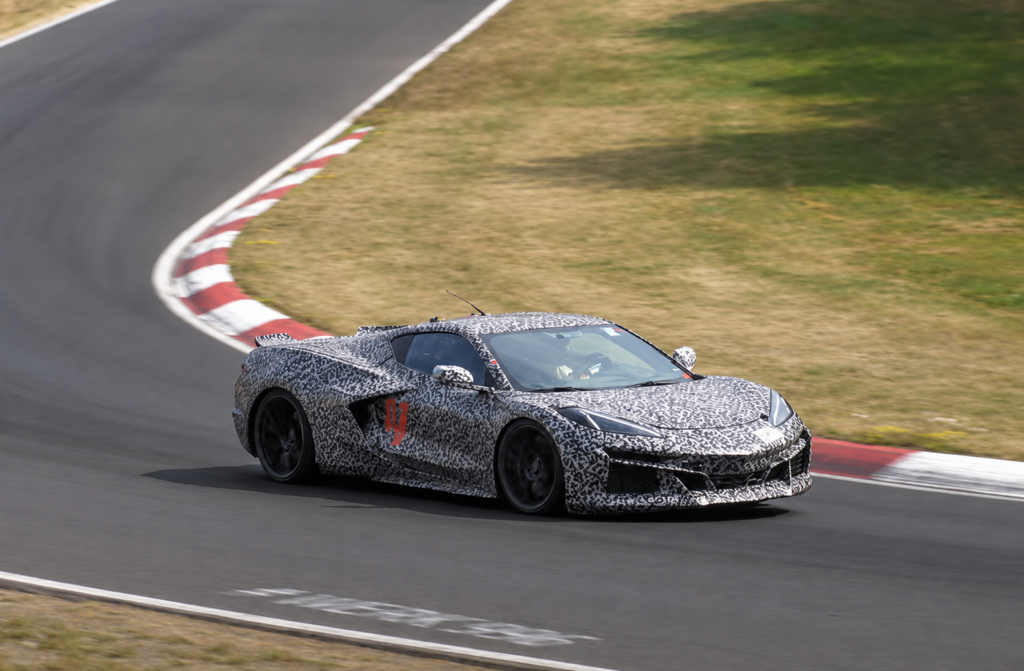
    The 1965 Corvette Sting Ray marked the moment Chevrolet’s revolutionary second-generation sports car became mechanically complete. Standard four-wheel disc brakes, six available engines, the final Rochester fuel-injected 327, and the arrival of the 425-horsepower 396 transformed a familiar shape into the most capable, versatile, and consequential Corvette Chevrolet had built.
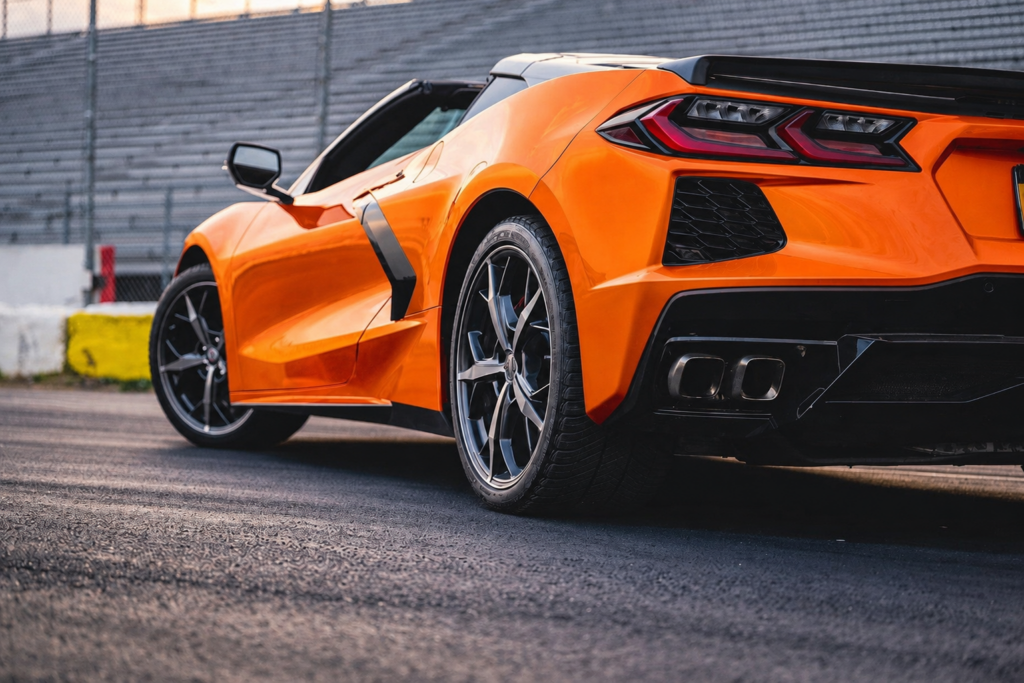
  • 2022 Corvette Overview: The C8 Comes of Age

    2022 Corvette Overview: The C8 Comes of Age

    There are Corvette model years that feel like a launch, and there are model years that feel like a landing. The 2022 Corvette was the latter—the point at which the C8 stopped being viewed primarily as the radical new mid-engine Corvette and began establishing itself as the Corvette’s new normal.

    That change marked an important turning point. When Chevrolet unveiled the eighth-generation Corvette in July 2019, nearly every conversation about the car began and ended with the location of its engine. After more than six decades of front-engine production, the Corvette had adopted the basic architecture associated with Ferrari, Lamborghini, McLaren, and the world’s most sophisticated racing machinery. It was a transformation so fundamental that the early C8 was often discussed more as an idea than as an automobile.

    By 2022, however, the big idea had already been proven. The mid-engine layout worked. The cabin was no longer regarded as an experiment. The eight-speed dual-clutch transmission had demonstrated that it was not merely a concession to modernity but one of the car’s defining strengths. Owners had accumulated real miles, dealers had learned the product, and buyers were no longer asking whether Chevrolet could build a credible mid-engine Corvette. They were deciding which version they wanted.

    At the same time, the 2022 Corvette story extended well beyond the Stingray carrying a 2022 vehicle identification number. Calendar year 2022 became one of the most consequential periods in the C8’s development. Chevrolet was preparing the 670-horsepower Z06 for production, engineers were validating the Corvette variant that would become the first all-wheel-drive and electrified Corvette, and Corvette Racing was taking the C8.R into a new international campaign shaped by changing regulations and increasingly global ambitions.

    In other words, two Corvette stories were unfolding simultaneously. The 2022 Corvette Stingray represented the maturation of the original C8 formula, while the Z06, E-Ray, and racing program revealed just how much performance potential Chevrolet had built into the platform from the beginning.

    Taken together, they made 2022 the year the C8 Corvette stopped being a single revolutionary model and began becoming a complete family of cars.

    The Long Road to a Mid-Engine Corvette

    Seen together, the CERV I, CERV II, and CERV III trace the decades-long evolution of Chevrolet’s mid-engine ambitions. That pursuit began with Zora Arkus-Duntov, whose experimental CERV program explored the balance, traction, aerodynamics, and racing potential of placing the engine behind the driver. Although production reality remained decades away, each successive car carried his vision forward, gradually closing the distance between engineering experiment and road-going Corvette. The C8 did not invent the mid-engine Corvette—it fulfilled the future Duntov had begun pursuing generations earlier.

    The Corvette’s move to a mid-engine configuration was not a sudden attempt to imitate European exotics. It was the result of an engineering argument that had been unfolding inside General Motors for generations.

    Zora Arkus-Duntov, the engineer whose influence helped transform the early Corvette from a stylish boulevard cruiser into a legitimate performance car, recognized the advantages of placing the engine behind the driver decades before the C8 entered production. Through experimental vehicles such as the Chevrolet Engineering Research Vehicles—better known as the CERV I and CERV II—Duntov and his colleagues explored the traction, balance, packaging, and aerodynamic possibilities offered by a mid-engine platform.

    Those vehicles were never direct production proposals in the conventional sense. They were laboratories—machines built to answer questions about chassis configuration, suspension geometry, cooling, weight distribution, and the future of high-performance automobiles. Later concepts, including the rotary-powered XP-882 and the technologically ambitious CERV III, kept the idea alive even as Chevrolet continued developing increasingly capable front-engine production Corvettes.

    The resistance to a mid-engine Corvette was never simply a matter of engineering conservatism. Chevrolet had to protect the qualities that made the Corvette successful in the first place. The car needed to remain fast but also be usable. It needed enough luggage space for a road trip, sufficient ground clearance for ordinary streets, and a cabin that could accommodate owners who were not built like professional racing drivers. Most importantly, it needed to deliver world-class performance without abandoning the value proposition that had always set Corvette apart from traditional exotics.

    Every generation of Corvette pushed the front-engine layout farther. The C5 introduced a hydroformed frame, rear-mounted transaxle, and dramatically improved chassis structure. The C6 refined that formula, while the C7 brought advanced aerodynamics, direct injection, sophisticated electronic controls, and performance variants capable of competing with almost anything in the world.

    Yet the limits were becoming increasingly clear. As power climbed, the front-engine Corvette’s ability to put that power to the pavement became one of the platform’s defining constraints. Adding more horsepower was comparatively easy. Using it effectively—particularly from a standing start and during corner exit—was becoming more difficult.

    Tadge Juechter joined the Corvette program in 1993, became assistant chief engineer in 1999, and ultimately assumed leadership as the car’s executive chief engineer in 2006. Over the decades that followed, he helped guide Corvette through the C6 and C7 generations before overseeing its most transformative evolution: the development of the mid-engine C8. Working with a deeply experienced engineering team, Juechter turned the architecture long envisioned by Zora Arkus-Duntov into a practical, attainable production Corvette—an achievement that now stands as the defining legacy of his remarkable career. (Image credit: GM)

    Tadge Juechter understood that challenge better than almost anyone. Juechter joined the Corvette program in 1993, became its assistant chief engineer in 1999, and was appointed executive chief engineer in 2006. During his tenure, he helped oversee the maturation of the C6, the development of the C7, and ultimately the most dramatic architectural change in Corvette history.

    Under Juechter’s leadership, the mid-engine Corvette was not developed merely to produce exotic proportions or an attention-grabbing launch. The architecture was intended to give the program room to grow. By moving the engine behind the passenger compartment, Chevrolet improved rear-wheel traction, centralized the car’s mass, and opened new possibilities for aerodynamics, cooling, suspension design, and future powertrains.

    Just as important, the team preserved the car’s everyday usefulness. The C8 retained front and rear luggage compartments offering a combined 12.6 cubic feet of cargo capacity. The coupe kept a removable roof panel that could be stored in the rear compartment, while the convertible gained a fully retractable hardtop that did not consume the primary luggage space. The driver still sat in a comfortable, climate-controlled cabin rather than an uncompromising racing cell.

    That balance was the C8’s real achievement. Chevrolet had not merely built an inexpensive alternative to a European supercar. It had created a mid-engine automobile that still behaved like a Corvette: powerful, approachable, practical enough to use, and attainable enough to be driven rather than hidden.

    The 2020 Stingray introduced that formula. The shortened 2020 production run and the industry-wide upheaval that followed prevented the first two C8 model years from ever settling into anything resembling normal production. By 2022, however, the engineering foundation was established, customers understood the car, and Chevrolet could begin refining the details rather than defending the decision to move the engine.

    Launching the 2022 Corvette Stingray


    Chevrolet introduced the 2022 Corvette Stingray on June 9, 2021, against the unmistakable backdrop of Detroit’s Belle Isle circuit. The presentation brought the production Stingray together with the C8.R and the newly announced IMSA GTLM Championship Edition, visually reinforcing the growing connection between Corvette’s road and racing programs. More than a routine model-year unveiling, the event celebrated the C8’s successful transition to mid-engine performance while previewing the colors, equipment, and racing-inspired identity that would define the 2022 lineup. (Image credit: GM)

    Chevrolet introduced the 2022 Corvette Stingray on June 9, 2021, during the week of the Detroit Grand Prix on Belle Isle. The setting was intentional. Instead of treating the new model year as a routine collection of colors and option changes, Chevrolet connected it directly to the C8.R and Corvette Racing’s championship-winning first season with the mid-engine race car.

    The centerpiece was the 2022 Corvette Stingray IMSA GTLM Championship Edition. Chevrolet initially announced plans to build 1,000 left-hand-drive examples, although final production records show that 1,007 cars received the package. It was available on 3LT coupes and convertibles equipped with the Z51 Performance Package and was offered in two race-inspired configurations: Accelerate Yellow with gray graphics, reflecting the No. 3 C8.R, or Hypersonic Gray with yellow accents, reflecting the No. 4 car.

    The package included a high-wing rear spoiler, Carbon Flash exterior mirrors, black rocker extensions, yellow brake calipers, black Trident-design wheels, Jake-logo center caps, and Corvette Racing graphics. Inside, the cars received a Strike Yellow and Sky Cool Gray color combination, GT2 seats, yellow seat belts, and a numbered plaque. Chevrolet priced the Championship Edition package at $6,595, making it more than just a simple decal package yet still accessible to dedicated Corvette Racing enthusiasts.

    The 2022 IMSA GTLM Championship Edition placed Corvette’s production and competition identities side by side, pairing race-inspired Stingrays with the championship-winning C8.R machines that inspired them. The connection extended beyond shared colors, graphics, and aerodynamic attitude: both cars emerged from the same mid-engine architecture and a development culture in which road-car engineering and motorsports continually informed one another. Together, they demonstrated that Corvette Racing was not merely a marketing exercise—it remained an essential proving ground for the technology, durability, and performance character carried into every production Corvette.

    The special edition also served as a snapshot of the relationship between Corvette’s production and racing programs. Laura Klauser, General Motors’ sports car racing program manager, and her team were overseeing the C8.R’s transition into an evolving global racing environment. The Championship Edition gave street-car buyers a tangible connection to that effort at a moment when the production Corvette and its racing counterpart shared more visual and architectural DNA than at any previous point in the nameplate’s history.

    Three-panel image showing 2022 Corvette Stingrays finished in Hypersonic Gray Metallic, Caffeine Metallic, and Amplify Orange Tintcoat.
    Chevrolet expanded the 2022 Corvette Stingray palette with three distinctive new finishes: Hypersonic Gray Metallic, Caffeine Metallic, and Amplify Orange Tintcoat. Ranging from understated and technical to rich and unconventional—or unapologetically bold—the new colors demonstrated how dramatically paint could reshape the character of the C8’s angular, mid-engine design.

    Beyond the Championship Edition, the 2022 Stingray received three significant new exterior colors. Hypersonic Gray Metallic replaced Shadow Gray, Amplify Orange Tintcoat succeeded Sebring Orange, and Caffeine Metallic introduced an unusually rich bronze-brown tone to the C8 palette. The complete color range also included Black, Arctic White, Ceramic Matrix Gray Metallic, Silver Flare Metallic, Torch Red, Red Mist Metallic Tintcoat, Rapid Blue, Elkhart Lake Blue Metallic, and Accelerate Yellow Metallic.

    These additions were more consequential than paint changes sometimes appear. The C8’s body is highly sensitive to color. Its deep side intakes, sharply defined fenders, horizontal body lines, and contrasting aerodynamic elements can make the same basic design appear elegant, technical, aggressive, or almost theatrical. Hypersonic Gray emphasized the car’s architecture. Amplify Orange highlighted its exotic proportions. Caffeine Metallic offered something more understated and mature.

    Twelve 2022 Corvette Stingrays displayed in every available factory exterior color.
    The complete 2022 Corvette Stingray exterior color palette, with factory paint codes. (Image courtesy of the author)

    Chevrolet also made the low-profile rear spoiler and front splitter associated with the Z51 appearance available on non-Z51 Stingrays. That decision gave buyers greater freedom to separate the car’s appearance from its mechanical configuration. An owner who wanted the visual attitude of the aero components without the complete track-oriented package could now order the car accordingly.

    Pricing began at $62,195 for the coupe and $69,695 for the retractable-hardtop convertible, including destination charges. Chevrolet opened the initial order process on July 1, 2021, with model-year production scheduled to begin during the third quarter. Although the advertised base price had risen from the C8’s original sub-$60,000 launch figure, the Stingray remained an extraordinary proposition: a 490-horsepower mid-engine sports car with a sophisticated dual-clutch transmission and supercar-level acceleration for considerably less than almost any direct competitor.

    Refinement Without Reinvention

    Studio image of the 2022 Corvette Stingray’s 6.2-liter LT2 V8 engine, showing its red valve covers, intake assembly, exhaust headers, accessory pulleys, and exposed mechanical components.
    The 2022 Corvette Stingray continued to rely on the naturally aspirated 6.2-liter LT2 V8, producing 490 horsepower in standard form and 495 horsepower with the available performance exhaust. For the new model year, Chevrolet revised the direct-injection system, updated the engine calibration, and expanded the operating range of Active Fuel Management to improve emissions performance, efficiency, and overall refinement. The result was not a more powerful engine, but a more polished version of the C8’s defining mechanical centerpiece—one that preserved the immediate response, broad torque, and unmistakable character of a traditional Corvette V8.

    The 2022 Stingray did not receive a headline-grabbing power increase, and it did not need one. Its naturally aspirated 6.2-liter LT2 V8 continued to produce 490 horsepower and 465 lb-ft of torque with the standard exhaust. Cars equipped with the NPP performance exhaust were rated at 495 horsepower and 470 lb-ft.

    For 2022, Chevrolet revised the direct-injection fuel system, recalibrated the engine, and expanded the operating range of Active Fuel Management. The changes were primarily intended to improve emissions performance, idle quality, and efficiency without reducing output or changing the character of the engine.

    That character remained central to the Stingray’s appeal. The LT2 was derived from Chevrolet’s long-running small-block V8 architecture, but its installation in the C8 required extensive changes. Mounted behind the passenger compartment, the engine used a low-profile intake arrangement, dry-sump lubrication, and cooling systems designed around the demands of the new layout. The result was an engine that delivered immediate throttle response and a broad wave of torque without relying on turbochargers to generate its performance.

    The LT2 also preserved an important connection to Corvette history. At a time when many competing performance cars were moving toward smaller turbocharged engines, the Stingray retained the sound, response, and mechanical directness of a large-displacement naturally aspirated V8. It was modern in its management systems and packaging, but familiar in the way it built power.

    The 2022 Corvette Stingray’s M1L eight-speed dual-clutch transmission was developed around the C8’s mid-engine architecture, combining near-instant gear changes with the smooth operation required for everyday driving. Using separate wet clutches for odd- and even-numbered gears, the Tremec-built transaxle could preselect the next ratio before the shift occurred, minimizing interruption in power delivery. More than an alternative to a traditional manual, the M1L was a central part of the C8’s acceleration, balance, and modern supercar character.

    All 2022 Stingrays used the M1L eight-speed dual-clutch transmission. Developed with Tremec for the C8’s rear transaxle configuration, the transmission employed two clutches to preselect the next gear, allowing shifts to occur with almost no interruption in power delivery. In automatic operation, it could behave smoothly enough for traffic and long-distance travel. In manual mode, steering-wheel-mounted paddles gave the driver direct control with shift speeds no conventional manual gearbox could match.

    The absence of a manual transmission remained controversial among traditionalists, but the dual-clutch unit was fundamental to what the C8 had become. It contributed to the car’s acceleration, allowed the engine to remain within its most effective operating range, and gave the control systems much greater authority over traction and vehicle dynamics. Rather than treating the transmission as a substitute for something the Corvette had lost, the engineering team treated it as an enabler of the new platform.

    With the Z51 Performance Package, Chevrolet claimed a 0–60 mph time of 2.9 seconds. That number placed the Stingray in territory once reserved for all-wheel-drive exotics and extremely specialized performance machines. More important, the acceleration was repeatable and accessible. The driver did not need to manage wheelspin through delicate throttle modulation or execute a perfect manual launch. The engine, transmission, electronic differential, tires, and launch-control strategy worked as a coordinated system.

    One Performance Foundation, Three Trim Levels

    Chevrolet offered the 2022 Stingray in 1LT, 2LT, and 3LT trim levels, each available as a coupe or convertible. The trims did not represent different engine outputs or fundamentally different versions of the car. Instead, they allowed buyers to choose how much technology, comfort, and interior finish they wanted, all around the same basic performance architecture.

    The 1LT interior preserved the C8’s essential driver-focused architecture, including its digital instrument cluster, central touchscreen, leather seating, and distinctive cockpit divider, while leaving several premium convenience features to the 2LT and 3LT trims. Most visibly, there are no head-up-display controls beside the steering wheel because the 1LT was not equipped with a HUD. It also did without the Performance Data Recorder, connected navigation, heated and ventilated seats, heated steering wheel, driver-memory settings, and several enhanced camera and driver-awareness systems. The result was a cleaner, more straightforward cabin for buyers who wanted the complete Stingray driving experience without paying for equipment they might not use.

    The 1LT remained the most direct path into the C8. It included the LT2 engine, dual-clutch transmission, digital instrument display, Chevrolet infotainment system, removable roof panel on the coupe, and the essential chassis and structural content that defined every Stingray. For an owner primarily interested in the driving experience—or one who intended to direct the budget toward Z51 hardware and exterior options—the 1LT was anything but a stripped car.

    Interior of a 2022 Corvette Stingray equipped with the 2LT trim, showing the driver-focused cockpit, digital instrument cluster, central touchscreen, head-up-display controls, two-tone dashboard, and black sport seats.
    The 2LT retained the same LT2 V8, dual-clutch transmission, chassis, and standard GT1 seating found in the 1LT, but added a substantial layer of comfort, technology, and driver awareness. Its equipment included a color head-up display, connected navigation, Performance Data Recorder, 14-speaker Bose audio system, Rear Camera Mirror, and HD front and rear cameras. Heated and ventilated seats with power lumbar and bolster adjustment, a heated steering wheel, driver and passenger memory settings, wireless phone charging, power-folding mirrors, Side Blind Zone Alert, and Rear Cross Traffic Alert made the 2LT especially well suited to owners who intended to drive their Corvette regularly. It was not a faster Stingray than the 1LT—it was a more comprehensively equipped one.

    The 2LT added the equipment that made the Corvette easier to use as an everyday automobile. Features such as the head-up display, Performance Data Recorder, navigation, heated and ventilated seats, upgraded audio system, additional driver-assistance technology, and enhanced visibility equipment addressed the realities of living with a low, wide mid-engine car. This was the trim that made the Corvette feel less like an occasional indulgence and more like a genuine grand tourer.

    The 3LT package included every comfort, technology, and driver-awareness feature found in the 2LT, then elevated the cabin through materials and craftsmanship rather than additional performance hardware. Standard GT2 seats brought genuine Napa leather, carbon-fiber trim, and a more sculpted appearance, while the custom interior package wrapped the upper instrument panel, doors, and center console in leather and added sueded-microfiber trim overhead. It also opened the door to the C8’s most expressive interior color combinations, including the blue-and-black treatment shown here. Like the 2LT, the 3LT was no faster than the 1LT—but it presented the Stingray as a more convincingly premium, exotic-caliber automobile.

    The 3LT retained the 2LT’s technology while substantially upgrading the cabin materials. Additional leather wrapping and richer surface treatments gave the cockpit a more handcrafted appearance. Because the C8 interior surrounds the driver with a tall center console, sweeping instrument panel, and prominent structural forms, those material changes had a greater visual effect than they might in a more conventional cabin.

    The seat choices provided another layer of personalization. GT1 seats emphasized comfort and accessibility. GT2 seats added more pronounced bolstering and premium construction without becoming difficult to live with. Competition Sport seats provided the greatest lateral support for track use and aggressive driving. As with the trim levels, the choice was less about declaring one seat objectively superior and more about matching the car to the owner’s intended use.

    Z51 and the Hardware That Mattered

    The Z51 Performance Package transformed the 2022 Stingray from an already formidable road car into a more track-capable and repeatable performance machine. It added FE3 performance suspension, an electronic limited-slip differential, a shorter 5.17:1 final-drive ratio, larger Brembo brakes, heavy-duty cooling, Michelin Pilot Sport 4S summer tires, and the NPP dual-mode exhaust—which raised LT2 output to 495 horsepower and 470 lb-ft of torque. A functional front splitter and rear spoiler completed the package, improving high-speed stability while giving the car a more purposeful appearance. Magnetic Ride Control was not included with Z51, but remained available as a separate option for owners seeking adaptive damping alongside the package’s performance hardware. (Image credit: GM)

    The Z51 Performance Package was the most important mechanical option available on the Stingray. It added performance-oriented suspension tuning, larger Brembo brakes, an electronic limited-slip differential, a shorter performance rear-axle ratio, enhanced cooling, Michelin Pilot Sport 4S summer tires, the NPP performance exhaust, and functional aerodynamic components.

    No single component defined Z51. Its value came from the way the parts worked together.

    The Z51 Performance Package gave the 2022 Corvette Stingray a meaningful braking upgrade, pairing larger rotors with four-piston Brembo monobloc calipers at all four corners. The added thermal capacity improved resistance to fade during repeated high-speed stops, giving the car greater consistency and confidence during track sessions, mountain driving, and other sustained performance use. Rather than simply shortening one emergency stop, the Z51 system was engineered to deliver strong, predictable braking lap after lap.

    The larger brakes increased thermal capacity during repeated high-speed stops. The additional cooling supported sustained operation under track conditions. The electronic limited-slip differential could actively manage torque distribution across the rear axle, improving stability under braking and helping the car deploy power during corner exit. The summer tires increased dry grip, while the axle ratio and transmission calibration sharpened acceleration.

    The package did not turn the Stingray into a Z06, nor was it intended to. What it did was increase repeatability. A standard Stingray was already extremely fast on the street. A Z51-equipped car was better prepared to sustain that performance through a full track session, a demanding mountain drive, or repeated hard use in high temperatures.

    Magnetic Selective Ride Control could be ordered with or without Z51, giving buyers the ability to combine adaptive damping with either chassis configuration. The magnetorheological dampers continuously adjusted to road conditions and driving inputs, allowing the car to provide more disciplined body control when driven aggressively without becoming unnecessarily harsh during ordinary use.

    The available front lift system addressed a less glamorous but equally real element of supercar ownership. By raising the front of the car to clear steep driveways, ramps, and abrupt transitions, it reduced the anxiety associated with using a low vehicle in the real world. It did not improve a lap time, but it often determined whether an owner felt comfortable driving the car to a particular destination.

    That distinction says something important about the C8. Chevrolet understood that usability was not separate from performance. A car that is too delicate, too inconvenient, or too intimidating to drive regularly cannot fully deliver on its capabilities. The 2022 Stingray’s most successful options were often those that helped it perform one moment and integrate into ordinary life the next.

    What Buyers Chose—and What Those Choices Revealed

    Although the retractable hardtop was introduced with the C8 rather than added for 2022, it played a major role in expanding the convertible’s appeal during the model year. The power-operated roof gave buyers the security, refinement, and coupe-like appearance of a fixed top while preserving open-air driving and the Corvette’s rear cargo capacity. By eliminating many of the traditional compromises associated with a soft-top convertible, Chevrolet transformed the open-roof Stingray from a secondary body style into one of the C8 lineup’s most desirable configurations. (Image credit: GM)

    Chevrolet built 25,831 Corvettes for the 2022 model year. Of those, 13,451 were coupes and 12,380 were convertibles, producing a remarkably close 52.1-to-47.9-percent split.

    That near-even division between body styles marked a significant shift from earlier generations, when the convertible generally represented a much smaller share of production. The C8 retractable hardtop changed the calculation. It offered open-air driving without the visual or security compromises associated with a traditional fabric roof, and its operation did not eliminate the car’s primary rear luggage compartment. The convertible was no longer a secondary derivative. It had become one of the C8’s core identities.

    The trim breakdown was equally revealing. Chevrolet produced 3,982 cars in 1LT form, accounting for 15.4 percent of the model-year total. The 2LT represented 11,060 cars, or 42.8 percent, while the 3LT accounted for 10,789 cars, or 41.8 percent. More than four out of every five buyers, therefore, selected one of the two upper trims.

    That was not the behavior of a market interested only in obtaining the least expensive mid-engine car available. Buyers were adding technology, premium materials, upgraded seating, and convenience equipment because they viewed the Stingray as a complete ownership proposition. The C8 was not merely being purchased for a single spectacular acceleration run. Owners expected to travel in it, commute in it, display it, track it, and live with it.

    Like the fighter aircraft framed above it, a Z51-equipped 2022 Corvette was engineered to perform repeatedly under demanding conditions—not merely to deliver one dramatic burst of speed. Larger brakes, additional cooling, performance suspension, an electronic limited-slip differential, summer tires, and the shorter final-drive ratio gave the Stingray greater durability, sharper response, and more consistent performance during sustained high-load driving. The result was a Corvette better prepared to withstand the heat, braking forces, and repeated acceleration of track use while remaining fully usable on the road.

    The option rates reinforced the same conclusion. Approximately 68.6 percent of 2022 Corvettes received the Z51 Performance Package. The NPP performance exhaust appeared on 86.9 percent, while the front lift system was installed on 58.8 percent. Magnetic Ride Control paired with Z51 appeared on 11,757 cars, representing 45.5 percent of total production. The Performance Data Recorder was installed in 22,167 cars—an extraordinary 85.8-percent take rate for equipment originally conceived as a specialized driver-development and track-analysis tool.

    Buyers also showed a strong preference for familiar Corvette colors. Torch Red led production with 4,147 cars, followed by Arctic White with 3,603. Hypersonic Gray, new for 2022, finished close behind with 3,291 examples, demonstrating how quickly the metallic gray connected with buyers. Red Mist Metallic Tintcoat accounted for 3,274 cars, while Black appeared on 2,766. At the opposite end of the spectrum, Caffeine Metallic was selected for only 385 cars, making it the rarest exterior color of the model year.

    Most production remained in the United States, where Chevrolet delivered 23,503 of the 25,831 cars. Canada received 1,014, while additional cars were allocated to Mexico, the Middle East, Japan, Europe, Australia, and New Zealand. Chevrolet built 442 right-hand-drive Corvettes, evidence that the C8 was becoming more than an American performance car exported in limited numbers. It was being engineered and distributed as an increasingly global product.

    The National Corvette Museum’s R8C Museum Delivery program allows buyers to take delivery of their new Corvette in Bowling Green, just steps from the assembly plant where it was built. More than a handoff, the experience turns ownership into an event—complete with a personalized delivery, museum access, and a direct connection to Corvette history. (Image credit: National Corvette Museum)

    The National Corvette Museum’s R8C delivery program accounted for 1,146 cars. For those owners, the transaction became part of the experience: traveling to Bowling Green, seeing the museum and assembly complex, and taking delivery near the plant where every production Corvette had been built since 1981.

    The numbers tell a consistent story. Buyers did not simply accept the mid-engine Corvette. They embraced its most sophisticated forms. They selected convertibles almost as frequently as coupes, favored the premium trims, ordered the performance hardware, and invested heavily in personalization.

    By 2022, the novelty of the engine’s location was no longer carrying the car. The product itself was.

    Bowling Green Under Pressure


    In the early morning hours of December 11, 2021, a violent EF3 tornado tore through Bowling Green with winds approaching 150 mph, destroying homes, businesses, and entire neighborhoods while claiming 17 lives across Warren County. The National Corvette Museum was spared significant structural damage; its collection remained secure, and employees were safe, though the amphitheater area was damaged and the facility temporarily closed as crews restored power and cleared debris. Across Interstate 65, the NCM Motorsports Park suffered a far harsher blow as roofs and exterior walls were ripped from buildings, garages and storage structures were heavily damaged, debris was scattered for more than half a mile, and several vehicles were struck or displaced. Nearby, Bowling Green Assembly sustained extensive roof and infrastructure damage, while more than one hundred completed or partially built Corvettes were ultimately deemed unsalvageable. For a community inseparably linked to America’s sports car, the storm was more than a production disruption—it was a night of terrible loss that tested the resilience of Bowling Green, its people, and the institutions that preserve Corvette’s legacy.

    The 2022 Corvette was built during a period when consistency could not be taken for granted.

    The global automotive industry was still dealing with semiconductor shortages, transportation problems, supplier disruptions, and the lingering effects of the COVID-19 pandemic. Corvette production was particularly vulnerable because every car came from a single plant: General Motors’ Bowling Green Assembly facility in Kentucky.

    Then, in the early morning hours of December 11, 2021, a devastating tornado passed through Bowling Green. The storm damaged the assembly plant, the surrounding community, and portions of the nearby National Corvette Museum Motorsports Park. More than one hundred completed or partially completed 2022 Corvettes inside the facility were damaged beyond repair. Contemporary reports placed the number at approximately 122, although early accounts varied as the plant assessed the damage.

    The destruction occurred in the middle of a model year already facing overwhelming demand. Chevrolet halted production while the building was inspected and repaired, then resumed operations with the added burden of replacing damaged equipment and managing an unstable supply chain.

    Temporary parts constraints led to additional shutdowns in March and April 2022. Chevrolet confirmed that both shifts would be idled during the week of March 21, with production expected to resume the following week. Another interruption arrived in late April, adding further pressure to a schedule that was already being adjusted around the transition to the 2023 model year.

    Constraints could also affect how individual cars were configured. Equipment availability changed as particular components moved on and off restriction, forcing some customers to choose between delaying an order and accepting a build without a desired option. For historians and future collectors, that makes the build records of 2022 cars particularly important. Two Stingrays ordered at different points in the year could reflect not only different customer preferences, but different realities within the production system.

    Despite those difficulties, Bowling Green completed 25,831 cars before 2022-model production ended on May 13, 2022. Production of the 2023 Stingray began the following Monday, May 16.

    That total was not simply a measure of demand. It represented the ability of the plant, its workforce, suppliers, and the broader Corvette organization to continue building a complex, highly personalized sports car through one of the most disrupted manufacturing periods in modern automotive history.

    The Z06 Becomes Real

    By the time Chevrolet issued its October 26 reveal notice, anticipation surrounding the first mid-engine Corvette Z06 had been building for nearly two years. Camouflaged prototypes had been photographed testing at the Nürburgring and near Le Mans, while the unmistakable sound captured in Chevrolet’s teaser videos fueled reports of a high-revving, flat-plane-crank V8 derived from the C8.R racing program. Automotive media scrutinized every intake, aerodynamic surface, exhaust note, and spy photograph, speculating about horsepower, engine speed, carbon-fiber wheels, and an even more extreme Z07 package. Chevrolet carefully sustained that excitement through brief audio clips, disguised track footage, and the promise of a worldwide film premiere titled Putting the World on Notice. When the Z06 finally emerged on October 26, 2021, its 670-horsepower LT6, 8,600-rpm redline, and track-focused engineering proved that the C8 architecture could support a genuinely world-class American supercar.

    Although the Stingray was the only Corvette carrying a 2022 model-year designation, the development and launch of the 2023 Z06 became one of the defining Corvette stories of calendar-year 2022.

    Chevrolet had officially revealed the new Z06 on October 26, 2021. What followed was a year of final validation, public demonstrations, production preparation, charity auctions, customer anticipation, and an extraordinary level of scrutiny. The Stingray had proven that Chevrolet could build a convincing mid-engine Corvette. The Z06 now had to prove that the architecture could support a genuine American supercar.

    General Motors unveiled the 2023 Corvette Z06 on October 26, 2021, through the global premiere of Putting the World on Notice. The presentation introduced the wider, more aggressively sculpted C8 Z06 in both coupe and retractable-hardtop convertible form, powered by the 670-horsepower, flat-plane-crank LT6 V8. More than a new Corvette variant, the Z06 announced Chevrolet’s intention to challenge the world’s most accomplished exotic cars with a uniquely American, naturally aspirated supercar. (Image credit: Chevrolet)

    The responsibility rested with the team led by Tadge Juechter and a broad group of engineers specializing in powertrain development, aerodynamics, chassis control, thermal management, manufacturing, and motorsports. Mark Reuss, General Motors’ president and a committed high-performance enthusiast, served as one of the program’s most visible executive advocates. Together, they positioned the Z06 not as a modified Stingray, but as a separate expression of the C8 platform.

    Its defining component was the LT6 engine.

    The 5.5-liter naturally aspirated V8 abandoned the traditional pushrod configuration used by the Stingray’s LT2 in favor of dual overhead camshafts, four valves per cylinder, and a flat-plane crankshaft. It produced 670 horsepower at 8,400 rpm and 460 lb-ft of torque at 6,300 rpm, with an 8,600-rpm redline. At its introduction, Chevrolet identified it as the most powerful naturally aspirated V8 offered in a production automobile.

    Developed alongside lessons learned from the C8.R racing program, the 5.5-liter LT6 represented the most radical production engine in Corvette history. Its dual-overhead-cam, 32-valve architecture and flat-plane crankshaft allowed it to produce 670 horsepower at 8,400 rpm, 460 lb-ft of torque, and an 8,600-rpm redline without supercharging or turbocharging. Hand-assembled at Bowling Green’s Performance Build Center, the LT6 gave the C8 Z06 the immediate throttle response, rapid-revving character, and unmistakable exhaust note of a purpose-built exotic engine.

    That specification represented a philosophical departure from every previous production Corvette engine. Rather than using large displacement, supercharging, or turbocharging to generate massive low- and mid-range torque, the LT6 relied on airflow, reduced rotating mass, and engine speed. Its flat-plane crankshaft allowed a firing order and exhaust pulse arrangement suited to high-rpm breathing, while its oversquare bore-and-stroke dimensions helped the engine rev with an urgency unlike the familiar cadence of a traditional small-block.

    Yet the LT6 was not an attempt to erase Corvette history. It extended the same principle that had always driven the best versions of the car: apply the most effective technology available to produce performance that could challenge far more expensive machinery.

    The engine’s relationship to the C8.R was critical. Corvette Racing had been competing with a racing version of the same basic 5.5-liter, flat-plane-crank architecture since the C8.R’s 2020 debut. The competition engine was not identical to the production LT6, but the racing program exposed the architecture to endurance events, heat cycles, vibration, sustained high rpm, and the unforgiving operational demands of international sports-car competition.

    That did not mean the Z06 received a racing engine with license plates attached. It meant that Chevrolet had already spent years learning how the configuration behaved under pressure before the first customer car reached production.

    Each LT6 was hand-assembled at the Performance Build Center within the Bowling Green plant. The process reinforced the engine’s specialized nature and connected each unit to the technicians responsible for its assembly.

    The rest of the Z06 was developed around the engine’s capabilities. Its body measured 3.6 inches wider than the Stingray’s, accommodating broader wheels, 345-section rear tires, and larger side openings required to feed additional air into the cooling system. A shorter 5.56:1 final-drive ratio helped keep the LT6 in its high-rpm operating range, while revised transmission calibration matched the engine’s very different torque curve.

    Rear 7/8 view of 2023 Chevrolet Corvette Z06 in Elkhart Lake Blue Metallic driving down a road.
    As the 2022 model year drew to a close, the Stingray had already proven the strength of the C8 platform—but the next chapter was rapidly approaching. The 2023 Z06 stood on the horizon as the car that would push that foundation into far more serious performance territory, signaling that Corvette’s mid-engine evolution was only beginning.

    Even in its standard form, the Z06 incorporated larger brakes, additional cooling capacity, model-specific suspension calibration, and bodywork designed to generate useful aerodynamic stability. Buyers seeking the most aggressive configuration could select the Z07 Performance Package.

    Z07 added carbon-ceramic brakes, Michelin Pilot Sport Cup 2 R ZP tires, specific Magnetic Ride Control calibration, and an available carbon-fiber aerodynamic package. With the complete aero configuration installed, Chevrolet claimed 734 pounds of downforce at 186 mph. Available carbon-fiber wheels reduced total unsprung and rotating mass by approximately 41 pounds, improving steering response, acceleration, braking, and the suspension’s ability to follow the road surface. Chevrolet reported lateral acceleration of up to 1.22 g for the Z07-equipped car.

    Those numbers were impressive, but the deeper achievement was integration. The wider tires, brakes, differential, dampers, cooling systems, aerodynamics, transmission, and engine had to operate as one vehicle. The Z06 could not merely feel like a powerful Stingray. It needed to feel coherent at speeds where minor weaknesses become major problems.

    The 70th Anniversary and the First Z06 Auctions

    Chevrolet marked seven decades of Corvette history with the 2023 Corvette 70th Anniversary Edition, offered in exclusive White Pearl Metallic Tri-coat and Carbon Flash Metallic finishes. Available on both the Stingray and Z06, the package added distinctive striping, unique wheels, red brake calipers, commemorative badging, special interior details, and a coordinated luggage set. More than a cosmetic tribute, the edition connected the mid-engine C8 to a lineage that began in 1953—celebrating how far America’s sports car had come without losing sight of the heritage that made it possible. (Image credit: Chevrolet Newsroom)

    Chevrolet used 2022 to connect the forthcoming Z06 with another important milestone. On January 24, the company announced the Corvette 70th Anniversary Edition, which would be available on 2023 Stingray 3LT and Z06 3LZ coupes and convertibles.

    The package commemorated the seven decades separating the first Corvette’s 1953 debut from the 2023 model year. It included exclusive exterior colors, distinctive striping, special wheels, anniversary badging, red brake calipers, unique interior details, and a coordinated luggage set. The first retail-production Z06 would be built as a 70th Anniversary Edition model.

    At the 2022 Barrett-Jackson Scottsdale Auction, the first retail-production 2023 Corvette Z06 crossed the block for an extraordinary $3.6 million. The 70th Anniversary Edition was driven onto the stage by retired Corvette Racing driver Oliver Gavin before Rick Hendrick placed the winning bid, setting a Barrett-Jackson record for a manufacturer-donated charity vehicle. Every dollar benefited Operation Homefront, transforming the arrival of the first customer Z06 into both a historic Corvette moment and a powerful show of support for America’s military families.

    Five days after the announcement, the rights to that first retail-production Z06 crossed the Barrett-Jackson auction block in Scottsdale. Retired Corvette Racing driver Oliver Gavin drove the car onto the stage, and Rick Hendrick ultimately placed the winning bid of $3.6 million. Hendrick, the chairman and chief executive officer of Hendrick Automotive Group and owner of Hendrick Motorsports, had already acquired several historically significant first-production Corvettes at charity auctions. The full Z06 bid benefited Operation Homefront, an organization supporting military families.

    In April, Hendrick also paid $1 million for the first retail-production Z06 convertible, with proceeds benefiting the Thurgood Marshall College Fund. Together, the two auctions generated $4.6 million for charity before regular customer deliveries had begun.

    At Barrett-Jackson’s Palm Beach Auction on April 9, 2022, the first retail-production 2023 Corvette Z06 convertible brought a $1 million winning bid. Rick Hendrick secured the right to configure and receive the historic VIN 001 car, with the entire purchase price benefiting the Thurgood Marshall College Fund’s Teacher Quality & Retention Program for aspiring K–12 educators. Combined with the $3.6 million raised by the first retail Z06 coupe earlier that year, Chevrolet’s first two customer Z06 models generated an extraordinary $4.6 million for charity before regular production had even begun.

    The events created enormous visibility, but they also illustrated the unusual position the Z06 occupied. It was simultaneously a new production automobile, a symbol of Corvette’s 70-year history, a flagship for American engineering, and a cultural artifact valuable enough to raise millions before its first owner had driven it home.

    Production began in limited quantities during September 2022. The first completed cars began shipping to dealerships in early November, finally moving the Z06 from years of engineering, testing, speculation, and carefully managed previews into customer hands.

    The volumes were initially small, and the demand was extraordinary. Chevrolet temporarily stopped accepting additional orders after determining that the existing pipeline would fill the available 2022 calendar-year production slots. That scarcity produced frustration, but it also reflected the magnitude of what the team had created.

    The Z06 did more than add power to the C8 range. It validated the entire decision to move the Corvette’s engine. The architecture had not been developed simply to make the Stingray quicker from a stop. It had been created so that a car like the Z06 could exist.

    The E-Ray Develops in Public

    This camouflaged prototype captures the Corvette E-Ray during its 2022 development phase, when Chevrolet was still validating what would become the first electrified, all-wheel-drive Corvette. Hidden beneath the wrap was a major new branch of the C8 family, one that signaled Corvette’s future would extend beyond the Stingray and Z06 alone. Although the E-Ray would not be officially unveiled until January 2023 as a 2024 model, images like this offered an early look at the careful testing and refinement that shaped one of the most important performance Corvettes of the modern era. (Image credit: carscoops.com)

    While the Z06 commanded most of the attention, another Corvette was being developed more quietly.

    During 2022, camouflaged wide-body C8 prototypes were photographed testing at the Nürburgring and elsewhere. They resembled the Z06 in width but lacked its center-mounted exhaust outlets and carried subtle differences that suggested another powertrain was under development. Contemporary reports increasingly identified the prototypes as an electrified, all-wheel-drive Corvette commonly referred to as the E-Ray.

    At the time, many details remained speculative. Reports correctly anticipated an electric motor driving the front axle and the Stingray’s LT2 V8 powering the rear, but other predictions—including the possibility of plug-in capability—proved inaccurate. The distinction is important. The 2022 test cars confirmed that Chevrolet was actively validating an electrified Corvette, but the production specifications did not become official until January 17, 2023.

    When Chevrolet finally revealed the 2024 Corvette E-Ray, it confirmed that the car combined the Stingray’s 495-horsepower LT2 with a front electric motor producing 160 horsepower and 125 lb-ft of torque. Total system output was rated at 655 horsepower. A 1.9-kWh lithium-ion battery was mounted within the structural tunnel between the seats, and the system replenished itself through regenerative braking and normal driving rather than external charging.

    The resulting e-AWD system gave the Corvette front-wheel drive for the first time. It also produced the quickest acceleration figure Chevrolet had claimed for a production Corvette to that point: 0–60 mph in 2.5 seconds and a quarter-mile in 10.5 seconds.

    During July 2022, camouflaged E-Ray prototypes repeatedly circulated the Nürburgring Nordschleife, returning to Chevrolet’s nearby technical center between runs for adjustments before resuming testing late in the day. Contemporary reports and footage documented the development laps, but Chevrolet released no verified lap time, top speed, or instrumented acceleration figure from those sessions—making any claimed Nürburgring time speculative. The testing instead represented the difficult work of calibrating the Corvette’s new electrified all-wheel-drive system, including power delivery, traction, braking, thermal management, and chassis behavior across one of the world’s most demanding circuits. When the production E-Ray was revealed six months later, the results became clear: 655 combined horsepower, a Chevrolet-estimated 2.5-second sprint to 60 mph, and a 10.5-second quarter-mile. (Image credit: Chevrolet)

    Yet the E-Ray was not developed simply to win a launch-control comparison. The electric front axle provided traction on wet, cold, and imperfect surfaces where a powerful rear-drive car could not always use its full output. Standard carbon-ceramic brakes, Magnetic Ride Control 4.0, and all-season tires supported a broader mission than the Z06’s uncompromising track focus.

    Tadge Juechter described the E-Ray as a Corvette intended to provide greater all-season confidence, while lead development engineer Mike Kutcher and the engineering team calibrated the battery and motor for rapid deployment and recovery of energy. It was a performance hybrid rather than an economy-focused one—a car that used electrification to increase capability instead of replacing the V8 experience.

    The front motor also enabled a limited Stealth Mode, allowing the car to move at low speeds under electric power for short distances. This was not meaningful electric-only transportation in the conventional sense. It was a practical feature for quietly leaving a neighborhood or garage before the LT2 came to life.

    In retrospect, the E-Ray prototypes circulating during 2022 revealed the breadth of the C8 program. Chevrolet was developing two radically different high-performance variants on the same platform at the same time. The Z06 pursued engine speed, aerodynamics, and track performance. The E-Ray used electrification and all-wheel drive to expand traction, acceleration, and year-round usability.

    Neither car was an afterthought. Both had been made possible by decisions embedded in the C8’s structure years earlier.

    Corvette Racing Goes Global

    The No. 3 Corvette C8.R remained the centerpiece of Corvette Racing’s North American campaign in 2022, competing in IMSA’s newly formed GTD Pro class after years in the outgoing GTLM category. Adapted to meet GT3-based regulations, the car carried Corvette into a transitional season that demanded new tires, revised performance parameters, and a different competitive framework. Even as the rules changed around it, the C8.R continued to demonstrate the speed, durability, and engineering depth that had made Corvette Racing one of the most respected programs in international sports-car competition. (Image credit: antoniogarcia.com)

    The production cars told only part of the 2022 story. Corvette Racing entered the year facing one of the most significant transitions in the program’s modern history.

    Since its factory return in 1999, Corvette Racing had become one of the world’s most successful sports-car operations. Developed in partnership with Pratt Miller Engineering, the program had accumulated victories at Daytona, Sebring, Le Mans, and throughout the American Le Mans Series and IMSA competition. Its yellow race cars had become as central to the modern Corvette identity as crossed-flags emblems and small-block V8s.

    The arrival of the mid-engine C8.R in 2020 represented another major departure. Chevrolet had designed the race car alongside the production C8, allowing both programs to benefit from shared architectural development. The C8.R won the IMSA GT Le Mans manufacturers’, drivers’, and team championships during its first season, providing the basis for the Championship Edition offered for 2022.

    The racing environment, however, was changing. IMSA discontinued the GTLM category after 2021 and replaced it with GTD PRO, a class based on global GT3 regulations. The C8.R had been constructed for the outgoing GTE rules rather than GT3, so Chevrolet had to adapt the existing car to compete during the transition.

    Changes included revised aerodynamics, reduced engine output, antilock braking, driver-assistance systems permitted by GT3 regulations, and customer-specification Michelin tires rather than the confidential development tires used in GTLM. Those revisions changed the way the car behaved and forced the team to learn a new competitive framework while racing against established GT3 machinery.

    In 2022, Corvette Racing committed to its first full season in the FIA World Endurance Championship, fielding the No. 64 C8.R for Nick Tandy and Tommy Milner in the final year of the LMGTE Pro class. The program immediately proved competitive against Ferrari and Porsche, earning a breakthrough class victory at the 6 Hours of Monza through disciplined driving and a perfectly executed fuel-saving strategy. Its strongest opportunity at the 24 Hours of Le Mans ended when Alexander Sims was forced into the barriers on the Mulsanne Straight following contact from an LMP2 car, but the season still established Corvette as a credible full-time presence on the world stage. More than an overseas expansion, the campaign demonstrated that the C8.R could compete across dramatically different circuits, formats, and conditions while carrying Corvette Racing into a broader international future. (Richard Prince/Chevrolet Photo).

    At the same time, Chevrolet committed to the C8.R’s first full-season FIA World Endurance Championship campaign. For the first time in Corvette Racing’s history, the program would contest complete seasons in both IMSA and the WEC.

    The organizational challenge was enormous. Corvette Racing split its resources between a single full-season IMSA entry and a separate WEC car, while preparing two C8.Rs for the 24 Hours of Le Mans. The American No. 3 entry would be led by Antonio García and Jordan Taylor, with Nicky Catsburg joining for endurance events. The WEC No. 64 brought together Tommy Milner and Nick Tandy, with Alexander Sims added for Le Mans.

    García, a Spanish endurance-racing veteran, had been part of Corvette Racing since 2009 and had built a reputation for speed, consistency, and exceptional racecraft. Taylor, a second-generation American racer and son of championship-winning driver and team owner Wayne Taylor, joined the factory Corvette program in 2020. Catsburg brought extensive international GT experience and had already proven himself in Corvette endurance competition.

    Milner had been a Corvette Racing fixture since 2011 and had won at both Le Mans and Sebring. Tandy arrived with an overall Le Mans victory and extensive factory Porsche experience, while Sims contributed years of international GT and prototype competition. This was not a collection of celebrity names assembled for publicity. It was a group built to manage traffic, changing conditions, tire degradation, mechanical sympathy, and the mental strain of races measured in hours rather than laps.

    Learning GTD PRO the Hard Way

    Corvette Racing returned to winning form at the 2022 Mobil 1 Twelve Hours of Sebring, where the No. 3 C8.R of Antonio García, Jordan Taylor, and Nicky Catsburg captured victory in the new GTD Pro class. It was an important result for the program, proving that the mid-engine Corvette could adapt and win even as IMSA’s rules and class structure evolved around it. More than just another trophy, the Sebring win reaffirmed Corvette Racing’s toughness, speed, and endurance credibility at one of the most demanding circuits in American motorsports.

    The season began with the Rolex 24 at Daytona, where the converted C8.R faced its first GTD PRO race. The event exposed the scale of the adjustment. The Corvette lacked straight-line performance relative to portions of the field and experienced mechanical difficulties, eventually finishing sixth in class.

    Daytona made clear that prior GTLM success did not guarantee immediate GTD PRO dominance. The team was competing with a car adapted to a ruleset for which it had not originally been designed, using different tires, revised aerodynamics, and a performance balance intended to equalize several very different automobiles.

    Corvette Racing responded at the 12 Hours of Sebring.

    The Florida circuit is among the most physically punishing permanent tracks in the world. Its concrete sections, abrupt surface changes, heavy braking zones, and relentless traffic test far more than outright speed. A car must remain mechanically intact while drivers, engineers, strategists, and pit crews execute for half a day without allowing small problems to become decisive ones.

    García, Taylor, and Catsburg delivered exactly that kind of performance. The No. 3 Corvette led 247 of the race’s 323 laps and won GTD PRO by 5.464 seconds. It was the first victory for the C8.R in its revised configuration and the twelfth Sebring class win in Corvette Racing history.

    The podium celebration captured the reward for a near-flawless day in which the No. 3 Corvette led 247 of 323 laps and delivered Corvette Racing its 12th class victory at Sebring. For Nicky Catsburg, Jordan Taylor, and Antonio García, the trophies represented more than the result itself—they reflected twelve hours of precise pit work, disciplined strategy, and relentless execution across Sebring’s punishing concrete surface. It was a defining moment in Corvette Racing’s transitional 2022 season, proving that the team’s championship culture remained intact even as the technical rules surrounding the C8.R changed.

    The victory mattered because it was earned through adaptation. Corvette was not operating from a position of established technical advantage. The team had to understand the control tire, manage the car’s revised braking systems, learn how the Balance of Performance affected race strategy, and compete against cars developed specifically around GT3 regulations.

    The remainder of the IMSA season demonstrated how competitive that environment had become. The No. 3 continued collecting valuable results, but Corvette did not secure the inaugural GTD PRO championship. The season was therefore not one of overwhelming statistical dominance. It was something more instructive: a year in which the organization absorbed a new formula, proved it could still win one of endurance racing’s hardest events, and gathered the knowledge required for the next phase of the program.

    A Full World Championship Campaign

    Photographed by Corvette Racing’s Richard Prince in Place de la République, at the heart of Le Mans, this image captures the full Corvette Racing contingent during the traditional pre-race pesage—the public technical and administrative scrutineering that formally opens Le Mans week. The No. 63 and No. 64 C8.Rs stand alongside their drivers, engineers, mechanics, and support personnel, emphasizing the enormous collective effort required to place two factory Corvettes on the grid for the 90th running of the 24 Hours. More than a team portrait, the scene connects Corvette Racing directly with the city and its fans, celebrating a program preparing to pursue its ninth class victory on endurance racing’s greatest stage. (Image credit: Richard Prince Photography)

    The WEC effort exposed Corvette Racing to a different collection of circuits, strategic demands, and competitors. Instead of making selected appearances at Le Mans and occasional overseas rounds, the team committed to the complete championship.

    That decision brought Corvette into sustained competition at tracks where the program had comparatively little recent experience. It also required the team to operate across international logistics, regulatory structures, and race formats while sharing technical resources with the IMSA effort.

    The centerpiece remained the 24 Hours of Le Mans.

    For Corvette, Le Mans has always been more than another race. Its combination of history, international visibility, extreme speed, and mechanical attrition makes it one of the clearest measures of a manufacturer’s competence. Corvette Racing had already earned multiple class victories there, helping establish the C5-R, C6.R, and C7.R as internationally respected competition cars.

    The 2022 race initially offered reason for optimism. Both C8.Rs showed competitive speed, and the program appeared capable of fighting for a GTE Pro victory. Le Mans, however, has never rewarded expectation.

    Both Corvettes ultimately retired. The loss was particularly painful because the result did not reflect the pace the team had demonstrated. One car suffered mechanical trouble, while the other sustained terminal damage in an incident. Years of preparation were undone within the compressed and often brutal logic of endurance racing.

    That disappointment could have defined the international season. Instead, Corvette responded at Monza.

    Only weeks after both C8.Rs retired from the 24 Hours of Le Mans, Corvette Racing rebounded with a dramatic LMGTE Pro victory at the 6 Hours of Monza on July 10, 2022. Nick Tandy and Tommy Milner kept the No. 64 Corvette within striking distance through disciplined fuel management, then inherited the lead when the No. 52 Ferrari was forced to make a late splash-and-dash stop on the penultimate lap. The result delivered Corvette its first victory of its inaugural full-season FIA World Endurance Championship campaign.

    The six-hour race developed into a strategic contest in which fuel management became as important as outright speed. Nick Tandy and Tommy Milner brought the No. 64 C8.R into contention, and the closing laps became a calculation of pace, remaining fuel, and track position. The Corvette reached the finish and secured the GTE Pro victory in dramatic fashion.

    Winning at Monza did not erase Le Mans, nor did it need to. It proved something different: the team could recover. It could take the operational knowledge gathered through a demanding international campaign, place itself in position, and execute when the opportunity arrived.

    That resilience has always been one of Corvette Racing’s defining qualities. The program’s reputation was not built solely through victories. It was built through its response to failures, accidents, unfavorable regulations, and the thousand unpredictable events that make endurance racing different from every other form of motorsport.

    Racing Toward the GT3 Era

    As Corvette Racing entered the 2022 season, Chevrolet had already announced that the C8.R’s successor would be the new Corvette Z06 GT3.R—a purpose-built, globally homologated customer race car scheduled to debut in 2024. Development continued throughout the year, culminating in the GT3.R’s first on-track test in September 2022 and signaling Corvette Racing’s coming transition from a factory-focused program to a broader international presence supported by customer teams. (Image courtesy of the author)

    The adapted C8.R was always an interim solution. Chevrolet had already announced development of the Corvette Z06 GT3.R, a new customer racing car intended to comply fully with global GT3 regulations beginning in 2024.

    The Z06 GT3.R would use a production-based version of the LT6 engine architecture, along with chassis and aerodynamic lessons drawn from the C8.R. Unlike the traditional factory-only Corvette Racing model, it would be available to approved customer teams, allowing Corvettes to compete in GT3 championships around the world.

    That made 2022 a bridge between eras. The C8.R was completing the GTE story while learning the realities of GTD PRO, and Chevrolet was preparing to move Corvette racing into a customer-supported global structure.

    For production-car owners, the significance extended beyond trophies. The racing program provided an environment in which ideas about cooling, aerodynamics, engine durability, braking, control systems, serviceability, and driver ergonomics could be tested under extraordinary pressure. Not every racing component migrated directly to the road car, but the knowledge moved through the organization.

    The Stingray, Z06, E-Ray, C8.R, and forthcoming GT3.R were not isolated projects carrying a common badge. They were branches of the same engineering program.

    The 2022 Stingray in Technical Detail

    Blue technical-style specification graphic of a 2022 Chevrolet Corvette Stingray side profile with labeled dimensions and key specs.
    Technical blueprint graphic showing key dimensions and specifications of the 2022 Chevrolet Corvette Stingray.

    Beneath its composite body panels, the 2022 Stingray was built around a mixed-material structure designed to provide the stiffness required by both the coupe and convertible. Short-long-arm double-wishbone suspension was used at all four corners, with forged and cast aluminum components chosen to balance strength, mass, and production cost.

    The standard car employed a mechanical limited-slip differential, while Z51 models received the electronically controlled unit. Electric power-assisted steering used a 15.7:1 ratio, and available Magnetic Selective Ride Control adjusted damping continuously according to road conditions and vehicle behavior.

    Standard Stingray brakes used four-piston Brembo calipers with 12.6-inch front and 13.6-inch rear rotors. The Z51 package increased rotor diameter to approximately 13.3 inches in front and 13.8 inches at the rear while using monobloc four-piston calipers at both ends.

    Every Stingray used staggered wheels and tires. The front wheels measured 19 by 8.5 inches and carried 245/35ZR19 tires, while the rear wheels measured 20 by 11 inches with 305/30ZR20 tires. Standard cars used Michelin Pilot Sport All Season 4 rubber, while Z51 brought Pilot Sport 4S summer tires.

    The car’s 107.2-inch wheelbase was contained within an overall length of approximately 182.3 inches. It measured 76.1 inches wide and just 48.6 inches tall. Those dimensions created the C8’s low, cab-forward stance without making it dramatically longer than the C7 it replaced.

    The LT2 displaced 6,162 cubic centimeters through a 4.06-inch bore and 3.62-inch stroke. Its aluminum block used cast-in iron cylinder liners, while the two-valve overhead-valve cylinder heads incorporated variable valve timing. The engine’s 11.5:1 compression ratio, direct injection, dry-sump oiling, and 6,600-rpm redline reflected the blend of traditional architecture and modern control that defined the Stingray.

    The eight-speed dual-clutch transaxle used tightly spaced lower gears for acceleration and extremely tall upper ratios for relaxed cruising. Its 5.17:1 final-drive ratio worked with the transmission’s internal gearing to provide both the hard launch expected of the car and reasonable engine speed during highway travel.

    Fuel capacity was 18.5 gallons. Combined front and rear cargo volume measured 12.6 cubic feet, and the cabin provided 42.8 inches of legroom—an important number in a car intended to accommodate a wide range of drivers rather than only those who fit the physical profile of a racing professional.

    These specifications explain part of the Stingray’s character, but not all of it. The car succeeded because none of its individual systems operated in isolation. The engine’s torque, the transmission’s shift logic, the differential’s response, the suspension geometry, the brake-by-wire system, and the stability controls were calibrated as a single performance network.

    That integration allowed the Corvette to behave differently according to circumstance. It could navigate traffic without protesting, settle into a long highway drive, absorb imperfect pavement, and then become dramatically more alert when placed in Sport, Track, or a personalized Z Mode.

    This breadth—not any single performance statistic—was the defining achievement of the 2022 Stingray.

    Key Specifications

    • Vehicle configuration
      • Generation: Eighth-generation Corvette, commonly identified as the C8
      • Body styles: Two-door coupe with a removable roof panel or two-door convertible with a power-retractable hardtop
      • Passenger capacity: Two
      • Trim levels: 1LT, 2LT, and 3LT
      • Drivetrain layout: Longitudinally mounted rear-mid-engine, rear-wheel drive
      • Assembly location: General Motors Bowling Green Assembly Plant, Bowling Green, Kentucky
    • Engine
      • Engine designation: LT2
      • Configuration: Naturally aspirated 90-degree V8
      • Displacement: 6.2 liters
      • Exact displacement: 6,162 cc
      • Approximate displacement: 376 cubic inches
      • Bore: 4.06 inches, or 103.25 mm
      • Stroke: 3.62 inches, or 92.0 mm
      • Compression ratio: 11.5:1
      • Block construction: A319-T7 cast aluminum with cast-in iron cylinder liners and nodular-iron main bearing caps
      • Cylinder-head construction: Cast aluminum
      • Combustion-chamber volume: 59 cc
      • Valvetrain: Overhead-valve design with two valves per cylinder
      • Camshaft location: Single camshaft mounted within the engine block
      • Valve timing: Dual-equal variable valve timing
      • Intake-valve diameter: 2.13 inches, or 54 mm
      • Exhaust-valve diameter: 1.59 inches, or 40.4 mm
      • Intake valves: Hollow-stem construction
      • Exhaust valves: Sodium-filled construction
      • Fuel delivery: High-pressure direct injection
      • Throttle body: 87-mm electronically controlled single-bore unit
      • Cylinder-management system: Active Fuel Management, capable of deactivating four cylinders under lighter operating loads
      • Standard firing order: 1-8-7-2-6-5-4-3
      • Active Fuel Management firing sequence: 1-7-6-4
      • Maximum engine speed: 6,600 rpm
      • Engine-management system: GM E99 electronic control module
      • Model-year changes: The 2022 LT2 received an upgraded direct-injection system, revised engine calibration, and a broader Active Fuel Management operating range.
    • Engine output
      • Standard exhaust:
        • 490 horsepower at 6,450 rpm
        • 465 lb-ft of torque at 5,150 rpm
      • NPP dual-mode performance exhaust:
        • 495 horsepower at 6,450 rpm
        • 470 lb-ft of torque at 5,150 rpm
      • The NPP system used electronically controlled valves to alter exhaust flow and sound according to the selected drive mode, engine load, and driver input.
    • Lubrication and cooling
      • Lubrication system: Dry-sump
      • Piston cooling: Dedicated oil-spray jets
      • Engine-oil capacity with filter: 7.5 quarts, or 7.1 liters
      • Factory-specified oil: dexos2-approved 0W-40 synthetic
      • Cooling-system capacity without the Performance Package: Approximately 21.7 quarts, or 20.5 liters
      • Cooling-system capacity with the Performance Package: Approximately 22.7 quarts, or 21.5 liters
      • Z51-equipped cars received additional cooling capability intended to support sustained high-load and track operation.
    • Transmission
      • Transmission designation: M1L
      • Type: Tremec TR-9080 eight-speed dual-clutch transaxle
      • Clutch arrangement: Electronically controlled wet dual-clutch system
      • Driver controls: Fully automatic operation or manual shifting through steering-wheel-mounted paddles
      • First gear: 2.905:1
      • Second gear: 1.759:1
      • Third gear: 1.220:1
      • Fourth gear: 0.878:1
      • Fifth gear: 0.653:1
      • Sixth gear: 0.508:1
      • Seventh gear: 0.397:1
      • Eighth gear: 0.329:1
      • Reverse: 2.632:1
      • The tightly spaced lower ratios supported acceleration, while the extremely tall seventh and eighth gears reduced engine speed during highway cruising.
    • Final drive and differential
      • Standard effective final-drive ratio: 4.89:1
      • Z51 effective final-drive ratio: 5.17:1
      • Standard differential: Mechanical limited-slip differential
      • Z51 differential: Electronically controlled limited-slip differential
      • The Z51 electronic differential varied clutch engagement according to throttle position, steering input, vehicle speed, yaw, wheel slip, and the selected drive mode, improving both corner-entry stability and power delivery at corner exit.
    • Suspension
      • Front suspension: Short-long-arm double-wishbone arrangement
      • Rear suspension: Short-long-arm double-wishbone arrangement
      • Front upper control arms: Forged aluminum
      • Front lower control arms: Cast-aluminum L-shaped design
      • Rear upper control arms: Forged aluminum
      • Rear lower control arms: Cast-aluminum L-shaped design
      • Dampers: 46-mm monotube shock absorbers
      • Standard suspension: FE1 touring suspension
      • Standard suspension with Magnetic Ride Control: FE2
      • Z51 performance suspension: FE3
      • Z51 suspension with Magnetic Ride Control: FE4
      • Magnetic Ride Control used magnetorheological fluid and electronically managed damping to adjust each shock absorber continuously.
      • Available front lift raised the front of the car by approximately two inches in less than three seconds at speeds below approximately 24 mph. Its location-memory function could automatically recognize frequently encountered obstacles.
    • Steering
      • Type: Variable-ratio rack-and-pinion steering
      • Power assistance: Electric
      • Steering ratio: 15.7:1
      • Turning circle without Magnetic Ride Control: Approximately 38.1 feet
      • Turning circle with Magnetic Ride Control and Active Steer Stops: Approximately 36.4 feet
      • The steering system was mounted ahead of the front axle and calibrated specifically around the C8’s rearward weight distribution.
    • Brakes
      • General configuration: Four-wheel ventilated disc brakes with electronic brake boost
      • Caliper supplier: Brembo
      • Standard front calipers: Four-piston, two-piece fixed calipers
      • Standard rear calipers: Four-piston monobloc fixed calipers
      • Z51 front and rear calipers: Four-piston monobloc fixed calipers
      • Standard front rotors:
        • 12.6 inches in diameter
        • 1.18 inches thick
        • 321 x 30 mm
      • Standard rear rotors:
        • 13.3 inches in diameter
        • 1.02 inches thick
        • 339 x 26 mm
      • Z51 front rotors:
        • 13.6 inches in diameter
        • 1.18 inches thick
        • 345 x 30 mm
      • Z51 rear rotors:
        • 13.8 inches in diameter
        • 1.06 inches thick
        • 350 x 27 mm
      • Z51 increased both braking capacity and resistance to heat buildup during repeated high-speed stops.
    • Wheels and tires
      • Front-wheel dimensions: 19 x 8.5 inches
      • Rear-wheel dimensions: 20 x 11 inches
      • Bolt pattern: 5 x 120 mm
      • Front-tire size: 245/35ZR19
      • Rear-tire size: 305/30ZR20
      • Standard tire: Michelin Pilot Sport All Season 4
      • Z51 tire: Michelin Pilot Sport 4S high-performance summer tire
      • Wheel construction and finish varied according to the wheel design selected, with multiple painted, polished, machined-face, and accessory wheel options offered during the model year.
    • Z51 Performance Package
      • FE3 performance suspension with track-oriented calibration
      • Electronic limited-slip differential
      • 5.17:1 effective final-drive ratio
      • Larger Brembo brakes
      • Additional engine and transmission cooling
      • NPP dual-mode performance exhaust
      • Michelin Pilot Sport 4S summer tires
      • Functional front splitter
      • Performance rear spoiler
      • Z51-specific chassis and electronic-control calibration
      • The package was designed around repeatable performance rather than a single acceleration run, giving the Stingray the cooling, braking, traction, and tire capacity required for sustained track use.
    • Factory performance
      • Chevrolet-quoted 0–60 mph time with the Z51 Performance Package: 2.9 seconds
      • Chevrolet-quoted quarter-mile time: 11.2 seconds
      • Maximum factory-quoted top track speed: Up to 194 mph
      • Top speed varied with body style, aerodynamic equipment, temperature, altitude, tire specification, and vehicle configuration.
      • Approximate maximum lateral acceleration with Z51 equipment: 1.03 g
      • Launch Control coordinated engine output, clutch engagement, transmission operation, traction management, and the electronic differential to provide consistent standing-start acceleration.
    • Exterior dimensions
      • Wheelbase: 107.2 inches, or 2,722 mm
      • Overall length: Approximately 182.3 inches, or 4,630 mm
      • Overall width without mirrors: 76.1 inches, or 1,934 mm
      • Overall height:
        • Coupe: Approximately 48.6 inches
        • Convertible: Approximately 48.6 inches
      • Front track: Approximately 64.9 inches, or 1,648 mm
      • Rear track: Approximately 62.4 inches, or 1,586 mm
      • Front overhang: Approximately 40.8 inches
      • Rear overhang: Approximately 34.4 inches
      • Published ground clearance:
        • Between the axles: Approximately 3.2 inches
        • Beneath the front axle: Approximately 5.3 inches
        • Beneath the rear axle: Approximately 5.0 inches
      • Approach angle at base curb weight: Approximately 8 degrees
      • Departure angle at base curb weight: Approximately 13.8 degrees
    • Interior dimensions
      • Headroom: 37.9 inches
      • Legroom: 42.8 inches
      • Shoulder room: 54.4 inches
      • Hip room: 52.0 inches
      • Seating capacity: Two
      • Available seats: GT1, GT2, or Competition Sport
      • Instrument display: 12-inch reconfigurable digital driver-information display
      • Center display: Eight-inch Chevrolet Infotainment touchscreen
    • Weight and distribution
      • Chevrolet-published base dry weight: Approximately 3,366 pounds for the coupe
      • Actual curb weight varied according to body style, trim level, wheels, seats, suspension, and optional equipment.
      • Approximate front-to-rear weight distribution: 40/60
      • The rearward weight bias helped the Stingray transfer power to the pavement during acceleration while reducing the traction limitations associated with earlier front-engine Corvettes.
    • Fuel and capacities
      • Fuel-tank capacity: 18.5 gallons, or 70 liters
      • Recommended fuel: Premium unleaded for maximum performance
      • Total cargo volume: 12.6 cubic feet
      • Cargo areas: Separate front and rear storage compartments
      • Engine-oil capacity with filter: 7.5 quarts
      • Factory wheel-nut torque specification: 140 lb-ft
      • EPA-estimated fuel economy: 16 mpg city, 24 mpg highway, and 19 mpg combined; actual economy varied significantly with conditions and driving style.
    • Coupe roof and cargo configuration
      • The coupe’s removable roof panel could be stored within the rear cargo compartment.
      • The rear trunk was designed to accommodate the roof panel, while the front compartment provided additional storage for smaller luggage.
      • Combined cargo volume remained 12.6 cubic feet.
    • Convertible roof system
      • Power-retractable two-piece hardtop
      • Six electric motors controlled roof operation
      • The top could be raised or lowered in approximately 16 seconds.
      • Roof operation was possible at vehicle speeds of up to approximately 30 mph.
      • Unlike many convertibles, the C8’s primary rear cargo space remained available whether the roof was raised or lowered.

    Why the 2022 Corvette Matters

    The 2022 Corvette Stingray stands as one of the clearest demonstrations that Chevrolet’s mid-engine gamble had paid off. By then, the C8 was no longer surviving on novelty; it had matured into a fast, refined, highly configurable sports car that owners could drive, tour, track, and enjoy without surrendering the accessibility that has always defined Corvette. Its relevance continues today because nearly everything that followed—the Z06, the E-Ray, and the expanding performance reach of the C8 platform—was built upon the engineering foundation the 2022 Stingray had already proven. More than a successful model year, it was the moment Corvette showed that its future was not only secure, but more ambitious than ever.

    The 2022 Corvette does not occupy the same historical position as the first C8 Stingray, the first Z06, or the first electrified Corvette. It was not the model year that introduced Chevrolet’s long-awaited mid-engine architecture, nor was it the moment when every major branch of the C8 family had reached customer hands.

    Its importance lies in the way those stories began to converge.

    By 2022, the Stingray had moved beyond the novelty of its engine placement and matured into a broadly understood, deeply configurable sports car. Buyers were no longer approaching the C8 simply because it was new; they were choosing among premium trim levels, the Z51 Performance Package, Magnetic Ride Control, the front-lift system, racing-derived technology, and two genuinely desirable body styles. Chevrolet had created a Corvette that could be tailored as a relatively straightforward performance car, a long-distance grand tourer, or a serious track-day machine without compromising the integrity of the underlying platform.

    That growing confidence was reflected in the way customers embraced both the coupe and retractable-hardtop convertible. The C8 was no longer selling on the strength of a single configuration or headline specification. It had become a complete product line—one broad enough to appeal to traditional Corvette loyalists, first-time buyers, and drivers who might previously have looked exclusively toward European performance marques.

    Bowling Green continued building the car amid tornado damage, supply-chain constraints, component shortages, production interruptions, and demand that remained greater than the plant could readily satisfy. Corvette Racing simultaneously adapted the C8.R to a changing regulatory landscape while undertaking its first full-season FIA World Endurance Championship campaign. On the road-car side, the 2023 Z06 began translating its extraordinary engineering promise into production reality, while camouflaged E-Ray prototypes demonstrated that electrification and all-wheel drive were already advancing through Chevrolet’s development program. The Z06 brought a hand-built, 670-horsepower LT6 V8 capable of reaching 8,600 rpm, while the E-Ray would later emerge as the first electrified, all-wheel-drive production Corvette.

    Each of those developments traced back to the same foundational decision. The C8 had never been engineered merely as a familiar Stingray with its engine relocated behind the passengers. It had been conceived as an expandable architecture with the structural strength, cooling capacity, aerodynamic potential, electrical capability, and electronic sophistication necessary to support multiple forms of Corvette performance.

    That is what became unmistakably clear during 2022.

    In the end, the 2022 Corvette Stingray will be remembered not simply for what it was on paper, but for what it felt like to experience. For those fortunate enough to buy one, drive one, or even spend meaningful time behind the wheel, it offered something that all great Corvettes have promised at their best: the sense that American performance could still stir the soul, challenge expectations, and make an ordinary stretch of road feel memorable. It was a car born at the intersection of heritage and reinvention, confident enough to honor its name while bold enough to redefine it. And for that reason, the 2022 Stingray remains more than a milestone in Corvette history—it remains a reminder that the story is still being written.

    The mid-engine Corvette was no longer an unanswered question, an engineering experiment, or a dramatic break with tradition that still needed to justify itself. It was a successful production sports car, an evolving international racing platform, the basis of a 670-horsepower naturally aspirated supercar, and the foundation for an electrified all-wheel-drive grand tourer. Chevrolet had not simply changed where the engine lived; it had fundamentally expanded what a Corvette could be.

    That makes the 2022 model year more significant than its place between major debuts might initially suggest. It was the year the C8 stopped feeling like a singular revolution and began revealing itself as something larger: the opening movement of an entirely new era.

    The mid-engine Corvette had landed. More importantly, it had survived the turbulence surrounding its arrival, earned the confidence of its customers, and begun stretching toward possibilities that would once have seemed incompatible with the Corvette name.

    And as 2022 drew to a close, one truth had become impossible to ignore: the C8 had already changed Corvette forever—and it had only begun to show the world what it could become.

    The 2022 Corvette marked the moment the C8 truly came of age. From the refined Stingray and expanding production story to the development of the Z06, E-Ray, and Corvette Racing’s global campaign, the year revealed the platform’s extraordinary depth. Read on to discover how Corvette’s remarkable future took shape.