Tag: Chevy Corvette

  • 2020 CORVETTE STINGRAY OVERVIEW

    2020 CORVETTE STINGRAY OVERVIEW

    On July 18, 2019, beneath the soaring arches of a World War II–era blimp hangar in Tustin, California, Chevrolet finally pulled the covers off a car that had existed for decades as rumor, prototype, and dream. The eighth-generation Corvette, designated C8, emerged into the spotlight as the first production mid-engine Corvette in history. It was a seismic moment — one that simultaneously honored Zora Arkus-Duntov’s long-held vision and rewrote the DNA of America’s sports car.

    For 66 years, Corvette had adhered to the same basic design formula: front-engine, rear-drive, small-block V-8. It was a recipe perfected over generations, honed on racetracks, refined in wind tunnels, and cherished on highways. But as Chief Engineer Tadge Juechter admitted bluntly, the C7 had taken that configuration as far as physics would allow. “We had taken (the) front-engine Corvette as far as it could go. The next level of performance demanded something new.” That something new was bold, risky, and unprecedented: a complete re-imagining of America’s favorite sports car.
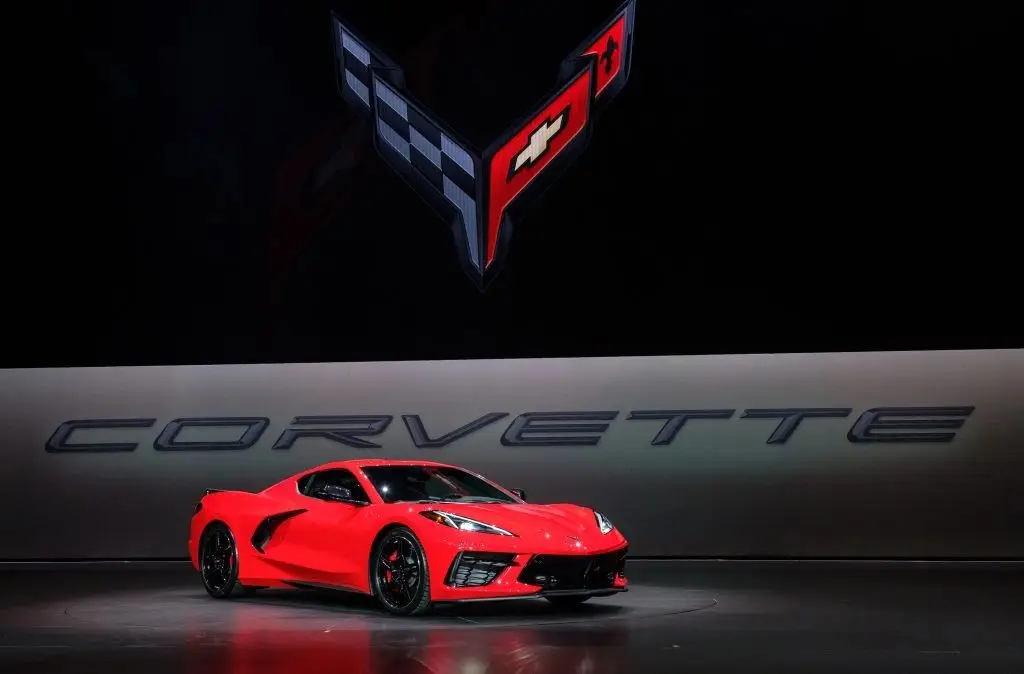
    The 2020 Mid-Engine Corvette is revealed in Tustin, California on July 18, 2019.
    The 2020 Mid-Engine Corvette is revealed in Tustin, California on July 18, 2019.

    The timing of its arrival was almost surreal. What should have been a moment of unbroken triumph collided with real-world crises. A strike by the United Auto Workers in late 2019 delayed the start of production. Then, just as Bowling Green Assembly finally began building the C8 in February 2020, the COVID-19 pandemic shut down the world. Orders piled up. Dealers were overwhelmed. Buyers who had placed sizable deposits could only watch and wait.

    And yet, even as chaos swirled around it, the C8 Stingray emerged not only as a new Corvette, but as a declaration that Chevrolet could build a true supercar — and sell it for under $60,000.

    The Mid-Engine Dream Fulfilled
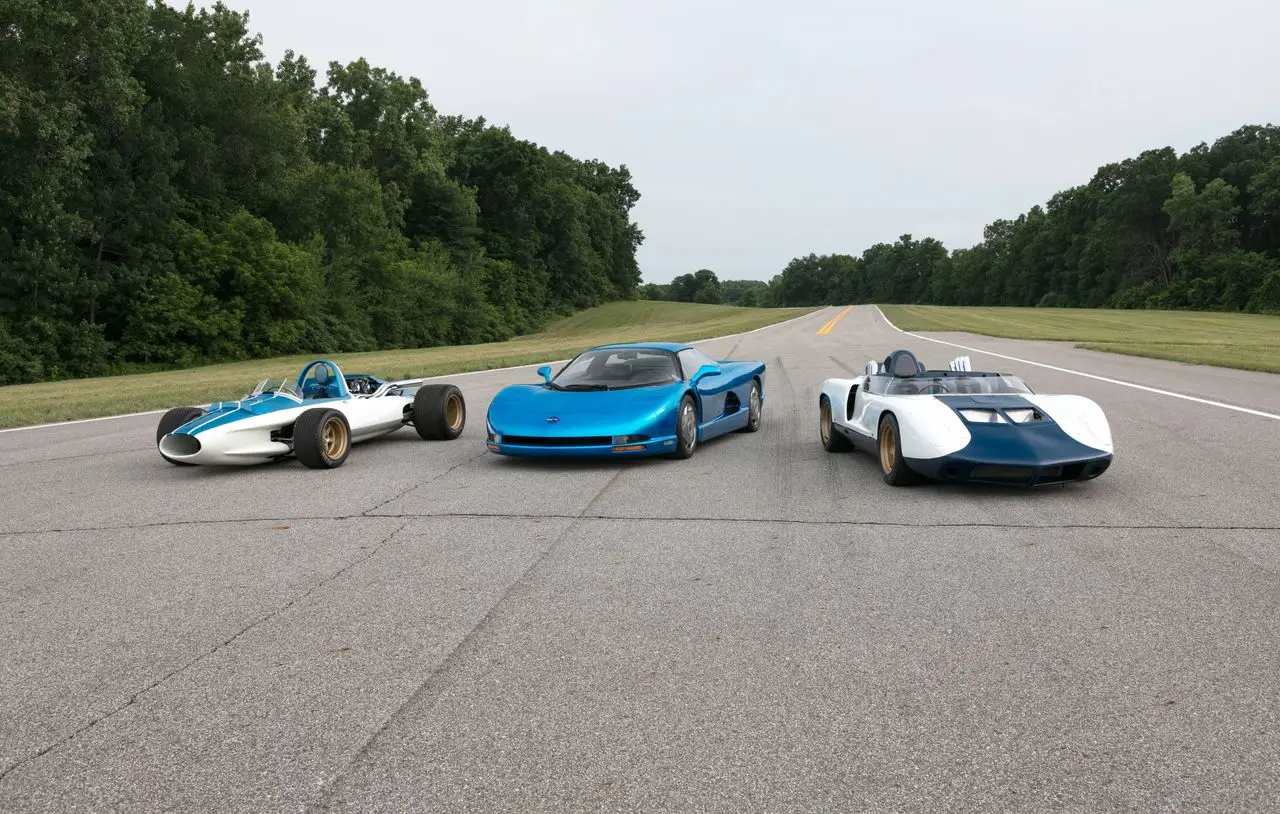
    The CERV I (left), the CERV II (right), and the CERV III were all early efforts by Corvette's engineers to create a mid-engine platform.  Zora Arkus-Duntov directly oversaw the creation of the CERV I & II models, while the CERV III was develop long after his retirement. (Image courtesy of GM Media LLC.)
    The CERV I (left), the CERV II (right), and the CERV III were all early efforts by Corvette’s engineers to create a mid-engine platform. Zora Arkus-Duntov directly oversaw the creation of the CERV I & II models, while the CERV III was develop long after his retirement. (Image courtesy of GM Media LLC.)

    To understand why the C8 mattered so deeply, one must trace Corvette history back through its most daring experiments. Zora Arkus-Duntov, the “Father of the Corvette,” had pushed for a mid-engine layout since the late 1950s. He believed it was the only way to keep Corvette competitive with Europe’s finest. Through the decades, GM teased enthusiasts with mid-engine prototypes: the CERV I in 1960, a rolling test bed for chassis concepts; the sleek CERV II in 1964, intended as a potential Le Mans contender; the radical XP-882 and XP-895 concepts of the early 1970s, which previewed layouts and body proportions that looked more Ferrari than Chevrolet. The 1977 Aerovette hinted at the exotic but never saw production. Even the CERV III of the late 1980s, with its twin-turbo V-8 and all-wheel drive, reminded fans of what could be — and what never would.

    But cost, tradition, and market positioning always intervened. Corvette was America’s attainable sports car, and Chevrolet wasn’t willing to gamble it on exotic architecture. Not until the limits of the front-engine layout were finally undeniable. The seventh-generation Corvette, the C7, had delivered staggering performance, but Juechter and his team knew they were boxed in. To move forward, the mid-engine leap could no longer be avoided.

    The Tustin Reveal
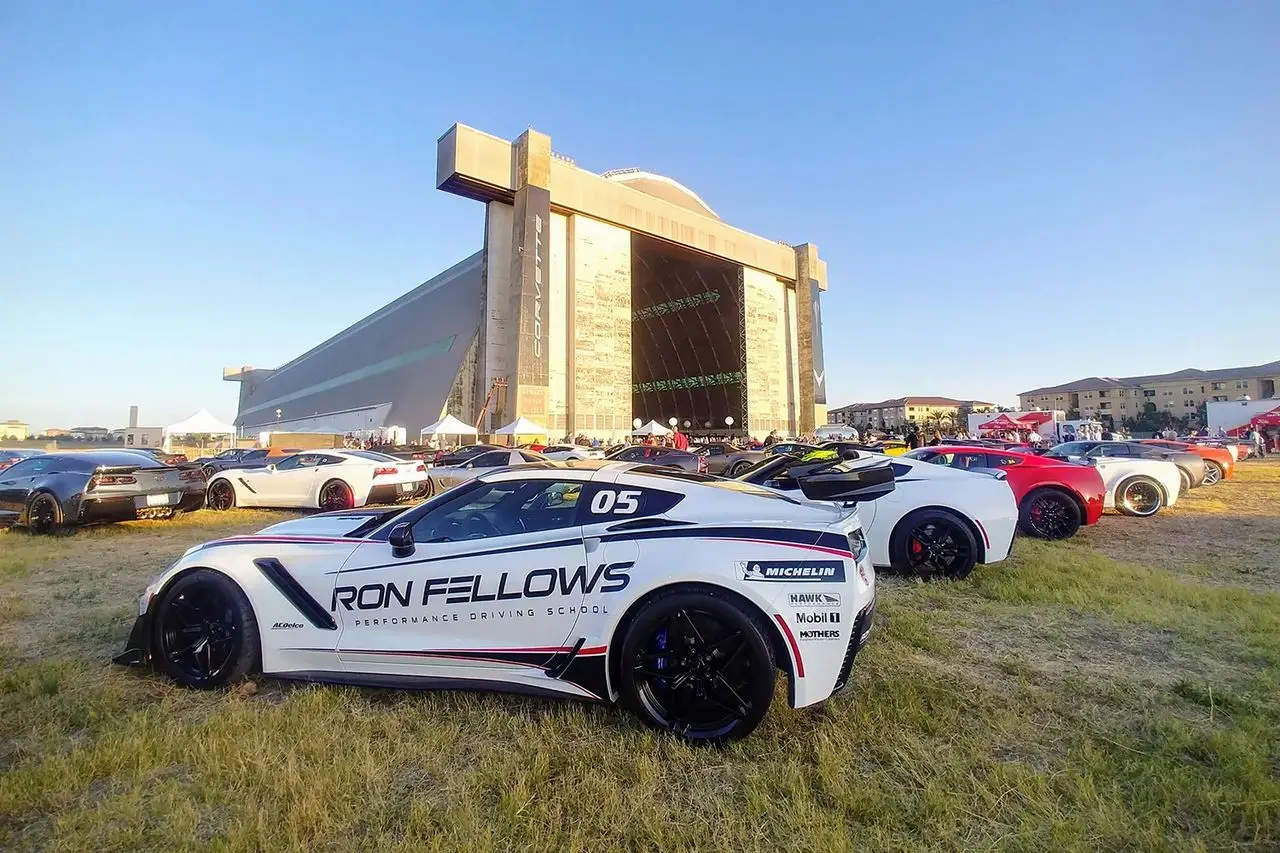
    Corvette owners, clubs, and organizations alike converged on the spacious hangar in Tustin, California, for the reveal of the 2020 Mid-Engine Corvette.
    Corvette owners, clubs, and organizations alike converged on the spacious hangar in Tustin, California, for the reveal of the 2020 Mid-Engine Corvette.

    The reveal itself was as theatrical as the car. A cavernous hangar, dramatic lighting, and a crowd of journalists and enthusiasts set the stage for what GM President Mark Reuss described as nothing less than Corvette’s rebirth. When the car rolled onto the stage, the audience gasped. Shorter hood, cockpit pushed dramatically forward, muscular haunches over massive rear tires — it was instantly clear this was no mere evolution.

    Chevrolet executives were quick to frame the shift. “Corvette has always represented the pinnacle of innovation and boundary-pushing at GM. The traditional front-engine vehicle reached its limits of performance, necessitating the new layout,” said Reuss. “In terms of comfort and fun, it still looks and feels like a Corvette, but drives better than any vehicle in Corvette history.”

    The most shocking moment of the night came at the end, when Chevrolet announced pricing. Base MSRP: $59,995. For a mid-engine car with performance figures that rivaled supercars ten times its price, the announcement sent shockwaves through the industry. While Porsche, Ferrari, and McLaren had long commanded six-figure sums for similar performance, Corvette once again held to its contract with enthusiasts: world-class performance at an attainable price.

    2020 CORVETTE Production Delays: Strikes, Shutdowns, and Restart
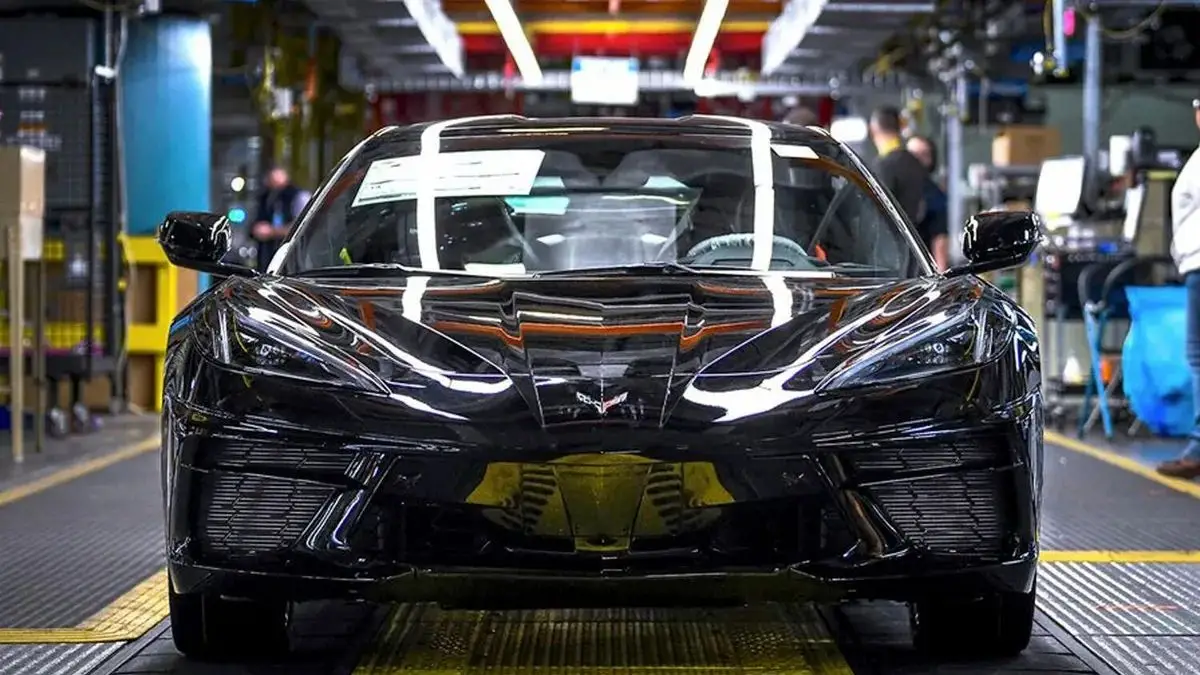
    Production of the 2020 C8 Mid-Engine Corvette halted in February 2020 as fear of the COVID pandemic spread like wildfire across the United States.  (Image courtesy of GM Media, LLC.)
    Production of the 2020 C8 Mid-Engine Corvette halted in February 2020 as fear of the COVID pandemic spread like wildfire across the United States. (Image courtesy of GM Media, LLC.)

    Even before the pandemic hit, the C8’s launch was complicated. A UAW strike in the fall of 2019 halted re-tooling of Bowling Green Assembly, delaying production until February 2020. Chevrolet marked the start of production with a tweet on February 3, accompanied by photos from the line. Buyers, some of whom had placed deposits the night of the reveal, finally had hope their cars were on the way.

    But barely a month later, COVID-19 forced General Motors to suspend operations. On March 18, 2020, the company announced that no more 2020 Corvette orders would be taken. Dealers were instructed to convert unbuilt orders into 2021 models. For a moment, it seemed the 2020 model year might become one of the shortest and rarest in Corvette history.

    By May, as case counts ebbed and the U.S. began reopening, Bowling Green cautiously restarted production. In August, the convertible variant entered assembly, proof that GM intended to honor its 2020 commitments. By September, reports surfaced of second shifts running deep into the night, with as many as 140 cars being built in a single day. In the end, 20,368 Corvettes were produced for 2020 — making it one of the rarest model years in modern Corvette history.

    A New Shape: Form Follows Function

    The C8’s styling was a revelation, but every angle was dictated by necessity. With the engine relocated behind the driver, the proportions shifted radically: a low hood, cabin thrust forward 16.5 inches, and wide rear quarters sculpted to manage airflow.

    Corvette Exterior Design Manager Kirk Bennion (Image courtesy of GM Media LLC.)
    Corvette Exterior Design Manager Kirk Bennion (Image courtesy of GM Media LLC.)

    Exterior Design Manager Kirk Bennion put it simply: “We worked very hard to incorporate low drag and manipulate downforce. Every line serves airflow, cooling, or stability.”

    The front end was defined by three large heat exchangers, channeling air to radiators and brakes. Massive side scoops funneled air to rear-mounted coolers. Underbody panels directed flow to generate stability, while the Z51 package added a rear spoiler capable of generating nearly 400 pounds of downforce.

    Despite the radical departure, Corvette DNA was preserved. Longtime design head Tom Peters described it best: “The new Corvette is the culmination of all that it has ever been, refined by all we’ve learned and imagined. Done correctly, something magic happens — it becomes timeless.”

    Distinctive cues marked the C8’s new era: low-profile LED headlights, hidden releases for doors and hatches, dual-element LED taillamps with animated turn signals, quad exhaust tips pushed to the outer edges, and a massive rear hatch that proudly displayed the LT2 engine through glass.

    Chevrolet offered 12 colors, including classics like Torch Red, Arctic White, and Black, alongside new hues like Rapid Blue, Zeus Bronze, and Accelerate Yellow. Torch Red proved dominant, accounting for a quarter of production, while Rapid Blue emerged as a fan favorite. Zeus Bronze, polarizing though it was, stood out as one of the rarest.

    Inside the Cockpit
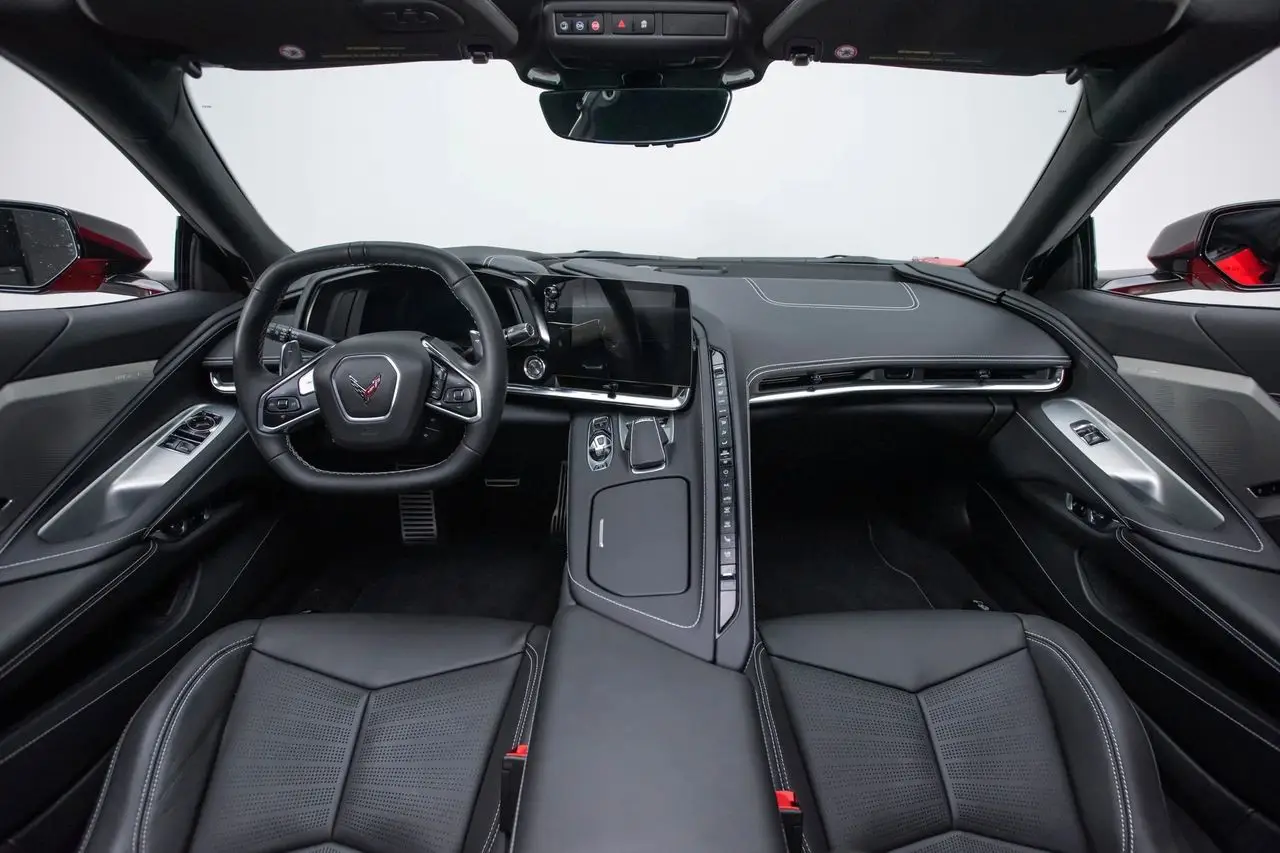
    Interior of the 2020 Mid-Engine Corvette Stingray (Image courtesy of RK Motors)
    Interior of the 2020 Mid-Engine Corvette Stingray (Image courtesy of RK Motors)

    If the exterior was dramatic, the interior was revolutionary. Gone was the traditional American GT layout. In its place: a cockpit inspired by fighter jets. The steering wheel was squared off for improved sightlines, framing a 12-inch reconfigurable digital cluster. A narrow vertical strip of climate controls rose along the center console, recalling the switch stacks of aircraft cockpits.

    Materials were elevated throughout. Hand-stitched leather, aluminum and carbon-fiber trim, and stainless steel Bose speaker grilles replaced the plastics of previous generations. Buyers could choose from six interior themes — from Jet Black to Morello Red — and personalize further with six seatbelt colors and optional contrast stitching.

    Three seat options defined the experience. GT1 provided comfort for everyday use. GT2 blended long-distance touring support with racing cues, featuring carbon-fiber trim and dual-density foam. Competition Sport, the most aggressive, offered bolstering for track duty and materials inspired by racing harnesses and protective textiles.

    The overall effect was immersive. Drivers weren’t merely operating a machine; they were piloting it.

    The LT2: Jewel in the Center
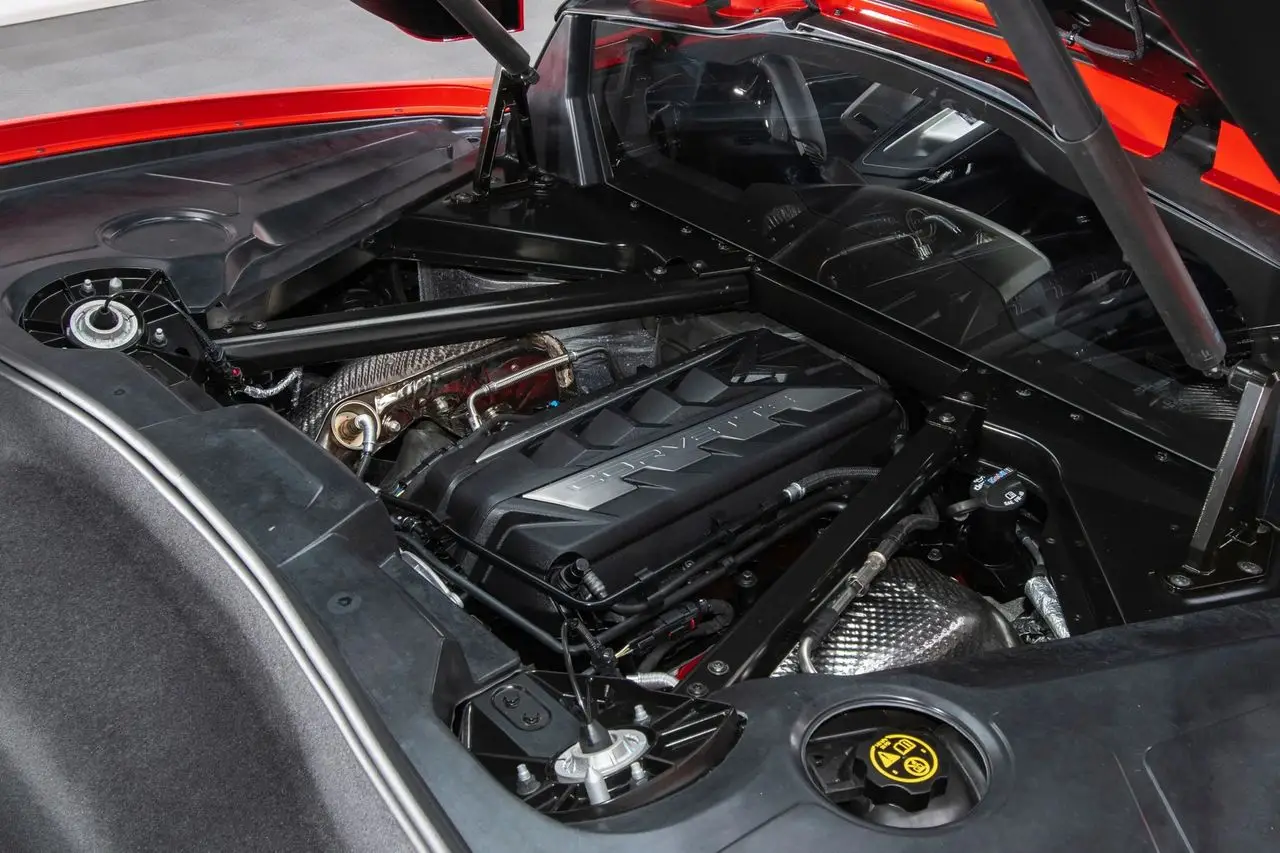
    The Chevy LT2, a 6.2-liter small block V8 engine (Image courtesy of RK Motors)
    The Chevy LT2, a 6.2-liter small block V8 engine (Image courtesy of RK Motors)

    At the heart of the C8 was the LT2, a 6.2-liter small-block V-8 that represented both continuity and evolution. Rated at 490 horsepower and 465 lb-ft of torque in standard form — or 495 and 470 with the Z51 package — it was the most powerful base Corvette engine in history.

    For the first time, the base Corvette featured a dry-sump oiling system. Three scavenge pumps ensured lubrication even under sustained lateral loads beyond 1g, while also allowing the engine to be mounted lower in the chassis. The result: a reduced center of gravity and improved handling balance.

    Engineers treated the LT2 not just as a power plant but as a centerpiece. A 3.2-mm glass hatch displayed the engine, with details down to fasteners and heat shields designed for visual appeal. Jordan Lee, GM’s global chief engineer of small-block engines, summarized the philosophy: “Though now placed behind the driver, the LT2 gives the same visceral experience we all expect from Corvette.”

    The Dual-Clutch Transmission
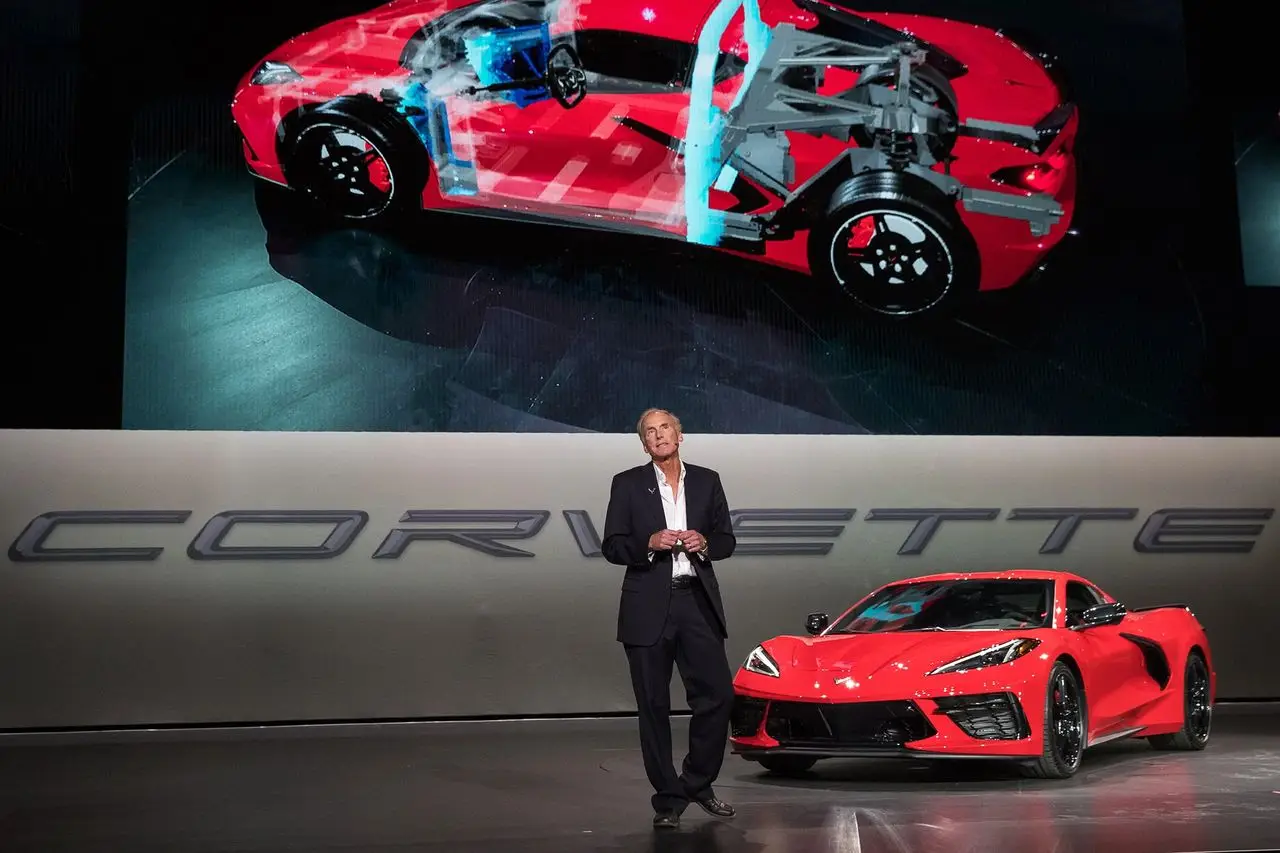
    Tadge Juechter introduces the 2020 Corvette in Tustin, California.  (Image courtesy of GM Media LLC.)
    Tadge Juechter introduces the 2020 Corvette in Tustin, California. (Image courtesy of GM Media LLC.)

    For the first time in Corvette history, no manual was offered. Instead, Chevrolet partnered with Tremec to develop an eight-speed dual-clutch transmission. It was a controversial decision — Corvette had long been associated with manual shifting — but the reasoning was sound. The DCT delivered near-instant gear changes, maintained packaging efficiency, and provided both the convenience of an automatic and the engagement of paddle-shift control.

    Juechter explained: “The performance shift algorithms are so driver-focused, they can sense when you’re doing spirited driving — regardless of driving mode — and will hold lower gears longer for more throttle response.”

    Drivers also gained new tools. A double-paddle declutch feature allowed manual clutch disengagement. Drive modes expanded to include MyMode, which saved personalized settings, and Z Mode, named after Corvette’s storied performance packages, which provided instant access to aggressive configurations.

    Performance figures validated the choice: 0–60 mph in 2.8 seconds with Z51, quarter-mile runs in 11.2 seconds at 122 mph, and a top speed of 194 mph.

    The Chassis: Bedford Six and Beyond
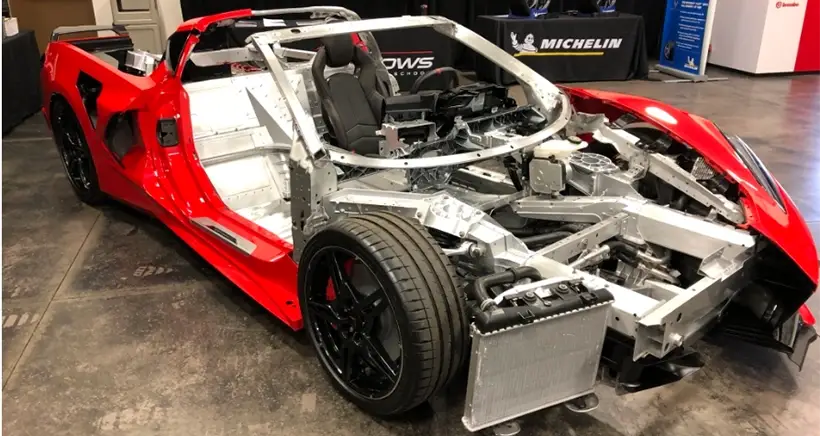
    The 2020 Mid-Engine Corvette Stingray chassis assembly was aptly nicknamed the "Bedford Six"
    The 2020 Mid-Engine Corvette Stingray chassis assembly was aptly nicknamed the “Bedford Six”

    The C8’s chassis, designated Y2, was a clean-sheet design. At its core were six massive aluminum die-cast nodes, nicknamed the “Bedford Six” after the Indiana plant where they were produced. These structural elements tied the car together with remarkable rigidity, eliminating the need for a transverse leaf spring. In its place, Corvette engineers adopted coil-over suspension for greater flexibility and precision.

    Steering benefited from the forward-set cockpit, enabling a shorter, stiffer column and quicker ratio. The brake system adopted electronic eBoost assist, replacing vacuum with by-wire precision. Magnetic Ride Control, updated to version 4.0, became available for even faster damping response — adjusting every millisecond to road conditions.

    The result was a car that felt sharper, more responsive, and more stable than any Corvette before it.

    Practicality Intact
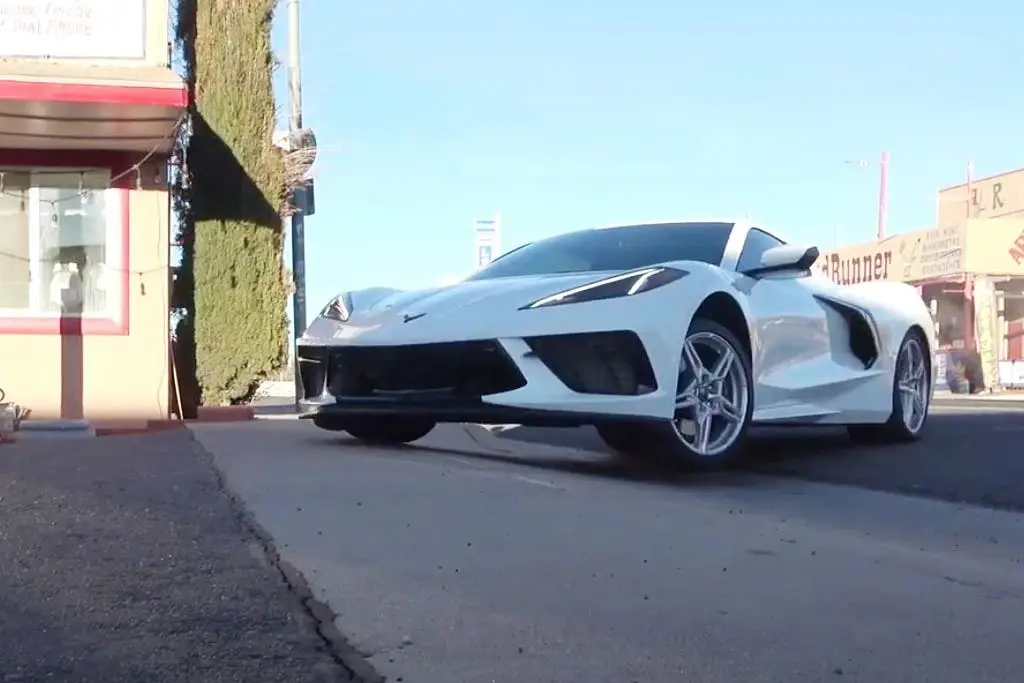
    2020 Corvette front-lift system
    2020 Corvette front-lift system

    Despite its exotic layout, the C8 remained faithful to Corvette’s promise of practicality. The coupe retained a removable targa roof. Luggage capacity, split between a front trunk and rear compartment, totaled 12.6 cubic feet — enough for two golf bags, a point Chevrolet proudly emphasized.

    The front-lift system, one of its most ingenious features, raised the nose 40 mm (1.6 inches) in less than three seconds and could memorize up to 1,000 GPS locations, automatically lifting at familiar obstacles like driveways or speed bumps. In Tour mode, ride comfort remained supple enough for cross-country travel. In every sense, this was still a Corvette you could live with daily.

    Convertible at the Kennedy Space Center
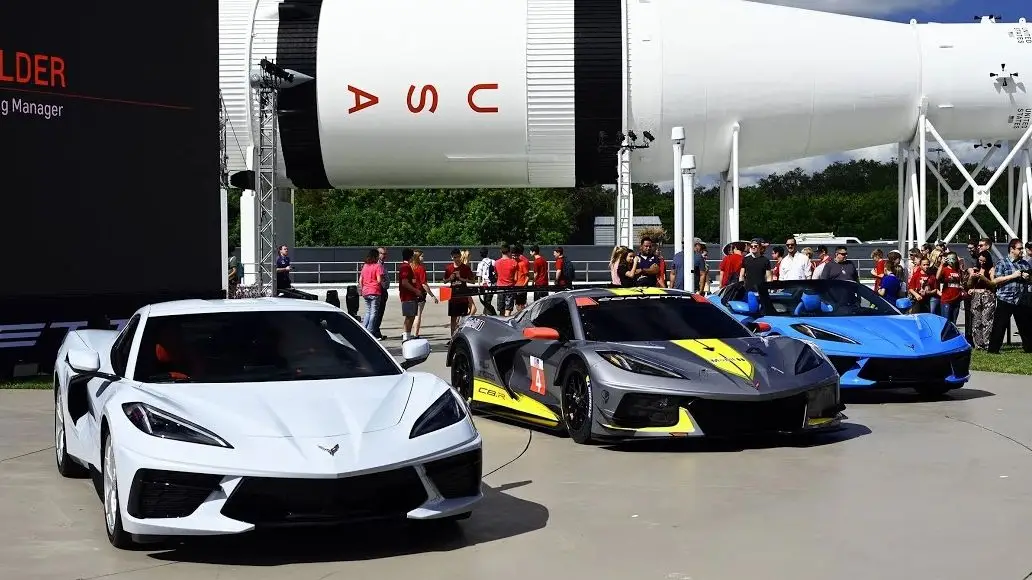
    2020 Corvette coupe (left), C8.R race car (middle) and the new 2020 C8 Convertible (right) on display at the Kennedy Space Center in Florida.
    2020 Corvette coupe (left), C8.R race car (middle) and the new 2020 C8 Convertible (right) on display at the Kennedy Space Center in Florida.

    Just months after the coupe’s reveal, Chevrolet unveiled the convertible version at NASA’s Kennedy Space Center, a nod to Corvette’s long association with astronauts. For the first time, Corvette offered a power-retractable hardtop. Folding in just 16 seconds at speeds up to 30 mph, it preserved both aerodynamics and visibility of the LT2 engine under glass.

    Reception and Demand
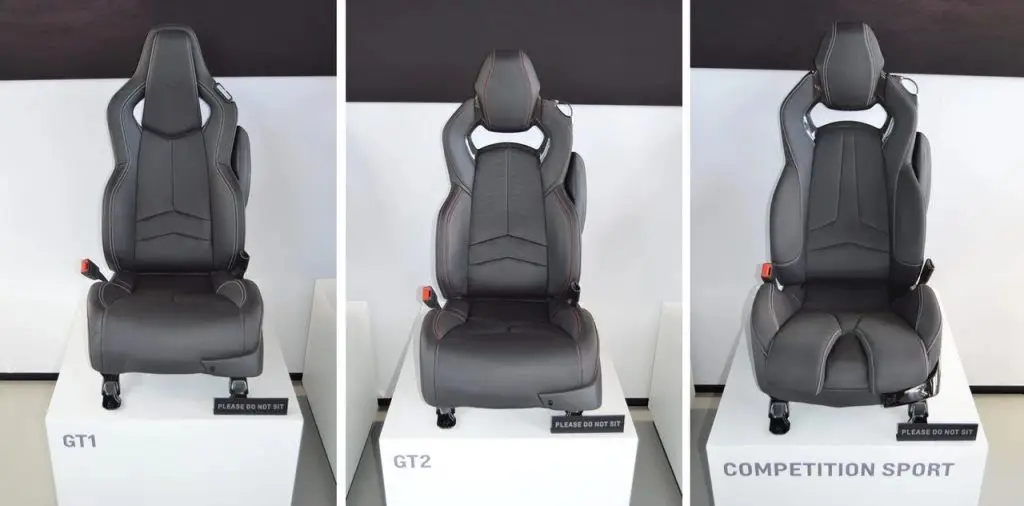
    The GT1, GT2 and Competition Sport Seats of the 2020 Corvette Stingray.
    The GT1, GT2 and Competition Sport Seats of the 2020 Corvette Stingray.

    Critical response was almost universally glowing. The C8 was praised for its performance, refinement, and value. It was named MotorTrend’s 2020 Car of the Year, with testers marveling at its stability and comfort at speed. Other outlets echoed the sentiment: the C8 wasn’t just a great Corvette — it was a world-class sports car.

    Owners embraced it with equal enthusiasm. Most opted for the Z51 Performance Package. The most popular configuration? A Torch Red coupe with Z51, GT2 seats, and the Performance Data Recorder. Nearly three-quarters of all 2020 Corvettes carried Z51, while more than half were ordered with front lift.

    Demand outstripped supply almost immediately. With production constrained by strikes and the pandemic, resale values skyrocketed, with many cars selling well over $100,000 on the secondary market.

    Legacy

    The 2020 Corvette Stingray was more than a generational change. It was a philosophical leap — one that fulfilled Zora Arkus-Duntov’s mid-engine dream, reset expectations of what Corvette could be, and established a foundation for future models like the Z06, E-Ray, and beyond.

    It launched into chaos, but it emerged triumphant. Against strikes, shutdowns, and global uncertainty, it proved that Corvette’s essence — value, ingenuity, and unrelenting performance — could survive even the most turbulent of times.

    Closing Thoughts
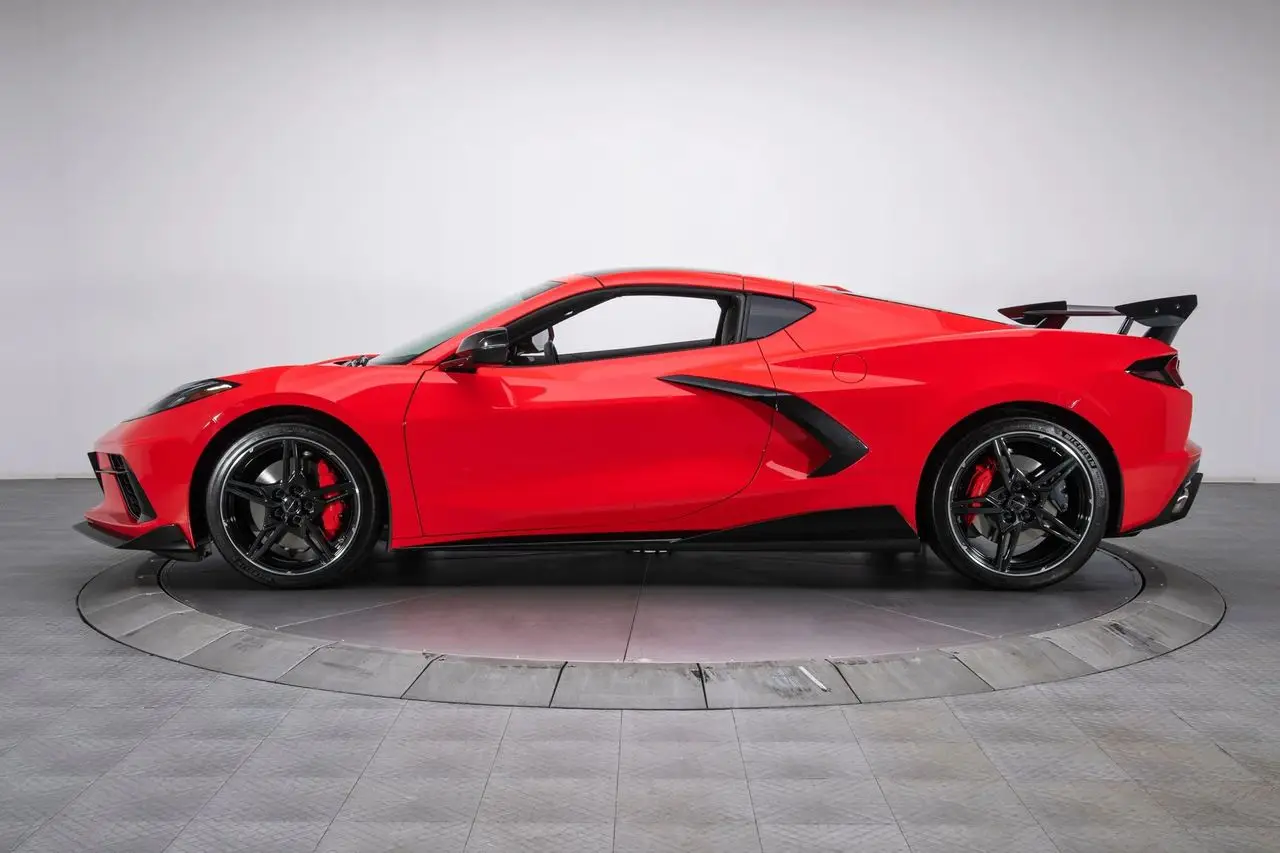
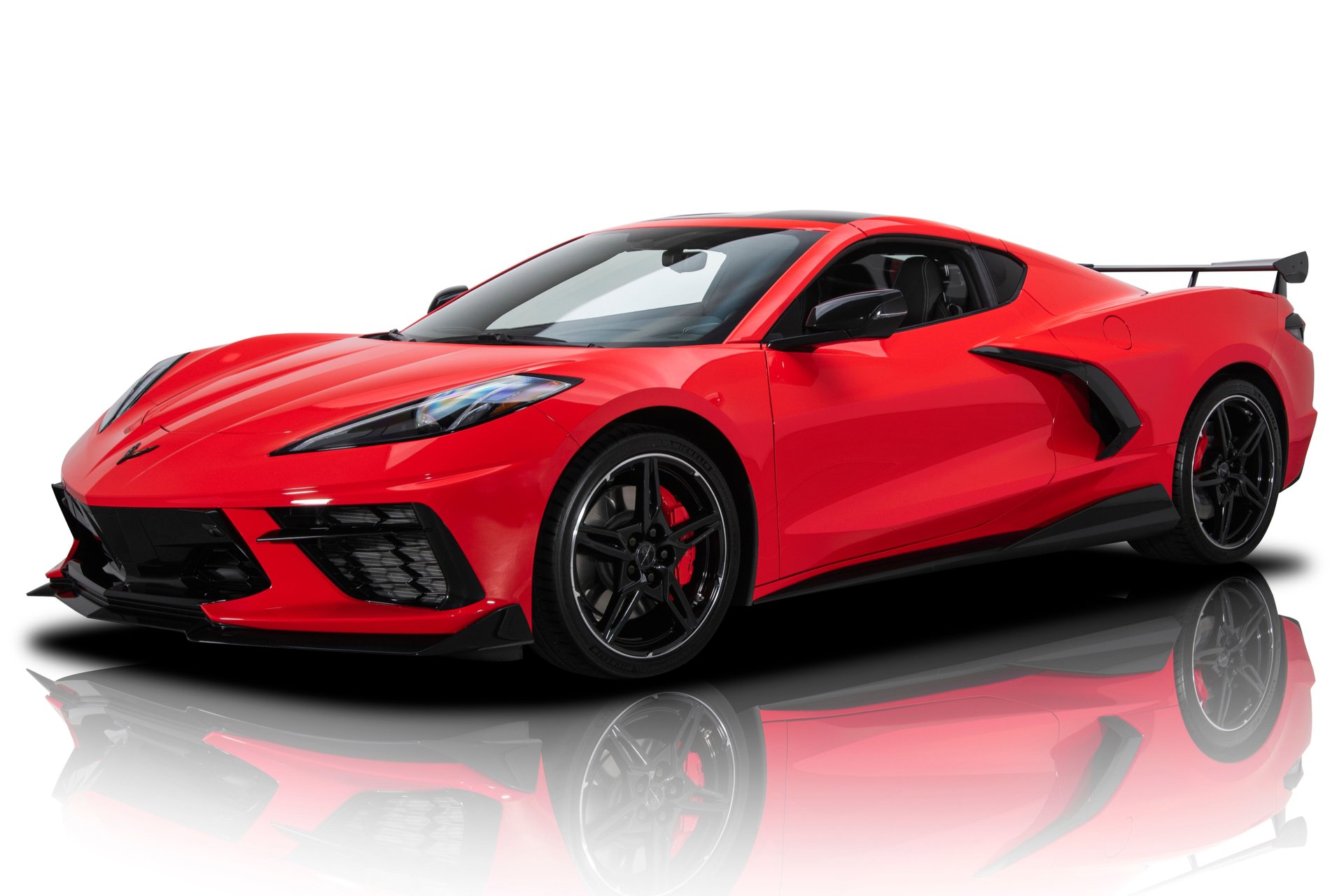
    The 2020 Mid-Engine Corvette Stingray (Image courtesy of RK Motors)
    The 2020 Mid-Engine Corvette Stingray (Image courtesy of RK Motors)

    To drive a 2020 Corvette today is to experience both engineering ambition and historical significance. It represents the end of one era and the beginning of another. Where earlier Corvettes proved America could build a sports car, the 2020 Corvette proved America could build a supercar — and sell it for the price of a loaded pickup.

    That is the enduring contract of the Corvette. Engine behind the driver, but heart still exactly where it belongs.
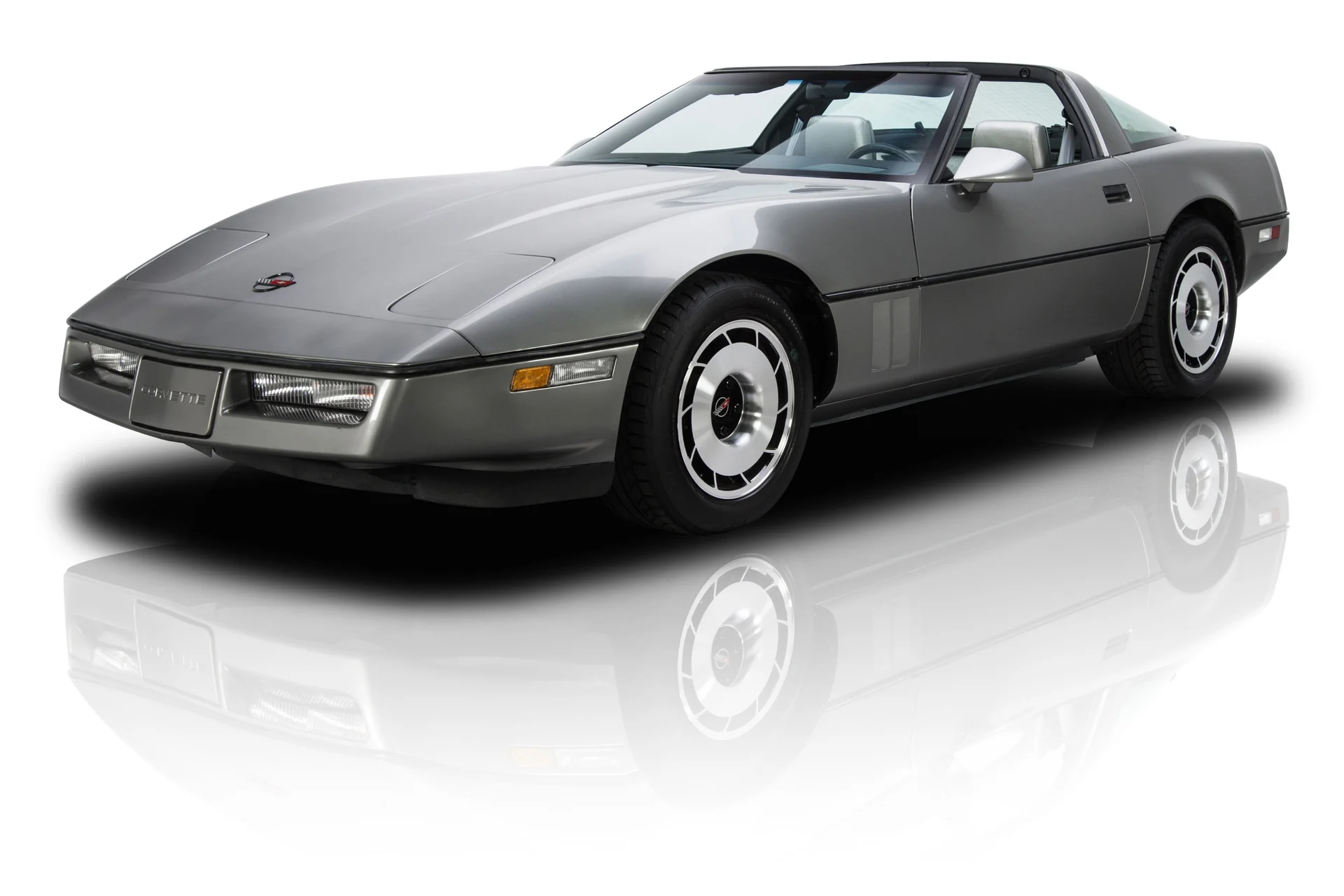
    The 2020 Corvette Stingray represented the most radical transformation (to date) in the model’s (then) 67-year history. With its long-anticipated mid-engine layout finally realized, Chevrolet didn’t merely reposition the engine—it redefined what a Corvette could be. The C8 blends supercar proportions, world-class performance, and everyday usability into a platform that shattered expectations and price barriers…

  • 1984 CORVETTE OVERVIEW

    1984 CORVETTE OVERVIEW

    In the early 1980s, America stood on the precipice of a technological renaissance. Personal computers were becoming household staples, NASA’s Space Shuttle Columbia had just embarked on its maiden voyage, and the automotive industry was poised for its own revolution. At the forefront of this transformation was the Chevrolet Corvette, a symbol of American engineering excellence. The 1984 Corvette, the first of the C4 generation, was not just a car; it was a statement—a declaration that American ingenuity could redefine the sports car.

    A New Generation Dawns

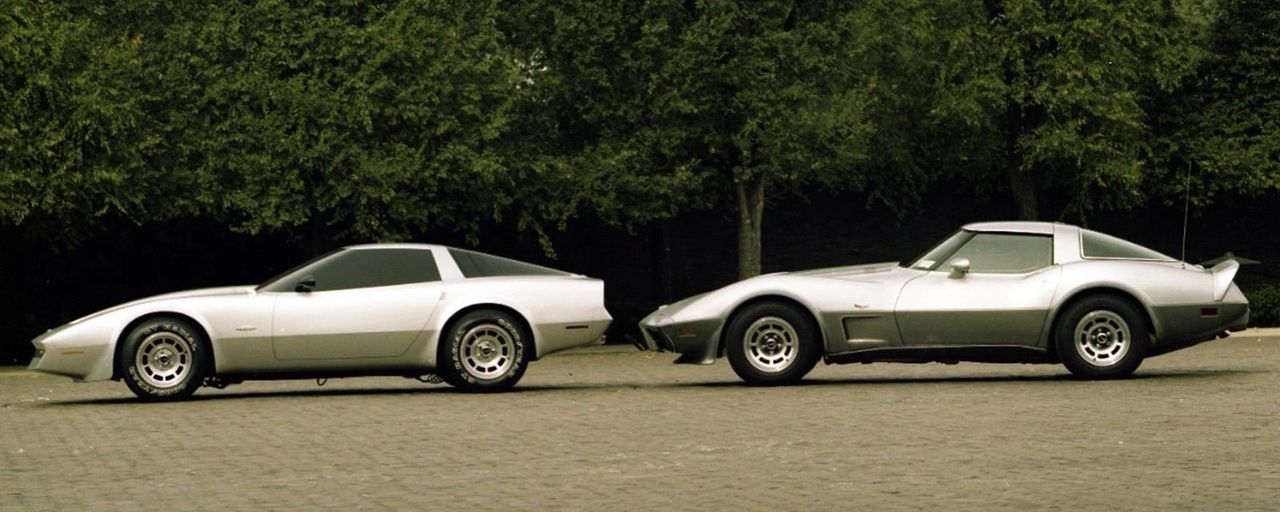
    A 1982 Corvette (right) parked with a full-scale clay model of the C4 (still in development at the time this picture was taken).  While the design of the C4 would continue to evolve, this picture clearly depicts the evolution of the Corvette's design between the third- and fourth-generation models. (Image courtesy of GM Media.)
    A 1982 Corvette (right) parked with a full-scale clay model of the C4 (still in development at the time this picture was taken). While the design of the C4 would continue to evolve, this picture clearly depicts the evolution of the Corvette’s design between the third- and fourth-generation models. (Image courtesy of GM Media.)

    The unveiling of the 1984 Corvette in March 1983 was met with anticipation and a mix of disbelief. For fifteen years, Corvette enthusiasts had clung to the iconic curves and aggressive presence of the C3, a car steeped in raw muscle car heritage. The C4 threw that old image aside, replacing it with a sleek, sharply sculpted form that emphasized aerodynamics and precision.

    Its clean, straight lines and low-slung body gave it a silhouette far more European in spirit, influenced by the likes of Porsche’s 928 and other contemporary sports cars that prized airflow and balance over flamboyant styling. Gone was the traditional front grille—a Corvette hallmark since 1953—replaced by an innovative underbody ducting system that channeled air efficiently to the radiator. This grill-less front end was flanked by halogen fog lamps that echoed the styling cues of high-end European sportsters, while the pop-up headlights no longer flipped up but rolled out smoothly, reducing drag and enhancing the car’s aerodynamic profile.

    At 96.2 inches, the wheelbase was slightly longer than the C3’s, but the overall car was 8½ inches shorter, contributing to a more agile feel. The hatchback, which had made its debut on the limited 1982 Collector’s Edition, became a permanent fixture, offering practical rear storage access and modern utility unheard of in earlier models.

    Powertrain: Balancing Tradition with Innovation

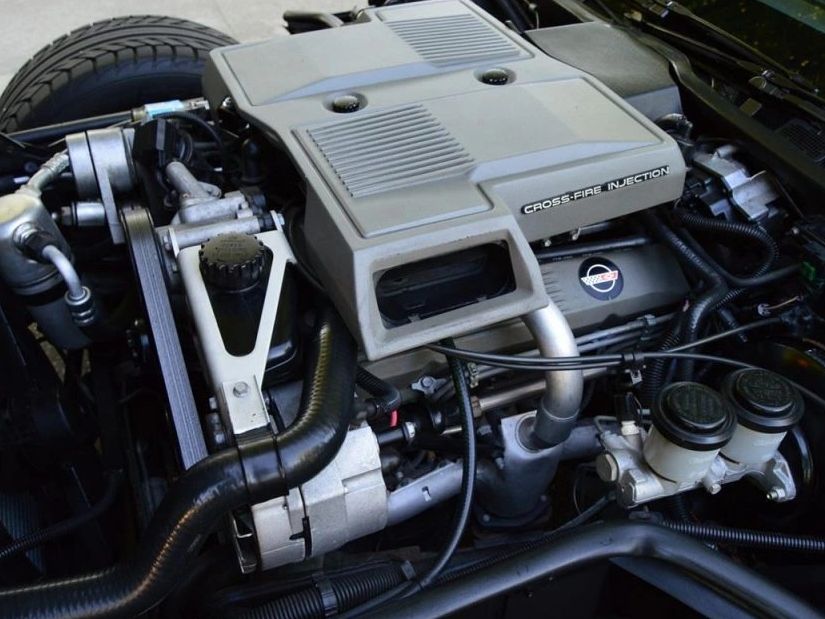
    The 1984 Corvette featured an L83 engine equipped with Cross-Fire Injection.  While innovative for its time, the CFI injection system proved troublesome and would be replaced on the 1985 MY Corvette.
    The 1984 Corvette featured an L83 engine equipped with Cross-Fire Injection. While innovative for its time, the CFI injection system proved troublesome and would be replaced on the 1985 MY Corvette.

    Under the hood, the 1984 Corvette carried a familiar yet evolved heart: the 5.7-liter (350 cubic inch) L83 V8. Its Cross-Fire Fuel Injection system, first introduced in 1982, represented an important technological advance over carburetors, offering improved fuel metering and emissions control.

    With a conservative output of 205 horsepower and approximately 270 lb-ft of torque, the engine prioritized smoothness and emissions compliance in an era increasingly shaped by regulation. The careful calibration reflected GM’s cautious approach to melding performance with the realities of tightening environmental laws. For many, the power numbers felt modest—especially compared to the high-horsepower muscle cars of the 1960s—but the 1984 Corvette’s strength lay in its balanced, composed driving dynamics rather than raw straight-line speed.

    The standard transmission was a smooth-shifting 4-speed automatic, but for those craving a more involved driving experience, Chevrolet introduced the ambitious “4+3” manual transmission option. Designed by Doug Nash, this unique gearbox combined a 4-speed manual with electronically controlled overdrive on the top three gears. The idea was ingenious—allowing spirited driving with the benefit of fuel-saving overdrive—but in practice, the system’s heavy clutch and finicky electronics frustrated drivers, making it a short-lived chapter in Corvette’s manual transmission history.

    The Z51 Package: Performance Reimagined

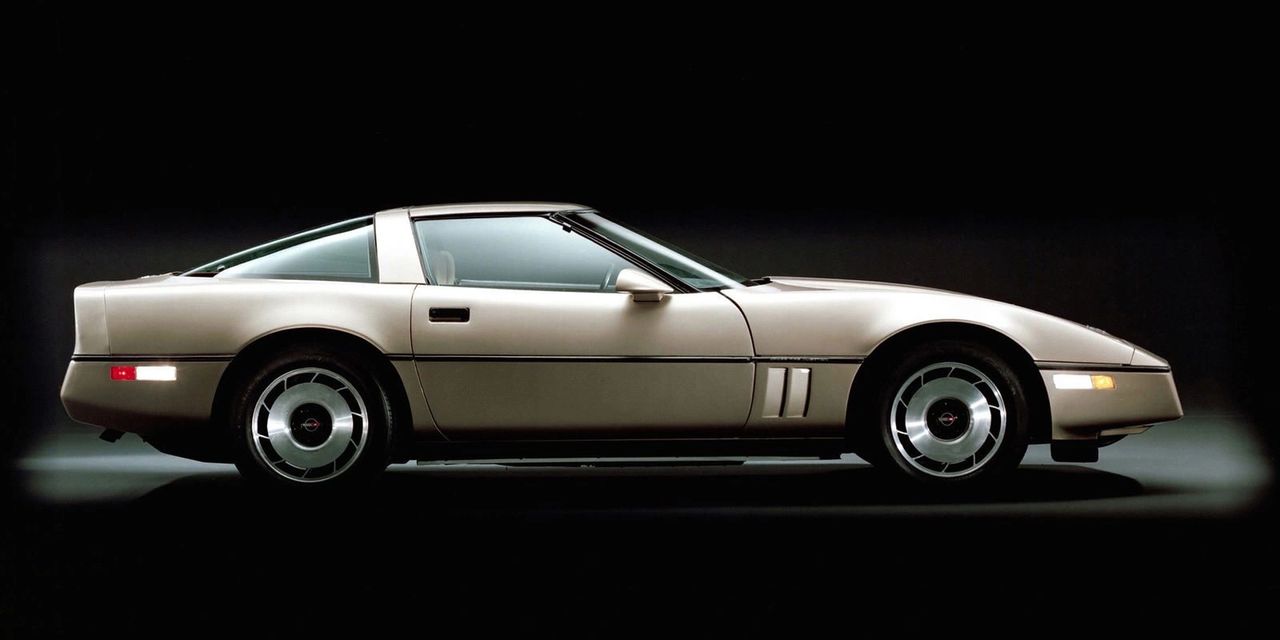
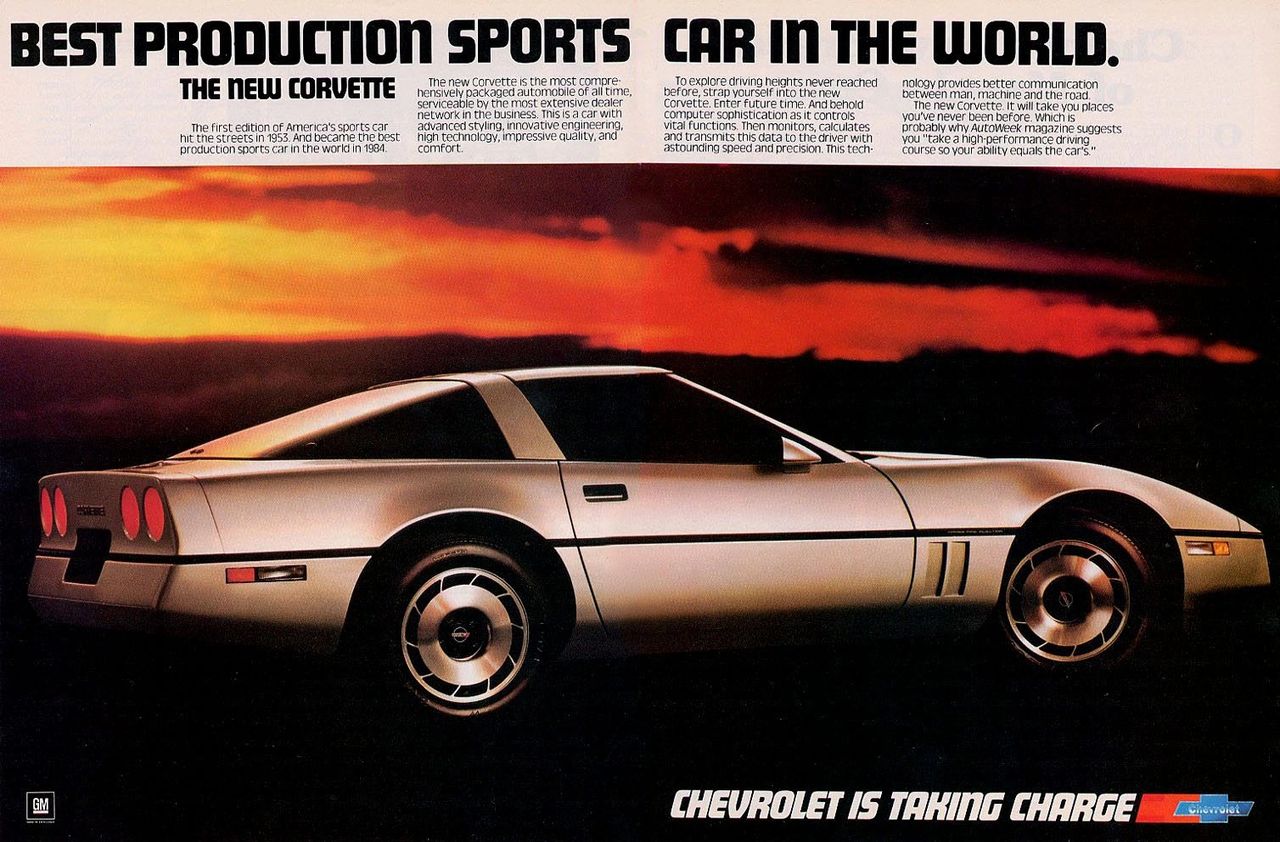
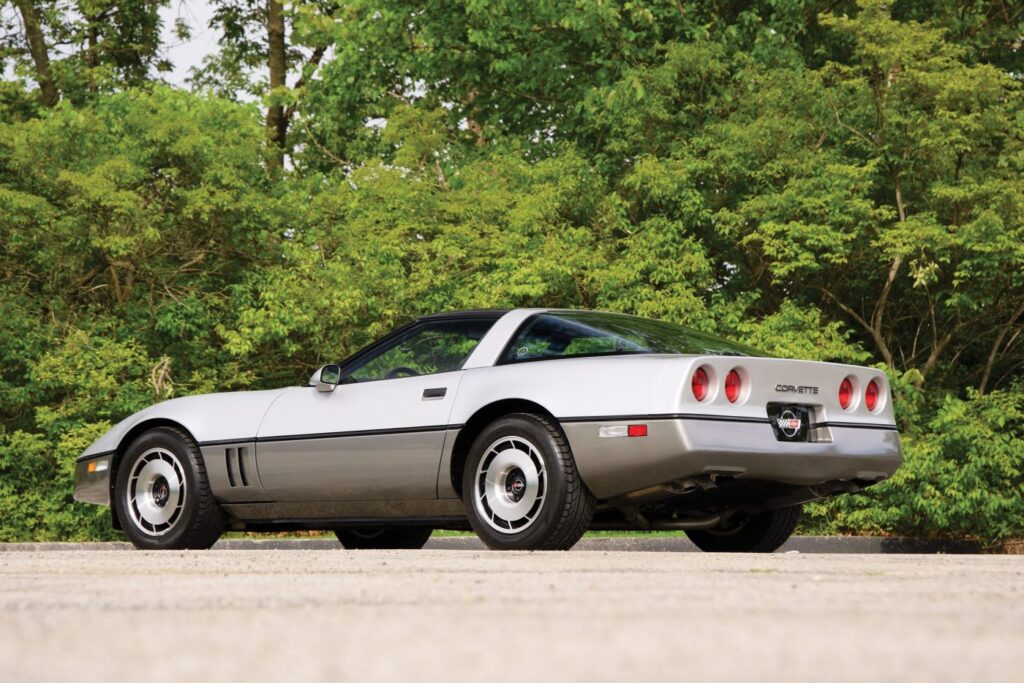
    1984 Corvette equipped with the Z51 package. (Image courtesy of GM Media.)
    1984 Corvette equipped with the Z51 package. (Image courtesy of GM Media.)

    Chevrolet knew that the true essence of Corvette was in its performance. To that end, the 1984 model introduced the Z51 Performance Handling Package, a $470 option that turned the C4 into a driver’s car at heart.

    The Z51 package included:

    • Bilstein Shock Absorbers, painted signature yellow, delivering improved damping and response
    • Heavy-Duty Springs, stiffer and more resilient for sharper cornering
    • Upgraded Sway Bars to reduce body roll and increase chassis stiffness
    • Goodyear Eagle GT P255/50VR-16 Tires providing enhanced grip and stability
    • Additional Cooling Hardware for the differential and transmission, ensuring reliability during high-performance driving

    The effect was dramatic. The Z51 Corvette hugged corners with newfound precision and poise, delivering lateral grip upwards of 0.95g on the skidpad—numbers that rivaled sports cars with far more horsepower. However, this came at a price: the ride was notably firmer and less forgiving on rough roads, dividing buyers between track enthusiasts and those wanting a more comfortable daily driver.

    From Curves to Edges: The C4 Exterior

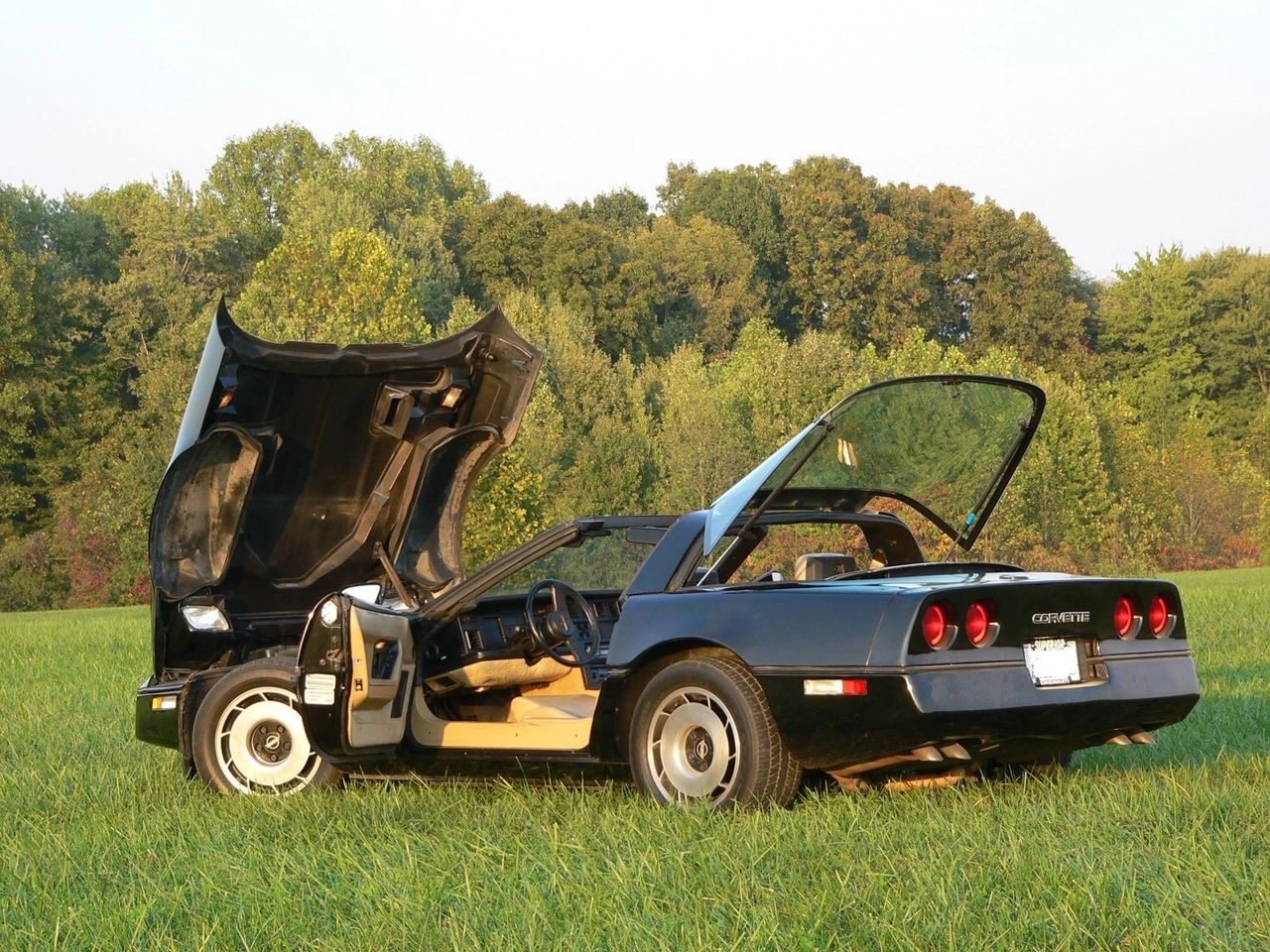
    The first C4 reads like a clean-sheet reset: a low wedge with a seriously raked windshield (about 64–65°), forward-tumbling hidden headlamps, and a glass hatch that made the whole rear of the car open like a display case. The hood hinged at the nose in a one-piece “clamshell,” lifting away to reveal not just the L83 but the front suspension and structure—a purposeful service detail baked into the styling. To keep the new shape visually clean, Chevrolet tucked most panel joints behind a continuous rub strip; aero mirrors, flush halogen lamps, and frameless door glass finish the theme. This was the vocabulary that would define the C4 from day one.

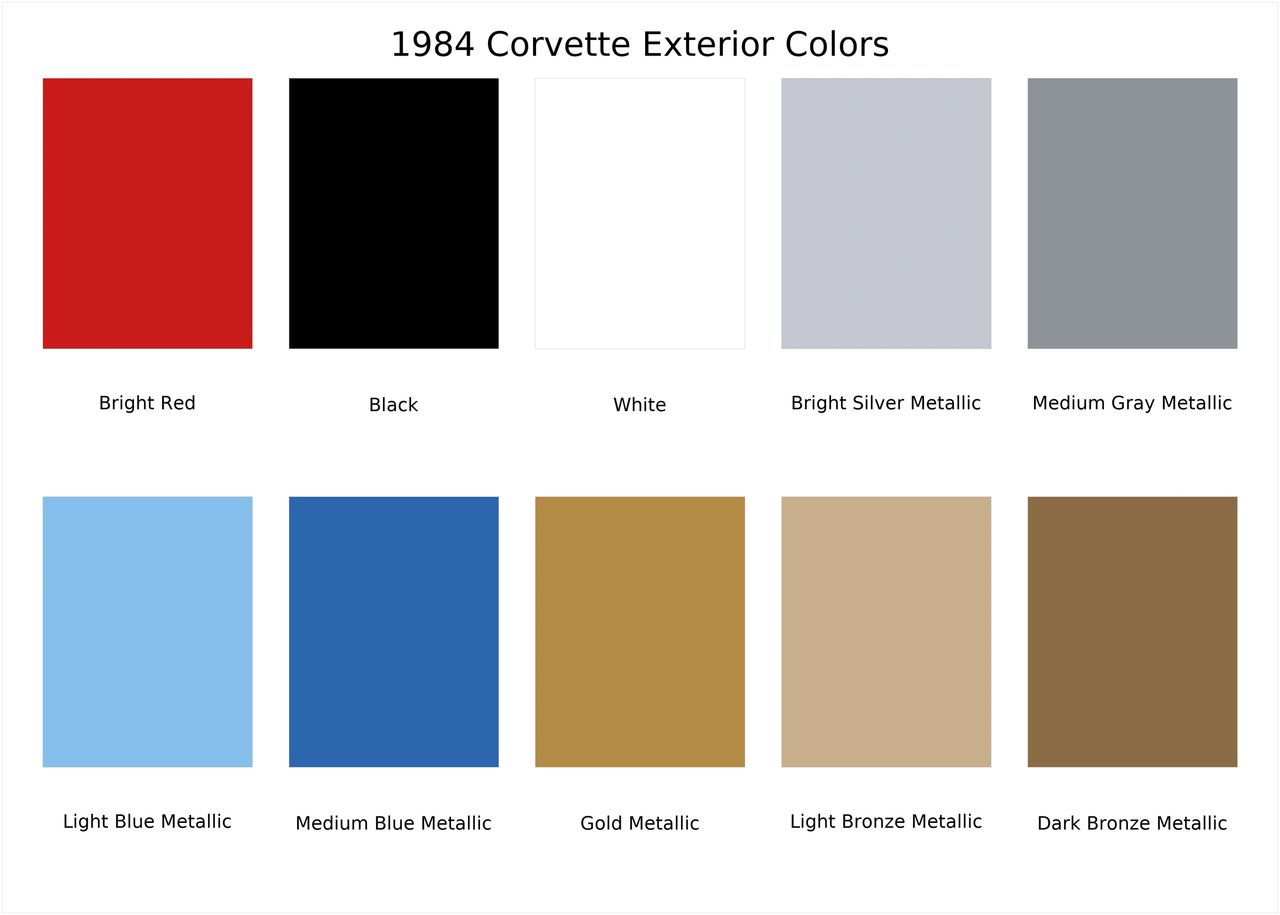
    Paint and trim echoed that modernism. For 1984, Chevrolet offered a palette of solid and metallic finishes plus a “Custom Two-Tone” option that paired complementary shades: Silver over Gray, Light Blue over Medium Blue, and Light Bronze over Dark Bronze. (Those combos were factory options, not dealer add-ons.)

    If you’re cataloging cars, the two-digit GM paint codes are the easiest shorthand. Period/OEM references list the 1984 colors as: White (10), Bright Silver Metallic (16), Medium Gray Metallic (18), Black (19/41), Light Blue Metallic (20), Medium Blue Metallic (23), Gold Metallic (53), Light Bronze Metallic (63), Dark Bronze Metallic (66), and Bright Red (33). You’ll occasionally see alternate numbers in enthusiast tables (e.g., Bright Red shown as 72, Black shown as 19 vs. 41); the code above reflects how OEM paint databases index 1984 formulas, while museum/brochure sources confirm the names and the three factory two-tones.

    Two other exterior firsts became C4 signatures in ’84: the standard, full glass hatch (now on every Corvette, not just special trims) and that forward-tilting hood. Together with the extreme windshield angle, they weren’t just design flourishes—they were functional choices meant to reduce drag, improve access, and modernize Corvette’s proportions after the C3.

    Interior Innovation and Controversy

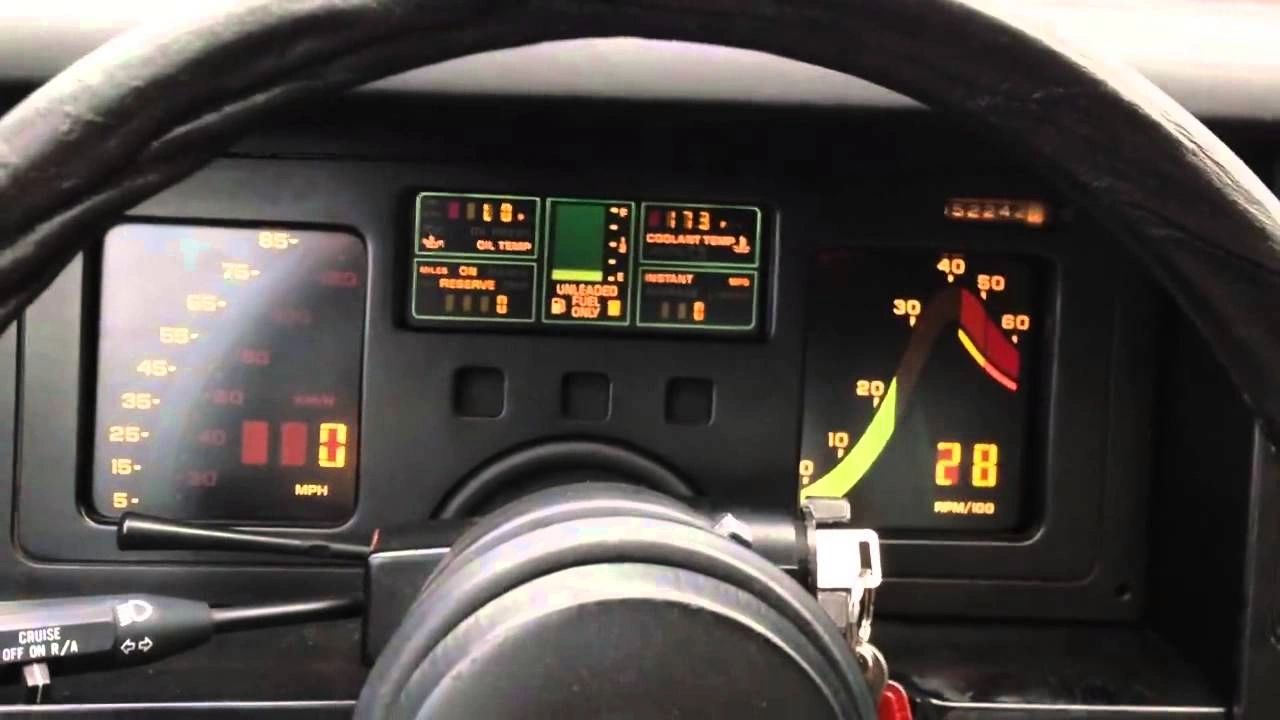
    The digitial dashboard of the early C4 Corvettes (including the 1984 model, shown here) was considered controversal at its time as every Corvette before the 1984 MY had been equipped with conventional, analog gauges.
    The digitial dashboard of the early C4 Corvettes (including the 1984 model, shown here) was considered controversal at its time as every Corvette before the 1984 MY had been equipped with conventional, analog gauges.

    Step inside the 1984 Corvette and you’d be greeted by one of the boldest interiors in Corvette history. Gone were the analog gauges of the past, replaced with a fully digital instrument cluster that displayed speed, engine data, and warnings through a mix of bright LED and LCD readouts.

    While revolutionary, this digital dashboard was polarizing. Some praised its futuristic look and clear, precise readouts, while others complained about visibility issues in bright sunlight and the impersonal feel compared to classic needle gauges.

    The cockpit was driver-focused, with a center console that dominated the cabin—housing controls for climate, audio, and the transmission. Interior space was improved, thanks in part to a lowered floorpan that routed exhaust and drivetrain components below the cabin, allowing for better headroom despite the car’s lowered roofline. However, the deep door sills inherent to the unibody frame made ingress and egress a challenge, especially for taller drivers.

    Safety was also on the designers’ minds. Under the Reagan Administration, passive restraint systems were proposed, and though the legislation never fully passed, the 1984 Corvette included a large padded “passive restraint” on the passenger side dashboard—a rounded pad designed to protect occupants in the event of a crash without requiring seatbelt use.

    Reception: Triumphs and Trials

    The 1984 Corvette was a considerable leap forward in the evolution of the brand.  Its clamshell hood made for easy access to the L83 engine, while the rear hatch (standard on all C4 models) provided easy access to the storage area behind the cockpit.
    The 1984 Corvette was a considerable leap forward in the evolution of the brand. Its clamshell hood made for easy access to the L83 engine, while the rear hatch (standard on all C4 models) provided easy access to the storage area behind the cockpit.

    As the C4 began to hit the streets, reviewers and enthusiasts offered a mixed chorus of praise and critique. The handling was lauded—especially on Z51-equipped cars—with many noting the Corvette’s newfound agility and balanced chassis as game-changing.

    Yet the ride quality was criticized for being harsh, especially on the performance suspension. Noise intrusion into the cabin—both from exhaust and road—was noticeable. The digital dashboard, while a marvel of technology, was considered by many to be hard to read and “cold” compared to the warmth of analog dials.

    The 4+3 manual transmission option, despite its clever engineering, proved troublesome and unpopular. Most buyers preferred the automatic transmission for its smoother operation and reliability, a preference that persisted until GM offered a more traditional 6-speed manual years later.

    Styling also divided opinions. The new C4’s sleek, aerodynamic lines were undeniably sophisticated but lacked the muscular flair and voluptuous curves that had defined earlier generations. The absence of a front grille was especially controversial for purists. Nevertheless, the car’s signature circular taillights and sweeping rear hatchback glass retained the classic Corvette cues that tied the new model to its heritage.

    Production and Popularity

    The 1984 model year was longer than usual, stretching from early 1983 into late 1984, which helped Chevrolet produce 51,547 units—the second-highest annual production for a Corvette at the time.

    Color options were plentiful, with 14 different hues offered. Bright Red emerged as the most popular choice, selected by over a quarter of buyers, followed by Black and White. The availability of metallic and two-tone options reflected a growing trend toward personalization.

    A Lasting Legacy

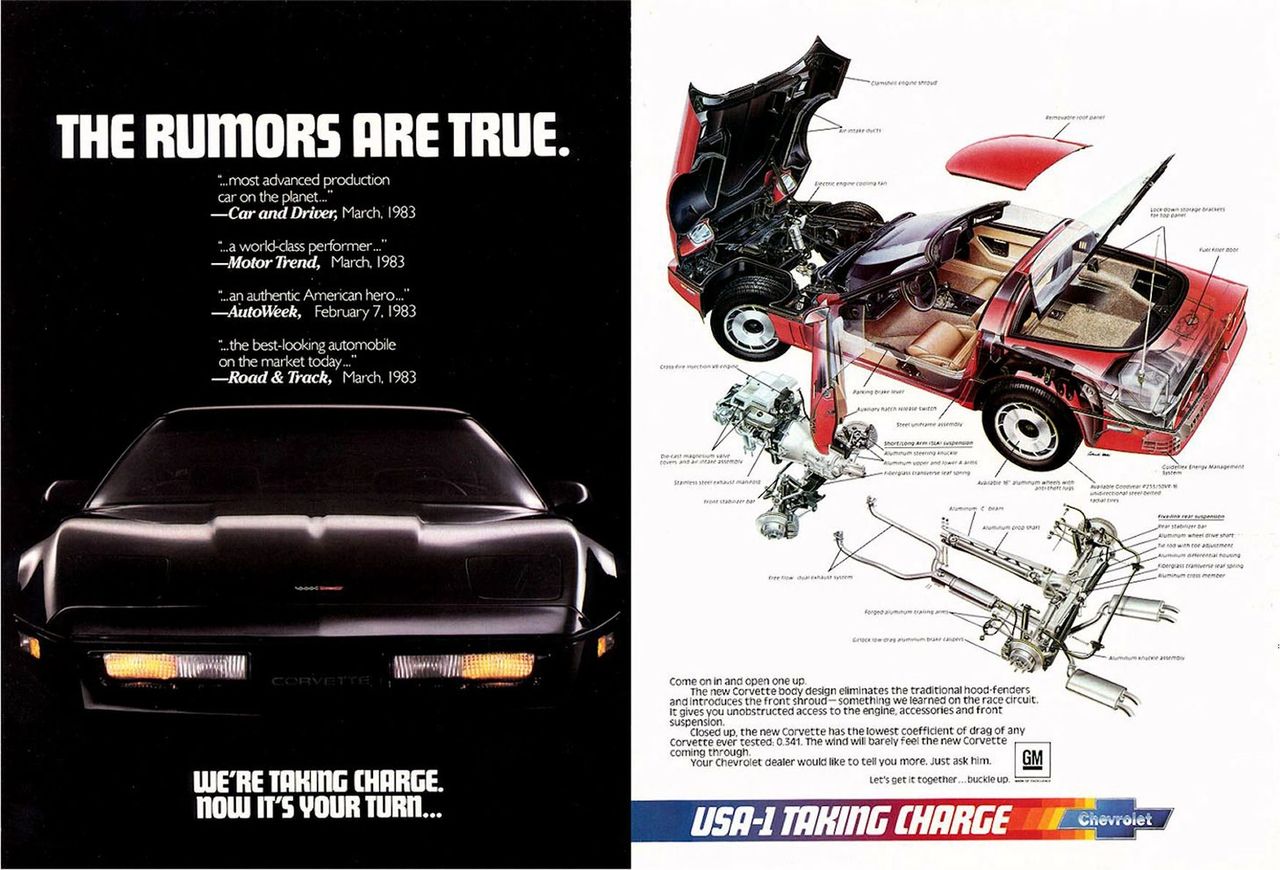
    Promotional article introducing the 1984 Corvette.
    Promotional article introducing the 1984 Corvette.

    Though not without its flaws, the 1984 Corvette was undeniably a pivotal moment in Corvette history. It established a new blueprint for the brand—one focused on technology, precision engineering, and aerodynamic efficiency.

    Its influence stretched far beyond the C4 generation. The digital dashboard foreshadowed the growing role of electronics and driver information systems. The aluminum suspension components and rack-and-pinion steering became the foundation for subsequent Corvettes, culminating in the advanced chassis designs of the C5, C6, and beyond.

    The Z51 package’s success proved that performance-oriented handling upgrades would be a mainstay in Corvette’s arsenal, evolving into sophisticated, computer-controlled systems that maintain the brand’s racing pedigree.

    In Retrospect

    The 1984 Corvette was more than a new model; it was a statement—a bold commitment to innovation in the face of a changing automotive landscape. It balanced tradition with the future, creating a sports car that was as much about driving precision as it was about power.

    For enthusiasts, it may not have been the rawest or fastest Corvette ever built, but it was the one that set the stage for the modern American sports car era. It remains a fascinating and cherished chapter in Corvette lore, embodying the spirit of reinvention that continues to define the brand today.

    1984 Corvette — Key Specifications

    Quick Stats

    • Engine: 5.7L (350 cu in) L83 Cross-Fire Injection V8
    • Output: 205 hp @ 4,300 rpm • 290 lb-ft @ 2,800 rpm
    • Transmissions: 4-speed automatic (TH700-R4) • 4+3 Doug Nash manual (4-speed with overdrive on 2–4)
    • Layout: Front-engine, rear-wheel drive
    • Curb Weight: ~3,200–3,300 lb (equipment-dependent)

    Performance (period test ranges)

    • 0–60 mph: ~6.7–7.2 sec (Z51/4+3 typically quickest)
    • ¼-mile: ~15.2–15.5 sec @ ~92–94 mph
    • Top Speed: ~146–150 mph
    • Skidpad: up to ~0.87–0.90 g with Z51
    • 60–0 mph Braking: ~150–160 ft

    Chassis & Suspension

    • Structure: Unitized “uniframe” with bolt-on front/rear cradles; composite body panels
    • Front Suspension: Short/long arm (aluminum control arms), transverse composite leaf spring, gas shocks
    • Rear Suspension: Five-link independent, transverse composite leaf spring, gas shocks
    • Steering: Power rack-and-pinion (first year for Corvette)
    • Brakes: 4-wheel power disc; ventilated rotors; aluminum calipers
    • Packages:
    • Z51 Performance Handling Package: higher-rate springs/anti-roll bars, heavy-duty shocks, quicker steering, performance alignment & cooling tweaks

    Wheels & Tires

    • Wheels: 16 × 8.5 in cast aluminum
    • Tires: 255/50VR-16 Goodyear Eagle VR50 “Gatorback” (V-rated)

    Dimensions

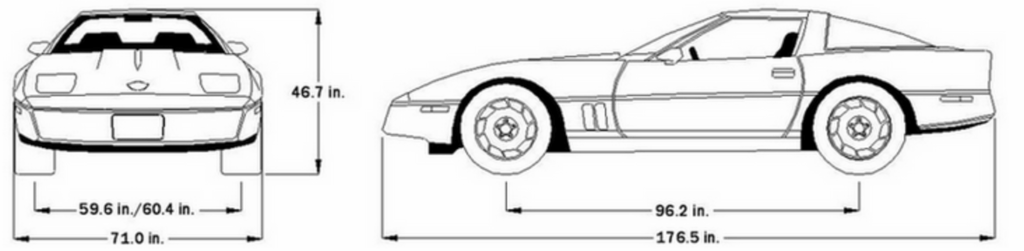
    1984 Corvette Dimensions (Image courtesy of the author.)
    • Wheelbase: 96.2 in
    • Length x Width x Height: ~176.5 × 71.0 × 46.7 in
    • Track (F/R): ~59.6 / 60.4 in
    • Fuel Capacity: ~20.0 gal
    • EPA (period): mid-teens city / low-20s highway (varies by trans/axle)

    Powertrain Details

    • Engine Code: L83 Cross-Fire Injection (twin throttle-body)
    • Compression Ratio: 9.0:1
    • Induction/Management: Dual TBI with electronic engine control
    • Axle Ratios (common): 3.07, 3.31 (varies w/ trans & Z51)

    Paint & Trim (1984)

    Exterior colors (U.S. production):

    • Black
    • White
    • Silver Metallic
    • Medium Gray Metallic
    • Medium Blue Metallic
    • Light Bronze Metallic
    • Bright Red (late availability)

    Two-tone treatments: select combinations using Gray or Bronze lower accents (period option).

    Interiors: Cloth or leather in Graphite (Gray), Red, Medium Blue, and Saddle (availability varied by exterior color and build timing).

    Interior & Features Highlights

    • All-digital instrument cluster with bar-graph tach/speedo
    • 6-way power driver seat (opt) • Delco audio (cassette, Bose system arrived later)
    • Removable one-piece roof panel (body-color or bronze acrylic)
    • Rear hatch glass with remote release

    Why the 1984 Corvette Still Matters Today

    The 1984 Corvette remains relevant not because it looks back, but because it showed Chevrolet how to move ahead. Even as the C4 Corvette continues to fade further into the horizon with each passing year, its existence still symbolizes Chevrolet’s courage to start over, and it set the course for every Corvette that followed.

    More than four decades after its debut, the 1984 Corvette remains deeply relevant—not as a relic of the past, but as the foundation upon which every modern Corvette is built. As the first model of the fourth generation, the 1984 Corvette represented a complete philosophical reset for America’s sports car. It abandoned incremental evolution in favor of a clean-sheet redesign that prioritized aerodynamics, chassis rigidity, handling precision, and driver integration. These core principles—lightweight construction, balanced performance, and a driver-centric cockpit—continue to define the Corvette’s identity today, from the C5 and C6 to the mid-engine C8.

    The 1984 Corvette also marked the moment when Chevrolet decisively repositioned the Corvette as a technologically forward, globally competitive performance car. Its advanced aluminum suspension components, modernized chassis, digital instrumentation, and dramatically improved structural stiffness reflected a mindset that performance was no longer just about straight-line speed. That same shift toward holistic performance—where handling, braking, and driver confidence matter as much as horsepower—is now central to modern performance car design, making the 1984 Corvette feel less like an artifact of the 1980s and more like the opening chapter of the Corvette’s modern era.

    Just as importantly, the 1984 Corvette remains relevant because it represents the courage to start over. In an era when legacy brands often struggle to reinvent themselves, the 1984 Corvette stands as proof that bold reinvention—when guided by engineering discipline and long-term vision—can redefine a nameplate without losing its soul. For today’s enthusiasts, collectors, and historians, the 1984 Corvette is not simply the first C4; it is the car that taught Chevrolet how to build the Corvette of the future.

    The 1984 Corvette marked one of the most transformative moments in the model’s history, ushering in the fourth generation with a bold, clean-sheet redesign. After a one-year production hiatus, Chevrolet reintroduced America’s sports car with a radically modernized chassis, advanced aerodynamics, and a renewed focus on handling, technology, and driver engagement. The result was a…