
Tag: Chuck Jordan

  • 1992 STINGRAY III (CALIFORNIA CORVETTE)

    1992 STINGRAY III (CALIFORNIA CORVETTE)

    The closing years of the 1980s were years of reckoning for General Motors. For decades, GM had been America’s automotive giant, an unshakable force that seemed as permanent as steel itself. But by the late 1980s, the edifice was crumbling. Market share had slipped precipitously. Japanese automakers, with their reputation for efficiency and quality, were eroding GM’s once-dominant position. The company’s brand image sagged under the weight of bureaucracy and uninspired products.

    Even the Corvette, long considered Chevrolet’s crown jewel, was not immune. The C4 Corvette, launched in 1984 with fanfare as a high-tech reinvention of America’s sports car, had begun to feel stale. Sales that had peaked in the mid-1980s were now in sharp decline. Competitors from Europe and Asia offered refinement, reliability, and performance that left the Corvette looking vulnerable.

    At a 1989 executive conference in Traverse City, Michigan, GM’s new president, Robert Stempel, raised the unthinkable: perhaps it was time to postpone—or even cancel—the fifth-generation Corvette. Some executives even suggested phasing out the C4 entirely, arguing that the Corvette no longer made business sense in a shrinking sports car market. The Corvette, America’s icon, suddenly looked like an expendable liability.
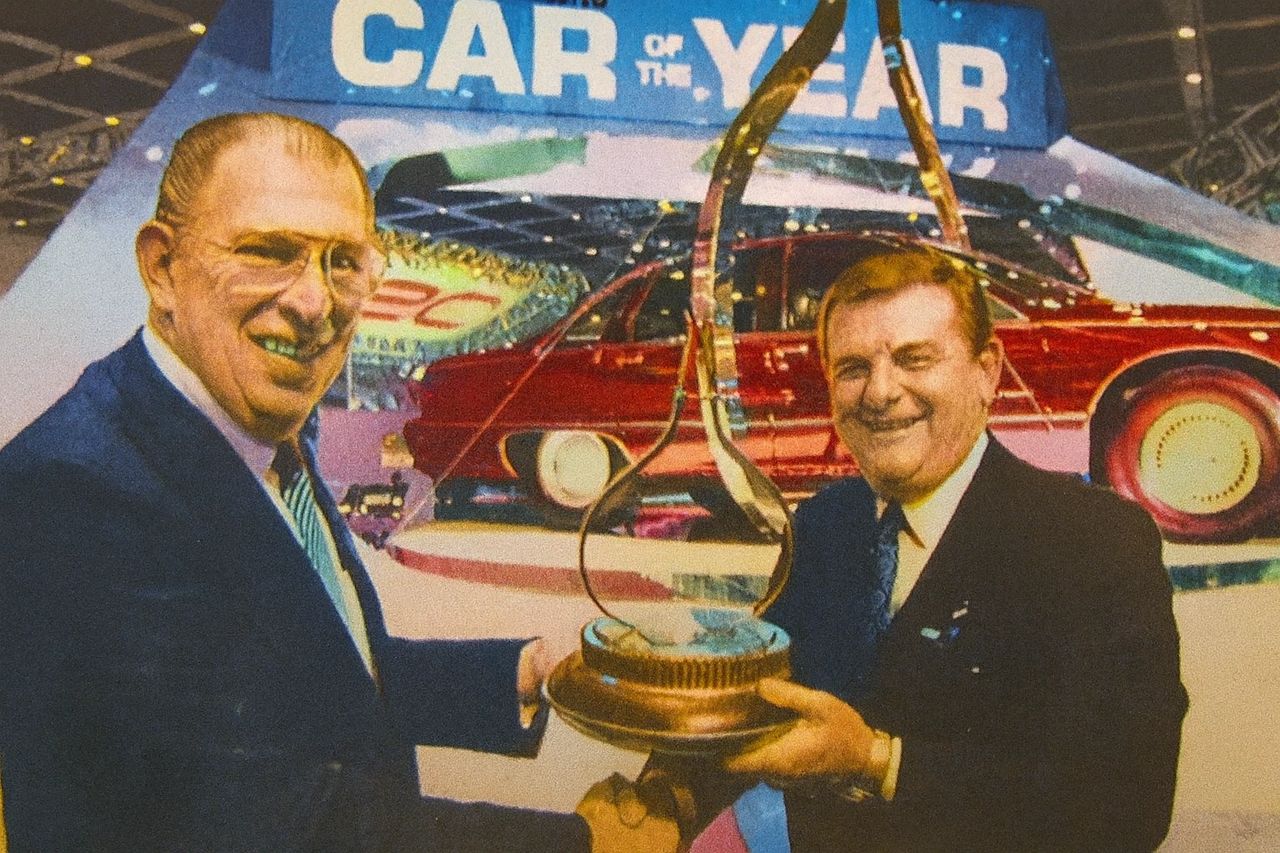
    Robert Stempel and Jim Perkins share the stage at the 1991 Motor Trend Car of the Year awards, a rare moment of unity between two GM leaders often at odds over Corvette’s future. Stempel, then GM president, had considered delaying or even canceling the C5 program amid the company’s financial woes, while Perkins, Chevrolet’s general manager, fought fiercely to preserve Corvette as the brand’s halo. Their tug-of-war over resources and priorities defined the early 1990s, with Perkins’ resolve ultimately ensuring that the fifth-generation Corvette would be developed—proving once again that Corvette’s survival depended as much on passion and politics as it did on engineering.
    Robert Stempel and Jim Perkins share the stage at the 1991 Motor Trend Car of the Year awards, a rare moment of unity between two GM leaders often at odds over Corvette’s future. Stempel, then GM president, had considered delaying or even canceling the C5 program amid the company’s financial woes, while Perkins, Chevrolet’s general manager, fought fiercely to preserve Corvette as the brand’s halo. Their tug-of-war over resources and priorities defined the early 1990s, with Perkins’ resolve ultimately ensuring that the fifth-generation Corvette would be developed—proving once again that Corvette’s survival depended as much on passion and politics as it did on engineering.

    But Chevrolet’s general manager, Jim Perkins, refused to accept that vision. A passionate believer in Corvette’s role as Chevrolet’s halo, Perkins delivered a pointed reminder: Corvette was more than just a model in the lineup. It was the aspirational flagship, the car that cast a glow over every Camaro, Impala, and pickup Chevrolet sold. Killing it, Perkins argued, would not save the company—it would gut its identity. His conviction swayed opinion. The Corvette program survived.

    Yet survival was not enough. To truly endure, Corvette needed to evolve. It needed to capture the public’s imagination once again.

    California Dreaming
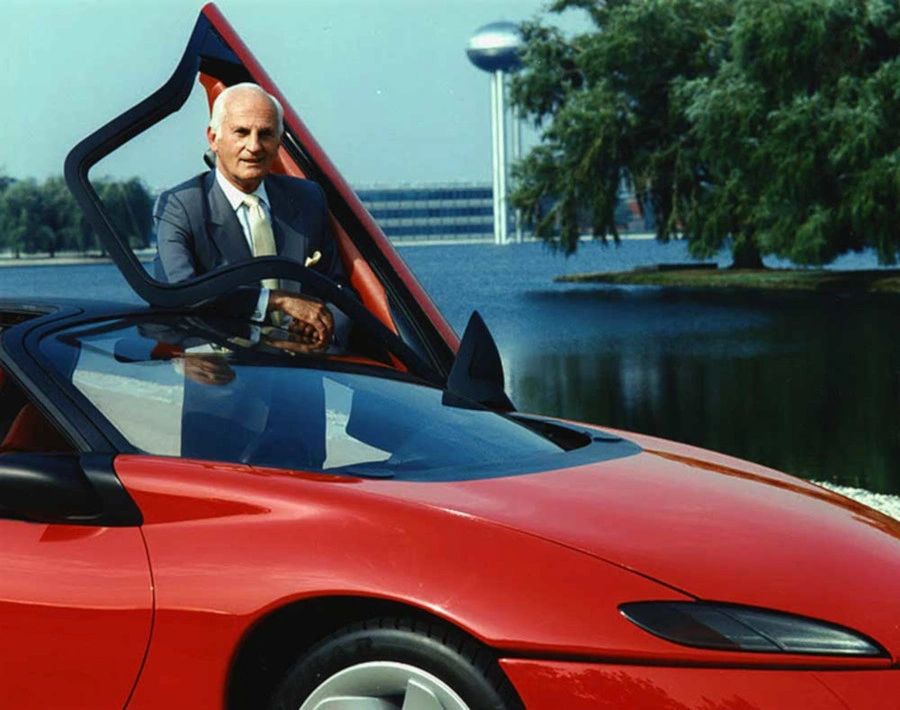
    Chuck Jordan, GM’s vice president of design, used the freedom of his Los Angeles–based Advanced Concept Center to push Chevrolet into bold new territory. Out of that West Coast studio came the Stingray III, a “California Corvette” that stunned with its scissor doors, sweeping curves, and futuristic suspension. Alongside it, Jordan also greenlit a dramatic Camaro concept, low-slung and aerodynamic, meant to recapture youthful excitement. Both cars embodied his conviction that GM needed to break from tradition and embrace forward-looking design. Though neither reached production in their purest form, their influence carried into future Corvettes and Camaros. Together, they remain testaments to Jordan’s belief that Chevrolet should never stop dreaming.
    Chuck Jordan, GM’s vice president of design, used the freedom of his Los Angeles–based Advanced Concept Center to push Chevrolet into bold new territory. Out of that West Coast studio came the Stingray III, a “California Corvette” that stunned with its scissor doors, sweeping curves, and futuristic suspension. Alongside it, Jordan also greenlit a dramatic Camaro concept, low-slung and aerodynamic, meant to recapture youthful excitement. Both cars embodied his conviction that GM needed to break from tradition and embrace forward-looking design. Though neither reached production in their purest form, their influence carried into future Corvettes and Camaros. Together, they remain testaments to Jordan’s belief that Chevrolet should never stop dreaming.

    As the executive battles played out in Traverse City, another drama was unfolding on the design side of GM. Chuck Jordan, the company’s Vice President of Design, knew that Corvette could not simply continue unchanged. It needed reinvention, something bold enough to make even the skeptics take notice. In October 1989, Jordan staged a contest across GM’s design studios: each would present their vision for the next-generation Corvette.

    Among those who rose to the challenge was John Schinella, director of Chevrolet’s Advanced Concept Center in Newbury Park, California. Schinella was no stranger to the Corvette; his career at GM had included stints on Camaro and Firebird, and he carried with him a deep understanding of Chevrolet’s performance DNA. But his West Coast studio was unlike the traditional halls of Warren, Michigan. In Newbury Park, the culture was looser, influenced by California’s aerospace industry, surf scene, and Hollywood spectacle. This was the perfect soil in which to grow something radical.
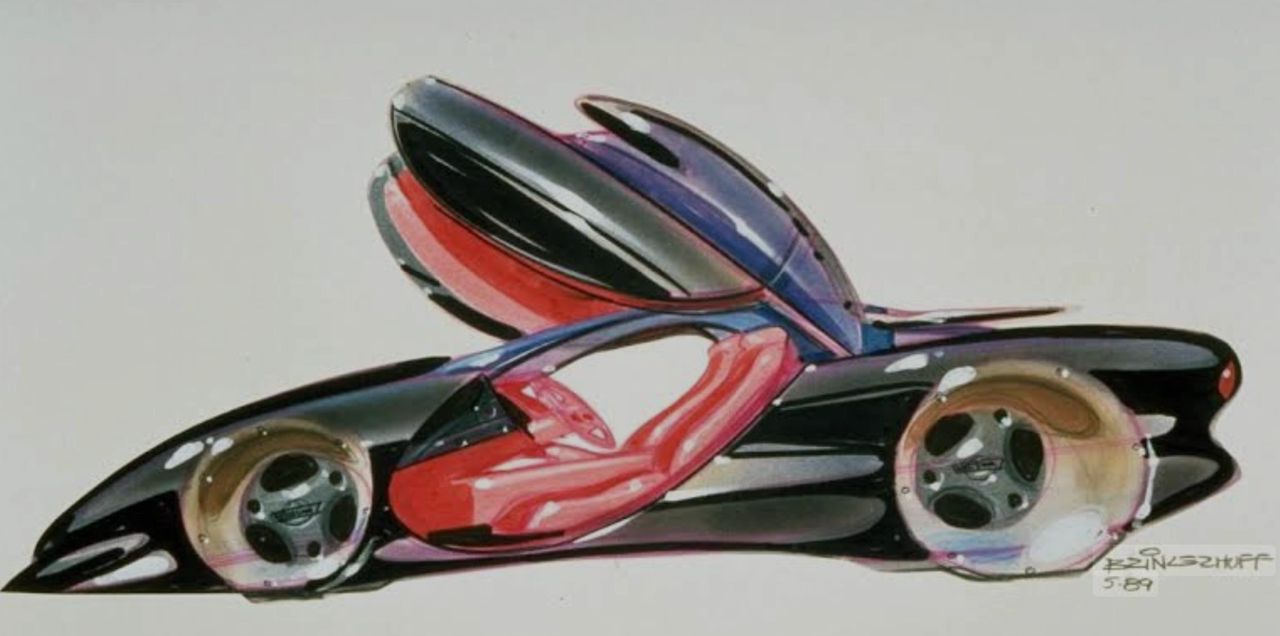
    An early 1989 rendering of the Stingray III “California Corvette” by designer Jim Brinkerhoff at GM’s Advanced Concept Center, this sketch captures the radical scissor doors, sweeping canopy glass, and futuristic stance that defined the concept. Created during a heated internal competition between GM’s design studios to shape the Corvette’s future, Brinkerhoff’s vision showcased the bold, West Coast flair that set the Advanced Concept Center apart—and ultimately helped secure its place as the creative force behind one of the most daring Corvette concepts ever imagined.
    An early 1989 rendering of the Stingray III “California Corvette” by designer Jim Brinkerhoff at GM’s Advanced Concept Center, this sketch captures the radical scissor doors, sweeping canopy glass, and futuristic stance that defined the concept. Created during a heated internal competition between GM’s design studios to shape the Corvette’s future, Brinkerhoff’s vision showcased the bold, West Coast flair that set the Advanced Concept Center apart—and ultimately helped secure its place as the creative force behind one of the most daring Corvette concepts ever imagined.

    Schinella and his team asked a simple but provocative question: What if Corvette were downsized? What if it shed mass, leaned into fluidity, and embraced futuristic technology while still nodding to its past? The sketches began to flow. Some were rough, others detailed, but together they formed a vision: a Corvette that was at once familiar and alien. Its shape evoked Bill Mitchell’s Manta Ray and Mako Shark concepts, with long fenders, muscular haunches, and fluid curves, but stripped of excess, honed to a futuristic edge.

    These sketches were critiqued, refined, and reimagined until the Stingray III—the “California Corvette”—was born.

    Sculpture in Motion
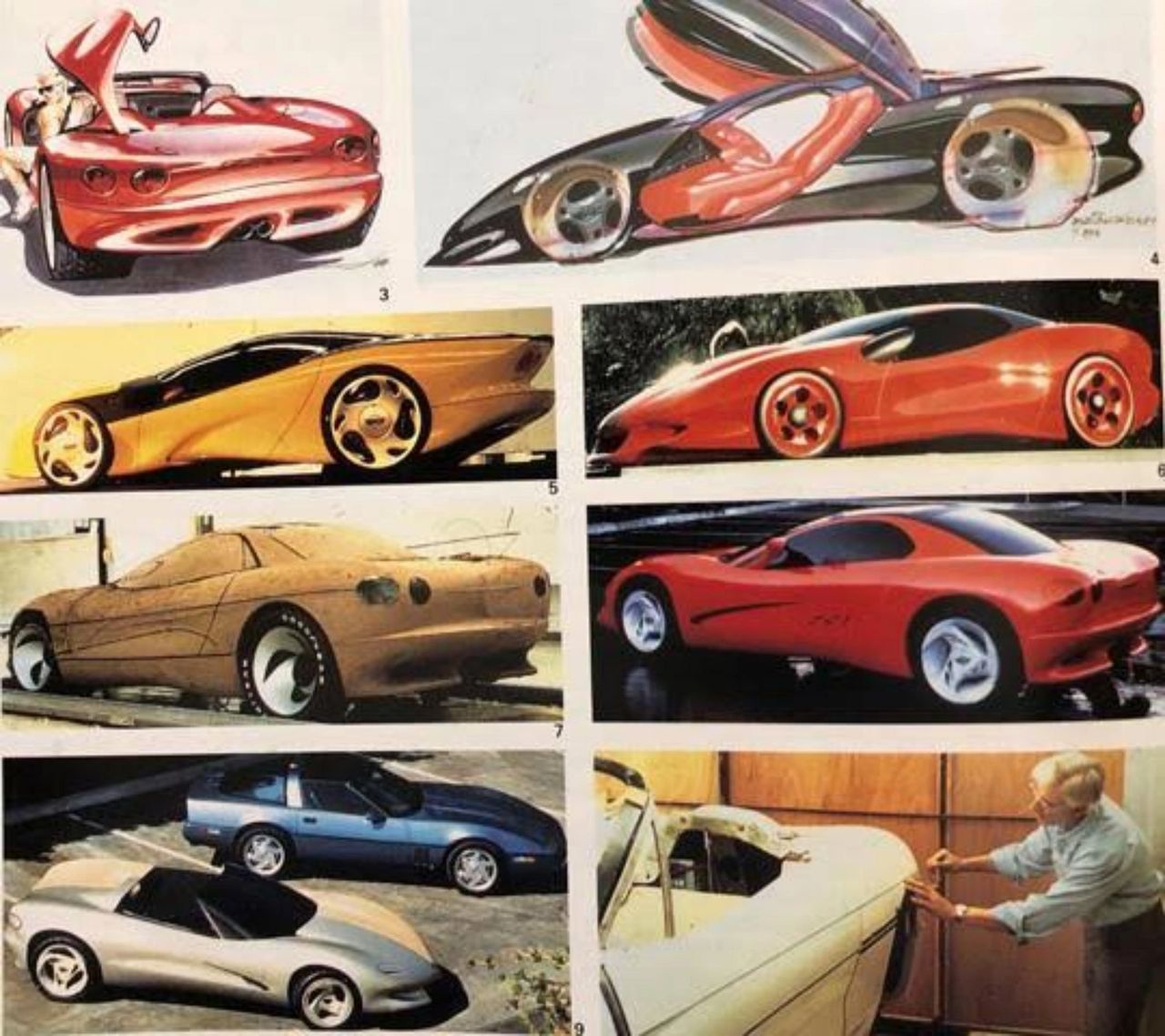
    A glimpse inside GM’s Advanced Concept Center in California during the late 1980s and early 1990s, where the Stingray III was born. These sketches, clay models, and full-size prototypes show the breadth of experimentation as designers explored everything from radical scissor-doored visions to sleeker, more production-minded studies. The competition between studios—California’s free-flowing flair versus Detroit’s more conservative edge—pushed the Corvette program into daring new territory. What emerged was the Stingray III, a concept that captured the imagination of enthusiasts and hinted at design cues that would ultimately shape the next generation of America’s sports car.
    A glimpse inside GM’s Advanced Concept Center in California during the late 1980s and early 1990s, where the Stingray III was born. These sketches, clay models, and full-size prototypes show the breadth of experimentation as designers explored everything from radical scissor-doored visions to sleeker, more production-minded studies. The competition between studios—California’s free-flowing flair versus Detroit’s more conservative edge—pushed the Corvette program into daring new territory. What emerged was the Stingray III, a concept that captured the imagination of enthusiasts and hinted at design cues that would ultimately shape the next generation of America’s sports car.

    The 1992 Stingray III, when translated from sketch to clay to prototype, was breathtaking. It was both Corvette and not-Corvette, a car that seemed to have leapt forward a generation overnight.

    Its proportions were deliberate and dramatic. The wheelbase stretched nearly seven inches beyond the C4, while the body widened by more than three inches. This gave the car a planted, muscular stance. Yet it was not bloated. The tail was bobbed, the deck rounded and taut, giving the car an almost feline readiness to pounce. The windshield was steeply raked, blending into a roofline that felt more spacecraft than sports car.
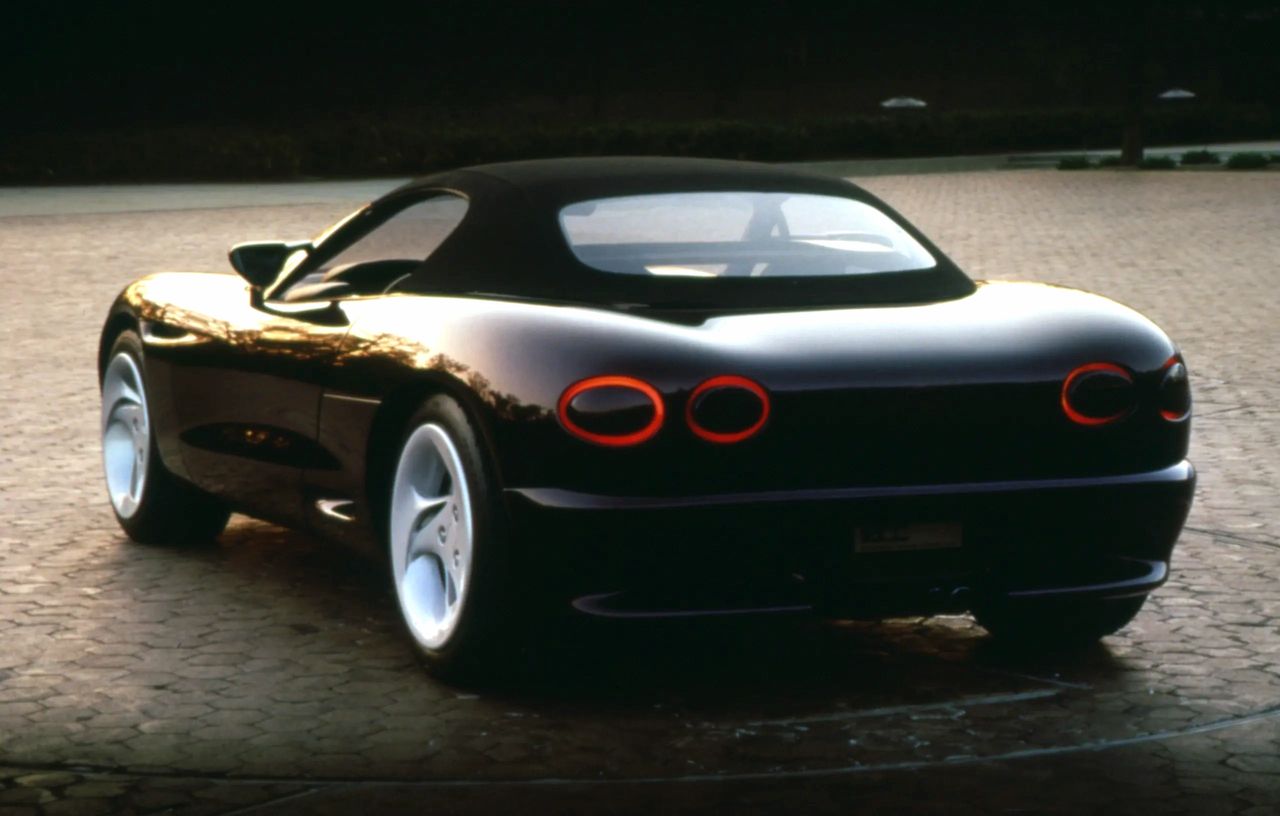
    From this rear three-quarter angle, the Stingray III reveals several of its most distinctive—and forward-looking—design cues. The rounded taillamps, set into a smooth, almost liquid surface, were a deliberate evolution of Corvette’s trademark quad-light theme. Instead of being recessed or split by bodywork, they float in a clean horizontal line, previewing the flush, minimalist rear ends that would dominate GM design language in the 1990s. The sharply tucked rear fascia and integrated exhaust outlet mark a clear departure from the blockier, bumper-defined C4 Corvette, hinting at the flowing surfaces that would arrive with the C5. The roofline and expansive glass taper down gracefully, emphasizing aerodynamics and cab-rearward stance—an element that pushed Corvette closer to its exotic European rivals. Finally, the wide five-spoke wheels, pushed out to the corners, give the car a planted, muscular presence. Each of these choices underscored the Stingray III’s mission: to prove Corvette design could move beyond the digital angularity of the 1980s and embrace organic curves and restrained sophistication for the future.
    From this rear three-quarter angle, the Stingray III reveals several of its most distinctive—and forward-looking—design cues. The rounded taillamps, set into a smooth, almost liquid surface, were a deliberate evolution of Corvette’s trademark quad-light theme. Instead of being recessed or split by bodywork, they float in a clean horizontal line, previewing the flush, minimalist rear ends that would dominate GM design language in the 1990s. The sharply tucked rear fascia and integrated exhaust outlet mark a clear departure from the blockier, bumper-defined C4 Corvette, hinting at the flowing surfaces that would arrive with the C5. The roofline and expansive glass taper down gracefully, emphasizing aerodynamics and cab-rearward stance—an element that pushed Corvette closer to its exotic European rivals. Finally, the wide five-spoke wheels, pushed out to the corners, give the car a planted, muscular presence. Each of these choices underscored the Stingray III’s mission: to prove Corvette design could move beyond the digital angularity of the 1980s and embrace organic curves and restrained sophistication for the future.

    Every detail pushed the concept further into the realm of sculpture. The clamshell hood arced upward to reveal the engine bay. The doors opened vertically, scissor-style, in the manner of a Lamborghini Countach—flamboyant, impractical, and unforgettable. At the rear, four elliptical taillights glowed within a stylized bumper, their shapes both futuristic and instantly recognizable as Corvette.

    Even its stance conveyed intent. The 1992 Stingray III sat on cast-aluminum wheels wrapped in 285/35ZR-18 Goodyear tires, the kind of wide, sticky rubber usually reserved for European exotics. Its low side sills made entry easier than the C4, a nod to real-world usability. And in one particularly theatrical flourish, the left side of the dashboard itself rose when the driver’s door swung open, offering extra clearance for knees. It was engineering as performance art.

    The Stingray III looked alive even at rest, a car that seemed to lean forward into motion, as if impatient to prove itself.

    The Cockpit of Tomorrow
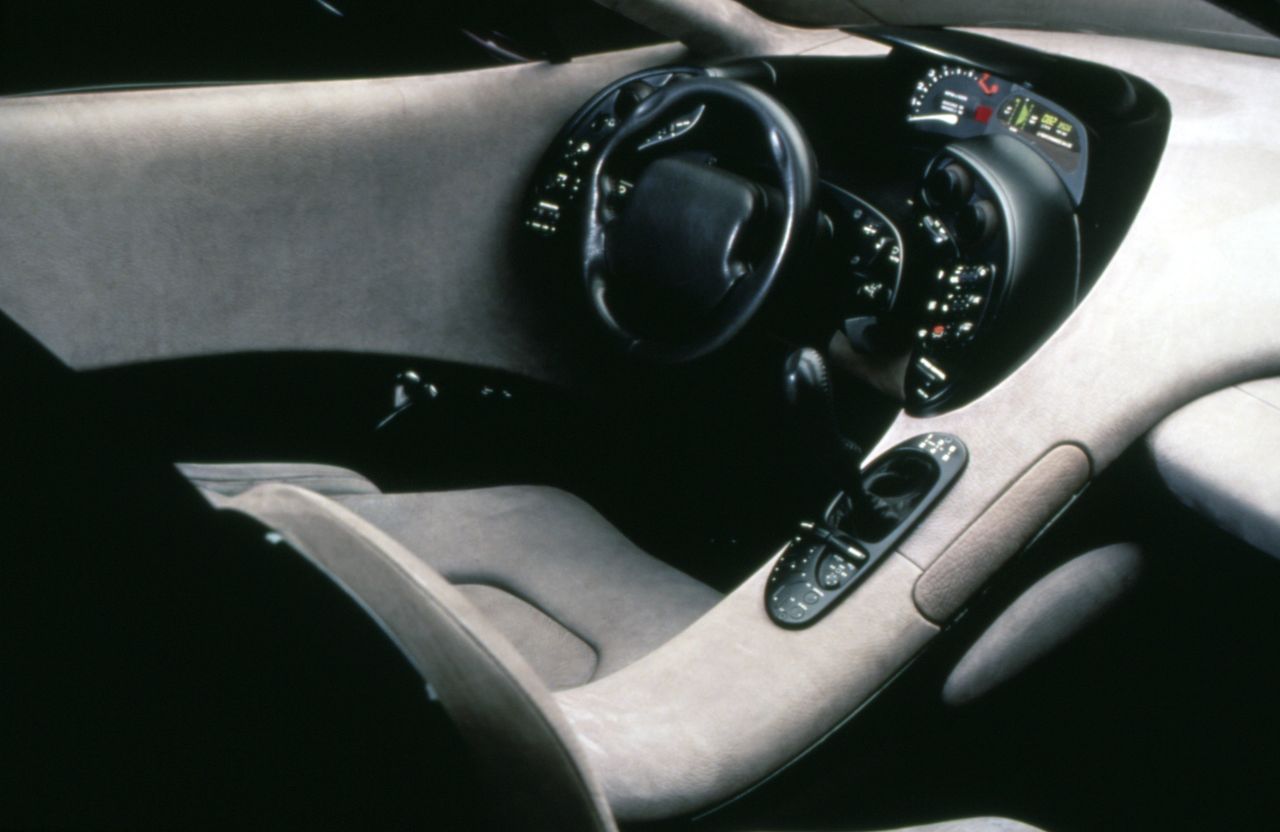
    The interior of the Stingray III was as radical as its exterior, with a driver-focused cockpit that looked more like something out of a concept jet than a road car. The sweeping dash wrapped tightly around the driver, emphasizing Corvette’s mission to create a true “driver’s car.” Digital displays and clustered controls hinted at the electronic future GM envisioned, while the sculpted two-tone surfaces gave the cabin a futuristic, almost organic flow. Even the placement of switchgear on the steering wheel and console showed a push toward ergonomics and tech integration years ahead of its time. From this angle, the Stingray III’s cabin reveals itself as both a design experiment and a blueprint for the digital, driver-centric environments that would define Corvettes well into the 21st century. (Image courtesy of GM Media LLC,)
    The interior of the Stingray III was as radical as its exterior, with a driver-focused cockpit that looked more like something out of a concept jet than a road car. The sweeping dash wrapped tightly around the driver, emphasizing Corvette’s mission to create a true “driver’s car.” Digital displays and clustered controls hinted at the electronic future GM envisioned, while the sculpted two-tone surfaces gave the cabin a futuristic, almost organic flow. Even the placement of switchgear on the steering wheel and console showed a push toward ergonomics and tech integration years ahead of its time. From this angle, the Stingray III’s cabin reveals itself as both a design experiment and a blueprint for the digital, driver-centric environments that would define Corvettes well into the 21st century. (Image courtesy of GM Media LLC,)

    If the exterior was bold, the interior was audacious. Sliding into the 1992 Stingray III was less like entering a car than strapping into a jet fighter.

    The seats were fixed in place, reclined deeply, cradling the driver in a low, aggressive position. Instead of moving the seat, the wheel and pedals adjusted—a nod to aerospace ergonomics and a reminder that this was no ordinary automobile.

    The dashboard was a sweeping cocoon of technology. Black pods flanked the central cluster, each bristling with analog dials, digital readouts, illuminated toggles, and switches. Motor Trend would later describe it as “a collection of dials, illuminated buttons, and toggle switches to operate the car’s many onboard technologies.” Among those was an in-car camera system with telemetric storage—unheard of in 1992, but prescient of the onboard recorders and infotainment systems to come.
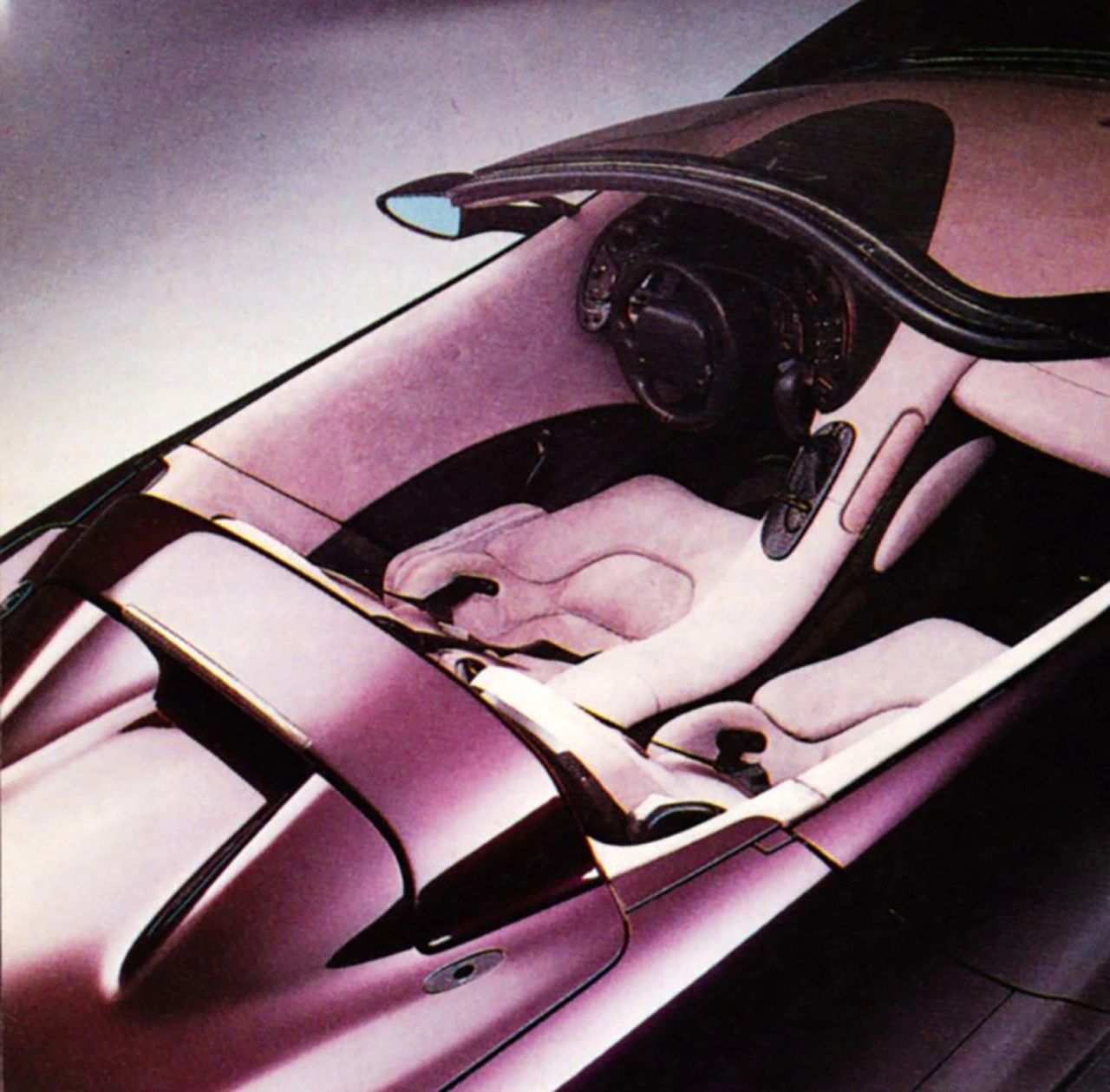
    From above, the Stingray III’s cabin shows off its futuristic dual-cockpit layout, a sculpted interior that cradled driver and passenger in deep, form-fitting seats. The flowing center spine bisected the space with dramatic intent, reinforcing the Corvette’s identity as a sports car built around the individual behind the wheel. This perspective also highlights how the exterior bodywork and interior design were conceived as one continuous form—an approach that gave the concept a level of integration rarely seen in production cars of its era.
    From above, the Stingray III’s cabin shows off its futuristic dual-cockpit layout, a sculpted interior that cradled driver and passenger in deep, form-fitting seats. The flowing center spine bisected the space with dramatic intent, reinforcing the Corvette’s identity as a sports car built around the individual behind the wheel. This perspective also highlights how the exterior bodywork and interior design were conceived as one continuous form—an approach that gave the concept a level of integration rarely seen in production cars of its era.

    The atmosphere was futuristic, but not sterile. It was immersive, intoxicating, and deliberately driver-focused. Sitting inside the Stingray III, one could almost imagine flying rather than driving.

    And for safety, a pop-up roll bar was concealed behind the seats, ready to spring into place in the event of a rollover. It was a small detail, but it revealed the seriousness beneath the spectacle. This was a show car, yes, but one designed with a mind toward possibility.

    Technology Beneath the Surface
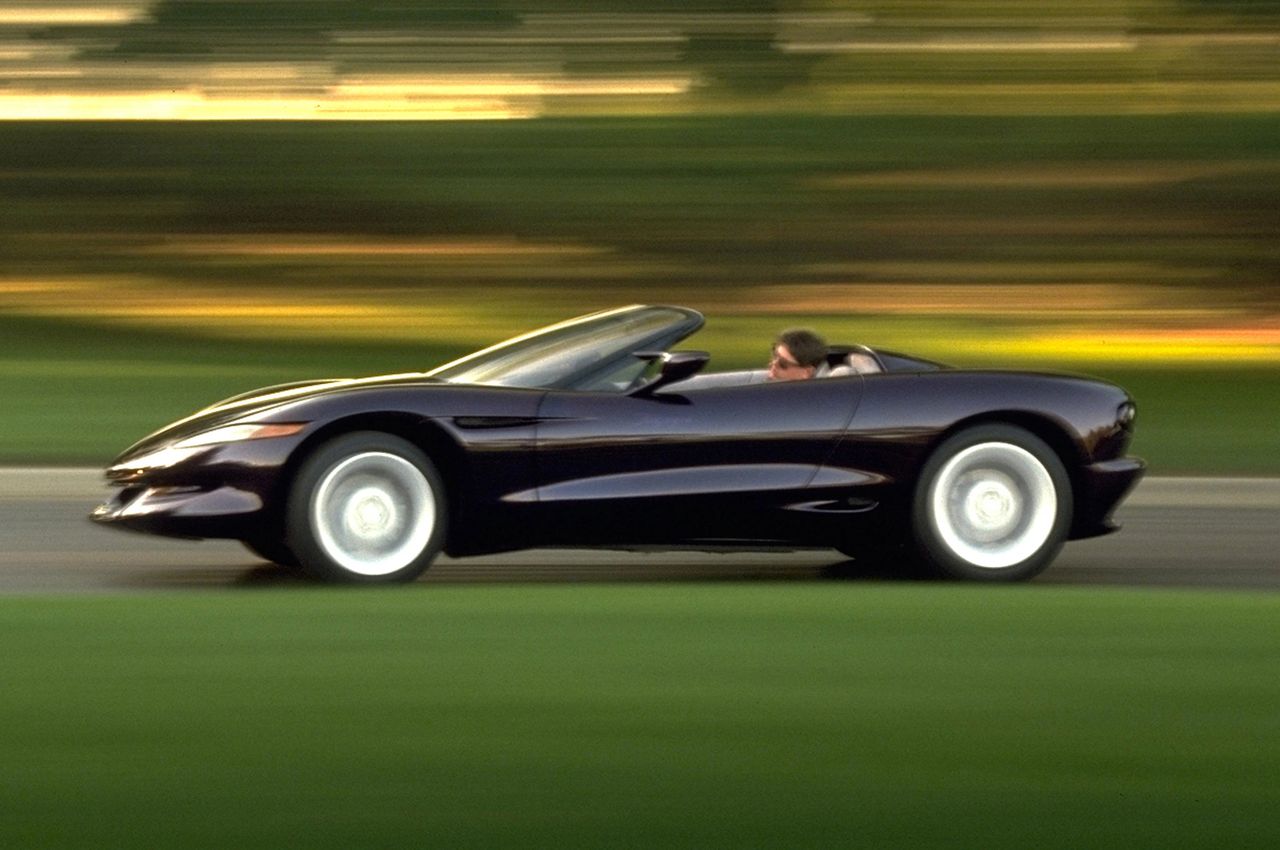
    The Stingray III was not just a styling exercise—it carried some of the most advanced mechanical thinking of its era. Underneath its sleek body sat a state-of-the-art suspension system with double wishbones and electronically controlled dampers, paired with four-wheel steering that allowed the rear wheels to turn in harmony or opposition to the fronts for sharper handling and greater stability. The car also featured traction control and anti-lock brakes, showcasing GM’s effort to explore technologies that would later become standard across the Corvette line. Despite these innovations, the Stingray III remained a showpiece rather than a production candidate. Public reaction was mixed: many praised its fluid lines and futuristic stance, but others felt its design was too radical, diverging too far from Corvette tradition. Ultimately, the cost of implementing its cutting-edge systems, combined with the financial pressures facing GM in the early 1990s, meant the project never advanced beyond the concept stage—leaving the Stingray III as a tantalizing glimpse of what might have been.
    The Stingray III was not just a styling exercise—it carried some of the most advanced mechanical thinking of its era. Underneath its sleek body sat a state-of-the-art suspension system with double wishbones and electronically controlled dampers, paired with four-wheel steering that allowed the rear wheels to turn in harmony or opposition to the fronts for sharper handling and greater stability. The car also featured traction control and anti-lock brakes, showcasing GM’s effort to explore technologies that would later become standard across the Corvette line. Despite these innovations, the Stingray III remained a showpiece rather than a production candidate. Public reaction was mixed: many praised its fluid lines and futuristic stance, but others felt its design was too radical, diverging too far from Corvette tradition. Ultimately, the cost of implementing its cutting-edge systems, combined with the financial pressures facing GM in the early 1990s, meant the project never advanced beyond the concept stage—leaving the Stingray III as a tantalizing glimpse of what might have been.

    The Stingray III was not just an exercise in aesthetics. Beneath its curvaceous skin lay engineering ambition that bordered on science fiction.

    Most striking was its suspension. Four optical sensors mounted beneath the chassis projected beams of white light onto the road. By measuring the reflected light, the system could detect changes in surface texture, feeding that data into a computer that adjusted the damping of its coil-over shocks in real time. “Active suspension was all the buzz in Detroit,” Motor Trend recalled, “and the Sting Ray III used a system with four optical sensors that shined white lights from the undercarriage that fed information to a computer that adjusted the damping.” It was a technological leap far ahead of its time.

    All-wheel steering added another layer of sophistication. The rear wheels could pivot slightly, tightening the car’s cornering radius at low speeds and enhancing stability at high speeds. For a front-engine sports car, this promised a level of agility usually associated with mid-engine exotics.
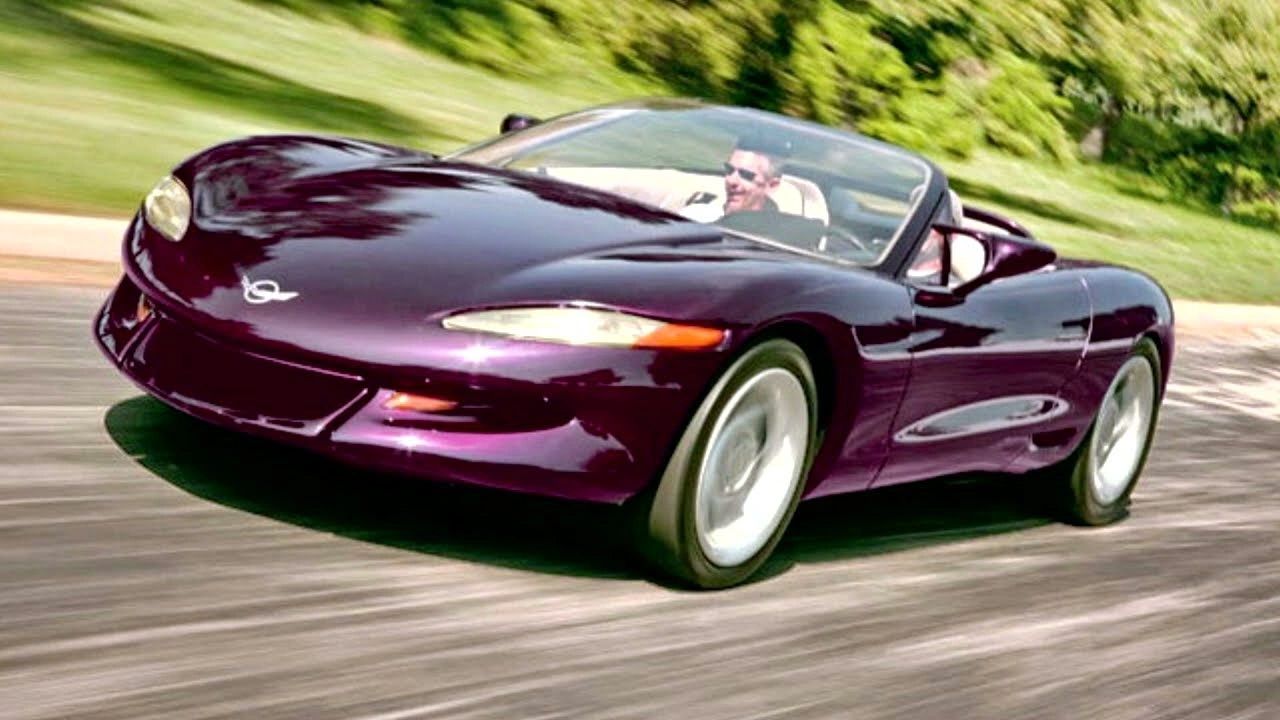
    The question of powertrain revealed the tension between innovation and tradition. Schinella’s team initially designed the 1992 Stingray III around a high-output V6, consistent with its smaller, lighter ethos. But within GM, the notion of a V6 Corvette sparked outrage. Corvette meant V8—always had, always would. Many within GM argued that moving to a six-cylinder platform would be a literal “step backward.” The compromise was fitting the prototype with the brand-new LT1 small-block V8, a 5.7-liter engine producing 300 horsepower—the same powerplant that debuted in the 1992 production Corvette.

    It was a compromise that ensured the 1992 Stingray III’s legitimacy. No matter how futuristic its lines or radical its technology, it had the heart of a small-block V8.

    The Detroit Reveal
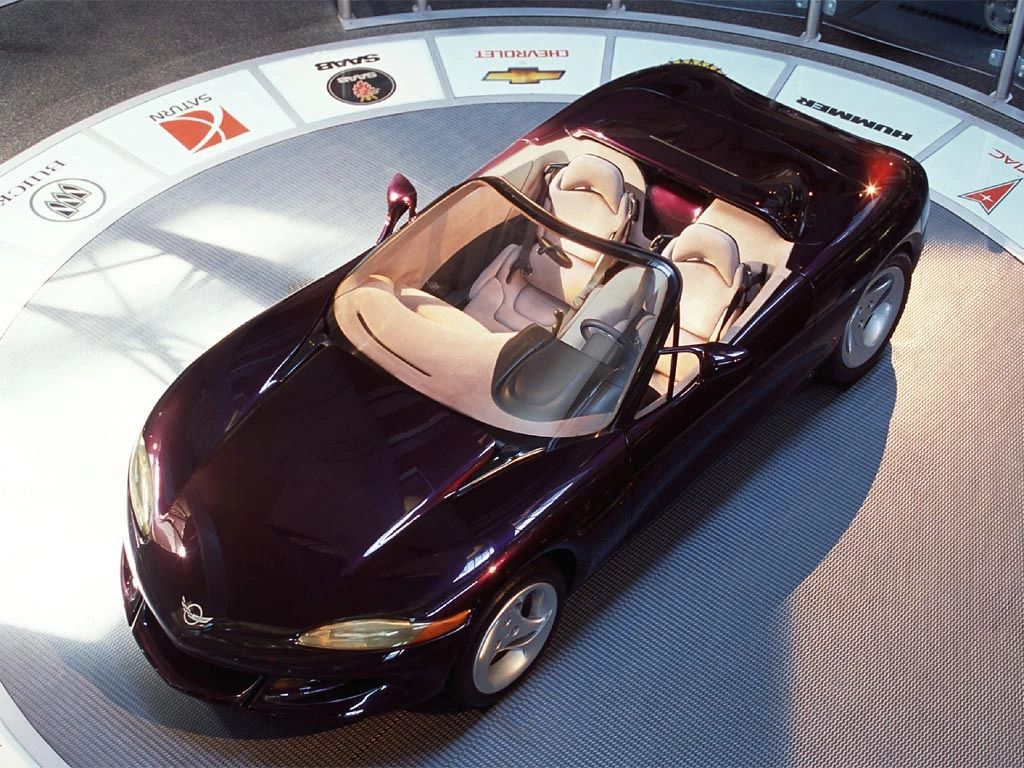
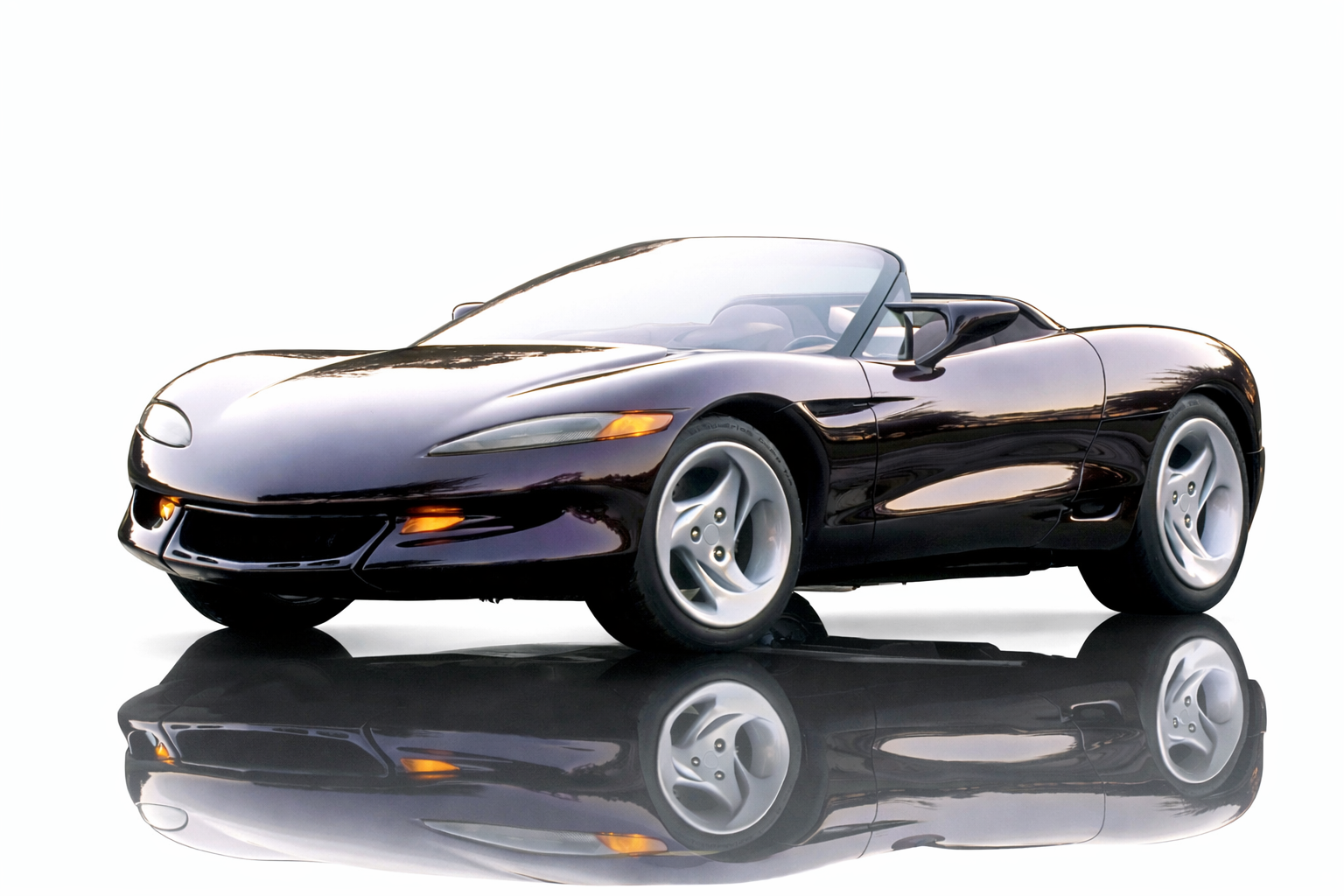
    On display at the 1992 North American International Auto Show in Detroit, the Corvette Stingray III concept (also known as the California Corvette) turned heads with its deep purple finish, minimalist cockpit, and futuristic surfacing. (Image courtesy of GM Media LLC.)
    On display at the 1992 North American International Auto Show in Detroit, the Corvette Stingray III concept (also known as the California Corvette) turned heads with its deep purple finish, minimalist cockpit, and futuristic surfacing. (Image courtesy of GM Media LLC.)

    The Stingray III made its public debut at the 1992 North American International Auto Show in Detroit. As it rolled onto the stage under the harsh white lights of Cobo Hall, it stole the show.

    The public reaction was electric. Journalists and enthusiasts crowded around it, marveling at its curves, gawking at its scissor doors, and puzzling over its space-age interior. “The car was loaded with cutting-edge hardware and was well received by the general public and press,” Motor Trend later remembered. For a brand fighting to prove its relevance, the Stingray III was exactly the shot of adrenaline Chevrolet needed.

    But inside GM, reception was more complicated. Many within the Detroit design community resisted the car’s California flavor. Where was the “sting” of the Sting Ray? Where was the sharp-edged menace that had defined the Corvette’s golden years in the 1960s? To them, the Stingray III felt too soft, too European, too removed from Corvette’s muscular identity.

    It was the classic Corvette paradox: push too far, and you risk alienating loyalists. Play it too safe, and you risk irrelevance. The Stingray III was caught in the middle.

    The Price of Boldness
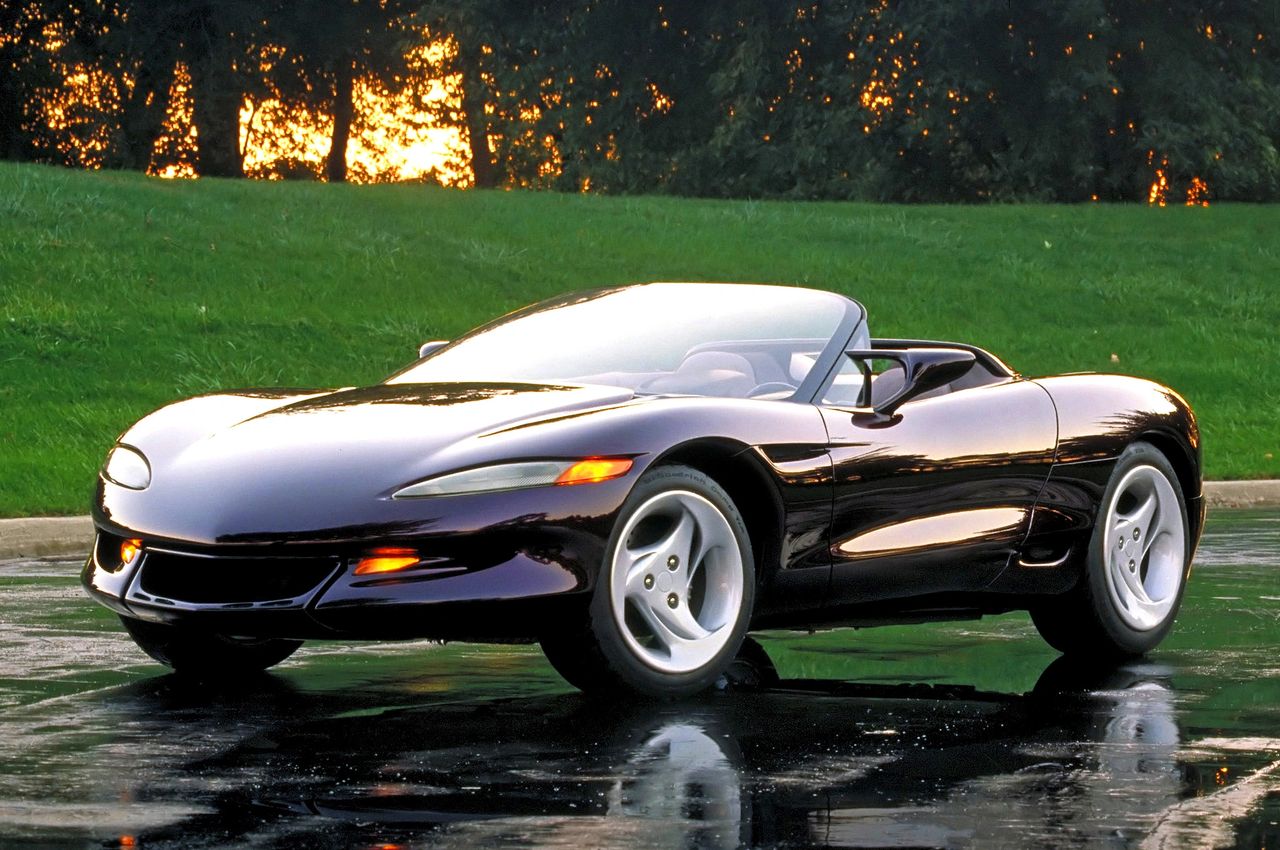
    The sleek Corvette Stingray III concept captured attention with futuristic surfacing, minimalist proportions, and advanced technology. Yet despite the excitement, GM never moved it into production. The radical design was deemed too far ahead of its time, with styling and packaging that would have been difficult—and prohibitively expensive—to translate into a street-legal car. Add in early ’90s budget constraints and shifting corporate priorities, and the Stingray III remained a showpiece of possibility rather than the foundation for the next Corvette. (Image courtesy of GM Media LLC.)
    The sleek Corvette Stingray III concept captured attention with futuristic surfacing, minimalist proportions, and advanced technology. Yet despite the excitement, GM never moved it into production. The radical design was deemed too far ahead of its time, with styling and packaging that would have been difficult—and prohibitively expensive—to translate into a street-legal car. Add in early ’90s budget constraints and shifting corporate priorities, and the Stingray III remained a showpiece of possibility rather than the foundation for the next Corvette. (Image courtesy of GM Media LLC.)

    Ultimately, what doomed the 1992 Stingray III was not taste, but cost. Estimates for producing the car as designed hovered near $300,000 per unit.

    “Automotive historians have said that this concept was considered for production, however, its $300,000 price tag made that idea a responsible no,” Robert Tate wrote for MotorCities. In 1992, that figure was astronomical—triple the price of the Corvette ZR-1 “King of the Hill” and well above Ferrari’s 512TR. For GM, still reeling from financial troubles, the Stingray III was a dream too rich to build.

    It would remain a one-off, a tantalizing vision of what could have been.

    Echoes in the Future
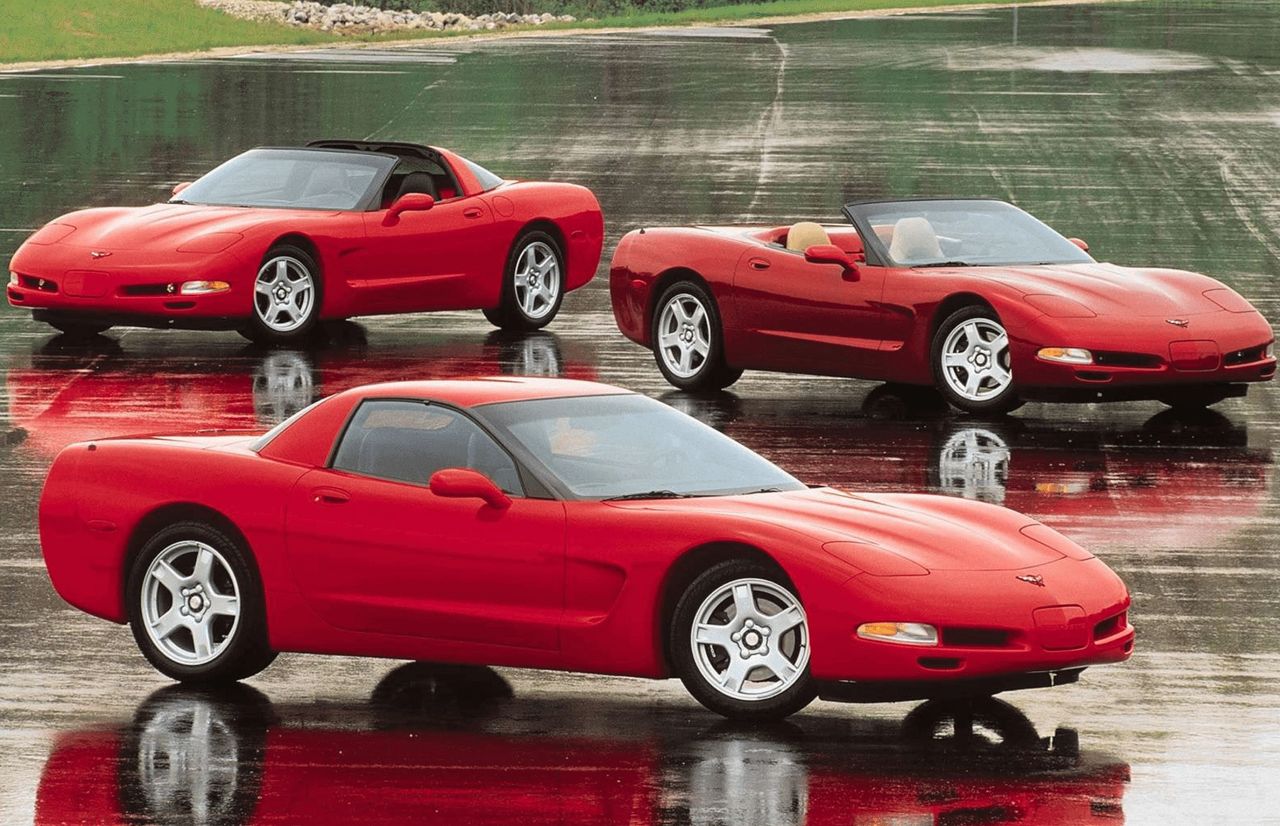
    The 1997–2004 C5 Corvette carried forward several themes first explored on the Stingray III concept, even if its hidden headlamps remained a Corvette staple until the C6. The Stingray III’s flowing, “shrink-wrapped” body surfaces (a design approach where the body panels look as though they've been pulled tightly over the mechanicals for a lean, aerodynamic form), integrated signal lamps, and cab-forward stance previewed the sleeker look that would define the C5. Nowhere was the influence clearer than in the Fixed Roof Coupe (FRC), which emphasized structural rigidity and purpose-built proportions—ideas central to the Stingray III’s purist design philosophy. While too radical for its time, the concept quietly guided the production team led by Jerry Palmer and John Cafaro as they shaped a Corvette ready for the 21st century.
    The 1997–2004 C5 Corvette carried forward several themes first explored on the Stingray III concept, even if its hidden headlamps remained a Corvette staple until the C6. The Stingray III’s flowing, “shrink-wrapped” body surfaces (a design approach where the body panels look as though they’ve been pulled tightly over the mechanicals for a lean, aerodynamic form), integrated signal lamps, and cab-forward stance previewed the sleeker look that would define the C5. Nowhere was the influence clearer than in the Fixed Roof Coupe (FRC), which emphasized structural rigidity and purpose-built proportions—ideas central to the Stingray III’s purist design philosophy. While too radical for its time, the concept quietly guided the production team led by Jerry Palmer and John Cafaro as they shaped a Corvette ready for the 21st century.

    Though it never reached production, the 1992 Stingray III’s influence reverberated through Chevrolet’s lineup in subtle but unmistakable ways.

    Its taillights, with their rounded elliptical shape, would define the look of the C5 Corvette in 1997. Its functional trunk returned on the 1998 Corvette convertible and again on the 1999 Fixed Roof Coupe, resurrecting a feature long absent from the model. Its exposed headlights, shocking in 1992, found their way onto the C6 in 2005, ending Corvette’s decades-long reliance on pop-up lamps.
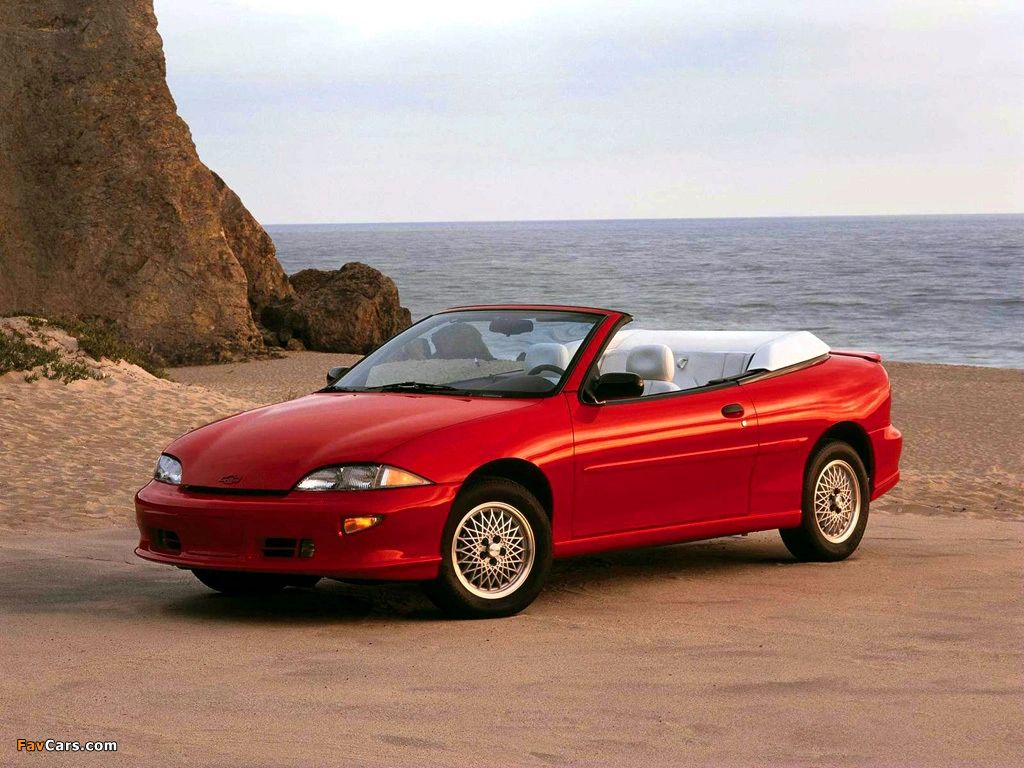
    Though it may seem surprising, the design language of the mid-1990s Chevrolet Cavalier owed a quiet debt to the Stingray III concept car. When GM Styling under Chuck Jordan and John Cafaro advanced the Stingray III’s lean, organic surfacing and cab-forward stance in 1992, those themes filtered down into Chevrolet’s mainstream cars. By 1995, the third-generation Cavalier carried slim, wraparound headlamps, a rounded nose, and body sides that looked more “shrink-wrapped” over the wheels—clear echoes of the concept’s sculptural simplicity. While the Corvette remained the aspirational halo, the Cavalier convertible pictured here demonstrates how GM spread elements of advanced design across its lineup, softening boxy edges of the 1980s in favor of a sleeker, more aerodynamic family look inspired by the Stingray III. (Image courtesy of HotCars.com)
    Though it may seem surprising, the design language of the mid-1990s Chevrolet Cavalier owed a quiet debt to the Stingray III concept car. When GM Styling under Chuck Jordan and John Cafaro advanced the Stingray III’s lean, organic surfacing and cab-forward stance in 1992, those themes filtered down into Chevrolet’s mainstream cars. By 1995, the third-generation Cavalier carried slim, wraparound headlamps, a rounded nose, and body sides that looked more “shrink-wrapped” over the wheels—clear echoes of the concept’s sculptural simplicity. While the Corvette remained the aspirational halo, the Cavalier convertible pictured here demonstrates how GM spread elements of advanced design across its lineup, softening boxy edges of the 1980s in favor of a sleeker, more aerodynamic family look inspired by the Stingray III. (Image courtesy of HotCars.com)

    Even outside the Corvette lineage, Stingray III left fingerprints. The mid-1990s Chevrolet Cavalier coupe and convertible carried echoes of its profile, a democratized echo of the California dream.

    As HotCars later put it,“How the 1992 Stingray III influenced future Corvettes is plain to see—from its taillights to its rounded form language.” Its legacy was not direct, but it was pervasive.

    The 1992 STINGRAY III – From Showpiece to Cult Classic
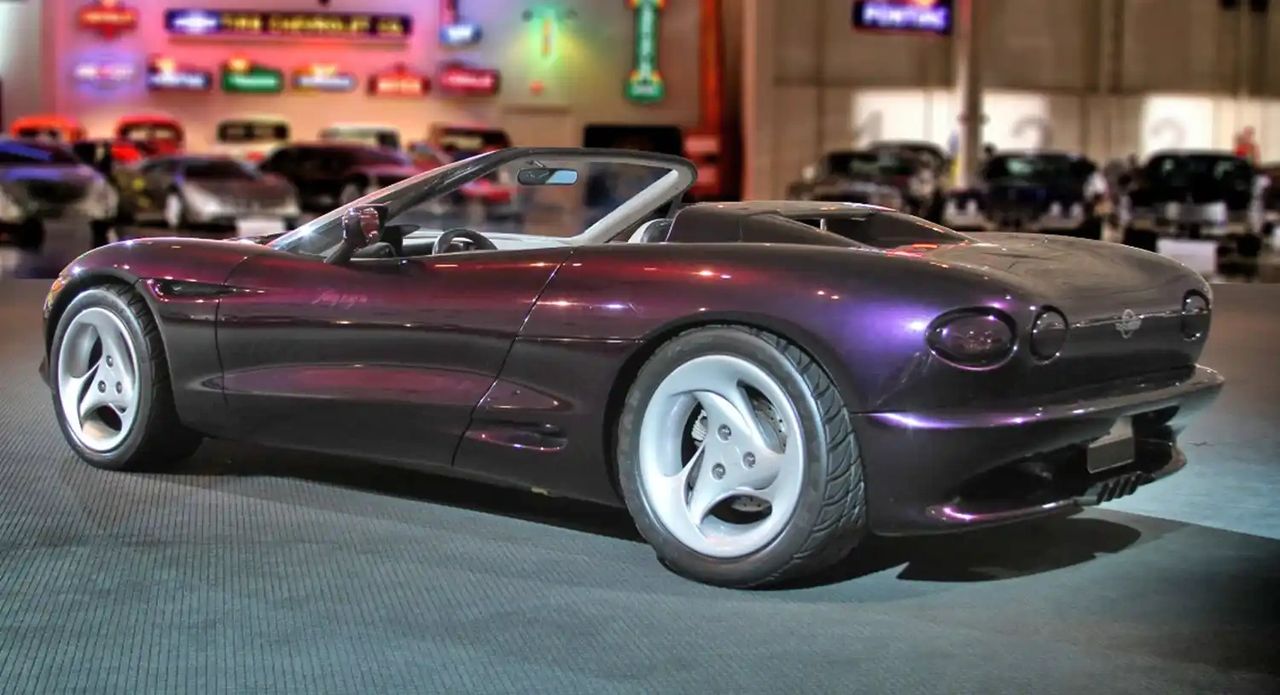
    The Stingray III sits today within the GM Heritage Center in Sterling Heights, Michigan—a facility that serves as General Motors’ private archive, museum, and research library all in one. Opened in 2004, the Heritage Center houses more than 600 historically significant GM vehicles, ranging from early prototypes and Motorama dream cars to milestone production models and race-winning machines. While the collection rotates and only select vehicles are displayed at a time, its mission is clear: to preserve GM’s design, engineering, and cultural legacy for future generations. Among its treasures, the Stingray III reminds visitors how bold experimentation has always been woven into Corvette’s—and GM’s—story.
    The Stingray III sits today within the GM Heritage Center in Sterling Heights, Michigan—a facility that serves as General Motors’ private archive, museum, and research library all in one. Opened in 2004, the Heritage Center houses more than 600 historically significant GM vehicles, ranging from early prototypes and Motorama dream cars to milestone production models and race-winning machines. While the collection rotates and only select vehicles are displayed at a time, its mission is clear: to preserve GM’s design, engineering, and cultural legacy for future generations. Among its treasures, the Stingray III reminds visitors how bold experimentation has always been woven into Corvette’s—and GM’s—story.

    Today, the Stingray III resides at the GM Heritage Center in Sterling Heights, Michigan, and it is occasionally displayed at the National Corvette Museum in Bowling Green. To see it in person is to confront a paradox: a car both quintessentially of its era and startlingly ahead of it. Its curves, its proportions, its details—all feel futuristic, even now.

    Among enthusiasts, the car has achieved cult status. Online forums and social media threads praise its audacity and mourn its unrealized potential. One Redditor captured the fascination succinctly: “It features active suspension, four-wheel steering, adjustable steering wheel and pedals, analog/digital dashboards… Plans for production were cancelled due to (the) projected cost of $300,000.”

    It is remembered not as a failure, but as a dream too bold to materialize.

    Epilogue: The Corvette That Might Have Been

    The Stingray III is many things at once: a reminder of GM’s late-1980s anxiety, a product of California’s free-spirited design culture, and a glimpse of the Corvette’s future. It is also a symbol of the tension that has always defined Corvette: tradition versus innovation, cost versus ambition, the need to honor the past while daring to imagine the future.

    Though it never entered production, its DNA lived on—through the C5’s taillights, the C6’s headlights, the return of the trunk, and even the humble Cavalier. In that sense, Stingray III did exactly what a concept car should: it pushed the boundaries of imagination, tested what was possible, and whispered ideas that future models would carry forward.

    Standing before it today, you see more than a car. You see a manifesto. You see a Corvette that dared too much, cost too much, and dreamed too much. And for that very reason, you can also see why it still matters.

    1992 Corvette Stingray III (California Corvette) – Technical Specifications

    Vehicle Type
    Concept roadster / design study

    Design & Development
    Chevrolet Advanced Concept Center – Newbury Park, California
    Design leadership: John Schinella

    Platform / Mechanical Basis
    C4 Corvette architecture (modified concept chassis)

    Powertrain

    • Engine: Chevrolet LT1 V8 (modified)
    • Displacement: 5.7 liters (350 cu in)
    • Output: Approximately 300 horsepower (concept specification)
    • Transmission: Rear-mounted transaxle configuration
    • Drivetrain: Rear-wheel drive

    Chassis & Technology

    • Suspension: Computer-controlled active suspension system with optical road-sensing technology
    • Steering: Four-wheel steering (4WS) system
    • Driver Interface: Fixed seating position with adjustable steering column and pedal assembly

    Wheels & Tires

    • Wheels: Turbine-style aluminum wheels (concept design)
    • Wheel fastening: Experimental three-lug hub design
    • Tires: 285/35ZR-18 performance tires

    Dimensions (Concept Study)

    • Wheelbase: Extended compared to C4 production Corvette
    • Width: Wider track than contemporary Corvette (design study proportions)

    Performance (Concept Estimates)

    Because the Stingray III was a show and technology concept, Chevrolet never released instrumented performance testing.

    However, based on its LT1 V8 powertrain and Corvette-based architecture:

    • Estimated horsepower: ~300 hp
    • Estimated top speed (concept claim): up to 225 mph (unverified concept claim)
    • 0–60 mph: Not officially published

    Why the 1992 Stingray III Still Matters Today

    Like the sunset stretching across the Pacific, the Stingray III reminds us that great ideas never truly disappear—they simply fade into the horizon, waiting for their moment to return. In many ways, this concept foreshadowed the Corvette’s modern evolution. Even decades later, its vision still echoes in every new generation that follows.

    Concept cars often live brief lives—rolling design exercises that appear on an auto show stand and quietly disappear. The Stingray III was different. Developed at Chevrolet’s Advanced Concept Center in California, it represented a moment when Corvette designers were free to imagine what the next generation of America’s sports car might become without the constraints of production engineering.

    Several ideas explored in the Stingray III carried over into later Corvette development. Its longer wheelbase proportions, wider stance, and more integrated aerodynamic surfaces hinted at the design direction the Corvette would ultimately take with the C5 generation later in the decade. The concept also explored advanced technologies—including active suspension and four-wheel steering—that reflected GM’s broader push toward electronically managed performance systems.

    But the Stingray III’s real significance lies in what it symbolized. It demonstrated that Corvette’s future would not simply be an evolution of the C4—it would require a fundamental rethink of proportion, packaging, and technology. In that sense, the California Corvette helped keep Corvette design thinking bold at a time when the brand was preparing for one of the most important generational shifts in its history.

    Introduced in 1992, the Stingray III—often called the “California Corvette”—was a bold concept created by Chevrolet’s Advanced Design Studio in Newbury Park, California. Blending C4 mechanical foundations with dramatic, futuristic styling, the car explored what a next-generation Corvette might become while showcasing the creative freedom of GM’s West Coast design team.