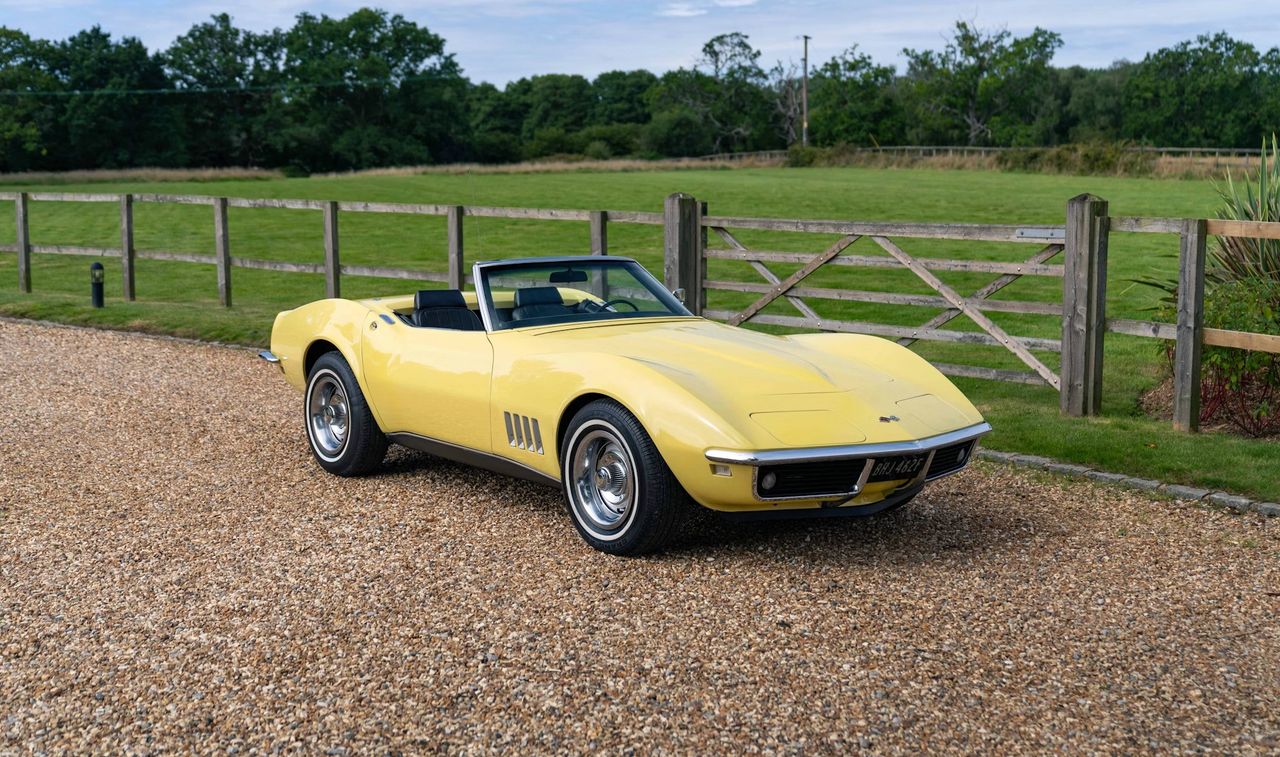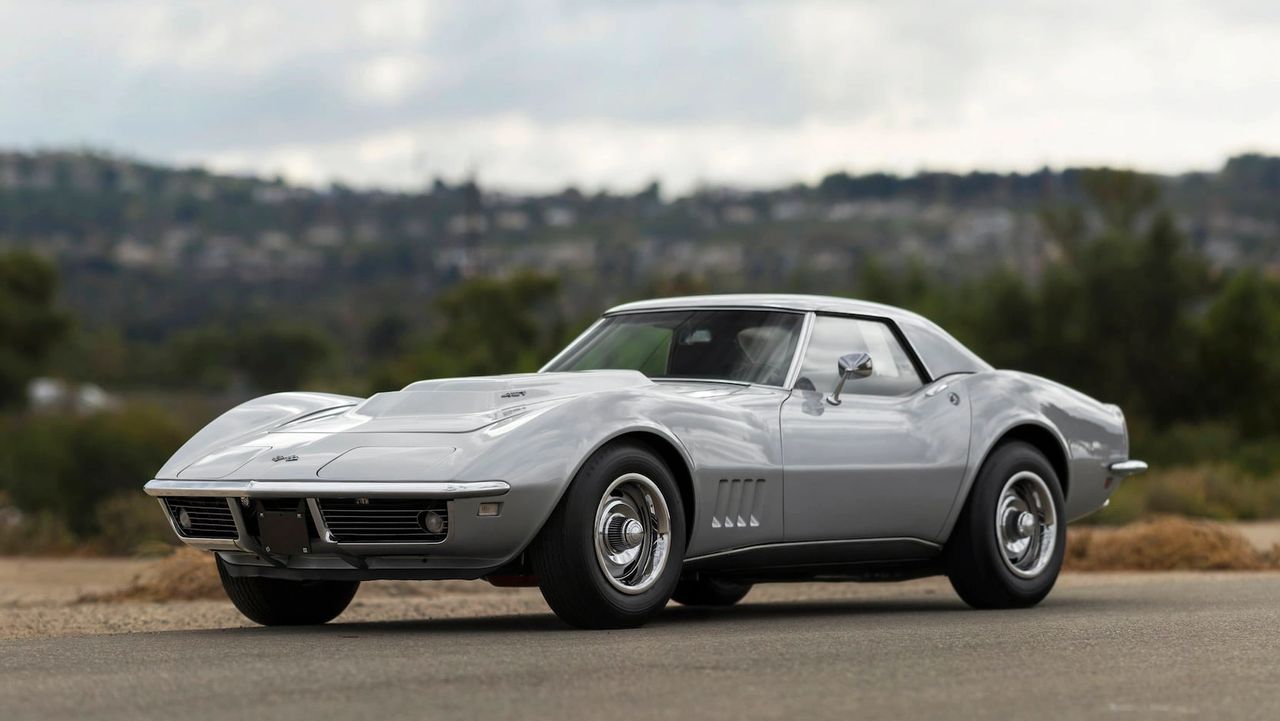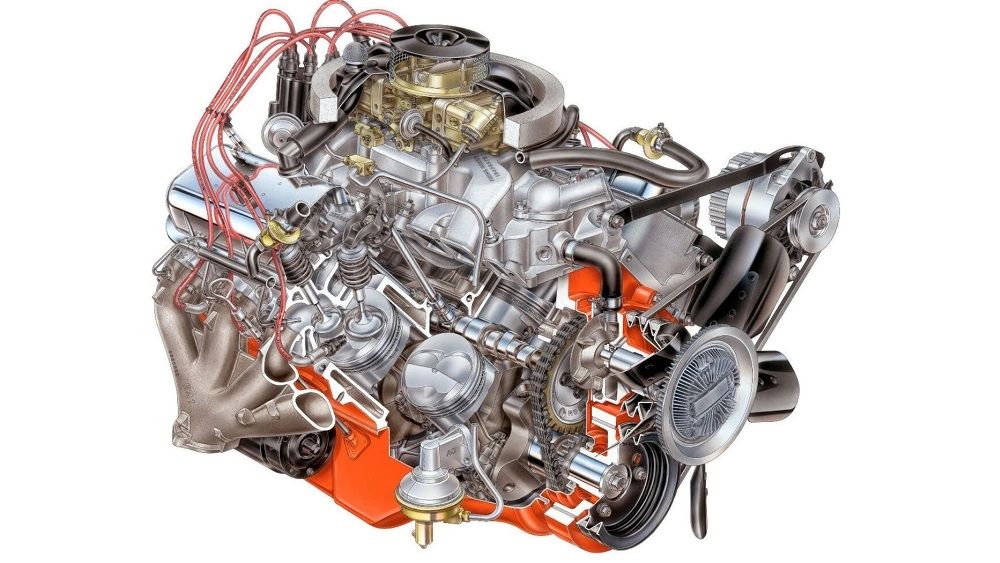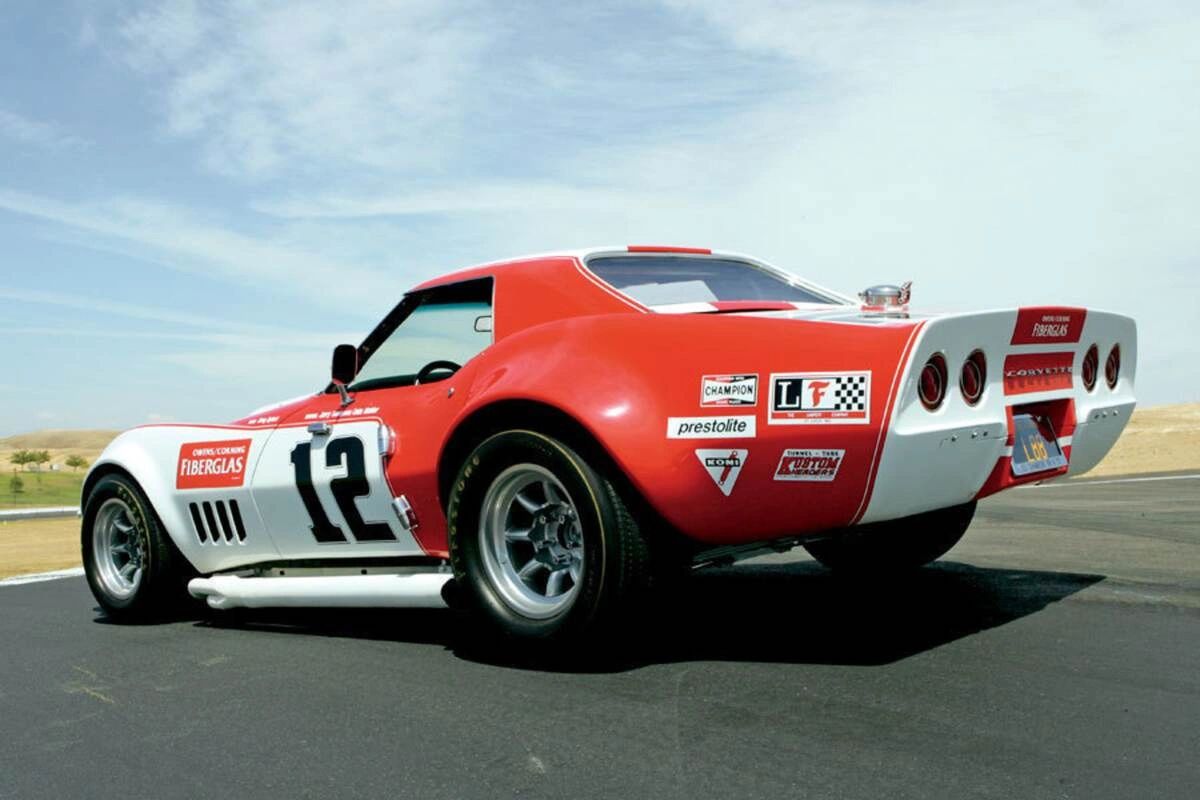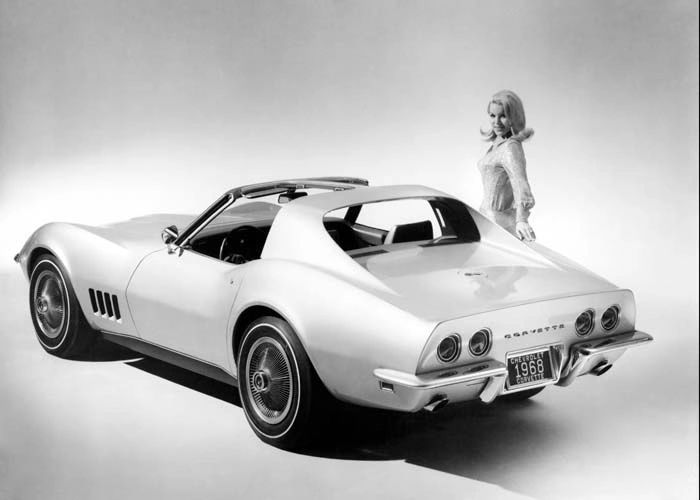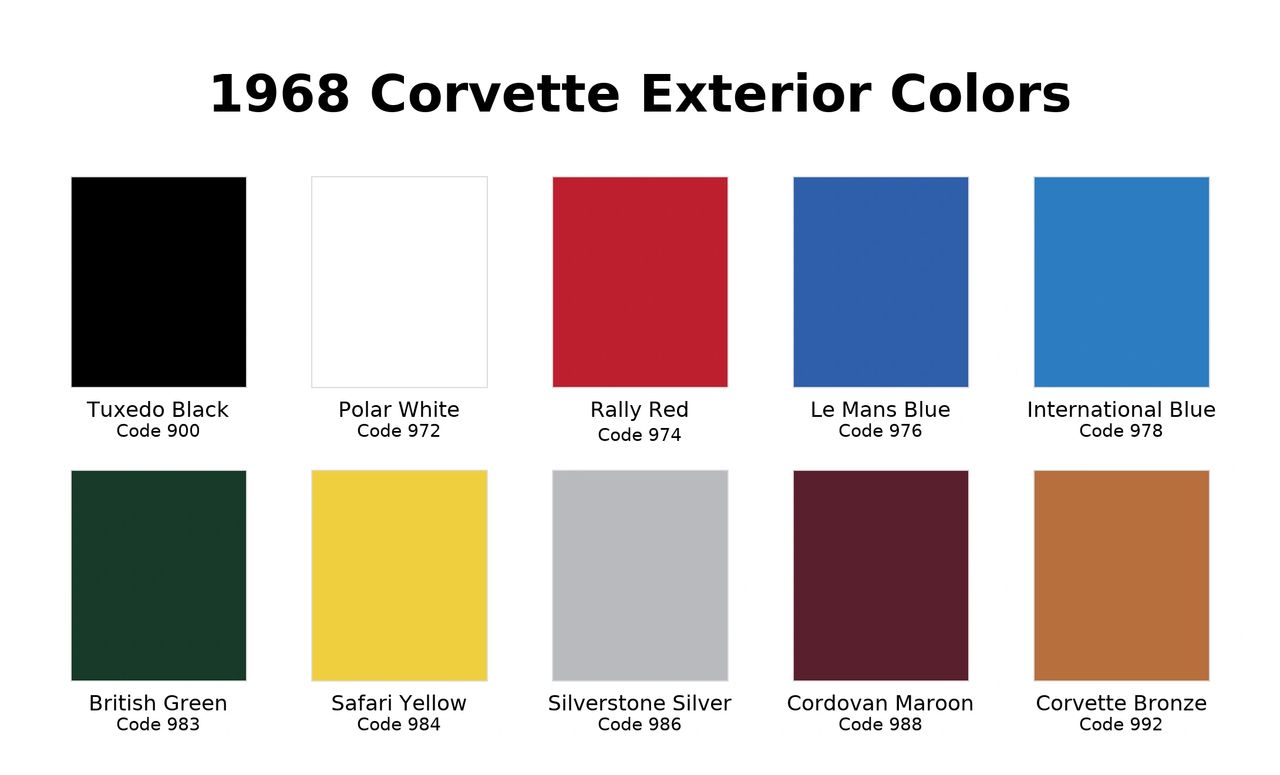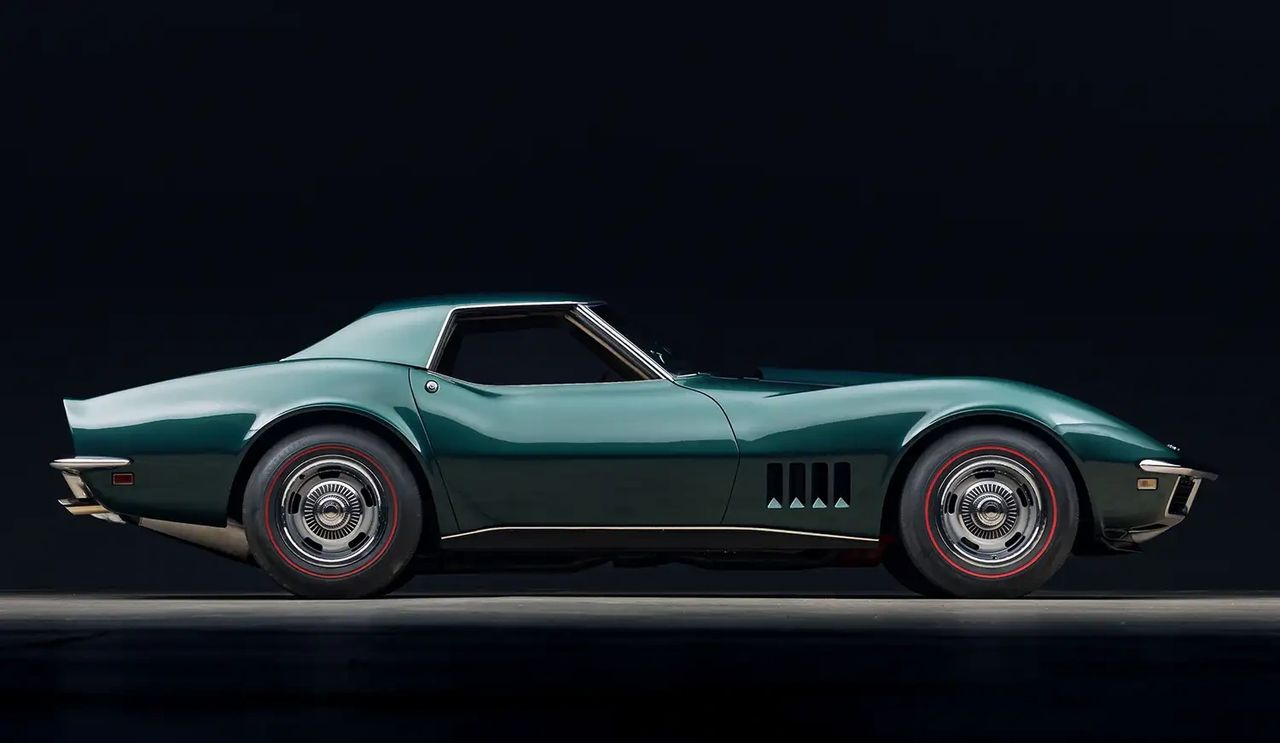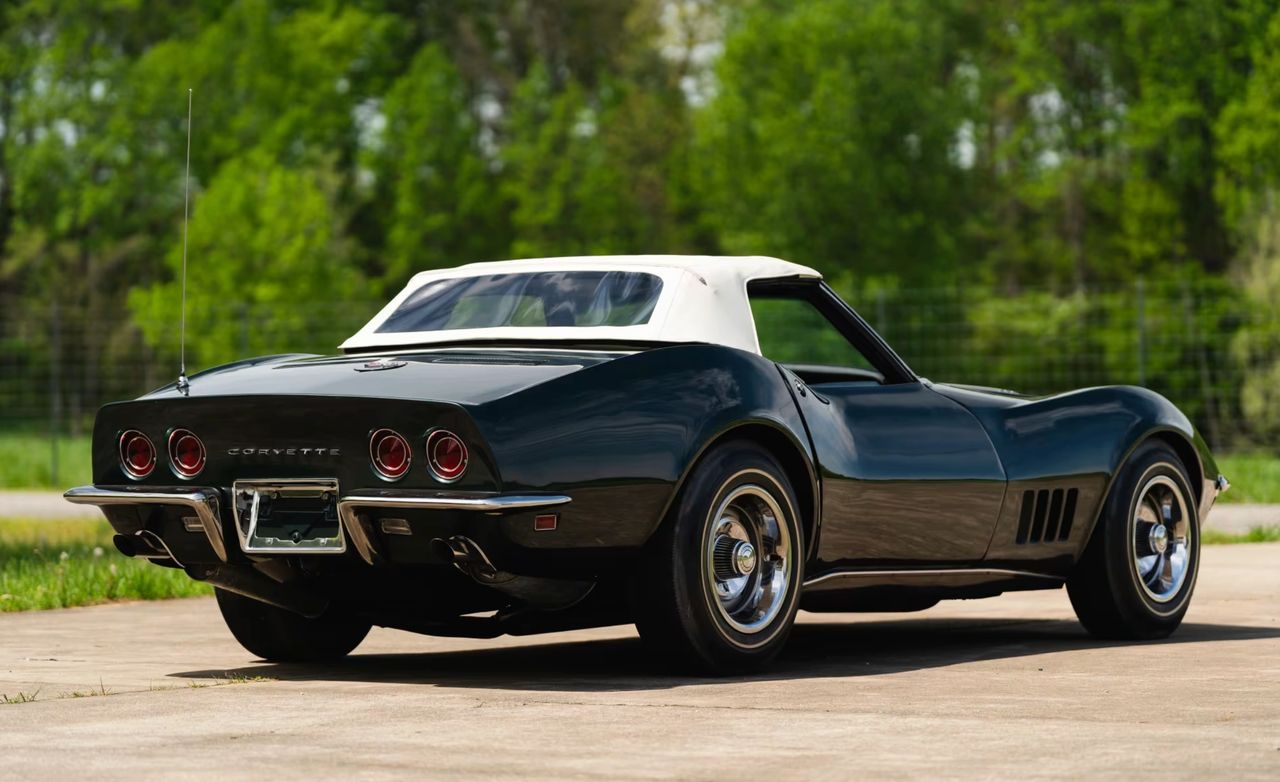
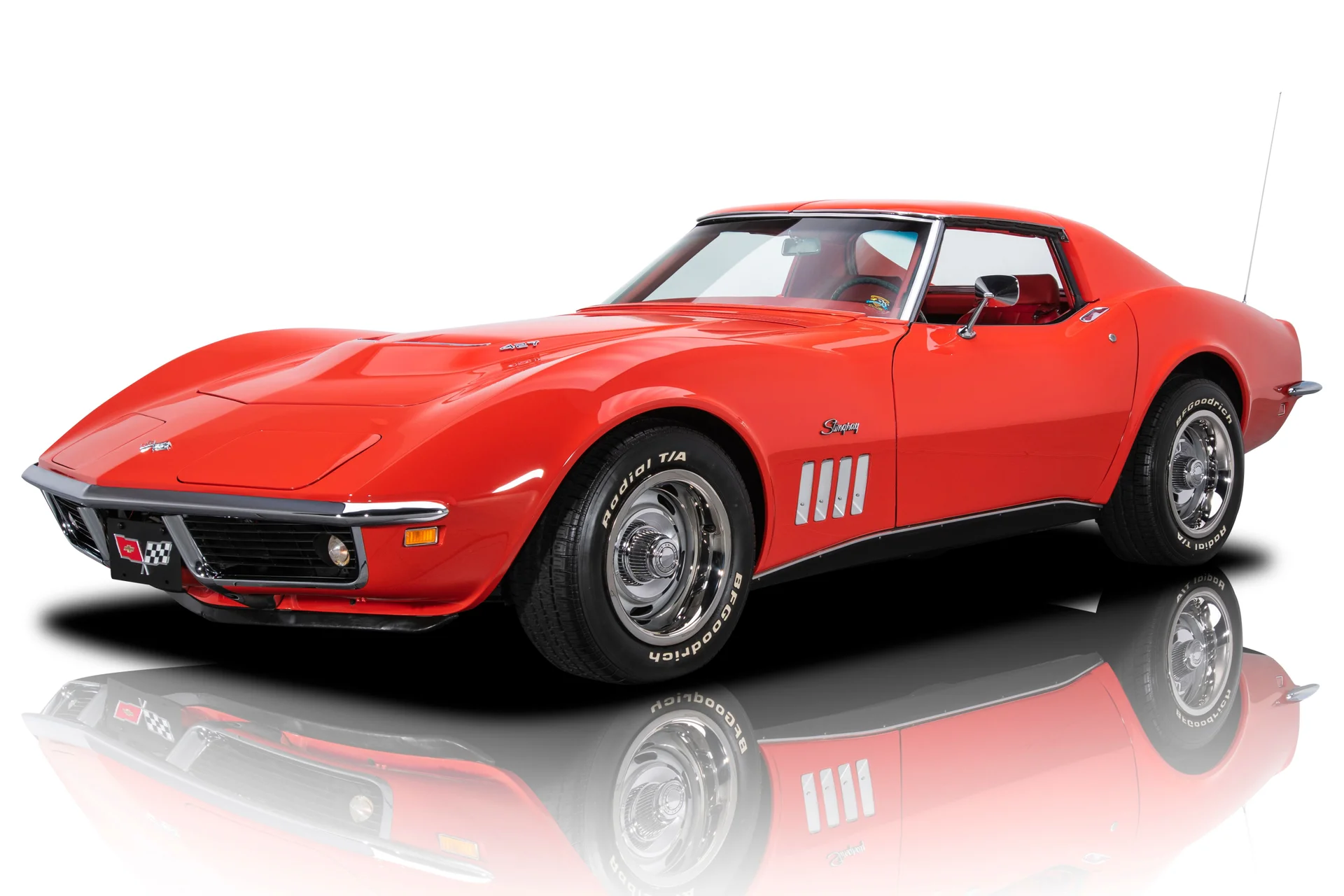
Tag: Mako Shark II

  • 1969 CORVETTE OVERVIEW

    1969 CORVETTE OVERVIEW

    The third-generation Corvette arrived for 1968 with concept-car theatrics and real-world rough edges. Reviewers loved the drama—long shark nose, high fender peaks, and that Mako-inspired pinched waist—but they didn’t miss the squeaks, wiper-door hiccups, ventilation weirdness, or inconsistent fit and finish that came with the first year of a completely new platform. The 1969 Corvette is the model year where Chevrolet did what great manufacturers do: keep the show-car silhouette, double down on the fundamentals, and methodically address the “unanswered criticisms.” It was not a redesign. It was a line in the sand—refinements to the body, structure, cabin, safety, and driveline that transformed the promise of 1968 into the car enthusiasts expected a Corvette to be.

    The badge said it out loud. For 1969, “Stingray” returned—one word on the front fenders—reconnecting the C3 with an identity earned a generation earlier and signaling that the course corrections ran deeper than scriptwork.

    The 1969 Corvette – The Shape, The Structure, and the Quiet Changes That Mattered
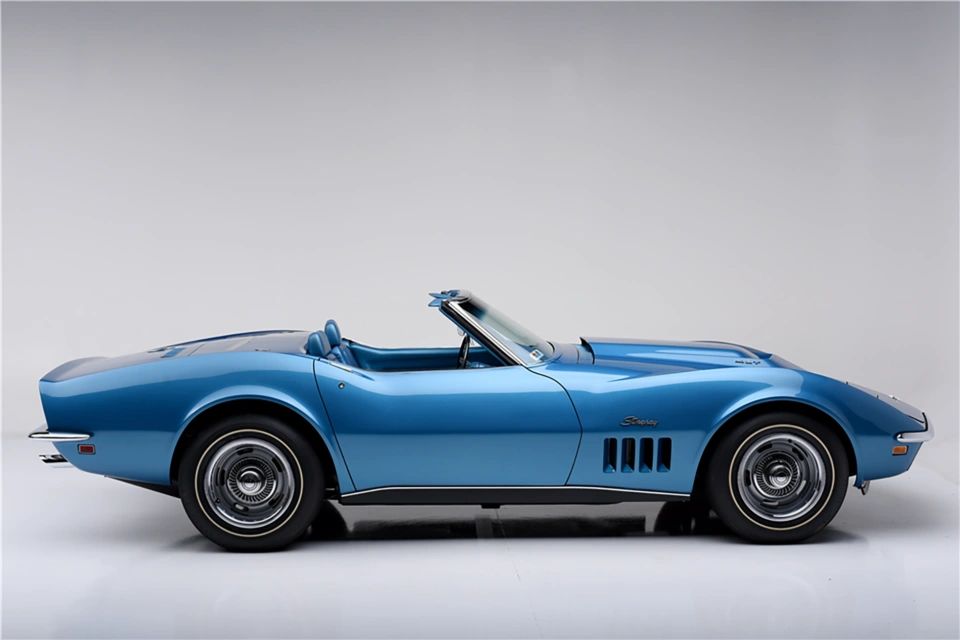
    This concours-condition 1969 Corvette Stingray L88 convertible is a rare and brutal expression of Chevrolet’s performance zenith. One of just 116 built that year, the L88 packed a racing-derived 427-cubic-inch V8 officially rated at 430 horsepower—but widely known to produce well over 500 in real-world trim. Designed for track domination, it came with heavy-duty suspension, upgraded cooling, a close-ratio M22 “Rock Crusher” 4-speed, and radio/heater delete to save weight and focus intent. Finished in a striking Le Mans Blue, this example pairs raw power with show-car perfection. (Image courtesy of carscoops.com)
    This concours-condition 1969 Corvette Stingray L88 convertible is a rare and brutal expression of Chevrolet’s performance zenith. One of just 116 built that year, the L88 packed a racing-derived 427-cubic-inch V8 officially rated at 430 horsepower—but widely known to produce well over 500 in real-world trim. Designed for track domination, it came with heavy-duty suspension, upgraded cooling, a close-ratio M22 “Rock Crusher” 4-speed, and radio/heater delete to save weight and focus intent. Finished in a striking Le Mans Blue, this example pairs raw power with show-car perfection. (Image courtesy of carscoops.com)

    What made the C3 Corvette instantly recognizable wasn’t just its silhouette — it was the attitude baked into every curve. The 1969 model retained that signature look: a sharply pointed front end that flowed into raised, knife-edged fenders, a long and low hood that seemed to stretch for miles, and a cockpit — the “glasshouse” — sunken deep between muscular rear haunches. From behind, the body flared just enough to give the illusion of wider rubber than the modest bias-ply tires could deliver, exaggerating the car’s stance even at rest.

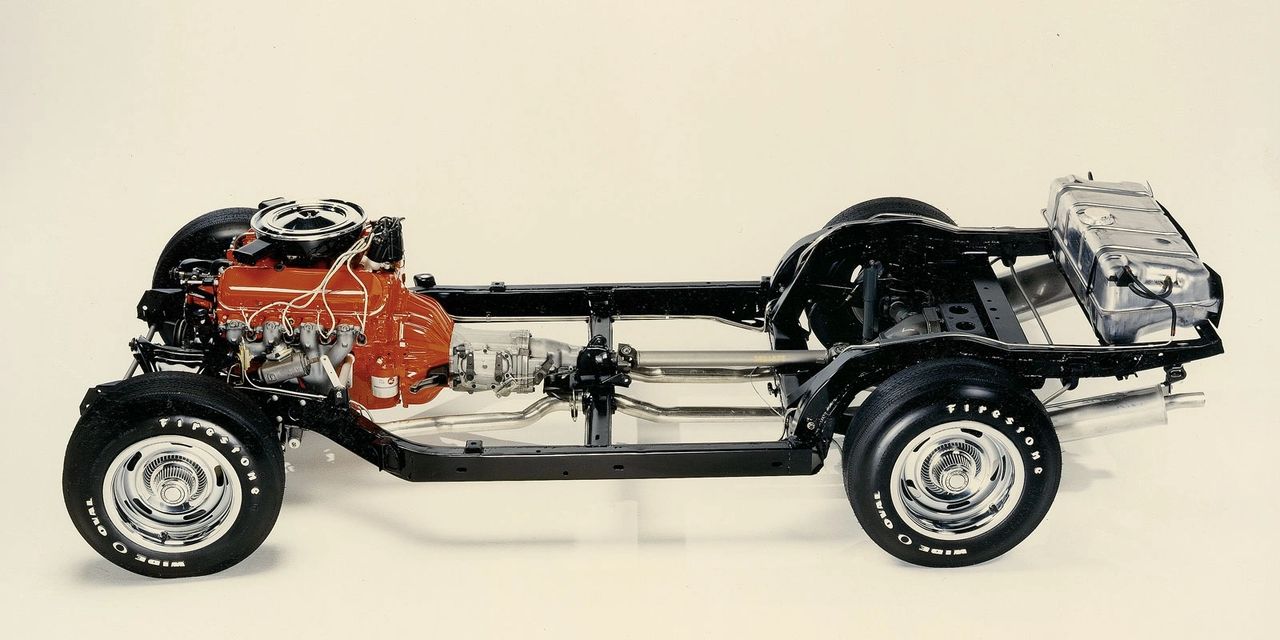
    Beneath that unmistakable fiberglass skin was a structure far more humble in nature but absolutely vital to the Corvette’s dynamic character: a fully welded ladder-type steel frame with five crossmembers. For 1969, Chevrolet engineers tightened this skeleton to reduce cowl shake and smooth out the high-frequency jitters felt over broken pavement. The changes didn’t transform the car overnight, but any seasoned driver could feel the difference — especially at the limit, where chassis rigidity mattered most.
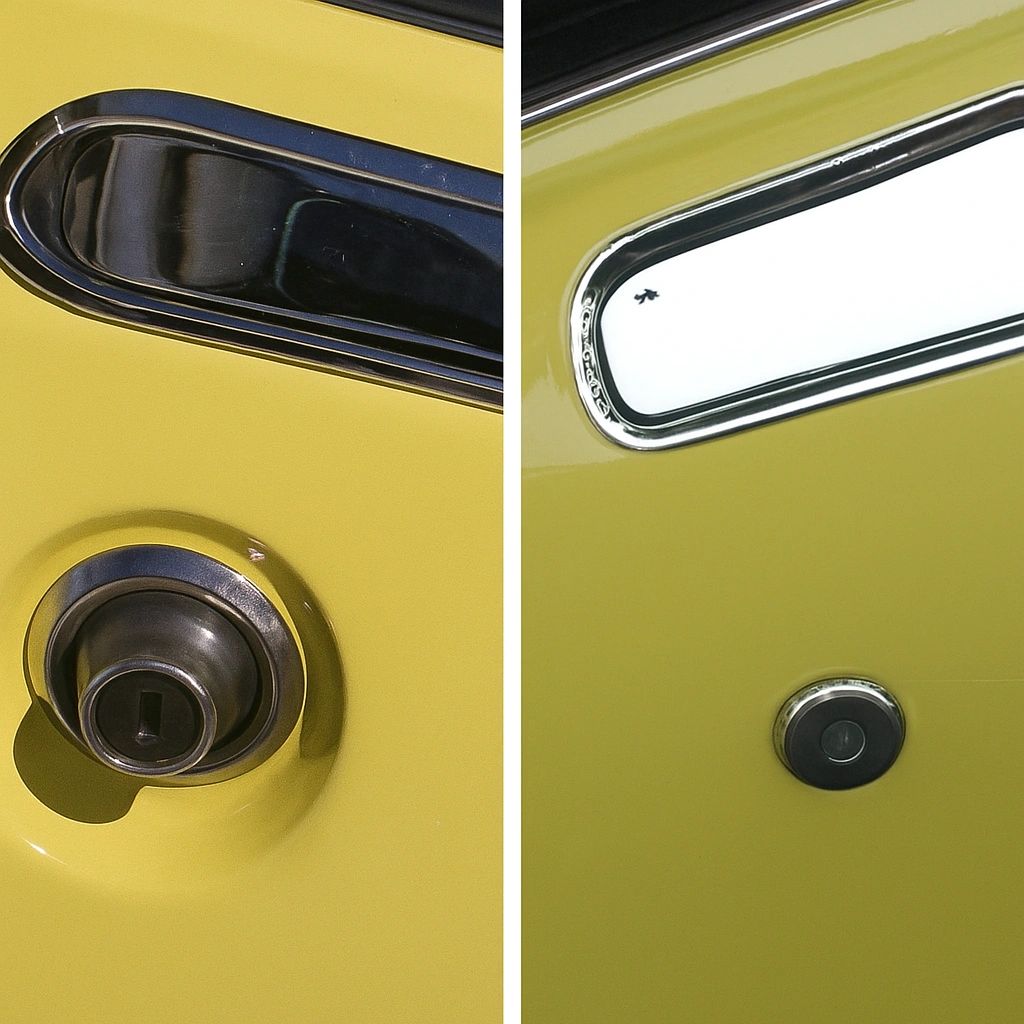
    Side by side, the 1968 (left) and 1969 (right) Corvette door handles tell a story of refinement through function. The '68 handle features a separate chrome thumb button, a carryover from earlier designs that proved prone to misalignment and wear. In response to owner feedback, Chevrolet reengineered the mechanism for 1969—integrating the button into the handle for a cleaner look, improved ergonomics, and fewer moving parts. It’s a subtle but meaningful example of how Corvette’s evolution was often driven by real-world use.
    Side by side, the 1968 (left) and 1969 (right) Corvette door handles tell a story of refinement through function. The ’68 handle features a separate chrome thumb button, a carryover from earlier designs that proved prone to misalignment and wear. In response to owner feedback, Chevrolet reengineered the mechanism for 1969—integrating the button into the handle for a cleaner look, improved ergonomics, and fewer moving parts. It’s a subtle but meaningful example of how Corvette’s evolution was often driven by real-world use.

    Exterior updates for ’69 revealed just how seriously Chevrolet took early owner feedback and assembly line insight following the tumultuous launch of the 1968 model. The door handles were a standout example: gone was the awkward two-part setup with a separate thumb button, replaced by a cleaner, more ergonomic flush-mounted unit that was easier to use and harder to misalign. Hidden windshield wipers — a piece of design theater that debuted the year prior — remained in place, but with meaningful revisions: a cold-weather override for the vacuum-operated wiper door, and washer jets relocated onto the wiper arms for direct-spray effectiveness. Out back, the inboard tail lamps were redesigned with single lenses that now combined brake and reverse functions.
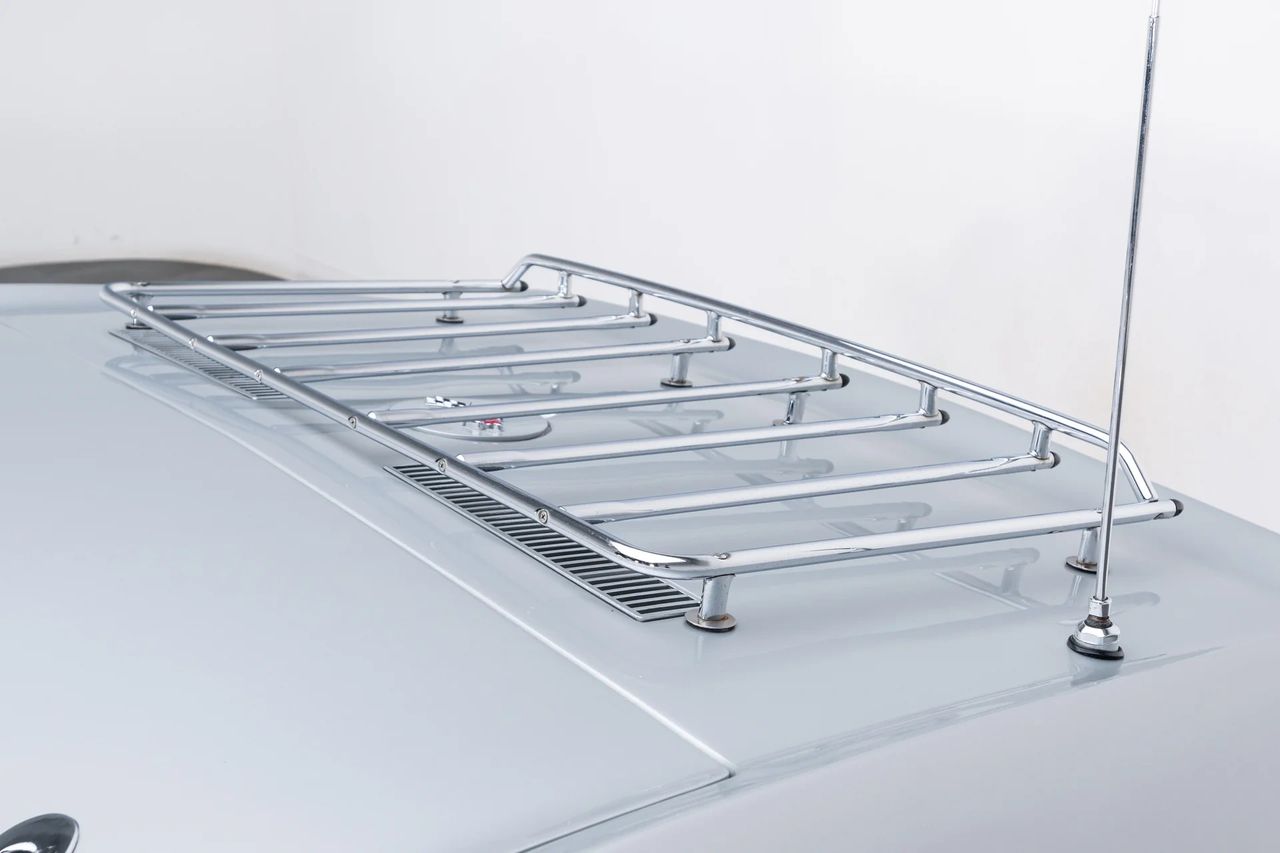
    New for 1969, the optional chrome luggage rack sparked debate among Corvette purists, but proved a practical addition for road-trip-minded owners. While some lamented its impact on the clean rear profile, others embraced the utility—finally able to strap down weekend bags or T-tops without cramming the limited cargo space. Elegantly integrated and anchored with stainless hardware, the rack maintained Corvette’s sporty aesthetic while quietly expanding its long-haul capability. Love it or loathe it, the luggage rack captured the duality of the C3: part show car, part grand tourer. (Image courtesy of RK Motors)
    New for 1969, the optional chrome luggage rack sparked debate among Corvette purists, but proved a practical addition for road-trip-minded owners. While some lamented its impact on the clean rear profile, others embraced the utility—finally able to strap down weekend bags or T-tops without cramming the limited cargo space. Elegantly integrated and anchored with stainless hardware, the rack maintained Corvette’s sporty aesthetic while quietly expanding its long-haul capability. Love it or loathe it, the luggage rack captured the duality of the C3: part show car, part grand tourer. (Image courtesy of RK Motors)

    The car’s rolling stock also saw practical evolution. Wider 15×8-inch wheels increased mechanical footprint and visual heft, enhancing both performance and proportion. A luggage rack became available for the rear deck — a controversial addition among purists, but a welcome one for owners who used their Corvettes for weekend getaways and needed the extra utility.

    The fiberglass bodywork remained a Corvette hallmark — lightweight, rustproof, and molded into drama-laden shapes. But underneath the sculpted panels sat a carefully engineered safety cage: steel reinforcements in the rocker panels, roof pillars, and key structural members. Coupes offered full steel roof frames, while convertibles housed their folding soft tops beneath a flush-fitting, spring-loaded tonneau cover, preserving the Corvette’s low, sharklike profile even with the top down.

    Inside: Ergonomics, Safety, and the Experience Only a Real Sports Car Delivers
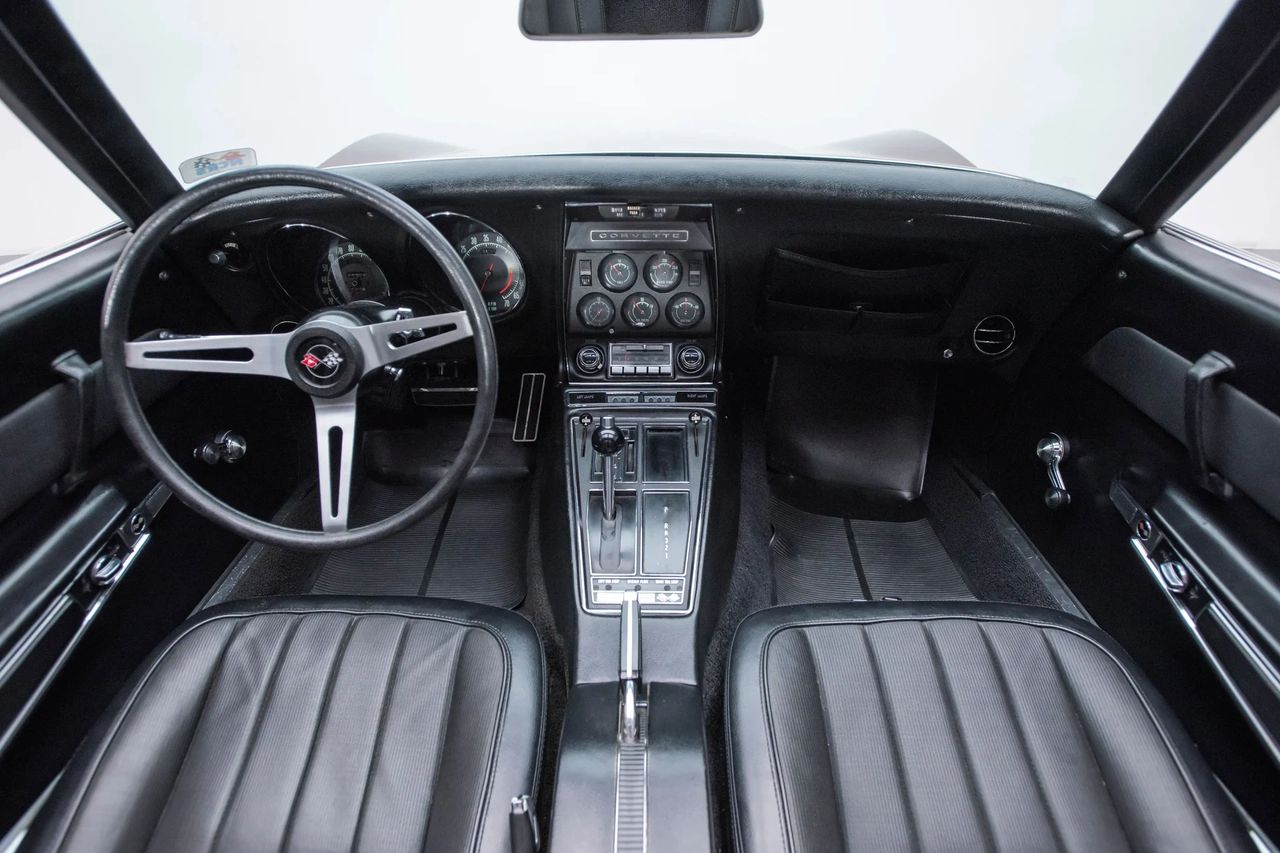
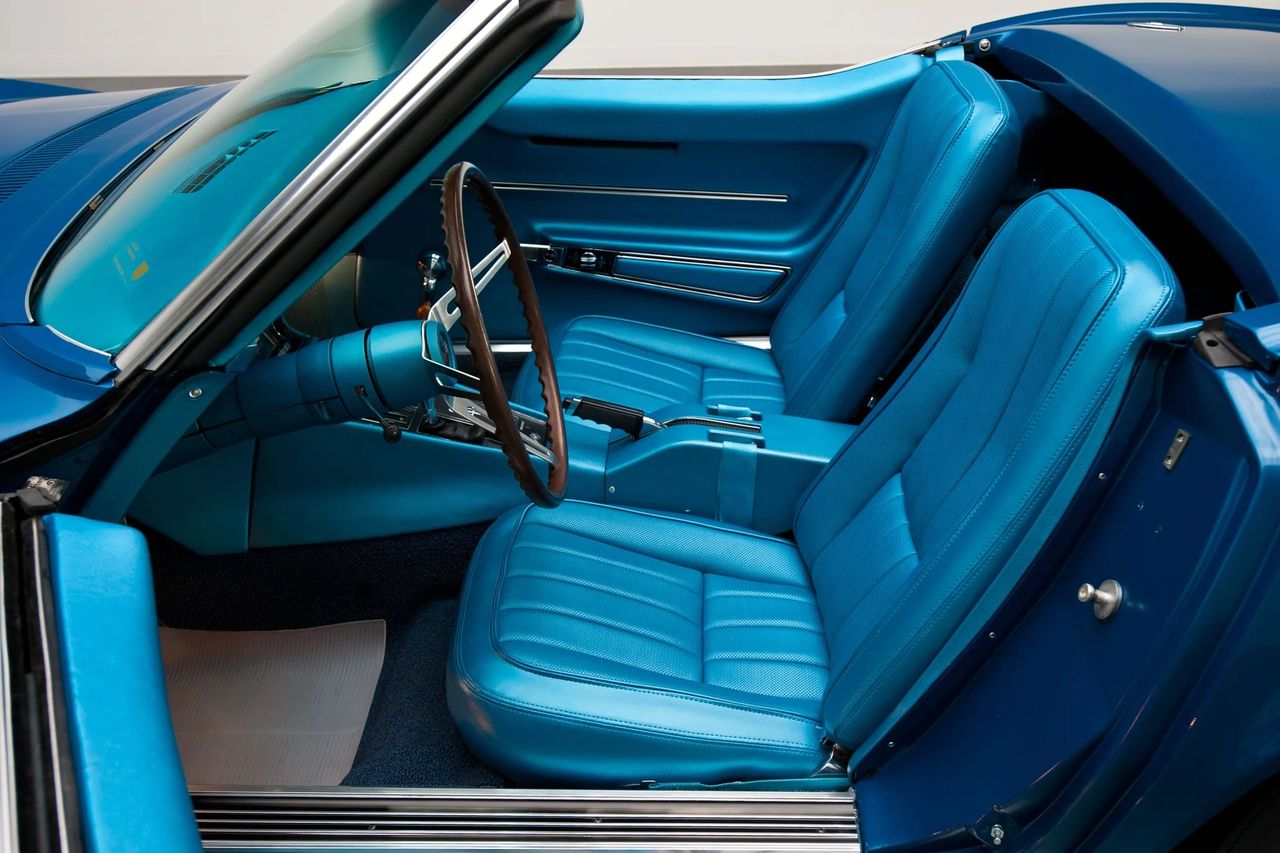
    The 1969 Corvette cockpit blends function, focus, and flair in equal measure. Deep-set gauges, toggle switches, and a center stack angled toward the driver emphasize purpose, while high-back bucket seats and a three-spoke steering wheel reinforce the car’s sporting intent. Safety updates like headrests and an energy-absorbing steering column reflect new federal mandates, but nothing dulls the immersive, low-slung driving position. It’s a space that still feels like you wear the car—not just sit in it.
    The 1969 Corvette cockpit blends function, focus, and flair in equal measure. Deep-set gauges, toggle switches, and a center stack angled toward the driver emphasize purpose, while high-back bucket seats and a three-spoke steering wheel reinforce the car’s sporting intent. Safety updates like headrests and an energy-absorbing steering column reflect new federal mandates, but nothing dulls the immersive, low-slung driving position. It’s a space that still feels like you wear the car—not just sit in it.

    The 1969 cockpit tells a story of federal regulation intersecting with smart ergonomics. The ignition switch was relocated from the dashboard to the column to pair with the new anti-theft steering/ignition lock. The steering wheel shrank by an inch, an unglamorous change that yielded better thigh clearance and a more natural elbows-bent driving position. Door handles and knobs were reshaped to be less snag-prone. The headlamp position warning light helped drivers avoid the “half-up at night” mistake. And the wiper system’s integral washers were a real quality-of-life upgrade in foul weather.

    Astro-Ventilation—the C3’s fresh-air, no-draft concept—benefited from incremental tweaks. It never became a gale, but the system’s balance improved, and when paired with the hidden wipers’ cleaner cowl area, the cockpit felt less fussy. A clever trio of stowage boxes behind the seats kept the battery, jack and tools, and valuables compartmentalized. Small detail, big livability.
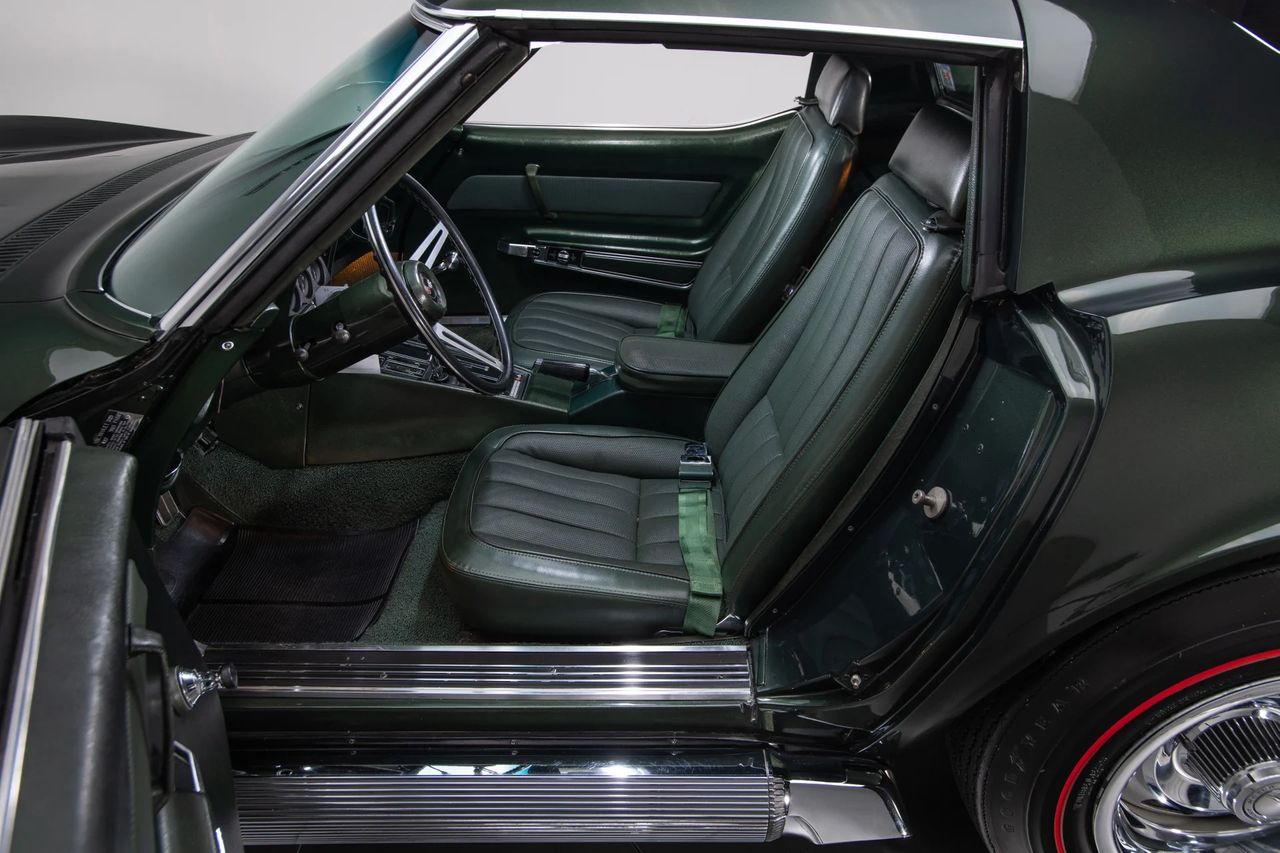
    New for 1969, head restraints became standard equipment in the Corvette cabin, responding to evolving federal safety regulations. Integrated cleanly atop the bucket seats, they offered protection without compromising the car’s sleek interior design or visibility. In typical Corvette fashion, even mandated safety features were folded into the overall aesthetic with purpose and restraint. The result: a cockpit that remained focused, functional, and unmistakably performance-driven.
    New for 1969, head restraints became standard equipment in the Corvette cabin, responding to evolving federal safety regulations. Integrated cleanly atop the bucket seats, they offered protection without compromising the car’s sleek interior design or visibility. In typical Corvette fashion, even mandated safety features were folded into the overall aesthetic with purpose and restraint. The result: a cockpit that remained focused, functional, and unmistakably performance-driven.

    Head restraints (RPO A82) were a microcosm of the era. They had been offered before. For 1969, they became the expectation—effectively universal by mid-year as federal requirements kicked in and Chevrolet synchronized ordering logic with production practice. Period ordering records may reference a short-run “delete” credit, but in the real world, every ’69 Corvette you encounter will have head restraints.

    The Chassis: Corvette DNA Under the Drama

    The engineering underneath the 1969 Corvette is a study in how America’s sports car bridged worlds. Up front: unequal-length control arms, coil springs, and an anti-roll bar, tuned a touch firmer than 1968. Out back: the Corvette signature—independent rear suspension with trailing arms and a single transverse leaf spring. On paper, that last part looks quaint; on the road, it’s compact, durable, and delivers a very specific Corvette feel under power. Vented discs at all four corners remained standard and were a headline unto themselves in an era when some rivals still made do with front discs and rear drums. Steering was recirculating-ball—Saginaw hardware, 17.6:1 ratio—with power assist and a tilt-telescopic column optional.

    The 15×8 wheels and F70-15 tires weren’t merely cosmetic. The wider rim allowed better support of the carcass under lateral load, and the period bias-plys benefit from every bit of sidewall discipline they can get. Alignment specs were adjusted to accommodate the change, and Chevrolet massaged bushing rates and valving to put more of the driver’s control in the seat and shoulders and less in mid-corner corrections.

    Engines: From a New 350 Small-Block to the Wildest 427s of the Era

    The Small-Block Steps Up
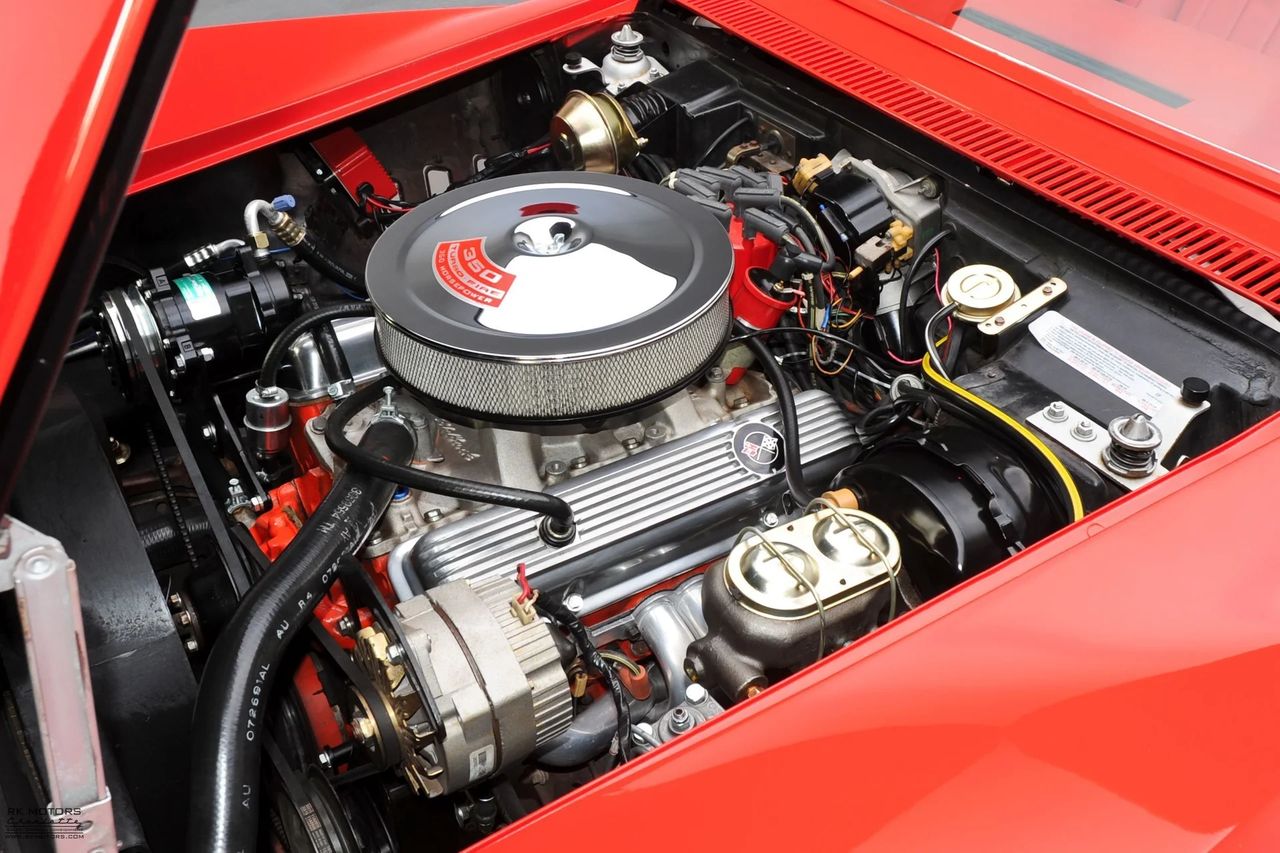
    Shown here is the all-new 350-cubic-inch small-block V8 introduced for 1969—a foundational shift for the Corvette that quietly elevated performance and drivability. Replacing the long-serving 327, the 350 retained the same bore but gained stroke for a broader torque curve and smoother power delivery. Available in both 300- and 350-horsepower variants, it paired modernized internals with Corvette-specific breathing, including big-block-sized 2.5-inch exhausts that gave even base cars a richer, more muscular voice. Neatly dressed with finned aluminum valve covers and a low-profile air cleaner, the 350 blended performance and polish in a way only a Corvette could. (Image courtesy of RK Motors)
    Shown here is the all-new 350-cubic-inch small-block V8 introduced for 1969—a foundational shift for the Corvette that quietly elevated performance and drivability. Replacing the long-serving 327, the 350 retained the same bore but gained stroke for a broader torque curve and smoother power delivery. Available in both 300- and 350-horsepower variants, it paired modernized internals with Corvette-specific breathing, including big-block-sized 2.5-inch exhausts that gave even base cars a richer, more muscular voice. Neatly dressed with finned aluminum valve covers and a low-profile air cleaner, the 350 blended performance and polish in a way only a Corvette could. (Image courtesy of RK Motors)

    The small-block Corvette story in 1969 may seem straightforward at first glance, but it marked a meaningful shift in both engineering and philosophy. With the long-serving 327-cubic-inch V8 officially retired, Chevrolet introduced a new standard engine: a 350-cubic-inch small-block built around the same 4.00-inch bore as its predecessor but with a longer 3.48-inch stroke. This change wasn’t about chasing raw numbers—it was about drivability, torque, and broadening the Corvette’s appeal beyond its hardcore fan base. Two versions of the 350 were offered that year, each tailored to a different kind of driver.

    The base 350 produced 300 horsepower and featured a hydraulic camshaft, 10.25:1 compression, and a Rochester four-barrel carburetor. It wasn’t just a detuned version of something more exciting—it was engineered to deliver smooth torque, easy starting, and real-world civility. Paired with the Corvette’s fully independent suspension and wide tires, this engine made the car less of a weekend-only toy and more of a genuinely usable grand touring machine—fast, confident, and comfortable at speed.

    For those who wanted more urgency without sacrificing street manners, the L46 stepped in. Rated at 350 horsepower, it pushed compression to 11.0:1 and featured hotter camshaft timing, giving the engine a sharper personality. The L46 didn’t feel dramatically different at idle, but past 4,000 rpm it came alive with a sense of purpose—offering an energetic top end without the narrow powerband or finicky temperament of more radical options. It struck a smart middle ground: aggressive when provoked, but entirely livable in daily use.

    Both engines breathed through the same generously sized 2.5-inch dual exhaust system found on big-block cars—a subtle but significant advantage. It gave these small-blocks a deeper, more authoritative tone than one might expect and ensured they weren’t choked by the very chassis meant to harness them. In a year filled with options and escalating horsepower wars, these two small-blocks proved that refinement and response could still carry as much weight as brute force.

    The Big-Blocks: Four Faces of 427, Then Something Even Crazier
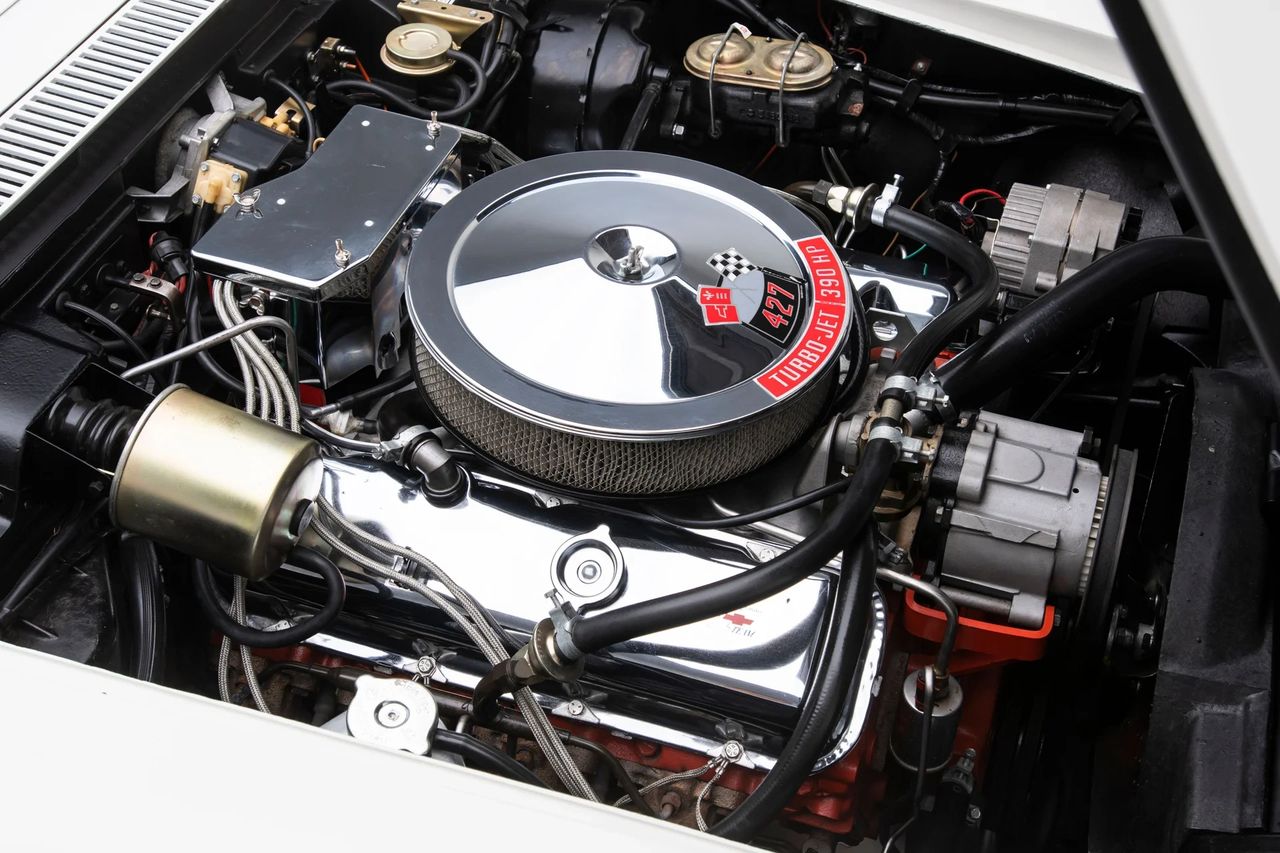
    The L36 427-cubic-inch V8, shown here in factory dress, offered the best of both worlds—big-block authority with everyday manners. Rated at 390 horsepower, it used oval-port iron heads, a single four-barrel carburetor, and a hydraulic camshaft to deliver effortless torque and a smooth, broad powerband. Chrome valve covers and a polished air cleaner added visual punch under the hood, but the real appeal was its drivability: muscular, refined, and ready to perform without demanding constant tuning. For many Corvette buyers, the L36 was the sweet spot—a true muscle engine that didn’t sacrifice street comfort. (Image courtesy of RK Motors)
    The L36 427-cubic-inch V8, shown here in factory dress, offered the best of both worlds—big-block authority with everyday manners. Rated at 390 horsepower, it used oval-port iron heads, a single four-barrel carburetor, and a hydraulic camshaft to deliver effortless torque and a smooth, broad powerband. Chrome valve covers and a polished air cleaner added visual punch under the hood, but the real appeal was its drivability: muscular, refined, and ready to perform without demanding constant tuning. For many Corvette buyers, the L36 was the sweet spot—a true muscle engine that didn’t sacrifice street comfort. (Image courtesy of RK Motors)

    By 1969, the Corvette’s 427-cubic-inch V8 lineup had evolved into something more than just a list of engine options—it was a performance hierarchy that reflected the full scope of Chevrolet’s engineering ambition. Each version of the legendary big-block carried its own character, tuning philosophy, and intended driver. Some were built for effortless torque and everyday domination. Others were barely disguised race engines hiding behind production car legality. Together, they helped define the Corvette’s identity at the peak of the muscle car era.

    It started with the L36—on paper, the most accessible 427, but still an engine with serious credentials. Rated at 390 horsepower, it used a single four-barrel carburetor, iron oval-port heads, and a hydraulic camshaft to deliver broad, usable torque. It wasn’t about peaky thrills or track tuning; it was about real-world drivability and bottomless midrange pull. In the Corvette, that meant a car that felt confident and muscular everywhere, with the kind of lazy, low-rev grunt that let you leave it in gear and ride the wave. No finicky tuning, no drama—just big-displacement power in its most civilized form.
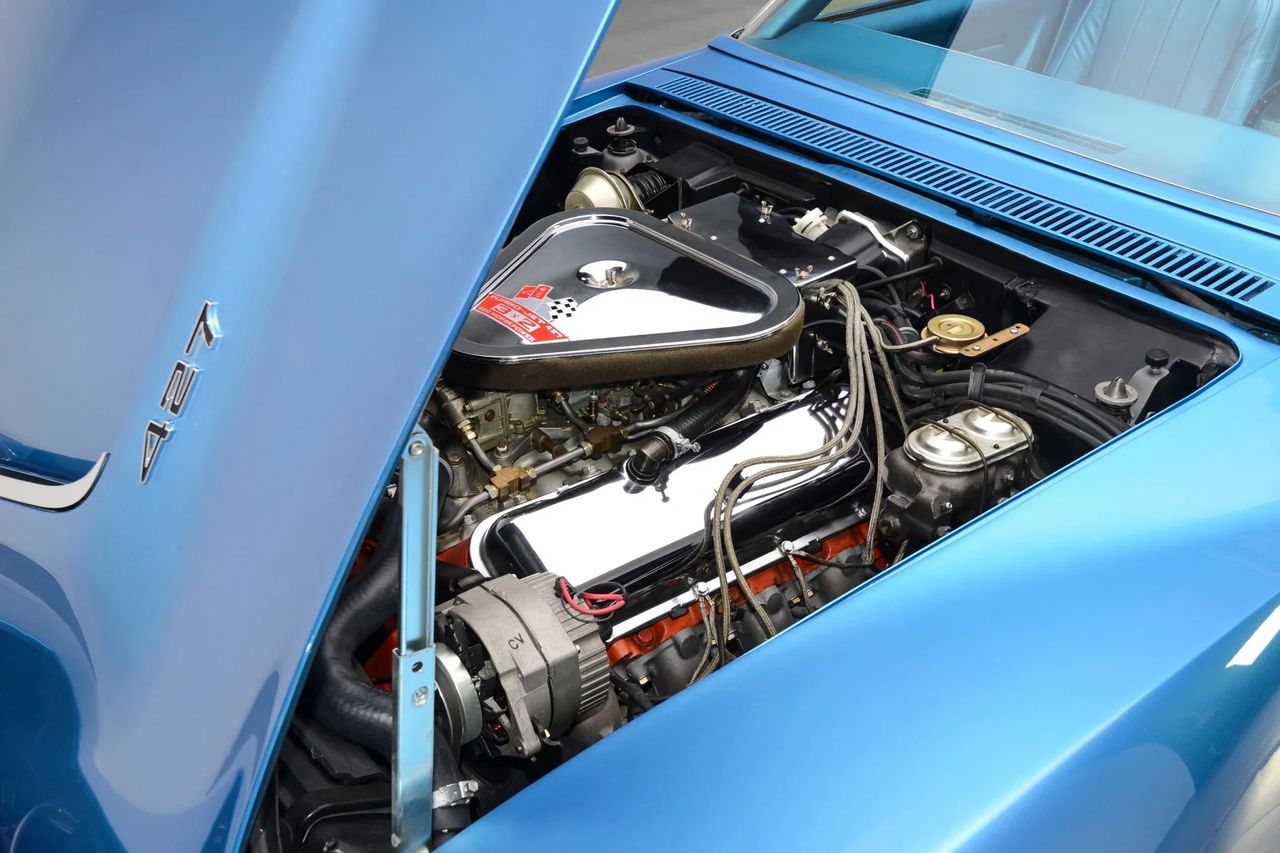
    image generator said:  This is the L68 427/400, Chevrolet’s entry-level Tri-Power big-block for 1969. With three two-barrel Holleys and a hydraulic cam, it delivered a satisfying step up in both sound and response—adding induction drama without the raw edge of solid lifters. (Image courtesy of RK Motors)
    image generator said: This is the L68 427/400, Chevrolet’s entry-level Tri-Power big-block for 1969. With three two-barrel Holleys and a hydraulic cam, it delivered a satisfying step up in both sound and response—adding induction drama without the raw edge of solid lifters. (Image courtesy of RK Motors)

    The L68 added flair to that formula. It shared the same fundamental architecture—hydraulic lifters, iron heads—but swapped the single four-barrel for a trio of Holley two-barrels arranged in Chevrolet’s signature Tri-Power setup. Rated at 400 horsepower, the L68 didn’t just add a visual punch under the hood—it gave the car a completely different feel behind the wheel. Under light throttle, it behaved just like its single-carb siblings. But bury your foot, and the outboard carbs snapped open, delivering a surge of induction noise and a crisp hit of power. It was the best of both worlds: docile in traffic, alive when provoked. And it gave owners a taste of exotic intake layout without the tuning demands of solid-lifter hardware.

    For those who wanted more edge, the L71 took the Tri-Power idea and cranked up the intensity. Still displacing 427 cubes, it made 435 horsepower through a combination of solid lifters, an aggressive cam profile, and big rectangular-port heads that flowed massive air. It was less about brute torque and more about a top-end charge—one that came on suddenly and with authority. The L71 had a reputation for waking up around 4,000 rpm and pulling hard to redline, delivering the kind of cammy, mechanical rush that defined high-performance V8s of the era. It was loud, rowdy, and responsive, and while it required more attention from its driver, the payoff was visceral. Properly dialed in, the L71 was every bit the icon its badge suggested—fast, fierce, and unapologetically aggressive.

    But even the L71 felt tame next to the L88. On paper, the numbers looked nearly identical—430 horsepower, just five less than the L71. In reality, the L88 operated in a completely different realm. It was engineered first and foremost as a racing engine, and then—almost begrudgingly—made available in street cars. It featured aluminum heads, a radical solid-lifter cam, massive 12.5:1 compression, and a giant 850-cfm Holley carb on a high-rise intake. It came with strict warnings: no radio, no heater, and explicit instructions about 103-octane fuel. Chevrolet didn’t want casual buyers stumbling into the L88—they wanted racers, or at least enthusiasts who knew exactly what they were getting into. Tuned properly, it made well over 500 horsepower and could embarrass just about anything on the road. But it was unforgiving. It idled like a drumline, hated pump gas, and only truly came alive when pushed hard. The L88 was raw and uncompromising—a machine that sacrificed comfort for capability, a Corvette that didn’t care if you were ready for it.
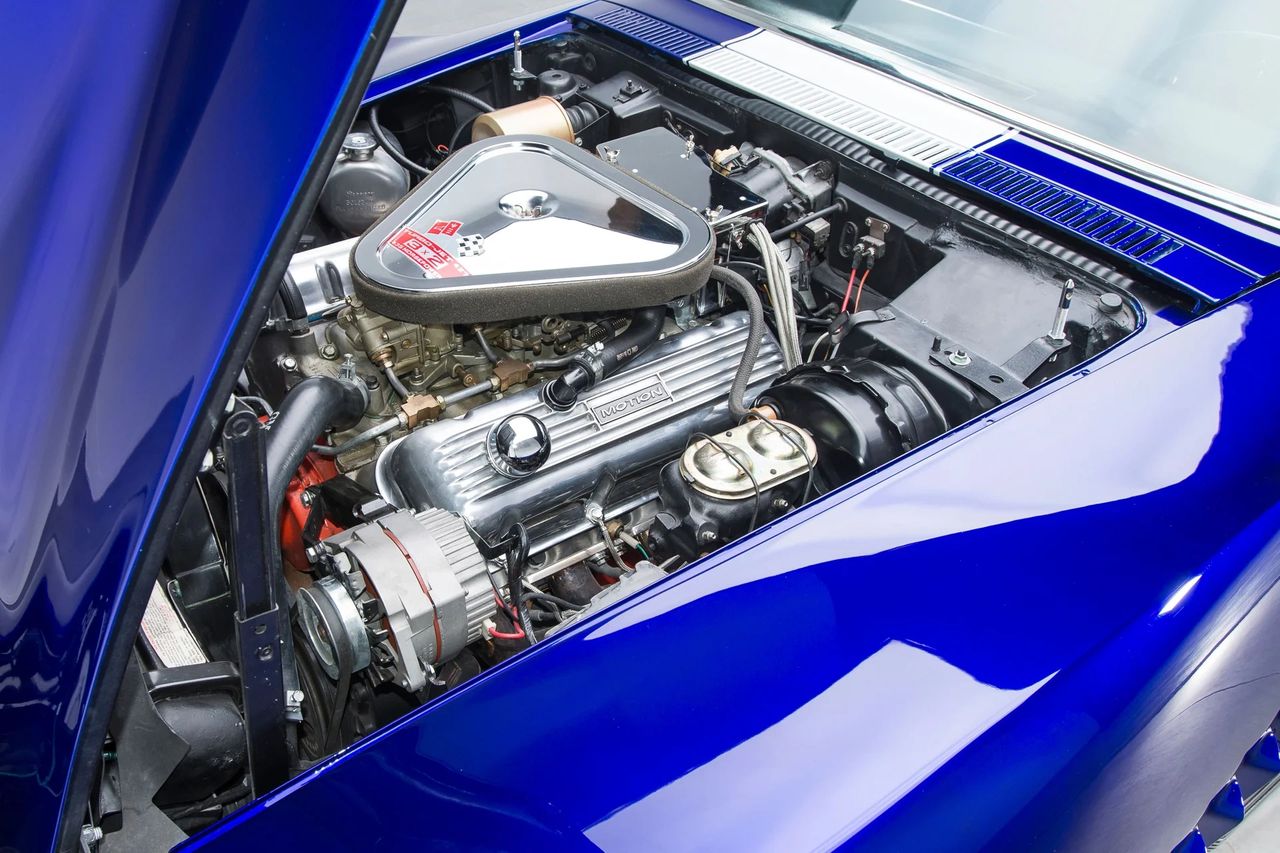
    Pictured here is the rare L89 427/435, instantly identifiable by its signature Tri-Power intake and lightweight aluminum cylinder heads. Offering the same raw output as the L71 but with significantly less front-end weight, the L89 was a stealth performance upgrade—subtle on paper, serious on the road. (Image courtesy of RK Motors)
    Pictured here is the rare L89 427/435, instantly identifiable by its signature Tri-Power intake and lightweight aluminum cylinder heads. Offering the same raw output as the L71 but with significantly less front-end weight, the L89 was a stealth performance upgrade—subtle on paper, serious on the road. (Image courtesy of RK Motors)

    For those who wanted the top-end punch of the L71 but with less weight over the front axle, Chevrolet offered the L89—a rare and little-understood engine option that combined the L71’s solid-lifter cam, Tri-Power setup, and high-flow rectangular-port heads with aluminum cylinder heads instead of cast iron. Horsepower remained the same at 435, but the reduced mass shaved approximately 70 pounds off the nose, improving handling balance and responsiveness. Crucially, the L89 was an option code, not a separate engine, meaning it could be easily overlooked on the order sheet unless a buyer knew exactly what they were after. Just 390 Corvettes were built with the L89 in 1969, making it rarer than even the L88 and offering collectors the best of both worlds: peak small-block drivability with big-block displacement and lighter, race-inspired hardware.
    The 1969 Corvette ZL1 was the most extreme production Corvette ever built—an aluminum-block, race-bred monster hiding beneath showroom fiberglass. Based on the L88 but featuring an all-aluminum 427 with dry-sump lubrication, the ZL1 produced well over 550 horsepower in factory trim, despite its official 430-hp rating. It was brutally expensive, adding more than $4,000 to the sticker—nearly doubling the cost of a base car. Only two were ever sold, making it one of the rarest and most valuable Corvettes in existence. Purpose-built for professional racing, the ZL1 wasn’t just fast—it was a factory-sanctioned moonshot. (Image courtesy of streetmusclemag.com)
    The 1969 Corvette ZL1 was the most extreme production Corvette ever built—an aluminum-block, race-bred monster hiding beneath showroom fiberglass. Based on the L88 but featuring an all-aluminum 427 with dry-sump lubrication, the ZL1 produced well over 550 horsepower in factory trim, despite its official 430-hp rating. It was brutally expensive, adding more than $4,000 to the sticker—nearly doubling the cost of a base car. Only two were ever sold, making it one of the rarest and most valuable Corvettes in existence. Purpose-built for professional racing, the ZL1 wasn’t just fast—it was a factory-sanctioned moonshot. (Image courtesy of streetmusclemag.com)

    Then came the ZL1—a name that still sounds almost mythical, but which absolutely happened. Born directly from Chevrolet’s Can-Am racing program, the ZL1 was essentially an L88 taken to its wildest conclusion, with every major component recast in aluminum—from the block and heads to the intake manifold. It shed nearly 100 pounds compared to its iron-block sibling and featured a dry-sump oiling system straight out of Chevrolet’s racing playbook. Officially rated at the same 430 horsepower as the L88, the real output was far higher—well over 550 horsepower, with some well-prepped examples rumored to flirt with 600. The price was equally extreme: checking the ZL1 box added over $4,000 to the sticker, nearly the cost of another Corvette.

    Only two production ZL1s are officially documented as having been built in 1969—one in Cortez Silver and one in Can-Am White—making them the rarest regular-production Corvettes ever sold to the public. But dig a little deeper, and you’ll find persistent rumors of a third ZL1, reportedly finished in red and delivered to a Gulf Oil engineer. Some believe this car may have been a special internal build or a backdoor testbed, but no definitive factory paperwork confirms its status as a true production ZL1. Most sources, including GM historical data, maintain the official count at two.

    It’s the kind of detail easily glossed over—but for those who live deep in the Corvette archives, it’s part of what makes the ZL1 legend so compelling. In 1969, Chevrolet didn’t just offer big horsepower—they offered a spectrum of intent, from the smooth civility of the L36 to the razor’s edge fury of the ZL1. It wasn’t just about how much power you had, but how that power was delivered, and to whom it was aimed, that turned these engines—and the cars they powered—into lasting legends.

    Transmissions, Axles, and the Way People Actually Ordered These Cars
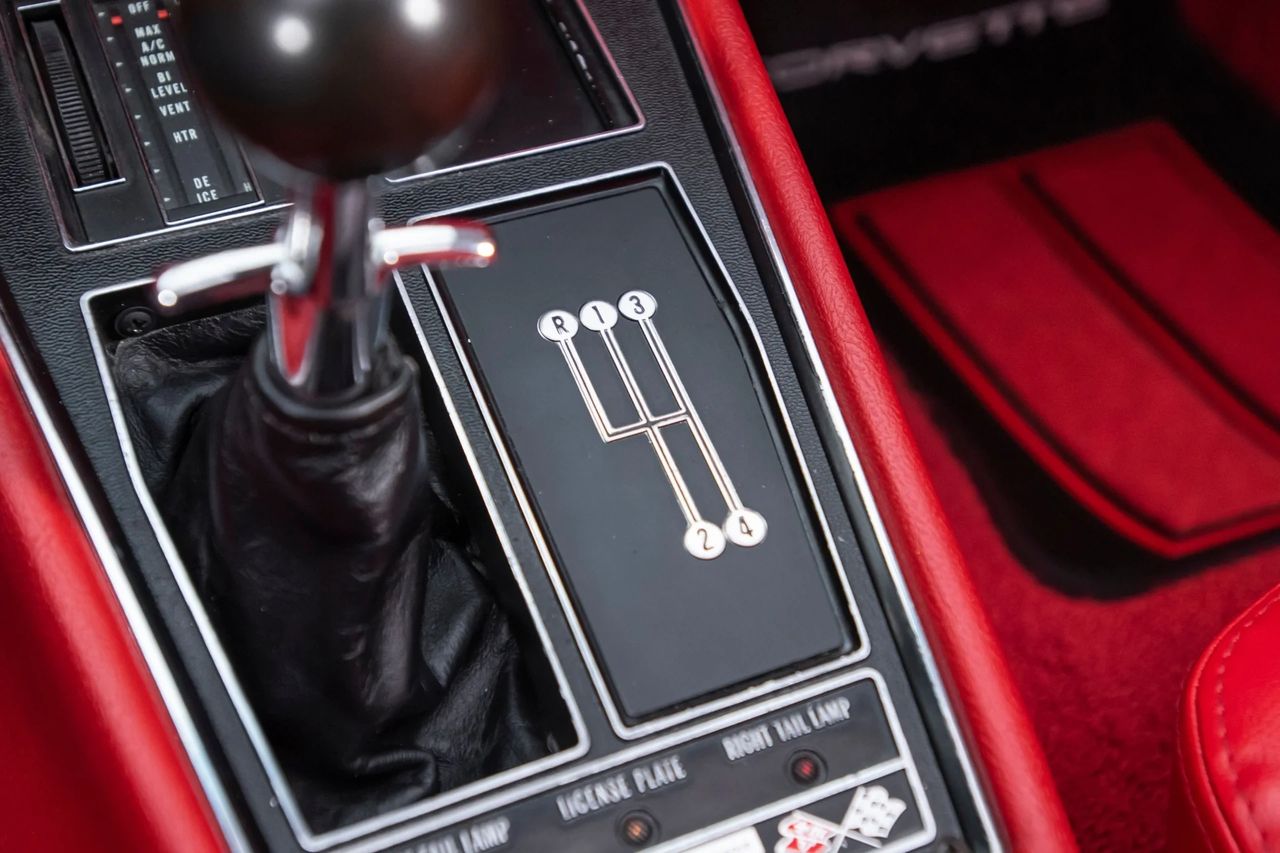
    The ’69 Corvette stuck with the aluminum-case Muncie four-speeds, offered in two flavors: the wide-ratio M20 and the close-ratio M21. The M20 (2.52:1 first, 1.88:1 second, 1.46:1 third, 1.00:1 fourth) was the street-friendly choice—strong launches with taller axle gears (3.36–3.55), easy drivability, and a broader split between gears that suited the new 350-cid small-blocks and most big-block street combos. The M21 (2.20:1 first, 1.64:1 second, 1.28:1 third, 1.00:1 fourth) tightened the steps for engines that liked to rev, typically paired with deeper rear gears (3.70–4.11) and the high-output 427s; keep the motor in the power band and it feels razor-sharp. Both boxes used the familiar 10-spline input/27-spline output shafts in ’69, robust brass synchros, and a positive, chrome stick with a reverse lockout gate—by this year most cars benefited from cleaner Hurst-style linkage and a firmer, less rubbery shift feel. Clutch hardware scaled with power—10.5-inch for most small-blocks, 11-inch for heavy-duty big-block applications—and either transmission was happy behind serious torque if you respected the clutch. (A handful of heavy-duty M22 “Rock Crusher” units slipped into the 427 crowd, recognizable by their straighter-cut gears and trademark whine, but the core 4-speed story in 1969 is the M20 for breadth and the M21 for bite.) (Image courtesy of RK Motors)
    The ’69 Corvette stuck with the aluminum-case Muncie four-speeds, offered in two flavors: the wide-ratio M20 and the close-ratio M21. The M20 (2.52:1 first, 1.88:1 second, 1.46:1 third, 1.00:1 fourth) was the street-friendly choice—strong launches with taller axle gears (3.36–3.55), easy drivability, and a broader split between gears that suited the new 350-cid small-blocks and most big-block street combos. The M21 (2.20:1 first, 1.64:1 second, 1.28:1 third, 1.00:1 fourth) tightened the steps for engines that liked to rev, typically paired with deeper rear gears (3.70–4.11) and the high-output 427s; keep the motor in the power band and it feels razor-sharp. Both boxes used the familiar 10-spline input/27-spline output shafts in ’69, robust brass synchros, and a positive, chrome stick with a reverse lockout gate—by this year most cars benefited from cleaner Hurst-style linkage and a firmer, less rubbery shift feel. Clutch hardware scaled with power—10.5-inch for most small-blocks, 11-inch for heavy-duty big-block applications—and either transmission was happy behind serious torque if you respected the clutch. (A handful of heavy-duty M22 “Rock Crusher” units slipped into the 427 crowd, recognizable by their straighter-cut gears and trademark whine, but the core 4-speed story in 1969 is the M20 for breadth and the M21 for bite.) (Image courtesy of RK Motors)

    In 1969, the Corvette’s drivetrain choices reflected just how many personalities the car could embody—from laid-back cruiser to high-strung backroad weapon to brutal dragstrip bruiser. While a synchronized three-speed manual remained standard equipment, almost no one left the dealership with it. Corvette buyers overwhelmingly opted for one of the three available four-speeds—each tuned to a specific kind of driving experience.

    The M20 wide-ratio 4-speed was the most approachable of the bunch. With broader gear spacing, it was ideally matched to small-block engines and street-friendly axle ratios, but it also handled big-block torque with ease. For drivers who wanted a transmission that felt relaxed around town but could still respond when called upon, the M20 struck the perfect balance. It was geared for versatility, not aggression—making it a great fit for cars meant to do more than just quarter-mile runs or canyon carving.

    For those who leaned into performance, the M21 close-ratio 4-speed sharpened the car’s reflexes. With tighter gear spacing, it kept the engine squarely in its powerband—especially useful with high-strung small-blocks or solid-lifter big-blocks that came alive above 4,000 rpm. The minimal gap between third and fourth made it especially effective on two-lane roads and twisty sections where keeping the revs up was key. It wasn’t the transmission for casual cruising, but for a driver who wanted to extract every bit of performance, the M21 offered a level of mechanical precision that transformed the Corvette into a much more focused machine.

    At the top of the manual gearbox range sat the M22, better known by its street name: the “Rock Crusher.” With its straight-cut gears, heavy-duty construction, and unfiltered mechanical noise, the M22 was built for punishment. It was rare in Corvettes—only a small number were equipped in 1969—but it earned a cult following among drag racers and road racers who appreciated its ability to handle abuse without flinching. The Rock Crusher wasn’t just durable; it had a distinct, almost industrial character. You didn’t shift it—you engaged it. And if you could tolerate the whine and heft, it rewarded you with absolute confidence at the limit.
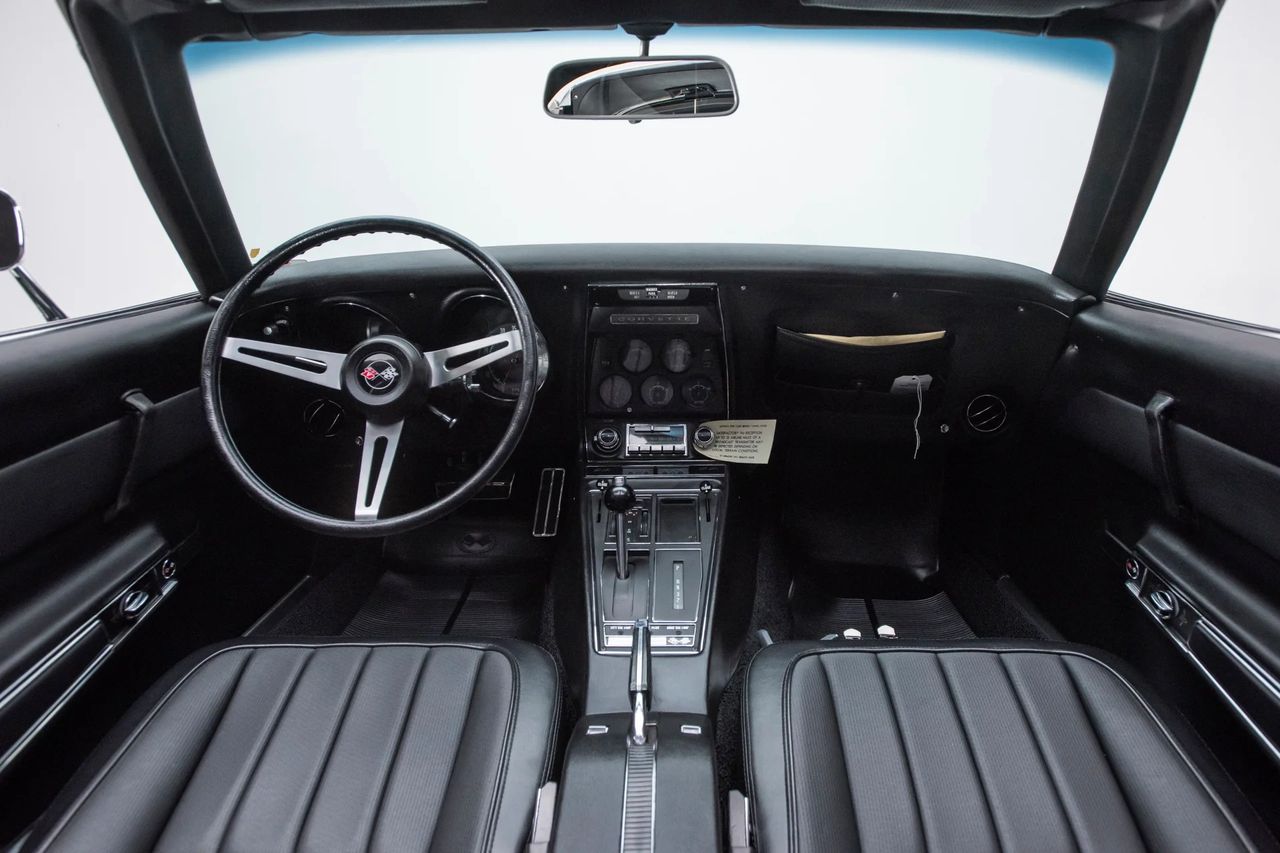
    In 1969, buyers who didn’t want to row their own gears could opt for Chevrolet’s proven Hydra-Matic three-speed automatic, the Turbo Hydra-Matic 400 (TH400). This heavy-duty unit had already earned a reputation for handling serious torque, and in Corvette duty it was reserved primarily for big-block engines and higher-performance applications. Its strengths were a cast-iron valve body, robust planetary gearsets, and a reputation for delivering consistent, crisp shifts even under heavy throttle. Small-block cars with automatics typically received the lighter-duty Turbo Hydra-Matic 350 (TH350), introduced just the year before, which was better matched to the new 350-cid engines. The TH350 gave Corvette drivers smoother engagement and less parasitic loss than the older Powerglide two-speed it replaced, while still being strong enough for spirited driving. Together, the TH350 and TH400 gave Corvette buyers two well-matched automatic options—one tuned for accessible everyday drivability, the other for taming the massive torque of the big-blocks. (Image courtesy of RK Motors)
    In 1969, buyers who didn’t want to row their own gears could opt for Chevrolet’s proven Hydra-Matic three-speed automatic, the Turbo Hydra-Matic 400 (TH400). This heavy-duty unit had already earned a reputation for handling serious torque, and in Corvette duty it was reserved primarily for big-block engines and higher-performance applications. Its strengths were a cast-iron valve body, robust planetary gearsets, and a reputation for delivering consistent, crisp shifts even under heavy throttle. Small-block cars with automatics typically received the lighter-duty Turbo Hydra-Matic 350 (TH350), introduced just the year before, which was better matched to the new 350-cid engines. The TH350 gave Corvette drivers smoother engagement and less parasitic loss than the older Powerglide two-speed it replaced, while still being strong enough for spirited driving. Together, the TH350 and TH400 gave Corvette buyers two well-matched automatic options—one tuned for accessible everyday drivability, the other for taming the massive torque of the big-blocks. (Image courtesy of RK Motors)

    But not every performance Corvette came with a clutch. The M40 Turbo Hydra-Matic, a 3-speed automatic transmission, was increasingly popular and offered on both small- and big-block cars—including certain solid-lifter 427s. This wasn’t the lazy, soft-shifting slushbox of full-size sedans. The M40 was calibrated for torque, and when paired with the right rear axle, it turned the Corvette into a point-and-shoot weapon. Launches were consistent, shifts were firm, and on a dragstrip, the M40 could bracket a car’s ET to within a tenth of a second, run after run. For those chasing repeatable, no-nonsense performance—or simply tired of rowing gears in traffic—it was a serious transmission choice, not an afterthought.
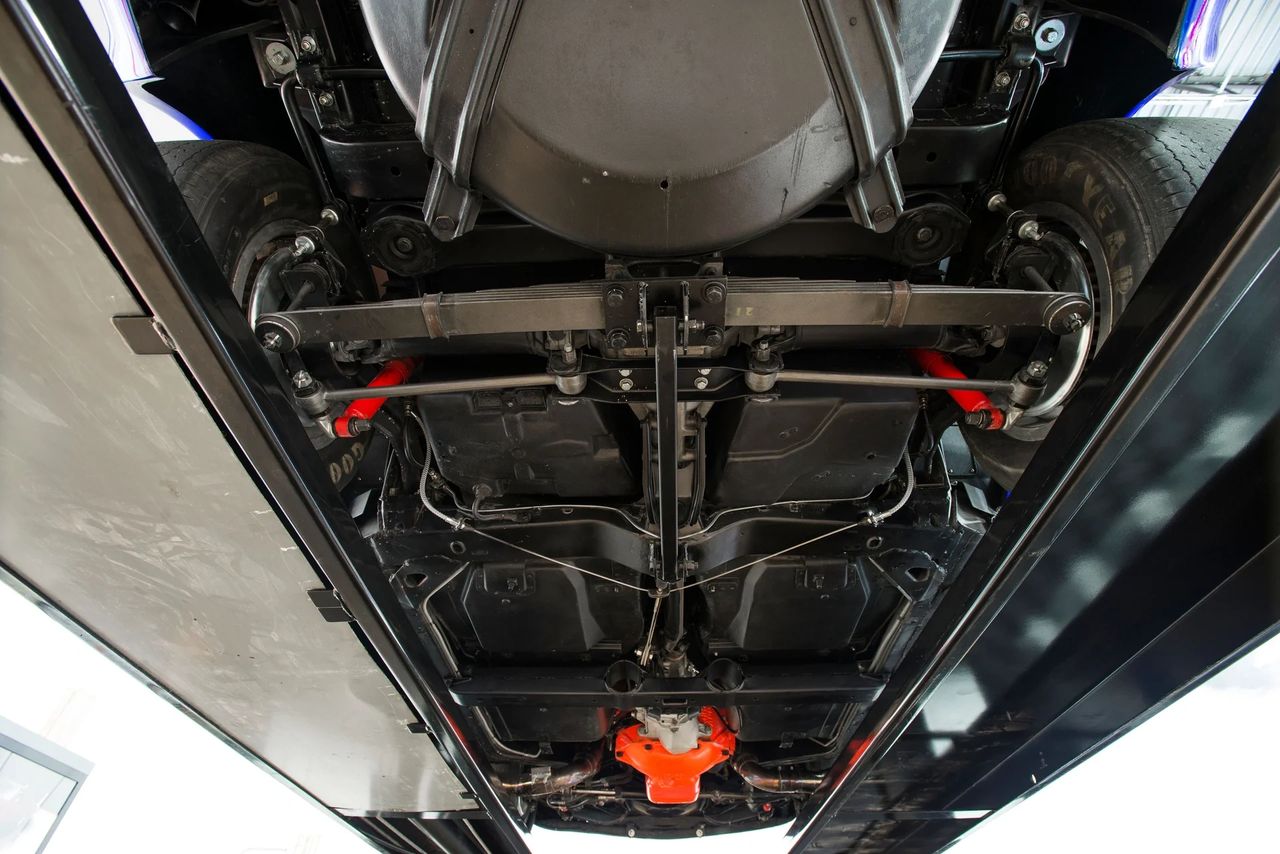
    The 1969 Corvette retained its rugged independent rear suspension, anchored by a differential housed in a carrier with a transverse leaf spring and trailing arms, giving the car both strength and ride compliance. Buyers could choose from a wide range of axle ratios, starting as mild as 3.08:1 for relaxed highway cruising, and running all the way up to 4.56:1 for drag strip duty, with 3.36:1, 3.55:1, and 3.70:1 serving as popular middle grounds. Positraction was still optional but strongly recommended, especially with the high-torque big-block engines, ensuring better traction under hard acceleration. This variety of rear-end setups meant the Corvette could be tailored for long-distance touring, balanced performance driving, or all-out straight-line acceleration depending on the buyer’s taste. (Image courtesy of RK Motors)
    The 1969 Corvette retained its rugged independent rear suspension, anchored by a differential housed in a carrier with a transverse leaf spring and trailing arms, giving the car both strength and ride compliance. Buyers could choose from a wide range of axle ratios, starting as mild as 3.08:1 for relaxed highway cruising, and running all the way up to 4.56:1 for drag strip duty, with 3.36:1, 3.55:1, and 3.70:1 serving as popular middle grounds. Positraction was still optional but strongly recommended, especially with the high-torque big-block engines, ensuring better traction under hard acceleration. This variety of rear-end setups meant the Corvette could be tailored for long-distance touring, balanced performance driving, or all-out straight-line acceleration, depending on the buyer’s taste. (Image courtesy of RK Motors)

    Backing these gearboxes were a variety of rear axle ratios, ranging from a long-legged 3.08 all the way up to a short, rev-happy 4.56. The sweet spot for most small-block street cars lived in the 3.36 to 3.70 range, offering a great blend of acceleration and highway comfort. But a big-block, especially one with Tri-Power induction, could easily handle and benefit from a 4.11:1 ratio—especially when shod in bias-ply rubber that gave up grip before mechanical sympathy was needed. Crucially, Positraction was so widely ordered on 1969 Corvettes that it may as well have been standard equipment. It ensured that the power got to the pavement—both wheels, both lanes, all of the time.

    Together, this matrix of transmissions and axle choices meant the 1969 Corvette could be tailored to its owner’s exact intentions. Whether you wanted high-speed touring, dragstrip domination, or road-course agility, Chevrolet gave you the hardware to build a car that behaved exactly as you asked. The drivetrain wasn’t just about moving the car forward—it was central to shaping its identity.

    Performance in the Real World: Numbers, Nuance, and Context
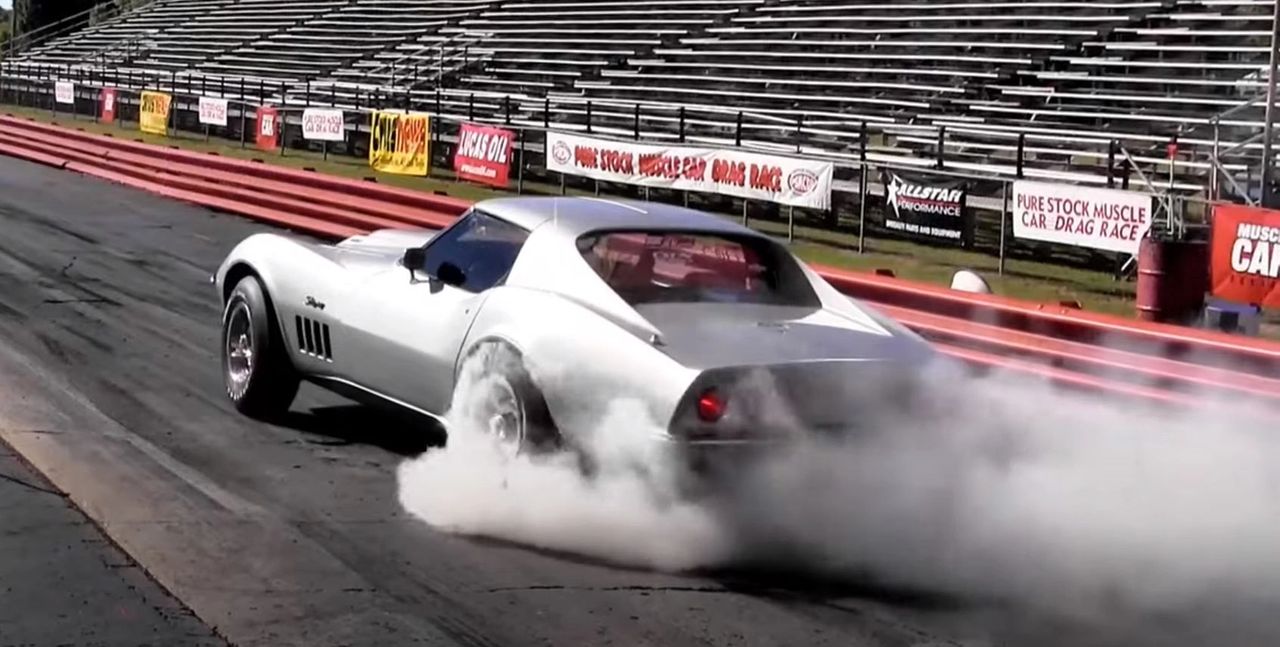
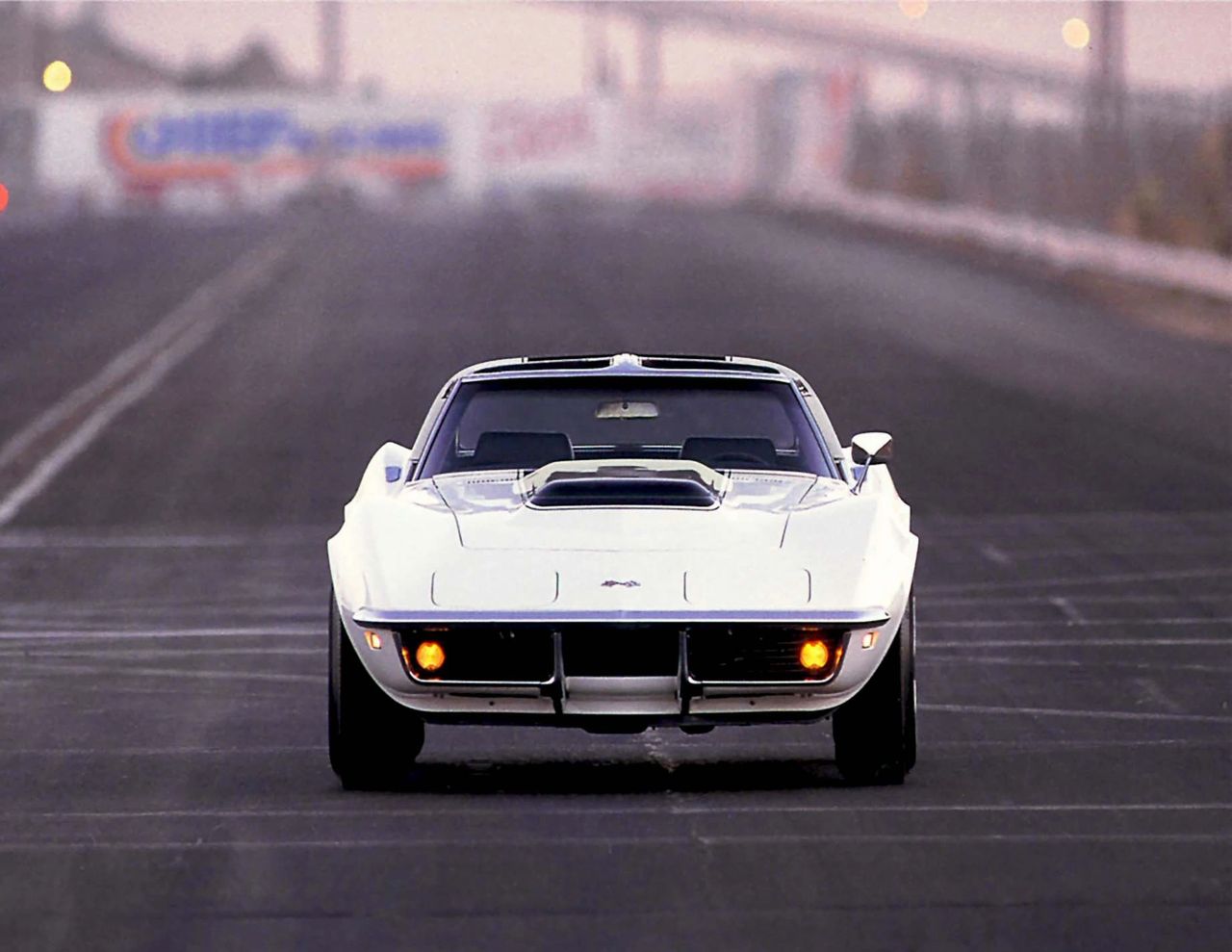
    A 1969 L88 Corvette "lights it up" at a local drag strip.  (Image courtesy of Hot Rod Magazine)
    A 1969 L88 Corvette “lights it up” at a local drag strip. (Image courtesy of Hot Rod Magazine)

    A properly tuned 427/435 tri-power four-speed Corvette on period tires lived in the high-13s to low-14s through the quarter mile at around 106–108 mph. On a warm pavement with a sticky groove, some testers saw mid-13s. Put the same car on cold asphalt with a headwind, and you could lose four tenths and four mph without touching a jet or a timing light. That’s the nature of bias-ply rubber and cast-iron flywheels. An L88 convertible with street exhaust and longish gears could frustrate novice testers off the line and then pull like a freight elevator above 4,500 rpm, clawing back everything it gave away at launch.

    The small-block L46 cars were (and are) the Corvette’s best “everyday performance” secrets of the era. Throttle response is immediate, there’s enough torque to keep the engine off-cam in town, and the chassis ride/steer balance is friendlier on broken secondary roads than the big-block nose ever manages.
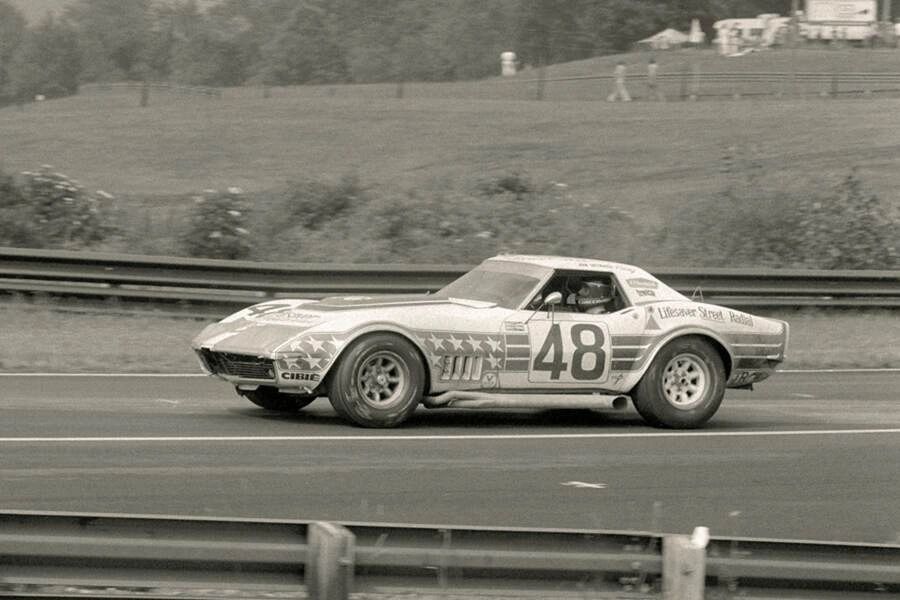
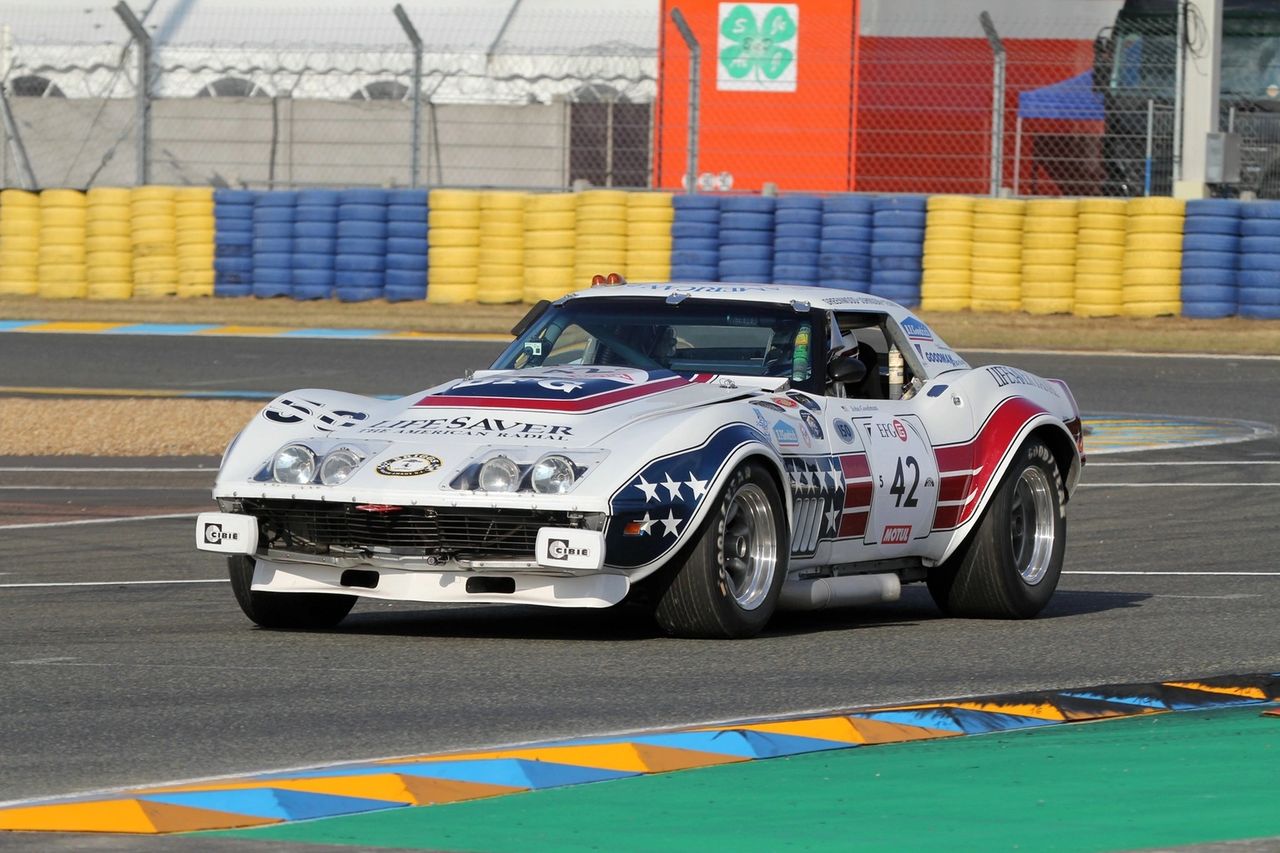
    John Greenwood became one of the most recognizable privateers to turn the 1969 Corvette into a serious racing weapon. A skilled driver and tuner, Greenwood focused on extracting maximum performance from the big-block cars, reinforcing their chassis, and fitting wider tires and brakes to cope with the power. He developed distinctive aerodynamic tweaks—flared fenders, deep front air dams, and eventually towering rear spoilers—that gave his Corvettes a brutal, purposeful look while also cutting drag and improving high-speed stability. Under the hood, his builds featured heavily massaged 427- and 454-cubic-inch engines, tuned to deliver enormous horsepower while surviving the rigors of endurance racing. Greenwood’s cars were loud, aggressive, and instantly identifiable, helping to cement the Corvette’s presence on the sports car racing stage in the early 1970s. In doing so, he bridged the gap between showroom Stingrays and all-out racing prototypes, proving the Corvette could battle with the world’s best.
    John Greenwood became one of the most recognizable privateers to turn the 1969 Corvette into a serious racing weapon. A skilled driver and tuner, Greenwood focused on extracting maximum performance from the big-block cars, reinforcing their chassis, and fitting wider tires and brakes to cope with the power. He developed distinctive aerodynamic tweaks—flared fenders, deep front air dams, and eventually towering rear spoilers—that gave his Corvettes a brutal, purposeful look while also cutting drag and improving high-speed stability. Under the hood, his builds featured heavily massaged 427- and 454-cubic-inch engines, tuned to deliver enormous horsepower while surviving the rigors of endurance racing. Greenwood’s cars were loud, aggressive, and instantly identifiable, helping to cement the Corvette’s presence on the sports car racing stage in the early 1970s. In doing so, he bridged the gap between showroom Stingrays and all-out racing prototypes, proving the Corvette could battle with the world’s best.

    On a road course, the brakes were the Corvette’s unsung advantage. Four vented discs with a broad swept area meant repeatable stops and confidence late in a session. You could feel pad fade on marginal linings, but the foundation hardware is honest and durable. The chassis prefers smooth inputs—trail a whisper of brake into the apex, breathe onto the throttle early, and let the independent rear settle the car. Drive it like a Camaro and the Corvette will teach you about mid-corner patience.

    Options, RPO Codes, and the Ordering Logic of 1969
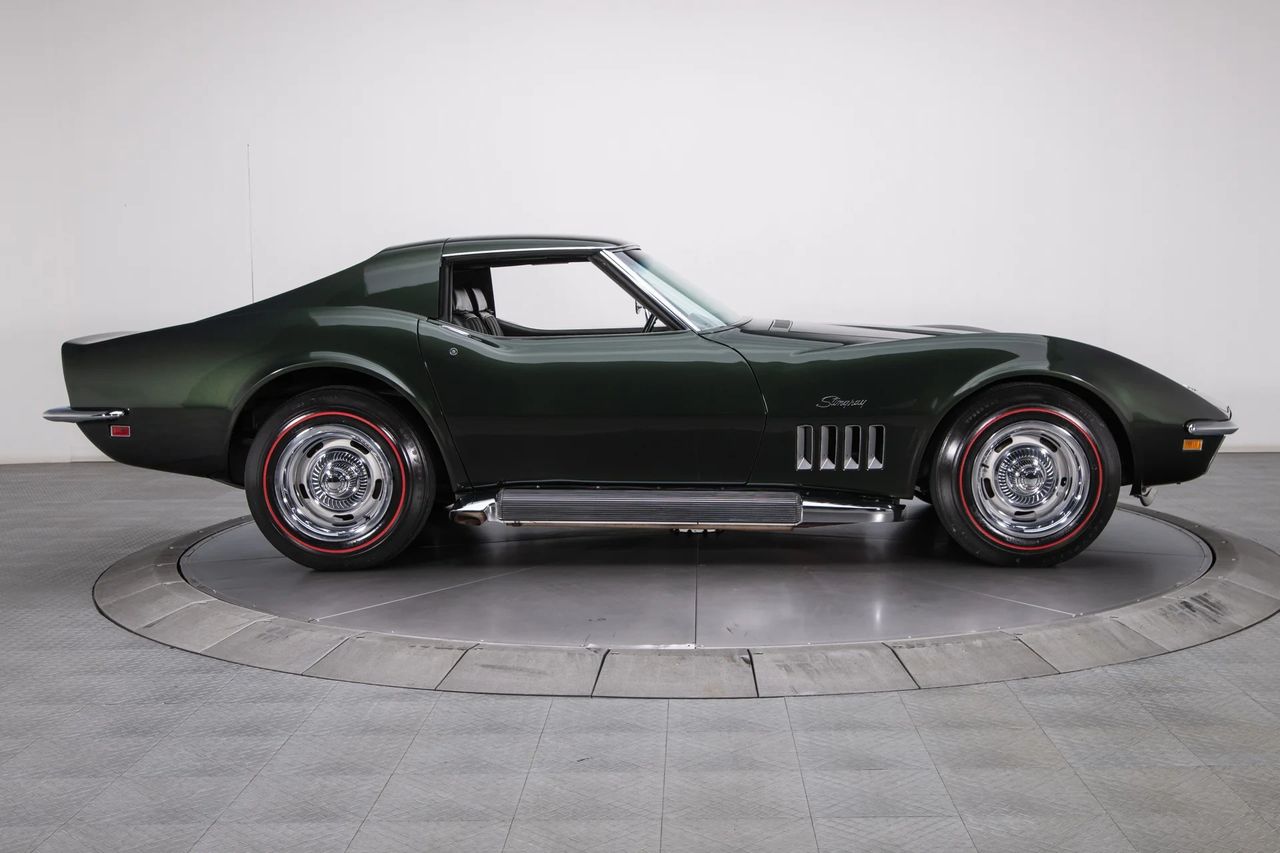
    RPO N14 was the factory Side-Mount Exhaust System—those long, finned/covered pipes running beneath the doors—that gave the ’69 Corvette its most extroverted look and sound. The setup routed the dual exhaust to side outlets with heat-shielded covers, trimming backpressure for big-block breathing while delivering a hard, unmistakable bark right at curbside. Rare, dramatic, and functional, N14 turned any Stingray into a rolling showpiece before you even cracked the throttle. (Image courtesy of RK Motors)
    RPO N14 was the factory Side-Mount Exhaust System—those long, finned/covered pipes running beneath the doors—that gave the ’69 Corvette its most extroverted look and sound. The setup routed the dual exhaust to side outlets with heat-shielded covers, trimming backpressure for big-block breathing while delivering a hard, unmistakable bark right at curbside. Rare, dramatic, and functional, N14 turned any Stingray into a rolling showpiece before you even cracked the throttle. (Image courtesy of RK Motors)

    The 1969 Corvette is catnip for build-sheet detectives—a car where the right set of RPO codes can tell you as much about the original buyer as the car itself. No two seemed to be ordered the same way, and that’s exactly what made the late-’60s Corvette so versatile. From fire-breathing street brawlers to air-conditioned boulevard cruisers, it could be spec’d to suit a wide spectrum of personalities—without compromising the car’s core identity. The options list was long, nuanced, and often reflected both the growing maturity of the Corvette buyer and the broader cultural shift from muscle car to refined GT.

    One of the most visually and aurally arresting options was RPO N14, the Side-Mounted Exhaust System, selected on 4,355 cars. This setup did more than just amplify the small- or big-block’s rumble—it added a dramatic flair to the car’s profile and, functionally, freed up undercarriage space for other drivetrain or suspension components. On a chrome-bumper C3, side pipes just feel right—like they were always meant to be there. The sound they produced wasn’t just loud; it was mechanical and present, tying the exhaust note directly to the driver’s senses in a way no rear-exit muffler ever could.

    G81 Positraction was so common in 1969 that it’s rare to find a Corvette without it. Not quite officially standard, it was as close to default as an option could get. If a car left the factory without it, it was either a dealer’s mistake or someone was trying very hard to save a few dollars. With 427 torque or even the punchier small-blocks, sending power to both rear wheels wasn’t just fun—it was essential for putting anything down cleanly.

    Buyers looking for sharper handling could opt for F41 Special Suspension, which brought heavier-rate springs and specific shock valving. Only 1,661 cars received it, but it was a meaningful upgrade for drivers who planned to use their Corvette more aggressively. Paired with a Tri-Power 427 or a close-ratio four-speed, it delivered better body control and cornering poise—but at the expense of ride quality. This wasn’t a setup for Sunday cruising; it was for owners willing to trade comfort for capability.
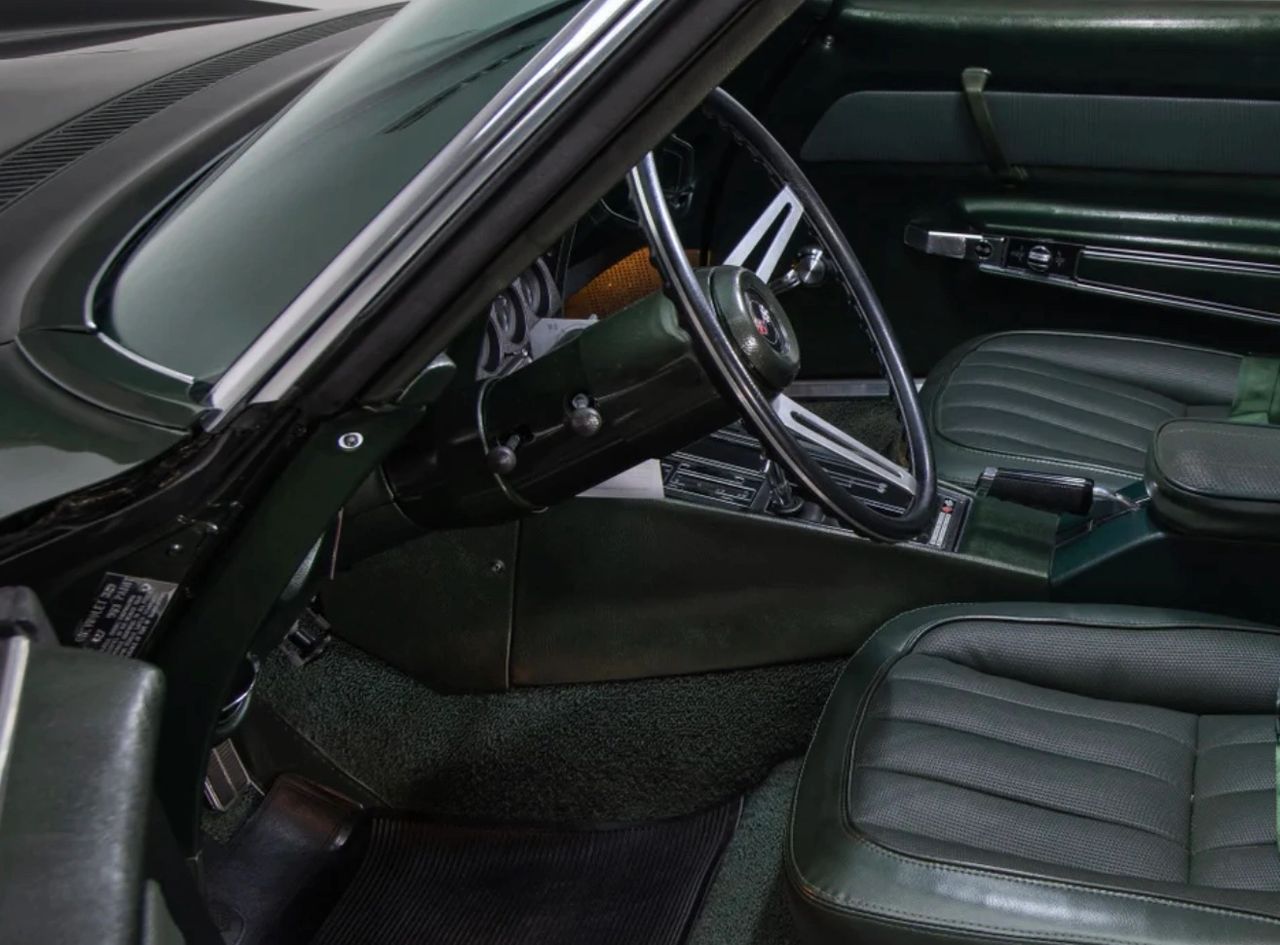
    RPO N37 was the Tilt-Telescopic steering column, the most ergonomic wheel setup you could spec on a ’69 Corvette. Using a dash-side lever, the column tilted through multiple detents, while a locking ring on the hub let the wheel telescope in and out, so drivers of different sizes could dial in reach and angle without blocking the gauge cluster. Beyond comfort, it eased entry/exit past the wide console and helped place the wheel perfectly for spirited driving with the close-ratio shifter. Paired with the year’s standard headrests and deeper bucket seats, N37 made the Stingray’s cockpit feel tailored rather than one-size-fits-all.
    RPO N37 was the Tilt-Telescopic steering column, the most ergonomic wheel setup you could spec on a ’69 Corvette. Using a dash-side lever, the column tilted through multiple detents, while a locking ring on the hub let the wheel telescope in and out, so drivers of different sizes could dial in reach and angle without blocking the gauge cluster. Beyond comfort, it eased entry/exit past the wide console and helped place the wheel perfectly for spirited driving with the close-ratio shifter. Paired with the year’s standard headrests and deeper bucket seats, N37 made the Stingray’s cockpit feel tailored rather than one-size-fits-all.

    Creature comforts, meanwhile, were becoming more common—even among performance builds. The N37 Tilt-Telescopic Steering Column, installed in over 10,000 cars, was a transformative option for long drives. Combined with a properly bolstered bucket seat, it allowed drivers of all sizes to dial in a perfect seating position, reducing fatigue and adding an unexpected layer of luxury to a car still known for its rawness. Similarly, N40 Power Steering was ordered on more than half of all 1969 Corvettes. While the C3’s unassisted steering delivered excellent road feel, slow-speed maneuvering with wide front tires could be a chore. Power assist reduced effort without sacrificing high-speed feedback, a welcome middle ground for real-world use.

    On the transmission front, M40 Turbo Hydra-Matic appeared in 8,161 cars, proving that performance buyers were increasingly seeing automatic not as a compromise, but as an advantage—especially with torque-rich big-blocks. With the right gearing, a Hydra-Matic Corvette could launch consistently, shift crisply, and hold its own in any street or strip encounter. It also signaled a shift in how many buyers used their cars—not just as performance tools, but as daily drivers and long-distance machines.
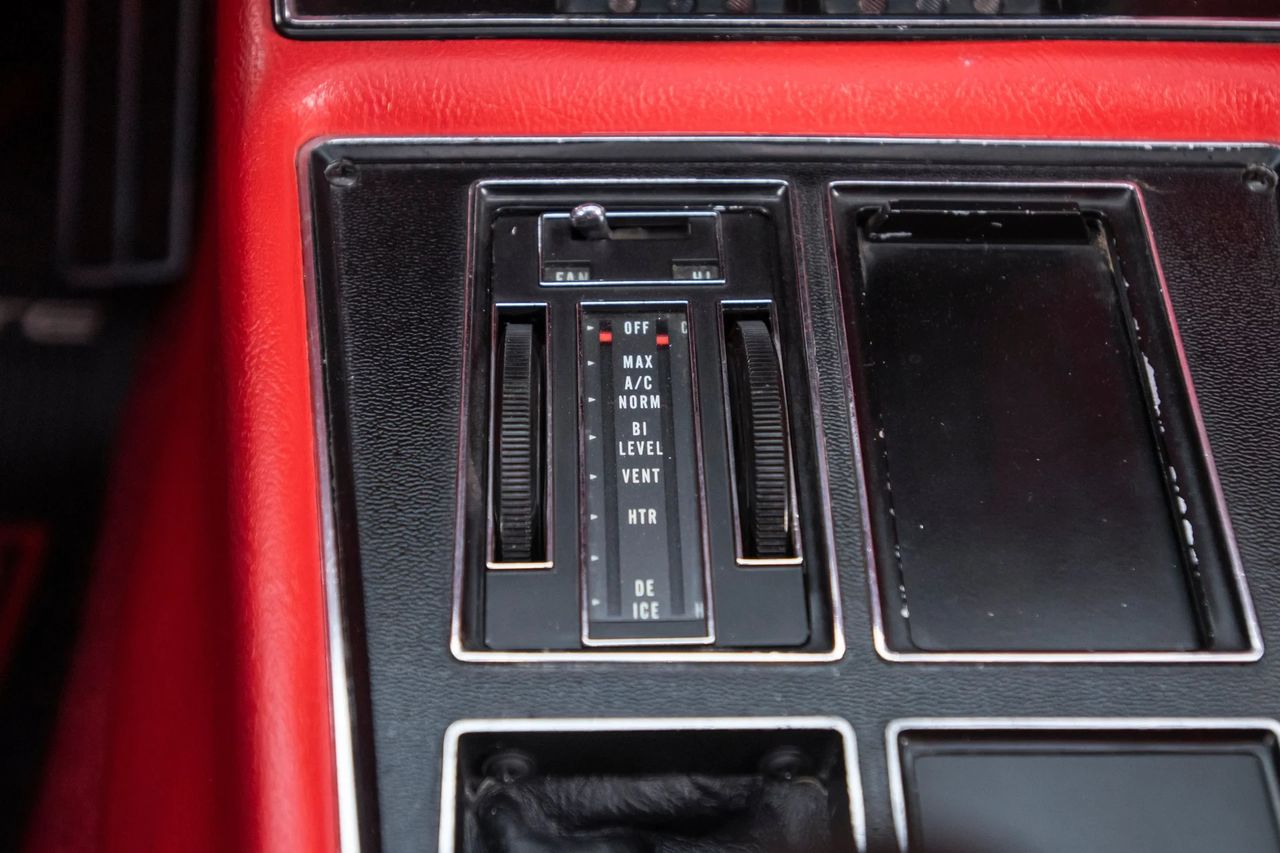
    RPO C60 was the Air Conditioning option for the 1969 Corvette, a feature that added real-world comfort to a car otherwise focused on performance. The system was integrated neatly into the center console with a vertical slide control and allowed drivers to select between MAX A/C, normal A/C, bi-level, vent, heat, and defrost modes. It used a Frigidaire compressor and modernized ducting that balanced cooling power with relatively compact packaging. For buyers in hotter climates—or anyone who wanted their Stingray to be more than just a weekend toy—C60 transformed the Corvette into a true all-season GT. At $462.85, it was a costly option in 1969, but one that dramatically improved livability without dulling the car’s sporting character. (Image courtesy of RK Motors)
    RPO C60 was the Air Conditioning option for the 1969 Corvette, a feature that added real-world comfort to a car otherwise focused on performance. The system was integrated neatly into the center console with a vertical slide control and allowed drivers to select between MAX A/C, normal A/C, bi-level, vent, heat, and defrost modes. It used a Frigidaire compressor and modernized ducting that balanced cooling power with relatively compact packaging. For buyers in hotter climates—or anyone who wanted their Stingray to be more than just a weekend toy—C60 transformed the Corvette into a true all-season GT. At $462.85, it was a costly option in 1969, but one that dramatically improved livability without dulling the car’s sporting character. (Image courtesy of RK Motors)

    As the Corvette matured, so did its entertainment and climate options. The U69 AM-FM radio and U79 AM-FM Stereo systems became increasingly popular, reflecting the car’s growing role as a personal luxury GT rather than a stripped-down weekend toy. And the availability of C60 Air Conditioning, especially in convertibles, proved Corvette buyers weren’t just chasing lap times—they wanted comfort when cruising through hot climates or commuting in city traffic. Air conditioning was still relatively rare in high-performance cars at the time, but its growing uptake in the Corvette lineup revealed how owners were actually using their cars: not just for bursts of speed, but as real transportation, often year-round.

    The data tells the story. Some buyers went full grand-touring: air conditioning, power windows, stereo system, Tilt-Tele, and tall highway gears—often paired with a small-block engine for balance and refinement. Others took the opposite approach: manual steering, no radio, heavy-duty cooling, side pipes, close-ratio gearboxes, and big-block torque. The 1969 Corvette could accommodate both philosophies without losing its soul. It was a car that wore many faces, but always knew exactly what it was.

    Colors, Trims, and Why 1969 Looks Like 1969
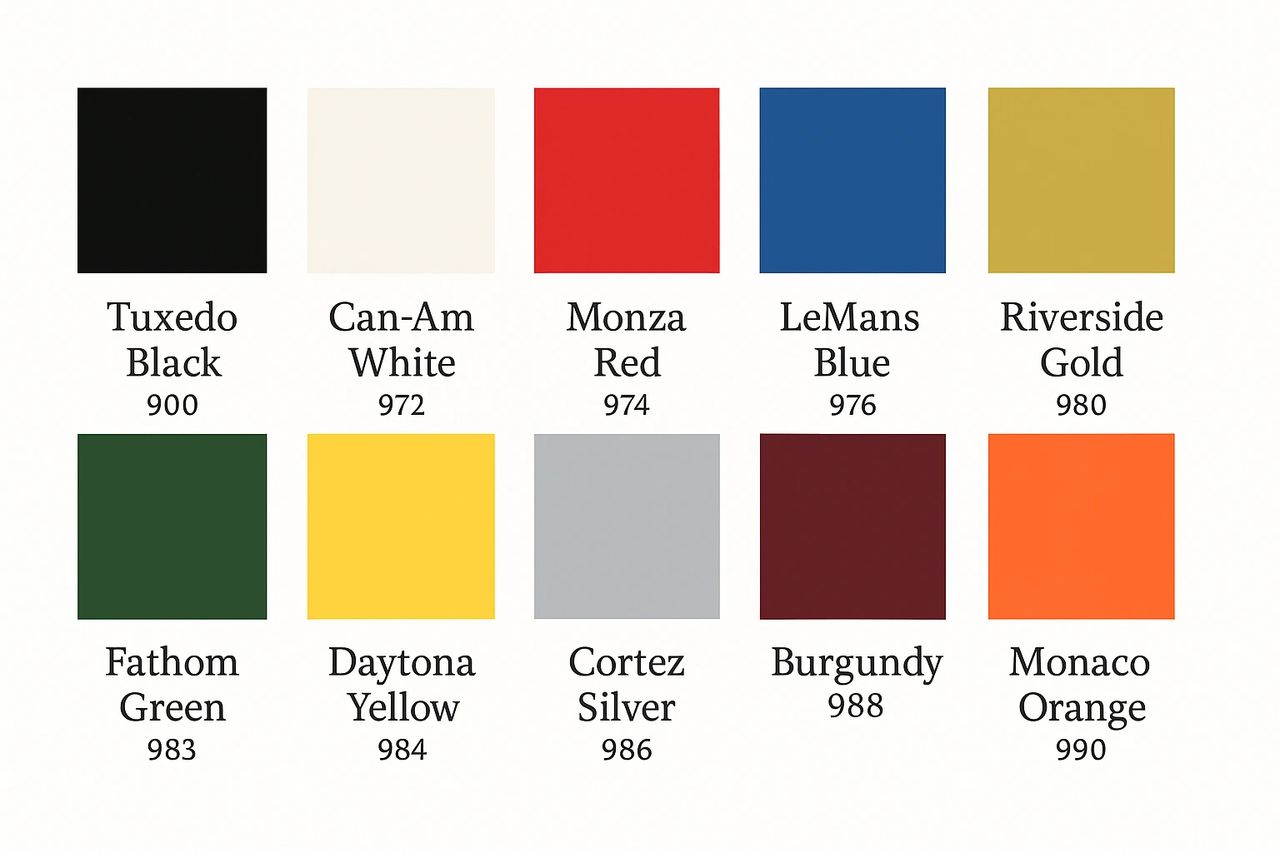
    The 1969 Corvette color palette is more than just a collection of paint chips—it’s a vivid snapshot of American taste at the end of a turbulent, expressive decade. The available finishes captured the era’s duality: bold self-expression on one end, mature restraint on the other. Buyers could dial in exactly how loud—or how refined—they wanted their Corvette to be, right from the showroom floor.
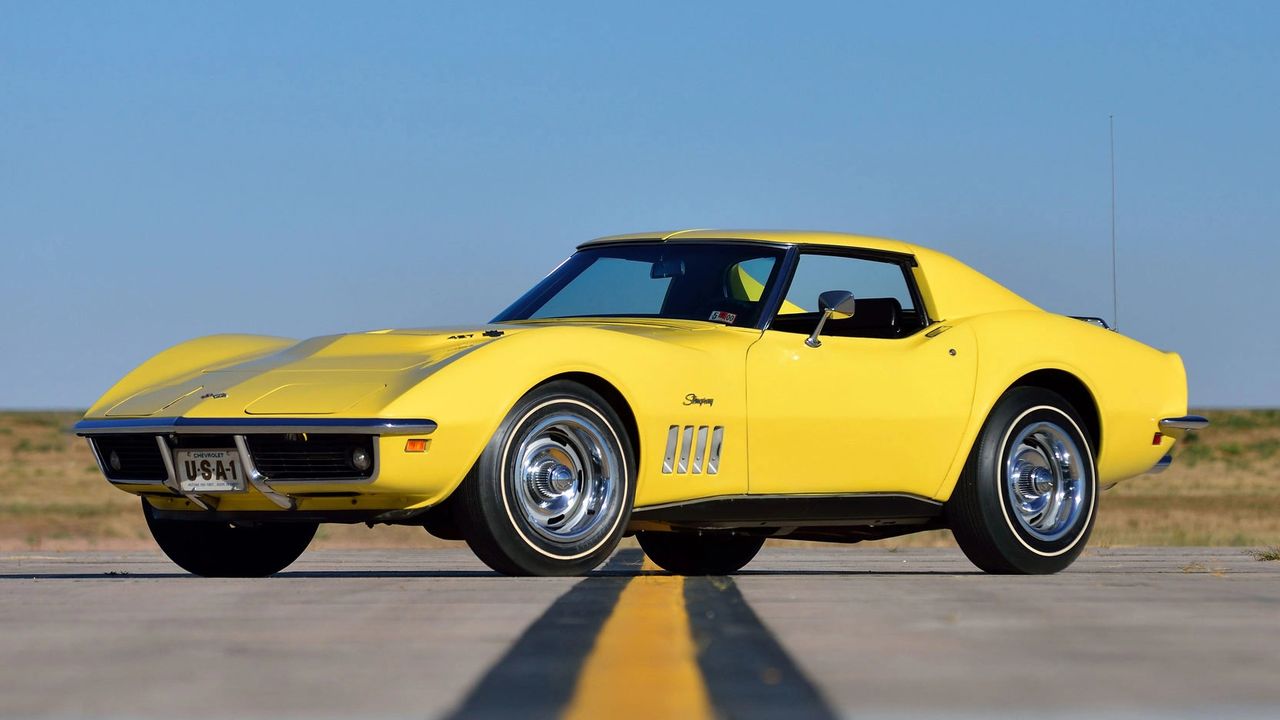
    A 1969 Corvette coupe finished in Daytona Yellow. (Image courtesy of GM Media LLC)
    A 1969 Corvette coupe finished in Daytona Yellow. (Image courtesy of GM Media LLC)

    High-impact hues like Monaco Orange and Daytona Yellow didn’t just suggest extroversion—they demanded attention. These were colors that caught light, flashed past, and stuck in memory, the sort of pigment choices that made children chase after the car and adults take mental notes. On a Stingray with side pipes and rally wheels, these colors read as pure confidence, bordering on defiance. They were the street-legal embodiment of the late-’60s American performance culture: unapologetic, kinetic, loud even at idle.
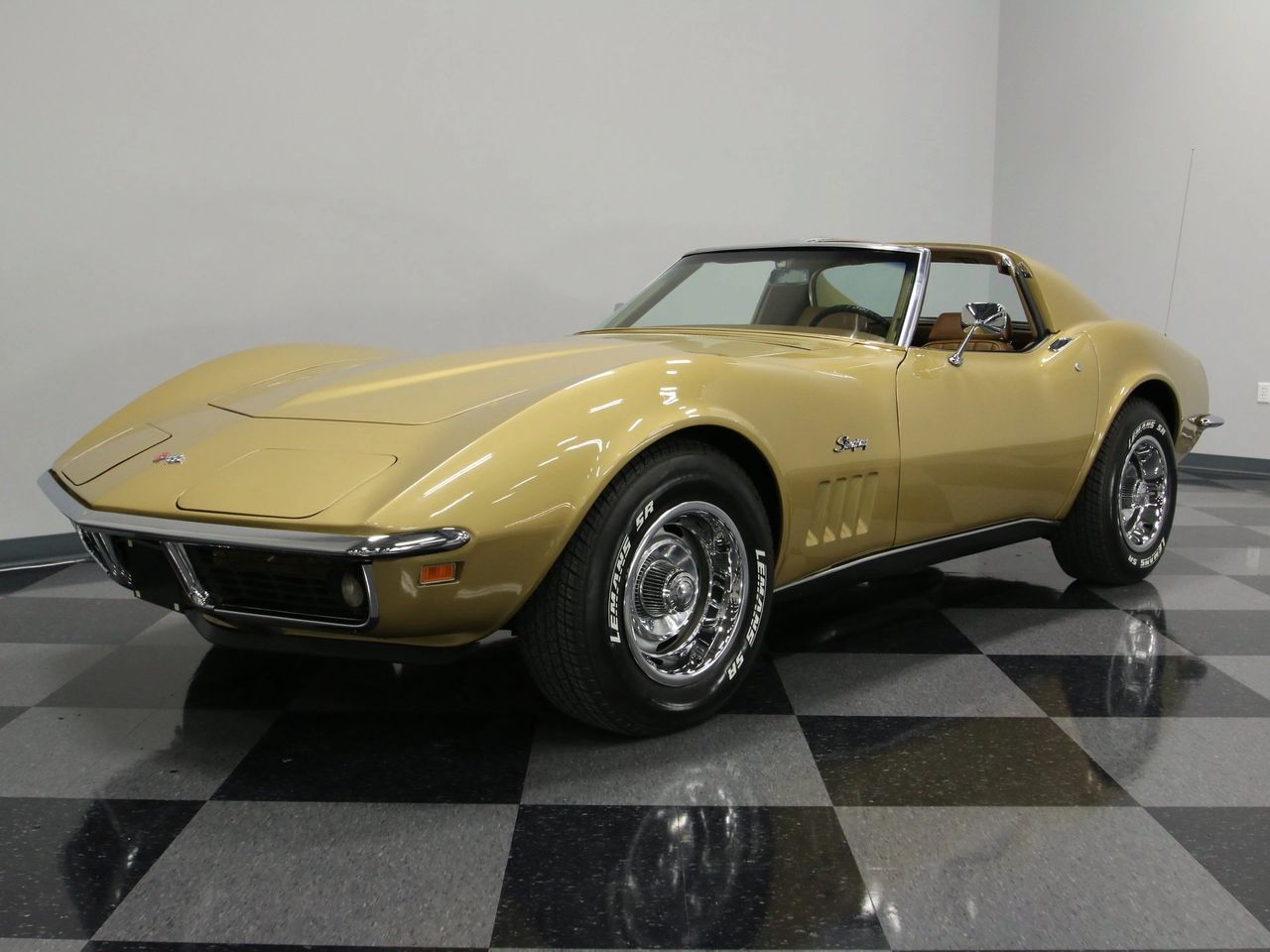
    1969 Corvette Coupe in Riverside Gold.
    1969 Corvette Coupe in Riverside Gold.

    At the other end of the spectrum sat colors like Riverside Gold and Fathom Green—deep, metallic tones that imbued the car with a sense of purpose and poise. These weren’t just more subdued; they were elegant, especially when paired with a Saddle interior, which added warmth and visual complexity. Riverside Gold in particular had a kind of burnished richness under evening light—perfect for a Corvette that saw as much dinner party valet duty as backroad strafing. Fathom Green, meanwhile, leaned almost British in its understatement, especially on a coupe with Rally wheels and minimal exterior options. These were the colors for owners who wanted presence, not provocation.
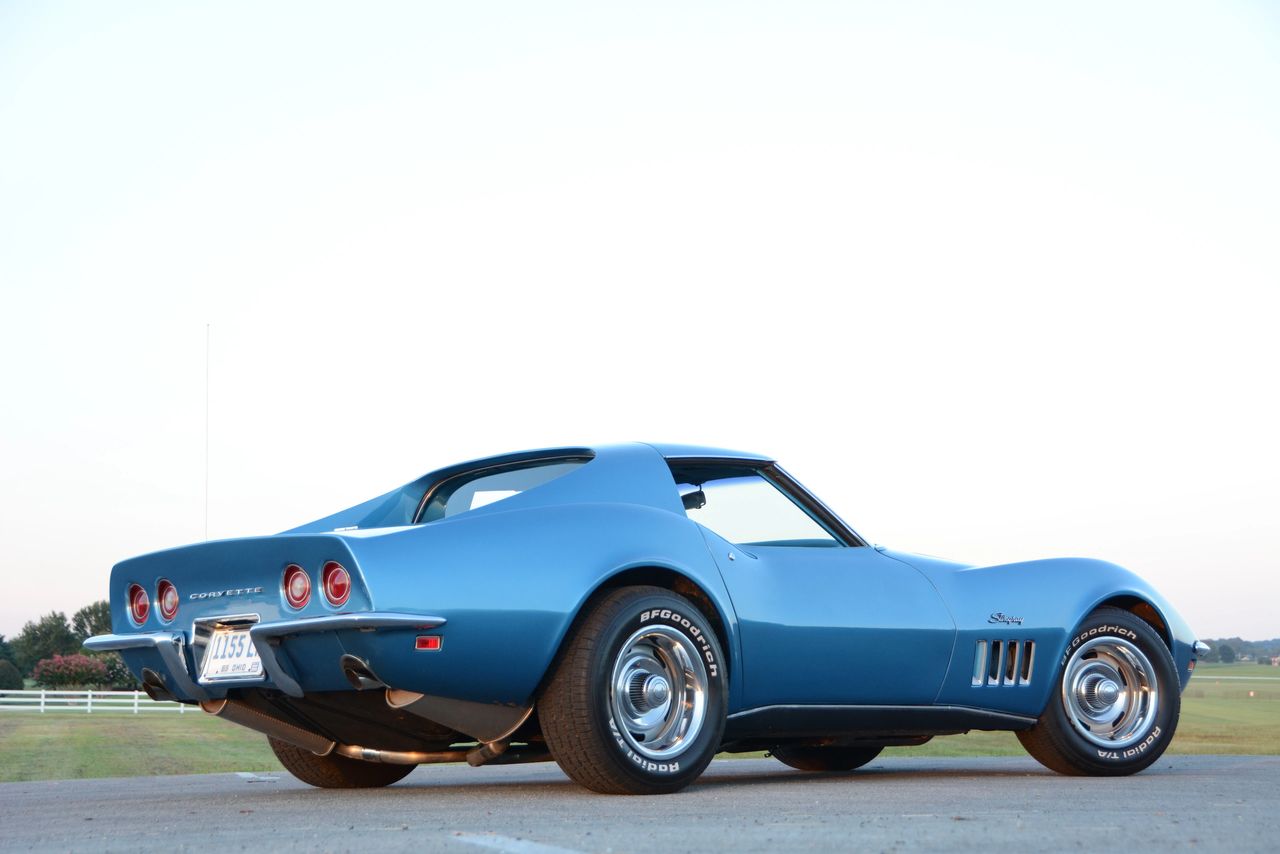
    1969 Corvette in Le Mans Blue (Image courtesy of MotorTrend)
    1969 Corvette in Le Mans Blue (Image courtesy of MotorTrend)

    Then there was Le Mans Blue—a defining Corvette color of the era. Paired with a black vinyl interior and a hint of chrome, it delivered the quintessential late-’60s sports car look. It balanced flash with restraint, flashback with timelessness. Many collectors and restorers still gravitate toward this combination because it feels so correct—so emblematic of the chrome-bumper Stingray aesthetic that has become iconic.
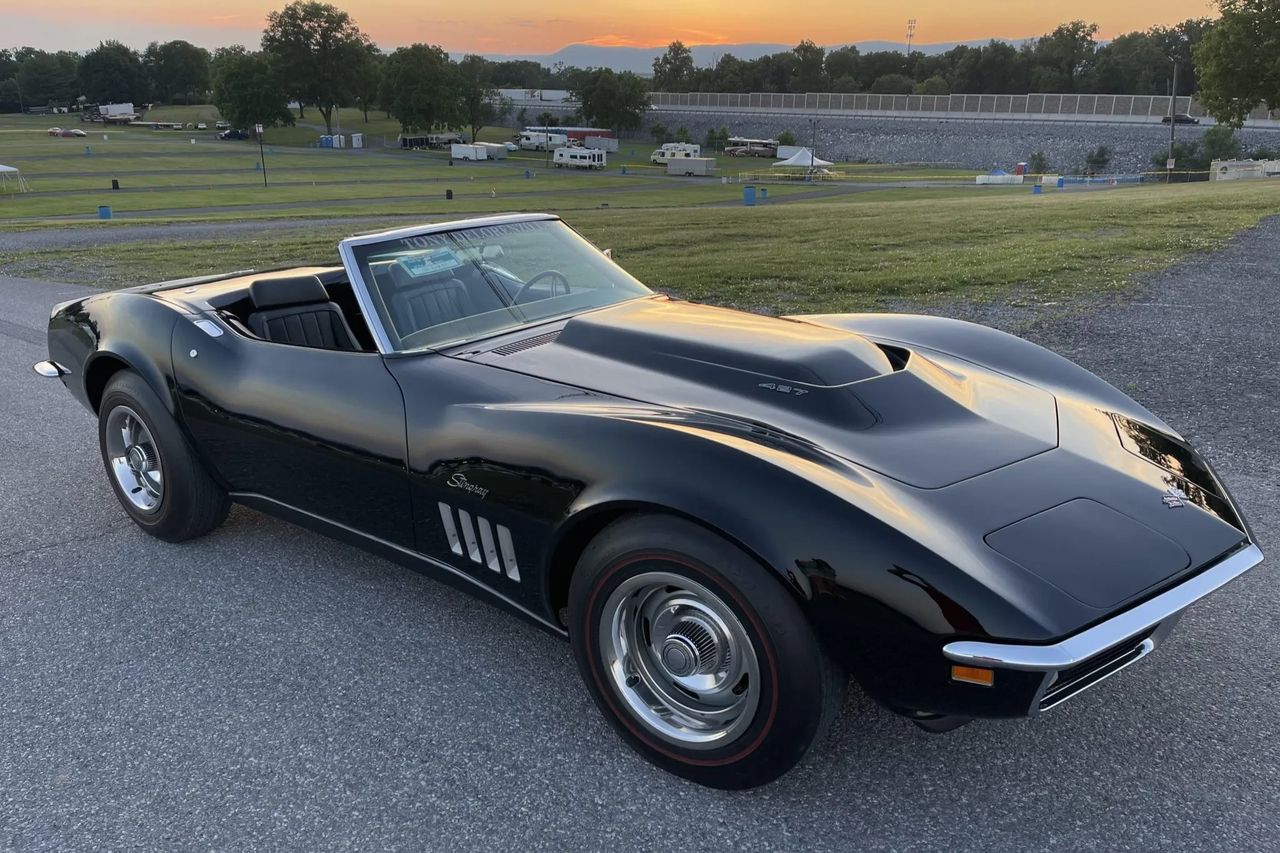
    1969 Corvette Convertible in Tuxedo Black (Image courtesy of bringatrailer.com)
    1969 Corvette Convertible in Tuxedo Black (Image courtesy of bringatrailer.com)

    Tuxedo Black, though produced in small numbers, remains a collector favorite for entirely different reasons. It’s a color that hides nothing and flatters everything—allowing the C3’s complex surfacing to speak for itself. Without bright pigment to distract the eye, the sweeping fender peaks, recessed scoops, and rakish tail take center stage. A black Stingray is a study in restraint that paradoxically commands more attention the quieter it looks.

    Interior trims expanded the personalization further. The palette included Black, Saddle, Bright Blue, Dark Red, and Dark Green, all available in standard vinyl or optional leather. Each brought its own feel to the cabin: Black was sporty and neutral, Saddle luxurious and warm, Blue cool and period-specific, while Red and Green offered an extroverted, almost European flash. In coupes, the T-top design meant even the most vibrant interior combinations were punctuated with the visual architecture of body-color panels and chrome trim—a look unique to this era of Corvette.
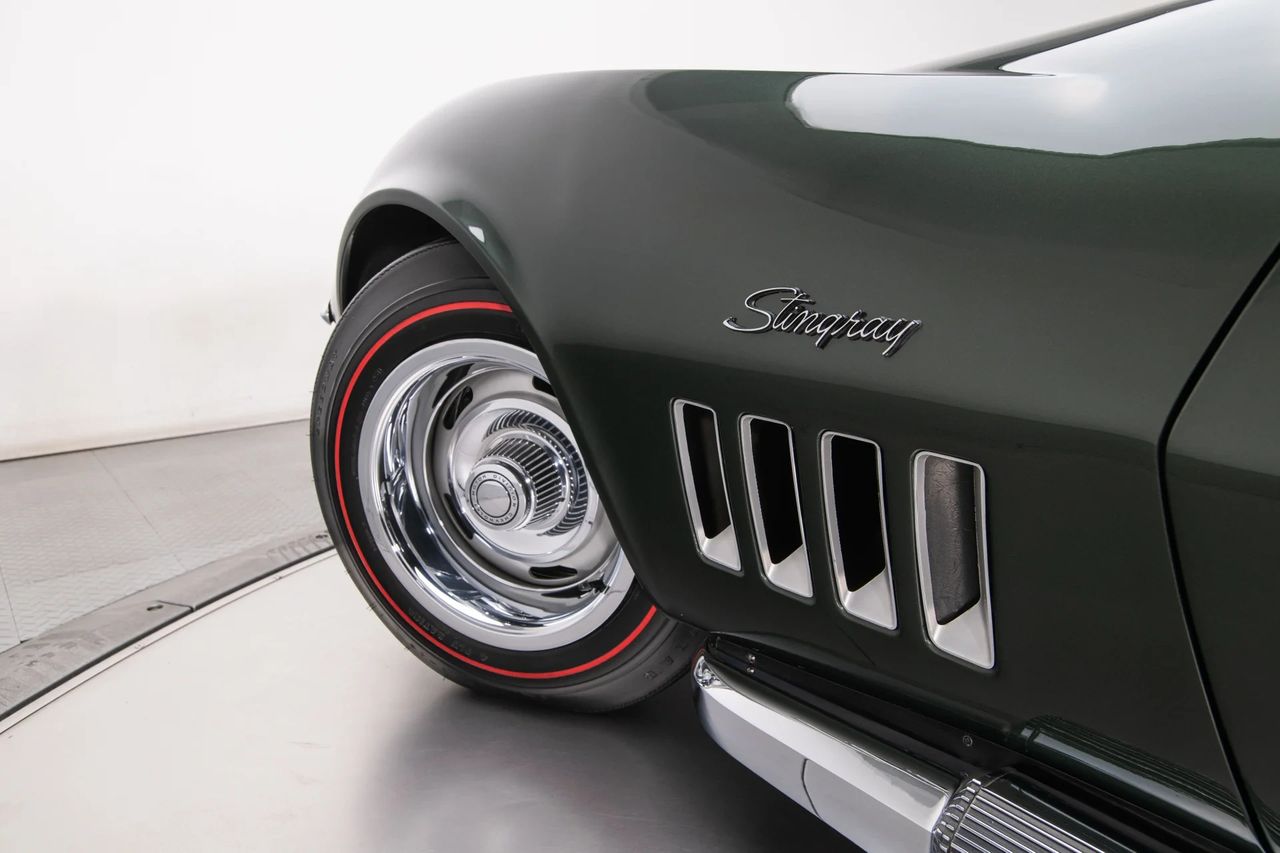
    New for 1969, the thin-script “Stingray” fender emblems marked the first time the name appeared as a single word—clean, modern, and integrated into the body’s flow. It was a small but meaningful update, signaling the Corvette’s evolution into a more cohesive, performance-focused identity. Paired with the optional N14 side-mounted exhaust, the look became unmistakably aggressive: bright polished covers running the length of the rocker panels, visually lowering the car and giving voice to its big-displacement intent. Together, the script and the side pipes weren’t just styling elements—they were statements. (Image courtesy of RK Motors)
    New for 1969, the thin-script “Stingray” fender emblems marked the first time the name appeared as a single word—clean, modern, and integrated into the body’s flow. It was a small but meaningful update, signaling the Corvette’s evolution into a more cohesive, performance-focused identity. Paired with the optional N14 side-mounted exhaust, the look became unmistakably aggressive: bright polished covers running the length of the rocker panels, visually lowering the car and giving voice to its big-displacement intent. Together, the script and the side pipes weren’t just styling elements—they were statements. (Image courtesy of RK Motors)

    The thin-script “Stingray” fender emblems made their first appearance in 1969, replacing the earlier “Sting Ray” split badging with a more modern, cohesive identity. Subtle in scale but not in meaning, the new emblem signaled the start of the Corvette’s third generation in both form and intent. And while entirely optional, the N14 side-mounted exhaust and its bright heat shields acted as visual punctuation—a period-correct exclamation point for buyers who wanted their car to announce its presence from the sidewalk as well as behind the wheel.

    Taken together, the 1969 Corvette’s colors, trim, and badging weren’t just cosmetic decisions—they were part of a broader conversation between car and owner. Every detail was a choice, and every choice helped define not just what kind of Corvette someone drove, but who they were behind the wheel.

    The Manta Ray: When the Show Car Came Home Again
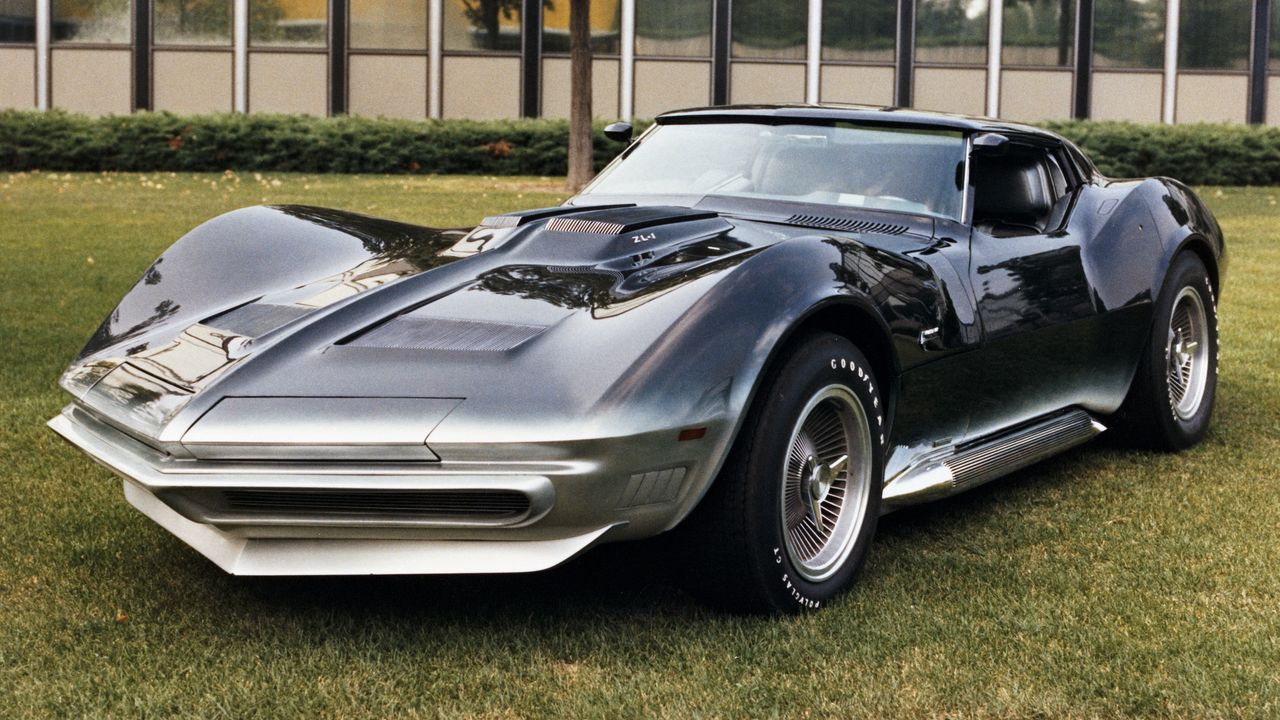
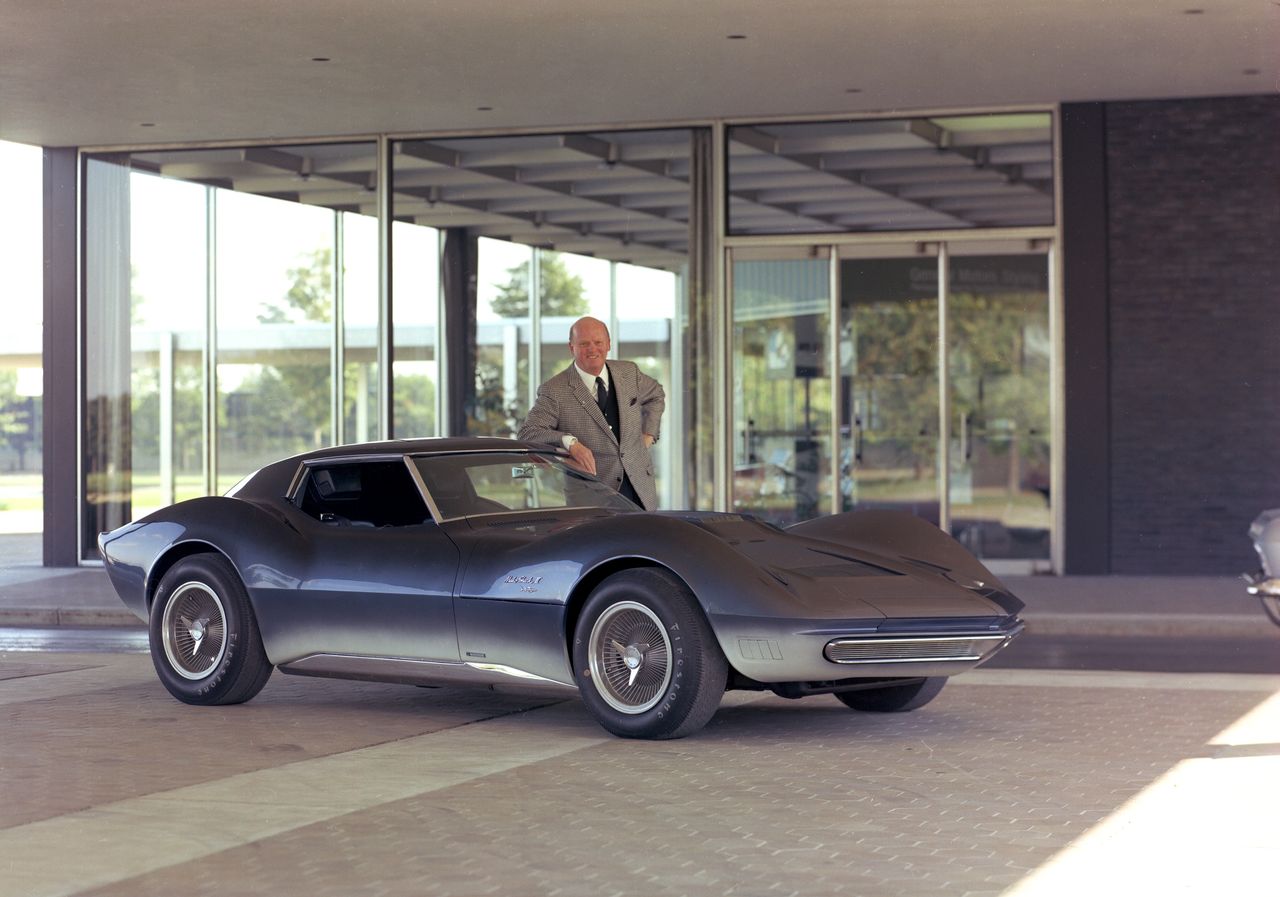
    A refined evolution of the Mako Shark II, the Corvette Manta Ray showcased what GM’s design team could do when given free rein. With its stretched tail, chin spoiler, and monochromatic finish, it hinted at future Corvette design while grounding the C3’s proportions in something more believable and aerodynamic. Beneath the skin, it briefly housed an all-aluminum ZL1 big-block, underscoring its role as both styling statement and engineering testbed. The Manta Ray was never meant for production, but it helped define the Corvette’s visual vocabulary for years to come. (Image courtesy of GM Media)
    A refined evolution of the Mako Shark II, the Corvette Manta Ray showcased what GM’s design team could do when given free rein. With its stretched tail, chin spoiler, and monochromatic finish, it hinted at future Corvette design while grounding the C3’s proportions in something more believable and aerodynamic. Beneath the skin, it briefly housed an all-aluminum ZL1 big-block, underscoring its role as both styling statement and engineering testbed. The Manta Ray was never meant for production, but it helped define the Corvette’s visual vocabulary for years to come. (Image courtesy of GM Media)

    Parallel to the showroom story is the studio story—and it’s here that the Corvette’s dramatic shape finds deeper meaning. In the years following the C3’s debut, GM Design reworked the original Mako Shark II concept into something sleeker, more grounded, and more mature. The result was the Manta Ray, a refined evolution that retained the aggressive surfacing but introduced a stretched, tapered tail, a more integrated chin spoiler, and a unified paint scheme that dialed back the Mako’s over-the-top two-tone. It looked less like a stylized fish and more like a low-flying aircraft, all thrust and tension and movement. Beneath the hood—at least for a time—sat the most exotic heart ever considered for a Corvette: an all-aluminum big-block V8. The car never made production, but its existence helped explain what the production Stingray was aiming for. Bill Mitchell and his team knew the power of mythology, and the Manta Ray served as the connective tissue between show car dream and street car reality. It reminded the public that the Corvette wasn’t just styled—it was sculpted, with intent far beyond the assembly line.

    Production, Pricing, and the “Long” 1969 Model Year

    Numbers tell a story as plainly as shape:

    • Total 1969 production: 38,762
    • Coupes: 22,129
    • Convertibles: 16,633
    • Base price (Coupe): $4,781
    • Base price (Convertible): $4,438

    The run was extended—circumstances around labor and scheduling had Chevrolet still building 1969s as the calendar rolled—and the market soaked them up. It was the Corvette’s strongest sales year to date, a record that would stand until the mid-1970s. Somewhere amid those cars was the 250,000th Corvette built, a milestone number that underscores how, by the end of the sixties, Corvette had graduated from boutique experiment to an American institution.

    Rarity lives at the extremes. L88 production closed at 116 cars. ZL1 at 2. These are numbers that define a generation of Corvette collecting. But there’s another meaningful rarity: original-option small-block cars built as true grand-tourers—air, tilt-tele, stereo, soft ride, tall gears—that were driven and enjoyed, then sympathetically preserved rather than “converted” into something they never were. Those tell the whole story of how people actually used these cars.

    Dimensions, Hardware, and Details That Matter to Restorers
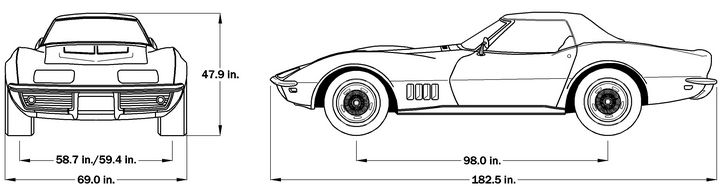
    1969 Corvette Dimensions (Image created by the author)
    1969 Corvette Dimensions (Image created by the author)

    A quick reference for what judges and restorers check:

    • Wheelbase: 98.0 in
    • Overall length: 182.5 in
    • Width: 69.0 in
    • Height: ~47.9 in (coupe)
    • Curb weight: typically 3,200–3,500 lb depending on equipment (big-block and A/C cars at the top end)
    • Fuel capacity: 20 gal
    • Brakes: 11.75-in vented discs, ~461 sq-in swept area total
    • Steering: recirculating ball, 17.6:1; power assist optional
    • Tires: F70-15 bias-ply
    • Wheels: 15×8 steel (aluminum wheels wouldn’t be a factory Corvette reality until later)

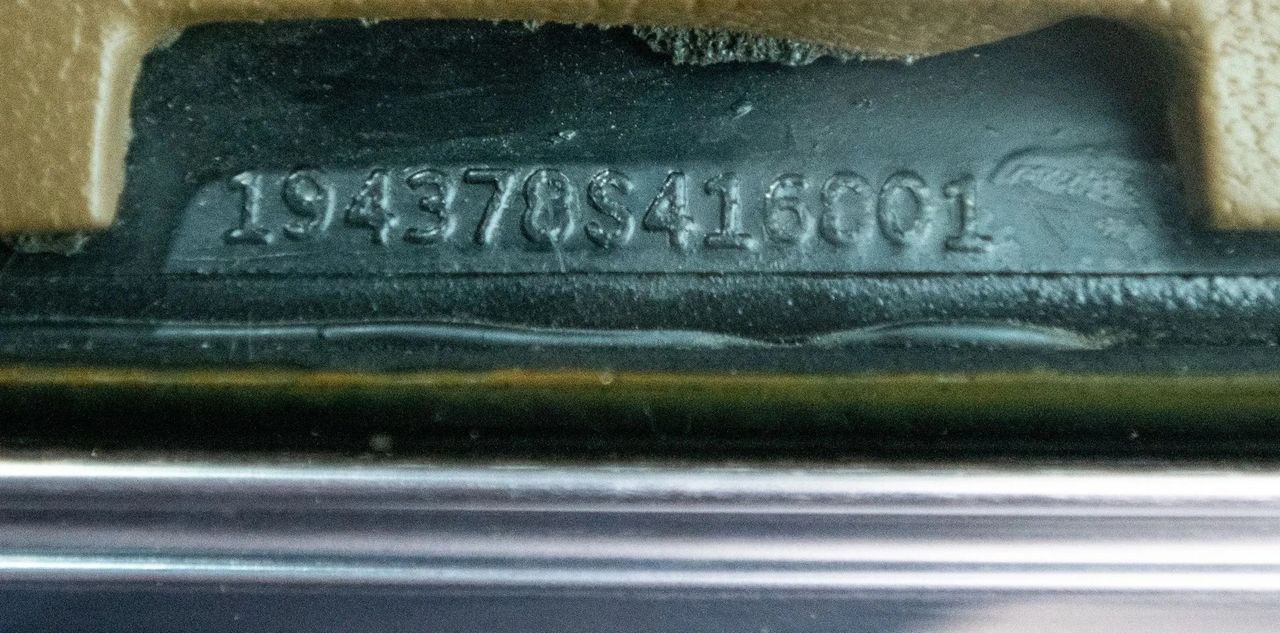
    VINs for 1969 run from 700001 through 738762, stamped on a plate at the left front body hinge pillar. Engine block casting and assembly date codes, transmission main case codes, and rear axle code/date stampings are the usual authenticity checkpoints. Original carburetors (Holley or Rochester as appropriate), distributor numbers, alternator and starter castings, radiator tags, even the correct type of clamp and hose routing—these details separate “nice driver” from “documented, judged-correct example.”
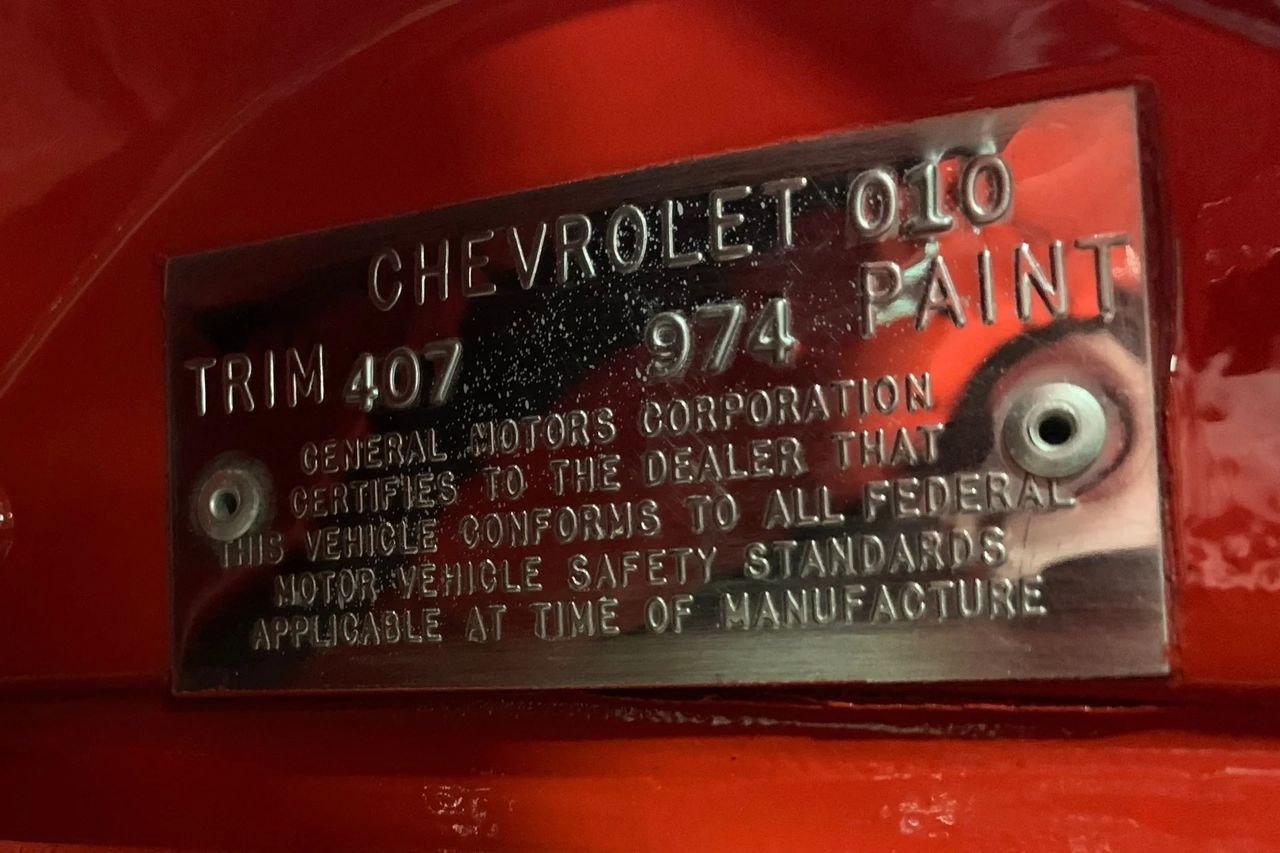
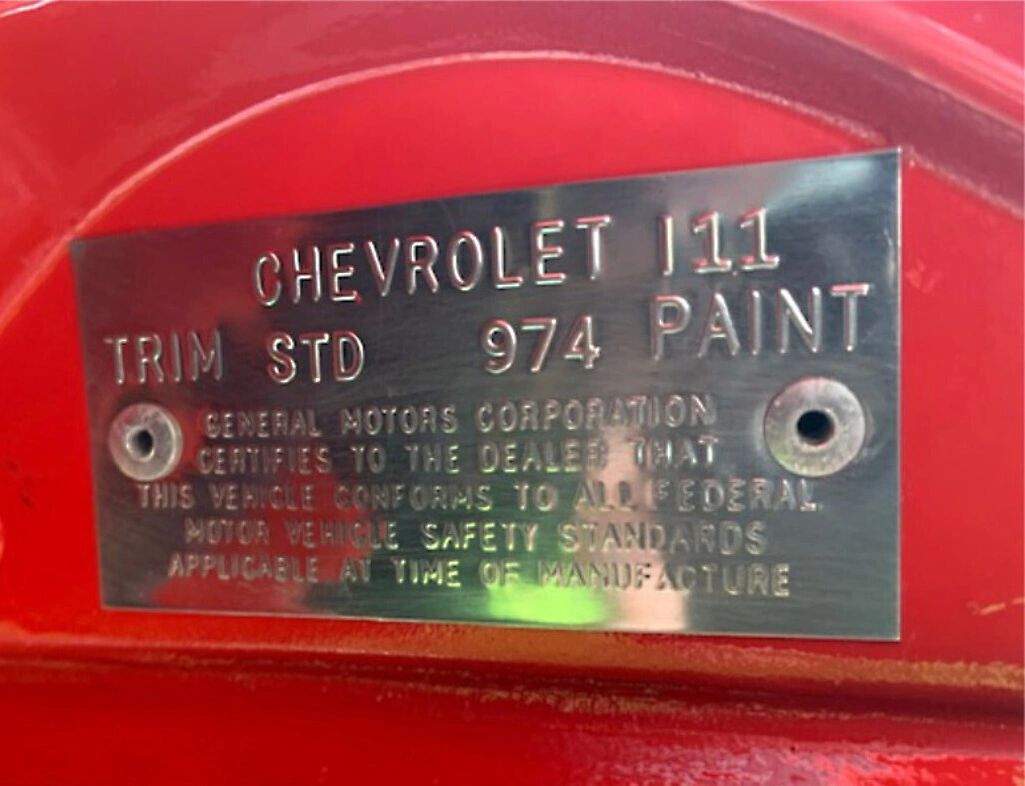
    This identification tag is from a 1969 Chevrolet Corvette, showing Trim Code 407, which indicates a red vinyl interior, and Paint Code 974, designating Monza Red. Together, these codes confirm that the car originally left the factory in a striking Monza Red exterior paired with a red vinyl cabin. The tag also carries the standard GM certification language, verifying that the vehicle met all federal safety standards at the time of manufacture. (Image courtesy of RK Motors)
    This identification tag is from a 1969 Chevrolet Corvette, showing Trim Code 407, which indicates a red vinyl interior, and Paint Code 974, designating Monza Red. Together, these codes confirm that the car originally left the factory in a striking Monza Red exterior paired with a red vinyl cabin. The tag also carries the standard GM certification language, verifying that the vehicle met all federal safety standards at the time of manufacture. (Image courtesy of RK Motors)

    Paint authenticity is a frequent debate. A properly executed respray in a correct code is no sin; a color change can be forgiven if executed beautifully and documented. Where value concentrates is in honest, complete cars with known history—especially those with original drivetrains and untouched fiberglass bonding seams.

    Safety and the 1969 Corvette: The Regulatory Turn

    The late sixties were a regulatory hinge. Chevrolet leaned in rather than merely complying. Energy-absorbing steering columns, dual-circuit brake hydraulics, four-way flashers, reduced-glare instrument finishes, improved interior padding, head restraints—it reads like a checklist because it is one. The Corvette didn’t become soft, and it certainly didn’t become tame; it became more serious about protecting the people who drove it hard. That may not be as romantic as a tri-power intake, but it is part of why these cars were driven and loved and are still very much with us today.

    How the 1969 Corvette Drives—Then and Now
    The clearest compliment to Chevrolet’s second-year fixes is that a sound 1969 Corvette feels coherent. Small-block cars are light on their nose and let you place the car with your wrists; they’ll lope all day at 70 with tall gears, then come alive in a two-lane pass with a downshift. A 427 tri-power four-speed coupe is an entirely different animal: heavier helm, more brake pedal underfoot, a chassis that rewards smoothness. Commit to a line, breathe the throttle open early, and let the torque do the work. The brakes are faithful—big iron calipers with real pad area and plenty of rotor. The car is honest about what the tires will give you and when; it talks to you through the seat and the shifter and the wheel rim.

    The modern temptation is to “fix” the car with radials, gas-pressurized dampers, polyurethane bushings, quicker steering boxes, and aggressive pads. Many owners do, and the cars become devastatingly effective on today’s roads. But there is something profound about a correctly sorted 1969 on bias-ply tires, with stock valving and factory bushings, being driven the way Chevrolet intended. It explains the era better than any numbers sheet.

    Collector Guidance: What to Look For, What to Celebrate
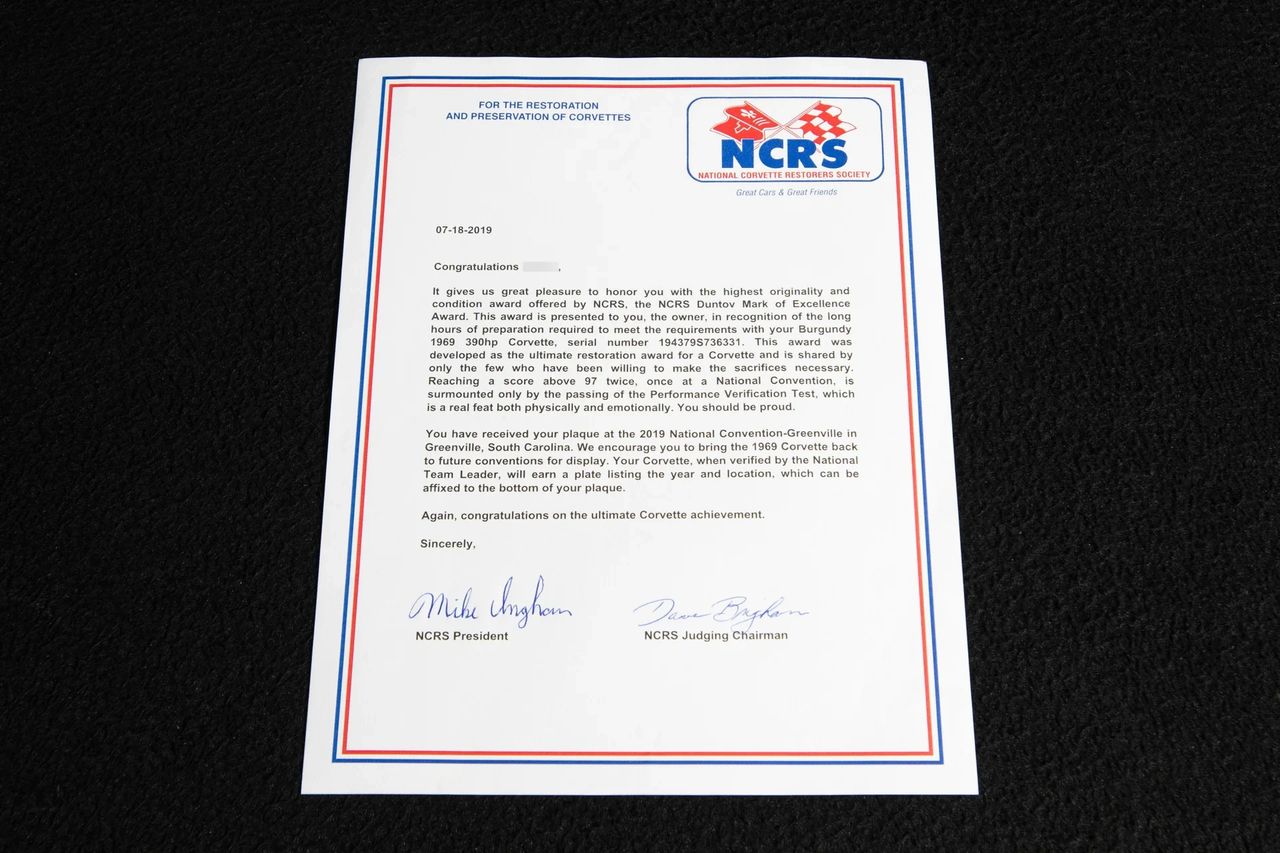
    When buying a 1969 Corvette, proper documentation can be just as important as the car itself, as it verifies authenticity, originality, and provenance. A letter from the NCRS, such as this one awarding the Duntov Mark of Excellence, demonstrates that the car has been judged against the most rigorous restoration and originality standards in the hobby. For buyers, this means added confidence that the Corvette retains correct components, finishes, and factory details, which directly impacts both its value and collectability. In short, NCRS documentation transforms a Corvette from simply being “restored” into a verified, investment-grade example.
    When buying a 1969 Corvette, proper documentation can be just as important as the car itself, as it verifies authenticity, originality, and provenance. A letter from the NCRS, such as this one awarding the Duntov Mark of Excellence, demonstrates that the car has been judged against the most rigorous restoration and originality standards in the hobby. For buyers, this means added confidence that the Corvette retains correct components, finishes, and factory details, which directly impacts both its value and collectability. In short, NCRS documentation transforms a Corvette from simply being “restored” into a verified, investment-grade example.
    • Documentation first. Tank sticker, window sticker, Protect-O-Plate, owner history. The rarer the build, the more these matter.
    • Rust where fiberglass hides it. Frames can rust from the inside out; inspect kick-ups over the rear axle, trailing arm pockets, and the front crossmember with a pick and a light.
    • Bonding seams and panel fit. Original seams telegraph under paint. Perfect seams sometimes mean “redone”; perfect is not always wrong, but it asks a question.
    • Numbers and date codes. Block suffix code, casting number, assembly date; transmission main case code; rear axle code. Even the right carbs and distributors matter on judged cars.
    • Tri-power correctness. Linkage, air cleaner, fuel lines, choke hardware—L68/L71 cars are littered with details that get “close” in amateur restorations.
    • L88 tells. Radiator, shroud, ignition shielding, exhaust, pulleys, warning decals—L88 clones have to run a gauntlet of minutiae; the real ones stand up to it.
    • Small-block GTs. Air, tilt-tele, stereo, soft spring rates, tall axle—these cars represent how many owners actually lived with Corvettes in 1969. They make superb long-distance classics.

    Why 1969 Matters

    The 1968 Corvette introduced the world to the C3. The 1969 Corvette made the C3 credible. Chevrolet tightened the structure, un-kinked the ergonomics, and trimmed in the right places without sanding off the edges that make a Stingray a Stingray. It also delivered a powertrain lineup that ranges from docile-in-traffic to a racing mill disguised as a street car. No other chrome-bumper year strikes the balance quite like this: the look is fully baked, the driveline catalog is at full roar, and the emissions clamps and insurance pistons haven’t yet arrived to rewrite the rules.

    It’s why so many of us think of the1969 Corvette when we picture a chrome-bumper C3. It’s the one with the slender “Stingray” script, the 15×8 wheels tucked under muscular arches, the side pipes you can hear from the next block, the cockpit that feels like a purpose-built machine rather than a parts bin. It is the year when the third-generation Corvette stopped being a spectacular idea and became a spectacular car.

    Fast Facts (Handy for Readers and Restorers)

    • Total built: 38,762 (22,129 coupes; 16,633 convertibles)
    • VIN range: 700001–738762 (plate at left front body hinge pillar)
    • Base price: $4,781 (coupe), $4,438 (convertible)
    • Engines: 350/300; 350/350 (L46); 427/390 (L36); 427/400 tri-power (L68); 427/435 tri-power (L71); 427/“430” (L88); 427 all-aluminum “430” (ZL1)
    • Transmissions: 3-spd manual (std), M20/M21 4-spd, limited M22, M40 Turbo Hydra-Matic
    • Axles: 3.08, 3.36 (typical base), 3.55, 3.70, 4.11, 4.56
    • Brakes: 4-wheel vented discs (std)
    • Wheels/Tires: 15×8; F70-15 bias-ply
    • Notable options: N14 side-mount exhaust; N37 tilt-tele; N40 power steering; F41 special suspension; U69/U79 radios; C60 A/C; G81 Positraction
    • Rarity markers: L88 (116 built); ZL1 (2 built)

    Epilogue: The Photo in Your Head
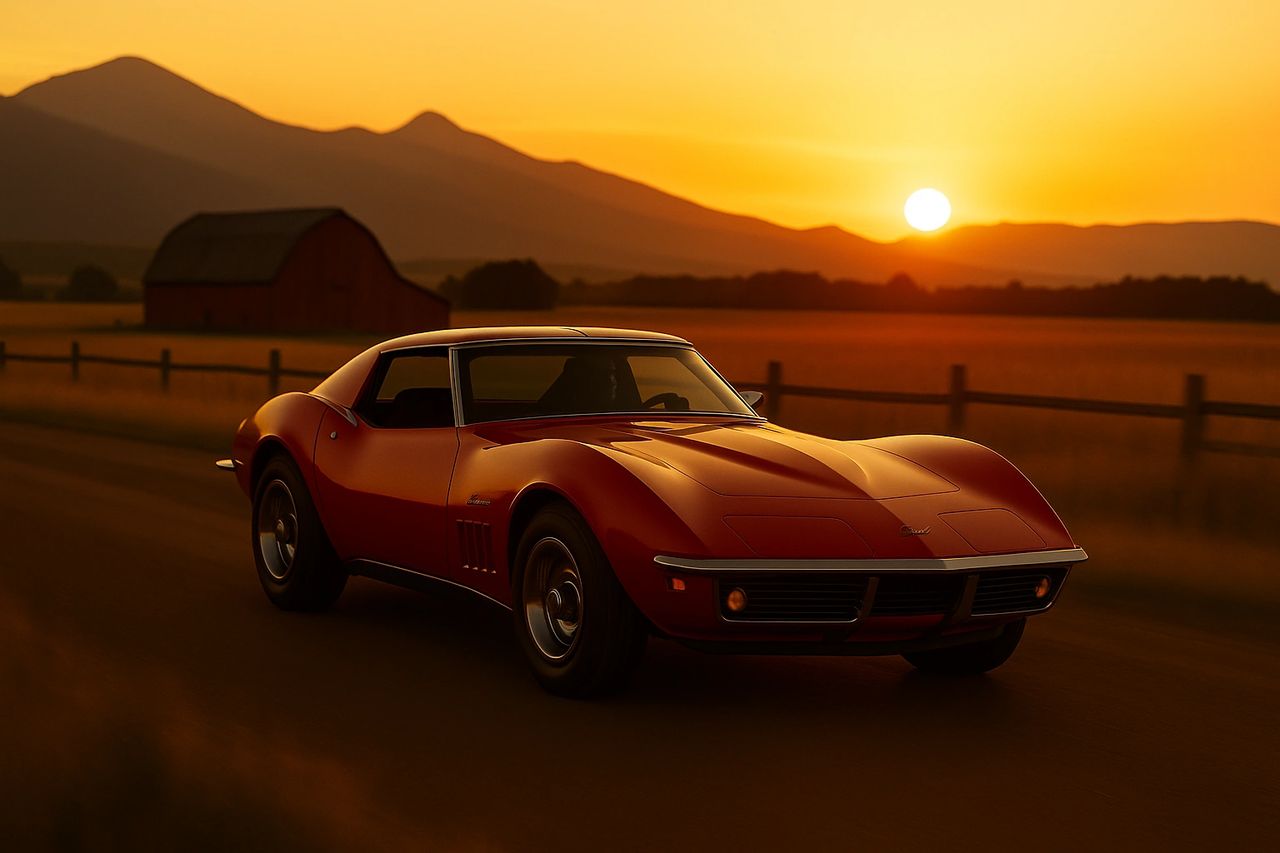
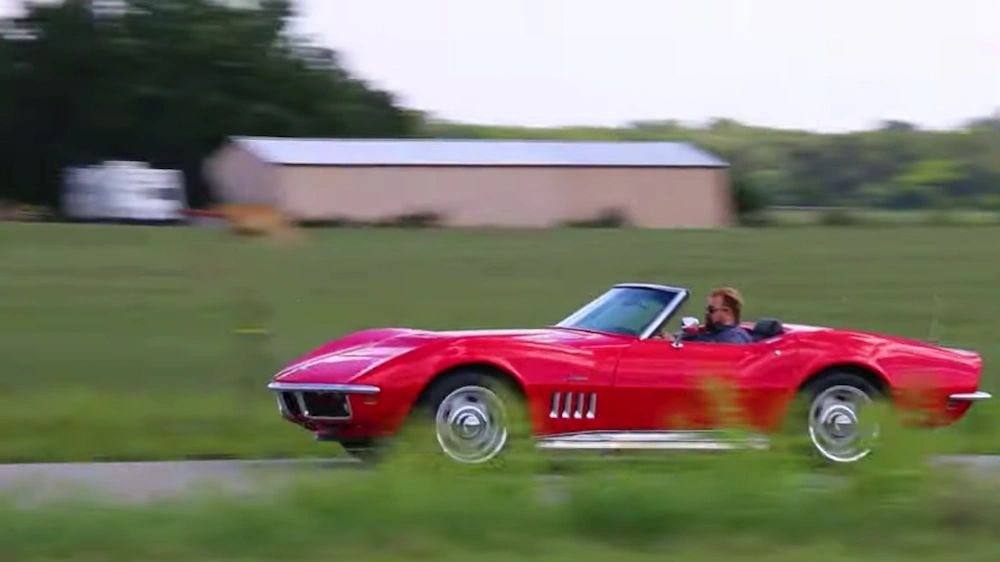
    It’s easy to picture yourself behind the wheel of a Corvette like this—America’s sports car, carving its way through the rolling fields of the Heartland as the sun dips low on the horizon. No other automobile embodies freedom, performance, and the open road quite like a Corvette. With its unmistakable curves and raw presence, the C3 isn’t just a car—it’s a symbol of American pride, independence, and the timeless pursuit of driving passion.
    It’s easy to picture yourself behind the wheel of a Corvette like this—America’s sports car, carving its way through the rolling fields of the Heartland as the sun dips low on the horizon. No other automobile embodies freedom, performance, and the open road quite like a Corvette. With its unmistakable curves and raw presence, the C3 isn’t just a car—it’s a symbol of American pride, independence, and the timeless pursuit of driving passion.

    If you’ve made it this far, you can probably see it without closing your eyes: late-evening sun glancing off a long, low hood; side-pipes making conversation a suggestion; thin-script “Stingray” on the fender; a driver sitting close to the rear axle, short wheelbase doing its lively dance over a patched two-lane. That’s the 1969 Corvette—not a museum piece, not a paper tiger, but a machine whose second-year fixes unlocked everything the shape promised.
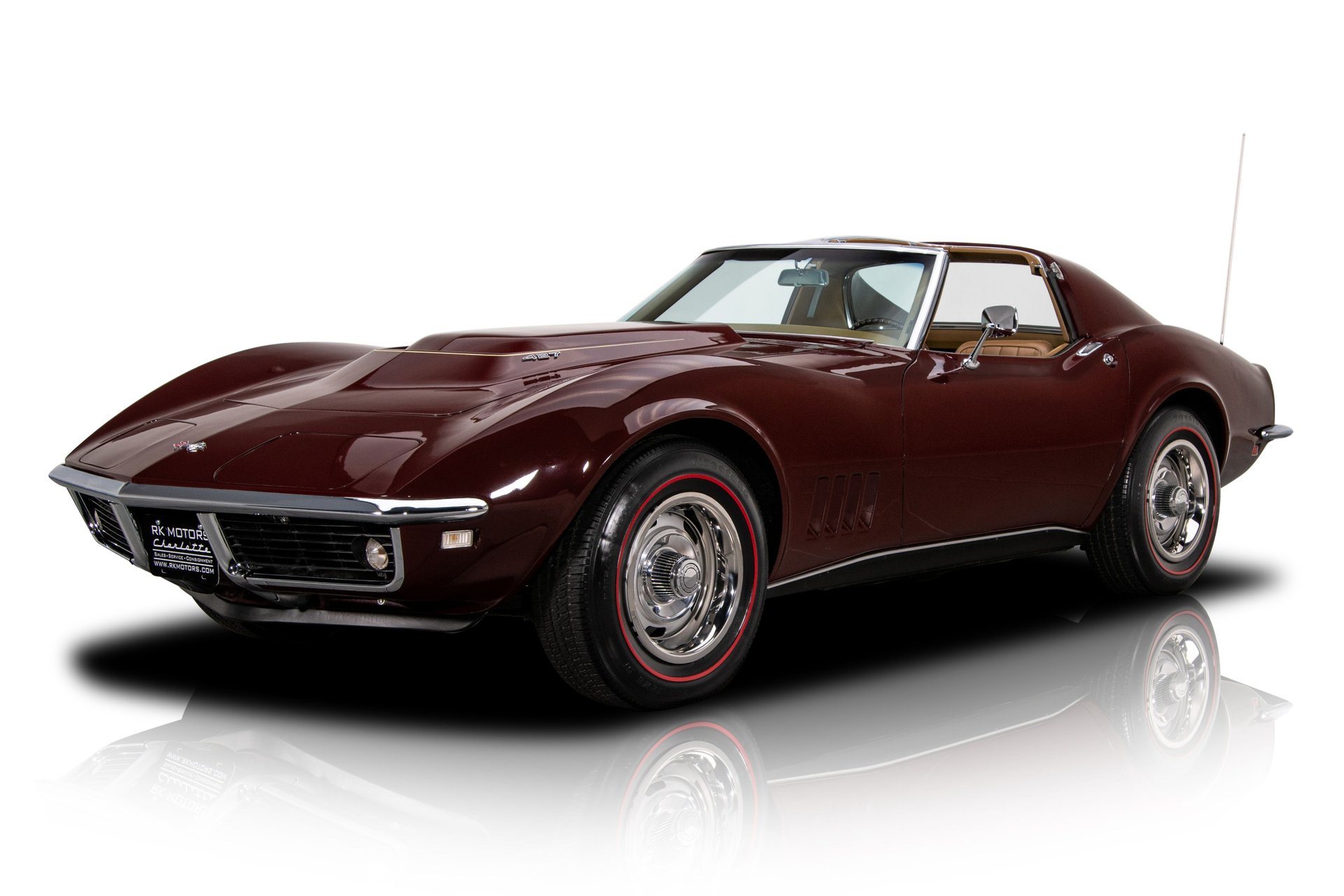
    The 1969 Corvette arrived at a pivotal moment for Chevrolet’s sports car, blending the dramatic styling of the new C3 generation with meaningful refinements beneath the surface. Marked by subtle yet important updates to fit, finish, and drivability, the ’69 model year reflected GM’s push to evolve the Stingray from a bold design statement into…

  • 1968 CORVETTE OVERVIEW

    1968 CORVETTE OVERVIEW

    The 1968 Corvette arrived at a hinge point in American automotive history. After a decade and a half of prosperity and performance bravado, the industry was grappling with new federal safety rules, the first nationwide emissions requirements, a cooling economy, and rising insurance premiums on high-horsepower cars. Chevrolet confronted those crosscurrents with a bold proposition: a Corvette that looked radically new while leaning on the proven bones of the second generation. The result—low and predatory, with a wasp-waisted profile and deeply sculpted fenders—reset the public’s idea of what an American sports car should look like, even as it carried forward much of the C2’s mechanical essence.

    Chevrolet’s decision to conserve the Sting Ray’s core platform wasn’t just frugal; it was strategic. GM had invested heavily in the C2’s independent rear suspension, four-wheel disc brakes, stout small- and big-block power, and a compact 98-inch wheelbase that had proven its worth on the street and in competition. Rather than retire those assets after only five seasons, Chevrolet chose to wrap them in a skin inspired by the Mako Shark II show car, deepen the features list to meet new regulations and modern expectations, and refine the ergonomics for a world that was beginning to think about safety and comfort alongside speed. That approach explains so much about 1968: the car looks like a moonshot but feels, mechanically, like a sharpened Sting Ray.

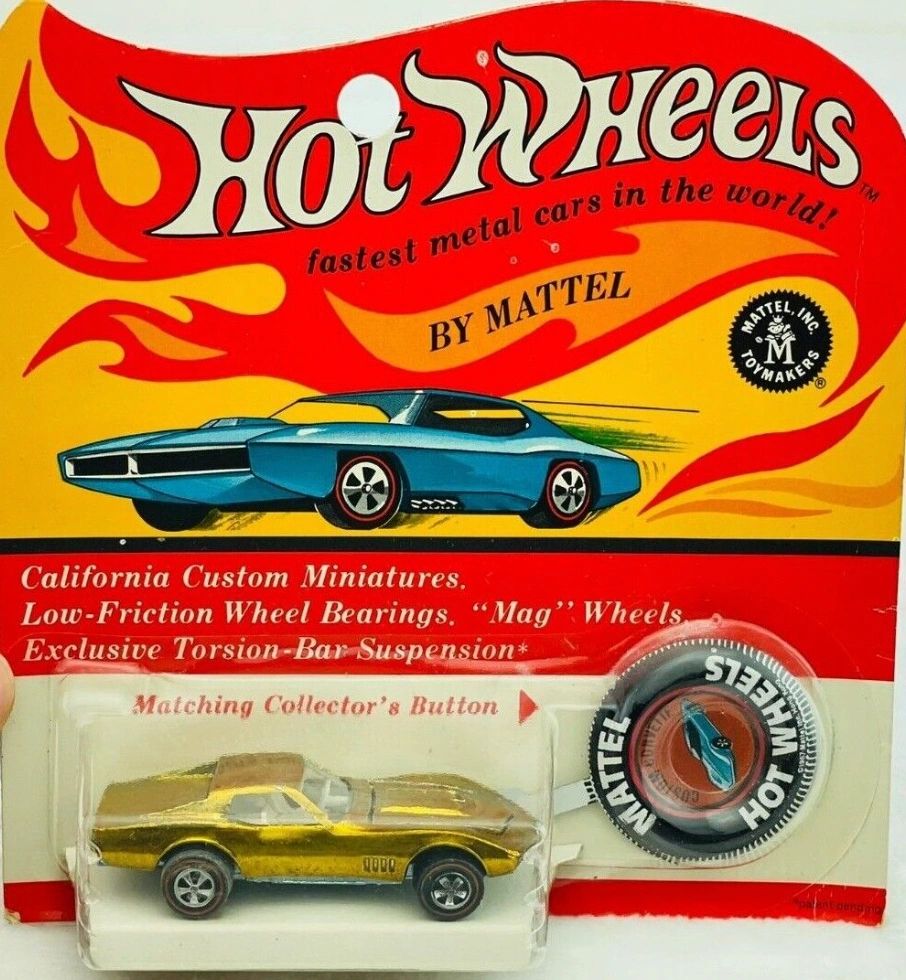
    Before America ever saw the real thing, kids were already racing its silhouette across kitchen floors. Mattel’s 1968 “Sweet 16” lineup included the Custom Corvette, a die-cast that previewed the shark-bodied profile—long nose, flared fenders, tight waist—months before Chevrolet officially unveiled the production car. It wasn’t an authorized reveal so much as a pop-culture leak, and it primed an entire generation to recognize the new Corvette the instant it hit showrooms. In a twist of fate, a toy helped launch one of the most important design eras in Corvette history.
    Before America ever saw the real thing, kids were already racing its silhouette across kitchen floors. Mattel’s 1968 “Sweet 16” lineup included the Custom Corvette, a die-cast that previewed the shark-bodied profile—long nose, flared fenders, tight waist—months before Chevrolet officially unveiled the production car. It wasn’t an authorized reveal so much as a pop-culture leak, and it primed an entire generation to recognize the new Corvette the instant it hit showrooms. In a twist of fate, a toy helped launch one of the most important design eras in Corvette history.

    The launch story even had a dash of pop-culture mischief. Before most of America had seen the new Corvette in showrooms, kids were racing a miniature echo of it across bedroom floors. Mattel’s debut Hot Wheels lineup included a “Custom Corvette” whose contours played remarkably close to Chevrolet’s undisclosed body. It wasn’t an official preview, but it stoked anticipation and underscored how indelible the new shape already was in the zeitgeist.

    Strategy and Shape

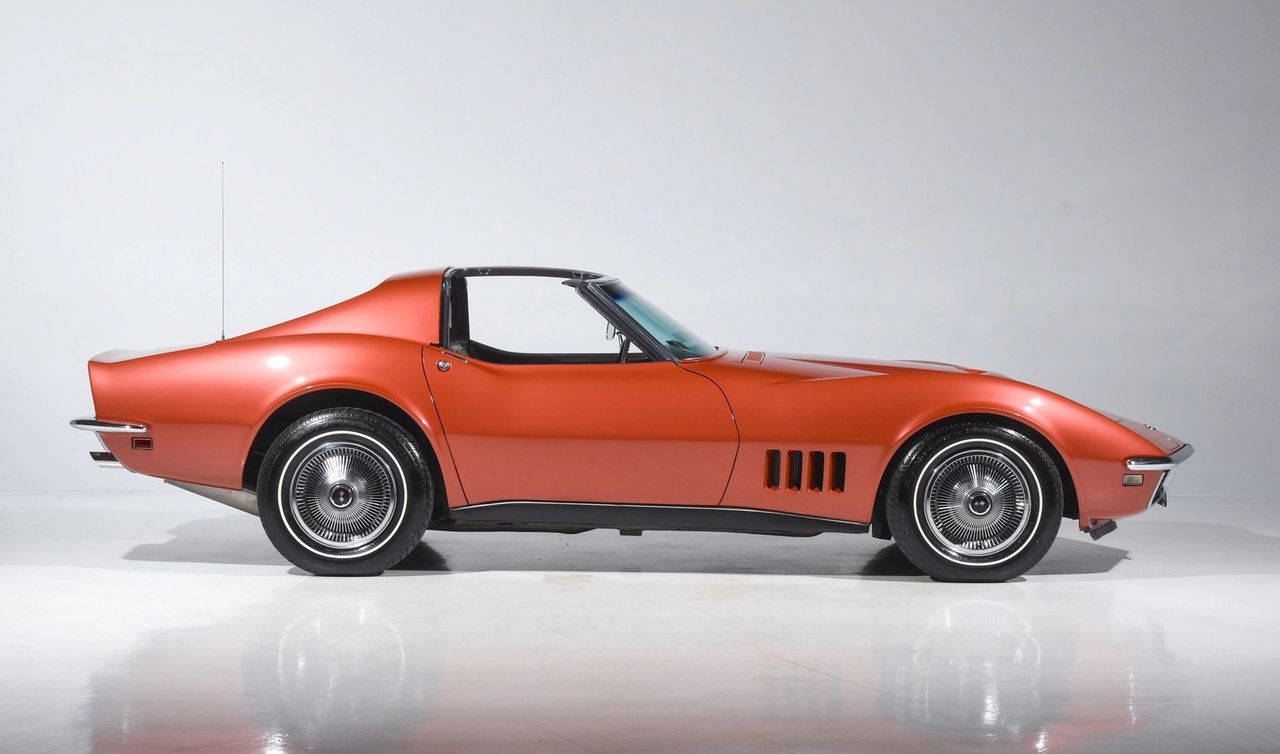
    The 1968 Corvette traded the C2’s crisp Sting Ray lines for a full “shark” profile—long, needle-nose hood, separate muscular fender peaks, and a pinched waist that reads like sculpture in side view. The coupe’s new modular roof (T-tops with a removable rear window) replaced the C2’s fixed fastback, while vent wings disappeared in favor of Astro Ventilation for a cleaner glass-to-body look. A vacuum door hides the wipers for a smooth cowl—another departure from the C2’s exposed hardware—and the front fender gills become four vertical slots rather than the Sting Ray’s horizontal trim. Wheel openings are round and generous, the tail is more tapered, and the whole car grows in overall length while retaining the 98-inch wheelbase. Even with chrome bumpers still in place for ’68, the message is clear: this is the beginning of the shark era, not a continuation of the Sting Ray. (Image courtesy of motorcarclassics.com)
    The 1968 Corvette traded the C2’s crisp Sting Ray lines for a full “shark” profile—long, needle-nose hood, separate muscular fender peaks, and a pinched waist that reads like sculpture in side view. The coupe’s new modular roof (T-tops with a removable rear window) replaced the C2’s fixed fastback, while vent wings disappeared in favor of Astro Ventilation for a cleaner glass-to-body look. A vacuum door hides the wipers for a smooth cowl—another departure from the C2’s exposed hardware—and the front fender gills become four vertical slots rather than the Sting Ray’s horizontal trim. Wheel openings are round and generous, the tail is more tapered, and the whole car grows in overall length while retaining the 98-inch wheelbase. Even with chrome bumpers still in place for ’68, the message is clear: this is the beginning of the shark era, not a continuation of the Sting Ray. (Image courtesy of motorcarclassics.com)

    From ten paces, the 1968 car communicated a different kind of menace. The nose stretched farther forward, the hood sank low between powerful, separated fender forms, and the plan view pulled tight through the doors before swelling back into wide haunches. It was sculpture with purpose. The pop-up headlamps remained, now joined by a vacuum-operated door that hid the windshield wipers, adding to the clean, show-car surface language. Functional louvers in the front fenders bled hot air from the engine compartment and, in concert with revised spring rates, helped counter the front-end lift engineers had fought in development. The newfound length—182.1 inches overall versus the Sting Ray’s 175 inches—came almost entirely from that longer prow; the wheelbase stayed a compact 98 inches, preserving the car’s essential footprint and agility.

    The 1968 Corvette coupe introduced the T-top, transforming the fixed-roof Vette into a modular open-air car. Twin lift-off roof panels paired with a removable rear window (’68–’72) let owners choose everything from closed coupe to near-convertible airflow in minutes. Deleting vent wings for Astro Ventilation cleaned up the glass line and improved cabin flow, while the center roof bar preserved structure and safety. It was a uniquely American solution—style, flexibility, and drama without giving up hardtop rigidity. (Image courtesy of RK Motors)
    The 1968 Corvette coupe introduced the T-top, transforming the fixed-roof Vette into a modular open-air car. Twin lift-off roof panels paired with a removable rear window (’68–’72) let owners choose everything from closed coupe to near-convertible airflow in minutes. Deleting vent wings for Astro Ventilation cleaned up the glass line and improved cabin flow, while the center roof bar preserved structure and safety. It was a uniquely American solution—style, flexibility, and drama without giving up hardtop rigidity. (Image courtesy of RK Motors)

    Chevrolet also reframed the coupe experience, and this is one of the subtler but most consequential choices of the year. Rather than treat closed and open cars as mutually exclusive, the team turned the coupe into a modular “go-hardtop.” Twin removable roof panels created the now-iconic T-top, while the rear glass lifted out on early C3s. With the panels stowed, air rushed through the cockpit with an openness that felt convertible-like, yet owners kept the security and structure of a fixed roof when the weather turned foul. It was clever, distinctly American, and became a C3 signature.

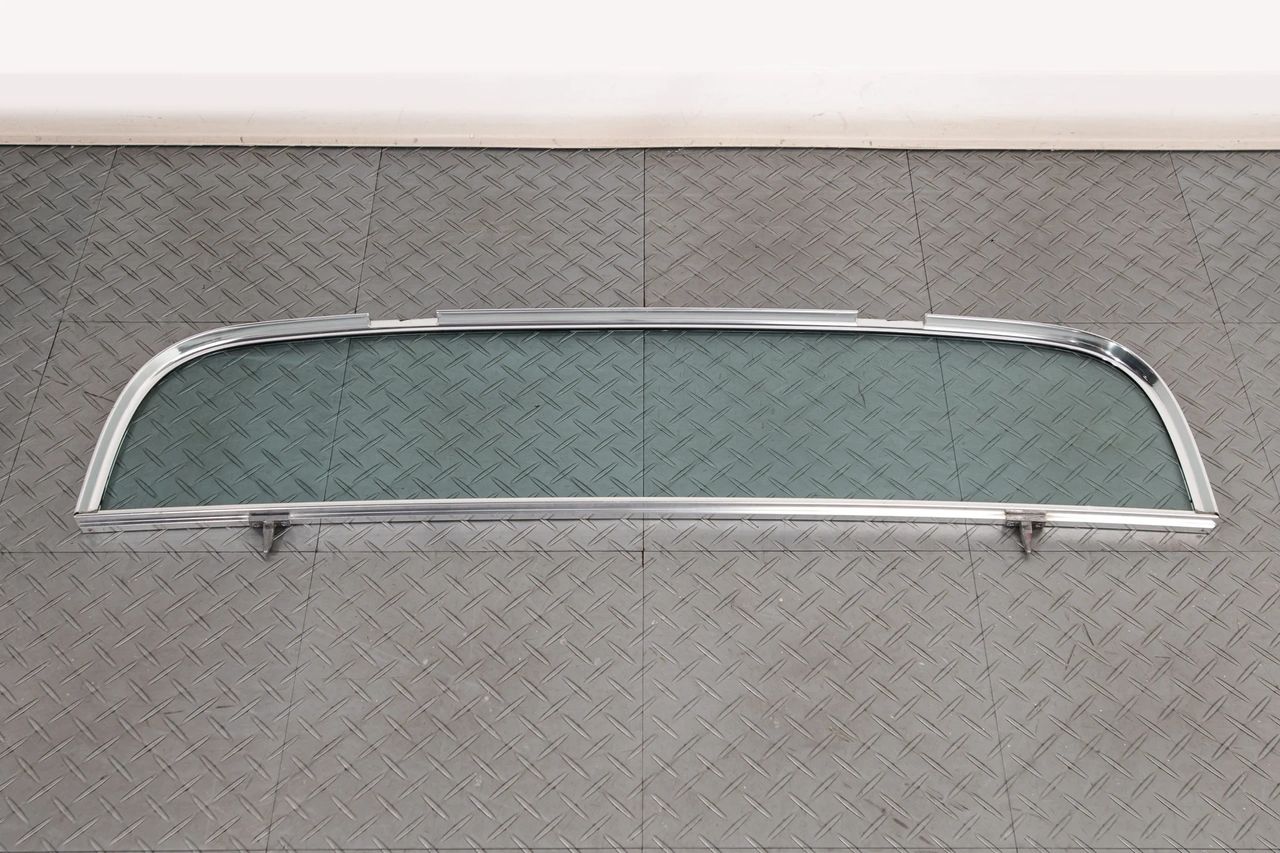
    Early C3 coupes used a lift-out backlight secured by quick-release latches, letting owners stow the pane and enjoy near-convertible airflow—especially with the T-tops off. It worked hand-in-glove with Astro Ventilation to pull fresh air through the cabin and dramatically reduce buffeting. The feature was phased out after 1972 when the coupe adopted a fixed rear window, making this setup a distinctive first-generation C3 hallmark. (Image courtesy of RK Motors)
    Early C3 coupes used a lift-out backlight secured by quick-release latches, letting owners stow the pane and enjoy near-convertible airflow—especially with the T-tops off. It worked hand-in-glove with Astro Ventilation to pull fresh air through the cabin and dramatically reduce buffeting. The feature was phased out after 1972 when the coupe adopted a fixed rear window, making this setup a distinctive first-generation C3 hallmark. (Image courtesy of RK Motors)

    The ventilation story was just as forward-looking. With federal rules pushing manufacturers to rethink passenger safety and comfort, Chevrolet eliminated the C2’s vent windows and introduced Astro Ventilation: cowl-fed air routed through the cabin and out through discreet vents near the base of the rear window. On coupes, removing the rear glass amplified that flow; on convertibles, the system gave top-down cruising a calmer, more controlled airflow. Another futuristic addition, the fiber-optic lamp monitoring panel on the console, let drivers confirm at a glance that exterior lights were illuminated—a tiny flourish that made the cabin feel like a cockpit.

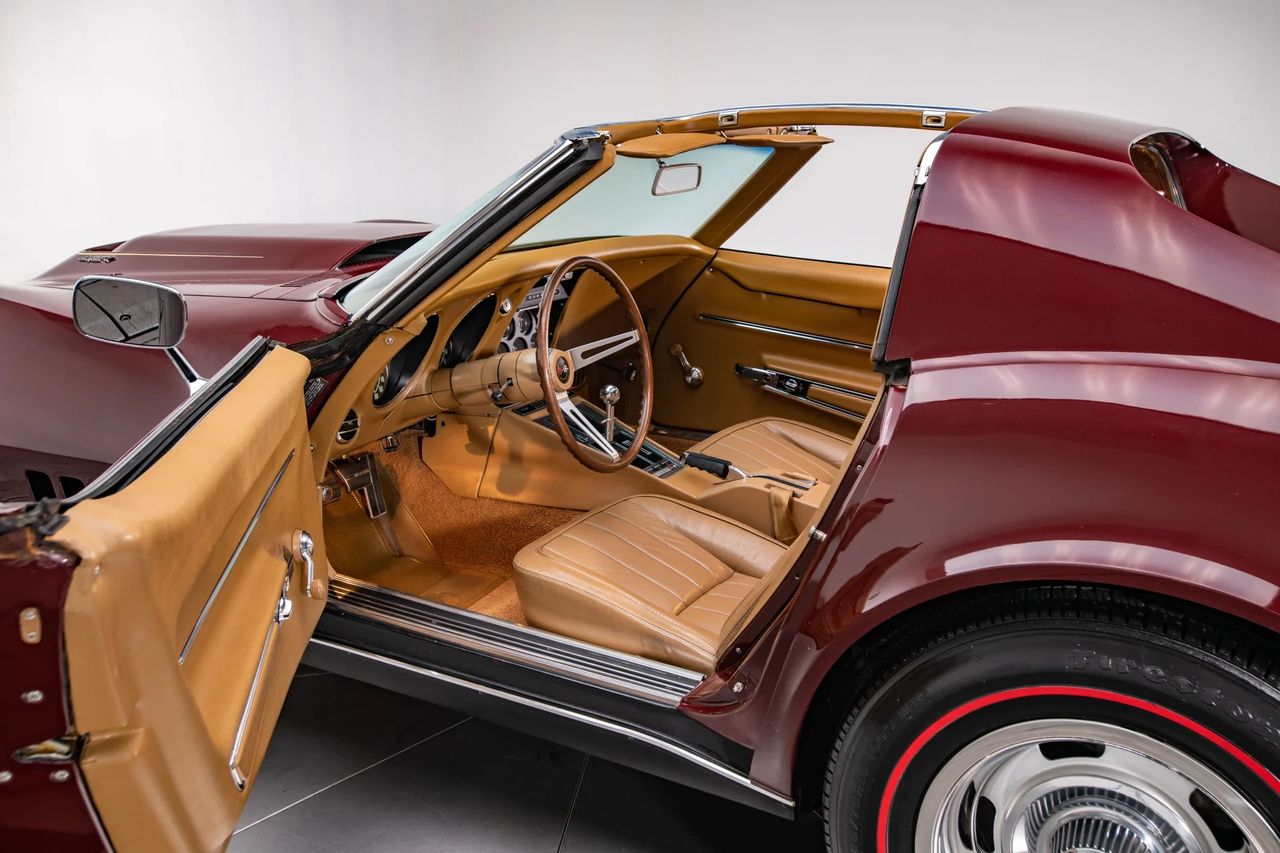
    The 1968 Corvette cabin debuted an all-new cockpit that matched the shark body’s drama with a driver-centric layout. Deep round pods carry the speedometer and tach ahead of the wheel, while a bank of auxiliary gauges crowns the center stack—oil pressure, water temp, fuel, volts, and a clock—all angled toward the driver. Lower roof height pushed the fixed-back buckets to a more reclined 33° and ushered in a redesigned console with a proper floor-mounted parking brake and short-throw shifter. Vent wings disappeared as Astro Ventilation introduced cowl-to-rear-deck airflow, and many cars featured the slick fiber-optic lamp monitor on the console—a futuristic nod to system checks. Safety updates—collapsible steering column and standard shoulder belts on coupes—rounded out an interior that felt both racier and more modern than the C2 it replaced. (Image courtesy of RK Motors)
    The 1968 Corvette cabin debuted an all-new cockpit that matched the shark body’s drama with a driver-centric layout. Deep round pods carry the speedometer and tach ahead of the wheel, while a bank of auxiliary gauges crowns the center stack—oil pressure, water temp, fuel, volts, and a clock—all angled toward the driver. Lower roof height pushed the fixed-back buckets to a more reclined 33° and ushered in a redesigned console with a proper floor-mounted parking brake and short-throw shifter. Vent wings disappeared as Astro Ventilation introduced cowl-to-rear-deck airflow, and many cars featured the slick fiber-optic lamp monitor on the console—a futuristic nod to system checks. Safety updates—collapsible steering column and standard shoulder belts on coupes—rounded out an interior that felt both racier and more modern than the C2 it replaced. (Image courtesy of RK Motors)

    Inside, the seats gained taller backs and a more reclined posture to accommodate the lowered roofline, and the center console reorganized switches and gauges around the driver. Critics would soon complain that the seating angle felt a touch too reclined and that the new lower roof extracted a toll on headroom. But the basic layout—deep cowl, prominent fender peaks visible over the hood, a compact steering wheel held close—remained deeply Corvette, a blend of sports-car intimacy and big-engine promise.

    Carryover Where It Counts

    The 1968 Corvette rode on the proven C2 backbone—a stout ladder frame with the same 98-inch wheelbase, four-wheel disc brakes, and the independent rear suspension with a transverse leaf spring that had defined Sting Ray handling. Chevrolet refined, rather than replaced: rear-suspension geometry lowered the roll center and spring rates were tweaked to tame nose lift seen in early C3 development. Wider 7-inch wheels with F70-15 tires raised the grip ceiling, while the battery’s relocation behind the seats helped balance weight and free under-hood space. Steering, differential layout, and the basic brake hardware carried over, but the addition of the Turbo Hydra-Matic automatic broadened driveline choices atop that familiar, durable chassis. In short, the C3’s radical new body sat atop the Sting Ray’s best fundamentals—updated to corner harder and cruise steadier. (Image courtesy of Corvette Fever)
    The 1968 Corvette rode on the proven C2 backbone—a stout ladder frame with the same 98-inch wheelbase, four-wheel disc brakes, and the independent rear suspension with a transverse leaf spring that had defined Sting Ray handling. Chevrolet refined, rather than replaced: rear-suspension geometry lowered the roll center and spring rates were tweaked to tame nose lift seen in early C3 development. Wider 7-inch wheels with F70-15 tires raised the grip ceiling, while the battery’s relocation behind the seats helped balance weight and free under-hood space. Steering, differential layout, and the basic brake hardware carried over, but the addition of the Turbo Hydra-Matic automatic broadened driveline choices atop that familiar, durable chassis. In short, the C3’s radical new body sat atop the Sting Ray’s best fundamentals—updated to corner harder and cruise steadier. (Image courtesy of Corvette Fever)

    Underneath the fiberglass, the Corvette kept the C2’s essential virtues: a robust ladder frame, independent rear suspension with a transverse leaf spring, power four-wheel disc brakes, and a straightforward steering system. Where the C2 had already been a serious driver’s car, the C3 added wider wheels (seven inches for 1968) and F70-15 tires, raising the grip ceiling and helping the car corner harder and with greater confidence. The rear roll center came down with geometry tweaks that were intended to improve stability. Some testers felt the chassis was inclined to understeer in its base form; Chevrolet countered that with the F41 suspension option and, of course, with the tire and alignment tricks enthusiasts still apply today.

    Two distinct hood stampings mark the 1968 lineup. 427 big-block cars wear a taller, domed hood to clear the big engine’s higher intake/carburetor stack, giving the front end a more muscular, arched profile. 327 small-block cars keep a lower, cleaner hood with subtle character lines—visually sleeker because it doesn’t need the extra clearance. If you’re spotting a ’68 at a glance, that raised center section is the giveaway: dome equals big-block; flush equals small-block.
    Two distinct hood stampings mark the 1968 lineup. 427 big-block cars wear a taller, domed hood to clear the big engine’s higher intake/carburetor stack, giving the front end a more muscular, arched profile. 327 small-block cars keep a lower, cleaner hood with subtle character lines—visually sleeker because it doesn’t need the extra clearance. If you’re spotting a ’68 at a glance, that raised center section is the giveaway: dome equals big-block; flush equals small-block.

    The powertrain roster told buyers exactly what kind of experience to expect. At entry sat a 327 cubic-inch small block rated at 300 horsepower, smooth and tractable, paired by default to a three-speed manual. For many, the sweet spot was the L79 327, tuned to 350 horsepower and famous for its lively midrange without the nose-heavy feel of a big-block. Above those small-blocks, the Corvette’s big-block story diversified into three distinct 427 choices: the 390-horsepower L36, the 400-horsepower L68 with its trio of two-barrel carburetors, and the ferocious L71, another Tri-Power tune advertised at 435 horsepower. At the top of the pyramid sat the L88, officially rated at 430 horsepower but understood by anyone who turned a wrench to be built for racing and capable of far more with the right fuel, cam timing, and exhaust. Smog equipment—positive crankcase ventilation and the A.I.R. pump—arrived with the new emissions reality, trimming none of the theatre but reminding owners that a different era was underway.

    Transmission choice mattered, and 1968 broadened that choice decisively. Chevrolet replaced the two-speed Powerglide with the Turbo Hydra-Matic three-speed automatic, transforming the take-rate for buyers who wanted a fast, durable self-shifting Corvette. For purists, the four-speeds remained: the wide-ratio M20, the close-ratio M21, and, in tiny numbers parallel to the L88 tally, the heavy-duty M22 “Rock Crusher,” whose straight-cut gears and distinctive whine became legend. Even the base three-speed manual had its place, largely paired to the 300-horse 327, giving the price-leader cars a simple, honest mechanical feel.

    Teething Pains and Running Fixes

    Chevrolet sold the new coupe as a “convertible” you could button up—T-tops off, rear glass out, sky pouring in—but early ’68 production didn’t quite match the promise. Panel gaps, leaky weatherstrips, balky vacuum systems (wiper door and headlamps), and inconsistent trim fit gave critics ammo in the car’s first months. As the model year progressed, running fixes and dealer adjustments cleaned up most of the rough edges, and owners discovered the fundamentals were rock-solid: stout chassis, strong brakes, and a breadth of small- and big-block powertrains. In the long run, the C3 proved exactly what this ad hints at—versatile, dramatic, and durable enough to define the “shark” era for the next 15 years.
    Chevrolet sold the new coupe as a “convertible” you could button up—T-tops off, rear glass out, sky pouring in—but early ’68 production didn’t quite match the promise. Panel gaps, leaky weatherstrips, balky vacuum systems (wiper door and headlamps), and inconsistent trim fit gave critics ammo in the car’s first months. As the model year progressed, running fixes and dealer adjustments cleaned up most of the rough edges, and owners discovered the fundamentals were rock-solid: stout chassis, strong brakes, and a breadth of small- and big-block powertrains. In the long run, the C3 proved exactly what this ad hints at—versatile, dramatic, and durable enough to define the “shark” era for the next 15 years.

    First-year builds of a new body are rarely seamless, and 1968 was no exception. Early production drew criticism for panel fit, paint quality, vacuum-system quirks with both the headlamps and the wiper door, wind and water leaks at the T-tops, and sporadic electrical annoyances. Some publications went so far as to refuse a proper road test of an early car until Chevrolet sent a better-sorted example. Owners who bought later in the model year, or who took the time to adjust the vacuum system and weatherstripping, reported a different experience entirely. Chevrolet’s iterative fixes throughout the 1968 run and into 1969 addressed most of the headline issues, and the platform’s fundamentals—structure, suspension concept, and powertrains—proved as stout as the C2’s.

    In motion, the car’s numbers told one story and its feel told another. Small-block cars sprinted to 60 mph in the low-to-mid seven-second range and ran quarter miles around the mid-15s on period tires; big-block 427s could carve into the 13s with the right gearing and driver. Braking remained a Corvette strong suit, and high-speed stability on American highways drew praise even from skeptical testers. Yet those same writers dinged the ride as firm and the steering effort as high by European standards, and they found that the chassis tended to push before it rotated. Time, better tires, and owner tuning would soften many of those complaints, while the raw speed and presence never stopped selling the car.

    The Coupe as Experience, the Convertible as Theater

    The 1968 Corvette convertible landed to a chorus of mixed notes: the public loved the new shark styling and open-air theater, and sales surged, but early press cars drew fire for fit-and-finish glitches, leaky weatherstrips, and fussy vacuum hardware. On the road, testers praised its straight-line punch—especially with the L79 327/350 or the 427 big-blocks—and its stable high-speed manners, while noting a firmer ride and some understeer compared with the Sting Ray. Owners quickly learned that a sorted ’68 rewarded with stout brakes, a flexible powertrain lineup, and one of the great American top-down experiences—low cowl, long hood, and that soundtrack swirling around the cabin. As production matured, the convertible’s charisma and versatility outlasted the teething pains, helping cement the C3’s first-year appeal.
    The 1968 Corvette convertible landed to a chorus of mixed notes: the public loved the new shark styling and open-air theater, and sales surged, but early press cars drew fire for fit-and-finish glitches, leaky weatherstrips, and fussy vacuum hardware. On the road, testers praised its straight-line punch—especially with the L79 327/350 or the 427 big-blocks—and its stable high-speed manners, while noting a firmer ride and some understeer compared with the Sting Ray. Owners quickly learned that a sorted ’68 rewarded with stout brakes, a flexible powertrain lineup, and one of the great American top-down experiences—low cowl, long hood, and that soundtrack swirling around the cabin. As production matured, the convertible’s charisma and versatility outlasted the teething pains, helping cement the C3’s first-year appeal.

    The 1968 Corvette split its personality in the most American way imaginable. The convertible was pure open-air theater: a low cowl and long hood stretching toward the horizon, the big-block’s thunder ricocheting off storefront glass, wind rolling across an unbroken beltline. Top down at dusk, it felt like a parade you could summon on command—part boulevard cruiser, part bare-knuckle hot rod, all attitude.

    The 1968 Corvette coupe arrived as the more grown-up shark—quieter, tighter, and surprisingly grand-touring at speed. With the roof panels in place the cabin felt taut and composed, the long hood and visible fender peaks giving a purposeful sightline that suited high-miles highway running. Pop the panels and unlatch the rear glass and the airflow turned smooth and low-buffet, a different flavor from the convertible’s full gale. Drivers gravitated to two distinct characters: small-block coupes that felt light on their noses and eager through sweepers, and big-block cars that delivered effortless, locomotive thrust with a calmer, GT vibe—especially with Turbo Hydra-Matic. Quibbles remained—shallow luggage space, long doors, and tight footwells—but the coupe’s adaptability and composure made it the C3 many owners wanted to live with every day.
    The 1968 Corvette coupe arrived as the more grown-up shark—quieter, tighter, and surprisingly grand-touring at speed. With the roof panels in place the cabin felt taut and composed, the long hood and visible fender peaks giving a purposeful sightline that suited high-miles highway running. Pop the panels and unlatch the rear glass and the airflow turned smooth and low-buffet, a different flavor from the convertible’s full gale. Drivers gravitated to two distinct characters: small-block coupes that felt light on their noses and eager through sweepers, and big-block cars that delivered effortless, locomotive thrust with a calmer, GT vibe—especially with Turbo Hydra-Matic. Quibbles remained—shallow luggage space, long doors, and tight footwells—but the coupe’s adaptability and composure made it the C3 many owners wanted to live with every day.

    The coupe answered with versatility masquerading as magic. Twin roof panels lifted out and the rear glass unlatched, turning a snug, quiet hardtop into a sky-lit pavilion in minutes. Button it up when rain moved in and the car felt taut and secure; pop the T-tops for a slice of sun; pull the backlight, too, and the cabin breathed like a convertible without losing the structure and security of a fixed roof. That shape—fender peaks in view over the hood, the center roof bar framing the sky—became a ritual for owners: panels off, go find a road.

    Small details tell the year. Most 1968s wear clean front fenders with no “Stingray” script; the one-word badge doesn’t arrive until 1969. It’s a quiet signature of the first-year shark: the silhouette everyone recognizes, unadorned by the name it would soon make famous.

    Racing: L88 Lights the Fuse

    Chevrolet’s L88 was the C3’s purest competition heart—a 427 engineered for the grid and only lightly adapted for the street. It combined aluminum heads, a solid-lifter cam, a big Holley on an aluminum intake, 12.5:1 compression, transistor ignition, heavy-duty cooling, and a cold-air hood, with A.I.R. hardware added to meet the rules. Officially rated at 430 hp, the figure was deliberately conservative; on proper race fuel, well-tuned L88s regularly made 500+ hp. Checking the L88 box also bundled the serious hardware (close-ratio 4-speed/M22, big brakes, stout cooling and axle choices) while deleting comfort items like the radio and heater. With just 80 built for 1968, the L88 turned the early C3 into a ready-made contender and set the tone for Corvette’s racing reputation in the shark era.
    Chevrolet’s L88 was the C3’s purest competition heart—a 427 engineered for the grid and only lightly adapted for the street. It combined aluminum heads, a solid-lifter cam, a big Holley on an aluminum intake, 12.5:1 compression, transistor ignition, heavy-duty cooling, and a cold-air hood, with A.I.R. hardware added to meet the rules. Officially rated at 430 hp, the figure was deliberately conservative; on proper race fuel, well-tuned L88s regularly made 500+ hp. Checking the L88 box also bundled the serious hardware (close-ratio 4-speed/M22, big brakes, stout cooling and axle choices) while deleting comfort items like the radio and heater. With just 80 built for 1968, the L88 turned the early C3 into a ready-made contender and set the tone for Corvette’s racing reputation in the shark era.

    While showroom cars wrestled with early build quirks, the L88 made it plain that the new C3 wasn’t just a styling exercise—it was a weapon. The package was engineered for competition first and street use only insofar as the rules required: towering compression, wild cam timing, big-valve aluminum heads, free-breathing intake and exhaust, and emissions hardware fitted simply to satisfy the letter of the law. Factory literature low-balled output at 430 hp, but racers treated it like a 500-plus-horse engine and fueled it accordingly; a decal on the console warned against anything less than true racing gasoline. Chevrolet bundled the drivetrain with the heavy-duty pieces a track day demanded—close-ratio 4-speed, big brakes, stiffer suspension, Positraction, and serious cooling—while deleting luxuries that added weight or complexity.

    Owens-Corning Fiberglas turned the new C3 into a statement with this #12 L88-powered coupe—wide flares to swallow racing slicks, side pipes, quick-fill fuel, big brakes, and the mandated roll cage under the shark skin. Built around Chevrolet’s competition-minded 427 L88 (high compression, solid lifters, aluminum heads, cold-air induction), the car made well north of its “430-hp” rating on race fuel and proved the C3 body could live at speed. Driven by Tony DeLorenzo and Jerry Thompson, the Owens-Corning team made the L88 package the class benchmark in SCCA A-Production, stringing together a dominating run of wins and securing back-to-back national titles as the program hit its stride. They also showed the platform’s endurance chops with podium-level results and class victories in long-distance events, turning privateer Corvettes into credible threats beyond sprint races. In effect, this car—and the L88 with it—moved Corvette from “wild new shape” to “front-running tool,” proving the C3’s aerodynamics, cooling, and chassis could carry big power and bigger expectations.
    Owens-Corning Fiberglas turned the new C3 into a statement with this #12 L88-powered coupe—wide flares to swallow racing slicks, side pipes, quick-fill fuel, big brakes, and the mandated roll cage under the shark skin. Built around Chevrolet’s competition-minded 427 L88 (high compression, solid lifters, aluminum heads, cold-air induction), the car made well north of its “430-hp” rating on race fuel and proved the C3 body could live at speed. Driven by Tony DeLorenzo and Jerry Thompson, the Owens-Corning team made the L88 package the class benchmark in SCCA A-Production, stringing together a dominating run of wins and securing back-to-back national titles as the program hit its stride. They also showed the platform’s endurance chops with podium-level results and class victories in long-distance events, turning privateer Corvettes into credible threats beyond sprint races. In effect, this car—and the L88 with it—moved Corvette from “wild new shape” to “front-running tool,” proving the C3’s aerodynamics, cooling, and chassis could carry big power and bigger expectations.

    On track, that recipe immediately reset expectations for the new body. The Owens-Corning Fiberglas team of Tony DeLorenzo and Jerry Thompson took early C3 coupes and, with the usual privateer ingenuity, turned them into front-running SCCA A-Production cars. Their results proved two crucial points in ’68: the shark-era aerodynamics worked at speed, and the C2’s proven chassis—now wearing wider rubber and revised geometry—could carry far more power without coming unglued. Privateers followed the same blueprint in regional SCCA and endurance events, laying the groundwork for the class wins and headlines that would arrive in the next seasons.

    That’s why the racing story of 1968 reads like a prologue. The L88 gave the C3 a clear competitive identity, the new body showed it could live at the limit, and the parts bin—now oriented toward heavy-duty use—made the Corvette a credible turnkey platform for serious teams. The trophies would stack up soon enough, but it was the 1968 model year that mattered for establishing faith in the platform.

    Options, Paint, and What Buyers Chose

    A studio-fresh 1968 Corvette coupe shows off the Shark era’s new coke-bottle curves—tucked waist, flared fenders, and those triple “gill” vents. The open roof highlights the debut of removable T-top panels (and the coupe’s removable rear window), a big step toward open-air drama without going full convertible. Wire-style covers, quad tail lamps, and clean bumperettes complete the press-kit perfection. It’s pure late-’60s glamour: cutting-edge fiberglass wrapped in show-room spotlight. (Image courtesy of GM Media LLC)
    A studio-fresh 1968 Corvette coupe shows off the Shark era’s new coke-bottle curves—tucked waist, flared fenders, and those triple “gill” vents. The open roof highlights the debut of removable T-top panels (and the coupe’s removable rear window), a big step toward open-air drama without going full convertible. Wire-style covers, quad tail lamps, and clean bumperettes complete the press-kit perfection. It’s pure late-’60s glamour: cutting-edge fiberglass wrapped in show-room spotlight. (Image courtesy of GM Media LLC)

    Chevrolet priced the 1968 Corvette to move—$4,320 for the convertible and $4,663 for the coupe—then invited customers to tailor the car through a famously dense option sheet. Air conditioning could be ordered on everything but the most ferocious tunes. Power steering and power brakes eased the daily grind. Two flavors of close-ratio four-speed sat alongside the Turbo Hydra-Matic automatic. Suspension, wheel cover, and tire choices fine-tuned the look and feel. At the high end, engine options became identity; ordering L88 or L71 wasn’t just about speed but about declaring what kind of Corvette owner you were.

    Color was another arena where 1968 made a statement. Chevrolet offered ten exterior paints—Tuxedo Black, Polar White, Rally Red, Le Mans Blue, International Blue, British Green, Safari Yellow, Silverstone Silver, Cordovan Maroon, and Corvette Bronze—spanning timeless hues to bolder, fashion-forward tones. On the first-year shark body, paint wasn’t just a finish; it was a design tool that could either underline the car’s long, low menace or soften it into sculpture.

    Different shades changed the way the surfaces read in light. British Green drew a continuous ribbon along the bodyside sweep and visually lowered the car; Le Mans Blue made the fender peaks look sharper and set off the brightwork; Corvette Bronze caught late-day sun like a show car, turning the coke-bottle plan view into liquid metal. Safari Yellow and Polar White emphasized the clean, unadorned fenders of 1968 (before “Stingray” scripts arrived), while Rally Red and Tuxedo Black leaned into the car’s muscle—one vivid, one sinister.

    This is the 1968 Corvette trim/paint certification plate, riveted to the driver-side hinge pillar. It shows TRIM: STD (standard vinyl interior) and PAINT: 974, which corresponds to Rally Red for 1968. The tag certifies the car met federal safety standards at the time of manufacture and provides factory-original color/trim data for restorers. Matching this plate to the chassis/VIN and build date is a key step in verifying authenticity.
    This is the 1968 Corvette trim/paint certification plate, riveted to the driver-side hinge pillar. It shows TRIM: STD (standard vinyl interior) and PAINT: 974, which corresponds to Rally Red for 1968. The tag certifies the car met federal safety standards at the time of manufacture and provides factory-original color/trim data for restorers. Matching this plate to the chassis/VIN and build date is a key step in verifying authenticity.

    Behind the scenes, the paint story includes the details enthusiasts love: 1968 lacquers carried distinct GM codes and paired with era-correct interior trims (black, blue, saddle, and more) that could dramatically shift the car’s mood. Silverstone Silver with black looked technical and modern; Cordovan Maroon with saddle felt grand-touring; either of the blues with blue interior delivered a cohesive, period-right vibe. Today, restorers sweat these combinations because the right color on a ’68 doesn’t just look correct—it brings the shark’s lines to life.

    VIN, Model Codes, and Identification

    This is the VIN tag at the base of the driver-side A-pillar, visible through the windshield on 1968 Corvettes. The stamp reads 194378S416001: 1 = Chevrolet, 94 = Corvette, 37 = coupe body, 8 = 1968 model year, S = St. Louis assembly, and 416001 is the production sequence. For 1968, sequences ran from 400001–428566, placing this car mid-year. Decoding the VIN like this is essential for confirming body style, plant, and build range during authentication or restoration.
    This is the VIN tag at the base of the driver-side A-pillar, visible through the windshield on 1968 Corvettes. The stamp reads 194378S416001: 1 = Chevrolet, 94 = Corvette, 37 = coupe body, 8 = 1968 model year, S = St. Louis assembly, and 416001 is the production sequence. For 1968, sequences ran from 400001–428566, placing this car mid-year. Decoding the VIN like this is essential for confirming body style, plant, and build range during authentication or restoration.

    Decoding 1968 is straightforward once you know where to look. Coupes carry the model code 19437; convertibles wear 19467. Production sequence numbers run from 400001 to 428566, for a total of 28,566 cars. The VIN tag moved to the left A-pillar/hinge-pillar area and is visible through the windshield, aligning with the new federal emphasis on standardized identification. St. Louis remained the assembly home, and the car’s one-year details—battery placement behind the seats, seven-inch wheels, the wiper door execution, and the absent “Stingray” script—make 1968 a favorite among historians and judges.

    Production, Performance, and Perspective

    The 1968 Corvette L88 is the C3 at its most purpose-built—a competition-spec 427 sold only just street-legal enough to qualify. Aluminum heads, a radical solid-lifter cam, 12.5:1 compression, big Holley carb and heavy-duty cooling made real power far beyond the conservative 430-hp rating (on race fuel, well over 500 hp). Ordering L88 automatically brought the serious gear—M22 close-ratio 4-speed, Positraction, heavy-duty brakes and suspension—while deleting comfort items like the radio and heater, and a console decal warned to use high-octane fuel only. Just 80 were built for 1968, yet cars like the Owens-Corning entries proved the package immediately on track in SCCA A-Production. The result: the L88 turned the new shark-body Corvette from bold styling into a bona fide front-running competition car.
    The 1968 Corvette L88 is the C3 at its most purpose-built—a competition-spec 427 sold only just street-legal enough to qualify. Aluminum heads, a radical solid-lifter cam, 12.5:1 compression, big Holley carb and heavy-duty cooling made real power far beyond the conservative 430-hp rating (on race fuel, well over 500 hp). Ordering L88 automatically brought the serious gear—M22 close-ratio 4-speed, Positraction, heavy-duty brakes and suspension—while deleting comfort items like the radio and heater, and a console decal warned to use high-octane fuel only. Just 80 were built for 1968, yet cars like the Owens-Corning entries proved the package immediately on track in SCCA A-Production. The result: the L88 turned the new shark-body Corvette from bold styling into a bona fide front-running competition car.

    Production for 1968 set a new Corvette record at 28,566 units, a remarkable outcome given the critical heat over early build quality. Pricing helped, but so did the emotional gravity of the new body. Whatever the car’s teething pains, stepping into a showroom and seeing that shark shape in person made the decision simple for many buyers. Period test numbers reinforce the logic: a 327/350 four-speed car delivered brisk acceleration, tight responses, and reasonable civility; the 427/435 turned highways into personal proving grounds and quarter-mile times into stories told for years. Fuel economy for the big-blocks was predictably meager, but the experience was anything but.

    The verdict from 1968 reads clearly in hindsight. The Corvette didn’t just survive the changing world; it pivoted. It learned to meet safety rules without losing swagger, complied with emissions while doubling down on performance choice, and embraced a design language that kept people talking long after the magazines stopped complaining about weatherstrips. That resilience—engineering discipline married to show-car audacity—is the essence of the C3, and 1968 is where it becomes real.

    1968 Corvette Specifications (Quick Reference)

    • Engines (V8):
    • 327 cu. in., 300 hp (base)
    • 327 cu. in., 350 hp (L79)
    • 427 cu. in., 390 hp (L36)
    • 427 cu. in., 400 hp, Tri-Power (L68)
    • 427 cu. in., 435 hp, Tri-Power (L71)
    • 427 cu. in., 430 hp (L88, competition-oriented)
    • Transmissions:
    • 3-speed manual (base, typically with 327/300)
    • 4-speed manual, wide-ratio (M20)
    • 4-speed manual, close-ratio (M21)
    • 4-speed manual, heavy-duty close-ratio (M22; very limited)
    • Turbo Hydra-Matic 3-speed automatic (M40)
    • Chassis & Suspension:
    • Wheelbase: 98.0 in
    • Independent rear suspension with transverse leaf spring
    • Four-wheel power disc brakes
    • 7-inch wheels (1968), F70-15 tires
    • Revised rear roll center vs. C2
    • Dimensions (approx.):
    • Length: 182.1 in
    • Width: 69.2 in
    • Height: ~47.8–47.9 in (coupe)
    • Track: ~58.3 in front / 59.0 in rear
    • Identification:
    • Model codes: 19437 (Sport Coupe), 19467 (Convertible)
    • VIN sequence: 400001–428566 (28,566 units)
    • VIN location: left A-pillar/hinge-pillar area, visible through windshield
    • Assembly: St. Louis
    • Notable RPO Highlights (1968):
    • M40 Turbo Hydra-Matic automatic
    • M21/M22 close-ratio four-speeds
    • F41 Special suspension
    • N40 Power steering
    • J50 Power brakes
    • C07 Auxiliary hardtop (convertible)
    • A01 Soft-Ray tinted glass
    • UA6 Alarm system
    • Fiber-optic lamp monitoring, Astro Ventilation
    • Paint Colors (10):
    • Tuxedo Black, Polar White, Rally Red, Le Mans Blue, International Blue, British Green, Safari Yellow, Silverstone Silver, Cordovan Maroon, Corvette Bronze

    Why 1968 Still Matters

    1968 Corvette Convertible (Image courtesy of Mecum Auctions)

    Start with design. The 1968 car codified a look that would carry Corvette for fifteen years. Even as bumpers changed, interiors evolved, and emissions rules tightened, the essence remained: long nose, dramatic fenders, tight waist, and a tail that looked ready to pounce. That identity is inseparable from Corvette’s public image, and it begins here.

    Add the roof concept. The T-top coupe with removable rear glass didn’t just solve a packaging problem; it gave owners a Swiss-army-knife experience that felt uniquely American—equal parts glamour and pragmatism.

    Consider the powertrain breadth. Few Corvettes offer such a wide and meaningful spread, from a friendly 327/300 cruiser to the tempest of the L88. The year 1968 opens that door; what follows in 19691972 builds variations on it, but the template is set.

    The 1968 L88 race car distilled the new C3 into a purpose-built contender: a high-compression 427 with aluminum heads and a solid-lifter cam breathing through cold-air induction, conservatively rated at 430 hp but capable of far more on race fuel. Chevrolet bundled the essentials—M22 close-ratio 4-speed, heavy-duty cooling and brakes, Positraction—and left out the luxuries, creating a turnkey foundation for privateers. Teams like Owens-Corning Fiberglas (Tony DeLorenzo/Jerry Thompson) proved the package in SCCA A-Production, while American outfits carried the L88 formula into endurance arenas, including FIA events and Le Mans, where wide flares, side pipes, and big rubber showed how far the platform could be pushed. The result was a car that matched the C3’s dramatic shape with credible speed and durability, cementing the L88 as the era’s definitive racing Corvette.
    The 1968 L88 race car distilled the new C3 into a purpose-built contender: a high-compression 427 with aluminum heads and a solid-lifter cam breathing through cold-air induction, conservatively rated at 430 hp but capable of far more on race fuel. Chevrolet bundled the essentials—M22 close-ratio 4-speed, heavy-duty cooling and brakes, Positraction—and left out the luxuries, creating a turnkey foundation for privateers. Teams like Owens-Corning Fiberglas (Tony DeLorenzo/Jerry Thompson) proved the package in SCCA A-Production, while American outfits carried the L88 formula into endurance arenas, including FIA events and Le Mans, where wide flares, side pipes, and big rubber showed how far the platform could be pushed. The result was a car that matched the C3’s dramatic shape with credible speed and durability, cementing the L88 as the era’s definitive racing Corvette.

    Remember the racing. The L88’s reputation, forged in privateer garages and proven on track, elevates the whole C3 story. The connection between showroom and pit lane is as strong here as it had been in the Sting Ray years, and it continues to nourish Corvette’s myth.

    In the end, 1968 is more than the opening chapter of the C3—it’s a litmus test for what makes Corvette, Corvette. As a first-year car, it rewards careful eyes: the clean fenders without “Stingray” script, the removable rear glass, the hood distinctions, the running fixes that quietly improved the breed. Those differences from 1969 are subtle but meaningful, the kind of details restorers prize and historians love to unpack. And that’s why this year endures. The shark body set the look, the powertrains set the tone, and the marketplace affirmed the promise. Fifty-plus years on, 1968 still teaches—about design, regulation, and resilience—while reminding us why the Corvette has remained America’s sports car.

    The 1968 Corvette marked a dramatic reset for America’s sports car, introducing an all-new design that looked more like a rolling concept than a production vehicle. Inspired by the Mako Shark show car, the first-year C3 delivered sweeping body lines, hidden headlamps, and a more aggressive stance that redefined Corvette’s visual identity. Beneath the skin,…