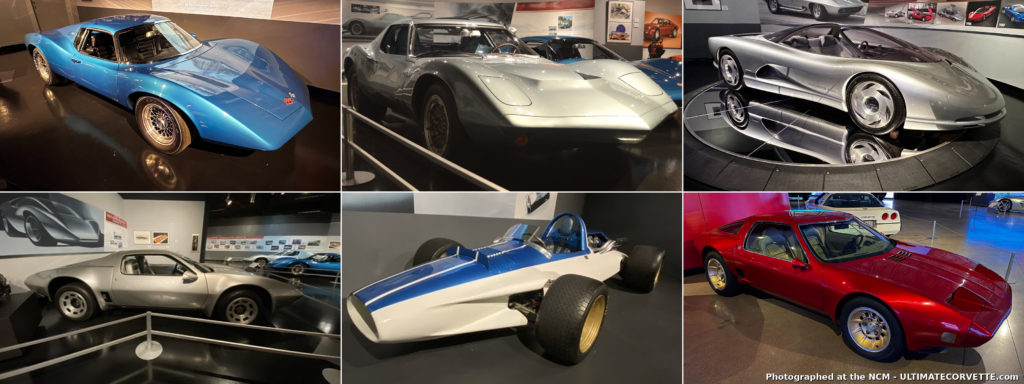
Tag: Mid-Engine Corvette

  • 1973 XP-987 GT Two-Rotor Corvette Concept Car

    1973 XP-987 GT Two-Rotor Corvette Concept Car

    It has been said that timing is everything.

    In the late 1960s and early 1970s, that timing seemed perfect for the Wankel rotary engine. Automakers across the globe were convinced Felix Wankel’s compact, high-revving rotary – with its triangular rotor spinning inside an epitrochoid housing – represented the next great leap beyond the conventional piston engine. It was smoother, smaller, and mechanically simpler, with far fewer moving parts than an equivalent reciprocating V-8. Fewer parts meant lower manufacturing cost, and that appealed directly to GM president Ed Cole, the same engineer who had shepherded Chevrolet’s small-block V-8 into existence two decades earlier. Convinced that the rotary could power everything from entry-level compacts to halo sports cars, Cole led GM to pay roughly $50 million in 1970 for broad production rights to the NSU ( which stands for “Neckarsulm”, the name of the town in Germany where the company was founded and located)/Wankel design, then launched an ambitious in-house “GMRCE”General Motors Rotary Combustion Engine – program.

    By the dawn of the 1970s, the plan inside the Tech Center was bold: GM’s RC-series two-rotor engine would go into small cars like the upcoming Vega/Monza family and, in suitably tuned form, into a new generation of performance machinery. The corporation’s engineers developed a compact two-rotor unit, most commonly documented as the RC2-206, displacing 206 cubic inches and rated at roughly 180 horsepower – a sizeable output for a naturally aspirated two-rotor from that era. The engine was meant to be GM’s future, not a sideshow. Cole openly talked about a time when every gasoline-powered GM vehicle would be rotary-driven. Against that backdrop, it was inevitable that someone would ask the question: “What about a rotary Corvette?”

    Zora’s Rotary Assignment
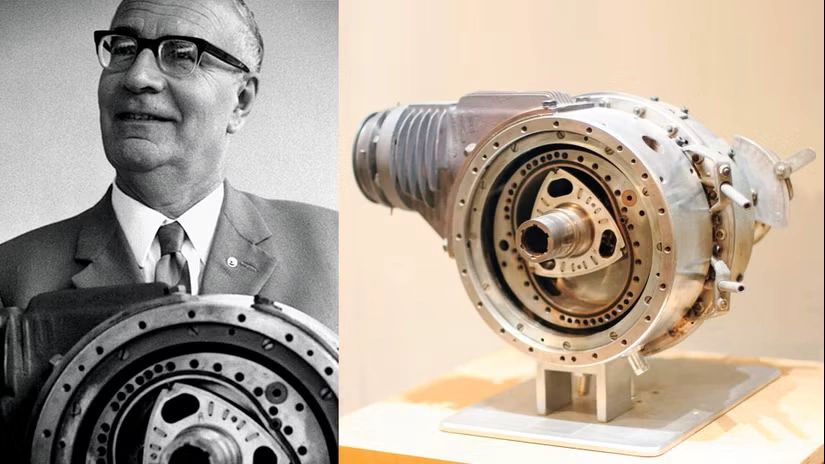
    On the left is Felix Wankel himself, the German engineer whose unconventional thinking rewrote the rulebook on internal-combustion design. Beside him sits the hardware that made his name famous: a cutaway-style rotary engine that reveals the triangular rotor and epitrochoid housing at the heart of the concept. Compared to a traditional piston engine, the Wankel design was lighter, smoother, and mechanically simpler—traits that made executives like Ed Cole believe it could power GM’s next generation of cars. That same promise would ultimately send Chevrolet and Zora Arkus-Duntov down the path toward a mid-engine, rotary-powered Corvette experimental…even as the engine’s thirst for fuel and tricky emissions behavior threatened to undermine the dream.
    On the left is Felix Wankel himself, the German engineer whose unconventional thinking rewrote the rulebook on internal-combustion design. Beside him sits the hardware that made his name famous: a cutaway-style rotary engine that reveals the triangular rotor and epitrochoid housing at the heart of the concept. Compared to a traditional piston engine, the Wankel design was lighter, smoother, and mechanically simpler—traits that made executives like Ed Cole believe it could power GM’s next generation of cars. That same promise would ultimately send Chevrolet and Zora Arkus-Duntov down the path toward a mid-engine, rotary-powered Corvette experimental…even as the engine’s thirst for fuel and tricky emissions behavior threatened to undermine the dream.

    When that question reached the Corvette side of the house, it landed on the desk of Zora Arkus-Duntov. By then, Zora had spent more than a decade pushing for a mid-engine Corvette and honing the car’s image in competition. The rotary, however, left him cold. In later interviews, he made it clear that he had never fallen in love with the Wankel engine the way Cole had. Still, Cole was not asking – he was directing. As recounted by Zora and later authors, GM’s president kept “twisting his arm” about a rotary Corvette, pressing him to explore what a Wankel-powered sports car might look like.
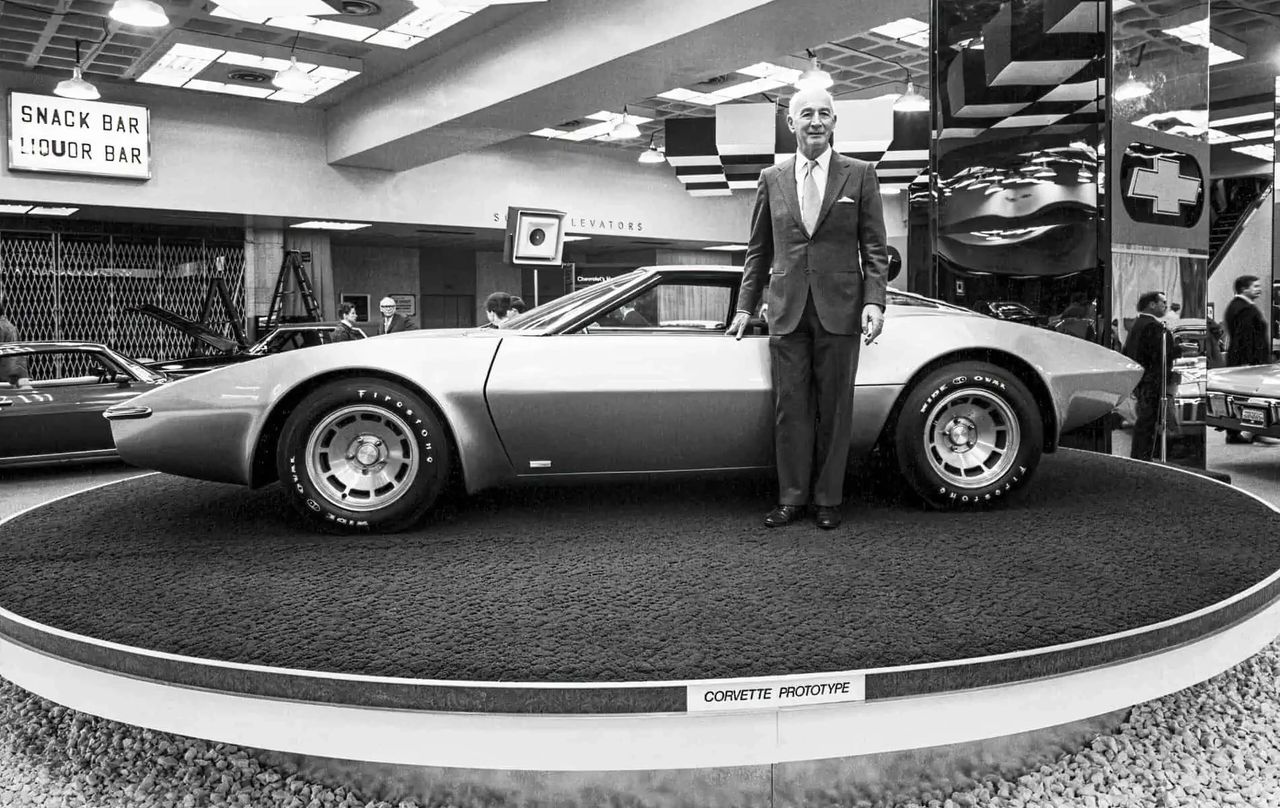
    Zora Arkus-Duntov stands proudly with another of the Wankel Rotary Engine Concept Corvettes - the XP-882 Four Rotor Aerovette - in New York city. (Image courtesy of GM Media LLC)
    Zora Arkus-Duntov stands proudly with another of the Wankel Rotary Engine Concept Corvettes – the XP-882 Four Rotor Aerovette – in New York city. (Image courtesy of GM Media LLC)

    Zora was tasked with developing high-performance variants of GM’s rotary in one-, two-, three-, and four-rotor form and to investigate suitable platforms that could showcase both the technology and Chevrolet’s sporting intentions. Initially, he balked. The rotary’s poor fuel economy and emissions challenges were already apparent in testing, and its torque delivery and drivability were very different from the broad-shouldered small-block he knew so well. But the assignment forced him to think about packaging. A compact, relatively light power unit that could sit transversely over the rear axle opened doors that had long been closed by the length and mass of a conventional V-8. In that sense, the Wankel became a catalyst for something Zora had wanted all along: a mid-engine Corvette.

    Conceiving the “Chevrolet GT”
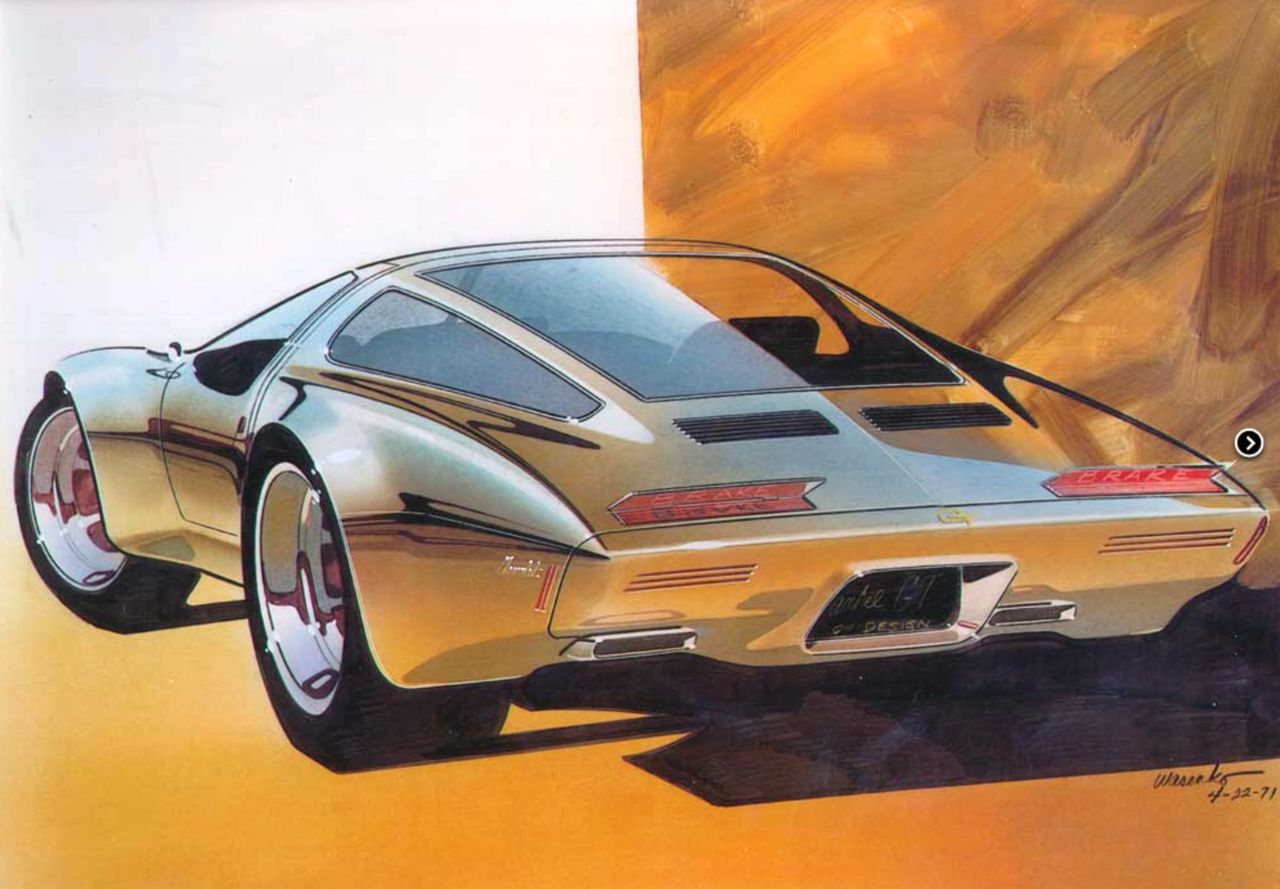
    This early XP-987 GT sketch by GM designer Henry “Hank” Wasenko captures the bold optimism of Chevrolet’s rotary-engine experiment at the dawn of the 1970s. The rendering showcases Wasenko’s trademark fuselage-style surfacing—fluid, organic, almost aerodynamic in its stance even at rest—paired with futuristic cues like full-width rear lamps and deeply recessed vents. According to GM Design anecdotes, Wasenko produced several of these dramatic rear-three-quarter views in rapid succession, exploring how a mid-engine Corvette might visually communicate “velocity” through sheer form alone. The huge, turbine-inspired wheels and glassy canopy weren’t just stylistic flourishes—they were deliberate attempts to signal a technological leap forward worthy of the unconventional Wankel engine beneath. Though the production-intended 2-rotor Corvette never materialized, renderings like this one became favorites within the Design Staff, often pinned on walls as a reminder of how radical the Corvette’s future could be. In many ways, Wasenko’s vision foreshadows the sculptural language that wouldn’t appear on a real Corvette until the C8—nearly half a century later. (Image courtesy of GM Media LLC)
    This early XP-987 GT sketch by GM designer Henry “Hank” Wasenko captures the bold optimism of Chevrolet’s rotary-engine experiment at the dawn of the 1970s. The rendering showcases Wasenko’s trademark fuselage-style surfacing—fluid, organic, almost aerodynamic in its stance even at rest—paired with futuristic cues like full-width rear lamps and deeply recessed vents. According to GM Design anecdotes, Wasenko produced several of these dramatic rear-three-quarter views in rapid succession, exploring how a mid-engine Corvette might visually communicate “velocity” through sheer form alone. The huge, turbine-inspired wheels and glassy canopy weren’t just stylistic flourishes—they were deliberate attempts to signal a technological leap forward worthy of the unconventional Wankel engine beneath. Though the production-intended 2-rotor Corvette never materialized, renderings like this one became favorites within the Design Staff, often pinned on walls as a reminder of how radical the Corvette’s future could be. In many ways, Wasenko’s vision foreshadows the sculptural language that wouldn’t appear on a real Corvette until the C8—nearly half a century later. (Image courtesy of GM Media LLC)

    Inside GM Styling, the rotary Corvette didn’t start life as a Corvette at all. The original brief was for a smaller, more European-scale mid-engine sports car that could slot beneath the full-size Corvette in price and stature – a kind of American analogue to a Porsche 914 or Opel GT. The internal project code was XP-987 GT. Over time, this car has famously been mis-reported in some sources as XP-897 GT, but period engineering documentation and later research confirm that XP-987 GT is the correct designation.

    John Wasenko is a celebrated GM designer whose career helped shape some of the most forward-thinking concept vehicles of the late 20th century. Known for his fluid, sculptural surfacing and his ability to convey motion even in still sketches, Wasenko played a key role in the exploratory era when Chevrolet seriously considered mid-engine and rotary-powered Corvettes. His renderings—often dramatic, wide-stance rear perspectives—became staples within GM Design studios, admired for their fearless experimentation and aerodynamic imagination. Beyond the XP-987 program, Wasenko contributed to numerous advanced projects, bringing a designer’s intuition for proportion, balance, and emotional impact to every assignment. Colleagues frequently recalled his ability to visualize radical ideas with uncommon clarity, often elevating early concept discussions into full stylistic directions. Today, his work stands as a vivid reminder of GM’s most daring creative period—and of a designer who pushed Corvette design into the realm of the possible long before the world was ready for it.
    John Wasenko is a celebrated GM designer whose career helped shape some of the most forward-thinking concept vehicles of the late 20th century. Known for his fluid, sculptural surfacing and his ability to convey motion even in still sketches, Wasenko played a key role in the exploratory era when Chevrolet seriously considered mid-engine and rotary-powered Corvettes. His renderings—often dramatic, wide-stance rear perspectives—became staples within GM Design studios, admired for their fearless experimentation and aerodynamic imagination. Beyond the XP-987 program, Wasenko contributed to numerous advanced projects, bringing a designer’s intuition for proportion, balance, and emotional impact to every assignment. Colleagues frequently recalled his ability to visualize radical ideas with uncommon clarity, often elevating early concept discussions into full stylistic directions. Today, his work stands as a vivid reminder of GM’s most daring creative period—and of a designer who pushed Corvette design into the realm of the possible long before the world was ready for it.

    GM designer John“Kip” Wasenko, working under Vice President of Styling Bill Mitchell, was assigned to give this new “Chevrolet GT” its shape. From the outset, the concept was meant to be compact, lithe, and worldly. Mitchell wanted a car that could look at home on the streets of Turin or Frankfurt as easily as in Detroit – a dramatic departure from the long-hood, short-deck stance of the contemporary C3. The rotary’s modest size encouraged that shift. With no big V-8 sitting ahead of the driver, the nose could be low and wedge-like, the cabin pushed forward, and the rear deck shortened to just cover the transaxle and luggage space.

    Building on a Porsche Backbone
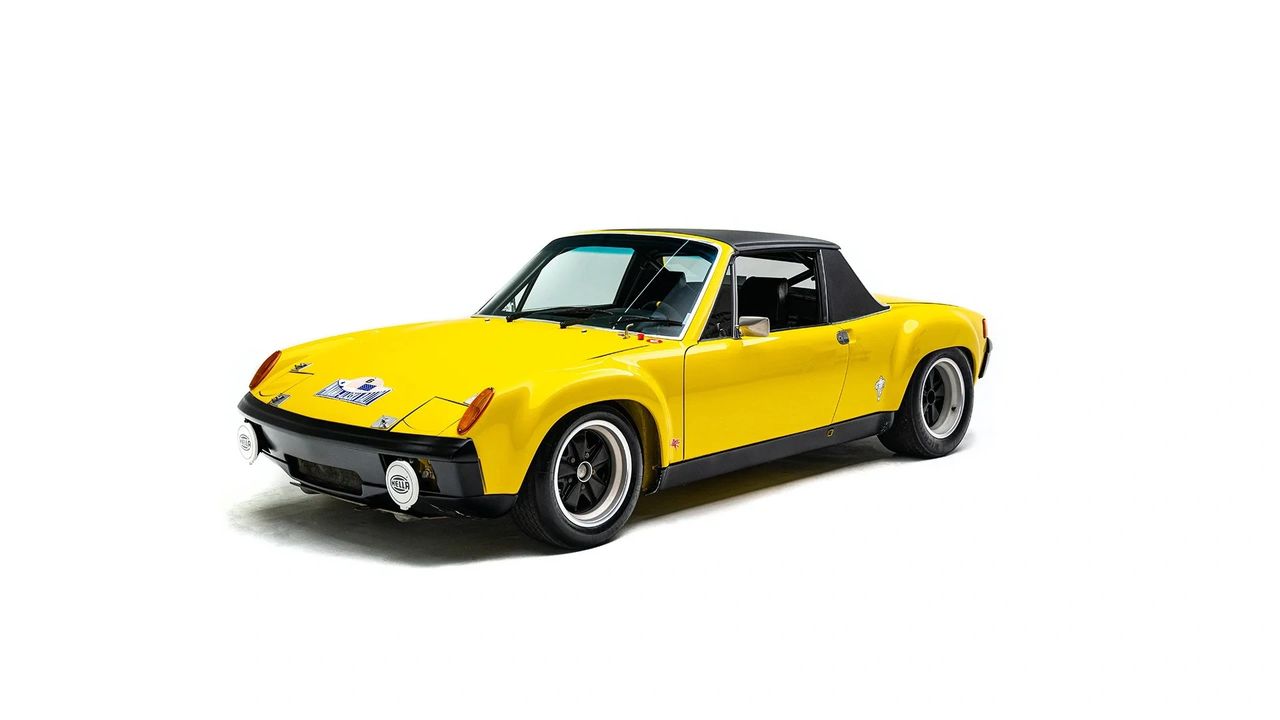
    This brilliantly preserved Porsche 914 isn’t just a quirky mid-engine sports car—it’s one of the key inspirations for Chevrolet’s XP-987 GT rotary Corvette experiment. Finished in a striking yellow with period-correct fog lamps, widened stance, and rally details, it showcases the compact proportions and mid-engine packaging that captured GM stylists’ attention in the early 1970s. Its crisp targa profile, agile stance, and honest, driver-focused character made it an ideal reference point as GM explored what an affordable, mid-engine American sports car could be. This particular example—as seen at the Petersen Auto Museum—stands as a vivid reminder that the XP-987 GT’s story begins, in part, with a humble but brilliantly conceived Porsche. (Image courtesy of the Petersen Auto Museum)
    This brilliantly preserved Porsche 914 isn’t just a quirky mid-engine sports car—it’s one of the key inspirations for Chevrolet’s XP-987 GT rotary Corvette experiment. Finished in a striking yellow with period-correct fog lamps, widened stance, and rally details, it showcases the compact proportions and mid-engine packaging that captured GM stylists’ attention in the early 1970s. Its crisp targa profile, agile stance, and honest, driver-focused character made it an ideal reference point as GM explored what an affordable, mid-engine American sports car could be. This particular example—as seen at the Petersen Auto Museum—stands as a vivid reminder that the XP-987 GT’s story begins, in part, with a humble but brilliantly conceived Porsche. (Image courtesy of the Petersen Auto Museum)

    There was a practical problem, however: GM didn’t have a ready-made mid-engine chassis lying around that matched the compact dimensions Mitchell and Wasenko envisioned. Rather than lose time developing one from scratch, Chevrolet quietly purchased a Porsche 914/6 – the six-cylinder version of Porsche’s entry-level mid-engine sports car – to serve as the structural foundation.

    Engineers shortened the Porsche’s wheelbase by about 6.5 inches, trimming it down to roughly 90 inches, and then widened the front and rear tracks to help fill out the more muscular GM bodywork that Wasenko was sketching. The basic 914 suspension – MacPherson struts up front and trailing arms in the rear – remained in place, as did the four-wheel disc brakes, though mounting points and geometry were adjusted to accommodate the new stance. The result was a chassis with the proven mid-engine balance of the 914, but re-proportioned for a lower, wider, more aggressive grand-touring coupe.
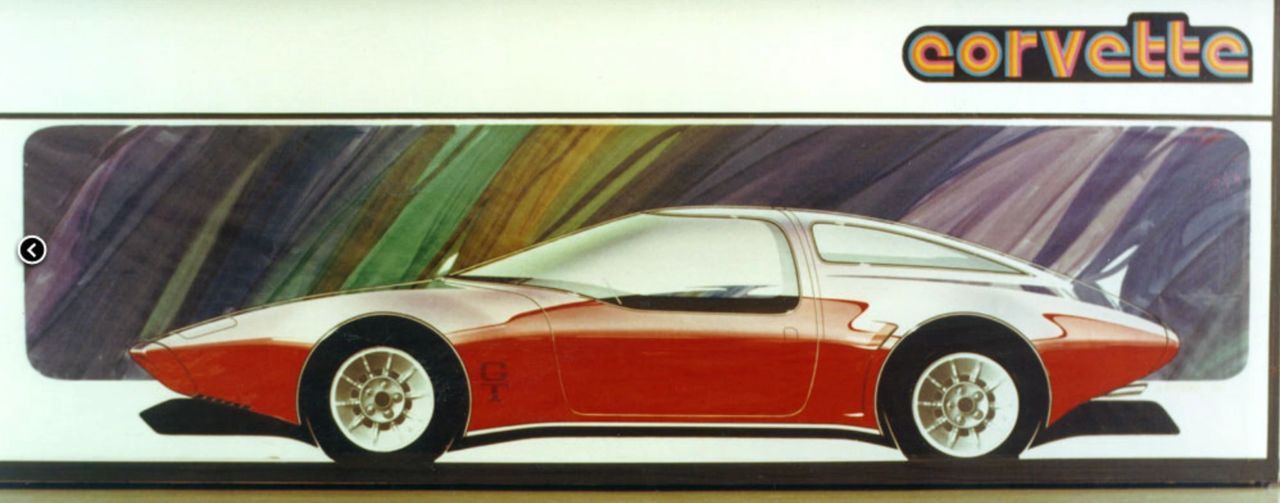
    This vibrant side-view rendering of the XP-987 GT captures GM Design’s early vision for a lithe, mid-engine Corvette of the 1970s. The ultra-low nose, expansive canopy, and tightly drawn tail give the car a racy, almost European stance, while the bold “Corvette” script and red bodywork anchor it firmly in Chevy territory. Clean, unbroken surfaces and tucked-in wheels emphasize agility over brute force, hinting at a lighter, more nimble kind of American sports car. (Image courtesy of GM Media LLC)
    This vibrant side-view rendering of the XP-987 GT captures GM Design’s early vision for a lithe, mid-engine Corvette of the 1970s. The ultra-low nose, expansive canopy, and tightly drawn tail give the car a racy, almost European stance, while the bold “Corvette” script and red bodywork anchor it firmly in Chevy territory. Clean, unbroken surfaces and tucked-in wheels emphasize agility over brute force, hinting at a lighter, more nimble kind of American sports car. (Image courtesy of GM Media LLC)

    On top of that Porsche-derived floorpan, GM engineers mounted a transverse powerpack – the two-rotor GM rotary coupled to a three-speed automatic transaxle that had originally been developed for front-wheel-drive applications. Turned around and placed ahead of the rear axle line, this compact engine-transmission unit made packaging the XP-987’s mid-engine layout surprisingly straightforward. It is worth noting that while some period documents list the engine as a 266-cubic-inch RC2-266, most later factory-linked sources describe the two-rotor unit used in the Vega/Monza program – and intended for XP-987 – as an RC2-206 of 206 cubic inches, rated at approximately 180 horsepower. That discrepancy highlights the rapid evolution of the GMRCE program (and the incompleteness of some surviving paperwork). Still, the broad picture is clear: this was a relatively high-output two-rotor that, in a very light car, promised performance comparable to that of a small-block V-8.

    From Clay to “Space Buck”
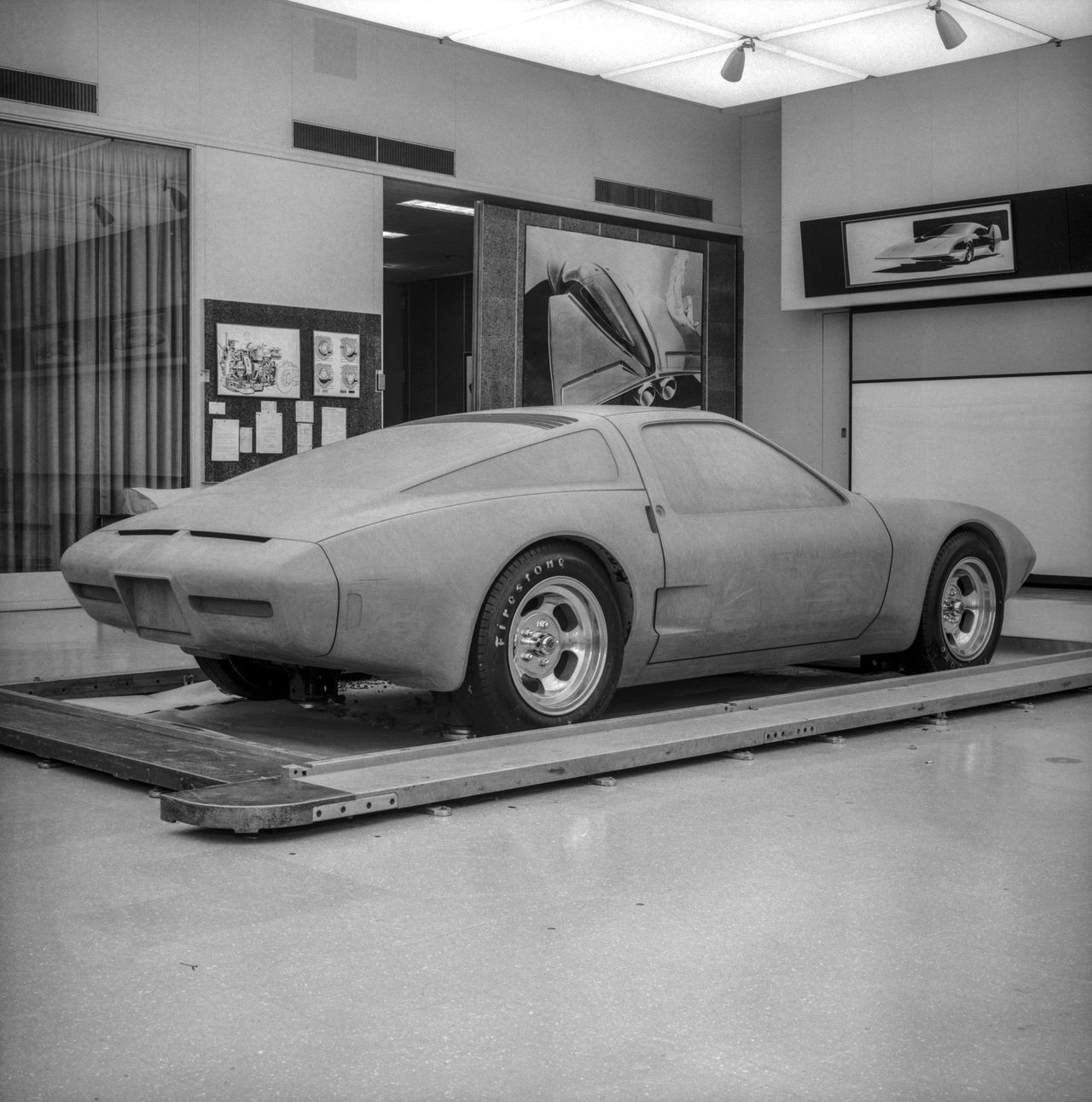
    This black-and-white studio shot captures the XP-987 GT in one of its most critical stages of development—a full-size clay model sitting on the surface plate inside GM Design. With its broad haunches, short overhangs, and long, tapering rear deck, the car already communicates the purposeful stance of a true mid-engine Corvette, even before a single panel is stamped in steel or fiberglass. The taped-in glass lines, roughed-in scoops, and early bumper forms show designers still fine-tuning airflow, engine-cooling needs, and crash requirements. Period wheel-and-tire mockups give the model real-world proportions, helping the team judge how the XP-987 GT would sit on the road. Scenes like this are where radical ideas stopped being sketches on the wall and started becoming three-dimensional reality. (Image courtesy of GM Media LLC)
    This black-and-white studio shot captures the XP-987 GT in one of its most critical stages of development—a full-size clay model sitting on the surface plate inside GM Design. With its broad haunches, short overhangs, and long, tapering rear deck, the car already communicates the purposeful stance of a true mid-engine Corvette, even before a single panel is stamped in steel or fiberglass. The taped-in glass lines, roughed-in scoops, and early bumper forms show designers still fine-tuning airflow, engine-cooling needs, and crash requirements. Period wheel-and-tire mockups give the model real-world proportions, helping the team judge how the XP-987 GT would sit on the road. Scenes like this are where radical ideas stopped being sketches on the wall and started becoming three-dimensional reality. (Image courtesy of GM Media LLC)

    While the engineering team massaged the Porsche chassis, GM Styling moved rapidly from sketches to full-size clay. By mid-1971, the Design Staff had created a full-scale fiberglass mock-up of the Chevrolet GT, followed by what they called a “first-class space buck” – an incredibly detailed physical layout model showing where every major component, from the fuel tank and cooling system to wiring looms and pedal box, would live in the finished car.
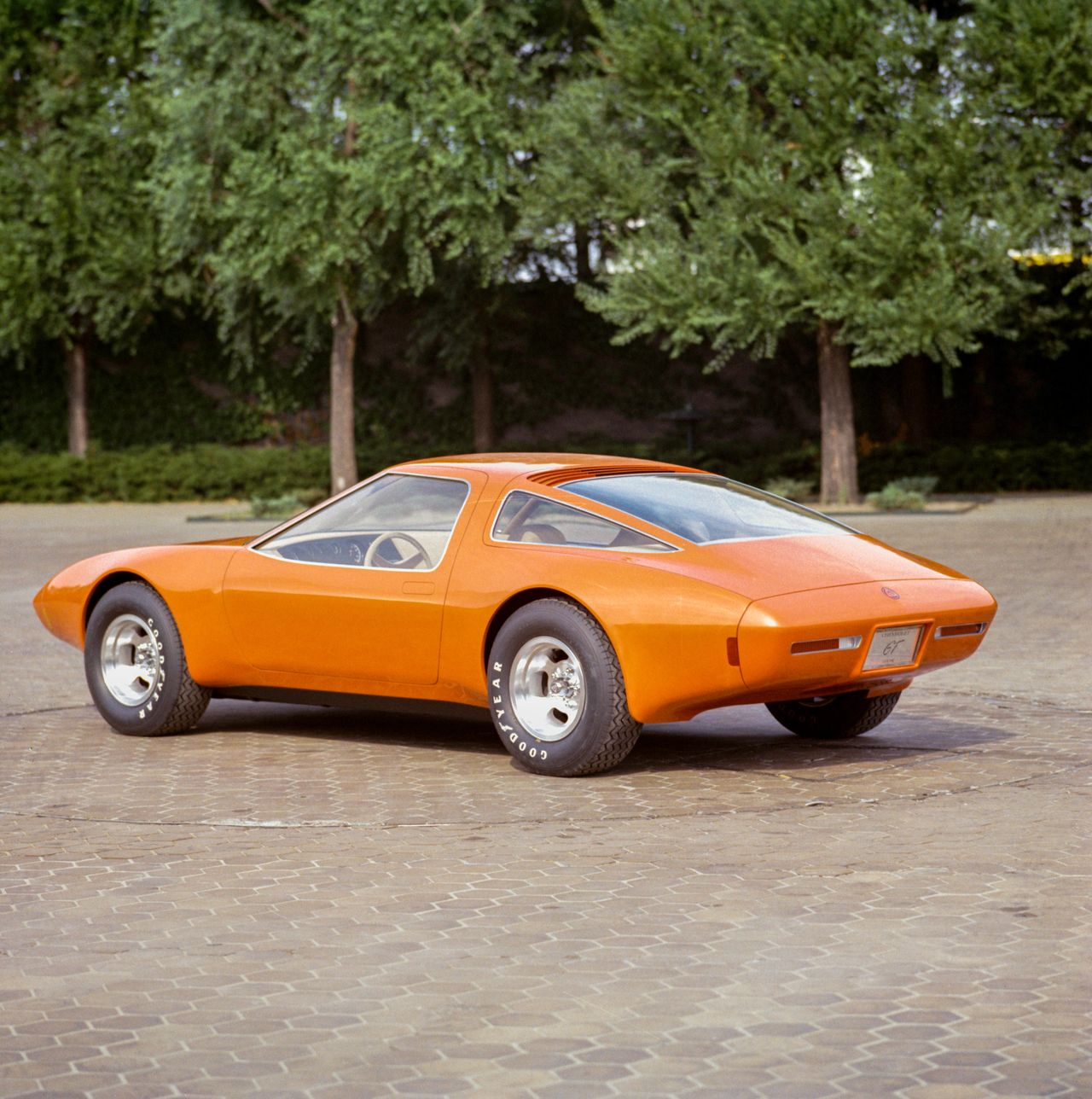
    The 1971 XP-987 GT styling buck was far more than a static design exercise—it was the first moment GM’s leadership could walk around, study, and feel what a mid-engine Corvette might truly be. Built full-size and finished in vivid orange, the buck allowed designers and engineers to evaluate sightlines, proportions, aerodynamics, and packaging long before committing to a running prototype. Its presence in the courtyard and studio made the concept tangible, helping teams refine everything from cabin ergonomics to airflow management over the rear deck. Just as importantly, the buck became a powerful persuasion tool inside GM, convincing executives that this radical rotary-powered Corvette deserved to leap from clay and fiberglass into a fully operational show car. In many ways, the XP-987 GT’s entire journey began the moment this styling buck proved the vision was not only feasible—but irresistible. (Image courtesy of GM Media LLC)
    The 1971 XP-987 GT styling buck was far more than a static design exercise—it was the first moment GM’s leadership could walk around, study, and feel what a mid-engine Corvette might truly be. Built full-size and finished in vivid orange, the buck allowed designers and engineers to evaluate sightlines, proportions, aerodynamics, and packaging long before committing to a running prototype. Its presence in the courtyard and studio made the concept tangible, helping teams refine everything from cabin ergonomics to airflow management over the rear deck. Just as importantly, the buck became a powerful persuasion tool inside GM, convincing executives that this radical rotary-powered Corvette deserved to leap from clay and fiberglass into a fully operational show car. In many ways, the XP-987 GT’s entire journey began the moment this styling buck proved the vision was not only feasible—but irresistible. (Image courtesy of GM Media LLC)

    These were not just pretty showpieces. The space buck allowed engineers and stylists to sit in the car, check visibility, evaluate ergonomics, and verify that systems packaging made sense. It also provided GM executives with a tangible sense of how “real” the project had become. When the fiberglass mock-up and the space buck were presented to top brass in 1971, the reaction was strong enough that the directive came back to turn XP-987 from a static model into a fully running car. At that moment, the little rotary GT transitioned from an internal experiment into a serious contender for future production.

    Sending a Corvette to Pininfarina
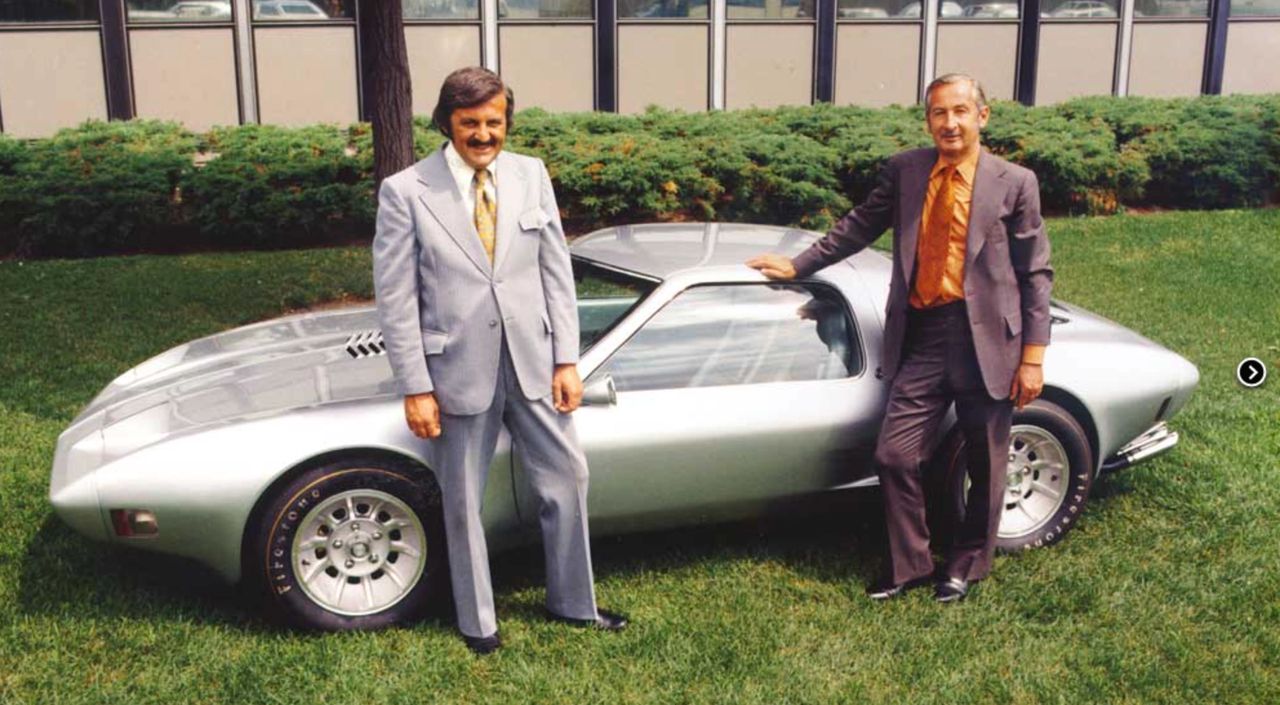
    The image shows the completed XP-987 GT/2-Rotor Corvette body at Pininfarina, still in its bare silver finish before receiving its final show-car paint. Standing beside it are key GM design leaders Jim Juif and Clare “Mac” MacKichan, who helped champion the mid-engine, rotary-powered Corvette concept inside GM’s Experimental Studio. Seeing the sleek Italian-crafted bodywork mounted on its shortened Porsche 914 chassis gave GM management a tangible preview of how radical—and how refined—this new direction for Corvette could be. In many ways, moments like this courtyard photo were as important as any design sketch or clay model, turning an internal design study into a fully realized concept that GM could confidently send onto the world’s auto-show stages.
    The image shows the completed XP-987 GT/2-Rotor Corvette body at Pininfarina, still in its bare silver finish before receiving its final show-car paint. Standing beside it are key GM design leaders Jim Juif and Clare “Mac” MacKichan, who helped champion the mid-engine, rotary-powered Corvette concept inside GM’s Experimental Studio. Wikipedia +1 Seeing the sleek Italian-crafted bodywork mounted on its shortened Porsche 914 chassis gave GM management a tangible preview of how radical—and how refined—this new direction for Corvette could be. In many ways, moments like this courtyard photo were as important as any design sketch or clay model, turning an internal design study into a fully realized concept that GM could confidently send onto the world’s auto-show stages. (Image courtesy of GM Media LLC)

    If timing is everything, then this was the moment when the XP-987 GT’s path crossed with Italy. Bill Mitchell, long enamored with European design houses and always keen to imbue GM concepts with a more international flavor, saw an opportunity. Rather than ask the already-stretched GM body engineering groups to tool and hand-build the car’s steel bodywork, he turned to one of the most storied coachbuilders in the world: Pininfarina of Turin.

    In early 1972, the shortened Porsche chassis – now carrying a mock-up of the two-rotor powertrain – was crated up along with a full-size plaster model of the Chevrolet GT and shipped to Italy. A small supervisory team from GM Styling accompanied the car to ensure that Wasenko’s lines and Mitchell’s proportions were translated faithfully from clay to steel. Pininfarina, used to working at breakneck speed for manufacturers like Ferrari, Peugeot, and Alfa Romeo, took on the task of fabricating the car’s body panels and assembling the complete prototype. Over the course of roughly six months, the Turin shop built a steel bodyshell with aluminum doors, hood, and rear hatch – a blend aimed at balancing strength, weight, and tooling practicality.

    A Compact Corvette in Ferrari Clothing
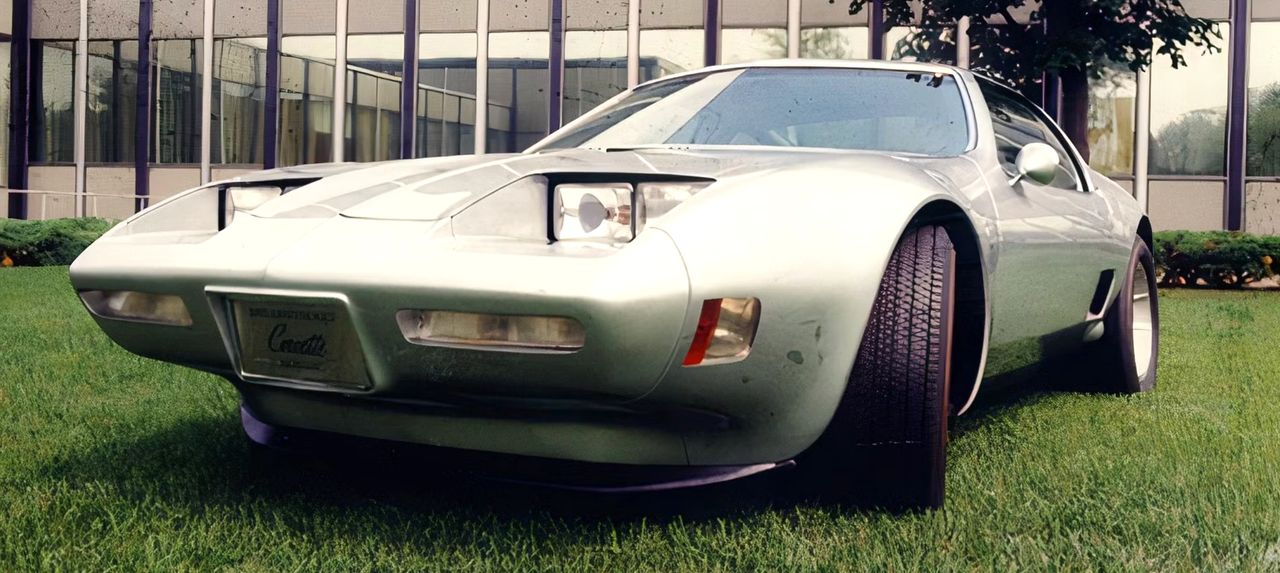
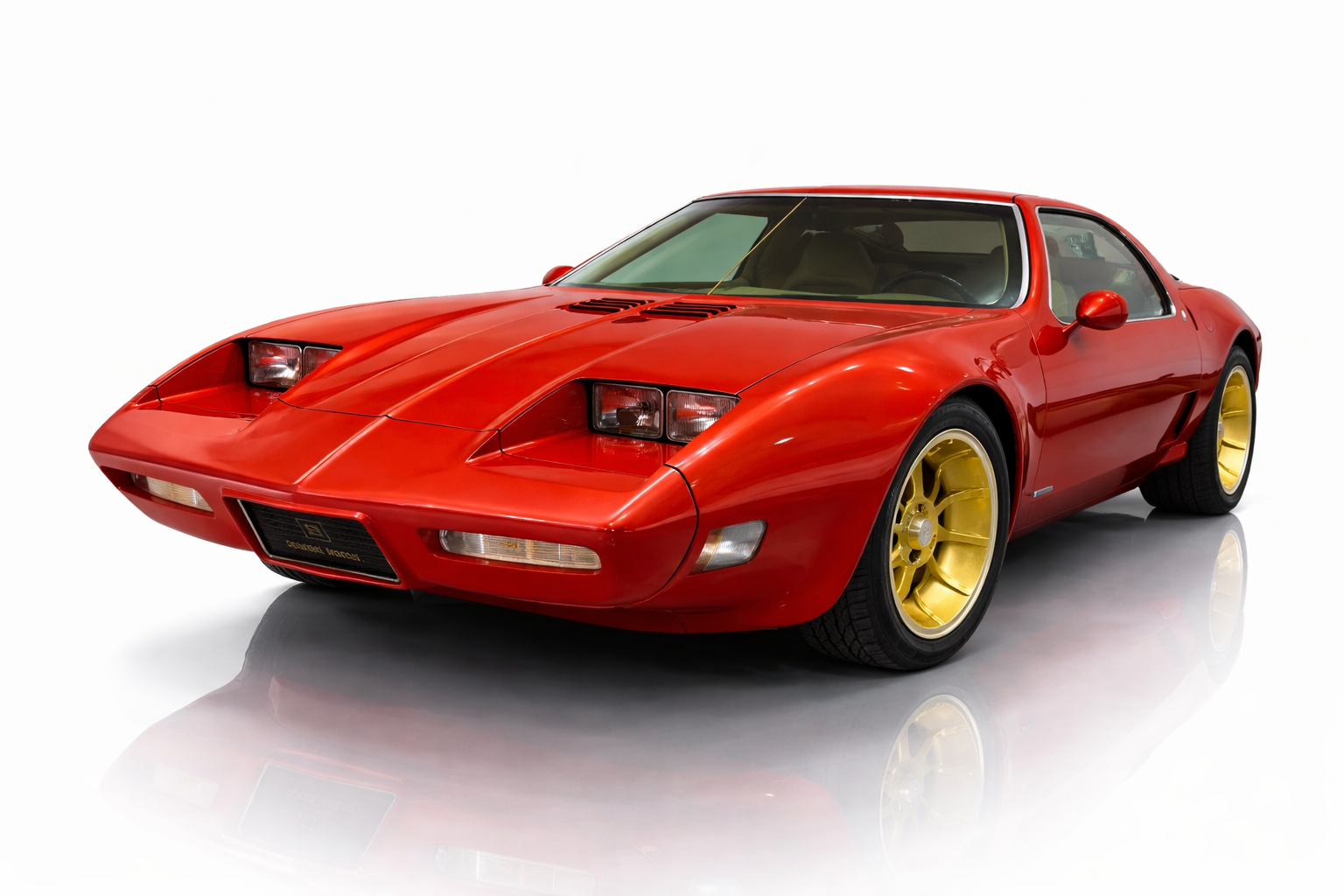
    The Corvette Two-Rotor wears its Pininfarina-sculpted nose like a concept straight off a European show stand, complete with single-rectangular pop-up headlamps and a razor-thin grille. Seen here on the lawn outside GM’s tech center, it looks every bit like the mid-engine future that almost was. (Image courtesy of GM Media LLC)
    The Corvette Two-Rotor wears its Pininfarina-sculpted nose like a concept straight off a European show stand, complete with single-rectangular pop-up headlamps and a razor-thin grille. Seen here on the lawn outside GM’s tech center, it looks every bit like the mid-engine future that almost was. (Image courtesy of GM Media LLC)

    When the XP-987 GT returned from Italy, it did so first in an unpublicized silver finish with a silver interior – a quiet, almost understated color combination that emphasized the car’s surfaces rather than its presence. Internally, it was still known simply as the Chevrolet GT. But the shape that Pininfarina had hammered into existence was anything but anonymous. Shorter, narrower, and markedly lower than a C3 Corvette, the car was only about 166 inches long, 65-plus inches wide, and a mere 43.3 inches high. At roughly 2,600 pounds, it weighed several hundred pounds less than a contemporary production Corvette.

    Visually, it looked like a cross-pollination between contemporary Ferraris and the sharper wedges that would define mid-1970s Italian design. The nose was low and clean, with a slim bumper and integrated rectangular turn signals. The most striking feature was the headlamp treatment: four square lamps recessed into pockets and covered by clear glazing – effectively exposed quad headlights at a time when U.S. regulations still forced most makers into pop-up units. The front and rear bumpers were formed from energy-absorbing polypropylene, part of GM’s broader work on 5-mph impact systems, and integrated neatly into the bodywork.
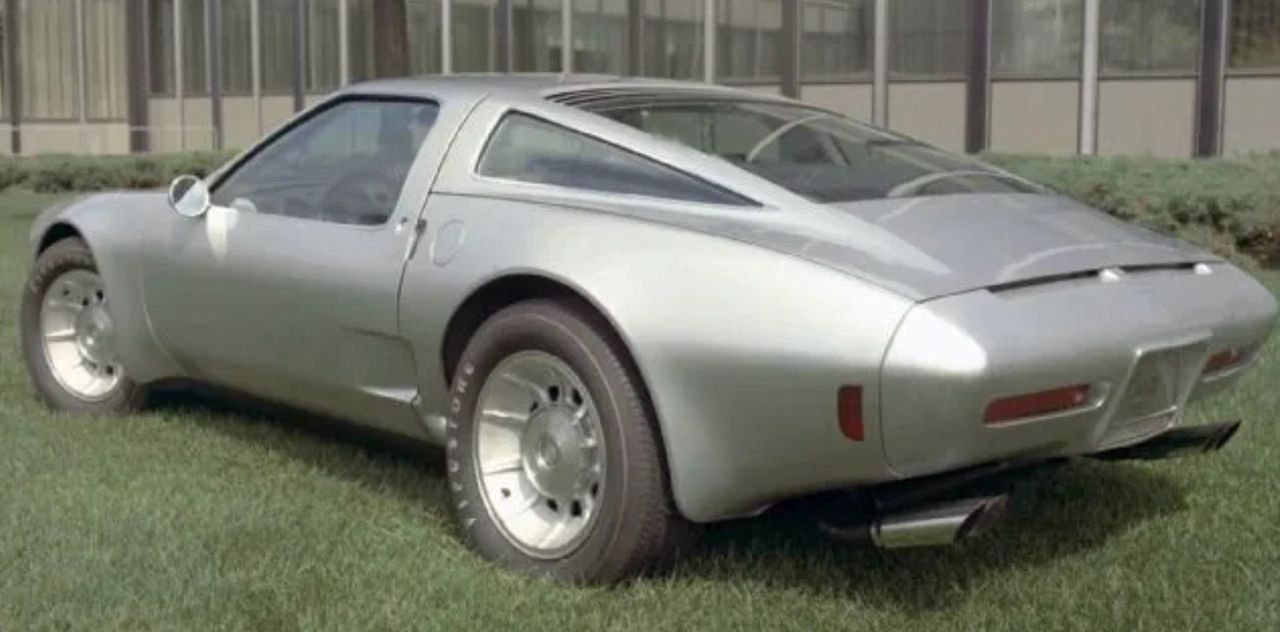
    Finished in the understated silver it wore when Pininfarina shipped it back to Detroit as the “Chevrolet GT,” this early form of the Corvette Two-Rotor looks more like an Italian show car than an American experiment. The clean metallic finish accentuates its glassy rear hatch and crisp shoulder line, highlighting just how refined the design was before it ever received Corvette badging or bright red paint. (Image courtesy of GM Media LLC)
    Finished in the understated silver it wore when Pininfarina shipped it back to Detroit as the “Chevrolet GT,” this early form of the Corvette Two-Rotor looks more like an Italian show car than an American experiment. The clean metallic finish accentuates its glassy rear hatch and crisp shoulder line, highlighting just how refined the design was before it ever received Corvette badging or bright red paint. (Image courtesy of GM Media LLC)

    Along the flanks, the car wore flowing fender forms, subtly blistered over the wheels, with a pronounced beltline that kicked up gently into the rear quarter. The doors wrapped generously around the A-pillars, easing ingress and egress and giving the glasshouse a taut, cockpit-like feel. In the roof, Mitchell specified a split windshield with the radio antenna embedded along the center seam – one of his signature touches. Behind the B-pillars, shallow air intakes were carved into the rear quarters to feed cooling air into the engine bay. That air was then vented out through discreet outlets above the rear fascia, visually echoing the louvers and ducts that were becoming hallmarks of mid-engine exotics.

    Under the large, fastback-style rear hatch, spectators could peer down onto the two-rotor engine and transaxle, separated from the passenger compartment by a glass bulkhead. It was an intentional piece of theater: this was a car that wanted you to see its unconventional heart beating behind the seats.
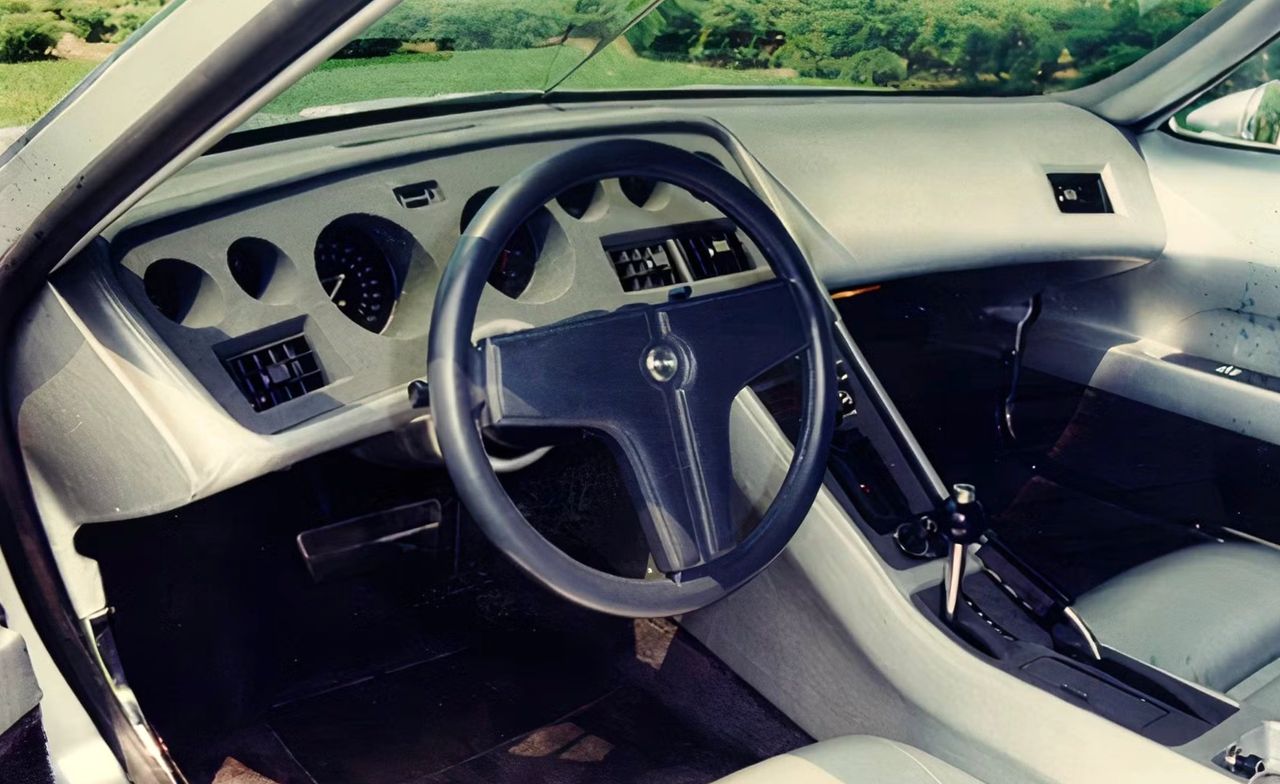
    Inside the XP-987 GT, the cabin is as experimental as the car’s rotary heart, with a sweeping dash that wraps around the driver in a clean, almost architectural arc. Deep-set round gauges, simple rectangular vents, and the minimalist three-spoke wheel give the cockpit a purposeful, almost aircraft-like feel. The high, narrow console and upright shifter emphasize that this was meant to be driven, not just displayed. It’s a fascinating bridge between late C3 ergonomics and the driver-focused layouts that would later define modern Corvettes.
    Inside the XP-987 GT, the cabin is as experimental as the car’s rotary heart, with a sweeping dash that wraps around the driver in a clean, almost architectural arc. Deep-set round gauges, simple rectangular vents, and the minimalist three-spoke wheel give the cockpit a purposeful, almost aircraft-like feel. The high, narrow console and upright shifter emphasize that this was meant to be driven, not just displayed. It’s a fascinating bridge between late C3 ergonomics and the driver-focused layouts that would later define modern Corvettes.

    Inside, the cabin was tighter than a C3 but thoughtfully laid out. Fixed-back bucket seats were paired with an adjustable steering column and even adjustable pedals, allowing drivers of different sizes to find a workable position in what was, by any measure, a very compact interior. Luggage space behind the engine measured a modest 8.1 cubic feet – enough for weekend bags, but not much more.

    The Rotary Heart of the XP-987 GT
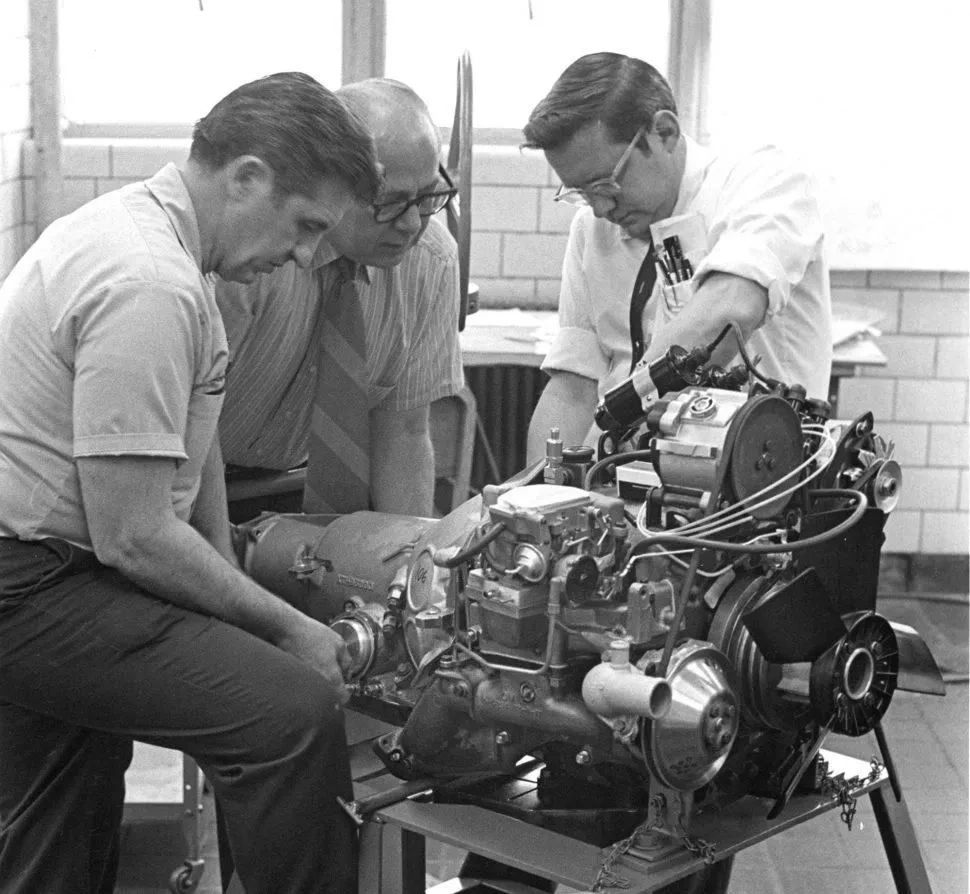
    Three engineers crowd around an early prototype of GM’s rotary combustion engine, studying every fitting and fastener as it sits on a test stand. This is where the Wankel dream became real work—fuel lines routed, ignition mocked up, housings checked and rechecked before the engine ever met a chassis. In rooms like this, far from auto-show spotlights, GM’s team chased Ed Cole’s vision of a compact, high-revving rotary that could power the next-generation Corvette. Even if the program ultimately fell short, moments like this capture the quiet intensity behind the XP-987 GT story.
    Three engineers crowd around an early prototype of GM’s rotary combustion engine, studying every fitting and fastener as it sits on a test stand. This is where the Wankel dream became real work—fuel lines routed, ignition mocked up, housings checked and rechecked before the engine ever met a chassis. In rooms like this, far from auto-show spotlights, GM’s team chased Ed Cole’s vision of a compact, high-revving rotary that could power the next-generation Corvette. Even if the program ultimately fell short, moments like this capture the quiet intensity behind the XP-987 GT story.

    For most of its early development, XP-987 ran with either a mock-up power unit or an experimental RC-series engine. By the time the car was ready for its public life, the rotary program had settled on a two-rotor layout for the Chevrolet GT/Corvette application. The engine displaced just over 200 cubic inches – again, most commonly documented as the RC2-206 – and was fed by a Rochester Quadrajet carburetor. It used side intake ports, peripheral exhaust ports, and a twin-plug ignition system to promote more complete combustion and smoother running at high rpm.

    GM literature and contemporary reporting cite an output of about 180 horsepower at around 6,000–6,100 rpm – numbers in line with what Mazda was producing from its two-rotor engines at the time, but from a significantly larger displacement. In the featherweight XP-987 GT, that power, routed through the compact three-speed automatic and Porsche-based running gear, promised lively performance. Internal projections suggested the car could match or better the acceleration of a small-block C3, while offering a very different character: a smooth, free-revving surge rather than the big-torque lunge of a V-8.
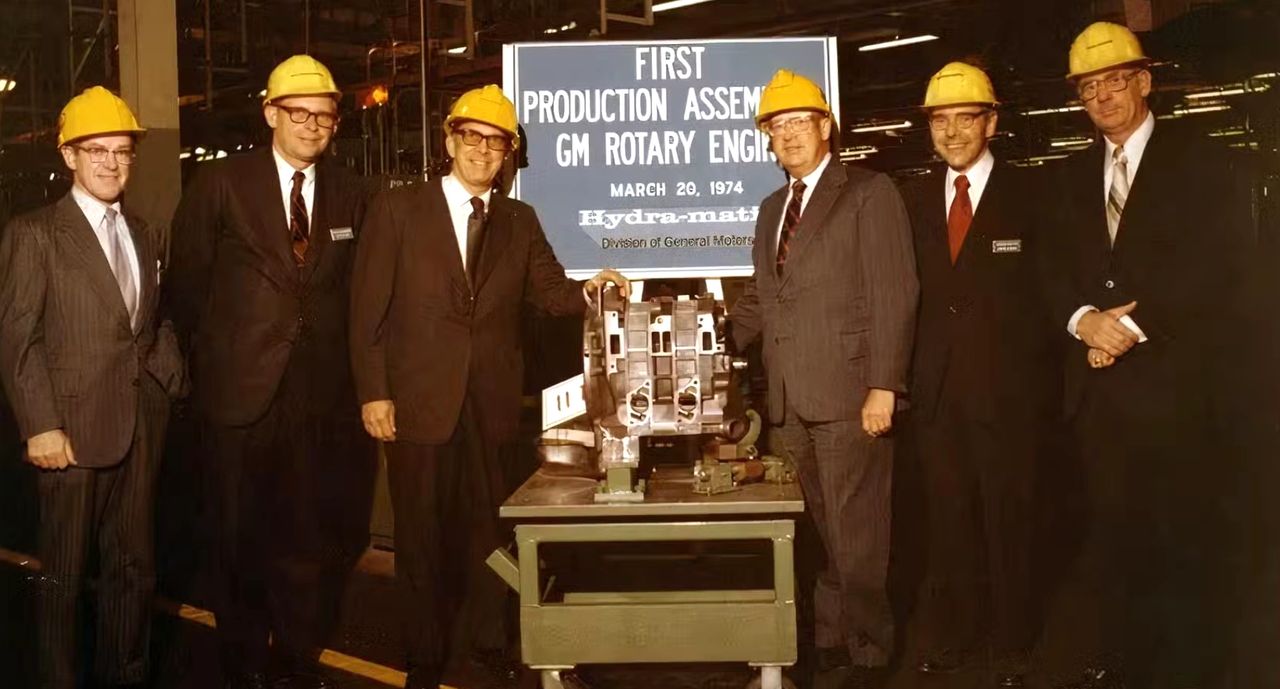
    This archival image captures a proud moment in GM history: the ceremonial launch of the “First Production Assembly GM Rotary Engine” at Hydra-Matic on March 20, 1974. That date marked the official start of GM’s ambitious Wankel program, which aimed to put a smooth, high-revving rotary engine into production. The plan was to use this powerplant in the Chevrolet Vega (and later the Monza 2+2), bringing rotary technology to mainstream buyers. At the same time, GM envisioned a more exotic role for the engine in the XP-987 GT “Two-Rotor Corvette,” showcasing its performance potential in a mid-engine sports car. Unfortunately, changing emissions standards, fuel economy concerns, and the fallout from the 1973 oil crisis ultimately killed the program before any rotary-powered Chevrolets reached showrooms. As a result, this photo stands as both a celebration of bold innovation and a reminder of one of GM’s most fascinating “what might have been” stories. (Image courtesy of GM Media LLC)
    This archival image captures a proud moment in GM history: the ceremonial launch of the “First Production Assembly GM Rotary Engine” at Hydra-Matic on March 20, 1974. That date marked the official start of GM’s ambitious Wankel program, which aimed to put a smooth, high-revving rotary engine into production. The plan was to use this powerplant in the Chevrolet Vega (and later the Monza 2+2), bringing rotary technology to mainstream buyers. At the same time, GM envisioned a more exclusive role for the engine in the XP-987 GT “Two-Rotor Corvette,” showcasing its performance potential in a mid-engine sports car. Unfortunately, changing emissions standards, fuel economy concerns, and the fallout from the 1973 oil crisis ultimately killed the program before any rotary-powered Chevrolets reached showrooms. As a result, this photo stands as both a celebration of bold innovation and a reminder of one of GM’s most fascinating “what might have been” stories. (Image courtesy of GM Media LLC)

    On paper, the package made sense, but there were clouds on the horizon. Early testing of GM’s rotary showed that getting acceptable emissions out of the engine without strangling performance was far harder than originally advertised. Turning it into a fuel-efficient power plant was harder still. The same attributes that made the Wankel so smooth – its large combustion surface area and relatively short expansion stroke – also made it thirsty and dirty compared with even a mildly detuned piston engine.

    From Chevrolet GT to Corvette Two-Rotor
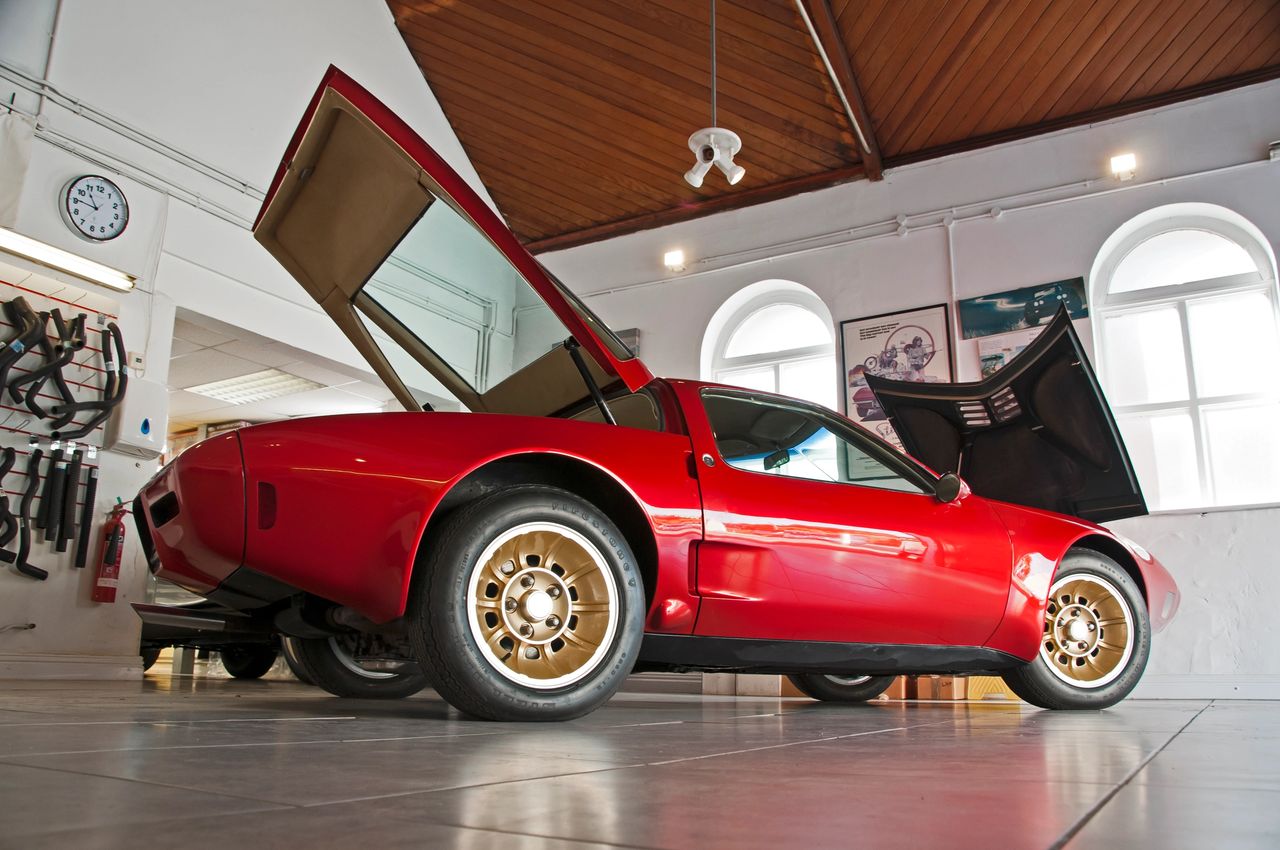
    Before the world ever saw XP-987, GM gave it a makeover. As the 1973 European auto-show season approached, corporate planners decided that the little mid-engine GT should no longer stand alone as a “Chevrolet” concept – it should carry the Corvette name. Shortly before its scheduled appearance in Germany, the silver paint and matching interior gave way to a dramatically richer Candy-style metallic red, a fawn (saddle) leather cabin, and a set of gold-anodized wheels with machined lips.

    Those wheels are an interesting footnote in their own right. Designed by GM for the concept, their turbine-like pattern with a recessed center would later be released to Motor Wheel – a Goodyear-owned supplier – and sold in the aftermarket under the name “Vector,” becoming a minor icon of 1970s wheel design.

    Less than a week before the car’s scheduled debut, GM’s leadership made one more change: the Chevrolet GT would appear on the stand as the “Corvette Two-Rotor.” There was no time to tool traditional script badges, so stylists produced decal-style nameplates for the flanks and rear, visually tying this compact exotic back to America’s sports car.
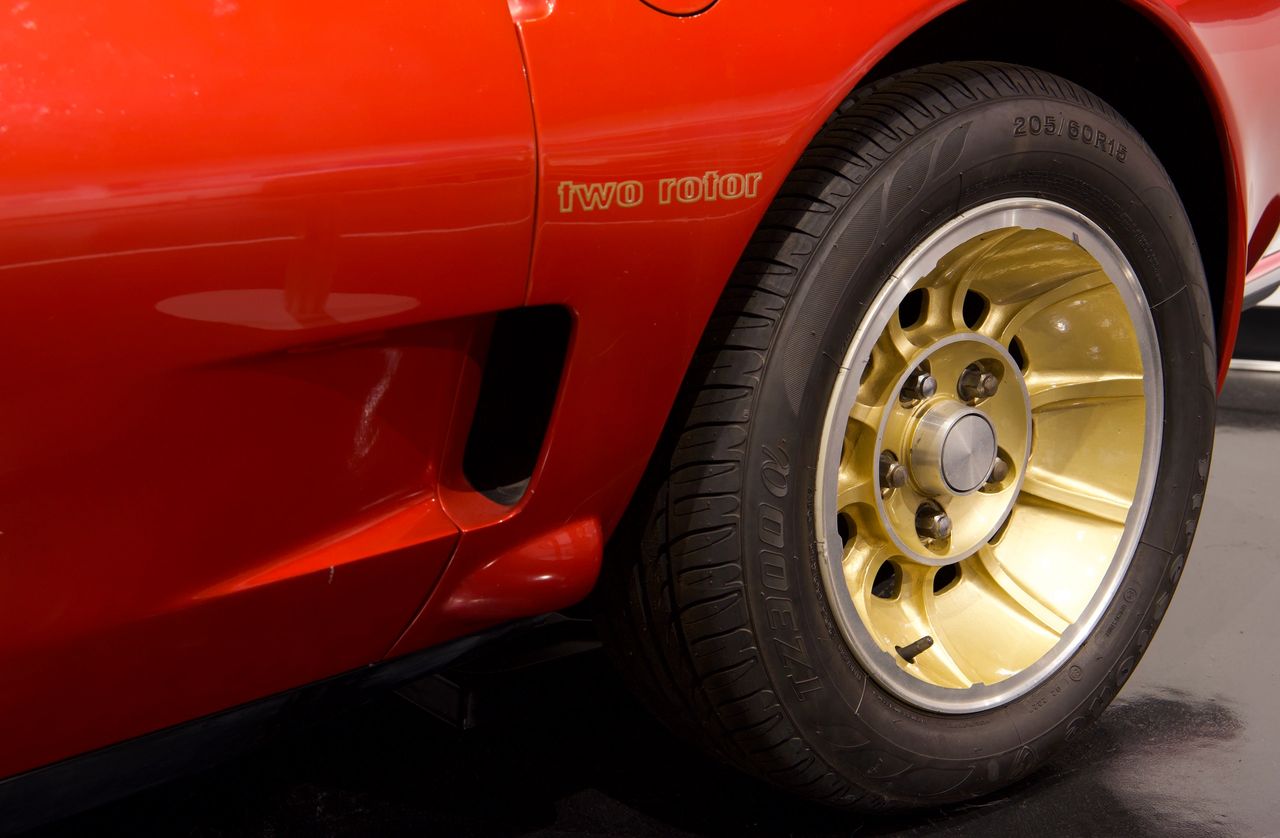
    Up close, the XP-987 GT’s gold-finished turbine-style wheels instantly signal that this is no ordinary mid-engine prototype—they give the car a bold, almost competition-ready stance that fits its experimental mission. Just ahead of the rear wheel, the subtle “two rotor” script hints at the unconventional powerplant originally planned for the car, proudly calling out the Wankel engine configuration. Elsewhere on the body (not seen here), “Corvette Two-Rotor” decals were added to further “Americanize” the Pininfarina-built shape and clearly link this Italian-crafted body back to Chevrolet’s flagship sports car. Together, the wheels and graphics helped transform what began as a Porsche-based test bed into something that unmistakably read as a futuristic Corvette—at least to the executives and show-goers Chevy most wanted to impress. (Image courtesy of Joe Kolecki/Kolecki Photography LLC)
    Up close, the XP-987 GT’s gold-finished turbine-style wheels instantly signal that this is no ordinary mid-engine prototype—they give the car a bold, almost competition-ready stance that fits its experimental mission. Just ahead of the rear wheel, the subtle “two rotor” script hints at the unconventional powerplant originally planned for the car, proudly calling out the Wankel engine configuration. Elsewhere on the body (not seen here), “Corvette Two-Rotor” decals were added to further “Americanize” the Pininfarina-built shape and clearly link this Italian-crafted body back to Chevrolet’s flagship sports car. Together, the wheels and graphics helped transform what began as a Porsche-based test bed into something that unmistakably read as a futuristic Corvette—at least to the executives and show-goers Chevy most wanted to impress. (Image courtesy of Joe Kolecki/Kolecki Photography LLC)

    Most sources agree that the Corvette Two-Rotor’s first major public appearance came at the 45th German Motor Show in Frankfurt in September 1973, although some accounts emphasize the Paris Motor Show a month later; what’s clear is that the car quickly became a centerpiece of GM’s European car show circuit that fall. Under the intense lights of the exhibition halls, the low red hatchback and its gold wheels drew crowds. Here was a Corvette in name only – small, mid-engined, and unapologetically European in stance.

    Rumors, naturally, exploded. The newly christened “Corvette Two-Rotor” arrived at Frankfurt sitting impossibly low and wide under the show lights—Candy Apple Red paint, gold wheels, saddle interior—and it drew a crowd almost instantly. Journalists and showgoers pressed against the stand railings, trying to peer past the glass to the twin-rotor powerplant and take in the unfamiliar proportions of a Corvette that looked more Turin than St. Louis. Many assumed they were seeing a full dress rehearsal for the next-generation Corvette; others whispered that Chevrolet was secretly cooking up a second, “junior” model that would slip beneath the C3 in price and size. Car and Driver later summed up the atmosphere around the program with a sly subhead: “Publicly, it’s a show/test car. Privately, it may be on the road in 1976.”
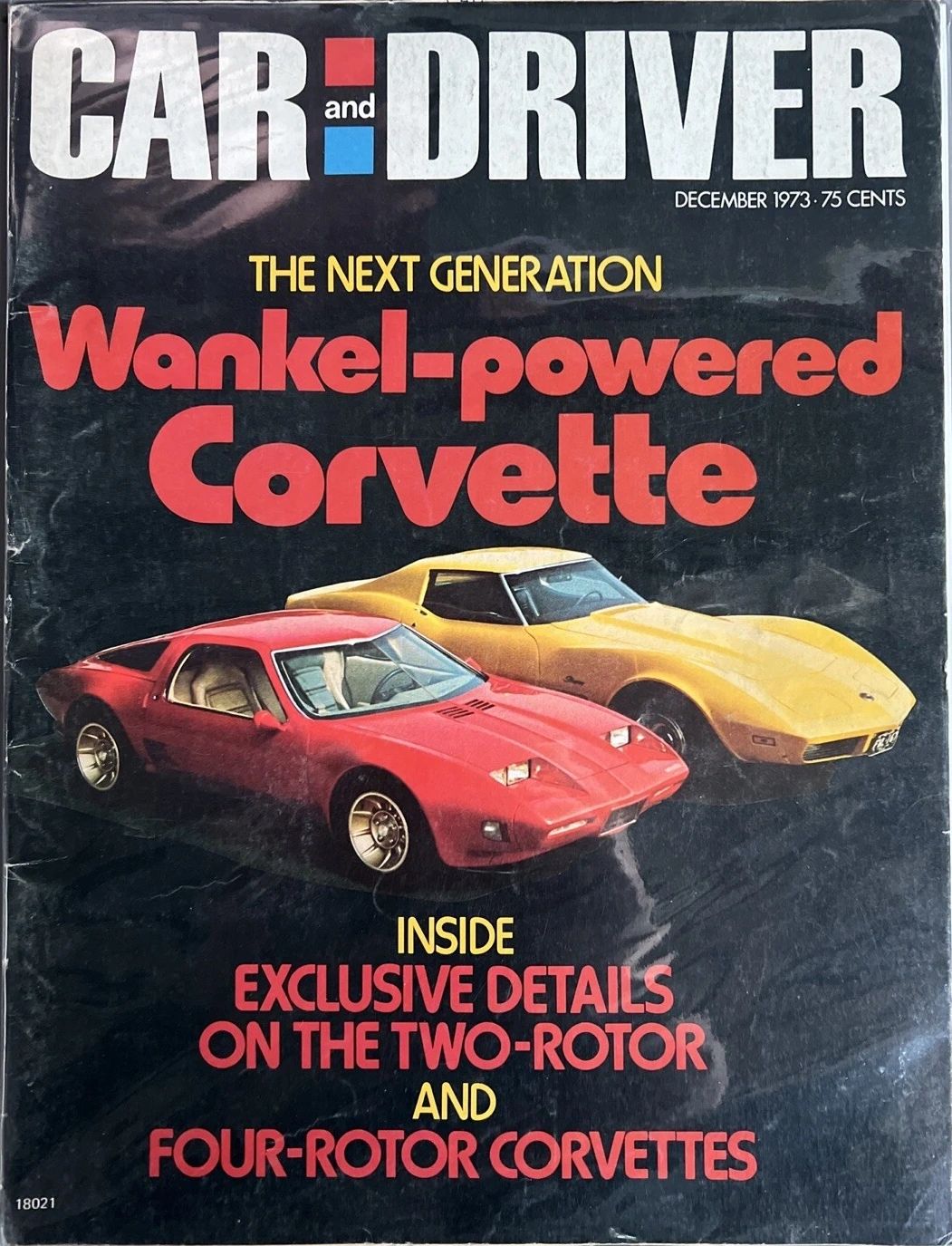
    In December 1973, Car and Driver boldly proclaimed a “Wankel-powered Corvette” as the next generation of America’s sports car, splashing GM’s radical two-rotor Corvette concept across its cover. For a brief, intoxicating moment, it looked as if the future of Corvette would spin on a triangular rotor instead of a small-block V8. (source: Car and Driver Magazine, December 1973)
    In December 1973, Car and Driver boldly proclaimed a “Wankel-powered Corvette” as the next generation of America’s sports car, splashing GM’s radical two-rotor Corvette concept across its cover. For a brief, intoxicating moment, it looked as if the future of Corvette would spin on a triangular rotor instead of a small-block V8. (source: Car and Driver Magazine, December 1973)

    The European press, used to sneering at American bigness, suddenly found itself intrigued. Here was a GM product that borrowed the mid-engine layout and tidy footprint of cars like the Dino 246 GT and Porsche 911, wrapped in Pininfarina-shaped steel and powered by the same kind of exotic rotary that had made NSU’s Ro80 and Mazda’s Cosmo technical conversation pieces. Reports out of the show emphasized how quickly GM’s advanced studio had gone from idea to running car, and how seriously upper management seemed to be treating the project—granting it not just a splashy Frankfurt debut, but a full tour through the European show circuit. One retrospective would describe the reception at Frankfurt as “generally favorable,” noting that if the rotary gamble had paid off, this little red coupe might well have become the face of a very different Corvette era.

    In a Europe still wary of American excess and reeling from the first tremors of the oil crisis, the notion of a GM-built, Pininfarina-bodied, two-rotor Corvette felt almost surreal. The car seemed to promise that Detroit could speak fluent European—sharp-edged engineering in a compact package, with just enough Chevrolet swagger baked in. Bench-racing arguments spilled from the show halls into cafés and editorial offices: Would this finally be the mid-engine Corvette? Was it a serious production candidate or just a rolling test bed for the Wankel? For a brief moment, as the crowds thinned each evening and the Two-Rotor’s red paint cooled under the hall lights, it was possible to believe that this experimental coupe from Chevrolet might rewrite not only Corvette history, but the way the world thought about American performance cars altogether.
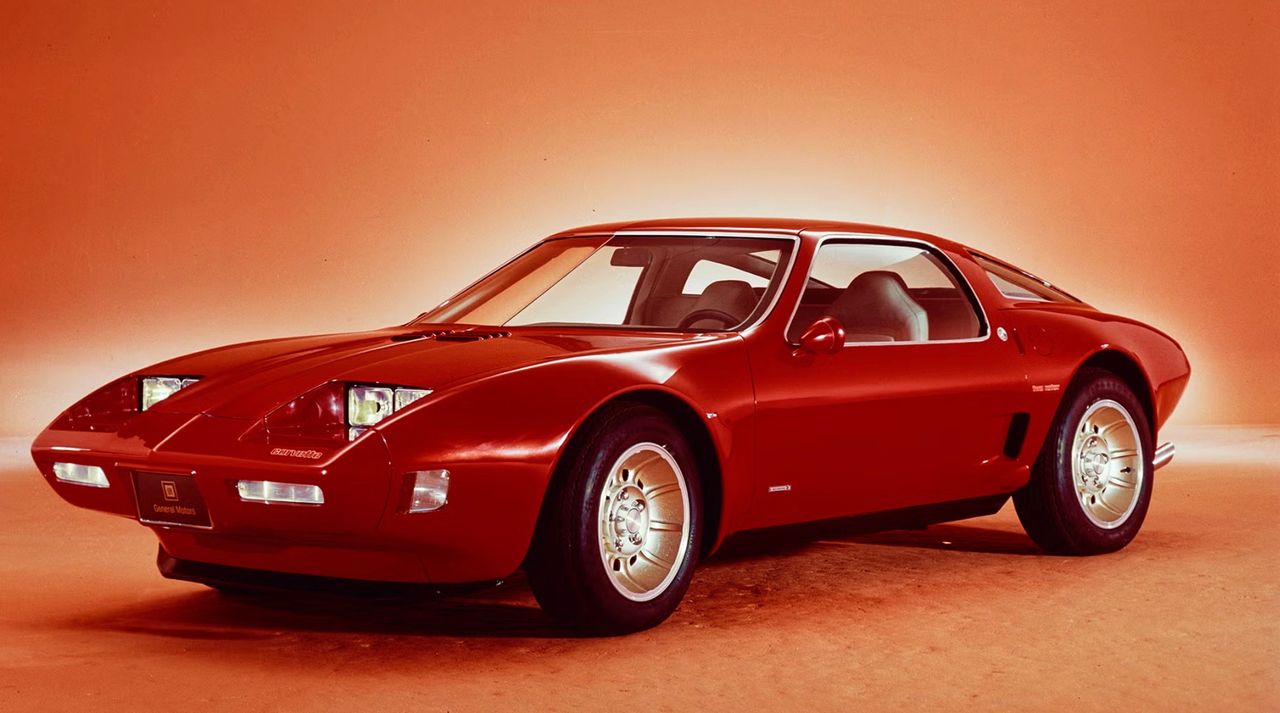
    When the XP-987 GT made its public debut at the 1973 Frankfurt Motor Show, it turned heads — automotive magazines and show-goers alike praised its sleek mid-engine proportions and the audacity of packaging a rotary powerplant inside what looked like a compact European sports coupe. Reviewers gushed over its low, wide stance, hidden headlamps, and the exotic appeal of GM’s “Two-Rotor Corvette” rebirth, while the public reacted with a mixture of hope and excitement — many believed this could be the future of Corvette. The reception was enthusiastic enough that whispers spread instantly of a possible production mid-engine Corvette, powered by GM’s experimental two-rotor Wankel engine. For a shining moment, it seemed as though GM might leap ahead of the pack — until external pressures and changing conditions pulled the plug on what was already being hailed as the next great Corvette. (Image courtesy of GM Media LLC)
    When the XP-987 GT made its public debut at the 1973 Frankfurt Motor Show, it turned heads — automotive magazines and show-goers alike praised its sleek mid-engine proportions and the audacity of packaging a rotary powerplant inside what looked like a compact European sports coupe. Reviewers gushed over its low, wide stance, hidden headlamps, and the exotic appeal of GM’s “Two-Rotor Corvette” rebirth, while the public reacted with a mixture of hope and excitement — many believed this could be the future of Corvette. The reception was enthusiastic enough that whispers spread instantly of a possible production mid-engine Corvette, powered by GM’s experimental two-rotor Wankel engine. For a shining moment, it seemed as though GM might leap ahead of the pack — until external pressures and changing conditions pulled the plug on what was already being hailed as the next great Corvette. (Image courtesy of GM Media LLC)

    Inside GM, the Corvette Two-Rotor generated serious discussion as well. There were tentative product-planning sketches that showed a late-1975 or 1976 introduction for a production derivative built on a unique GM platform, powered by the same two-rotor engine destined for the Monza and for AMC’s early Pacers. For a moment, the future of the Corvette family seemed to hinge on a compact rotary.

    Zora, however, was not impressed. In Karl Ludvigsen’s research, Duntov famously dismissed the car as underpowered and, more damningly, impractical. He noted that interior and luggage space were so limited that “in case of rain you are forced to disrobe outside of the car and shove the raincoat in the trunk – there is no space to store the coat.” For a man who measured sports cars as much by their long-distance usability as their lap times, the Two-Rotor fell short.

    Oil Shock, Emissions, and the Rotary’s Fall
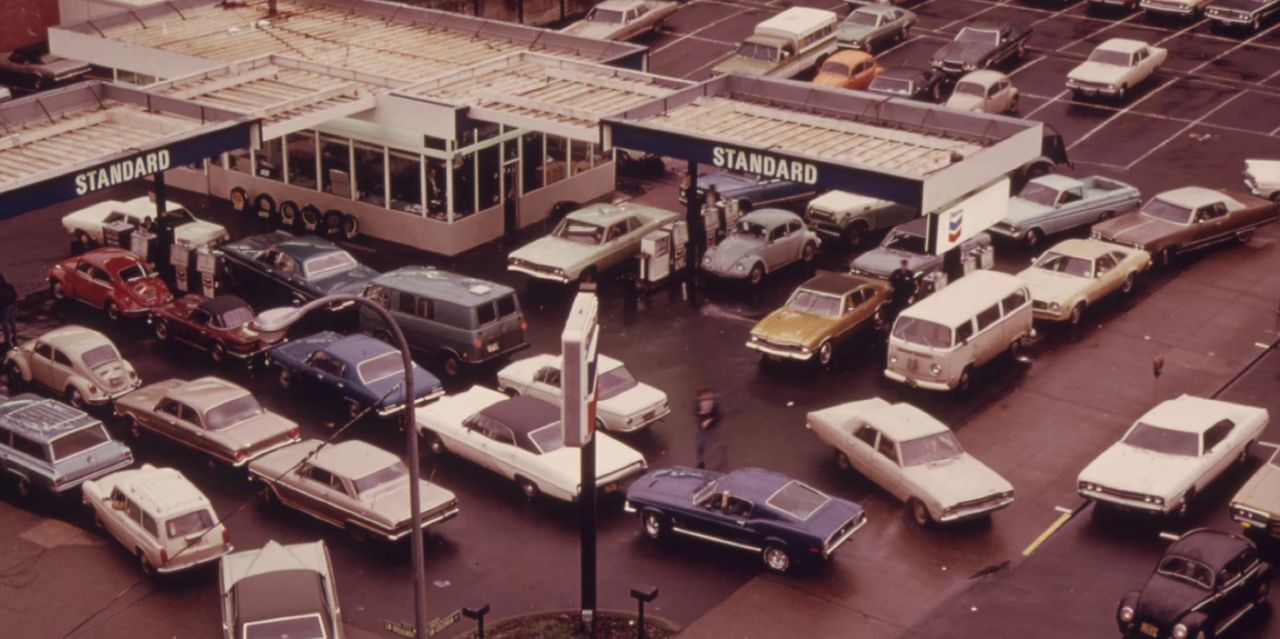
    The 1973 oil crisis, triggered when OAPEC nations cut production and placed an embargo on oil shipments, sent shockwaves through the U.S., sparking fuel shortages, economic inflation, and mile-long lines at gas stations like the one seen here. For the country, it meant rationing, reduced speed limits (55 mph), stalled travel, and a renewed urgency around fuel efficiency, forcing automakers and policymakers to rethink energy consumption nationwide. Inside GM, the crisis accelerated skepticism around the thirsty rotary program, even as engineers raced to production-optimize the 2-rotor Wankel for the Chevy Vega/Monza and concept projects like XP-987 GT. The inherent fuel-consumption drawbacks of the rotary—once tolerated in the name of innovation—suddenly felt politically and commercially dangerous. The turmoil shrank corporate appetite for risk, ultimately helping kill GM’s production-bound Wankel engine and steering Corvette development back toward more conventional powerplants.
    The 1973 oil crisis, triggered when OAPEC nations cut production and placed an embargo on oil shipments, sent shockwaves through the U.S., sparking fuel shortages, economic inflation, and mile-long lines at gas stations like the one seen here. For the country, it meant rationing, reduced speed limits (55 mph), stalled travel, and a renewed urgency around fuel efficiency, forcing automakers and policymakers to rethink energy consumption nationwide. Inside GM, the crisis accelerated skepticism around the thirsty rotary program, even as engineers raced to production-optimize the 2-rotor Wankel for the Chevy Vega/Monza and concept projects like XP-987 GT. The inherent fuel-consumption drawbacks of the rotary—once tolerated in the name of innovation—suddenly felt politically and commercially dangerous. The turmoil shrank corporate appetite for risk, ultimately helping kill GM’s production-bound Wankel engine and steering Corvette development back toward more conventional powerplants.

    Even if Zora had been its biggest fan, the Corvette Two-Rotor was about to run head-on into geopolitical reality. In October 1973, only weeks after the car’s European debut, the Organization of Arab Petroleum Exporting Countries (OAPEC) announced an embargo on oil shipments to nations – including the United States – that supported Israel during the Yom Kippur War. Within months, American motorists were facing gasoline rationing, long lines at the pumps, and soaring prices.

    Suddenly, fuel economy wasn’t just a talking point – it was a primary buying criterion. At the same time, U.S. federal emissions standards were tightening rapidly. GM engineers struggled to get the RC2-series rotary to meet those standards without crippling performance. The engine’s inherently high surface-to-volume ratio and combustion characteristics made controlling unburned hydrocarbons particularly difficult. To make matters worse, even in best-case calibration, the two-rotor struggled to match the fuel efficiency of GM’s detuned piston engines, which were themselves no paragons of economy.
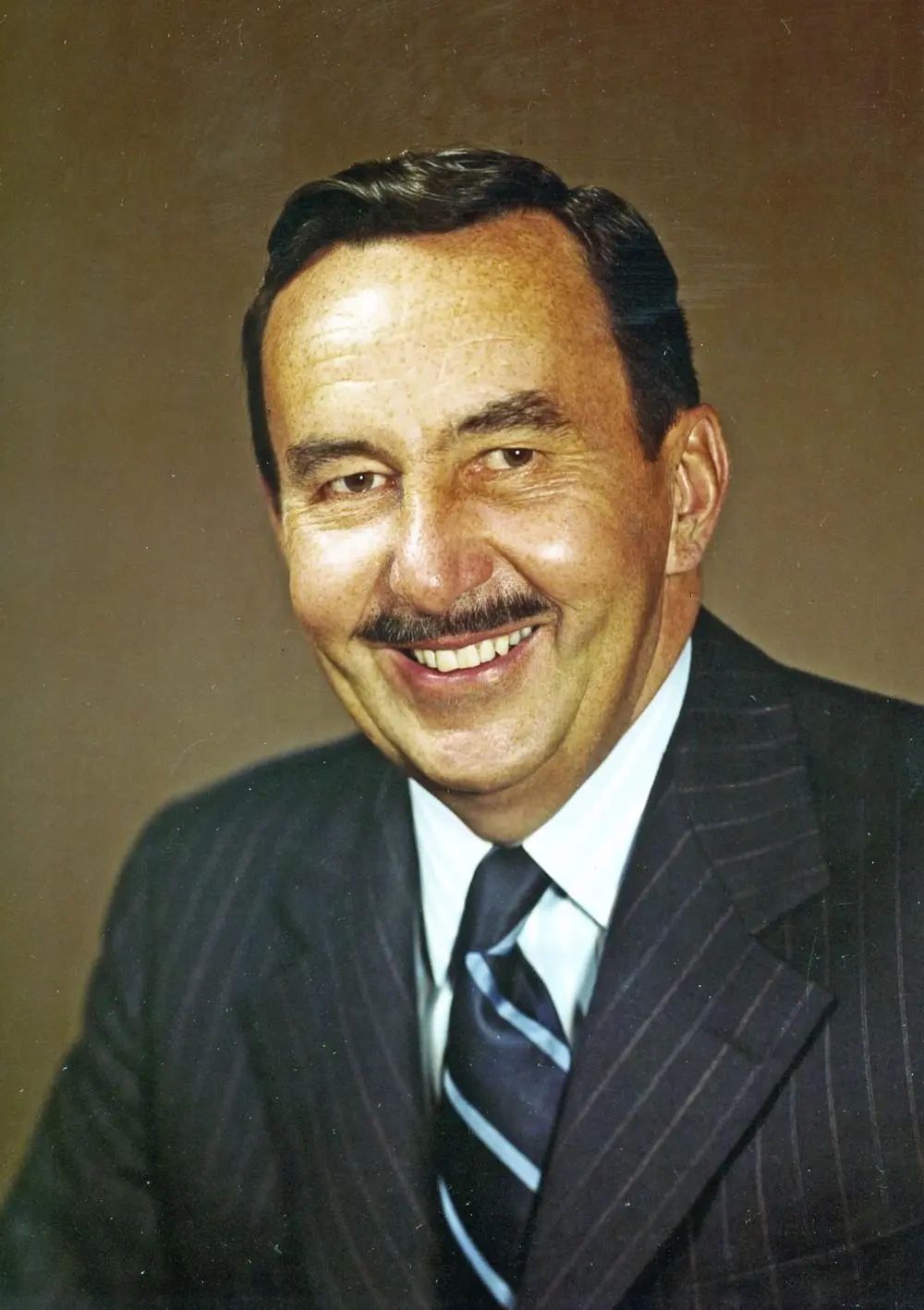
    When Pete Estes succeeded Ed Cole as President of General Motors, the shift in leadership coincided with a turbulent moment in automotive history. Cole had championed the Wankel rotary-engine program and ambitious projects like XP-987 GT, but by the time Estes took the helm the 1973 OAPEC oil crisis was reshaping public demand and corporate priorities. With fuel prices soaring and emissions regulations tightening, the appetite for a fuel-thirsty rotary engine evaporated almost overnight. Under Estes, GM quietly wound down the Wankel program — and the two-rotor Corvette concept, like many other rotary-powered dreams, faded into history.
    When Pete Estes succeeded Ed Cole as President of General Motors, the shift in leadership coincided with a turbulent moment in automotive history. Cole had championed the Wankel rotary-engine program and ambitious projects like XP-987 GT, but by the time Estes took the helm the 1973 OAPEC oil crisis was reshaping public demand and corporate priorities. With fuel prices soaring and emissions regulations tightening, the appetite for a fuel-thirsty rotary engine evaporated almost overnight. Under Estes, GM quietly wound down the Wankel program — and the two-rotor Corvette concept, like many other rotary-powered dreams, faded into history.

    By September 1974, the handwriting was on the wall. Ed Cole, the rotary’s chief advocate, had retired, and his successors were far less willing to stake GM’s future on a powerplant that was now politically and environmentally suspect. GM officially postponed, and then effectively cancelled, the production GMRCE program. Dealer order guides that had once listed the RC2-206 as an upcoming option for the 1975 Monza quietly dropped the reference, and AMC’s plans to buy GM rotaries for the early Pacer were shelved.

    For the Corvette Two-Rotor, cancellation of the rotary program was a death sentence. Even though the XP-987 GT had proven that a compact two-rotor could move a light mid-engine coupe smartly, there was no way to justify a thirsty, emissions-troubled halo car in the immediate aftermath of the oil crisis. Whatever small chance this unique production derivative once possessed had evaporated.

    Exile Under a Temporary Bond
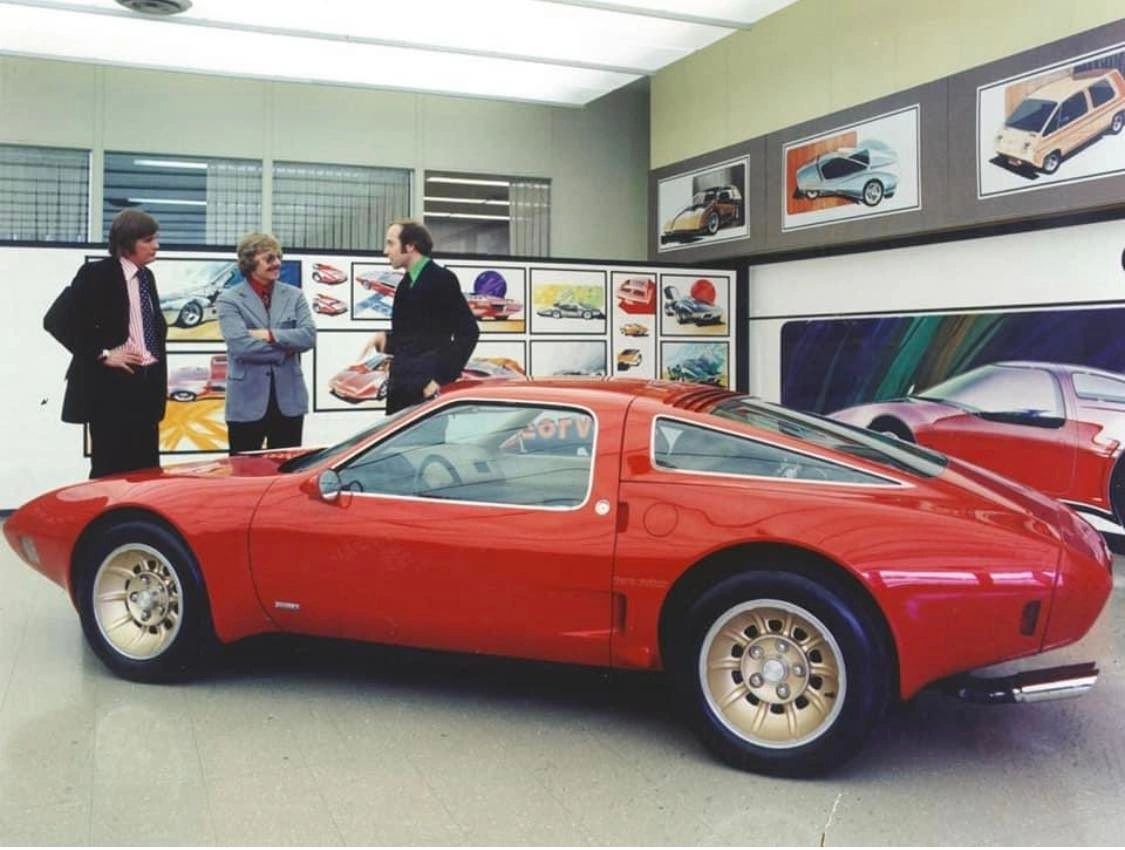
    Hank Haga (left), Kip Wasenko (center), and Otto Soeding at the GM Design Center. During XP-987 GT development, some accounts suggest that GM was sensitive to how a Corvette-branded concept built in Italy might be perceived under evolving import and homologation rules in Europe. According to these stories, the car initially returned to Detroit simply as the “Chevrolet GT,” with Corvette identity and “Two-Rotor” graphics added later for press photography and auto-show duty. However, no known GM archival documents definitively confirm that this sequencing was driven by tax or regulatory necessity, so it’s best understood as a widely repeated anecdote rather than settled fact. What is clear is that XP-987 GT had to navigate not just engineering and styling hurdles, but also the corporate and political sensitivities of launching an American halo car with foreign coachwork during an era of oil shocks and trade tensions. (Image courtesy of GM Media LLC)
    Hank Haga (left), Kip Wasenko (center), and Otto Soeding at the GM Design Center. During XP-987 GT development, some accounts suggest that GM was sensitive to how a Corvette-branded concept built in Italy might be perceived under evolving import and homologation rules in Europe. According to these stories, the car initially returned to Detroit simply as the “Chevrolet GT,” with Corvette identity and “Two-Rotor” graphics added later for press photography and auto-show duty. However, no known GM archival documents definitively confirm that this sequencing was driven by tax or regulatory necessity, so it’s best understood as a widely repeated anecdote rather than settled fact. What is clear is that XP-987 GT had to navigate not just engineering and styling hurdles, but also the corporate and political sensitivities of launching an American halo car with foreign coachwork during an era of oil shocks and trade tensions. (Image courtesy of GM Media LLC)

    Concept cars often meet ignominious ends, but the Corvette Two-Rotor’s post-show life was especially complicated thanks to international tax law. Because Pininfarina had built most of the car’s bodywork in Italy, GM had brought the completed prototype into the United States under a “temporary importation” bond that allowed the company to display and test the car without paying full import duty on the Italian value added. That bond, however, came with strings attached: the car could only remain in the U.S. for a limited period unless GM either paid the duty or re-exported it.

    After its European show run, the XP-987 GT toured the United States, appearing at events that ranged from auto shows to the 1974 World’s Fair in Spokane, Washington. When its American itinerary ended, GM removed the RC2 engine and automatic transaxle – the power unit was reportedly returned to NSU Motorenwerke AG, or otherwise scrapped along with most of the experimental rotaries – and crated the car for shipment back across the Atlantic.

    The body and chassis, still wearing their Candy red paint and gold wheels but now without a drivetrain, were sent to GM’s British subsidiary, Vauxhall, and stored at the company’s Design Centre in Luton, Bedfordshire. The logic was simple: by re-exporting the car to Europe, GM avoided paying additional U.S. duty on a prototype program that had already cost millions. Once there, the XP-987 GT was effectively forgotten. For the better part of a decade, it sat sealed in a crate or tucked into a corner of the styling complex – a small, rotary-shaped dead end in GM’s mid-engine story.

    Tom Falconer’s Rescue Mission
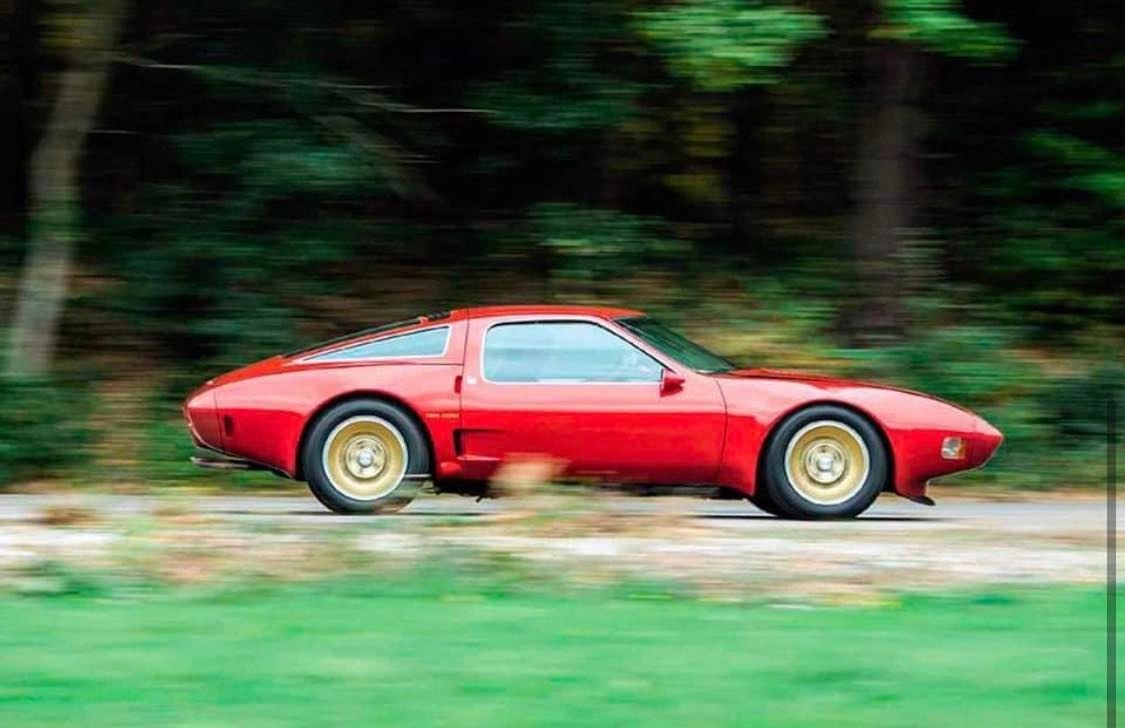
    Tom Falconer’s stewardship of the XP-987 GT Two-Rotor Corvette stands as one of the most important preservation stories in Corvette history. When the radical mid-engine concept—built as a test bed for GM’s experimental Wankel rotary program—was drifting toward obscurity, Falconer stepped in and gave it a second life. With a blend of engineering ingenuity and historian-level respect for originality, he transformed a fragile, non-running relic into a fully mobile, mechanically credible machine. He engineered creative drivetrain solutions, fabricated one-off components, and ultimately reinstated a true rotary layout that honored the intent of Zora Arkus-Duntov’s team. Under his care, the car was stored properly, exercised thoughtfully, and shielded from the neglect that claims so many prototypes. Falconer didn’t just restore the XP-987 GT; he curated it, refining its presentation and documenting its story so that every line of Kip Wasenko’s design and every experimental idea beneath its skin could be appreciated in context. He reintroduced the car to enthusiasts around the world, allowing them to see—and hear—what a rotary-powered Corvette concept actually was, rather than just imagine it from grainy period photos. In doing so, he preserved not only a one-off showpiece, but an entire “what if” chapter of Corvette history that might otherwise have vanished. (Photo credit: Trevor Rogers)
    Tom Falconer’s stewardship of the XP-987 GT Two-Rotor Corvette stands as one of the most important preservation stories in Corvette history. When the radical mid-engine concept—built as a test bed for GM’s experimental Wankel rotary program—was drifting toward obscurity, Falconer stepped in and gave it a second life. With a blend of engineering ingenuity and historian-level respect for originality, he transformed a fragile, non-running relic into a fully mobile, mechanically credible machine. He engineered creative drivetrain solutions, fabricated one-off components, and ultimately reinstated a true rotary layout that honored the intent of Zora Arkus-Duntov’s team. Under his care, the car was stored properly, exercised thoughtfully, and shielded from the neglect that claims so many prototypes. Falconer didn’t just restore the XP-987 GT; he curated it, refining its presentation and documenting its story so that every line of Kip Wasenko’s design and every experimental idea beneath its skin could be appreciated in context. He reintroduced the car to enthusiasts around the world, allowing them to see—and hear—what a rotary-powered Corvette concept actually was, rather than just imagine it from grainy period photos. In doing so, he preserved not only a one-off showpiece, but an entire “what if” chapter of Corvette history that might otherwise have vanished. (Photo credit: Trevor Rogers)

    The Corvette Two-Rotor might well have ended its life as scrap if not for a fortunate chain of friendships. In the early 1980s, Vauxhall’s Luton facilities were being remodeled, and long-stored items – including the XP-987 GT – had to be moved or disposed of. The plan, as is so often the case with obsolete concept cars, was to crush the car. Geoff Lawson, then head of styling at Bedford Trucks (part of GM’s British operations), was given responsibility for carrying out the order.

    Lawson, however, happened to be a Corvette enthusiast. Before sending what he knew was a unique mid-engine coupe to the crusher, he called his friend Tom Falconer, proprietor of Claremont Corvette in Kent and author of numerous Corvette books. Falconer initially thought Lawson was offering him a compressed “cube” of the car as a piece of showroom sculpture – a macabre but not unheard-of fate for famous prototypes. Realizing from the description that the vehicle in question was the long-lost Two-Rotor, he balked. He didn’t want the cube; he wanted the whole car.
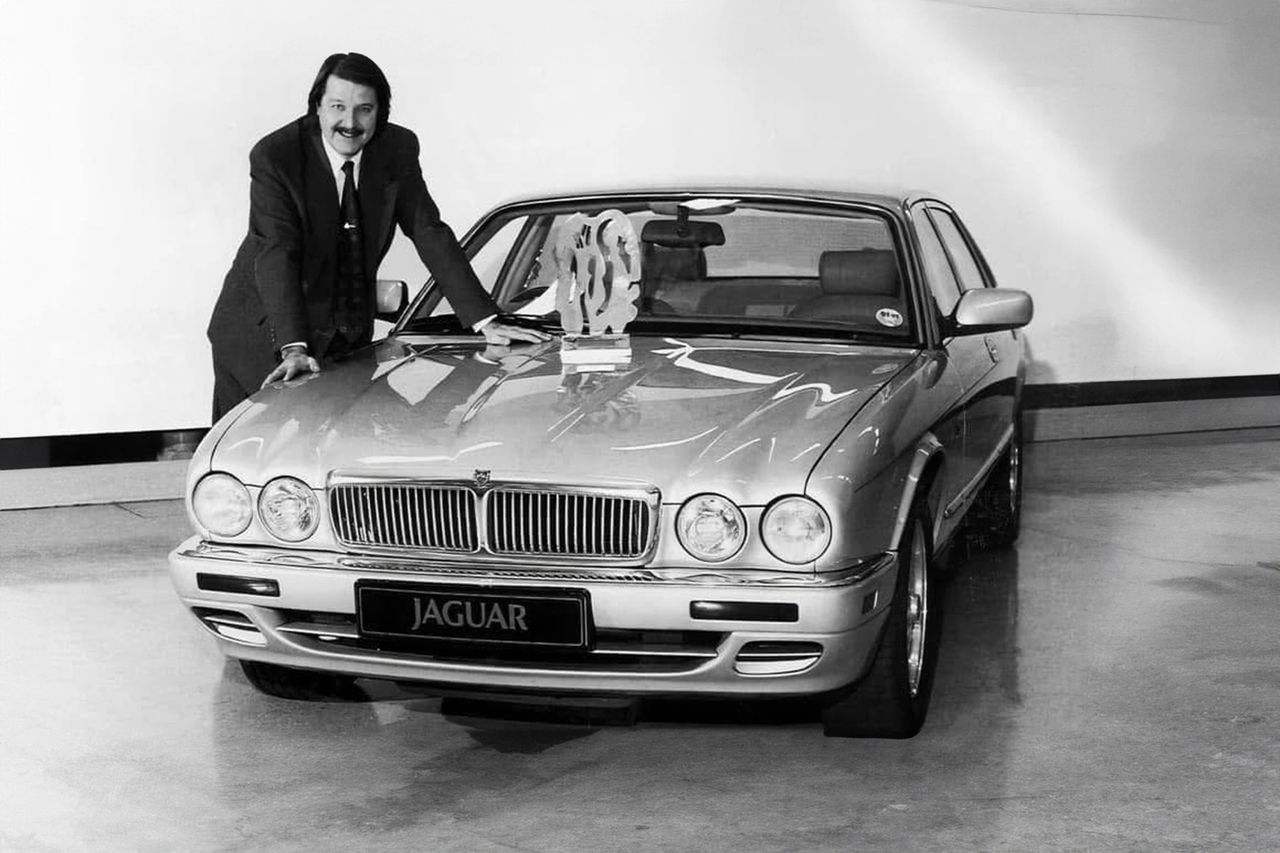
    Geoff Lawson (1944–1999) was a British automotive designer best known for serving as Jaguar’s design director from 1989 until his passing, overseeing defining programs including the XJ sedans, XK grand tourers, and the legendary XJ220 supercar. Earlier in his career, during his tenure as head of styling at Bedford Trucks in Luton in the early 1980s, Lawson became unexpectedly tied to one of the most important survival stories in Corvette lore. A close friend and confidant to Tom Falconer, he made the pivotal 1982 phone call that warned Falconer a steel-bodied Corvette prototype stored atop his building was marked for crushing, later nudging Tom toward the realization that the car could only be the long-missing GM rotary concept, XP-987 GT. With a designer’s instinct for significance, Lawson stalled the crusher, pointed Falconer toward contacting GM styling chief Chuck Jordan, and encouraged him to appeal directly to Chuck Jordan and styling chief Chuck Jordan’s network for the car’s release—providing Tom the time and leverage to launch the rescue. Though he never turned a wrench, Lawson’s judgment, loyalty, and discreet intervention were the true spark that set Falconer on the path to acquiring and ultimately resurrecting the XP-987 GT. Lawson is remembered with enormous respect for his global design influence, but to Corvette history, he also remains the man whose calm insight and perfectly timed encouragement ensured an audacious rotary prototype lived long enough to be saved.
    Geoff Lawson (1944–1999) was a British automotive designer best known for serving as Jaguar’s design director from 1989 until his passing, overseeing defining programs including the XJ sedans, XK grand tourers, and the legendary XJ220 supercar. Earlier in his career, during his tenure as head of styling at Bedford Trucks in Luton in the early 1980s, Lawson became unexpectedly tied to one of the most important survival stories in Corvette lore. A close friend and confidant to Tom Falconer, he made the pivotal 1982 phone call that warned Falconer a steel-bodied Corvette prototype stored atop his building was marked for crushing, later nudging Tom toward the realization that the car could only be the long-missing GM rotary concept, XP-987 GT. With a designer’s instinct for significance, Lawson stalled the crusher, pointed Falconer toward contacting GM styling chief Chuck Jordan, and encouraged him to appeal directly to Chuck Jordan and styling chief Chuck Jordan’s network for the car’s release—providing Tom the time and leverage to launch the rescue. Though he never turned a wrench, Lawson’s judgment, loyalty, and discreet intervention were the true spark that set Falconer on the path to acquiring and ultimately resurrecting the XP-987 GT. Lawson is remembered with enormous respect for his global design influence, but to Corvette history, he also remains the man whose calm insight and perfectly timed encouragement ensured an audacious rotary prototype lived long enough to be saved.

    Lawson didn’t have the authority to overrule GM’s decision, but he urged Tom Falconer to go straight to the top and call GM’s head of Styling, Chuck Jordan—someone Falconer had gotten to know while researching a book on the Cadillac Seville. A meeting was arranged at the GM Tech Center in Detroit to discuss the fate of the orphaned prototype. Behind closed doors, Jordan laid out why the two-rotor Corvette had been condemned: to the corporation, it was a lingering embarrassment, a costly Wankel detour, and an ideological dead end. As far as he was concerned, no Corvette would ever wear a steel body or carry its engine amidships.

    Even so, Falconer’s persistence made an impression. Against the odds, GM agreed to sell him the XP-987 GT, provided it left corporate custody without its experimental powertrain. Instead of being sent to the shredders, the car—still missing its heart—was shipped to Falconer, preserving a unique chapter of Corvette history that GM was otherwise ready to erase.
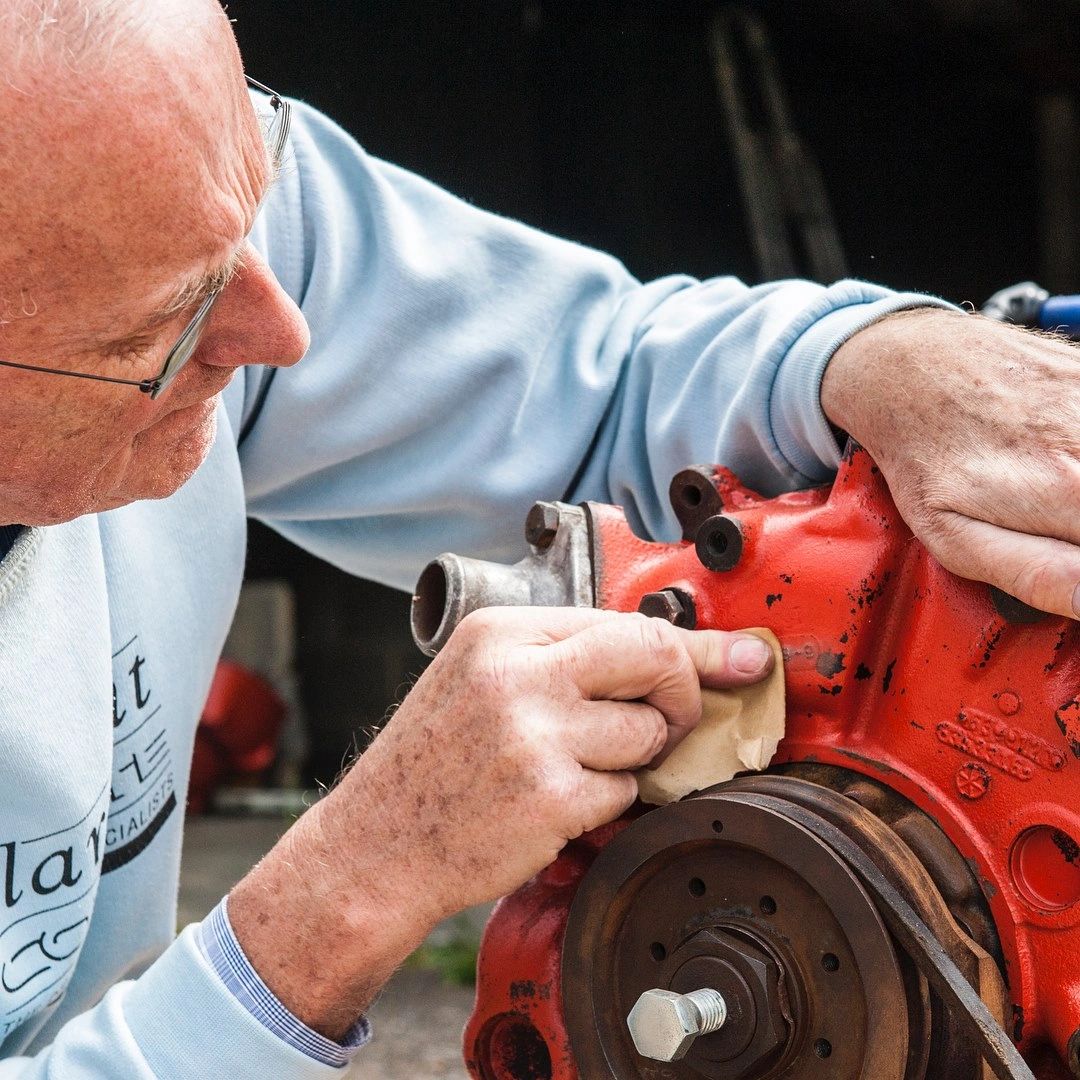
    This image, shared on Tom Falconer’s own Facebook page, captures the essence of his relationship with the XP-987 GT Two-Rotor Corvette. It isn’t just a man cleaning an engine—it’s the caretaker of a one-off experiment, patiently coaxing life back into hardware most of the world had forgotten. Falconer’s hands-on devotion to this rotary powerplant, and his determination to see it turning again behind the cockpit of the XP-987 GT, speak louder than any trophy or headline. It’s a quiet, powerful reminder that history is often preserved not by institutions, but by individuals who simply care too much to let something special disappear. (Photo credit: unknown)
    This image, shared on Tom Falconer’s own Facebook page, captures the essence of his relationship with the XP-987 GT Two-Rotor Corvette. It isn’t just a man cleaning an engine—it’s the caretaker of a one-off experiment, patiently coaxing life back into hardware most of the world had forgotten. Falconer’s hands-on devotion to this rotary powerplant, and his determination to see it turning again behind the cockpit of the XP-987 GT, speak louder than any trophy or headline. It’s a quiet, powerful reminder that history is often preserved not by institutions, but by individuals who simply care too much to let something special disappear. (Photo credit: unknown)

    Getting the car running again required improvisation. Initially, Tom Falconer installed a Vauxhall Cavalier four-cylinder engine and automatic transmission — enough to make the car mobile and prevent it from being a static, crated relic. But as Falconer continued to work on the car, he made a bolder choice: he replaced that temporary drivetrain with a more fitting powerplant — a Mazda 13B two-rotor engine, mated to a front-wheel-drive Cadillac automatic transaxle turned and mounted to approximate the mid-engine, rear-drive layout that the original designers at General Motors had envisioned for the concept.

    By the year 2000, after a careful cosmetic restoration that refreshed its original red paint and cleaned up the marks of long-term storage, Falconer reintroduced the reborn prototype to the public at a gathering of the National Corvette Restorers Society in the United States. The appearance stunned Corvette enthusiasts, many of whom had only known the car from grainy black-and-white photographs and half-remembered magazine features. What had been an obscure “what-if” prototype decades earlier was suddenly real, rolling under its own power and radiating the sharp, compact presence it had once carried on the auto-show circuit.
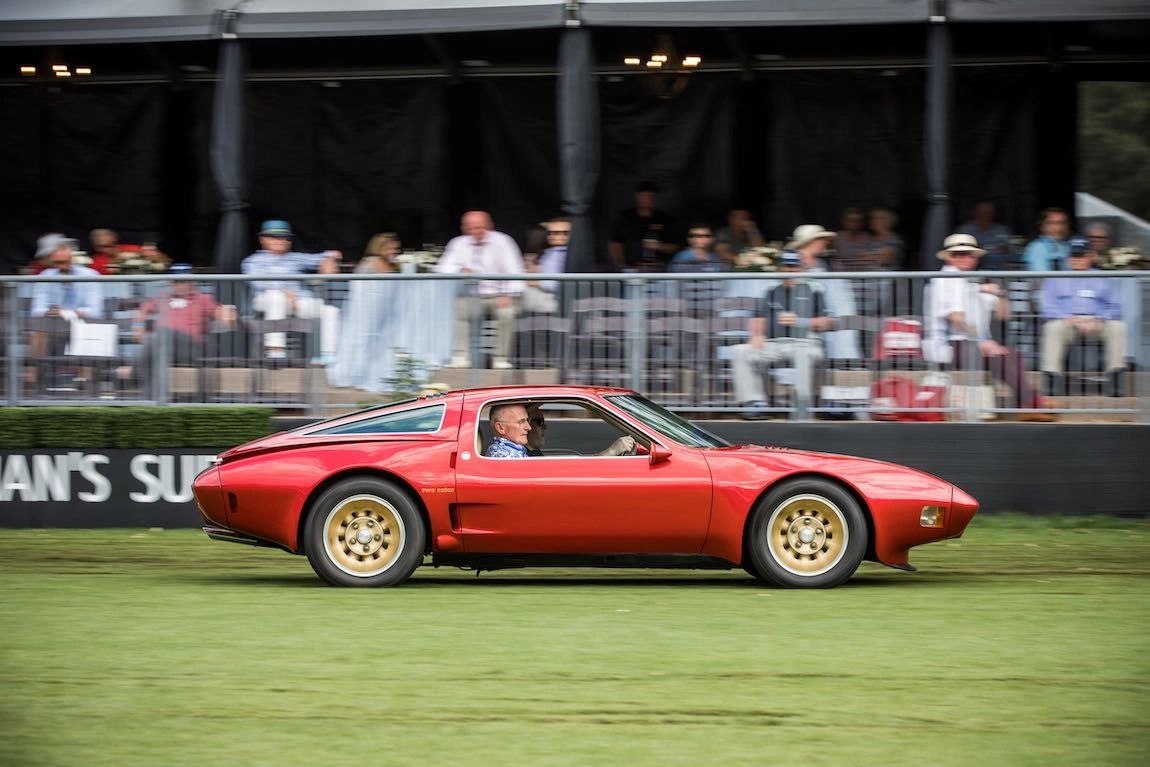
    At the 2019 Amelia Island Concours d’Elegance, the XP-987 GT glides past the grandstand like a rediscovered secret from GM’s rotary era. In the passenger seat sits Tom Falconer, the man who saved, restored, and ultimately returned this remarkable two-rotor Corvette concept to the spotlight it always deserved.
    At the 2019 Amelia Island Concours d’Elegance, the XP-987 GT glides past the grandstand like a rediscovered secret from GM’s rotary era. In the passenger seat sits Tom Falconer, the man who saved, restored, and ultimately returned this remarkable two-rotor Corvette concept to the spotlight it always deserved.

    Falconer did not stop there. Over the years that followed, he continued refining the restoration, chasing countless small details while quietly nurturing a much larger ambition: someday reuniting the prototype with its originally intended power source, a true GM Rotary Combustion Engine. Most of those experimental rotary engines had been destroyed when the program was cancelled, but Falconer persisted, following leads, talking to former GM engineers and insiders, and tracking the scattered remnants of the rotary project. After considerable persistence and detective work, he finally managed to locate one of the very few surviving GMRCE units.

    That effort paid off in early 2019, when the prototype — by then widely known among enthusiasts as the “2-Rotor Corvette” — was invited to the Amelia Island Concours d’Elegance. There, the XP-897 GT was displayed alongside the freshly acquired GM rotary engine, giving the public its first true glimpse of what the car might have been: a compact, mid-engine Corvette powered not by a traditional small-block V8, but by the smooth, unconventional pulse of a two-rotor Wankel. For the first time since the early 1970s, the styling, chassis concept, and intended powerplant were reunited in one place.

    Home at the National Corvette Museum
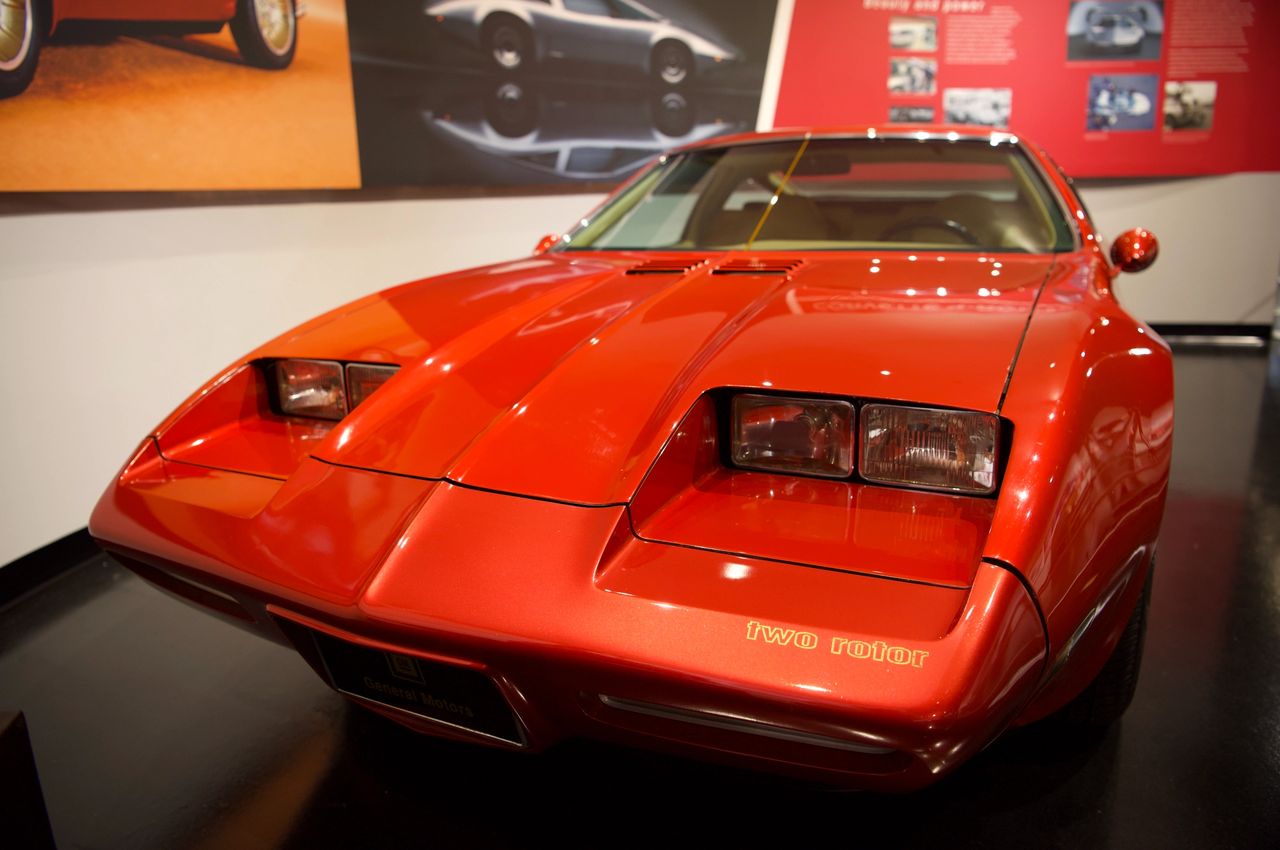
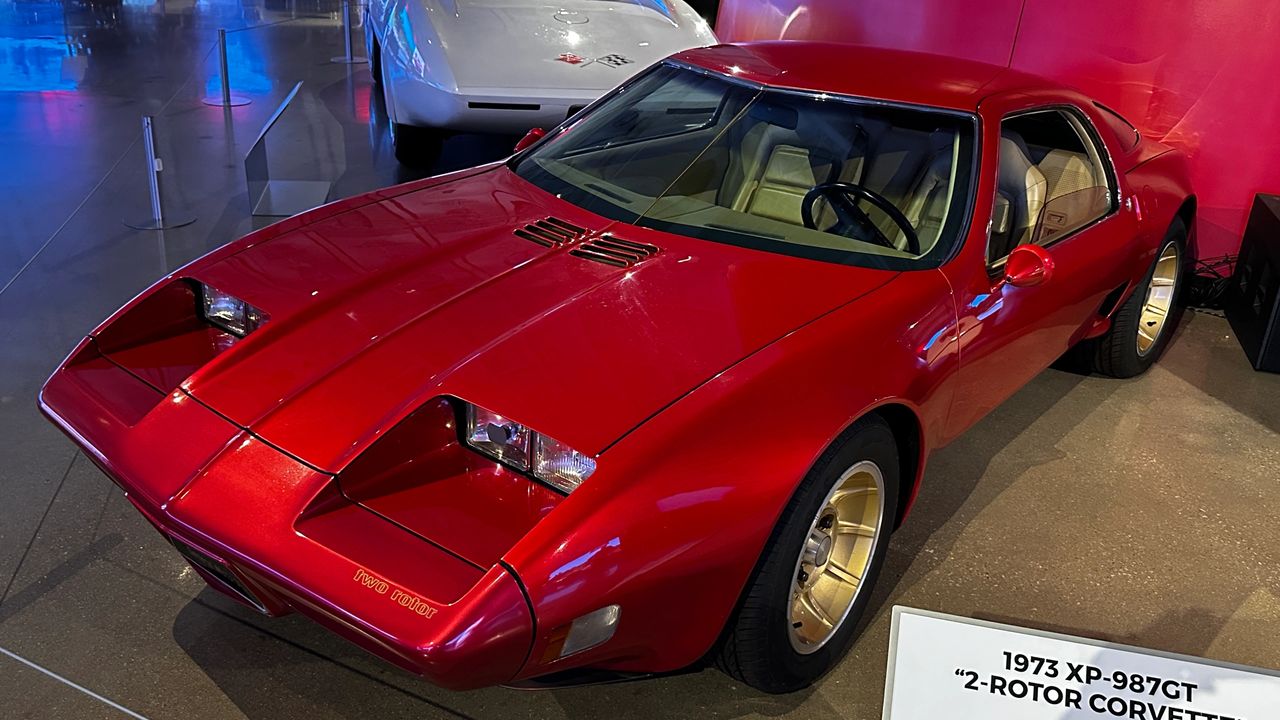
    The XP-987 GT on display at the National Corvette Museum as part of the 2020-21 exhibit “The Vision Realized: 60 Years of Mid-Engine Corvette Design.” Ironically, this photograph was originally taken for my book "Corvette Concept Cars: Developing America's Favorite Sports Car" in early spring 2021, just months after the Museum had acquired the Two-Rotor Corvette from Tom Falconer. (Image courtesy of Joe Kolecki/Kolecki Photography LLC)
    The XP-987 GT on display at the National Corvette Museum as part of the 2020-21 exhibit “The Vision Realized: 60 Years of Mid-Engine Corvette Design.” Ironically, this photograph was originally taken for my book “Corvette Concept Cars: Developing America’s Favorite Sports Car” in early spring 2021, just months after the Museum had acquired the Two-Rotor Corvette from Tom Falconer. (Image courtesy of Joe Kolecki/Kolecki Photography LLC)

    For decades, the XP-987 GT lived in England under Falconer’s care, occasionally venturing out for shows and media features. Meanwhile, in the United States, the Corvette community’s fascination with mid-engine history grew as rumors – and eventually prototypes – of a production mid-engine Corvette evolved into the C8. By the time Chevrolet unveiled the 2020 mid-engine Stingray, the story of how Zora and others had pushed for that layout over 60 years had become central to Corvette’s official narrative.

    In 2020, the National Corvette Museum in Bowling Green, Kentucky, brought the story full circle. Thanks to fundraising efforts led by the Lone Star Corvette Club and the Texas Corvette Association, the museum acquired the XP-987 GT from Tom Falconer and repatriated the car to the United States. Initially, the Two-Rotor Corvette served as a centerpiece of the special exhibit “The Vision Realized: 60 Years of Mid-Engine Corvette Design,” where it was displayed alongside other key mid-engine studies and engineering testbeds throughout 2020 and 2021. Sadly, the opportunity for spectators to experience the exhibit and see the XP-987 GT in person was dampened by the outbreak of the Coronavirus Pandemic in March 2020.
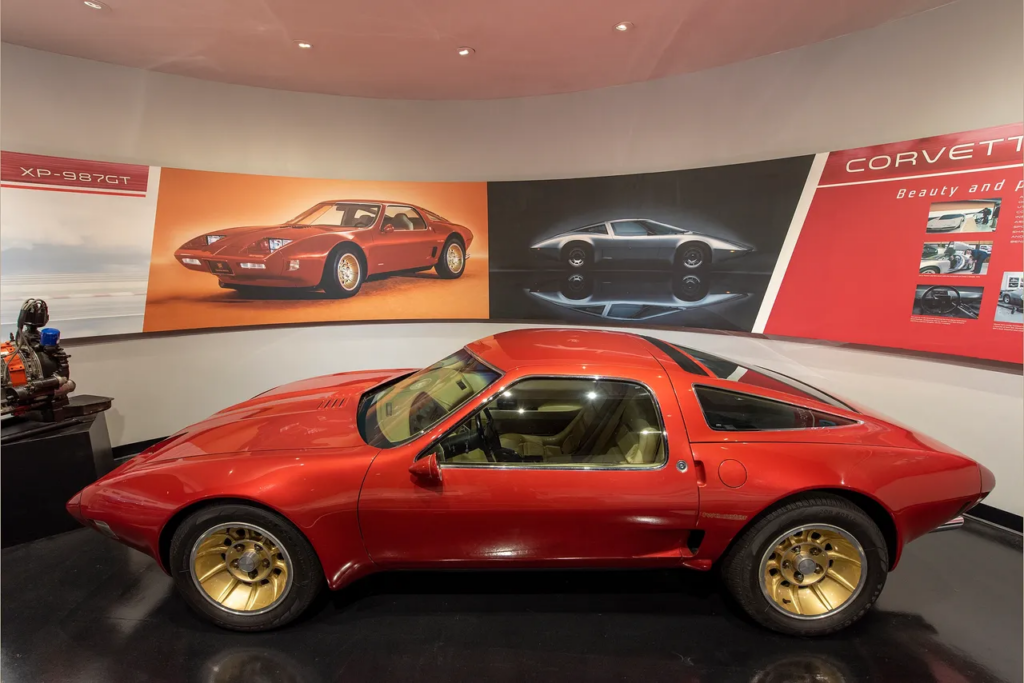
    The XP-987 GT on display as part of the NCM's 2023-2025 exhibit "An American Love Affair: 70 Years of Corvette." (Image courtesy of the author)
    The XP-987 GT on display as part of the NCM’s 2023-2025 exhibit “An American Love Affair: 70 Years of Corvette.” (Image courtesy of the author)

    Fortunately, even as the museum’s exhibits evolved, the XP-987 GT remained a key attraction at the National Corvette Museum. The car moved to a new “home” at the NCM within the iconic Skydome as part of the current (at the time of publication) “An American Love Affair: 70 Years of Corvette”display. There, it shares space with landmark machines like Zora Arkus-Duntov’s personal 1974 Corvette and a host of historically significant production and concept cars, all set against a dynamic “Skywall” video installation that traces the Corvette’s cultural and technological impact.

    In that setting, visitors can walk around the low red coupe, peer through its glass rear hatch at the compact mid-engine layout, and appreciate just how different GM’s vision for a rotary-powered sports car really was. Just as importantly, they can follow the improbable journey that carried the car from Detroit to Turin, across the European show circuit, into exile in England, through a near-death encounter with a crusher, and finally onto the polished floor of the museum that now celebrates it. For anyone standing beneath the Skydome, the XP-987 GT is no longer a footnote or a rumor from a grainy photograph; it is a tangible reminder of how close Corvette once came to taking a radically different path.

    Legacy of a Rotary Dead End
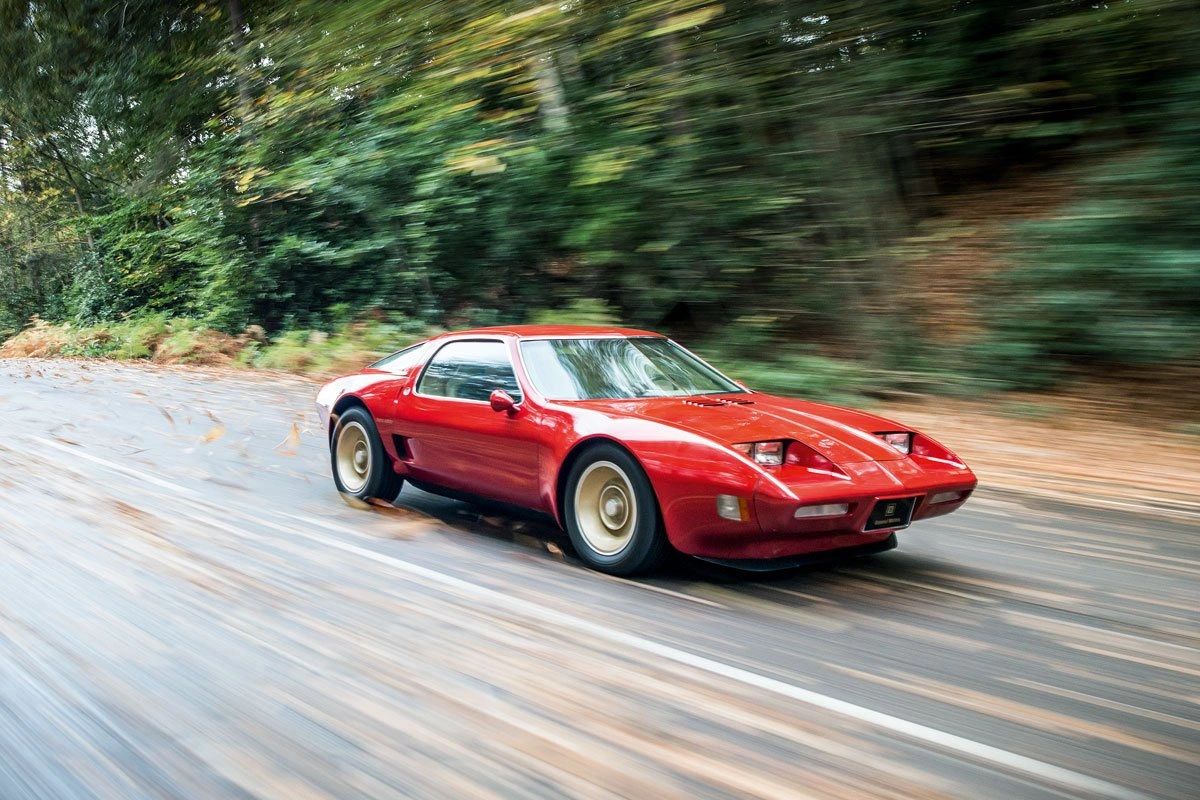
    The XP-987 GT, properly equipped and fitted with a Wankel rotary engine, running wide open at the McLaren test track in Surrey. Special thanks to Tom Falconer for all his efforts to preserve and restore this car to its original grandeur.  (Photo credit: Trevor Rogers)
    The XP-987 GT, properly equipped and fitted with a Wankel rotary engine, running wide open at the McLaren test track in Surrey. Special thanks to Tom Falconer for all his efforts to preserve and restore this car to its original grandeur. (Photo credit: Trevor Rogers)

    On one level, the XP-987 GT / Corvette Two-Rotor is an evolutionary dead end – a car built around an engine architecture that GM abandoned before it ever reached showrooms. Its compact dimensions, modest luggage space, and reliance on a thirsty rotary make it difficult to imagine as a volume production Corvette in the post-OPEC world. Zora’s criticisms of its packaging and practicality were not wrong, and in the 1970s, the corporation had larger fires to fight than launching a niche mid-engine halo car that would have struggled to pass emissions and satisfy fuel-conscious buyers.

    Yet to dismiss the Two-Rotor as a mere curiosity is to miss its broader significance. The XP-987 GT proves that GM’s design and engineering teams were willing to question almost every assumption about what a Corvette could be: its engine layout, its size, its styling language, even its country of coachbuild. It shows Bill Mitchell and Kip Wasenko experimenting with Pininfarina in ways that foreshadowed collaborations between American brands and European design. It reveals how far Ed Cole was willing to go in pursuit of rotary technology – far enough to build a mid-engine Corvette on a Porsche chassis and ship it halfway around the world.
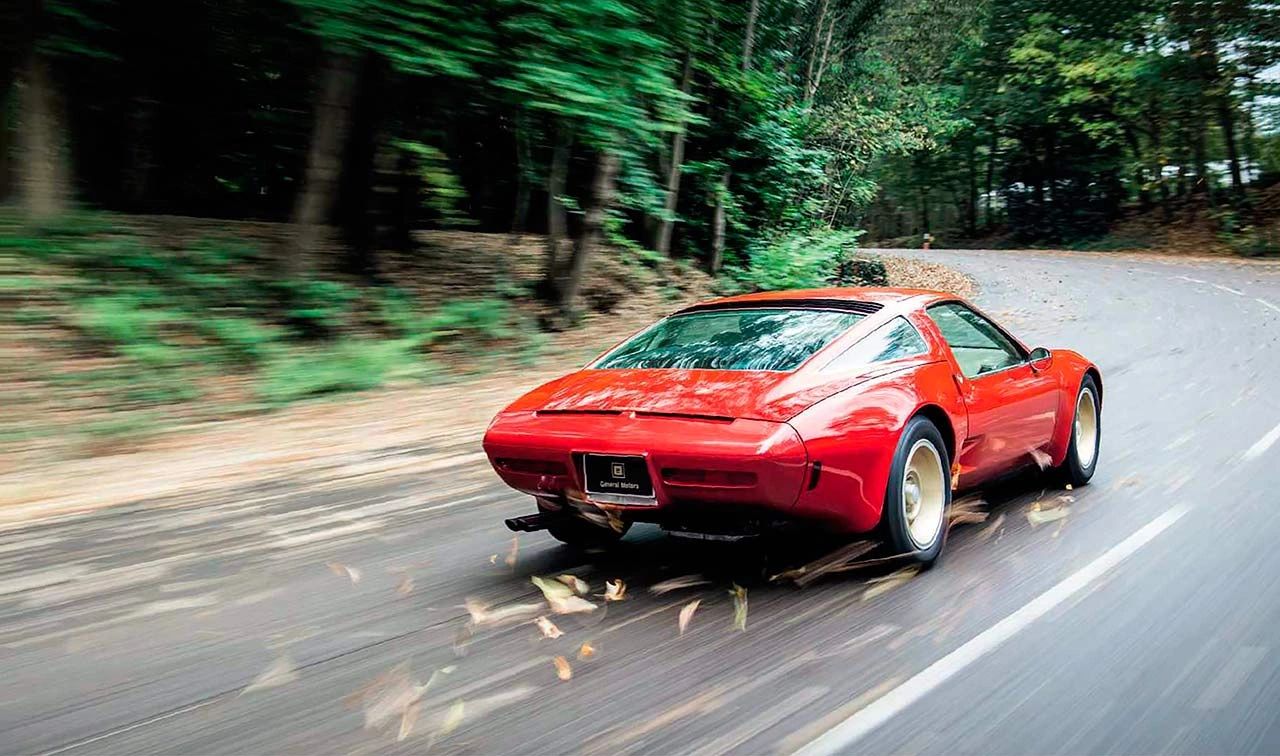
    Once crated, forgotten, and nearly crushed, this red coupe now blurs past the lens in motion — proof that even doomed ideas can outrun extinction with the right caretaker. Tom Falconer didn’t just restore a car, he restored a moment in time, eventually reuniting it with the distinctive hum of a reborn Wankel rotary. And today, back on American soil beneath the Skydome, it stands proudly in the National Corvette Museum’s collection — a reminder that reinvention isn’t just the Corvette’s legacy, it’s its lifeblood. (Photo credit: Trevor Rogers)
    Once crated, forgotten, and nearly crushed, this red coupe now blurs past the lens in motion — proof that even doomed ideas can outrun extinction with the right caretaker. Tom Falconer didn’t just restore a car, he restored a moment in time, eventually reuniting it with the distinctive hum of a reborn Wankel rotary. And today, back on American soil beneath the Skydome, it stands proudly in the National Corvette Museum’s collection — a reminder that reinvention isn’t just the Corvette’s legacy, it’s its lifeblood. (Photo credit: Trevor Rogers)

    Most importantly, the car occupies a key chapter in the long narrative that culminates in the production C8. Along with the XP-882, the Four-Rotor “Aerovette,” and the CERV research vehicles, the Two-Rotor helped normalize the idea of a mid-engine Corvette inside GM and in the minds of enthusiasts. When you stand next to the XP-987 GT today, looking at its compact proportions and glass-covered engine bay, it’s hard not to see echoes of it in the modern Stingray’s silhouette. The rotary may have vanished from GM’s future, but the mid-engine dream it helped bring into focus eventually became reality.

    In that sense, the XP-987 GT is more than a historical footnote. It is a tangible reminder that even failed experiments can push a marque forward, and that sometimes the path to a landmark production car runs through a forgotten crate in a British design center – and through the hands of people stubborn enough to believe that an obsolete rotary prototype is worth saving.

    Why the XP-987 GT Still Matters Today
    1973 XP-987GT Two-Rotor Corvette Concept Car (Image courtesy of Joe Kolecki/Kolecki Photography LLC)

    The XP-987 GT still matters because it captures Corvette at one of its most intellectually restless moments. This was not Chevrolet polishing a proven formula or refining a familiar shape. It was Corvette leadership exploring an entirely different future—smaller, lighter, more internationally flavored, and powered by an engine GM believed could help redefine the modern automobile. Even without reaching production, that willingness to break from convention matters. It tells us that Corvette’s history was never as linear as it may appear in hindsight.

    What makes the car especially important is how many competing ambitions it carries in a single package. The XP-987 GT is a Corvette experiment, a rotary experiment, a styling experiment, and a packaging experiment all at once. It reflects a period when General Motors was still large and confident enough to chase multiple futures simultaneously, even when those futures pulled in different directions. That gives the car unusual value today. It is not simply a prototype with an interesting shape. It is evidence of a corporation testing the outer edge of its own imagination.

    It also matters because it exposes an alternate branch of Corvette development that feels surprisingly relevant in a modern context. Long before today’s sports cars became global objects shaped by international engineering influences, the XP-987 GT was already pointing in that direction. Its Pininfarina connection, Porsche-based underpinnings, and unconventional powertrain made it something far more cosmopolitan than the traditional image of a front-engine American V-8 sports car. In that respect, it reminds us that Corvette’s evolution was never confined to Bowling Green, St. Louis, or Detroit thinking alone. Some of its boldest ideas were born when Chevrolet looked outward.

    There is another reason the XP-987 GT deserves attention: it helps us better understand failure as part of Corvette’s development process. Not every important car succeeds in the showroom. Some matter because they sharpen the questions that future cars must answer. The Two-Rotor forced GM to reckon with packaging, emissions, performance identity, fuel economy, and public expectations all at the same time. It may not have delivered the final solution, but it helped define the problem more clearly—and that, in engineering terms, is often just as important.

    Today, the XP-987 GT stands as proof that Corvette’s eventual transformation into a mid-engine production sports car did not happen overnight, nor did it emerge from a single flash of inspiration. It was built through decades of trial, disagreement, ambition, and revision. The Two-Rotor belongs to that story in a very real way. It represents a moment when Chevrolet was willing to risk being wrong in order to discover what might be possible. And for a nameplate that has survived by evolving without losing its identity, that may be one of the most Corvette qualities of all.
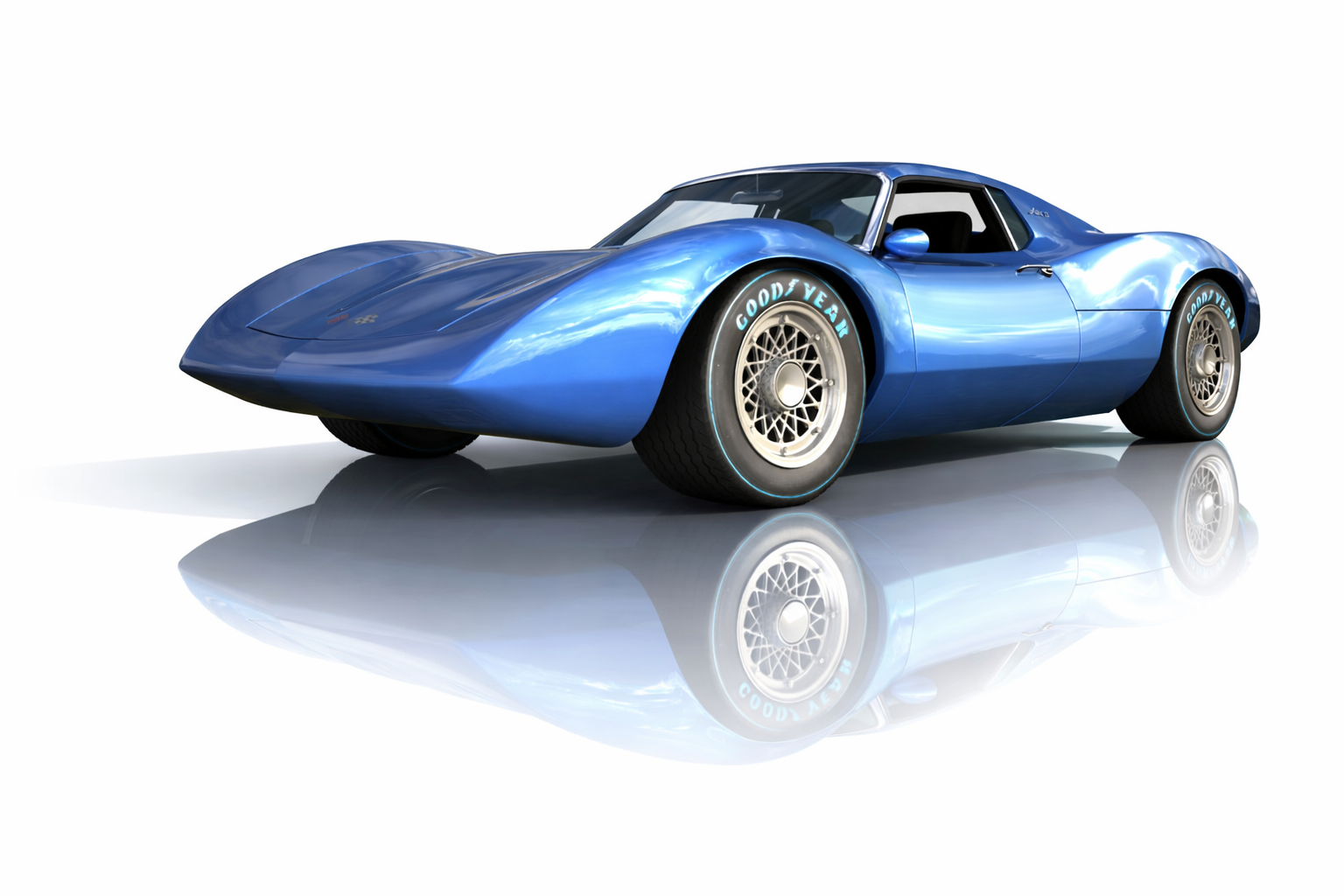
    A forgotten experiment, a radical vision, and a pivotal step toward Corvette’s mid-engine future—the XP-987 GT challenges everything you thought you knew about America’s sports car. From rotary ambition to European influence, this remarkable prototype tells a deeper story. Dive in and discover why it still commands attention today.

  • 1968 XP-880 Astro II Corvette Concept

    1968 XP-880 Astro II Corvette Concept

    By the late 1960s, Chevrolet found itself in a fascinating position.

    The Corvette was no longer an experiment. It was no longer a curiosity. It was no longer the “underdog” American sports car trying to prove it belonged in the same conversation as Europe’s best. By then, the Corvette had grown teeth. It had racing credibility. It had real performance. And with the arrival of the all-new C3 for 1968, it had a dramatic, high-style body that looked every bit as provocative as the era demanded. Sales were strong, public interest was high, and the car’s image had never burned brighter. In 1967, Chevrolet built 22,940 Corvettes. For 1968, first-year C3 production climbed to 28,566, and by 1969 it would rise again to 38,762. From a business standpoint, the argument for radical reinvention was not exactly urgent.

    And yet, inside General Motors, the idea of a mid-engine Corvette would not go away.

    That tension is what makes the 1968 XP-880 Astro II such a compelling chapter in Corvette history. It was born at the precise intersection of ambition and restraint, of engineering courage and corporate caution. It was a machine that asked a dangerous question at exactly the wrong time for a company already selling every Corvette it could build: what if America’s sports car stopped looking over its shoulder at Europe and instead decided to beat Europe at its own game?

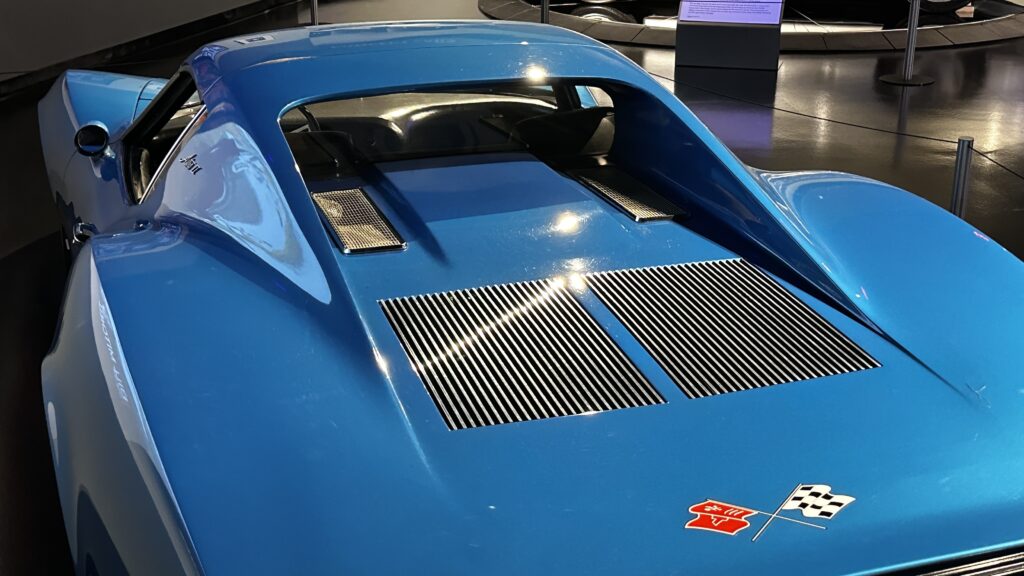
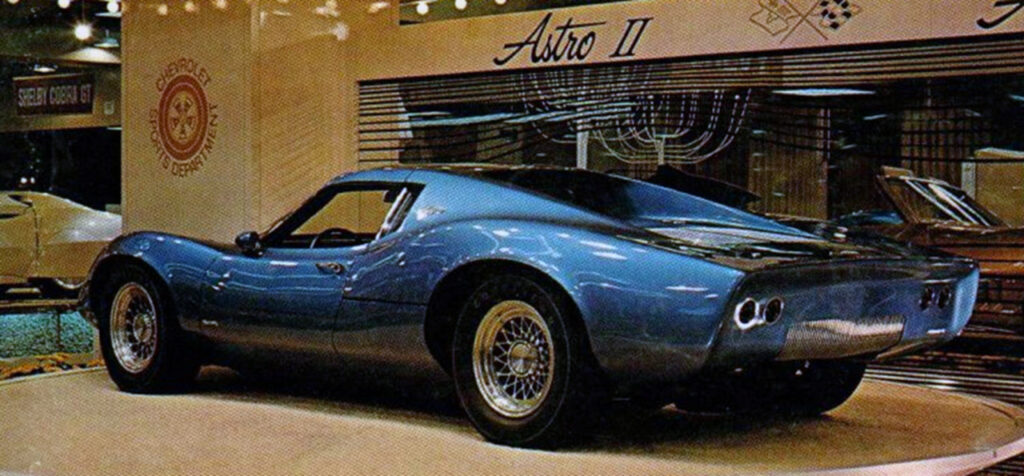
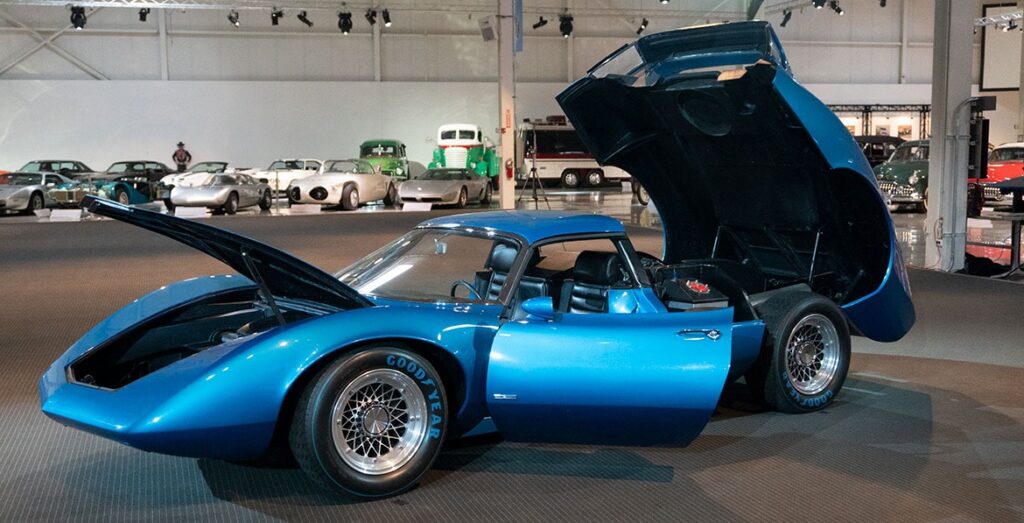
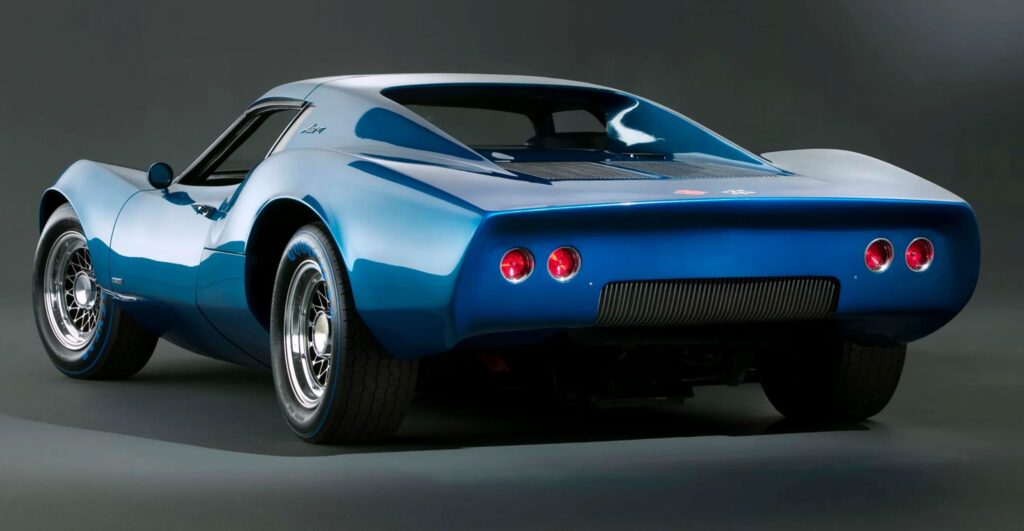
    The Astro II was not the first Chevrolet research vehicle to place the engine behind the driver, nor was it the first GM concept to flirt with exotic architecture. But it was the first true mid-engine Corvette prototype that looked, felt, and presented itself as something plausibly connected to the Corvette production line. It was not an abstract laboratory object. It was not a pure race mule. It was a Corvette-shaped provocation, and when it appeared before the public in April 1968 at the New York Auto Show, it ignited exactly the kind of speculation Chevrolet both wanted and feared.

    To understand why the Astro II still matters today, you have to understand the moment that produced it.

    The Pressure of the Era

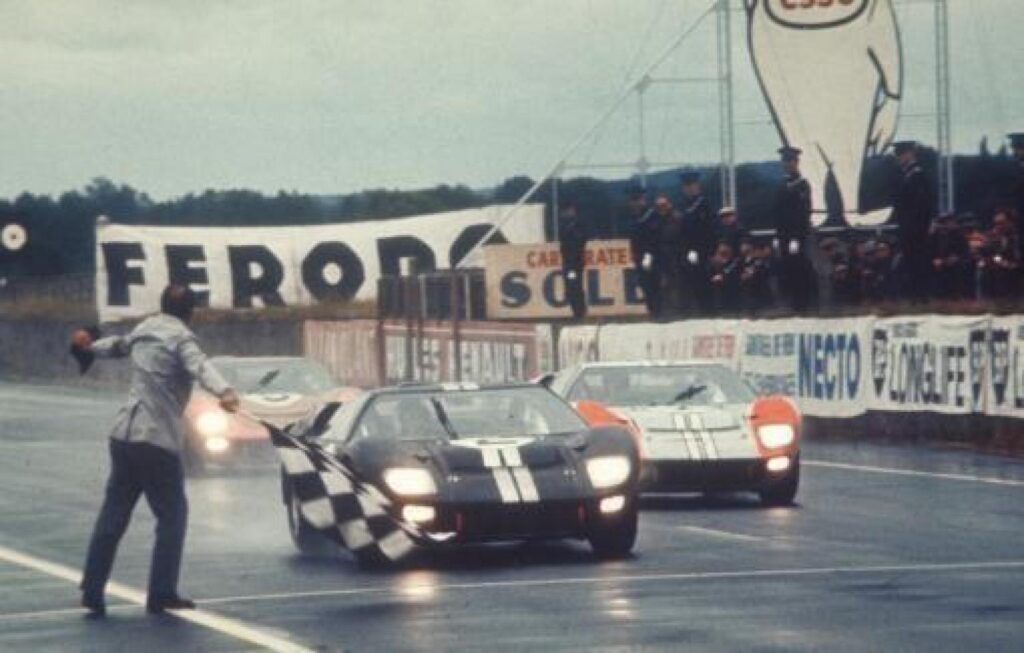
    Ford’s GT40 victories at Le Mans changed the game, proving an American automaker could challenge—and beat—Europe on its own terms. That shift helped spur GM’s creation of the XP-880 Astro II, a bold mid-engine concept born from a new era of engineering ambition.

    The 1960s were not gentle years in the performance world. They were aggressive, glamorous, and deeply competitive. Racing programs had become extensions of national identity and corporate bravado. Ford’s GT40 program, with its famous Le Mans triumphs over Ferrari, had dramatically reshaped the conversation around what an American company could do when it set its mind to European-style performance. Even for brands not directly contesting that exact battlefield, the message was unmistakable: image mattered, engineering theater mattered, and exoticism mattered.

    Within Chevrolet and GM more broadly, there was no shortage of people who understood this. Zora Arkus-Duntov had long believed that the Corvette’s future, at least at the highest level of world performance, pointed toward a mid-engine configuration. GM had already explored rear- and mid-engine ideas through vehicles like CERV I, CERV II, the GS II, and other research efforts. The Astro II did not emerge from nowhere. It emerged from a growing internal belief that the conventional front-engine layout, no matter how capable, might ultimately limit how far Corvette could go in image, packaging, and performance.

    The Astro II was also shaped by another reality: GM was a huge corporation, and huge corporations rarely leap without a net. If Chevrolet was going to explore a mid-engine Corvette, the company was going to do it first through a concept that combined vision with practical experimentation. That is where Frank Winchell and his team entered the picture.

    Frank Winchell, Larry Nies, and the Engineering Problem

    Frank Winchell (center) was one of the driving forces behind Chevrolet’s mid-engine experimentation in the 1960s. As head of Chevrolet Research and Development, he helped shape the environment that produced the XP-880, a V-8-powered concept that would ultimately evolve into the Astro II and stand as one of GM’s boldest early steps toward a mid-engine Corvette.

    Frank Winchell, who led Chevrolet’s Research and Development organization, was central to the Astro II story. Under his direction, the 1968 XP-880 Astro II became more than a styling proposal. It became a genuine engineering exercise—an attempt to figure out how one might package big-block American power in an all-new, mid-engine sports car without losing the structural discipline, drivability potential, and brand identity that would make such a machine feel authentically Chevrolet.

    Larry Nies was tasked with solving what was, in truth, a vicious packaging puzzle.

    A big-block 427 cubic-inch V8 is not a delicate piece of hardware. They are large, heavy, and not naturally suited to compact, mid-engine layouts. But Nies and the engineering group were determined to see what could be done. Their answer was ingenious: reverse the engine in the chassis. By turning the Mark IV big-block 180 degrees, the bulky accessory drive, water pump, alternator, and other front-mounted hardware could be moved rearward, creating additional room near the passenger compartment. The engine’s starter and ring gear wound up beneath the seatback area, while the accessory mass was moved farther aft. It was a deeply practical solution to an otherwise brutal spatial problem.

    Loring “Larry” Francis Nies played a central engineering role in the XP-880 program, developing the mid-engine layout that made the concept feasible. His work packaging a 427 V-8 into the compact chassis helped give shape to what would become the Chevrolet Astro II—one of GM’s most important early steps toward a mid-engine Corvette. (Image courtesy of Stetson Funeral Home)

    The XP-880’s structure was equally interesting. Rather than relying on a traditional production-style frame, the Astro II used a welded steel backbone chassis. This central spine housed key mass and helped organize the car around its mid-mounted powertrain. The layout also included a centrally mounted fuel bladder and a radiator placed at the rear, with venting integrated into the bodywork to manage airflow and cooling. From an engineering standpoint, this was not simply a Corvette body draped over a novelty chassis. It was a purpose-built architecture designed around the logic of a mid-engine sports car.

    What makes the 1968 XP-880 Astro II especially fascinating is that its revolutionary layout coexisted with a heavy use of production-derived parts. Chevrolet was not trying to reinvent every nut and bolt. The front suspension incorporated largely off-the-shelf components, including Camaro wishbones, Corvette brakes, Oldsmobile Toronado universal joints, rack-and-pinion steering, and custom upper-control-arm geometry intended to keep the roll center very low. That mix of improvisation and discipline tells you a great deal about what the car really was: not a fantasy in fiberglass, but an experimental machine assembled quickly and intelligently to test a serious idea.

    The 1968 XP-880 astro II: Big Power, Clever Compromise, and One Serious Weakness

    The XP-880 paired a reversed, longitudinally mounted 427 V-8 with a rear transaxle—an advanced layout that helped keep the car low and dramatic, but also created serious packaging, cooling, and durability challenges for the engineers bringing Chevrolet’s mid-engine vision to life.

    Power came from Chevrolet’s 427-cubic-inch Mark IV big-block V8, rated in period sources at roughly 390 to 400 horsepower depending on the source cited. Either way, the point was the same: this was a real engine, with real output and real intent. Chevrolet was not pretending. The Astro II was built around the kind of displacement and torque that defined American performance at its most unapologetic.

    The problem was not the engine.

    The problem was what sat behind it.

    To transmit power to the rear wheels, engineers used a two-speed automatic transaxle from a 1963 Pontiac Tempest. On paper, this choice made sense. It was available, compact enough to adapt, and suited the rapid development schedule of a concept program. In practice, it was a weak link. The Tempest transaxle was not really up to handling sustained big-block torque in a demanding mid-engine application. Contemporary and retrospective sources alike point to this transmission choice as one of the Astro II’s most significant technical compromises, and when the transaxle proved inadequate, the system required redesign.

    That detail matters because it gets to the heart of the Astro II’s dual identity.

    Front quarter view of the 1968 XP-880 Astro II Corvette in Sterling Heights, Michigan.
    The 1968 XP-880 Astro II looked like a future Chevrolet could almost reach, but not quite yet build. In this form, it stood as a beautifully executed proof of concept—evidence that a big-block, mid-engine Corvette was no longer fantasy, but a serious engineering possibility. What the car suggested in equal measure was both promise and limitation: extraordinary packaging ambition, balanced mass, and real dynamic potential, still waiting on the production-level durability and hardware needed to make it fully viable. (Image courtesy of GM Media LLC.)

    The car was advanced enough to feel credible, but not yet resolved enough to be production-ready. Astro II was an elegant proof of concept, not a finished automobile. Chevrolet had demonstrated that it could package a big-block V8 behind the driver in something that looked and felt like a legitimate Corvette offshoot. What it had not yet proven was whether such a machine could be mass-produced at the right price, with the durability customers would expect, and with a transaxle stout enough to repeatedly produce the kind of performance the layout promised.

    Even so, the 1968 XP-880 Astro II still hinted at genuinely startling capability. Riding on G70-15 tires and cast-aluminum wheels, with four-wheel disc brakes and its mass centralized within the chassis, the car reportedly generated 1.00 g of cornering grip—an astonishing figure for the era, particularly on street tires. That number has been repeated so often over the years that it has taken on a life of its own, and whether it is read as a precise engineering benchmark or as period shorthand for what the car could do, the broader takeaway remains the same: Astro II made the dynamic promise of a mid-engine Corvette impossible to ignore.

    Larry Shinoda and the Art of Making It Look Inevitable

    Larry Shinoda and Antone "Tony' Lapine with the full scale Monza SS Clay Concept Car.
    arry Shinoda (left) and Tony Lapine (right) stand with the full-size Monza SS clay model, one of the most important GM design studies of the early 1960s and a car that helped shape the visual language of Chevrolet performance for years to come. While this image is not directly tied to the XP-880 Astro II, it places Shinoda in the exact creative world that made such projects possible. Shinoda’s role in GM Styling helped advance the kind of low, dramatic, performance-driven forms that would later find expression in the Astro II, where Chevrolet pushed the idea of a mid-engine, big-block sports car into startlingly credible territory. Seen in that light, this image captures not the Astro II itself, but one of the designers whose influence helped lay the groundwork for it. (Image courtesy of GM Media LLC.)

    If Winchell and Nies gave the Astro II its architectural seriousness, Larry Shinoda gave it its soul.

    Shinoda was already one of the defining design voices in Corvette history. His work on cars like the Mako Shark II, the Monza SS, and other GM performance concepts had established him as a master of muscular elegance. The Astro II gave him a chance to translate that language into something more compact, more contemporary, and more overtly European in proportion without abandoning Corvette identity.

    That balancing act is one of the car’s greatest triumphs.

    The rear sugar scoop and mid-engine cover/cooling vents of the 1968 Astro II Corvette Concept Car.
    One of the XP-880’s most distinctive visual cues was the dramatic “sugar scoop” treatment that framed the rear glass and flowed into the engine cover, giving the car a sculptural, unmistakably Corvette-like identity even as its mechanical layout broke sharply from tradition. On a concept built around an early mid-engine platform, that feature did important design work: it visually tied the car back to Chevrolet’s established sports car language while helping mask and integrate the mass of the engine bay behind the passenger compartment. In other words, the sugar scoop helped the XP-880 look like an evolution of the Corvette rather than a total departure from it. It was a clever piece of styling that blended familiar Corvette drama with the unique proportions of a mid-engine experiment. (Image courtesy of the author)

    The 1968 XP-880 Astro II did not look like a foreign car with Corvette badges. It looked like a Corvette pulled taut around a new idea. The body carried the familiar emotional cues of the brand—curved fender masses, pronounced haunches, a pointed nose, Corvette taillight graphics, and a cockpit-forward stance—but everything was re-proportioned around the logic of the mid-engine package. The rear deck sat higher to clear the big-block and cooling layout. The tail incorporated vents to support the rear-mounted radiator arrangement. The signature “sugar scoop” rear window added drama while visually tying the roofline into the swollen rear bodywork. The front fascia was nearly seamless, lacking the overt grille treatment and bumper interruptions buyers expected from more conventional cars of the day.

    Just as importantly, the Astro II looked usable.

    Unlike the more radical Astro I that preceded it, the Astro II had conventional doors, a defined front storage area, and a rear body section that could be lifted for engine access. It looked less like a highly stylized concept car and more like a serious proposal. In truth, that may have been its most dangerous quality. Plenty of concepts are too wild to threaten the status quo. The Astro II was not. It looked close enough to reality to prompt people to wonder whether Chevrolet might actually build it.

    New York, 1968: The Public Debut of the Astro II Concept

    Unveiling the 1968 XP-880 Astro II Corvette Concept in New York City.
    When Chevrolet unveiled the Astro II at the 1968 New York Auto Show, the car landed like a dispatch from the future. Low, wide, and dramatically different from the front-engine Corvette Americans already knew, the XP-880 stunned showgoers with its radical mid-engine proportions, flowing bodywork, and unmistakable sense of purpose. Public reaction was shaped by both fascination and speculation: here was a Chevrolet concept that looked less like a styling exercise and more like a serious preview of what a next-generation American supercar might become. Even if GM never intended the Astro II to be an immediate production promise, its reception made one thing clear—enthusiasts were more than ready to imagine a Corvette with its engine behind the driver.

    By the time the 1968 XP-880 Astro II reached the New York Auto Show in April 1968, the new C3 Corvette was already in production and on the road. That timing was important. Chevrolet was not unveiling the Astro II because the existing Corvette had failed. It was a car unveiling because the company wanted to gauge public reaction to what a more evolved future Corvette might look like.

    For its debut, the car was painted Firefrost Blue, a luminous, high-drama color that suited both Bill Mitchell’s taste and the car’s almost liquid body surfaces. It was low—just 43.7 inches tall according to GM Heritage material—and visually arresting in exactly the way a dream car needed to be. Showgoers saw something that looked simultaneously familiar and radical. It was unmistakably part of the Corvette universe, yet it also suggested a future in which Chevrolet would no longer be content merely refining the front-engine recipe.

    The 1968 XP-880 Astro II at the GM Heritage Center in Sterling Heights, Michigan,
    The 1968 XP-880 Astro II rode on a compact 100-inch wheelbase and measured roughly 181 inches long, 74 inches wide, and just 43.7 inches tall, giving it a low, planted stance that looked every bit as exotic as its engineering suggested. Behind the cabin sat a mid-mounted 427-cubic-inch Mark IV big-block V8 rated at about 400 horsepower, routed through a two-speed transaxle in one of Chevrolet’s earliest serious attempts to package Corvette performance in a mid-engine layout. GM backed that drivetrain with a welded-steel backbone frame, a rear-mounted radiator, and a full-lift-up rear body section that exposed the engine and rear storage areas in one dramatic movement. Taken together, those specs made the Astro II less a simple show car than a fully realized experimental Corvette aimed squarely at the future. (Image courtesy of GM Media LLC.)

    Speculation followed immediately.

    Was this the next Corvette? Was Chevrolet preparing to strike directly at Europe’s exotics? Was America’s sports car about to move its heart behind the driver?

    Those questions were the point. The 1968 XP-880 Astro II did not need to enter production to do important work for Chevrolet. It only needed to widen the imaginative boundaries of what Corvette could be. In that respect, it succeeded brilliantly.

    Why It Didn’t Happen

    Rear Quarter View of the 1968 XP-880 Astro II.
    What kept GM from turning the 1968 XP-880 Astro II into a production Corvette was not a lack of imagination, but a collision of engineering, cost, and practicality. Packaging a big-block V8 transversely behind the seats created real challenges in cooling, serviceability, durability, and transaxle strength, and Chevrolet had not yet solved those problems at the scale, reliability, and price point a production car would demand. Just as important, the Corvette was already succeeding as a front-engine sports car, so GM had little business incentive to gamble on such a radical and expensive departure in the late 1960s. In that sense, the Astro II was a brilliant proof of concept—far enough along to be credible, but still too complex and too risky to become the next Corvette. (Image courtesy of GM Media LLC.)

    This is the part of the Astro II story where romance collides with arithmetic.

    The C3 Corvette was succeeding. Dealers had demand. Buyers loved the styling. The Corvette had momentum, and momentum matters inside a corporation. A mid-engine production program would have required vast investment, major engineering development, new supply solutions, stronger transaxle technology, and almost certainly a higher price with lower volume. From Chevrolet’s point of view, that was a difficult argument to win when the existing formula was already printing enthusiasm and profit.

    That is why the Astro II remains such a bittersweet artifact. It was not killed because it lacked imagination. It was not killed because it lacked aesthetic credibility. It was not even killed because the mid-engine idea was inherently unsound. It stalled because the business case was weak and the technical path to production was still expensive and incomplete. Chevrolet did not yet have a convincing answer to the question every large automaker eventually asks of every bold idea: yes, but can we make money on it in meaningful volume?

    And so the car became what so many visionary machines become: a clue instead of a product.

    The Quiet Influence of a Car That Never Reached Showrooms

    The XP-880 Astro II was not an isolated flight of fancy. It was part of a long, deliberate succession of Chevrolet and GM mid-engine experiments—cars that tested proportion, packaging, aerodynamics, visibility, cooling, chassis balance, and the very idea of what a Corvette could become. From radical racing-adjacent studies to fully resolved design exercises, each concept pushed the conversation forward, and together they created the institutional memory that finally made the 2020 C8 Corvette possible. By the time Chevrolet committed to putting the engine behind the driver in a production Corvette, the company was no longer chasing a fantasy—it was drawing from decades of lessons first explored in cars like the XP-880 and the mid-engine concepts that followed it. (Images courtesy of the author.)

    The 1968 XP-880 Astro II Corvette concept never entered production, but it did not vanish without leaving fingerprints.

    Its broader influence can be seen in how it helped keep the mid-engine Corvette dream alive inside GM and in the public imagination. Once people had seen a Corvette-shaped machine with its engine behind the driver, the notion could no longer be dismissed as fantasy. The Astro II made the idea concrete. Later prototypes—the XP-882, Aerovette, Corvette Indy, CERV III, and eventually the production C8—would all move through a conceptual doorway that cars like the Astro II helped open.

    Its styling influence appears to have been more direct still. Retrospective accounts from major enthusiast publications note that the Astro II’s body-color front treatment anticipated the 1973 Corvette’s cleaner nose, while its rear-end theme foreshadowed elements of the 1974 Corvette’s redesigned tail. Whether one wants to describe that as direct lineage or strong visual echo, the resemblance is real enough that the Astro II can fairly be read as a concept whose ideas did, in softened form, slip into production reality.

    That, too, is part of how concept cars work. Not every dream reaches the street whole. Sometimes it is disassembled into gestures, surfaces, proportions, and ideas that gradually find their way into the showroom through side doors.

    And that is precisely where the Astro II earns a more serious reading. It was not merely an exotic dead end or a dramatic showpiece created to stir crowds beneath the lights of an auto show stand. It was a rolling design argument—one that tested how far Chevrolet could stretch Corvette language without breaking it. Even stripped of its mid-engine destiny, the car still contributed. Its sharp, uncluttered front treatment, its tapered tail, and its overall sense of compression and purpose all suggested a future in which the Corvette could look cleaner, lower, and more sophisticated without surrendering its identity.

    Seen that way, the Astro II occupies a fascinating middle ground in Corvette history. It was too advanced, too specialized, and too uncompromising to become a production car in its own right. But it was also too thoughtful, too resolved, and too influential to dismiss as a mere styling exercise. Some of its ideas were simply too good to disappear. They were absorbed, translated, and made digestible for production—muted where necessary, refined where practical, but still present. The result is that the Astro II’s legacy is not confined to the realm of unrealized possibility. Parts of it escaped the dreamscape and entered the bloodstream of the Corvette itself.

    Why the 1968 XP-880 Astro II Still Matters Today

    The 1968 XP-880 Astro II on Rt. 66 in Arizona.
    It’s easy to imagine the XP-880 stretching its legs on the open highways of the American West, its low, sculpted body slicing through the desert air as the sun falls behind the mountains. Out here—far from auto show turntables and design studios—the car feels less like a concept and more like a promise, one that Chevrolet wouldn’t fully deliver on for another half century. The proportions make sense. The stance feels right. And in this setting, with the road unwinding endlessly ahead, the Astro II no longer reads as an experiment—it reads as inevitability. That is the quiet brilliance of this car. Long before the mid-engine Corvette became reality in 2020, the XP-880 had already defined the visual and philosophical blueprint. It reminds us that progress doesn’t always move in straight lines; sometimes it takes decades for an idea to find its moment. But when it does, you realize it was never new at all—it was simply waiting for the world to catch up. (Image credit: GM Media LLC / ChatGPT)

    The Astro II matters because it was one of the first times Chevrolet publicly revealed that the Corvette’s future might not be bound to tradition forever. It matters because it translated engineering restlessness into an object people could see, photograph, debate, and remember. It matters because it proved that Corvette designers and engineers were thinking in larger, bolder terms than the production line alone might suggest. And it matters because, more than fifty years before the C8 finally carried a mid-engine Corvette into showrooms, the Astro II made that future visible.

    In a very real sense, the Astro II was not a failed Corvette. It was an early draft of a promise.

    Today, preserved within GM’s heritage collection and displayed through institutions like the National Corvette Museum, the Astro II survives as more than a beautiful blue show car. It survives as evidence. Evidence that the mid-engine idea had real engineering substance decades before the C8. Evidence that Corvette’s stewards were willing, at least in flashes, to imagine something much more radical than the market required. Evidence that the dream did not begin in the 2010s, or even the 1980s, but deep in the experimental bloodstream of the 1960s.

    And perhaps that is the most compelling thing about the XP-880 Astro II.

    It was not built because Chevrolet had to build it. Chevrolet was already winning plenty of attention with the Corvette it had. The Astro II was built because somebody inside GM still believed that America’s sports car could be something even more exotic, more sophisticated, and more daring than the public had yet seen. That belief did not produce an immediate revolution in the showroom. But it did produce one of the most important concept cars in Corvette history.

    The Astro II stands today as a polished, low-slung reminder that some of the most important cars are not the ones that make production. Sometimes the cars that matter most are the ones that reveal where the people behind the badge were trying to go.

    And in the case of the Astro II, where they were trying to go was the future.

    The XP-880 Astro II stands as one of the most compelling “what if” chapters in Corvette history—a bold mid-engine vision decades ahead of its time. This deep dive explores its design, engineering, and lasting influence, revealing how this experimental concept helped shape the path to Chevrolet’s ultimate performance breakthrough.