
How to protect, preserve, and prepare America’s Sports Car for the coldest months of the year—whether you’re parking it for a few weeks or putting it away in long-term winter storage until spring.
For Corvette enthusiasts, the arrival of autumn brings mixed emotions. There’s something special about taking America’s Sports Car out on a crisp fall morning, enjoying the sound of a V8 against a backdrop of changing leaves, and squeezing every possible mile out of the driving season. Unfortunately, those beautiful autumn drives eventually give way to falling temperatures, shorter days, and the inevitable realization that winter is approaching.
For some Corvette owners, particularly those living in the Northeast, upper Midwest, and other regions where snow, ice, and road salt are an annual certainty, winter means putting their cars away for several months. For others, particularly throughout the South and along the West Coast, winter storage is less about extended hibernation and more about protecting their cars between occasional opportunities to get behind the wheel.
Regardless of where you live, properly preparing your Corvette for winter is one of the most important responsibilities of ownership. While today’s Corvettes benefit from sophisticated electronics, advanced materials, and increasingly durable mechanical systems, they’re no less susceptible to the effects of prolonged inactivity. Batteries discharge, gasoline deteriorates, tires develop flat spots, brake components corrode, and excessive moisture can damage everything from electrical connections to upholstery.
Classic Corvettes introduce their own considerations. Older fuel systems, aging weatherstripping, carburetors, and decades-old electrical components can make improper storage especially costly.
The good news is that winter preparation doesn’t have to be particularly complicated or expensive. It does, however, require a thoughtful approach that considers your Corvette’s age, equipment, local climate, and the length of time it will remain parked.
As we prepare for the winter of 2026–2027, UltimateCorvette.com has assembled this comprehensive guide to help keep your Corvette protected, properly maintained, and ready for the moment warmer weather finally returns.
Understanding the Difference Between Short-Term and Long-Term Storage

Before purchasing a battery maintainer, investing in tire cradles, or covering your Corvette for the season, the first step is determining exactly how long the car is likely to sit.
For owners in Tennessee, Georgia, the Carolinas, and other relatively temperate regions, winter may bring several weeks of freezing weather interrupted by stretches of sunshine and comfortable temperatures. Depending on the tires installed, road conditions, and weather forecast, these owners may enjoy opportunities to drive throughout the winter.
By comparison, owners in Michigan, Wisconsin, Minnesota, upstate New York, New England, and much of Canada may face a season that effectively removes their Corvettes from the road between November and April.
These situations require different levels of preparation.
Short-term storage, generally one to two weeks, requires relatively little intervention. A clean car, properly inflated tires, a healthy battery, and a dry, protected parking space are typically sufficient.
Intermediate storage, ranging from several weeks to approximately two months, introduces additional considerations. Battery maintenance becomes increasingly important, tire flat-spotting becomes more likely, and owners should pay closer attention to fuel freshness and storage conditions.
Long-term storage, generally three to six months, warrants a comprehensive preservation strategy. Fuel stabilization, battery management, tire protection, moisture control, pest prevention, and carefully planned recommissioning should all be part of the process.
These periods are general planning categories rather than rigid mechanical deadlines. A Corvette stored in a dry, climate-controlled garage in Arizona will face different challenges than an identical car spending the winter in an unheated garage in Minnesota.
The real objective is to prepare the vehicle for the conditions it will experience, not simply for the number of days it will remain parked.
Regional Considerations: Geography Changes Everything
Where your Corvette spends the winter plays a significant role in determining how it should be protected.
| Region | Typical winter concerns | Recommended approach |
|---|---|---|
| Northeast and Upper Midwest | Prolonged freezing, snow, road salt, extreme tire temperatures | Full seasonal storage, close battery and tire management, dry enclosed garage |
| Mid-Atlantic and Mid-South | Intermittent freezes, occasional snow and road treatments | Flexible storage with occasional driving when temperatures and roads permit |
| Southeast and Gulf Coast | Humidity, rain, occasional freezes, flooding risk | Prioritize moisture control, ventilation, storm protection, and battery maintenance |
| Pacific Northwest | Persistent rain, condensation, damp garages | Focus on humidity control, corrosion prevention, and keeping the vehicle thoroughly dry |
| Mountain West | Severe overnight cold, snow, road treatments, temperature swings | Long-term winter preparation and careful attention to summer-tire restrictions |
| Southwest and Southern California | Dust, UV exposure, temperature fluctuations, occasional mountain freezes | Short-term storage practices, interior preservation, and protection from sun and dust |
Of course, geography is only part of the equation. A Corvette owner in Nashville may experience weather severe enough to justify several weeks of storage, while an enthusiast in coastal Massachusetts might occasionally encounter a dry, relatively warm winter afternoon.
Elevation matters, too. A Corvette kept in the mountains of North Carolina or Southern California may face substantially colder conditions than another vehicle stored only a short distance away.
For owners who plan to continue driving periodically, the most important considerations are not simply the outside temperature or the absence of snow. Tire suitability, pavement temperature, residual road treatments, and the possibility of refreezing must all factor into the decision.
Start with a Thorough Cleaning and Inspection

One of the most common mistakes owners make is putting their Corvette away without properly cleaning it first.
Even a car that appears spotless can carry contaminants capable of damaging its finish over time. Insect residue, bird droppings, tree sap, road film, brake dust, and industrial fallout can become increasingly difficult to remove after sitting for months.
Before storage, thoroughly wash the Corvette using a quality automotive shampoo and appropriate microfiber washing materials. Pay particular attention to the lower body panels, wheel wells, wheels, and underside, where road debris and contaminants accumulate.
Owners who have driven on treated roads should remove salt and deicing chemicals as soon as practical. This is especially important for Corvettes equipped with specialty wheels or exposed suspension components. Chevrolet specifically cautions owners of carbon-fiber-wheel-equipped Corvettes about exposure to certain chloride-based road treatments.
After washing, dry the vehicle completely. Water trapped behind trim, beneath weatherstripping, inside wheel openings, and around body seams can encourage corrosion or mildew.
For modern Corvettes equipped with high-performance brakes, Chevrolet also recommends driving and applying the brakes several times after washing to dry the braking surfaces before extended parking. Make this final drive only when the weather, road conditions, and installed tires allow it.

Editor’s Note: UltimateCorvette.com has not received compensation from Adam’s Polishes, nor are we endorsing or recommending these specific products. The products pictured are shown for visual reference and illustrative purposes only.
Once dry, apply a suitable paint protectant if the existing finish protection needs renewal. A conventional wax, paint sealant, or professionally applied ceramic coating can help protect the exterior, although the product should always be compatible with the finish.
Owners of Corvettes with paint protection film, matte finishes, exposed carbon fiber, or specialty graphics should follow the appropriate care instructions. These surfaces do not necessarily tolerate the same chemicals or polishing techniques as conventional clearcoat.
Finally, inspect the entire vehicle. Look for fluid leaks, damaged weatherstripping, loose trim, deteriorating hoses, tire damage, and anything else that may become more troublesome after several months of inactivity.
Winter storage should begin with a Corvette that’s mechanically sound, not one whose existing problems have simply been hidden beneath a cover.
Battery Management: The Most Important Winter Investment

If there’s one piece of equipment that belongs in nearly every Corvette owner’s garage, it’s a properly matched battery maintainer.
Even when parked, modern Corvettes can draw electrical power to support their electronic systems. Security features, control modules, and other components can gradually discharge a battery during extended periods of inactivity.
Older Corvettes are not immune to the problem. Although early models generally have fewer electrical demands when switched off, their batteries still lose charge over time, particularly in cold conditions.
A depleted battery can become permanently damaged, and in some cases, a deeply discharged battery exposed to freezing temperatures may freeze.
The preferred solution for most owners is an automatic smart battery maintainer designed specifically for the battery installed in their Corvette.
Unlike an older constant-output trickle charger, a quality smart maintainer monitors battery condition and adjusts its charging behavior as appropriate. Many include temperature compensation, diagnostic features, and maintenance charging modes intended for extended storage.
However, not all chargers are interchangeable, and this distinction has become particularly important with the introduction of increasingly sophisticated Corvette electrical systems.
Special Considerations for C7 and C8 Corvettes

Many newer Corvettes use conventional lead-acid or AGM battery technology, while certain electrified C8 variants have different requirements.
The 2026 Corvette E-Ray and ZR1X, for example, utilize a 12-volt lithium-ion battery. Chevrolet specifies GM-approved charging equipment designed for these batteries. A maintainer suitable for a conventional lead-acid battery should not automatically be considered appropriate for an E-Ray or ZR1X.
Charging connections also vary. Certain C8 models equipped with Chevrolet‘s battery maintainer package use a dedicated underhood accessory connection. However, GM’s technical guidance identifies a different arrangement for the 2026 ZR1 and ZR1X, which do not have that accessory outlet and instead require the appropriate connection at the front-mounted 12-volt battery.
Owners should confirm both charger compatibility and the correct connection procedure for their exact model and model year.
The E-Ray and ZR1X also have high-voltage propulsion batteries that are separate from their 12-volt electrical systems. These are not conventional plug-in hybrids, and owners should never attempt to charge or service their high-voltage systems using ordinary battery-maintenance equipment.
For long-term storage, follow Chevrolet‘s applicable instructions and consult a qualified Corvette service department if there is uncertainty about the electrified system.
Owners of classic Corvettes, meanwhile, should verify whether the car retains its original battery configuration or has been modified with a modern AGM or lithium replacement.
Whatever the generation, keep charger wiring protected from damage, use properly rated electrical equipment, and avoid routing cords through pinch points or underneath the vehicle’s tires.
An important additional precaution for C8 owners is to keep their remote key away from the stored car. Chevrolet’s long-term storage instructions for the lithium-ion-equipped variants specify a distance greater than 10 feet.
For owners storing Corvettes without dependable electrical power, battery disconnection or removal may be an alternative on certain models, but it should only be undertaken according to the specific vehicle’s service instructions. Disconnecting a battery may affect electronic settings, window indexing, security systems, and other functions.
For most regularly stored Corvettes, a properly selected automatic maintainer remains the most convenient solution.
Protecting Your Tires: Flat Spots, Pressure, and Cold-Weather Damage

Tires deserve considerably more attention during winter storage than many owners realize.
When a vehicle remains parked in one position for an extended period, the portion of each tire contacting the ground remains under sustained load. Over time, this can contribute to flat-spotting, which may produce noticeable vibration when the vehicle returns to the road.
Some temporary flat spots disappear as the tires warm during normal driving. More severe deformation, however, can become permanent.
Corvettes are particularly sensitive to tire-related issues because of their performance-oriented suspension systems, wide tires, and relatively low-profile sidewalls.
For short periods of inactivity, maintaining the correct cold inflation pressure specified by the vehicle manufacturer is usually sufficient.
For longer storage, additional measures are worth considering.
Contoured tire cradles distribute the vehicle’s weight across a larger portion of the tire’s circumference and can help reduce localized deformation. They offer a practical alternative for owners who do not want to lift their vehicles.
However, Chevrolet‘s 2026 Corvette owner’s manual goes further, recommending that owners remove the tires or raise the vehicle to reduce weight on the tires when storing the car for at least a month.
That factory recommendation deserves particular attention from owners planning extended storage. Tire cradles can be useful, but they should not be represented as a complete substitute for removing the load from the tires.
If a Corvette is raised for storage, use only the manufacturer-approved lifting points and properly rated support equipment. Improper lifting can damage the chassis, suspension, underbody panels, or carbon-fiber components. For owners without the proper equipment or experience, professional assistance is preferable.
Never assume that substantially overinflating a tire is an acceptable alternative. Maintain the specified pressure unless the tire or vehicle manufacturer provides a different approved storage procedure, and never exceed the tire’s rated limits.
The Critical Difference Between Summer and All-Season Tires

Cold-weather tire restrictions are among the most important safety considerations facing modern Corvette owners.
Many C7 and C8 Corvettes are equipped with high-performance summer tires that provide outstanding traction in appropriate conditions but lose effectiveness as temperatures fall.
Chevrolet advises that high-performance summer tires have reduced capability below approximately 40 degrees Fahrenheit and recommends winter tires when frequent driving below that temperature is expected.
Competition-oriented tires, including certain Michelin Pilot Sport Cup 2 R applications, have even more restrictive operating conditions. Chevrolet‘s 2026 manual advises against driving on snow, ice, or road surfaces below 50 degrees Fahrenheit with these tires.
The concern goes beyond reduced traction.
Certain performance tire compounds can become sufficiently rigid in extreme cold that moving or driving the vehicle can cause cracking. Chevrolet warns that high-performance summer and competition-oriented tires may develop damage below 20 degrees Fahrenheit.
The 2026 manual specifies that summer tires exposed to temperatures of 20 degrees Fahrenheit or lower should be allowed to warm to at least 40 degrees for 24 hours or more before use. For competition-oriented tires, the corresponding warm-up temperature is 50 degrees.
These precautions apply even if the car has been sitting in a garage and the roads outside appear dry.
Owners in northern climates should strongly consider storing summer-tire-equipped Corvettes in a garage where temperatures remain above the tire manufacturer’s minimum storage temperature.
It is also important to remember that not every C8 Corvette is equipped with summer tires. Some Stingray configurations use all-season tires, and certain other C8 applications offer them as well.
Always identify the actual tires installed on your car rather than making assumptions based on its model or trim designation.
For owners who maintain separate summer and winter wheel-and-tire sets, the unused tires should be cleaned, dried, and stored indoors, away from direct sunlight, ozone-generating equipment, and chemical contaminants.
Mounted wheel-and-tire assemblies may generally be stacked or hung using appropriate supports, while unmounted tires should ordinarily be stored upright.
Protective wheel-and-tire storage covers are useful for controlling dust and reducing accidental scratches, but they should only be placed over clean, dry assemblies.
Fuel Management: Preventing Problems Before They Start

Gasoline begins changing chemically as it ages, and those changes can eventually affect engine performance, fuel-system components, and the ease with which a stored Corvette returns to service.
For an owner who expects to drive every week or two, fuel degradation is unlikely to require extraordinary measures. Ordinary fuel turnover is generally adequate.
For a Corvette being stored for several months, however, fuel preservation should be part of the preparation process.
Begin with fresh gasoline that meets the requirements for your specific Corvette. For most modern performance models, that means the proper grade of premium unleaded gasoline specified by Chevrolet.
Older Corvettes may have different fuel requirements depending on engine configuration, compression ratio, and any modifications made over the years.
For seasonal storage, a nearly full fuel tank is generally preferable to one containing only a small amount of gasoline. Reducing the amount of air space in the tank helps limit opportunities for moisture accumulation. Leave the normal expansion space rather than overfilling the filler neck.
A fuel stabilizer compatible with the vehicle and its gasoline can provide additional protection during extended storage.
Follow the product manufacturer’s dosing instructions and circulate the treated gasoline through the fuel system by driving the car sufficiently before storage.
For classic Corvettes equipped with carburetors, this step is especially important. Aging fuel can leave deposits in small carburetor passages, contribute to sticking components, and create frustrating problems when the vehicle returns to service.
Owners storing carbureted Corvettes for particularly long periods should consult a specialist familiar with the vehicle’s specific carburetor and fuel system. Depending on the anticipated duration and equipment, additional fuel-system preservation may be appropriate.
Ethanol content also deserves consideration. Owners of older Corvettes, particularly those retaining original fuel-system components, may prefer ethanol-free gasoline where available and suitable for the engine. Regardless of fuel choice, aging rubber hoses, seals, and diaphragms should be inspected and replaced when necessary.
Fuel stabilizer is not a cure for contaminated gasoline, nor does it restore fuel that has already deteriorated. Begin with fresh gasoline and observe the stabilizer’s stated storage-life limitations.
Engine Oil, Coolant, and Other Essential Fluids

One of the enduring debates among enthusiasts concerns whether engine oil should be changed before winter storage or after the car returns to service in spring.
For most Corvettes entering several months of storage, beginning with relatively fresh, specification-correct engine oil is a sound approach.
Used engine oil can contain combustion byproducts, moisture, and other contaminants. Allowing heavily used oil to remain in an engine throughout an extended storage period provides little benefit.
If the Corvette is already due for an oil change, perform that service before putting it away. If the oil was changed recently and remains well within its recommended service interval, another immediate change may not be necessary.
The correct oil specification is particularly important for modern Corvettes, including those equipped with sophisticated dry-sump lubrication systems. Owners should not assume that a different oil viscosity is desirable simply because winter has arrived.
Coolant protection is equally important, particularly in northern states and Canada, where temperatures can remain below freezing for extended periods.
Check the coolant condition, service history, and freeze protection appropriate to the vehicle. A properly maintained cooling system should contain the correct mixture of coolant and water for its design and climate.
Do not simply add more antifreeze in an effort to achieve greater protection. Incorrect concentrations and incompatible coolant formulations can create their own problems.
Owners of C8 E-Ray and ZR1X models should remember that electrified propulsion systems have specialized cooling circuits. Any inspection or service of those systems should follow GM’s procedures, with high-voltage-related work left to qualified technicians.
Brake fluid deserves attention as well. Conventional glycol-based brake fluids absorb moisture over time, and neglected fluid can contribute to internal corrosion and reduced braking performance.
Inspect the vehicle’s service records and perform any scheduled brake-fluid replacement that is due. Different Corvette generations and brake packages may require different specifications, so use the prescribed fluid and procedure.
Transmission fluid, differential lubricant, power-steering fluid on applicable generations, and windshield washer fluid should also be reviewed according to the vehicle’s maintenance schedule.
For Corvettes that have seen track use during the warmer months, winter preparation is an excellent opportunity to address any overdue post-track inspections or maintenance.
Brakes, Suspension, and Parking Procedures

An extended period of inactivity can introduce problems that may not be immediately apparent when a Corvette is parked.
Brake rotors, particularly conventional cast-iron designs, can develop surface corrosion after exposure to water and humidity.
A light layer of oxidation may disappear during normal braking, but heavier corrosion can lead to roughness, noise, or other issues requiring attention.
For this reason, never intentionally put a Corvette away with wet brakes if a safe opportunity exists to dry them first.
Owners of Corvettes equipped with carbon-ceramic brakes should follow Chevrolet’s specific maintenance instructions and avoid treating them as interchangeable with conventional steel-rotor systems.
Parking brakes present another consideration. Leaving a mechanical parking brake engaged for months in a damp environment may increase the risk of components sticking.
For a level, secure storage location, some owners avoid applying the parking brake and instead rely on the vehicle’s appropriate transmission parking position together with suitable wheel chocks.
However, modern electronic parking-brake systems may apply automatically under certain conditions. Owners should never attempt to defeat these systems or improvise a parking procedure that conflicts with Chevrolet’s instructions.
The correct approach depends on the generation and transmission. A manual-transmission C3, an automatic C6, and a dual-clutch C8 should not automatically be treated the same way.
If raising a vehicle to reduce tire loading, avoid allowing the suspension to remain in an unsupported or unnatural position without a model-appropriate procedure. Supporting a Corvette improperly can create hazards and potentially damage suspension or chassis components.
Owners seeking extended off-wheel storage should have the vehicle supported by a qualified shop using the appropriate procedures and equipment.
Interior Preservation: Protecting the Cockpit

Corvette interiors have evolved tremendously over the past seven decades, but they all benefit from careful preservation.
Before storage, vacuum the carpets and seating surfaces, remove food wrappers and other debris, and thoroughly clean the interior.
Even small amounts of food residue can attract rodents, while moisture trapped in carpets or floor mats can contribute to odors and mildew.
Leather seats should be cleaned with products appropriate to their age and construction. Modern automotive leather often has protective surface coatings and generally does not require the same treatment as unfinished leather.
Avoid excessive application of conditioners, oily dressings, or products that leave a slippery residue on the seats, steering wheel, or other frequently touched surfaces.
For classic Corvettes, inspect older vinyl, leather, carpet, and interior trim for existing deterioration. Gentle cleaning and a stable storage environment are more important than applying large quantities of preservation chemicals.
Modern C7 and C8 cockpits also feature extensive electronic displays, touch-sensitive controls, and specialized interior materials. Use only cleaners approved for those surfaces and avoid spraying liquids directly onto screens or electrical switches.
Sunlight remains a concern even during winter. A Corvette parked near a large garage window can receive substantial UV exposure, potentially affecting interior materials over time.
A fitted windshield shade or properly selected car cover can help reduce that exposure.
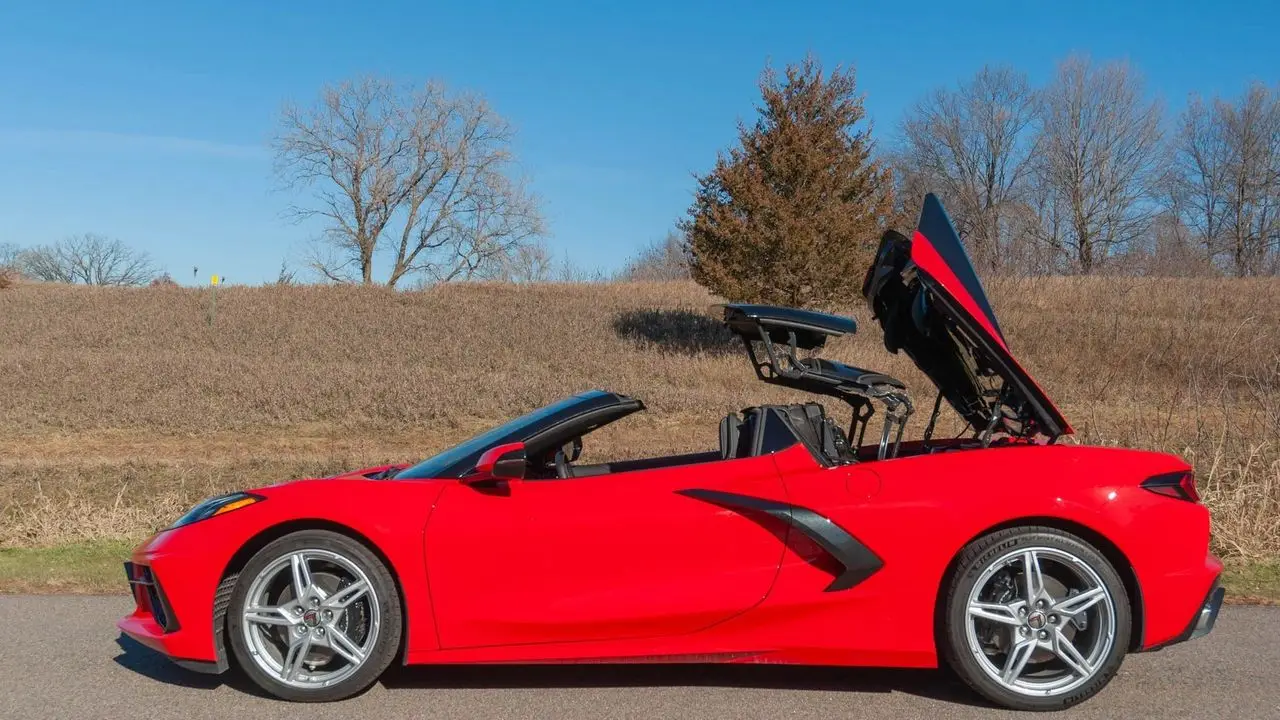
Convertibles deserve additional attention. The top should generally be clean, completely dry, and properly closed before storage. Folding a damp soft top for an extended period can encourage staining, mildew, and deterioration.
Inspect the convertible-top seals, rear-window area, drains, and weatherstripping. On older Corvettes, even a minor water leak may become a substantial problem if the car sits unattended for months.
Garage Preparation: Creating the Right Storage Environment

A Corvette doesn’t need a showroom-quality garage to survive the winter, but it does benefit from an environment that is clean, dry, secure, and reasonably stable.
For northern owners, an enclosed garage provides essential protection from snow, ice, wind, and road contamination.
A heated garage can offer additional benefits, particularly when protecting temperature-sensitive performance tires, but heat alone is not enough.
Humidity control matters just as much.
A garage that experiences substantial temperature changes may develop condensation on colder surfaces. This moisture can encourage corrosion and mildew even when the vehicle never leaves the building.
A small digital hygrometer provides an inexpensive way to monitor humidity. As a general target for indoor moisture management, maintaining relative humidity around 30 to 50 percent can help limit conditions favorable to mold, although the ideal environment also depends on building construction and temperature.
In damp climates, a properly sized dehumidifier may be one of the most worthwhile garage investments an owner can make.
For owners in Florida, coastal Georgia, the Carolinas, or other humid regions, moisture control may be more important than heating.
In the Pacific Northwest, prolonged dampness and limited drying opportunities can make a consistently dry garage especially valuable.
In the Southwest, meanwhile, controlling sunlight, airborne dust, and extreme temperature changes may be higher priorities.
Inspect garage doors, weather seals, roof areas, and drainage before the season begins. A garage that admits water during storms can quickly compromise an otherwise excellent storage plan.
Owners concerned about moisture migrating through an unfinished concrete floor should investigate the source and appropriate floor treatment rather than simply covering a damp surface with plastic.
For particularly valuable collector Corvettes, dedicated vehicle-storage facilities with monitored climate control, security, and regular inspection services may be worthwhile.
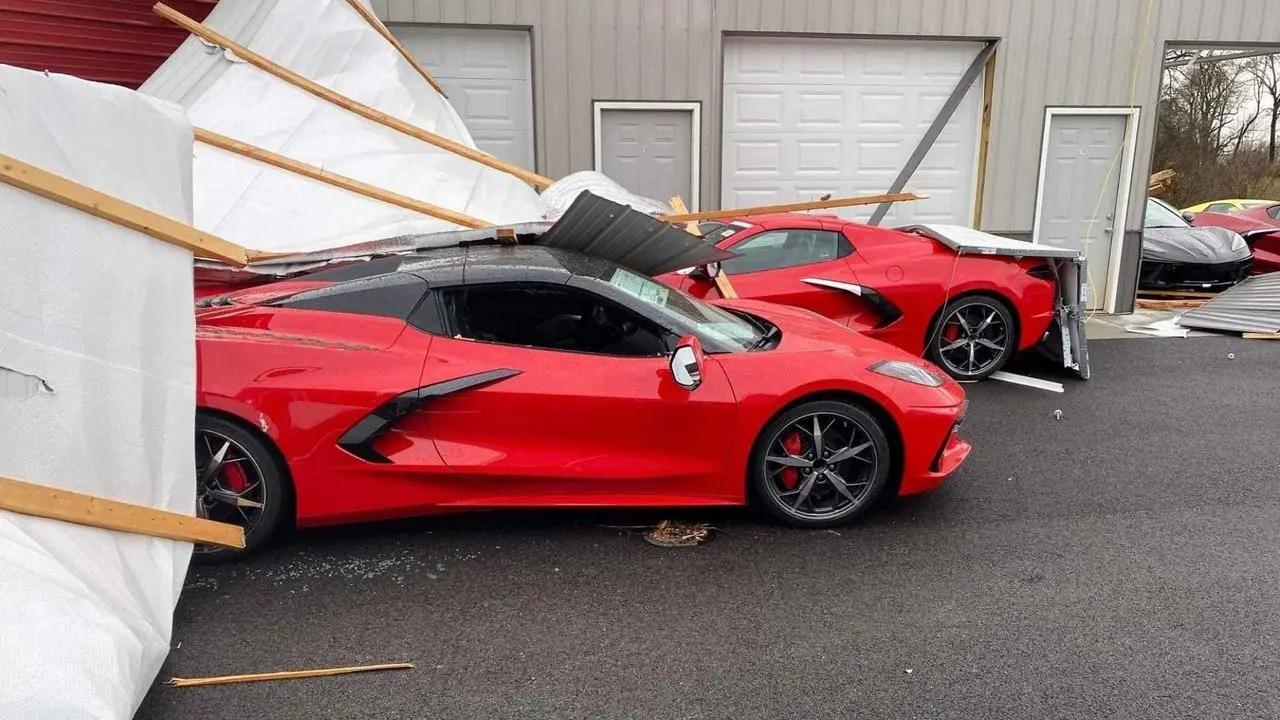
There is one additional consideration for owners living in flood-prone areas: a garage’s elevation and drainage may matter far more than its appearance. If a major storm or flood warning threatens the property, relocating the vehicle before conditions deteriorate is preferable to relying on a cover or storage enclosure.
Choosing the Right Car Cover

A properly fitted cover can help protect a stored Corvette from dust, accidental contact, and exposure to sunlight.
However, the wrong cover can create more problems than it prevents.
For indoor storage, a soft, clean cover designed for the car’s shape is generally preferable. The material should be suitable for the storage environment and should not trap moisture against the finish.
Never place a cover over a dirty or damp vehicle. Dust and grit beneath the fabric can scratch the paint, while trapped moisture can contribute to corrosion or finish problems.
Owners should also consider the car’s aerodynamic components. C7 and C8 Corvettes equipped with prominent spoilers, front splitters, dive planes, or large rear wings may require specially fitted covers to avoid damage.
Outdoor storage introduces additional risks. Wind can move a cover across painted surfaces, while rain and condensation can become trapped if the cover is poorly designed or improperly secured.
If outdoor storage is unavoidable, choose a weather-resistant, properly ventilated cover intended for the vehicle and location.
A secure, enclosed garage remains the preferred option whenever practical.
Rodent Prevention: The Threat Owners Often Overlook

Mice and other small animals are capable of causing extraordinary damage to a stored Corvette.
In colder climates, garages offer warmth and shelter. An unattended vehicle can provide attractive nesting locations within engine compartments, air-intake housings, HVAC ducts, and interior spaces.
Rodents may chew wiring insulation, damage upholstery, contaminate ventilation components, and build nests in locations that are difficult to inspect.
The best prevention begins with the garage itself.
Seal obvious entry points, eliminate accessible food sources, and keep storage areas free of unnecessary clutter.
Inspect the area periodically for droppings, nesting material, or evidence of activity.
Owners who use removable intake or exhaust barriers should choose a safe, appropriate method and attach conspicuous reminders so every barrier is removed before the engine is started.
Never place loose material where it can be drawn into an intake system or interfere with mechanical components.
For Corvettes stored in barns, older garages, or rural outbuildings, routine pest inspections are especially important.
A clean Corvette in a clean garage is considerably less attractive to unwanted visitors than one surrounded by cardboard boxes, stored food, and nesting materials.
Should You Start Your Corvette During Winter Storage?

Few subjects generate more disagreement among Corvette owners than the question of whether a stored car should be started periodically.
For many years, the familiar practice was to visit the garage every few weeks, start the engine, let it idle for a while, and then shut it down.
While this might seem beneficial, brief idling sessions are generally not the best way to preserve a stored vehicle.
Cold starts introduce additional wear, and an engine allowed to idle without being driven may not reach sufficient operating temperatures throughout its oil, exhaust, and drivetrain systems to eliminate accumulated moisture.
Starting the car briefly can therefore create more problems than it solves.
For a properly prepared Corvette undergoing long-term storage, leaving the engine off until it can be driven under suitable conditions is generally a better strategy than repeated short idling sessions.
For owners in moderate climates, however, the occasional winter drive can be beneficial.
A meaningful drive allows the engine, transmission, differential, brakes, and other operating systems to reach normal temperatures. It also provides an opportunity to monitor the vehicle for leaks, unusual noises, or developing mechanical concerns.
The key is to drive the car long enough for its systems to warm properly, rather than simply circling the block.
A 30-minute drive may be a reasonable target when conditions allow, although the actual time required depends on temperature, driving conditions, and vehicle design.
More importantly, never take a Corvette out simply because the calendar suggests it is time.
If the roads are icy, covered with salt residue, or too cold for the tires installed on the vehicle, leave it parked.
A battery maintainer and a properly prepared storage environment are far less expensive than repairing an accident or replacing cold-damaged performance tires.
Special Considerations for Classic Corvettes

Although the fundamentals of winter storage apply across every Corvette generation, preserving an early model requires additional care.
A 1957 Corvette with its original-style carbureted small-block V8 and a modern 2026 Corvette Stingray share the same basic need for clean fuel, proper lubrication, battery preservation, and environmental protection. Their mechanical systems, however, respond differently to extended inactivity.
Early C1 and C2 Corvettes may have aging fuel lines, original-style electrical components, mechanical fuel pumps, and other parts requiring closer inspection.
C2 and C3 owners should be particularly attentive to chassis corrosion, suspension components, brake lines, and deteriorating rubber parts.
For C3 Corvettes equipped with vacuum-operated headlamps and other vacuum accessories, inspect hoses and connections for age-related cracking or deterioration. Long-term storage won’t necessarily cause these problems, but it provides an excellent opportunity to identify them.

C4 Corvettes introduce more advanced electronic fuel injection, digital instrumentation on certain model years, and increasingly sophisticated electrical systems. Battery condition and proper electrical preservation become more significant concerns.
C5 and C6 Corvettes benefit from modern fuel-injection and diagnostic systems, but their age means owners should pay particular attention to weatherstripping, aging tires, rubber hoses, fluid condition, and the health of electronic components.
For a collector-quality Corvette that rarely accumulates mileage, age-related deterioration may be a greater concern than conventional wear.
Owners should document maintenance carefully and resist the temptation to assume that low mileage means the vehicle requires little attention.
An original Corvette preserved for decades deserves a storage plan appropriate to its mechanical condition, originality, and value.
What About Storage Beyond Six Months?

Some Corvettes remain parked considerably longer than a conventional winter season.
Vehicles undergoing restoration, awaiting sale, residing in private collections, or preserved as investments may spend a year or more without being driven.
Once storage extends beyond a typical seasonal interval, additional measures become appropriate.
Fuel condition must be reevaluated rather than assuming an initial stabilizer treatment will remain effective indefinitely.
Battery management should account for extended charging requirements, equipment reliability, and periodic inspection.
Tires may benefit from removal and appropriate independent storage, while the vehicle itself should be supported using an approved procedure.
Fluid service intervals, corrosion protection, internal engine preservation, and other considerations become more important as the storage period lengthens.
For genuinely long-term preservation, particularly involving valuable vintage Corvettes, consult a qualified restoration or preservation specialist.
A car being stored for four months and a car being preserved for four years should not be treated identically.
Insurance, Security, and Documentation

Mechanical preservation is only part of protecting a Corvette through the winter.
Before placing the vehicle into storage, review its insurance coverage and confirm that the car remains protected against theft, fire, vandalism, weather-related damage, and other potential losses.
Some insurers offer seasonal or storage-related coverage options, but owners should understand the implications before reducing or modifying their policies.
Collector-car policies may also contain specific requirements regarding storage facilities, vehicle use, and security.
For valuable Corvettes, consider documenting the vehicle’s condition with dated photographs before storage.
Record its mileage, maintenance status, tire pressures, battery-maintenance arrangement, and any existing mechanical concerns.
Keep keys in a secure location, maintain an appropriate garage fire extinguisher, and ensure that charging equipment and electrical connections are in good condition.
Owners using professional storage facilities should verify access arrangements, monitoring procedures, insurance responsibilities, and what services are included.
Protecting a Corvette means safeguarding both its mechanical condition and the investment it represents.
Winter Storage Maintenance: Don’t Forget About the Car

Once properly prepared, a Corvette should require relatively little attention while stored. Nevertheless, periodic inspections can help identify problems before they become expensive.
For owners who have access to their vehicles throughout winter, a brief inspection every few weeks is a sensible precaution.
Check that the garage remains dry and secure, verify that the battery maintainer is operating correctly, and look for evidence of fluid leaks, pest activity, or unexpected moisture.
Monitor tire pressure when practical, particularly if the car remains supported by its tires.
Confirm that protective covers remain properly positioned and that nothing has been placed against the vehicle.
For owners who expect to drive periodically, use the opportunity to check weather forecasts and tire suitability before planning an outing.
For long-term storage facilities, confirm that inspections are occurring according to the agreed schedule.
Routine observation can prevent a small problem from remaining unnoticed for an entire winter.
Bringing Your Corvette Out of Storage in Spring

Eventually, the snow melts, temperatures climb, and the first genuinely inviting driving day appears on the horizon.
For many Corvette owners, removing the car cover and preparing for that first spring drive is one of the most anticipated moments of the year.
However, returning a Corvette to service deserves almost as much attention as putting it away.
Begin with a careful visual inspection. Look beneath the vehicle for signs of fluid leakage and check the engine compartment for debris, nesting material, damaged wiring, or deteriorating hoses.
Remove any protective barriers installed over intake or exhaust openings.
Disconnect and properly store the battery maintainer. If the battery was disconnected under an approved storage procedure, restore the connection and follow any required electronic initialization steps.
Check the battery’s condition and charge level before attempting to start the vehicle.
Inspect engine oil, coolant, brake fluid, and other relevant fluid levels according to the owner’s manual.
Check all four tires for inflation pressure, visible cracking, cuts, bulges, or other deterioration. Corvettes equipped with summer or competition tires must not be moved until the manufacturer’s applicable temperature requirements have been satisfied.
Owners who removed the wheels or placed the vehicle on approved supports should ensure all components are correctly reinstalled and torqued before driving.
Check the brakes carefully. Surface corrosion may have developed during storage, and initial brake operation may feel or sound different until the surfaces have been cleaned through normal use.
For modern Corvettes, review any warning messages or diagnostic indicators before setting off.
For classics, inspect fuel-system connections for leakage before and after starting the engine.
If the vehicle has been stored significantly longer than a normal winter season, consider professional inspection and fluid or fuel servicing before returning it to service.
Once everything checks out, start the Corvette according to the manufacturer’s procedure and allow it to stabilize.
The first drive should be gentle. Avoid aggressive acceleration, hard cornering, or unnecessary high engine speeds until the drivetrain reaches its normal operating temperature and you’ve confirmed that everything is functioning properly.
Remember that your Corvette may be ready for spring before you are. After several months away, give yourself a few miles to become reacquainted with its steering, braking, acceleration, and overall handling.
There’s no need to rush that first drive. After a long winter, simply being back behind the wheel is reward enough.
Your Corvette Winter Storage Checklist
Before putting your Corvette away for the winter season, use this checklist to help ensure the important details haven’t been overlooked.
Before Storage
- Determine the anticipated storage period and local environmental risks.
- Review the owner’s manual for model-specific storage requirements.
- Wash, decontaminate, and completely dry the exterior.
- Clean the wheels, wheel wells, and accessible underbody areas.
- Apply appropriate paint protection if needed.
- Clean and vacuum the entire interior.
- Inspect leather, upholstery, weatherstripping, and convertible-top components.
- Check engine oil, coolant, brake fluid, and other required fluids.
- Address overdue maintenance and inspect for leaks.
- Fill with fresh, manufacturer-approved fuel.
- Add an appropriate fuel stabilizer if warranted by the storage period.
- Circulate stabilized gasoline through the fuel system.
- Inspect tire condition and confirm the correct inflation pressure.
- Review tire storage-temperature restrictions.
- Install tire cradles or arrange approved off-wheel storage where appropriate.
- Verify battery type and connect a compatible, approved maintainer.
- Clean and inspect engine air-intake areas.
- Confirm brakes are dry before parking.
- Secure the vehicle according to its transmission and parking-brake requirements.
- Inspect the garage for water intrusion and rodent entry points.
- Confirm adequate ventilation and humidity control.
- Install a clean, properly fitted cover if desired.
- Review insurance coverage and document vehicle condition.
During Storage
- Monitor garage humidity and overall conditions.
- Verify battery-maintainer operation.
- Inspect periodically for leaks, rodents, and condensation.
- Monitor tire pressure if the vehicle remains on its tires.
- Avoid unnecessary short engine starts.
- Drive only when road and tire conditions are suitable.
Before Spring Driving
- Remove the cover and inspect the exterior.
- Check beneath the vehicle and within engine compartments.
- Remove any intake or exhaust barriers.
- Inspect electrical wiring for rodent damage.
- Disconnect the battery maintainer and confirm battery condition.
- Inspect fluid levels and address any leaks.
- Check tire condition, pressures, and temperature requirements.
- Verify brake operation.
- Restore any equipment removed for storage.
- Check for warning messages and mechanical concerns.
- Complete a gentle first drive and evaluate the car’s operation.
Looking Ahead: Protecting the Corvette Experience

For Corvette owners, winter storage has always represented something of a necessary interruption. Nobody buys America’s Sports Car because they enjoy watching it sit beneath a cover, and there’s no substitute for the feeling of turning the ignition key—or pressing the start button—and hearing the engine come to life.
Nevertheless, winter preparation has become an important part of responsible Corvette ownership, especially as the cars themselves have grown more sophisticated and increasingly valuable.
The preservation needs of a 1963 Sting Ray are different from those of a 2026 Z06, just as the concerns of an owner in Minneapolis differ from those of someone enjoying a relatively mild winter in Nashville. Understanding those differences is the key to preparing any Corvette properly.
Fortunately, the fundamentals remain straightforward. Begin with a clean and mechanically sound vehicle, maintain the battery, protect the tires, preserve the fuel and fluids, control moisture, and provide a safe environment for the car to rest.
Do those things correctly, and winter becomes little more than a temporary pause in the driving season.
And when spring finally arrives, your Corvette will be ready for what it was built to do.
After all, the real reward for properly storing a Corvette isn’t found in how well it survives the winter.
It’s found in that first unforgettable drive when winter is finally behind us.
For more Corvette history, technical information, maintenance resources, and enthusiast features, visit UltimateCorvette.com. Whether you own a first-generation classic or the latest C8, we’re dedicated to celebrating, preserving, and sharing the remarkable legacy of America’s Sports Car.