
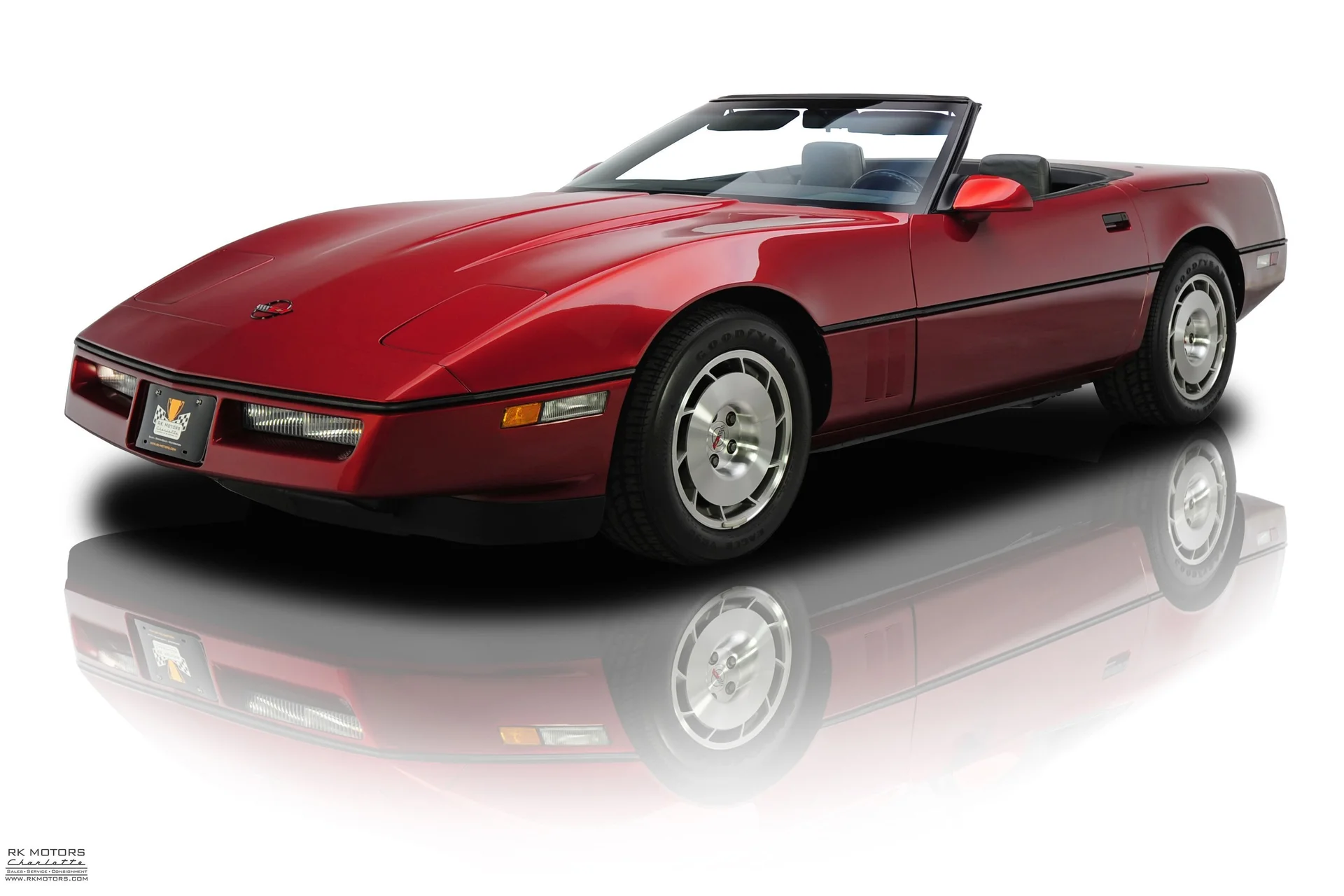
The year 1986 was electric. The Human Genome Project had just been launched, promising to map the very code of life. Email was emerging from the laboratory as the Internet Mail Access Protocol (IMAP) laid the foundations for global communication. IBM released the PC Convertible, the first-ever laptop, giving the term “mobility” new meaning. And in the world of cars, the Chevrolet Corvette—America’s enduring sports car icon—was quietly undergoing its own revolution.
This wasn’t a radical redesign year. The C4 generation had only just been introduced in 1984, and its sharp-edged form and advanced engineering were still fresh. But under its composite skin, the Corvette engineering team was pushing forward with meaningful refinements—technical leaps in security, braking, structural design, and even weight reduction. For the enthusiast, 1986 wasn’t just a “carryover” year; it was a moment when the Corvette redefined what a production sports car could deliver in safety, technology, and versatility.
Locking Down the Legend: VATS and the End of the Corvette Theft Epidemic

By the mid-1980s, Corvette theft had become a genuine crisis. Reports from law enforcement and insurance agencies showed that about 7 percent of all 1984 and 1985 Corvettes had been stolen—a staggering figure for a single model line. The very traits that made the Corvette desirable on the road—power, image, and exclusivity—were making it a prime target for thieves.
Chevrolet’s answer was the Vehicle Anti-Theft System (VATS), and in 1986, it became standard on every Corvette. VATS was deceptively simple but technically clever: each ignition key had a tiny embedded resistor “pellet” with a unique electrical value. When the driver inserted the key, a hidden electronic decoder checked the resistance and then allowed the starter relay or fuel pump to engage. Use the wrong key, and the car’s systems locked down for at least two minutes; in practice, some cases saw a 10–15 minute immobilization.
The VATS anti-theft solution worked—immediately. Corvette theft rates plummeted from 7 percent to less than 1 percent in 1986, and by early 1988, theft rates were effectively negligible. Insurance companies noticed, too—many offered 20–25% reductions in comprehensive coverage premiums for VATS-equipped cars. The system was so effective that GM quickly rolled it out to other high-value models, including the Camaro, Firebird, and Cadillac Allanté.
For Corvette owners, it meant peace of mind. For would-be thieves, it meant the game had changed.
ABS Arrives: Braking into the Future
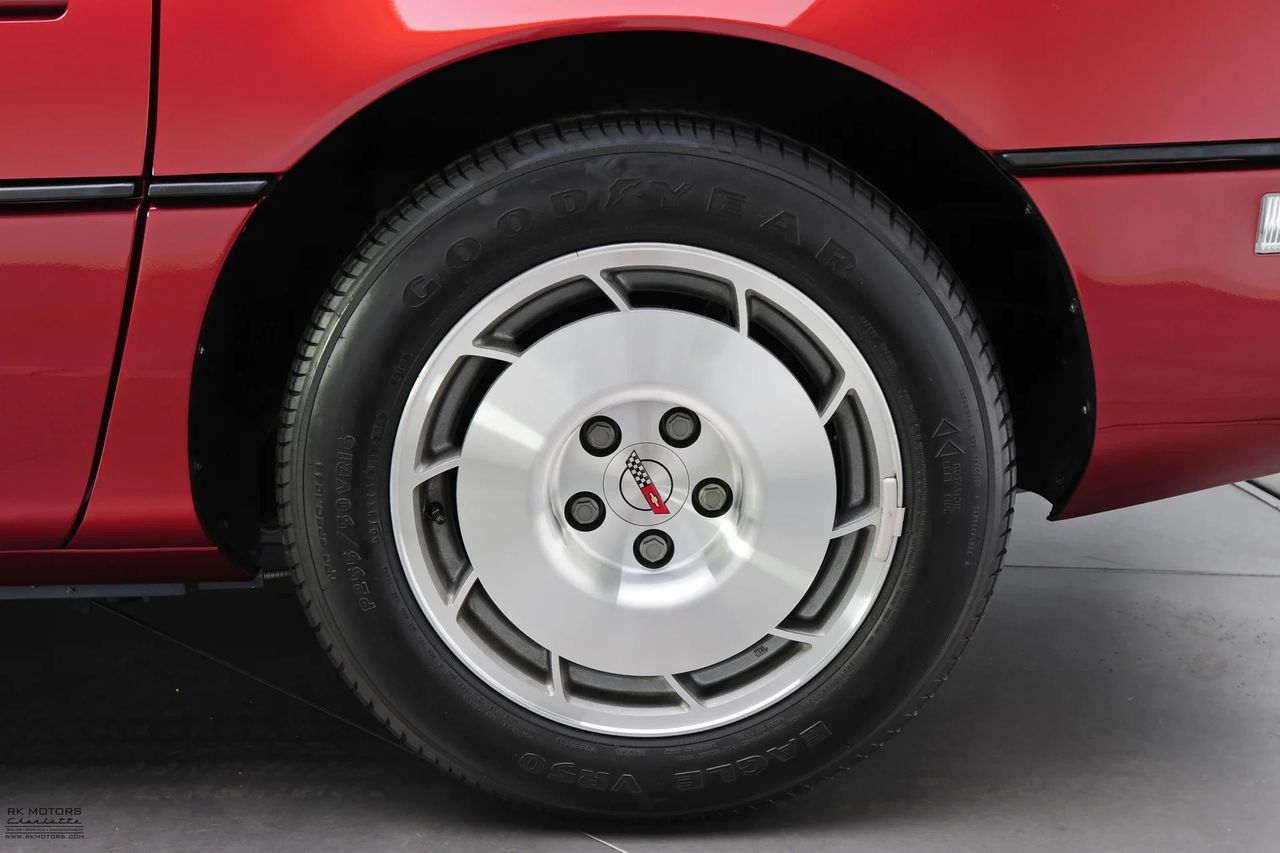
In 1986, antilock braking was still the realm of luxury sedans and high-end European exotics. But Chevrolet saw a clear advantage in a car with the Corvette’s speed and handling potential. Working with Bosch, Corvette engineers adapted the BoschABS II system to the C4’s four-wheel disc brake setup, making the Corvette one of the first production sports cars in the world—and the first in North America—to offer four-wheel ABS as standard.
The system continuously monitored each wheel’s rotation and could modulate brake pressure up to 15 times per second to prevent wheel lockup. In practical terms, it allowed drivers to brake hard—even in wet or uneven conditions—while maintaining steering control. In an era before widespread stability control, ABS gave the Corvette a crucial safety edge, especially at the speeds it was capable of.
The engineering challenge was integration without compromise. Corvette engineers ensured that ABS retained the direct pedal feel and short stopping distances that owners expected. While some early users reported the system’s characteristic pedal pulsation and “chatter,” these quirks were small trade-offs for the increased control. By introducing ABS on a high-performance platform, Chevrolet was signaling that advanced safety systems weren’t just for luxury cars—they belonged on the fastest cars, too.
Shedding Pounds and Adding Power: The Aluminum Head L98
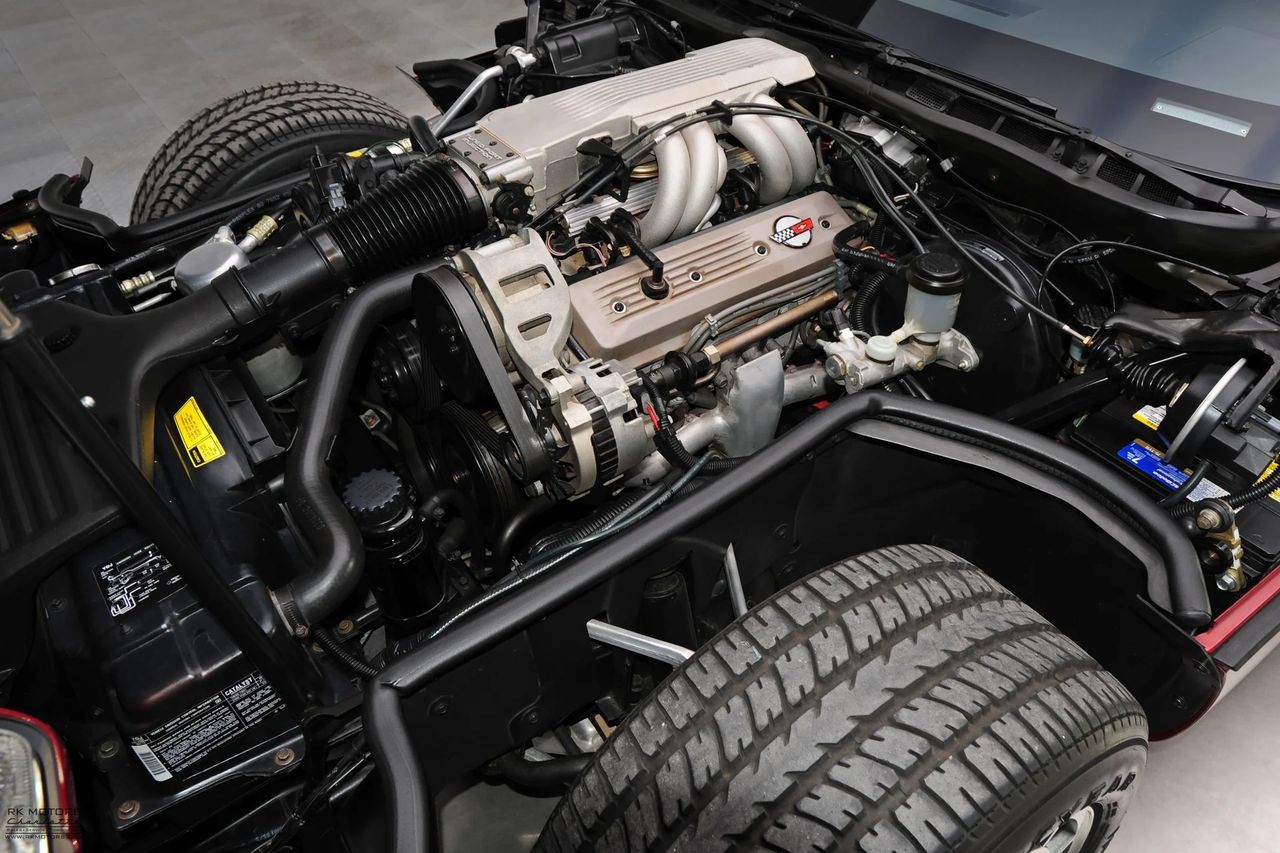
Weight is the enemy of performance, and Corvette engineers were relentless in shaving it away. For 1986, they turned to one of the most fundamental components of the L98 small-block V8: its cylinder heads. Out went the traditional cast-iron units, and in came aluminum heads, cutting about 125 pounds from the car’s curb weight. This change made the 1986 Corvette the first in two decades to dip below the 3,000-pound mark.
The benefits weren’t just on the scale. The aluminum heads allowed for improved heat dissipation, higher compression tolerance, and a modest bump in horsepower—from 230 hp in 1985 to 235 hp in the aluminum-equipped 1986 models. This was still a pre-LT1, pre-LS world, but the L98, with its tuned-port injection, was a torque-rich and tractable engine—making the Corvette as comfortable loafing through traffic as it was blasting down a straightaway.
The change wasn’t without growing pains. Early production aluminum heads were too thin in critical areas, leading to cracking under high loads. GM responded quickly with revised castings featuring thicker head-bolt bosses, centrally located copper-core spark plugs for improved combustion, and larger intake ports with hardened valve seats. Mid-year, these upgrades solidified the L98’s reputation for durability while keeping the weight and power advantages intact.
The Return of the Convertible—and an Indianapolis Homecoming
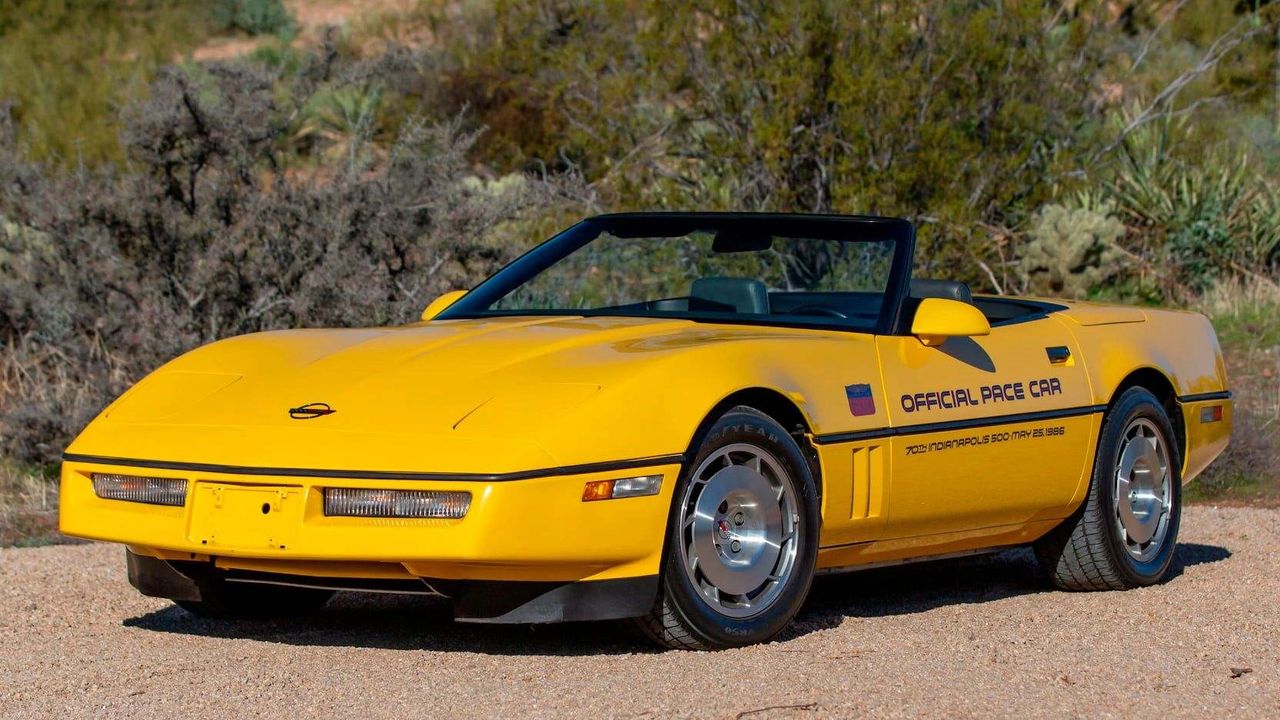
The biggest headline for 1986 wasn’t hidden in an ECU or under a new intake—it was out in the open air. For the first time since 1975, Chevrolet sold a factory Corvette convertible. Crucially, the C4 had been engineered from day one with an open car in mind, so the transformation wasn’t an afterthought: Chevrolet added an underbody X-brace and related stiffening pieces to shore up the structure (a factory solution that later became a popular retrofit for coupes). The result was a significantly more confidence-inspiring open car than a simple roof-ectomy would have delivered, with the added mass and bracing restoring much of the torsional rigidity owners expected. (It’s more accurate to say the bracing recovered stiffness versus a targa with its panel removed—not that the convertible was stiffer than a closed coupe.)
Then came the Brickyard. Chevrolet’s new drop-top was tapped to pace the 70th Indianapolis 500, and the official car wore bright yellow paint with “Official Pace Car” graphics. Mechanically, the pace car was essentially stock aside from safety equipment (fire system, five-point belts, roof beacons), a point Chevrolet was keen to make given the C4’s performance envelope. In a clever bit of marketing, every 1986 convertible was designated a Pace Car Replica, and buyers could install factory-style decal kits that matched the Indy look. Production of the convertibles totaled 7,315—a healthy number but short of Chevrolet’s loftiest hopes, not least because the convertible carried roughly a $4,000–$5,000 premium over a coupe, pushing stickers into the low-$30Ks.
1986 Paint Colors (with GM Codes)
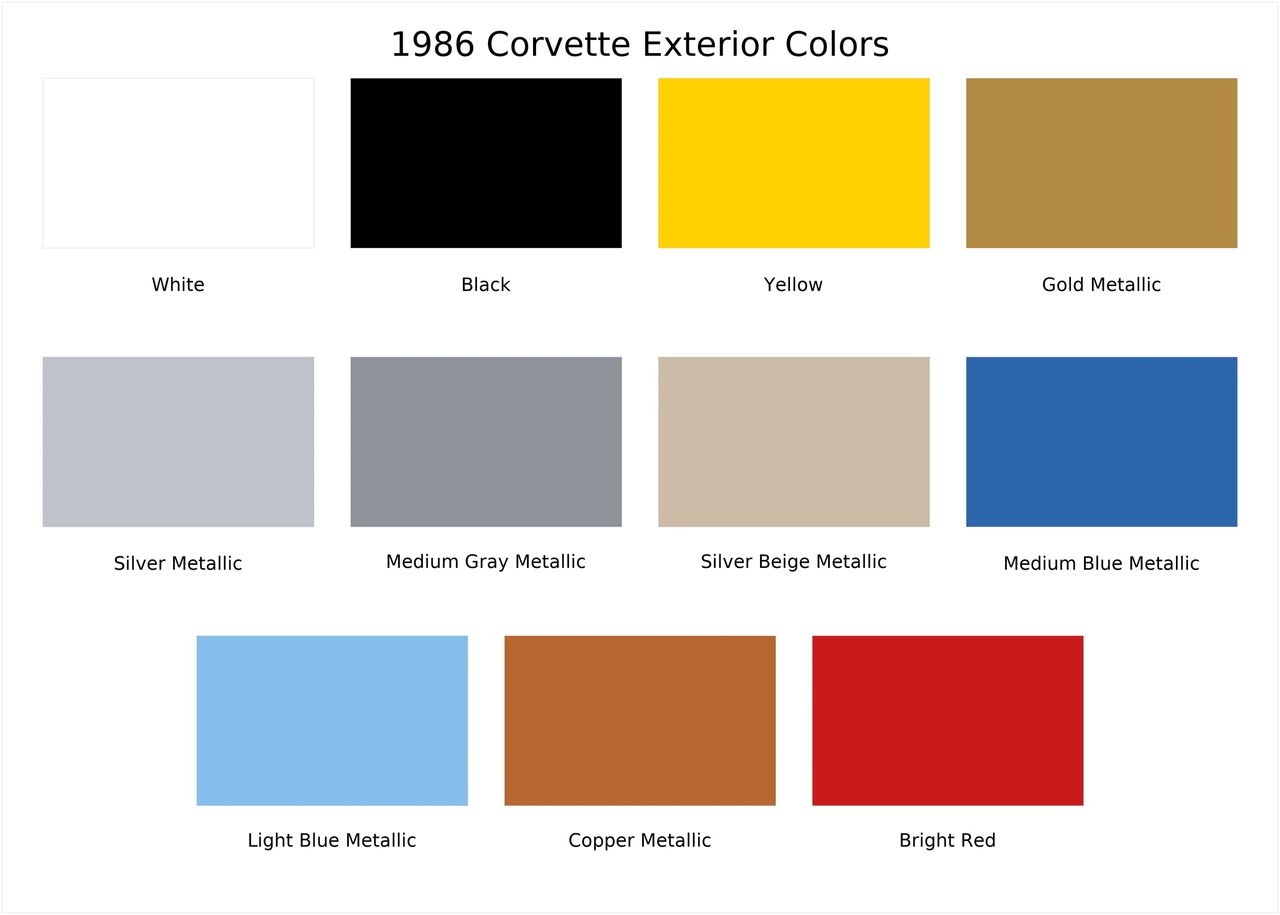
For 1986, the palette remained concise and classic—available across the line, with two-tone RPO D84 limited to coupes:
- White (40)
- Medium Gray Metallic (18)
- Black (41)
- Medium Blue Metallic (23)
- Light Blue Metallic (20)
- Gold Metallic (53)
- Light Bronze Metallic (63)
- Dark Bronze Metallic (66)
- Bright Red (81)
Two-tones (coupes only, RPO D84): Silver/Gray (13/18), Light Blue/Medium Blue (20/23), Light Bronze/Dark Bronze (63/66). These are the GM paint identifiers you’ll see on build sheets and labels; production references (Corvette Central Tech) also list per-color counts for 1986.
A small footnote worth noting
Beyond the roofline drama, 1986 also ushered in headline tech such as the available Bosch ABS (a period showpiece in road tests) and mid-year aluminum cylinder heads—changes that underlined how quickly the C4 was evolving while the convertible grabbed the spotlight.
Refinements That Made a Difference
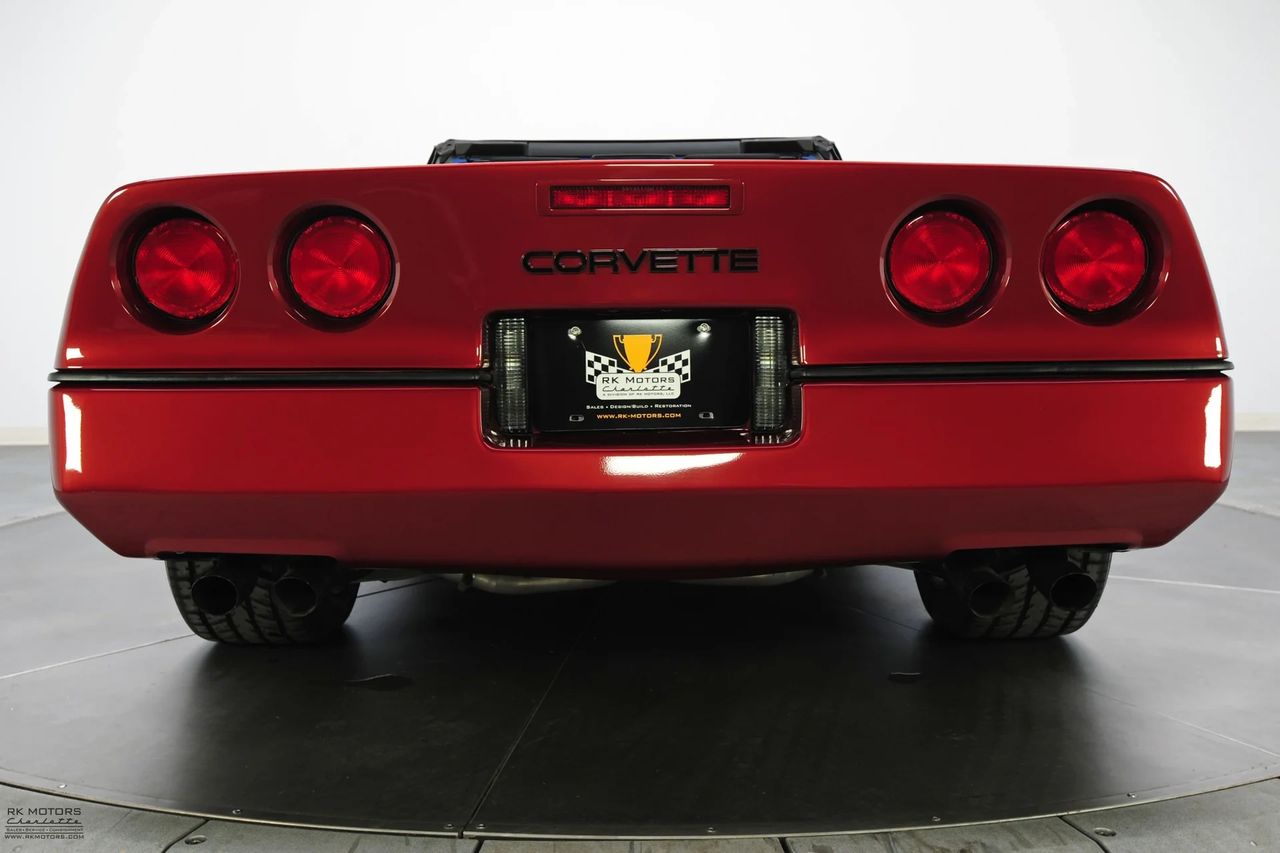
Not every change in 1986 made headlines, but many quietly improved the driving experience. A high-mounted third brake light—mandated by new federal safety regulations—appeared above the coupe’s rear hatch glass and was integrated into the convertible’s rear bumper. The wheel caster was increased from 3.8 to 6.0 degrees for better straight-line stability. Standard tire sizes grew to P245/VR50-16, improving grip without compromising ride quality; Z51 performance package cars retained their wider P255s.
Inside, the digital LCD dashboard was re-angled for better daytime visibility, though many drivers still found it difficult to read in bright light. New warning lights for low coolant and ABS status appeared, alongside an upshift indicator designed to maximize fuel economy and keep the Corvette out of the EPA’s “gas guzzler” penalty bracket. The shift light, controversial among purists, was tied to all transmissions, automatic and manual alike.
Performance, Price, and Perspective
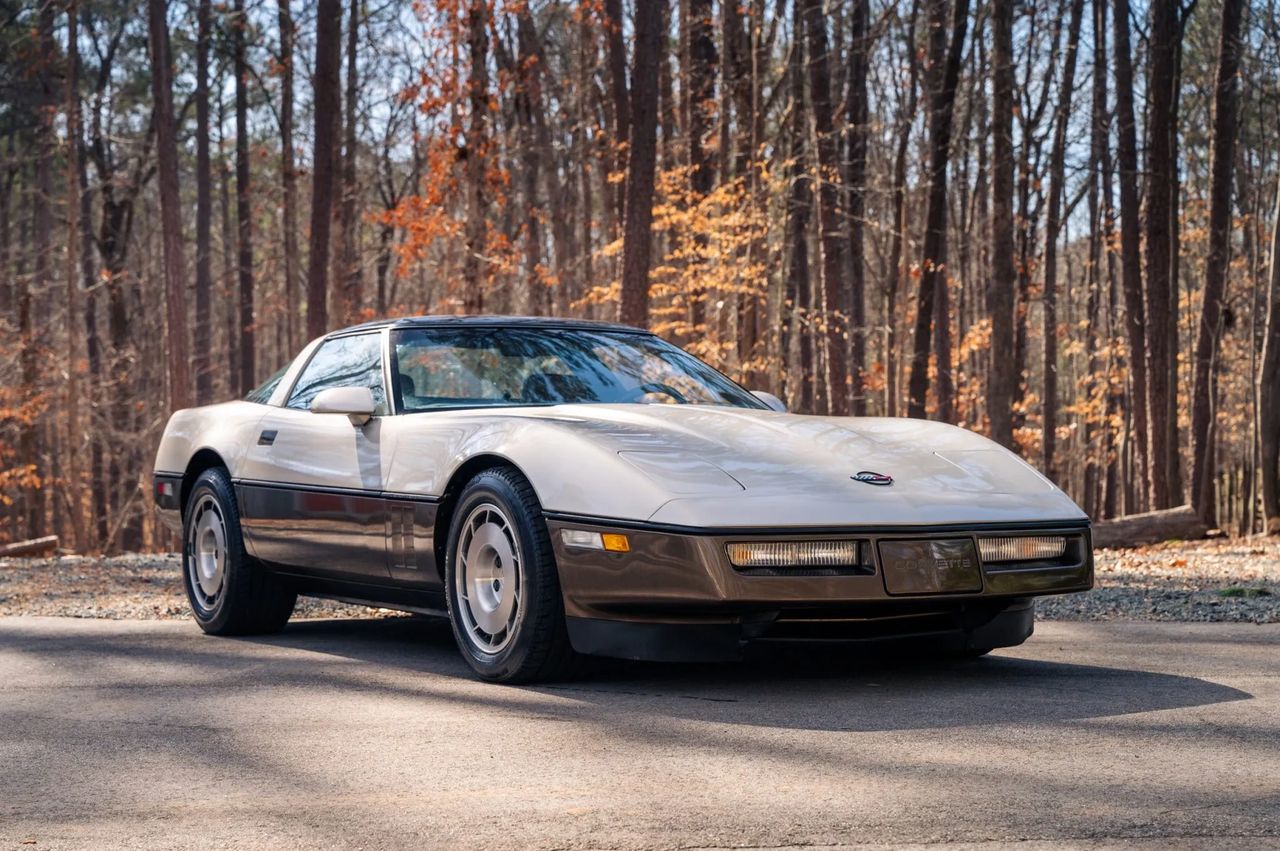
On paper, the 1986 Corvette remained an impressive performer: 0–60 mph in 5.8 seconds, a quarter mile in 14.4 seconds, and a top speed of around 150 mph. Production totaled 35,109 units—27,794 coupes and 7,315 convertibles. Pricing reflected its increasingly high-tech nature: the base coupe started at $27,027, while the convertible broke new ground for Corvette pricing at $32,032.
By the close of the model year, the 1986 Corvette stood as proof that a sports car could evolve without losing its soul. It had gained real-world security, cutting-edge safety, and open-air freedom—all without abandoning the sharp handling and straight-line punch that had always defined America’s sports car.
In a year when technology was reshaping how people lived, worked, and played, the Corvette showed that the same spirit of innovation could be applied to four wheels and a roaring small-block V8. For some, 1986 was the year the Corvette got smarter. For others, it was simply the year the Corvette reminded the world it could keep pace with the future—at full throttle.
1986 Corvette — Key Specifications
Quick Stats
- Engine: 5.7L (350 cu in) L98 Tuned Port Injection V8
- Output: 230 hp @ 4,000 rpm, 330 lb-ft @ 3,200 rpm; late-’86 aluminum-head L98s rated 235 hp. National Corvette Museum+1
- Transmissions: 4-speed auto (TH700-R4) • 4+3 Doug Nash manual (4-speed with automatic overdrive in 2nd–4th) National Corvette Museum
- Driveline/Layout: Front-engine, rear-wheel drive
- Curb weight (approx.): 3,100 lb (coupe) • 3,280 lb (convertible) CorvSport.com
Performance (period figures)
- 0–60 mph: ~5.6–5.9 sec (factory/period tests)
- Top speed: ~150 mph
- Skidpad: up to ~0.90 g with performance package/tire spec
- Braking: First year for Bosch ABS II (4-wheel), widely praised in road tests. National Corvette Museum+1
Chassis, Suspension & Brakes
- Structure: Uniframe with bolt-on front/rear cradles; composite body panels
- Front/Rear Suspension: Aluminum control arms, independent rear five-link, transverse composite leaf springs; gas-pressurized shocks (Delco-Bilstein std. w/ Z51, avail. on base) National Corvette Museum
- Steering: Power rack-and-pinion
- Brakes: Power 4-wheel discs, ventilated rotors; Bosch ABS II standard for 1986 National Corvette Museum
- Z51 Performance Handling Package: higher-rate springs/bars, Delco-Bilstein shocks, heavy-duty cooling, 16×9.5-in wheels, quicker steering. National Corvette Museum
Wheels & Tires
- Standard wheels: 16×8.5-in cast aluminum
- Z51 wheels: 16×9.5-in
- Tires (typical): P255/50VR-16 Goodyear Eagle VR50 “Gatorback.” National Corvette Museum
Dimensions & Capacities
- Wheelbase: 96.2 in • L/W/H: 176.5 / 71.0 / 46.4–46.7 in
- Track (F/R): 59.6 / 60.4 in
- Fuel capacity: 20.0 gal
- Notable aero: advertised Cd ≈ 0.323. National Corvette Museum
Powertrain Details
- Engine code: L98 (TPI, long-runner intake)
- Compression ratio: ~9.5:1 (factory spec)
- Heads: Cast-iron early; aluminum heads mid-year on some builds (VIN suffixes identify 235-hp alum-head cars). National Corvette Museum+1
- Common axle ratios: ~2.73 (auto) • 3.07 (manual) CorvSport.com
Paint & Trim (with GM codes)
Singles: White (40), Silver Metallic (13), Medium Gray Metallic (18/WA7719), Nassau Blue Metallic (20/WA8770), Yellow (35/WA8769), Black (41/WA8555), Gold Metallic (53), Silver Beige Metallic (59/WA8773), Copper Metallic (66/WA8754), Medium Brown/Dark Beige Metallic (69/WA8771), Dark Red Metallic (74/WA8748), Bright Red (81/WA8774). (Numbers are GM paint codes as printed on build/RPO labels.) Corvette Action Center+1
Two-tones (RPO D84, coupes only): Silver/Gray (13/18), Light Blue/Medium Blue (20/23), Light Bronze/Medium Brown (63/69) as listed in factory option guides for 1986. CorvSport.com
Features that debuted/became standard in 1986
- Convertible body style returned (ASC-built) with structural X-brace & added stiffening
- Bosch ABS II anti-lock brakes
- VATS (Vehicle Anti-Theft System) with resistor-key ignition.