
By the late 1960s, Chevrolet found itself in a fascinating position.
The Corvette was no longer an experiment. It was no longer a curiosity. It was no longer the “underdog” American sports car trying to prove it belonged in the same conversation as Europe’s best. By then, the Corvette had grown teeth. It had racing credibility. It had real performance. And with the arrival of the all-new C3 for 1968, it had a dramatic, high-style body that looked every bit as provocative as the era demanded. Sales were strong, public interest was high, and the car’s image had never burned brighter. In 1967, Chevrolet built 22,940 Corvettes. For 1968, first-year C3 production climbed to 28,566, and by 1969 it would rise again to 38,762. From a business standpoint, the argument for radical reinvention was not exactly urgent.
And yet, inside General Motors, the idea of a mid-engine Corvette would not go away.
That tension is what makes the 1968 XP-880 Astro II such a compelling chapter in Corvette history. It was born at the precise intersection of ambition and restraint, of engineering courage and corporate caution. It was a machine that asked a dangerous question at exactly the wrong time for a company already selling every Corvette it could build: what if America’s sports car stopped looking over its shoulder at Europe and instead decided to beat Europe at its own game?
The Astro II was not the first Chevrolet research vehicle to place the engine behind the driver, nor was it the first GM concept to flirt with exotic architecture. But it was the first true mid-engine Corvette prototype that looked, felt, and presented itself as something plausibly connected to the Corvette production line. It was not an abstract laboratory object. It was not a pure race mule. It was a Corvette-shaped provocation, and when it appeared before the public in April 1968 at the New York Auto Show, it ignited exactly the kind of speculation Chevrolet both wanted and feared.
To understand why the Astro II still matters today, you have to understand the moment that produced it.
The Pressure of the Era
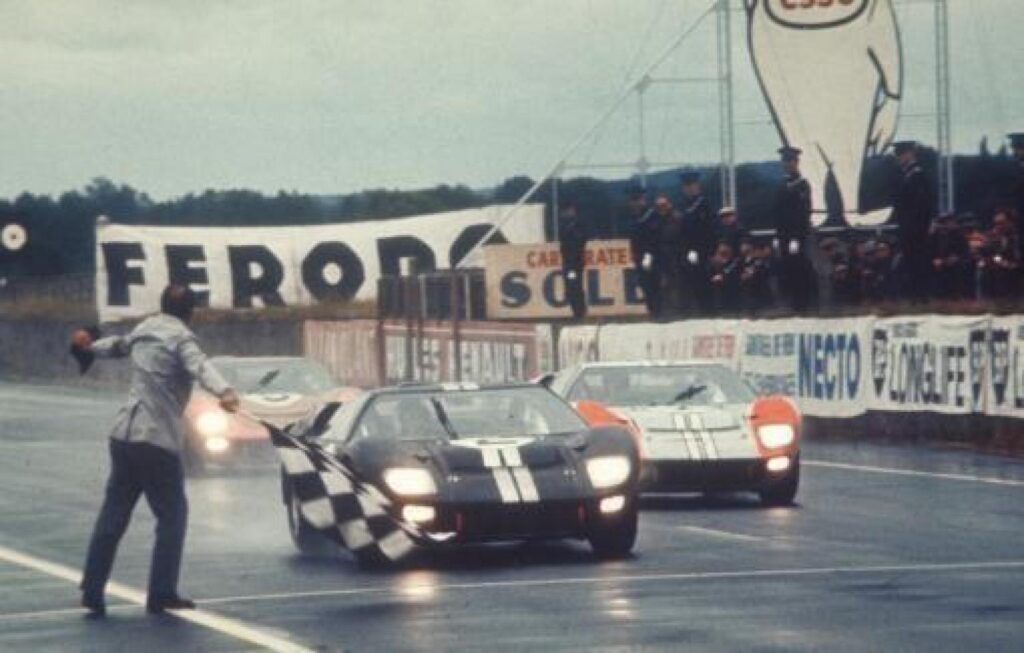
The 1960s were not gentle years in the performance world. They were aggressive, glamorous, and deeply competitive. Racing programs had become extensions of national identity and corporate bravado. Ford’s GT40 program, with its famous Le Mans triumphs over Ferrari, had dramatically reshaped the conversation around what an American company could do when it set its mind to European-style performance. Even for brands not directly contesting that exact battlefield, the message was unmistakable: image mattered, engineering theater mattered, and exoticism mattered.
Within Chevrolet and GM more broadly, there was no shortage of people who understood this. Zora Arkus-Duntov had long believed that the Corvette’s future, at least at the highest level of world performance, pointed toward a mid-engine configuration. GM had already explored rear- and mid-engine ideas through vehicles like CERV I, CERV II, the GS II, and other research efforts. The Astro II did not emerge from nowhere. It emerged from a growing internal belief that the conventional front-engine layout, no matter how capable, might ultimately limit how far Corvette could go in image, packaging, and performance.
The Astro II was also shaped by another reality: GM was a huge corporation, and huge corporations rarely leap without a net. If Chevrolet was going to explore a mid-engine Corvette, the company was going to do it first through a concept that combined vision with practical experimentation. That is where Frank Winchell and his team entered the picture.
Frank Winchell, Larry Nies, and the Engineering Problem
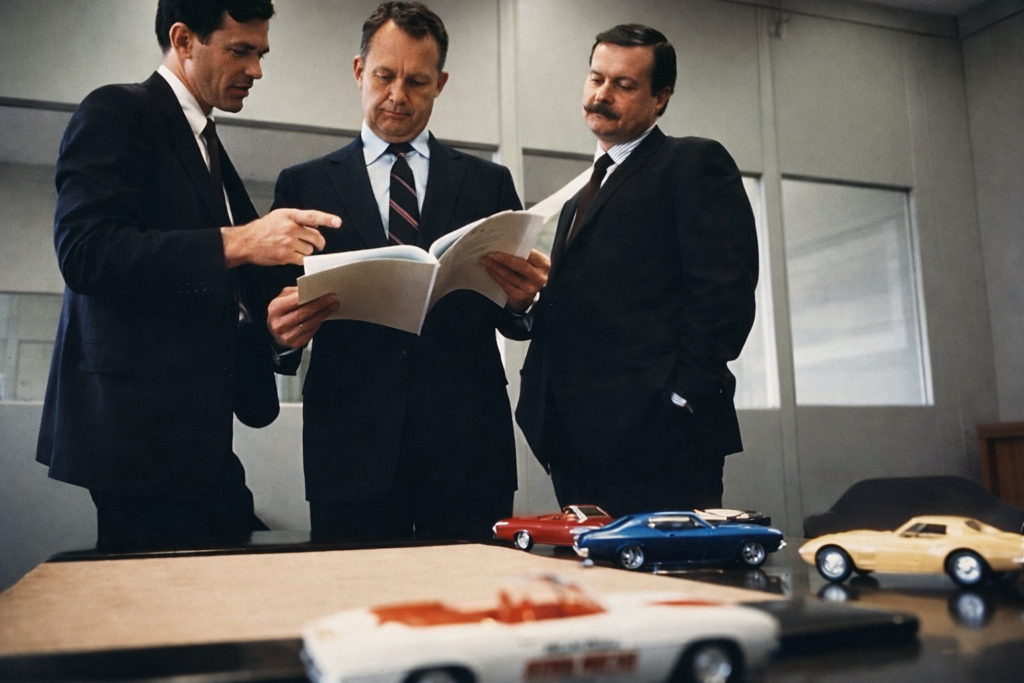
Frank Winchell, who led Chevrolet’s Research and Development organization, was central to the Astro II story. Under his direction, the 1968 XP-880 Astro II became more than a styling proposal. It became a genuine engineering exercise—an attempt to figure out how one might package big-block American power in an all-new, mid-engine sports car without losing the structural discipline, drivability potential, and brand identity that would make such a machine feel authentically Chevrolet.
Larry Nies was tasked with solving what was, in truth, a vicious packaging puzzle.
A big-block 427 cubic-inch V8 is not a delicate piece of hardware. They are large, heavy, and not naturally suited to compact, mid-engine layouts. But Nies and the engineering group were determined to see what could be done. Their answer was ingenious: reverse the engine in the chassis. By turning the Mark IV big-block 180 degrees, the bulky accessory drive, water pump, alternator, and other front-mounted hardware could be moved rearward, creating additional room near the passenger compartment. The engine’s starter and ring gear wound up beneath the seatback area, while the accessory mass was moved farther aft. It was a deeply practical solution to an otherwise brutal spatial problem.

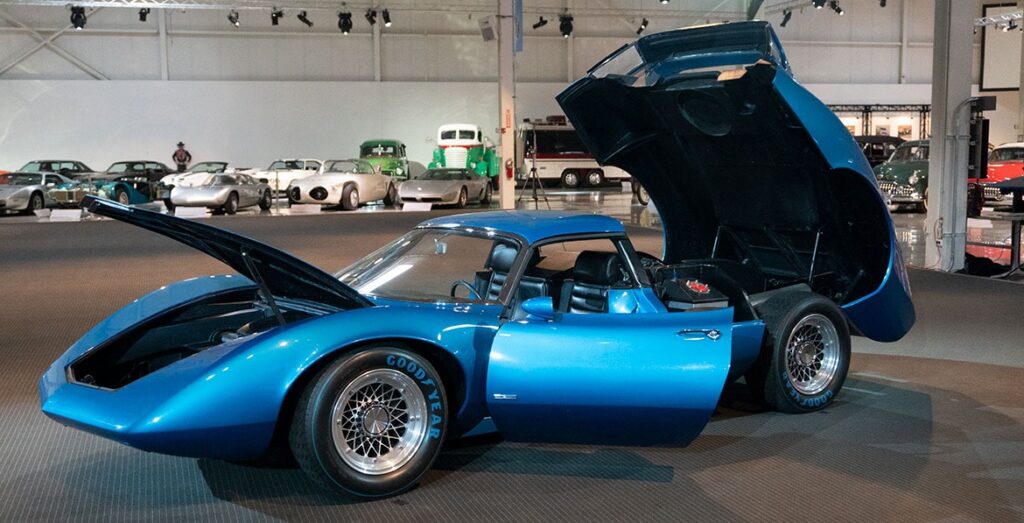
The XP-880’s structure was equally interesting. Rather than relying on a traditional production-style frame, the Astro II used a welded steel backbone chassis. This central spine housed key mass and helped organize the car around its mid-mounted powertrain. The layout also included a centrally mounted fuel bladder and a radiator placed at the rear, with venting integrated into the bodywork to manage airflow and cooling. From an engineering standpoint, this was not simply a Corvette body draped over a novelty chassis. It was a purpose-built architecture designed around the logic of a mid-engine sports car.
What makes the 1968 XP-880 Astro II especially fascinating is that its revolutionary layout coexisted with a heavy use of production-derived parts. Chevrolet was not trying to reinvent every nut and bolt. The front suspension incorporated largely off-the-shelf components, including Camaro wishbones, Corvette brakes, Oldsmobile Toronado universal joints, rack-and-pinion steering, and custom upper-control-arm geometry intended to keep the roll center very low. That mix of improvisation and discipline tells you a great deal about what the car really was: not a fantasy in fiberglass, but an experimental machine assembled quickly and intelligently to test a serious idea.
The 1968 XP-880 astro II: Big Power, Clever Compromise, and One Serious Weakness
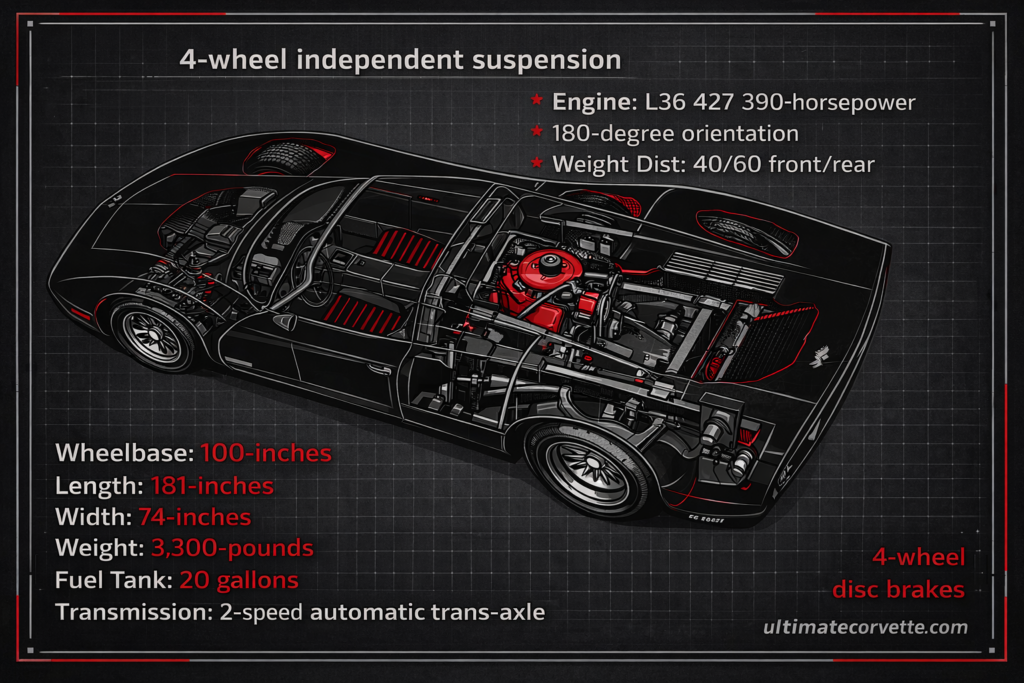
Power came from Chevrolet’s 427-cubic-inch Mark IV big-block V8, rated in period sources at roughly 390 to 400 horsepower depending on the source cited. Either way, the point was the same: this was a real engine, with real output and real intent. Chevrolet was not pretending. The Astro II was built around the kind of displacement and torque that defined American performance at its most unapologetic.
The problem was not the engine.
The problem was what sat behind it.
To transmit power to the rear wheels, engineers used a two-speed automatic transaxle from a 1963 Pontiac Tempest. On paper, this choice made sense. It was available, compact enough to adapt, and suited the rapid development schedule of a concept program. In practice, it was a weak link. The Tempest transaxle was not really up to handling sustained big-block torque in a demanding mid-engine application. Contemporary and retrospective sources alike point to this transmission choice as one of the Astro II’s most significant technical compromises, and when the transaxle proved inadequate, the system required redesign.
That detail matters because it gets to the heart of the Astro II’s dual identity.
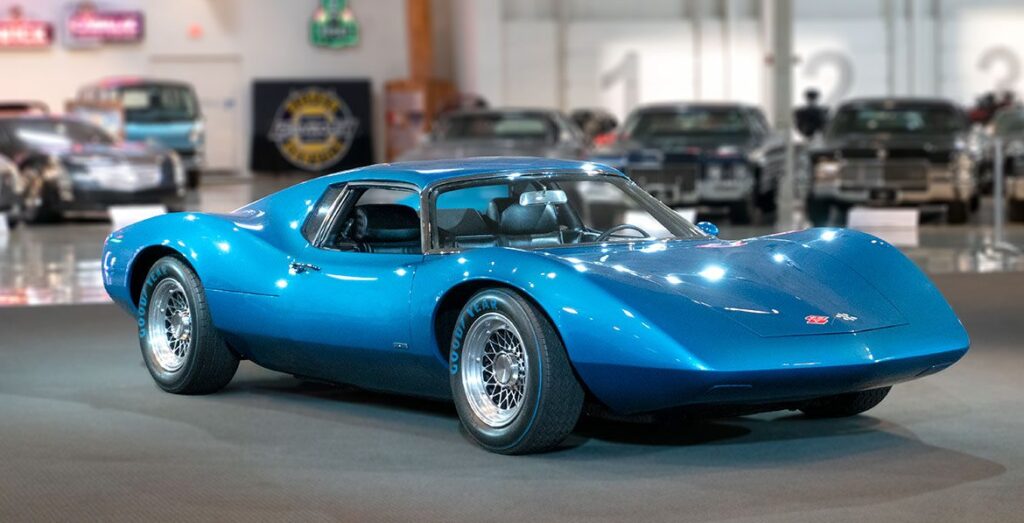
The car was advanced enough to feel credible, but not yet resolved enough to be production-ready. Astro II was an elegant proof of concept, not a finished automobile. Chevrolet had demonstrated that it could package a big-block V8 behind the driver in something that looked and felt like a legitimate Corvette offshoot. What it had not yet proven was whether such a machine could be mass-produced at the right price, with the durability customers would expect, and with a transaxle stout enough to repeatedly produce the kind of performance the layout promised.
Even so, the 1968 XP-880 Astro II still hinted at genuinely startling capability. Riding on G70-15 tires and cast-aluminum wheels, with four-wheel disc brakes and its mass centralized within the chassis, the car reportedly generated 1.00 g of cornering grip—an astonishing figure for the era, particularly on street tires. That number has been repeated so often over the years that it has taken on a life of its own, and whether it is read as a precise engineering benchmark or as period shorthand for what the car could do, the broader takeaway remains the same: Astro II made the dynamic promise of a mid-engine Corvette impossible to ignore.
Larry Shinoda and the Art of Making It Look Inevitable
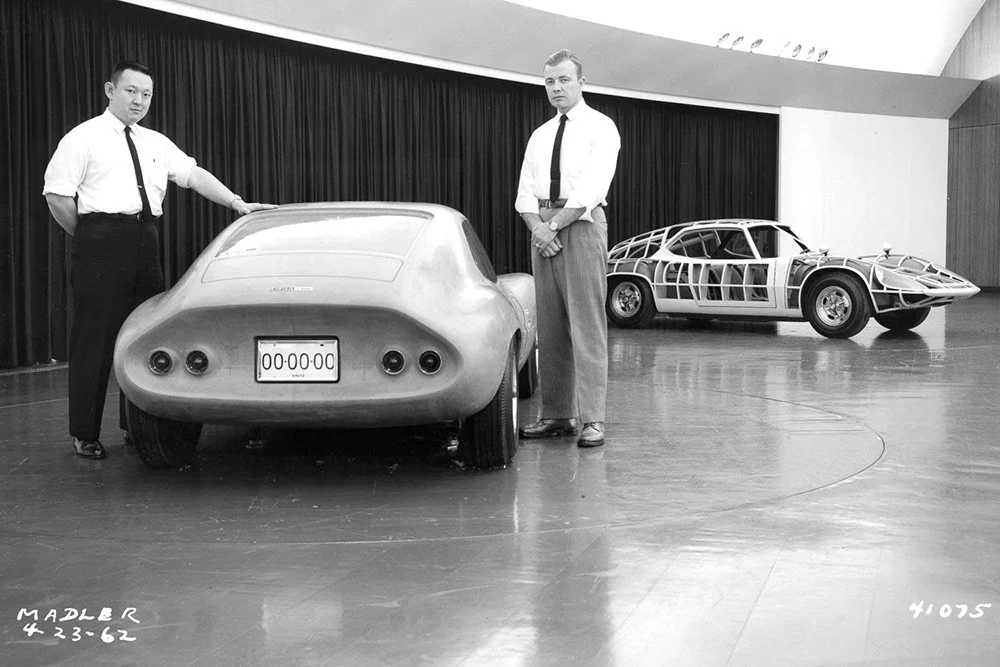
If Winchell and Nies gave the Astro II its architectural seriousness, Larry Shinoda gave it its soul.
Shinoda was already one of the defining design voices in Corvette history. His work on cars like the Mako Shark II, the Monza SS, and other GM performance concepts had established him as a master of muscular elegance. The Astro II gave him a chance to translate that language into something more compact, more contemporary, and more overtly European in proportion without abandoning Corvette identity.
That balancing act is one of the car’s greatest triumphs.
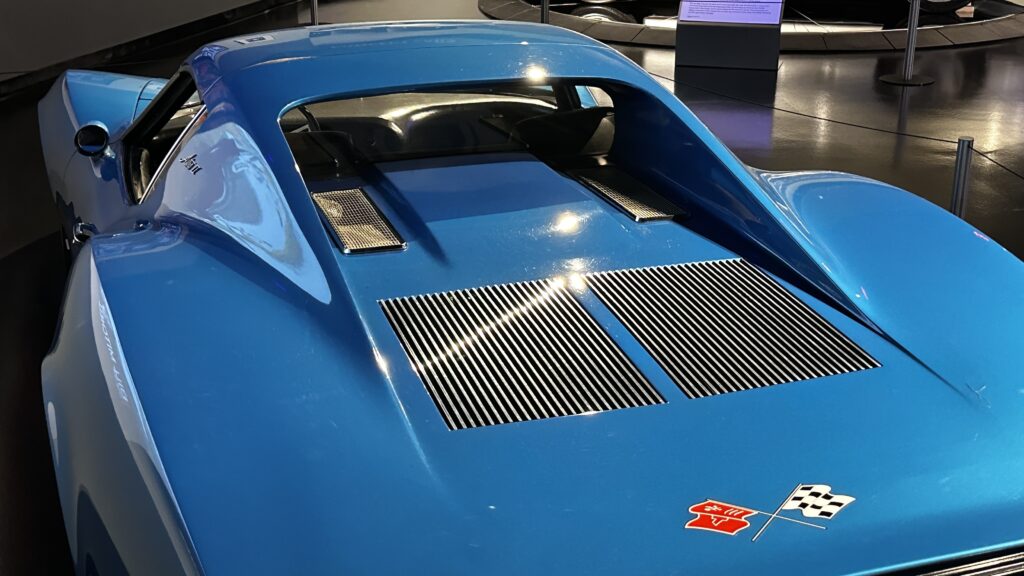
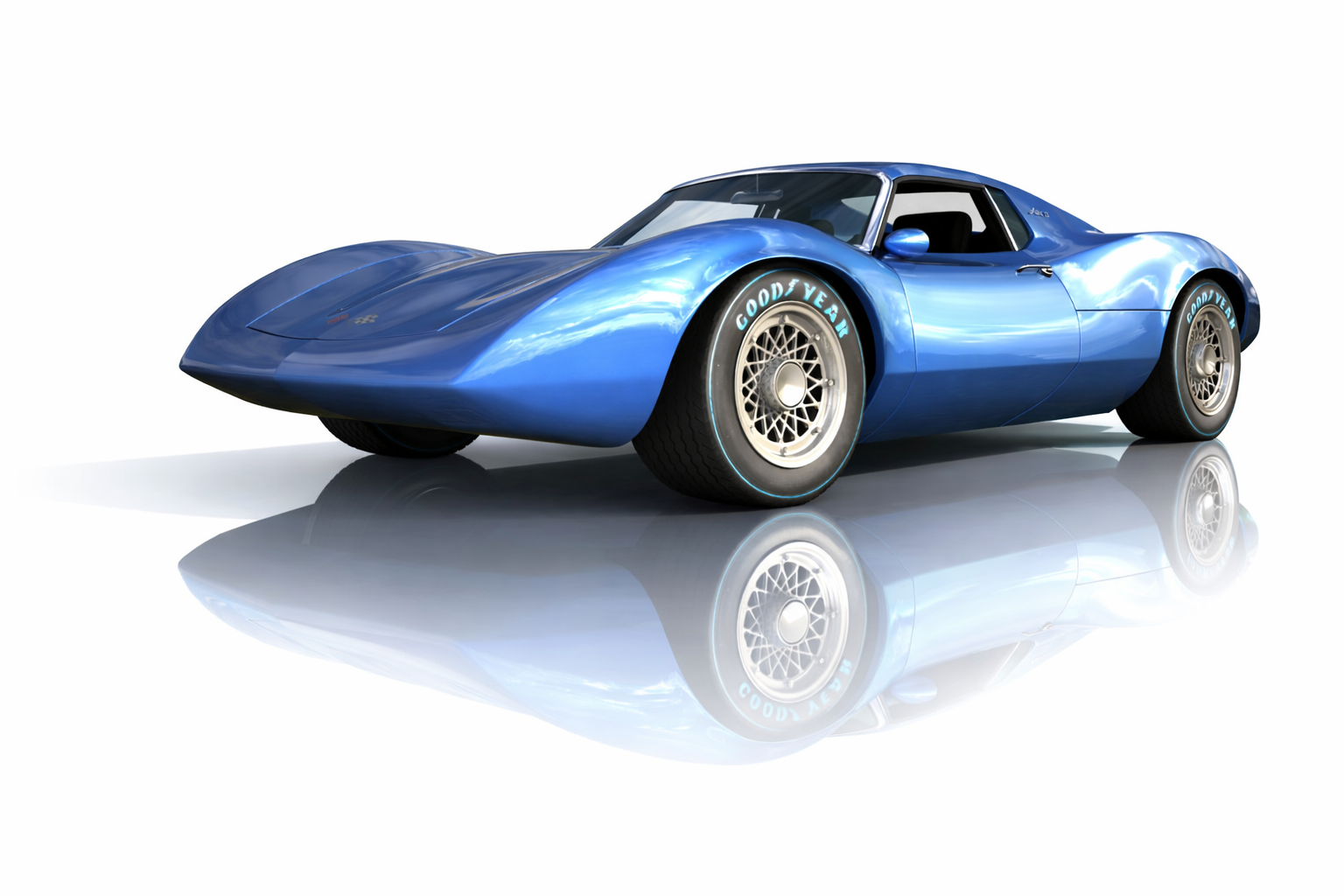
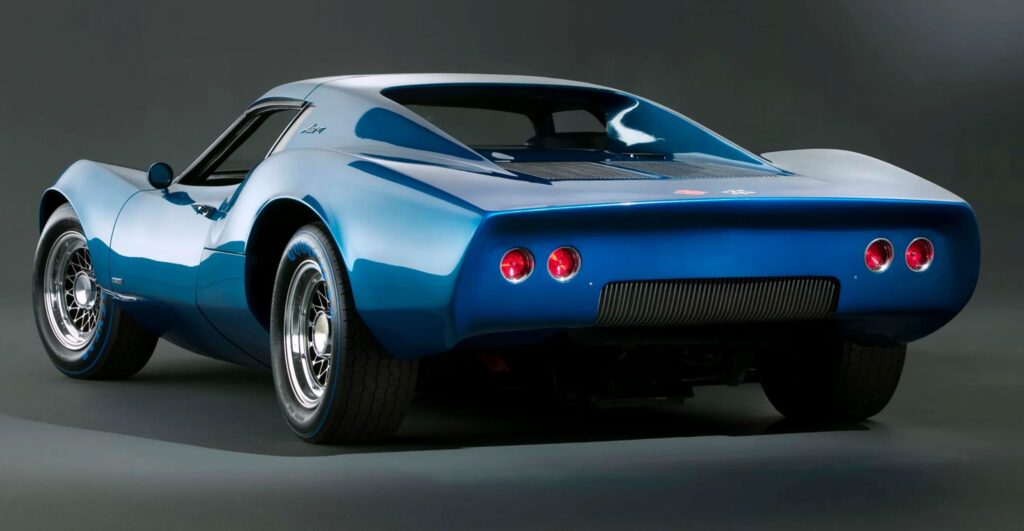
The 1968 XP-880 Astro II did not look like a foreign car with Corvette badges. It looked like a Corvette pulled taut around a new idea. The body carried the familiar emotional cues of the brand—curved fender masses, pronounced haunches, a pointed nose, Corvette taillight graphics, and a cockpit-forward stance—but everything was re-proportioned around the logic of the mid-engine package. The rear deck sat higher to clear the big-block and cooling layout. The tail incorporated vents to support the rear-mounted radiator arrangement. The signature “sugar scoop” rear window added drama while visually tying the roofline into the swollen rear bodywork. The front fascia was nearly seamless, lacking the overt grille treatment and bumper interruptions buyers expected from more conventional cars of the day.
Just as importantly, the Astro II looked usable.
Unlike the more radical Astro I that preceded it, the Astro II had conventional doors, a defined front storage area, and a rear body section that could be lifted for engine access. It looked less like a highly stylized concept car and more like a serious proposal. In truth, that may have been its most dangerous quality. Plenty of concepts are too wild to threaten the status quo. The Astro II was not. It looked close enough to reality to prompt people to wonder whether Chevrolet might actually build it.
New York, 1968: The Public Debut of the Astro II Concept
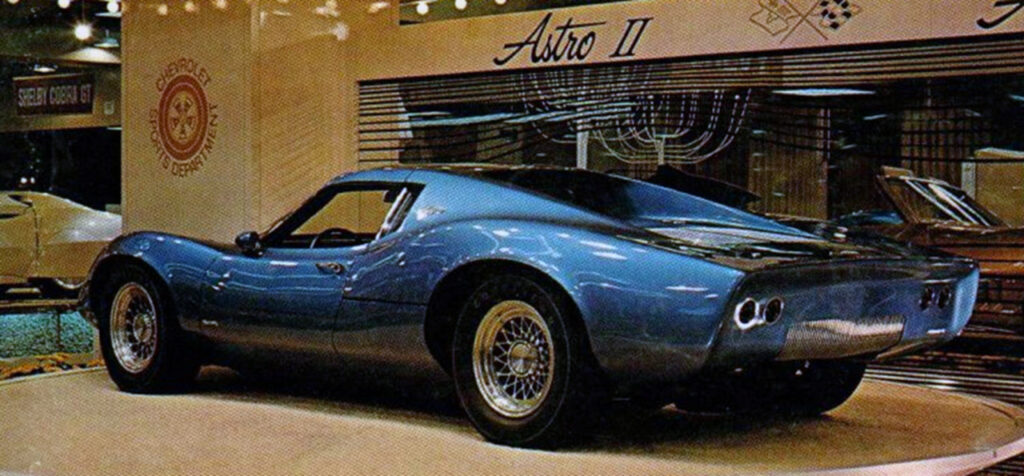
By the time the 1968 XP-880 Astro II reached the New York Auto Show in April 1968, the new C3 Corvette was already in production and on the road. That timing was important. Chevrolet was not unveiling the Astro II because the existing Corvette had failed. It was a car unveiling because the company wanted to gauge public reaction to what a more evolved future Corvette might look like.
For its debut, the car was painted Firefrost Blue, a luminous, high-drama color that suited both Bill Mitchell’s taste and the car’s almost liquid body surfaces. It was low—just 43.7 inches tall according to GM Heritage material—and visually arresting in exactly the way a dream car needed to be. Showgoers saw something that looked simultaneously familiar and radical. It was unmistakably part of the Corvette universe, yet it also suggested a future in which Chevrolet would no longer be content merely refining the front-engine recipe.
Speculation followed immediately.
Was this the next Corvette? Was Chevrolet preparing to strike directly at Europe’s exotics? Was America’s sports car about to move its heart behind the driver?
Those questions were the point. The 1968 XP-880 Astro II did not need to enter production to do important work for Chevrolet. It only needed to widen the imaginative boundaries of what Corvette could be. In that respect, it succeeded brilliantly.
Why It Didn’t Happen
This is the part of the Astro II story where romance collides with arithmetic.
The C3 Corvette was succeeding. Dealers had demand. Buyers loved the styling. The Corvette had momentum, and momentum matters inside a corporation. A mid-engine production program would have required vast investment, major engineering development, new supply solutions, stronger transaxle technology, and almost certainly a higher price with lower volume. From Chevrolet’s point of view, that was a difficult argument to win when the existing formula was already printing enthusiasm and profit.
That is why the Astro II remains such a bittersweet artifact. It was not killed because it lacked imagination. It was not killed because it lacked aesthetic credibility. It was not even killed because the mid-engine idea was inherently unsound. It stalled because the business case was weak and the technical path to production was still expensive and incomplete. Chevrolet did not yet have a convincing answer to the question every large automaker eventually asks of every bold idea: yes, but can we make money on it in meaningful volume?
And so the car became what so many visionary machines become: a clue instead of a product.
The Quiet Influence of a Car That Never Reached Showrooms
The 1968 XP-880 Astro II Corvette concept never entered production, but it did not vanish without leaving fingerprints.
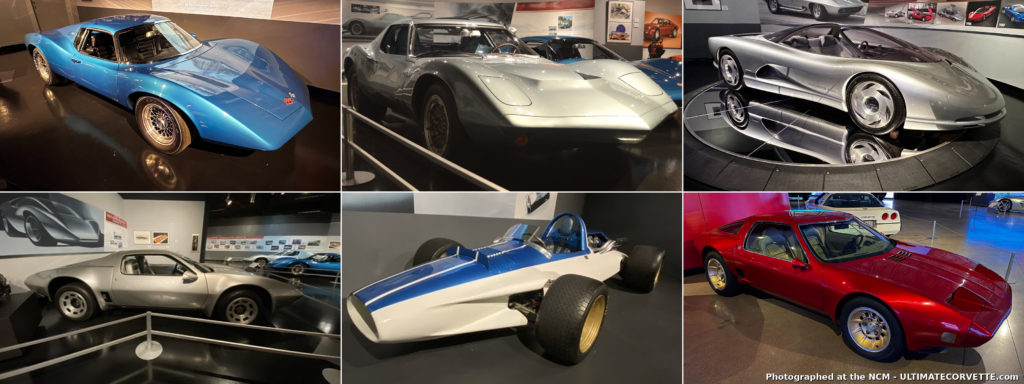
Its broader influence can be seen in how it helped keep the mid-engine Corvette dream alive inside GM and in the public imagination. Once people had seen a Corvette-shaped machine with its engine behind the driver, the notion could no longer be dismissed as fantasy. The Astro II made the idea concrete. Later prototypes—the XP-882, Aerovette, Corvette Indy, CERV III, and eventually the production C8—would all move through a conceptual doorway that cars like the Astro II helped open.
Its styling influence appears to have been more direct still. Retrospective accounts from major enthusiast publications note that the Astro II’s body-color front treatment anticipated the 1973 Corvette’s cleaner nose, while its rear-end theme foreshadowed elements of the 1974 Corvette’s redesigned tail. Whether one wants to describe that as direct lineage or strong visual echo, the resemblance is real enough that the Astro II can fairly be read as a concept whose ideas did, in softened form, slip into production reality.
That, too, is part of how concept cars work. Not every dream reaches the street whole. Sometimes it is disassembled into gestures, surfaces, proportions, and ideas that gradually find their way into the showroom through side doors.
And that is precisely where the Astro II earns a more serious reading. It was not merely an exotic dead end or a dramatic showpiece created to stir crowds beneath the lights of an auto show stand. It was a rolling design argument—one that tested how far Chevrolet could stretch Corvette language without breaking it. Even stripped of its mid-engine destiny, the car still contributed. Its sharp, uncluttered front treatment, its tapered tail, and its overall sense of compression and purpose all suggested a future in which the Corvette could look cleaner, lower, and more sophisticated without surrendering its identity.
Seen that way, the Astro II occupies a fascinating middle ground in Corvette history. It was too advanced, too specialized, and too uncompromising to become a production car in its own right. But it was also too thoughtful, too resolved, and too influential to dismiss as a mere styling exercise. Some of its ideas were simply too good to disappear. They were absorbed, translated, and made digestible for production—muted where necessary, refined where practical, but still present. The result is that the Astro II’s legacy is not confined to the realm of unrealized possibility. Parts of it escaped the dreamscape and entered the bloodstream of the Corvette itself.
Why the 1968 XP-880 Astro II Still Matters Today
The Astro II matters because it was one of the first times Chevrolet publicly revealed that the Corvette’s future might not be bound to tradition forever. It matters because it translated engineering restlessness into an object people could see, photograph, debate, and remember. It matters because it proved that Corvette designers and engineers were thinking in larger, bolder terms than the production line alone might suggest. And it matters because, more than fifty years before the C8 finally carried a mid-engine Corvette into showrooms, the Astro II made that future visible.
In a very real sense, the Astro II was not a failed Corvette. It was an early draft of a promise.
Today, preserved within GM’s heritage collection and displayed through institutions like the National Corvette Museum, the Astro II survives as more than a beautiful blue show car. It survives as evidence. Evidence that the mid-engine idea had real engineering substance decades before the C8. Evidence that Corvette’s stewards were willing, at least in flashes, to imagine something much more radical than the market required. Evidence that the dream did not begin in the 2010s, or even the 1980s, but deep in the experimental bloodstream of the 1960s.
And perhaps that is the most compelling thing about the XP-880 Astro II.
It was not built because Chevrolet had to build it. Chevrolet was already winning plenty of attention with the Corvette it had. The Astro II was built because somebody inside GM still believed that America’s sports car could be something even more exotic, more sophisticated, and more daring than the public had yet seen. That belief did not produce an immediate revolution in the showroom. But it did produce one of the most important concept cars in Corvette history.
The Astro II stands today as a polished, low-slung reminder that some of the most important cars are not the ones that make production. Sometimes the cars that matter most are the ones that reveal where the people behind the badge were trying to go.
And in the case of the Astro II, where they were trying to go was the future.