
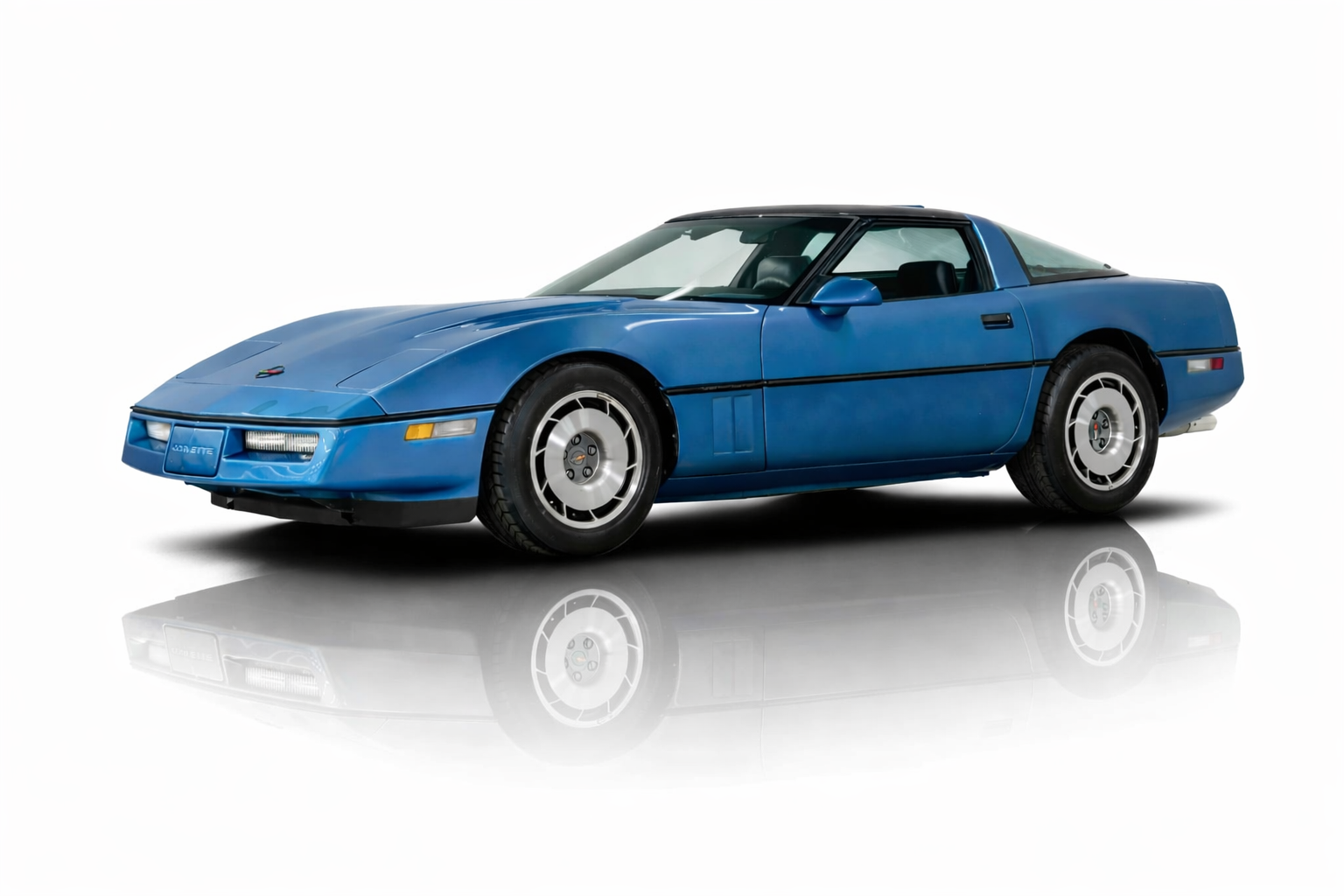
In the long arc of Corvette history, 1987 is often remembered less as a year of revolutionary leaps and more as one of careful refinements. Yet to dismiss the ’87 as incremental would be to miss the subtle ways in which Chevrolet engineers, bolstered by transatlantic partnerships and a growing aftermarket performance culture, helped transform the C4 Corvette into a sharper, more sophisticated sports car. From hydraulic roller lifters and improved cooling to an entirely new handling package and a factory-sanctioned twin-turbo option, the 1987 model year underscored that Corvette was on the cusp of becoming not just “America’s sports car,” but a legitimate contender on the global stage.
British Inspiration: GM’s Lotus Partnership
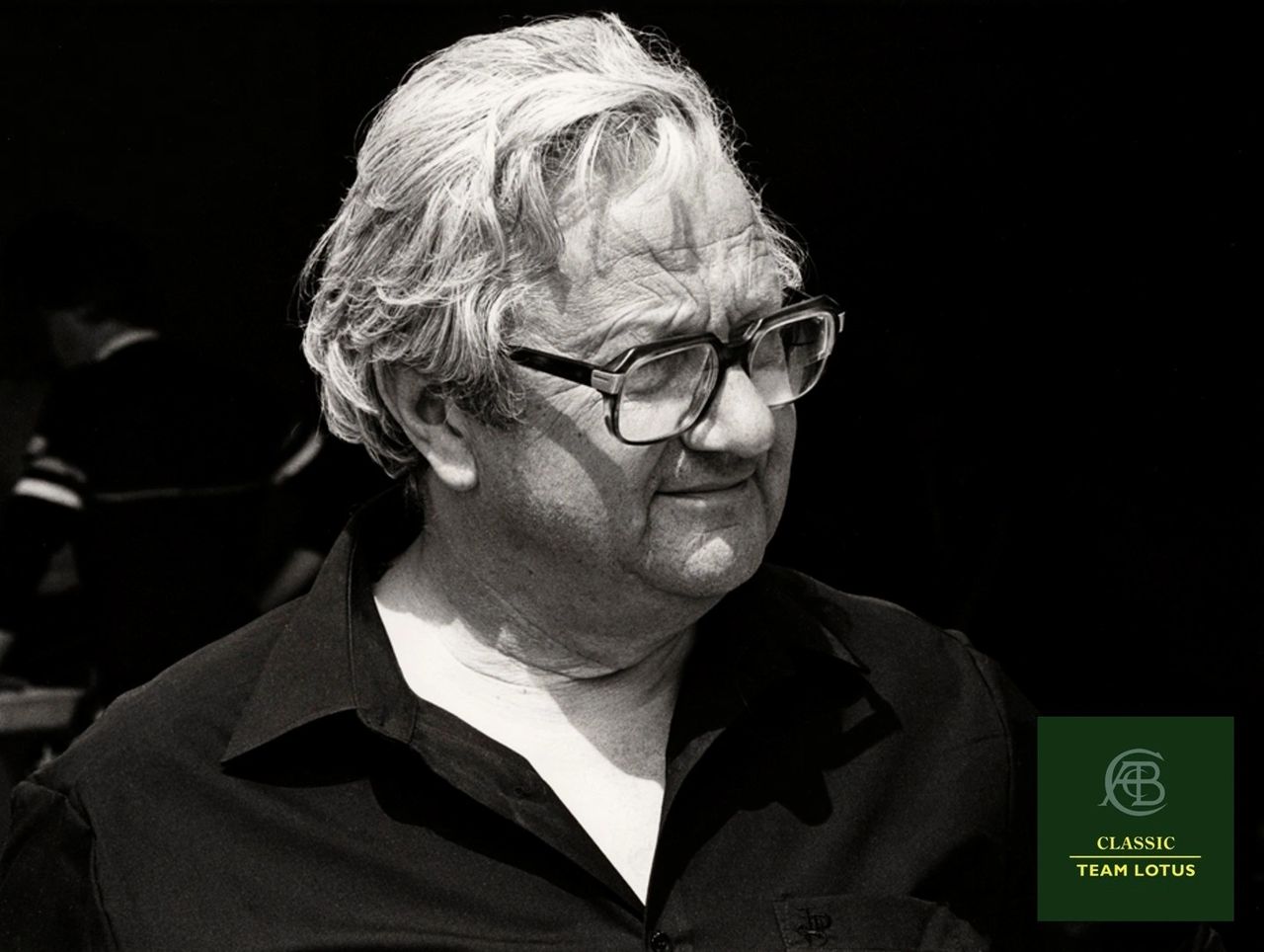
The biggest development behind the scenes in 1987 wasn’t even an immediate production change. In 1986, General Motors acquired a controlling stake in Lotus, the small but mighty British manufacturer known for its success in Formula One and for building some of the world’s sharpest handling road cars. Tony Rudd, Lotus’s seasoned technical director, was brought into the Corvette fold with an ambitious charge: to explore advanced multi-valve, dual-overhead-cam head designs for GM’s small-block engines.
Rudd and his team quickly realized the inherent limitations of the L98 V8. While its torque was generous and its tuned-port injection system innovative for its time, the small-block’s architecture was simply not designed to accommodate the level of sophistication GM desired. By late 1987, Rudd delivered his conclusion to Corvette chief engineer David McLellan: “There was no viable way to re-invent the L98.” Instead, he pushed for a clean-sheet design—a decision that would eventually yield the legendary LT5 engine of the 1990 ZR-1 Corvette.
In the meantime, however, Chevrolet engineers squeezed more performance out of the venerable L98 with an elegant solution.
Under the Hood: The Roller Lifter Advantage
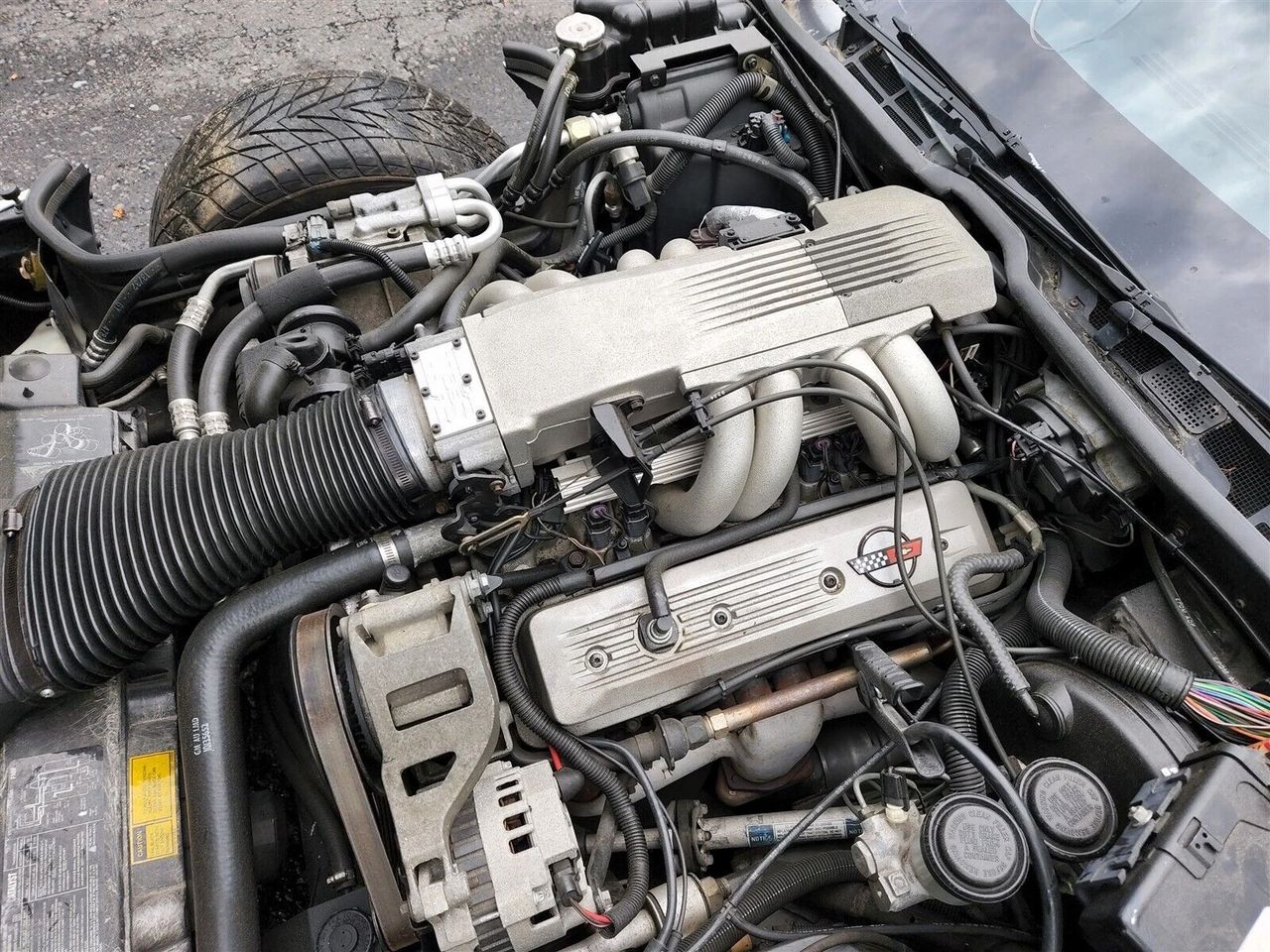
For 1987, the L98 retained its 5.7-liter displacement but gained hydraulic roller lifters—a friction-reducing innovation that simultaneously boosted performance and improved fuel economy. Output rose by 10 horsepower, bringing the total to 240 hp, while torque climbed to 345 lb-ft. The changes may have seemed modest on paper, but on the road, they gave the Corvette a fatter mid-range punch.
Road & Track noted approvingly: “The engine’s optimum is the mid-range, 2–3–4000 rpm. The overdrive can be controlled by the gas pedal, as it shifts down when you floor it.” In other words, the Corvette had become more flexible and tractable, delivering effortless acceleration for both boulevard cruising and back-road sprints.
Supporting the updated internals were other small but meaningful upgrades: new rocker-arm covers with raised rails to reduce oil leaks, a thicker-core radiator paired with a second electric cooling fan to manage heat, and a finned power-steering cooler to maintain stable steering fluid temperatures during spirited driving.
Subtle Style: Argent Gray Wheels
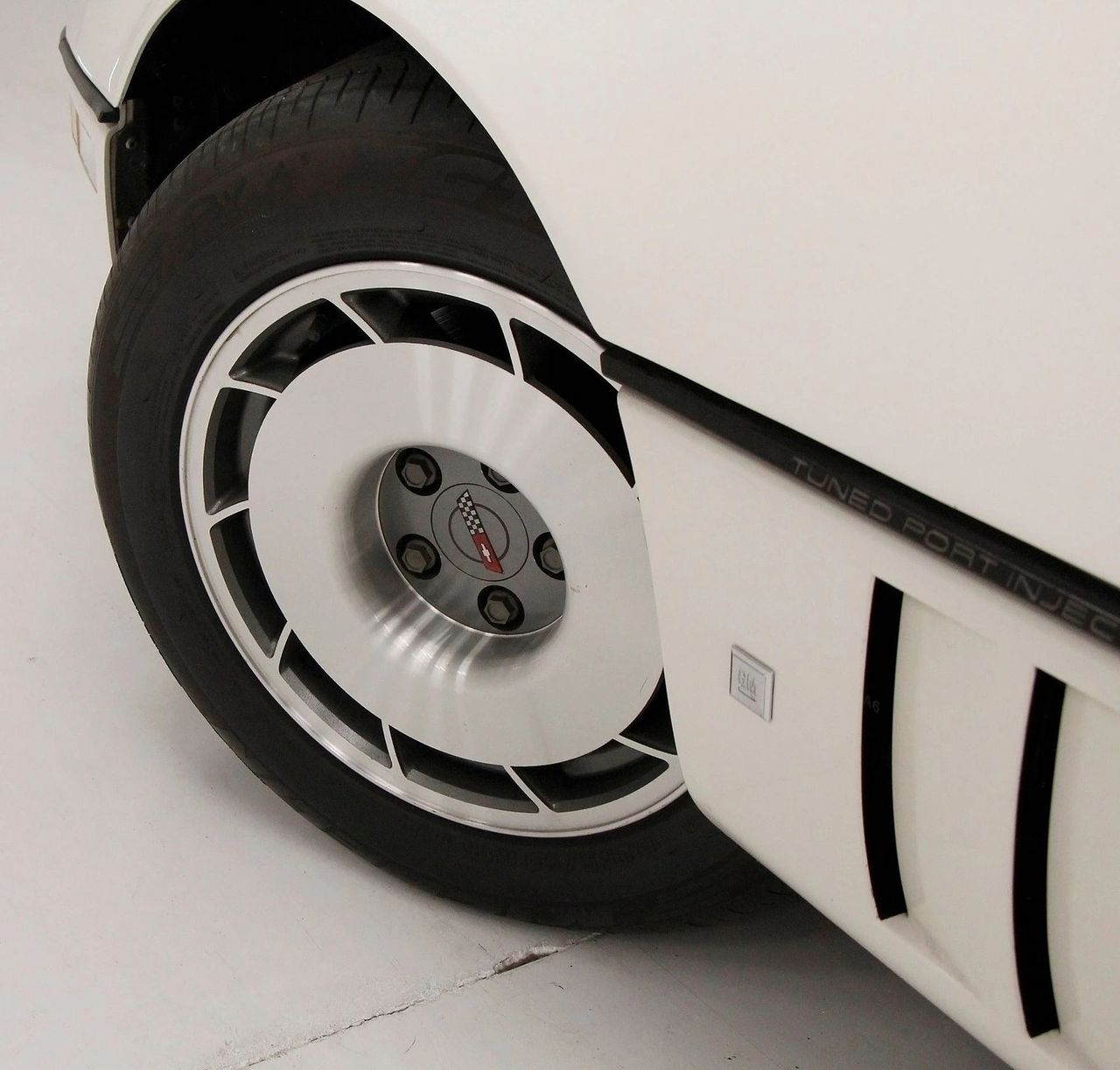
From a distance, the 1987 Corvette looked nearly identical to the ’86. But enthusiasts knew where to look. The wheels were the giveaway: whereas earlier C4s had featured black-painted center caps and slots, 1987 models swapped the black for Argent Gray, giving the alloy wheels a more refined, understated look.
It was the kind of change that only diehard Corvette spotters might notice, but it underscored Chevrolet’s commitment to continuous refinement—even in aesthetics.
Handling Evolution: Z51 and the New Z52
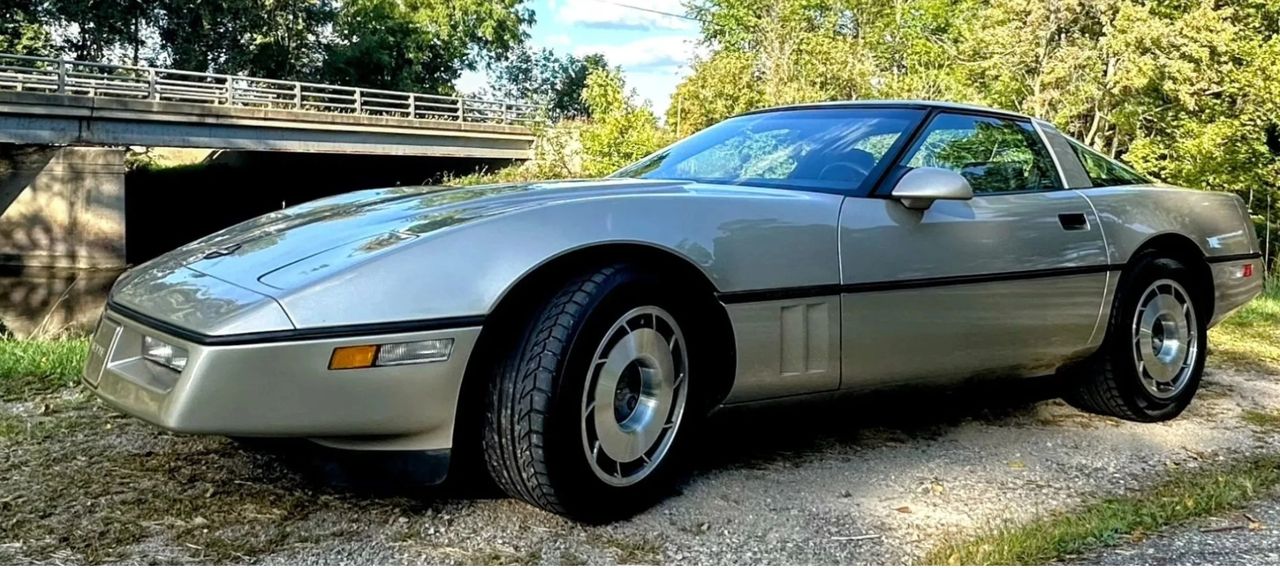
Perhaps the most important development for driving enthusiasts was the introduction of the Z52 Sport Handling Package. Available only on manual-transmission coupes for $470, Z52 was conceived as a middle ground between the base suspension and the punishingly stiff Z51.
Z52 brought most of the Z51’s hardware—wider 9.5-inch wheels, a solid, thicker front anti-roll bar, Bilstein gas-charged shocks, quick-ratio 13:1 steering, and chassis stiffeners borrowed from the convertible—but retained softer spring rates and standard bushings. The result was a Corvette that still handled with sharpness and precision but delivered a far more livable ride on real-world pavement.
Automotive press outlets immediately praised the balance. Car and Driver noted that Z52 cars delivered “much of the Z51’s crisp turn-in without the punishment on your kidneys.” For buyers who wanted performance without compromise, Z52 hit the sweet spot.
Of course, the Z51 Performance Handling Package remained available as well, carrying over its ultra-stiff springs, heavy-duty stabilizers, and firmer control-arm bushings. It was still the choice for track-day regulars, though most buyers gravitated to the more civilized Z52.
Technology and Creature Comforts
Chevrolet also dipped its toe into electronic driver aids in 1987. A low-tire-pressure indicator debuted, using sensors to alert the driver if any tire dropped by just one pound per square inch. Innovative but flawed, it sometimes triggered false alarms due to interference from other nearby Corvettes equipped with the same system. With a $325 price tag and limited reliability, it quietly disappeared after a short run, only to return successfully in 1989.
More successful was the rollout of electronic climate control, previously offered only on coupes in 1986 but now extended to convertibles. It was a small but welcome nod to buyers seeking comfort as well as performance.
The convertible itself, reintroduced the previous year, returned for 1987 with further refinements. Engineers reinforced the chassis with torque-box bracing, spring-loaded door pins, and an X-member to offset the loss of the coupe’s roof structure. As one period reviewer put it, “When the top is lowered… you start to smile a lot. This is the joie de motoring at its finest.”
Callaway’s Turbocharged Thunder: RPO B2K
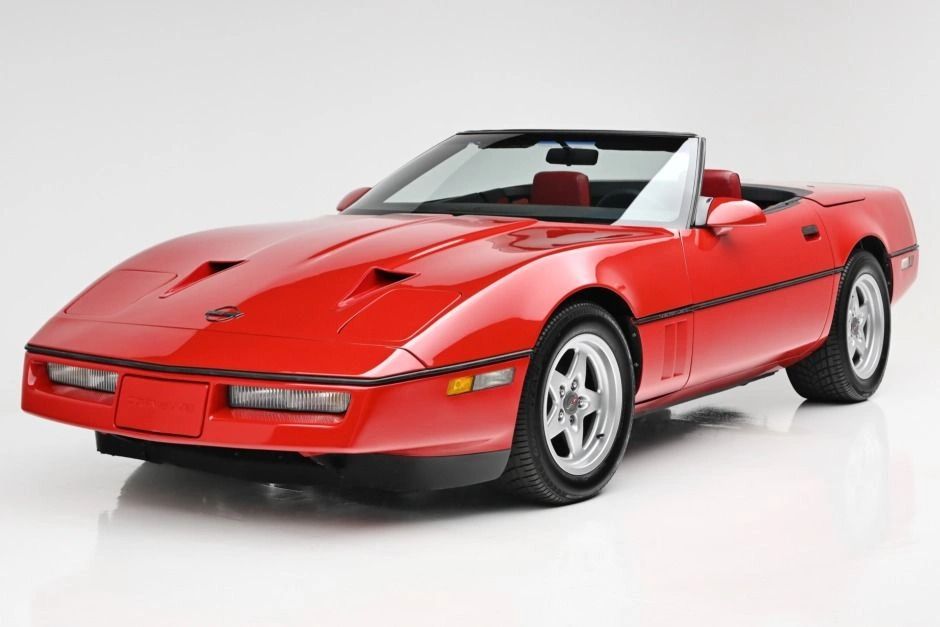
For performance extremists, 1987 brought one of the most fascinating Corvette options ever: the Callaway Twin-Turbo Package (RPO B2K). Priced at an eye-watering $19,995 on top of the base Corvette’s MSRP, the package was dealer-ordered but executed by Callaway Cars in Old Lyme, Connecticut.
The result was staggering for the era. Twin turbos boosted output to 345 hp and 465 lb-ft of torque, propelling the Corvette to a verified 177.9 mph top speed. Production was limited—just 123 coupes and 65 convertibles—but those who took the plunge essentially owned one of the fastest street-legal cars in the world.
Callaway’s partnership with Chevrolet would later produce the legendary “Sledgehammer” Corvette, which set a world record at 254.76 mph in 1988. But it all began with the factory-blessed twin-turbos of 1987.
Real-World Performance
Even without Callaway’s intervention, the 1987 Corvette proved itself a potent performer. Motor Trend tested a convertible with the updated L98 and recorded a 0–60 mph time of 6.3 seconds and a quarter-mile of 15.1 seconds at 93.8 mph. Other tests squeezed even better results, with times dipping to 5.8 seconds to 60 mph and 14.4 in the quarter-mile.
Top speed in stock form stretched to 150 mph, impressive numbers for a car that also offered everyday comfort, a usable trunk, and a base price far below its European rivals.
Pricing, Colors, and Production
The 1987 Corvette wasn’t cheap. Base price for the coupe was $27,999, while the convertible started at $33,172—both about $1,000 more than the year before. Options such as the Z51 ($795) or Z52 ($470) could push the total higher, while the Callaway package elevated it into exotic-car territory.
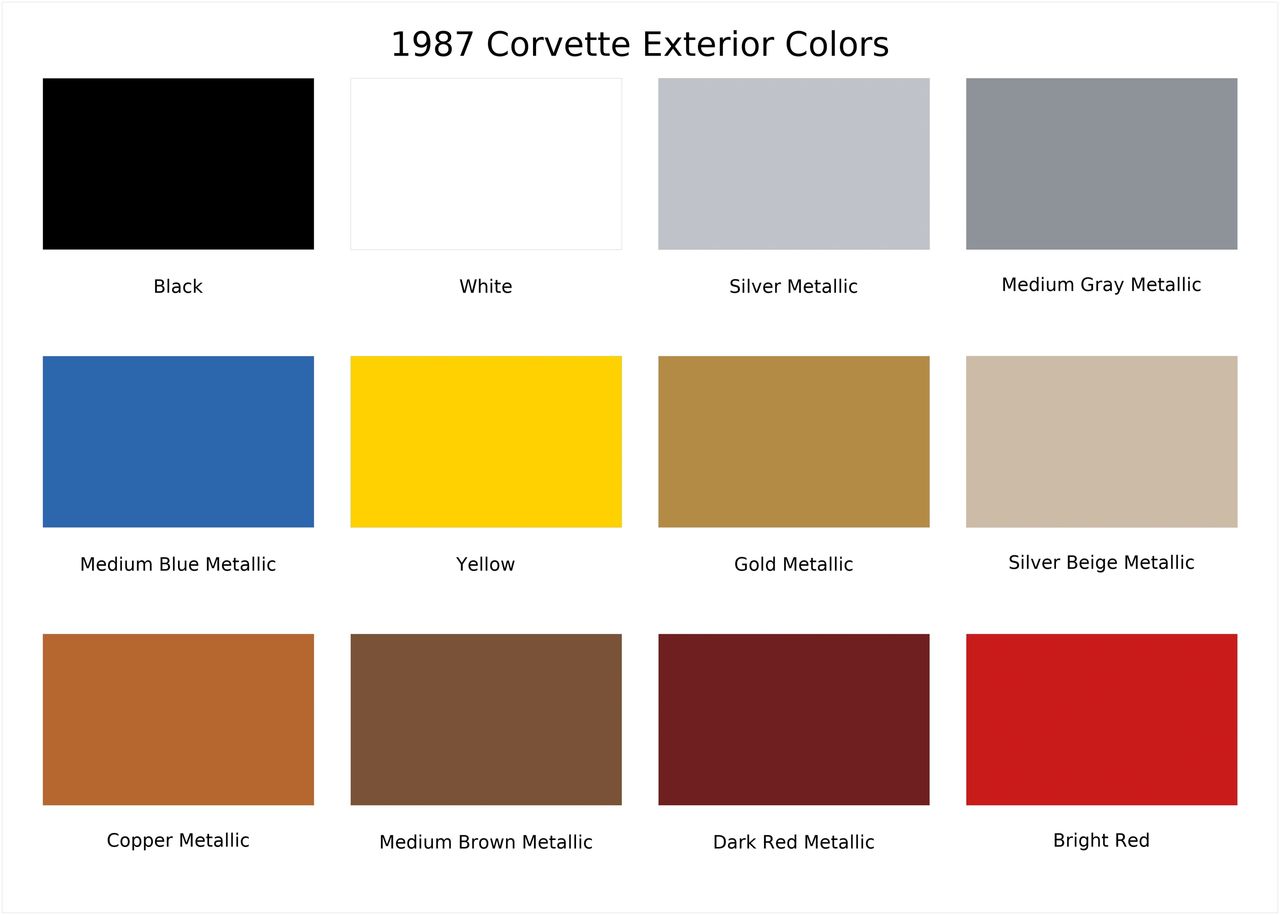
Twelve exterior colors were offered, with Bright Red once again dominating the sales charts at 27% of production. Dark Red Metallic surged in popularity, accounting for 18%, while Black (16.6%) and White (10.1%) rounded out the top choices.
Production totaled 30,632 units, including 10,625 convertibles—an increase of 3,400 units over 1986. While overall sales were down compared to earlier C4 highs, Corvette remained competitive, especially when measured against the cost of European performance cars.
Looking Ahead
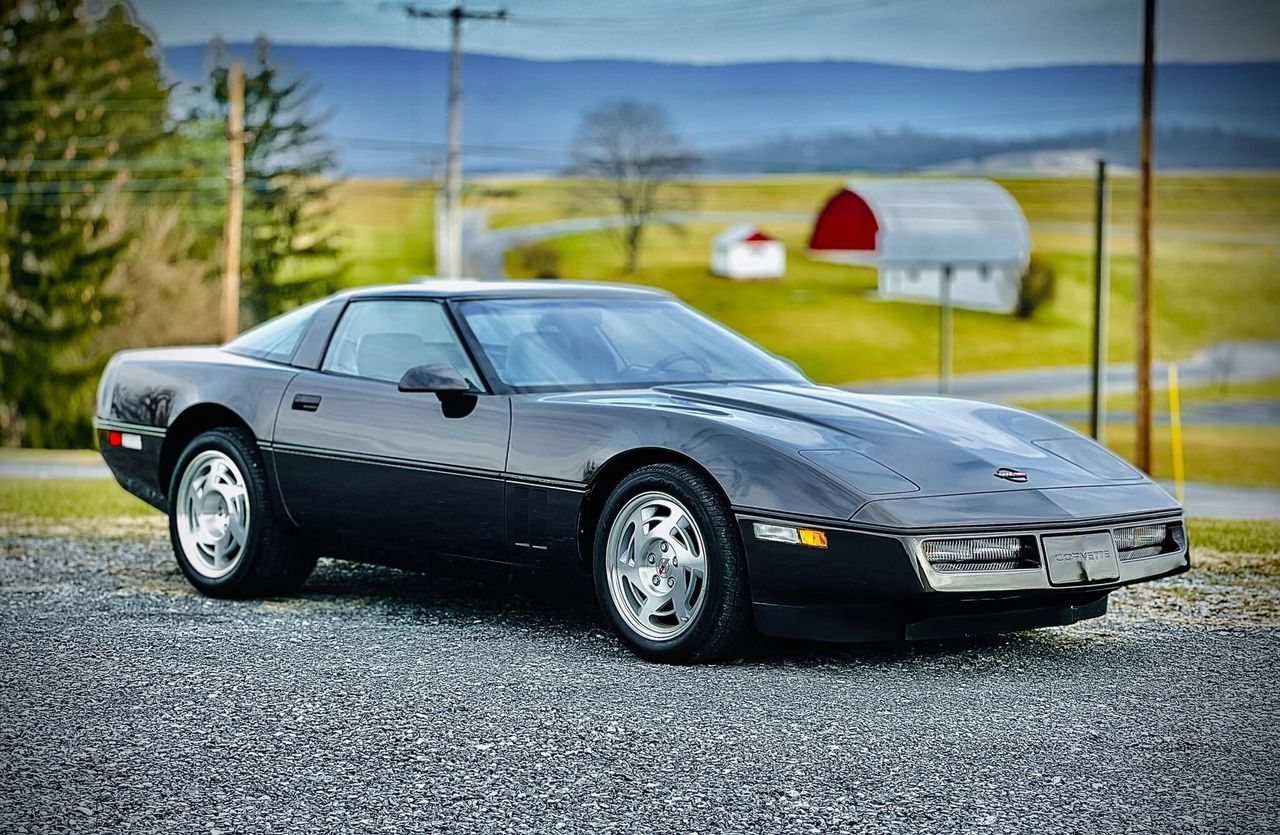
By the end of 1987, Tony Rudd and Lotus had already set Corvette on a new trajectory. The L98, though refined with roller lifters and careful tweaks, was nearing its ceiling. The Corvette would need something entirely new to keep pace with Porsche, Ferrari, and other world-class rivals.
That “something” would arrive in 1990 as the ZR-1 with its Lotus-engineered LT5—a car that would redefine Corvette’s reputation internationally. But the groundwork for that breakthrough was laid in 1987, a year when the Corvette carefully blended incremental refinement with bold experimentation.
Conclusion
The 1987 Corvette may not carry the instant cachet of the split-window Sting Ray or the exotic ZR-1, but in its details it tells a story of a car in transition. It was a model that offered buyers real choice—between Z51 stiffness and Z52 balance, between coupe or convertible, between stock L98 grunt or Callaway twin-turbo thrills. It hinted at the future even as it refined the present.
And in doing so, the 1987 Corvette quietly became one of the most complete and versatile sports cars of its decade—an American icon fine-tuned for the world stage.
1987 Corvette — Key Specifications
Quick Stats
- Engine: 5.7L (350 cu in) L98 Tuned Port Injection V8
- Output: 240 hp @ 4,000 rpm • 345 lb-ft @ 3,200 rpm (SAE net)
- Transmissions: 4-speed automatic (TH700-R4) • 4+3 Doug Nash manual (4-speed with computer-controlled overdrive in 2nd–4th)
- Driveline/Layout: Front-engine, rear-wheel drive
- ABS: Bosch ABS II standard (4-wheel, 3-channel).
Performance (period tests)
- 0–60 mph: ~5.6–6.0 sec
- ¼-mile: ~14.5 sec @ ~97 mph
- Skidpad: up to ~0.90 g (with performance package/tires) Figures from contemporary testing and factory materials.
Chassis, Suspension & Brakes
- Structure: Uniframe with bolt-on front/rear cradles; composite body panels
- Front/Rear: Forged-aluminum control arms, independent rear five-link; transverse composite monoleaf springs; gas shocks (Delco-Bilstein with handling pkgs.)
- Steering: Power rack-and-pinion
- Brakes: Power 4-wheel discs (11.5-in rotors) with Bosch ABS II.
Handling Packages
- Z51 Performance Handling (coupe, manual only): 16×9.5-in wheels, higher-rate springs/bars, Delco-Bilstein shocks, quicker steering, heavy-duty cooling (oil cooler, boost fan, HD radiator).
- Z52 Sport Handling (new for ’87): 16×9.5-in wheels (std. on conv.), Delco-Bilstein shocks, quicker steering, HD cooling. (Available on coupe immediately; on convertible from Jan. 1987.)
Wheels & Tires
- Standard wheels: 16×8.5-in cast aluminum (coupe); 16×9.5-in on convertible and with Z51/Z52
- Tires: P255/50VR-16 Goodyear Eagle VR50 “Gatorback.”
Dimensions & Capacities
- Fuel capacity: 20.0 gal
- Turning circle: 40.4 ft (Overall C4 dimensions carried over from ’86; factory spec page above lists the capacity/operational data.) National Corvette Museum
Powertrain Details
- Induction/Management: Mass-air TPI with Bosch MAF; Electronic Spark Control
- Compression ratio: 9.5:1; roller lifters standard
- Common axle ratios: 2.59/2.73 (auto by body style); 3.07 (manual); 3.07 optional for auto. National Corvette Museum
Paint & Trim (with GM codes)
Singles: White (40), Silver Metallic (13), Medium Gray Metallic (18), Black (41), Nassau/Light Blue Metallic (20/23), Yellow (35), Gold Metallic (53), Silver Beige Metallic (59), Copper Metallic (66), Medium Brown Metallic (69), Dark Red Metallic (74), Bright Red (81). (Numbers are GM paint codes as shown on build sheets/labels.)
Two-tone (RPO D84, coupes only): Silver/Gray (13/18), White/Silver (40/13), Medium Gray/Black (18/41), Silver Beige/Medium Brown (59/69) as listed in the factory 1987 color guide.
Notable 1987 Features/Options
- Z52 Sport Handling Package added to the lineup (see above).
- VATS anti-theft with resistor-key (continuation).
- RPO B2K Callaway Twin-Turbo available via participating dealers; 184 built for 1987. Rated 345 hp/465 lb-ft; achieved ~178 mph in period testing. (Dealer-shipped to Callaway for conversion; not factory-assembled.)
Why the 1987 Corvette Still Matters Today
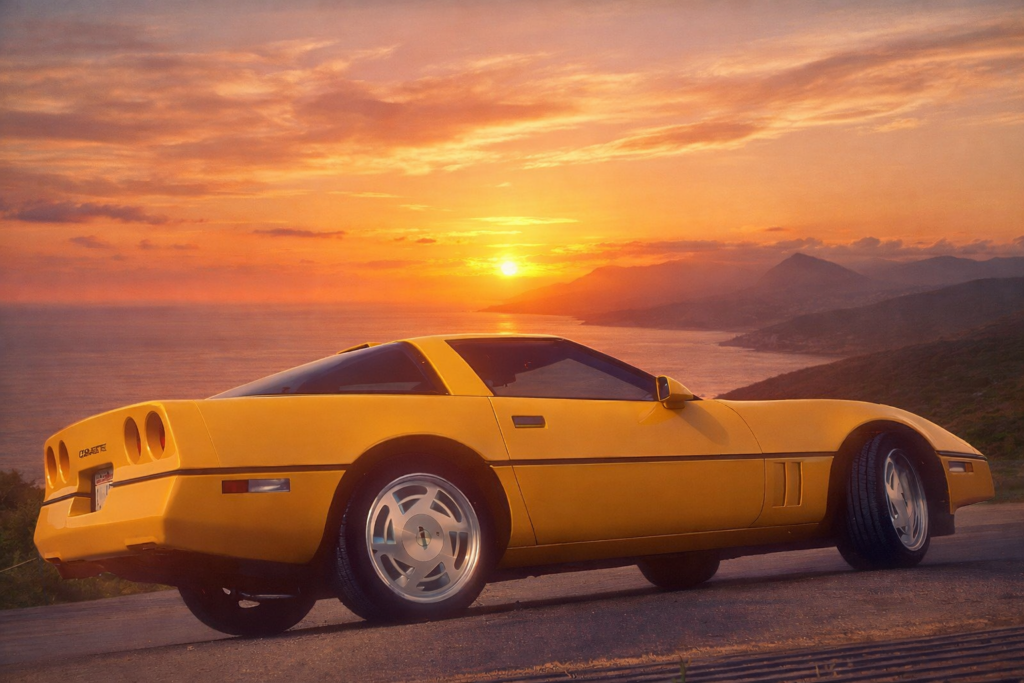
The 1987 Corvette represents the moment when the fourth-generation car fully found its footing. Chevrolet had moved beyond the early C4 teething pains and delivered a machine that blended contemporary performance, digital-age sophistication, and everyday usability in a way that felt distinctly modern for its time. With tuned-port injection delivering crisp throttle response, refined suspension geometry, and a cockpit that looked more aerospace than automotive, the ’87 captured the spirit of 1980s American innovation at full stride.
But its relevance today goes deeper than nostalgia. The 1987 model sits at the intersection of analog and emerging technology—a car still mechanical enough to feel raw and connected, yet advanced enough to signal where Corvette was headed. It remains attainable, drivable, and unmistakably period-correct, making it one of the most honest entry points into classic Corvette ownership.
Nearly four decades later, the 1987 Corvette still matters because it embodies resilience and reinvention. It helped cement the C4 as a legitimate world-class sports car platform and laid critical groundwork for every generation that followed. For enthusiasts who appreciate precision engineering, bold design, and a pivotal chapter in Corvette’s evolution, the ’87 isn’t just a used sports car—it’s a milestone.