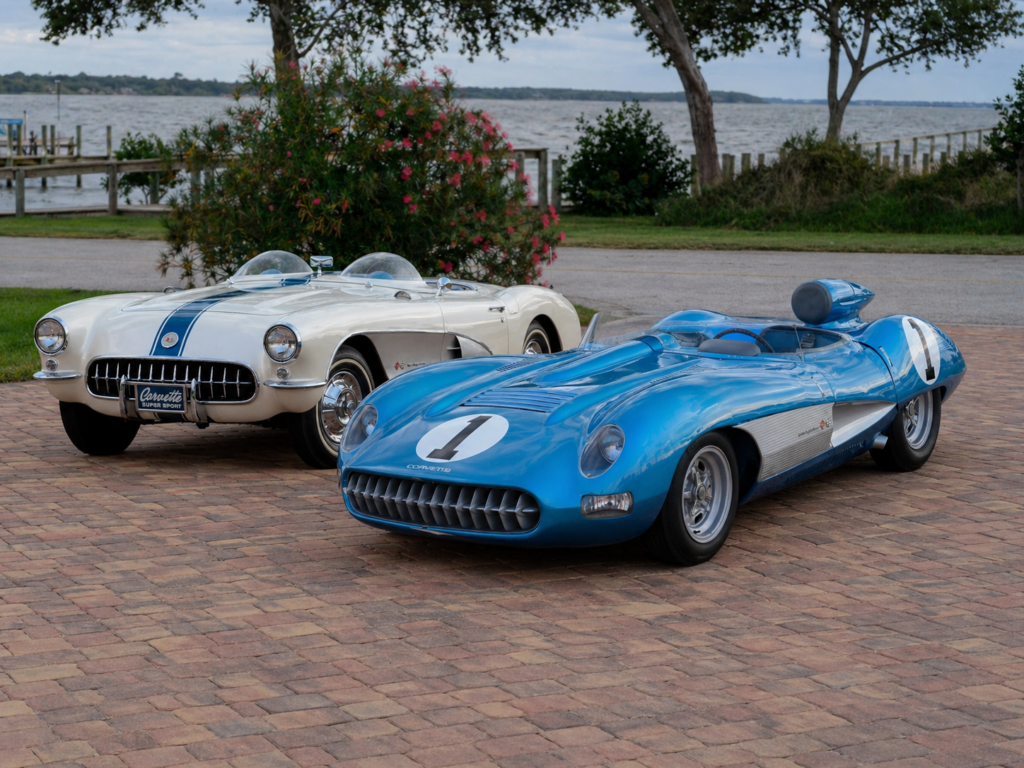
Most Corvette people know of the 1957 Corvette SS race car. They know the magnesium-bodied Sebring machine, the Zora Arkus-Duntov connection, and the brief but brilliant moment when Chevrolet looked ready to take Corvette racing all the way to Europe. But there was another “SS” Corvette born from the same moment in time. It did not go to Sebring. It did not chase lap records. It did not become a production car. Instead, it was built to stand under the lights, stop people in their tracks, and show America what Chevrolet performance was about to become.
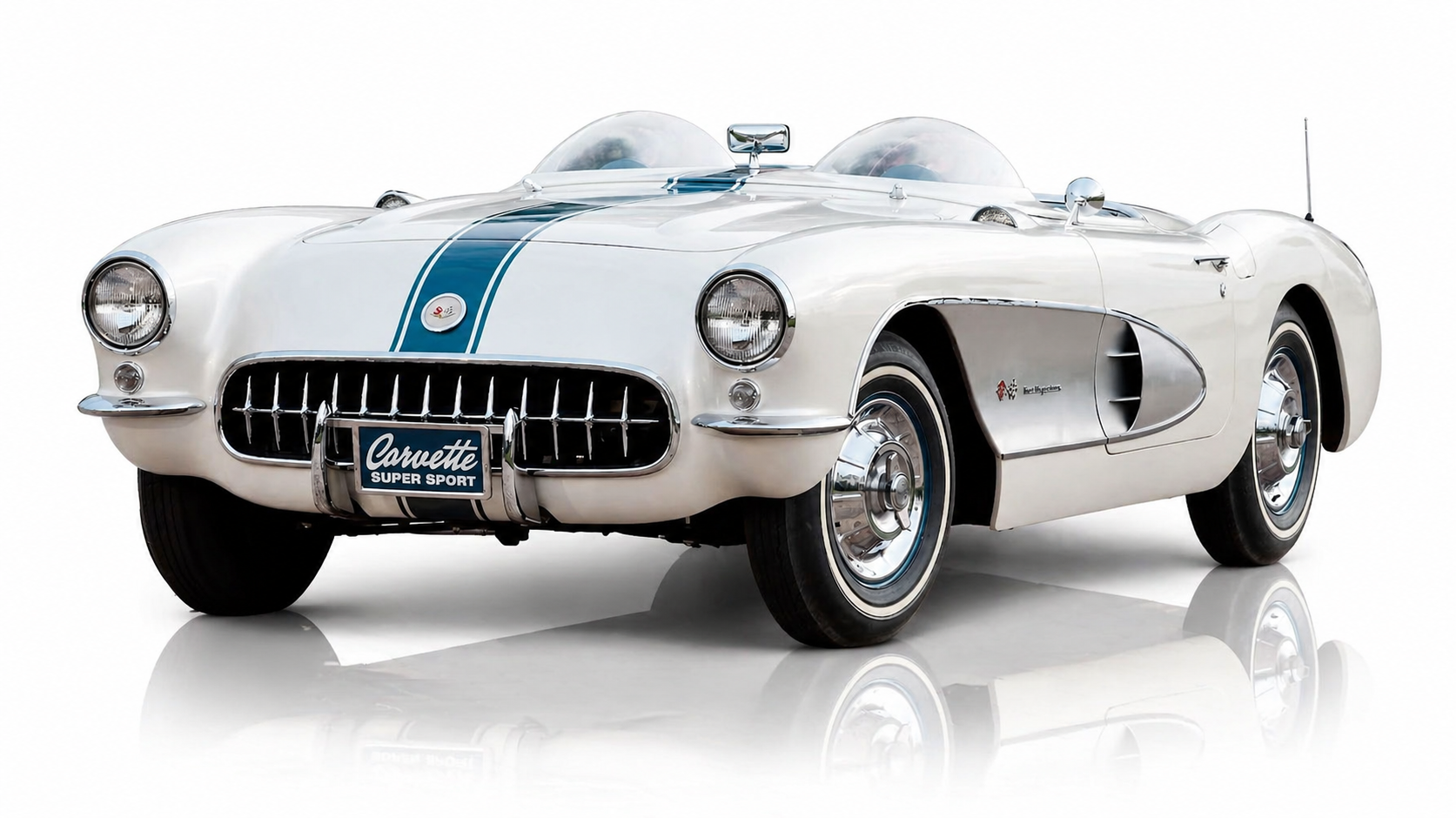
That car was the 1957 Corvette Super Sport show car.
It was the first Chevrolet to carry the Super Sport name, the first Corvette used to introduce Rochester Ramjet fuel injection to the public, and one of the most unusual factory Corvette show cars ever built. It started life as a 1956 Corvette, was transformed by GM Styling for the 1957 show circuit, disappeared from public view for roughly six decades, survived a street-racing crash, passed through a hazy chain of private owners, spent decades in unrestored storage, and eventually returned to the spotlight at Amelia Island in 2017.
That alone would make it historically significant. But the full story is better than the headline.
Because the 1957 Corvette Super Sport was not simply a dressed-up Corvette. It was a statement of intent.
The Corvette Needed More Than Good Looks
By the middle of the 1950s, Corvette was still fighting for credibility. The original 1953 Corvette had the styling, the fiberglass body, and the Motorama glamour, but it did not yet have the performance foundation that would define the nameplate. The arrival of Chevrolet’s small-block V8 in 1955 changed the conversation. By 1956, Corvette finally looked like a proper sports car. By 1957, Chevrolet wanted the public to understand that the Corvette was becoming something more serious.
That is where the Super Sport show car entered the story.
The car was created under Chevrolet shop order SO-90181, a project tied to the 1957 show season and the introduction of Rochester Ramjet fuel injection. Multiple published accounts identify the car as a GM Styling project, built from an existing 1956 Corvette display car that had been used in the General Motors Building in Detroit. Road & Track identifies the original donor car as a Venetian Red 1956 Corvette powered by a 265 cubic-inch V8 and backed by a three-speed manual transmission, carrying VIN E56S001589.
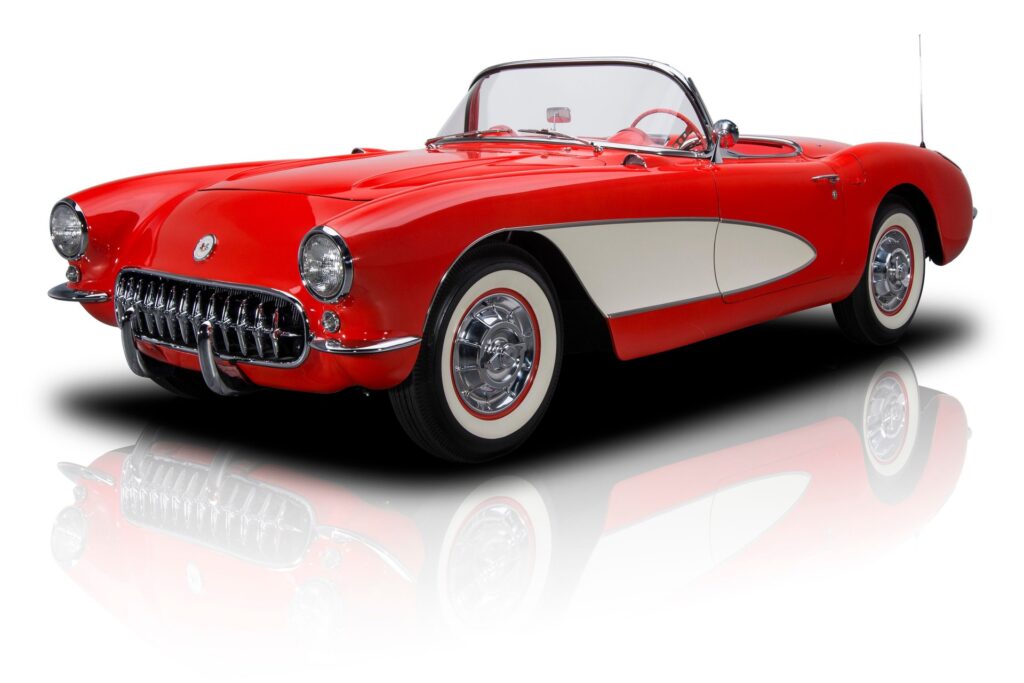
That donor-car detail is an important part of this story because the Super Sport was not built from scratch. It was a production Corvette that GM transformed into a rolling announcement for Chevrolet’s next performance chapter. Before the work began, the car was reclassified as a 1957 model. Public listings and secondary accounts differ in the exact formatting of the altered VIN: Corvette Mike lists the VIN as E57S0001589, while other accounts use a 1957-style identifier that preserves the last four digits of the original 1956 VIN. Either way, the consensus is that GM wanted the car to represent the 1957 model year without using a standard production VIN.
The conversion reportedly cost more than $18,000, an extraordinary sum for the period, and a figure that tells us how seriously Chevrolet approached the project. This was not a cosmetic refresh done on the cheap. It was a factory-backed show car designed to present fuel injection, racing flavor, and Corvette image-building in one carefully staged package.
Born From The Same Energy As The SR-2 And The SS Racer
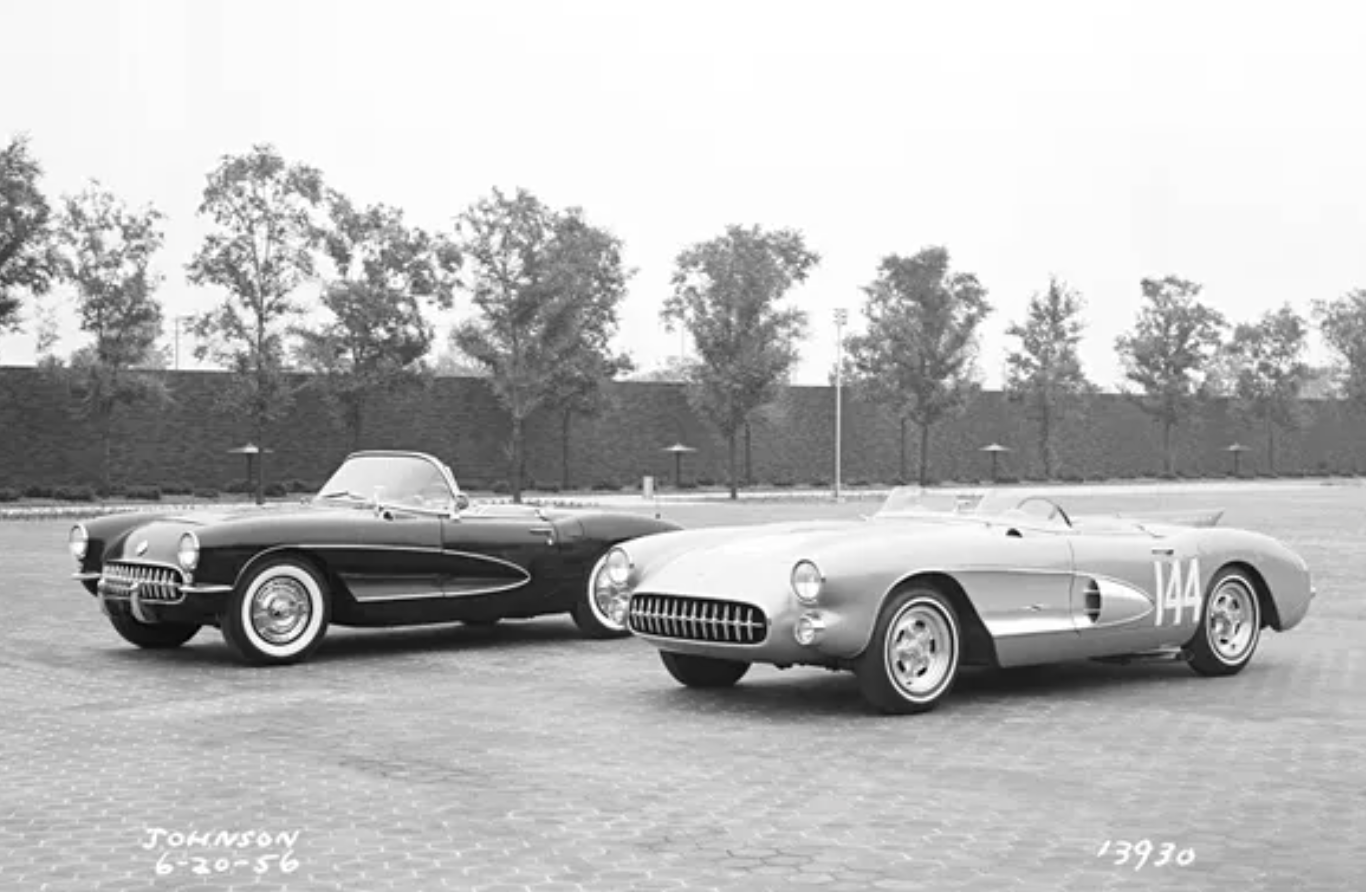
The Super Sport’s timing was no accident. Chevrolet was already experimenting with more aggressive Corvette forms through the SR-2 program and the 1957 Corvette SS race car. Harley Earl’s SR-2 had captured attention wherever it appeared, combining Corvette production-car identity with race-bred visual drama. Chevrolet understood the reaction. The public wanted the Corvette to look and feel more serious. The company needed a car that could bring that image into the showroom conversation.
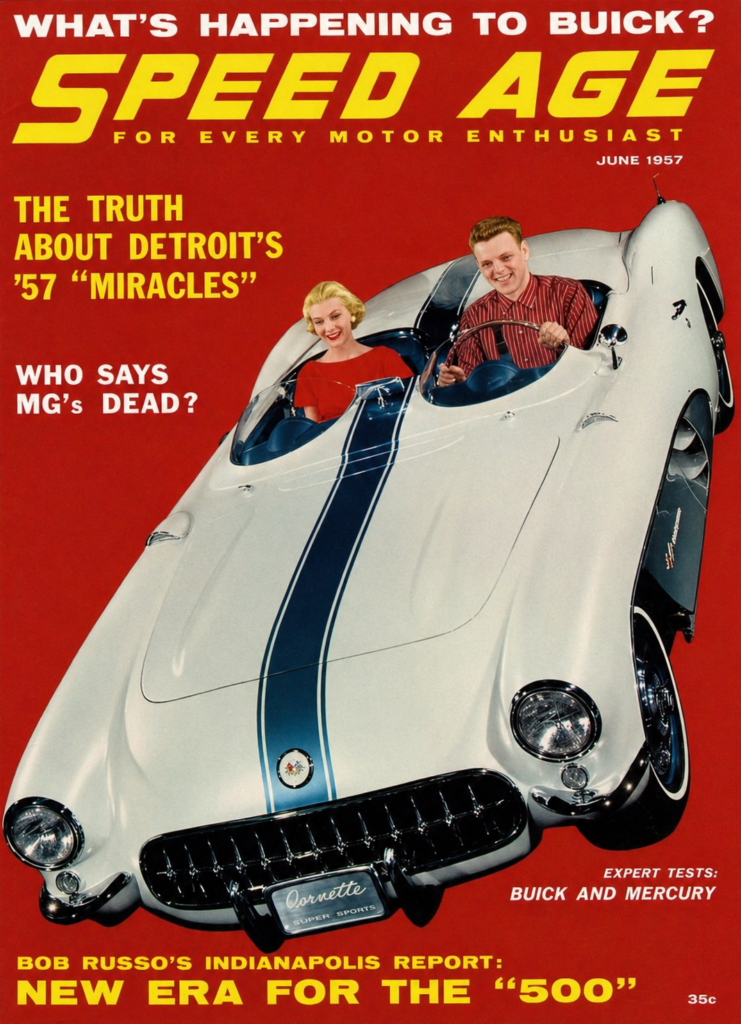
The Super Sport borrowed from that visual vocabulary. It used twin aircraft-style windscreens rather than a full-width windshield. It wore a full-length blue stripe over pearlescent white paint. Its bodyside coves were treated with brushed aluminum, and the rear portions of those coves carried air-scoop forms that suggested brake cooling, even if they were more visual theater than functional hardware. Road & Track notes that the Super Sport’s cove covers were larger than those used on production C1 Corvettes and were made from chromed brass rather than standard stainless trim.
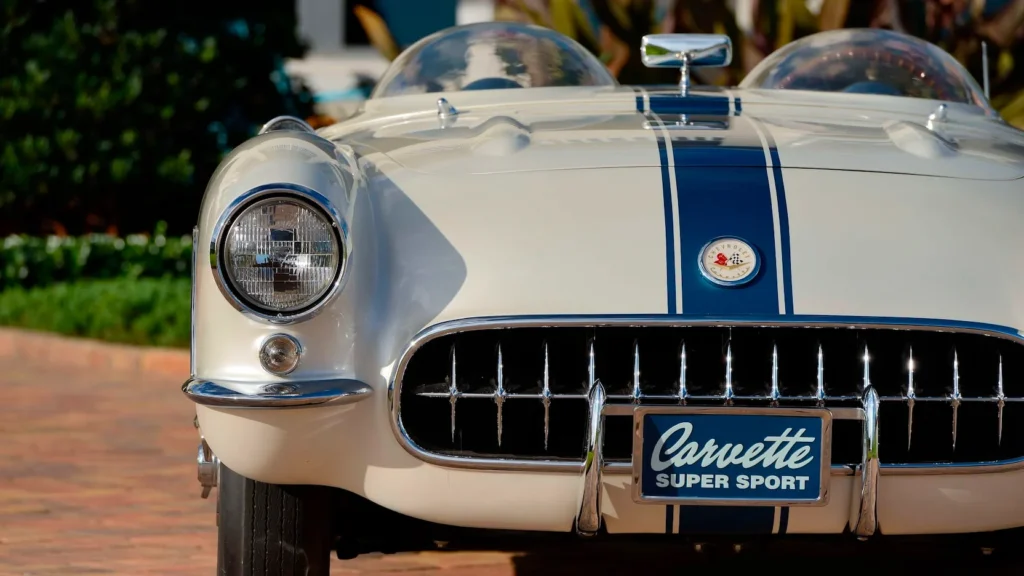
The car also received special rear taillamp treatment, custom door-top inserts, and a cleaner, lower, more competition-minded appearance after the original windshield, side glass, and wipers were removed. The result was still unmistakably Corvette, but it had the stance and intent of something that belonged closer to Sebring than to a suburban driveway.
That was the genius of it. The team behind the 1957 Corvette Super Sport did not ask the public to imagine a better Corvette. They simply put one directly in front of them.
The First Public Face Of Fuel-Injected Corvette Performance
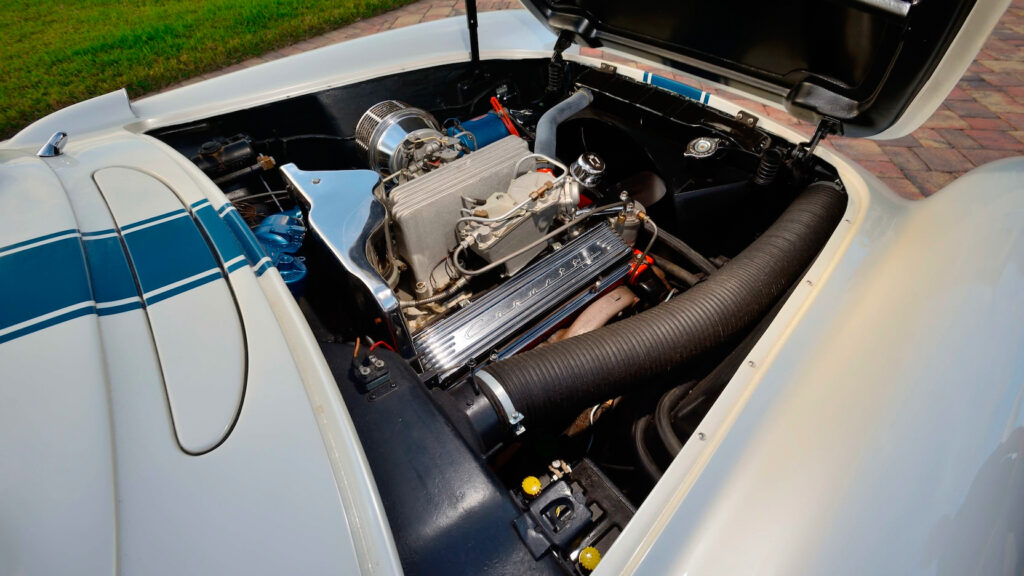
The most important part of the Super Sport was under the hood.
Chevrolet installed a 283 cubic-inch small-block V8 with Rochester Ramjet mechanical fuel injection, rated at 283 horsepower. That one-horsepower-per-cubic-inch achievement became part of Corvette mythology, and the Super Sport helped introduce that idea to the public before the production fuel-injected 1957 Corvettes began building their own legend.
The Super Sport’s engine bay was detailed like a show car but configured like a serious performance machine. Vette Vues’ summary of the Mecum listing identifies the engine as an original EL-stamped fuel-injected 283/283 V8 with a special camshaft, first-design 4360 fuel injector with double-spider fuel-distribution lines, an 889 first-design distributor with original tag, factory chromed aluminum valve covers, an original off-road exhaust system, and a rare one-piece louvered chrome air cleaner.
The engine was paired with a close-ratio three-speed manual transmission. That detail is easy to overlook because production fuel-injected 1957 Corvettes would become strongly associated with the four-speed manual, but the Super Sport retained the close-ratio three-speed. The car also reportedly used a limited-slip differential, metallic brake linings, finned brake drums, heavier-duty springs, and brake-cooling ductwork, giving it the credibility to match its appearance.
It was absolutely a show car, but dismissing it as little more than a dressed-up styling exercise sells the Super Sport far short of what Chevrolet actually built.
That distinction is important because GM show cars of the era often walked the line between fantasy and feasibility. The Super Sport sat much closer to feasibility. Its engine technology was headed directly to production. Its performance message was already being shaped by Corvette through an increased presence in racing circuits. Its styling cues were exotic but also grounded in production concepts that Chevrolet was actively exploring.
The Super Sport’s Interior Was Part of the Prototype Story
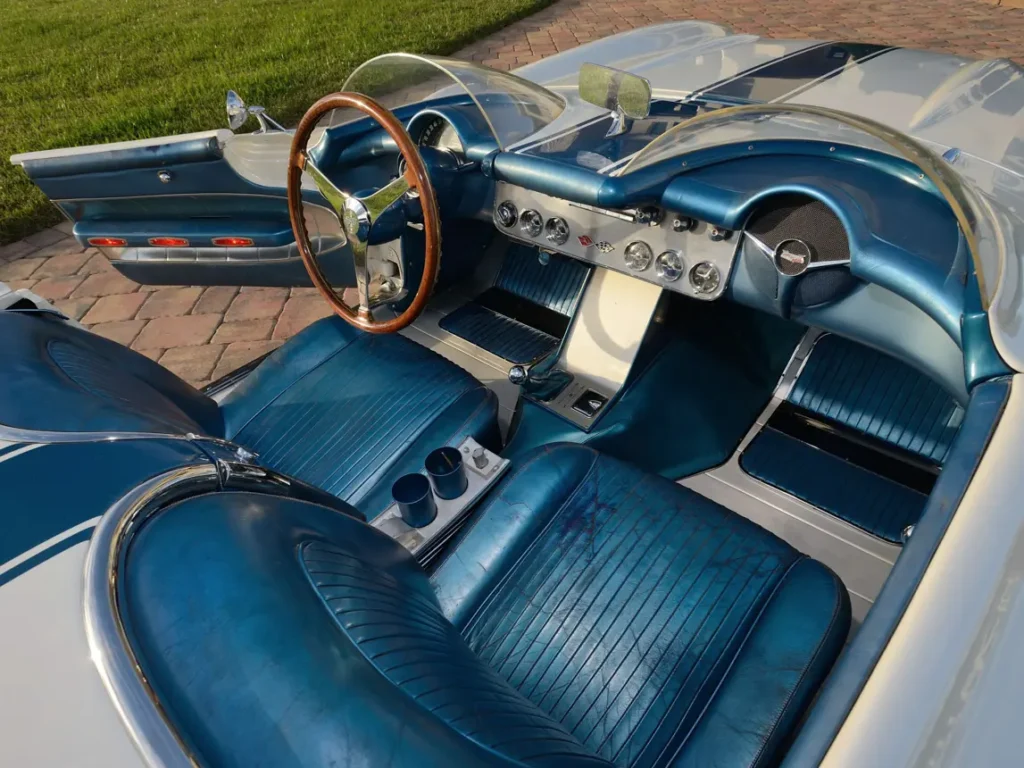
Much like the rest of the car, the Super Sport’s interior deserves more attention than it usually receives.
Inside, the car was trimmed in blue-dyed leather, and has been widely documented as the first use of leather upholstery in a Corvette as well as the first-ever blue Corvette interior. The seats, dash roll, floor-pan pads, door panels, shifter boot, and other interior details were treated to match the car’s blue exterior striping.
GM Styling also reworked the floor area with die-stamped metal floor pans, ribbed aluminum floor panels, leather heel pads, and custom footrests. Some accounts describe plywood and anodized aluminum being used as part of the layered floor treatment, giving the interior a competition-inspired look that was far removed from a normal 1956 Corvette cockpit.
The instrument panel, door panels, driveline tunnel cover, pedals, and steering wheel were all unique. Vette Vues notes that the car had a one-off solid-spoke wood-rimmed steering wheel, one-off gas, clutch, and brake pedals, a custom tachometer housing, and a center-console-mounted clipboard ring system.
And then there were the cupholders.
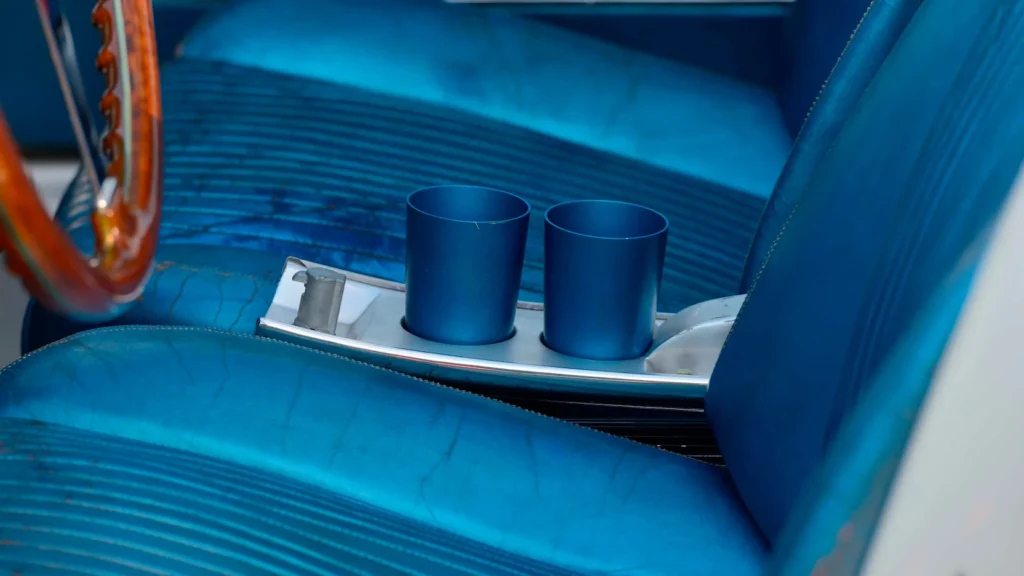
It sounds absurdly modern, but the Super Sport is frequently identified as the first Corvette to feature interior cupholders. These were not the molded-plastic conveniences we have come to associate with newer cars. They were magnetized cupholders with original blue anodized cups, along with cushions in the glovebox for a thermos bottle. In other words, the Super Sport’s cockpit mixed race-car functionality with long-distance rally practicality and GM show-car imagination.
This is one of the reasons the car is so compelling. It was not merely a preview of Corvette performance. It was also experimenting with how a more purposeful Corvette interior might feel.
The Tires ARE ALSO Part Of The Story
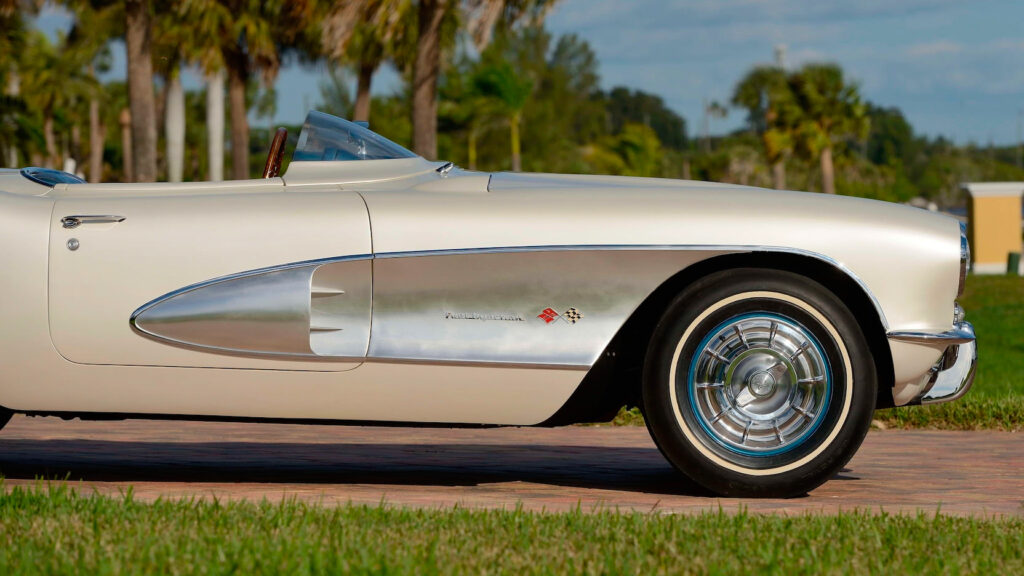
The Super Sport rode on U.S. Royal XP-140 experimental narrow whitewall tires. These were not ordinary tires pulled from regular inventory. They were thin-line whitewalls with Corvette crossed-flags branding on the sidewalls, and the surviving set is believed to be the only complete set of five still in existence.
That kind of detail is exactly why this car sits in a category of its own. A production Corvette can be restored. A show car has to be decoded. The tires, the cove trim, the cupholders, the blue leather, the first-design fuel-injection components, the cowl tag, the S.O. markings, the special interior hardware—each piece helps prove that this was not a later custom masquerading as factory history. It was a GM-built artifact from the moment when Corvette’s performance identity was being deliberately engineered, styled, and sold to the public.
New York, Chicago, Detroit, And Speed Age
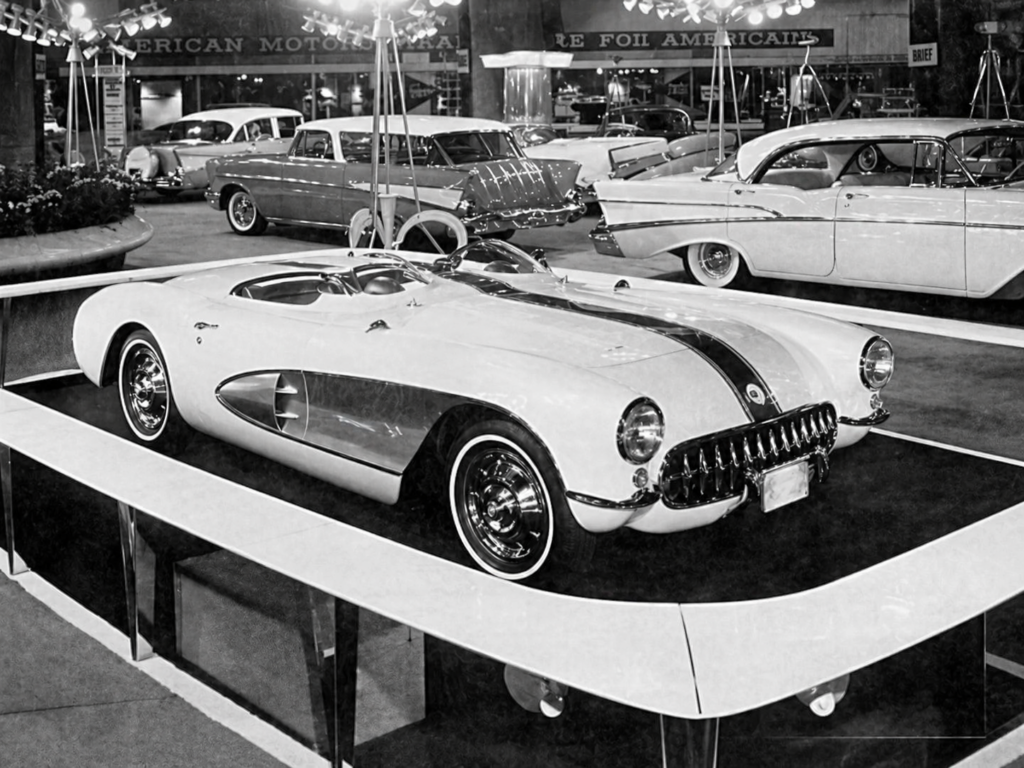
The Super Sport’s public debut is one of the places where the record becomes frustrating. Some sources state that the car debuted at the 42nd Annual New York Auto Show on December 8, 1956. Others list a January 1957 New York appearance, including references to the Waldorf Astoria and the New York Coliseum. What appears consistent is that the car was built for the 1957 show season, appeared in New York, went on to the Chicago Auto Show, was shown at a 1957 Sports Car Club of America event or convention in Detroit, and appeared on the cover of the June 1957 issue of Speed Age magazine.
While our research supports the December 1956 dates, the exact date of the New York show (and subsequent reveal) would be most easily verified against an original show program or GM photo caption (assuming one could still be discovered). Still, the larger point is clear. The Super Sport was not a forgotten back-room exercise. Chevrolet showcased it at major venues in front of the public because the car had an important job to do.
In part, it was there to help sell the idea of fuel injection. It was also there to help advance the idea of the Corvette in racing. It gave Chevrolet its first Super Sport identity. And it offered a visual bridge between the production Corvette, the SR-2s, and the radical SS race car that would soon become one of the most famous experimental competition Corvettes ever built.
After the Lights Went Out – CONFLICTING MYTHOS involving THE 1957 corvette super SPort
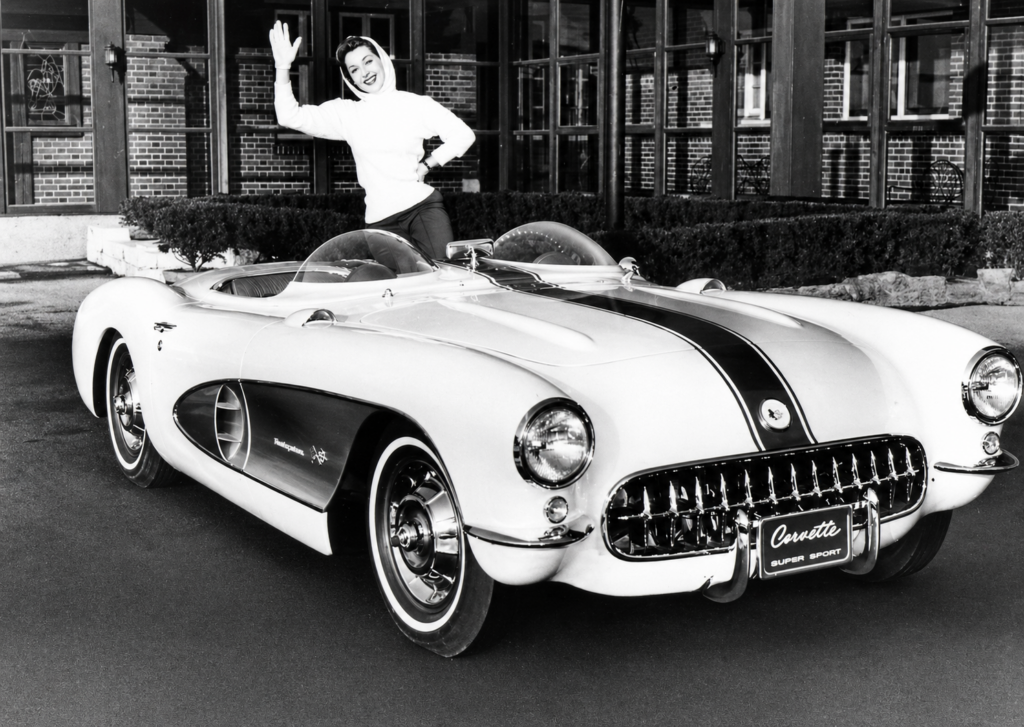
Once the Corvette Super Sport’s moment under the show lights ended, its history became far harder to follow. What follows below is a summary of the most commonly repeated stories surrounding the 1957 Corvette Super Sport. While none of these has been corroborated or proved conclusively, each has been well documented by various factions in the Corvette community and, as such, deserves to be captured for the record here. It is important to note, however, that further substantiation still needs to take place, and soon, before the parties involved with the car’s history are no longer able to come forward and share their story for the official record.
There are several variations of the events that transpired after the Super Sport finished its tenure on the auto show circuits, and it is here that the story begins to splinter. The first, widely repeated version of the story states that GM sold the 1957 Corvette Super Sport to Ralph Poole of Albuquerque, New Mexico, after its Motorama duties had concluded. Both Old Cars Weekly and ClassicCars.com identify Poole as the buyer, and both note that John Baldwin later purchased the car in 1996 before undertaking its restoration.
The second, equally well-documented account, as captured in Mecum-related summaries and later Corvette reporting, states that the car was sold after the 1957 show circuit to Ron Wilsie of Wilsie/Kelley Chevrolet in Caro, Michigan. CorvetteBlogger embraced this version of the story as factual and named the car’s current owner as John Baldwin, who restored the car after purchasing it in 1997. Vette Vues’ Mecum summary also names Ron Wilsie and Wilsie/Kelley Chevrolet as the Super Sport’s first private owner.
Then there is a third thread, which places Dick Doane Motors of Dundee, Illinois, somewhere in the chain before the car reached Ralph Poole Auto Sales in Albuquerque. That version does not necessarily contradict the others as much as it complicates them. It suggests the Super Sport may have moved through Chevrolet dealer channels after GM was finished with it, passing from one caretaker to another before it finally landed in New Mexico.
And that, in many ways, fits the car’s larger story. Factory show cars were not always preserved with the reverence they command today. Once their official use ended, they often became surplus property, dealer attractions, promotional tools, or simply unusual used cars acquired and sometimes “used up” by unsuspecting buyers. The Corvette Super Sport may have been a one-off Chevrolet showpiece, but after the lights went out and the crowds moved on, it entered a world where recordkeeping was less formal, paperwork was often incomplete or non-existant, and, as a result, provenance was often reconstructed decades later from memory, sales records, auction descriptions, and enthusiast reporting.
So the simplest answer may also be the most honest one: the publicly accessible record does not present a perfectly documented, step-by-step ownership chain from GM to every subsequent custodian. What does appear clear is that the Super Sport left Chevrolet’s direct control after its 1957 show duties, likely moved through dealer hands, eventually made its way to New Mexico, and from there began the second, far more turbulent chapter of its life.
The Albuquerque Chapter
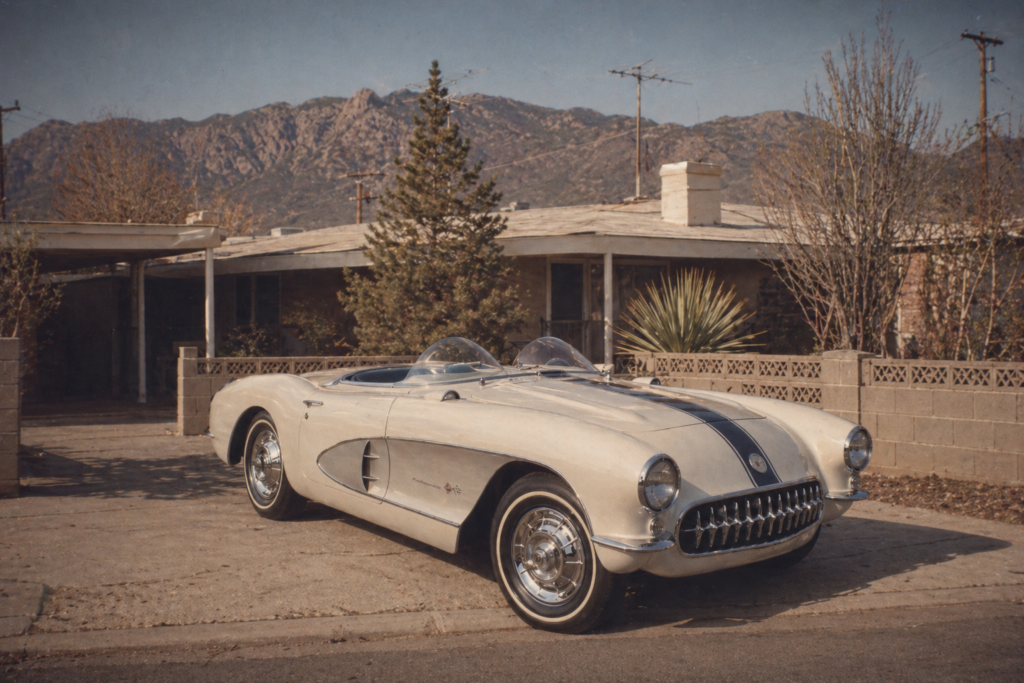
By the 1960s, the Super Sport was no longer a protected GM showpiece. It was a used Corvette with a wild backstory, and at some point, it was reportedly involved in an illegal street race or drag race in the Albuquerque area. During that episode, the car struck a telephone pole hard enough to make it undrivable. Road & Track notes that the car found itself running“face-first in(to) a telephone pole” during the mid-1960s, while other accounts place the crash happening in/around 1960.
That crash could have ended the story.
Many factory show cars were destroyed deliberately. Others were modified beyond recognition. Some simply disappeared. The Super Sport could have been parted out, stripped, customized, or discarded beyond recovery. Instead, it survived in damaged form, and that survival appears to be tied directly to Bill Hovey of Albuquerque.
The best public family-linked statement comes from Ron Hovey, who commented on a 2017 CorvetteBlogger article and identified Bill Hovey as his father. Ron stated that the car had been in Bill Hovey’s garage for more than 30 years and credited his father with preserving it and keeping the parts together until it was sold in the 1990s.
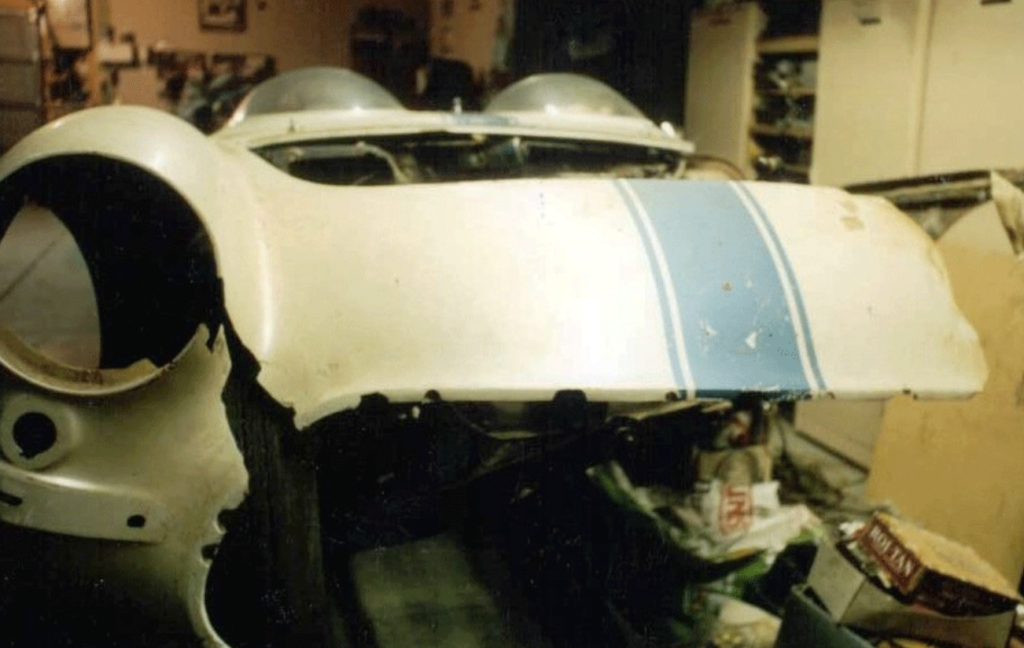
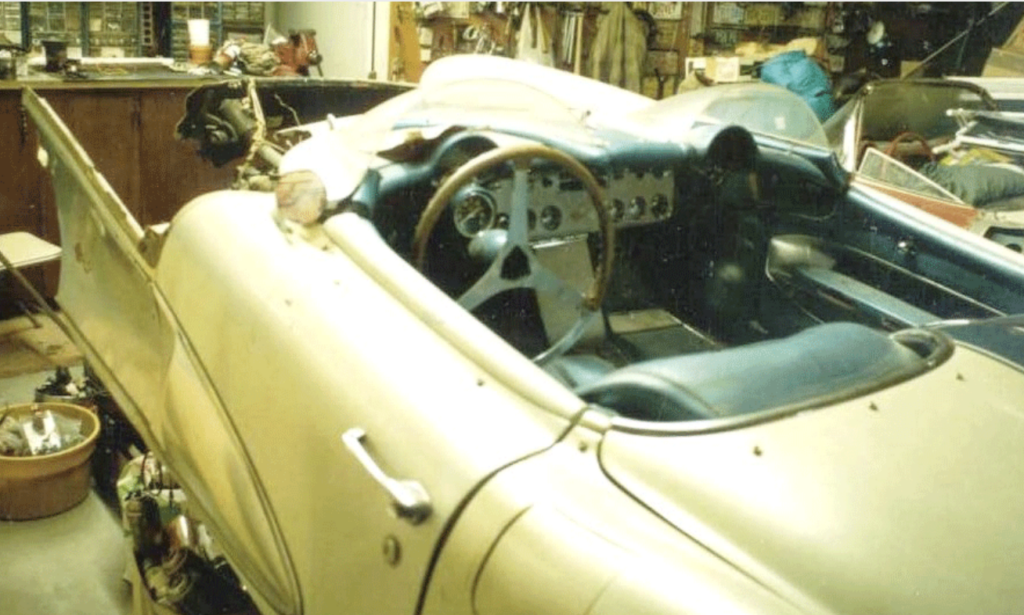
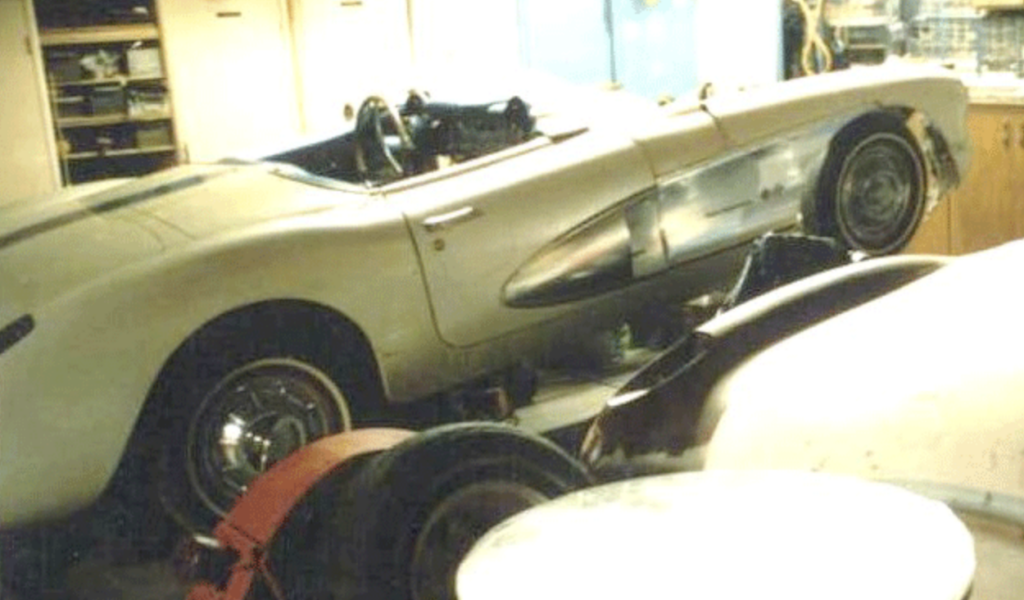
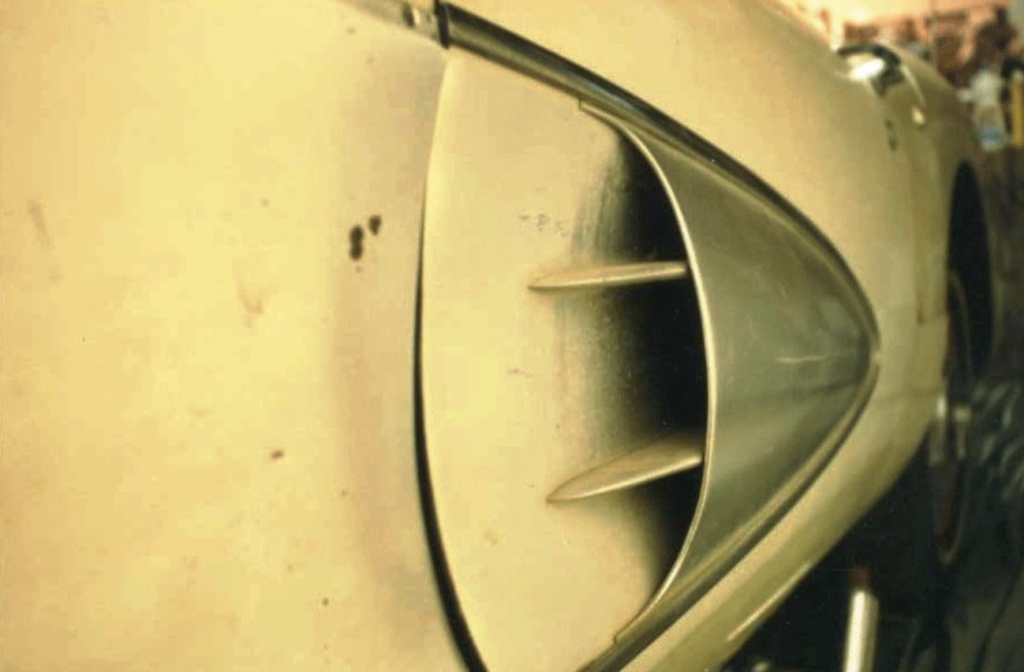
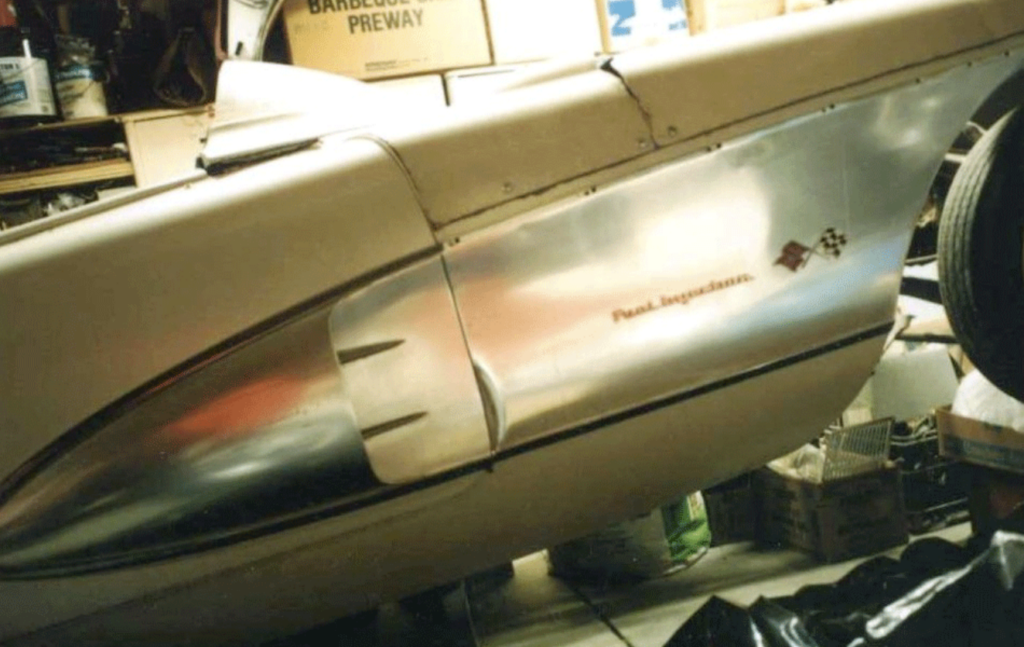
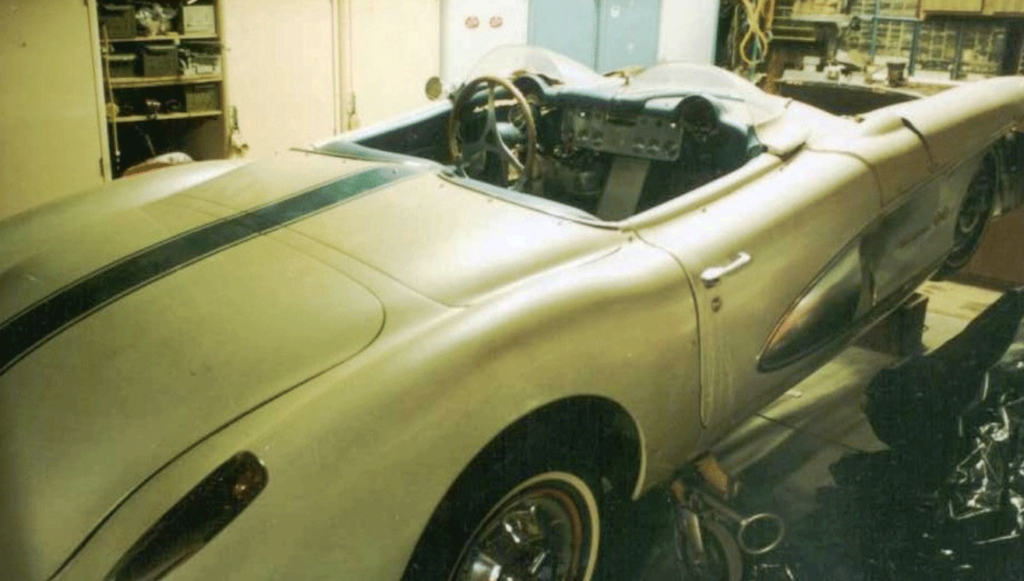
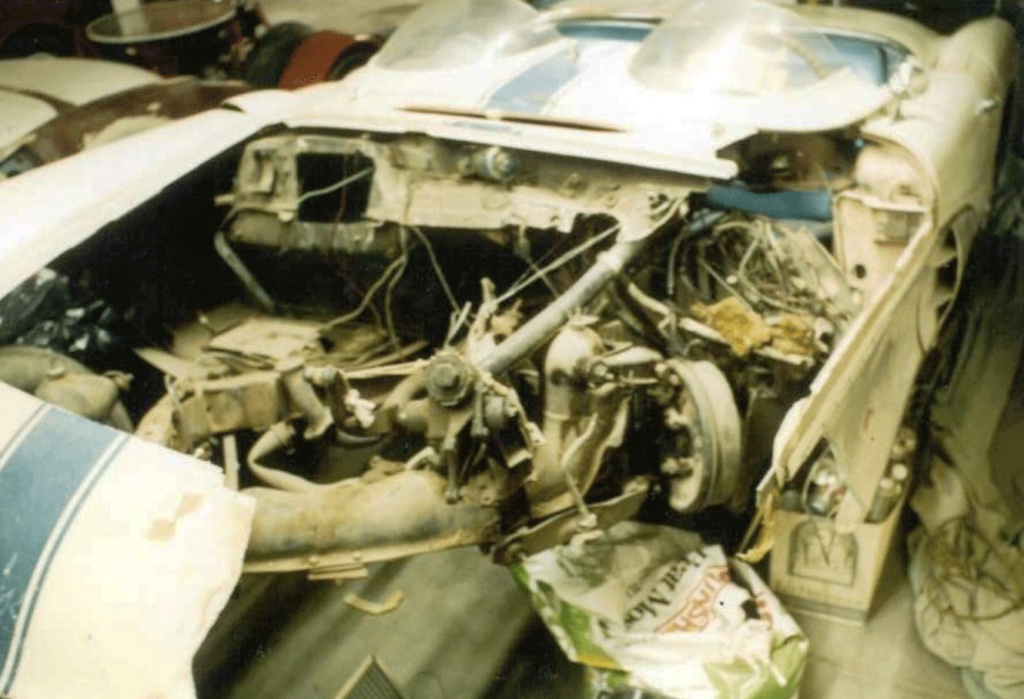
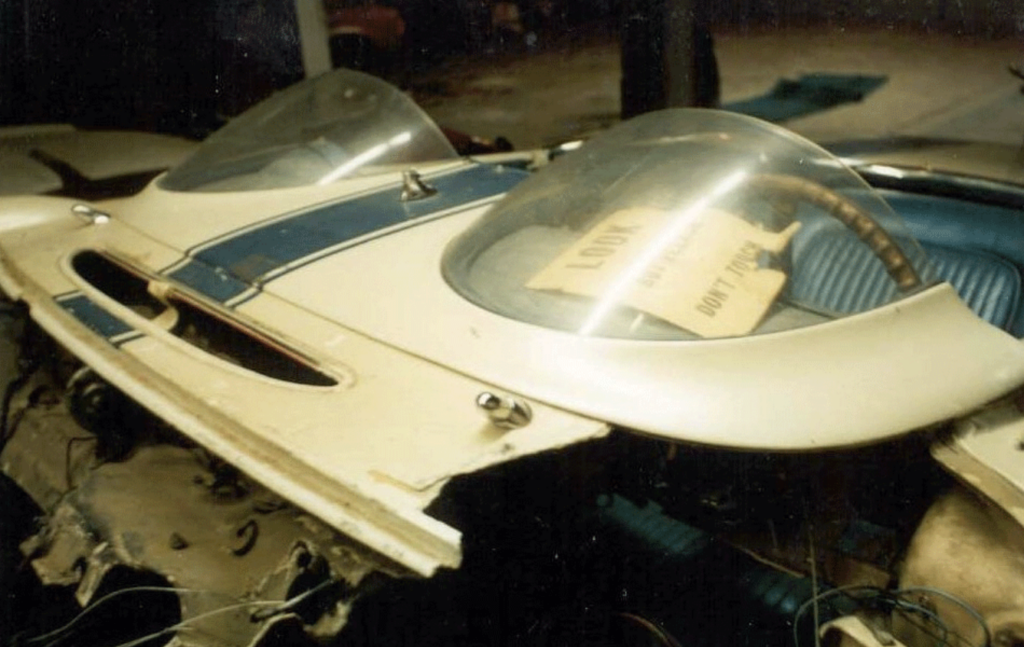
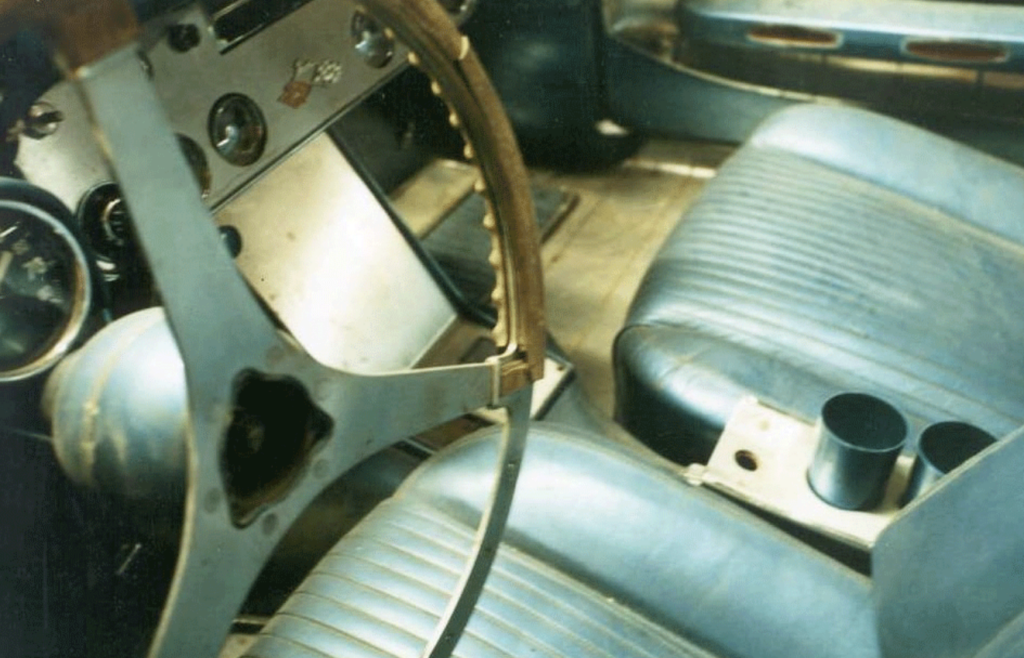
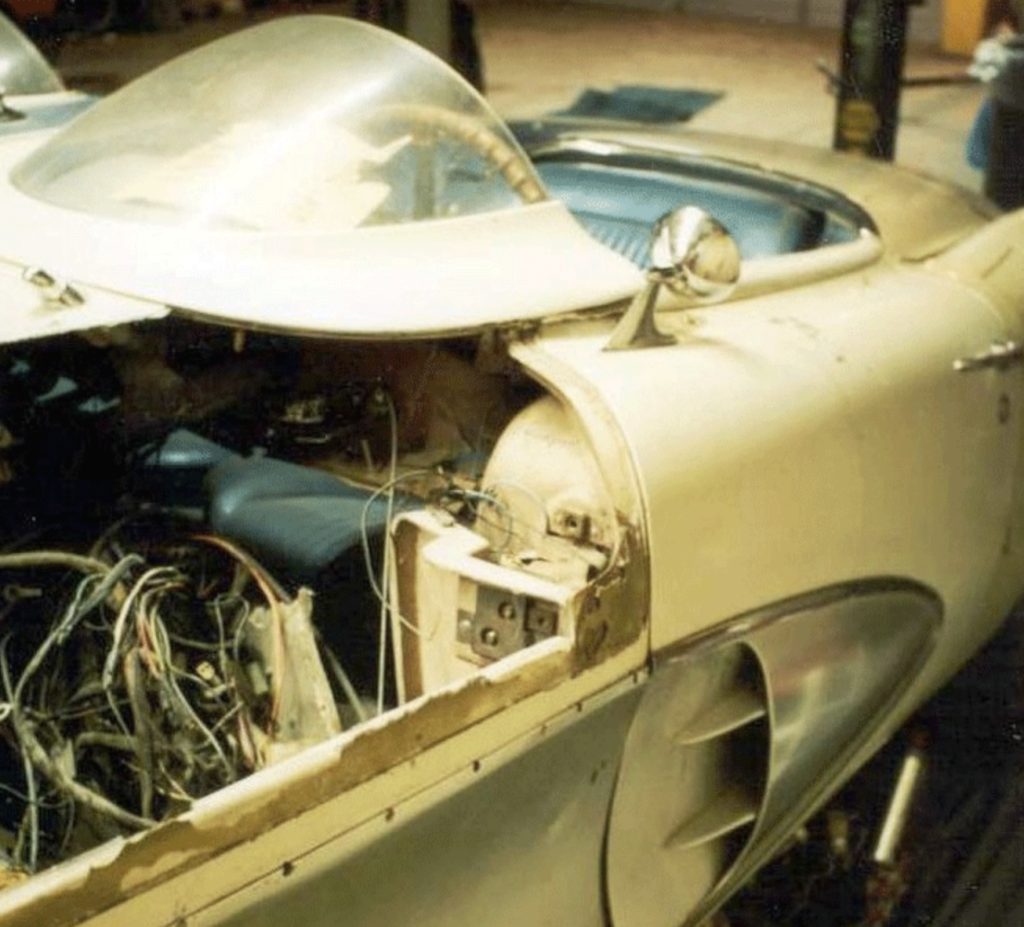
That may not sound glamorous, but in the history of this car, Bill Hovey’s role in its survival is critical.
He does not appear in the story as a GM executive, a famous racer, or a big-name collector. He appears as the person who kept the car from being erased. That is often how important cars survive—not because someone has a museum plan from day one, but because one person recognizes that the thing sitting in the garage should not be thrown away, cut up, or scattered.
In the Super Sport’s case, preservation mattered as much as restoration. The car’s later value depended on the survival of its original GM Styling components. Its one-off interior pieces, show-car trim, drivetrain, tires, and unusual details could not simply be ordered from a catalog. If those pieces disappeared, the car would have lost a significant part of its credibility. Hovey’s long-term stewardship kept the car’s physical history together.
John Baldwin And The Long Road Back
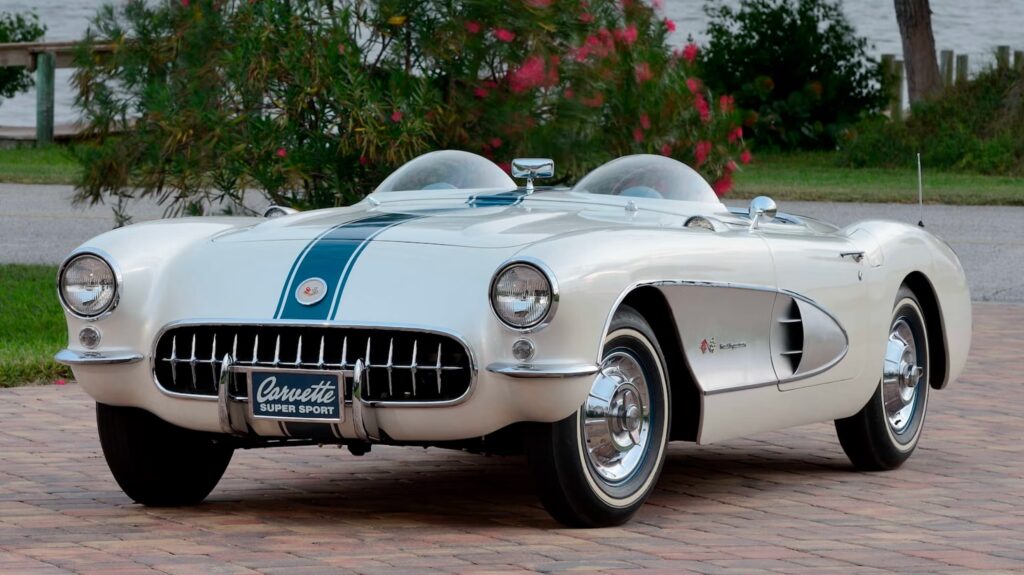
The car eventually left Bill Hovey’s care in the 1990s and entered the hands of John Baldwin. Sources differ slightly on the acquisition date, with some saying 1996 and others saying 1997. Old Cars Weekly reports that Baldwin purchased the car in 1996, while other later auction-related summaries describe it as being in the same owner’s care since 1997.
Either way, Baldwin became the owner responsible for bringing the Super Sport back from obscurity.
That restoration could not have been simple. This was not a standard 1957 Corvette restoration. It was the reconstruction of a one-off GM Styling car whose unique components had to be understood, preserved, repaired, and reinstalled correctly. Road & Track reported that nearly every item installed by GM during the original build was saved and reused in the restoration.
That is the difference between a restored show car and a recreated one.
The Super Sport’s return was not built on guesswork alone. Its credibility came from the survival of the original drivetrain, the original or unique show-car components, the special tires, and the physical evidence left by GM Styling. The restoration returned the car to its original Motorama-style condition, but the story was anchored by the parts that had stayed with it through decades of neglect, storage, and damage.
Amelia Island: Sixty Years Later
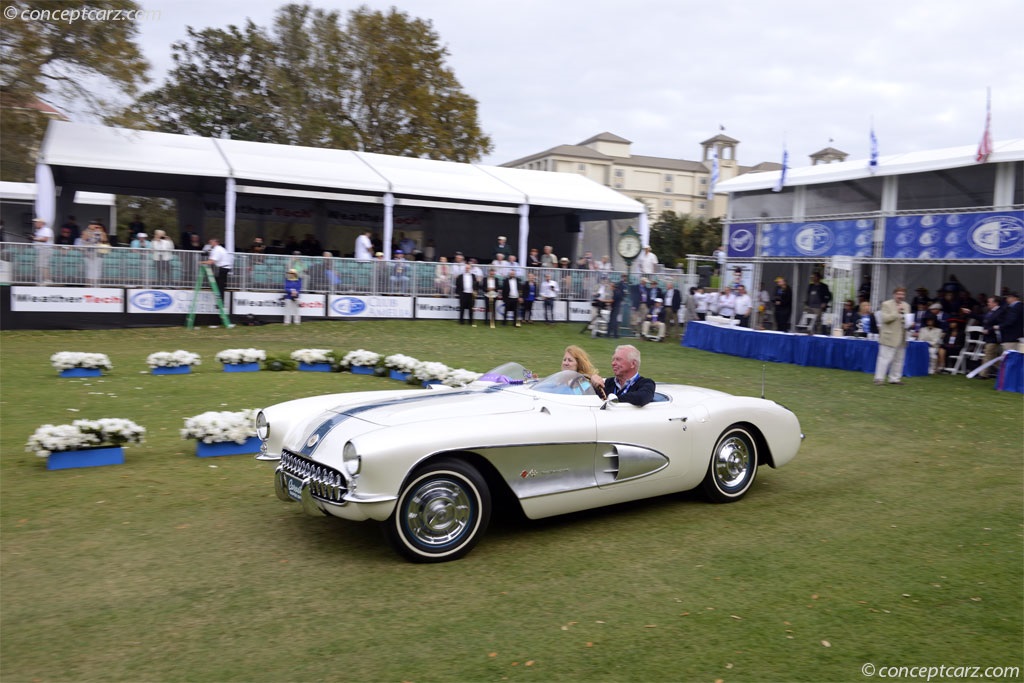
In March 2017, the Super Sport re-emerged publicly at the Amelia Island Concours d’Elegance. Old Cars Weekly described the car as breaking cover after six decades hidden from view, and Amelia founder Bill Warner called it “practically unknown,” noting its June 1957 Speed Age cover appearance and long disappearance from public sight.
For Corvette historians, that Amelia appearance was more than a concours debut. It was the public reintroduction of a missing chapter.
The car went on to receive the Presentation of Significant Cars award at Amelia Island. Vette Vues’ Mecum summary also notes that it received the Historic Vehicle Association National Heritage Award and completed the first half of the NCRS Heritage Award process.
Those honors make sense because the Super Sport is not significant in the normal collector-car way. It is not merely rare. It is not merely beautiful. It sits at an intersection of Corvette history where factory styling, fuel injection, racing influence, show-car culture, and Chevrolet performance branding all came together.
The 2022 Public Offering
After its restoration and Amelia Island return, the Super Sport entered the public collector conversation again when it was listed for Mecum Kissimmee 2022. CorvetteBlogger reported that the car had previously been offered through VetteFinders for $2.8 million or best offer and was later scheduled to cross the block at Mecum’s January 2022 Kissimmee auction.
Vette Vues reported a Mecum estimate of $1.75 million to $2 million, while Road & Track also noted that the auction house estimated the car could bring as much as $2 million.
Those numbers are interesting, but they are not the main story. The main story is that the Super Sport had finally been recognized as one of the truly important factory Corvette artifacts of the 1950s.
That recognition also came at a time when the market was beginning to distinguish more carefully between rarity in production and historical importance. A fuel-injected 1957 production Corvette is special. A factory show car that introduced fuel injection, carried the first Chevrolet Super Sport name, survived intact enough to be restored, and connects visually to the SR-2 and SS racing programs belongs in a different category.
Not The SS Racer — And That Is The Point
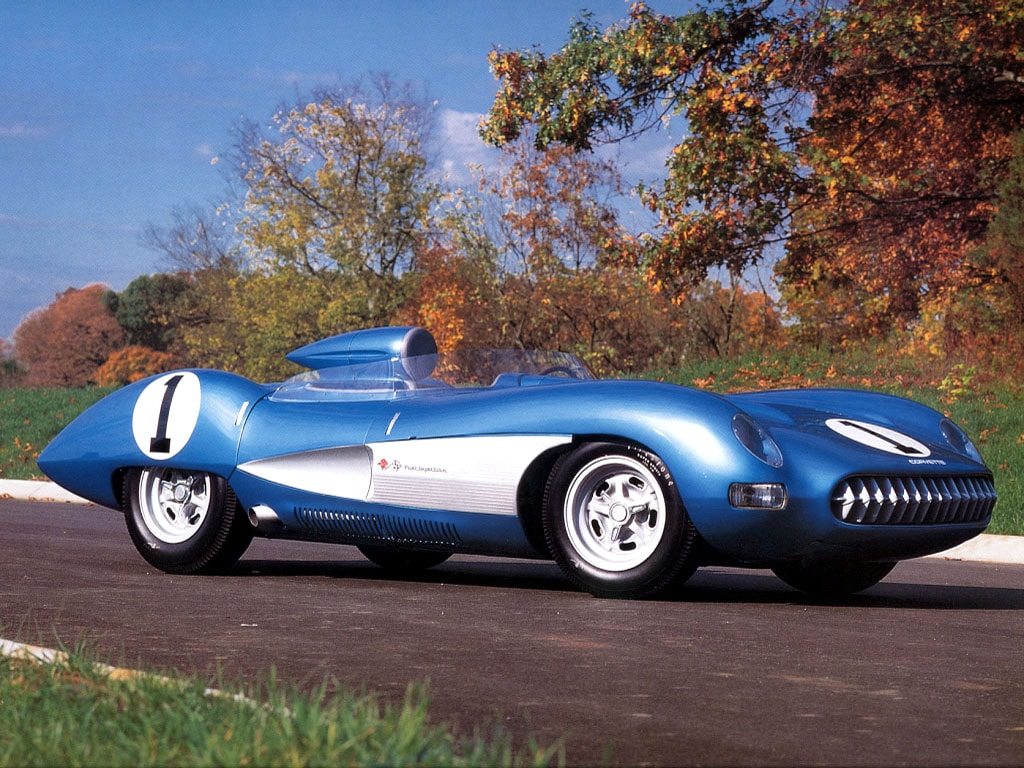
One of the persistent challenges with this car is that it lives in the shadow of the 1957 Corvette SS racer. That is understandable. The SS race car was a stunning piece of engineering, and its connection to Zora Arkus-Duntov, Sebring, and Chevrolet’s international racing ambitions gives it the kind of competition mythology that tends to dominate Corvette history.
But the Super Sport show car should not be treated as a footnote.
The SS racer showed what Chevrolet wanted to do on the track. The Super Sport showed what Chevrolet wanted the public to believe about Corvette. Those are different jobs, but both mattered, and both reflected the same moment in Chevrolet history when Corvette was being pushed beyond its early identity as a stylish American roadster.
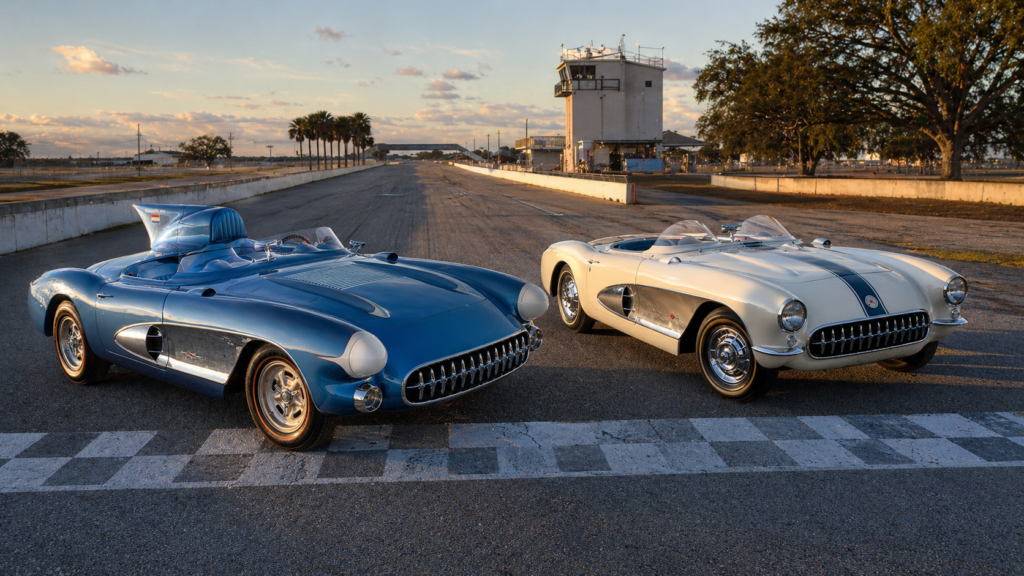
The Super Sport translated Chevrolet’s racing ambitions into something the public could stand beside at an auto show. It took the excitement of the SR-2s, the seriousness of fuel injection, the glamour of GM Styling, and the promise of Corvette performance, then wrapped it all in a package that looked more sensational without fully severing its production-car identity. That balance was important. The car looked advanced, dramatic, and almost impossibly low, but it still carried enough Corvette DNA to make the connection clear.
In some ways, that made it more useful to Chevrolet than the racer.
A prototype racer could impress engineers, journalists, and sports-car loyalists. The Super Sport could influence customers. It could take the same performance conversation and make it aspirational, approachable, and visible to the people Chevrolet hoped would walk into showrooms. It could make the coming 1957 fuel-injected Corvette feel like part of something bigger than a new engine option or a revised model-year package. It suggested that Corvette was becoming a true performance car, not merely in mechanical terms, but in the way Chevrolet presented it to the world.
That is why the Super Sport deserves to be evaluated on its own terms. It was not the SS racer, and it was never meant to be. It was a show car, a statement piece, and a carefully shaped message about Corvette’s future. Where the SS racer gave Chevrolet credibility through competition intent, the Super Sport gave Corvette imagination, glamour, and public-facing momentum. Together, the two cars help explain why 1957 was such an important turning point. Chevrolet was not simply improving Corvette. Chevrolet was redefining it.
Why The 1957 Corvette Super Sport Still Matters Today
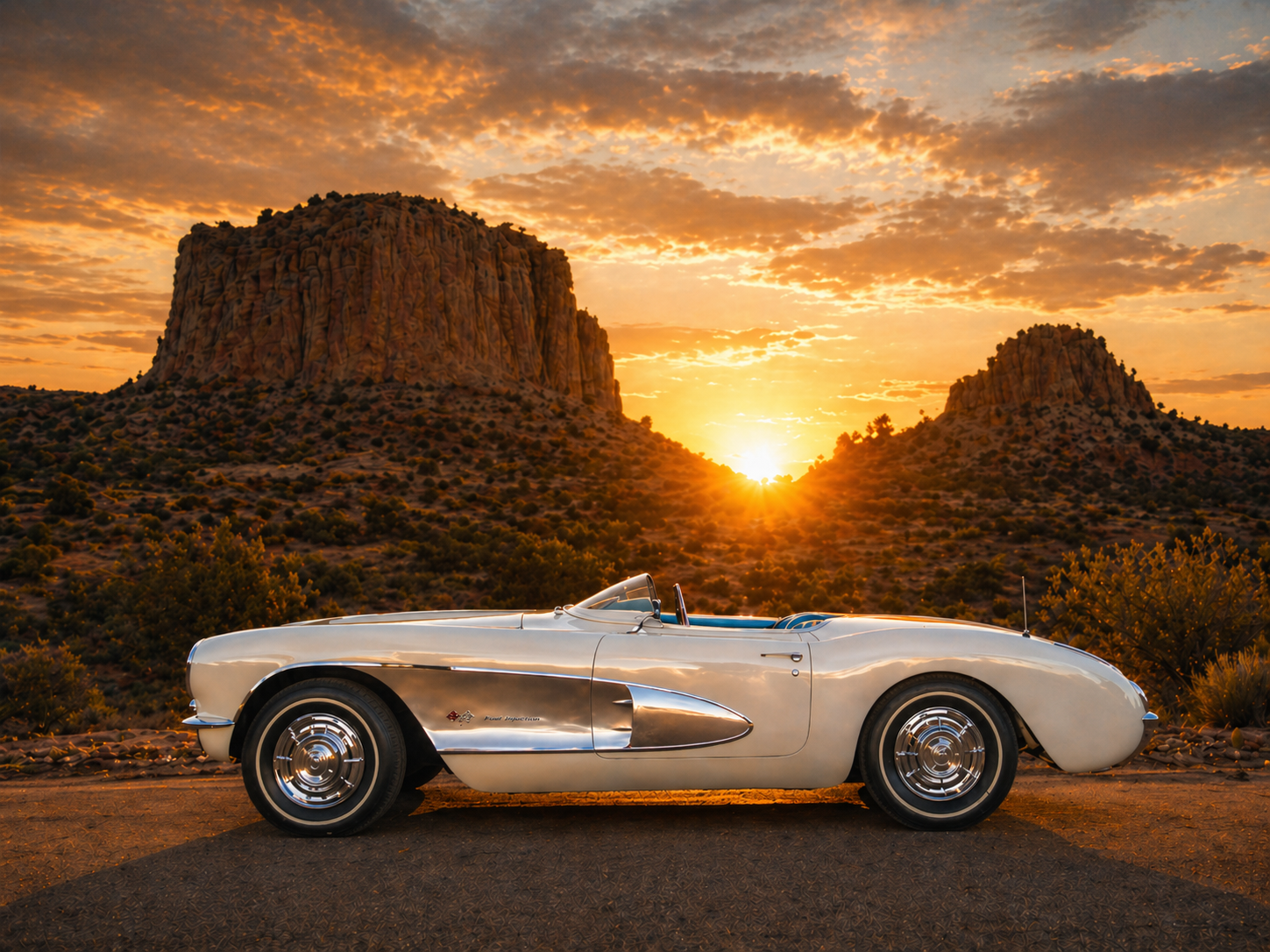
The 1957 Corvette Super Sport still matters today because it captures a moment when Chevrolet was learning how to present Corvette as something more than a modest, two-seat boulevard cruiser.
By 1957, Corvette had already survived its earliest identity crisis. The car that nearly disappeared after 1955 was beginning to find its footing, helped by V-8 power, sharper styling, and a growing performance reputation. But Chevrolet still needed to convince the public that the Corvette was not just a sporty boulevard car. It needed to look credible. It needed to feel aspirational. It needed to suggest that something deeper was happening inside Chevrolet.
The Super Sport helped do that.
Before the Super Sport name was applied to Impalas, Chevelles, Camaros, Novas, Monte Carlos, and later generations of Chevrolet performance cars, it first appeared in 1957 on this single Corvette show car. That alone gives the Super Sport an important place in Chevrolet history. But its significance runs deeper than the badge. The Super Sport gave Chevrolet a way to connect Corvette’s public image with the company’s growing performance ambitions. It was not a race car in the same sense as the 1957 Corvette SS, but it stood close enough to that world to make the connection obvious.
That is what makes the car so fascinating. The Corvette SS racer showed what Chevrolet wanted to attempt on the track. The Super Sport showed what Chevrolet wanted people to believe about the Corvette when they encountered it under the lights of an auto show. It translated competition intent into showroom imagination.
The timing was critical. Fuel injection was about to become one of the defining claims of the 1957 Corvette, and the Super Sport helped introduce the public to Rochester Ramjet technology in a dramatic, highly stylized package. It was beautiful, certainly, but it was not merely decorative. It used beauty as persuasion. It told the public that Corvette was becoming faster, more sophisticated, more technically serious, and more closely aligned with the kind of European sports cars that enthusiasts already admired.
That message still carries weight today because it shows how carefully Corvette’s identity was being shaped. The Super Sport connected several threads at once: the excitement of the SR-2 program, the promise of fuel injection, the visual glamour of GM Styling, and the growing seriousness of Chevrolet Engineering. It stood at the intersection of dream car, show car, prototype, and brand statement.
Its survival only adds to its importance.
This car could have disappeared several times over. It survived the end of its show-car life. It survived the used-car years. It survived a crash. It survived decades outside the spotlight. It survived because pieces of the original car remained together, because Bill Hovey preserved what he had, and because John Baldwin eventually restored it with enough discipline and respect to bring it back as a legitimate GM Styling artifact rather than a lost legend reconstructed from rumor.
For Corvette historians, that is the heart of the story.
The 1957 Corvette Super Sport was not simply a pretty white roadster with blue stripes. It was one of Chevrolet’s earliest and most important attempts to package Corvette performance as an idea, a product direction, and a public identity. It helped bridge the gap between the Motorama stage and the racetrack, between styling and engineering, between Corvette’s fragile early years and the far stronger performance image that would soon define the nameplate.
Today, the Super Sport stands as one of the most important one-off Corvettes ever built. Not because it won races. Not because it changed production overnight. But because it helped Chevrolet teach the public what Corvette could become.
And in 1957, that was exactly what Corvette needed.
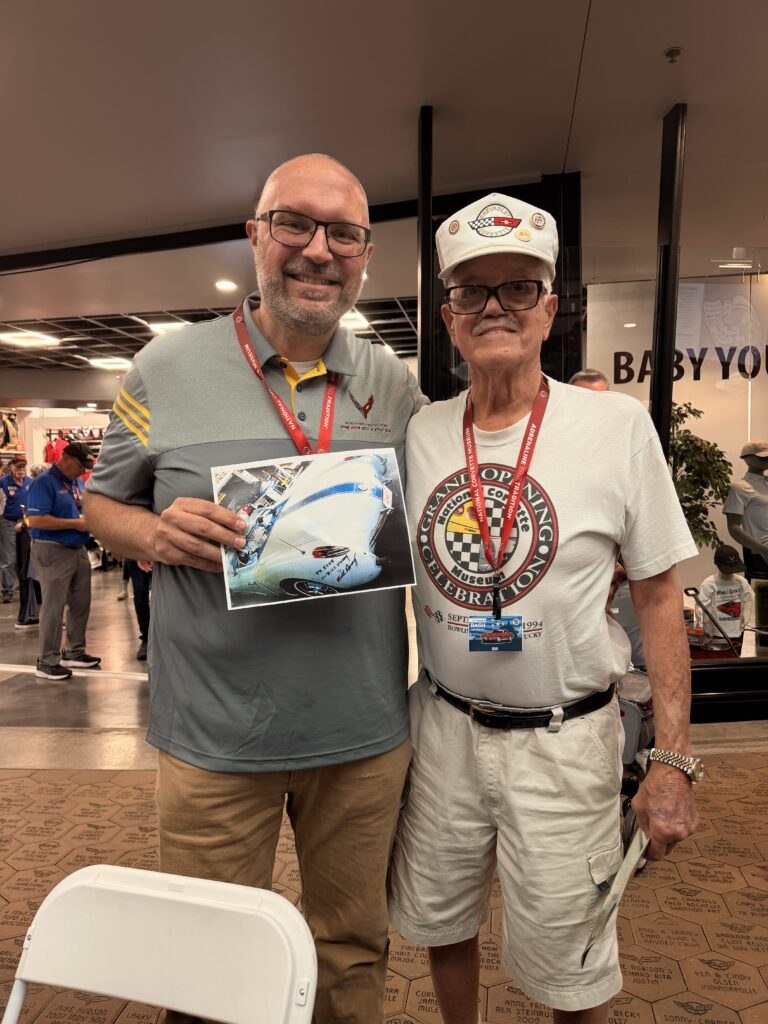
This article is respectfully dedicated to Bill Hovey and his beautiful family.
I had the enormous privilege of meeting Mr. Hovey at the 2026 National Corvette Museum Bash and spending a few minutes speaking with him and his family about this remarkable car. At 89 years young, Mr. Hovey continues to actively enjoy the Corvette hobby, and seeing him surrounded by his children and grandchildren as they toured the Museum was both an honor and a blessing.
Thank you to the Hovey family for sharing a few minutes of your day with me. It was a moment I will never forget.