
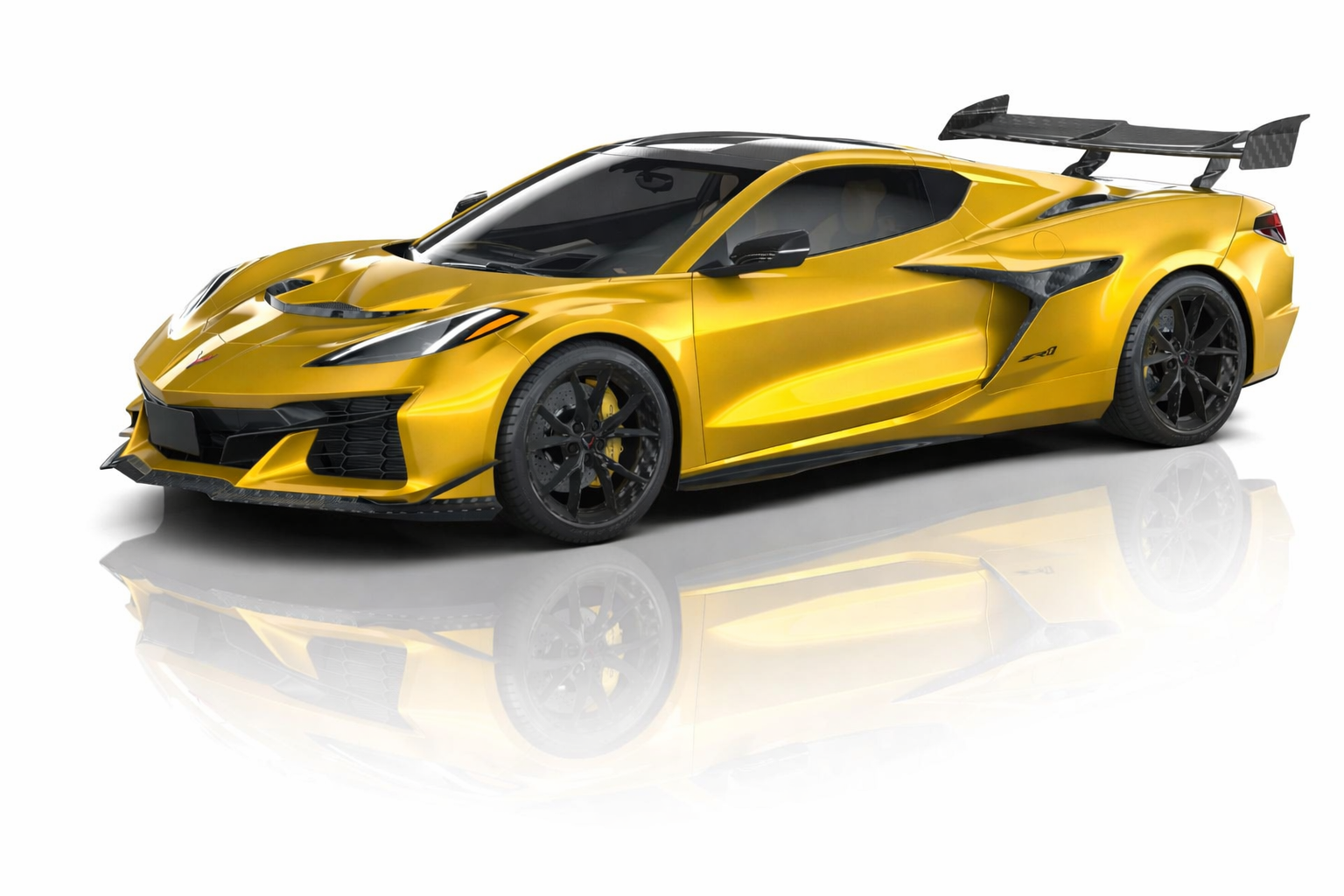
There are certain Corvettes that arrive as model-year updates, and then there are Corvettes that arrive as declarations. The 2025 Chevrolet Corvette ZR1 is very much the latter. Yes, it is the most powerful production Corvette ever built. Yes, its hand-assembled 5.5-liter twin-turbocharged LT7 V8 produces 1,064 horsepower and 828 lb-ft of torque. Yes, Chevrolet ultimately confirmed a top speed of 233 mph, making it the fastest production car ever built by an American auto manufacturer. But those numbers, however staggering they may be, still do not explain why this car matters as much as it does. The real story of the 2025 ZR1 is not that Chevrolet built an outrageously fast Corvette. It is that Chevrolet finally built the Corvette that the C8 architecture was always pointing toward.
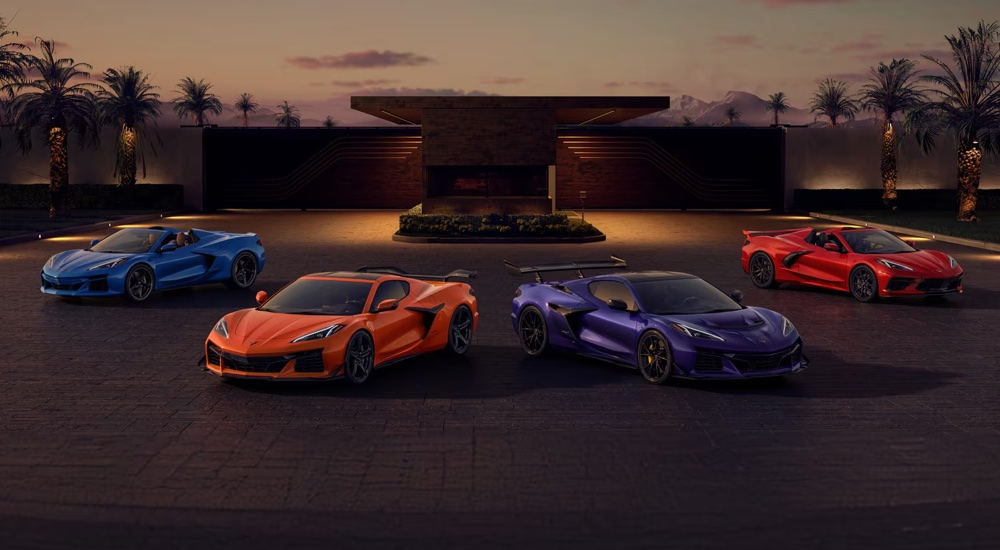
The mid-engine Corvette was never just about appearance. It was never only about finally giving America’s sports car proportions that looked more at home among exotics, nor was it merely about changing the visual grammar of the badge after decades of front-engine familiarity. What the layout really created was engineering headroom. It gave Corvette a platform with balance, packaging, cooling, aero efficiency, and high-speed stability to chase a level of total performance that earlier generations could approach only in flashes. Stingray proved the architecture could work in production. Z06 proved it could sustain a genuinely world-class level of response and composure. E-Ray broadened the family and introduced an additional layer of sophistication. The ZR1 is where the Corvette team cashed in on the full promise of the C8 program. Chevrolet said as much at launch, framing the car as the next challenge for the same team that revolutionized Corvette with a mid-engine architecture.
That is why the 2025 ZR1 matters historically. This is not simply the latest King of the Hill. It is the car that proves the hill itself got taller. The C8 did not abandon Corvette tradition. It fulfilled one of the oldest ambitions in Corvette history: take the basic mission of America’s sports car and give it an architecture capable of carrying that mission into territory that once seemed permanently reserved for someone else. The ZR1 is the moment where that argument becomes impossible to dismiss.
To Understand the 2025 ZR1, You Have to Understand What ZR1 Means
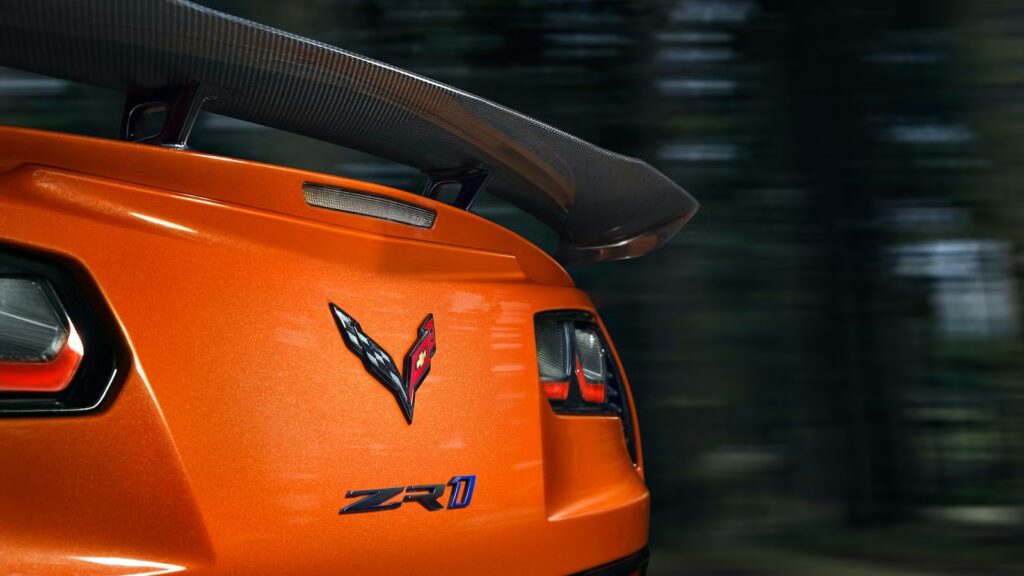
The ZR1 badge has always carried a different kind of weight inside the Corvette world. Not merely faster. Not merely more expensive. Not simply the sharpest edge of a familiar formula. A ZR1 has historically meant something more serious than that—a Corvette developed with less patience for compromise and a much greater willingness to push the underlying platform toward its outer limit. It has never existed only to sit atop the range. It has existed to stretch the definition of the car beneath it.
That has been true from the beginning, even if the badge has expressed itself differently across eras. Every ZR1 reflected its moment: different technology, different pressures, different competition, different assumptions about what mattered most. Yet the assignment remained remarkably consistent. A ZR1 was there to harden the platform, sharpen it, and then ask more of it than seemed reasonable only a few years earlier. In some generations, that meant race-minded hardware and mechanical discipline. In others, it meant exotic engine architecture, supercharged authority, or a final deliberate overstatement at the close of an era. The details changed. The mission did not.
That is what separates the badge from the ordinary logic of a flagship trim level. In most performance hierarchies, the top model aggregates the best available parts into a single, expensive component. A ZR1 has historically carried a heavier burden of proof. It has been the Corvette that Chevrolet has used when it wanted to prove something—not just about the car, but about Corvette’s place in the wider performance conversation. It has also been the moment when Chevrolet stopped merely refining and started making a point. The 2025 ZR1 belongs squarely in that tradition, but it also pushes the tradition further than any ZR1 before it.
The C3 ZR1: Where the Philosophy Began
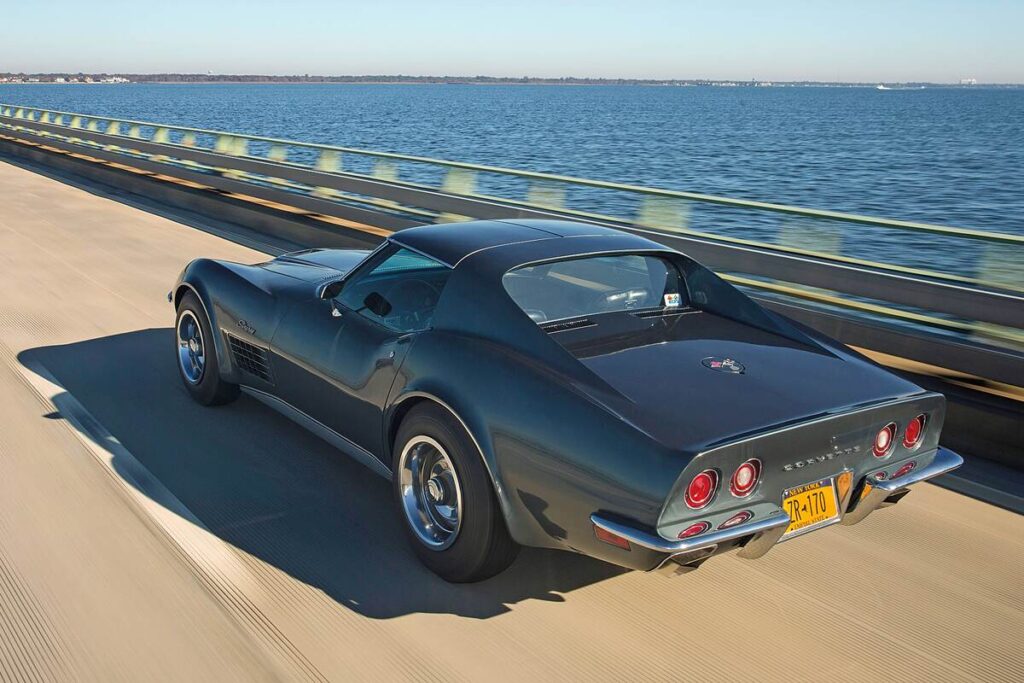
The story starts in 1970, and it begins in a way that now feels perfectly suited to the Corvette world of that period: quietly, almost discreetly, with more substance than fanfare. The original C3-era ZR1 was not introduced as a halo car in the modern sense because the culture around Corvettes had not yet evolved to market halo cars the way it does now. Instead, the first ZR1 existed as a kind of coded signal to knowledgeable buyers—an option package for people who understood that the real story often lived deep in the order sheet rather than on the showroom placard.
Built around the LT-1 small-block, the original ZR1 emphasized mechanical capability. It leaned toward the hard parts, toward preparedness, toward the sort of heavy-duty thinking that matters most when a car is driven in anger rather than merely admired in passing. The package favored function over fashion, which is important because it established a value system that the badge would never fully abandon. From the beginning, ZR1 meant intent. It meant discipline. It meant a Corvette configured for people who cared more about what the car could endure and deliver than what it projected from a distance.
That first ZR1 can seem modest in hindsight only because later ZR1s became so much louder, more powerful, and more culturally visible. But the original mattered because it planted the seed of the idea. It established that there should be room in the Corvette story for a car that traded away some softness, some comfort, and some broad-market friendliness in exchange for a sharper and more serious kind of capability. The mythology had not arrived yet. The philosophy had.
The C4 ZR-1: The Car That Turned the Badge Into Legend
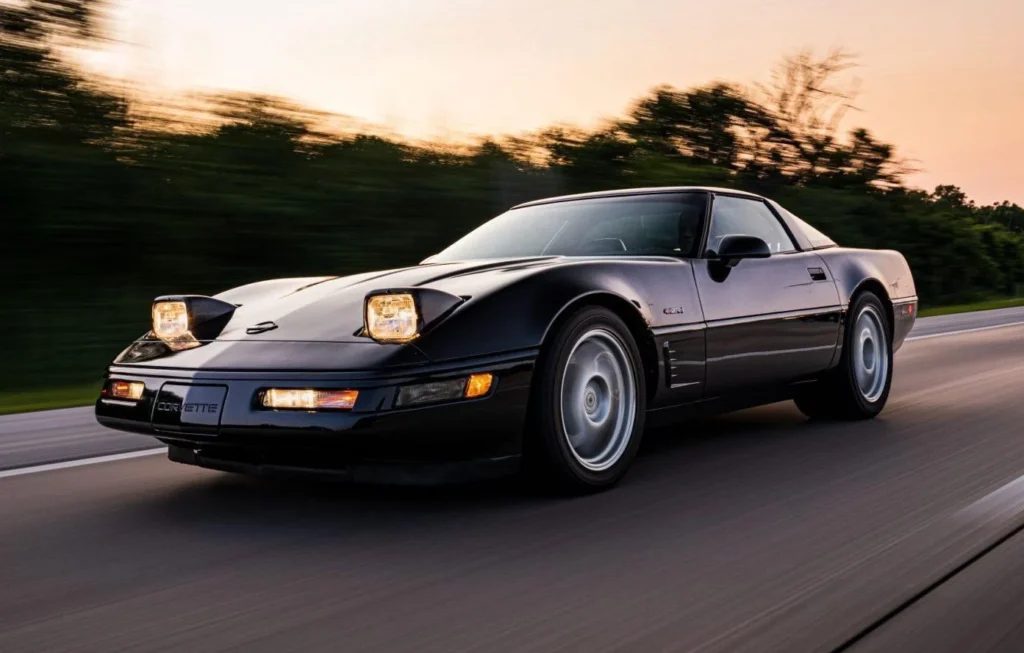
If the C3 planted the idea, the 1990 C4 ZR-1 turned it into mythology. This is the chapter that permanently changed the public meaning of the badge. The C4 ZR-1 did not merely revive an old name; it did so with enough technical ambition and confidence that the car immediately felt unlike anything Corvette had done before. The result was not simply a faster C4. It was a machine that seemed determined to redraw the perceived limits of Corvette engineering at the end of the 1980s.
At the center of that transformation was the LT5, the Lotus-developed and Mercury Marine-built V8 that gave the ZR-1 its singular identity. The engine mattered not only for its output, but also for what it represented. Here was a Corvette powerplant with a different intellectual footprint—more exotic in architecture, more globally legible in sophistication, and far more explicit in its mission to place Corvette in a new class of conversation. The standard Corvette was already serious. The ZR-1 was something else. It announced that Chevrolet was no longer content to compete only on familiar domestic terms. It wanted Corvette to have technical credibility on a much broader stage.
That is why the C4 ZR-1 still looms so large in Corvette memory. “King of the Hill” stuck because the phrase captured exactly what the car was trying to do: raise the summit of Corvette performance and make sure everyone noticed it had moved. After the C4 ZR-1, the badge no longer meant insider hardware for the people in the know. It now meant Corvette at its most ambitious, most technically assertive, and most globally self-confident.
The C6 ZR1: The Corvette That Entered the Supercar Fight
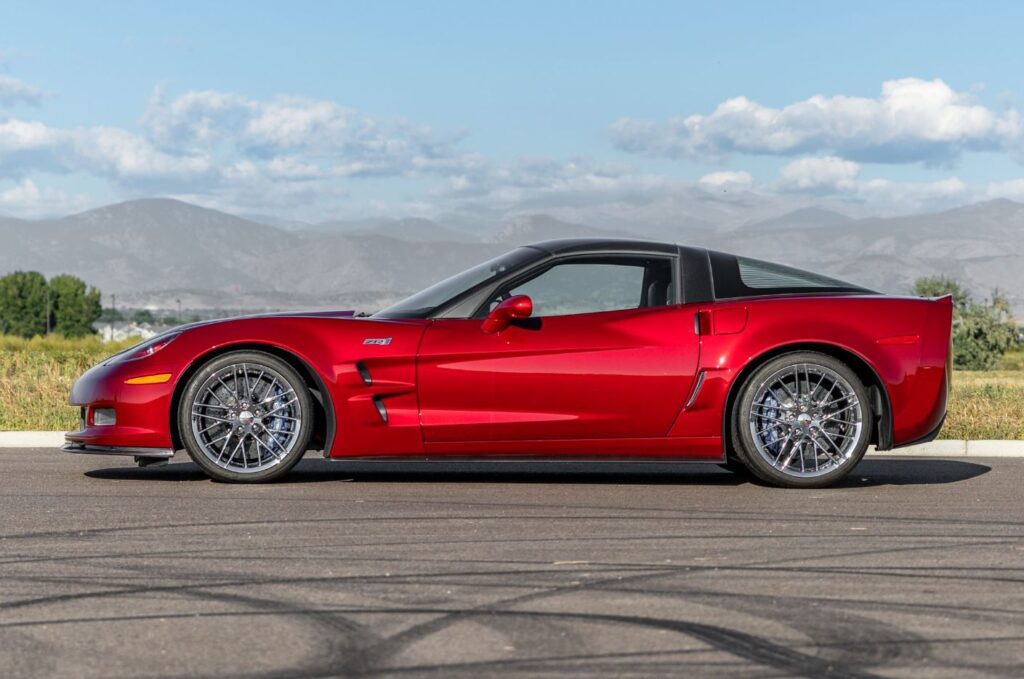
When the ZR1 returned in C6 form, it did so with a different accent and a different kind of force. Where the C4 ZR-1 leaned heavily on technical mystique, the C6 ZR1 felt more direct, more brutal, and more complete. If the earlier car announced Corvette’s ambition, the C6 ZR1 announced Corvette’s maturity. This was not an experiment in credibility. It was credibility already earned and then exercised to its fullest iteration yet.
The supercharged LS9 defined the car’s personality. There was nothing coy about it. The engine was a statement of intent in the classic American sense—massive output, immediate authority, and the kind of shove that made familiar benchmarks look newly vulnerable. But the historical importance of the C6 ZR1 was never just about the power figure. What made the car matter was the degree to which the rest of the package rose to meet it. Carbon fiber was not there as decoration. Carbon-ceramic brakes were not there as brochure jewelry. Magnetic Ride Control, aero development, and high-speed stability all combined to create a Corvette that no longer needed qualifiers attached to its greatness.
That was the breakthrough. The C6 ZR1 stepped into true supercar territory and did not apologize for how it got there. It did not mimic Europe. It did not ask for permission. It arrived as an American flagship, with its own engineering logic, visual language, and confidence. It changed the terms of the conversation around Corvette in a lasting way.
The C7 ZR1: The Final Front-Engine Overstatement
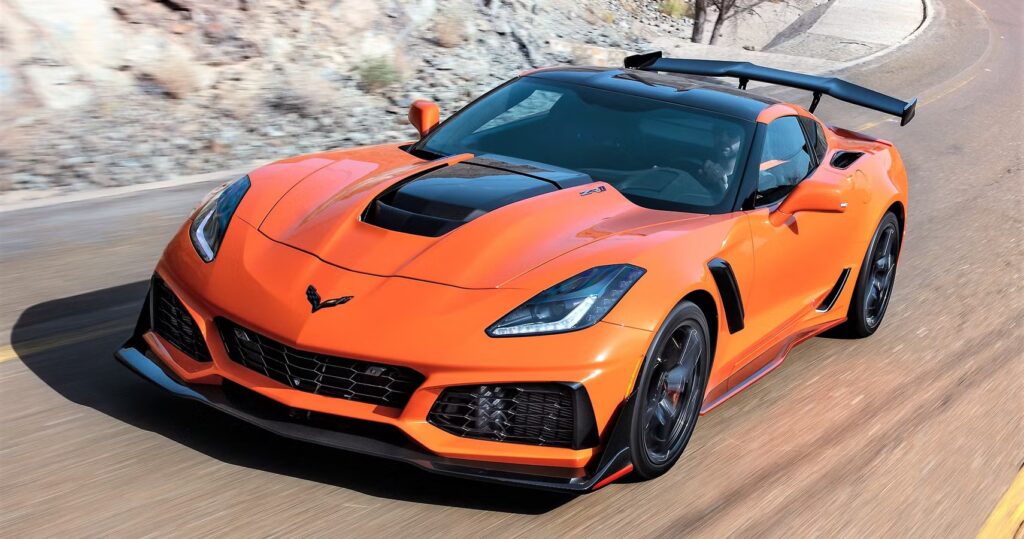
The 2019 Corvette ZR1 was the final and most aggressive expression of the front-engine Corvette formula. With its supercharged LT5 V8, towering output, massive aero, and unmistakable sense of escalation, it served as both a farewell and a benchmark—showing just how far Chevrolet could push the traditional layout before the mid-engine C8 changed everything. In that sense, the C7 ZR1 was not just a predecessor to the 2025 ZR1. It was the last great overstatement of the old order before Corvette’s next revolution began. (Image credit: HotCars.com)
By the time the C7 ZR1 arrived, the badge no longer needed to establish itself. Its role was different now. It had to close something out. In hindsight, that is part of what gives the C7 ZR1 its special force. This was not merely another range-topping Corvette. It was the last ZR1 of the front-engine era, and Chevrolet seemed fully aware of what that meant. The result felt less like a measured development step and more like a final deliberate escalation.
Everything about the car was turned up with purpose. The supercharged LT5, the towering output, the aggressive aerodynamic package, the thermal load, the visual intensity, the sense that every major system was being asked to tolerate more at once—it all pointed in the same direction. Chevrolet was not sending the traditional Corvette layout off with a nod and a handshake. It was giving it one final act of excess. More power. More heat. More downforce. More presence. More willingness to ask difficult things of the chassis, the cooling systems, and the aero all at once.
That is why the C7 ZR1 occupies such a specific place in Corvette history. It was the final front-engine ZR1, the last front-engine Corvette to sit at the absolute summit of the range, and the final chance for Chevrolet to show how far that architecture could be pushed before the mid-engine era changed the center of gravity of the program—literally and figuratively.
Why the C8 ZR1 Feels Different
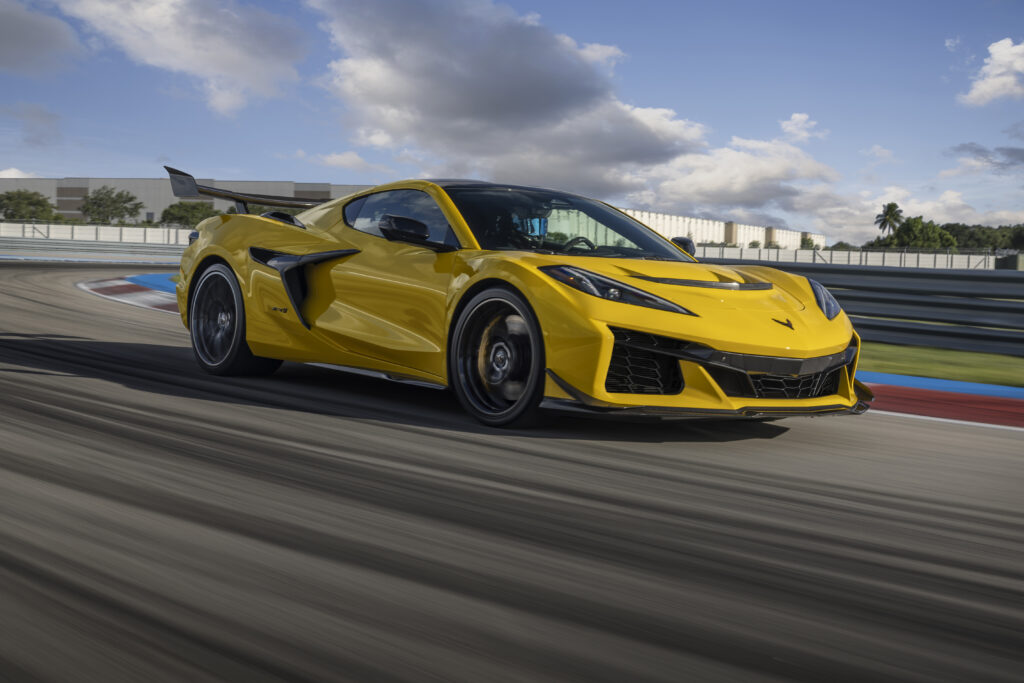
The 2025 ZR1 inherits all that history, but it communicates it differently because it is doing more than extending a lineage. It is validating a long-debated idea. Earlier ZR1s were astonishing evolutions of the formula available to them. The C8 ZR1 is the full realization of a multi-generation structural and mechanical evolution. GM President Mark Reuss said plainly that moving the Corvette to a mid-engine layout created the real possibility of this level of performance, and that statement is not marketing fluff. It is the clearest way to understand the car. The ZR1 is not a miracle produced despite the C8’s architecture. It is what that architecture was for.
“Setting the top-speed record in the Corvette ZR1 is a true triumph for Corvette and for Chevrolet, and also an exhilarating, surreal experience for me personally. With the current generation’s switch to mid-engine, we knew the outstanding performance and balance made this a real possibility. To go over there and get it done is a testament to the power of ZR1, and to the incredibly talented team that developed and built it.”
-Mark Reuss, President of General Motors
That matters because Corvette has been haunted, in the best possible way, by the mid-engine question for decades. Zora Arkus-Duntov understood the appeal. Corvette history is filled with moments where the idea of a mid-engine platform resurfaced, whether through concepts, engineering exercises, or racing-influenced thinking. The front-engine Corvette still became a formidable world-class sports car, which is part of what made its arc so compelling. But the underlying question never went away: what would happen if Chevrolet finally gave Corvette the architecture its most ambitious engineers always knew could unlock more? The C8 answered the question. The ZR1 answers it emphatically.
The People Behind the 2025 Corvette ZR1

The 2025 Corvette ZR1 marked two milestones at once: the summit of the C8 program and the closing chapter of Tadge Juechter’s time with Corvette. After 47 years at General Motors and 31 years on the Corvette program, Juechter was honored by Chevrolet at the ZR1 reveal and retired later that summer. The overlap gave the launch unusual historical weight. The ZR1 was not simply the next flagship in the range; it was the last major Corvette introduced under the engineer who helped guide the brand through the C6, C7, and mid-engine C8 eras. Chevrolet itself framed the car that way, tying Juechter’s career directly to the arrival of the fastest and most powerful production Corvette the company had ever built.
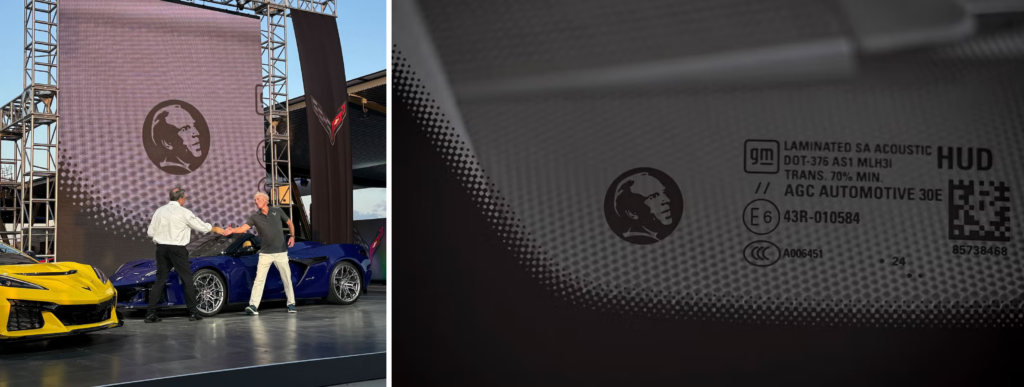
Chevrolet underscored the point with the 2025 ZR1’s “Tadge Badge,” a tribute graphic built into the reveal car and later extended to 2025-model-year Corvettes. It was an appropriate choice. Juechter’s legacy is woven through the modern Corvette story, and the ZR1 arrived as the clearest final expression of the ambition that shaped his tenure: more performance, more capability, and a Corvette increasingly willing to push beyond the limits that once defined it.
Yet as with every truly important Corvette, the ZR1 was not the product of one personality or one department acting alone. Scott Bell framed the car publicly in the broadest strategic sense, presenting it as the next step in the same mid-engine progression that began with Stingray and moved through Z06 and E-Ray before arriving here at the top of the range. Chris Barber gave the program its most visible engineering voice once the hard numbers started landing, especially after the 233-mph run in Germany. He was not just explaining results after the fact; he was helping illustrate how ambitious the internal targets had been, how the car overachieved them, and how much confidence the chassis and aero gave the team at speeds that would have sounded absurd for a factory Corvette not very long ago.
Phil Zak’s contribution sat in a different lane but was no less important. The ZR1 needed to look unmistakably more serious than the cars beneath it in the C8 family, yet avoid becoming visual noise. Zak’s team had to give the car its own identity while keeping every major gesture tied back to purpose, which is why the return of the split-window theme worked: not as nostalgia for nostalgia’s sake, but as a functional design element tied to heat extraction. David Caples helped make that same case from the aerodynamic side, presenting the ZR1 not as a car with dramatic aero attached to it, but as a fully integrated machine in which airflow, cooling, downforce, and stability were inseparable from the car’s appearance. By the time Tony Roma spoke publicly about the broader Corvette process, the picture was pretty clear: design, engineering, development, validation, and even the record-setting laps all stayed inside the Corvette program. That is part of what gives the ZR1 its coherence. It was shaped by Corvette people, and it was proven by Corvette people.
That makes the car feel especially coherent. The 2025 ZR1 does not read like an engine program with a body wrapped around it. It reads like a coordinated effort in which design, powertrain, aero, chassis, and validation were all working from the same brief. That is why the car feels integrated rather than merely dramatic. Even its most theatrical gestures tend to have an engineering justification.
Phil Zak, Design, and the Return of the Split Window
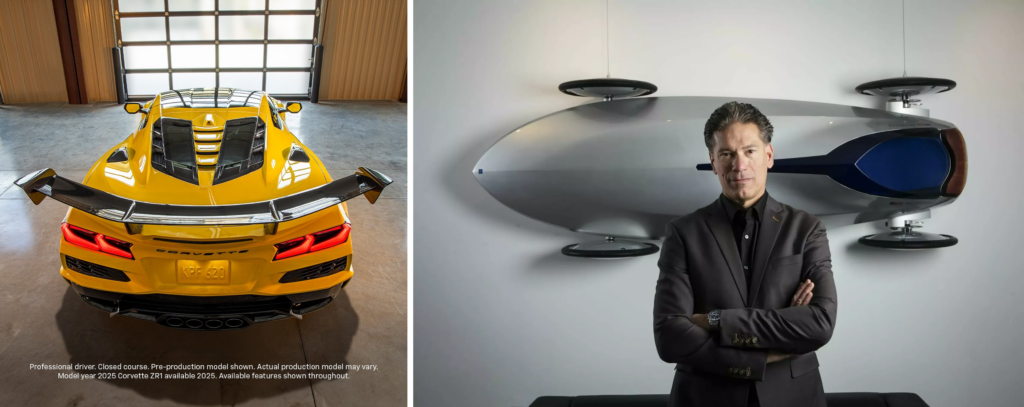
Phil Zak’s role in this story deserves special attention because the split-window motif could have become a mistake in less disciplined hands. Chevrolet quoted Zak, making clear that the decision was not taken lightly precisely because the team understood how beloved the original 1963 split-window theme remains in Corvette culture. More importantly, the return of the split rear glass was not added purely for nostalgia. On the ZR1 coupe, the central carbon-fiber spine between the glass panels helps extract heat from the engine bay. That is the right way to revive a historic Corvette cue. It is not there simply to echo the past, but to show how history and innovation can strengthen each other when form and function converge.
That design philosophy extends beyond the split window. The car’s unique wheel treatments, exposed carbon-fiber elements, visible ducting, and altered bodywork are not random design motifs intended to give the car a more menacing appearance. They are the visual language of a Corvette that now has to function in a very different performance envelope. The shape of the 2025 ZR1 isn’t just about looking faster than the cars below it in the range. It is trying to survive the pressures created by 1,064 horsepower, 233 mph, and track-capable high-downforce operation.
Why Chevrolet Built the 2025 CORVETTE ZR1 This Way
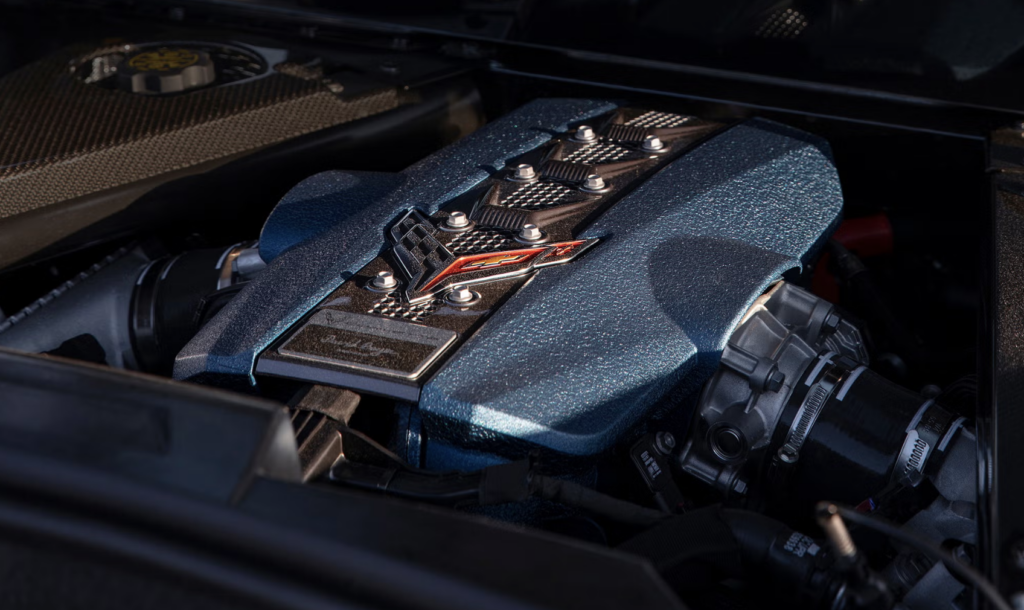
One of the most revealing aspects of Chevrolet’s official ZR1 story is the acknowledgement that the LT6 and LT7 programs were effectively intertwined from the beginning. The naturally aspirated 5.5-liter flat-plane-crank LT6 in the Z06 was never meant to represent the outer limit of the C8 engine strategy. Chevrolet described the LT7 as being built on the same Gemini architecture and later connected that engine family directly to the broader development stream that also fed the Z06 GT3.R race car. This reveals something critical: the LT7 was not some after-the-fact escalation born out of internet horsepower wars. It was always part of GM’s long-term vision for the engine program. It belonged there.
That also explains why Chevrolet did not simply add boost to the LT6 and call it a day. The LT7 required deep rethinking and optimization around forced induction, packaging, drivability, durability, and repeatability. Chevrolet’s official literature on the powerplant identifies dual 76-mm turbochargers, substantial integration work, and later technologies such as anti-lag control and the “maniturbo” exhaust manifold/turbo integration, which positions the turbochargers closer to the exhaust valves for improved response. This is not a story about easy horsepower, but rather about making massive horsepower behave like part of a complete car.
That distinction matters because the ZR1 was never supposed to be merely the loudest car in the lineup. Chevrolet wanted a factory Corvette capable of running with the world’s elite supercars while still behaving like a Corvette in the way it delivered speed, driver confidence, and repeatable performance. That is why so much of the development story revolves around systems integration rather than isolated hero numbers. The engine had to be overwhelming, yes, but the transmission, brakes, cooling, tire package, and high-speed stability all had to rise with it.
The LT7: A Landmark Corvette Engine
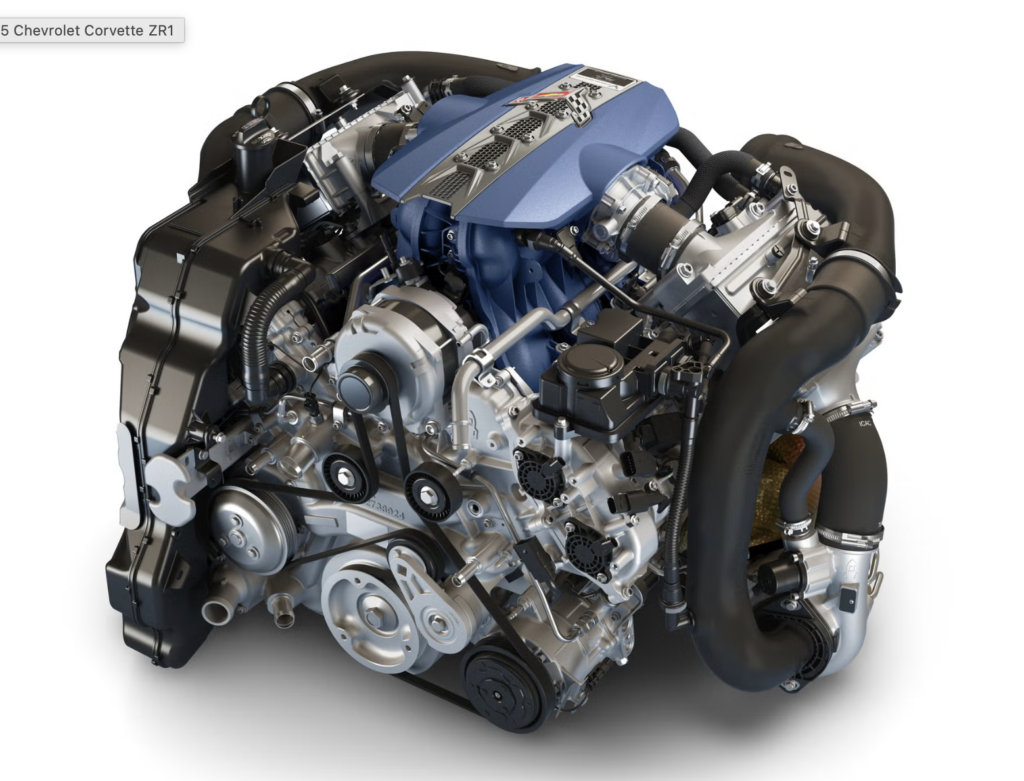
At the center of the 2025 Corvette ZR1 sits one of the most significant engines in the history of the badge. The LT7 is a hand-built 5.5-liter twin-turbocharged DOHC flat-plane-crank V8 assembled at the Performance Build Center in Bowling Green, Kentucky. Chevrolet rates it at 1,064 horsepower at 7,000 rpm and 828 lb-ft of torque at 6,000 rpm, with an 8,000-rpm redline. It is the most powerful factory Corvette engine ever produced and, by Chevrolet’s description at launch, the most powerful V8 ever built in America by an auto manufacturer.
What makes the LT7 especially fascinating is that it did not abandon the personality that made the LT6 so special. This is not some low-revving, lazily boosted torque monster built to win bench-racing arguments and little else. It remains tied to the same fundamental Gemini logic: overhead cams, flat-plane crank, high-rpm character, and a sense that response matters almost as much as output. Chevrolet and GM have both emphasized that responsiveness was central to the boosted engine’s mission, which is why anti-lag calibration, integrated turbo packaging, and throttle immediacy became such important parts of its development and evolution.
In practical terms, the LT7 is important not just because it makes four-figure horsepower, but because Chevrolet appears to have worked carefully to keep the engine’s responses aligned with the rest of the C8 program. A twin-turbocharged V8 can easily become heavy in character—big power, but softer response, narrower feel, and less connection between throttle input and engine behavior. The LT7 was engineered to avoid that trap. Turbo selection, induction layout, and calibration strategy were all clearly directed toward preserving high-rpm urgency, fast response, and a usable delivery curve, so the engine would feel like a true extension of the flat-plane-crank 5.5-liter architecture rather than a boosted departure from it.
The Transmission, Driveline, and the Problem of Putting It Down
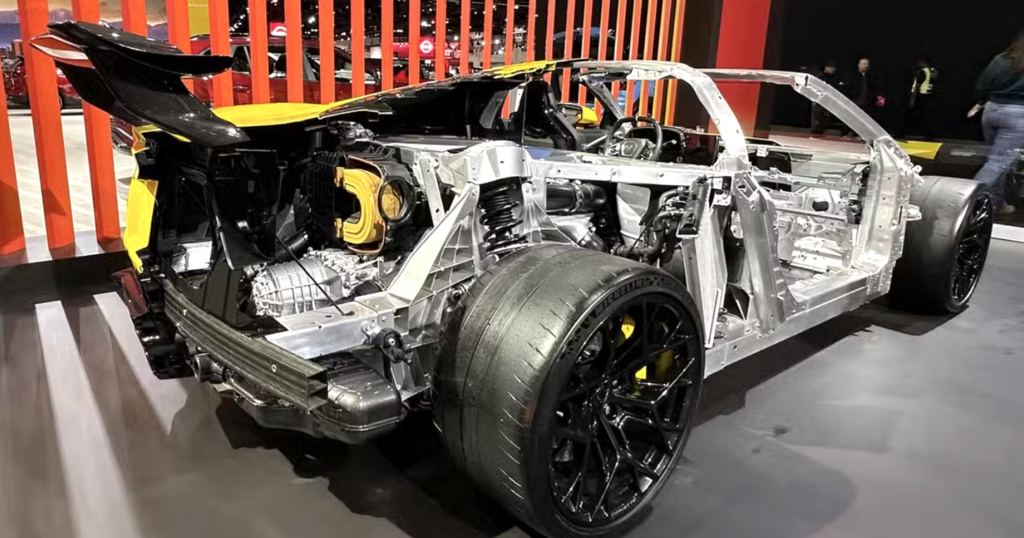
Power alone is easy to advertise and hard to deploy. One of the quiet achievements of the 2025 ZR1 is the engineering effort that went into making its output usable. Chevrolet said the eight-speed dual-clutch transmission was substantially upgraded to manage the new power level and the higher longitudinal and lateral loads the car was expected to see. That language is revealing. The transmission was not merely strengthened because the dyno number got bigger. It was strengthened because the entire operating envelope of the car changed.
That is what happens when Corvette transitions from a “very fast sports car” to something more akin to a modern supercar. Suddenly, every supporting system becomes critical. Clutch integrity, cooling, differential behavior, shift quality under load, thermal survivability, and repeatability stop being secondary considerations. They become part of the headline achievement. The ZR1’s rear-wheel-drive layout also makes the accomplishment more interesting. Chevrolet did not rely on front-axle assistance here. The car still channels all of this through the rear tires, which is part of why its balance of aero, electronics, rubber, and chassis control becomes so central to its successful operation both on the racetrack and the open road.
Chassis, Suspension, Braking, and Tire Strategy
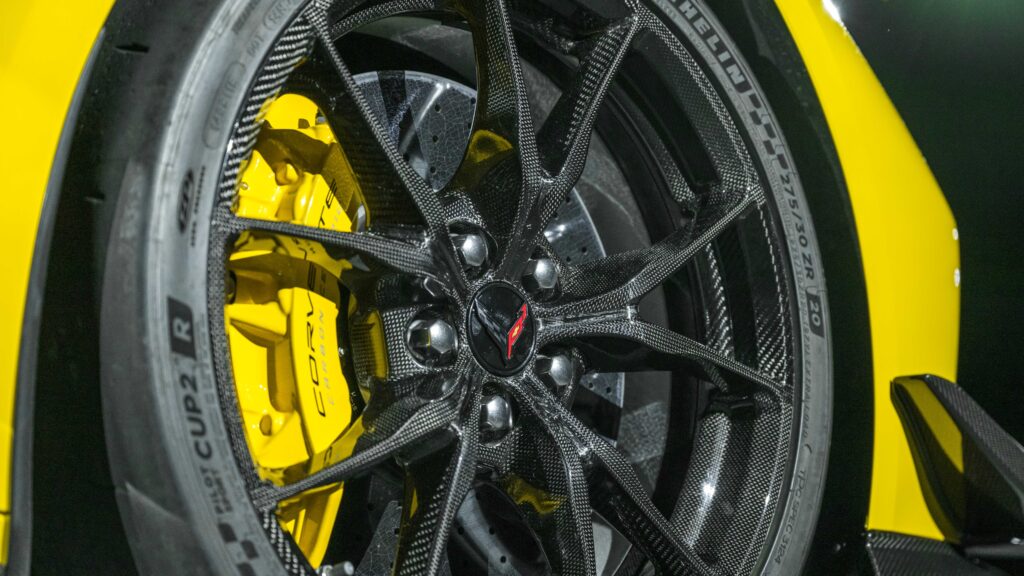
The 2025 Corvette ZR1’s chassis deserves as much attention as its engine, because a car with this much speed is only as credible as the hardware that controls it. Chevrolet built the ZR1 around short-long-arm double-wishbone suspension at all four corners, Magnetic Ride Control 4.0, standard carbon-ceramic brakes, and a tire strategy that reflects the car’s split mission as both a road car and a far more serious track weapon. In standard form, the ZR1 rides on Michelin Pilot Sport 4S tires for a broader balance of grip and usability, while the available ZTK Performance Package shifts the emphasis toward circuit work with Michelin Pilot Sport Cup 2 R tires and more aggressive chassis tuning.
Those choices reveal how carefully Chevrolet defined the ZR1’s mission. In standard form, the car still had to function as a road-going flagship with enormous speed and a usable operating range. The available ZTK Performance Package moved the balance further toward dedicated track work, which helps explain the slight split in the published performance numbers. Chevrolet’s own figures show the ZTK-equipped car reaching 60 mph in 2.3 seconds and running the quarter mile in 9.6 seconds at 150 mph, while the lower-drag standard-aero version runs 0–60 in 2.5 seconds and the quarter in 9.7 seconds at 152 mph. That difference is not an inconsistency. It is evidence that Chevrolet was tuning two closely related versions of the same car for slightly different kinds of performance.
The standard carbon-ceramic brakes reinforce the same point. At this speed, the braking system has to do far more than survive a single dramatic stop. It has to manage heat, preserve pedal confidence, and deliver the same result lap after lap or pull after pull. The ZR1’s brakes were not fitted as exotic hardware for their own sake; they were necessary because sustained performance fundamentally changes the braking requirements. That kind of consistency under repeated high-load use is one of the traits that separates a legitimate top-tier performance car from a machine built mainly around a headline number.
Aerodynamics: The Bodywork Behind the Performance
One of the strongest indicators of how serious the ZR1 program really is can be found in how Chevrolet discussed the aero package. The company never treated aerodynamics like visual garnish. From launch onward, the car’s aero story was presented as central to its capability. In standard form, the ZR1 uses a lower-drag body treatment that still includes meaningful functional elements—front splitter work, brake-cooling features, rocker shaping, and carefully managed air paths. With the available Carbon Fiber Aero Package and ZTK Performance Package, the car becomes much more aggressive, adding a high-downforce rear wing, front dive planes, a hood gurney lip, underbody strakes, and stiffer suspension calibration. Chevrolet says the most aggressive configuration can produce more than 1,200 pounds of downforce at top speed.
“The ZR1 is the ultimate expression of aerodynamics, of horsepower, of exoticness, of styling.”
David Caples
Corvette Aerodynamicist
That number matters not because it sounds impressive, though it certainly does, but because it tells you how seriously Chevrolet was designing for stability and control at the edge of the car’s envelope. A Corvette that can run 233 mph and still be expected to operate credibly on a road course cannot survive on power alone. It needs real aerodynamic authority. It needs confidence. It needs the kind of stability that makes monstrous speed feel usable rather than merely survivable.
This is also where the car’s visual character becomes easier to understand. The ZR1 does not wear aggressive aero because the team wanted it to look angry. It looks the way it looks because the car’s performance targets forced the shape in that direction. The most dramatic pieces exist because the operating envelope is dramatic.
Cooling: The Unseen Story Behind the Car
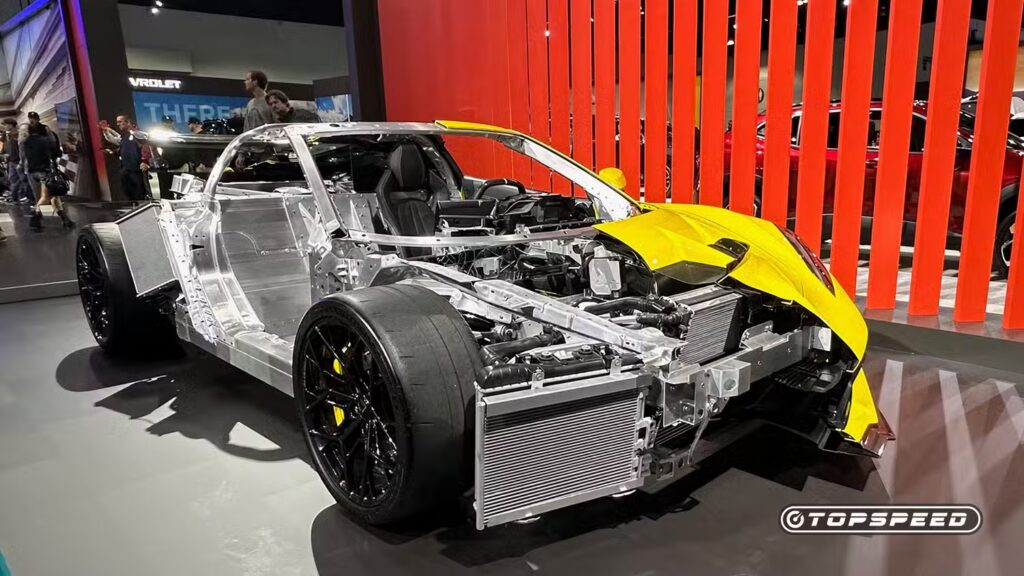
Cooling is one of the least glamorous subjects in performance-car writing, and one of the most important. It is also one of the clearest ways the 2025 ZR1 announces itself as something more than merely a fast Corvette. Once output, load, and speed reach this level, thermal management stops being a supporting detail and becomes central to the car’s identity.
Chevrolet’s official descriptions of the ZR1 repeatedly returned to airflow management and heat extraction. The flow-through hood is not just visual theater; it helps evacuate air through the intercooler heat exchanger. Additional ducting manages brake cooling. The rear-hatch treatment and split-window spine contribute to engine-bay heat extraction. Even the side profile starts to make more sense when read through the lens of thermal necessity. This is what a matured mid-engine supercar program looks like. On a car like this, surfaces are not merely styled. They are assigned jobs.
That matters because cooling is often the dividing line between something that produces a headline run and something that survives repeated real use. The ZR1 was clearly engineered for the latter. Chevrolet’s whole public presentation of the car stressed not merely speed, but sustained capability. That is why the cooling story deserves a place near the center of the article rather than buried in a spec box. It is part of the reason the rest of the car is possible.
The Performance Claims, and Then the Proof
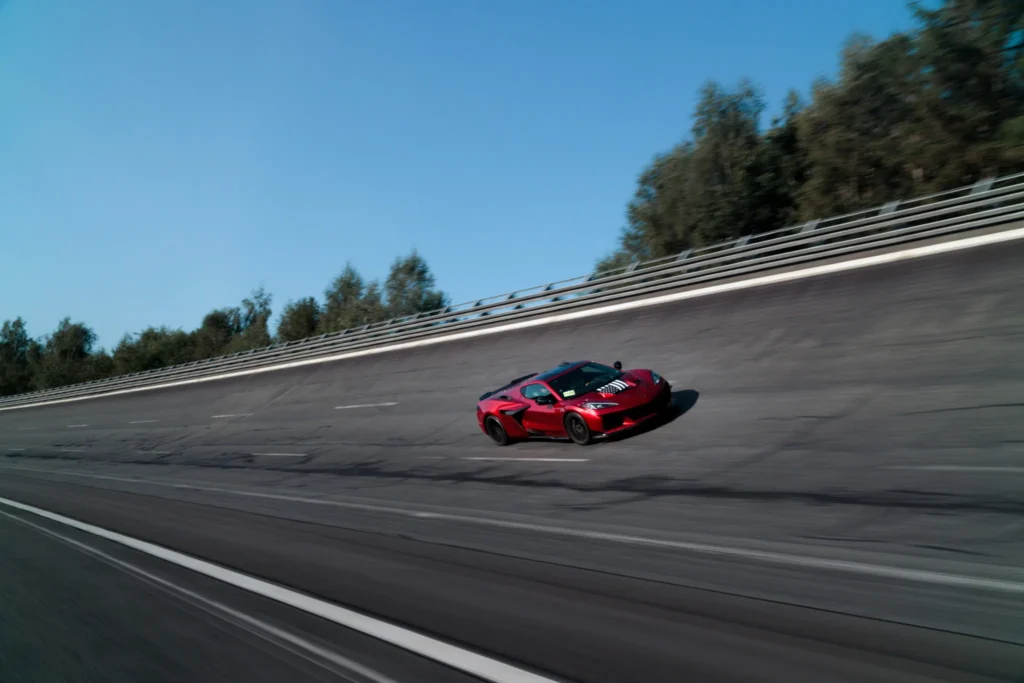
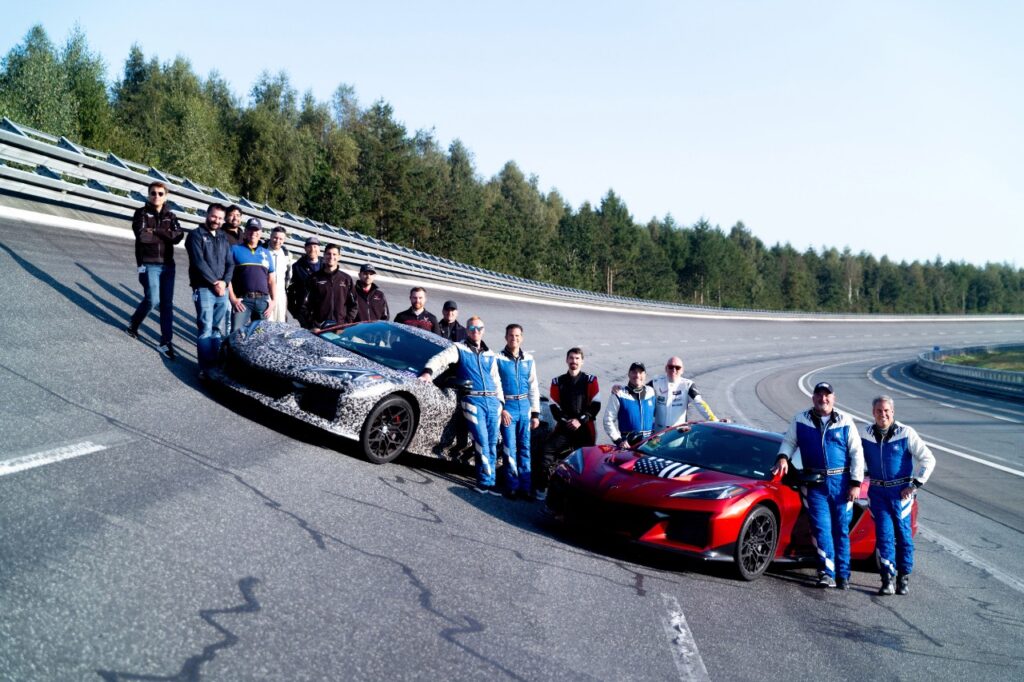
At launch, Chevrolet said the ZR1 would exceed 215 mph and run the quarter mile in less than ten seconds. Those early numbers sounded almost absurd – and quite impossible – attached to a production Corvette. Then the car started outperforming the early headline. In October 2024, GM announced that Mark Reuss had driven a 2025 Corvette ZR1 to a 233-mph two-way average at ATP Automotive Testing Papenburg in Germany, making it the fastest car ever built by an American auto manufacturer. GM also noted that this speed was unrivaled by any current production car priced under $1 million.
Just as revealing was the way Chevrolet and GM talked about that run afterward. Chris Barber, the ZR1 lead development engineer, said the car actually overachieved relative to internal expectations and admitted the team did not believe 233 was necessarily in the cards. That detail is important because it changes the flavor of the achievement. This was not a case of building to a neat round target and then presenting the target as destiny. The car beat what the team initially thought it might do.
Then came the acceleration validation. In December 2024, Chevrolet confirmed that the available-ZTK version of the ZR1 could reach 60 mph in 2.3 seconds and cover the quarter mile in 9.6 seconds at 150 mph, while the standard aero configuration could do 0–60 in 2.5 seconds and the quarter in 9.7 seconds at 152 mph. That split matters because it reveals how deeply tuned the car’s configurations are. The high-downforce car launches harder. The lower-drag car carries slightly more speed at the far end. That is not just fast. That is intelligently fast.
The Record Tour: Five U.S. Lap Records
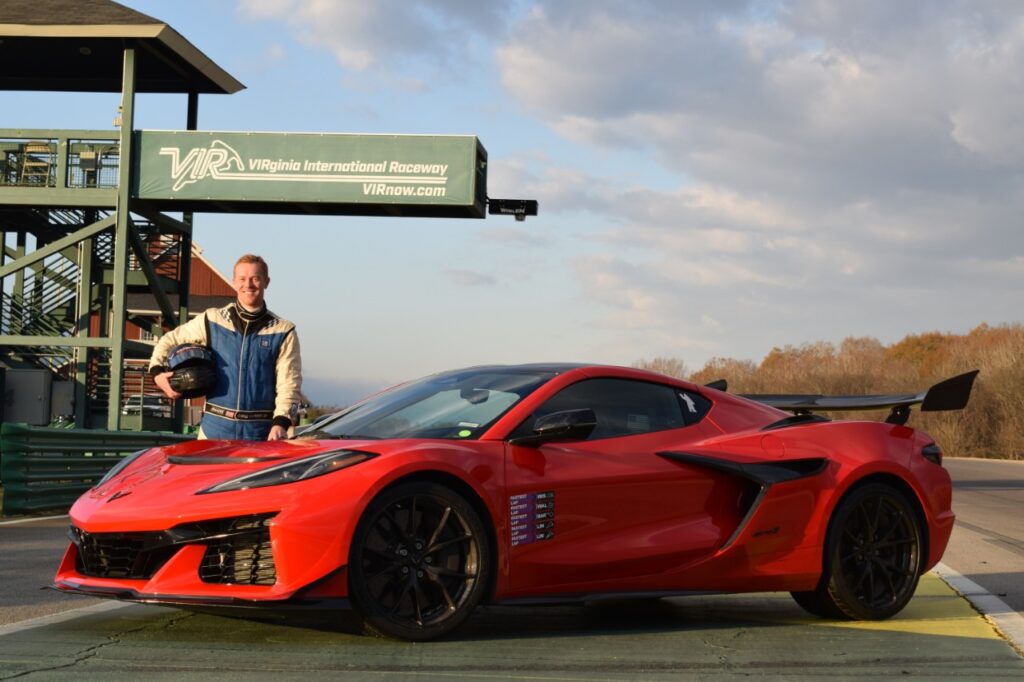
If the Papenburg run established the ZR1’s maximum-speed credibility, the lap-record tour established something just as important: breadth. In February 2025, GM announced that the ZR1 had set five U.S. production-car lap records during a track tour, with four different GM employees behind the wheel rather than a single celebrity ringer. The list is extraordinary: Watkins Glen Long Course in 1:52.7 with Bill Wise; Road America in 2:08.6 with Brian Wallace; Road Atlanta in 1:22.8 with Chris Barber; Virginia International Raceway Full Course in 1:47.7 with Aaron Link; and VIR Grand Course in 2:32.3, again with Link.
Those names matter almost as much as the times. Bill Wise was there as a chassis-controls performance engineer. Brian Wallace represented the vehicle-dynamics side. Chris Barber was already the public face of the car’s development. Aaron Link served as a global vehicle performance manager and put down two of the headline laps himself. GM leaned into this point for good reason. The ZR1’s record book was not built by outsourcing credibility. It was built by the people inside the program.
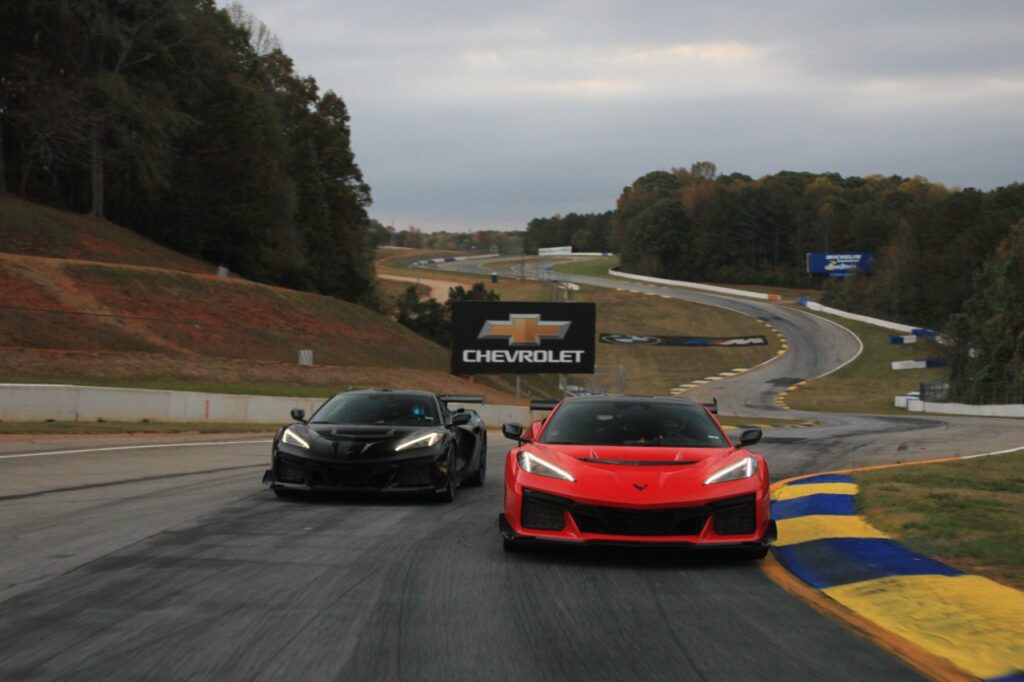
That is a deeply Corvette way to prove a point. The brand has always been strongest when engineering confidence and public confidence line up cleanly. The lap-record campaign did exactly that. It showed not only that the car is devastatingly capable, but that the people who developed it trust it enough to put their own names on the numbers.
Racing Lineage Without Pretending
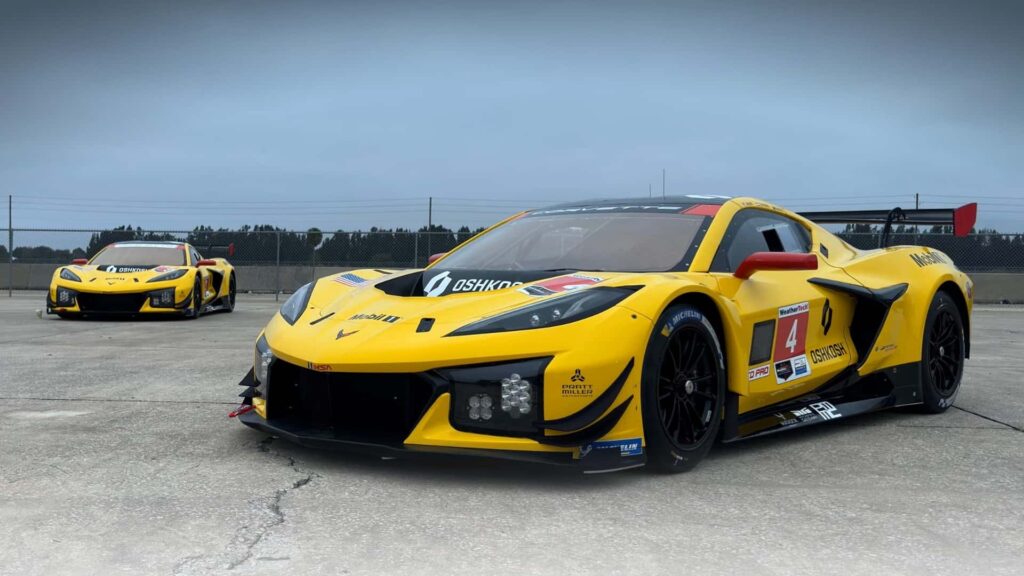
The 2025 ZR1 does not require a dedicated ZR1 race car to justify a discussion of racing lineage. The lineage is already in the engineering DNA. GM later described the LT7 as part of the same Gemini family developed alongside the naturally aspirated flat-plane-crank engines used in the Z06 and the Z06 GT3.R race car. That is a meaningful point. The ZR1 is not a detached street-car fantasy built in parallel with Corvette racing. It is a machine that emerged from the same broader Corvette performance development ecosystem, now including serious international GT competition.
That relationship matters even beyond the engine family. The C8 era aligned Corvette’s production-car architecture more closely with the sort of logic long associated with modern sports-car competition. The mid-engine platform, the aero sophistication, the cooling demands, and the deep integration between chassis and powertrain all make the ZR1 feel like a road car shaped by a racing-aware culture, even if it was never intended to be a homologation special in the old-school sense.
And when GM emphasized that some of the ZR1’s lap records came at tracks with real motorsport credibility—including VIR’s Full Course, which it specifically noted is used in IMSA sports-car racing—it reinforced the point. The car’s record book was not assembled on novelty circuits chosen only for convenience or prime marketing opportunities. It has been repeatedly proven in places that matter to people who care about real performance.
Indianapolis, Symbolism, and Public Meaning
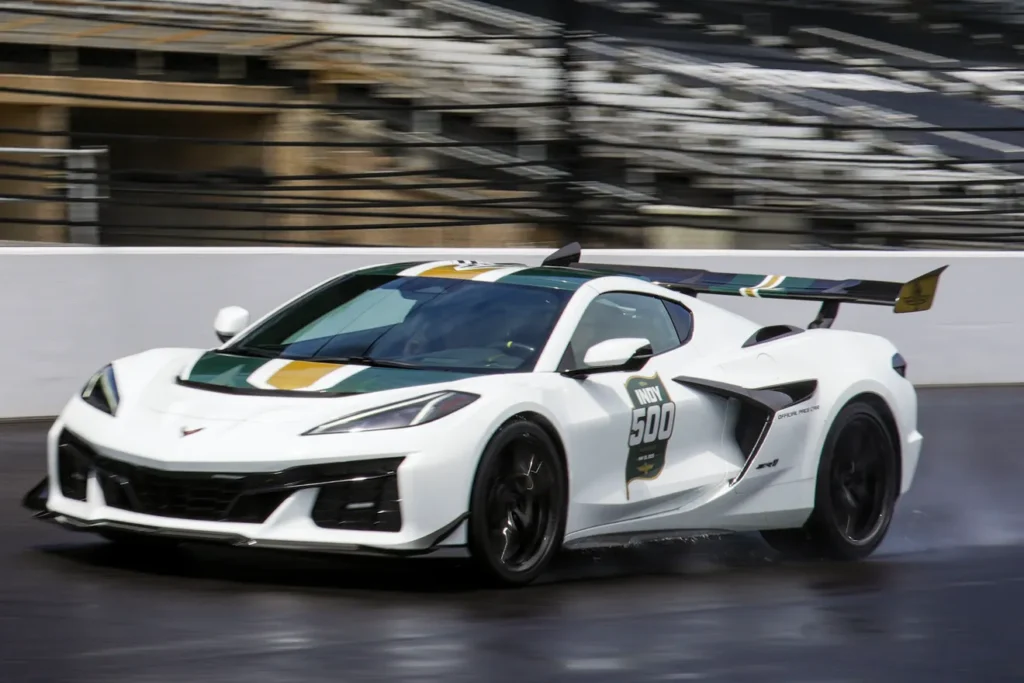
Corvette has always been more than a technical project. It has always also been a symbol. That symbolic dimension of the ZR1 story became especially visible in 2025 when Indianapolis Motor Speedway announced that the 2025 Corvette ZR1 would pace the 109th Indianapolis 500. On one level, that decision is ceremonial. On another, it says a great deal about how the car is already being understood in American performance culture.
The Corvette and Indianapolis have long shared a certain kind of national-performance mythology. For the ZR1 to take pace-car duty was fitting because it placed the most extreme Corvette ever produced in one of the most visible ceremonial roles American performance culture still has. It told the broader public what Corvette people already knew: this car is not just another faster variant. It is the visible standard-bearer for Chevrolet’s current engineering ambition.
Pricing, Availability, and the Value Argument
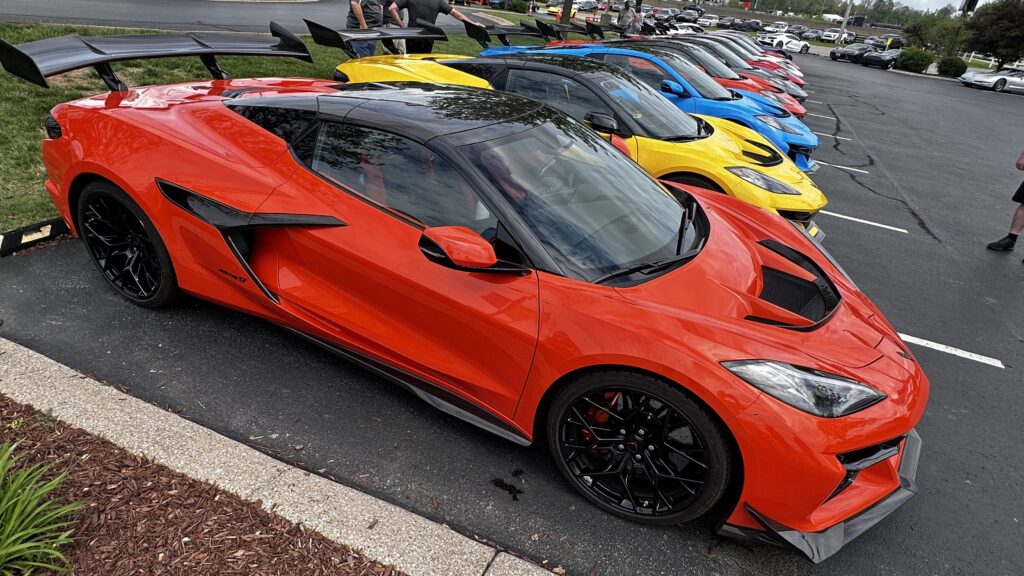
The ZR1’s importance would be secure even if it were simply powerful, fast, and expensive. What sharpens the story is that Chevrolet still found a way to position the car within Corvette’s long-established value argument. When pricing was announced in January 2025, the ZR1 started at $174,995 for the 1LZ coupe and $184,995 for the 1LZ hardtop convertible, destination included. That is serious money, but the performance it buys is even more serious. A 233-mph top speed, 0–60 in as little as 2.3 seconds, and quarter-mile capability in the nines puts the car in company that usually costs far more.
That has always been part of Corvette’s strength, and the ZR1 carries that tradition forward. Chevrolet did not build a bargain car here, but it did build a car whose performance forces comparison with machines priced deep into exotic territory. That is familiar Corvette territory, just at a much higher level than before. GM said it plainly when the 233-mph run was announced: the ZR1’s top speed was unmatched among current-production cars priced under $1 million. That does not make the car inexpensive. It makes it impossible to ignore both the value and the capability.
2025 Corvette ZR1 Specifications
Before we get to the closing section, the hardware deserves to be laid out cleanly because on a car like this the spec sheet is part of the narrative, not an interruption to it.
Model: 2025 Chevrolet Corvette ZR1
Assembly: Bowling Green Assembly Plant, Bowling Green, Kentucky
Engine: LT7 twin-turbocharged 5.5-liter DOHC flat-plane-crank V8
Output: 1,064 hp at 7,000 rpm / 828 lb-ft at 6,000 rpm
Redline: 8,000 rpm
Induction: Twin 76-mm turbochargers
Fueling: Direct injection with supplemental port fuel injection
Transmission: 8-speed dual-clutch automatic
Drivetrain: Rear-wheel drive
0–60 mph: As quick as 2.3 seconds with available ZTK package
Quarter mile: As quick as 9.6 seconds at 150 mph
Top speed: 233 mph two-way average confirmed by GM
Suspension: SLA double-wishbone front and rear with Magnetic Ride Control 4.0
Brakes: Standard carbon-ceramic system
Tires: Michelin Pilot Sport 4S standard / Michelin Pilot Sport Cup 2 R with ZTK
Aero: Available Carbon Fiber Aero Package and ZTK package with more than 1,200 pounds of downforce at top speed
Body styles: Coupe and hardtop convertible
Dry weight: 3,670 pounds coupe / 3,758 pounds convertible
Starting MSRP: $174,995 coupe / $184,995 hardtop convertible, including destination
Notable firsts: First factory-turbocharged Corvette; most powerful factory Corvette ever; fastest car ever built by an American auto manufacturer.
Why the 2025 Corvette ZR1 Still Matters Today
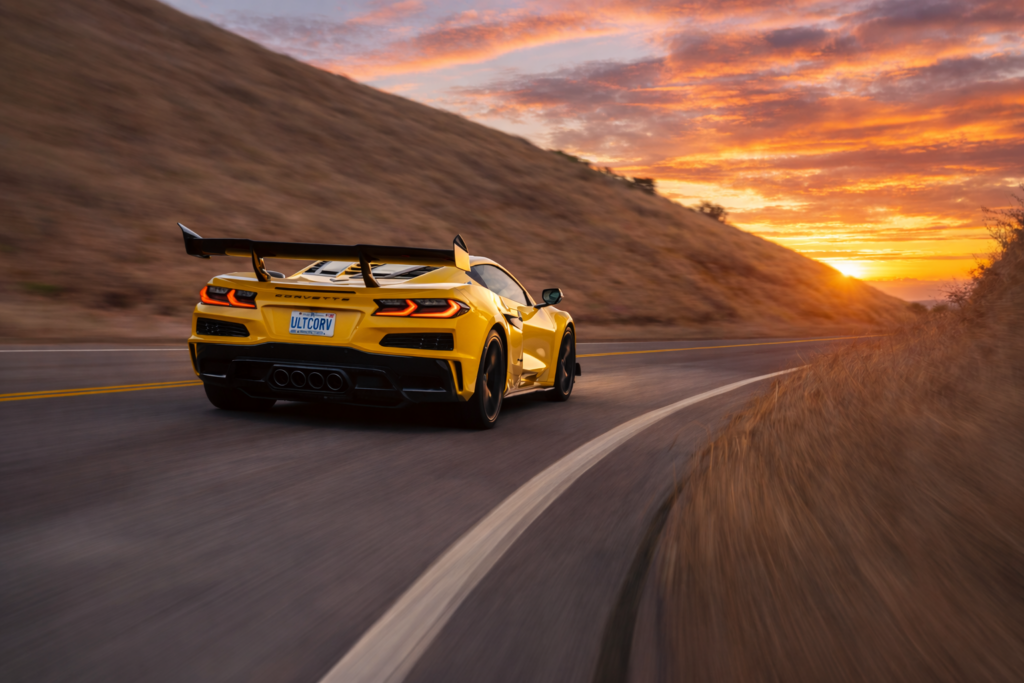
The 2025 Corvette ZR1 matters because it is the point where decades of Corvette ambition finally converge without apology. The original ZR1 formula was always about giving Corvette its sharpest possible edge, but this car goes beyond that. It does not merely top the C8 lineup; it validates the entire mid-engine gamble. Everything Chevrolet promised when it moved Corvette’s center of gravity, rethought its proportions, expanded its engineering complexity, and asked traditionalists to trust the vision finds its clearest expression here. The ZR1 is what happens when Chevrolet stops treating Corvette like a great sports car that can occasionally scare exotic machinery and starts engineering it like an exotic-killer from the first sketch onward.
It also matters because of what it preserves. For all its technical sophistication, the ZR1 still feels tied to the same core Corvette instincts that made the nameplate matter in the first place: tremendous performance for the money, unmistakable American engineering swagger, and a willingness to make the establishment uncomfortable. The hardware changed. The architecture changed. Even the assumptions about what a Corvette engine should look like, rev like, and sound like changed. But the mission did not. The 2025 ZR1 still exists to prove that Chevrolet can build something bolder than convention expects. In that sense, it is not a break from Corvette history at all. It is one of the purest expressions of it.
And maybe that is the point that matters most. Every truly important ZR1 has moved the summit. The 2025 car does not simply move it up a little. It drags the entire mountain range upward. Chevrolet did not build a stunt here. It built a machine that closes one long chapter of Corvette aspiration and opens another with full conviction. This is the clearest proof yet that Corvette’s pursuit of world-class performance was never wishful thinking, never just bravado, and never dependent on borrowed legitimacy. It was a real engineering ambition waiting for the right architecture, the right people, and the right moment to come fully into focus. The 2025 Corvette ZR1 is that moment.