There are Corvettes whose histories were obvious from the moment they left Bowling Green. Pace cars wore their graphics proudly. Anniversary editions carried special colors and badging. Competition cars collected scars, trophies, and provenance that followed them wherever they went. Then there are cars whose significance becomes buried beneath decades of ordinary use, waiting for someone to look in the right file and discover that the Corvette sitting in front of them was never quite ordinary at all.
That is precisely what happened with a Dark Blue Metallic 1988 Corvette convertible that eventually found its way to the National Corvette Museum with nearly 225,000 miles showing on its odometer. Its story reaches back to an internal Chevrolet memorandum dated August 7, 1987, and into one of the more unusual promotional relationships in Corvette history.
Chevrolet, Miss America and Five Very Special Corvettes
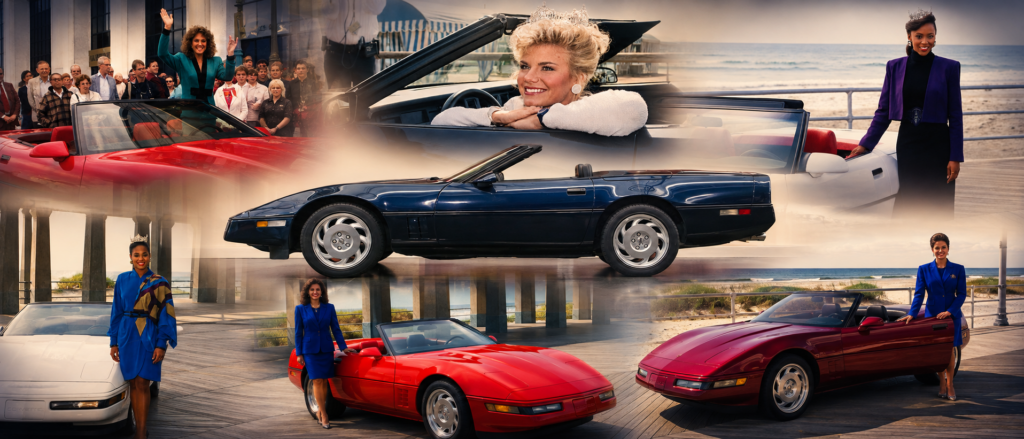
Those five cars were part of Chevrolet’s new relationship with the Miss America Organization. The partnership was wonderfully appropriate for its era: one enduring American institution joining forces with another, with the Corvette serving as a rolling centerpiece for Chevrolet’s involvement.
It is important, however, to separate those five promotional cars from the Corvette ultimately awarded to Miss America herself. The Dark Blue Metallic car that eventually reached the National Corvette Museum was one of the five Show & Display cars identified in the August 7 memorandum. It was not the red Corvette presented to Miss America 1988, Kaye Lani Rafko. They were separate cars serving different parts of the same Chevrolet promotional program.
That distinction also makes the surviving blue Corvette considerably more interesting. Rather than simply being a celebrity-owned automobile, it is a surviving piece of Chevrolet’s machinery behind the sponsorship itself.
Kaye Lani Rafko and the First Miss America Corvette
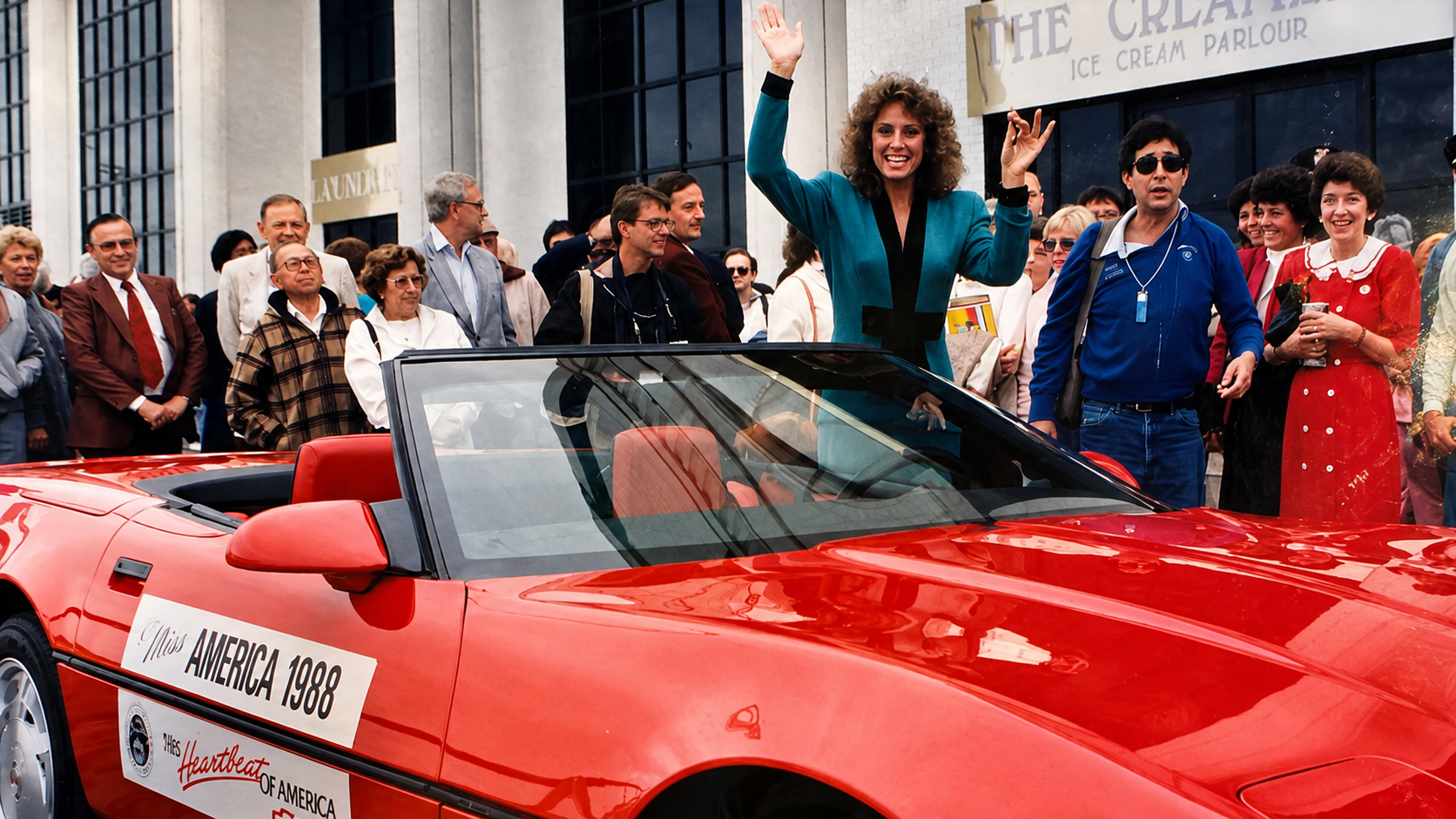
Rafko was also a registered oncology nurse, becoming the first registered nurse ever crowned Miss America. Rather than treating the title simply as a ceremonial role, she devoted much of her year to advocating for nursing, hospice care, and compassionate treatment of the terminally ill. Her emphasis on a substantive social cause proved remarkably influential: the Miss America Organization credits her example with helping inspire the formal contestant platform requirement introduced two years later.
Six weeks after Chevrolet issued its internal memorandum identifying the five Corvettes destined for Central Office – Show & Display duty, Michigan’s Kaye Lani Rae Rafko arrived at the culmination of a much longer journey. On September 19, 1987, the 24-year-old registered nurse from Monroe, Michigan, was crowned Miss America 1988 at Atlantic City’s Convention Hall, succeeding Miss America 1987 Kellye Cash. Rafko was hardly an overnight arrival to the pageant world. She later recalled that she had won her first local competition at 17, competed in the Miss Ohio program in 1983 and made three attempts at the Miss Michigan crown before finally reaching Atlantic City. Along the way, she had already accumulated roughly $11,000 in scholarship money toward her nursing education, making the scholarship component of Miss America far more than a talking point for her.
Rafko entered the national competition with a background that immediately distinguished her from many of the contestants around her. She was already a working registered nurse, with ambitions to continue her education in oncology and eventually manage a hospice program for terminally ill patients. Onstage, however, she showed an entirely different side of herself. For the talent competition, Rafko performed an energetic Hawaiian-Tahitian dance, wearing an authentic Tahitian costume and incorporating traditional movement and poi balls into the routine. She was not Hawaiian—she joked afterward that she was Ukrainian—but the performance had become part of her competition identity after her grandmother suggested that someone named Kaye Lani ought to try Hawaiian dance. She also won a preliminary swimsuit competition, helping propel her into the finals before ultimately taking the crown.
Her victory also arrived at an important moment in the evolution of Miss America itself. Rafko became the first registered nurse to win the title, and rather than treating her professional background as something separate from her year as Miss America, she made it central to what she intended to accomplish. She spoke openly about caring for cancer and AIDS patients, the dignity of hospice work and the importance of helping terminally ill patients and their families through the final stage of life. The Miss America Organization later credited Rafko’s decision to devote so much of her year to nursing and hospice care with helping inspire the formal contestant platform requirements introduced two years later. In that respect, her 1988 reign helped move Miss America toward the advocacy-driven model that would increasingly define the organization during the 1990s.
At the same time, something new was happening behind the scenes. During competition week, Rafko later remembered a Chevrolet representative entering the rehearsal hall to tell the contestants that Chevrolet Motor Division had become a national sponsor of Miss America. The announcement came with one detail guaranteed to command the room’s attention: whoever was crowned that Saturday night would leave with her own 1988 red Corvette convertible. For Chevrolet, the timing could hardly have been better. The company was introducing a new sponsorship relationship with one of America’s most recognizable annual events, and the Corvette gave that partnership an instantly identifiable centerpiece.
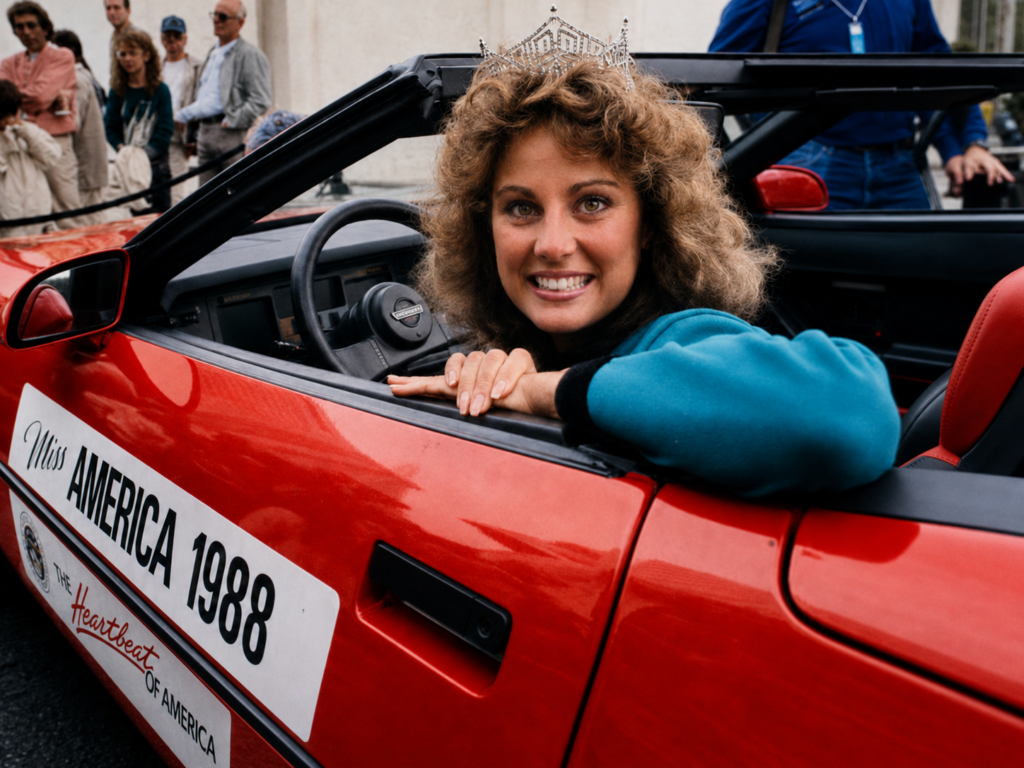
Rafko won, and Chevrolet delivered. Her prize was a Bright Red 1988 Corvette Convertible, making her the first Miss America to receive a Corvette through the competition and beginning a sequence that would continue through Leanza Cornett, Miss America 1993. The relationship quickly became much more than the ceremonial presentation of a new car. Corvettes appeared at Miss America functions, public appearances and promotional events throughout the year, giving Chevrolet repeated opportunities to place America’s sports car alongside one of the nation’s most visible cultural titleholders. Miss America 2000 Heather French Henry later recalled that Corvettes were present at numerous appearances and remained closely associated with the famous Atlantic City Boardwalk parade.
From a marketing standpoint, Chevrolet could scarcely have engineered a more natural pairing. The pageant offered glamour, accomplishment, aspiration and enormous national visibility; Corvette supplied performance, style and one of the strongest automotive identities in the country. Photographs of Rafko waving from the red convertible, standing beside it or appearing with the “Miss America 1988” identification turned the car into something more than a prize. It became part of the visual vocabulary of her year in the crown—the sash, the tiara, the public appearances and, increasingly, the unmistakable silhouette of a new Corvette convertible. What began with Chevrolet’s August 1987 memorandum had become, by the time Rafko took her first walk as Miss America, a national promotional relationship with imagery that was almost impossible to improve upon.
Six Miss Americas and Six Corvettes
What began with Rafko continued through the next five Miss America titleholders.
Miss America 1989 – Gretchen Elizabeth Carlson
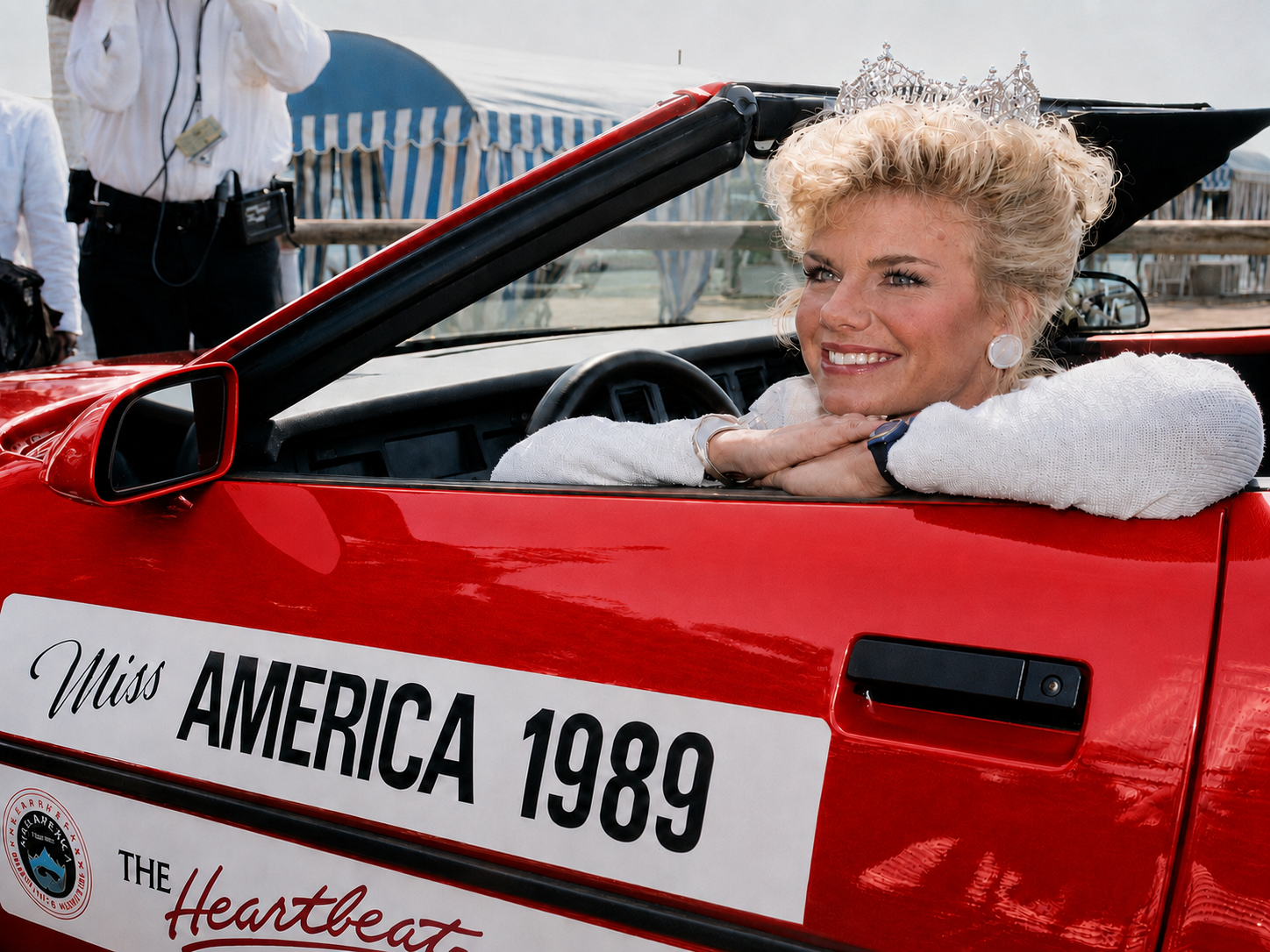
Gretchen Carlson, Miss America 1989, followed Kaye Lani Rae Rafko and continued the increasingly visible connection between the Miss America crown and Chevrolet’s Corvette. Representing Minnesota, Carlson was crowned on September 10, 1988, in Atlantic City after entering the competition with credentials that extended well beyond the pageant stage. Raised in Anoka, Minnesota, she had been a serious classical violinist from childhood, performing as a soloist with the Minnesota Orchestra at just 13 and winning numerous state and national music competitions. She graduated as valedictorian of Anoka High School, went on to attend Stanford University, and also studied at Oxford University in England. At Miss America, Carlson drew heavily upon that musical background, performing Pablo de Sarasate’s demanding Zigeunerweisen on violin. Her victory made her the first classical violinist to win Miss America—and the Miss America Organization still identifies her as the only classical violinist to have captured the crown. During her year as Miss America, she used that background to promote Arts in Education, bringing considerably more substance to a role that was already beginning to evolve beyond its traditional pageant roots.
The Corvette was there almost immediately. Period photographs taken on the Atlantic City Boardwalk on September 11, 1988—the morning after Carlson’s victory—show the newly crowned Miss America seated in the Corvette carrying “Miss America 1989” identification. An Associated Press photo caption preserved by the Minneapolis Star Tribune specifically describes it as a car Carlson was given “to use during her reign,” an important qualification: the Corvette served as official transportation and a highly visible promotional companion rather than simply being presented as an unrestricted personal prize. The pairing made enormous sense for both organizations. Miss America represented an instantly recognizable piece of American popular culture, while the Corvette brought glamour, performance and unmistakably American styling to the countless photographs, parades and appearances that accompanied the titleholder’s year. By Carlson’s reign, seeing the newly crowned Miss America beside—or behind the wheel of—a Corvette had become part of the visual language surrounding the title, strengthening a Chevrolet relationship that would continue into Debbye Turner’s Miss America 1990 year and beyond.
Miss America 1990 – Debbye Turner
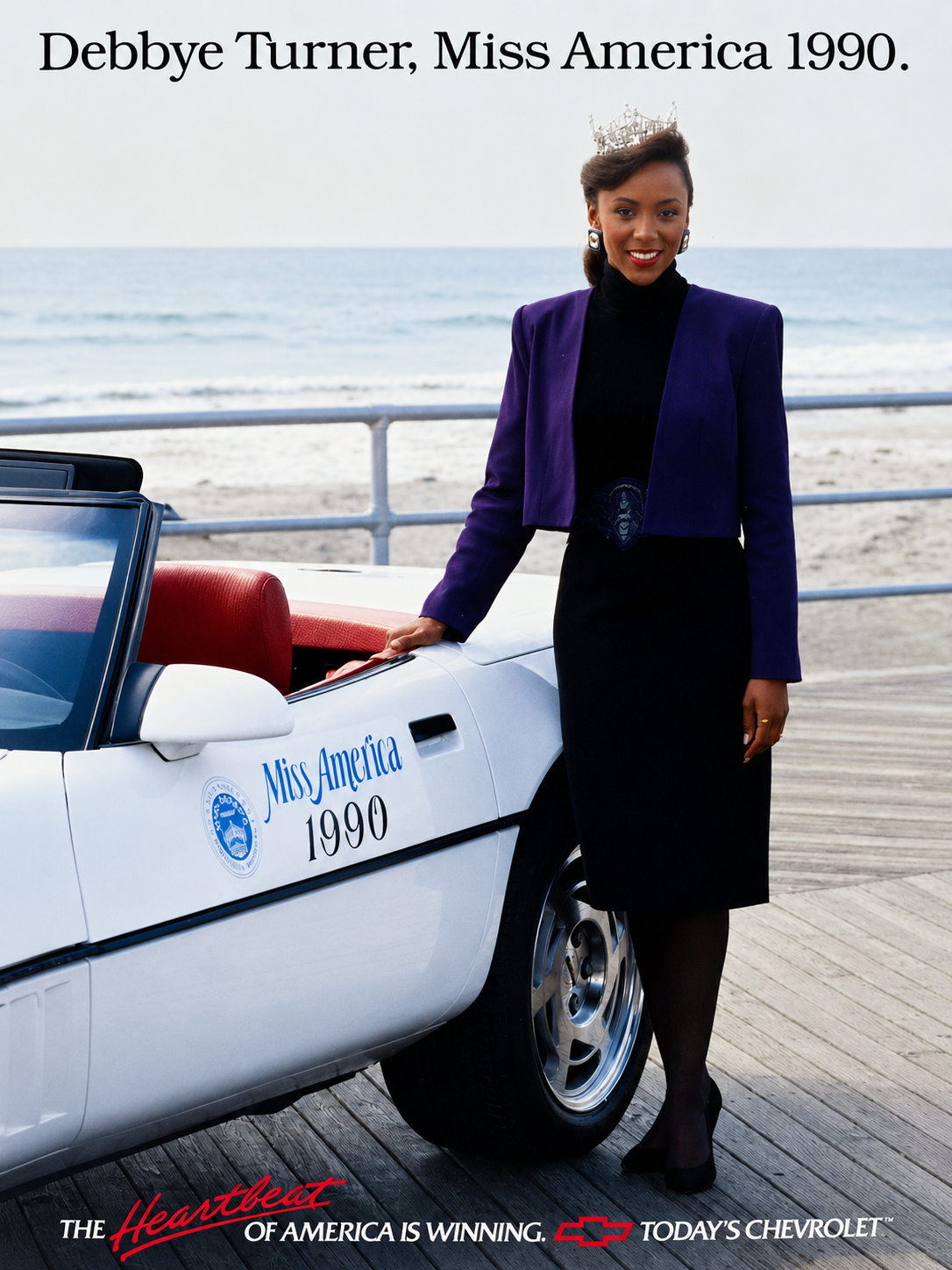
When Debbye Turner of Missouri became Miss America 1990, the Corvette was again waiting. Turner was crowned in Atlantic City on September 16, 1989, after a competition in which the 23-year-old University of Missouri veterinary student distinguished herself with an electrifying marimba performance of Rimsky-Korsakov’s “Flight of the Bumblebee.” Contemporary coverage described her playing part of the piece with four mallets before dramatically discarding two as the performance accelerated. Turner had already endured an unusually long road to the crown—she later recalled spending seven years and 11 attempts in two states pursuing the opportunity—and her victory made her the first representative from Missouri to become Miss America and the third African-American woman to hold the national title.
The morning after her victory, Chevrolet’s role in the Miss America tradition was impossible to miss. A contemporary Washington Post account described Turner posing on the Atlantic City Boardwalk alongside her new white Corvette convertible, surrounded by photographers and representatives of the pageant’s sponsors. At one point she held the Corvette’s keys aloft for the cameras before posing beside the open car. The newspaper explicitly described the convertible as a car Chevrolet had given her, and another Post profile published two weeks later listed the new white Corvette among the benefits accompanying the Miss America position. For Chevrolet, it was an exceptionally effective piece of promotion: the newly crowned Miss America and America’s sports car appeared together at precisely the moment when national press attention was at its peak.
Turner’s year, however, became notable for considerably more than the car. Miss America 1990 marked the first year in which the organization formally incorporated an official contestant platform, and Turner became the first reigning Miss America to carry one through her year of service. Her cause, “Motivating Youth to Excellence,” fit naturally with her own story of persistence, education and professional ambition. The Miss America Organization credits her reign with helping usher the program into an era in which titleholders increasingly functioned as national advocates rather than simply ceremonial representatives. Turner’s schedule reflected that changing role: contemporary reporting noted that Miss America could make roughly 200 public appearances during the year, and within only weeks of winning, Turner was already appearing at a Soviet Embassy cultural event in Washington, preparing to meet President George H. W. Bush at the White House, and recording public-service announcements connected with the 1990 U.S. Census.
The crown also temporarily interrupted an academic path Turner was determined to finish. After completing her year as Miss America, she returned to the University of Missouri-Columbia and earned her Doctor of Veterinary Medicine degree, beginning a professional life that would eventually encompass veterinary medicine, television journalism, public speaking and education. In that sense, Turner represented exactly the direction in which Miss America was beginning to move at the dawn of the 1990s: an accomplished young woman using the crown as a national platform while continuing toward a demanding professional career. The white Corvette beside her on the Boardwalk remains a wonderfully tangible reminder that, during this period, Chevrolet—and Corvette in particular—had become part of the imagery surrounding that transition.
Miss America 1991 – Marjorie Vincent
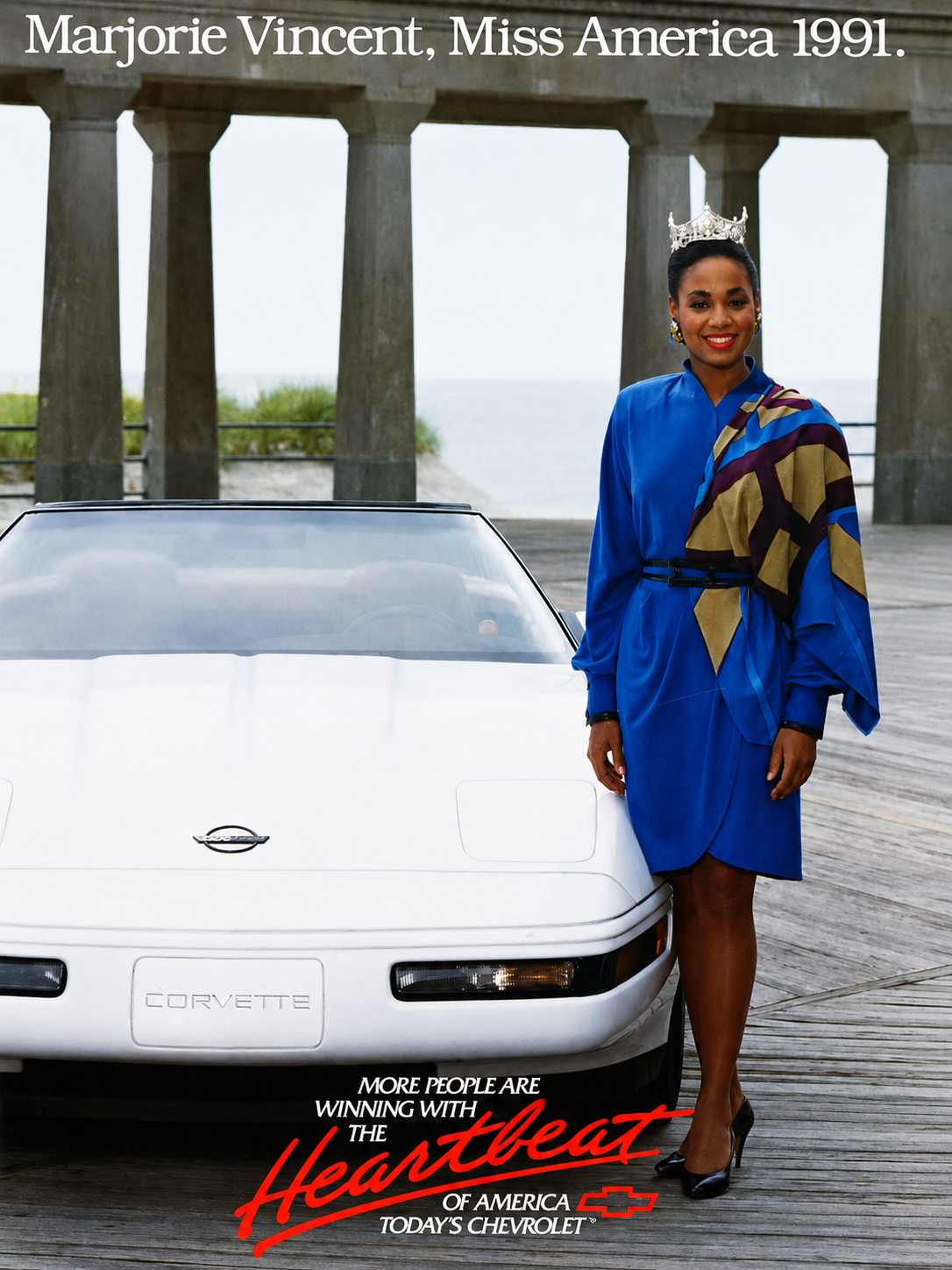
The Corvette tradition continued with Marjorie Judith Vincent, Miss America 1991, a woman whose résumé already suggested that the traditional image of a beauty-pageant winner was evolving. Raised in Oak Park, Illinois, by parents of Haitian heritage, Vincent studied at DePaul University before attending Duke University School of Law. Her journey to Atlantic City required persistence: after earlier attempts at winning a state crown, she became Miss Illinois 1990 and earned her opportunity to compete in the 70th-anniversary Miss America Pageant. An accomplished classical pianist who had studied the instrument since childhood, Vincent performed Chopin’s Fantaisie-Impromptu, Op. 66 during the talent competition. On September 8, 1990, Debbye Turner placed the Miss America crown on Vincent’s head, making her the fourth African American woman to win the title and marking the first time African American women had captured the crown in consecutive years. Her coronation also included a wonderfully nostalgic moment when longtime Miss America host Bert Parks, returning to the pageant after a decade away, stepped onto the stage to serenade the newly crowned Vincent with the familiar “There She Is.”
Vincent brought an unusually substantive background and agenda to her year as Miss America. Fluent in French and Haitian Creole and deeply conscious of her family’s connection to Haiti, she had originally envisioned a career in international law and expressed hopes of someday contributing to Haiti’s economic development. During her reign, however, she devoted much of her national platform to raising awareness about domestic violence, speaking about the issue before civic groups, attorneys, public officials and organizations serving abused women. Duke Law reported that the demands of her Miss America schedule had her traveling approximately 20,000 miles each month, an indication of just how intensive the role had become by the early 1990s. Among her appearances were discussions of domestic violence alongside New York City Mayor David Dinkins, presentations to legal groups in Illinois and a visit to the Durham Women’s Shelter for Hope in North Carolina. Following her year as Miss America, Vincent ultimately moved away from the international-law career she had once envisioned and entered broadcast journalism, working as a television reporter and news anchor in several American markets.
As part of the growing relationship between Chevrolet and the Miss America Organization, Vincent also received one of the most visible symbols of her new national status: a white Chevrolet Corvette convertible. The brilliant white C4 made a natural companion to the crown and sash, combining the glamour of the Miss America title with a car that had become one of Chevrolet’s most recognizable promotional assets. The 1991 Corvette was by then entering the mature years of the C4 generation, sporting the smoother front and rear styling that had been introduced for that model year and further refining the decidedly modern image Chevrolet had established with the fourth-generation car. Yet Vincent made an especially interesting ambassador for it. The woman photographed beside that white Corvette was simultaneously a Duke law student, classical pianist, daughter of Haitian immigrants and national advocate for victims of domestic violence. The car supplied the glamour expected of Miss America; Vincent supplied the substance, illustrating how rapidly the role itself was expanding beyond the pageant stage.
Miss America 1992 – Carolyn Sapp
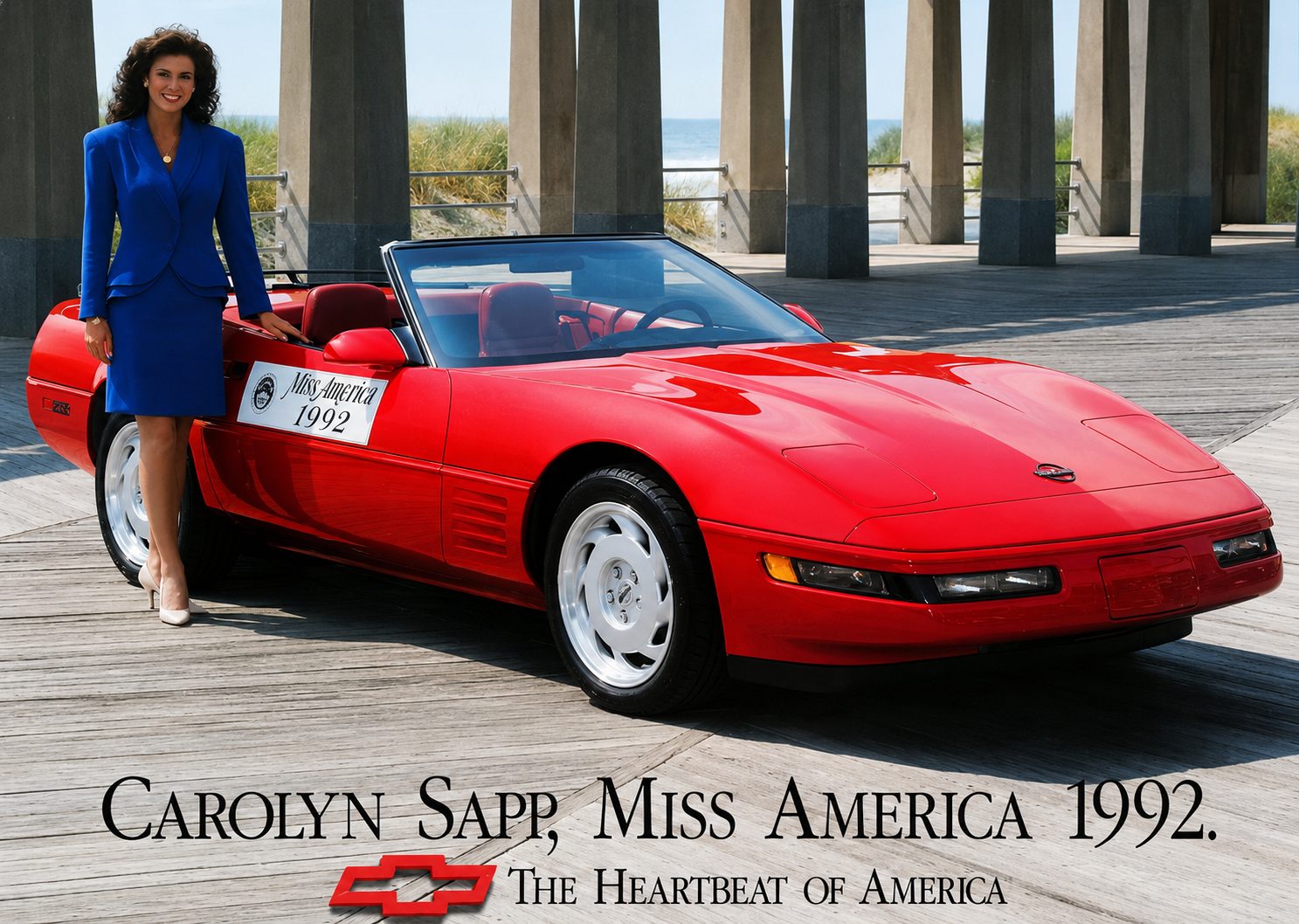
Then came Carolyn Sapp, Miss America 1992, whose road to Atlantic City was as much a story of persistence as pageantry. Sapp had begun competing largely because of the scholarship opportunities available through the Miss America system, winning the Miss Kona Coffee title in 1988 and making several attempts at the Miss Hawaii crown before finally breaking through in 1991. Hawaii Senator Daniel Akaka would later praise her determination on the floor of the U.S. Senate, noting the “personal odyssey” that followed three previous tries for the state title. At the national pageant that September, the 24-year-old political science and international-relations student won a preliminary swimsuit competition and performed Fats Waller’s “Ain’t Misbehavin’” for her talent presentation. When her name was called, Sapp became the first woman representing Hawaii ever to win Miss America, an achievement significant enough to earn formal recognition in the Congressional Record.
Sapp entered her reign intending to promote the idea that “Education is Everyone’s Business,” emphasizing cooperation among parents, schools and communities and using the extraordinary travel schedule of Miss America to carry that message across the country. Her year soon acquired another, far more personal dimension. Within days of her victory, details became public about an abusive relationship she had survived before becoming Miss America. Rather than allow the revelation to define her simply as the subject of a tabloid story, Sapp eventually spoke openly about her experience, bringing national attention to domestic violence at a moment when the subject was still far less openly discussed than it is today. The Miss America Organization later credited the publicity surrounding Sapp with producing a dramatic increase in calls to hotlines serving abused women. After completing her reign, she went still further, portraying herself in the 1992 NBC television movie Miss America: Behind the Crown, turning one of the most painful chapters of her life into a very public vehicle for awareness while continuing to emphasize education and the value of the scholarship program that had originally drawn her to pageantry.
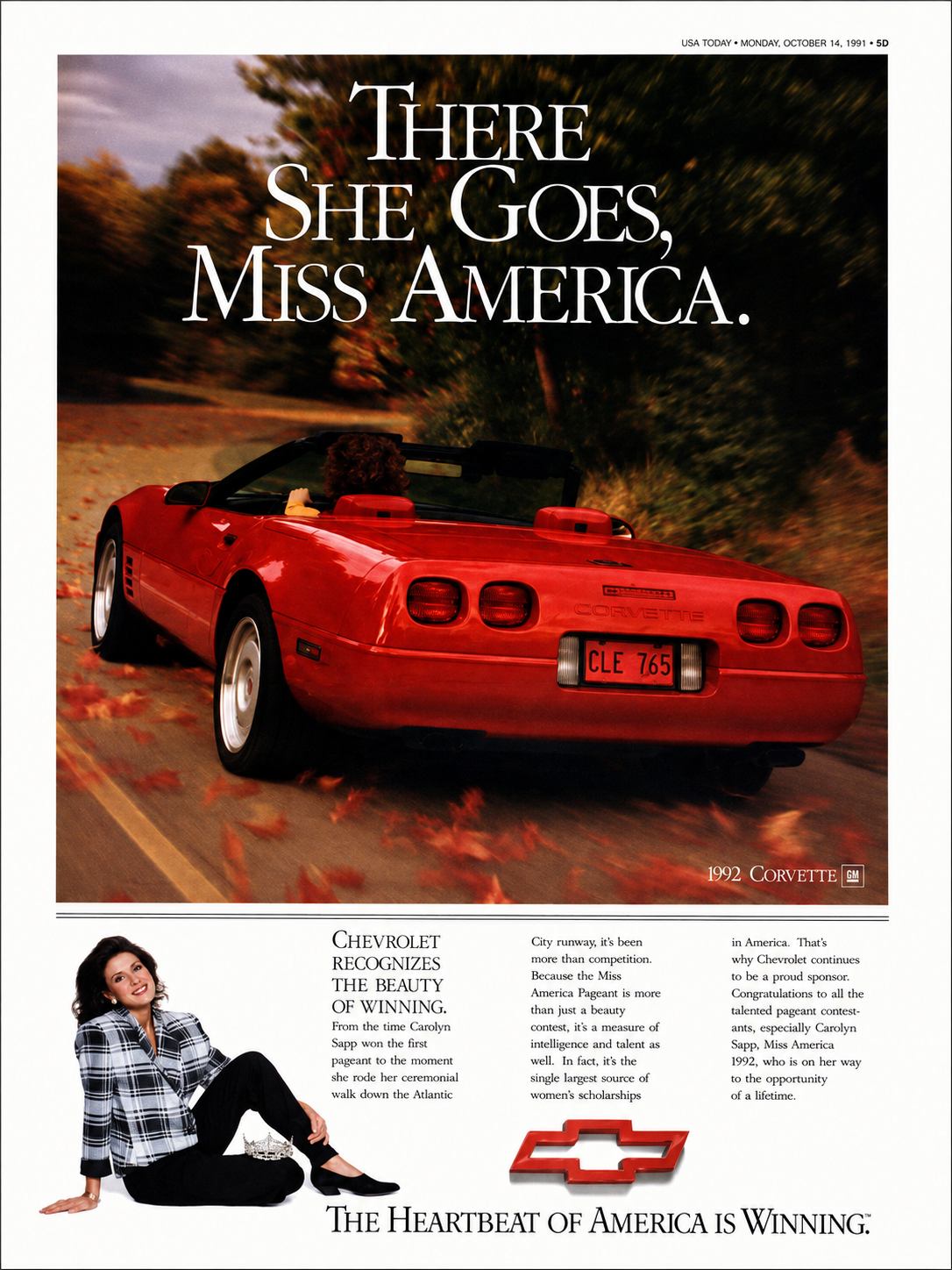
And through that remarkable year, Chevrolet and the Corvette remained part of the picture. Contemporary newspaper coverage specifically identifies Sapp’s prize car as a Bright Red 1992 Corvette Convertible, continuing the relationship that had seen Miss America winners receive Corvettes for five consecutive years by that point. Sapp did not simply take the keys and disappear with the car; she appeared with the red convertible in magazine coverage and participated in Corvette- and Chevrolet-related promotional activities around the country. One particularly well-documented appearance came in San Diego in the spring of 1992, where Sapp participated in activities connected with Corvette’s sponsorship of America³, the Bill Koch-led yacht that went on to win the 1992 America’s Cup that May. In photographs from the period, the brilliant red C4 convertible almost seems purpose-built for the role: glamorous, unmistakably American and newly powered for 1992 by Chevrolet’s 300-horsepower LT1 V-8. Yet Sapp’s year ultimately gave the Miss America-Corvette partnership considerably more depth than celebrity promotion alone. The woman photographed smiling beside Chevrolet’s newest Corvette was simultaneously becoming one of the first modern Miss Americas to demonstrate how the crown could be used to confront difficult national issues—making both Sapp and her Bright Red Corvette particularly memorable pieces of this unusual chapter in Chevrolet history.
Miss America 1993 – Leanza Cornett
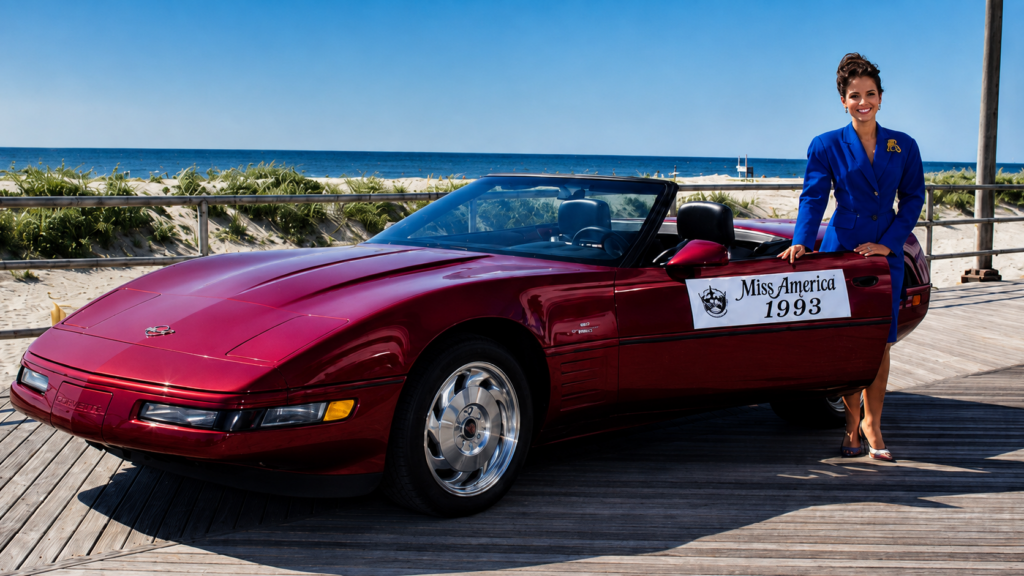
Finally, Leanza Cornett, Miss America 1993, received the last Corvette in the six-year run. Her car was especially appropriate because 1993 marked Corvette’s 40th anniversary. Cornett’s Corvette was a 1993 40th Anniversary Convertible, the special C4 finished in the model’s distinctive Ruby Red Metallic anniversary treatment.
Cornett’s Corvette later entered the celebrated collection of Chevrolet dealer and eventual Corvette Hall of Fame inductee Bob McDorman. When McDorman’s extraordinary collection was dispersed by Mecum in November 2010, the former Miss America 1993 Corvette crossed the auction block as Lot S107 and sold for $18,150 including commission.
With Cornett, the annual Corvette award ended. From Kaye Lani Rafko through Leanza Cornett, six consecutive Miss Americas—1988 through 1993—had been associated with Chevrolet’s flagship sports car. The National Corvette Museum confirms both Rafko as the first recipient and Cornett as the last.
The Corvette That Disappeared Into Everyday Life
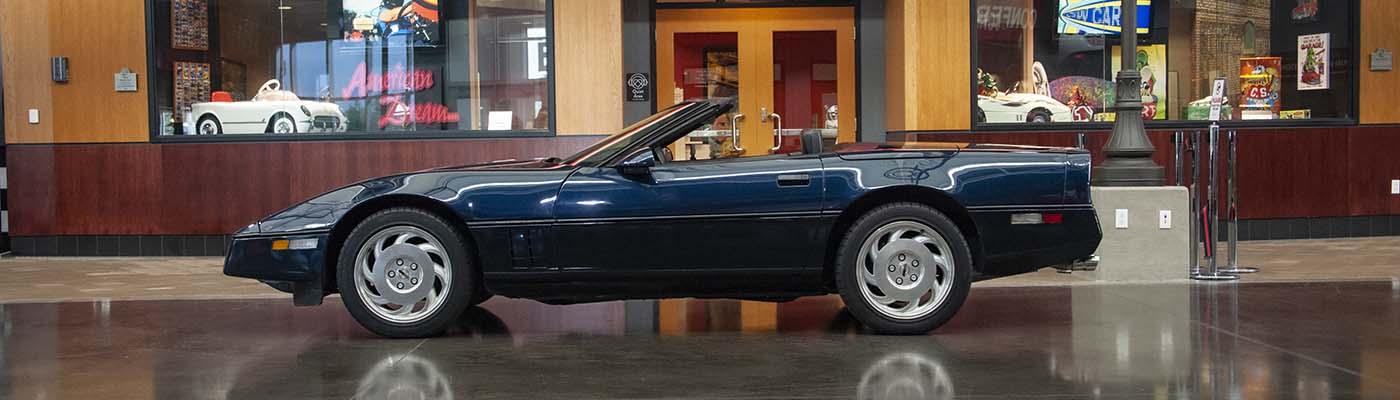
Meanwhile, one of those original five 1988 Show & Display cars simply became a used Corvette. That may be the most fascinating part of the entire story, because unlike so many historically significant automobiles, this one did not spend its life being treated as something important. After completing its Chevrolet promotional duties, the Dark Blue Metallic convertible eventually entered the private marketplace, and somewhere along the way its connection to the Miss America program faded from view. Whatever documentation may once have accompanied it was no longer part of the car’s story, and to anyone encountering it years later, it appeared to be exactly what it was on the surface: an aging C4 Corvette convertible with a lot of miles behind it.
Around 2010, Lars Wallace Sr. purchased the Corvette from a dealership in lower Michigan. By then, the car had already accumulated approximately 200,000 miles, making it about as far removed from a carefully preserved promotional artifact as one could imagine. Wallace bought it because he liked the car, not because he knew Chevrolet had once selected that exact VIN for Central Office Show & Display duty or that an internal memorandum dated August 1987 tied it to the company’s Miss America promotional program. As far as he knew, he was simply buying a high-mileage Corvette that still had plenty of life left in it.
Wallace drove it, enjoyed it and eventually added other Corvettes to his collection. Over the years, the cars were rotated through his normal driving routine, and the blue convertible continued to accumulate miles without any special treatment or recognition. Nothing about it apparently suggested that Chevrolet had once chosen it for a national promotional assignment, and there was no obvious reason to suspect that its history differed from that of thousands of other C4 Corvettes that had passed through dealerships and private owners over the decades.
That anonymity is part of what makes the car’s survival so compelling. It was not preserved because someone understood its provenance or believed it belonged in a museum; it survived because it remained a Corvette worth owning and driving. The car’s mileage continued to climb, its promotional past remained buried, and the significance of that old Chevrolet memorandum sat disconnected from the automobile itself.
By 2020, Wallace was ready to thin his collection, and the family began considering donating the high-mileage 1988 Corvette to the National Corvette Museum. At that point, there was still no expectation that the car represented anything more than an interesting, well-used survivor. But the decision to explore a museum donation prompted a closer look at its history, and that decision changed everything.
A Build Sheet, a Memorandum and a Rediscovered History
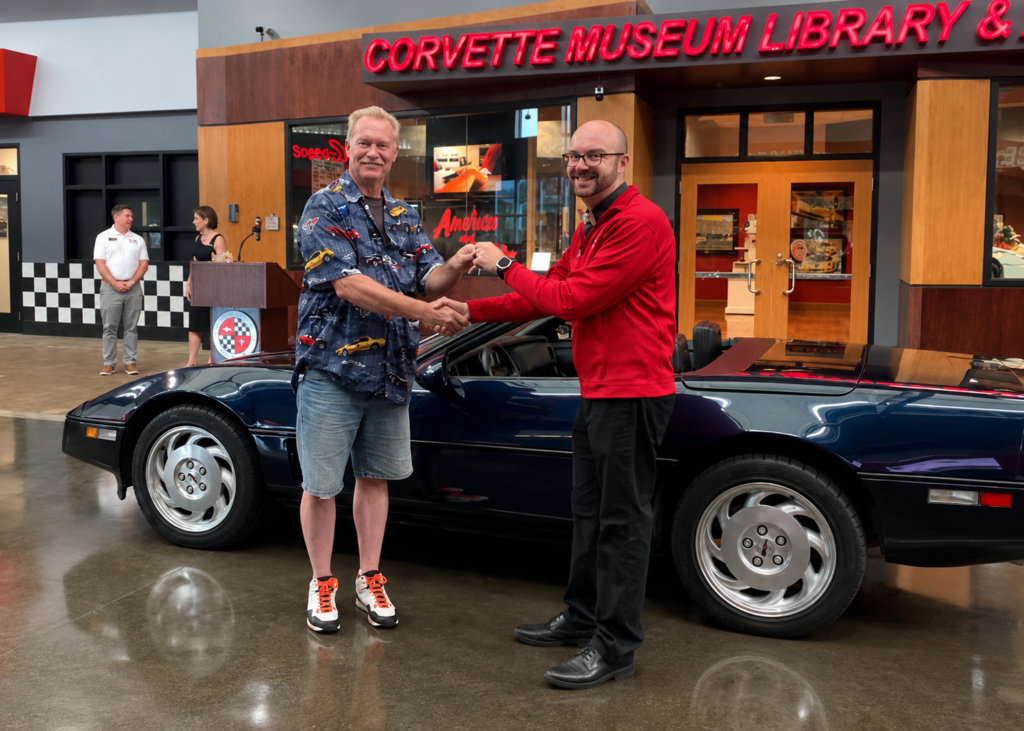
The Wallace family’s decision to approach the National Corvette Museum proved to be the moment when the blue convertible’s forgotten past finally began to surface. The family had visited the Museum several times over the years and knew that vehicle donations were an important part of how the institution built and preserved its collection. In February 2020, Lars Wallace Jr. brought his father’s title to Bowling Green so Museum staff could research the car and determine whether a nearly 225,000-mile 1988 Corvette was something they might be interested in accepting. What began as a relatively straightforward inquiry about donating an old C4 quickly became something much more interesting.
As Museum researchers pulled the Corvette’s build information, they discovered an internal Chevrolet document attached to its records. The memorandum, issued by Chevrolet Motor Division on August 7, 1987, carried the subject line “1988 Miss America Corvette Convertibles.” Listed on it were five order numbers and five VINs corresponding to Corvettes that were to be shipped to Chevrolet Central Office – Show & Display for use at upcoming 1988 auto shows. One of those VINs belonged to the Wallace family’s Dark Blue Metallic convertible. After decades of ordinary use and hundreds of thousands of miles, the car suddenly had something it had been missing for years: documented provenance connecting it directly to Chevrolet’s original Miss America promotional program.
That discovery fundamentally changed how the Corvette could be understood. Its mileage was no longer simply evidence of an old car that had been driven hard and often; it became part of an extraordinary chain of survival. This was a Corvette that Chevrolet had ordered for a specific corporate promotional purpose before the 1988 model year was fully underway, sent through the company’s Central Office Show & Display operation, and then eventually released into the world where its special history became separated from the car itself. More than three decades later, the surviving Chevrolet paperwork allowed the Museum to reconnect the physical automobile with the role it had played at the beginning of Chevrolet’s relationship with Miss America.
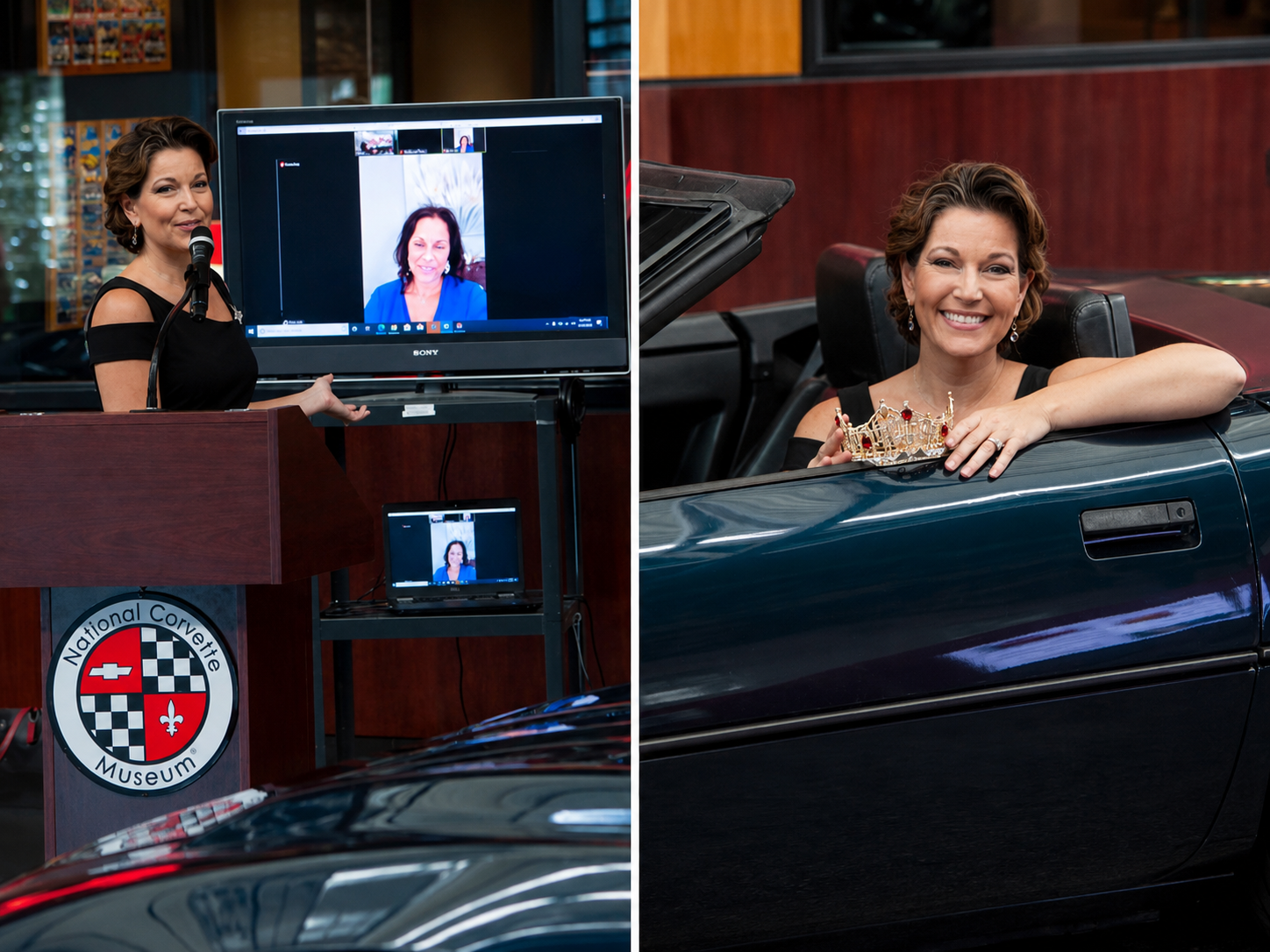
On June 30, 2020, the Wallace family formally donated the Corvette to the National Corvette Museum. Lars Wallace Jr. presented the keys to Derek Moore, the Museum’s Director of Collections and Curator, while Heather French Henry, Miss America 2000, attended the ceremony and spoke on behalf of the Miss America organization. Kaye Lani Rafko Wilson, Miss America 1988, joined remotely by video, bringing the story back to the woman whose victory had coincided with Chevrolet’s first year as a Miss America sponsor. The timing gave the ceremony an unusual sense of symmetry: a Corvette created to help launch the relationship in 1988 was now being preserved by the institution dedicated to documenting Corvette history, with representatives of both Corvette and Miss America there to recognize what had been rediscovered.
The car arrived at the Museum showing nearly 225,000 miles, a remarkable figure for a Corvette entering a museum collection for its historical significance rather than its pristine condition. According to Lars Wallace Jr., the engine had never been rebuilt, something he believed demonstrated just how durable the car had proven over more than three decades of use.
His assessment of the discovery was wonderfully understated: “Every Corvette is special. It just turns out that this one is a little more special.”
The comment captures what makes the Wallace Corvette so compelling. Its importance was not preserved by low mileage, careful storage, or continuous knowledge of its provenance. Instead, the car survived because successive owners simply kept it alive, kept it on the road, and eventually placed it in the hands of people willing to ask one more question about where it had come from.
The ceremony also produced another remarkable connection to 1988. Rafko revealed that more than thirty years after becoming the first Miss America to receive a Corvette through Chevrolet’s sponsorship, she still owned the Bright Red 1988 Corvette convertible presented to her after winning the crown. According to the National Corvette Museum, as of the 2020 donation ceremony she was the only one of the six Miss America Corvette recipients from the 1988–1993 program who still retained her original car.
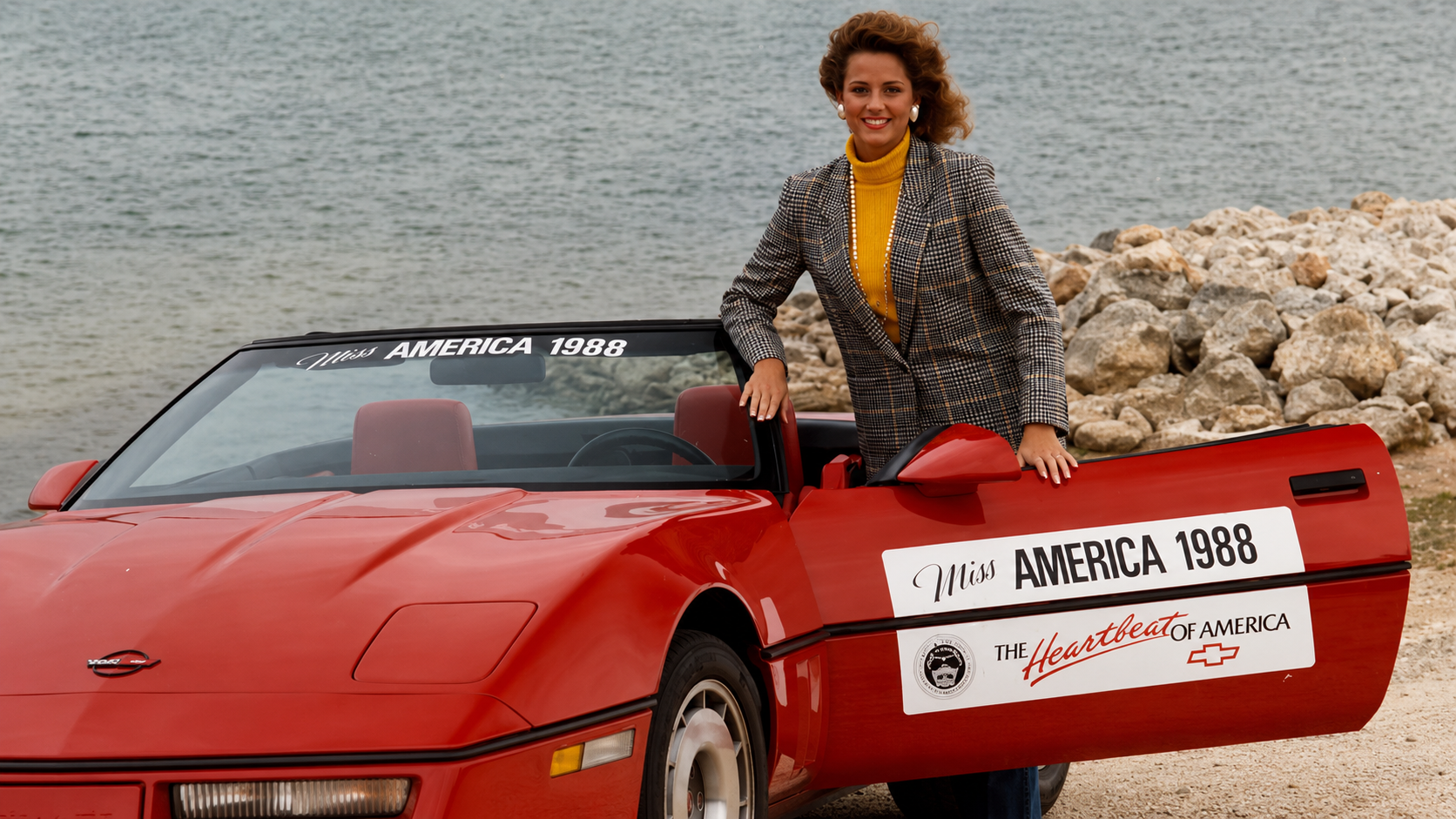
Her affection for it clearly had not diminished with time: “I still have my Corvette and absolutely love it.”
The red titleholder car and the blue Show & Display Corvette had begun their lives within the same Chevrolet promotional effort, yet their paths could hardly have been more different. One remained with the woman who received it as Miss America; the other disappeared into the used-car world, accumulated nearly a quarter-million miles and carried its history unknowingly for decades.
Together, they provide two very different surviving links to Chevrolet’s 1988 Miss America program. Rafko’s red convertible preserves the highly visible side of the partnership—the crown, the ceremonies, the appearances and the promise Chevrolet made that the newly crowned Miss America would leave with her own Corvette. The Wallace car preserves something less obvious but equally important: the machinery behind the promotion, the Corvettes Chevrolet placed into its Show & Display operation to carry that new relationship onto the national auto-show circuit. One car never lost its identity; the other had to have its identity rediscovered. In the end, the clue that brought the blue Corvette’s story back into focus was not a famous photograph or an unusual badge on the bodywork, but an old Chevrolet memorandum dated August 7, 1987, still waiting in the factory documentation more than thirty years later.