
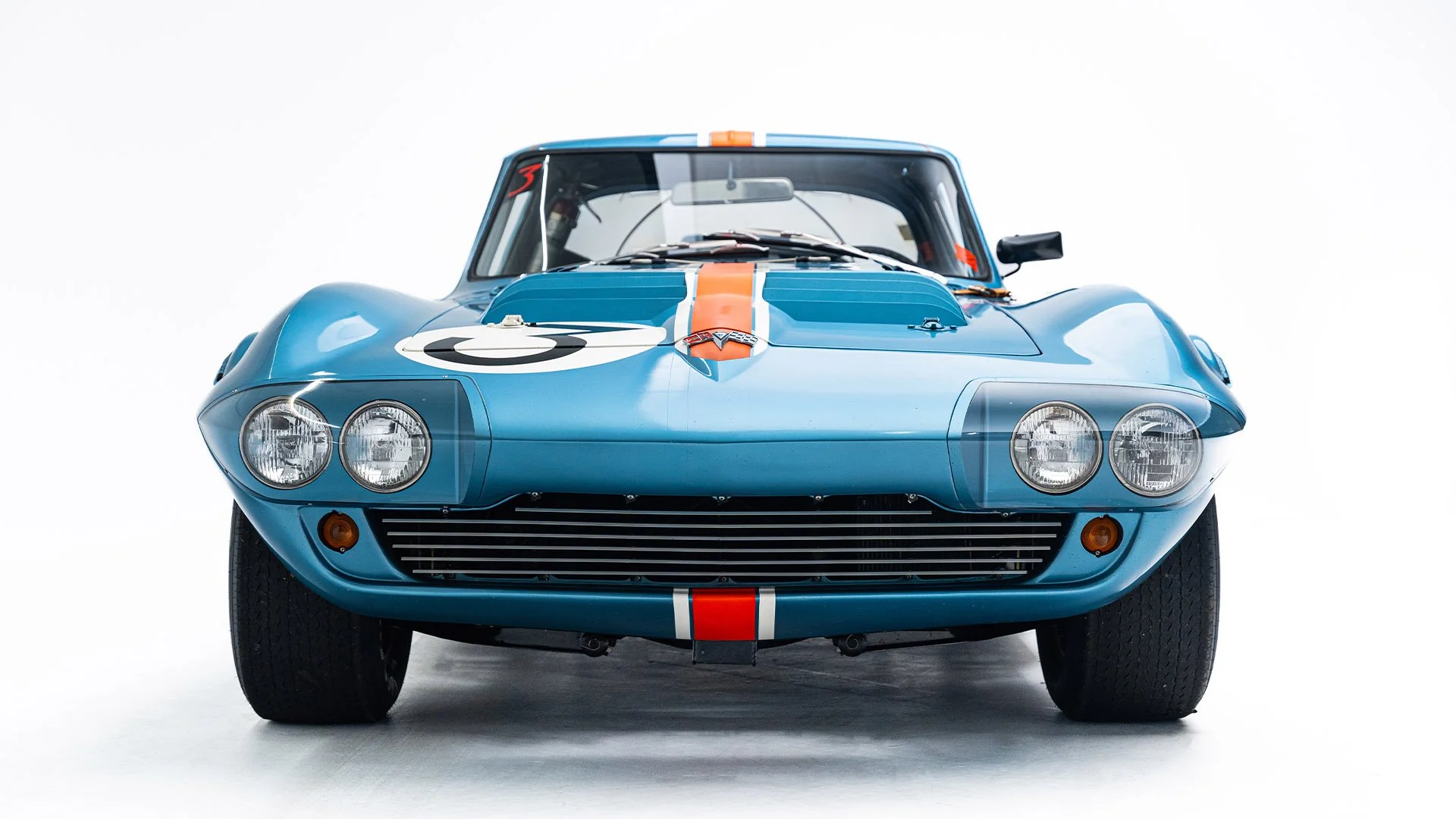
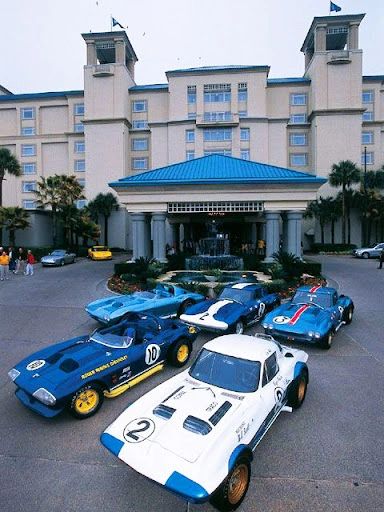
The 1963 Corvette Grand Sport occupies a strange place in Corvette history because it is neither a typical concept car nor a production model in the traditional sense. It was a purpose-built racing prototype—five cars constructed inside Chevrolet Engineering with a specific target on their backs: Carroll Shelby’s Cobra and the international GT battlefield that culminated at Le Mans. It was also an experiment in how far Corvette could be pushed when you stripped away comfort, civility, and corporate caution.
To understand why the Grand Sport exists at all, you have to hold two truths at the same time. First: by the early 1960s, Corvette was no longer trying to be taken seriously—it was being taken seriously. The Sting Ray arrived with a new chassis, independent rear suspension, four-wheel disc brakes available, and the kind of engineering seriousness that finally matched the car’s styling. Second: General Motors was still officially living under the shadow of the industry’s self-imposed racing taboo—an environment where public “factory” racing support was politically sensitive inside the corporation, even as performance credibility was clearly becoming a sales weapon.
Zora Arkus-Duntov lived in the gap between those two realities. He believed Corvette’s future required racing development, real competition, and real consequences. The Grand Sport was his most direct attempt to turn that belief into hardware.
The Problem Zora Wanted to Solve: Cobra, GT Rules, and the Limits of the Z06
By 1962, Chevrolet had already taken meaningful steps toward track credibility with the heavy-duty, race-oriented options that Duntov pushed through the system. The Z06 package was a perfect example of his philosophy: take a street car, delete what the racer doesn’t need, strengthen what the racer will break, and allow the customer to do the rest. But Zora also understood a hard truth about the Sting Ray as delivered: even with Z06, you were still dealing with a full-weight production Corvette. In a world where Shelby was building a lighter, more purpose-built Cobra, weight was not a detail—it was the fight.
That reality is the core logic behind the Grand Sport. Duntov’s team had been refining racing-oriented options, but he knew a Z06-equipped Sting Ray would still be roughly a thousand pounds heavier than a Cobra. So he proposed something more radical—an ultra-light Corvette built with racing in mind from the first weld. To run in the FIA’s GT framework as a “production” entry, he needed numbers. The homologation ( granting approval by an official authority. In motor sport it means checking the car’s specification and its compliance with Technical Regulations within a given class) target was 125 cars. That was the plan: build enough to qualify, then let private teams race them—because “factory racing” was exactly the kind of phrase that could get you killed on the executive floor. The cars were meant to be engineered by Chevrolet and raced by others. A workaround on paper, a statement in fiberglass and steel.
This is the moment where the Grand Sport stops being a fantasy and starts being a project. It was not a styling exercise. It was not a show car. It was a Corvette engineering program with a specific competitive mission and a specific regulatory requirement.
“Grand Sport” as a Prototype Program, Not a Trim Level
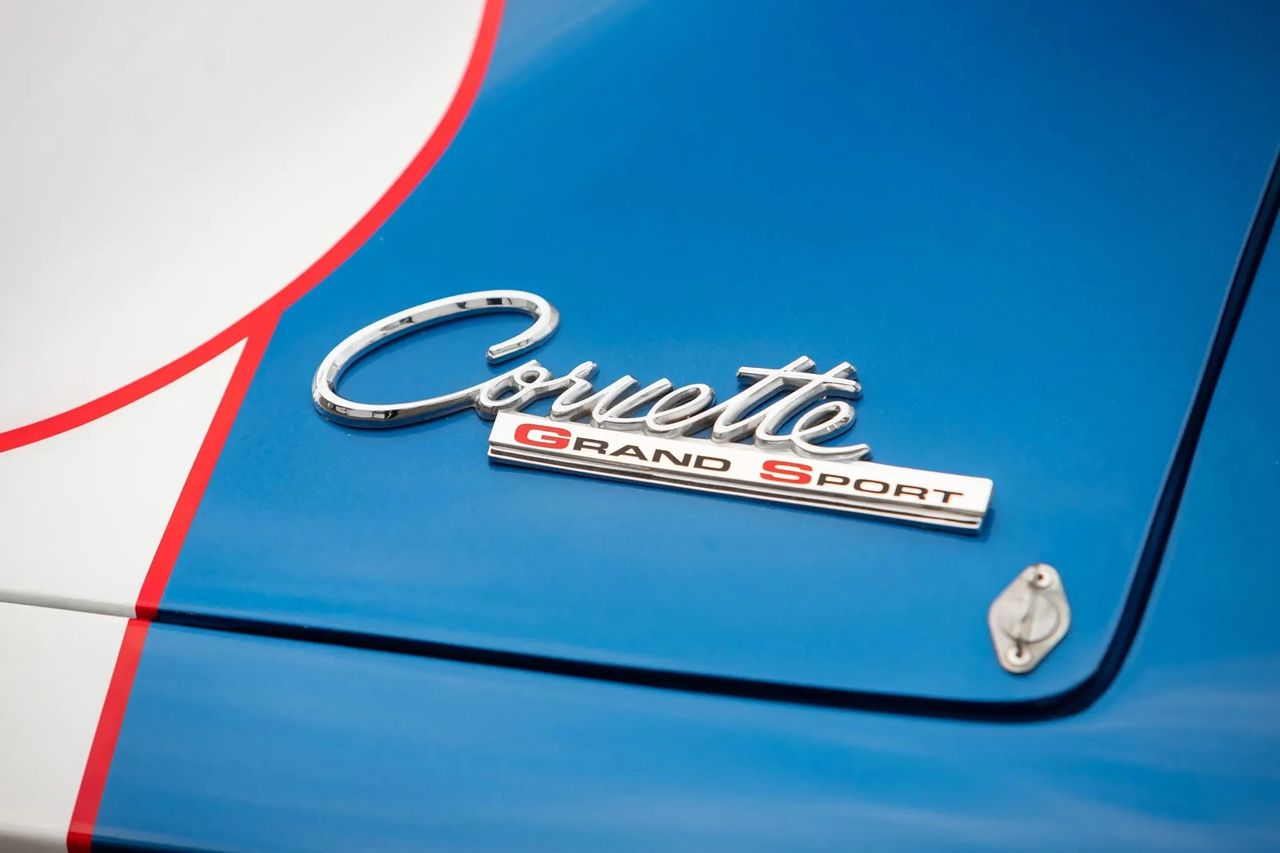
The name “Grand Sport” today has been used across several Corvette generations, but in 1963 it meant one thing: lightweight. Inside the program, these cars were also described plainly as “Lightweights,” because that was the defining attribute and the defining advantage. They were built in Chevrolet Engineering’s prototype environment, not on a normal production line.
And that matters. When you build cars as prototypes, you build them the way racers build them: to do a job, to solve a problem, to accept risk. You do not build them to be quiet. You do not build them to be serviced by any dealership. You do not build them to satisfy every customer. You build them to win.
The Core Engineering: Lightweight Structure and a Corvette That Still Looked Like a Corvette
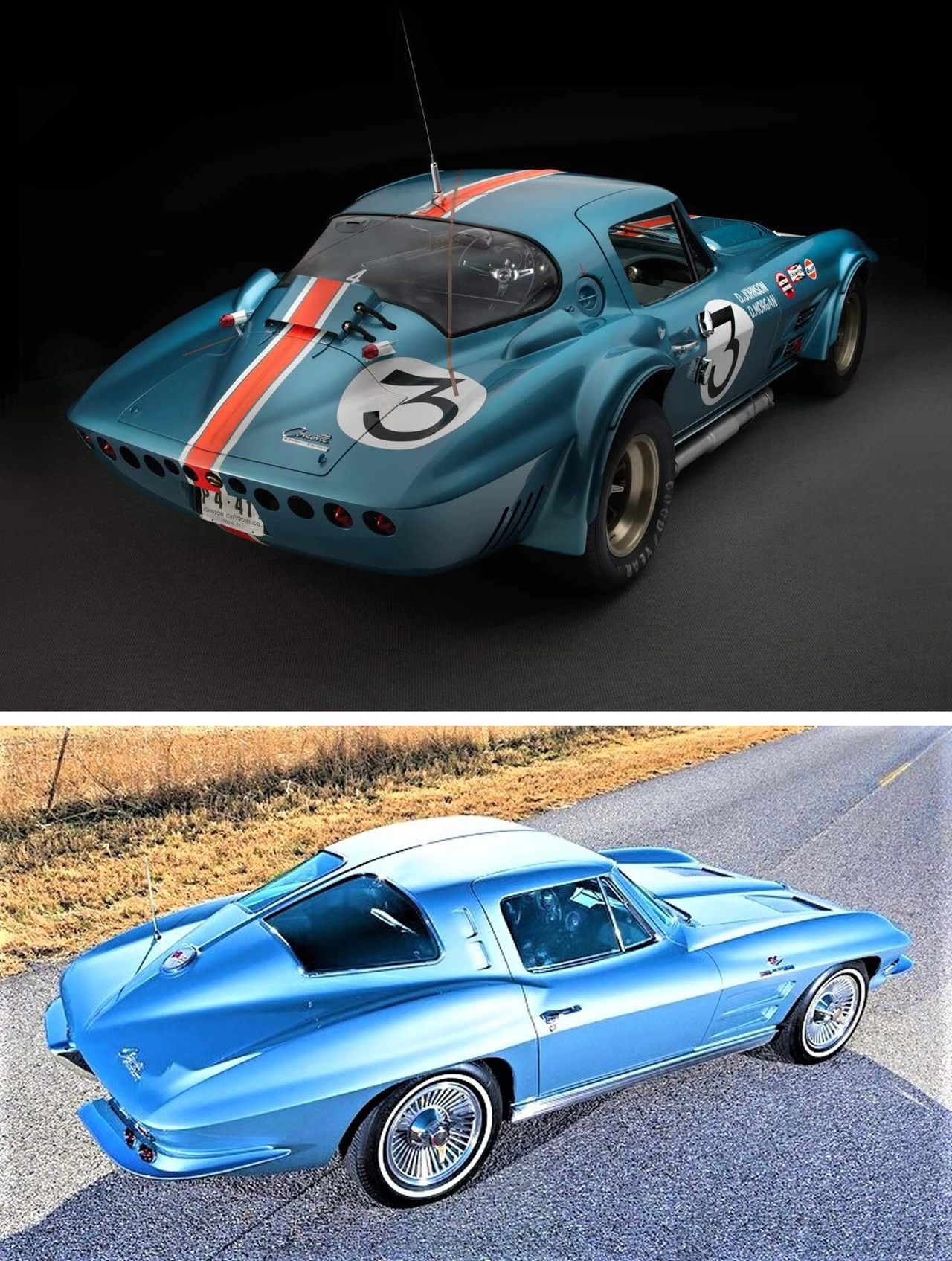
One of Duntov’s most strategic decisions was that the Grand Sport should still read as a Sting Ray at first glance. The shape mattered because the class mattered. The idea was to contest GT-style racing, where the car needed to plausibly relate to a production model.
Underneath, however, the “production” relationship got thin fast. The Lightweights were built around a round steel tube ladder-type frame with an integrated roll bar, and they used modified production suspension pieces with extensive lightening work. The interior was spartan and purpose-built. The body was a lightweight fiberglass shell that generally echoed the Sting Ray but with purposeful changes: fixed headlamps with Plexiglas covers, revised lighting and grille details, a rear window treatment that eliminated the famous split, and accommodations like a trunk area for the FIA-required spare tire. Wheels were Halibrand knock-off magnesium pieces, wrapped in Firestone racing rubber.
This was not cosmetic fluff. These were direct race-car decisions:
- Lighting and aero simplification: fixed headlamps under covers reduced complexity and likely reduced drag and failure points.
- Practical GT compliance: the spare tire requirement was not negotiable in that rule set, so packaging mattered.
- Wheels and tires as performance architecture: magnesium knock-offs and big racing tires weren’t “options,” they were how you make a car survive and corner at speed.
Weight targets are often quoted around the 2,000-pound range, with figures varying depending on configuration and the source being referenced. The correct takeaway is the design intent: make a Corvette that no longer carried a production car’s weight penalty, and do it aggressively enough that the Cobra advantage disappeared.
Suspension, Brakes, and the Unsexy Hardware That Makes a Race Car Real
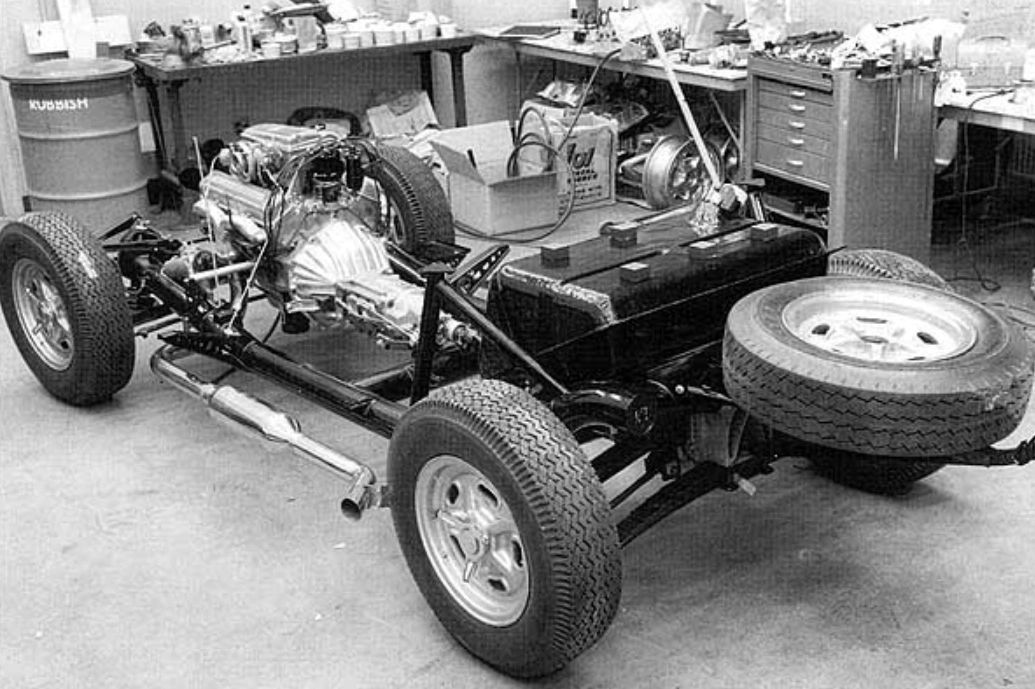
A lot of Grand Sport conversations get trapped in horsepower myths and “what if Le Mans” romanticism. The truth is that a race car is defined by its ability to survive a race distance, not by its best dyno pull.
The Grand Sport chassis package reads like a practical checklist of race-oriented modifications: lightened A-arms up front, an aluminum steering box, and significant attention to the rear suspension and differential. The rear remained conceptually aligned with the Sting Ray’s independent system, but with lightening work that included an aluminum differential and drilled control arms. Brakes were race-grade discs built for repeated high-speed punishment.
That reads like a program built by people who knew exactly what would fail first.
And it did. One of the most telling details from period accounts is that the cars suffered from overheating differentials during Nassau Speed Week, requiring the addition of differential coolers between races. That is not an embarrassment—it’s exactly what real racing development looks like when you take a new lightweight, high-power package into competition conditions and start discovering where the heat goes.
The Engines: From “Good Enough” to “No Excuses”
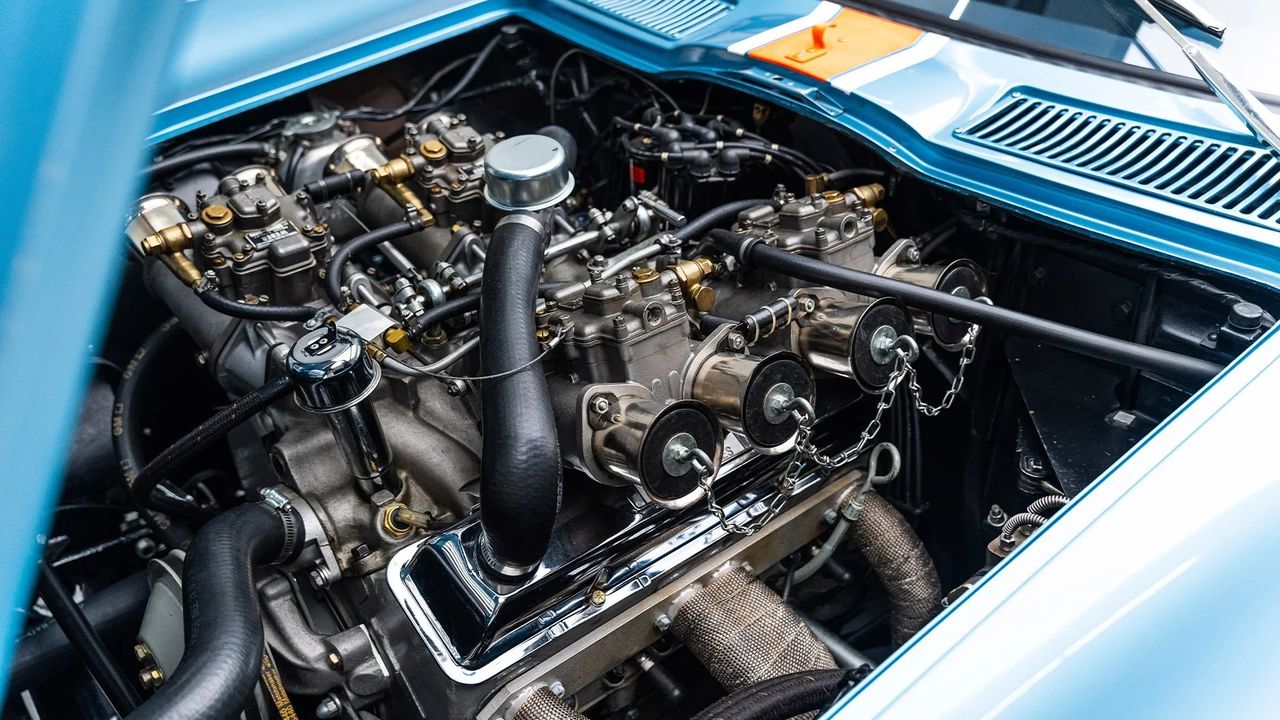
The Grand Sport’s engine story is where legend tends to outrun documentation, so it’s worth being precise about how the car evolved.
Early on, at least some Grand Sports ran with production-based small-block power depending on event timing and the practical reality of getting cars ready. But the “full statement” engine—the one most closely associated with the program’s intent—was the all-aluminum 377 cubic-inch small-block that arrived as the program matured. By the time the cars were prepared for Nassau, the program had moved toward more aggressive configurations that better matched the Corvette’s lightweight mission.
Horsepower ratings vary by source and by configuration. Some documented figures land in the high-400-horsepower range, while others cite numbers in the mid-500s for the most aggressive versions. The honest explanation is that these were prototypes with evolving engines, and published horsepower numbers reflect specific setups, specific eras, and sometimes optimistic ratings. What never changes is the direction: Duntov was not chasing a mildly improved Sting Ray. He was engineering a lightweight GT killer, and he was willing to explore advanced hardware and high-output tuning because that is how you close the gap against a purpose-built rival.
The 125-Car Wall: Homologation and Why “Only Five” Changes Everything
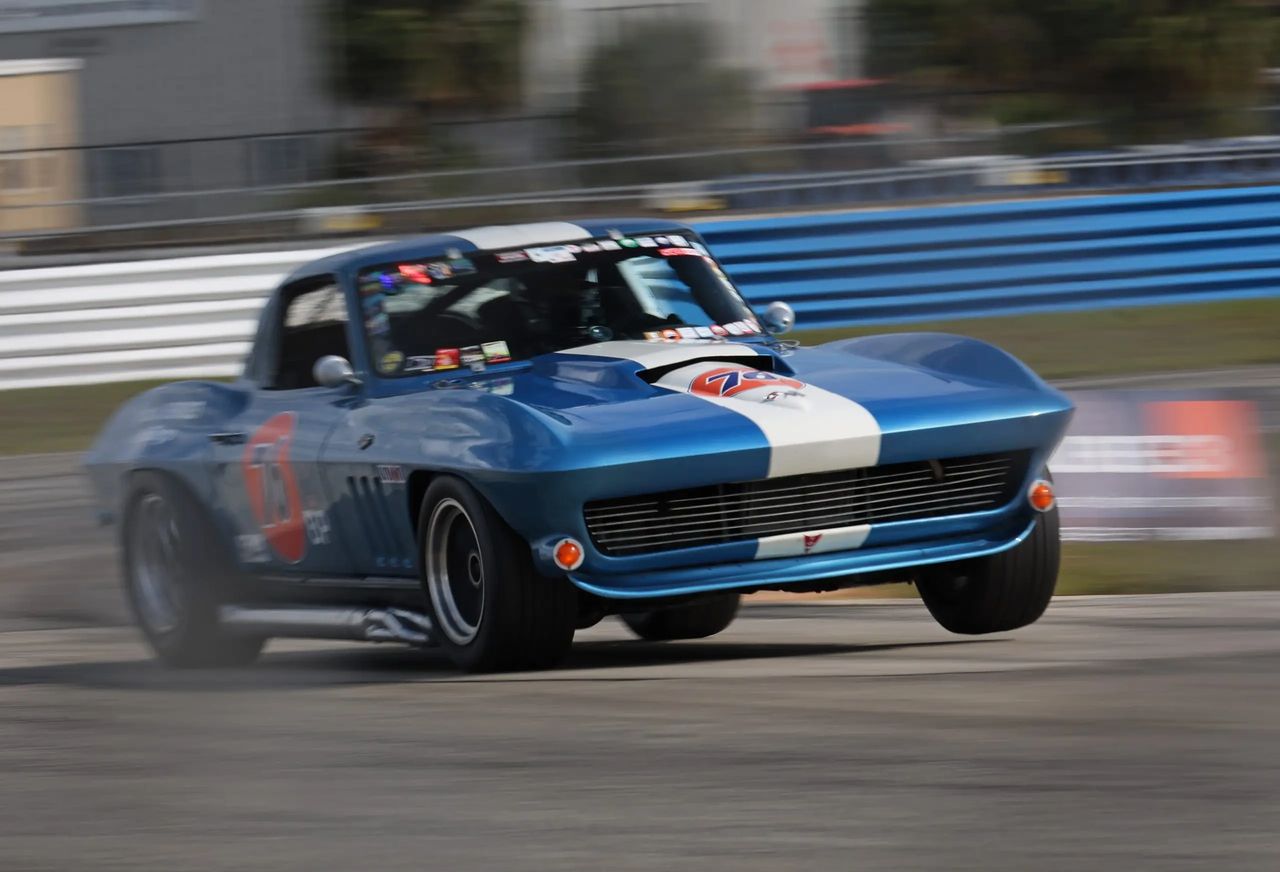
The Grand Sport’s most painful fact is also the one that defines its legend: only five cars were built. From the outset, the program was conceived around a minimum production run of 125 cars, the threshold required to homologate the Corvette as a true GT contender under international racing rules. That number was never a question of engineering capability—the Grand Sport proved almost immediately that the technical side was solved—but of corporate will and manufacturing approval. When that support was withdrawn, the program lost the very foundation it was designed around, and the strategy collapsed overnight.
The consequence was immediate and unavoidable. Without homologation, the Grand Sports could no longer compete as production-based GT cars and were instead forced into open or prototype-style classes against machines they were never intended to face. This is the root of the Grand Sport’s enduring sense of displacement: they were meticulously engineered for a specific competitive battlefield, then abruptly denied entry to it. Built for one war and reassigned to another, the cars became racing orphans—brilliant, fast, and historically significant, but forever prevented from fulfilling the purpose for which they were created.
The Corporate Crackdown: When the 14th Floor Found Out
The shutdown of the Grand Sport program matters because it explains why the car became a legend of unrealized potential rather than the foundation of a sustained factory racing effort. At its core, the decision was driven by senior GM leadership’s firm adherence to the corporation’s official no-racing policy, a posture that left little room for nuance or interpretation. The Grand Sport program, despite its technical brilliance, looked too much like a direct factory challenge to that policy—especially as testing accelerated, outside interest grew, and the cars began to attract attention beyond Engineering circles. Once the program reached that visibility threshold, it was no longer tolerated. Orders came down to halt further development, finish only what was already in progress, store the completed cars, and quietly close the book. The internal tone was not one of pride or regret, but of control: contain the project, avoid publicity, and ensure it did not evolve into a public contradiction of corporate policy.
Yet even within that shutdown, the story is not one of absolute compliance. Zora Arkus-Duntov accepted the order to stop building cars, but he never fully accepted the idea that the work itself was invalid. To him, the Grand Sport represented unfinished engineering truth—something proven on paper and in testing, but not yet validated where it mattered most. That tension between corporate authority and engineering conviction is what pushed the story forward rather than ending it outright.
The “Privateer Release”: How Duntov Got His Real-World Testing Anyway
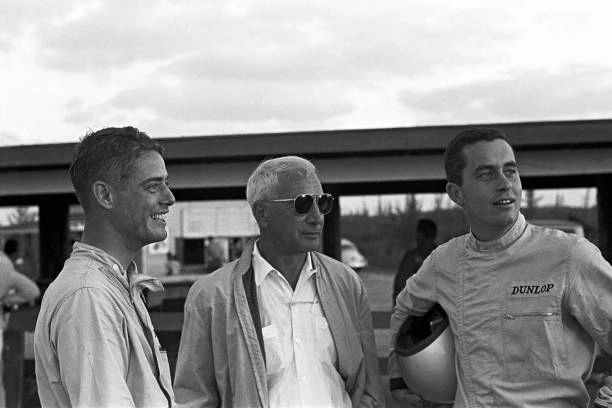
This is where the Grand Sport story becomes unmistakably Duntov’s. If Chevrolet could not officially race the cars, he would ensure that they raced without Chevrolet’s name attached to the effort. By placing the Grand Sports into private hands, the cars could operate outside the factory umbrella while still accomplishing their true purpose: real-world testing under competitive conditions. Unlike controlled proving-ground work, racing exposed flaws instantly and mercilessly—exactly the kind of environment Duntov believed was essential to meaningful engineering progress.
The strategy worked. The Grand Sports found themselves driven by some of the most capable and respected competitors of the era—Roger Penske, Jim Hall, Dick Thompson, A.J. Foyt, and others whose reputations were built on extracting results from difficult machinery. Though the program’s competitive life was brief and fragmented, the cars proved brutally fast and fundamentally sound, validating the concept that had been shut down on paper. In this way, the Grand Sport fulfilled its mission indirectly: not as a factory-backed dynasty, but as a rolling laboratory whose lessons lived on long after the cars themselves were sidelined.
Nassau Speed Week, December 1963: The Moment the Grand Sport Proved the Point
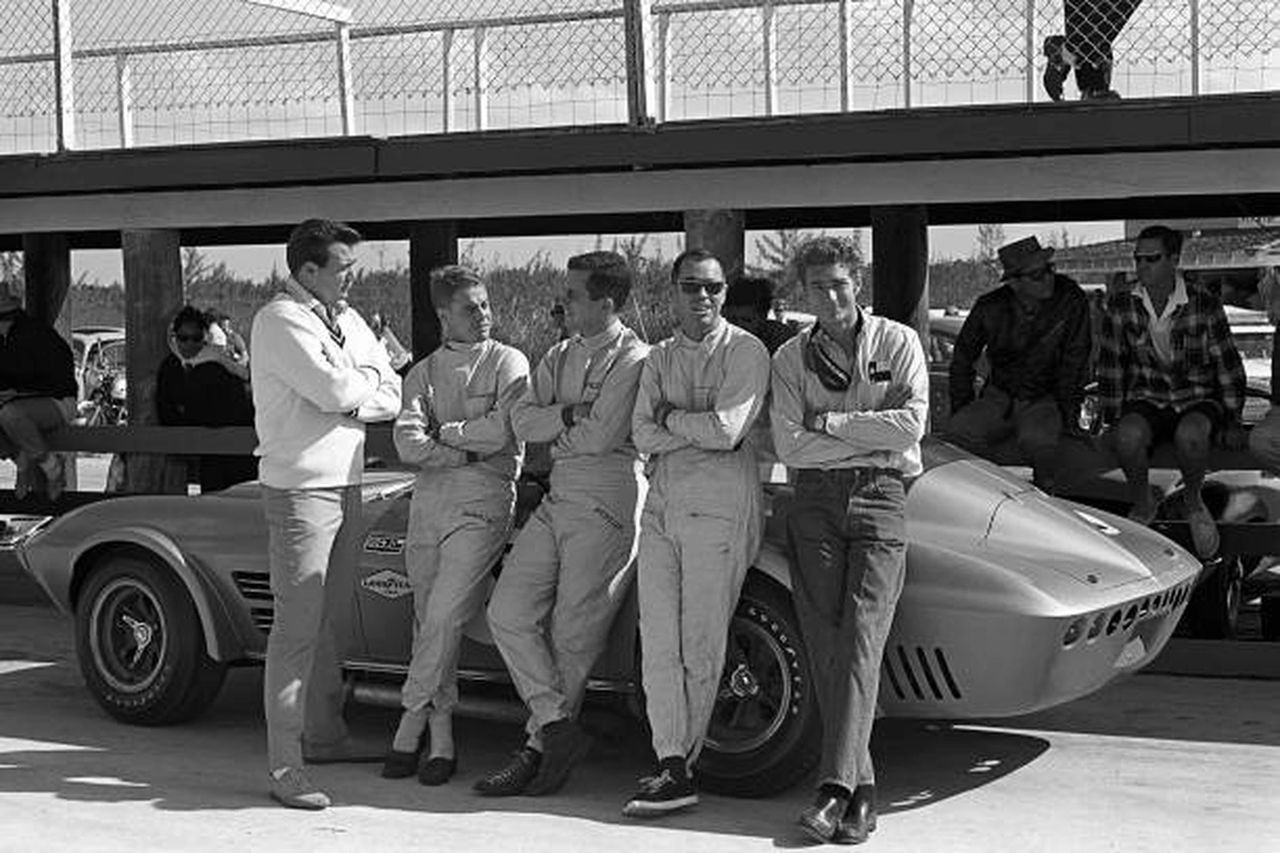
If you want the 1953 Corvette Grand Sport’s “proof” moment, it’s Nassau.
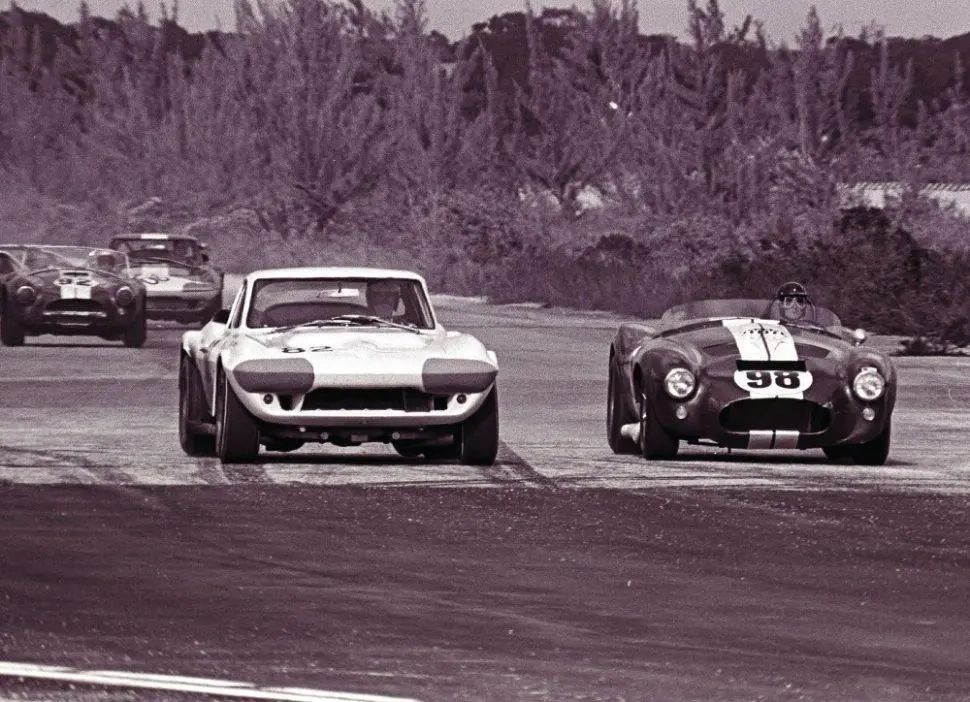
At Nassau Speed Week, the Grand Sports were finally allowed to compete directly with Cobras under the event’s rules. The cars had been recalled and improved, fitted with the 377-cubic-inch aluminum engines, and entered under private ownership. The story includes one of those details that feels too perfect until you remember how racing culture worked in that era: Chevrolet engineers appeared to be “on vacation” at exactly the right place and time.
The week didn’t just produce fast lap times—it produced embarrassment on the other side of the fence. The Grand Sports won decisively enough that factory personnel were uncomfortable with how visible the performance had become. And visibility was the one thing the program could not afford.
It was also clear the secrecy game was over. Ford knew what was coming. The competition knew what the Corvette was capable of when it wasn’t dragging production-car weight around the track.
That is the moment when the Grand Sport stops being merely a racing prototype and becomes a political problem.
What It Was Like to Drive: The Grand Sport as a Violent Tool, Not a Polished Product
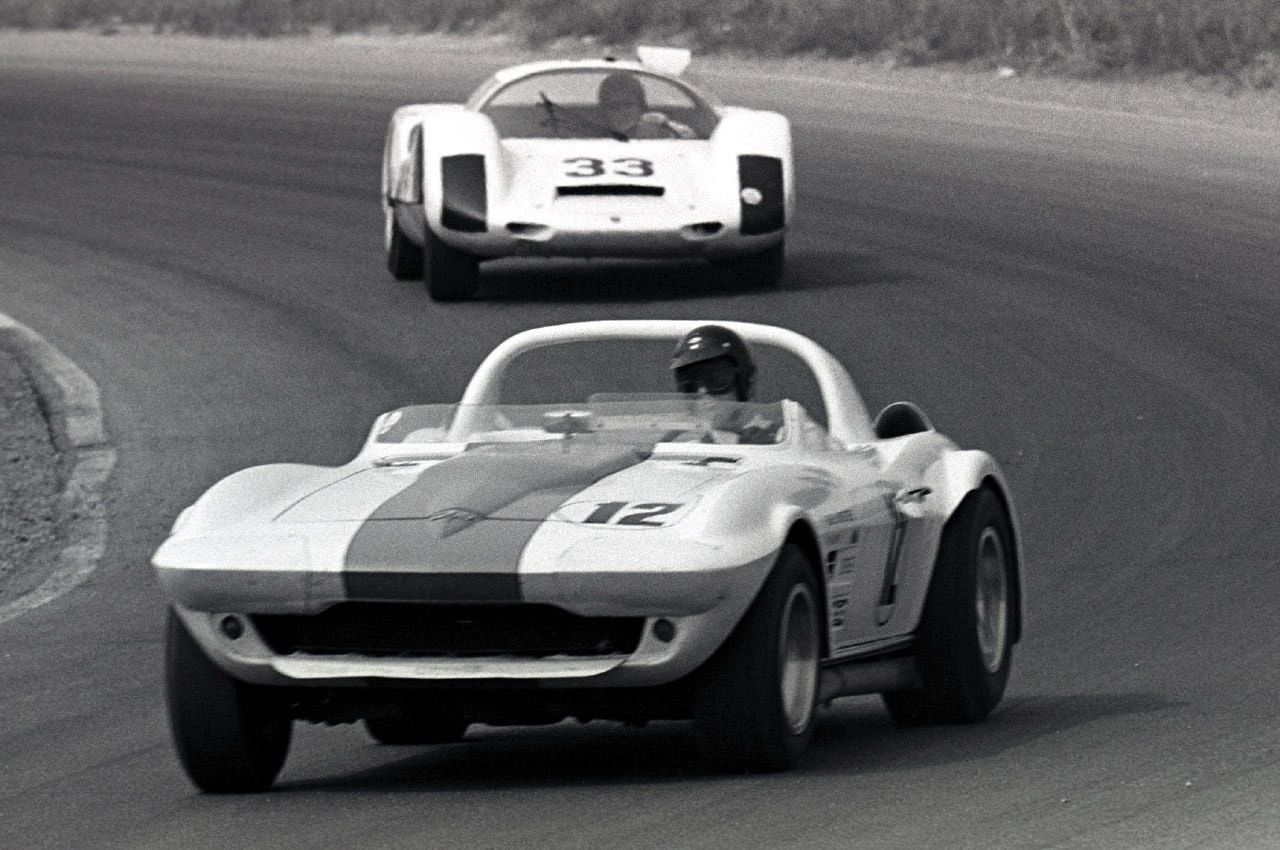
The best way to keep this honest is to listen to the people who drove them.
Period accounts and later recollections converge on the same conclusion: the Grand Sport was fast, but it was not friendly. It could be unstable at the limit, especially under braking and in transitions. It demanded respect. If you approach it like a well-mannered production Corvette, it would punish you.
That’s not a criticism. That’s a description of a lightweight, big-tire, high-power prototype with race brakes, a locked rear end in some configurations, and minimal concession to comfort. It was a device.
And yet, those same impressions consistently credit the car’s core competence—its braking, its gearbox behavior, the way it accelerated, and the way it covered ground when a capable driver put it to work. The Grand Sport was not a fragile, theatrical prototype. It was a serious racing tool.
The Competition Record: Short Career, Real Impact
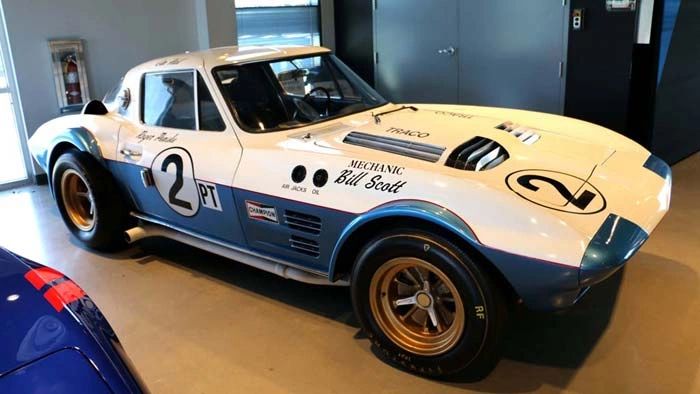
The Grand Sport’s competition life is complicated because the cars moved through owners and configurations, and they were never homologated into the class they were built to win. But even with that limitation, they produced results that mattered.
Chassis #005 is often singled out as the most successful in competition, including a class win at Sebring in 1964 and later results that reinforced what everyone at Nassau already understood: this Corvette, in this weight class, with this kind of power, was a different animal.
Even when the cars began to age out against newer machinery and more modern prototypes, they could still shock seasoned racers with their acceleration and their straight-line urgency. That is not nostalgia—that is physics. When you combine serious horsepower with a radically reduced curb weight, the car does things a “normal” Sting Ray cannot do.
The Roadsters: The Program’s Most Extreme Expression
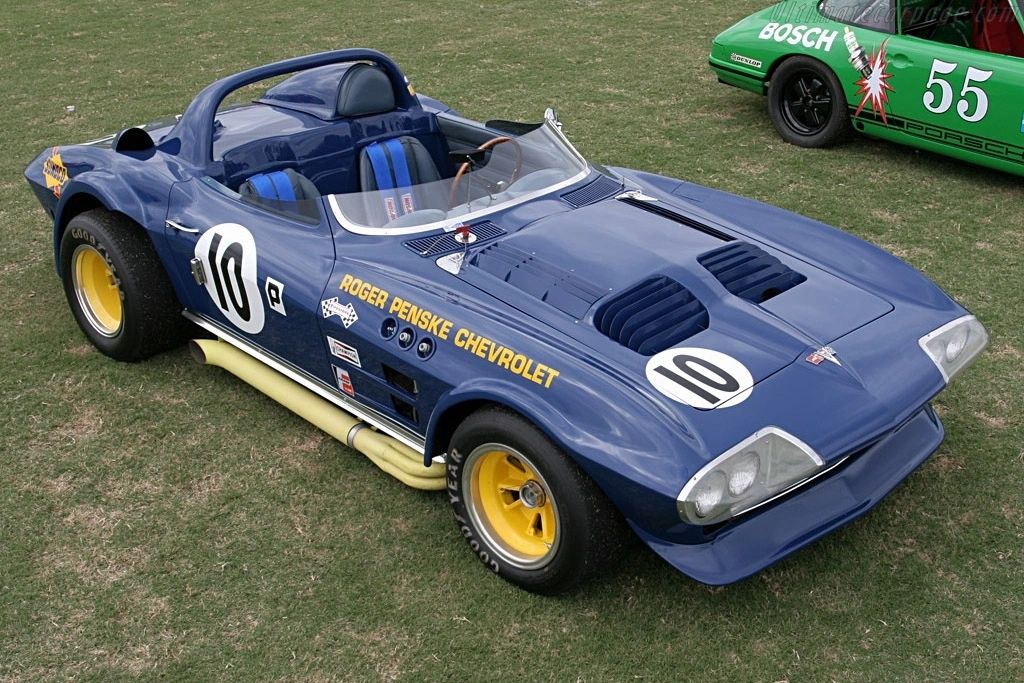
Another key turn in the Grand Sport narrative was the decision to convert two of the coupes into open cars. Two of the earliest chassis were reworked into roadsters—an aggressive, function-first move that pared away even more weight, reduced the car’s frontal “bulk” in practical terms, and opened up additional avenues for testing, tuning, and race setup. In many configurations, the roadsters proved even quicker than their coupe siblings because the cars were already operating on the margins: when engineers were chasing tenths, shedding mass and simplifying anything that did not directly make the car faster mattered.
It was also a decision that revealed exactly where the program stood. Converting coupes into open cars was never about keeping the Grand Sport close to something Chevrolet could plausibly sell to the public. It was about building the best weapon possible with the time and freedom Zora Arkus-Duntov still had. This was classic Duntov logic: if the car existed to win, and if a change improved the odds, the change was made—even if it pulled the car further away from production resemblance and further complicated the story Chevrolet preferred to tell upstairs. By that stage, the program was already politically dead; the only thing still alive was the engineering. Performance became the remaining language Duntov spoke, and the roadster conversions were his way of stating, without ambiguity, that the stopwatch mattered more than optics.
The Grand Sport’s Real Legacy: Technology Transfer and a Corvette Culture Shift
The easy way to end a Grand Sport story is to romanticize the “what if.” What if GM had built 125? What if they had gone to Le Mans with real factory support? What if the Cobra wars had played out on equal terms with corporate backing?
Those questions are unavoidable, but the more productive conclusion is this: Duntov built the Grand Sport because Corvette needed a proving ground, and he found a way to create one even when the corporation refused to fund the fight.
Even after the Grand Sport program was officially dead, Duntov’s philosophy continued to shape how Corvette served racers: heavy-duty braking options, larger fuel capacity thinking, and later factory programs that were designed to be rules-legal but racer-focused. The Grand Sport didn’t “become” those later developments, but it reflects the same engineering worldview: build the parts that matter, let racers do what racers do, and keep advancing Corvette’s credibility from the inside.
And that may be the Grand Sport’s most honest definition. It is not a Corvette trim level. It is not a styling milestone. It is a five-car argument made in fiberglass and aluminum by an engineer who believed that performance without competition is just advertising.
Zora didn’t get his 125. He got five. But he also got proof—enough to ensure that the Corvette story could never again be written as if racing didn’t matter.