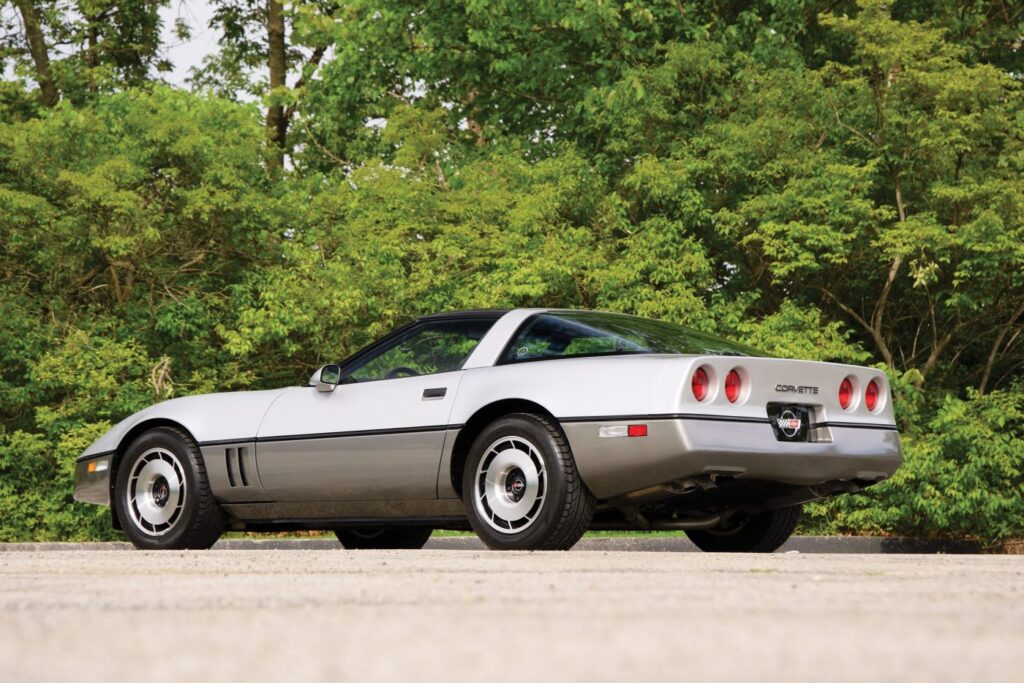
Tag: 1984 Corvette

  • 1984 DeATLEY CORVETTE

    1984 DeATLEY CORVETTE

    Here’s the story of the 1984 DeAtley Corvette—the short-deadline, tube-frame C4 that dragged Corvette straight back into the center of American road racing.

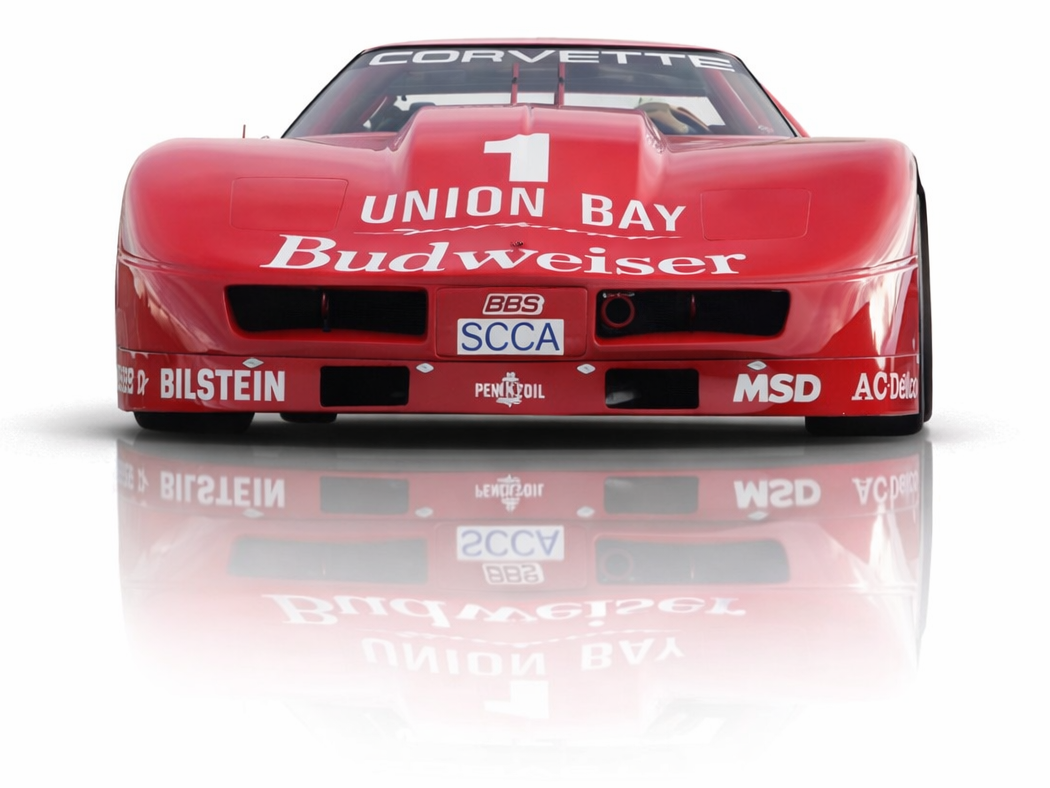
    When Chevrolet launched the fourth-generation Corvette in 1984, the company wanted the car to be seen doing what Corvettes do best: run at the front. The quickest path was not to incubate a brand-new “works” effort from scratch, but to lean on its reigning Trans-Am partner—Neil DeAtley’s Budweiser-backed team—fresh off a dominant ’83 season with Camaros. The ask came with a brutal timeline. In a matter of weeks, DeAtley’s group had to retire a proven championship platform and conjure a Corvette that could live with (and, ideally, beat) Ford’s ascendant Mercury Capris right out of the gate. The result was a small batch of purpose-built, tube-frame C4s that looked like showroom Corvettes from 20 feet away, but underneath were all business—hand-built racing machines that marked Corvette’s return to front-line, factory-connected Trans-Am combat in the C4 era.

    The time pressure changes how you read everything that follows. This was not a laboratory program run in secrecy or comfort. It was a sprint across open ground, with fans and rivals watching, and with the just-launched C4’s reputation on the line. The cars were fast enough to win on debut. They were raw enough to require a season’s worth of public development. They were significant enough that, four decades later, their fingerprints are still visible on Corvette’s racing arc.

    People First: DeAtley’s Roster and the Build Network
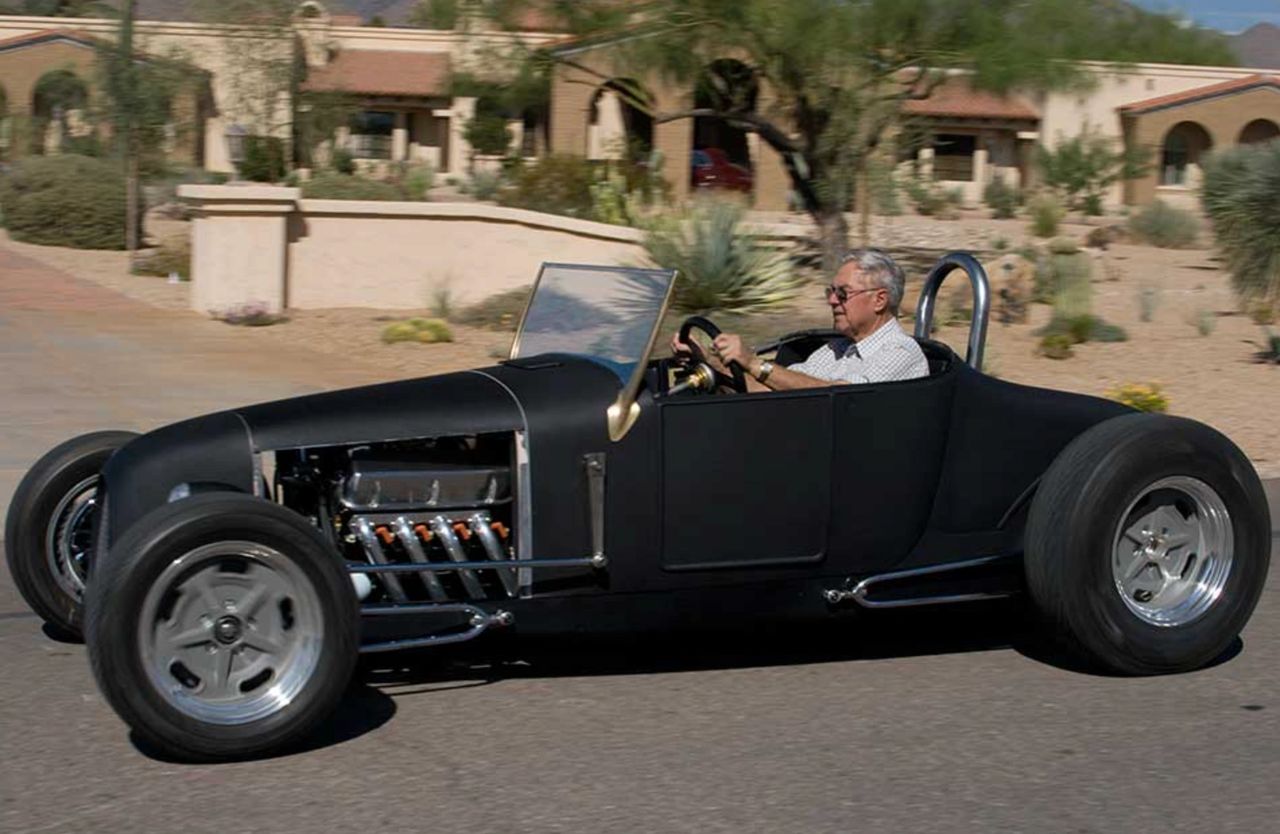
    Neil DeAtley (driving) and his 1927 Ford Track-T Roadster (Image courtesy of Dean's Garage)
    Neil DeAtley (driving) and his 1927 Ford Track-T Roadster (Image courtesy of Dean’s Garage)

    Racing programs live or die on people. Neil DeAtley was a financier out of the Pacific Northwest with an appetite for going big—Budweiser on the flanks, proper engineering money in the cars, and star drivers in the seats. He also knew how to build a coalition fast. The public face was Budweiser red; the backbone was a flexible build pipeline that pulled in fabricators and specialists capable of turning an all-new production design into a competitive silhouette racer in weeks rather than months.
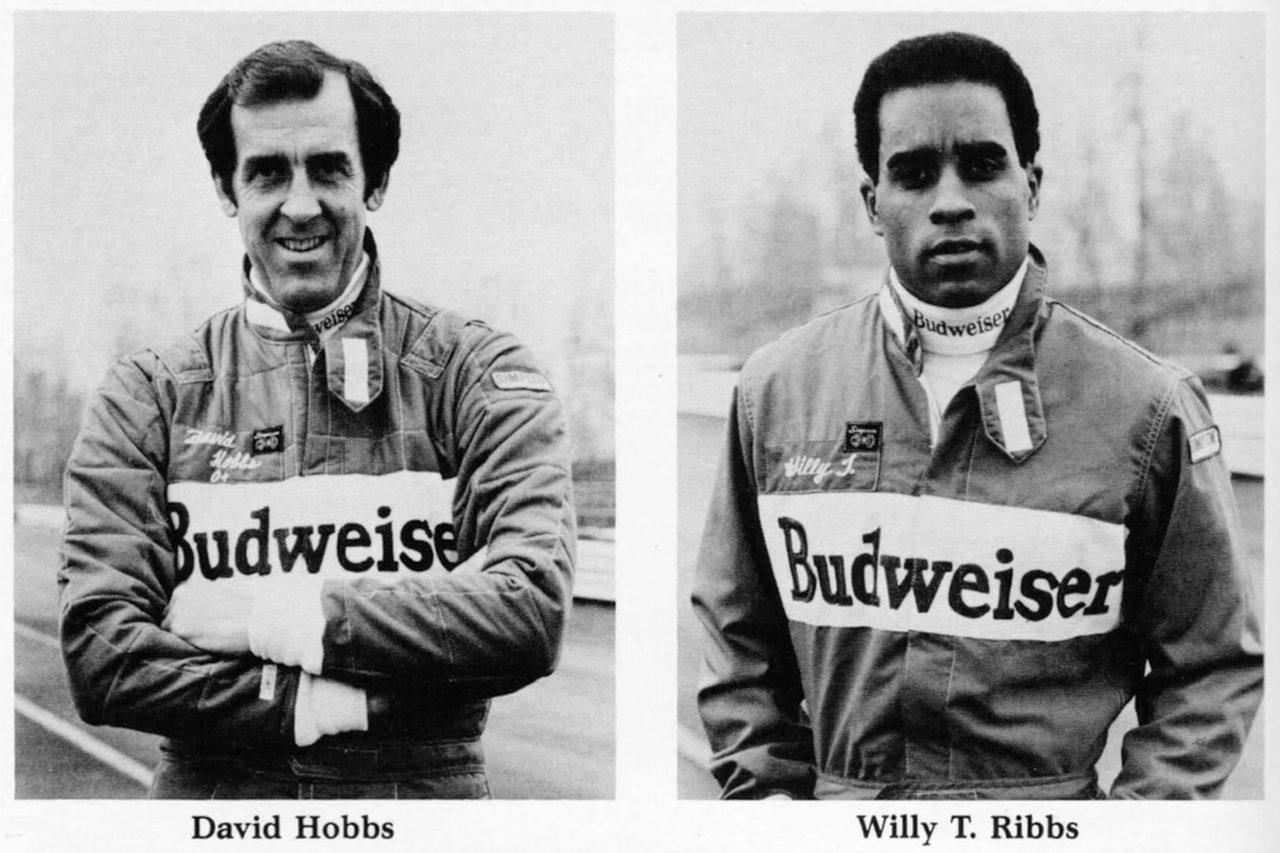
    DeAtley’s 1984 Corvette effort paired experience with raw speed: David Hobbs and Willy T. Ribbs. Hobbs brought world-class racecraft and development savvy; Ribbs delivered fearless qualifying pace and race aggression. Together they translated Camaro momentum into C4 learning, wringing speed from the new tube-frame and keeping the Budweiser cars constantly in the fight.
    DeAtley’s 1984 Corvette effort paired experience with raw speed: David Hobbs and Willy T. Ribbs. Hobbs brought world-class racecraft and development savvy; Ribbs delivered fearless qualifying pace and race aggression. Together they translated Camaro momentum into C4 learning, wringing speed from the new tube-frame and keeping the Budweiser cars constantly in the fight.

    The roster for 1984 threaded an interesting needle: established race-craft and media wattage (David Hobbs), blistering speed and swagger (Willy T. Ribbs), and a hungry young charger in Darin Brassfield. Others, including Michael Andretti and Jim Insolo, would intersect with the program as the season unfolded. There was a clever balance here. Hobbs brought development sensibility and feedback discipline. Ribbs brought raw pace and an edge that could drag a car up the order on talent alone. Brassfield personified the opportunity the program represented: the chance to make a national statement in a car that the whole country recognized.

    DeAtley’s coalition extended beyond the cockpit. Speedway Engineering in Sylmar, California, fabricated the tube-frames—stout, serviceable, and built for the quick-change brutality of Trans-Am weekends. Corvette Creationz in Portland handled finish work on the bodies. Diversified Fiberglass supplied widened C4 panels originally developed with racing in mind. Dennis Fischer built compact, hard-spinning 310-ci small-blocks tailored to the series’ displacement/weight calculus. All of it came together like a film crew on location: highly specialized craftspeople working in parallel, feeding a shared calendar no one could slip.

    New Platform, Steep Curve: Sorting the C4 in Public
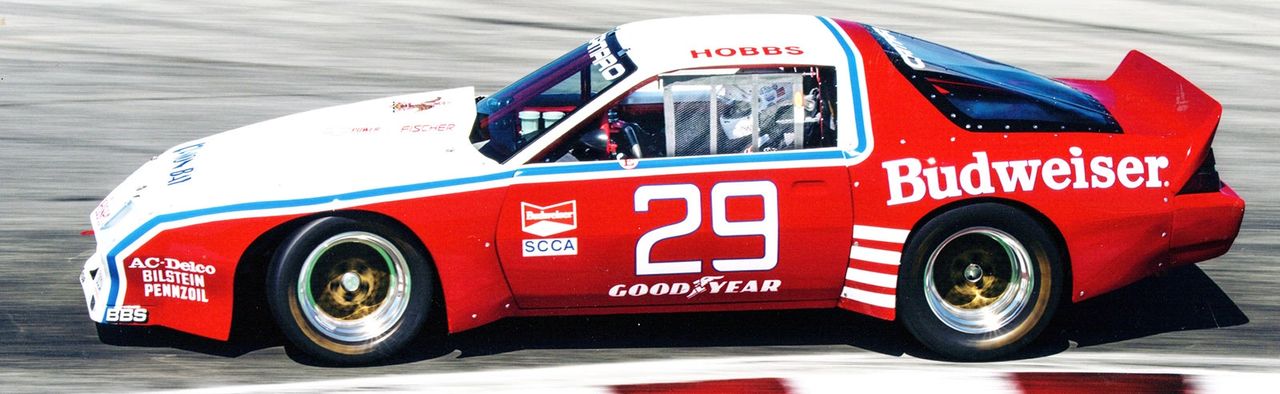
    Budweiser red, #29, and pure Trans-Am thunder—the DeAtley Camaro put big-bore brutality in a wind-tunnel suit. A tube-frame rocket with small-block V8, BBS wheels, and side-exit bark, it carried David Hobbs to front-row pace and crowd-pleasing slides. Northwest-backed, nationally feared: a quintessential ’80s Camaro racer.
    Budweiser red, #29, and pure Trans-Am thunder—the DeAtley Camaro put big-bore brutality in a wind-tunnel suit. A tube-frame rocket with small-block V8, BBS wheels, and side-exit bark, it carried David Hobbs to front-row pace and crowd-pleasing slides. Northwest-backed, nationally feared: a quintessential ’80s Camaro racer.

    On paper, the switch from the proven DeAtley Camaro to a brand-new C4 was a calculated risk. The C4’s proportions and independent rear suspension promised a higher ceiling than the outgoing F-body, but they came with a learning curve. In 1984, Trans-Am was not a patient classroom. Ford’s Capri program—Roush and a network of hardened suppliers—was exceptionally sorted, and the series schedule offered precious little testing time between events.

    DeAtley’s Camaros were built for quick servicing and aggressive tuning, but when you’re learning a new platform’s quirks in public—on points-paying race weekends—the trial-and-error cycle can only be compressed so far. Contemporary accounts and later retrospectives alike point to the C4’s IRS (Independent Rear Suspension) — excellent in concept, but demanding in practice — as a recurring puzzle. Anti-squat/anti-dive targets, camber control under load, toe compliance, and the friction stack through bushings and joints—all of it had to be learned in the crucible. The upside was visible straightaway: mechanical grip, traction over bumps, and the ability to put power down off a corner when the window was right. The downside was sensitivity. A misstep on springs, bar, or ride height could send the car hunting for balance.
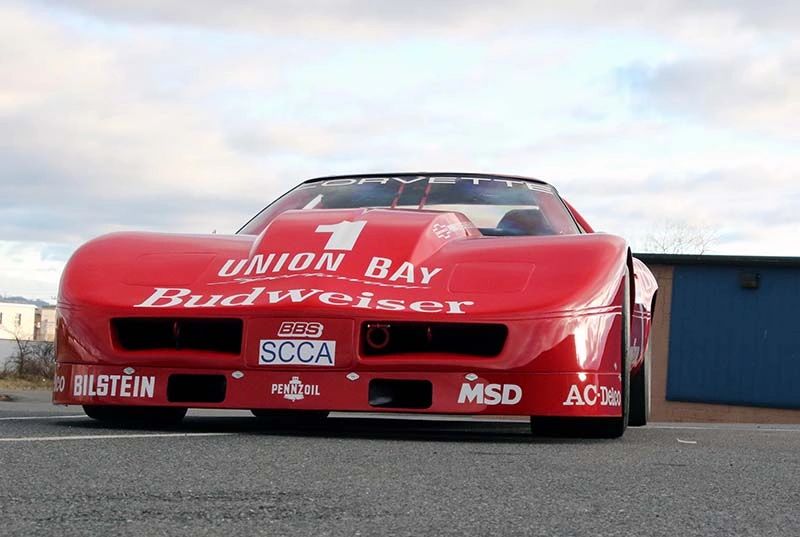
    DeAtley pivoted fast when the Camaro hit an aero ceiling. With SCCA rules favoring tube-frame silhouettes and the new C4’s slipperier shape, the team green-lit a clean-sheet Corvette. They reused proven small-block hardware to compress timelines, built a rigid, quick-service chassis, and hung lightweight panels. The Corvette arrived within weeks—lower drag, more downforce, better cooling, and a clearer path to wins.
    DeAtley pivoted fast when the Camaro hit an aero ceiling. With SCCA rules favoring tube-frame silhouettes and the new C4’s slipperier shape, the team green-lit a clean-sheet Corvette. They reused proven small-block hardware to compress timelines, built a rigid, quick-service chassis, and hung lightweight panels. The Corvette arrived within weeks—lower drag, more downforce, better cooling, and a clearer path to wins.

    Even so, those early months gave fans a bracing demonstration of what a tube-frame Corvette could do when the pieces clicked. The cars rotated willingly on entry, could be hustled over curbs without shaking themselves apart, and—thanks to short gearing via the quick-change rear—leapt onto the meat of the V8’s torque as if yanked by a winch.

    Opening Salvo: Brassfield at Road Atlanta
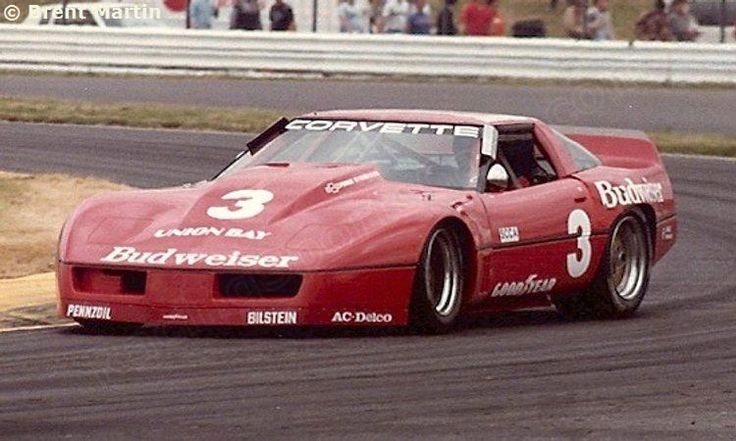
    Opening day proved the point. On May 6, 1984 at Road Atlanta, Darin Brassfield’s bright-red No. 3 DeAtley Corvette seized the lead on lap 11 and never looked back, controlling the final 30 laps to win decisively. David Hobbs capped the statement with third, delivering a DeAtley 1–3 in the season opener. (Image courtesy of photographer Brent Martin)
    Opening day proved the point. On May 6, 1984 at Road Atlanta, Darin Brassfield’s bright-red No. 3 DeAtley Corvette seized the lead on lap 11 and never looked back, controlling the final 30 laps to win decisively. David Hobbs capped the statement with third, delivering a DeAtley 1–3 in the season opener. (Image courtesy of photographer Brent Martin)

    The moment that proved the point—and instantly reset expectations—came on opening day. May 6, 1984, Road Atlanta: in his 22nd Trans-Am start, Darin Brassfield rolled out the bright-red No. 3 DeAtley Corvette and snatched the season’s first checkered flag. The pass for the lead came on lap 11; from there he controlled the race, leading the final 30 laps and winning by a yawning margin. David Hobbs brought another DeAtley Corvette home to complete a headline-friendly one-three.

    That wasn’t just a debut win for a new car; it was an exclamation point that told Ford’s camp the Corvette was here and, in the right window, dangerous. In a series where momentum is everything, Road Atlanta gave the DeAtley group and Chevrolet something to build on: proof of concept, a datasheet of what worked, and a national storyline that married the new C4’s public launch to immediate on-track success.

    A Hard Education and a Shifting Chessboard
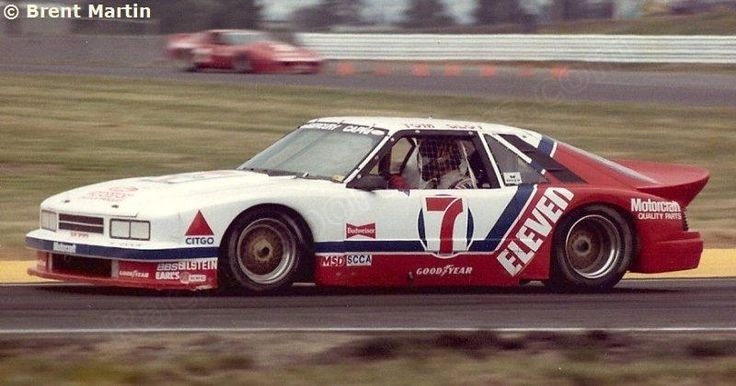
    Tom Gloy hustles the 7-Eleven Roush Mercury Capri up front, with the DeAtley Corvette visible in the background giving chase. New and largely unproven at the start of the 1984 Trans-Am campaign, the DeAtley C4 spent the year riding the ebbs and flows of development—quick enough to pester the Capris but still sorting itself out. Even when trailing, as in this shot, the Corvette remained a constant presence in the mirrors and a genuine threat race-to-race. (Image courtesy of Brent Martin)
    Tom Gloy hustles the 7-Eleven Roush Mercury Capri up front, with the DeAtley Corvette visible in the background giving chase. New and largely unproven at the start of the 1984 Trans-Am campaign, the DeAtley C4 spent the year riding the ebbs and flows of development—quick enough to pester the Capris but still sorting itself out. Even when trailing, as in this shot, the Corvette remained a constant presence in the mirrors and a genuine threat race-to-race. (Image courtesy of Brent Martin)

    It’s tempting to let that day define the whole season, but the 1984 story is richer—and messier. The DeAtley C4s remained a factor throughout the calendar, and the results sheets show the ebb and flow you’d expect from an all-new platform living against a highly developed Capri benchmark. Hobbs stood on the podium at Watkins Glen later that summer; Brassfield posted fast runs at West Coast venues even as reliability and setup gremlins occasionally encroached.

    Ford, meanwhile, kept the pressure high and banked points—Tom Gloy and Greg Pickett among the headliners—delivering the manufacturers’ bragging rights. In one of racing’s ironies, the very Protofab organization that had been formed under Ford’s umbrella to answer DeAtley’s Camaro dominance in 1983 became a cornerstone of Ford’s 1984 Trans-Am resurgence—evidence of how quickly the power balance could flip in that era. The net effect for Chevrolet was clarity: to keep Corvette at the sharp end, the tube-frame C4 concept needed continued investment and iteration. That’s the line that runs forward from DeAtley—through other banners and evolutions—to the Corvette’s late-’80s Trans-Am bite.

    Under the Skin: What Made the DeAtley C4s Tick

    A DeAtley C4 is a wonderful contradiction: low, wide, and glamorous under the paddock sun, but every surface and junction betrays a decision made for speed, serviceability, or survival.

    Architecture. The Speedway-built tube frame was the program’s beating heart—tight triangulation around the driver cell and front suspension pickups, with generous access to the engine bay and rear quick-change. Compared with the production C4 structure, the race chassis delivered stiffness, repairability, and the freedom to place mass where the setup team needed it. The steering gear and front geometry were built from race-proven catalog pieces: short/long arm control arms, adjustable uprights, big-bearing hubs, and the sort of bulletproof steering linkages that survive curb strikes at speed.

    The independent rear. Out back, the C4’s IRS was rendered in competition-grade hardware. Coil-overs, braced carriers, and heavy-duty half-shafts replaced any hint of street compromise. The advantage was traction over imperfect surfaces and the ability to tune camber gain as the car compressed in long, loaded corners. The challenge was getting the toe curve civilized across bump and rebound so the car didn’t feel like a different animal at each end of a stint. When the engineers hit the window, the Corvette put power down like a sledgehammer and stayed planted over Riverside-style surface changes that could make a live axle skip.

    Powertrain. Dennis Fischer’s 310-ci small-blocks were right-sized for the rulebook and the quick-change rear. Build a motor that’s happy to live between the meat of the torque curve and the top third of the tach, then let gearing put you there as often as possible. On paper, roughly 550 horsepower; on track, a fat middle and crisp throttle that worked with the M-22’s straight-cut reality. The Tilton hardware made clutch and starter service quick. The Franklin rear let the crew turn a gearing change into a coffee-length job.

    Body and aero. The body wasn’t theater—it was a tool. Widened front/rear clips gave tire clearance and cooling volume; the front fascia was opened and ducted to feed the radiator and brakes; and the rear quarters were shaped to stabilize the wake and keep hot air moving. The panels popped off on Dzus fasteners—serviceable in seconds. When taken as a whole, even experienced observers can’t help reading the stance and assuming intimidation was the point. The real victory was the way those shapes kept the car cool, stable, and easy to work on at 9:30 p.m. under fluorescent paddock lights.

    The cockpit. Peer into the surviving museum car and you see a working environment, not Instagram. A flat dash panel that made rewiring and instrument swaps straightforward. A stubby M-22 lever in easy reach. Labeled breakers and toggles. It’s the kind of cockpit that tells you exactly what life was like on a DeAtley weekend: focus on the next session; make changes you can feel; keep everything reachable, replaceable, and robust.

    Four Built, Three Survive: The 1984 DeATLEY CORVETTE AT THE NCM
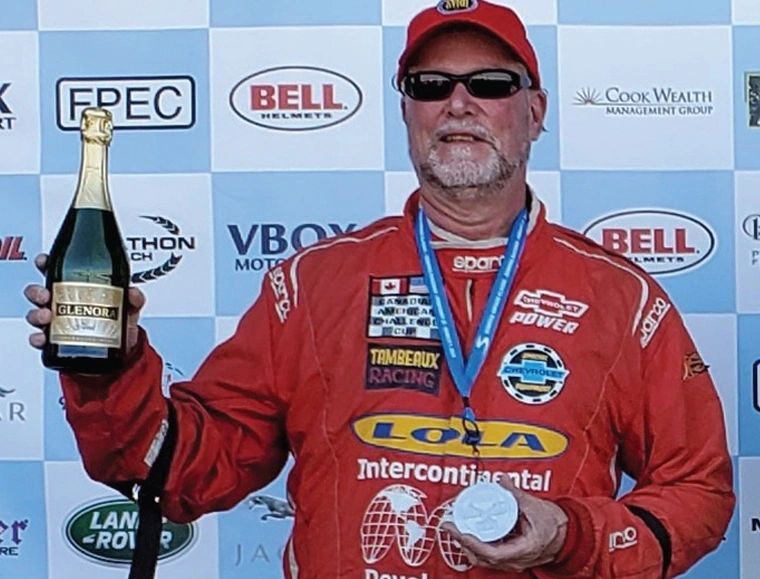
    Mike Moss is the vintage-racing Corvette diehard who bought, campaigned, and then painstakingly restored one of the 1984 DeAtley C4 Trans-Am cars. In 2020 he donated the Union Bay/Budweiser-liveried No. 3 to the National Corvette Museum, handing over a binder of provenance and parts history along with the car. His gift preserves a rare, short-lived but pivotal chapter between the tube-frame era and the production C4’s arrival—so visitors can study exactly how the package was built to win. (Image courtesy of the National Corvette Museum)
    Mike Moss is the vintage-racing Corvette diehard who bought, campaigned, and then painstakingly restored one of the 1984 DeAtley C4 Trans-Am cars. In 2020 he donated the Union Bay/Budweiser-liveried No. 3 to the National Corvette Museum, handing over a binder of provenance and parts history along with the car. His gift preserves a rare, short-lived but pivotal chapter between the tube-frame era and the production C4’s arrival—so visitors can study exactly how the package was built to win. (Image courtesy of the National Corvette Museum)

    Crucially, these weren’t one-off unicorns. Period accounts and later round-ups converge on the same tally: four DeAtley C4 Trans-Am cars were built, of which three still exist today. If you’ve walked the galleries of a certain tourist destination in Bowling Green recently, you’ve likely seen one of them. Mike Moss—who bought, vintage-raced, and then restored one of the DeAtley cars—donated it to the National Corvette Museum in 2020, wearing Union Bay/Budweiser colors and carrying with it a thick binder of provenance.

    What moved the car from a private race shop to a public gallery is a story Moss tells plainly: after a Watkins Glen shunt, he spent years bringing the car back to“immaculately restored” condition—Scott Michael led the restoration, and master painter Tony Fernandez laid down the Budweiser red so flawlessly that Moss no longer wanted to risk the car in competition. Instead, he “gave back,” deciding America’s Sports Car should be shared with America, and that the only way to do it right was by placing the DeAtley Corvette at the National Corvette Museum. The car’s donation was announced on February 27, 2020, with plans to return it to display that April as the Museum’s Performing & Racing Gallery reopened.

    The Moss/DeAtley car is more than a static display; it’s a memory anchor. It preserves the supplier network on a placard. It keeps the mechanical spec honest for future historians (tube-frame by Speedway Engineering, M-22 gearbox, Franklin quick-change, Dennis Fischer 310-cu-in small-block at ~550 hp). And it lets visitors stand at the rail and decode the philosophy with their own eyes: rugged where it needs to be rugged, light where it can afford to be light, and relentlessly optimized for the sprint-repair-sprint rhythm of Trans-Am life—now preserved in public view because one owner chose to hand the keys to the NCM in Bowling Green.

    From Camaro Supremacy to Corvette Catalyst
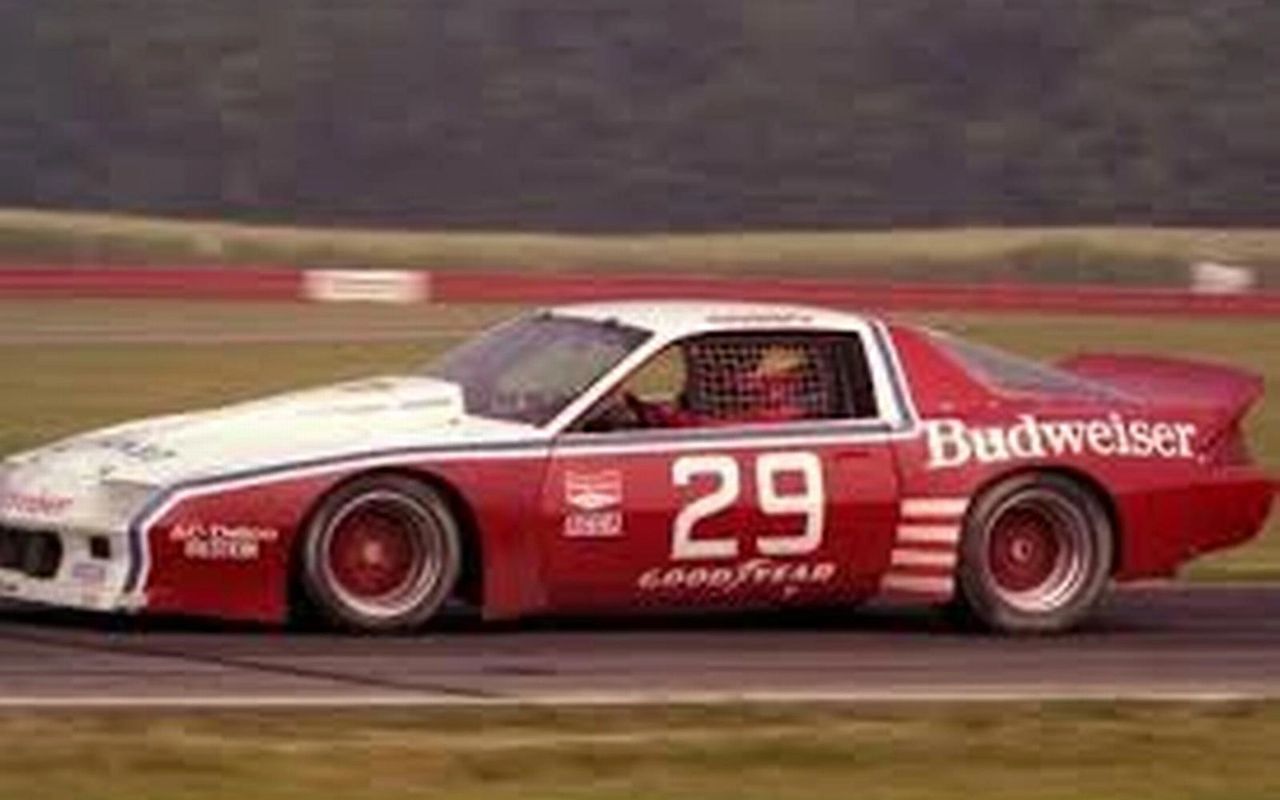
    In 1983, DeAtley’s Budweiser Camaros were the Trans-Am benchmark—front-row pace, multiple wins, and David Hobbs’ drivers’ title while helping Chevrolet secure the manufacturers’ crown. Yet the cars hit an aero ceiling and cooling limits on faster circuits. With SCCA tube-frame rules and the slipperier new C4 arriving, DeAtley pivoted to a Corvette for 1984.
    In 1983, DeAtley’s Budweiser Camaros were the Trans-Am benchmark—front-row pace, multiple wins, and David Hobbs’ drivers’ title while helping Chevrolet secure the manufacturers’ crown. Yet the cars hit an aero ceiling and cooling limits on faster circuits. With SCCA tube-frame rules and the slipperier new C4 arriving, DeAtley pivoted to a Corvette for 1984.

    To understand the significance, it helps to look upstream. In 1983, DeAtley’s Camaros had stampeded the field; it took an organized response to unseat them, and Ford found one in Protofab. By the time Corvette rolled into Trans-Am in 1984 wearing DeAtley red, the opposition had already re-armed. That chessboard explains a lot: why the early Corvette win at Road Atlanta read like a gauntlet-throw, why the midsummer grind was spent massaging setup and reliability in public, and why Chevrolet, in the seasons that followed, continued to refine the tube-frame C4 concept through other banners to reassert itself.

    The DeAtley cars, then, are both time capsule and inflection point—proof that the new-shape Corvette could be weaponized for Trans-Am and a catalyst for the team- and supplier-shuffles that shaped the series for the rest of the decade. They bridge the gap between the iron-fisted Camaro of ’83 and the later Corvette standard-bearers that would carry the name forward.

    Drivers at a Generational Crossroads
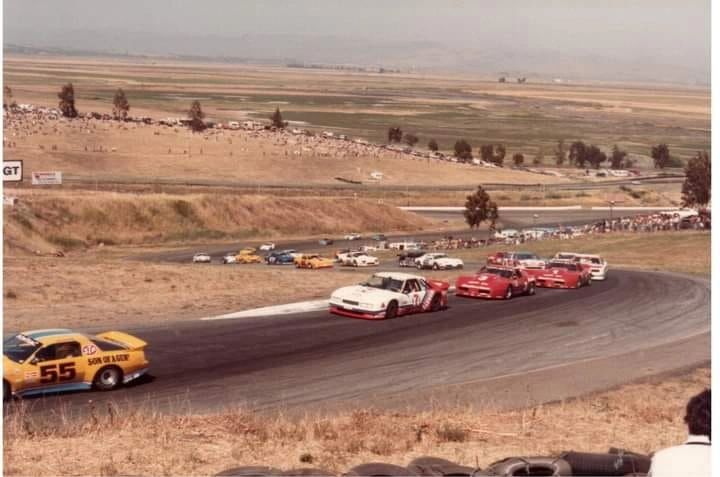
    Generational crossroads, frozen on film: Sears Point, 1984—Tom Gloy’s Mercury Capri leads while the brand-new DeAtley C4 Corvette stalks from second. You can feel “racing as it used to be” in the open hillsides, hand-painted numbers, and cars that were loud, imperfect, and gloriously fast. The Capri represents the waning tube-frame era; the Corvette, the production-shape future still finding its feet. It was gritty and human—less corporate, more seat-of-the-pants—and that’s exactly why this series tugs so hard at the memory.
    Generational crossroads, frozen on film: Sears Point, 1984—Tom Gloy’s Mercury Capri leads while the brand-new DeAtley C4 Corvette stalks from second. You can feel “racing as it used to be” in the open hillsides, hand-painted numbers, and cars that were loud, imperfect, and gloriously fast. The Capri represents the waning tube-frame era; the Corvette, the production-shape future still finding its feet. It was gritty and human—less corporate, more seat-of-the-pants—and that’s exactly why this series tugs so hard at the memory.

    Look closely at the names and you see another layer of legacy. The 1984 driver roster sits at a nexus of generational change. Hobbs was by then a fixture of international racing and American television; his feedback loop with engineers could turn a chaotic test day into an actionable plan. Ribbs, explosive and uncompromising, would win plenty for Ford that season but would remain a pillar of the DeAtley story from 1983 through the Corvette transition. Brassfield’s Road Atlanta masterclass reads today like a thesis on seizing the moment—clean pass, relentless pace, and the composure to turn a high-pressure debut into a runaway. The guest appearances—Andretti, Insolo—remind you how fluid the series could be, how drivers and opportunities co-mingled in that period.

    And hovering over it all is the DeAtley organization itself: a privateer-plus operation with manufacturer gravity, the kind of team that can sprint when the phone rings and the ask is “build us a Corvette, now.” That agility is worth underscoring. In series where rules reward optimization more than invention, real advantage often comes from speed of decision and speed of iteration. DeAtley’s 1984 effort is practically a case study.

    The Textures of a Program—and Its Point

    What stays with you, finally, are the textures: the loudness of a 310-inch small-block engineered to produce ~550 horsepower through an M-22’s straight-cut growl; the way a tube-frame C4 squats on its haunches cresting a rise, Goodyears biting, the independent rear working; the atmosphere of a DeAtley pit as crew members pop body-panel Dzus fasteners like piano keys to reach heat-soaked components and reset the car for the next session.

    These Corvettes were more than a marketing exercise for a just-launched production car. They were living laboratories, built at pace, refined in the white heat of competition, and entrusted to drivers who could translate potential into points. The results ledger from 1984 doesn’t read like the press release of a championship race team, which is appropriate as the manufacturers’ trophy went elsewhere, but the DeAtley C4s did what they needed to do: they put the new Corvette back in the fight and lit the fuse for what came next.

    Stand Next to One: Legacy Made Tangible
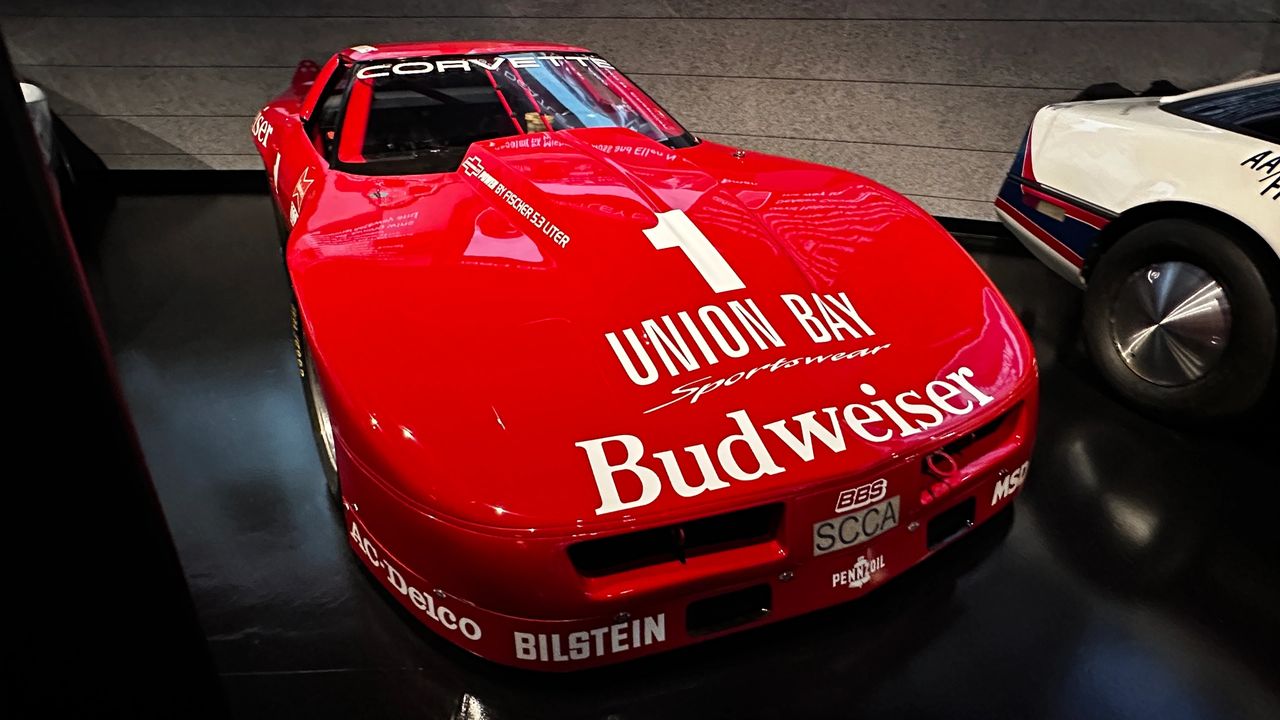
    ChatGPT said:  See it in person at the National Corvette Museum in Bowling Green: the DeAtley/Union Bay Budweiser C4 tube-frame racer. Its low, one-piece nose, flush lights, and period decals read like a Trans-Am time capsule. Stand inches away, study the aero details, and feel how Corvette racing reinvented itself in the mid-’80s. (Image courtesy of the author)
    ChatGPT said: See it in person at the National Corvette Museum in Bowling Green: the DeAtley/Union Bay Budweiser C4 tube-frame racer. Its low, one-piece nose, flush lights, and period decals read like a Trans-Am time capsule. Stand inches away, study the aero details, and feel how Corvette racing reinvented itself in the mid-’80s. (Image courtesy of the author)

    If you want to see the legacy in steel and fiberglass, go to the National Corvette Museum in Bowling Green and stand next to the Moss/DeAtley car. Read the placard, take in the panel fit, and peek at the rear quick-change. Follow the brake ducts with your eyes and imagine the heat coming off them after a qualifying run. Notice the service seams and ask yourself how quickly a crew could strip the nose, change a diff ratio, and get the car back out for a scuffed-tire run.

    Then conjure that Sunday at Road Atlanta—the pass on lap 11, the final 30 laps led, and a Budweiser-red C4 sprinting under the bridge to the flag. For a brand-new generation of Corvette, it was the perfect opening argument.

    Technical Specifications

    Race Series: SCCA Trans-Am

    Team Sponsors:

    • DeAtley Motorsports
    • Budweiser Racing
    • Union Bay Sportswear

    Colors: Budweiser Red

    Engine: 310 cu-in V8 engine by Dennis Fischer, rated at 550 HP NOTE: Lower engine displacement allows cars to be run at 2615 pounds (including 45 pounds of ballast)

    Driveline/Suspension:

    • Tubeframe construction by Speedway Engineering, Sylmar (CA)
    • Front suspension and steering parts taken from race-proven manufacturers
    • Independent rear suspension, including coil-over shock-springs
    • Tilton bell housing
    • M-22 transmission
    • Franklin quick change differential using standard positraction or spool depending on course
    • Speedway Engineering hub carriers
    • Short track racing hubs and axles
    • Half shafts fabricated from DANA truck driveshafts

    Tires: Goodyear 16×10 racing slicks

    Why the 1984 DeAtley Corvette Still Matters Today
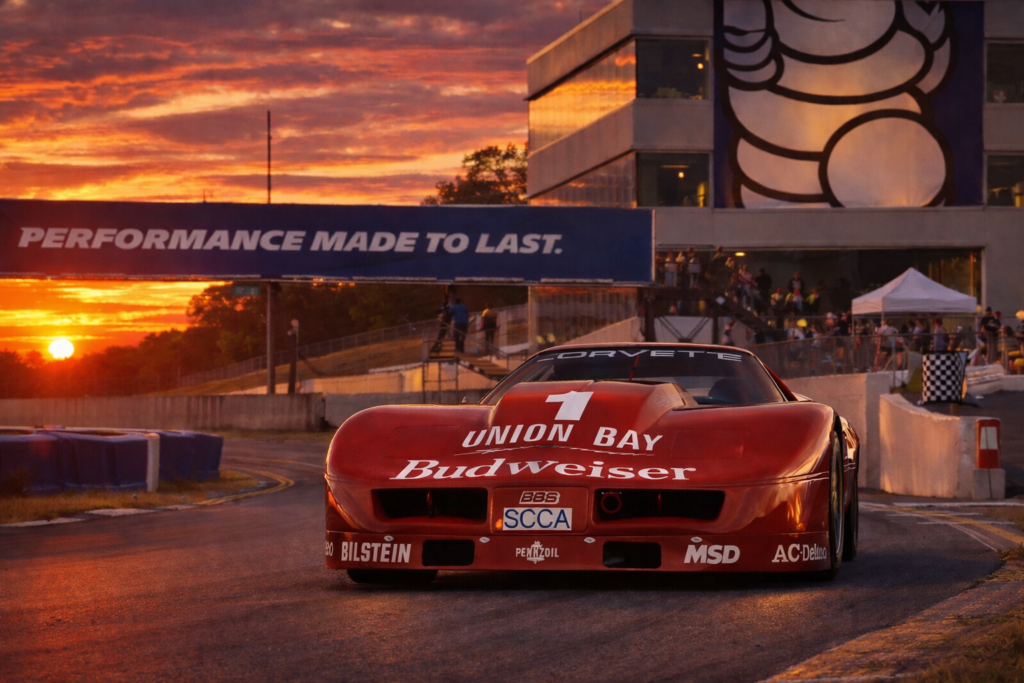
    As the sun drops over Michelin Raceway Road Atlanta, the 1984 DeAtley Corvette looks like it’s charging straight out of a golden-hour postcard—low, wide, and unapologetically purpose-built. With its period-correct livery lit by the last warm light of day, the scene captures exactly what this car was made for: big speed, big presence, and that unmistakable Corvette attitude as the track turns dark and the story fades to black. (Image source: Author/ChatGPT)

    The 1984 DeAtley Corvette matters because it proved the C4 wasn’t just a technological reset — it was a legitimate race platform. At a time when the Corvette nameplate was fighting to reclaim credibility in international competition, cars like this carried the banner. They showcased the stiffness of the new chassis, the advantages of modern suspension geometry, and the adaptability of the small-block V8 in professional motorsport.

    Today, the DeAtley car stands as a symbol of Corvette’s mid-1980s resurgence — a reminder that the C4 generation wasn’t merely a design departure, but the foundation for the racing dominance that would follow in the decades ahead.
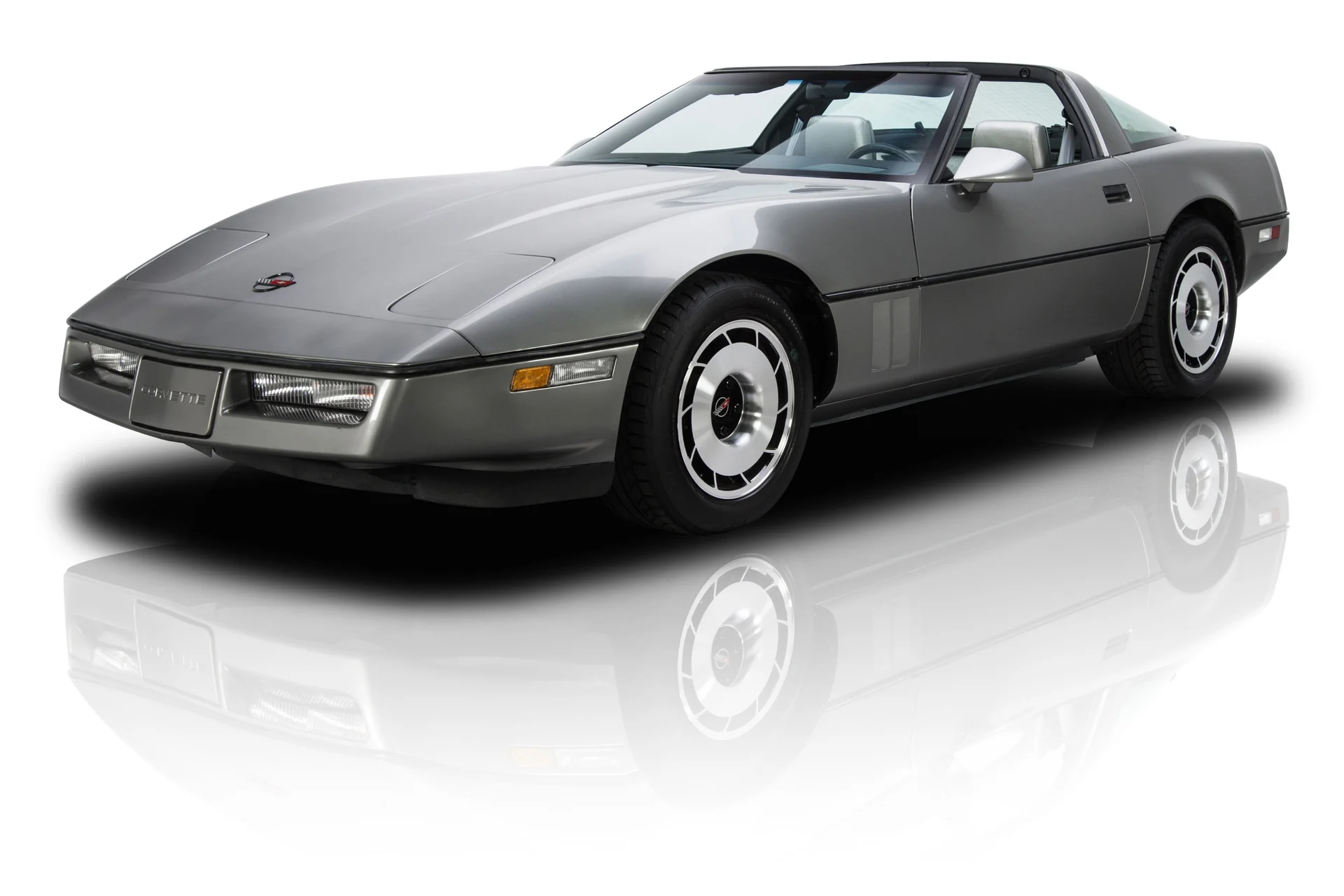
    When the fourth-generation Corvette arrived for 1984, it didn’t take long for racers to recognize its potential. Among the most striking early competition builds was the 1984 DeAtley Corvette — a wide-bodied, purpose-built machine that translated Chevrolet’s all-new C4 platform into a serious SCCA and IMSA contender. Backed by Budweiser and Union Bay, and prepared…

  • 1984 CORVETTE OVERVIEW

    1984 CORVETTE OVERVIEW

    In the early 1980s, America stood on the precipice of a technological renaissance. Personal computers were becoming household staples, NASA’s Space Shuttle Columbia had just embarked on its maiden voyage, and the automotive industry was poised for its own revolution. At the forefront of this transformation was the Chevrolet Corvette, a symbol of American engineering excellence. The 1984 Corvette, the first of the C4 generation, was not just a car; it was a statement—a declaration that American ingenuity could redefine the sports car.

    A New Generation Dawns

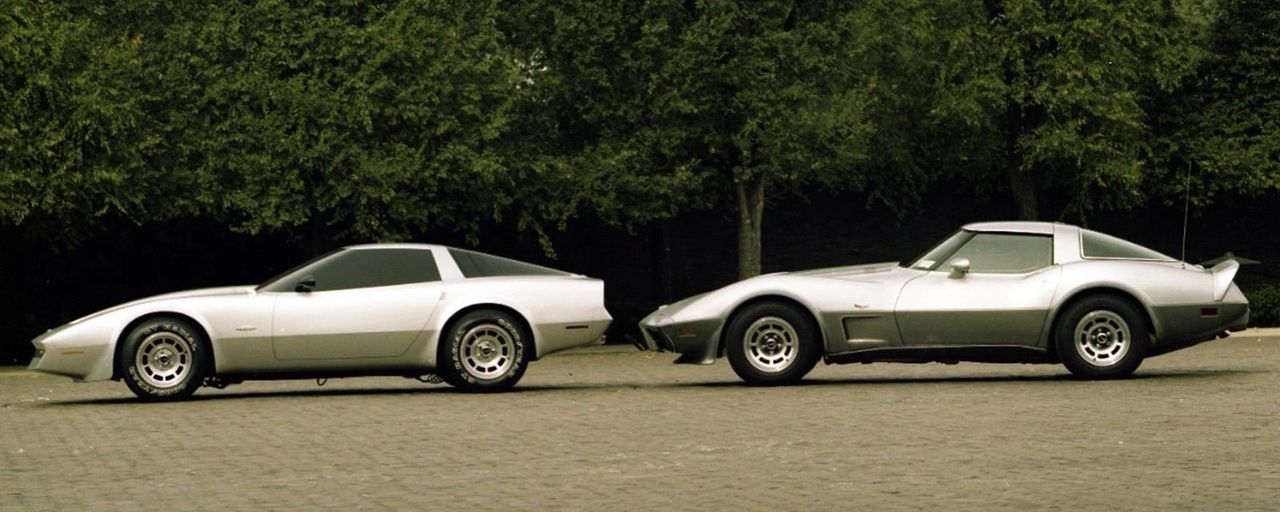
    A 1982 Corvette (right) parked with a full-scale clay model of the C4 (still in development at the time this picture was taken).  While the design of the C4 would continue to evolve, this picture clearly depicts the evolution of the Corvette's design between the third- and fourth-generation models. (Image courtesy of GM Media.)
    A 1982 Corvette (right) parked with a full-scale clay model of the C4 (still in development at the time this picture was taken). While the design of the C4 would continue to evolve, this picture clearly depicts the evolution of the Corvette’s design between the third- and fourth-generation models. (Image courtesy of GM Media.)

    The unveiling of the 1984 Corvette in March 1983 was met with anticipation and a mix of disbelief. For fifteen years, Corvette enthusiasts had clung to the iconic curves and aggressive presence of the C3, a car steeped in raw muscle car heritage. The C4 threw that old image aside, replacing it with a sleek, sharply sculpted form that emphasized aerodynamics and precision.

    Its clean, straight lines and low-slung body gave it a silhouette far more European in spirit, influenced by the likes of Porsche’s 928 and other contemporary sports cars that prized airflow and balance over flamboyant styling. Gone was the traditional front grille—a Corvette hallmark since 1953—replaced by an innovative underbody ducting system that channeled air efficiently to the radiator. This grill-less front end was flanked by halogen fog lamps that echoed the styling cues of high-end European sportsters, while the pop-up headlights no longer flipped up but rolled out smoothly, reducing drag and enhancing the car’s aerodynamic profile.

    At 96.2 inches, the wheelbase was slightly longer than the C3’s, but the overall car was 8½ inches shorter, contributing to a more agile feel. The hatchback, which had made its debut on the limited 1982 Collector’s Edition, became a permanent fixture, offering practical rear storage access and modern utility unheard of in earlier models.

    Powertrain: Balancing Tradition with Innovation

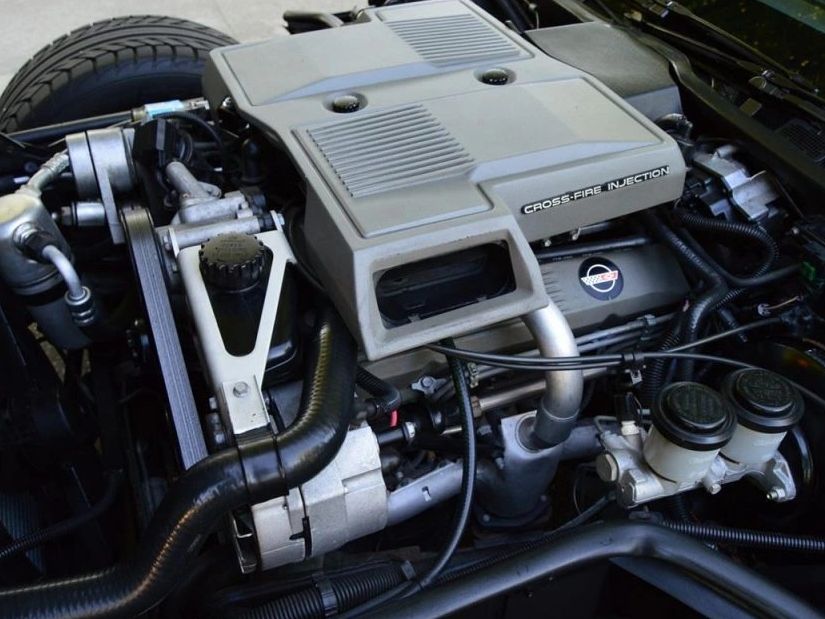
    The 1984 Corvette featured an L83 engine equipped with Cross-Fire Injection.  While innovative for its time, the CFI injection system proved troublesome and would be replaced on the 1985 MY Corvette.
    The 1984 Corvette featured an L83 engine equipped with Cross-Fire Injection. While innovative for its time, the CFI injection system proved troublesome and would be replaced on the 1985 MY Corvette.

    Under the hood, the 1984 Corvette carried a familiar yet evolved heart: the 5.7-liter (350 cubic inch) L83 V8. Its Cross-Fire Fuel Injection system, first introduced in 1982, represented an important technological advance over carburetors, offering improved fuel metering and emissions control.

    With a conservative output of 205 horsepower and approximately 270 lb-ft of torque, the engine prioritized smoothness and emissions compliance in an era increasingly shaped by regulation. The careful calibration reflected GM’s cautious approach to melding performance with the realities of tightening environmental laws. For many, the power numbers felt modest—especially compared to the high-horsepower muscle cars of the 1960s—but the 1984 Corvette’s strength lay in its balanced, composed driving dynamics rather than raw straight-line speed.

    The standard transmission was a smooth-shifting 4-speed automatic, but for those craving a more involved driving experience, Chevrolet introduced the ambitious “4+3” manual transmission option. Designed by Doug Nash, this unique gearbox combined a 4-speed manual with electronically controlled overdrive on the top three gears. The idea was ingenious—allowing spirited driving with the benefit of fuel-saving overdrive—but in practice, the system’s heavy clutch and finicky electronics frustrated drivers, making it a short-lived chapter in Corvette’s manual transmission history.

    The Z51 Package: Performance Reimagined

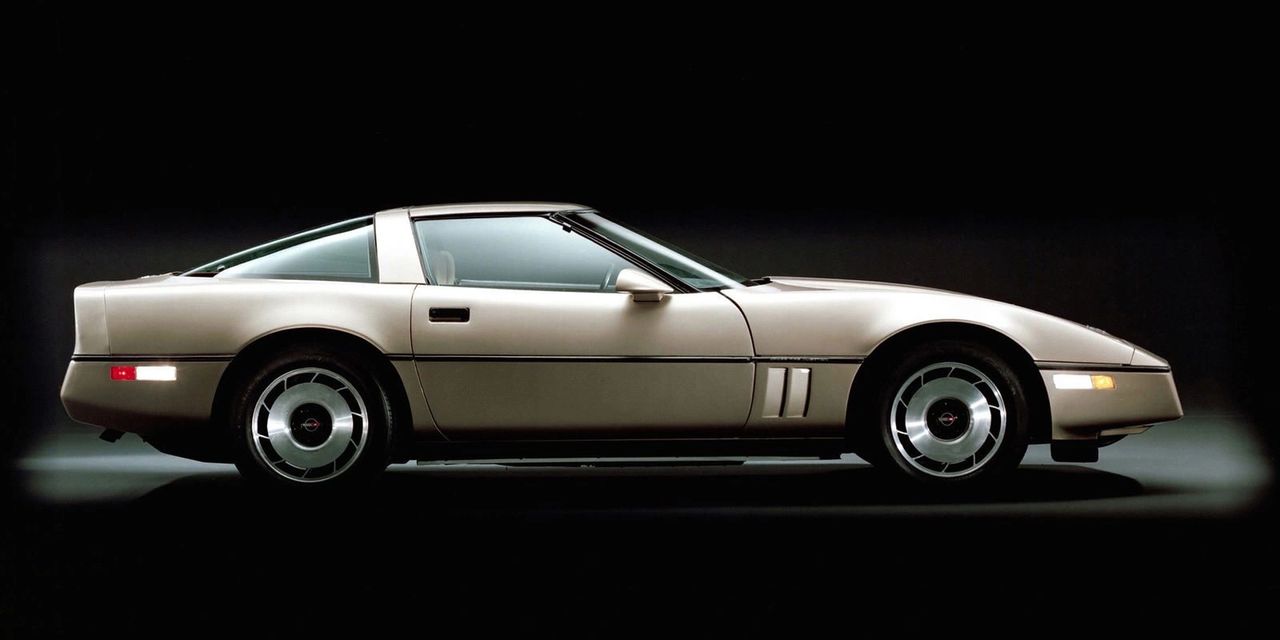
    1984 Corvette equipped with the Z51 package. (Image courtesy of GM Media.)
    1984 Corvette equipped with the Z51 package. (Image courtesy of GM Media.)

    Chevrolet knew that the true essence of Corvette was in its performance. To that end, the 1984 model introduced the Z51 Performance Handling Package, a $470 option that turned the C4 into a driver’s car at heart.

    The Z51 package included:

    • Bilstein Shock Absorbers, painted signature yellow, delivering improved damping and response
    • Heavy-Duty Springs, stiffer and more resilient for sharper cornering
    • Upgraded Sway Bars to reduce body roll and increase chassis stiffness
    • Goodyear Eagle GT P255/50VR-16 Tires providing enhanced grip and stability
    • Additional Cooling Hardware for the differential and transmission, ensuring reliability during high-performance driving

    The effect was dramatic. The Z51 Corvette hugged corners with newfound precision and poise, delivering lateral grip upwards of 0.95g on the skidpad—numbers that rivaled sports cars with far more horsepower. However, this came at a price: the ride was notably firmer and less forgiving on rough roads, dividing buyers between track enthusiasts and those wanting a more comfortable daily driver.

    From Curves to Edges: The C4 Exterior

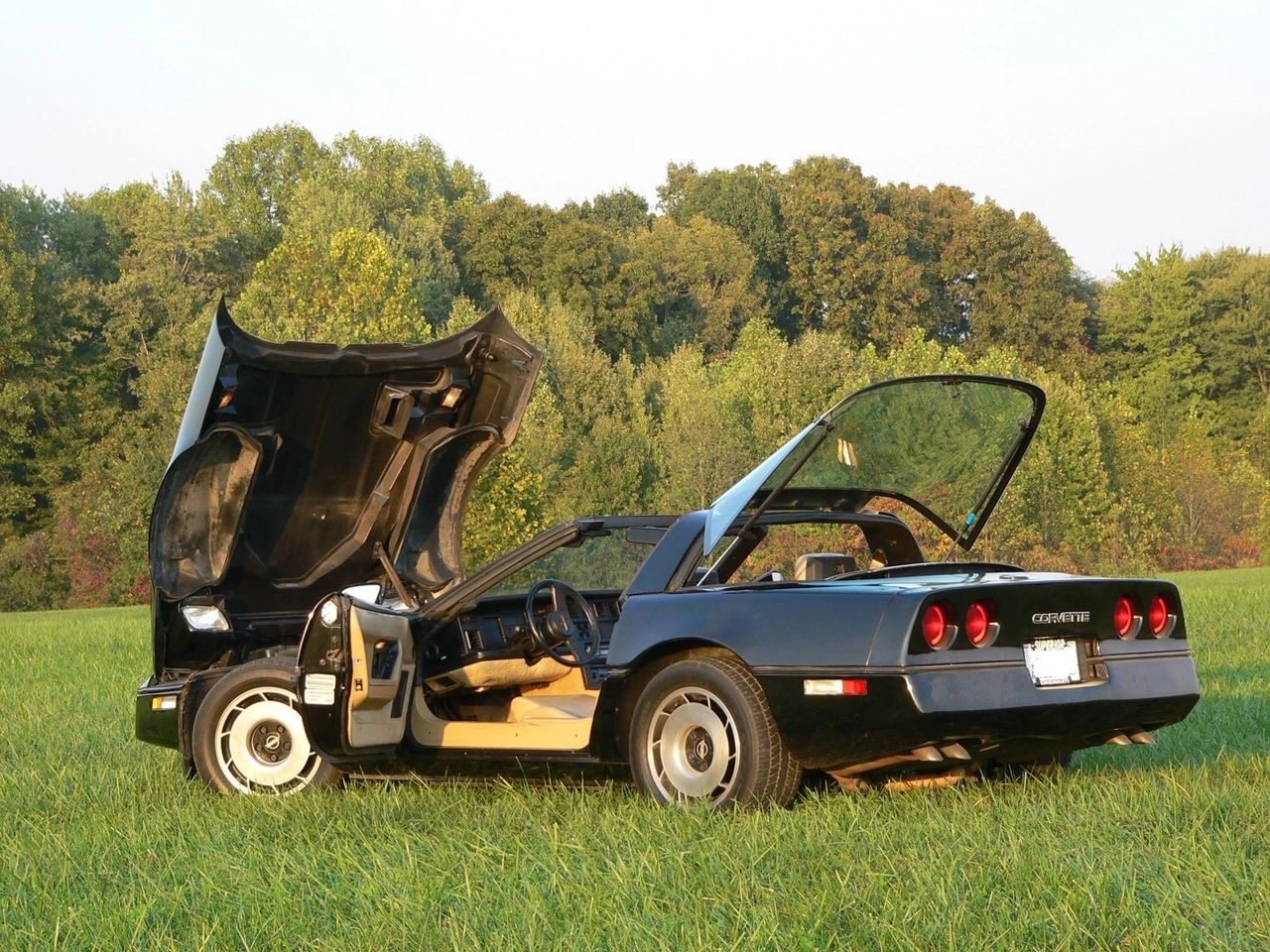
    The first C4 reads like a clean-sheet reset: a low wedge with a seriously raked windshield (about 64–65°), forward-tumbling hidden headlamps, and a glass hatch that made the whole rear of the car open like a display case. The hood hinged at the nose in a one-piece “clamshell,” lifting away to reveal not just the L83 but the front suspension and structure—a purposeful service detail baked into the styling. To keep the new shape visually clean, Chevrolet tucked most panel joints behind a continuous rub strip; aero mirrors, flush halogen lamps, and frameless door glass finish the theme. This was the vocabulary that would define the C4 from day one.

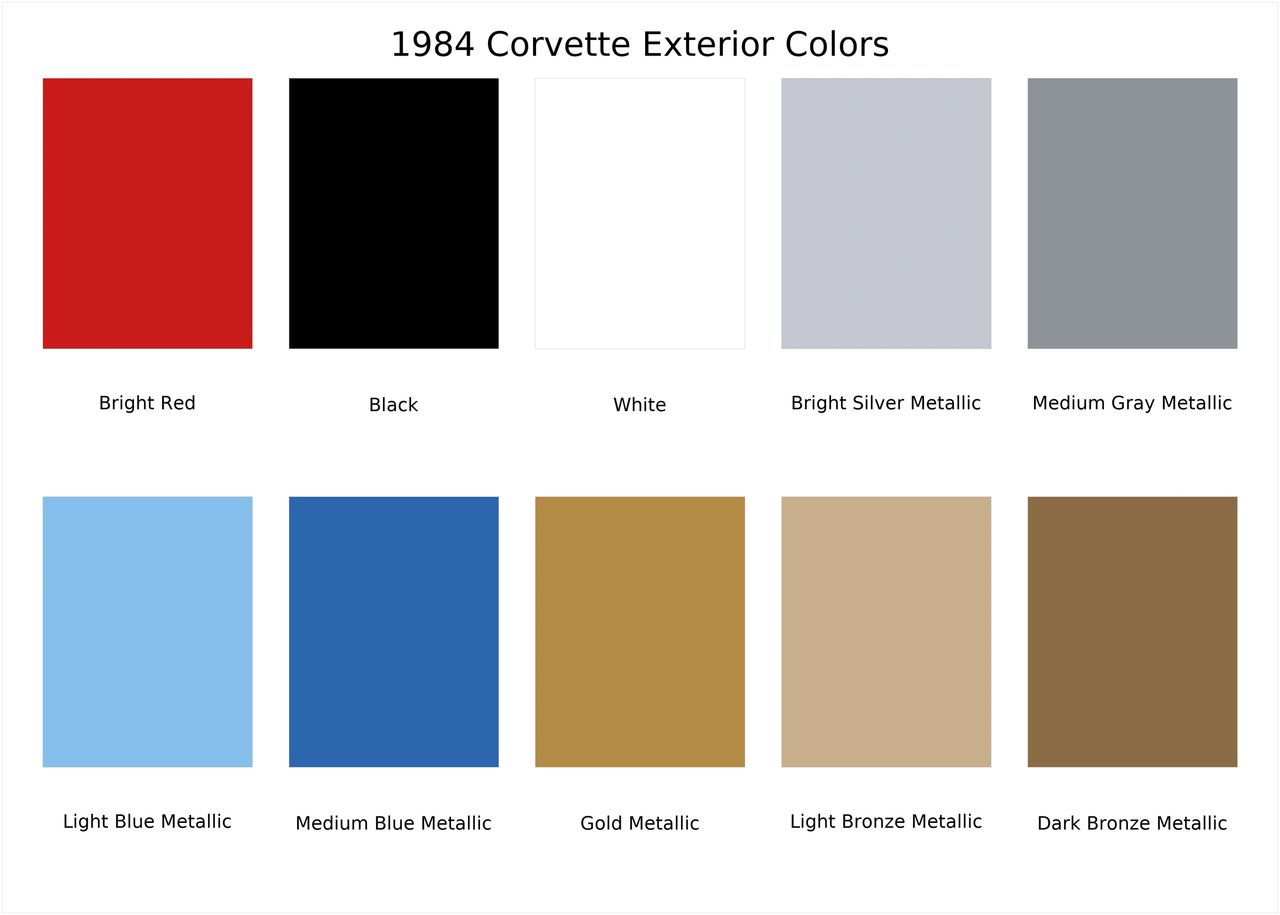
    Paint and trim echoed that modernism. For 1984, Chevrolet offered a palette of solid and metallic finishes plus a “Custom Two-Tone” option that paired complementary shades: Silver over Gray, Light Blue over Medium Blue, and Light Bronze over Dark Bronze. (Those combos were factory options, not dealer add-ons.)

    If you’re cataloging cars, the two-digit GM paint codes are the easiest shorthand. Period/OEM references list the 1984 colors as: White (10), Bright Silver Metallic (16), Medium Gray Metallic (18), Black (19/41), Light Blue Metallic (20), Medium Blue Metallic (23), Gold Metallic (53), Light Bronze Metallic (63), Dark Bronze Metallic (66), and Bright Red (33). You’ll occasionally see alternate numbers in enthusiast tables (e.g., Bright Red shown as 72, Black shown as 19 vs. 41); the code above reflects how OEM paint databases index 1984 formulas, while museum/brochure sources confirm the names and the three factory two-tones.

    Two other exterior firsts became C4 signatures in ’84: the standard, full glass hatch (now on every Corvette, not just special trims) and that forward-tilting hood. Together with the extreme windshield angle, they weren’t just design flourishes—they were functional choices meant to reduce drag, improve access, and modernize Corvette’s proportions after the C3.

    Interior Innovation and Controversy

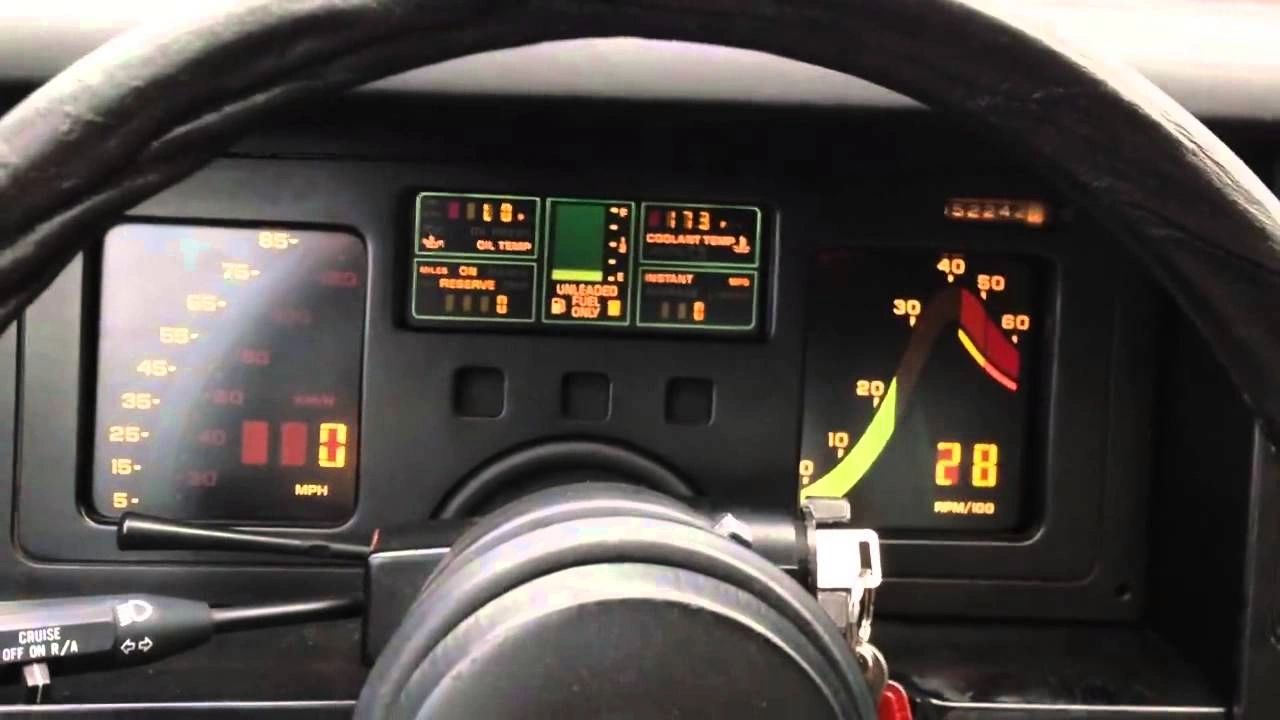
    The digitial dashboard of the early C4 Corvettes (including the 1984 model, shown here) was considered controversal at its time as every Corvette before the 1984 MY had been equipped with conventional, analog gauges.
    The digitial dashboard of the early C4 Corvettes (including the 1984 model, shown here) was considered controversal at its time as every Corvette before the 1984 MY had been equipped with conventional, analog gauges.

    Step inside the 1984 Corvette and you’d be greeted by one of the boldest interiors in Corvette history. Gone were the analog gauges of the past, replaced with a fully digital instrument cluster that displayed speed, engine data, and warnings through a mix of bright LED and LCD readouts.

    While revolutionary, this digital dashboard was polarizing. Some praised its futuristic look and clear, precise readouts, while others complained about visibility issues in bright sunlight and the impersonal feel compared to classic needle gauges.

    The cockpit was driver-focused, with a center console that dominated the cabin—housing controls for climate, audio, and the transmission. Interior space was improved, thanks in part to a lowered floorpan that routed exhaust and drivetrain components below the cabin, allowing for better headroom despite the car’s lowered roofline. However, the deep door sills inherent to the unibody frame made ingress and egress a challenge, especially for taller drivers.

    Safety was also on the designers’ minds. Under the Reagan Administration, passive restraint systems were proposed, and though the legislation never fully passed, the 1984 Corvette included a large padded “passive restraint” on the passenger side dashboard—a rounded pad designed to protect occupants in the event of a crash without requiring seatbelt use.

    Reception: Triumphs and Trials

    The 1984 Corvette was a considerable leap forward in the evolution of the brand.  Its clamshell hood made for easy access to the L83 engine, while the rear hatch (standard on all C4 models) provided easy access to the storage area behind the cockpit.
    The 1984 Corvette was a considerable leap forward in the evolution of the brand. Its clamshell hood made for easy access to the L83 engine, while the rear hatch (standard on all C4 models) provided easy access to the storage area behind the cockpit.

    As the C4 began to hit the streets, reviewers and enthusiasts offered a mixed chorus of praise and critique. The handling was lauded—especially on Z51-equipped cars—with many noting the Corvette’s newfound agility and balanced chassis as game-changing.

    Yet the ride quality was criticized for being harsh, especially on the performance suspension. Noise intrusion into the cabin—both from exhaust and road—was noticeable. The digital dashboard, while a marvel of technology, was considered by many to be hard to read and “cold” compared to the warmth of analog dials.

    The 4+3 manual transmission option, despite its clever engineering, proved troublesome and unpopular. Most buyers preferred the automatic transmission for its smoother operation and reliability, a preference that persisted until GM offered a more traditional 6-speed manual years later.

    Styling also divided opinions. The new C4’s sleek, aerodynamic lines were undeniably sophisticated but lacked the muscular flair and voluptuous curves that had defined earlier generations. The absence of a front grille was especially controversial for purists. Nevertheless, the car’s signature circular taillights and sweeping rear hatchback glass retained the classic Corvette cues that tied the new model to its heritage.

    Production and Popularity

    The 1984 model year was longer than usual, stretching from early 1983 into late 1984, which helped Chevrolet produce 51,547 units—the second-highest annual production for a Corvette at the time.

    Color options were plentiful, with 14 different hues offered. Bright Red emerged as the most popular choice, selected by over a quarter of buyers, followed by Black and White. The availability of metallic and two-tone options reflected a growing trend toward personalization.

    A Lasting Legacy

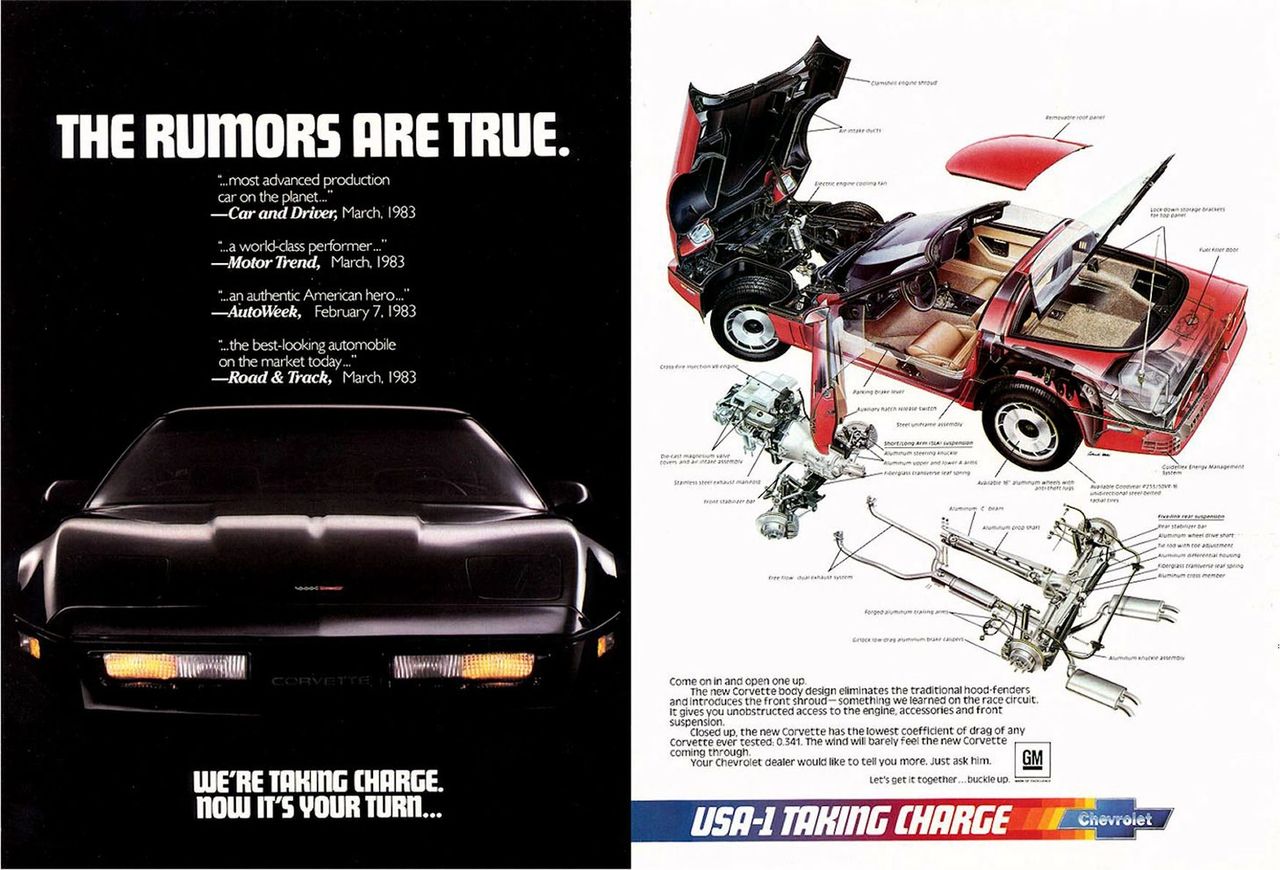
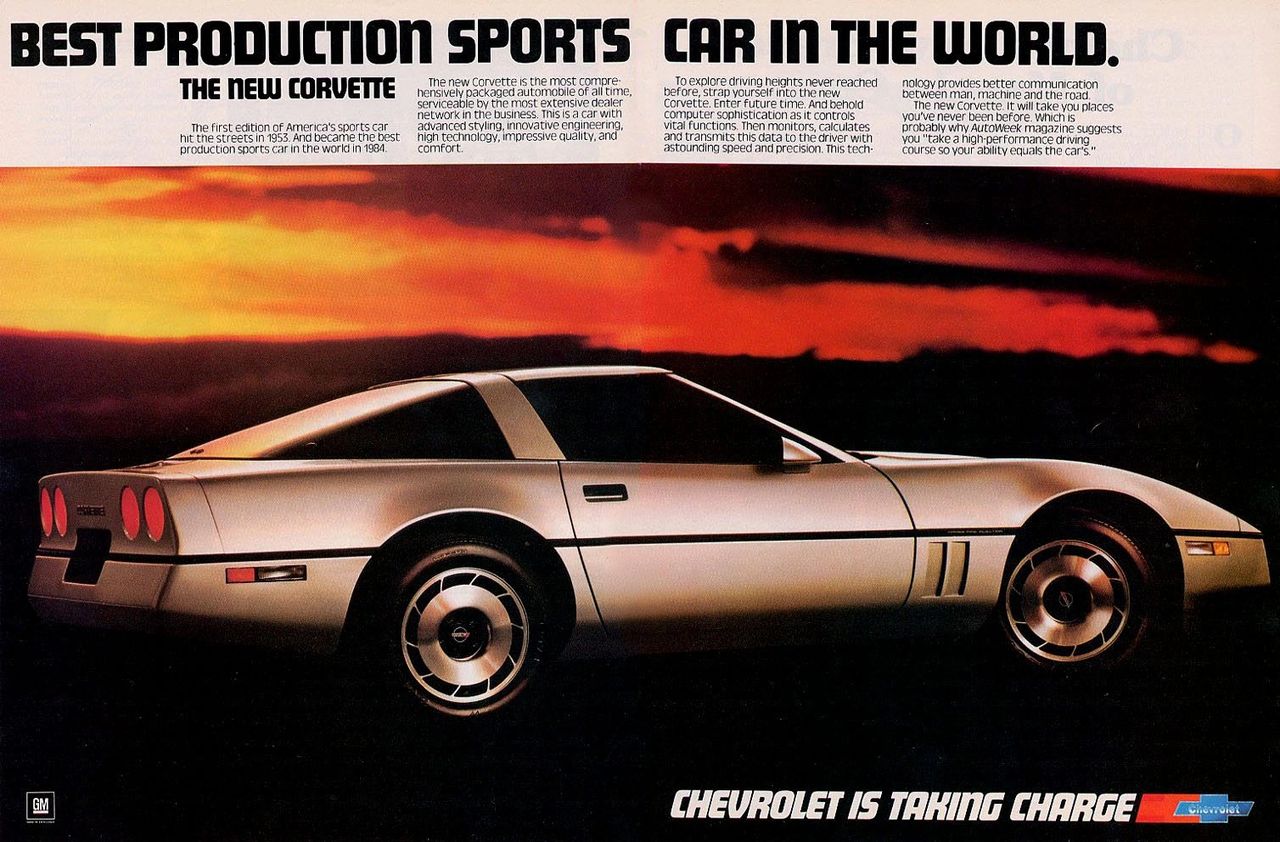
    Promotional article introducing the 1984 Corvette.
    Promotional article introducing the 1984 Corvette.

    Though not without its flaws, the 1984 Corvette was undeniably a pivotal moment in Corvette history. It established a new blueprint for the brand—one focused on technology, precision engineering, and aerodynamic efficiency.

    Its influence stretched far beyond the C4 generation. The digital dashboard foreshadowed the growing role of electronics and driver information systems. The aluminum suspension components and rack-and-pinion steering became the foundation for subsequent Corvettes, culminating in the advanced chassis designs of the C5, C6, and beyond.

    The Z51 package’s success proved that performance-oriented handling upgrades would be a mainstay in Corvette’s arsenal, evolving into sophisticated, computer-controlled systems that maintain the brand’s racing pedigree.

    In Retrospect

    The 1984 Corvette was more than a new model; it was a statement—a bold commitment to innovation in the face of a changing automotive landscape. It balanced tradition with the future, creating a sports car that was as much about driving precision as it was about power.

    For enthusiasts, it may not have been the rawest or fastest Corvette ever built, but it was the one that set the stage for the modern American sports car era. It remains a fascinating and cherished chapter in Corvette lore, embodying the spirit of reinvention that continues to define the brand today.

    1984 Corvette — Key Specifications

    Quick Stats

    • Engine: 5.7L (350 cu in) L83 Cross-Fire Injection V8
    • Output: 205 hp @ 4,300 rpm • 290 lb-ft @ 2,800 rpm
    • Transmissions: 4-speed automatic (TH700-R4) • 4+3 Doug Nash manual (4-speed with overdrive on 2–4)
    • Layout: Front-engine, rear-wheel drive
    • Curb Weight: ~3,200–3,300 lb (equipment-dependent)

    Performance (period test ranges)

    • 0–60 mph: ~6.7–7.2 sec (Z51/4+3 typically quickest)
    • ¼-mile: ~15.2–15.5 sec @ ~92–94 mph
    • Top Speed: ~146–150 mph
    • Skidpad: up to ~0.87–0.90 g with Z51
    • 60–0 mph Braking: ~150–160 ft

    Chassis & Suspension

    • Structure: Unitized “uniframe” with bolt-on front/rear cradles; composite body panels
    • Front Suspension: Short/long arm (aluminum control arms), transverse composite leaf spring, gas shocks
    • Rear Suspension: Five-link independent, transverse composite leaf spring, gas shocks
    • Steering: Power rack-and-pinion (first year for Corvette)
    • Brakes: 4-wheel power disc; ventilated rotors; aluminum calipers
    • Packages:
    • Z51 Performance Handling Package: higher-rate springs/anti-roll bars, heavy-duty shocks, quicker steering, performance alignment & cooling tweaks

    Wheels & Tires

    • Wheels: 16 × 8.5 in cast aluminum
    • Tires: 255/50VR-16 Goodyear Eagle VR50 “Gatorback” (V-rated)

    Dimensions

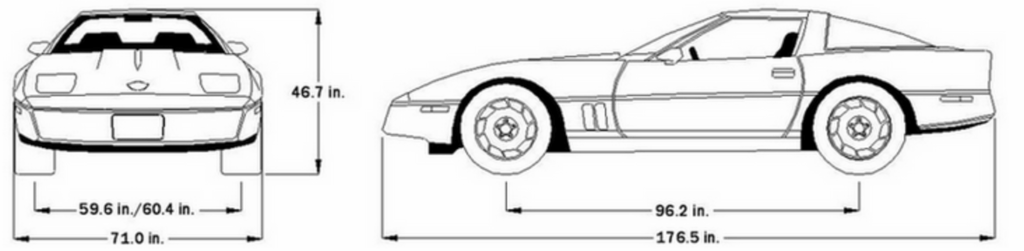
    1984 Corvette Dimensions (Image courtesy of the author.)
    • Wheelbase: 96.2 in
    • Length x Width x Height: ~176.5 × 71.0 × 46.7 in
    • Track (F/R): ~59.6 / 60.4 in
    • Fuel Capacity: ~20.0 gal
    • EPA (period): mid-teens city / low-20s highway (varies by trans/axle)

    Powertrain Details

    • Engine Code: L83 Cross-Fire Injection (twin throttle-body)
    • Compression Ratio: 9.0:1
    • Induction/Management: Dual TBI with electronic engine control
    • Axle Ratios (common): 3.07, 3.31 (varies w/ trans & Z51)

    Paint & Trim (1984)

    Exterior colors (U.S. production):

    • Black
    • White
    • Silver Metallic
    • Medium Gray Metallic
    • Medium Blue Metallic
    • Light Bronze Metallic
    • Bright Red (late availability)

    Two-tone treatments: select combinations using Gray or Bronze lower accents (period option).

    Interiors: Cloth or leather in Graphite (Gray), Red, Medium Blue, and Saddle (availability varied by exterior color and build timing).

    Interior & Features Highlights

    • All-digital instrument cluster with bar-graph tach/speedo
    • 6-way power driver seat (opt) • Delco audio (cassette, Bose system arrived later)
    • Removable one-piece roof panel (body-color or bronze acrylic)
    • Rear hatch glass with remote release

    Why the 1984 Corvette Still Matters Today

    The 1984 Corvette remains relevant not because it looks back, but because it showed Chevrolet how to move ahead. Even as the C4 Corvette continues to fade further into the horizon with each passing year, its existence still symbolizes Chevrolet’s courage to start over, and it set the course for every Corvette that followed.

    More than four decades after its debut, the 1984 Corvette remains deeply relevant—not as a relic of the past, but as the foundation upon which every modern Corvette is built. As the first model of the fourth generation, the 1984 Corvette represented a complete philosophical reset for America’s sports car. It abandoned incremental evolution in favor of a clean-sheet redesign that prioritized aerodynamics, chassis rigidity, handling precision, and driver integration. These core principles—lightweight construction, balanced performance, and a driver-centric cockpit—continue to define the Corvette’s identity today, from the C5 and C6 to the mid-engine C8.

    The 1984 Corvette also marked the moment when Chevrolet decisively repositioned the Corvette as a technologically forward, globally competitive performance car. Its advanced aluminum suspension components, modernized chassis, digital instrumentation, and dramatically improved structural stiffness reflected a mindset that performance was no longer just about straight-line speed. That same shift toward holistic performance—where handling, braking, and driver confidence matter as much as horsepower—is now central to modern performance car design, making the 1984 Corvette feel less like an artifact of the 1980s and more like the opening chapter of the Corvette’s modern era.

    Just as importantly, the 1984 Corvette remains relevant because it represents the courage to start over. In an era when legacy brands often struggle to reinvent themselves, the 1984 Corvette stands as proof that bold reinvention—when guided by engineering discipline and long-term vision—can redefine a nameplate without losing its soul. For today’s enthusiasts, collectors, and historians, the 1984 Corvette is not simply the first C4; it is the car that taught Chevrolet how to build the Corvette of the future.

    The 1984 Corvette marked one of the most transformative moments in the model’s history, ushering in the fourth generation with a bold, clean-sheet redesign. After a one-year production hiatus, Chevrolet reintroduced America’s sports car with a radically modernized chassis, advanced aerodynamics, and a renewed focus on handling, technology, and driver engagement. The result was a…