
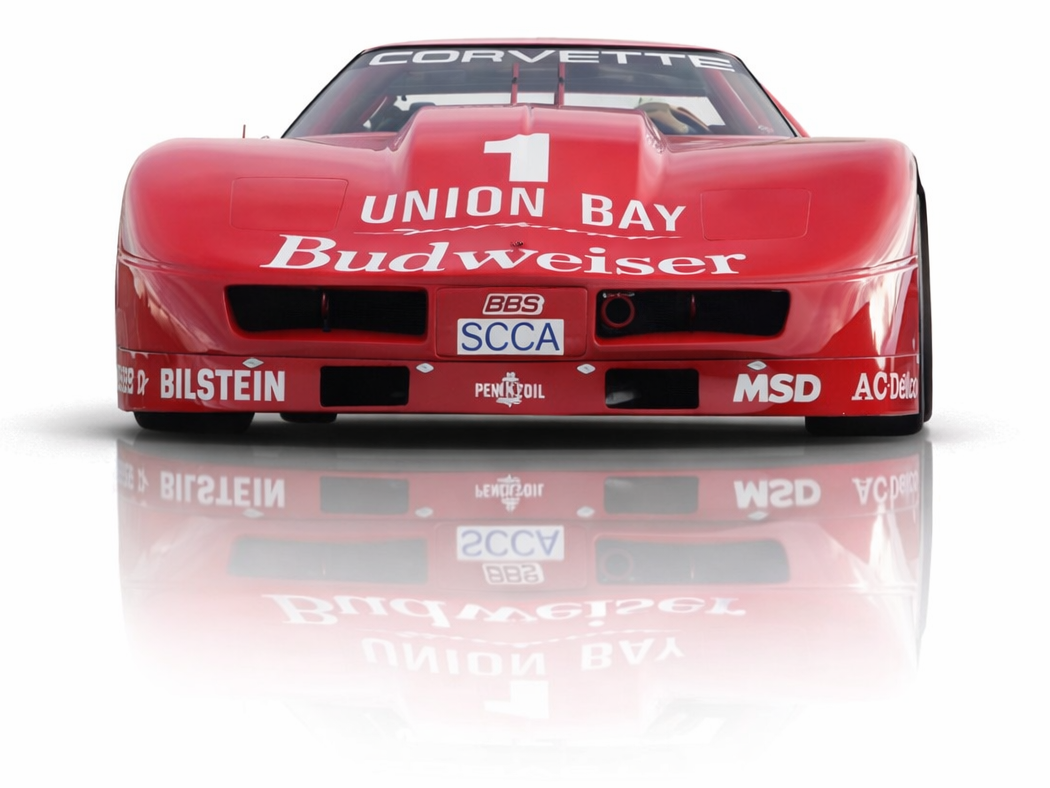
Here’s the story of the 1984 DeAtley Corvette—the short-deadline, tube-frame C4 that dragged Corvette straight back into the center of American road racing.
When Chevrolet launched the fourth-generation Corvette in 1984, the company wanted the car to be seen doing what Corvettes do best: run at the front. The quickest path was not to incubate a brand-new “works” effort from scratch, but to lean on its reigning Trans-Am partner—Neil DeAtley’s Budweiser-backed team—fresh off a dominant ’83 season with Camaros. The ask came with a brutal timeline. In a matter of weeks, DeAtley’s group had to retire a proven championship platform and conjure a Corvette that could live with (and, ideally, beat) Ford’s ascendant Mercury Capris right out of the gate. The result was a small batch of purpose-built, tube-frame C4s that looked like showroom Corvettes from 20 feet away, but underneath were all business—hand-built racing machines that marked Corvette’s return to front-line, factory-connected Trans-Am combat in the C4 era.
The time pressure changes how you read everything that follows. This was not a laboratory program run in secrecy or comfort. It was a sprint across open ground, with fans and rivals watching, and with the just-launched C4’s reputation on the line. The cars were fast enough to win on debut. They were raw enough to require a season’s worth of public development. They were significant enough that, four decades later, their fingerprints are still visible on Corvette’s racing arc.
People First: DeAtley’s Roster and the Build Network
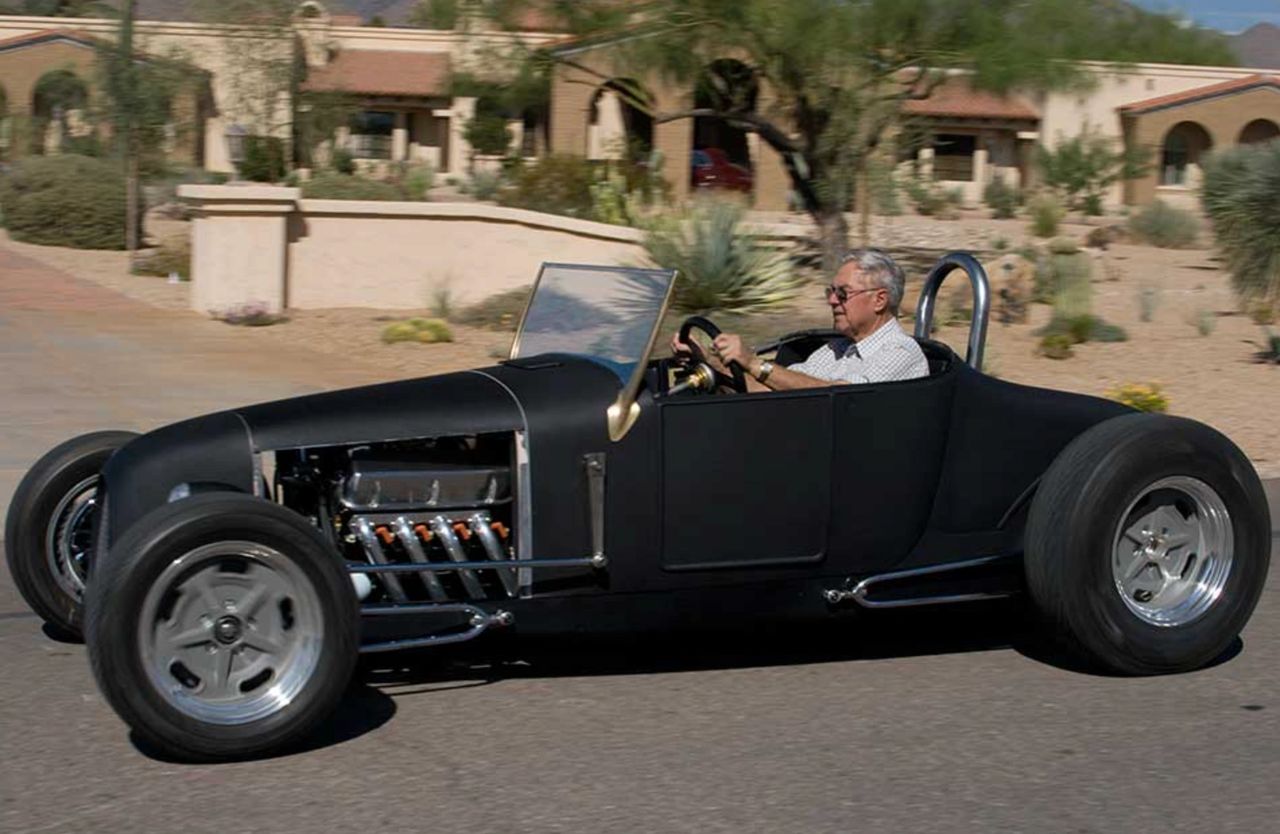
Racing programs live or die on people. Neil DeAtley was a financier out of the Pacific Northwest with an appetite for going big—Budweiser on the flanks, proper engineering money in the cars, and star drivers in the seats. He also knew how to build a coalition fast. The public face was Budweiser red; the backbone was a flexible build pipeline that pulled in fabricators and specialists capable of turning an all-new production design into a competitive silhouette racer in weeks rather than months.
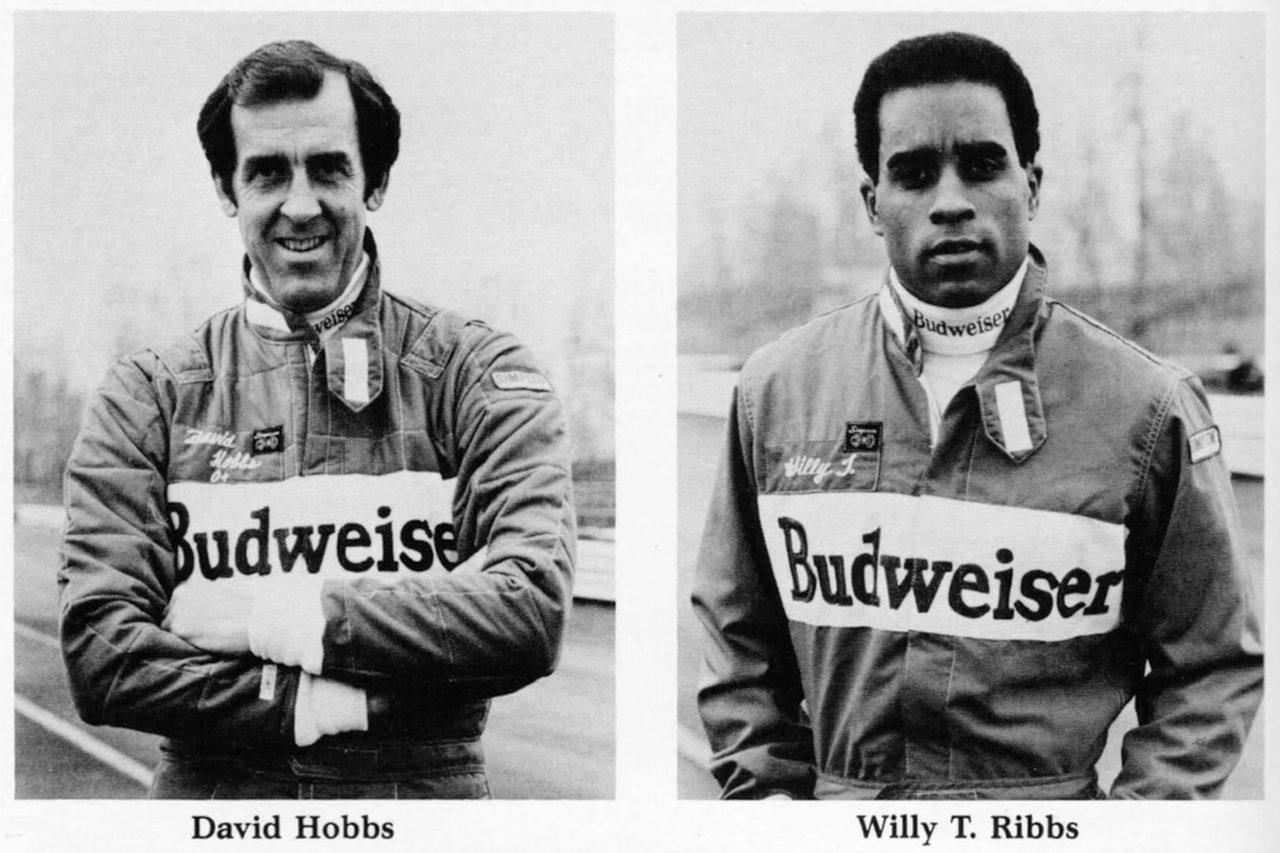
The roster for 1984 threaded an interesting needle: established race-craft and media wattage (David Hobbs), blistering speed and swagger (Willy T. Ribbs), and a hungry young charger in Darin Brassfield. Others, including Michael Andretti and Jim Insolo, would intersect with the program as the season unfolded. There was a clever balance here. Hobbs brought development sensibility and feedback discipline. Ribbs brought raw pace and an edge that could drag a car up the order on talent alone. Brassfield personified the opportunity the program represented: the chance to make a national statement in a car that the whole country recognized.
DeAtley’s coalition extended beyond the cockpit. Speedway Engineering in Sylmar, California, fabricated the tube-frames—stout, serviceable, and built for the quick-change brutality of Trans-Am weekends. Corvette Creationz in Portland handled finish work on the bodies. Diversified Fiberglass supplied widened C4 panels originally developed with racing in mind. Dennis Fischer built compact, hard-spinning 310-ci small-blocks tailored to the series’ displacement/weight calculus. All of it came together like a film crew on location: highly specialized craftspeople working in parallel, feeding a shared calendar no one could slip.
New Platform, Steep Curve: Sorting the C4 in Public
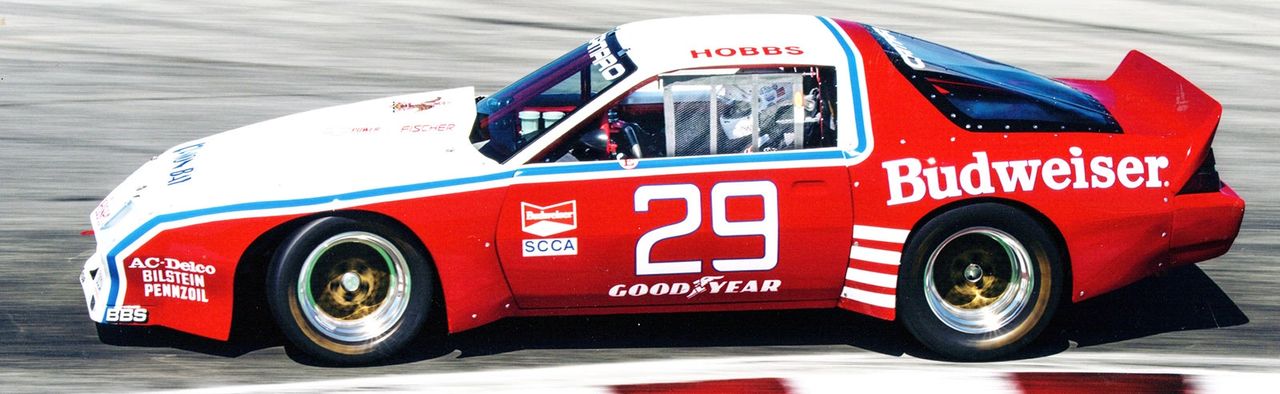
On paper, the switch from the proven DeAtley Camaro to a brand-new C4 was a calculated risk. The C4’s proportions and independent rear suspension promised a higher ceiling than the outgoing F-body, but they came with a learning curve. In 1984, Trans-Am was not a patient classroom. Ford’s Capri program—Roush and a network of hardened suppliers—was exceptionally sorted, and the series schedule offered precious little testing time between events.
DeAtley’s Camaros were built for quick servicing and aggressive tuning, but when you’re learning a new platform’s quirks in public—on points-paying race weekends—the trial-and-error cycle can only be compressed so far. Contemporary accounts and later retrospectives alike point to the C4’s IRS (Independent Rear Suspension) — excellent in concept, but demanding in practice — as a recurring puzzle. Anti-squat/anti-dive targets, camber control under load, toe compliance, and the friction stack through bushings and joints—all of it had to be learned in the crucible. The upside was visible straightaway: mechanical grip, traction over bumps, and the ability to put power down off a corner when the window was right. The downside was sensitivity. A misstep on springs, bar, or ride height could send the car hunting for balance.
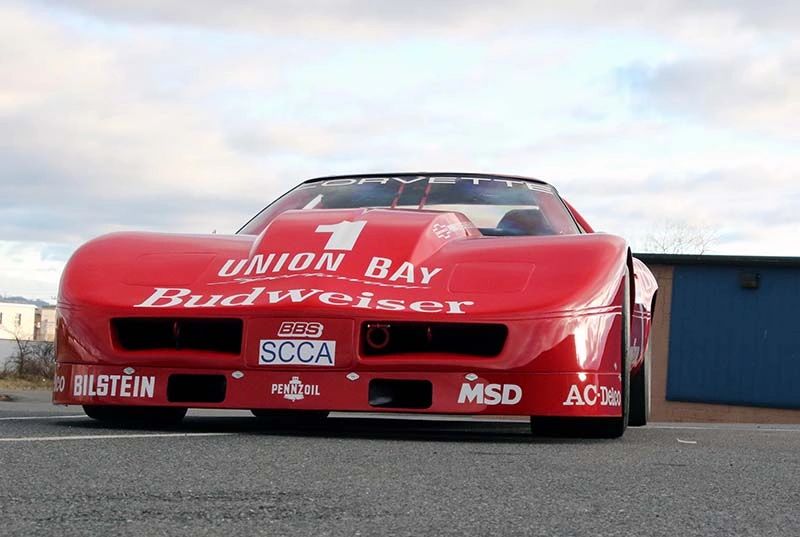
Even so, those early months gave fans a bracing demonstration of what a tube-frame Corvette could do when the pieces clicked. The cars rotated willingly on entry, could be hustled over curbs without shaking themselves apart, and—thanks to short gearing via the quick-change rear—leapt onto the meat of the V8’s torque as if yanked by a winch.
Opening Salvo: Brassfield at Road Atlanta
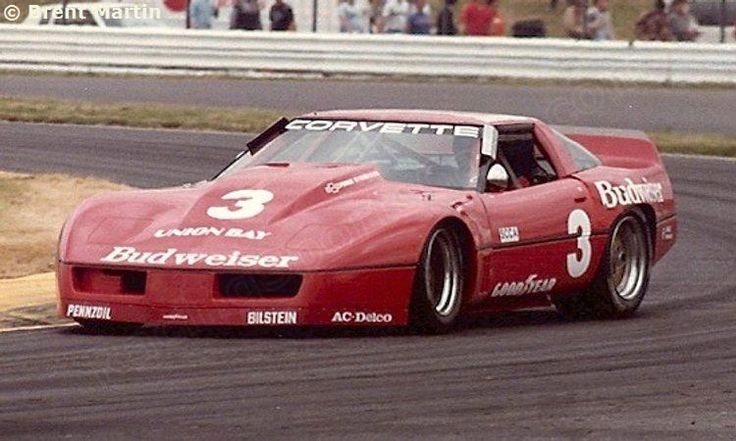
The moment that proved the point—and instantly reset expectations—came on opening day. May 6, 1984, Road Atlanta: in his 22nd Trans-Am start, Darin Brassfield rolled out the bright-red No. 3 DeAtley Corvette and snatched the season’s first checkered flag. The pass for the lead came on lap 11; from there he controlled the race, leading the final 30 laps and winning by a yawning margin. David Hobbs brought another DeAtley Corvette home to complete a headline-friendly one-three.
That wasn’t just a debut win for a new car; it was an exclamation point that told Ford’s camp the Corvette was here and, in the right window, dangerous. In a series where momentum is everything, Road Atlanta gave the DeAtley group and Chevrolet something to build on: proof of concept, a datasheet of what worked, and a national storyline that married the new C4’s public launch to immediate on-track success.
A Hard Education and a Shifting Chessboard
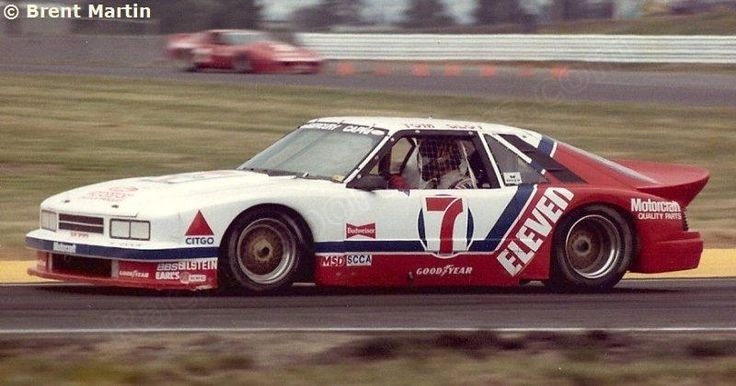
It’s tempting to let that day define the whole season, but the 1984 story is richer—and messier. The DeAtley C4s remained a factor throughout the calendar, and the results sheets show the ebb and flow you’d expect from an all-new platform living against a highly developed Capri benchmark. Hobbs stood on the podium at Watkins Glen later that summer; Brassfield posted fast runs at West Coast venues even as reliability and setup gremlins occasionally encroached.
Ford, meanwhile, kept the pressure high and banked points—Tom Gloy and Greg Pickett among the headliners—delivering the manufacturers’ bragging rights. In one of racing’s ironies, the very Protofab organization that had been formed under Ford’s umbrella to answer DeAtley’s Camaro dominance in 1983 became a cornerstone of Ford’s 1984 Trans-Am resurgence—evidence of how quickly the power balance could flip in that era. The net effect for Chevrolet was clarity: to keep Corvette at the sharp end, the tube-frame C4 concept needed continued investment and iteration. That’s the line that runs forward from DeAtley—through other banners and evolutions—to the Corvette’s late-’80s Trans-Am bite.
Under the Skin: What Made the DeAtley C4s Tick
A DeAtley C4 is a wonderful contradiction: low, wide, and glamorous under the paddock sun, but every surface and junction betrays a decision made for speed, serviceability, or survival.
Architecture. The Speedway-built tube frame was the program’s beating heart—tight triangulation around the driver cell and front suspension pickups, with generous access to the engine bay and rear quick-change. Compared with the production C4 structure, the race chassis delivered stiffness, repairability, and the freedom to place mass where the setup team needed it. The steering gear and front geometry were built from race-proven catalog pieces: short/long arm control arms, adjustable uprights, big-bearing hubs, and the sort of bulletproof steering linkages that survive curb strikes at speed.
The independent rear. Out back, the C4’s IRS was rendered in competition-grade hardware. Coil-overs, braced carriers, and heavy-duty half-shafts replaced any hint of street compromise. The advantage was traction over imperfect surfaces and the ability to tune camber gain as the car compressed in long, loaded corners. The challenge was getting the toe curve civilized across bump and rebound so the car didn’t feel like a different animal at each end of a stint. When the engineers hit the window, the Corvette put power down like a sledgehammer and stayed planted over Riverside-style surface changes that could make a live axle skip.
Powertrain. Dennis Fischer’s 310-ci small-blocks were right-sized for the rulebook and the quick-change rear. Build a motor that’s happy to live between the meat of the torque curve and the top third of the tach, then let gearing put you there as often as possible. On paper, roughly 550 horsepower; on track, a fat middle and crisp throttle that worked with the M-22’s straight-cut reality. The Tilton hardware made clutch and starter service quick. The Franklin rear let the crew turn a gearing change into a coffee-length job.
Body and aero. The body wasn’t theater—it was a tool. Widened front/rear clips gave tire clearance and cooling volume; the front fascia was opened and ducted to feed the radiator and brakes; and the rear quarters were shaped to stabilize the wake and keep hot air moving. The panels popped off on Dzus fasteners—serviceable in seconds. When taken as a whole, even experienced observers can’t help reading the stance and assuming intimidation was the point. The real victory was the way those shapes kept the car cool, stable, and easy to work on at 9:30 p.m. under fluorescent paddock lights.
The cockpit. Peer into the surviving museum car and you see a working environment, not Instagram. A flat dash panel that made rewiring and instrument swaps straightforward. A stubby M-22 lever in easy reach. Labeled breakers and toggles. It’s the kind of cockpit that tells you exactly what life was like on a DeAtley weekend: focus on the next session; make changes you can feel; keep everything reachable, replaceable, and robust.
Four Built, Three Survive: The 1984 DeATLEY CORVETTE AT THE NCM
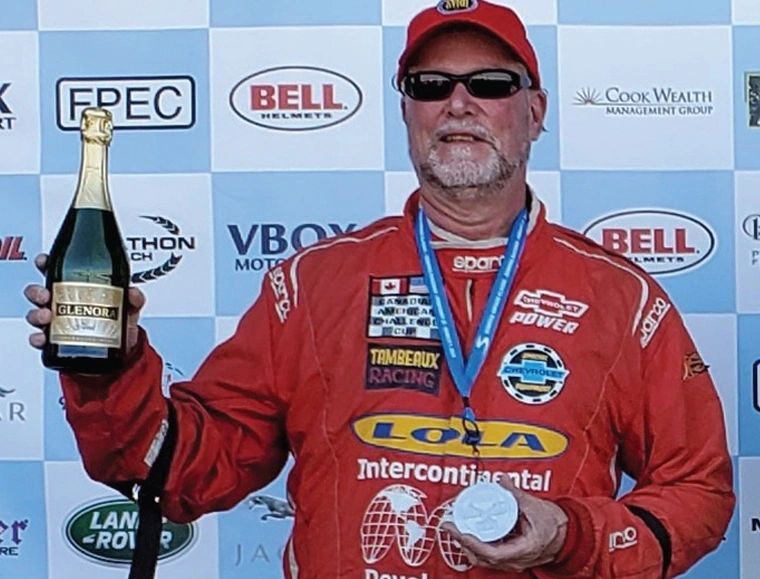
Crucially, these weren’t one-off unicorns. Period accounts and later round-ups converge on the same tally: four DeAtley C4 Trans-Am cars were built, of which three still exist today. If you’ve walked the galleries of a certain tourist destination in Bowling Green recently, you’ve likely seen one of them. Mike Moss—who bought, vintage-raced, and then restored one of the DeAtley cars—donated it to the National Corvette Museum in 2020, wearing Union Bay/Budweiser colors and carrying with it a thick binder of provenance.
What moved the car from a private race shop to a public gallery is a story Moss tells plainly: after a Watkins Glen shunt, he spent years bringing the car back to“immaculately restored” condition—Scott Michael led the restoration, and master painter Tony Fernandez laid down the Budweiser red so flawlessly that Moss no longer wanted to risk the car in competition. Instead, he “gave back,” deciding America’s Sports Car should be shared with America, and that the only way to do it right was by placing the DeAtley Corvette at the National Corvette Museum. The car’s donation was announced on February 27, 2020, with plans to return it to display that April as the Museum’s Performing & Racing Gallery reopened.
The Moss/DeAtley car is more than a static display; it’s a memory anchor. It preserves the supplier network on a placard. It keeps the mechanical spec honest for future historians (tube-frame by Speedway Engineering, M-22 gearbox, Franklin quick-change, Dennis Fischer 310-cu-in small-block at ~550 hp). And it lets visitors stand at the rail and decode the philosophy with their own eyes: rugged where it needs to be rugged, light where it can afford to be light, and relentlessly optimized for the sprint-repair-sprint rhythm of Trans-Am life—now preserved in public view because one owner chose to hand the keys to the NCM in Bowling Green.
From Camaro Supremacy to Corvette Catalyst
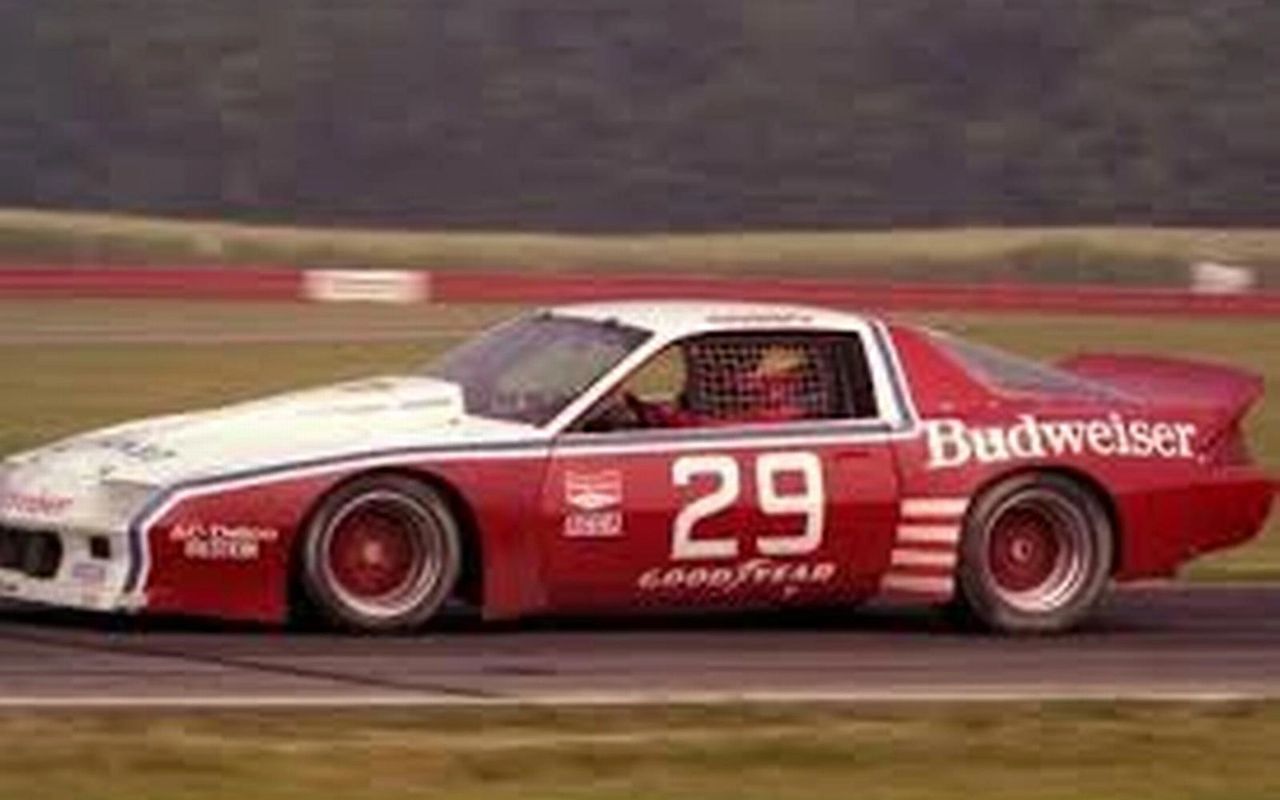
To understand the significance, it helps to look upstream. In 1983, DeAtley’s Camaros had stampeded the field; it took an organized response to unseat them, and Ford found one in Protofab. By the time Corvette rolled into Trans-Am in 1984 wearing DeAtley red, the opposition had already re-armed. That chessboard explains a lot: why the early Corvette win at Road Atlanta read like a gauntlet-throw, why the midsummer grind was spent massaging setup and reliability in public, and why Chevrolet, in the seasons that followed, continued to refine the tube-frame C4 concept through other banners to reassert itself.
The DeAtley cars, then, are both time capsule and inflection point—proof that the new-shape Corvette could be weaponized for Trans-Am and a catalyst for the team- and supplier-shuffles that shaped the series for the rest of the decade. They bridge the gap between the iron-fisted Camaro of ’83 and the later Corvette standard-bearers that would carry the name forward.
Drivers at a Generational Crossroads
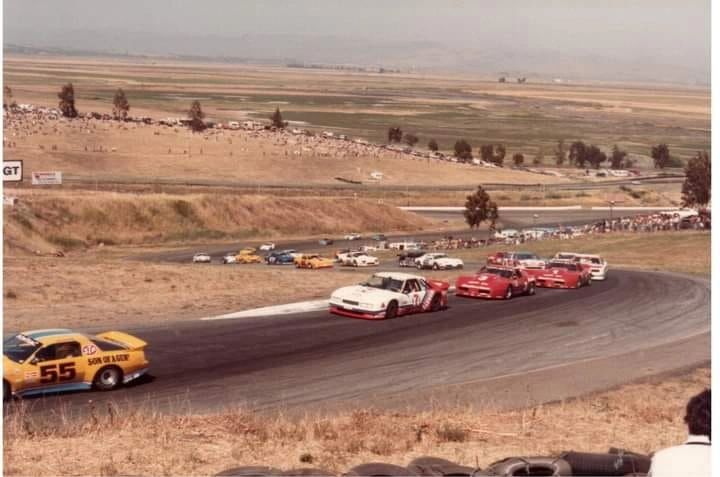
Look closely at the names and you see another layer of legacy. The 1984 driver roster sits at a nexus of generational change. Hobbs was by then a fixture of international racing and American television; his feedback loop with engineers could turn a chaotic test day into an actionable plan. Ribbs, explosive and uncompromising, would win plenty for Ford that season but would remain a pillar of the DeAtley story from 1983 through the Corvette transition. Brassfield’s Road Atlanta masterclass reads today like a thesis on seizing the moment—clean pass, relentless pace, and the composure to turn a high-pressure debut into a runaway. The guest appearances—Andretti, Insolo—remind you how fluid the series could be, how drivers and opportunities co-mingled in that period.
And hovering over it all is the DeAtley organization itself: a privateer-plus operation with manufacturer gravity, the kind of team that can sprint when the phone rings and the ask is “build us a Corvette, now.” That agility is worth underscoring. In series where rules reward optimization more than invention, real advantage often comes from speed of decision and speed of iteration. DeAtley’s 1984 effort is practically a case study.
The Textures of a Program—and Its Point
What stays with you, finally, are the textures: the loudness of a 310-inch small-block engineered to produce ~550 horsepower through an M-22’s straight-cut growl; the way a tube-frame C4 squats on its haunches cresting a rise, Goodyears biting, the independent rear working; the atmosphere of a DeAtley pit as crew members pop body-panel Dzus fasteners like piano keys to reach heat-soaked components and reset the car for the next session.
These Corvettes were more than a marketing exercise for a just-launched production car. They were living laboratories, built at pace, refined in the white heat of competition, and entrusted to drivers who could translate potential into points. The results ledger from 1984 doesn’t read like the press release of a championship race team, which is appropriate as the manufacturers’ trophy went elsewhere, but the DeAtley C4s did what they needed to do: they put the new Corvette back in the fight and lit the fuse for what came next.
Stand Next to One: Legacy Made Tangible
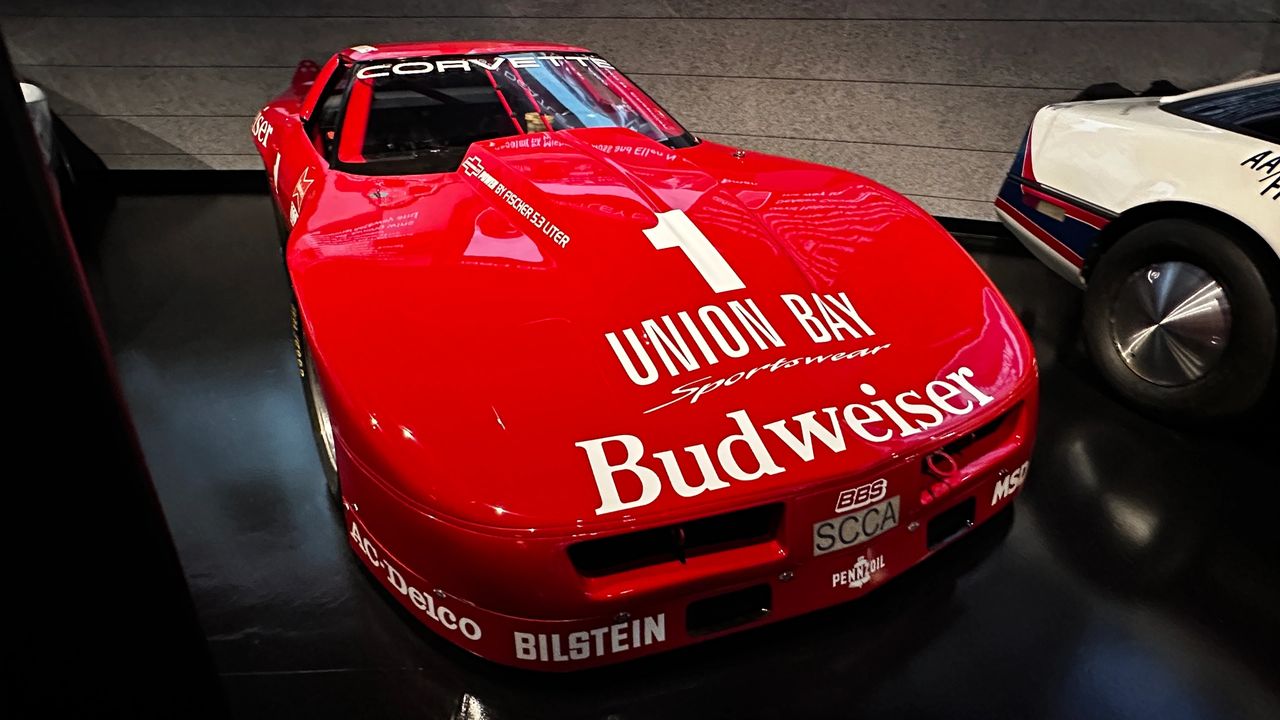
If you want to see the legacy in steel and fiberglass, go to the National Corvette Museum in Bowling Green and stand next to the Moss/DeAtley car. Read the placard, take in the panel fit, and peek at the rear quick-change. Follow the brake ducts with your eyes and imagine the heat coming off them after a qualifying run. Notice the service seams and ask yourself how quickly a crew could strip the nose, change a diff ratio, and get the car back out for a scuffed-tire run.
Then conjure that Sunday at Road Atlanta—the pass on lap 11, the final 30 laps led, and a Budweiser-red C4 sprinting under the bridge to the flag. For a brand-new generation of Corvette, it was the perfect opening argument.
Technical Specifications
Race Series: SCCA Trans-Am
Team Sponsors:
- DeAtley Motorsports
- Budweiser Racing
- Union Bay Sportswear
Colors: Budweiser Red
Engine: 310 cu-in V8 engine by Dennis Fischer, rated at 550 HP NOTE: Lower engine displacement allows cars to be run at 2615 pounds (including 45 pounds of ballast)
Driveline/Suspension:
- Tubeframe construction by Speedway Engineering, Sylmar (CA)
- Front suspension and steering parts taken from race-proven manufacturers
- Independent rear suspension, including coil-over shock-springs
- Tilton bell housing
- M-22 transmission
- Franklin quick change differential using standard positraction or spool depending on course
- Speedway Engineering hub carriers
- Short track racing hubs and axles
- Half shafts fabricated from DANA truck driveshafts
Tires: Goodyear 16×10 racing slicks
Why the 1984 DeAtley Corvette Still Matters Today
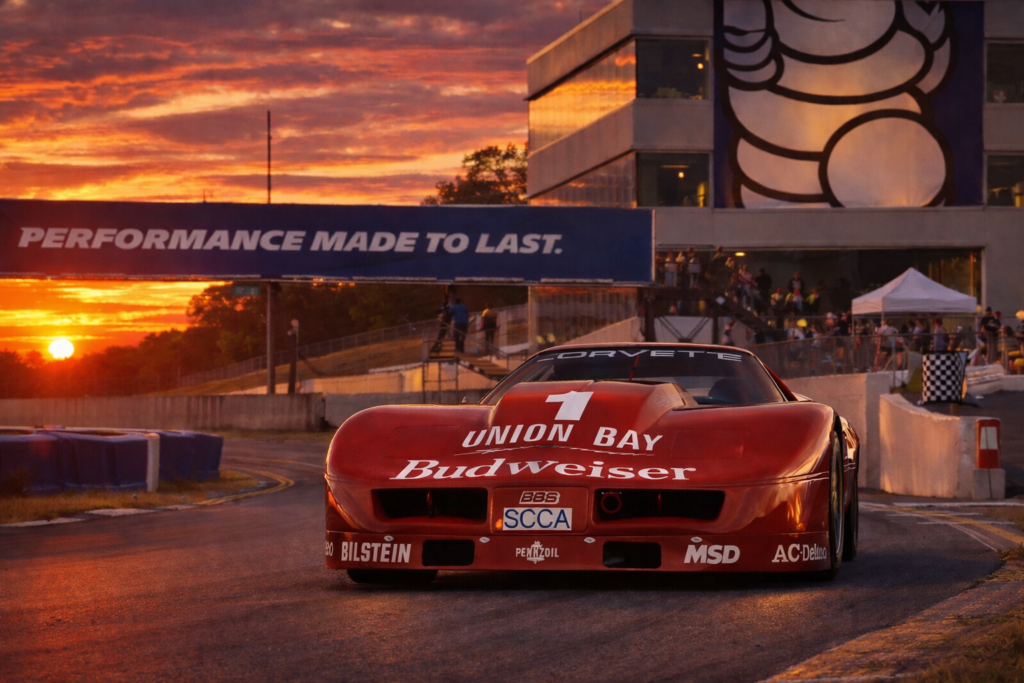
The 1984 DeAtley Corvette matters because it proved the C4 wasn’t just a technological reset — it was a legitimate race platform. At a time when the Corvette nameplate was fighting to reclaim credibility in international competition, cars like this carried the banner. They showcased the stiffness of the new chassis, the advantages of modern suspension geometry, and the adaptability of the small-block V8 in professional motorsport.
Today, the DeAtley car stands as a symbol of Corvette’s mid-1980s resurgence — a reminder that the C4 generation wasn’t merely a design departure, but the foundation for the racing dominance that would follow in the decades ahead.