
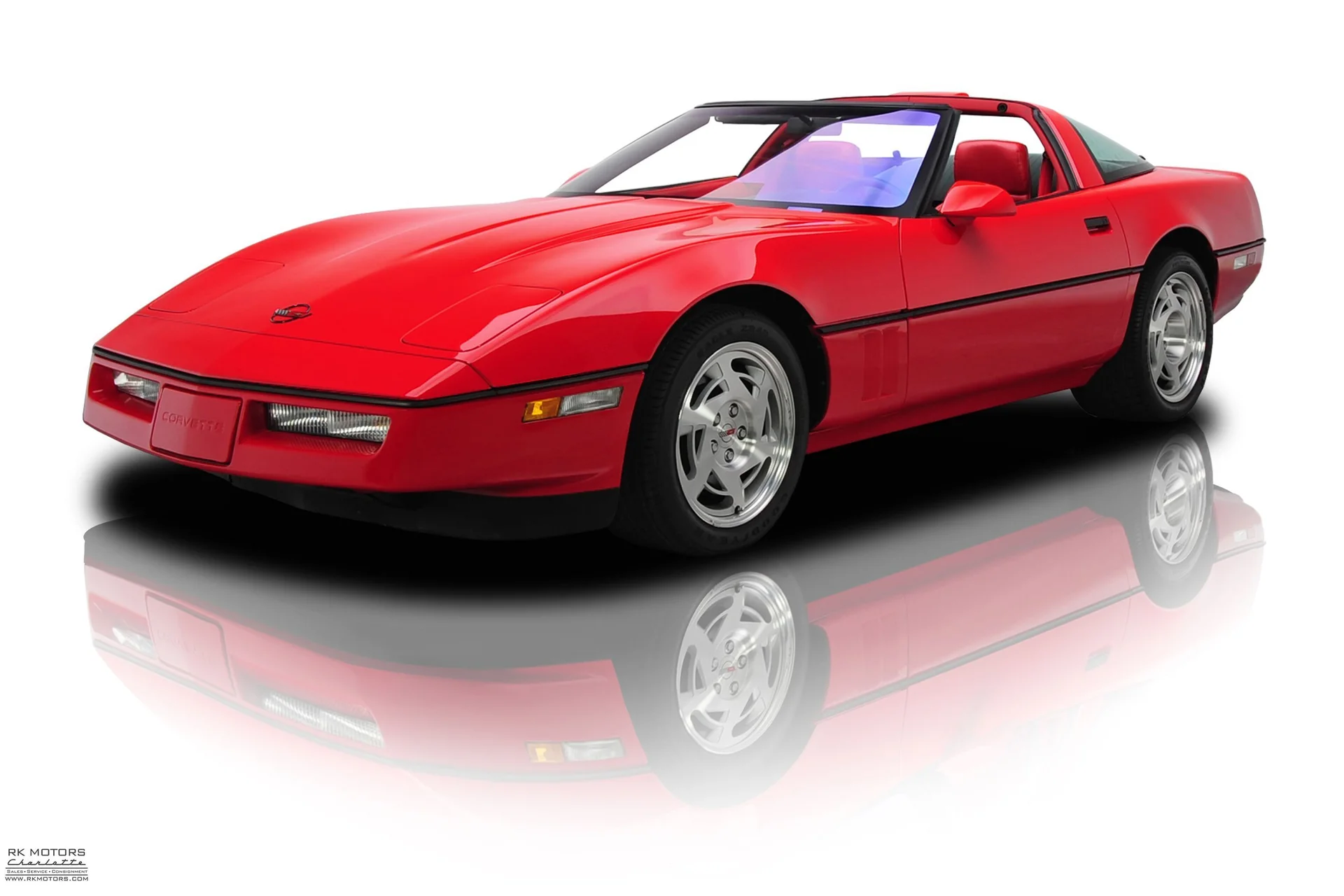
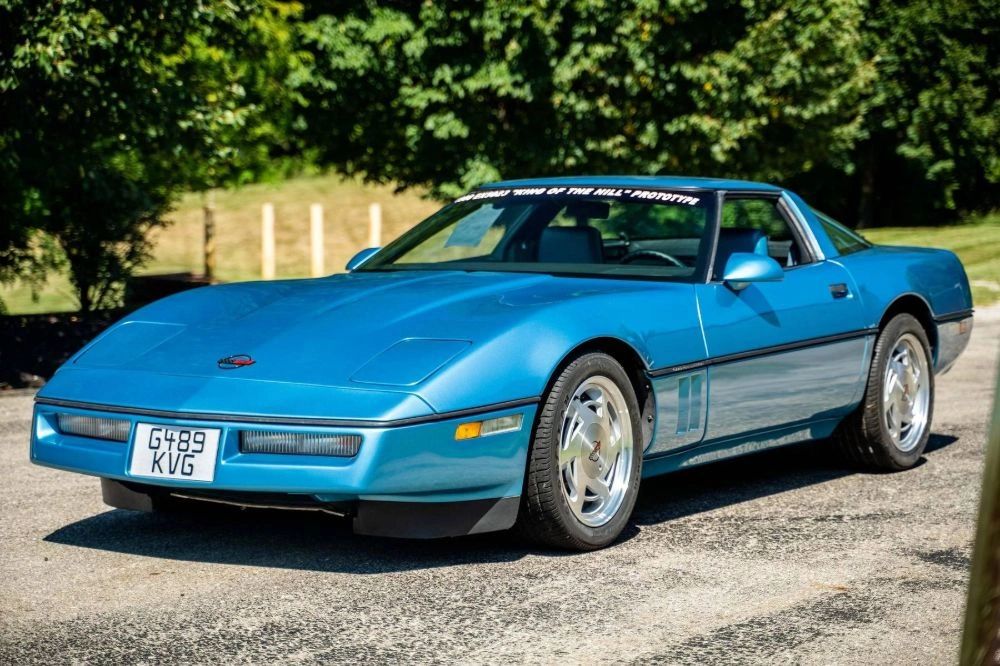
As the 1980s drew to a close, few nameplates carried as much symbolic weight for American performance as the Chevrolet Corvette. By the end of the decade, the C4 Corvette had matured into a respected sports car — one that had gone from being dismissed in its early years for lackluster power, to becoming a finely honed machine capable of holding its own against much of Europe’s best. Yet for 1990, anticipation rose to a fever pitch. This wasn’t simply another incremental update. Chevrolet was preparing to unleash a Corvette that would redefine expectations: the ZR-1 “King of the Hill.”
The excitement was palpable because the car had already been teased, whispered about, and delayed. Originally projected for a mid-1989 introduction, the ZR-1’s arrival was pushed to the 1990 model year. The reason was simple: Chevrolet and its partners refused to compromise. The car was subjected to further refinements in engineering and design, and only when it met its lofty performance and durability targets would GM permit it to launch. That patience would prove worthwhile.
For Corvette enthusiasts, 1990 marked the dawn of a new era — one in which Chevrolet’s halo car was no longer simply keeping pace with the competition, but setting entirely new benchmarks.
Refining the Base Corvette
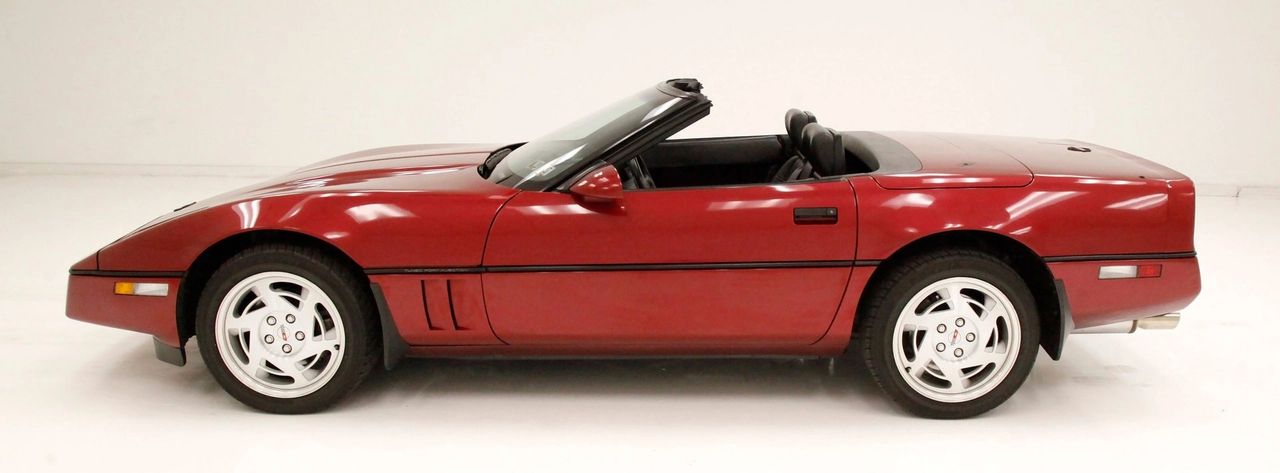
While the ZR-1 captured headlines, every Corvette sold in 1990 benefited from meaningful updates. The most visible was the introduction of a driver’s side airbag, part of Chevrolet’s compliance with the federal government’s phased-in “passive restraint” crash protection regulations. For a two-seat sports car rooted in performance, safety advances weren’t always the headline, but the Corvette entered the 1990s with technology aligned to both performance and protection.
Corvette’s anti-lock braking system (ABS), first introduced in 1986, was updated with more sophisticated yaw control. The system was tuned to provide greater security under hard braking, particularly in emergency maneuvers. Combined with four-wheel independent suspension and the precise steering geometry of the C4 platform, the improvements reinforced Corvette’s reputation as a true handling car.
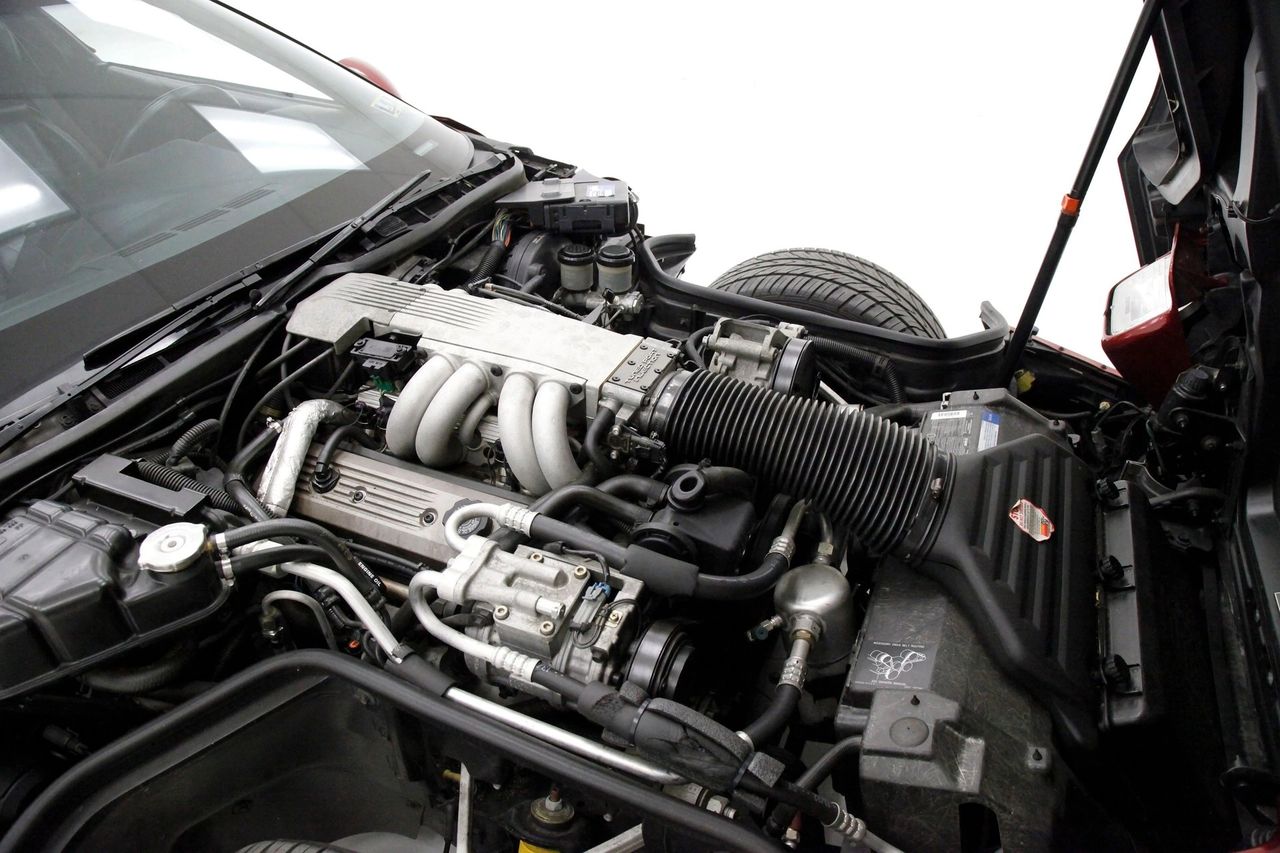
The standard L98 V8 received incremental but meaningful improvements for 1990, raising output to 245 horsepower. A revised camshaft profile, a higher compression ratio, and the adoption of a new speed-density air-intake system provided the engine with sharper throttle response and greater refinement. While inevitably overshadowed by the exotic LT5 in the ZR-1, the L98 remained a strong, dependable small block, now in its fifth year of Tuned Port Injection development and still a cornerstone of the Corvette lineup.
The cooling system also received attention. A more efficient radiator was introduced, so effective that the optional auxiliary “boost fan” (RPO B24), which had been offered from 1986 through 1989, was dropped from the option list entirely. Corvette engineers, by this point, had refined airflow through the C4’s narrow nose into a science.
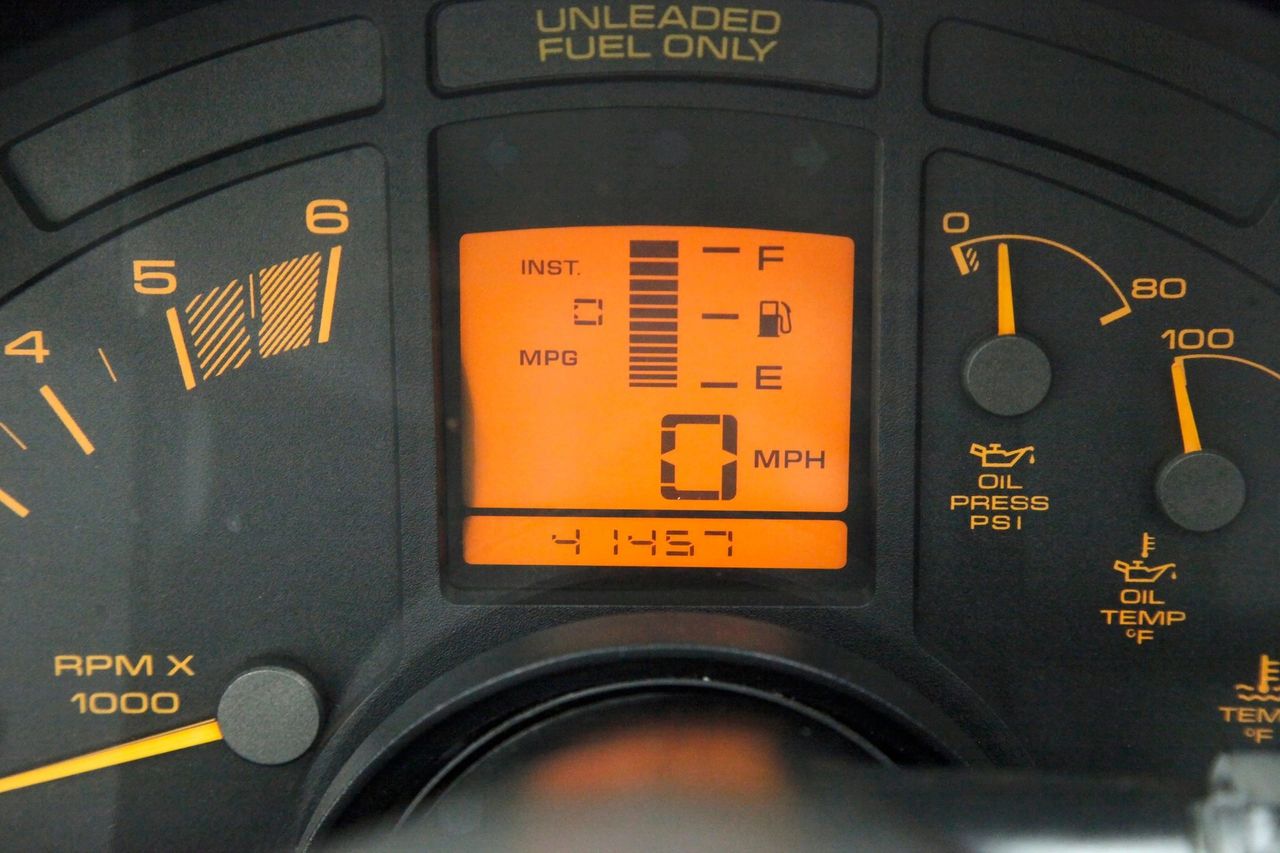
Inside, the 1990 Corvette cabin reflected both ergonomic lessons learned and the march of consumer technology. The instrument cluster, a long-standing point of debate since the introduction of “all-digital” graphics in 1984, was redesigned. Drivers were now greeted with a hybrid display: a digital speedometer paired with analog auxiliary gauges — tachometer, fuel, oil pressure, voltmeter — providing the tactile familiarity enthusiasts had demanded. The arrangement struck a balance between modernity and usability, quieting critics who had long argued the Corvette’s “video game” dash was too gimmicky.
Equally practical was the addition of a passenger-side glove box, something so basic that it had become an odd omission throughout the 1980s. A new engine oil life monitor system was incorporated into the driver information center, calculating oil degradation and reminding owners of service intervals — a forward-thinking touch at the time.
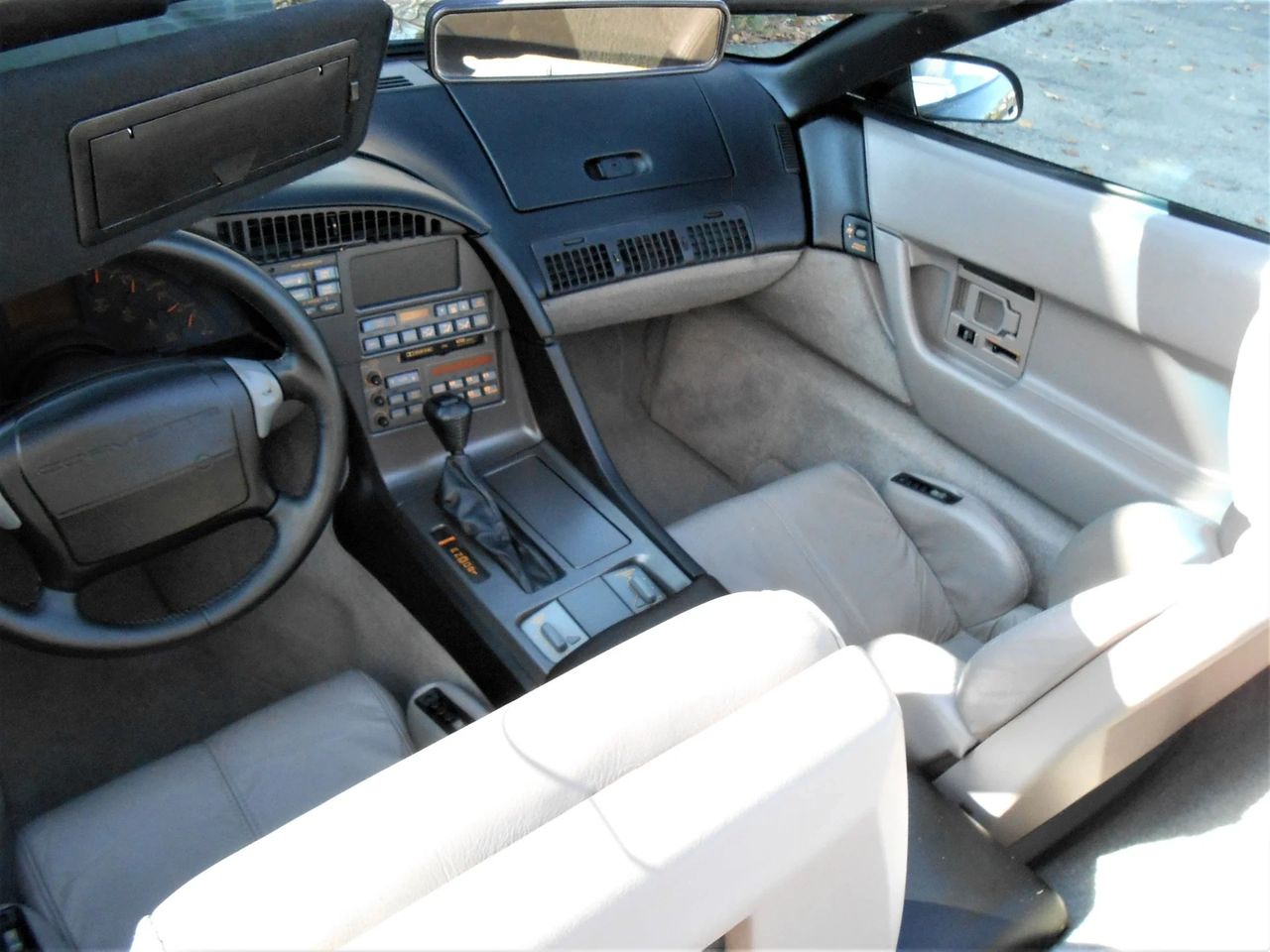
On the entertainment front, Corvette embraced the digital age. While cassettes still dominated the aftermarket, the factory introduced an optional Delco-Bose CD player. To deter theft, the unit carried a lockout system requiring a reactivation code if removed. This “anti-theft coding” was decades ahead of the ubiquitous infotainment locks found today.
Even the seating saw refinement: leather upholstery became available across all Corvette models, rather than being restricted to higher trims. It was part of Chevrolet’s recognition that even base Corvette buyers expected a premium experience.
The Need for Something Greater
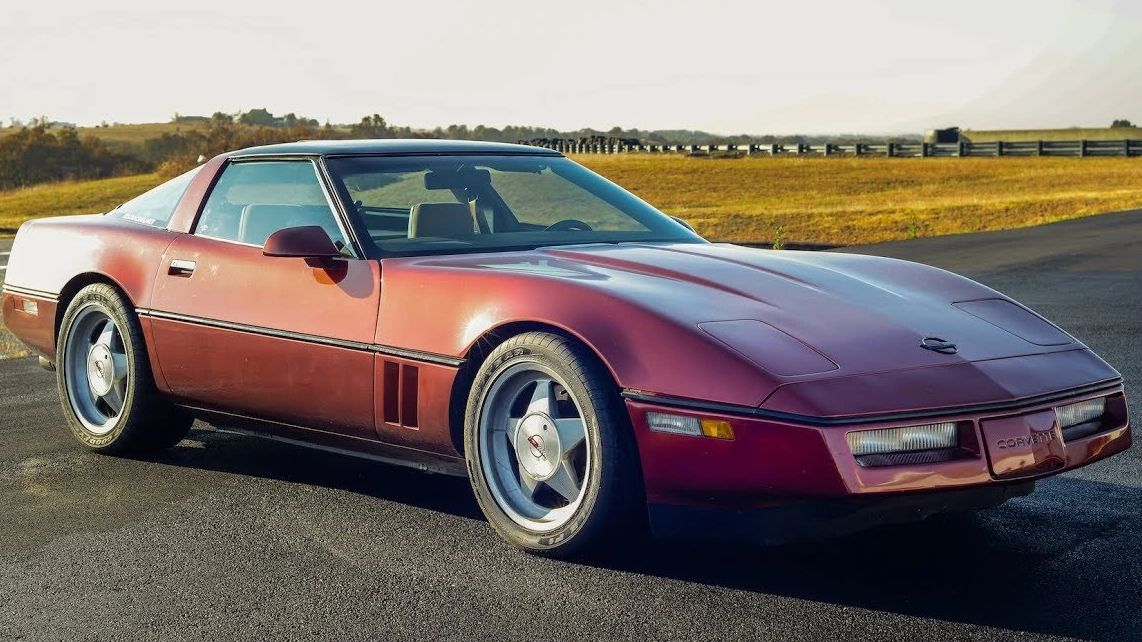
Despite these thoughtful improvements, the Corvette team knew the car needed more than incremental gains. Since the C4’s debut in 1984, performance purists had lamented the lack of an engine equal to the chassis. The L83 Cross-Fire Injection engine of the first C4s had been underwhelming. Even after Tuned Port Injection brought torque and smoother power delivery in 1985, Corvette enthusiasts couldn’t ignore that European competitors — Ferrari, Porsche, and Jaguar — offered exotic multi-valve, overhead-cam engines that revved higher and produced more horsepower.
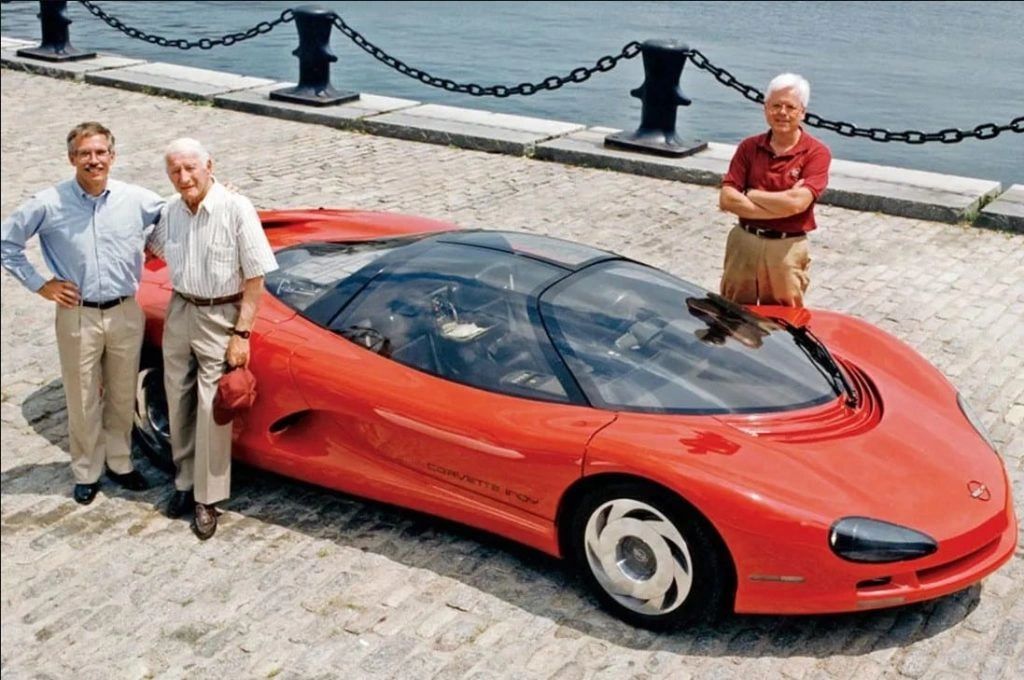
Corvette Engineering Chief Dave McLellan, who had succeeded Zora Arkus-Duntov in 1975, recognized the dilemma. So did Lloyd Reuss, the GM executive who would become the fiercest champion of Corvette’s halo project. Reuss, a powertrain engineer by background, was convinced that without a true world-beating Corvette, GM risked ceding the performance market to rising Japanese imports and entrenched European marques.
It was Reuss who coined the phrase “halo vehicle” (a flagship model that elevates a brand’s image and appeal) to describe what the Corvette must become. And it was he who shielded the project during the turbulent corporate environment of mid-1980s GM, when programs were often cut for cost savings.
Planting the Seeds of the ZR-1
The earliest attempts to elevate Corvette performance within GM’s corporate ecosystem came through Powertrain Engineering Director Russ Gee and Roy Midgley, Chief Engineer of V-type Engines. Their team sketched out dozens of possibilities — everything from turbocharged V6s to radical small-block variants. Some experimental engines were made into running prototypes. A twin-turbo V8 was among the most promising, showing eye-watering output figures, but emissions and fuel economy realities doomed it. A turbo V6 was dismissed as culturally unacceptable: “No Corvette buyer,” as McLellan remarked, “would accept six cylinders, no matter the power.”
In fact, the turbocharged experiments indirectly paved the way for the CallawayTwin-Turbo Corvette, which GM endorsed as an official option in 1987 after reviewing internal prototype data. But as clever as the Callaway was, it remained a tuner’s car, not a factory supercar.
What Corvette needed was a purpose-built, clean-sheet engine — one that could be docile in traffic but ferocious at full throttle. The solution was captured in a single word that engineers began using: “bi-modal.” The future Corvette powerplant had to behave like two engines in one: quiet, tractable, reliable for everyday use, yet able to summon exotic-car performance on demand.
Enter Group Lotusof Hethel, England. By 1985, GM was negotiating to purchase the famed British engineering firm, known worldwide for Formula 1 success and for extracting remarkable performance from small, high-revving engines. McLellan’s team opened talks with Tony Rudd, Lotus’sManaging Director, about adapting Lotus’s multi-valve head technology to the venerable Chevrolet small block. Early trials revealed that the existing L98 couldn’t be stretched that far. Rudd’s advice was blunt: if Chevrolet wanted Ferrari-level performance, it needed a completely new engine.
The corporate stars aligned. Backed by Reuss and then-Chairman Roger Smith, GM acquired Lotus in 1986, and with that acquisition came official sanction to build what would become the LT5 engine. For the Corvette faithful, it was the beginning of something truly extraordinary.
The Birth of the LT5
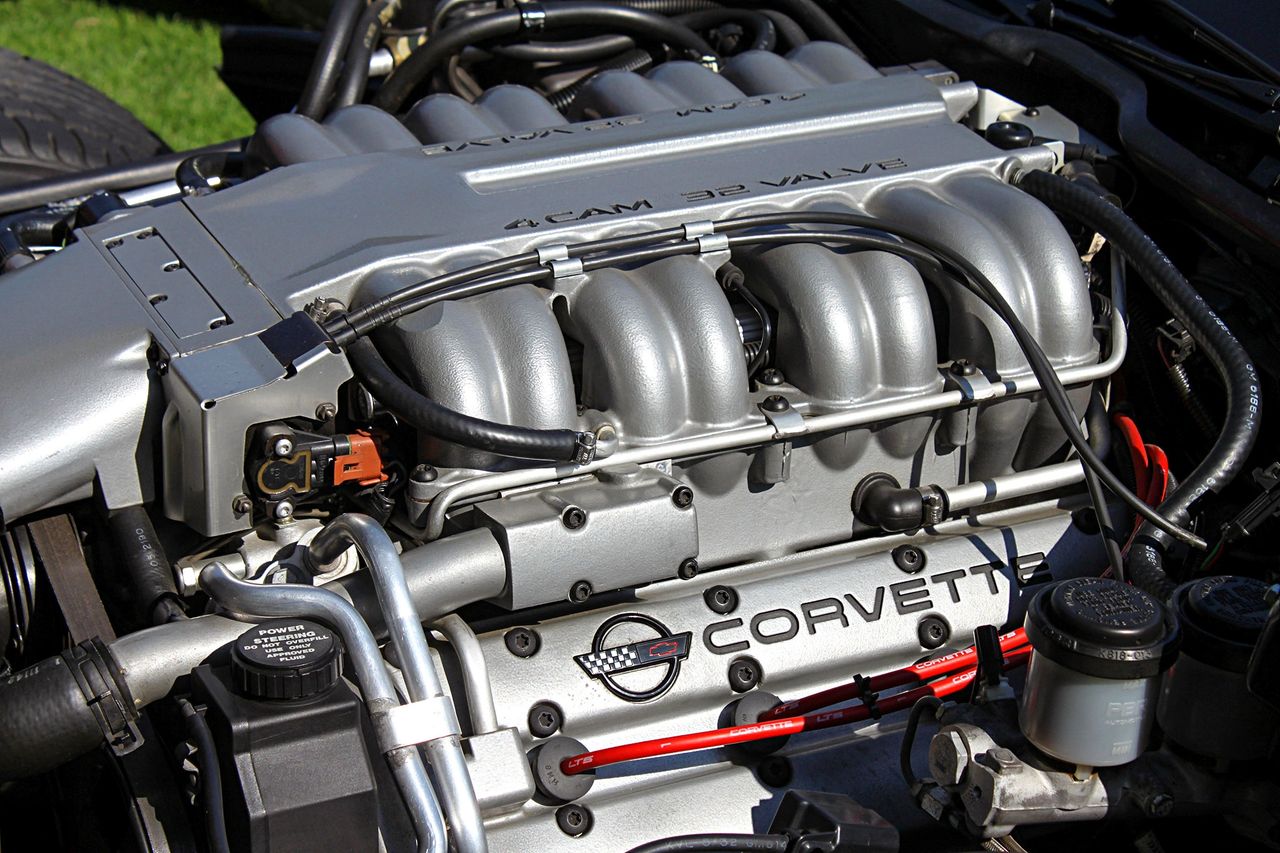
Once General Motors gave Lotus the green light, the engineering brief was unlike anything ever placed before a Corvette development team. The new engine had to meet seemingly contradictory goals:
- World-class power — at least 50% greater than the L98.
- Drivability — smooth idle, docile in traffic.
- Durability — capable of extended high-rpm use without compromising longevity.
- Efficiency — fuel economy on par with the base Corvette, while meeting emissions standards.
- Integration — it had to fit the existing C4 chassis without major structural changes.
- Appearance — it needed to look as refined underhood as it was powerful.
The result was the LT5, a 5.7-liter (350 cu. in.) all-aluminum V8 with 32 valves and dual overhead cams. On paper, its displacement matched the old L98, but in reality, it was an entirely different animal. From block to cylinder heads, from pistons to lubrication, this was a clean-sheet design born in Hethel and refined in America.
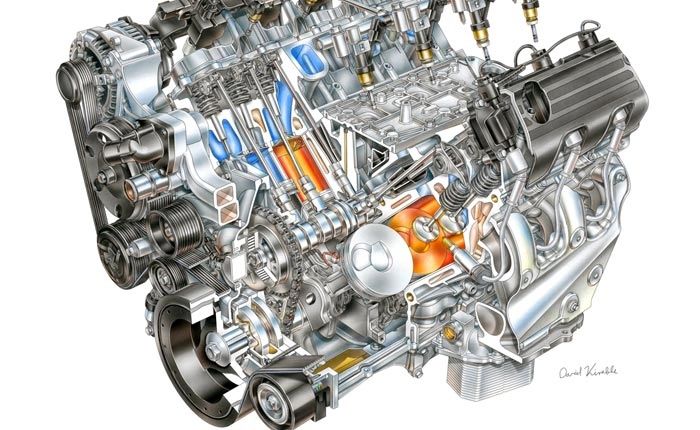
Lotus engineers started with a narrow 22-degree valve angle — chosen specifically so the engine would fit between the Corvette’s front frame rails. Its compact 26.6-inch width meant Chevrolet could drop it into the C4’s engine bay without reengineering the uniframe. Yet the internals bore little resemblance to a pushrod small block.
The block used Nikasil-coated aluminum liners paired with forged steel crank and rods. Pistons were lightweight aluminum Mahle slugs, dished slightly to yield a high 11.25:1 compression ratio. A heavily ribbed block and a one-piece aluminum bearing cradle secured the crank with 28 bolts, giving the LT5 race engine rigidity.
But the real marvel was the induction system. Engineers devised a staged three-mode intake that allowed the LT5 to breathe like two different engines.
- Primary mode — below ~3,500 rpm, only eight of the sixteen intake runners flowed, delivering smooth, efficient operation.
- Secondary mode — when the ECM judged more power was needed, vacuum actuators opened the additional eight runners, unleashing the full fury of 375 horsepower.
- Valet mode — unique to the LT5, the secondary runners could be disabled entirely by a key in the center console, locking the car into “half-power” mode. It was equal parts practical (for handing the keys to a hotel valet) and theatrical, underscoring just how exotic this Corvette had become.
At full tilt, the LT5 sang to 7,200 rpm, far beyond the safe range of the L98, with a distinctive mechanical shriek that was closer to Modena than Michigan. Yet at idle, it was glassy smooth, aided by Rochester Multec injectors and Bosch engine management. Road testers noted that the LT5 felt docile in traffic, but ferocious on demand — precisely what Reuss and McLellan had envisioned with their “bi-modal” brief.
Mercury Marine: Building an American Exotic
As Lotus finalized the design, Chevrolet faced a sobering reality: GM’s own engine plants weren’t equipped to hand-build a low-volume exotic engine to aerospace-like tolerances. Corvette’s annual sales hovered in the 20–25,000 unit range, but projected ZR-1 volumes were only a fraction of that — just a few thousand per year. This wasn’t the scale Flint or Tonawanda were designed for.
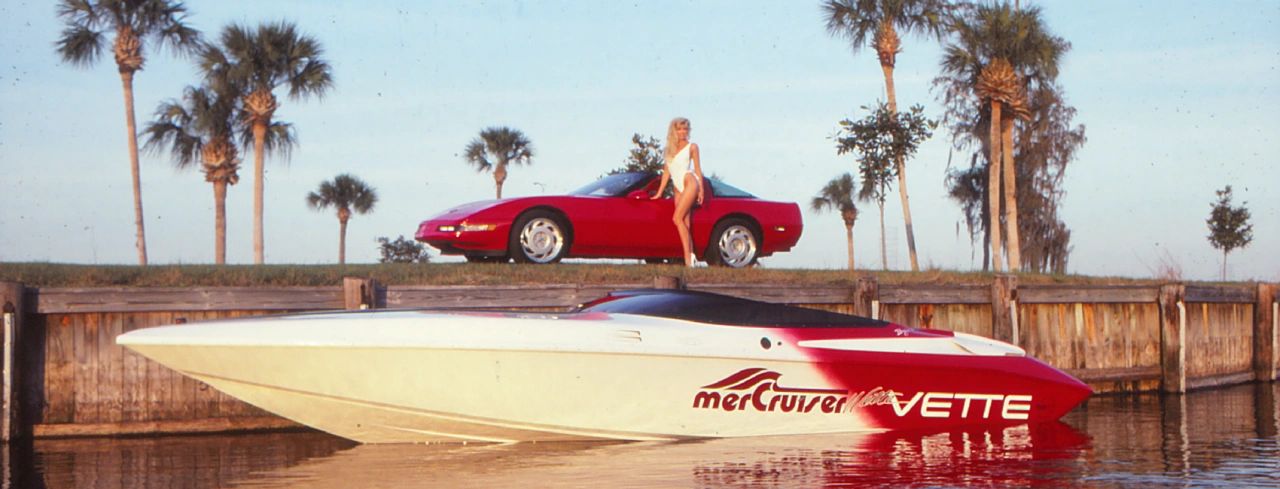
The solution was unconventional: Mercury Marine of Stillwater, Oklahoma. Known primarily for their high-performance “MerCruiser” marine engines, Mercury had both the expertise in aluminum machining and the small-volume assembly capability to deliver LT5s to spec.
Each engine was built by a dedicated team of technicians, assembled almost like a race engine rather than a production motor. Once completed, LT5s were shipped by flatbed to Bowling Green, where they were installed into ZR-1 chassis on the same line as standard Corvettes.
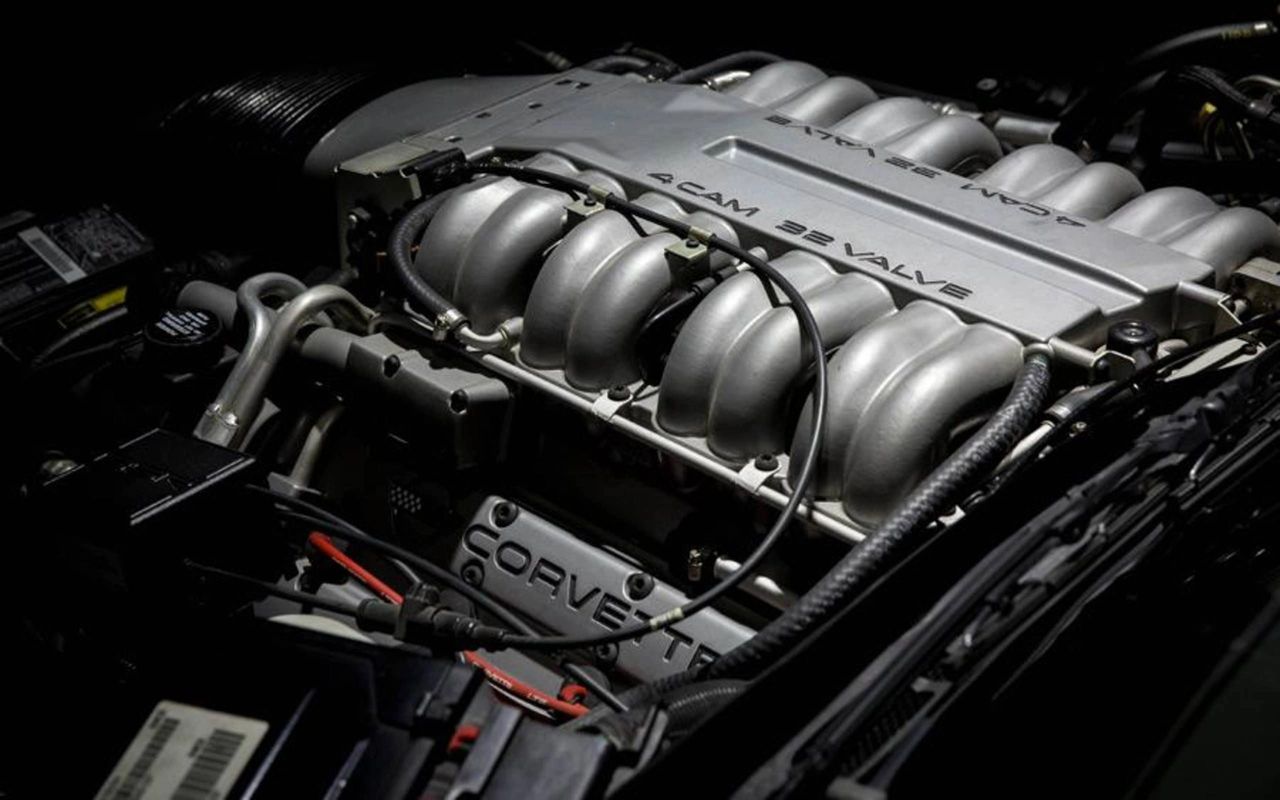
Perhaps most fascinating was Mercury’s ongoing role in service and warranty support. For the first several years (1990–1993), major LT5 repairs could not be performed at dealerships. Instead, Chevrolet dealers were required to remove the engine and ship it back to Stillwater. Owners would then either receive a repaired original or, in some cases, an entirely new engine. This unusual arrangement underscored just how exotic the LT5 was compared to a pushrod small block. Only later, after 1993, did Chevrolet take full responsibility for LT5 servicing.
For Mercury, the LT5 was a point of pride. Their own marine division explored adapting it for boat use, though those applications never went into large-scale production. The LT5 remains one of the most extraordinary examples of cross-industry collaboration in GM’s history.
Transmission: The ZF Six-Speed
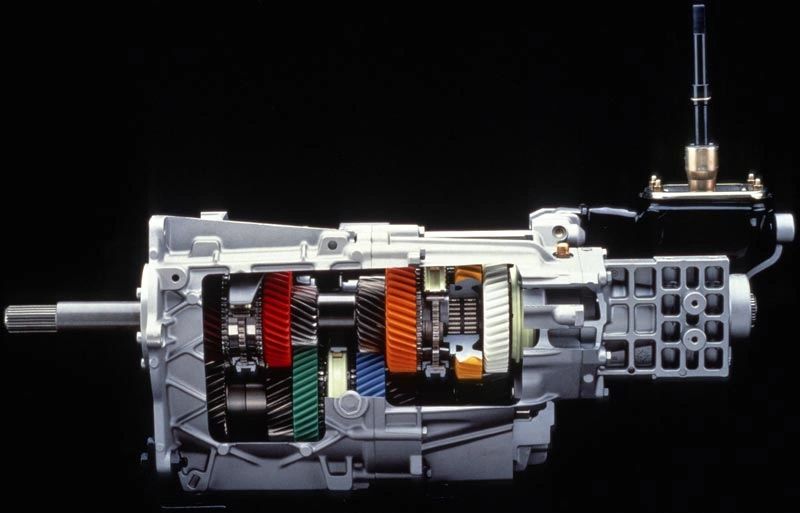
An engine as revolutionary as the LT5 demanded an equally advanced transmission. The solution came from ZF Friedrichshafen, the German gearbox specialist with a reputation for bulletproof engineering. Chevrolet had already struggled with the quirky Doug Nash 4+3 overdrive manual through the mid-1980s. The ZR-1 would suffer no such compromise.
The new ZF S6-40 six-speed manual was not only smoother and stronger, but also cleverly geared. Ratios were chosen to exploit the LT5’s broad power band, with a tall sixth gear enabling highway fuel economy that spared the ZR-1 from the dreaded gas-guzzler tax.
But there was a catch: Computer-Aided Gear Selection (CAGS). To meet fuel economy regulations, Chevrolet implemented a skip-shift system that forced drivers, under light throttle between 15–19 mph, to shift from first gear directly into fourth. While effective in testing cycles, it irritated many owners, who felt robbed of control. Aftermarket kits to disable CAGS quickly became popular.
Critics aside, the ZF six-speed was a revelation compared to the 4+3. Shifts were positive, the gearbox was durable, and the ratios kept the LT5 on boil when pushed hard. Combined with a reinforced differential and heavy-duty half shafts, the ZR-1 driveline was engineered to withstand sustained abuse at 7,000 rpm — something no prior Corvette transmission could reliably claim.
A Wolf in Subtle Clothing
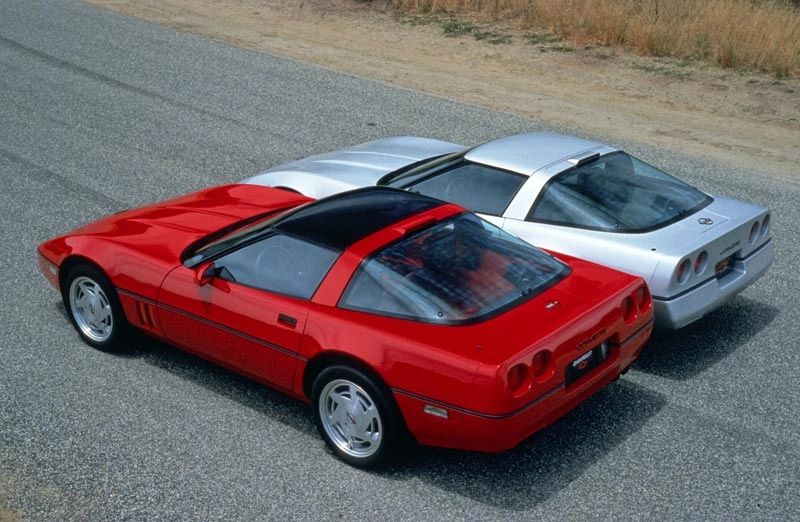
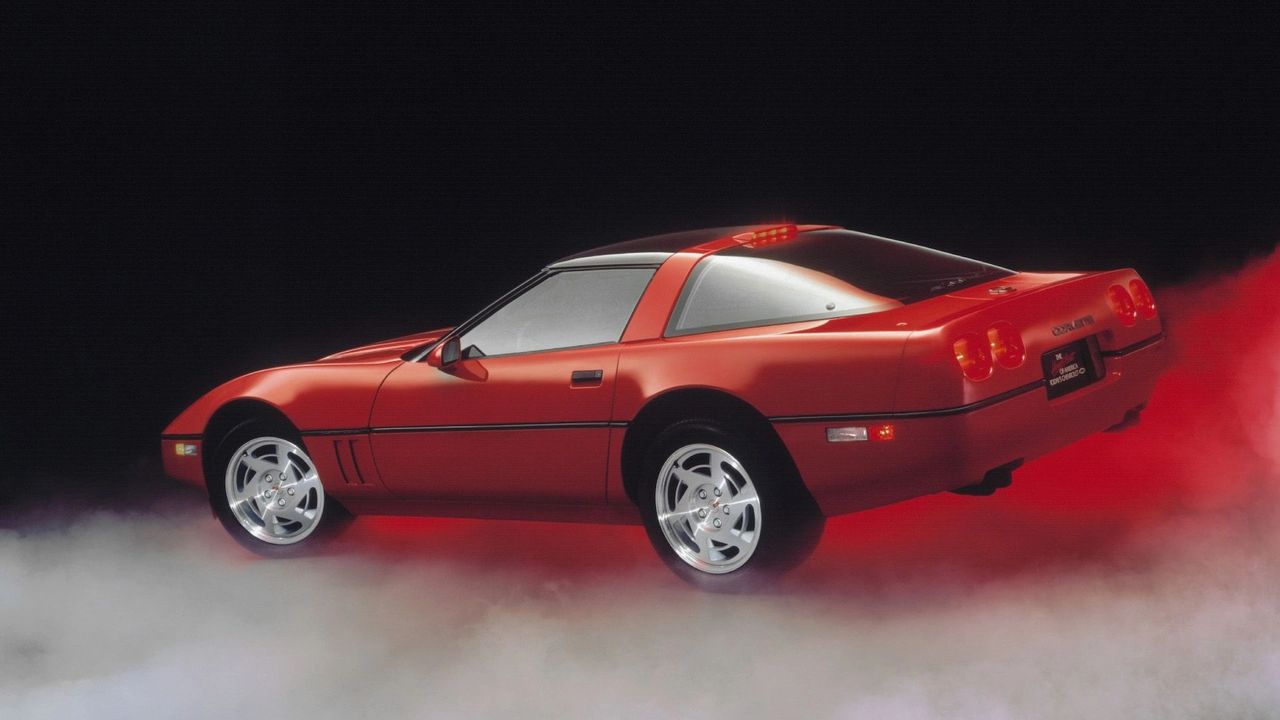
When the ZR-1 finally emerged from years of rumor and speculation, its styling surprised many enthusiasts. Rather than create a radical new body, Chevrolet opted for a design philosophy of evolution over revolution. Corvette Chief Engineer Dave McLellan often remarked that the car’s engineering spoke for itself, and he resisted anything that would compromise the C4’s already aerodynamic form.
Still, differentiation was essential. The ZR-1’s most defining cues were in the rear: the body widened three inches to accommodate massive 315/35ZR17 Goodyear Eagle Gatorback tires. These 11-inch-wide rears gave the car an aggressive stance, though the flare was subtle enough to escape casual notice. Corvette enthusiasts quickly learned to check the haunches — the ZR-1’s broader hips became an insider’s telltale.
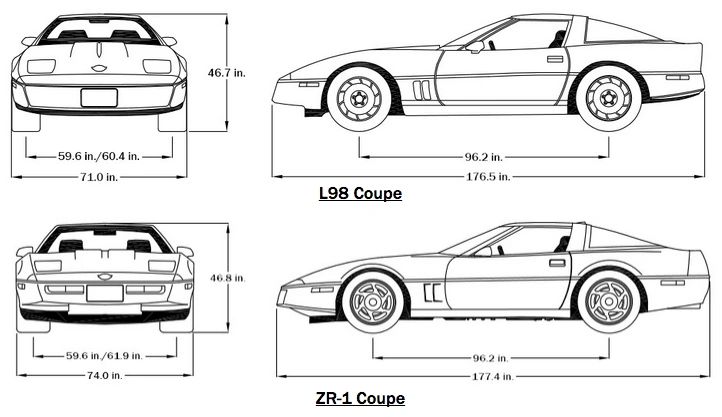
Even more distinctive was the new convex rear fascia with squared taillights. Base models retained the familiar concave panel and round lamps, but the ZR-1 debuted this bold new look. Function matched form: Chevrolet engineers claimed the convex shape improved aerodynamics at high speeds. The squared taillamps broke tradition but hinted at Corvette’s evolution into a more modern design language. By 1991, the convex rear and square lights became standard on all Corvettes, but in 1990, it remained a ZR-1 exclusive.
A discreet “ZR-1” badge graced the rear bumper, and a high-mount center brake lamp sat at the roofline — a feature mandated by federal safety law but integrated in a way unique to the ZR-1 until 1991. Beyond those details, the car looked deceptively ordinary. To the uninitiated, a ZR-1 parked beside an L98 coupe might appear identical. Owners often joked it was a $60,000 Corvette hiding in plain sight.
This restraint divided opinion. Purists loved the understatement: here was an American exotic that didn’t need wild spoilers or bulges. Others, however, argued that at twice the price of a base Corvette, the ZR-1 deserved flashier styling. It was a debate that mirrored Corvette’s own identity struggle: was it a brash American muscle machine, or a refined international sports car?
Supercar Numbers, Corvette Price
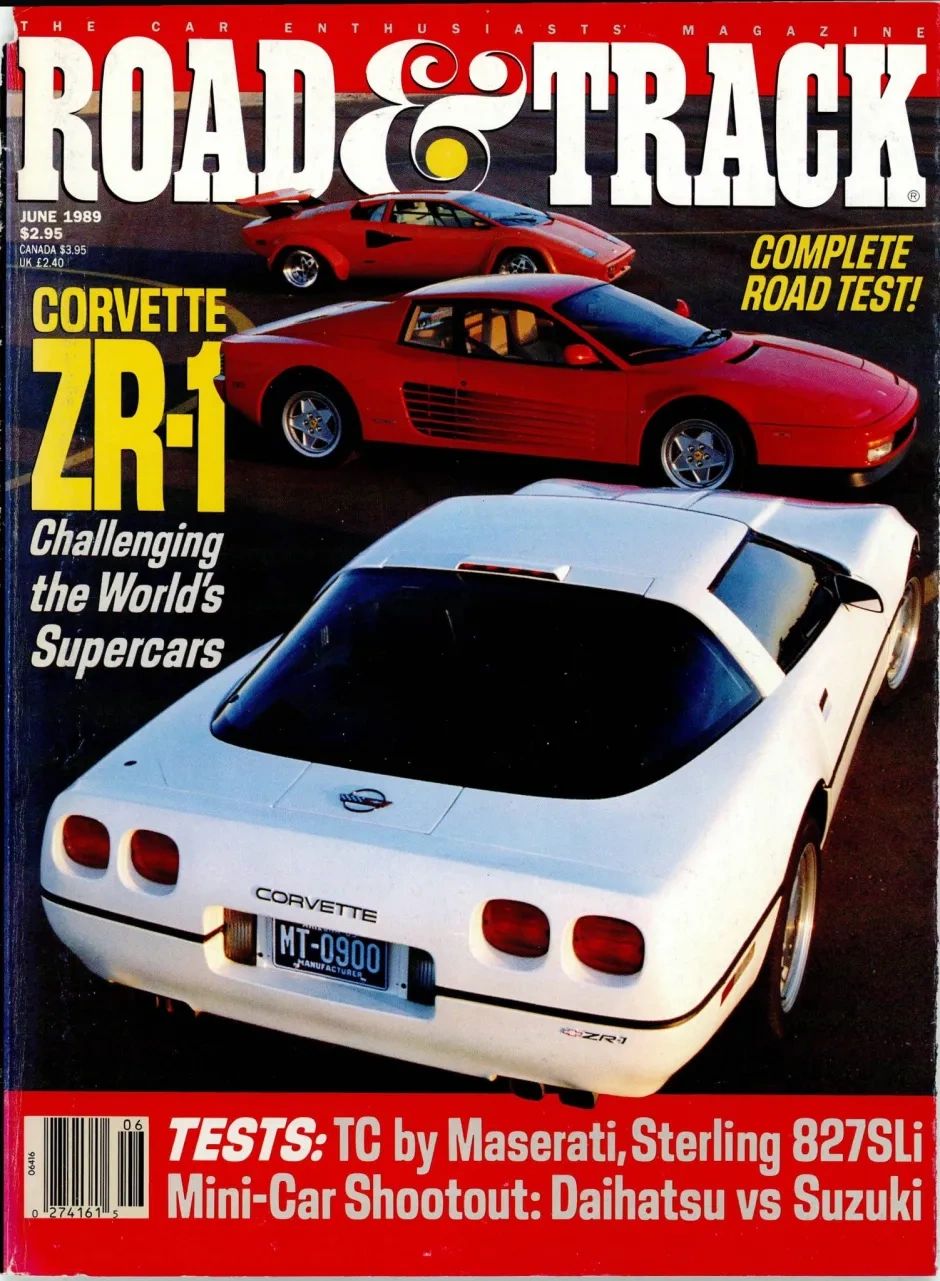
If the exterior sparked debate, the performance silenced it. When magazines tested the ZR-1 in early 1990, jaws dropped:
- 0–60 mph in as little as 4.5 seconds.
- Quarter mile in 12.8 seconds at over 110 mph.
- Top speed in the 175 mph range.
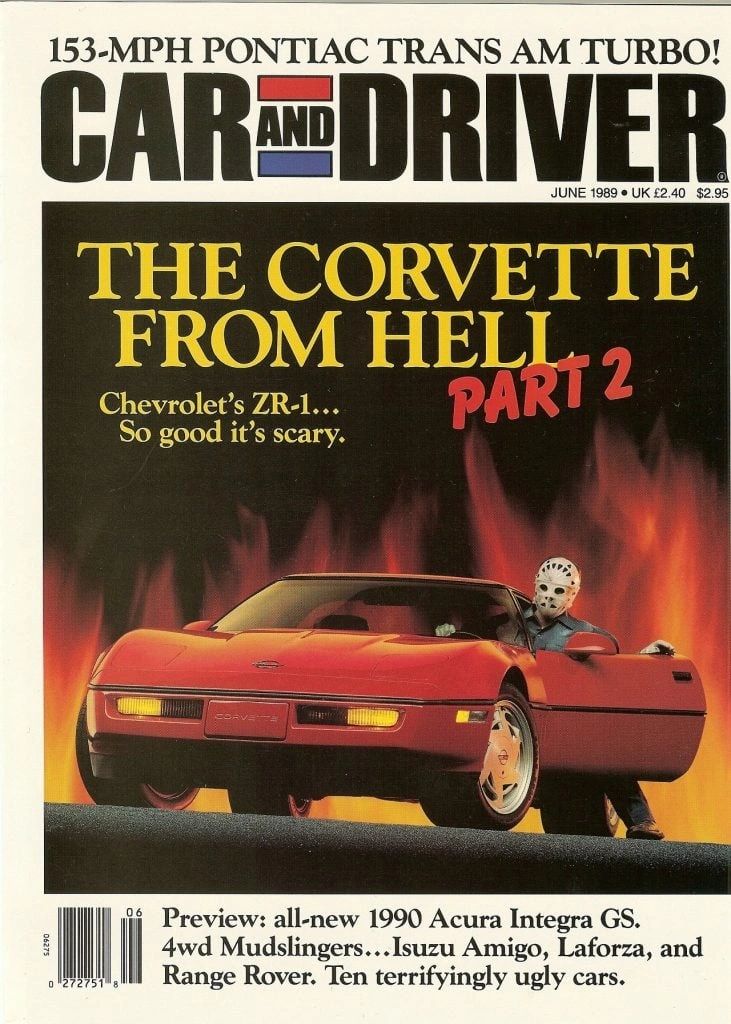
These figures placed the ZR-1 squarely in the realm of Ferrari’s 348 and Porsche’s 911 Turbo. Car and Driver declared it “the Corvette that finally delivers on the promise of the C4 chassis.” Motor Trend, in a famous headline, dubbed it “King of the Hill,” and it became the nickname that stuck.
But raw numbers only told part of the story. Reviewers consistently praised the LT5’s dual personality. Around town, with the secondary intake runners closed, the ZR-1 was docile and quiet, pulling smoothly from idle. On the highway or track, when the vacuum actuators opened the secondaries, the car transformed into a snarling exotic, rushing to 7,200 rpm with a ferocity no pushrod small block could match. Road & Track wrote that the ZR-1 seemed to have “two engines under one hood, both eager and both Corvette.”
Handling matched the power. With its wider rear track and Goodyear’s specially developed tires, the ZR-1 generated nearly 0.94 g on the skidpad — a world-class figure for the time. Brakes, borrowed from the 1988 Z51 package and upgraded further, hauled the car down from 60 mph in just over 120 feet. Reviewers noted that the ZR-1 felt unflappable at triple-digit speeds, thanks to its planted stance and carefully tuned suspension.
The Price of Greatness
At $58,995, the ZR-1’s price shocked some longtime Corvette buyers. It was, after all, nearly double the base coupe. For the first time in history, a Corvette could not be considered “affordable” by average enthusiast standards. But when compared to its rivals — Ferrari 348 at $120,000, Porsche 911 Turbo at $105,000 — the ZR-1 was still a supercar bargain.
Dealers, sensing demand, often pushed the car into speculative territory. Reports spread quickly of dealerships marking up early ZR-1s by $20,000, $30,000, even $40,000. Anecdotes circulated of buyers paying close to $100,000 for one of the first allocations. Some enthusiasts grumbled, but Chevrolet hardly minded: the ZR-1 was a halo car, and the frenzy only elevated Corvette’s global reputation.
Still, critics had their points. Three themes emerged in contemporary press reviews:
- Sticker Shock — Enthusiasts accustomed to Corvette’s bang-for-buck value struggled to reconcile the ZR-1’s cost.
- Skip-Shift Frustration — The federally mandated CAGS (1st-to-4th skip-shift) irritated drivers, even if it spared the car from the gas-guzzler tax.
- Styling Restraint — Reviewers wondered if a car this exotic deserved a more distinctive body.
Yet, even with those quibbles, the consensus was clear: Chevrolet had delivered a Corvette that could compete toe-to-toe with Europe’s best.
The Texas Records
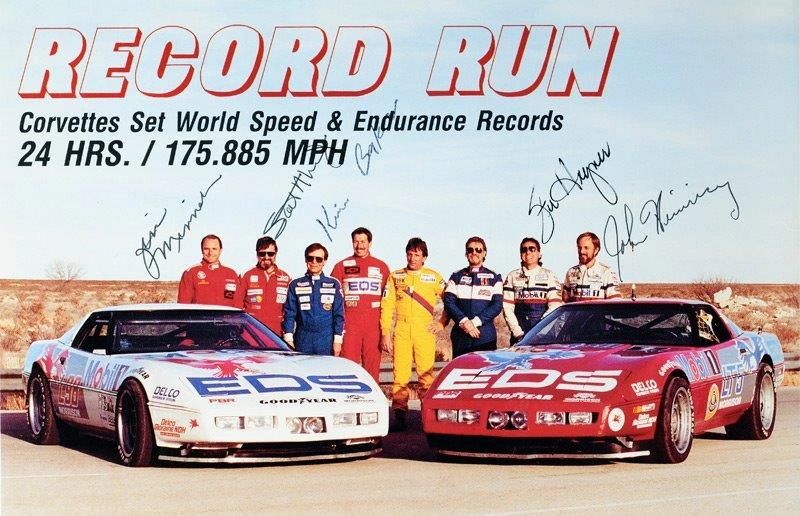
If magazine tests impressed, the ZR-1’s March 1990 endurance run in Texas cemented its legend. On Firestone’s 7.7-mile high-banked oval in Fort Stockton, a stock-spec ZR-1 (with safety modifications but no performance alterations) attempted to prove what no Corvette had ever proven before: that it could dominate not just in sprints, but in endurance.
Over 24 continuous hours, a team of drivers rotated stints at racing speeds. Fuel, tire, and driver changes were the only interruptions. When the checkered flag fell, the ZR-1 had shattered 12 FIA world records.
Most staggering was the 24-hour average speed: 175.885 mph. This wasn’t a one-lap wonder — it was a day-long demonstration of reliability and stamina. Among the 12 records, three were “absolute” world marks, regardless of classification, making the ZR-1 the first production car in 50 years to claim outright FIA honors.
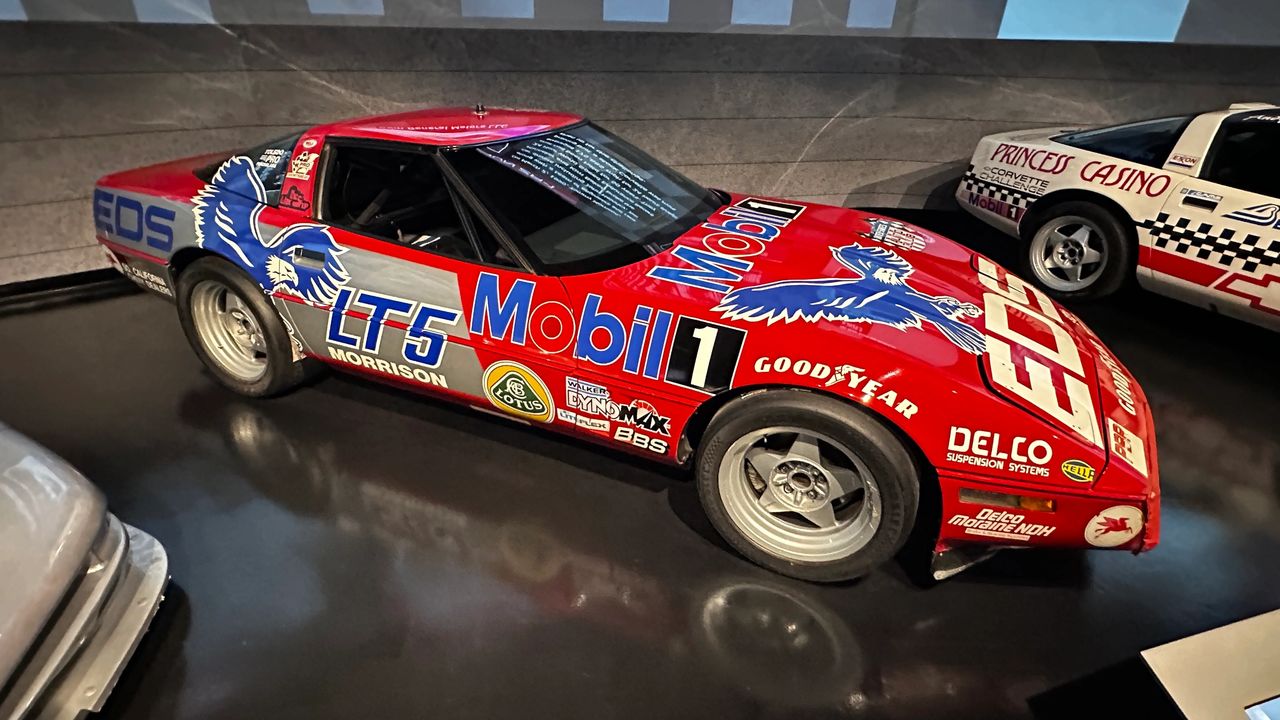
The achievement resonated worldwide. European manufacturers had long touted endurance as their domain. Now an American Corvette, built in Bowling Green and powered by an engine assembled in Stillwater, Oklahoma, had proven itself on the global stage. The records would stand until 2001, when Volkswagen’s 600-hp W-12 prototype finally eclipsed them. That it took a purpose-built concept car to dethrone the ZR-1 spoke volumes.
Instant Icon
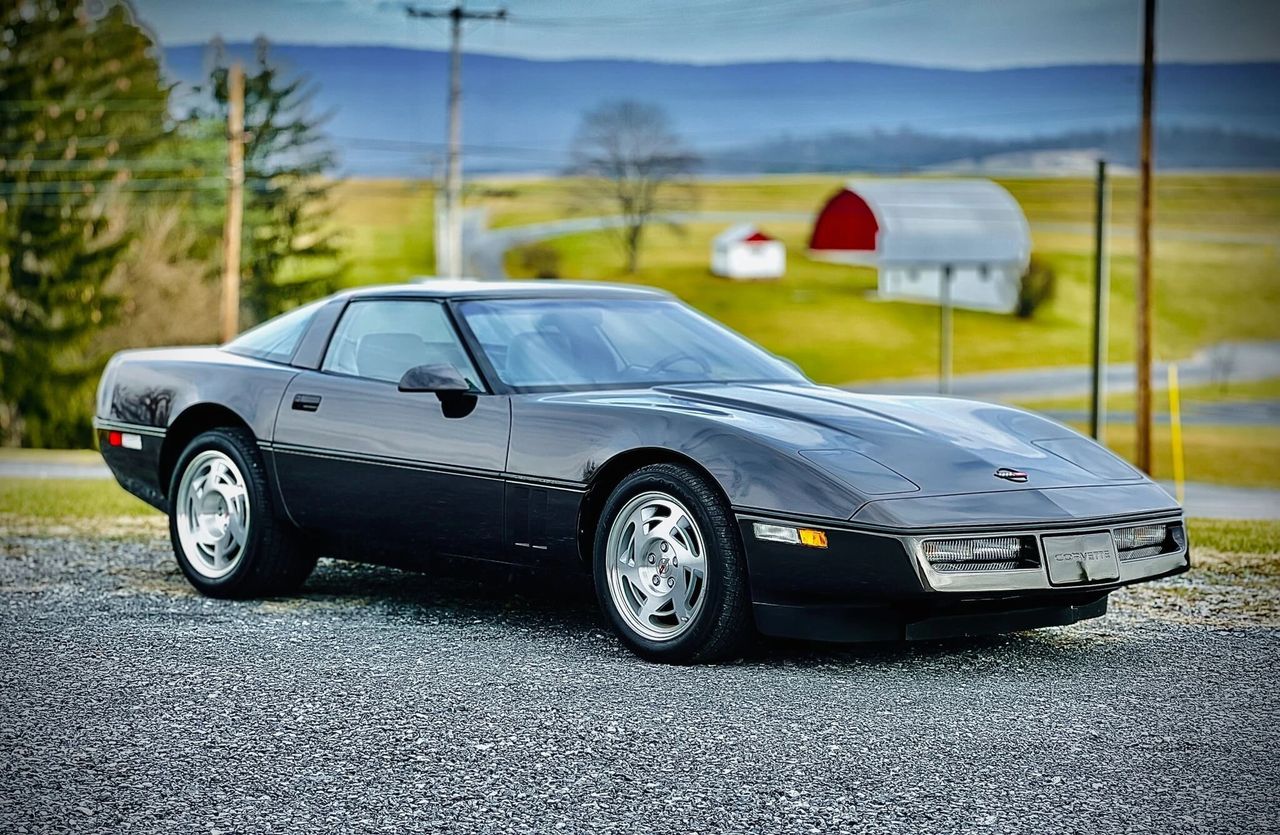
Before 1990, the Corvette had stood at the crossroads of performance history. For much of the 1980s, aftermarket tuners had filled a void that Chevrolet itself could not yet address. Callaway Cars, most famously, had produced the Twin-Turbo Corvette — a factory-sanctioned but independently engineered package that turned the Corvette into a legitimate 180-mph machine. The highlight was the legendary Callaway Sledgehammer, a one-off experimental car that reached an almost mythical 254.76 mph on Ohio’s Transportation Research Center oval in 1988. That feat, though never replicated in production, gave Corvette a kind of halo by association.
But in 1990, the landscape shifted dramatically. For the first time since the days of Zora Arkus-Duntov’s 1960s racing specials, Chevrolet itself had produced a Corvette that no tuner could match: the ZR-1. With its Lotus-designed LT5 engine, Mercury Marine assembly, and FIA world records, it was the factory — not Callaway or Lingenfelter or Greenwood — setting the standard. Callaway’s own production reflected the change: only 58 Twin-Turbos were sold in 1990, compared to 3,049 ZR-1s.
In the press, the verdict was near unanimous: the ZR-1 was not only the fastest, most capable Corvette ever built, but also a watershed moment in American automotive history. For decades, Corvette had been an underdog — respected at home, doubted abroad. In 1990, that narrative flipped. Ferrari and Porsche were no longer untouchable. Corvette had joined their ranks, and in some respects, surpassed them.
The message was unmistakable: the Corvette no longer needed validation from outside firms. It had become its own exotic.
Racing Aspirations: SCCA World Challenge
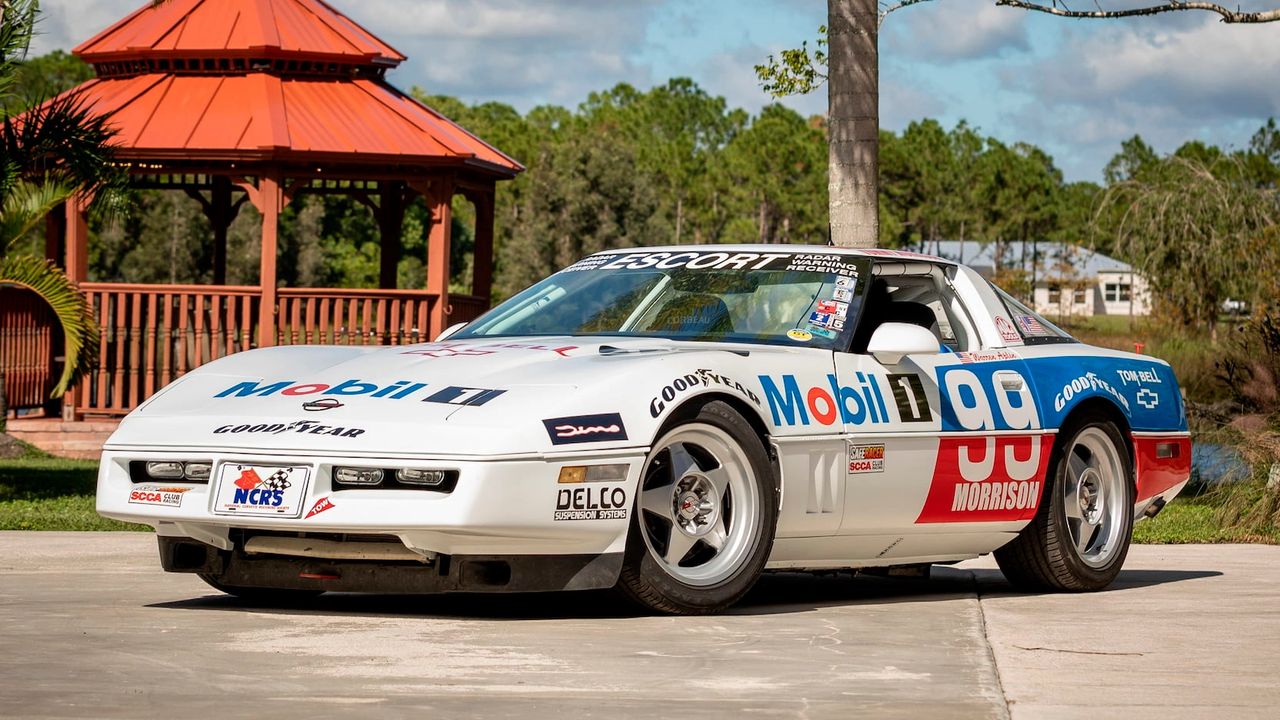
While Chevrolet had officially withdrawn from factory-backed racing programs in the wake of the AMA’s late-1950s racing ban, the spirit of competition never disappeared from Corvette engineering. By 1990, with the ZR-1 redefining Corvette’s technological ceiling, Chevrolet supported grassroots racing through production-based efforts.
The newly created SCCA World Challenge series (launched in 1990) became a proving ground. Chevrolet offered 23 specially prepared Corvettes with heavy-duty suspension systems that could be ordered directly through dealerships. Though technically available to any customer, these cars were aimed at privateer racers eager to test Corvette against emerging imports in showroom-stock competition.
Unlike the FIA endurance records in Texas — a corporate-backed showcase designed to prove the LT5’s durability — the SCCA Corvettes reflected Chevrolet’s confidence that the platform, even in near-stock form, could compete wheel-to-wheel in sanctioned racing. Buyers could either run the robust L98 small block or provide their own modified powerplants. Chevrolet’s willingness to make such cars available through normal dealer channels spoke volumes: Corvette was once again a legitimate racing foundation, not just a high-speed street car.
Production Realities
For all the ZR-1’s fanfare, overall Corvette production declined in 1990, reflecting broader market conditions. Chevrolet built 23,646 Corvettes total, broken down as follows:
- 20,597 standard coupes/convertibles (VINs 100001–120597).
- 3,049 ZR-1 coupes (VINs 800001–803049).
The drop from 1989’s 26,412 cars wasn’t catastrophic, but it reflected an important reality: the Corvette was no longer a volume car. By the dawn of the 1990s, buyers who had once been lured by the glamour of America’s only sports car now had a wealth of alternatives, from Japan’s rising stars (the Acura NSX, Mazda RX-7 Turbo, Nissan 300ZX Twin Turbo) to Europe’s stalwarts.
Yet Chevrolet was content with the lower totals. Corvette wasn’t meant to be everyman’s car in 1990; it was meant to be America’s technological flag-bearer. The ZR-1, even at limited production, served its halo purpose brilliantly.
Price and Value
At $31,979 for a base coupe and $37,264 for a convertible, the Corvette remained accessible to many enthusiasts. But the ZR-1, with its $27,016 option package, carried a sticker of $58,995.
The number shocked some. Corvette had always been a relatively affordable sports car — exotic looks and performance at a fraction of the price of European competitors. But now, Chevrolet had crossed a psychological threshold. For the first time in history, a Corvette cost as much as a luxury home in many parts of America.
Still, compared to its peers, the ZR-1 was a bargain. A Ferrari 348 of the era listed at $120,000; a Porsche 911 Turbo approached $105,000. Road & Track called the ZR-1 “the supercar bargain of the decade,” noting that no other car offered such speed, refinement, and endurance at anywhere near the price.
In the showroom, however, supply and demand distorted the equation. Dealers routinely added $20,000–$40,000 markups. Anecdotal reports tell of buyers paying close to $100,000 for early cars, just for the privilege of being first. The Corvette, once criticized for “cheapness,” was suddenly the subject of exotic-level speculation.
Colors and Character
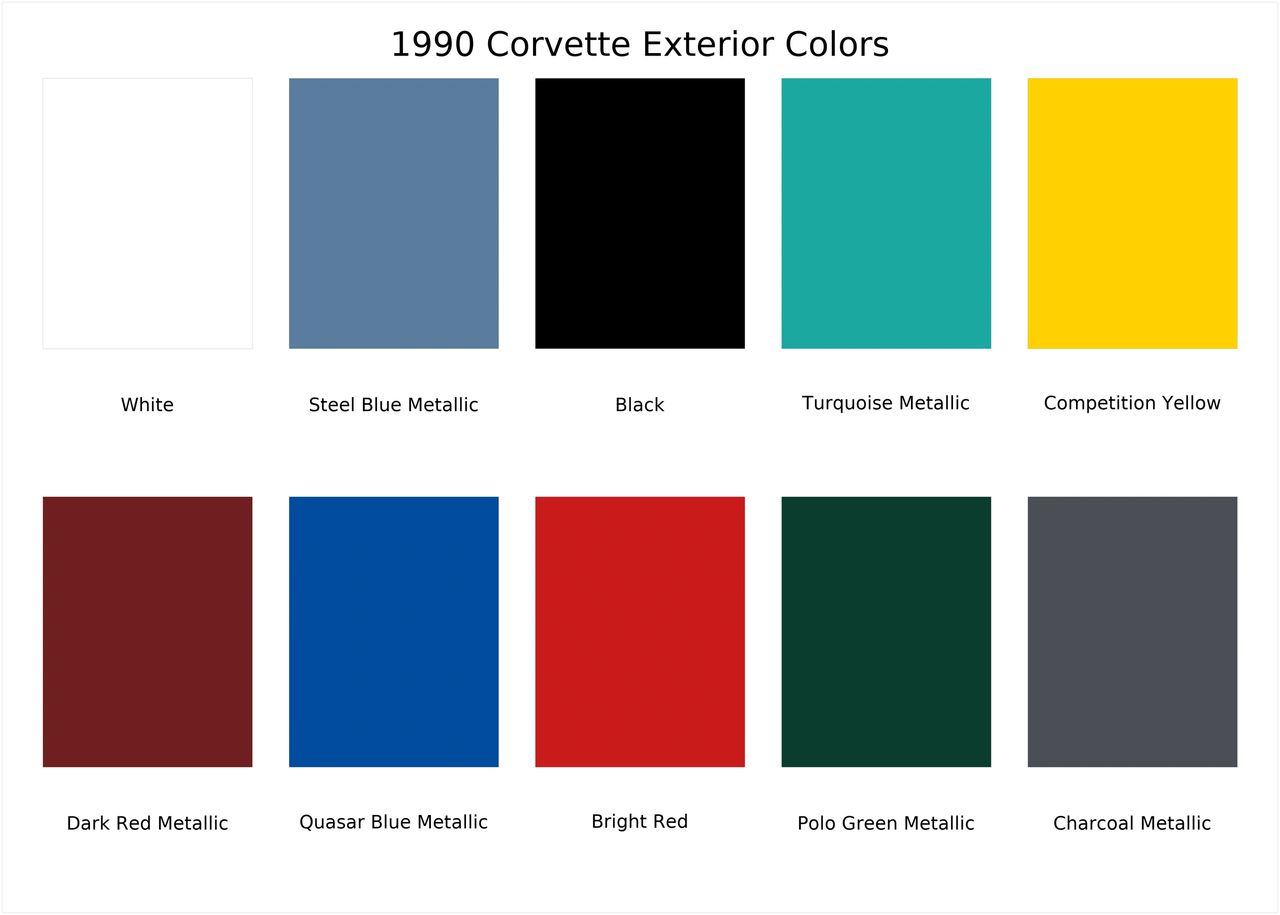
Ten paint options defined the 1990 palette:
- White
- Steel Blue Metallic
- Black
- Turquoise Metallic
- Competition Yellow
- Dark Red Metallic
- Quasar Blue Metallic
- Bright Red
- Polo Green Metallic
- Charcoal Metallic
Bright Red dominated production (29.4%), followed by Black (20.1%) and White (20.6%). These bold, primary hues reflected the Corvette’s extroverted image — loud, proud, and unapologetically American. Meanwhile, colors like Competition Yellow and Quasar Blue brought energy to the range, and Polo Green tied the model back to Corvette’s long tradition of offering a rich, British Racing-inspired shade.
Inside, Corvette finally embraced practicality and modern expectations: leather seating became available across all trims, the glovebox returned, and the hybrid analog-digital dashboard offered drivers the best of both worlds. Small touches, but together they made the Corvette cabin feel contemporary.
VINs and Collectability
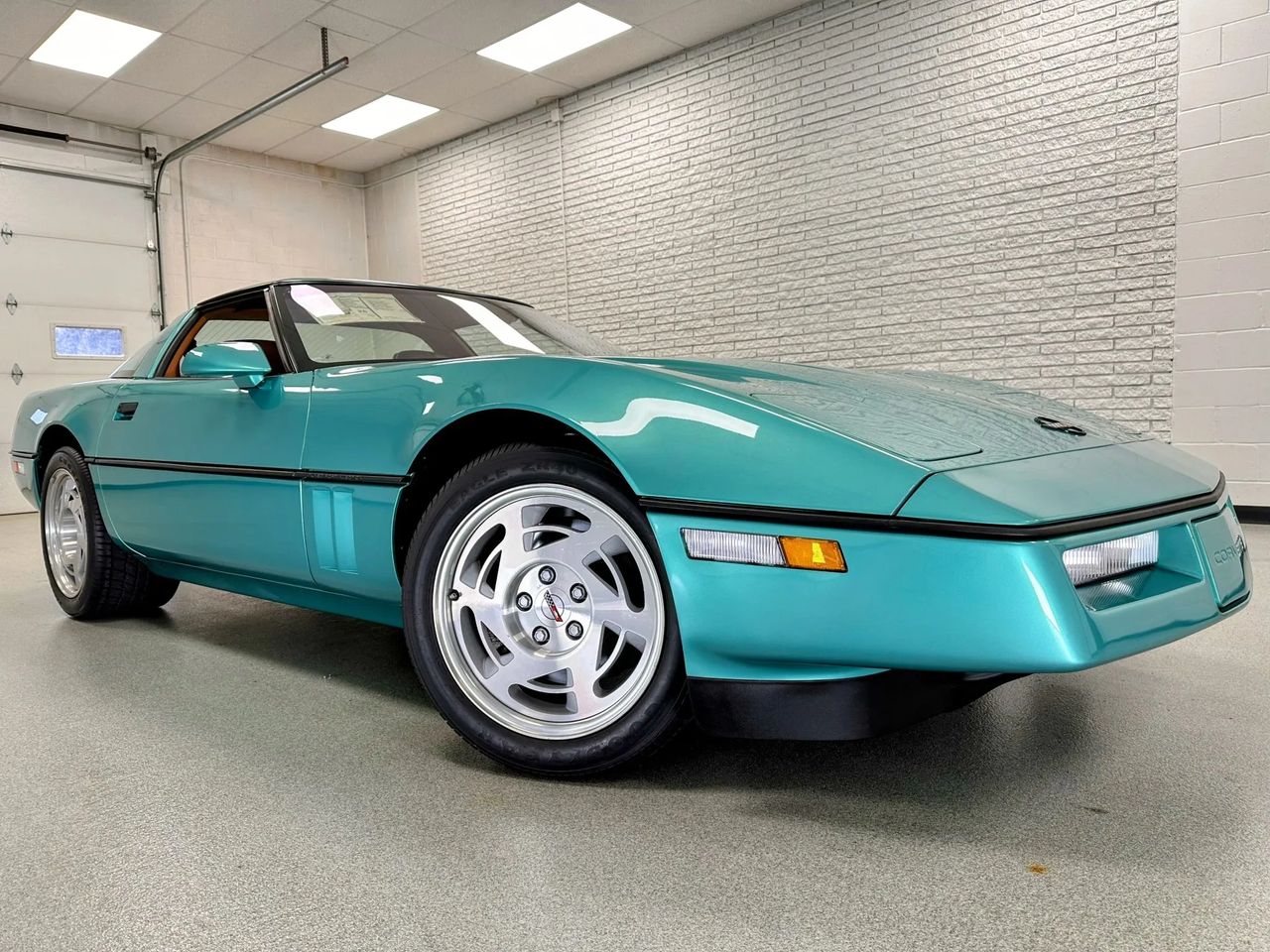
For historians and collectors, the VIN structure of 1990 tells an important story. Standard Corvettes ran sequentially from 100001 to 120597. ZR-1s, however, occupied their own unique sequence: 800001–803049. That separation effectively created a “model within a model,” underscoring Chevrolet’s intention that the ZR-1 stand apart.
Today, collectors scrutinize these VINs carefully, especially since counterfeit ZR-1s have been attempted. The wide-body rear haunches and convex fascia can be retrofitted, but the VIN remains the definitive marker of authenticity.
Legacy: A Watershed Year
Looking back, 1990 was not simply a model year — it was a declaration.
For the standard Corvette, incremental gains kept the car sharp: airbags, ABS refinement, improved cooling, revised instrumentation, and creature comforts. But the ZR-1 was the thunderclap. It told the world that Chevrolet, and by extension America, could build a supercar that rivaled anything from Modena, Stuttgart, or Maranello.
The LT5 was an engineering statement, the ZF six-speed a driver’s dream, and the Texas endurance records a mic-drop moment in performance history. Critics could complain about price, styling subtlety, or skip-shift irritations, but none of that dulled the achievement.
The ZR-1 also shifted Corvette’s cultural image. Through much of the 1970s and early 1980s, Corvette had been viewed as a flashy cruiser, more boulevard toy than serious sports car. In 1990, that perception evaporated. The Corvette was now measured against Ferrari and Porsche in earnest, not as an underdog, but as a peer.
Production numbers would fall in subsequent years, and the ZR-1’s exclusivity ensured it was never a mass-market car. But that was the point. The ZR-1 existed to elevate the Corvette nameplate, and in that, it succeeded spectacularly.
For collectors today, the 1990 ZR-1 is revered not just as the first year of a special option, but as the moment Corvette entered the modern performance conversation. Its VIN range, world records, and Lotus/Mercury Marine pedigree make it one of the most historically significant Corvettes ever built.
Final Word on 1990
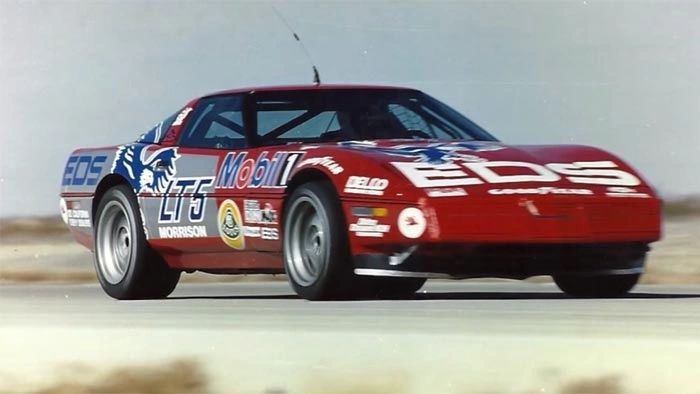
The 1990 Corvette was the start of something new — a car that looked back to its heritage while leaping into the future. The base model offered evolutionary improvements, but the ZR-1 was revolutionary. It wasn’t just a Corvette with more horsepower; it was a Corvette that redefined what America could build.
In March of that year, on a high-speed oval in Texas, a group of engineers, test drivers, and mechanics watched as their car circled endlessly, shattering records once thought untouchable. As the sun rose the next day, and the ZR-1 crossed the 24-hour mark at nearly 176 mph average speed, it wasn’t just a Corvette triumph. It was a statement: the King of the Hill had arrived, and it wore crossed flags.
1990 Corvette — Key Specifications (Base vs. ZR-1)
Engines & Transmissions
- Base (Coupe/Convertible): L98 5.7L TPI V8 — 245 hp @ 4,400 rpm, 345 lb-ft @ 3,200 rpm. Transmissions: 4-spd automatic (TH700-R4) or ZF S6-40 6-spd manual (no-cost).
- ZR-1: LT5 5.7L DOHC V8 — 375 hp @ 6,000 rpm, 370 lb-ft @ 4,800 rpm; ZF S6-40 6-spd manual only.
Performance (period ranges)
- Base: ~5.7–6.5 s 0–60 mph • ~14.5–14.9 s @ ~96–98 mph ¼-mile • ~150 mph top speed (equipment/axle dependent).
- ZR-1: Quicker in most tests; substantially higher top speed vs. L98 per factory literature and period tests.
Chassis, Suspension & Brakes
- Base: Uniframe with composite body; forged-aluminum control arms (F/R); independent 5-link rear; transverse composite monoleaf springs; gas-pressurized shocks; power rack-and-pinion steering; Bosch ABS II standard. Options: Z51 Performance Handling (HD springs/bars/cooling, performance axle) and FX3 Selective Ride Control (requires Z51 + 6-spd on coupe).
- ZR-1: Same core structure with unique rear body widening to cover 11-in rear wheels; ABS and ZF 6-spd standard; FX3 commonly paired.
Wheels & Tires
- Base: 17 × 9.5-in alloy wheels (L/R specific) with P275/40ZR-17 unidirectional Goodyear Eagles.
- ZR-1: Front 17 × 9.5-in / 275/40ZR-17, Rear 17 × 11-in / 315/35ZR-17; necessitated the wider rear bodywork/doors/rockers.
Dimensions & Weights
- Base (typical): Wheelbase 96.2 in • L/W/H ~176.5 / 71.0 / 46.7 in • Turning circle ~40.4 ft • Curb weight ~3,223–3,336 lb (auto vs. 6-spd; body style).
- ZR-1: Curb weight ~3,465–3,479 lb (coupe). Cargo volume smaller due to wider rear structure.
Powertrain Details & Axles
- Base: L98 9.5:1 compression; TPI; Electronic Spark Control. Common axle ratios: 2.59 (auto), 3.33 (manual; 3.07 used with certain packages).
- ZR-1: LT5 aluminum block/heads, 32-valve DOHC, 11.0:1 compression; factory axle 3.45:1 final drive.
Safety & Interior (all 1990)
- Driver airbag (SIR) added; redesigned wraparound dash with hybrid analog/digital cluster; low tire-pressure warning system.
Paint & Trim (factory brochure palette)
- Launch colors (brochure): Black, Steel Blue Metallic, Charcoal Metallic, Polo Green Metallic, White, Bright Red, Dark Red Metallic (availability by trim as listed).
- ZR-1 brochure confirms same palette for ZR-1 with model-specific interior/exterior listings.
Why the 1990 Corvette Still Matters Today
The 1990 Corvette matters because it represents the moment the C4 platform fully came into its own. With the arrival of the ZR-1 and its Lotus-engineered LT5, Chevrolet proved that America’s sports car could compete on a global stage—not just in straight-line acceleration, but in engineering sophistication and top-speed credibility. That halo effect reshaped public perception of the entire Corvette lineup and laid the groundwork for the high-performance variants that would follow in later generations.
But the significance runs deeper than the “King of the Hill.” The 1990 model year reflected a C4 that had matured—chassis tuning refined, electronics modernized, and driver confidence sharpened. Today, the 1990 Corvette stands as a bridge between the experimental boldness of the early C4 Corvette years and the polished dominance Corvette would achieve in the 1990s and beyond. It’s a reminder that evolution, when done methodically, can redefine an icon without abandoning its roots.