
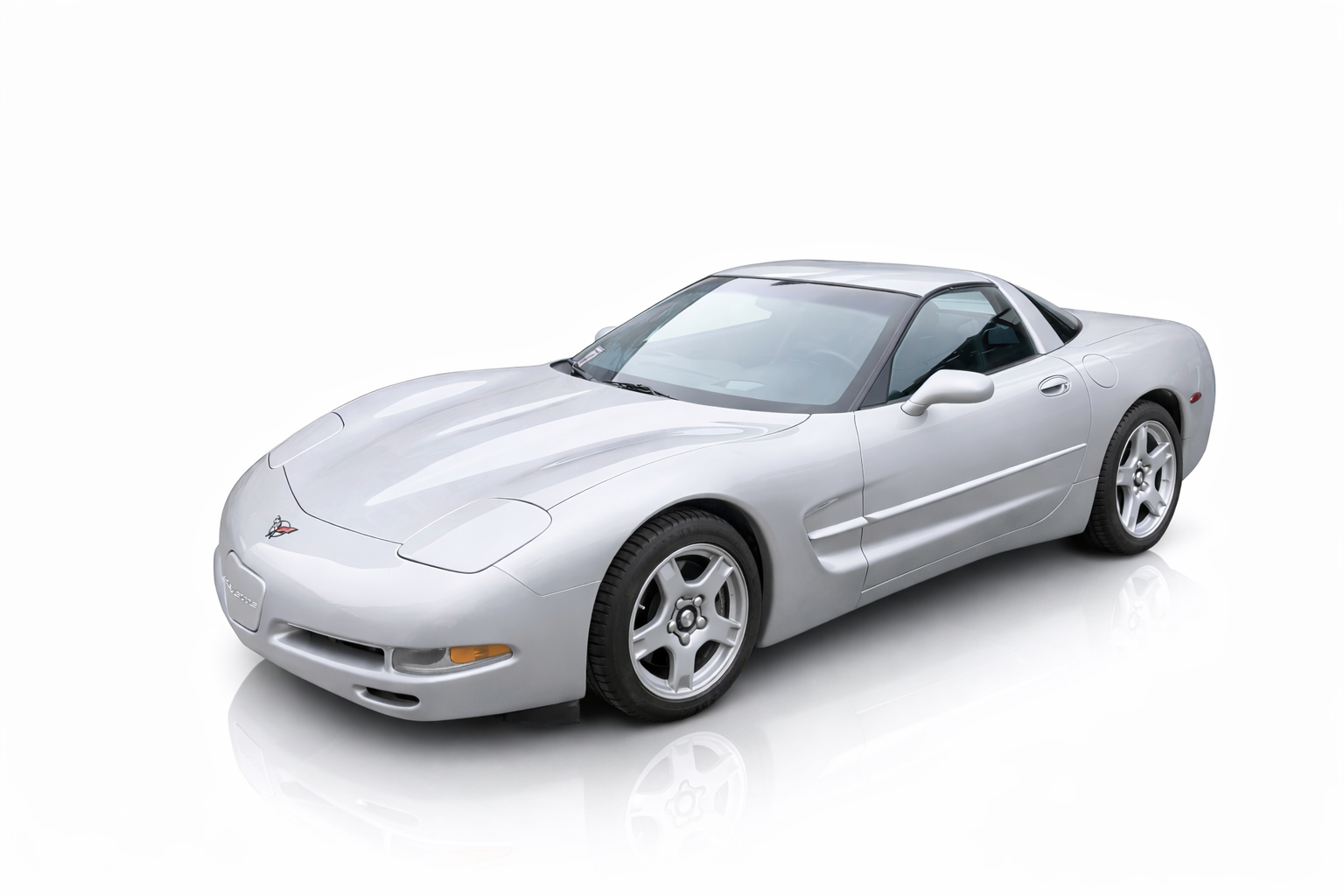
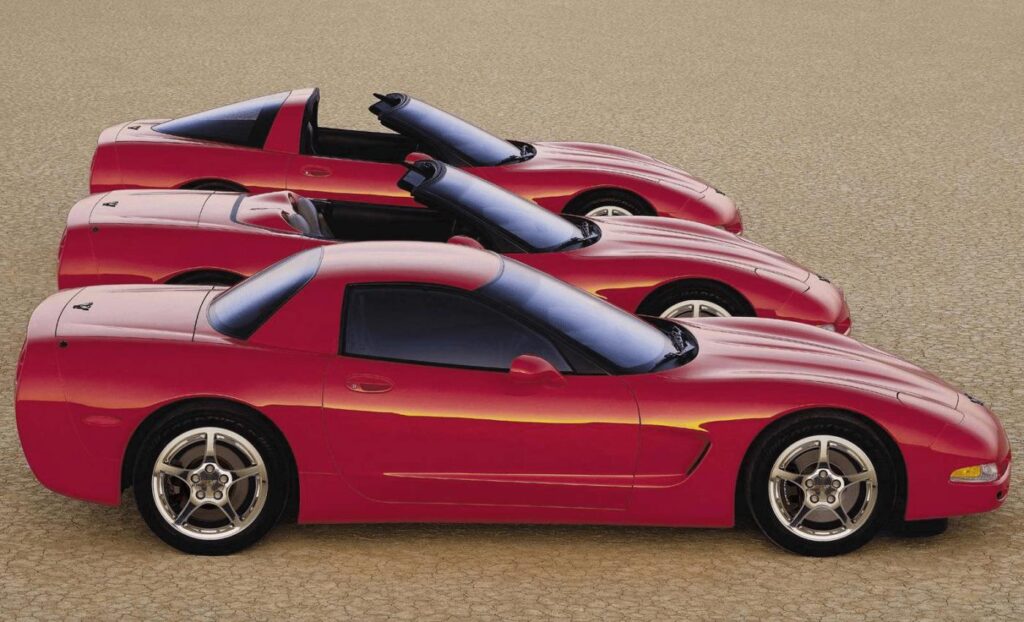
By 1999, the fifth-generation Corvette was no longer the promising new car that had stunned the industry in 1997. It had become something more important than that: a settled, confident platform that Chevrolet now understood well enough to stretch in multiple directions. The coupe was already established as a legitimate world-class sports car. The convertible had returned in 1998 and restored open-air Corvette motoring to the lineup. Then, for 1999, Chevrolet added the third body style that completed the C5 family: the hardtop, the car enthusiasts would come to know as the FRC, or Fixed Roof Coupe. At the same time, the model year introduced the Head-Up Display, refined the steering system, continued the march toward a more polished interior experience, and marked the beginning of Corvette’s modern return to factory-backed racing through the C5-R. In other words, 1999 was not a transitional year. It was the year the C5 lineup came fully into focus.
That matters because the 1999 Corvette was not defined by a single massive mechanical leap. Horsepower remained 345 from the LS1, torque stayed at 350 lb-ft, and the basic C5 architecture remained as brilliant as it had been at launch: hydroformed perimeter frame, rear transaxle, unequal-length control arms, composite transverse springs, and a body that finally gave Corvette the structural and dynamic polish it had chased for decades. What changed in 1999 was the breadth of the idea. Chevrolet was no longer just selling a coupe and a convertible. It was beginning to segment the Corvette audience with real precision: grand-touring buyers, open-air buyers, and hard-core drivers who wanted the sharpest, leanest version of the platform available. That shift would shape the rest of the C5 era.
The Fear Behind the Hardtop
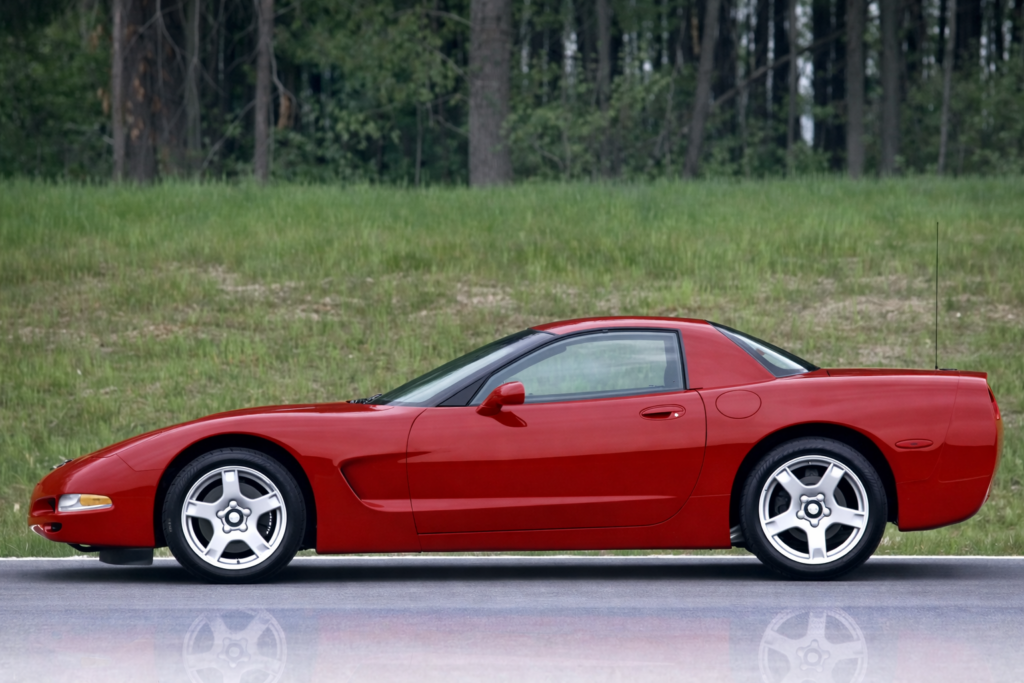
One of the most interesting truths about the 1999 Corvette is that its most important new variant did not begin life as a purity special. It began life as a pricing exercise. Early in the C5’s development, Chevrolet explored the idea of creating a cheaper Corvette—something intentionally pared back, aimed at broadening the car’s reach at a time when there was internal concern about whether Corvette was becoming too exclusive, too expensive, and too vulnerable to shrinking demand. Chief engineer Dave Hill later recalled that Chevrolet asked him to find a way to make a cheaper Corvette, and period reporting from Car and Driver makes clear that early clinic cars reflected exactly that thinking: manually adjusted cloth seats, smaller tires, fewer features, and even an automatic transmission in some prototypes.
The problem was that customers did not want a bargain-basement Corvette. They wanted a Corvette that felt special. According to Car and Driver, clinic reactions to those stripped prototypes were overwhelmingly negative, and Hill himself drew a sharp line between the abandoned budget concept and the production car that followed, saying flatly, “This is not a stripper.” That sentence tells you almost everything you need to know about how the 1999 hardtop came to market. Chevrolet did not abandon the idea of a lighter, less expensive Corvette. It redefined the mission. Instead of trying to make the Corvette cheaper in a way buyers would perceive as diminished, Chevrolet repositioned the car as more focused, more rigid, and more serious. John Middlebrook described the resulting model as “lighter, stiffer and slightly more agile,” and that language was not accidental. The hardtop would not be sold as a lesser Corvette. It would be sold as a sharper one.
From Budget Exercise to Serious Driver’s Car
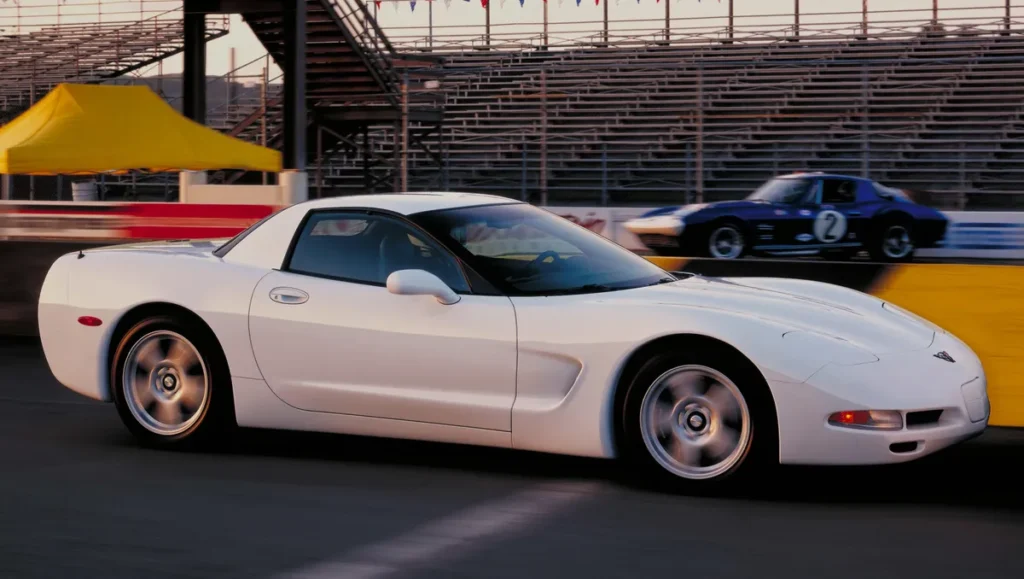
That repositioning is what makes the 1999 hardtop such a fascinating car in Corvette history. The production model preserved some of the original austerity logic, but only where Chevrolet believed it could be recast as performance discipline. The hardtop arrived as the first fixed-roof Corvette since the 1963–67 Sting Ray coupes. It used the convertible’s rear body structure and external trunk, then paired that with a bonded fixed roof rather than the coupe’s removable targa panel and large glass hatch. The result was the stiffest C5 body shell to date, with period and retrospective sources consistently pegging it at about 12 percent stiffer than the coupe and roughly 80 to 90 pounds lighter depending on how the comparison was made. Official archival specs list the hardtop at 3,155 pounds versus 3,245 for the hatchback coupe, while Car and Driver measured a 79-pound advantage against a comparably equipped hatchback.
Chevrolet then made sure the supporting hardware backed up the story. Every hardtop came standard with the six-speed manual transmission, the 3.42 limited-slip rear axle, and the Z51 Performance Handling Package, featuring stiffer springs, larger stabilizer bars, and monotube shocks. That was a meaningful bundle. On the coupe and convertible, those items cost extra. On the hardtop, they defined the car. Jim Campbell pointed out at launch that the six-speed and Z51 package represented a value that widened the real price gap between the hardtop and a comparably equipped coupe beyond the base MSRP suggested. In pure sticker terms, the hardtop started at $38,777, the coupe at $39,171, and the convertible at $45,579. But Chevrolet knew buyers were not comparing bare numbers on paper. They were comparing what they got for those numbers.
What the Hardtop Kept, and What It Gave Up
What is often missed in retellings of the 1999 hardtop is that Chevrolet did not build a bare-bones penalty box. In fact, the launch press release makes clear that all 1999 Corvettes—including the hardtop—still came with a strong baseline of standard equipment: the 5.7-liter V8, traction control, four-wheel ABS, run-flat tires, aluminum wheels, tire-pressure monitoring, air conditioning, power windows, power locks, cruise control, heated power mirrors, and rear-window defogger. That is an important corrective to the old myth that the 1999 hardtop was some kind of crank-window, heater-delete special. It was not. The production car remained recognizably upscale. Chevrolet simply tightened its focus.
Where the hardtop did narrow the menu was in exactly the areas Chevrolet believed added weight, complexity, cost, or luxury positioning. At launch, the hardtop’s option list was intentionally short: power driver seat, Active Handling, Bose audio, CD changer, and bodyside moldings. It came only with black leather interior and only in five exterior colors: Torch Red, Arctic White, Black, Light Pewter Metallic, and Nassau Blue Metallic. No automatic transmission was offered. No power telescoping steering column was offered. Real Time Damping was excluded because Z51 was standard. The brochure also presented the Head-Up Display as unavailable on the hardtop. So while Chevrolet had backed away from the crude idea of a “cheap Corvette,” it had not walked away from the discipline of building a more purpose-built one. The hardtop was the Corvette for the buyer who wanted less garnish and more intent.
Did the Hardtop Deliver on Performance?
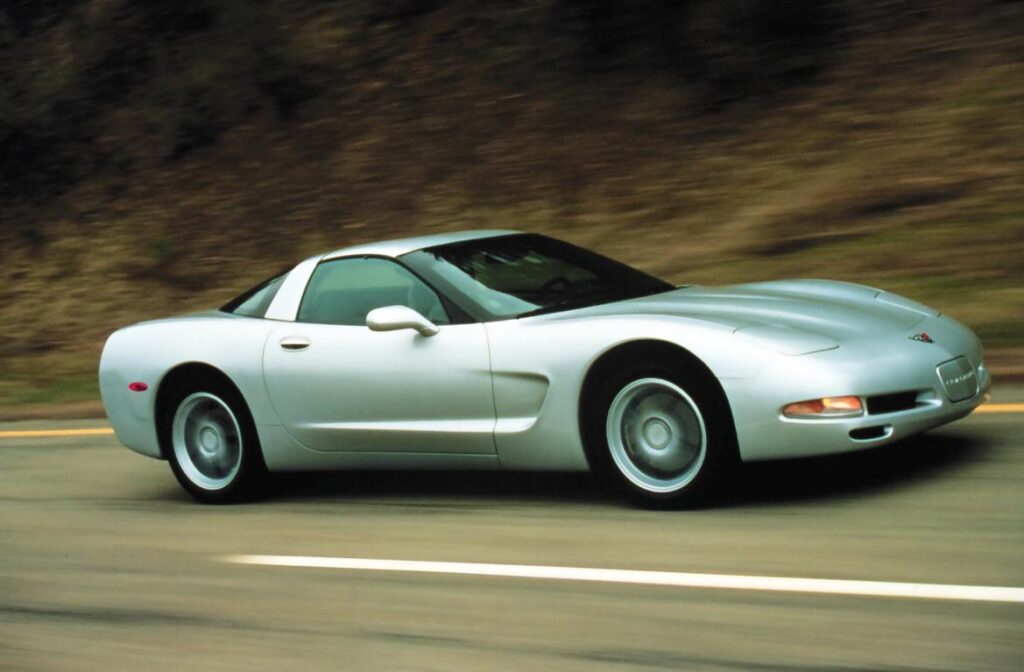
In the real world, the answer was yes—but not by some earth-shattering margin. The hardtop was quicker, but only a little. Car and Driver recorded 0–60 mph in 4.8 seconds and the quarter mile in 13.2 seconds at 110 mph, edging the magazine’s recent hatchback-coupe tests by a tenth here and there. Corvette Action Center’s period performance compilation, drawn from multiple contemporary publications and GM specs, places the hardtop in essentially the same range: 4.7 to 4.8 seconds to 60 and 13.3-ish in the quarter, depending on source. That was enough to validate Chevrolet’s pitch without turning the hardtop into some giant-killer within the lineup. It was not a different species of Corvette. It was a cleaner expression of the same one.
The more interesting difference was in feel. Car and Driver wrote that you could sense the hardtop’s slightly stiffer structure on the road, and that observation aligns with Chevrolet’s own engineering rationale. With the roof bonded around its perimeter instead of removable, the car gave up some of the coupe’s versatility in exchange for a more unified shell. It was also not quite as slippery through the air. Because of the hardtop’s more upright rear glass profile, Chevrolet acknowledged it was a little less aerodynamic than the coupe, and Car and Driver saw that in testing with a 169-mph top speed versus 171 mph for its most recent coupe and 175 mph for earlier examples. Corvette Action Center’s period compilation similarly shows published top-speed figures in the low- to mid-170s, depending on source. So the hardtop was not faster in every way. It was simply more direct.
The 1999 CORVETTE Coupe and Convertible Were Still the Core of the Line
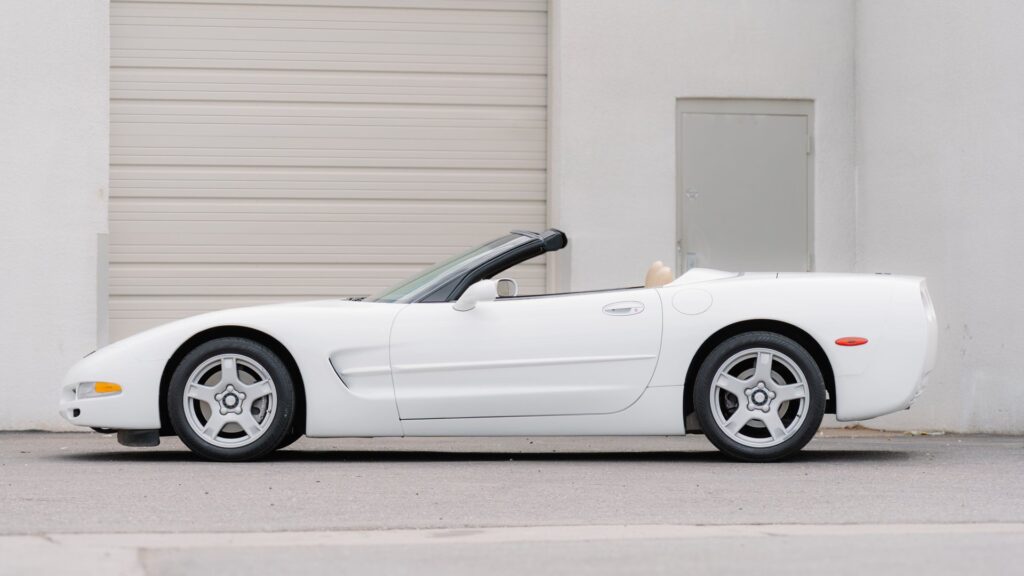
As important as the hardtop was, the 1999 Corvette story was bigger than the FRC alone. The coupe and convertible remained the volume models and the broader expression of what the C5 had become. Both continued with the 5.7-liter LS1 rated at 345 horsepower and 350 lb-ft of torque, paired either with the rear-mounted four-speed automatic or the six-speed manual. Both kept the C5’s now well-established strengths: low cowl, long wheelbase, impressive ride quality, genuine high-speed stability, and an interior that finally made the Corvette feel like a complete sports car rather than a brilliant engine wrapped in compromise. The C5 had already changed the conversation around Corvette. In 1999, Chevrolet refined the package rather than reinventing it.
That refinement showed up in the details. Chevrolet updated the speed-sensitive variable-assist steering system—Magnasteer II—for 1999, seeking better on-center feel and less highway wander. Car and Driver noted the steering changes directly and quoted Corvette suspension engineer Mike Neal, who said the goal was to let the car cover “hundreds and hundreds of miles” without fatiguing the driver. The magazine also noted slightly softer seat cushions across the line and additional damping and sound insulation for the coupe. This is one of those places where the 1999 Corvette reveals what the C5 program really was at heart. Even in its performance years, Corvette engineering was not chasing racetrack numbers alone. It was trying to deliver the sort of composure, usability, and long-distance civility buyers associated with much more expensive European machinery.
The New Technology That Elevated the 1999 CORVETTE
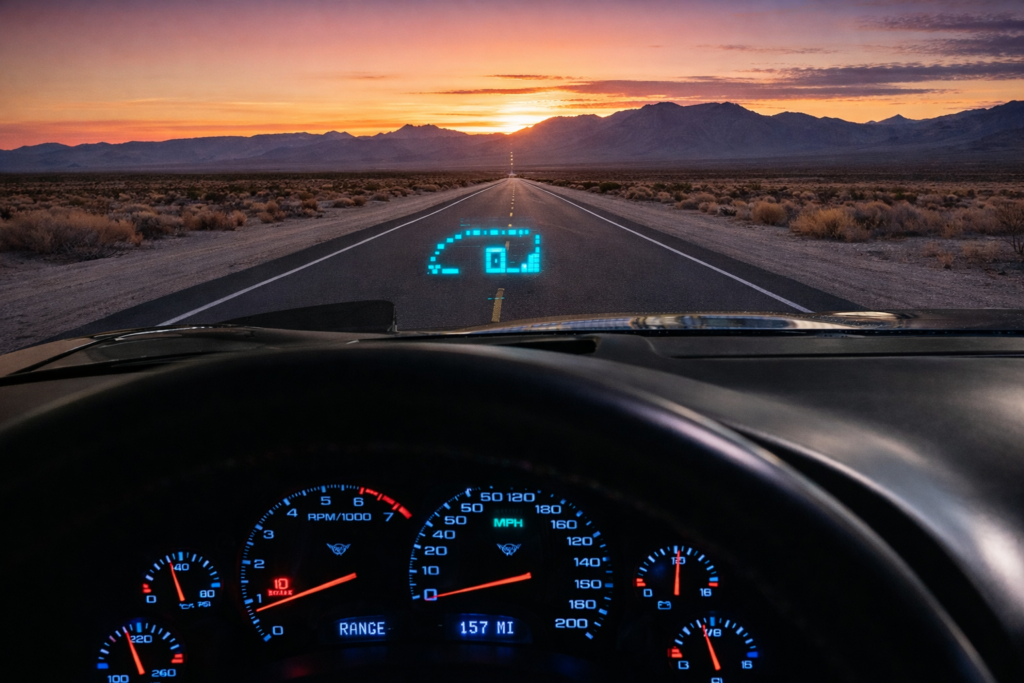
If there was one new option in 1999 that most clearly signaled Corvette’s continued move upmarket, it was the Head-Up Display. Chevrolet’s brochure treated it as one of the year’s headline additions, and for good reason. In an era when this still felt genuinely high-tech, the HUD projected key instrumentation directly onto the windshield so the driver could monitor speed and other readouts without taking his/her eyes off the road. The production summary for 1999 lists it among the model-year highlights, and the brochure language shows Chevrolet understood exactly how to sell it: as both performance technology and luxury convenience, something borrowed from higher segments and now embedded in America’s sports car.
The power telescoping steering column fits the same pattern. It was available on the coupe and convertible but not on the hardtop, reinforcing the split Chevrolet was now making within the lineup. The coupe and convertible were the richer, more customizable Corvettes. The hardtop was the disciplined one. Alongside those convenience upgrades, all 1999 Corvettes also received next-generation reduced-force airbags, which GM documented as standard across the board. Active Handling remained optional, integrating chassis, brake, traction-control, and powertrain inputs through acceleration and yaw-rate sensing. In hindsight, that combination of driver aids, safety revision, and display technology helps explain why the 1999 Corvette feels like more than just a continuation of 1998. It was a more sophisticated car, even when its powertrain was at rest.
A Model Year Full of Interesting Ordering Details
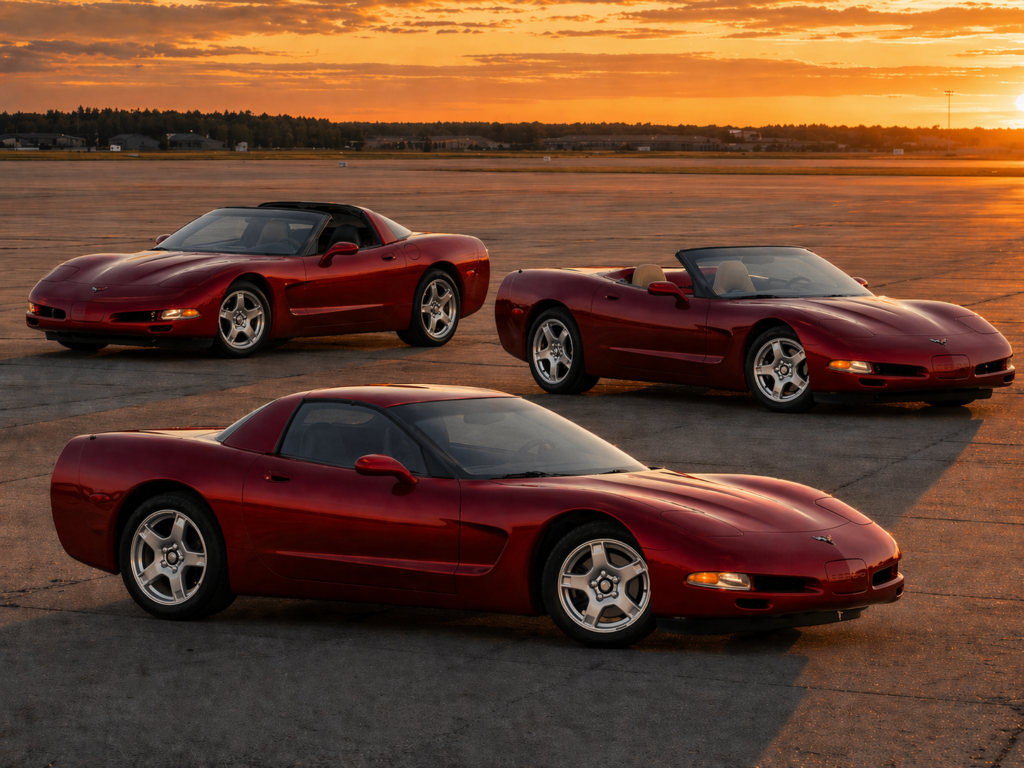
The 1999 Corvette also gets more interesting the deeper you go into the ordering data. Total production reached 33,270 units, up from 31,084 in 1998. The breakdown was 18,078 coupes, 11,161 convertibles, and 4,031 hardtops. That means the hardtop, despite all the uncertainty that preceded it, accounted for roughly 12 percent of total production immediately. For a body style born out of internal anxiety and then reinvented through customer rejection, that is a strong debut. It was not a niche failure. It was a meaningful addition to the line.
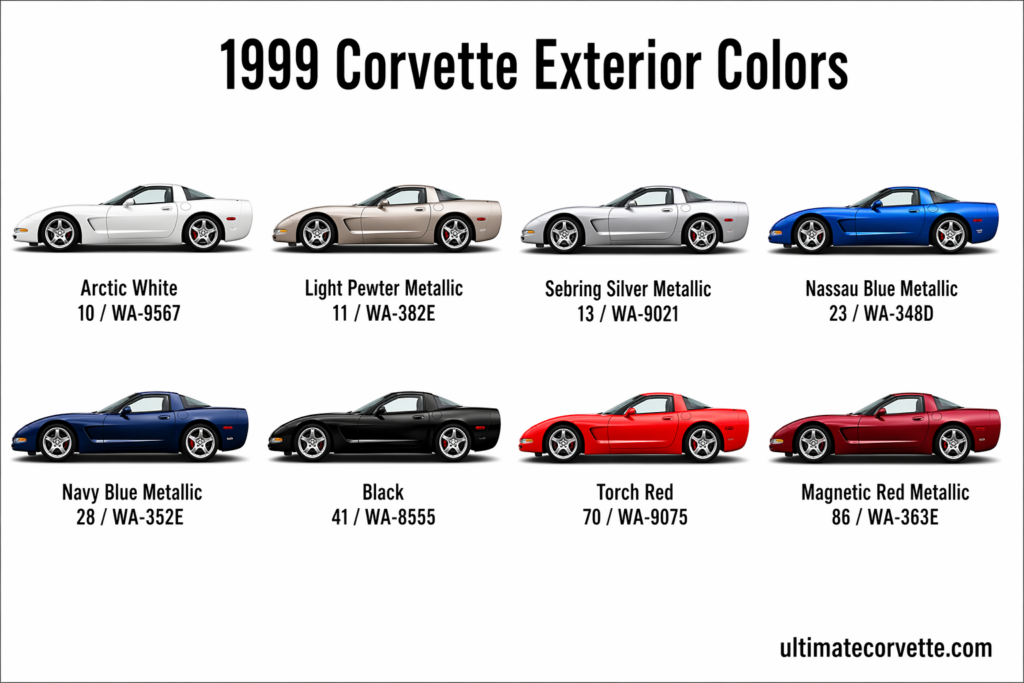
The color and trim numbers are just as revealing. Torch Red was the most popular exterior across the full 1999 range at 8,361 cars, followed by Black at 7,235 and Light Pewter Metallic at 6,164. Among hardtops specifically, Torch Red led with 1,245 units, followed by Black at 1,227, and Light Pewter Metallic at 1,040. Nassau Blue accounted for 202 hardtops and Arctic White for 311. Sebring Silver Metallic, Navy Blue Metallic, and Magnetic Red Metallic were not offered on the hardtop. Inside, the hardtop was black only; Bowling Green records show 100 percent of hardtops carrying black interior trim. Even the option take rates tell the story of a focused buyer base: all 4,031 hardtops had the six-speed, all had the 3.42 axle, and just over half—2,082 cars—were ordered with JL4 Active Handling.
The Odd Hardtop Paper Trail
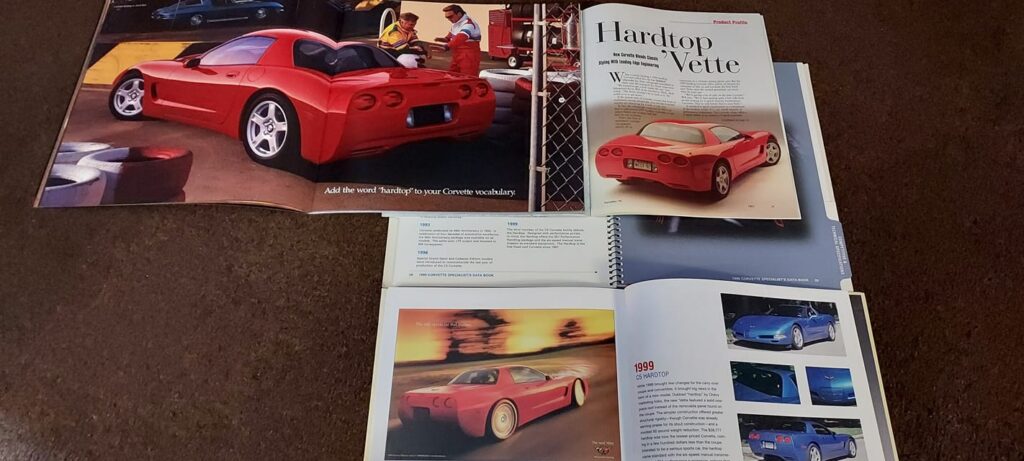
One of the quirks of researching the 1999 model year is that the hardtop’s documentation is not perfectly tidy. Chevrolet’s launch press release described a very narrow option set; the brochure explicitly stated that the HUD was “not available on hardtop”; and Car and Driver similarly reported that the new fixed-roof model did without items such as the power-telescoping steering column, dual-zone air, F45 damping, and HUD. Yet the Bowling Green production tallies later attributed small numbers of hardtops to items such as automatic climate control, fog lamps, sport custom wheels, and even the HUD. There are only a few plausible explanations: late-year ordering changes, coding anomalies in the records, pre-production or non-standard builds being counted, or some combination of the three.
The safest conclusion is not to pretend that those documents all say the same thing, because they do not. The safest conclusion is that the hardtop was clearly conceived and launched as the most tightly controlled C5 in the range, even if the surviving production accounting suggests a few edge cases around the margins. For a comprehensive historical overview, that nuance is worth preserving. It also says something useful about the car itself. The 1999 hardtop was never supposed to be the Corvette for everyone. It was supposed to be the Corvette for the buyer who understood why fewer choices could be part of the appeal. And in that sense, every one of those documents—whether launch brochure, road test, or assembly tally—still points in the same direction.
The C5-R Brought Corvette’s Confidence Back to the Track
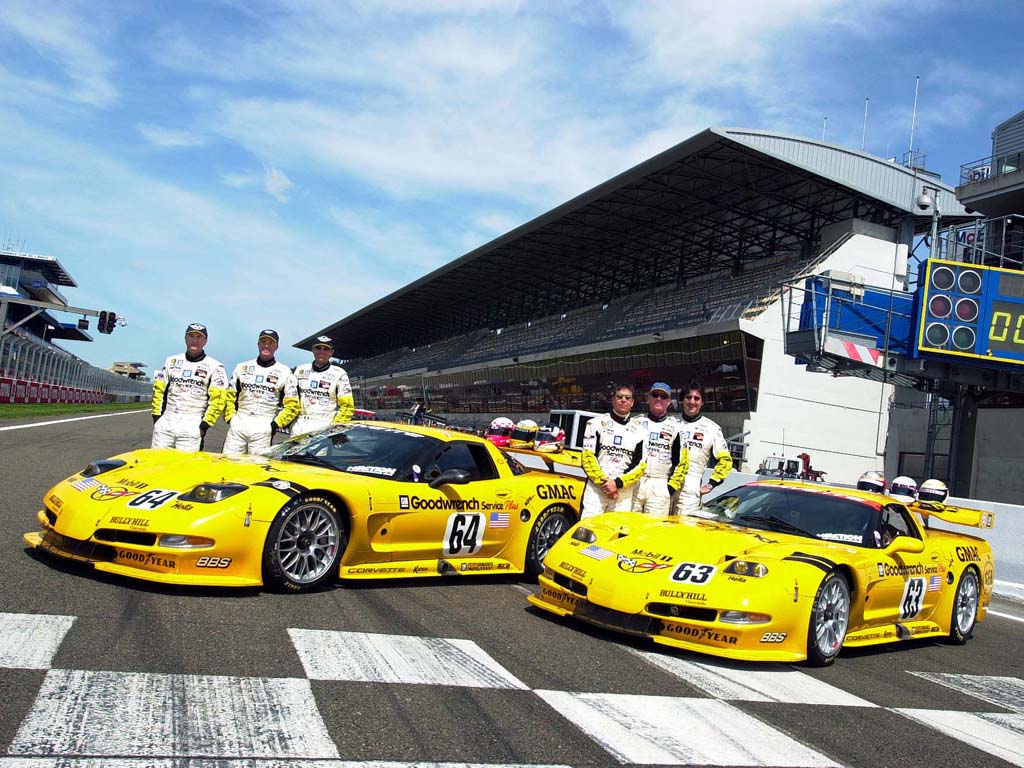
If the hardtop gave the 1999 Corvette lineup a sharper internal identity, the C5-R gave the whole franchise a renewed public mission. Chevrolet chose the 1999 Rolex 24 at Daytona to unveil the brand-new C5-R, fielding two factory-supported cars after only about 4,000 miles of testing and development. That alone was an aggressive move. It said Chevrolet believed not only in the C5 as a production car, but in the strength of the architecture underneath it. The Daytona press release made that explicit, describing the effort as the first full factory-supported program designed around a production vehicle using a wide range of production components. By season’s end, Chevrolet’s own materials were framing the C5-R as a major new chapter in Corvette’s racing heritage and as a central expression of the car’s renewed standing.
The debut justified that faith. The No. 2 C5-R of Ron Fellows, Chris Kneifel, and John Paul Jr. started near the front, led for more than half the race, and finished third after an oil-consuming problem dropped it back. The No. 4 car of John Heinricy, Andy Pilgrim, and Scott Sharp also ran strongly before minor teething issues pushed it to 12th. Dave Hill called it “a tremendous accomplishment” that both cars were still running at the end and emphasized that neither suffered failures tied to their production-vehicle components. Jim Campbell distilled the larger purpose even more cleanly: “Our primary focus is to improve the breed.” That line is one of the keys to understanding 1999. The model year was not just about selling another 33,270 Corvettes. It was about proving, in the showroom and on the track, that Corvette was once again moving with momentum.
Why the 1999 Corvette Still Matters Today
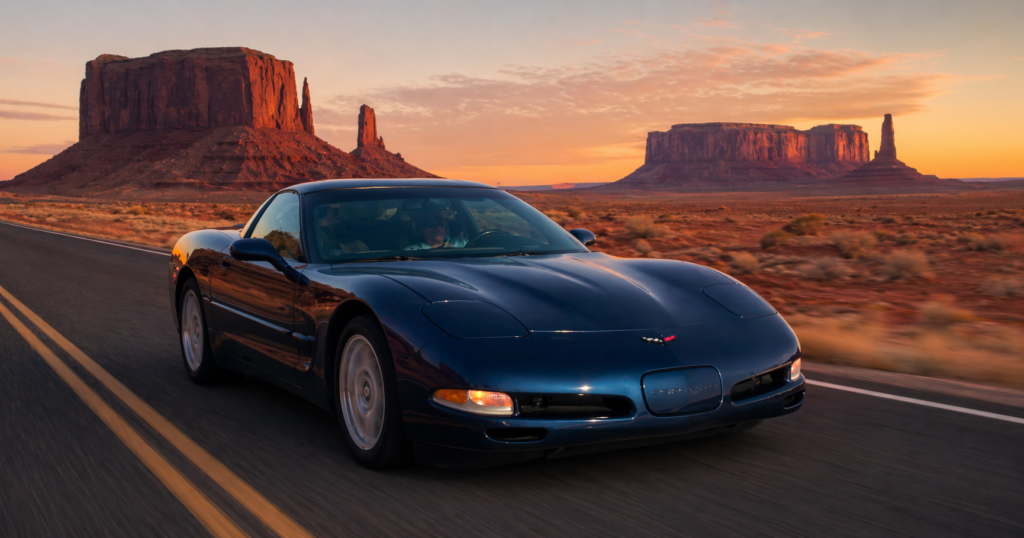
The 1999 Corvette remains a pivotal chapter in the C5 story because it showed Chevrolet wasn’t content to simply build a better sports car — it was beginning to sharpen the Corvette into something more focused, more sophisticated, and more clearly defined for different kinds of buyers. This was the year the Fixed Roof Coupe arrived, giving performance-minded enthusiasts a leaner, stiffer, more purposeful machine, while the coupe and convertible continued to prove that comfort, technology, and everyday drivability did not have to come at the expense of real performance. More than two decades later, the 1999 model stands as a reminder of the moment the modern Corvette formula really started to take shape.
With the benefit of hindsight, the 1999 Corvette reads as one of the most important years in shaping the entire C5 generation. It completed the body-style lineup. It introduced a now-iconic fixed-roof configuration that would soon provide the foundation for the C5 Z06. It expanded the car’s technology with the arrival of the HUD and other refinements. It sharpened the distinction between the luxury-leaning and driver-leaning versions of the C5. And it put Corvette back into serious factory-backed competition with the C5-R. MotorTrend would later summarize the arc cleanly: the hardtop began as a lower-cost idea, became a performance variant instead, and ultimately fed directly into the Z06 story that followed.
More than that, the 1999 Corvette captured a moment when Chevrolet finally seemed to understand that Corvette did not need to be diluted to broaden its appeal. Buyers did not want the car reduced. They wanted it clarified. They wanted the coupe to be a world-class sport-tourer, the convertible to be a true open-air Corvette again, and the hardtop to be a sharper-edged driver’s car without apology. Chevrolet gave them all three. That is why the 1999 model year still carries so much weight today. It was the year the C5 stopped being merely the new Corvette and became a fully realized Corvette family—one with enough range, confidence, and engineering depth to carry the name into a new century.