
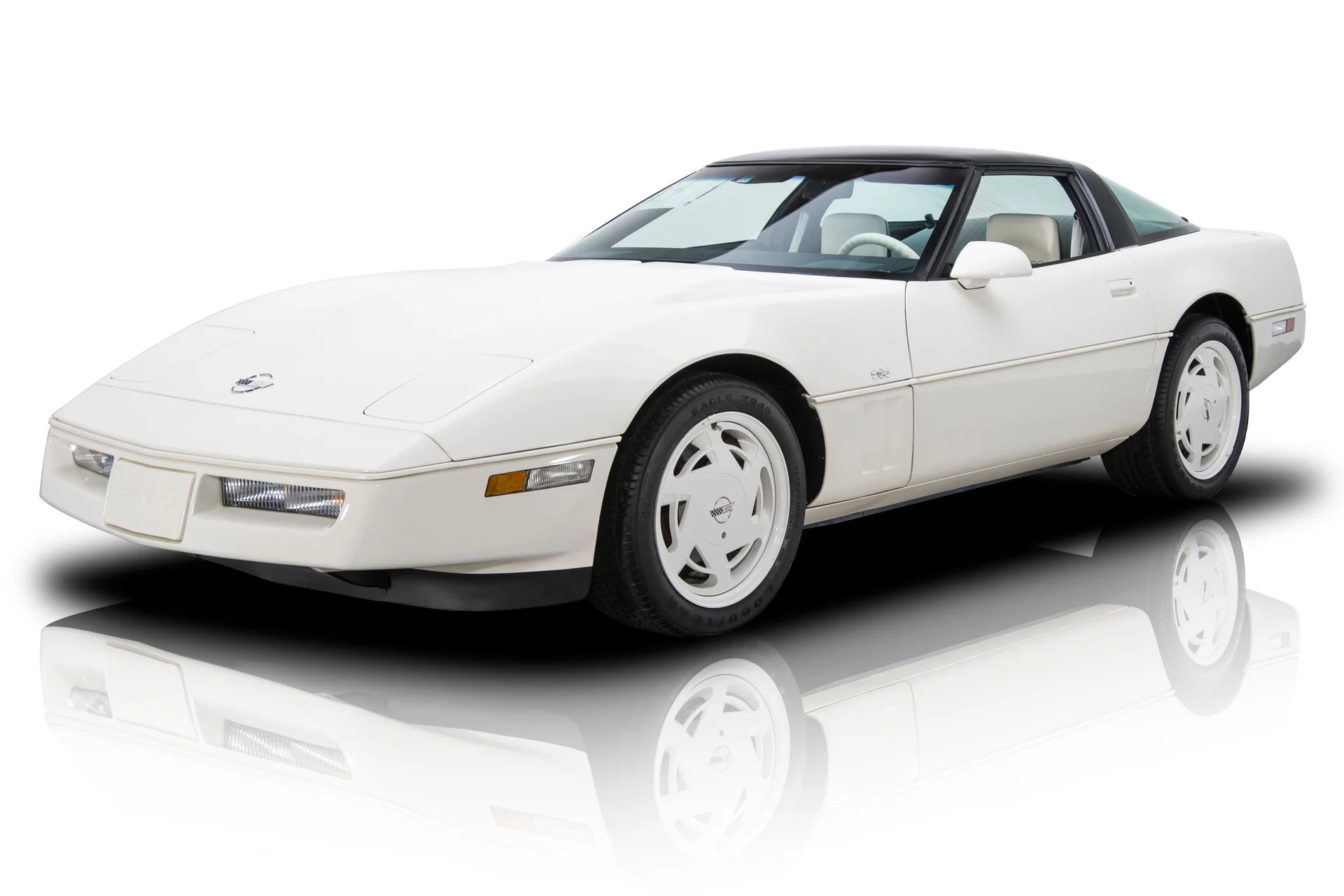
The arrival of the 1988 Corvette marked a milestone moment for Chevrolet. It was the 35th anniversary of “America’s Sports Car”, and after the quiet passing of the Corvette’s 30th birthday in 1983—when no anniversary model was produced at all—Chevrolet was determined not to let history repeat itself. That earlier omission was the result of engineering decisions that delayed the launch of the fourth-generation (C4) Corvette, resulting in no 1983 production cars. For fans, it left a gap in Corvette’s celebrated timeline. For Chevrolet, it was a missed opportunity.
By contrast, 1988 became a year of both commemoration and innovation. While the 35th Anniversary Edition stood as a tribute to Corvette’s enduring legacy, ongoing refinements to the C4 platform underscored Chevrolet’s commitment to performance. And with the rise of Callaway Cars and the arrival of the Sledgehammer—a Corvette that shattered global speed records—1988 became a defining chapter in Corvette history.
Engineering Refinements: The Evolving L98
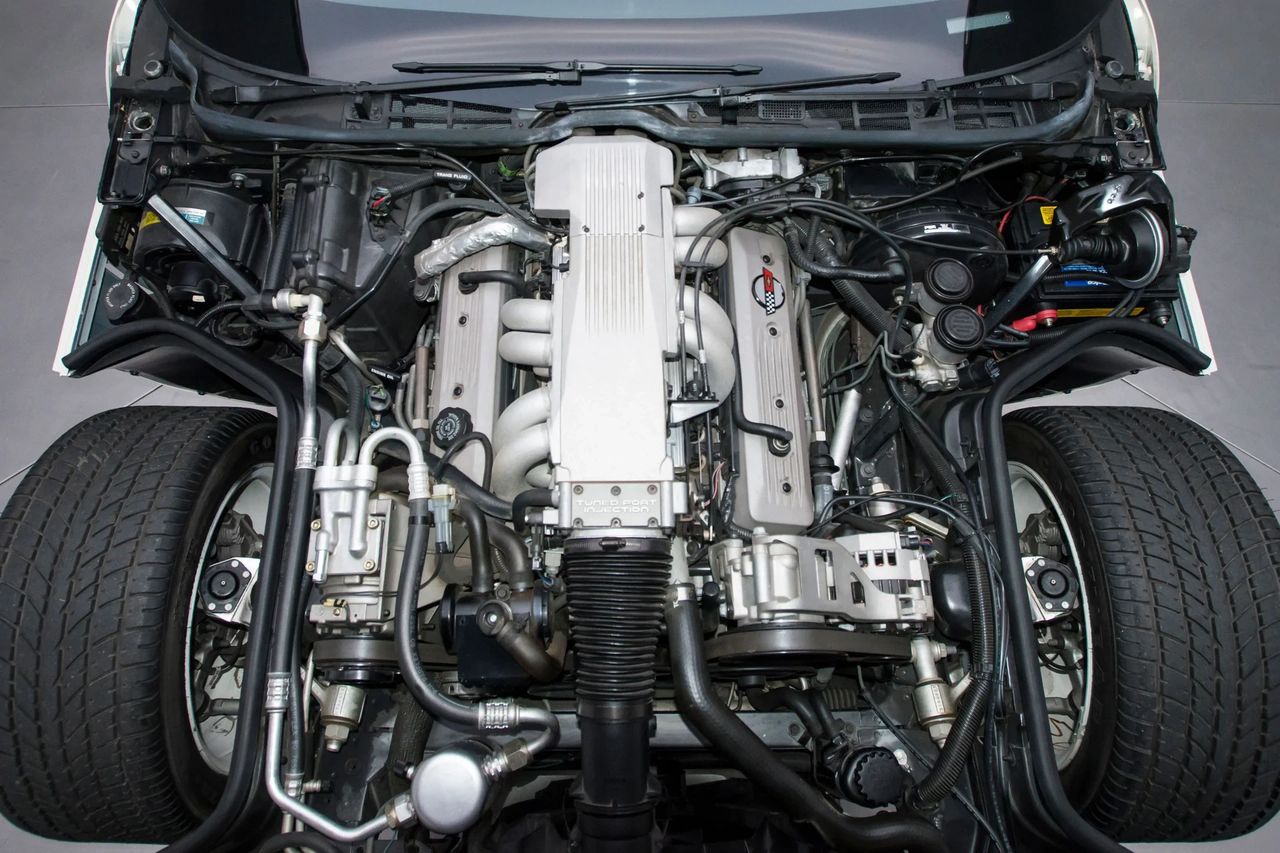
At the core of the 1988 Corvette was the familiar L98 5.7-liter (350ci) V8, equipped with Bosch-tuned port fuel injection, first introduced in 1985. For 1988, output rose modestly from 240 to 245 horsepower in coupe models equipped with the optional 3.07:1 performance axle ratio. This improvement came courtesy of a re-profiled camshaft, freer-breathing cylinder heads, and a less restrictive exhaust system.
Notably, the revised mufflers were installed only on coupes with the 3.07 axle. Convertibles, as well as cars equipped with the standard 2.59:1 rear gearing, retained the quieter 1987 mufflers, leaving them at 240 horsepower. The decision wasn’t arbitrary—the deeper resonance of the freer-flowing mufflers was judged too intrusive for open-top driving.
While the horsepower increase was incremental, it reflected a broader push at Chevrolet to keep the C4 competitive in a market that was becoming increasingly global. Former Lotus technical director Tony Rudd, who had been recruited by GM to lead advanced powertrain development, had already begun work that would culminate in the LT5-powered ZR-1. His early refinements to the L98 hinted at Corvette’s evolving performance trajectory.
Wheels, Tires, and Handling: Sharpening the C4
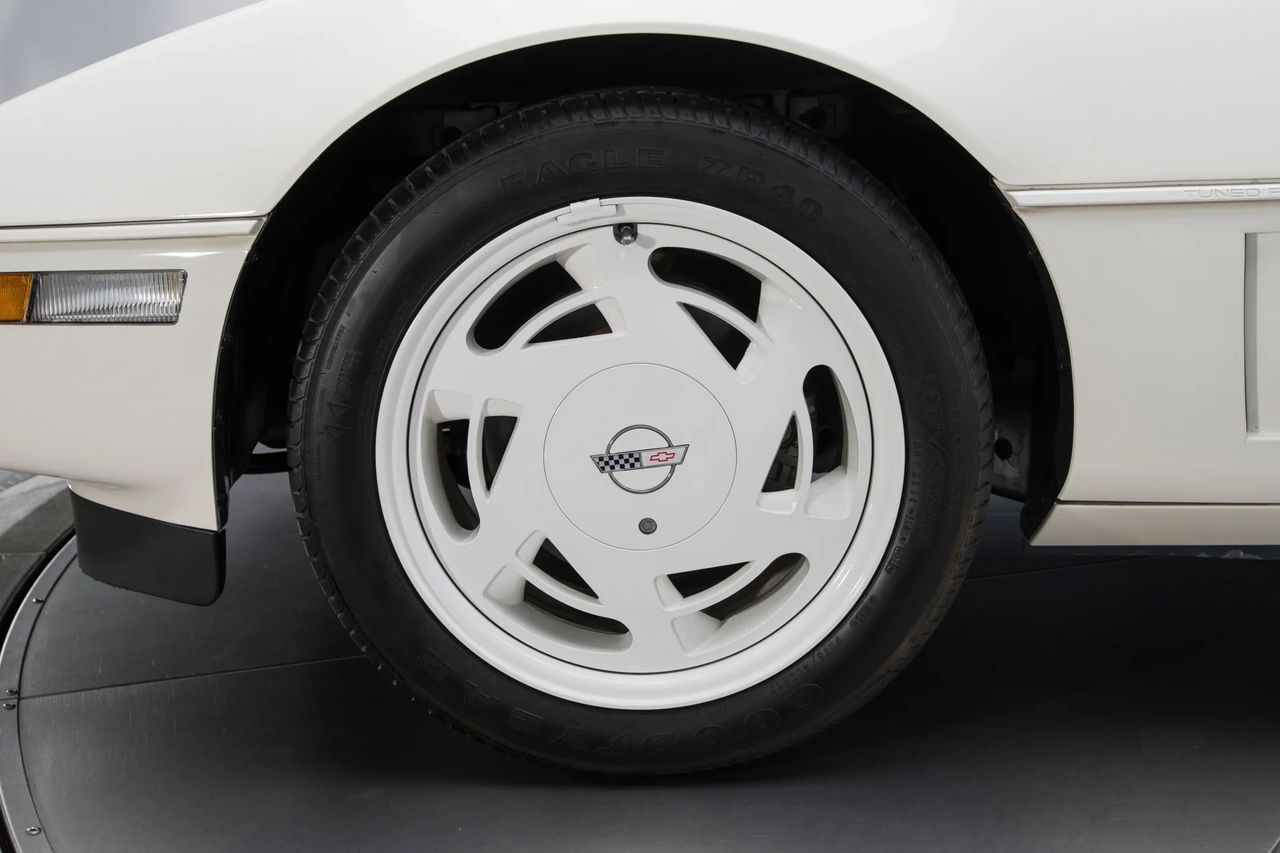
Chassis upgrades in 1988 were equally significant. Corvette engineers introduced larger, directional 17×9.5-inch “Cuisinart” wheels (so nicknamed for their multi-slot pattern) mounted with P275/40ZR-17 Goodyear Eagle GT tires. These Z-rated tires were capable of sustained speeds above 149 mph—technology that moved Corvette closer to European exotic levels of performance. Though limited to cars with Z51 and Z52 suspension packages, even base models benefitted from updated 16×8.5-inch wheels with a new six-slot design and P255/50ZR-16 tires.
Suspension geometry was also revised. The front end adopted “zero scrub radius” geometry, improving directional control under braking by aligning the steering axis with the tire’s contact patch. At the rear, engineers increased rebound travel and reduced camber, enhancing straight-line stability. Larger brakes capped the updates: 12.9-inch front and 11.9-inch rear rotors, paired with two-piston front calipers and integrated rear-disc parking brakes—replacing the awkward drum setup used in earlier C4s.
Together, these changes gave the 1988 Corvette sharper reflexes, greater stability, and braking performance that matched its speed potential.
Exterior Updates: Color Choices and Wheels
For 1988, Chevrolet kept the C4’s sharp, wind-tunnelled look intact but sharpened the hardware that defined its stance. As mentioned previously, the big news was wheels and tires: standard cars rode on 16×8.5-in alloys with P255/50ZR-16 Goodyears, while Z-package cars adopted 17×9.5-in wheels with P275/40ZR-17 rubber—factory-fit, Z-rated tires that gave the ’88 a noticeably more planted footprint and crisper response without changing the bodywork. The Z51 and Z52 handling packages bundled those 17s and quicker steering, so you could spot a well-optioned ’88 by its wider wheels even at a glance.
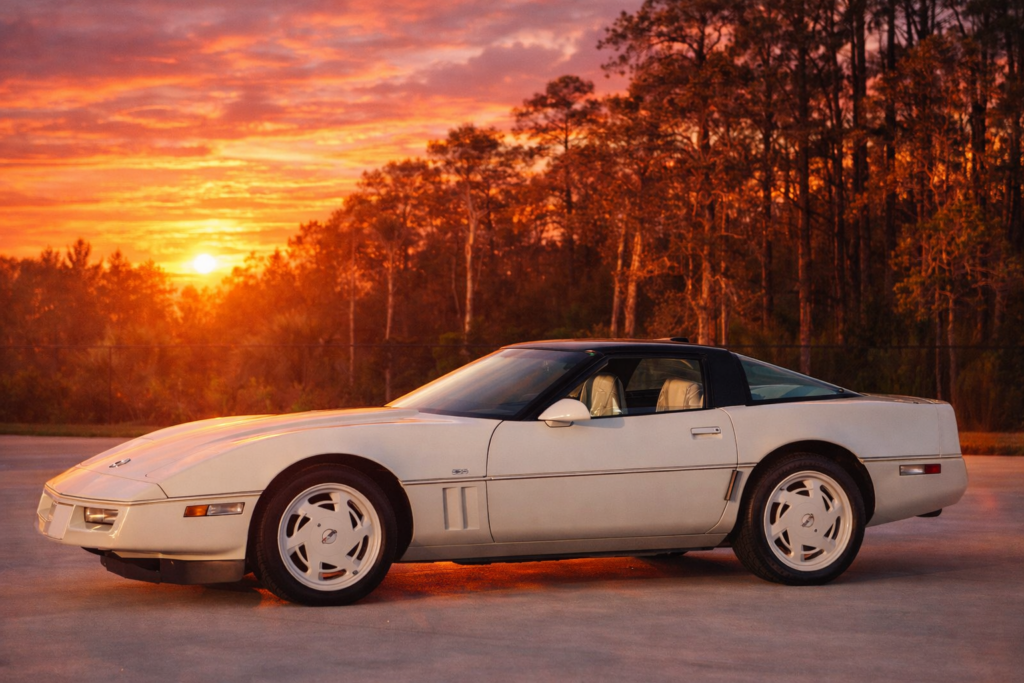
The year also introduced the 35th Anniversary Edition (RPO Z01), a visual one-off that leaned into a “triple-white” theme: white body, white wheels, white bodyside moldings, white mirrors and door handles, with a contrasting black roof bow and unique emblems—an appearance package that stood apart without mechanical changes.
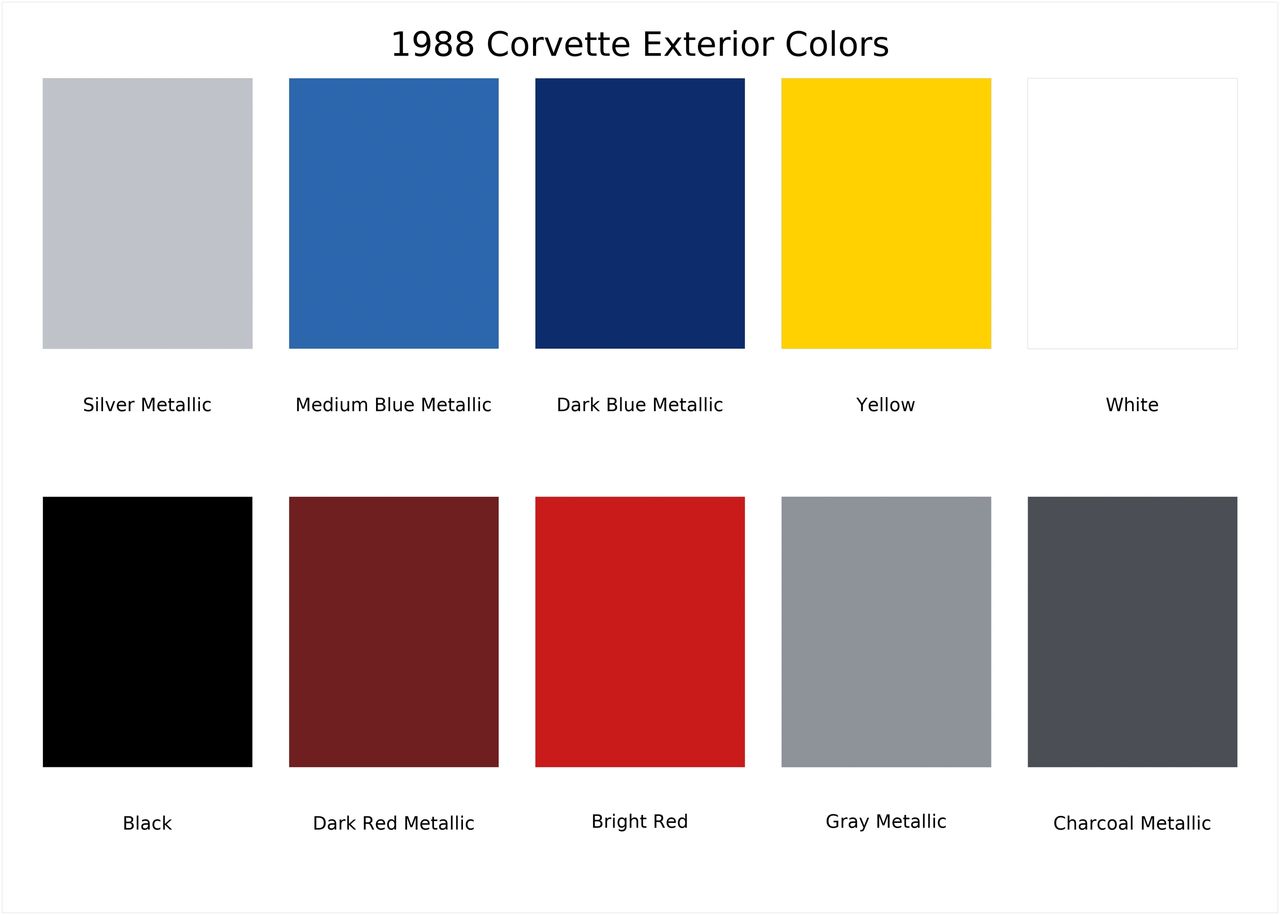
Paint colors (with GM codes): Silver Metallic (13), Medium Blue Metallic (20), Dark Blue Metallic (28), Yellow (35), White (40), Black (41), Dark Red Metallic (74), Bright Red (81), Gray Metallic (90), and Charcoal Metallic (96). The 35th Anniversary cars are listed separately in period references as White/Black (40/41) due to their two-tone roof halo. These codes are the two-digit identifiers you’ll see on build sheets and the Service Parts Identification label.
Interior Updates: Subtle but Practical
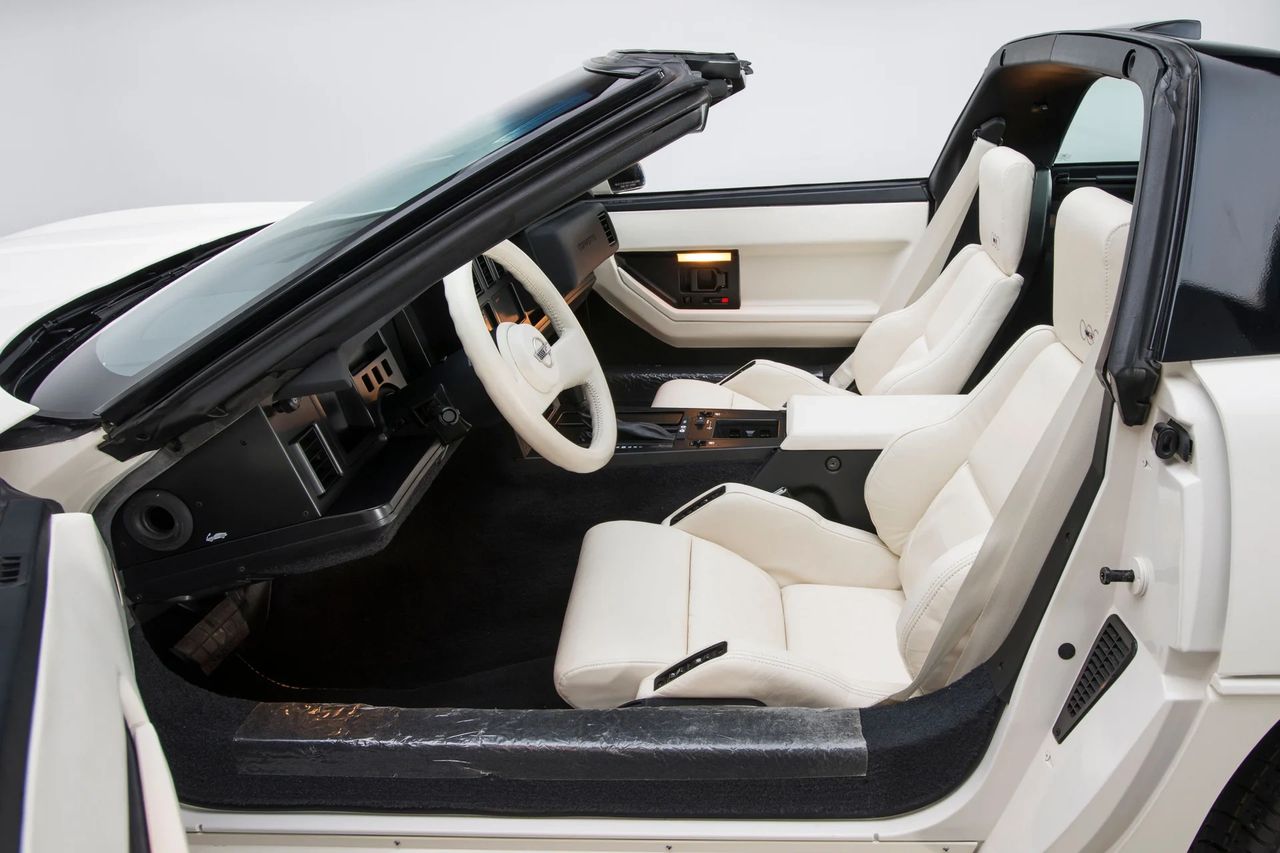
Inside, changes were subtle but meaningful. The oddly positioned pull-up handbrake—mounted outboard of the driver’s seat since the C4’s debut—was relocated slightly lower and rearward, making ingress and egress less awkward. Climate control improved too, thanks to redesigned interior air extractors that increased airflow through the optional automatic temperature control system, phased in late in 1987.
Though not a redesign year, these refinements reflected GM’s intent to address criticisms of the C4’s ergonomics and comfort while maintaining its technological edge.
The 35th Anniversary “Triple-White” Corvette
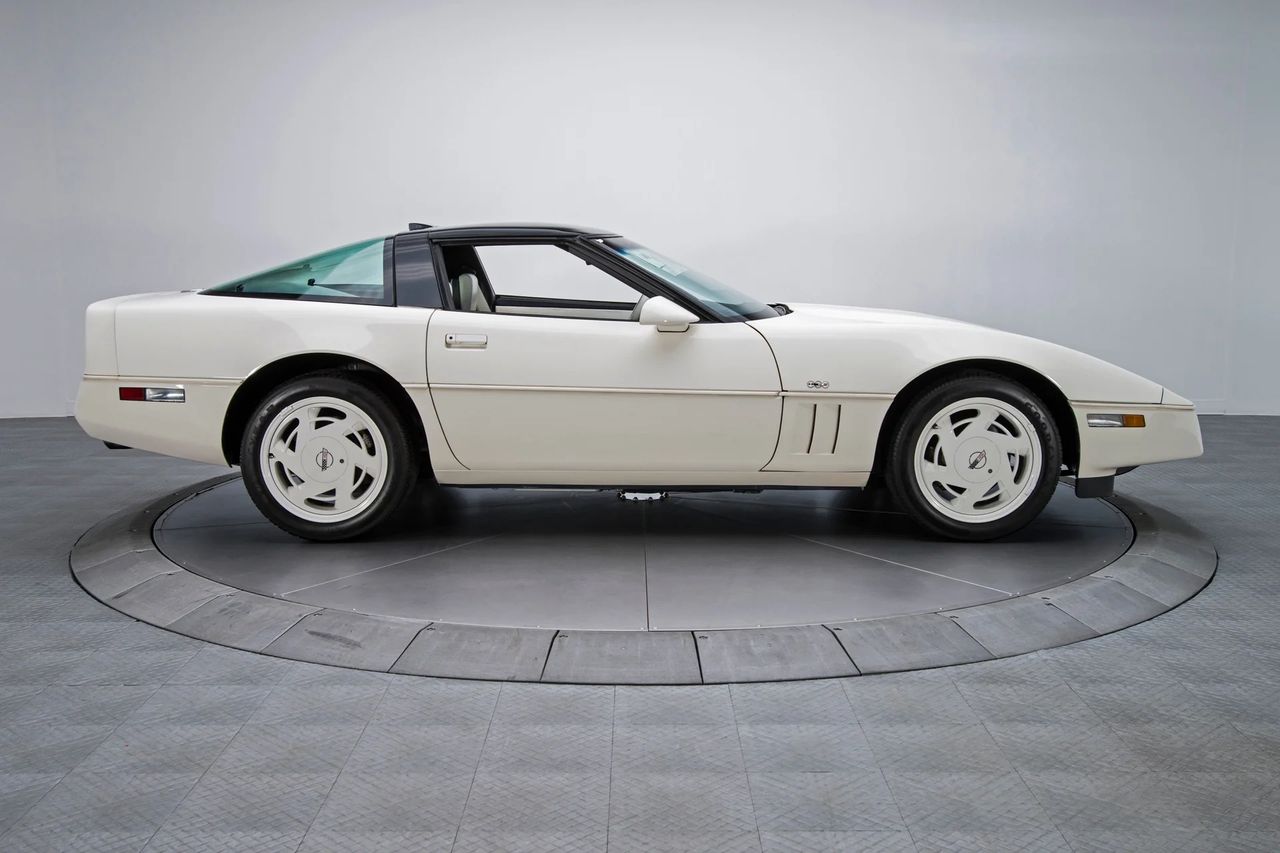
To properly honor Corvette’s 35th birthday, Chevrolet introduced the 35th Anniversary Edition (RPO Z01). Produced in limited numbers—2,050 units total—this coupe-only package featured:
- Bright white exterior paint with matching white door handles, mirrors, bodyside moldings, and wheels.
- White leather interior with embroidered headrests, white steering wheel, and matching trim.
- Black roof hoop and tinted acrylic roof panel, creating dramatic two-tone contrast.
- Special badging above the side gills, an anniversary console plaque, and sequential production numbering.
- Standard equipment including dual six-way power sport seats, Bose audio, heated mirrors, and automatic climate control.
Dubbed the “Triple-White” Corvette, it was introduced at the 1988 New York Auto Show—a deliberate callback to the 1953 Corvette’s debut at the Waldorf Astoria. While sales of the anniversary edition sold briskly, they were not enough to reverse an overall dip in Corvette sales, which fell to 22,789 units, the lowest total since 1972.
The Corvette Challenge Cars
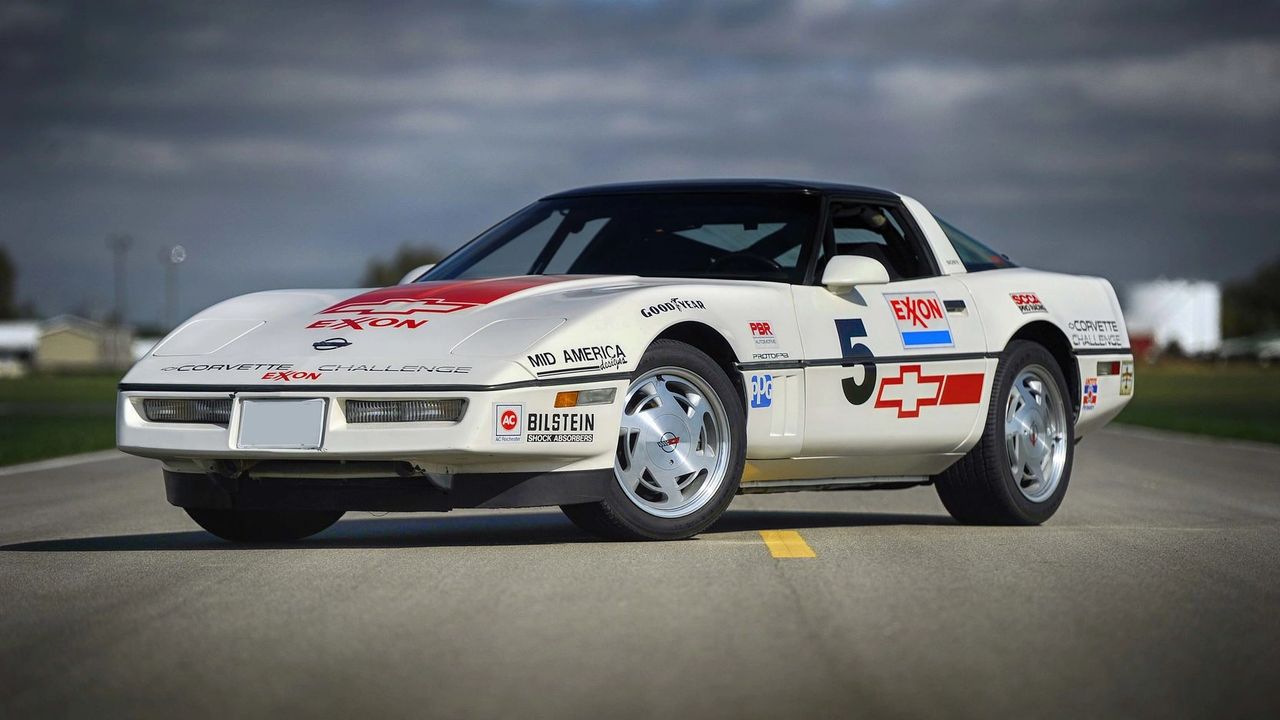
Though showroom sales dipped, the Corvette’s reputation on the racetrack was soaring. After three years of dominating SCCA showroom stock racing, the series banned Corvettes outright for 1988. To appease Chevrolet, the SCCA created a new Corvette Challenge one-make series.
For the inaugural 1988 season, Chevrolet built 56 identical, street-legal Corvette race cars. These cars were assembled at Bowling Green, fitted with standard L98 engines, then shipped to Wixom, Michigan, where race equipment such as roll cages, safety harnesses, and fire suppression systems was installed. After each race season, these cars were sold to private buyers, making them some of the most collectible C4s today.
The Challenge was a fan favorite, emphasizing driver skill over engineering advantage, and reinforcing Corvette’s reputation as a world-class competitor.
The Callaway Twin Turbo: RPO B2K
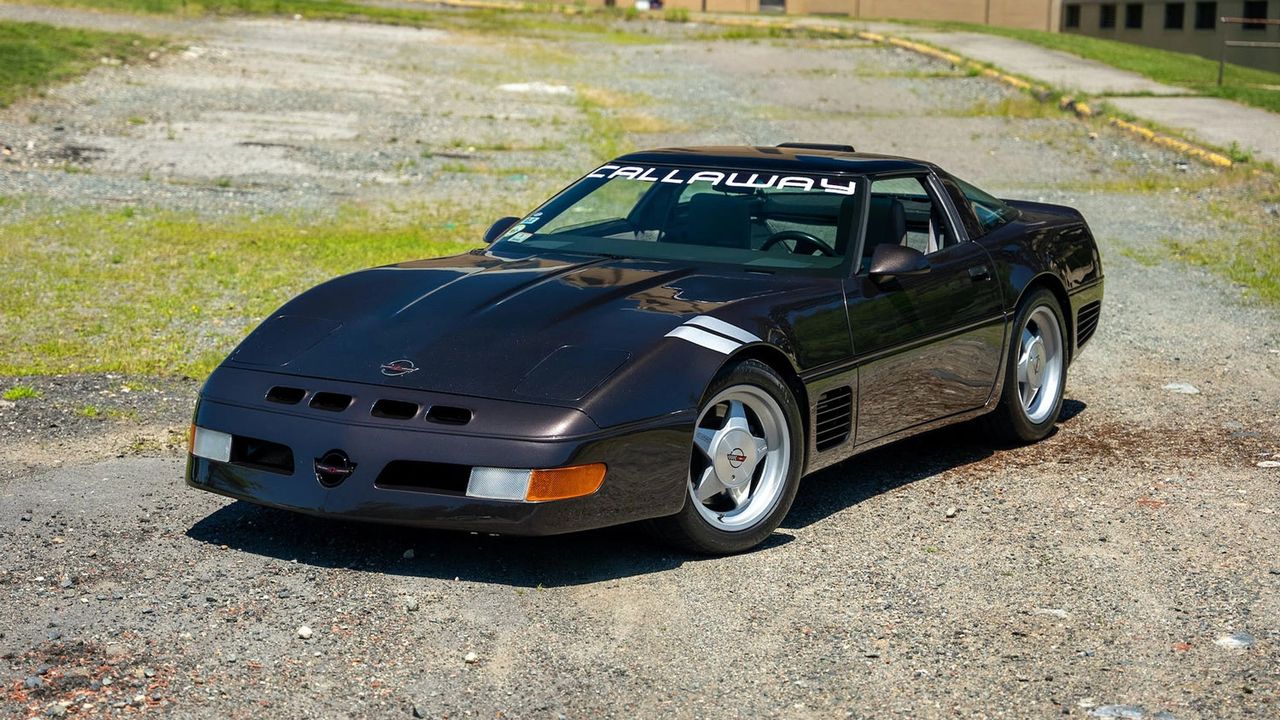
Beyond Chevrolet’s own work, 1988 was also a landmark year for Corvette through its partnership with Callaway Cars. Introduced in 1987, the Callaway Twin Turbo could be ordered directly from Chevrolet dealerships under RPO B2K. Cars were shipped to Callaway’s facility in Old Lyme, Connecticut, where they were modified and returned to customers, fully warrantied by GM.
The package included twin Turbonetics turbochargers, intercoolers, and fortified internals. Output jumped to 345 horsepower and 465 lb-ft of torque, vaulting Corvette firmly into supercar territory. Over five years, 497 B2K Callaway Corvettes were built, and each represented a fascinating chapter in GM’s rare willingness to outsource factory performance.
The Sledgehammer: World’s Fastest Street-Legal Car
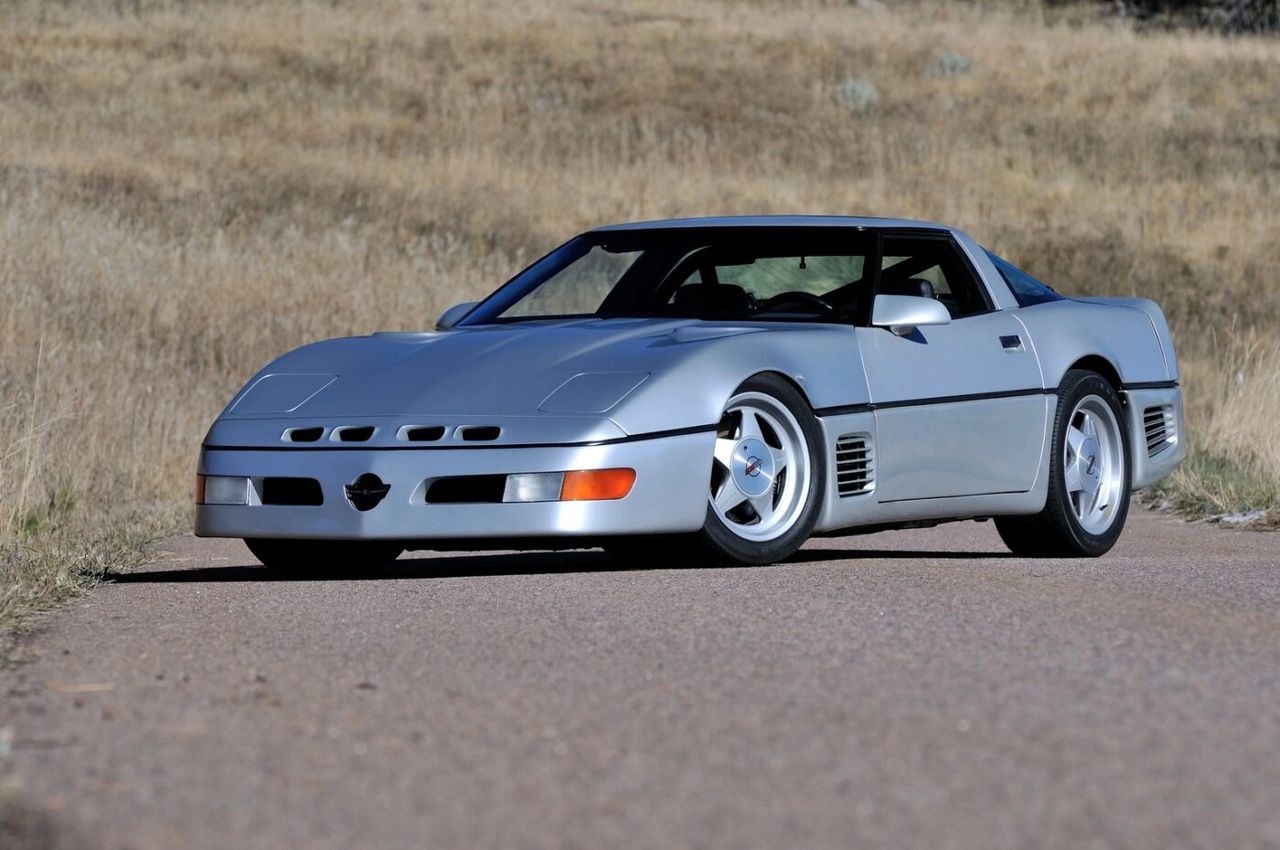
If the B2K program demonstrated factory-backed bravado, the Callaway Sledgehammer was its unchained sibling—a one-off, purpose-built speed record machine that became legendary.
Built on a 1988 Corvette, the Sledgehammer used a heavily modified 5.7-liter V8 with Brodix aluminum heads, forged internals, and twin Turbonetics T04B turbochargers. The engine produced a staggering 880 horsepower and 772 lb-ft of torque. Designer Paul Deutschman created a special AeroBody kit to reduce drag and increase stability.
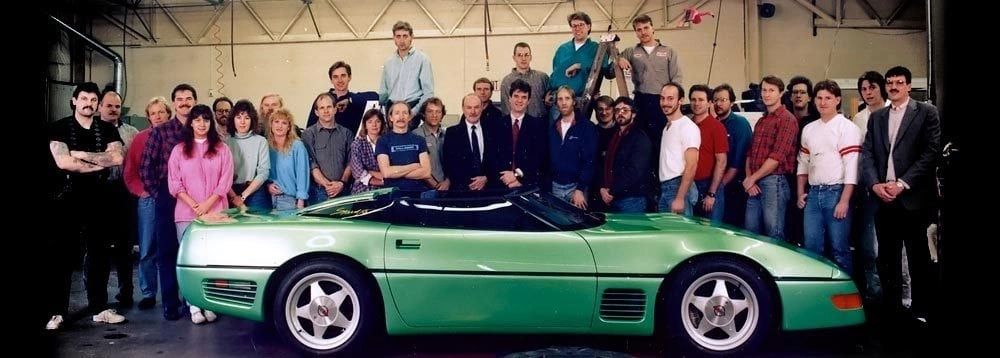
On October 26, 1988, at the Ohio Transportation Research Center, driver John Lingenfelter piloted the Sledgehammer to 254.76 mph, making it the fastest street-legal production-based car in the world. The record stood for more than a decade.
What made the Sledgehammer remarkable was its speed, street legality, and civility. It retained air conditioning, a stereo, power windows, and was driven 700 miles from Callaway’s headquarters to the test site—and back home again in the rain.
Founder Reeves Callaway later reflected:
“Every car company wants a superlative. The superlative in high-performance sports cars is top speed. We did that. And we went and tested it, and we screwed up. It went 254.76 instead of 250.”
The Sledgehammer was not intended for production. It was a rolling laboratory, a demonstration of Corvette’s untapped potential, and a statement that America’s sports car could rival or surpass the finest exotics from Europe.
Performance and Legacy
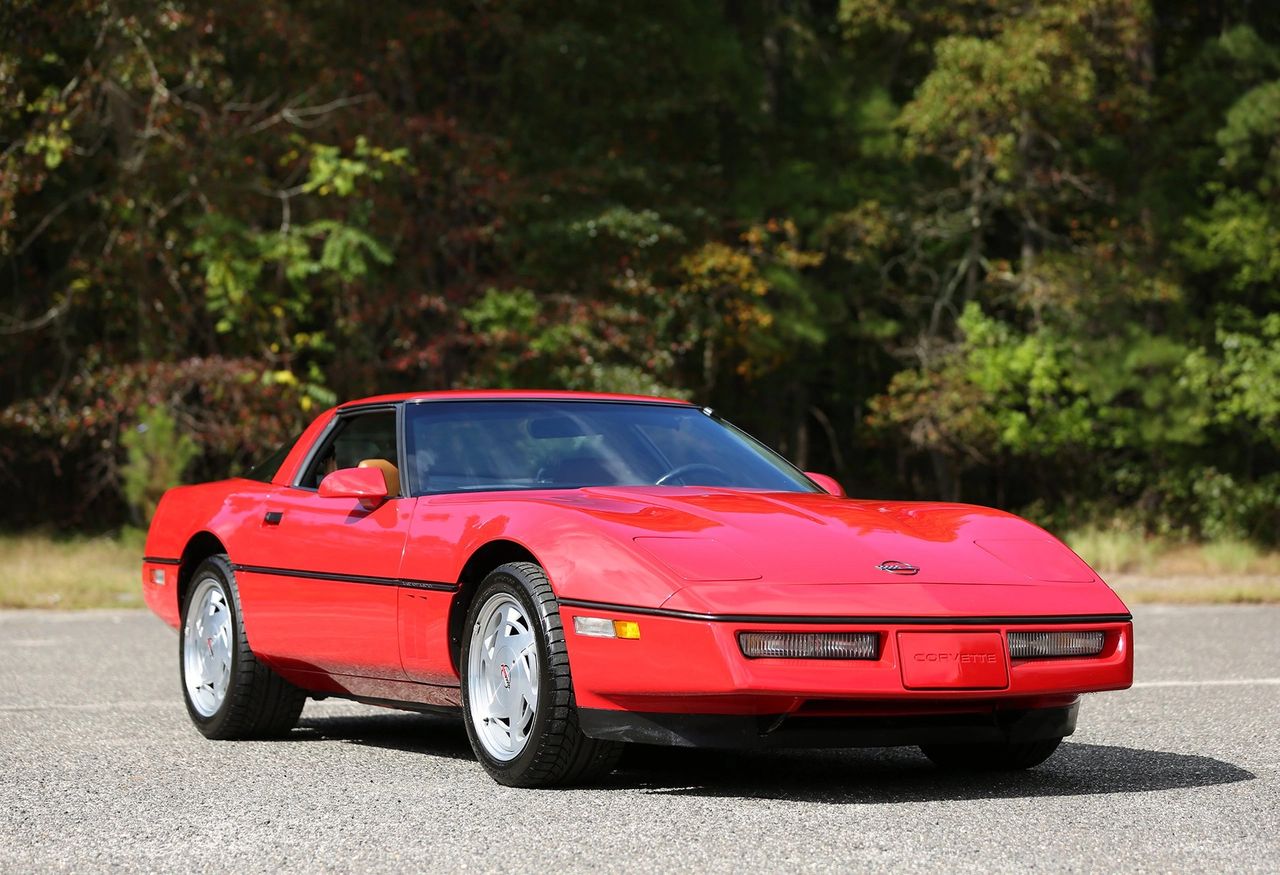
In contemporary testing, the 1988 Corvette delivered 0–60 in about 6.0 seconds and a quarter-mile time of 14.6 seconds at 95 mph—competitive numbers for its day. The refinements in suspension, braking, and tires made it the most poised C4 yet, even if raw power gains were incremental.
But the true legacy of 1988 lay in its breadth: the Triple-White Anniversary Edition celebrated Corvette’s roots, the Corvette Challenge cars reinforced its racing heritage, and the Callaway Sledgehammer pushed its performance reputation to unprecedented heights. It was a year when Corvette embraced its past while simultaneously setting world records and looking toward the supercar future.
Conclusion
What makes 1988 linger isn’t any single headline but the way the year threads them together. The production car finally felt sorted—steering, ride, and brakes working in concert with a healthier L98 so the Corvette behaved like a proper long-legged GT when you asked and a willing athlete when you pressed. Inside, the ergonomics took a half-step from sci-fi to sensible, the kind of quiet improvement you only notice because the car stops getting in your way.
At the same time, Chevrolet reminded everyone that the Corvette is as much a part of the culture as it is a car. The 35th Anniversary Edition wasn’t just an appearance package; it was a marker in time—proof that the C4’s sharp, modern vocabulary could carry real ceremony. And out where the paint gets rubber on it, the Corvette Challenge legitimized a new grassroots ladder. You could watch showroom-stock C4s fight door-to-door on Sunday and recognize your own car in their reflections on Monday. That matters.
Then there was the moonshot. Callaway’s Sledgehammer didn’t merely move the goalposts; it picked them up and bolted them to another county. The number is the thing most people remember, but the lesson is bigger: the C4 platform had the aero efficiency, stability, and basic honesty to support world-beating speed without turning feral. In one orbit of the calendar, Corvette wore four different uniforms—grand tourer, commemorative icon, spec-series contender, and world-record assassin—and looked at home in all of them.
That’s why 1988 reads like a hinge moment. The C4 matured, the brand celebrated itself without nostalgia blindness, and the broader ecosystem—club racers, tuners, fans—was invited along for the ride. If you want to understand how Corvette kept its identity while expanding its range, you can do it in twelve months flat. 1988 is the case study.
1988 Corvette — Key Specifications
Quick Stats
- Engine: 5.7L (350 cu in) L98 Tuned Port Injection V8
- Output (SAE net): 245 hp @ 4,300 rpm • 340 lb-ft @ 3,200 rpm (factory rating for 1988)
- Transmissions: 4-speed automatic (TH700-R4) • 4+3 Doug Nash manual (4-speed with computer-controlled overdrive in 2nd–4th)
- Driveline/Layout: Front-engine, rear-wheel drive
Performance (period figures)
- 0–60 mph: ~5.7–6.0 sec
- ¼-mile: ~14.3–14.7 sec @ ~95–98 mph
- Top speed: ~150 mph Figures consolidated from factory literature and contemporary tests noting the 245-hp upgrade for ’88.
Chassis, Suspension & Brakes
- Structure: Uniframe with bolt-on front/rear cradles; composite body panels
- Front/Rear: Forged-aluminum control arms; independent rear five-link; transverse composite mono-leaf springs; gas-charged shocks (Delco-Bilstein with Z-handling packages)
- Steering: Power rack-and-pinion
- Brakes: Power 4-wheel discs (vented rotors) with Bosch ABS II (4-wheel)
Handling Packages
- Z51 Performance Handling (coupe): higher-rate springs/bars, Delco-Bilstein shocks, HD cooling, quicker steering; paired with wider wheels/tires
- Z52 Sport Handling: street-biased package bundling Bilstein shocks, quicker steering, HD cooling; included 17-inch wheels/tires for 1988.
Wheels & Tires
- Standard wheels/tires: 16×8.5-in alloys with P255/50ZR-16 Goodyear Eagle Gatorbacks
- Z-package wheels/tires: 17×9.5-in alloys with P275/40ZR-17 Goodyear Eagle Gatorbacks (factory option in ’88; standard within Z51/Z52 configurations)
Dimensions & Capacities
- Wheelbase: 96.2 in
- Length/Width/Height: ~176.5 / 71.0 / 46.4–46.7 in
- Track (F/R): ~59.6 / 60.4 in
- Fuel capacity: 20.0 gal (All per GM’s 1988 Corvette information kit.)
Powertrain Details
- Induction/Management: Tuned Port Injection (long-runner intake), electronic spark control
- Compression ratio: 9.5:1
- Common axle ratios: 2.59/2.73 (auto, application-dependent) • 3.07 (manual and certain axle packages)
Paint & Trim (with GM codes)
Singles: White (40), Black (41), Medium Blue Metallic (20), Dark Blue Metallic (28), Yellow (35), Silver Metallic (13), Gray Metallic (90), Charcoal/Dark Smoke Gray Metallic (96), Dark Red (Flame) Metallic (74), Bright Red (81). (Two-digit codes as shown on build sheets/RPO labels; production by color is documented in period references.)
Special appearance: 35th Anniversary Edition (RPO Z01) “triple-white” coupe (white body, wheels, moldings, mirrors/handles; black roof halo; unique emblems). 2,050 built.
Why the 1988 Corvette Still Matters
By 1988, the fourth-generation Corvette had moved beyond its early growing pains and matured into a genuinely world-class sports car. Under the banner of Chevrolet, the C4 had evolved into a platform that blended American V8 torque with increasingly sophisticated chassis engineering. The L98’s tuned-port injection delivered strong, usable power, while the Z51 performance suspension package and optional 17-inch wheels reinforced the car’s cornering credibility.
But the 1988 Corvette matters for more than its specs. It represents a pivotal moment when Corvette fully embraced modernity — digital instrumentation, advanced aerodynamics, and a rigid uniframe structure that gave the car precision earlier generations could only hint at. It helped reestablish Corvette as a legitimate performance benchmark at a time when global competition was intensifying.
Today, the 1988 model stands as a refined expression of the C4 formula — analog enough to feel raw and connected, yet advanced enough to signal where Corvette was headed in the decades to come.