Tag: C4

  • 1993 CORVETTE OVERVIEW

    1993 CORVETTE OVERVIEW

    When Harley Earl first sketched his two-seat roadster in the early 1950s, he envisioned something bold for Chevrolet: a sleek, fiberglass-bodied sports car that would capture the glamour of post-war America. Yet even Earl himself could never have imagined how enduring his creation would become. Four decades after that modest unveiling at the 1953 Motorama in New York, Corvette was no longer just a curious“dream car made real.” It had become the longest-running, most iconic American sports car, a machine that not only held its own on the street but also earned global respect on the racetrack.

    By 1993, the Corvette stood at a remarkable milestone—its 40th anniversary. Chevrolet recognized the moment with commemorative touches that honored Corvette’s heritage while continuing to refine the C4 generation. That year’s lineup reflected both celebration and performance ambition: a special 40th Anniversary package for collectors and enthusiasts, continued advancements in the base LT1-powered coupes and convertibles, and a more powerful ZR-1 that firmly reasserted its place as the “King of the Hill.” In many ways, the 1993 model year embodied the Corvette’s dual spirit—equal parts nostalgia and relentless pursuit of speed.

    Setting the Stage: Corvette Turns Forty
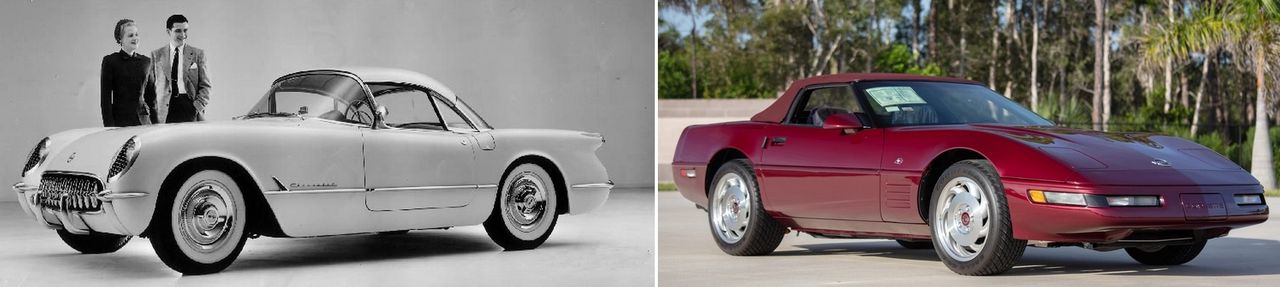
    This side-by-side neatly bookends Corvette’s first 40 years: at left, Harley Earl’s early C1—an elegant, fiberglass two-seater born in 1953—still wearing wire-style caps and the understated glamour that launched America’s Sports Car; at right, the 1993 40th Anniversary C4 in Ruby Red Metallic, its commemorative badges and matching interior celebrating the lineage. The contrast tells the story of progress—from Blue Flame six and Powerglide origins to an LT1-powered, world-class performer with available six-speed, ABS and traction control—yet the constants endure: low stance, long hood/short deck, and a singular focus on two-seat American performance. In one image you can see how Corvette evolved dramatically without ever losing its original soul.
    This side-by-side neatly bookends Corvette’s first 40 years: at left, Harley Earl’s early C1—an elegant, fiberglass two-seater born in 1953—still wearing wire-style caps and the understated glamour that launched America’s Sports Car; at right, the 1993 40th Anniversary C4 in Ruby Red Metallic, its commemorative badges and matching interior celebrating the lineage. The contrast tells the story of progress—from Blue Flame six and Powerglide origins to an LT1-powered, world-class performer with available six-speed, ABS, and traction control—yet the constants endure: low stance, long hood/short deck, and a singular focus on two-seat American performance. In one image, you can see how Corvette evolved dramatically without ever losing its original soul.

    The Corvette of the early 1990s was a different creature than the chrome-laden C1 Harley Earl had conjured. By its fourth generation (introduced in 1984), the Corvette had become a thoroughly modern sports car. With its sleek wedge-shaped styling, advanced suspension systems, and increasingly sophisticated electronic controls, the C4 was aimed squarely at global competition from Porsche, Ferrari, and Nissan.

    But the C4 had another role: it was the bridge between Corvette’s first 30 years—years often marked by bold experimentation, peaks and valleys of performance—and the modern era of engineering consistency and refinement. By 1993, the C4 had matured into a highly capable car. Chevrolet’s engineering teams, led by figures such as Dave McLellan (Chief Engineer, succeeding Zora Arkus-Duntov in 1975), continued to refine the car each year. Small but significant mechanical changes were introduced annually, often invisible to the casual eye but meaningful to performance drivers.

    Against this backdrop came Corvette’s 40th birthday. The company had celebrated earlier milestones—the Silver Anniversary Edition of 1978, for example—but 1993 was a bigger moment. Corvette had not only survived but thrived for four decades. To mark the occasion, Chevrolet offered a distinctive package: the 40th Anniversary Edition Corvette.

    The 40th Anniversary Edition (RPO Z25)
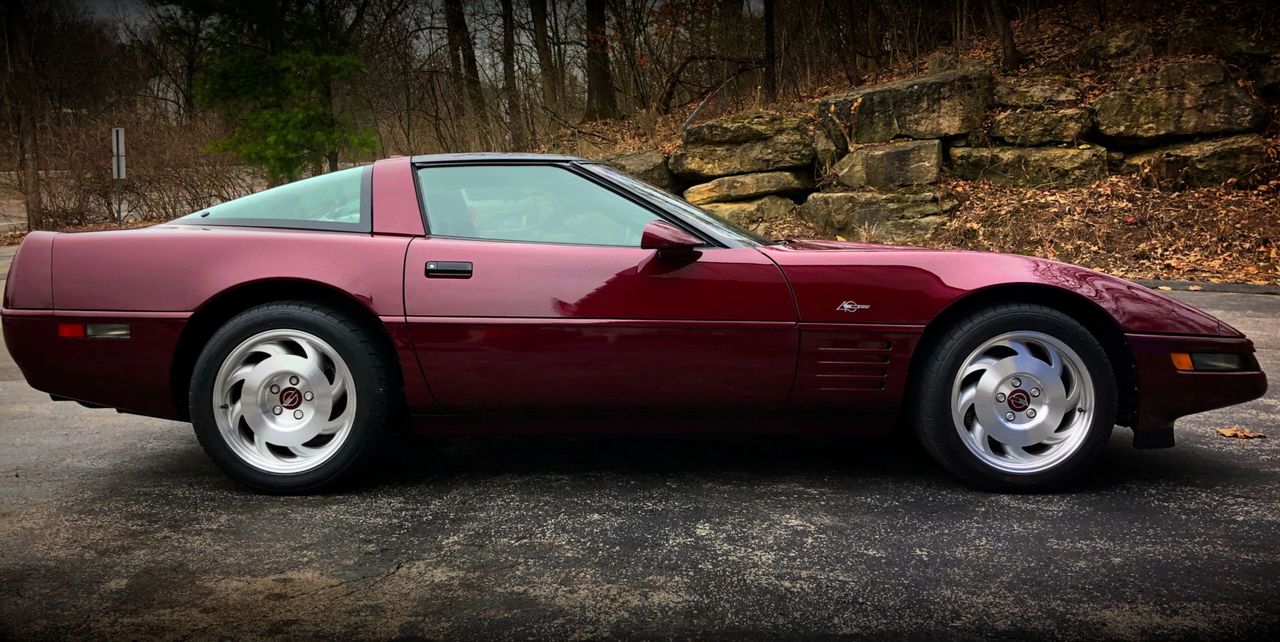
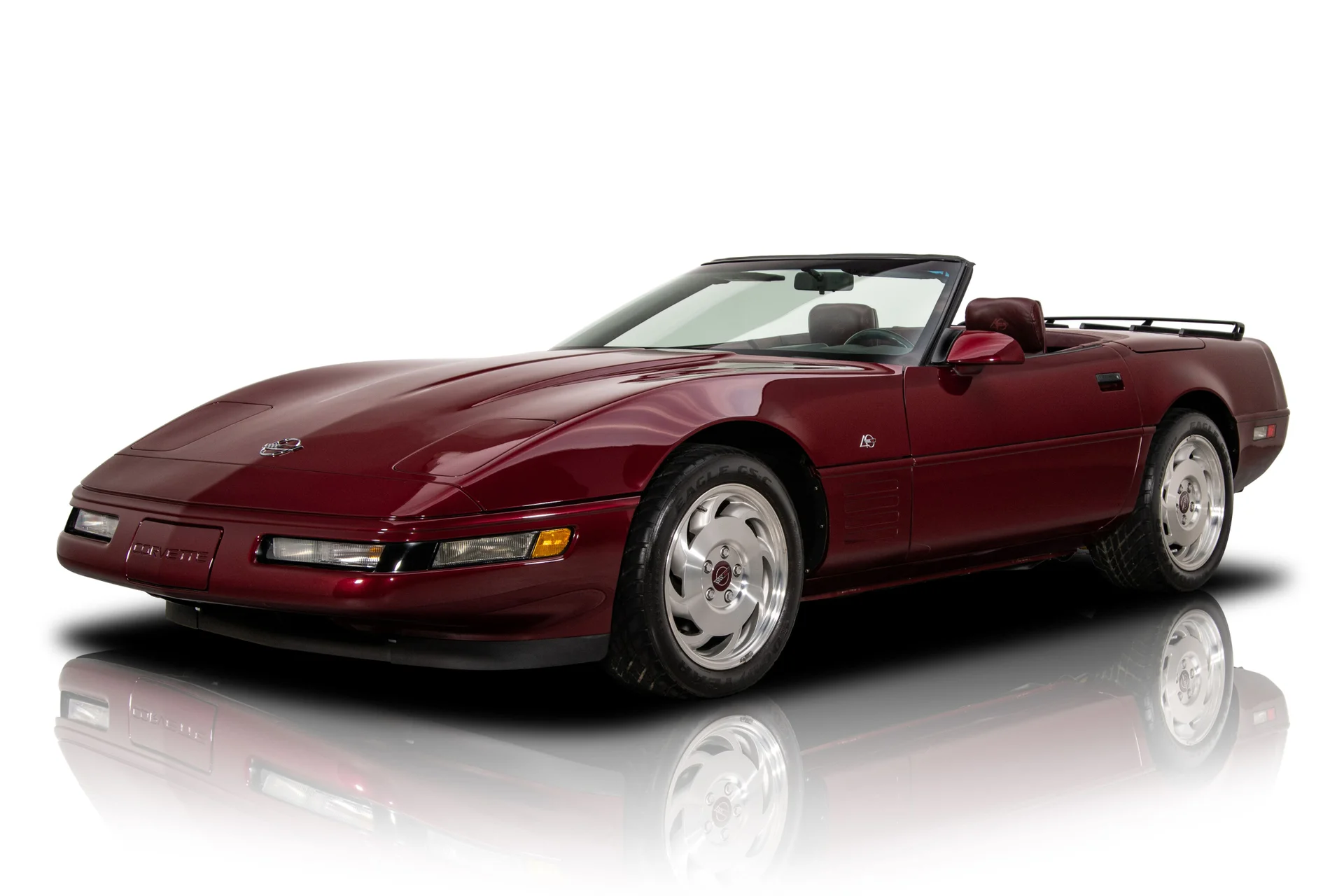
    Chevrolet marked Corvette’s ruby jubilee in 1993 with the 40th Anniversary Edition (RPO Z25)—a commemorative package offered on coupe, convertible, and even the ZR-1 that wrapped the C4 in rich Ruby Red Metallic with a matching Ruby leather cockpit. Subtle but classy details set it apart: “40th Anniversary” fender badges, embroidered seat headrests, color-keyed wheel center caps on the sawblade alloys, and (on ragtops) a Ruby cloth top. Under the skin it remained the sharp, 300-hp LT1 C4 we love—meaning the 40th is equal parts milestone and driver’s car, a tasteful celebration of four decades of America’s Sports Car. (Image courtesy of reddit user archaeauto)
    Chevrolet marked Corvette’s ruby jubilee in 1993 with the 40th Anniversary Edition (RPO Z25)—a commemorative package offered on coupe, convertible, and even the ZR-1 that wrapped the C4 in rich Ruby Red Metallic with a matching Ruby leather cockpit. Subtle but classy details set it apart: “40th Anniversary” fender badges, embroidered seat headrests, color-keyed wheel center caps on the sawblade alloys, and (on ragtops) a Ruby cloth top. Under the skin it remained the sharp, 300-hp LT1 C4 we love—meaning the 40th is equal parts milestone and driver’s car, a tasteful celebration of four decades of America’s Sports Car. (Image courtesy of reddit user archaeauto)

    The centerpiece of the 1993 model year was the 40th Anniversary Edition, available on all body styles—including coupes, convertibles, and even the top-tier ZR-1. The option carried Regular Production Option (RPO) code Z25 and cost $1,455. For that, buyers received a striking Ruby Red Metallic exterior (paint code 68U), which was paired with matching Ruby Red leather sport seats. The headrests were embroidered with “40th Anniversary” script and emblems, while special brightwork badging adorned the car’s flanks, just above the beltline behind the front wheels.

    It was a tasteful package—less flamboyant than some earlier anniversary cars but arguably more elegant. Ruby Red became one of the most memorable hues of the C4 era, and its exclusivity (only available in 1993) made it an instant collector’s choice. Approximately 6,749 Corvettes were ordered with the 40th Anniversary package, making it a visible but still relatively rare subset of the year’s production.
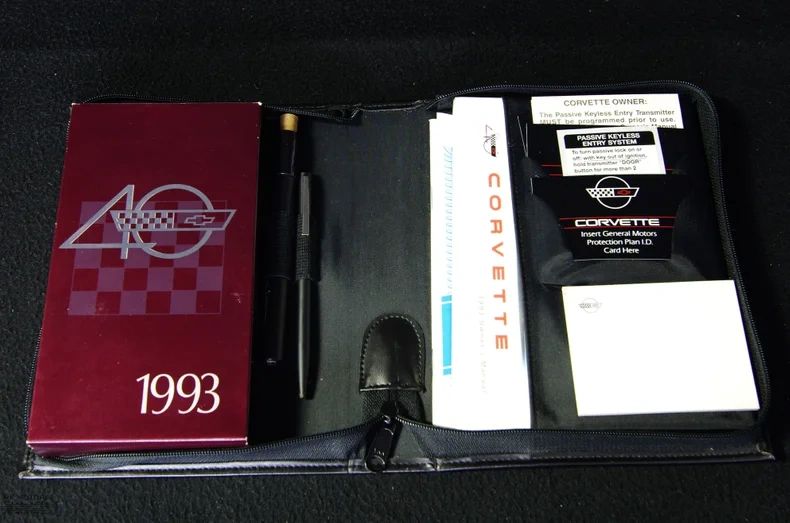
    Tucked neatly inside every 1993 Corvette owner’s portfolio was more than just the usual owner’s manual and warranty paperwork—it included a special VHS cassette commemorating the Corvette’s 40th Anniversary. Finished in the same Ruby Red theme that defined the milestone model, this tape wasn’t just packaging; it was a window into Corvette heritage. Owners could pop it into their VCR and relive four decades of America’s Sports Car—celebrating its racing triumphs, engineering innovations, and cultural impact. Today, that anniversary cassette has become one of the most nostalgic pieces of Corvette memorabilia, a reminder of when Chevrolet blended analog keepsakes with digital excitement to mark a milestone year.
    Tucked neatly inside every 1993 Corvette owner’s portfolio was more than just the usual owner’s manual and warranty paperwork—it included a special VHS cassette commemorating the Corvette’s 40th Anniversary. Finished in the same Ruby Red theme that defined the milestone model, this tape wasn’t just packaging; it was a window into Corvette heritage. Owners could pop it into their VCR and relive four decades of America’s Sports Car—celebrating its racing triumphs, engineering innovations, and cultural impact. Today, that anniversary cassette has become one of the most nostalgic pieces of Corvette memorabilia, a reminder of when Chevrolet blended analog keepsakes with digital excitement to mark a milestone year.

    Inside, Anniversary cars carried the celebration theme with unique trim accents, while outside the paint glowed in sunlight, highlighting the C4’s crisp edges and low, athletic stance. For many enthusiasts, the Anniversary package represented the perfect blend of nostalgia and modern Corvette style.

    Refinements to the Base Corvette

    While the Anniversary package drew attention, the base 1993 Corvette itself was far from stagnant. Under the hood remained the LT1 engine, introduced in 1992. This 5.7-liter (350 cubic inch) small-block V8 represented one of the most advanced iterations of Chevy’s venerable engine architecture. Rated at 300 horsepower and 340 lb-ft of torque, the LT1 used advanced (for the era) electronic fuel injection, reverse-flow cooling (allowing higher compression), and other innovations to deliver strong performance.
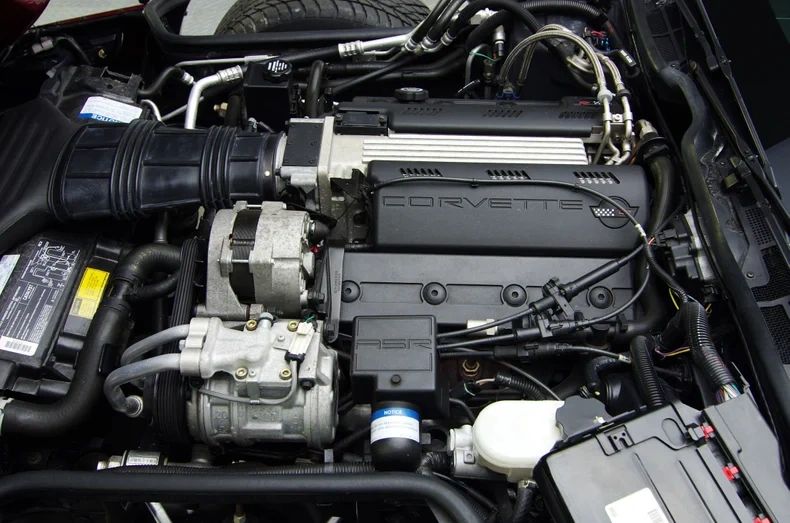
    Under the hood of the 1993 Corvette beats Chevrolet’s proven 5.7-liter LT1 V8, delivering 300 horsepower and 340 lb-ft of torque. This second-generation small-block featured advanced technology for its time, including a reverse-flow cooling system that allowed higher compression and improved efficiency while keeping operating temperatures in check. Mated to either a four-speed automatic or a ZF-sourced six-speed manual transmission, the LT1 provided the C4 with exhilarating acceleration and a broad, usable powerband. Combined with electronic fuel injection and modern engine management, it gave the 1993 Corvette a balance of performance, drivability, and reliability that cemented its reputation as a world-class sports car.
    Under the hood of the 1993 Corvette beats Chevrolet’s proven 5.7-liter LT1 V8, delivering 300 horsepower and 340 lb-ft of torque. This second-generation small-block featured advanced technology for its time, including a reverse-flow cooling system that allowed higher compression and improved efficiency while keeping operating temperatures in check. Mated to either a four-speed automatic or a ZF-sourced six-speed manual transmission, the LT1 provided the C4 with exhilarating acceleration and a broad, usable powerband. Combined with electronic fuel injection and modern engine management, it gave the 1993 Corvette a balance of performance, drivability, and reliability that cemented its reputation as a world-class sports car.

    Although the LT1’s peak horsepower rating did not change for 1993, engineers refined the engine’s operation in meaningful ways. Noise reduction was a priority. The camshaft exhaust lobe profile was altered to reduce valve-closing velocity, which quieted operation while slightly boosting torque output (from 330 to 340 lb-ft). A two-piece self-damping heat shield replaced the earlier single stamping, further muting engine clatter. Even the valve covers were redesigned—new polyester units replaced the magnesium pieces from 1984–92, with improved gasket isolation to cut transmitted noise.

    Transmission choices remained a four-speed automatic or a six-speed manual (standard with no extra charge). The ZF-sourced six-speed was beloved by enthusiasts for its crisp gear engagement and aggressive gearing, though many buyers still opted for the easier automatic.

    Subtle but Significant Chassis and Wheel Changes
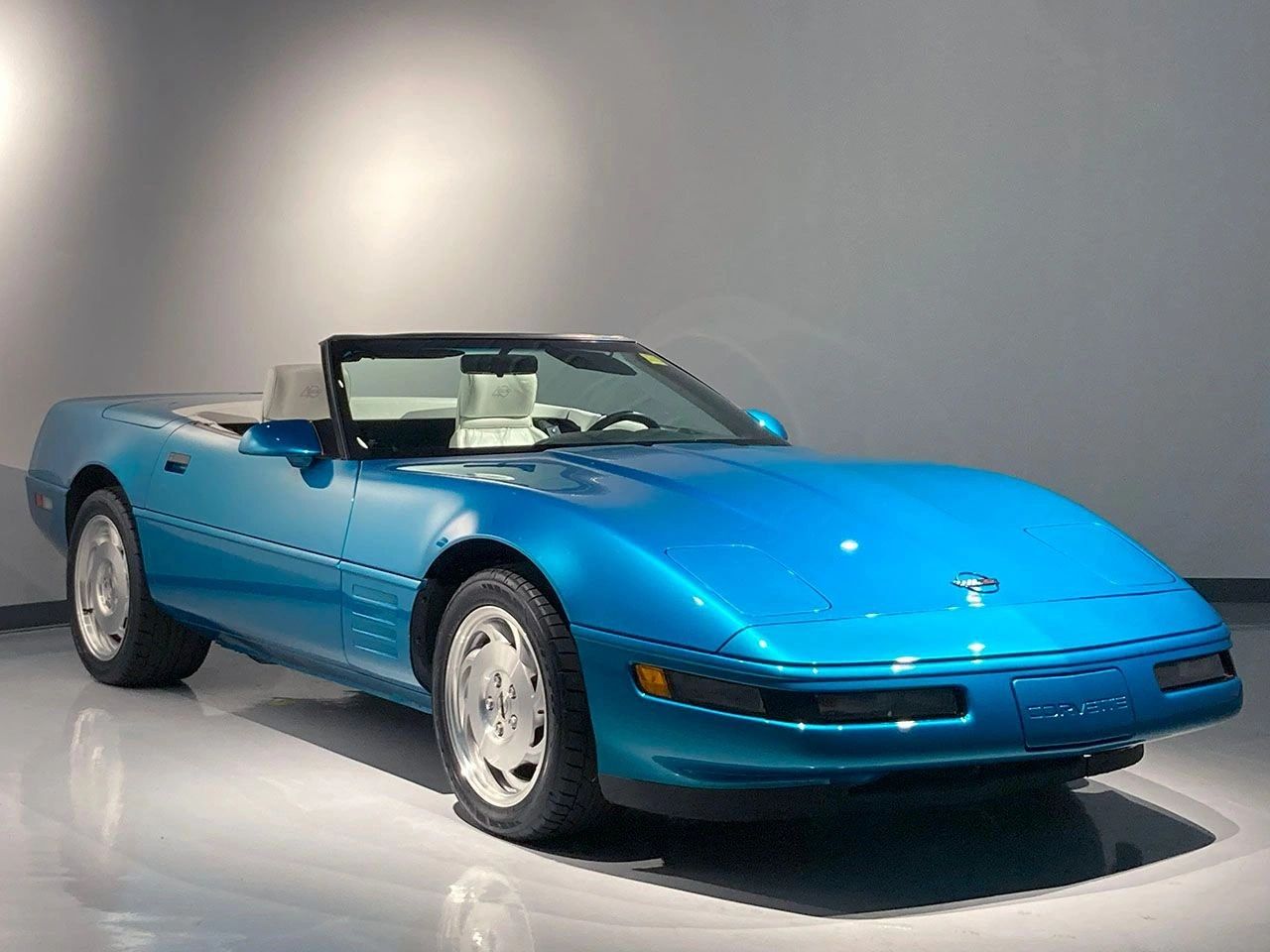
    While 1993 marked the Corvette’s 40th Anniversary, the car itself carried forward with only subtle refinements from the previous year. The most notable change came in the form of added sophistication: a new electronically controlled six-speed automatic transmission replaced the older unit, offering smoother shifts and improved efficiency. Chevrolet also introduced a revised Passive Keyless Entry system, enhancing both security and convenience. Inside, the Corvette’s cockpit benefited from small but meaningful updates—refined seats, upgraded sound insulation, and improved switchgear—meant to make the driving experience more comfortable without altering the car’s unmistakable C4 character. Even the suspension tuning saw minor adjustments to balance ride comfort with the Corvette’s legendary handling prowess. In sum, the 1993 Corvette quietly honed the formula, blending high performance with the kind of refinements buyers expected in a world-class sports car.
    While 1993 marked the Corvette’s 40th Anniversary, the car itself carried forward with only subtle refinements from the previous year. The most notable change came in the form of added sophistication: a new electronically controlled six-speed automatic transmission replaced the older unit, offering smoother shifts and improved efficiency. Chevrolet also introduced a revised Passive Keyless Entry system, enhancing both security and convenience. Inside, the Corvette’s cockpit benefited from small but meaningful updates—refined seats, upgraded sound insulation, and improved switchgear—meant to make the driving experience more comfortable without altering the car’s unmistakable C4 character. Even the suspension tuning saw minor adjustments to balance ride comfort with the Corvette’s legendary handling prowess. In sum, the 1993 Corvette quietly honed the formula, blending high performance with the kind of refinements buyers expected in a world-class sports car.

    From the outside, the 1993 Corvette looked much like the 1992 model. Yet a closer inspection revealed subtle differences, especially in wheels and tires. The front wheels were narrowed slightly from 9.5 inches to 8.5 inches in width, paired with P255/45ZR17 tires (previously P275/40ZR17). The rear wheels, conversely, grew to wear wider P285/40ZR17 tires, improving rear traction.

    Z07 SUSPENSION

    Corvettes equipped with the Z07 adjustable suspension package retained 9.5-inch wheels all around, shod with P275/40ZR17 tires. Regardless of configuration, all Corvettes ran on Goodyear Eagle GS-C tires—exclusive to Corvette at the time—with a directional, asymmetric tread pattern engineered to handle both lateral and longitudinal loads. This tire technology, cutting-edge for its day, was part of what gave the C4 its exceptional handling balance. However, because the tires were designed for specific corners of the car, owners had to take care when replacing them—no tire was interchangeable from side to side or front to rear.

    Suspension geometry remained largely unchanged, though the Corvette’s chassis had by now been honed into a precise instrument. Four-wheel independent suspension with forged aluminum components, available Selective Ride Control (RPO FX3), and massive four-wheel disc brakes with Bosch ABS made the 1993 Corvette a formidable corner carver.

    Passive Keyless Entry: A First for Corvette

    One of the most forward-thinking features of the 1993 Corvette was its Passive Keyless Entry system, a technology well ahead of its time. Standard equipment on all models, it allowed owners to unlock the doors and hatch without pressing a button—simply by approaching the car with the fob in hand or pocket. Using proximity sensors, the Corvette could automatically recognize its owner and grant access, adding both convenience and a touch of high-tech sophistication. At a time when most cars still relied on conventional keys or basic remotes, the Corvette once again proved it was on the cutting edge of innovation, blending modern electronics with its legendary performance pedigree.
    One of the most forward-thinking features of the 1993 Corvette was its Passive Keyless Entry system, a technology well ahead of its time. Standard equipment on all models, it allowed owners to unlock the doors and hatch without pressing a button—simply by approaching the car with the fob in hand or pocket. Using proximity sensors, the Corvette could automatically recognize its owner and grant access, adding both convenience and a touch of high-tech sophistication. At a time when most cars still relied on conventional keys or basic remotes, the Corvette once again proved it was on the cutting edge of innovation, blending modern electronics with its legendary performance pedigree.

    Perhaps the most forward-looking innovation of the 1993 Corvette was its introduction of Passive Keyless Entry (PKE). At a time when most cars still relied on traditional keys or rudimentary remote fobs, Corvette’s system was groundbreaking.

    Instead of pressing a button to lock or unlock the doors, owners carried a small transmitter that broadcast a unique code. Antennas in the car (embedded in doors and, for coupes, in the rear hatch area) detected the signal when the driver approached. The Corvette then automatically unlocked the doors, illuminated the interior lights, and disarmed the security system. The system could even be programmed to unlock only the driver’s door or both doors. Coupes included an additional hatch release button on the transmitter.

    This technology not only added convenience but also cemented Corvette’s reputation as a technology leader. PKE would remain standard equipment through the rest of the C4 generation and into the C5, making its debut here in 1993 especially noteworthy.

    The Greenwood G572: Corvette Extreme
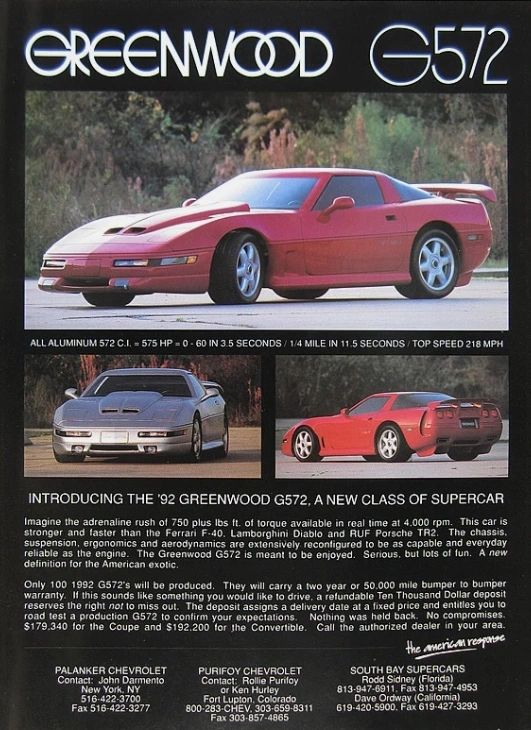
    The 1992 Greenwood G572 was nothing short of an American supercar. Built on the foundation of the C4 Corvette, John Greenwood’s team transformed it into a high-speed weapon with an all-aluminum 572 cubic-inch V8 producing 575 horsepower and a staggering 750 lb-ft of torque. The result was world-class performance: 0–60 mph in just 3.5 seconds, a quarter-mile in 11.5 seconds, and a top speed of 218 mph—numbers that rivaled or exceeded exotic legends like Ferrari’s F40 and Lamborghini’s Diablo. With heavily reworked suspension, aerodynamics, and chassis tuning, the G572 was designed to be as refined as it was fast. Limited to just 100 examples, each carrying a $179,340 base price for the coupe and $192,200 for the convertible, the Greenwood G572 cemented itself as one of the most extreme, exclusive Corvettes of its era—a bold American answer to Europe’s best.
    The 1992 Greenwood G572 was nothing short of an American supercar. Built on the foundation of the C4 Corvette, John Greenwood’s team transformed it into a high-speed weapon with an all-aluminum 572 cubic-inch V8 producing 575 horsepower and a staggering 750 lb-ft of torque. The result was world-class performance: 0–60 mph in just 3.5 seconds, a quarter-mile in 11.5 seconds, and a top speed of 218 mph—numbers that rivaled or exceeded European legends like Ferrari’s F40 and Lamborghini’s Diablo. With heavily reworked suspension, aerodynamics, and chassis tuning, the G572 was designed to be as refined as it was fast. Limited to just 100 examples, each carrying a $179,340 base price for the coupe and $192,200 for the convertible, the Greenwood G572 cemented itself as one of the most extreme, exclusive Corvettes of its era—a bold American answer to Europe’s best.

    While Chevrolet’s own Anniversary package grabbed headlines, another Corvette variant offered in 1993 took performance to the outer limits. Florida-based Greenwood Automotive Performance—founded by racing legends Burt and John Greenwood—introduced the G572.

    Named for its massive 572-cubic-inch (9.4-liter) V8, the Greenwood G572 produced an astonishing 575 horsepower and was capable of performance figures that rivaled supercars costing several times more. Zero to sixty took just 3.4 seconds; the quarter mile disappeared in 11.5 seconds at 135 mph. Top speed? A scarcely believable 218 mph.

    To handle this output, Greenwood reinforced the Corvette’s chassis and fitted functional aerodynamic body panels. The result was a machine that looked and performed like a road-legal race car. But exclusivity came at a price—$179,333, a staggering sum in 1993. While production numbers were tiny, the G572 demonstrated how far the Corvette platform could be pushed and served as a dramatic counterpoint to the factory’s more refined offerings.

    The 1993 ZR-1: King of the Hill, Re-Crowned
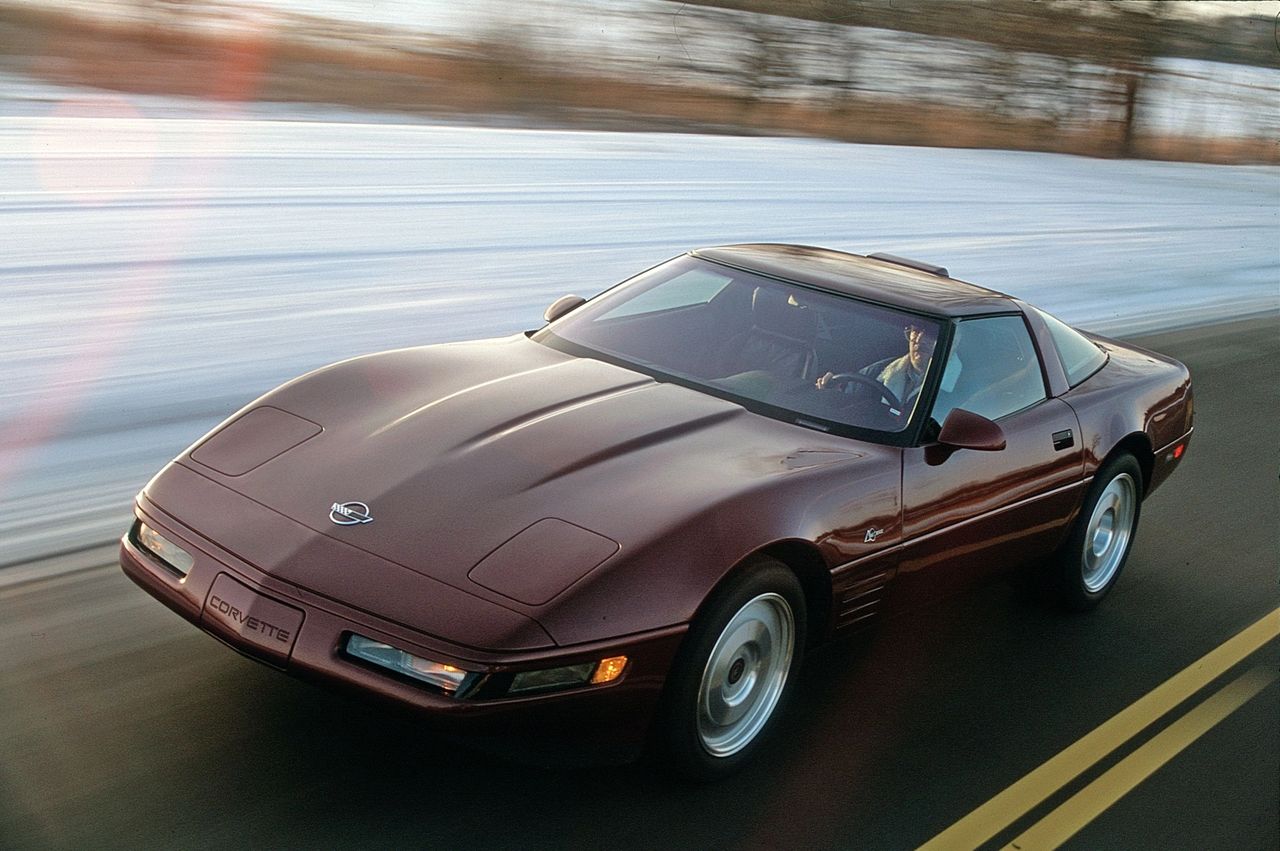
    The 1993 Corvette ZR-1, pictured here in striking Ruby Red Metallic, represented the pinnacle of C4 performance. Beneath its wide rear haunches lurked the Lotus-engineered, Mercury Marine–built LT5 V8, producing 405 horsepower and delivering blistering acceleration with a soundtrack all its own. With subtle exterior cues like the unique rear fascia and ZR-1 badging, the “King of the Hill” stood apart from the standard Corvette while retaining its timeless shape. On the open road—whether carving through snow-dusted landscapes or stretching its legs on the highway—the ZR-1 embodied Chevrolet’s vision of a world-class supercar that could rival Europe’s finest. (Image courtesy of Car & Driver magazine)
    The 1993 Corvette ZR-1, pictured here in striking Ruby Red Metallic, represented the pinnacle of C4 performance. Beneath its wide rear haunches lurked the Lotus-engineered, Mercury Marine–built LT5 V8, producing 405 horsepower and delivering blistering acceleration with a soundtrack all its own. With subtle exterior cues like the unique rear fascia and ZR-1 badging, the “King of the Hill” stood apart from the standard Corvette while retaining its timeless shape. On the open road—whether carving through snow-dusted landscapes or stretching its legs on the highway—the ZR-1 embodied Chevrolet’s vision of a world-class supercar that could rival Europe’s finest. (Image courtesy of Car & Driver magazine)

    If the Greenwood G572 was an outlier, the production ZR-1 remained Chevrolet’s official halo car. Introduced in 1990, the ZR-1 had already established itself as a legend. With its Lotus-engineered LT5 V8—a 5.7-liter, all-aluminum, dual-overhead-cam masterpiece—the ZR-1 delivered exotic-car levels of performance and technology.

    For 1993, the ZR-1’s LT5 received a substantial boost. Horsepower climbed from 375 to 405hp, while torque rose from 370 to 385 lb-ft. These gains came from improved cylinder head porting, a revised valvetrain, four-bolt main bearing caps, platinum-tipped spark plugs, and an electronic EGR system that improved emissions without sacrificing power. Mobil 1 synthetic oil became the factory-specified lubricant, underscoring the LT5’s advanced engineering.
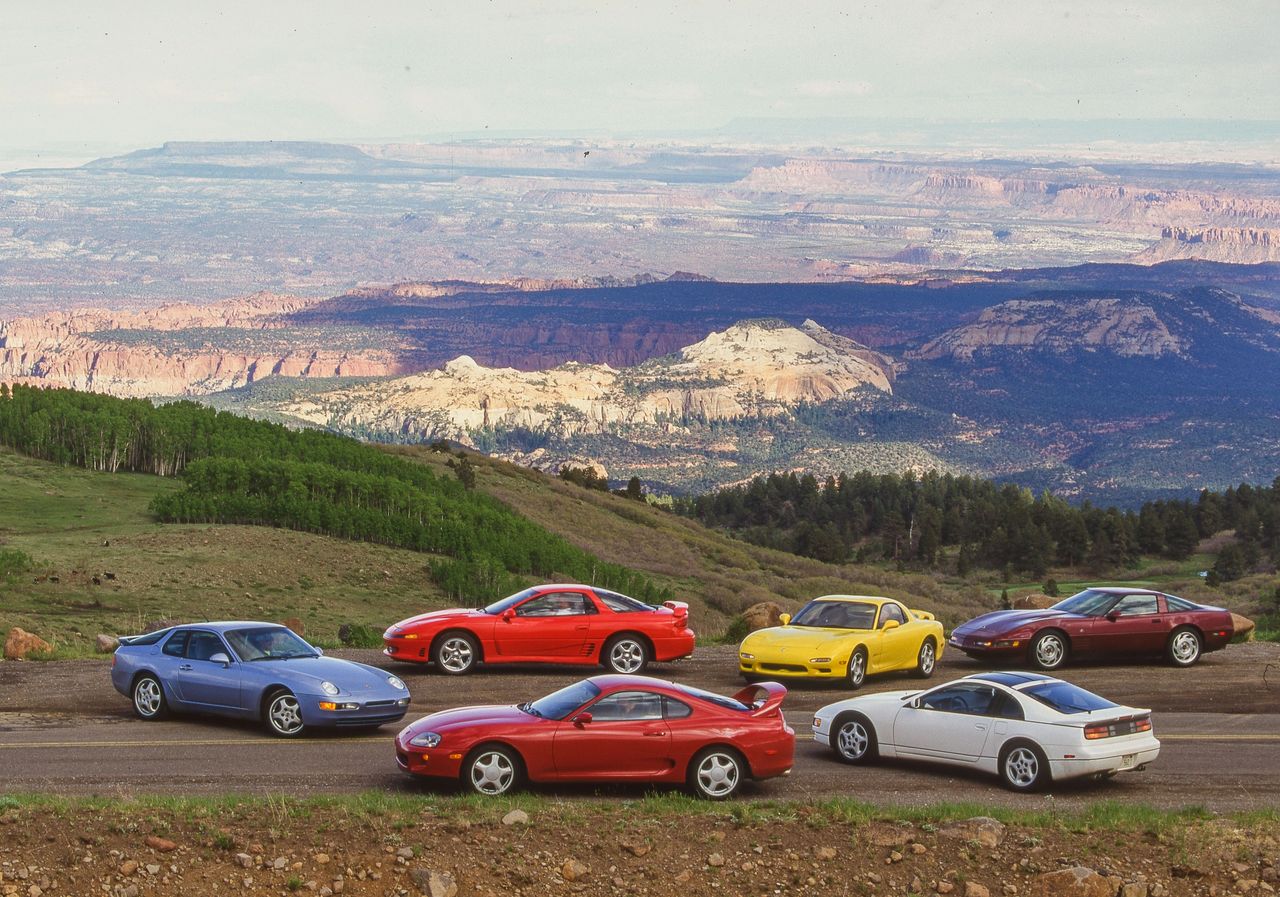
    For 1993, Car and Driver once again named the Corvette ZR-1 to its prestigious “10Best” list, cementing the King of the Hill’s reputation among the world’s elite performance cars. With its Lotus-engineered, 405-horsepower LT5 V8 and exotic-level performance, the ZR-1 stood proudly alongside the best sports cars Japan and Europe had to offer. It wasn’t just raw speed that earned it a spot—it was the way the Corvette blended world-class handling, long-distance comfort, and unmistakable American character. In fact, the ZR-1 would earn repeated recognition, appearing on Car and Driver’s 10Best roster six times during its production run, a testament to its enduring excellence. (Image courtesy of Car & Driver magazine)
    For 1993, Car and Driver once again named the Corvette ZR-1 to its prestigious “10Best” list, cementing the King of the Hill’s reputation among the world’s elite performance cars. With its Lotus-engineered, 405-horsepower LT5 V8 and exotic-level performance, the ZR-1 stood proudly alongside the best sports cars Japan and Europe had to offer. It wasn’t just raw speed that earned it a spot—it was the way the Corvette blended world-class handling, long-distance comfort, and unmistakable American character. In fact, the ZR-1 would earn repeated recognition, appearing on Car and Driver’s 10Best roster six times during its production run, a testament to its enduring excellence. (Image courtesy of Car & Driver magazine)

    Performance was staggering. Motor Trend recorded 0–60 in 4.9 seconds and the quarter mile in 13.4 seconds at over 110 mph. Top speed reached 179 mph—faster than any production Corvette before it. Car and Driver named the ZR-1 the winner in its “Ten Best” issue for top speed performance, cementing its reputation.

    Yet despite accolades, sales continued to slide. Just 448 ZR-1s were built in 1993, compared to thousands in its debut year. At nearly double the cost of a base Corvette (the ZR-1’s RPO added over $31,000 to the price), the car appealed to a niche audience. Still, those who bought one in 1993 acquired one of the most capable and collectible Corvettes of the decade.

    Colors, Options, and Pricing
    1993 Corvette Exterior Paint Colors
    1993 Corvette Exterior Paint Colors

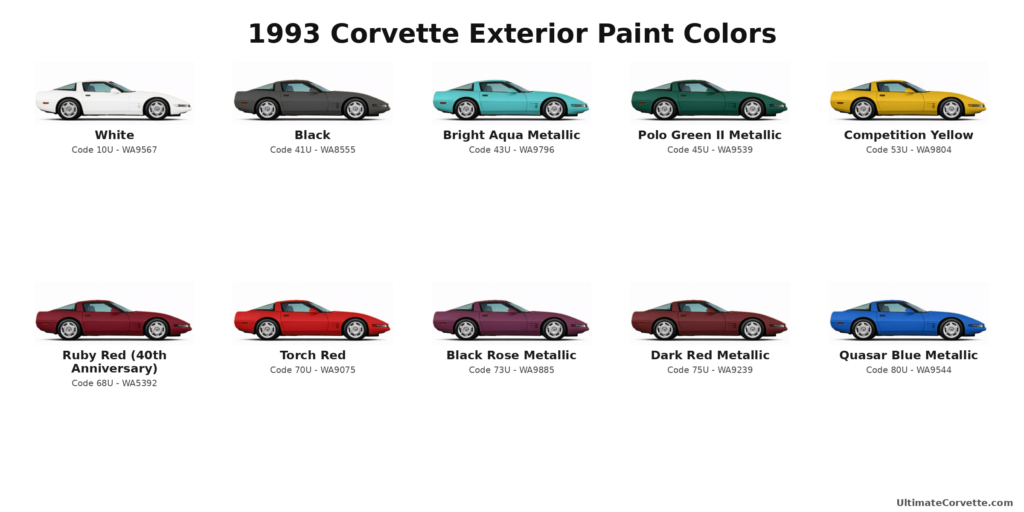
    The 1993 Corvette was offered in ten exterior colors: Arctic White, Black, Bright Aqua Metallic, Polo Green II Metallic, Competition Yellow, Ruby Red, Torch Red, Black Rose Metallic, Dark Red Metallic, and Quasar Blue Metallic. Ruby Red dominated, accounting for 31% of all orders, thanks largely to the Anniversary package. Torch Red, Black, White, and Polo Green also proved popular.

    Pricing started at $34,595 for the coupe and $41,195 for the convertible. Options included everything from electronic air conditioning controls (RPO C68, $205) to the FX3 selective ride system ($1,695). A six-speed manual transmission (RPO MN6) remained a no-cost option. Collectors could also opt for dual roof panels, auxiliary hardtops, Bose stereo upgrades, and more.

    By far the most memorable option, however, was the Anniversary package. For less than $1,500, buyers could create a car that instantly stood out—something that has only grown in desirability over the decades.

    Sales and Production

    Chevrolet built 21,590 Corvettes for the 1993 model year. Of these, 15,898 were coupes and 5,692 were convertibles. The 40th Anniversary package accounted for 6,749 cars, while only 448 ZR-1s left the Bowling Green assembly line.

    Interestingly, 1993 marked the first time since 1989 that Corvette sales increased year-over-year, reversing a downward trend. This reflected both the appeal of the Anniversary package and the general resurgence of interest in performance cars as the economy improved in the early 1990s.

    VIN sequences for 1993 ran from 100001 through 121142 for standard Corvettes, while ZR-1 VINs ran separately from 800001 through 800448. Each car had its unique identifier stamped on the driver’s-side windshield pillar.

    The 1993 Corvette in Retrospect
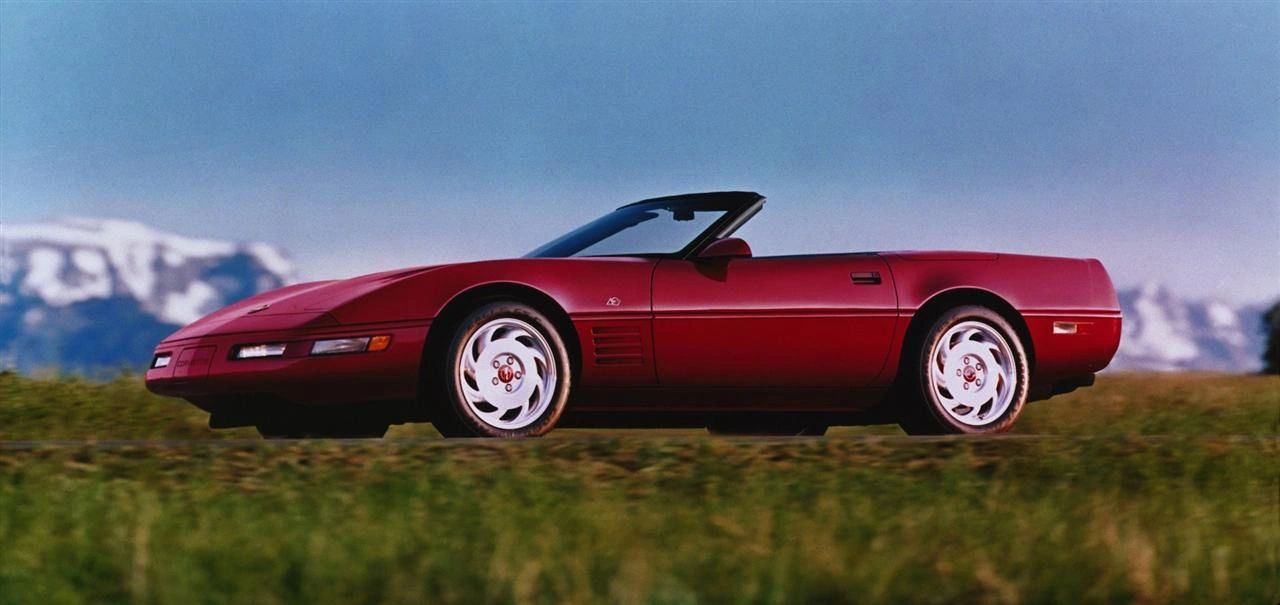
    The 1993 Corvette mattered because it celebrated the nameplate’s 40th anniversary with the Ruby Red (Z25) package while simultaneously elevating the ZR-1 to a ferocious 405 hp—proof the C4 could still run with the world’s best. It also ushered in upscale tech like Passive Keyless Entry, signaling Corvette’s blend of cutting-edge innovation and enduring heritage.
    The 1993 Corvette mattered because it celebrated the nameplate’s 40th anniversary with the Ruby Red (Z25) package while simultaneously elevating the ZR-1 to a ferocious 405 hp—proof the C4 could still run with the world’s best. It also ushered in upscale tech like Passive Keyless Entry, signaling Corvette’s blend of cutting-edge innovation and enduring heritage.

    Looking back, the 1993 Corvette represents a pivotal year in C4 history. It was not a radical redesign year—those would come later with the C5 in 1997—but it was a year of refinement, celebration, and subtle innovation.

    The LT1 base car was faster and quieter than ever, the ZR-1 reasserted its dominance, and the introduction of Passive Keyless Entry pointed the way toward future convenience features. The 40th Anniversary Edition wrapped it all in a commemorative package that honored Corvette’s heritage without descending into gimmickry.

    Today, the 1993 Corvette holds a special place among collectors. Anniversary cars, especially well-optioned coupes and convertibles, are sought after. ZR-1s from this year, with their 405-horsepower LT5s, are particularly desirable, representing the most powerful ZR-1s short of the rare 1995 models. Even base coupes and convertibles showcase the LT1 platform’s maturity and the refinement of late-C4 engineering.

    Four decades in, Corvette was not just surviving but thriving. It was still America’s Sports Car, still a world-class performer, and still evolving. The 1993 model year proved that Corvette’s story was far from finished—if anything, it was entering a new era.

    1993 Corvette Specifications

    Engine & Drivetrain

    • Base Engine (LT1): 350ci (5.7L) small-block V8, 300 hp @ 5,000 rpm, 340 lb-ft torque @ 3,600 rpm
    • ZR-1 Engine (LT5): 350ci (5.7L) all-aluminum DOHC V8, 405 hp @ 5,800 rpm, 385 lb-ft torque @ 5,200 rpm
    • Bore x Stroke: 4.00 in x 3.48 in (both LT1 and LT5)
    • Compression Ratio: 10.4:1 (LT1), 11.0:1 (LT5)
    • Fuel System: Multi-port fuel injection
    • Lubrication: Mobil 1 synthetic required for LT5
    • Transmissions:
    • Standard ZF six-speed manual (MN6)
    • Optional 4-speed automatic (MD8)

    Chassis & Suspension

    • Layout: Front engine, rear-wheel drive
    • Front Suspension: Independent, forged aluminum A-arms, coil springs, Bilstein shocks, anti-roll bar
    • Rear Suspension: Independent, five-link, transverse fiberglass leaf spring, Bilstein shocks
    • Brakes: 12-inch ventilated discs with aluminum calipers; Bosch ABS standard
    • Steering: Rack-and-pinion, power-assisted

    Wheels & Tires

    • Base Coupe/Convertible:
    • Front: 8.5 x 17 in, P255/45ZR17 Goodyear Eagle GS-C
    • Rear: 9.5 x 17 in, P285/40ZR17 Goodyear Eagle GS-C
    • Z07/Performance Package: 9.5 x 17 in wheels with P275/40ZR17 tires front and rear
    • ZR-1: Same staggered setup as base, optimized for LT5 performance

    Dimensions

    • Wheelbase: 96.2 in
    • Length: 178.5 in
    • Width: 71.0 in
    • Height: 46.7 in
    • Curb Weight:
    • LT1 Coupe: ~3,360 lbs
    • LT1 Convertible: ~3,465 lbs
    • ZR-1 Coupe: ~3,510 lbs

    Performance

    • LT1 (Base):
    • 0–60 mph: ~5.4 seconds
    • Quarter Mile: ~14.0 seconds @ ~100 mph
    • Top Speed: ~160 mph
    • ZR-1 (LT5, 405 hp):
    • 0–60 mph: 4.9 seconds
    • Quarter Mile: 13.4 seconds @ 110+ mph
    • Top Speed: 179 mph

    Fuel Economy (EPA)

    • LT1 Manual: 17 mpg city / 25 mpg highway
    • LT1 Automatic: 16 mpg city / 25 mpg highway
    • ZR-1 Manual: 16 mpg city / 25 mpg highway

    Production & VINs

    • Total Production: 21,590
    • Coupes: 15,898
    • Convertibles: 5,692
    • ZR-1: 448
    • 40th Anniversary Package (Z25): 6,749 units
    • VIN Range:
    • Base: 100001 – 121142
    • ZR-1: 800001 – 800448

    Pricing (MSRP)

    • Base Coupe: $34,595
    • Base Convertible: $41,195
    • ZR-1 Package: +$31,683 (total over $66,000)
    • 40th Anniversary Package (Z25): $1,455
    • Notable Options:
    • FX3 Selective Ride Control: $1,695
    • C68 Electronic Climate Control: $205
    • C2L Dual Roof Panels: $950
    • AQ9 Sport Leather Seats: $1,100
    • U1F Delco-Bose CD Stereo: $1,219

    Why the 1993 Corvette Still Matters
    1993 ZR-1 Corvette
    1993 ZR-1 Corvette

    The 1993 Corvette represents a defining moment in the C4 era—when Corvette’s relentless push for modern performance finally aligned with its heritage. Celebrating the model’s 40th anniversary, Chevrolet honored the occasion with the special Ruby Red Metallic 40th Anniversary Package, a visual reminder that Corvette had evolved dramatically since the first car rolled out in 1953.

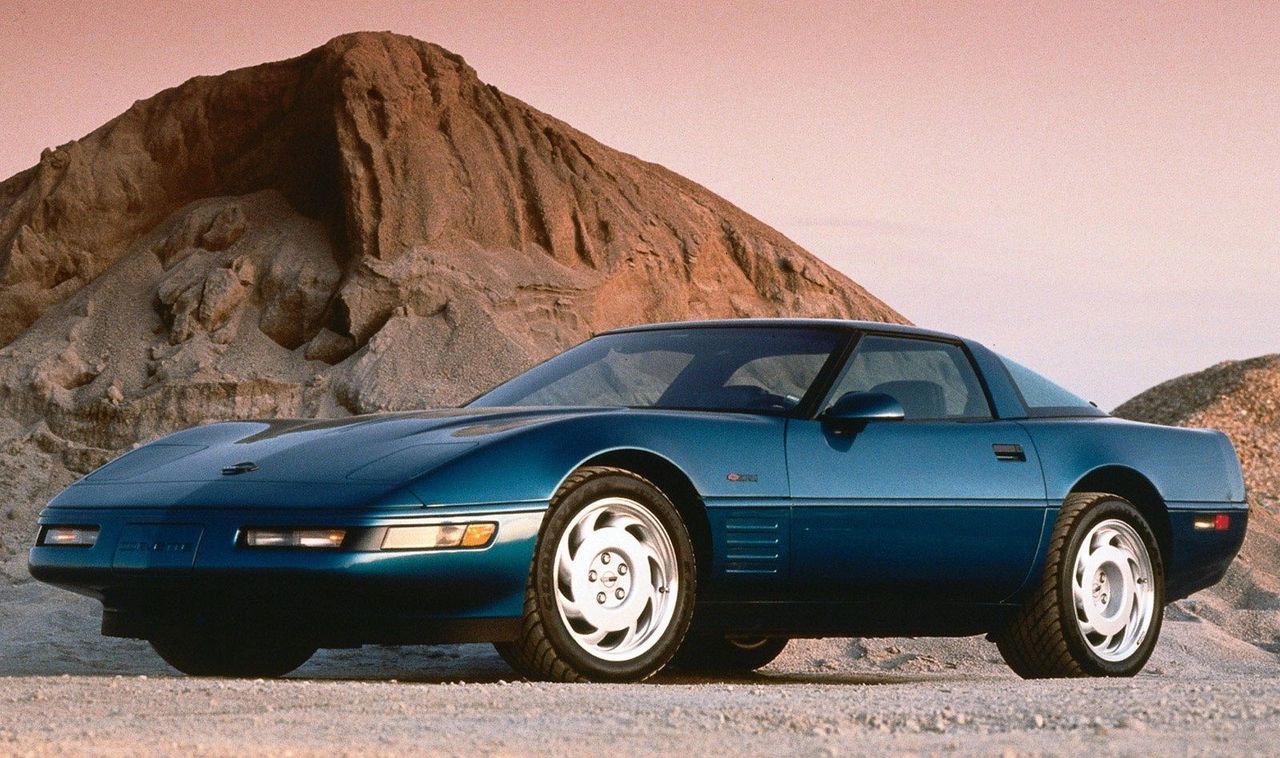
    But the significance of the 1993 model year goes deeper than celebration. Under the hood, the LT1 small-block delivered a healthy 300 horsepower, continuing the engine renaissance that began in 1992. Even more remarkable was the still-formidable ZR-1, whose Lotus-designed LT5 V8 produced 405 horsepower—numbers that rivaled the world’s most respected supercars of the early 1990s.

    By 1993, the C4 Corvette had matured into a highly refined performance machine. The once-controversial digital dashboards and sharp-edged styling of the 1980s had evolved into a balanced package combining speed, handling precision, and everyday usability. Corvette was no longer simply America’s sports car—it was a legitimate global performance contender.

    Today, the 1993 Corvette stands as a snapshot of Corvette at forty: confident, technologically ambitious, and unapologetically performance-focused. It reminds us that the groundwork for the modern Corvette—one capable of challenging the world’s best—was laid long before the mid-engine revolution arrived.
    The 1993 Corvette marked a milestone year for America’s sports car, celebrating four decades of performance and innovation. Powered by the 300-horsepower LT1 V8 and joined by the formidable 405-horsepower ZR-1, the C4 Corvette continued refining its balance of technology, speed, and everyday drivability.

  • 1986 CORVETTE OVERVIEW

    1986 CORVETTE OVERVIEW

    The year 1986 was electric. The Human Genome Project had just been launched, promising to map the very code of life. Email was emerging from the laboratory as the Internet Mail Access Protocol (IMAP) laid the foundations for global communication. IBM released the PC Convertible, the first-ever laptop, giving the term “mobility” new meaning. And in the world of cars, the Chevrolet Corvette—America’s enduring sports car icon—was quietly undergoing its own revolution.

    This wasn’t a radical redesign year. The C4 generation had only just been introduced in 1984, and its sharp-edged form and advanced engineering were still fresh. But under its composite skin, the Corvette engineering team was pushing forward with meaningful refinements—technical leaps in security, braking, structural design, and even weight reduction. For the enthusiast, 1986 wasn’t just a “carryover” year; it was a moment when the Corvette redefined what a production sports car could deliver in safety, technology, and versatility.

    Locking Down the Legend: VATS and the End of the Corvette Theft Epidemic

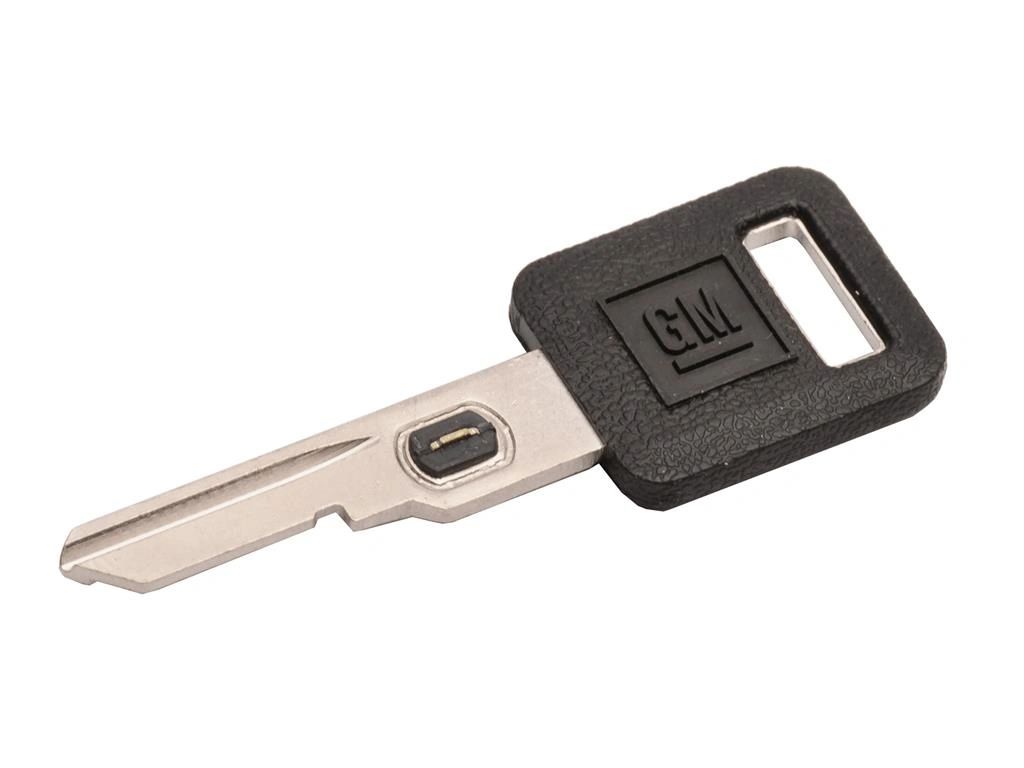
    General Motors VATS (Vehicle Anti-Theft Systems) key blank.  The introduction of VATS keys dramatically (and immediately) reduced the number of vehicle thefts to less than 1% by the end of 1986.
    General Motors VATS (Vehicle Anti-Theft Systems) key blank. The introduction of VATS keys dramatically (and immediately) reduced the number of vehicle thefts to less than 1% by the end of 1986.

    By the mid-1980s, Corvette theft had become a genuine crisis. Reports from law enforcement and insurance agencies showed that about 7 percent of all 1984 and 1985 Corvettes had been stolen—a staggering figure for a single model line. The very traits that made the Corvette desirable on the road—power, image, and exclusivity—were making it a prime target for thieves.

    Chevrolet’s answer was the Vehicle Anti-Theft System (VATS), and in 1986, it became standard on every Corvette. VATS was deceptively simple but technically clever: each ignition key had a tiny embedded resistor “pellet” with a unique electrical value. When the driver inserted the key, a hidden electronic decoder checked the resistance and then allowed the starter relay or fuel pump to engage. Use the wrong key, and the car’s systems locked down for at least two minutes; in practice, some cases saw a 10–15 minute immobilization.

    The VATS anti-theft solution worked—immediately. Corvette theft rates plummeted from 7 percent to less than 1 percent in 1986, and by early 1988, theft rates were effectively negligible. Insurance companies noticed, too—many offered 20–25% reductions in comprehensive coverage premiums for VATS-equipped cars. The system was so effective that GM quickly rolled it out to other high-value models, including the Camaro, Firebird, and Cadillac Allanté.

    For Corvette owners, it meant peace of mind. For would-be thieves, it meant the game had changed.

    ABS Arrives: Braking into the Future

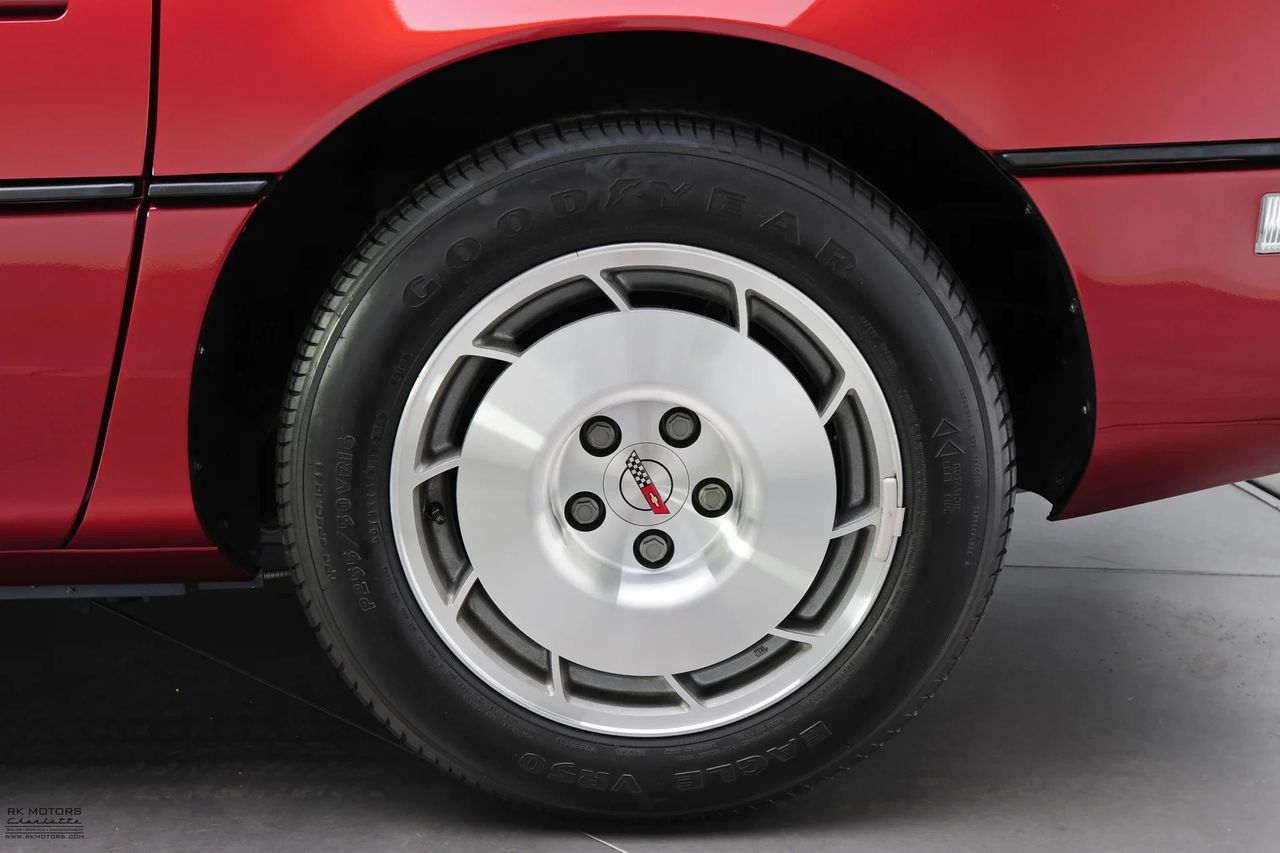
    Behind the turbine-style wheels, Chevrolet introduced Bosch ABS brakes at all four corners of the 1986 Corvette.
    Behind the turbine-style wheels, Chevrolet introduced Bosch ABS brakes at all four corners of the 1986 Corvette.

    In 1986, antilock braking was still the realm of luxury sedans and high-end European exotics. But Chevrolet saw a clear advantage in a car with the Corvette’s speed and handling potential. Working with Bosch, Corvette engineers adapted the BoschABS II system to the C4’s four-wheel disc brake setup, making the Corvette one of the first production sports cars in the world—and the first in North America—to offer four-wheel ABS as standard.

    The system continuously monitored each wheel’s rotation and could modulate brake pressure up to 15 times per second to prevent wheel lockup. In practical terms, it allowed drivers to brake hard—even in wet or uneven conditions—while maintaining steering control. In an era before widespread stability control, ABS gave the Corvette a crucial safety edge, especially at the speeds it was capable of.

    The engineering challenge was integration without compromise. Corvette engineers ensured that ABS retained the direct pedal feel and short stopping distances that owners expected. While some early users reported the system’s characteristic pedal pulsation and “chatter,” these quirks were small trade-offs for the increased control. By introducing ABS on a high-performance platform, Chevrolet was signaling that advanced safety systems weren’t just for luxury cars—they belonged on the fastest cars, too.

    Shedding Pounds and Adding Power: The Aluminum Head L98

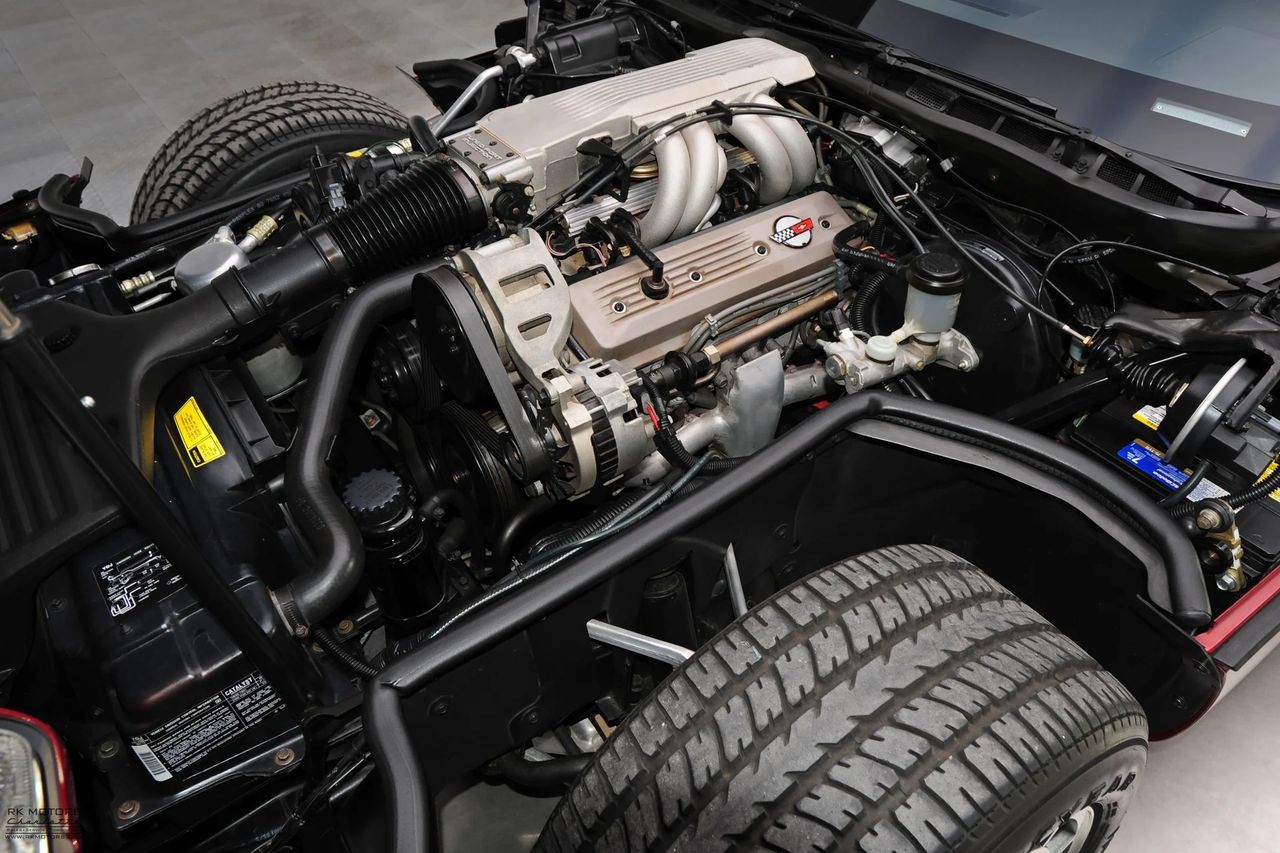
    For the 1986 model year, Chevrolet introduced aluminum heads to its L98 engine, reducing the weight of the engine by approximately 125 pounds.  In addition, the aluminum heads improved heat dissipation, allowed for high compression tolerance, and even helped improve engine horsepower.
    For the 1986 model year, Chevrolet introduced aluminum heads to its L98 engine, reducing the weight of the engine by approximately 125 pounds. In addition, the aluminum heads improved heat dissipation, allowed for high compression tolerance, and even helped improve engine horsepower.

    Weight is the enemy of performance, and Corvette engineers were relentless in shaving it away. For 1986, they turned to one of the most fundamental components of the L98 small-block V8: its cylinder heads. Out went the traditional cast-iron units, and in came aluminum heads, cutting about 125 pounds from the car’s curb weight. This change made the 1986 Corvette the first in two decades to dip below the 3,000-pound mark.

    The benefits weren’t just on the scale. The aluminum heads allowed for improved heat dissipation, higher compression tolerance, and a modest bump in horsepower—from 230 hp in 1985 to 235 hp in the aluminum-equipped 1986 models. This was still a pre-LT1, pre-LS world, but the L98, with its tuned-port injection, was a torque-rich and tractable engine—making the Corvette as comfortable loafing through traffic as it was blasting down a straightaway.

    The change wasn’t without growing pains. Early production aluminum heads were too thin in critical areas, leading to cracking under high loads. GM responded quickly with revised castings featuring thicker head-bolt bosses, centrally located copper-core spark plugs for improved combustion, and larger intake ports with hardened valve seats. Mid-year, these upgrades solidified the L98’s reputation for durability while keeping the weight and power advantages intact.

    The Return of the Convertible—and an Indianapolis Homecoming

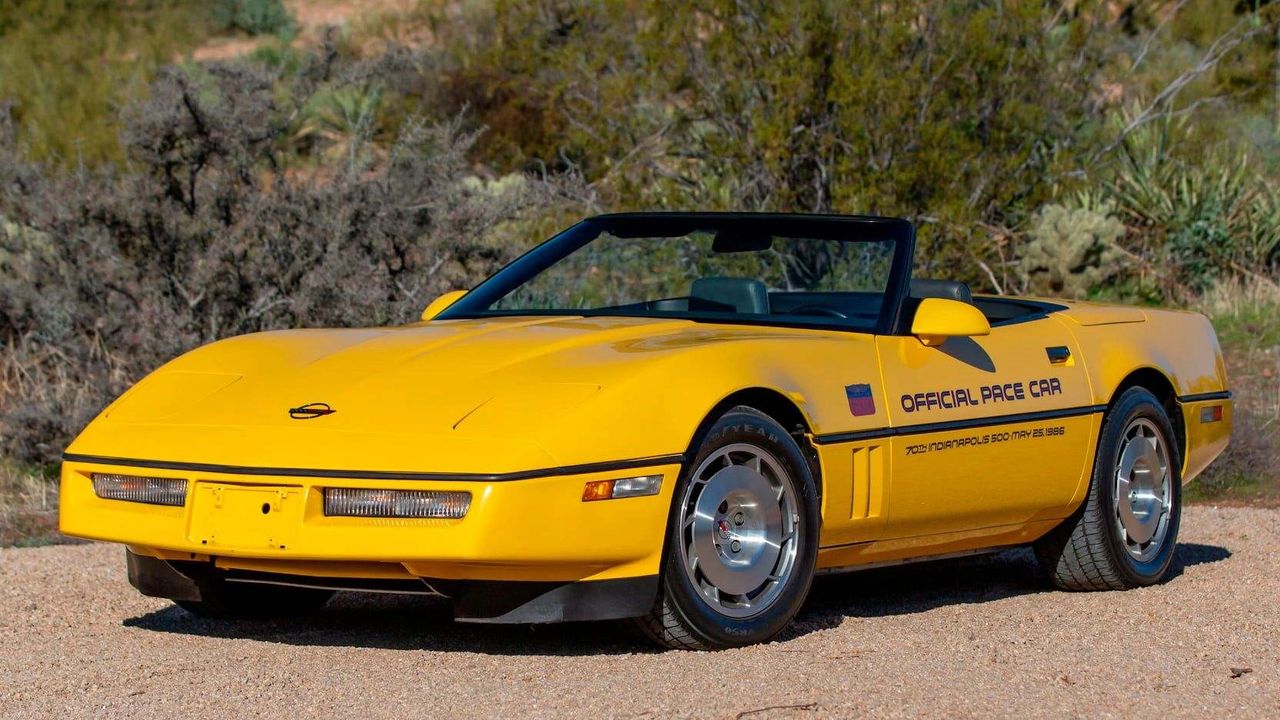
    The 1986 Corvette, particularly the convertible, was designated as the Indy 500 Pace Car Replica, marking the return of the Corvette convertible after a 10-year hiatus. While the official pace car was yellow, all 1986 Corvette convertibles were considered Pace Car Replicas and came with decal packages for dealer or customer installation. Approximately 7,315 convertibles were produced, with many being used as support vehicles at the Indianapolis Motor Speedway for the race.
    The 1986 Corvette, particularly the convertible, was designated as the Indy 500 Pace Car Replica, marking the return of the Corvette convertible after a 10-year hiatus. While the official pace car was yellow, all 1986 Corvette convertibles were considered Pace Car Replicas and came with decal packages for dealer or customer installation. Approximately 7,315 convertibles were produced, with many being used as support vehicles at the Indianapolis Motor Speedway for the race.

    The biggest headline for 1986 wasn’t hidden in an ECU or under a new intake—it was out in the open air. For the first time since 1975, Chevrolet sold a factory Corvette convertible. Crucially, the C4 had been engineered from day one with an open car in mind, so the transformation wasn’t an afterthought: Chevrolet added an underbody X-brace and related stiffening pieces to shore up the structure (a factory solution that later became a popular retrofit for coupes). The result was a significantly more confidence-inspiring open car than a simple roof-ectomy would have delivered, with the added mass and bracing restoring much of the torsional rigidity owners expected. (It’s more accurate to say the bracing recovered stiffness versus a targa with its panel removed—not that the convertible was stiffer than a closed coupe.)

    Then came the Brickyard. Chevrolet’s new drop-top was tapped to pace the 70th Indianapolis 500, and the official car wore bright yellow paint with “Official Pace Car” graphics. Mechanically, the pace car was essentially stock aside from safety equipment (fire system, five-point belts, roof beacons), a point Chevrolet was keen to make given the C4’s performance envelope. In a clever bit of marketing, every 1986 convertible was designated a Pace Car Replica, and buyers could install factory-style decal kits that matched the Indy look. Production of the convertibles totaled 7,315—a healthy number but short of Chevrolet’s loftiest hopes, not least because the convertible carried roughly a $4,000–$5,000 premium over a coupe, pushing stickers into the low-$30Ks.

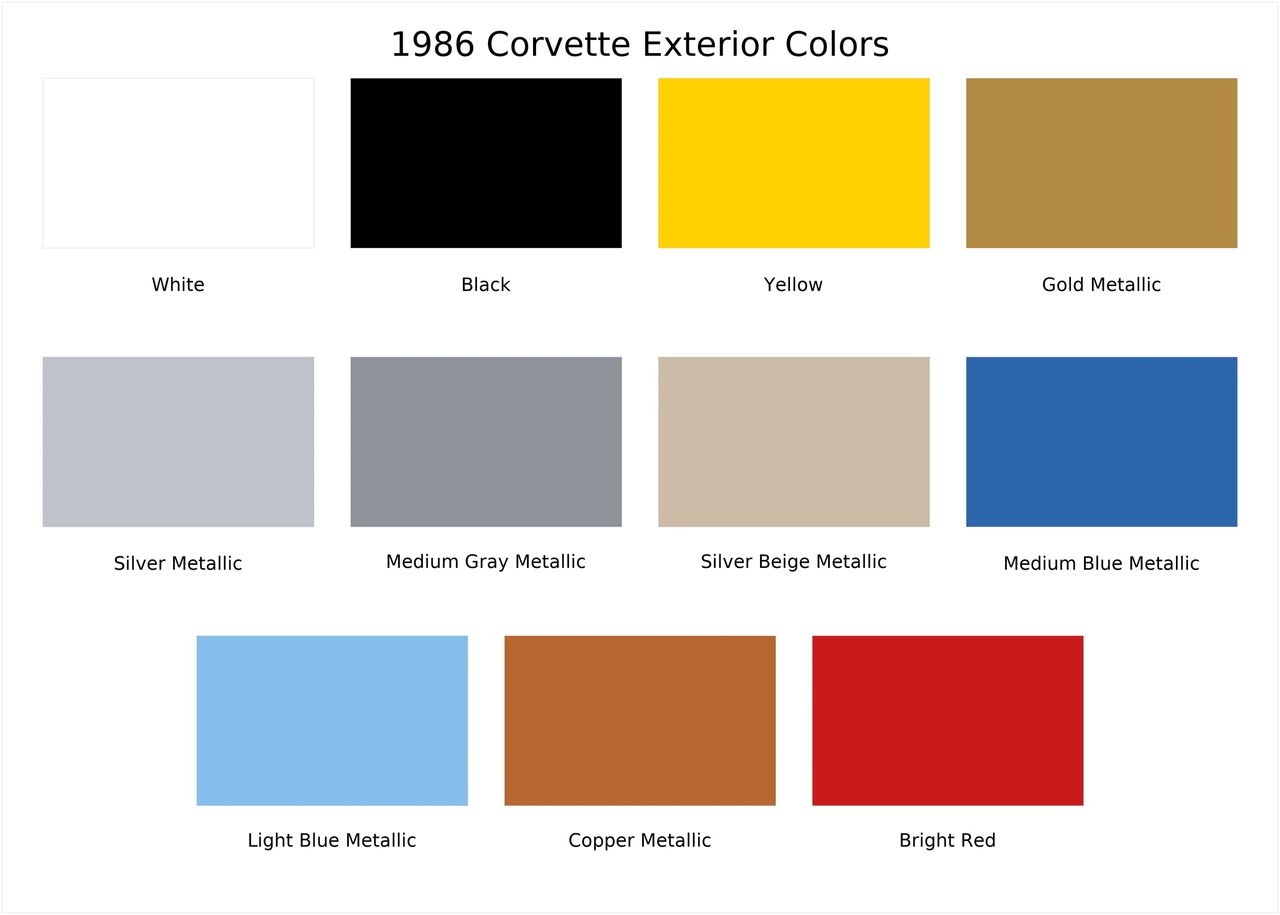
    1986 Paint Colors (with GM Codes)

    For 1986, the palette remained concise and classic—available across the line, with two-tone RPO D84 limited to coupes:

    • White (40)
    • Medium Gray Metallic (18)
    • Black (41)
    • Medium Blue Metallic (23)
    • Light Blue Metallic (20)
    • Gold Metallic (53)
    • Light Bronze Metallic (63)
    • Dark Bronze Metallic (66)
    • Bright Red (81)

    Two-tones (coupes only, RPO D84): Silver/Gray (13/18), Light Blue/Medium Blue (20/23), Light Bronze/Dark Bronze (63/66). These are the GM paint identifiers you’ll see on build sheets and labels; production references (Corvette Central Tech) also list per-color counts for 1986.

    A small footnote worth noting

    Beyond the roofline drama, 1986 also ushered in headline tech such as the available Bosch ABS (a period showpiece in road tests) and mid-year aluminum cylinder heads—changes that underlined how quickly the C4 was evolving while the convertible grabbed the spotlight.

    Refinements That Made a Difference

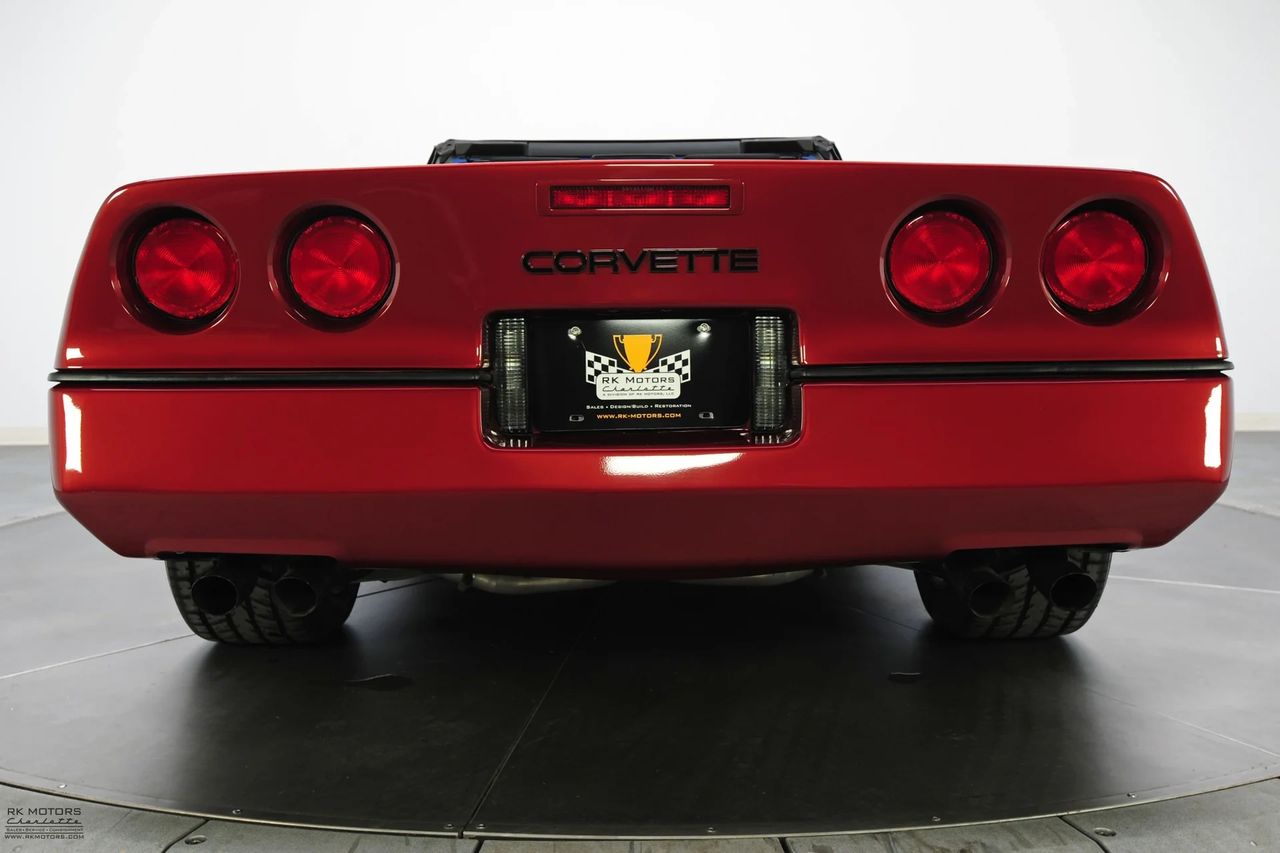
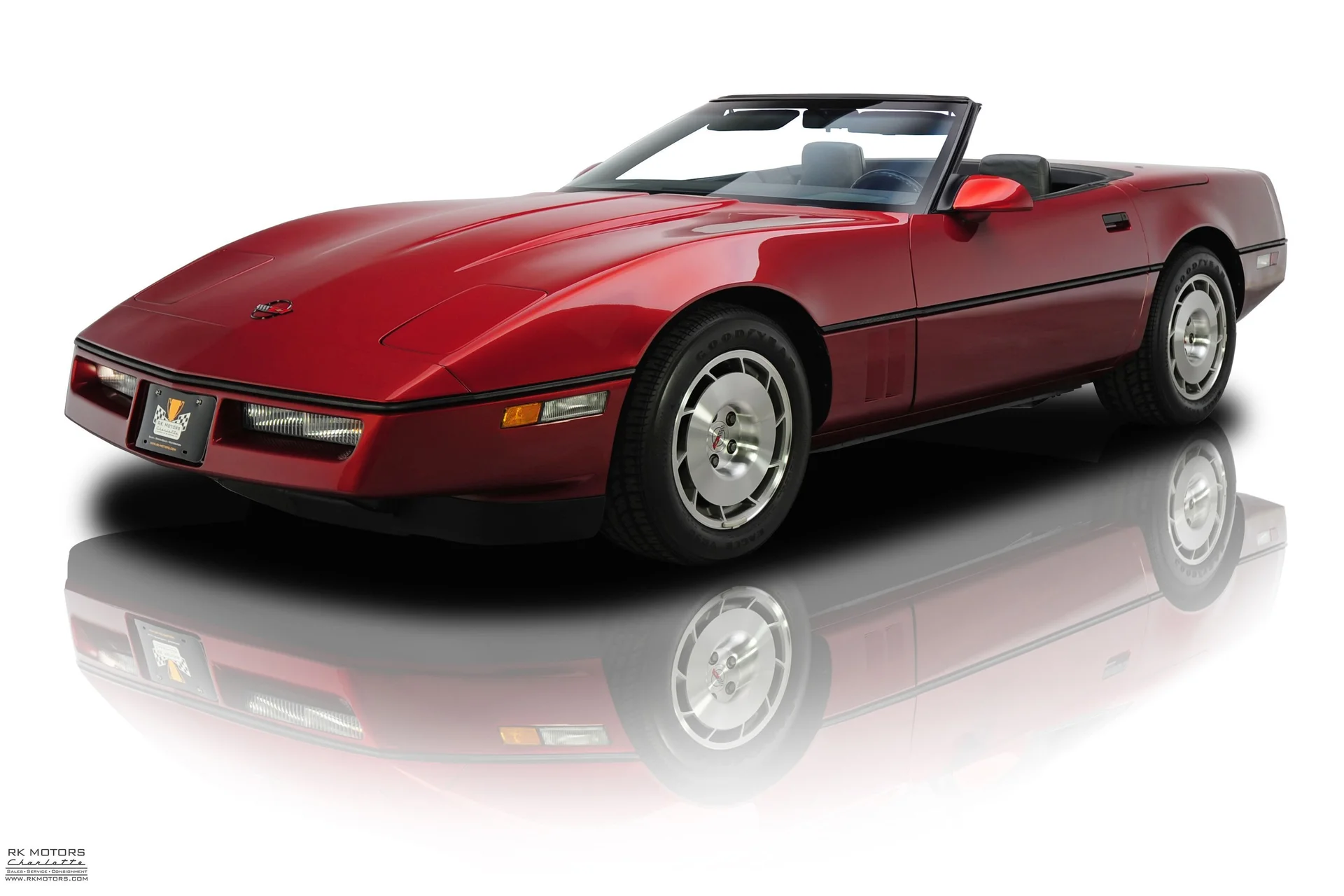
    A third tail light was introduced on all 1986 Corvette models.  On the coupes, it was mounted about the rear hatch glass.  On convertibles (as seen here) it was integrated into the convertible's rear fascia/bumper assembly.  (Image courtesy of RK Motors.)
    A third tail light was introduced on all 1986 Corvette models. On the coupes, it was mounted about the rear hatch glass. On convertibles (as seen here) it was integrated into the convertible’s rear fascia/bumper assembly. (Image courtesy of RK Motors.)

    Not every change in 1986 made headlines, but many quietly improved the driving experience. A high-mounted third brake light—mandated by new federal safety regulations—appeared above the coupe’s rear hatch glass and was integrated into the convertible’s rear bumper. The wheel caster was increased from 3.8 to 6.0 degrees for better straight-line stability. Standard tire sizes grew to P245/VR50-16, improving grip without compromising ride quality; Z51 performance package cars retained their wider P255s.

    Inside, the digital LCD dashboard was re-angled for better daytime visibility, though many drivers still found it difficult to read in bright light. New warning lights for low coolant and ABS status appeared, alongside an upshift indicator designed to maximize fuel economy and keep the Corvette out of the EPA’s “gas guzzler” penalty bracket. The shift light, controversial among purists, was tied to all transmissions, automatic and manual alike.

    Performance, Price, and Perspective

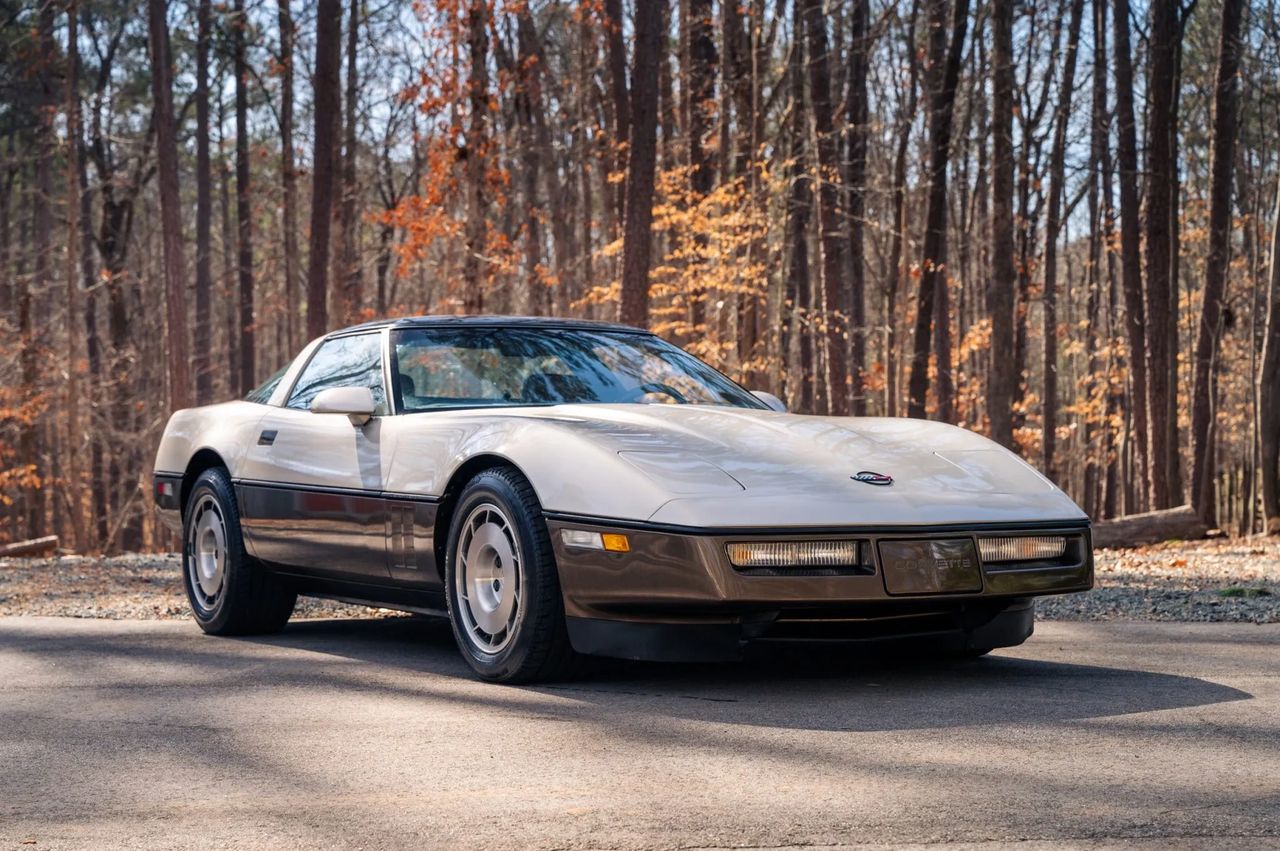
    1986 Corvette Coupe in two-tone Silver-Beige Metallic (top) and Brown (bottom). Two tone paint schemes were unique to the third- and fourth-generation Corvettes from 1978 through 1986.
    1986 Corvette Coupe in two-tone Silver-Beige Metallic (top) and Brown (bottom). Two tone paint schemes were unique to the third- and fourth-generation Corvettes from 1978 through 1986.

    On paper, the 1986 Corvette remained an impressive performer: 0–60 mph in 5.8 seconds, a quarter mile in 14.4 seconds, and a top speed of around 150 mph. Production totaled 35,109 units—27,794 coupes and 7,315 convertibles. Pricing reflected its increasingly high-tech nature: the base coupe started at $27,027, while the convertible broke new ground for Corvette pricing at $32,032.

    By the close of the model year, the 1986 Corvette stood as proof that a sports car could evolve without losing its soul. It had gained real-world security, cutting-edge safety, and open-air freedom—all without abandoning the sharp handling and straight-line punch that had always defined America’s sports car.

    In a year when technology was reshaping how people lived, worked, and played, the Corvette showed that the same spirit of innovation could be applied to four wheels and a roaring small-block V8. For some, 1986 was the year the Corvette got smarter. For others, it was simply the year the Corvette reminded the world it could keep pace with the future—at full throttle.

    1986 Corvette — Key Specifications

    Quick Stats

    • Engine: 5.7L (350 cu in) L98 Tuned Port Injection V8
    • Output: 230 hp @ 4,000 rpm, 330 lb-ft @ 3,200 rpm; late-’86 aluminum-head L98s rated 235 hp. National Corvette Museum+1
    • Transmissions: 4-speed auto (TH700-R4) • 4+3 Doug Nash manual (4-speed with automatic overdrive in 2nd–4th) National Corvette Museum
    • Driveline/Layout: Front-engine, rear-wheel drive
    • Curb weight (approx.): 3,100 lb (coupe) • 3,280 lb (convertible) CorvSport.com

    Performance (period figures)

    • 0–60 mph: ~5.6–5.9 sec (factory/period tests)
    • Top speed: ~150 mph
    • Skidpad: up to ~0.90 g with performance package/tire spec
    • Braking: First year for Bosch ABS II (4-wheel), widely praised in road tests. National Corvette Museum+1

    Chassis, Suspension & Brakes

    • Structure: Uniframe with bolt-on front/rear cradles; composite body panels
    • Front/Rear Suspension: Aluminum control arms, independent rear five-link, transverse composite leaf springs; gas-pressurized shocks (Delco-Bilstein std. w/ Z51, avail. on base) National Corvette Museum
    • Steering: Power rack-and-pinion
    • Brakes: Power 4-wheel discs, ventilated rotors; Bosch ABS II standard for 1986 National Corvette Museum
    • Z51 Performance Handling Package: higher-rate springs/bars, Delco-Bilstein shocks, heavy-duty cooling, 16×9.5-in wheels, quicker steering. National Corvette Museum

    Wheels & Tires

    • Standard wheels: 16×8.5-in cast aluminum
    • Z51 wheels: 16×9.5-in
    • Tires (typical): P255/50VR-16 Goodyear Eagle VR50 “Gatorback.” National Corvette Museum

    Dimensions & Capacities

    • Wheelbase: 96.2 in • L/W/H: 176.5 / 71.0 / 46.4–46.7 in
    • Track (F/R): 59.6 / 60.4 in
    • Fuel capacity: 20.0 gal
    • Notable aero: advertised Cd ≈ 0.323. National Corvette Museum

    Powertrain Details

    • Engine code: L98 (TPI, long-runner intake)
    • Compression ratio: ~9.5:1 (factory spec)
    • Heads: Cast-iron early; aluminum heads mid-year on some builds (VIN suffixes identify 235-hp alum-head cars). National Corvette Museum+1
    • Common axle ratios: ~2.73 (auto) • 3.07 (manual) CorvSport.com

    Paint & Trim (with GM codes)

    Singles: White (40), Silver Metallic (13), Medium Gray Metallic (18/WA7719), Nassau Blue Metallic (20/WA8770), Yellow (35/WA8769), Black (41/WA8555), Gold Metallic (53), Silver Beige Metallic (59/WA8773), Copper Metallic (66/WA8754), Medium Brown/Dark Beige Metallic (69/WA8771), Dark Red Metallic (74/WA8748), Bright Red (81/WA8774). (Numbers are GM paint codes as printed on build/RPO labels.) Corvette Action Center+1

    Two-tones (RPO D84, coupes only): Silver/Gray (13/18), Light Blue/Medium Blue (20/23), Light Bronze/Medium Brown (63/69) as listed in factory option guides for 1986. CorvSport.com

    Features that debuted/became standard in 1986

    • Convertible body style returned (ASC-built) with structural X-brace & added stiffening
    • Bosch ABS II anti-lock brakes
    • VATS (Vehicle Anti-Theft System) with resistor-key ignition.

    The year 1986 was electric. The Human Genome Project had just been launched, promising to map the very code of life. Email was emerging from the laboratory as the Internet Mail Access Protocol (IMAP) laid the foundations for global communication. IBM released the PC Convertible, the first-ever laptop, giving the term “mobility” new meaning. And…