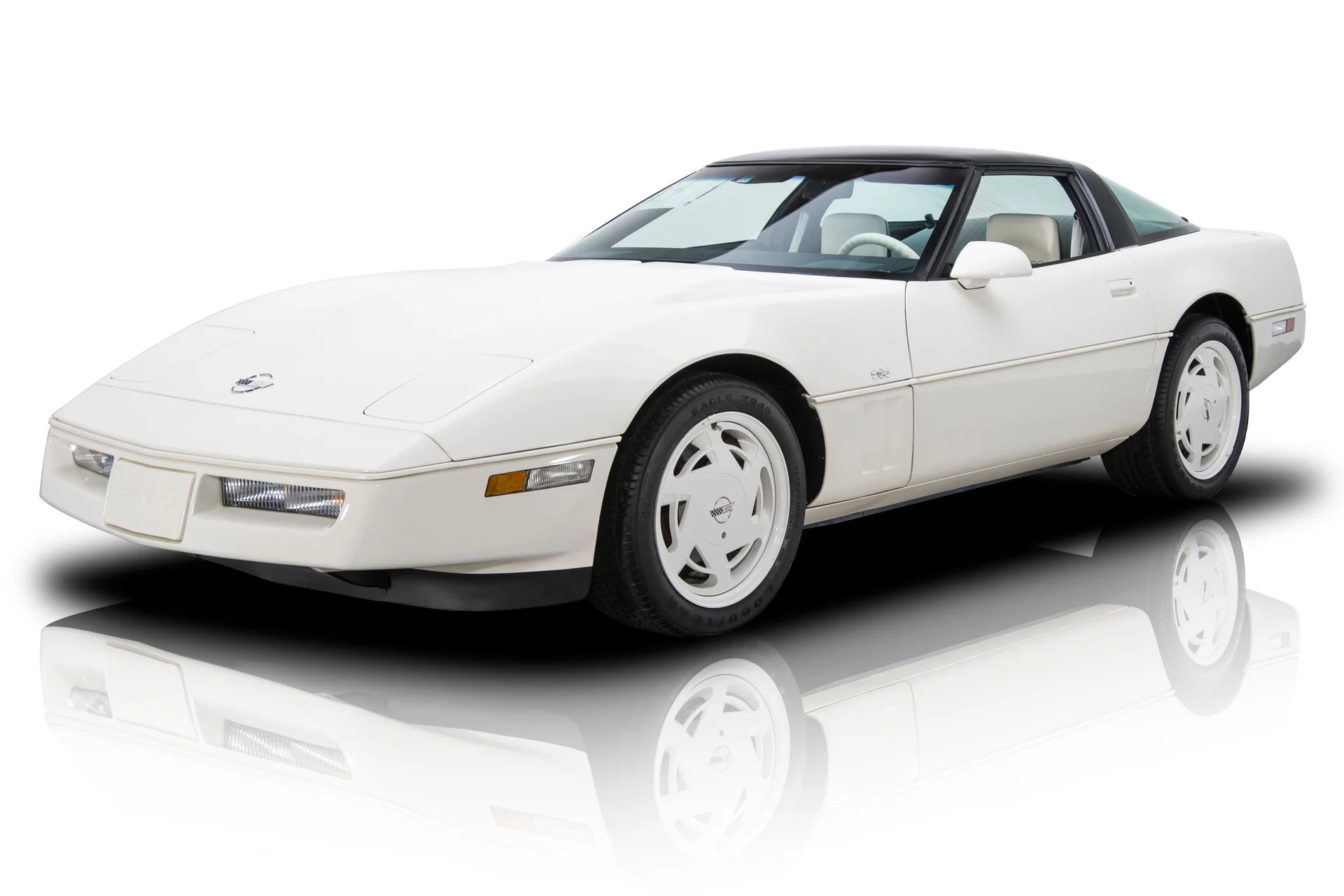
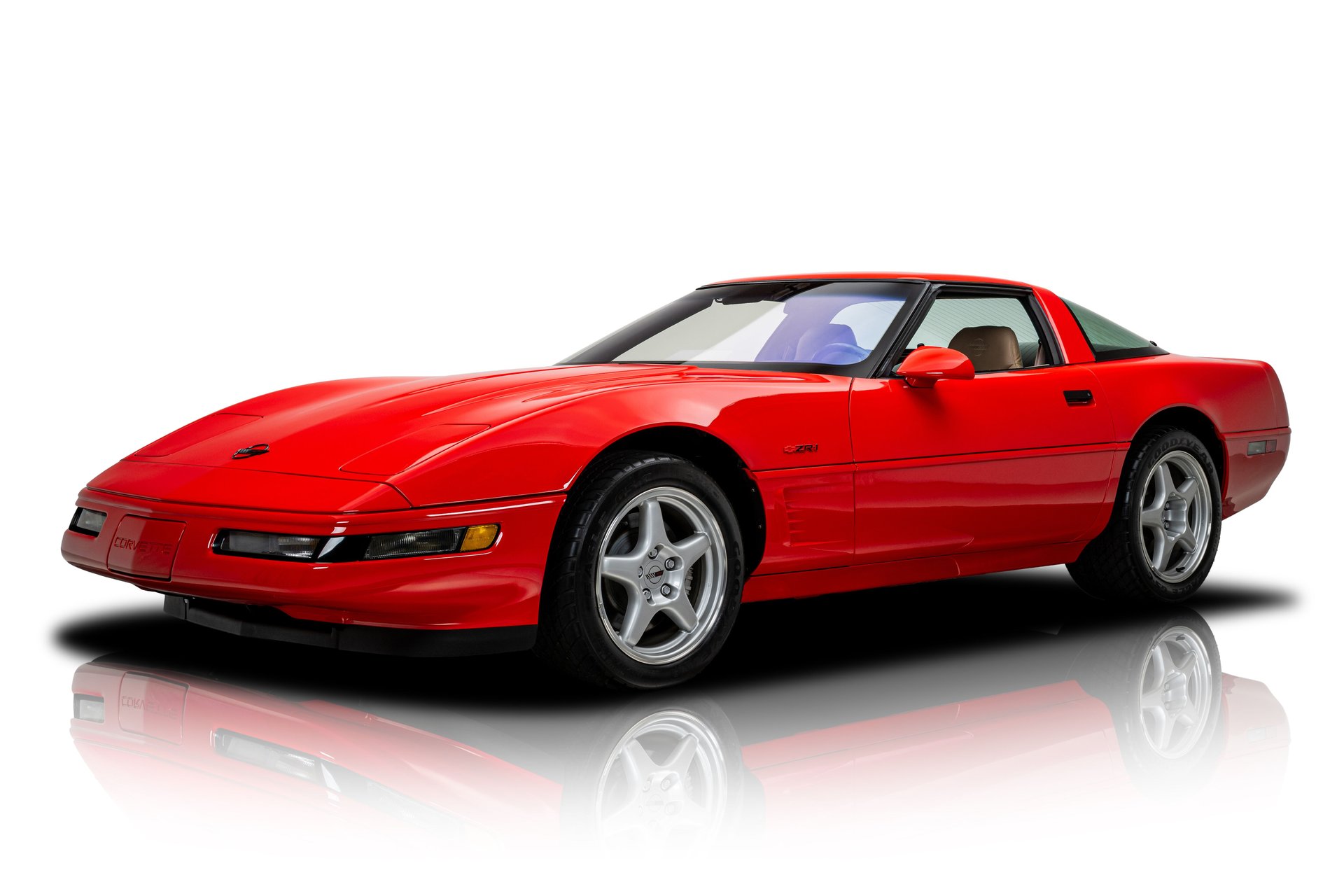
By the mid-1990s the fourth-generation Corvette wasn’t chasing youth so much as perfecting experience. Eleven model years in, the C4 still launched like a slingshot and carved corners with the flinty precision that made it a chassis benchmark. Yet just offstage, a skunkworks within General Motors was already splitting its days and nights on the fifth-generation car—a clean-sheet coupe that wouldn’t hit showrooms until the 1997 model year. That tension defined 1995. Evolution over revolution. Polish over reinvention. This is the year Chevrolet made the C4 better in ways you feel more than see—and the year the fourth-generation ZR-1, America’s original modern supercar, took its final bow with a ceremony worthy of a monarch.
There’s a temptation to reduce late C4s to option codes and production counts. But 1995 wasn’t merely an updated parts catalog; it was a philosophy. It was a team that had learned what Corvette owners actually lived with—the creaks, the chatter, the extra effort to snag reverse on a cold morning—and decided to fix what mattered most to them. The base model fourth-generation Corvette was a platform that could already out-corner its peers and, with a few key upgrades, would be able to stop with the same authority. And it was a factory willing to pause an assembly line to salute the end of a legend.
Refining the LT1: Quieter, Stronger, Cleaner
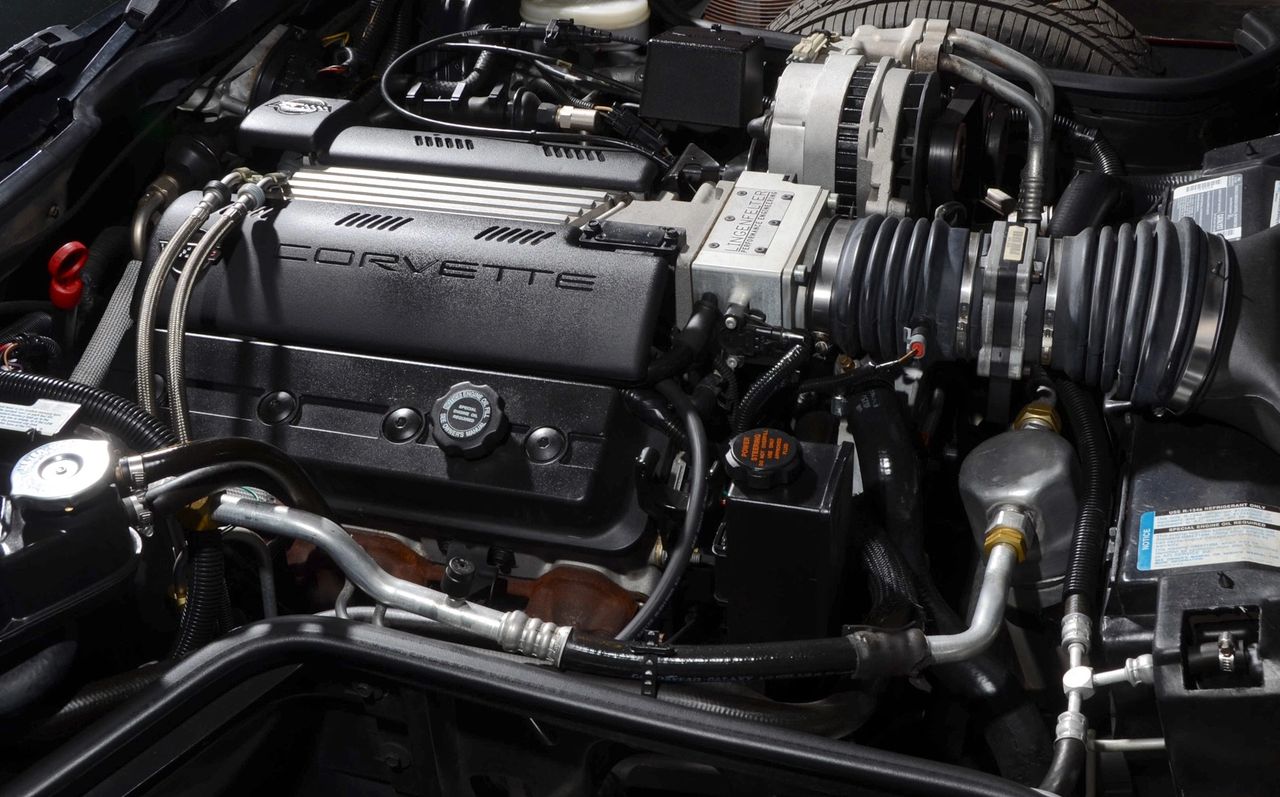
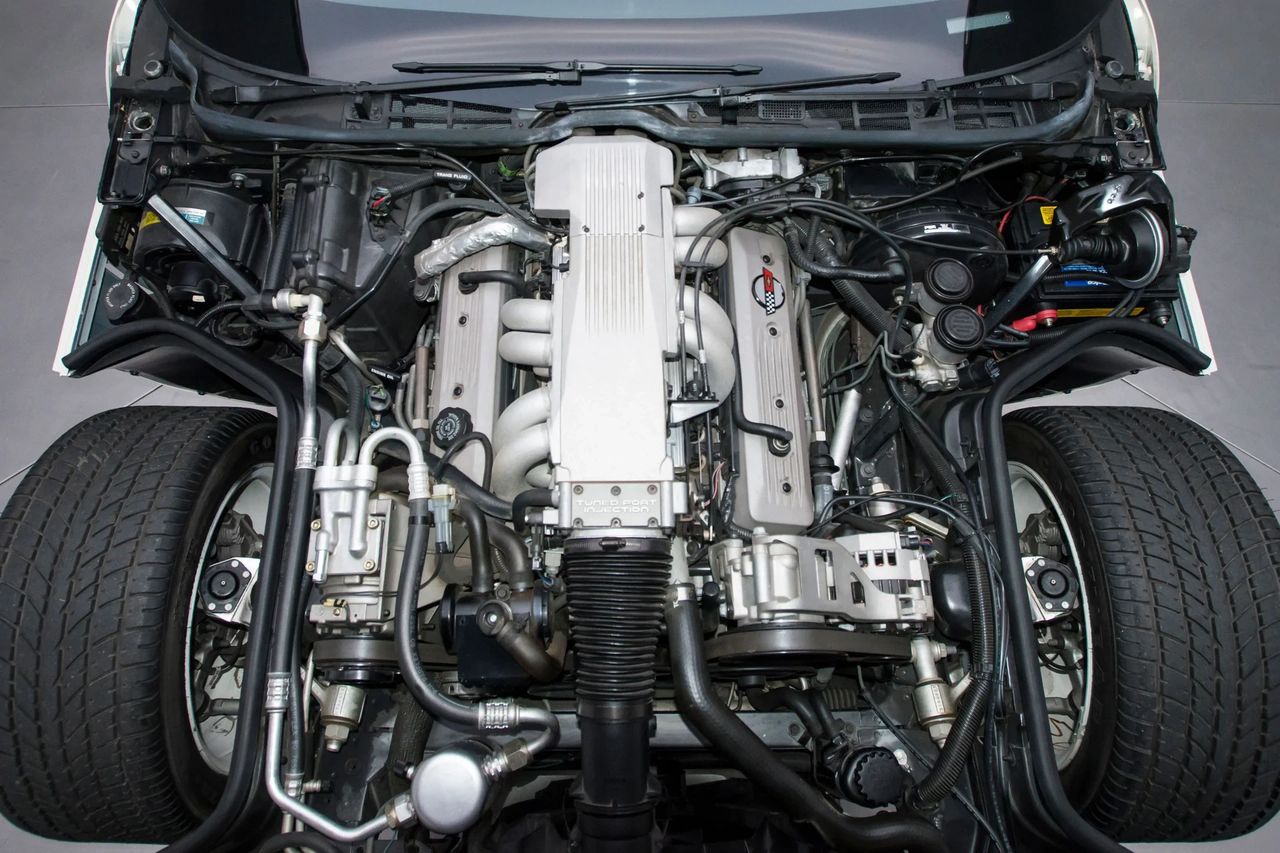
On paper, the 5.7-liter LT1 returned unchanged at 300 horsepower and 340 lb-ft. In practice, the powerplant in the 1995 Corvette was tighter, tougher, and less fussy. GM’s move to powdered-metal connecting rods—by then fully resident in Corvette usage—wasn’t an enthusiast forum brag; it was metallurgy in service of longevity. Powdered-metal rods offer excellent dimensional uniformity and fatigue strength. When a V-8 lives between 5,000 and 6,000 rpm with regularity, consistency is not a luxury. It’s survival.
Fuel delivery got smarter as well. The mid-’90s fuel pump reality was sifting towards ethanol blends showing up everywhere. Engineers responded with injectors more tolerant of alcohol content and specifically calibrated to reduce post-shutoff dripping—an unglamorous fix that trims evaporative emissions and makes hot restarts less dramatic and more “turn key, drive away.” Even the big electric fan—a staple of LT1 life—had its marching orders updated. Hardware and control strategy were tuned to hush the whir, the kind of NVH (Noise, Vibration, and Harshness) experience that can make a daily driver feel cheap or feel refined. In a car this honest about road texture, having a quieter fan mattered.
None of those updates added a single “pony” to the engine’s output. They added confidence. You feel it in the way a 1995 LT1 settles into a hot idle, in the lack of fuel smell after a quick stop, in the sense that the bottom end is happy to be hammered again and again.
And here’s the thing….the brochure didn’t sing about it. Owners did.
Gates, Not Guesses: The ’95 Shift Upgrade
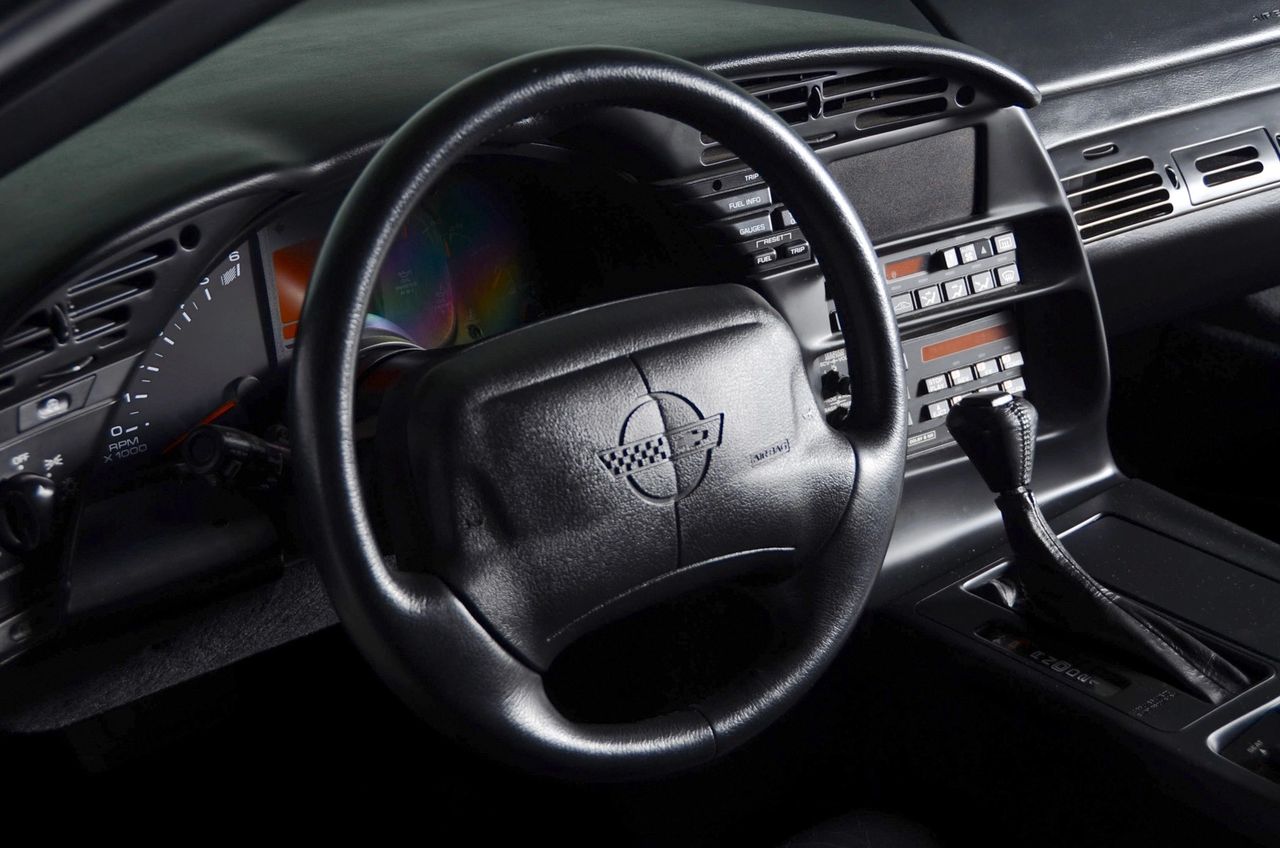
The electronic four-speed automatic—4L60-E—was already a known quantity, but the 1995 calibration and hardware tweaks smudged out the last rough edges. Shift timing and pressure control came on cleaner. The torque converter shed weight while gaining strength, and you feel both at low speed: the car pulls into the throttle without that momentary pause you’d get in earlier calibrations, then locks with authority on the highway.
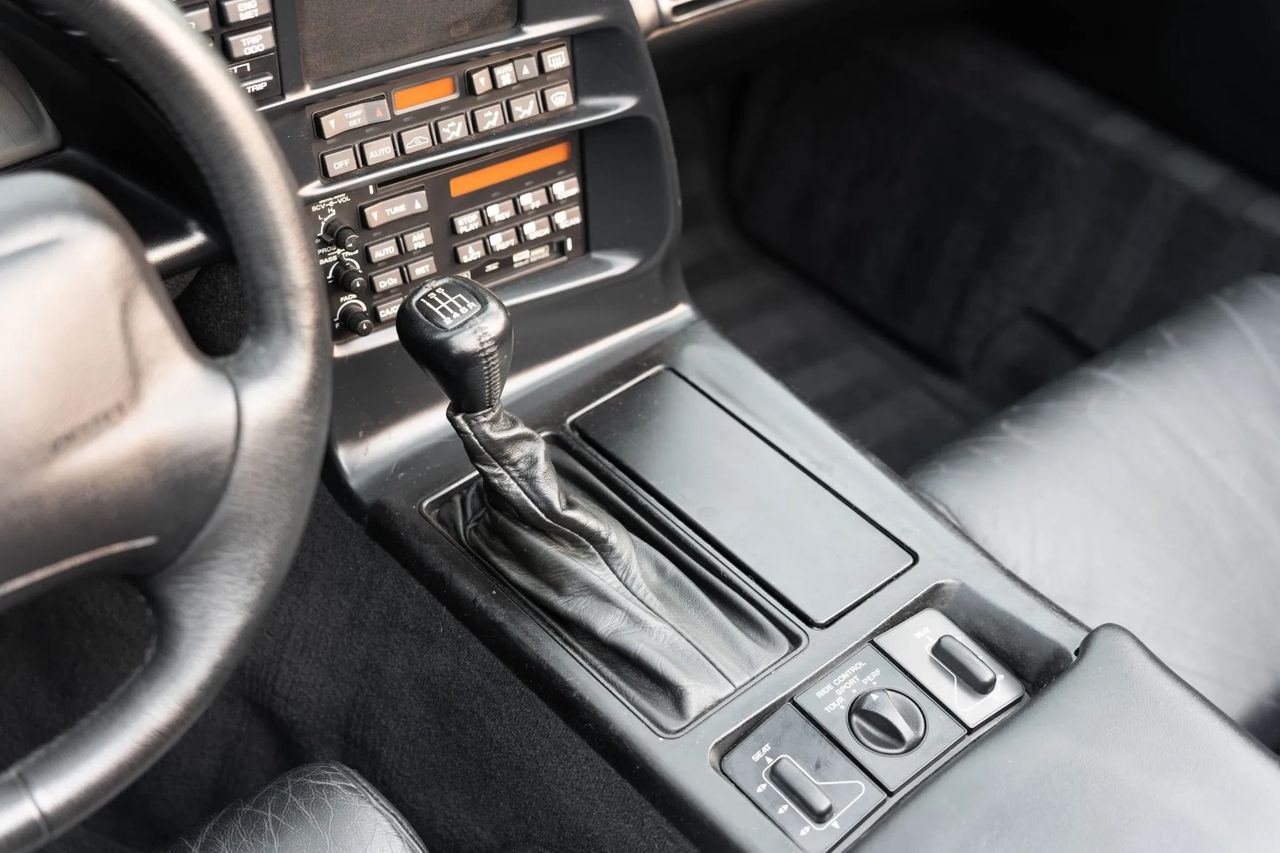
For those who preferred three pedals, 1995 quietly fixed the C4’s most persistent annoyance: reverse. Gone was the 1994 reverse-lockout hardware. In its place came a high-detent reverse mechanism that made sliding the lever across the 5–R plane a deliberate, positive act instead of a “don’t-cross-the-wrong-fence” guess. On a handful of early ’95s, tolerances and spring rates made reverse too stout—owners reported abnormally high effort to push past the detent—so GM issued a running fix: an updated detent plunger/spring and a linkage adjustment procedure. Once corrected, the action felt as intended—clean, confident, and repeatable. It’s a small change that reads big in traffic and in the garage—less fishing, more doing—the kind of human-factor work late C4s specialized in: no posters, but plenty of gratitude from the people who lived with the car.
The Year Big Brakes Went Mainstream
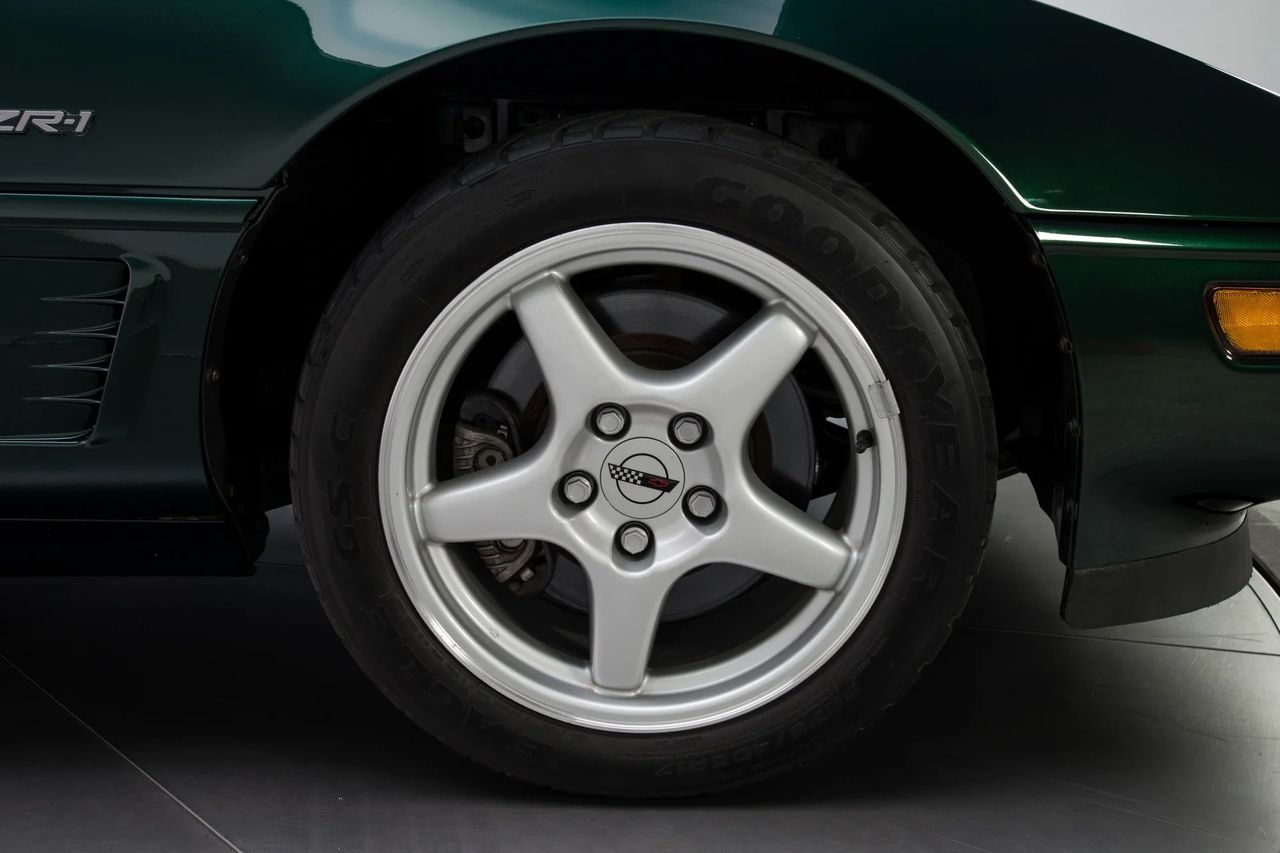
Ask any C4 track rat to name the single best late-car upgrade, and one RPO code came back time after time: J55. For 1995, the heavy-duty front brake package—13-inch rotors, thicker hats, and real thermal capacity—graduated from ZR-1/Z07 exclusivity to standard on every Corvette. Paired with Bosch ABS 5, stopping finally matched going. Threshold braking became an exercise in confidence; the pedal stayed consistent lap after lap, rather than growing long and glassy with heat. The difference was not academic—it was the gap between braking into the apex and surrendering ten yards to nurse a fading system.
ABS 5 also reshaped emergency stops. The controller cycled faster and with finer pressure modulation than earlier generations, allowing meaningful steering authority over mid-corner bumps and split-µ surfaces. Late C4s felt modern deep in the brake zone on broken pavement because the system maintained line stability while shedding speed: the car modulated, the chassis stayed settled, and the driver kept options. Added to the broader pad window and larger heat sink of the J55 hardware, fade resistance, pedal height, and repeatability became strengths rather than variables—exactly what a fast, confidence-led brake package should have delivered.
Ride and Handling: Sanding the Rough Edges, Keeping the Edge
The C4’s structural honesty—stiff backbone, aluminum control arms, short/long arm geometry that loved load—delivered world-class grip from day one. The critique, especially on broken pavement, was ride. For 1995, base-suspension cars received slightly lower front and rear spring rates and a switch to less-stiff de Carbon gas-charged shocks. This was not capitulation; it was control. Lower low-speed damping and spring rates quieted the jiggle and sharpened compliance over the chatter that defined everyday American asphalt. The chassis still talked to you, but it stopped shouting over the small stuff.
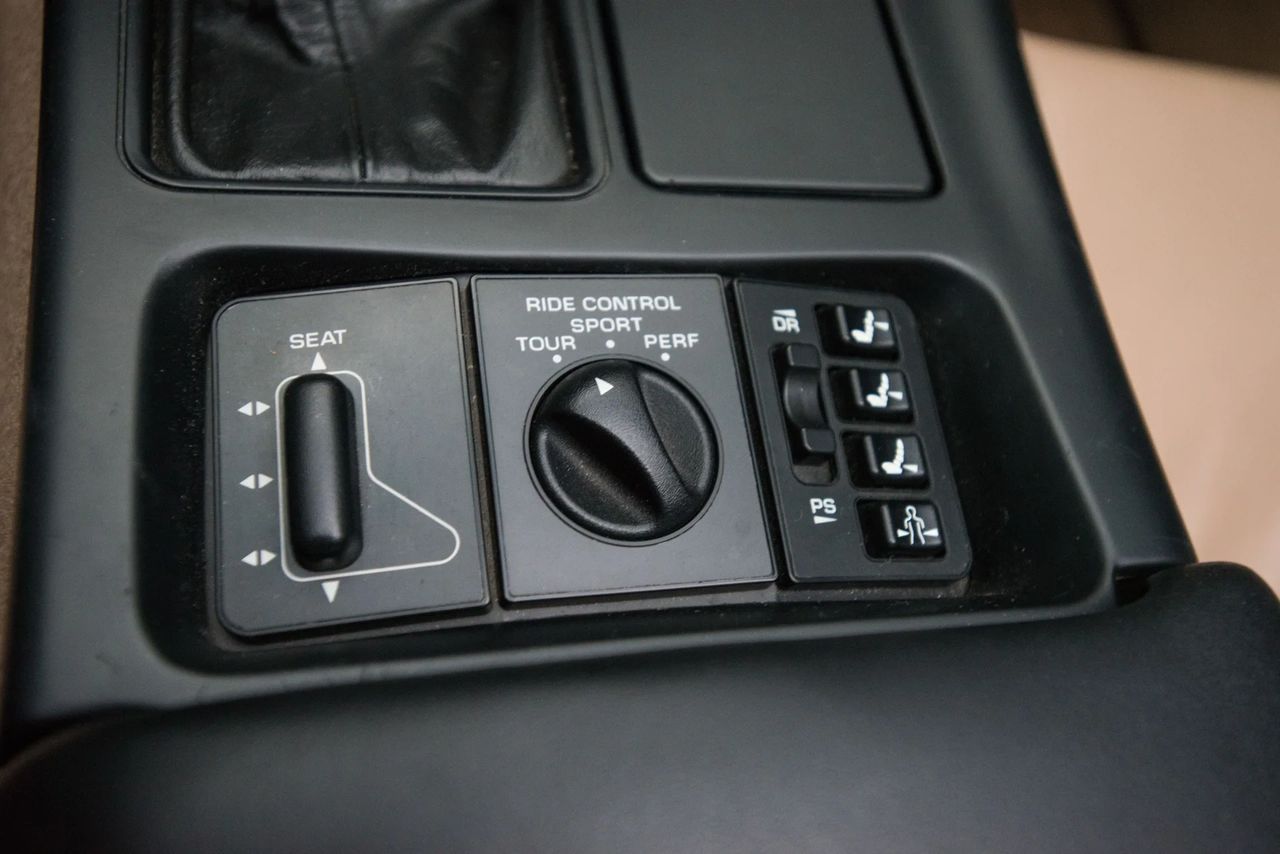
If you ordered FX3 Electronic Selective Ride & Handling, the Bilstein adaptive dampers brought their own late-run refinement, but the real revelation is how cohesive a standard ’95 feels on a fast two-lane. You lift for the corner, load the outside front, lean into the throttle at the apex, and the car settles the way you always wished earlier C4s would settle—no hop, little head toss, and a sense that the platform is working with you, not demanding you drive around its moods.
The Quiet Fixes Inside: Seats, Squeaks, and Skip-Skips
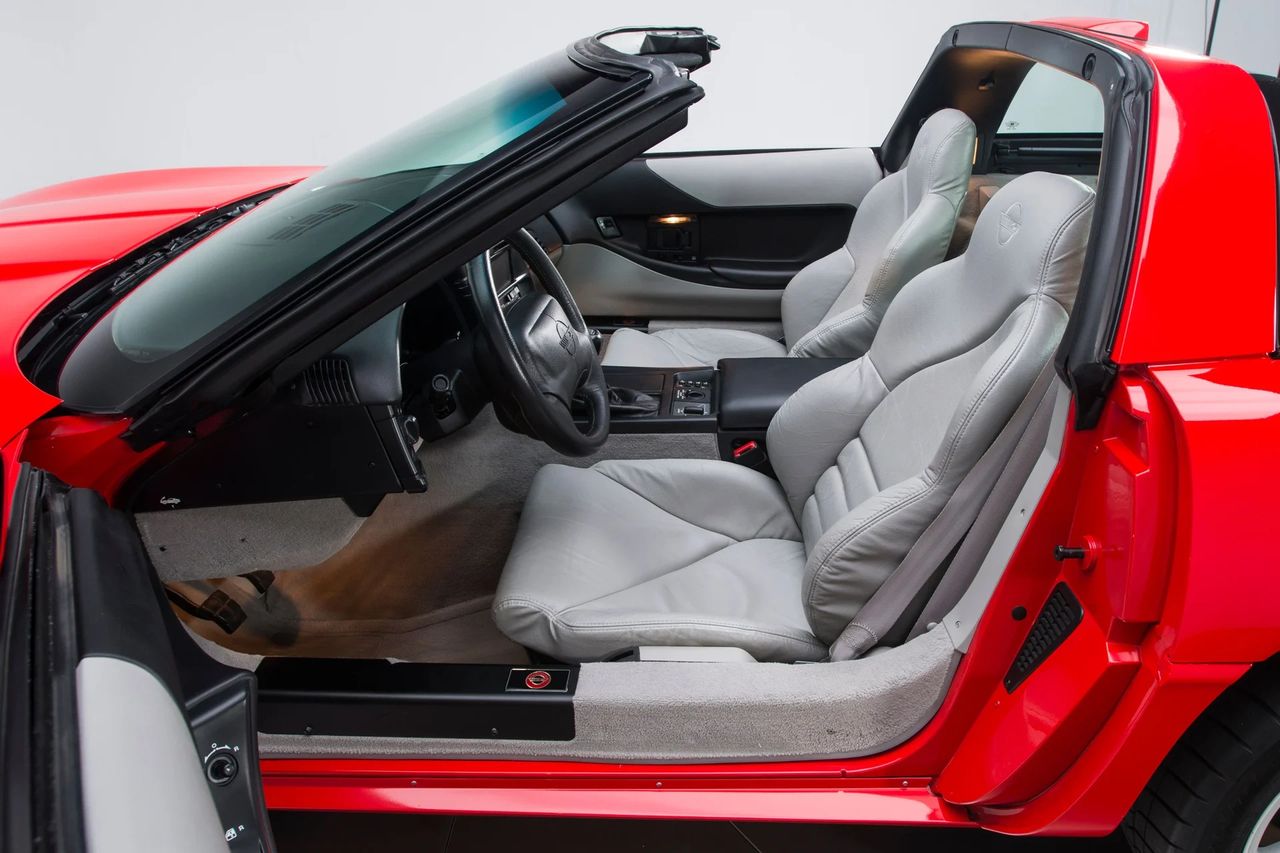
Photos didn’t show what 1995 did for the cabin. Your back and ears did.
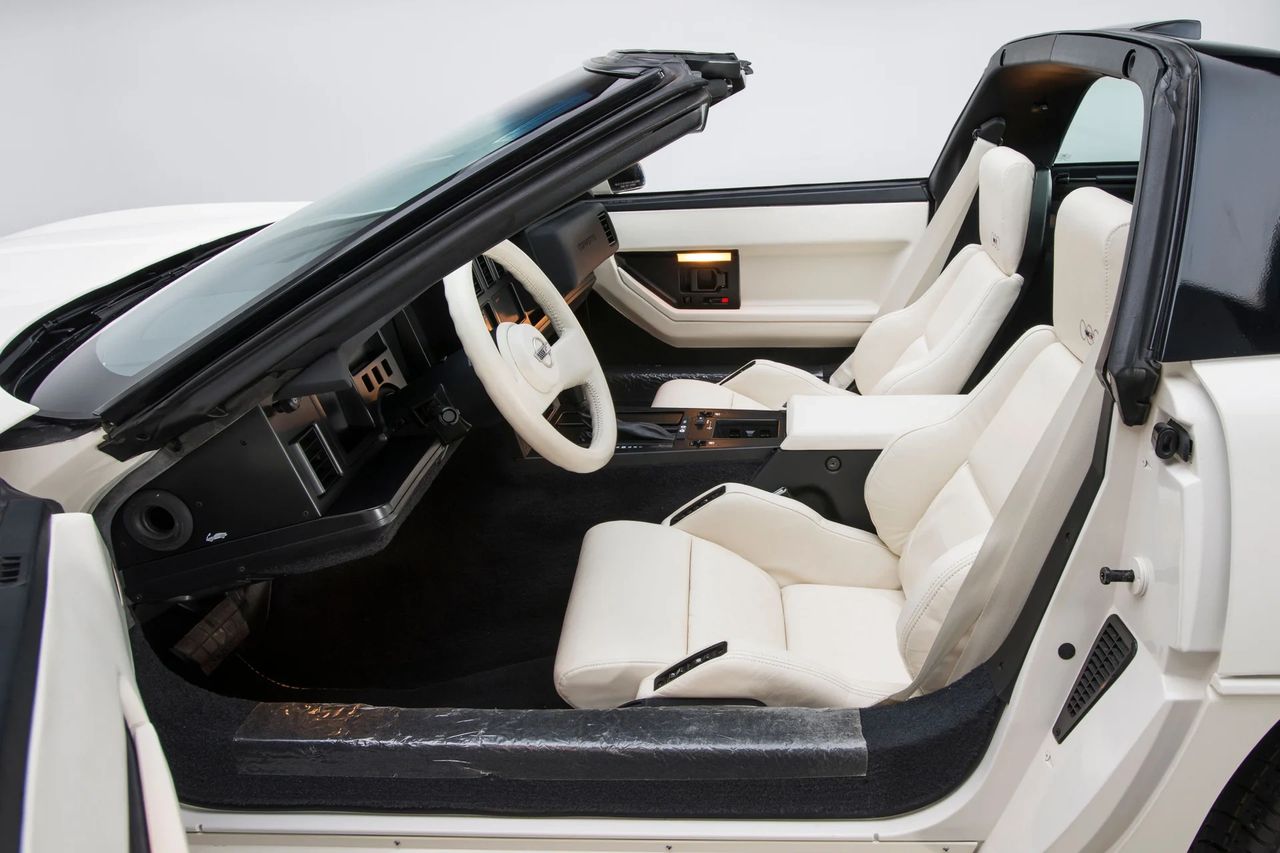
Start with the sport seats. Earlier C4s were notorious for torn bolster seams—every bit of sliding in and out carved a little more life out of the stitching. For ’95, the sewing changed to “French” seams and did what good upholstery does: spread load, reduce stress risers, and hold shape. Ten years later, you could tell who had the late seats without asking.
Then there were the squeaks and buzzes. Corvettes communicated; nobody wanted them to rattle. Engineers added adhesive-fabric straps in strategic spots, the Velcro-ish kind of restraint that preloaded small interfaces so they didn’t chatter. Add a stiffer mount for the radio/CD head unit—less skipping, less thump over expansion joints—and the whole cabin read tighter. A small nod to the faithful automatic crowd: 1995 added an ATF temperature readout in the cluster. It was the sort of subtle tell that this car had been built by people who ran laps on their lunch break and wanted you to have the same data they did.
Tires and the $100 Credit That Made Sense
Extended-mobility (run-flat) tires weren’t a novelty by 1995; they were good enough to trust. Chevrolet paired the option with something that felt almost subversive in the age of “pay more, get less”: RPO N84 spare tire delete, a $100 credit when you ordered extended-mobility rubber. You lost the spare, saved weight, and gained a small pocket of space. The safety engineers weren’t asleep at the switch; the area received specific reinforcement, so rear-impact energy management stayed to spec. It was a seemingly small decision that said a lot about where Corvette’s head was at—engineering first, gimmick last.
Outside: A Subtle, Sharky Tell
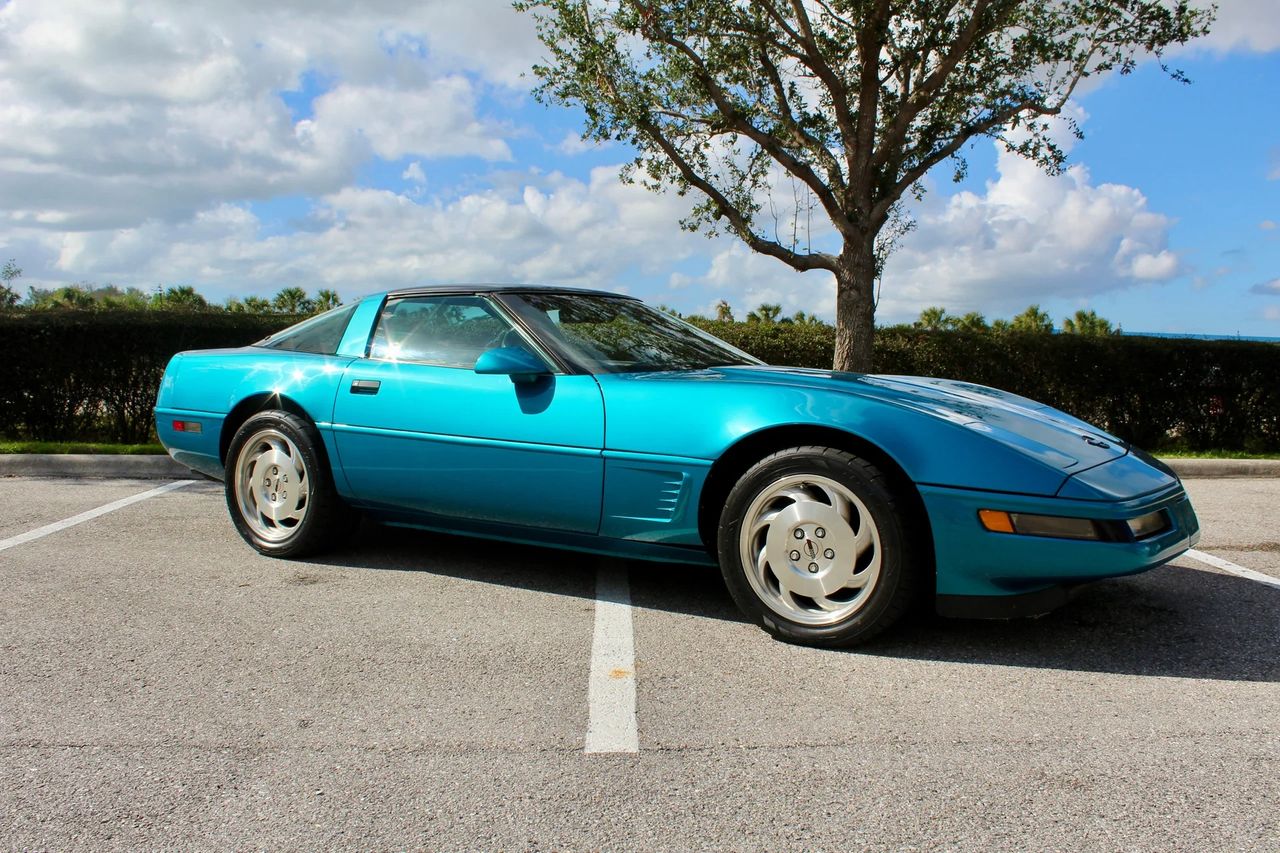
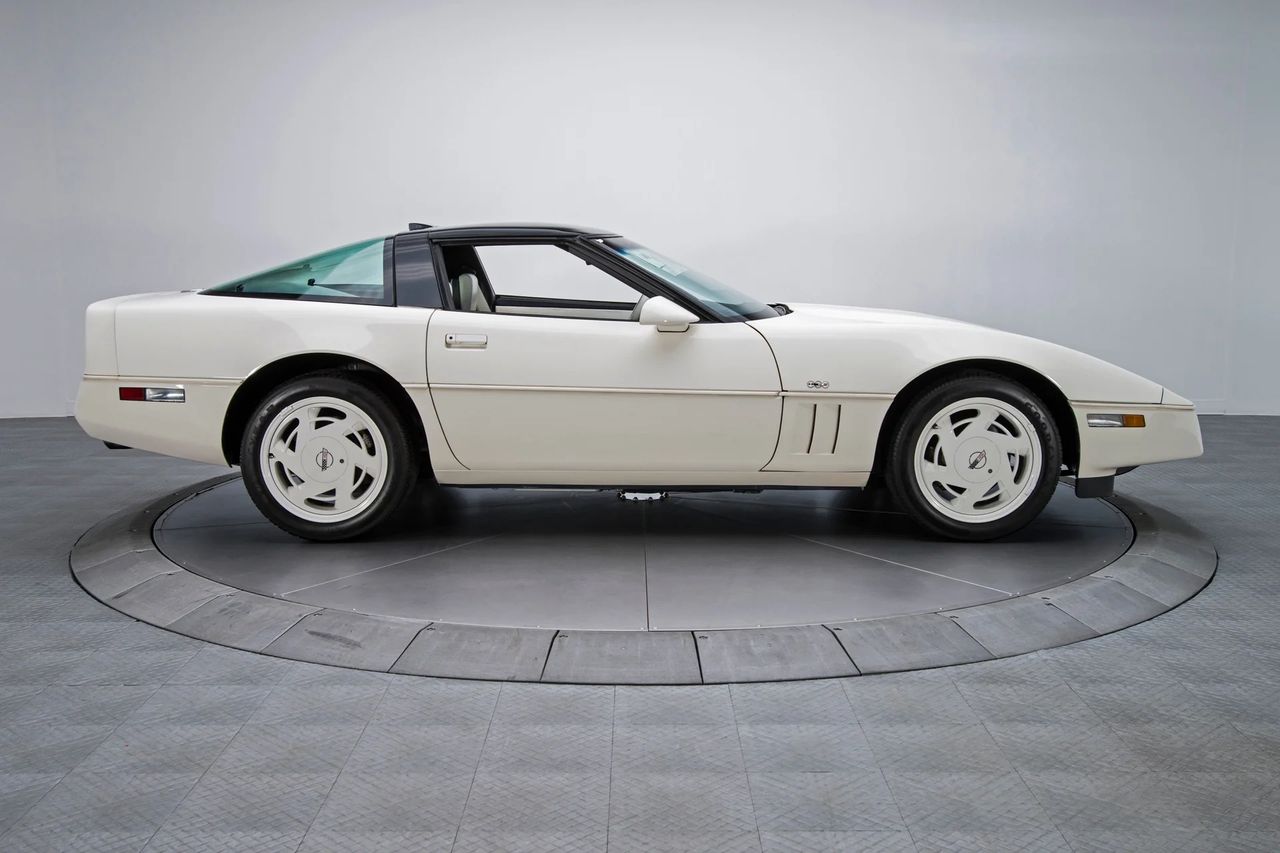
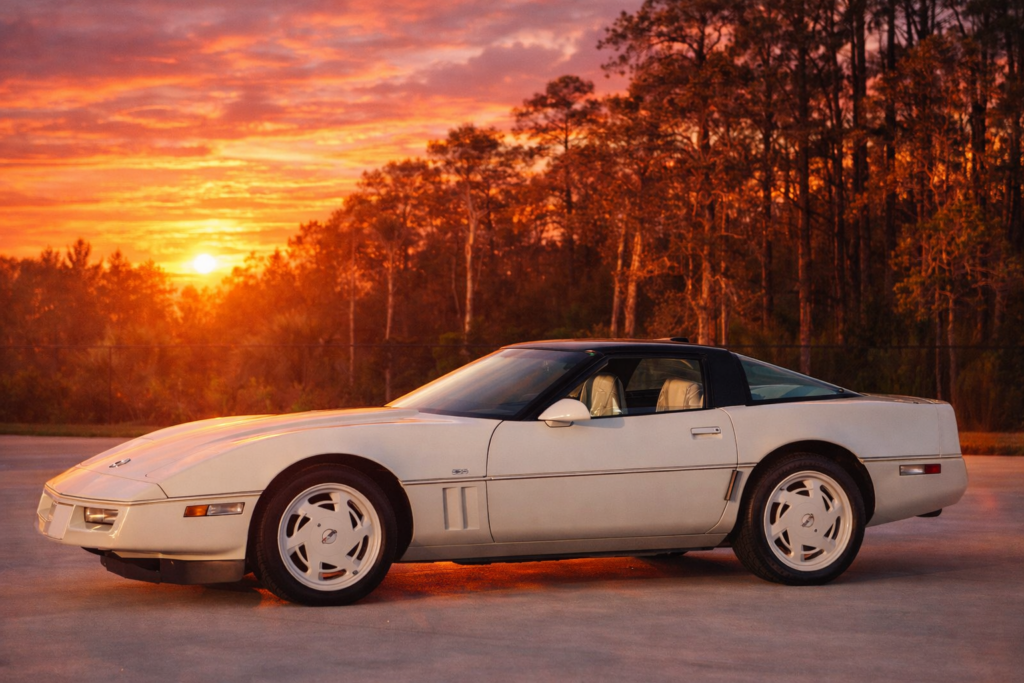
There was an easy way to spot a 1995 Corvette in a sea of C4s: walk to the front quarter and look just aft of the wheel opening. Chevrolet reworked the fender “gills” from the earlier recessed slats into a cleaner, more integrated aperture with a soft, rolled surround—less add-on, more sculpture. The opening read longer and lower, visually stretching the car and tying the line back to the late-C1 shark gills without going retro. It was the same fender, same stance, but the surfacing felt tidier and more intentional, like the designers had gone back over the clay and knocked down the last sharp edge.
That subtle reshaping also calmed the fender’s visual noise. Earlier slats could look inset and shadowy depending on the light; the ’95 treatment highlighted the panel in the same way the rest of the body did, so color flowed across the panel instead of breaking at the vent. In profile photos, it was the tell: the car looked a touch more modern, even though dimensions and proportions didn’t change by even a millimeter.
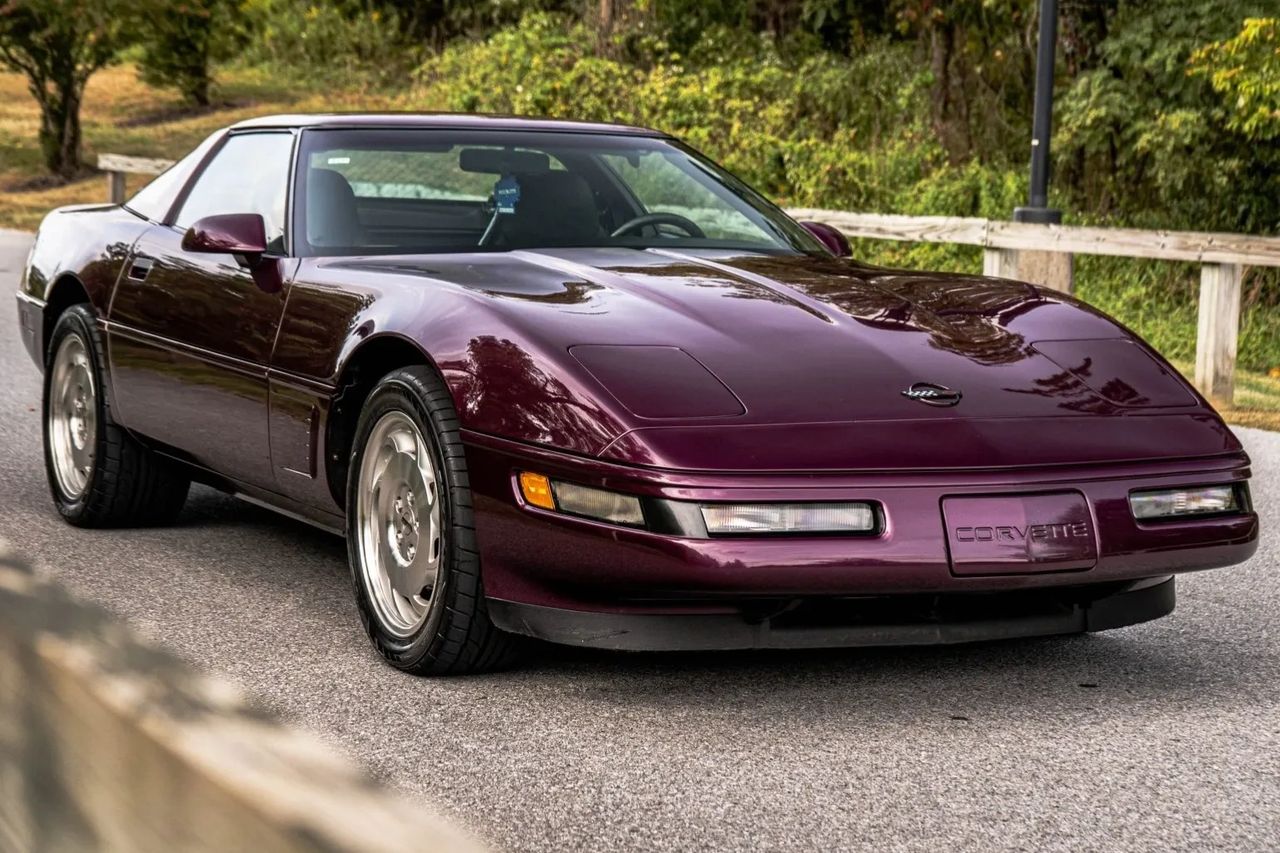
Chevrolet paired the vent tweak with a handful of “live-with-it” updates outside. New wiper blades and revised arm geometry reduced lift and chatter at highway speeds—a small fix you noticed the first time rain hit at 75. And the paint deck gained a single, mood-setting hue: Dark Purple Metallic. It stepped in for Copper and Black Rose, bringing a deep, blue-violet flop that flattered the C4’s compound curves in a way the camera never quite captured. It was exactly what a late-run color should have been—fresh enough to turn heads, faithful enough to feel like it had always belonged.
Colors People Actually Bought
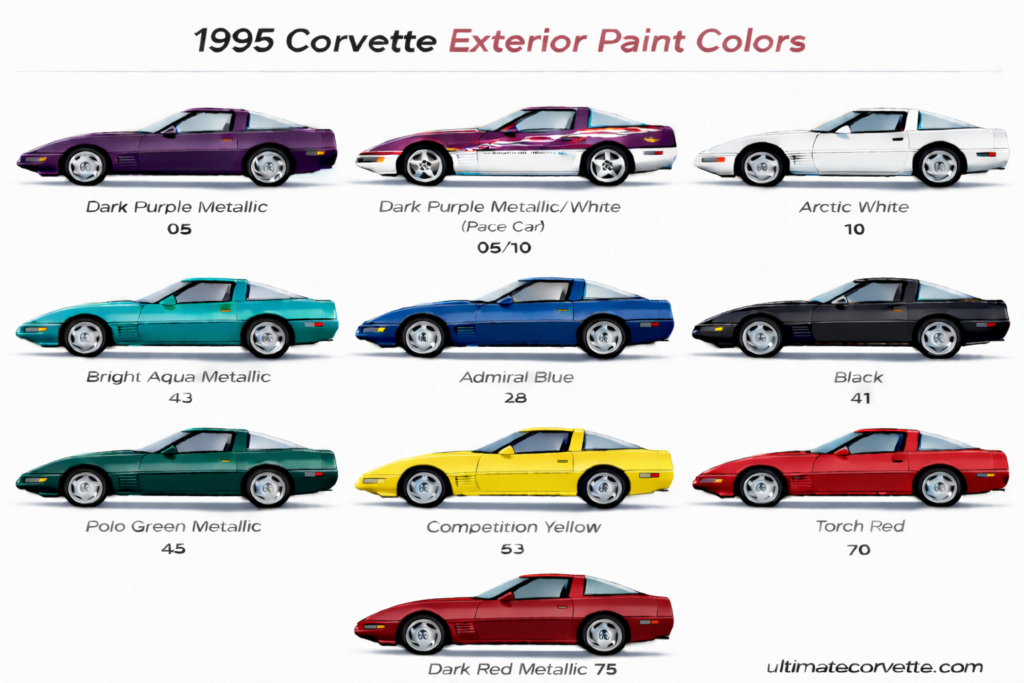
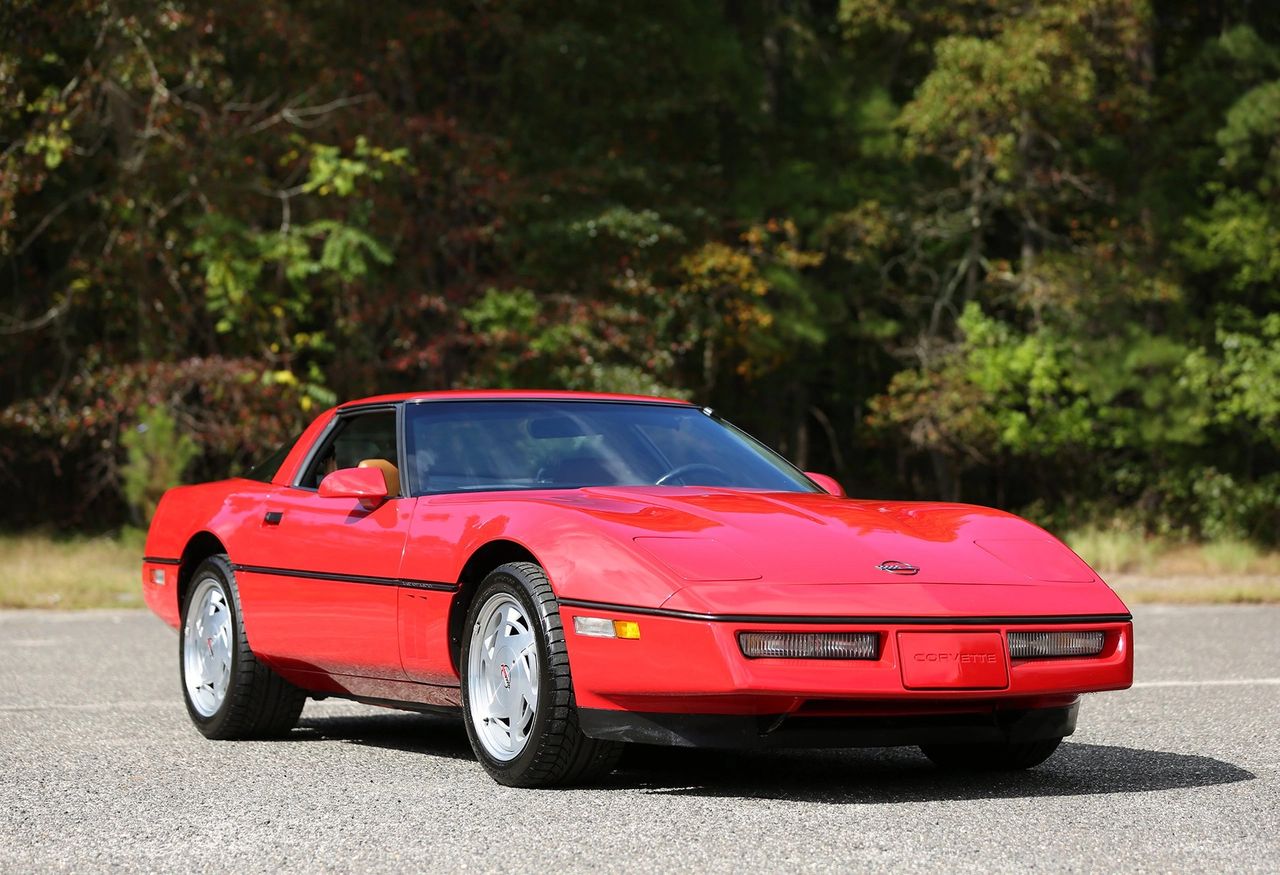
If you showed up to a cruise-in and felt like you were drowning in Torch Red, there was a reason. Torch Red accounted for roughly 22% of 1995 production (4,500-plus cars), with Black and Arctic White right behind. Polo Green Metallic—the polite assassin’s color—held a strong fourth. At the rarer end were Admiral Blue, Competition Yellow, and the new Dark Purple Metallic, each flirting with the thousand-car mark. Pace Car replicas—two-tone Dark Purple over Arctic White—numbered 527 and looked like nothing else when you caught one in the sun. The mix told you who the ’90s Corvette buyer was: bold enough to wear color, practical enough to buy the ones that still looked fresh thirty years on.
What It Cost—and How People Spec’d It
Base price moved only slightly over 1994: $36,785 for the coupe, $43,665 for the convertible. The ZR-1’s option tally still read like a bank statement—$31,258 over a coupe—one reason the LT1 car nipped at its sales heels by the middle of the decade. Look at surviving window stickers, and you’ll see how owners lived: power seats almost everywhere (AG1/AG2), the blue-tint roof panel (24S) vastly preferred to bronze (64S), and a healthy take rate on FX3 for the folks who wanted to tune the ride with their right index finger.
The 1995 Indy 500 Pace Car (and Z4Z Replicas)
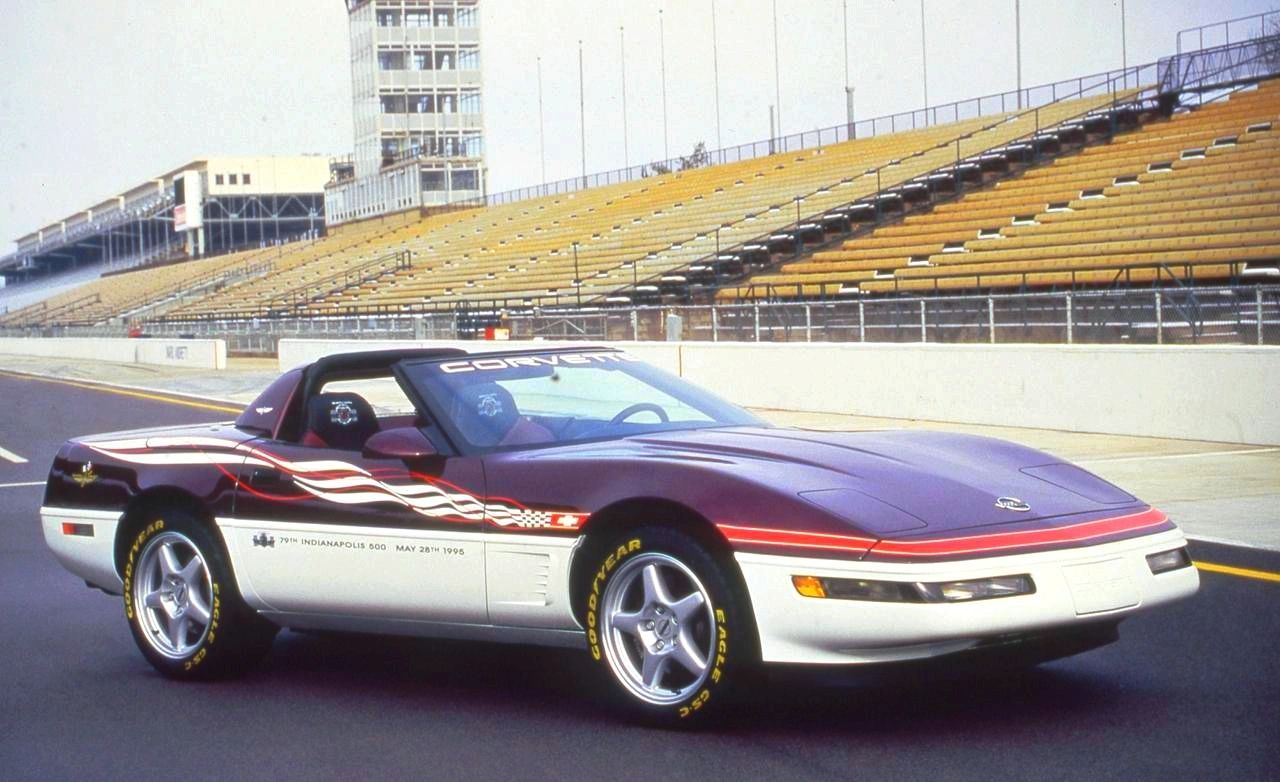
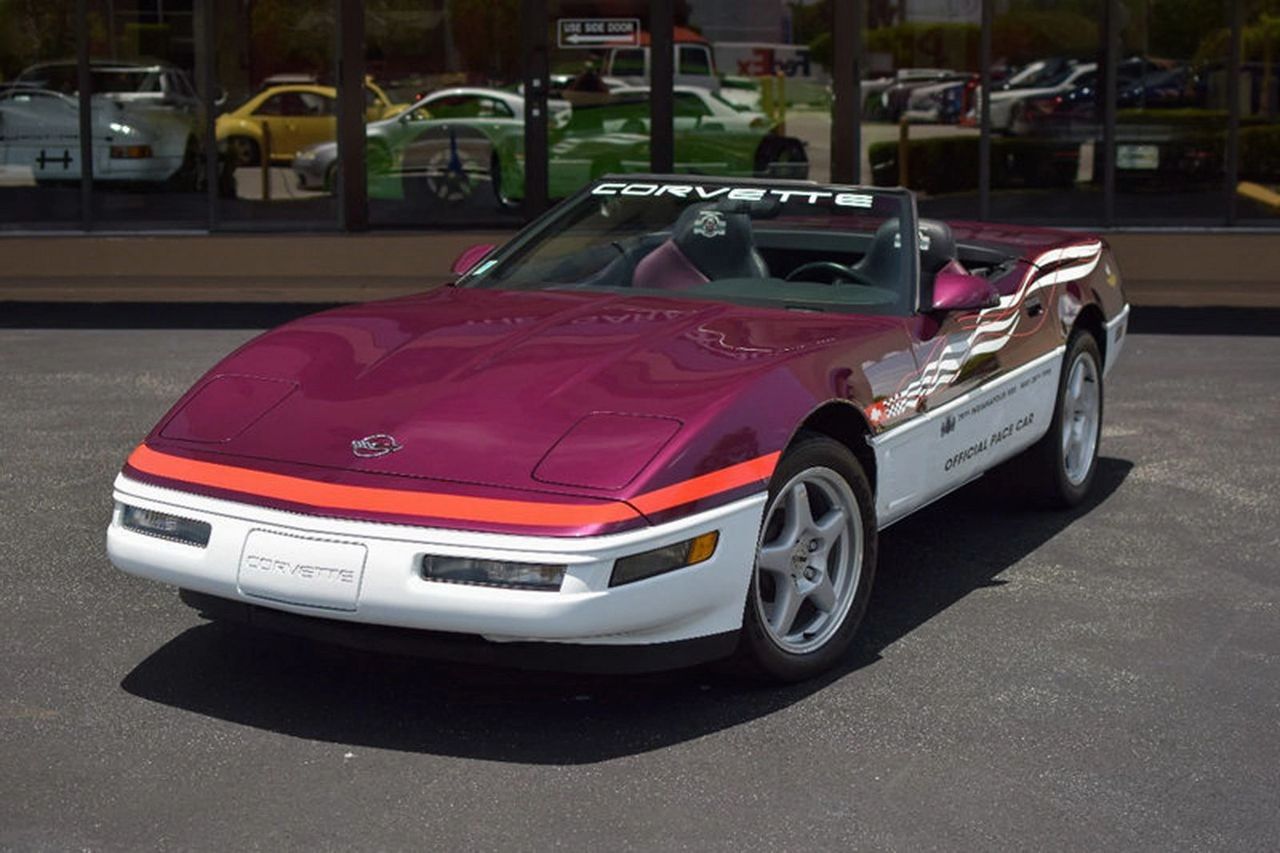
The 79th Indianapolis 500 ran under heavy nostalgia and heavier sun, and the car leading the field was a near-stock 1995 Corvette convertible—the nameplate’s third time pacing the Brickyard. Chevrolet marked the moment with RPO Z4Z, a factory Pace Car Replica available only as a convertible. The look is unmissable: Dark Purple Metallic over Arctic White, a white top, swooping ribbon graphics, and embroidered headrests. Chevrolet built 527 examples; 87 handled race-week duty, 20 went overseas, and the balance were allocated to top-performing U.S. dealers. The package added $2,816 to a base convertible, but its visual drama made it feel like far more than a sticker sheet.
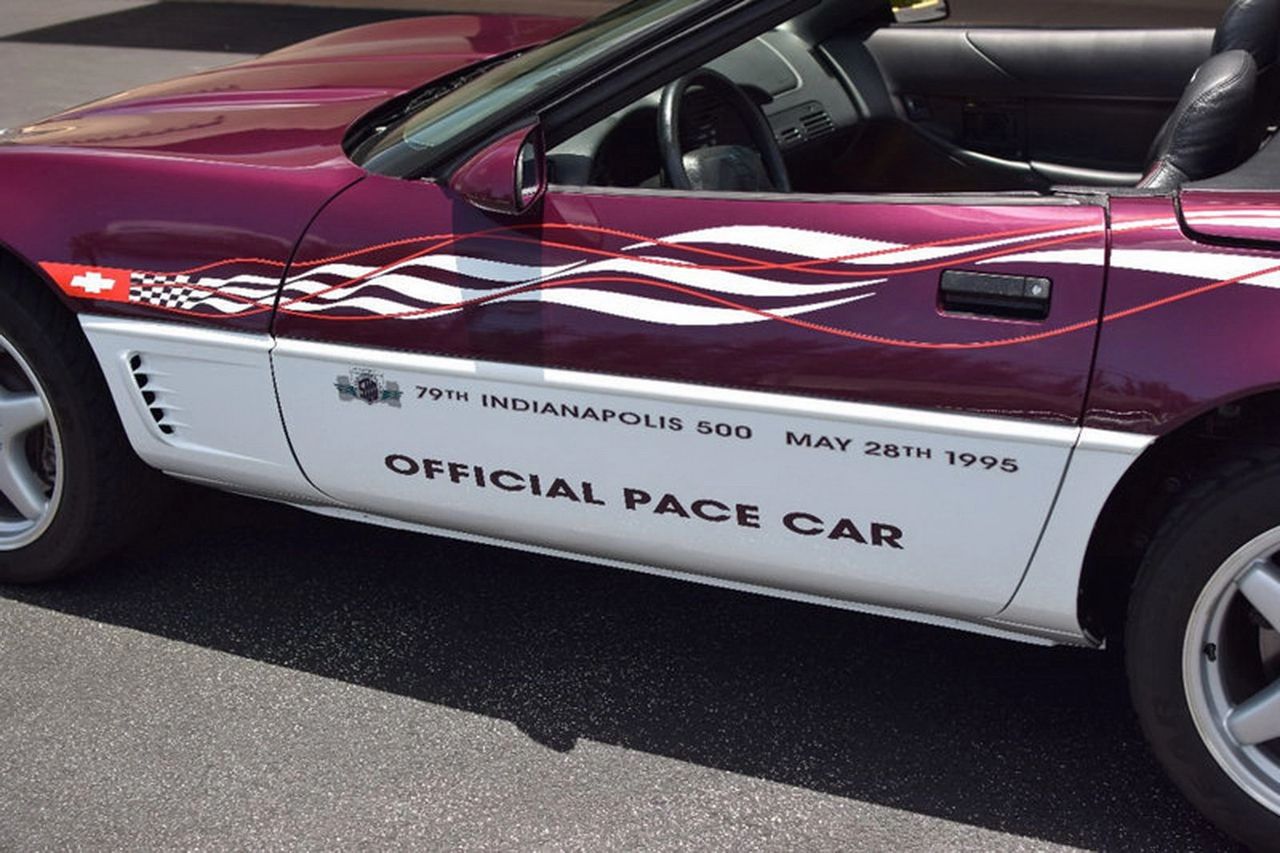
Part of the appeal was what it didn’t change: the underlying car. By 1995, the LT1-powered C4 was the product of a decade of continuous refinement—tight body control, confident ABS/Traction Control, precise steering, and a cooling system you could trust in stop-and-go heat. That mattered at Indy. A nearly stock Corvette could idle on the pit lane with the A/C blasting, pace a field cleanly at speed, and then loaf home like a boulevard cruiser. The Z4Z didn’t exist to manufacture performance; it existed to spotlight a car that already had it, with manners to match.
Collectors also respond to how cleverly Chevrolet framed the replica. The diagonal two-tone references a classic motorsport trope, but Dark Purple Metallic—new for 1995—made the car feel contemporary rather than retrospective. That purple wasn’t just a pace-car flourish either: across the entire model year, 1,049 Corvettes wore Dark Purple Metallic, outpacing several established hues. In that context, the Z4Z’s 527-unit tally reads as intentionally scarce—special enough to be collectible, common enough to be seen.
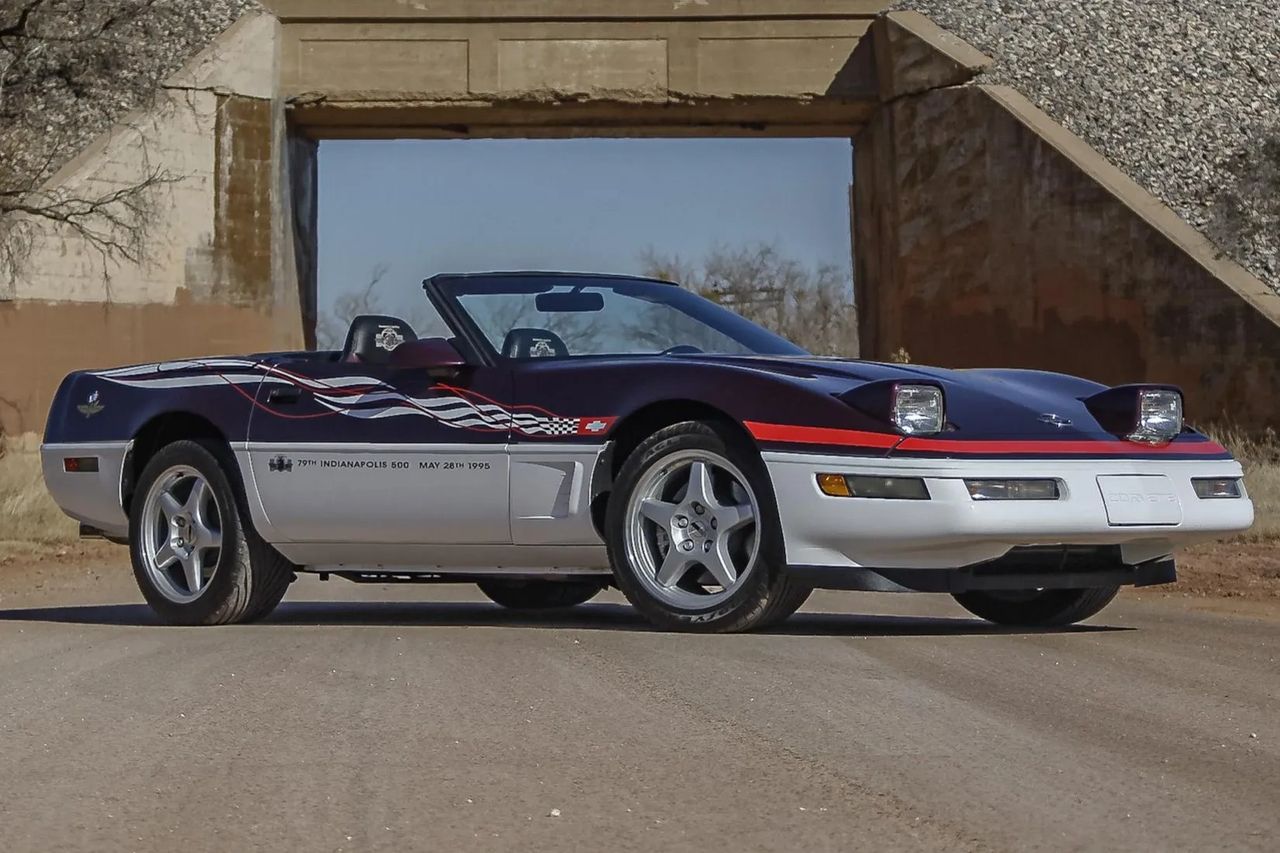
And that, ultimately, is the late-C4 story: dual-purpose competence with a showman’s streak. The Z4Z cars gave the public a street-buyable slice of Indy pageantry, but the deeper message lived in the way a largely stock Corvette could do the ceremonial work without breaking a sweat—and do the real work, too. Pace-car paint made the statement loud; the LT1’s easy torque, the chassis’ polish, and the Corvette’s everyday usability made it true.
Le Mans 1995: Blue-Collar Heroes in Yellow Light
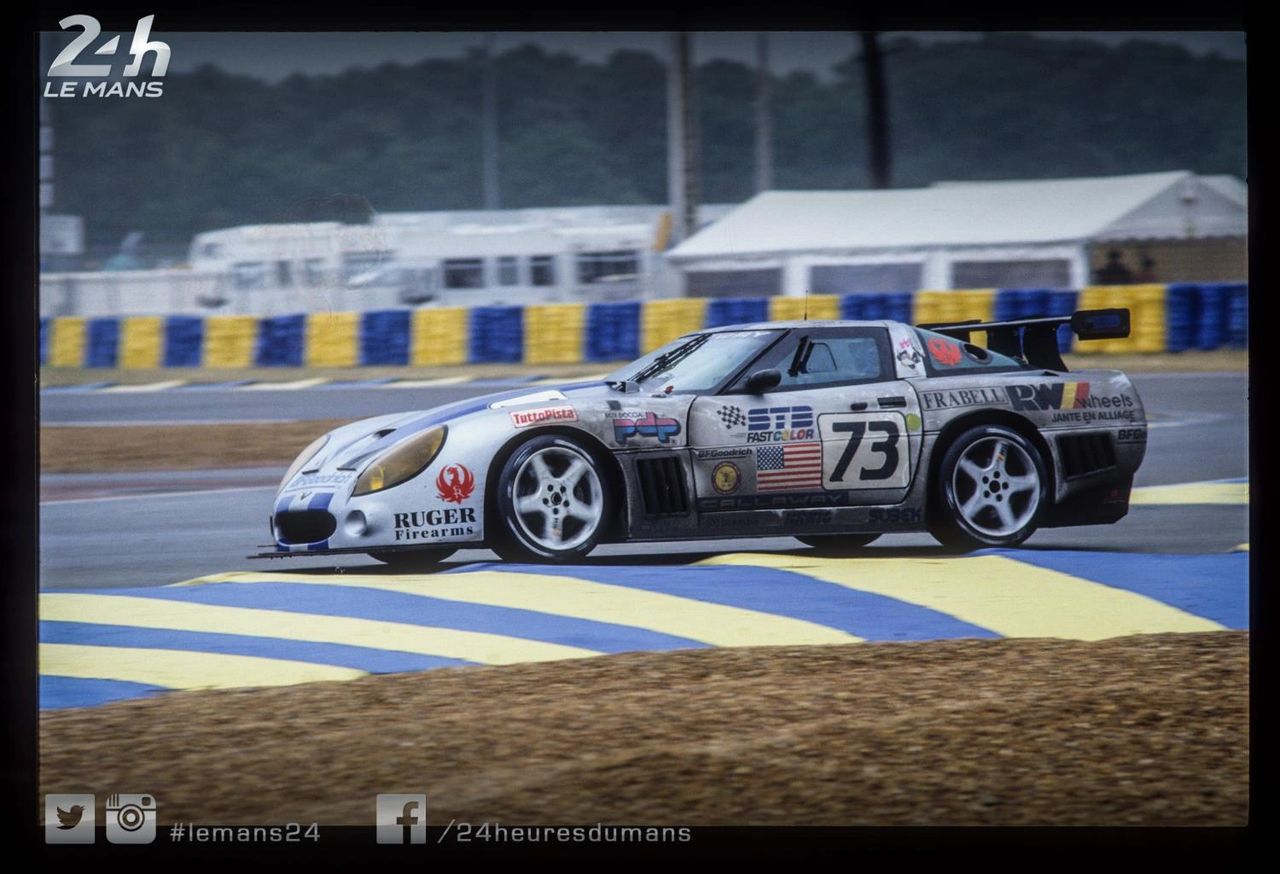
Nobody alive forgets the weather at Le Mans in 1995. The light went silvery gray, the rain came in hard, wind-blown sheets, and the Circuit de la Sarthe turned into a master class in mechanical sympathy. Under that sodium-yellow glow at dusk, the fast way around wasn’t the bravest throttle but the softest hands—feeling the car skim, giving it just enough slip to clear traffic and just enough kindness to live another lap.
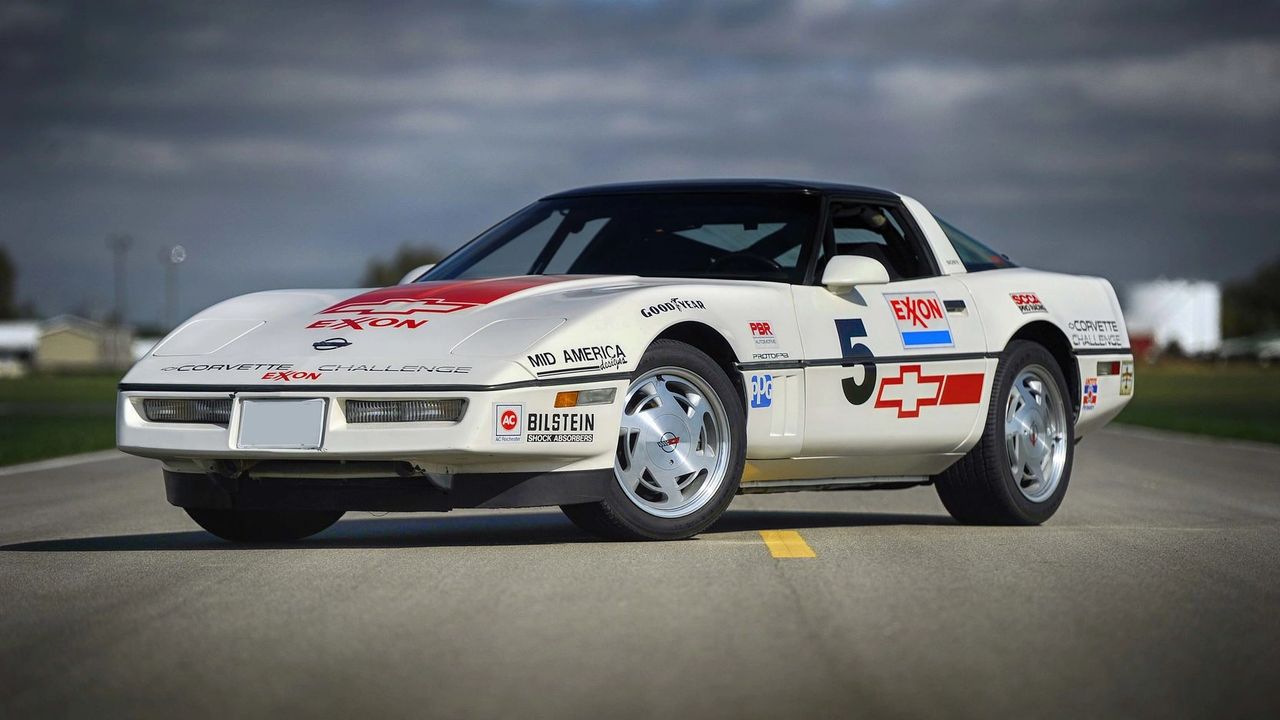
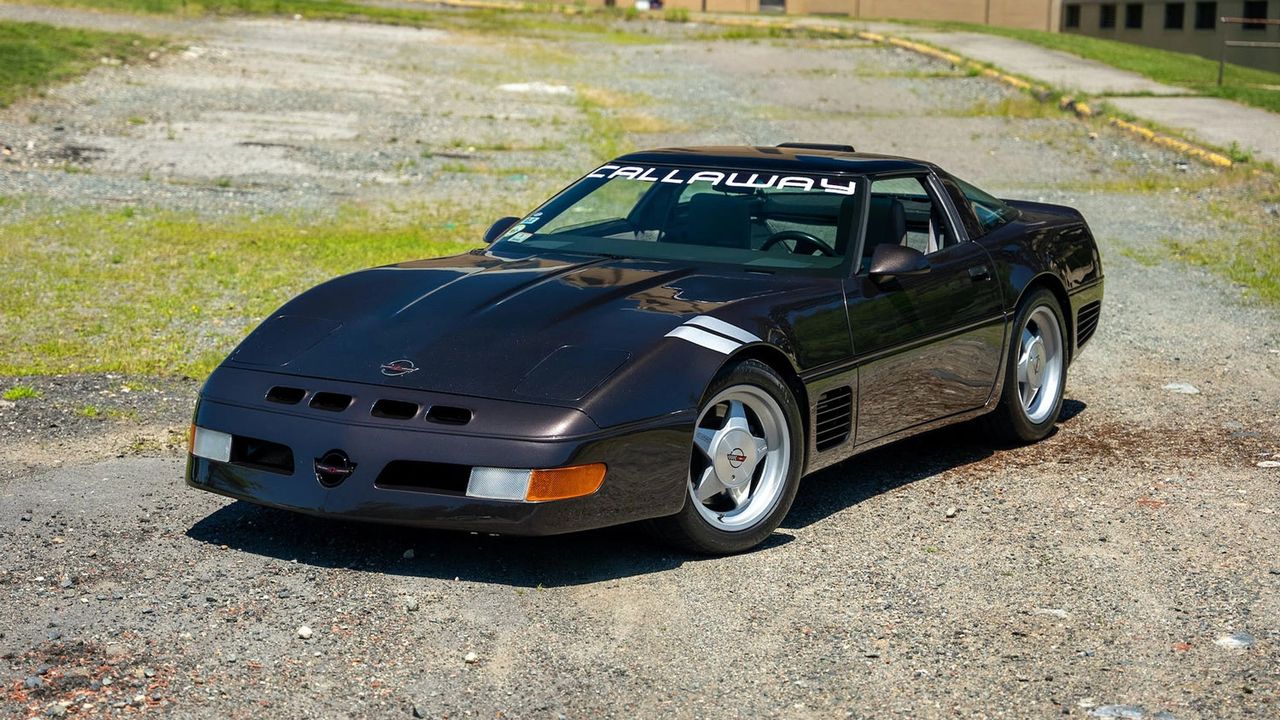
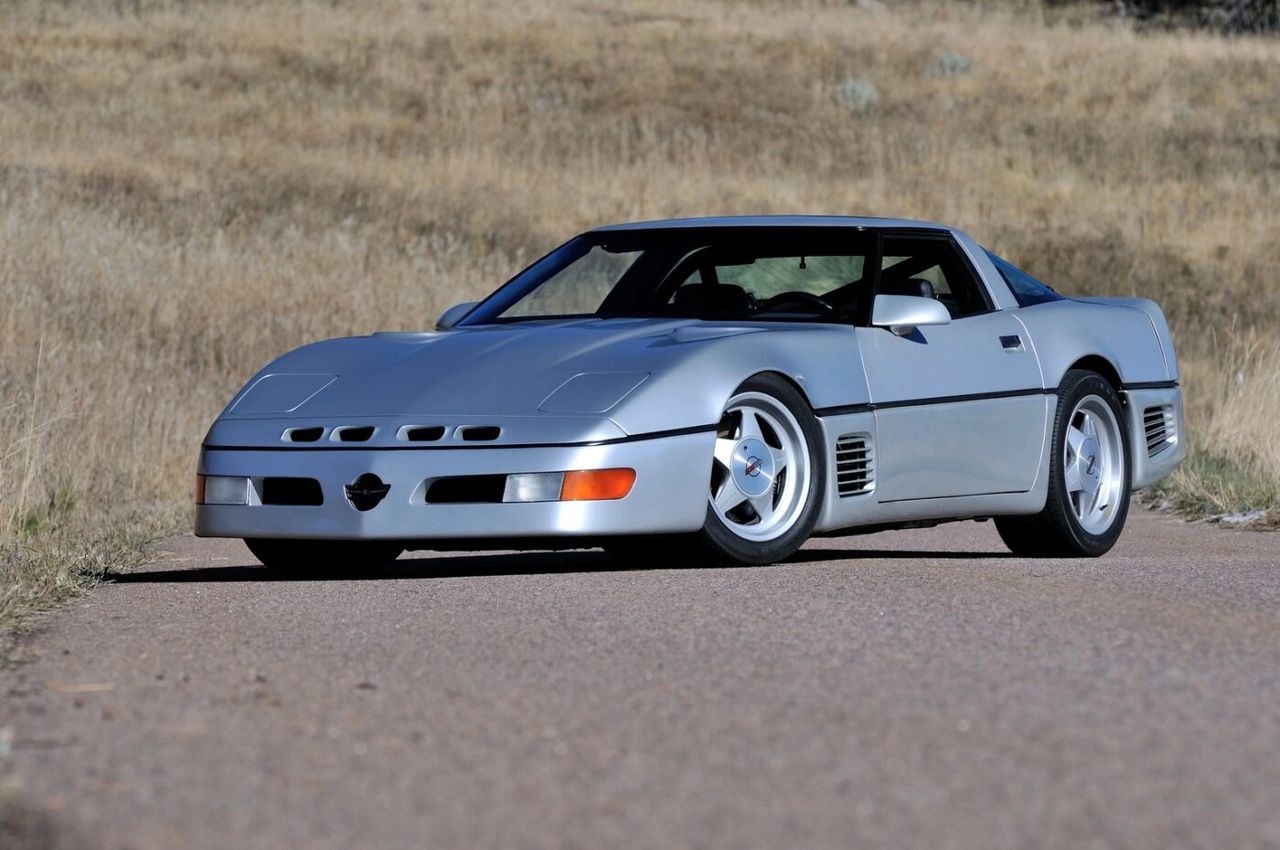
In that chaos, the stories Corvette people tell live in the GT2 ranks. Callaway Competition rolled in with two production-based SuperNatural Corvettes—blue-collar tools dressed for a black-tie fight—and went to work. The #73 car, driven by Enrico Bertaggia, Johnny Unser, and Frank Jelinski, climbed from deep in the grid with the kind of wet-weather discipline you only learn the hard way: early brake releases into the rivered braking zones, patient throttle over the crown on the Hunaudières, and absolute trust through the kinks. When daylight returned to the pits, they were 9th overall and 2nd in GT2. The sister car shadowed that arc, grinding out clean sectors and unforced stops to finish 11th overall, 3rd in class—results that read modest on paper until you remember the conditions and the company.
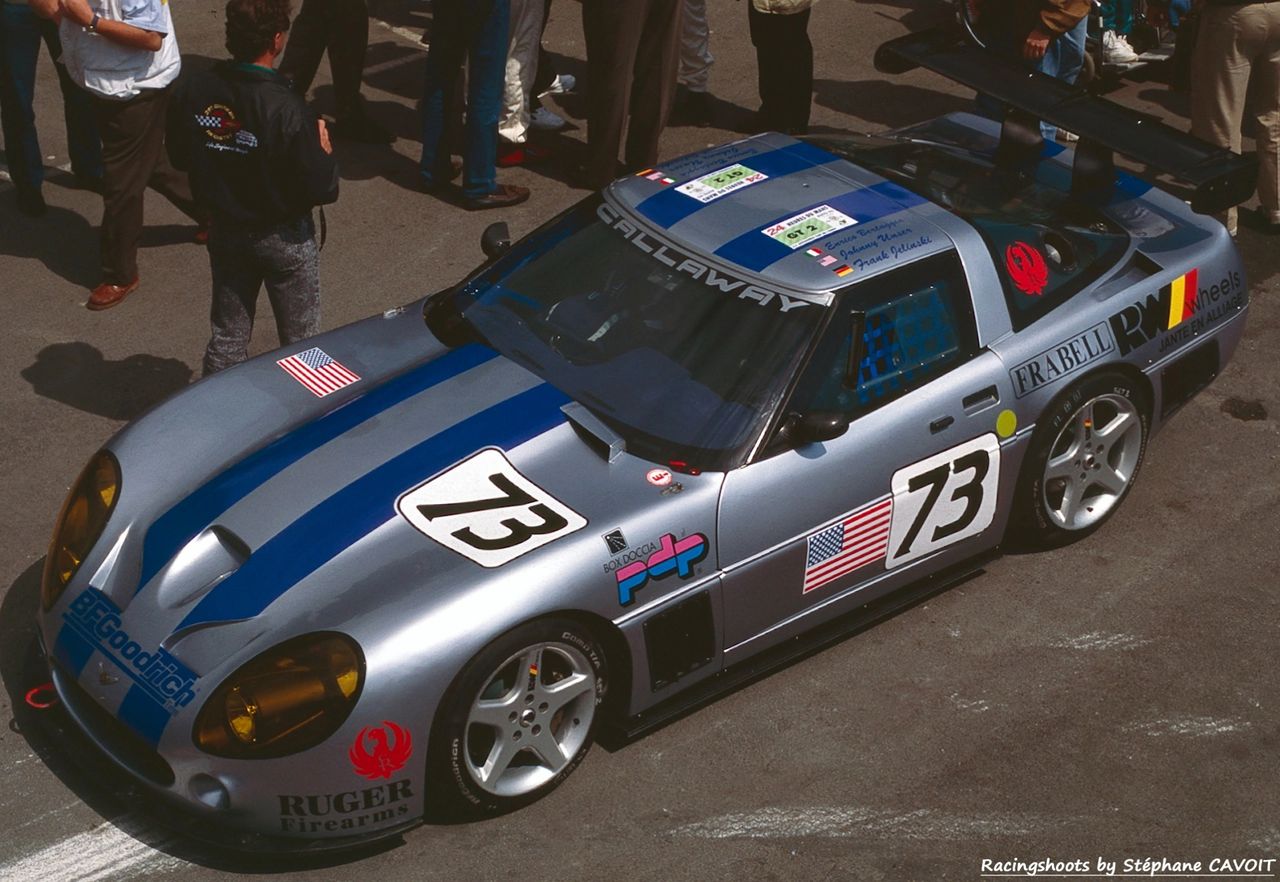
What made it sing wasn’t just lap time; it was the way a front-engine American V-8 endured a European rain race. The Callaway cars were built around reliability and feel: broad, usable torque that let the drivers short-shift out of the slow stuff; gearing tall enough to stay calm on the long straights; brake packages they could nurse through the night without drama. In the garage, the operation looked exactly like a privateer should—handwritten pit boards, towels steaming on radiators, crews taping seams and wiping visors between fuel and tires—yet the execution was clinical. Tire calls were conservative, out-laps were tidy, and the cars kept their noses clean when prototypes sprayed sheets of water past Arnage.
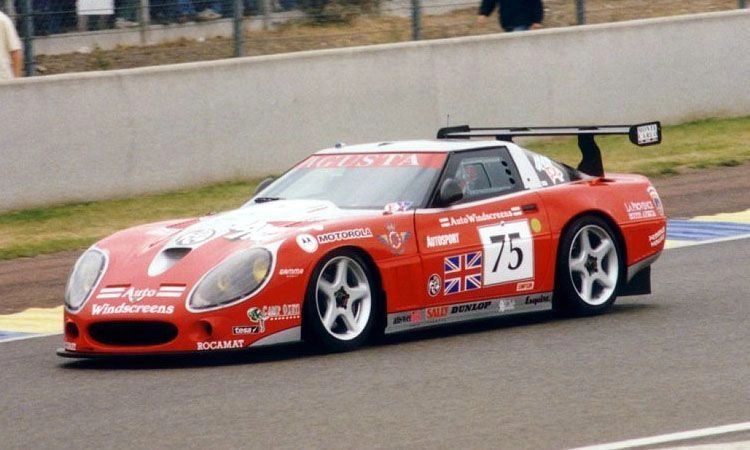
The result felt like a baton pass. Those weather-beaten, quietly professional finishes proved that a Corvette—properly prepared and intelligently driven—could be a 24-hour instrument, not just a sprint hammer. Within a few years, the factory-backed C5-R would arrive with Pratt Miller’s polish and start writing the big headlines. But the tone had already been set in 1995: blue-collar heroes in yellow light, doing the hard, unglamorous laps that turn a marque into a Le Mans contender.
And that’s why 1995 still resonates. McLaren took the overall trophy, but Corvette people remember two cars that refused to flinch—front-engine thunder made gentle by good hands, finding grip where there shouldn’t have been any, and proving to everyone paying attention that America’s sports car belonged on the world’s toughest stage.
Doug Rippie’s Lone 1995 CORvETTE ZR-1 at Le Mans
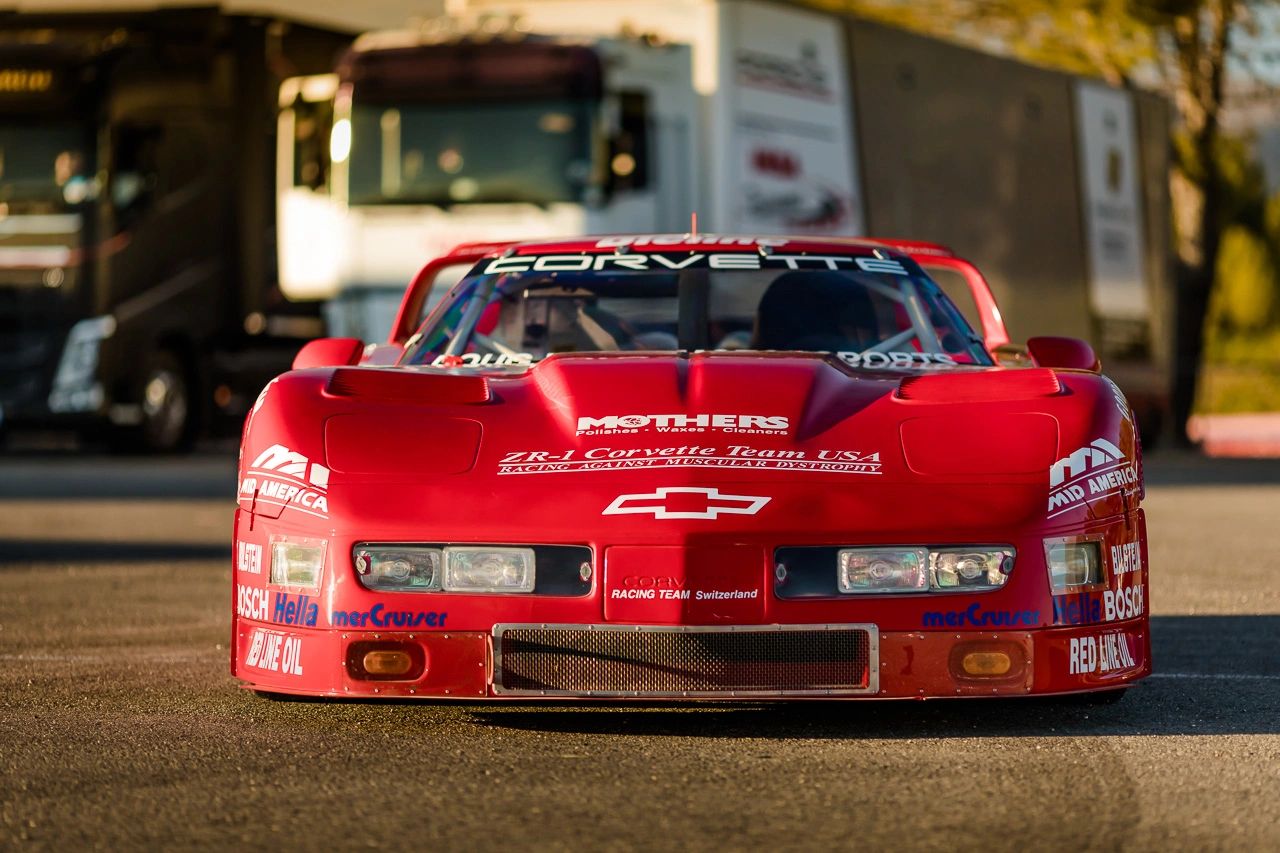
In 1995, Doug Rippie Motorsports hauled the C4’s halo straight to La Sarthe—the only ZR-1 ever to start the 24. The car looked every inch the purpose-built GT1: clear headlamp covers over a shovel-nose fascia, deep hood extractors, a proper splitter, and that Lotus-designed LT5 quad-cam breathing through a wide mouth. The livery read like pit-lane roll call—Mothers, Mid America, Bosch, Red Line—but the stance said everything: low, wide, and unapologetically CORVETTE.
The run was classic privateer grit. The DRM ZR-1 mixed it with the class through the wet night on tidy stops and honest pace before an engine problem ended the drive late. No trophy, but the point landed: a well-prepared, quad-cam C4 could qualify for, race in, and very nearly finish Le Mans. In the broader ’95 story, that effort feels like a handoff—the proof-of-concept that set the stage for the factory C5-R juggernaut to follow.
The ZR-1’s Farewell: Long Live the King
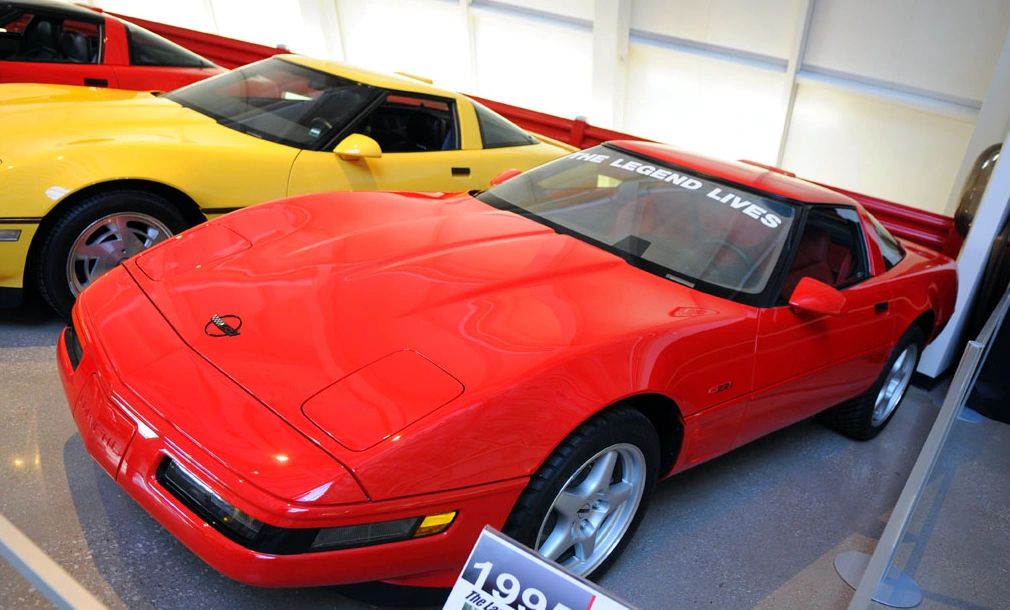
If the C4 democratized world-class handling, the ZR-1 redefined what an American supercar could be. Six model years; 6,939 cars; a Lotus-engineered, Mercury Marine-assembled LT5 with four cams, thirty-two valves, and a work ethic that made endurance records look like calendar invites. The final ZR-1 rolled off the Bowling Green line on Friday, April 28, 1995, and it didn’t sneak out a side door. The plant paused. The car—Torch Red, as if it could be anything else—was paraded off the line with Plant Manager Wil Cooksey and UAW’s Billy Jackson aboard. Jim Perkins, Chevrolet’s general manager and a man who could sell ice in Antarctica, took the wheel, checkered flag in hand. Riding shotgun across to the National Corvette Museum: Dave McLellan, the chief engineer who shepherded the C4 from square one into legend. It was equal parts celebration and salute.
Why end it? Two truths converged. The 1996 emissions and onboard diagnostic standards made another year of LT5 prohibitively expensive. And the LT1 cars—cheaper, simpler, and increasingly mighty—were too good to ignore. Corvette people love to speculate about the path not taken: the higher-output LT5 evolutions (450-plus horsepower) that Lotus and GM explored, the prototypes that hinted at what might have been. But the market and the calendar set the terms. The ZR-1 had done its job. It changed minds. It dragged the world’s attention to a corner of Kentucky and made the Corvette name synonymous with speed, stamina, and civility. The king could retire; the kingdom was secure.
And the epitaph had already been written in the present tense. As AutoWeek put it at the time: with rocket-sled acceleration, mastiff grip, and right-now brakes, the ZR-1 offered the largest performance envelope of any mass-produced American car, would trudge through gridlock with the A/C on “kill,” and, with a slight tailwind, run 180 mph. You don’t need a plaque for that. You need a long piece of road.
Sales, VINs, and the Slow Fade to the Finale
The numbers tell a polite truth. With the C5 looming, 1995 Corvette production settled at 20,742 units—15,771 coupes and 4,971 convertibles—even as dealers grew aggressive with their pricing. ZR-1 production stopped at 448 before the April ceremony. If you’re decoding a car today, the VIN blocks make life easy: base cars run 100001–120294; ZR-1s run 800001–800448. Don’t be surprised when serial ranges and total production totals don’t match exactly; number allocation doesn’t always run in a perfect, uninterrupted line. What matters is that the line, in the bigger sense, kept moving forward.
How It Drives—Then and Now
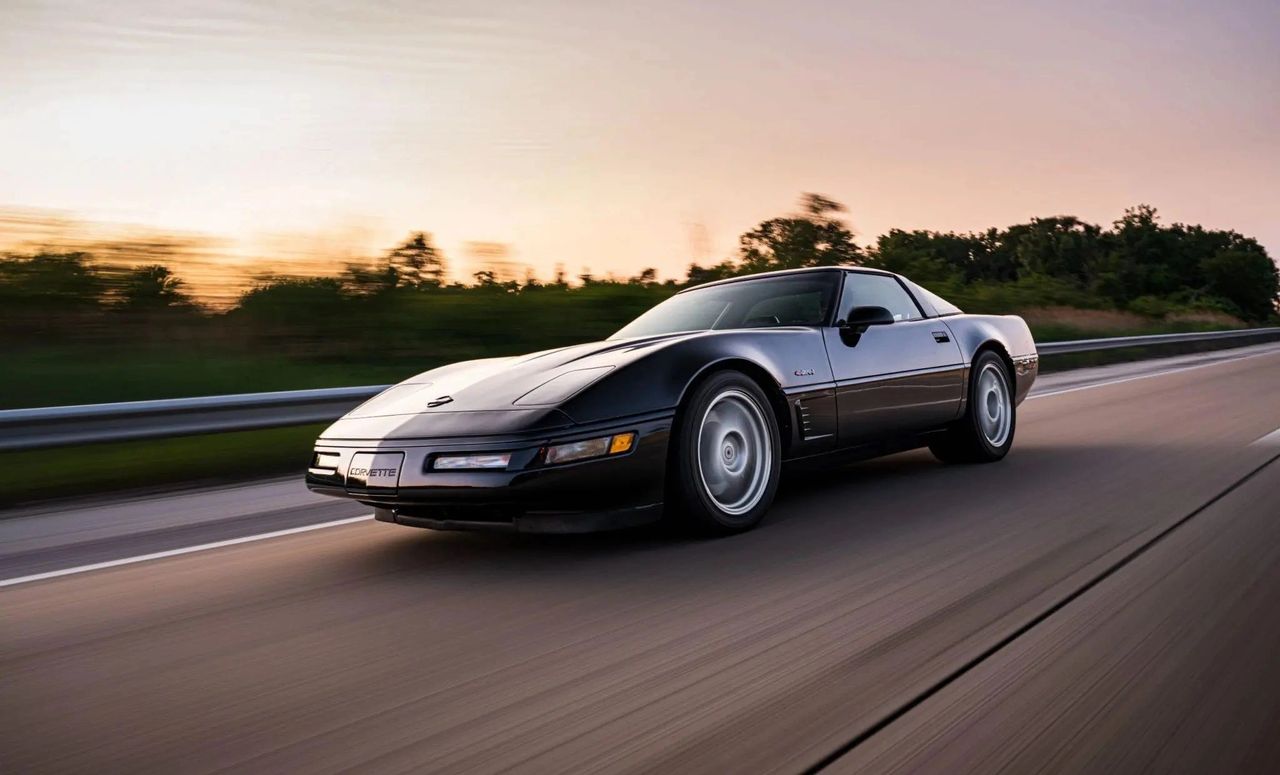
Drive a healthy 1995 Corvette, and the point lands without a sales pitch. The LT1 snaps awake and settles into a steady heartbeat; the six-speed works like a well-oiled bolt, reverse clicking in with the certainty of a light switch. A good automatic behaves like a seasoned co-driver—quiet, decisive, always where you want it. On a fast two-lane, the base suspension irons the small stuff instead of broadcasting it; the car trades chatter for conversation. Lean hard on the J55/ABS 5, and the nose stays glued to your line—short pedal, tidy weight transfer, courage on tap.
Inside, the French-seam sport seats still hold you like a handshake you trust. The radio doesn’t hop over railroad tracks, and the cabin refuses to rattle like a coffee can of sockets on a washboard. None of it is brochure fireworks; it’s the clean execution that turns speed into confidence. That was the ’95 then, and it’s why a well-kept one now still feels like a sorted instrument, not just a fast car.
Why THE 1995 CORVETTE Matters
Collectors chase stories as much as they chase cars, and the 1995 Corvete tells several good ones. It’s the last season where, in theory, you could cross-shop a ZR-1 and an LT1 on the same floor. It’s the year big brakes became a birthright for every buyer. It’s Indy, if you want a commemorative with presence that still makes kids point. It’s also the sweet spot for owners who drive: late-run quality, sensible NVH, better “live-with-it” bits, and braking that belongs on a modern highway. If you want a C4 that carries the lessons of the whole generation without the price tag of the halo, 1995 checks every box in a steady, confident hand.
Epilogue: The Heir Apparent
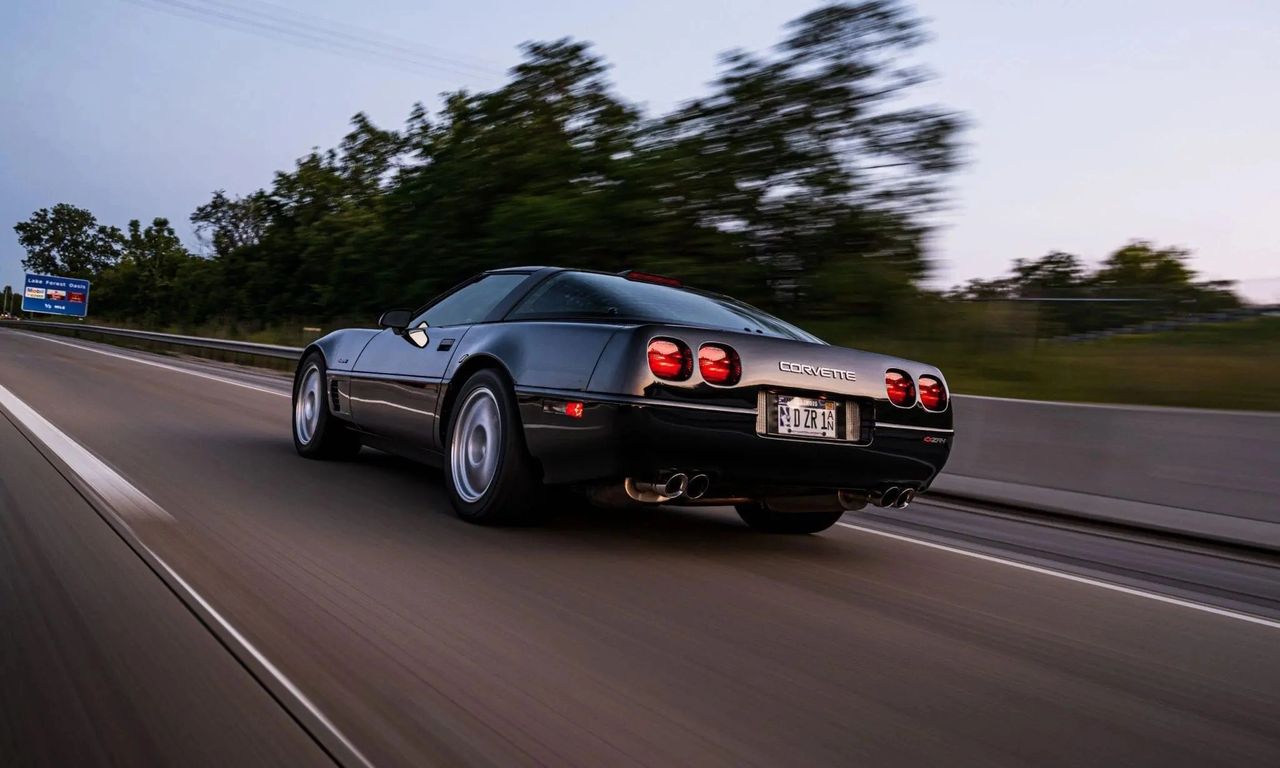
When the line paused that afternoon in Bowling Green, the ZR-1’s farewell felt like an ending. It was. But you could already feel the future in the way the 1995 car went about its business. Make world-class performance easy to access. Make the everyday miles quiet, cooperative, and cool. Sweat the invisible details until the owner doesn’t notice them at all. That was the late-run C4’s promise. It became the C5’s identity. And it remains the Corvette’s defining trick: the long sprint from Motorama fantasy to daily-usable supercar.
1995 Corvette: Deep-Spec Reference (Coupe & Convertible; ZR-1 where noted)
Engine & Induction
- Engine code: LT1 (RPO LT1), Gen II small-block V8
- Displacement: 5,733 cc (350 cu in)
- Block/heads: Cast iron block; aluminum cylinder heads
- Bore × stroke: 4.00 in × 3.48 in (101.6 × 88.4 mm)
- Compression ratio: ~10.5:1
- Valvetrain: OHV, 2 valves/cyl; hydraulic roller lifters
- Rated output: 300 hp @ 5,000 rpm; 340 lb-ft @ 4,000 rpm
- Fuel system: Sequential port fuel injection (speed/density with MAP)
- Ignition: OptiSpark distributor with crank-driven optical trigger (late-run spec)
- Cooling & fans: Cross-flow radiator; electric primary fan with revised ’95 control/quiet hardware
- Bottom-end notes (’95): Powdered-metal connecting rods; durability/NVH refinements
- Exhaust: Dual undercar system with catalysts; quad rear outlets (’95 reroute minimizes heat soak/paint staining)
ZR-1 (1995 carryover, early-year only)
- Engine code: LT5 (RPO ZR1), 5.7L DOHC 32-valve V8
- Output: 405 hp @ 5,800 rpm; 385 lb-ft @ 5,200 rpm
- Induction: Sequential port; individual coil packs per bank; 4 cams, belt-driven
Transmissions & Final Drives
- Automatic: 4L60-E (RPO M30) electronic 4-speed; revised calibration & lighter/stronger converter in ’95
- Manual: ZF S6-40 (RPO MN6) 6-speed
- Ratios (typical LT1): 1st 2.68, 2nd 1.80, 3rd 1.31, 4th 1.00, 5th 0.75, 6th 0.50; Rev ~2.90
- Reverse engagement: High-detent mechanism (’95 replaces ’94 lockout hardware)
- Final drives (common LT1 setups):
- Manual: 3.45:1 (std)
- Automatic: 2.59:1 (std); 3.07:1 with RPO G92 Performance Axle Ratio
- Clutch (manual): 11-in diaphragm, hydraulic actuation; dual-mass flywheel
Chassis, Suspension & Steering
- Structure: Uniframe/birdcage with bolt-on front/rear cradles; hatch-back coupe or soft-top convertible
- Front suspension: SLA (short/long arm) with forged aluminum control arms; transverse composite leaf spring; monotube de Carbon gas shocks (’95 softer valving on base suspension)
- Rear suspension: Upper/lower lateral links with trailing rod; transverse composite leaf spring; monotube de Carbon shocks
- Selectable damping (opt): FX3 Electronic Selective Ride & Handling (Bilstein actuated, 3 modes)
- Steering: Power rack-and-pinion, performance ratio; tilt column standard
- Turning circle: ~38–40 ft curb-to-curb (tire/wheel dependent)
Brakes (Big Brakes Go Standard in ’95)
- System: 4-wheel discs with Bosch ABS 5; ASR traction control
- Calipers/rotors (LT1 1995):
- Front: 2-piston PBR calipers; ~13.0-in ventilated rotors (J55-spec hardware standard in ’95)
- Rear: Single-piston sliding calipers; ~12.0-in ventilated rotors
- Proportioning: Electronic via ABS/ASR logic; performance-oriented bias for stability under trail-brake
Wheels & Tires
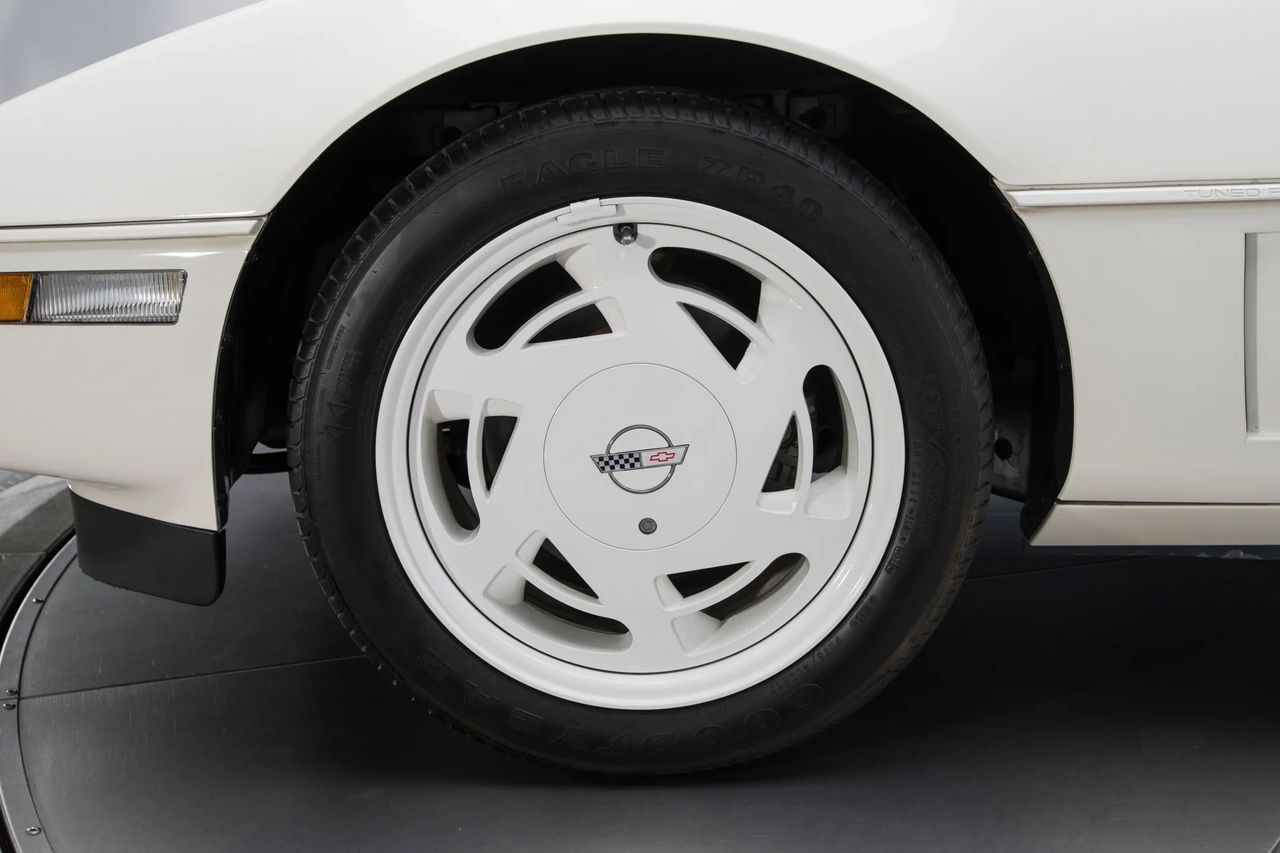
- Standard alloys: 17-in cast aluminum “sawblade” or directional turbine design (finish varies)
- Typical sizes (LT1):
- Front tires: 255/45ZR-17
- Rear tires: 285/40ZR-17
- Run-flats (opt): WY5 Extended Mobility Tires (EMT)
- Spare delete (opt): N84 Spare Tire Delete (requires WY5; nets ~$100 credit & small weight savings)
- ZR-1 wheels/tires (reference): 17×9.5 in front, 17×11 in rear; 315-section rears with A-mold design
Dimensions & Capacities
- Wheelbase: 96.2 in (2444 mm)
- Length: ~178.5 in (4530 mm)
- Width: ~71.0 in (1803 mm)
- Height: ~46.7 in (1186 mm) coupe; conv slightly taller with top up
- Track: ~59.6 in front / 60.4 in rear (tire/wheel varies a tick)
- Curb weight (approx):
- Coupe (LT1): ~3,350–3,400 lb depending on options
- Convertible (LT1): ~3,450–3,550 lb
- ZR-1: ~3,550–3,600 lb
- Fuel tank: 20.0 gal (75.7 L)
- Hatch cargo (coupe): generous flat load floor; convertible uses rear well (smaller but usable)
- Towing: Not rated; cooling/aero not configured for trailer duty
Performance (Period Test Window; LT1)
- 0–60 mph: ~5.2–5.5 sec (manual); ~5.7–6.0 sec (auto, axle-ratio dependent)
- Quarter-mile: ~13.6–13.9 sec @ 102–104 mph (manual)
- Top speed: ~165–170 mph (manual, gear/drag conditions)
- 60–0 mph braking: ~115–125 ft (pads/tires swing results; ’95 big brakes markedly consistent)
- Skidpad: ~0.90–0.95 g (tire compound & FX3 influence)
- EPA fuel economy (typical): ~17/25 mpg (city/hwy) both transmissions, premium unleaded recommended
Electrical/Controls
- ABS/Traction: Bosch ABS 5 controller with integrated ASR
- PCM: OBD-I strategy (’95 transitional refinements; 1996 goes OBD-II)
- Gauges: 1995 cluster with ATF temperature readout for automatics; analog/digital hybrid display
- Security: Factory VATS (Vehicle Anti-Theft System) with resistor key
Interior & Ergonomics
- Seats: Standard buckets; AQ9 sport seats optional with improved French-seam stitching (’95) to curb bolster tears; power adjustments AG1/AG2 widely ordered
- Upholstery: Leather standard on most builds; colorways tied to exterior palettes; convertible gets specific trim/liner treatments
- Audio: Delco-Bose with in-dash CD (U1F), reinforced head-unit mounting to reduce skip; power mast antenna
- Rattle mitigation (’95): Added adhesive/Velcro straps in key cabin interfaces; additional isolators
- Roof (coupe): Removable panel; 24S blue-tint or 64S bronze-tint top; C2L dual-panel package (both tops)
- Convertible top: Fabric, heated glass rear window; optional CC2 auxiliary hardtop (limited take rate)
Paint & Trim (1995)
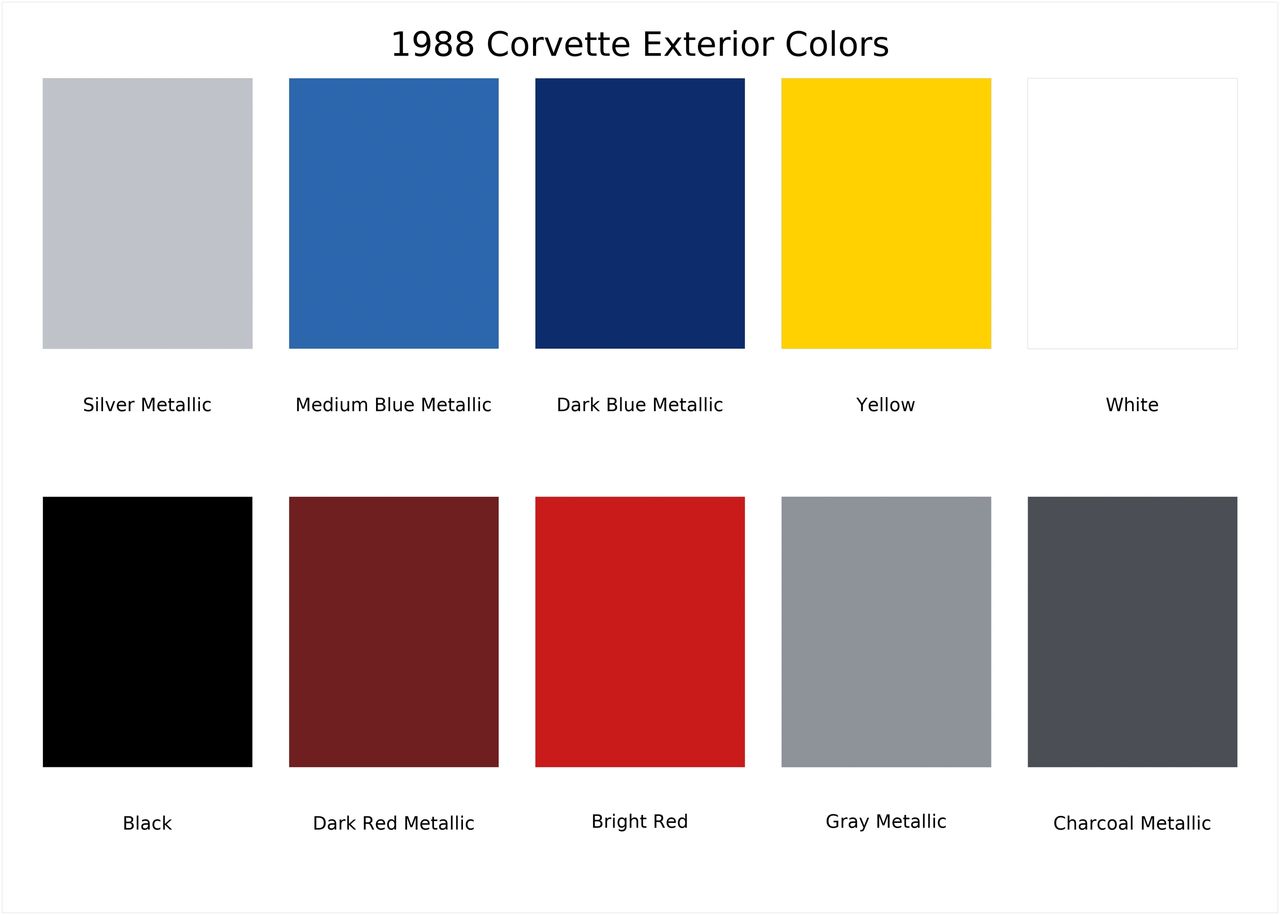
Standard colors: Arctic White, Black, Torch Red, Dark Red Metallic, Polo Green Metallic, Admiral Blue, Bright Aqua Metallic, Competition Yellow, Dark Purple Metallic (new). Special two-tone: Z4Z Indy 500 Pace Car Replica (Dark Purple Metallic over Arctic White with white top & ribbon graphics)
- Torch Red — 4,531
- Black — 3,959
- Arctic White — 3,381
- Polo Green Metallic — 2,940
- Dark Red Metallic — 1,437
- Dark Purple Metallic (new) — 1,049
- Admiral Blue — 1,006
- Competition Yellow — 1,003
- Bright Aqua Metallic — 909
- Z4Z Indy 500 Pace Car Replica (Dark Purple Metallic / Arctic White) — 527
- Popular choices (’95 mix): Torch Red (~22%), Black (~19%), Arctic White (~16%), Polo Green (~14%); Dark Purple Metallic ~1k cars; Pace Car 527 units
Options & Notables (selected RPOs)
- FX3 Electronic Selective Ride & Handling (Bilstein)
- G92 Performance Axle Ratio (3.07 on automatics)
- UJ6 Low tire pressure warning indicator
- WY5 Extended Mobility Tires (run-flats)
- N84 Spare Tire Delete (requires WY5; –$100)
- Z07 Adjustable Performance Handling Package (’95 availability limited; heavy-duty cooling/suspension mix)
- Z4Z Indy 500 Pace Car Replica (convertible)
- ZR1 Special Performance Package (coupe; early-’95 run only)
Production, Pricing & VIN
- Total ’95 production: 20,742
- Coupe: 15,771
- Convertible: 4,971
- ZR-1 (’95): 448 (part-year; ZR-1 total ’90–’95: 6,939)
- Base MSRP: Coupe $36,785; Convertible $43,665
- ZR-1 option add: $31,258 (over coupe)
- VIN blocks (’95):
- Base coupe/convertible: 100001–120294 (serial allocation > production; skips occur)
- ZR-1: 800001–800448
Indy 500 Pace Car (Z4Z)
- Configuration: Convertible only
- Livery: Dark Purple Metallic over Arctic White; white top; ribbon graphics; embroidered headrests; specific trim
- Build: 527 units; 87 used at Indy; 20 exported; remainder to top-performing U.S. dealers
- Price add: $2,816 over base convertible
What to Check (Buyer/Restorer CheckList)
- OptiSpark health: Look for dry front cover, recent service, quality replacement parts
- Cooling system: Clean coolant, proper fan engagement; radiator fins intact
- ABS/ASR lights: Should prove-out and go out; Bosch 5 is robust but wiring/grounding matters
- FX3 actuators (if equipped): Verify mode changes & no codes; actuators can stick
- Seat bolsters: ’95 French seams hold up better, but foam wear still shows on high-mile cars
- Roof panel seals (coupe): Wind noise/water leaks → new seals/adjustments fix it
- Run-flats & N84: If spare is deleted, confirm tire date codes and condition; EMTs age out
WHY THE 1995 CORVETTE STILL MATTERS TODAY
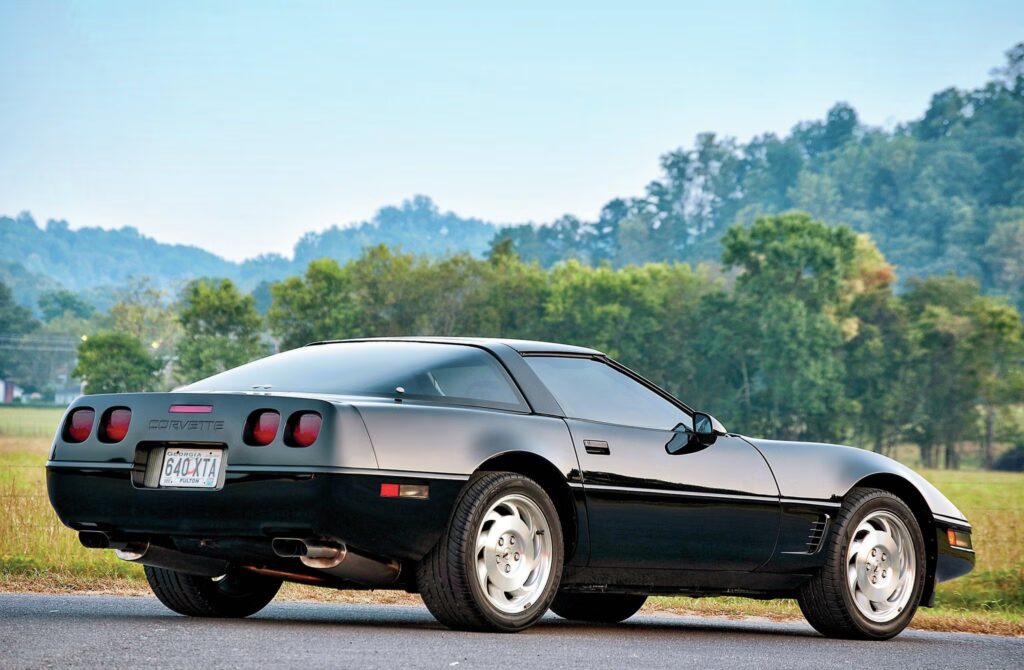
The 1995 Corvette still matters today because it represents one of the most complete and confident expressions of the C4 generation. By this point, Chevrolet had spent more than a decade refining the platform, and it showed. The styling was sharp, the chassis was mature, the LT1 V8 delivered strong, dependable performance, and the overall driving experience felt far more polished than many people give it credit for. While earlier C4s introduced the world to a radically new Corvette, the 1995 model proved just how good that formula could become when the engineering, comfort, and performance all came together.
It also matters because the 1995 Corvette sits in a fascinating place in Corvette history. It arrived just before the final sendoff of the C4 generation, which means it benefits from years of development while still carrying the unmistakable design language that defined the Corvette through much of the 1980s and 1990s. For enthusiasts today, that makes the 1995 model especially appealing. It offers classic C4 looks, real small-block power, proven road manners, and a driving experience that still feels engaging in a world increasingly shaped by technology and isolation.
Most importantly, the 1995 Corvette still matters because it helped preserve the Corvette’s performance credibility during a period of transition. It kept America’s sports car relevant, desirable, and unmistakably bold while paving the way for what would come next. For owners, collectors, and longtime enthusiasts, the 1995 Corvette is more than just another model year. It is a reminder that refinement matters, that evolution matters, and that some of the most rewarding Corvettes are the ones that quietly got everything right.