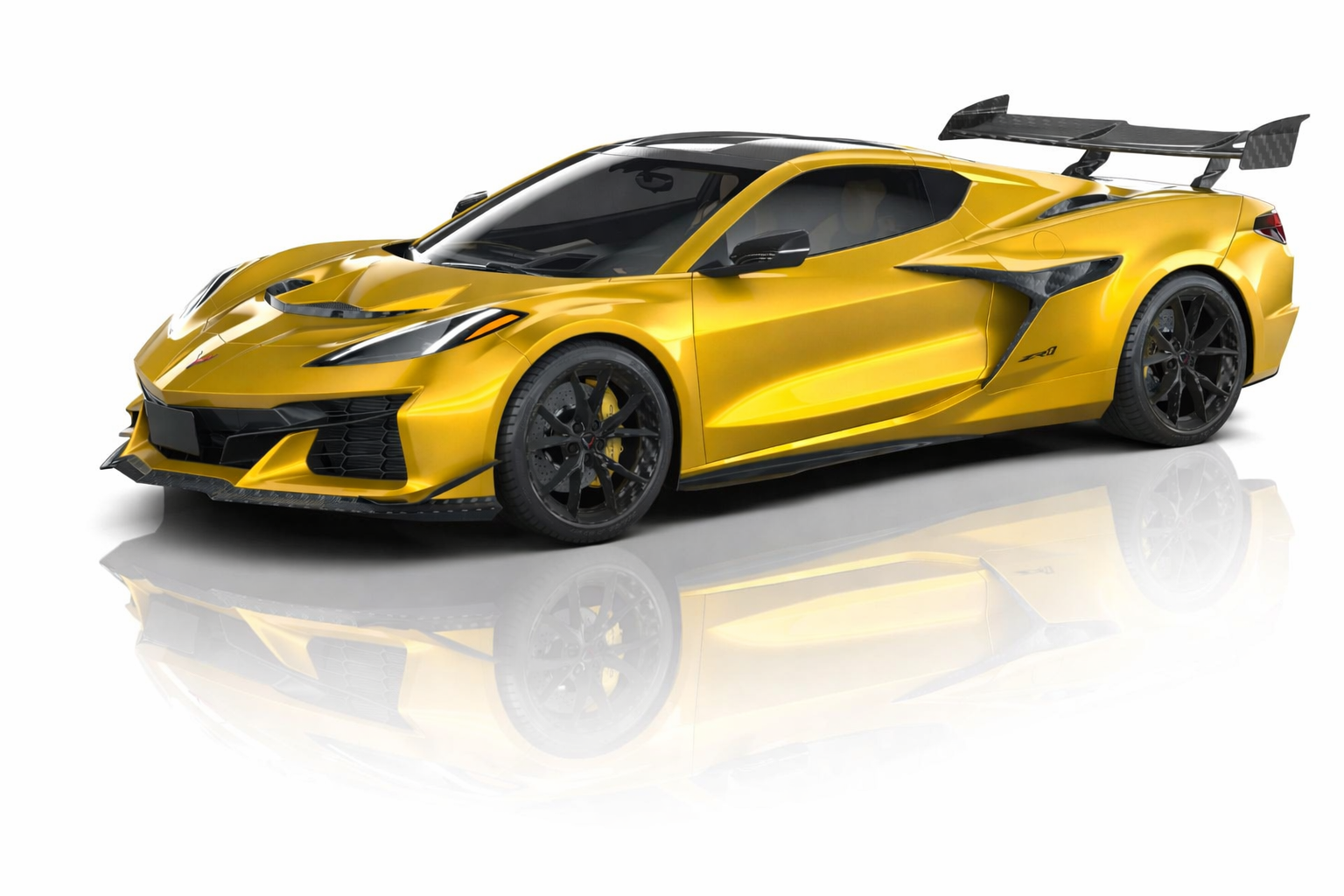
Tag: Chevrolet Corvette

  • 2025 CORVETTE ZR1 OVERVIEW

    2025 CORVETTE ZR1 OVERVIEW

    There are certain Corvettes that arrive as model-year updates, and then there are Corvettes that arrive as declarations. The 2025 Chevrolet Corvette ZR1 is very much the latter. Yes, it is the most powerful production Corvette ever built. Yes, its hand-assembled 5.5-liter twin-turbocharged LT7 V8 produces 1,064 horsepower and 828 lb-ft of torque. Yes, Chevrolet ultimately confirmed a top speed of 233 mph, making it the fastest production car ever built by an American auto manufacturer. But those numbers, however staggering they may be, still do not explain why this car matters as much as it does. The real story of the 2025 ZR1 is not that Chevrolet built an outrageously fast Corvette. It is that Chevrolet finally built the Corvette that the C8 architecture was always pointing toward.

    2025 Chevrolet Corvette lineup image showing the C8 Stingray, E-Ray, Z06, and 2025 ZR1 parked together at dusk in front of a modern estate, illustrating the full evolution of the mid-engine Corvette family from entry model to 1,064-horsepower flagship.
    The C8 family always felt like it was building toward something bigger. Stingray proved the mid-engine Corvette was real. E-Ray expanded the formula and added a new layer of sophistication. Z06 brought world-class naturally aspirated intensity. And now the 2025 Corvette ZR1 arrives as the car that cashes in on the full promise of the architecture—1,064 horsepower, twin turbos, and a new summit for American performance. Seen together, this lineup is more than a range of sports cars. It is the clearest possible illustration of how Chevrolet used the C8 generation to stretch, refine, and ultimately redefine what a Corvette could be. (Image courtesy of GM Media LLC.)

    The mid-engine Corvette was never just about appearance. It was never only about finally giving America’s sports car proportions that looked more at home among exotics, nor was it merely about changing the visual grammar of the badge after decades of front-engine familiarity. What the layout really created was engineering headroom. It gave Corvette a platform with balance, packaging, cooling, aero efficiency, and high-speed stability to chase a level of total performance that earlier generations could approach only in flashes. Stingray proved the architecture could work in production. Z06 proved it could sustain a genuinely world-class level of response and composure. E-Ray broadened the family and introduced an additional layer of sophistication. The ZR1 is where the Corvette team cashed in on the full promise of the C8 program. Chevrolet said as much at launch, framing the car as the next challenge for the same team that revolutionized Corvette with a mid-engine architecture.

    That is why the 2025 ZR1 matters historically. This is not simply the latest King of the Hill. It is the car that proves the hill itself got taller. The C8 did not abandon Corvette tradition. It fulfilled one of the oldest ambitions in Corvette history: take the basic mission of America’s sports car and give it an architecture capable of carrying that mission into territory that once seemed permanently reserved for someone else. The ZR1 is the moment where that argument becomes impossible to dismiss.

    To Understand the 2025 ZR1, You Have to Understand What ZR1 Means
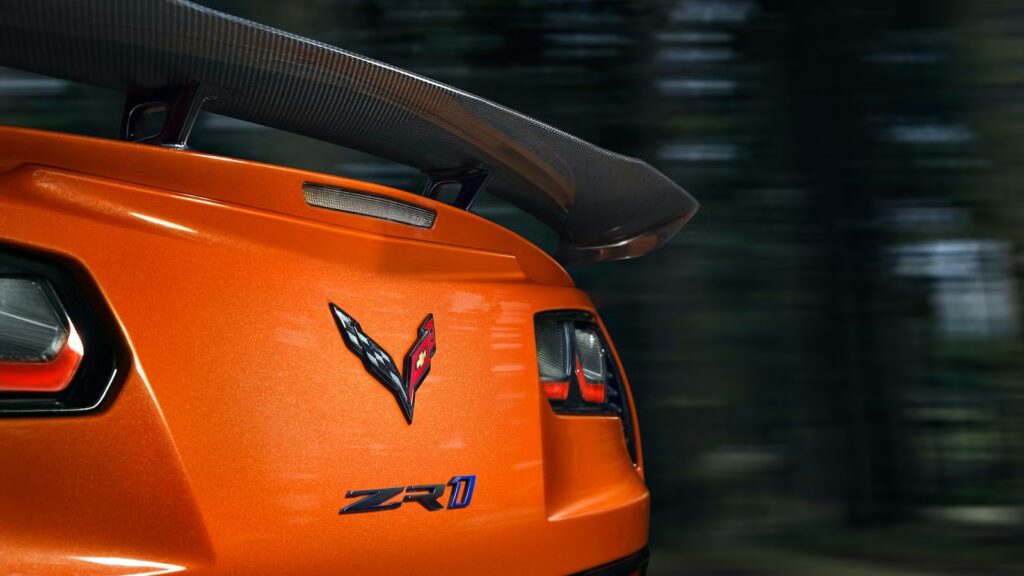
    Seen here on a C7 Corvette ZR1, this badge represents far more than a higher-performance trim level. For decades, the ZR1 name has marked the point in the Corvette lineage where Chevrolet stopped merely refining the platform and began pushing it to its limits—mechanically, historically, and philosophically. Every time the badge returns, it signals a Corvette engineered with sharper intent, less compromise, and a much greater burden of proof. (Image credit: HotCars.com)

    The ZR1 badge has always carried a different kind of weight inside the Corvette world. Not merely faster. Not merely more expensive. Not simply the sharpest edge of a familiar formula. A ZR1 has historically meant something more serious than that—a Corvette developed with less patience for compromise and a much greater willingness to push the underlying platform toward its outer limit. It has never existed only to sit atop the range. It has existed to stretch the definition of the car beneath it.

    That has been true from the beginning, even if the badge has expressed itself differently across eras. Every ZR1 reflected its moment: different technology, different pressures, different competition, different assumptions about what mattered most. Yet the assignment remained remarkably consistent. A ZR1 was there to harden the platform, sharpen it, and then ask more of it than seemed reasonable only a few years earlier. In some generations, that meant race-minded hardware and mechanical discipline. In others, it meant exotic engine architecture, supercharged authority, or a final deliberate overstatement at the close of an era. The details changed. The mission did not.

    That is what separates the badge from the ordinary logic of a flagship trim level. In most performance hierarchies, the top model aggregates the best available parts into a single, expensive component. A ZR1 has historically carried a heavier burden of proof. It has been the Corvette that Chevrolet has used when it wanted to prove something—not just about the car, but about Corvette’s place in the wider performance conversation. It has also been the moment when Chevrolet stopped merely refining and started making a point. The 2025 ZR1 belongs squarely in that tradition, but it also pushes the tradition further than any ZR1 before it.

    The C3 ZR1: Where the Philosophy Began
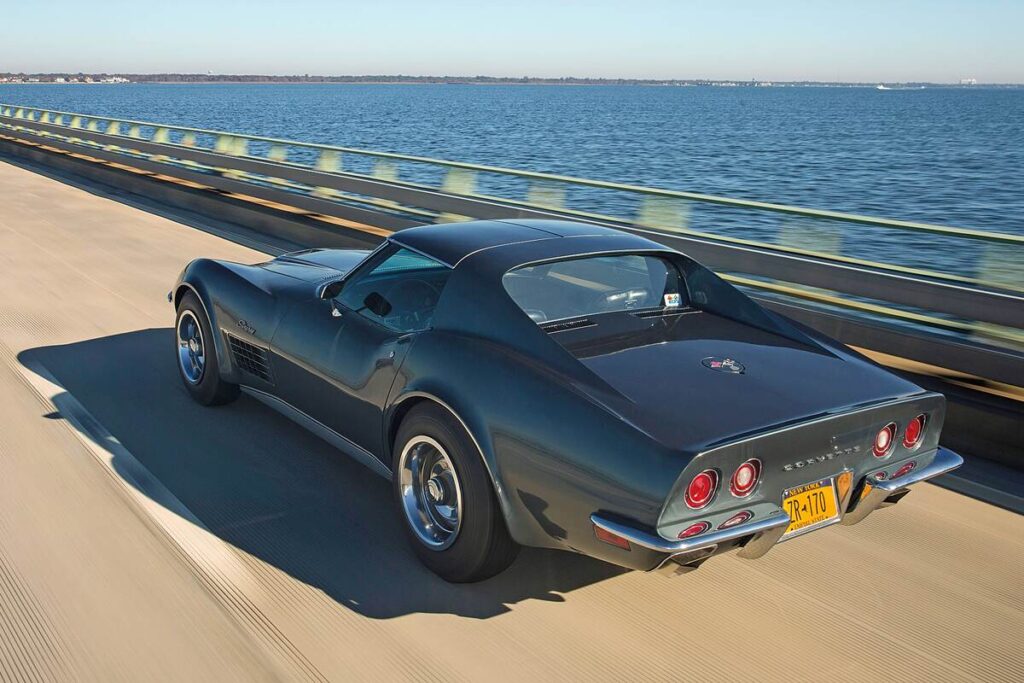
    The original C3 ZR1 was where the philosophy of the badge first took shape. Introduced in 1970 as a low-volume, competition-minded option built around the LT-1 small-block, it was less about flash than function—heavy-duty hardware, sharper intent, and a clear bias toward serious driving. It did not yet carry the mythology later ZR1s would create, but it established the core idea that still defines the badge today: a Corvette engineered with less compromise, more discipline, and a stronger willingness to push the platform beyond the ordinary. (Image credit: Corvette Magazine)

    The story starts in 1970, and it begins in a way that now feels perfectly suited to the Corvette world of that period: quietly, almost discreetly, with more substance than fanfare. The original C3-era ZR1 was not introduced as a halo car in the modern sense because the culture around Corvettes had not yet evolved to market halo cars the way it does now. Instead, the first ZR1 existed as a kind of coded signal to knowledgeable buyers—an option package for people who understood that the real story often lived deep in the order sheet rather than on the showroom placard.

    Built around the LT-1 small-block, the original ZR1 emphasized mechanical capability. It leaned toward the hard parts, toward preparedness, toward the sort of heavy-duty thinking that matters most when a car is driven in anger rather than merely admired in passing. The package favored function over fashion, which is important because it established a value system that the badge would never fully abandon. From the beginning, ZR1 meant intent. It meant discipline. It meant a Corvette configured for people who cared more about what the car could endure and deliver than what it projected from a distance.

    That first ZR1 can seem modest in hindsight only because later ZR1s became so much louder, more powerful, and more culturally visible. But the original mattered because it planted the seed of the idea. It established that there should be room in the Corvette story for a car that traded away some softness, some comfort, and some broad-market friendliness in exchange for a sharper and more serious kind of capability. The mythology had not arrived yet. The philosophy had.

    The C4 ZR-1: The Car That Turned the Badge Into Legend
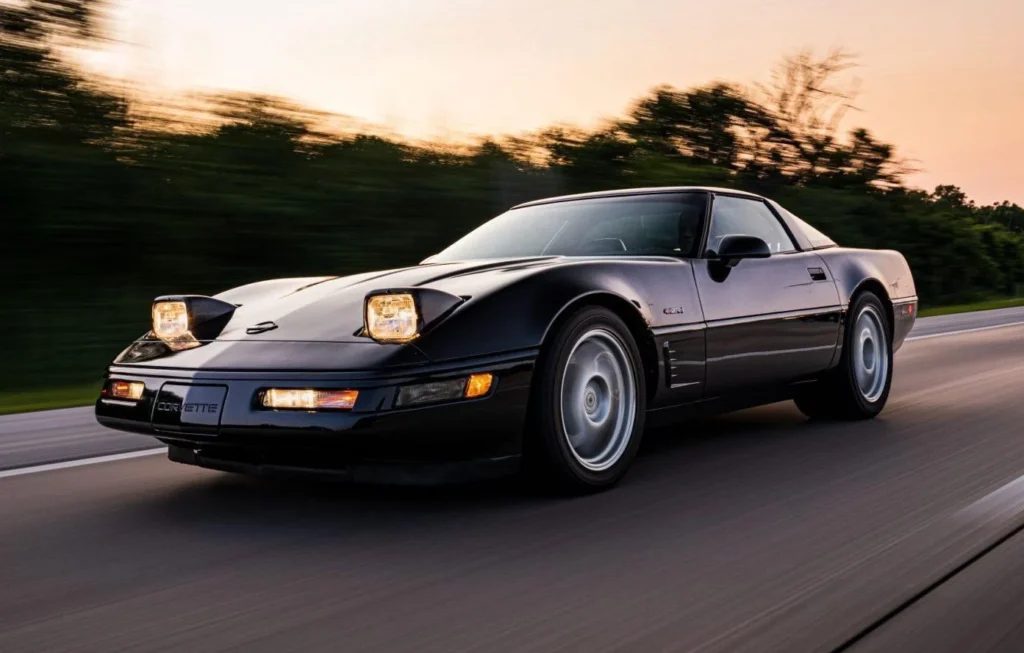
    The C4 ZR-1 is the car that transformed the badge from an insider reference into a full-blown Corvette legend. With its Lotus-developed, Mercury Marine-built LT5 V8, wide-tail bodywork, and unmistakable sense of technical ambition, it announced that Chevrolet was no longer content to compete on familiar domestic terms alone. More than any ZR1 before it, the C4 made the name mean something larger: Corvette at its most advanced, most confident, and most determined to prove it belonged in a much bigger performance conversation. (Image credit: GM Media LLC.)

    If the C3 planted the idea, the 1990 C4 ZR-1 turned it into mythology. This is the chapter that permanently changed the public meaning of the badge. The C4 ZR-1 did not merely revive an old name; it did so with enough technical ambition and confidence that the car immediately felt unlike anything Corvette had done before. The result was not simply a faster C4. It was a machine that seemed determined to redraw the perceived limits of Corvette engineering at the end of the 1980s.

    At the center of that transformation was the LT5, the Lotus-developed and Mercury Marine-built V8 that gave the ZR-1 its singular identity. The engine mattered not only for its output, but also for what it represented. Here was a Corvette powerplant with a different intellectual footprint—more exotic in architecture, more globally legible in sophistication, and far more explicit in its mission to place Corvette in a new class of conversation. The standard Corvette was already serious. The ZR-1 was something else. It announced that Chevrolet was no longer content to compete only on familiar domestic terms. It wanted Corvette to have technical credibility on a much broader stage.

    That is why the C4 ZR-1 still looms so large in Corvette memory. “King of the Hill” stuck because the phrase captured exactly what the car was trying to do: raise the summit of Corvette performance and make sure everyone noticed it had moved. After the C4 ZR-1, the badge no longer meant insider hardware for the people in the know. It now meant Corvette at its most ambitious, most technically assertive, and most globally self-confident.

    The C6 ZR1: The Corvette That Entered the Supercar Fight
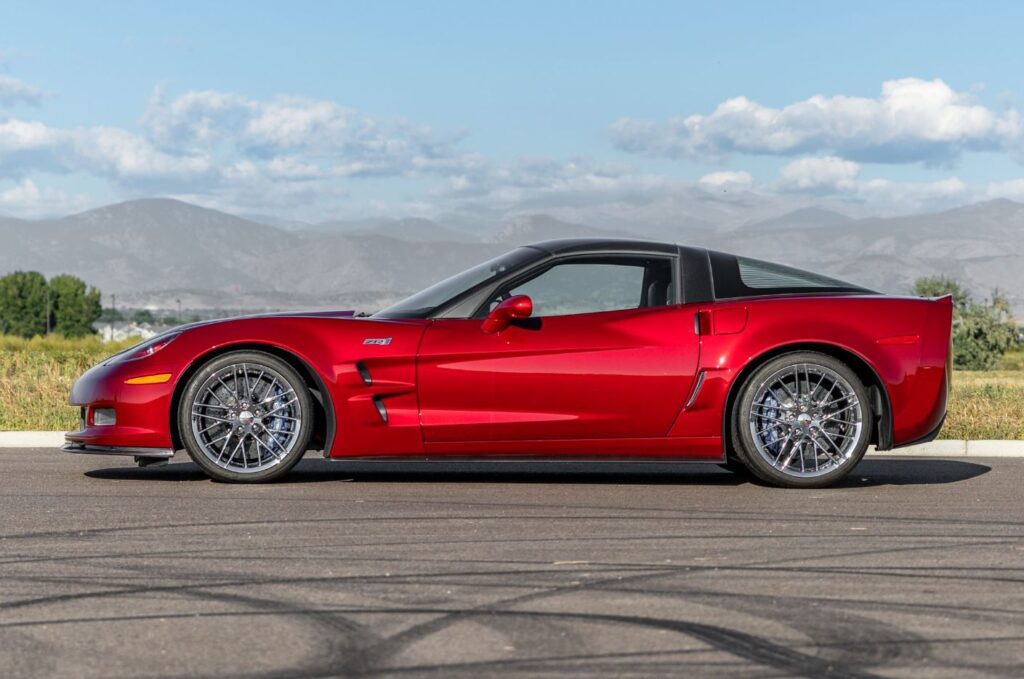
    The C6 ZR1 was the Corvette that forced the rest of the supercar world to take America’s sports car more seriously. With its supercharged LS9, carbon-fiber bodywork, carbon-ceramic brakes, and brutally effective high-speed performance, it was not just another fast Corvette—it was the moment Chevrolet proved the badge could stand in truly elite company without apology. In many ways, the C6 ZR1 laid the modern foundation for everything the 2025 C8 ZR1 would become: more ambitious, more complete, and more determined to move the performance conversation in Corvette’s favor. (Image credit: AutoEvolution.com)

    When the ZR1 returned in C6 form, it did so with a different accent and a different kind of force. Where the C4 ZR-1 leaned heavily on technical mystique, the C6 ZR1 felt more direct, more brutal, and more complete. If the earlier car announced Corvette’s ambition, the C6 ZR1 announced Corvette’s maturity. This was not an experiment in credibility. It was credibility already earned and then exercised to its fullest iteration yet.

    The supercharged LS9 defined the car’s personality. There was nothing coy about it. The engine was a statement of intent in the classic American sense—massive output, immediate authority, and the kind of shove that made familiar benchmarks look newly vulnerable. But the historical importance of the C6 ZR1 was never just about the power figure. What made the car matter was the degree to which the rest of the package rose to meet it. Carbon fiber was not there as decoration. Carbon-ceramic brakes were not there as brochure jewelry. Magnetic Ride Control, aero development, and high-speed stability all combined to create a Corvette that no longer needed qualifiers attached to its greatness.

    That was the breakthrough. The C6 ZR1 stepped into true supercar territory and did not apologize for how it got there. It did not mimic Europe. It did not ask for permission. It arrived as an American flagship, with its own engineering logic, visual language, and confidence. It changed the terms of the conversation around Corvette in a lasting way.

    The C7 ZR1: The Final Front-Engine Overstatement
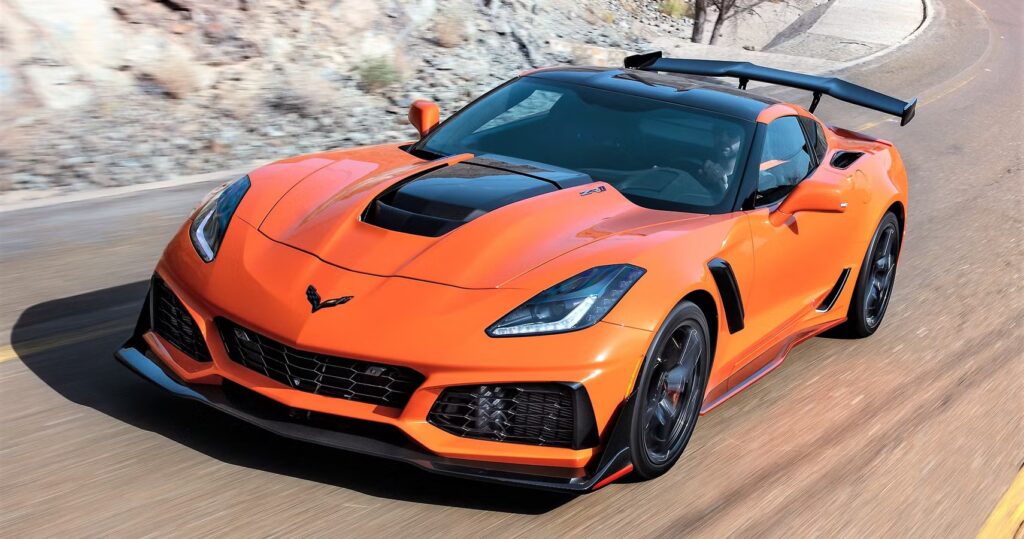

    The 2019 Corvette ZR1 was the final and most aggressive expression of the front-engine Corvette formula. With its supercharged LT5 V8, towering output, massive aero, and unmistakable sense of escalation, it served as both a farewell and a benchmark—showing just how far Chevrolet could push the traditional layout before the mid-engine C8 changed everything. In that sense, the C7 ZR1 was not just a predecessor to the 2025 ZR1. It was the last great overstatement of the old order before Corvette’s next revolution began. (Image credit: HotCars.com)

    By the time the C7 ZR1 arrived, the badge no longer needed to establish itself. Its role was different now. It had to close something out. In hindsight, that is part of what gives the C7 ZR1 its special force. This was not merely another range-topping Corvette. It was the last ZR1 of the front-engine era, and Chevrolet seemed fully aware of what that meant. The result felt less like a measured development step and more like a final deliberate escalation.

    Everything about the car was turned up with purpose. The supercharged LT5, the towering output, the aggressive aerodynamic package, the thermal load, the visual intensity, the sense that every major system was being asked to tolerate more at once—it all pointed in the same direction. Chevrolet was not sending the traditional Corvette layout off with a nod and a handshake. It was giving it one final act of excess. More power. More heat. More downforce. More presence. More willingness to ask difficult things of the chassis, the cooling systems, and the aero all at once.

    That is why the C7 ZR1 occupies such a specific place in Corvette history. It was the final front-engine ZR1, the last front-engine Corvette to sit at the absolute summit of the range, and the final chance for Chevrolet to show how far that architecture could be pushed before the mid-engine era changed the center of gravity of the program—literally and figuratively.

    Why the C8 ZR1 Feels Different
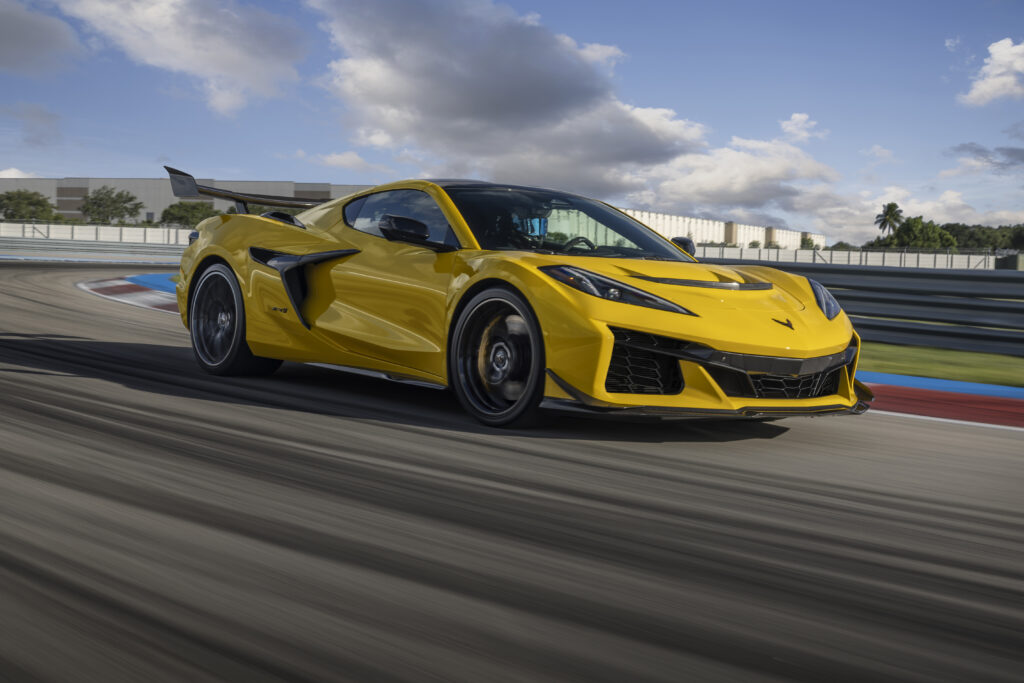
    The 2025 Corvette ZR1 is the culmination of everything the badge had been building toward for more than five decades. From the hard-edged discipline of the original C3 ZR1, to the technical ambition of the C4 ZR-1, to the supercar credibility of the C6 ZR1 and the final front-engine excess of the C7, each generation pushed the idea further. The C8 ZR1 is where those lessons converge without compromise—a 1,064-horsepower, twin-turbocharged statement that fully realizes the promise of the mid-engine Corvette and establishes a new summit for American performance. (Image credit: GM Meda LLC.)

    The 2025 ZR1 inherits all that history, but it communicates it differently because it is doing more than extending a lineage. It is validating a long-debated idea. Earlier ZR1s were astonishing evolutions of the formula available to them. The C8 ZR1 is the full realization of a multi-generation structural and mechanical evolution. GM President Mark Reuss said plainly that moving the Corvette to a mid-engine layout created the real possibility of this level of performance, and that statement is not marketing fluff. It is the clearest way to understand the car. The ZR1 is not a miracle produced despite the C8’s architecture. It is what that architecture was for.

    That matters because Corvette has been haunted, in the best possible way, by the mid-engine question for decades. Zora Arkus-Duntov understood the appeal. Corvette history is filled with moments where the idea of a mid-engine platform resurfaced, whether through concepts, engineering exercises, or racing-influenced thinking. The front-engine Corvette still became a formidable world-class sports car, which is part of what made its arc so compelling. But the underlying question never went away: what would happen if Chevrolet finally gave Corvette the architecture its most ambitious engineers always knew could unlock more? The C8 answered the question. The ZR1 answers it emphatically.

    The People Behind the 2025 Corvette ZR1

    Seen here in the Corvette E-Ray, Tadge Juechter represents one of the most important leadership figures in modern Corvette history. Juechter joined General Motors in 1977, came onto the Corvette program in 1993, became assistant chief engineer in 1999, and then executive chief engineer in 2006—helping lead the brand through the C6, C7, and transformational C8 eras. By the time the 2025 Corvette ZR1 was revealed in July 2024, Chevrolet was already honoring him as he prepared to retire later that summer after 47 years with GM, including 31 years devoted to Corvette. In many ways, the arrival of the ZR1 felt like a fitting final exclamation point on a career that helped redefine what Corvette could be. (Image credit: GM Media LLC.)

    The 2025 Corvette ZR1 marked two milestones at once: the summit of the C8 program and the closing chapter of Tadge Juechter’s time with Corvette. After 47 years at General Motors and 31 years on the Corvette program, Juechter was honored by Chevrolet at the ZR1 reveal and retired later that summer. The overlap gave the launch unusual historical weight. The ZR1 was not simply the next flagship in the range; it was the last major Corvette introduced under the engineer who helped guide the brand through the C6, C7, and mid-engine C8 eras. Chevrolet itself framed the car that way, tying Juechter’s career directly to the arrival of the fastest and most powerful production Corvette the company had ever built.
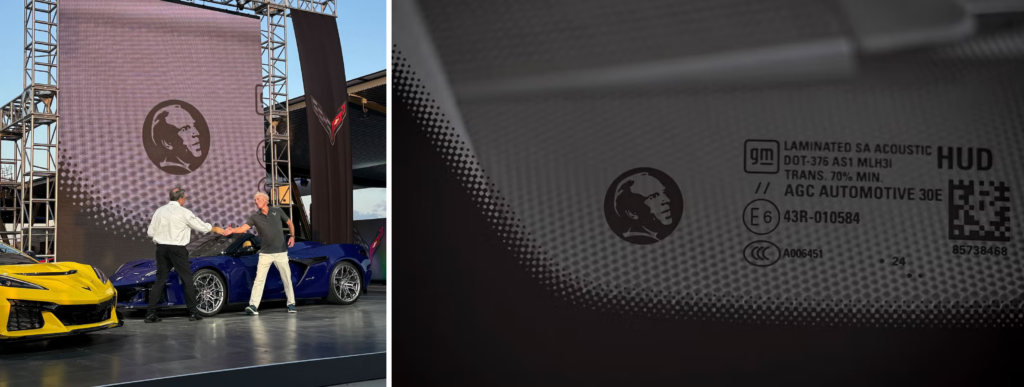
    At the 2025 Corvette ZR1 reveal, GM President Mark Reuss publicly honored Tadge Juechter by tying the new flagship directly to the end of Juechter’s 47-year career at General Motors and 31 years with Corvette. Chevrolet then made that tribute permanent with the “Tadge Badge,” first shown on the ZR1’s rear glass as a quiet acknowledgment of the engineer who helped shape the C6, C7, and mid-engine C8 eras. Reuss put it plainly: “ZR1, and all Corvettes that follow, will wear this symbol commemorating his immense contributions and celebrating his legacy forever.” Beginning with the 2025 model year, that badge was extended across the Corvette lineup, appearing on Stingray, E-Ray, Z06, and ZR1 models alike.

    Chevrolet underscored the point with the 2025 ZR1’s “Tadge Badge,” a tribute graphic built into the reveal car and later extended to 2025-model-year Corvettes. It was an appropriate choice. Juechter’s legacy is woven through the modern Corvette story, and the ZR1 arrived as the clearest final expression of the ambition that shaped his tenure: more performance, more capability, and a Corvette increasingly willing to push beyond the limits that once defined it.

    Yet as with every truly important Corvette, the ZR1 was not the product of one personality or one department acting alone. Scott Bell framed the car publicly in the broadest strategic sense, presenting it as the next step in the same mid-engine progression that began with Stingray and moved through Z06 and E-Ray before arriving here at the top of the range. Chris Barber gave the program its most visible engineering voice once the hard numbers started landing, especially after the 233-mph run in Germany. He was not just explaining results after the fact; he was helping illustrate how ambitious the internal targets had been, how the car overachieved them, and how much confidence the chassis and aero gave the team at speeds that would have sounded absurd for a factory Corvette not very long ago.
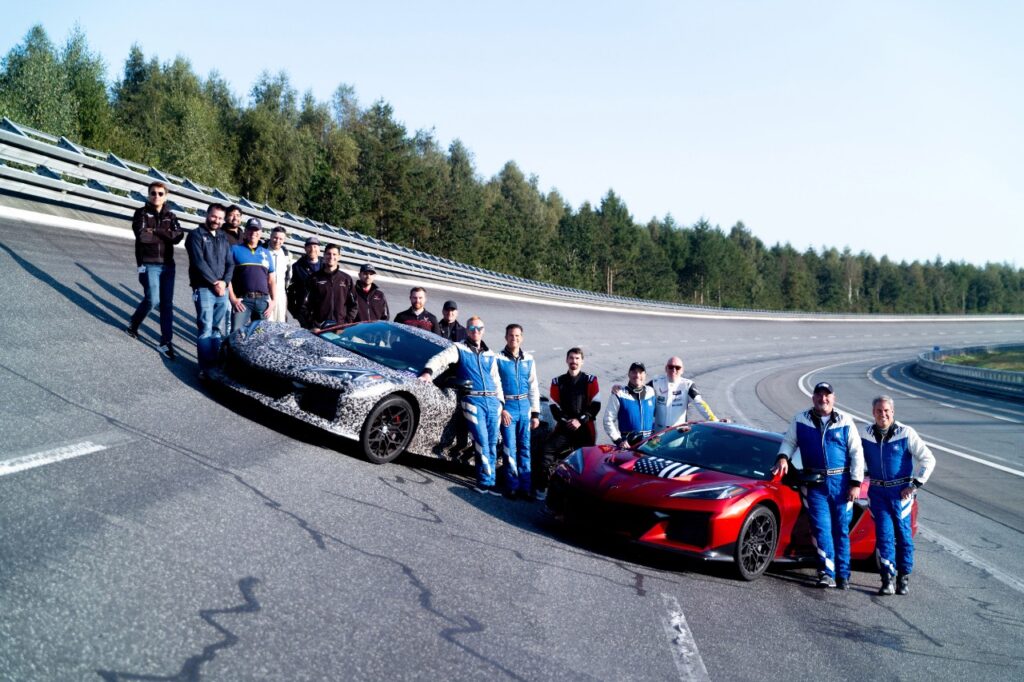
    The team behind the 2025 Corvette ZR1 along with two early ZR1 Corvettes used for setting the car's current top-speed record.
    No great Corvette is ever the work of one person, one department, or one bright idea in isolation. Cars like the 2025 Corvette ZR1 come together because engineers, designers, aerodynamicists, calibrators, test drivers, manufacturing teams, and program leaders all keep pulling in the same direction, often for years. It takes an enormous amount of coordination to turn a performance target into a finished machine, and the higher the target, the more people it takes to reach it. In that sense, the ZR1 is a reminder that even the most singular cars are built by teams. (Image source: GM Media LLC)

    Phil Zak’s contribution sat in a different lane but was no less important. The ZR1 needed to look unmistakably more serious than the cars beneath it in the C8 family, yet avoid becoming visual noise. Zak’s team had to give the car its own identity while keeping every major gesture tied back to purpose, which is why the return of the split-window theme worked: not as nostalgia for nostalgia’s sake, but as a functional design element tied to heat extraction. David Caples helped make that same case from the aerodynamic side, presenting the ZR1 not as a car with dramatic aero attached to it, but as a fully integrated machine in which airflow, cooling, downforce, and stability were inseparable from the car’s appearance. By the time Tony Roma spoke publicly about the broader Corvette process, the picture was pretty clear: design, engineering, development, validation, and even the record-setting laps all stayed inside the Corvette program. That is part of what gives the ZR1 its coherence. It was shaped by Corvette people, and it was proven by Corvette people.

    That makes the car feel especially coherent. The 2025 ZR1 does not read like an engine program with a body wrapped around it. It reads like a coordinated effort in which design, powertrain, aero, chassis, and validation were all working from the same brief. That is why the car feels integrated rather than merely dramatic. Even its most theatrical gestures tend to have an engineering justification.

    Phil Zak, Design, and the Return of the Split Window

    Phil Zak helped reintroduce the Corvette’s historic split rear window on the 2025 ZR1, but he did so with purpose rather than nostalgia alone. Under his direction, the feature returned as both a visual homage and a functional element, with the carbon-fiber spine aiding heat extraction from the engine compartment. It was exactly the kind of design decision a car like the ZR1 needed—dramatic, recognizable, and fully earned. (mage credit: GM Media LLC.)

    Phil Zak’s role in this story deserves special attention because the split-window motif could have become a mistake in less disciplined hands. Chevrolet quoted Zak, making clear that the decision was not taken lightly precisely because the team understood how beloved the original 1963 split-window theme remains in Corvette culture. More importantly, the return of the split rear glass was not added purely for nostalgia. On the ZR1 coupe, the central carbon-fiber spine between the glass panels helps extract heat from the engine bay. That is the right way to revive a historic Corvette cue. It is not there simply to echo the past, but to show how history and innovation can strengthen each other when form and function converge.

    That design philosophy extends beyond the split window. The car’s unique wheel treatments, exposed carbon-fiber elements, visible ducting, and altered bodywork are not random design motifs intended to give the car a more menacing appearance. They are the visual language of a Corvette that now has to function in a very different performance envelope. The shape of the 2025 ZR1 isn’t just about looking faster than the cars below it in the range. It is trying to survive the pressures created by 1,064 horsepower, 233 mph, and track-capable high-downforce operation.

    Why Chevrolet Built the 2025 CORVETTE ZR1 This Way
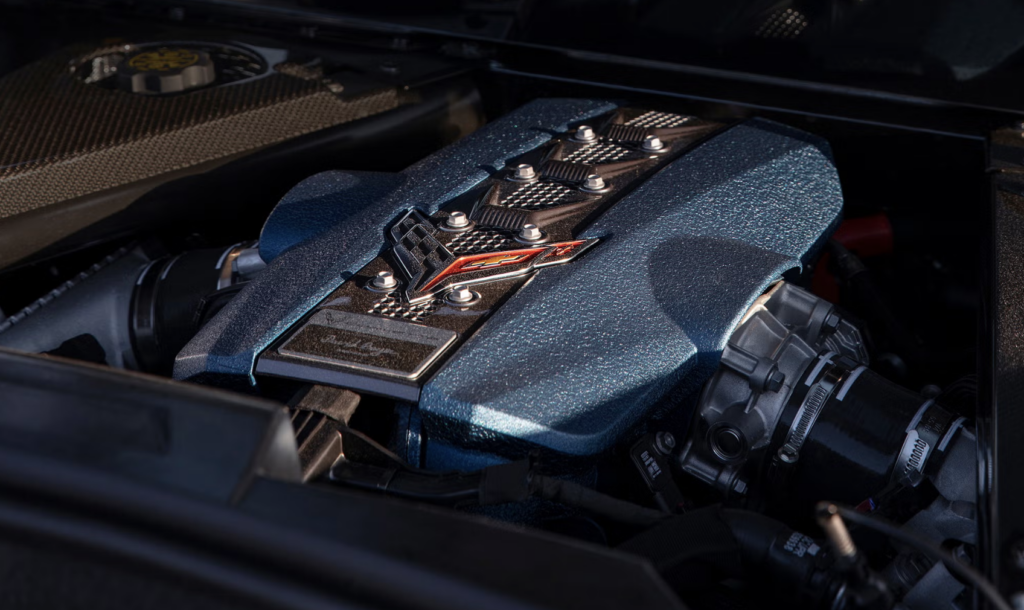
    The LT7 was never an afterthought. Chevrolet made clear that the ZR1’s twin-turbocharged 5.5-liter V8 grew from the same flat-plane-crank Gemini architecture as the LT6, and that the broader engine program was developed from early on to support both naturally aspirated and turbocharged versions. Rather than simply adding boost to the Z06’s engine, Chevrolet reworked and optimized virtually every major system for forced induction, making the LT7 the planned high-output expansion of the C8 Corvette’s evolving powertrain family. (Image credit: Chevrolet)

    One of the most revealing aspects of Chevrolet’s official ZR1 story is the acknowledgement that the LT6 and LT7 programs were effectively intertwined from the beginning. The naturally aspirated 5.5-liter flat-plane-crank LT6 in the Z06 was never meant to represent the outer limit of the C8 engine strategy. Chevrolet described the LT7 as being built on the same Gemini architecture and later connected that engine family directly to the broader development stream that also fed the Z06 GT3.R race car. This reveals something critical: the LT7 was not some after-the-fact escalation born out of internet horsepower wars. It was always part of GM’s long-term vision for the engine program. It belonged there.

    That also explains why Chevrolet did not simply add boost to the LT6 and call it a day. The LT7 required deep rethinking and optimization around forced induction, packaging, drivability, durability, and repeatability. Chevrolet’s official literature on the powerplant identifies dual 76-mm turbochargers, substantial integration work, and later technologies such as anti-lag control and the “maniturbo” exhaust manifold/turbo integration, which positions the turbochargers closer to the exhaust valves for improved response. This is not a story about easy horsepower, but rather about making massive horsepower behave like part of a complete car.

    That distinction matters because the ZR1 was never supposed to be merely the loudest car in the lineup. Chevrolet wanted a factory Corvette capable of running with the world’s elite supercars while still behaving like a Corvette in the way it delivered speed, driver confidence, and repeatable performance. That is why so much of the development story revolves around systems integration rather than isolated hero numbers. The engine had to be overwhelming, yes, but the transmission, brakes, cooling, tire package, and high-speed stability all had to rise with it.

    The LT7: A Landmark Corvette Engine
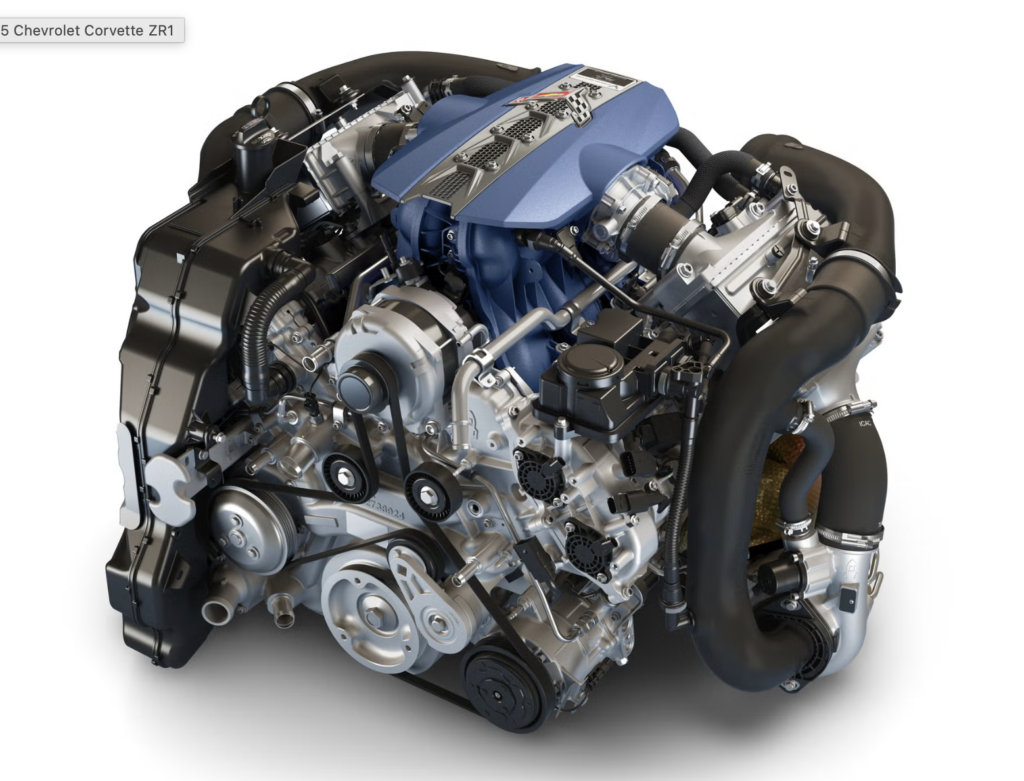
    The LT7 is the engine that turns the 2025 Corvette ZR1 from an already serious performance car into something historically significant. Hand-built, twin-turbocharged, and built around Chevrolet’s 5.5-liter flat-plane-crank V8 architecture, it delivers a staggering 1,064 horsepower while preserving the high-revving, hard-edged character that defines the C8’s most ambitious powertrains. More than just a headline number, the LT7 represents the moment Corvette fully cashed in on the engineering potential of the mid-engine era. (Image source: Chevrolet)

    At the center of the 2025 Corvette ZR1 sits one of the most significant engines in the history of the badge. The LT7 is a hand-built 5.5-liter twin-turbocharged DOHC flat-plane-crank V8 assembled at the Performance Build Center in Bowling Green, Kentucky. Chevrolet rates it at 1,064 horsepower at 7,000 rpm and 828 lb-ft of torque at 6,000 rpm, with an 8,000-rpm redline. It is the most powerful factory Corvette engine ever produced and, by Chevrolet’s description at launch, the most powerful V8 ever built in America by an auto manufacturer.

    What makes the LT7 especially fascinating is that it did not abandon the personality that made the LT6 so special. This is not some low-revving, lazily boosted torque monster built to win bench-racing arguments and little else. It remains tied to the same fundamental Gemini logic: overhead cams, flat-plane crank, high-rpm character, and a sense that response matters almost as much as output. Chevrolet and GM have both emphasized that responsiveness was central to the boosted engine’s mission, which is why anti-lag calibration, integrated turbo packaging, and throttle immediacy became such important parts of its development and evolution.

    In practical terms, the LT7 is important not just because it makes four-figure horsepower, but because Chevrolet appears to have worked carefully to keep the engine’s responses aligned with the rest of the C8 program. A twin-turbocharged V8 can easily become heavy in character—big power, but softer response, narrower feel, and less connection between throttle input and engine behavior. The LT7 was engineered to avoid that trap. Turbo selection, induction layout, and calibration strategy were all clearly directed toward preserving high-rpm urgency, fast response, and a usable delivery curve, so the engine would feel like a true extension of the flat-plane-crank 5.5-liter architecture rather than a boosted departure from it.

    The Transmission, Driveline, and the Problem of Putting It Down
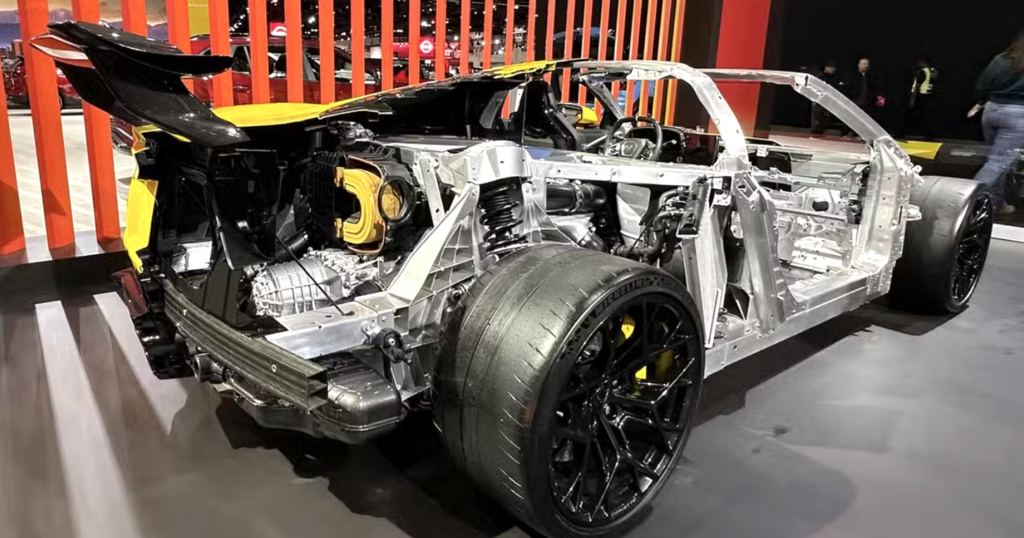
    The 2025 Corvette ZR1 channels its 1,064 horsepower through an upgraded version of Chevrolet’s eight-speed dual-clutch transmission, a unit strengthened to handle the car’s far greater power, torque, and track-capable load demands. Just as important, the ZR1 remains rear-wheel drive, which keeps the car tied to the classic Corvette performance formula even as its capabilities move deeper into supercar territory. In a car like this, the transmission and driveline are not supporting characters—they are a major part of why the ZR1 can turn extreme output into repeatable, usable performance. (Image credit: Topspeed.com)

    Power alone is easy to advertise and hard to deploy. One of the quiet achievements of the 2025 ZR1 is the engineering effort that went into making its output usable. Chevrolet said the eight-speed dual-clutch transmission was substantially upgraded to manage the new power level and the higher longitudinal and lateral loads the car was expected to see. That language is revealing. The transmission was not merely strengthened because the dyno number got bigger. It was strengthened because the entire operating envelope of the car changed.

    That is what happens when Corvette transitions from a “very fast sports car” to something more akin to a modern supercar. Suddenly, every supporting system becomes critical. Clutch integrity, cooling, differential behavior, shift quality under load, thermal survivability, and repeatability stop being secondary considerations. They become part of the headline achievement. The ZR1’s rear-wheel-drive layout also makes the accomplishment more interesting. Chevrolet did not rely on front-axle assistance here. The car still channels all of this through the rear tires, which is part of why its balance of aero, electronics, rubber, and chassis control becomes so central to its successful operation both on the racetrack and the open road.

    Chassis, Suspension, Braking, and Tire Strategy
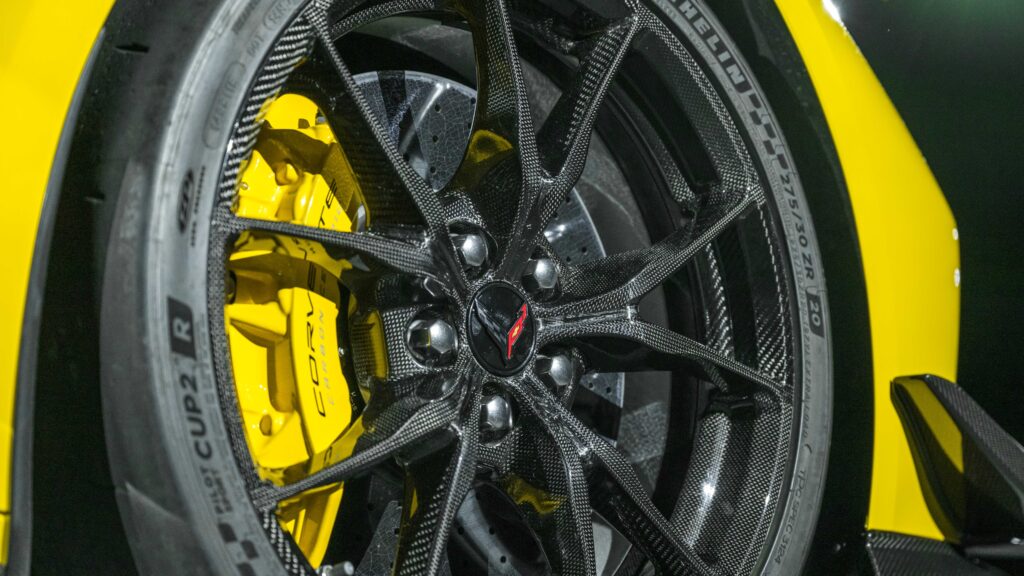
    The 2025 Corvette ZR1’s braking and tire package is every bit as serious as the engine it supports. Chevrolet fitted the car with standard eBoost-assisted carbon-ceramic discs measuring 15.7 x 1.5 inches up front and 15.4 x 1.3 inches in the rear, clamped by six-piston monobloc front calipers and four-piston monobloc rear calipers; Chevrolet also notes the front rotors are the largest ever fitted to a Corvette and says the system uses a new carbon-ceramic rotor manufacturing process for greater durability and lower operating temperatures. Tire specs are equally aggressive: the ZR1 rides on 275/30ZR20 front and 345/25ZR21 rear Michelins, with Michelin Pilot Sport 4S tires in standard form and the Michelin Pilot Sport Cup 2 R, a track-focused setup, available through the ZTK Performance Package. In plain terms, this is not exotic hardware for brochure effect—it is a braking and tire system sized for repeated high-speed deceleration, serious thermal load, and the kind of sustained grip required when a 1,064-horsepower Corvette is expected to run credibly on both the road and the racetrack.

    The 2025 Corvette ZR1’s chassis deserves as much attention as its engine, because a car with this much speed is only as credible as the hardware that controls it. Chevrolet built the ZR1 around short-long-arm double-wishbone suspension at all four corners, Magnetic Ride Control 4.0, standard carbon-ceramic brakes, and a tire strategy that reflects the car’s split mission as both a road car and a far more serious track weapon. In standard form, the ZR1 rides on Michelin Pilot Sport 4S tires for a broader balance of grip and usability, while the available ZTK Performance Package shifts the emphasis toward circuit work with Michelin Pilot Sport Cup 2 R tires and more aggressive chassis tuning.

    Those choices reveal how carefully Chevrolet defined the ZR1’s mission. In standard form, the car still had to function as a road-going flagship with enormous speed and a usable operating range. The available ZTK Performance Package moved the balance further toward dedicated track work, which helps explain the slight split in the published performance numbers. Chevrolet’s own figures show the ZTK-equipped car reaching 60 mph in 2.3 seconds and running the quarter mile in 9.6 seconds at 150 mph, while the lower-drag standard-aero version runs 0–60 in 2.5 seconds and the quarter in 9.7 seconds at 152 mph. That difference is not an inconsistency. It is evidence that Chevrolet was tuning two closely related versions of the same car for slightly different kinds of performance.

    The standard carbon-ceramic brakes reinforce the same point. At this speed, the braking system has to do far more than survive a single dramatic stop. It has to manage heat, preserve pedal confidence, and deliver the same result lap after lap or pull after pull. The ZR1’s brakes were not fitted as exotic hardware for their own sake; they were necessary because sustained performance fundamentally changes the braking requirements. That kind of consistency under repeated high-load use is one of the traits that separates a legitimate top-tier performance car from a machine built mainly around a headline number.

    Aerodynamics: The Bodywork Behind the Performance

    One of the strongest indicators of how serious the ZR1 program really is can be found in how Chevrolet discussed the aero package. The company never treated aerodynamics like visual garnish. From launch onward, the car’s aero story was presented as central to its capability. In standard form, the ZR1 uses a lower-drag body treatment that still includes meaningful functional elements—front splitter work, brake-cooling features, rocker shaping, and carefully managed air paths. With the available Carbon Fiber Aero Package and ZTK Performance Package, the car becomes much more aggressive, adding a high-downforce rear wing, front dive planes, a hood gurney lip, underbody strakes, and stiffer suspension calibration. Chevrolet says the most aggressive configuration can produce more than 1,200 pounds of downforce at top speed.

    “The ZR1 is the ultimate expression of aerodynamics, of horsepower, of exoticness, of styling.”

    David Caples
    Corvette Aerodynamicist

    That number matters not because it sounds impressive, though it certainly does, but because it tells you how seriously Chevrolet was designing for stability and control at the edge of the car’s envelope. A Corvette that can run 233 mph and still be expected to operate credibly on a road course cannot survive on power alone. It needs real aerodynamic authority. It needs confidence. It needs the kind of stability that makes monstrous speed feel usable rather than merely survivable.

    This is also where the car’s visual character becomes easier to understand. The ZR1 does not wear aggressive aero because the team wanted it to look angry. It looks the way it looks because the car’s performance targets forced the shape in that direction. The most dramatic pieces exist because the operating envelope is dramatic.

    Cooling: The Unseen Story Behind the Car
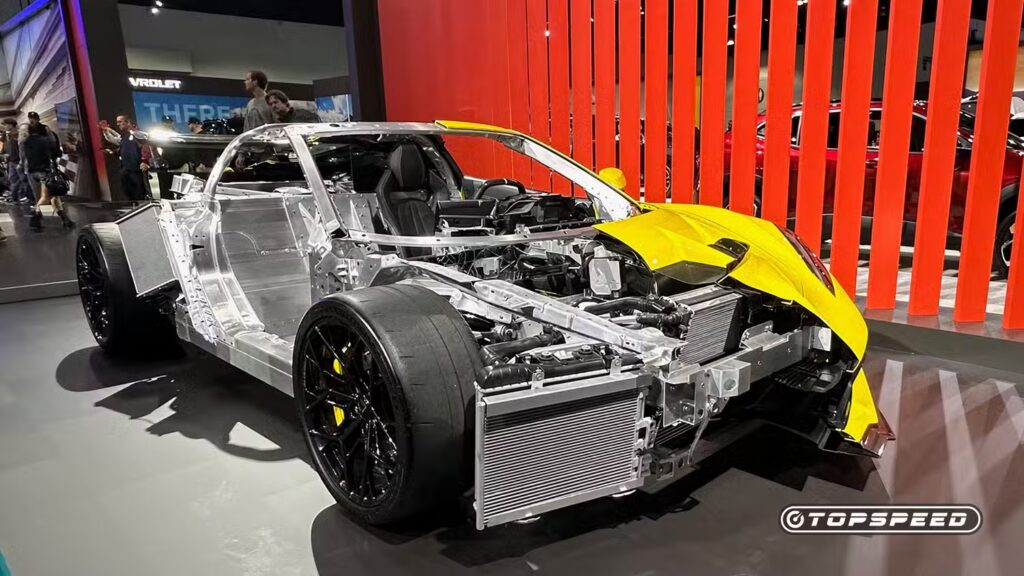
    The 2025 Corvette ZR1’s cooling system is one of the clearest signs that Chevrolet engineered this car for sustained performance rather than a single headline run. Air entering the front grille is routed through the intercooler heat exchanger and then exhausted through the flow-through hood to lower charged-air temperatures while also increasing front downforce; additional carbon-fiber side-profile ducts channel cool air to the rear brakes, and carbon-fiber fresh-air inlets on top of the coupe’s rear hatch help reduce turbo compressor inlet temperatures. Even the split-window spine contributes by improving heat extraction from the engine compartment, which tells you how thoroughly the ZR1’s cooling strategy was integrated into the car’s overall shape. At this level, the radiators, charge-cooling hardware, ducting, and heat-management surfaces are not background details—they are a major reason a 1,064-horsepower, twin-turbo Corvette can repeat its performance with real credibility. (Image credit: TopSpeed.com)

    Cooling is one of the least glamorous subjects in performance-car writing, and one of the most important. It is also one of the clearest ways the 2025 ZR1 announces itself as something more than merely a fast Corvette. Once output, load, and speed reach this level, thermal management stops being a supporting detail and becomes central to the car’s identity.

    Chevrolet’s official descriptions of the ZR1 repeatedly returned to airflow management and heat extraction. The flow-through hood is not just visual theater; it helps evacuate air through the intercooler heat exchanger. Additional ducting manages brake cooling. The rear-hatch treatment and split-window spine contribute to engine-bay heat extraction. Even the side profile starts to make more sense when read through the lens of thermal necessity. This is what a matured mid-engine supercar program looks like. On a car like this, surfaces are not merely styled. They are assigned jobs.

    That matters because cooling is often the dividing line between something that produces a headline run and something that survives repeated real use. The ZR1 was clearly engineered for the latter. Chevrolet’s whole public presentation of the car stressed not merely speed, but sustained capability. That is why the cooling story deserves a place near the center of the article rather than buried in a spec box. It is part of the reason the rest of the car is possible.

    The Performance Claims, and Then the Proof
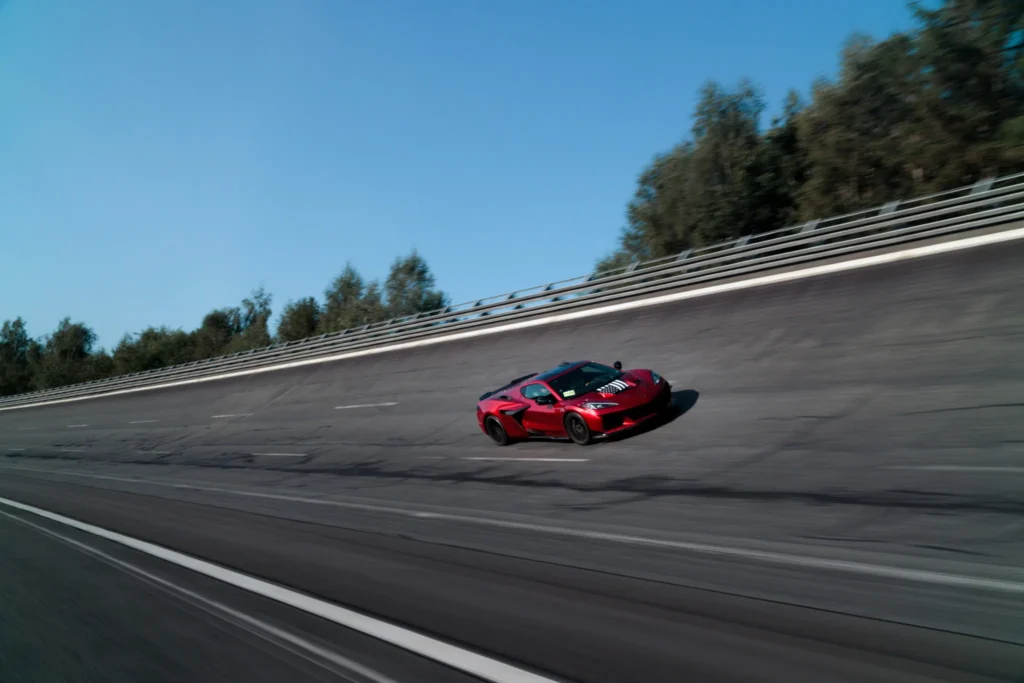
    Mark Reuss driving the 2025 Corvette ZR1 to a 233-mph two-way average
    At ATP Automotive Testing Papenburg in Germany, GM President Mark Reuss drove the 2025 Corvette ZR1 to a 233-mph two-way average, establishing it as the fastest production car ever built by an American auto manufacturer. More than just a headline number, the run confirmed that the ZR1’s 1,064-horsepower, mid-engine formula was capable of delivering the kind of sustained high-speed performance Chevrolet had been chasing from the start. (Image courtesy of GM Media LLC.)

    At launch, Chevrolet said the ZR1 would exceed 215 mph and run the quarter mile in less than ten seconds. Those early numbers sounded almost absurd – and quite impossible – attached to a production Corvette. Then the car started outperforming the early headline. In October 2024, GM announced that Mark Reuss had driven a 2025 Corvette ZR1 to a 233-mph two-way average at ATP Automotive Testing Papenburg in Germany, making it the fastest car ever built by an American auto manufacturer. GM also noted that this speed was unrivaled by any current production car priced under $1 million.

    Just as revealing was the way Chevrolet and GM talked about that run afterward. Chris Barber, the ZR1 lead development engineer, said the car actually overachieved relative to internal expectations and admitted the team did not believe 233 was necessarily in the cards. That detail is important because it changes the flavor of the achievement. This was not a case of building to a neat round target and then presenting the target as destiny. The car beat what the team initially thought it might do.

    Then came the acceleration validation. In December 2024, Chevrolet confirmed that the available-ZTK version of the ZR1 could reach 60 mph in 2.3 seconds and cover the quarter mile in 9.6 seconds at 150 mph, while the standard aero configuration could do 0–60 in 2.5 seconds and the quarter in 9.7 seconds at 152 mph. That split matters because it reveals how deeply tuned the car’s configurations are. The high-downforce car launches harder. The lower-drag car carries slightly more speed at the far end. That is not just fast. That is intelligently fast.

    The Record Tour: Five U.S. Lap Records
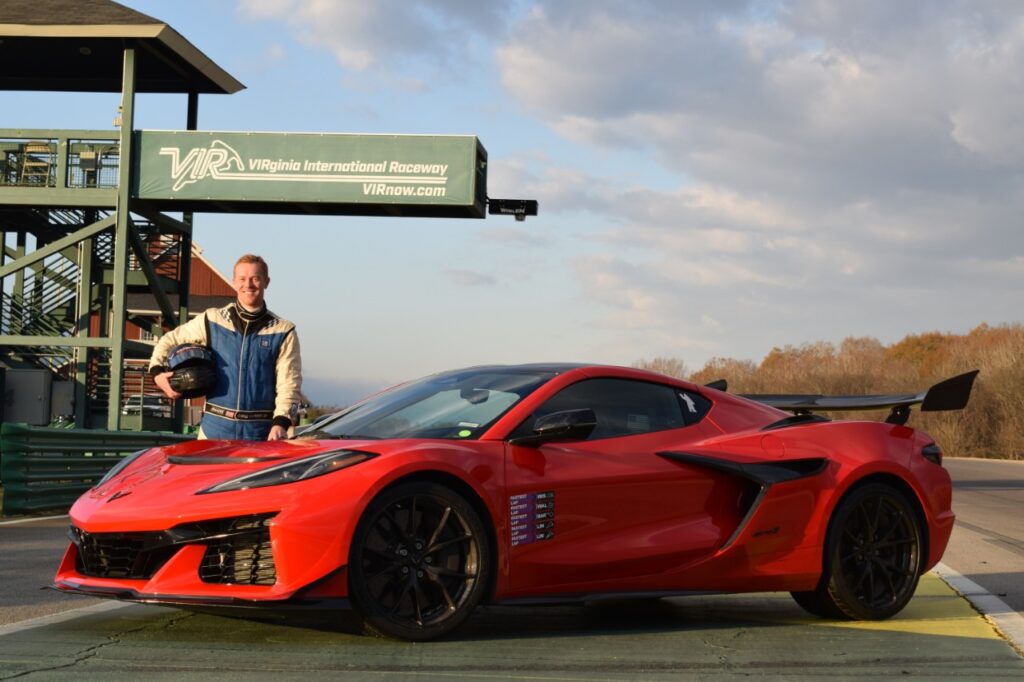
    Chris Barber, pictured here at VIR, became one of the key engineering faces of the 2025 Corvette ZR1 program—and at Road Atlanta, he backed that up with a 1:22.8 lap, the quickest production-car lap ever recorded there. Reflecting on the achievement, Barber said, “It’s pretty incredible to be that much faster than a Corvette that was already so fast,” a line that says a lot about both the new car and the standard set by the C7 ZR1 before it. His result reinforced a larger theme running through the ZR1 story: this car was not only engineered in-house, but also proven in public by the people who helped develop it. (Image credit: Chevrolet)

    If the Papenburg run established the ZR1’s maximum-speed credibility, the lap-record tour established something just as important: breadth. In February 2025, GM announced that the ZR1 had set five U.S. production-car lap records during a track tour, with four different GM employees behind the wheel rather than a single celebrity ringer. The list is extraordinary: Watkins Glen Long Course in 1:52.7 with Bill Wise; Road America in 2:08.6 with Brian Wallace; Road Atlanta in 1:22.8 with Chris Barber; Virginia International Raceway Full Course in 1:47.7 with Aaron Link; and VIR Grand Course in 2:32.3, again with Link.

    Those names matter almost as much as the times. Bill Wise was there as a chassis-controls performance engineer. Brian Wallace represented the vehicle-dynamics side. Chris Barber was already the public face of the car’s development. Aaron Link served as a global vehicle performance manager and put down two of the headline laps himself. GM leaned into this point for good reason. The ZR1’s record book was not built by outsourcing credibility. It was built by the people inside the program.
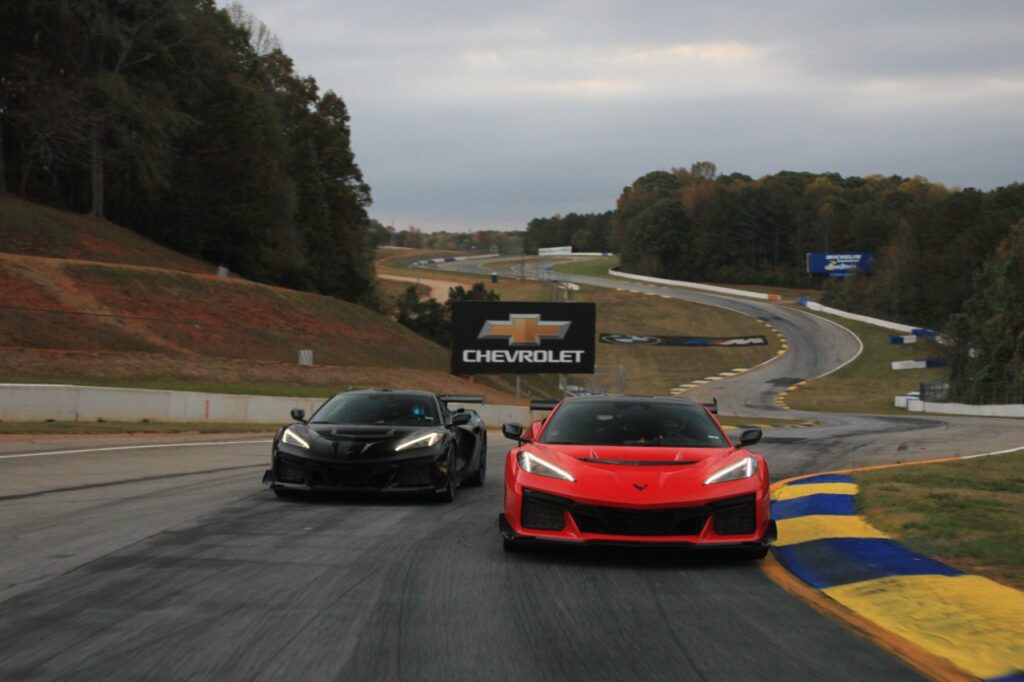
    Two Corvette ZR1s charge through the Esses at Road Atlanta, one of the fastest and most demanding sections on the circuit and the same stretch where the 2025 ZR1 helped rewrite the track’s production-car record. It is the kind of corner sequence that exposes everything at once—balance, aero stability, confidence, and how effectively the chassis can carry speed under load. In the ZR1’s case, it became another place where Chevrolet proved this car was built for far more than straight-line headlines. (Image credit: Chevrolet)

    That is a deeply Corvette way to prove a point. The brand has always been strongest when engineering confidence and public confidence line up cleanly. The lap-record campaign did exactly that. It showed not only that the car is devastatingly capable, but that the people who developed it trust it enough to put their own names on the numbers.

    Racing Lineage Without Pretending
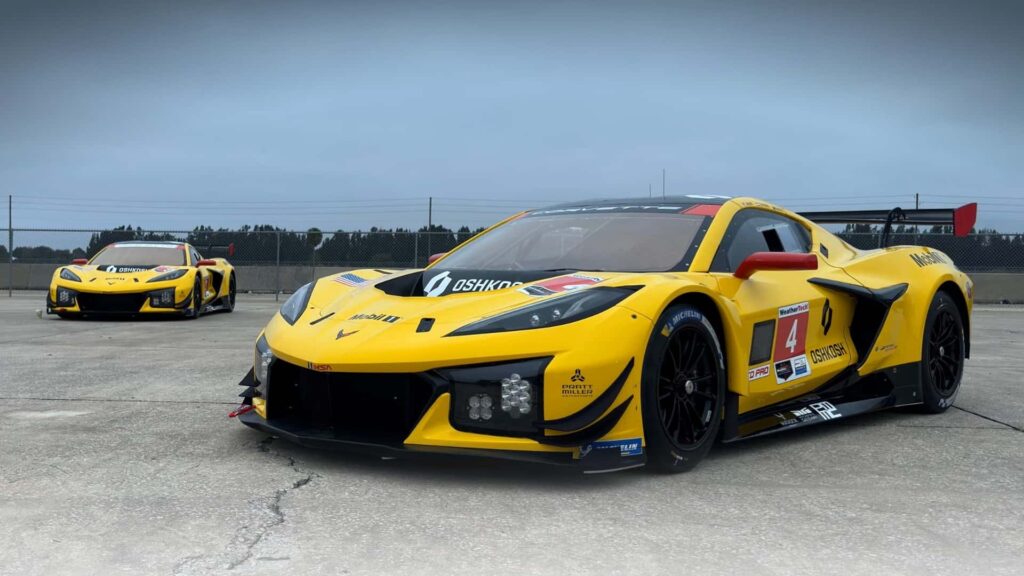
    The relationship between the 2025 Corvette ZR1 and Pratt Miller Motorsports’ Corvette Z06 GT3.R is a clear example of technology transfer working both ways. Chevrolet said the GT3.R “takes the level of technology transfer between racing and production to a new level with more shared components and features than ever before,” beginning with the production aluminum chassis from Bowling Green, the same double-wishbone suspension layout, and a 5.5-liter flat-plane-crank V8 program in which the race engine shares more than 70 percent of its parts with the production Z06 engine, including major internal components such as the crankshaft, rods, cylinder heads, and fuel injectors. That shared development path helps explain why the ZR1 feels so motorsport-aware in its structure, aero, cooling, and overall systems integration: the road car and race car were not conceived as separate worlds, but as closely related expressions of the same mid-engine Corvette engineering philosophy.

    The 2025 ZR1 does not require a dedicated ZR1 race car to justify a discussion of racing lineage. The lineage is already in the engineering DNA. GM later described the LT7 as part of the same Gemini family developed alongside the naturally aspirated flat-plane-crank engines used in the Z06 and the Z06 GT3.R race car. That is a meaningful point. The ZR1 is not a detached street-car fantasy built in parallel with Corvette racing. It is a machine that emerged from the same broader Corvette performance development ecosystem, now including serious international GT competition.

    That relationship matters even beyond the engine family. The C8 era aligned Corvette’s production-car architecture more closely with the sort of logic long associated with modern sports-car competition. The mid-engine platform, the aero sophistication, the cooling demands, and the deep integration between chassis and powertrain all make the ZR1 feel like a road car shaped by a racing-aware culture, even if it was never intended to be a homologation special in the old-school sense.

    And when GM emphasized that some of the ZR1’s lap records came at tracks with real motorsport credibility—including VIR’s Full Course, which it specifically noted is used in IMSA sports-car racing—it reinforced the point. The car’s record book was not assembled on novelty circuits chosen only for convenience or prime marketing opportunities. It has been repeatedly proven in places that matter to people who care about real performance.

    Indianapolis, Symbolism, and Public Meaning
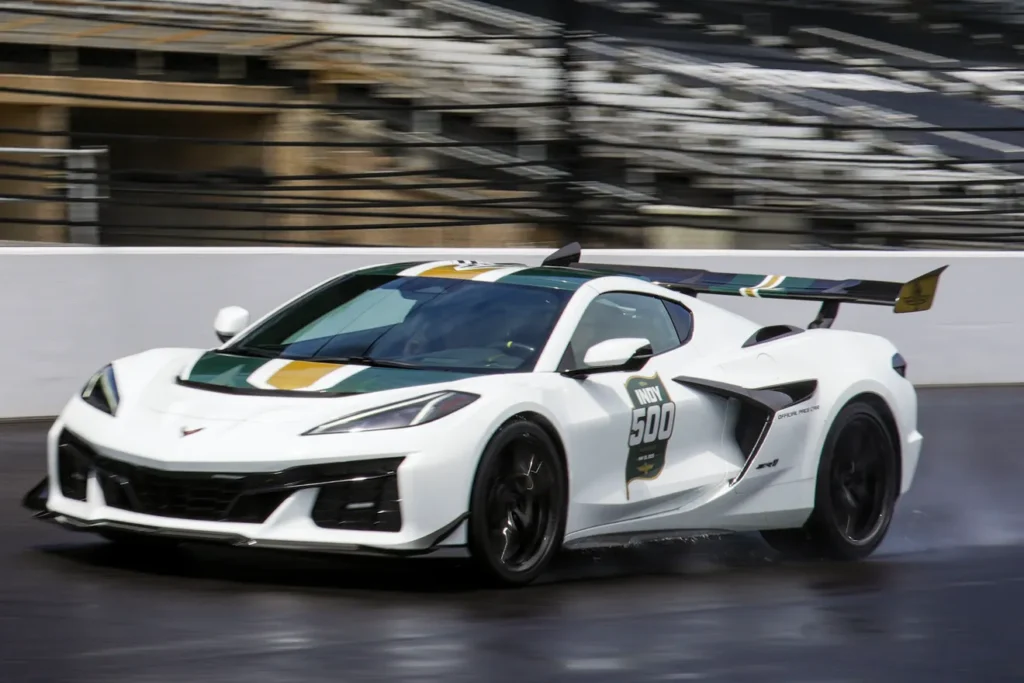
    Corvette has always been more than a technical exercise; it has also been one of Chevrolet’s clearest public symbols, and that side of the 2025 ZR1 story came into sharp focus when Indianapolis Motor Speedway selected it as the Official Pace Car for the 109th Indianapolis 500. Michael Strahan was named honorary Pace Car driver, and Chevrolet leaned into the moment with an Arctic White ZR1 finished in Indianapolis 500 graphics, green-and-gold accent striping, the Carbon Aero package, and carbon-fiber wheels. On paper, pace-car duty is ceremonial, but in practice it remains one of the most visible endorsements an American performance car can receive, especially at Indianapolis, where Corvette and the Speedway have shared a long-running national-performance mythology. In that setting, the assignment said something meaningful about how the ZR1 was already being understood: not merely as the next faster Corvette, but as Chevrolet’s current engineering standard-bearer, a 233-mph flagship worthy of leading the field to green at one of the most recognizable events in motorsport. (Image credit: Chevrolet)

    Corvette has always been more than a technical project. It has always also been a symbol. That symbolic dimension of the ZR1 story became especially visible in 2025 when Indianapolis Motor Speedway announced that the 2025 Corvette ZR1 would pace the 109th Indianapolis 500. On one level, that decision is ceremonial. On another, it says a great deal about how the car is already being understood in American performance culture.

    The Corvette and Indianapolis have long shared a certain kind of national-performance mythology. For the ZR1 to take pace-car duty was fitting because it placed the most extreme Corvette ever produced in one of the most visible ceremonial roles American performance culture still has. It told the broader public what Corvette people already knew: this car is not just another faster variant. It is the visible standard-bearer for Chevrolet’s current engineering ambition.

    Pricing, Availability, and the Value Argument
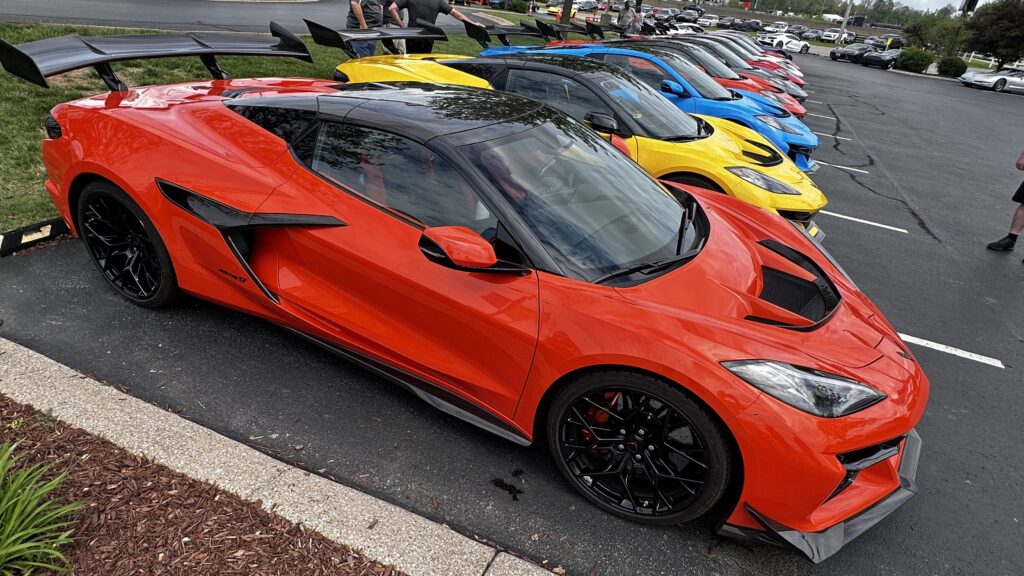
    At the 2025 NCM Bash, the lineup of ZR1s made the point better than any pricing chart could. Yes, the new ZR1 is expensive by normal car standards, but Corvette has always been at its best when it delivers elite performance without wrapping itself in distance or exclusivity. Here, these cars were not hidden behind ropes or treated like untouchable museum pieces—they were parked out in the open, close enough for enthusiasts to study the details, compare configurations, and take in what Chevrolet had actually built. That accessibility is part of the Corvette value proposition too: not just extraordinary performance for the money, but a supercar-level machine still presented in a way that feels connected to the people who care about it. (Image credit: Scott Kolecki)

    The ZR1’s importance would be secure even if it were simply powerful, fast, and expensive. What sharpens the story is that Chevrolet still found a way to position the car within Corvette’s long-established value argument. When pricing was announced in January 2025, the ZR1 started at $174,995 for the 1LZ coupe and $184,995 for the 1LZ hardtop convertible, destination included. That is serious money, but the performance it buys is even more serious. A 233-mph top speed, 0–60 in as little as 2.3 seconds, and quarter-mile capability in the nines puts the car in company that usually costs far more.

    That has always been part of Corvette’s strength, and the ZR1 carries that tradition forward. Chevrolet did not build a bargain car here, but it did build a car whose performance forces comparison with machines priced deep into exotic territory. That is familiar Corvette territory, just at a much higher level than before. GM said it plainly when the 233-mph run was announced: the ZR1’s top speed was unmatched among current-production cars priced under $1 million. That does not make the car inexpensive. It makes it impossible to ignore both the value and the capability.

    2025 Corvette ZR1 Specifications

    Before we get to the closing section, the hardware deserves to be laid out cleanly because on a car like this the spec sheet is part of the narrative, not an interruption to it.

    Model: 2025 Chevrolet Corvette ZR1
    Assembly: Bowling Green Assembly Plant, Bowling Green, Kentucky
    Engine: LT7 twin-turbocharged 5.5-liter DOHC flat-plane-crank V8
    Output: 1,064 hp at 7,000 rpm / 828 lb-ft at 6,000 rpm
    Redline: 8,000 rpm
    Induction: Twin 76-mm turbochargers
    Fueling: Direct injection with supplemental port fuel injection
    Transmission: 8-speed dual-clutch automatic
    Drivetrain: Rear-wheel drive
    0–60 mph: As quick as 2.3 seconds with available ZTK package
    Quarter mile: As quick as 9.6 seconds at 150 mph
    Top speed: 233 mph two-way average confirmed by GM
    Suspension: SLA double-wishbone front and rear with Magnetic Ride Control 4.0
    Brakes: Standard carbon-ceramic system
    Tires: Michelin Pilot Sport 4S standard / Michelin Pilot Sport Cup 2 R with ZTK
    Aero: Available Carbon Fiber Aero Package and ZTK package with more than 1,200 pounds of downforce at top speed
    Body styles: Coupe and hardtop convertible
    Dry weight: 3,670 pounds coupe / 3,758 pounds convertible
    Starting MSRP: $174,995 coupe / $184,995 hardtop convertible, including destination
    Notable firsts: First factory-turbocharged Corvette; most powerful factory Corvette ever; fastest car ever built by an American auto manufacturer.

    Why the 2025 Corvette ZR1 Still Matters Today

    The 2025 Corvette ZR1 represents the moment Corvette stopped chasing the world’s best and started standing comfortably among them. With the mid-engine platform fully realized and the LT7 delivering unprecedented performance, this car redefined what an American supercar could be. It didn’t just move the needle—it reset the expectations for the Corvette nameplate going forward. (Image credit: Andy Hedrick/ChatGPT)

    The 2025 Corvette ZR1 matters because it is the point where decades of Corvette ambition finally converge without apology. The original ZR1 formula was always about giving Corvette its sharpest possible edge, but this car goes beyond that. It does not merely top the C8 lineup; it validates the entire mid-engine gamble. Everything Chevrolet promised when it moved Corvette’s center of gravity, rethought its proportions, expanded its engineering complexity, and asked traditionalists to trust the vision finds its clearest expression here. The ZR1 is what happens when Chevrolet stops treating Corvette like a great sports car that can occasionally scare exotic machinery and starts engineering it like an exotic-killer from the first sketch onward.

    It also matters because of what it preserves. For all its technical sophistication, the ZR1 still feels tied to the same core Corvette instincts that made the nameplate matter in the first place: tremendous performance for the money, unmistakable American engineering swagger, and a willingness to make the establishment uncomfortable. The hardware changed. The architecture changed. Even the assumptions about what a Corvette engine should look like, rev like, and sound like changed. But the mission did not. The 2025 ZR1 still exists to prove that Chevrolet can build something bolder than convention expects. In that sense, it is not a break from Corvette history at all. It is one of the purest expressions of it.

    And maybe that is the point that matters most. Every truly important ZR1 has moved the summit. The 2025 car does not simply move it up a little. It drags the entire mountain range upward. Chevrolet did not build a stunt here. It built a machine that closes one long chapter of Corvette aspiration and opens another with full conviction. This is the clearest proof yet that Corvette’s pursuit of world-class performance was never wishful thinking, never just bravado, and never dependent on borrowed legitimacy. It was a real engineering ambition waiting for the right architecture, the right people, and the right moment to come fully into focus. The 2025 Corvette ZR1 is that moment.
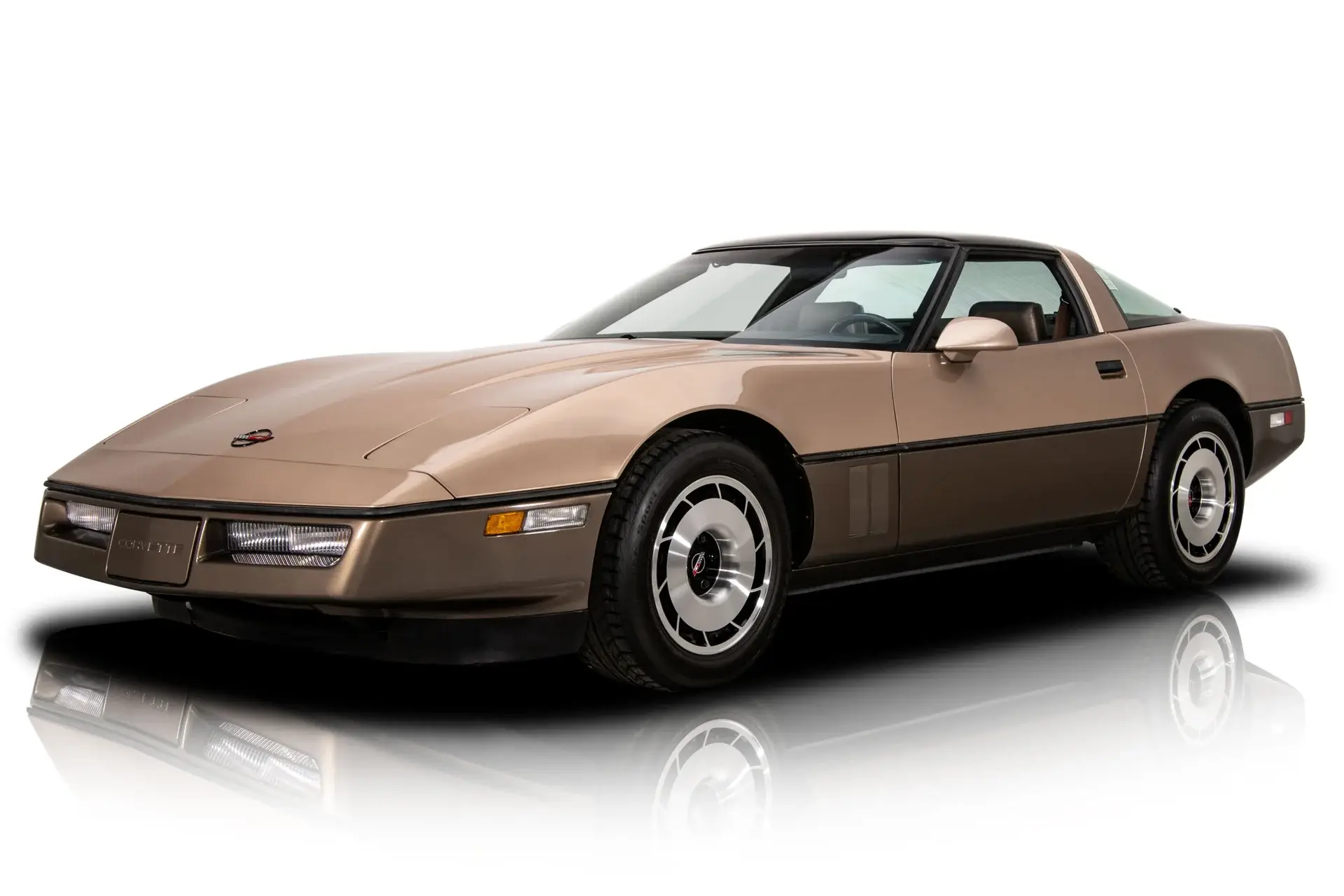
    The 2025 Corvette ZR1 redefines American performance with a twin-turbo LT7 V8 delivering over 1,000 horsepower, advanced aerodynamics, and race-bred engineering. This is Corvette at its most extreme—where heritage, innovation, and outright speed converge. Here’s a deeper look at how Chevrolet built its most formidable production car ever.

  • 1985 CORVETTE OVERVIEW

    1985 CORVETTE OVERVIEW

    In the mid-1980s, the American automotive landscape was undergoing a subtle but pivotal shift. The recession that had hamstrung the nation’s economy in the early ’80s was giving way to renewed consumer confidence. Fuel prices—once inflated by conservation efforts in the wake of the 1970s energy crisis—plummeted thanks to a global oil glut, liberating buyers to once again dream of powerful, American‑made performance cars.

    Enter the 1985 Corvette, poised not just as a sports car, but as Chevrolet’s statement of resurgence. Bolstered by protective trade agreements like the Voluntary Restraint Agreement (VRA) with Japanese automakers, General Motors found its moment. The C4 Corvette, criticized in its debut year for lacking power, was ready to deliver on all fronts.
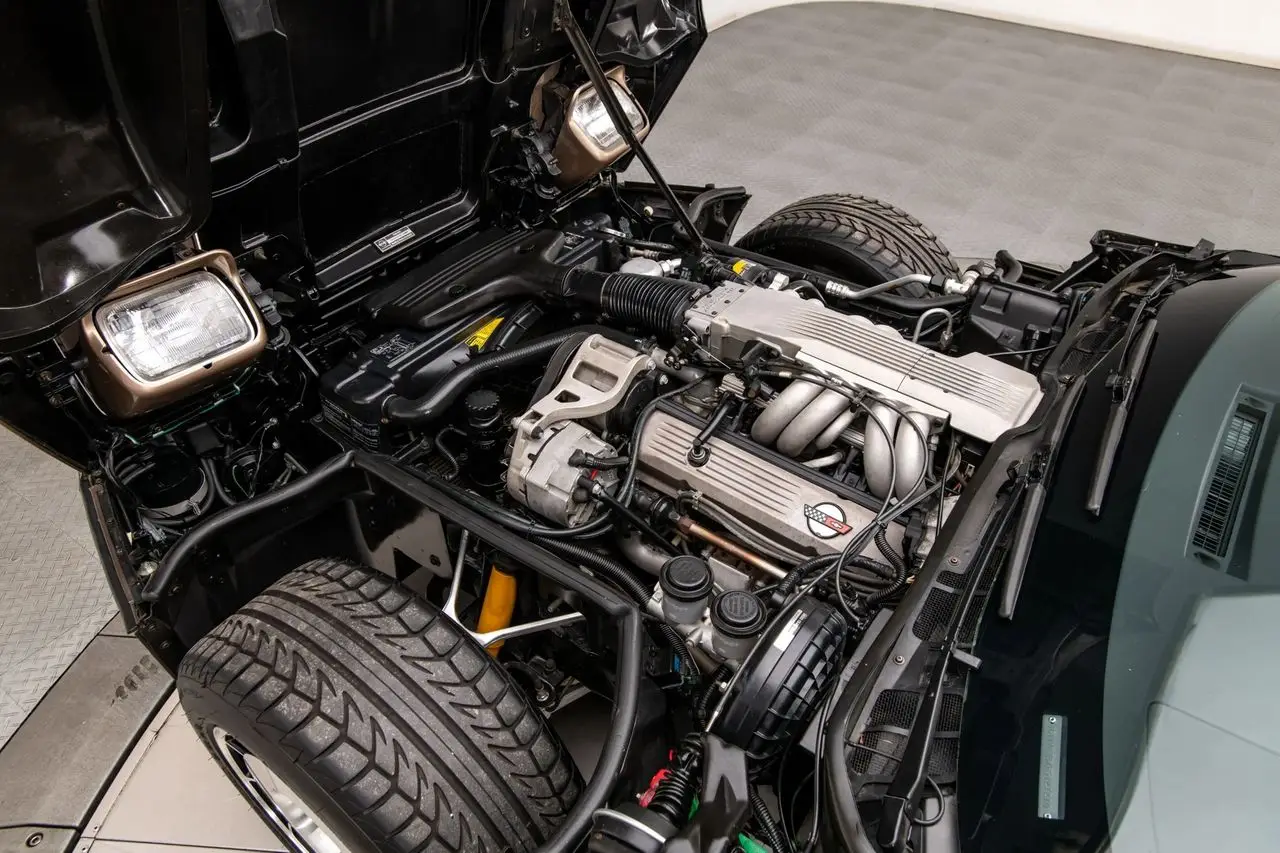
    Power Reimagined: From Cross-Fire Frustration to Tuned-Port Triumph

    The L98 engie with Tuned Port Fuel Injection (seen here) replaced the earlier L83 engine with Cross-Fire Injection on the 1984 Corvette.  The updated powerplant gave the 1985 Corvette a much-needed boost in horesepower.
    The L98 engie with Tuned Port Fuel Injection (seen here) replaced the earlier L83 engine with Cross-Fire Injection on the 1984 Corvette. The updated powerplant gave the 1985 Corvette a much-needed boost in horesepower.

    When the 1984 C4 rolled out, its Cross‑Fire Injection system elicited more groans than cheers—everyone recognized the Corvette’s lineage, yet many lamented its lackluster output. Chevrolet acted swiftly. By 1985, the Cross‑Fire nameplate was gone, replaced by the new L98 V8, featuring Bosch‑developed Tuned‑Port Injection (TPI). This sophisticated system supplied each cylinder with its own injector, incorporated a mass-air-flow sensor, and relied on fine-tuned intake runners for optimized performance.

    The result? A jump from approximately 205 hp to 230 hp and torque up from around 290 lb.‑ft to 330 lb.‑ft—both at notably lower RPMs, reflecting a more flexible, street‑ready engine. This wasn’t just a tweak—it was a statement: the Corvette was ready to reclaim its performance crown.

    Mechanics Refined: Transmission, Suspension, and Chassis Considerations

    Underneath the skin, the Corvette received meaningful upgrades that made it more than just a faster car—it became a more complete one. The Doug Nash “4+3” manual transmission returned, still mated to an overdrive-equipped top three gears, but now with improved shift feel and a smarter, less intrusive override system—complete with a relocated button atop the shifter. A beefier 8.5‑inch differential replaced the previous 7.9‑inch unit, enhancing durability.

    Ride comfort, long a sticking point for C4 owners, was addressed head-on. Spring rates were softened down about 26% in front and 25% in the rear, making daily drives more forgiving. To ensure that handling remained sharp, especially when equipped with the Z51 Performance Handling package, Chevrolet bolstered stabilizer bar diameters, deployed Delco‑Bilstein gas-pressurized shocks, and fitted wider, 9.5‑inch tires all around. The result was a Corvette that felt more composed, more responsive, and more assured at speed.

    Sleek Yet Subtle: Design Enhancements & Interior Comfort

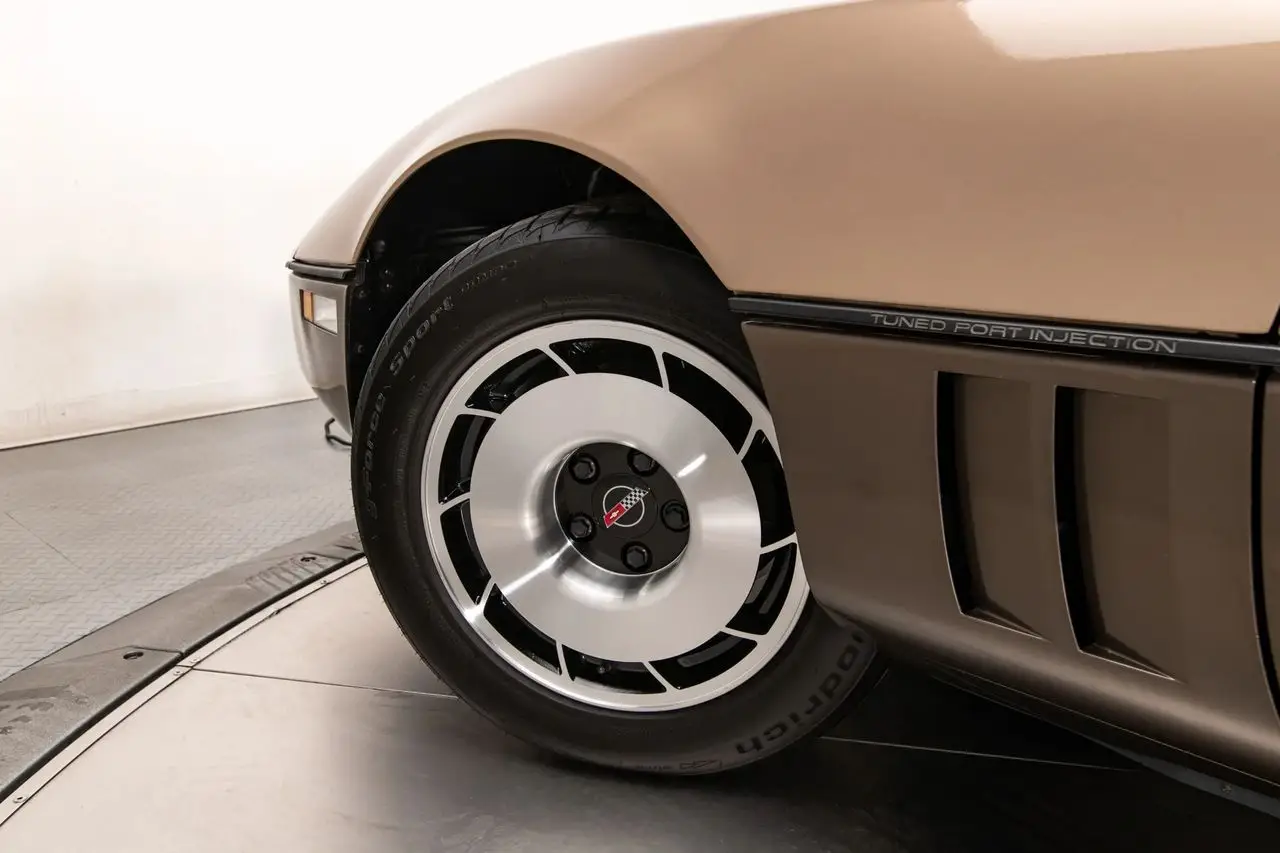
    Cross-Fire Injection was replaced with Tuned-Port Fuel Injection (note the updated "Tuned Port Injection" badging on the Corvette's beltline) for the 1985 model year.
    Cross-Fire Injection was replaced with Tuned-Port Fuel Injection (note the updated “Tuned Port Injection” badging on the Corvette’s beltline) for the 1985 model year.

    Aesthetically, the 1985 Corvette stayed true to the sharp, wind-tunnelled look that debuted in ’84: the ultra-raked windshield, frameless door glass, forward-tumbling pop-up headlamps, and the full glass hatch remained the visual calling cards. The biggest tell is on the front fenders—where “Tuned-Port Injection” badging replaced the prior year’s Cross-Fire script—telegraphing the new L98’s long-runner fuel injection without disturbing the clean body side defined by the continuous rub strip. Z51 cars could be spotted by their wider 16×9.5-inch wheels (vs. the standard 16×8.5), but otherwise the sheetmetal and aero detailing were intentionally unchanged, keeping the focus on the mechanical leap under the skin.

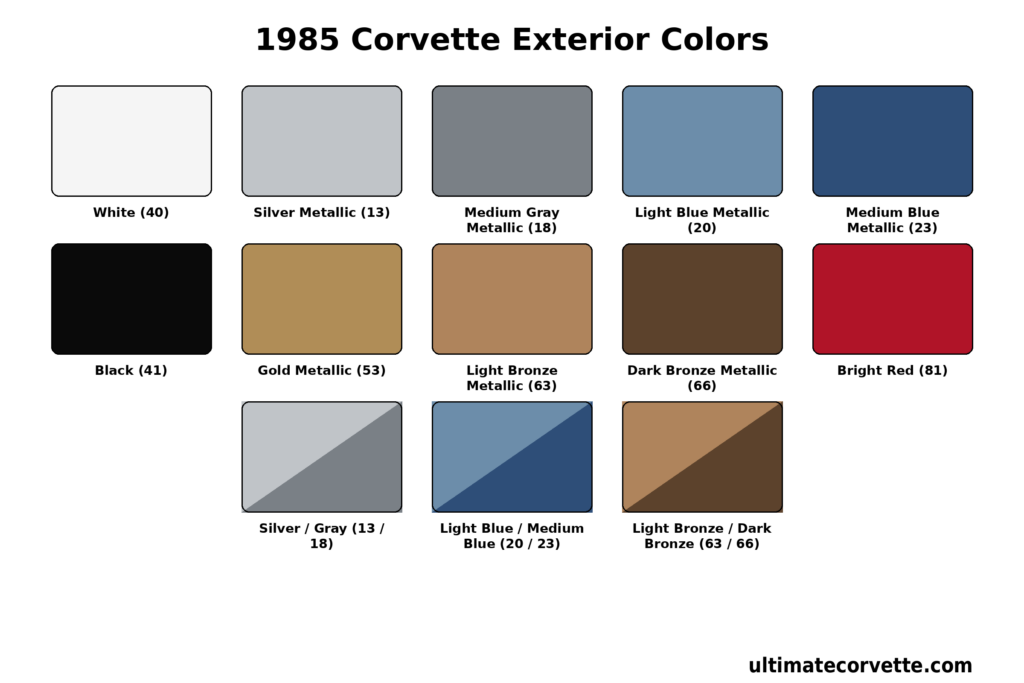
    For 1985, Chevrolet offered a concise palette: White (40), Silver Metallic (13), Medium Gray Metallic (18), Black (41), Light Blue Metallic (20), Medium Blue Metallic (23), Gold Metallic (53), Light Bronze Metallic (63), Dark Bronze Metallic (66), and Bright Red (81)—with factory two-tone combinations under RPO D84 pairing Silver/Gray (13/18), Light Blue/Medium Blue (20/23), and Light Bronze/Dark Bronze (63/66). The numbers in parentheses are the GM paint codes you’ll see on build sheets and body tags, and they match period production references.

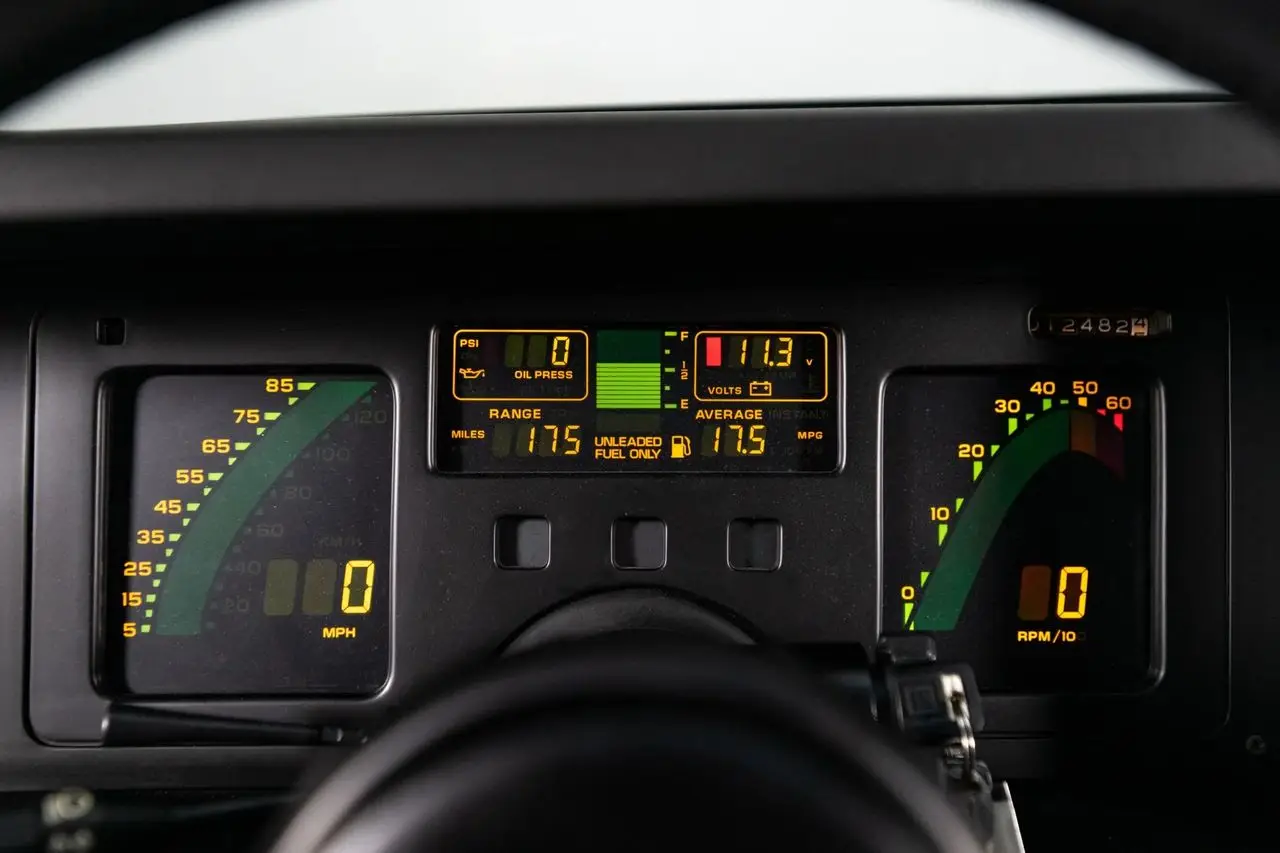
    GM updated the digital dashboard for the1985 Corvette model year, improving legibility and de-cluttering the overall aesthetic of its design
    GM updated the digital dashboard for the1985 Corvette model year, improving legibility and de-cluttering the overall aesthetic of its design

    Inside, GM refined the digital dashboard, increasing legibility and reducing visual clutter. Optional Lear‑Siegler leather seats added luxury, and engineers quietly went to work sealing rattles and squawks that had marred early ownership experiences.

    Archival Review: A 1985 Snapshot

    In the summer of 1985, Car and Driver captured the essence of the new Corvette:

    “We approached the 1985 Corvette with some skepticism… This year, however, Chevrolet has clearly listened. The new L98 Tuned‑Port Injection V8 is torque‑rich, eager, and civilized… Acceleration from zero to sixty now takes just 5.7 seconds… The ride… has been tamed enough to survive daily commuting without dental work… At $24,891, the Corvette remains a bargain compared to Europe’s best.”

    This kind of praise wasn’t just technical—it spoke to what the Corvette had always meant: freedom, affordability, and an unapologetic performance spirit.

    European Comparisons: A Sting to Porsche’s Ego

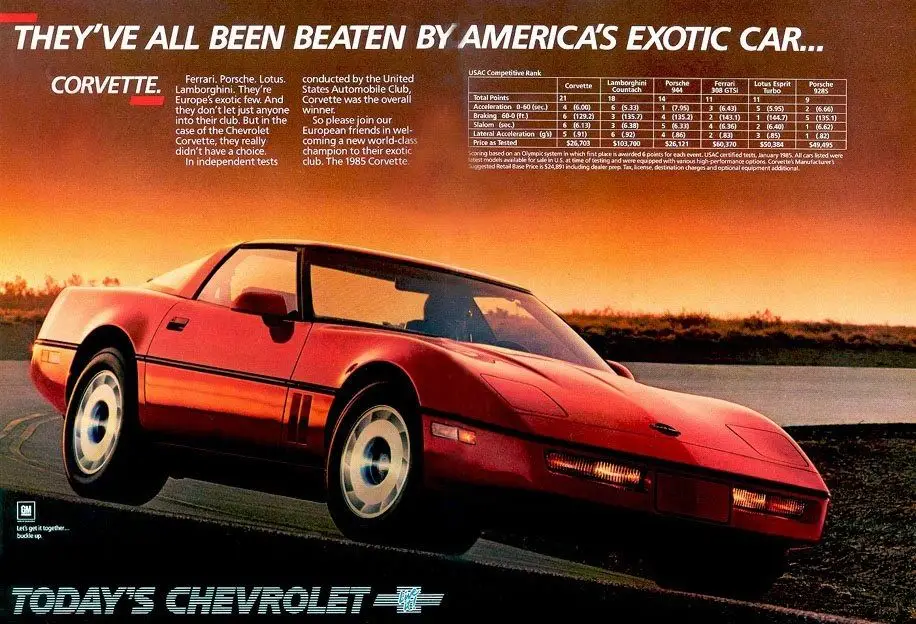
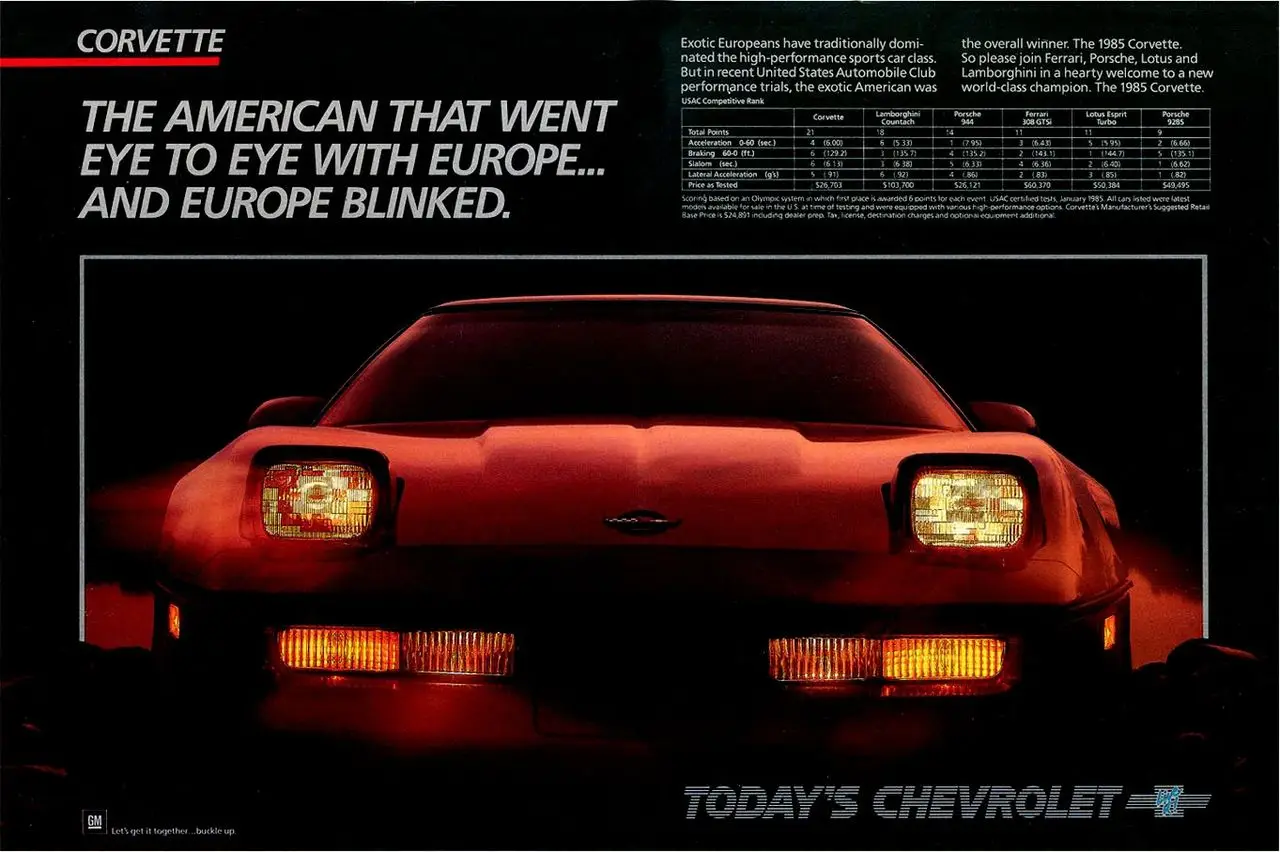
    GM strategically marketed the Corvette as "America's Exotic Car," publishing claims that the sophomore year, fourth-generation Corvette would outperform anything in its class.  (Image courtesy of GM Media.)
    GM strategically marketed the Corvette as “America’s Exotic Car,” publishing claims that the sophomore year, fourth-generation Corvette would outperform anything in its class. (Image courtesy of GM Media.)

    That confidence wasn’t misplaced. In 1985, comparisons with the Porsche 928 were inevitable. Despite the 928’s reputation as a luxurious, V8‑powered grand tourer, the Corvette held its own and outpaced it on performance, at approximately half the price. GM’s Corvette was dubbed “America’s fastest production vehicle,” and supposedly so intriguing that Porsche engineers reportedly dismantled a pair of ‘85 Vettes in Germany to uncover their secret.

    While Porsche purists had once balked at the front-engine layout of the 928, publications like MotorTrend later recognized its merits, even calling the 928 “the most underrated Porsche of all time.” Yet for 1985, on a balance of bang-for-the-buck and raw speed, the Corvette held a clear edge.

    Performance That Speaks: On the Track and Road

    With newfound power and finesse, the 1985 Corvette grabbed headlines. Car and Driver recorded a 0‑60 mph run in just 5.7 seconds, quarter-mile blast in 14.1 seconds at 97 mph—impressive for any contender of that era. Coupled with reports of a 150 mph top speed when equipped appropriately, the Corvette reclaimed the title of America’s fastest production car.

    Production & Pricing: The Cost of Excellence

    Sales numbers tallied at 39,729 total units—all coupes, as convertibles were absent in 1985. Economically, the Corvette’s base price climbed from approximately $21,800 in 1984 to around $24,891 in 1985, reflecting the breadth of enhancements.

    Today’s values echo its enduring appeal: median auction sales hover around $7,400, with excellent examples fetching up to $11,000 or more, and rare, pristine models climbing as high as $66,000.

    In Retrospect: The 1985 Corvette’s Legacy

    The 1985 C4 wasn’t a quiet mid-cycle tidy-up; it was a statement. Tuned Port Injection dropped long-runner torque right where owners lived—off idle, through the midrange—and the car finally felt eager in normal traffic instead of merely quick on paper. The L98’s broader shoulders, paired with a recalibrated chassis, turned the Corvette from a glass-cannon ’84 into a car you could use hard and live with. You felt it in the way the throttle stopped being an on/off switch and started acting like a rheostat.
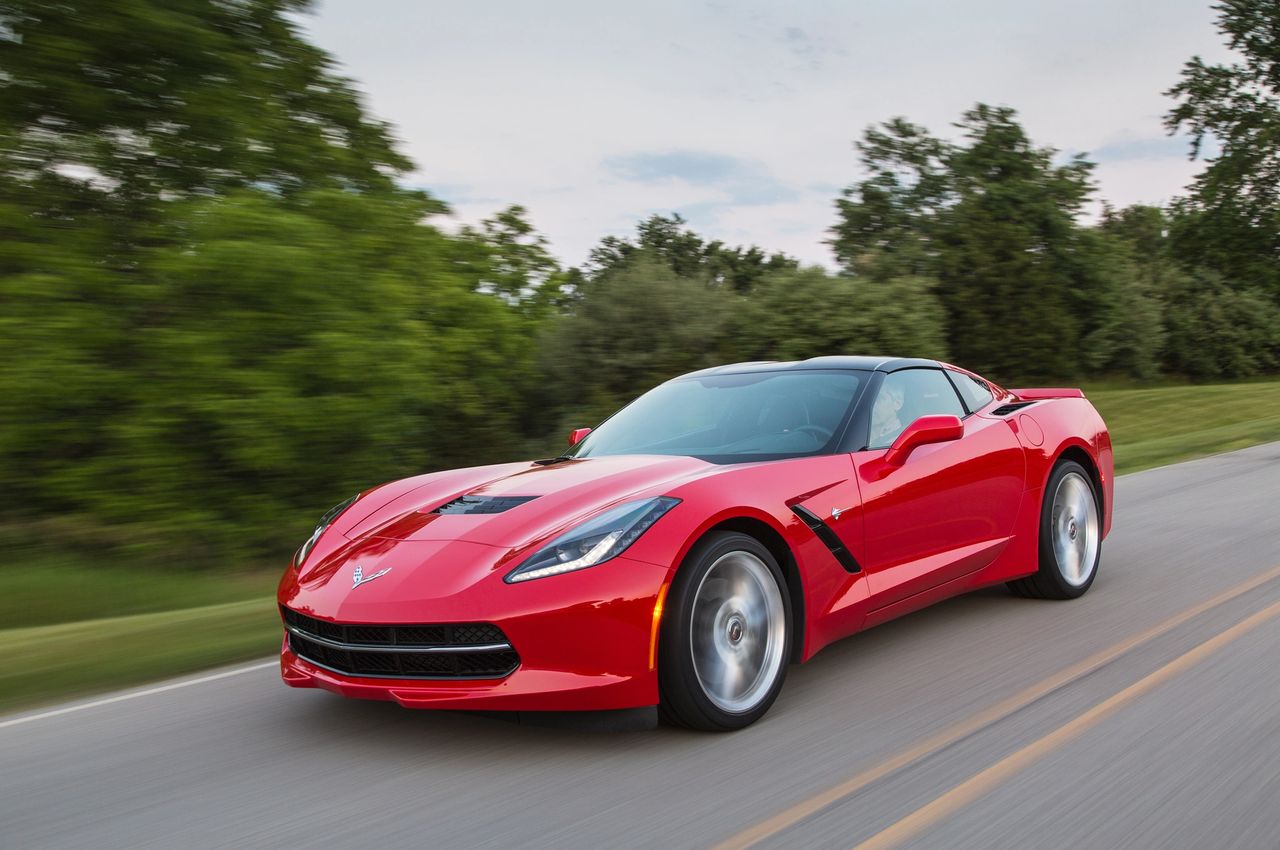
    Chevrolet also listened. Ride quality, the Achilles’ heel of early C4s, stopped shouting and started conversing. Spring and shock choices were rethought so the car flowed over broken pavement rather than skittering across it, yet the structure still read as tight and modern. Z51 kept its point-and-shoot precision for the faithful, but the baseline Corvette became the one you could take the long way home without bracing for every expansion joint.

    Inside, the future-tech dash matured from novelty to tool—clearer graphics, better legibility—while the available Delco-Bose system gave the cockpit a premium note to match the car’s rising competence. The whole package felt less like a concept car that slipped into production and more like a fully considered sports car with bandwidth: commute, carve, and cruise without excuses.

    Context matters. In an era when emissions and insurance had sanded the edges off many performance icons, the ’85 Corvette arrived with real power, real manners, and real speed. It didn’t reset physics, but it did reset expectations—of the Corvette and of what an American sports car could be. If 1984 announced the C4’s architecture, 1985 delivered its intent. That’s the legacy: a course correction so confident it became a compass for the rest of the generation.
    1985 Corvette — Key Specifications

    Quick Stats

    • Engine: 5.7L (350 cu in) L98 Tuned Port Injection V8
    • Output: 230 hp @ 4,000 rpm • 330 lb-ft @ 3,200 rpm (SAE net)
    • Transmissions: 4+3 Doug Nash manual (MM4 with overdrive on 2–4) • 4-speed automatic THM 700-R4
    • Layout: Front-engine, rear-wheel drive
    • Curb weight: ~3,200–3,300 lb (equipment-dependent) General Motors+1

    Performance (period tests)

    • 0–60 mph: ~5.7–6.0 sec
    • ¼-mile: ~14.3–14.6 sec @ ~95–97 mph
    • Top speed: ~150+ mph (factory claim/period test) Car and Driver

    Chassis & Suspension

    • Structure: Uniframe with bolt-on front/rear cradles; composite body panels
    • Front/Rear: Aluminum control arms, transverse composite leaf springs, gas shocks
    • Steering: Power rack-and-pinion
    • Brakes: 4-wheel power discs, ventilated rotors, aluminum calipers
    • Notable 1985 change: Chevrolet softened the standard suspension tuning to improve ride quality; Delco-Bilstein gas-charged shocks available and included with Z51 Performance Handling Package. General Motors

    Wheels & Tires

    • Standard wheels: 16×8.5-in alloy (all around)
    • With Z51: 16×9.5-in wheels front & rear
    • Tires (typical): 255/50VR-16 Goodyear Eagle VR50 “Gatorback” General Motors

    Dimensions

    • Wheelbase: 96.2 in
    • Length × Width × Height: ~176.5 × 71.0 × 46.7 in
    • Fuel capacity: ~20 gal
    • EPA (period): mid-teens city / low-20s highway (varies by trans/final drive) (Dimensions consistent with early C4; GM kit lists drivetrain/axle data and confirms TPI output figures.) General Motors

    Powertrain Details

    • Engine code: L98 (Tuned Port Injection, long-runner intake)
    • Compression ratio: 9.0:1
    • Spark control: Electronic (ESC), adaptive to fuel octane
    • Axle ratios: 3.07 base; G92 Performance Axle Ratio available (application-dependent) General Motors+1

    Paint & Trim (with GM paint codes)

    Solid/metallic colors:

    • 13 Silver Metallic
    • 18 Medium Gray Metallic
    • 20 Light Blue Metallic
    • 23 Medium Blue Metallic
    • 40 White
    • 41 Black
    • 53 Gold Metallic
    • 63 Light Bronze Metallic
    • 66 Dark Bronze Metallic
    • 81 Bright Red

    Factory two-tones (RPO D84):

    • 13/18 Silver/Gray
    • 20/23 Light Blue/Medium Blue
    • 63/66 Light Bronze/Dark Bronze

    (Codes are the two-digit GM paint identifiers used on build sheets/labels; GM records also show production quantities by color.)

    Interior & Features Highlights

    • Digital instrument cluster (revised graphics for clarity)
    • Delco-Bose stereo system (UU8) available
    • Removable transparent roof panel (CC3)
    • Custom adjustable sport seat with available leather; new electronic temperature control for A/C added mid-year.

    WHY THE 1985 CORVETTE STILL MATTERS TODAY

    The 1985 Corvette remains relevant today because it represents the moment when the Corvette fully recommitted to modern performance after the reset of 1984. With meaningful refinements to the C4 chassis, improved ride quality, and a more sorted suspension, the 1985 model year is where Chevrolet began turning advanced ideas into a cohesive sports car. The introduction of tuned port fuel injection (TPI) wasn’t just a horsepower story—it delivered smoother power delivery, improved drivability, and efficiency that aligned with the realities of modern ownership. In many ways, 1985 marks the point where the Corvette stopped experimenting and started executing.

    Just as important, the 1985 Corvette established a blueprint that still defines the car today: technology-forward engineering paired with everyday usability. Its digital instrumentation, aerodynamic focus, and emphasis on balance over brute force foreshadow the philosophy behind today’s mid-engine C8. For collectors and enthusiasts, the 1985 Corvette stands as an accessible, historically significant entry into modern Corvette DNA—a car that bridges analog heritage and contemporary performance thinking. It isn’t merely a product of its era; it’s a foundation that the Corvette continues to build upon.

    The 1985 Corvette represents a quiet but critical turning point in the car’s evolution—one where promise became progress. Building on the radical reset introduced in 1984, Chevrolet refined the C4 into a more cohesive, more livable sports car, anchored by the arrival of tuned port fuel injection and meaningful chassis improvements. This was the year…

  • 2014 CORVETTE OVERVIEW

    2014 CORVETTE OVERVIEW

    If there’s a single model year that re-established just exactly what “Corvette” means, it’s the 2014 Corvette Stingray. The seventh-generation car didn’t just replace the C6; it rebooted America’s sports car around a new set of non-negotiables: an aluminum structure built in Bowling Green, a clean-sheet small block with direct injection and cylinder deactivation, driver-centric electronics that actually add to the experience, and a serious aero/cooling package that finally made every vent do real work. As General Motors VP of Global Design Ed Welburn framed it during the launch window, this car “needed to be a leaner, very fresh design that departed from some of the traditions… Is it at all controversial? Probably a bit. And that’s OK.” That willingness to break patterns—while staying unmistakably Corvette—became the guiding principle behind the C7’s design.

    Exterior: Form, Function, and the End of Fake Vents

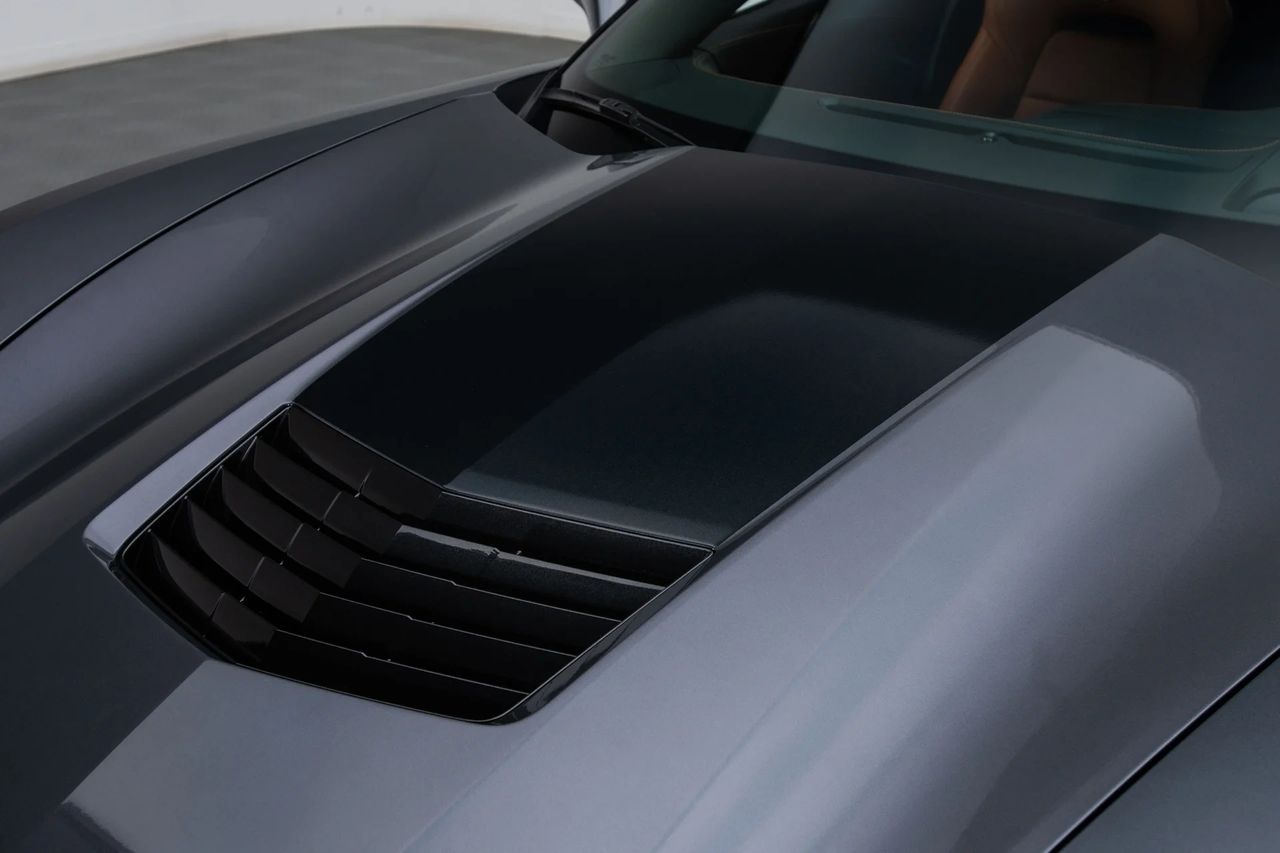
    The Stingray’s hood extractor isn’t for show—it’s the pressure relief for a forward-tilted radiator, with canted vanes that pull hot air up and over the clamshell to cut front-axle lift. Finished in Carbon Flash, it’s a functional centerpiece that keeps temps in check and the nose planted when you’re really leaning on the car. (Image courtesy of RK Motors)
    The Stingray’s hood extractor isn’t for show—it’s the pressure relief for a forward-tilted radiator, with canted vanes that pull hot air up and over the clamshell to cut front-axle lift. Finished in Carbon Flash, it’s a functional centerpiece that keeps temps in check and the nose planted when you’re really leaning on the car. (Image courtesy of RK Motors)

    Spend a minute around the 2014 Corvette Stingray, and the intent is clear: this shape was drawn by what the car needs to do—cool, cut drag, and stay stable—then refined to resemble a Corvette. Every major surface was placed to manage local pressure zones and temperature, not just to “look fast.” The forward-angled radiator feeds a hood extractor whose vanes are deliberately canted to maximize and direct air flow as it exits over the clamshell while simultaneously reducing front-axle lift at speed. Engineers located the re-profiled side coves in a region of favorable airflow so they could vent wheel-well and under-hood pressure; the result is a measurable drag reduction—precisely the functional intent Bennion emphasized when he stated that these items “aren’t just aesthetic things that we bolt on.” The engineering brief was simple: converge the aero map and cooling map until they agree, then give the design team the surfacing to express it. GM’s aero lead, John Bednarchik, later described the goal as “make it look good and still function”—a system laid out around pressure, temperature, and flow continuity first, styling second.

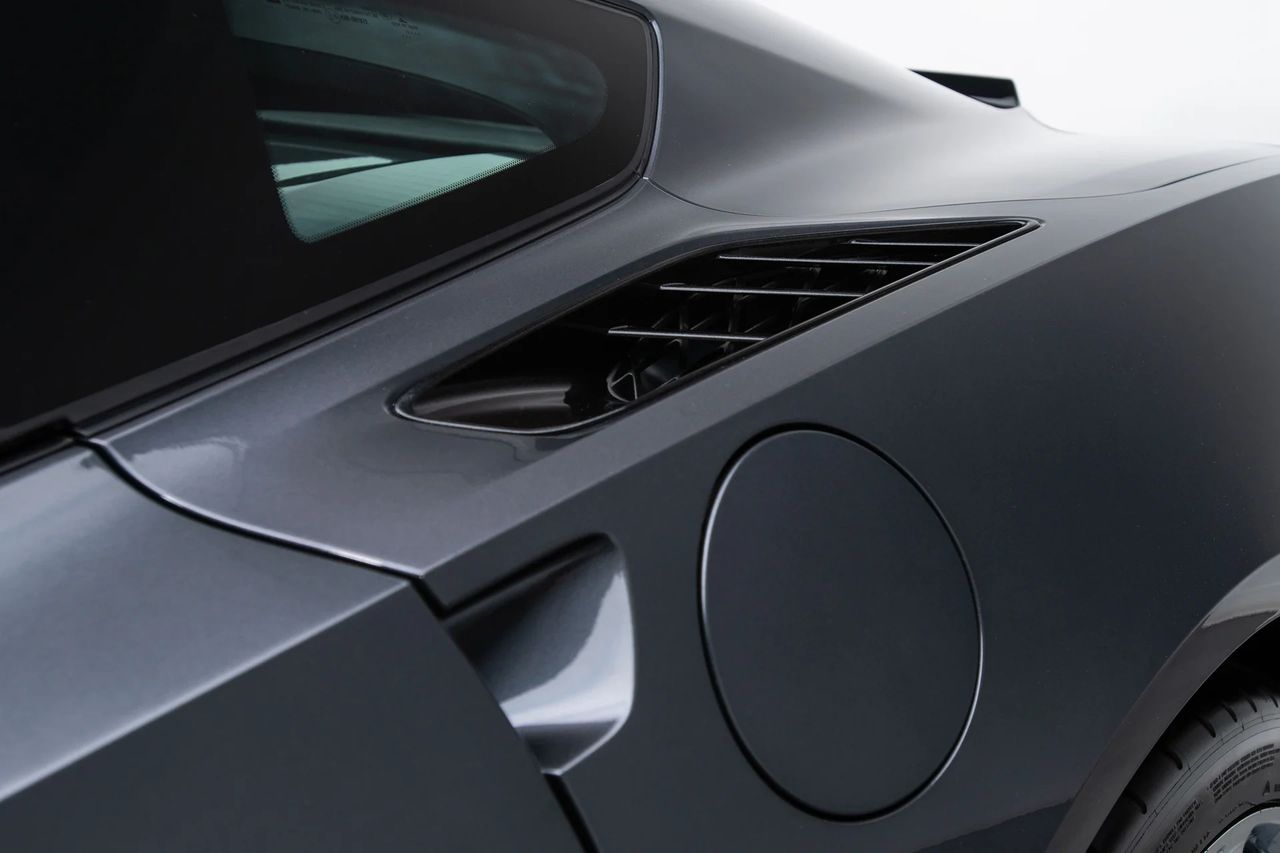
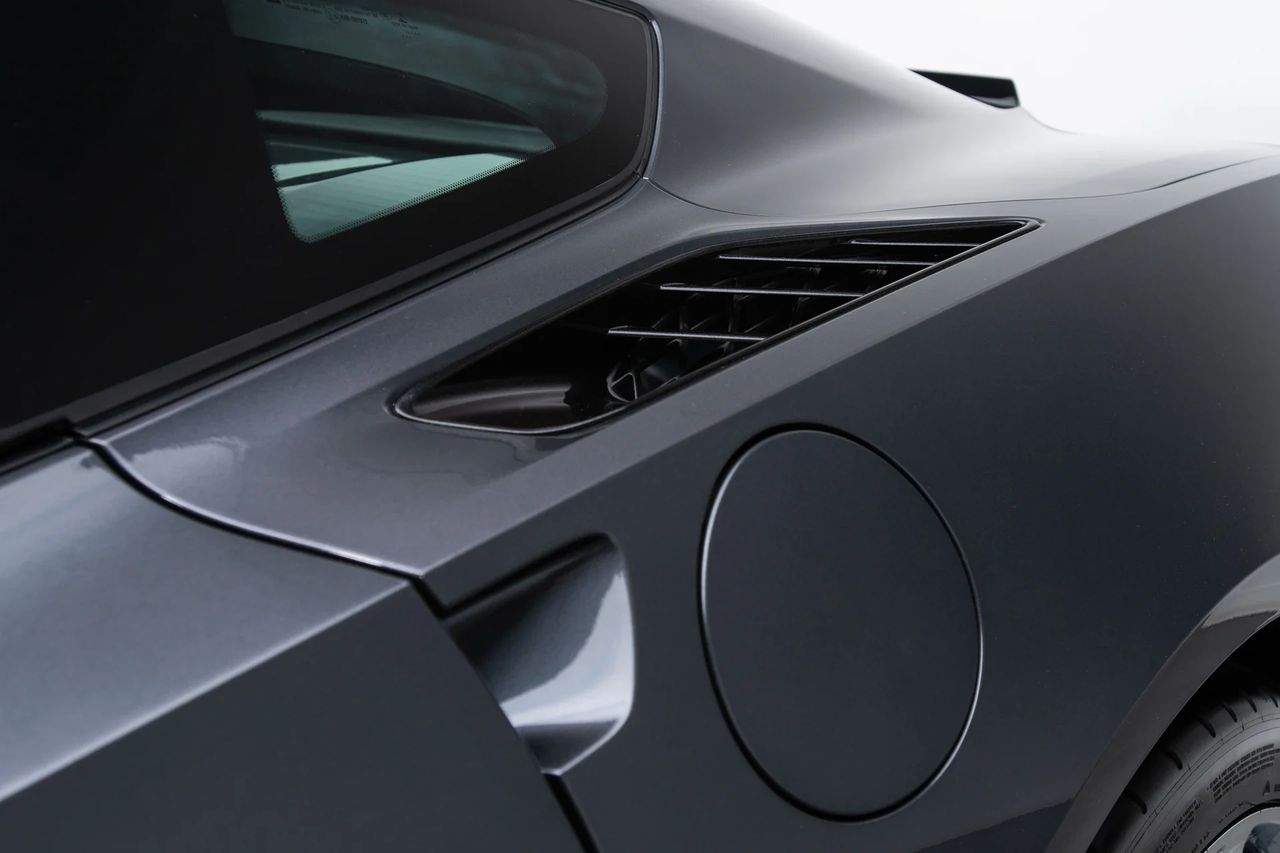
    Those rear quarter inlets aren’t styling—on Z51-equipped C7s they feed ducting to the rear-mounted transmission and electronic limited-slip differential coolers, keeping temps in check during hard laps. Air is picked up from a high-pressure zone along the shoulder, pushed through the heat exchangers, and exhausted out the rear—sustaining performance and longevity. (On non-Z51 cars the openings are largely cosmetic.) (Image courtesy of RK Motors)
    Those rear quarter inlets aren’t styling—on Z51-equipped C7s they feed ducting to the rear-mounted transmission and electronic limited-slip differential coolers, keeping temps in check during hard laps. Air is picked up from a high-pressure zone along the shoulder, pushed through the heat exchangers, and exhausted out the rear—sustaining performance and longevity. (On non-Z51 cars the openings are largely cosmetic.) (Image courtesy of RK Motors)

    You see the system thinking even more clearly in Z51 form. The quarter-panel inlets are aligned with the external flow field, ducting air to rear auxiliary coolers—transmission on the driver’s side, differential on the passenger’s—and then out through rear-fascia exits. Those inlets, the specific Z51 under-tray and spoiler tuning, and the extractor’s vane geometry weren’t independent “add-ons”; they were iterated together (CFD, tunnel, and track) until the car could run a full session on a hot day without falling out of its thermal window. The result is why the C7’s aero reads as integrated hardware rather than applique: the ducts, outlets, and surface cambers are sized for the heat rejection the car actually generates.

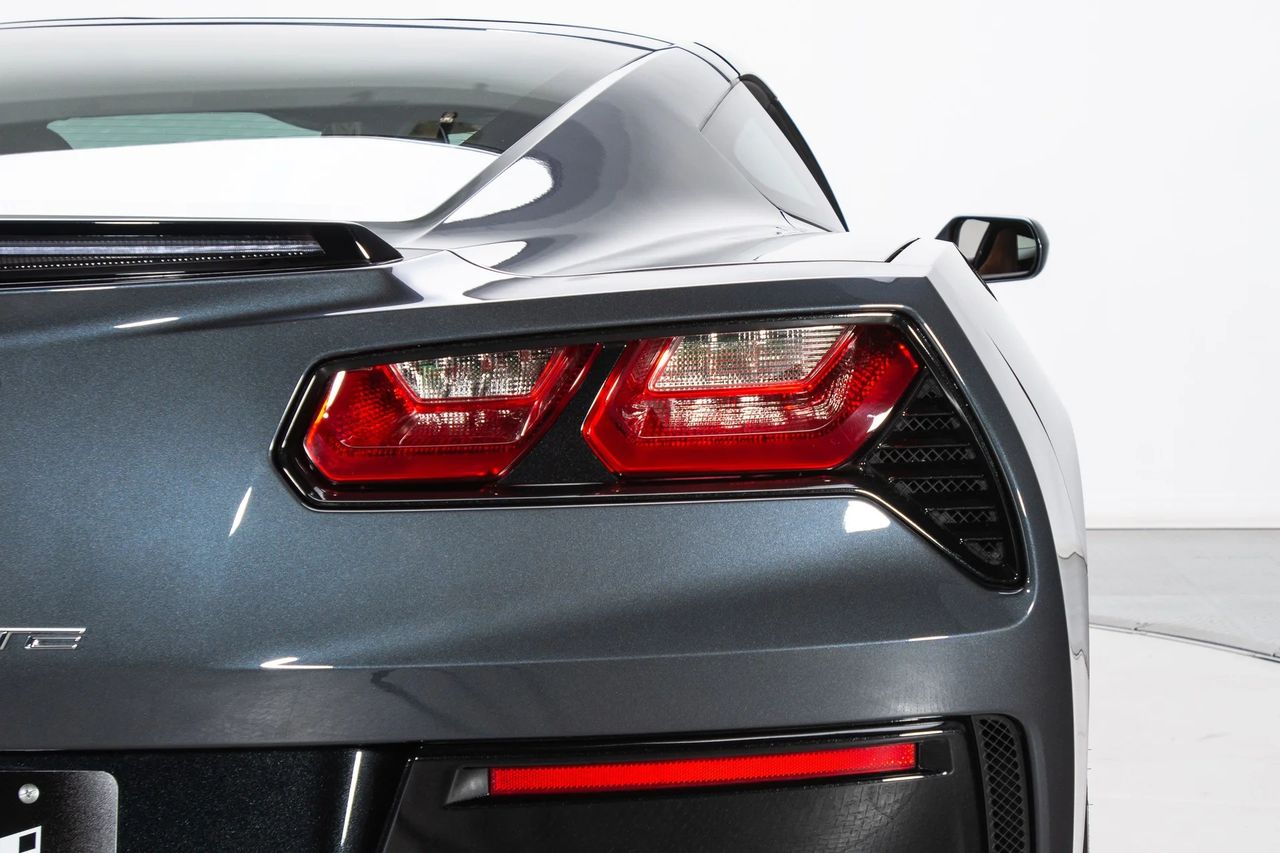
    The C7’s faceted taillamps mark a clean break from Corvette’s round-lens tradition—dual LED elements with crisp light pipes framed in a deep, black-chrome bezel. Outboard, the functional aero extractor relieves pressure from the rear fascia, a reminder that every crease earned its place. Above it all, the spoiler packages a slim LED CHMSL, keeping the “third brake light” high and clean in the airstream. Sharp, technical, and purposeful—this is the Stingray’s new rear signature. (Image courtesy of RK Motors)
    The C7’s faceted taillamps mark a clean break from Corvette’s round-lens tradition—dual LED elements with crisp light pipes framed in a deep, black-chrome bezel. Outboard, the functional aero extractor relieves pressure from the rear fascia, a reminder that every crease earned its place. Above it all, the spoiler packages a slim LED CHMSL, keeping the “third brake light” high and clean in the airstream. Sharp, technical, and purposeful—this is the Stingray’s new rear signature. (Image courtesy of RK Motors)

    The rear design aesthetic—especially the lamps—carries that same functional spine, even as they became the most controversial visual change of the seventh-generation model. Moving away from the Corvette’s traditional twin round elements to a more three-dimensional, sculpted, trapezoidal lamp wasn’t a styling dare so much as a packaging and airflow decision: the spoiler/CHMSL (Center High-Mounted Stop Lamp) packaging and cooler-exit management set hard constraints for volume and wake control, and the team wanted a light signature that read “new Stingray” at a glance. Bennion’s line was that it had to “say Corvette, but say new Corvette,” and it had to live in the broader Chevrolet family without being a clone. Tom Peters has been frank about the process: they tried round lamps on the C7 and rejected them because they “made the car look old.” The final form pushed depth, lens sculpture, and LED emphasis to modernize the signature while leaving room for the aero and cooling paths to do their job.

    The 2009 Stingray Concept previewed the C7’s attitude: sharp creases over big rear haunches, a strong center spine, and a fastback canopy that pinched into a tapered tail. Its faceted surfacing and “boomerang” lamp graphics nudged Corvette away from round themes, paving the way for the C7’s angular, dual-element taillamps. You can also see the concept’s aero-minded cutlines and extractor motifs echoed in the C7’s functional hood and quarter vents. Even the centered quad-exhaust emphasis reads as an evolution of the concept’s tightly grouped rear treatment—more production-real, but the same modern, technical vibe. (Image courtesy of GM Media LLC)
    The 2009 Stingray Concept previewed the C7’s attitude: sharp creases over big rear haunches, a strong center spine, and a fastback canopy that pinched into a tapered tail. Its faceted surfacing and “boomerang” lamp graphics nudged Corvette away from round themes, paving the way for the C7’s angular, dual-element taillamps. You can also see the concept’s aero-minded cutlines and extractor motifs echoed in the C7’s functional hood and quarter vents. Even the centered quad-exhaust emphasis reads as an evolution of the concept’s tightly grouped rear treatment—more production-real, but the same modern, technical vibe. (Image courtesy of GM Media LLC)

    As for where that rear graphic vocabulary came from, there’s a clear design kinship with the 2009 Stingray Concept—a Tom Peters show car that previewed sharper creases, more faceted lamp volumes, and a stronger plan-view stance. GM never said “we lifted the lamps directly,” but Peters has acknowledged that the concept established a modern, crisper Corvette language the C7 could draw on. In other words, the production taillamps reflect less a one-to-one transplant and more the concept’s directional push toward faceted, dimensional housings integrated into an aerodynamically active rear end.

    Structure & Manufacturing: Aluminum, At Last—For Everyone

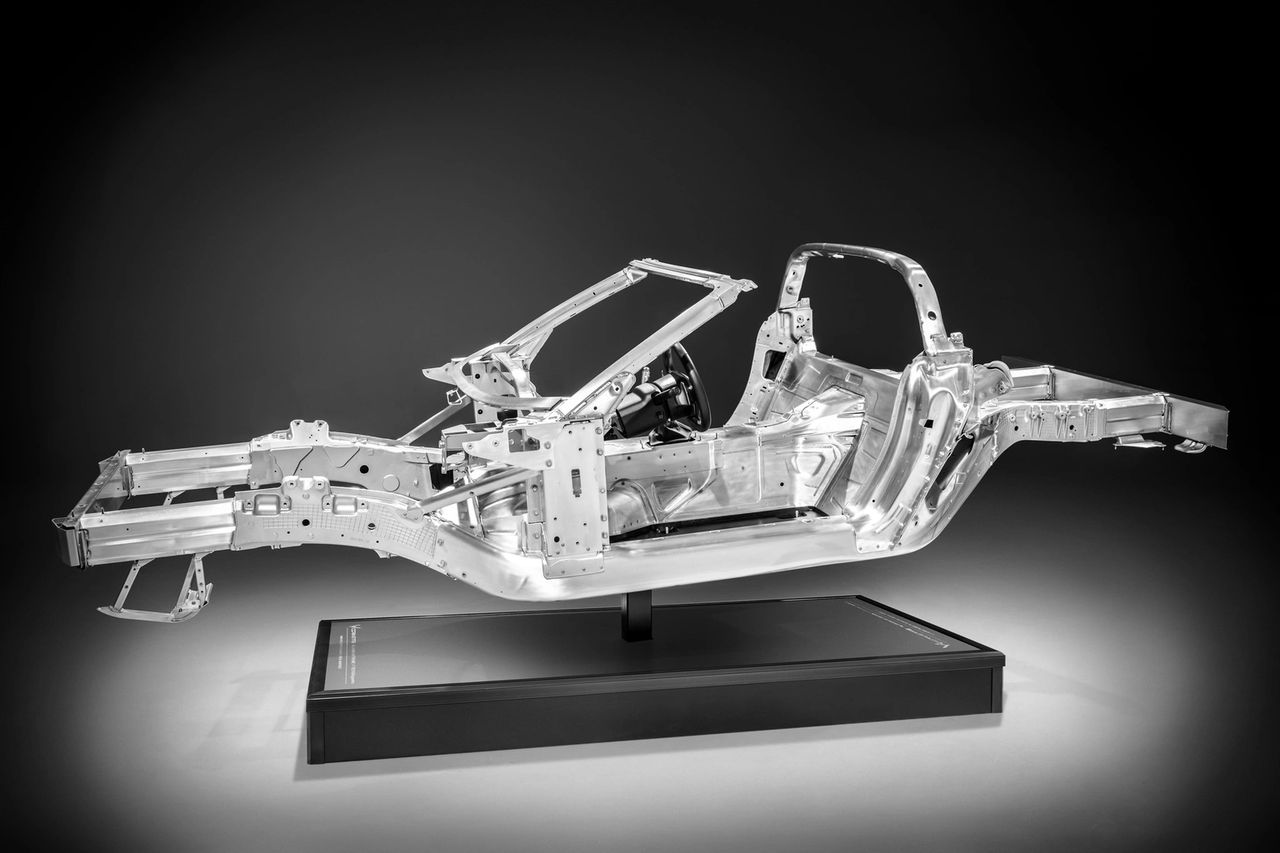
    The C7’s all-aluminum backbone—built in-house at Bowling Green—was the game-changer. Cast nodes, tailored extrusions, stampings, and a beefy center tunnel created clean load paths, making the structure about 100 lb lighter and over 50% stiffer than the old steel frame. That headroom let the suspension, NVH tuning, and even the convertible top behave like premium hardware rather than compromises. (Image courtesy of GM Media LLC)
    The C7’s all-aluminum backbone—built in-house at Bowling Green—was the game-changer. Cast nodes, tailored extrusions, stampings, and a beefy center tunnel created clean load paths, making the structure about 100 lb lighter and over 50% stiffer than the old steel frame. That headroom let the suspension, NVH tuning, and even the convertible top behave like premium hardware rather than compromises. (Image courtesy of GM Media LLC)

    The single biggest change under the skin was structural. For the first time in Corvette history, every standard model—base coupes and convertibles, and those fitted with the Z51 option—rode on an aluminum frame manufactured in-house at the Bowling Green Assembly Plant. The move wasn’t about bragging rights; it was about creating cleaner stiffness paths and a smarter mass distribution that let the interior, suspension, and even the convertible top operate in a different league.
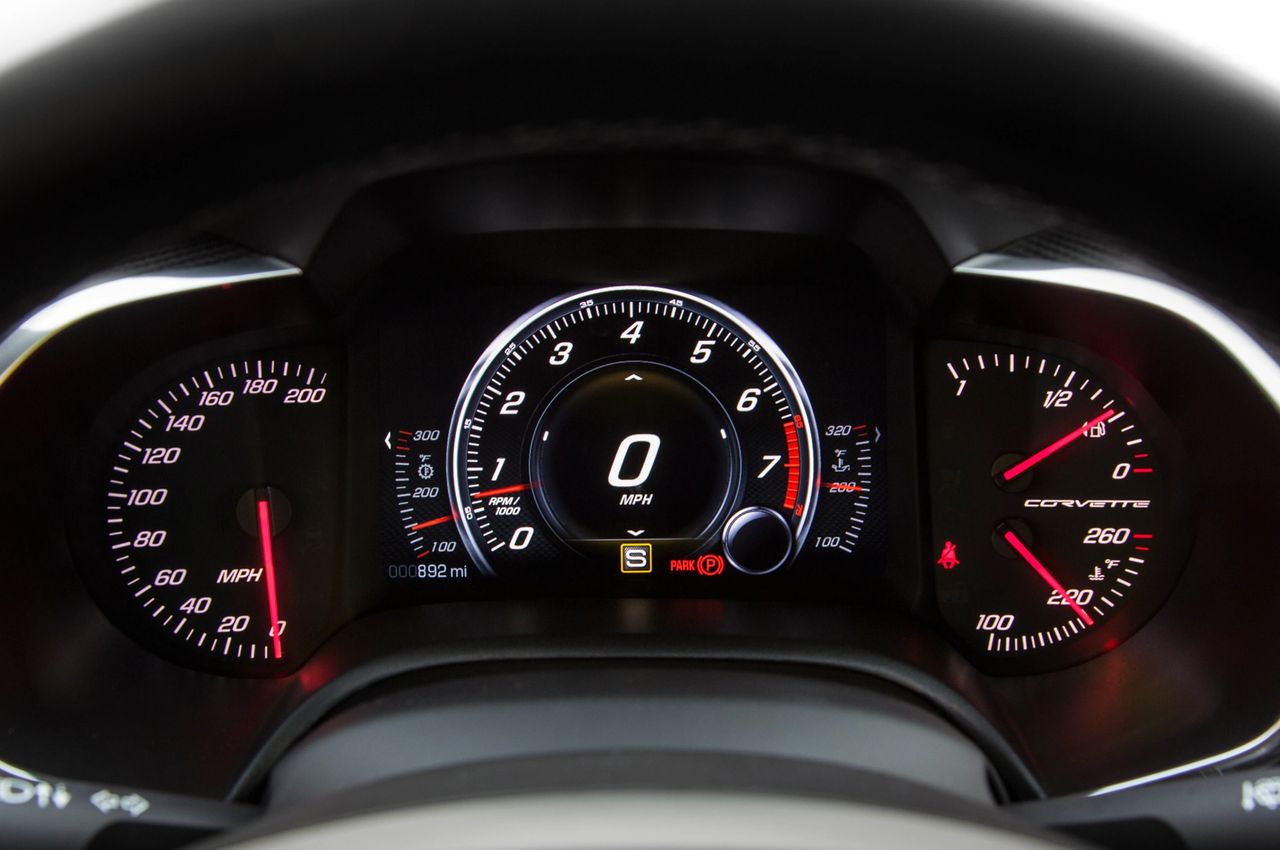
    Ed Moss, then the engineering group manager for structure, explained that the team built the frame around five major aluminum parts per side, each optimized for its job. Material gauges varied from roughly 2 to 11 mm, a dramatic change from the one-thickness, one-piece hydroformed steel rails Corvette had used before. By tailoring thickness and section where the loads actually traveled, they pulled mass out of the quiet zones and put metal only where the car needed it.
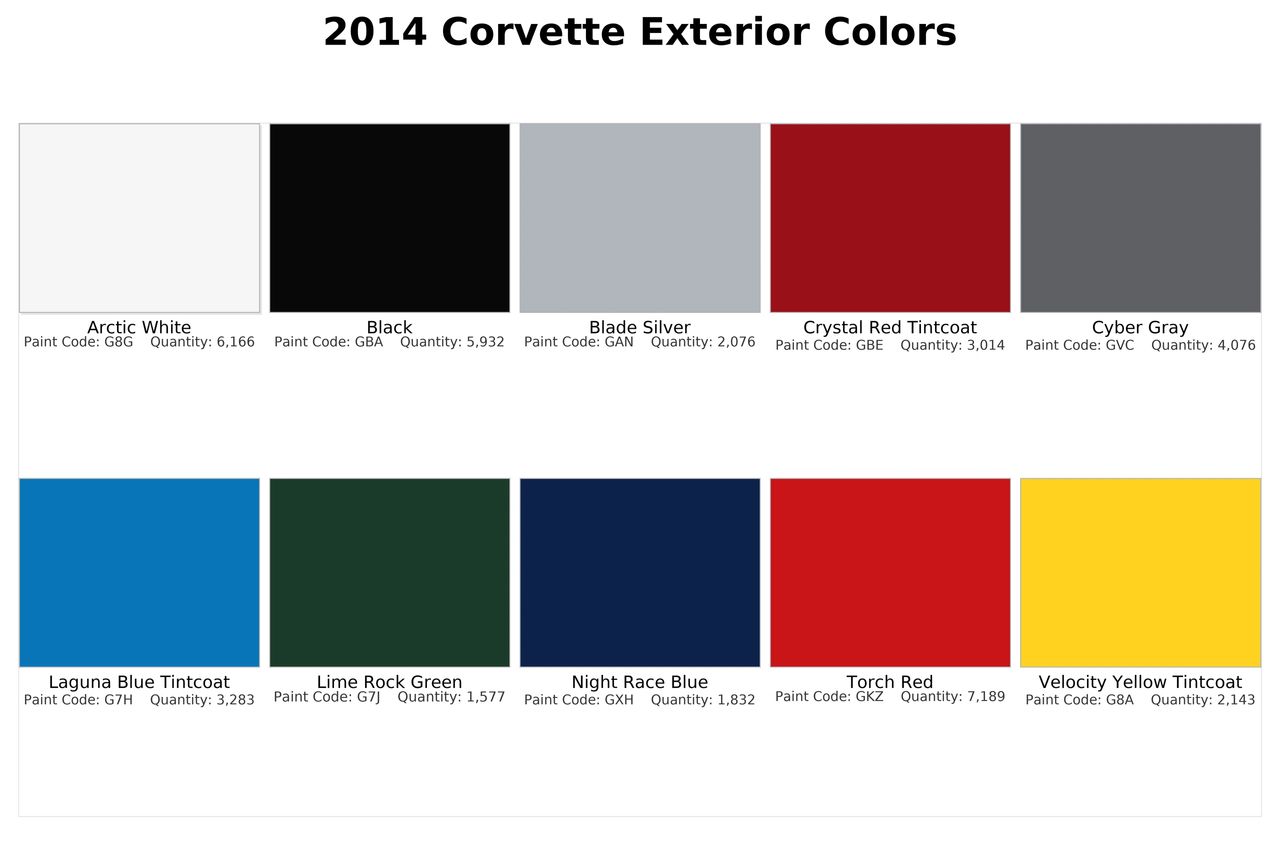
    Says Moss, “For the C7, we decided to go with aluminum rather than steel since aluminum can provide significant weight advantages. Our job was to choose the right material and part-production process for each function. In this case, we came up with a structure that includes 10 castings, 38 extrusions, 76 stampings, and three hydroformed parts.”
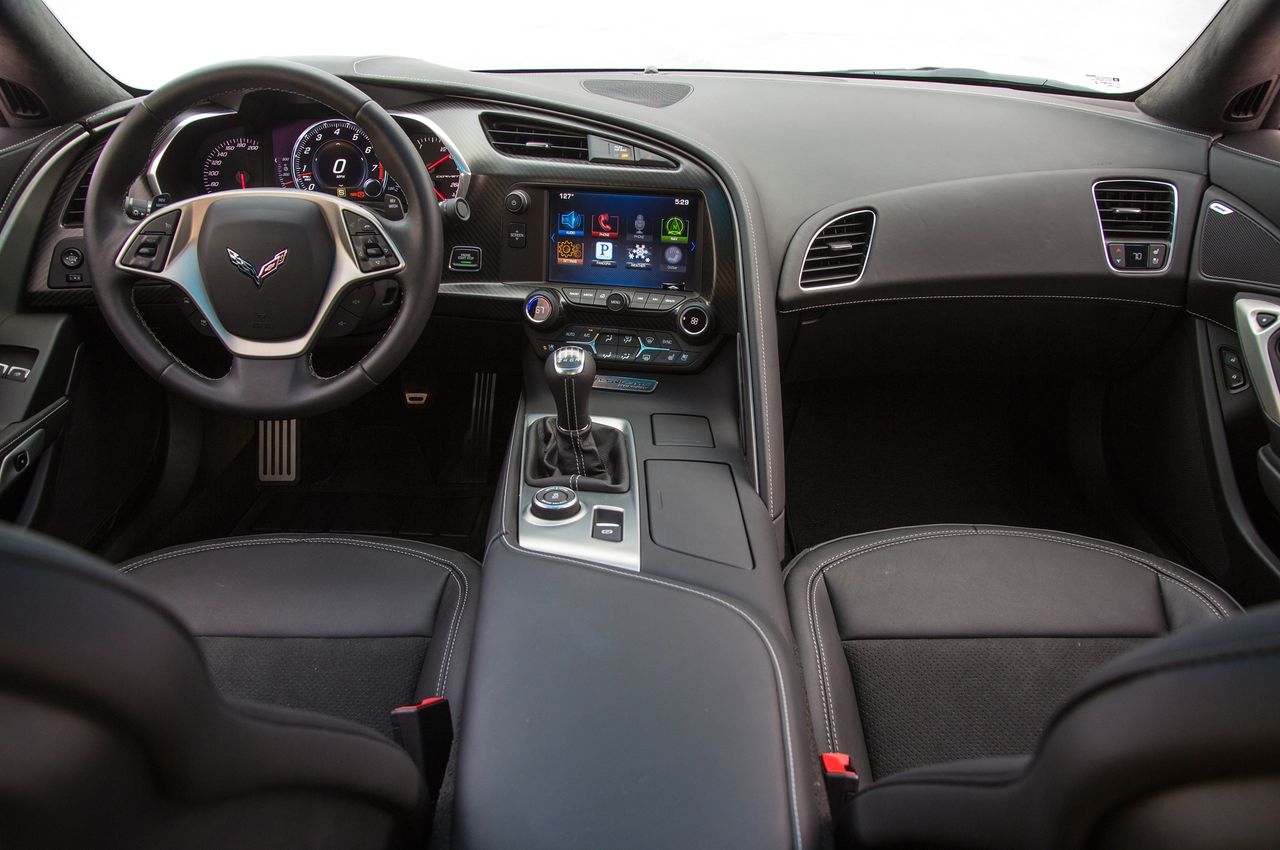
    The 2014 Corvette Stingray was the reboot moment—new LT1 small-block, an aluminum backbone that was lighter yet over 50% stiffer, real aero with working heat extractors and brake-cooling side inlets, and a cockpit that finally matched the performance. As chief engineer, Tadge Juechter set the brief and drove the details: build a Corvette that was faster, smarter, and more livable without losing the raw feel. His team’s clean-sheet chassis, driver-mode electronics, 7-speed with active rev-match, and world-class interior moved America’s sports car into a new era. The result wasn’t just a new generation—it was a new standard. (Image courtesy of GM Media LLC)
    The 2014 Corvette Stingray was the reboot moment—new LT1 small-block, an aluminum backbone that was lighter yet over 50% stiffer, real aero with working heat extractors and brake-cooling side inlets, and a cockpit that finally matched the performance. As chief engineer, Tadge Juechter set the brief and drove the details: build a Corvette that was faster, smarter, and more livable without losing the raw feel. His team’s clean-sheet chassis, driver-mode electronics, 7-speed with active rev-match, and world-class interior moved America’s sports car into a new era. The result wasn’t just a new generation—it was a new standard. (Image courtesy of GM Media LLC)

    The metrics backed up the philosophy. The new frame came in about 99 pounds lighter and more than 50 percent stiffer than the outgoing steel setup—and that comparison held even when you put an open-roof C7 against a fixed-roof C6 Z06. As Corvette Chief Engineer Tadge Juechter stated in an exclusive interview with Car and Driver magazine, “We thought we could take today’s aluminum frame and tweak it. It turns out we had to scrap the whole thing and start over.” This proved to be a great strategy as starting over unlocked both a reduction in structural weight and an increase in structural rigidity simultaneously.

    That structural headroom paid off everywhere. The center tunnel was made beefier because it carried more of the torsional load in open-roof duty, which in turn let the suspension bushings be tuned for both precision and isolation without chasing squeaks or cowl shake. A mixed architecture—cast nodes where the cradles are mounted, straight extrusions where crash energy needed to be absorbed, and lightweight tubes where mass had to be kept out—let the team dial in local stiffness without adding pounds where they didn’t help. Tighter in-house manufacturing also improved tolerances, which reduced NVH and helped the convertible top package lower and seal better.

    This top-down view of the 2014 Corvette Stingray reveals its front-engine, rear-transaxle layout tied together by a rigid torque tube—key to near 50/50 weight distribution. An all-aluminum structure with hydroformed rails and cast nodes slashed mass while delivering a huge jump in torsional stiffness. With the LT1 up front, the 7-speed (or auto) at the rear, and short/long-arm suspension at each corner, the C7’s hardware was engineered for crisp turn-in, traction, and high-speed stability. (Image courtesy of GM Media)
    This top-down view of the 2014 Corvette Stingray reveals its front-engine, rear-transaxle layout tied together by a rigid torque tube—key to near 50/50 weight distribution. An all-aluminum structure with hydroformed rails and cast nodes slashed mass while delivering a huge jump in torsional stiffness. With the LT1 up front, the 7-speed (or auto) at the rear, and short/long-arm suspension at each corner, the C7’s hardware was engineered for crisp turn-in, traction, and high-speed stability. (Image courtesy of GM Media)

    The net effect was felt from the driver’s seat. Because the load paths were cleaner and the structure no longer relied on the roof panel for basic rigidity, the C7 coupe and convertible behaved like the same, unified car—not a coupe with the roof lopped off and extra shake added.

    Powertrain: LT1 (Gen V Small Block) and the Return of the Broad Torque Curve

    Heartbeat of the Stingray: the 6.2-liter LT1 V8—Gen-V small-block with direct injection, VVT, and AFM—rated at 455 hp (460 with the dual-mode NPP exhaust). (Image courtesy of RK Motors)
    Heartbeat of the Stingray: the 6.2-liter LT1 V8—Gen-V small-block with direct injection, VVT, and AFM—rated at 455 hp (460 with the dual-mode NPP exhaust). (Image courtesy of RK Motors)

    The 6.2-liter LT1 was the heartbeat of the 2014 Corvette Stingray, a Gen-V small-block that retained the compact pushrod layout but modernized everything that mattered inside the chambers. Direct injection fired a precisely metered spray into a sculpted piston bowl, which allowed Chevy to run high compression and aggressive spark without detonation; continuously variable valve timing on the single cam broadened the effective timing window across the rev range; and Active Fuel Management seamlessly dropped to four cylinders at light load to cut pumping losses. The supporting hardware was equally purposeful: high-tumble intake ports, oil-spray piston cooling, an aluminum block and heads, a composite intake tuned for midrange torque, and a cam-driven high-pressure fuel pump that gave the injectors the headroom they needed at high load. Tie it together, and you had SAE-certified output of 455 hp / 460 lb-ft with the standard exhaust—or 460 hp / 465 lb-ft with the vacuum-actuated dual-mode NPP system, which trimmed backpressure under demand while avoiding drone at cruise. As small-block chief Jordan Lee put it at the time, the LT1 was “a triumph of advanced technology,” delivering the most power and torque to date for a standard Corvette while topping the previous car’s highway efficiency.

    Small-Block Chief Engineer Jordan Lee, shown holding an LT1 piston, was the architect of the Gen-V small-block that powered the 2014 Stingray. He led the move to direct injection, continuously variable valve timing, and AFM—with a sculpted piston bowl and 11.5:1 compression—to deliver broader torque, higher efficiency, and SAE ratings up to 460 hp/465 lb-ft with NPP. Lee’s program set the baseline that made the C7 quicker and thriftier than the C6 while establishing the blueprint for today’s small-block family. (Image courtesy of AutoWeek)
    Small-Block Chief Engineer Jordan Lee, shown holding an LT1 piston, was the architect of the Gen-V small-block that powered the 2014 Stingray. He led the move to direct injection, continuously variable valve timing, and AFM—with a sculpted piston bowl and 11.5:1 compression—to deliver broader torque, higher efficiency, and SAE ratings up to 460 hp/465 lb-ft with NPP. Lee’s program set the baseline that made the C7 quicker and thriftier than the C6 while establishing the blueprint for today’s small-block family. (Image courtesy of AutoWeek)

    There was more under the skin than the headline features suggested. The LT1 kept the familiar 376-cu-in dimensions (4.06-in bore, 3.62-in stroke) but paired them with an 11.5:1 compression ratio and a spray-guided DI system running at over 2,000 psi, which improved charge cooling and combustion stability. A variable-displacement oil pump, low-friction internal components, and targeted oil-jet piston cooling reduced parasitic losses and helped thermal management. Corvette packaged the engine with two distinct oiling strategies: a conventional wet-sump for base cars and a track-ready dry-sump with a remote reservoir on Z51 models, which improved oil control during sustained lateral loads and added capacity for repeated hot laps. Exhaust flow benefitted from efficient manifolds and—on cars optioned with NPP—valves that opened under load for freer breathing and a harder-edged note.

    The bigger story wasn’t just the peak number; it was how the LT1 made its power. With 90 percent of peak torque available from 3,000–5,500 rpm, the engine felt preloaded everywhere—tip-in was crisp, midrange thrust was immediate, and real horsepower built barely off idle. That was the DI/VVT/AFM trio doing exactly what it was designed to do: DI’s cooler, denser in-cylinder charge fattened pressure early in the stroke, VVT kept airflow optimized as piston speeds climbed, and AFM trimmed pumping and friction losses when you were simply cruising. Contemporary instrumented tests captured what drivers felt from the seat: compared with the outgoing LS3, the LT1 didn’t just post bigger peaks; it filled in the curve between them, turning ordinary corner exits into slingshots—while NPP-equipped cars added a raucous bark the moment the valves swung open under load.

    Gen-V LT1 on display: an all-aluminum, deep-skirt block with cross-bolted mains (4.06-in bore/3.62-in stroke, 11.5:1 compression) and coil-near-plug ignition under composite covers for low mass and quiet. Thin-wall stainless exhaust manifolds feed close-coupled catalysts for rapid light-off, while the accessory drive and front cover packaging keep the engine compact in the bay. Base cars used a wet-sump, but Z51 models added a track-ready dry-sump with a remote reservoir to maintain oil pressure under sustained lateral loads.
    Gen-V LT1 on display: an all-aluminum, deep-skirt block with cross-bolted mains (4.06-in bore/3.62-in stroke, 11.5:1 compression) and coil-near-plug ignition under composite covers for low mass and quiet. Thin-wall stainless exhaust manifolds feed close-coupled catalysts for rapid light-off, while the accessory drive and front cover packaging keep the engine compact in the bay. Base cars used a wet-sump, but Z51 models added a track-ready dry-sump with a remote reservoir to maintain oil pressure under sustained lateral loads.

    The payoffs showed up at the pump, too. Despite the stronger output, LT1-equipped Stingrays posted better highway economy than the C6 they replaced—evidence that the combustion-system rethink wasn’t marketing fluff but real efficiency baked into the architecture. And while the LT1’s core recipe still underpins today’s small-block family, its first act in 2014 set the tone: modern combustion science wrapped in classic small-block packaging, delivering the broad, effortless torque band that makes a Corvette feel quick everywhere.

    Transmissions: 7 Speeds, Real Rev-Match, and a Better Auto (Later)

    Tremec TR-6070: the C7 Stingray’s seven-speed manual, essentially an evolved TR-6060 with an extra overdrive to stretch the ratio spread. It paired a twin-disc clutch with short throws and integrated Active Rev Matching, stacking 1–4 for performance and using 5–7 as progressively deeper cruise gears. In Z51 trim it worked with the electronic limited-slip to keep the LT1 on boil at corner exit while dropping revs on the highway. (Image courtesy of GM Media LLC)
    Tremec TR-6070: the C7 Stingray’s seven-speed manual, essentially an evolved TR-6060 with an extra overdrive to stretch the ratio spread. It paired a twin-disc clutch with short throws and integrated Active Rev Matching, stacking 1–4 for performance and using 5–7 as progressively deeper cruise gears. In Z51 trim it worked with the electronic limited-slip to keep the LT1 on boil at corner exit while dropping revs on the highway. (Image courtesy of GM Media LLC)

    When it came to transmission selection, there were two choices in 2014: the Tremec TR-6070 seven-speed manual with Active Rev Matching, or a Hydra-Matic 6L80 six-speed automatic with paddles. The 8-speed auto didn’t arrive until 2015, so shoppers of ’14s were picking between the most tech-forward manual Corvette had offered to that point and a proven torque-converter automatic calibrated to play nicely with AFM and the LT1’s broad torque curve.

    Why seven speeds? As Tadge Juechter’s team explained at launch, the point was to widen the usable spread without turning the car into an “overdrive experiment.” First through fourth were closely stacked for back-road and track work, with three overdrives (5th–7th) to pull highway revs down; 7th was intentionally a deep cruise gear. The TR-6070 used a twin-disc clutch and short throws, and its gear-state indicator was duplicated in both the cluster and the HUD. Active Rev Matching—toggled by the steering-wheel paddles—blipped the throttle on downshifts and trimmed torque on upshifts, making heel-and-toe optional without making it irrelevant. Launch control and Performance Traction Management were available, and Z51 cars paired the manual with an electronically controlled limited-slip differential that actively varied lock for corner entry and exit stability. (Yes, CAGS skip-shift was still present under light load, just as before.)

    Hydra-Matic 6L80: the six-speed automatic offered in the 2014 Stingray before the 8-speed arrived. A clutch-to-clutch unit with a lockup converter and TAPShift paddles, it was calibrated to play nicely with AFM and the LT1’s fat midrange—holding gears in Sport/Track, rev-matching on downshifts, and settling into low-rpm cruise on the highway. Proven, durable, and smarter than past Corvette autos. (Image courtesy of GM Authority)
    Hydra-Matic 6L80: the six-speed automatic offered in the 2014 Stingray before the 8-speed arrived. A clutch-to-clutch unit with a lockup converter and TAPShift paddles, it was calibrated to play nicely with AFM and the LT1’s fat midrange—holding gears in Sport/Track, rev-matching on downshifts, and settling into low-rpm cruise on the highway. Proven, durable, and smarter than past Corvette autos. (Image courtesy of GM Authority)

    The 6L80 automatic brought its own strengths. It was a clutch-to-clutch unit with a lockup converter, adaptive shift logic, manual TAPShift control via paddles, and calibrations that held gears longer in Sport/Track modes while cooperating with AFM during steady cruise. Downshifts were rev-matched and the mapping took advantage of the LT1’s midrange—more eager than past Corvette autos yet refined at part throttle. The result was an automatic that played well on a daily commute and didn’t embarrass itself on a back road.

    And despite internet lore, the manual wasn’t as rare in ’14 as many assumed—GM/NCM production tallies show 13,210 manuals versus 24,078 automatics (roughly 35% to 65%). In short: 2014 gave you a choice between a new-school, seven-ratio stick that rewarded engagement and a well-sorted six-speed automatic that maximized the LT1’s flexibility and the car’s efficiency.

    Exhaust: The NPP Option That Changed the Street Soundtrack

    The C7’s Mode Select knob puts the car’s personality at your fingertips—spin from Tour to Sport to Track (plus Eco/Weather) and it retunes throttle, steering, stability control, and—when equipped—Magnetic Ride and the NPP exhaust in one click. The knurled rotary and stitched-leather surround feel properly mechanical, while the electronic parking brake cleans up the console and saves weight. It’s everyday civility and pit-lane focus living side-by-side. (Image courtesy of RK Motors)
    The C7’s Mode Select knob puts the car’s personality at your fingertips—spin from Tour to Sport to Track (plus Eco/Weather) and it retunes throttle, steering, stability control, and—when equipped—Magnetic Ride and the NPP exhaust in one click. The knurled rotary and stitched-leather surround feel properly mechanical, while the electronic parking brake cleans up the console and saves weight. It’s everyday civility, and pit-lane focus living side-by-side. (Image courtesy of RK Motors)

    The regular production option NPP dual-mode system didn’t just make noise; it managed flow. Each rear canister housed two distinct paths: a longer, baffled route for attenuation and a short, straight-through route gated by a butterfly valve. A vacuum actuator—commanded by the engine controller through mode, load, and rpm—swung those valves, so the car could tiptoe on neighborhood streets and then uncork the LT1’s full “voice” the instant you rolled into the throttle. Calibration tied valve strategy to the Drive Mode Selector: Tour/Eco kept the quiet path dominant to complement AFM four-cylinder operation (minimizing the telltale low-frequency “beat”), while Sport/Track opened the bypass sooner and held it longer, sharpening pulses and reducing back pressure during extended pulls.

    Cold starts told their own story. The system favored a quicker light-off of the close-coupled catalysts, so even the quiet path had a purposeful bark for a few seconds before the idle settled and the valves reverted to their mapped state. Out on the highway, AFM (Active Fuel Management) and NPP worked together—valves biased closed to avoid boom, then snapped open with a decisive change in timbre the moment the LT1 saw real load. Around town, part-throttle transitions felt cleaner because the short path reduced pumping losses right where the engine’s broad torque curve wanted to breathe.

    Quad center exits aren’t just theater on the C7—they’re the punctuation mark for the available NPP dual-mode exhaust. Vacuum-actuated valves open under load and in Sport/Track, giving you a deeper, harder-edged bark and a verified bump of about +5 hp/+5 lb-ft; ease back to Tour and it hushes for neighborhood duty. It’s the rare factory system that looks the part and absolutely sounds it. (Image courtesy of RK Motors)
    Quad center exits aren’t just theater on the C7—they’re the punctuation mark for the available NPP dual-mode exhaust. Vacuum-actuated valves open under load and in Sport/Track, giving you a deeper, harder-edged bark and a verified bump of about +5 hp/+5 lb-ft; ease back to Tour and it hushes for neighborhood duty. It’s the rare factory system that looks the part and absolutely sounds it. (Image courtesy of RK Motors)

    Hardware details mattered. The entire assembly used corrosion-resistant stainless steel, from the 2.75-inch pipes to the perforated cores, with mass kept in check so you didn’t pay a weight penalty for theater. The center-exit quad tips weren’t just a signature; packaging them tight under the fascia shortened the final runs and preserved diffuser airflow—small gains in heat management and aero cleanliness that added up over a long session. Track noise compliance was part of the brief, too: the quiet path and the closed-valve map gave you a way to meet stricter sound caps on certain days without swapping parts.

    And yes, the gains were real, not brochure fiction. Chevrolet certified the dual-mode setup at +5 hp and +5 lb-ft of torque versus the standard system because the open bypass cut restriction in the power band you actually used. That’s why owners noticed more than volume: throttle response felt a half-step quicker, midrange pull came on with less “push,” and the soundtrack picked up the crackle and rip you expect from a high-compression, direct-injected small-block. Enthusiasts even discovered that pulling the exhaust-valve fuse would lock the system in its rowdiest personality—a testament to how central those valves were to the C7’s character. In 2014, the NPP option effectively built the most popular aftermarket mod into the car, then integrated it with the Stingray’s driving modes so the soundtrack matched the mission, minute by minute.

    Suspension & Steering: Composite “Leafs,” Mag Ride, and Stiff Where It Counts

    Up front, the C7’s aluminum cradle carries forged control arms, the solid-mounted electric steering rack, and the transverse composite spring—light, low, and a contributor to roll control. The yellow arrow points to the front shear panel/cross-brace tying the cradle side rails together to keep the pickup points locked in under cornering loads. Those long white diagonals are tension braces that route load into the body, while the dampers (35-mm Bilsteins standard, 45-mm with Z51, Mag Ride optional on Z51) do the fine work. Net effect: a stiff, lightweight front end that bites immediately and stays precise when you lean on it. (Image courtesy of Edmunds.com)
    Up front, the C7’s aluminum cradle carries forged control arms, the solid-mounted electric steering rack, and the transverse composite spring—light, low, and a contributor to roll control. The yellow arrow points to the front shear panel/cross-brace tying the cradle side rails together to keep the pickup points locked in under cornering loads. Those long white diagonals are tension braces that route load into the body, while the dampers (35-mm Bilsteins standard, 45-mm with Z51, Mag Ride optional on Z51) do the fine work. Net effect: a stiff, lightweight front end that bites immediately and stays precise when you lean on it. (Image courtesy of Edmunds.com)

    If you’ve ever heard “leaf springs” used as a knock against Corvettes, 2014 is the year that ends the argument. The transverse pieces are engineered composite springs—not truck leaves—and they delivered a bundle of advantages: low mounting, inherent anti-roll contribution, reduced unsprung mass, and packaging that supported a lower hoodline. Mike Bailey, vehicle systems engineer for chassis, put it bluntly: “We try not to say leaf… it’s an engineered composite spring.” The damper ladder was straightforward: 35-mm Bilstein monotubes standard, 45-mm Bilsteins with Z51, and Magnetic Ride Control (FE4) optional on Z51. The result was a car that rode better than it had any right to, yet still answered inputs with real authority.

    Steering was reworked from the ground up. Juechter’s team adopted electric assist and re-engineered everything from the wheel and tilt mechanism to the solid-mounted rack. Measured as a system, it was “five times stiffer than today’s,” he said at launch—and you feel that in the crisp initial bite and linear build. Moving to a 360-mm wheel—a genuinely race-adjacent diameter—tightened the driver interface, and achieving clear cluster/HUD visibility at that size required some clever packaging gymnastics.

    Brakes & Tires: Bigger Swept Area, Dual-Cast Rotors, Real Endurance

    Polished split-spoke wheels framed the C7’s Brembo hardware nicely—behind them you can see the slotted rotors and fixed four-piston calipers that delivered the car’s confident, repeatable stops. Many Z51 cars were fitted with black calipers, but color alone didn’t prove the package; the telltales were the larger, two-piece rotors and Z51-specific brake sizing. Paired with Michelin Pilot Super Sport ZP rubber, the setup looked premium and braked like it meant it. (Image courtesy of RK Motors)
    Polished split-spoke wheels framed the C7’s Brembo hardware nicely—behind them, you can see the slotted rotors and fixed four-piston calipers that delivered the car’s confident, repeatable stops. Many Z51 cars were fitted with black calipers, but color alone didn’t prove the package; the telltales were the larger, two-piece rotors and Z51-specific brake sizing. Paired with Michelin Pilot Super Sport ZP rubber, the setup looked premium and braked like it meant it. (Image courtesy of RK Motors)

    The C7 team was explicit: they engineered two distinct Brembo brake packages for two distinct missions. Every Stingray got fixed aluminum four-piston calipers and a big jump in swept area versus a base C6, while Z51 went further with larger rotors, more pad volume, and two-piece (dual-cast) rotors—aluminum hat with a cast-iron ring—to control weight and thermal growth. Corvette also moved from cross-drilled to slotted faces on performance trims to reduce crack propagation and improve gas/dust evacuation under repeated high-energy stops. With added cooling paths and track-biased ABS/PCM calibration, the result was repeatable stops and sprint-to-sprint consistency. Independent instrumented tests routinely measured 70–0 mph in the high-130-ft range for Z51 cars, and owners quickly learned why Z51 + Mag Ride became the default “driver’s spec.”

    Michelin’s Pilot Super Sport ZP—the C7’s co-developed run-flat—paired Corvette-specific construction with a compound that held pace when the laps piled on. Staggered 18/19s on base cars and 19/20s on Z51 delivered quick steering, strong bite, and real heat tolerance you felt in consistent lap times. It looked the part on the factory wheels and, more importantly, gripped like it.
    Michelin’s Pilot Super Sport ZP—the C7’s co-developed run-flat—paired Corvette-specific construction with a compound that held pace when the laps piled on. Staggered 18/19s on base cars and 19/20s on Z51 delivered quick steering, strong bite, and real heat tolerance you felt in consistent lap times. It looked the part on the factory wheels and, more importantly, gripped like it.

    Tires finished the system. The Michelin Pilot Super Sport ZP run-flats were co-developed with GM for the C7’s loads and aero balance, with 18/19-inch fitment on base cars and 19/20-inch on Z51. Beyond headline grip, they showed real heat tolerance—the kind that let drivers run through an HPDE day without the pedal lengthening or lap times drifting because compounds or carcasses overheated. In short, the numbers looked great on paper, and they held up when you were going fast enough to need the coolers.

    Aero & Cooling: Everything Vents, Nothing Pretends

    This quarter-panel intake on the C7 wasn’t decoration—it fed real hardware. On Z51/track-cooling cars, it directed ram air to the rear heat exchangers for the differential (and the transmission on Z51), with the air exiting through the rear fascia to keep temps in check over long sessions. The louvers shaped the stream, screened debris, and helped manage pressure so the driveline stayed in its thermal window. (Image courtesy of RK Motors)
    This quarter-panel intake on the C7 wasn’t decoration—it fed real hardware. On Z51/track-cooling cars, it directed ram air to the rear heat exchangers for the differential (and the transmission on Z51), with the air exiting through the rear fascia to keep temps in check over long sessions. The louvers shaped the stream, screened debris, and helped manage pressure so the driveline stayed in its thermal window. (Image courtesy of RK Motors)

    We’d all seen “vents” on cars that didn’t feed anything. The 2014 Stingray put an end to the cosplay. The hood extractor bled high-pressure air from the radiator into a low-pressure zone over the hood, trimming front lift and letting the radiator work harder lap after lap. The fender outlets relieved wheel-well pressure and helped pull hot air out of the engine bay—less lift, a touch less drag, and more stable front grip when the speeds climbed.

    Z51 models went further with real heat management. They added dedicated ducting and heat exchangers for the transmission and electronic limited-slip differential; those rear quarter-panel inlets weren’t decoration, they fed air across the coolers and out through the rear fascia. The package also brought subtle aero and underbody tweaks—small changes in splitters/deflectors and a low profile rear spoiler—to keep the car in its thermal window across a full session instead of just the first flyer.

    Juechter’s team chased the quiet gains, too. They moved mass rearward—battery and coolers included—to nudge static balance slightly rear-biased, closer to the race car’s ~48/52 target. You felt it in the way the car settled on power: better traction off slow corners, calmer high-speed stability, and cooling that kept braking and driveline responses consistent until the checkered flag.

    Driver Interface & Interior: Finally, Seats Worth Defending

    The C7 cabin finally felt world-class. Chevy wrapped the interior—stitched leather, real metal, and optional carbon fiber replaced the old molded plastics—while the driver-canted console and grab-bar gave the cockpit a purposeful, twin-cockpit look. (Image courtesy of RK Motors)
    The C7 cabin finally felt world-class. Chevy wrapped the interior—stitched leather, real metal, and optional carbon fiber replaced the old molded plastics—while the driver-canted console and grab-bar gave the cockpit a purposeful, twin-cockpit look. (Image courtesy of RK Motors)

    No area saw a bigger—or more overdue—transformation than the cockpit. Interior design manager Ryan Vaughn’s brief was a “fully wrapped” cabin: even on the base car you didn’t see bare molded-color plastic—surfaces were hand-stitched or soft-trimmed, with real metal switchgear where your fingers lived and optional carbon-fiber or sueded-microfiber where your eyes landed. The asymmetric console canted everything toward the driver, a rigid grab bar defined the passenger side, and the details finally felt premium: damped rotarys, a knurled Mode Select dial, and an electronic parking brake that cleaned up the tunnel.

    The GT bucket seats were standard across every 2014 Stingray trim—1LT, 2LT, and 3LT—on both coupe and convertible, with or without Z51.
    The GT bucket seats were standard across every 2014 Stingray trim—1LT, 2LT, and 3LT—on both coupe and convertible, with or without Z51.
    The Competition Sport bucket seats (RPO AE4) were a late-availability option on every 2014 Stingray—1LT/2LT/3LT, coupe and convertible, with or without Z51. Trim/material pairings varied by package (e.g., sueded-microfiber inserts on 1LT; additional leather/Nappa options on 2LT/3LT).
    The Competition Sport bucket seats (RPO AE4) were a late-availability option on every 2014 Stingray—1LT/2LT/3LT, coupe and convertible, with or without Z51. Trim/material pairings varied by package (e.g., sueded-microfiber inserts on 1LT; additional leather/Nappa options on 2LT/3LT).

    Seats were the other cornerstone. GM committed to two distinct architectures—the all-around GT chair and the Competition Sport (AE4) bucket with magnesium frames, deeper bolsters, and pass-throughs for harnesses. The team benchmarked Porsche and Recaro shells, then pressure-mapped bodies under track loads and handed both designs to Lear for production. The payoff was the rare Corvette seat that fit a wide range of bodies: real lateral support without the old compromise of “great if you’re small, punishing if you’re not.” (Heating/ventilation, memory, and adjustable lumbar/bolster support were available, and higher trims brought Nappa leather with tight, motorsport-style stitching.)

    Electronics rose to the same standard. The 8-inch reconfigurable cluster carried distinct Tour, Sport, and Track themes, each with the information hierarchy to match—bigger tach and shift lights when you were hunting apexes, more navigation/media emphasis when you weren’t. Interaction designer Jason Stewart summed it up: the job was to make advanced tech easy to find in normal driving, then loud and obvious when you needed it. A color head-up display (available) mirrored the essentials—gear, revs, speed, lap timing—so your eyes stayed up. The center MyLink screen tucked a small storage cubby behind a motorized panel, USB’d and cooled to keep devices out of the sun.

    Taken together, materials, seating, and interfaces finally aligned with the car’s capability. The C7 cabin felt purpose-built but livable—a place you could cross states in, then show up at an HPDE (High Performance Driver Education) event and never wish for a different seat, dial, or display.

    Convertible: Top-Down Without the “Convertibles Are Floppy” Asterisk

    Deep Emerald over Kalahari, top down, and every line of the C7 Stingray Convertible looks like it was drawn with a scalpel. Chrome split-five wheels, vented hood, and the clean tonneau give it that “grand tourer at rest, predator in motion” stance. It’s the open-air Stingray that marries couture color with track-honest hardware. (Image courtesy of RK Motors)
    Deep Emerald over Kalahari, top down, and every line of the C7 Stingray Convertible looks like it was drawn with a scalpel. Chrome split-five wheels, vented hood, and the clean tonneau give it that “grand tourer at rest, predator in motion” stance. It’s the open-air Stingray that marries couture color with track-honest hardware. (Image courtesy of RK Motors)

    Chevrolet rolled out the Stingray Convertible just weeks after the coupe, and the headline stayed refreshingly simple: no structural band-aids required. Because the C7’s aluminum frame was conceived from day one to serve both roofed and roofless duty, the convertible didn’t need heavy reinforcements or awkward braces to keep it tight. That paid off where it matters—on the road. Steering precision, ride/handling balance, and the car’s trademark lateral grip all carry over intact, so the open car feels like the coupe you drove the week before, only with a bigger slice of sky.

    The top itself underscores the “no-compromise” brief. It’s a fully electronic fabric roof that can be raised or lowered via the key fob and while rolling at neighborhood speeds (about 30 mph), which makes real-world use painless. A three-ply construction and a heated glass rear window tame wind roar, so you don’t get that “camping-tent at 80 mph” soundtrack older ragtops were infamous for. Stowed, the roof disappears neatly beneath a hard tonneau for a clean, sculpted profile; deployed, it seals up with the kind of refinement that makes long interstate stints feel effortless.

    Ed Welburn, the former General Motors' Vice President of Global Design, stands beside the seventh-gen Corvette, the quad-center exhaust and crisp rear graphic telegraphing purpose. The pairing captures the era’s mantra—taut surfacing, integrated aero, and a stance that looks fast standing still. It’s a portrait of the stewardship that pushed Corvette toward world-class fit, finish, and feel.
    Ed Welburn, the former General Motors’ Vice President of Global Design, stands beside the seventh-gen Corvette, the quad-center exhaust and crisp rear graphic telegraphing purpose. The pairing captures the era’s mantra—taut surfacing, integrated aero, and a stance that looks fast standing still. It’s a portrait of the stewardship that pushed Corvette toward world-class fit, finish, and feel.

    Design chief Ed Welburn connected the car to Corvette’s core identity: “The convertible has been a part of the heart and soul of Corvette since the very beginning in 1953… we designed and developed the coupe and convertible simultaneously… [so] open-top driving [comes] with no compromise in performance, technology or design.” That simultaneous development shows up in the details—identical chassis tuning philosophies, the same advanced driver interfaces, and the option sets enthusiasts actually want. The result is the first Corvette ragtop that truly drives like its hardtop twin, delivering the full Stingray experience—sound, speed, and precision—without asking you to trade away the thrill of top-down miles.

    The Z51 Package: The Driver’s Default

    Even Chevy’s option grid told you where the team’s head was. Z51—available on every trim and with either transmission—bundled the hardware you’d add anyway if you actually drive: dry-sump oiling for sustained g’s, an electronically controlled limited-slip differential (eLSD) to apportion torque under load, dedicated coolers for the diff and transmission, specific springs and anti-roll bars, stiffer 45-mm dampers, larger slotted Brembo brakes, staggered 19/20-inch wheels, and a unique aero set aimed squarely at high-speed stability. None of this was window dressing. Each piece solves a problem you encounter when a base car that’s already quick is pushed into repeated, high-temperature, high-load use.

    Layer on optional Magnetic Ride Control (FE4) and the Stingray does the split-personality trick better than cars wearing much bigger price tags. In Tour, it breathes with broken pavement like a proper grand tourer; click into Sport or Track and the car takes a set, rotates cleanly, and stays supported through direction changes without the brittle ride that used to come with“track package” badges. The beauty is how the systems talk to each other—damper control keeping the tire planted while the eLSD meters torque and the aero keeps the platform calm—so you get speed with confidence, not drama.

    The market validated the recipe. Out of 37,288 Corvettes built for 2014, 21,111 wore Z51 badges—about 57 percent of all Corvettes produced that year. And within that already committed group, 13,392 cars layered the Magnetic Ride Control option on top of Z51. That’s not a niche; that’s the center of gravity. Buyers didn’t just want the look or a louder exhaust—they wanted the engineering that let the car deliver its performance all day long, on a favorite back road or at a lapping day in July heat.

    Automobile Magazine named Tadge Juechter its 2014 “Man of the Year,” crediting him as the guiding force behind the seventh-generation Corvette Stingray. Only the fifth chief engineer in Corvette’s long history, Juechter was praised for “getting it right” by reimagining the car from top to bottom, not just fixing past complaints. The story highlights thoughtful engineering touches—like the seven-speed manual with rev-matching—and Juechter’s push for a serious interior that could stand up to 1-g days on track. It also frames the C7 as a product of focused leadership in a post-bankruptcy GM, with Juechter navigating corporate realities to secure the support Corvette needed. (Image courtesy of Patrick M. Hoey Photography)
    Automobile Magazine named Tadge Juechter its 2014 “Man of the Year,” crediting him as the guiding force behind the seventh-generation Corvette Stingray. Only the fifth chief engineer in Corvette’s long history, Juechter was praised for “getting it right” by reimagining the car from top to bottom, not just fixing past complaints. The story highlights thoughtful engineering touches—like the seven-speed manual with rev-matching—and Juechter’s push for a serious interior that could stand up to 1-g days on track. It also frames the C7 as a product of focused leadership in a post-bankruptcy GM, with Juechter navigating corporate realities to secure the support Corvette needed. (Image courtesy of Patrick M. Hoey Photography)

    Tadge Juechter’s “why” was straightforward: when the base car is already knocking on sub-4.0-second 0–60, generating north of 1.0 g in cornering, and stopping shorter than the outgoing model, the loads and temperatures you see in the real world—especially on track—demand top-flight lubrication and thermal management. Z51 bakes those answers in. Dry-sump keeps oil pressure stable under long sweepers and heavy braking, the extra coolers hold temperatures in the green session after session, the bigger slotted Brembos shed heat and resist fade, and the aero trims lift so the chassis isn’t fighting instability precisely when you need it calm.

    The upshot is practical as much as it is heroic. With Z51 and FE4, daily use doesn’t punish you, yet the car feels “switched on” the moment you ask for it—turn-in is crisper, mid-corner balance is more neutral, and on corner exit the eLSD makes power feel cleaner, not harsher. It’s the rare performance package that doesn’t just move numbers on a spec sheet; it broadens the car’s operating envelope. In a lineup that offered plenty of ways to personalize, Z51 wasn’t dressing—it was the blueprint for how the seventh-generation Stingray was meant to be driven.

    Performance: The Numbers That Made the Headlines

    MotorTrend’s 2014 take on the Z51 was simple: this isn’t a “base” Corvette, it’s a benchmark. The LT1’s broad shove, the eLSD’s clean corner exits, and the Z51 brake/tire package let the car string quick laps without drama, not just post one hero number. Steering is precise, body control stays calm, and—even on real street rubber—the chassis feels locked-in and repeatable. Net: showroom-stock speed with the polish of something far pricier. (Image courtesy of MotorTrend)
    MotorTrend’s 2014 take on the Z51 was simple: this isn’t a “base” Corvette, it’s a benchmark. The LT1’s broad shove, the eLSD’s clean corner exits, and the Z51 brake/tire package let the car string quick laps without drama, not just post one hero number. Steering is precise, body control stays calm, and—even on real street rubber—the chassis feels locked-in and repeatable. Net: showroom-stock speed with the polish of something far pricier. (Image courtesy of MotorTrend)

    Chevrolet’s early 3.8-second 0–60 claim for a Z51 manual wasn’t bluster; it was a preview of what the car reliably did in the wild. Early instrumented tests put Z51 coupes and convertibles with a 0-60 time of just 3.9 seconds, 12.2–12.3 seconds @ 117–118 in the quarter, north of 1.00 g on the skidpad, and a hard braking distance of right around ~138 ft from 70–0mph. The results held across body styles and over long miles, reinforcing that the structure and chassis—not the roof configuration—were doing the heavy lifting.

    Track work told the same story. At VIR’s Grand Course, a “regular” C7 Z51 lapped in the high-2:53s—brushing shoulders with the previous-gen Z06 and spoiling cars wearing much richer price tags. That single datapoint reframed the car: this wasn’t a fast-on-paper street special that wilted at speed; it was a bona fide track tool straight off the showroom floor.

    The why is straightforward. Z51 bundled the parts you’d add anyway if you drive: eLSD that meters power cleanly off corners, shorter gearing, extra diff and trans cooling, larger slotted Brembos that produced repeated sub-140-ft 70–0 stops, and a Michelin Pilot Super Sport ZP tire set (245/35ZR19 front, 285/30ZR20 rear) tuned specifically for the C7. Crucially, these were real-world run-flats, not hero-spec Cup rubber, yet they still delivered >1.00 g consistency and trustworthy braking. Add optional Magnetic Ride Control (FE4) and you get the neat trick of a car that cruises like a GT, rotates like something far more exotic, and repeats its best numbers without drama.

    Even GM’s own internal figures—1.03 g lateral and 107-ft 60–0 for specific test setups—telegraphed how serious the platform was. The pattern is consistent: launch control and the LT1’s broad torque curve make the headlines easy to reproduce; the eLSD and chassis tuning cash those checks at VIR; and the OE Michelin package proves it didn’t need ringer tires to shine. In short, the C7 Z51 arrived as the most capable standard Corvette at launch—not just once, not just in a straight line, but everywhere it counts.

    Driver Modes & the “12 Variables” Problem, Solved

    Track Mode put the business end of the C7 front and center: a big bar-tach with shift lights, lap delta with best/previous, and the Performance Timer ready to log 0–60, quarter-mile, and more. Steering, throttle, eLSD, Mag Ride, and exhaust all snapped to their most aggressive maps, while PTM let you tailor the safety net to the surface. It looked racy because it was—clear, legible, and built for dropping clean laps. (Image courtesy of MotorTrend)
    Track Mode put the business end of the C7 front and center: a big bar-tach with shift lights, lap delta with best/previous, and the Performance Timer ready to log 0–60, quarter-mile, and more. Steering, throttle, eLSD, Mag Ride, and exhaust all snapped to their most aggressive maps, while PTM let you tailor the safety net to the surface. It looked racy because it was—clear, legible, and built for dropping clean laps. (Image courtesy of MotorTrend)

    One of the smartest C7 ideas was hiding complexity behind the Driver Mode Selector. As Juechter put it at the time, there were “up to 12 variables” in play—steering effort, throttle mapping, stability and traction thresholds, eLSD logic, exhaust valves, rev-match behavior, shift strategy on autos, cluster theme, even damper tuning when equipped—and the answer wasn’t to scatter a dozen switches across the cockpit. You picked Weather, Eco, Tour, Sport, or Track, and the car coordinated itself.

    The 2014 Corvette Stingray gauge cluster set for "Sport" mode.  (Image courtesy of MotorTrend)
    The 2014 Corvette Stingray gauge cluster set for “Sport” mode. (Image courtesy of MotorTrend)

    In practice, it worked the way drivers actually used the car. Weather calmed the throttle, softened the steering, raised the nannies, and quieted the pipes. Eco leaned on cylinder deactivation and long upshifts without turning the chassis to mush. Tour was the default—quiet exhaust, relaxed mapping, supple damping—for eating miles. Sport woke the eLSD, sharpened the pedal, added weight to the wheel, opened the valves more often, and put useful information front-and-center in the cluster. Track went further: the biggest tach and shift lights, the firmest damping, the most aggressive eLSD logic, and access to Performance Traction Management sub-modes so you could dial grip to conditions. It even remembered preferences per key fob. Human factors first, tech story second—and it showed every time you rolled the dial.

    Pricing, Trims, and the Mid-Year Adjustment

    Chevrolet launched the C7 Stingray with a headline number: $51,995 for the coupe and $56,995 for the convertible, destination included. Demand spiked immediately—especially for Z51—and by March 2014 Chevy nudged the base car up by $2,000 and the Z51 package to $4,000. Buyers didn’t flinch; the market voted with its wallets.

    Trim logic (what each LT really bought you)

    1LT (essentials, no fluff): The core package gave you the LT1 V8, 7-speed manual with rev-match, Driver Mode Selector, the 8-inch MyLink infotainment with color cluster, Bluetooth, dual-zone climate control, keyless entry/start, rear camera, HID headlamps, power tilt/telescope column, and 8-way power GT seats in Mulan leather. Wheels were silver 18/19-inch alloys on Michelin Pilot Super Sport ZP run-flats. The coupe’s removable body-color carbon-fiber roof panel was standard.

    2LT (comfort and toys, the sweet spot): Built on 1LT, 2LT added a color head-up display, Bose 10-speaker Centerpoint audio, heated and ventilated seats, driver memory for seats/mirrors/column, auto-dimming interior mirror, theft-deterrent system, luggage shade and net for coupes, and HomeLink. The interior trim extended with more color coordination on the console and doors.

    3LT (full dress): This trim made the Stingray feel premium inside. It layered in custom leather wrapping for the dash, doors, and console, plus Napa leather on the GT seats. The instrument panel matched seat color, and embedded navigation was included. If you wanted the Corvette to feel like something from the luxury brands it was competing with, 3LT was the answer.

    Z51 Performance Package (available on any LT) The Z51 brought the track-day hardware: dry-sump oiling, shorter gear ratios, electronic limited-slip differential, bigger front brakes with slotted rotors, unique shocks/springs/bars, additional cooling circuits, aero tweaks, and staggered 19/20-inch wheels with Michelin Pilot Super Sport ZPs. Magnetic Ride Control and Performance Traction Management could be added on top of Z51, making it a serious turnkey track package.

    Must-know options

    • NPP Dual-Mode Exhaust: At $1,195, it gave you the split personality—quiet in Tour, rowdy in Sport/Track—and a small but certified bump in output. The take rate soared past 80%, making it nearly universal.
    • Seats: Standard GT seats came in Mulan (1LT/2LT) or Napa (3LT). The Competition Sport seats (RPO AE4) arrived later in the model year and were a must for track junkies thanks to magnesium frames, deep bolsters, and harness cutouts.
    • Roof menu (coupes): The standard body-color carbon-fiber roof could be swapped for transparent, visible carbon-fiber, or dual-roof packages (body-color + transparent or visible CF + transparent). This gave owners real freedom to lean toward GT comfort or motorsport edge without touching the drivetrain.

    How to spec it (sanity version) The smart buy for the driver’s car without blowing the budget was 1LT + Z51 (with NPP exhaust). For livability, gadgets, and comfort, 2LT was the sweet spot. For those who wanted the cabin to look and feel upscale every time they opened the door, 3LT with its full leather wrap delivered. And for the track crowd, the recipe was clear: Z51, Mag Ride, PTM, and AE4 seats.

    Production, Mix, and Color Story (2014 Model Year)

    Bowling Green built 37,288 Stingrays for 2014: 26,565 coupes, 10,723 convertibles. Transmission split favored the automatic (appx. 65%), which fits the “daily it, track it” brief more owners adopted. Z51 cars were 56.6% of production. NPP exhaust? 31,170 cars, which explains why a 2014 neighborhood sounds different than a 2013 one. Color winners: Torch Red (7,189), Arctic White (6,166), Black (5,932). Rarities—and 2014 signatures—include Lime Rock Green (1,577) and Cyber Gray (4,076), both one-year-only colors that collectors already watch.

    Interior Details That Matter

    C7 Stingray cockpit: thick-rim wheel, reconfigurable cluster with color HUD, 8-inch MyLink screen (with hidden cubby), and a 7-speed manual beside the drive-mode dial—all set in a fully wrapped, stitched cabin that finally feels premium.
    C7 Stingray cockpit: thick-rim wheel, reconfigurable cluster with color HUD, 8-inch MyLink screen (with hidden cubby), and a 7-speed manual beside the drive-mode dial—all set in a fully wrapped, stitched cabin that finally feels premium.

    What makes the 2014 Corvette’s interior succeed long-term isn’t simply the long-overdue step up in materials—it’s the way Chevrolet finally got the ergonomics right. The smaller, thicker-rimmed steering wheel sits perfectly in hand, putting you closer to the control feel you’d expect from Porsche or BMW benchmarks, and it frames a gauge cluster that gives you exactly the information you need, no more, no less. Layered on top is a full-color head-up display that projects tach, gear, and speed onto the windshield—an evolution of Corvette’s earlier HUDs that now mirrors key cluster data. The net result is less time glancing down, more time with eyes where they belong: out front.

    The center stack finally feels like it belongs in a modern sports car. Chevrolet’s MyLink infotainment system anchors the dash with an eight-inch screen, but the clever trick is the motorized panel that slides upward to reveal a hidden storage cubby and a USB port. It’s one of those rare “gimmicks” that proves genuinely useful, whether you’re stashing a wallet, a phone, or even just hiding a charging cable. Unlike past Corvette interiors, which often mixed tech with cost-cutting, the C7’s layout blends form with day-to-day function.

    The 2014 Corvette made audio a priority: a Bose 9-speaker setup came standard, while the optional 10-speaker system with a dedicated bass box finally delivered the kind of low-end depth the old C6’s thin door panels could never reproduce. It wasn’t just louder—it was cleaner, richer, and tuned for a quieter cabin that let the music come alive.
    The 2014 Corvette made audio a priority: a Bose 9-speaker setup came standard, while the optional 10-speaker system with a dedicated bass box finally delivered the kind of low-end depth the old C6’s thin door panels could never reproduce. It wasn’t just louder—it was cleaner, richer, and tuned for a quieter cabin that let the music come alive.

    Audio was another big step. The base nine-speaker Bose system set a respectable floor, but serious buyers gravitated toward the optional 10-speaker package with a dedicated bass box. That subwoofer worked with a redesigned door structure—thicker, stiffer, less prone to rattling—to deliver low-end presence the C6 could never muster. Music finally sounded full, detailed, and anchored, elevating long drives from tolerable to enjoyable.

    And then there’s the intangible: refinement. Corvette engineers targeted highway noise harshness as a must-fix, and the payoff is obvious. Drive a 2013 C6 and a 2014 C7 back-to-back, and the difference in road roar, wind rush, and cabin resonance is night and day. One feels busy and unrefined, the other settled and composed. For anyone who uses their 2014 Corvette beyond Saturday coffee runs—commuting, road trips, or cross-country rallies—that transformation alone is enough to answer the “Why C7?” question.

    The “Stingray” Name: Earned, Not Added

    C7 Corvette “Stingray” fender emblem — a modern, chrome reinterpretation of the classic fish motif, with blade-like surfacing and gill details that echo the car’s sharp lines.
    C7 Corvette “Stingray” fender emblem — a modern, chrome reinterpretation of the classic fish motif, with blade-like surfacing and gill details that echo the car’s sharp lines.

    While the Stingray badge carries enormous nostalgic pull, its revival for the C7 was not a casual decision. Inside GM, the name has always been treated as sacred ground. Tadge Juechter has said that Ed Welburn, then GM’s global design chief, was “extremely strong on this point” and refused to sign off unless the car genuinely deserved the name. Welburn made clear that Stingray stood for more than just a word on the fender: it represented “a combination of striking styling… and commensurate technology.”

    That litmus test forced the team to evaluate the C7 with ruthless honesty. The exterior design was sharper, more dramatic, and unmistakably Corvette while pushing the shape forward. The cabin was a leap ahead, finally wrapping the driver in materials and ergonomics that matched world-class benchmarks. Underneath, the all-new aluminum structure cut weight and added stiffness, while technologies like the reconfigurable digital cluster, Drive Mode Selector, and advanced chassis electronics put Corvette on a playing field it had never fully occupied before. Taken together, these elements convinced the leadership team that the seventh-generation car had, without question, earned the right to wear the badge.

    That decision wasn’t marketing bravado. It was leadership actively guarding brand equity—protecting one of Corvette’s most iconic identities until the product was strong enough to carry it forward. In doing so, they reaffirmed that Stingray is more than a name; it’s a standard every new Corvette must rise to meet.

    Pace Car Duty & Pop-Culture Moments

    A C7 Stingray on the Yard of Bricks: the 2014-model Corvette that paced the 97th Indianapolis 500 (May 26, 2013), wearing its “Official Pace Car” livery in Laguna Blue. By this point, Corvette had led the Indy 500 field 12 times—a record among production cars—stretching from the first in 1978 to this C7 outing. A fitting debut for the reborn Stingray at the Speedway. (Image courtesy of GM Media LLC)
    A C7 Stingray on the Yard of Bricks: the 2014-model Corvette that paced the 97th Indianapolis 500 (May 26, 2013), wearing its “Official Pace Car” livery in Laguna Blue. By this point, Corvette had led the Indy 500 field 12 times—a record among production cars—stretching from the first in 1978 to this C7 outing. A fitting debut for the reborn Stingray at the Speedway. (Image courtesy of GM Media LLC)

    Chevrolet didn’t let the buzz go to waste. The 2014 Stingray served as the 97th Indianapolis 500 Pace Car in Laguna Blue, marking the 12th time a Corvette has led the field. GM’s Jim Campbell tied the choice back to the development philosophy: “The 2014 Corvette Stingray’s performance was influenced by racing, making this prestigious assignment even more fitting.” The car needed no powertrain mods to serve as the official pace car—just the required safety gear. It sends a strong message to would-be consumers when your showroom car is capable enough to set the tone for the “Greatest Spectacle In Racing.”

    How It Drives (and Lives) in the Real World

    The 2014 Corvette Stingray comes alive where it matters most—the open road. Drop the top, feel the LT1 surge, and let the chassis breathe with every bend. It’s the perfect blend of daily usability and pure driving thrill, proving that Corvette performance isn’t confined to track days—it belongs to every road you take. (Image courtesy of MotorTrend)
    The 2014 Corvette Stingray comes alive where it matters most—the open road. Drop the top, feel the LT1 surge, and let the chassis breathe with every bend. It’s the perfect blend of daily usability and pure driving thrill, proving that Corvette performance isn’t confined to track days—it belongs to every road you take. (Image courtesy of MotorTrend)

    Specs and quotes are one thing; living with the car is another. What makes the C7 stand apart is its sheer bandwidth—the breadth of personalities it can inhabit without ever feeling compromised. In Tour, it’s a legitimate daily driver: cabin noise muted, the cylinder-deactivating AFM working in the background with zero drama, and Magnetic Ride smoothing out the cracked slabs of interstate in a way the old car simply couldn’t. You could knock out a long commute or a cross-state road trip and step out unruffled.

    But twist the dial to Sport or Track and the transformation is immediate. Steering effort builds naturally, the electronically controlled differential tightens its algorithms, exhaust valves swing open, and the reconfigurable cluster morphs into a pit-wall ally—big tach, bright shift lights, lap-timer logic. Tadge Juechter talked about “five times the steering stiffness,” and you feel it: corrections are clean, proportional, confidence-building. Add in Active Rev Match, which turns every downshift into a perfectly timed blip, and suddenly, anyone can drive like a hero without thrashing the gearbox.

    The “Stingray” name didn’t return out of nostalgia—it returned because the C7 had finally reached the level of refinement that matched the badge’s legacy. Where the C5 broke new ground with its transaxle layout and hydroformed frame, it still carried rough edges in ride, interior, and precision. The C7 tightened all of it: quicker, stiffer steering, a chassis that stayed composed under pressure, an LT1 powertrain blending efficiency with track-grade cooling, and an interior that at last felt fully realized with real materials and tech. Ed Welburn made it clear the name would only come back if the car truly deserved it, and in the C7’s balanced mix of performance, sophistication, and design, Chevrolet finally had a Corvette worthy of being called Stingray again.
    The “Stingray” name didn’t return out of nostalgia—it returned because the C7 had finally reached the level of refinement that matched the badge’s legacy. Where the C5 broke new ground with its transaxle layout and hydroformed frame, it still carried rough edges in ride, interior, and precision. The C7 tightened all of it: quicker, stiffer steering, a chassis that stayed composed under pressure, an LT1 powertrain blending efficiency with track-grade cooling, and an interior that at last felt fully realized with real materials and tech. Ed Welburn made it clear the name would only come back if the car truly deserved it, and in the C7’s balanced mix of performance, sophistication, and design, Chevrolet finally had a Corvette worthy of being called Stingray again.

    This duality is the C7’s genius. The C6 could feel like two cars—one supple and grand-touring, the other sharp but edgy, sometimes punishing. The seventh-generation Corvette dissolves that split personality. It’s a car that can play grand tourer, back-road weapon, or track toy at will, without forcing the driver to pick one at the expense of the other. That’s a meaningful, deliberate leap forward in Corvette evolution.

    What to Look For (Owner/Buyer Notes)

    • Z51 + FE4 Mag Ride is the sweet spot if you track or cannonball your favorite back road; the thermal capacity and damper bandwidth make pace easy to repeat. The take rates exist for a reason.
    • AE4 Competition Sport seats (late availability in the model year) are worth hunting if you’re broader-shouldered or serious about HPDE. The magnesium frame support is more than brochure talk.
    • NPP exhaust turns the soundtrack from “nice V8” into “how a Stingray should sound,” with the bonus power bump that GM certified. If you’re on the fence, don’t be.
    • Color one-yearersLime Rock Green and Cyber Gray—give 2014 a built-in collector hook. If you love them, this is the year.
    • Price context: launch pricing was a steal; the March 2014 increases don’t change the value argument but do matter for sticker archaeology and window-sticker decoding.

    2014 Corvette Stingray — Detailed Specifications

    Powertrain (Stingray coupe & convertible)

    • Engine: 6.2L LT1 small-block V8 (aluminum block/heads; DI, VVT, AFM). Output: 455 hp @ 6,000 rpm / 460 lb-ft @ 4,600 rpm (standard exhaust); 460 hp / 465 lb-ft with the optional dual-mode NPP performance exhaust.
    • Transmissions:
    • 7-speed Tremec TR-6070 manual with Active Rev Match. Base ratios: 2.66 / 1.78 / 1.30 / 1.00 / 0.74 / 0.50 / 0.42 Z51 manual ratios: 2.97 / 2.07 / 1.43 / 1.00 / 0.71 / 0.57 / 0.48 (both with 2.90R).
    • 6-speed Hydra-Matic 6L80 automatic with paddle shift (2014 only).
    • Fuel economy (EPA): 7-MT 17/29/21 mpg; 6-AT 16/28/20 mpg; fuel tank 18.5 gal.
    • Cooling & lubrication: Standard wet-sump; dry-sump oiling with added diff/trans coolers included in Z51.

    Chassis, steering, brakes, wheels/tires (Stingray)

    • Structure: All-aluminum frame (Bowling Green-built), ~99 lb lighter and 57% stiffer than the prior steel frame. 50/50 weight distribution.
    • Suspension: SLA (short/long arm) double wishbone front & rear; Driver Mode Selector; Active Handling/TC standard. Magnetic Selective Ride Control available (bundled with Z51).
    • Steering: ZF electric power rack-and-pinion; 37.7 ft curb-to-curb turning diameter.
    • Brakes (Brembo):
    • Standard rotors: 12.6 in front / 13.3 in rear (FNC-treated).
    • Z51 rotors: 13.6 in front (two-piece, slotted) / 13.3 in rear with enhanced brake cooling.
    • Wheels/tires:
    • Base Stingray: 18×8.5 front / 19×10 rear with Michelin Pilot Super Sport ZP 245/40ZR18 & 285/35ZR19.
    • Z51: 19×8.5 front / 20×10 rear with Michelin Pilot Super Sport ZP 245/35ZR19 & 285/30ZR20.

    Dimensions & capacities

    • Wheelbase: 106.7 in · Length: 177.0 in · Width: 73.9 in · Height: 48.6–48.9 in (body style).
    • Interior (both body styles): headroom ~38.0 in, legroom 43.0 in, shoulder ~55.2 in, hip ~53.7–54.0 in.
    • Cargo: Coupe 15.0 cu ft (hatch); Convertible 10.0 cu ft (trunk).
    • Curb weight (typical published figures): Coupe ~3,298 lb; Convertible ~3,362 lb; a Z51 manual test car: ~3,444 lb.

    Performance (factory & instrumented)

    • 0–60 mph: as quick as 3.8 s (manufacturer, with Z51). Independent tests commonly record ~3.9 s for Z51 manual coupes/convertibles.
    • Skidpad: ≥1.00 g achievable with Z51.

    Z51 Performance Package (available on coupe & convertible)

    Adds comprehensive track-focused hardware and aero:

    • eLSD (electronic limited-slip differential) with hydraulically actuated clutch pack and active torque-bias control.
    • Dry-sump oiling (higher oil capacity) plus integrated coolers for differential and transmission. Engine oil capacity increases from ~7.0 qt to ~9.75 qt with Z51.
    • Specific manual gear set (closer ratios listed above).
    • Unique aero package to improve high-speed stability.
    • Bigger Brembos with two-piece slotted front rotors and enhanced brake-cooling ducting.
    • Wheels/tires upsized to 19″/20″ (Michelin Pilot Super Sport ZP). Black-painted calipers included; red/yellow available.
    • Available Magnetic Selective Ride Control; includes Performance Traction Management (PTM) when Mag Ride is selected.

    Convertible-specific notes (Stingray & Z51)

    • Fully electronic fabric top with glass rear window; power-operable by key fob and while driving up to 30 mph; cycle time ~21 sec.
    • Cargo: 10.0 cu ft (top design does not intrude into trunk once stowed).
    • Typical instrumented deltas vs. coupe are minimal (e.g., 0–60 in ~3.9 s for Z51 manual coupe and convertible; convertible ~138 ft 70–0, about +1 ft vs. coupe)

    Quick reference (what changes when you check Z51)

    • Driveline: mechanical LSD → eLSD with active torque biasing.
    • Lubrication/cooling: wet-sump → dry-sump + diff/trans coolers; higher oil capacity.
    • Brakes: 12.6″/13.3″ rotors → 13.6″/13.3″ two-piece slotted with extra cooling.
    • Rolling stock: 18/19 with 245/40 & 285/35 → 19/20 with 245/35 & 285/30.
    • Ratios: standard TR-6070 set → closer Z51 set (above).
    • Aero & options: unique aero; Mag Ride/PTM availability tied to Z51.

    The Broader Context: Why 2014 Still Feels Current

    From split-window to sculpted carbon fiber, the Corvette Stingray has carried its name as a symbol of bold design and performance evolution. The 1963 Sting Ray debuted with razor-sharp lines, hidden headlamps, and that now-iconic split rear window—a car that redefined the American sports car in both style and engineering. Fast forward to 2014, and the seventh-generation Stingray brought the name back with equal weight: a lightweight aluminum structure, a high-tech LT1 V8, and aerodynamics drawn straight from the wind tunnel. Side by side, the two cars showcase how the Stingray spirit has endured—always sleek, always innovative, and always unmistakably Corvette. (Image courtesy of GM Media LLC)
    From split-window to sculpted carbon fiber, the Corvette Stingray has carried its name as a symbol of bold design and performance evolution. The 1963 Sting Ray debuted with razor-sharp lines, hidden headlamps, and that now-iconic split rear window—a car that redefined the American sports car in both style and engineering. Fast forward to 2014, and the seventh-generation Stingray brought the name back with equal weight: a lightweight aluminum structure, a high-tech LT1 V8, and aerodynamics drawn straight from the wind tunnel. Side by side, the two cars showcase how the Stingray spirit has endured—always sleek, always innovative, and always unmistakably Corvette. (Image courtesy of GM Media LLC)

    Every few Corvette generations, there’s a step change that makes the prior car feel like a charming relic. The 1963 Sting Ray did it with the independent rear suspension and design revolution. The 1997 Corvette did it with architecture and usability. The 2014 Corvette Stingray did it with the aluminum structure, the LT1’s modern combustion, and a cockpit that finally matched Corvette’s dynamic promise. You can feel the engineering discipline in the way the car works on a hot day, 20 minutes into a session, in the way the eLSD meters torque on corner exit, and in the way the cluster/HUD keeps your eyes forward.

    We give the final word to the people who engineered and designed the seventh-generation Stingray, because their candor explains why this car landed the way it did. Juechter on the scope:“We wanted a big upgrade… more like the change from C4 to C5 than the evolution from C5 to C6… as we got into it, it turned out to be even bigger than we thought.” Bennion on the aero: “They’re not just aesthetic things that we bolt on.” Vaughn on the interior: “It’s probably the single most upgraded area of the car.” And Bailey on the brakes and springs: “Two distinct brake systems for two distinct cars… It’s an engineered composite spring.” That’s a team not polishing a legacy, but rebuilding it in plain sight.

    If there’s a single model year that re-established just exactly what “Corvette” means, it’s the 2014 Corvette Stingray. The seventh-generation car didn’t just replace the C6; it rebooted America’s sports car around a new set of non-negotiables: an aluminum structure built in Bowling Green, a clean-sheet small block with direct injection and cylinder deactivation, driver-centric…

  • 1972 CORVETTE OVERVIEW

    1972 CORVETTE OVERVIEW

    As the 1972 model year dawned, the Corvette faithful and automotive press alike expected another bold performance incarnation of America’s iconic two-door sports car. However, the reality was more nuanced: the 1972 Chevrolet Corvette arrived in essentially carry-over form from 1971. What changed was barely visible, yet the forces behind the scene were powerful—regulatory shifts, fuel concerns, corporate strategy, and the waning muscle-car era all converged in what would prove to be a quietly pivotal year for Corvette and its maker, General Motors.

    Although its arrival was anticipated by consumers and critics alike, there were virtually no physical or mechanical changes made to the 1972 Corvette from the previous year. In fact, the most dramatic “changes” made to the current model year involved items that were no longer available to prospective owners when ordering a new Corvette.

    A Shrinking Engine Menu: Options Disappear

    The 1972 Corvette’s ZQ3 was the standard 350-ci small-block, rated at 200 SAE net horsepower and 300 lb-ft of torque. With its 8.5:1 compression ratio, Quadrajet four-barrel carburetor, and hydraulic lifters, it was engineered for broad, easy torque rather than high-rpm drama. The big drop in published output compared to 1971 was mostly the result of the industry-wide switch from gross to net horsepower ratings—making the numbers look softer even though real-world performance barely changed. Out on the road, a healthy ZQ3 still delivered that smooth, confident, small-block shove that defined the early C3 driving experience. (Image courtesy of RK Motors)
    The 1972 Corvette’s ZQ3 was the standard 350-ci small-block, rated at 200 SAE net horsepower and 300 lb-ft of torque. With its 8.5:1 compression ratio, Quadrajet four-barrel carburetor, and hydraulic lifters, it was engineered for broad, easy torque rather than high-rpm drama. The big drop in published output compared to 1971 was mostly the result of the industry-wide switch from gross to net horsepower ratings—making the numbers look softer even though real-world performance barely changed. Out on the road, a healthy ZQ3 still delivered that smooth, confident, small-block shove that defined the early C3 driving experience. (Image courtesy of RK Motors)

    For those ordering a Corvette in 1972, one of the earliest surprises came in the engine menu: the high-profile performance options that had headlined the late-1960s and early-1970s were gone or greatly constrained. The optional ZR-2 package—offered in prior years as the ultimate big-block track weapon—was eliminated. That package had provided the aluminum-headed LS-6 454 as the top choice, but for 1972, GM removed it entirely.

    Previously, buyers could specify the LS-6 on its own or as part of RPO ZR2, but because of extremely poor sales (only 188 Corvettes with the LS-6 and a mere 12 cars equipped with RPO ZR2 sold in 1971), GM saw the writing on the wall. The result: the engine list for the 1972 Corvette was reduced to just three offerings—the smallest selection since 1956.

    These three engines were all carry-overs from 1971, and each was rated more conservatively than its predecessor. The base RPO ZQ3 350-cubic-inch small-block was rated at 200 brake horsepower. The LT-1 small-block, the high-revving darling of the Corvette faithful, was carried over and rated at 255 horsepower. The big-block LS-5 (454 ci) remained, but at a mere 270 horsepower.

    The LS5 was the top-dog big-block in the 1972 Corvette, a 454-cubic-inch V8 now rated at 270 SAE net horsepower and a stump-pulling 390 lb-ft of torque. With 8.5:1 compression and a single 4-barrel carburetor, it was tuned for massive mid-range punch rather than high-rpm heroics, perfectly suited to the long-legged, big-cube character of the C3. Even as emissions rules and lower-octane fuel closed in, an LS5 car still felt effortlessly strong—more about rolling on the throttle and riding a wave of torque than spinning the tach to redline. It was also the final year you could spec a 454 in a Corvette, making a ’72 LS5 not just a brute in traffic, but a significant last chapter in the big-block era.
    The LS5 was the top-dog big-block in the 1972 Corvette, a 454-cubic-inch V8 now rated at 270 SAE net horsepower and a stump-pulling 390 lb-ft of torque. With 8.5:1 compression and a single 4-barrel carburetor, it was tuned for massive mid-range punch rather than high-rpm heroics, perfectly suited to the long-legged, big-cube character of the C3. Even as emissions rules and lower-octane fuel closed in, an LS5 car still felt effortlessly strong—more about rolling on the throttle and riding a wave of torque than spinning the tach to redline. It was also the final year you could spec a 454 in a Corvette, making a ’72 LS5 not just a brute in traffic, but a significant last chapter in the big-block era.

    Why this reduction? Two major external factors contributed to this: first, stricter emissions and smog-control regulations. Second, the change in how horsepower was measured. For 1972, GM adopted the SAE (Society of Automotive Engineers) “net” horsepower standard as opposed to the older gross rating. Net ratings measured output with all the usual accessories, exhaust, and intake hardware in place—water pump, alternator, power-steering pump, mufflers, and air-cleaner—rather than testing a stripped-down engine on a stand. The numbers looked lower on paper, but they were far more realistic.

    As catalogues and brochures went out, enthusiasts and critics alike noticed: the Corvette, once the poster car for unbridled American V8 power, was being quietly scaled back.

    Context: Emissions, Fuel Economy, and Corporate Strategy

    By 1972, Federal emissions standards and changing fuel regulations were starting to squeeze performance, and Chevrolet clearly knew buyers were nervous about what that meant for their favorite sports car. This ad leans hard into the idea that Corvette still gives you “everything you need” right out of the box—power disc brakes, a 350 V-8, fully independent suspension—while quietly acknowledging that the only thing you really have to worry about now is the fuel. The closing line about “no lead, low lead or regular” is a wink at the new move toward low-lead and unleaded gasoline, reassuring owners that their Corvette is ready for the changing pump landscape. In other words, Chevrolet is selling the ’72 Corvette as a fully equipped, emissions-compliant sports car that hasn’t forgotten its performance roots, even as the rules tighten around it.
    By 1972, Federal emissions standards and changing fuel regulations were starting to squeeze performance, and Chevrolet clearly knew buyers were nervous about what that meant for their favorite sports car. This ad leans hard into the idea that Corvette still gives you “everything you need” right out of the box—power disc brakes, a 350 V-8, fully independent suspension—while quietly acknowledging that the only thing you really have to worry about now is the fuel. The closing line about “no lead, low lead or regular” is a wink at the new move toward low-lead and unleaded gasoline, reassuring owners that their Corvette is ready for the changing pump landscape. In other words, Chevrolet is selling the ’72 Corvette as a fully equipped, emissions-compliant sports car that hasn’t forgotten its performance roots, even as the rules tighten around it.

    To understand the 1972 Corvette’s constraints, it’s important to situate it in the broader context of the early-1970s American automotive industry. The muscle-car era was coming under pressure from multiple directions. Emissions regulations—driven by the newly empowered Environmental Protection Agency and state-by-state smog rules, most infamously in California—demanded lower compression ratios, add-on smog equipment, and detuned cam profiles. What engineers could once get away with in the 1960s was no longer acceptable in the 1970s.

    There was also a growing awareness of fuel economy and energy security. While the full-blown oil crisis precipitated by the 1973 OPEC oil embargo was still ahead, automakers were already paying attention to rising fuel prices, consumer attitudes shifting toward economy, and the looming possibility of federal fuel-economy standards. The days of casually offering 400-plus-horsepower engines across the board were ending.

    Inside GM, executives were already sketching out a corporate “downsizing” strategy—reduce body sizes, weight, and engine displacement across the portfolio to improve efficiency. The Corvette, as a niche performance car, wasn’t going to be turned into an economy commuter, but the same corporate pressures toward compliance and image management applied. By the early 1970s, the industry had begun to pivot away from raw muscle toward safety, comfort, and economy as the new selling points.

    In short, by 1972 the Corvette program found itself at an intersection of fading exuberance and rising restraint.

    Corvette Engineering & Design Hierarchy

    Zora Arkus-Duntov and Bill Mitchell formed a classic “brains and beauty” partnership that helped steer the C3 Corvette through the turbulent early 1970s. Zora pushed for genuine performance and durability—refining chassis tuning, braking, and cooling—while Mitchell fought just as hard to keep the Stingray’s dramatic, show-car styling intact. By 1972, as compression ratios fell and net horsepower ratings replaced the old gross figures, the two men focused on preserving the car’s character rather than chasing headline numbers. Zora worked with his team to make the ’72 Corvette more driveable and refined, while Mitchell ensured the long-hood, short-deck drama of the body remained unmistakably Corvette. Together, they kept the 1972 model a true American sports car in spirit, even as regulations and fuel concerns reshaped the performance landscape around it. (Image courtesy of GM Media LLC)
    Zora Arkus-Duntov and Bill Mitchell formed a classic “brains and beauty” partnership that helped steer the C3 Corvette through the turbulent early 1970s. Zora pushed for genuine performance and durability—refining chassis tuning, braking, and cooling—while Mitchell fought just as hard to keep the Stingray’s dramatic, show-car styling intact. By 1972, as compression ratios fell and net horsepower ratings replaced the old gross figures, the two men focused on preserving the car’s character rather than chasing headline numbers. Zora worked with his team to make the ’72 Corvette more drivable and refined, while Mitchell ensured the long-hood, short-deck drama of the body remained unmistakably Corvette. Together, they kept the 1972 model a true American sports car in spirit, even as regulations and fuel concerns reshaped the performance landscape around it. (Image courtesy of GM Media LLC)

    The people behind the Corvette story in 1972 are as important as the hardware. The legendary engineer Zora Arkus-Duntov—widely regarded as the “Father of the Corvette”—was still influential within Chevrolet Engineering, though his retirement was on the horizon. His fingerprints remained on the Corvette’s performance character, even as regulations began to dull some of the sharper edges he had spent a career honing.

    On the design side, GM styling chief Bill Mitchell continued to oversee the look and feel of Chevrolet’s flagship sports car. Under Mitchell, Chevrolet’s in-house Corvette studio refined the C3’s basic shape—first introduced for 1968—while balancing cost, tooling, and the realities of a long production run. By 1972, the team knew they were nearing the end of a distinct styling phase: chrome bumpers, egg-crate grilles, and removable rear glass were all elements that would soon give way to more integrated, regulation-friendly forms.

    During the early ’70s—while the Corvette team was navigating emissions changes, new safety regulations, and GM’s corporate horsepower mandate—the Design Dome served as the one place where Mitchell could continually reassess the C3’s visual identity without losing the drama that made the car so magnetic. By 1972, the Dome was less about creating an all-new shape and more about protecting the C3’s signature form as external pressures forced mechanical changes underneath. Mitchell and his designers used the Dome’s controlled lighting to evaluate subtle adjustments to color palettes, trim detailing, and surface transitions so the car would maintain its emotional impact even as engineering constraints tightened. In short, while 1972 wasn’t a major redesign year, the Dome remained the Corvette studio’s sanctuary—a place to make sure the Stingray still looked like the performance car Zora wanted it to be, even as the rules of the era tried to tame it.
    During the early ’70s—while the Corvette team was navigating emissions changes, new safety regulations, and GM’s corporate horsepower mandate—the Design Dome served as the one place where Mitchell could continually reassess the C3’s visual identity without losing the drama that made the car so magnetic. By 1972, the Dome was less about creating an all-new shape and more about protecting the C3’s signature form as external pressures forced mechanical changes underneath. Mitchell and his designers used the Dome’s controlled lighting to evaluate subtle adjustments to color palettes, trim detailing, and surface transitions so the car would maintain its emotional impact even as engineering constraints tightened. In short, while 1972 wasn’t a major redesign year, the Dome remained the Corvette studio’s sanctuary—a place to make sure the Stingray still looked like the performance car Zora wanted it to be, even as the rules of the era tried to tame it.

    Within Chevrolet Engineering, the Corvette program relied on a matrix of specialists: powertrain engineers sorting out compression ratios, cam timing, and emissions; chassis engineers focused on ride, handling, and tire development; body engineers wrangling fiberglass panel fit and finish; and safety specialists looking ahead to evolving crash standards. While the specific org chart shifted year to year, the mission remained consistent: keep Corvette a credible performance car while aligning with the wider corporate and regulatory mandates.

    The powertrain group probably had the toughest brief. They were tasked with preserving the Corvette’s reputation as a driver’s car, even as they lowered compression, added emissions gear, and rated engines under stricter net standards. The styling group, meanwhile, was mindful that 1972 would be a kind of “last call” for the classic chrome bumpered C3. The result is a car that looks like its 1971 predecessor, but carries with it the weight of an era about to end.

    What was New WIth the1972 CORVETTE – Subtle Changes, Significant Ends

    Inside, the 1972 Corvette’s cockpit carried over the familiar C3 “aircraft” layout, but with a noticeably cleaner center console. The biggest change was the deletion of the fiber-optic lamp-monitoring panel, which simplified the console face and gave the gauge/radio stack a less cluttered, more modern look. Minor trim and labeling revisions further freshened the appearance, yet the basic environment—deeply hooded instruments, a tall console running between the seats, and that thin three-spoke wheel—still wrapped the driver in a focused, almost fighter-jet-like driving position. (Image courtesy of RK Motors)
    Inside, the 1972 Corvette’s cockpit carried over the familiar C3 “aircraft” layout, but with a noticeably cleaner center console. The biggest change was the deletion of the fiber-optic lamp-monitoring panel, which simplified the console face and gave the gauge/radio stack a less cluttered, more modern look. Minor trim and labeling revisions further freshened the appearance, yet the basic environment—deeply hooded instruments, a tall console running between the seats, and that thin three-spoke wheel—still wrapped the driver in a focused, almost fighter-jet-like driving position. (Image courtesy of RK Motors)

    Mechanically and visually, the 1972 Corvette looked very much like its 1971 sibling. Yet there were certain items worth noting—not so much for what was added, but for what quietly slipped away.

    On the hardware side:

    • The fiber-optic light-monitoring system, which had been a quirky yet ingenious way to keep tabs on lamp operation, was dropped. Owners may have loved to show it off, but it was often dismissed as a gimmick and added cost and complexity that Chevrolet no longer wanted to carry.
    • An all-new center console design replaced the older layout. The underlying architecture remained familiar, but the surfaces and presentation reflected incremental refinements in ergonomics and style.
    • A horn-honking burglar alarm was now standard on every Corvette. Armed and disarmed via a lock cylinder at the rear of the car, the system would unleash the factory horn if either the doors or the hood were opened while the car was “armed,” and would continue to sound until the key was used again in the alarm lock.
    • For the first time in this generation, the LT-1 engine could be paired with factory air-conditioning. That combination had previously been off-limits due to concerns that the high-revving small-block would toss belts under heavy load. To help guard against that, LT-1 tachometers now carried a 5,600-rpm redline instead of the previous 6,500-rpm mark.
    The 1972 Corvette—seen here in Pewter Silver Metallic—quietly marked the end of several long-standing Stingray traditions. It was the final year for both the removable rear-window panel and the beloved chrome bumpers front and rear, features that had defined the C3’s character since 1968. It was also the last model year to offer the big-block 454, closing the door on the era of high-displacement Corvette muscle. Subtle on the surface but historically significant, the ’72 stands as the last truly classic, chrome-bumper Stingray before federal regulations reshaped the Corvette’s look and personality.
    The 1972 Corvette—seen here in Pewter Silver Metallic—quietly marked the end of several long-standing Stingray traditions. It was the final year for both the removable rear-window panel and the beloved chrome bumpers front and rear, features that had defined the C3’s character since 1968. It was also the last model year to offer the big-block 454, closing the door on the era of high-displacement Corvette muscle. Subtle on the surface but historically significant, the ’72 stands as the last truly classic, chrome-bumper Stingray before federal regulations reshaped the Corvette’s look and personality.

    Visually, 1972 marked the “end of an era” for the classic third-generation Corvette. First and foremost, it was the last model year to feature both front and rear chrome bumpers. Second, it was the final appearance of the bright egg-crate front grille. Third, it marked the end of the separate side-fender grills as purely stylistic elements; later cars would incorporate functional vents and, in some cases, different trim. Finally, and most poignantly for many owners, 1972 was the last year for the removable rear window—an instant open-air party trick that had been unique on the 1968–1972 Corvettes.

    Perhaps the most significant change wasn’t an addition at all, but the disappearance of choice. The LS-6 big-block and the ZR-2 package were gone, victims of poor sales and tightening corporate priorities. The LS-5 454 remained on the options list but ran into its own complication: Chevrolet failed to complete emissions certification of the Mark IV LS-5 in time to clear it for sale in California, where more stringent NOx limits were already in place. Chevrolet knew the LS-5 could be made to pass, but lacked the manpower to certify every possible engine/transmission combination. With relatively low production volume expected for the LS-5, it simply didn’t make the cut. That meant Corvette buyers in the brand’s second-largest market—California—were effectively shut out of the big-block option altogether.

    Performance & Specifications in the Real World

    This 1972 Corvette convertible shows how much charisma the C3 carried even as SAE net horsepower numbers dipped on paper. Bathed in a rich, period-perfect bronze hue, the car looks tailor-made for sunny boulevards and coastal drives, where its metallic highlights and flowing fender lines come alive. Under the hood, the small-block may be “down” on rated power compared with earlier years, but its broad torque curve and lighter, more refined driving manners make it an effortless cruiser in real-world conditions. Paired with radial tires and a well-sorted chassis, it’s the kind of Corvette you can drive all day with the top down and never feel shortchanged on enjoyment. In 1972, the numbers may have been lower—but behind the wheel of a car like this, the experience is anything but.
    This 1972 Corvette convertible shows how much charisma the C3 carried, even as SAE net horsepower numbers dipped on paper. Bathed in a rich, period-perfect bronze hue, the car looks tailor-made for sunny boulevards and coastal drives, where its metallic highlights and flowing fender lines come alive. Under the hood, the small-block may be “down” on rated power compared with earlier years, but its broad torque curve and lighter, more refined driving manners make it an effortless cruiser in real-world conditions. Paired with radial tires and a well-sorted chassis, it’s the kind of Corvette you can drive all day with the top down and never feel shortchanged on enjoyment. In 1972, the numbers may have been lower—but behind the wheel of a car like this, the experience is anything but.

    Once the dust settled on the new ratings system and revised engine lineup, Corvette performance looked more modest on paper, but the story behind the numbers is more interesting.

    With all three engines now reported under SAE net standards, the drop in advertised horsepower looked dramatic. The base 350-ci small-block at 200 horsepower was down substantially from earlier gross figures. The LT-1 at 255 horsepower looked a long way from the 330-horsepower rating it had carried just a year prior under the old system. The LS-5 big-block’s 270-horsepower rating hardly sounded like the stuff of legend for a 454-cubic-inch V8.

    Yet when testers got their hands on the cars, they discovered that the Corvette still moved with authority. A 1972 Corvette equipped with the 350 ci/255-horsepower LT-1 was good for a 0–60 mph sprint in the high-six-second range—around 6.9 seconds—and quarter-mile times in the neighborhood of 14 seconds flat. Hardly slow, especially when compared to the increasingly strangled full-size and intermediate muscle cars of the same era.

    Production numbers tell another part of the story. In 1972, Chevrolet built 27,004 Corvettes: 20,496 coupes and 6,508 convertibles. That represented an increase of nearly 5,200 units over 1971, suggesting that buyers were still very much on board with Corvette, even if the horsepower headlines had softened. Pricing, too, was slightly more attractive, thanks in part to the repeal of a federal excise tax on December 11, 1971. The base Corvette coupe—with 350-ci, 200-horsepower engine and wide-ratio four-speed manual—listed at $5,533. The base convertible started at $5,296.

    1972 Corvette Paint Colors (Image courtesy of the author)
    1972 Corvette Paint Colors (Image courtesy of the author)

    Color options for 1972 were plentiful and period-perfect: Sunflower Yellow, Pewter Silver, Bryar Blue, Elkhart Green, Classic White, Mille Miglia Red, Targa Blue, Ontario Orange, Steel Cities Gray, and War Bonnet Yellow. It’s a palette that reads today like a catalog of early-1970s automotive fashion, and it adds another dimension to the car’s character, especially as collectors hunt specific colors and combinations.

    Under the skin, the basic Corvette formula remained intact: independent rear suspension, four-wheel disc brakes, a fiberglass body mounted to a steel frame, and the familiar mix of small- and big-block V8 power. The third-generation chassis and structure were, by 1972, well understood and refined, even if they were not yet truly modern by European standards. What mattered to most buyers was that the Corvette still felt like a Corvette—quick, distinctive, and unapologetically American.

    Motorsport, Tires, and the Corvette as Test Beds

    The No. 57 Corvette was an absolute hammer in 1972, carrying its wild red-white-and-blue livery to back-to-back GT-class wins at Daytona and Sebring. Driven by Dave Heinz and Robert Johnson, the car combined brute power with surprising durability—exactly what endurance racing demanded. It became one of the season’s defining Corvette entries, proving America’s sports car could run with anyone, anywhere. (Image courtesy of Corvette Magazine)
    The No. 57 Corvette was an absolute hammer in 1972, carrying its wild red-white-and-blue livery to back-to-back GT-class wins at Daytona and Sebring. Driven by Dave Heinz and Robert Johnson, the car combined brute power with surprising durability—exactly what endurance racing demanded. It became one of the season’s defining Corvette entries, proving America’s sports car could run with anyone, anywhere. (Image courtesy of Corvette Magazine)

    Even in a “quiet” model year, the Corvette remained a force in motorsport—and an invaluable tool for technical development. The 1972 racing season saw the car excel in GT-class competition. The driving team of Dave Heinz and Robert Johnson, piloting the No. 57 Corvette, claimed a GT-class victory (and 8th overall) in the February 6 running of the Six Hour Daytona Continental, part of the World Manufacturers Championship. They followed it up with an even more impressive effort at the 12 Hours of Sebring on March 25, where they scored another GT-class win and finished fourth overall. That fourth-place result was, at the time, the best overall finish Corvette had ever achieved at Sebring.

    Beyond trophies, the Corvette also served as a rolling laboratory. The car’s combination of weight, speed, and durability demands made it an ideal platform for tire companies intent on proving the viability of radial-ply designs in serious competition. B.F. Goodrich and Goodyear both used Corvette entries as test beds to showcase that radials could not only survive, but thrive, under the rigors of endurance racing. Those lessons would filter down to street tires and, indirectly, help usher in the era where radials became the norm.

    The No. 4 Corvette from Race Engineering & Development wasn’t the headline-grabber in 1972—that honor went to the No. 57 domestic squad—but this car carved out its own legend by taking the American fight straight to the world stage. Shipped overseas and thrown into the cauldron of the 24 Hours of Le Mans, the privateer entry arrived armed not with factory backing, but with Goodyear’s radical experiment: proving that radial-ply tires could survive—and win—in endurance racing. In the thick of Europe’s most grueling event, the No. 4 wasn’t just chasing a class result; it was helping shape the future of Corvette performance. Every lap, every vibration, every blistering mile was data—tangible progress in real time. It’s the perfect snapshot of 1972: Corvette racing not just for trophies, but for transformation. (Image courtesy of Corvette Magazine)
    The No. 4 Corvette from Race Engineering & Development wasn’t the headline-grabber in 1972—that honor went to the No. 57 domestic squad—but this car carved out its own legend by taking the American fight straight to the world stage. Shipped overseas and thrown into the cauldron of the 24 Hours of Le Mans, the privateer entry arrived armed not with factory backing, but with Goodyear’s radical experiment: proving that radial-ply tires could survive—and win—in endurance racing. In the thick of Europe’s most grueling event, the No. 4 wasn’t just chasing a class result; it was helping shape the future of Corvette performance. Every lap, every vibration, every blistering mile was data—tangible progress in real time. It’s the perfect snapshot of 1972: Corvette racing not just for trophies, but for transformation. (Image courtesy of Corvette Magazine)

    In that context, it’s worth noting how the No. 57 effort dovetailed with another notable Corvette campaign: the No. 4 entry fielded by the privateer outfit Race Engineering & Development (R.E.D.). While the No. 57 team logged the wins at Daytona and Sebring, the No. 4 car forged a bold path overseas—arriving at the 24 Hours of Le Mans in 1972 with a Corvette pressed into GT service and backed by Goodyear’s radial-tire development program. The story of that effort highlights perfectly how the Corvette wasn’t just racing for glory—it was racing to evolve.

    The R.E.D. team’s Corvette, built from what had originally been a 1968 small-block convertible and re-worked into an FIA-eligible GT entry, carried the No. 4 at Le Mans. It ran a stout big-block engine tuned to roughly 575 horsepower, and its immense top-end speed—reportedly north of 210 mph down the Mulsanne Straight—made it one of the fastest cars in the field. Although mechanical issues eventually hampered its chances, the No. 4 still crossed the finish line, placing 15th overall and 7th in class. More importantly, it proved that the Corvette could withstand the brutal 24-hour crucible and serve as a real-world test platform for emerging tire technology.

    On display at the National Corvette Museum in Bowling Green, the No. 4 BP/Goodyear C3 isn’t just a pretty red race car—it’s a survivor from one of Corvette’s boldest experiments. Fielded by the privateer Race Engineering & Development (R.E.D.) team, this car carried Goodyear’s then-new radial tires into the 1972 24 Hours of Le Mans, proving that a production-based Corvette could take the fight to Europe while doubling as a rolling tire test bed. Its story underscores how Corvette wasn’t merely chasing trophies; it was helping evolve the technology that would shape street cars for decades. Standing next to the car at the Museum, you can see the purposeful aero, the battle-ready stance, and the period sponsor graphics up close—details that photos just can’t capture. For anyone who loves Corvette Racing history, a trip to Bowling Green to see No. 4 in person is absolutely bucket-list material. (Image courtesy of the author)
    On display at the National Corvette Museum in Bowling Green, the No. 4 BP/Goodyear C3 isn’t just a pretty red race car—it’s a survivor from one of Corvette’s boldest experiments. Fielded by the privateer Race Engineering & Development (R.E.D.) team, this car carried Goodyear’s then-new radial tires into the 1972 24 Hours of Le Mans, proving that a production-based Corvette could take the fight to Europe while doubling as a rolling tire test bed. Its story underscores how Corvette wasn’t merely chasing trophies; it was helping evolve the technology that would shape street cars for decades. Standing next to the car at the Museum, you can see the purposeful aero, the battle-ready stance, and the period sponsor graphics up close—details that photos just can’t capture. For anyone who loves Corvette Racing history, a trip to Bowling Green to see No. 4 in person is absolutely bucket-list material. (Image courtesy of the author)

    In short: the 1972 Corvette pulled double duty. It kept the brand’s performance image alive at the track while also helping shape the future of everyday tire technology for the cars you and I drive. That dual role—race-win machine and mobile R&D lab—is exactly what made it such a potent chapter in the Corvette story.

    Design and Cultural Significance of the 1972 Corvette

    In 1972, Corvette mattered because it proved Chevy’s sports car could survive the tightening emissions and insurance squeeze while still delivering big-block swagger, four-wheel discs, and true GT performance. This Elkhart Green Stingray captures that moment perfectly—the final year with chrome bumpers at both ends and one of the most vivid colors in the palette, it stood out on the road even as the horsepower numbers on paper were being recalculated in net ratings. (Image courtesy of bringatrailer.com)
    In 1972, Corvette mattered because it proved Chevy’s sports car could survive the tightening emissions and insurance squeeze while still delivering big-block swagger, four-wheel discs, and true GT performance. This Elkhart Green Stingray captures that moment perfectly—the final year with chrome bumpers at both ends and one of the most vivid colors in the palette, it stood out on the road even as the horsepower numbers on paper were being recalculated in net ratings. (Image courtesy of bringatrailer.com)

    From a design perspective, 1972 represents a watershed moment for the C3 Corvette. On one hand, it is the last of the “chrome bumper” era: a Corvette with brightwork both front and rear, a crisp egg-crate grille, and a removable rear window that allows the cabin to open up in a way later cars never quite replicate. On the other hand, it is a visible embodiment of the shift from raw, undiluted muscle toward a more refined, grand-touring interpretation of performance.

    The basic Stingray shape—long hood, short rear deck, pronounced fender peaks—was familiar by 1972, yet it still carried an undeniable presence on the street. T-top coupes and convertibles alike turned heads, especially when dressed in one of the bolder colors, such as Ontario Orange or Elkhart Green. The fiberglass bodywork, with its subtly flared arches and Coke-bottle waist, looked every bit the part of a world-class sports car, even as the mechanical spec sheet began to reflect the new realities of regulation.

    Culturally, the timing is significant. Just a year later, the 1973 oil crisis would erupt, sparking fuel shortages, long lines at gas stations, and a significant shift in how Americans viewed their cars. While the Corvette was never going to be a fuel-sipper, the 1972 model shows how even an icon of performance had to bend with the times. The decision by GM to scale back engine ratings, retire exotic big-block packages, and begin thinking more seriously about emissions and efficiency makes this year a quiet but meaningful turning point.

    For many enthusiasts today, the 1972 Corvette offers the best of both worlds: the classic, chrome-trimmed look of the early C3 combined with drivetrains and emissions systems that are a bit easier to live with than the wildest late-1960s combinations. It’s a car situated squarely between the maverick mid-sixties Corvette muscle years and the more regulated, touring-oriented era that would carry the nameplate through the remainder of the decade.

    Summary: Why the 1972 Corvette Matters

    Today, the 1972 Corvette stands as a pivotal link between the free-wheeling muscle era and the more regulated, efficiency-minded future. It was the last Corvette to wear chrome bumpers at both ends, yet it had already transitioned to net horsepower ratings and tighter emissions standards—proof the nameplate could adapt without losing its edge. Drenched in Ontario Orange, this Stingray also recalls a season when Corvette doubled as a development mule in endurance racing, helping refine the technology that would carry America’s sports car forward for decades. (Image courtesy of GM Media)
    Today, the 1972 Corvette stands as a pivotal link between the free-wheeling muscle era and the more regulated, efficiency-minded future. It was the last Corvette to wear chrome bumpers at both ends, yet it had already transitioned to net horsepower ratings and tighter emissions standards—proof that the nameplate could adapt without losing its edge. Drenched in Ontario Orange, this Stingray also recalls a season when Corvette doubled as a development mule in endurance racing, helping refine the technology that would carry America’s sports car forward for decades. (Image courtesy of GM Media)

    The 1972 Corvette may not carry the headline-grabbing mystique of a 1967 427 or a 1969 L88, but its importance lies precisely in its transitional character. It is the last of a specific visual and mechanical era: chrome bumpers front and rear, removable rear window, bright egg-crate grille, and a big-block option still present on the order sheet, if only just. At the same time, it is a car born into a world where emissions regulations, net horsepower ratings, shifting fuel realities, and corporate downsizing strategies were rewriting the rules.

    For enthusiasts and historians, 1972 offers a rich narrative. The year captures the Corvette at a crossroads—still very much a performance statement, but now compelled to coexist with the demands of regulation and a changing market. The engineering and design teams, working under figures like Zora Arkus-Duntov and Bill Mitchell, managed to keep the flame lit even as the winds began to shift.

    As the sun drops behind the mountains, this ’72 Corvette feels like the last bright glow of an era that’s about to slip below the horizon. Its chrome bumpers, exposed headlights, and unfiltered small-block attitude represent the final, unbroken line back to the raw, late-’60s Stingray. Within a year, impact standards, emissions rules, and a softer, federally-minded 1973 facelift would begin reshaping Corvette’s face and character. This image is that quiet moment in between—a farewell to what was, and a subtle hint that the long twilight of the classic muscle era had already begun.
    As the sun drops behind the mountains, this ’72 Corvette feels like the last bright glow of an era that’s about to slip below the horizon. Its chrome bumpers, exposed headlights, and unfiltered small-block attitude represent the final, unbroken line back to the raw, late-’60s Stingray. Within a year, impact standards, emissions rules, and a softer, federally-minded 1973 facelift would begin reshaping Corvette’s face and character. This image is that quiet moment in between—a farewell to what was, and a subtle hint that the long twilight of the classic muscle era had already begun.

    Production numbers show that customers remained loyal; more people bought Corvettes in 1972 than in 1971 despite the diminished power ratings. That speaks to the deeper appeal of the car: the Corvette’s identity had grown beyond raw horsepower alone. It was about style, image, feel, and the uniquely American promise that came with a set of crossed flags on the nose.

    As a piece of Corvette history, the 1972 model invites reflection. It reminds us that performance is not always about chasing the biggest number. Sometimes, it’s about adapting to the times while staying true to your core. In that sense, the ’72 Corvette is not just the end of an era—it’s also the bridge that carried America’s sports car into a new, more complicated automotive world.

    As the 1972 model year dawned, the Corvette faithful and automotive press alike expected another bold performance incarnation of America’s iconic two-door sports car. However, the reality was more nuanced: the 1972 Chevrolet Corvette arrived in essentially carry-over form from 1971. What changed was barely visible, yet the forces behind the scene were powerful—regulatory shifts,…