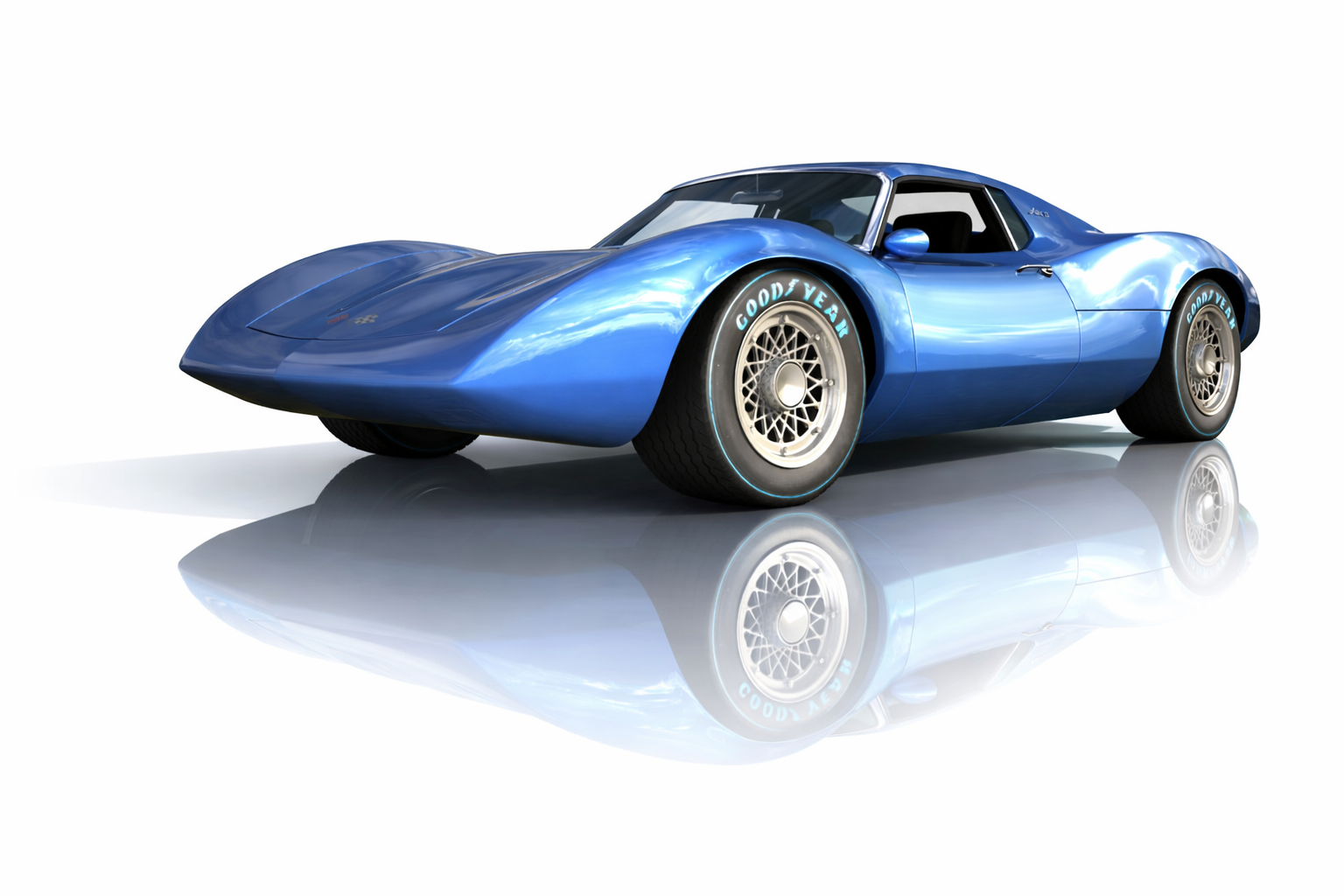
Tag: Corvette Concept Car

  • 1968 XP-880 Astro II Corvette Concept

    1968 XP-880 Astro II Corvette Concept

    By the late 1960s, Chevrolet found itself in a fascinating position.

    The Corvette was no longer an experiment. It was no longer a curiosity. It was no longer the “underdog” American sports car trying to prove it belonged in the same conversation as Europe’s best. By then, the Corvette had grown teeth. It had racing credibility. It had real performance. And with the arrival of the all-new C3 for 1968, it had a dramatic, high-style body that looked every bit as provocative as the era demanded. Sales were strong, public interest was high, and the car’s image had never burned brighter. In 1967, Chevrolet built 22,940 Corvettes. For 1968, first-year C3 production climbed to 28,566, and by 1969 it would rise again to 38,762. From a business standpoint, the argument for radical reinvention was not exactly urgent.

    And yet, inside General Motors, the idea of a mid-engine Corvette would not go away.

    That tension is what makes the 1968 XP-880 Astro II such a compelling chapter in Corvette history. It was born at the precise intersection of ambition and restraint, of engineering courage and corporate caution. It was a machine that asked a dangerous question at exactly the wrong time for a company already selling every Corvette it could build: what if America’s sports car stopped looking over its shoulder at Europe and instead decided to beat Europe at its own game?

    The Astro II was not the first Chevrolet research vehicle to place the engine behind the driver, nor was it the first GM concept to flirt with exotic architecture. But it was the first true mid-engine Corvette prototype that looked, felt, and presented itself as something plausibly connected to the Corvette production line. It was not an abstract laboratory object. It was not a pure race mule. It was a Corvette-shaped provocation, and when it appeared before the public in April 1968 at the New York Auto Show, it ignited exactly the kind of speculation Chevrolet both wanted and feared.

    To understand why the Astro II still matters today, you have to understand the moment that produced it.

    The Pressure of the Era
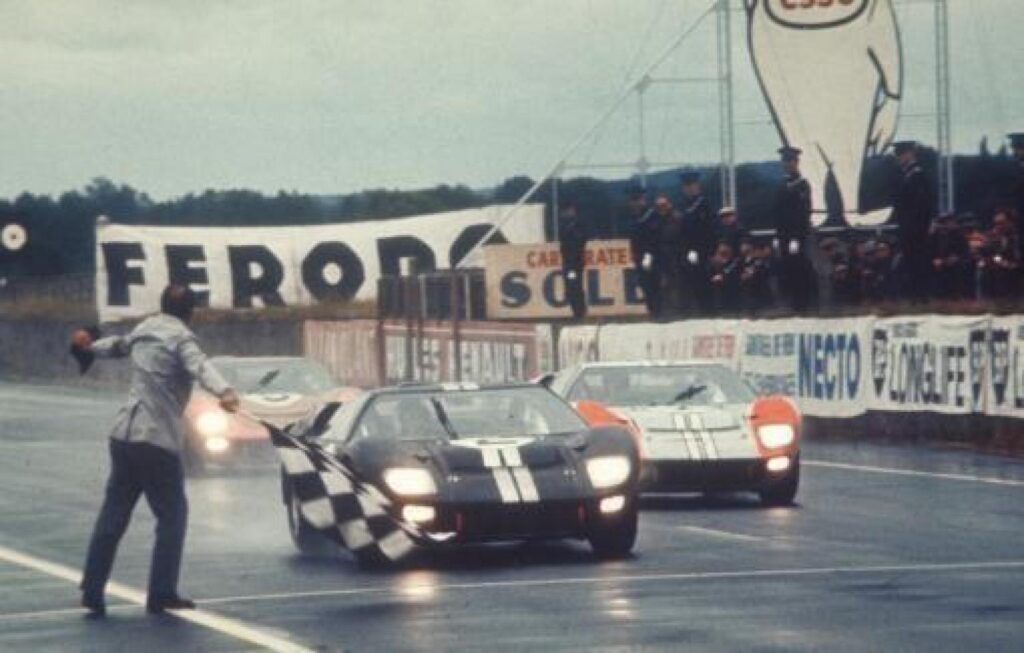
    Ford’s GT40 victories at Le Mans changed the game, proving an American automaker could challenge—and beat—Europe on its own terms. That shift helped spur GM’s creation of the XP-880 Astro II, a bold mid-engine concept born from a new era of engineering ambition.

    The 1960s were not gentle years in the performance world. They were aggressive, glamorous, and deeply competitive. Racing programs had become extensions of national identity and corporate bravado. Ford’s GT40 program, with its famous Le Mans triumphs over Ferrari, had dramatically reshaped the conversation around what an American company could do when it set its mind to European-style performance. Even for brands not directly contesting that exact battlefield, the message was unmistakable: image mattered, engineering theater mattered, and exoticism mattered.

    Within Chevrolet and GM more broadly, there was no shortage of people who understood this. Zora Arkus-Duntov had long believed that the Corvette’s future, at least at the highest level of world performance, pointed toward a mid-engine configuration. GM had already explored rear- and mid-engine ideas through vehicles like CERV I, CERV II, the GS II, and other research efforts. The Astro II did not emerge from nowhere. It emerged from a growing internal belief that the conventional front-engine layout, no matter how capable, might ultimately limit how far Corvette could go in image, packaging, and performance.

    The Astro II was also shaped by another reality: GM was a huge corporation, and huge corporations rarely leap without a net. If Chevrolet was going to explore a mid-engine Corvette, the company was going to do it first through a concept that combined vision with practical experimentation. That is where Frank Winchell and his team entered the picture.

    Frank Winchell, Larry Nies, and the Engineering Problem
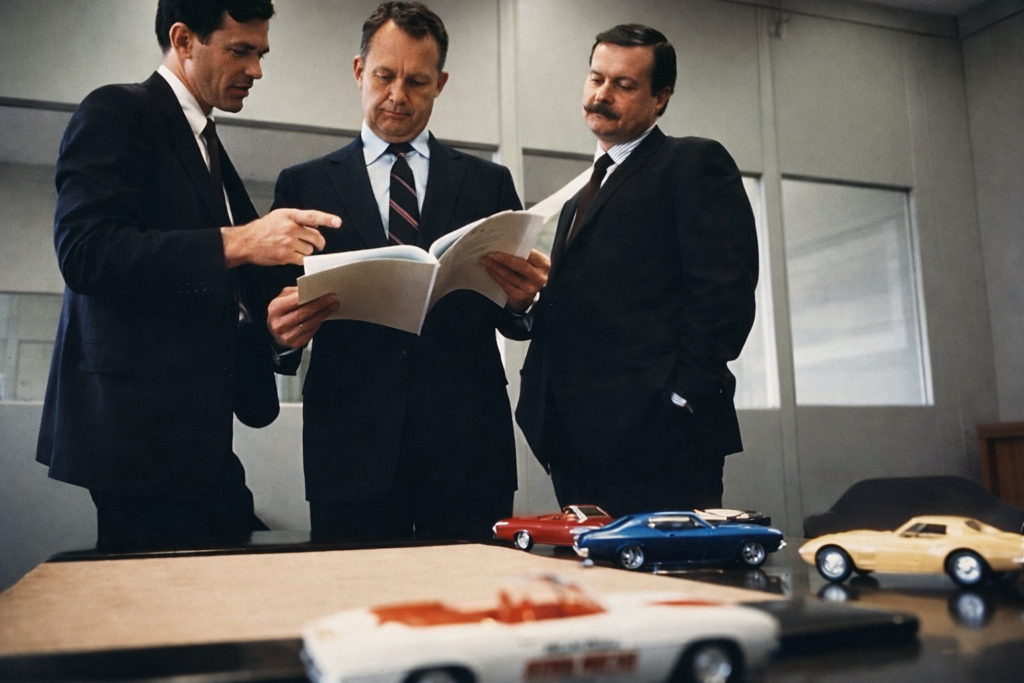
    Frank Winchell (center) was one of the driving forces behind Chevrolet’s mid-engine experimentation in the 1960s. As head of Chevrolet Research and Development, he helped shape the environment that produced the XP-880, a V-8-powered concept that would ultimately evolve into the Astro II and stand as one of GM’s boldest early steps toward a mid-engine Corvette.

    Frank Winchell, who led Chevrolet’s Research and Development organization, was central to the Astro II story. Under his direction, the 1968 XP-880 Astro II became more than a styling proposal. It became a genuine engineering exercise—an attempt to figure out how one might package big-block American power in an all-new, mid-engine sports car without losing the structural discipline, drivability potential, and brand identity that would make such a machine feel authentically Chevrolet.

    Larry Nies was tasked with solving what was, in truth, a vicious packaging puzzle.

    A big-block 427 cubic-inch V8 is not a delicate piece of hardware. They are large, heavy, and not naturally suited to compact, mid-engine layouts. But Nies and the engineering group were determined to see what could be done. Their answer was ingenious: reverse the engine in the chassis. By turning the Mark IV big-block 180 degrees, the bulky accessory drive, water pump, alternator, and other front-mounted hardware could be moved rearward, creating additional room near the passenger compartment. The engine’s starter and ring gear wound up beneath the seatback area, while the accessory mass was moved farther aft. It was a deeply practical solution to an otherwise brutal spatial problem.

    Loring “Larry” Francis Nies played a central engineering role in the XP-880 program, developing the mid-engine layout that made the concept feasible. His work packaging a 427 V-8 into the compact chassis helped give shape to what would become the Chevrolet Astro II—one of GM’s most important early steps toward a mid-engine Corvette. (Image courtesy of Stetson Funeral Home)

    The XP-880’s structure was equally interesting. Rather than relying on a traditional production-style frame, the Astro II used a welded steel backbone chassis. This central spine housed key mass and helped organize the car around its mid-mounted powertrain. The layout also included a centrally mounted fuel bladder and a radiator placed at the rear, with venting integrated into the bodywork to manage airflow and cooling. From an engineering standpoint, this was not simply a Corvette body draped over a novelty chassis. It was a purpose-built architecture designed around the logic of a mid-engine sports car.

    What makes the 1968 XP-880 Astro II especially fascinating is that its revolutionary layout coexisted with a heavy use of production-derived parts. Chevrolet was not trying to reinvent every nut and bolt. The front suspension incorporated largely off-the-shelf components, including Camaro wishbones, Corvette brakes, Oldsmobile Toronado universal joints, rack-and-pinion steering, and custom upper-control-arm geometry intended to keep the roll center very low. That mix of improvisation and discipline tells you a great deal about what the car really was: not a fantasy in fiberglass, but an experimental machine assembled quickly and intelligently to test a serious idea.

    The 1968 XP-880 astro II: Big Power, Clever Compromise, and One Serious Weakness
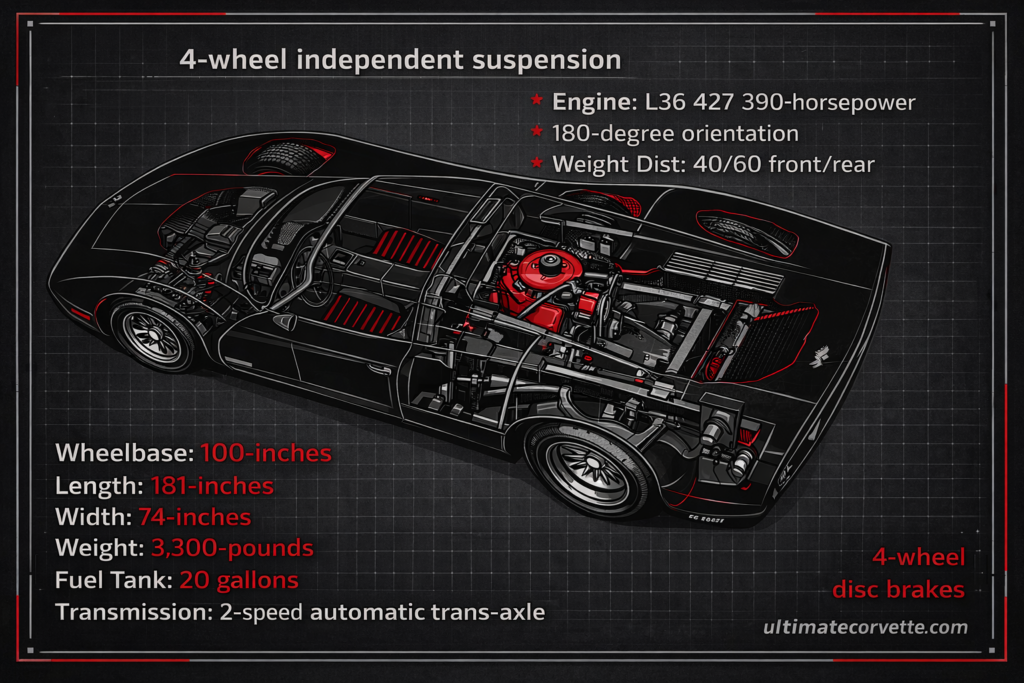
    The XP-880 paired a reversed, longitudinally mounted 427 V-8 with a rear transaxle—an advanced layout that helped keep the car low and dramatic, but also created serious packaging, cooling, and durability challenges for the engineers bringing Chevrolet’s mid-engine vision to life.

    Power came from Chevrolet’s 427-cubic-inch Mark IV big-block V8, rated in period sources at roughly 390 to 400 horsepower depending on the source cited. Either way, the point was the same: this was a real engine, with real output and real intent. Chevrolet was not pretending. The Astro II was built around the kind of displacement and torque that defined American performance at its most unapologetic.

    The problem was not the engine.

    The problem was what sat behind it.

    To transmit power to the rear wheels, engineers used a two-speed automatic transaxle from a 1963 Pontiac Tempest. On paper, this choice made sense. It was available, compact enough to adapt, and suited the rapid development schedule of a concept program. In practice, it was a weak link. The Tempest transaxle was not really up to handling sustained big-block torque in a demanding mid-engine application. Contemporary and retrospective sources alike point to this transmission choice as one of the Astro II’s most significant technical compromises, and when the transaxle proved inadequate, the system required redesign.

    That detail matters because it gets to the heart of the Astro II’s dual identity.
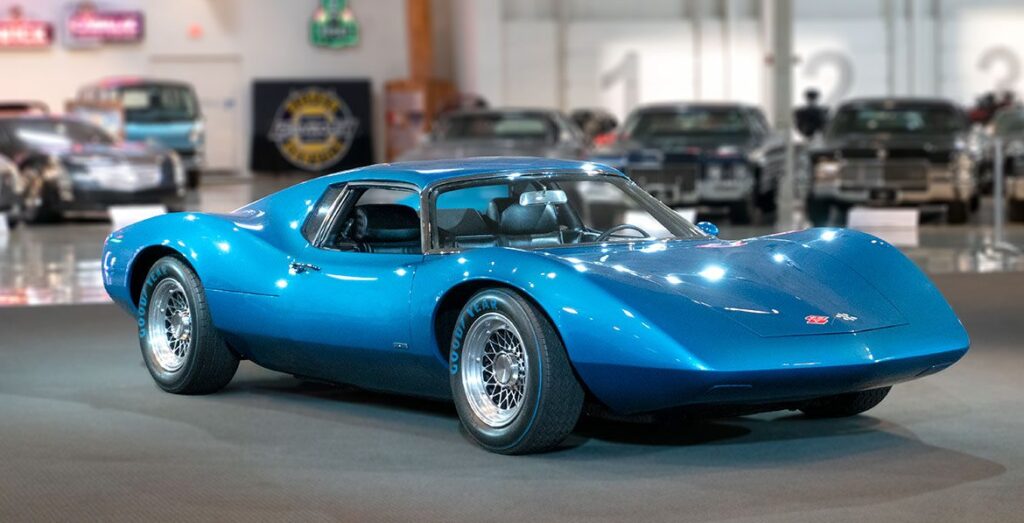
    Front quarter view of the 1968 XP-880 Astro II Corvette in Sterling Heights, Michigan.
    The 1968 XP-880 Astro II looked like a future Chevrolet could almost reach, but not quite yet build. In this form, it stood as a beautifully executed proof of concept—evidence that a big-block, mid-engine Corvette was no longer fantasy, but a serious engineering possibility. What the car suggested in equal measure was both promise and limitation: extraordinary packaging ambition, balanced mass, and real dynamic potential, still waiting on the production-level durability and hardware needed to make it fully viable. (Image courtesy of GM Media LLC.)

    The car was advanced enough to feel credible, but not yet resolved enough to be production-ready. Astro II was an elegant proof of concept, not a finished automobile. Chevrolet had demonstrated that it could package a big-block V8 behind the driver in something that looked and felt like a legitimate Corvette offshoot. What it had not yet proven was whether such a machine could be mass-produced at the right price, with the durability customers would expect, and with a transaxle stout enough to repeatedly produce the kind of performance the layout promised.

    Even so, the 1968 XP-880 Astro II still hinted at genuinely startling capability. Riding on G70-15 tires and cast-aluminum wheels, with four-wheel disc brakes and its mass centralized within the chassis, the car reportedly generated 1.00 g of cornering grip—an astonishing figure for the era, particularly on street tires. That number has been repeated so often over the years that it has taken on a life of its own, and whether it is read as a precise engineering benchmark or as period shorthand for what the car could do, the broader takeaway remains the same: Astro II made the dynamic promise of a mid-engine Corvette impossible to ignore.

    Larry Shinoda and the Art of Making It Look Inevitable
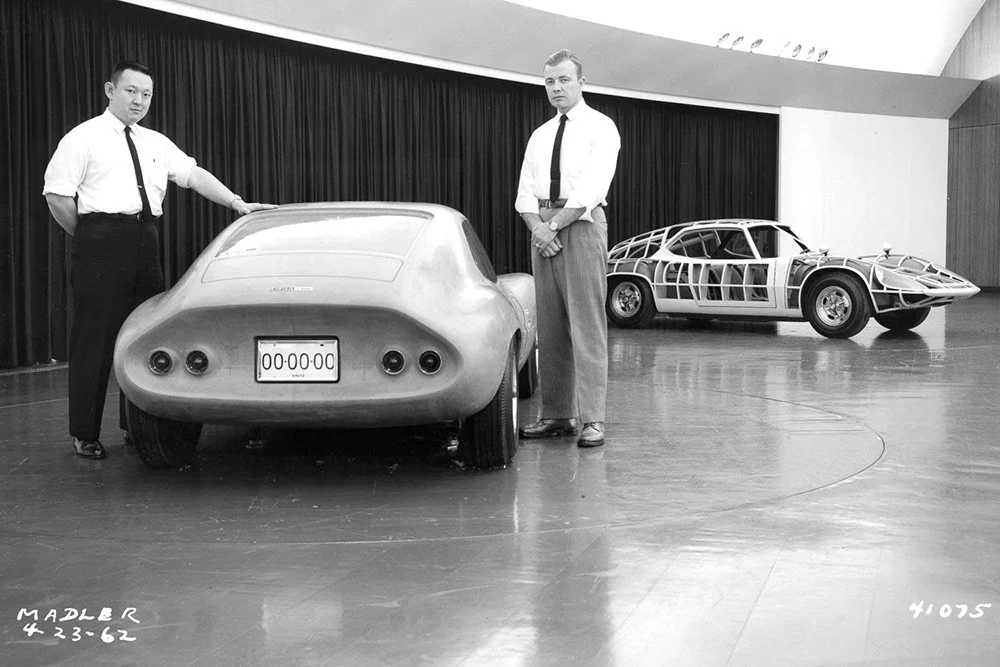
    Larry Shinoda and Antone "Tony' Lapine with the full scale Monza SS Clay Concept Car.
    arry Shinoda (left) and Tony Lapine (right) stand with the full-size Monza SS clay model, one of the most important GM design studies of the early 1960s and a car that helped shape the visual language of Chevrolet performance for years to come. While this image is not directly tied to the XP-880 Astro II, it places Shinoda in the exact creative world that made such projects possible. Shinoda’s role in GM Styling helped advance the kind of low, dramatic, performance-driven forms that would later find expression in the Astro II, where Chevrolet pushed the idea of a mid-engine, big-block sports car into startlingly credible territory. Seen in that light, this image captures not the Astro II itself, but one of the designers whose influence helped lay the groundwork for it. (Image courtesy of GM Media LLC.)

    If Winchell and Nies gave the Astro II its architectural seriousness, Larry Shinoda gave it its soul.

    Shinoda was already one of the defining design voices in Corvette history. His work on cars like the Mako Shark II, the Monza SS, and other GM performance concepts had established him as a master of muscular elegance. The Astro II gave him a chance to translate that language into something more compact, more contemporary, and more overtly European in proportion without abandoning Corvette identity.

    That balancing act is one of the car’s greatest triumphs.
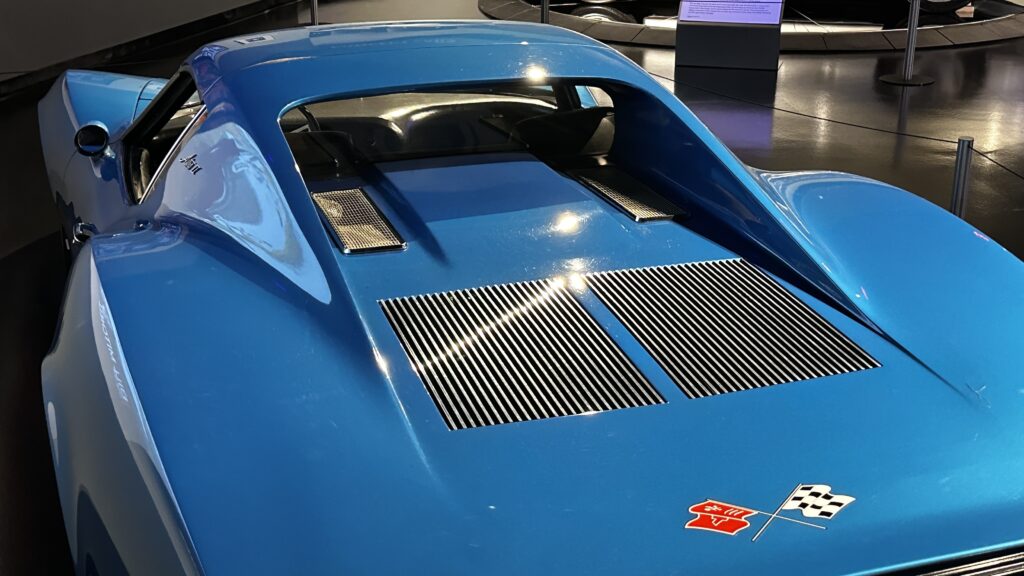
    The rear sugar scoop and mid-engine cover/cooling vents of the 1968 Astro II Corvette Concept Car.
    One of the XP-880’s most distinctive visual cues was the dramatic “sugar scoop” treatment that framed the rear glass and flowed into the engine cover, giving the car a sculptural, unmistakably Corvette-like identity even as its mechanical layout broke sharply from tradition. On a concept built around an early mid-engine platform, that feature did important design work: it visually tied the car back to Chevrolet’s established sports car language while helping mask and integrate the mass of the engine bay behind the passenger compartment. In other words, the sugar scoop helped the XP-880 look like an evolution of the Corvette rather than a total departure from it. It was a clever piece of styling that blended familiar Corvette drama with the unique proportions of a mid-engine experiment. (Image courtesy of the author)

    The 1968 XP-880 Astro II did not look like a foreign car with Corvette badges. It looked like a Corvette pulled taut around a new idea. The body carried the familiar emotional cues of the brand—curved fender masses, pronounced haunches, a pointed nose, Corvette taillight graphics, and a cockpit-forward stance—but everything was re-proportioned around the logic of the mid-engine package. The rear deck sat higher to clear the big-block and cooling layout. The tail incorporated vents to support the rear-mounted radiator arrangement. The signature “sugar scoop” rear window added drama while visually tying the roofline into the swollen rear bodywork. The front fascia was nearly seamless, lacking the overt grille treatment and bumper interruptions buyers expected from more conventional cars of the day.

    Just as importantly, the Astro II looked usable.

    Unlike the more radical Astro I that preceded it, the Astro II had conventional doors, a defined front storage area, and a rear body section that could be lifted for engine access. It looked less like a highly stylized concept car and more like a serious proposal. In truth, that may have been its most dangerous quality. Plenty of concepts are too wild to threaten the status quo. The Astro II was not. It looked close enough to reality to prompt people to wonder whether Chevrolet might actually build it.

    New York, 1968: The Public Debut of the Astro II Concept
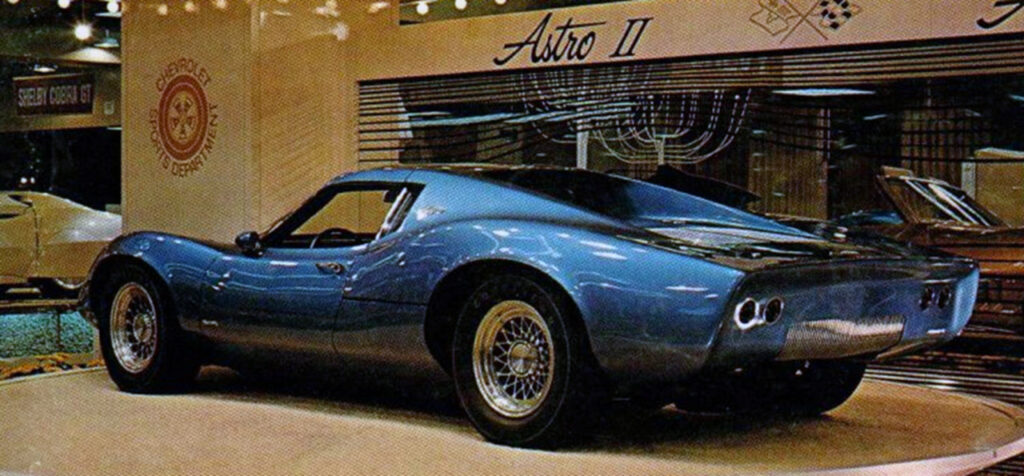
    Unveiling the 1968 XP-880 Astro II Corvette Concept in New York City.
    When Chevrolet unveiled the Astro II at the 1968 New York Auto Show, the car landed like a dispatch from the future. Low, wide, and dramatically different from the front-engine Corvette Americans already knew, the XP-880 stunned showgoers with its radical mid-engine proportions, flowing bodywork, and unmistakable sense of purpose. Public reaction was shaped by both fascination and speculation: here was a Chevrolet concept that looked less like a styling exercise and more like a serious preview of what a next-generation American supercar might become. Even if GM never intended the Astro II to be an immediate production promise, its reception made one thing clear—enthusiasts were more than ready to imagine a Corvette with its engine behind the driver.

    By the time the 1968 XP-880 Astro II reached the New York Auto Show in April 1968, the new C3 Corvette was already in production and on the road. That timing was important. Chevrolet was not unveiling the Astro II because the existing Corvette had failed. It was a car unveiling because the company wanted to gauge public reaction to what a more evolved future Corvette might look like.

    For its debut, the car was painted Firefrost Blue, a luminous, high-drama color that suited both Bill Mitchell’s taste and the car’s almost liquid body surfaces. It was low—just 43.7 inches tall according to GM Heritage material—and visually arresting in exactly the way a dream car needed to be. Showgoers saw something that looked simultaneously familiar and radical. It was unmistakably part of the Corvette universe, yet it also suggested a future in which Chevrolet would no longer be content merely refining the front-engine recipe.
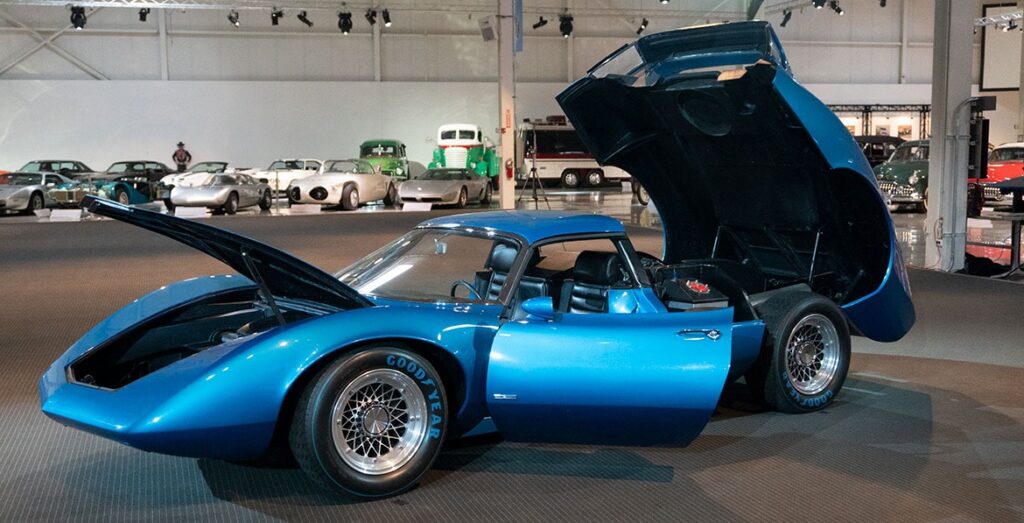
    The 1968 XP-880 Astro II at the GM Heritage Center in Sterling Heights, Michigan,
    The 1968 XP-880 Astro II rode on a compact 100-inch wheelbase and measured roughly 181 inches long, 74 inches wide, and just 43.7 inches tall, giving it a low, planted stance that looked every bit as exotic as its engineering suggested. Behind the cabin sat a mid-mounted 427-cubic-inch Mark IV big-block V8 rated at about 400 horsepower, routed through a two-speed transaxle in one of Chevrolet’s earliest serious attempts to package Corvette performance in a mid-engine layout. GM backed that drivetrain with a welded-steel backbone frame, a rear-mounted radiator, and a full-lift-up rear body section that exposed the engine and rear storage areas in one dramatic movement. Taken together, those specs made the Astro II less a simple show car than a fully realized experimental Corvette aimed squarely at the future. (Image courtesy of GM Media LLC.)

    Speculation followed immediately.

    Was this the next Corvette? Was Chevrolet preparing to strike directly at Europe’s exotics? Was America’s sports car about to move its heart behind the driver?

    Those questions were the point. The 1968 XP-880 Astro II did not need to enter production to do important work for Chevrolet. It only needed to widen the imaginative boundaries of what Corvette could be. In that respect, it succeeded brilliantly.

    Why It Didn’t Happen
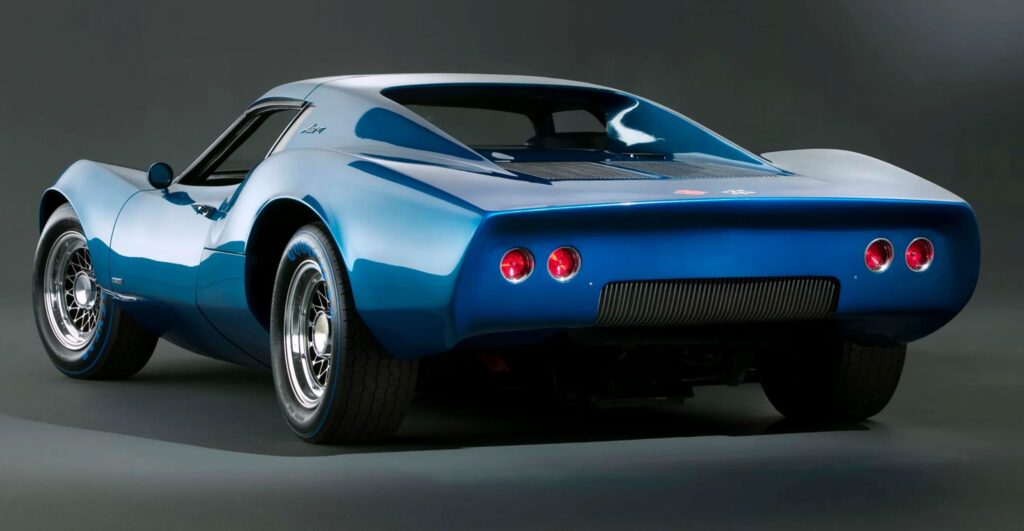
    Rear Quarter View of the 1968 XP-880 Astro II.
    What kept GM from turning the 1968 XP-880 Astro II into a production Corvette was not a lack of imagination, but a collision of engineering, cost, and practicality. Packaging a big-block V8 transversely behind the seats created real challenges in cooling, serviceability, durability, and transaxle strength, and Chevrolet had not yet solved those problems at the scale, reliability, and price point a production car would demand. Just as important, the Corvette was already succeeding as a front-engine sports car, so GM had little business incentive to gamble on such a radical and expensive departure in the late 1960s. In that sense, the Astro II was a brilliant proof of concept—far enough along to be credible, but still too complex and too risky to become the next Corvette. (Image courtesy of GM Media LLC.)

    This is the part of the Astro II story where romance collides with arithmetic.

    The C3 Corvette was succeeding. Dealers had demand. Buyers loved the styling. The Corvette had momentum, and momentum matters inside a corporation. A mid-engine production program would have required vast investment, major engineering development, new supply solutions, stronger transaxle technology, and almost certainly a higher price with lower volume. From Chevrolet’s point of view, that was a difficult argument to win when the existing formula was already printing enthusiasm and profit.

    That is why the Astro II remains such a bittersweet artifact. It was not killed because it lacked imagination. It was not killed because it lacked aesthetic credibility. It was not even killed because the mid-engine idea was inherently unsound. It stalled because the business case was weak and the technical path to production was still expensive and incomplete. Chevrolet did not yet have a convincing answer to the question every large automaker eventually asks of every bold idea: yes, but can we make money on it in meaningful volume?

    And so the car became what so many visionary machines become: a clue instead of a product.

    The Quiet Influence of a Car That Never Reached Showrooms
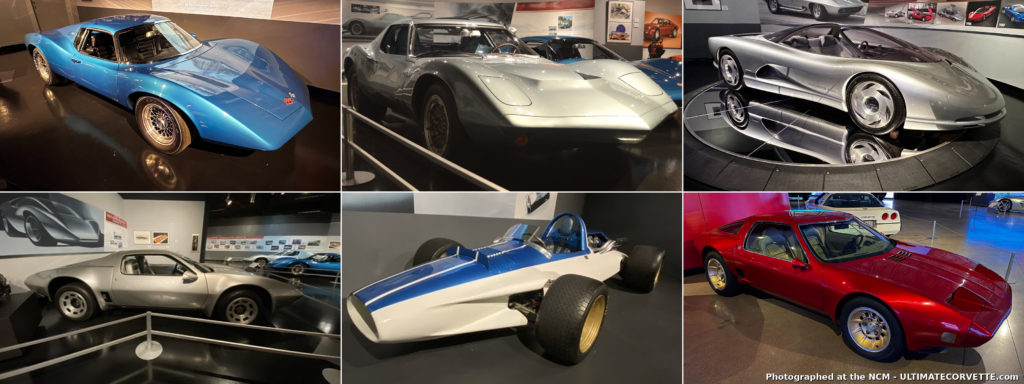
    The XP-880 Astro II was not an isolated flight of fancy. It was part of a long, deliberate succession of Chevrolet and GM mid-engine experiments—cars that tested proportion, packaging, aerodynamics, visibility, cooling, chassis balance, and the very idea of what a Corvette could become. From radical racing-adjacent studies to fully resolved design exercises, each concept pushed the conversation forward, and together they created the institutional memory that finally made the 2020 C8 Corvette possible. By the time Chevrolet committed to putting the engine behind the driver in a production Corvette, the company was no longer chasing a fantasy—it was drawing from decades of lessons first explored in cars like the XP-880 and the mid-engine concepts that followed it. (Images courtesy of the author.)

    The 1968 XP-880 Astro II Corvette concept never entered production, but it did not vanish without leaving fingerprints.

    Its broader influence can be seen in how it helped keep the mid-engine Corvette dream alive inside GM and in the public imagination. Once people had seen a Corvette-shaped machine with its engine behind the driver, the notion could no longer be dismissed as fantasy. The Astro II made the idea concrete. Later prototypes—the XP-882, Aerovette, Corvette Indy, CERV III, and eventually the production C8—would all move through a conceptual doorway that cars like the Astro II helped open.

    Its styling influence appears to have been more direct still. Retrospective accounts from major enthusiast publications note that the Astro II’s body-color front treatment anticipated the 1973 Corvette’s cleaner nose, while its rear-end theme foreshadowed elements of the 1974 Corvette’s redesigned tail. Whether one wants to describe that as direct lineage or strong visual echo, the resemblance is real enough that the Astro II can fairly be read as a concept whose ideas did, in softened form, slip into production reality.

    That, too, is part of how concept cars work. Not every dream reaches the street whole. Sometimes it is disassembled into gestures, surfaces, proportions, and ideas that gradually find their way into the showroom through side doors.

    And that is precisely where the Astro II earns a more serious reading. It was not merely an exotic dead end or a dramatic showpiece created to stir crowds beneath the lights of an auto show stand. It was a rolling design argument—one that tested how far Chevrolet could stretch Corvette language without breaking it. Even stripped of its mid-engine destiny, the car still contributed. Its sharp, uncluttered front treatment, its tapered tail, and its overall sense of compression and purpose all suggested a future in which the Corvette could look cleaner, lower, and more sophisticated without surrendering its identity.

    Seen that way, the Astro II occupies a fascinating middle ground in Corvette history. It was too advanced, too specialized, and too uncompromising to become a production car in its own right. But it was also too thoughtful, too resolved, and too influential to dismiss as a mere styling exercise. Some of its ideas were simply too good to disappear. They were absorbed, translated, and made digestible for production—muted where necessary, refined where practical, but still present. The result is that the Astro II’s legacy is not confined to the realm of unrealized possibility. Parts of it escaped the dreamscape and entered the bloodstream of the Corvette itself.

    Why the 1968 XP-880 Astro II Still Matters Today
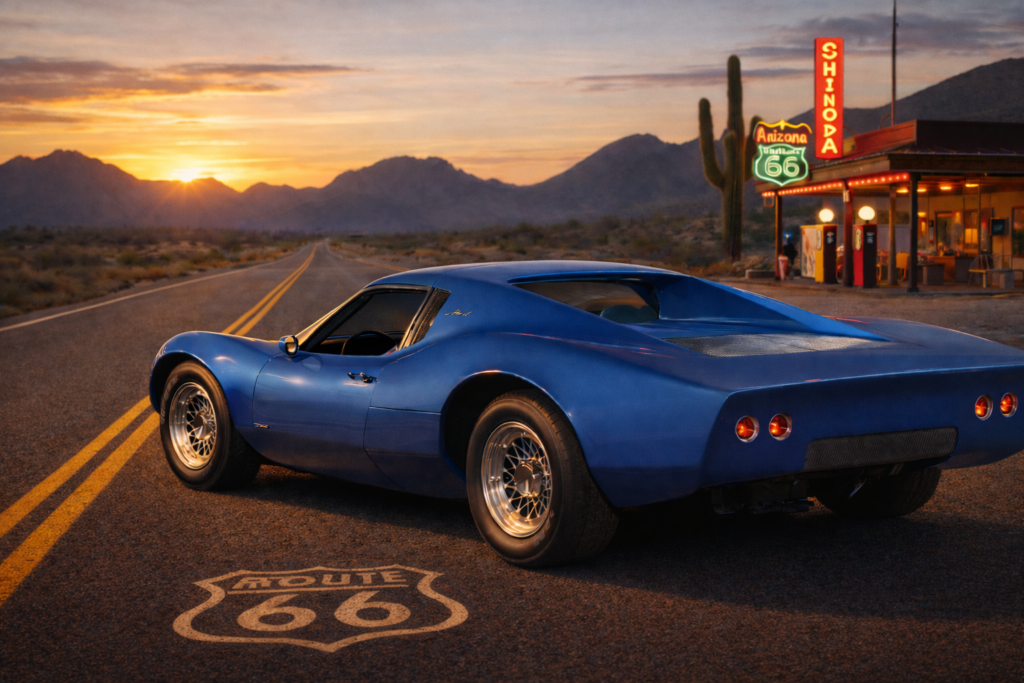
    The 1968 XP-880 Astro II on Rt. 66 in Arizona.
    It’s easy to imagine the XP-880 stretching its legs on the open highways of the American West, its low, sculpted body slicing through the desert air as the sun falls behind the mountains. Out here—far from auto show turntables and design studios—the car feels less like a concept and more like a promise, one that Chevrolet wouldn’t fully deliver on for another half century. The proportions make sense. The stance feels right. And in this setting, with the road unwinding endlessly ahead, the Astro II no longer reads as an experiment—it reads as inevitability. That is the quiet brilliance of this car. Long before the mid-engine Corvette became reality in 2020, the XP-880 had already defined the visual and philosophical blueprint. It reminds us that progress doesn’t always move in straight lines; sometimes it takes decades for an idea to find its moment. But when it does, you realize it was never new at all—it was simply waiting for the world to catch up. (Image credit: GM Media LLC / ChatGPT)

    The Astro II matters because it was one of the first times Chevrolet publicly revealed that the Corvette’s future might not be bound to tradition forever. It matters because it translated engineering restlessness into an object people could see, photograph, debate, and remember. It matters because it proved that Corvette designers and engineers were thinking in larger, bolder terms than the production line alone might suggest. And it matters because, more than fifty years before the C8 finally carried a mid-engine Corvette into showrooms, the Astro II made that future visible.

    In a very real sense, the Astro II was not a failed Corvette. It was an early draft of a promise.

    Today, preserved within GM’s heritage collection and displayed through institutions like the National Corvette Museum, the Astro II survives as more than a beautiful blue show car. It survives as evidence. Evidence that the mid-engine idea had real engineering substance decades before the C8. Evidence that Corvette’s stewards were willing, at least in flashes, to imagine something much more radical than the market required. Evidence that the dream did not begin in the 2010s, or even the 1980s, but deep in the experimental bloodstream of the 1960s.

    And perhaps that is the most compelling thing about the XP-880 Astro II.

    It was not built because Chevrolet had to build it. Chevrolet was already winning plenty of attention with the Corvette it had. The Astro II was built because somebody inside GM still believed that America’s sports car could be something even more exotic, more sophisticated, and more daring than the public had yet seen. That belief did not produce an immediate revolution in the showroom. But it did produce one of the most important concept cars in Corvette history.

    The Astro II stands today as a polished, low-slung reminder that some of the most important cars are not the ones that make production. Sometimes the cars that matter most are the ones that reveal where the people behind the badge were trying to go.

    And in the case of the Astro II, where they were trying to go was the future.
    The XP-880 Astro II stands as one of the most compelling “what if” chapters in Corvette history—a bold mid-engine vision decades ahead of its time. This deep dive explores its design, engineering, and lasting influence, revealing how this experimental concept helped shape the path to Chevrolet’s ultimate performance breakthrough.

  • 1954-1955 Corvette EX-87 / #5951 “Test Mule”

    1954-1955 Corvette EX-87 / #5951 “Test Mule”

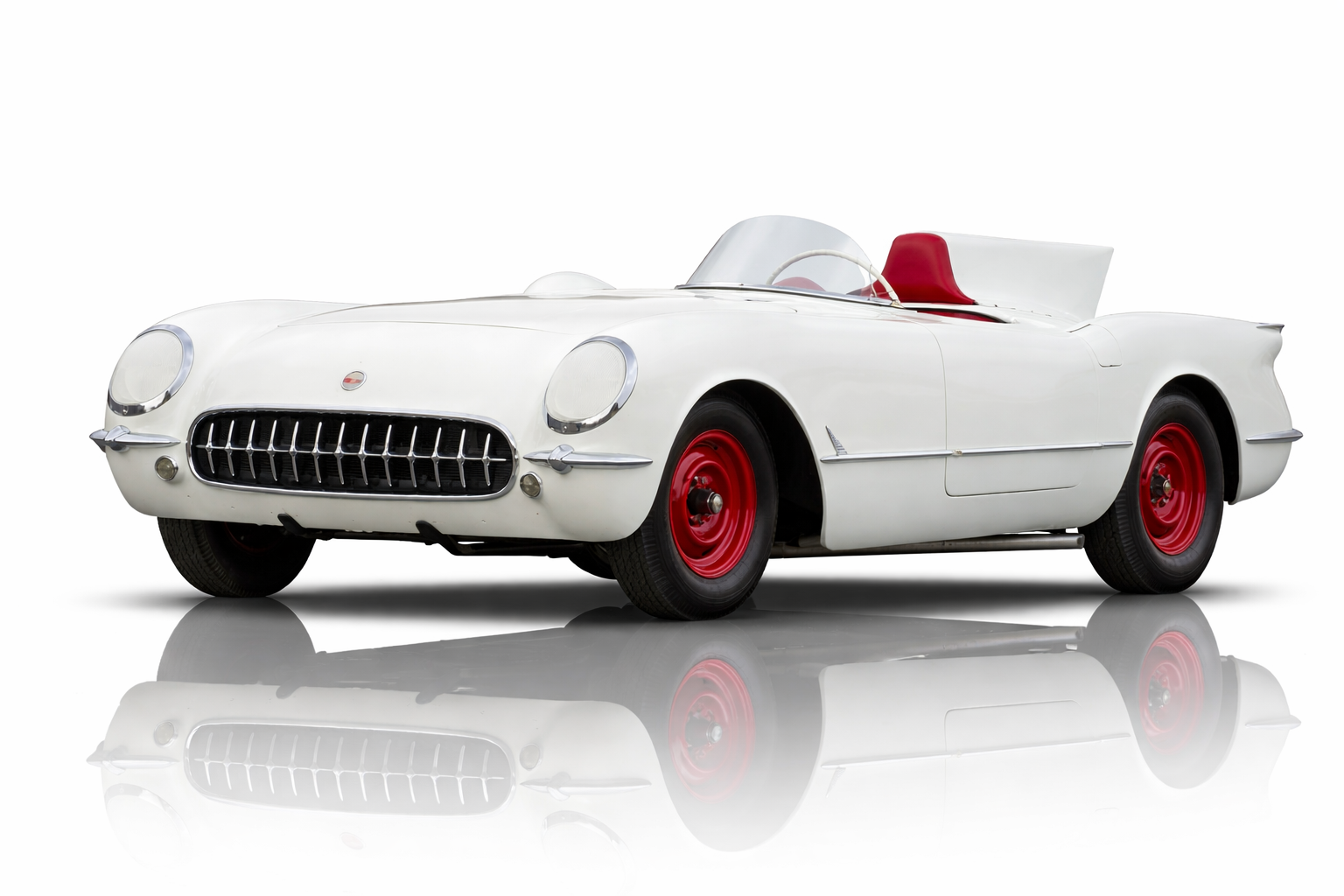
    The EX-87 was never intended to be a show car, nor was it born from the glamour-driven world of GM’s Motorama turntables. It did not wear dramatic chrome flourishes, nor did it preview a futuristic body style meant to dazzle the public. Instead, the EX-87 emerged quietly, almost anonymously, from Chevrolet Engineering—built not to inspire dreams, but to answer a far more fundamental question: Could the Corvette survive as a true performance machine?

    By 1954, the Corvette’s future was far from secure. Sales were lukewarm, the Blue Flame six-cylinder engine was widely regarded as underwhelming, and within General Motors there remained deep skepticism that an American-built sports car could—or should—compete with Europe’s established marques. Harley Earl had given Chevrolet a shape and a name, but shape alone would not save the car.

    As Harley Earl reflected on the Corvette’s early identity crisis, he was blunt about the limits of styling alone. You can’t sell a sports car on looks only,” Earl later explained when discussing the program’s early challenges. “It has to perform like one.”

    That belief increasingly aligned Earl with Duntov’s push for measurable performance, reinforcing the idea that the Corvette’s credibility would ultimately be earned on the road and the stopwatch, not the show stand.

    It was into this uncertain environment that the EX-87 was created.

    A Mule With a Mission

    The EX-87 began life as a 1954 production Corvette pulled from the line and reassigned as a full-time engineering test vehicle—a “mule” in the purest sense. Chevrolet Engineering assigned it the internal designation EX-87 to track its progress through an experimental powertrain program spearheaded by Ed Cole, who at the time was quietly laying the groundwork for what would become one of the most consequential engines in automotive history.

    Cole was not interested in incremental improvement. He believed Chevrolet’s future depended on a lightweight, compact V8 that could be produced economically and adapted across multiple platforms. “We needed an engine that would democratize performance,” Cole would later explain. “Power shouldn’t be exotic. It should be accessible.”

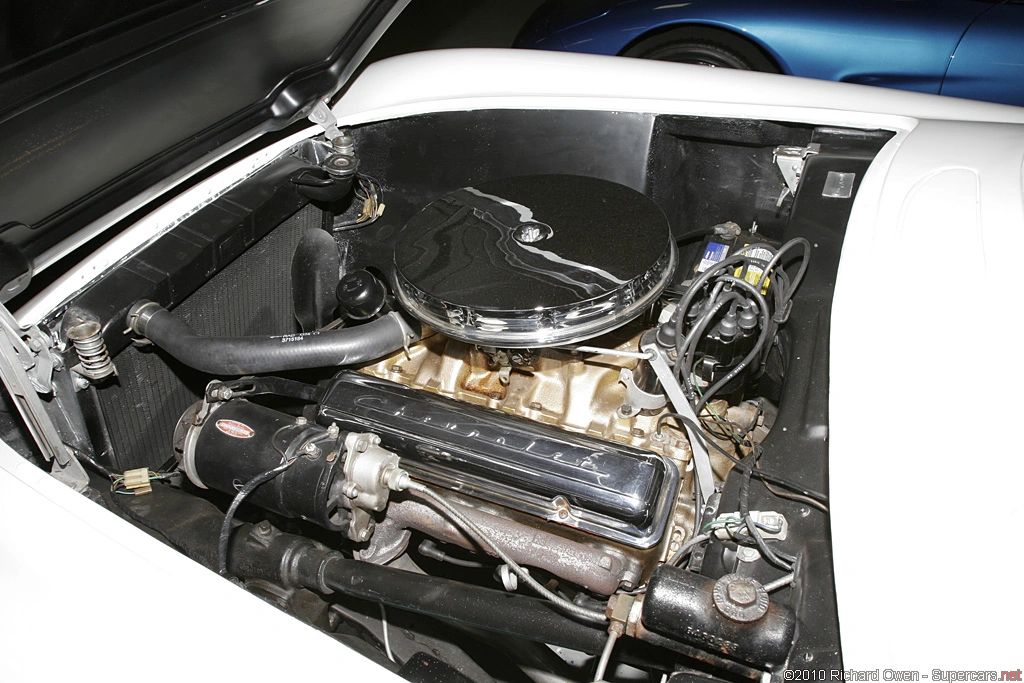
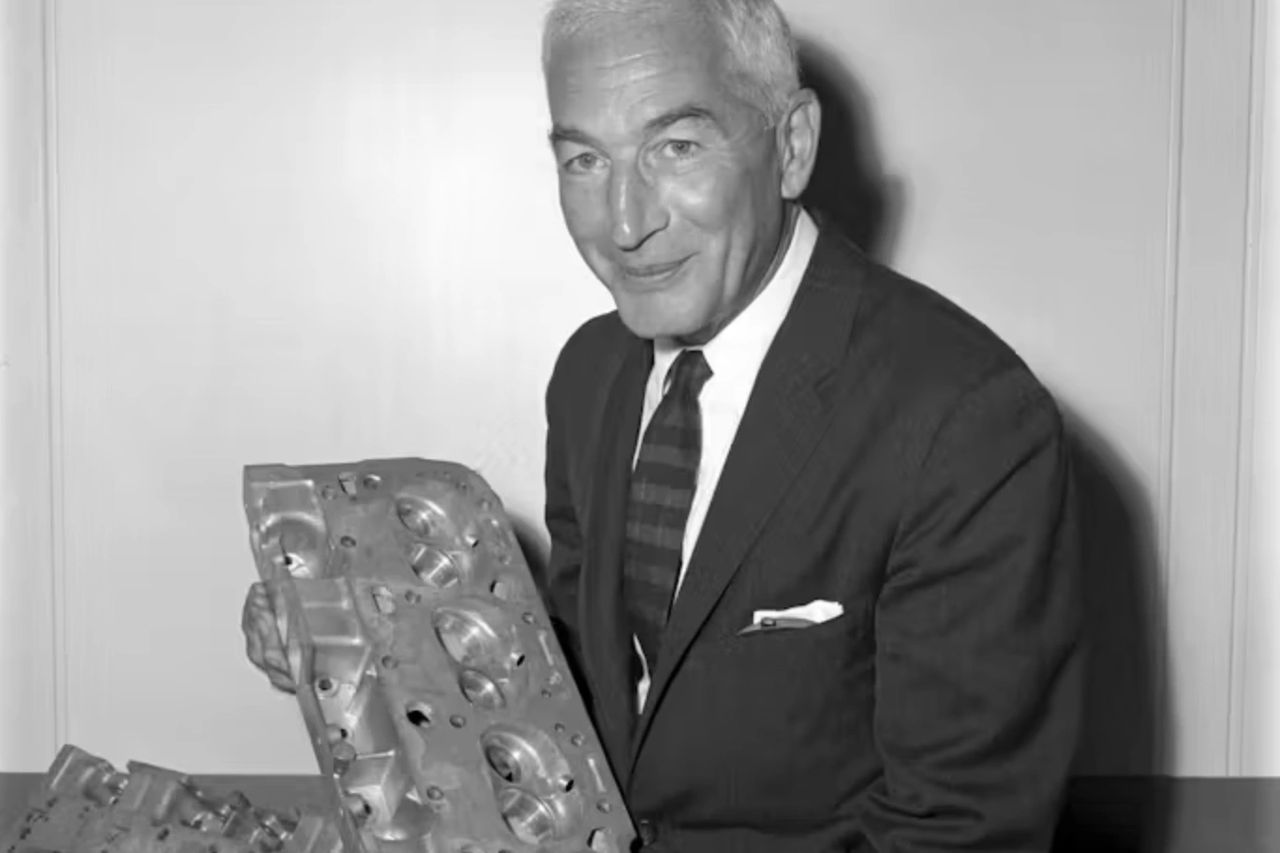
    What you’re looking at is the mechanical turning point that transformed the EX-87 from a Corvette-based experiment into a legitimate top-speed contender. The program initially relied on an early high-performance 265-ci small-block V8 rated at roughly 225 horsepower, but testing quickly revealed that it lacked the output needed to meet Zora Arkus-Duntov’s 150-mph objective. In response, the engine was progressively evolved—bored to approximately 307 cubic inches, fitted with Duntov’s high-lift camshaft, higher compression pistons, and extensively reworked cylinder heads—ultimately producing around 305 horsepower. In this final configuration, the EX-87 validated its purpose by achieving speeds as high as 163 mph, proving that Corvette performance limits were defined not by concept, but by ambition. (Image source: MotorTrend.com)
    What you’re looking at is the mechanical turning point that transformed the EX-87 from a Corvette-based experiment into a legitimate top-speed contender. The program initially relied on an early high-performance 265-ci small-block V8 rated at roughly 225 horsepower, but testing quickly revealed that it lacked the output needed to meet Zora Arkus-Duntov’s 150-mph objective. In response, the engine was progressively evolved—bored to approximately 307 cubic inches, fitted with Duntov’s high-lift camshaft, higher compression pistons, and extensively reworked cylinder heads—ultimately producing around 305 horsepower. In this final configuration, the EX-87 validated its purpose by achieving speeds as high as 163 mph, proving that Corvette performance limits were defined not by concept, but by ambition. (Image source: MotorTrend.com)

    The engine installed in the EX-87 was an early developmental version of that vision—an experimental small-block V8 initially targeted at 283 cubic inches. The Corvette was not chosen for prestige. It was selected because it offered something no other Chevrolet did: low weight, a fiberglass body, and a layout already suited to performance testing.

    At first, the EX-87’s work was strictly internal—hours of durability testing, cooling evaluations, and power validation. Had history taken a different turn, it might have remained nothing more than a footnote in GM’s engineering logs.

    But Zora Arkus-Duntov had other ideas.

    Zora’s Opportunity

    Zora Arkus-Duntov’s work on the EX-87 was less about spectacle and more about proof. Using the car as a rolling laboratory, he pushed Chevrolet’s small-block V8 beyond accepted limits, validating high-compression performance and sustained high-speed capability at a time when the Corvette’s future was far from secure. The EX-87 gave Zora something invaluable: data, confidence, and a tangible argument that the Corvette was capable of standing toe-to-toe with Europe’s best. In that sense, the car wasn’t just a test mule—it was a turning point. (Image courtesy of GM Media LLC.)
    Zora Arkus-Duntov’s work on the EX-87 was less about spectacle and more about proof. Using the car as a rolling laboratory, he pushed Chevrolet’s small-block V8 beyond accepted limits, validating high-compression performance and sustained high-speed capability at a time when the Corvette’s future was far from secure. The EX-87 gave Zora something invaluable: data, confidence, and a tangible argument that the Corvette was capable of standing toe-to-toe with Europe’s best. In that sense, the car wasn’t just a test mule—it was a turning point. (Image courtesy of GM Media LLC.)

    Duntov joined Chevrolet in 1953 with a singular obsession: proving that the Corvette could be a legitimate high-performance sports car. From the outset, he believed Ed Cole’s new V8 was far more than a convenient replacement for the Blue Flame six—it was a platform capable of sustained development, real measurement, and genuine competition. To Zora, the EX-87 represented more than an engine test bed. It was proof—waiting to be demonstrated—that the Corvette could stand shoulder to shoulder with Europe’s best.

    “I did not believe the Corvette lacked ability,” Duntov once said. “I believed it lacked opportunity.”

    He approached Ed Cole with a bold proposal: use the EX-87 to demonstrate, publicly and unequivocally, that a Corvette could achieve a top speed of 150 miles per hour. Cole, ever the pragmatist, immediately recognized the value. Performance numbers could silence critics far faster than styling sketches or sales projections.

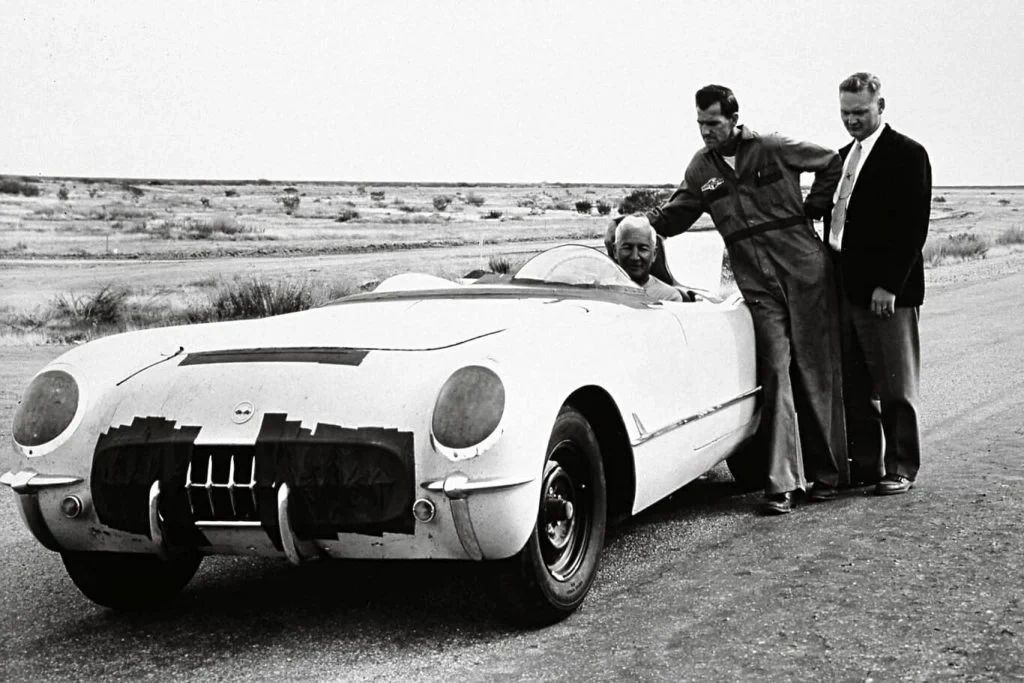
    Captured during high-speed testing at the Arizona Proving Grounds, this image shows the Corvette EX-87 in its most critical role: a purpose-built test mule engineered to validate sustained top-speed performance. The car’s stripped windshield, improvised nose treatment, and minimal bodywork reflect its singular mission—cutting aerodynamic drag while evaluating the limits of Chevrolet’s experimental small-block V8. In this configuration, the EX-87 would ultimately record a verified top speed of 163 mph, an extraordinary figure for a mid-1950s American production-based sports car. The photograph underscores how empirical testing—not styling exercises—was reshaping the Corvette’s engineering trajectory. (Image source: GM Media LLC)
    Captured during high-speed testing at the Arizona Proving Grounds, this image shows the Corvette EX-87 in its most critical role: a purpose-built test mule engineered to validate sustained top-speed performance. The car’s stripped windshield, improvised nose treatment, and minimal bodywork reflect its singular mission—cutting aerodynamic drag while evaluating the limits of Chevrolet’s experimental small-block V8. In this configuration, the EX-87 would ultimately record a verified top speed of 163 mph, an extraordinary figure for a mid-1950s American production-based sports car. The photograph underscores how empirical testing—not styling exercises—was reshaping the Corvette’s engineering trajectory. (Image source: GM Media LLC)

    Cole approved the plan without hesitation. A second internal tracking number—#5951—was assigned to the car in the fall of 1955 as it was formally transferred into Duntov’s engineering division. From that moment forward, the EX-87 ceased to be merely an engine mule. It became a weapon.

    In the years that followed, Zora would continue to push those same boundaries—most famously in 1956, when he drove a modified Corvette to victory at the Pikes Peak Hill Climb, stunning both skeptics and GM leadership alike. That climb was not an isolated triumph, but a continuation of the philosophy first proven with EX-87: that Corvette performance was not theoretical—it simply needed to be unleashed.

    Engineering the Air

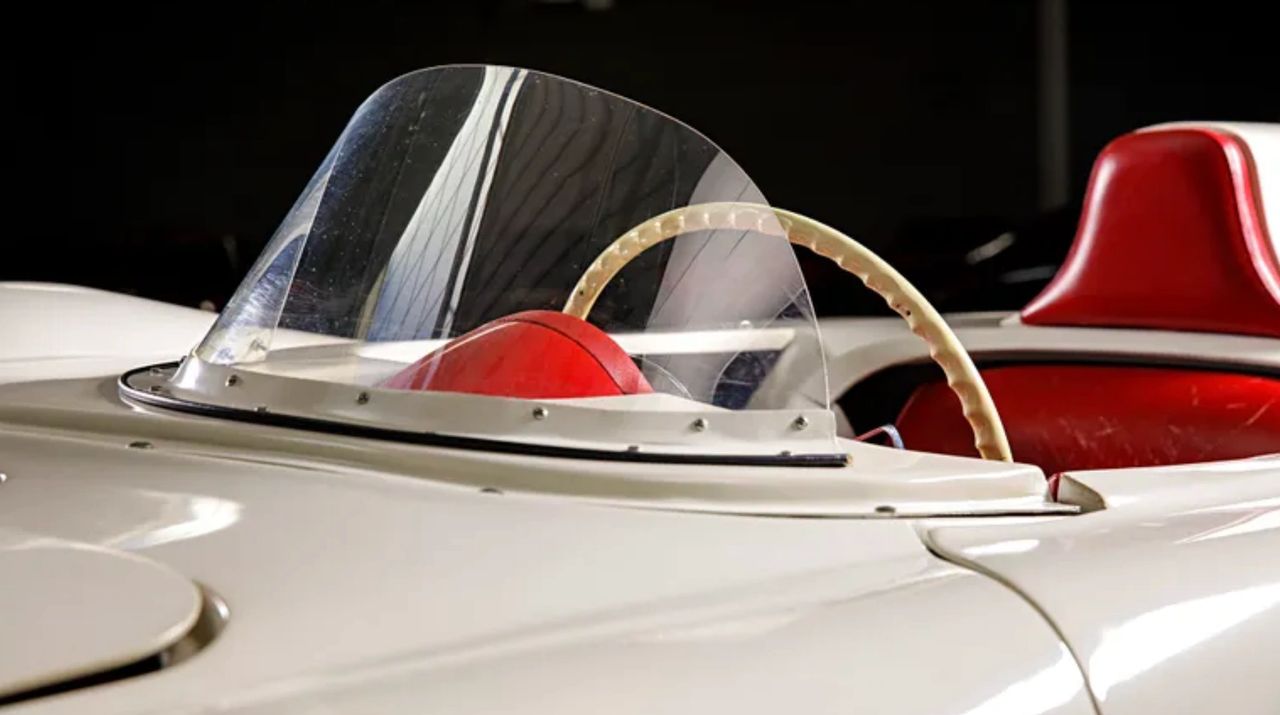
    The low, wraparound windshield fitted to the EX-87 was a deliberate aerodynamic tool, not a styling flourish. By reducing frontal area and smoothing airflow over the cockpit, it helped stabilize the car at sustained high speeds while minimizing turbulence around the driver—critical factors during record-attempt testing. Just as important, the windshield offered a controlled compromise between outright drag reduction and driver protection, allowing Zora Arkus-Duntov to push the car harder and longer than an open cockpit would permit. In the EX-87’s mission, visibility, stability, and survivability were inseparable from performance. (Image source: MotorTrend.com)
    The low, wraparound windshield fitted to the EX-87 was a deliberate aerodynamic tool, not a styling flourish. By reducing frontal area and smoothing airflow over the cockpit, it helped stabilize the car at sustained high speeds while minimizing turbulence around the driver—critical factors during record-attempt testing. Just as important, the windshield offered a controlled compromise between outright drag reduction and driver protection, allowing Zora Arkus-Duntov to push the car harder and longer than an open cockpit would permit. In the EX-87’s mission, visibility, stability, and survivability were inseparable from performance. (Image source: MotorTrend.com)

    Zora attacked the problem methodically. Speed, he understood, was as much about air as horsepower. His first modification was the addition of a full underpan beneath the chassis, smoothing airflow and reducing drag. Next came the windshield—removed entirely and replaced with a low, curved plexiglass windscreen that barely rose above the cowl.

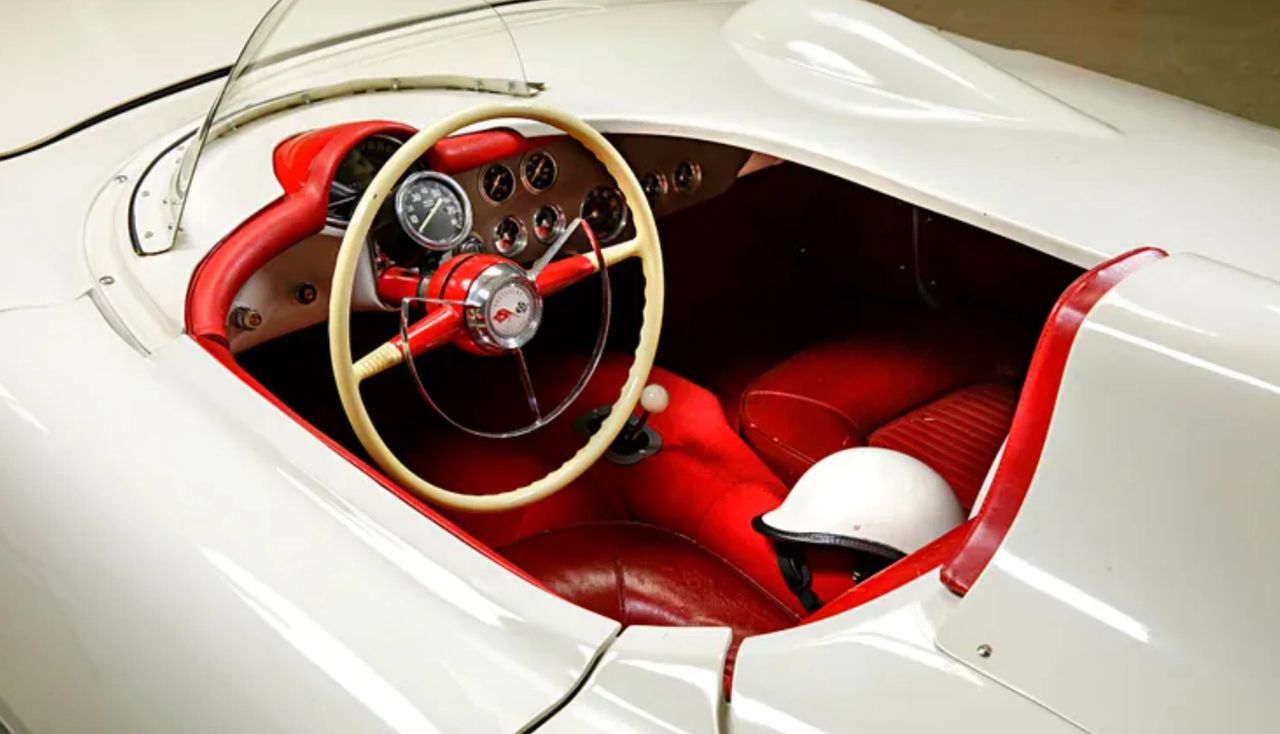
    The enclosed cockpit of the EX-87 was engineered with a singular priority: control at extreme speed. By recessing the driver deeper within the bodywork and surrounding the cockpit with smooth, continuous surfaces, Chevrolet reduced aerodynamic disturbance while improving high-speed stability and driver endurance. The layout also allowed critical instrumentation to remain directly in the driver’s line of sight, reinforcing the car’s role as a data-gathering platform rather than a production prototype. In the EX-87, the cockpit was not about comfort—it was about precision, safety, and sustained high-velocity testing. (Image source: MotorTrend.com)
    The enclosed cockpit of the EX-87 was engineered with a singular priority: control at extreme speed. By recessing the driver deeper within the bodywork and surrounding the cockpit with smooth, continuous surfaces, Chevrolet reduced aerodynamic disturbance while improving high-speed stability and driver endurance. The layout also allowed critical instrumentation to remain directly in the driver’s line of sight, reinforcing the car’s role as a data-gathering platform rather than a production prototype. In the EX-87, the cockpit was not about comfort—it was about precision, safety, and sustained high-velocity testing. (Image source: MotorTrend.com)

    The passenger seat was sealed beneath a fiberglass tonneau cover, transforming the cockpit into a strictly single-occupant environment. Duntov also fabricated a headrest that extended rearward into a subtle tailfin, a feature conceived solely to improve directional stability at extreme speed rather than visual appeal.

    As Duntov would later explain when reflecting on his early Corvette work, “I was not interested in beauty. I was interested in results.” (source: Karl Ludvigsen, Corvette: America’s Sports Car)

    The EX-87 embodied that philosophy completely—its form dictated by airflow, stability, and data, with no concessions made to aesthetics.

    Power Becomes the Limiting Factor

    Zora Arkus-Duntov approached horsepower the way a racer approaches a stopwatch: as something earned through airflow, valvetrain control, and relentless iteration. During the EX-87 program, he helped push Chevrolet’s early small-block well beyond its original limits by combining increased displacement with an aggressive high-lift camshaft developed through GM engineering, driving output to roughly 305 horsepower and enabling sustained 160-mph performance. That work sits squarely within the same lineage as the camshaft enthusiasts would later call the “Duntov” grind—the solid-lifter 097—whose purpose was to let the small-block breathe, rev, and survive at high rpm. Long before Chevrolet, Duntov had already proven his engineering instincts with the Ardun overhead-valve hemispherical-head conversion for the Ford flathead V8, a solution that addressed cooling and airflow limitations while dramatically increasing power potential. Seen in this context, the EX-87 was not an isolated experiment but part of a lifelong pursuit: redefining what American engines could do when engineering, not convention, set the limits. (Image courtesy of GM Media LLC.)
    Zora Arkus-Duntov approached horsepower the way a racer approaches a stopwatch: as something earned through airflow, valvetrain control, and relentless iteration. During the EX-87 program, he helped push Chevrolet’s early small-block well beyond its original limits by combining increased displacement with an aggressive high-lift camshaft developed through GM engineering, driving output to roughly 305 horsepower and enabling sustained 160-mph performance. That work sits squarely within the same lineage as the camshaft enthusiasts would later call the “Duntov” grind—the solid-lifter 097—whose purpose was to let the small-block breathe, rev, and survive at high rpm. Long before Chevrolet, Duntov had already proven his engineering instincts with the Ardun overhead-valve hemispherical-head conversion for the Ford flathead V8, a solution that addressed cooling and airflow limitations while dramatically increasing power potential. Seen in this context, the EX-87 was not an isolated experiment but part of a lifelong pursuit: redefining what American engines could do when engineering, not convention, set the limits. (Image courtesy of GM Media LLC.)

    Initial testing at GM’s new Technical Center in Warren, Michigan, revealed the uncomfortable truth: even with improved aerodynamics, the Corvette simply did not have enough power. The early 283 fell short of the 150-mph goal.

    Zora calculated the deficit precisely. Approximately thirty additional horsepower would be required.

    Drawing on his pre-war engineering experience in Europe, Duntov increased displacement to 307 cubic inches and turned his attention to the camshaft—a component often overlooked, but central to engine character. His design emphasized longer intake and exhaust durations with comparatively modest valve lift, optimizing high-rpm breathing and throttle response.

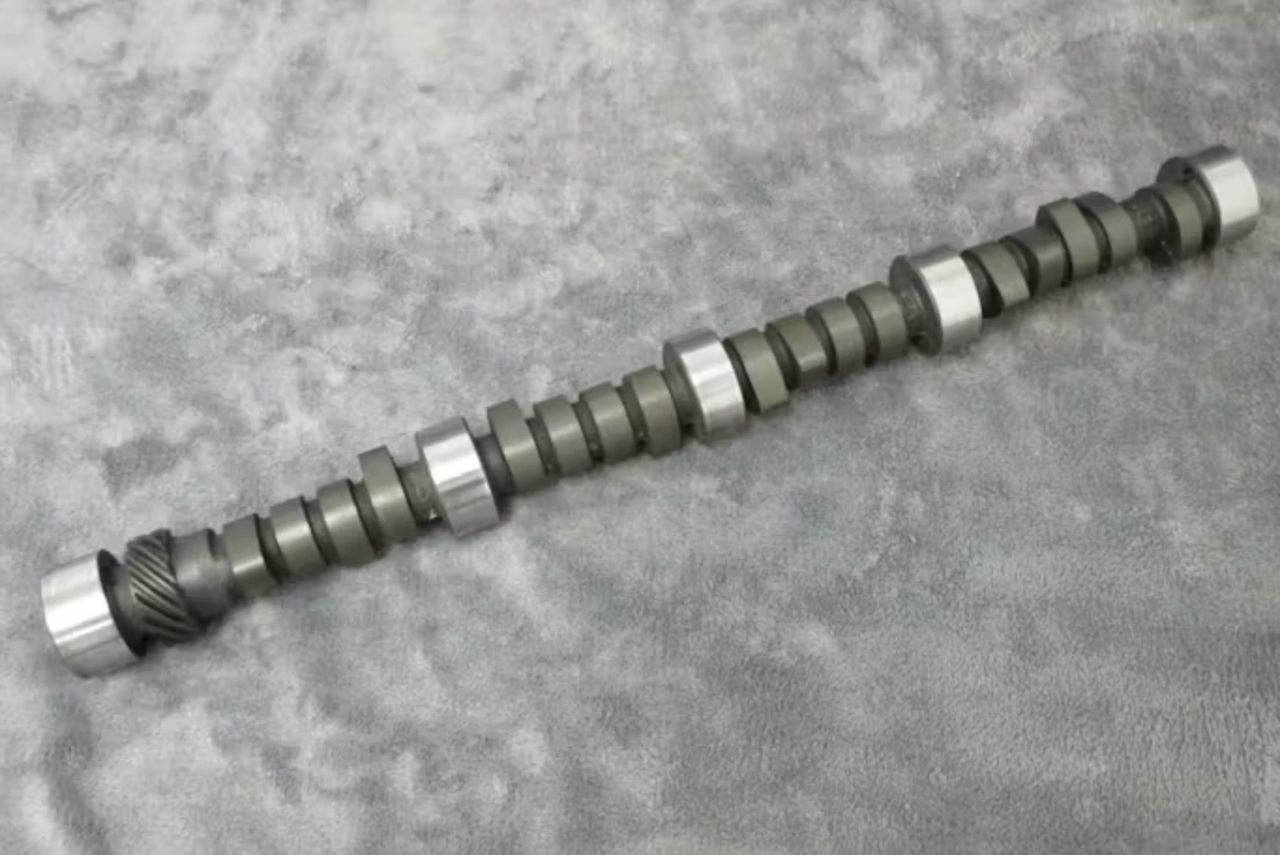
    The “Duntov cam,” officially GM part number 3736097 and commonly known as the 097, became one of the most influential performance camshafts of the early small-block era. Introduced for Chevrolet’s solid-lifter V8s in the late 1950s, it featured approximately .447 inches of valve lift with 1.5:1 rockers, duration in the high-220° range at .050-inch lift, and a relatively wide lobe separation intended to balance high-rpm power with durability. Zora Arkus-Duntov developed the profile to improve airflow and extend usable engine speed, directly addressing the breathing limitations he encountered during early Corvette performance testing, including work tied to the EX-87 program. Unlike peaky racing grinds of the era, the 097 cam delivered a broad, usable powerband that could survive sustained high-rpm operation. Its success cemented Duntov’s philosophy that reliable horsepower came from controlled valvetrain dynamics, not excess. Decades later, the cam remains a benchmark—proof that thoughtful engineering can define an entire generation of performance. (Image source: Chevy Hardcore.com)
    The “Duntov cam,” officially GM part number 3736097 and commonly known as the 097, became one of the most influential performance camshafts of the early small-block era. Introduced for Chevrolet’s solid-lifter V8s in the late 1950s, it featured approximately .447 inches of valve lift with 1.5:1 rockers, duration in the high-220° range at .050-inch lift, and a relatively wide lobe separation intended to balance high-rpm power with durability. Zora Arkus-Duntov developed the profile to improve airflow and extend usable engine speed, directly addressing the breathing limitations he encountered during early Corvette performance testing, including work tied to the EX-87 program. Unlike peaky racing grinds of the era, the 097 cam delivered a broad, usable powerband that could survive sustained high-rpm operation. Its success cemented Duntov’s philosophy that reliable horsepower came from controlled valvetrain dynamics, not excess. Decades later, the cam remains a benchmark—proof that thoughtful engineering can define an entire generation of performance. (Image source: Chevy Hardcore.com)

    When Zora presented the camshaft to Cole’s engineering staff, the reaction was skeptical. The design was labeled “unorthodox,” even risky. But Duntov had no patience for theoretical debate.

    Rather than wait for approval, he loaded the EX-87/#5951 onto a trailer and headed for GM’s Mesa Proving Grounds in Arizona, where conditions favored high-speed testing. Only after further internal review did Cole’s team approve the camshaft for production, and a sample was rushed to Mesa.

    The results were immediate and undeniable.

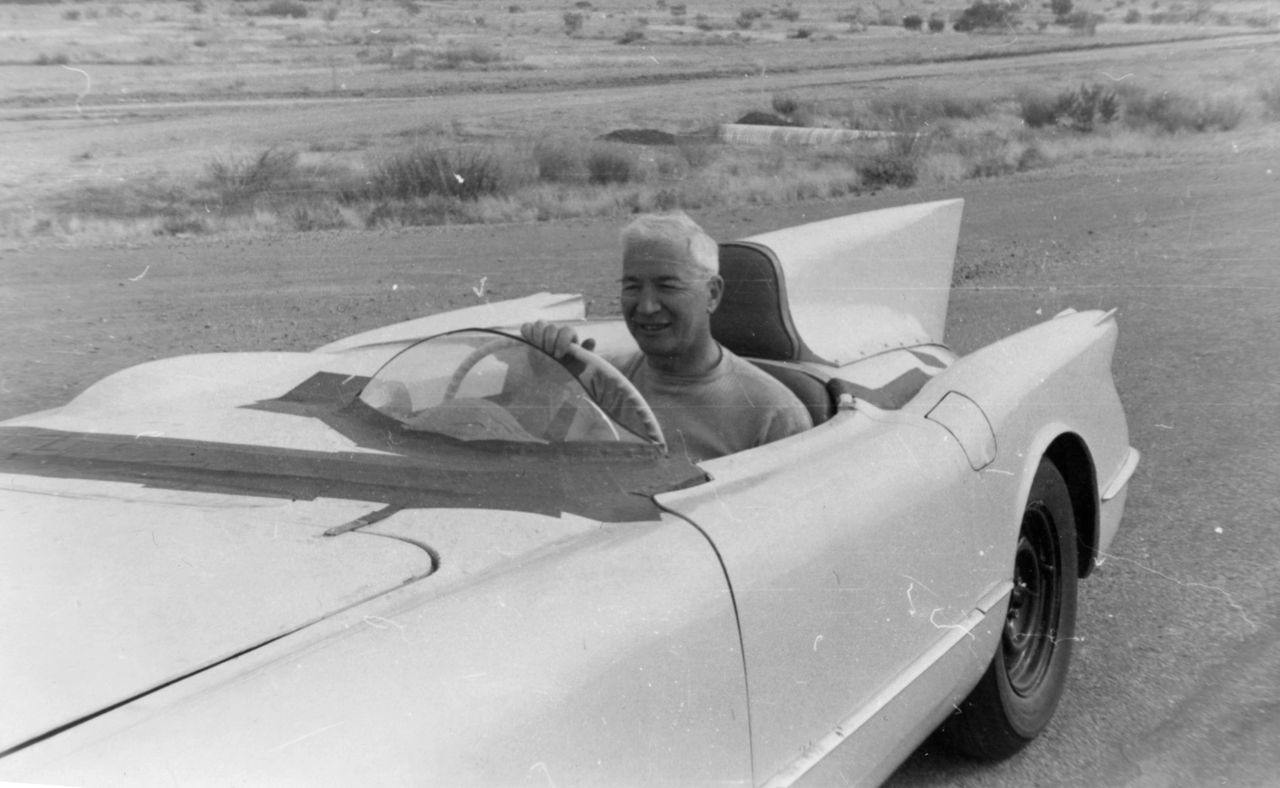
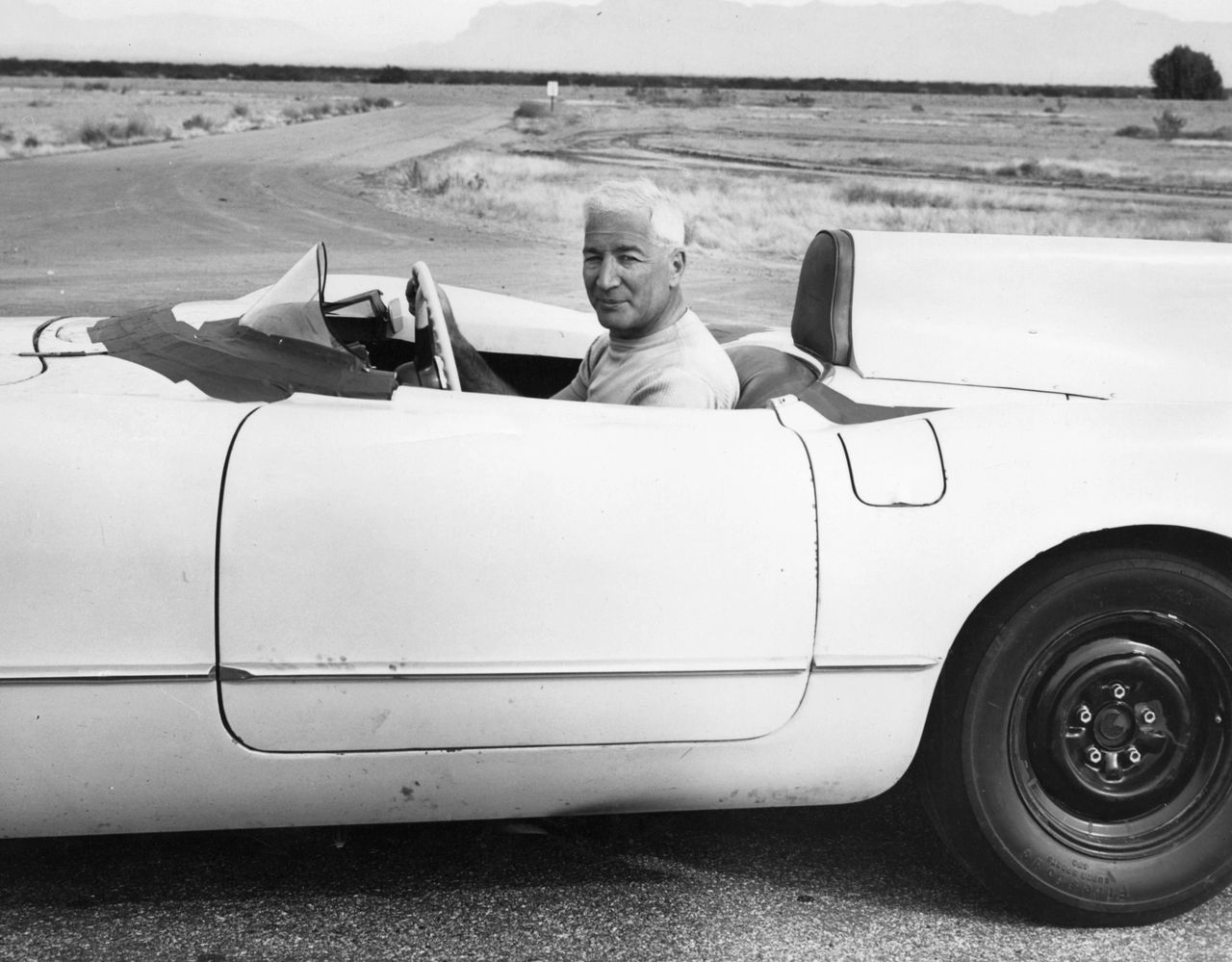
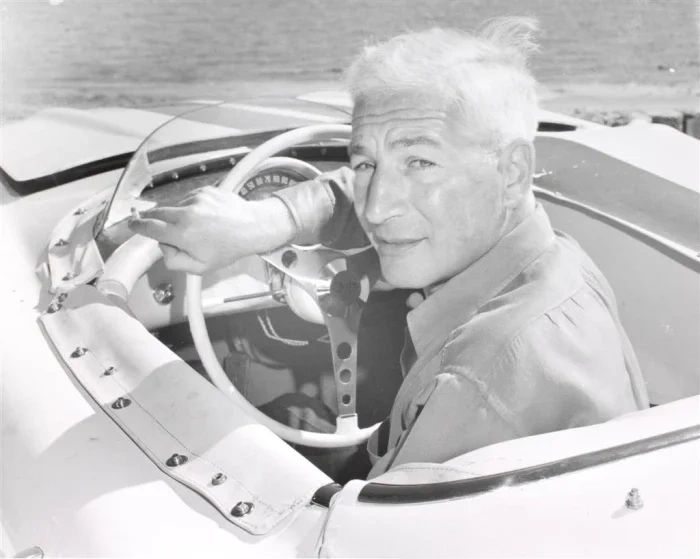
    Photographed at the General Motors Arizona Proving Grounds in Mesa, this image captures Zora Arkus-Duntov during the decisive EX-87 high-speed sessions of December 1955—most notably the December 12, 1955 run that produced a two-way average of 156.16 mph, surpassing his 150-mph objective. The program didn’t stop there: after Duntov installed his hotter high-lift camshaft (paired with the rest of the engine’s evolved high-output configuration), the EX-87 returned with the breathing and rpm it needed to go further. In that later configuration, the car achieved a recorded top speed of 163 mph—turning a development exercise into a hard-number performance statement Chevrolet couldn’t ignore. (Image courtesy of GM Media LLC)
    Photographed at the General Motors Arizona Proving Grounds in Mesa, this image captures Zora Arkus-Duntov during the decisive EX-87 high-speed sessions of December 1955—most notably the December 12, 1955 run that produced a two-way average of 156.16 mph, surpassing his 150-mph objective. The program didn’t stop there: after Duntov installed his hotter high-lift camshaft (paired with the rest of the engine’s evolved high-output configuration), the EX-87 returned with the breathing and rpm it needed to go further. In that later configuration, the car achieved a recorded top speed of 163 mph—turning a development exercise into a hard-number performance statement Chevrolet couldn’t ignore. (Image courtesy of GM Media LLC)

    On December 20, 1955, Zora piloted the EX-87 to 163 miles per hour at 6,300 rpm, the desert air ringing with the sound of what would soon be known as the Duntov Cam. It was a defining moment—not just for the Corvette, but for Chevrolet engineering as a whole.

    “That camshaft,” Cole later acknowledged, “changed how we thought about performance engines.”

    Daytona: Making It Public

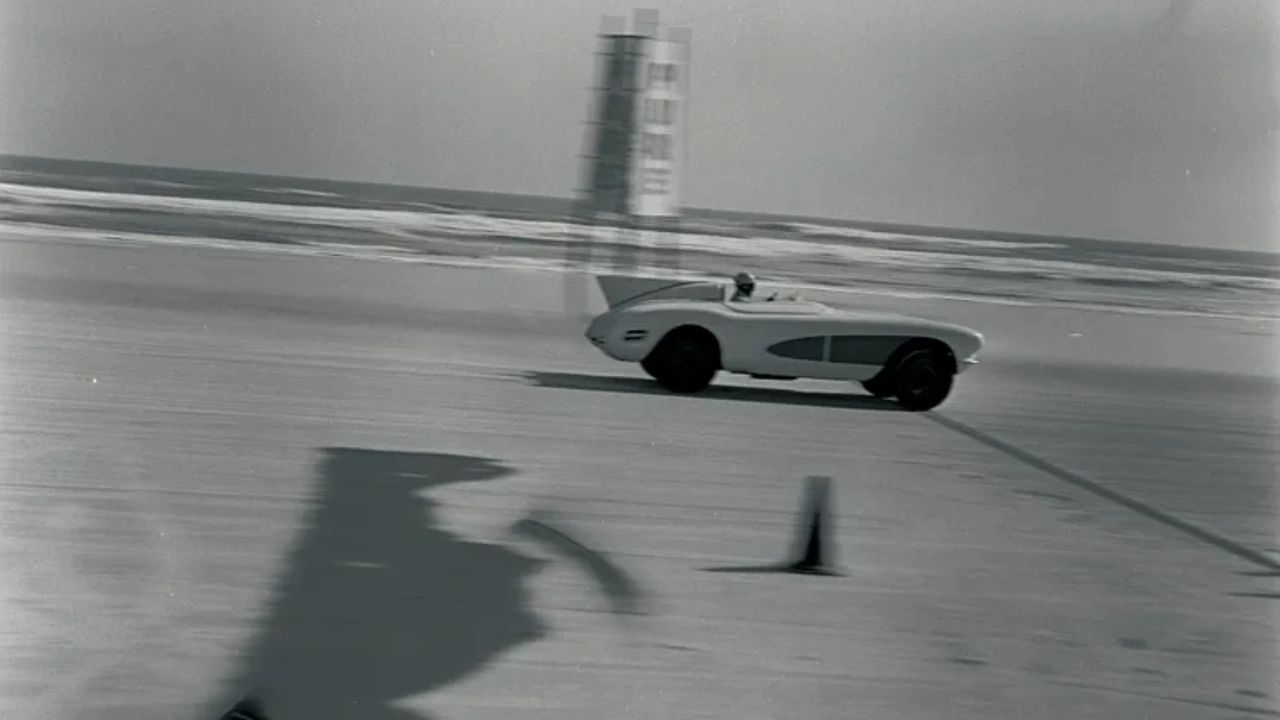
    aptured during February 1956 speed testing at Daytona Beach, this image shows the EX-87 pushed hard across the hard-packed sand in pursuit of absolute top-speed data. Following its Arizona successes, the car was brought to Daytona to validate high-speed stability and power delivery in a radically different environment, where surface conditions and crosswinds posed new challenges. The testing reinforced the gains made through Duntov’s engine and aerodynamic refinements, confirming that the Corvette’s performance advances were repeatable—not isolated to a single proving ground. At Daytona, the EX-87 continued its role as proof, not prototype, demonstrating that Chevrolet’s sports car could sustain serious speed wherever it was tested.
    aptured during February 1956 speed testing at Daytona Beach, this image shows the EX-87 pushed hard across the hard-packed sand in pursuit of absolute top-speed data. Following its Arizona successes, the car was brought to Daytona to validate high-speed stability and power delivery in a radically different environment, where surface conditions and crosswinds posed new challenges. The testing reinforced the gains made through Duntov’s engine and aerodynamic refinements, confirming that the Corvette’s performance advances were repeatable—not isolated to a single proving ground. At Daytona, the EX-87 continued its role as proof, not prototype, demonstrating that Chevrolet’s sports car could sustain serious speed wherever it was tested.

    For the official record attempt, Chevrolet selected a 1956 Corvette—chassis #6901—into which the EX-87’s engine, transmission, rear axle, tachometer, and instrumentation were transplanted wholesale. The goal was no longer internal validation. It was public proof.

    In January 1956, on the hard-packed sands of Daytona Beach, Zora Arkus-Duntov drove the Corvette flat-out through the flying mile. When the timers stopped, the result was unmistakable: 150.583 miles per hour, averaged over two runs in opposite directions.

    By the time this photograph was taken, Zora Arkus-Duntov had accomplished exactly what he set out to do at Daytona Beach in 1956: turn Corvette performance from promise into proof. The two-way speed runs on the sand validated the lessons learned with the EX-87, demonstrating that Chevrolet’s small-block—properly developed—could sustain world-class speeds under public scrutiny. For Duntov, Daytona was not a victory lap but a confirmation, the moment when data finally caught up to belief. The Corvette would never again be dismissed as merely stylish—because Zora had ensured it was fast, and provably so. (Image courtesy of GM Media LLC)
    By the time this photograph was taken, Zora Arkus-Duntov had accomplished exactly what he set out to do at Daytona Beach in 1956: turn Corvette performance from promise into proof. The two-way speed runs on the sand validated the lessons learned with the EX-87, demonstrating that Chevrolet’s small-block—properly developed—could sustain world-class speeds under public scrutiny. For Duntov, Daytona was not a victory lap but a confirmation, the moment when data finally caught up to belief. The Corvette would never again be dismissed as merely stylish—because Zora had ensured it was fast, and provably so. (Image courtesy of GM Media LLC)

    The number carried weight far beyond its decimals. It announced, unequivocally, that the Corvette had crossed a threshold.

    “The car did not ask permission,” Zora later reflected. “It simply did what it was capable of doing.”

    From Experiment to Identity

    The work done with the EX-87 reshaped the Corvette’s destiny. The lessons learned—from aerodynamics to camshaft theory—were applied directly to production engineering. More importantly, the achievements at Mesa and Daytona transformed public perception. The Corvette was no longer merely America’s sports car. It was becoming a serious one.

    As GM retired the Motorama after 1956, reallocating funds toward engineering and competition development, the Corvette quietly shifted from spectacle to substance. Harley Earl, nearing the end of his career, recognized the moment with clarity.

    “I started the Corvette with a shape,” Earl said. “These men gave it a soul.”

    In trusting Duntov and Cole to carry the Corvette forward, Earl ensured that his creation would evolve beyond styling into a legacy. The EX-87—born as a humble test mule—had become the crucible in which the Corvette’s performance identity was forged.

    From that point forward, the Corvette would no longer be judged by what it promised, but by what it proved.

    1955 Chevy Corvette EX-87 Mule: Specs and Details

    • Engine: 306.6-cu-in/5025cc OHV V-8, 1×4-bbl Rochester Carter WCFB
    • Power and torque: (SAE gross, est.) 275 hp @ 5400 rpm, 295 lb-ft @ 3650 rpm
    • Drivetrain: 3-speed manual RWD
    • Brakes: Drum, front and rear
    • Suspension, front: Control arms, coil springs
    • Suspension, rear: Live axle, leaf springs
    • Dimensions: 167.0 in, W: 72.2 in, H: 46.1 in (est. )
    • Weight: 2393 lb
    • 0-60 MPH*: 5.7 sec
    • Quarter mile*: 14.3 sec @ 94 mph
    • Price: Incalculable

    Why the EX-87 Still Matters

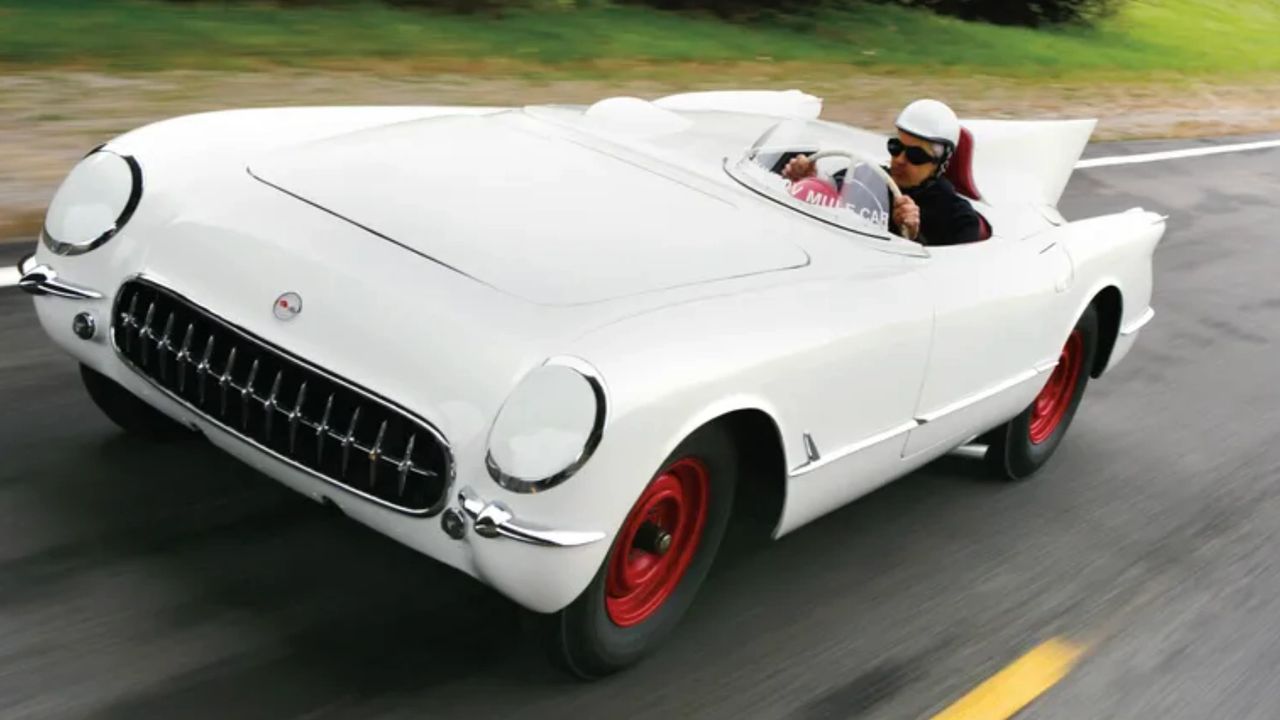
    Photographed for Hot Rod during a modern evaluation of the EX-87 survivor, this image reconnects the car’s experimental past with the philosophy that still defines Corvette today. As detailed in the magazine’s feature, the car retains its distinctive single-seat layout, faired passenger side, low windscreen, and aerodynamic tail treatment—elements born not from styling ambition, but from Zora Arkus-Duntov’s insistence on measurable performance. Seen in motion once again, the EX-87 reinforces why it still matters: it established the template for Corvette development built on testing, validation, and engineering honesty. Nearly seventy years later, the car remains a rolling reminder that Corvette’s credibility was earned the hard way—at speed, under scrutiny, and with data to back it up. (Image source: Hot Rod Magazine)
    Photographed for Hot Rod during a modern evaluation of the EX-87 survivor, this image reconnects the car’s experimental past with the philosophy that still defines Corvette today. As detailed in the magazine’s feature, the car retains its distinctive single-seat layout, faired passenger side, low windscreen, and aerodynamic tail treatment—elements born not from styling ambition, but from Zora Arkus-Duntov’s insistence on measurable performance. Seen in motion once again, the EX-87 reinforces why it still matters: it established the template for Corvette development built on testing, validation, and engineering honesty. Nearly seventy years later, the car remains a rolling reminder that Corvette’s credibility was earned the hard way—at speed, under scrutiny, and with data to back it up. (Image source: Hot Rod Magazine)

    The EX-87 matters today because it was the moment the Corvette stopped being judged solely as a styling experiment and started being defended as an engineering program. In the mid-1950s, Chevrolet did not need another beautiful two-seater—it required proof that its new sports car could compete with the world’s best when the conversation shifted from showrooms to speed, durability, and repeatable performance. The EX-87 delivered that proof in the language that executives, engineers, and enthusiasts all understand: measured results. It established a template that would become Corvette doctrine—test relentlessly, validate everything, and let numbers settle arguments.

    Just as importantly, the EX-87 represents the origin point of a philosophy that still defines Corvette development: real performance is engineered, not claimed. The car’s focus on airflow management, driver stability, gearing strategy, and incremental engine evolution foreshadowed the way Corvette programs would later be built—from the big-block era to ZR-1, Z06, and today’s ZR1/Z06-style track-capable variants. Modern Corvettes arrive with wind-tunnel refinement, track validation, and durability testing baked into their DNA because the brand learned early—through cars like the EX-87—that reputation is earned at speed and under load.

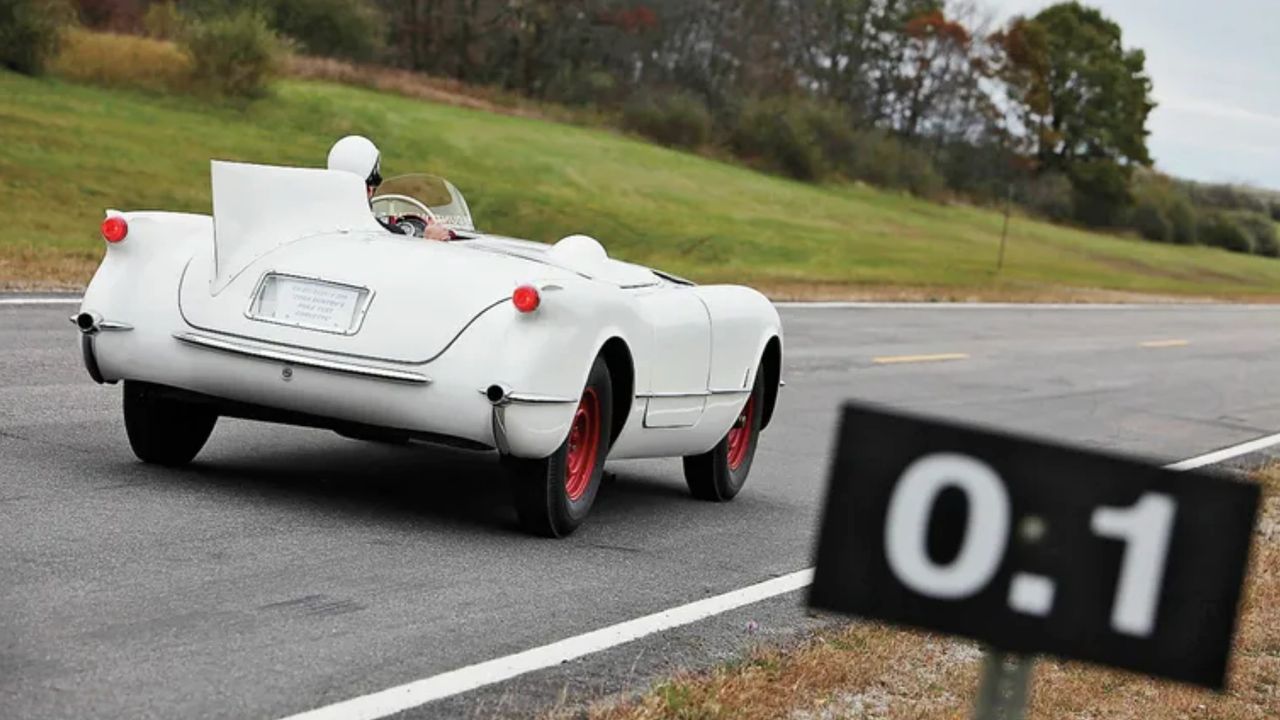
    Captured during Hot Rod’s modern drive of the EX-87 survivor, this image shows the car easing away down the test road with Jeff Smith—the article’s author—at the wheel. As Smith notes in the feature, the car remains remarkably faithful to its 1955–56 configuration, from the faired single-seat layout to the red steel wheels and minimalist rear bodywork that once served a very specific aerodynamic purpose. Seen from behind, the EX-87 looks less like a museum artifact and more like what it has always been: a tool built to move forward, not to stand still. As it disappears down the course, the image becomes a fitting metaphor for the car itself—an experiment that proved its point, shaped Corvette’s future, and then quietly drove on, leaving a legacy far larger than its footprint. (Image source: Hot Rod Magazine)
    Captured during Hot Rod’s modern drive of the EX-87 survivor, this image shows the car easing away down the test road with Jeff Smith—the article’s author—at the wheel. As Smith notes in the feature, the car remains remarkably faithful to its 1955–56 configuration, from the faired single-seat layout to the red steel wheels and minimalist rear bodywork that once served a very specific aerodynamic purpose. Seen from behind, the EX-87 looks less like a museum artifact and more like what it has always been: a tool built to move forward, not to stand still. As it disappears down the course, the image becomes a fitting metaphor for the car itself—an experiment that proved its point, shaped Corvette’s future, and then quietly drove on, leaving a legacy far larger than its footprint. (Image source: Hot Rod Magazine)

    In the long arc of Corvette history, the EX-87 is not remembered for its appearance, but for what it proved: that a Corvette could be a serious performance machine when given serious engineering intent. That distinction still matters in a world where performance claims are easy to make and hard to substantiate. The EX-87 was substantiation—an early, uncompromising demonstration that the Corvette’s identity would be forged by innovation, verified testing, and the refusal to accept “good enough” as an answer.

    Before the Corvette had a reputation for speed, dominance, or defiance, it had a problem to solve—and the EX-87 Test Mule was the answer. Born not as a show car but as an engineering experiment, this unassuming 1954 Corvette became the proving ground for a radical idea: that America’s sports car could be more than…