
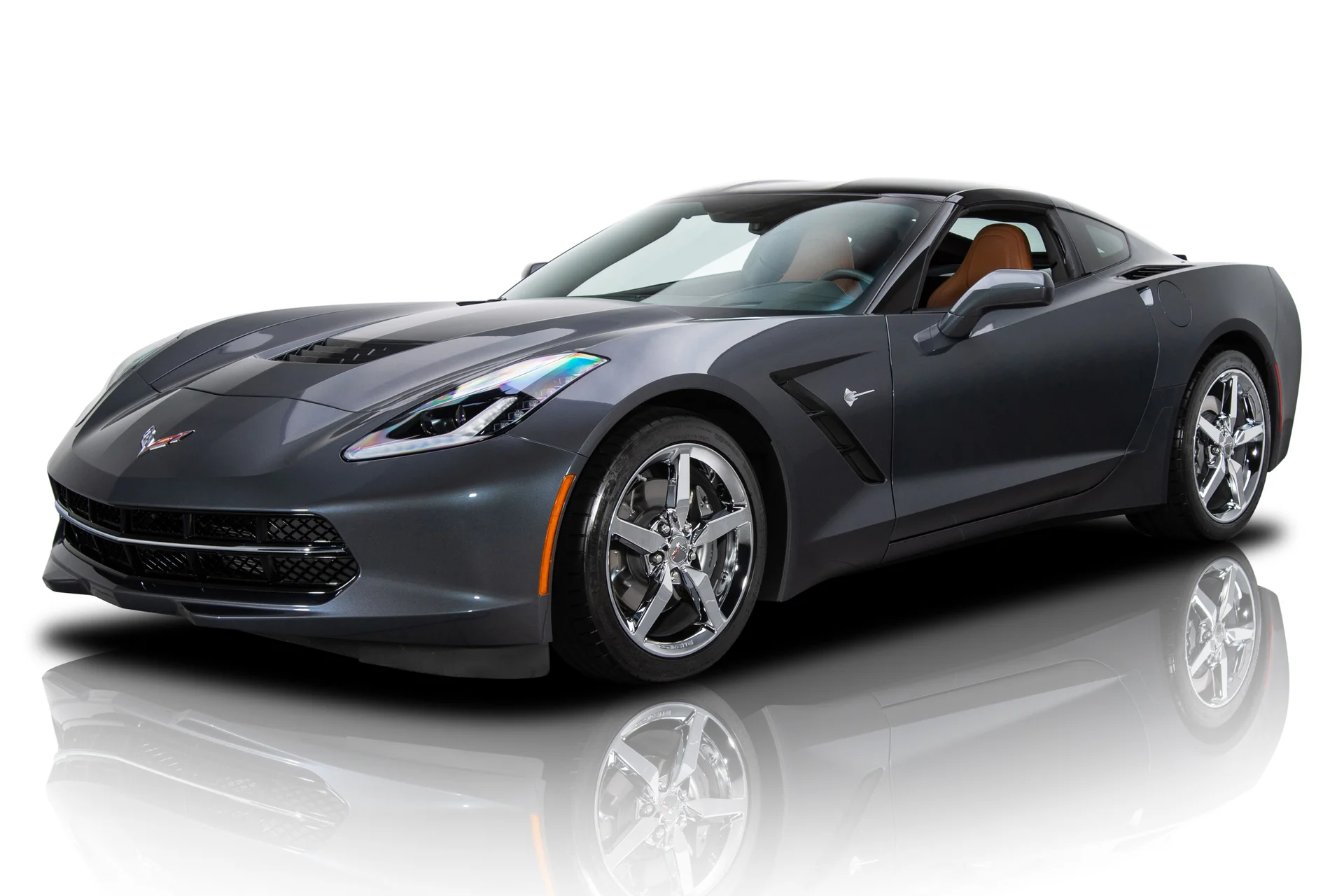
If there’s a single model year that re-established just exactly what “Corvette” means, it’s the 2014 Corvette Stingray. The seventh-generation car didn’t just replace the C6; it rebooted America’s sports car around a new set of non-negotiables: an aluminum structure built in Bowling Green, a clean-sheet small block with direct injection and cylinder deactivation, driver-centric electronics that actually add to the experience, and a serious aero/cooling package that finally made every vent do real work. As General Motors VP of Global Design Ed Welburn framed it during the launch window, this car “needed to be a leaner, very fresh design that departed from some of the traditions… Is it at all controversial? Probably a bit. And that’s OK.” That willingness to break patterns—while staying unmistakably Corvette—became the guiding principle behind the C7’s design.
Exterior: Form, Function, and the End of Fake Vents
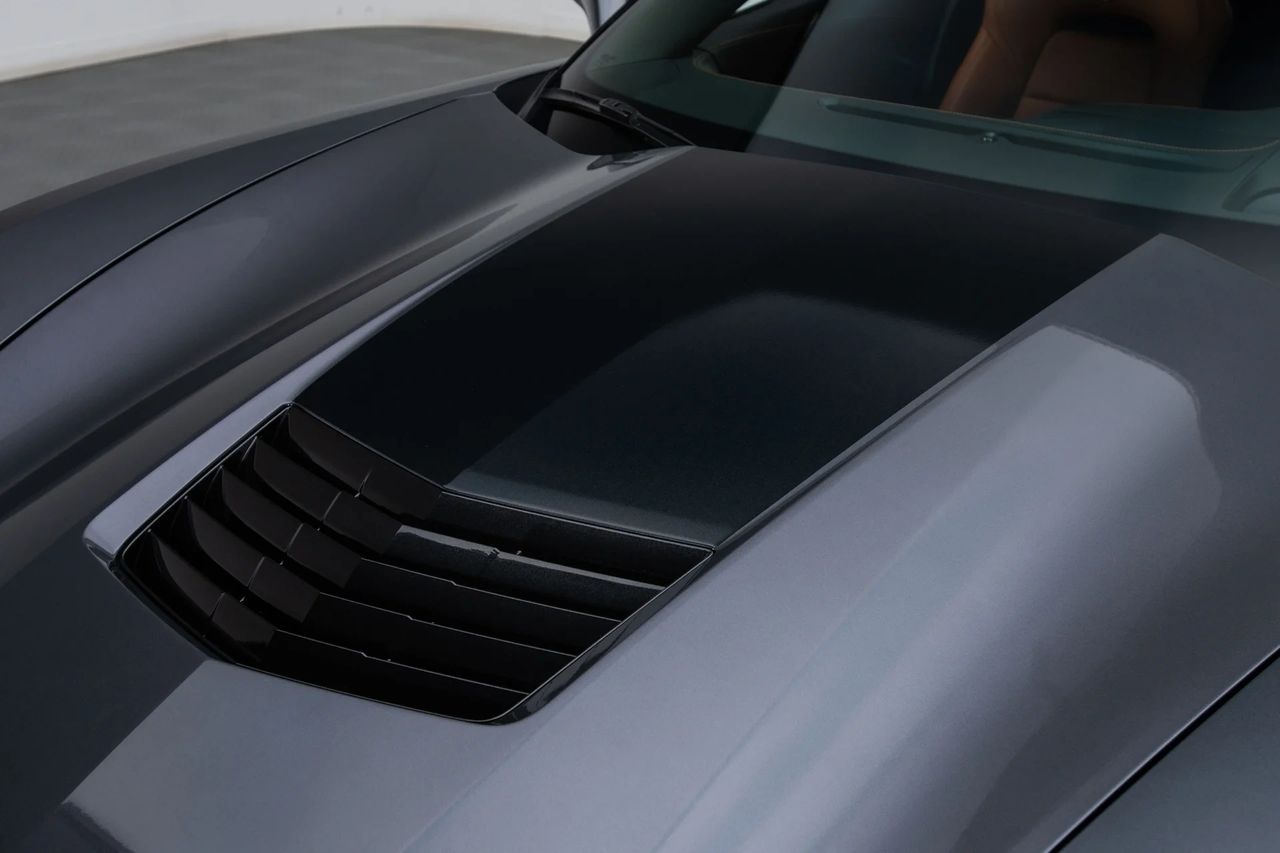
Spend a minute around the 2014 Corvette Stingray, and the intent is clear: this shape was drawn by what the car needs to do—cool, cut drag, and stay stable—then refined to resemble a Corvette. Every major surface was placed to manage local pressure zones and temperature, not just to “look fast.” The forward-angled radiator feeds a hood extractor whose vanes are deliberately canted to maximize and direct air flow as it exits over the clamshell while simultaneously reducing front-axle lift at speed. Engineers located the re-profiled side coves in a region of favorable airflow so they could vent wheel-well and under-hood pressure; the result is a measurable drag reduction—precisely the functional intent Bennion emphasized when he stated that these items “aren’t just aesthetic things that we bolt on.” The engineering brief was simple: converge the aero map and cooling map until they agree, then give the design team the surfacing to express it. GM’s aero lead, John Bednarchik, later described the goal as “make it look good and still function”—a system laid out around pressure, temperature, and flow continuity first, styling second.
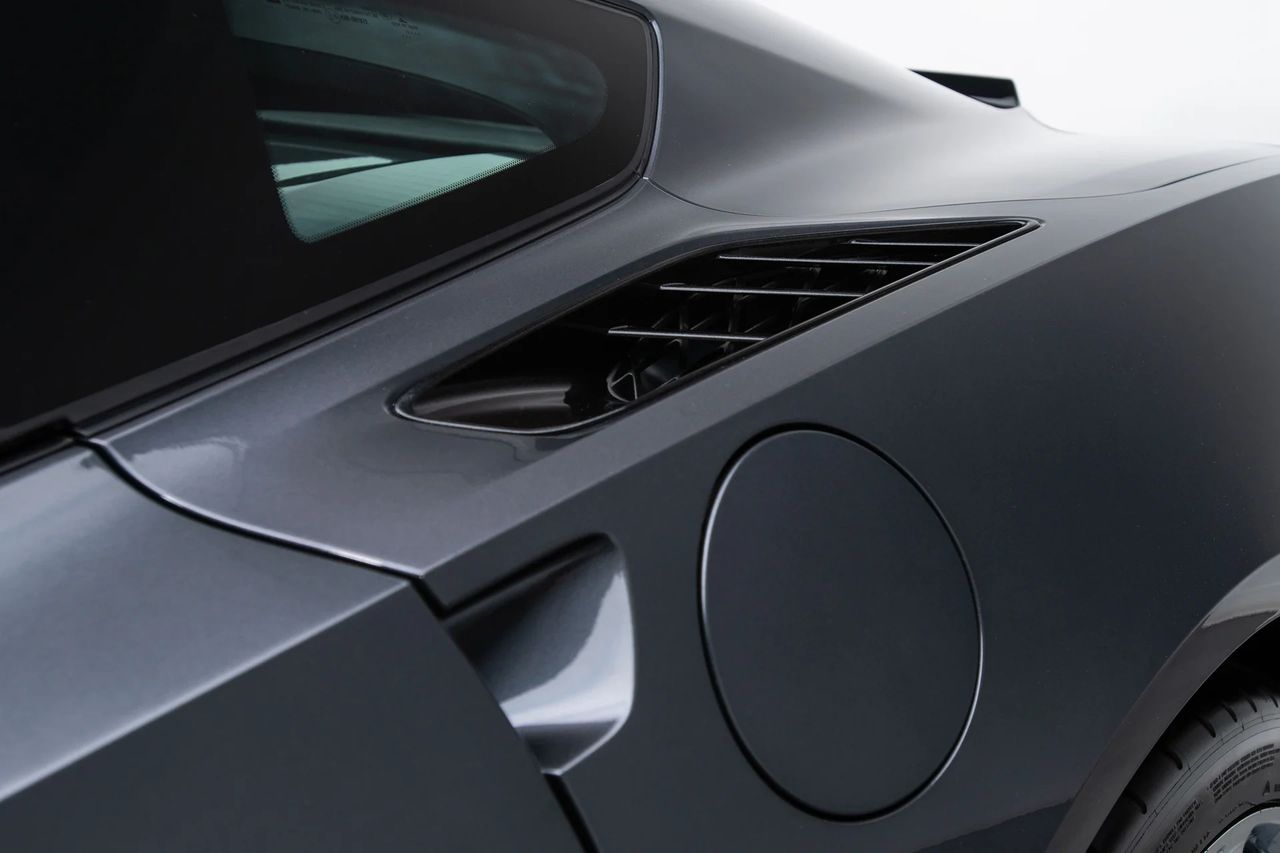
You see the system thinking even more clearly in Z51 form. The quarter-panel inlets are aligned with the external flow field, ducting air to rear auxiliary coolers—transmission on the driver’s side, differential on the passenger’s—and then out through rear-fascia exits. Those inlets, the specific Z51 under-tray and spoiler tuning, and the extractor’s vane geometry weren’t independent “add-ons”; they were iterated together (CFD, tunnel, and track) until the car could run a full session on a hot day without falling out of its thermal window. The result is why the C7’s aero reads as integrated hardware rather than applique: the ducts, outlets, and surface cambers are sized for the heat rejection the car actually generates.
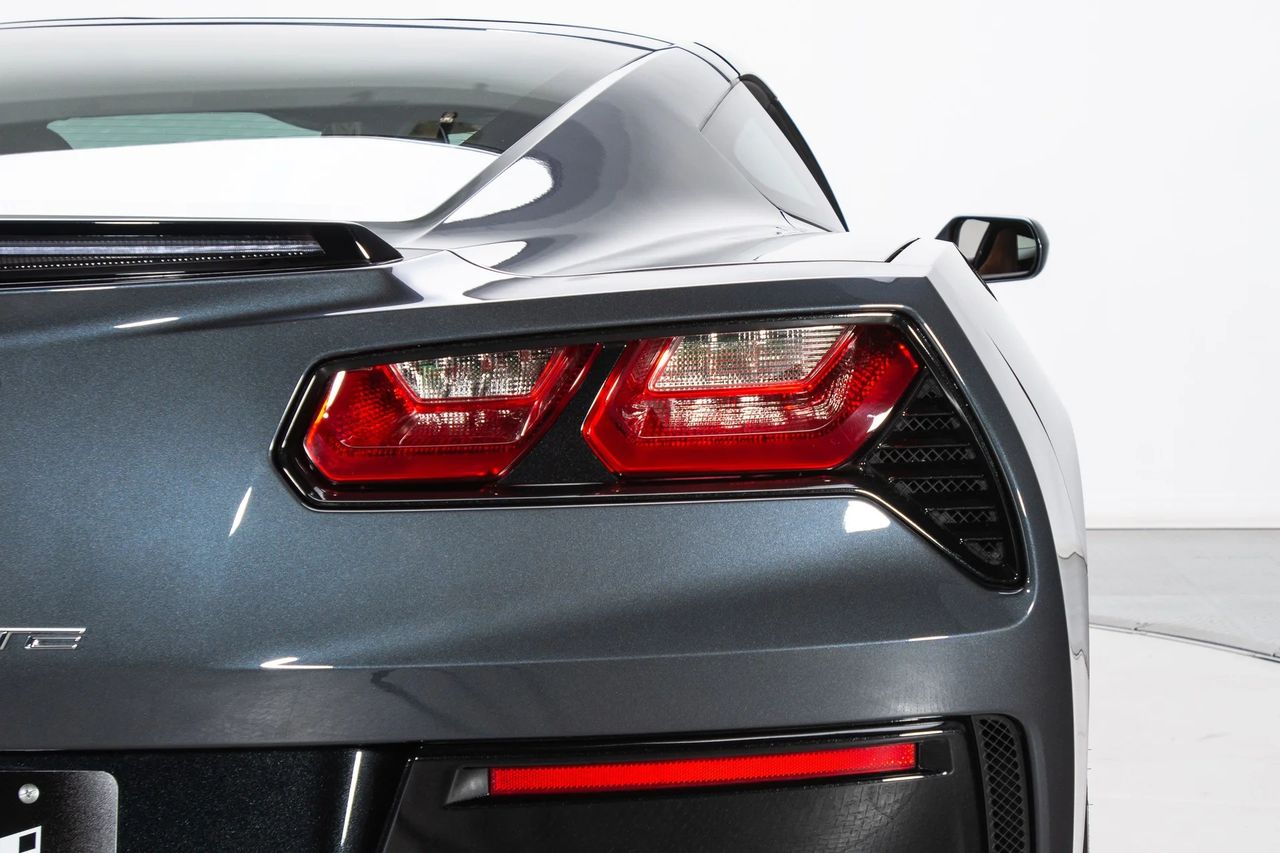
The rear design aesthetic—especially the lamps—carries that same functional spine, even as they became the most controversial visual change of the seventh-generation model. Moving away from the Corvette’s traditional twin round elements to a more three-dimensional, sculpted, trapezoidal lamp wasn’t a styling dare so much as a packaging and airflow decision: the spoiler/CHMSL (Center High-Mounted Stop Lamp) packaging and cooler-exit management set hard constraints for volume and wake control, and the team wanted a light signature that read “new Stingray” at a glance. Bennion’s line was that it had to “say Corvette, but say new Corvette,” and it had to live in the broader Chevrolet family without being a clone. Tom Peters has been frank about the process: they tried round lamps on the C7 and rejected them because they “made the car look old.” The final form pushed depth, lens sculpture, and LED emphasis to modernize the signature while leaving room for the aero and cooling paths to do their job.

As for where that rear graphic vocabulary came from, there’s a clear design kinship with the 2009 Stingray Concept—a Tom Peters show car that previewed sharper creases, more faceted lamp volumes, and a stronger plan-view stance. GM never said “we lifted the lamps directly,” but Peters has acknowledged that the concept established a modern, crisper Corvette language the C7 could draw on. In other words, the production taillamps reflect less a one-to-one transplant and more the concept’s directional push toward faceted, dimensional housings integrated into an aerodynamically active rear end.
Structure & Manufacturing: Aluminum, At Last—For Everyone
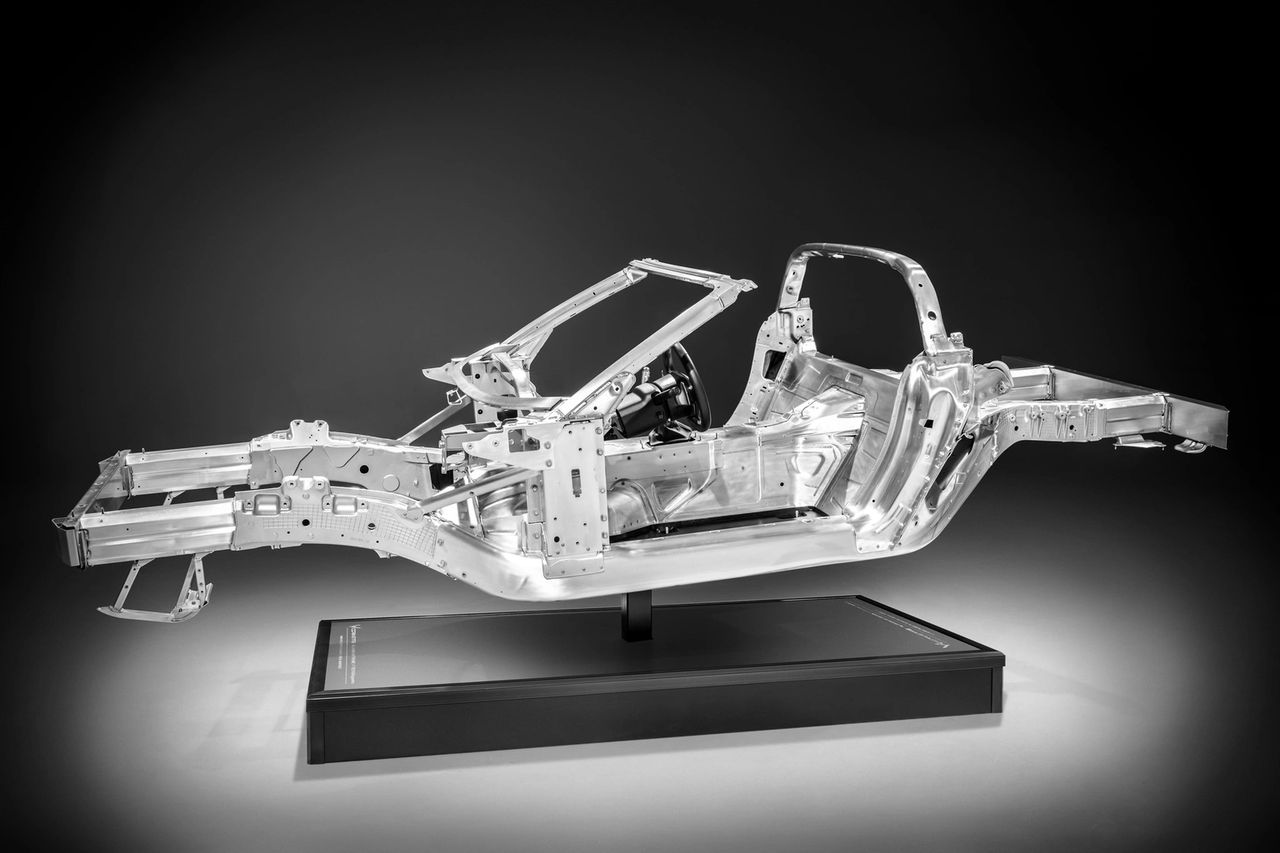
The single biggest change under the skin was structural. For the first time in Corvette history, every standard model—base coupes and convertibles, and those fitted with the Z51 option—rode on an aluminum frame manufactured in-house at the Bowling Green Assembly Plant. The move wasn’t about bragging rights; it was about creating cleaner stiffness paths and a smarter mass distribution that let the interior, suspension, and even the convertible top operate in a different league.
Ed Moss, then the engineering group manager for structure, explained that the team built the frame around five major aluminum parts per side, each optimized for its job. Material gauges varied from roughly 2 to 11 mm, a dramatic change from the one-thickness, one-piece hydroformed steel rails Corvette had used before. By tailoring thickness and section where the loads actually traveled, they pulled mass out of the quiet zones and put metal only where the car needed it.
Says Moss, “For the C7, we decided to go with aluminum rather than steel since aluminum can provide significant weight advantages. Our job was to choose the right material and part-production process for each function. In this case, we came up with a structure that includes 10 castings, 38 extrusions, 76 stampings, and three hydroformed parts.”
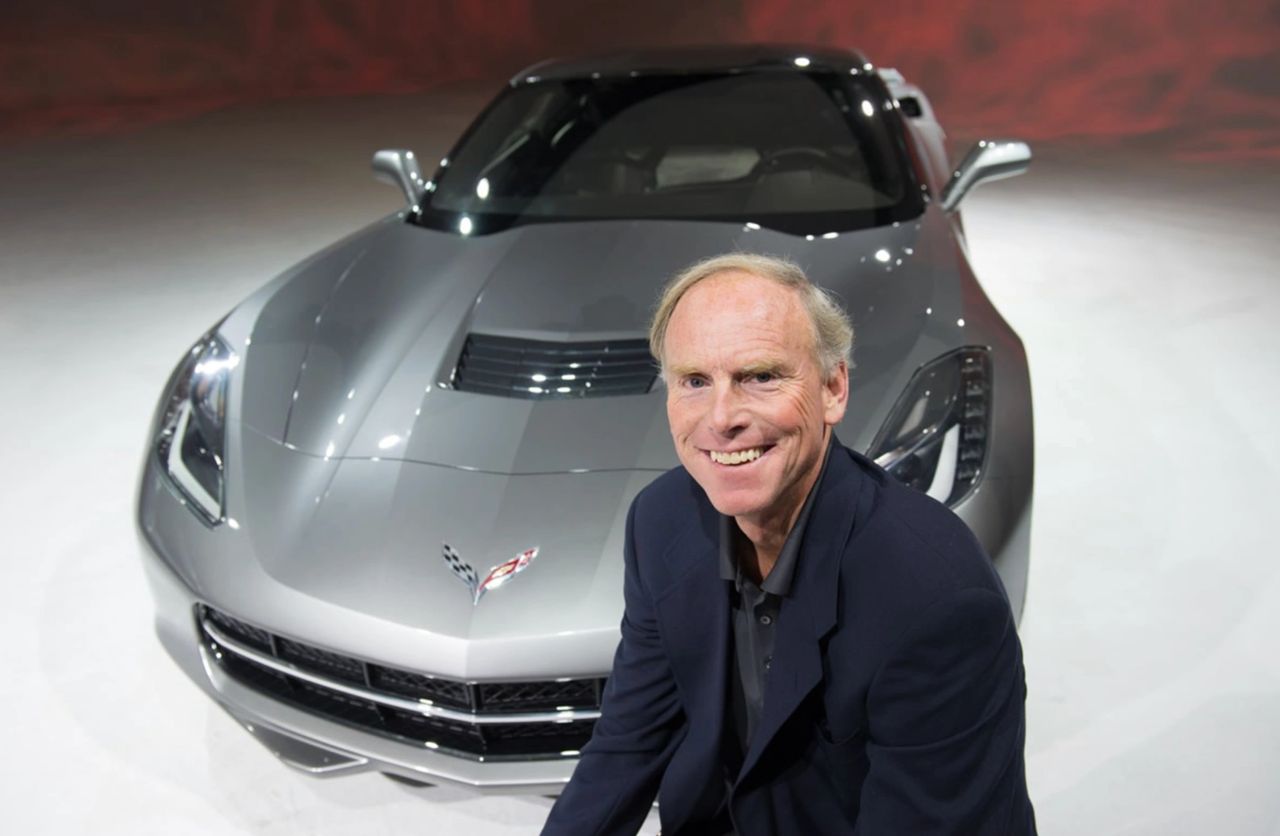
The metrics backed up the philosophy. The new frame came in about 99 pounds lighter and more than 50 percent stiffer than the outgoing steel setup—and that comparison held even when you put an open-roof C7 against a fixed-roof C6 Z06. As Corvette Chief Engineer Tadge Juechter stated in an exclusive interview with Car and Driver magazine, “We thought we could take today’s aluminum frame and tweak it. It turns out we had to scrap the whole thing and start over.” This proved to be a great strategy as starting over unlocked both a reduction in structural weight and an increase in structural rigidity simultaneously.
That structural headroom paid off everywhere. The center tunnel was made beefier because it carried more of the torsional load in open-roof duty, which in turn let the suspension bushings be tuned for both precision and isolation without chasing squeaks or cowl shake. A mixed architecture—cast nodes where the cradles are mounted, straight extrusions where crash energy needed to be absorbed, and lightweight tubes where mass had to be kept out—let the team dial in local stiffness without adding pounds where they didn’t help. Tighter in-house manufacturing also improved tolerances, which reduced NVH and helped the convertible top package lower and seal better.
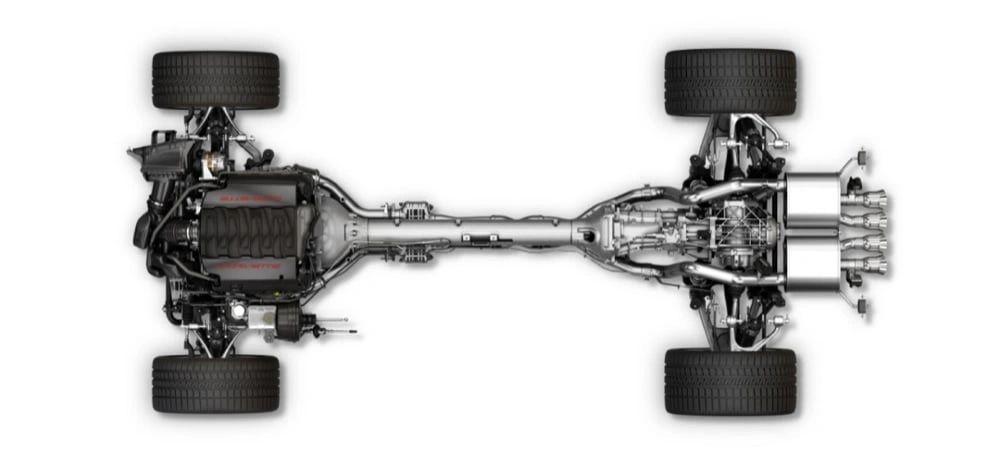
The net effect was felt from the driver’s seat. Because the load paths were cleaner and the structure no longer relied on the roof panel for basic rigidity, the C7 coupe and convertible behaved like the same, unified car—not a coupe with the roof lopped off and extra shake added.
Powertrain: LT1 (Gen V Small Block) and the Return of the Broad Torque Curve
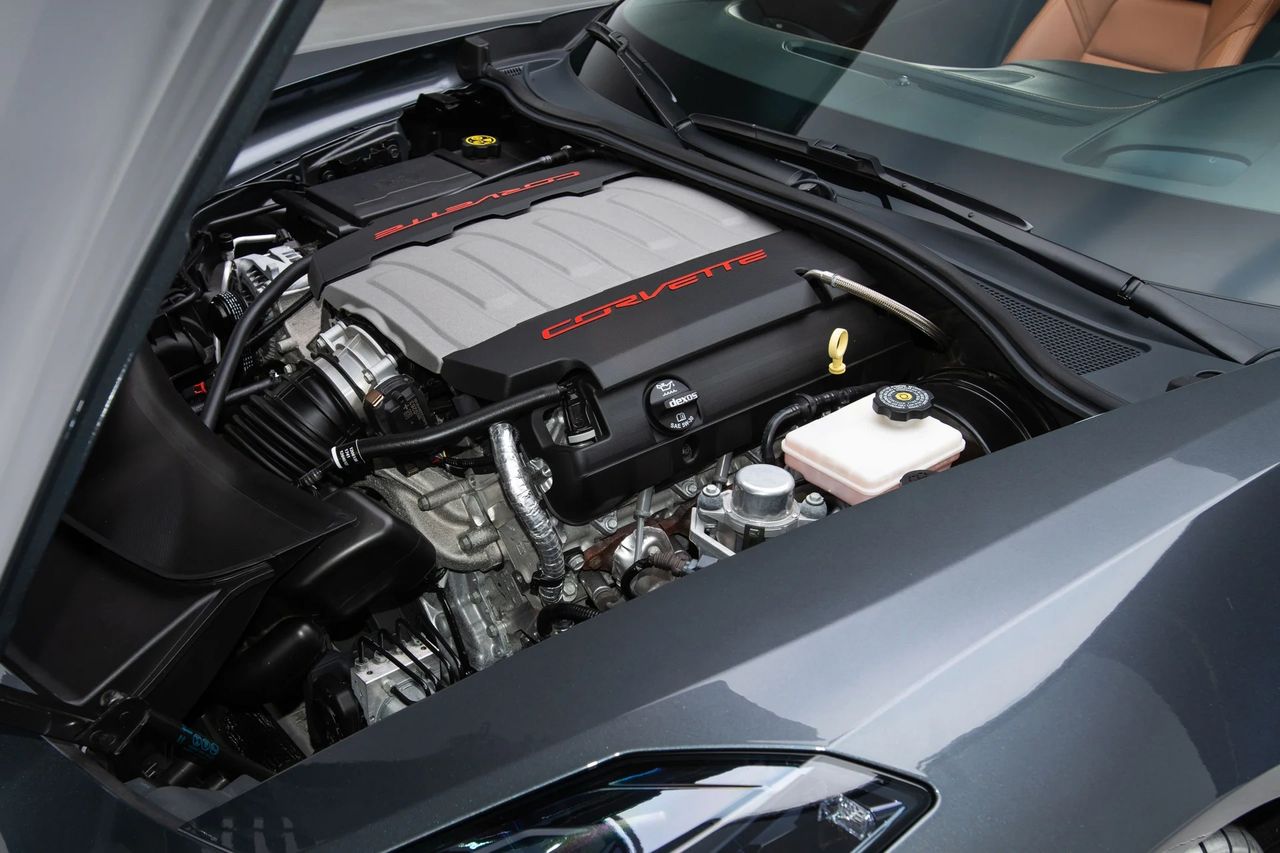
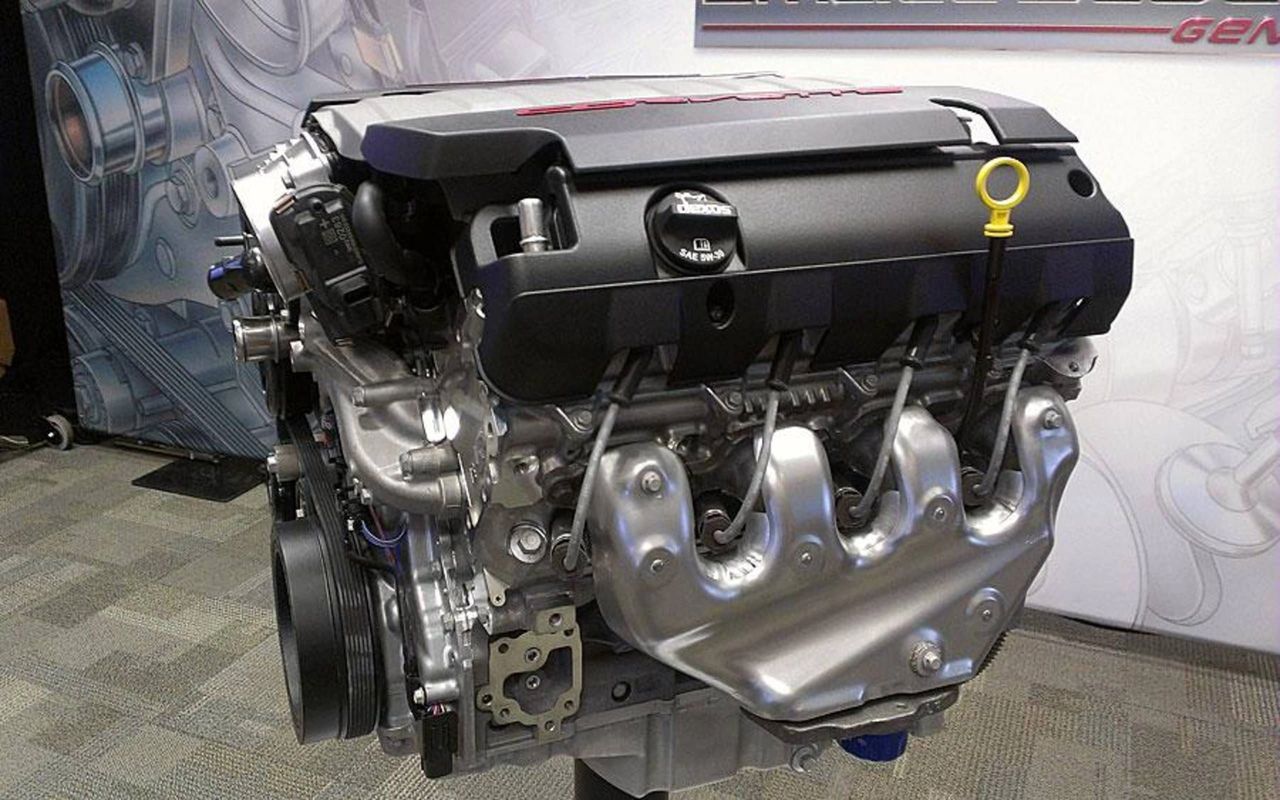
The 6.2-liter LT1 was the heartbeat of the 2014 Corvette Stingray, a Gen-V small-block that retained the compact pushrod layout but modernized everything that mattered inside the chambers. Direct injection fired a precisely metered spray into a sculpted piston bowl, which allowed Chevy to run high compression and aggressive spark without detonation; continuously variable valve timing on the single cam broadened the effective timing window across the rev range; and Active Fuel Management seamlessly dropped to four cylinders at light load to cut pumping losses. The supporting hardware was equally purposeful: high-tumble intake ports, oil-spray piston cooling, an aluminum block and heads, a composite intake tuned for midrange torque, and a cam-driven high-pressure fuel pump that gave the injectors the headroom they needed at high load. Tie it together, and you had SAE-certified output of 455 hp / 460 lb-ft with the standard exhaust—or 460 hp / 465 lb-ft with the vacuum-actuated dual-mode NPP system, which trimmed backpressure under demand while avoiding drone at cruise. As small-block chief Jordan Lee put it at the time, the LT1 was “a triumph of advanced technology,” delivering the most power and torque to date for a standard Corvette while topping the previous car’s highway efficiency.
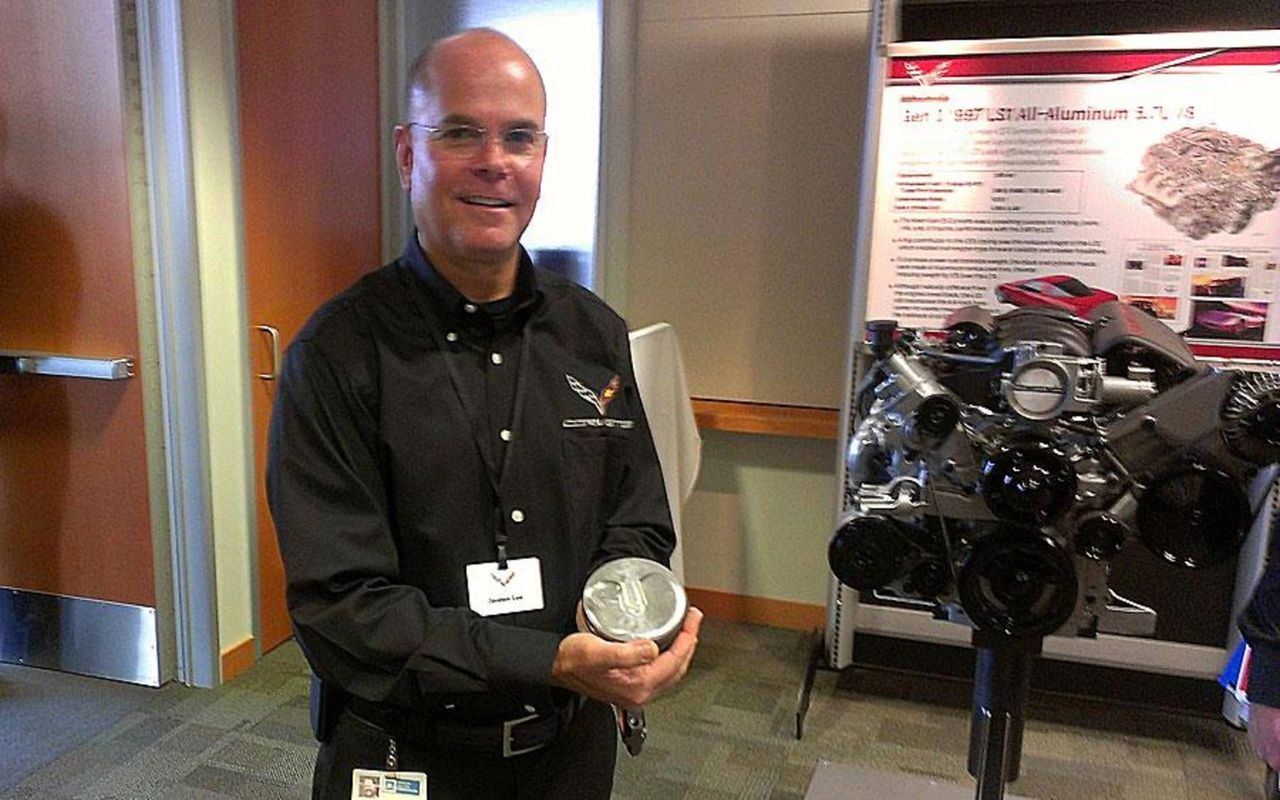
There was more under the skin than the headline features suggested. The LT1 kept the familiar 376-cu-in dimensions (4.06-in bore, 3.62-in stroke) but paired them with an 11.5:1 compression ratio and a spray-guided DI system running at over 2,000 psi, which improved charge cooling and combustion stability. A variable-displacement oil pump, low-friction internal components, and targeted oil-jet piston cooling reduced parasitic losses and helped thermal management. Corvette packaged the engine with two distinct oiling strategies: a conventional wet-sump for base cars and a track-ready dry-sump with a remote reservoir on Z51 models, which improved oil control during sustained lateral loads and added capacity for repeated hot laps. Exhaust flow benefitted from efficient manifolds and—on cars optioned with NPP—valves that opened under load for freer breathing and a harder-edged note.
The bigger story wasn’t just the peak number; it was how the LT1 made its power. With 90 percent of peak torque available from 3,000–5,500 rpm, the engine felt preloaded everywhere—tip-in was crisp, midrange thrust was immediate, and real horsepower built barely off idle. That was the DI/VVT/AFM trio doing exactly what it was designed to do: DI’s cooler, denser in-cylinder charge fattened pressure early in the stroke, VVT kept airflow optimized as piston speeds climbed, and AFM trimmed pumping and friction losses when you were simply cruising. Contemporary instrumented tests captured what drivers felt from the seat: compared with the outgoing LS3, the LT1 didn’t just post bigger peaks; it filled in the curve between them, turning ordinary corner exits into slingshots—while NPP-equipped cars added a raucous bark the moment the valves swung open under load.
The payoffs showed up at the pump, too. Despite the stronger output, LT1-equipped Stingrays posted better highway economy than the C6 they replaced—evidence that the combustion-system rethink wasn’t marketing fluff but real efficiency baked into the architecture. And while the LT1’s core recipe still underpins today’s small-block family, its first act in 2014 set the tone: modern combustion science wrapped in classic small-block packaging, delivering the broad, effortless torque band that makes a Corvette feel quick everywhere.
Transmissions: 7 Speeds, Real Rev-Match, and a Better Auto (Later)
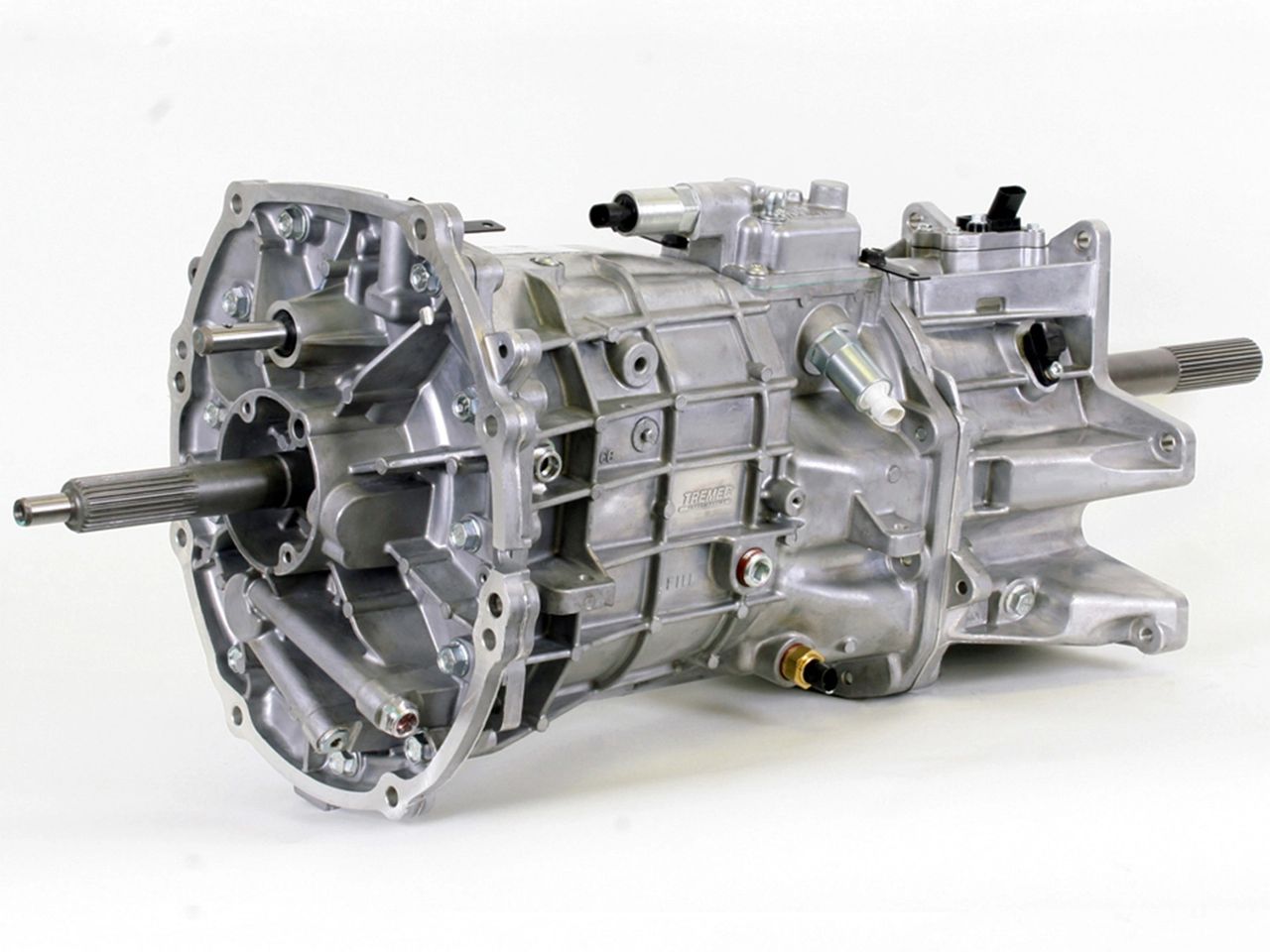
When it came to transmission selection, there were two choices in 2014: the Tremec TR-6070 seven-speed manual with Active Rev Matching, or a Hydra-Matic 6L80 six-speed automatic with paddles. The 8-speed auto didn’t arrive until 2015, so shoppers of ’14s were picking between the most tech-forward manual Corvette had offered to that point and a proven torque-converter automatic calibrated to play nicely with AFM and the LT1’s broad torque curve.
Why seven speeds? As Tadge Juechter’s team explained at launch, the point was to widen the usable spread without turning the car into an “overdrive experiment.” First through fourth were closely stacked for back-road and track work, with three overdrives (5th–7th) to pull highway revs down; 7th was intentionally a deep cruise gear. The TR-6070 used a twin-disc clutch and short throws, and its gear-state indicator was duplicated in both the cluster and the HUD. Active Rev Matching—toggled by the steering-wheel paddles—blipped the throttle on downshifts and trimmed torque on upshifts, making heel-and-toe optional without making it irrelevant. Launch control and Performance Traction Management were available, and Z51 cars paired the manual with an electronically controlled limited-slip differential that actively varied lock for corner entry and exit stability. (Yes, CAGS skip-shift was still present under light load, just as before.)
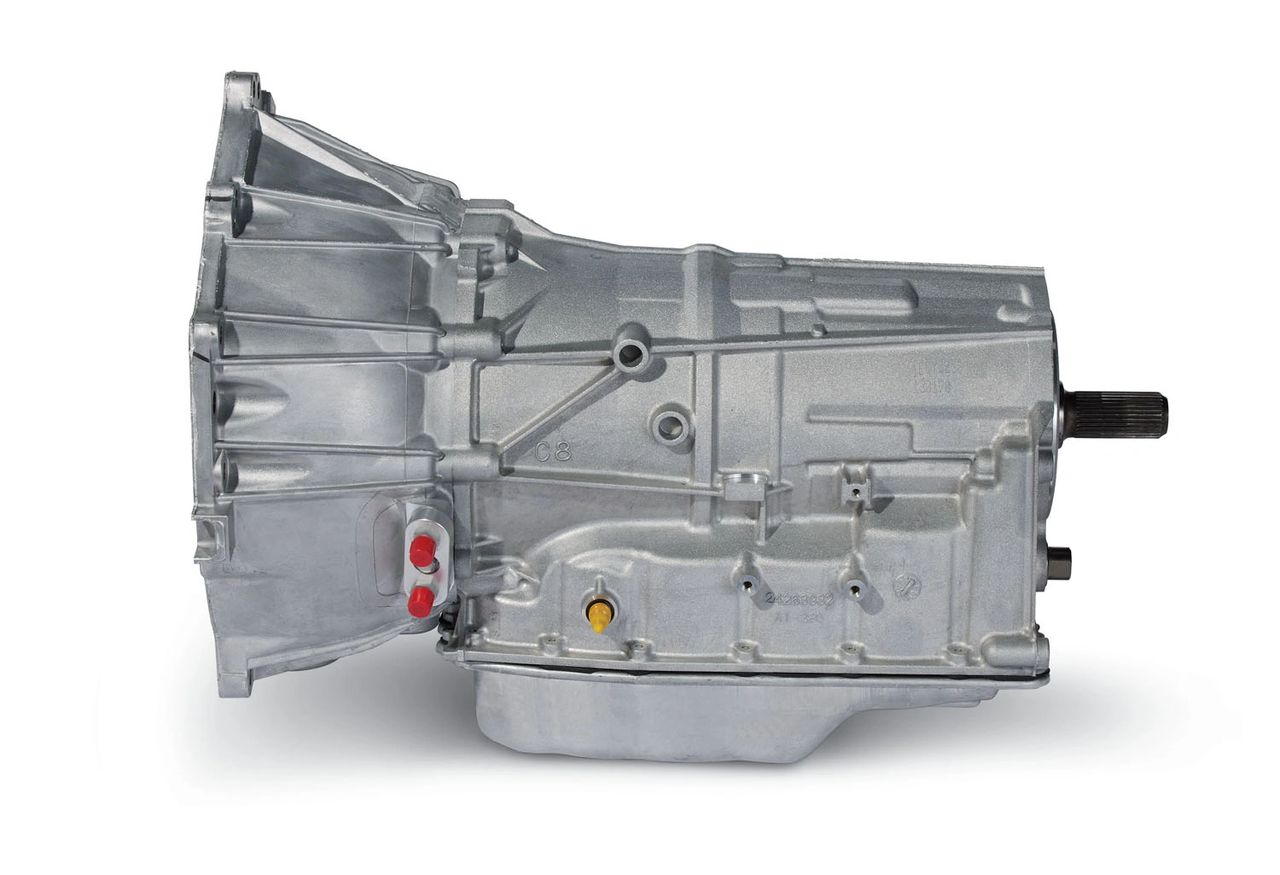
The 6L80 automatic brought its own strengths. It was a clutch-to-clutch unit with a lockup converter, adaptive shift logic, manual TAPShift control via paddles, and calibrations that held gears longer in Sport/Track modes while cooperating with AFM during steady cruise. Downshifts were rev-matched and the mapping took advantage of the LT1’s midrange—more eager than past Corvette autos yet refined at part throttle. The result was an automatic that played well on a daily commute and didn’t embarrass itself on a back road.
And despite internet lore, the manual wasn’t as rare in ’14 as many assumed—GM/NCM production tallies show 13,210 manuals versus 24,078 automatics (roughly 35% to 65%). In short: 2014 gave you a choice between a new-school, seven-ratio stick that rewarded engagement and a well-sorted six-speed automatic that maximized the LT1’s flexibility and the car’s efficiency.
Exhaust: The NPP Option That Changed the Street Soundtrack
The regular production option NPP dual-mode system didn’t just make noise; it managed flow. Each rear canister housed two distinct paths: a longer, baffled route for attenuation and a short, straight-through route gated by a butterfly valve. A vacuum actuator—commanded by the engine controller through mode, load, and rpm—swung those valves, so the car could tiptoe on neighborhood streets and then uncork the LT1’s full “voice” the instant you rolled into the throttle. Calibration tied valve strategy to the Drive Mode Selector: Tour/Eco kept the quiet path dominant to complement AFM four-cylinder operation (minimizing the telltale low-frequency “beat”), while Sport/Track opened the bypass sooner and held it longer, sharpening pulses and reducing back pressure during extended pulls.
Cold starts told their own story. The system favored a quicker light-off of the close-coupled catalysts, so even the quiet path had a purposeful bark for a few seconds before the idle settled and the valves reverted to their mapped state. Out on the highway, AFM (Active Fuel Management) and NPP worked together—valves biased closed to avoid boom, then snapped open with a decisive change in timbre the moment the LT1 saw real load. Around town, part-throttle transitions felt cleaner because the short path reduced pumping losses right where the engine’s broad torque curve wanted to breathe.
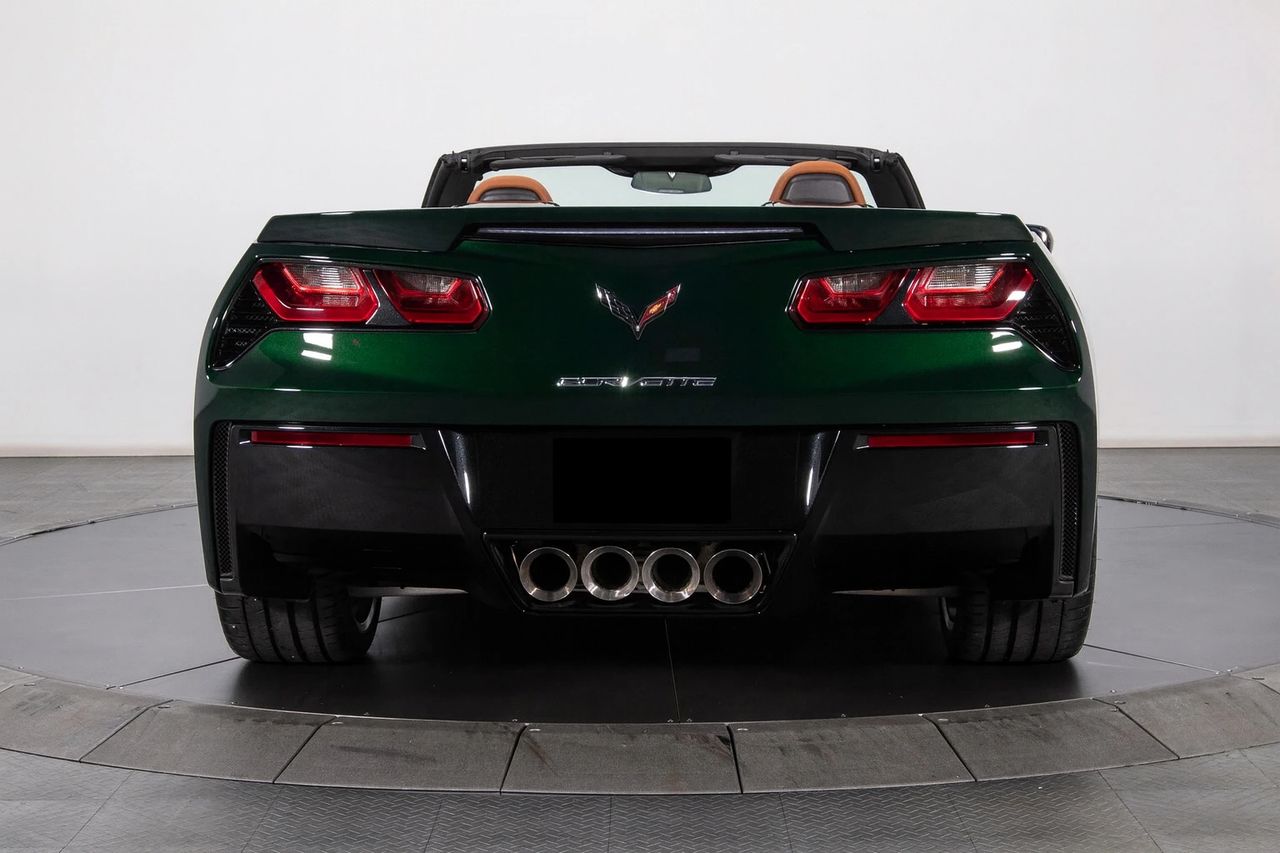
Hardware details mattered. The entire assembly used corrosion-resistant stainless steel, from the 2.75-inch pipes to the perforated cores, with mass kept in check so you didn’t pay a weight penalty for theater. The center-exit quad tips weren’t just a signature; packaging them tight under the fascia shortened the final runs and preserved diffuser airflow—small gains in heat management and aero cleanliness that added up over a long session. Track noise compliance was part of the brief, too: the quiet path and the closed-valve map gave you a way to meet stricter sound caps on certain days without swapping parts.
And yes, the gains were real, not brochure fiction. Chevrolet certified the dual-mode setup at +5 hp and +5 lb-ft of torque versus the standard system because the open bypass cut restriction in the power band you actually used. That’s why owners noticed more than volume: throttle response felt a half-step quicker, midrange pull came on with less “push,” and the soundtrack picked up the crackle and rip you expect from a high-compression, direct-injected small-block. Enthusiasts even discovered that pulling the exhaust-valve fuse would lock the system in its rowdiest personality—a testament to how central those valves were to the C7’s character. In 2014, the NPP option effectively built the most popular aftermarket mod into the car, then integrated it with the Stingray’s driving modes so the soundtrack matched the mission, minute by minute.
Suspension & Steering: Composite “Leafs,” Mag Ride, and Stiff Where It Counts
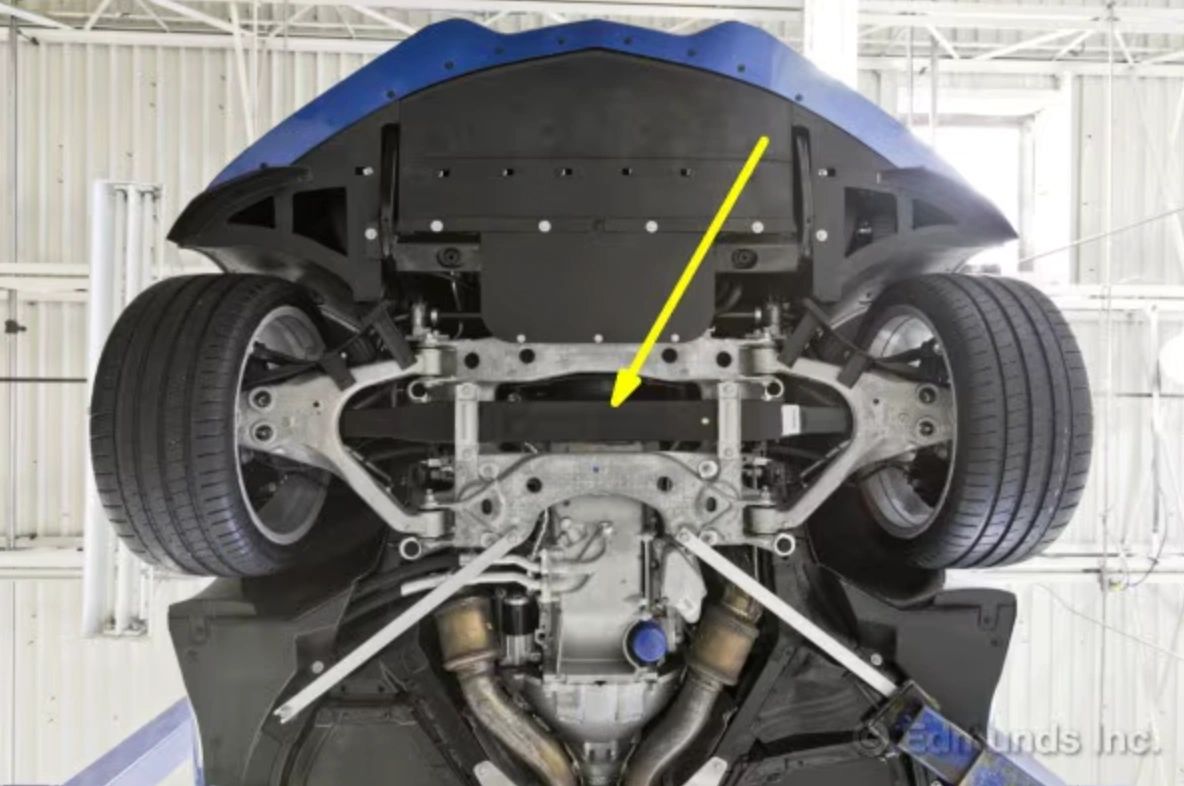
If you’ve ever heard “leaf springs” used as a knock against Corvettes, 2014 is the year that ends the argument. The transverse pieces are engineered composite springs—not truck leaves—and they delivered a bundle of advantages: low mounting, inherent anti-roll contribution, reduced unsprung mass, and packaging that supported a lower hoodline. Mike Bailey, vehicle systems engineer for chassis, put it bluntly: “We try not to say leaf… it’s an engineered composite spring.” The damper ladder was straightforward: 35-mm Bilstein monotubes standard, 45-mm Bilsteins with Z51, and Magnetic Ride Control (FE4) optional on Z51. The result was a car that rode better than it had any right to, yet still answered inputs with real authority.
Steering was reworked from the ground up. Juechter’s team adopted electric assist and re-engineered everything from the wheel and tilt mechanism to the solid-mounted rack. Measured as a system, it was “five times stiffer than today’s,” he said at launch—and you feel that in the crisp initial bite and linear build. Moving to a 360-mm wheel—a genuinely race-adjacent diameter—tightened the driver interface, and achieving clear cluster/HUD visibility at that size required some clever packaging gymnastics.
Brakes & Tires: Bigger Swept Area, Dual-Cast Rotors, Real Endurance
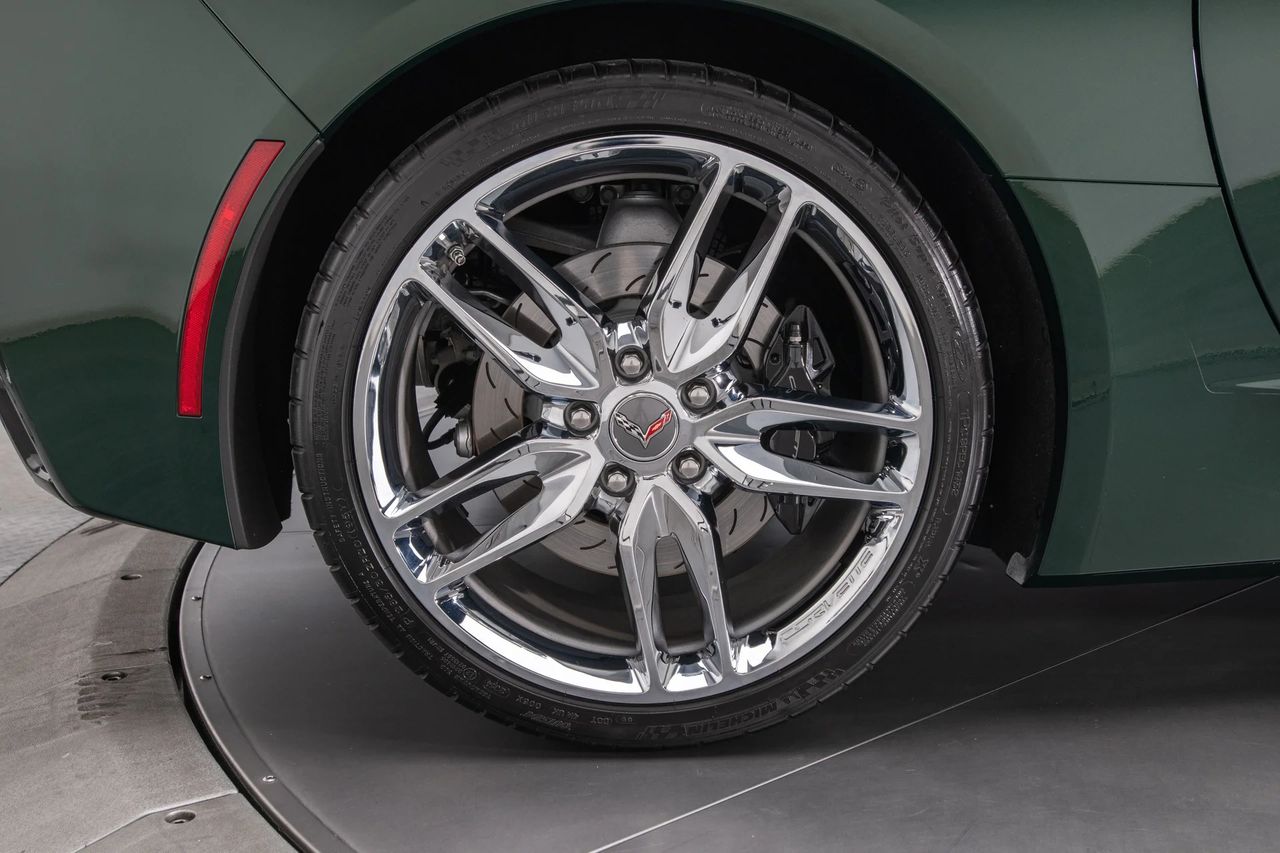
The C7 team was explicit: they engineered two distinct Brembo brake packages for two distinct missions. Every Stingray got fixed aluminum four-piston calipers and a big jump in swept area versus a base C6, while Z51 went further with larger rotors, more pad volume, and two-piece (dual-cast) rotors—aluminum hat with a cast-iron ring—to control weight and thermal growth. Corvette also moved from cross-drilled to slotted faces on performance trims to reduce crack propagation and improve gas/dust evacuation under repeated high-energy stops. With added cooling paths and track-biased ABS/PCM calibration, the result was repeatable stops and sprint-to-sprint consistency. Independent instrumented tests routinely measured 70–0 mph in the high-130-ft range for Z51 cars, and owners quickly learned why Z51 + Mag Ride became the default “driver’s spec.”
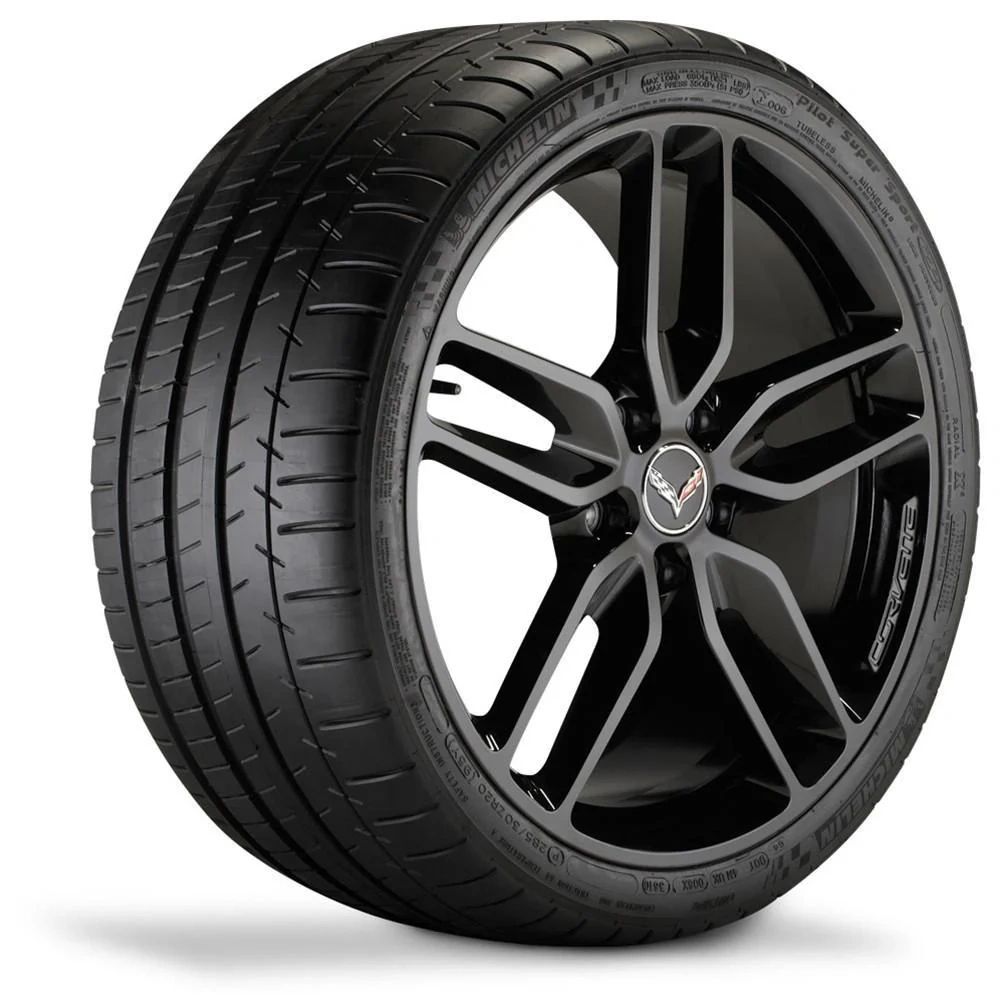
Tires finished the system. The Michelin Pilot Super Sport ZP run-flats were co-developed with GM for the C7’s loads and aero balance, with 18/19-inch fitment on base cars and 19/20-inch on Z51. Beyond headline grip, they showed real heat tolerance—the kind that let drivers run through an HPDE day without the pedal lengthening or lap times drifting because compounds or carcasses overheated. In short, the numbers looked great on paper, and they held up when you were going fast enough to need the coolers.
Aero & Cooling: Everything Vents, Nothing Pretends
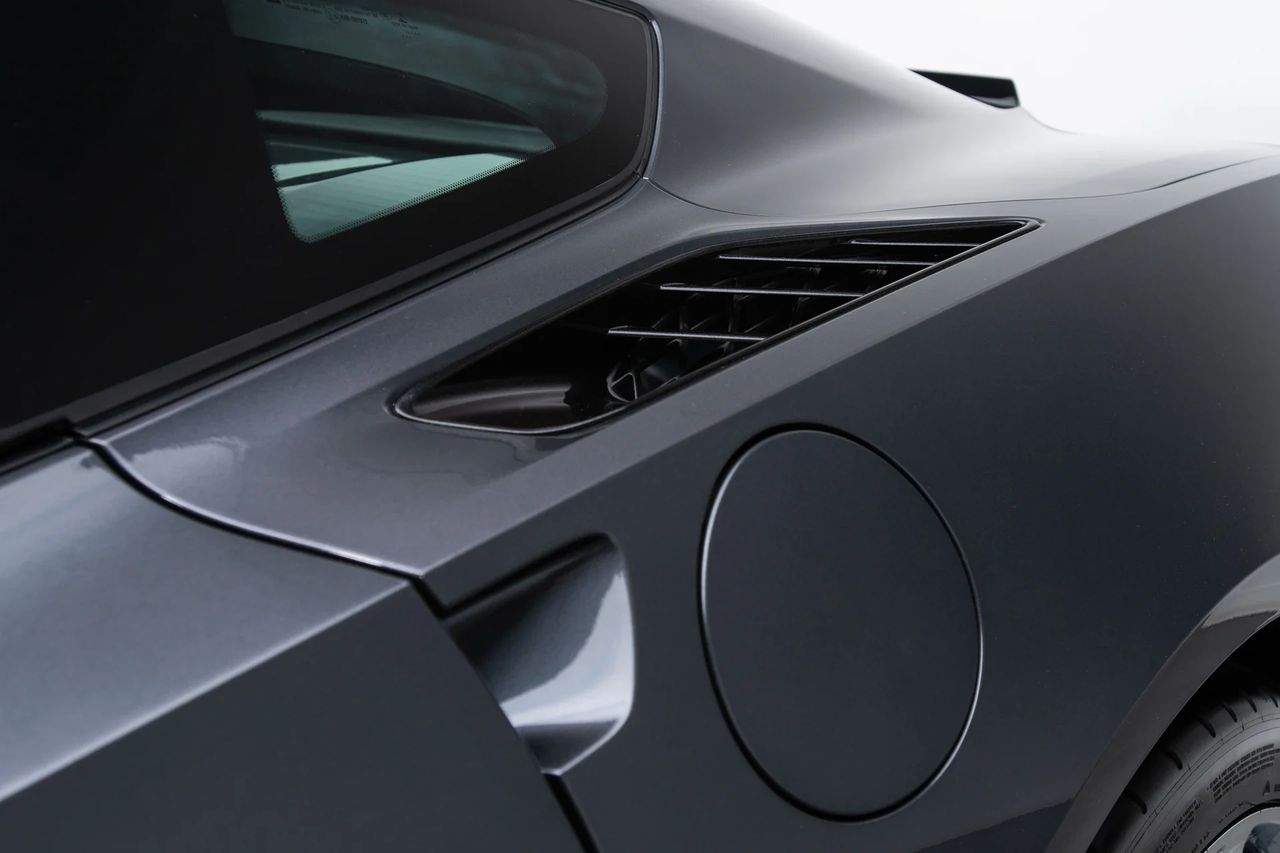
We’d all seen “vents” on cars that didn’t feed anything. The 2014 Stingray put an end to the cosplay. The hood extractor bled high-pressure air from the radiator into a low-pressure zone over the hood, trimming front lift and letting the radiator work harder lap after lap. The fender outlets relieved wheel-well pressure and helped pull hot air out of the engine bay—less lift, a touch less drag, and more stable front grip when the speeds climbed.
Z51 models went further with real heat management. They added dedicated ducting and heat exchangers for the transmission and electronic limited-slip differential; those rear quarter-panel inlets weren’t decoration, they fed air across the coolers and out through the rear fascia. The package also brought subtle aero and underbody tweaks—small changes in splitters/deflectors and a low profile rear spoiler—to keep the car in its thermal window across a full session instead of just the first flyer.
Juechter’s team chased the quiet gains, too. They moved mass rearward—battery and coolers included—to nudge static balance slightly rear-biased, closer to the race car’s ~48/52 target. You felt it in the way the car settled on power: better traction off slow corners, calmer high-speed stability, and cooling that kept braking and driveline responses consistent until the checkered flag.
Driver Interface & Interior: Finally, Seats Worth Defending
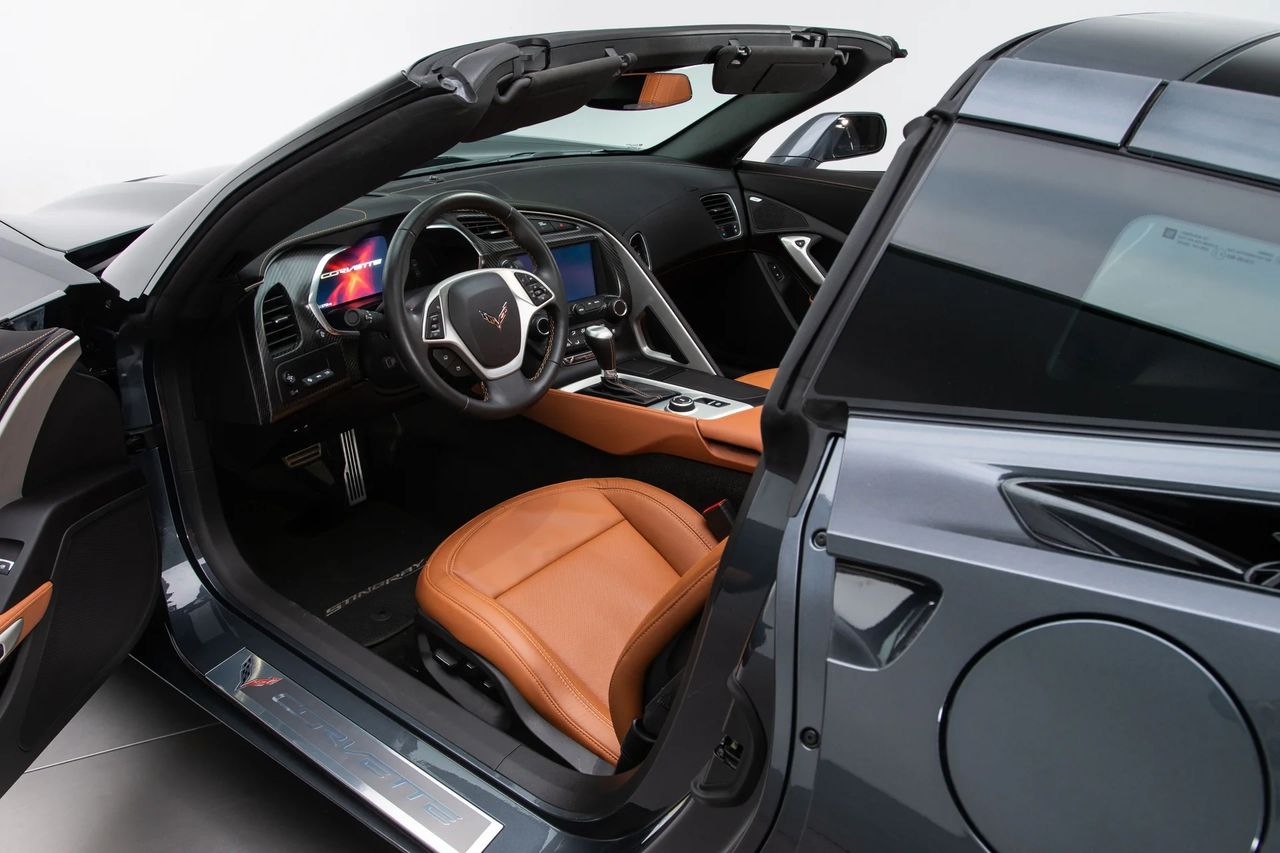
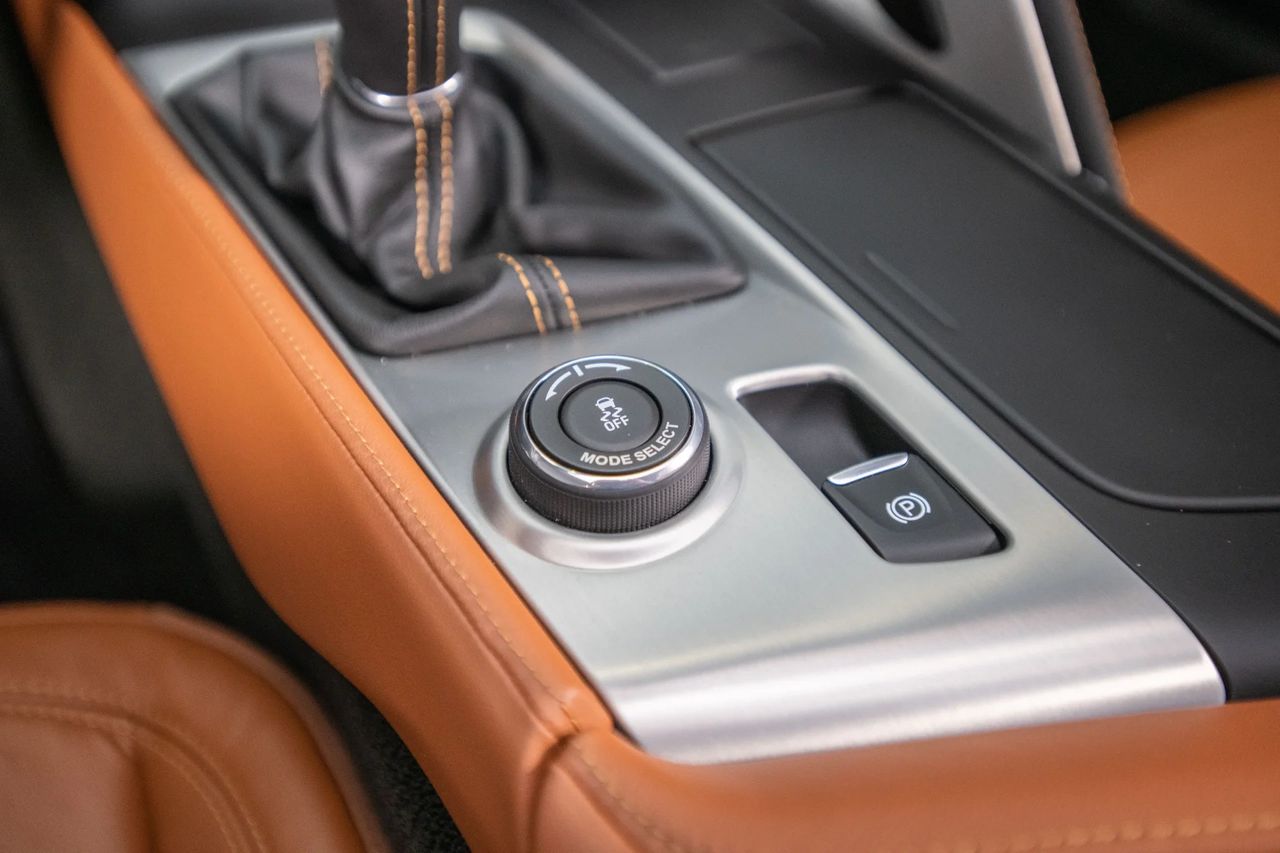
No area saw a bigger—or more overdue—transformation than the cockpit. Interior design manager Ryan Vaughn’s brief was a “fully wrapped” cabin: even on the base car you didn’t see bare molded-color plastic—surfaces were hand-stitched or soft-trimmed, with real metal switchgear where your fingers lived and optional carbon-fiber or sueded-microfiber where your eyes landed. The asymmetric console canted everything toward the driver, a rigid grab bar defined the passenger side, and the details finally felt premium: damped rotarys, a knurled Mode Select dial, and an electronic parking brake that cleaned up the tunnel.
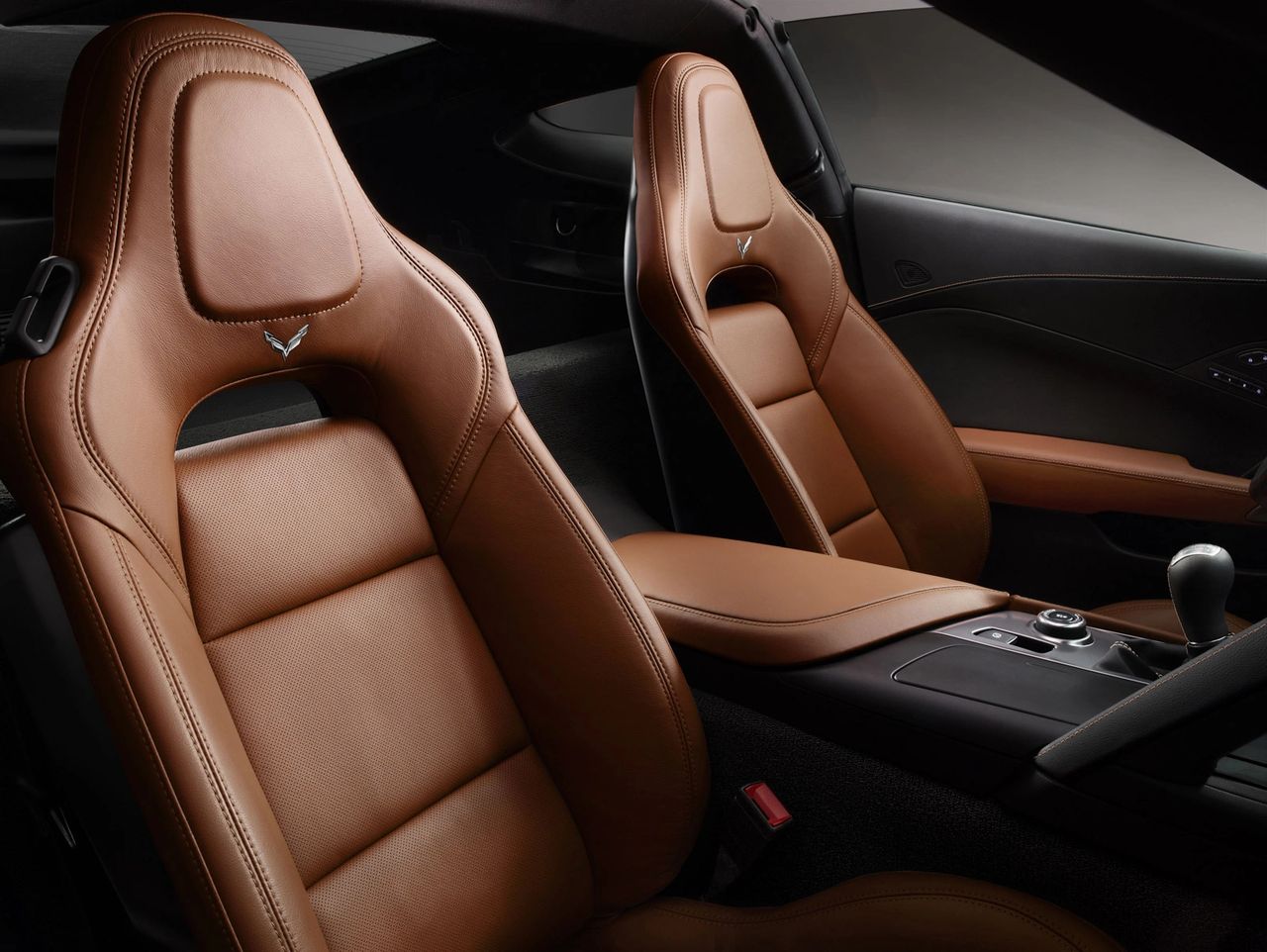
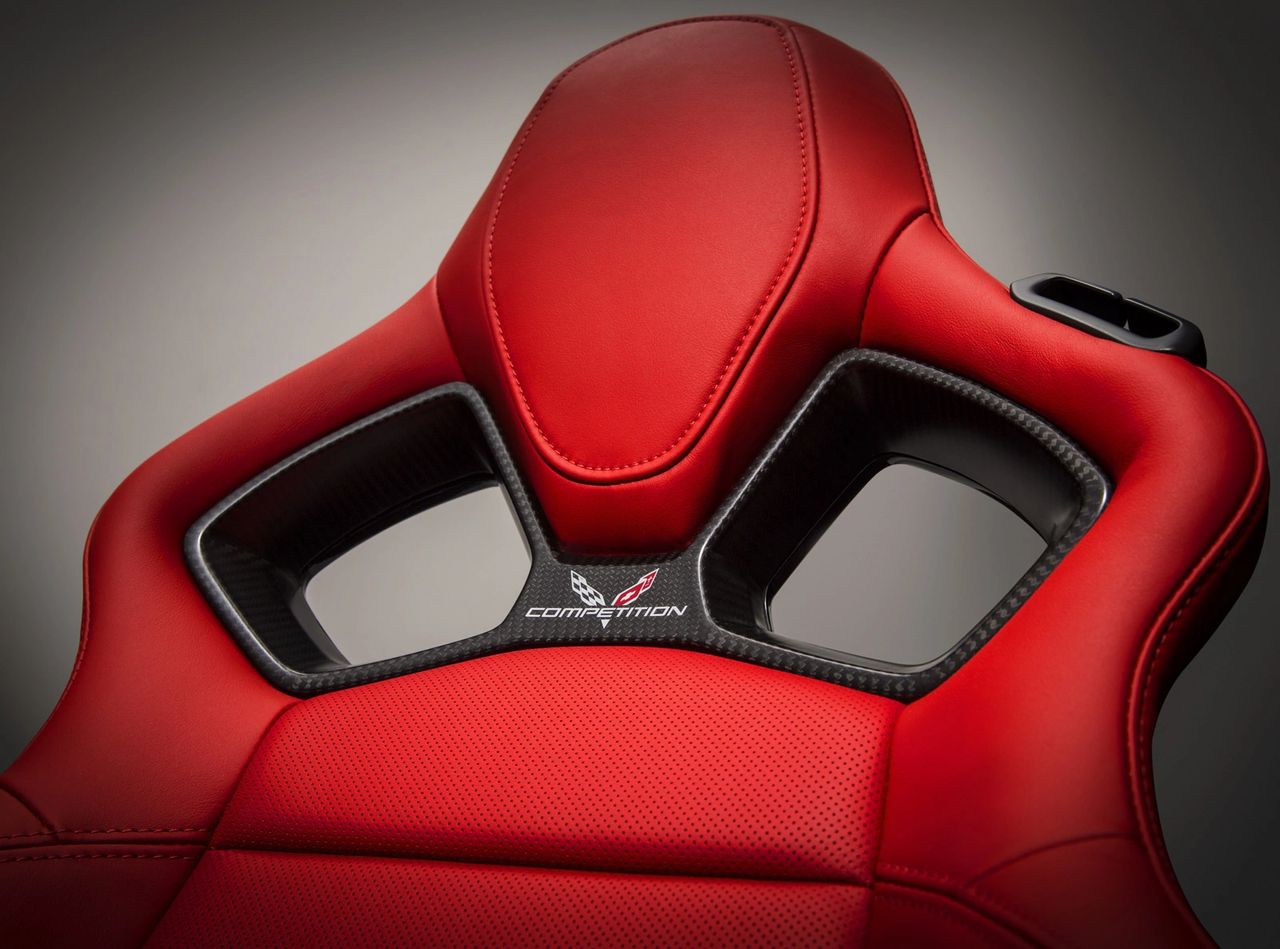
Seats were the other cornerstone. GM committed to two distinct architectures—the all-around GT chair and the Competition Sport (AE4) bucket with magnesium frames, deeper bolsters, and pass-throughs for harnesses. The team benchmarked Porsche and Recaro shells, then pressure-mapped bodies under track loads and handed both designs to Lear for production. The payoff was the rare Corvette seat that fit a wide range of bodies: real lateral support without the old compromise of “great if you’re small, punishing if you’re not.” (Heating/ventilation, memory, and adjustable lumbar/bolster support were available, and higher trims brought Nappa leather with tight, motorsport-style stitching.)
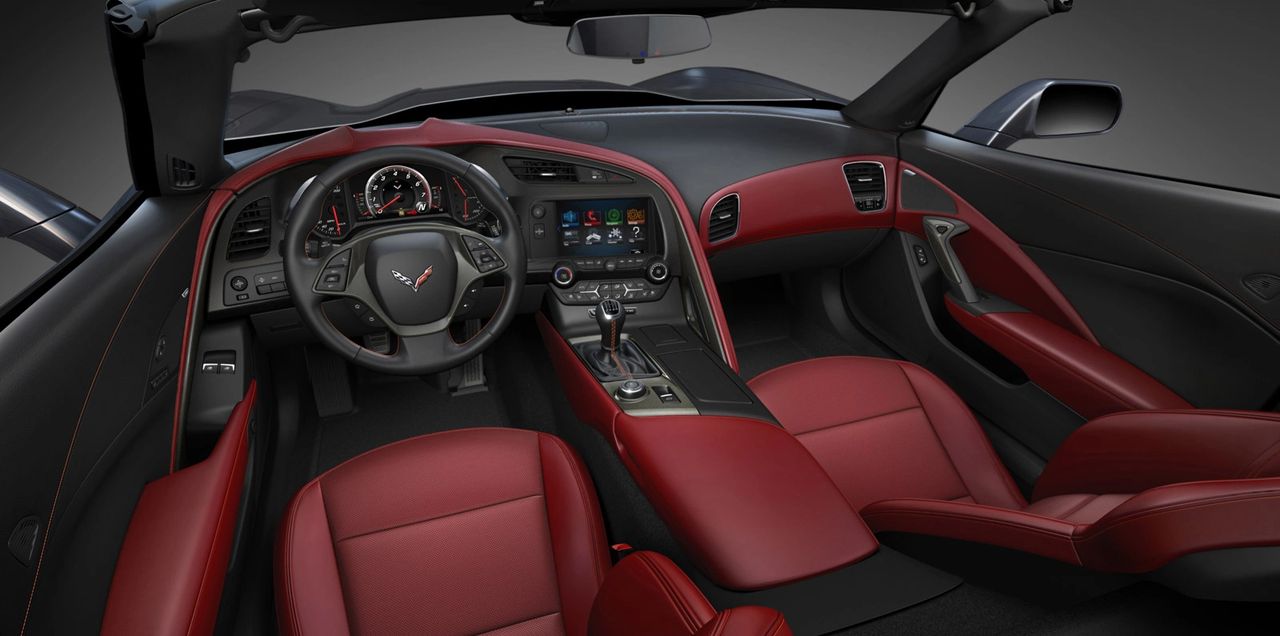
Electronics rose to the same standard. The 8-inch reconfigurable cluster carried distinct Tour, Sport, and Track themes, each with the information hierarchy to match—bigger tach and shift lights when you were hunting apexes, more navigation/media emphasis when you weren’t. Interaction designer Jason Stewart summed it up: the job was to make advanced tech easy to find in normal driving, then loud and obvious when you needed it. A color head-up display (available) mirrored the essentials—gear, revs, speed, lap timing—so your eyes stayed up. The center MyLink screen tucked a small storage cubby behind a motorized panel, USB’d and cooled to keep devices out of the sun.
Taken together, materials, seating, and interfaces finally aligned with the car’s capability. The C7 cabin felt purpose-built but livable—a place you could cross states in, then show up at an HPDE (High Performance Driver Education) event and never wish for a different seat, dial, or display.
Convertible: Top-Down Without the “Convertibles Are Floppy” Asterisk
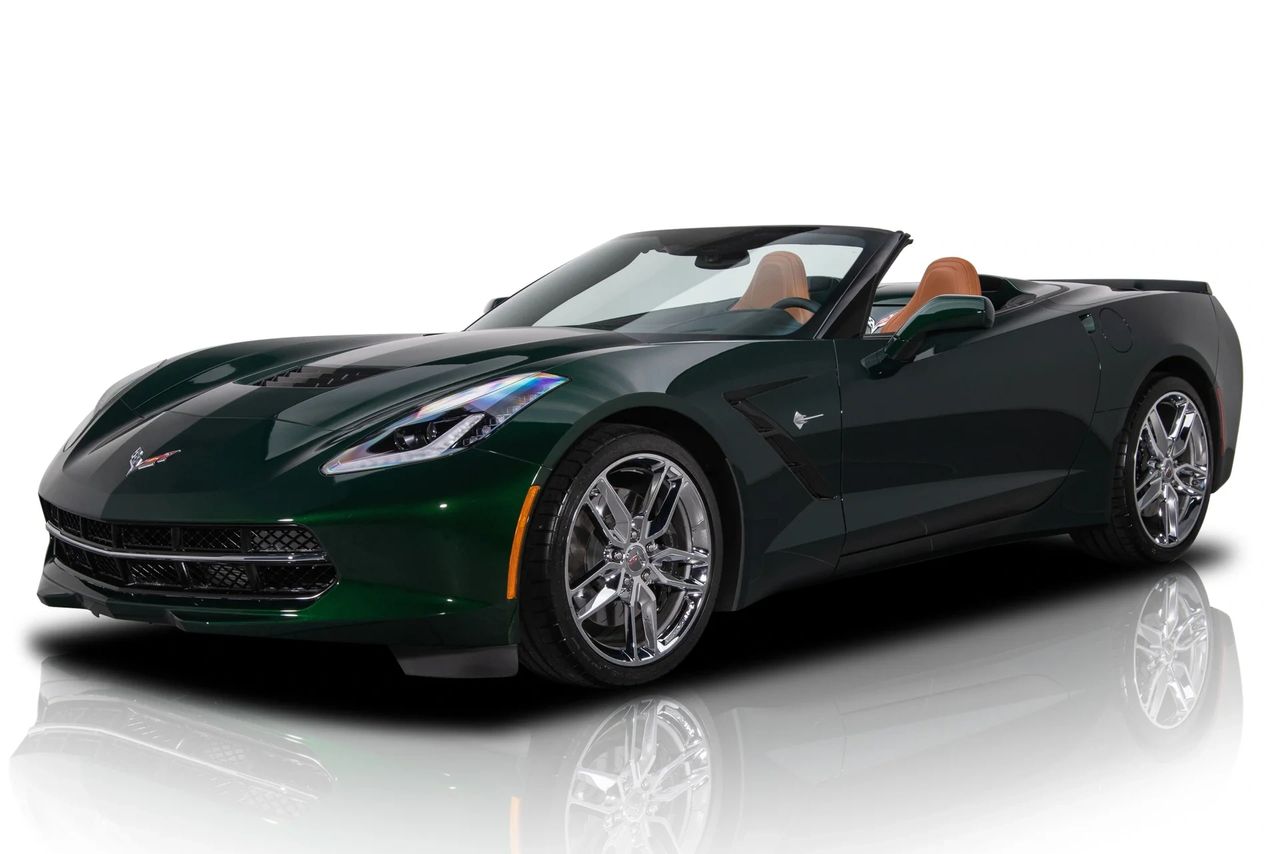
Chevrolet rolled out the Stingray Convertible just weeks after the coupe, and the headline stayed refreshingly simple: no structural band-aids required. Because the C7’s aluminum frame was conceived from day one to serve both roofed and roofless duty, the convertible didn’t need heavy reinforcements or awkward braces to keep it tight. That paid off where it matters—on the road. Steering precision, ride/handling balance, and the car’s trademark lateral grip all carry over intact, so the open car feels like the coupe you drove the week before, only with a bigger slice of sky.
The top itself underscores the “no-compromise” brief. It’s a fully electronic fabric roof that can be raised or lowered via the key fob and while rolling at neighborhood speeds (about 30 mph), which makes real-world use painless. A three-ply construction and a heated glass rear window tame wind roar, so you don’t get that “camping-tent at 80 mph” soundtrack older ragtops were infamous for. Stowed, the roof disappears neatly beneath a hard tonneau for a clean, sculpted profile; deployed, it seals up with the kind of refinement that makes long interstate stints feel effortless.
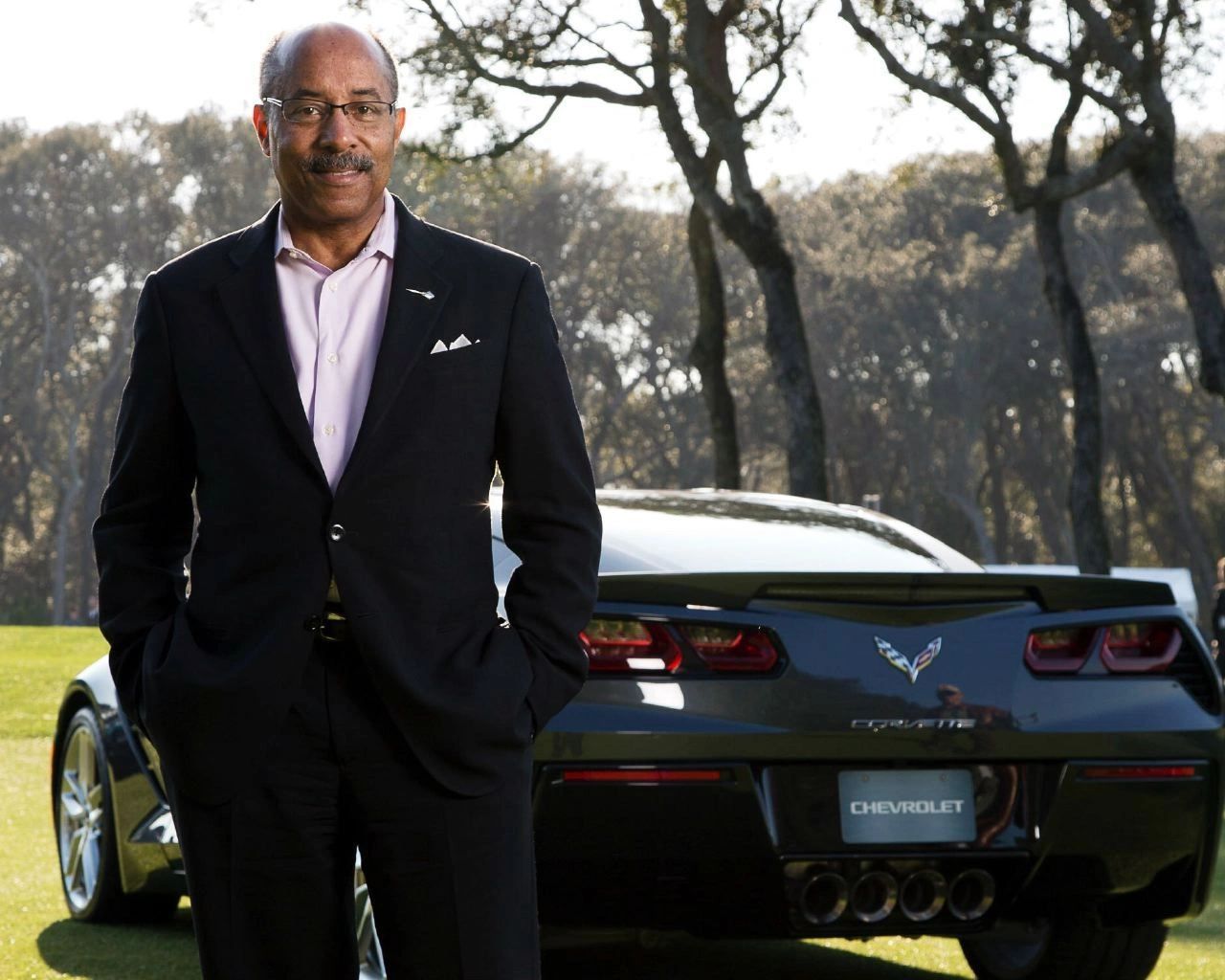
Design chief Ed Welburn connected the car to Corvette’s core identity: “The convertible has been a part of the heart and soul of Corvette since the very beginning in 1953… we designed and developed the coupe and convertible simultaneously… [so] open-top driving [comes] with no compromise in performance, technology or design.” That simultaneous development shows up in the details—identical chassis tuning philosophies, the same advanced driver interfaces, and the option sets enthusiasts actually want. The result is the first Corvette ragtop that truly drives like its hardtop twin, delivering the full Stingray experience—sound, speed, and precision—without asking you to trade away the thrill of top-down miles.
The Z51 Package: The Driver’s Default
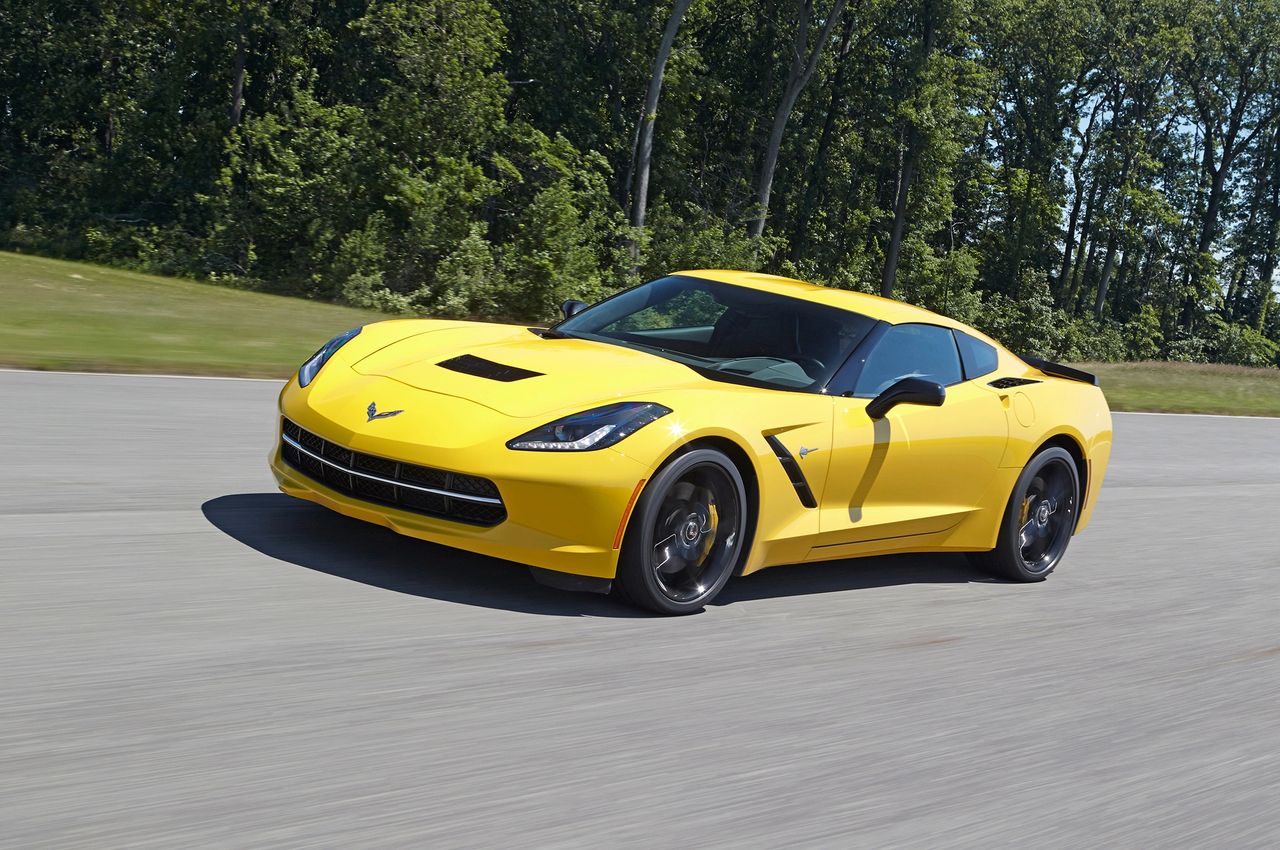
Even Chevy’s option grid told you where the team’s head was. Z51—available on every trim and with either transmission—bundled the hardware you’d add anyway if you actually drive: dry-sump oiling for sustained g’s, an electronically controlled limited-slip differential (eLSD) to apportion torque under load, dedicated coolers for the diff and transmission, specific springs and anti-roll bars, stiffer 45-mm dampers, larger slotted Brembo brakes, staggered 19/20-inch wheels, and a unique aero set aimed squarely at high-speed stability. None of this was window dressing. Each piece solves a problem you encounter when a base car that’s already quick is pushed into repeated, high-temperature, high-load use.
Layer on optional Magnetic Ride Control (FE4) and the Stingray does the split-personality trick better than cars wearing much bigger price tags. In Tour, it breathes with broken pavement like a proper grand tourer; click into Sport or Track and the car takes a set, rotates cleanly, and stays supported through direction changes without the brittle ride that used to come with“track package” badges. The beauty is how the systems talk to each other—damper control keeping the tire planted while the eLSD meters torque and the aero keeps the platform calm—so you get speed with confidence, not drama.
The market validated the recipe. Out of 37,288 Corvettes built for 2014, 21,111 wore Z51 badges—about 57 percent of all Corvettes produced that year. And within that already committed group, 13,392 cars layered the Magnetic Ride Control option on top of Z51. That’s not a niche; that’s the center of gravity. Buyers didn’t just want the look or a louder exhaust—they wanted the engineering that let the car deliver its performance all day long, on a favorite back road or at a lapping day in July heat.
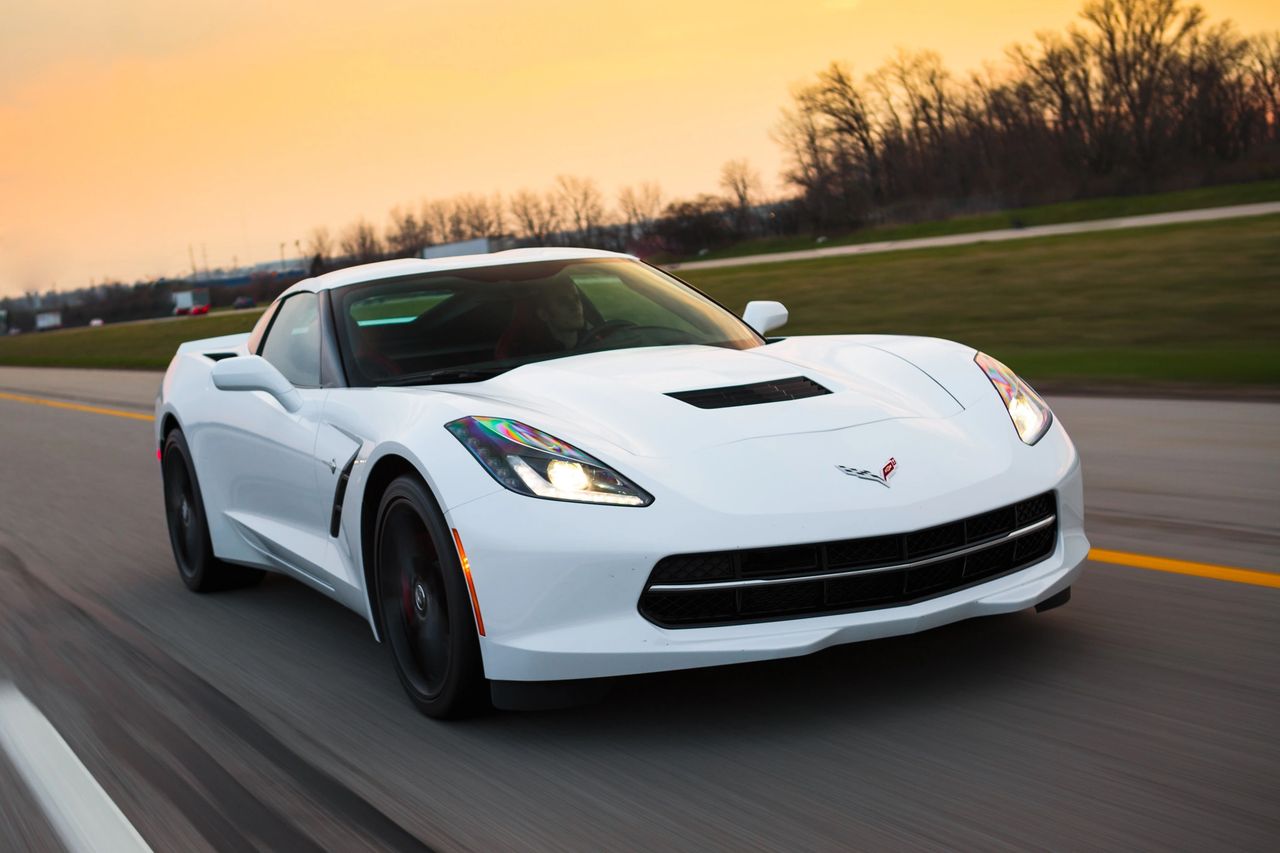
Tadge Juechter’s “why” was straightforward: when the base car is already knocking on sub-4.0-second 0–60, generating north of 1.0 g in cornering, and stopping shorter than the outgoing model, the loads and temperatures you see in the real world—especially on track—demand top-flight lubrication and thermal management. Z51 bakes those answers in. Dry-sump keeps oil pressure stable under long sweepers and heavy braking, the extra coolers hold temperatures in the green session after session, the bigger slotted Brembos shed heat and resist fade, and the aero trims lift so the chassis isn’t fighting instability precisely when you need it calm.
The upshot is practical as much as it is heroic. With Z51 and FE4, daily use doesn’t punish you, yet the car feels “switched on” the moment you ask for it—turn-in is crisper, mid-corner balance is more neutral, and on corner exit the eLSD makes power feel cleaner, not harsher. It’s the rare performance package that doesn’t just move numbers on a spec sheet; it broadens the car’s operating envelope. In a lineup that offered plenty of ways to personalize, Z51 wasn’t dressing—it was the blueprint for how the seventh-generation Stingray was meant to be driven.
Performance: The Numbers That Made the Headlines
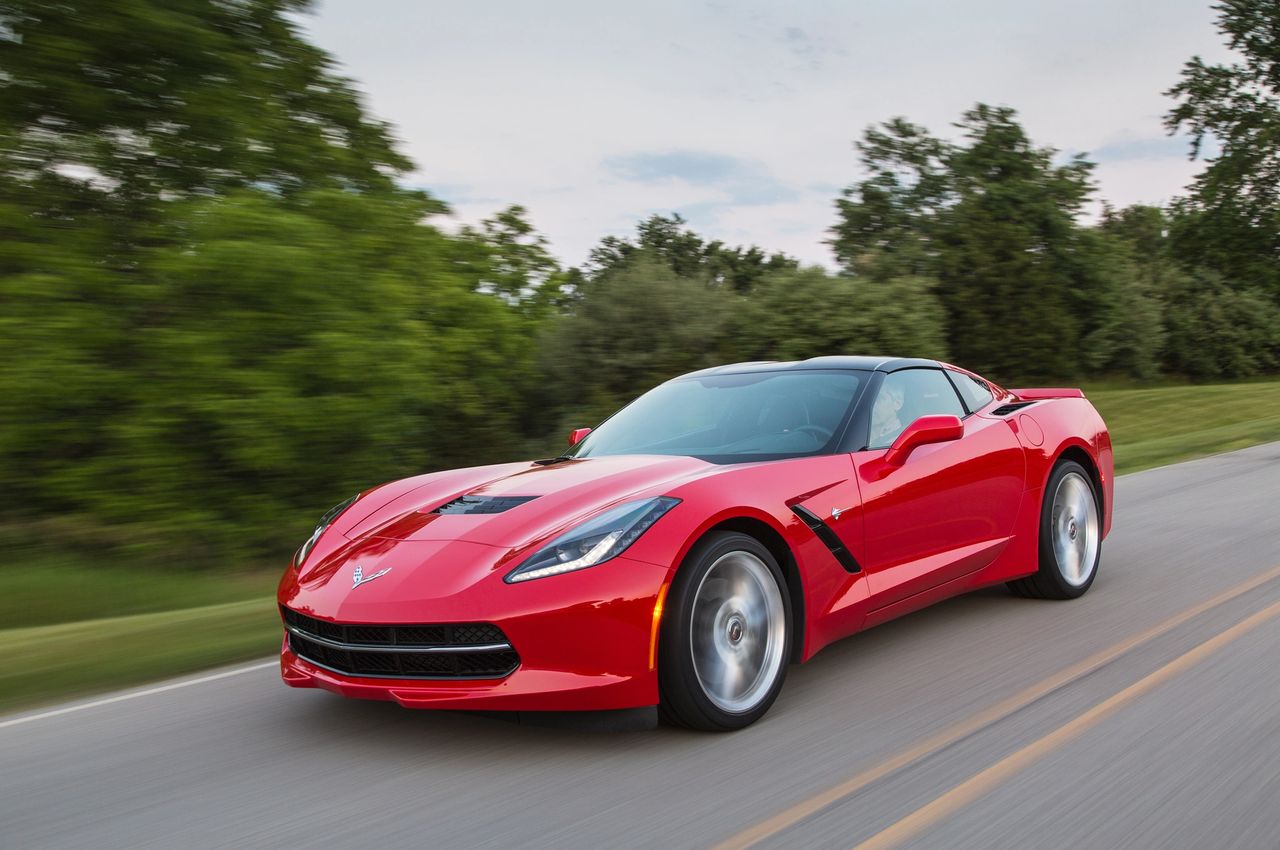
Chevrolet’s early 3.8-second 0–60 claim for a Z51 manual wasn’t bluster; it was a preview of what the car reliably did in the wild. Early instrumented tests put Z51 coupes and convertibles with a 0-60 time of just 3.9 seconds, 12.2–12.3 seconds @ 117–118 in the quarter, north of 1.00 g on the skidpad, and a hard braking distance of right around ~138 ft from 70–0mph. The results held across body styles and over long miles, reinforcing that the structure and chassis—not the roof configuration—were doing the heavy lifting.
Track work told the same story. At VIR’s Grand Course, a “regular” C7 Z51 lapped in the high-2:53s—brushing shoulders with the previous-gen Z06 and spoiling cars wearing much richer price tags. That single datapoint reframed the car: this wasn’t a fast-on-paper street special that wilted at speed; it was a bona fide track tool straight off the showroom floor.
The why is straightforward. Z51 bundled the parts you’d add anyway if you drive: eLSD that meters power cleanly off corners, shorter gearing, extra diff and trans cooling, larger slotted Brembos that produced repeated sub-140-ft 70–0 stops, and a Michelin Pilot Super Sport ZP tire set (245/35ZR19 front, 285/30ZR20 rear) tuned specifically for the C7. Crucially, these were real-world run-flats, not hero-spec Cup rubber, yet they still delivered >1.00 g consistency and trustworthy braking. Add optional Magnetic Ride Control (FE4) and you get the neat trick of a car that cruises like a GT, rotates like something far more exotic, and repeats its best numbers without drama.
Even GM’s own internal figures—1.03 g lateral and 107-ft 60–0 for specific test setups—telegraphed how serious the platform was. The pattern is consistent: launch control and the LT1’s broad torque curve make the headlines easy to reproduce; the eLSD and chassis tuning cash those checks at VIR; and the OE Michelin package proves it didn’t need ringer tires to shine. In short, the C7 Z51 arrived as the most capable standard Corvette at launch—not just once, not just in a straight line, but everywhere it counts.
Driver Modes & the “12 Variables” Problem, Solved
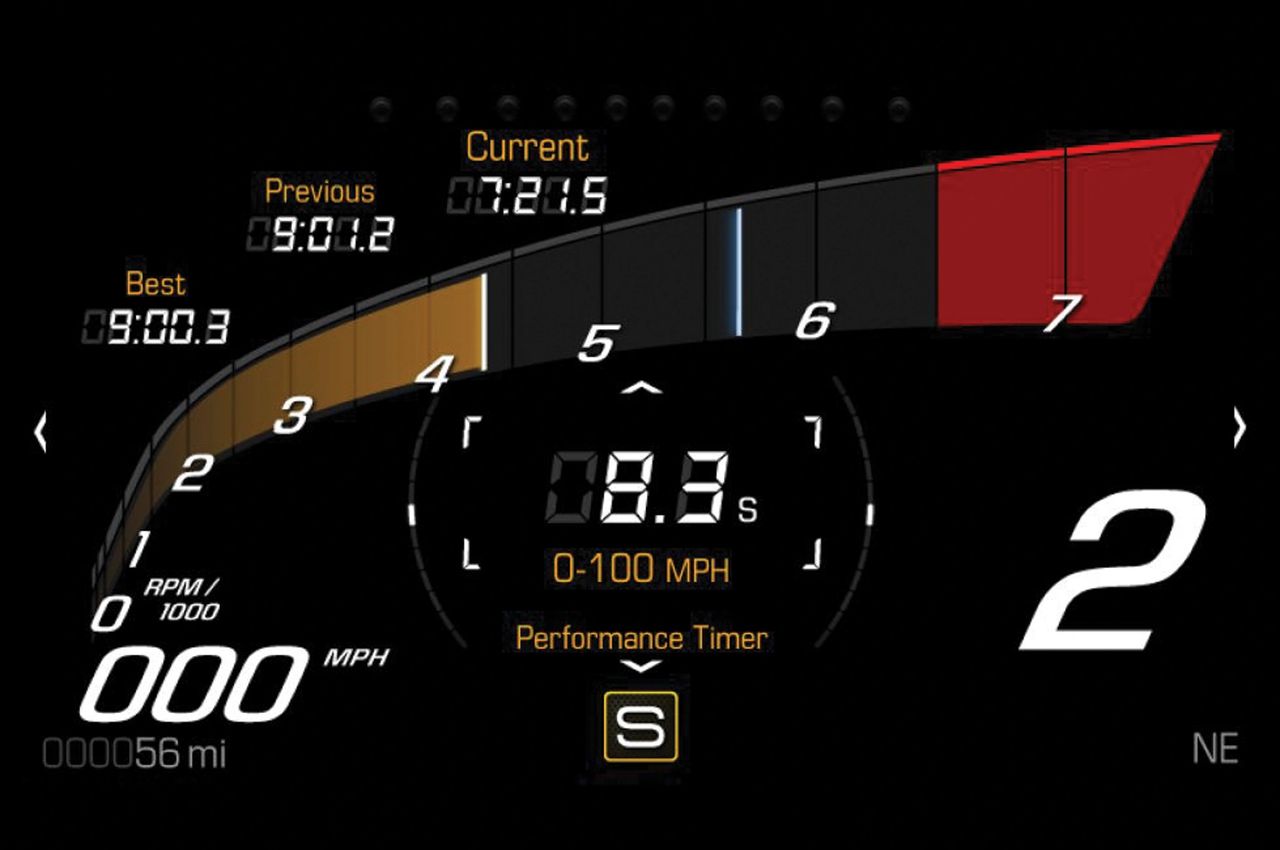
One of the smartest C7 ideas was hiding complexity behind the Driver Mode Selector. As Juechter put it at the time, there were “up to 12 variables” in play—steering effort, throttle mapping, stability and traction thresholds, eLSD logic, exhaust valves, rev-match behavior, shift strategy on autos, cluster theme, even damper tuning when equipped—and the answer wasn’t to scatter a dozen switches across the cockpit. You picked Weather, Eco, Tour, Sport, or Track, and the car coordinated itself.
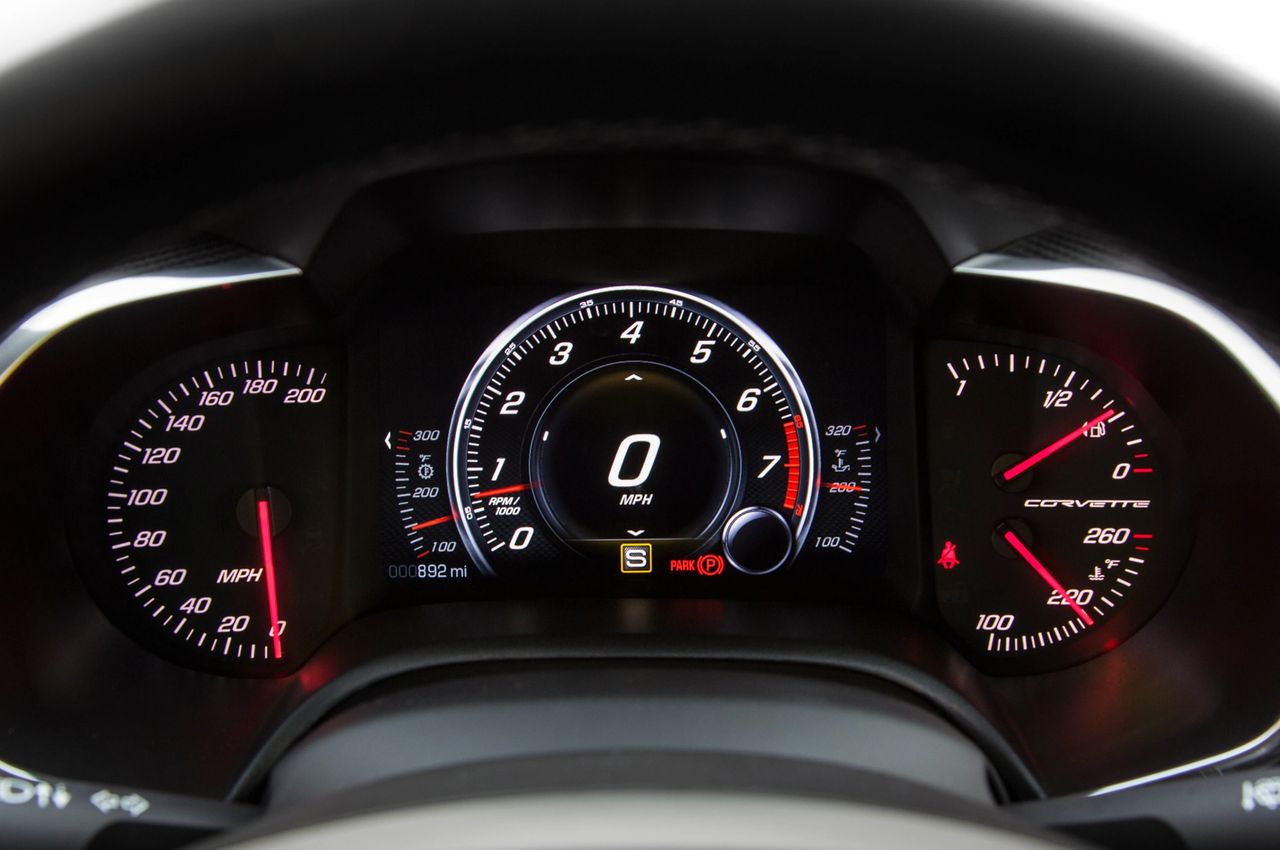
In practice, it worked the way drivers actually used the car. Weather calmed the throttle, softened the steering, raised the nannies, and quieted the pipes. Eco leaned on cylinder deactivation and long upshifts without turning the chassis to mush. Tour was the default—quiet exhaust, relaxed mapping, supple damping—for eating miles. Sport woke the eLSD, sharpened the pedal, added weight to the wheel, opened the valves more often, and put useful information front-and-center in the cluster. Track went further: the biggest tach and shift lights, the firmest damping, the most aggressive eLSD logic, and access to Performance Traction Management sub-modes so you could dial grip to conditions. It even remembered preferences per key fob. Human factors first, tech story second—and it showed every time you rolled the dial.
Pricing, Trims, and the Mid-Year Adjustment
Chevrolet launched the C7 Stingray with a headline number: $51,995 for the coupe and $56,995 for the convertible, destination included. Demand spiked immediately—especially for Z51—and by March 2014 Chevy nudged the base car up by $2,000 and the Z51 package to $4,000. Buyers didn’t flinch; the market voted with its wallets.
Trim logic (what each LT really bought you)
1LT (essentials, no fluff): The core package gave you the LT1 V8, 7-speed manual with rev-match, Driver Mode Selector, the 8-inch MyLink infotainment with color cluster, Bluetooth, dual-zone climate control, keyless entry/start, rear camera, HID headlamps, power tilt/telescope column, and 8-way power GT seats in Mulan leather. Wheels were silver 18/19-inch alloys on Michelin Pilot Super Sport ZP run-flats. The coupe’s removable body-color carbon-fiber roof panel was standard.
2LT (comfort and toys, the sweet spot): Built on 1LT, 2LT added a color head-up display, Bose 10-speaker Centerpoint audio, heated and ventilated seats, driver memory for seats/mirrors/column, auto-dimming interior mirror, theft-deterrent system, luggage shade and net for coupes, and HomeLink. The interior trim extended with more color coordination on the console and doors.
3LT (full dress): This trim made the Stingray feel premium inside. It layered in custom leather wrapping for the dash, doors, and console, plus Napa leather on the GT seats. The instrument panel matched seat color, and embedded navigation was included. If you wanted the Corvette to feel like something from the luxury brands it was competing with, 3LT was the answer.
Z51 Performance Package (available on any LT) The Z51 brought the track-day hardware: dry-sump oiling, shorter gear ratios, electronic limited-slip differential, bigger front brakes with slotted rotors, unique shocks/springs/bars, additional cooling circuits, aero tweaks, and staggered 19/20-inch wheels with Michelin Pilot Super Sport ZPs. Magnetic Ride Control and Performance Traction Management could be added on top of Z51, making it a serious turnkey track package.
Must-know options
- NPP Dual-Mode Exhaust: At $1,195, it gave you the split personality—quiet in Tour, rowdy in Sport/Track—and a small but certified bump in output. The take rate soared past 80%, making it nearly universal.
- Seats: Standard GT seats came in Mulan (1LT/2LT) or Napa (3LT). The Competition Sport seats (RPO AE4) arrived later in the model year and were a must for track junkies thanks to magnesium frames, deep bolsters, and harness cutouts.
- Roof menu (coupes): The standard body-color carbon-fiber roof could be swapped for transparent, visible carbon-fiber, or dual-roof packages (body-color + transparent or visible CF + transparent). This gave owners real freedom to lean toward GT comfort or motorsport edge without touching the drivetrain.
How to spec it (sanity version) The smart buy for the driver’s car without blowing the budget was 1LT + Z51 (with NPP exhaust). For livability, gadgets, and comfort, 2LT was the sweet spot. For those who wanted the cabin to look and feel upscale every time they opened the door, 3LT with its full leather wrap delivered. And for the track crowd, the recipe was clear: Z51, Mag Ride, PTM, and AE4 seats.
Production, Mix, and Color Story (2014 Model Year)
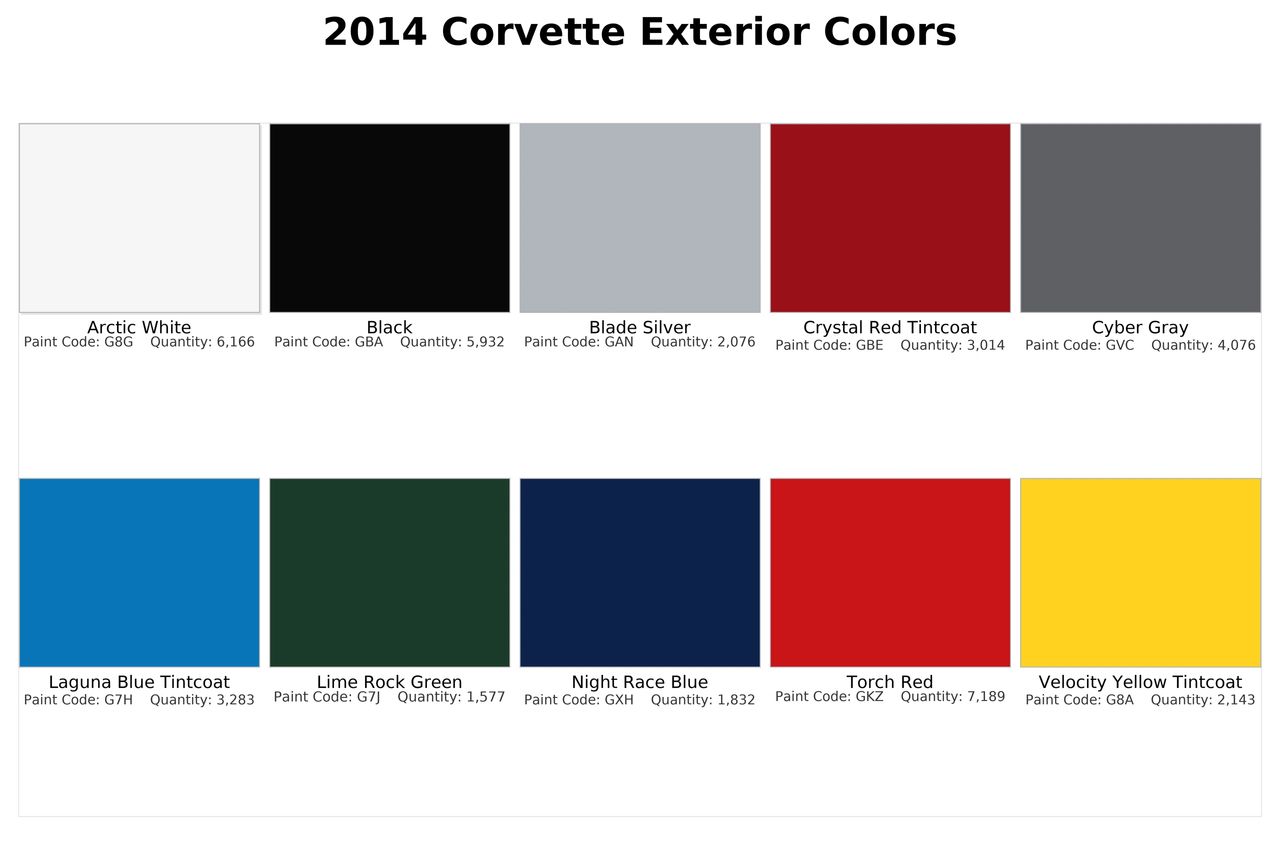
Bowling Green built 37,288 Stingrays for 2014: 26,565 coupes, 10,723 convertibles. Transmission split favored the automatic (appx. 65%), which fits the “daily it, track it” brief more owners adopted. Z51 cars were 56.6% of production. NPP exhaust? 31,170 cars, which explains why a 2014 neighborhood sounds different than a 2013 one. Color winners: Torch Red (7,189), Arctic White (6,166), Black (5,932). Rarities—and 2014 signatures—include Lime Rock Green (1,577) and Cyber Gray (4,076), both one-year-only colors that collectors already watch.
Interior Details That Matter
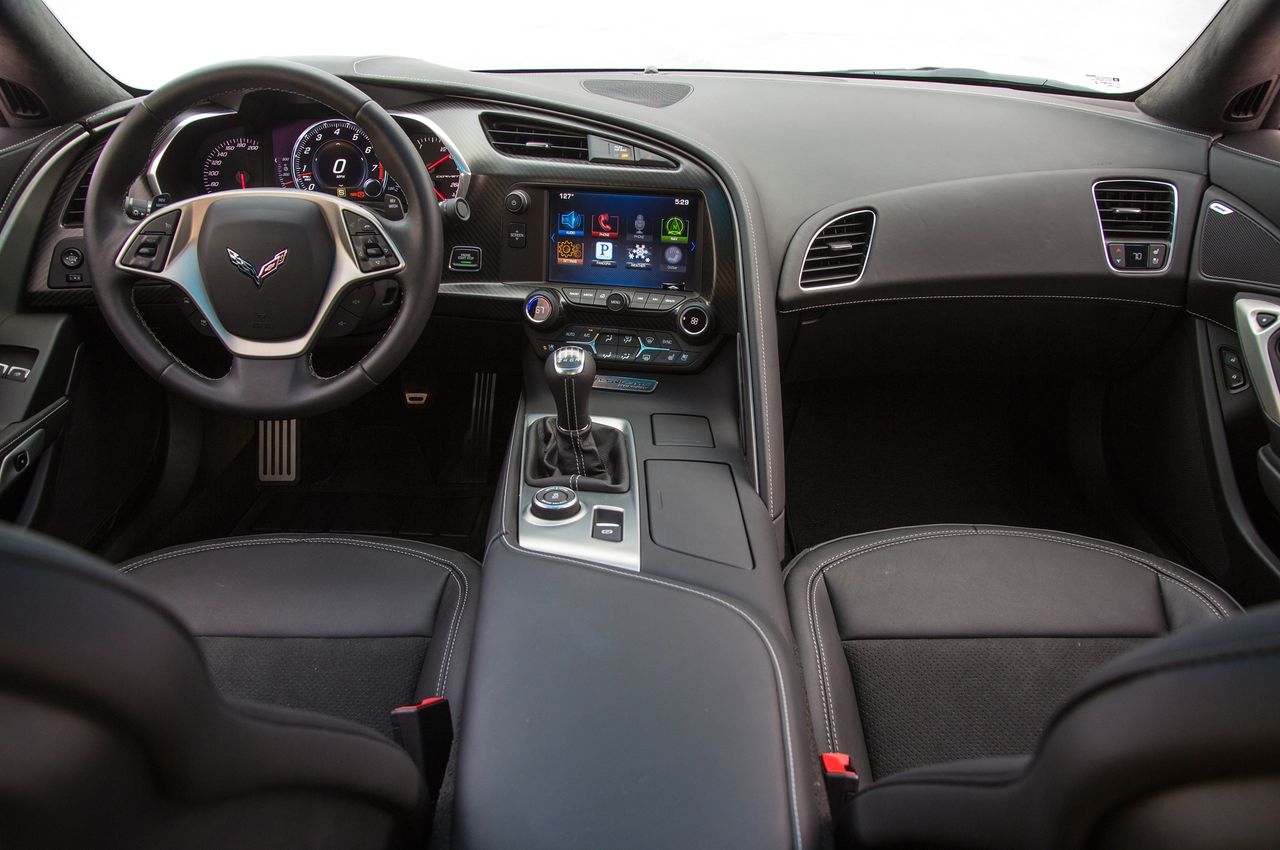
What makes the 2014 Corvette’s interior succeed long-term isn’t simply the long-overdue step up in materials—it’s the way Chevrolet finally got the ergonomics right. The smaller, thicker-rimmed steering wheel sits perfectly in hand, putting you closer to the control feel you’d expect from Porsche or BMW benchmarks, and it frames a gauge cluster that gives you exactly the information you need, no more, no less. Layered on top is a full-color head-up display that projects tach, gear, and speed onto the windshield—an evolution of Corvette’s earlier HUDs that now mirrors key cluster data. The net result is less time glancing down, more time with eyes where they belong: out front.
The center stack finally feels like it belongs in a modern sports car. Chevrolet’s MyLink infotainment system anchors the dash with an eight-inch screen, but the clever trick is the motorized panel that slides upward to reveal a hidden storage cubby and a USB port. It’s one of those rare “gimmicks” that proves genuinely useful, whether you’re stashing a wallet, a phone, or even just hiding a charging cable. Unlike past Corvette interiors, which often mixed tech with cost-cutting, the C7’s layout blends form with day-to-day function.
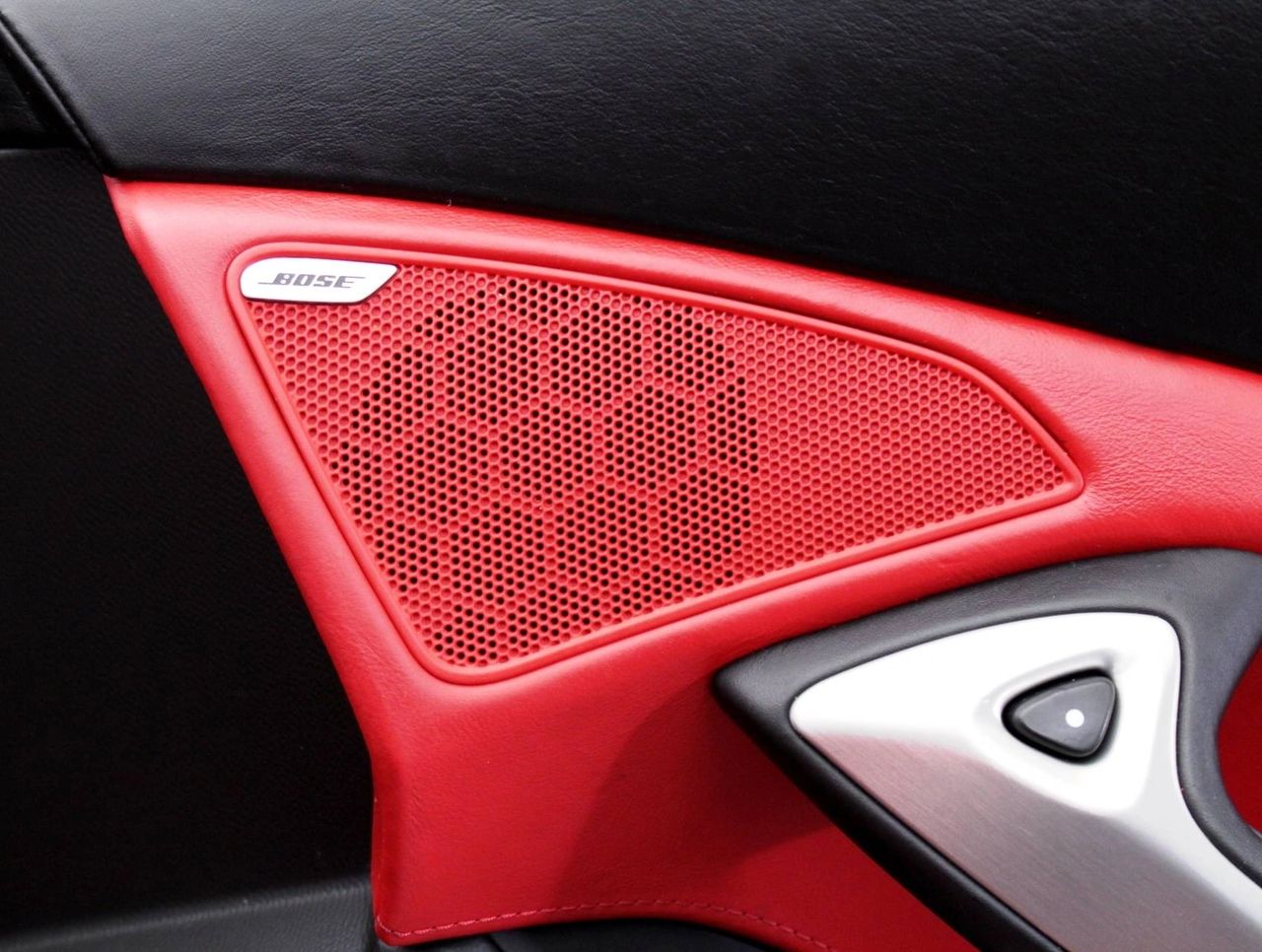
Audio was another big step. The base nine-speaker Bose system set a respectable floor, but serious buyers gravitated toward the optional 10-speaker package with a dedicated bass box. That subwoofer worked with a redesigned door structure—thicker, stiffer, less prone to rattling—to deliver low-end presence the C6 could never muster. Music finally sounded full, detailed, and anchored, elevating long drives from tolerable to enjoyable.
And then there’s the intangible: refinement. Corvette engineers targeted highway noise harshness as a must-fix, and the payoff is obvious. Drive a 2013 C6 and a 2014 C7 back-to-back, and the difference in road roar, wind rush, and cabin resonance is night and day. One feels busy and unrefined, the other settled and composed. For anyone who uses their 2014 Corvette beyond Saturday coffee runs—commuting, road trips, or cross-country rallies—that transformation alone is enough to answer the “Why C7?” question.
The “Stingray” Name: Earned, Not Added
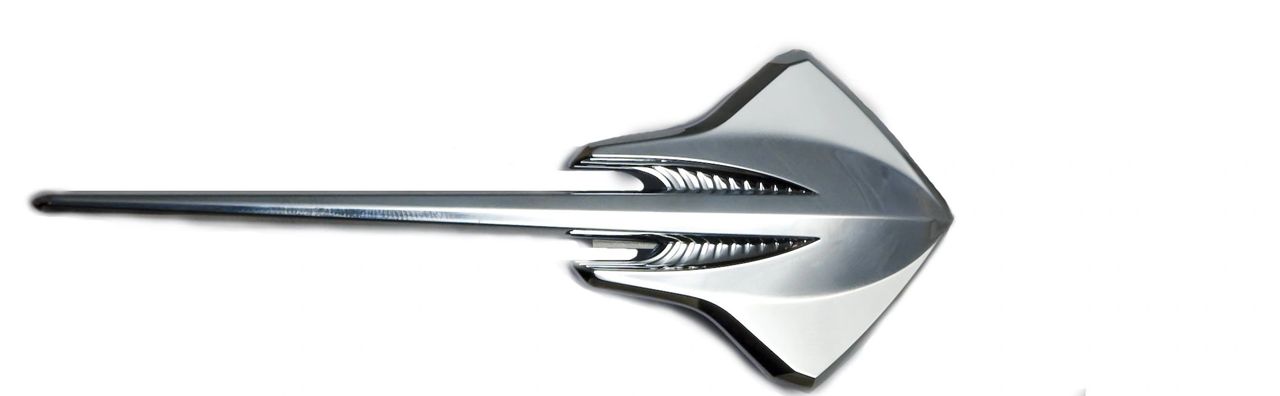
While the Stingray badge carries enormous nostalgic pull, its revival for the C7 was not a casual decision. Inside GM, the name has always been treated as sacred ground. Tadge Juechter has said that Ed Welburn, then GM’s global design chief, was “extremely strong on this point” and refused to sign off unless the car genuinely deserved the name. Welburn made clear that Stingray stood for more than just a word on the fender: it represented “a combination of striking styling… and commensurate technology.”
That litmus test forced the team to evaluate the C7 with ruthless honesty. The exterior design was sharper, more dramatic, and unmistakably Corvette while pushing the shape forward. The cabin was a leap ahead, finally wrapping the driver in materials and ergonomics that matched world-class benchmarks. Underneath, the all-new aluminum structure cut weight and added stiffness, while technologies like the reconfigurable digital cluster, Drive Mode Selector, and advanced chassis electronics put Corvette on a playing field it had never fully occupied before. Taken together, these elements convinced the leadership team that the seventh-generation car had, without question, earned the right to wear the badge.
That decision wasn’t marketing bravado. It was leadership actively guarding brand equity—protecting one of Corvette’s most iconic identities until the product was strong enough to carry it forward. In doing so, they reaffirmed that Stingray is more than a name; it’s a standard every new Corvette must rise to meet.
Pace Car Duty & Pop-Culture Moments
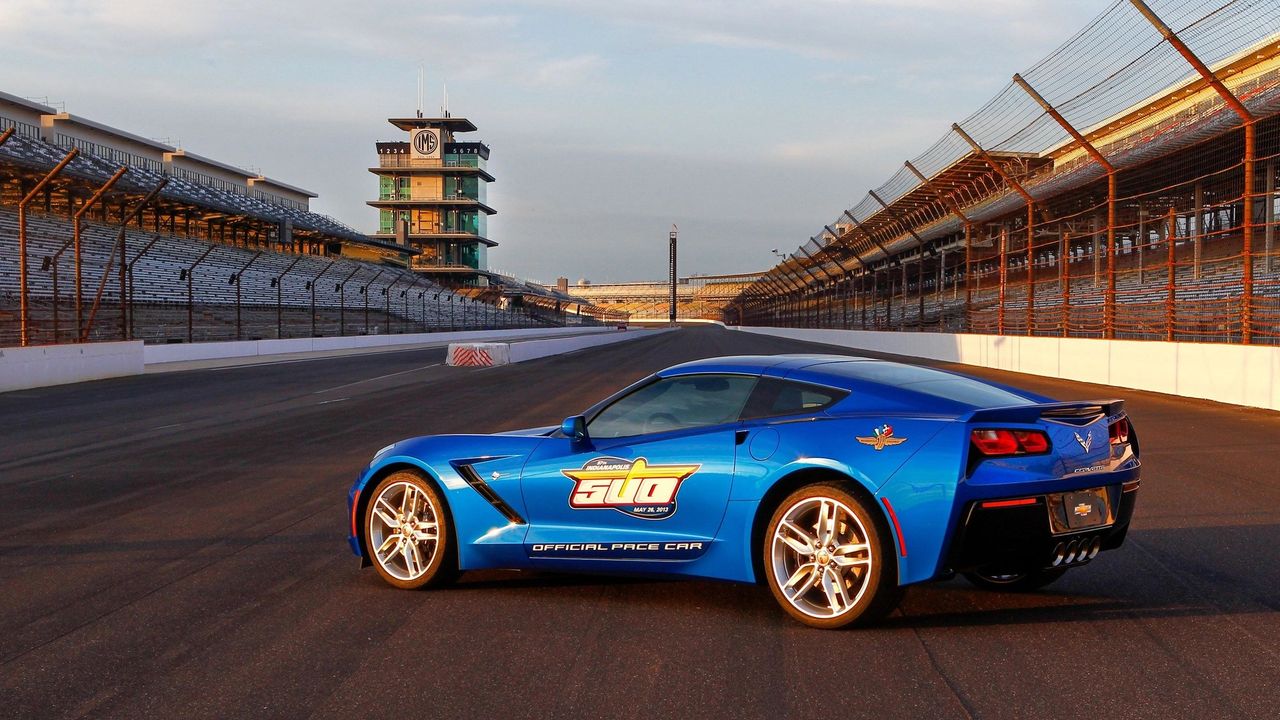
Chevrolet didn’t let the buzz go to waste. The 2014 Stingray served as the 97th Indianapolis 500 Pace Car in Laguna Blue, marking the 12th time a Corvette has led the field. GM’s Jim Campbell tied the choice back to the development philosophy: “The 2014 Corvette Stingray’s performance was influenced by racing, making this prestigious assignment even more fitting.” The car needed no powertrain mods to serve as the official pace car—just the required safety gear. It sends a strong message to would-be consumers when your showroom car is capable enough to set the tone for the “Greatest Spectacle In Racing.”
How It Drives (and Lives) in the Real World
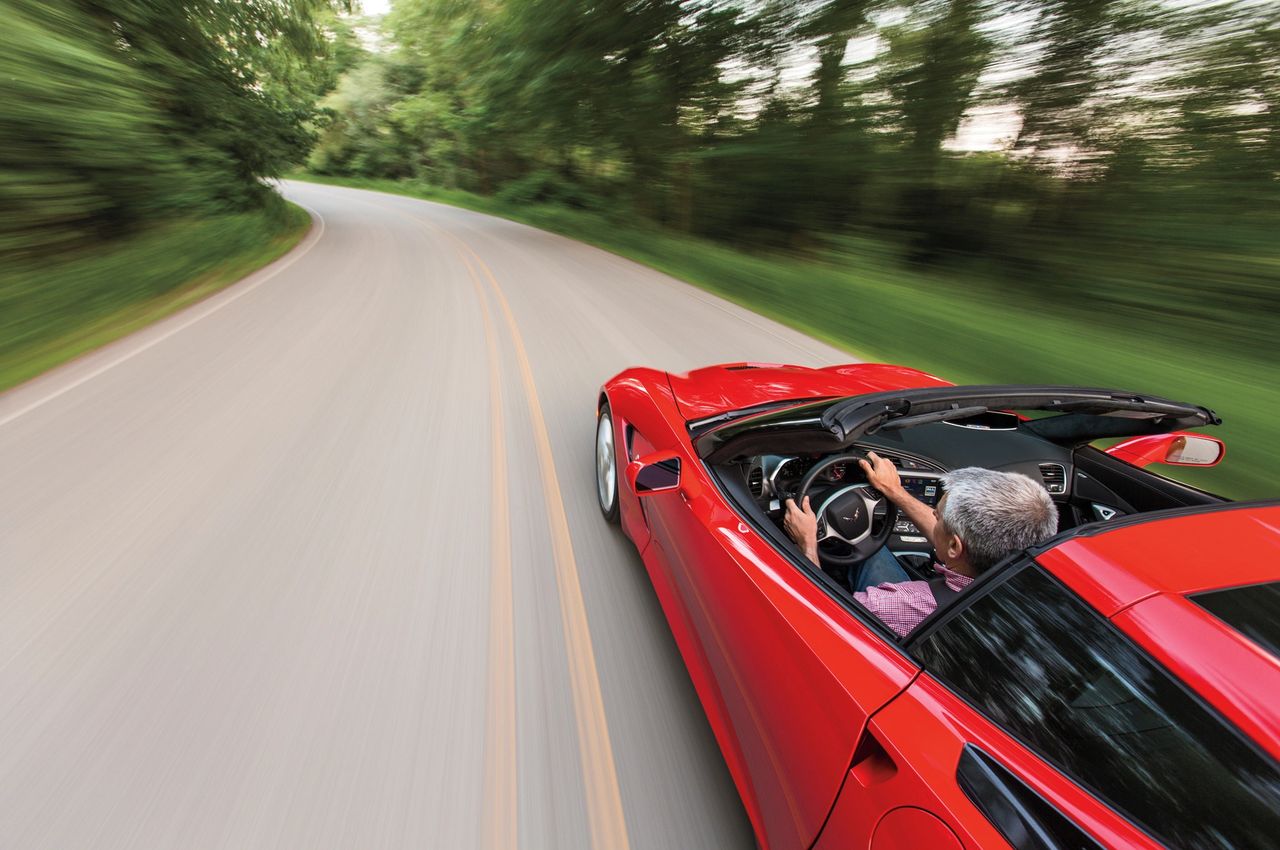
Specs and quotes are one thing; living with the car is another. What makes the C7 stand apart is its sheer bandwidth—the breadth of personalities it can inhabit without ever feeling compromised. In Tour, it’s a legitimate daily driver: cabin noise muted, the cylinder-deactivating AFM working in the background with zero drama, and Magnetic Ride smoothing out the cracked slabs of interstate in a way the old car simply couldn’t. You could knock out a long commute or a cross-state road trip and step out unruffled.
But twist the dial to Sport or Track and the transformation is immediate. Steering effort builds naturally, the electronically controlled differential tightens its algorithms, exhaust valves swing open, and the reconfigurable cluster morphs into a pit-wall ally—big tach, bright shift lights, lap-timer logic. Tadge Juechter talked about “five times the steering stiffness,” and you feel it: corrections are clean, proportional, confidence-building. Add in Active Rev Match, which turns every downshift into a perfectly timed blip, and suddenly, anyone can drive like a hero without thrashing the gearbox.
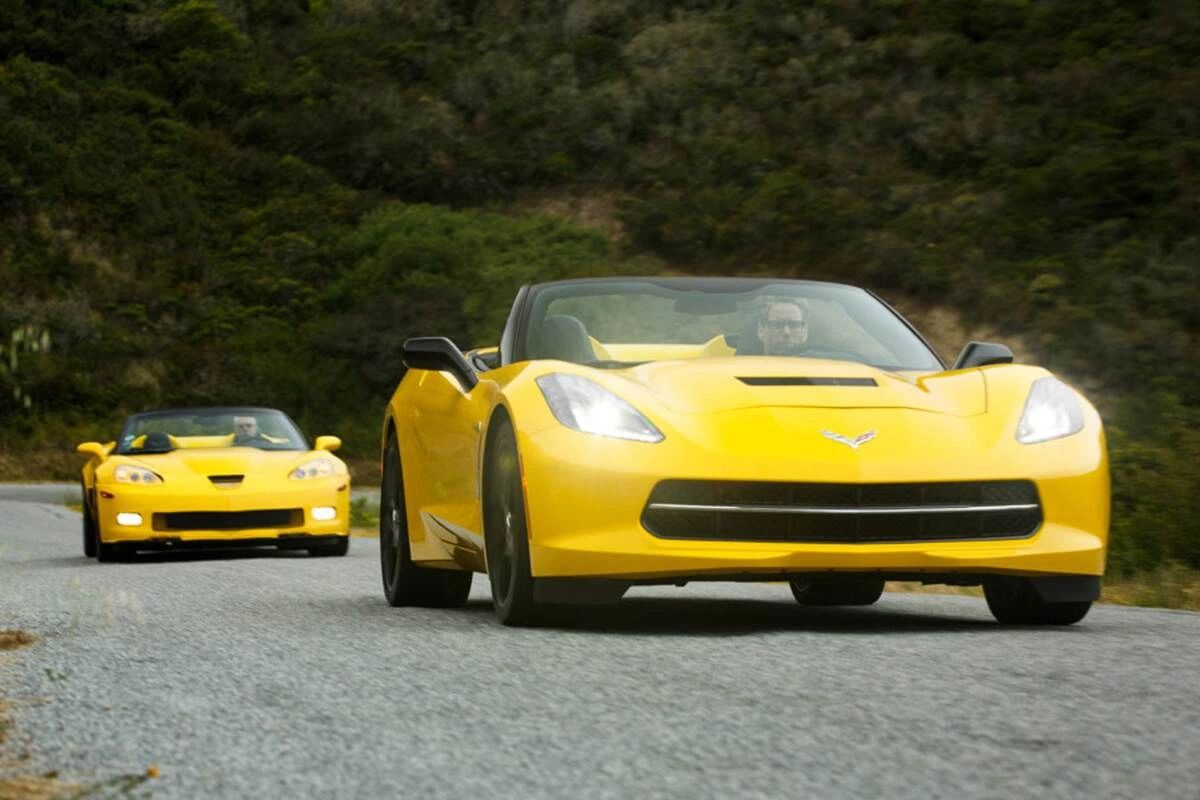
This duality is the C7’s genius. The C6 could feel like two cars—one supple and grand-touring, the other sharp but edgy, sometimes punishing. The seventh-generation Corvette dissolves that split personality. It’s a car that can play grand tourer, back-road weapon, or track toy at will, without forcing the driver to pick one at the expense of the other. That’s a meaningful, deliberate leap forward in Corvette evolution.
What to Look For (Owner/Buyer Notes)
- Z51 + FE4 Mag Ride is the sweet spot if you track or cannonball your favorite back road; the thermal capacity and damper bandwidth make pace easy to repeat. The take rates exist for a reason.
- AE4 Competition Sport seats (late availability in the model year) are worth hunting if you’re broader-shouldered or serious about HPDE. The magnesium frame support is more than brochure talk.
- NPP exhaust turns the soundtrack from “nice V8” into “how a Stingray should sound,” with the bonus power bump that GM certified. If you’re on the fence, don’t be.
- Color one-yearers—Lime Rock Green and Cyber Gray—give 2014 a built-in collector hook. If you love them, this is the year.
- Price context: launch pricing was a steal; the March 2014 increases don’t change the value argument but do matter for sticker archaeology and window-sticker decoding.
2014 Corvette Stingray — Detailed Specifications
Powertrain (Stingray coupe & convertible)
- Engine: 6.2L LT1 small-block V8 (aluminum block/heads; DI, VVT, AFM). Output: 455 hp @ 6,000 rpm / 460 lb-ft @ 4,600 rpm (standard exhaust); 460 hp / 465 lb-ft with the optional dual-mode NPP performance exhaust.
- Transmissions:
- 7-speed Tremec TR-6070 manual with Active Rev Match. Base ratios: 2.66 / 1.78 / 1.30 / 1.00 / 0.74 / 0.50 / 0.42 Z51 manual ratios: 2.97 / 2.07 / 1.43 / 1.00 / 0.71 / 0.57 / 0.48 (both with 2.90R).
- 6-speed Hydra-Matic 6L80 automatic with paddle shift (2014 only).
- Fuel economy (EPA): 7-MT 17/29/21 mpg; 6-AT 16/28/20 mpg; fuel tank 18.5 gal.
- Cooling & lubrication: Standard wet-sump; dry-sump oiling with added diff/trans coolers included in Z51.
Chassis, steering, brakes, wheels/tires (Stingray)
- Structure: All-aluminum frame (Bowling Green-built), ~99 lb lighter and 57% stiffer than the prior steel frame. 50/50 weight distribution.
- Suspension: SLA (short/long arm) double wishbone front & rear; Driver Mode Selector; Active Handling/TC standard. Magnetic Selective Ride Control available (bundled with Z51).
- Steering: ZF electric power rack-and-pinion; 37.7 ft curb-to-curb turning diameter.
- Brakes (Brembo):
- Standard rotors: 12.6 in front / 13.3 in rear (FNC-treated).
- Z51 rotors: 13.6 in front (two-piece, slotted) / 13.3 in rear with enhanced brake cooling.
- Wheels/tires:
- Base Stingray: 18×8.5 front / 19×10 rear with Michelin Pilot Super Sport ZP 245/40ZR18 & 285/35ZR19.
- Z51: 19×8.5 front / 20×10 rear with Michelin Pilot Super Sport ZP 245/35ZR19 & 285/30ZR20.
Dimensions & capacities
- Wheelbase: 106.7 in · Length: 177.0 in · Width: 73.9 in · Height: 48.6–48.9 in (body style).
- Interior (both body styles): headroom ~38.0 in, legroom 43.0 in, shoulder ~55.2 in, hip ~53.7–54.0 in.
- Cargo: Coupe 15.0 cu ft (hatch); Convertible 10.0 cu ft (trunk).
- Curb weight (typical published figures): Coupe ~3,298 lb; Convertible ~3,362 lb; a Z51 manual test car: ~3,444 lb.
Performance (factory & instrumented)
- 0–60 mph: as quick as 3.8 s (manufacturer, with Z51). Independent tests commonly record ~3.9 s for Z51 manual coupes/convertibles.
- Skidpad: ≥1.00 g achievable with Z51.
Z51 Performance Package (available on coupe & convertible)
Adds comprehensive track-focused hardware and aero:
- eLSD (electronic limited-slip differential) with hydraulically actuated clutch pack and active torque-bias control.
- Dry-sump oiling (higher oil capacity) plus integrated coolers for differential and transmission. Engine oil capacity increases from ~7.0 qt to ~9.75 qt with Z51.
- Specific manual gear set (closer ratios listed above).
- Unique aero package to improve high-speed stability.
- Bigger Brembos with two-piece slotted front rotors and enhanced brake-cooling ducting.
- Wheels/tires upsized to 19″/20″ (Michelin Pilot Super Sport ZP). Black-painted calipers included; red/yellow available.
- Available Magnetic Selective Ride Control; includes Performance Traction Management (PTM) when Mag Ride is selected.
Convertible-specific notes (Stingray & Z51)
- Fully electronic fabric top with glass rear window; power-operable by key fob and while driving up to 30 mph; cycle time ~21 sec.
- Cargo: 10.0 cu ft (top design does not intrude into trunk once stowed).
- Typical instrumented deltas vs. coupe are minimal (e.g., 0–60 in ~3.9 s for Z51 manual coupe and convertible; convertible ~138 ft 70–0, about +1 ft vs. coupe)
Quick reference (what changes when you check Z51)
- Driveline: mechanical LSD → eLSD with active torque biasing.
- Lubrication/cooling: wet-sump → dry-sump + diff/trans coolers; higher oil capacity.
- Brakes: 12.6″/13.3″ rotors → 13.6″/13.3″ two-piece slotted with extra cooling.
- Rolling stock: 18/19 with 245/40 & 285/35 → 19/20 with 245/35 & 285/30.
- Ratios: standard TR-6070 set → closer Z51 set (above).
- Aero & options: unique aero; Mag Ride/PTM availability tied to Z51.
The Broader Context: Why 2014 Still Feels Current
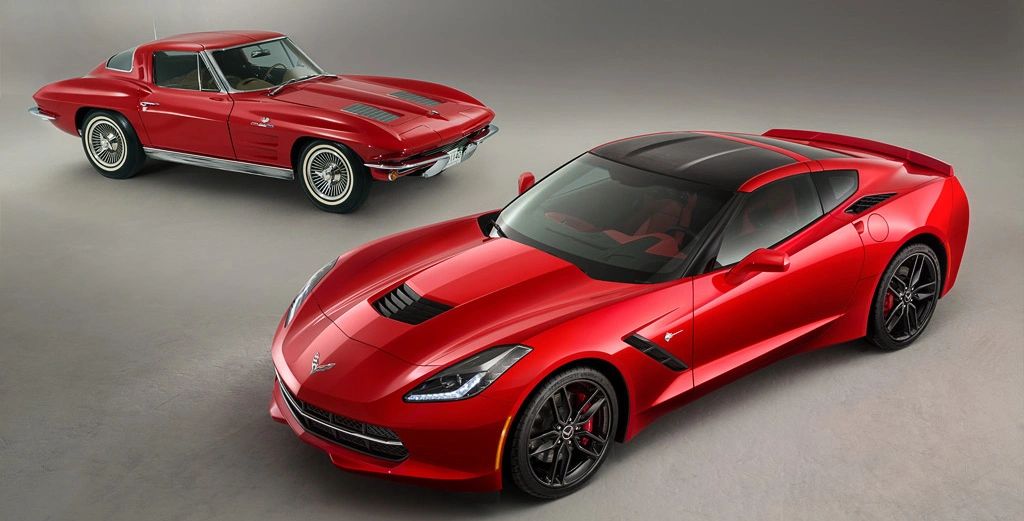
Every few Corvette generations, there’s a step change that makes the prior car feel like a charming relic. The 1963 Sting Ray did it with the independent rear suspension and design revolution. The 1997 Corvette did it with architecture and usability. The 2014 Corvette Stingray did it with the aluminum structure, the LT1’s modern combustion, and a cockpit that finally matched Corvette’s dynamic promise. You can feel the engineering discipline in the way the car works on a hot day, 20 minutes into a session, in the way the eLSD meters torque on corner exit, and in the way the cluster/HUD keeps your eyes forward.
We give the final word to the people who engineered and designed the seventh-generation Stingray, because their candor explains why this car landed the way it did. Juechter on the scope:“We wanted a big upgrade… more like the change from C4 to C5 than the evolution from C5 to C6… as we got into it, it turned out to be even bigger than we thought.” Bennion on the aero: “They’re not just aesthetic things that we bolt on.” Vaughn on the interior: “It’s probably the single most upgraded area of the car.” And Bailey on the brakes and springs: “Two distinct brake systems for two distinct cars… It’s an engineered composite spring.” That’s a team not polishing a legacy, but rebuilding it in plain sight.