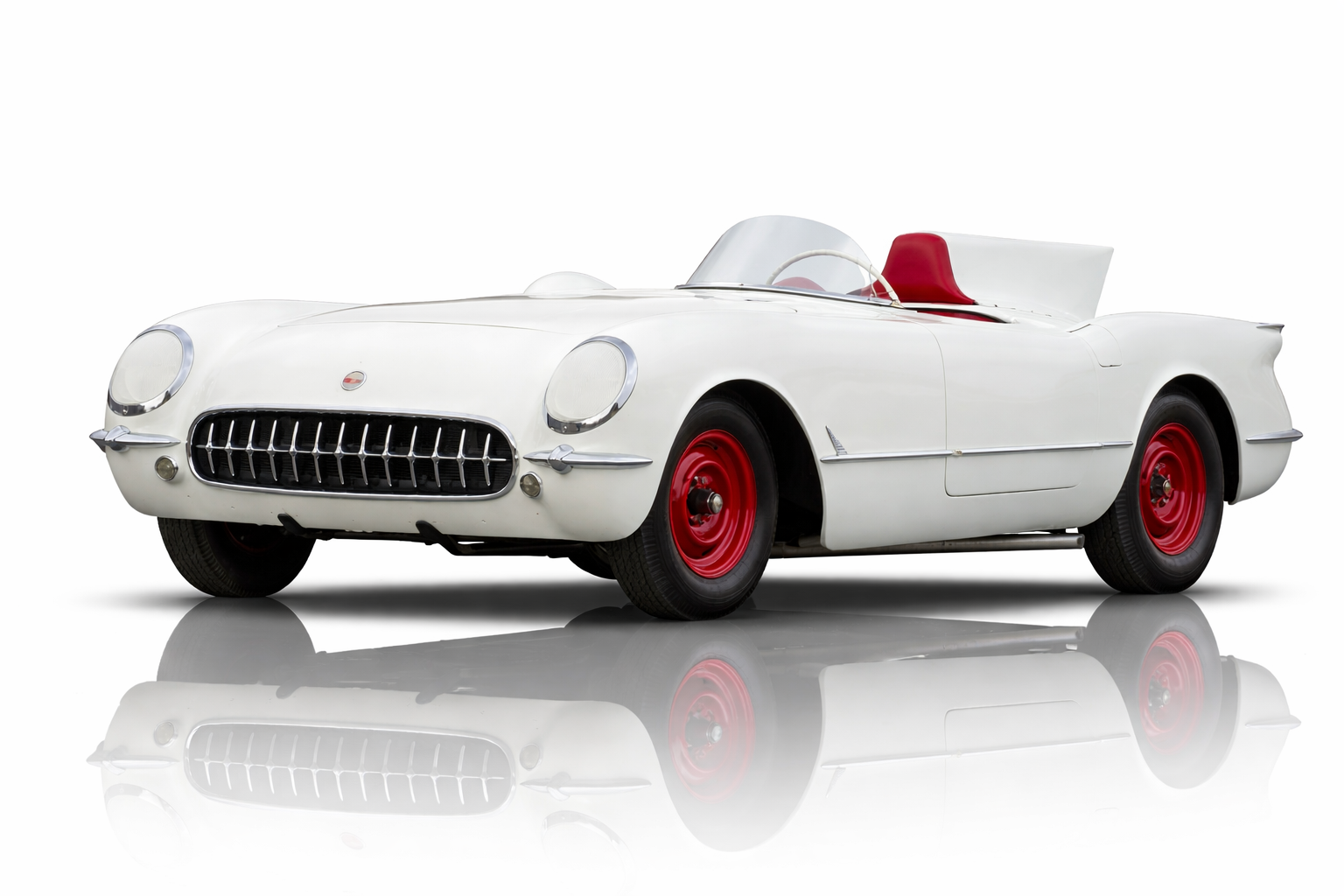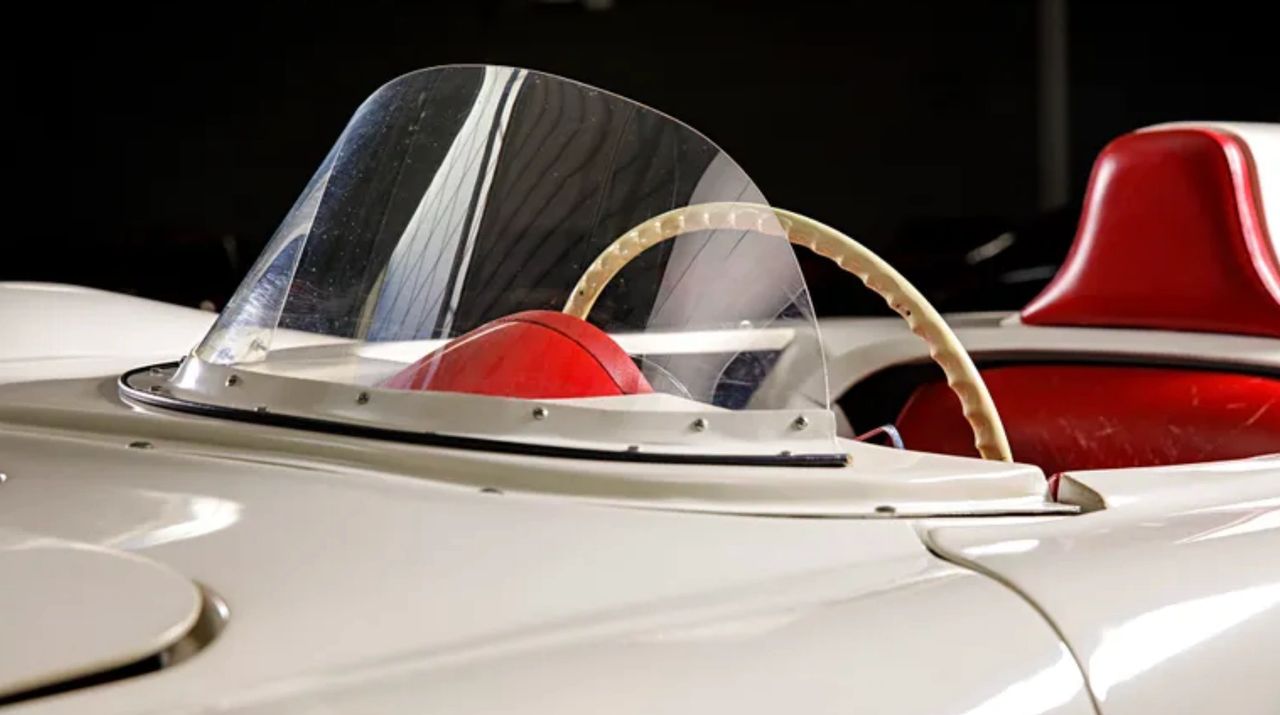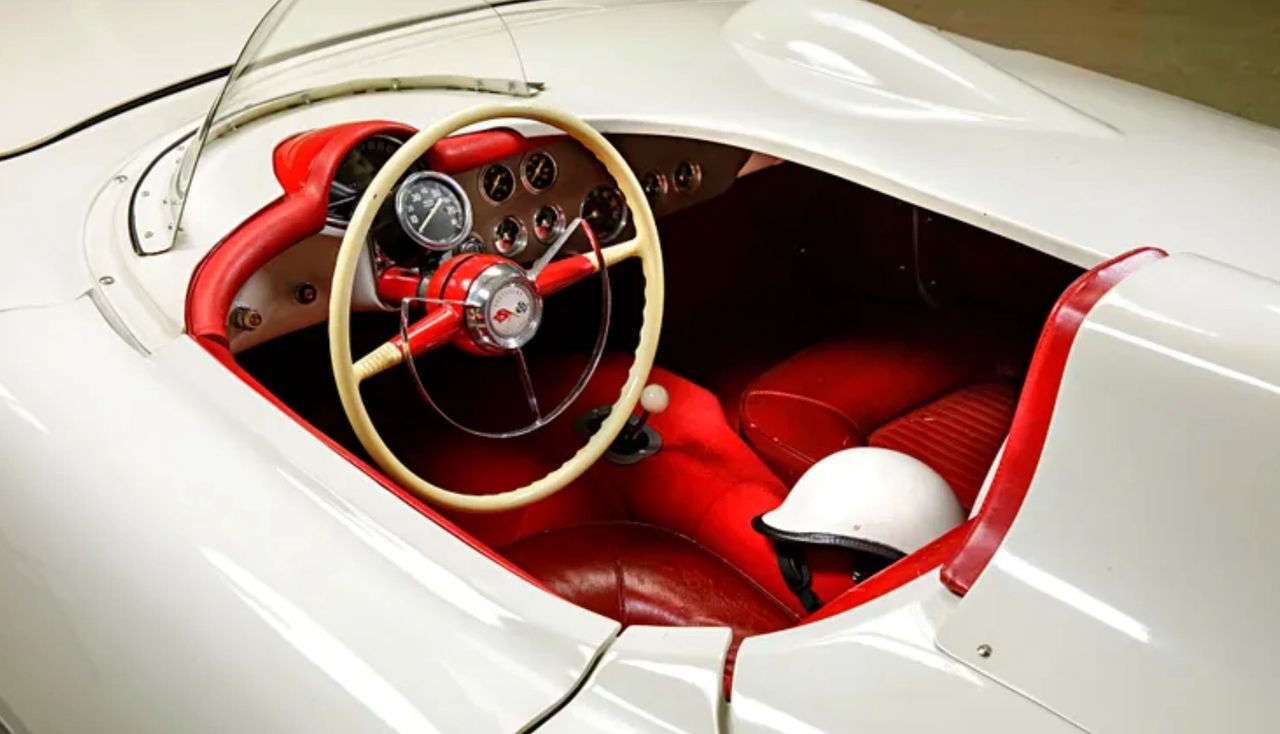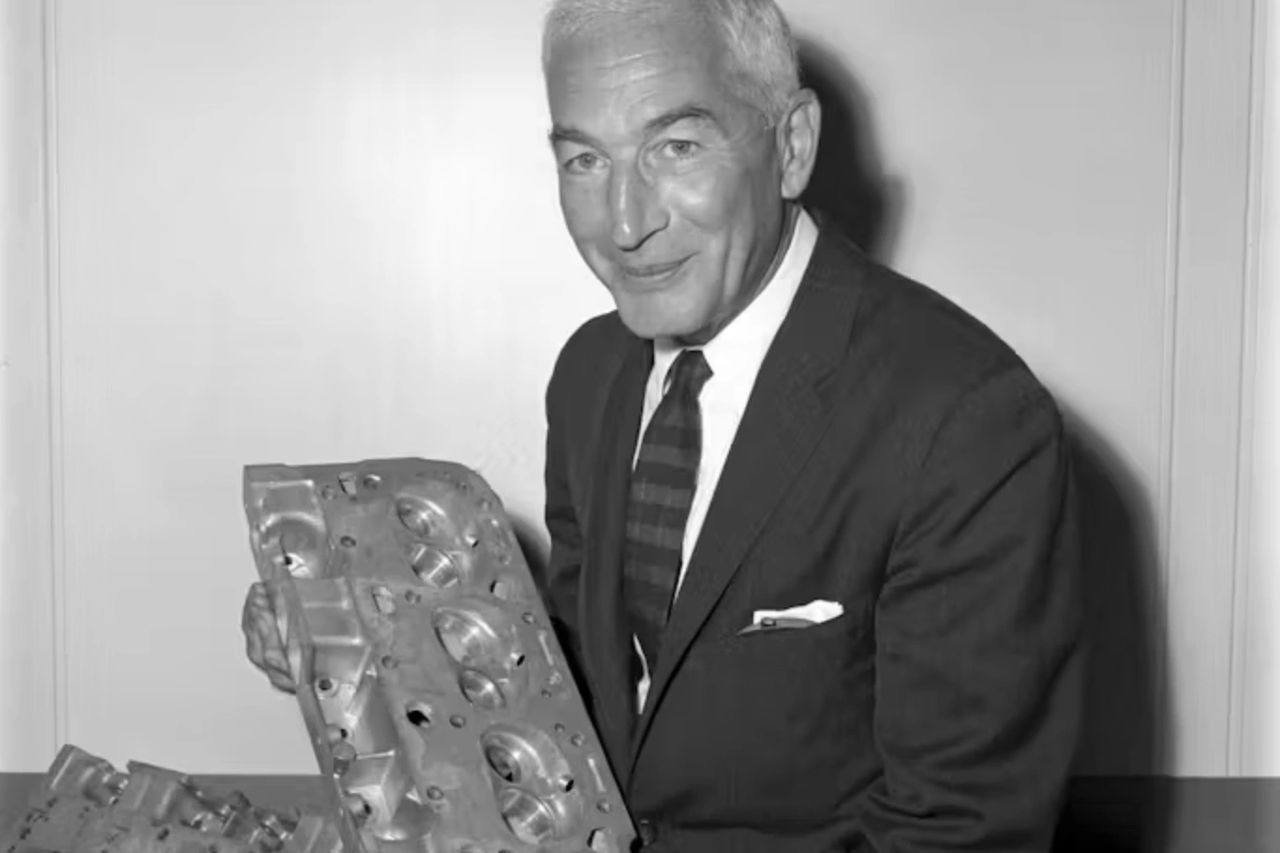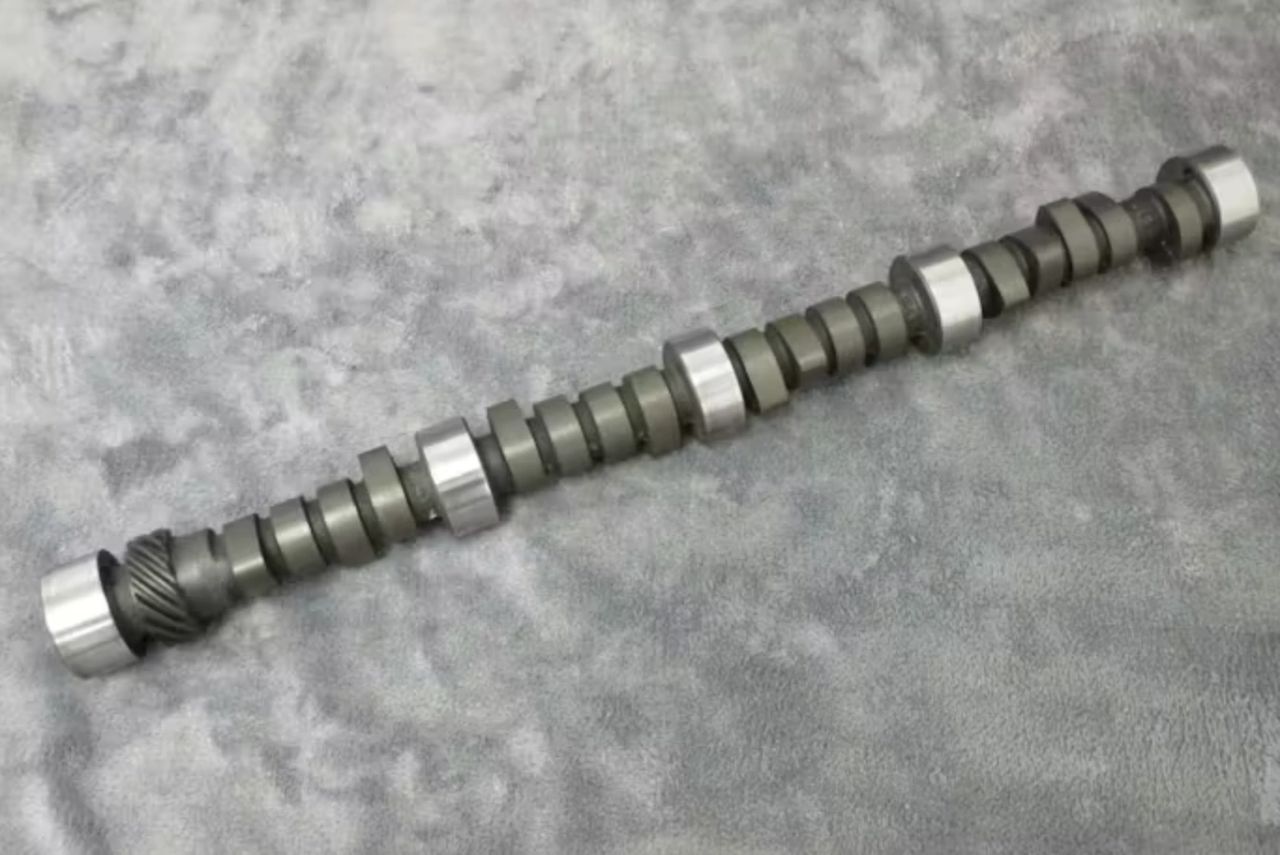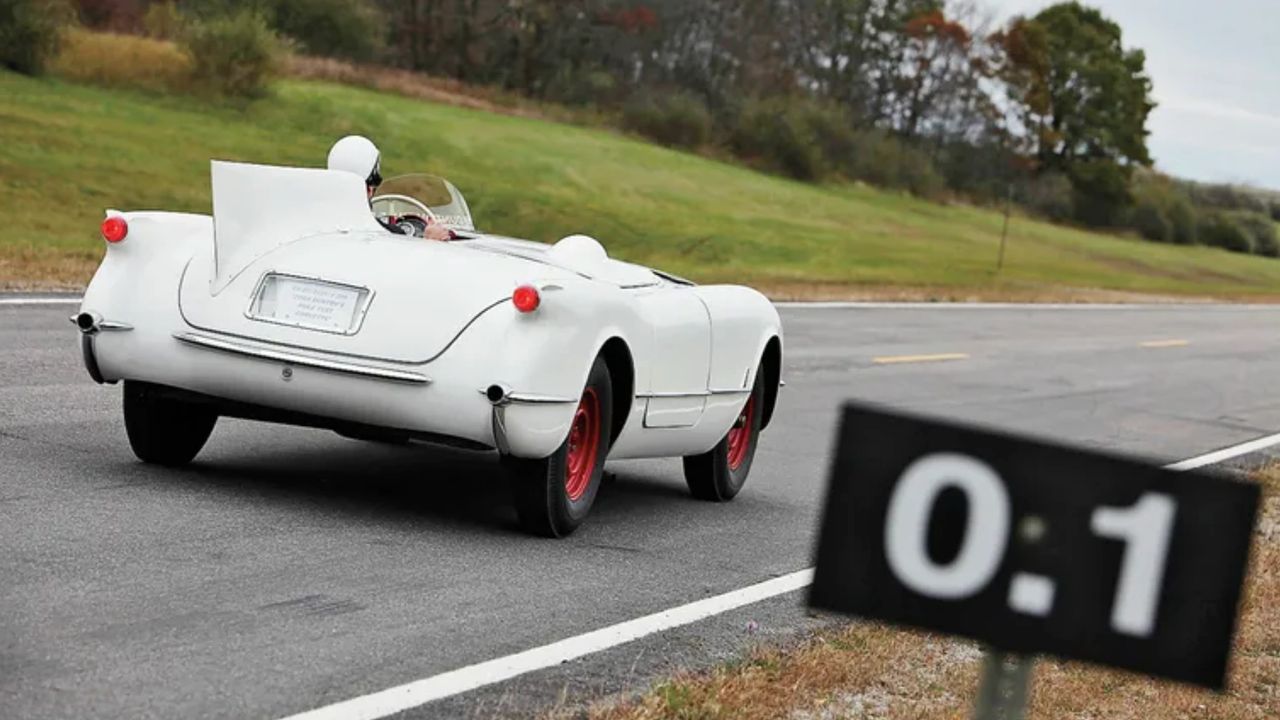

There are faster Corvettes, more powerful Corvettes, more technologically sophisticated Corvettes, and even a handful of model years that are rarer. Yet it is difficult to identify another year in Corvette history in which so much of the car’s future depended upon what happened next.
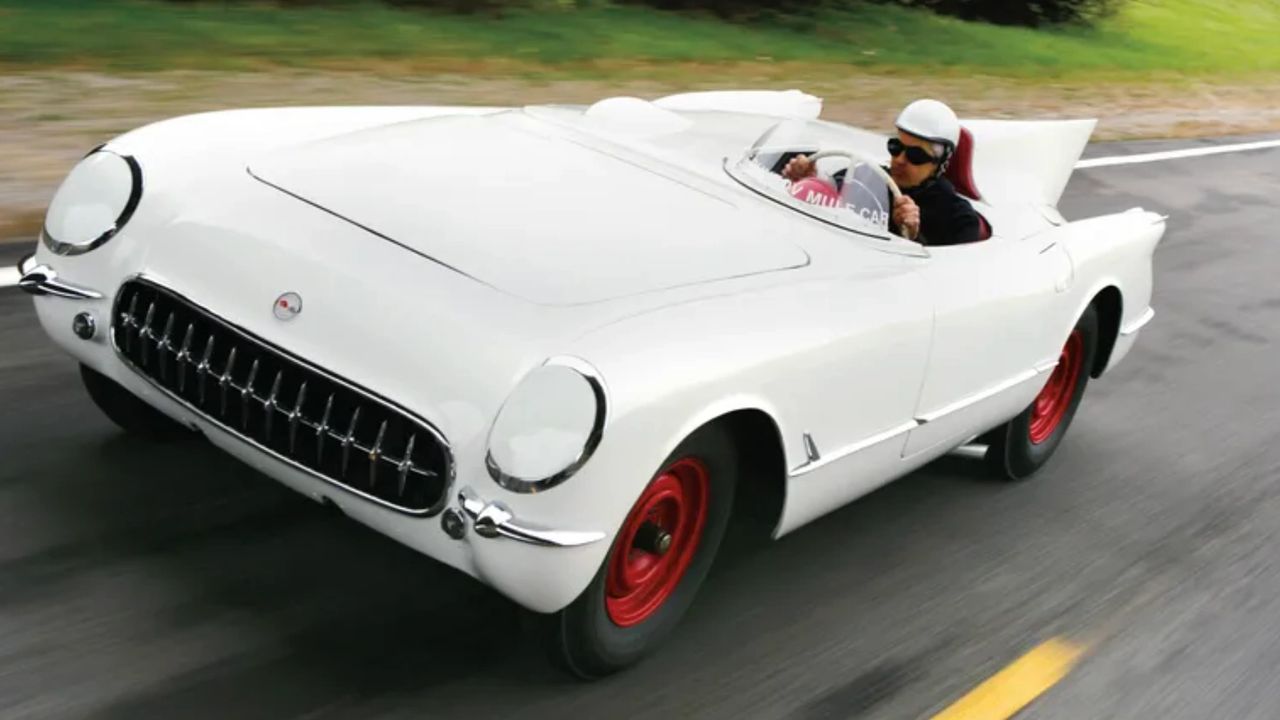
The 1955 Corvette entered its third model year in an extraordinarily vulnerable position. Chevrolet’s glamorous fiberglass roadster had generated tremendous attention when it debuted at the 1953 General Motors Motorama, but the excitement surrounding the show car had failed to translate into sustainable sales. Dealers were carrying unsold inventory, production had been dramatically curtailed, the St. Louis assembly operation was building Corvettes at only a fraction of its intended capacity, and there were legitimate reasons for General Motors executives to question whether America’s first postwar production sports car experiment was worth continuing.
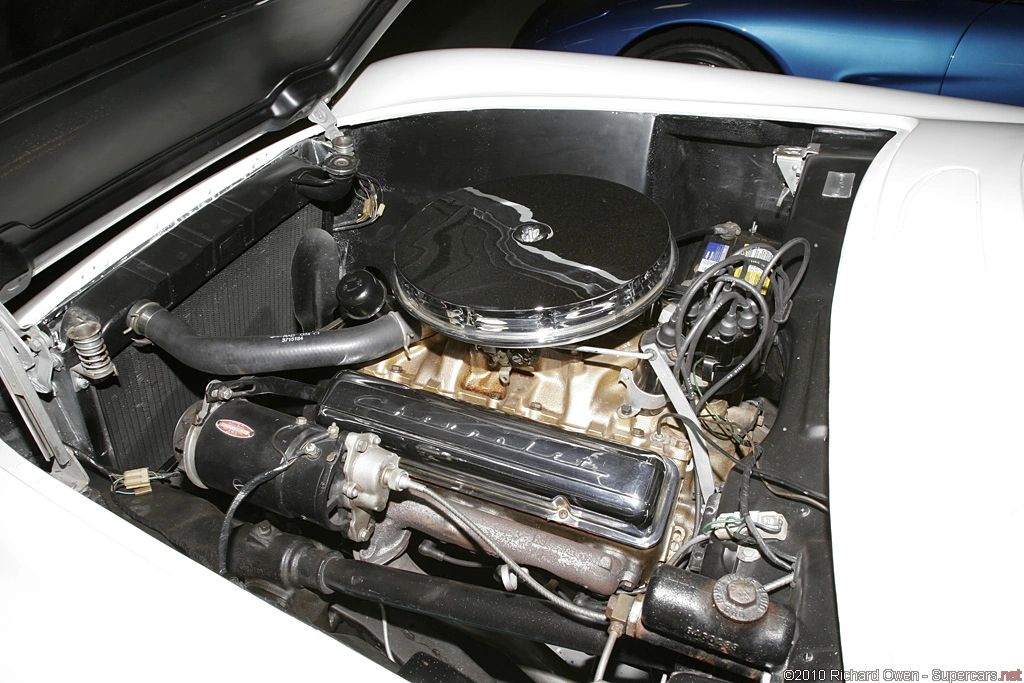
What happened next in the Corvette’s early evolution would fundamentally tramsform the marquee’s place history. At the center of that transformation was Chevrolet’s compact new V8, developed under the direction of Edward N. Cole. Displacing 265 cubic inches, (a relatively lightweight engine by contemporary American V8 standards,) and producing 195 horsepower in Corvette trim, the new small-block finally gave the Corvette an engine capable of delivering the kind of performance its appearance had promised from the beginning.
The V8 alone did not save the Corvette. Its survival was the result of several forces converging at exactly the right moment: Ford’s introduction of the Thunderbird, Harley Earl’s determination to protect the car he had championed, Ed Cole’s push to modernize Chevrolet engineering, Zora Arkus-Duntov’s growing influence inside General Motors, and an emerging belief that competition could give Corvette the performance credibility it had lacked from the beginning. The 265-cubic-inch small-block did not create those forces, but it gave them something tangible around which to coalesce.
Visually, the 1955 Corvette remained closely tied to the car Chevrolet had introduced two years earlier. Beneath the fiberglass, however, its character was changing quickly. With real V8 power, a more serious engineering philosophy, and the first clear steps toward the performance identity that would eventually define the marque, Corvette was beginning to move beyond its origins as a striking two-seat showpiece and toward something far more consequential.
By 1955, Corvette had not yet become the American sports car we recognize today, but for the first time, Chevrolet had begun to understand what it would take to get there.
Corvette at the Edge
To appreciate the significance of the 1955 Corvette, it is important to understand just how uncertain the car’s future had become by the end of the previous model year. Only two years earlier, Corvette had been one of the great sensations of the General Motors Motorama, surrounded by crowds and celebrated as evidence that Chevrolet could build something far more adventurous than the conventional family automobiles for which the division was best known. By late 1954, however, the program was confronting the painful difference between attracting an audience and convincing enough of that audience to actually buy the car.
The idea behind Corvette had emerged from Harley Earl’s belief that General Motors needed an American sports car of its own. Earl had watched European machinery—particularly Jaguars and MGs—become increasingly visible in American road racing after World War II, including events such as Watkins Glen, and recognized an opportunity for GM to capture some of that excitement in a uniquely American form. Rather than simply copying the European formula, Earl envisioned an inexpensive two-seater that combined sports-car proportions with Chevrolet accessibility, American styling, and components that could be supported through the company’s enormous dealer network. Internally known as Project Opel, the effort was developed quietly by a small team working under Earl’s direction before ultimately being assigned to Chevrolet.

The automobile that emerged from that program became the EX-122 show car. On January 17, 1953, Chevrolet introduced it to the public at the General Motors Motorama inside New York City’s Waldorf-Astoria Hotel, and the reaction was immediate. General Motors itself later characterized the Corvette as an instant success with the Motorama audience, and the enthusiasm was strong enough that the company committed to putting the car into production at remarkable speed.
It was easy to understand the fascination. The Corvette looked unlike anything else wearing a Chevrolet badge. Its low fiberglass body, deeply recessed grille, protected headlamps, flowing rear quarters, two-seat cockpit, and dramatically wrapped windshield gave the car the appearance of something far more exotic than the sedans and coupes occupying most Chevrolet showrooms. Even the choice of body material became part of the story: fiberglass allowed Chevrolet to avoid the enormous cost and lead time associated with conventional steel stamping dies while simultaneously giving Corvette a technological identity all its own.
In that respect, the original Corvette was an extraordinary achievement. Chevrolet had taken what was essentially a Motorama dream car and transformed it into a production automobile in a matter of months, an accomplishment that would have been difficult even without the unconventional fiberglass construction. The first production Corvette was completed at Flint, Michigan, on June 30, 1953, and only 300 were built during the abbreviated first model year. GM records describe those cars as being constructed virtually by hand on a pilot line, and all 300 were finished in Polo White with red interiors.
That speed of development, however, inevitably required compromise. Chevrolet did not possess a dedicated sports-car drivetrain waiting on the shelf, nor was there time to develop one from scratch before production began. Instead, engineers worked with existing Chevrolet hardware and modified it considerably for Corvette duty, an approach that made the car feasible but also created the contradiction that would define its first two years: Corvette looked considerably more exotic than much of the machinery underneath it.
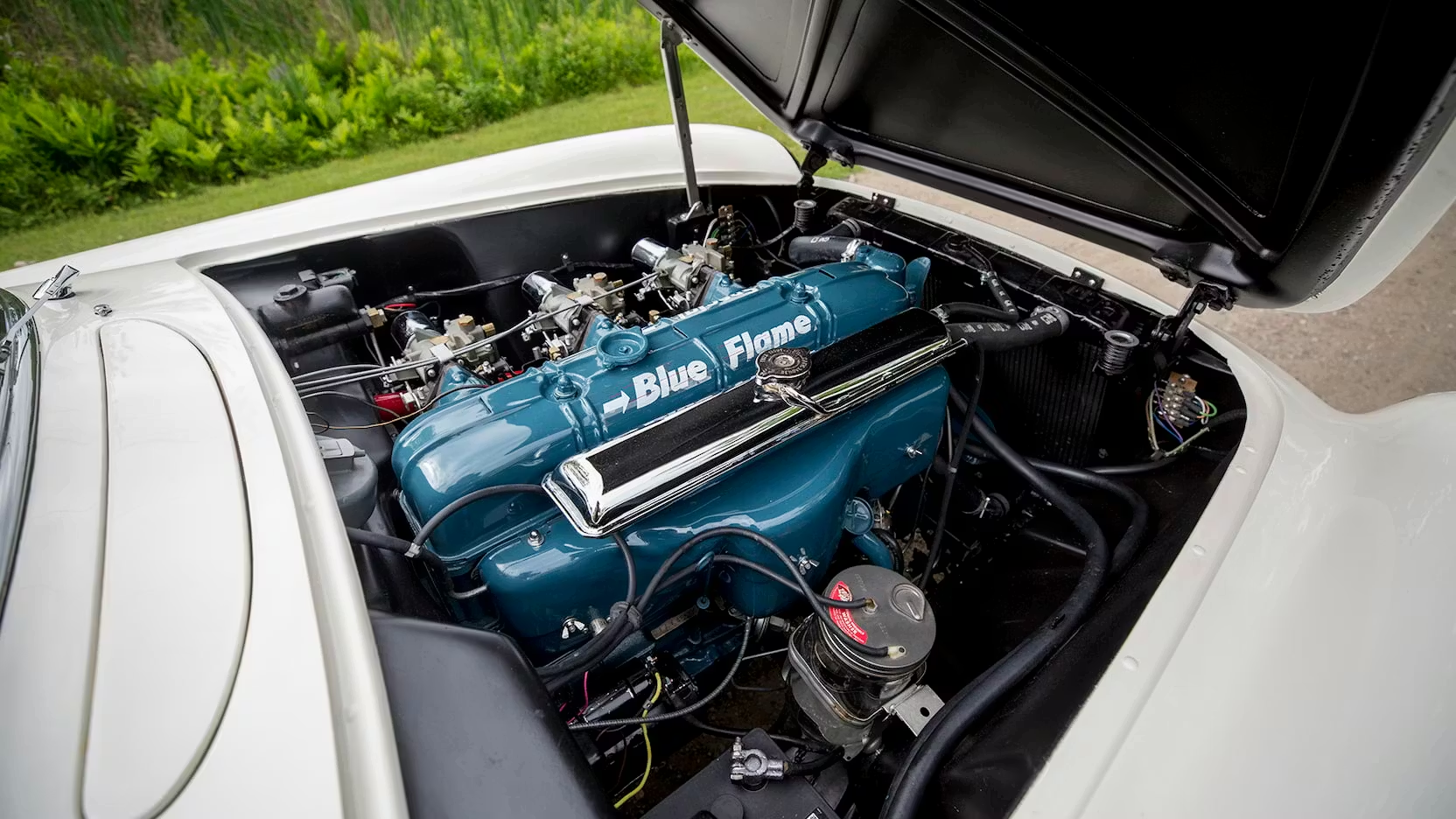
At the center of the original drivetrain was Chevrolet’s 235.5-cubic-inch overhead-valve inline-six, transformed into the Corvette’s Blue Flame Special. In 1953 specification, the engine used an 8.0:1 compression ratio and three single-barrel Carter side-draft carburetors, along with specific camshaft and valvetrain tuning, to produce 150 horsepower at 4,200 rpm and 223 lb-ft of torque at 2,400 rpm. Those figures represented a substantial improvement over the ordinary Chevrolet passenger-car six and demonstrated that engineers had made a serious effort to extract performance from the hardware available to them. Chevrolet’s own engineering specifications confirm both the 150-horsepower rating and the unusual three-carburetor arrangement.
The problem was not that the Blue Flame was a bad engine. It was durable, reasonably powerful by contemporary Chevrolet standards, and significantly more sophisticated in Corvette trim than its humble origins might suggest. The problem was the automobile surrounding it. Corvette’s low body, two-seat layout and Motorama styling created expectations that 150 horsepower from an inline-six could only partially satisfy, particularly among enthusiasts already familiar with European sports cars and powerful American V8s.
The situation became even more difficult because the six was paired exclusively with Chevrolet’s two-speed Powerglide automatic transmission. Powerglide was proven Chevrolet hardware and fit the accelerated production timetable, but it was a curious choice for a car being presented as a genuine sports machine. There was no clutch pedal, no floor-mounted gear lever, and none of the direct control over engine speed that drivers of Jaguars, MGs and other contemporary sports cars would have regarded as fundamental to the experience. GM’s original engineering documentation confirms that Powerglide was the only transmission specified for the 1953 Corvette.

That mismatch became the central weakness of the early car. Corvette possessed the stance, seating position and visual drama of something that should have been capable of challenging the established sports cars of the day, but its drivetrain remained closely related to mainstream Chevrolet production. Even Chevrolet general manager Thomas Keating described the original concept as a sports car built in the “American tradition,” intended to combine beauty with comfort, convenience and performance. The idea itself was sound; the challenge was that, in its first production form, Corvette had not yet found the balance between those qualities that would eventually define it.
Fiberglass construction brought another set of compromises. The material had helped make Corvette possible in the first place, but producing complete automobile bodies from fiberglass at this scale was still unfamiliar territory for General Motors. The 1953 cars required substantial hand fitting and finishing, and production methods evolved as the first 300 automobiles moved through Flint. Panel alignment, surface quality and overall consistency could not yet match the mature steel-body manufacturing processes Chevrolet had spent decades refining, meaning the earliest Corvettes sometimes carried the unmistakable fingerprints of a program still learning how to build itself.
None of this diminished the importance of what Chevrolet had accomplished. The original Corvette proved that an American manufacturer could take an experimental fiberglass two-seater from a styling studio to the showroom and demonstrated that the public was fascinated by the idea. What it had not yet proven was whether enough people wanted to own that idea in its existing form. The tremendous Motorama reaction had encouraged Chevrolet to believe the demand was there, and the company prepared for 1954 accordingly.

Production was moved from the Flint pilot operation to a renovated assembly facility in St. Louis, Missouri, where manufacture of the 1954 Corvette began in December 1953. The change represented much more than a new address. Chevrolet was preparing to turn Corvette from a largely hand-built, 300-car experiment into a legitimate production automobile, and GM’s own historical documentation states that the St. Louis operation was designed around an anticipated capacity of 10,000 Corvettes per year.
That number reveals just how optimistic Chevrolet had become. The 300 cars built in Flint had been proof of concept; St. Louis represented an expectation that Corvette could develop into a sustainable product with meaningful volume. Chevrolet ultimately manufactured 3,640 Corvettes for 1954, more than twelve times the inaugural-year total, while making incremental improvements to the car and even increasing Blue Flame output from 150 to 155 horsepower on later engines through a camshaft revision. Yet the fundamental formula remained unchanged: fiberglass roadster, six-cylinder engine, and Powerglide automatic transmission.
The production capacity was there. The cars were being built. Chevrolet had invested in Corvette as though the enormous enthusiasm surrounding the Motorama automobile would naturally become showroom demand once enough cars were available.
It did not.
By the end of 1954, Corvette was no longer simply an exciting experiment searching for its place inside Chevrolet. It had become a low-volume automobile occupying a production operation created with expectations far beyond the number of customers actually appearing at dealerships. For the first time since Harley Earl had set Project Opel in motion, the question facing General Motors was no longer what Corvette might eventually become, but whether it would be given enough time to become anything at all.
The 1954 Sales Crisis

Chevrolet produced 3,640 Corvettes during the 1954 model year, more than twelve times the 300 cars assembled during Corvette’s abbreviated inaugural year. On paper, that increase suggested progress. Production had moved from the temporary, almost experimental operation in Flint to St. Louis, where Chevrolet had prepared for an annual output approaching 10,000 cars and expected Corvette to begin functioning as something closer to a genuine production automobile.
The problem was that Chevrolet had solved the manufacturing challenge before it had solved the sales problem. The enthusiasm generated by the original EX-122 Corvette at the 1953 Motorama had convinced executives that there was a substantial market for an American sports car, but admiration beneath the bright lights of an auto show did not necessarily translate into customers willing to purchase one. Once St. Louis began producing Corvettes in meaningful numbers, the difference between public fascination and actual demand became impossible to ignore.
Price was part of the problem, although the story was more complicated than simply calling the Corvette expensive. Chevrolet reduced the advertised base price for 1954 to $2,774, but the Powerglide automatic—the only transmission available—added another $178.35, and commonly ordered equipment pushed the actual purchase price higher still. That placed Corvette well above many of the smaller British roadsters helping create America’s emerging sports-car culture, while buyers willing to spend more could look toward established European marques carrying considerably more competition heritage and sporting credibility.

The Corvette also demanded compromises that became harder to overlook once it was no longer a scarce novelty. There were no roll-up side windows, no exterior door handles, and no factory removable hardtop; weather protection depended upon the folding convertible top and detachable side curtains. Those characteristics could be forgiven in an exotic European roadster purchased specifically for its minimalist character, but they were more difficult for some customers to accept in a Chevrolet costing several thousand dollars. Corvette looked sensational, but living with one required considerably more accommodation than living with almost any conventional American automobile.
Then there was the drivetrain. Chevrolet’s 235-cubic-inch Blue Flame Six was hardly a bad engine, and development during 1954 increased Corvette output from approximately 150 to 155 horsepower. The larger problem was perception: an automobile presented as America’s sports car was still powered by an inline-six derived from Chevrolet’s passenger-car engine family and could be ordered with only a two-speed Powerglide automatic transmission.
To enthusiasts already familiar with MGs, Jaguars, Triumphs and other European sports cars, the absence of a manual transmission was particularly difficult to reconcile with Corvette’s intended mission. A sports car was supposed to involve its driver, and shifting gears was an integral part of that experience. Corvette possessed the shape, seating position and sense of occasion of a sports car, but its drivetrain continued to suggest that Chevrolet was designing as much for effortless boulevard cruising as it was for enthusiastic driving.
That contradiction exposed a larger problem: Chevrolet had not yet completely decided what Corvette was supposed to be. Was it a legitimate sports car intended to challenge the Europeans? Was it a glamorous boulevard cruiser designed primarily around styling and image? Was it a fiberglass technological showcase, or a low-volume halo car intended to attract people into Chevrolet showrooms?

In 1953 and 1954, the answer was some combination of all four, and Chevrolet’s marketing reflected much of the same uncertainty. The original strategy had emphasized exclusivity, celebrity ownership and carefully selected customers, an approach that made sense when only 300 cars existed but became far less useful when Chevrolet suddenly possessed the capacity to build thousands. Historical accounts also point to comparatively limited advertising and promotion during much of 1954, leaving Corvette without the clearly defined identity Chevrolet would later become exceptionally good at cultivating.
None of those weaknesses necessarily doomed the car individually. Together, however, they created a product that could attract a crowd almost anywhere it appeared while still leaving prospective buyers with legitimate reasons not to sign the order form. Corvette was visually unlike anything else wearing a Chevrolet badge, but appearance alone was proving insufficient to sustain the production volume GM had anticipated.
The consequences quickly became visible at dealerships. As 1954 progressed, Corvettes remained in inventory longer than Chevrolet expected, and the St. Louis operation could not simply continue producing cars at anything approaching its intended capacity while unsold examples accumulated across the dealer network. Rather than approaching the roughly 1,000 cars per month that the facility had been prepared to accommodate, total model-year production stopped at 3,640.
Even that proved to be too many. Historical estimates vary somewhat on the exact number, but more than 1,000 new 1954 Corvettes remained unsold as Chevrolet moved toward the 1955 model year—an extraordinary situation for a car that had generated such excitement barely a year earlier. Chevrolet had gone from being unable to build enough Corvettes for the people who wanted to see one to possessing significantly more Corvettes than its dealers could sell.
That surplus had an immediate effect on the next model year. Chevrolet had little reason to flood dealerships with another large run of cars that, externally, remained almost indistinguishable from the unsold 1954 models already sitting in inventory. Production therefore contracted dramatically, even as something enormously important was happening beneath the hood: Chevrolet’s new small-block V8 was about to give the Corvette the performance hardware it had lacked from the beginning.

Only 700 Corvettes were ultimately built for 1955, making it the second-lowest production model year in Corvette history, surpassed in rarity only by the original 300-car run of 1953. Put beside the 3,640 cars produced for 1954—and the far greater volume Chevrolet had originally envisioned for St. Louis—the number demonstrates just how uncertain the Corvette’s future had become.
Yet the meaning of those two low-production years could hardly have been more different. The 300 Corvettes built in 1953 represented the cautious beginning of an experiment Chevrolet hoped might succeed. The 700 built in 1955 represented something much more sobering: evidence that, barely two years after its celebrated debut, General Motors had legitimate reason to question whether that experiment had a future at all.
The Corvette was not yet dead, but by the end of 1954 it was unquestionably vulnerable. What happened next would determine whether Chevrolet’s fiberglass roadster became an interesting footnote of the Motorama era—or whether it finally evolved into the automobile its appearance had promised from the beginning.
Ford Brings the Thunderbird

While Chevrolet wrestled with disappointing Corvette sales and an increasingly uncomfortable inventory problem, Ford Motor Company was preparing an automobile that would fundamentally change the conversation surrounding America’s emerging two-seat market.
The Ford Thunderbird made its first public appearance on February 20, 1954, at the Detroit Auto Show, several months before the first production example rolled from Ford’s Dearborn assembly line on September 9. Sales officially began on October 22, 1954, as a 1955 model, placing the Thunderbird directly into a market Chevrolet had effectively created with Corvette less than two years earlier.
Comparisons between the two cars were inevitable. Both were stylish American two-seaters from Detroit’s largest manufacturers, both were intended to create excitement beyond the ordinary family automobile, and both occupied essentially the same broad conceptual space in the minds of buyers. Yet beneath those superficial similarities, Ford and Chevrolet had arrived at markedly different interpretations of what an American two-seat automobile should be.

Ford’s original development brief was actually more sporting than the Thunderbird’s later reputation sometimes suggests. The company initially described the project internally as a “true Ford sports car,” specifying two-passenger seating, an Interceptor V8, balanced weight distribution, performance superior to competing automobiles, and a top speed exceeding 100 mph. As the car evolved toward production, however, Ford deliberately softened that mission, ultimately describing the Thunderbird as something more personal than an uncompromising sports car.
That distinction proved important. Ford did not simply try to reproduce the experience of a British MG, Jaguar, or Triumph with American styling. Instead, the production Thunderbird combined the visual excitement and intimacy of a two-seat roadster with mechanical components, comfort, and convenience that were familiar to American buyers.

The differences were immediately apparent in the specification sheet. Every 1955 Thunderbird came with Ford’s 292-cubic-inch Y-block V8, equipped with a four-barrel carburetor and dual exhausts. It produced 193 horsepower when paired with the standard three-speed manual transmission and 198 horsepower with the optional Ford-O-Matic automatic; overdrive was also available with the manual transmission. The Thunderbird therefore arrived with the kind of V8 power that many enthusiasts had expected from the Corvette from the beginning.
Ford surrounded that performance with considerably more everyday civility. The Thunderbird offered roll-up side windows rather than the Corvette’s detachable side curtains, a removable fiberglass hardtop, a telescoping steering column and a comparatively finished cabin. Its suspension and much of its underlying hardware drew heavily from conventional Ford production engineering, giving the car a character that was sporty without requiring its owner to accept all of the compromises traditionally associated with a European-style roadster.
That formula connected with American consumers almost immediately. Ford had originally planned for roughly 10,000 Thunderbirds during the first model year, but demand exceeded those expectations, and 16,155 were ultimately sold. Against Chevrolet’s production of only 700 Corvettes for 1955, the difference was staggering and impossible for anyone inside General Motors to ignore.
The Thunderbird therefore demonstrated something critically important that Corvette’s disappointing 1954 performance had left open to question. Americans were willing to buy a stylish two-seat automobile in meaningful numbers; the market itself was not necessarily the problem. Ford had simply found a combination of appearance, V8 power, comfort, familiarity and usability that appealed to far more buyers than Chevrolet’s original Corvette formula had managed to reach.
It is here, however, that Corvette history is often compressed into a story that is considerably cleaner than the surviving evidence allows.

The Thunderbird is often described as “the car that saved the Corvette,” usually implying that Chevrolet had already decided to cancel its sports car and reversed course only after seeing Ford’s success. There is genuine historical evidence that Corvette’s future was in serious jeopardy, but the precise sequence of events—and exactly how close Chevrolet came to terminating the program—has been described differently by people who were close to it.
Zora Arkus-Duntov himself left particularly powerful evidence of the uncertainty surrounding the car. In an internal memorandum dated October 15, 1954, he wrote that “By the looks of it, the Corvette is on its way out,” and argued that abandoning the car would amount to an admission that Chevrolet had failed to develop a saleable product. Whatever decisions had or had not formally been made in the executive offices, Duntov clearly believed the possibility of cancellation was real enough to demand an internal defense of Corvette’s continued existence.
Later recollections reinforce that interpretation, although they do not all describe the situation identically. Former Corvette chief engineer Dave McLellan recalled that Chevrolet had decided to discontinue Corvette after the 1955 model year and that Thunderbird’s extraordinary first-year sales made withdrawal from the segment an embarrassment Chevrolet could no longer easily accept. Other historical accounts have suggested that senior GM leadership never allowed the cancellation process to advance quite that far. The safest conclusion is not that Thunderbird single-handedly rescued a car already awaiting execution, but that Ford’s success made the argument for abandoning Corvette substantially more difficult to sustain.

Just as importantly, Thunderbird did not create Corvette’s mechanical escape route. Chevrolet’s transformation of the car had begun before Ford’s new two-seater ever reached a customer.
Ed Cole’s small-block Chevrolet V8 was already under development independently of Thunderbird. Cole had been charged with developing a lightweight, low-cost Chevrolet V8 after becoming Chevrolet chief engineer in May 1952, well before Ford publicly revealed the Thunderbird. The engine that emerged from that program would become Chevrolet’s new 265-cubic-inch small-block for 1955 and, in a 195-horsepower specification, finally give Corvette the powerplant its appearance had always seemed to promise.

Duntov’s performance campaign also predated Thunderbird’s public introduction. On December 16, 1953—more than two months before Ford unveiled its new car—he wrote his now-famous memorandum, “Thoughts Pertaining to Youth, Hot Rodders and Chevrolet.” Duntov warned that America’s growing hot-rod culture was overwhelmingly associated with Ford and argued that Chevrolet needed to make its forthcoming V8 attractive to those performance-minded buyers. Significantly, the memo specifically contemplated a V8-powered Corvette for 1955 and advocated developing the components necessary to make Chevrolet competitive among racers and enthusiasts.
The chronology changes the nature of Thunderbird’s role in Corvette history. Ford did not arrive in 1954 and suddenly teach Chevrolet that Corvette needed a V8. Cole’s engine program was already well underway, Duntov was pushing Chevrolet toward a more serious performance identity, and work was moving toward installing the small-block in Corvette.
What Thunderbird supplied was proof of market potential. Ford combined two seats, distinctive styling, emotional appeal and American performance in a form thousands of consumers immediately understood. Its success demonstrated that Corvette’s poor sales did not mean Americans had rejected the domestic two-seater; Chevrolet simply had not yet developed the right version of the concept.
That evidence carried enormous weight inside a corporation competing with Ford for prestige as well as sales. Abandoning Corvette would have been easier to justify if the entire two-seat category had proven commercially insignificant. Walking away while Ford sold more than 16,000 Thunderbirds in its first year, however, would have meant conceding a highly visible market to Chevrolet’s most important domestic rival.
Thunderbird did not invent Corvette’s escape route, because Chevrolet engineers were already building it. The new V8, Duntov’s growing influence and the engineering work underway gave Chevrolet the means to transform Corvette; Thunderbird made following that path considerably more compelling and gave the company another powerful reason not to stop.
Edward N. Cole and a New Chevrolet

Edward Nicholas Cole did not invent Corvette, but his influence over its survival is difficult to overstate. When he became Chevrolet chief engineer in May 1952, he inherited a division that sold automobiles in enormous numbers yet carried a comparatively conservative engineering image. Chevrolet’s durability and affordability were firmly established, but the division needed a stronger technical identity for the rapidly changing market ahead.
One of Cole’s central assignments was to develop a lightweight, inexpensive modern V8 suitable for mass production. The challenge suited a man whose favorite saying was reportedly, “Kick the hell out of the status quo.” Cole expanded Chevrolet’s engineering organization and encouraged a more aggressive culture in which new ideas could be developed quickly, tested thoroughly and placed into production at enormous scale.
The need for change was becoming increasingly obvious. Chevrolet’s existing six-cylinder engines were durable, economical and familiar to mechanics, but the American market was rapidly embracing V8 power. Ford, Oldsmobile, Cadillac, Chrysler and other manufacturers had already demonstrated the performance and marketing appeal of modern overhead-valve V8 engines.
Chevrolet needed an engine of its own, but Cole was not interested in creating another large, heavy and expensive American V8. The new engine had to be compact enough for multiple applications, light enough to improve vehicle performance and inexpensive enough to manufacture by the hundreds of thousands. Those requirements shaped the engine that became the Chevrolet small-block and helped separate it from many of its contemporaries.
Designing the Small-Block

The original small-block displaced 265 cubic inches, or approximately 4.3 liters, using a 3.75-inch cylinder bore and an unusually short 3.00-inch stroke. That combination produced an oversquare design in which the cylinder bore was considerably larger than the distance traveled by the piston. The resulting geometry gave Chevrolet room for useful valve area while helping the engine breathe efficiently.
The short stroke also helped control piston speed at higher engine speeds, contributing to an engine that was more willing to rev than many contemporary American V8s. Its compact deck height reduced the overall height and width of the assembly, allowing the engine to occupy comparatively little space. That compactness would become particularly valuable when Chevrolet began adapting the engine to Corvette.
The cylinder heads combined efficient breathing with compact combustion chambers. Instead of using long rocker shafts spanning each cylinder bank, Chevrolet employed individual stamped-steel rocker arms mounted on spherical fulcrum balls. This reduced manufacturing complexity, eliminated the need for large rocker-shaft assemblies and established a valvetrain arrangement that would become familiar to generations of Chevrolet mechanics.
Lubrication was equally well conceived. Oil traveled through drilled lifters and hollow pushrods to reach the rocker arms, eliminating separate external feed lines and complicated rocker-shaft oil passages. The solution used components already essential to valve operation, allowing the lubrication system to remain simple, effective and particularly well suited to high-volume production.
Five main bearings supported the crankshaft, while hydraulic valve lifters reduced the need for routine valve adjustments. Lightweight pistons, efficient cooling passages and carefully developed cylinder heads contributed to an engine whose sophistication was concealed beneath a remarkably uncomplicated exterior. Each feature served the larger goal of combining performance, durability and manufacturing economy.
That simplicity became one of the small-block’s greatest strengths. The engine could be produced economically, serviced without unusual equipment and installed in an enormous range of vehicles. Its compact architecture also contained substantial performance potential beyond its original production specifications, giving Chevrolet room to increase output without abandoning the basic design.

The first production Chevrolet small-block V8 was built at Flint on July 9, 1954. It debuted publicly across the 1955 Chevrolet line, including Corvette, and became the foundation of an engine family that eventually surpassed 100 million units. Its enormous production legacy was still unimaginable in 1954, but the qualities that would make that longevity possible were already present in the original 265.
The 265 Finds Its Natural Home
The new V8 had been developed primarily for Chevrolet’s redesigned passenger cars rather than exclusively for Corvette. That broad production base allowed the low-volume sports car to benefit from an advanced engine program whose cost could be distributed across hundreds of thousands of mainstream automobiles. Chevrolet did not need to justify an exotic powerplant engineered solely for a car selling only a few hundred examples.

Instead, Corvette could draw upon proven mass-production architecture and adapt it for a more demanding purpose. A higher-performance camshaft, four-barrel carburetion and dual exhaust could extract greater output while preserving the engine’s essential durability, compactness and serviceability. The result combined specialized performance with components rooted in Chevrolet’s larger production system.
That approach would become central to Corvette philosophy for generations. Chevrolet could develop capable engines and components for broader production, improve and tune them for performance, and place them into a lighter two-seat automobile. Corvette could then demonstrate what Chevrolet engineering was capable of achieving when weight, power and purpose were brought together.
The 1955 Corvette became one of the earliest and purest expressions of that formula. The small-block did not merely fit within the car’s engine compartment; its compact size, light weight and performance potential made Corvette a natural showcase for the new design. Each product gave the other something it needed: Corvette gained credible power, while the small-block gained a highly visible performance platform.
The Corvette 265

Corvette received a specialized version of the small-block producing 195 horsepower at 5,000 rpm and approximately 260 lb-ft of torque at 3,000 rpm. An 8.0:1 compression ratio, four-barrel carburetor, dual exhaust and higher-performance camshaft delivered substantially more power than the Blue Flame six while preserving the engine’s compact dimensions and relatively modest mass. The added power changed the character of the car without requiring Chevrolet to abandon the basic Corvette platform.
Chevrolet advertising emphasized the engine’s free-breathing design, four-barrel carburetion, dual exhaust and high-lift camshaft, presenting it as an extraordinarily modern powerplant. The language carried the usual confidence of 1950s advertising, but the transformation beneath it was real. For the first time, Corvette possessed an engine capable of fulfilling the performance promise its appearance had made from the beginning, giving Chevrolet’s sports car the mechanical foundation upon which its future identity could be built.
A Gold “V” Announces the Change

Chevrolet wanted buyers to recognize the new engine even when the hood was closed. On V8-powered 1955 Corvettes, an enlarged gold-colored V was incorporated into the Chevrolet script on the lower front fenders, identifying the cars equipped with the new small-block. Within a familiar emblem, Chevrolet had found a simple way to announce a substantial change.
The treatment was modest, particularly when measured against the significance of what lay beneath the hood. Someone passing a parked Corvette might notice little more than the gold letter catching the light, while an informed enthusiast would immediately understand its meaning. For the first time, the Corvette’s exterior openly advertised V8 power, giving the car a visible connection to the engine that would come to define it.
That connection was still new in 1955. Buyers had already been introduced to the Corvette as a six-cylinder sports car, and the V8 represented a change in what Chevrolet could offer them and what they could reasonably expect from the car. Over time, however, the relationship would become so fundamental that generations of enthusiasts would struggle to imagine a production Corvette powered by anything else.

The 265 would lead to the 283, followed by the familiar 327- and 350-cubic-inch small-blocks. Alongside that development came the big-block 396s, 427s and 454s, engines whose displacement figures became an enduring part of the Corvette vocabulary. Later generations would bring the LT and LS families, supercharged powerplants, flat-plane-crank V8s and the extraordinary engines developed for the mid-engine Corvette.
Across those generations, the technology would change almost beyond recognition. The way a Corvette produced its power, delivered it and translated it into performance would advance far beyond anything represented by the original 265. Yet the underlying relationship remained recognizable: a V8 engine at the center of the driving experience, shaping the car’s character as surely as its bodywork shaped its appearance.
Seen from that distance, the gold V carries a significance that its designers could scarcely have expressed through a piece of trim alone. It identified an engine option in 1955, but it also marked the beginning of an identity that would endure for generations. One small letter announced a change whose full meaning would take decades to unfold.
The Blue Flame’s Final Stand

The arrival of the small-block did not immediately close the door on the Corvette’s original engine. A very small number of 1955 Corvettes were still built with the 235-cubic-inch Blue Flame inline-six, allowing the original powertrain one final appearance in the production lineup. Published histories have differed between six and seven examples; the seven-car accounting lists 693 V8 cars and seven six-cylinder cars, totaling 700 Corvettes for the model year.
The historical significance of those few cars extends well beyond their scarcity. They represent the final expression of the mechanical combination with which Chevrolet had introduced the Corvette only two years earlier. While the overwhelming majority of 1955 production embraced the new V8, these cars carried the original concept forward to the end of its brief production life.
Beneath their hoods remained the unusual triple-carburetor arrangement that had helped distinguish the Corvette’s Blue Flame from a more conventional Chevrolet six. The engine continued to work through the Powerglide automatic transmission, and the cars retained the earlier six-volt electrical system. Together, those features preserved a direct mechanical connection to the Corvettes of 1953 and 1954, even as the V8-equipped cars established a different direction.
That overlap makes the 1955 model year especially revealing. The original engine and its successor briefly occupied the same production lineup, allowing Corvette’s beginning and its emerging future to exist side by side. The balance between them was overwhelming, with the six-cylinder cars accounting for only a tiny fraction of the year’s total. The Blue Flame remained available, but the V8 had already become the defining choice.
After 1955, the inline-six disappeared from Corvette production, and V8 power became a constant across the generations that followed. Even when Chevrolet introduced electrification with the modern E-Ray, it retained the V8 and added an electric motor to complement it. The technology expanded the Corvette’s capabilities while preserving the engine configuration that had become inseparable from its identity.
The few six-cylinder Corvettes built in 1955 therefore occupy an unusual place in the car’s history. Mechanically, they belong to its beginning; chronologically, they stand within the year that established its future. They preserve the last moment when the Corvette could still leave the factory with the engine that had introduced it to the world, just as Chevrolet was discovering how much more the car might become.
Zora Arkus-Duntov Sees the Corvette

The engine was only part of the transformation taking shape around the Corvette. Another force had entered General Motors two years earlier, bringing an understanding of performance that would prove as consequential as any individual mechanical component. Zora Arkus-Duntov saw possibilities in Chevrolet’s sports car that extended well beyond its initial execution, and he possessed the experience to recognize what stood between the car and those possibilities.
Duntov first encountered the Corvette publicly at the 1953 Motorama in New York. Its appearance fascinated him, presenting an American interpretation of the sports car that was immediately compelling. Yet his admiration came with an engineer’s questions and a racing driver’s expectations. The body suggested a kind of performance that the mechanical package beneath it had not yet fully realized.
Born in Belgium to Russian parents and raised largely in Europe, Duntov brought a background that differed considerably from the conventional path into General Motors engineering. He had studied engineering, competed as a racing driver and worked within the European performance world. His understanding of an automobile had developed through both formal education and practical experience, giving him a perspective that connected mechanical theory with the demands placed on a car at speed.

His experience also reached into America’s hot-rodding culture. With his brother Yura, Duntov had developed the Ardun overhead-valve cylinder-head conversion for Ford’s flathead V8, a project that became an important part of his reputation among performance enthusiasts. That work connected him with people who saw an existing engine as an opportunity for further development. He understood their willingness to modify, experiment and keep searching for performance beyond what the factory had originally provided.
Those experiences gave Duntov a useful understanding of the emotional relationship between enthusiasts and their cars. Racing demanded results, engineering supplied the means to pursue them, and the driver ultimately experienced the success or failure of that work from behind the wheel. A sports car’s appeal depended on how convincingly those elements came together. Its appearance could create desire, but its behavior had to sustain it.
Viewed through that experience, the Corvette was both exciting and incomplete. Chevrolet had created a shape capable of attracting the attention of someone who already knew European sports cars intimately, an achievement that should not be underestimated. The remaining challenge was to give that shape the mechanical substance its appearance promised. For Duntov, the gap between the two was something engineering could address.
His response would prove more consequential than the criticism itself. Duntov wanted to help make the Corvette a credible performance car, applying what he knew to a machine whose potential had captured his imagination. Chevrolet had given him something worth believing in; he wanted to help give drivers the same conviction once they took the wheel.
Duntov Joins General Motors

Zora Arkus-Duntov officially joined Chevrolet on May 1, 1953, entering the company as an assistant staff engineer and beginning what would become one of the most consequential engineering careers in Corvette history. He did not arrive at General Motors and immediately assume control of the Corvette program, nor was the car suddenly transformed by his presence. His influence developed progressively, earned through his engineering ability, his persistence and an unusually clear understanding of what Corvette would need to become if Chevrolet expected it to be regarded as something more than an attractive American roadster.
That point is sometimes lost in the mythology that has grown around Duntov and Corvette. Harley Earl remained the dominant creative force behind the car’s conception and styling identity, while Ed Cole occupied an increasingly important position within Chevrolet’s engineering leadership and broader product strategy. Around them were teams of engineers, designers, development specialists and technicians responsible for turning Corvette from Earl’s original vision into a repeatable production automobile. Duntov entered that established organization not as Corvette’s creator, but as an engineer who very quickly recognized both the potential of the car and the areas in which it fell short.
What Duntov brought to Corvette was something different: direction rooted in competition.
By the time he arrived at Chevrolet, he had already raced automobiles, engineered them, developed performance hardware and experienced firsthand what happened when machinery was pushed to—and sometimes beyond—its limits. He understood that a sports car earned its reputation differently from an ordinary passenger automobile. Styling could attract attention, and marketing could create desire, but neither could compensate for a car that lacked the mechanical substance expected by serious drivers. Corvette, as Duntov encountered it in the early 1950s, possessed enormous visual appeal and an unmistakable identity. What it did not yet possess was the complete performance character necessary to challenge the sports cars coming from Europe.

More power was the obvious starting point, and the arrival of Chevrolet’s new small-block V8 for 1955 provided exactly the sort of foundation Duntov had been waiting for. The engine immediately expanded Corvette’s possibilities, replacing the limitations of the original six-cylinder powertrain with something lighter, more compact and far more capable of meaningful development. But Duntov understood that horsepower by itself would never be enough. A genuinely capable sports car had to function as a complete system, with the engine, chassis, suspension, brakes, cooling and drivetrain all capable of operating together when the car was being driven hard.
The chassis needed to respond predictably as speeds increased. Suspension behavior and weight distribution had to be considered as part of the performance equation rather than treated simply as matters of ride quality. Drivers needed access to a proper manual transmission, allowing them to exploit the engine rather than relying exclusively on the Powerglide automatic that had defined the earliest Corvettes. Brakes had to survive repeated hard use without rapidly surrendering their effectiveness, and cooling systems needed enough reserve capacity to cope with sustained high-speed operation. These were not abstract engineering exercises to Duntov. They were the basic requirements of a car that Chevrolet hoped would someday be taken seriously alongside established sports machines.
Just as significantly, Duntov believed Chevrolet had to prove Corvette’s capabilities in public.
Performance could not exist only in horsepower figures, advertising copy or dealer brochures. If Corvette was going to compete for credibility with European sports cars, Chevrolet needed to take it to the same places where those automobiles established their reputations: racetracks, speed trials and sanctioned competition. A car that could perform under those conditions possessed a legitimacy that could not simply be manufactured by a marketing department. Competition exposed weaknesses brutally, but it also provided engineers with information that ordinary street testing could never completely duplicate. For Duntov, racing was not merely promotional theater; it was an extension of the development process.
That philosophy increasingly shaped his relationship with Corvette. Within Chevrolet, Duntov became one of the car’s strongest advocates for greater power, better handling, stronger brakes, improved cooling, manual transmissions and a more serious approach to competition. He could translate the experience of a racer into the language of an engineer, identifying what a driver needed from the automobile and then helping define the mechanical changes required to deliver it. In doing so, he gave Corvette something it had not possessed during its earliest years: an increasingly coherent performance trajectory.
Duntov would eventually rise to become the engineering leader most enthusiasts associate with Corvette’s transformation into a world-class performance automobile, although that organizational evolution was still years away. In 1955, he was not yet the singular authority over Corvette that later histories sometimes suggest. He was still establishing his influence within Chevrolet, building support for his ideas and demonstrating that the Corvette could—and should—be developed far beyond the automobile introduced just two years earlier.
Yet by then, the direction was already becoming unmistakable. Corvette had begun life primarily as Harley Earl’s vision of what an American sports car might look like. Under Duntov’s growing influence, Chevrolet was beginning to confront the much more difficult question of what an American sports car needed to do.
The answer would ultimately redefine the Corvette.
The Famous Hot-Rod Memo


One of the clearest windows into Duntov’s thinking appeared before Chevrolet ever installed a V8 in a production Corvette. On December 16, 1953, the recently hired assistant staff engineer sent a three-page inter-organization memorandum to Maurice Olley, head of Chevrolet Research and Development. Titled “Thoughts Pertaining to Youth, Hot Rodders and Chevrolet,” the document read less like a casual collection of observations than an early blueprint for Chevrolet’s future performance identity.
When Duntov examined American hot rodding, he did not see a fringe pastime practiced by a handful of backyard mechanics. He saw a rapidly growing national movement supported by specialized magazines, organized competition, and an expanding industry devoted to speed equipment. He noted that roughly half a dozen widely circulated hot-rod publications had appeared within the preceding six years, and nearly every page introduced their readers to Ford. The result, he wrote, was a generation of enthusiasts “eating, sleeping and dreaming modified Fords” and learning Ford components “from stem to stern.”
That dominance represented something much larger than an advantage on a drag strip or dry lake. Duntov understood that the cars young people modified helped determine the brands they would purchase as their incomes increased. In his telling, an enthusiast might begin with a jalopy, progress to a secondhand Ford and eventually become the buyer of a new Ford. Chevrolet was not simply losing races or magazine coverage; it was allowing Ford to establish relationships with future customers years before those customers entered a new-car showroom.

Duntov was equally vocal about how difficult it was to reverse that loyalty. Ford possessed decades of accumulated experience, an aftermarket already geared toward its products, thousands of enthusiasts developing its cars for competition, and a head start with its newer overhead-valve V8. Although hot rodders were attracted to new machinery, he observed that the cost and time required to develop an unfamiliar engine made them understandably conservative. A new Chevrolet V8 could not merely possess impressive specifications; it had to be easy to modify, supported from the beginning, and capable of producing successful results before enthusiasts exhausted their money or patience.
His proposed solution was direct and remarkably forward-looking. Chevrolet should engineer a range of high-performance components—including camshafts, valves, springs, manifolds and pistons—and make them available to the public. Duntov later expanded the idea beyond the engine, arguing that competition-oriented development should also include chassis components, lightweight materials and improved braking systems. Rather than forcing racers to discover every weakness through expensive trial and error, Chevrolet could provide the hardware required to make its machinery competitive from the outset.

Corvette offered a way to pursue that strategy without requiring Chevrolet to openly embrace every aspect of hot-rodding culture. Duntov acknowledged that a formal association between the division and speed might be considered “probably inadmissible,” but suggested that Corvette provided a “loophole.” Performance components developed as Regular Production Option items for Corvette would inevitably be recognized by hot rodders as the same parts they needed to improve other Chevrolets. He also understood that enthusiasts would race Corvettes whether Chevrolet encouraged them or not, and that even a relatively small number of competition cars could generate publicity far beyond their actual production volume.
That is what makes the memo so important. Duntov was not asking Chevrolet to advertise more aggressively to young people; he was explaining how the company could earn their loyalty by giving them the tools to succeed. When Chevrolet’s 265-cubic-inch small-block V8 entered production for 1955 and was installed in Corvette, it provided the compact, high-potential foundation his strategy required. Corvette could showcase the engine, competition could prove it, and factory-engineered performance parts could carry its influence into garages and racetracks across America.
The Birth of Chevrolet Performance Culture

Duntov’s memo did not create Chevrolet performance overnight, and it would be an exaggeration to suggest that a single engineer—or a single document—was responsible for everything that followed. Chevrolet was a massive organization, and its transformation into one of America’s dominant performance brands required the work of countless engineers, executives, racers, dealers and enthusiasts. What Duntov’s thinking reveals, however, is that the philosophy behind that transformation was already beginning to take shape before the 1955 Corvette had even reached dealer showrooms.
At the center of that philosophy was a remarkably simple idea: performance could sell automobiles even when the buyer never intended to race one.
A Chevrolet that won on Sunday could influence someone walking into a showroom on Monday, even if that customer had never attended a race in his life. A Corvette that set a speed record could alter the way people thought about Chevrolet as a brand. A small-block V8 that proved itself on a drag strip or road course could give an ordinary production sedan, coupe or convertible a halo of credibility simply because the same division had engineered both. Performance created aspiration, and aspiration had value far beyond the comparatively small number of cars that were actually used in competition.

Duntov also understood something Chevrolet would increasingly embrace: performance culture was not confined to complete automobiles. It lived in garages, machine shops and dealership parts departments just as much as it did on racetracks. A hotter camshaft, improved cylinder heads, better induction or other competition-oriented components sold across a parts counter could turn a young mechanic or hot rodder into a Chevrolet loyalist long before he was ready to buy a new Corvette. Give enthusiasts the tools to make their cars faster, and Chevrolet could become part of their identity.
That relationship between the factory and the enthusiast community would become one of the division’s greatest strengths. Chevrolet increasingly learned that racers and hot rodders were not simply customers at the edge of the market; they were influencers whose enthusiasm could shape broader perceptions of the brand. Their cars were seen at drag strips, local cruises, gas stations and neighborhood garages. Their successes became stories, and those stories helped build a reputation that conventional advertising could reinforce but never manufacture on its own.
By the early 1960s, the results of that developing culture were impossible to miss. Chevrolet had become synonymous with increasingly potent small-block and big-block engines, Super Sport models, drag racing, stock-car competition, and a steadily widening catalog of high-performance hardware. The division had learned to speak directly to enthusiasts, not merely by telling them that Chevrolet automobiles were exciting, but by continually giving them machinery capable of proving it.

The foundations for that identity were being laid in the middle of the previous decade, when Chevrolet was still better known for dependable family transportation than outright performance. The arrival of the small-block V8, Duntov’s growing influence, the division’s increasing awareness of the youth and hot-rod markets, and a willingness to test Chevrolet machinery in public competition all began pushing the company in a new direction.
And standing at the center of that transition was the 1955 Corvette.
It was still recognizably the same fiberglass two-seater Chevrolet had introduced only two years earlier, but underneath its familiar shape the character of the automobile was beginning to change. The V8 gave it the performance foundation it had lacked, while the ideas developing around it pointed toward something much larger than a single model-year improvement. The Corvette was becoming both a beneficiary of Chevrolet’s emerging performance culture and one of the principal vehicles through which that culture would be defined.
What began as an effort to make Chevrolet’s sports car faster was becoming something broader: the beginning of a performance identity that would eventually influence nearly every corner of the division.
Duntov Tunes the Chassis

Duntov’s growing influence on Corvette was not limited to engines, horsepower, or the broader performance philosophy he was beginning to promote within Chevrolet. He was equally interested in what happened after the driver turned the steering wheel, applied the brakes, or carried speed into a corner. The earliest Corvette chassis had been engineered around relatively modest performance expectations, and some shortcomings became far more apparent when the car was driven aggressively. As Duntov began evaluating the Corvette from the perspective of a competition-minded driver, suspension behavior became another area demanding attention.
He experimented with suspension geometry, alignment settings and the location of rear-suspension components in an effort to make the Corvette more predictable as speeds increased. One frequently repeated recollection attributed to Duntov describes addressing conflicting handling characteristics through the addition of positive caster at the front and changes to the positioning of a rear spring bushing. Accounts of the precise configuration vary, and the details of individual development cars were not always documented with the clarity historians might prefer, but the larger engineering objective is unmistakable. Duntov was attempting to understand not simply whether Corvette could corner, but how it behaved as tire loading increased, weight transferred across the chassis and the driver approached the limits of adhesion.
That represented an important change in the way Corvette was being evaluated. Steering response mattered. Cornering balance mattered. The driver’s confidence in the automobile mattered. So did high-speed stability, particularly as Chevrolet prepared to give the Corvette considerably more power than its original chassis had been asked to manage. A car that felt acceptable at ordinary road speeds could behave very differently once another hundred horsepower—or substantially more—was introduced into the equation.
More horsepower has always had an unforgiving way of exposing weaknesses elsewhere in an automobile. More acceleration demands more of the drivetrain. Higher cornering speeds reveal deficiencies in suspension geometry and chassis balance. Greater terminal velocity places additional strain on brakes, tires, cooling, and aerodynamic stability. The arrival of the V8 for 1955 therefore did much more than improve Corvette’s straight-line performance. It raised the entire performance envelope of the automobile and, in doing so, gave Duntov and the Chevrolet engineering organization many more reasons to discover where the rest of the car needed improvement.
For Duntov, that discovery process was precisely the point. Corvette was beginning to be developed as an integrated performance automobile rather than simply a lightweight body fitted with a more powerful engine.
EX-87: The Experimental Corvette

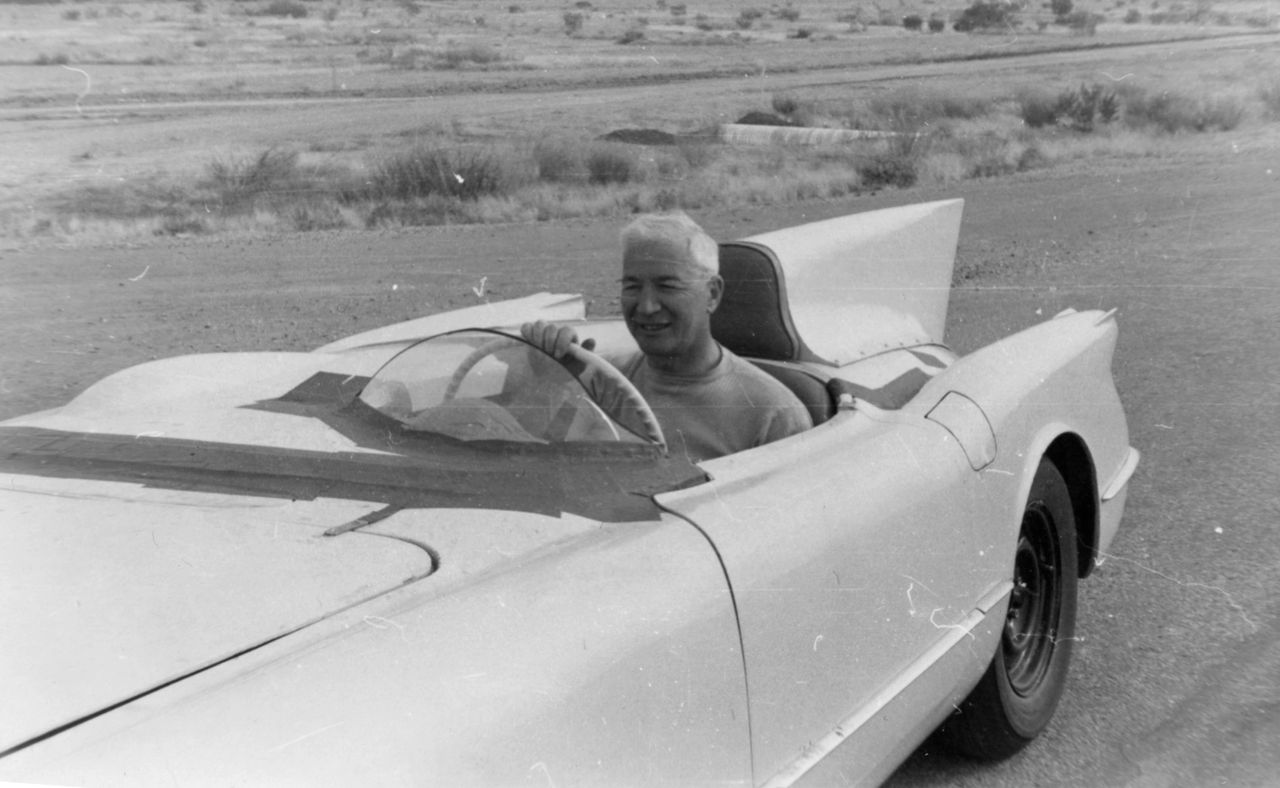
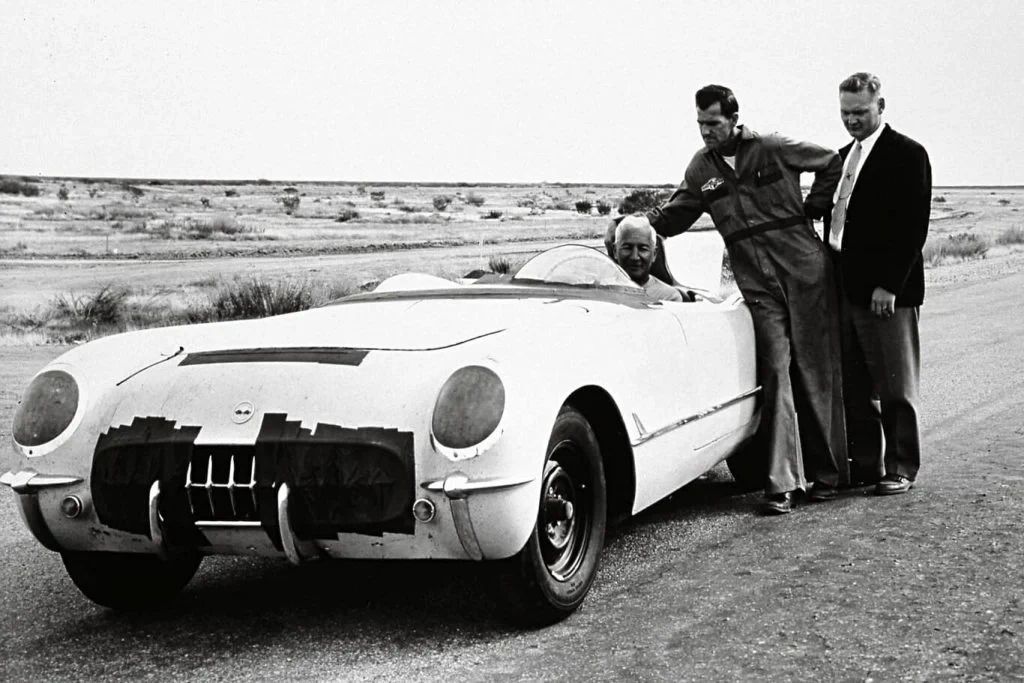
Among the most fascinating machines associated with this period of transformation is the experimental Corvette generally identified as EX-87. It has become an important part of Corvette lore because it represents the increasingly ambitious engineering work that was happening behind the scenes as Chevrolet explored how far the basic Corvette package—and particularly the new small-block V8—could be pushed.
As with many General Motors experimental automobiles from the period, however, the history of EX-87 requires some caution. Engineering cars were working tools, not museum pieces. They could be modified repeatedly, fitted with different engines and components, reassigned to new development programs, and sometimes rebuilt into configurations that bore little resemblance to the form in which they had begun. Components could migrate between vehicles, identification numbers could reflect internal engineering purposes rather than conventional production identities, and later restorations or personal recollections sometimes made individual chapters of these cars’ histories appear cleaner than they actually were.
What is far less ambiguous is what Chevrolet was attempting to learn.

The arrival of the small-block V8 quickly shifted the engineering question from whether the new engine could be installed in a Corvette. Once that had been established, engineers wanted to understand the potential of the combination. Higher-output engines were installed and evaluated. Gearing was altered to explore different performance objectives. Engineers investigated aerodynamic changes as speeds increased. Cooling, stability, and durability became more important because the Corvette was being asked to operate under conditions far removed from those envisioned for the original 1953 production car.
Duntov was deeply interested in that work because it allowed many of the ideas he had been advocating to be tested against measurable results. Instead of discussing performance theoretically, Chevrolet could change a component, run the car, measure the result, and decide what to do next. If additional power revealed instability, the chassis could be altered. If higher speeds produced excessive temperature, cooling could be addressed. If aerodynamic drag became the limiting factor, the body itself could become part of the experiment.

Corvette was becoming an engineering laboratory.
That may be the most important way to understand EX-87. The individual configuration of the car at any particular moment is fascinating, but the larger story is what its existence reveals about Chevrolet’s changing attitude toward Corvette. Engineers were no longer asking only how to manufacture the car successfully. Increasingly, they were asking how far it could go.
From Show Car to Speed Machine

The philosophical significance of that transition is difficult to overstate.
Only two years earlier, Corvette’s defining moment had taken place beneath the exhibition lighting of the Waldorf-Astoria Hotel, where the original Motorama car was presented as an exciting vision of what an American sports car might be. Its fiberglass body, low profile, and European-inspired proportions were intended to attract attention, and they succeeded spectacularly. Corvette entered public consciousness first as an object of design—something unexpected from Chevrolet and unlike virtually anything else an American manufacturer offered.
By the middle of the decade, Chevrolet engineers were beginning to subject related cars to an entirely different standard.
A Motorama automobile was judged by the reaction it created when the curtain came down and the public saw it for the first time. An experimental high-speed Corvette was judged by instrumentation, stopwatch readings, temperatures, pressures and the observations of the engineers and drivers who had just pushed it to its limits.
- How fast would it go?
- How stable would it remain as speed increased?
- How effectively could it dissipate heat?
- How much additional power could the chassis absorb?
- What happened to braking effectiveness after repeated hard use?
- What failed first?
- After something failed, what needed to change before the car failed again?
Those were fundamentally different questions from the ones that had defined Corvette at its introduction. They reflected an automobile beginning to acquire a second identity—one rooted not simply in appearance, but in measurable capability. Each test created another opportunity to understand the car, and each weakness uncovered through development became another engineering problem that could potentially be solved.
To the customer walking into a Chevrolet dealership in 1955, much of that transformation remained invisible. The new V8 was obvious, and its effect on performance was immediately apparent, but the experimental work occurring behind GM’s doors was laying the foundation for Corvettes that would become progressively faster, more capable and more sophisticated.
Inside General Motors, the change was profound.
Corvette had begun as a show car that Chevrolet decided to manufacture. It was now becoming an automobile Chevrolet engineers were deliberately attempting to make fast.
The Road to Daytona

Duntov also understood that internal engineering numbers could only take Corvette so far. Chevrolet could know exactly how fast its development cars were, how much power their engines produced and how they performed under controlled testing, but none of those figures automatically created a public reputation. If Corvette was going to earn genuine performance credibility, Chevrolet eventually needed achievements enthusiasts could see, discuss and remember.
Daytona Beach offered exactly that kind of stage.
By the middle of the 1950s, Speedweeks had become one of the most visible gatherings in American motorsports, bringing together manufacturers, racers, mechanics and performance-equipment suppliers in an environment where speed itself was the attraction. The hard-packed Florida beach had already become synonymous with record attempts and high-speed competition, making Daytona an ideal place for Chevrolet to demonstrate publicly that Corvette’s transformation was becoming something far more substantial than an annual increase in advertised horsepower.
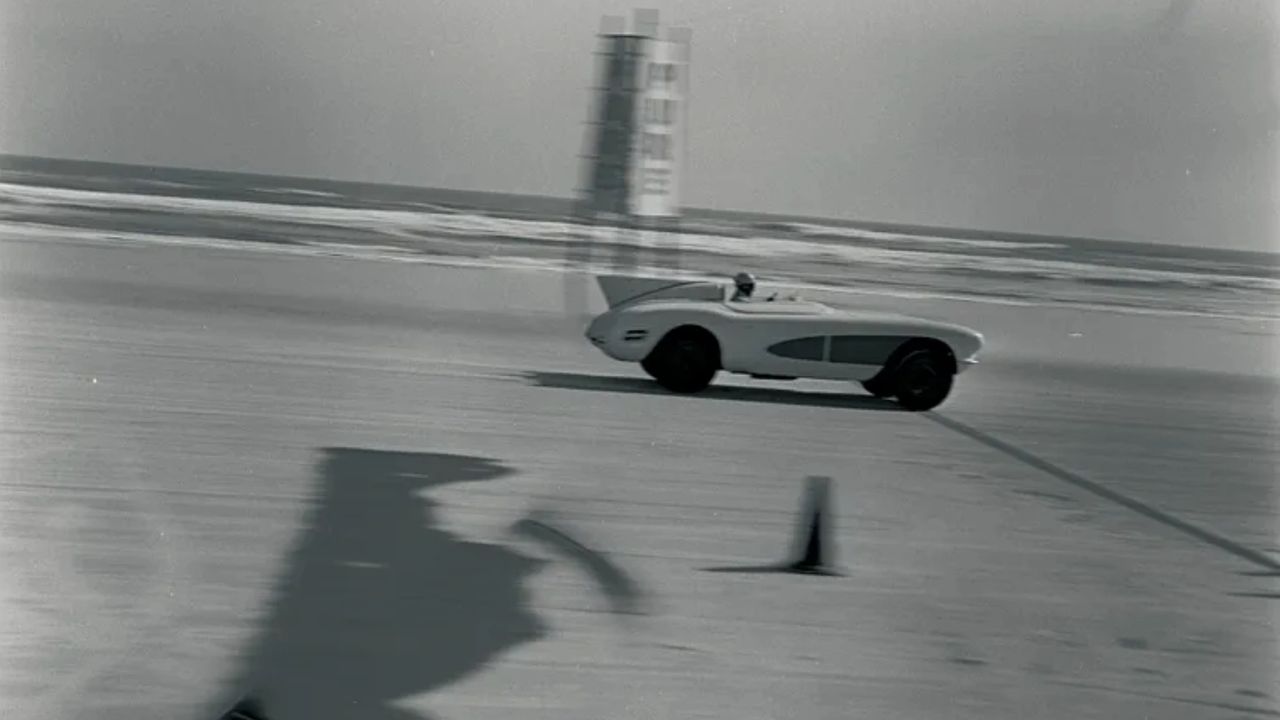
The development work undertaken through 1955 fed directly into Chevrolet’s preparations for Daytona. For the record attempt, EX-87’s specially developed 307-cubic-inch small-block and other high-speed hardware were transferred into Chevrolet engineering car No. 6901, which carried the newly introduced 1956 Corvette body. Although the resulting machine is sometimes described simply as EX-87 wearing 1956 body panels, it is more accurately understood as a separate development Corvette incorporating the powertrain and engineering lessons proven through EX-87.
By then, the objective had become considerably more ambitious than demonstrating that the V8-powered Corvette was merely quicker than the six-cylinder cars that preceded it. Chevrolet and Duntov were pursuing a number that carried enormous symbolic weight for an American production-based sports car of the period:
150 miles per hour.
Reaching that speed required far more than simply installing the strongest available engine and holding the throttle open. Power, gearing, aerodynamics, tires, cooling and stability all had to work together. The work Duntov had been pursuing—extracting more from the small-block, improving the chassis and understanding Corvette at sustained high speed—was converging toward a very public demonstration of what Chevrolet’s sports car could now accomplish.
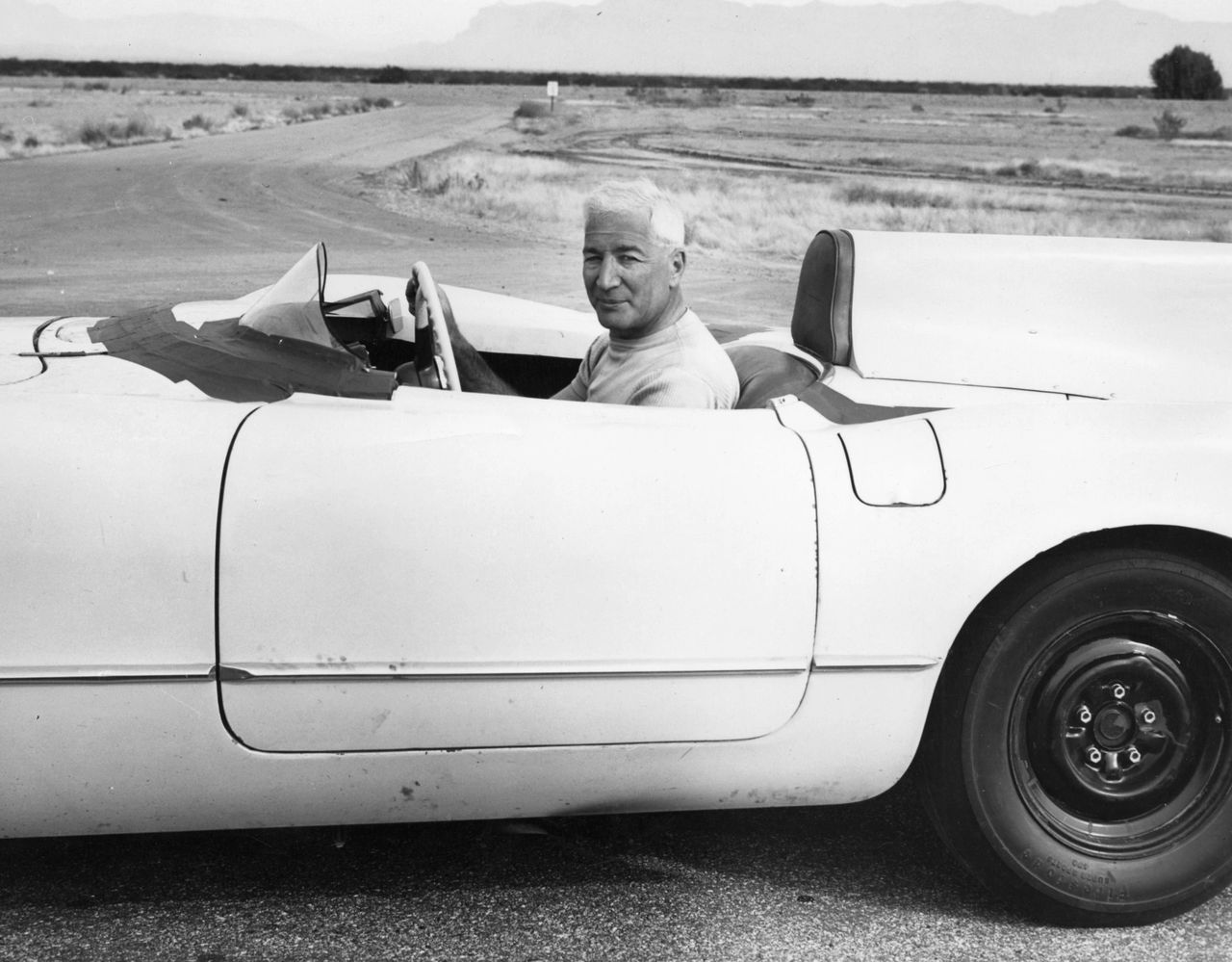
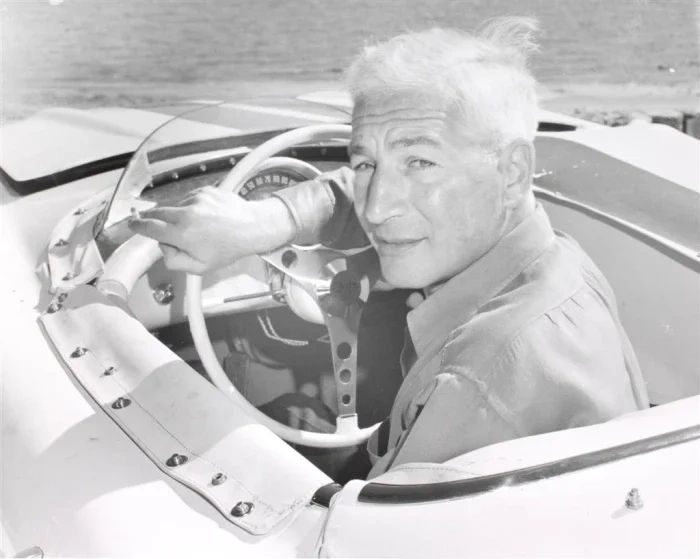
In January 1956, during testing conducted ahead of the official Daytona Speedweeks competition, Duntov drove No. 6901 to a NASCAR-certified two-way flying-mile average of 150.583 mph. Averaging more than 150 mph in opposing directions was especially significant because it demonstrated that the result was not merely a wind-assisted peak in one direction. Chevrolet had produced repeatable, officially measured evidence that its rapidly evolving sports car could operate at a level previously associated with far more exotic machinery.

When the official Speedweeks competition followed in February, rough sand and strong winds prevented Duntov from repeating the earlier average. He nevertheless exceeded 150 mph in one direction and won the Modified Sports Car division with a two-way average of 147.300 mph. Accomplished international racer John Fitch won the Sports Car division in a more lightly modified Corvette with a 145.543-mph average.
The third member of Chevrolet’s Daytona team was Betty Skelton, one of America’s leading aerobatic pilots and already an accomplished aviation and automotive record-setter. Driving another largely production-based 1956 Corvette, Skelton averaged 137.773 mph, finished second in the Sports Car division and won the Women’s Sports Car division. Contemporary reporting described her performance as the fastest speed yet recorded by a woman on the Daytona beach, adding another highly visible achievement to Corvette’s growing competition résumé.

Dr. Dick Thompson also became central to Corvette’s expanding performance reputation during 1956, even though he did not participate in Chevrolet’s Daytona Speedweeks effort. Known as the “Flying Dentist,” Thompson campaigned a Corvette throughout the Sports Car Club of America season and captured the 1956 SCCA C-Production national championship. His success extended Chevrolet’s argument beyond straight-line speed, demonstrating that the increasingly capable Corvette could also win consistently in road-racing competition.
The 150.583-mph record did not suddenly materialize on the Florida sand. Its engineering roots reached directly into the transformation that had taken place during 1955: the arrival of the small-block V8, the increasing use of Corvette as an experimental platform, Duntov’s relentless interest in high-speed development and Chevrolet’s growing willingness to support an automobile that was beginning to demand much more serious engineering attention.
The small-block had created the opportunity. Duntov had supplied much of the ambition. Chevrolet was beginning to provide the resources necessary to turn both into measurable results.
Only a few years earlier, the central question surrounding Corvette had been whether Chevrolet could sell enough of them to justify keeping the car alive.
Now Duntov was asking an entirely different question:
How fast could they make it go?
The 1955 Corvette as the Beginning of the Racing Corvette
It would be misleading to describe the production 1955 Corvette itself as a fully developed racing car. It was not. Its drum brakes, solid rear axle, limited weather protection and relatively ordinary chassis components still reflected the compromises of the Corvette’s rapid original development.
But racing history is not defined only by cars that collect trophies. Some cars are important because they begin processes, reveal possibilities and give engineers a foundation worth developing. The V8-powered 1955 Corvette was precisely that kind of automobile.
Before the arrival of the 265-cubic-inch small-block, Corvette’s competition potential had been constrained by its engine. The Blue Flame Six could provide respectable performance by early-1950s standards, but it offered neither the power nor the development ceiling Chevrolet needed if Corvette was going to challenge the world’s established sports cars.
The 265 changed that equation. It made the Corvette quicker immediately, but its greater importance rested in what it made possible next. Chevrolet now had a compact, comparatively lightweight V8 that responded readily to higher compression, more aggressive camshafts, improved induction and other performance development.
With greater horsepower came an entirely new set of engineering demands. Higher speeds exposed weaknesses that had been less urgent before: brake fade, suspension movement, steering response, tire loading, fuel delivery, cooling and high-speed stability. Each limitation created another reason to improve the car.
That was precisely the process Zora Arkus-Duntov had begun driving in 1955. His work with V8-powered development cars was not simply an effort to produce an impressive top-speed figure. It was part of a broader campaign to determine what Corvette needed to become if Chevrolet intended to treat it as a genuine performance automobile.
The results soon moved beyond Chevrolet’s proving grounds. Early in 1956, Duntov, John Fitch and Betty Skelton carried Corvette to Daytona Beach, where their speed records gave the car highly visible performance credibility. Later that year, Dick Thompson’s SCCA C-Production championship demonstrated that Corvette could do more than produce a spectacular number on the sand—it could compete successfully across an entire racing season.
Those achievements belong more fully to the story of the 1956 Corvette, and we will explore them in greater depth there. For the purposes of 1955, their significance is that each grew directly from the transformation already underway.
The production 1955 Corvette was therefore not yet the finished racing Corvette. It was the point at which such a car became possible. Chevrolet finally possessed an engine with enough strength, flexibility and untapped potential to justify developing everything around it.
Corvette had begun 1955 as an attractive sports car whose long-term future remained uncertain. It ended the year with the mechanical foundation of a legitimate performance program—and with the first clear evidence that its days as little more than a Motorama turntable beauty queen were coming to an end.
The small-block V8 supplied the potential, but horsepower alone could not redefine the Corvette. Chevrolet still needed an effective way to place that power under the driver’s control and deliver it to the rear wheels. That brings us to another pivotal element of the 1955 transformation: the introduction of a three-speed manual transmission.
The Three-Speed Manual Finally Arrives

The new small-block V8 solved the greatest problem beneath the Corvette’s hood. The transmission remained.
For 1953, 1954 and most of 1955, every Corvette left the factory with Chevrolet’s two-speed Powerglide automatic. That choice had been understandable when the car was hurried into production using components already available within Chevrolet, but it had always conflicted with Corvette’s identity as a sports car.
Powerglide was reliable, familiar to Chevrolet dealers and perfectly acceptable in an ordinary passenger car. In the Corvette, however, its two forward ratios limited acceleration and left the driver with little control over how the engine delivered its power. That weakness became even more conspicuous once the 195-horsepower V8 arrived.
Duntov understood that the contradiction could not continue. European sports cars offered manual gearboxes that allowed drivers to select a lower gear before entering a corner, hold the engine near its power peak and control precisely when power reached the rear wheels. Corvette now possessed an engine capable of serious performance, but its transmission still treated the driver largely as a passenger.
Late in the 1955 model year, Chevrolet finally introduced a close-ratio three-speed manual for V8-powered Corvettes. Operated through a short, floor-mounted shifter, it used a 2.21:1 first gear, 1.31:1 second and direct-drive third. Those ratios kept the small-block within a more useful portion of its powerband while providing substantially greater control than Powerglide could offer.
The gearbox was hardly exotic, and three forward speeds already appeared modest beside the four-speed transmissions found in many European sports cars. Nevertheless, its importance cannot be measured by the number of gears it contained. It represented Chevrolet’s first serious acknowledgment that Corvette drivers expected to participate in the performance they had purchased.
Completing the Corvette Formula

Production records do not establish an exact total, but most authorities place the number of manual-equipped 1955 Corvettes between 70 and 80—commonly rounded to about 75. Against total production of just 700 Corvettes, the manual remained exceptionally rare, while Powerglide continued to account for the overwhelming majority of the year’s output.
Volume, however, tells only part of the story. For the first time, a Corvette buyer could combine two seats, a lightweight fiberglass body, V8 power, rear-wheel drive and a floor-shifted manual transmission in a single production automobile. The basic mechanical formula that would define Corvette for decades had finally come together.
The manual did more than improve the car’s responsiveness. It changed the relationship between the Corvette and its driver. Engine speed could be controlled deliberately, a gear could be held through a corner, and the small-block’s willingness to rev could finally be exploited directly rather than filtered through the decisions of an automatic transmission.
It did not suddenly transform the 1955 Corvette into a fully developed racing machine. The car still relied on drum brakes, a solid rear axle and a chassis rooted in Chevrolet passenger-car engineering. What the manual provided was another essential step away from the Corvette’s Motorama origins and toward the serious performance identity Duntov envisioned.
Chevrolet reinforced that direction in 1956 by making the three-speed manual standard equipment and moving Powerglide to the options list. The four-speed followed during 1957, beginning a lineage that would eventually include the Muncie four-speeds, Doug Nash 4+3, ZF six-speed, rear-mounted Tremec transaxles and the C7’s seven-speed manual.
All of those later transmissions were more sophisticated, but they followed the precedent established during the final months of 1955. Corvette no longer merely looked like a sports car and accelerated like one. At last, it allowed its driver to become part of the experience.
A New Twelve-Volt Electrical System

The small-block V8 required Chevrolet to modernize more than the Corvette’s powertrain. V8-powered 1955 models adopted a 12-volt electrical system, replacing the six-volt architecture used during the Corvette’s first two years.
This was part of a broader industry transition. As engines became more powerful and automobiles accumulated additional electrical equipment, six-volt systems offered less reserve capacity than manufacturers wanted. Twelve volts provided stronger cranking performance, reduced the current required to operate comparable electrical loads and created a more capable foundation for ignition, lighting and accessories.
The change involved considerably more than installing a different battery. The starter, generator, ignition components, bulbs and related electrical hardware all had to be compatible with the higher-voltage system. The V8 installation was therefore not merely an engine substitution; it required Chevrolet to reconsider several of the systems supporting it.
The small number of six-cylinder Corvettes produced for 1955 retained the earlier six-volt system. As a result, two Corvettes built in the same model year could belong to different electrical generations, depending on which engine sat beneath the hood. Engine selection now determined not only horsepower, but much of the car’s underlying electrical architecture.

The 1955 Corvette also adopted electric windshield wipers in place of the earlier vacuum-operated system. The improvement sounds minor until the limitations of vacuum wipers are considered.
Vacuum systems depended upon engine manifold vacuum to operate. When the throttle opened under hard acceleration, vacuum dropped—and the wipers could slow dramatically or nearly stop. The harder the driver pressed the accelerator, the less effectively the windshield might be cleared.
An electric motor eliminated that relationship. Wiper operation no longer depended upon throttle position or how hard the engine was working, giving the driver more consistent visibility in poor weather.
Electric wipers did not make the Corvette faster, and a 12-volt system did not provide the drama of a new V8. Both changes nevertheless made the automobile more dependable, more functional and better prepared for continued development. They were evidence that Chevrolet was beginning to treat Corvette as a complete production automobile rather than simply an attractive fiberglass experiment.
Tubeless Tires and the Work of Maturation

The 1955 Corvette also adopted 6.70-15 tubeless tires, with Chevrolet supplying five so that the full-size spare matched the four tires mounted on the car. Like the year’s electrical improvements, their significance can be easy to overlook more than seven decades later. In its own time, however, tubeless construction represented an important step forward in tire design, reliability, and everyday usability.
Earlier tires relied upon a separate inner tube to contain pressurized air. The tube sat inside the tire carcass, while the tire itself provided the tread surface and structural strength. Tubeless construction eliminated that separate chamber, instead using the tire bead, wheel rim and an air-retaining inner liner to create the seal, with the valve stem mounted directly through the wheel.
Removing the inner tube also eliminated several potential failure points. Tubes could be pinched during installation, chafe against the inside of the tire or generate additional heat through friction as the tire flexed at speed. Tubeless tires were not immune to punctures or sudden failures, but a small object penetrating the tread could remain lodged in place and allow air to escape more gradually, giving the driver a better opportunity to recognize the problem before the tire lost pressure completely.
Tubeless tires spread rapidly across the American automobile industry in the mid-1950s, reflecting improvements in tire construction and the wheels needed to maintain an airtight seal. Their appearance on the Corvette kept Chevrolet’s sports car aligned with that broader modernization. Contemporary Chevrolet specifications identified five 6.70-15 tubeless tires as part of the Corvette package, confirming that the technology extended to the spare rather than being limited to the four corners of the car.
For Corvette, the change carried additional relevance. The new V8 increased the speeds the car could reach and encouraged drivers to explore more of its performance potential. Greater capability placed greater demands upon every component connecting the automobile to the road, including parts as ordinary and easily overlooked as its tires. More horsepower was meaningful only if the rest of the car could support it with reasonable consistency and confidence.
That broader pattern defines much of the 1955 Corvette’s importance. Chevrolet did not discard the existing automobile and begin again with an entirely new platform. The familiar fiberglass body, basic chassis architecture, and much of the original construction remained, allowing the company to preserve the expensive tooling, manufacturing processes, and financial investment already committed to a model whose future was still far from secure.
Instead, Chevrolet improved the Corvette through accumulation, addressing individual weaknesses while retaining the automobile enthusiasts already recognized. The new small-block V8 provided the performance the Corvette had lacked from the beginning. A 12-volt electrical system supported stronger starting and more dependable operation, electric windshield wipers corrected an irritating functional weakness, tubeless tires introduced newer road technology, and the late-arriving manual transmission finally gave drivers the direct control expected of a genuine sports car.
Apart from the V8, none of those changes appeared revolutionary when considered by itself. Tubeless tires, electric wipers or a higher-voltage electrical system could easily disappear beneath the larger story of horsepower and acceleration. Together, however, they addressed many of the shortcomings that had made the earliest Corvette feel unfinished and demonstrated that Chevrolet was beginning to develop the car as a complete automobile rather than simply preserving it as a striking design exercise.
The 1955 model was still not the fully matured sports car Corvette would soon become. Its underlying chassis remained conventional, its brakes were still drums and most examples continued to use the two-speed Powerglide automatic. It was nevertheless stronger, more responsive, more dependable and more thoughtfully engineered than the automobile Chevrolet had introduced only two years earlier. The transformation was occurring one system at a time, and by the end of 1955, those individual improvements were beginning to add up to something much larger.
A Familiar Chassis Under New Pressure

The 1955 Corvette retained the same basic chassis architecture used during its first two model years. Its fiberglass body rested upon a separate steel frame with a 102-inch wheelbase, unequal-length front control arms, coil springs, tubular shock absorbers, and a stabilizer bar. At the rear, a live axle hung from longitudinal leaf springs, while manual steering and hydraulic drum brakes completed a layout that was sturdy and conventional rather than technically adventurous.
What changed was the engine placed within that chassis. Chevrolet’s 265-cubic-inch small-block V8 was shorter, more compact and lighter than the Blue Flame inline-six it replaced, reducing the burden carried over the front wheels and improving the way the Corvette responded to driver input. Period references commonly place the V8 car’s weight distribution near 52 percent front and 48 percent rear—an encouraging balance for a front-engine American automobile of the period.
The improvement could be felt from behind the wheel. With less mass concentrated in the nose, the Corvette placed less demand upon its front tires during aggressive cornering, responded more willingly to steering input and changed direction with greater confidence. The new engine did not transform the existing chassis into a perfectly neutral racing platform, but it allowed more of the car’s underlying potential to emerge.
That added performance also exposed weaknesses that had been easier to tolerate when the Corvette ran on the six-cylinder engine. The live rear axle and relatively ordinary suspension remained less sophisticated than the arrangements found beneath some European sports cars, while the approximately 11-inch hydraulic drum brakes faced the increasingly difficult task of controlling a faster automobile. For normal road use, they remained adequate. Repeated braking from higher speeds proved much more challenging.

Drum brakes retain heat within their enclosed structure. As temperatures rise, the friction between the shoes and drums can diminish, increasing stopping distances and producing brake fade. A system that appeared entirely acceptable during an ordinary drive could become progressively less effective after repeated hard deceleration—the exact operating environment Corvette would encounter as Chevrolet pushed the car toward serious competition.
Racing would soon make those limitations impossible to ignore. Competition placed the chassis, suspension and brakes under sustained loads that normal road use rarely duplicated, revealing where further development was required. Heavy-duty braking packages, improved drum designs, finned components and eventually four-wheel disc brakes would follow as Corvette’s performance continued to increase.
The chassis itself was not the story of the 1955 Corvette. Its significance came from how the new V8 changed the demands placed upon a familiar foundation. The small-block improved the car’s balance and responsiveness while also exposing areas that still needed attention, giving Chevrolet engineers both a more capable sports car and a clearer development path.
Color Gives the 1955 Corvette Greater Personality

The 1953 Corvette had famously been available in only one production combination: Polo White with a red interior and black convertible top. That uniform appearance helped establish the image of America’s new sports car, but it also made the first Corvettes feel almost more like a fleet of Motorama display cars than automobiles shaped by individual customer preference.
Chevrolet began loosening those restrictions in 1954, adding Pennant Blue, Sportsman Red and Black to the returning Polo White. For 1955, the palette changed again as Chevrolet searched for ways to give the still-young Corvette greater visual personality and broaden its appeal.
Only Polo White and Pennant Blue returned from the previous year. Sportsman Red and Black disappeared, replaced by Gypsy Red, Harvest Gold and the exceptionally unusual Corvette Copper.
The expanded selection was especially effective because the Corvette’s basic body had changed so little. The same low nose, deeply recessed headlamps, wraparound windshield and rounded rear quarters could appear remarkably different depending upon the paint, interior, convertible top and wheel colors surrounding them.
Polo White remained the most frequently chosen finish, with approximately 325 of the 700 Corvettes believed to have been painted in the familiar color. Even so, that represented less than half of total production—a meaningful departure from 1953, when every Corvette had left the factory wearing white.
The traditional combination paired Polo White with a red interior, red-painted wheels and either a white or beige convertible top. It preserved the clean, almost nautical appearance of the original Corvette, but the gold “V” incorporated into the Chevrolet script on V8-powered cars gave the familiar white body a new visual signal that something more serious now lived beneath it.
Gypsy Red accounted for an estimated 180 cars and gave the Corvette a far more extroverted character. Warmer and slightly more orange in appearance than a deep crimson, it emphasized the body’s curves and gave the roadster a stronger sense of motion even when it was standing still.
Chevrolet generally paired Gypsy Red with a light beige interior, a white or beige top and red-painted wheels. The pale upholstery kept the combination from becoming overwhelmingly red, while the contrasting cockpit made the car appear brighter and more sophisticated with the top lowered.

Harvest Gold was arguably the most distinctly 1950s combination of the group. Despite its name, the color appeared more like a warm yellow with a hint of gold than the darker metallic finish a modern buyer might imagine.
Approximately 120 cars are believed to have received Harvest Gold paint. Chevrolet paired the exterior with a yellow interior, dark green convertible top and yellow-painted wheels, with green trim providing additional contrast inside the cockpit.
It was an adventurous combination, particularly on a car whose survival was anything but certain. The dark green top played against the yellow-gold body in a way that was fashionable, optimistic and unmistakably tied to its period, while the body-color wheels helped carry the exterior color into the area behind the Corvette’s full wheel covers.
Pennant Blue was much less common, with approximately 45 examples believed to have been produced. The soft blue finish had already appeared in 1954 and gave the Corvette a calmer, more refined personality than either Gypsy Red or Harvest Gold.
Its accompanying details were equally distinctive. Pennant Blue cars were generally fitted with a dark beige interior, beige convertible top and—somewhat surprisingly—red-painted wheels, a small factory detail easily overlooked once the wheel covers were installed.
Then there was Corvette Copper.

With only about 15 examples commonly attributed to the color, Corvette Copper has become the most celebrated finish associated with the 1955 model year. Its bronze-like metallic appearance gave the early fiberglass body a character entirely different from the crisp simplicity of Polo White or the brighter personalities of Gypsy Red and Harvest Gold. Generally paired with a dark beige interior, a white convertible top and bronze-painted wheels, the combination was relatively subdued by mid-1950s standards, yet it gave the Corvette an unusually sophisticated presence at a time when Chevrolet was still marketing the car largely through themes of youth, performance and open-road adventure.
The color also worked particularly well with the Corvette’s shape. Light moved across the rounded fenders and gently curved body panels differently than it did on the solid white, red or blue cars, allowing the copper finish to appear brighter and more metallic in direct sunlight while becoming considerably deeper across shaded areas. That visual richness helps explain much of the color’s appeal today, but rarity has amplified its reputation even further. What was once simply one of several available finishes has become one of the defining visual signatures of the 1955 Corvette.
However, the production numbers require some caution. Commonly repeated estimates identify approximately 325 Polo White cars, 180 Gypsy Red, 120 Harvest Gold, 45 Pennant Blue, and 15 Corvette Copper, figures that total only 685 automobiles against the model year’s 700-car production. Surviving General Motors documentation has not fully explained the discrepancy, and published totals have varied over the years. Those numbers are therefore best understood as historical estimates rather than precise factory accounting, particularly when used to authenticate or evaluate an individual car.
That uncertainty does little to diminish Corvette Copper’s standing among enthusiasts. If anything, the combination of extraordinary rarity, distinctive appearance, and incomplete surviving documentation has only added to its mystique, transforming a scarcely ordered 1955 paint choice into one of the most recognizable and desirable finishes of the early Corvette era.

For collectors, the original exterior color is only part of the story. The corresponding interior, convertible top and wheel colors are equally important because repainting a Corvette in a rare shade does not recreate an authentic factory combination. That is particularly true with Corvette Copper and Harvest Gold cars, where documentation, physical evidence and expert judging can become critical in establishing whether a car actually left St. Louis wearing the combination it presents today. Their rarity creates an obvious incentive for later color changes, which makes provenance every bit as important as the quality of the restoration itself.
That creates one of the more interesting paradoxes surrounding rare automobiles. A color that attracted only a handful of buyers when new can become the combination collectors prize most generations later, even though the original customer was thinking about none of the things that now influence desirability. There was no concern about concours judging, production percentages or future auction values. The buyer was simply deciding whether the Corvette—and the color in which it was ordered—made sense alongside a new Ford Thunderbird, a Jaguar sports car or perhaps a more conventional Chevrolet sitting on the same showroom floor.
Today, those decisions are viewed through an entirely different lens. Original paint colors can influence restoration choices, judging results, desirability, and value nearly as much as engine and transmission specifications, particularly when the shade represents such a small portion of an already limited production run. A documented Corvette Copper or Harvest Gold car therefore carries significance beyond appearance alone; it preserves evidence of how Chevrolet began broadening Corvette’s identity and how a small number of buyers chose to personalize a car still searching for its place in the American market.
The 1955 palette ultimately tells a larger story than any individual color. Chevrolet began treating Corvette not simply as a single image to be reproduced, but as an automobile customers could make their own through combinations that gave the car very different personalities. The body had barely changed from the first production Corvettes, yet the car’s visual character had expanded dramatically. For a sports car still fighting to establish its identity, color became another sign that Corvette was evolving—and that America’s sports car no longer had to wear white to be recognized.
Performance Finally Matches Appearance

The arrival of Chevrolet’s 265-cubic-inch small-block V8 fundamentally changed the way the 1955 Corvette performed. Period testing generally placed 0–60 mph acceleration in the mid-eight-second range, with published figures around 8.5 to 8.7 seconds depending on transmission, road conditions and test methodology. Road & Track testing is commonly cited at approximately 8.7 seconds to 60 mph, around 24.7 seconds to 100 mph and a maximum speed approaching 120 mph. Those numbers may appear modest when viewed through a modern lens, but in 1955 they represented a very different level of performance. The improvement over the outgoing six-cylinder Corvette was substantial, and the change went well beyond a stopwatch. The small-block pulled harder throughout the rev range, responded more eagerly to throttle and finally gave Corvette the kind of acceleration its styling had always promised.
That top speed deserves some historical context. A road car capable of approaching 120 mph in 1955 was genuinely fast, particularly when considered against the limitations of the period. Tire technology remained primitive compared with modern performance rubber, braking systems were far less capable, aerodynamic development was still evolving and the Corvette offered none of the electronic safeguards that drivers now take for granted. There were no anti-lock brakes, no stability control, no modern crash structures and certainly no aerodynamic systems engineered to keep the car planted at very high speeds. Reaching nearly 120 mph in a 1955 Corvette therefore demanded considerably more of both the automobile and its driver than the same speed would in a modern Corvette.
What makes that performance even more significant is how quickly Chevrolet’s ambitions were expanding. While the production Corvette was only beginning to establish itself as a legitimate high-performance road car, Zora Arkus-Duntov and Chevrolet engineering were already exploring development cars capable of exceeding 150 mph. That contrast says a great deal about where Corvette was headed. The 1955 model had finally reached the point where its performance matched its appearance, but inside Chevrolet, the people shaping its future were already looking far beyond 120 mph.
Production Falls to 700

Chevrolet built only 700 Corvettes for the 1955 model year, a figure that needs to be understood in the context of the sales problem the company was trying to manage. This was not a deliberately planned boutique production run. Unsold 1954 inventory remained in the market, dealer demand was weak, and the nearly unchanged body made it difficult to distinguish the new 1955 model from discounted cars still sitting on showroom floors. Restricting production was therefore a practical business decision, but it also created one of the rarest production Corvettes ever built. Only the 300 examples produced for 1953 are rarer by model-year total.
What makes the 1955 Corvette especially significant is that its rarity coincided with one of the most important mechanical transitions in the car’s history. Of the 700 cars produced, the best-supported accounting identifies 693 equipped with Chevrolet’s new 265-cubic-inch V8 and just seven powered by the Blue Flame six. The numbers make Chevrolet’s direction unmistakable. Customers overwhelmingly chose the V8, and the engine that had carried Corvette through its first two model years was effectively finished.
Those seven six-cylinder cars are fascinating today precisely because they represent the configuration Chevrolet was leaving behind. Their significance is not that they were faster, more advanced or more desirable when new; it is that they were the last examples of the Corvette as originally conceived when Chevrolet hurried the Motorama dream into production. Collectors naturally celebrate firsts, but lasts can be equally revealing. The surviving six-cylinder 1955 cars preserve the final trace of Corvette’s original mechanical identity, while the 693 V8 examples point directly toward the performance culture that would define everything that followed.
That combination makes the 1955 Corvette a uniquely important transitional automobile. It retained the basic first-generation styling that traced directly back to the 1953 Motorama car, yet beneath the familiar fiberglass body Chevrolet had begun transforming Corvette into something fundamentally different. Production was falling, the program remained vulnerable, and the market had not yet fully embraced the car, but the mechanical foundation of the modern Corvette was finally in place.
Approximately 75 Manual Cars

The three-speed manual transmission is rarer still. Approximately 75 examples are generally believed to have been equipped with the manual late in the 1955 model year, although exact totals remain difficult to verify because surviving production documentation from Corvette’s earliest years is incomplete compared with the records available for later generations. That uncertainty makes authentication especially important today, because an original manual-transmission 1955 Corvette carries substantial historical significance and considerable collector value.
The rarity of those cars also creates an obvious incentive for later conversions, which means a manual gearbox alone does not establish factory authenticity. Determining whether a particular Corvette actually left St. Louis with the three-speed requires careful examination of documentation, chassis details, drivetrain components and restoration history, with the strongest cars supported by evidence that extends well beyond the transmission currently installed.
Regardless of the precise number that ultimately proves correct, the factory-built manual cars represent one of the most important turning points in Corvette development. Pairing Chevrolet’s new small-block V8 with a driver-controlled transmission brought the car much closer to the enthusiast-oriented formula that would define Corvette for decades. In that sense, these rare 1955 examples mark the point where the modern idea of what a Corvette should be begins to come into focus.
Pricing the 1955 Corvette

The 1955 Corvette was never an inexpensive automobile. The six-cylinder version carried a base price of approximately $2,774, while selecting Chevrolet’s new 265-cubic-inch V8 raised the figure to roughly $2,909, an increase of about $135. Powerglide, when listed separately in option pricing, added approximately another $178, and a buyer could push the final price higher still by selecting equipment such as the signal-seeking AM radio, heater, directional signals, whitewall tires, windshield washers, courtesy lighting and parking-brake warning equipment.
Those numbers placed Corvette in a difficult part of the market. A well-equipped example represented a substantial purchase at a time when buyers had no shortage of alternatives, including other sporting automobiles and considerably more practical conventional cars. That price made the shortcomings of the earliest Corvettes harder to overlook, because a customer spending sports-car money could reasonably expect performance, drivability and refinement that supported the image Chevrolet was selling.
The V8’s arrival helped close that gap. For a relatively modest increase over the six-cylinder car, buyers received a dramatic improvement in acceleration and an engine that finally gave Corvette performance more appropriate to its appearance and price. The Blue Flame let Chevrolet get Corvette into production, but the small-block made the financial argument easier to justify by giving customers something that felt much closer to the sports car they believed they were buying.
Chevrolet Advertising Discovers Horsepower

Advertising for the 1955 Corvette placed extraordinary emphasis on Chevrolet’s new small-block V8, and the reason was obvious. The body had changed very little from the previous year, which meant Chevrolet needed a compelling argument for customers to reconsider a car that still looked remarkably similar to unsold 1954 examples sitting on dealer lots. Horsepower became that argument. Brochure copy increasingly focused on acceleration, engineering sophistication and the compact efficiency of the new V8, shifting attention away from appearance alone and toward what the Corvette could actually do.
That represented an important change in the way Chevrolet marketed the car. The earliest Corvettes had been sold primarily through aspiration, exclusivity and styling, with the fiberglass body and Motorama-inspired shape carrying much of the message. By 1955, performance specifications were becoming central to the pitch. The Corvette was still beautiful, but beauty was no longer enough. Chevrolet now had an engine that allowed the advertising to promise something more tangible.
Horsepower was becoming part of Corvette’s identity.
That shift would only accelerate in the years that followed. Acceleration times, racing victories, fuel injection, competition equipment and increasingly sophisticated engineering would all become part of the language Chevrolet used to sell Corvette. The marketing vocabulary of the American sports car was developing alongside the hardware, and 1955 marked one of the first moments when Chevrolet could credibly advertise Corvette not simply as an exciting-looking automobile, but as a genuinely fast one.
The Corvette Begins to Influence Chevrolet

The Corvette’s influence on Chevrolet is clear in the path from the 1954 Corvette Nomad concept to the 1955 Chevrolet Nomad that followed into production. What began as a stylish Corvette-based dream car helped shape a far more practical two-door sport wagon, proving that ideas developed around Chevrolet’s halo sports car could migrate into the division’s mainstream lineup. It was an early example of Corvette doing more than standing alone as an image car; it was already helping Chevrolet define style, excitement, and aspiration across the broader brand.
The relationship between Corvette and Chevrolet was never entirely one-directional. Corvette obviously benefited from the enormous resources of the parent division, borrowing engines, transmissions, suspension concepts, electrical components, manufacturing knowledge and access to Chevrolet’s national dealer network. Yet as the program matured, Corvette increasingly began influencing Chevrolet in return, providing the division with ideas, imagery and engineering credibility that could extend far beyond the relatively small number of sports cars it actually sold.
The Nomad offers one of the clearest early examples. Styling developed for a Corvette-derived Motorama concept migrated into Chevrolet’s passenger-car lineup, demonstrating that ideas associated with the sports car could influence mainstream products. Performance soon followed the same path. Corvette gave Chevrolet a highly visible showcase for the small-block V8, allowing the division to associate the new engine with speed, sophistication and youthful enthusiasm in a way that an ordinary sedan could not achieve on its own.
That halo effect had value far beyond Corvette sales. A young customer who could not afford the sports car could still buy a V8-powered Chevrolet and feel connected to the same emerging performance culture. Duntov understood that relationship particularly well. Corvette did not need to outsell Chevrolet’s high-volume passenger cars to justify its existence if it could make those cars more desirable by strengthening Chevrolet’s overall image.
That dynamic remains central to Corvette’s role within Chevrolet. The car has always existed partly as a product and partly as a statement of what the division is capable of building, and by the mid-1950s Chevrolet was beginning to understand that the influence of Corvette could extend far beyond its own production numbers.
The Last Corvette of the Original Body

The 1955 Corvette occupies a unique place in the early history of the car because it was the final model year to retain essentially the complete exterior form of the original Motorama-inspired production Corvette. Its rounded body, screened headlights, familiar grille treatment and clean flanks still tied it directly to the shape introduced for 1953, giving the car an unmistakable visual connection to Corvette’s beginning.
That continuity would end with the 1956 model. Chevrolet substantially revised the design with a cleaner grille, exposed headlights, distinctive side coves, exterior door handles, and roll-up windows, making the car considerably more practical for everyday use. A removable hardtop also became available, further improving weather protection and helping transform the Corvette from an exotic-looking roadster into a more complete and usable sports car. Although the basic chassis architecture remained, the changes were significant enough that the 1956 Corvette feels like the beginning of a different phase of the C1.
That is what makes the 1955 car so compelling. Visually, it still belonged to the original Corvette conceived for Motorama, yet mechanically it was already moving toward the formula that would define the car for decades. Beneath the familiar body were Chevrolet’s new small-block V8, the arrival of the manual transmission and the beginnings of a much more serious performance identity.
The 1955 Corvette therefore sits almost perfectly between two eras. It wears the face of the car Chevrolet introduced in 1953, but beneath that familiar shape were the first recognizable elements of the mature Corvette beginning to emerge.
The 1955 Corvette in the Collector World

Today, any authentic 1955 Corvette is a significant automobile. With only 700 examples produced, surviving cars appear far less frequently than later first-generation Corvettes, and differences in condition, provenance, originality and factory configuration can have a substantial effect on desirability. V8-powered cars carry the obvious historical importance of introducing Chevrolet’s small-block engine to Corvette, while original three-speed manual examples add another layer of significance because of their rarity and their role in moving the car toward a more traditional sports-car formula.
The seven known six-cylinder cars occupy an even more unusual place in the model year because they represent the final appearance of Corvette’s original drivetrain configuration. Rare colors such as Corvette Copper can further distinguish an individual car, particularly when supported by convincing documentation and an authentic factory combination. Those details matter in the collector market, where rarity, originality and provenance can separate one 1955 Corvette dramatically from another.
Even so, rarity should not overshadow the model year’s broader importance. A Polo White, Powerglide-equipped 1955 Corvette may appear relatively ordinary beside a manual-transmission Corvette Copper example, but it still belongs to the year in which Chevrolet finally gave Corvette the mechanical foundation it needed to survive. Every authentic 1955 represents that turning point, making the model important not simply because so few were built, but because those 700 cars came to represent a turning point in Corvette history.
Restoring a 1955 Corvette

The rarity of the 1955 Corvette makes careful authentication especially important. Seven decades provide more than enough time for engines, transmissions, frames, body panels, interiors and trim to be replaced, and many of these cars spent years as ordinary used automobiles before anyone considered them historically important. Some were modified, others were raced, engines failed, transmissions were updated and damaged bodies were repaired. Later restorations sometimes attempted to return cars to factory specification, but not every restoration necessarily recreated the configuration in which that particular Corvette originally left St. Louis.
An expert restoration therefore requires far more than sourcing the correct-looking parts from a catalog. Build timing, casting dates, engine codes, chassis details, fasteners, finishes, hose routing and trim variations all matter, particularly on a car produced in such small numbers during a period when Corvette manufacturing was still evolving. The closer a restoration gets to factory-correct specification, the more important those details become, because small inconsistencies can reveal whether a component belongs to the car or was added later.
Claims involving the rarest configurations deserve even greater scrutiny. Original three-speed manual cars and the handful of six-cylinder examples carry substantial historical and monetary significance, which makes documentation and physical evidence especially important when authenticating them. The same applies to rare factory color combinations, where later repainting can make a car appear more unusual than it actually was when new.
Historical importance creates value, and value creates temptation. For that reason, the strongest 1955 Corvettes are not simply the ones restored most beautifully, but the ones whose history can be supported by documentation, component evidence and a restoration that respects what the car actually was.
Identifying the 1955 Corvette

Visually, distinguishing a 1955 Corvette from a 1954 can require close attention because the two model years share essentially the same body design. On V8-powered cars, the easiest exterior clue is the gold V incorporated into the Chevrolet script on the front fenders, a small but important badge identifying the new engine beneath the hood. Beyond that detail, however, appearance alone can be misleading, particularly after decades of repainting, restoration and component replacement.
Mechanical inspection provides considerably more certainty. V8-equipped cars use Chevrolet’s new 265-cubic-inch small-block and the accompanying 12-volt electrical system, while the handful of six-cylinder cars retain the older Blue Flame architecture and six-volt electrics. Those differences help separate the two configurations, but they still do not prove that every component currently installed is original to the automobile.

The VIN is located on the driver-side door hinge pillar, and the serial sequence reflects the extraordinarily limited 700-car production run. Even so, VIN identification establishes the identity of the chassis rather than the complete originality of the finished car. A genuine 1955 Corvette can carry a later engine, replacement transmission, repaired body sections or restoration-era components added long after it left St. Louis.
For that reason, serious authentication requires examining the Corvette as a complete historical object rather than relying on a single badge, serial number, or drivetrain component. The strongest conclusions come from comparing the VIN, mechanical configuration, component dates, body details, and surviving documentation to determine not only whether the car is a genuine 1955 Corvette, but also how closely it still reflects the automobile Chevrolet originally built.
1955 Corvette Specifications
The 1955 Corvette retained the basic chassis and Motorama-inspired body introduced for 1953, but mechanically it was a very different automobile. Chevrolet’s new 265-cubic-inch small-block V8, a 12-volt electrical system for V8 cars and the late arrival of a three-speed manual transmission transformed the specification sheet even though the exterior remained largely unchanged. The factory brochure you supplied is an excellent period reference, although it predates or does not reflect several late running changes—most notably the manual transmission—so I cross-checked it against Chevrolet/AAMA specification material, period road-test data and established Corvette technical references.
General Specifications
- Model: 1955 Chevrolet Corvette
- Chevrolet model designation: 2934
- Body style: Two-passenger open roadster
- Engine location: Front
- Drive: Rear-wheel drive
- Assembly plant: St. Louis, Missouri
- Construction: Glass-fiber-reinforced plastic body mounted on a separate steel frame
- Total production: 700 Corvettes
- V8 production: Best-supported accounting used here: 693
- Six-cylinder production: Best-supported accounting used here: 7
- Approximate three-speed manual production: 75 cars, all V8-powered
- Base price, six-cylinder: $2,774
- Base price, V8: $2,909
The seven-versus-six six-cylinder Corvette total deserves a note. Surviving sources differ by a single car, with some historical references stating six six-cylinder Corvettes and others seven. The 693 V8 / seven six-cylinder breakdown is the accounting we’ve used throughout this article, but we should acknowledge the uncertainty rather than present it as settled factory documentation.
Dimensions and Weight
- Wheelbase: 102.0 inches
- Overall length: 167.0 inches
- Overall width: 72.24 inches in detailed technical references
- Front track: 56.70 inches
- Rear track: 58.80 inches
- Height at windshield: approximately 48.50 inches
- Ground clearance: 6.0 inches
- Turning diameter, curb-to-curb: approximately 36.55 feet right / 36.93 feet left
- Shipping weight, six-cylinder: approximately 2,695 pounds
- Shipping weight, V8: approximately 2,665 pounds, without fuel/water and without radio or heater
- Period road-test curb weight, V8/Powerglide: roughly 2,880 pounds, depending on equipment and test methodology.
Chevrolet’s consumer brochure rounded several of these measurements, listing a 70-inch width and 57/59-inch front/rear tread. The more detailed engineering specifications refine those numbers to 72.24 inches overall and 56.70/58.80 inches respectively, making the engineering figures preferable for a technical specification section.
265-Cubic-Inch “Turbo-Fire” V8
- Configuration: 90-degree OHV V8
- Block: Cast iron
- Cylinder heads: Cast iron
- Displacement: 265 cubic inches / 4.34 liters
- Bore: 3.750 inches
- Stroke: 3.000 inches
- Compression ratio: 8.0:1
- Advertised horsepower: 195 hp at 5,000 rpm
- Maximum torque: 260 lb-ft at 3,000 rpm
- Carburetion: Single Carter WCFB four-barrel
- Early carburetor: Carter 2218S
- Later carburetor: Carter 2351S
- Valvetrain: Overhead valves, two valves per cylinder; Corvette engine used the higher-performance camshaft specification
- Main bearings: Five
- Exhaust: Dual exhaust
- Fuel pump: Mechanical
- Fuel pressure: approximately 4–5¼ psi
- Crankcase capacity: approximately 4 quarts excluding filter
- Firing order: 1-8-4-3-6-5-7-2
- Electrical system: 12 volts
- Battery: Delco 12-volt, nine-plate unit; approximately 50 amp-hour rating
- Spark plugs: AC 43-5R specification appears in detailed technical references
- Nominal ignition timing: approximately 4 degrees BTDC at idle.
The Corvette version of the new small-block was considerably hotter than Chevrolet’s normal passenger-car V8. Its four-barrel induction, camshaft, dual exhaust and 195-horsepower rating made it the most powerful Chevrolet version of the 265 offered at the beginning of the model year.
235.5-Cubic-Inch “Blue-Flame” Six
- Configuration: Inline six-cylinder, OHV
- Block: Cast iron
- Displacement: 235.5 cubic inches / approximately 3.86 liters
- Bore: approximately 3.5625 inches
- Stroke: approximately 3.9375 inches
- Compression ratio: 8.0:1
- Chevrolet’s 1955 brochure rating: 155 hp at 4,200 rpm
- Torque: factory-derived references place it at approximately 225 lb-ft at 2,800 rpm
- Carburetion: Three Carter YH side-draft one-barrel carburetors
- Carburetor identification: Carter 2066SA / Chevrolet No. 3706989 commonly cited
- Exhaust: Dual exhaust
- Firing order: 1-5-3-6-2-4
- Electrical system: 6 volts
- Battery: Delco 15-plate, approximately 100 amp-hour rating.
You will find some modern specification tables listing the six at 150 hp rather than 155. Chevrolet’s own 1955 sales literature explicitly advertised 155 horsepower, and that is the figure I would use in the article while recognizing that secondary references have perpetuated both numbers.
Transmissions
Powerglide Automatic
- Type: Two-speed automatic with torque converter
- Selector: Floor-mounted
- Positions: Park, Neutral, Drive, Low, Reverse
- Low ratio: approximately 1.82:1
- High: direct drive
- Rear axle ratio: 3.55:1
- Availability: Used in all known six-cylinder cars and the overwhelming majority of V8 cars.
Three-Speed Manual
- Type: Close-ratio three-speed manual
- Availability: Introduced late in the model year; V8 only
- Estimated production: approximately 75 cars
- First gear: 2.21:1
- Second gear: 1.31:1
- Third gear: 1.00:1
- Clutch: Single dry-plate
- Shifter: Short floor-mounted lever with white knob
- Standard rear axle: generally 3.55:1
- Rear axle code: AH for the conventional 3.55 manual application.
Some records identify a 3.27:1 manual-transmission axle code, but specialist references specifically caution that it may not actually have been installed in production 1955 Corvettes. I would leave 3.55:1 as the primary specification and avoid presenting the 3.27 as a confirmed production option.
Driveline and Rear Axle
- Layout: Front engine, rear-wheel drive
- Drive type: Hotchkiss drive
- Propeller shaft: Single driveshaft with universal joints
- Rear axle: Hypoid-type live axle
- Standard final-drive ratio: 3.55:1
- Limited-slip differential: Not yet part of the regular 1955 Corvette specification; Positraction would become important later in C1 development.
Frame and Suspension
- Frame: Box-section steel frame with substantial X-member bracing
- Front suspension: Independent
- Front geometry: Unequal-length upper and lower control arms
- Front springs: Coil springs
- Front stabilizer: Anti-roll/ride-stabilizer bar
- Front dampers: Direct-acting hydraulic shock absorbers
- Rear suspension: Live rear axle
- Rear springs: Four-leaf semi-elliptic leaf springs
- Rear spring mounting: Outboard/outrigger arrangement
- Rear dampers: Direct-acting hydraulic shock absorbers.
Mechanically, the basic suspension layout remained closely related to the 1953–1954 cars. The major 1955 transformation occurred in the powertrain rather than through wholesale chassis redesign.
Steering
- Type: Manual steering
- Steering ratio: 16:1
- Steering wheel: Approximately 17¼ inches, two-spoke
- Curb-to-curb turning diameter: approximately 36½–37 feet
- Power steering: Not offered.
Brakes
- Type: Four-wheel hydraulic drum brakes
- Drum diameter: 11 inches
- Design: Self-energizing
- Linings: Bonded
- Parking brake: Mechanical pull-handle type
- Power assist: None
- ABS: None, obviously—braking remained entirely mechanical/hydraulic by modern standards.
Wheels and Tires
- Wheel type: Steel disc wheels with safety rims
- Wheel size: approximately 15 x 5 inches
- Tires: 6.70-15
- Construction: Tubeless, an important change for the period
- Number supplied: Five, including spare
- Whitewalls: Optional
- Whitewall option price: approximately $26.90.
Body and Weather Protection
- Body material: Glass-fiber-reinforced plastic
- Passenger capacity: Two
- Doors: Wide doors with interior releases; no exterior door handles
- Windshield: One-piece curved safety glass
- Windshield rake: Chevrolet advertising quoted approximately 53 degrees
- Side windows: Removable chrome-bound plastic side curtains with ventipanes
- Convertible top: Manually operated fabric top with plastic rear window
- Top storage: Concealed well behind the seats
- Hood: Front-hinged
- Luggage compartment: Rear trunk with spare-wheel well beneath the floor
- Spare tire: Stored horizontally beneath luggage floor.
Capacities
- Fuel tank: Chevrolet brochure—17 gallons; detailed technical sources generally list approximately 17.25 gallons
- Cooling system: approximately 16 quarts without heater / 17 quarts with heater in detailed V8 specification references
- Engine oil: approximately 4 quarts excluding filter for the V8
- Seating: Two passengers.
Electrical Equipment
- V8 cars: 12-volt electrical system
- Six-cylinder cars: 6-volt electrical system
- Windshield wipers: Electric rather than the earlier vacuum arrangement
- Ignition: Shielded
- Starter: Electric
- Instrumentation: Included tachometer, speedometer and full round auxiliary gauges in the familiar early-C1 layout.
Period Performance — 265 V8 / Powerglide
This is where the 1955 specification sheet becomes particularly interesting. Period instrumented testing demonstrated how dramatically the V8 changed the Corvette.
Road & Track figures commonly associated with the 1955 V8 Corvette:
- 0–30 mph: 3.2 seconds
- 0–40 mph: 4.4 seconds
- 0–50 mph: 6.4 seconds
- 0–60 mph: 8.7 seconds
- 0–70 mph: 11.3 seconds
- 0–80 mph: 14.4 seconds
- 0–90 mph: 18.9 seconds
- 0–100 mph: 24.7 seconds
- Standing quarter-mile: approximately 16.3 seconds
- Top speed: approximately 119.1 mph.
Motor Life produced slightly different numbers, including approximately 8.5 seconds to 60 mph and roughly 16.5 seconds at about 85 mph through the quarter-mile. A later Road & Track comparison table listed the 1955 Powerglide Corvette at 8.7 seconds to 60, 16.5 seconds through the quarter and 116.9 mph maximum speed. Those differences are entirely believable for period road testing, where temperature, surface, car preparation, mileage and instrumentation could materially affect results.
For the overview, I would therefore summarize the V8 performance as:
- 0–60 mph: approximately 8.5–8.7 seconds
- Quarter-mile: approximately 16.3–16.5 seconds
- Quarter-mile trap speed: roughly 84–85 mph
- 0–100 mph: approximately 24.7 seconds
- Top speed: approximately 117–119 mph
I would not give a definitive instrumented performance line for the seven six-cylinder 1955 cars. Later references often quote approximately 11 seconds to 60 mph and around 108 mph, but those numbers closely mirror testing of the preceding Blue Flame Corvette and are difficult to establish as results from an actual production 1955 six-cylinder test. For a historical article, it is better to distinguish those estimates from the well-documented V8 figures.
Factory Options and Prices
- Directional signals: $16.75
- Heater: $91.40
- Signal-seeking AM radio: $145.15
- Whitewall tires: $26.90
- Powerglide automatic: $178.35 when separately priced
- Parking-brake alarm: $5.65
- Courtesy lights: $4.05
- Windshield washer: $11.85.
Exterior Colors
The colors generally associated with 1955 production were Polo White, Gypsy Red, Harvest Gold, Pennant Blue and Corvette Copper. Common historical estimates place production at approximately 325 Polo White, 180 Gypsy Red, 120 Harvest Gold, 45 Pennant Blue and 15 Corvette Copper, although those totals account for only 685 of the 700 cars and should therefore be treated as estimates rather than definitive factory production records.
VIN and Engine Identification
- V8 VIN format: VE55S001001 through VE55S001700
- Six-cylinder VIN: The initial V was omitted
- E: Corvette series/model designation
- 55: 1955 model year
- S: St. Louis assembly plant
- Final six digits: Sequential production number
- VIN location: Driver-side door hinge pillar
- FG engine suffix: 265/195 V8 with automatic
- GR engine suffix: 265/195 V8 with three-speed manual
- YG engine suffix: 235/155 six-cylinder with Powerglide
- V8 block casting: 3703524 commonly documented
- Six-cylinder block casting: 3835911 commonly documented.
Specification Summary
On paper, the 1955 Corvette still looked remarkably similar to the car Chevrolet had introduced two years earlier: the same 102-inch wheelbase, fiberglass roadster body, drum brakes, live rear axle and basic suspension architecture remained. The specification that changed everything was 265 cubic inches, 195 horsepower and 260 lb-ft of torque, followed late in the year by the availability of the three-speed manual.
Those numbers mark where the Corvette clearly stopped being merely the car Chevrolet showed at Motorama and began becoming the performance automobile we recognize today.
Why the 1955 Corvette Still Matters Today

The 1953 Corvette will always hold an unassailable place in history as the car that started it all. It introduced the name, the fiberglass body, the two-seat layout, and the distinctly American interpretation of a sports car that Harley Earl and his team had envisioned. But creating the Corvette and defining what the Corvette would ultimately become were two very different accomplishments, and it was during 1955 that those two ideas finally began to converge.
The importance of the 1955 Corvette rests less in any one specification than in the direction Chevrolet chose for the car. The new 265-cubic-inch V8 gave Corvette the power, character, and development potential its styling had promised from the beginning, while the late availability of a three-speed manual transmission finally gave drivers the direct mechanical involvement expected of a serious sports car. At the same time, Ed Cole, Zora Arkus-Duntov, and the engineers surrounding the program were beginning to think beyond simple model-year improvements. Corvette was becoming a platform that could be developed, tested, raced, and continually made better.
That shift in philosophy proved more important than the 1955 car’s modest production numbers. Chevrolet built only 700 Corvettes for the year, yet the small-block beneath the hood provided an engineering foundation that could grow almost immediately. Greater displacement, more aggressive tuning, fuel injection, increasingly sophisticated competition equipment, and substantially more horsepower would follow in remarkably short order. The 1955 Corvette therefore represented not the completion of Chevrolet’s sports car, but the moment the company finally created a mechanical formula capable of evolving with it.
Competition became part of that formula as well. The high-speed development work that grew out of the V8 program soon carried Corvette to Daytona, Sebring, SCCA competition, and increasingly ambitious experimental cars. Racing gave Chevrolet more than publicity; it provided an environment in which weaknesses could be exposed and engineering solutions developed under conditions far more demanding than ordinary road use. That relationship between competition and production engineering would become one of Corvette’s defining characteristics, eventually reaching from the earliest Duntov-led efforts to generations of factory-backed racing programs around the world.
The contrast with Ford’s Thunderbird also helped clarify what Corvette needed to become. Ford demonstrated that a stylish American two-seater could succeed commercially, but the Thunderbird increasingly pursued comfort and personal luxury while Chevrolet moved Corvette toward performance. Rather than attempting to beat Ford by building a better Thunderbird, Chevrolet gradually gave Corvette an identity of its own—lighter in purpose, more driver-focused, increasingly competition-oriented, and willing to sacrifice some conventionality in pursuit of performance. That distinction ultimately proved far more important than winning the sales comparison in 1955.
Seen from today’s perspective, the technology of the 1955 Corvette is understandably primitive. Its 195 horsepower, drum brakes, live rear axle, rudimentary weather protection, and three-speed manual belong unmistakably to another era. But measuring it against a modern Corvette misses the significance of what happened. The meaningful comparison is with the car Chevrolet had been building only a year earlier. In that context, the introduction of the small-block V8, improved electrical system, better weight distribution, continued chassis development, and the arrival of a manual transmission represented a substantial change in both capability and intent.
More importantly, Chevrolet began treating Corvette as something that should never remain static. Future generations would introduce independent rear suspension, four-wheel disc brakes, fuel injection, advanced composite construction, sophisticated electronics, magnetic dampers, transaxles, carbon-ceramic brakes, hybrid assistance, and eventually a complete move to a mid-engine layout. None of those developments can be traced mechanically to the 1955 car in any simplistic way, but all reflect the same fundamental philosophy that was beginning to take shape during this period: when Corvette reached the limits of what it could do, Chevrolet would improve the car rather than dilute its purpose.
That philosophy may be the most enduring legacy of 1955. Corvette would face economic downturns, emissions restrictions, fuel crises, changing regulations, corporate racing policies, and repeated internal debates about its future. Yet the program survived because its identity had become stronger than any single engine, chassis, or generation. Performance, continuous development, and the willingness to push Chevrolet engineering farther than conventional production cars required became central to what Corvette represented.
Only 700 examples were built in 1955, making it one of the rarest model years in Corvette history. Its importance, however, has little to do with rarity. The 1955 Corvette matters because it stands at the point where Chevrolet stopped merely preserving an interesting experiment and began building a genuine performance legacy around it.
The 1953 Corvette introduced America to the idea. The 1955 Corvette gave that idea the power, direction, and purpose to endure.