Tag: General Motors

  • 1969 CORVETTE OVERVIEW

    1969 CORVETTE OVERVIEW

    The third-generation Corvette arrived for 1968 with concept-car theatrics and real-world rough edges. Reviewers loved the drama—long shark nose, high fender peaks, and that Mako-inspired pinched waist—but they didn’t miss the squeaks, wiper-door hiccups, ventilation weirdness, or inconsistent fit and finish that came with the first year of a completely new platform. The 1969 Corvette is the model year where Chevrolet did what great manufacturers do: keep the show-car silhouette, double down on the fundamentals, and methodically address the “unanswered criticisms.” It was not a redesign. It was a line in the sand—refinements to the body, structure, cabin, safety, and driveline that transformed the promise of 1968 into the car enthusiasts expected a Corvette to be.

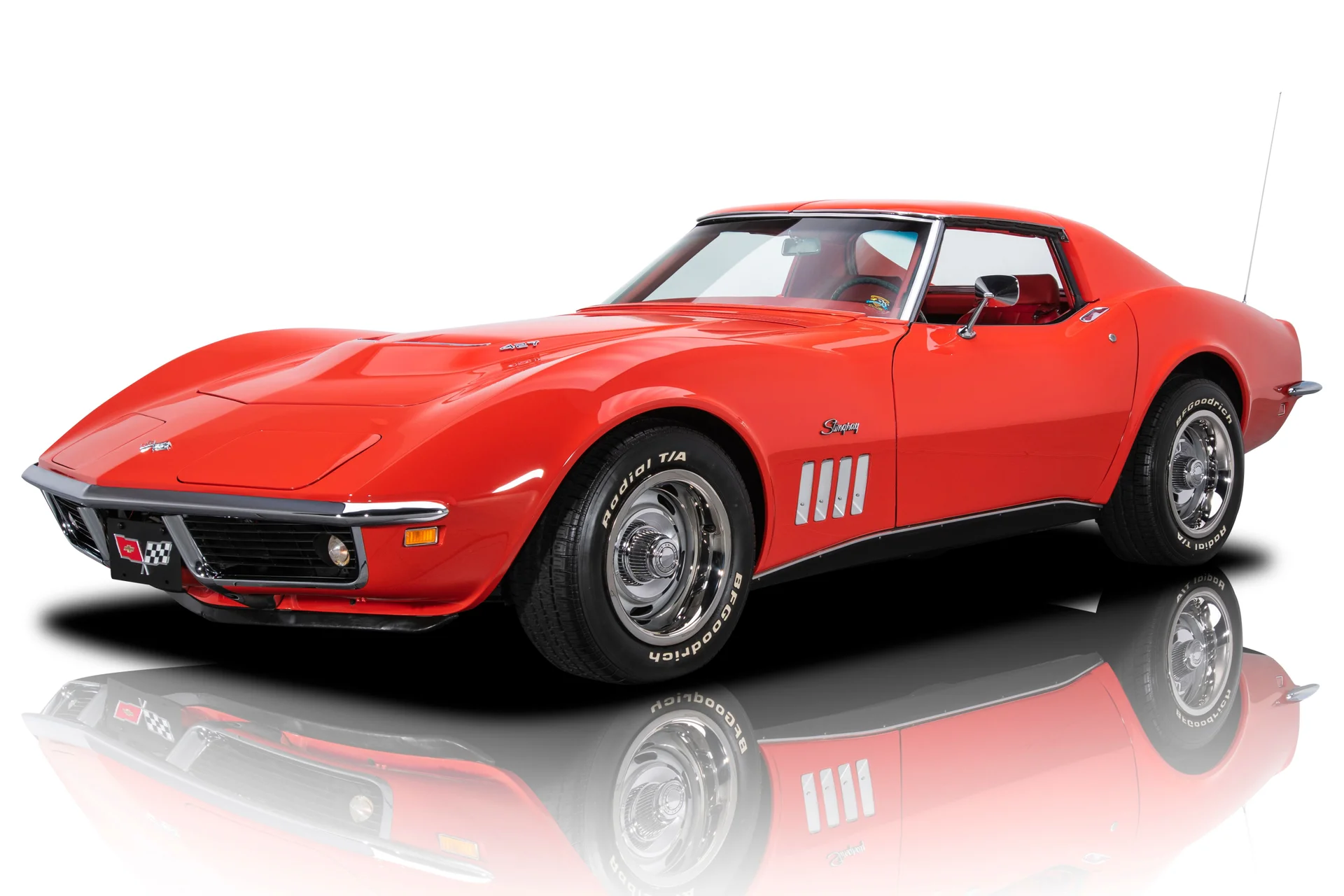
    The badge said it out loud. For 1969, “Stingray” returned—one word on the front fenders—reconnecting the C3 with an identity earned a generation earlier and signaling that the course corrections ran deeper than scriptwork.

    The 1969 Corvette – The Shape, The Structure, and the Quiet Changes That Mattered
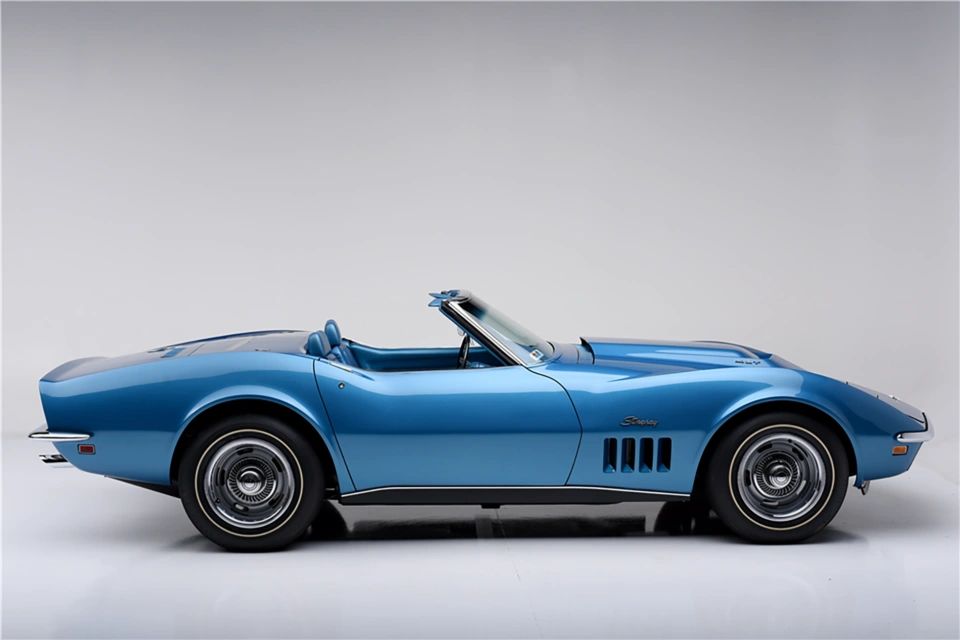
    This concours-condition 1969 Corvette Stingray L88 convertible is a rare and brutal expression of Chevrolet’s performance zenith. One of just 116 built that year, the L88 packed a racing-derived 427-cubic-inch V8 officially rated at 430 horsepower—but widely known to produce well over 500 in real-world trim. Designed for track domination, it came with heavy-duty suspension, upgraded cooling, a close-ratio M22 “Rock Crusher” 4-speed, and radio/heater delete to save weight and focus intent. Finished in a striking Le Mans Blue, this example pairs raw power with show-car perfection. (Image courtesy of carscoops.com)
    This concours-condition 1969 Corvette Stingray L88 convertible is a rare and brutal expression of Chevrolet’s performance zenith. One of just 116 built that year, the L88 packed a racing-derived 427-cubic-inch V8 officially rated at 430 horsepower—but widely known to produce well over 500 in real-world trim. Designed for track domination, it came with heavy-duty suspension, upgraded cooling, a close-ratio M22 “Rock Crusher” 4-speed, and radio/heater delete to save weight and focus intent. Finished in a striking Le Mans Blue, this example pairs raw power with show-car perfection. (Image courtesy of carscoops.com)

    What made the C3 Corvette instantly recognizable wasn’t just its silhouette — it was the attitude baked into every curve. The 1969 model retained that signature look: a sharply pointed front end that flowed into raised, knife-edged fenders, a long and low hood that seemed to stretch for miles, and a cockpit — the “glasshouse” — sunken deep between muscular rear haunches. From behind, the body flared just enough to give the illusion of wider rubber than the modest bias-ply tires could deliver, exaggerating the car’s stance even at rest.

    Beneath that unmistakable fiberglass skin was a structure far more humble in nature but absolutely vital to the Corvette’s dynamic character: a fully welded ladder-type steel frame with five crossmembers. For 1969, Chevrolet engineers tightened this skeleton to reduce cowl shake and smooth out the high-frequency jitters felt over broken pavement. The changes didn’t transform the car overnight, but any seasoned driver could feel the difference — especially at the limit, where chassis rigidity mattered most.
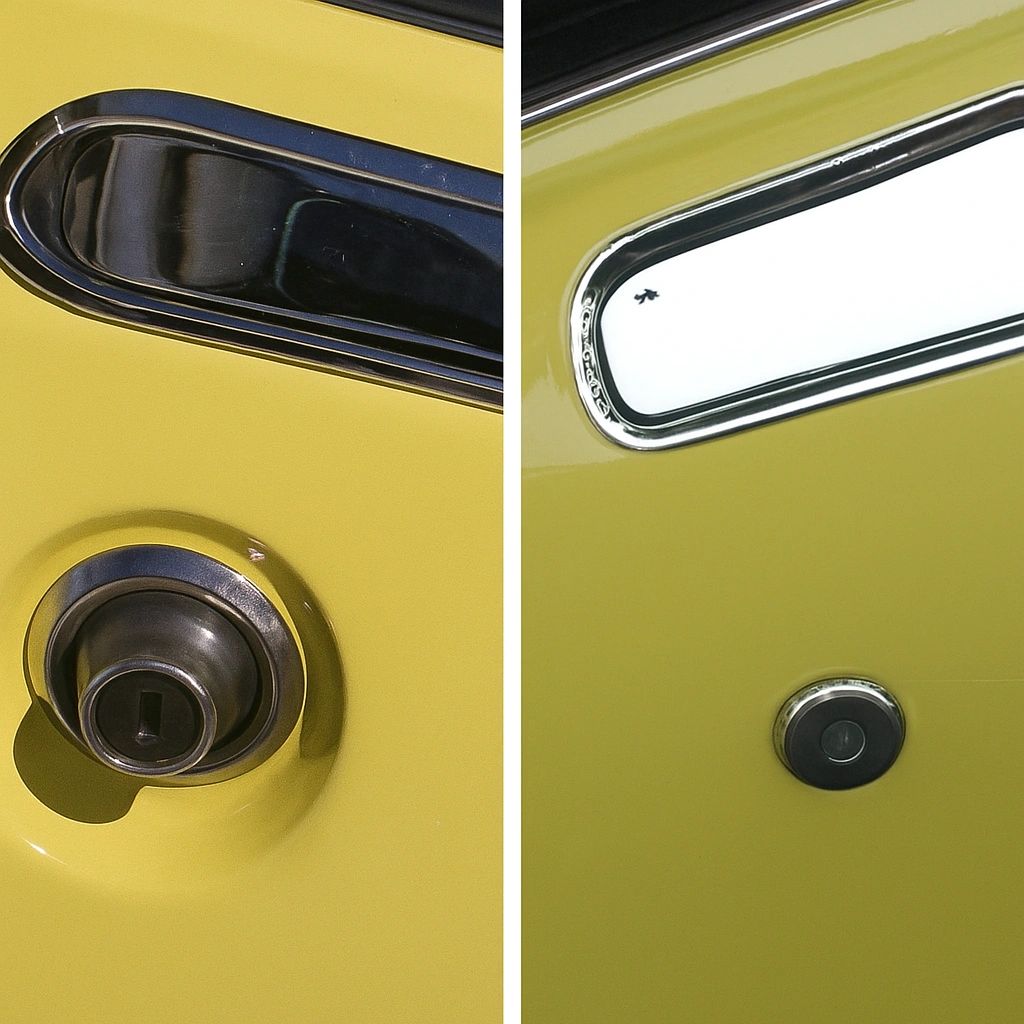
    Side by side, the 1968 (left) and 1969 (right) Corvette door handles tell a story of refinement through function. The '68 handle features a separate chrome thumb button, a carryover from earlier designs that proved prone to misalignment and wear. In response to owner feedback, Chevrolet reengineered the mechanism for 1969—integrating the button into the handle for a cleaner look, improved ergonomics, and fewer moving parts. It’s a subtle but meaningful example of how Corvette’s evolution was often driven by real-world use.
    Side by side, the 1968 (left) and 1969 (right) Corvette door handles tell a story of refinement through function. The ’68 handle features a separate chrome thumb button, a carryover from earlier designs that proved prone to misalignment and wear. In response to owner feedback, Chevrolet reengineered the mechanism for 1969—integrating the button into the handle for a cleaner look, improved ergonomics, and fewer moving parts. It’s a subtle but meaningful example of how Corvette’s evolution was often driven by real-world use.

    Exterior updates for ’69 revealed just how seriously Chevrolet took early owner feedback and assembly line insight following the tumultuous launch of the 1968 model. The door handles were a standout example: gone was the awkward two-part setup with a separate thumb button, replaced by a cleaner, more ergonomic flush-mounted unit that was easier to use and harder to misalign. Hidden windshield wipers — a piece of design theater that debuted the year prior — remained in place, but with meaningful revisions: a cold-weather override for the vacuum-operated wiper door, and washer jets relocated onto the wiper arms for direct-spray effectiveness. Out back, the inboard tail lamps were redesigned with single lenses that now combined brake and reverse functions.
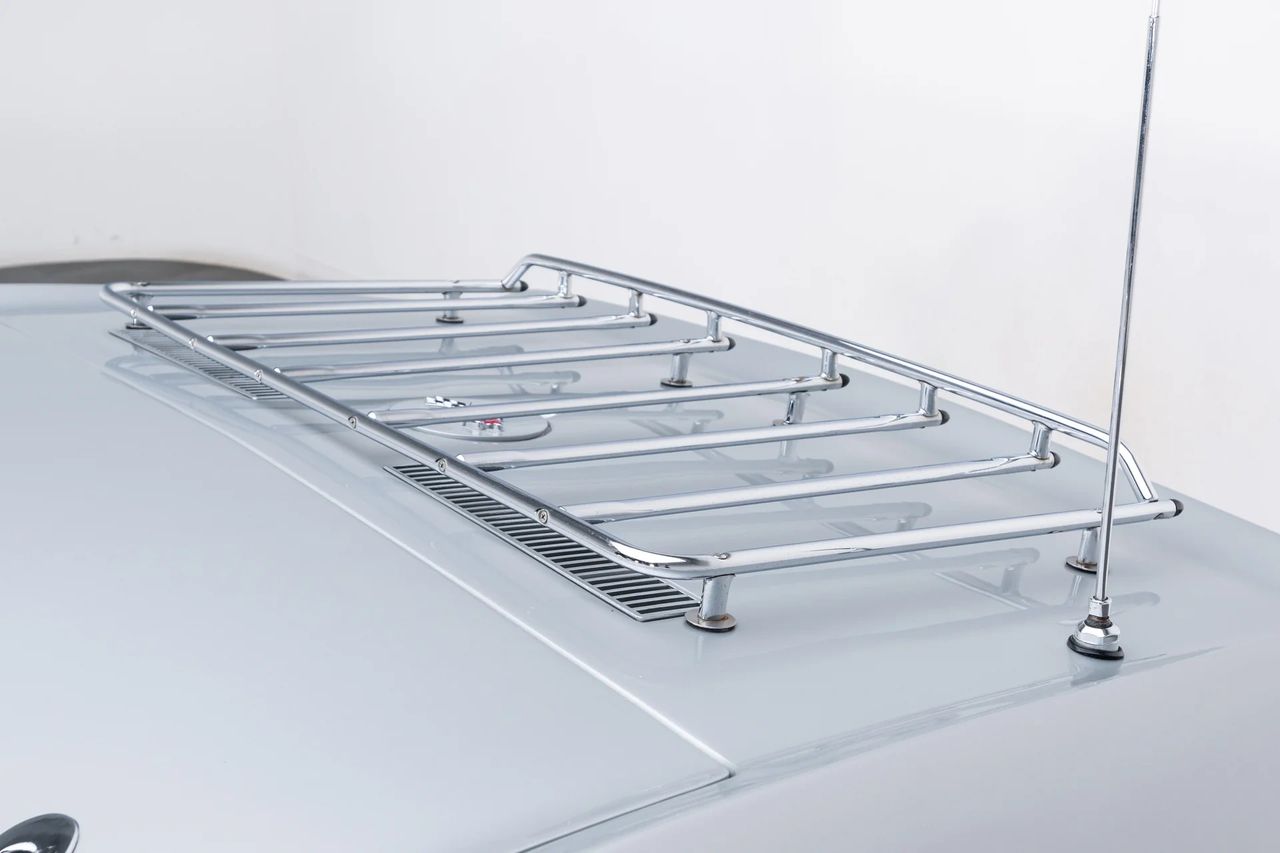
    New for 1969, the optional chrome luggage rack sparked debate among Corvette purists, but proved a practical addition for road-trip-minded owners. While some lamented its impact on the clean rear profile, others embraced the utility—finally able to strap down weekend bags or T-tops without cramming the limited cargo space. Elegantly integrated and anchored with stainless hardware, the rack maintained Corvette’s sporty aesthetic while quietly expanding its long-haul capability. Love it or loathe it, the luggage rack captured the duality of the C3: part show car, part grand tourer. (Image courtesy of RK Motors)
    New for 1969, the optional chrome luggage rack sparked debate among Corvette purists, but proved a practical addition for road-trip-minded owners. While some lamented its impact on the clean rear profile, others embraced the utility—finally able to strap down weekend bags or T-tops without cramming the limited cargo space. Elegantly integrated and anchored with stainless hardware, the rack maintained Corvette’s sporty aesthetic while quietly expanding its long-haul capability. Love it or loathe it, the luggage rack captured the duality of the C3: part show car, part grand tourer. (Image courtesy of RK Motors)

    The car’s rolling stock also saw practical evolution. Wider 15×8-inch wheels increased mechanical footprint and visual heft, enhancing both performance and proportion. A luggage rack became available for the rear deck — a controversial addition among purists, but a welcome one for owners who used their Corvettes for weekend getaways and needed the extra utility.

    The fiberglass bodywork remained a Corvette hallmark — lightweight, rustproof, and molded into drama-laden shapes. But underneath the sculpted panels sat a carefully engineered safety cage: steel reinforcements in the rocker panels, roof pillars, and key structural members. Coupes offered full steel roof frames, while convertibles housed their folding soft tops beneath a flush-fitting, spring-loaded tonneau cover, preserving the Corvette’s low, sharklike profile even with the top down.

    Inside: Ergonomics, Safety, and the Experience Only a Real Sports Car Delivers
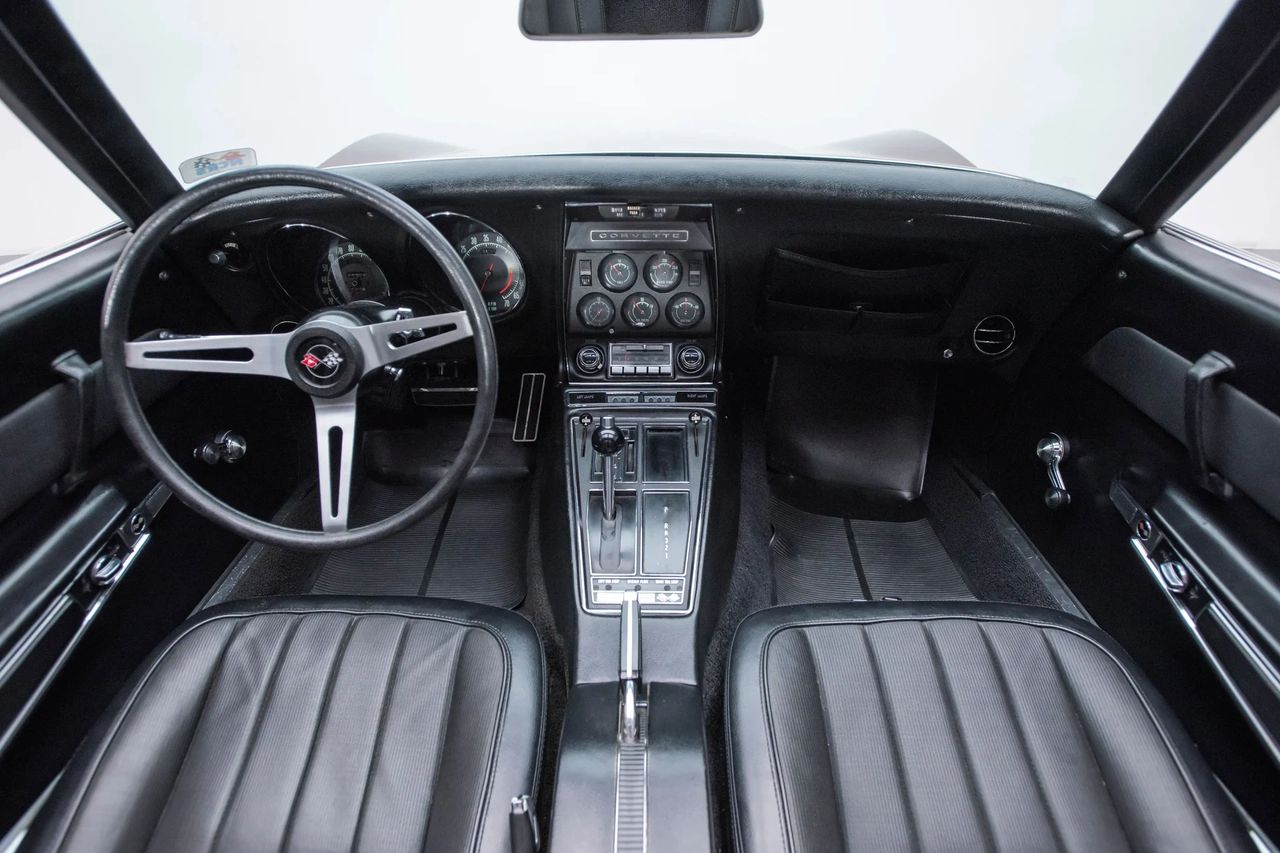
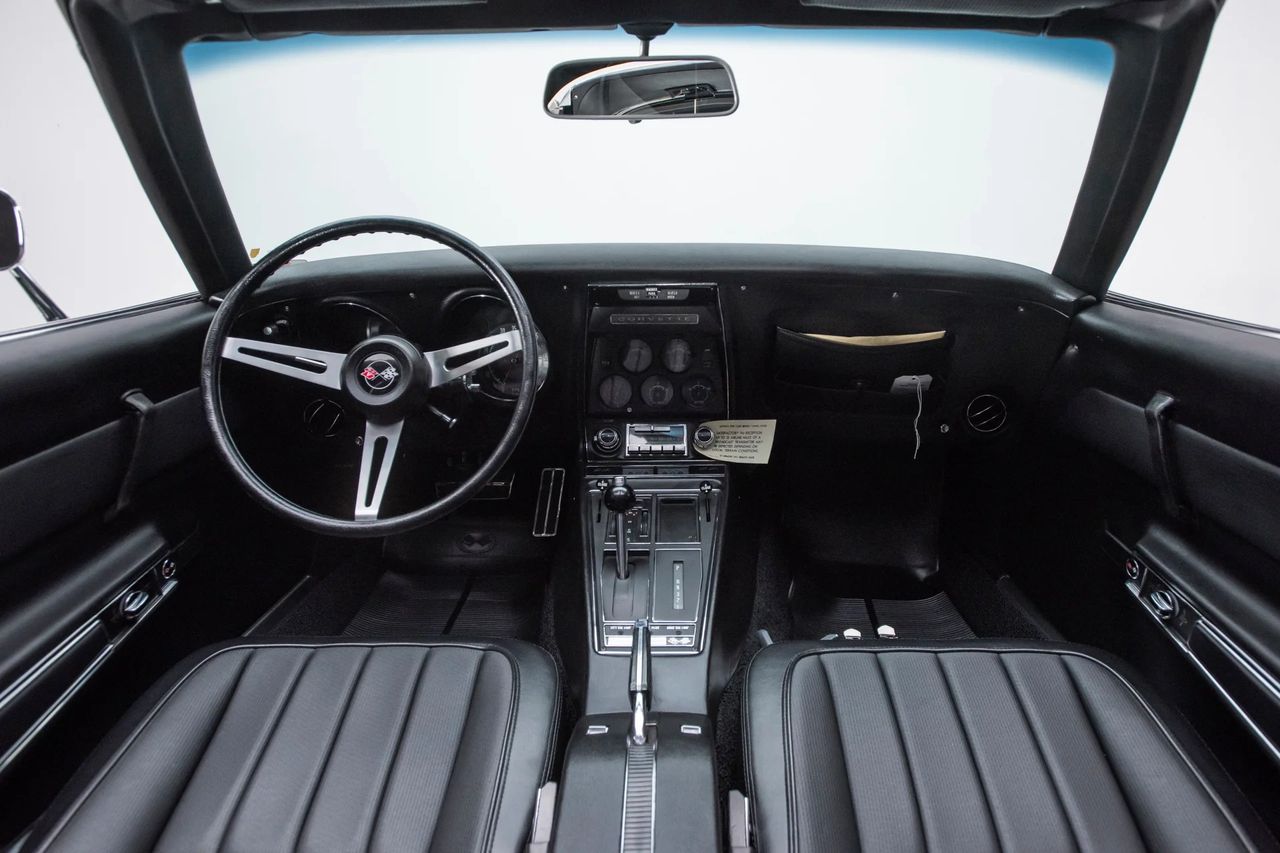
    The 1969 Corvette cockpit blends function, focus, and flair in equal measure. Deep-set gauges, toggle switches, and a center stack angled toward the driver emphasize purpose, while high-back bucket seats and a three-spoke steering wheel reinforce the car’s sporting intent. Safety updates like headrests and an energy-absorbing steering column reflect new federal mandates, but nothing dulls the immersive, low-slung driving position. It’s a space that still feels like you wear the car—not just sit in it.
    The 1969 Corvette cockpit blends function, focus, and flair in equal measure. Deep-set gauges, toggle switches, and a center stack angled toward the driver emphasize purpose, while high-back bucket seats and a three-spoke steering wheel reinforce the car’s sporting intent. Safety updates like headrests and an energy-absorbing steering column reflect new federal mandates, but nothing dulls the immersive, low-slung driving position. It’s a space that still feels like you wear the car—not just sit in it.

    The 1969 cockpit tells a story of federal regulation intersecting with smart ergonomics. The ignition switch was relocated from the dashboard to the column to pair with the new anti-theft steering/ignition lock. The steering wheel shrank by an inch, an unglamorous change that yielded better thigh clearance and a more natural elbows-bent driving position. Door handles and knobs were reshaped to be less snag-prone. The headlamp position warning light helped drivers avoid the “half-up at night” mistake. And the wiper system’s integral washers were a real quality-of-life upgrade in foul weather.

    Astro-Ventilation—the C3’s fresh-air, no-draft concept—benefited from incremental tweaks. It never became a gale, but the system’s balance improved, and when paired with the hidden wipers’ cleaner cowl area, the cockpit felt less fussy. A clever trio of stowage boxes behind the seats kept the battery, jack and tools, and valuables compartmentalized. Small detail, big livability.
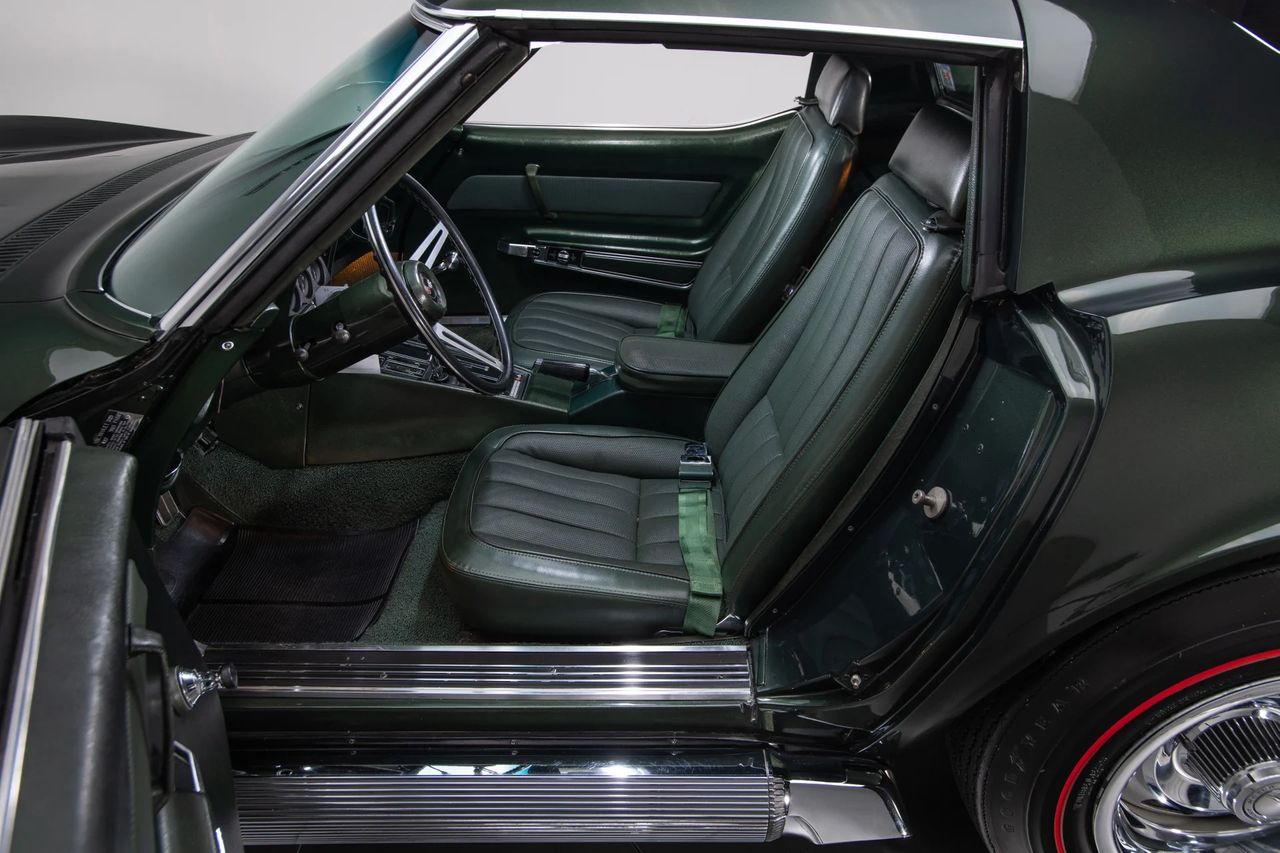
    New for 1969, head restraints became standard equipment in the Corvette cabin, responding to evolving federal safety regulations. Integrated cleanly atop the bucket seats, they offered protection without compromising the car’s sleek interior design or visibility. In typical Corvette fashion, even mandated safety features were folded into the overall aesthetic with purpose and restraint. The result: a cockpit that remained focused, functional, and unmistakably performance-driven.
    New for 1969, head restraints became standard equipment in the Corvette cabin, responding to evolving federal safety regulations. Integrated cleanly atop the bucket seats, they offered protection without compromising the car’s sleek interior design or visibility. In typical Corvette fashion, even mandated safety features were folded into the overall aesthetic with purpose and restraint. The result: a cockpit that remained focused, functional, and unmistakably performance-driven.

    Head restraints (RPO A82) were a microcosm of the era. They had been offered before. For 1969, they became the expectation—effectively universal by mid-year as federal requirements kicked in and Chevrolet synchronized ordering logic with production practice. Period ordering records may reference a short-run “delete” credit, but in the real world, every ’69 Corvette you encounter will have head restraints.

    The Chassis: Corvette DNA Under the Drama

    The engineering underneath the 1969 Corvette is a study in how America’s sports car bridged worlds. Up front: unequal-length control arms, coil springs, and an anti-roll bar, tuned a touch firmer than 1968. Out back: the Corvette signature—independent rear suspension with trailing arms and a single transverse leaf spring. On paper, that last part looks quaint; on the road, it’s compact, durable, and delivers a very specific Corvette feel under power. Vented discs at all four corners remained standard and were a headline unto themselves in an era when some rivals still made do with front discs and rear drums. Steering was recirculating-ball—Saginaw hardware, 17.6:1 ratio—with power assist and a tilt-telescopic column optional.

    The 15×8 wheels and F70-15 tires weren’t merely cosmetic. The wider rim allowed better support of the carcass under lateral load, and the period bias-plys benefit from every bit of sidewall discipline they can get. Alignment specs were adjusted to accommodate the change, and Chevrolet massaged bushing rates and valving to put more of the driver’s control in the seat and shoulders and less in mid-corner corrections.

    Engines: From a New 350 Small-Block to the Wildest 427s of the Era

    The Small-Block Steps Up
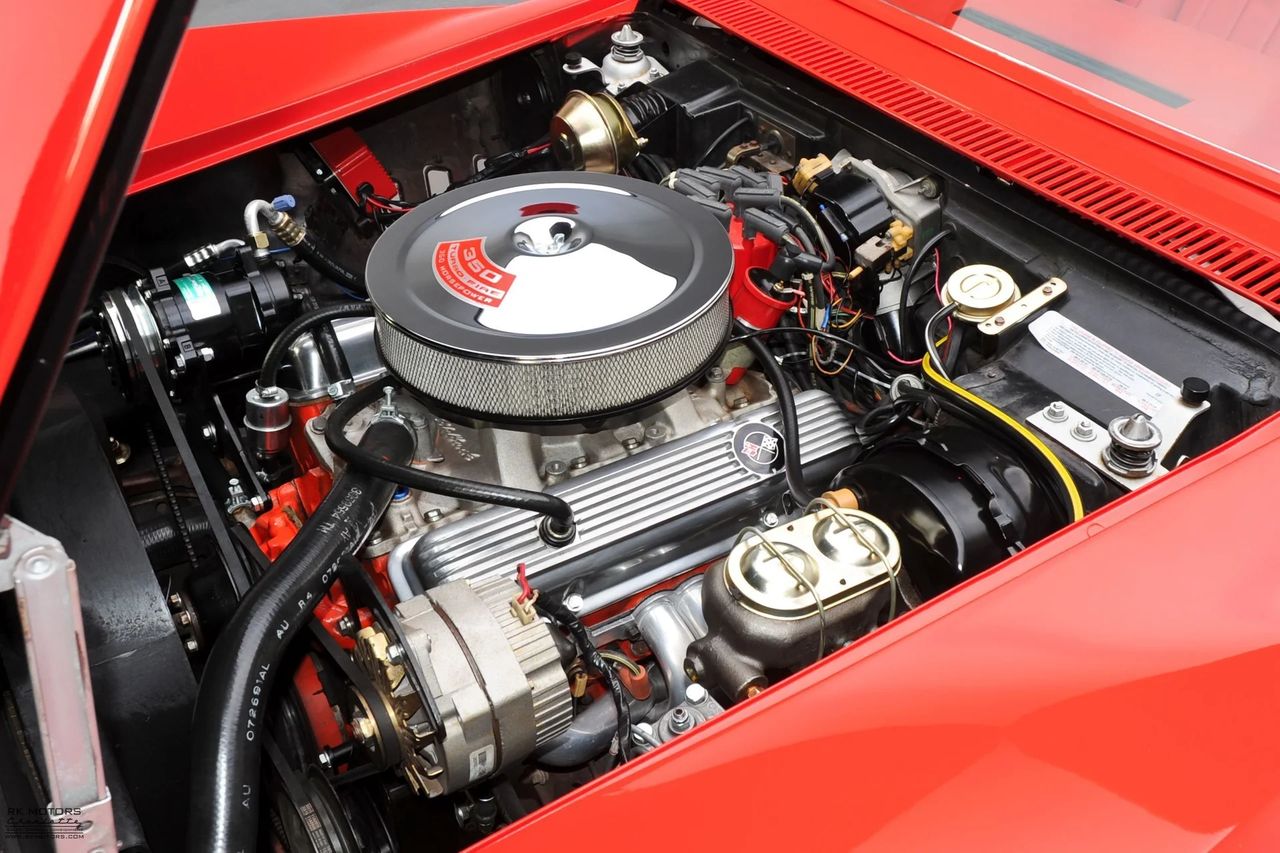
    Shown here is the all-new 350-cubic-inch small-block V8 introduced for 1969—a foundational shift for the Corvette that quietly elevated performance and drivability. Replacing the long-serving 327, the 350 retained the same bore but gained stroke for a broader torque curve and smoother power delivery. Available in both 300- and 350-horsepower variants, it paired modernized internals with Corvette-specific breathing, including big-block-sized 2.5-inch exhausts that gave even base cars a richer, more muscular voice. Neatly dressed with finned aluminum valve covers and a low-profile air cleaner, the 350 blended performance and polish in a way only a Corvette could. (Image courtesy of RK Motors)
    Shown here is the all-new 350-cubic-inch small-block V8 introduced for 1969—a foundational shift for the Corvette that quietly elevated performance and drivability. Replacing the long-serving 327, the 350 retained the same bore but gained stroke for a broader torque curve and smoother power delivery. Available in both 300- and 350-horsepower variants, it paired modernized internals with Corvette-specific breathing, including big-block-sized 2.5-inch exhausts that gave even base cars a richer, more muscular voice. Neatly dressed with finned aluminum valve covers and a low-profile air cleaner, the 350 blended performance and polish in a way only a Corvette could. (Image courtesy of RK Motors)

    The small-block Corvette story in 1969 may seem straightforward at first glance, but it marked a meaningful shift in both engineering and philosophy. With the long-serving 327-cubic-inch V8 officially retired, Chevrolet introduced a new standard engine: a 350-cubic-inch small-block built around the same 4.00-inch bore as its predecessor but with a longer 3.48-inch stroke. This change wasn’t about chasing raw numbers—it was about drivability, torque, and broadening the Corvette’s appeal beyond its hardcore fan base. Two versions of the 350 were offered that year, each tailored to a different kind of driver.

    The base 350 produced 300 horsepower and featured a hydraulic camshaft, 10.25:1 compression, and a Rochester four-barrel carburetor. It wasn’t just a detuned version of something more exciting—it was engineered to deliver smooth torque, easy starting, and real-world civility. Paired with the Corvette’s fully independent suspension and wide tires, this engine made the car less of a weekend-only toy and more of a genuinely usable grand touring machine—fast, confident, and comfortable at speed.

    For those who wanted more urgency without sacrificing street manners, the L46 stepped in. Rated at 350 horsepower, it pushed compression to 11.0:1 and featured hotter camshaft timing, giving the engine a sharper personality. The L46 didn’t feel dramatically different at idle, but past 4,000 rpm it came alive with a sense of purpose—offering an energetic top end without the narrow powerband or finicky temperament of more radical options. It struck a smart middle ground: aggressive when provoked, but entirely livable in daily use.

    Both engines breathed through the same generously sized 2.5-inch dual exhaust system found on big-block cars—a subtle but significant advantage. It gave these small-blocks a deeper, more authoritative tone than one might expect and ensured they weren’t choked by the very chassis meant to harness them. In a year filled with options and escalating horsepower wars, these two small-blocks proved that refinement and response could still carry as much weight as brute force.

    The Big-Blocks: Four Faces of 427, Then Something Even Crazier
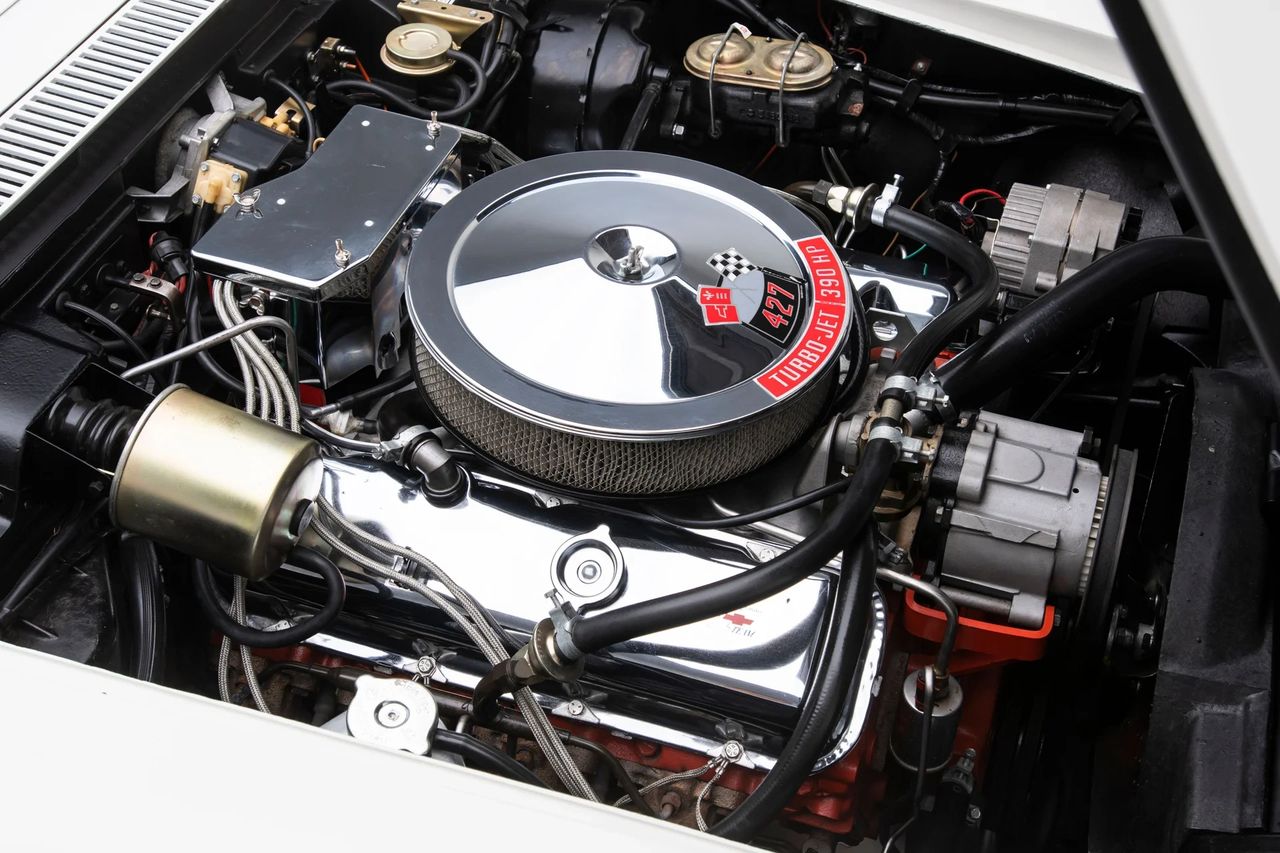
    The L36 427-cubic-inch V8, shown here in factory dress, offered the best of both worlds—big-block authority with everyday manners. Rated at 390 horsepower, it used oval-port iron heads, a single four-barrel carburetor, and a hydraulic camshaft to deliver effortless torque and a smooth, broad powerband. Chrome valve covers and a polished air cleaner added visual punch under the hood, but the real appeal was its drivability: muscular, refined, and ready to perform without demanding constant tuning. For many Corvette buyers, the L36 was the sweet spot—a true muscle engine that didn’t sacrifice street comfort. (Image courtesy of RK Motors)
    The L36 427-cubic-inch V8, shown here in factory dress, offered the best of both worlds—big-block authority with everyday manners. Rated at 390 horsepower, it used oval-port iron heads, a single four-barrel carburetor, and a hydraulic camshaft to deliver effortless torque and a smooth, broad powerband. Chrome valve covers and a polished air cleaner added visual punch under the hood, but the real appeal was its drivability: muscular, refined, and ready to perform without demanding constant tuning. For many Corvette buyers, the L36 was the sweet spot—a true muscle engine that didn’t sacrifice street comfort. (Image courtesy of RK Motors)

    By 1969, the Corvette’s 427-cubic-inch V8 lineup had evolved into something more than just a list of engine options—it was a performance hierarchy that reflected the full scope of Chevrolet’s engineering ambition. Each version of the legendary big-block carried its own character, tuning philosophy, and intended driver. Some were built for effortless torque and everyday domination. Others were barely disguised race engines hiding behind production car legality. Together, they helped define the Corvette’s identity at the peak of the muscle car era.

    It started with the L36—on paper, the most accessible 427, but still an engine with serious credentials. Rated at 390 horsepower, it used a single four-barrel carburetor, iron oval-port heads, and a hydraulic camshaft to deliver broad, usable torque. It wasn’t about peaky thrills or track tuning; it was about real-world drivability and bottomless midrange pull. In the Corvette, that meant a car that felt confident and muscular everywhere, with the kind of lazy, low-rev grunt that let you leave it in gear and ride the wave. No finicky tuning, no drama—just big-displacement power in its most civilized form.
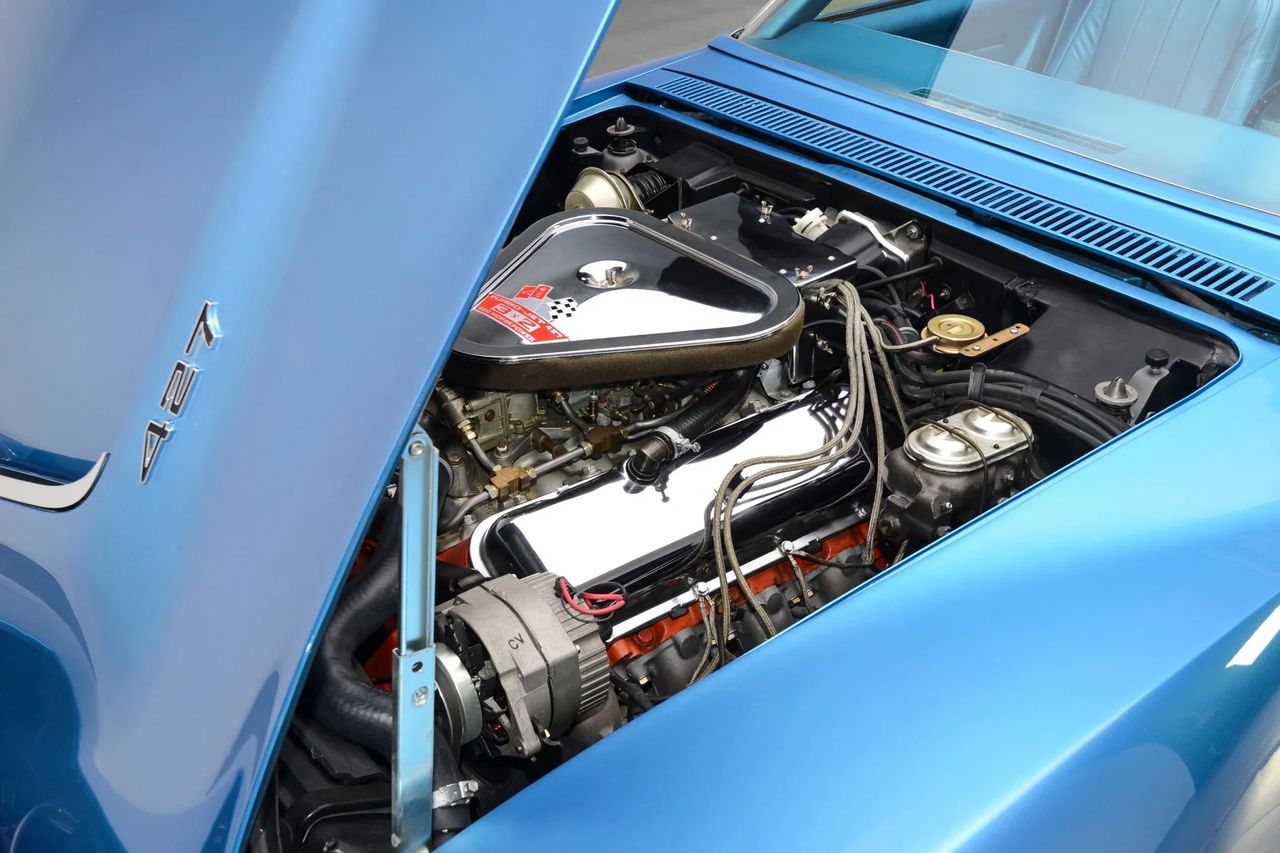
    image generator said:  This is the L68 427/400, Chevrolet’s entry-level Tri-Power big-block for 1969. With three two-barrel Holleys and a hydraulic cam, it delivered a satisfying step up in both sound and response—adding induction drama without the raw edge of solid lifters. (Image courtesy of RK Motors)
    image generator said: This is the L68 427/400, Chevrolet’s entry-level Tri-Power big-block for 1969. With three two-barrel Holleys and a hydraulic cam, it delivered a satisfying step up in both sound and response—adding induction drama without the raw edge of solid lifters. (Image courtesy of RK Motors)

    The L68 added flair to that formula. It shared the same fundamental architecture—hydraulic lifters, iron heads—but swapped the single four-barrel for a trio of Holley two-barrels arranged in Chevrolet’s signature Tri-Power setup. Rated at 400 horsepower, the L68 didn’t just add a visual punch under the hood—it gave the car a completely different feel behind the wheel. Under light throttle, it behaved just like its single-carb siblings. But bury your foot, and the outboard carbs snapped open, delivering a surge of induction noise and a crisp hit of power. It was the best of both worlds: docile in traffic, alive when provoked. And it gave owners a taste of exotic intake layout without the tuning demands of solid-lifter hardware.

    For those who wanted more edge, the L71 took the Tri-Power idea and cranked up the intensity. Still displacing 427 cubes, it made 435 horsepower through a combination of solid lifters, an aggressive cam profile, and big rectangular-port heads that flowed massive air. It was less about brute torque and more about a top-end charge—one that came on suddenly and with authority. The L71 had a reputation for waking up around 4,000 rpm and pulling hard to redline, delivering the kind of cammy, mechanical rush that defined high-performance V8s of the era. It was loud, rowdy, and responsive, and while it required more attention from its driver, the payoff was visceral. Properly dialed in, the L71 was every bit the icon its badge suggested—fast, fierce, and unapologetically aggressive.

    But even the L71 felt tame next to the L88. On paper, the numbers looked nearly identical—430 horsepower, just five less than the L71. In reality, the L88 operated in a completely different realm. It was engineered first and foremost as a racing engine, and then—almost begrudgingly—made available in street cars. It featured aluminum heads, a radical solid-lifter cam, massive 12.5:1 compression, and a giant 850-cfm Holley carb on a high-rise intake. It came with strict warnings: no radio, no heater, and explicit instructions about 103-octane fuel. Chevrolet didn’t want casual buyers stumbling into the L88—they wanted racers, or at least enthusiasts who knew exactly what they were getting into. Tuned properly, it made well over 500 horsepower and could embarrass just about anything on the road. But it was unforgiving. It idled like a drumline, hated pump gas, and only truly came alive when pushed hard. The L88 was raw and uncompromising—a machine that sacrificed comfort for capability, a Corvette that didn’t care if you were ready for it.
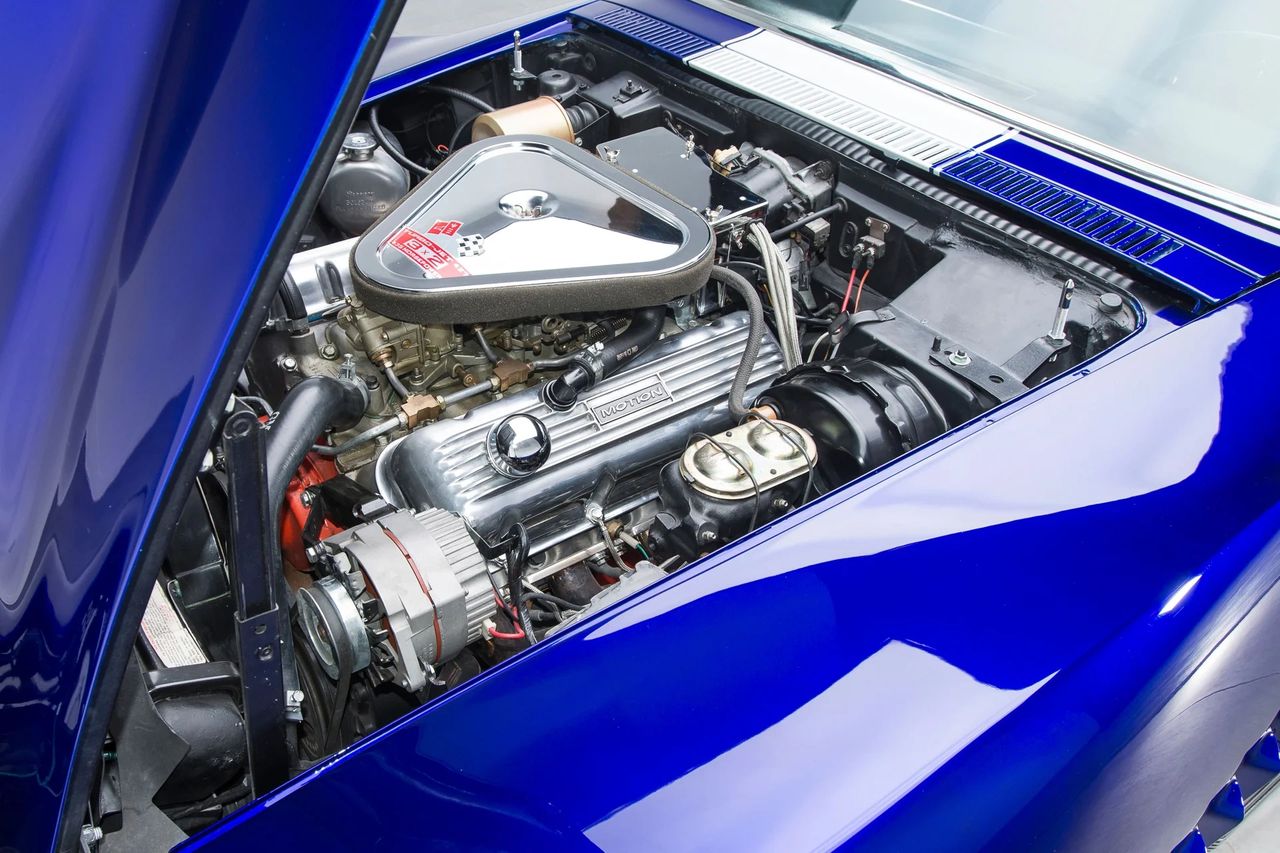
    Pictured here is the rare L89 427/435, instantly identifiable by its signature Tri-Power intake and lightweight aluminum cylinder heads. Offering the same raw output as the L71 but with significantly less front-end weight, the L89 was a stealth performance upgrade—subtle on paper, serious on the road. (Image courtesy of RK Motors)
    Pictured here is the rare L89 427/435, instantly identifiable by its signature Tri-Power intake and lightweight aluminum cylinder heads. Offering the same raw output as the L71 but with significantly less front-end weight, the L89 was a stealth performance upgrade—subtle on paper, serious on the road. (Image courtesy of RK Motors)

    For those who wanted the top-end punch of the L71 but with less weight over the front axle, Chevrolet offered the L89—a rare and little-understood engine option that combined the L71’s solid-lifter cam, Tri-Power setup, and high-flow rectangular-port heads with aluminum cylinder heads instead of cast iron. Horsepower remained the same at 435, but the reduced mass shaved approximately 70 pounds off the nose, improving handling balance and responsiveness. Crucially, the L89 was an option code, not a separate engine, meaning it could be easily overlooked on the order sheet unless a buyer knew exactly what they were after. Just 390 Corvettes were built with the L89 in 1969, making it rarer than even the L88 and offering collectors the best of both worlds: peak small-block drivability with big-block displacement and lighter, race-inspired hardware.
    The 1969 Corvette ZL1 was the most extreme production Corvette ever built—an aluminum-block, race-bred monster hiding beneath showroom fiberglass. Based on the L88 but featuring an all-aluminum 427 with dry-sump lubrication, the ZL1 produced well over 550 horsepower in factory trim, despite its official 430-hp rating. It was brutally expensive, adding more than $4,000 to the sticker—nearly doubling the cost of a base car. Only two were ever sold, making it one of the rarest and most valuable Corvettes in existence. Purpose-built for professional racing, the ZL1 wasn’t just fast—it was a factory-sanctioned moonshot. (Image courtesy of streetmusclemag.com)
    The 1969 Corvette ZL1 was the most extreme production Corvette ever built—an aluminum-block, race-bred monster hiding beneath showroom fiberglass. Based on the L88 but featuring an all-aluminum 427 with dry-sump lubrication, the ZL1 produced well over 550 horsepower in factory trim, despite its official 430-hp rating. It was brutally expensive, adding more than $4,000 to the sticker—nearly doubling the cost of a base car. Only two were ever sold, making it one of the rarest and most valuable Corvettes in existence. Purpose-built for professional racing, the ZL1 wasn’t just fast—it was a factory-sanctioned moonshot. (Image courtesy of streetmusclemag.com)

    Then came the ZL1—a name that still sounds almost mythical, but which absolutely happened. Born directly from Chevrolet’s Can-Am racing program, the ZL1 was essentially an L88 taken to its wildest conclusion, with every major component recast in aluminum—from the block and heads to the intake manifold. It shed nearly 100 pounds compared to its iron-block sibling and featured a dry-sump oiling system straight out of Chevrolet’s racing playbook. Officially rated at the same 430 horsepower as the L88, the real output was far higher—well over 550 horsepower, with some well-prepped examples rumored to flirt with 600. The price was equally extreme: checking the ZL1 box added over $4,000 to the sticker, nearly the cost of another Corvette.

    Only two production ZL1s are officially documented as having been built in 1969—one in Cortez Silver and one in Can-Am White—making them the rarest regular-production Corvettes ever sold to the public. But dig a little deeper, and you’ll find persistent rumors of a third ZL1, reportedly finished in red and delivered to a Gulf Oil engineer. Some believe this car may have been a special internal build or a backdoor testbed, but no definitive factory paperwork confirms its status as a true production ZL1. Most sources, including GM historical data, maintain the official count at two.

    It’s the kind of detail easily glossed over—but for those who live deep in the Corvette archives, it’s part of what makes the ZL1 legend so compelling. In 1969, Chevrolet didn’t just offer big horsepower—they offered a spectrum of intent, from the smooth civility of the L36 to the razor’s edge fury of the ZL1. It wasn’t just about how much power you had, but how that power was delivered, and to whom it was aimed, that turned these engines—and the cars they powered—into lasting legends.

    Transmissions, Axles, and the Way People Actually Ordered These Cars
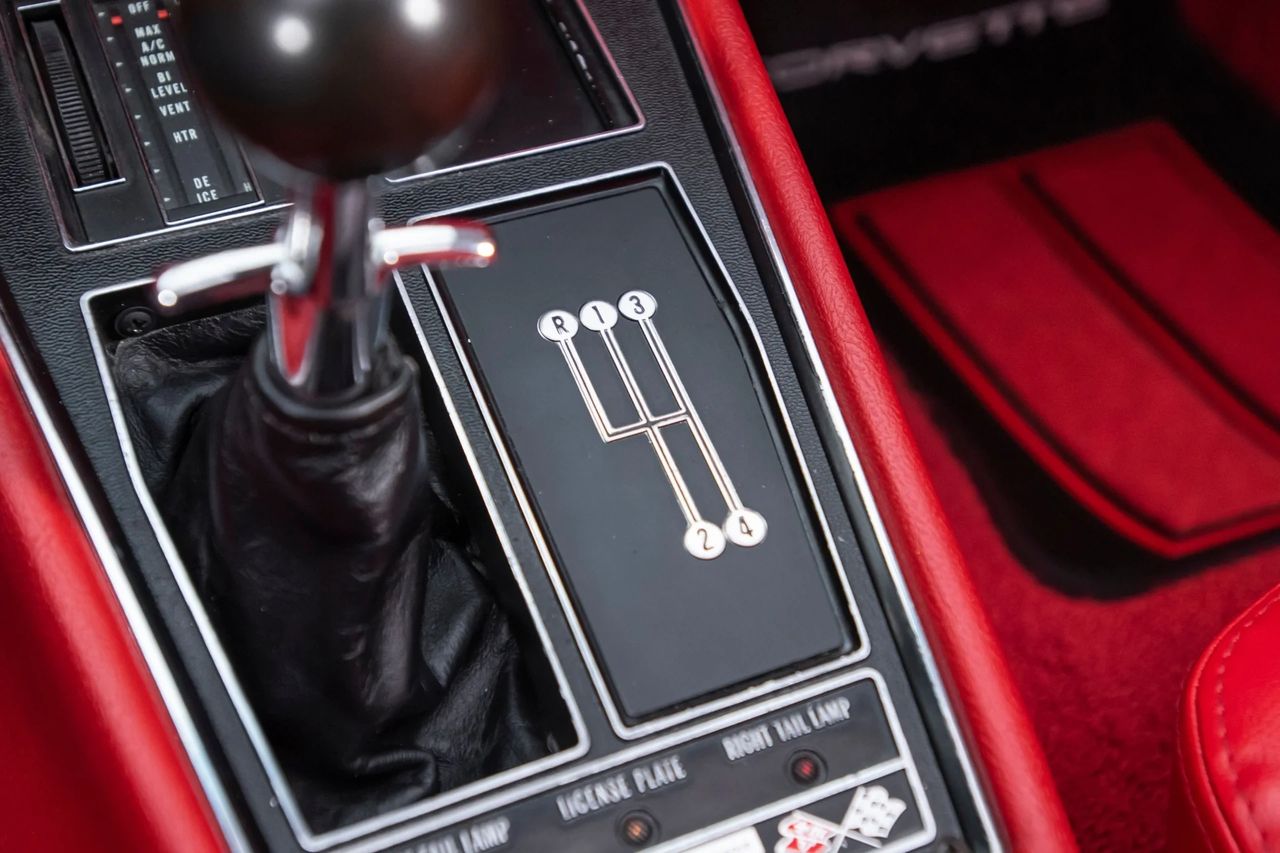
    The ’69 Corvette stuck with the aluminum-case Muncie four-speeds, offered in two flavors: the wide-ratio M20 and the close-ratio M21. The M20 (2.52:1 first, 1.88:1 second, 1.46:1 third, 1.00:1 fourth) was the street-friendly choice—strong launches with taller axle gears (3.36–3.55), easy drivability, and a broader split between gears that suited the new 350-cid small-blocks and most big-block street combos. The M21 (2.20:1 first, 1.64:1 second, 1.28:1 third, 1.00:1 fourth) tightened the steps for engines that liked to rev, typically paired with deeper rear gears (3.70–4.11) and the high-output 427s; keep the motor in the power band and it feels razor-sharp. Both boxes used the familiar 10-spline input/27-spline output shafts in ’69, robust brass synchros, and a positive, chrome stick with a reverse lockout gate—by this year most cars benefited from cleaner Hurst-style linkage and a firmer, less rubbery shift feel. Clutch hardware scaled with power—10.5-inch for most small-blocks, 11-inch for heavy-duty big-block applications—and either transmission was happy behind serious torque if you respected the clutch. (A handful of heavy-duty M22 “Rock Crusher” units slipped into the 427 crowd, recognizable by their straighter-cut gears and trademark whine, but the core 4-speed story in 1969 is the M20 for breadth and the M21 for bite.) (Image courtesy of RK Motors)
    The ’69 Corvette stuck with the aluminum-case Muncie four-speeds, offered in two flavors: the wide-ratio M20 and the close-ratio M21. The M20 (2.52:1 first, 1.88:1 second, 1.46:1 third, 1.00:1 fourth) was the street-friendly choice—strong launches with taller axle gears (3.36–3.55), easy drivability, and a broader split between gears that suited the new 350-cid small-blocks and most big-block street combos. The M21 (2.20:1 first, 1.64:1 second, 1.28:1 third, 1.00:1 fourth) tightened the steps for engines that liked to rev, typically paired with deeper rear gears (3.70–4.11) and the high-output 427s; keep the motor in the power band and it feels razor-sharp. Both boxes used the familiar 10-spline input/27-spline output shafts in ’69, robust brass synchros, and a positive, chrome stick with a reverse lockout gate—by this year most cars benefited from cleaner Hurst-style linkage and a firmer, less rubbery shift feel. Clutch hardware scaled with power—10.5-inch for most small-blocks, 11-inch for heavy-duty big-block applications—and either transmission was happy behind serious torque if you respected the clutch. (A handful of heavy-duty M22 “Rock Crusher” units slipped into the 427 crowd, recognizable by their straighter-cut gears and trademark whine, but the core 4-speed story in 1969 is the M20 for breadth and the M21 for bite.) (Image courtesy of RK Motors)

    In 1969, the Corvette’s drivetrain choices reflected just how many personalities the car could embody—from laid-back cruiser to high-strung backroad weapon to brutal dragstrip bruiser. While a synchronized three-speed manual remained standard equipment, almost no one left the dealership with it. Corvette buyers overwhelmingly opted for one of the three available four-speeds—each tuned to a specific kind of driving experience.

    The M20 wide-ratio 4-speed was the most approachable of the bunch. With broader gear spacing, it was ideally matched to small-block engines and street-friendly axle ratios, but it also handled big-block torque with ease. For drivers who wanted a transmission that felt relaxed around town but could still respond when called upon, the M20 struck the perfect balance. It was geared for versatility, not aggression—making it a great fit for cars meant to do more than just quarter-mile runs or canyon carving.

    For those who leaned into performance, the M21 close-ratio 4-speed sharpened the car’s reflexes. With tighter gear spacing, it kept the engine squarely in its powerband—especially useful with high-strung small-blocks or solid-lifter big-blocks that came alive above 4,000 rpm. The minimal gap between third and fourth made it especially effective on two-lane roads and twisty sections where keeping the revs up was key. It wasn’t the transmission for casual cruising, but for a driver who wanted to extract every bit of performance, the M21 offered a level of mechanical precision that transformed the Corvette into a much more focused machine.

    At the top of the manual gearbox range sat the M22, better known by its street name: the “Rock Crusher.” With its straight-cut gears, heavy-duty construction, and unfiltered mechanical noise, the M22 was built for punishment. It was rare in Corvettes—only a small number were equipped in 1969—but it earned a cult following among drag racers and road racers who appreciated its ability to handle abuse without flinching. The Rock Crusher wasn’t just durable; it had a distinct, almost industrial character. You didn’t shift it—you engaged it. And if you could tolerate the whine and heft, it rewarded you with absolute confidence at the limit.
    In 1969, buyers who didn’t want to row their own gears could opt for Chevrolet’s proven Hydra-Matic three-speed automatic, the Turbo Hydra-Matic 400 (TH400). This heavy-duty unit had already earned a reputation for handling serious torque, and in Corvette duty it was reserved primarily for big-block engines and higher-performance applications. Its strengths were a cast-iron valve body, robust planetary gearsets, and a reputation for delivering consistent, crisp shifts even under heavy throttle. Small-block cars with automatics typically received the lighter-duty Turbo Hydra-Matic 350 (TH350), introduced just the year before, which was better matched to the new 350-cid engines. The TH350 gave Corvette drivers smoother engagement and less parasitic loss than the older Powerglide two-speed it replaced, while still being strong enough for spirited driving. Together, the TH350 and TH400 gave Corvette buyers two well-matched automatic options—one tuned for accessible everyday drivability, the other for taming the massive torque of the big-blocks. (Image courtesy of RK Motors)
    In 1969, buyers who didn’t want to row their own gears could opt for Chevrolet’s proven Hydra-Matic three-speed automatic, the Turbo Hydra-Matic 400 (TH400). This heavy-duty unit had already earned a reputation for handling serious torque, and in Corvette duty it was reserved primarily for big-block engines and higher-performance applications. Its strengths were a cast-iron valve body, robust planetary gearsets, and a reputation for delivering consistent, crisp shifts even under heavy throttle. Small-block cars with automatics typically received the lighter-duty Turbo Hydra-Matic 350 (TH350), introduced just the year before, which was better matched to the new 350-cid engines. The TH350 gave Corvette drivers smoother engagement and less parasitic loss than the older Powerglide two-speed it replaced, while still being strong enough for spirited driving. Together, the TH350 and TH400 gave Corvette buyers two well-matched automatic options—one tuned for accessible everyday drivability, the other for taming the massive torque of the big-blocks. (Image courtesy of RK Motors)

    But not every performance Corvette came with a clutch. The M40 Turbo Hydra-Matic, a 3-speed automatic transmission, was increasingly popular and offered on both small- and big-block cars—including certain solid-lifter 427s. This wasn’t the lazy, soft-shifting slushbox of full-size sedans. The M40 was calibrated for torque, and when paired with the right rear axle, it turned the Corvette into a point-and-shoot weapon. Launches were consistent, shifts were firm, and on a dragstrip, the M40 could bracket a car’s ET to within a tenth of a second, run after run. For those chasing repeatable, no-nonsense performance—or simply tired of rowing gears in traffic—it was a serious transmission choice, not an afterthought.
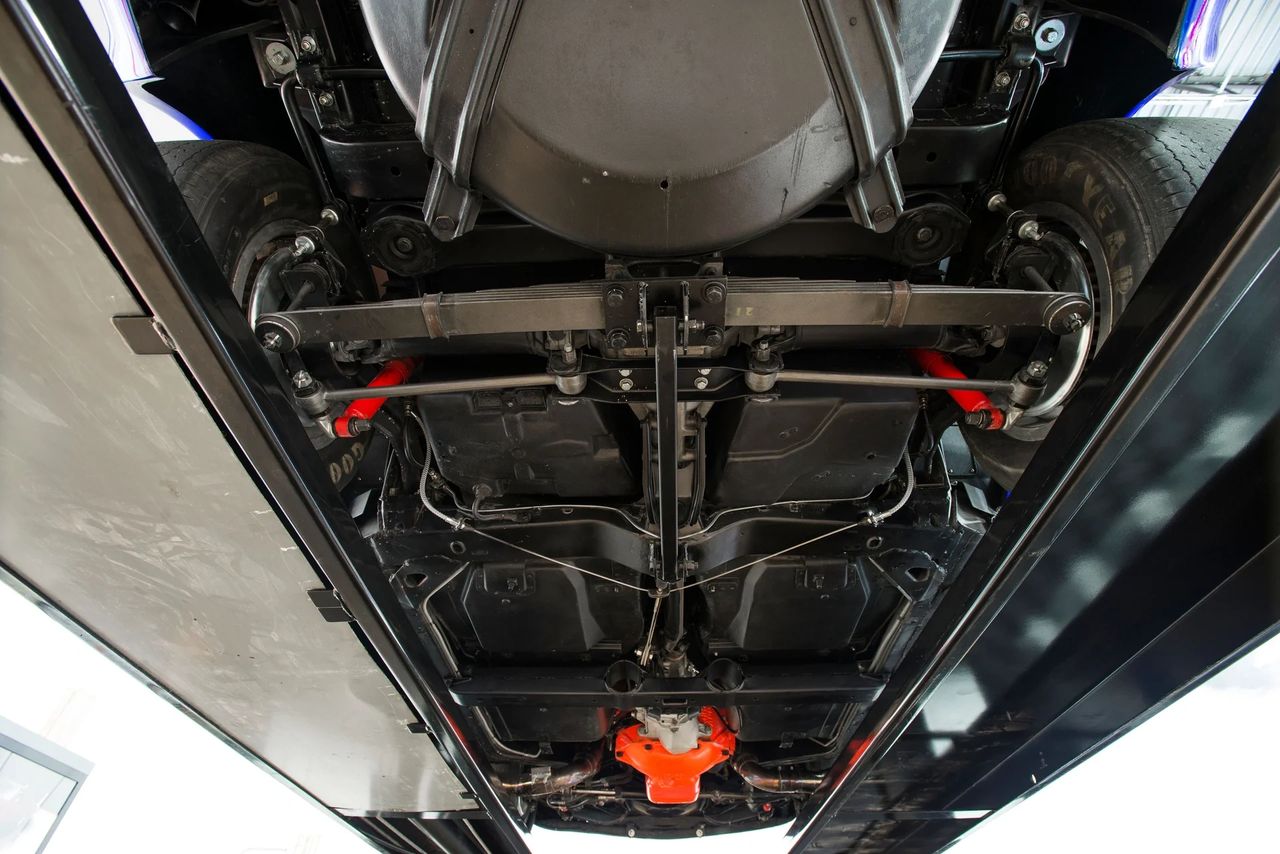
    The 1969 Corvette retained its rugged independent rear suspension, anchored by a differential housed in a carrier with a transverse leaf spring and trailing arms, giving the car both strength and ride compliance. Buyers could choose from a wide range of axle ratios, starting as mild as 3.08:1 for relaxed highway cruising, and running all the way up to 4.56:1 for drag strip duty, with 3.36:1, 3.55:1, and 3.70:1 serving as popular middle grounds. Positraction was still optional but strongly recommended, especially with the high-torque big-block engines, ensuring better traction under hard acceleration. This variety of rear-end setups meant the Corvette could be tailored for long-distance touring, balanced performance driving, or all-out straight-line acceleration depending on the buyer’s taste. (Image courtesy of RK Motors)
    The 1969 Corvette retained its rugged independent rear suspension, anchored by a differential housed in a carrier with a transverse leaf spring and trailing arms, giving the car both strength and ride compliance. Buyers could choose from a wide range of axle ratios, starting as mild as 3.08:1 for relaxed highway cruising, and running all the way up to 4.56:1 for drag strip duty, with 3.36:1, 3.55:1, and 3.70:1 serving as popular middle grounds. Positraction was still optional but strongly recommended, especially with the high-torque big-block engines, ensuring better traction under hard acceleration. This variety of rear-end setups meant the Corvette could be tailored for long-distance touring, balanced performance driving, or all-out straight-line acceleration, depending on the buyer’s taste. (Image courtesy of RK Motors)

    Backing these gearboxes were a variety of rear axle ratios, ranging from a long-legged 3.08 all the way up to a short, rev-happy 4.56. The sweet spot for most small-block street cars lived in the 3.36 to 3.70 range, offering a great blend of acceleration and highway comfort. But a big-block, especially one with Tri-Power induction, could easily handle and benefit from a 4.11:1 ratio—especially when shod in bias-ply rubber that gave up grip before mechanical sympathy was needed. Crucially, Positraction was so widely ordered on 1969 Corvettes that it may as well have been standard equipment. It ensured that the power got to the pavement—both wheels, both lanes, all of the time.

    Together, this matrix of transmissions and axle choices meant the 1969 Corvette could be tailored to its owner’s exact intentions. Whether you wanted high-speed touring, dragstrip domination, or road-course agility, Chevrolet gave you the hardware to build a car that behaved exactly as you asked. The drivetrain wasn’t just about moving the car forward—it was central to shaping its identity.

    Performance in the Real World: Numbers, Nuance, and Context
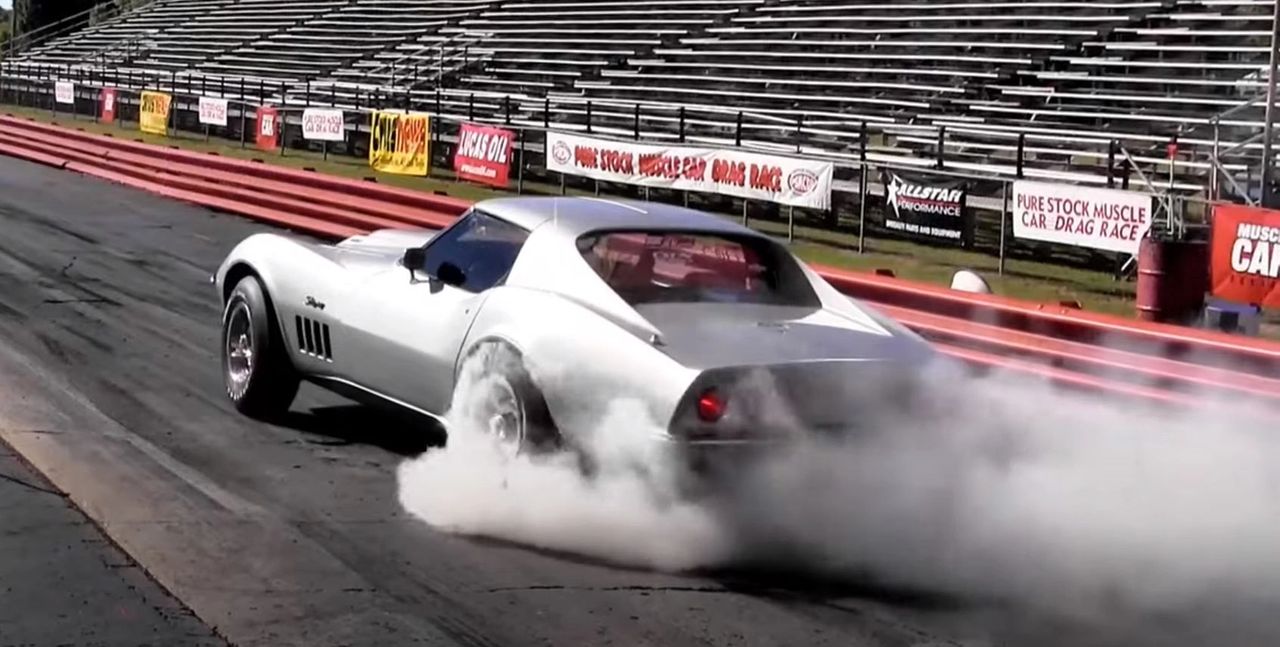
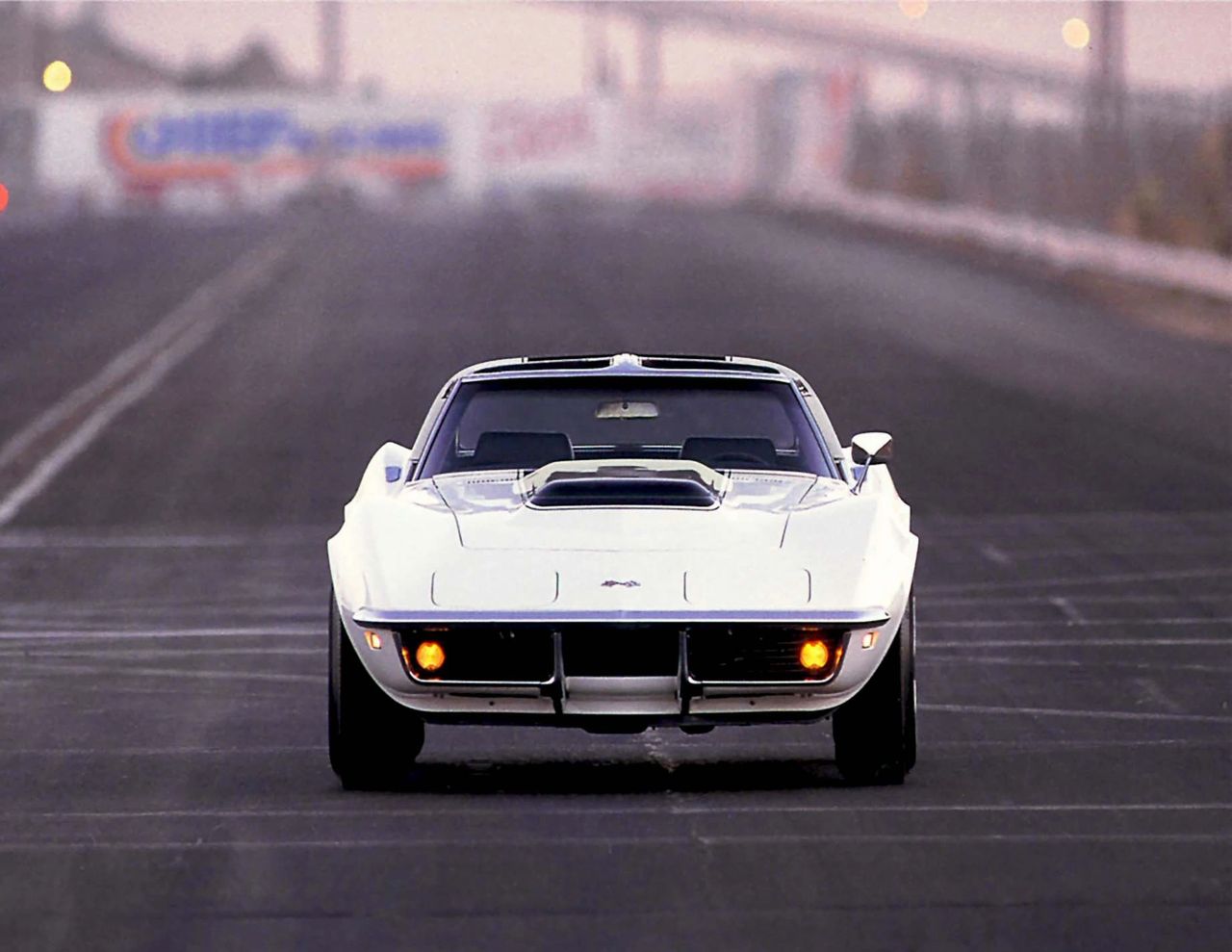
    A 1969 L88 Corvette "lights it up" at a local drag strip.  (Image courtesy of Hot Rod Magazine)
    A 1969 L88 Corvette “lights it up” at a local drag strip. (Image courtesy of Hot Rod Magazine)

    A properly tuned 427/435 tri-power four-speed Corvette on period tires lived in the high-13s to low-14s through the quarter mile at around 106–108 mph. On a warm pavement with a sticky groove, some testers saw mid-13s. Put the same car on cold asphalt with a headwind, and you could lose four tenths and four mph without touching a jet or a timing light. That’s the nature of bias-ply rubber and cast-iron flywheels. An L88 convertible with street exhaust and longish gears could frustrate novice testers off the line and then pull like a freight elevator above 4,500 rpm, clawing back everything it gave away at launch.

    The small-block L46 cars were (and are) the Corvette’s best “everyday performance” secrets of the era. Throttle response is immediate, there’s enough torque to keep the engine off-cam in town, and the chassis ride/steer balance is friendlier on broken secondary roads than the big-block nose ever manages.
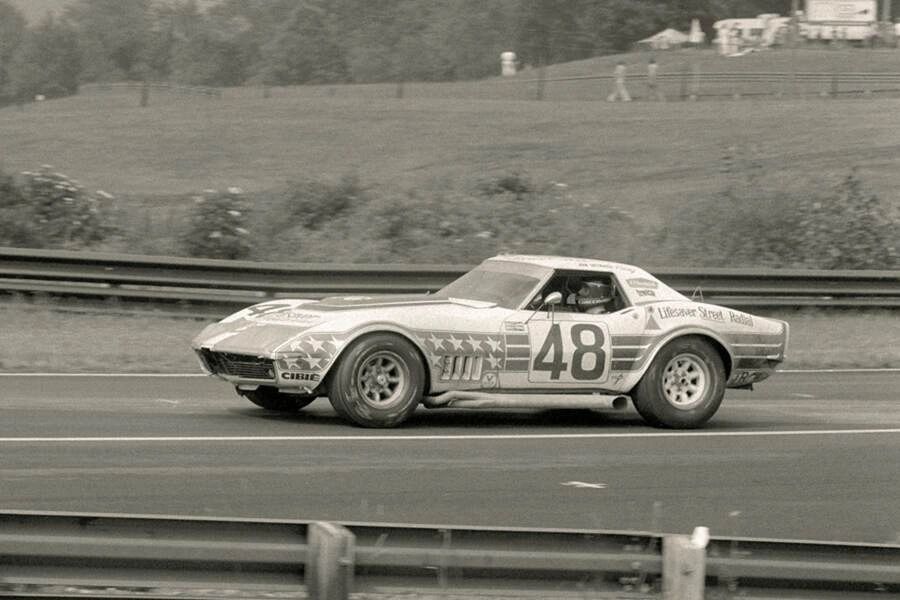
    John Greenwood became one of the most recognizable privateers to turn the 1969 Corvette into a serious racing weapon. A skilled driver and tuner, Greenwood focused on extracting maximum performance from the big-block cars, reinforcing their chassis, and fitting wider tires and brakes to cope with the power. He developed distinctive aerodynamic tweaks—flared fenders, deep front air dams, and eventually towering rear spoilers—that gave his Corvettes a brutal, purposeful look while also cutting drag and improving high-speed stability. Under the hood, his builds featured heavily massaged 427- and 454-cubic-inch engines, tuned to deliver enormous horsepower while surviving the rigors of endurance racing. Greenwood’s cars were loud, aggressive, and instantly identifiable, helping to cement the Corvette’s presence on the sports car racing stage in the early 1970s. In doing so, he bridged the gap between showroom Stingrays and all-out racing prototypes, proving the Corvette could battle with the world’s best.
    John Greenwood became one of the most recognizable privateers to turn the 1969 Corvette into a serious racing weapon. A skilled driver and tuner, Greenwood focused on extracting maximum performance from the big-block cars, reinforcing their chassis, and fitting wider tires and brakes to cope with the power. He developed distinctive aerodynamic tweaks—flared fenders, deep front air dams, and eventually towering rear spoilers—that gave his Corvettes a brutal, purposeful look while also cutting drag and improving high-speed stability. Under the hood, his builds featured heavily massaged 427- and 454-cubic-inch engines, tuned to deliver enormous horsepower while surviving the rigors of endurance racing. Greenwood’s cars were loud, aggressive, and instantly identifiable, helping to cement the Corvette’s presence on the sports car racing stage in the early 1970s. In doing so, he bridged the gap between showroom Stingrays and all-out racing prototypes, proving the Corvette could battle with the world’s best.

    On a road course, the brakes were the Corvette’s unsung advantage. Four vented discs with a broad swept area meant repeatable stops and confidence late in a session. You could feel pad fade on marginal linings, but the foundation hardware is honest and durable. The chassis prefers smooth inputs—trail a whisper of brake into the apex, breathe onto the throttle early, and let the independent rear settle the car. Drive it like a Camaro and the Corvette will teach you about mid-corner patience.

    Options, RPO Codes, and the Ordering Logic of 1969
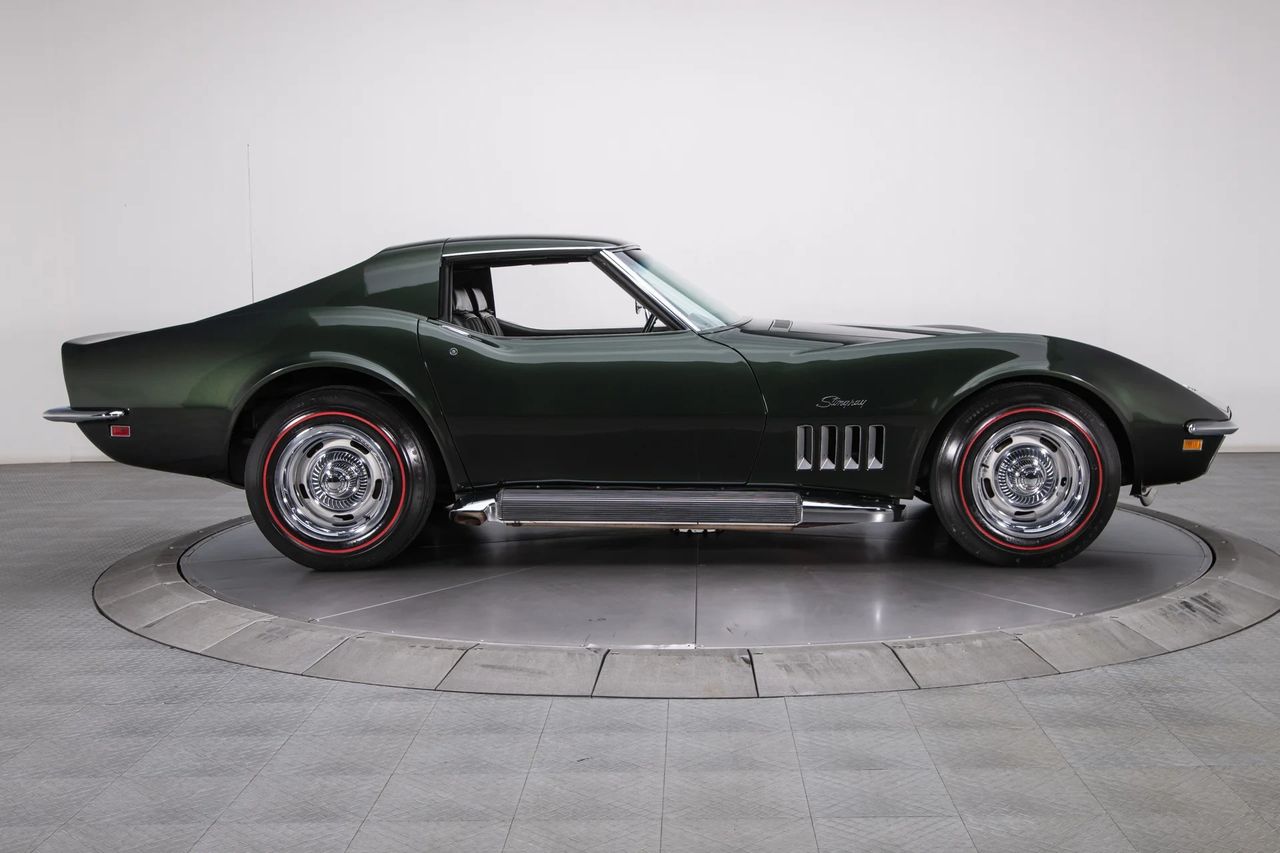
    RPO N14 was the factory Side-Mount Exhaust System—those long, finned/covered pipes running beneath the doors—that gave the ’69 Corvette its most extroverted look and sound. The setup routed the dual exhaust to side outlets with heat-shielded covers, trimming backpressure for big-block breathing while delivering a hard, unmistakable bark right at curbside. Rare, dramatic, and functional, N14 turned any Stingray into a rolling showpiece before you even cracked the throttle. (Image courtesy of RK Motors)
    RPO N14 was the factory Side-Mount Exhaust System—those long, finned/covered pipes running beneath the doors—that gave the ’69 Corvette its most extroverted look and sound. The setup routed the dual exhaust to side outlets with heat-shielded covers, trimming backpressure for big-block breathing while delivering a hard, unmistakable bark right at curbside. Rare, dramatic, and functional, N14 turned any Stingray into a rolling showpiece before you even cracked the throttle. (Image courtesy of RK Motors)

    The 1969 Corvette is catnip for build-sheet detectives—a car where the right set of RPO codes can tell you as much about the original buyer as the car itself. No two seemed to be ordered the same way, and that’s exactly what made the late-’60s Corvette so versatile. From fire-breathing street brawlers to air-conditioned boulevard cruisers, it could be spec’d to suit a wide spectrum of personalities—without compromising the car’s core identity. The options list was long, nuanced, and often reflected both the growing maturity of the Corvette buyer and the broader cultural shift from muscle car to refined GT.

    One of the most visually and aurally arresting options was RPO N14, the Side-Mounted Exhaust System, selected on 4,355 cars. This setup did more than just amplify the small- or big-block’s rumble—it added a dramatic flair to the car’s profile and, functionally, freed up undercarriage space for other drivetrain or suspension components. On a chrome-bumper C3, side pipes just feel right—like they were always meant to be there. The sound they produced wasn’t just loud; it was mechanical and present, tying the exhaust note directly to the driver’s senses in a way no rear-exit muffler ever could.

    G81 Positraction was so common in 1969 that it’s rare to find a Corvette without it. Not quite officially standard, it was as close to default as an option could get. If a car left the factory without it, it was either a dealer’s mistake or someone was trying very hard to save a few dollars. With 427 torque or even the punchier small-blocks, sending power to both rear wheels wasn’t just fun—it was essential for putting anything down cleanly.

    Buyers looking for sharper handling could opt for F41 Special Suspension, which brought heavier-rate springs and specific shock valving. Only 1,661 cars received it, but it was a meaningful upgrade for drivers who planned to use their Corvette more aggressively. Paired with a Tri-Power 427 or a close-ratio four-speed, it delivered better body control and cornering poise—but at the expense of ride quality. This wasn’t a setup for Sunday cruising; it was for owners willing to trade comfort for capability.
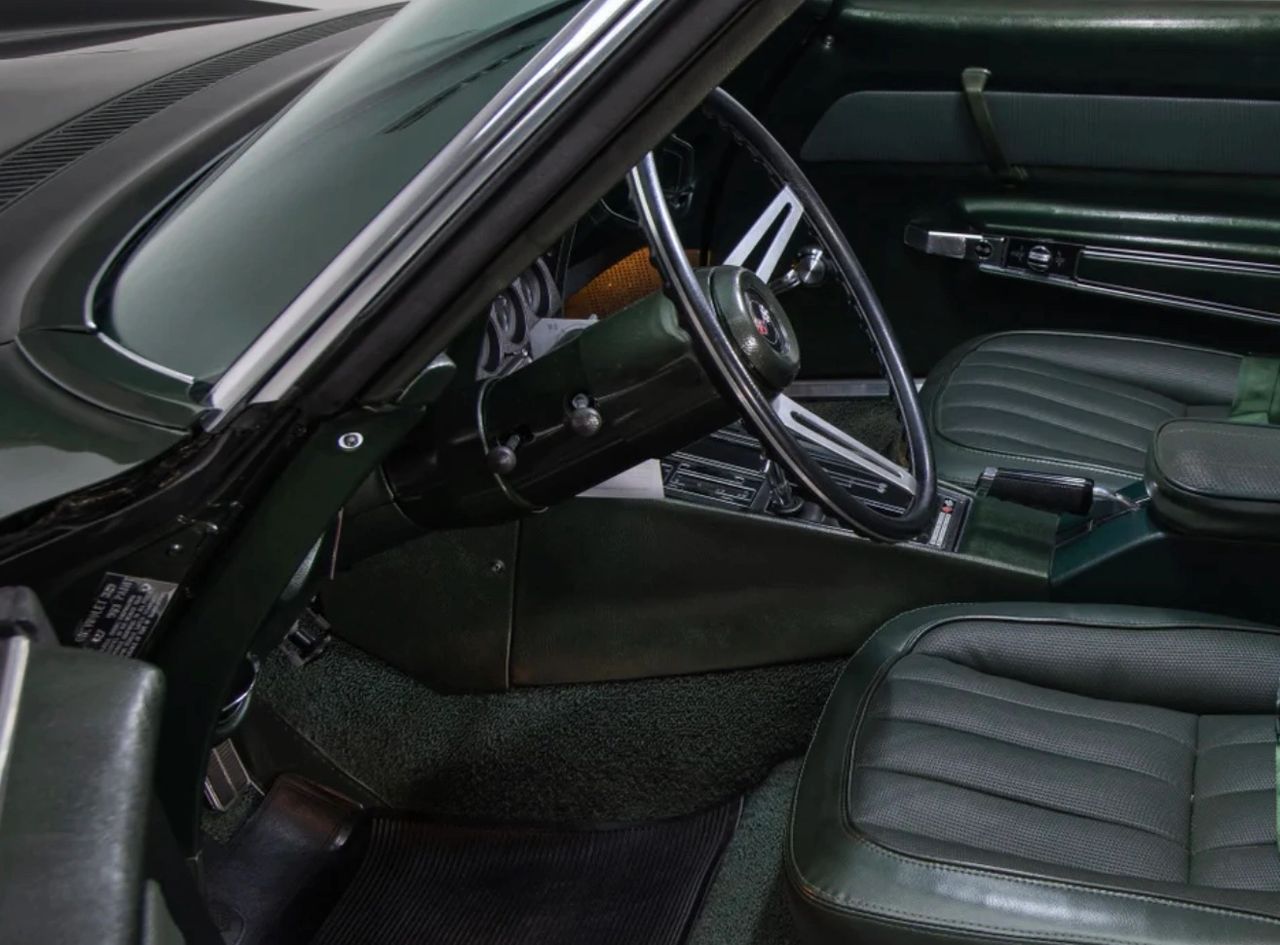
    RPO N37 was the Tilt-Telescopic steering column, the most ergonomic wheel setup you could spec on a ’69 Corvette. Using a dash-side lever, the column tilted through multiple detents, while a locking ring on the hub let the wheel telescope in and out, so drivers of different sizes could dial in reach and angle without blocking the gauge cluster. Beyond comfort, it eased entry/exit past the wide console and helped place the wheel perfectly for spirited driving with the close-ratio shifter. Paired with the year’s standard headrests and deeper bucket seats, N37 made the Stingray’s cockpit feel tailored rather than one-size-fits-all.
    RPO N37 was the Tilt-Telescopic steering column, the most ergonomic wheel setup you could spec on a ’69 Corvette. Using a dash-side lever, the column tilted through multiple detents, while a locking ring on the hub let the wheel telescope in and out, so drivers of different sizes could dial in reach and angle without blocking the gauge cluster. Beyond comfort, it eased entry/exit past the wide console and helped place the wheel perfectly for spirited driving with the close-ratio shifter. Paired with the year’s standard headrests and deeper bucket seats, N37 made the Stingray’s cockpit feel tailored rather than one-size-fits-all.

    Creature comforts, meanwhile, were becoming more common—even among performance builds. The N37 Tilt-Telescopic Steering Column, installed in over 10,000 cars, was a transformative option for long drives. Combined with a properly bolstered bucket seat, it allowed drivers of all sizes to dial in a perfect seating position, reducing fatigue and adding an unexpected layer of luxury to a car still known for its rawness. Similarly, N40 Power Steering was ordered on more than half of all 1969 Corvettes. While the C3’s unassisted steering delivered excellent road feel, slow-speed maneuvering with wide front tires could be a chore. Power assist reduced effort without sacrificing high-speed feedback, a welcome middle ground for real-world use.

    On the transmission front, M40 Turbo Hydra-Matic appeared in 8,161 cars, proving that performance buyers were increasingly seeing automatic not as a compromise, but as an advantage—especially with torque-rich big-blocks. With the right gearing, a Hydra-Matic Corvette could launch consistently, shift crisply, and hold its own in any street or strip encounter. It also signaled a shift in how many buyers used their cars—not just as performance tools, but as daily drivers and long-distance machines.
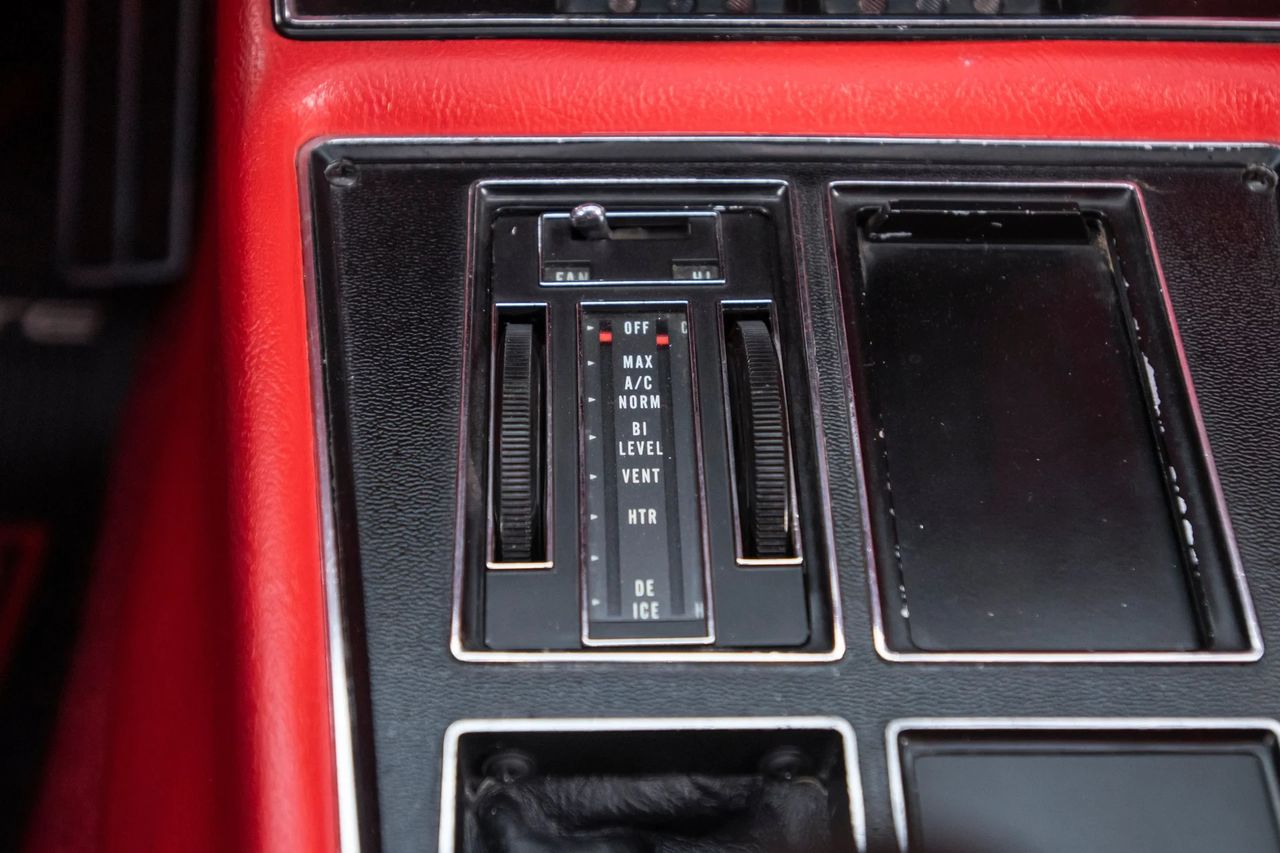
    RPO C60 was the Air Conditioning option for the 1969 Corvette, a feature that added real-world comfort to a car otherwise focused on performance. The system was integrated neatly into the center console with a vertical slide control and allowed drivers to select between MAX A/C, normal A/C, bi-level, vent, heat, and defrost modes. It used a Frigidaire compressor and modernized ducting that balanced cooling power with relatively compact packaging. For buyers in hotter climates—or anyone who wanted their Stingray to be more than just a weekend toy—C60 transformed the Corvette into a true all-season GT. At $462.85, it was a costly option in 1969, but one that dramatically improved livability without dulling the car’s sporting character. (Image courtesy of RK Motors)
    RPO C60 was the Air Conditioning option for the 1969 Corvette, a feature that added real-world comfort to a car otherwise focused on performance. The system was integrated neatly into the center console with a vertical slide control and allowed drivers to select between MAX A/C, normal A/C, bi-level, vent, heat, and defrost modes. It used a Frigidaire compressor and modernized ducting that balanced cooling power with relatively compact packaging. For buyers in hotter climates—or anyone who wanted their Stingray to be more than just a weekend toy—C60 transformed the Corvette into a true all-season GT. At $462.85, it was a costly option in 1969, but one that dramatically improved livability without dulling the car’s sporting character. (Image courtesy of RK Motors)

    As the Corvette matured, so did its entertainment and climate options. The U69 AM-FM radio and U79 AM-FM Stereo systems became increasingly popular, reflecting the car’s growing role as a personal luxury GT rather than a stripped-down weekend toy. And the availability of C60 Air Conditioning, especially in convertibles, proved Corvette buyers weren’t just chasing lap times—they wanted comfort when cruising through hot climates or commuting in city traffic. Air conditioning was still relatively rare in high-performance cars at the time, but its growing uptake in the Corvette lineup revealed how owners were actually using their cars: not just for bursts of speed, but as real transportation, often year-round.

    The data tells the story. Some buyers went full grand-touring: air conditioning, power windows, stereo system, Tilt-Tele, and tall highway gears—often paired with a small-block engine for balance and refinement. Others took the opposite approach: manual steering, no radio, heavy-duty cooling, side pipes, close-ratio gearboxes, and big-block torque. The 1969 Corvette could accommodate both philosophies without losing its soul. It was a car that wore many faces, but always knew exactly what it was.

    Colors, Trims, and Why 1969 Looks Like 1969
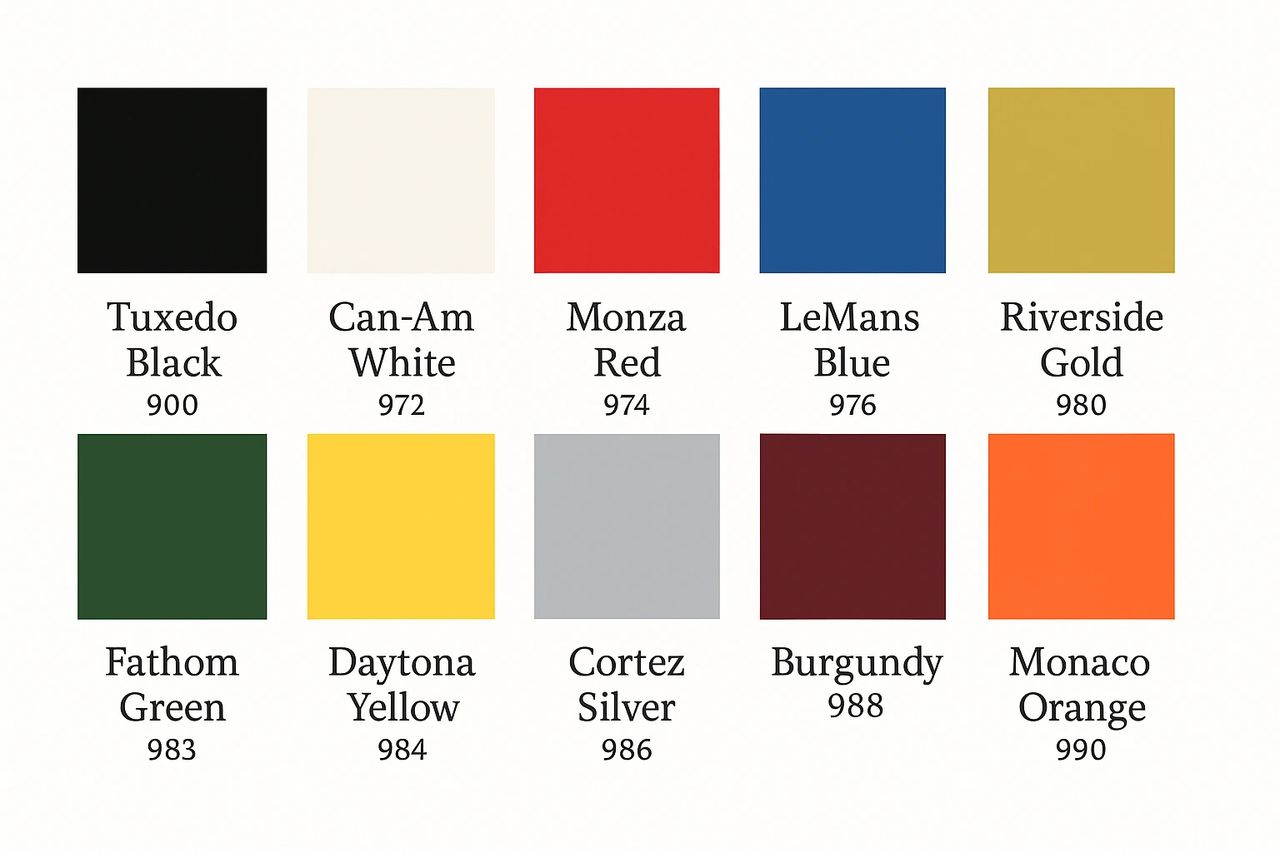
    The 1969 Corvette color palette is more than just a collection of paint chips—it’s a vivid snapshot of American taste at the end of a turbulent, expressive decade. The available finishes captured the era’s duality: bold self-expression on one end, mature restraint on the other. Buyers could dial in exactly how loud—or how refined—they wanted their Corvette to be, right from the showroom floor.
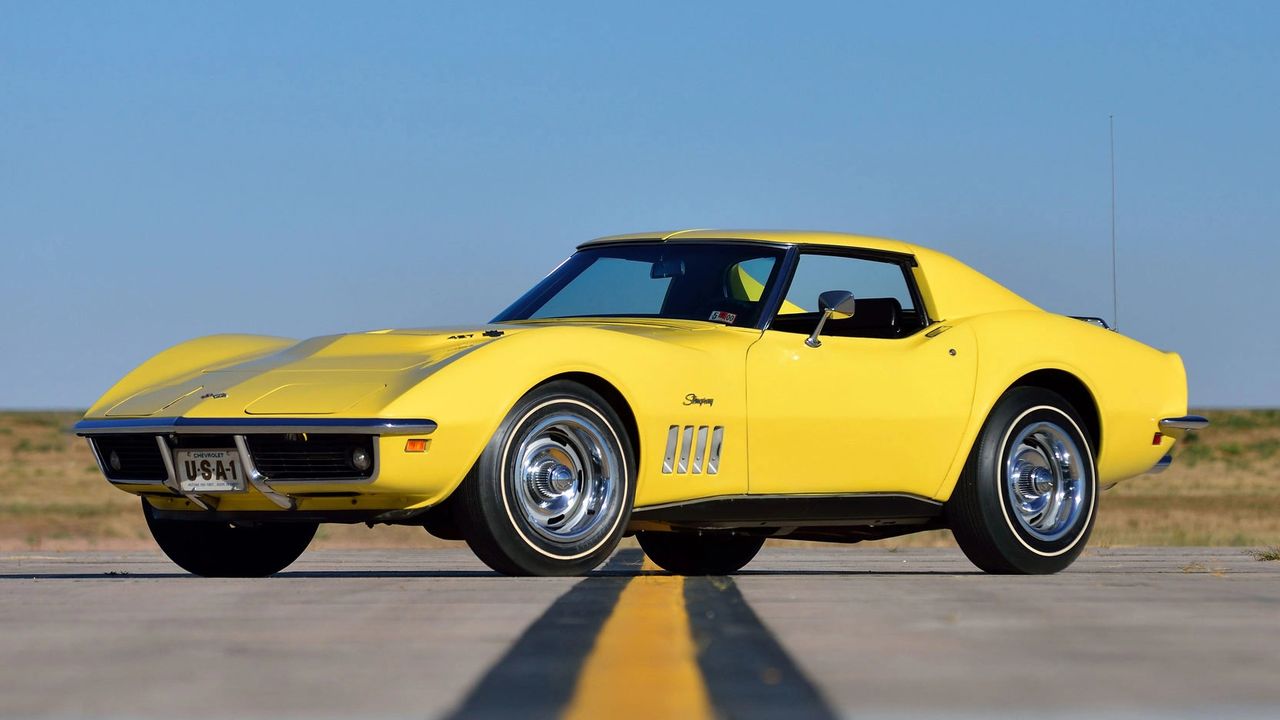
    A 1969 Corvette coupe finished in Daytona Yellow. (Image courtesy of GM Media LLC)
    A 1969 Corvette coupe finished in Daytona Yellow. (Image courtesy of GM Media LLC)

    High-impact hues like Monaco Orange and Daytona Yellow didn’t just suggest extroversion—they demanded attention. These were colors that caught light, flashed past, and stuck in memory, the sort of pigment choices that made children chase after the car and adults take mental notes. On a Stingray with side pipes and rally wheels, these colors read as pure confidence, bordering on defiance. They were the street-legal embodiment of the late-’60s American performance culture: unapologetic, kinetic, loud even at idle.
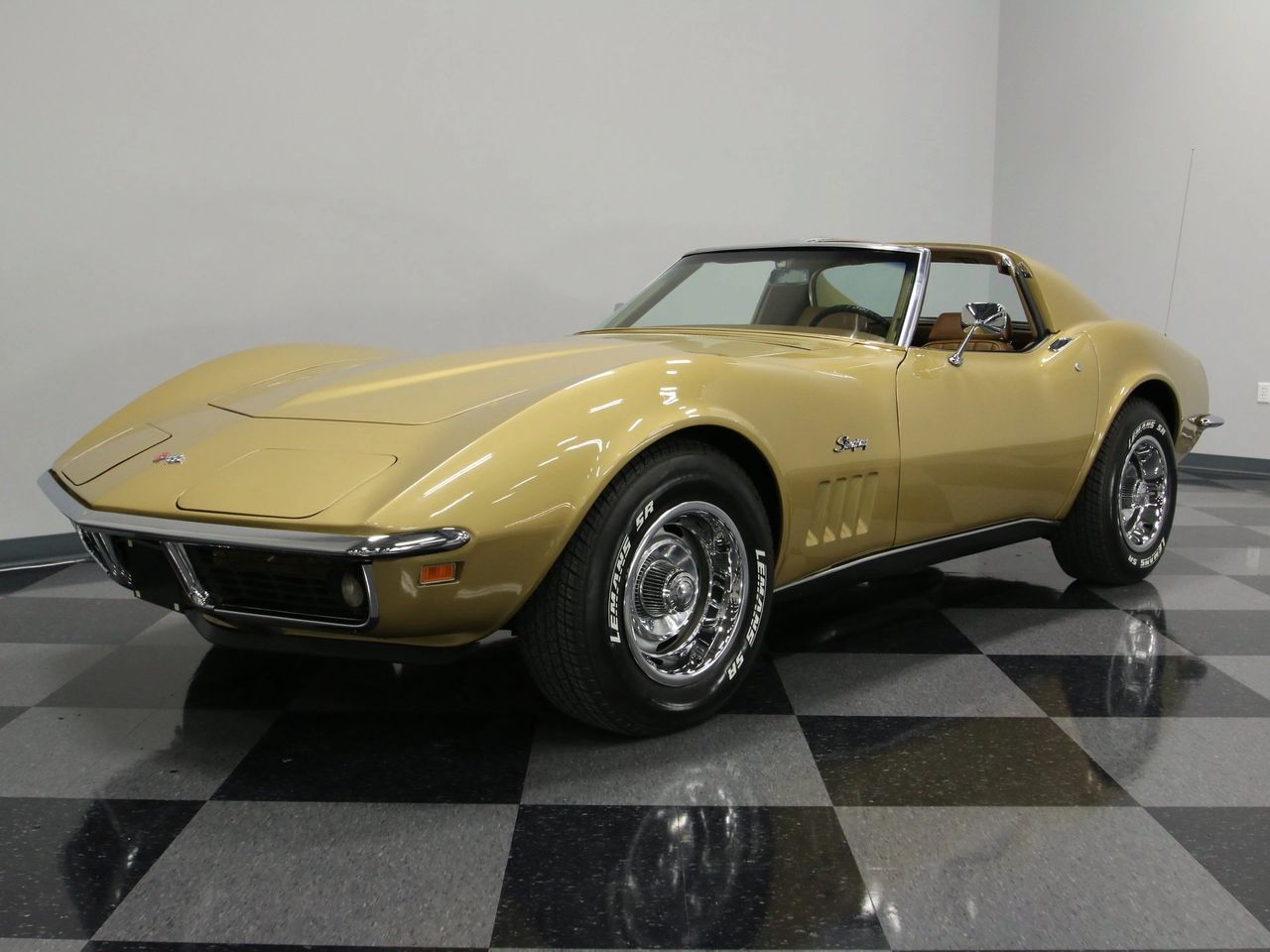
    1969 Corvette Coupe in Riverside Gold.
    1969 Corvette Coupe in Riverside Gold.

    At the other end of the spectrum sat colors like Riverside Gold and Fathom Green—deep, metallic tones that imbued the car with a sense of purpose and poise. These weren’t just more subdued; they were elegant, especially when paired with a Saddle interior, which added warmth and visual complexity. Riverside Gold in particular had a kind of burnished richness under evening light—perfect for a Corvette that saw as much dinner party valet duty as backroad strafing. Fathom Green, meanwhile, leaned almost British in its understatement, especially on a coupe with Rally wheels and minimal exterior options. These were the colors for owners who wanted presence, not provocation.
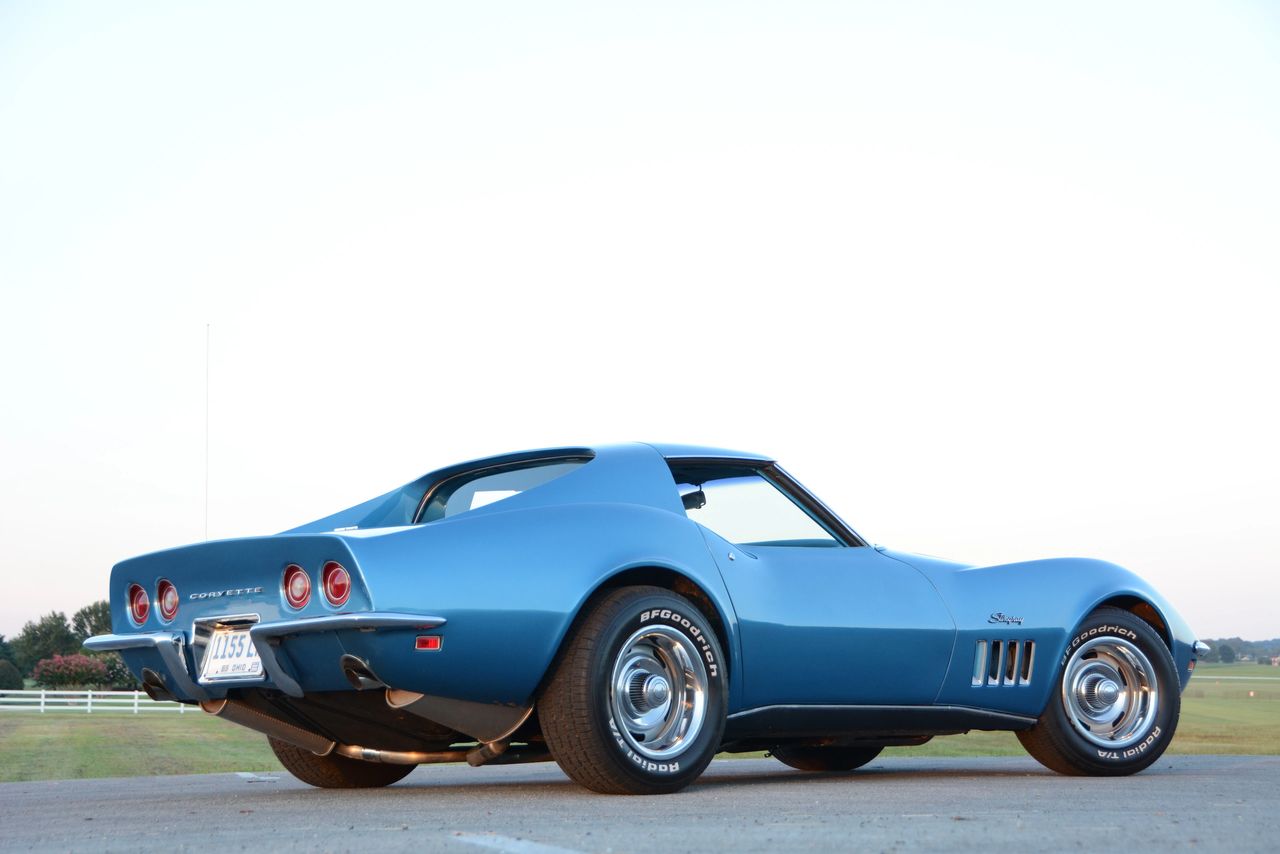
    1969 Corvette in Le Mans Blue (Image courtesy of MotorTrend)
    1969 Corvette in Le Mans Blue (Image courtesy of MotorTrend)

    Then there was Le Mans Blue—a defining Corvette color of the era. Paired with a black vinyl interior and a hint of chrome, it delivered the quintessential late-’60s sports car look. It balanced flash with restraint, flashback with timelessness. Many collectors and restorers still gravitate toward this combination because it feels so correct—so emblematic of the chrome-bumper Stingray aesthetic that has become iconic.
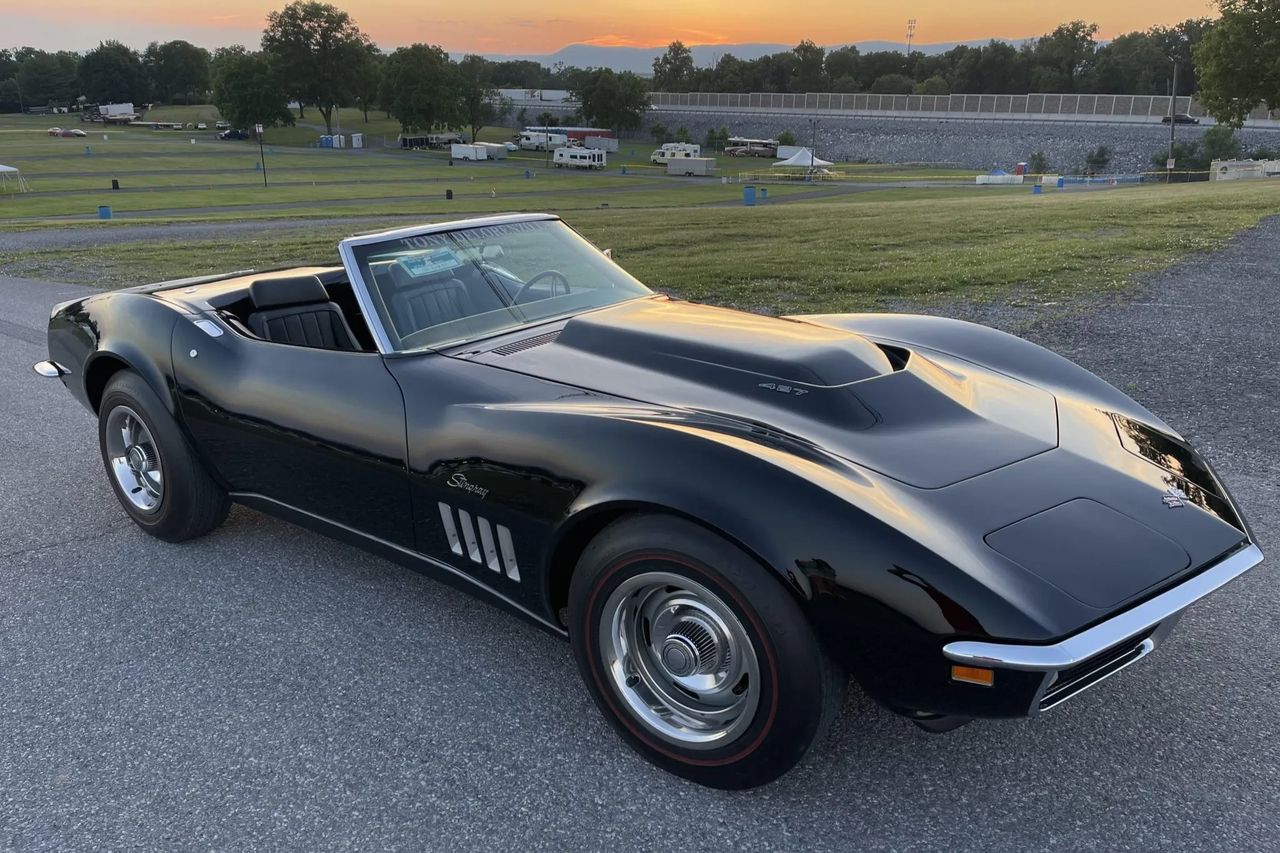
    1969 Corvette Convertible in Tuxedo Black (Image courtesy of bringatrailer.com)
    1969 Corvette Convertible in Tuxedo Black (Image courtesy of bringatrailer.com)

    Tuxedo Black, though produced in small numbers, remains a collector favorite for entirely different reasons. It’s a color that hides nothing and flatters everything—allowing the C3’s complex surfacing to speak for itself. Without bright pigment to distract the eye, the sweeping fender peaks, recessed scoops, and rakish tail take center stage. A black Stingray is a study in restraint that paradoxically commands more attention the quieter it looks.

    Interior trims expanded the personalization further. The palette included Black, Saddle, Bright Blue, Dark Red, and Dark Green, all available in standard vinyl or optional leather. Each brought its own feel to the cabin: Black was sporty and neutral, Saddle luxurious and warm, Blue cool and period-specific, while Red and Green offered an extroverted, almost European flash. In coupes, the T-top design meant even the most vibrant interior combinations were punctuated with the visual architecture of body-color panels and chrome trim—a look unique to this era of Corvette.
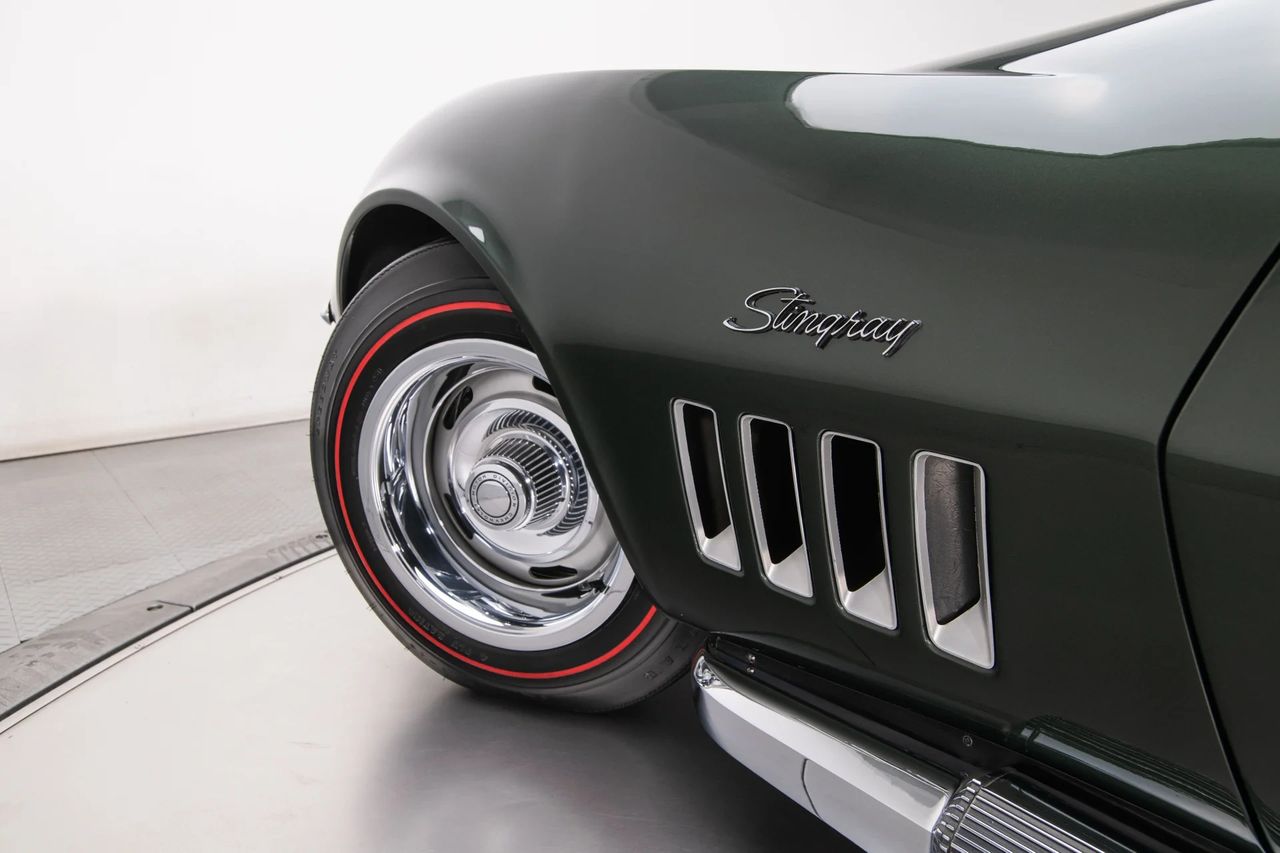
    New for 1969, the thin-script “Stingray” fender emblems marked the first time the name appeared as a single word—clean, modern, and integrated into the body’s flow. It was a small but meaningful update, signaling the Corvette’s evolution into a more cohesive, performance-focused identity. Paired with the optional N14 side-mounted exhaust, the look became unmistakably aggressive: bright polished covers running the length of the rocker panels, visually lowering the car and giving voice to its big-displacement intent. Together, the script and the side pipes weren’t just styling elements—they were statements. (Image courtesy of RK Motors)
    New for 1969, the thin-script “Stingray” fender emblems marked the first time the name appeared as a single word—clean, modern, and integrated into the body’s flow. It was a small but meaningful update, signaling the Corvette’s evolution into a more cohesive, performance-focused identity. Paired with the optional N14 side-mounted exhaust, the look became unmistakably aggressive: bright polished covers running the length of the rocker panels, visually lowering the car and giving voice to its big-displacement intent. Together, the script and the side pipes weren’t just styling elements—they were statements. (Image courtesy of RK Motors)

    The thin-script “Stingray” fender emblems made their first appearance in 1969, replacing the earlier “Sting Ray” split badging with a more modern, cohesive identity. Subtle in scale but not in meaning, the new emblem signaled the start of the Corvette’s third generation in both form and intent. And while entirely optional, the N14 side-mounted exhaust and its bright heat shields acted as visual punctuation—a period-correct exclamation point for buyers who wanted their car to announce its presence from the sidewalk as well as behind the wheel.

    Taken together, the 1969 Corvette’s colors, trim, and badging weren’t just cosmetic decisions—they were part of a broader conversation between car and owner. Every detail was a choice, and every choice helped define not just what kind of Corvette someone drove, but who they were behind the wheel.

    The Manta Ray: When the Show Car Came Home Again
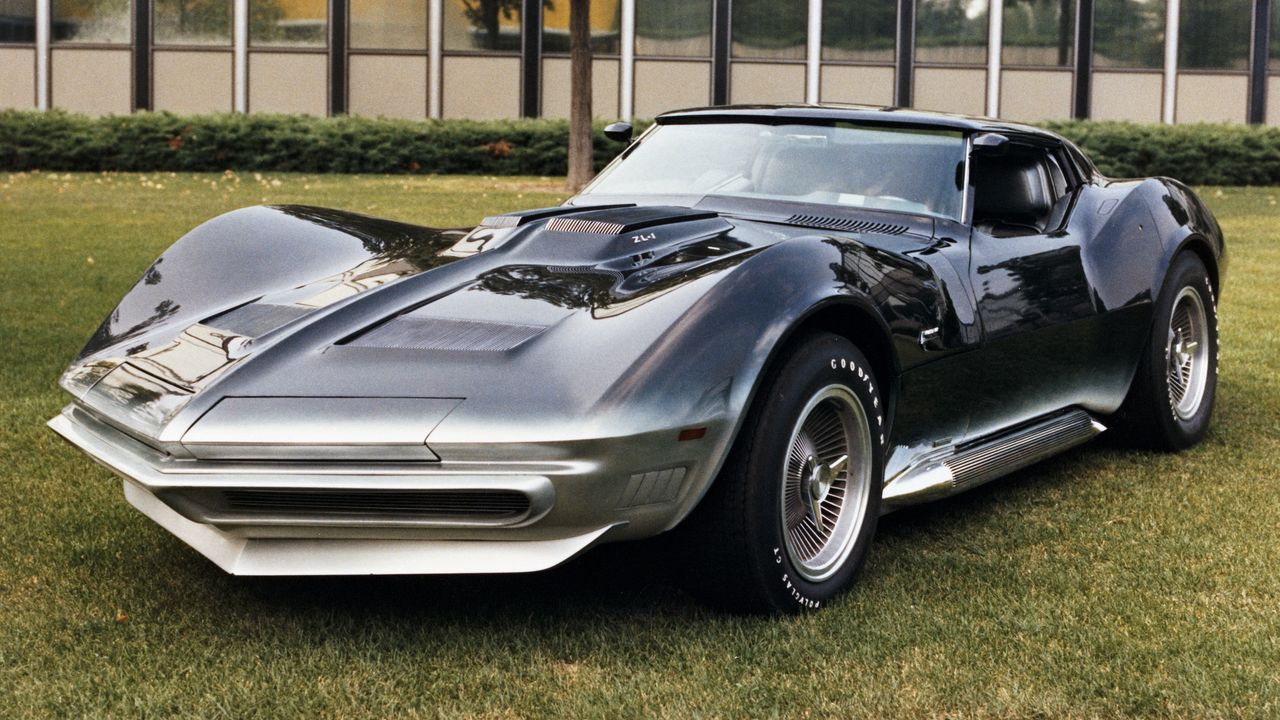
    A refined evolution of the Mako Shark II, the Corvette Manta Ray showcased what GM’s design team could do when given free rein. With its stretched tail, chin spoiler, and monochromatic finish, it hinted at future Corvette design while grounding the C3’s proportions in something more believable and aerodynamic. Beneath the skin, it briefly housed an all-aluminum ZL1 big-block, underscoring its role as both styling statement and engineering testbed. The Manta Ray was never meant for production, but it helped define the Corvette’s visual vocabulary for years to come. (Image courtesy of GM Media)
    A refined evolution of the Mako Shark II, the Corvette Manta Ray showcased what GM’s design team could do when given free rein. With its stretched tail, chin spoiler, and monochromatic finish, it hinted at future Corvette design while grounding the C3’s proportions in something more believable and aerodynamic. Beneath the skin, it briefly housed an all-aluminum ZL1 big-block, underscoring its role as both styling statement and engineering testbed. The Manta Ray was never meant for production, but it helped define the Corvette’s visual vocabulary for years to come. (Image courtesy of GM Media)

    Parallel to the showroom story is the studio story—and it’s here that the Corvette’s dramatic shape finds deeper meaning. In the years following the C3’s debut, GM Design reworked the original Mako Shark II concept into something sleeker, more grounded, and more mature. The result was the Manta Ray, a refined evolution that retained the aggressive surfacing but introduced a stretched, tapered tail, a more integrated chin spoiler, and a unified paint scheme that dialed back the Mako’s over-the-top two-tone. It looked less like a stylized fish and more like a low-flying aircraft, all thrust and tension and movement. Beneath the hood—at least for a time—sat the most exotic heart ever considered for a Corvette: an all-aluminum big-block V8. The car never made production, but its existence helped explain what the production Stingray was aiming for. Bill Mitchell and his team knew the power of mythology, and the Manta Ray served as the connective tissue between show car dream and street car reality. It reminded the public that the Corvette wasn’t just styled—it was sculpted, with intent far beyond the assembly line.

    Production, Pricing, and the “Long” 1969 Model Year

    Numbers tell a story as plainly as shape:

    • Total 1969 production: 38,762
    • Coupes: 22,129
    • Convertibles: 16,633
    • Base price (Coupe): $4,781
    • Base price (Convertible): $4,438

    The run was extended—circumstances around labor and scheduling had Chevrolet still building 1969s as the calendar rolled—and the market soaked them up. It was the Corvette’s strongest sales year to date, a record that would stand until the mid-1970s. Somewhere amid those cars was the 250,000th Corvette built, a milestone number that underscores how, by the end of the sixties, Corvette had graduated from boutique experiment to an American institution.

    Rarity lives at the extremes. L88 production closed at 116 cars. ZL1 at 2. These are numbers that define a generation of Corvette collecting. But there’s another meaningful rarity: original-option small-block cars built as true grand-tourers—air, tilt-tele, stereo, soft ride, tall gears—that were driven and enjoyed, then sympathetically preserved rather than “converted” into something they never were. Those tell the whole story of how people actually used these cars.

    Dimensions, Hardware, and Details That Matter to Restorers
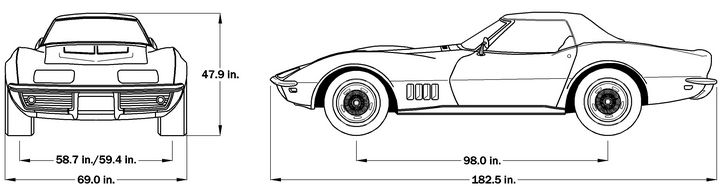
    1969 Corvette Dimensions (Image created by the author)
    1969 Corvette Dimensions (Image created by the author)

    A quick reference for what judges and restorers check:

    • Wheelbase: 98.0 in
    • Overall length: 182.5 in
    • Width: 69.0 in
    • Height: ~47.9 in (coupe)
    • Curb weight: typically 3,200–3,500 lb depending on equipment (big-block and A/C cars at the top end)
    • Fuel capacity: 20 gal
    • Brakes: 11.75-in vented discs, ~461 sq-in swept area total
    • Steering: recirculating ball, 17.6:1; power assist optional
    • Tires: F70-15 bias-ply
    • Wheels: 15×8 steel (aluminum wheels wouldn’t be a factory Corvette reality until later)

    VINs for 1969 run from 700001 through 738762, stamped on a plate at the left front body hinge pillar. Engine block casting and assembly date codes, transmission main case codes, and rear axle code/date stampings are the usual authenticity checkpoints. Original carburetors (Holley or Rochester as appropriate), distributor numbers, alternator and starter castings, radiator tags, even the correct type of clamp and hose routing—these details separate “nice driver” from “documented, judged-correct example.”
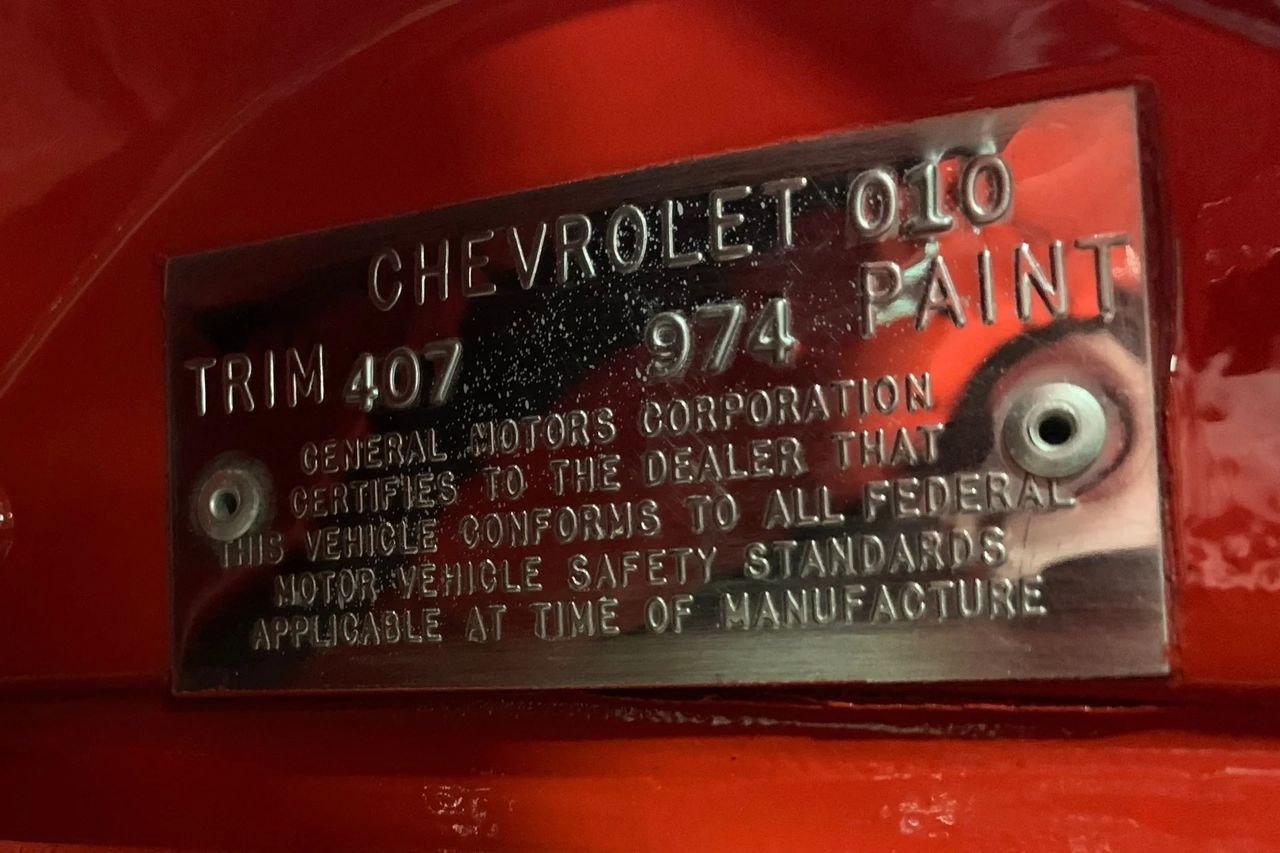
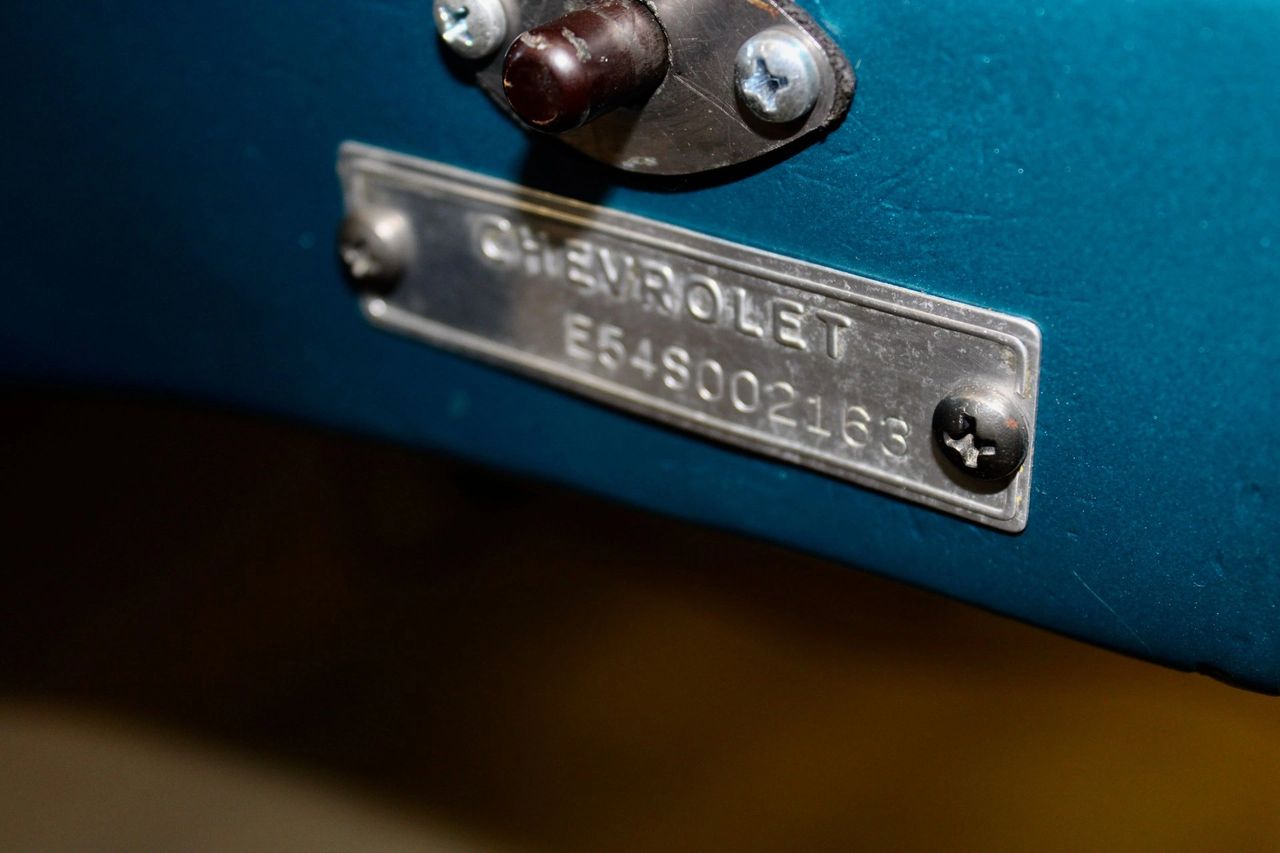
    This identification tag is from a 1969 Chevrolet Corvette, showing Trim Code 407, which indicates a red vinyl interior, and Paint Code 974, designating Monza Red. Together, these codes confirm that the car originally left the factory in a striking Monza Red exterior paired with a red vinyl cabin. The tag also carries the standard GM certification language, verifying that the vehicle met all federal safety standards at the time of manufacture. (Image courtesy of RK Motors)
    This identification tag is from a 1969 Chevrolet Corvette, showing Trim Code 407, which indicates a red vinyl interior, and Paint Code 974, designating Monza Red. Together, these codes confirm that the car originally left the factory in a striking Monza Red exterior paired with a red vinyl cabin. The tag also carries the standard GM certification language, verifying that the vehicle met all federal safety standards at the time of manufacture. (Image courtesy of RK Motors)

    Paint authenticity is a frequent debate. A properly executed respray in a correct code is no sin; a color change can be forgiven if executed beautifully and documented. Where value concentrates is in honest, complete cars with known history—especially those with original drivetrains and untouched fiberglass bonding seams.

    Safety and the 1969 Corvette: The Regulatory Turn

    The late sixties were a regulatory hinge. Chevrolet leaned in rather than merely complying. Energy-absorbing steering columns, dual-circuit brake hydraulics, four-way flashers, reduced-glare instrument finishes, improved interior padding, head restraints—it reads like a checklist because it is one. The Corvette didn’t become soft, and it certainly didn’t become tame; it became more serious about protecting the people who drove it hard. That may not be as romantic as a tri-power intake, but it is part of why these cars were driven and loved and are still very much with us today.

    How the 1969 Corvette Drives—Then and Now
    The clearest compliment to Chevrolet’s second-year fixes is that a sound 1969 Corvette feels coherent. Small-block cars are light on their nose and let you place the car with your wrists; they’ll lope all day at 70 with tall gears, then come alive in a two-lane pass with a downshift. A 427 tri-power four-speed coupe is an entirely different animal: heavier helm, more brake pedal underfoot, a chassis that rewards smoothness. Commit to a line, breathe the throttle open early, and let the torque do the work. The brakes are faithful—big iron calipers with real pad area and plenty of rotor. The car is honest about what the tires will give you and when; it talks to you through the seat and the shifter and the wheel rim.

    The modern temptation is to “fix” the car with radials, gas-pressurized dampers, polyurethane bushings, quicker steering boxes, and aggressive pads. Many owners do, and the cars become devastatingly effective on today’s roads. But there is something profound about a correctly sorted 1969 on bias-ply tires, with stock valving and factory bushings, being driven the way Chevrolet intended. It explains the era better than any numbers sheet.

    Collector Guidance: What to Look For, What to Celebrate
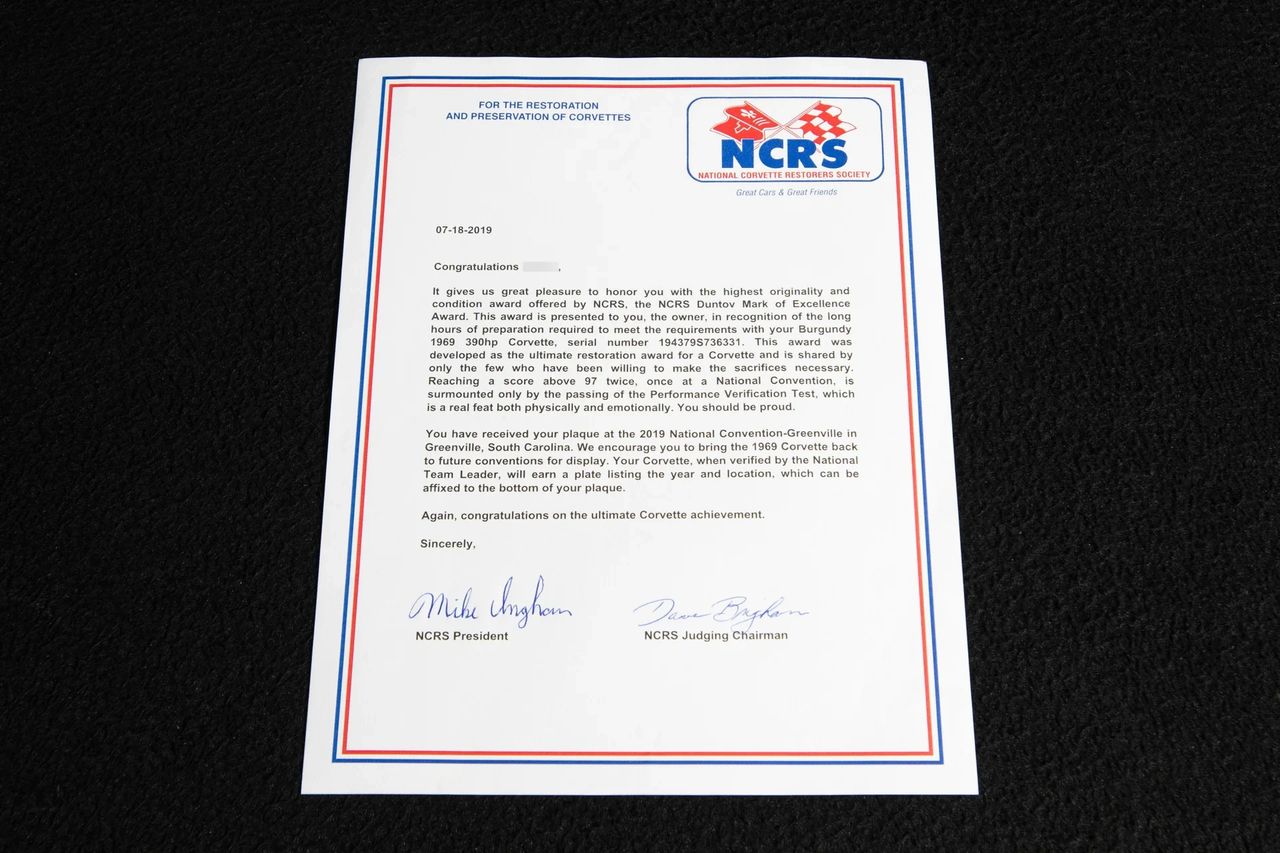
    When buying a 1969 Corvette, proper documentation can be just as important as the car itself, as it verifies authenticity, originality, and provenance. A letter from the NCRS, such as this one awarding the Duntov Mark of Excellence, demonstrates that the car has been judged against the most rigorous restoration and originality standards in the hobby. For buyers, this means added confidence that the Corvette retains correct components, finishes, and factory details, which directly impacts both its value and collectability. In short, NCRS documentation transforms a Corvette from simply being “restored” into a verified, investment-grade example.
    When buying a 1969 Corvette, proper documentation can be just as important as the car itself, as it verifies authenticity, originality, and provenance. A letter from the NCRS, such as this one awarding the Duntov Mark of Excellence, demonstrates that the car has been judged against the most rigorous restoration and originality standards in the hobby. For buyers, this means added confidence that the Corvette retains correct components, finishes, and factory details, which directly impacts both its value and collectability. In short, NCRS documentation transforms a Corvette from simply being “restored” into a verified, investment-grade example.
    • Documentation first. Tank sticker, window sticker, Protect-O-Plate, owner history. The rarer the build, the more these matter.
    • Rust where fiberglass hides it. Frames can rust from the inside out; inspect kick-ups over the rear axle, trailing arm pockets, and the front crossmember with a pick and a light.
    • Bonding seams and panel fit. Original seams telegraph under paint. Perfect seams sometimes mean “redone”; perfect is not always wrong, but it asks a question.
    • Numbers and date codes. Block suffix code, casting number, assembly date; transmission main case code; rear axle code. Even the right carbs and distributors matter on judged cars.
    • Tri-power correctness. Linkage, air cleaner, fuel lines, choke hardware—L68/L71 cars are littered with details that get “close” in amateur restorations.
    • L88 tells. Radiator, shroud, ignition shielding, exhaust, pulleys, warning decals—L88 clones have to run a gauntlet of minutiae; the real ones stand up to it.
    • Small-block GTs. Air, tilt-tele, stereo, soft spring rates, tall axle—these cars represent how many owners actually lived with Corvettes in 1969. They make superb long-distance classics.

    Why 1969 Matters

    The 1968 Corvette introduced the world to the C3. The 1969 Corvette made the C3 credible. Chevrolet tightened the structure, un-kinked the ergonomics, and trimmed in the right places without sanding off the edges that make a Stingray a Stingray. It also delivered a powertrain lineup that ranges from docile-in-traffic to a racing mill disguised as a street car. No other chrome-bumper year strikes the balance quite like this: the look is fully baked, the driveline catalog is at full roar, and the emissions clamps and insurance pistons haven’t yet arrived to rewrite the rules.

    It’s why so many of us think of the1969 Corvette when we picture a chrome-bumper C3. It’s the one with the slender “Stingray” script, the 15×8 wheels tucked under muscular arches, the side pipes you can hear from the next block, the cockpit that feels like a purpose-built machine rather than a parts bin. It is the year when the third-generation Corvette stopped being a spectacular idea and became a spectacular car.

    Fast Facts (Handy for Readers and Restorers)

    • Total built: 38,762 (22,129 coupes; 16,633 convertibles)
    • VIN range: 700001–738762 (plate at left front body hinge pillar)
    • Base price: $4,781 (coupe), $4,438 (convertible)
    • Engines: 350/300; 350/350 (L46); 427/390 (L36); 427/400 tri-power (L68); 427/435 tri-power (L71); 427/“430” (L88); 427 all-aluminum “430” (ZL1)
    • Transmissions: 3-spd manual (std), M20/M21 4-spd, limited M22, M40 Turbo Hydra-Matic
    • Axles: 3.08, 3.36 (typical base), 3.55, 3.70, 4.11, 4.56
    • Brakes: 4-wheel vented discs (std)
    • Wheels/Tires: 15×8; F70-15 bias-ply
    • Notable options: N14 side-mount exhaust; N37 tilt-tele; N40 power steering; F41 special suspension; U69/U79 radios; C60 A/C; G81 Positraction
    • Rarity markers: L88 (116 built); ZL1 (2 built)

    Epilogue: The Photo in Your Head
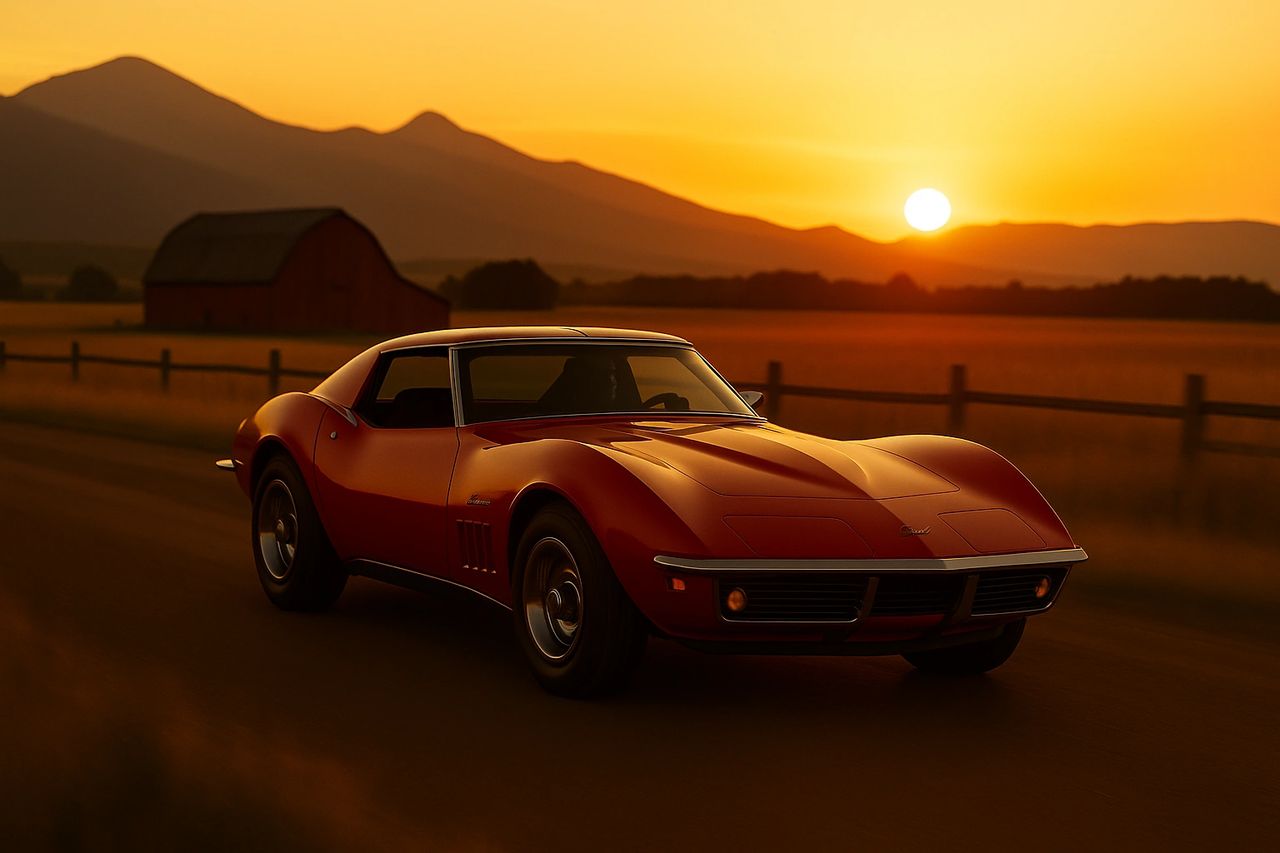
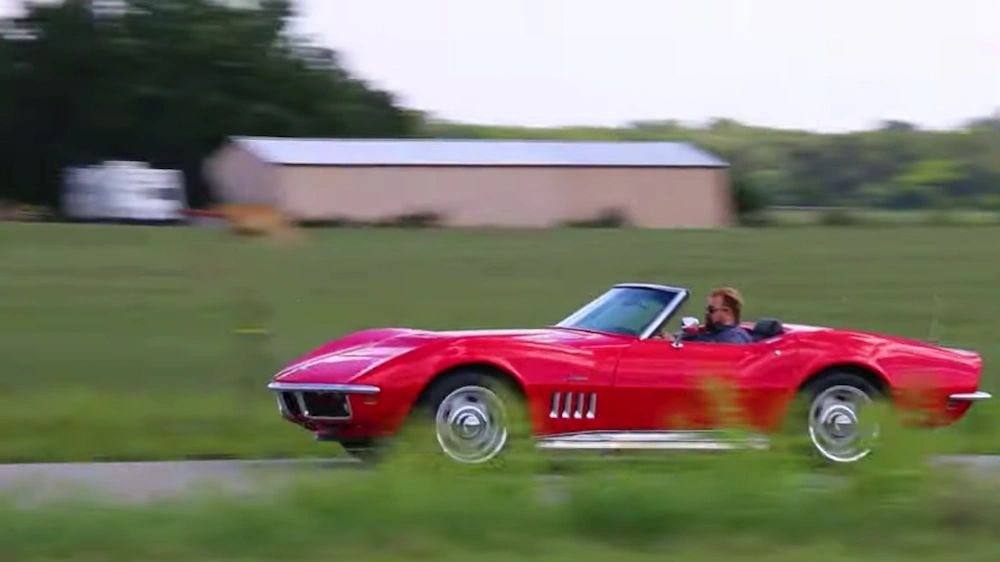
    It’s easy to picture yourself behind the wheel of a Corvette like this—America’s sports car, carving its way through the rolling fields of the Heartland as the sun dips low on the horizon. No other automobile embodies freedom, performance, and the open road quite like a Corvette. With its unmistakable curves and raw presence, the C3 isn’t just a car—it’s a symbol of American pride, independence, and the timeless pursuit of driving passion.
    It’s easy to picture yourself behind the wheel of a Corvette like this—America’s sports car, carving its way through the rolling fields of the Heartland as the sun dips low on the horizon. No other automobile embodies freedom, performance, and the open road quite like a Corvette. With its unmistakable curves and raw presence, the C3 isn’t just a car—it’s a symbol of American pride, independence, and the timeless pursuit of driving passion.

    If you’ve made it this far, you can probably see it without closing your eyes: late-evening sun glancing off a long, low hood; side-pipes making conversation a suggestion; thin-script “Stingray” on the fender; a driver sitting close to the rear axle, short wheelbase doing its lively dance over a patched two-lane. That’s the 1969 Corvette—not a museum piece, not a paper tiger, but a machine whose second-year fixes unlocked everything the shape promised.
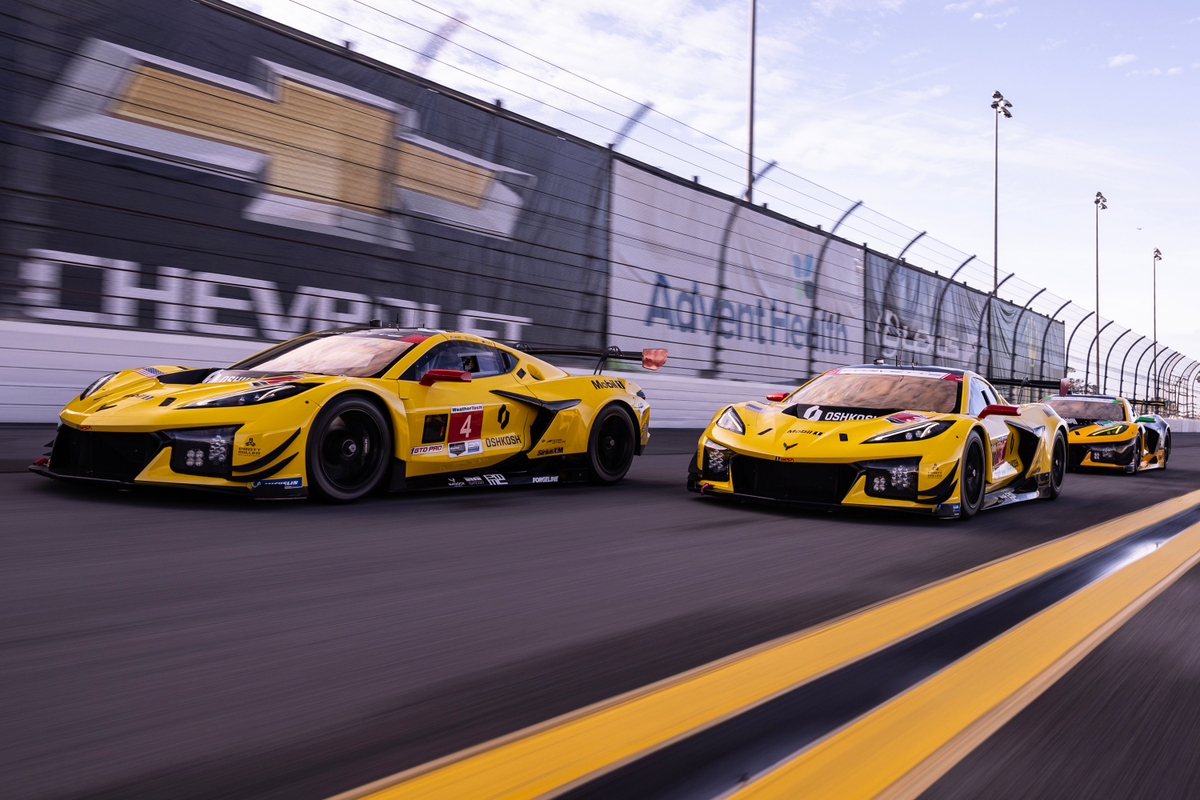
    The 1969 Corvette arrived at a pivotal moment for Chevrolet’s sports car, blending the dramatic styling of the new C3 generation with meaningful refinements beneath the surface. Marked by subtle yet important updates to fit, finish, and drivability, the ’69 model year reflected GM’s push to evolve the Stingray from a bold design statement into…

  • Corvette Racing Names Andrea Hidalgo Named PGM for the 2026 Season

    Corvette Racing Names Andrea Hidalgo Named PGM for the 2026 Season

    Corvette Racing has appointed Andrea Hidalgo as its new Program Manager, a pivotal leadership role within the storied Chevrolet motorsport organization, as the 2026 racing season gets underway. Hidalgo steps into the position at one of the sport’s most critical junctures — just days before the Roar Before the 24 and the iconic Rolex 24 At Daytona — as Corvette continues its evolution in global GT competition.

    The announcement, confirmed by both IMSA.com and RACER, marks a significant internal promotion for Hidalgo, who has spent the better part of two decades advancing through technical and racing-oriented engineering roles at General Motors and within the Corvette racing ecosystem.

    A long-time GM engineer and Corvette specialist, Andrea Hidalgo brings deep technical and competitive experience to the program manager post. Before her promotion, she served as Senior Race Engine Calibration, Development, and Track Support Engineer for the Corvette Z06 GT3.R program at GM’s Performance and Racing Center, a role that saw her deeply involved in engine calibration and customer team support for GT3 competition.

    In that capacity, Hidalgo supported Corvette customer teams like TF Sport in the FIA World Endurance Championship for the past two seasons, as well as in select European Le Mans Series (ELMS) events in 2025, providing a blend of on-site engineering acumen and program-level strategic execution.

    Her responsibilities included not only calibration and development but also helping implement controls strategies — work that was important as Corvette customer programs worked toward meeting evolving FIA GT3 engine regulations worldwide.

    Andrea Hidalgo brings a deeply technical, engineer-driven perspective to her role as Program Manager for Corvette Racing. With years of hands-on experience supporting the Corvette Z06 GT3.R program—spanning engine calibration, trackside development, and customer racing operations—Hidalgo represents the modern evolution of Corvette Racing leadership: rooted in data, shaped by competition, and focused on execution. Her appointment signals General Motors’ continued emphasis on technical continuity and engineering excellence as Corvette competes on the global GT3 stage.
    Andrea Hidalgo brings a deeply technical, engineer-driven perspective to her role as Program Manager for Corvette Racing. With years of hands-on experience supporting the Corvette Z06 GT3.R program—spanning engine calibration, trackside development, and customer racing operations—Hidalgo represents the modern evolution of Corvette Racing leadership: rooted in data, shaped by competition, and focused on execution. Her appointment signals General Motors’ continued emphasis on technical continuity and engineering excellence as Corvette competes on the global GT3 stage.

    Before ascending to her most recent engineering leadership roles, Hidalgo spent multiple seasons embedded within the factory Corvette Racing program, particularly during the C8.R era, contributing across myriad technical disciplines. Her résumé extends back to 2008, when she first joined General Motors as an intern and subsequently became part of GM’s production engineering team in 2010 — laying the foundation for her later motorsports work.

    Her technical expertise spans a broad engineering portfolio, including combustion, drivability, aftertreatment, diagnostic systems, and transmission development, a diverse skill set that has anchored her progression through increasingly complex roles at GM.

    Academically, Hidalgo is grounded in rigorous mechanical engineering training: she holds a Master of Engineering in Global Manufacturing and Automotive Engineering from the University of Michigan, and a Bachelor of Mechanical Engineering from Stony Brook University in New York. During her undergraduate years, she was an active member of the Stony Brook Motorsports SAE Baja team — an early indicator of her sustained commitment to motorsports engineering.

    Her new leadership role comes amid organizational turnover within the broader Corvette Racing program. Hidalgo replaces Jessica Dane, who departed General Motors earlier in January 2026. Reports from multiple outlets note that Corvette Racing has now seen three different program managers in as many years, reflecting broader shifts within GM Motorsports leadership over the past several seasons.

    The 2026 IMSA season roars to life next weekend at Daytona International Speedway, where the world’s top sports car teams converge for the Roar Before the 24 and the iconic Rolex 24 At Daytona. As the first true test of the new season, Daytona sets the tone with equal parts speed, endurance, and unpredictability—demanding precision from cars, crews, and drivers alike. Under the lights and over 24 relentless hours, reputations are forged, weaknesses are exposed, and championship ambitions begin their long march forward. For Corvette Racing and its rivals, Daytona isn’t just the opener—it’s the proving ground.
    The 2026 IMSA season roars to life next weekend at Daytona International Speedway, where the world’s top sports car teams converge for the Roar Before the 24 and the iconic Rolex 24 At Daytona. As the first true test of the new season, Daytona sets the tone with equal parts speed, endurance, and unpredictability—demanding precision from cars, crews, and drivers alike. Under the lights and over 24 relentless hours, reputations are forged, weaknesses are exposed, and championship ambitions begin their long march forward. For Corvette Racing and its rivals, Daytona isn’t just the opener—it’s the proving ground.

    Dane, who joined GM in 2024 after relocating from Australia, had been instrumental in expanding Corvette Racing’s GT3 presence on the global stage before her exit, including strategic involvement in expanding the program to major international events such as the Bathurst 12 Hour.

    Hidalgo’s first official assignment as Program Manager will be overseeing Corvette Racing’s campaign at the 64th Rolex 24 At Daytona on January 24–25, a marquee endurance race that serves as the season opener for the IMSA WeatherTech SportsCar Championship.

    Corvette’s program manager position is pivotal, combining managerial oversight with close technical interaction across engineering, strategy, and race operations. Past program managers, such as Doug Fehan — who led the team through much of its earlier success — helped shape Corvette’s legacy in endurance racing, including multiple overall and class victories at Daytona, Sebring, and Le Mans.

    Hidalgo’s appointment signals Corvette Racing’s intent to maintain technical continuity and competitive rigor as it continues to navigate the complex demands of GT3 competition globally. Her combination of trackside experience, engineering depth, and institutional knowledge could prove integral as Corvette competes against a deep field of international manufacturers in 2026 and beyond.


    Sources:

    IMSA.com — “Andrea Hidalgo Appointed as Corvette Racing Program Manager.”

    RACER — “Corvette Racing appoints Hidalgo as Program Manager.”

    Sportscar365 — “Hidalgo Replaces Dane as Corvette Program Manager.”

    V8Sleuth — “Jess Dane leaves General Motors.”

    MidEngineCorvetteForum — Corvette historical context on program managers.


    Corvette Racing has appointed Andrea Hidalgo as its new Program Manager, a pivotal leadership role within the storied Chevrolet motorsport organization, as the 2026 racing season gets underway. Hidalgo steps into the position at one of the sport’s most critical junctures — just days before the Roar Before the 24 and the iconic Rolex 24…

  • 1954 Corvette Overview

    1954 Corvette Overview

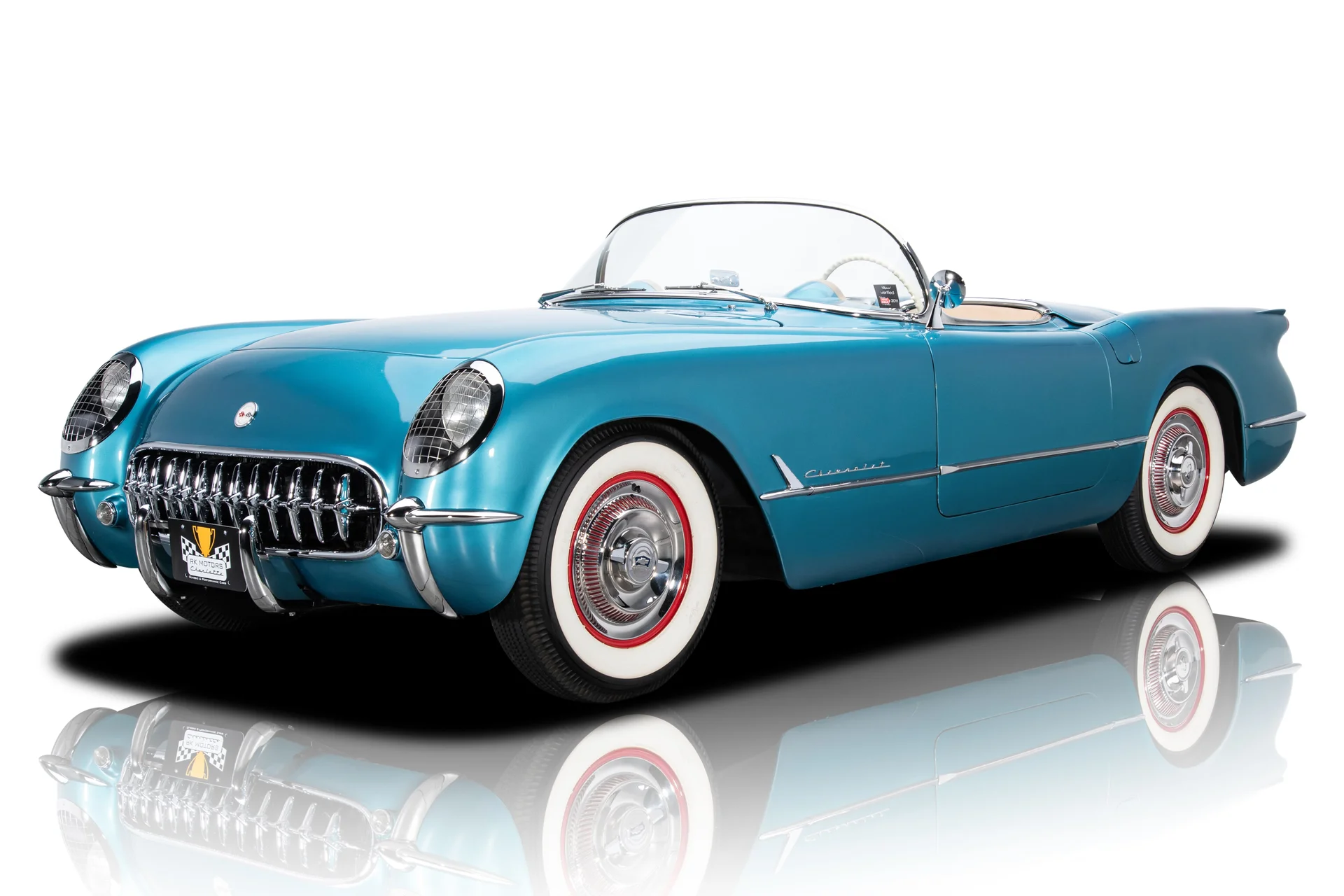
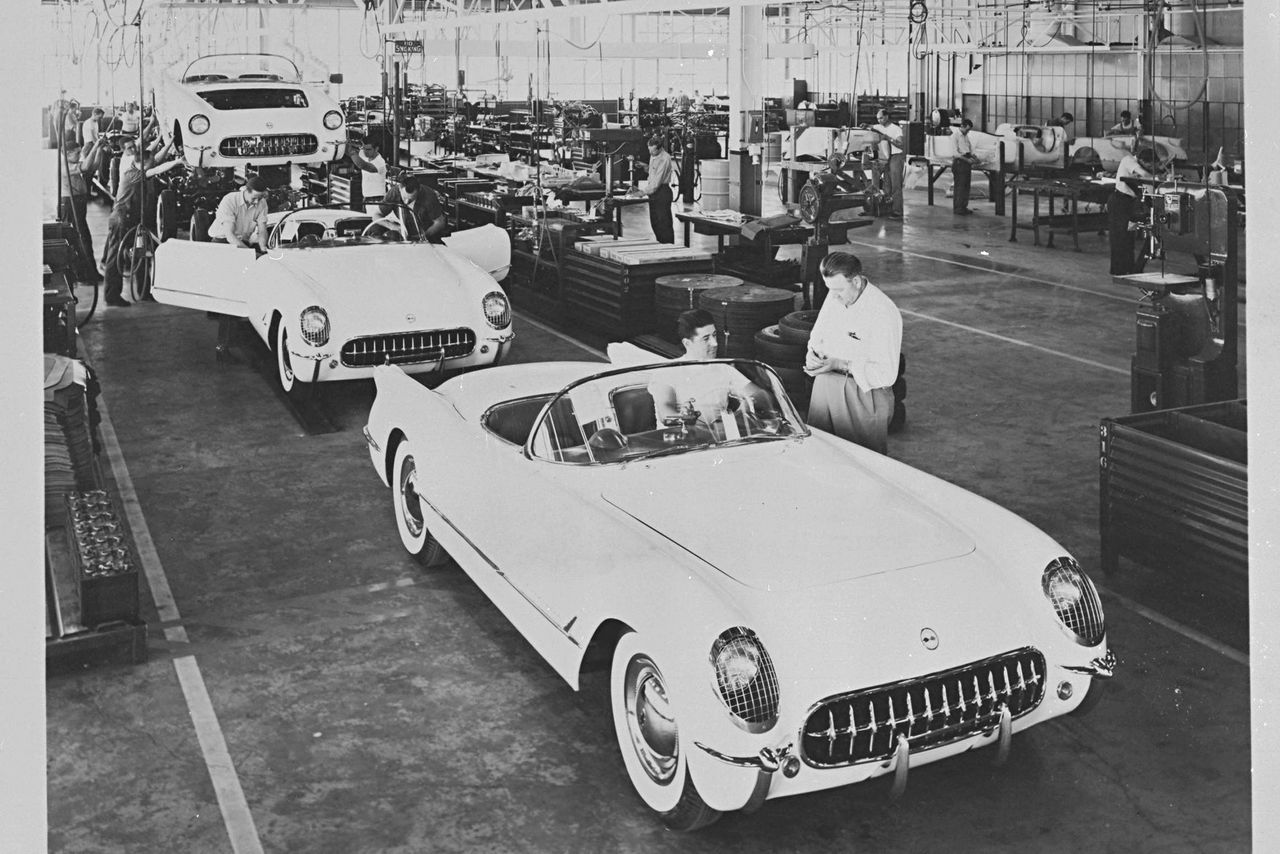
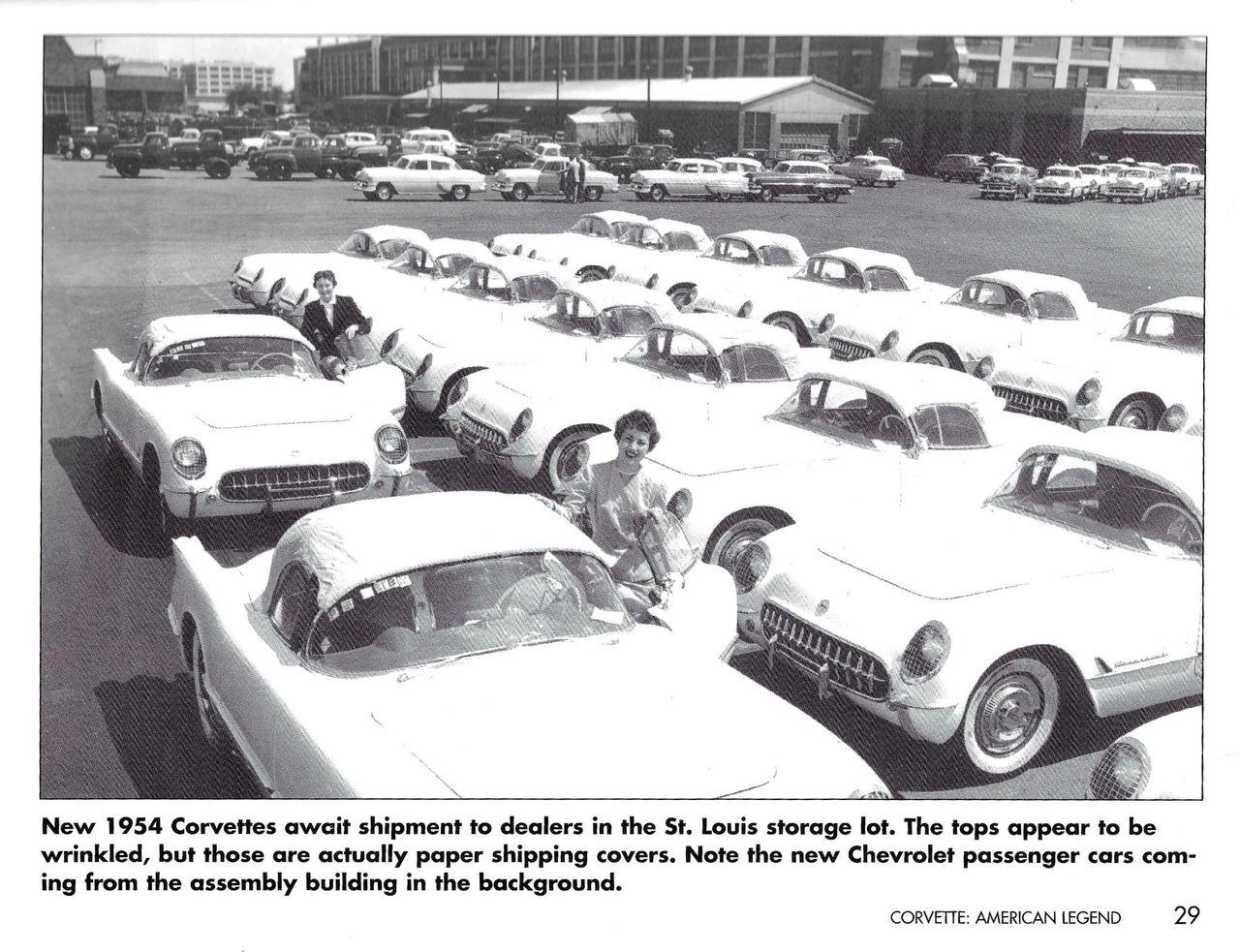
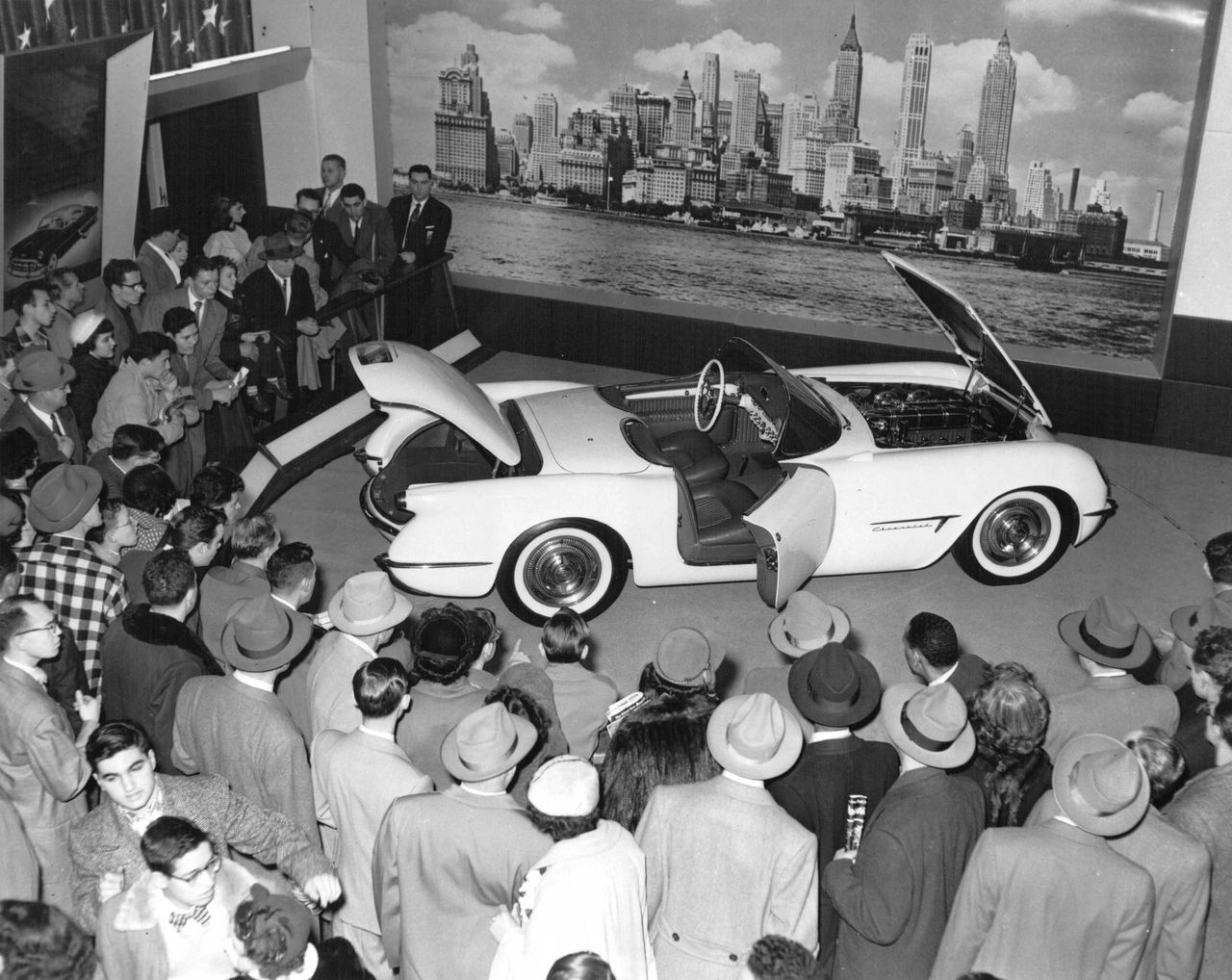
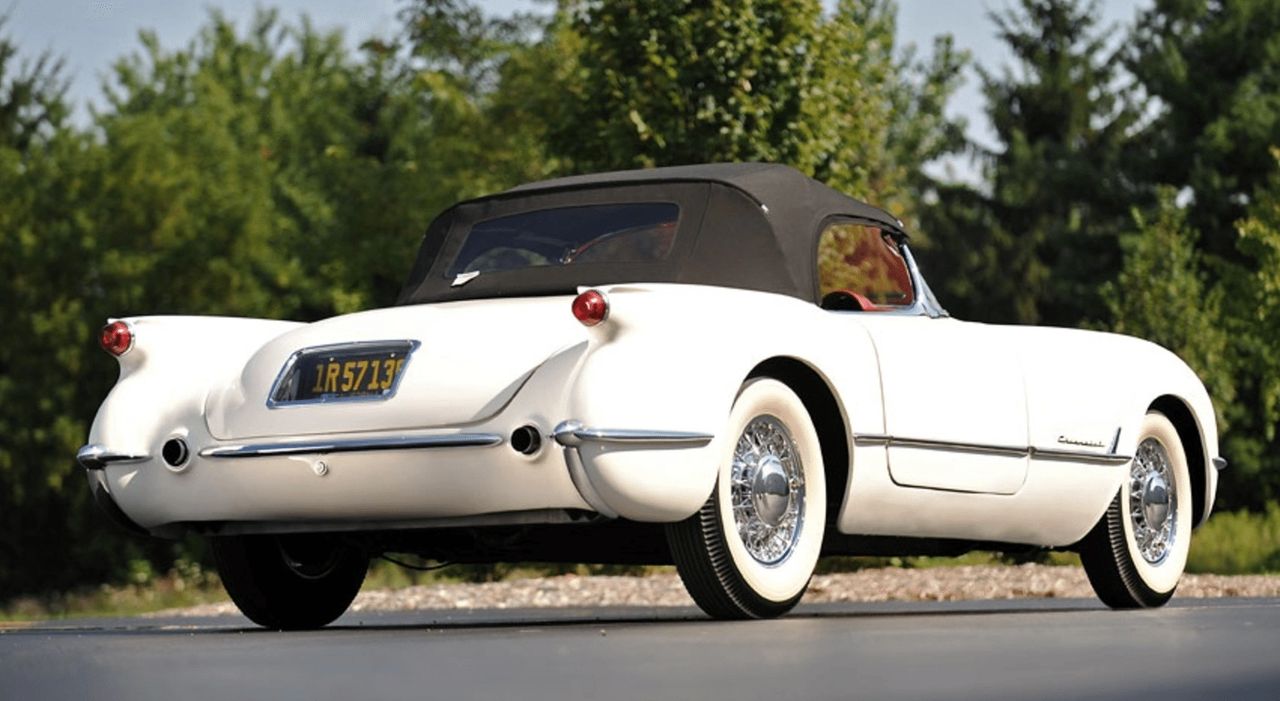
    The 1954 Corvette technically begins in December of 1953, when Chevrolet moved production out of the improvised line in Flint and into a newly renovated plant in St. Louis. A small handful of early ’54s—on the order of a dozen-plus—were completed at Flint; from there forward, St. Louis took over. Chevrolet didn’t just change addresses; it changed expectations. The new facility had been laid out to build Corvettes by the ten-thousand, a figure as audacious as the glittering dream of GM’s traveling Motorama itself.

    The optimism was necessary. The 1953 Motorama had lit a fuse; America wanted a fiberglass sports car with the glamour Harley Earl had promised. However, the first-year Corvette was essentially a low-volume, hand-built prototype put into the hands of customers. It was beautiful and exotic—and compromised. The 1954 model year, then, became the moment to turn promise into product, and to keep a fragile program alive.
    The Cast: Earl’s Vision, Duntov’s Fire, Olley’s Discipline, Renner’s Eyes, Morrison’s Material

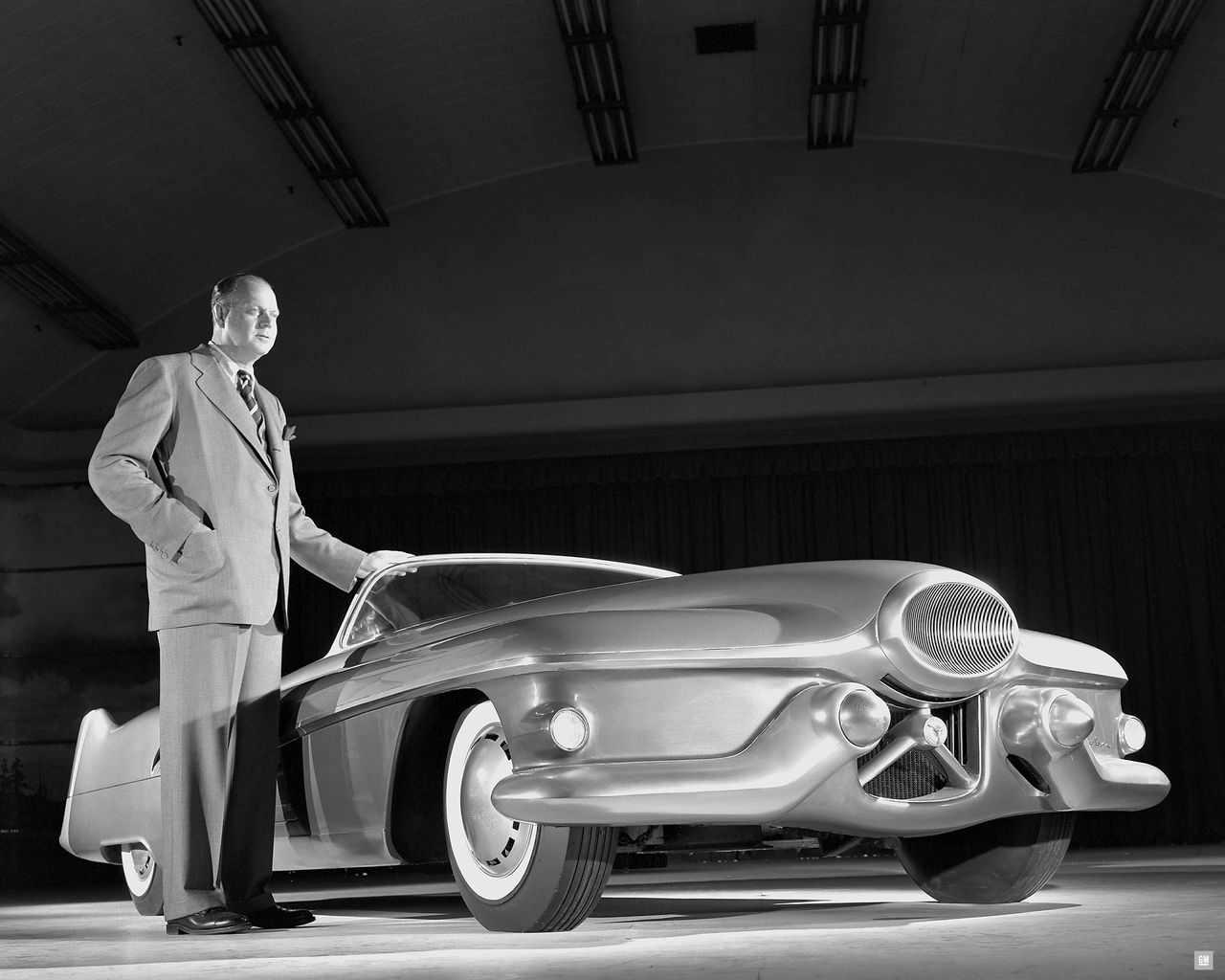
    Harley Earl and the Jet Age, captured in one frame. Standing beside his Buick Le Sabre dream car, GM’s styling chief shows the theatrical vision that powered Motorama—and set the stage for Corvette. The Le Sabre’s wraparound glass, fighter-inspired nose, and low, flowing body were less a prototype than a manifesto, proving that an American sports car could be as futuristic as it was beautiful. From spectacles like this, the Corvette’s world was born. (Image courtesy of GM Media LLC.)
    Harley Earl and the Jet Age, captured in one frame. Standing beside his Buick Le Sabre dream car, GM’s styling chief shows the theatrical vision that powered Motorama—and set the stage for Corvette. The Le Sabre’s wraparound glass, fighter-inspired nose, and low, flowing body were less a prototype than a manifesto, proving that an American sports car could be as futuristic as it was beautiful. From spectacles like this, the Corvette’s world was born. (Image courtesy of GM Media LLC.)

    Harley J. Earl—the showman who invented the Motorama—was the Corvette’s father, the one who believed GM should build an American two-seat sports car at a time when returning GIs were snapping up MGs and Jaguars. One of Earl’s many gifts was showmanship, but he also created the organizational space inside GM for dream cars to nudge the corporation toward reality.

    Inside the General Motors hierarchy, Earl had carved out a unique position of power. As vice president of styling, he wasn’t just an artist sketching cars; he sat at the executive table alongside the engineers and accountants, with the authority to demand resources for his visions. His department became something unprecedented in the auto industry: a full-fledged design organization that dictated the look of every GM product, from Chevrolet sedans to Cadillac limousines. Within that empire, Earl nurtured the practice of building concept cars—“dream cars,” as he called them—not as idle fantasy, but as rolling laboratories to test public taste and corporate appetite. By the early 1950s, the Motorama roadshows made these concepts household names, and Earl used that public enthusiasm as leverage inside GM to keep projects like the Corvette alive.

    The Corvette was the perfect expression of Earl’s system. He believed GM needed a halo car to capture attention, to say something bold about Chevrolet’s place in the postwar market. But he also understood that a flashy showpiece wasn’t enough—there had to be a pipeline, a process, a machinery of dream-to-reality that would carry the car from the Waldorf-Astoria’s ballroom floor to a factory line in St. Louis. Earl built that machinery. He fostered a styling culture that prized experimentation, empowered designers like Carl Renner to sketch and clay-model ideas, and worked hand-in-hand with engineering leaders such as Maurice Olley to translate fantasy into workable production. In that sense, Harley Earl’s greatest contribution to the Corvette wasn’t just the styling of the first car—it was the organizational scaffolding that allowed a radical two-seater fiberglass roadster to exist at all, and to evolve from a Motorama darling into America’s sports car.

    Zora Arkus-Duntov’s legend with Corvette truly began in 1954. Though he had only just joined GM, the Belgian-born engineer and former racer immediately recognized both the promise and the peril of Chevrolet’s fledgling sports car. To his eye, the Corvette’s fiberglass body was striking, but its Blue Flame six and Powerglide automatic left it unworthy of true sports-car status. He famously wrote his memo, “Thoughts Pertaining to Youth, Hot Rodders, and Chevrolet,” that same year, urging management to seize the loyalty of America’s speed-hungry youth by giving Corvette real performance. This photograph captures Duntov behind the wheel of an early test car—hands-on, analytical, and already steering the program toward the V-8 and manual transmissions that would soon save it. For the 1954 model year, his influence had yet to be felt in production, but his vision was already shaping the Corvette’s destiny. (Image courtesy of GM Media)
    Zora Arkus-Duntov’s legend with Corvette truly began in 1954. Though he had only just joined GM, the Belgian-born engineer and former racer immediately recognized both the promise and the peril of Chevrolet’s fledgling sports car. To his eye, the Corvette’s fiberglass body was striking, but its Blue Flame six and Powerglide automatic left it unworthy of true sports-car status. He famously wrote his memo, “Thoughts Pertaining to Youth, Hot Rodders, and Chevrolet,” that same year, urging management to seize the loyalty of America’s speed-hungry youth by giving Corvette real performance. This photograph captures Duntov behind the wheel of an early test car—hands-on, analytical, and already steering the program toward the V-8 and manual transmissions that would soon save it. For the 1954 model year, his influence had yet to be felt in production, but his vision was already shaping the Corvette’s destiny. (Image courtesy of GM Media)

    Zora Arkus-Duntov arrived as an engineer and racing driver with a missionary streak. In December 1953 he fired off the memo that would become scripture: “Thoughts Pertaining to Youth, Hot Rodders, and Chevrolet.”

    “The publications devoted to hot rodding and hop-upping … from cover to cover, they are full of Fords,” he warned. If Chevrolet wanted the next generation, it had to meet them where speed lived: on the drag strip, at Bonneville, in competition. The memo’s urgency would echo through 1954 as Chevy prepared the Corvette for the mechanical future Duntov was already sketching.

    Maurice Olley was the quiet architect of the Corvette’s early dynamics—an English-born engineer from Rolls-Royce and Vauxhall who brought rigorous, no-nonsense science to Chevrolet in the 1920s. As Chevy’s R&D lead when the Corvette took shape, he championed fundamentals over flash, dictating the X-braced frame, independent front suspension, and stout live-axle rear that balanced cost, durability, and predictable handling. While Harley Earl’s team dazzled with Motorama glamour and fiberglass, Olley’s pencil-line geometry ensured the car felt composed and credible on the road. His discipline gave Corvette the engineering backbone it needed to grow into a true performance icon.
    Maurice Olley was the quiet architect of the Corvette’s early dynamics—an English-born engineer from Rolls-Royce and Vauxhall who brought rigorous, no-nonsense science to Chevrolet in the 1920s. As Chevy’s R&D lead when the Corvette took shape, he championed fundamentals over flash, dictating the X-braced frame, independent front suspension, and stout live-axle rear that balanced cost, durability, and predictable handling. While Harley Earl’s team dazzled with Motorama glamour and fiberglass, Olley’s pencil-line geometry ensured the car felt composed and credible on the road. His discipline gave Corvette the engineering backbone it needed to grow into a true performance icon.

    Maurice Olley’s fingerprints are all over the Corvette’s second year, even if his contributions were quieter than Harley Earl’s showmanship or Zora Arkus-Duntov’s fiery advocacy. A veteran of Rolls-Royce and Vauxhall before arriving at GM, Olley brought a European-trained discipline to chassis and suspension engineering that proved invaluable as Chevrolet tried to turn Earl’s fiberglass showpiece into a roadworthy sports car. By 1954, his task was to refine, rationalize, and, above all, stabilize the Corvette.

    It was Olley who oversaw the refinement of the car’s X-braced steel frame, ensuring that it could handle both the stresses of the Blue Flame six and the realities of mass production in St. Louis. He paid close attention to suspension geometry, tuning the independent front and live-axle rear to provide something closer to the “predictable roadholding” that road testers demanded, even if the Corvette wasn’t yet ready to out-corner an XK120. He insisted on better routing of fuel and brake lines for safety, improvements to wiring harnesses for reliability, and more robust mounting points for body panels. These weren’t headline changes, but they were the difference between a fragile Motorama show car and a genuine production automobile.

    In a sense, Olley was the Corvette’s stabilizer bar in 1954. Where Earl dreamed and Duntov lobbied for speed, Olley quietly made sure the car could withstand the demands of daily driving and keep Chevrolet’s reputation intact. Without his insistence on fundamentals, the Corvette might not have survived long enough for Duntov’s small-block V-8 to transform it into a true performance icon.

    Carl Renner, a talented stylist within Harley Earl’s GM Design Studio, played a pivotal role in refining the 1954 Corvette. While the basic lines of the Corvette had been established in 1953, it was Renner who helped evolve the car from its raw, hand-built debut into something more production-ready and polished for its second year. His eye for proportion and detail guided subtle but meaningful updates—such as cleaner bodywork, re-routed exhaust outlets that prevented paint staining on the tail, and refinements in trim that gave the car a more elegant, “continental” flavor. Renner’s touch ensured the Corvette matured quickly from experimental showpiece to a more sophisticated sports car, laying the groundwork for the Corvette’s identity as both an American design statement and a viable production automobile. (Image courtesy of GM Media LLC)
    Carl Renner, a talented stylist within Harley Earl’s GM Design Studio, played a pivotal role in refining the 1954 Corvette. While the basic lines of the Corvette had been established in 1953, it was Renner who helped evolve the car from its raw, hand-built debut into something more production-ready and polished for its second year. His eye for proportion and detail guided subtle but meaningful updates—such as cleaner bodywork, re-routed exhaust outlets that prevented paint staining on the tail, and refinements in trim that gave the car a more elegant, “continental” flavor. Renner’s touch ensured the Corvette matured quickly from experimental showpiece to a more sophisticated sports car, laying the groundwork for the Corvette’s identity as both an American design statement and a viable production automobile. (Image courtesy of GM Media LLC)

    Carl Renner was one of those rare stylists who could take Harley Earl’s grand, theatrical visions and shape them into something livable, elegant, and distinctly American. As part of the original “Project Opel” team that developed the Corvette, Renner applied a draftsman’s precision and an artist’s eye to the proportions that gave the car its long-hood, short-deck stance and its graceful wraparound glass. He had a gift for surfacing—knowing just how light would bend across a fender or door skin—and it was this sensitivity that kept the Corvette from tipping into caricature.

    Renner’s influence extended beyond the production car. At the 1954 Motorama, Chevrolet unveiled a trio of Corvette-inspired concepts: the fastback Corvair, the Corvette Nomad wagon, and the hardtop “convertible coupe.” Each bore elements of Renner’s hand, from the flowing rooflines of the Corvair to the crisp wagon profile of the Nomad. These designs showed how the Corvette’s language of fiberglass and flair could be stretched into entirely new body styles, and they underscored Renner’s ability to take Earl’s mandate—make it dramatic, make it modern—and translate it into shapes that felt achievable. His work ensured that the Corvette wasn’t just a spectacle under Motorama spotlights, but a car people could imagine owning, driving, and proudly parking in their driveway.

    This photo captures Robert S. Morrison (center) —founder of Molded Fiber Glass (MFG)—being honored for his company’s 20 years of innovation in 1975. Morrison’s vision and persistence had been pivotal more than two decades earlier when he convinced General Motors that fiberglass could be used for automobile production, a radical idea at the time. His Ashtabula, Ohio firm supplied the Corvette’s body panels in 1953–54, making the Corvette the first mass-produced car with a fiberglass body. Here, smiling with son Richard, Morrison is celebrated not just for his company’s longevity but for his role in shaping the very foundation of America’s sports car. (Image courtesy of richardmorrisonmfg.com)
    This photo captures Robert S. Morrison (center) —founder of Molded Fiber Glass (MFG)—being honored for his company’s 20 years of innovation in 1975. Morrison’s vision and persistence had been pivotal more than two decades earlier when he convinced General Motors that fiberglass could be used for automobile production, a radical idea at the time. His Ashtabula, Ohio firm supplied the Corvette’s body panels in 1953–54, making the Corvette the first mass-produced car with a fiberglass body. Here, smiling with son Richard, Morrison is celebrated not just for his company’s longevity but for his role in shaping the very foundation of America’s sports car. (Image courtesy of richardmorrisonmfg.com)

    And then there was Robert S. Morrison of Molded Fiber Glass (MFG) in Ashtabula, Ohio—the practical visionary who convinced Chevrolet that reinforced plastics could be mass-manufactured into car bodies. The Corvette was the proof. Morrison’s small crew worked shoulder-to-shoulder with GM engineers to move fiberglass from novelty to production reality; by 1954, the Corvette stood as the first production automobile with a molded fiberglass-reinforced plastic body.

    St. Louis: From Handwork to Linework

    When Corvette production shifted from Flint to St. Louis in December 1953, it marked the car’s true leap into volume manufacturing. The St. Louis Assembly plant, shown here in 1954, was reconfigured to handle Corvette’s then-innovative fiberglass body construction, a challenge unlike anything Chevrolet had tackled before. Workers carefully fitted hand-laid body panels onto chassis as the cars rolled down a line that blended mass-production principles with the hands-on craftsmanship still required for America’s first sports car. This move not only increased output dramatically—allowing Chevrolet to build over 3,600 Corvettes in 1954—but also set the stage for Corvette’s long-standing identity as a production car with the soul of a showpiece. (Image courtesy of GM Media LLC)
    When Corvette production shifted from Flint to St. Louis in December 1953, it marked the car’s true leap into volume manufacturing. The St. Louis Assembly plant, shown here in 1954, was reconfigured to handle Corvette’s then-innovative fiberglass body construction, a challenge unlike anything Chevrolet had tackled before. Workers carefully fitted hand-laid body panels onto chassis as the cars rolled down a line that blended mass-production principles with the hands-on craftsmanship still required for America’s first sports car. This move not only increased output dramatically—allowing Chevrolet to build over 3,600 Corvettes in 1954—but also set the stage for Corvette’s long-standing identity as a production car with the soul of a showpiece. (Image courtesy of GM Media LLC)

    If Flint was the Corvette’s nursery, St. Louis was its first proper school. The plant was engineered to build in volume; the car had to be engineered to tolerate it. Chevrolet’s own 1954 fact sheets make clear how seriously the team treated running changes. The rear exhaust outlets, short and tucked high on the ’53 cars, had stained the paint on the curved tail; for ’54, the pipes were re-routed longer and lower, under the body, to quell the smudging. Fuel and brake lines were tucked inboard of the right-hand frame rail for better protection. The convertible top fabric and bows moved from black to light tan for a warmer, more “continental” look. Even the choke control migrated—sensibly—to the left of the steering column so a driver didn’t have to reach through the wheel while starting.

    There were countless such refinements—the unglamorous but utterly necessary kind. Early 1954s left the factory with a two-handle external hood release; within a few hundred cars, it was replaced by a single-handle arrangement. The wiring harness was improved and now used plastic-insulated wire rather than fabric. Dual air cleaners replaced the single intake; a new starter motor arrived; productionized details stacked up into a car that felt more sorted than its pioneer predecessor.

    The St. Louis Assembly plant quickly became synonymous with Corvette, serving as its home for nearly three decades. Unlike the experimental, small-scale efforts in Flint, St. Louis was engineered for continuity—its sprawling lines could adapt to Corvette’s unique fiberglass construction while still sharing space with Chevrolet’s high-volume passenger models. Here, fiberglass bodies arrived from outside suppliers and were painstakingly mated to frames, then finished with trim, paint, and final inspection. The plant’s investment in specialized techniques and skilled labor gave Corvette the stability it needed to survive its fragile early years and grow into a fixture of Chevrolet’s lineup. (Image courtesy of GM Media LLC)
    The St. Louis Assembly plant quickly became synonymous with Corvette, serving as its home for nearly three decades. Unlike the experimental, small-scale efforts in Flint, St. Louis was engineered for continuity—its sprawling lines could adapt to Corvette’s unique fiberglass construction while still sharing space with Chevrolet’s high-volume passenger models. Here, fiberglass bodies arrived from outside suppliers and were painstakingly mated to frames, then finished with trim, paint, and final inspection. The plant’s investment in specialized techniques and skilled labor gave Corvette the stability it needed to survive its fragile early years and grow into a fixture of Chevrolet’s lineup. (Image courtesy of GM Media LLC)

    Flint had been an improvised pilot line—skilled craftsmen hand-fitting fiberglass panels, trimming edges by eye, and solving problems car by car. St. Louis, by contrast, was laid out to industrialize the process: dedicated fiberglass trim rooms with better dust control, larger curing ovens, fixed jigs for decklids and doors, and an honest-to-goodness “body drop” marriage station where the composite shell met the boxed, X-braced chassis. Chevrolet also re-sequenced the build so the most failure-prone operations (panel fit, weather-strip bonding, electrical checks) sat upstream of final paint and polish, reducing rework. MFG’s molded panels arrived by rail and truck on tighter schedules, and St. Louis instituted incoming-part gauges to spot warpage or thickness variation before a body ever saw the line.

    Just as important was the human side. The St. Louis workforce underwent fresh training on glass layups, bonding, and sanding techniques unique to reinforced plastic—very different from steel-body practice. Climate control mattered, too: humidity and temperature could alter cure and finish, so the plant added stricter environmental controls around sanding, priming, and top-coat operations. Pilot builds in late ’53 exposed the usual teething pains—panel fit, door-gap consistency, leaks around side-curtain sockets—and those findings directly informed the 1954 running changes you noted: longer under-body exhaust routing, inboard fuel/brake lines, the single-handle hood latch, upgraded wiring, and tidier side-window stowage. In short, the move to St. Louis didn’t just add capacity; it imposed discipline—turning a hand-built Motorama darling into something a national dealer network could sell, service, and stand behind.

    Under the Skin: Blue Flame, Powerglide, and a Chassis That Wouldn’t Quit

    The heart of the 1953–1954 Corvette was Chevrolet’s 235-cubic-inch “Blue Flame” inline-six. Though rooted in a passenger-car powerplant, it was heavily reworked for Corvette duty, featuring a higher-lift camshaft, solid lifters, and a trio of Carter side-draft carburetors. Officially rated at 150 horsepower, the Blue Flame was paired exclusively with a two-speed Powerglide automatic—a reflection of GM’s belief that Corvette was more boulevard cruiser than sports car. While later eclipsed by small-block V8 power, the Blue Flame remains historically significant as the Corvette’s first engine, giving America’s sports car its inaugural voice.
    The heart of the 1953–1954 Corvette was Chevrolet’s 235-cubic-inch “Blue Flame” inline-six. Though rooted in a passenger-car powerplant, it was heavily reworked for Corvette duty, featuring a higher-lift camshaft, solid lifters, and a trio of Carter side-draft carburetors. Officially rated at 150 horsepower, the Blue Flame was paired exclusively with a two-speed Powerglide automatic—a reflection of GM’s belief that Corvette was more boulevard cruiser than sports car. While later eclipsed by small-block V8 power, the Blue Flame remains historically significant as the Corvette’s first engine, giving America’s sports car its inaugural voice.

    The Corvette’s heart in 1954 remained Chevrolet’s 235-cu-in “Blue Flame” inline-six—a passenger-car engine extensively “Corvette-ized” with higher compression, a hotter cam, mechanical lifters, split exhaust, and, famously, a trio of Carter YH side-draft carburetors breathing through bullet-style cleaners. Chevrolet rated it at 150 hp early in the run; a mid-year camshaft change nudged that to 155 hp. It was honest power—more boulevard brisk than track brutal—and it was reliable.

    Every 1954 left the factory with the two-speed Powerglide automatic, no matter what the window sticker implied. In Chevrolet’s own literature, the transmission appears as an “option” with a price beside it, but the same page acknowledges that all ’54 Corvettes were so equipped. That curious accounting—listing Powerglide as an option while installing it universally—fed a perception that the car wasn’t as sporting as its looks, a point critics seized upon when comparing the Corvette to contemporary European offerings with four-speed manuals.

    An original Blue Flame engine on the St. Louis Assembly Line circa 1954.
    An original Blue Flame engine on the St. Louis Assembly Line circa 1954.

    Chassis hardware was stout and simple: a boxed, X-braced frame; double-wishbones with coil springs up front; a live axle on semi-elliptic “outrigger” rear springs; recirculating-ball steering; 11-inch drums all around. Chevrolet loved to boast that the plastic body and compact dimensions let the engine “pull only 19 pounds per brake horsepower,” and that the Corvette “handles like a dream.” That copy, equal parts aspiration and truth, captures the ’54’s best self on a smooth two-lane.

    Engineering by Eraser: The 1954 Running Changes

    Walk through the 1954 GM fact book and you can see little problems being hunted down and fixed. The rocker (valve) cover changed to a sturdier four-bolt, perimeter-hold design; on an estimated one-fifth of the cars—roughly serials 1363 through 4381—the covers were finished in chrome, a small bit of jewelry under the hood. The electrical harness got tidier and more durable. Even the rear license plate housing, which could fog, was revised. These aren’t headline items, but together they are the story of 1954: a car moving from the Motorama spotlight to the long grind of daily life.
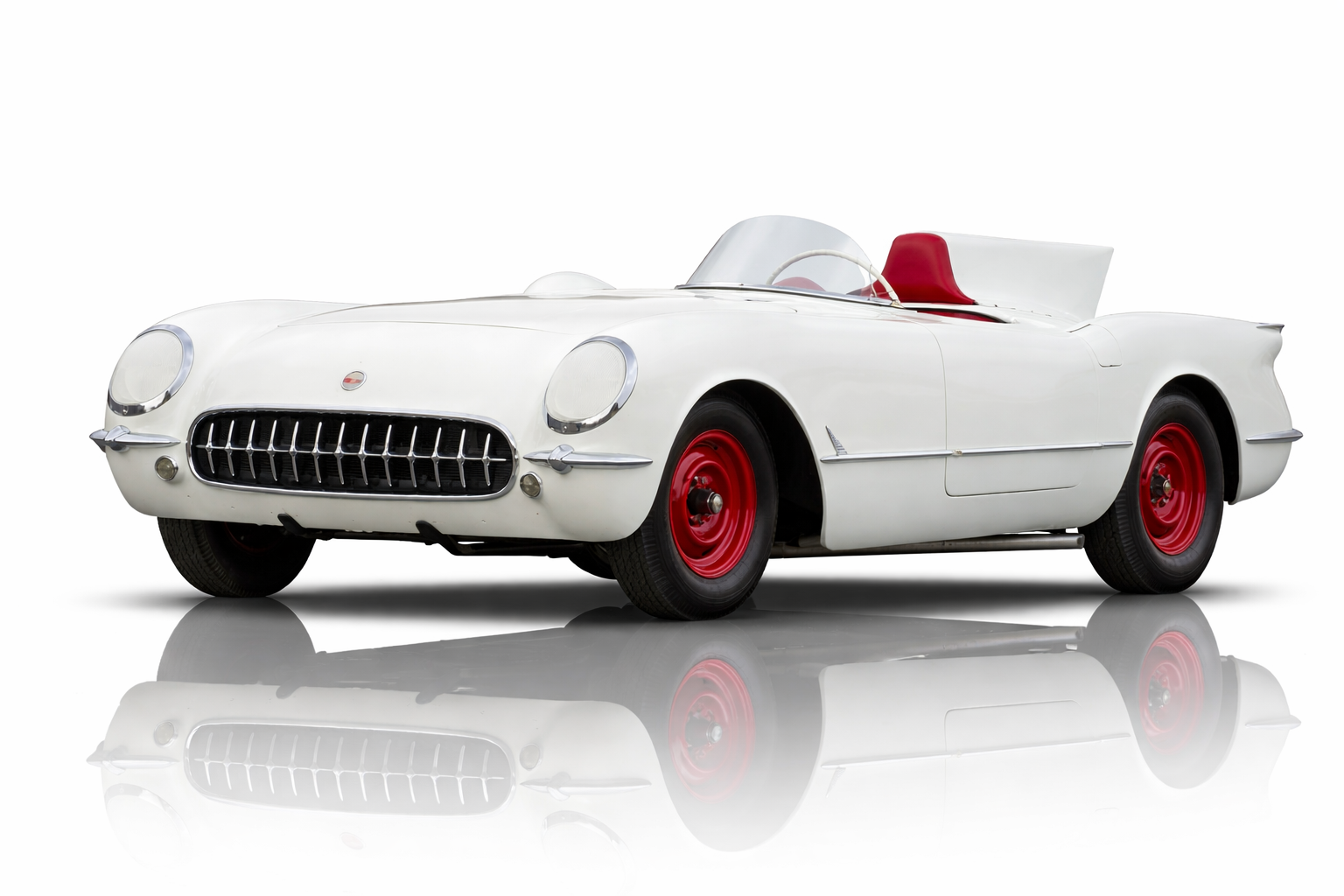
    Colors, Trims, and That Famous Wheel Cover

    For 1954, Chevrolet made an important refinement to the Corvette’s appearance and comfort by introducing canvas convertible tops in tan and beige. The change replaced the black fabric used on the inaugural 1953 cars, giving the Corvette a lighter, more European-inspired look that paired beautifully with colors like the Pennant Blue example shown here. This subtle update was part of a wave of thoughtful improvements in 1954 that helped transform the Corvette from a show-car curiosity into a more sophisticated and appealing production sports car. (Image courtesy of RK Motors)
    For 1954, Chevrolet made an important refinement to the Corvette’s appearance and comfort by introducing canvas convertible tops in tan and beige. The change replaced the black fabric used on the inaugural 1953 cars, giving the Corvette a lighter, more European-inspired look that paired beautifully with colors like the Pennant Blue example shown here. This subtle update was part of a wave of thoughtful improvements in 1954 that helped transform the Corvette from a show-car curiosity into a more sophisticated and appealing production sports car. (Image courtesy of RK Motors)

    For 1954, Chevrolet finally let Corvette buyers color outside the Polo White lines. After an inaugural year where every car left Flint in white with a red interior, the second-year model introduced genuine variety to the palette. Four exterior colors were officially offered—Polo White, Pennant Blue, Sportsman Red, and Black—and production skewed heavily toward the familiar. Estimates suggest that of the 3,640 Corvettes assembled in St. Louis, approximately 3,230 were still painted Polo White. Pennant Blue accounted for around 300 cars, Sportsman Red for roughly 100, and Black for an astonishingly rare four units, making them among the most elusive early Corvettes in existence.

    Adding to the intrigue, a period Chevrolet paint bulletin referenced Metallic Green and Metallic Bronze as available hues, though no verifiable evidence has surfaced that these were ever built in regular production. If they existed, they were likely experimental or pilot finishes rather than true catalog offerings.

    Shown here in Sportsman Red, this 1954 Corvette represents one of the rarest hues offered in the car’s sophomore year. Of the 3,640 Corvettes built in St. Louis, it’s estimated that only about 100 were finished in this striking shade—an eye-catching alternative to the overwhelmingly popular Polo White. Paired with a vivid red interior and beige canvas top, Sportsman Red cars radiated energy and optimism, capturing the bold spirit Chevrolet wanted America’s sports car to project. Today, survivors in this color are prized not just for their beauty, but for their scarcity, standing out as vivid reminders of Corvette’s formative years. (Image courtesy of bringatrailer.com)
    Shown here in Sportsman Red, this 1954 Corvette represents one of the rarest hues offered in the car’s sophomore year. Of the 3,640 Corvettes built in St. Louis, it’s estimated that only about 100 were finished in this striking shade—an eye-catching alternative to the overwhelmingly popular Polo White. Paired with a vivid red interior and beige canvas top, Sportsman Red cars radiated energy and optimism, capturing the bold spirit Chevrolet wanted America’s sports car to project. Today, survivors in this color are prized not just for their beauty, but for their scarcity, standing out as vivid reminders of Corvette’s formative years. (Image courtesy of bringatrailer.com)

    Interior and trim combinations were just as telling. Pennant Blue cars came with a tan (beige) cockpit—an elegant break from the fiery red that was otherwise mandatory on Polo White, Sportsman Red, and Black examples. All soft tops were finished in beige canvas, a subtle but deliberate departure from the stark black fabric used in 1953. Together, these touches hinted at a European influence, bringing warmth and sophistication to Corvette’s youthful, fiberglass form.

    The 1954 Corvette’s interior reflected Chevrolet’s attempt to balance show-car flair with everyday usability. The cockpit featured a full array of aircraft-inspired gauges clustered ahead of the driver, including a large, semi-circular speedometer and six auxiliary dials that gave the dashboard a purposeful look. Chrome-ringed knobs and pushbuttons echoed contemporary appliance design, underscoring the car’s modernist appeal. The bucket-style seats, stitched with vertical pleats, sat low in the fiberglass tub and provided a surprisingly intimate feel for a wide American roadster. Though trim choices were limited—red was paired with most exterior colors while Pennant Blue received beige—the execution was upscale for Chevrolet, setting Corvette apart from the brand’s sedans. More than just a place to sit, the ’54 cockpit was a statement: sporty, focused, and unlike anything else in GM’s stable. (Image courtesy of RK Motors)
    The 1954 Corvette’s interior reflected Chevrolet’s attempt to balance show-car flair with everyday usability. The cockpit featured a full array of aircraft-inspired gauges clustered ahead of the driver, including a large, semi-circular speedometer and six auxiliary dials that gave the dashboard a purposeful look. Chrome-ringed knobs and pushbuttons echoed contemporary appliance design, underscoring the car’s modernist appeal. The bucket-style seats, stitched with vertical pleats, sat low in the fiberglass tub and provided a surprisingly intimate feel for a wide American roadster. Though trim choices were limited—red was paired with most exterior colors while Pennant Blue received beige—the execution was upscale for Chevrolet, setting Corvette apart from the brand’s sedans. More than just a place to sit, the ’54 cockpit was a statement: sporty, focused, and unlike anything else in GM’s stable. (Image courtesy of RK Motors)

    One of the most distinctive cues for 1954 lay at each corner of the car. Period brochures and GM Museum specifications describe “full-size chrome disks with simulated hubs.” These wheel covers, turbine-like in design, incorporated faux knock-off centers that mimicked competition hardware. They were pure theater—racing style without racing function—but they contributed greatly to Corvette’s allure at the curb. In a car still bound to a two-speed automatic transmission and a warmed-up sedan engine, such dress-up details underscored what the Corvette was striving to be: America’s sports car, even if the engineering hadn’t fully caught up to the ambition.

    Price, Options, and a Marketing Mirage

    Chevrolet cut the base price to $2,774 for 1954 to broaden the Corvette’s appeal, then sprinkled the order form with à-la-carte extras: directionals ($16.75), a signal-seeking AM radio ($145.15), a washer ($11.85), courtesy lights ($4.05), even a parking-brake alarm ($5.65). On paper, Powerglide showed up as a $178.35 option; in practice, it appeared on every car. Add the popular equipment most customers expected, and the real-world price landed much higher than the headline figure—fuel for the notion that the Corvette cost more than it looked, without delivering the ammunition (a manual gearbox, for instance) that purists demanded.
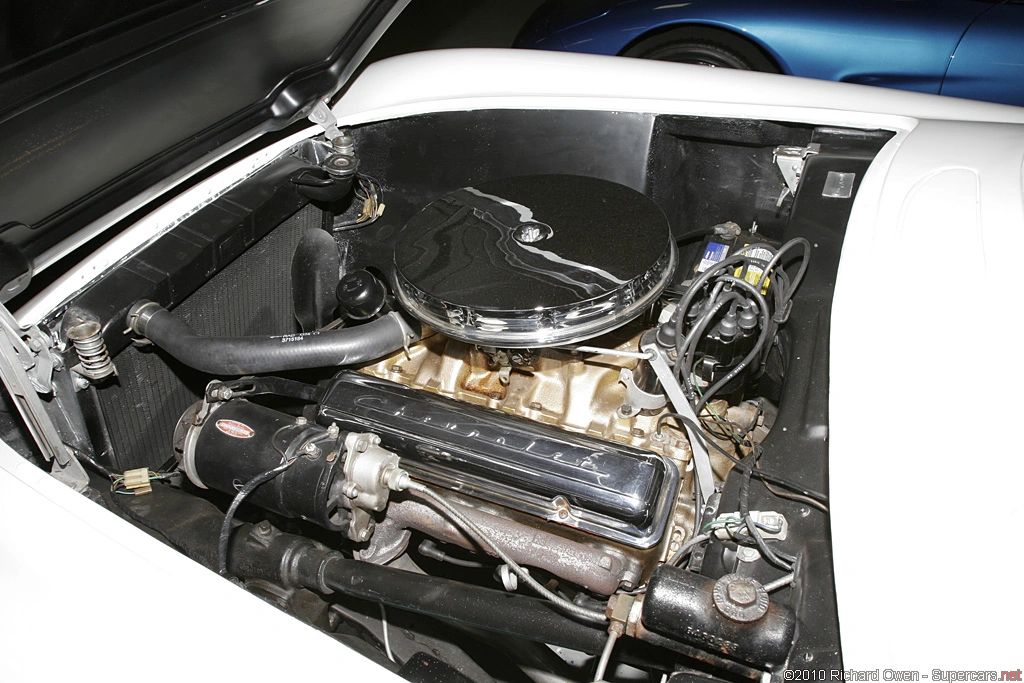
    On the Road: A Car Caught Between Worlds

    This period flyer from Ted Hill Chevrolet in Raytown, Missouri captures the excitement surrounding the arrival of the 1954 Corvette. Dealers leaned into Corvette’s image as “America’s Number 1 Sports Car,” billing it as a dream car that customers could not only see but now actually buy—something not possible during its Motorama debut just a year earlier. The artwork shows an early illustration of the roadster, complete with its signature toothy grille, flowing fenders, and whitewall tires, drawing attention to its exotic fiberglass body and sporty two-seat layout. For small-town Chevrolet dealers, promotions like this were a chance to showcase GM’s halo car, a machine designed to lure people into the showroom with its glamour and novelty, even if only a handful of customers would ultimately drive one home.
    This period flyer from Ted Hill Chevrolet in Raytown, Missouri captures the excitement surrounding the arrival of the 1954 Corvette. Dealers leaned into Corvette’s image as “America’s Number 1 Sports Car,” billing it as a dream car that customers could not only see but now actually buy—something not possible during its Motorama debut just a year earlier. The artwork shows an early illustration of the roadster, complete with its signature toothy grille, flowing fenders, and whitewall tires, drawing attention to its exotic fiberglass body and sporty two-seat layout. For small-town Chevrolet dealers, promotions like this were a chance to showcase GM’s halo car, a machine designed to lure people into the showroom with its glamour and novelty, even if only a handful of customers would ultimately drive one home.

    Period tests and owner recollections give the 1954 Corvette a dual personality. Driven within its envelope, the car was sweet-natured and robust—the Blue Flame six-cylinder engine was torquey and tractable, the ride compliant, the steering light. Push harder and you bumped into the limits of drum brakes, recirculating-ball steering, and a two-speed automatic that blunted the car’s fervor. Against European rivals—a Jaguar XK-series with a four-speed and disc-brake development on the horizon—the Corvette seemed eager but under-armed. The museum’s period spec sheet leaned into romance: “For swift acceleration, hill climbing, and cruising, there’s nothing quite like the Chevrolet Corvette—and it handles like a dream.” It’s advertising poetry, yes, but it also captures why owners loved them.
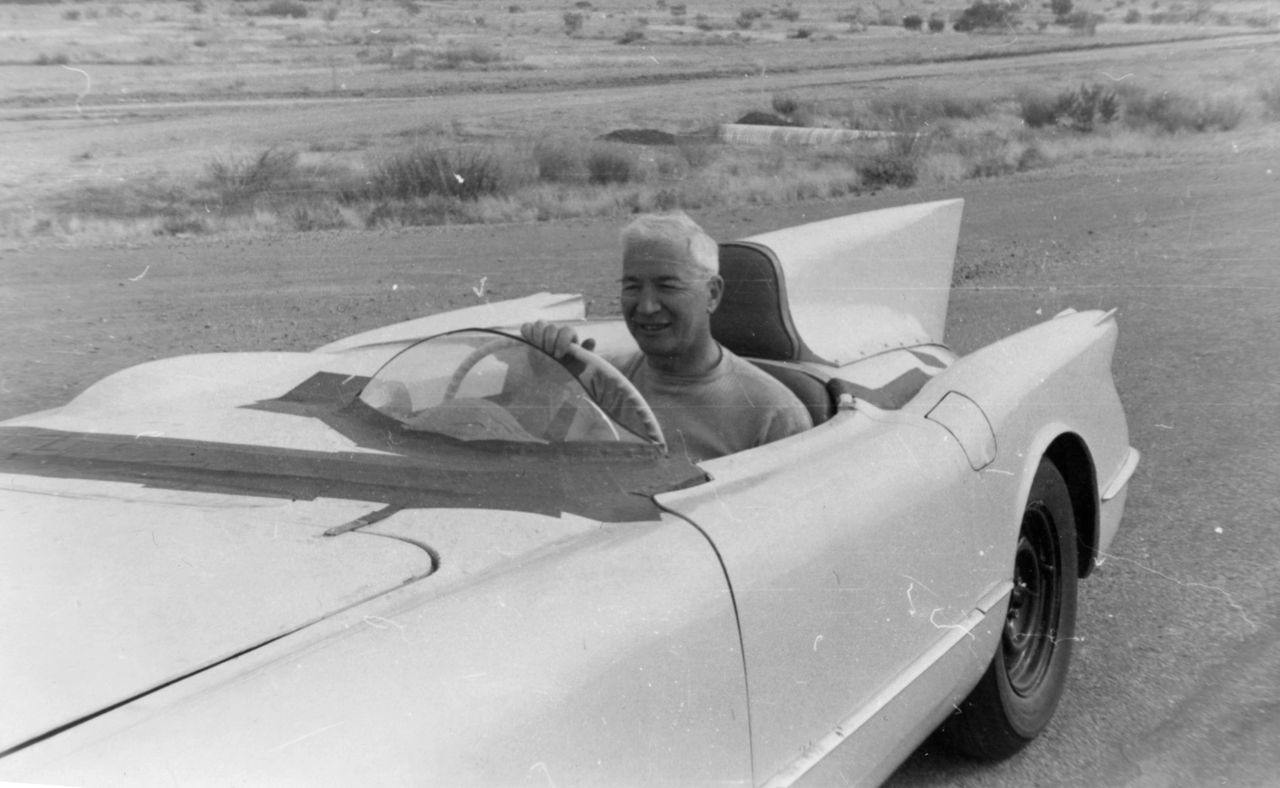
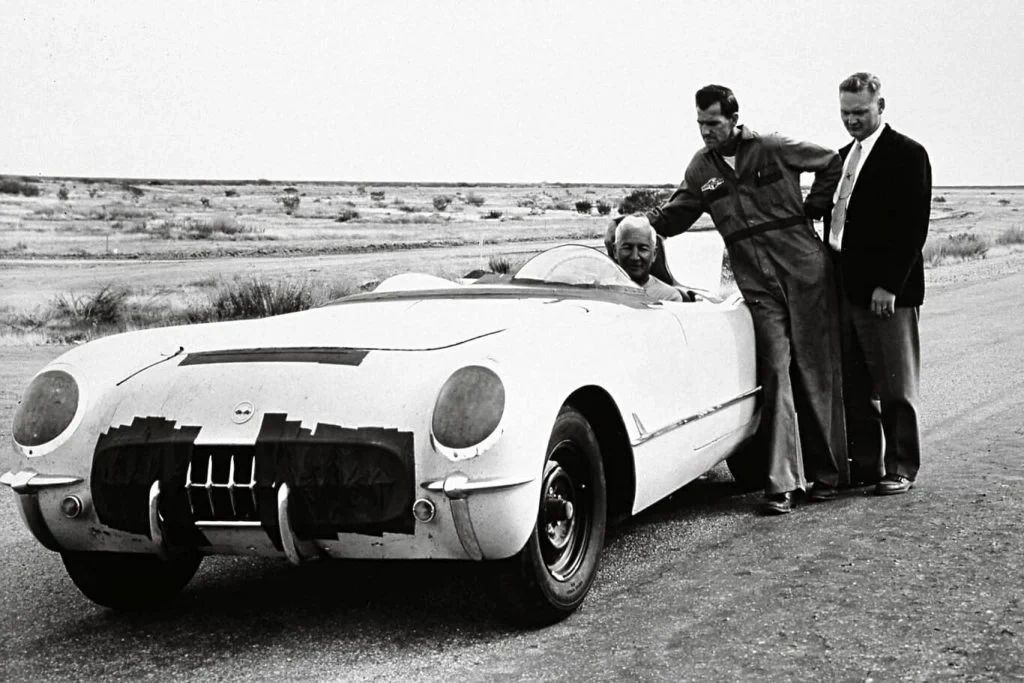
    The Motorama’s “Corvette Family”: Nomad, Corvair, and the Hardtop Convertible-Coupe

    If you want to understand the 1954 Corvette, you have to stand beside it on the Motorama floor that year, because Chevrolet didn’t arrive with just a single roadster. It brought an idea, expressed in three distinct – and distinctly different – ways.

    1954 Corvette Nomad
    1954 Corvette Nomad

    Corvette Nomad (1954). Imagine the ’53/’54 Corvette’s front clip married to a lean, pillarless two-door wagon body with a sloping roof and wraparound rear glass. That was the Nomad, a Corvette-based dream car meant to test whether America might accept a sports-wagon. While the V-8-powered, steel-bodied 195557 Chevrolet Nomad that followed wasn’t a Corvette structurally, the show car’s concept—sport meets utility, light on its feet—came right out of the Corvette’s vocabulary, and Carl Renner was one of the voices translating that vocabulary into form.

    1954 Corvette Corvair
    1954 Corvette Corvair

    Corvette Corvair (1954). Not the later rear-engine compact—this Corvair was a fastback Corvette, a sensuous coupe with a flowing roofline that read like a splash of Turin in Detroit’s ink. Revealed at the ’54 Motorama, it explored European grand-tourer proportions on Corvette running gear, suggesting how a closed Corvette might look and feel. Its very name (a portmanteau of Corvette and Bel-air) signaled Chevrolet’s intent to fuse its halo sports car with mainstream glamour.

    1954 Corvette Hardtop
    1954 Corvette Hardtop

    Corvette Hardtop “Convertible-Coupe. The third piece was subtler: a mildly modified Corvette wearing a prototype detachable hardtop, trumpeted in Motorama copy for giving the sports car “all-weather utility.” It foreshadowed the bolt-on hardtops that customers would come to expect later in the C1 years, a practical accessory born on a dream-car stage.

    Together, those three showpieces told the audience—and GM executives—what “Corvette” could become: not a single car, but a design language and a mechanical toolkit flexible enough to shape wagons, fastbacks, and fair-weather roadsters. In a season when the production Corvette was finding its feet, the Motorama family stood as an exuberant promise of tomorrow.

    Numbers, Serial Plates, and What the Factory Saw

    1954 Corvette VIN (Vehicle Identification Number) Tag, with the S (fourth character from left) indicating the car was assembled in St. Louis.
    1954 Corvette VIN (Vehicle Identification Number) Tag, with the S (fourth character from left) indicating the car was assembled in St. Louis.

    Chevrolet built 3,640 Corvettes for 1954—far fewer than St. Louis was tooled to produce, but a leap beyond the 300 hand-built 1953s. The serial numbers (VINs) run from E54S001001 upward, consistent with Chevrolet’s format for the series, year, assembly plant (S for St. Louis), and sequence. Under the hood sat the Blue Flame’s stamped identity and a stout Hotchkiss drive to a 3.55:1 hypoid rear axle; the chassis specs read like time-capsule gospel: X-member-boxed frame, 102-inch wheelbase, 11-inch drums, and those outrigger rear springs.

    If the production total disappointed executives hoping to flood the market, the car itself was more unified than before. It started, ran, and idled better. It weathered everyday use with fewer quirks. It presented itself with more polish and more choice, especially in paint. The idea of Corvette—that American industry could build a glamorous, modern sports car using mass-manufacturing methods and materials—had survived its wobbly infancy.

    The 1954 Experience: How It Felt to Live With One

    This photo shows rows of brand-new 1954 Corvettes staged in the St. Louis storage lot, awaiting shipment to dealers across the country. At first glance, the cars appear to be wearing white protective tops, but those are actually paper shipping covers designed to shield the interiors during transport. The image underscores the scale of Corvette’s second year—production had jumped from just 300 hand-built cars in Flint to over 3,600 units in St. Louis. In the background, you can see Chevrolet passenger cars streaming out of the adjacent assembly building, a reminder that Corvette was still very much the outlier: a fiberglass-bodied sports car being built alongside sedans and wagons destined for everyday America.
    This photo shows rows of brand-new 1954 Corvettes staged in the St. Louis storage lot, awaiting shipment to dealers across the country. At first glance, the cars appear to be wearing white protective tops, but those are actually paper shipping covers designed to shield the interiors during transport. The image underscores the scale of Corvette’s second year—production had jumped from just 300 hand-built cars in Flint to over 3,600 units in St. Louis. In the background, you can see Chevrolet passenger cars streaming out of the adjacent assembly building, a reminder that Corvette was still very much the outlier: a fiberglass-bodied sports car being built alongside sedans and wagons destined for everyday America.

    Ask owners and you’ll hear the same refrain: a ’54 is pleasant, even lovable, to live with if you drive it as the engineers meant you to. The engine’s three carburetors need to sing in close harmony for the best idle and throttle response; once they do, the car has an easy rhythm—peel away from a light on a smooth wash of torque, settle to a quiet lope at 50, let the wide-open dashboard and wraparound glass make the world feel bigger. The drums want a measured foot; the steering, a calm hand. It is a machine from a moment when long hoodlines and low cowl heights promised speed as much by suggestion as by stopwatch.

    That dissonance—appearance versus specification—sat at the heart of the ’54’s reception. The car looked like a Le Mans fantasy but wore a two-speed automatic. At the same time, it embodied a version of American modernity no European could match: a plastic body you could repair with cloth and resin, a sensuous shape untroubled by steel dies, a promise that performance and industrial scale could coexist. The museum’s brochure-derived copy hits the note perfectly: “For swift acceleration, hill climbing, and cruising, there’s nothing quite like the Chevrolet Corvette—and it handles like a dream.” It’s marketing, yes. But it’s also how a good one feels on a summer night.

    Why 1954 Matters

    “What might have been” is parked right here: the Corvette Corvair fastback and Nomad sport wagon—Motorama teasers that hinted at a full Corvette family if the car had sold. But 1954 was a wobble: Chevrolet built 3,640 Corvettes and roughly 1,100 remained unsold by New Year’s Day 1955, proof that a Blue Flame six, Powerglide, and a premium price weren’t lighting up buyers. Expansion plans stalled, and GM redirected the Nomad’s look to the 1955 Bel Air instead of a Corvette-based wagon, while the Corvair fastback stayed a one-off (its name later recycled for Chevy’s 1960 compact). What kept the program alive was a pivot to performance—Zora Arkus-Duntov’s late-1953 memo urging Chevy to court hot-rodders with engineered speed parts and real power. Leadership listened, and the 265-cid small-block V-8 arrived for 1955, changing Corvette’s trajectory and, eventually, its fortunes. (Image courtesy of GM Media LLC)
    “What might have been” is parked right here: the Corvette Corvair fastback and Nomad sport wagon—Motorama teasers that hinted at a full Corvette family if the car had sold. But 1954 was a wobble: Chevrolet built 3,640 Corvettes and roughly 1,100 remained unsold by New Year’s Day 1955, proof that a Blue Flame six, Powerglide, and a premium price weren’t lighting up buyers. Expansion plans stalled, and GM redirected the Nomad’s look to the 1955 Bel Air instead of a Corvette-based wagon, while the Corvair fastback stayed a one-off (its name later recycled for Chevy’s 1960 compact). What kept the program alive was a pivot to performance—Zora Arkus-Duntov’s late-1953 memo urging Chevy to court hot-rodders with engineered speed parts and real power. Leadership listened, and the 265-cid small-block V-8 arrived for 1955, changing Corvette’s trajectory and, eventually, its fortunes. (Image courtesy of GM Media LLC)

    The 1954 Corvette is less about absolute numbers than about trajectory. It is the year GM proved it could build Corvettes consistently—panel fits, wiring, drivability—rather than merely display them. It is the year Corvette’s creative diaspora spread across the Motorama floor—Nomad, Corvair, Convertible-Coupe—and showed Chevrolet leadership (and the buying public) that the Corvette idea had legs. And it is the year Duntov’s memo, channeled through Olley’s engineering and Cole’s authority, began to redirect the car’s destiny toward small-block thunder.

    Some of the changes were humble: a choke lever moved, a hood latch simplified, a wire harness upgraded. Some were strategic: a broader color chart; an options sheet that let dealers tailor the story; and a steady cadence of running fixes that turned customer complaints into engineering targets. Many were invisible but essential, the kind of productionized refinements that never make an ad but save a reputation.

    Epilogue: The Glow Before the Spark

    This sleek 1954 Chevrolet Corvette in rare Onyx Black shows just how far “America’s Sports Car” had come in only its second year. Unlike the Polo White–only 1953s, Chevrolet expanded the Corvette’s palette in ’54, making this black-on-red combination one of the most striking of the early cars. Beneath the hood remained the familiar 235ci Blue Flame six with triple Carter carbs, paired to the Powerglide automatic — but subtle refinements, from re-routed exhaust outlets to upgraded wiring, made the car more livable. Today, examples like this stand as elegant reminders of Corvette’s formative years, when Chevrolet was still convincing the public that an American sports car truly belonged on the road.
    This sleek 1954 Chevrolet Corvette in rare Onyx Black shows just how far “America’s Sports Car” had come in only its second year. Unlike the Polo White–only 1953s, Chevrolet expanded the Corvette’s palette in ’54, making this black-on-red combination one of the most striking of the early cars. Beneath the hood remained the familiar 235ci Blue Flame six with triple Carter carbs, paired to the Powerglide automatic — but subtle refinements, from re-routed exhaust outlets to upgraded wiring, made the car more livable. Today, examples like this stand as elegant reminders of Corvette’s formative years, when Chevrolet was still convincing the public that an American sports car truly belonged on the road.

    History loves turning points. The Corvette’s first, in truth, came between model years: while ’54 was on sale, Duntov was writing, engineers were iterating, and Earl was staging the Motorama pageant that kept public desire alive. The small-block V-8 of 1955 would be the spark; 1954 was the glow that kept the fire from going out.

    And that is the ’54 Corvette’s quiet heroism. In St. Louis, in winter, in a plant sized for a future that hadn’t arrived, Chevrolet hammered the show car’s brash promise into a real car. The team did it with fiberglass cloth and Carter jets, with an X-braced frame and tan top bows, with a dozen fixes nobody noticed and two or three showstoppers everyone did. If you listen closely, you can hear the voices in the background: Earl, pointing toward the spotlight. Duntov, growling about a V-8 and racing. Olley, insisting on fundamentals. Renner, softening a line. Morrison, reminding everyone that the material could take it. Together, they kept the flame alive long enough for the Corvette to become what it was always meant to be.

    The 1954 Chevrolet Corvette marked the model’s first true step from concept to production reality. With increased output from its Blue Flame six, expanded color choices, and subtle refinements to fit and finish, 1954 showed Chevrolet learning in real time—testing whether America was ready to embrace a homegrown sports car and quietly laying the groundwork…

  • 1953 Corvette Overview

    1953 Corvette Overview

    On January 17, 1953, Chevrolet rolled its EX-122 two-seat “dream car” onto the stage at GM’s glittering Motorama in New York’s Waldorf-Astoria, and the effect was electric. Beneath the chandeliers of that storied ballroom, America caught its first glimpse of a fiberglass-skinned roadster unlike anything to ever wear a bowtie. The moment had the pulse of theater—bright lights, orchestras, choreographed models striding past the car as if it were haute couture. Crowds queued in the bitter January cold just for a chance to press forward and see the future up close. GM brass, led by interim president Harlow Curtice, stood at the receiving line as if presenting royalty. By the end of that first day, an estimated 50,000 people had filed through to marvel at the Corvette prototype. And as the Motorama caravan crisscrossed the nation—Detroit, Miami, Los Angeles, San Francisco—the tally would swell past a million Americans, all seduced by the idea that Chevrolet had conjured not just a car, but a dream on wheels.

    • Press excerpt (1953): Popular Mechanics, looking ahead in mid-1953, teased readers about Chevrolet’s coming sports car: “Chevrolet’s newest model, the two-seater sports car, the Corvette… is expected to have a terrific impact… on the whole industry.”

    Greenlit Before the Applause

    Ed Cole (left) and Thomas Keating inspect the Corvette concept in the lobby of the Waldorf Astoria Hotel. The synergy of Cole, Keating, and Harley Earl all but guaranteed that Chevrolet’s new sports car would be the hot topic of the 1953 Motorama Auto Show. (Photo Courtesy General Motors LLC)
    Ed Cole (left) and Thomas Keating inspect the Corvette concept in the lobby of the Waldorf Astoria Hotel. The synergy of Cole, Keating, and Harley Earl all but guaranteed that Chevrolet’s new sports car would be the hot topic of the 1953 Motorama Auto Show. (Photo Courtesy General Motors LLC)

    Behind the velvet curtain, the decision had already been made. Chevrolet general manager Tom Keating and GM’s newly anointed president Harlow Curtice had quietly given the green light to build the car even before the first Motorama spotlight hit its fiberglass curves. The rapture of the crowd didn’t change their minds—it simply lit the fuse. What followed was nothing short of unprecedented: within just six months, Chevrolet transformed a show-stopping dream car into a production reality. On June 30, 1953, in a corner of GM’s Flint assembly plant, the first production Corvette rolled into the light. It wasn’t born on a high-volume line but in a kind of handcrafted ritual, each body laid up in fiberglass, each piece assembled with the urgency of a moonshot. By year’s end, only 300 Corvettes would exist—rare, fragile, almost experimental machines that announced not just a new model, but the arrival of America’s sports car.

    • Press excerpt (1953): From a period newspaper report reprinted by Click Americana: “Chevrolet presented the Corvette as the first plastic-bodied automobile ever built by mass production methods.”

    Why Fiberglass?

    Chevrolet didn’t choose glass-reinforced plastic (GRP) for style alone. Fiberglass let GM avoid the time and capital for steel stamping dies, enabling quick, low-volume production with dramatic surfacing—and corrosion resistance to boot. But the learning curve was steep. Bodies arrived from Molded Fiber Glass Company (Ashtabula, Ohio) as subcomponents that workers jigged, bonded, and finished by hand; early panel fit and surface quality varied, and production practice evolved on the fly.

    The fiberglass assemblies of the 1953 Corvette as produced by the Molded Fiber Glass Company in Ashtabula, Ohio.
    The fiberglass assemblies of the 1953 Corvette as produced by the Molded Fiber Glass Company in Ashtabula, Ohio.

    Period figures frequently cited by historians: 46 separate GRP pieces formed each 1953 body before bonding into larger assemblies. While this detail is widely reported in marque histories and museum write-ups, it also appears in contemporary-style retrospectives about MFG’s role in the program.

    • Press excerpt (1953): The Racine Journal Times (via Click Americana) explained the new process to readers: “Body parts are ‘cured’ into panels in 61 separate molds. The parts are then bonded and riveted together to form a body shell.” (Reprinted 10/2/1953.)

    Note on numbers: The “46 pieces” describes the number of body sections assembled; the “61 molds” quoted above refers to the number of tooling molds used to cure those sections, which can exceed the number of final bonded pieces. Both reflect the intense handwork behind early production.

    Hand-built in Flint

    One of the 1953 Motorama prototype cars is driven by Zora Arkus-Duntov at the Milford Proving Grounds. Early road testing allowed General Motors the opportunity to fully evaluate the Corvette in advance of production later that same year. As seen here, Duntov pushed the car to its limits (and beyond!) to measure the durability of its suspension under extreme driving conditions. (Photo Courtesy General Motors LLC)
    One of the 1953 Motorama prototype cars is driven by Zora Arkus-Duntov at the Milford Proving Grounds. Early road testing allowed General Motors the opportunity to fully evaluate the Corvette in advance of production later that same year. As seen here, Duntov pushed the car to its limits (and beyond!) to measure the durability of its suspension under extreme driving conditions. (Photo Courtesy General Motors LLC)

    The first two Flint-built cars served as engineering test units and were later destroyed; the remaining cars were distributed in limited fashion while Chevrolet refined processes and prepared a dedicated line in St. Louis for 1954. Every 1953 car was Polo White with Sportsman Red interior and a black canvas top.

    To simplify assembly, trim and equipment were standardized. Although a signal-seeking AM radio and heater were listed as options, all cars received both; fiberglass’s non-conductivity also allowed Chevrolet to hide the radio antenna in the trunk lid—a neat party trick on an all-plastic body that period restorers and marque specialists still discuss today.

    Styling: American jet-age sleek

    The grille "teeth" of the 1953 Corvette.
    The grille “teeth” of the 1953 Corvette.

    Harley Earl’s team penned a low, flowing form—grille “teeth,” faired rear fenders, a wraparound windshield—that nodded to European roadsters without abandoning American drama. The Motorama prototype’s white finish was a favorite of Earl’s for concept cars, as it highlighted complex curves under show lights and photography.

    • Press excerpt (1953): A Talk-of-the-Town piece in The New Yorker captured the Motorama’s aura—Buick’s “Wildcat” and other dream cars shared the stage as GM executives greeted celebrities—underscoring the glitzy context into which the Corvette was born.

    Mechanical reality: Powerglide and the Blue Flame Six

    The 1953 Corvette was powered by a "Blue Flame" inline-six engine, not a V8. This engine, borrowed from Chevrolet's sedan lineup and modified, produced 150 horsepower. While it was an inline-six, it was a step up from the standard 235 cubic inch "Stovebolt" engine, thanks to upgrades like a high-compression cylinder head, a more aggressive camshaft, and three side-draft carburetors.
    The 1953 Corvette was powered by a “Blue Flame” inline-six engine, not a V8. This engine, borrowed from Chevrolet’s sedan lineup and modified, produced 150 horsepower. While it was an inline-six, it was a step up from the standard 235 cubic inch “Stovebolt” engine, thanks to upgrades like a high-compression cylinder head, a more aggressive camshaft, and three side-draft carburetors.

    Under the long hood beat Chevrolet’s 235-cu-in Blue Flame straight-six, hot-rodded with a higher-lift cam, solid lifters, dual valve springs, 8.0:1 compression, and triple Carter YH side-draft carburetors. Output: 150 hp at 4,500 rpm—respectable for a Chevrolet six, but not exotic by European standards. Every 1953 car used the two-speed Powerglide automatic; a manual gearbox wouldn’t arrive until 1955.

    Period and retrospective tests peg performance around 0–60 mph in ~11–11.5 seconds, ¼-mile ~17.9 sec @ ~77 mph, and top speed ~108 mph.

    • Press excerpt (1953): Chevrolet’s own positioning (again via a 1953 news reprint) set expectations: GM’s Keating said the Corvette “is not a racing car in the accepted sense that a European car is a race car.”

    Selling sizzle (and scarcity)

    Chevrolet used the 1953 Corvette as a "prestige halo" car to promote the Chevrolet brand.  While the 1953 Corvette was not available to the public, it helped promote the rest of their product lineup and increase vehicle sales.
    Chevrolet used the 1953 Corvette as a “prestige halo” car to promote the Chevrolet brand. While the 1953 Corvette was not available to the public, it helped promote the rest of their product lineup and increase vehicle sales.

    Chevrolet treated the ’53 as a prestige halo, initially rotating cars through regional showrooms and leaning on VIP allocations to build mystique—mayors, local celebrities, industrialists. The strategy generated chatter but also frustration: the public could see a Corvette yet not purchase one, and some early opinion leaders criticized the car’s “jet-age” styling, modest performance, side-curtain weather sealing, and price ($3,498).

    • Press excerpt (1953): A period news report reprinted by Click Americana hyped the fundamentals—“high power-to-weight ratio, low center of gravity, and balanced weight distribution”—but also spelled out the boulevard-friendly kit: Powerglide, radio, heater, clock.

    Production Numbers

    • Location & date: Flint, Michigan; first car built June 30, 1953.
    • Volume: 300 hand-built cars for 1953; the first two were engineering cars later destroyed.
    • Spec uniformity: All Polo White / Sportsman Red / black top. Radio and heater functionally standard.

    The moment that changed Corvette’s future

    The EX-122 Corvette Concept Car on display at the Waldorf Astoria Hotel in New York City in January, 1953. (Image courtesy of GM Media LLC.)
    The EX-122 Corvette Concept Car on display at the Waldorf Astoria Hotel in New York City in January, 1953. (Image courtesy of GM Media LLC.)

    One Motorama attendee—Zora Arkus-Duntov—famously admired the Corvette’s looks but lamented its mechanicals, then wrote Ed Cole and soon joined Chevrolet (May 1, 1953). His memos and engineering leadership would drive the car toward true high performance, most dramatically with the arrival of the small-block V-8 in 1955.

    Beyond the myth: What the ’53 really was

    The 1953 Corvette wasn’t a lap-time champion, nor was it priced like a bare-bones British roadster. It was a bold manufacturing experiment, a halo style statement, and a deliberate brand-builder for Chevrolet. The hand-built Flint cars laid the groundwork for a far more ambitious 1954 program in St. Louis and signaled that America would have a home-grown sports car—even if the formula needed several quick revisions.

    Quick-reference technical summary (1953)

    • Engine: 235-cu-in OHV “Blue Flame” inline-six, 150 hp @ 4,500 rpm; triple Carter YH carbs; dual exhaust.
    • Transmission: Powerglide 2-speed automatic (only).
    • Chassis: Independent “Knee-Action” front; solid rear axle with semi-elliptic leaf springs.
    • Body: Glass-reinforced plastic (fiberglass) bonded shell; body assembled from ~46 pieces; production used 61 molds for panels per period reporting.
    • Performance (typical): 0–60 mph ~11–11.5 s; ¼-mile ~17.9 s @ 77 mph; 108 mph top speed.
    • Price: $3,498 list.
    • Colors: Polo White exterior / Sportsman Red interior only.
    • Production: 300; Flint, MI; first car June 30, 1953.

    Motorama-era press & period voices (short excerpts)

    • Popular Mechanics (June 1953): “Chevrolet’s newest model, the two-seater sports car, the Corvette… is expected to have a terrific impact… on the whole industry.”
    • Racine Journal Times (Oct. 2, 1953; via Click Americana): “Chevrolet… revealed for the first time the company’s facilities for the production of reinforced plastic bodies.”
    • Racine Journal Times (Oct. 2, 1953; via Click Americana): “The Corvette isn’t a race car,” said Chevrolet’s T. H. Keating—distancing it from European competition focus.
    • The New Yorker (Jan. 31, 1953): A “seven-day capacity run” at the Waldorf, with GM executives greeting celebrities amid dream cars like Buick’s Wildcat—setting the glamorous stage for Corvette’s debut.

    Legacy

    While initial reactions to the original Corvette were mixed when first introduced, today the 1953 Corvette is a highly sought-after model by collectors around the globe.
    While initial reactions to the original Corvette were mixed when first introduced, today the 1953 Corvette is a highly sought-after model by collectors around the globe.

    If the 1953 Corvette asked America to buy into a vision, customers answered “show us more.” Chevrolet did—quickly—adding V-8 power and manual transmissions within two years. But the spark was here: an American sports car, built with unconventional materials, wearing unforgettable style. Today the 1953s are blue-chip collectibles, rolling artifacts from the hectic months when GM turned a show car into a reality, one bonded fiberglass panel at a time.

    Introduced in 1953, the Corvette marked Chevrolet’s bold entry into the sports car world. Hand-built in Flint and finished only in Polo White, it blended fiberglass innovation with American optimism—laying the foundation for a performance icon that would define generations.

  • 1954-1955 Corvette EX-87 / #5951 “Test Mule”

    1954-1955 Corvette EX-87 / #5951 “Test Mule”

    The EX-87 was never intended to be a show car, nor was it born from the glamour-driven world of GM’s Motorama turntables. It did not wear dramatic chrome flourishes, nor did it preview a futuristic body style meant to dazzle the public. Instead, the EX-87 emerged quietly, almost anonymously, from Chevrolet Engineering—built not to inspire dreams, but to answer a far more fundamental question: Could the Corvette survive as a true performance machine?

    By 1954, the Corvette’s future was far from secure. Sales were lukewarm, the Blue Flame six-cylinder engine was widely regarded as underwhelming, and within General Motors there remained deep skepticism that an American-built sports car could—or should—compete with Europe’s established marques. Harley Earl had given Chevrolet a shape and a name, but shape alone would not save the car.

    As Harley Earl reflected on the Corvette’s early identity crisis, he was blunt about the limits of styling alone. You can’t sell a sports car on looks only,” Earl later explained when discussing the program’s early challenges. “It has to perform like one.”

    That belief increasingly aligned Earl with Duntov’s push for measurable performance, reinforcing the idea that the Corvette’s credibility would ultimately be earned on the road and the stopwatch, not the show stand.

    It was into this uncertain environment that the EX-87 was created.

    A Mule With a Mission

    The EX-87 began life as a 1954 production Corvette pulled from the line and reassigned as a full-time engineering test vehicle—a “mule” in the purest sense. Chevrolet Engineering assigned it the internal designation EX-87 to track its progress through an experimental powertrain program spearheaded by Ed Cole, who at the time was quietly laying the groundwork for what would become one of the most consequential engines in automotive history.

    Cole was not interested in incremental improvement. He believed Chevrolet’s future depended on a lightweight, compact V8 that could be produced economically and adapted across multiple platforms. “We needed an engine that would democratize performance,” Cole would later explain. “Power shouldn’t be exotic. It should be accessible.”

    What you’re looking at is the mechanical turning point that transformed the EX-87 from a Corvette-based experiment into a legitimate top-speed contender. The program initially relied on an early high-performance 265-ci small-block V8 rated at roughly 225 horsepower, but testing quickly revealed that it lacked the output needed to meet Zora Arkus-Duntov’s 150-mph objective. In response, the engine was progressively evolved—bored to approximately 307 cubic inches, fitted with Duntov’s high-lift camshaft, higher compression pistons, and extensively reworked cylinder heads—ultimately producing around 305 horsepower. In this final configuration, the EX-87 validated its purpose by achieving speeds as high as 163 mph, proving that Corvette performance limits were defined not by concept, but by ambition. (Image source: MotorTrend.com)
    What you’re looking at is the mechanical turning point that transformed the EX-87 from a Corvette-based experiment into a legitimate top-speed contender. The program initially relied on an early high-performance 265-ci small-block V8 rated at roughly 225 horsepower, but testing quickly revealed that it lacked the output needed to meet Zora Arkus-Duntov’s 150-mph objective. In response, the engine was progressively evolved—bored to approximately 307 cubic inches, fitted with Duntov’s high-lift camshaft, higher compression pistons, and extensively reworked cylinder heads—ultimately producing around 305 horsepower. In this final configuration, the EX-87 validated its purpose by achieving speeds as high as 163 mph, proving that Corvette performance limits were defined not by concept, but by ambition. (Image source: MotorTrend.com)

    The engine installed in the EX-87 was an early developmental version of that vision—an experimental small-block V8 initially targeted at 283 cubic inches. The Corvette was not chosen for prestige. It was selected because it offered something no other Chevrolet did: low weight, a fiberglass body, and a layout already suited to performance testing.

    At first, the EX-87’s work was strictly internal—hours of durability testing, cooling evaluations, and power validation. Had history taken a different turn, it might have remained nothing more than a footnote in GM’s engineering logs.

    But Zora Arkus-Duntov had other ideas.

    Zora’s Opportunity

    Zora Arkus-Duntov’s work on the EX-87 was less about spectacle and more about proof. Using the car as a rolling laboratory, he pushed Chevrolet’s small-block V8 beyond accepted limits, validating high-compression performance and sustained high-speed capability at a time when the Corvette’s future was far from secure. The EX-87 gave Zora something invaluable: data, confidence, and a tangible argument that the Corvette was capable of standing toe-to-toe with Europe’s best. In that sense, the car wasn’t just a test mule—it was a turning point. (Image courtesy of GM Media LLC.)
    Zora Arkus-Duntov’s work on the EX-87 was less about spectacle and more about proof. Using the car as a rolling laboratory, he pushed Chevrolet’s small-block V8 beyond accepted limits, validating high-compression performance and sustained high-speed capability at a time when the Corvette’s future was far from secure. The EX-87 gave Zora something invaluable: data, confidence, and a tangible argument that the Corvette was capable of standing toe-to-toe with Europe’s best. In that sense, the car wasn’t just a test mule—it was a turning point. (Image courtesy of GM Media LLC.)

    Duntov joined Chevrolet in 1953 with a singular obsession: proving that the Corvette could be a legitimate high-performance sports car. From the outset, he believed Ed Cole’s new V8 was far more than a convenient replacement for the Blue Flame six—it was a platform capable of sustained development, real measurement, and genuine competition. To Zora, the EX-87 represented more than an engine test bed. It was proof—waiting to be demonstrated—that the Corvette could stand shoulder to shoulder with Europe’s best.

    “I did not believe the Corvette lacked ability,” Duntov once said. “I believed it lacked opportunity.”

    He approached Ed Cole with a bold proposal: use the EX-87 to demonstrate, publicly and unequivocally, that a Corvette could achieve a top speed of 150 miles per hour. Cole, ever the pragmatist, immediately recognized the value. Performance numbers could silence critics far faster than styling sketches or sales projections.

    Captured during high-speed testing at the Arizona Proving Grounds, this image shows the Corvette EX-87 in its most critical role: a purpose-built test mule engineered to validate sustained top-speed performance. The car’s stripped windshield, improvised nose treatment, and minimal bodywork reflect its singular mission—cutting aerodynamic drag while evaluating the limits of Chevrolet’s experimental small-block V8. In this configuration, the EX-87 would ultimately record a verified top speed of 163 mph, an extraordinary figure for a mid-1950s American production-based sports car. The photograph underscores how empirical testing—not styling exercises—was reshaping the Corvette’s engineering trajectory. (Image source: GM Media LLC)
    Captured during high-speed testing at the Arizona Proving Grounds, this image shows the Corvette EX-87 in its most critical role: a purpose-built test mule engineered to validate sustained top-speed performance. The car’s stripped windshield, improvised nose treatment, and minimal bodywork reflect its singular mission—cutting aerodynamic drag while evaluating the limits of Chevrolet’s experimental small-block V8. In this configuration, the EX-87 would ultimately record a verified top speed of 163 mph, an extraordinary figure for a mid-1950s American production-based sports car. The photograph underscores how empirical testing—not styling exercises—was reshaping the Corvette’s engineering trajectory. (Image source: GM Media LLC)

    Cole approved the plan without hesitation. A second internal tracking number—#5951—was assigned to the car in the fall of 1955 as it was formally transferred into Duntov’s engineering division. From that moment forward, the EX-87 ceased to be merely an engine mule. It became a weapon.

    In the years that followed, Zora would continue to push those same boundaries—most famously in 1956, when he drove a modified Corvette to victory at the Pikes Peak Hill Climb, stunning both skeptics and GM leadership alike. That climb was not an isolated triumph, but a continuation of the philosophy first proven with EX-87: that Corvette performance was not theoretical—it simply needed to be unleashed.

    Engineering the Air

    The low, wraparound windshield fitted to the EX-87 was a deliberate aerodynamic tool, not a styling flourish. By reducing frontal area and smoothing airflow over the cockpit, it helped stabilize the car at sustained high speeds while minimizing turbulence around the driver—critical factors during record-attempt testing. Just as important, the windshield offered a controlled compromise between outright drag reduction and driver protection, allowing Zora Arkus-Duntov to push the car harder and longer than an open cockpit would permit. In the EX-87’s mission, visibility, stability, and survivability were inseparable from performance. (Image source: MotorTrend.com)
    The low, wraparound windshield fitted to the EX-87 was a deliberate aerodynamic tool, not a styling flourish. By reducing frontal area and smoothing airflow over the cockpit, it helped stabilize the car at sustained high speeds while minimizing turbulence around the driver—critical factors during record-attempt testing. Just as important, the windshield offered a controlled compromise between outright drag reduction and driver protection, allowing Zora Arkus-Duntov to push the car harder and longer than an open cockpit would permit. In the EX-87’s mission, visibility, stability, and survivability were inseparable from performance. (Image source: MotorTrend.com)

    Zora attacked the problem methodically. Speed, he understood, was as much about air as horsepower. His first modification was the addition of a full underpan beneath the chassis, smoothing airflow and reducing drag. Next came the windshield—removed entirely and replaced with a low, curved plexiglass windscreen that barely rose above the cowl.

    The enclosed cockpit of the EX-87 was engineered with a singular priority: control at extreme speed. By recessing the driver deeper within the bodywork and surrounding the cockpit with smooth, continuous surfaces, Chevrolet reduced aerodynamic disturbance while improving high-speed stability and driver endurance. The layout also allowed critical instrumentation to remain directly in the driver’s line of sight, reinforcing the car’s role as a data-gathering platform rather than a production prototype. In the EX-87, the cockpit was not about comfort—it was about precision, safety, and sustained high-velocity testing. (Image source: MotorTrend.com)
    The enclosed cockpit of the EX-87 was engineered with a singular priority: control at extreme speed. By recessing the driver deeper within the bodywork and surrounding the cockpit with smooth, continuous surfaces, Chevrolet reduced aerodynamic disturbance while improving high-speed stability and driver endurance. The layout also allowed critical instrumentation to remain directly in the driver’s line of sight, reinforcing the car’s role as a data-gathering platform rather than a production prototype. In the EX-87, the cockpit was not about comfort—it was about precision, safety, and sustained high-velocity testing. (Image source: MotorTrend.com)

    The passenger seat was sealed beneath a fiberglass tonneau cover, transforming the cockpit into a strictly single-occupant environment. Duntov also fabricated a headrest that extended rearward into a subtle tailfin, a feature conceived solely to improve directional stability at extreme speed rather than visual appeal.

    As Duntov would later explain when reflecting on his early Corvette work, “I was not interested in beauty. I was interested in results.” (source: Karl Ludvigsen, Corvette: America’s Sports Car)

    The EX-87 embodied that philosophy completely—its form dictated by airflow, stability, and data, with no concessions made to aesthetics.

    Power Becomes the Limiting Factor

    Zora Arkus-Duntov approached horsepower the way a racer approaches a stopwatch: as something earned through airflow, valvetrain control, and relentless iteration. During the EX-87 program, he helped push Chevrolet’s early small-block well beyond its original limits by combining increased displacement with an aggressive high-lift camshaft developed through GM engineering, driving output to roughly 305 horsepower and enabling sustained 160-mph performance. That work sits squarely within the same lineage as the camshaft enthusiasts would later call the “Duntov” grind—the solid-lifter 097—whose purpose was to let the small-block breathe, rev, and survive at high rpm. Long before Chevrolet, Duntov had already proven his engineering instincts with the Ardun overhead-valve hemispherical-head conversion for the Ford flathead V8, a solution that addressed cooling and airflow limitations while dramatically increasing power potential. Seen in this context, the EX-87 was not an isolated experiment but part of a lifelong pursuit: redefining what American engines could do when engineering, not convention, set the limits. (Image courtesy of GM Media LLC.)
    Zora Arkus-Duntov approached horsepower the way a racer approaches a stopwatch: as something earned through airflow, valvetrain control, and relentless iteration. During the EX-87 program, he helped push Chevrolet’s early small-block well beyond its original limits by combining increased displacement with an aggressive high-lift camshaft developed through GM engineering, driving output to roughly 305 horsepower and enabling sustained 160-mph performance. That work sits squarely within the same lineage as the camshaft enthusiasts would later call the “Duntov” grind—the solid-lifter 097—whose purpose was to let the small-block breathe, rev, and survive at high rpm. Long before Chevrolet, Duntov had already proven his engineering instincts with the Ardun overhead-valve hemispherical-head conversion for the Ford flathead V8, a solution that addressed cooling and airflow limitations while dramatically increasing power potential. Seen in this context, the EX-87 was not an isolated experiment but part of a lifelong pursuit: redefining what American engines could do when engineering, not convention, set the limits. (Image courtesy of GM Media LLC.)

    Initial testing at GM’s new Technical Center in Warren, Michigan, revealed the uncomfortable truth: even with improved aerodynamics, the Corvette simply did not have enough power. The early 283 fell short of the 150-mph goal.

    Zora calculated the deficit precisely. Approximately thirty additional horsepower would be required.

    Drawing on his pre-war engineering experience in Europe, Duntov increased displacement to 307 cubic inches and turned his attention to the camshaft—a component often overlooked, but central to engine character. His design emphasized longer intake and exhaust durations with comparatively modest valve lift, optimizing high-rpm breathing and throttle response.

    The “Duntov cam,” officially GM part number 3736097 and commonly known as the 097, became one of the most influential performance camshafts of the early small-block era. Introduced for Chevrolet’s solid-lifter V8s in the late 1950s, it featured approximately .447 inches of valve lift with 1.5:1 rockers, duration in the high-220° range at .050-inch lift, and a relatively wide lobe separation intended to balance high-rpm power with durability. Zora Arkus-Duntov developed the profile to improve airflow and extend usable engine speed, directly addressing the breathing limitations he encountered during early Corvette performance testing, including work tied to the EX-87 program. Unlike peaky racing grinds of the era, the 097 cam delivered a broad, usable powerband that could survive sustained high-rpm operation. Its success cemented Duntov’s philosophy that reliable horsepower came from controlled valvetrain dynamics, not excess. Decades later, the cam remains a benchmark—proof that thoughtful engineering can define an entire generation of performance. (Image source: Chevy Hardcore.com)
    The “Duntov cam,” officially GM part number 3736097 and commonly known as the 097, became one of the most influential performance camshafts of the early small-block era. Introduced for Chevrolet’s solid-lifter V8s in the late 1950s, it featured approximately .447 inches of valve lift with 1.5:1 rockers, duration in the high-220° range at .050-inch lift, and a relatively wide lobe separation intended to balance high-rpm power with durability. Zora Arkus-Duntov developed the profile to improve airflow and extend usable engine speed, directly addressing the breathing limitations he encountered during early Corvette performance testing, including work tied to the EX-87 program. Unlike peaky racing grinds of the era, the 097 cam delivered a broad, usable powerband that could survive sustained high-rpm operation. Its success cemented Duntov’s philosophy that reliable horsepower came from controlled valvetrain dynamics, not excess. Decades later, the cam remains a benchmark—proof that thoughtful engineering can define an entire generation of performance. (Image source: Chevy Hardcore.com)

    When Zora presented the camshaft to Cole’s engineering staff, the reaction was skeptical. The design was labeled “unorthodox,” even risky. But Duntov had no patience for theoretical debate.

    Rather than wait for approval, he loaded the EX-87/#5951 onto a trailer and headed for GM’s Mesa Proving Grounds in Arizona, where conditions favored high-speed testing. Only after further internal review did Cole’s team approve the camshaft for production, and a sample was rushed to Mesa.

    The results were immediate and undeniable.

    Photographed at the General Motors Arizona Proving Grounds in Mesa, this image captures Zora Arkus-Duntov during the decisive EX-87 high-speed sessions of December 1955—most notably the December 12, 1955 run that produced a two-way average of 156.16 mph, surpassing his 150-mph objective. The program didn’t stop there: after Duntov installed his hotter high-lift camshaft (paired with the rest of the engine’s evolved high-output configuration), the EX-87 returned with the breathing and rpm it needed to go further. In that later configuration, the car achieved a recorded top speed of 163 mph—turning a development exercise into a hard-number performance statement Chevrolet couldn’t ignore. (Image courtesy of GM Media LLC)
    Photographed at the General Motors Arizona Proving Grounds in Mesa, this image captures Zora Arkus-Duntov during the decisive EX-87 high-speed sessions of December 1955—most notably the December 12, 1955 run that produced a two-way average of 156.16 mph, surpassing his 150-mph objective. The program didn’t stop there: after Duntov installed his hotter high-lift camshaft (paired with the rest of the engine’s evolved high-output configuration), the EX-87 returned with the breathing and rpm it needed to go further. In that later configuration, the car achieved a recorded top speed of 163 mph—turning a development exercise into a hard-number performance statement Chevrolet couldn’t ignore. (Image courtesy of GM Media LLC)

    On December 20, 1955, Zora piloted the EX-87 to 163 miles per hour at 6,300 rpm, the desert air ringing with the sound of what would soon be known as the Duntov Cam. It was a defining moment—not just for the Corvette, but for Chevrolet engineering as a whole.

    “That camshaft,” Cole later acknowledged, “changed how we thought about performance engines.”

    Daytona: Making It Public

    aptured during February 1956 speed testing at Daytona Beach, this image shows the EX-87 pushed hard across the hard-packed sand in pursuit of absolute top-speed data. Following its Arizona successes, the car was brought to Daytona to validate high-speed stability and power delivery in a radically different environment, where surface conditions and crosswinds posed new challenges. The testing reinforced the gains made through Duntov’s engine and aerodynamic refinements, confirming that the Corvette’s performance advances were repeatable—not isolated to a single proving ground. At Daytona, the EX-87 continued its role as proof, not prototype, demonstrating that Chevrolet’s sports car could sustain serious speed wherever it was tested.
    aptured during February 1956 speed testing at Daytona Beach, this image shows the EX-87 pushed hard across the hard-packed sand in pursuit of absolute top-speed data. Following its Arizona successes, the car was brought to Daytona to validate high-speed stability and power delivery in a radically different environment, where surface conditions and crosswinds posed new challenges. The testing reinforced the gains made through Duntov’s engine and aerodynamic refinements, confirming that the Corvette’s performance advances were repeatable—not isolated to a single proving ground. At Daytona, the EX-87 continued its role as proof, not prototype, demonstrating that Chevrolet’s sports car could sustain serious speed wherever it was tested.

    For the official record attempt, Chevrolet selected a 1956 Corvette—chassis #6901—into which the EX-87’s engine, transmission, rear axle, tachometer, and instrumentation were transplanted wholesale. The goal was no longer internal validation. It was public proof.

    In January 1956, on the hard-packed sands of Daytona Beach, Zora Arkus-Duntov drove the Corvette flat-out through the flying mile. When the timers stopped, the result was unmistakable: 150.583 miles per hour, averaged over two runs in opposite directions.

    By the time this photograph was taken, Zora Arkus-Duntov had accomplished exactly what he set out to do at Daytona Beach in 1956: turn Corvette performance from promise into proof. The two-way speed runs on the sand validated the lessons learned with the EX-87, demonstrating that Chevrolet’s small-block—properly developed—could sustain world-class speeds under public scrutiny. For Duntov, Daytona was not a victory lap but a confirmation, the moment when data finally caught up to belief. The Corvette would never again be dismissed as merely stylish—because Zora had ensured it was fast, and provably so. (Image courtesy of GM Media LLC)
    By the time this photograph was taken, Zora Arkus-Duntov had accomplished exactly what he set out to do at Daytona Beach in 1956: turn Corvette performance from promise into proof. The two-way speed runs on the sand validated the lessons learned with the EX-87, demonstrating that Chevrolet’s small-block—properly developed—could sustain world-class speeds under public scrutiny. For Duntov, Daytona was not a victory lap but a confirmation, the moment when data finally caught up to belief. The Corvette would never again be dismissed as merely stylish—because Zora had ensured it was fast, and provably so. (Image courtesy of GM Media LLC)

    The number carried weight far beyond its decimals. It announced, unequivocally, that the Corvette had crossed a threshold.

    “The car did not ask permission,” Zora later reflected. “It simply did what it was capable of doing.”

    From Experiment to Identity

    The work done with the EX-87 reshaped the Corvette’s destiny. The lessons learned—from aerodynamics to camshaft theory—were applied directly to production engineering. More importantly, the achievements at Mesa and Daytona transformed public perception. The Corvette was no longer merely America’s sports car. It was becoming a serious one.

    As GM retired the Motorama after 1956, reallocating funds toward engineering and competition development, the Corvette quietly shifted from spectacle to substance. Harley Earl, nearing the end of his career, recognized the moment with clarity.

    “I started the Corvette with a shape,” Earl said. “These men gave it a soul.”

    In trusting Duntov and Cole to carry the Corvette forward, Earl ensured that his creation would evolve beyond styling into a legacy. The EX-87—born as a humble test mule—had become the crucible in which the Corvette’s performance identity was forged.

    From that point forward, the Corvette would no longer be judged by what it promised, but by what it proved.

    1955 Chevy Corvette EX-87 Mule: Specs and Details

    • Engine: 306.6-cu-in/5025cc OHV V-8, 1×4-bbl Rochester Carter WCFB
    • Power and torque: (SAE gross, est.) 275 hp @ 5400 rpm, 295 lb-ft @ 3650 rpm
    • Drivetrain: 3-speed manual RWD
    • Brakes: Drum, front and rear
    • Suspension, front: Control arms, coil springs
    • Suspension, rear: Live axle, leaf springs
    • Dimensions: 167.0 in, W: 72.2 in, H: 46.1 in (est. )
    • Weight: 2393 lb
    • 0-60 MPH*: 5.7 sec
    • Quarter mile*: 14.3 sec @ 94 mph
    • Price: Incalculable

    Why the EX-87 Still Matters

    Photographed for Hot Rod during a modern evaluation of the EX-87 survivor, this image reconnects the car’s experimental past with the philosophy that still defines Corvette today. As detailed in the magazine’s feature, the car retains its distinctive single-seat layout, faired passenger side, low windscreen, and aerodynamic tail treatment—elements born not from styling ambition, but from Zora Arkus-Duntov’s insistence on measurable performance. Seen in motion once again, the EX-87 reinforces why it still matters: it established the template for Corvette development built on testing, validation, and engineering honesty. Nearly seventy years later, the car remains a rolling reminder that Corvette’s credibility was earned the hard way—at speed, under scrutiny, and with data to back it up. (Image source: Hot Rod Magazine)
    Photographed for Hot Rod during a modern evaluation of the EX-87 survivor, this image reconnects the car’s experimental past with the philosophy that still defines Corvette today. As detailed in the magazine’s feature, the car retains its distinctive single-seat layout, faired passenger side, low windscreen, and aerodynamic tail treatment—elements born not from styling ambition, but from Zora Arkus-Duntov’s insistence on measurable performance. Seen in motion once again, the EX-87 reinforces why it still matters: it established the template for Corvette development built on testing, validation, and engineering honesty. Nearly seventy years later, the car remains a rolling reminder that Corvette’s credibility was earned the hard way—at speed, under scrutiny, and with data to back it up. (Image source: Hot Rod Magazine)

    The EX-87 matters today because it was the moment the Corvette stopped being judged solely as a styling experiment and started being defended as an engineering program. In the mid-1950s, Chevrolet did not need another beautiful two-seater—it required proof that its new sports car could compete with the world’s best when the conversation shifted from showrooms to speed, durability, and repeatable performance. The EX-87 delivered that proof in the language that executives, engineers, and enthusiasts all understand: measured results. It established a template that would become Corvette doctrine—test relentlessly, validate everything, and let numbers settle arguments.

    Just as importantly, the EX-87 represents the origin point of a philosophy that still defines Corvette development: real performance is engineered, not claimed. The car’s focus on airflow management, driver stability, gearing strategy, and incremental engine evolution foreshadowed the way Corvette programs would later be built—from the big-block era to ZR-1, Z06, and today’s ZR1/Z06-style track-capable variants. Modern Corvettes arrive with wind-tunnel refinement, track validation, and durability testing baked into their DNA because the brand learned early—through cars like the EX-87—that reputation is earned at speed and under load.

    Captured during Hot Rod’s modern drive of the EX-87 survivor, this image shows the car easing away down the test road with Jeff Smith—the article’s author—at the wheel. As Smith notes in the feature, the car remains remarkably faithful to its 1955–56 configuration, from the faired single-seat layout to the red steel wheels and minimalist rear bodywork that once served a very specific aerodynamic purpose. Seen from behind, the EX-87 looks less like a museum artifact and more like what it has always been: a tool built to move forward, not to stand still. As it disappears down the course, the image becomes a fitting metaphor for the car itself—an experiment that proved its point, shaped Corvette’s future, and then quietly drove on, leaving a legacy far larger than its footprint. (Image source: Hot Rod Magazine)
    Captured during Hot Rod’s modern drive of the EX-87 survivor, this image shows the car easing away down the test road with Jeff Smith—the article’s author—at the wheel. As Smith notes in the feature, the car remains remarkably faithful to its 1955–56 configuration, from the faired single-seat layout to the red steel wheels and minimalist rear bodywork that once served a very specific aerodynamic purpose. Seen from behind, the EX-87 looks less like a museum artifact and more like what it has always been: a tool built to move forward, not to stand still. As it disappears down the course, the image becomes a fitting metaphor for the car itself—an experiment that proved its point, shaped Corvette’s future, and then quietly drove on, leaving a legacy far larger than its footprint. (Image source: Hot Rod Magazine)

    In the long arc of Corvette history, the EX-87 is not remembered for its appearance, but for what it proved: that a Corvette could be a serious performance machine when given serious engineering intent. That distinction still matters in a world where performance claims are easy to make and hard to substantiate. The EX-87 was substantiation—an early, uncompromising demonstration that the Corvette’s identity would be forged by innovation, verified testing, and the refusal to accept “good enough” as an answer.

    Before the Corvette had a reputation for speed, dominance, or defiance, it had a problem to solve—and the EX-87 Test Mule was the answer. Born not as a show car but as an engineering experiment, this unassuming 1954 Corvette became the proving ground for a radical idea: that America’s sports car could be more than…