
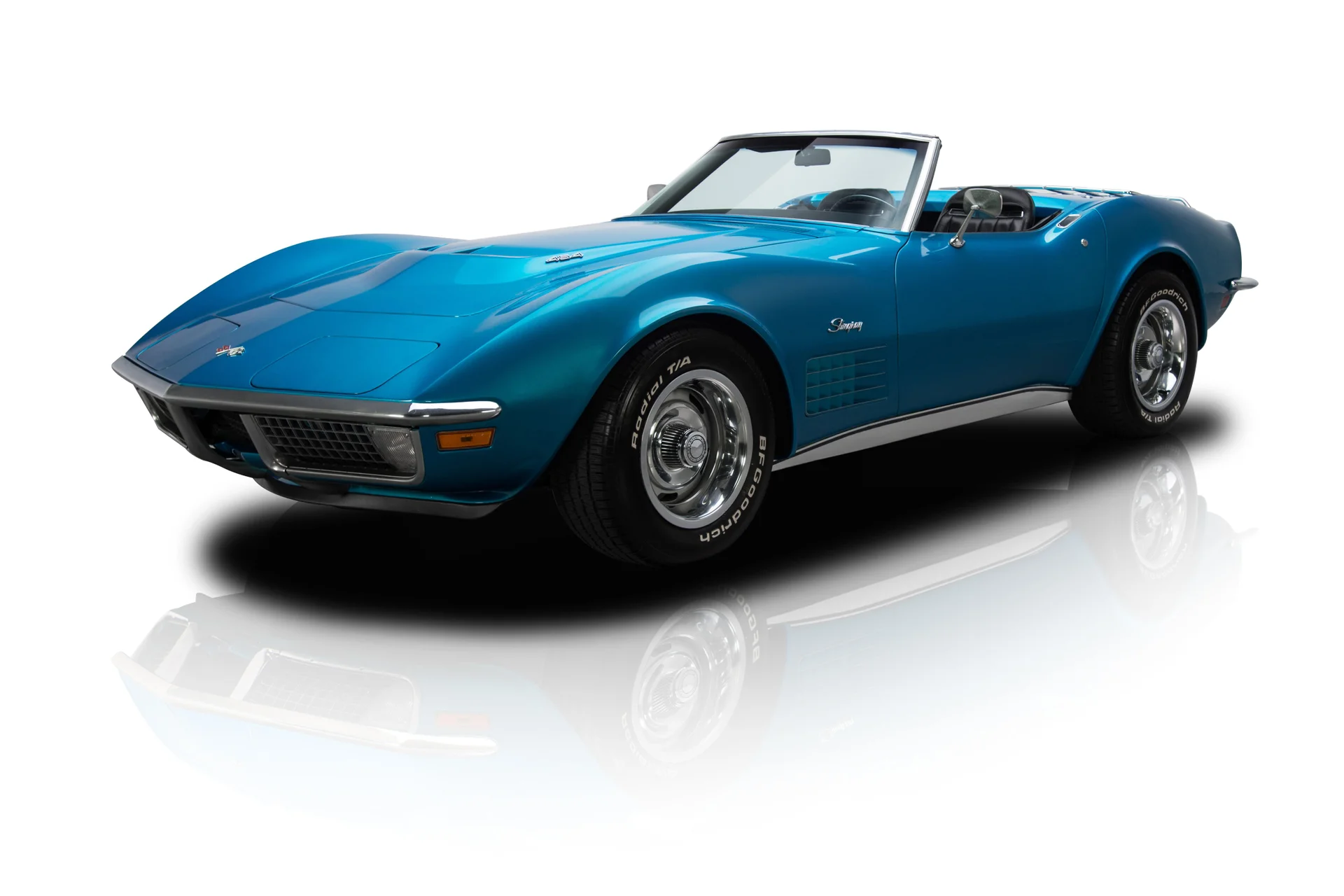
The 1970 Corvette sits at a hinge point in the model’s history—a year compressed by strikes and backlogs, sharpened by regulatory headwinds, and elevated by one of the finest small-blocks ever to grace a fiberglass engine bay. It is the first of the “egg-crate” C3s and the last model year to carry the full, undiluted spirit of high-compression American performance before the 1970s rewrote the rules. What emerged in early 1970 was at once familiar and newly refined: a Stingray with better detailing, a more habitable cabin, and an engine lineup that ranged from grand-touring stoutness to SCCA-homologation grit. This is the story of that car—told in full context, with the details, the voices, and the texture that this moment – and this model year – deserves.
The Scene in Early 1970
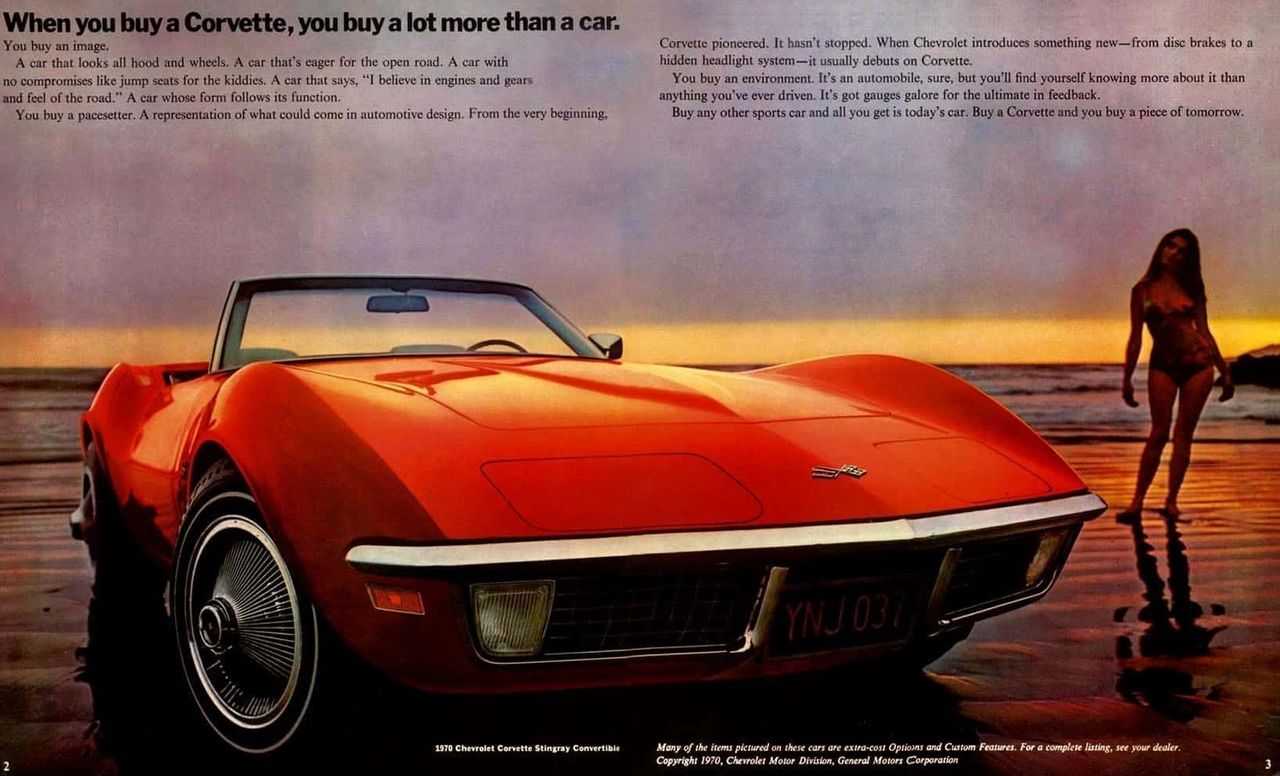
By the time the 1970 Corvette reached showrooms, winter was already giving way. Chevrolet had extended 1969 model-year production deep into the season to work through a backlog caused by a UAW strike and white-hot demand for Corvette, Camaro, and Pontiac Firebird. John Z. DeLorean—newly installed as Chevrolet’s president on February 1, 1969—approved the extension to get cars into customers’ hands and dealers’ lots. The knock-on effect was a truncated 1970 sales window beginning in February, with all the consequences that entailed for volume and marketing cadence. That late start helps explain why 1970 would become the Corvette’s lowest production year since 1962.
Even amid the Corvette’s popularity, another, less flattering reality was simmering: owner frustration with build quality on the first two C3 model years. Road & Track surveyed 177 owners and found that while 18 percent of 1963–67 owners cited workmanship as the car’s worst feature, a full 40 percent of 1968–69 owners did. Squeaks and rattles topped the complaint list for 17 percent in both cohorts. Those sentiments formed a telling backdrop for 1970: the car would gain polish and capability, but it was still being built in a high-pressure environment.
A Sharper Face and Subtle, Meaningful Trim Changes
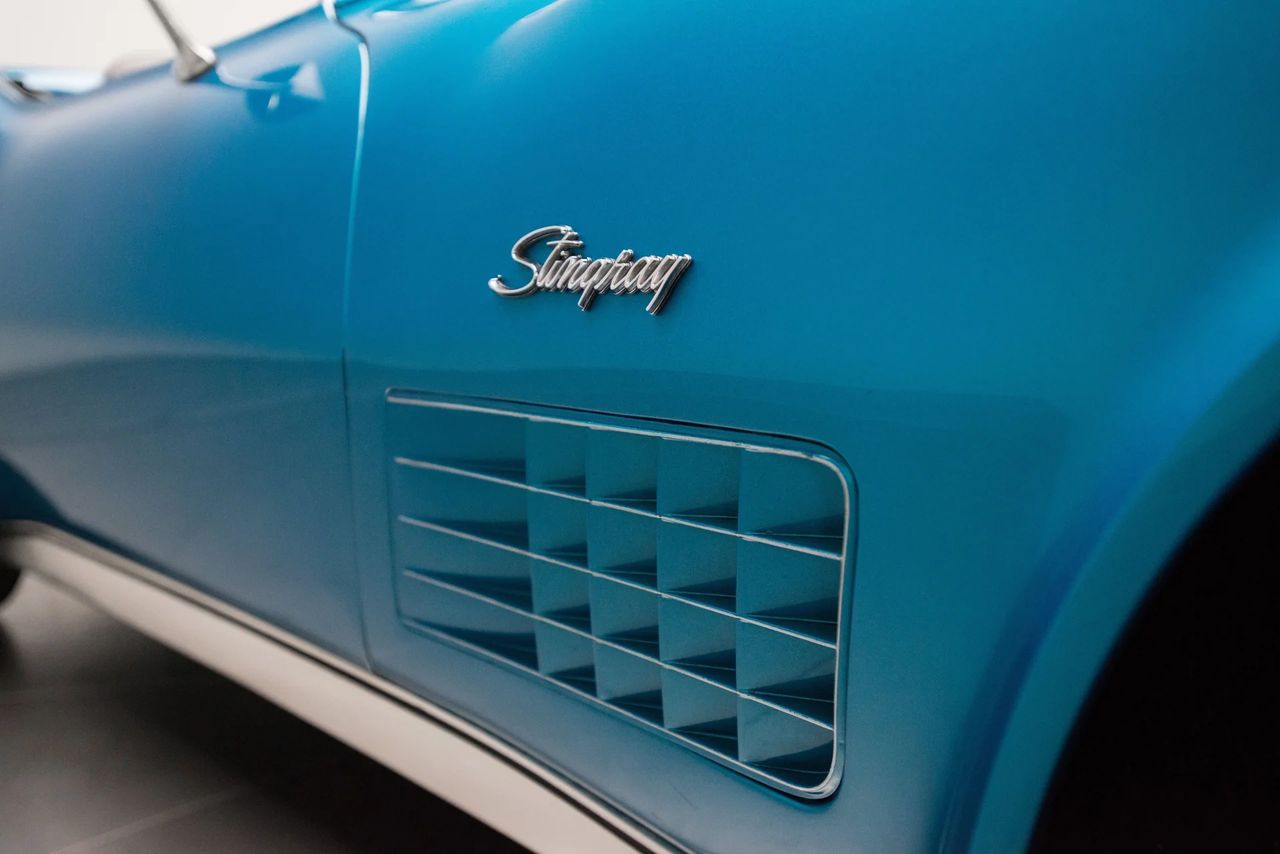
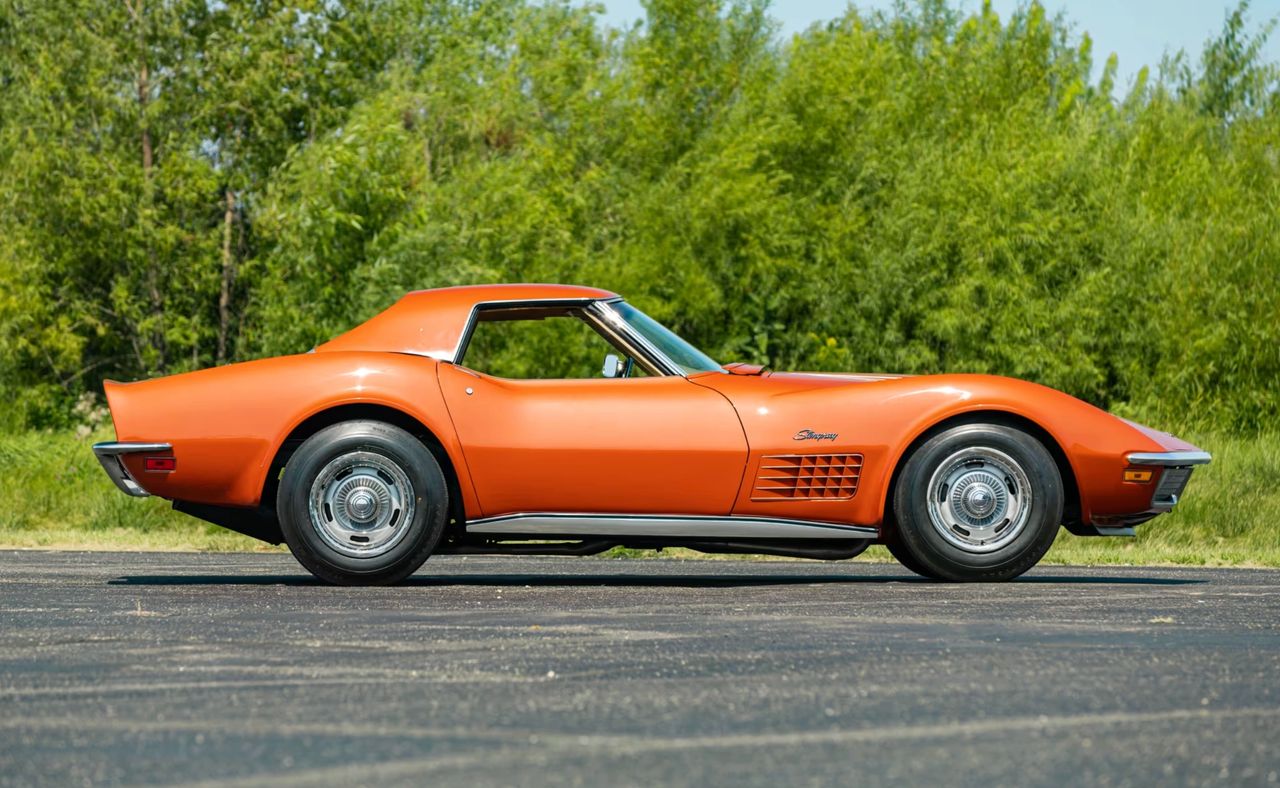
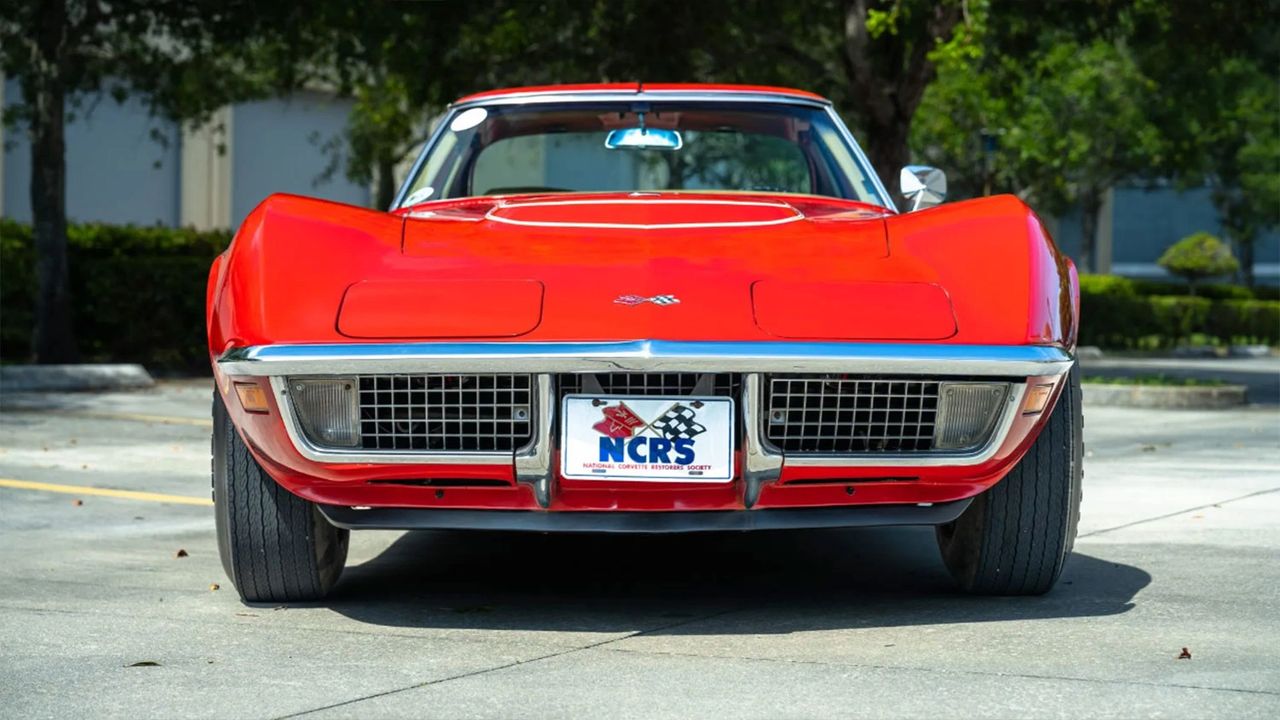
At a glance, the 1970 Stingray is the C3 Corvette you already know from 1968–69. Study it a moment and the differences come into focus: the grille adopts a crisp, egg-crate pattern; the four vertical gills on each front fender give way to rectangular, egg-crate–style louvers; the wheel openings are a touch more pronounced to curb stone damage; and the parking/turn lamps are squared off and set into the grille corners. Around back, the exhaust exits through neat rectangular tips tucked under the tail, a visual that subtly nods to the Mako Shark II show car vocabulary and cleans up the view for anyone following your taillights. Stainless rocker trim and small detail improvements in taillamps and brightwork add a more premium sheen. These changes, previewed on styling exercises sometimes grouped under “Aero Coupe” thinking, gently shifted the Stingray’s stance from unruly muscle toward a more deliberate “luxury sports” posture without dulling its edge.
The 1970 color palette tracked the era’s appetite for both bright and richly metallic hues: Classic White, Monza Red, Marlboro Maroon, Mulsanne Blue, Bridgehampton Blue, Donnybrooke Green, Daytona Yellow, Cortez Silver, Ontario Orange, Laguna Gray, and Corvette Bronze. It is, more than anything, an early-70s mood board sprayed in lacquer—equally at home under a streetlight or a concours tent.
The Cabin: Incremental Tweaks That Matter
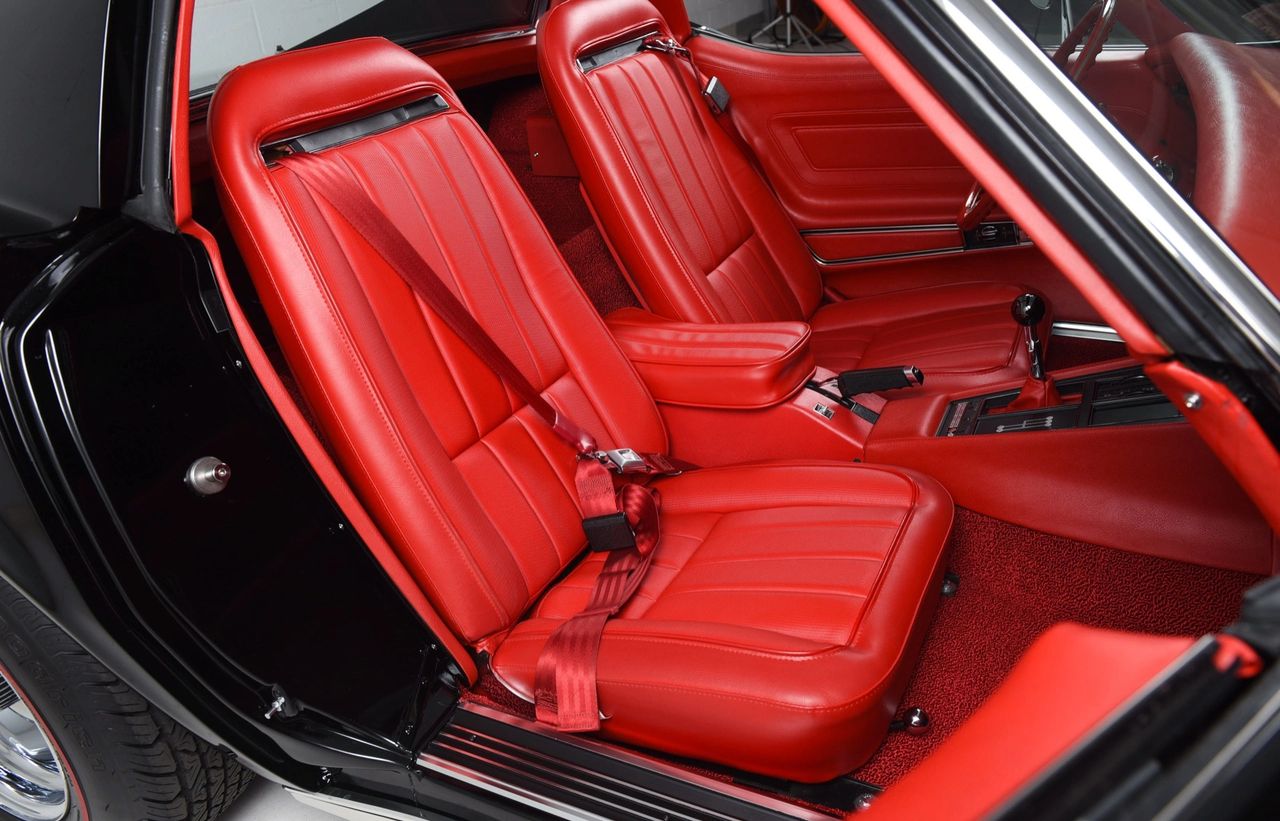
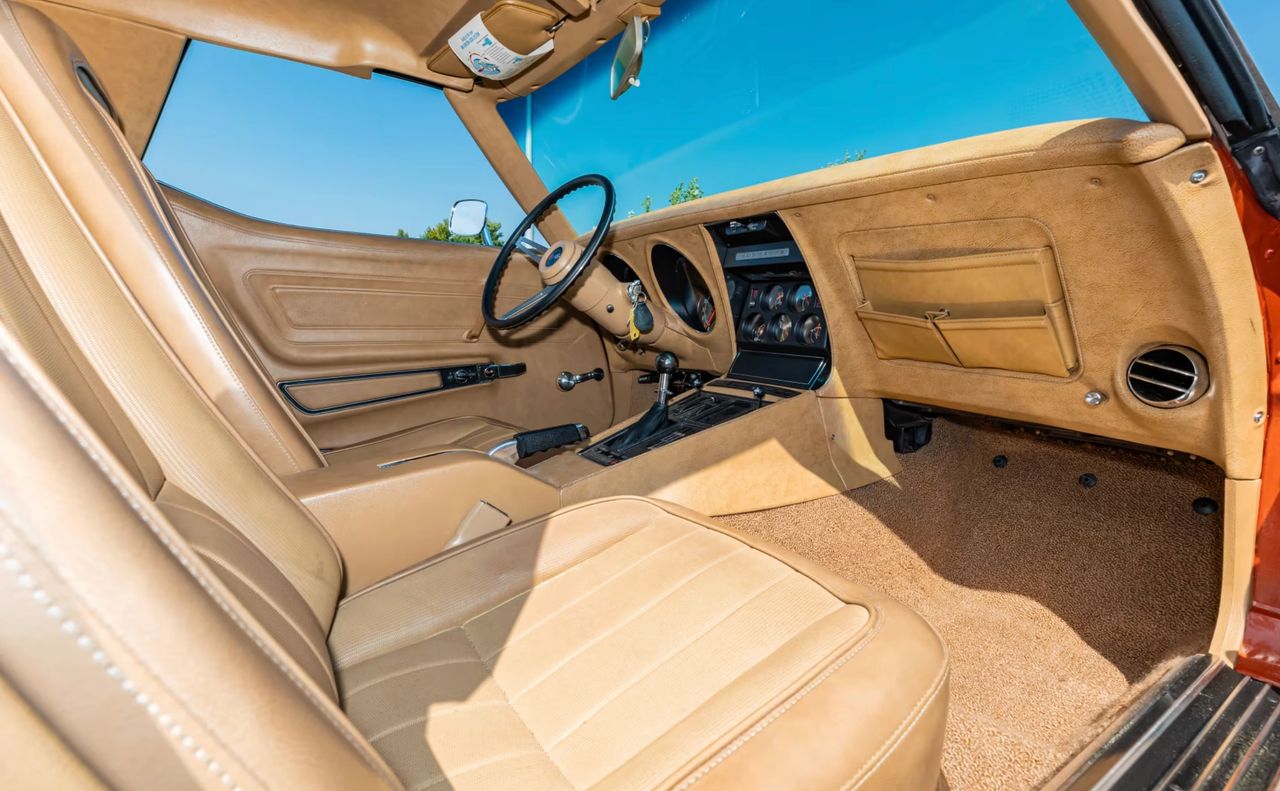
When an enthusiast opened the door, they found an interior familiar to anyone stepping out of a ’69—but the touchpoints were better. The high-back seats introduced the year prior were revised again, with about an inch of extra headroom and improved lateral support. The shoulder-belt inertia reels were packaged more cleanly into the rear quarters, which tidied the look and freed space, and the belts themselves routed through slots in the seatbacks so they felt integrated rather than add-on. Even the seat-back hinge release button was easier to reach. None of this was revolutionary; all of it was welcome.
The big move was a new “Custom Interior.” For $158, buyers could add leather-trimmed seat surfaces, cut-pile carpeting from door sill to door sill, a leather shift boot on manual cars, and wood-grain trim on the doors and console. The effect was subtle but real: the Corvette’s cockpit began to feel less like a racy shell and more like a purposeful grand tourer. Meanwhile, Soft-Ray tinted glass—formerly an option—became standard for 1970, so every window in every car received that light factory tint. Positraction and a four-speed manual also became standard equipment that year; buyers could still choose wide- or close-ratio four-speeds or swap to a Turbo Hydra-Matic automatic at no extra cost. The message was clear: the Corvette might have been evolving, but the baseline remained overtly driver-centric.
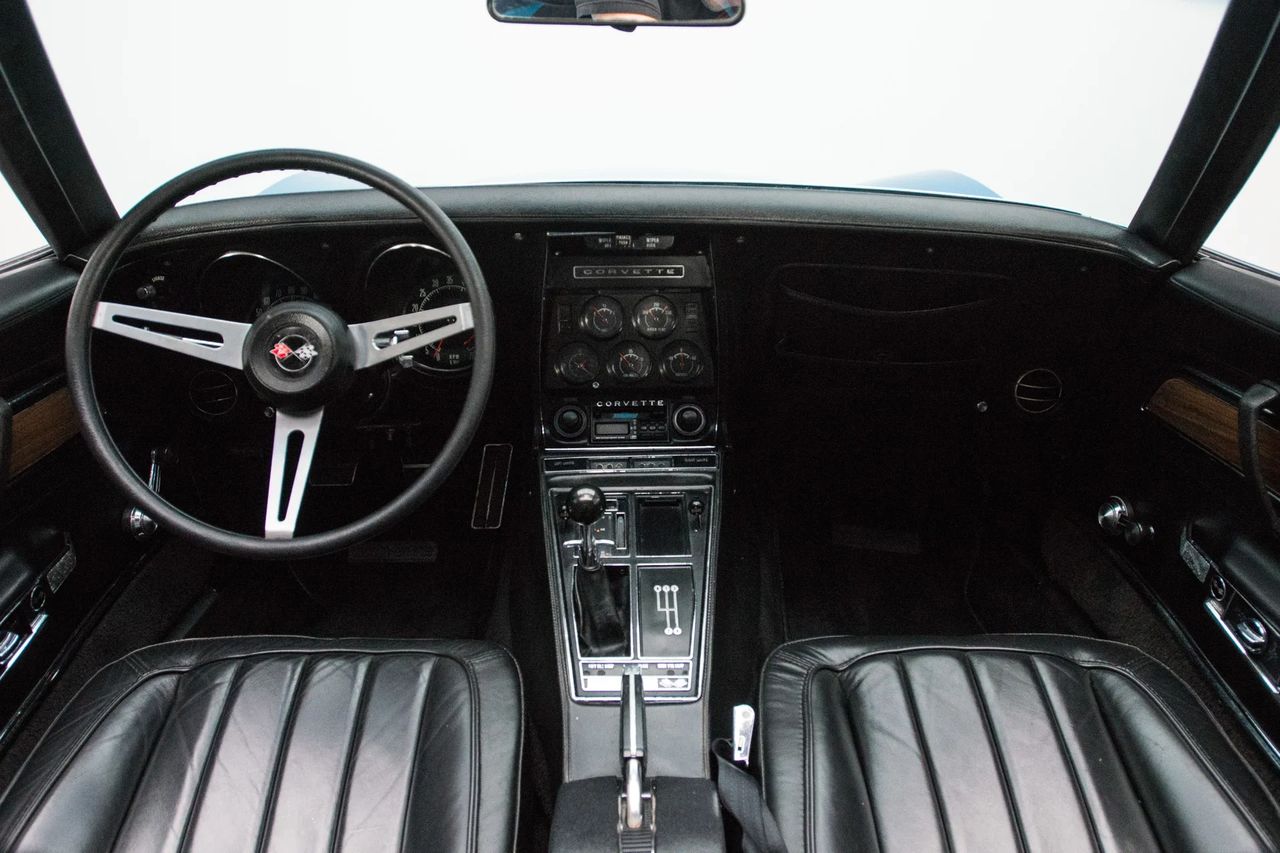
Instrumentation and switchgear remained deeply Corvette: the black-rim sports wheel framed a full complement of round dials—tachometer, ammeter, oil pressure, coolant temp, fuel—backed by a familiar array of status lamps for lights, doors, belts, and brake system. Courtesy lights and color-keyed deep-twist carpet kept the cabin from feeling spartan, while molded door panels with integrated armrests and storage pockets kept their maps and gloves out of the footwell. The Stingray was still a performance car, but its rough edges were being sanded down.
Engines: One Big and One Great
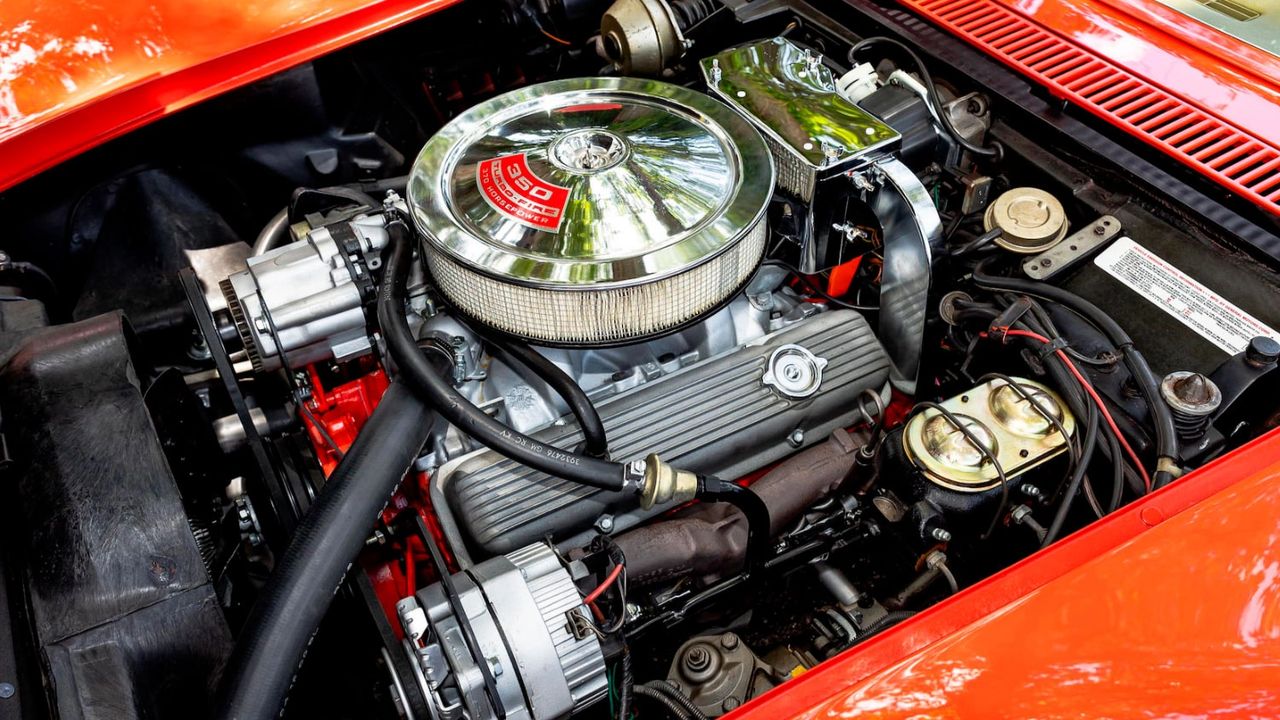
Mechanically, 1970 read like both a celebration and a last call. The small-block lineup opened with the base 350-cid V-8, rated at 300 gross horsepower. It served as the dependable, broad-shouldered entry—easy manners, strong midrange, and the kind of durability that made Chevrolet’s small-block a legend. One step up sat the L46 at 350 horsepower, essentially a hotter tune of the same 350 that added sharper throttle response and a livelier top end.
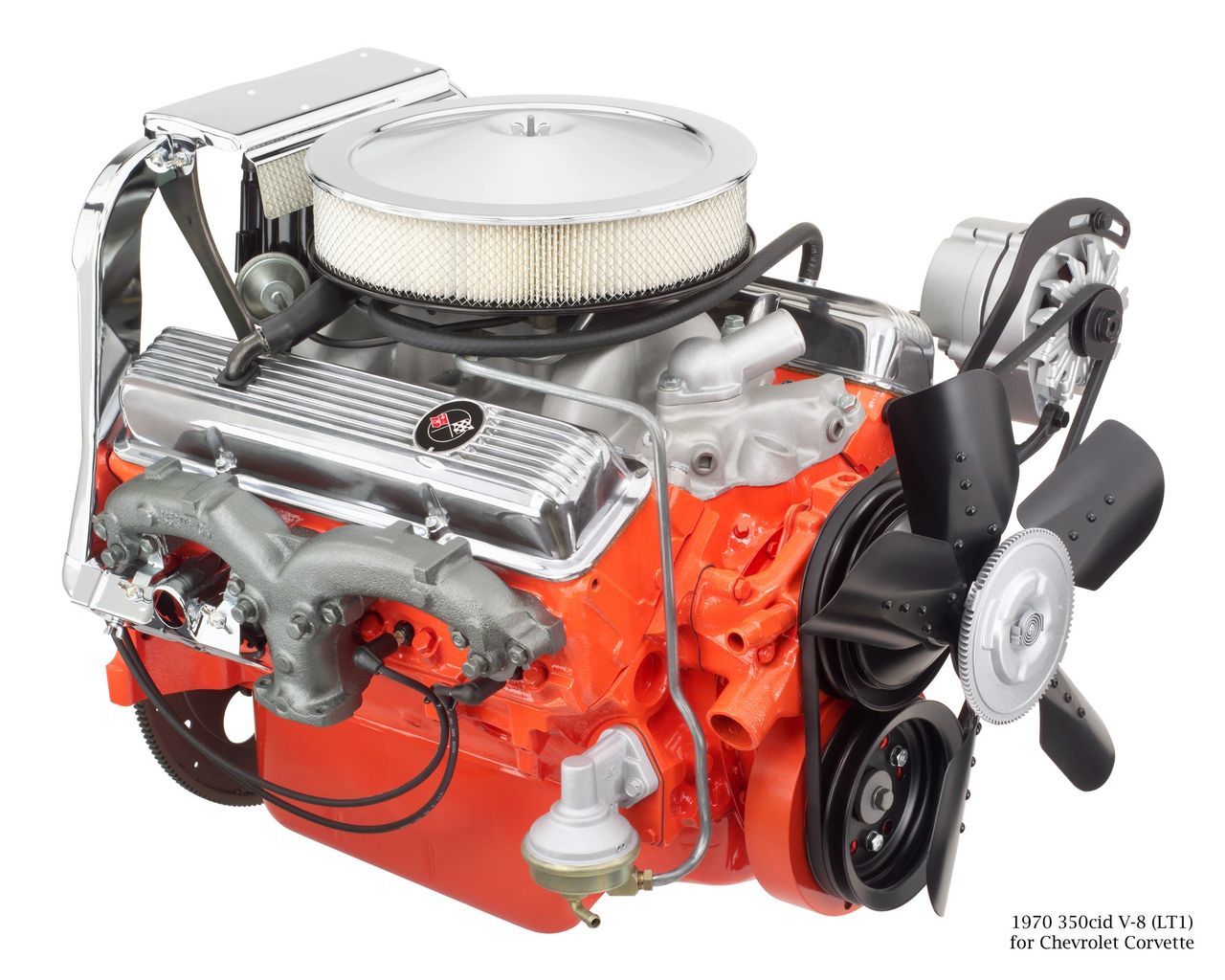
Above both stood the jewel of the year: LT-1. Chevrolet built it like a competition piece—forged steel crankshaft, four-bolt main caps, a solid-lifter cam that gave the idle a crisp mechanical chatter, and an aluminum high-rise intake under a big Holley four-barrel (about 850 CFM, the kind of airflow usually reserved for big-block installations). With 11.0:1 compression, the engine pulled hard from the midrange and spun cleanly to about 6,500 rpm. Factory numbers listed 370 gross horsepower and 380 lb-ft, but what defined the LT-1 for enthusiasts was its character: rev-happy, immediate, and pleasingly unfiltered—an engine that felt light on its feet yet punched like a heavyweight.
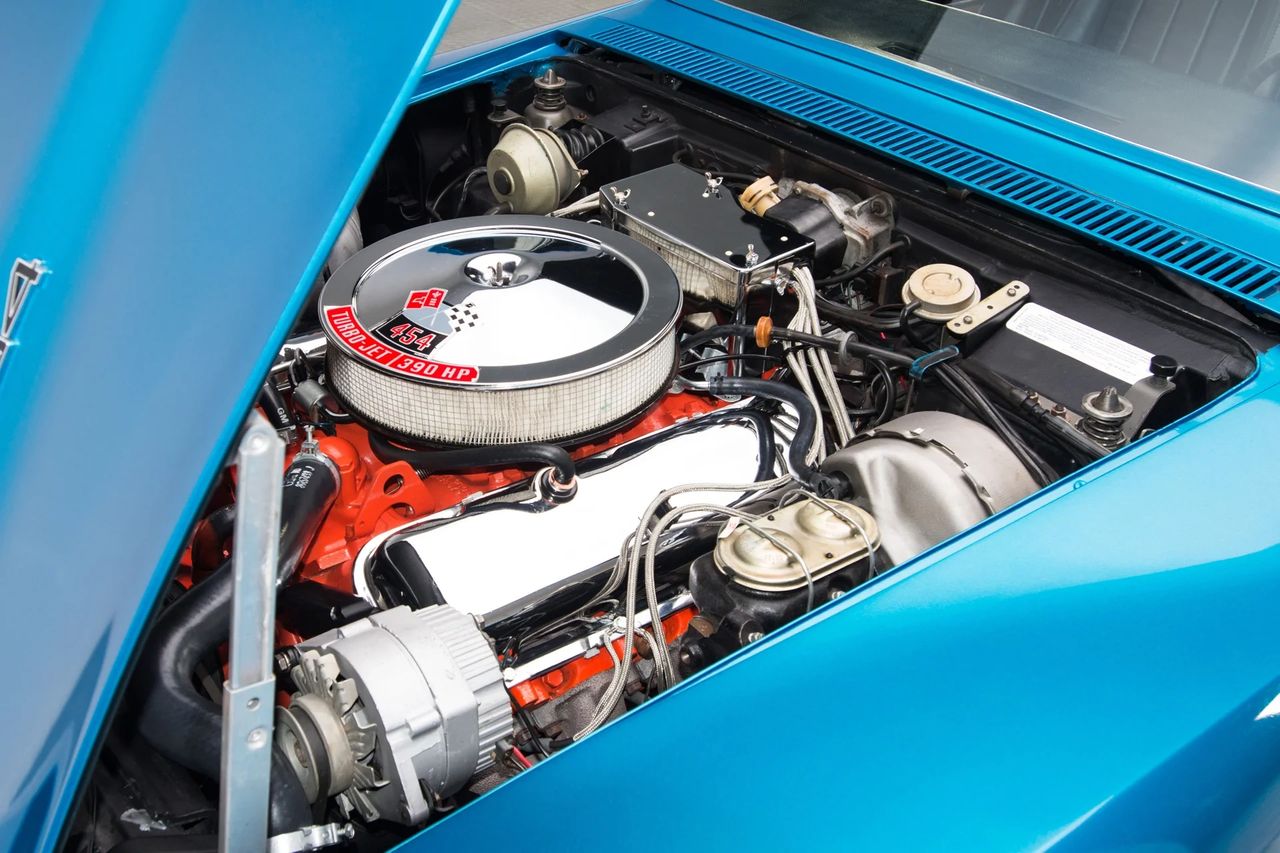
On the other side of the aisle, the big-block story was displacement, not architecture. For the first time since the 396 arrived in 1965, Chevrolet stroked its Mark IV V-8, growing the 427 to 454 cubic inches. The street offering was LS5: hydraulic lifters for civility, 10.25:1 compression, a single four-barrel carburetor, and an advertised 390 gross horsepower backed by a 500 lb-ft tidal wave of torque. Where the LT-1 rewarded revs and precision, the LS5 delivered effortlessness—decisive surges of speed from barely above idle and a relaxed, brawny feel that many buyers considered the Corvette’s heart and lungs. It marked the final high-compression moment before lower-octane fuel, emissions hardware, and insurance pressures began to recast the formula.
And then there was the ghost in the machine: LS7. Chevrolet flirted with a hotter-spec 454, widely quoted in period at 460-plus horsepower, and magazines of the day wrote as if a showroom debut were imminent. In practice, no verified retail 1970 Corvette left the factory with LS7 on its build sheet. The engine entered legend instead—advertised, tested in development contexts, and offered in crate form—but never documented as a customer-delivered 1970 build.
Transmissions, Axles, and the Way the Car Feels
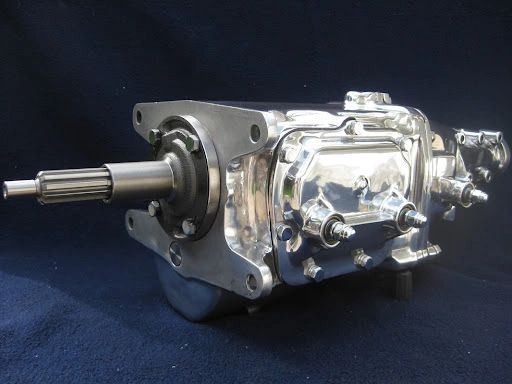
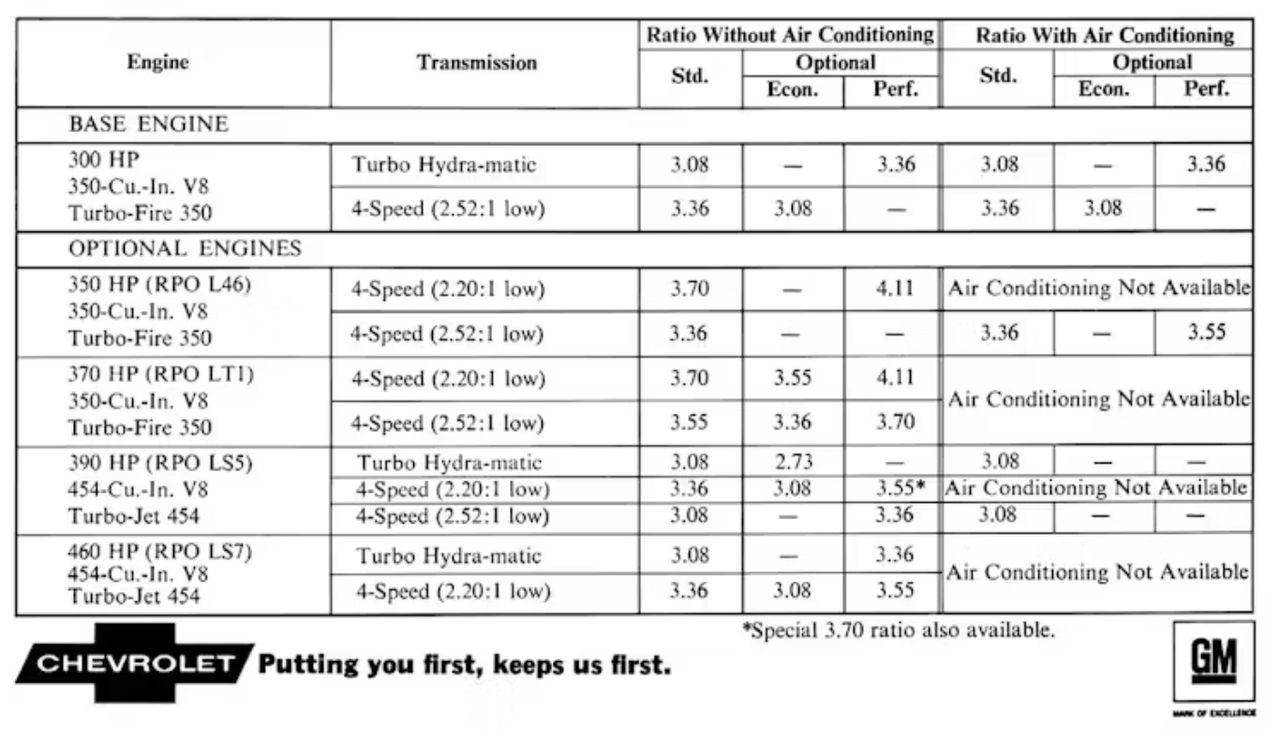
For 1970, a four-speed manual came standard across the line—the wide-ratio M20 as the base gearbox—while the close-ratio M21 remained the go-to performance choice, especially for LT-1 builds. The heavy-duty M22 “Rock Crusher” existed in vanishingly small numbers: Chevrolet installed just 25 of them in 1970, effectively tied to the new ZR1 package. Buyers who wanted a grand-touring vibe could still spec the Turbo Hydra-Matic automatic, but Chevrolet limited that choice to the 300-hp small-block and the two big-blocks; the LT-1 was manual-only. Positraction was included as standard equipment on every Corvette that year. Axle ratios ranged widely—3.36:1 standard, with 2.73, 3.08, 3.55, 4.11, and even 4.56 available—letting owners tailor cruise or acceleration to taste.
Chassis fundamentals stayed pure Corvette: unequal-length double wishbones and coil springs up front, and out back the trademark independent rear with a transverse leaf spring and trailing arms. Chevrolet crowed about this layout for good reason; it kept unsprung mass low and let each rear wheel react independently, improving grip and composure. The ZR1’s competition-minded bundle (paired with the LT-1 and M22 – more on this below) added stiffer springs and bars plus heavy-duty cooling and brakes, which tightened the car considerably for use on the track, especially compared with a standard Stingray.
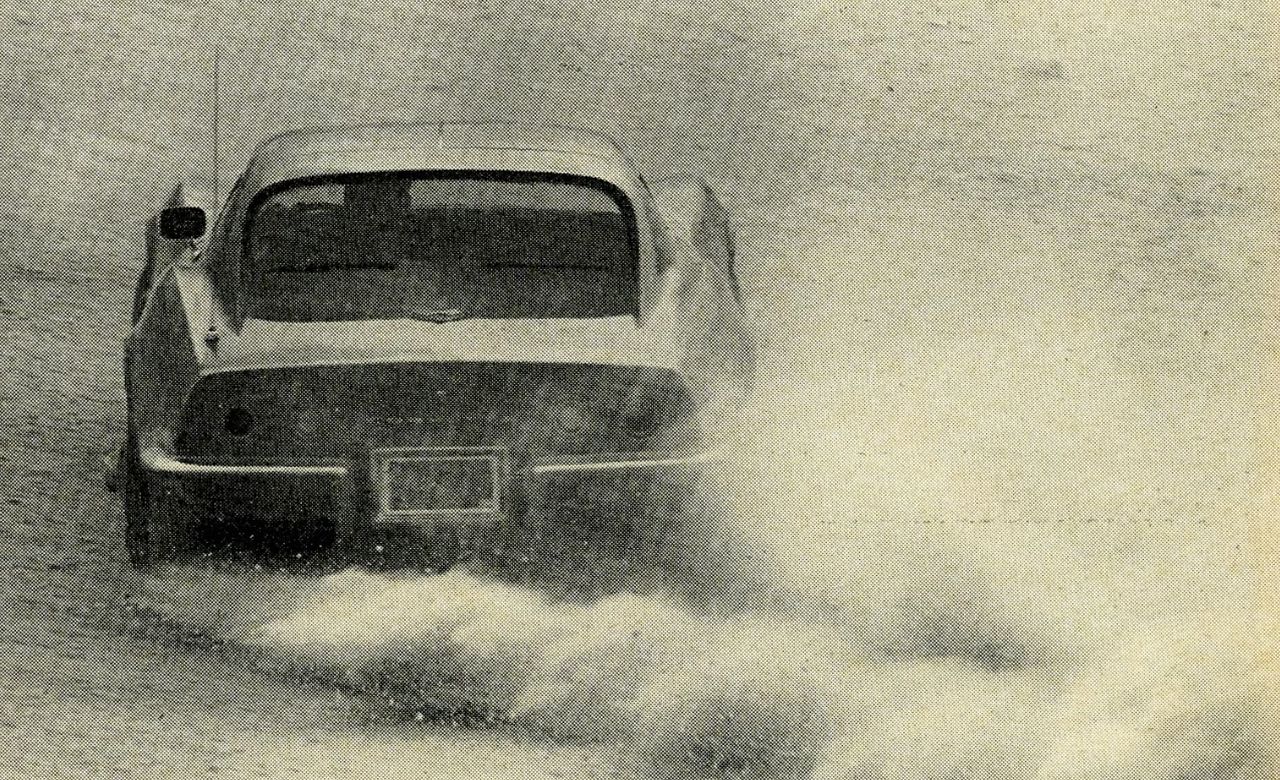
Ride/handling trade-offs reflected the era. When Road & Track tested a 454/automatic example, they praised its long-legged pace but noted that the big-block’s mass, tall gearing, and period damping produced “considerable harshness over sharp bumps” and a “distinct ‘floatiness’ over gentle undulations at speed,” concluding that it showed “incompetence on any but the smoothest roads.” That critique, aimed at a heavily optioned LS5 automatic, aligned with what owners already knew: spec the right shocks, rates, and tires—and especially choose the LT-1 or ZR1—and a 1970 car felt notably buttoned-down by contemporary standards. But the big-torque combo (or an LT-1 engine revved up to its upper register) was where the car truly came alive on a clean two-lane.
The ZR1 “Regular” Production Option Arrives
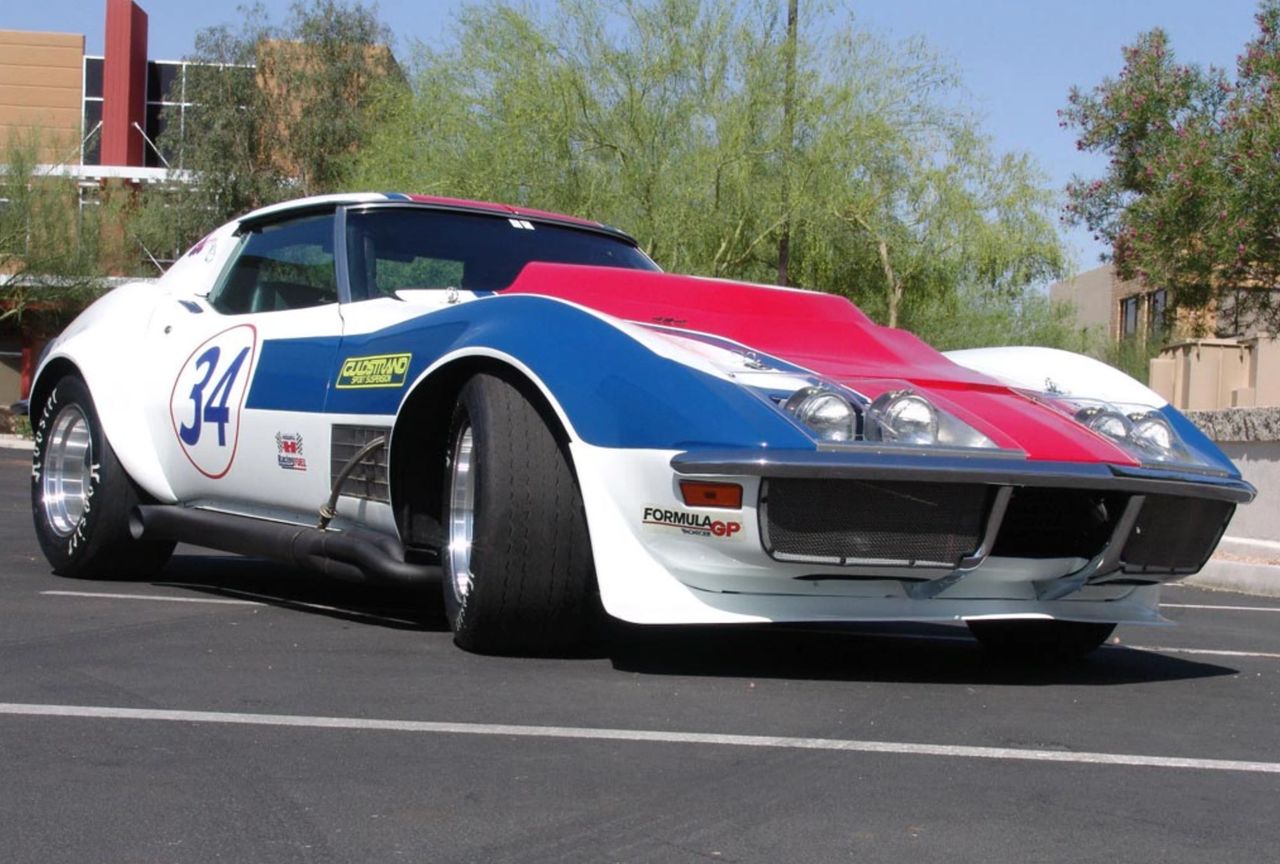
Chevrolet revived a pure competition mindset in 1970 with RPO ZR1, a “Special Purpose” package aimed squarely at privateers who wanted an SCCA-credible Corvette from the St. Louis line. The timing made sense: insurance and emissions pressures were closing in on big-blocks, and the new LT-1 small-block gave engineers a lighter, more durable foundation for long stints and quick transitions. ZR1 essentially picked up the torch from the 1963 Z06 and the late-’60s L88 philosophy—sell a car that could be teched on Friday and gridded on Saturday with minimal wrenching.
Content told the story. Every ZR1 paired the high-revving LT-1 with the M22 close-ratio “Rock Crusher,” then layered on endurance-minded hardware: an aluminum radiator with a unique shroud for heat rejection, heavy-duty suspension pieces, uprated brakes, and key durability parts like a beefier clutch and transistorized ignition. The goal was consistency and survivability—maintain oil and coolant temps, keep pedal feel lap after lap, and let the gearbox live at high rpm without protest.
Just as important was what Chevrolet left off. Ordering ZR1 automatically deleted the comfort list—no air conditioning, no power steering, no power windows, no rear defogger, no alarm, not even a radio. The cars came lean by design, saving weight and removing failure points that didn’t help you win a race. On the street they felt spartan; at the track they made perfect sense.
Rarity underscored the mission. Only 25 ZR1s were built for 1970, followed by 8 in 1971 and 20 in 1972—53 total before the option bowed out. The package added roughly a thousand dollars to the window sticker, a steep premium that bought real capability rather than trim. That combination—purpose-first content, mandated M22, and strict comfort deletions—made every surviving ZR1 a meaningful bridge between showroom and road course, and a clear statement of what Chevrolet still believed a Corvette could be.
What Buyers Saw—and Chose
Sticker shock formed part of the 1970 story. With demand comfortably outpacing supply, Chevrolet priced the Corvette accordingly: $5,192 for the base coupe and $4,849 for the base convertible—clean jumps from the prior year. Then came the menu that made or shaped the car: $158 for the Custom Interior, $447.60 for the LT-1 upgrade, $289.65 for the LS5 big-block, and $447.65 for air conditioning (not available with the LT-1). Corvette had always rewarded careful ordering; 1970 elevated that strategy into an art, letting a buyer choose grand-touring calm, track-lean aggression, or anything in between.
Even with higher prices, sales were constrained more by timing than by appetite. The model year closed at 17,316 cars—10,668 coupes and 6,648 convertibles—the lowest total since 1962 and a sharp drop from the extended ’69 run. If you wanted a brand-new 1970 and hadn’t raised your hand early, you shopped in a narrower window than usual.
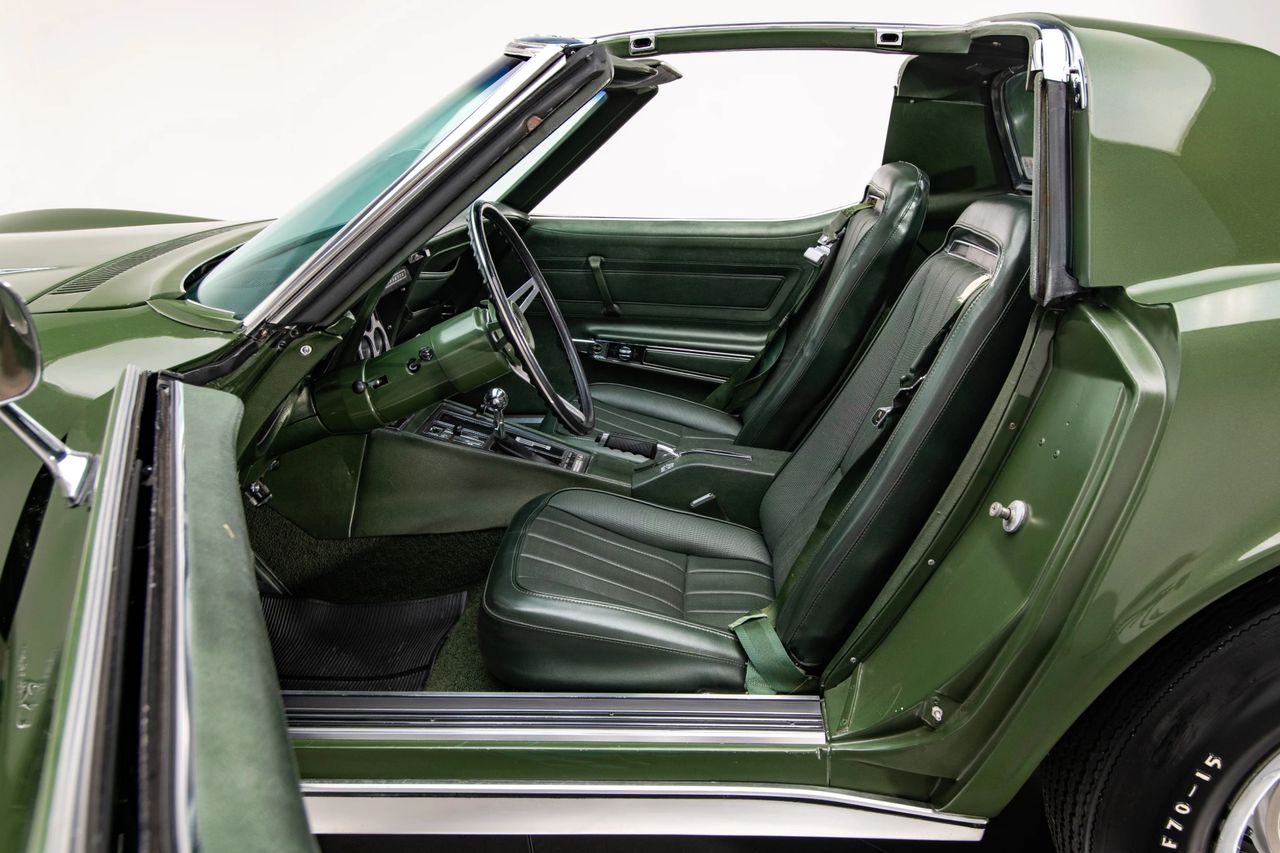
What you saw outside reinforced the dual brief. Functional front-fender louvers and hide-away wipers delivered the drama C3 buyers expected, while wide-oval F70 × 15 tires on 15×8 wheels filled the revised arches with intent. Flush exterior handles and bright drip-rail and rear-window moldings tidied the profile. On coupes, removable roof panels and a removable rear window kept the open-air magic on call whenever the sky cooperated.
Inside, the car read as more deliberately finished. High-back buckets held you better; the belts retracted and routed with less fuss; and the cockpit felt assembled with purpose rather than merely assembled. Map pockets sat where you needed them. Courtesy lights illuminated without glare. A padded dash and deep-pile carpet softened the sense that you were perched on the drivetrain, while the Custom Interior option added stitched leather and wood-grain trim that finally felt like more than a showroom flourish.
Put together, the 1970 ordering sheet and the day-to-day touchpoints told the same story: buyers could tailor a Stingray that fit their life. Add air conditioning and comfort pieces for long-legged touring, or choose LT-1 and keep the options lean for weekend combat. The car met you where you stood—so long as you knew what you wanted and got your order in on time.
The Myth and Meaning of LS7
No discussion of 1970 feels complete without talking about the LS7. During the 1970 launch, Chevrolet literature and engineering chatter promoted a hotter-spec 454 above the LS5, aiming to reclaim the big-block halo after the L88. Development cars circulated, magazines sampled them, and word spread that the “real” 1970 Corvette engine—the one insiders wanted you to know about—was on the cusp. Parts counters later sold complete LS7 assemblies, which only deepened the sense that the option had been real and then slipped away at the last minute.
What the LS7 promised mattered. It was conceived as a four-bolt-main 454 with high compression, a solid-lifter cam, and rectangular-port heads breathing through a big Holley on an aluminum intake—an all-business recipe that enthusiasts recognized immediately. Power rumors clustered in the 460–465 gross-horsepower range with towering torque, positioning the LS7 cleanly above the LS5 and right in the territory once owned by the L88. In short, it read like the ultimate street-legal big-block for a buyer who still wanted factory paper to match the punch.
And yet retail build sheets did not show customer-delivered LS7 Corvettes for 1970. The retreat made sense once the crosswinds were tallied. Insurance premiums for high-output cars had spiked, emissions standards were tightening by the month, and Chevrolet leadership was actively pruning “option proliferation”—low-volume, high-complexity combinations that soaked up certification time, plant scheduling, and warranty risk for very little net return. Certifying another top-tier 454 across 50 states, training dealers, and stocking unique service parts looked increasingly hard to justify, especially with the LT-1 small-block already carrying the performance banner so effectively.
The name lived on because the hardware did. Chevrolet sold LS7s over the counter as crate engines, which meant enthusiasts could still bolt one into a Corvette—or anything else—and tell the story their window sticker never could. That split reality—press buzz, real parts, no production RPO—hardened into legend. In the end, the LS7 served as both a tantalizing “what-if” and a clean chapter close to unencumbered big-block ambition, while the 1970 lineup shifted the spotlight to the lighter, revvier LT-1 and, for the most focused customers, the ZR1 package.
A Year of Low Volume
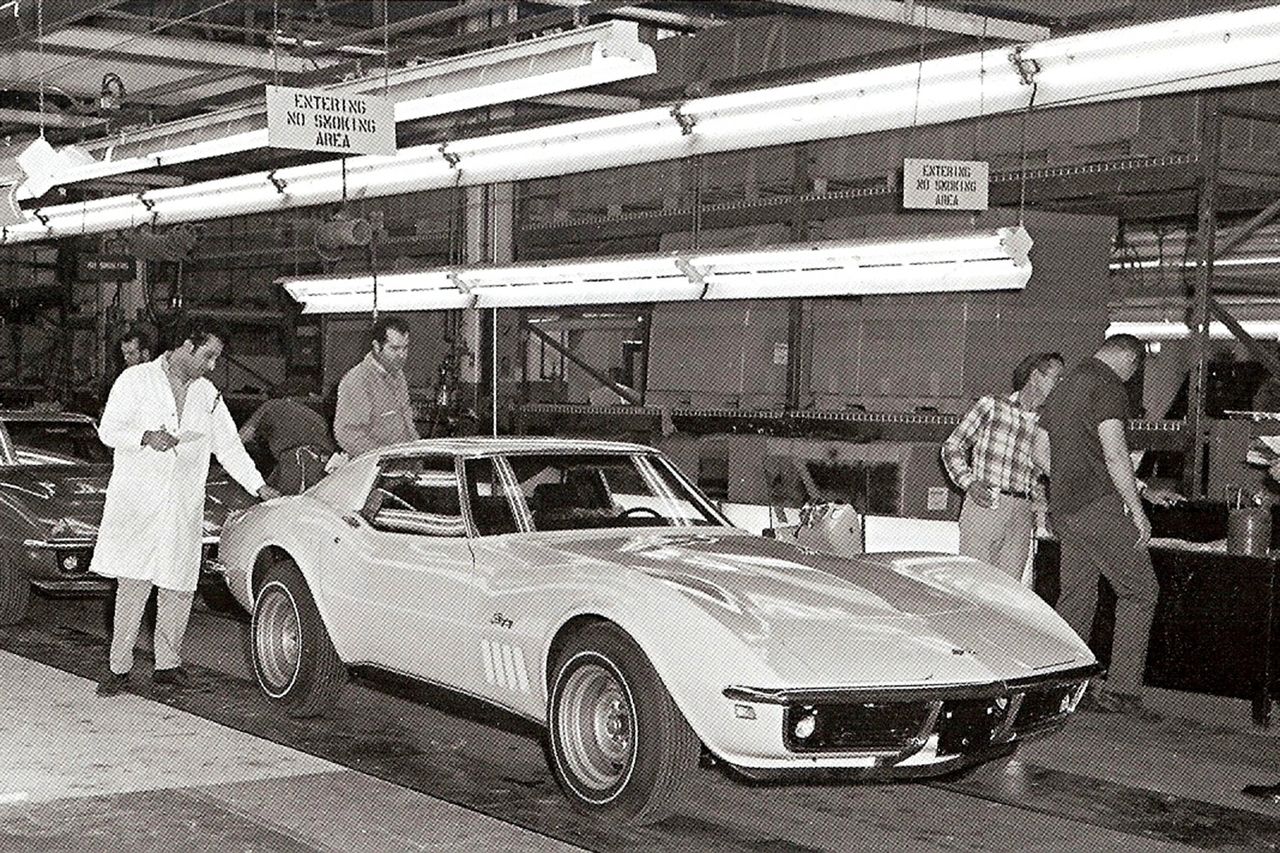
Seventeen thousand, three hundred sixteen cars. That’s it for 1970. Among them: 1,287 LT-1s (the engine that would go on to define early-’70s small-block Corvettes) and just 25 ZR1s (the homologation-minded package that is now one of the rarest production C3 configurations). If the model year’s late start constricted volume, it also helped the year become a connoisseur’s pick decades later. The mix of refined styling, higher base equipment levels, an interior that finally felt coherent, and that one transcendent small-block combined to make 1970 more than a number. For many collectors and drivers, it’s the sweet spot between the wild promise of 1968–69 and the more restrained realities waiting just around the bend.
The 1970 order sheet read like a choose-your-own-adventure. Buyers started with a coupe or convertible, then picked a heartbeat: the base 350/300, the 350-hp L46, the conservatively rated 370-hp LT-1, or the LS5 with 454 inches of quiet menace. They decided whether their Corvette leaned grand-touring—Turbo Hydra-Matic, air conditioning, power steering and windows, stereo—or favored analog intensity with a close-ratio four-speed, steep axle, and manual everything. If they checked ZR1, they chose the latter by default—and Chevrolet chose what they couldn’t have, because the point of ZR1 was speed, not comfort.
Beyond those big calls, the details made a car personal: white-stripe or white-letter tires, tilt-telescopic steering, rear-window defroster, alarm, and an auxiliary hardtop with optional vinyl covering. The price bumps were modest on their own, but together they transformed how a 1970 Corvette behaved and what it said about its owner. That had always been the Corvette’s magic: within one body shell, Chevrolet offered a spectrum from boulevardier to club racer. In 1970, that spectrum was at its most vivid.
How It Drives—And Why That Matters
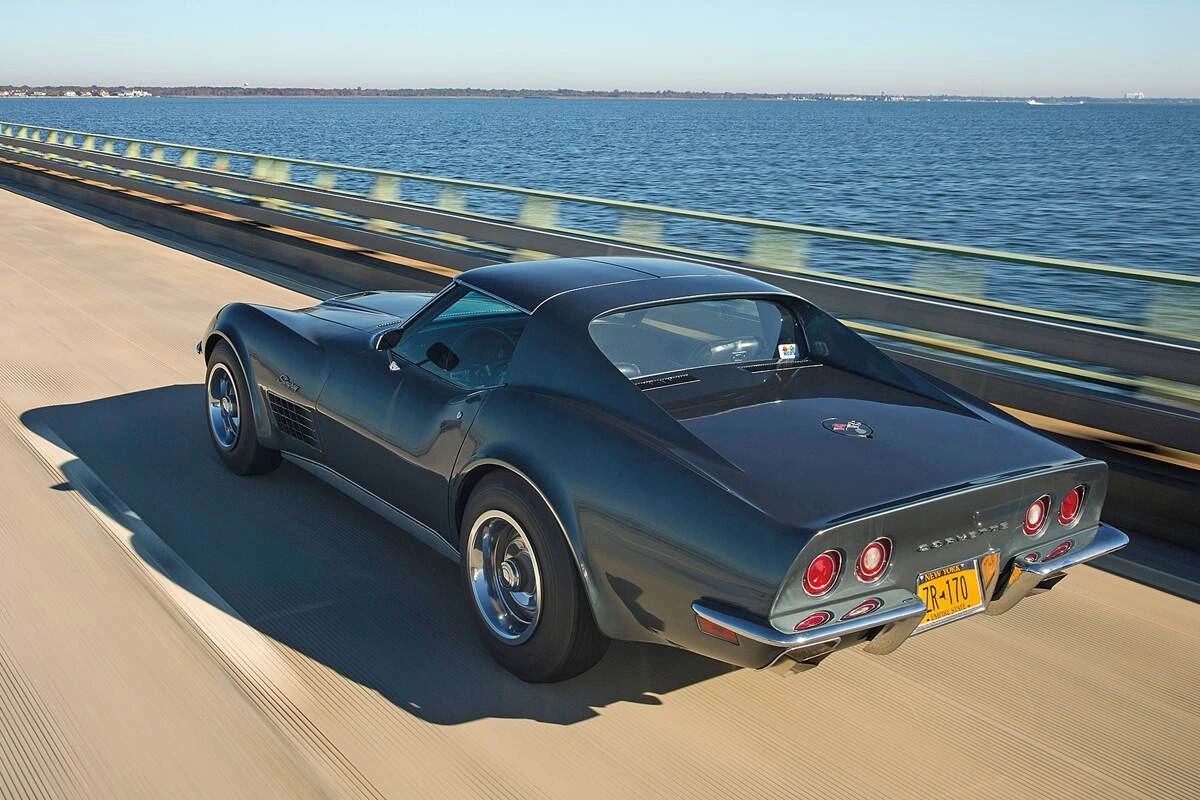
On a good road, an LT-1 car is a conversation between cam and carburetor. The idle is alive with mechanical tick. The clutch is heavier than modern norms but honest, and the shifter finds its gates with purpose. Let the tach swing to 6,500 and the car becomes the instrument its spec sheet promises: eager, connected, precise by era standards. A big-block LS5 car is a different song entirely: torque sets the rhythm, and the car’s pace is decided by your right foot long before the needle catches up. Neither is “better” in the absolute—they’re two philosophies rendered in nodular iron and fiberglass.
Ride quality depends on spec. Heavy-duty springs and shocks can turn jounce into judder on beat-up pavement; the same setup flattens a high-speed sweeper with the sort of body control that made the Corvette a legend at club tracks and night-time highway runs. Period testers split their affections accordingly—some decried the harshness and the way the C3 could feel “flat” at speed over undulating surfaces; others celebrated the poised, planted feel that came once you learned to trust the car’s long hood and firm, accurate steering. Both are true. That tension is part of the Corvette’s character in this age.
The 1970 Palette and Presence
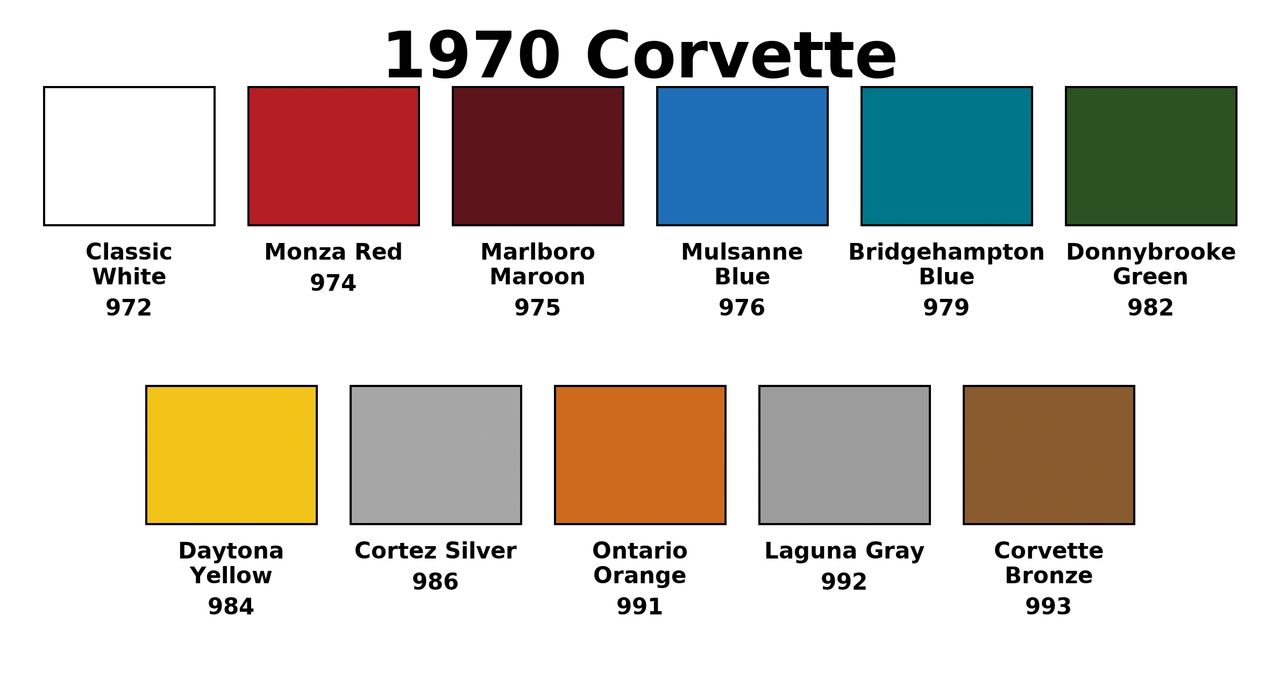
Here’s the full 1970 palette the way buyers saw it—eleven factory shades, each with its GM paint code, plus quick notes on character and where they fit the car’s vibe:
- 972 Classic White — the timeless baseline; showed off the new egg-crate grilles and fender sculpting cleanly.
- 974 Monza Red — the high-visibility hero color; period brochures leaned on it for maximum impact.
- 975 Marlboro Maroon — deep, elegant metallic; read upscale with the Custom Interior and chrome.
- 976 Mulsanne Blue (metallic) — fresh for ’70; brighter than ’69’s Le Mans Blue and a perfect foil for the new high-back seats and bright trim.
- 979 Bridgehampton Blue (metallic) — the darker, rarer blue; a one-to-two-year hue that gave the car a stealthy, long-hood look.
- 982 Donnybrooke Green (metallic) — the lone-year green for 1970; rich and period-perfect.
- 984 Daytona Yellow — loud, racing-poster bright; made the widened wheel lips pop.
- 986 Cortez Silver (metallic) — understated and technical; paired well with black or saddle interiors.
- 991 Ontario Orange (metallic) — listed by several references for 1970 in tiny/early numbers (much more common for ’71 as Code 987); a coppery, motorsports-era orange.
- 992 Laguna Gray (metallic) — a new, sophisticated gray that flattered the car’s creases and bumper chrome.
- 993 Corvette Bronze (metallic) — a warm bronze that nodded to late-’60s hues; scarce in period references but included on several ’70 color lists.
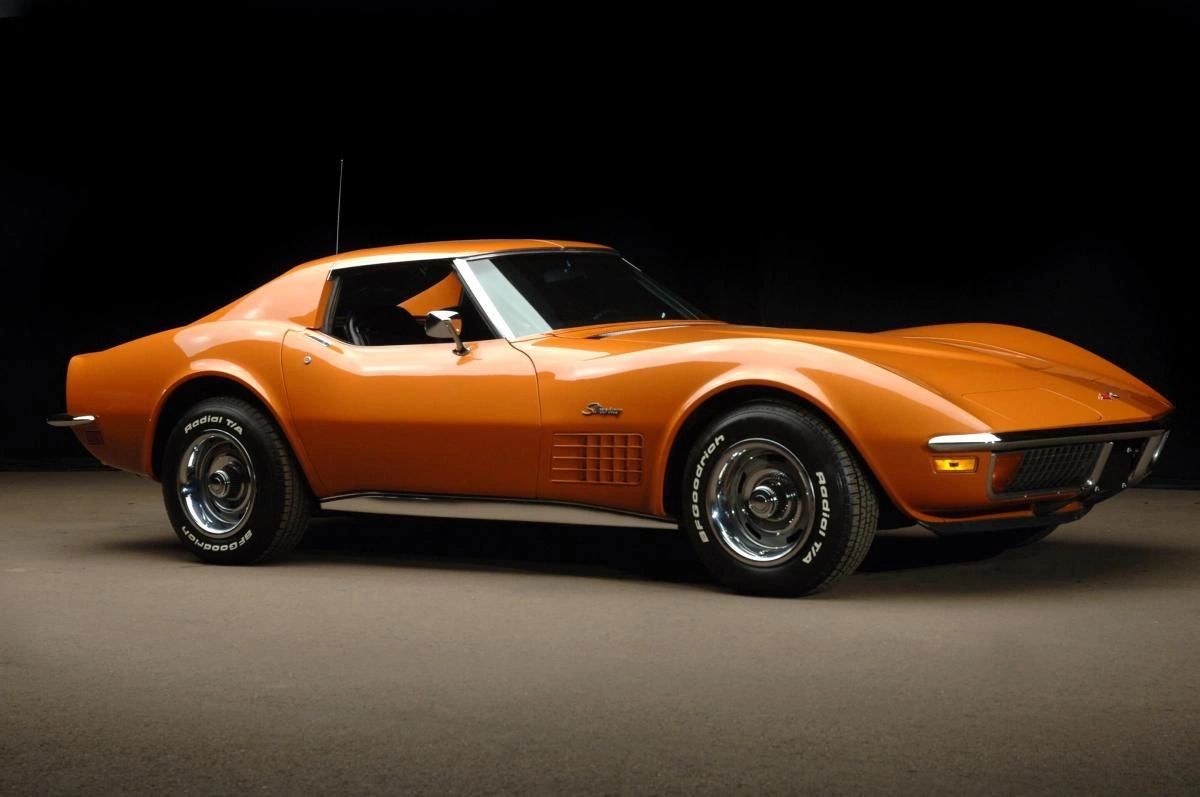
A few usage notes collectors care about today: convertible tops came in black, white, or sandalwood, and the removable hardtop (C07) could be had with an optional black vinyl cover (C08) to contrast most paints; those choices, plus interior color pairings, are why two identically optioned cars can feel wildly different on the lawn. If you’re decoding a specific car, confirm the trim tag and tank sticker against these codes—1970 saw running changes and occasional special-paint anomalies, which is why you’ll find debate around Ontario Orange and the odd outlier build.
Strengths, Shortcomings, and the Honest Appraisal
What 1970 does brilliantly: It offers one of the all-time great small-block Corvettes in the LT-1—quick, communicative, and mechanically charismatic. The styling and trim revisions pull the design taut without changing its essence, and the cabin finally feels like a place to spend hours, not minutes. The LS5 big-block’s torque is a uniquely satisfying kind of authority, and the ZR1 package proves that Chevrolet still wanted to build cars for people who measured weekends in heat cycles and tire chalk.
Where 1970 shows its era: Build quality remained the Achilles’ heel of early C3s, as owners and testers made abundantly clear. Some combinations could feel harsh or oddly detached depending on pavement and pace. And beyond the car itself, 1970 is shadowed by forces no spec sheet can fix: rapidly rising insurance premiums, looming emissions constraints, and a corporate mandate to trim low-volume complexity. The writing was on the wall. The Corvette would adapt—as it always does—but the particular electricity of high compression and carte-blanche options was dimming.
Legacy: Why 1970 Matters
The 1970 Corvette is significant not just because it’s scarce, or because it debuted the LT-1, or because a tiny handful of ZR1s escaped into the world. It matters because it captures the precise moment when American performance still ran mostly on attitude and octane—and yet was beginning to accept a future of constraints and compromises. The car’s refined surface details, improved cabin, and richer base equipment say “grand tourer.” The LT-1, LS5, and ZR1 say “not so fast.” That tension gives the year its gravity.
For collectors and historians, the numbers tell their own story: 17,316 built; 1,287 LT-1s; 25 ZR1s; one legend (LS7) that never quite was. For drivers, the story is simpler: the 1970 Corvette feels like a final, unaffected conversation between power and purpose—one last deep breath before the air changed. And if you listen closely when a warm LT-1 snaps to life or an LS5 pulls from idle, you can still hear the echo of a decade that believed anything worth doing was worth overdoing.
1970 Corvette — Comprehensive Specs
Engines (RPO / gross hp @ rpm / torque)
- ZQ3 350-cid (300 hp @ 4,800; 380 lb-ft @ 3,800). 10.25:1 compression, 4-bbl Rochester Quadrajet.
- L46 350-cid (350 hp @ 5,600; 380 lb-ft @ 4,000). 11.0:1 compression, high-perf cam.
- LT-1 350-cid (370 hp @ 6,000; 380–392 lb-ft @ ~4,000), solid lifters, 11.0:1, Holley on aluminum intake, transistor ignition. ZR1 package used this engine.
- LS5 454-cid (390 hp @ 4,800; ~500 lb-ft @ 3,400). Includes heavy-duty cooling/chassis bits.
- LS7 454-cid (advertised 460–465 hp) listed in literature but not delivered to retail customers for 1970.
Transmissions & Ratios
- 4-speed manual (wide-ratio M20, standard): 2.52 / 1.88 / 1.46 / 1.00; Rev 2.59.
- 4-speed manual (close-ratio M21; heavy-duty M22 “Rock Crusher” in very low qty): 2.20 / 1.64 / 1.28 / 1.00.
- Turbo Hydra-Matic 3-speed available with 300/390-hp engines (not with LT-1).
Axle Ratios (factory)
- Standard 3.36:1; optionals 2.73, 3.08, 3.55, 4.11, 4.56 (availability varies by power-team). Positraction standard.
Chassis, Steering, Brakes, Wheels/Tires
- Frame: full-length welded steel ladder with five crossmembers.
- Suspension: F—independent unequal-length A-arms, coils, stabilizer bar; R—independent trailing arms, toe links, transverse leaf spring, anti-roll bar.
- Steering: Saginaw recirculating-ball, ~17.6:1, ~2.9 turns lock-to-lock.
- Brakes: 4-wheel power-assisted discs, 11.75-in rotors front/rear; total swept area ~461 sq in.
- Wheels/Tires: 15×8-in steel wheels; F70-15 tires (white stripe or raised white letter options).
Dimensions (’70 coupe/convertible)
- Wheelbase 98.0 in; Length 182.5 in; Width 69.0 in; Height ~47.4 in; Tracks F 58.7 / R 59.4 in.
- Curb weight (approx.): Coupe ~3,290 lb; Convertible ~3,300–3,304 lb (variations by equipment).
Notable Equipment/Changes for 1970
- Dual exhausts and Positraction standard; tinted glass and wide-ratio 4-speed included in base price for ’70.
- LS5 big-block package adds heavier springs/bars, larger radiator, HD starter, etc.
ZR1 Special Purpose Package (RPO ZR1)
- Content: LT-1 engine, M22 4-speed, HD springs/shocks, front (and often rear) stabilizer bars, special aluminum radiator, transistor ignition; radio, p/steering, p/brakes, p/windows, A/C, etc. not available. Production: 25.
Production & Pricing
- Total 17,316 (10,668 coupes; 6,648 convertibles). Base prices: coupe $5,192; convertible $4,849.
Colors (paint codes)
- 972 Classic White; 974 Monza Red; 975 Marlboro Maroon; 976 Mulsanne Blue; 979 Bridgehampton Blue; 982 Donnybrooke Green; 984 Daytona Yellow; 986 Cortez Silver; 991 Ontario Orange; 992 Laguna Gray; 993 Corvette Bronze. Interior compatibility shown in GM sheets; Ontario Orange appears on ’70 sheets despite its debated timing.
Buying and Owning A 1970 CORVETTE, Then and Now (Context)
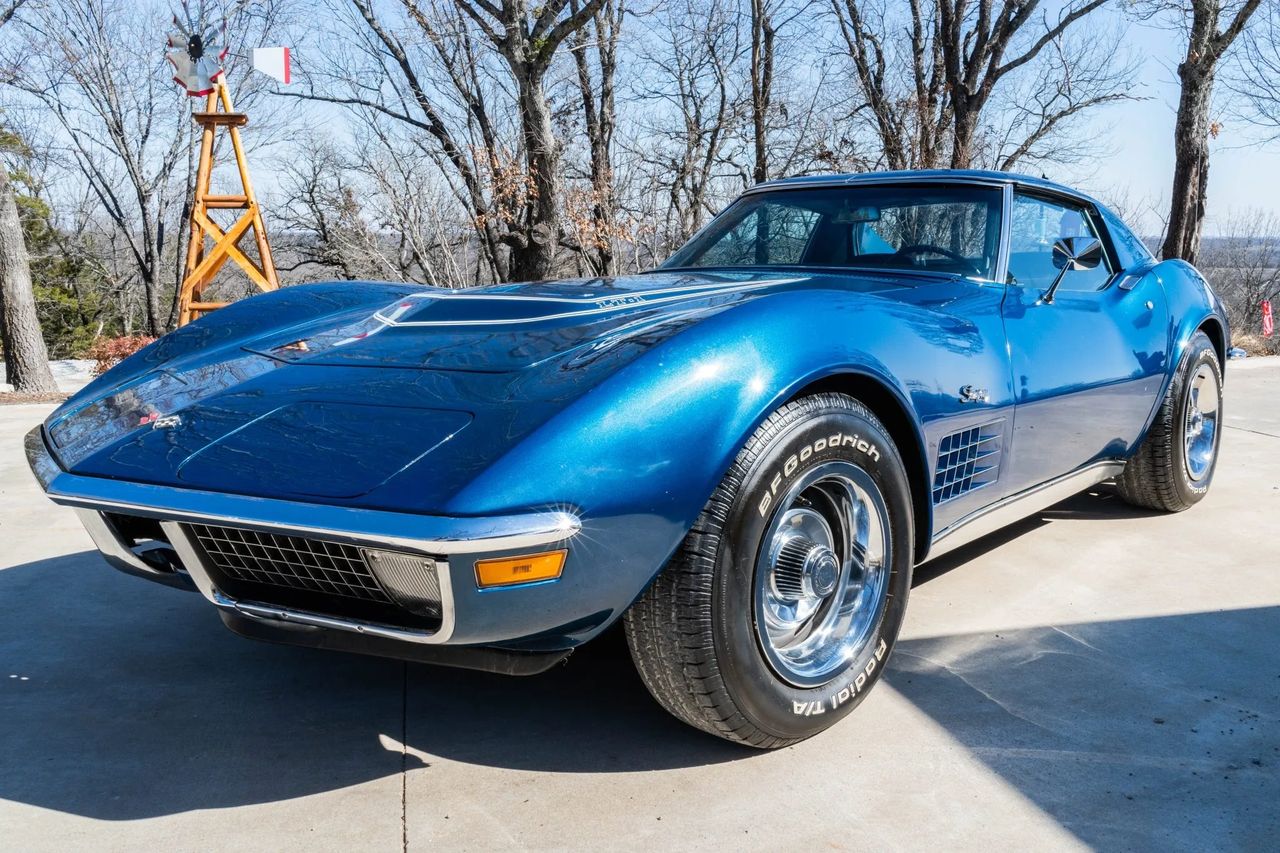
When new, the 1970 Corvette asked buyers to choose an identity. Many did—leaning into the custom interior and air conditioning to create a more civilized grand tourer, or checking LT-1, steep gears, and heavy-duty bits to build a weekender that could still embarrass bigger-cube rivals on a tight track. Today, the market reflects those identities. The rarest build sheet is the ZR1; the most widely admired driver’s spec is the LT-1 with a close-ratio four-speed; the LS5 remains the torque king for long open-road pulls. Survivors and well-documented cars carry a premium, and period-correctness matters because 1970 is a year people study as much as they covet. (Valuation and rarity patterns are well-documented in marque references.)
Epilogue: A Year That Still Feels Like a Verdict
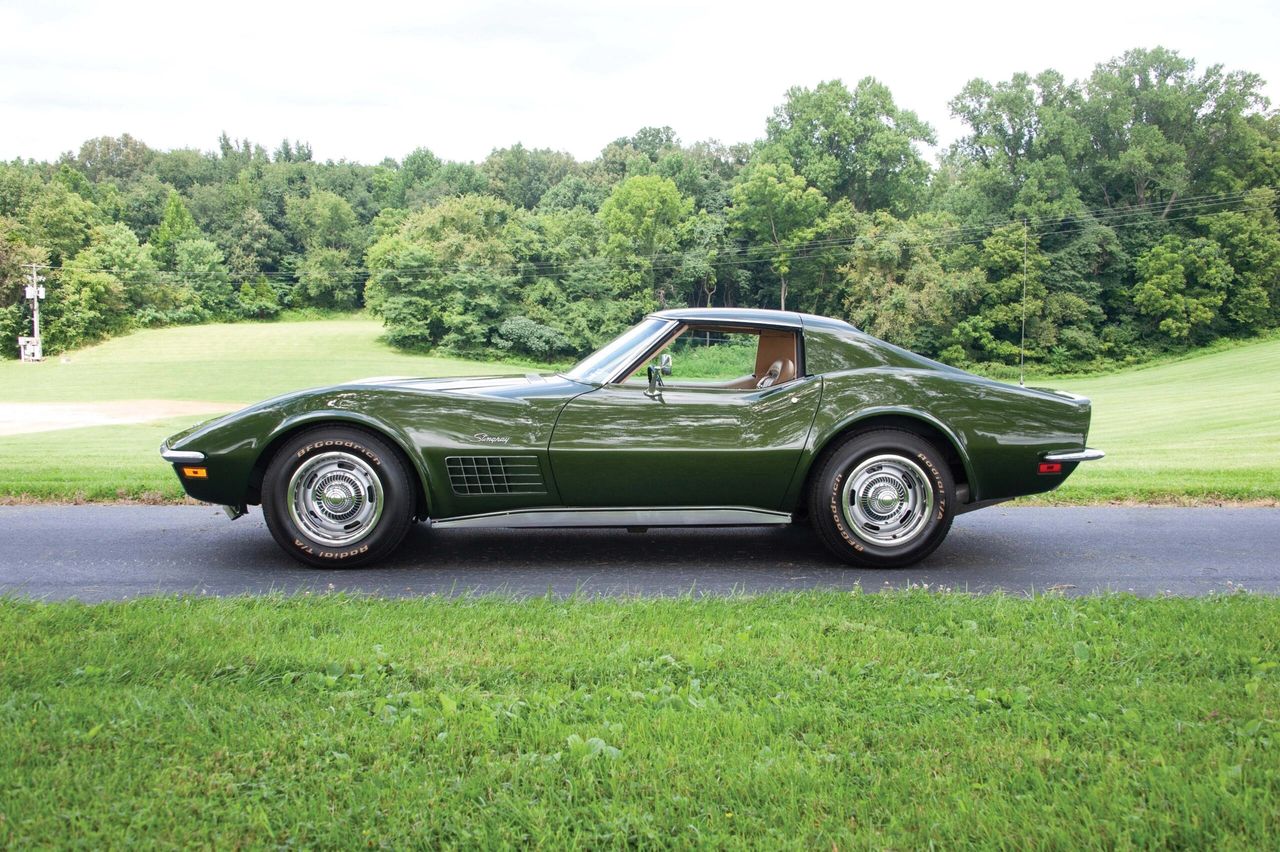
Look at a 1970 Corvette Stingray head-on. The grille’s geometry tightens your focus; the louvers look cut with intent; the arches hint at work to do. This is what makes the year resonate. The Corvette in 1970 is neither a museum piece nor a proto-modern pastiche. It is a fully realized car at the apex of one idea of American performance—loud, proud, and fast—while also introducing the language of comfort and polish it would need to speak fluently to consumers for decades to come.
The C3 would continue to evolve. Compression would drop; net horsepower would replace gross; emissions and safety equipment would sprout by mandate. Through it all, the Corvette would adapt, periodically reinvent, and ultimately transcend. But if you want to understand where the line between “wild” and “wise” was actually drawn, spend time with a 1970. It won’t whisper the answer. It’ll tell you—cleanly, loudly, convincingly—every time the tach sweeps past six grand.