Tag: Maurice Olley

  • 1953 EX-122 Corvette: The Bold Birth of America’s Sports Car

    1953 EX-122 Corvette: The Bold Birth of America’s Sports Car

    More than just a prototype, the 1953 EX-122 Corvette Concept was the spark that ignited the Corvette flame—a daring experiment in design, materials, and philosophy that evolved into the most iconic American sports car of all time.

    Harley Earl’s Vision: American Style Meets European Spirit
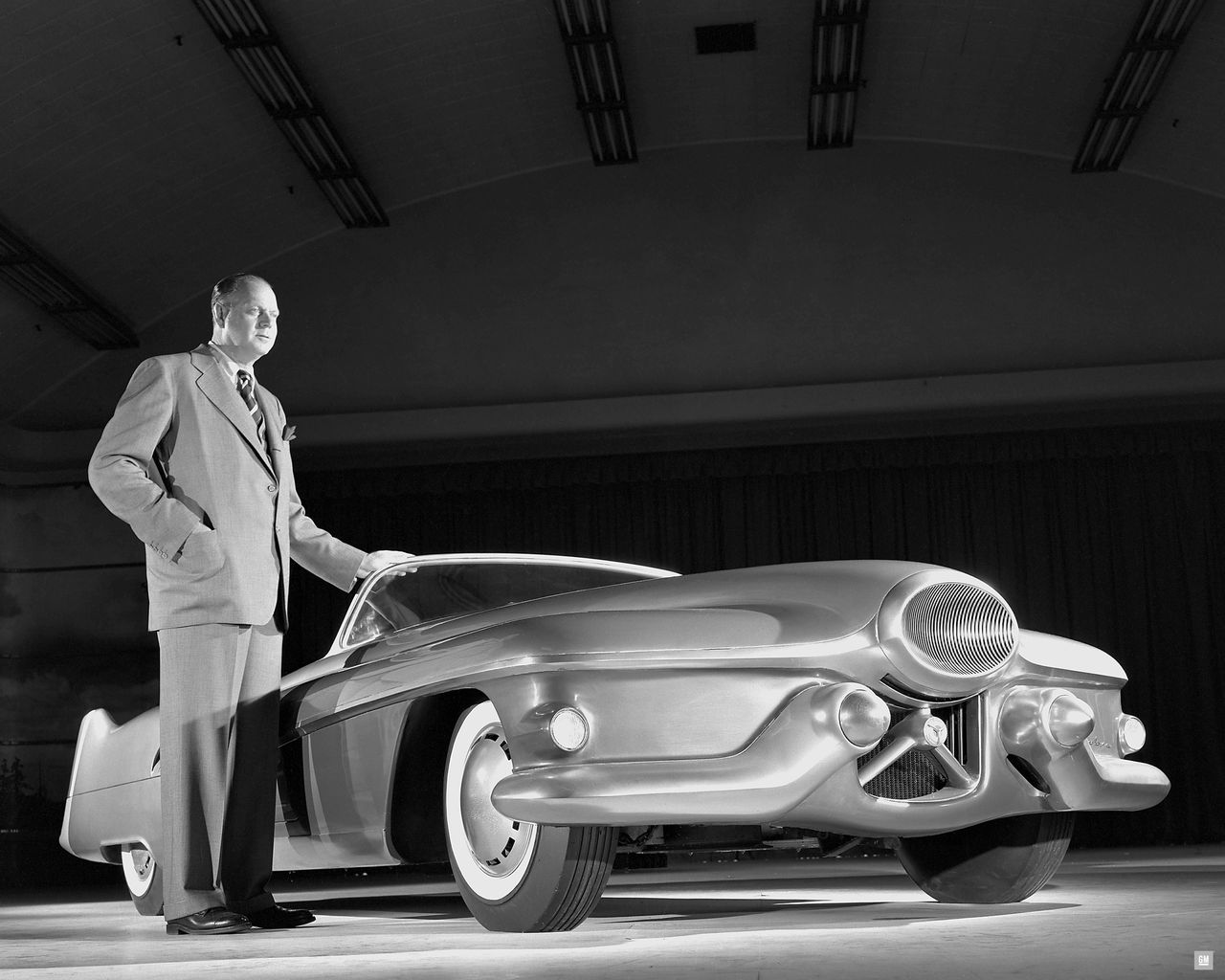
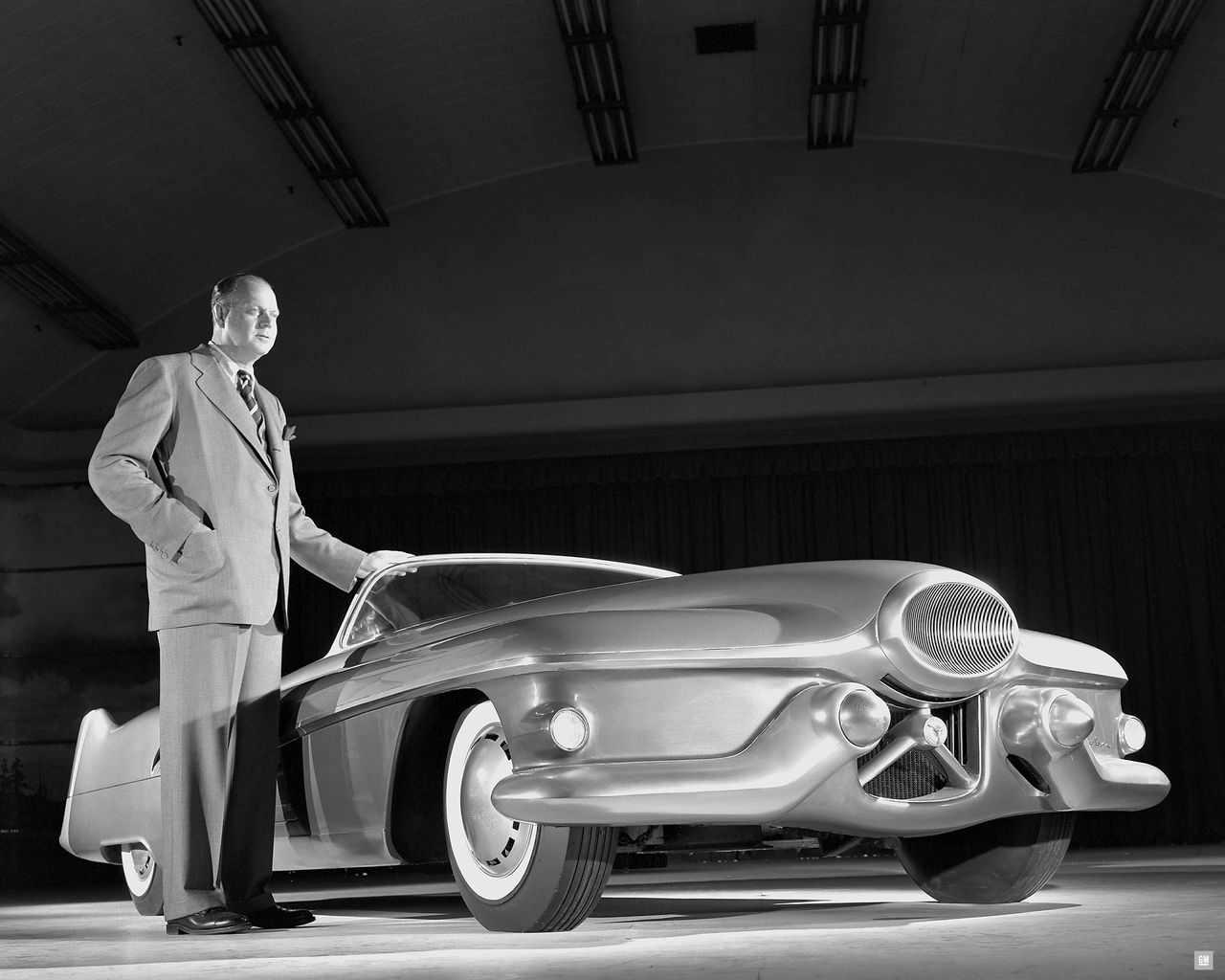
    Perhaps best remembered as the “Father of the Corvette,” Harley J. Earl’s extensive contributions to automobile styling helped produce some of the most beautiful and extravagant automobiles the world has ever seen. Here, Earl stands beside the 1951 Buick LeSabre, the first post-World War II “Dream Car” (concept car) designed by Earl and built by General Motors. (Image courtesy of General Motors.)
    Perhaps best remembered as the “Father of the Corvette,” Harley J. Earl’s extensive contributions to automobile styling helped produce some of the most beautiful and extravagant automobiles the world has ever seen. Here, Earl stands beside the 1951 Buick LeSabre, the first post-World War II “Dream Car” (concept car) designed by Earl and built by General Motors. (Image courtesy of General Motors.)

    Harley Earl wasn’t just a car designer—he was a design pioneer. As GM’s first Vice President of Design, Earl had already revolutionized automotive styling in the 1930s and ‘40s, pioneering everything from chrome trim to concept cars. But by the fall of 1951, his sights were set on something new: creating a true American sports car, one that could challenge the small, nimble European roadsters that were steadily gaining traction on U.S. roads.

    Earl envisioned a car that was stylish yet accessible, sporty yet practical—a vehicle that could be purchased and serviced at any Chevrolet dealership across the country. His goal wasn’t exclusivity, but attainability. Americans didn’t just want to admire sports cars—they wanted to drive them. And Earl was determined to build one they could afford.

    To protect his idea from premature scrutiny, Earl launched a covert effort within Chevrolet, codenamed Project Opel. The project aimed to develop a sleek, lightweight two-seater using cost-effective engineering and existing GM parts wherever possible.

    Earl maintained access to a private, low-profile studio beside GM’s main Body Development Studio. This secretive space allowed him to nurture his vision away from corporate politics and risk-averse executives. He knew that even a whiff of an unauthorized design could trigger internal resistance or shut the project down entirely.

    To bring his idea to life, Earl assembled a handpicked team of trusted collaborators. Vincent Kaptur Sr., director of body engineering at the Styling Studio, helped bridge styling and manufacturing. Carl Peebles, the talented draftsman behind many of Earl’s past successes, translated early sketches into technical drawings. Designers Carl Renner and Bill Bloch contributed their distinctive styling flair, while expert modeler Tony Balthasar gave Earl’s ideas physical form in clay.

    Working in quiet seclusion, this tight-knit group shaped what would become the first Corvette—well out of view from the rest of GM.

    The Engineering Challenge: Radical Ideas, Common Parts

    While most concept cars were flights of fancy, the EX-122 had a practical goal: it had to be production-feasible. Earl instructed the team to target a price of $1,850, undercutting the 1951 MG TD by nearly 15%. To hit that figure, the car would need to rely on existing Chevrolet components—especially a mostly stock GM chassis.

    This cost-conscious constraint steered early design studies. The team explored how to combine style and performance without breaking the bank. But the project lacked a breakthrough—until fate intervened.

    The Alembic I: A Spark in Fiberglass
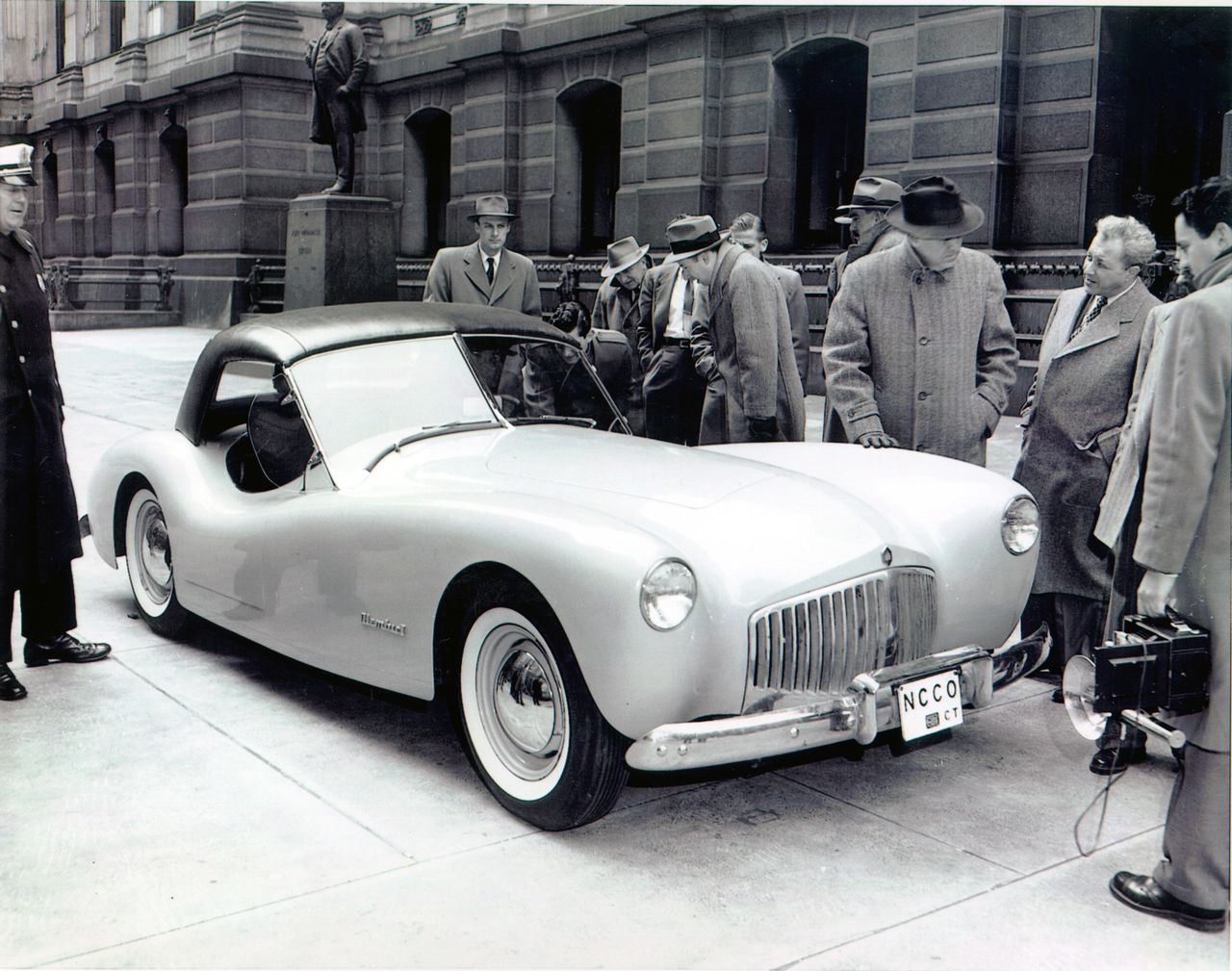
    While there is no question that Harley Earl advanced the use of fiberglass in commercial automotive production, Bill Tritt (and others like him) pioneered its use in cars like the Alembic 1 more than a half-decade before the first Corvette was produced.  (Image courtesy of Geoff Hacker, author/owner of undiscoveredclassics.com)
    While there is no question that Harley Earl advanced the use of fiberglass in commercial automotive production, Bill Tritt (and others like him) pioneered its use in cars like the Alembic 1 more than a half-decade before the first Corvette was produced. (Image courtesy of Geoff Hacker, author/owner of undiscoveredclassics.com)

    Just down the hall from Earl’s office, inside the GM Styling Auditorium, stood an unconventional prototype: the Alembic I. Created by Glasspar founder Bill Tritt for Naugatuck Chemical (a division of U.S. Rubber), the Alembic I featured a revolutionary fiberglass body—lightweight, strong, and corrosion-resistant. It was not a GM project, yet it stood as proof that innovation could come from outside Detroit’s rigid traditions.

    Earl was captivated. The Alembic I wasn’t just interesting—it was transformative. Its graceful curves, futuristic stance, and featherweight fiberglass construction proved that advanced styling didn’t require sheet metal. It gave Earl the inspiration—and the justification—he needed to take Project Opel from quiet experiment to full-scale pursuit.

    If a small shop in California could build a fiberglass-bodied roadster, why couldn’t GM?

    A Fresh Vision, A New Team

    Emboldened, Earl intensified the project and expanded the team. At the center of this new phase was Robert F. McLean, a Caltech-trained engineer with degrees in both engineering and industrial design—a rare blend of talent even today. He was also a dedicated sports car enthusiast.

    Earl gave McLean a bold mandate: design the car from the rear forward, a complete reversal of Detroit norms. This approach allowed precise placement of seats, engine, differential, and fuel tank to achieve ideal weight distribution—a crucial factor in the handling dynamics of European sports cars Americans were beginning to admire.

    The result? A layout with a near 50/50 weight balance and low center of gravity. But there was a trade-off. GM’s existing frames wouldn’t suffice. The car needed a custom chassis, threatening the project’s budget.

    Still, Earl held firm. If the car drove well and captured imaginations, he reasoned, GM would find a way to build it.

    Secrets Behind Closed Doors

    Secrecy remained paramount. The team worked behind closed doors, creating clay and plaster models in a sealed studio. The final shape reflected Earl’s signature styling cues: a low stance, clean body lines, and that iconic wraparound windshield.

    Project Opel was more than a styling exercise—it was a challenge to Chevrolet’s image. Long seen as GM’s value brand, Chevy was about to lead a design revolution.

    Gaining Corporate Traction
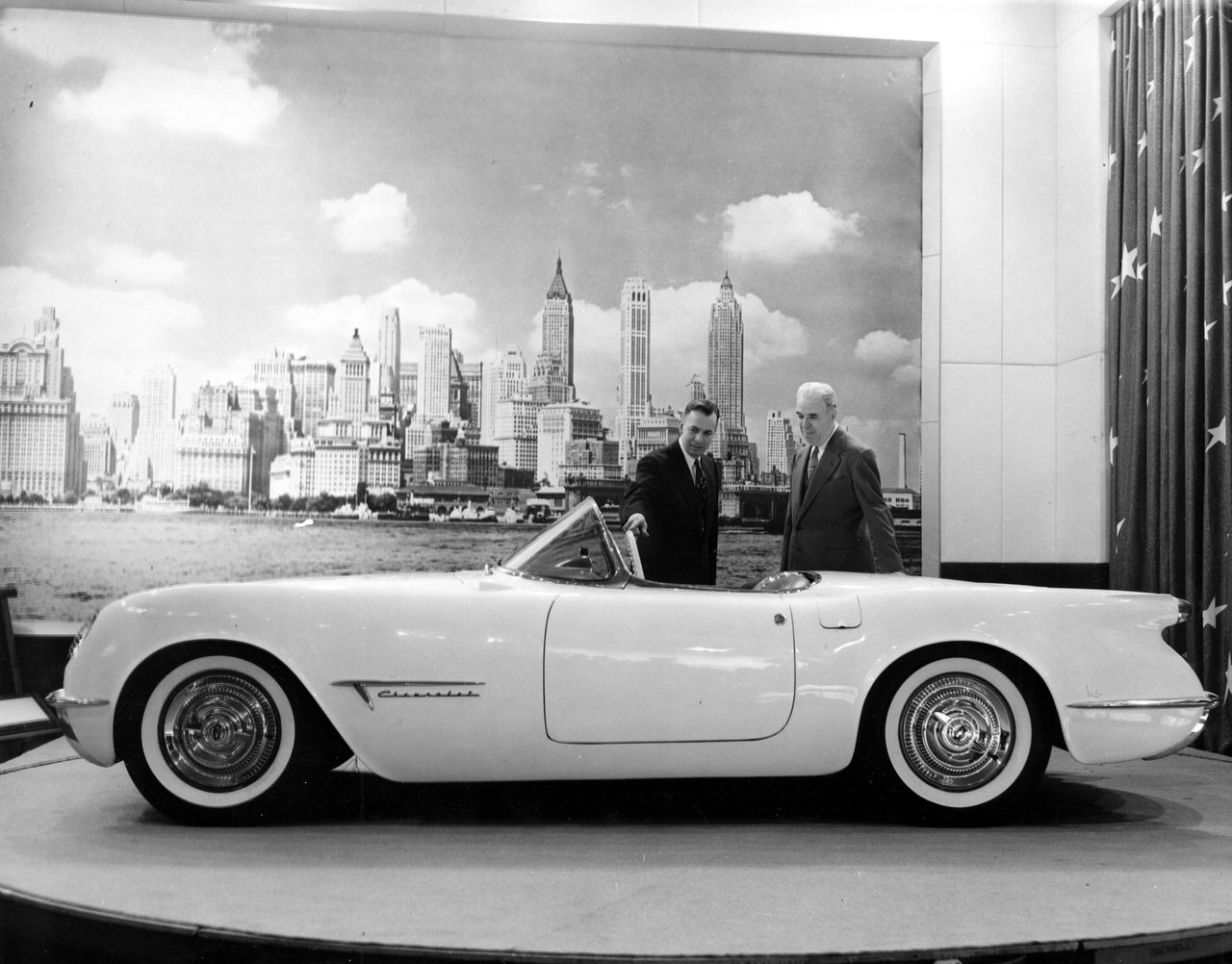
    Ed Cole (left) and Thomas Keating inspect the Corvette concept in the lobby of the Waldorf Astoria Hotel.  The combined synergy of Cole, Keating and Harley Earl all but guaranteed that Chevrolet’s new sports car would be the hot topic of the 1953 Motorama Auto Show.  (Image courtesy of General Motors LLC)
    Ed Cole (left) and Thomas Keating inspect the Corvette concept in the lobby of the Waldorf Astoria Hotel. The combined synergy of Cole, Keating and Harley Earl all but guaranteed that Chevrolet’s new sports car would be the hot topic of the 1953 Motorama Auto Show. (Image courtesy of General Motors LLC)

    By April 1952, the team had sculpted a full-size clay model and a plaster cast, ready for executive review. The first to see it was Ed Cole, Chevrolet’s new Chief Engineer. Cole, a fellow visionary who had previously worked with racing legend Briggs Cunningham, saw the car not as a styling gimmick—but a real opportunity.

    He gave Earl his full support.

    Next came GM President Harlow “Red” Curtice—a man who understood the emotional power of cars. Earl pitched the Corvette as the spark Chevy needed to attract younger, performance-minded buyers. Curtice was sold.

    On June 2, 1952, Chevrolet General Manager Thomas Keating approved the next step: build a running prototype, prepare for a debut at the 1953 GM Motorama, and begin feasibility studies for production.

    With that decision, Project Opel became EX-122.

    Engineering the 1953 EX-122 Corvette CONCEPT: Enter Maurice Olley
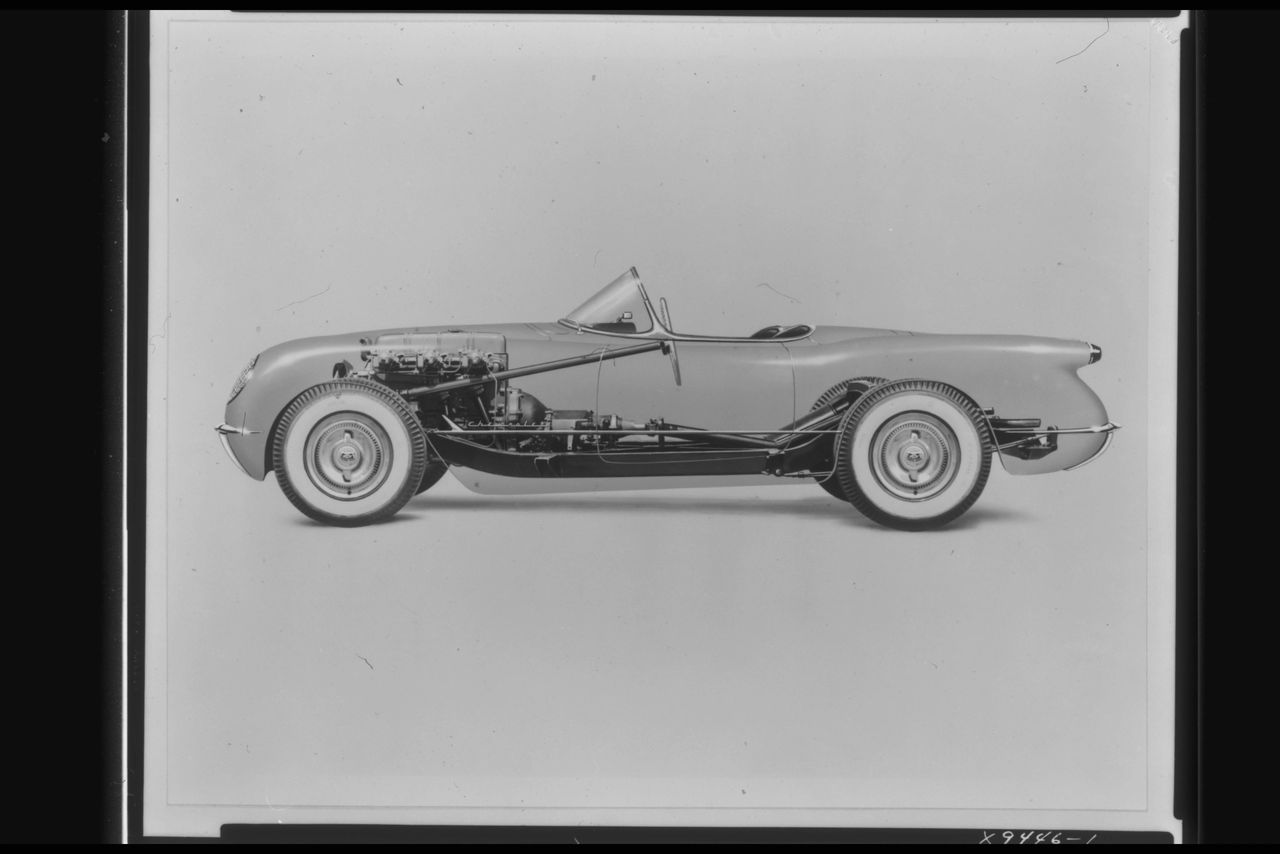
    One of Maurice Olley’s design drawings showing the configuration and placement of the 1953 Corvette’s chassis and steering assemblies.   (Image courtesy of General Motors LLC.)
    One of Maurice Olley’s design drawings showing the configuration and placement of the 1953 Corvette’s chassis and steering assemblies. (Image courtesy of General Motors LLC.)

    Building a drivable prototype in such a compressed window was no small feat. Harley Earl’s vision may have given the Corvette its shape, its presence, and its emotional pull, but EX-122 still had to become a real automobile—one that could be driven, displayed, evaluated, and, if the public responded, potentially produced.

    That responsibility fell in large part to Maurice Olley, one of the most capable chassis engineers inside General Motors. An English-born engineer with experience at Rolls-Royce, Cadillac, and GM Research, Olley brought exactly the kind of disciplined thinking the Corvette program needed. Earl could sketch the dream. Olley had to make sure the dream had a proper foundation beneath it.

    His team developed a purpose-built chassis that was strong, efficient, and remarkably light. Using boxed steel side rails and a central X-member, the frame gave the low-slung roadster the rigidity it needed without burdening it with unnecessary weight. At just 213 pounds, it was an impressive piece of work—light enough to suit the Corvette’s sports-car mission, yet strong enough to support an all-new fiberglass body and the mechanical components Chevrolet intended to use.

    This was not simply a matter of dropping a pretty body onto a shortened Chevrolet frame. The Corvette’s chassis had to serve a different purpose than a standard passenger car. It had to sit lower. It had to feel more responsive. It had to accommodate a two-seat roadster body with proportions unlike anything Chevrolet had in regular production. Olley’s frame gave EX-122 the structural backbone it needed while preserving the lightweight character Earl had envisioned from the beginning.

    Maurice Olley’s Chassis and Suspension Work

    The Corvette’s suspension reflected the same practical ingenuity. Rather than attempting to reinvent every component from scratch, Olley’s team adapted proven Chevrolet parts and reworked them for the Corvette’s smaller, lighter, more athletic personality.

    Up front, the Corvette used modified Chevrolet suspension components, but with geometry tailored to the new roadster’s stance and handling goals. The car needed to feel more precise than an ordinary Chevrolet sedan, and its lower center of gravity allowed the engineers to think differently about ride, response, and balance.

    At the rear, the team again relied on existing Chevrolet thinking where it made sense, but adapted the layout to suit the Corvette’s compact dimensions and sporting character. The result was a suspension package that remained grounded in Chevrolet production reality while still giving EX-122 the basic road manners expected of a stylish American sports car.

    One of the more interesting engineering solutions involved the steering. The Corvette’s triple-carburetor induction system created packaging challenges under the hood, and the engineers had to route the steering linkage around those constraints. Their answer was a split track rod steering arrangement, designed to clear the engine’s side-draft carburetors while still giving the car the more responsive steering feel expected of a two-seat roadster.

    The braking system was also revised with the Corvette’s proportions in mind. Chevrolet improved the master cylinder and adjusted rear brake bias to better match the car’s weight distribution and lower center of gravity. It was the kind of subtle engineering work that rarely gets the same attention as styling or horsepower, but it helped make EX-122 feel like a complete automobile rather than a showpiece with working parts underneath.

    Powering the Dream: The Enhanced Blue Flame Six

    If Maurice Olley gave the Corvette its foundation, Ed Cole helped give it a heartbeat.

    Under the hood, Chevrolet used its 235.5-cubic-inch inline-six, a version of the dependable engine often associated with the Stovebolt family. In standard Chevrolet form, it was known more for durability than glamour. For EX-122, however, Cole and his team transformed it into something more appropriate for the image Earl’s new sports car projected.

    The Corvette’s version of the six received a series of meaningful upgrades. Mechanical lifters replaced the standard hydraulic setup. Compression was increased. A performance camshaft helped the engine breathe and rev more eagerly. Three Carter YH side-draft carburetors were fitted to a custom aluminum intake manifold, creating one of the most recognizable early Corvette engine layouts.

    Those side-draft carburetors were not merely decorative. They helped solve the packaging demands created by the Corvette’s low hoodline while also giving the engine the additional airflow it needed. The arrangement gave the engine a purposeful, almost European appearance, but it remained fundamentally Chevrolet—resourceful, practical, and built from components the company understood.

    The result was a substantial jump in output. The modified six produced 150 horsepower and 223 lb-ft of torque, a significant figure for Chevrolet at the time and enough to give EX-122 credibility as more than a styling exercise. The engine may not have made the Corvette a brute-force performance car, but it gave the car the smoothness, character, and mechanical polish Chevrolet needed for its Motorama debut.

    The Powerglide Decision

    A manual transmission might seem like the obvious choice for a two-seat sports car, especially from a modern perspective. But the Corvette was being created inside early-1950s Chevrolet, and the company’s priorities were shaped by more than enthusiast convention.

    Chevrolet paired the enhanced six-cylinder engine with the two-speed Powerglide automatic, a decision that reflected both engineering practicality and the image GM wanted the car to project. The Powerglide was smooth, modern, and refined. It suited Earl’s vision of an upscale American roadster—something sporty and youthful, but still polished enough to feel like a product of General Motors rather than a stripped-down European racer.

    That choice also helped position the Corvette as something distinctly American. It did not simply copy the European sports-car formula. Instead, it blended European-inspired proportions with Chevrolet mechanical familiarity, GM refinement, and a level of usability that made the car feel less like an exotic curiosity and more like something Chevrolet could actually sell.

    The Powerglide worked with the engine’s torque curve and helped create the relaxed, seamless driving character Chevrolet wanted for its first sports car. In the context of EX-122, that mattered. The car had to impress showgoers, demonstrate that Chevrolet could build something stylish and aspirational, and still remain close enough to production reality that the idea could survive beyond the Motorama stage.

    Fiberglass for the Future

    The boldest engineering gamble was the Corvette’s body.

    Harley Earl had been deeply influenced by the Alembic I, the fiberglass-bodied concept created by Bill Tritt and Glasspar. Earl understood what fiberglass could offer that traditional steel could not: speed, flexibility, and dramatically reduced tooling cost. For a low-volume experimental sports car, those advantages were impossible to ignore.

    Chevrolet had never attempted a full fiberglass body like this before. Building EX-122 from fiberglass was a genuine leap of faith, especially for a company accustomed to steel-bodied mass production. But Earl saw the opportunity. Fiberglass allowed his team to create a sleek, low, sculptural body without waiting for the kind of expensive steel tooling that would have slowed the program and possibly killed the idea before it ever reached the public.

    Using plaster molds pulled from the clay model, engineers and craftsmen created 46 individual fiberglass panels. Those panels were then assembled into nine major body subassemblies, gradually turning Earl’s design into a complete, physical automobile. The process demanded patience, experimentation, and no small amount of handwork. This was not yet the streamlined Corvette production method that would evolve later. It was a first attempt—fast, ambitious, and deeply consequential.

    The fiberglass body also gave the Corvette a character unlike anything else in the American market. It allowed Chevrolet to create dramatic shapes in a compressed timeframe, but it also made the car feel modern in a way steel simply could not. The material itself became part of the Corvette’s identity. From the very beginning, the car was not just different because of how it looked. It was different because of how it was made.

    Racing the Clock

    By December 1952, final construction of the Motorama prototype was complete. That timing is important because the Corvette’s public debut was only weeks away. Every major decision—the chassis, the suspension, the steering, the brakes, the modified six-cylinder engine, the Powerglide transmission, and the fiberglass body—had been compressed into a remarkably short development window.

    What emerged was not merely a static dream car. EX-122 was a working statement of intent. It carried Earl’s design vision, Olley’s chassis discipline, Cole’s mechanical development, and Chevrolet’s first serious attempt to create an American sports car that could capture the public imagination.

    The achievement was not just that the car existed in time for Motorama. It was that EX-122 brought together so many new or reworked ideas with enough coherence to make the concept believable. The boxed steel frame gave it structure. The modified suspension gave it poise. The triple-carbureted Blue Flame Six gave it identity under the hood. The Powerglide gave it smoothness and accessibility. The fiberglass body gave it form, lightness, and production possibility.

    By the time EX-122 was ready for the Waldorf-Astoria, the Corvette was no longer just Harley Earl’s inspired answer to Europe’s postwar sports cars. It was a functioning Chevrolet prototype, built through a rare convergence of design ambition, engineering speed, and corporate willingness to take a chance.

    The dream had been shaped in clay.

    Now it could move under its own power.

    Naming America’s Sports Car

    Just weeks before the Corvette made its public debut at the 1953 GM Motorama, Chevrolet still had one important problem to solve: its new sports car needed a name. The project had already taken shape under Harley Earl’s direction. The fiberglass body was finished. The Motorama deadline was closing in. But the car that would become America’s Sports Car was still missing the word that would carry it into history.

    According to the National Corvette Museum, Chevrolet wanted a name that began with the letter “C.” More than 300 possible names were reviewed, but none captured the spirit of the car. Then Myron E. “Scottie” Scott, an assistant director in Chevrolet’s Public Relations department, went home and began searching through the “C” section of the dictionary. There, he found the word corvette—a term used for a small, fast naval vessel. Scott suggested it the following day, and the group embraced it.

    It was an inspired choice, and not merely because it sounded good. The word carried movement. It had sharp edges. It suggested speed, agility, and purpose without leaning on the borrowed glamour of Europe’s established sports-car world. A corvette, in naval terms, was smaller than a frigate, fast, maneuverable, and often used for escort or patrol duty. During World War II, the term had particular resonance, as corvettes were widely associated with naval escort work, especially in British service.

    For Chevrolet, that made the name nearly perfect. This new car was not meant to sound heavy, formal, or aristocratic. It was not a Cadillac. It was not a grand touring machine built for old-world luxury. It was low, clean, youthful, and American—something with just enough European sports-car influence to feel sophisticated, but enough Chevrolet identity to feel accessible. Corvette gave the car a name that felt fast before the engine ever started.

    The choice also reflected Myron Scott’s particular eye for public imagination. Scott was not just another corporate employee assigned to a naming committee. Before joining Chevrolet, he had worked as an artist, photographer, and art director at the Dayton Daily News. In 1933, after photographing boys racing homemade wooden cars down a hill in Ohio, he helped create what became the All-American Soap Box Derby. Chevrolet later sponsored the Derby nationally, and in 1937 hired Scott into its Public Relations department, where he worked on photography, press kits, graphics, and special events.

    In other words, Scott understood more than words. He understood images, motion, youth, competition, and the way a simple idea could capture the public’s imagination. That background helps explain why Corvette worked so well. The name did not simply label the car. It positioned it. It gave Chevrolet’s experimental two-seater a sense of identity before the public ever gathered around it at the Waldorf-Astoria.

    There is something wonderfully fitting about that. The Corvette itself was still imperfect in 1953. Beneath its sleek fiberglass skin was the 150-horsepower Blue Flame six paired with a two-speed Powerglide automatic—respectable enough, but hardly the performance legend the car would later become. GM itself has since described the early Corvette as looking more muscular than it really was.

    But the name already knew where the car was headed.

    Corvette suggested quickness. It suggested confidence. It suggested something compact, capable, and ready to move. It was not a name borrowed from mythology or geography. It was not decorative. It was purposeful. And in hindsight, it gave Chevrolet’s newborn sports car a destiny it would spend the next seven decades growing into.

    The name was more than a clever branding decision.

    It was the first promise the Corvette ever made.

    Motorama 1953: The World Meets the Corvette
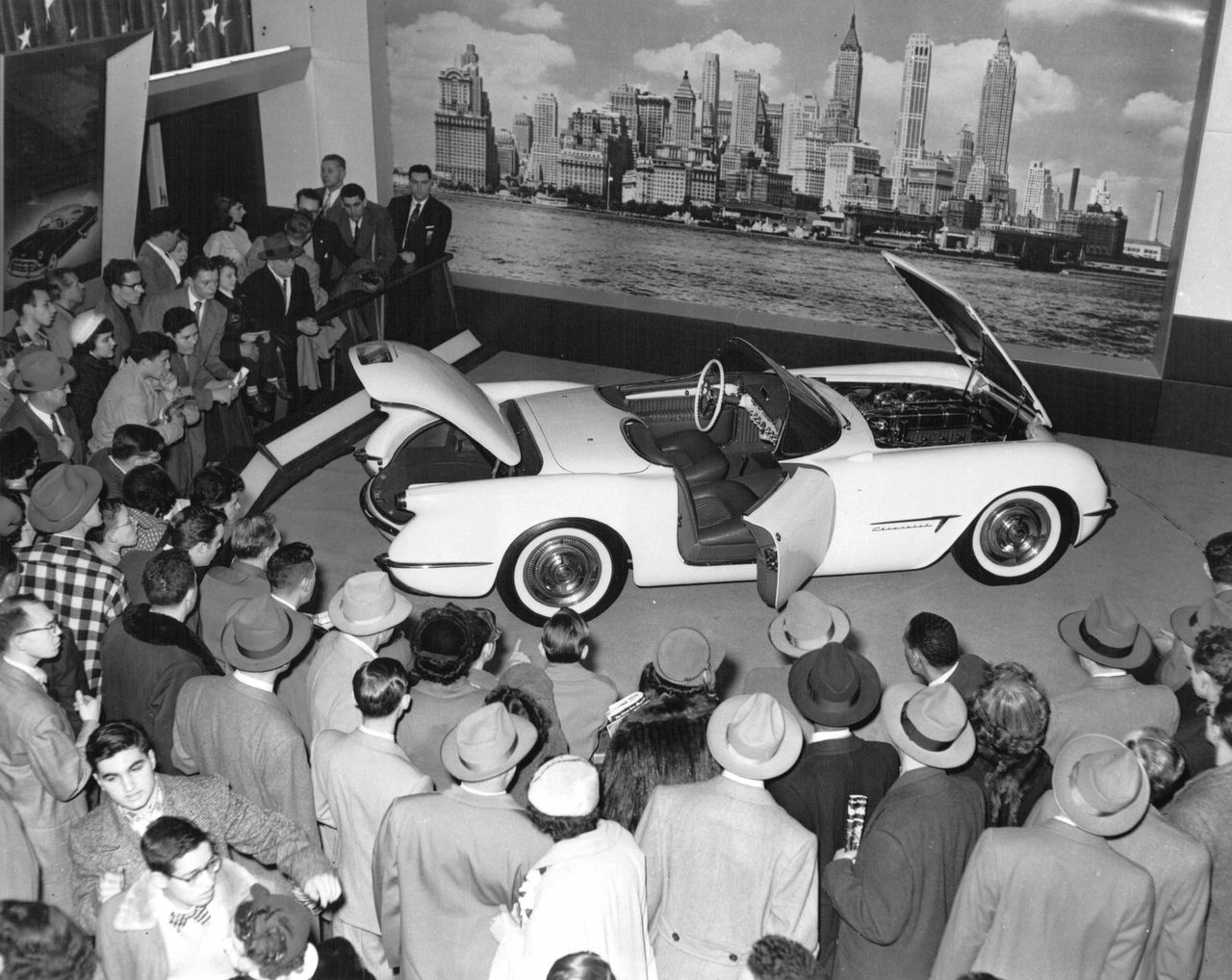
    The EX-52/EX-122 Corvette Prototype on display at the 1953 General Motors Motorama in the lobby of the Waldorf Astoria Hotel in New York City. The car was so well received by the public that the decision to move the car directly to production was made official just days after its introduction. (Image courtesy of General Motors LLC)
    The EX-122 Corvette Prototype on display at the 1953 General Motors Motorama in the lobby of the Waldorf Astoria Hotel in New York City. The car was so well received by the public that the decision to move the car directly to production was made official just days after its introduction. (Image courtesy of General Motors LLC)

    On January 17, 1953, the Chevrolet Corvette made its public debut at the Waldorf-Astoria Hotel in New York City as part of General Motors’ Motorama, but to simply say the car was “introduced” does not fully capture the scale of the moment. This was not a quiet display tucked into a conventional auto show. It was GM at the height of its postwar confidence, presenting its vision of the future inside one of New York’s grandest hotels.

    Outside, the weather was bitterly cold, with temperatures barely rising above freezing. Still, thousands waited to get inside. By the National Corvette Museum’s account, approximately 50,000 people came through the New York show on opening day alone, pressing into a production that combined new cars, futuristic dream cars, elaborate displays, fashion, music, dancers, and carefully staged spectacle.

    Inside the Waldorf-Astoria’s Grand Ballroom, the scene was crowded and formal, almost cinematic in its presentation. One attendee, Donald DeFilippo, later recalled taking the train from Poughkeepsie to New York as a 15-year-old who dreamed of becoming a GM designer. He remembered walking up an elegant marble staircase into a huge ballroom, where the crowd stood shoulder-to-shoulder as cars emerged from behind curtains, surrounded by models and dancers.

    For a young enthusiast seeing Motorama firsthand, the entire event felt like design made real. DeFilippo described the elevated turntables, the gleaming show cars, and the difficulty of moving through the packed crowd. But then he noticed something different: a tight group of people gathered around another display, with enough excitement in their voices to make him push closer. The Corvette was drawing the kind of attention that made people stop, linger, and refuse to move aside.

    When he finally squeezed through the crowd, DeFilippo saw what Chevrolet had placed before the public for the first time: a low, sleek, two-seat convertible with its hood and trunk open, a straight-six engine with three carburetors beneath the hood, and wire mesh over the headlights. His reaction was immediate. He understood the beauty of the thing before him, but he also began thinking like a performance-minded enthusiast, wondering what the car might become with something stronger under the hood.

    That detail is important because DeFilippo was not alone. Zora Arkus-Duntov was also there, and his own response to the Corvette followed a similar pattern: visually captivated, mechanically unconvinced, and immediately aware of the car’s unrealized potential. The National Corvette Museum notes that seeing the Corvette at the 1953 Motorama prompted Duntov to write to Chevrolet Chief Engineer Ed Cole, a step that eventually helped bring him into General Motors and onto the path that would reshape Corvette history.

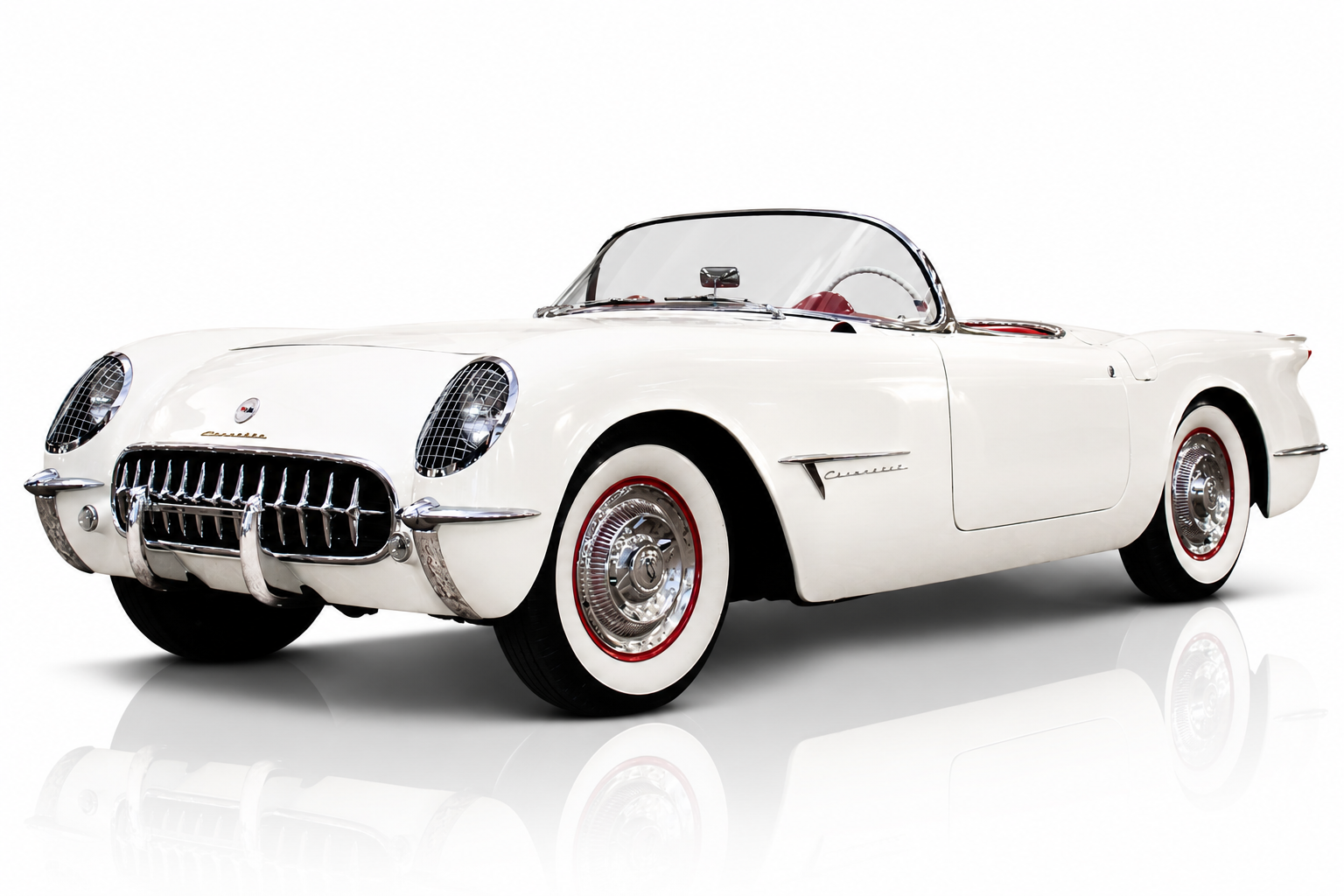
    Clad in Polo White with a Sportsman Red interior, EX-122 did not look like a typical Chevrolet. It looked low, clean, modern, and distinctly American, yet it carried the influence of the European sports cars that had inspired Harley Earl in the first place. GM later described the first Corvette as having the classic elements already in place: a sleek two-seat convertible roadster, even if its 150-horsepower Blue Flame six and two-speed Powerglide made it more promise than finished performance machine.

    What mattered at the Waldorf-Astoria was not that EX-122 was perfect. It was not. What mattered was that people saw something in it. The crowd around the car, the photographs that captured that excitement, and the reaction from enthusiasts and engineers alike revealed that Chevrolet had touched something deeper than novelty. The car suggested a new kind of American aspiration: not luxury in the Cadillac sense, not mass-market practicality in the traditional Chevrolet sense, but personal style, motion, youth, and speed.

    Chevrolet moved quickly after Motorama. GM notes that, encouraged by the reception to the car, Chevrolet built 300 fiberglass-bodied Corvettes by the end of 1953, with the first production cars reaching showrooms in June. Every one of those first-year cars carried the same essential visual identity as the Motorama prototype: Polo White exterior, Sportsman Red interior, and a fiberglass body that made the Corvette unlike anything else in the American market.

    Seen in that context, the Waldorf-Astoria debut was more than the Corvette’s first public appearance. It was the moment the public validated the idea. EX-122 arrived as an experiment, a show car, a calculated act of corporate imagination. It left New York as something far more dangerous to ignore: a Chevrolet people wanted to stand near, talk about, dream over, and eventually own.

    Why the 1953 EX-122 Still Matters Today
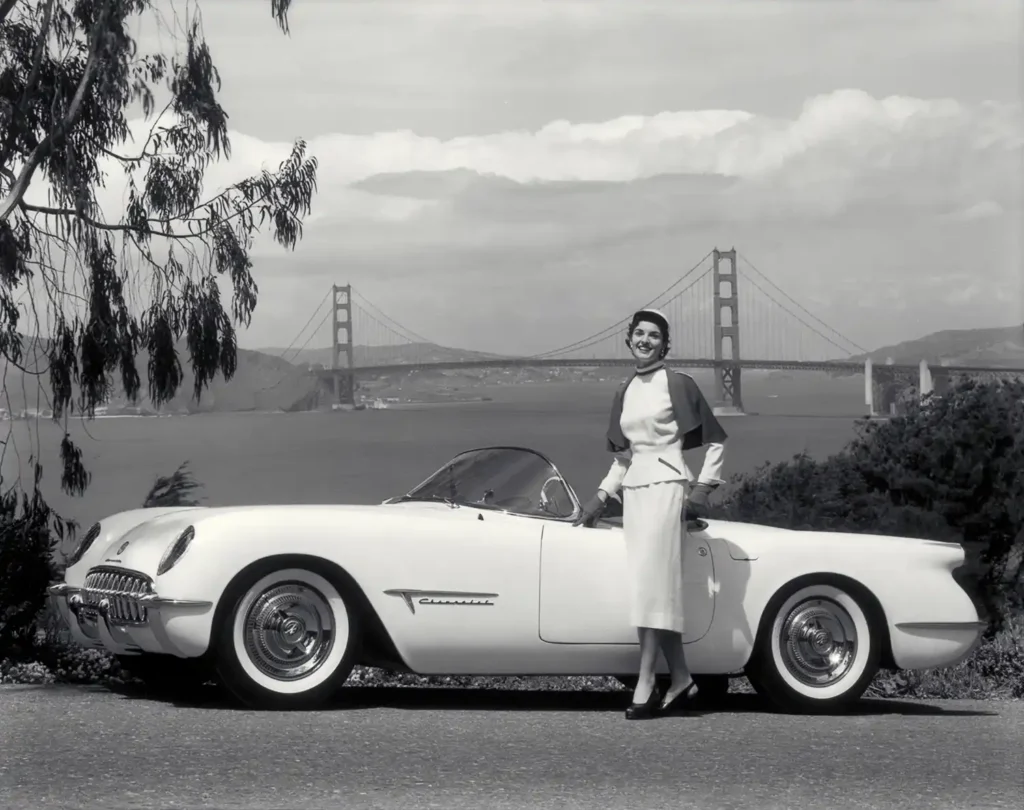
    1953 EX-52 Corvette
    The 1953 EX-52 Corvette Concept

    Looking back, it is astonishing how much vision, risk, and ingenuity went into creating the Corvette. The 1953 EX-122 was not born from inevitability. It was shaped by instinct, ambition, and a very deliberate refusal to accept that America’s automotive future had to be practical, predictable, or safe.

    From the quiet inspiration of the Alembic I to the tireless efforts of Harley Earl, Ed Cole, Maurice Olley, and the small group of believers inside General Motors, EX-122 represented something far larger than a fiberglass-bodied show car. It was a defiant act of creative will. A declaration that Chevrolet could build something aspirational, emotional, and unmistakably American.

    Without EX-122, there would be no Corvette as we know it. No Sting Ray. No Z06. No Zora Arkus-Duntov reshaping the car’s performance destiny. No Le Mans dreams. No Sebring battles. No Corvette Racing. No seven-decade lineage of design, engineering, speed, and cultural identity wrapped into the phrase “America’s Sports Car.”

    The 1953 EX-122 reminds us that every icon begins as a risk. Before the accolades, before the racing legacy, before the generational loyalty, there was a moment when a handful of people chose to build something that did not yet have permission to exist.

    That is why EX-122 still matters today. It was not merely the first Corvette concept. It was the spark. The beginning of the argument. The proof that a bold idea, placed in the right hands at the right moment, could become something far greater than anyone in that Motorama hall could have fully imagined.

    EX-122 was not a footnote in Corvette history.

    It was the first chapter in a legend!
    The EX-52 Corvette concept represents Chevrolet’s first serious attempt to evolve the Corvette beyond a showpiece and into a refined, production-ready sports car. Developed in the early 1950s, EX-52 explored improved proportions, cleaner detailing, and a more cohesive design language than the original Motorama show car. While it never reached production, the lessons learned from…

  • 1954 Corvette Overview

    1954 Corvette Overview

    The 1954 Corvette technically begins in December of 1953, when Chevrolet moved production out of the improvised line in Flint and into a newly renovated plant in St. Louis. A small handful of early ’54s—on the order of a dozen-plus—were completed at Flint; from there forward, St. Louis took over. Chevrolet didn’t just change addresses; it changed expectations. The new facility had been laid out to build Corvettes by the ten-thousand, a figure as audacious as the glittering dream of GM’s traveling Motorama itself.

    The optimism was necessary. The 1953 Motorama had lit a fuse; America wanted a fiberglass sports car with the glamour Harley Earl had promised. However, the first-year Corvette was essentially a low-volume, hand-built prototype put into the hands of customers. It was beautiful and exotic—and compromised. The 1954 model year, then, became the moment to turn promise into product, and to keep a fragile program alive.

    The Cast: Earl’s Vision, Duntov’s Fire, Olley’s Discipline, Renner’s Eyes, Morrison’s Material

    Harley Earl and the Jet Age, captured in one frame. Standing beside his Buick Le Sabre dream car, GM’s styling chief shows the theatrical vision that powered Motorama—and set the stage for Corvette. The Le Sabre’s wraparound glass, fighter-inspired nose, and low, flowing body were less a prototype than a manifesto, proving that an American sports car could be as futuristic as it was beautiful. From spectacles like this, the Corvette’s world was born. (Image courtesy of GM Media LLC.)
    Harley Earl and the Jet Age, captured in one frame. Standing beside his Buick Le Sabre dream car, GM’s styling chief shows the theatrical vision that powered Motorama—and set the stage for Corvette. The Le Sabre’s wraparound glass, fighter-inspired nose, and low, flowing body were less a prototype than a manifesto, proving that an American sports car could be as futuristic as it was beautiful. From spectacles like this, the Corvette’s world was born. (Image courtesy of GM Media LLC.)

    Harley J. Earl—the showman who invented the Motorama—was the Corvette’s father, the one who believed GM should build an American two-seat sports car at a time when returning GIs were snapping up MGs and Jaguars. One of Earl’s many gifts was showmanship, but he also created the organizational space inside GM for dream cars to nudge the corporation toward reality.

    Inside the General Motors hierarchy, Earl had carved out a unique position of power. As vice president of styling, he wasn’t just an artist sketching cars; he sat at the executive table alongside the engineers and accountants, with the authority to demand resources for his visions. His department became something unprecedented in the auto industry: a full-fledged design organization that dictated the look of every GM product, from Chevrolet sedans to Cadillac limousines. Within that empire, Earl nurtured the practice of building concept cars—“dream cars,” as he called them—not as idle fantasy, but as rolling laboratories to test public taste and corporate appetite. By the early 1950s, the Motorama roadshows made these concepts household names, and Earl used that public enthusiasm as leverage inside GM to keep projects like the Corvette alive.

    The Corvette was the perfect expression of Earl’s system. He believed GM needed a halo car to capture attention, to say something bold about Chevrolet’s place in the postwar market. But he also understood that a flashy showpiece wasn’t enough—there had to be a pipeline, a process, a machinery of dream-to-reality that would carry the car from the Waldorf-Astoria’s ballroom floor to a factory line in St. Louis. Earl built that machinery. He fostered a styling culture that prized experimentation, empowered designers like Carl Renner to sketch and clay-model ideas, and worked hand-in-hand with engineering leaders such as Maurice Olley to translate fantasy into workable production. In that sense, Harley Earl’s greatest contribution to the Corvette wasn’t just the styling of the first car—it was the organizational scaffolding that allowed a radical two-seater fiberglass roadster to exist at all, and to evolve from a Motorama darling into America’s sports car.

    Zora Arkus-Duntov’s legend with Corvette truly began in 1954. Though he had only just joined GM, the Belgian-born engineer and former racer immediately recognized both the promise and the peril of Chevrolet’s fledgling sports car. To his eye, the Corvette’s fiberglass body was striking, but its Blue Flame six and Powerglide automatic left it unworthy of true sports-car status. He famously wrote his memo, “Thoughts Pertaining to Youth, Hot Rodders, and Chevrolet,” that same year, urging management to seize the loyalty of America’s speed-hungry youth by giving Corvette real performance. This photograph captures Duntov behind the wheel of an early test car—hands-on, analytical, and already steering the program toward the V-8 and manual transmissions that would soon save it. For the 1954 model year, his influence had yet to be felt in production, but his vision was already shaping the Corvette’s destiny. (Image courtesy of GM Media)
    Zora Arkus-Duntov’s legend with Corvette truly began in 1954. Though he had only just joined GM, the Belgian-born engineer and former racer immediately recognized both the promise and the peril of Chevrolet’s fledgling sports car. To his eye, the Corvette’s fiberglass body was striking, but its Blue Flame six and Powerglide automatic left it unworthy of true sports-car status. He famously wrote his memo, “Thoughts Pertaining to Youth, Hot Rodders, and Chevrolet,” that same year, urging management to seize the loyalty of America’s speed-hungry youth by giving Corvette real performance. This photograph captures Duntov behind the wheel of an early test car—hands-on, analytical, and already steering the program toward the V-8 and manual transmissions that would soon save it. For the 1954 model year, his influence had yet to be felt in production, but his vision was already shaping the Corvette’s destiny. (Image courtesy of GM Media)

    Zora Arkus-Duntov arrived as an engineer and racing driver with a missionary streak. In December 1953 he fired off the memo that would become scripture: “Thoughts Pertaining to Youth, Hot Rodders, and Chevrolet.”

    “The publications devoted to hot rodding and hop-upping … from cover to cover, they are full of Fords,” he warned. If Chevrolet wanted the next generation, it had to meet them where speed lived: on the drag strip, at Bonneville, in competition. The memo’s urgency would echo through 1954 as Chevy prepared the Corvette for the mechanical future Duntov was already sketching.

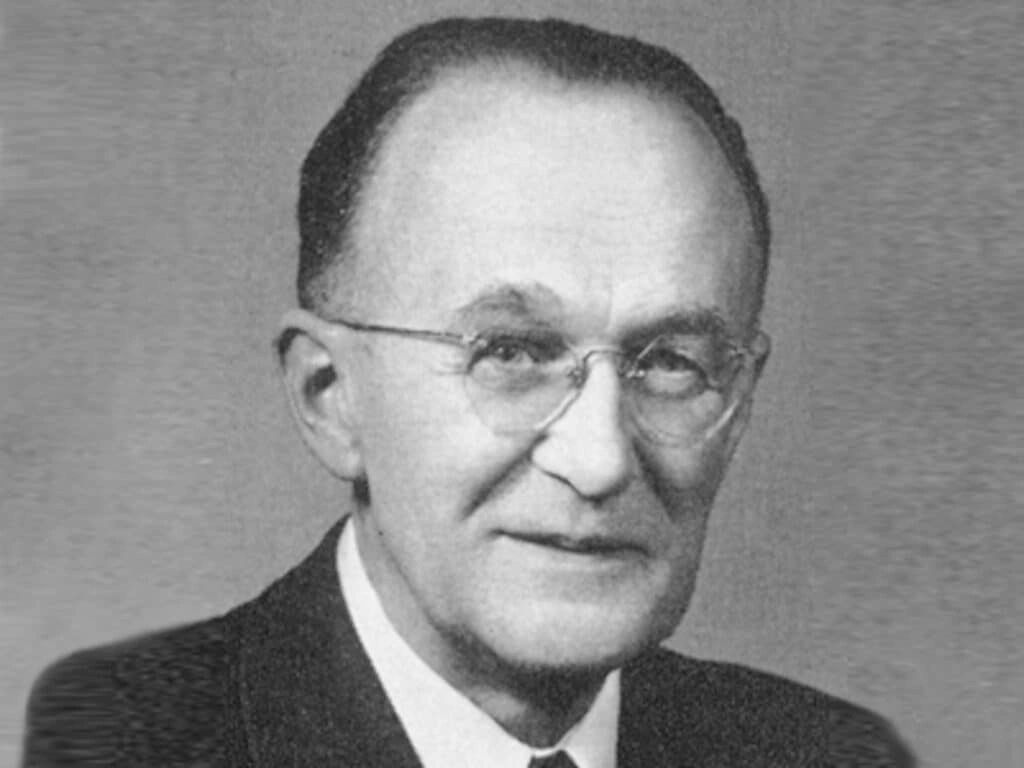
    Maurice Olley was the quiet architect of the Corvette’s early dynamics—an English-born engineer from Rolls-Royce and Vauxhall who brought rigorous, no-nonsense science to Chevrolet in the 1920s. As Chevy’s R&D lead when the Corvette took shape, he championed fundamentals over flash, dictating the X-braced frame, independent front suspension, and stout live-axle rear that balanced cost, durability, and predictable handling. While Harley Earl’s team dazzled with Motorama glamour and fiberglass, Olley’s pencil-line geometry ensured the car felt composed and credible on the road. His discipline gave Corvette the engineering backbone it needed to grow into a true performance icon.
    Maurice Olley was the quiet architect of the Corvette’s early dynamics—an English-born engineer from Rolls-Royce and Vauxhall who brought rigorous, no-nonsense science to Chevrolet in the 1920s. As Chevy’s R&D lead when the Corvette took shape, he championed fundamentals over flash, dictating the X-braced frame, independent front suspension, and stout live-axle rear that balanced cost, durability, and predictable handling. While Harley Earl’s team dazzled with Motorama glamour and fiberglass, Olley’s pencil-line geometry ensured the car felt composed and credible on the road. His discipline gave Corvette the engineering backbone it needed to grow into a true performance icon.

    Maurice Olley’s fingerprints are all over the Corvette’s second year, even if his contributions were quieter than Harley Earl’s showmanship or Zora Arkus-Duntov’s fiery advocacy. A veteran of Rolls-Royce and Vauxhall before arriving at GM, Olley brought a European-trained discipline to chassis and suspension engineering that proved invaluable as Chevrolet tried to turn Earl’s fiberglass showpiece into a roadworthy sports car. By 1954, his task was to refine, rationalize, and, above all, stabilize the Corvette.

    It was Olley who oversaw the refinement of the car’s X-braced steel frame, ensuring that it could handle both the stresses of the Blue Flame six and the realities of mass production in St. Louis. He paid close attention to suspension geometry, tuning the independent front and live-axle rear to provide something closer to the “predictable roadholding” that road testers demanded, even if the Corvette wasn’t yet ready to out-corner an XK120. He insisted on better routing of fuel and brake lines for safety, improvements to wiring harnesses for reliability, and more robust mounting points for body panels. These weren’t headline changes, but they were the difference between a fragile Motorama show car and a genuine production automobile.

    In a sense, Olley was the Corvette’s stabilizer bar in 1954. Where Earl dreamed and Duntov lobbied for speed, Olley quietly made sure the car could withstand the demands of daily driving and keep Chevrolet’s reputation intact. Without his insistence on fundamentals, the Corvette might not have survived long enough for Duntov’s small-block V-8 to transform it into a true performance icon.

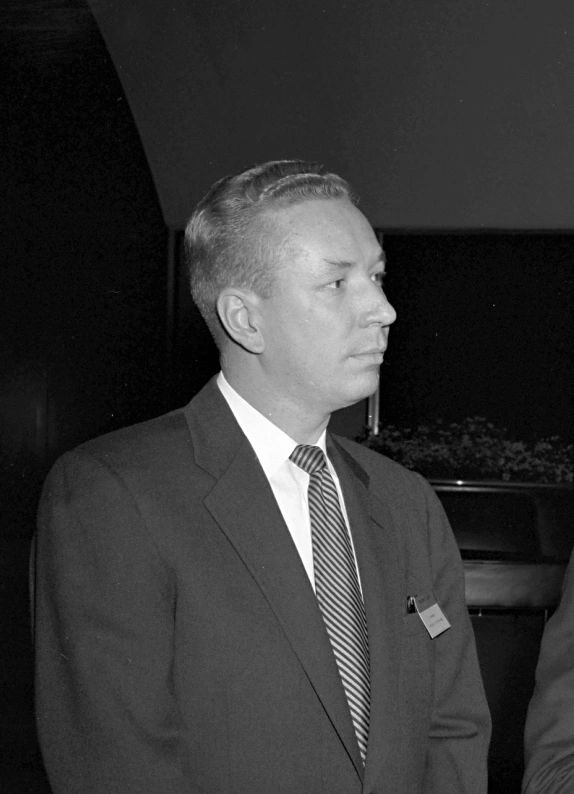
    Carl Renner, a talented stylist within Harley Earl’s GM Design Studio, played a pivotal role in refining the 1954 Corvette. While the basic lines of the Corvette had been established in 1953, it was Renner who helped evolve the car from its raw, hand-built debut into something more production-ready and polished for its second year. His eye for proportion and detail guided subtle but meaningful updates—such as cleaner bodywork, re-routed exhaust outlets that prevented paint staining on the tail, and refinements in trim that gave the car a more elegant, “continental” flavor. Renner’s touch ensured the Corvette matured quickly from experimental showpiece to a more sophisticated sports car, laying the groundwork for the Corvette’s identity as both an American design statement and a viable production automobile. (Image courtesy of GM Media LLC)
    Carl Renner, a talented stylist within Harley Earl’s GM Design Studio, played a pivotal role in refining the 1954 Corvette. While the basic lines of the Corvette had been established in 1953, it was Renner who helped evolve the car from its raw, hand-built debut into something more production-ready and polished for its second year. His eye for proportion and detail guided subtle but meaningful updates—such as cleaner bodywork, re-routed exhaust outlets that prevented paint staining on the tail, and refinements in trim that gave the car a more elegant, “continental” flavor. Renner’s touch ensured the Corvette matured quickly from experimental showpiece to a more sophisticated sports car, laying the groundwork for the Corvette’s identity as both an American design statement and a viable production automobile. (Image courtesy of GM Media LLC)

    Carl Renner was one of those rare stylists who could take Harley Earl’s grand, theatrical visions and shape them into something livable, elegant, and distinctly American. As part of the original “Project Opel” team that developed the Corvette, Renner applied a draftsman’s precision and an artist’s eye to the proportions that gave the car its long-hood, short-deck stance and its graceful wraparound glass. He had a gift for surfacing—knowing just how light would bend across a fender or door skin—and it was this sensitivity that kept the Corvette from tipping into caricature.

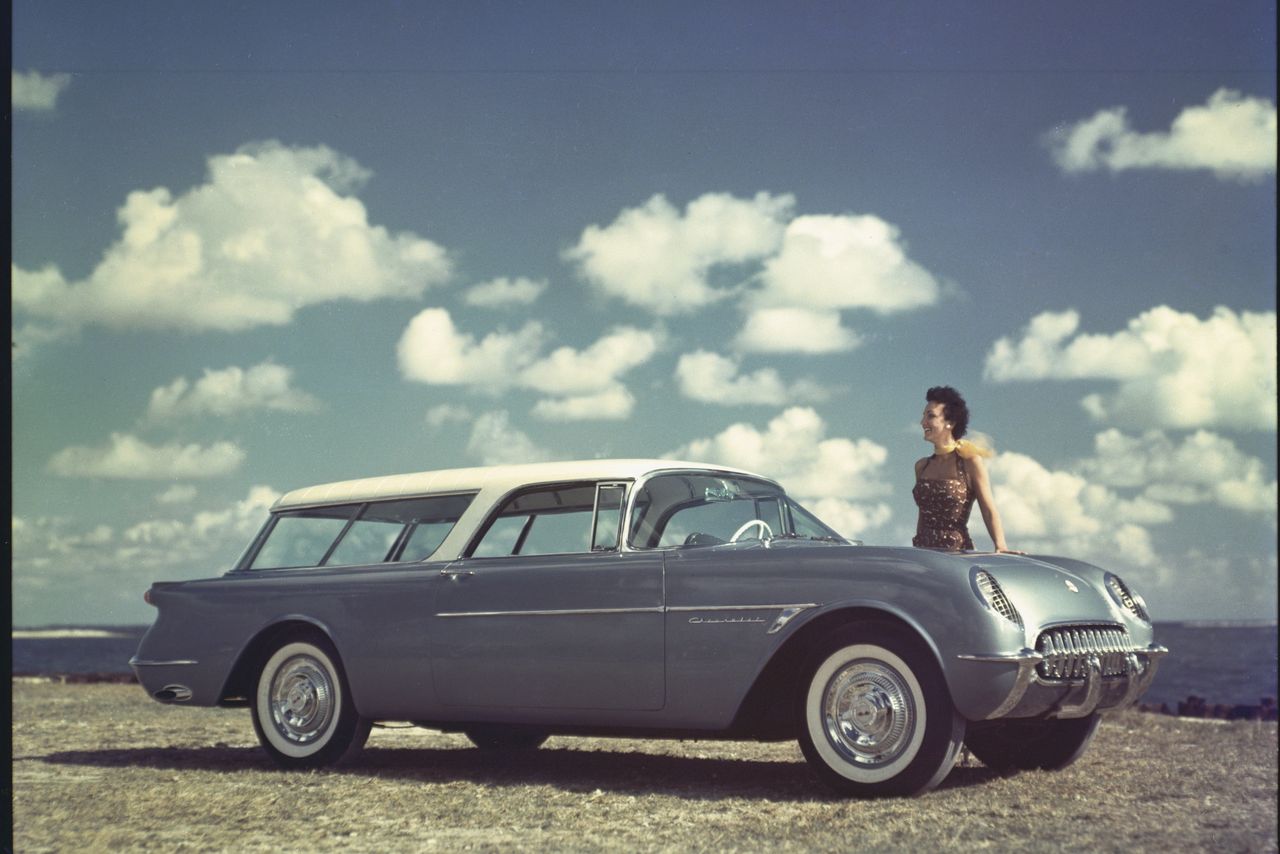
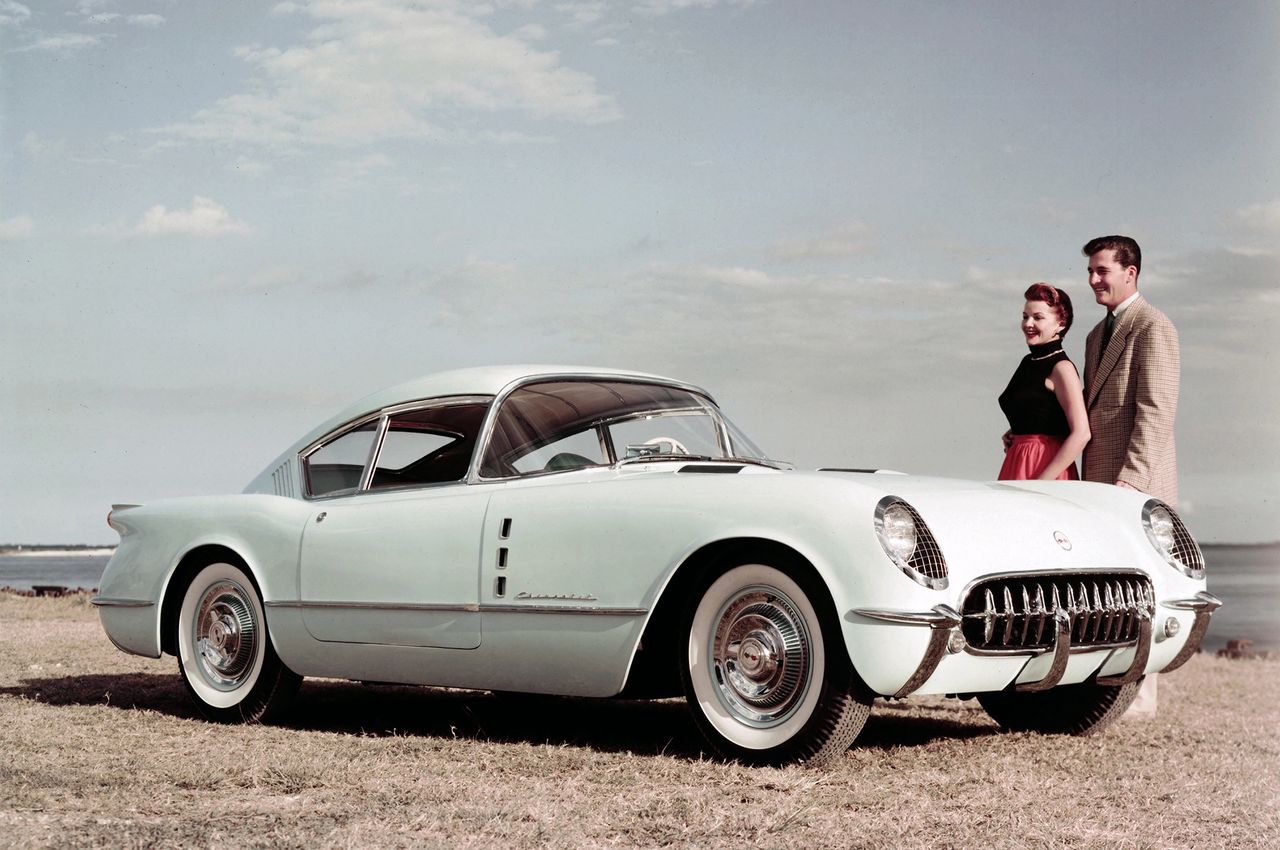
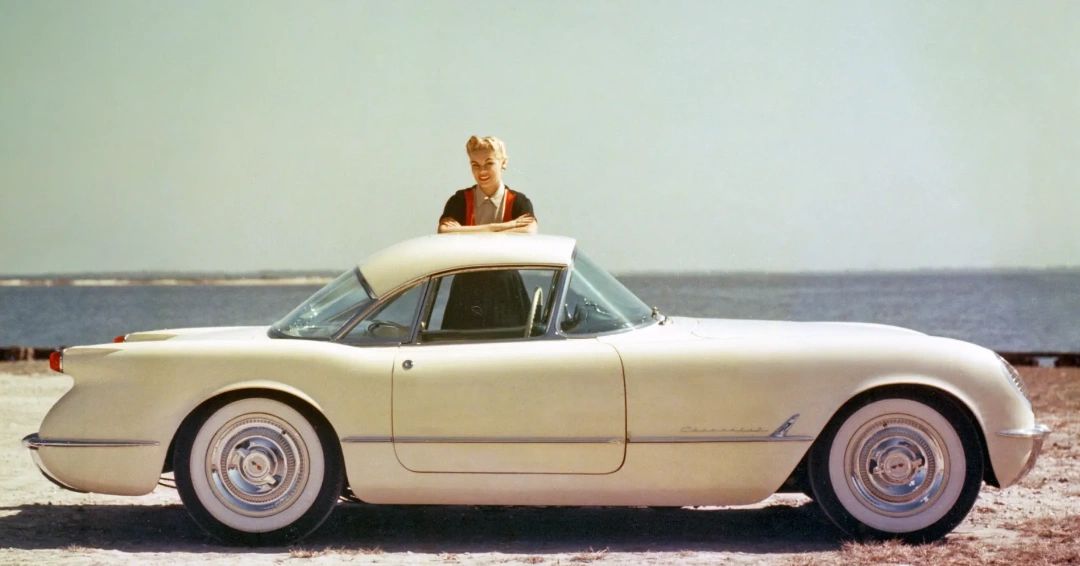
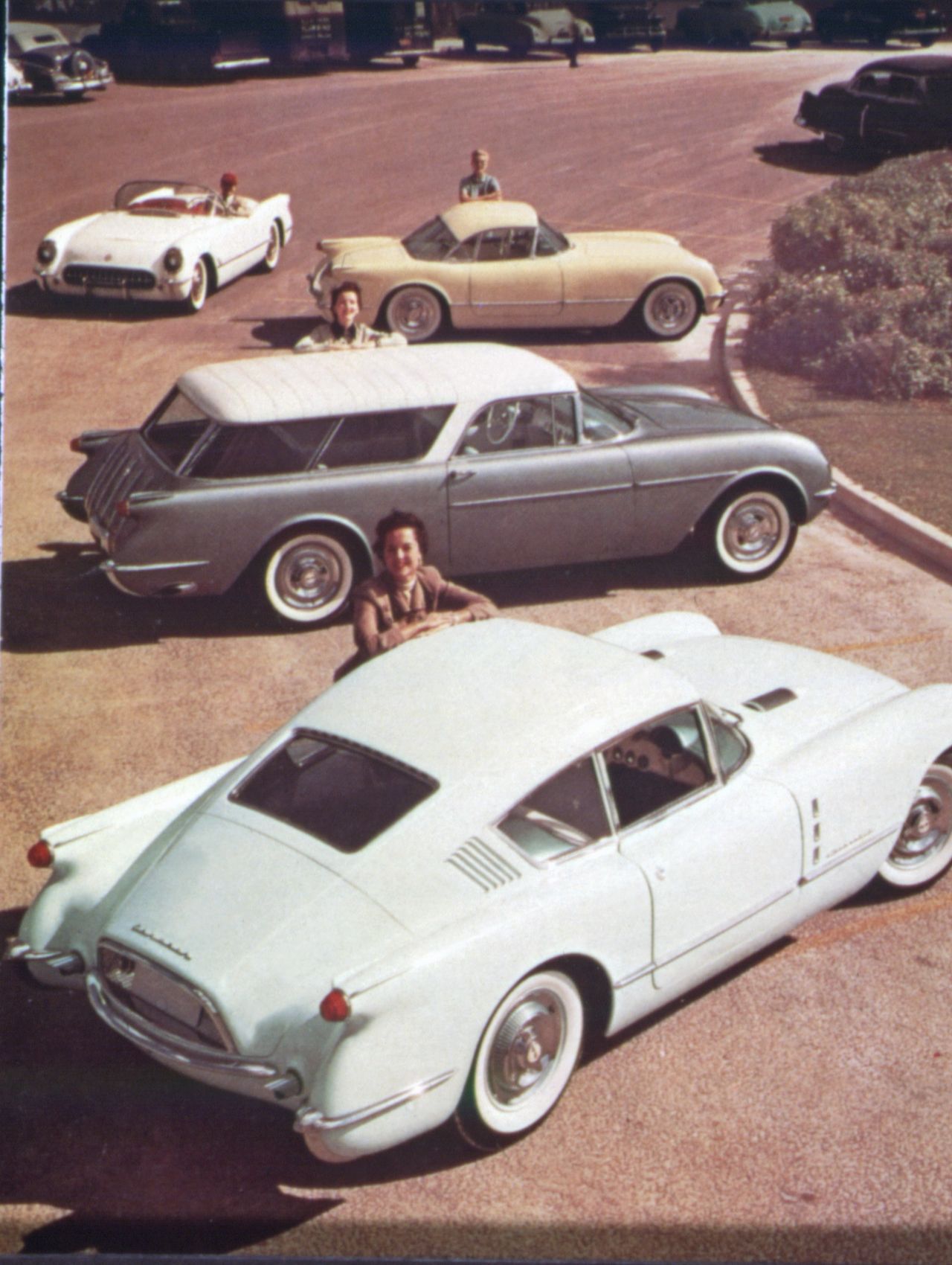
    Renner’s influence extended beyond the production car. At the 1954 Motorama, Chevrolet unveiled a trio of Corvette-inspired concepts: the fastback Corvair, the Corvette Nomad wagon, and the hardtop “convertible coupe.” Each bore elements of Renner’s hand, from the flowing rooflines of the Corvair to the crisp wagon profile of the Nomad. These designs showed how the Corvette’s language of fiberglass and flair could be stretched into entirely new body styles, and they underscored Renner’s ability to take Earl’s mandate—make it dramatic, make it modern—and translate it into shapes that felt achievable. His work ensured that the Corvette wasn’t just a spectacle under Motorama spotlights, but a car people could imagine owning, driving, and proudly parking in their driveway.

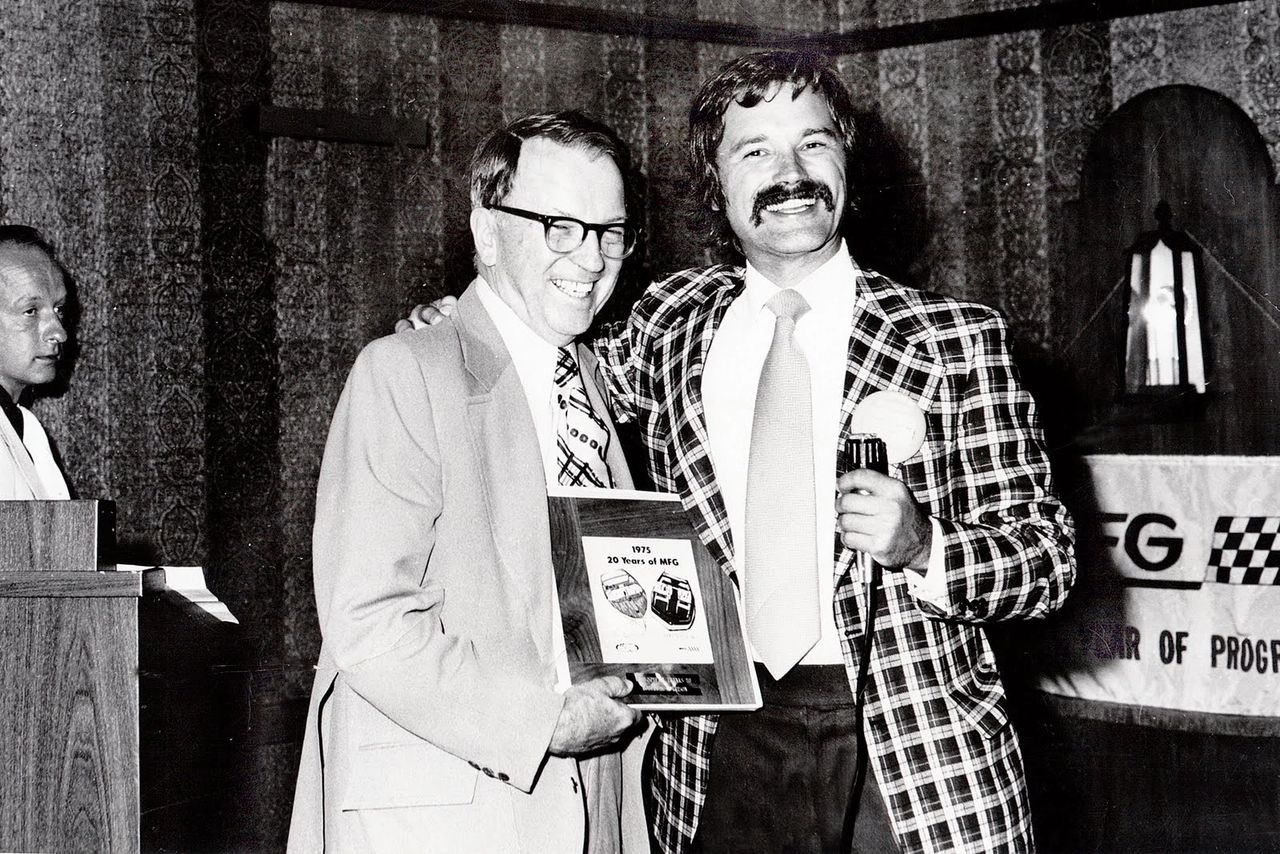
    This photo captures Robert S. Morrison (center) —founder of Molded Fiber Glass (MFG)—being honored for his company’s 20 years of innovation in 1975. Morrison’s vision and persistence had been pivotal more than two decades earlier when he convinced General Motors that fiberglass could be used for automobile production, a radical idea at the time. His Ashtabula, Ohio firm supplied the Corvette’s body panels in 1953–54, making the Corvette the first mass-produced car with a fiberglass body. Here, smiling with son Richard, Morrison is celebrated not just for his company’s longevity but for his role in shaping the very foundation of America’s sports car. (Image courtesy of richardmorrisonmfg.com)
    This photo captures Robert S. Morrison (center) —founder of Molded Fiber Glass (MFG)—being honored for his company’s 20 years of innovation in 1975. Morrison’s vision and persistence had been pivotal more than two decades earlier when he convinced General Motors that fiberglass could be used for automobile production, a radical idea at the time. His Ashtabula, Ohio firm supplied the Corvette’s body panels in 1953–54, making the Corvette the first mass-produced car with a fiberglass body. Here, smiling with son Richard, Morrison is celebrated not just for his company’s longevity but for his role in shaping the very foundation of America’s sports car. (Image courtesy of richardmorrisonmfg.com)

    And then there was Robert S. Morrison of Molded Fiber Glass (MFG) in Ashtabula, Ohio—the practical visionary who convinced Chevrolet that reinforced plastics could be mass-manufactured into car bodies. The Corvette was the proof. Morrison’s small crew worked shoulder-to-shoulder with GM engineers to move fiberglass from novelty to production reality; by 1954, the Corvette stood as the first production automobile with a molded fiberglass-reinforced plastic body.

    St. Louis: From Handwork to Linework

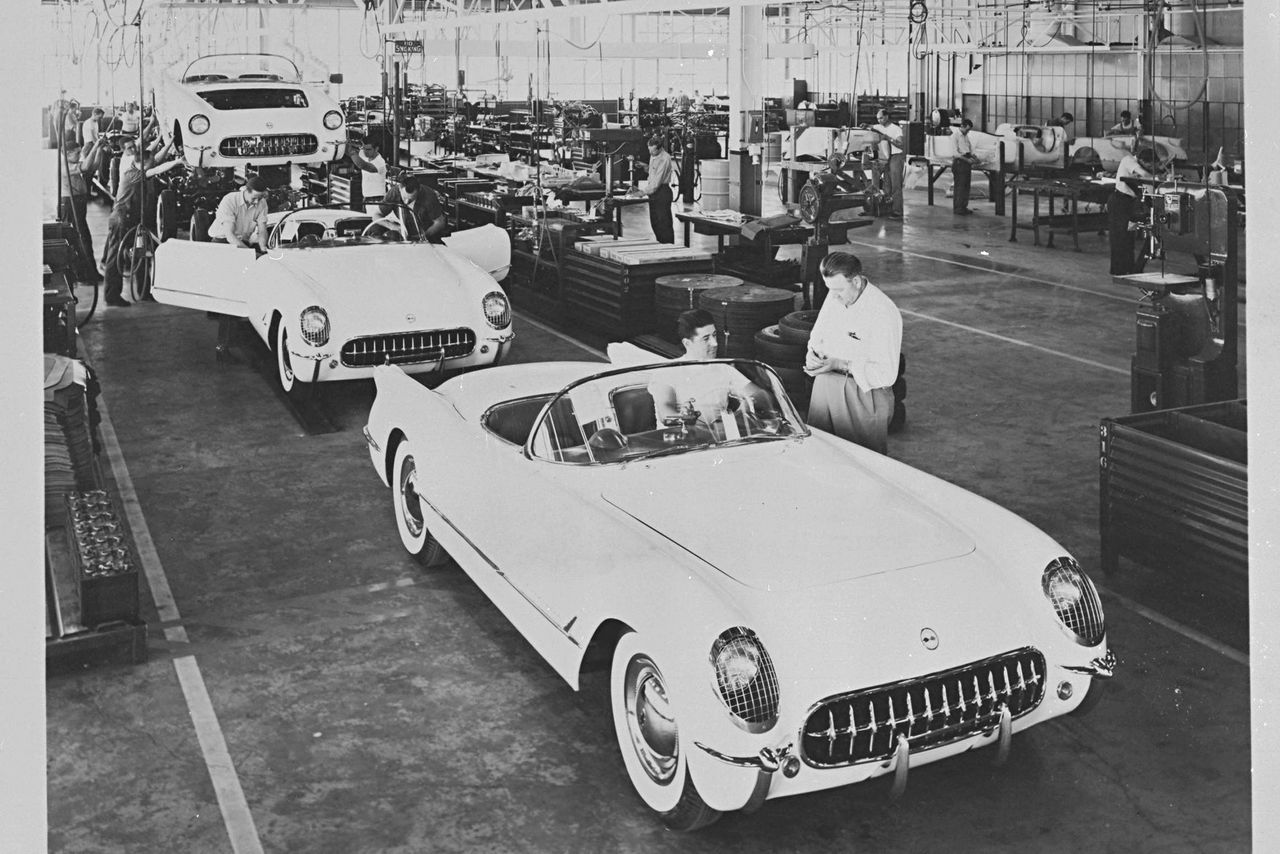
    When Corvette production shifted from Flint to St. Louis in December 1953, it marked the car’s true leap into volume manufacturing. The St. Louis Assembly plant, shown here in 1954, was reconfigured to handle Corvette’s then-innovative fiberglass body construction, a challenge unlike anything Chevrolet had tackled before. Workers carefully fitted hand-laid body panels onto chassis as the cars rolled down a line that blended mass-production principles with the hands-on craftsmanship still required for America’s first sports car. This move not only increased output dramatically—allowing Chevrolet to build over 3,600 Corvettes in 1954—but also set the stage for Corvette’s long-standing identity as a production car with the soul of a showpiece. (Image courtesy of GM Media LLC)
    When Corvette production shifted from Flint to St. Louis in December 1953, it marked the car’s true leap into volume manufacturing. The St. Louis Assembly plant, shown here in 1954, was reconfigured to handle Corvette’s then-innovative fiberglass body construction, a challenge unlike anything Chevrolet had tackled before. Workers carefully fitted hand-laid body panels onto chassis as the cars rolled down a line that blended mass-production principles with the hands-on craftsmanship still required for America’s first sports car. This move not only increased output dramatically—allowing Chevrolet to build over 3,600 Corvettes in 1954—but also set the stage for Corvette’s long-standing identity as a production car with the soul of a showpiece. (Image courtesy of GM Media LLC)

    If Flint was the Corvette’s nursery, St. Louis was its first proper school. The plant was engineered to build in volume; the car had to be engineered to tolerate it. Chevrolet’s own 1954 fact sheets make clear how seriously the team treated running changes. The rear exhaust outlets, short and tucked high on the ’53 cars, had stained the paint on the curved tail; for ’54, the pipes were re-routed longer and lower, under the body, to quell the smudging. Fuel and brake lines were tucked inboard of the right-hand frame rail for better protection. The convertible top fabric and bows moved from black to light tan for a warmer, more “continental” look. Even the choke control migrated—sensibly—to the left of the steering column so a driver didn’t have to reach through the wheel while starting.

    There were countless such refinements—the unglamorous but utterly necessary kind. Early 1954s left the factory with a two-handle external hood release; within a few hundred cars, it was replaced by a single-handle arrangement. The wiring harness was improved and now used plastic-insulated wire rather than fabric. Dual air cleaners replaced the single intake; a new starter motor arrived; productionized details stacked up into a car that felt more sorted than its pioneer predecessor.

    The St. Louis Assembly plant quickly became synonymous with Corvette, serving as its home for nearly three decades. Unlike the experimental, small-scale efforts in Flint, St. Louis was engineered for continuity—its sprawling lines could adapt to Corvette’s unique fiberglass construction while still sharing space with Chevrolet’s high-volume passenger models. Here, fiberglass bodies arrived from outside suppliers and were painstakingly mated to frames, then finished with trim, paint, and final inspection. The plant’s investment in specialized techniques and skilled labor gave Corvette the stability it needed to survive its fragile early years and grow into a fixture of Chevrolet’s lineup. (Image courtesy of GM Media LLC)
    The St. Louis Assembly plant quickly became synonymous with Corvette, serving as its home for nearly three decades. Unlike the experimental, small-scale efforts in Flint, St. Louis was engineered for continuity—its sprawling lines could adapt to Corvette’s unique fiberglass construction while still sharing space with Chevrolet’s high-volume passenger models. Here, fiberglass bodies arrived from outside suppliers and were painstakingly mated to frames, then finished with trim, paint, and final inspection. The plant’s investment in specialized techniques and skilled labor gave Corvette the stability it needed to survive its fragile early years and grow into a fixture of Chevrolet’s lineup. (Image courtesy of GM Media LLC)

    Flint had been an improvised pilot line—skilled craftsmen hand-fitting fiberglass panels, trimming edges by eye, and solving problems car by car. St. Louis, by contrast, was laid out to industrialize the process: dedicated fiberglass trim rooms with better dust control, larger curing ovens, fixed jigs for decklids and doors, and an honest-to-goodness “body drop” marriage station where the composite shell met the boxed, X-braced chassis. Chevrolet also re-sequenced the build so the most failure-prone operations (panel fit, weather-strip bonding, electrical checks) sat upstream of final paint and polish, reducing rework. MFG’s molded panels arrived by rail and truck on tighter schedules, and St. Louis instituted incoming-part gauges to spot warpage or thickness variation before a body ever saw the line.

    Just as important was the human side. The St. Louis workforce underwent fresh training on glass layups, bonding, and sanding techniques unique to reinforced plastic—very different from steel-body practice. Climate control mattered, too: humidity and temperature could alter cure and finish, so the plant added stricter environmental controls around sanding, priming, and top-coat operations. Pilot builds in late ’53 exposed the usual teething pains—panel fit, door-gap consistency, leaks around side-curtain sockets—and those findings directly informed the 1954 running changes you noted: longer under-body exhaust routing, inboard fuel/brake lines, the single-handle hood latch, upgraded wiring, and tidier side-window stowage. In short, the move to St. Louis didn’t just add capacity; it imposed discipline—turning a hand-built Motorama darling into something a national dealer network could sell, service, and stand behind.

    Under the Skin: Blue Flame, Powerglide, and a Chassis That Wouldn’t Quit

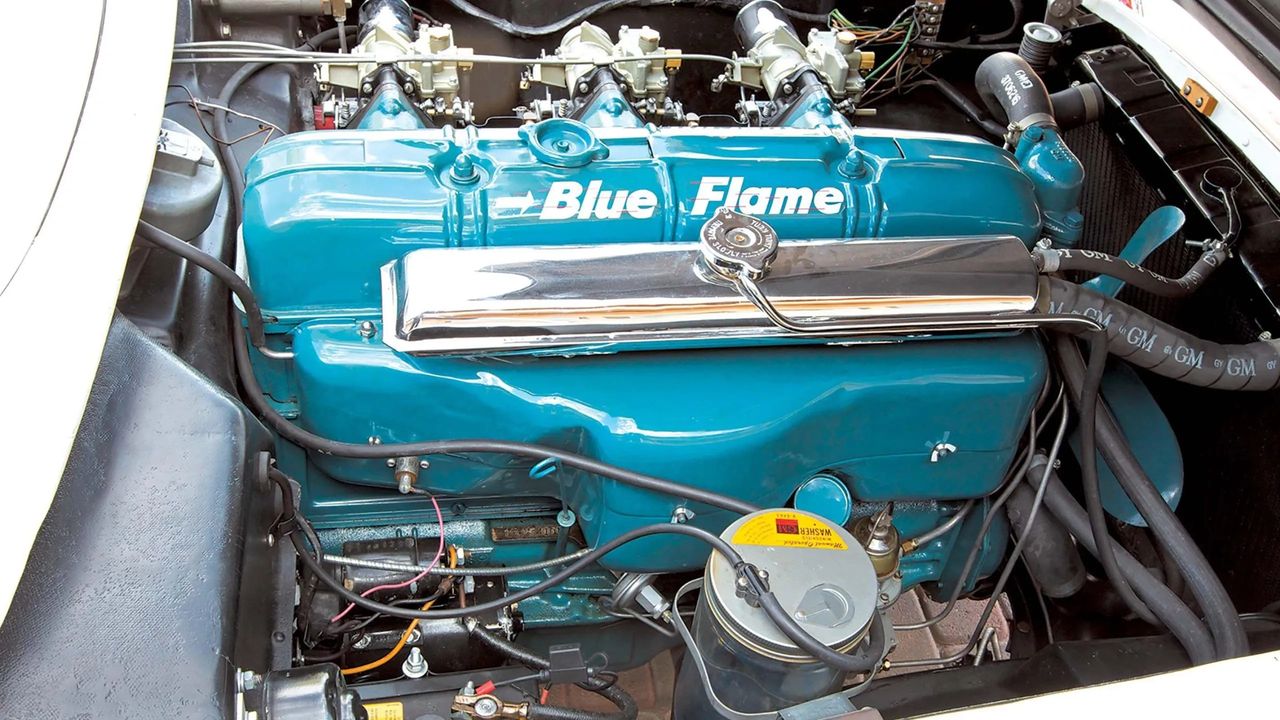
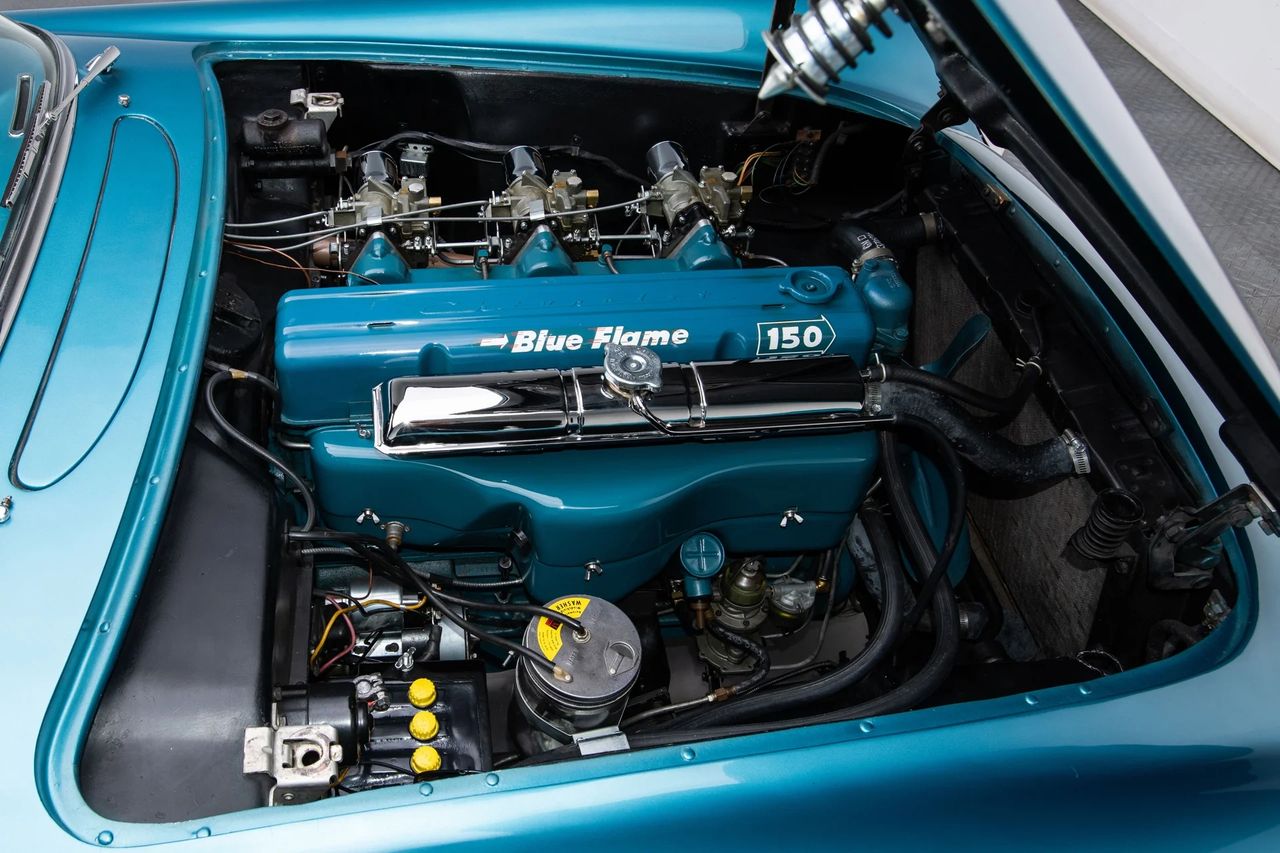
    The heart of the 1953–1954 Corvette was Chevrolet’s 235-cubic-inch “Blue Flame” inline-six. Though rooted in a passenger-car powerplant, it was heavily reworked for Corvette duty, featuring a higher-lift camshaft, solid lifters, and a trio of Carter side-draft carburetors. Officially rated at 150 horsepower, the Blue Flame was paired exclusively with a two-speed Powerglide automatic—a reflection of GM’s belief that Corvette was more boulevard cruiser than sports car. While later eclipsed by small-block V8 power, the Blue Flame remains historically significant as the Corvette’s first engine, giving America’s sports car its inaugural voice.
    The heart of the 1953–1954 Corvette was Chevrolet’s 235-cubic-inch “Blue Flame” inline-six. Though rooted in a passenger-car powerplant, it was heavily reworked for Corvette duty, featuring a higher-lift camshaft, solid lifters, and a trio of Carter side-draft carburetors. Officially rated at 150 horsepower, the Blue Flame was paired exclusively with a two-speed Powerglide automatic—a reflection of GM’s belief that Corvette was more boulevard cruiser than sports car. While later eclipsed by small-block V8 power, the Blue Flame remains historically significant as the Corvette’s first engine, giving America’s sports car its inaugural voice.

    The Corvette’s heart in 1954 remained Chevrolet’s 235-cu-in “Blue Flame” inline-six—a passenger-car engine extensively “Corvette-ized” with higher compression, a hotter cam, mechanical lifters, split exhaust, and, famously, a trio of Carter YH side-draft carburetors breathing through bullet-style cleaners. Chevrolet rated it at 150 hp early in the run; a mid-year camshaft change nudged that to 155 hp. It was honest power—more boulevard brisk than track brutal—and it was reliable.

    Every 1954 left the factory with the two-speed Powerglide automatic, no matter what the window sticker implied. In Chevrolet’s own literature, the transmission appears as an “option” with a price beside it, but the same page acknowledges that all ’54 Corvettes were so equipped. That curious accounting—listing Powerglide as an option while installing it universally—fed a perception that the car wasn’t as sporting as its looks, a point critics seized upon when comparing the Corvette to contemporary European offerings with four-speed manuals.

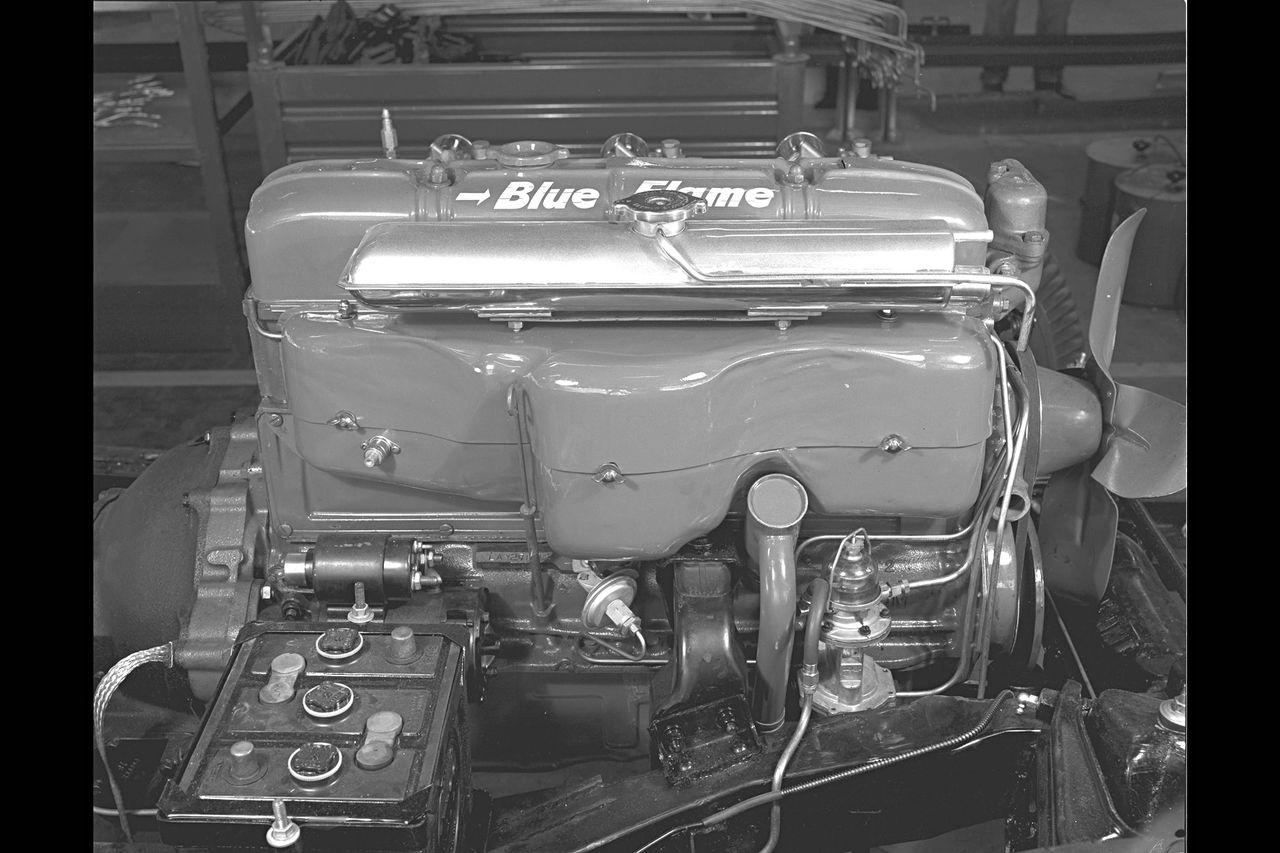
    An original Blue Flame engine on the St. Louis Assembly Line circa 1954.
    An original Blue Flame engine on the St. Louis Assembly Line circa 1954.

    Chassis hardware was stout and simple: a boxed, X-braced frame; double-wishbones with coil springs up front; a live axle on semi-elliptic “outrigger” rear springs; recirculating-ball steering; 11-inch drums all around. Chevrolet loved to boast that the plastic body and compact dimensions let the engine “pull only 19 pounds per brake horsepower,” and that the Corvette “handles like a dream.” That copy, equal parts aspiration and truth, captures the ’54’s best self on a smooth two-lane.

    Engineering by Eraser: The 1954 Running Changes

    Walk through the 1954 GM fact book and you can see little problems being hunted down and fixed. The rocker (valve) cover changed to a sturdier four-bolt, perimeter-hold design; on an estimated one-fifth of the cars—roughly serials 1363 through 4381—the covers were finished in chrome, a small bit of jewelry under the hood. The electrical harness got tidier and more durable. Even the rear license plate housing, which could fog, was revised. These aren’t headline items, but together they are the story of 1954: a car moving from the Motorama spotlight to the long grind of daily life.

    Colors, Trims, and That Famous Wheel Cover

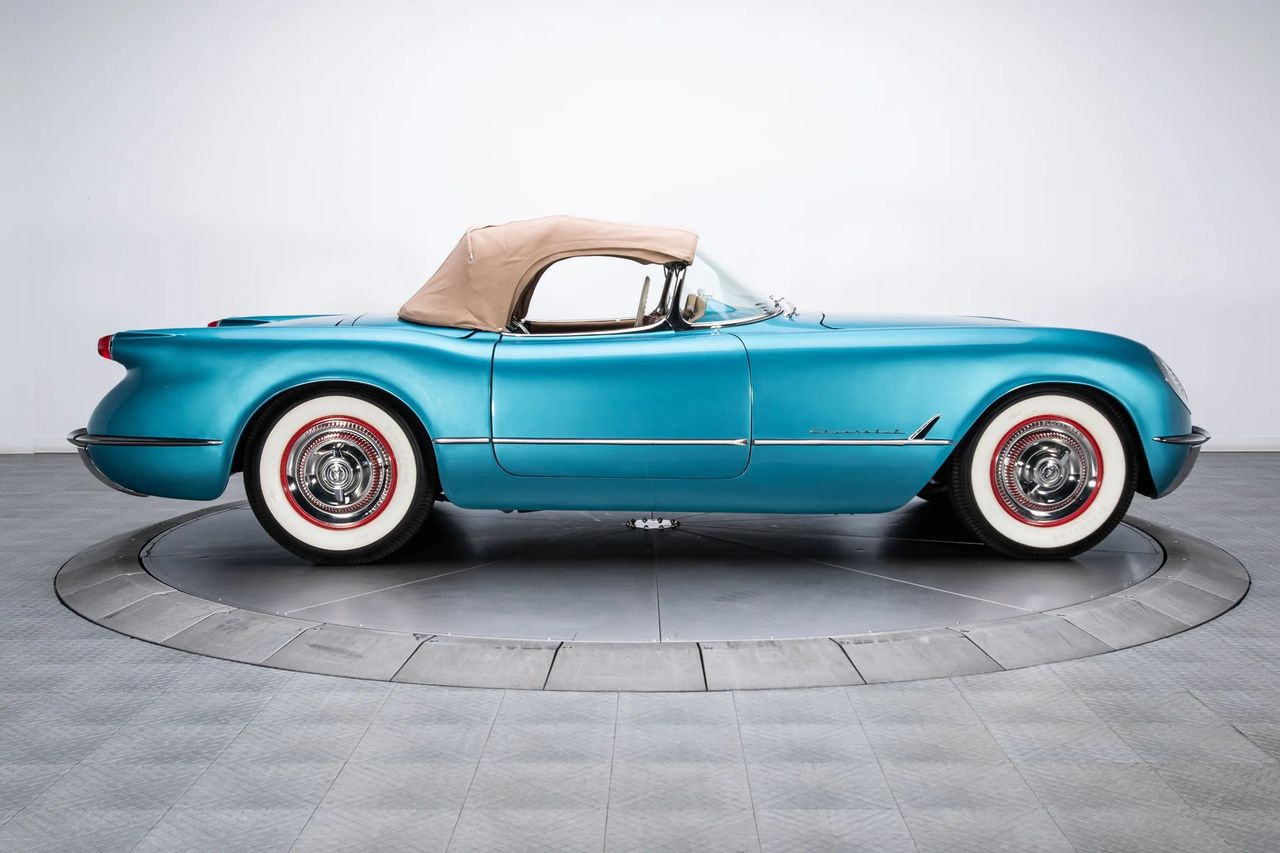
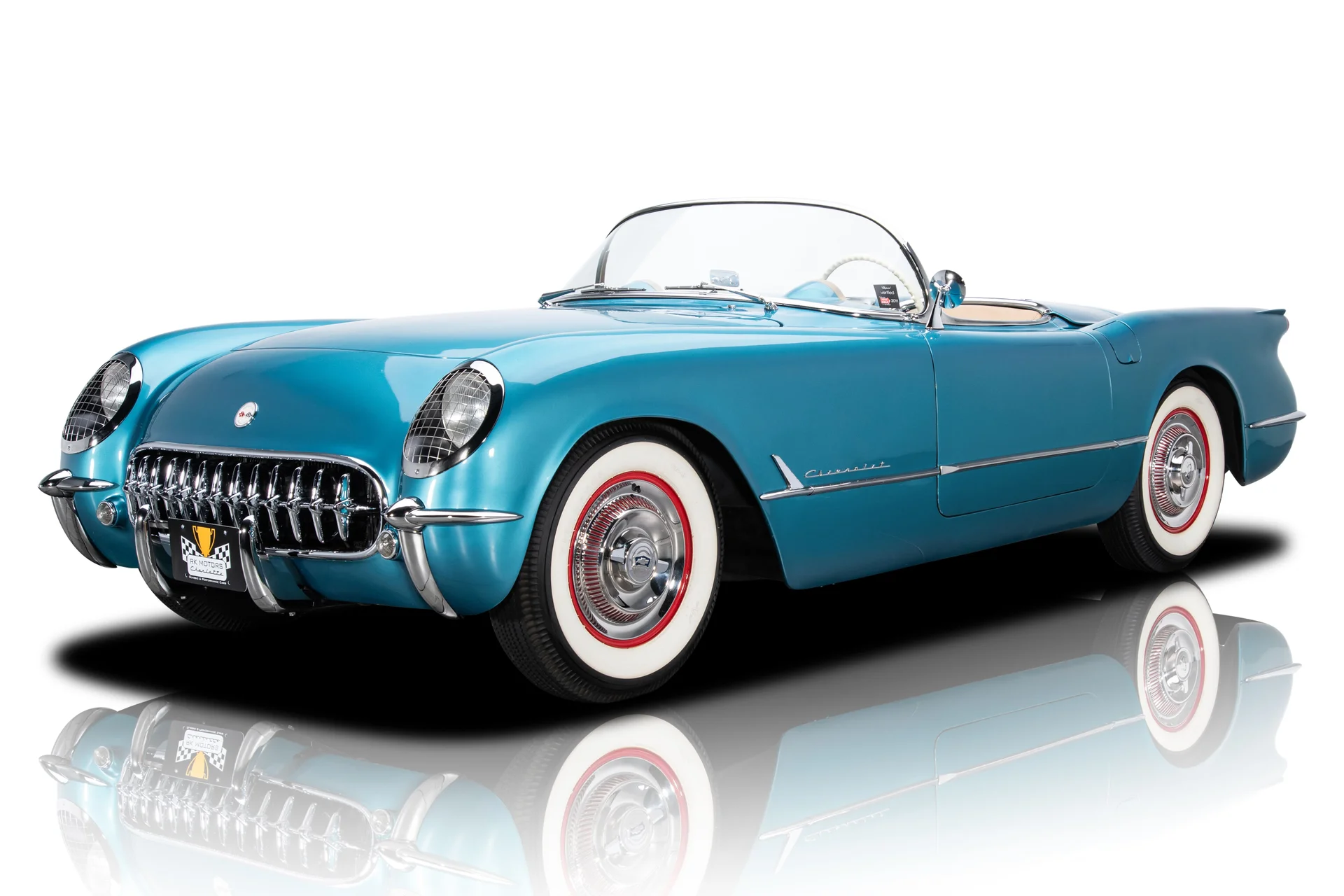
    For 1954, Chevrolet made an important refinement to the Corvette’s appearance and comfort by introducing canvas convertible tops in tan and beige. The change replaced the black fabric used on the inaugural 1953 cars, giving the Corvette a lighter, more European-inspired look that paired beautifully with colors like the Pennant Blue example shown here. This subtle update was part of a wave of thoughtful improvements in 1954 that helped transform the Corvette from a show-car curiosity into a more sophisticated and appealing production sports car. (Image courtesy of RK Motors)
    For 1954, Chevrolet made an important refinement to the Corvette’s appearance and comfort by introducing canvas convertible tops in tan and beige. The change replaced the black fabric used on the inaugural 1953 cars, giving the Corvette a lighter, more European-inspired look that paired beautifully with colors like the Pennant Blue example shown here. This subtle update was part of a wave of thoughtful improvements in 1954 that helped transform the Corvette from a show-car curiosity into a more sophisticated and appealing production sports car. (Image courtesy of RK Motors)

    For 1954, Chevrolet finally let Corvette buyers color outside the Polo White lines. After an inaugural year where every car left Flint in white with a red interior, the second-year model introduced genuine variety to the palette. Four exterior colors were officially offered—Polo White, Pennant Blue, Sportsman Red, and Black—and production skewed heavily toward the familiar. Estimates suggest that of the 3,640 Corvettes assembled in St. Louis, approximately 3,230 were still painted Polo White. Pennant Blue accounted for around 300 cars, Sportsman Red for roughly 100, and Black for an astonishingly rare four units, making them among the most elusive early Corvettes in existence.

    Adding to the intrigue, a period Chevrolet paint bulletin referenced Metallic Green and Metallic Bronze as available hues, though no verifiable evidence has surfaced that these were ever built in regular production. If they existed, they were likely experimental or pilot finishes rather than true catalog offerings.

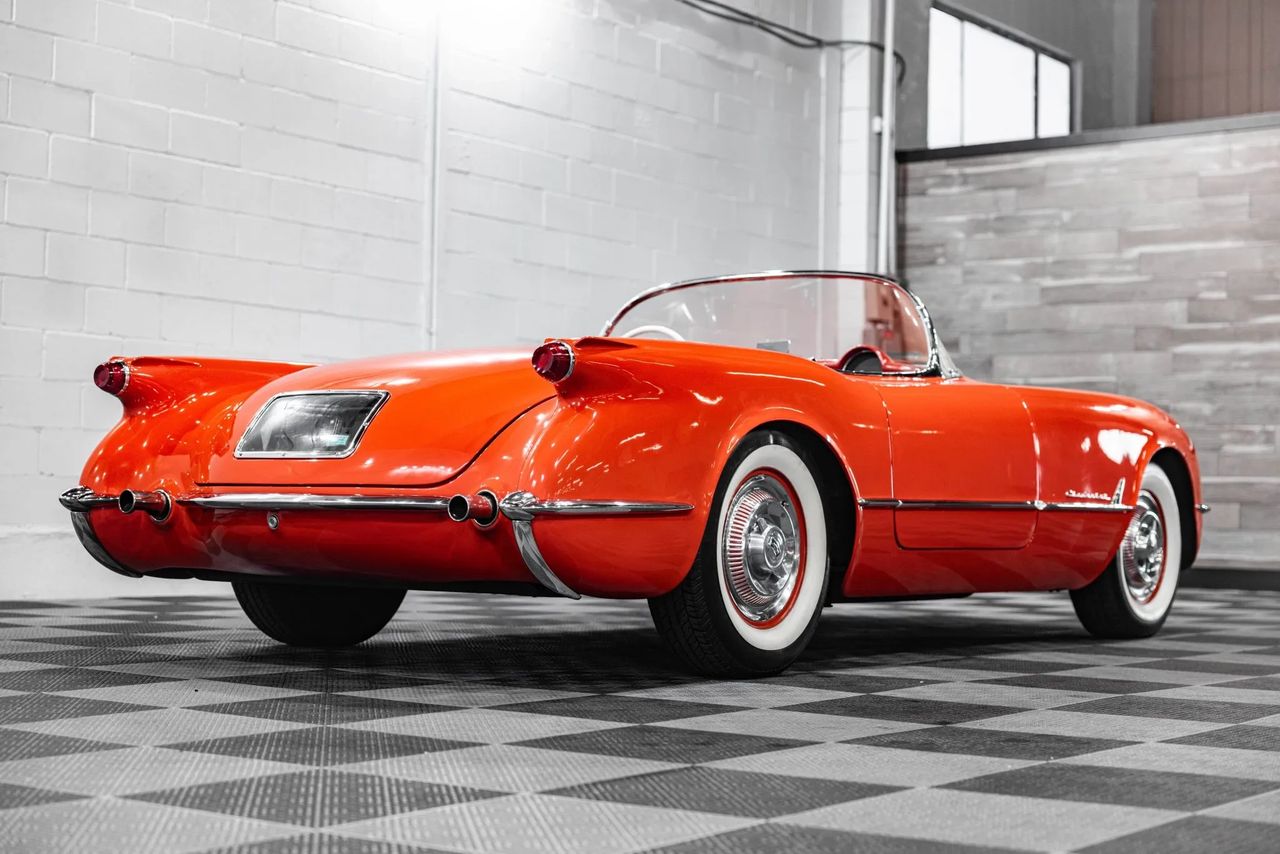
    Shown here in Sportsman Red, this 1954 Corvette represents one of the rarest hues offered in the car’s sophomore year. Of the 3,640 Corvettes built in St. Louis, it’s estimated that only about 100 were finished in this striking shade—an eye-catching alternative to the overwhelmingly popular Polo White. Paired with a vivid red interior and beige canvas top, Sportsman Red cars radiated energy and optimism, capturing the bold spirit Chevrolet wanted America’s sports car to project. Today, survivors in this color are prized not just for their beauty, but for their scarcity, standing out as vivid reminders of Corvette’s formative years. (Image courtesy of bringatrailer.com)
    Shown here in Sportsman Red, this 1954 Corvette represents one of the rarest hues offered in the car’s sophomore year. Of the 3,640 Corvettes built in St. Louis, it’s estimated that only about 100 were finished in this striking shade—an eye-catching alternative to the overwhelmingly popular Polo White. Paired with a vivid red interior and beige canvas top, Sportsman Red cars radiated energy and optimism, capturing the bold spirit Chevrolet wanted America’s sports car to project. Today, survivors in this color are prized not just for their beauty, but for their scarcity, standing out as vivid reminders of Corvette’s formative years. (Image courtesy of bringatrailer.com)

    Interior and trim combinations were just as telling. Pennant Blue cars came with a tan (beige) cockpit—an elegant break from the fiery red that was otherwise mandatory on Polo White, Sportsman Red, and Black examples. All soft tops were finished in beige canvas, a subtle but deliberate departure from the stark black fabric used in 1953. Together, these touches hinted at a European influence, bringing warmth and sophistication to Corvette’s youthful, fiberglass form.

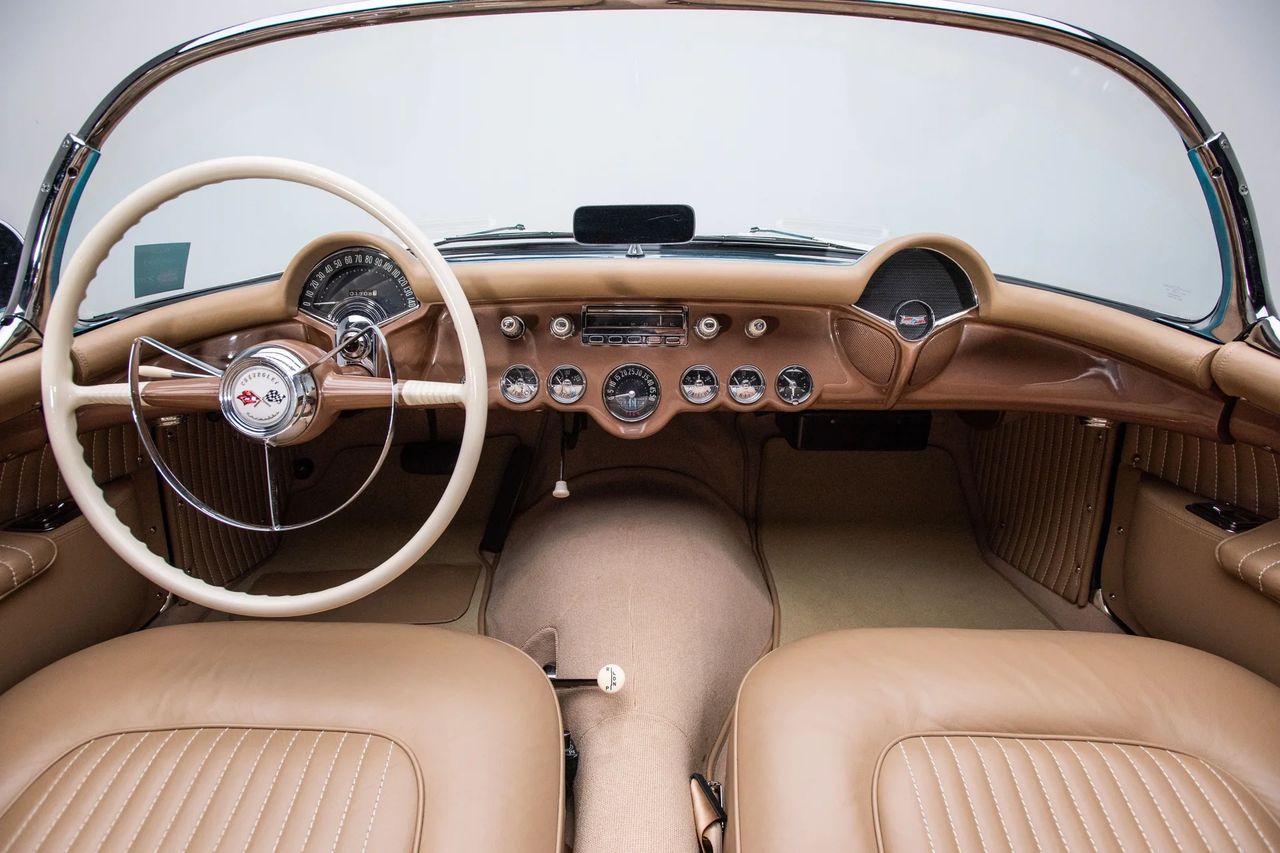
    The 1954 Corvette’s interior reflected Chevrolet’s attempt to balance show-car flair with everyday usability. The cockpit featured a full array of aircraft-inspired gauges clustered ahead of the driver, including a large, semi-circular speedometer and six auxiliary dials that gave the dashboard a purposeful look. Chrome-ringed knobs and pushbuttons echoed contemporary appliance design, underscoring the car’s modernist appeal. The bucket-style seats, stitched with vertical pleats, sat low in the fiberglass tub and provided a surprisingly intimate feel for a wide American roadster. Though trim choices were limited—red was paired with most exterior colors while Pennant Blue received beige—the execution was upscale for Chevrolet, setting Corvette apart from the brand’s sedans. More than just a place to sit, the ’54 cockpit was a statement: sporty, focused, and unlike anything else in GM’s stable. (Image courtesy of RK Motors)
    The 1954 Corvette’s interior reflected Chevrolet’s attempt to balance show-car flair with everyday usability. The cockpit featured a full array of aircraft-inspired gauges clustered ahead of the driver, including a large, semi-circular speedometer and six auxiliary dials that gave the dashboard a purposeful look. Chrome-ringed knobs and pushbuttons echoed contemporary appliance design, underscoring the car’s modernist appeal. The bucket-style seats, stitched with vertical pleats, sat low in the fiberglass tub and provided a surprisingly intimate feel for a wide American roadster. Though trim choices were limited—red was paired with most exterior colors while Pennant Blue received beige—the execution was upscale for Chevrolet, setting Corvette apart from the brand’s sedans. More than just a place to sit, the ’54 cockpit was a statement: sporty, focused, and unlike anything else in GM’s stable. (Image courtesy of RK Motors)

    One of the most distinctive cues for 1954 lay at each corner of the car. Period brochures and GM Museum specifications describe “full-size chrome disks with simulated hubs.” These wheel covers, turbine-like in design, incorporated faux knock-off centers that mimicked competition hardware. They were pure theater—racing style without racing function—but they contributed greatly to Corvette’s allure at the curb. In a car still bound to a two-speed automatic transmission and a warmed-up sedan engine, such dress-up details underscored what the Corvette was striving to be: America’s sports car, even if the engineering hadn’t fully caught up to the ambition.

    Price, Options, and a Marketing Mirage

    Chevrolet cut the base price to $2,774 for 1954 to broaden the Corvette’s appeal, then sprinkled the order form with à-la-carte extras: directionals ($16.75), a signal-seeking AM radio ($145.15), a washer ($11.85), courtesy lights ($4.05), even a parking-brake alarm ($5.65). On paper, Powerglide showed up as a $178.35 option; in practice, it appeared on every car. Add the popular equipment most customers expected, and the real-world price landed much higher than the headline figure—fuel for the notion that the Corvette cost more than it looked, without delivering the ammunition (a manual gearbox, for instance) that purists demanded.

    On the Road: A Car Caught Between Worlds

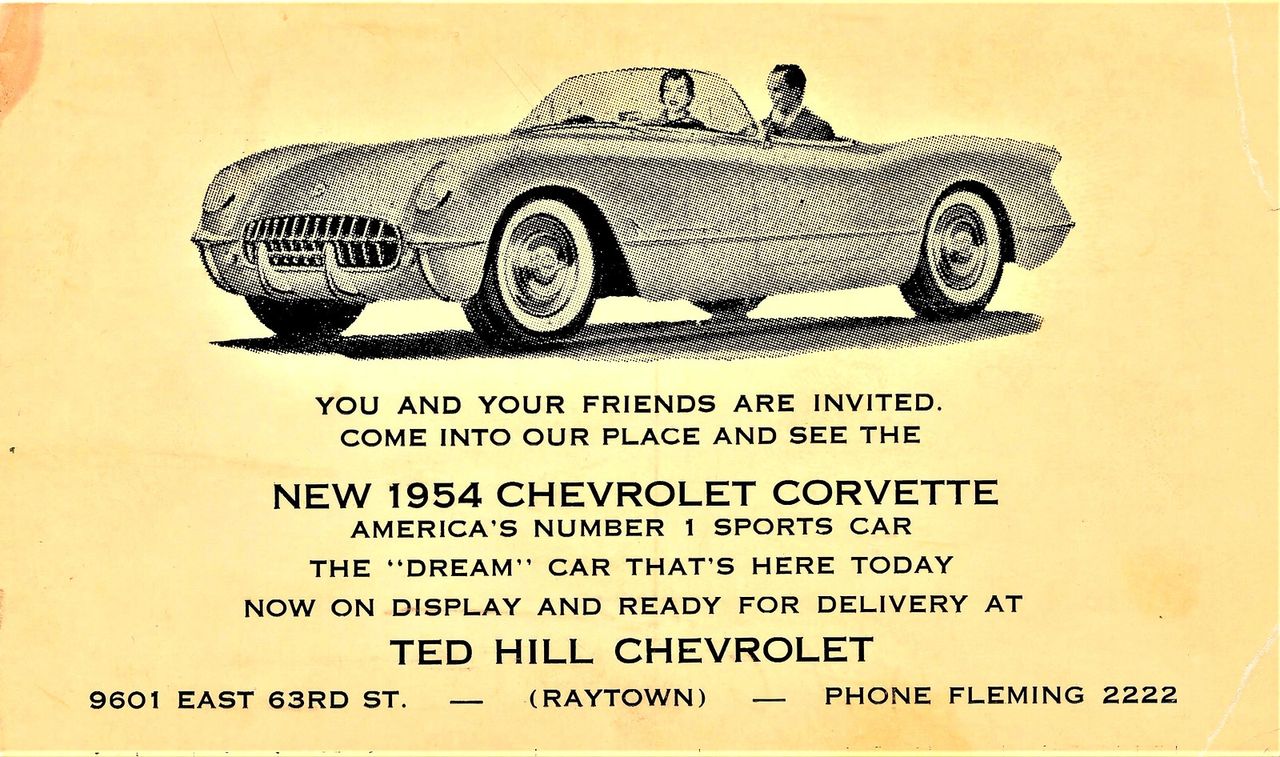
    This period flyer from Ted Hill Chevrolet in Raytown, Missouri captures the excitement surrounding the arrival of the 1954 Corvette. Dealers leaned into Corvette’s image as “America’s Number 1 Sports Car,” billing it as a dream car that customers could not only see but now actually buy—something not possible during its Motorama debut just a year earlier. The artwork shows an early illustration of the roadster, complete with its signature toothy grille, flowing fenders, and whitewall tires, drawing attention to its exotic fiberglass body and sporty two-seat layout. For small-town Chevrolet dealers, promotions like this were a chance to showcase GM’s halo car, a machine designed to lure people into the showroom with its glamour and novelty, even if only a handful of customers would ultimately drive one home.
    This period flyer from Ted Hill Chevrolet in Raytown, Missouri captures the excitement surrounding the arrival of the 1954 Corvette. Dealers leaned into Corvette’s image as “America’s Number 1 Sports Car,” billing it as a dream car that customers could not only see but now actually buy—something not possible during its Motorama debut just a year earlier. The artwork shows an early illustration of the roadster, complete with its signature toothy grille, flowing fenders, and whitewall tires, drawing attention to its exotic fiberglass body and sporty two-seat layout. For small-town Chevrolet dealers, promotions like this were a chance to showcase GM’s halo car, a machine designed to lure people into the showroom with its glamour and novelty, even if only a handful of customers would ultimately drive one home.

    Period tests and owner recollections give the 1954 Corvette a dual personality. Driven within its envelope, the car was sweet-natured and robust—the Blue Flame six-cylinder engine was torquey and tractable, the ride compliant, the steering light. Push harder and you bumped into the limits of drum brakes, recirculating-ball steering, and a two-speed automatic that blunted the car’s fervor. Against European rivals—a Jaguar XK-series with a four-speed and disc-brake development on the horizon—the Corvette seemed eager but under-armed. The museum’s period spec sheet leaned into romance: “For swift acceleration, hill climbing, and cruising, there’s nothing quite like the Chevrolet Corvette—and it handles like a dream.” It’s advertising poetry, yes, but it also captures why owners loved them.

    The Motorama’s “Corvette Family”: Nomad, Corvair, and the Hardtop Convertible-Coupe

    If you want to understand the 1954 Corvette, you have to stand beside it on the Motorama floor that year, because Chevrolet didn’t arrive with just a single roadster. It brought an idea, expressed in three distinct – and distinctly different – ways.

    1954 Corvette Nomad
    1954 Corvette Nomad

    Corvette Nomad (1954). Imagine the ’53/’54 Corvette’s front clip married to a lean, pillarless two-door wagon body with a sloping roof and wraparound rear glass. That was the Nomad, a Corvette-based dream car meant to test whether America might accept a sports-wagon. While the V-8-powered, steel-bodied 195557 Chevrolet Nomad that followed wasn’t a Corvette structurally, the show car’s concept—sport meets utility, light on its feet—came right out of the Corvette’s vocabulary, and Carl Renner was one of the voices translating that vocabulary into form.

    1954 Corvette Corvair
    1954 Corvette Corvair

    Corvette Corvair (1954). Not the later rear-engine compact—this Corvair was a fastback Corvette, a sensuous coupe with a flowing roofline that read like a splash of Turin in Detroit’s ink. Revealed at the ’54 Motorama, it explored European grand-tourer proportions on Corvette running gear, suggesting how a closed Corvette might look and feel. Its very name (a portmanteau of Corvette and Bel-air) signaled Chevrolet’s intent to fuse its halo sports car with mainstream glamour.

    1954 Corvette Hardtop
    1954 Corvette Hardtop

    Corvette Hardtop “Convertible-Coupe. The third piece was subtler: a mildly modified Corvette wearing a prototype detachable hardtop, trumpeted in Motorama copy for giving the sports car “all-weather utility.” It foreshadowed the bolt-on hardtops that customers would come to expect later in the C1 years, a practical accessory born on a dream-car stage.

    Together, those three showpieces told the audience—and GM executives—what “Corvette” could become: not a single car, but a design language and a mechanical toolkit flexible enough to shape wagons, fastbacks, and fair-weather roadsters. In a season when the production Corvette was finding its feet, the Motorama family stood as an exuberant promise of tomorrow.

    Numbers, Serial Plates, and What the Factory Saw

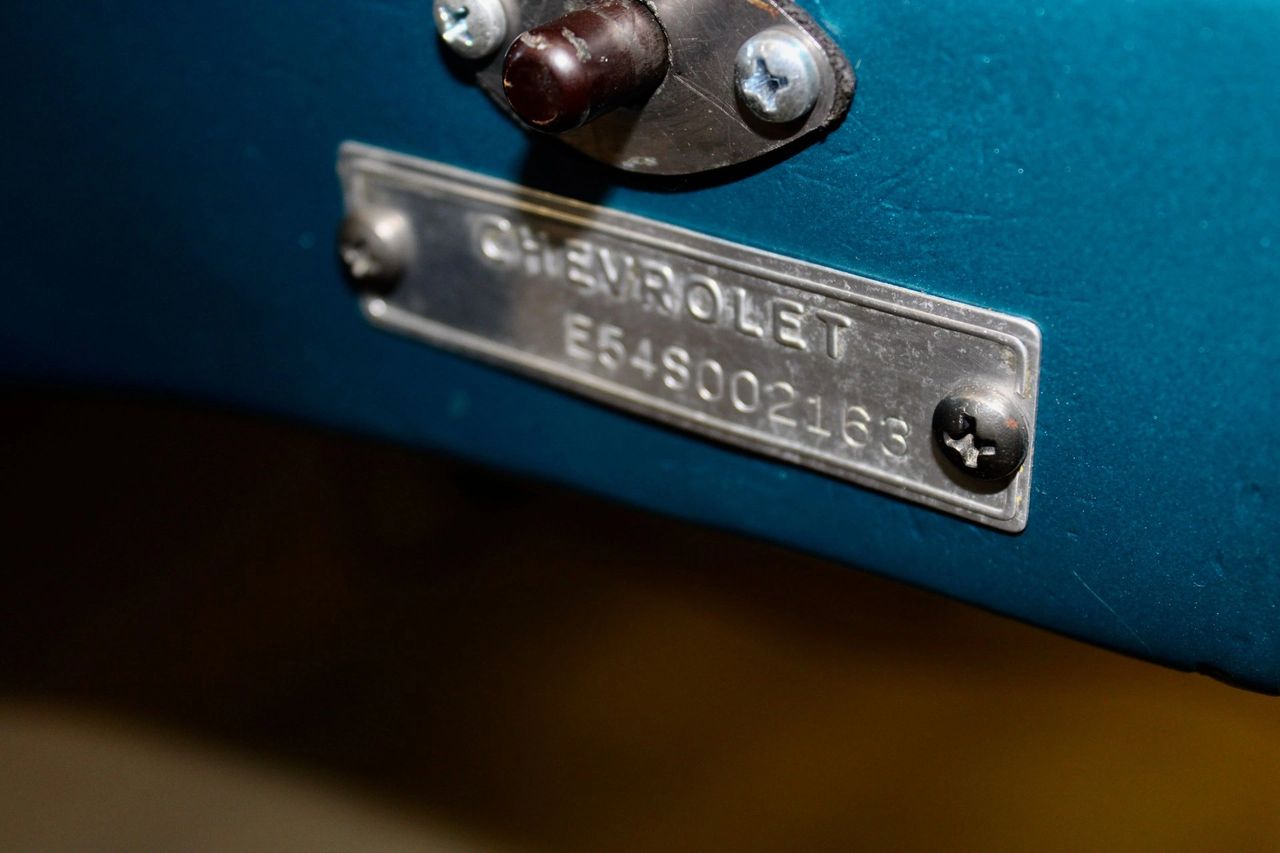
    1954 Corvette VIN (Vehicle Identification Number) Tag, with the S (fourth character from left) indicating the car was assembled in St. Louis.
    1954 Corvette VIN (Vehicle Identification Number) Tag, with the S (fourth character from left) indicating the car was assembled in St. Louis.

    Chevrolet built 3,640 Corvettes for 1954—far fewer than St. Louis was tooled to produce, but a leap beyond the 300 hand-built 1953s. The serial numbers (VINs) run from E54S001001 upward, consistent with Chevrolet’s format for the series, year, assembly plant (S for St. Louis), and sequence. Under the hood sat the Blue Flame’s stamped identity and a stout Hotchkiss drive to a 3.55:1 hypoid rear axle; the chassis specs read like time-capsule gospel: X-member-boxed frame, 102-inch wheelbase, 11-inch drums, and those outrigger rear springs.

    If the production total disappointed executives hoping to flood the market, the car itself was more unified than before. It started, ran, and idled better. It weathered everyday use with fewer quirks. It presented itself with more polish and more choice, especially in paint. The idea of Corvette—that American industry could build a glamorous, modern sports car using mass-manufacturing methods and materials—had survived its wobbly infancy.

    The 1954 Experience: How It Felt to Live With One

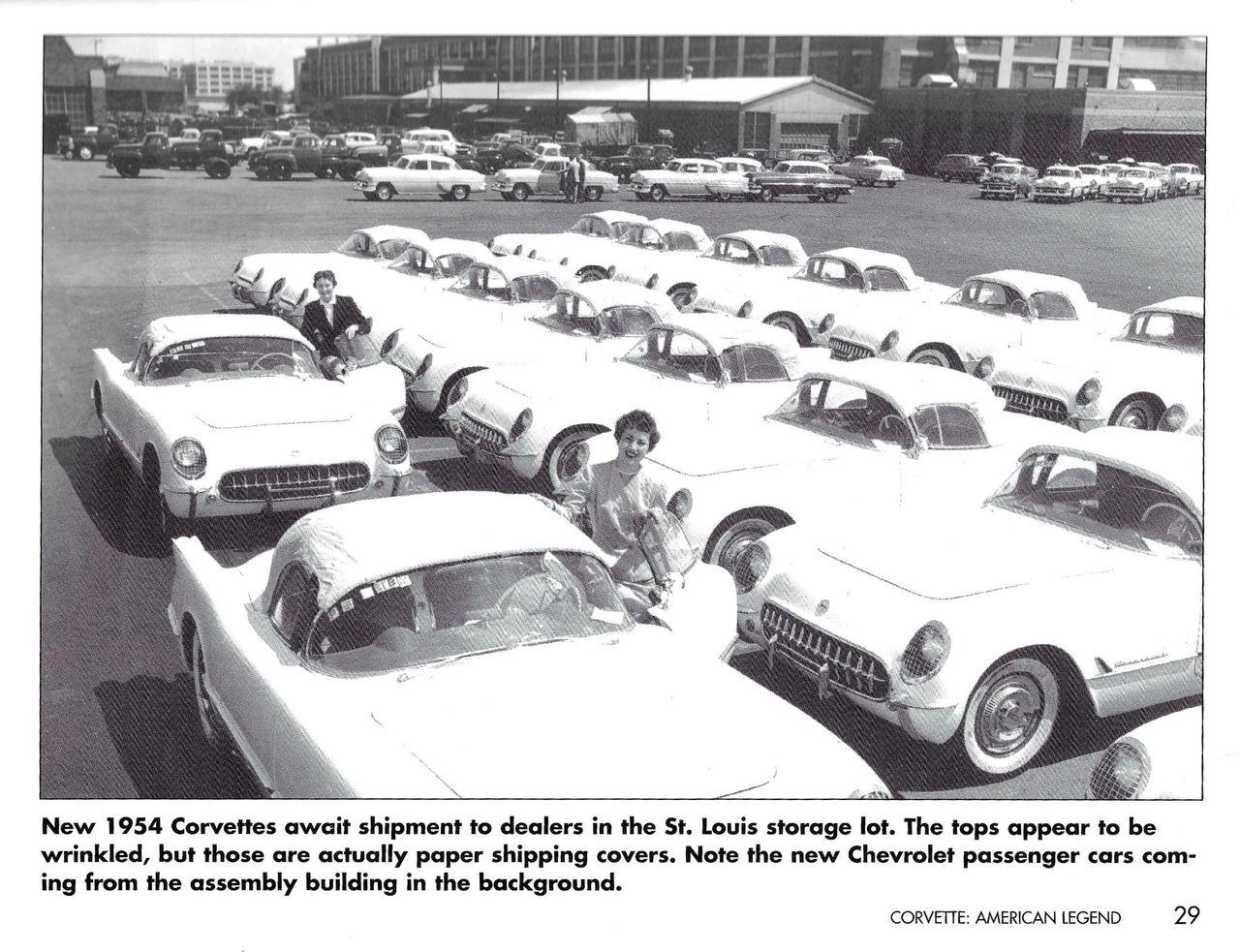
    This photo shows rows of brand-new 1954 Corvettes staged in the St. Louis storage lot, awaiting shipment to dealers across the country. At first glance, the cars appear to be wearing white protective tops, but those are actually paper shipping covers designed to shield the interiors during transport. The image underscores the scale of Corvette’s second year—production had jumped from just 300 hand-built cars in Flint to over 3,600 units in St. Louis. In the background, you can see Chevrolet passenger cars streaming out of the adjacent assembly building, a reminder that Corvette was still very much the outlier: a fiberglass-bodied sports car being built alongside sedans and wagons destined for everyday America.
    This photo shows rows of brand-new 1954 Corvettes staged in the St. Louis storage lot, awaiting shipment to dealers across the country. At first glance, the cars appear to be wearing white protective tops, but those are actually paper shipping covers designed to shield the interiors during transport. The image underscores the scale of Corvette’s second year—production had jumped from just 300 hand-built cars in Flint to over 3,600 units in St. Louis. In the background, you can see Chevrolet passenger cars streaming out of the adjacent assembly building, a reminder that Corvette was still very much the outlier: a fiberglass-bodied sports car being built alongside sedans and wagons destined for everyday America.

    Ask owners and you’ll hear the same refrain: a ’54 is pleasant, even lovable, to live with if you drive it as the engineers meant you to. The engine’s three carburetors need to sing in close harmony for the best idle and throttle response; once they do, the car has an easy rhythm—peel away from a light on a smooth wash of torque, settle to a quiet lope at 50, let the wide-open dashboard and wraparound glass make the world feel bigger. The drums want a measured foot; the steering, a calm hand. It is a machine from a moment when long hoodlines and low cowl heights promised speed as much by suggestion as by stopwatch.

    That dissonance—appearance versus specification—sat at the heart of the ’54’s reception. The car looked like a Le Mans fantasy but wore a two-speed automatic. At the same time, it embodied a version of American modernity no European could match: a plastic body you could repair with cloth and resin, a sensuous shape untroubled by steel dies, a promise that performance and industrial scale could coexist. The museum’s brochure-derived copy hits the note perfectly: “For swift acceleration, hill climbing, and cruising, there’s nothing quite like the Chevrolet Corvette—and it handles like a dream.” It’s marketing, yes. But it’s also how a good one feels on a summer night.

    Why 1954 Matters

    “What might have been” is parked right here: the Corvette Corvair fastback and Nomad sport wagon—Motorama teasers that hinted at a full Corvette family if the car had sold. But 1954 was a wobble: Chevrolet built 3,640 Corvettes and roughly 1,100 remained unsold by New Year’s Day 1955, proof that a Blue Flame six, Powerglide, and a premium price weren’t lighting up buyers. Expansion plans stalled, and GM redirected the Nomad’s look to the 1955 Bel Air instead of a Corvette-based wagon, while the Corvair fastback stayed a one-off (its name later recycled for Chevy’s 1960 compact). What kept the program alive was a pivot to performance—Zora Arkus-Duntov’s late-1953 memo urging Chevy to court hot-rodders with engineered speed parts and real power. Leadership listened, and the 265-cid small-block V-8 arrived for 1955, changing Corvette’s trajectory and, eventually, its fortunes. (Image courtesy of GM Media LLC)
    “What might have been” is parked right here: the Corvette Corvair fastback and Nomad sport wagon—Motorama teasers that hinted at a full Corvette family if the car had sold. But 1954 was a wobble: Chevrolet built 3,640 Corvettes and roughly 1,100 remained unsold by New Year’s Day 1955, proof that a Blue Flame six, Powerglide, and a premium price weren’t lighting up buyers. Expansion plans stalled, and GM redirected the Nomad’s look to the 1955 Bel Air instead of a Corvette-based wagon, while the Corvair fastback stayed a one-off (its name later recycled for Chevy’s 1960 compact). What kept the program alive was a pivot to performance—Zora Arkus-Duntov’s late-1953 memo urging Chevy to court hot-rodders with engineered speed parts and real power. Leadership listened, and the 265-cid small-block V-8 arrived for 1955, changing Corvette’s trajectory and, eventually, its fortunes. (Image courtesy of GM Media LLC)

    The 1954 Corvette is less about absolute numbers than about trajectory. It is the year GM proved it could build Corvettes consistently—panel fits, wiring, drivability—rather than merely display them. It is the year Corvette’s creative diaspora spread across the Motorama floor—Nomad, Corvair, Convertible-Coupe—and showed Chevrolet leadership (and the buying public) that the Corvette idea had legs. And it is the year Duntov’s memo, channeled through Olley’s engineering and Cole’s authority, began to redirect the car’s destiny toward small-block thunder.

    Some of the changes were humble: a choke lever moved, a hood latch simplified, a wire harness upgraded. Some were strategic: a broader color chart; an options sheet that let dealers tailor the story; and a steady cadence of running fixes that turned customer complaints into engineering targets. Many were invisible but essential, the kind of productionized refinements that never make an ad but save a reputation.

    Epilogue: The Glow Before the Spark

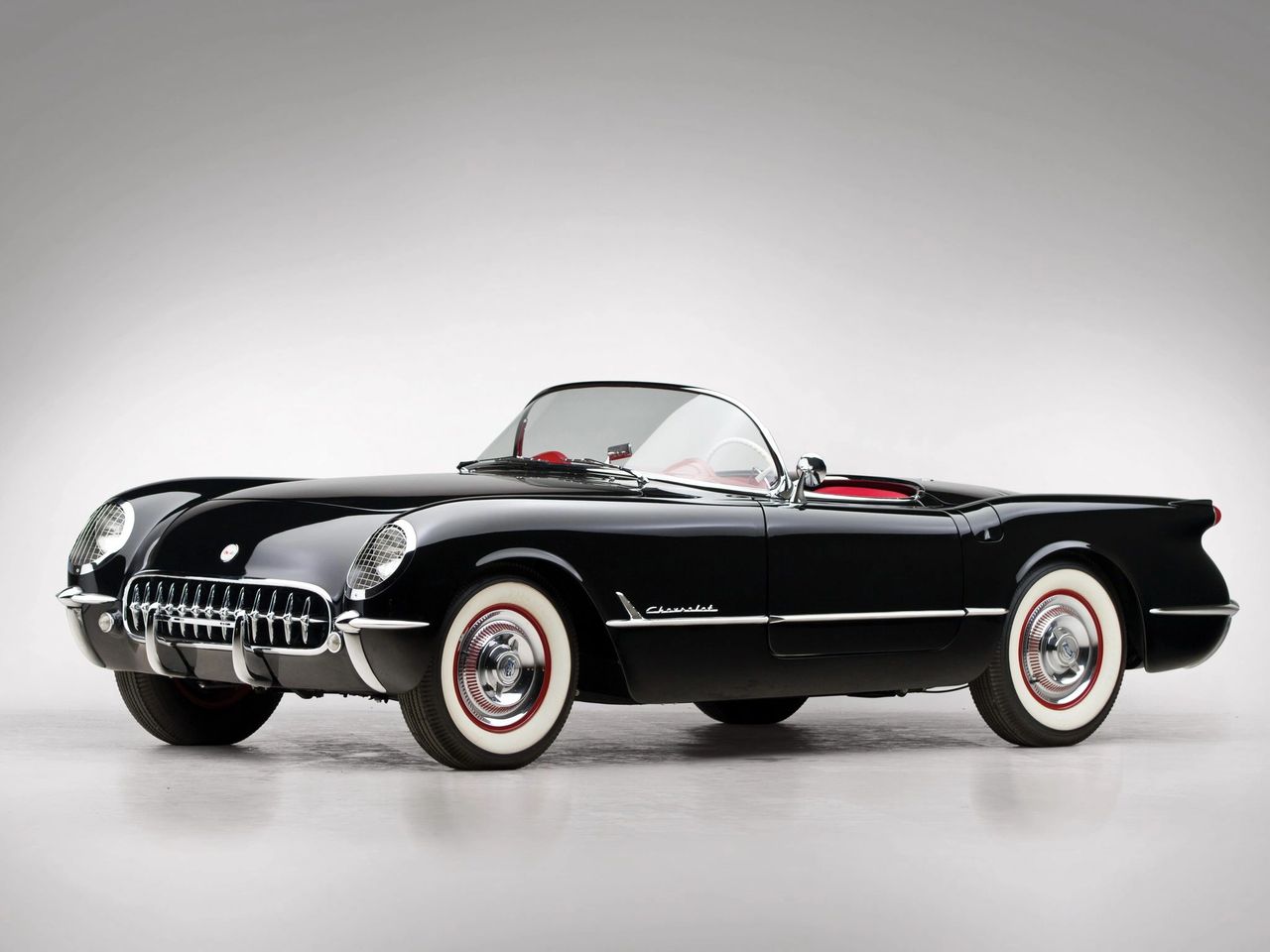
    This sleek 1954 Chevrolet Corvette in rare Onyx Black shows just how far “America’s Sports Car” had come in only its second year. Unlike the Polo White–only 1953s, Chevrolet expanded the Corvette’s palette in ’54, making this black-on-red combination one of the most striking of the early cars. Beneath the hood remained the familiar 235ci Blue Flame six with triple Carter carbs, paired to the Powerglide automatic — but subtle refinements, from re-routed exhaust outlets to upgraded wiring, made the car more livable. Today, examples like this stand as elegant reminders of Corvette’s formative years, when Chevrolet was still convincing the public that an American sports car truly belonged on the road.
    This sleek 1954 Chevrolet Corvette in rare Onyx Black shows just how far “America’s Sports Car” had come in only its second year. Unlike the Polo White–only 1953s, Chevrolet expanded the Corvette’s palette in ’54, making this black-on-red combination one of the most striking of the early cars. Beneath the hood remained the familiar 235ci Blue Flame six with triple Carter carbs, paired to the Powerglide automatic — but subtle refinements, from re-routed exhaust outlets to upgraded wiring, made the car more livable. Today, examples like this stand as elegant reminders of Corvette’s formative years, when Chevrolet was still convincing the public that an American sports car truly belonged on the road.

    History loves turning points. The Corvette’s first, in truth, came between model years: while ’54 was on sale, Duntov was writing, engineers were iterating, and Earl was staging the Motorama pageant that kept public desire alive. The small-block V-8 of 1955 would be the spark; 1954 was the glow that kept the fire from going out.

    And that is the ’54 Corvette’s quiet heroism. In St. Louis, in winter, in a plant sized for a future that hadn’t arrived, Chevrolet hammered the show car’s brash promise into a real car. The team did it with fiberglass cloth and Carter jets, with an X-braced frame and tan top bows, with a dozen fixes nobody noticed and two or three showstoppers everyone did. If you listen closely, you can hear the voices in the background: Earl, pointing toward the spotlight. Duntov, growling about a V-8 and racing. Olley, insisting on fundamentals. Renner, softening a line. Morrison, reminding everyone that the material could take it. Together, they kept the flame alive long enough for the Corvette to become what it was always meant to be.

    The 1954 Chevrolet Corvette marked the model’s first true step from concept to production reality. With increased output from its Blue Flame six, expanded color choices, and subtle refinements to fit and finish, 1954 showed Chevrolet learning in real time—testing whether America was ready to embrace a homegrown sports car and quietly laying the groundwork…