Tag: National Corvette Museum

  • The 2026 NCM Bash: the “Ultimate Corvette” Event of the Year!

    The 2026 NCM Bash: the “Ultimate Corvette” Event of the Year!

    If you have been waiting for the moment when Corvette season stops feeling theoretical and starts feeling real, this is it. The 2026 Michelin National Corvette Museum Bash runs April 23–25 in Bowling Green, Kentucky, and the Museum is positioning it exactly where it belongs: as the official kickoff to its on-site event season. More importantly, the schedule shows why Bash still matters. This is not just a parking-lot gathering with a few vendor tables and some polite applause. It is three full days of performance cars, factory insight, road tours, preservation programming, racing history, owner education, and the kind of access that keeps the National Corvette Museum at the center of the hobby.

    What makes the 2026 edition especially interesting is the breadth of the program. Bash is hitting every major Corvette nerve at once. Modern performance? Covered. Museum stewardship and long-term preservation? Covered. Corvette Racing history? Covered. Assembly plant leadership, engineering seminars, infotainment support, track activity, guided road tours, a Museum-judged car show, raffles, donor events, and enthusiast fellowship? All there. That wide reach is what sets the 2026 NCM Bash apart from many other calendar apps. It is not trying to be one thing. It is trying to be the place where the full Corvette world comes together under one roof, and this year’s official schedule makes that plain.

    The 2026 NCM Bash is where the present and future of Corvette show up together
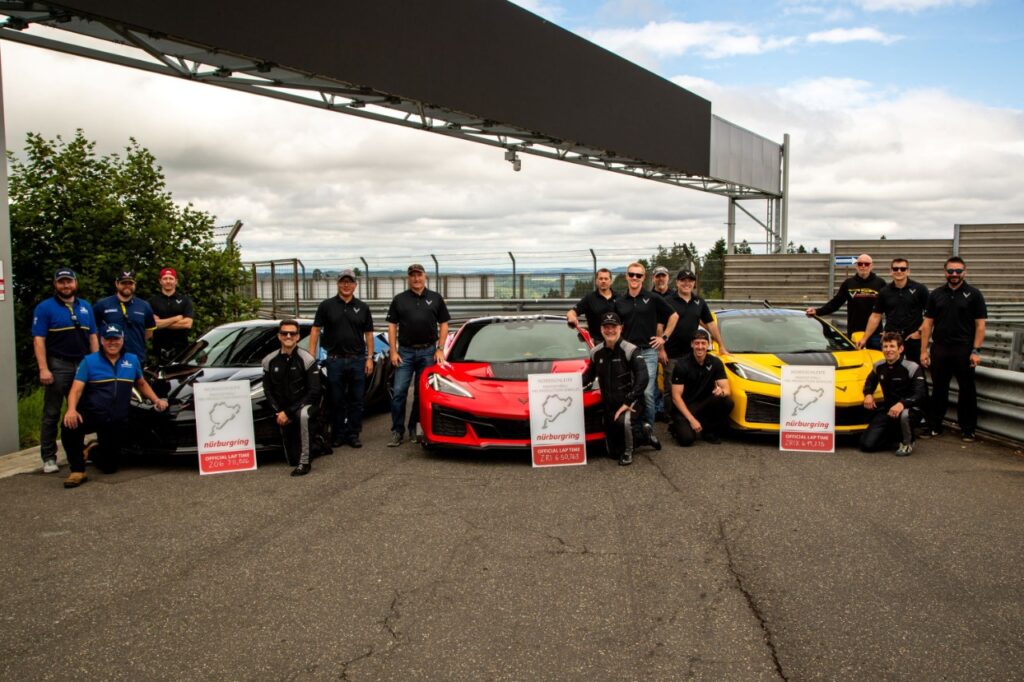
    One of the biggest draws at the 2026 Michelin NCM Bash will be this rare gathering of Nürburgring-bred Corvette royalty, with the National Corvette Museum confirming that the Corvette ZR1X Nürburgring fast lap car, Corvette ZR1 Nürburgring fast lap car, and Corvette Z06 Nürburgring fast lap car will all be on display in Bowling Green, alongside the ZR1X dragstrip quarter-mile and 0–60 record car. For Corvette fans, that gives Bash something special: a chance to stand just feet away from some of the most advanced and most significant performance Corvettes Chevrolet has ever built, all in one place. (Image source: GM)

    If you want one headline item that tells you this year’s Bash is serious, start with the performance-car display Chevrolet is bringing to the Museum. All 2026 NCM Bash attendees will be able to see the Corvette ZR1X Nürburgring fast lap car, Corvette ZR1 Nürburgring fast lap car, Corvette Z06 Nürburgring fast lap car, and the Corvette ZR1X dragstrip quarter-mile and 0–60 record car. That is not filler. That is a concentrated display of the current high-water mark for Corvette performance, bringing together some of the most advanced and most publicly significant modern Corvettes in one place. For enthusiasts who follow the car not just as a badge but as a global performance benchmark, that alone makes Bash worth a hard look.

    And the Museum is doing the right thing by not treating those cars like silent props. The broader seminar lineup is built to give context to what modern Corvette has become. On Thursday alone, attendees can sit in on a Museum update with President and CEO Bryce Burklow and Board Chairman Michael LaRocca, a Michelin tire-technology session, Corvette infotainment with Paul Koerner, and a Bowling Green Assembly Plant leadership presentation. Friday adds another deep bench of technical and insider programming, including the Corvette Team update with Chief Engineer Josh Holder and Product Marketing Manager Austin Fisher, an LS6 design overview with Mike Kociba, and a session titled “How to Run a Lap Time” featuring engineers connected to active chassis calibration, vehicle dynamics, propulsion development, and GM Motorsports. That is exactly the kind of lineup Corvette owners want from Bash. Not fluff. Not vague marketing. Substance.

    There is also a practical side to this that should not be overlooked. Corvette ownership in the modern era is not just about horsepower and paint codes. It is about software, connected systems, infotainment, calibration logic, and understanding how to get the most out of increasingly sophisticated cars. The infotainment seminar covering model years 2005 to present, along with the limited-registration C8 classroom sessions, gives owners a chance to engage with real expertise instead of relying on rumors, message boards, and half-correct social media clips. That kind of owner-facing education has become one of Bash’s most useful roles, and it is a big reason this event carries real value beyond the social side of the weekend.

    The 2026 NCM Bash also leans hard into preservation—and that matters
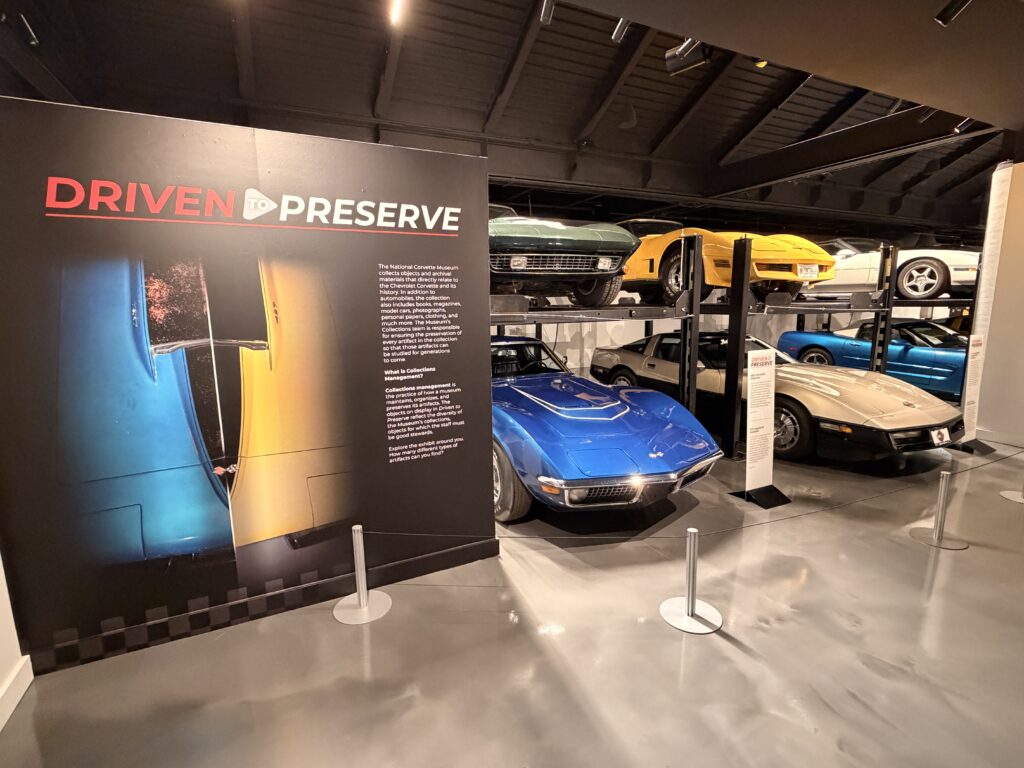
    The National Corvette Museum’s Driven to Preserve exhibit reminds visitors that protecting Corvette history takes more than simply parking rare cars under bright lights. It is a thoughtful look at the Museum’s preservation mission, giving enthusiasts a clearer sense of how the collection is cared for so these cars, artifacts, and stories endure for the next generation. (Image credit: Scott Kolecki/Author)

    One of the smartest parts of the 2026 NCM Bash schedule is how deliberately it connects Corvette’s future to the work of protecting its past. The Museum’s mission is rooted in the collection, preservation, and celebration of Corvette history, and this Bash puts that mission front and center. Attendees will have access to a preview tour of the future 66,000-square-foot National Corvette Museum Collections facility, including a guided trolley visit to the site and an overview of how the Museum is preparing for the next era of long-term storage, conservation, and preservation. That is a major development for the institution, and it gives Bash something deeper than an event-weekend spectacle. It gives it institutional weight.

    That preservation thread continues inside the building as well. Bash includes an exhibit walkthrough of Driven to Preserve, the Museum’s new exhibition focused on how the collections team cares for Corvette artifacts and historically significant vehicles. The exhibit, launched in March as the Museum continues work toward the new collections facility, was created specifically to show visitors what preservation actually looks like behind the curtain. That matters because too many enthusiasts think preservation begins and ends with polished paint. In reality, it is climate control, stewardship, artifact handling, storage logic, conservation planning, archival care, and making hard decisions about restoration versus retention. Bash 2026 puts that work in plain view.
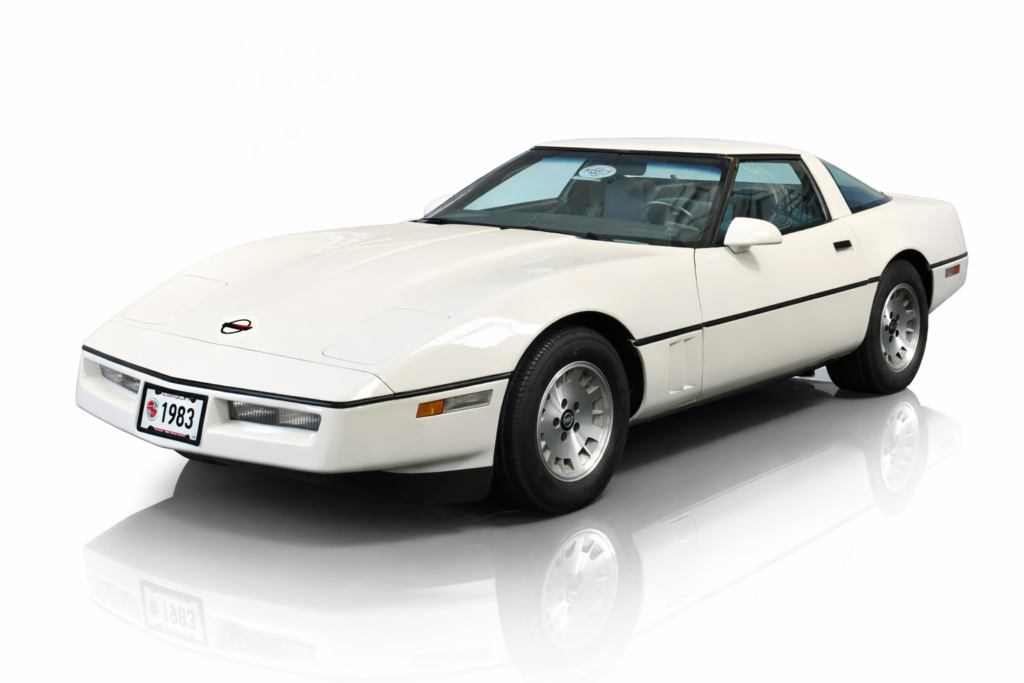
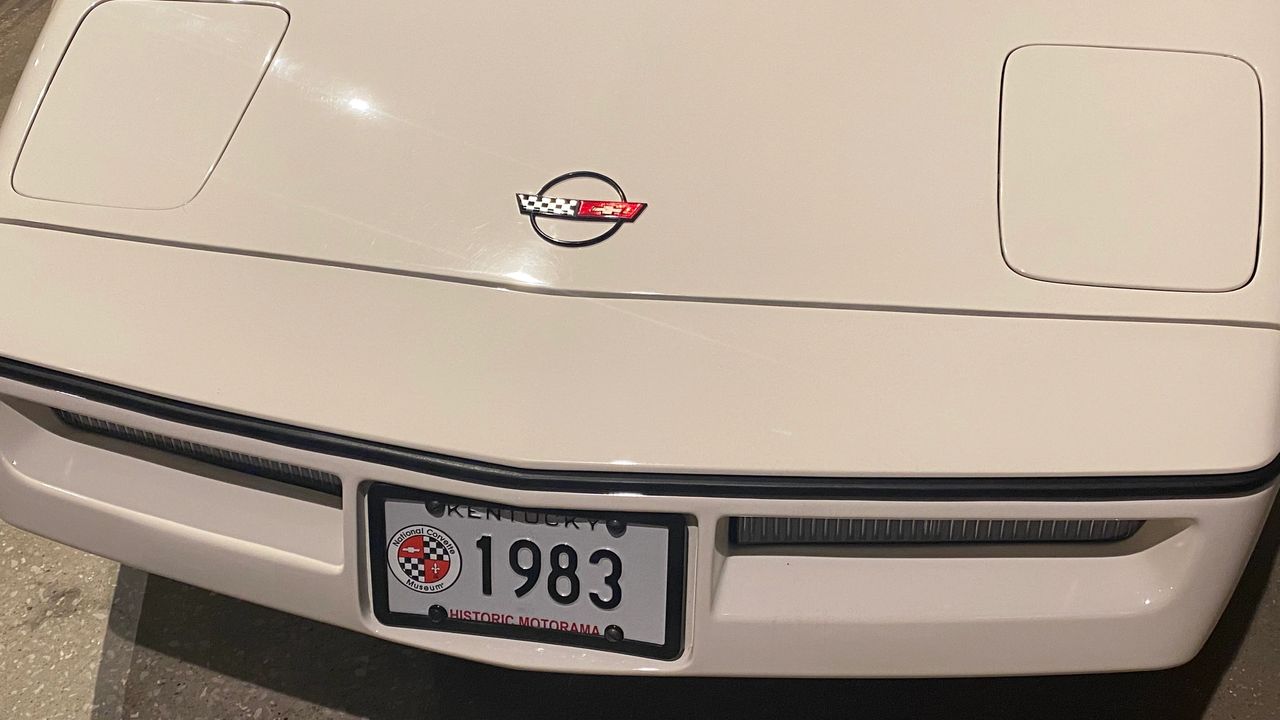
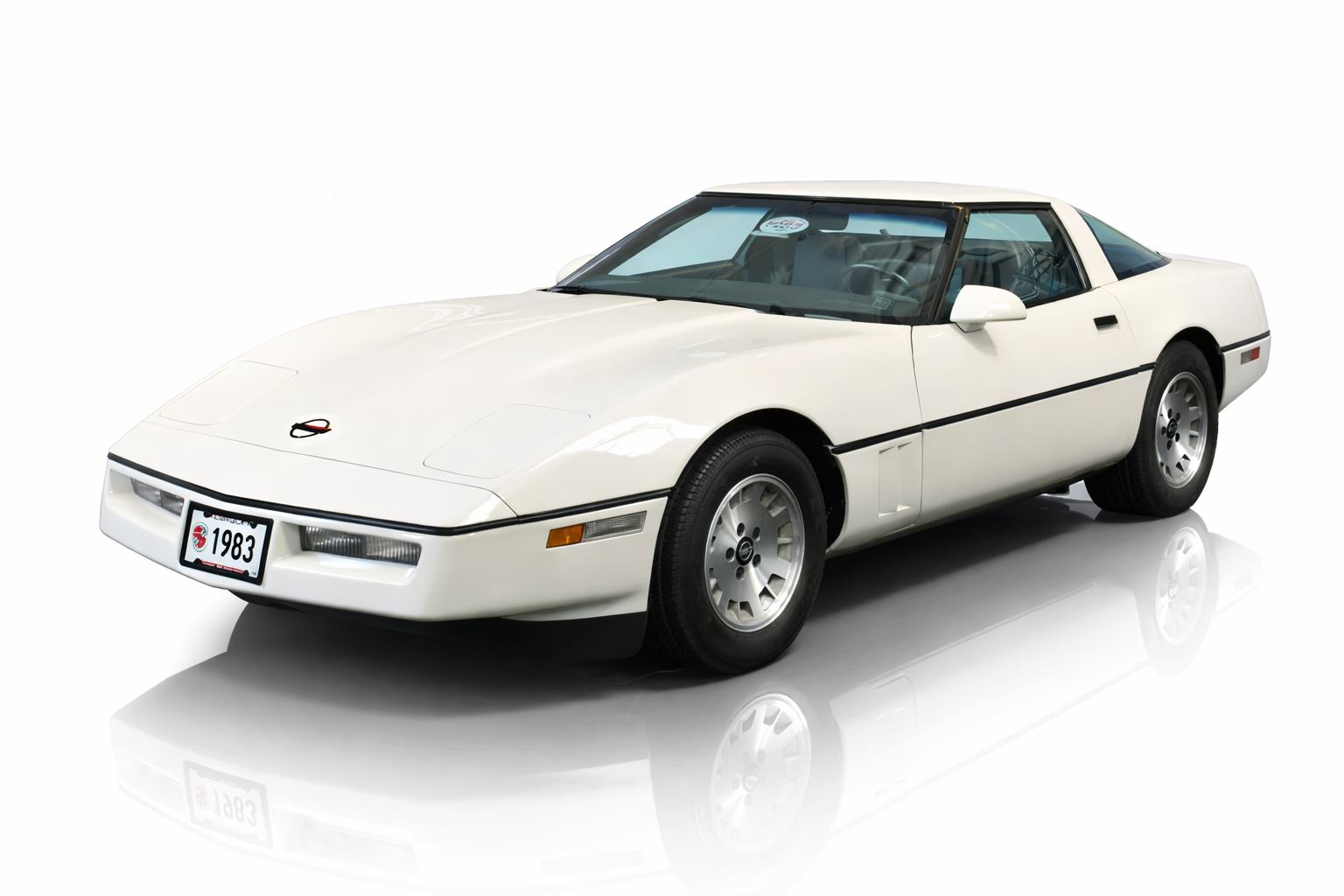
    The 1983 Corvette is the rarest production Corvette never sold. Only 43 pilot C4s were built as Chevrolet prepared to launch an all-new generation, but production delays and quality issues pushed the official debut to 1984. All but one of those 1983 cars were destroyed, leaving a single survivor preserved at the National Corvette Museum—a tangible bridge between the C3’s farewell and the C4’s revolution.
    The 1983 Corvette: the one and only! (Image courtesy of Scott Kolecki/author)

    The artifact programming itself is strong. Thursday brings a spotlight on the one-and-only 1983 Corvette, with Curator Bryan Gable discussing how the survivor of a lost model year endured. Friday follows with a spotlight on Neil Armstrong’s recently donated 1967 Corvette, plus a broader “73 Years of Corvette” moment in the Gateway exhibit. Saturday adds an artifact-handling session with the collections team and a Cutaway Corvette Showcase featuring three functional cutaway cars representing the first three generations. That is a smart mix. It serves the fan who wants headline artifacts, the historian who wants interpretation, and the museum-minded enthusiast who understands that the cars alone are only part of the story.

    The road tours and track activity give the NCM Bash its movement
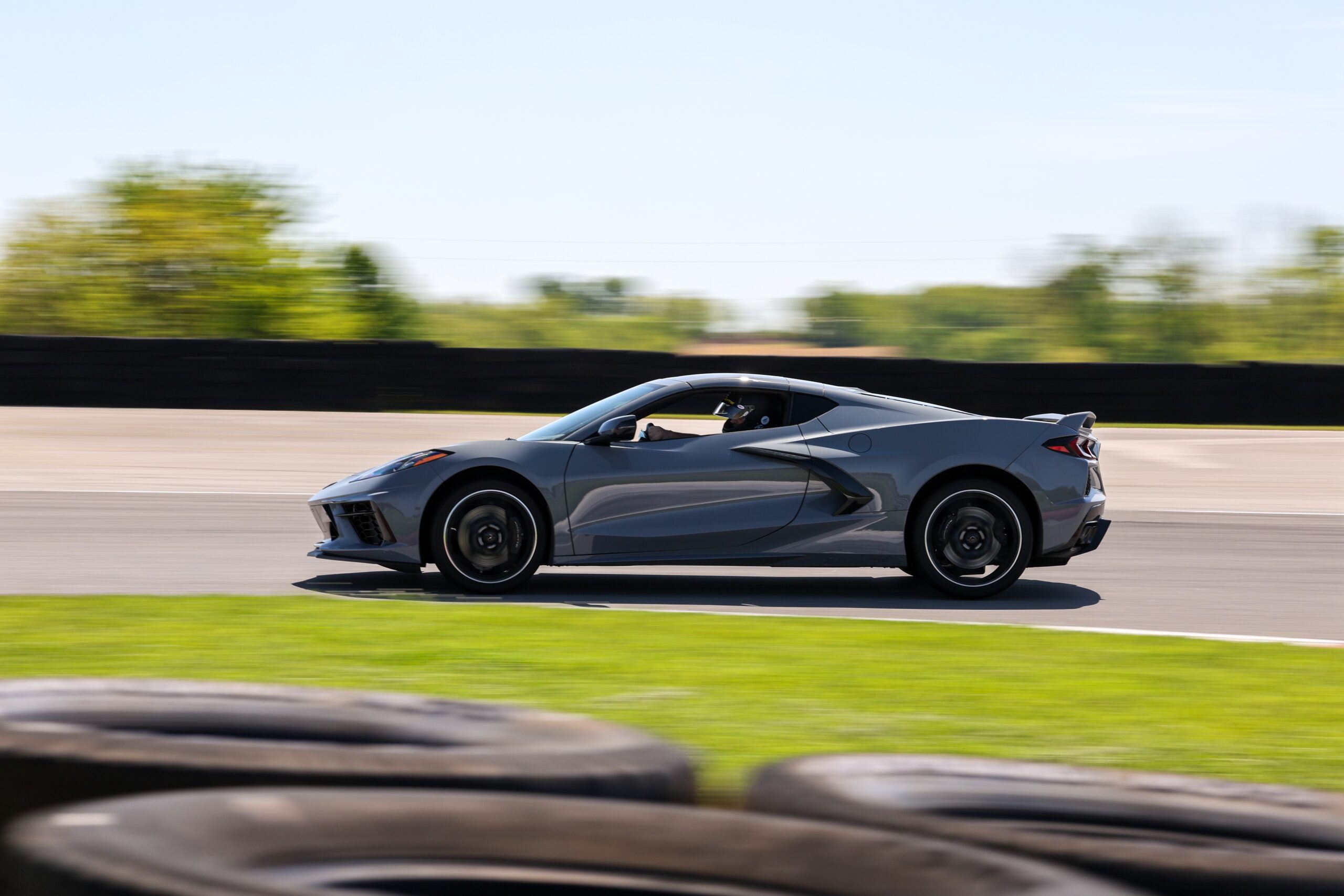
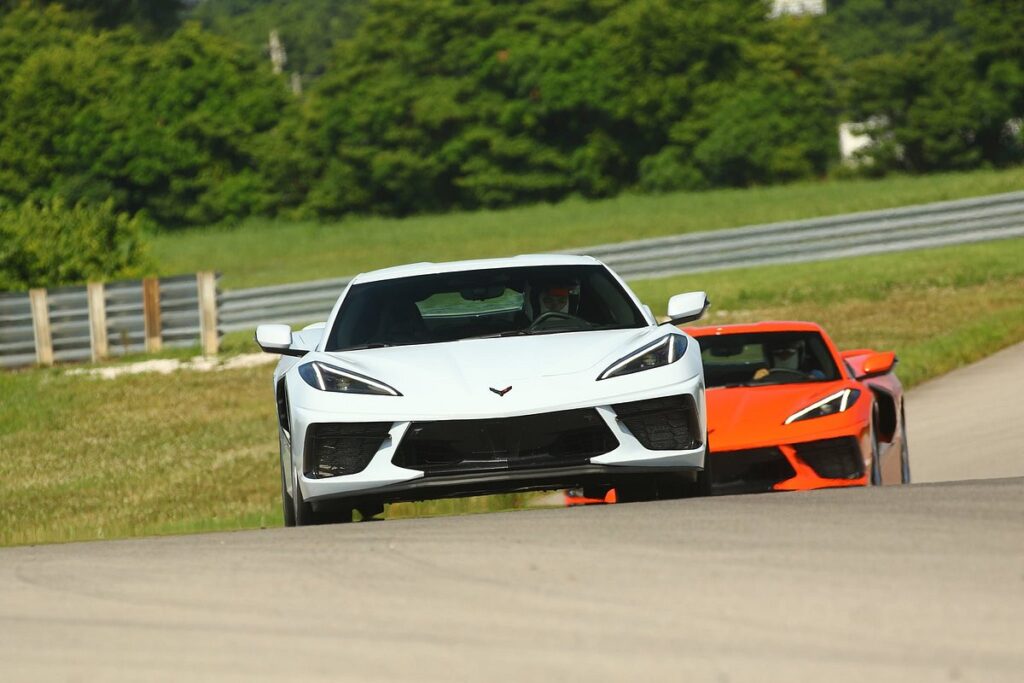
    Track activity is a big part of the 2026 Bash weekend, with High Performance Driving Education at NCM Motorsports Park on Wednesday and Thursday, followed by Friday touring laps on the Park’s 3.2-mile, 23-turn road course. Bash attendees can either bring their own car or choose from the Motorsports Park fleet—including a C8 Stingray, C8 E-Ray, C8 Z06, Camaro SS 1LE, or C7 Stingray—giving the event a real on-track component instead of keeping all the action parked on the show field. (Image courtesy NCM Motorsports Park)

    Corvette events should not feel static, and the 2026 NCM Bash clearly does not. The schedule is loaded with guided road tours on all three days. Thursday offers caravans to Bardstown, Sumner Crest Winery, and the HotRod MotorTel. Friday repeats the Bardstown and Sumner Crest options. Saturday heads to Heaven Hill and also offers a General Jackson Showboat cruise in Nashville. These are not random add-ons. They are part of the larger Bash formula: get the cars out on the road, put owners in motion, and create shared experiences beyond the Museum grounds. Corvette has always been at its best when driven, and Bash continues to understand that.

    That same spirit carries over to the NCM Motorsports Park. Bash attendees are being offered discounted touring laps, with the option of bringing their own car or choosing from a fleet that includes a C8 Stingray, C8 E-Ray, C8 Z06, Camaro SS 1LE, and C7 Stingray on the Park’s 3.2-mile, 23-turn road course in a lead/follow format. There is also High Performance Driving Education on the schedule for Wednesday and Thursday. In other words, this is not just a weekend for looking at Corvettes. It is a weekend for using them. For a Museum event built around America’s sports car, that is exactly the right note to hit.

    Corvette Racing still has a proper place here
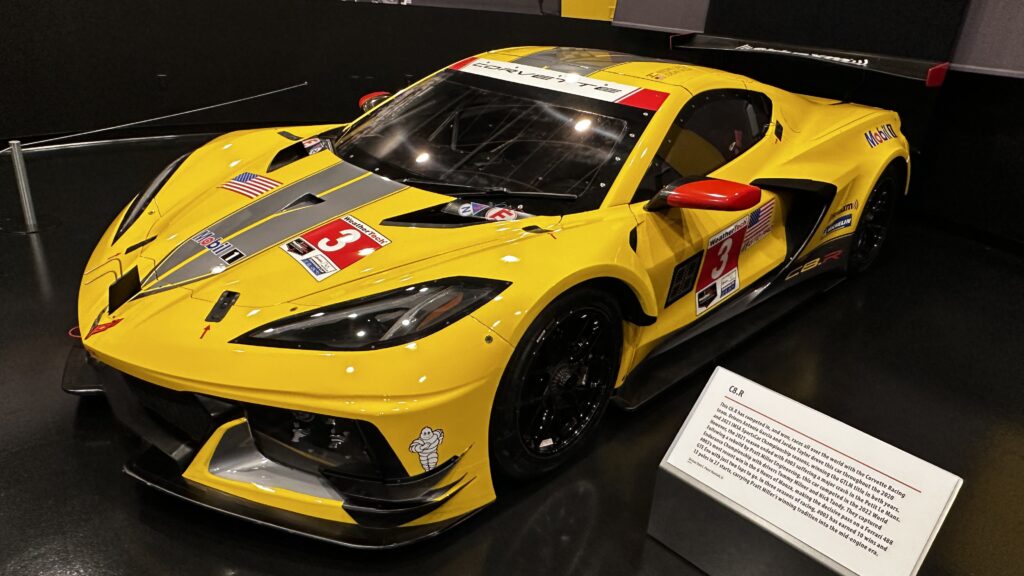
    The Corvette C8.R on display inside the National Corvette Museum is a vivid reminder that Corvette’s modern performance story was written as much on the racetrack as it was on the street. That competition legacy will be front and center during the 2026 Michelin NCM Bash, where Thursday’s Corvette Racing banquet with Pratt Miller Motorsports will look back on the team’s IMSA championship season and what comes next. Bash attendees will also get a deeper historical perspective on Friday during a special seminar marking 25 years since Corvette Racing’s breakthrough 2001 season, featuring Hall of Famers Ron Fellows and Johnny O’Connell. Together, the race car in the Museum and the Corvette Racing programming on the Bash schedule help tie the weekend directly to one of the most important chapters in Corvette history. (Image courtesy of Scott Kolecki/author)

    Bash also does a good job of honoring the competition side of the Corvette story. Thursday evening’s Corvette Racing banquet with Pratt Miller Motorsports brings Brandon Widmer, Ben Bode, and Doug Fehan into the conversation for a look back at last season’s IMSA championship and what comes next. Then on Friday, Hall of Famers Ron Fellows and Johnny O’Connell take the stage for a seminar marking 25 years since Corvette Racing’s historic 2001 season. That is a serious one-two punch for anyone who understands that the Corvette legend was not built on styling and showroom performance alone. It was also built on endurance racing, credibility under pressure, and decades of proving the car where it mattered most.

    There is still plenty here for the broader enthusiast crowd

    Not every Bash attendee wants to spend the whole weekend in seminars, and the schedule reflects that. There are professional Corvette photo opportunities outside the Skydome on both Friday and Saturday. There is a Museum-judged Corvette car show on Saturday. There are happy hours at the Stingray Grill. There are raffles for a 2026 Black Corvette Z06 Coupe and a 2026 Torch Red Corvette. There is a Ladies Garage session, a Corvette Today live appearance with Steve Garrett, Elfi’s Sisterhood programming, a Sip n’ Paint session, and the usual event merchandise, including the official 2026 Bash T-shirt. In other words, Bash knows how to balance depth with atmosphere. It gives hardcore enthusiasts real content, but it also remembers that part of Corvette culture is simply enjoying the community around the car.

    One Friday stop worth making: the Scott Kolecki book signing
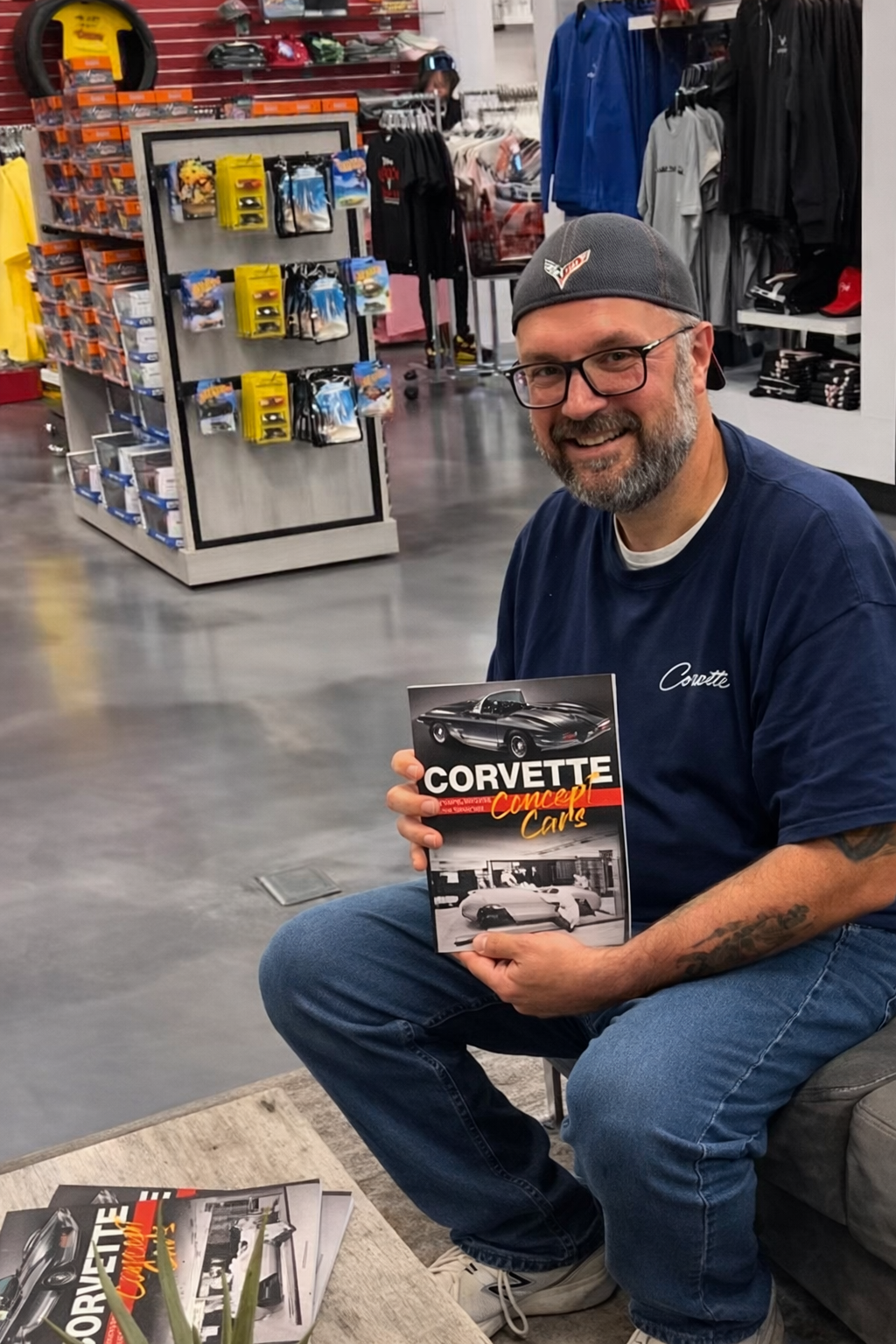
    Scott Kolecki and his book "Corvette Concept Cars: Developing America's Favorite Sports Car" at the National Corvette Museum store in Bowling Green, Kentucky.
    It is always a real privilege to see Corvette Concept Cars: Developing America’s Favorite Sports Car on the shelves at the National Corvette Museum, and I am honored to be part of the 2026 Bash weekend. If you are there on Friday, please stop by and say hello, share a story or two about your favorite Corvette, and if you pick up a copy of the book from the NCM gift shop, I would be glad to sign and inscribe it for you.

    For UltimateCorvette.com readers, there is one additional reason to carve out a few minutes on Friday. UltimateCorvette.com creator and founder Scott Kolecki is scheduled to sign copies of his book, Corvette Concept Cars: Developing America’s Favorite Sports Car, on Friday, April 24 from 10:00 a.m. to 1:00 p.m., with the exact location still listed as to be determined on the official Bash schedule. Scott’s published author bio describes him as an automotive historian, journalist, and entrepreneur focused on preserving, documenting, and celebrating the complete history of America’s sports car through primary research, period documentation, and original storytelling. That is exactly the kind of perspective that fits Bash.

    Just as important, this is a chance to support the Museum while you are there. If you stop by the signing, say hello, and pick up a copy of the book from the NCM gift shop, you are doing more than adding a strong Corvette title to your shelf. You are also supporting the institution that continues to preserve the hardware, history, and stories that make weekends like Bash possible. And that is a pretty good fit for the spirit of the event overall. The signing should not be the centerpiece of anyone’s Bash itinerary, but it absolutely belongs on the list.

    Why this Bash feels bigger than a weekend event
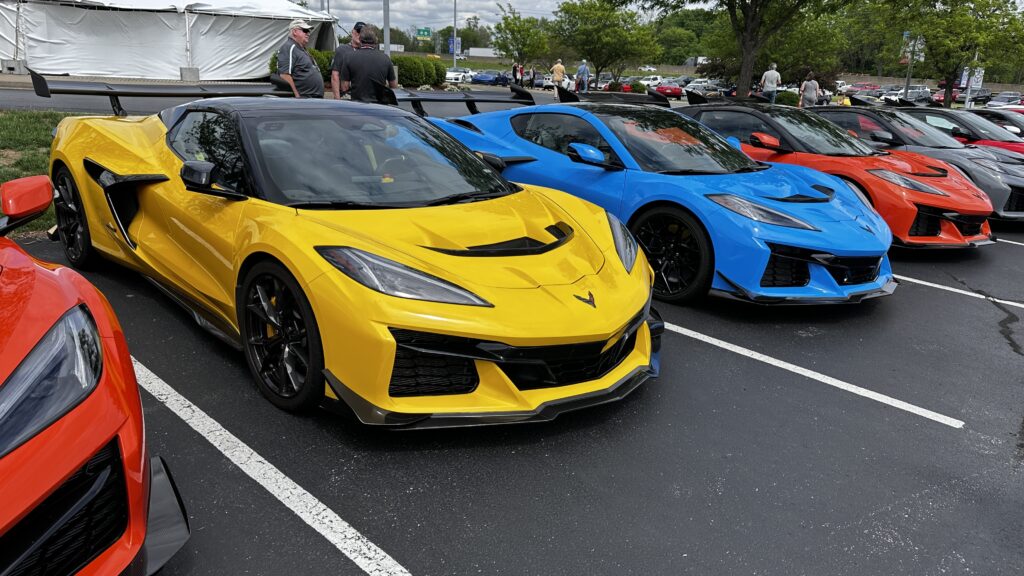
    The Bash is such a big event because it brings together every major part of the Corvette world in one place—owners, enthusiasts, Museum leadership, Corvette engineers, racers, historic cars, new performance hardware, and hundreds of Corvettes filling the grounds in Bowling Green. More than just a car show, it feels like a season-opening gathering for the entire hobby, blending insider access, Corvette history, road tours, track activity, and the kind of community that reminds you why the National Corvette Museum remains such an important home base for America’s sports car.
    The Bash is such a big event because it brings together every major part of the Corvette world in one place—owners, enthusiasts, Museum leadership, Corvette engineers, racers, historic cars, new performance hardware, and hundreds of Corvettes filling the grounds in Bowling Green. More than just a car show, it feels like a season-opening gathering for the entire hobby, blending insider access, Corvette history, road tours, track activity, and the kind of community that reminds you why the National Corvette Museum remains such an important home base for America’s sports car. (Image courtesy of Scott Koleck/author)

    The best Corvette events remind you that the car’s story is not linear. It is engineering. It is racing. It is ownership. It is design. It is preservation. It is community. It is the assembly plant. It is the Museum. It is the track. It is the archive. What makes the 2026 NCM Bash look so strong is that it does not reduce Corvette culture to one of those things. It puts all of them on stage at once. The result is a three-day event that feels less like a spring gathering and more like a concentrated snapshot of where Corvette stands right now—and why people still care so deeply about where it goes next.

    For UltimateCorvette.com, that is the real takeaway. Bash 2026 is not important just because it is busy. It is important because it is layered. You can go for the record-setting ZR1X and Z06 hardware. You can go for the racing names. You can go for the road tours and laps. You can go for the artifact talks, the 1983 Corvette, Neil Armstrong’s 1967, the cutaways, or the Museum’s new preservation push. However you come at it, the event offers a credible argument for why Bowling Green still sits at the center of the Corvette world. And if you were looking for the point in the calendar when Corvette season truly starts to feel alive, this year’s Bash looks like it may be the answer.
    Every spring, the National Corvette Museum Bash reminds enthusiasts why Bowling Green remains the heartbeat of the Corvette world. More than a gathering, it is a packed, high-energy celebration of performance, history, community, and insider access—offering attendees an unmatched chance to experience America’s sports car from every possible angle.

  • 1983 CORVETTE: “THE ONE AND ONLY”

    1983 CORVETTE: “THE ONE AND ONLY”

    Since its inception nearly forty years ago, the 1983 Corvette has remained surrounded by mystique and intrigue within the Corvette community. Some enthusiasts have even questioned whether a 1983 model ever truly existed, fueling rumors that Chevrolet skipped the model year altogether. Theories abound, ranging from production delays at GM’s newly opened Bowling Green Assembly Plant to technical hurdles with the car’s innovative new systems. While these explanations contain elements of truth, the full story is more nuanced.

    A Brief History

    The development of the fourth-generation Corvette (C4) officially began in 1978-79 under Chief Engineer David McLellan and Chief Designer Jerry Palmer. Their goal was to create a dramatically different Corvette—with improved handling, a sleek aerodynamic profile, and state-of-the-art technology. By April 1980, a prototype was presented to Chevrolet’s Product Policy Group (PPG), which immediately approved it for production.

    Over the next two years, the C4 evolved through extensive engineering and testing, benefiting from a robust “prototype program” that accelerated development. GM initially planned to launch the new Corvette as a 1982 model, potentially replacing the C3 that year. However, ongoing challenges—especially related to emissions and drivetrain systems—delayed production.

    The new Corvette was unveiled to the public in September 1982 at Riverside International Raceway. Yet, many details remained uncertain, including pricing, production start dates, and even the model year designation: would it be a 1983 or 1984 Corvette?

    Why No 1983 Production Model?

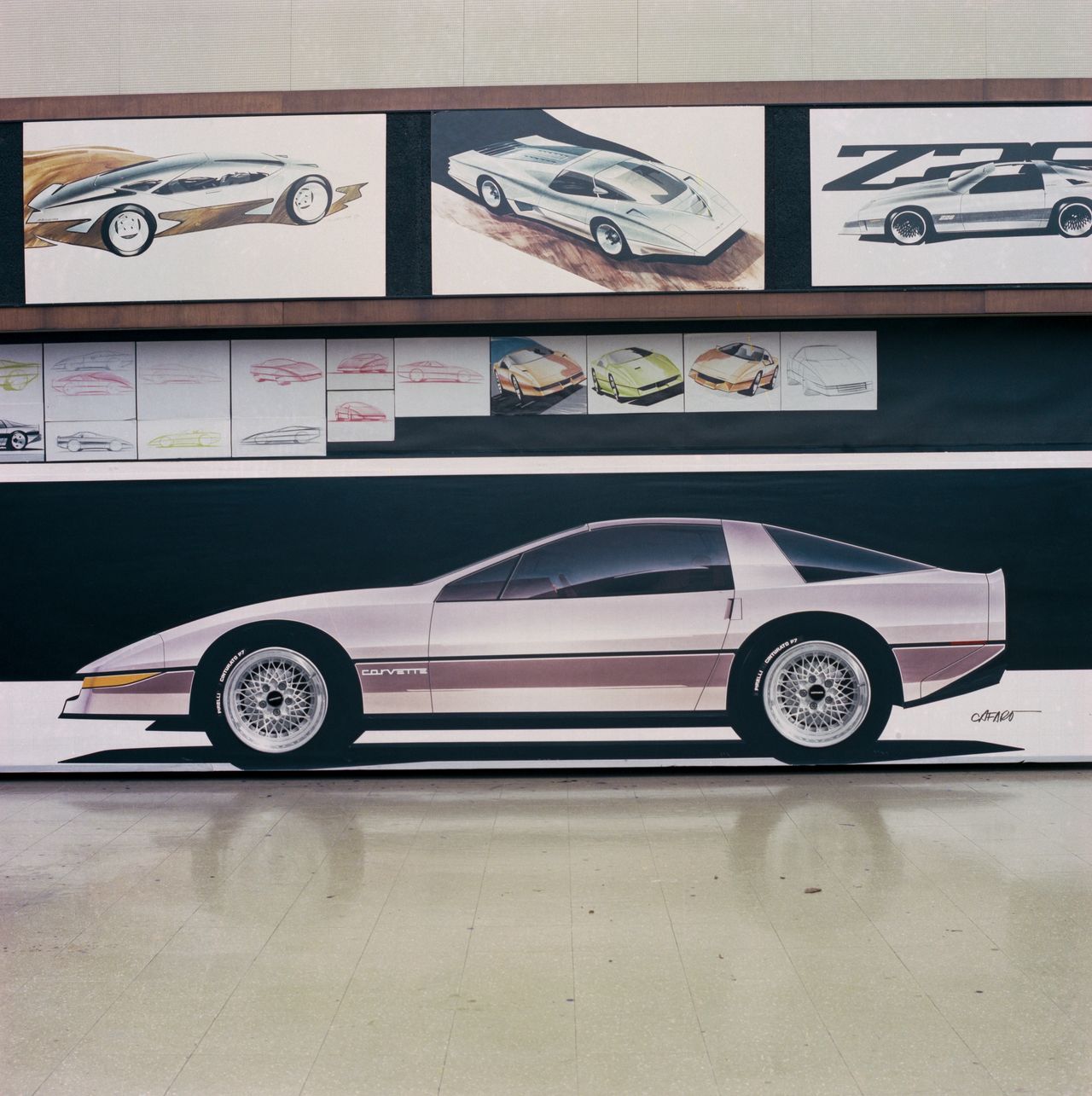
    One of the many early, full scale renderings by John Cafaro of the 1983 Corvette (as envisioned by Jerry Palmer and David McLellan.)(Image courtesy of GM Media.)
    One of the many early, full scale renderings by John Cafaro of the 1983 Corvette (as envisioned by Jerry Palmer and David McLellan.)(Image courtesy of GM Media.)

    Initially, Chevrolet planned for a 1983 launch. However, the U.S. federal government introduced more stringent exhaust and emissions regulations effective January 1, 1983. GM was already testing the new Corvette’s emission systems when these standards were announced. Meeting the new requirements required additional development time, prompting GM to postpone full-scale production until 1984 to ensure compliance.

    Delaying production had several benefits:

    • It allowed the Corvette to be certified under the 1984 emission standards, avoiding costly dual certification.
    • It provided engineers extra time to refine critical systems, prioritizing quality and performance over rushing to market.
    • It aligned production with the start of the calendar year, simplifying logistics and compliance.

    Despite the production delay, Chevrolet built a limited number of 1983 Corvettes—around 14 engineering test mules and 43 pilot (pre-production) cars—each assigned a unique 1983 VIN. These vehicles were used for rigorous testing, validation, and public relations, but none were sold to the public.

    The 1983 Corvette: The “One and Only”

    Although the debate has raged for decades, there is ONE 1983 Corvette, and it resides in Bowling Green, Kentucky at the National Corvette Museum.
    Although the debate has raged for decades, there is ONE 1983 Corvette, and it resides in Bowling Green, Kentucky at the National Corvette Museum.

    Forty-three of these 1983 pilot Corvettes rolled off the Bowling Green Assembly Plant production line as part of a pilot program designed to streamline production of the upcoming fourth-generation model. Each was assigned a unique Vehicle Identification Number (VIN) and prepped for transportation. The “one and only” 1983 Corvette, VIN 1G1AY0783D5110023, was dispatched to GM’s Milford Proving Grounds for additional shakedown and testing by the Corvette engineering and design teams. Upon completion, like its counterparts, it was scheduled to be returned to Bowling Green and destroyed.

    What happened next has become a legendary story within Corvette lore, with two popular accounts explaining how this unique Corvette escaped destruction.

    A New Pair of Boots

    General Motors reportedly rented a mobile crusher to demolish the 1983 test mules and pilot cars upon their return to Bowling Green. As the systematic destruction of these cars commenced, a sudden torrential downpour soaked southern Kentucky. The facilities engineer overseeing the operation halted work, concerned about the weather and, notably, his brand-new, expensive cowboy boots getting soaked. Allegedly, all but one car had already been crushed when he decided to delay destroying the last vehicle until fairer weather.

    When operations resumed the following day, the mobile crusher was gone. Management, assuming that the 43 Corvettes had been fully destroyed, had the crusher picked up and removed from the premises. Fearing repercussions for the oversight, the engineer notified his superiors of the remaining Corvette and the absent crusher. The “one and only” 1983 Corvette was quietly relocated to the backlot of the plant and left abandoned—only to be rediscovered a year later by Bowling Green’s then-new plant general manager, Paul Schnoes.

    The Covert Rescue Mission

    An alternative version of the events leading to the preservation of a single 1983 Corvette exists, and it’s a story that has been passed down from generation to generation, repeated over the years by plant insiders and Corvette historians. Faced with the imminent disposal of the remaining 1983 cars, a small group of Bowling Green Assembly Plant employees allegedly moved one unit to a remote backlot area and covered it, effectively removing it from the normal line of sight. It wasn’t a brazen theft or a paperwork rebellion—it was a strategic act of delay. “Out of sight, out of mind” was the operating principle.

    The emotional context matters. 1983 marked Corvette’s 30th anniversary. For many inside the plant, the idea that there would be no commemorative production model—no official car wearing a 1983 VIN to mark three decades of America’s sports car—felt wrong. The C4 represented a monumental leap forward in chassis rigidity, aerodynamics, and electronics. To let the transitional year vanish entirely seemed, to some, like erasing a chapter of the story.

    What Happened Next

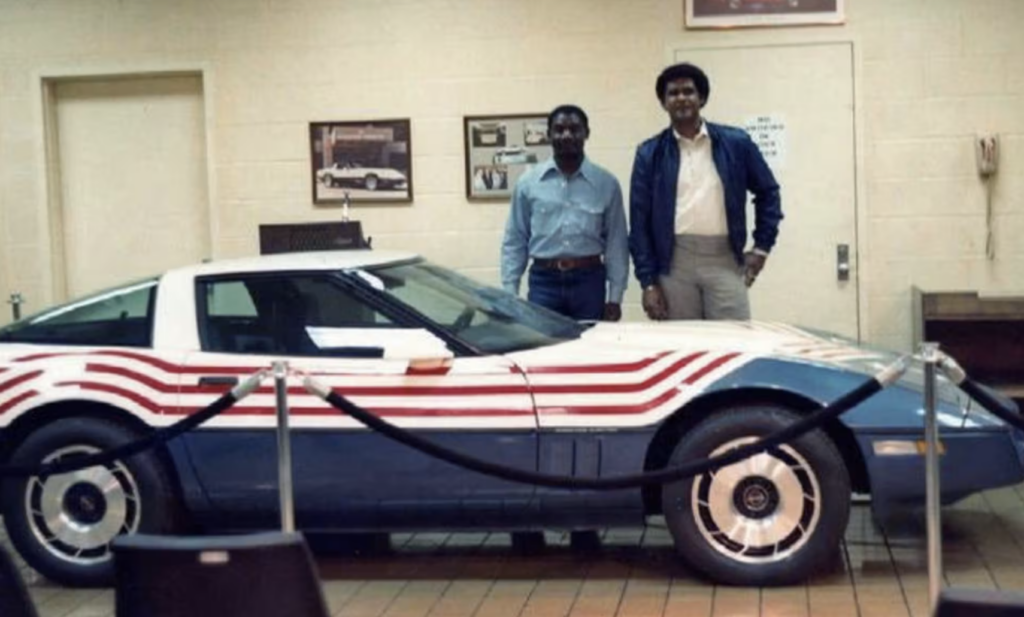
    This image captures the lone surviving 1983 Corvette at the Bowling Green Assembly Plant, shown here in a distinctive red, white, and blue commemorative paint scheme. The patriotic livery was applied for display purposes, transforming the pre-production C4 into a visual tribute to Corvette’s heritage and its American identity. Standing beside the car is Wendyll Strode, who would later become the founding Executive Director of the National Corvette Museum. When the Museum opened in 1994, the one-and-only 1983 Corvette was formally placed on display there—permanently preserving the “missing” model year as a centerpiece of Corvette history.
    This image captures the lone surviving 1983 Corvette at the Bowling Green Assembly Plant, shown here in a distinctive red, white, and blue commemorative paint scheme. The patriotic livery was applied for display purposes, transforming the pre-production C4 into a visual tribute to Corvette’s heritage and its American identity. Standing beside the car is Wendyll Strode, who would later become the founding Executive Director of the National Corvette Museum. When the Museum opened in 1994, the one-and-only 1983 Corvette was formally placed on display there—permanently preserving the “missing” model year as a centerpiece of Corvette history.

    Regardless of which version of the rescue story is ultimately the most accurate, the outcome is undisputed: the “one and only” 1983 Corvette avoided destruction and lived on at the Bowling Green Assembly Plant for nearly a decade. Rather than disappearing into a warehouse or being treated like an inconvenient prototype, it became something far more visible—a living reminder of the model year that never made it to showrooms. In the years immediately after the 1984 launch, the car remained on-site, close to the people who built Corvettes every day and understood exactly what made this one so unusual.

    During its time at the plant, the Corvette was transformed into a display piece with a distinctive stars-and-stripes paint scheme, a patriotic livery that turned the “missing year” into a rolling celebration of the brand’s identity. It also received 16-inch directional wheels from the 1984 model year, a subtle but telling update that visually connected the 1983 pilot car to the production C4 that followed. The result was a car that looked less like an orphaned prototype and more like an official emblem—something meant to be seen, recognized, and talked about.

    From 1984 through 1994, the surviving 1983 Corvette served as a familiar fixture at the plant, proudly displayed near the entrance where employees and visitors could see it as they came and went. In that role, it became more than a curiosity—it became a mascot. For the Bowling Green workforce, it represented both a point of pride and a kind of shared inside knowledge: a Corvette that existed outside the normal rules, preserved not because it was sold, but because it mattered.

    When the National Corvette Museum prepared for its grand opening on September 2, 1994, the car’s significance finally received a permanent home. In celebration of that moment, the “one and only” 1983 Corvette was donated to the Museum, ensuring it would be preserved and interpreted as history rather than kept as a plant artifact. As part of that transition, the car was restored to its original white exterior, and its original 15-inch wheels were reinstalled, returning it to the configuration that defined it as an authentic 1983 pilot Corvette. Today, displayed as a centerpiece of the NCM collection, it stands as a tangible link between the end of the C3 era, the launch of the C4, and the rare circumstances that created Corvette’s most famous “missing” model year.

    Form Versus Function: The Engineering Marvel of the 1983 Corvette

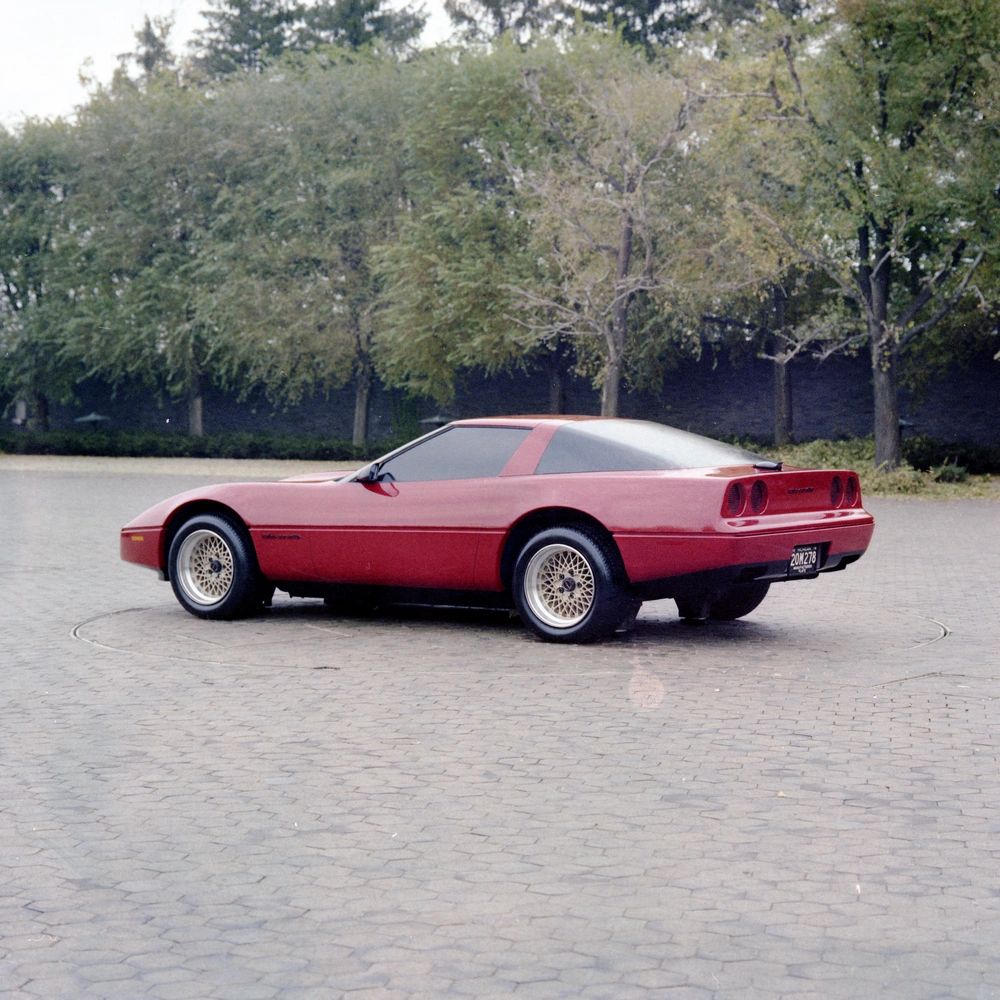
    Full scale clay model of the 1983/C4 Corvette in the courtyard of GM's Design Studios in Detroit, Michigan.  (Image courtesy of GM Media.)
    Full scale clay model of the 1983/C4 Corvette in the courtyard of GM’s Design Studios in Detroit, Michigan. (Image courtesy of GM Media.)

    The 1983 Corvette was the first in the brand’s history to embrace the principle that “form follows function” in nearly every major design aspect. Its drag coefficient (Cd) of 0.341 was a record low for a Corvette at the time, achieved through extensive wind tunnel testing and aerodynamic refinement.

    Key aerodynamic features included:

    • A sharply raked windshield angled at 64.7 degrees—the most acute of any production vehicle from that era.
    • Pop-up headlights that rotated backward to reduce drag.
    • Aerodynamically shaped side mirrors.
    • Frameless rear hatch glass, which also served as the rear window.
    • Minimal exterior trim and body-side moldings to reduce airflow disturbances.

    These features combined to reduce drag and wind noise, delivering a smooth, stable ride at high speeds—even with the removable one-piece roof panel installed.

    To improve handling, the C4 introduced a lightweight, rigid uniframe chassis that greatly reduced flex during aggressive cornering. The suspension system was completely redesigned:

    • Front suspension used a transverse fiberglass composite monoleaf spring replacing traditional coil springs.
    • Forged aluminum unequal-length control arms and steering knuckles reduced unsprung weight.
    • Rear suspension featured a similar transverse fiberglass spring paired with a five-link independent setup using aluminum trailing arms and tie rods.

    These innovations delivered exceptional agility, steering precision, and road feel.

    The “Heartbeat” of the 1983 Corvette

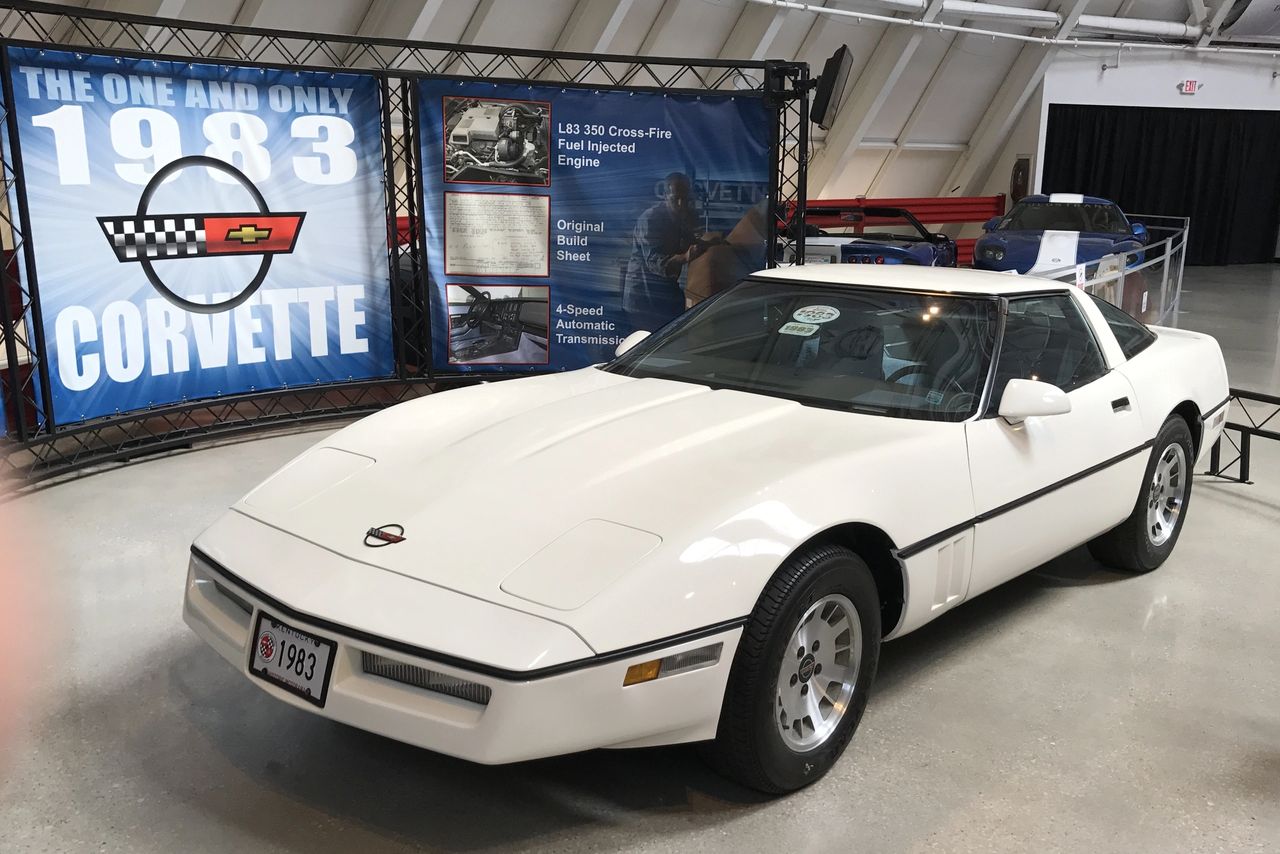
    1983 Chevrolet Corvette featured an L83 350 Cubic Inch Cross-Fire Fuel Injected Engine mated to a 4-Speed Automatic Transmission.
    1983 Chevrolet Corvette featured an L83 350 Cubic Inch Cross-Fire Fuel Injected Engine mated to a 4-Speed Automatic Transmission.

    The 1983 Corvette featured a unique front clamshell hood design—a single piece that opened forward, giving unobstructed access to the engine and front suspension.

    Power came exclusively from the new 5.7-liter (350 cubic inch) L83 V8 engine equipped with Cross-Fire fuel injection—a twin throttle-body system first introduced in the 1982 Corvette. Though the L83 produced a modest 200 horsepower (due to tightening emissions regulations), it was advanced for its time and perfectly matched to the car’s sophisticated chassis.

    The engine was mated to a 4-speed automatic transmission with overdrive. Although a 4-speed manual with an automatic overdrive unit—the Doug Nash 4+3 transmission—was engineered, it was not offered until 1984.

    A 3.31:1 rear axle ratio balanced acceleration and highway cruising. Performance testing showed the 1983 Corvette could accelerate from 0 to 60 mph in under seven seconds, with a top speed near 140 mph.

    Tire development was a close collaboration with Goodyear, resulting in special 15-inch Eagle VR tires designed with “natural path” tread patterns derived from Formula 1 rain tire technology. These P215/65R15 tires offered outstanding grip and handling balance. For 1984, a 16-inch tire option was introduced.

    Braking was handled by Gridlok four-wheel disc brakes with aluminum calipers, providing strong and fade-resistant stopping power.

    The car’s curb weight was approximately 3,192 pounds—lighter than the outgoing 1982 model—while overall dimensions shifted to a lower (46.7 inches tall), wider (71 inches), and shorter (176.5 inches) footprint, enhancing its sporty stance and handling.

    A “Successful Failure”

    The 1983 Corvette stands as a fascinating “what could have been” in Corvette history—a car born of cutting-edge engineering and bold design, but delayed by external factors beyond GM’s control. Though it never reached full production, the 1983 Corvette exemplifies General Motors’ philosophy of “getting it right over simply getting it done,” setting the stage for the enduring success of the C4 Corvette starting in 1984.

    Why the 1983 Corvette Still Matters Today

    The 1983 Corvette matters because it represents the most dramatic reset in the model’s history. It wasn’t a styling refresh or a mid-cycle update—it was the bridge between two entirely different philosophies. The C3 bowed out after fifteen years, and the C4 was poised to redefine Corvette with new aerodynamics, digital instrumentation, and a far more rigid chassis. The 1983 pilot cars sit precisely at that fault line, capturing the moment when Corvette engineering pivoted toward modern performance.

    It also matters because it’s a case study in discipline. Rather than rush an unfinished product to market, Chevrolet absorbed the embarrassment of skipping a model year. Quality, refinement, and regulatory readiness took precedence over calendar optics. That decision ultimately benefited the 1984 launch and reinforced a principle that still echoes today: Corvette would rather delay than compromise.

    And then there’s the singular survivor. With only one 1983 Corvette preserved, the car has become less a prototype and more a physical artifact of transition. It reminds us that automotive history isn’t always defined by what was sold—it’s often shaped by what was corrected, refined, and, in this case, withheld. The 1983 Corvette still matters because it proves that even an “absent” model year can leave a lasting mark.

    There was never supposed to be a “lost” Corvette model year—but 1983 became exactly that. As Chevrolet prepared to launch the all-new C4, production delays and last-minute refinements forced a reset that erased an entire calendar year from the official record. Only 43 pilot cars were built, and just one survives today. The 1983 Corvette…

  • IndyCar’s Sting Ray Robb Partners with NCM Motorsports Park

    IndyCar’s Sting Ray Robb Partners with NCM Motorsports Park

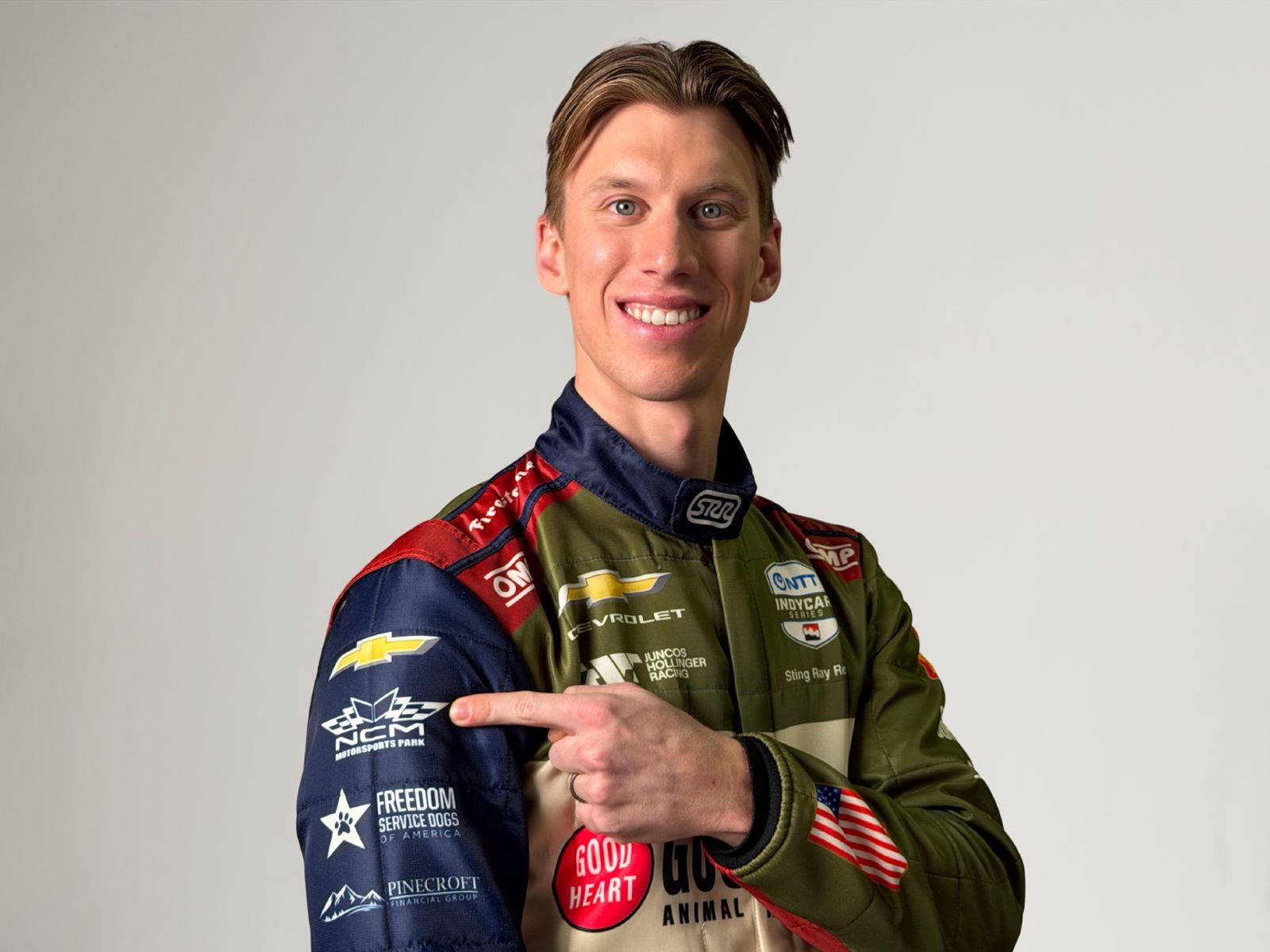
    NCM Motorsports Park continues to strengthen its connection to professional motorsports with the announcement that IndyCar driver Sting Ray Robb has officially joined the park’s exclusive Driving Club. The move makes Robb the second active IndyCar driver and the third professional racer to become part of the Driving Club—further validating NCM Motorsports Park’s reputation as a serious training ground for elite drivers.

    Located just down the road from the National Corvette Museum, NCM Motorsports Park has steadily evolved into one of the most technically respected road courses in the country. Its 3.2-mile layout features 23 demanding turns, blending high-speed sections with complex technical challenges that appeal equally to track-day enthusiasts and professional racers.

    The Driving Club at NCM Motorsports Park is where Corvette performance stops being theoretical and starts being lived. With members enjoying exclusive access to the park’s demanding 3.2-mile, 23-turn road course, the club blends serious seat time with a true enthusiast community. From high-performance street cars like the C8 Corvette to advanced driver coaching and member-only track days, it’s a place built for drivers who want more than laps—they want progression, precision, and the freedom to explore what their cars can really do. (Image source: NCM Motorsports Park)

    “We know we have something special here,” said Khristian Ervin, Driving Club Coordinator. “With 3.2 miles and 23 turns, our track is both technical and fun. It’s the perfect playground for driving enthusiasts while also offering the kind of challenging layout that professionals seek when training for competition.”

    Robb echoed that sentiment, praising both the facility and its people. He described NCM Motorsports Park as a top-tier venue with a track that “demands real respect,” noting that the synergy between the facility, staff, and driving community made joining the Driving Club feel like a natural fit. Its proximity to Indianapolis also makes the park an ideal destination during the IndyCar offseason and between race weekends.

    Among the highlights Robb pointed to were exclusive member days, the diversity of high-performance cars on track, and even the on-site karting circuit—which he described as a nostalgic throwback to his early racing roots. He also singled out the park’s signature Sinkhole turn as a particularly daunting and thrilling challenge, comparing its excitement favorably to Laguna Seca’s famed Corkscrew.

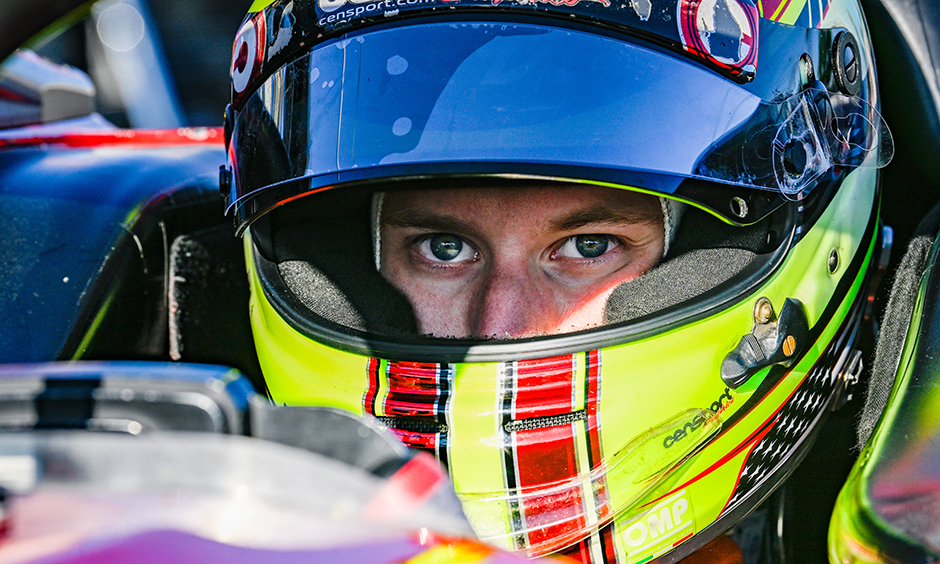
    Sting Ray Robb began his professional driving career at a young age, rising through the competitive Road to Indy ladder after years of success in karting and junior formula categories. His breakthrough came with a championship-winning season in Indy Pro 2000, a title that helped propel him to the top level of American open-wheel racing. Robb now competes in the NTT INDYCAR SERIES, where he has earned a reputation for discipline, adaptability, and steady progression against some of the sport’s most experienced talent. Along the way, he has aligned himself with environments that prioritize development and precision, including his affiliation with NCM Motorsports Park. As a member of the park’s exclusive Driving Club, Robb uses the demanding 3.2-mile road course as a training and preparation ground. The partnership reflects a natural connection between a professional driver committed to growth and a facility built to challenge drivers at the highest level.

    Beyond track time, Robb’s involvement is designed to be immersive. As part of the Driving Club, he will connect directly with members during special events and share insights with drivers looking to elevate their skills.

    “Sting Ray’s membership is a tremendous asset to both the track and our Driving Club members,” said Morgan Watson, Marketing Director for NCM Motorsports Park. “This is only the beginning of a relationship that truly makes sense. We look forward to expanding our reach through strategic partnerships this season that bring value to the club and excitement to the sport.”

    That partnership will also be highly visible throughout the racing season. NCM Motorsports Park branding will appear on Robb’s fire suit, spirit jerseys, and official team apparel. The MSP logo will also be featured on Robb’s branded die-cast cars sold at IndyCar events, extending the park’s presence directly to race fans nationwide.

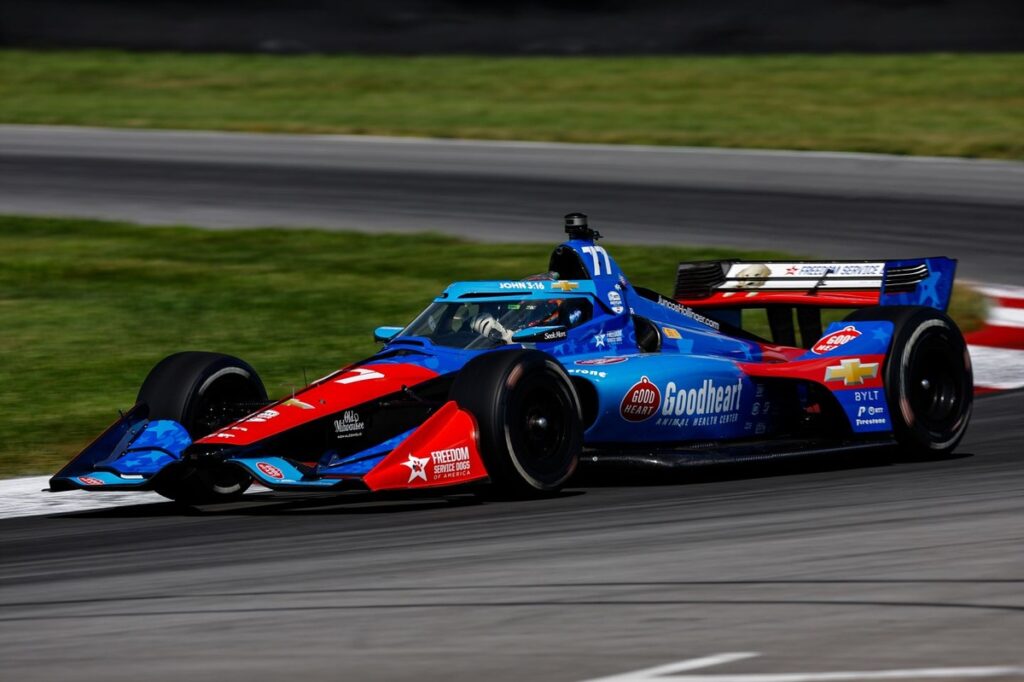
    Inspired by Sting Ray Robb’s bold IndyCar livery, this striking paint scheme will carry over next year to one of the Corvettes at NCM Motorsports Park while Robb is competing on the IndyCar schedule. The design brings a direct visual connection between professional open-wheel racing and the high-performance driving experiences offered at the park, blending race-bred graphics with Corvette presence on track. It’s a purposeful crossover—one that allows guests and members to experience a Corvette that visually mirrors the energy, precision, and intensity Robb brings to IndyCar competition. More than just a wrap, it’s a rolling representation of the partnership between a rising IndyCar talent and a motorsports facility built for serious drivers.

    Perhaps most exciting for Corvette enthusiasts, guests at NCM Motorsports Park will have the opportunity to drive a mid-engine Corvette Stingray wrapped in a custom livery inspired by Robb’s IndyCar design.

    “Throughout the season, guests can select this specially wrapped car when they arrive at NCM Motorsports Park for a C8 Corvette driving experience,” Watson added. “The vehicle will be on display during the month of May while Sting Ray is competing at the Indianapolis Motor Speedway and will travel throughout the season as MSP and Robb activate at area races and events.”

    At its core, this partnership underscores what NCM Motorsports Park continues to represent: a place where professional motorsports, Corvette heritage, and enthusiast culture intersect. By welcoming Sting Ray Robb into its Driving Club, the park reinforces its role not just as a destination, but as a community built around performance, precision, and a passion for driving.

    NCM Motorsports Park continues to strengthen its connection to professional motorsports with the announcement that IndyCar driver Sting Ray Robb has officially joined the park’s exclusive Driving Club. The move makes Robb the second active IndyCar driver and the third professional racer to become part of the Driving Club—further validating NCM Motorsports Park’s reputation as…