
Tag: XP-819

  • 1964 XP-819 – “Ugly Duckling” Rear-Engine Corvette Concept

    1964 XP-819 – “Ugly Duckling” Rear-Engine Corvette Concept

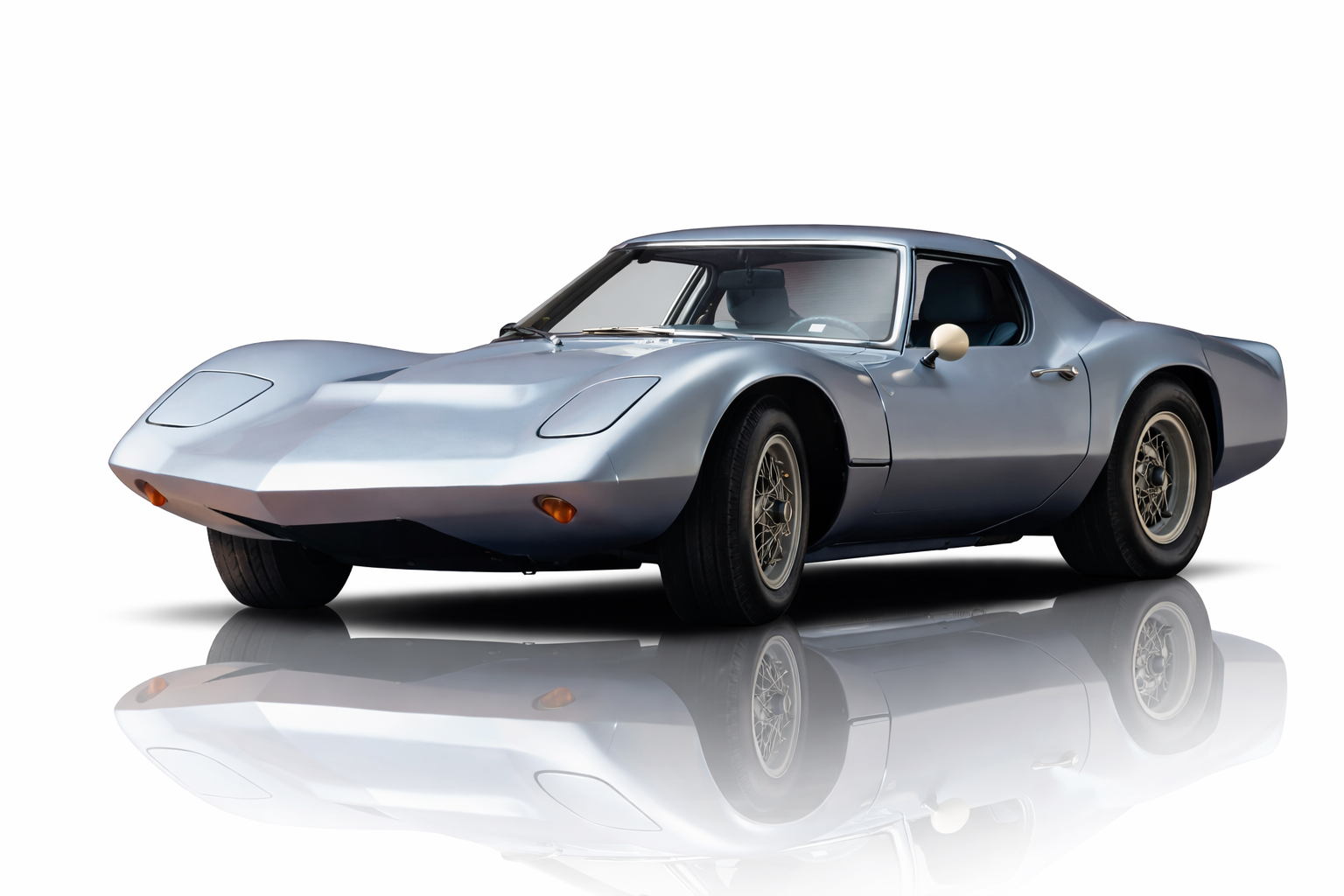
    By the time Chevrolet finally put the Corvette’s V8 behind the driver in the C8, the idea of a mid- or rear-engine Corvette had already lived a dozen different lives on drawing boards and proving grounds. One of the strangest – and most revealing – of those lives is the 1964 XP-819, the so-called “Ugly Duckling.”

    On paper, XP-819 was a cold engineering exercise: a one-off mule to test whether a rear-engine Corvette could be packaged, cooled, and made to behave. In person, especially in its restored form, it’s something else entirely – a low, Coke-bottle coupe that looks like a missing link between the Corvair Monza GT and the 1968 Corvette, with a stance that feels weirdly modern. And the story behind it is pure mid-sixties GM: big personalities, internal rivalries, and one very unusual Corvette that refused to die.

    The Rear-Engine Question Inside Chevrolet
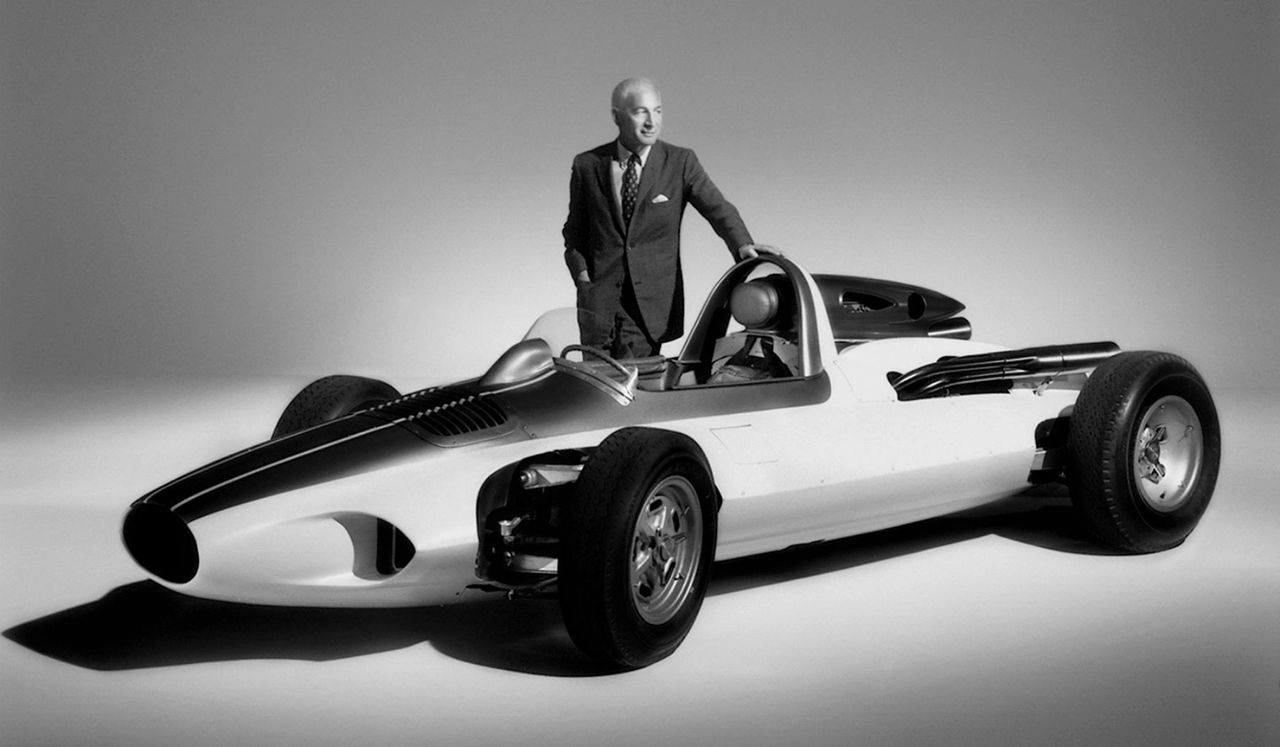
    Zora Arkus-Duntov stands beside his 1960 CERV I—Chevrolet Engineering Research Vehicle—the single-seat, mid-engine test bed he created to prove what he’d been telling GM for years: that the future of true world-class performance required moving the Corvette’s powerplant behind the driver. Introduced in 1960 as a fully functional development mule, CERV I allowed Zora to study weight distribution, handling balance, and high-speed stability in ways the front-engine production Corvette of the era simply couldn’t match. Its featherweight chassis, rearward mass placement, and race-bred engineering became the evidence he needed to champion a mid- or rear-engine Corvette—a vision he fought for throughout his career and one GM wouldn’t realize until the C8 arrived six decades later. (Image courtesy of GM Media LLC)
    Zora Arkus-Duntov stands beside his 1960 CERV I—Chevrolet Engineering Research Vehicle—the single-seat, mid-engine test bed he created to prove what he’d been telling GM for years: that the future of true world-class performance required moving the Corvette’s powerplant behind the driver. Introduced in 1960 as a fully functional development mule, CERV I allowed Zora to study weight distribution, handling balance, and high-speed stability in ways the front-engine production Corvette of the era simply couldn’t match. Its featherweight chassis, rearward mass placement, and race-bred engineering became the evidence he needed to champion a mid- or rear-engine Corvette—a vision he fought for throughout his career and one GM wouldn’t realize until the C8 arrived six decades later. (Image courtesy of GM Media LLC)

    In the early 1960s, Chevrolet was dabbling in just about every drivetrain layout you could imagine. The Corvair put its flat-six out back. Zora Arkus-Duntov’s CERV I and CERV II testbeds pushed toward racing-inspired mid-engine layouts on compact 90-inch wheelbases. At the same time, American buyers were being exposed to more European machinery every year – rear-engined Porsches, mid-engined competition cars, and lithe GTs that didn’t look anything like a front-engine, live-axle Corvette.

    Inside Chevrolet, that mix of influences created a real philosophical split. Frank Winchell, head of Chevrolet Research & Development, was fascinated by unconventional layouts. His group was up to its elbows in Corvair development and deeply plugged into Jim Hall’s Chaparral program, where radical weight distribution and aerodynamics were part of the daily conversation. For Winchell, a rear-engine V8 Corvette wasn’t a stunt; it was a logical next step in exploring where the car could go.

    Frank Winchell was one of GM’s sharpest engineering minds—a behind-the-scenes problem solver whose influence quietly shaped some of the corporation’s most ambitious experimental programs. As the head of GM’s Research and Development group in the early 1960s, Winchell championed unconventional layouts, lightweight structures, and emerging materials, pushing for solutions that traditional production teams often viewed as too radical. His fingerprints are all over the XP-819, the infamous rear-engine “ugly duckling” Corvette prototype of 1964. When Zora Arkus-Duntov refused to support a rear-engine configuration, GM leadership steered the assignment to Winchell, who greenlit Herb Grasse and Larry Shinoda to develop a car that tested the limits of packaging and weight balance. Though the project was short-lived, Winchell’s willingness to explore risky architectures made XP-819 an essential waypoint in Corvette’s long—and often contentious—journey toward mid-engine design. (Image courtesy of GM Media LLC)
    Frank Winchell was one of GM’s sharpest engineering minds—a behind-the-scenes problem solver whose influence quietly shaped some of the corporation’s most ambitious experimental programs. As the head of GM’s Research and Development group in the early 1960s, Winchell championed unconventional layouts, lightweight structures, and emerging materials, pushing for solutions that traditional production teams often viewed as too radical. His fingerprints are all over the XP-819, the infamous rear-engine “ugly duckling” Corvette prototype of 1964. When Zora Arkus-Duntov refused to support a rear-engine configuration, GM leadership steered the assignment to Winchell, who greenlit Herb Grasse and Larry Shinoda to develop a car that tested the limits of packaging and weight balance. Though the project was short-lived, Winchell’s willingness to explore risky architectures made XP-819 an essential waypoint in Corvette’s long—and often contentious—journey toward mid-engine design. (Image courtesy of GM Media LLC)

    Zora Arkus-Duntov saw the world differently. He’d spent years trying to civilize the front-engine Corvette’s behavior at speed – fighting understeer here, taming rear axle hop there – and the idea of deliberately hanging several hundred pounds of cast iron behind the rear axle made him nervous. He understood what Porsche was doing with a much lighter flat-six and a more modest rear weight bias. A small-block Chevy slung out over the tail was a very different proposition.

    Depending on which account you read, the 1964 XP-819 either began with a short list of engineering specs Zora tossed out for a possible compact, rear-engined experimental Corvette – 90-inch wheelbase, low cowl, low seating position – or it was primarily Winchell’s baby from the outset, with Zora keeping it at arm’s length almost from day one. What’s consistent across the sources is that R&D would own the program’s hardware, and Styling would be asked to make it look like something that could plausibly wear crossed flags.

    Two Teams, One Brief – and an “Ugly Duckling”
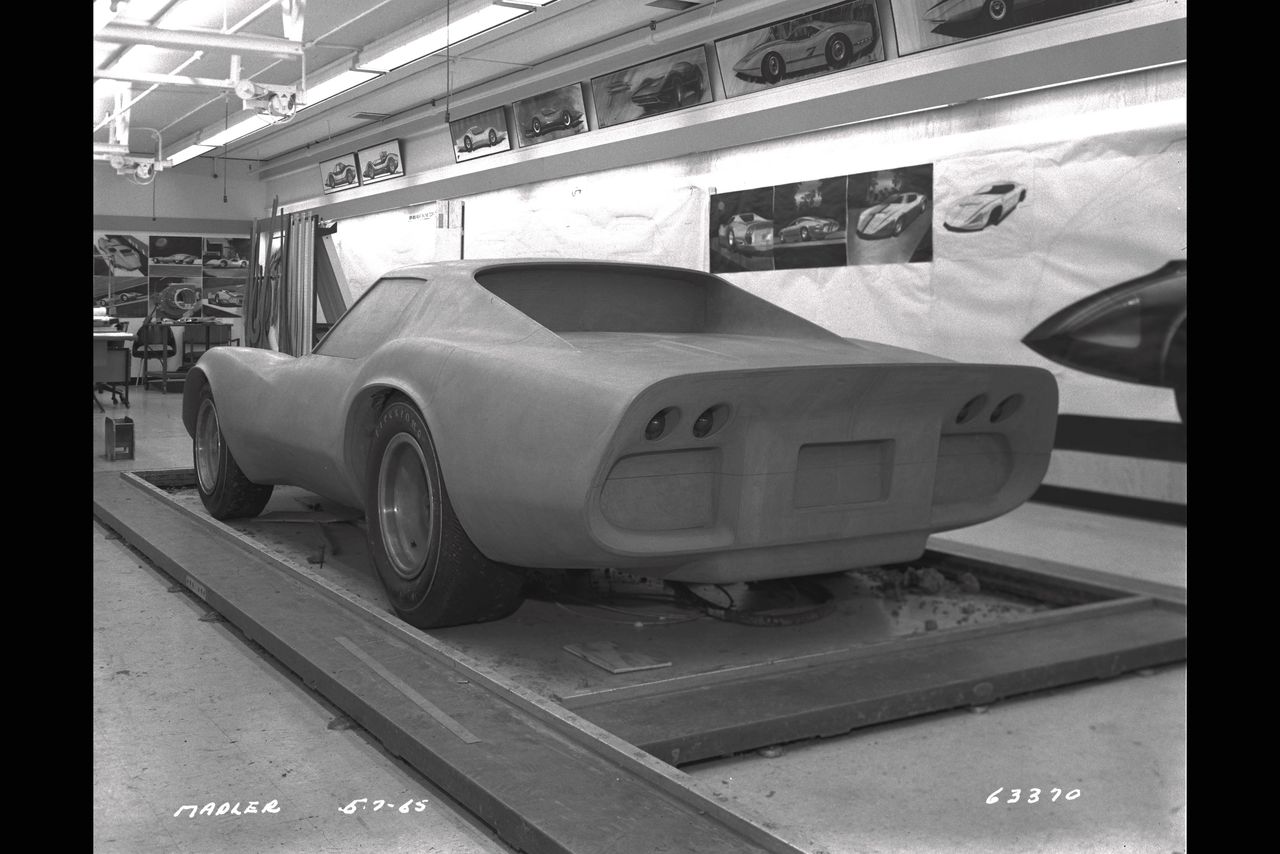
    In this studio shot, the XP-819’s radical shape is still literally being carved out of clay, capturing the moment when Chevrolet’s designers were pushing Corvette into unfamiliar, rear-engine territory. The wide, squared-off tail and deep inset rear panel reflect an ongoing tug-of-war between pure aero experimentation and recognizable Corvette DNA. Clay modeling let the team constantly refine proportions, surface transitions, and lighting details in full scale before committing anything to metal or fiberglass. What you’re seeing here is the XP-819 in mid-evolution—part science experiment, part design laboratory for ideas that would echo through later Corvette programs. (Image courtesy of GM Media LLC)
    In this studio shot, the XP-819’s radical shape is still literally being carved out of clay, capturing the moment when Chevrolet’s designers were pushing Corvette into unfamiliar, rear-engine territory. The wide, squared-off tail and deep inset rear panel reflect an ongoing tug-of-war between pure aero experimentation and recognizable Corvette DNA. Clay modeling let the team constantly refine proportions, surface transitions, and lighting details in full scale before committing anything to metal or fiberglass. What you’re seeing here is the XP-819 in mid-evolution—part science experiment, part design laboratory for ideas that would echo through later Corvette programs. (Image courtesy of GM Media LLC)

    They sprinted back to the studio, grabbed every assistant they could, and pushed to finish a full-scale, 1:1 side-elevation rendering. The confidence was pure Shinoda — blunt, bold, and backed up by his ability to deliver under impossible deadlines.When Duntov, Rybicki, Winchell, and the others walked into Shinoda’s space that afternoon, they weren’t greeted by a quick thumbnail. They were staring at a life-size profile of a low, Coke-bottle Corvette with massive rear haunches, a sharply drawn roofline, and a tail that rolled up into a subtle ducktail spoiler.

    To keep everyone honest, Chevrolet split the work into two paths. Winchell’s R&D organization would lead the packaging study: engine placement, cooling layout, wheelbase, and weight distribution. They produced an internal body proposal that was very much an engineer’s car – high nose, production ’63 Corvette windshield, and a cockpit that looked closer to a sports racer than a showroom model. The mechanics were tucked in where they fit, with the radiator and condenser hanging off the back, and there was minimal attempt to sculpt a new identity around the layout.

    When that first proposal was put up before senior staff, Duntov took one look at the tall roofline and awkward proportions and, according to multiple later tellings, let out a laugh and deadpanned, “Ha, it would be a very ugly duckling.” The line landed. People in the room chuckled, and from that point forward, the project’s internal nickname – and eventually its public one – was locked in. Even those who would later champion the car rarely called it anything else.
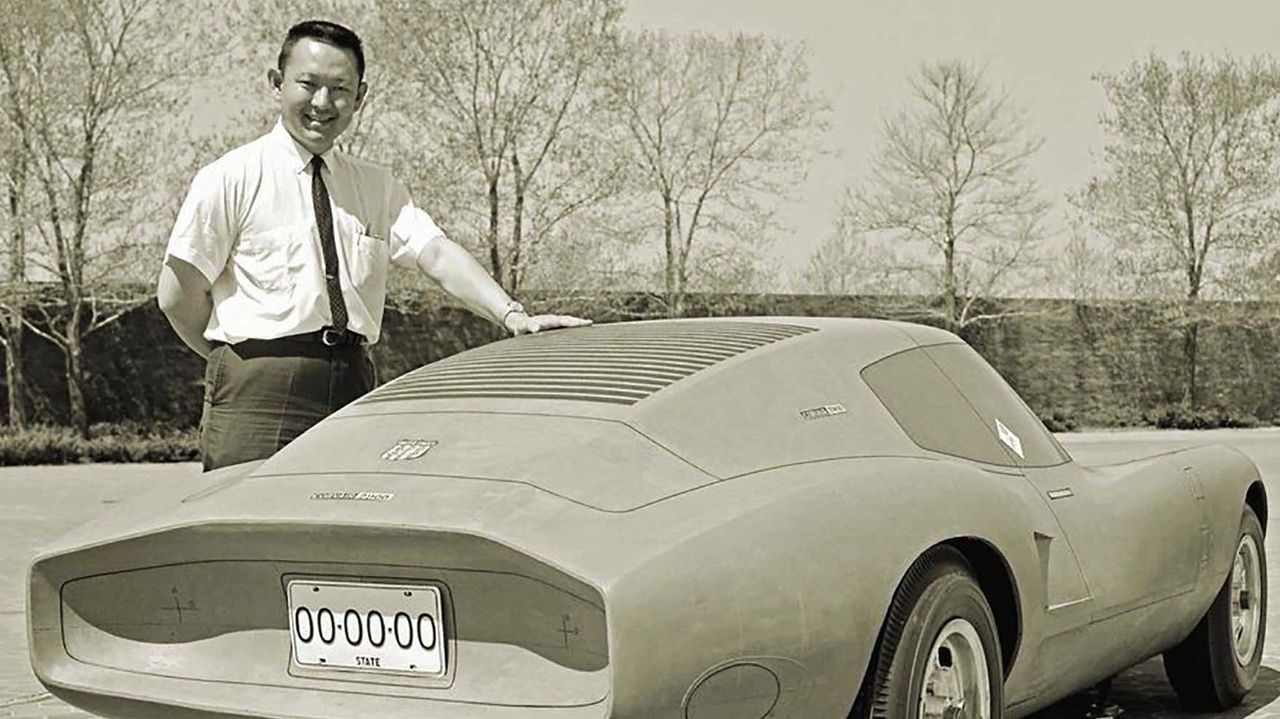
    Larry Shinoda is pictured here with the full-size clay model of the Corvair Monza GT, one of his most daring and influential experiments inside GM Styling. The Monza GT’s cab-forward stance, fastback profile, and mid-engine proportions gave GM a rolling laboratory for ideas that would ripple outward into future sports-car programs. Shinoda would later channel that same willingness to break the rules into projects like the XP-819 rear-engine Corvette prototype, which stretched Corvette thinking far beyond the traditional front-engine formula. Of course, his fingerprints are also all over the production Corvette—most famously the second-generation Sting Ray—with its sharp creases and race-bred attitude. Together, the Monza GT, XP-819, and his mainstream Corvette work showcase Shinoda as a designer who never stopped pushing the envelope of what a Chevrolet sports car could be. (Image courtesy of GM Media LLC)
    Larry Shinoda is pictured here with the full-size clay model of the Corvair Monza GT, one of his most daring and influential experiments inside GM Styling. The Monza GT’s cab-forward stance, fastback profile, and mid-engine proportions gave GM a rolling laboratory for ideas that would ripple outward into future sports-car programs. Shinoda would later channel that same willingness to break the rules into projects like the XP-819 rear-engine Corvette prototype, which stretched Corvette thinking far beyond the traditional front-engine formula. Of course, his fingerprints are also all over the production Corvette—most famously the second-generation Sting Ray—with its sharp creases and race-bred attitude. Together, the Monza GT, XP-819, and his mainstream Corvette work showcase Shinoda as a designer who never stopped pushing the envelope of what a Chevrolet sports car could be. (Image courtesy of GM Media LLC)

    The second path ran through Design. Henry Haga, who led the Chevrolet studio, had been watching one of his most talented designers, Larry Shinoda, apply a new, muscular surfacing language to the Corvair Monza GT and SS concepts. Haga knew Shinoda’s work could take a homely engineering mule and turn it into something with real presence. He put Shinoda and designer John Schinella in charge of the Styling effort for the rear-engined Corvette concept.

    When Director of Design Irv Rybicki finally turned to Shinoda during the review and asked what he thought of the R&D proposal, Shinoda didn’t hesitate. As he later recalled, he told Rybicki, “I think we can make it into a very beautiful car.” Rybicki asked him when he could show it. Shinoda replied simply: “When do you want to see it?” Rybicki shot back, “After lunch.” That gave Shinoda and his team just a few hours to turn their in-progress sketches into something that could be put up on the wall beside the R&D layout.
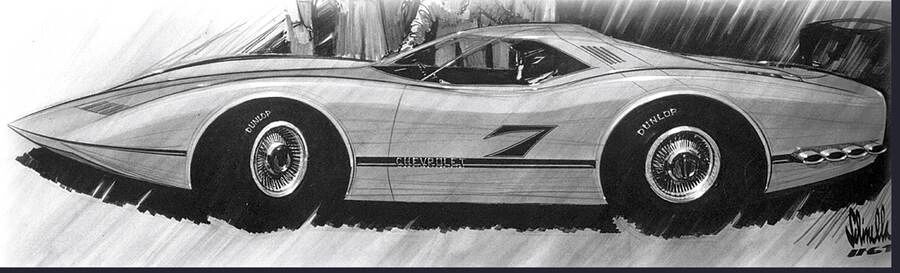
    This dramatic illustration shows Schinella pushing the XP-819 theme to its racing extreme: a razor-sharp nose, deep “Coke-bottle” tumblehome, and a canopy-style greenhouse hunkered low between swollen fenders. The under-nose intake and crisply vented front deck hint at the front-mounted radiator that would help tame the rear-engine layout, while the Dunlop-shod wire wheels and exposed side exhaust stacks make the car look ready for Le Mans straight off the drawing board. Along the rocker, a simple “Chevrolet” script ties this wild experiment back to production reality, a reminder that Winchell and Shinoda were still aiming at a buildable Corvette, not a pure fantasy car. Although the finished XP-819 would be toned down considerably, Schinella’s sketch captures the raw, unfiltered vision of what a rear-engine Corvette racer might have been if Styling, rather than Engineering, had the final word. (Image courtesy of GM Media LLC)
    This dramatic illustration shows Schinella pushing the XP-819 theme to its racing extreme: a razor-sharp nose, deep “Coke-bottle” tumblehome, and a canopy-style greenhouse hunkered low between swollen fenders. The under-nose intake and crisply vented front deck hint at the front-mounted radiator that would help tame the rear-engine layout, while the Dunlop-shod wire wheels and exposed side exhaust stacks make the car look ready for Le Mans straight off the drawing board. Along the rocker, a simple “Chevrolet” script ties this wild experiment back to production reality, a reminder that Winchell and Shinoda were still aiming at a buildable Corvette, not a pure fantasy car. Although the finished XP-819 would be toned down considerably, Schinella’s sketch captures the raw, unfiltered vision of what a rear-engine Corvette racer might have been if Styling, rather than Engineering, had the final word. (Image courtesy of GM Media LLC)

    They sprinted back to the studio, grabbed every assistant they could, and pushed to finish a full-scale, 1:1 side-elevation rendering. The confidence was pure Shinoda — blunt, bold, and backed up by his ability to deliver under impossible deadlines. When Duntov, Rybicki, Winchell, and the others walked into Shinoda’s space that afternoon, they weren’t greeted by a quick thumbnail. They were staring at a life-size profile of a low, Coke-bottle Corvette with massive rear haunches, a sharply drawn roofline, and a tail that rolled up into a subtle ducktail spoiler.

    Duntov’s first instinct was to start measuring. He pulled out a tape and began checking wheelbase, cowl height, and critical dimensions against the engineering guidelines. As one version of the story has it, he turned to Shinoda and asked, “Where did you cheat?” Shinoda told him he hadn’t. Everything was inside the box R&D had given them; he’d just used that volume more aggressively – pinching the waist, stretching the fenders, and dropping the roof to create a car that looked like it was moving when it was standing still.
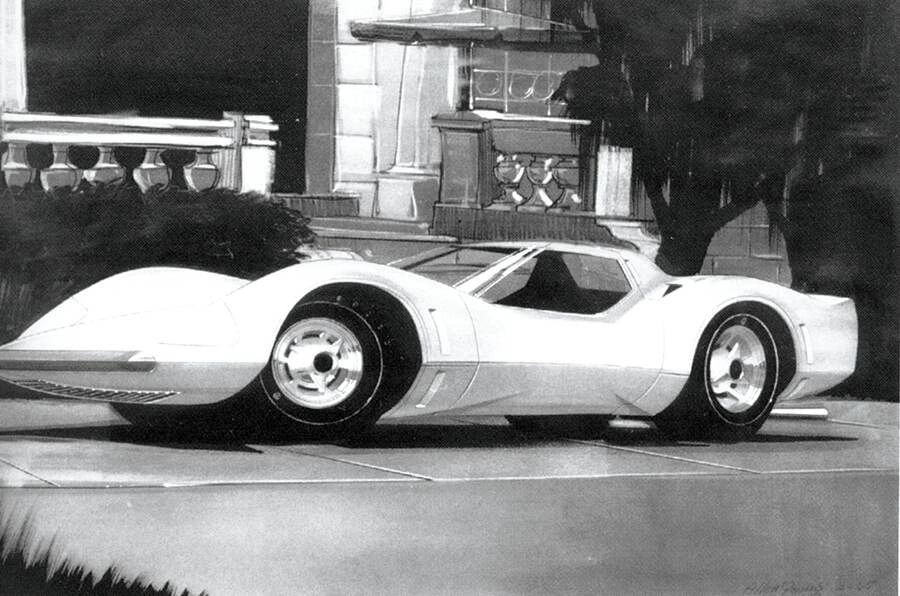
    Set against the ornate backdrop of a stately mansion, this GM Styling studio rendering imagines the XP-819 as a low, gleaming projectile gliding up to the front steps like some visiting spacecraft. The body is impossibly clean—no scoops or spoilers to clutter the surfaces—just a smooth, tapering nose, a subtle fender break over the front wheel, and a gently kicked-up tail that hints at the engine hanging out behind the rear axle. The wheels are tucked deep into the arches, visually pinning the car to the pavement and emphasizing its almost slot-car stance, while the canopy-style cockpit sits like a clear bubble dropped into the middle of the form. Framed by classical architecture and heavy landscaping, the scene reinforces just how radical this rear-engine Corvette proposal really was: a piece of pure future parked in front of yesterday’s idea of luxury.
    Set against the ornate backdrop of a stately mansion, this GM Styling studio rendering imagines the XP-819 as a low, gleaming projectile gliding up to the front steps like some visiting spacecraft. The body is impossibly clean—no scoops or spoilers to clutter the surfaces—just a smooth, tapering nose, a subtle fender break over the front wheel, and a gently kicked-up tail that hints at the engine hanging out behind the rear axle. The wheels are tucked deep into the arches, visually pinning the car to the pavement and emphasizing its almost slot-car stance, while the canopy-style cockpit sits like a clear bubble dropped into the middle of the form. Framed by classical architecture and heavy landscaping, the scene reinforces just how radical this rear-engine Corvette proposal really was: a piece of pure future parked in front of yesterday’s idea of luxury.

    In that moment, XP-819 went from being a homely what-if drawing in R&D to a green-lit prototype. Despite any disagreements over the layout, everyone in the room agreed that Shinoda had made it look like a Corvette of the future.

    Three Big Pieces: How THE 1964 XP-819 Was Built
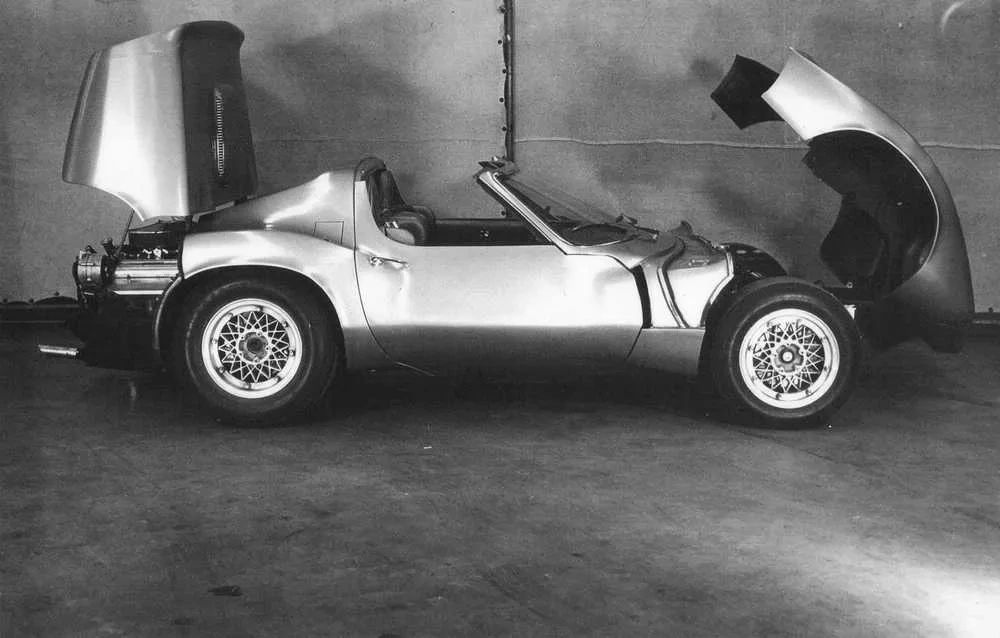
    With the XP-819 opened up like a cutaway model, you can see how its body was essentially three major components: a front clip, a central cockpit tub, and a rear engine section. Both the nose and tail hinged away from the center structure, giving engineers excellent access to the suspension, steering, cooling hardware, and the transversely mounted V8 out back. This modular layout was pure experimental thinking—more race car than production Corvette—and it allowed rapid changes to mechanicals and aero surfaces as the program evolved. It’s a vivid reminder that XP-819 was as much a rolling testbed as it was a styling exercise. (Image courtesy of GM Media LLC)
    With the XP-819 opened up like a cutaway model, you can see how its body was essentially three major components: a front clip, a central cockpit tub, and a rear engine section. Both the nose and tail hinged away from the center structure, giving engineers excellent access to the suspension, steering, cooling hardware, and the transversely mounted V8 out back. This modular layout was pure experimental thinking—more race car than production Corvette—and it allowed rapid changes to mechanicals and aero surfaces as the program evolved. It’s a vivid reminder that XP-819 was as much a rolling testbed as it was a styling exercise. (Image courtesy of GM Media LLC)

    Shinoda and Schinella borrowed heavily from the architecture of the Corvair Monza GT, which was itself a three-piece design. XP-819 followed the same recipe: a forward section that contained the nose and front suspension; a central “greenhouse” with the roof, doors, and cockpit; and a rear body assembly that wrapped the engine and transaxle. All three were draped over a unique chassis that was one of only two monocoque-style (a style of design where the external skin provides all (or most) of the strength and support, like an eggshell, rather than relying on a separate internal frame) Corvette experiments Chevrolet ever built.

    The Front: Clamshell Nose and Functional Ducting
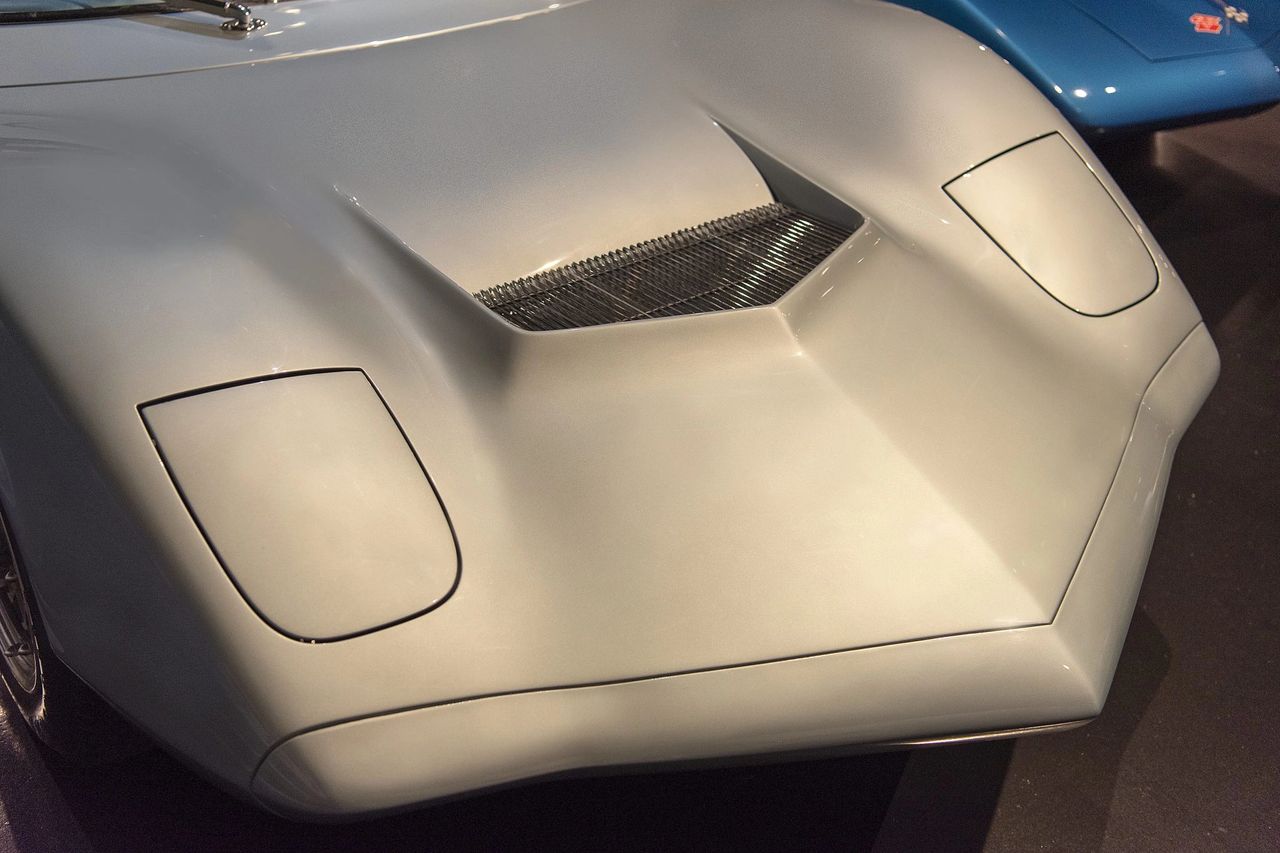
    Up front, the XP-819 wears a deep, functional duct that pulls high-pressure air through the nose and then ejects it up and over the body, helping both cooling and front-end stability. It’s not just a styling flourish; this was GM Engineering and Styling teaming up to bleed off lift and manage airflow on a car that was already fighting the balance challenges of a rear-engine layout. Decades later, the C7 Corvette would revisit that same playbook with its prominent hood extractor, using a similar “front-in, top-out” strategy to cool the radiator and keep the nose planted at speed. In many ways, the XP-819’s scoop is an early chapter in the aero story that finally came of age on the seventh-generation Corvette. (Image courtesy of Joe Kolecki/Kolecki Photography)
    Up front, the XP-819 wears a deep, functional duct that pulls high-pressure air through the nose and then ejects it up and over the body, helping both cooling and front-end stability. It’s not just a styling flourish; this was GM Engineering and Styling teaming up to bleed off lift and manage airflow on a car that was already fighting the balance challenges of a rear-engine layout. Decades later, the C7 Corvette would revisit that same playbook with its prominent hood extractor, using a similar “front-in, top-out” strategy to cool the radiator and keep the nose planted at speed. In many ways, the XP-819’s scoop is an early chapter in the aero story that finally came of age on the seventh-generation Corvette. (Image courtesy of Joe Kolecki/Kolecki Photography)

    The front of XP-819 is deceptively simple at first glance: a pointed nose, neat bumper openings, and smooth front fenders. Look closer, and you realize how far ahead of its time it really was. Instead of chrome blades bolted to a steel bumper, XP-819 used urethane bumper inserts – early deformable elements that hinted at the integrated bumper systems coming in the 1970s. The headlamps were concealed under flip-up doors, keeping the nose clean when the lights weren’t in use.

    Most important is what isn’t there. On a conventional Corvette, that long front panel would be the hood. On XP-819, it’s a fixed panel with a sculpted duct punched into it. With the engine out back, the radiator moved to the nose, leaning forward and drawing air from an opening down low. That air was then routed up and out through the hood-top duct, just ahead of the windshield. It was a clever solution to two problems at once: getting hot air out of the car without creating lift underneath, and giving Shinoda a dramatic, functional feature on an otherwise very clean surface.

    The whole front end hinged forward like a clamshell. With the nose tipped down, the radiator, steering rack, front suspension, and brake hardware were all presented at waist height. It was the kind of race-car-style access technicians dream of – and a layout that would resurface, in refined form, when the C4 Corvette adopted a forward-tilting front clip twenty years later.

    The Cabin: Deep Seating and Movable Controls
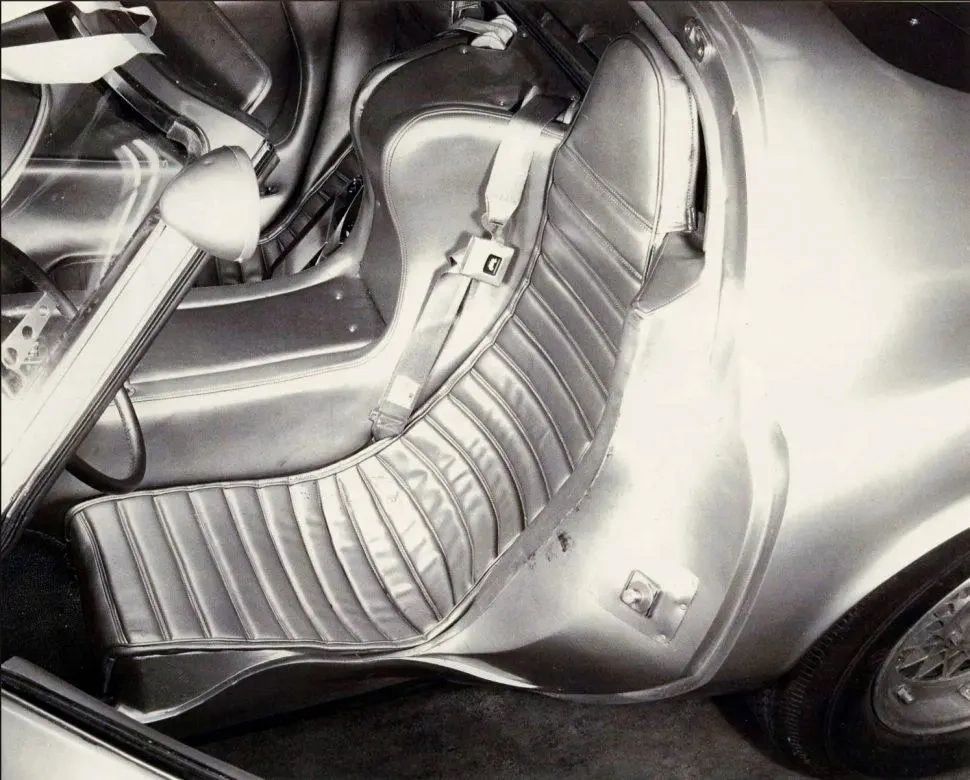
    The XP-819’s seat was molded directly into the chassis tub, creating a fixed, laid-back driving position that locked the driver into the car rather than simply sitting on top of it. Instead of adjusting the seat, the rest of the cockpit—including the pedal box—was designed to move to the driver, an experiment in ergonomics that was decades ahead of its time.
    The XP-819’s seat was molded directly into the chassis tub, creating a fixed, laid-back driving position that locked the driver into the car rather than simply sitting on top of it. Instead of adjusting the seat, the rest of the cockpit—including the pedal box—was designed to move to the driver, an experiment in ergonomics that was decades ahead of its time.

    If the front of XP-819 was forward-thinking, the cabin was downright radical by Corvette standards of the time. The roof panel was removable, creating a targa-like opening long before that word became part of Corvette vocabulary. The windshield and side glass kept a family resemblance to the C2, but the surfaces around them shrank, swooped, and tucked in ways no production Corvette had attempted yet.

    Inside, Shinoda’s team went for a dramatic, almost concept-car treatment. The seats were fixed to the floor, but the center console flowed seamlessly into the inner seat bolsters, creating a sculpted “cocoon” for driver and passenger. The outer bolsters weren’t attached to the seats at all; they were mounted on the doors. When you opened a door, that outer bolster swung out of the way with it, turning what looked like a tight, deep bucket into a surprisingly accessible seating position.
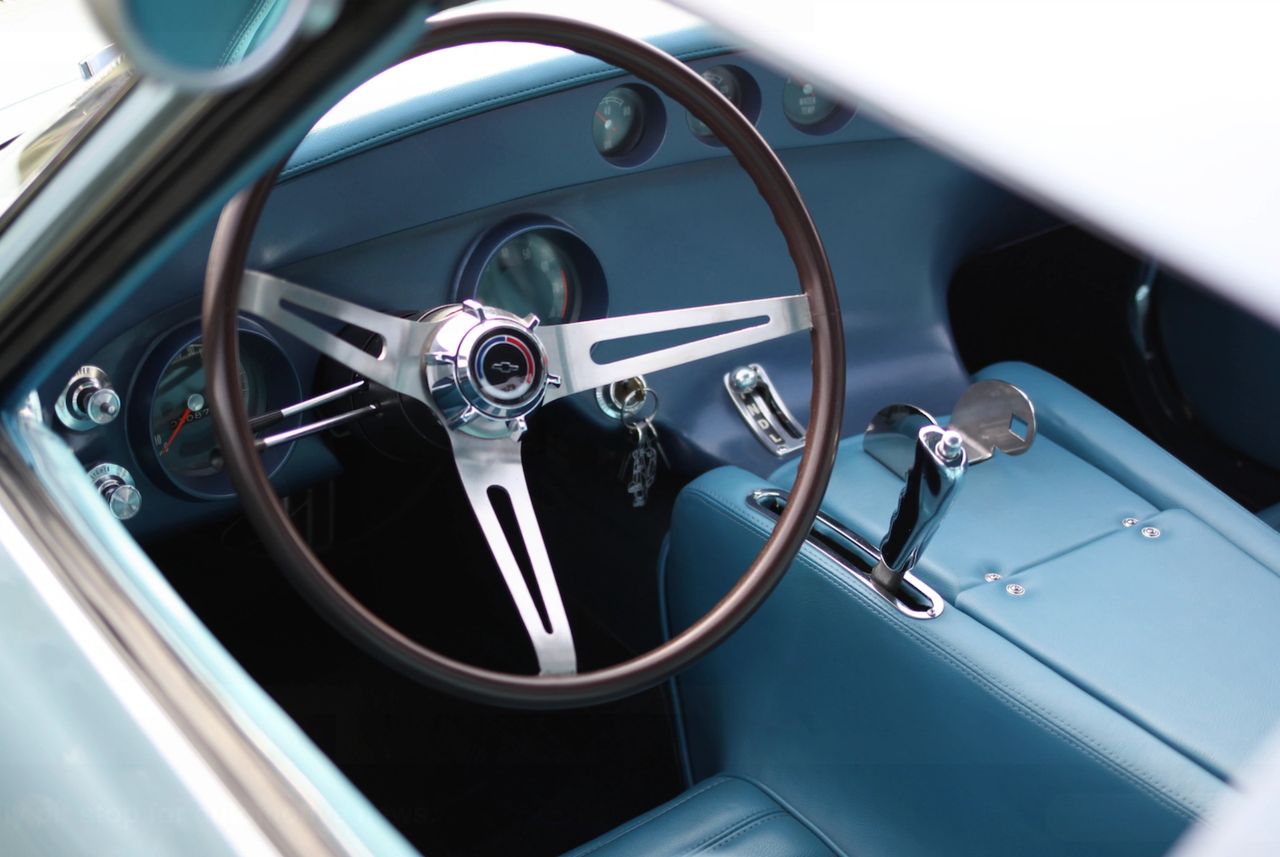
    Inside the XP-819, the driver’s environment was engineered as carefully as the chassis. Because the seat was fixed into the chassis tub, the pedal box itself was mounted on tracks and could be moved fore and aft, allowing drivers of different sizes to dial in their reach without disturbing the carefully reclined driving position. Deep, molded side bolsters kept the driver locked in place, turning the entire seat shell into a kind of sculpted safety cell rather than a loose cushion bolted to the floor. The compact, deep-dish steering wheel, close-set shifter, and clustered gauges were all positioned so the driver could work the car with minimal arm and hand movement—very much a race-car approach to ergonomics. Altogether, the XP-819 cockpit was a rolling experiment in driver fit and accessibility, wrapping the controls around the pilot in a way production Corvettes wouldn’t fully embrace for decades.
    Inside the XP-819, the driver’s environment was engineered as carefully as the chassis. Because the seat was fixed into the chassis tub, the pedal box itself was mounted on tracks and could be moved fore and aft, allowing drivers of different sizes to dial in their reach without disturbing the carefully reclined driving position. Deep, molded side bolsters kept the driver locked in place, turning the entire seat shell into a kind of sculpted safety cell rather than a loose cushion bolted to the floor. The compact, deep-dish steering wheel, close-set shifter, and clustered gauges were all positioned so the driver could work the car with minimal arm and hand movement—very much a race-car approach to ergonomics. Altogether, the XP-819 cockpit was a rolling experiment in driver fit and accessibility, wrapping the controls around the pilot in a way production Corvettes wouldn’t fully embrace for decades.

    To make that low, fixed seating position work for drivers of different sizes, R&D built in a level of adjustability that feels very modern. Instead of sliding the seat on tracks, XP-819 used adjustable pedals – both the accelerator and brake could be moved fore and aft, bringing the controls to the driver. The steering column, meanwhile, offered multiple tilt and telescoping positions. It was a very 21st-century idea executed with 1960s hardware.

    Visibility was another challenge. With a rising rear deck and a short tail, a conventional door-mounted mirror would have been looking mostly at fiberglass. The solution was to mount the exterior mirror high up on the driver’s A-pillar, in the driver’s line of sight. It’s a small, almost quirky detail, but it speaks to how seriously the team took the idea of XP-819 as a truly drivable car, not just a static showpiece.

    The Rear: Ducktail, Bustle, and Hinged Engine Cover
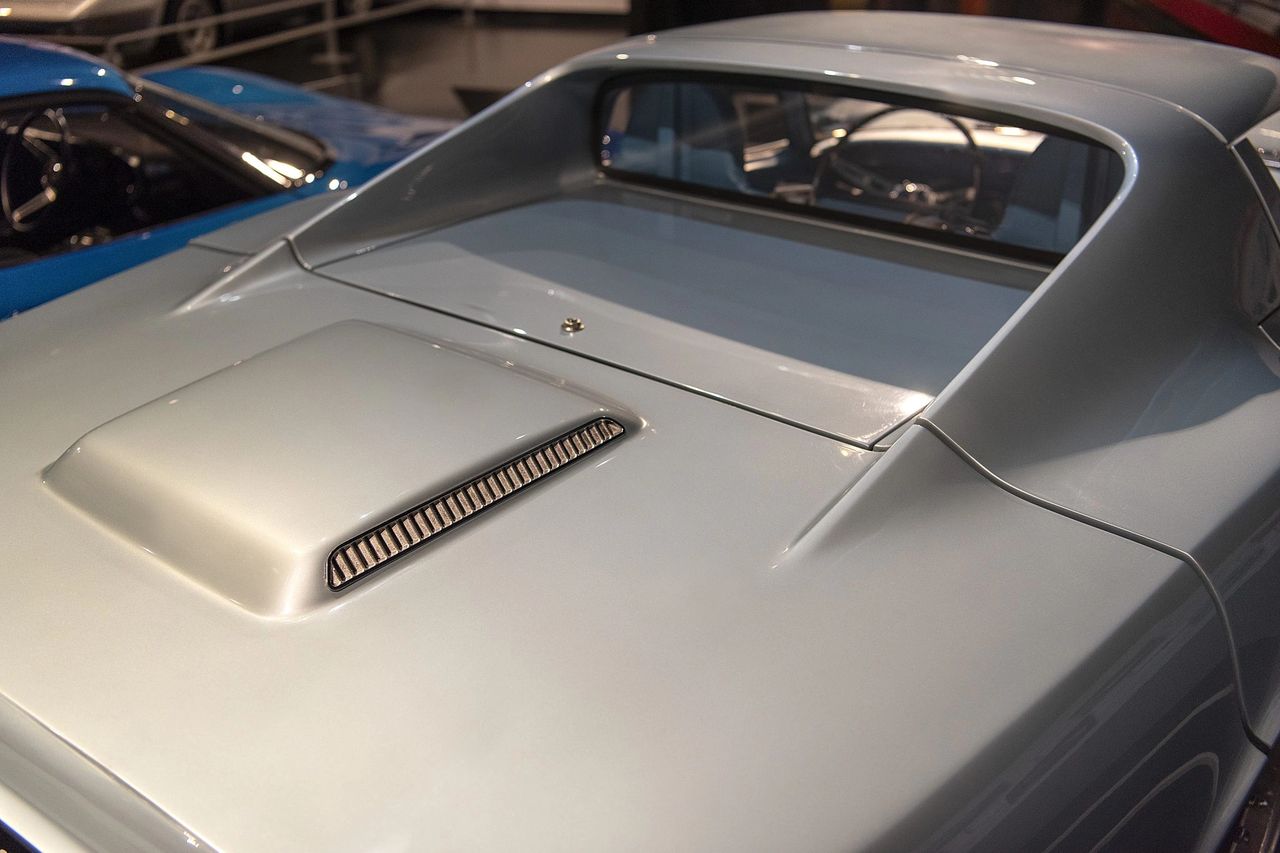
    At the rear, the XP-819’s deck panel is deceptively simple but packed with purpose. The subtle raised blister and finely ribbed vent hint at the transverse V8 buried underneath, drawing hot air out of the engine bay without disrupting the car’s smooth aero profile. The crisp panel break just ahead of the backlight marks the hinge line for the entire rear body section, which tilts up for service like a race car. It’s a clean, almost understated solution that masks just how radical the mechanical layout really was. (Image courtesy of Joe Kolecki/Kolecki Photography)
    At the rear, the XP-819’s deck panel is deceptively simple but packed with purpose. The subtle raised blister and finely ribbed vent hint at the transverse V8 buried underneath, drawing hot air out of the engine bay without disrupting the car’s smooth aero profile. The crisp panel break just ahead of the backlight marks the hinge line for the entire rear body section, which tilts up for service like a race car. It’s a clean, almost understated solution that masks just how radical the mechanical layout really was. (Image courtesy of Joe Kolecki/Kolecki Photography)

    Walk around to the back of XP-819 and you see where the “Ugly Duckling” nickname starts to feel unfair. From the rear three-quarter, the car is all hips and haunches: the roof flows into the rear fenders, the body tucks hard at the waist, and the tail rolls up into a gentle ducktail spoiler that would look right at home on a sports car designed decades later.

    Below the ducktail, the rear fascia is straightforward – a mesh panel, a license plate recess, and simple taillights – but the surfaces around it are anything but. The entire rear body section hinges upward, just like the front, giving full access to the engine bay and rear suspension. A raised airbox feeds the V8, and urethane bumper elements echo the front’s forward-looking approach to impact protection.

    It’s a very “engineering-friendly” design cloaked in a shape that’s remarkably cohesive for something penned under so much time pressure.

    The Hardware: Marine Small-Block, Tempest Transaxle, and Experimental Everything
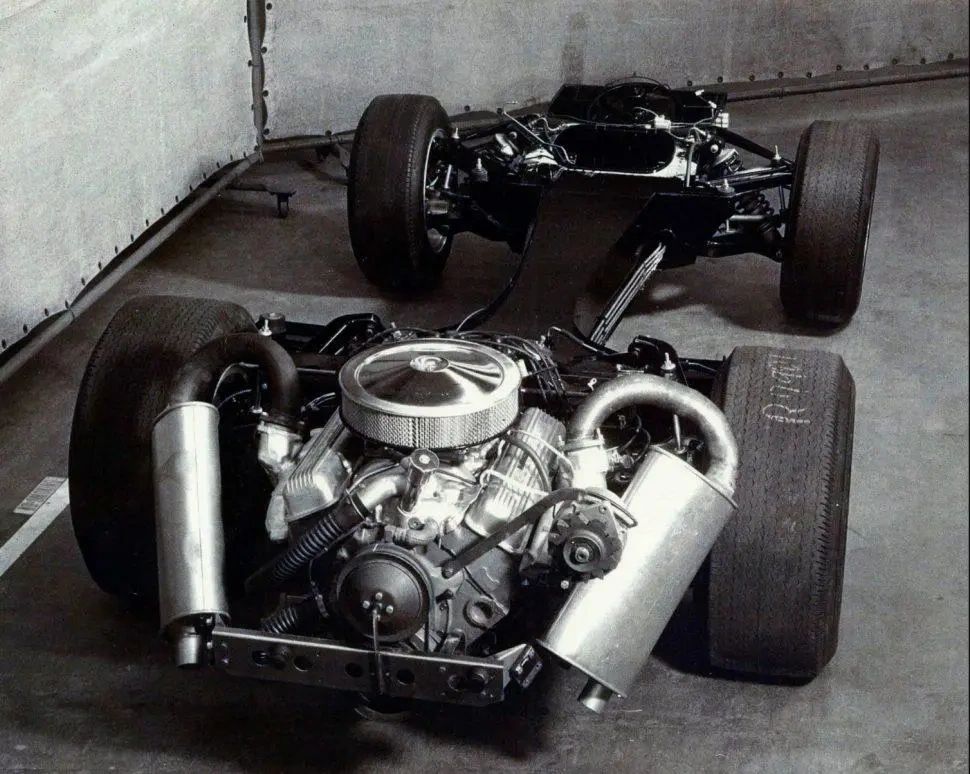
    Laid bare, the XP-819’s hardware shows just how radical Frank Winchell’s team was willing to get in the mid-1960s. The car rode on a welded sheet-steel backbone chassis that tied the front and rear suspension together and carried a “birdcage” passenger cell, with every major chassis, steering, and suspension component engineered specifically for this one-off. Hanging entirely behind the rear axle was a reverse-rotation, cast-iron 327-cid GM marine V-8, bolted backward to a modified two-speed Pontiac Tempest automatic transaxle—an arrangement that put roughly 69 percent of the XP-819’s 2,600–2,700 pounds on the rear wheels. Fully independent suspension with unequal-length upper and lower wishbones, coil springs with concentric shocks at each corner, and anti-roll bars (thin at the tail, much stouter up front) tried to tame that extreme rear weight bias. The result was a chassis that was sophisticated, experimental, and unforgiving all at once—an engineering laboratory on wheels that proved just how tricky a true rear-engine Corvette would be. (Image courtesy of GM Media LLC)
    Laid bare, the XP-819’s hardware shows just how radical Frank Winchell’s team was willing to get in the mid-1960s. The car rode on a welded sheet-steel backbone chassis that tied the front and rear suspension together and carried a “birdcage” passenger cell, with every major chassis, steering, and suspension component engineered specifically for this one-off. Hanging entirely behind the rear axle was a reverse-rotation, cast-iron 327-cid GM marine V-8, bolted backward to a modified two-speed Pontiac Tempest automatic transaxle—an arrangement that put roughly 69 percent of the XP-819’s 2,600–2,700 pounds on the rear wheels. Fully independent suspension with unequal-length upper and lower wishbones, coil springs with concentric shocks at each corner, and anti-roll bars (thin at the tail, much stouter up front) tried to tame that extreme rear weight bias. The result was a chassis that was sophisticated, experimental, and unforgiving all at once—an engineering laboratory on wheels that proved just how tricky a true rear-engine Corvette would be. (Image courtesy of GM Media LLC)

    Under that fiberglass, XP-819 is more unique than most casual observers realize. Rather than simply dropping a production 327 into the back and sorting it out later, Winchell’s team chose a reverse-rotation GM marine V8 – essentially a small-block adapted from boat duty. In marine applications, reversing crank rotation allows twin-engine installations to counter-rotate propellers; in the XP-819, it allowed the engine to be mounted “backwards” over a transaxle and still drive the wheels in the correct direction.

    The transmission was a two-speed Pontiac Tempest automatic transaxle, heavily modified and hung out back under the engine. This wasn’t a Corvair-style swing-axle setup; it was a bespoke rear module designed to carry not only the drivetrain masses but also the suspension loads. The result put the center of mass well behind the rear axle line. Period estimates and modern reconstructions put XP-819’s weight distribution at roughly 70 percent on the rear axle, an extreme number even by rear-engine standards.
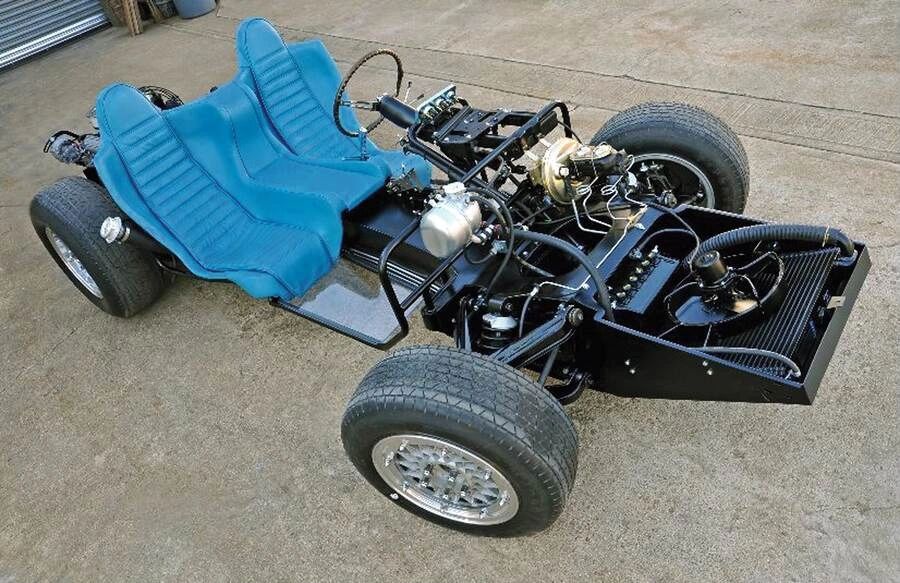
    With the bodywork removed, the XP-819’s unconventional cooling strategy is on full display—most notably the front-mounted radiator tilted sharply forward over the nose. Instead of standing upright like a conventional Corvette’s, this radiator leans ahead of the front suspension, allowing air to be scooped in low at the nose and directed cleanly through the core before exiting underneath the car. That layout not only freed up space at the rear for the transversely mounted V-8, it also helped keep the nose low and the front profile sleek, critical for both aero and styling. The prominent coolant plumbing running down the center spine underscores how far Chevrolet’s engineers were willing to go to make a rear-engine Corvette workable in the mid-1960s.
    With the bodywork removed, the XP-819’s unconventional cooling strategy is on full display—most notably the front-mounted radiator tilted sharply forward over the nose. Instead of standing upright like a conventional Corvette’s, this radiator leans ahead of the front suspension, allowing air to be scooped in low at the nose and directed cleanly through the core before exiting underneath the car. That layout not only freed up space at the rear for the transversely mounted V-8, it also helped keep the nose low and the front profile sleek, critical for both aero and styling. The prominent coolant plumbing running down the center spine underscores how far Chevrolet’s engineers were willing to go to make a rear-engine Corvette workable in the mid-1960s.

    The chassis itself was a one-off monocoque/backbone hybrid. The central structure tied the front clip, cabin, and rear module together, with suspension pick-up points and steering hardware all welded or bonded to experimental brackets. Virtually nothing underneath could be interchanged with a production Corvette. When restorers later went hunting for part numbers, many of the components were simply stamped with a “0” code – GM’s way of labeling them as experimental pieces that never appeared in the regular catalog.

    The wheels were just as unusual. Shinoda worked with R&D to create a modular, basket-weave-style alloy wheel whose center section could accept rims of different widths. The diameters stayed the same front to rear, which meant one spare could serve either end, but the rim halves themselves varied dramatically: narrow up front, a full ten inches wide at the rear. Firestone supplied custom tires sized to match, giving XP-819 a very modern “staggered” footprint decades before that became a sports-car norm.
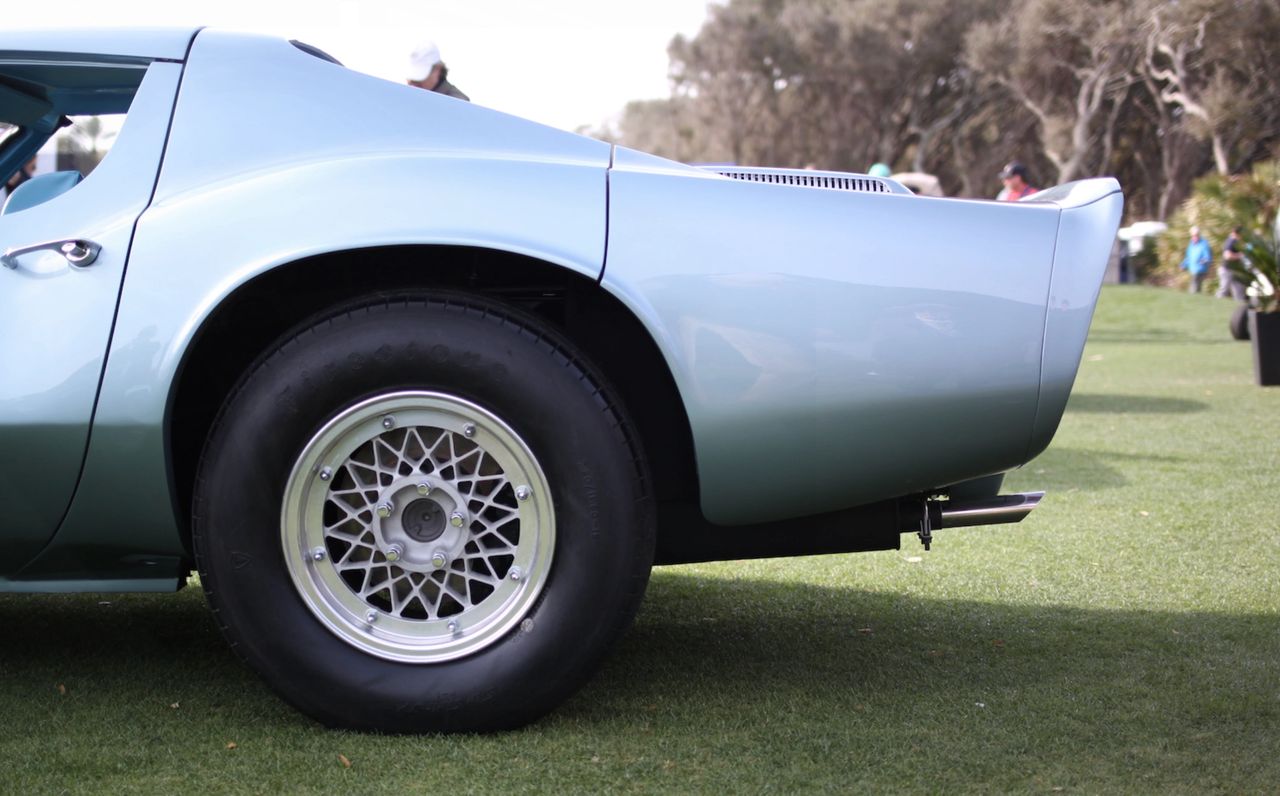
    One of the XP-819’s most distinctive features is its Larry Shinoda–designed “Chaparral-style” wheels, seen here in all their deep-dish glory. More than a styling flourish, these basket-weave alloys were engineered as modular rims whose width could be changed by swapping outer sections, an idea borrowed directly from Jim Hall’s Chaparral program. Shinoda even specified an O-ring seal so the wheels could run tubeless tires, an advanced detail for the mid-1960s. Combined with 10–11-inch rims at the rear and much narrower fronts, the wheels were tailored to support the XP-819’s radical rear weight bias and its ability to pull over 1g on the skidpad when properly set up.
    One of the XP-819’s most distinctive features is its Larry Shinoda–designed “Chaparral-style” wheels, seen here in all their deep-dish glory. More than a styling flourish, these basket-weave alloys were engineered as modular rims whose width could be changed by swapping outer sections, an idea borrowed directly from Jim Hall’s Chaparral program. Shinoda even specified an O-ring seal so the wheels could run tubeless tires, an advanced detail for the mid-1960s. Combined with 10–11-inch rims at the rear and much narrower fronts, the wheels were tailored to support the XP-819’s radical rear weight bias and its ability to pull over 1g on the skidpad when properly set up.

    Curb weight for the finished prototype landed in the 2,600–2,700-pound range – significantly lighter than a production Corvette of the day – but with most of that mass concentrated in the back third of the car. On a spec sheet, it looked like an engineer’s dream and nightmare all at once.

    On Track: Heroic Grip, Hair-Trigger Transitions
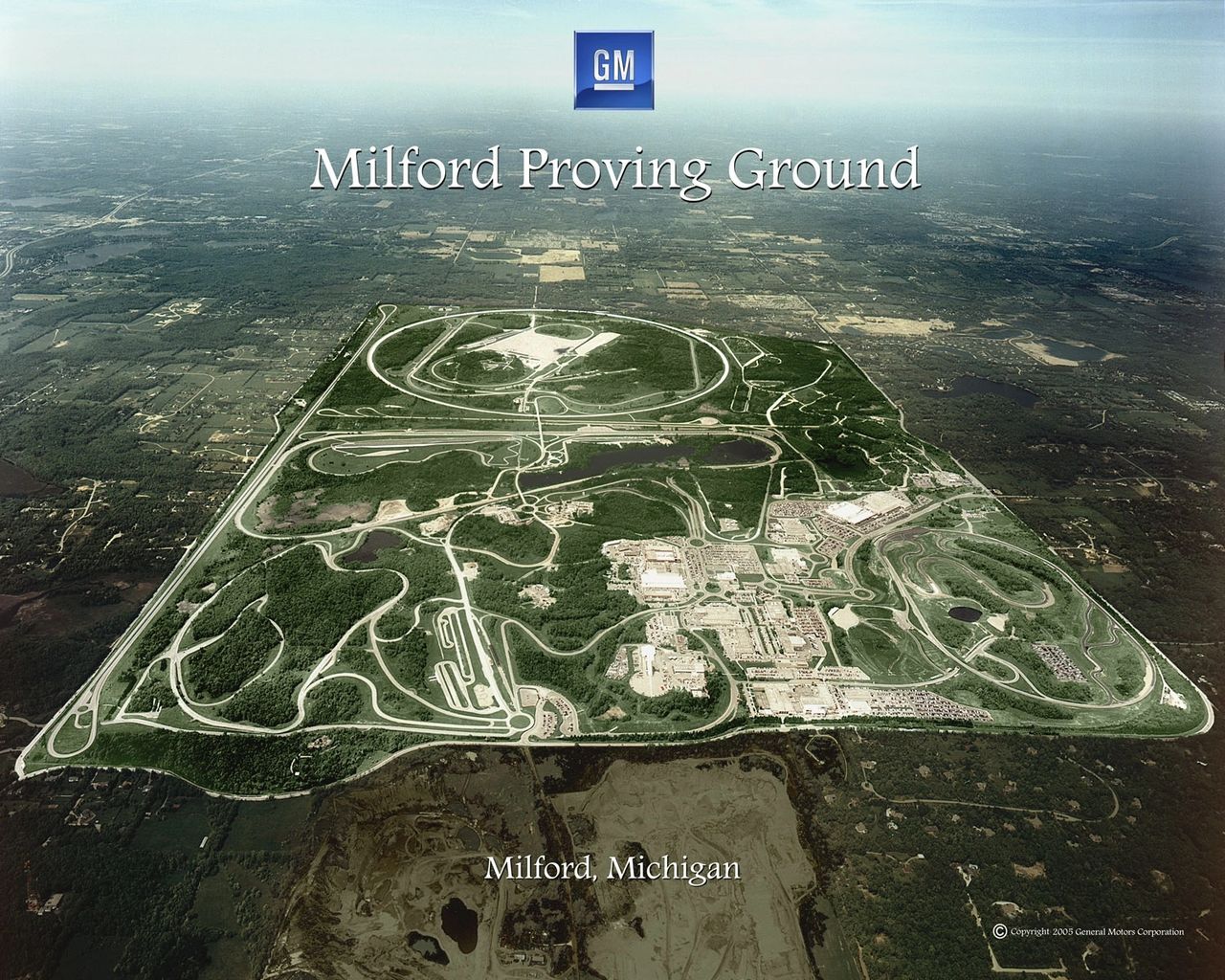
    Since opening in 1924 as the industry’s first dedicated vehicle test facility, GM’s Milford Proving Ground has served as the crucible where Chevrolet hones every generation of Corvette. Spread across more than 4,000 acres, Milford’s maze of road courses, durability loops, high-speed straights, and ride-quality tracks allows engineers to push prototypes far beyond anything they’ll encounter on public roads. It’s here that chassis teams refine steering and suspension feel, powertrain engineers validate cooling and performance, and development drivers uncover the limits of handling and stability. For experimental cars like the XP-819, Milford provided the controlled environment necessary to explore radical ideas—and to learn, sometimes dramatically, where those ideas broke down. (Image: GM Authority)
    Since opening in 1924 as the industry’s first dedicated vehicle test facility, GM’s Milford Proving Ground has served as the crucible where Chevrolet hones every generation of Corvette. Spread across more than 4,000 acres, Milford’s maze of road courses, durability loops, high-speed straights, and ride-quality tracks allows engineers to push prototypes far beyond anything they’ll encounter on public roads. It’s here that chassis teams refine steering and suspension feel, powertrain engineers validate cooling and performance, and development drivers uncover the limits of handling and stability. For experimental cars like the XP-819, Milford provided the controlled environment necessary to explore radical ideas—and to learn, sometimes dramatically, where those ideas broke down. (Image: GM Authority)

    Numbers on paper are one thing; how a car feels when you turn the wheel at speed is another. XP-819 went to GM’s Milford Proving Grounds to answer that question, and the answers were…complicated.

    In steady-state cornering – long, constant-radius turns where the driver could gently apply steering, throttle, and steering corrections – XP-819 was a star. With that massive rear rubber and low polar moment, it reportedly generated over 1g on the skidpad, a serious feat for the mid-1960s. Engineers could tune the suspension to give the car reassuring balance in these “set it and hold it” situations, and in those moments, it felt like the layout might actually be tamed.

    But cars don’t live on skidpads. The real test comes in transient maneuvers – panic lane changes, sudden lift-throttle in a corner, corrections over bumps or in the wet. That’s where XP-819’s extreme rear weight bias showed its fangs. Paul Van Valkenburgh, one of the engineers who later wrote about the program, recalled that while the car could be made to behave on a skidpad, it was “nearly uncontrollable at the limit” when the driver had to make quick, large steering inputs. The back of the car carried so much of the mass that once it started to swing, there was very little inertia up front to counter it.
    On that ill-fated day at the Milford Proving Ground, the XP-819 felt deceptively composed as it accelerated onto the lane-change course—its rear-mounted small-block humming confidently just inches behind the driver’s shoulders. But as the test driver initiated a quick directional transition, the flaw became instant and unmistakable: the car had been fitted with equal-width tires front and rear instead of the wide rear rubber Shinoda and Winchell specified to counter the extreme rear weight bias. The moment the chassis loaded up, the back end snapped violently, swinging around faster than the driver could correct, the lightweight prototype pirouetting into the guardrail with a sickening crunch. In that brief, helpless moment, the XP-819’s promise and peril collided—revealing just how far ahead of its supporting hardware this radical rear-engine Corvette experiment really was.
    On that ill-fated day at the Milford Proving Ground, the XP-819 felt deceptively composed as it accelerated onto the lane-change course—its rear-mounted small-block humming confidently just inches behind the driver’s shoulders. But as the test driver initiated a quick directional transition, the flaw became instant and unmistakable: the car had been fitted with equal-width tires front and rear instead of the wide rear rubber Shinoda and Winchell specified to counter the extreme rear weight bias. The moment the chassis loaded up, the back end snapped violently, swinging around faster than the driver could correct, the lightweight prototype pirouetting into the guardrail with a sickening crunch. In that brief, helpless moment, the XP-819’s promise and peril collided—revealing just how far ahead of its supporting hardware this radical rear-engine Corvette experiment really was.

    Tire sizing was part of the control strategy. With ultra-wide rubber at the rear and much narrower tires up front, the chassis tended to understeer initially, buying the driver time before the tail came into play. At some point during development, though, practicality intervened: for a wet-track evaluation, one of the test engineers fitted equal-size wheels and tires at all four corners, erasing much of that deliberate built-in understeer. On the wet surface, at higher speeds, the car stepped out hard, momentum took over, and XP-819 found the guardrail – more than once.

    The crash heavily damaged the front and twisted the structure. For some at Chevrolet, it was the final proof that this much rear weight simply wasn’t something they wanted to hand to customers – especially with the Corvair already under scrutiny in the press and in Washington. For Duntov, who had been wary from the beginning, it vindicated his instincts. For Winchell’s camp, it was a bitter reminder that theory and practice don’t always meet in the middle.

    Ordered Destroyed – and Quietly Stashed
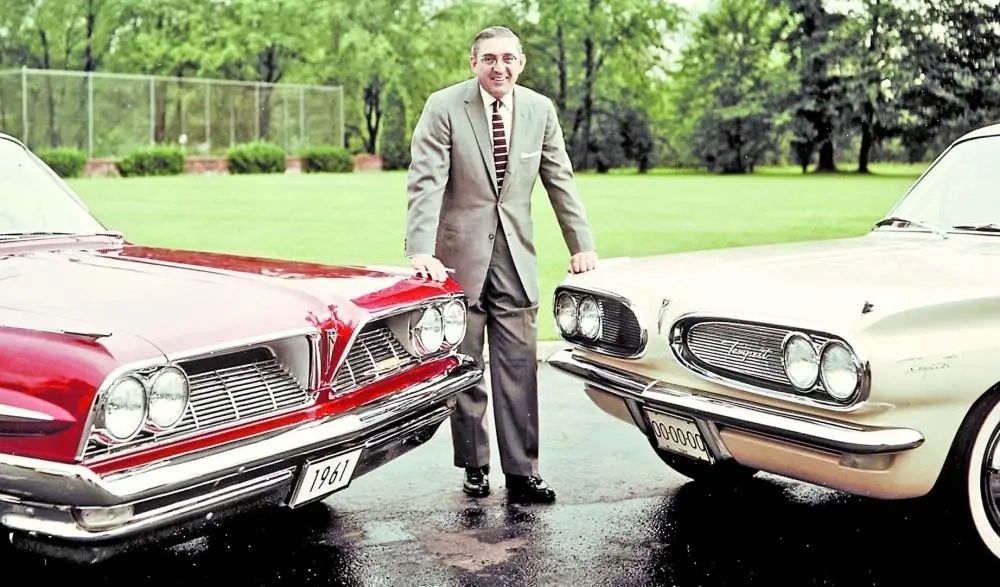
    Semon “Bunkie” Knudsen was one of GM’s most ambitious and forward-leaning executives, a fiercely competitive leader whose fingerprints can be found on some of Detroit’s most important performance cars. After transforming Pontiac in the late 1950s—turning a sleepy mid-market brand into a youth-driven powerhouse with the Wide-Track campaign and a slate of successful NASCAR and drag-racing programs—Knudsen was promoted to run Chevrolet in 1961. There, his appetite for innovation and speed made him an early supporter of experimental engineering efforts, including Frank Winchell’s rear-engine development program. Although the XP-819 would ultimately fall victim to political crosswinds inside GM, Knudsen quietly ensured the bruised prototype avoided immediate destruction by diverting it to Smokey Yunick’s shop under the guise of research salvage. In doing so, he became an unlikely guardian of one of the rarest and most unconventional chapters in Corvette history, helping preserve the lone artifact of a path GM ultimately chose not to follow. (Image source: GM Media LLC)
    Semon “Bunkie” Knudsen was one of GM’s most ambitious and forward-leaning executives, a fiercely competitive leader whose fingerprints can be found on some of Detroit’s most important performance cars. After transforming Pontiac in the late 1950s—turning a sleepy mid-market brand into a youth-driven powerhouse with the Wide-Track campaign and a slate of successful NASCAR and drag-racing programs—Knudsen was promoted to run Chevrolet in 1961. There, his appetite for innovation and speed made him an early supporter of experimental engineering efforts, including Frank Winchell’s rear-engine development program. Although the XP-819 would ultimately fall victim to political crosswinds inside GM, Knudsen quietly ensured the bruised prototype avoided immediate destruction by diverting it to Smokey Yunick’s shop under the guise of research salvage. In doing so, he became an unlikely guardian of one of the rarest and most unconventional chapters in Corvette history, helping preserve the lone artifact of a path GM ultimately chose not to follow. (Image source: GM Media LLC)

    After the accident, XP-819’s fate seemed sealed. Chevrolet management ordered the car scrapped, as was common practice for experimental hardware that had outlived its usefulness, especially one now viewed as a political liability in the wake of the Corvair controversy. Yet the car still had at least one powerful ally inside the division. Chevy division chief Semon “Bunkie” Knudsen, who had quietly supported the rear-engine program from the beginning, wasn’t ready to let this one-off simply disappear into the crusher.

    Instead, Knudsen arranged for the wrecked XP-819 to be shipped to the shop of legendary racer and fabricator Henry “Smokey” Yunick in Daytona Beach, Florida. The official story was that Yunick could salvage whatever he needed for a rear-engine Indy car concept or for aero research, on the condition that he destroy the rest. Smokey, ever the pragmatist, obliged on paper: he cut the chassis into sections, adapted the front and rear frame clips and various suspension components into his own experimental machine, and stripped other useful bits for the parts shelves. But when that Indy project stalled, and the XP-819 hardware no longer had an obvious future, he still didn’t send what was left to the scrapyard.
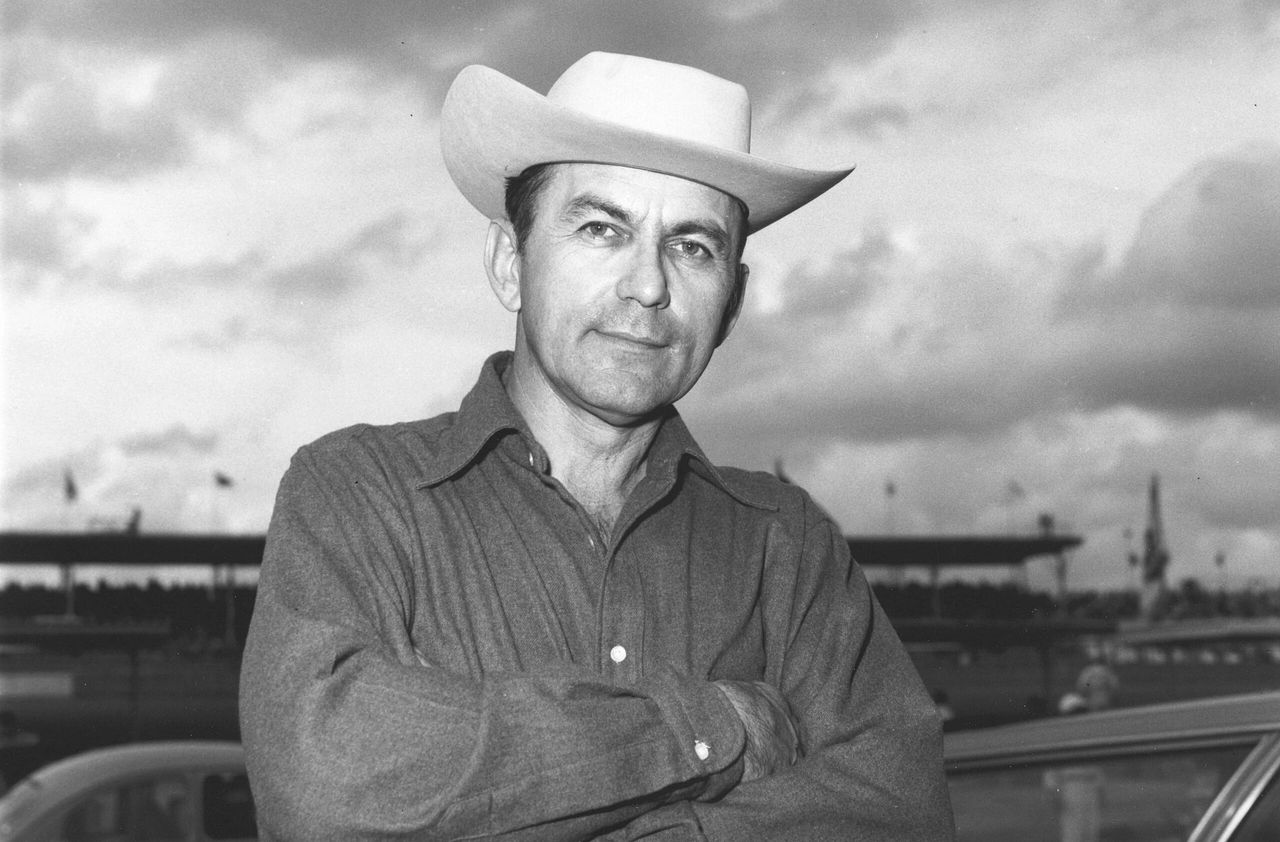
    Henry “Smokey” Yunick was one of American motorsport’s most ingenious, irreverent, and relentlessly curious minds—a self-taught engineer whose Daytona Beach shop, “The Best Damn Garage in Town,” became legendary for producing machines that were fast, clever, and often just inside (or outside) the rulebook. A virtuoso fabricator and problem-solver, Yunick built winning cars for NASCAR, IndyCar, and international competition, earning a reputation for solutions so advanced that officials often didn’t discover them until years later. His connection to the XP-819 came after the prototype’s crash at Milford, when GM—via Bunkie Knudsen—quietly shipped the wreckage to Smokey under the pretense that he could salvage usable components for a rear-engine Indy project. Yunick dutifully sectioned the chassis, borrowed pieces for his own experimental work, and removed various systems for study, but when that effort stalled he simply tucked the remaining fragments into an old paint booth rather than destroying them. In doing so, Smokey inadvertently became the custodian of a lost chapter of Corvette history, preserving the only surviving pieces of XP-819 and enabling its eventual resurrection decades later.
    Henry “Smokey” Yunick was one of American motorsport’s most ingenious, irreverent, and relentlessly curious minds—a self-taught engineer whose Daytona Beach shop, “The Best Damn Garage in Town,” became legendary for producing machines that were fast, clever, and often just inside (or outside) the rulebook. A virtuoso fabricator and problem-solver, Yunick built winning cars for NASCAR, IndyCar, and international competition, earning a reputation for solutions so advanced that officials often didn’t discover them until years later. His connection to the XP-819 came after the prototype’s crash at Milford, when GM—via Bunkie Knudsen—quietly shipped the wreckage to Smokey under the pretense that he could salvage usable components for a rear-engine Indy project. Yunick dutifully sectioned the chassis, borrowed pieces for his own experimental work, and removed various systems for study, but when that effort stalled he simply tucked the remaining fragments into an old paint booth rather than destroying them. In doing so, Smokey inadvertently became the custodian of a lost chapter of Corvette history, preserving the only surviving pieces of XP-819 and enabling its eventual resurrection decades later.

    True to Smokey’s contrarian nature, the remnants of XP-819 were simply pushed into an old paint booth at his “Best Damn Garage in Town,” the doors closed as if he were hiding a guilty secret from Detroit. There the car sat—sawn into pieces, dusty, and largely forgotten—while the rest of the racing world moved on to new seasons and new technologies. For the better part of a decade, XP-819 existed only as a scattered memory and a pile of oddly shaped fiberglass and experimental hardware in the back of a Florida race shop, waiting for someone to recognize what it really was.

    Steve Tate and the “Pile of Parts”
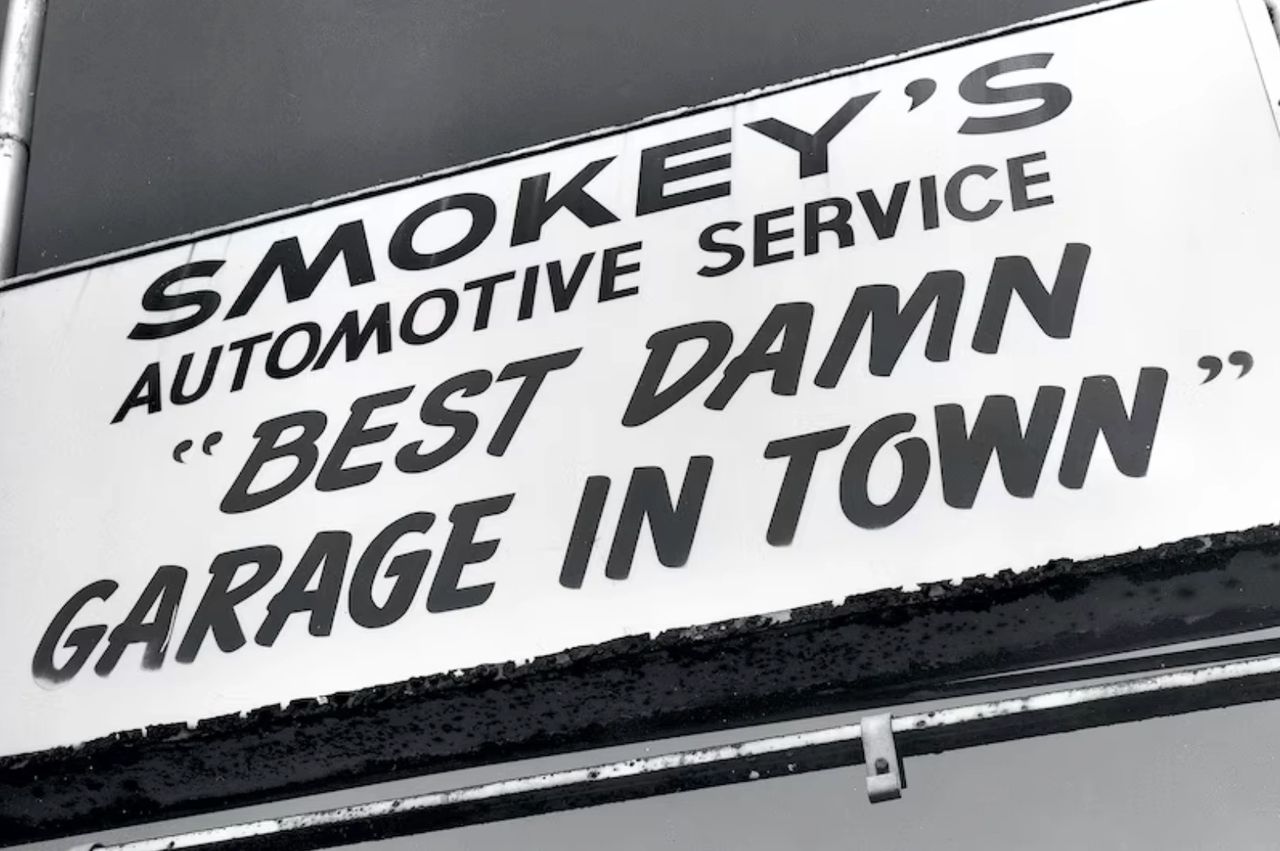
    For decades, the sign out front of “Smokey’s Best Damn Garage in Town” promised magic inside, and in 1977 it delivered one of the great Corvette rescues. That year, Smokey Yunick staged a massive “30 Years of Parts” sale, clearing out shelves of experimental hardware, race pieces, and forgotten projects accumulated since the late 1940s. Buried in that controlled chaos were the hacked-up remnants of the XP-819—front and rear chassis sections, fiberglass panels, and assorted bits that barely hinted at the radical rear-engine Corvette they once formed. Missouri Chevrolet dealer and Corvette enthusiast Steve Tate recognized what he was looking at and bought the pile on the spot, hauling the battered pieces home to begin a crude but crucial reassembly. In that moment, inside a cluttered Daytona race shop, the XP-819 quietly transitioned from discarded engineering experiment to a survivor with a second chance at life.
    For decades, the sign out front of “Smokey’s Best Damn Garage in Town” promised magic inside, and in 1977 it delivered one of the great Corvette rescues. That year, Smokey Yunick staged a massive “30 Years of Parts” sale, clearing out shelves of experimental hardware, race pieces, and forgotten projects accumulated since the late 1940s. Buried in that controlled chaos were the hacked-up remnants of the XP-819—front and rear chassis sections, fiberglass panels, and assorted bits that barely hinted at the radical rear-engine Corvette they once formed. Missouri Chevrolet dealer and Corvette enthusiast Steve Tate recognized what he was looking at and bought the pile on the spot, hauling the battered pieces home to begin a crude but crucial reassembly. In that moment, inside a cluttered Daytona race shop, the XP-819 quietly transitioned from discarded engineering experiment to a survivor with a second chance at life.

    In 1977, Yunick decided to thin the herd. He organized a “30 years of parts” sale, opening his shop to racers and collectors willing to drag home whatever they could carry. Among the piles of engines, suspension bits, and body panels was a hacked-up collection of fiberglass and chassis sections that didn’t look like anything a casual observer would recognize.

    Corvette dealer and enthusiast Steve Tate, from Gallatin, Missouri, saw something everyone else missed: scribbled on the windshield of one of the larger fiberglass shells was an “XP” designation. To most people, that was meaningless. To someone who paid attention to GM’s internal project codes, it was a flare going up. Tate realized he might be looking at the bones of a long-lost experimental Corvette. He bought the entire heap.
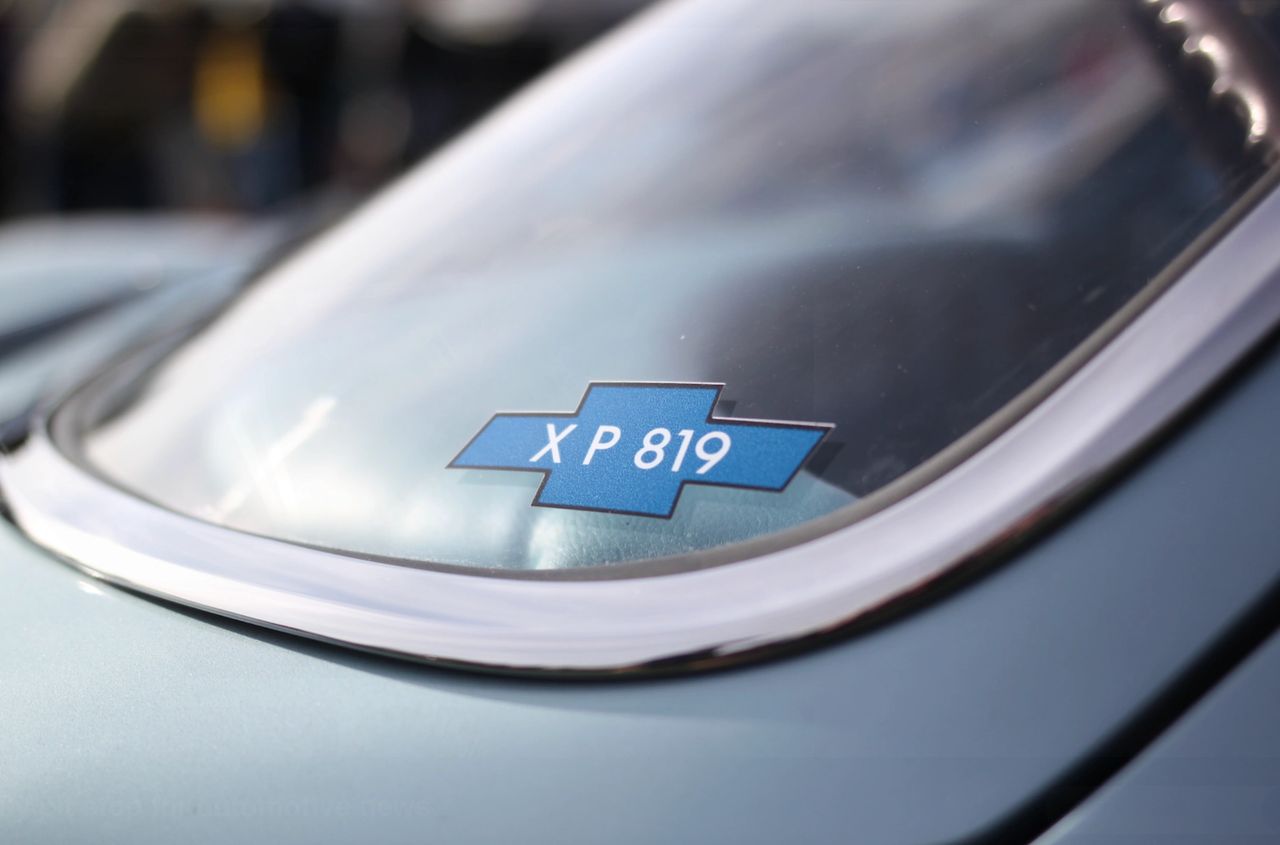
    For Steve Tate, the moment he realized what he’d hauled home from Smokey Yunick’s parts sale was crystallized in three simple characters: XP 819. That little blue bowtie emblem confirmed he wasn’t just looking at a pile of odd Corvette parts, but the scattered remains of Chevrolet’s lost rear-engine experiment. Where others saw scrap, Tate saw a once-in-a-lifetime responsibility—to keep the car together, document what he had, and begin the long process of making it whole again. That badge became both a talisman and a promise, a quiet reminder that he was now the caretaker of a one-off chapter in Corvette history that GM itself had tried to erase.
    For Steve Tate, the moment he realized what he’d hauled home from Smokey Yunick’s parts sale was crystallized in three simple characters: XP 819. That little blue bowtie emblem confirmed he wasn’t just looking at a pile of odd Corvette parts, but the scattered remains of Chevrolet’s lost rear-engine experiment. Where others saw scrap, Tate saw a once-in-a-lifetime responsibility—to keep the car together, document what he had, and begin the long process of making it whole again. That badge became both a talisman and a promise, a quiet reminder that he was now the caretaker of a one-off chapter in Corvette history that GM itself had tried to erase.

    Back in Missouri, Tate turned the whole mess over to drag racer and fabricator Delmar Hines. With no factory drawings and only grainy reference photos to go by, Hines did what he could. He welded in simple square-tube rails where the original backbone had been cut away, stitched the front and rear structures back together, and re-hung the body. The result was more reconstruction than restoration, but it was enough to put XP-819 back on its wheels and back in front of the public.

    The car’s “second debut” came at the 1978 Bloomington Gold Corvette show, where it was displayed as an oddball piece of Corvette history – a rough, wavy, clearly wounded rear-engine prototype that almost nobody had heard of. It would make at least one more appearance at Bloomington, infamously acquiring fresh scars when it broke loose from its trailer and slid down an embankment en route to the event. XP-819 seemed to be unable to catch a break, even in its revival.
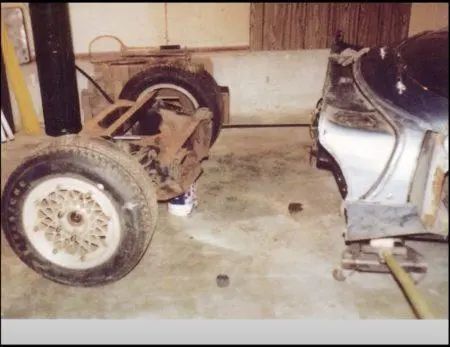
    In this grainy snapshot from Smokey Yunick’s “Best Damn Garage in Town,” the XP-819 has been reduced to little more than a rusty rear clip and a severed body shell—just stray pieces in a shop overflowing with projects. It is almost impossible to imagine, looking at this scene, that these discarded fragments would one day be recognized, gathered back together, and rebuilt into one of the most important Corvette prototypes ever to survive.
    In this grainy snapshot from Smokey Yunick’s “Best Damn Garage in Town,” the XP-819 has been reduced to little more than a rusty rear clip and a severed body shell—just stray pieces in a shop overflowing with projects. It is almost impossible to imagine, looking at this scene, that these discarded fragments would one day be recognized, gathered back together, and rebuilt into one of the most important Corvette prototypes ever to survive.

    In 1990, advertising executive Ed McCabe bought the car at a Sotheby’s estate auction in West Palm Beach. Recognizing its significance – rough condition or not – he loaned XP-819 to the National Corvette Museum in Bowling Green. For a time, visitors could walk past a conventional lineup of Corvettes and then suddenly find themselves staring at a battered, chopped-up Corvette-that-wasn’t, wearing a tail they’d never seen before.

    Yager, Mackay, and the Long Restoration
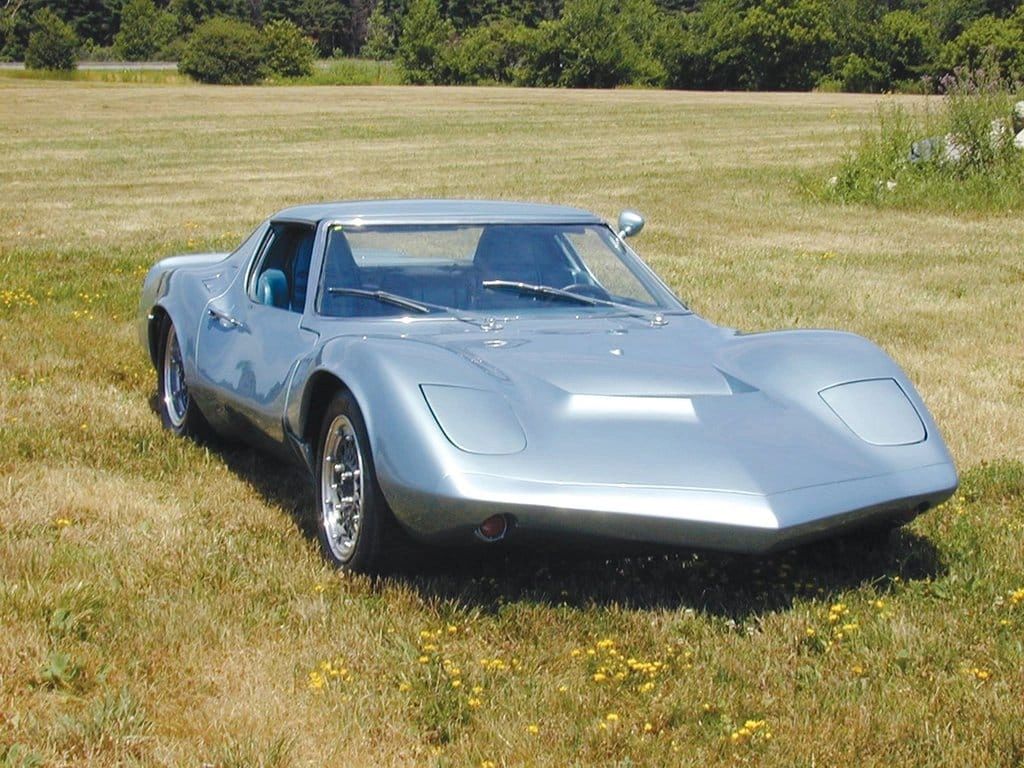
    When the XP-819 crossed the block at RM Sotheby’s Monterey sale in 2002, it was more than a curiosity—it was a once-lost chapter of Corvette history finally brought into the spotlight. Despite its rough edges and decades-long journey back from oblivion, the prototype ignited serious interest among collectors who understood its singular place in Chevrolet’s experimental lineage. The hammer ultimately fell at $148,500, with Mike Yager of Mid America Motorworks stepping forward to secure the car for preservation rather than obscurity. His purchase ensured that the XP-819 would continue its improbable journey toward public display, scholarship, and long-overdue appreciation. (Image courtesy of RM Sotheby)
    When the XP-819 crossed the block at RM Sotheby’s Monterey sale in 2002, it was more than a curiosity—it was a once-lost chapter of Corvette history finally brought into the spotlight. Despite its rough edges and decades-long journey back from oblivion, the prototype ignited serious interest among collectors who understood its singular place in Chevrolet’s experimental lineage. The hammer ultimately fell at $148,500, with Mike Yager of Mid America Motorworks stepping forward to secure the car for preservation rather than obscurity. His purchase ensured that the XP-819 would continue its improbable journey toward public display, scholarship, and long-overdue appreciation. (Image courtesy of RM Sotheby)

    The next turning point came in 2002, when Mike Yager, founder of Mid America Motorworks, purchased XP-819 at an RM Sotheby’s auction. Yager already had a reputation for preserving unusual Corvette history, and XP-819 was about as unusual as it got. Not long after the purchase, a contractor who’d done restoration work for Chevrolet reached out: he had the original engineering planning book for XP-819 – a binder filled with period photographs, dimensional drawings, and notes from the car’s development.

    That binder changed the project from guesswork to archaeology. Yager sent XP-819 to Kevin Mackay at Corvette Repair, Inc., in Valley Stream, New York. Mackay was already known in the Corvette world for bringing some very tired race cars back to exact period spec; XP-819 would be one of his most demanding challenges.
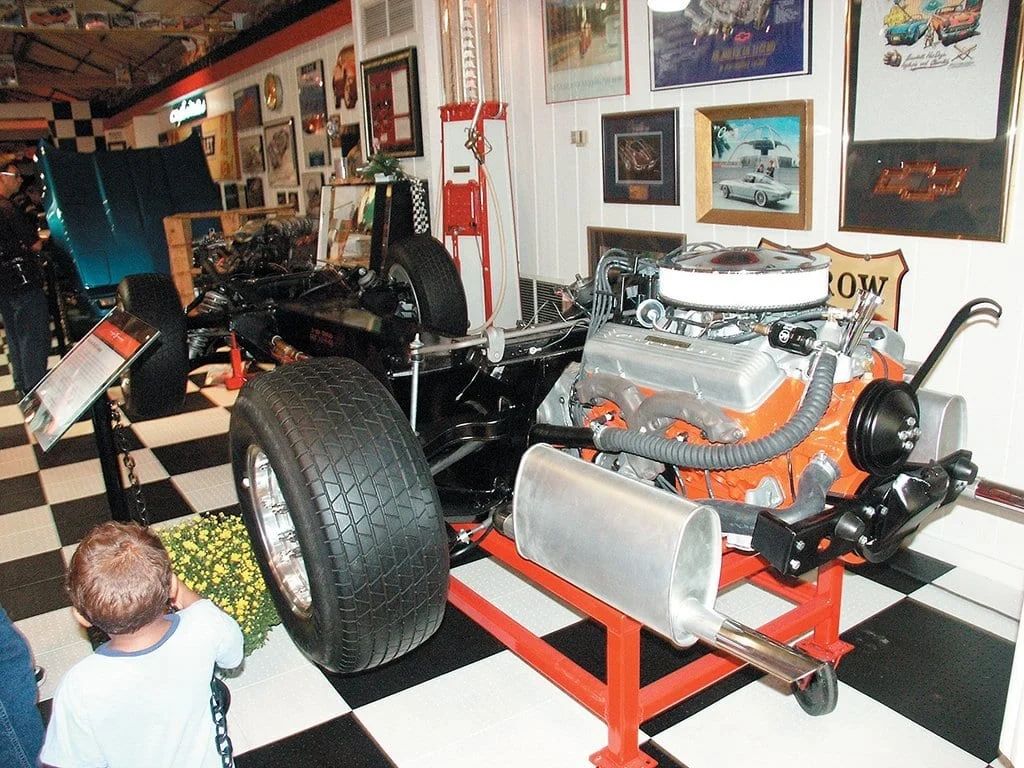
    On display at the MY Garage Museum in 2006, the restored XP-819 chassis stood as both a technical curiosity and a testament to the persistence behind its resurrection. Under the care of Kevin Mackay and the team at Corvette Repair, the once-scattered components from Smokey Yunick’s shop had been reunited, cleaned, and painstakingly re-engineered into a functioning representation of Chevrolet’s lone rear-engine Corvette prototype. Visitors could study the unconventional layout up close—the transverse small-block V8, the unique cooling system, the wide rear track—and appreciate just how radical the XP-819 truly was for its time. What had begun as a pile of forgotten parts was now a museum-quality artifact, finally reclaiming its place in Corvette history. (Image credit: Kevin Mackay)
    On display at the MY Garage Museum in 2006, the restored XP-819 chassis stood as both a technical curiosity and a testament to the persistence behind its resurrection. Under the care of Kevin Mackay and the team at Corvette Repair, the once-scattered components from Smokey Yunick’s shop had been reunited, cleaned, and painstakingly re-engineered into a functioning representation of Chevrolet’s lone rear-engine Corvette prototype. Visitors could study the unconventional layout up close—the transverse small-block V8, the unique cooling system, the wide rear track—and appreciate just how radical the XP-819 truly was for its time. What had begun as a pile of forgotten parts was now a museum-quality artifact, finally reclaiming its place in Corvette history. (Image credit: Kevin Mackay)

    The first step was to undo the earlier “resurrection.” Mackay’s team carefully cut away the improvised 2×2 square-tube rails that Hines had used to reconnect the chassis. Using the engineering book, they reconstructed the original monocoque/backbone structure – recreating mounting points, brackets, and substructures as they would have existed in the mid-1960s. Many parts had to be fabricated from scratch because the original components were either missing or too far gone to reuse, and the experimental “0” stamping on surviving bits offered no production references.

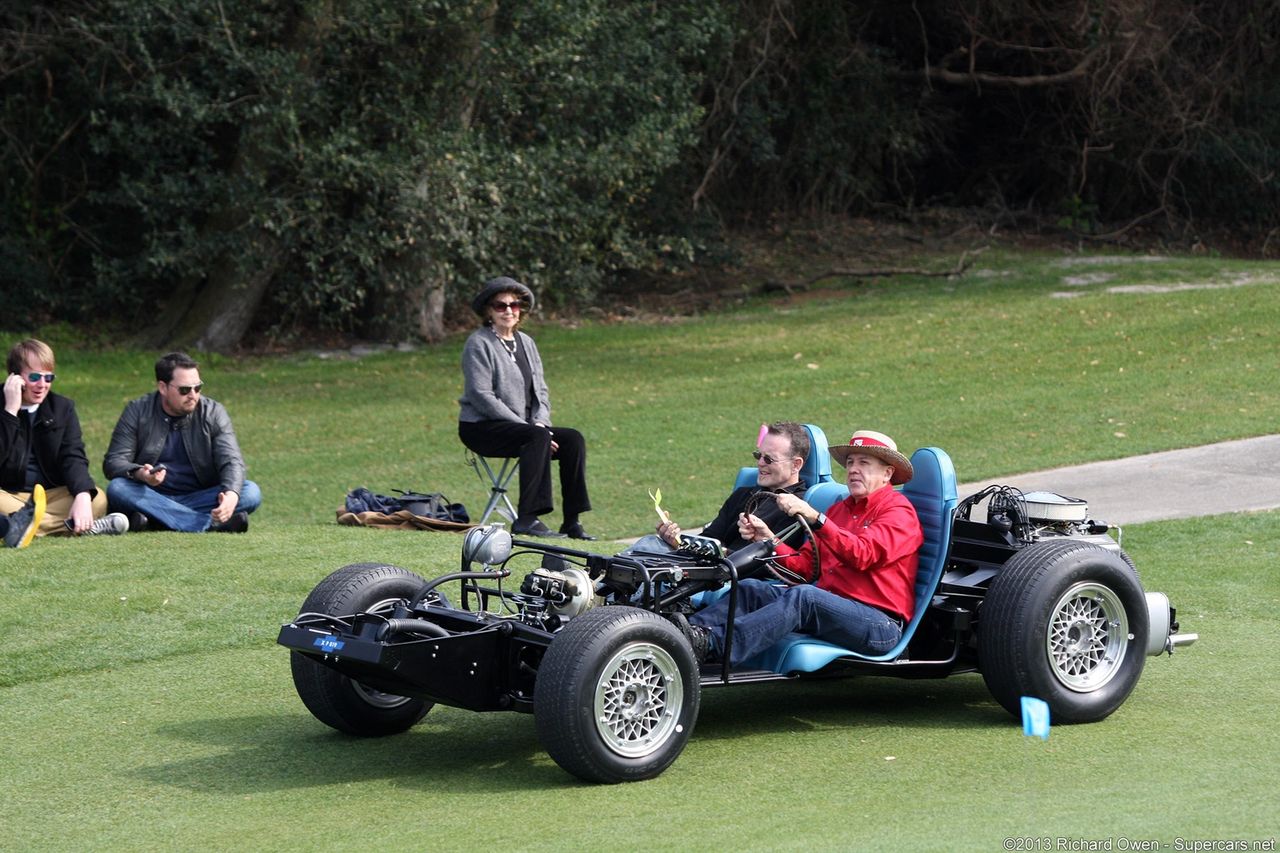
    For several years, the car existed as a rolling chassis, with the body removed. In that state, XP-819 made a memorable appearance at the 2013 Amelia Island Concours d’Elegance, rumbling onto the field under its own power. Yager drove; Mackay rode shotgun. Spectators could look straight down into the rear chassis and see the marine small-block and transaxle laid bare, with the monocoque and suspension geometry fully exposed. It was as much a cutaway lesson in GM experimental engineering as it was a show car.
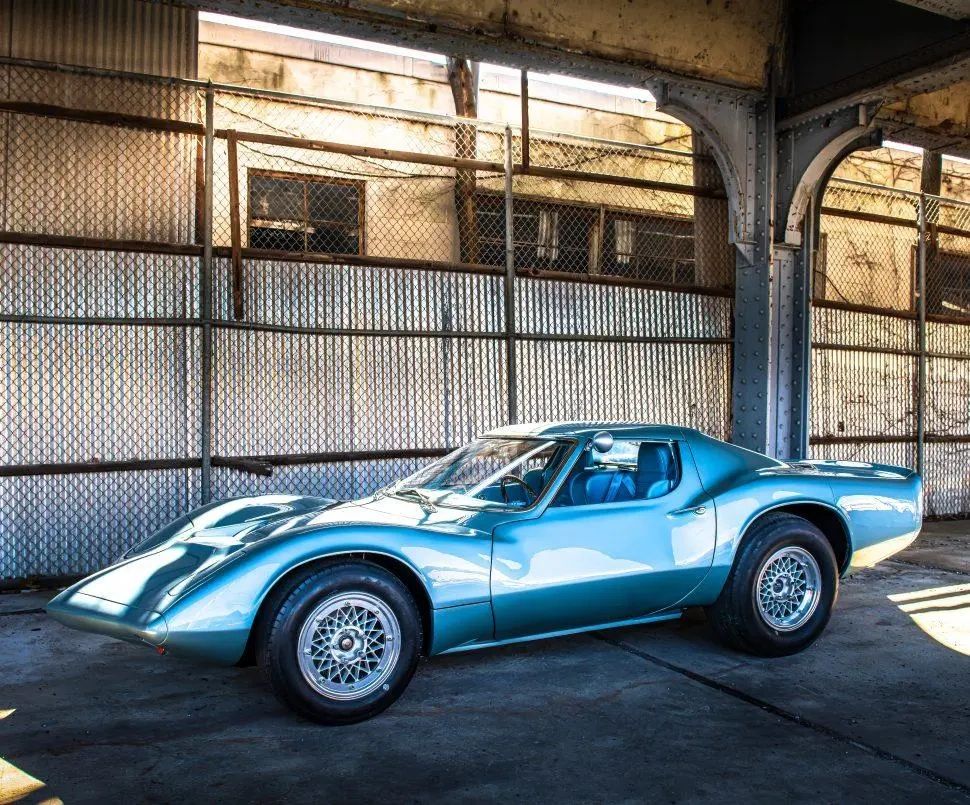
    Over the next several years, Corvette Repair reunited the restored body with the rebuilt chassis, refinished the fiberglass in period-appropriate silver, and meticulously recreated the interior. By 2020, XP-819 was ready for a full concours-level outing. The car appeared as part of Amelia Island’s “Silver Anniversary Amelia’s Mid-Engine Corvette” class, sharing the fairway with CERV I and II, XP-895, the Aerovette, and other mid-engine milestones. For many attendees, it was the first time they’d ever seen the so-called “Ugly Duckling” in the fiberglass – and in that company, it looked less like an oddball and more like an essential chapter in the story.

    Today, the XP-819 is on loan to the National Corvette Museum in Bowling Green, Kentucky, where it anchors its storytelling around Corvette’s long, messy road to a mid-engine layout. For most visitors, XP-819 is the surprise in the room – a one-off rear-engine oddball that somehow survived Smokey Yunick’s cutting torch, decades in hiding, and a from-scratch restoration to stand here as the only true rear-engine Corvette prototype GM ever built, and one of just two monocoque Corvette experiments of any kind.

    From “Duckling” to Design DNA
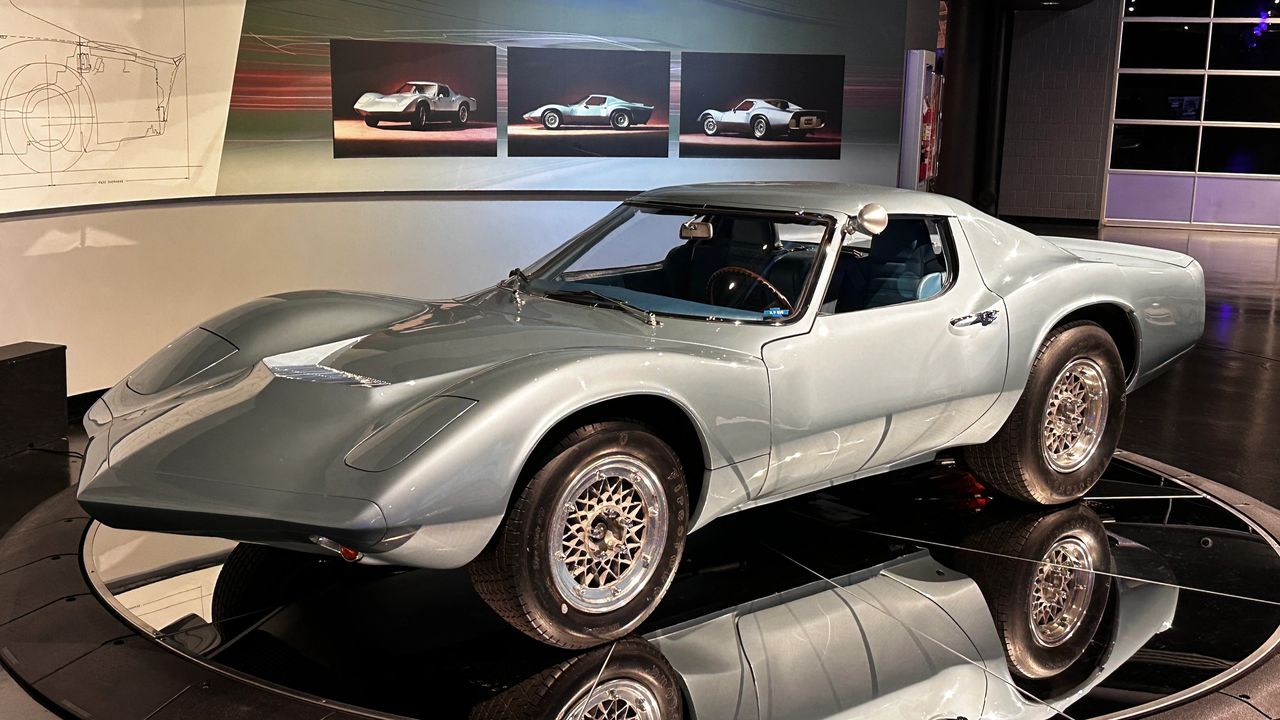
    Today, the fully restored XP-819 sits under the lights at the National Corvette Museum—an improbable survivor that now stands as a testament to the audacity, ingenuity, and internal friction that shaped Corvette history. Seeing it up close, perched on its display turntable with Shinoda’s sketches behind it, you’re reminded that Corvette’s evolution has never been a straight line; it’s been a story of wild ideas, bold detours, spectacular misfires, and the occasional stroke of genius that only makes sense decades later. The XP-819 didn’t become the next Corvette, but it pushed boundaries, challenged assumptions, and kept the mid-engine dream alive long enough for the C8 to finally make it real—proving that even the “Ugly Ducklings” of the program have a vital place in the journey. (Image courtesy of the author)
    Today, the fully restored XP-819 sits under the lights at the National Corvette Museum—an improbable survivor that now stands as a testament to the audacity, ingenuity, and internal friction that shaped Corvette history. Seeing it up close, perched on its display turntable with Shinoda’s sketches behind it, you’re reminded that Corvette’s evolution has never been a straight line; it’s been a story of wild ideas, bold detours, spectacular misfires, and the occasional stroke of genius that only makes sense decades later. The XP-819 didn’t become the next Corvette, but it pushed boundaries, challenged assumptions, and kept the mid-engine dream alive long enough for the C8 to finally make it real—proving that even the “Ugly Ducklings” of the program have a vital place in the journey. (Image courtesy of the author)

    In the narrow sense, XP-819 failed. It didn’t become the next Corvette. Its dynamic behavior at the limit was too knife-edged for comfort, and its timing couldn’t have been worse. As the XP-819 struggled on the proving grounds, the Chevrolet Corvair was being dragged into the spotlight by lawyer and consumer advocate Ralph Nader. His book “Unsafe at Any Speed” denounced the Corvair as inherently dangerous, with unreliable handling and a high risk of rolling over at low speeds. The last thing Chevrolet executives wanted was another rear-engined vehicle creating more negative press. Between the crash at Milford and the political headwinds around rear engines, the business case for building on XP-819 evaporated.

    But if you step back and look at XP-819 as a part of the Corvette’s longer arc, its fingerprints are everywhere.
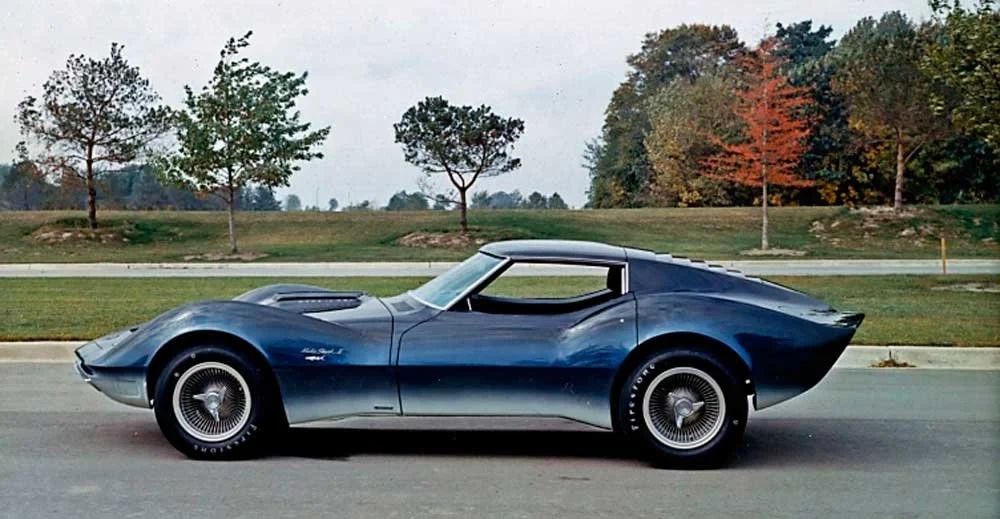
    There are more echoes between XP-819 and the Mako Shark II than most people realize. Both cars came out of the same late-’50s/early-’60s GM Styling mindset, with Larry Shinoda and his team pushing a dramatic “Coke-bottle” plan view: narrow in the middle, swelling over the wheelarches, and tapering to sharp points at the nose and tail. The XP-819’s front fenders and the Mako Shark II’s are remarkably similar in the way they rise and then fall toward a low, almost knife-edge front end, and both use a very low, compact greenhouse that visually sits down into the body rather than perched on top of it. The rear quarters share that muscular, hipped look that would later define the C3 Corvette, with a pronounced “waist” ahead of the rear wheels and a long deck stretching rearward. Where the two diverge is largely mechanical—the XP-819 packaging everything around a rear engine and transverse layout, the Mako Shark II previewing a more conventional front-engine C3—but visually you can clearly see them as parallel branches of the same aggressive, surfacing-driven Corvette design language. (Image courtesy of GM Media LLC)
    There are more echoes between XP-819 and the Mako Shark II than most people realize. Both cars came out of the same late-’50s/early-’60s GM Styling mindset, with Larry Shinoda and his team pushing a dramatic “Coke-bottle” plan view: narrow in the middle, swelling over the wheelarches, and tapering to sharp points at the nose and tail. The XP-819’s front fenders and the Mako Shark II’s are remarkably similar in the way they rise and then fall toward a low, almost knife-edge front end, and both use a very low, compact greenhouse that visually sits down into the body rather than perched on top of it. The rear quarters share that muscular, hipped look that would later define the C3 Corvette, with a pronounced “waist” ahead of the rear wheels and a long deck stretching rearward. Where the two diverge is largely mechanical—the XP-819 packaging everything around a rear engine and transverse layout, the Mako Shark II previewing a more conventional front-engine C3—but visually you can clearly see them as parallel branches of the same aggressive, surfacing-driven Corvette design language. (Image courtesy of GM Media LLC)

    Stylistically, it’s impossible to miss the connection between Shinoda’s work on XP-819 and the Mako Shark II concept that followed in 1965. The pinched waist, the exaggerated fender forms, the muscular haunches – all of that was refined and formalized on Mako Shark II, then carried over, in production-friendly form, to the 1968 C3 Corvette. XP-819 was an early, pure expression of that surfacing language, applied to an unusually compact, rear-engined package.

    Functionally, the forward-tilting clamshell front clip foreshadowed the C4’s service-friendly nose. If you’ve ever watched a C4’s entire front body section tilt forward to reveal the engine and suspension as a single clean tableau, you’ve seen a more polished, production-engineered echo of what XP-819’s front end was already doing in 1964.
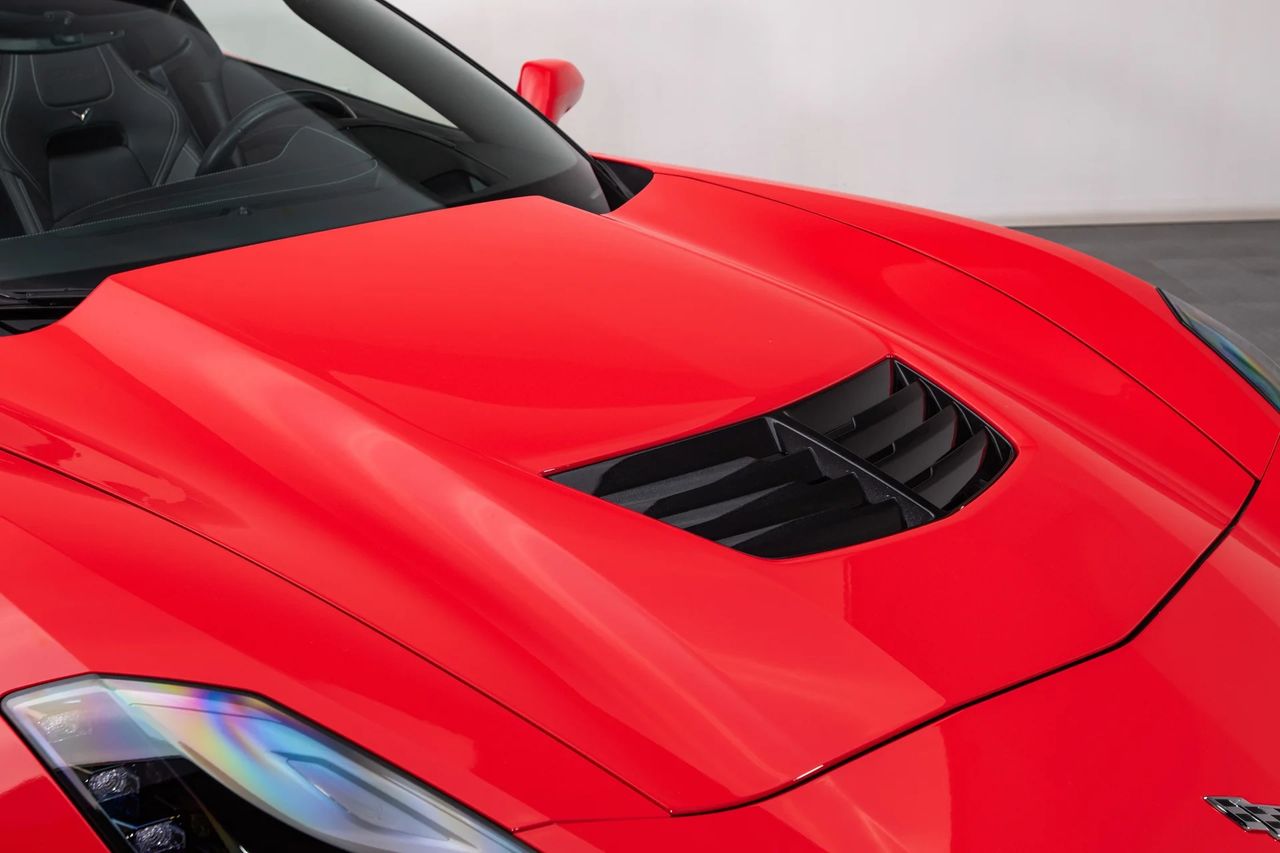
    One of the clearest visual links between the XP-819 and the C7 Corvette is this hood vent. On the XP-819, Chevy engineers tilted the radiator forward and vented hot air out through the top of the nose, improving cooling while also reducing front-end lift. The C7 carries that same idea into production form: air enters low in the front bumper, passes through the radiator, and exits up through the hood extractor to keep the nose planted at speed. What started as a radical, one-off experiment on a rear-engine prototype ultimately became a signature functional detail on a modern Corvette. (Image courtesy RK Motors)
    One of the clearest visual links between the XP-819 and the C7 Corvette is this hood vent. On the XP-819, Chevy engineers tilted the radiator forward and vented hot air out through the top of the nose, improving cooling while also reducing front-end lift. The C7 carries that same idea into production form: air enters low in the front bumper, passes through the radiator, and exits up through the hood extractor to keep the nose planted at speed. What started as a radical, one-off experiment on a rear-engine prototype ultimately became a signature functional detail on a modern Corvette. (Image courtesy RK Motors)

    The hood-top radiator outlet – that sculpted duct on the nose – also reappeared, decades later, in the C7’s vented hood. Chevrolet made a big deal of how the C7 Stingray and Z06 used that central vent to reduce front lift by letting air exit over the top of the car rather than building pressure under the hood. The idea may have been optimized in wind tunnels that Shinoda’s team never had, but the basic concept had already been tried on XP-819.

    Even the urethane bumper inserts were forward-looking. By the mid-1970s, federal regulations and evolving crash standards would force GM (and everyone else) to adopt integrated, energy-absorbing bumpers. XP-819 had already demonstrated how softer, molded elements could be blended into a sports-car nose and tail without hanging big chrome bars out in the airstream.
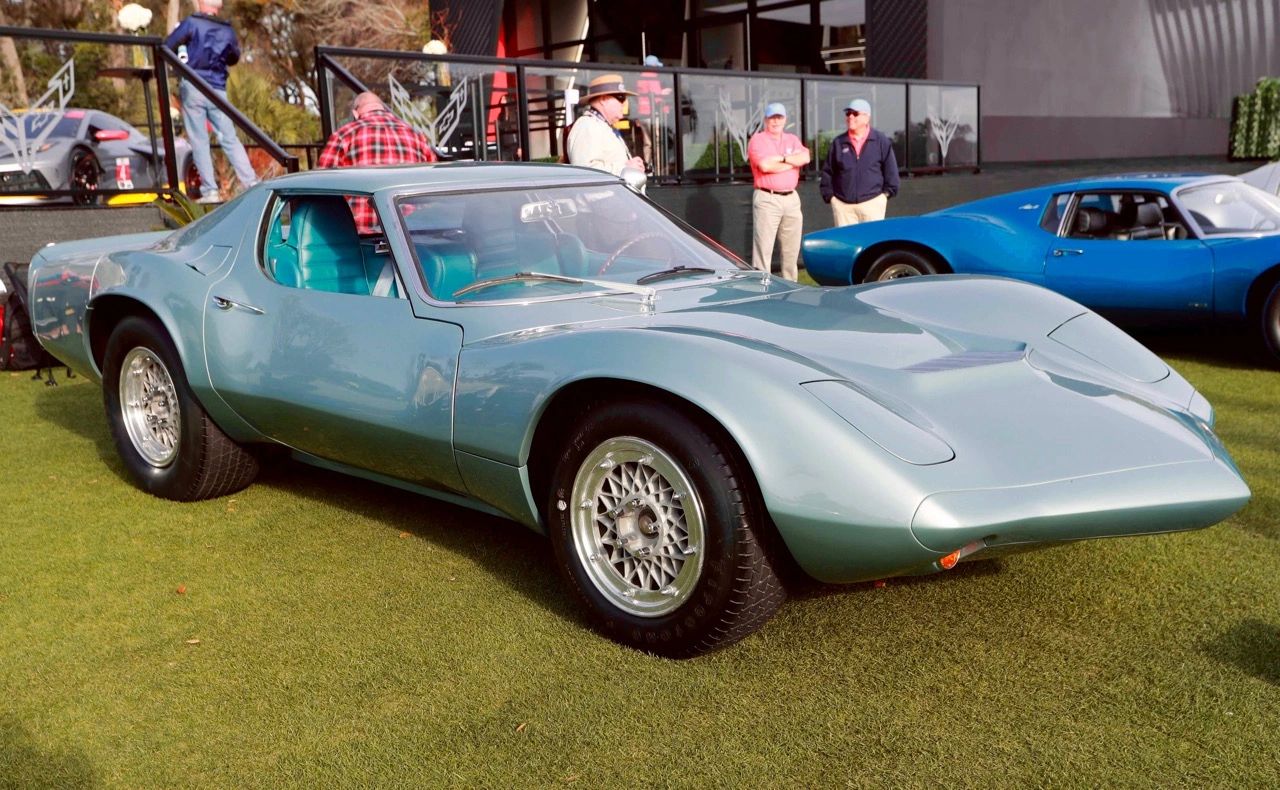
    The restored Chevrolet XP-819 captivated spectators at the Concours d’Elegance with its rare appearance and bold, unconventional design. Its sleek, metallic finish and unique proportions stood out dramatically among the field. Many attendees were seeing it in person for the first time, and it quickly became a highlight of the show.
    The restored Chevrolet XP-819 captivated spectators at the Concours d’Elegance with its rare appearance and bold, unconventional design. Its sleek, metallic finish and unique proportions stood out dramatically among the field. Many attendees were seeing it in person for the first time, and it quickly became a highlight of the show.

    The experimental modular wheels anticipated the multi-piece racing and performance wheels that would become commonplace in the decades to follow. And the extreme focus on driver ergonomics – deep seating, adjustable pedals, a multi-position steering column – looks an awful lot like the thinking that would later produce the deeply integrated cockpits of the C5, C6, and beyond.

    Most of all, XP-819 kept the mid/rear-engine conversation alive inside Chevrolet. Even as that specific car was written off and cut up, the broader question it embodied – could a Corvette with its engine behind the driver ever make sense? – stayed in the bloodstream. Projects like XP-895, XP-897 GT (the rotary-powered coupe built with Pininfarina), the Aerovette, and the Indy Corvette show that GM never stopped poking that bear. XP-819 wasn’t the first mid-engine idea to wear Corvette badges, and it certainly wasn’t the last, but it was the only one to go all-in on a full rear-engine layout.

    By the time the C8 finally arrived, with a mid-mounted LT2 sitting just aft of the driver’s shoulders, the world had changed. Aerodynamics, tires, stability control, and a half-century of chassis development had given Chevrolet tools that Winchell and Duntov could only have dreamed about when XP-819 hit the guardrail at Milford. But the questions they wrestled with back then – about balance, weight distribution, and what a Corvette should be – are still visible if you know where to look.
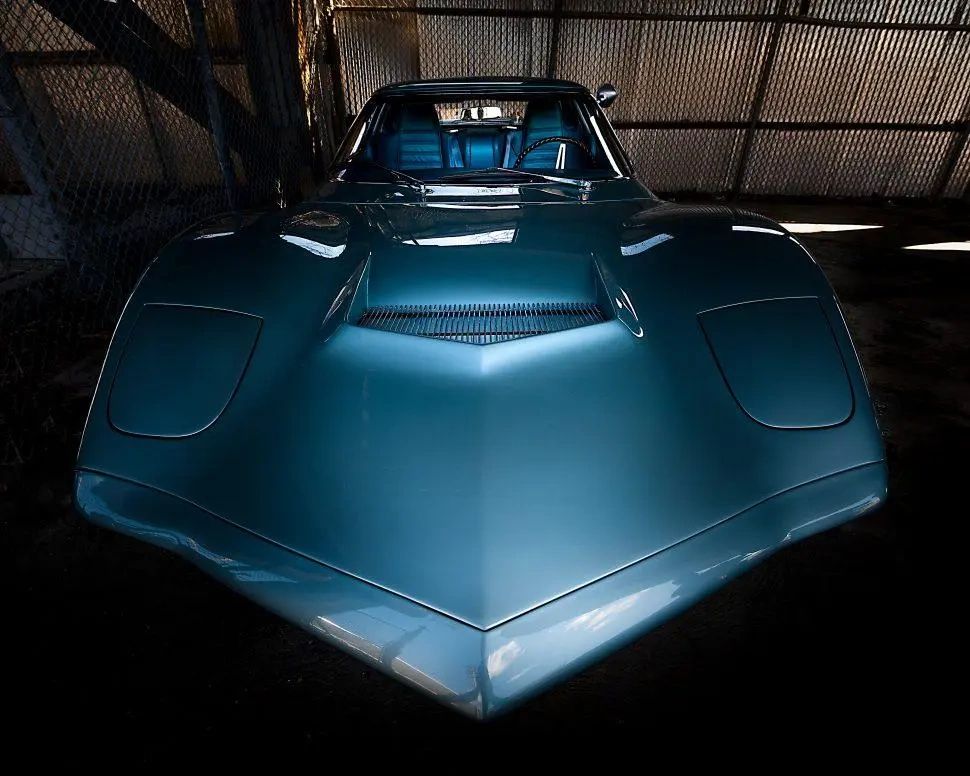
    From this angle, it’s hard to believe you’re looking at a Corvette prototype from 1964 and not a modern concept car. The XP-819’s razor-edged nose, deep-set hood duct, and wide, muscular stance still feel absolutely current—proof that Shinoda and his team were sketching decades ahead of their time. (Photo credit: Stan Dzugan)
    From this angle, it’s hard to believe you’re looking at a Corvette prototype from 1964 and not a modern concept car. The XP-819’s razor-edged nose, deep-set hood duct, and wide, muscular stance still feel absolutely current—proof that Shinoda and his team were sketching decades ahead of their time. (Photo credit: Stan Dzugan)

    Stand next to 1964 XP-819 today, look down that impossibly short hood, and you can see both directions at once: backward, to a moment when GM was willing to build a car this radical just to see what would happen; and forward, to a Corvette that would finally put its V8 behind the driver and take on the Europeans head-on.

    For a car that started life as an “Ugly Duckling,” that’s not a bad legacy.

    Why the 1964 XP-819 Still Matters Today
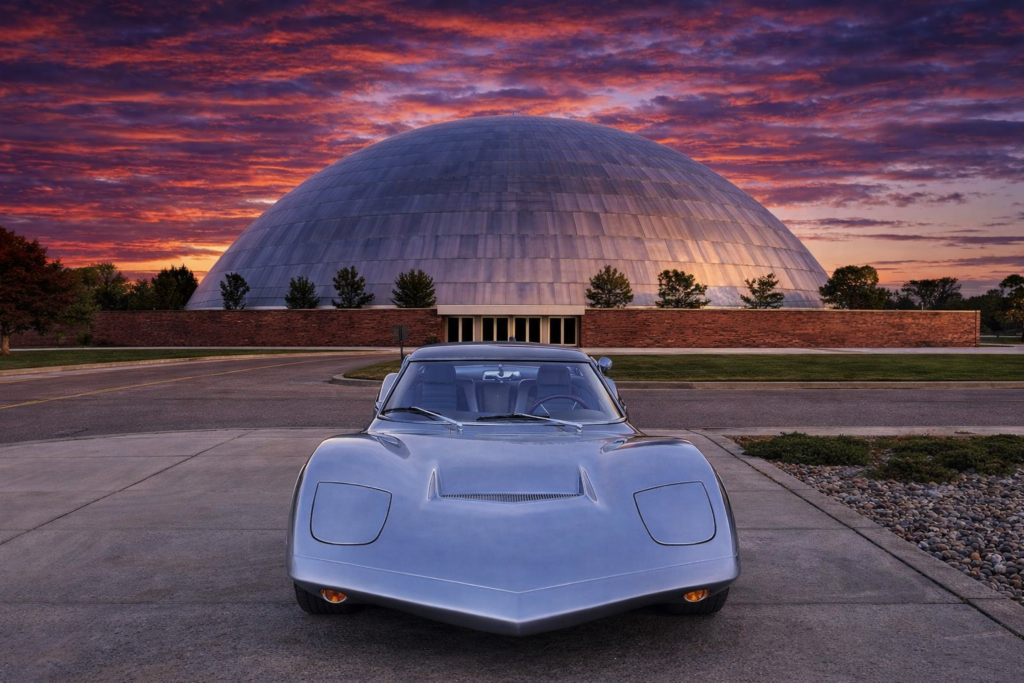
    There was a time when nearly everything that would shape Corvette’s future passed through places like this—inside the walls of GM’s Design Center in Warren, Michigan, where ideas were not merely sketched, but debated, refined, tested, and sometimes pushed to the breaking point in pursuit of something better. Standing in front of that dome, the XP-819 feels exactly like what it was always meant to be: not a finished answer, but a question made real. It was the product of an era when men like Zora Arkus-Duntov, Bill Mitchell, Larry Shinoda, and others were willing to challenge convention in order to find out just how far Corvette could go. Duntov brought the engineering restlessness, Mitchell brought the visual conviction, Shinoda helped give ambitious ideas form, tension, and presence, and together—along with the many hands around them—they laid the foundation for a car that would outlive them all. That is part of what makes a machine like the XP-819 so important now. It reminds us that Corvette’s survival was never automatic. Its future had to be imagined, fought for, and built piece by piece by people who believed the car was worth evolving, even when the answers were uncertain, and the experiments were imperfect. Not every idea born in those glory days of GM design was destined for production, but the willingness to ask bold questions is exactly what kept Corvette alive long enough to become the enduring American icon it remains today. (Image credit: Author/ChatGPT)

    The XP-819 still matters because Corvette history was never shaped by the cars that made production alone. Just as important were the strange detours, the uncomfortable experiments, and the ideas that proved too radical, too early, or simply too flawed to move forward. That is where the 1964 XP-819 lives. In the narrowest sense, it was a dead end. Chevrolet learned the hard way that placing a heavy small-block V8 behind the rear axle created a handling problem that was far more difficult to tame than anyone hoped. But that failure was not meaningless. It gave GM a clearer understanding of what worked, what did not, and how far Corvette could be pushed before engineering ambition outran practical reality.

    It also matters because the XP-819 helped keep the larger conversation alive. Corvette’s eventual path to a mid-engine production car was not a straight line from dream to reality. It was a long, messy progression shaped by test cars, internal battles, competing philosophies, and more than a few machines that looked better in theory than they behaved in practice. The XP-819 was one of the most revealing of those machines. It showed just how serious Chevrolet was about exploring alternative layouts, even when the result challenged nearly every assumption the Corvette program had been built on.

    And then there is the car itself. Today, the 1964 XP-819 stands as more than a historical curiosity or a footnote to the C8. It is a surviving piece of evidence that Corvette’s evolution has always depended on risk. Not every experiment becomes a legend in the usual sense. Some earn their place by asking difficult questions, exposing real limits, and forcing the people behind the car to think differently the next time. The XP-819 did exactly that. It may have been the “Ugly Duckling,” but it still helped move the story forward.


    Before the mid-engine Corvette became reality, there was the XP-819—an unconventional, rear-engine experiment that challenged everything engineers thought they knew. Nicknamed the “Ugly Duckling,” it wasn’t pretty, and it wasn’t perfect—but it asked the right questions at exactly the right time.