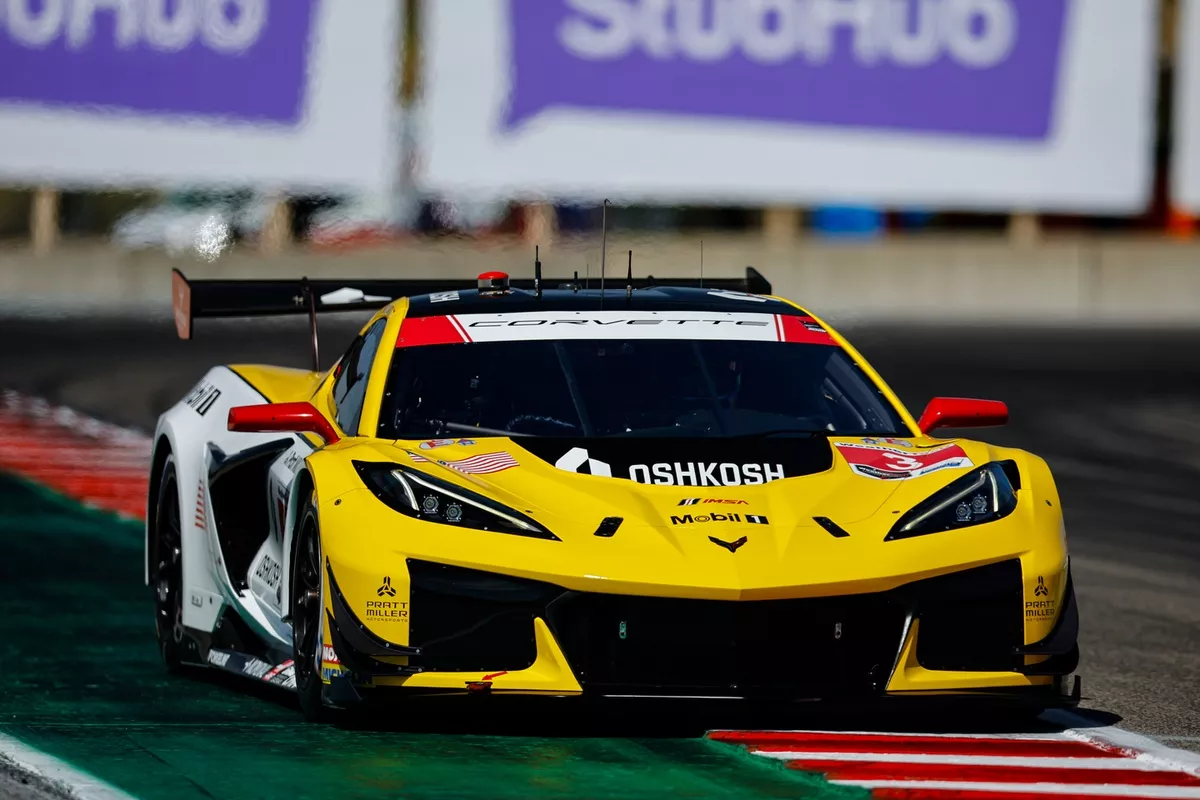
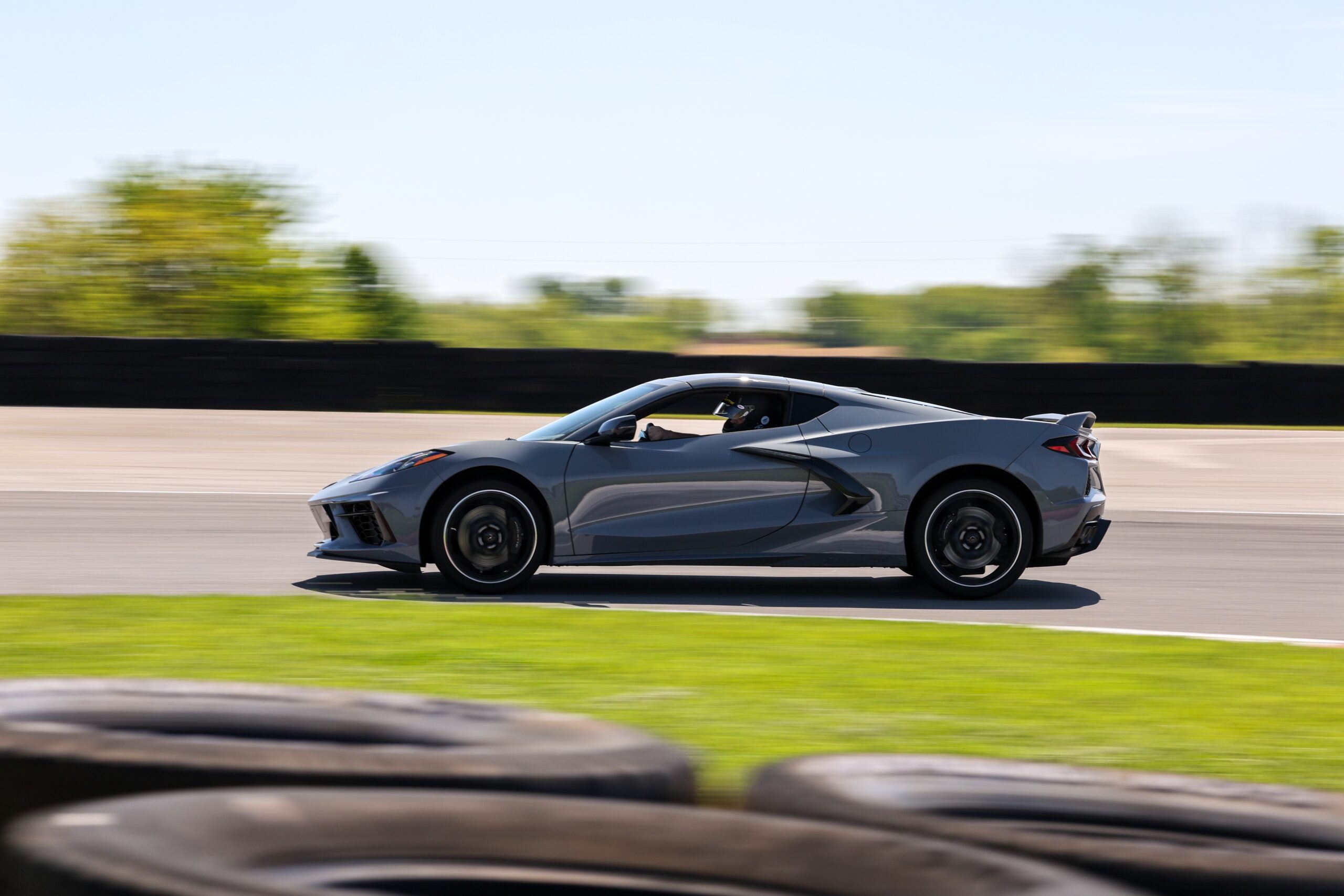
Corvette Racing did not leave Laguna Seca with the GTD PRO win, but it left Monterey with something nearly as important this early in the IMSA season: control of the championship conversation.
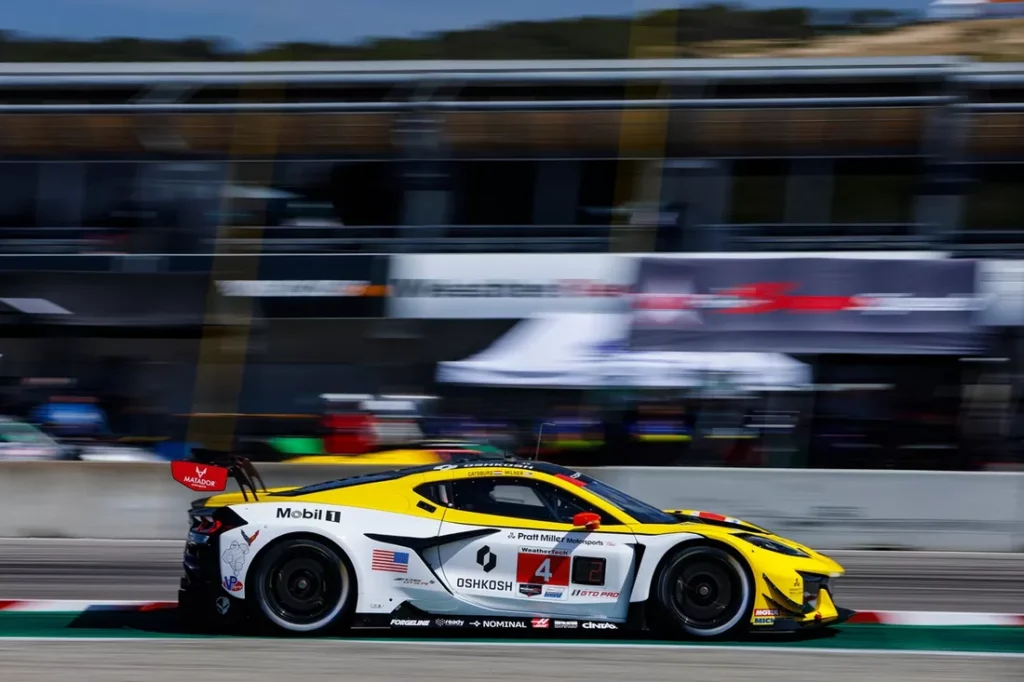
The No. 4 Corvette Racing by Pratt Miller Motorsports Chevrolet Corvette Z06 GT3.R of Tommy Milner and Nicky Catsburg finished second in GTD PRO after starting eighth in class, turning a difficult opening position into one of the team’s strongest results of the year. It was not a straightforward afternoon. Milner had to manage the usual Laguna Seca traffic and early contact, while the Pratt Miller crew quickly recognized that the race would likely be decided as much by pit timing and fuel strategy as outright speed.
That call proved critical. By moving the No. 4 Corvette onto an alternate strategy, the team gave Catsburg a chance to bring the car back into contention during the second half of the race. As the GTD PRO field cycled through stops and fuel-saving strategies began to unravel late, Catsburg was positioned to capitalize. He came home second, just behind the winning Ford Mustang GT3, securing another podium for the No. 4 team.
For the No. 4 Corvette Racing by Pratt Miller Motorsports Z06 GT3.R, Laguna Seca was a championship-building afternoon. Tommy Milner and Nicky Catsburg turned an eighth-place starting position into a second-place GTD PRO finish, using smart pit strategy and a disciplined closing run to stay in contention as the race became a fuel-and-timing exercise. The result gave the No. 4 Corvette its second straight podium and moved Milner, Catsburg, Chevrolet, and the Pratt Miller entry into the GTD PRO points lead. It was not the win they wanted, but it was the kind of measured, high-value result that defines a serious title campaign. (Image credit: Autosports.com)
More importantly, the finish moved Milner and Catsburg into the GTD PRO drivers’ championship lead. The No. 4 Corvette also took over the team standings, while Chevrolet moved to the top of the manufacturers’ championship. For a program still in the early stages of the Z06 GT3.R era, that is a meaningful marker.
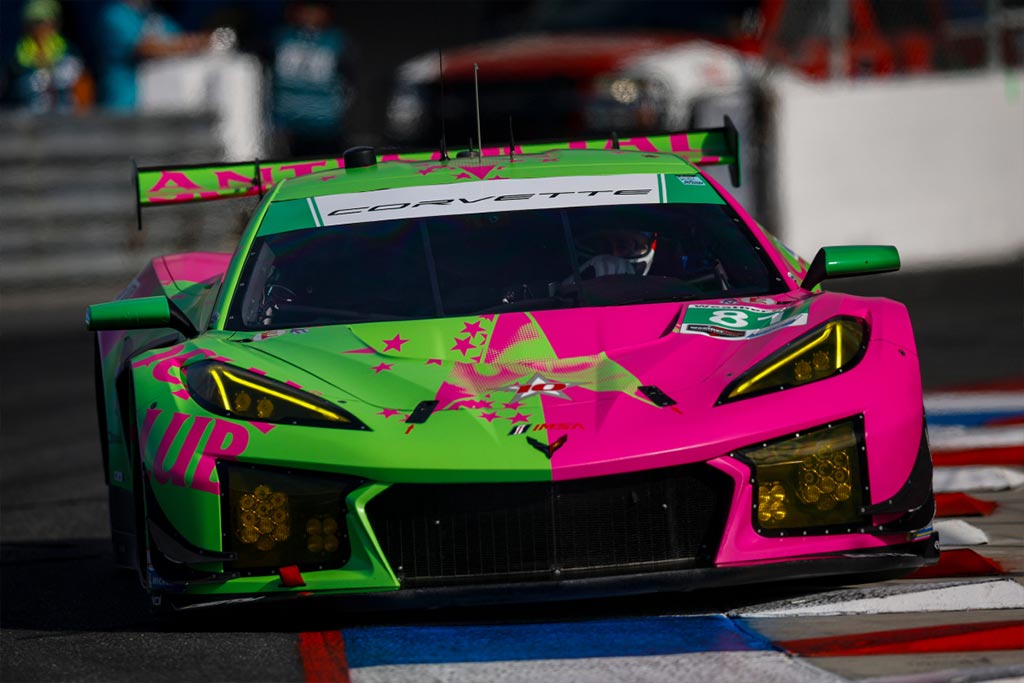
The sister No. 3 Corvette of Antonio Garcia and Alexander Sims also delivered a solid points-paying result, finishing fourth in GTD PRO. Their strategy played out differently, with Sims among the drivers trying to stretch fuel late in the race. When the caution they needed never came, the No. 3 Corvette slipped out of podium position but still gave Corvette Racing both factory-supported entries inside the top four.
DragonSpeed’s No. 81 Corvette Z06 GT3.R had a quieter but useful afternoon at Laguna Seca, bringing the car home 11th in GTD after a cleaner run than some of its earlier-season outings. It was not the breakthrough result the team is chasing, but for a customer Corvette program still building rhythm with the Z06 GT3.R platform, finishing the race and gathering data represented a step in the right direction.
The customer Corvette programs had a more mixed afternoon. DragonSpeed’s No. 81 Corvette Z06 GT3.R finished 11th in GTD, giving the team a cleaner result after a difficult start to the season. The No. 13 13 Autosport Corvette retired with a mechanical issue, ending its day early.
Laguna Seca was not perfect for Corvette Racing, but it was productive. The Z06 GT3.R showed pace, the Pratt Miller pit stand made the right calls, and Corvette left California leading the GTD PRO title fight.
Corvette Racing turned a challenging Laguna Seca weekend into a championship-building result, with the No. 4 Z06 GT3.R landing on the GTD PRO podium and taking the points lead. The win slipped away, but Corvette’s two-car factory effort showed pace, strategy, and resilience when it counted.
Before we dive in, we need to give credit first where it is due: we want to extend a special thanks to Morgan Watson of NCM Motorsports Park for sharing the original media release that brought this story to our attention. For Corvette enthusiasts, this one is especially good because it brings the latest chapter of Corvette performance history right back home to Bowling Green.
The Corvette ZR1X has officially added NCM Motorsports Park to its growing list of conquered road courses, setting a new production-car lap record on Monday, April 20, with a blistering lap time of 2:02.11. The lap was set by Drew Cattell, a Corvette vehicle dynamics engineer at General Motors, and it eclipsed the previous production-car benchmark of 2:02.86, which had been held by a McLaren Senna driven by professional racer Andy Pilgrim.
That is not just a number on a timing sheet. It is another statement from the Corvette team.
The ZR1X has already made its presence known on the international stage, most notably at the Nürburgring, where Cattell drove the electrified all-wheel-drive Corvette to a 6:49.275 lap around the 12.9-mile Nordschleife. That run helped establish Corvette’s current standing as the fastest American manufacturer at the Nürburgring and further proved that Chevrolet’s engineering team has built something far beyond a straight-line headline machine.
Now, the ZR1X has brought that same kind of credibility to Corvette’s backyard.
NCM Motorsports Park sits just minutes from the Bowling Green Assembly Plant, where Corvettes are built, and directly connects the car’s present-day performance story to the community that has helped define Corvette for more than four decades. The track itself is no casual test loop. Its Grand Full configuration combines technical corners, elevation changes, and high-speed sections, with a layout inspired in part by the character of Le Mans.
According to details released around the run, the ZR1X reached 169 mph into Turn 1, pulled a peak combined acceleration figure at the exit of Turn 15, and recorded 1.85 g under braking into Turn 1. Those figures help explain why this lap matters. The ZR1X is not simply relying on horsepower. It is using power, braking, aero, chassis tuning, and all-wheel-drive traction as one integrated system.
That is the part of this car that continues to separate it from the old arguments about Corvette performance. For years, the Corvette was measured against European exotics as the value disruptor — the car that could run with the world’s best for a fraction of the price. The ZR1X changes that conversation. It is no longer just asking to be compared. It is putting lap times on the board and forcing the rest of the performance world to respond.
There is also something meaningful about who set the lap. Like the Nürburgring record effort, this was not simply a case of putting a factory car in the hands of a hired professional and chasing a headline. The NCM Motorsports Park record was set by one of the engineers who helped develop the car. That detail matters because it reinforces how deeply integrated the Corvette program has become. These cars are being tuned, validated, and pushed by the same people responsible for making them work in the hands of customers.
NCM Motorsports Park CEO Greg Waldron called the record “an incredibly exciting moment in track history,” noting that watching the car come to life on the circuit was a showcase of the performance and engineering behind it. He also emphasized the Park’s pride in being part of this latest chapter in Corvette history.
For NCM Motorsports Park, the record is another reminder of the facility’s importance within the Corvette world. It is not just a track near the Museum. It is a living extension of the Corvette story — a place where enthusiasts can experience the car’s performance, where GM can demonstrate what the platform is capable of, and where Bowling Green’s connection to America’s Sports Car becomes even more tangible.
For the ZR1X, this is one more line in an already serious résumé. Nürburgring credibility. Sonoma pace. Now a new production-car lap record at NCM Motorsports Park. The car is quickly building the kind of record that future Corvette historians will not be able to ignore.
And for Corvette fans, that may be the best part. This record did not happen somewhere far removed from the brand’s center of gravity. It happened in Bowling Green, Kentucky — right where it belongs.
The Corvette ZR1X has added another headline to its fast-growing résumé, this time at NCM Motorsports Park in Bowling Green. With a new production-car lap record now attached to Corvette’s home track, Chevrolet’s most advanced performance machine has delivered another statement where it feels most appropriate: on Corvette ground.
If you have been waiting for the moment when Corvette season stops feeling theoretical and starts feeling real, this is it. The 2026 Michelin National Corvette Museum Bash runs April 23–25 in Bowling Green, Kentucky, and the Museum is positioning it exactly where it belongs: as the official kickoff to its on-site event season. More importantly, the schedule shows why Bash still matters. This is not just a parking-lot gathering with a few vendor tables and some polite applause. It is three full days of performance cars, factory insight, road tours, preservation programming, racing history, owner education, and the kind of access that keeps the National Corvette Museum at the center of the hobby.
What makes the 2026 edition especially interesting is the breadth of the program. Bash is hitting every major Corvette nerve at once. Modern performance? Covered. Museum stewardship and long-term preservation? Covered. Corvette Racing history? Covered. Assembly plant leadership, engineering seminars, infotainment support, track activity, guided road tours, a Museum-judged car show, raffles, donor events, and enthusiast fellowship? All there. That wide reach is what sets the 2026 NCM Bash apart from many other calendar apps. It is not trying to be one thing. It is trying to be the place where the full Corvette world comes together under one roof, and this year’s official schedule makes that plain.
The 2026 NCM Bash is where the present and future of Corvette show up together
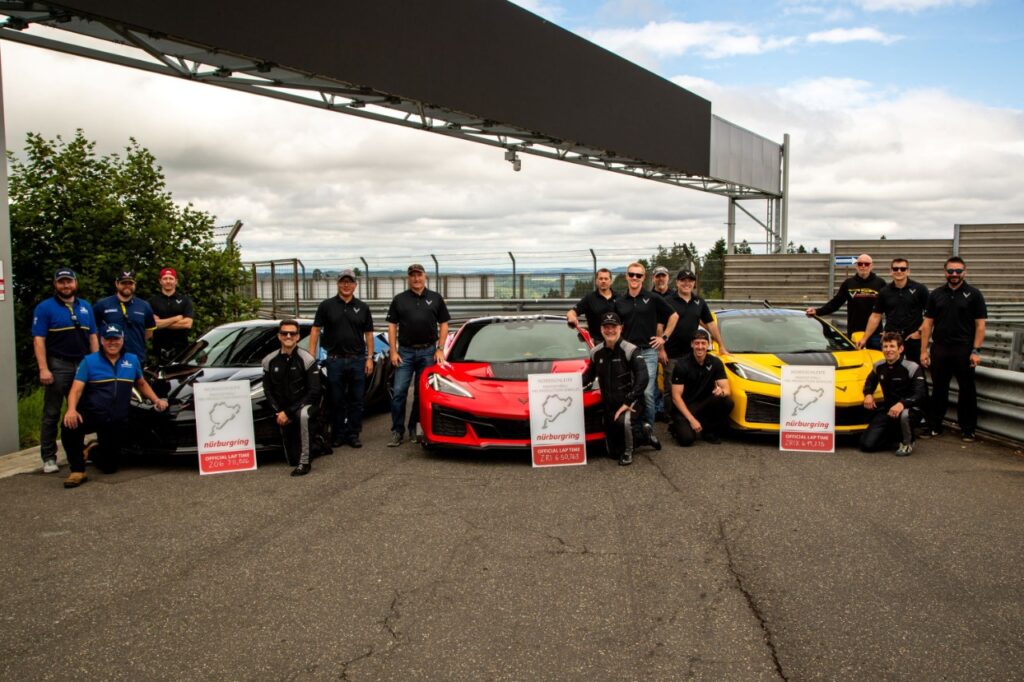
One of the biggest draws at the 2026 Michelin NCM Bash will be this rare gathering of Nürburgring-bred Corvette royalty, with the National Corvette Museum confirming that the Corvette ZR1X Nürburgring fast lap car, Corvette ZR1 Nürburgring fast lap car, and Corvette Z06 Nürburgring fast lap car will all be on display in Bowling Green, alongside the ZR1X dragstrip quarter-mile and 0–60 record car. For Corvette fans, that gives Bash something special: a chance to stand just feet away from some of the most advanced and most significant performance Corvettes Chevrolet has ever built, all in one place. (Image source: GM)
If you want one headline item that tells you this year’s Bash is serious, start with the performance-car display Chevrolet is bringing to the Museum. All 2026 NCM Bash attendees will be able to see the Corvette ZR1X Nürburgring fast lap car, Corvette ZR1 Nürburgring fast lap car, Corvette Z06 Nürburgring fast lap car, and the Corvette ZR1X dragstrip quarter-mile and 0–60 record car. That is not filler. That is a concentrated display of the current high-water mark for Corvette performance, bringing together some of the most advanced and most publicly significant modern Corvettes in one place. For enthusiasts who follow the car not just as a badge but as a global performance benchmark, that alone makes Bash worth a hard look.
And the Museum is doing the right thing by not treating those cars like silent props. The broader seminar lineup is built to give context to what modern Corvette has become. On Thursday alone, attendees can sit in on a Museum update with President and CEO Bryce Burklow and Board Chairman Michael LaRocca, a Michelin tire-technology session, Corvette infotainment with Paul Koerner, and a Bowling Green Assembly Plant leadership presentation. Friday adds another deep bench of technical and insider programming, including the Corvette Team update with Chief Engineer Josh Holder and Product Marketing Manager Austin Fisher, an LS6 design overview with Mike Kociba, and a session titled “How to Run a Lap Time” featuring engineers connected to active chassis calibration, vehicle dynamics, propulsion development, and GM Motorsports. That is exactly the kind of lineup Corvette owners want from Bash. Not fluff. Not vague marketing. Substance.
There is also a practical side to this that should not be overlooked. Corvette ownership in the modern era is not just about horsepower and paint codes. It is about software, connected systems, infotainment, calibration logic, and understanding how to get the most out of increasingly sophisticated cars. The infotainment seminar covering model years 2005 to present, along with the limited-registration C8 classroom sessions, gives owners a chance to engage with real expertise instead of relying on rumors, message boards, and half-correct social media clips. That kind of owner-facing education has become one of Bash’s most useful roles, and it is a big reason this event carries real value beyond the social side of the weekend.
The 2026 NCM Bash also leans hard into preservation—and that matters
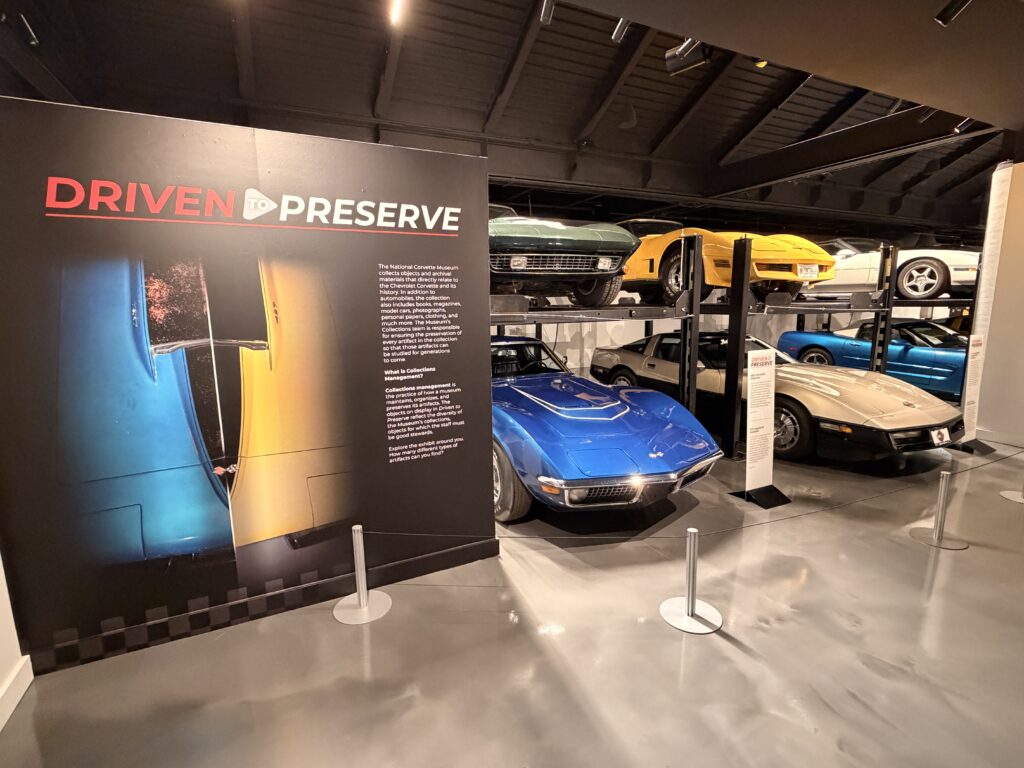
The National Corvette Museum’s Driven to Preserve exhibit reminds visitors that protecting Corvette history takes more than simply parking rare cars under bright lights. It is a thoughtful look at the Museum’s preservation mission, giving enthusiasts a clearer sense of how the collection is cared for so these cars, artifacts, and stories endure for the next generation. (Image credit: Scott Kolecki/Author)
One of the smartest parts of the 2026 NCM Bash schedule is how deliberately it connects Corvette’s future to the work of protecting its past. The Museum’s mission is rooted in the collection, preservation, and celebration of Corvette history, and this Bash puts that mission front and center. Attendees will have access to a preview tour of the future 66,000-square-foot National Corvette Museum Collections facility, including a guided trolley visit to the site and an overview of how the Museum is preparing for the next era of long-term storage, conservation, and preservation. That is a major development for the institution, and it gives Bash something deeper than an event-weekend spectacle. It gives it institutional weight.
That preservation thread continues inside the building as well. Bash includes an exhibit walkthrough of Driven to Preserve, the Museum’s new exhibition focused on how the collections team cares for Corvette artifacts and historically significant vehicles. The exhibit, launched in March as the Museum continues work toward the new collections facility, was created specifically to show visitors what preservation actually looks like behind the curtain. That matters because too many enthusiasts think preservation begins and ends with polished paint. In reality, it is climate control, stewardship, artifact handling, storage logic, conservation planning, archival care, and making hard decisions about restoration versus retention. Bash 2026 puts that work in plain view.
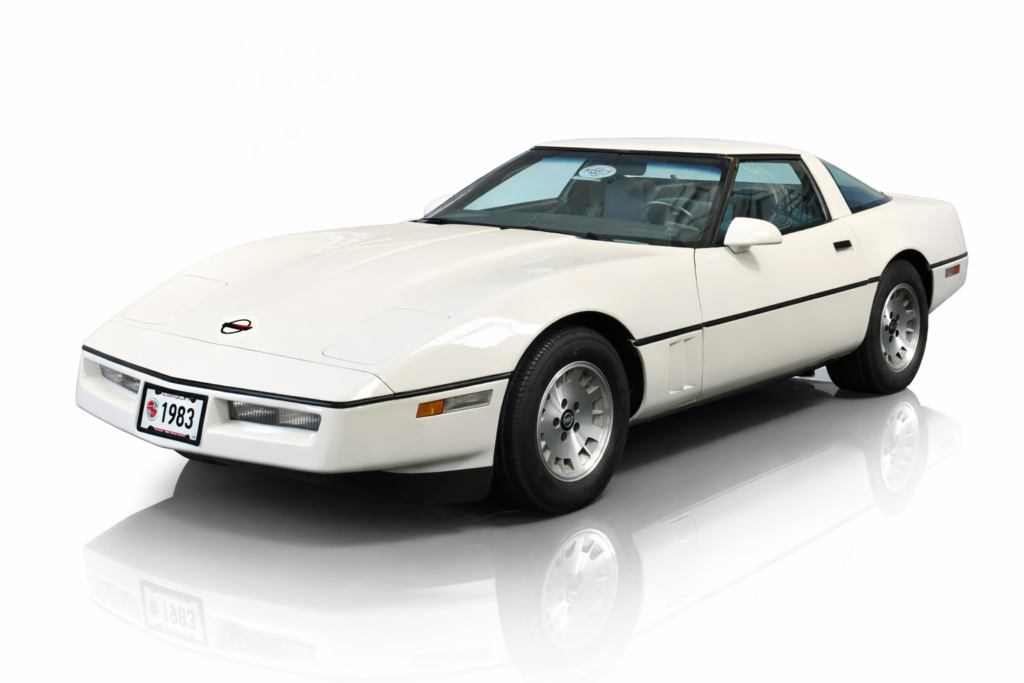
The artifact programming itself is strong. Thursday brings a spotlight on the one-and-only 1983 Corvette, with Curator Bryan Gable discussing how the survivor of a lost model year endured. Friday follows with a spotlight on Neil Armstrong’s recently donated 1967 Corvette, plus a broader “73 Years of Corvette” moment in the Gateway exhibit. Saturday adds an artifact-handling session with the collections team and a Cutaway Corvette Showcase featuring three functional cutaway cars representing the first three generations. That is a smart mix. It serves the fan who wants headline artifacts, the historian who wants interpretation, and the museum-minded enthusiast who understands that the cars alone are only part of the story.
The road tours and track activity give the NCM Bash its movement
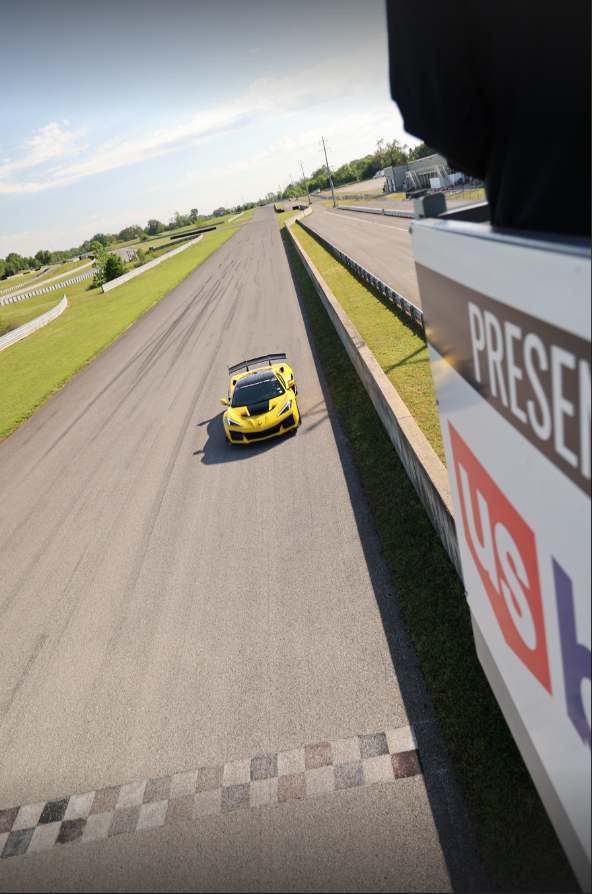
Track activity is a big part of the 2026 Bash weekend, with High Performance Driving Education at NCM Motorsports Park on Wednesday and Thursday, followed by Friday touring laps on the Park’s 3.2-mile, 23-turn road course. Bash attendees can either bring their own car or choose from the Motorsports Park fleet—including a C8 Stingray, C8 E-Ray, C8 Z06, Camaro SS 1LE, or C7 Stingray—giving the event a real on-track component instead of keeping all the action parked on the show field. (Image courtesy NCM Motorsports Park)
Corvette events should not feel static, and the 2026 NCM Bash clearly does not. The schedule is loaded with guided road tours on all three days. Thursday offers caravans to Bardstown, Sumner Crest Winery, and the HotRod MotorTel. Friday repeats the Bardstown and Sumner Crest options. Saturday heads to Heaven Hill and also offers a General Jackson Showboat cruise in Nashville. These are not random add-ons. They are part of the larger Bash formula: get the cars out on the road, put owners in motion, and create shared experiences beyond the Museum grounds. Corvette has always been at its best when driven, and Bash continues to understand that.
That same spirit carries over to the NCM Motorsports Park. Bash attendees are being offered discounted touring laps, with the option of bringing their own car or choosing from a fleet that includes a C8 Stingray, C8 E-Ray, C8 Z06, Camaro SS 1LE, and C7 Stingray on the Park’s 3.2-mile, 23-turn road course in a lead/follow format. There is also High Performance Driving Education on the schedule for Wednesday and Thursday. In other words, this is not just a weekend for looking at Corvettes. It is a weekend for using them. For a Museum event built around America’s sports car, that is exactly the right note to hit.
Corvette Racing still has a proper place here
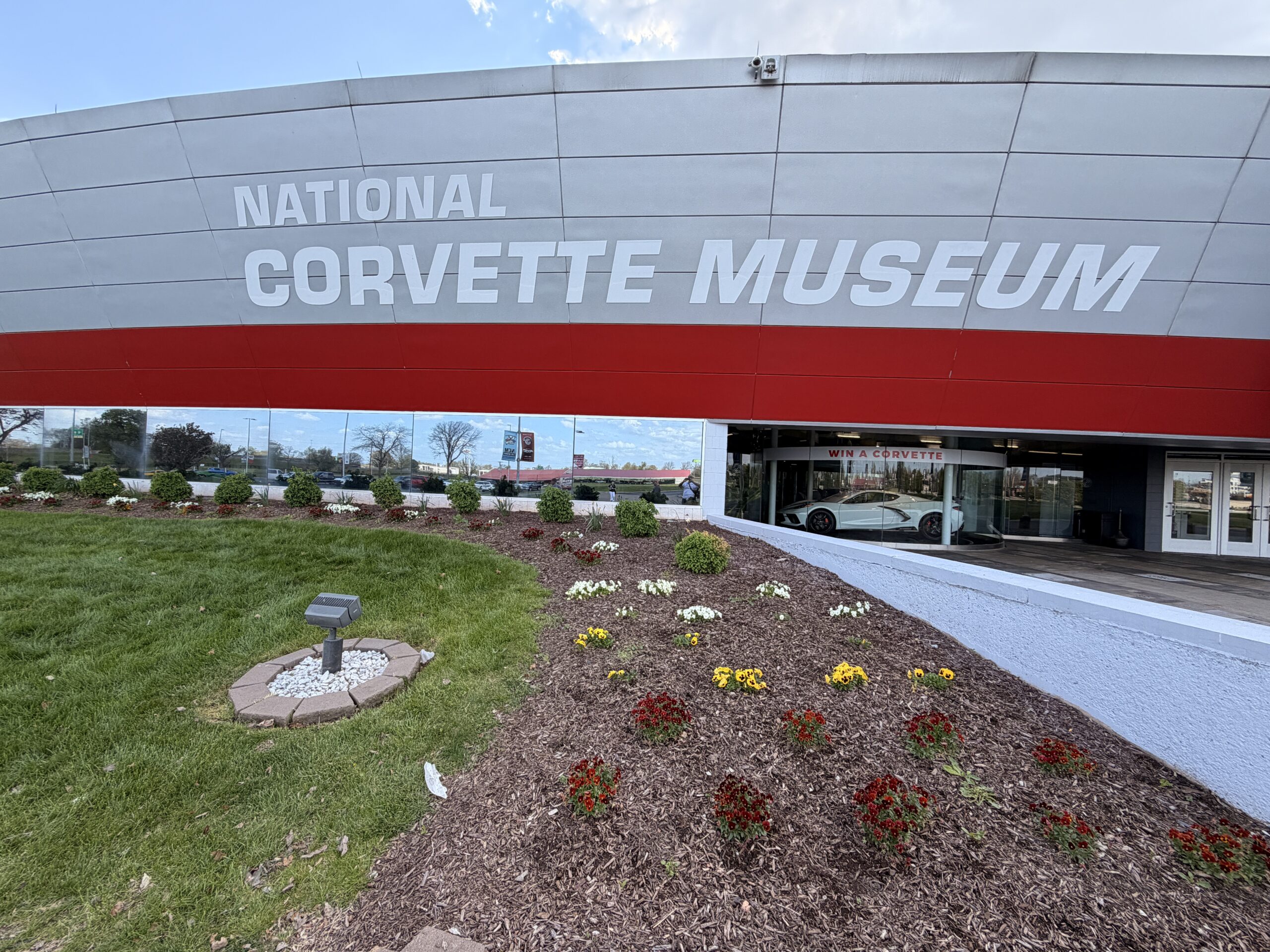
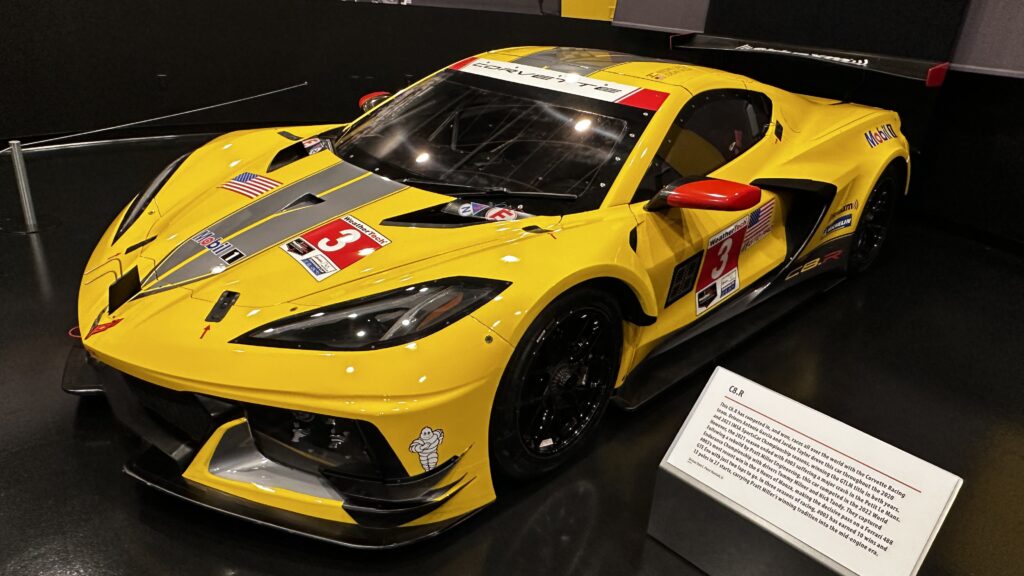
The Corvette C8.R on display inside the National Corvette Museum is a vivid reminder that Corvette’s modern performance story was written as much on the racetrack as it was on the street. That competition legacy will be front and center during the 2026 Michelin NCM Bash, where Thursday’s Corvette Racing banquet with Pratt Miller Motorsports will look back on the team’s IMSA championship season and what comes next. Bash attendees will also get a deeper historical perspective on Friday during a special seminar marking 25 years since Corvette Racing’s breakthrough 2001 season, featuring Hall of Famers Ron Fellows and Johnny O’Connell. Together, the race car in the Museum and the Corvette Racing programming on the Bash schedule help tie the weekend directly to one of the most important chapters in Corvette history. (Image courtesy of Scott Kolecki/author)
Bash also does a good job of honoring the competition side of the Corvette story. Thursday evening’s Corvette Racing banquet with Pratt Miller Motorsports brings Brandon Widmer, Ben Bode, and Doug Fehan into the conversation for a look back at last season’s IMSA championship and what comes next. Then on Friday, Hall of Famers Ron Fellows and Johnny O’Connell take the stage for a seminar marking 25 years since Corvette Racing’s historic 2001 season. That is a serious one-two punch for anyone who understands that the Corvette legend was not built on styling and showroom performance alone. It was also built on endurance racing, credibility under pressure, and decades of proving the car where it mattered most.
There is still plenty here for the broader enthusiast crowd
Not every Bash attendee wants to spend the whole weekend in seminars, and the schedule reflects that. There are professional Corvette photo opportunities outside the Skydome on both Friday and Saturday. There is a Museum-judged Corvette car show on Saturday. There are happy hours at the Stingray Grill. There are raffles for a 2026 Black Corvette Z06 Coupe and a 2026 Torch Red Corvette. There is a Ladies Garage session, a Corvette Today live appearance with Steve Garrett, Elfi’s Sisterhood programming, a Sip n’ Paint session, and the usual event merchandise, including the official 2026 Bash T-shirt. In other words, Bash knows how to balance depth with atmosphere. It gives hardcore enthusiasts real content, but it also remembers that part of Corvette culture is simply enjoying the community around the car.
One Friday stop worth making: the Scott Kolecki book signing
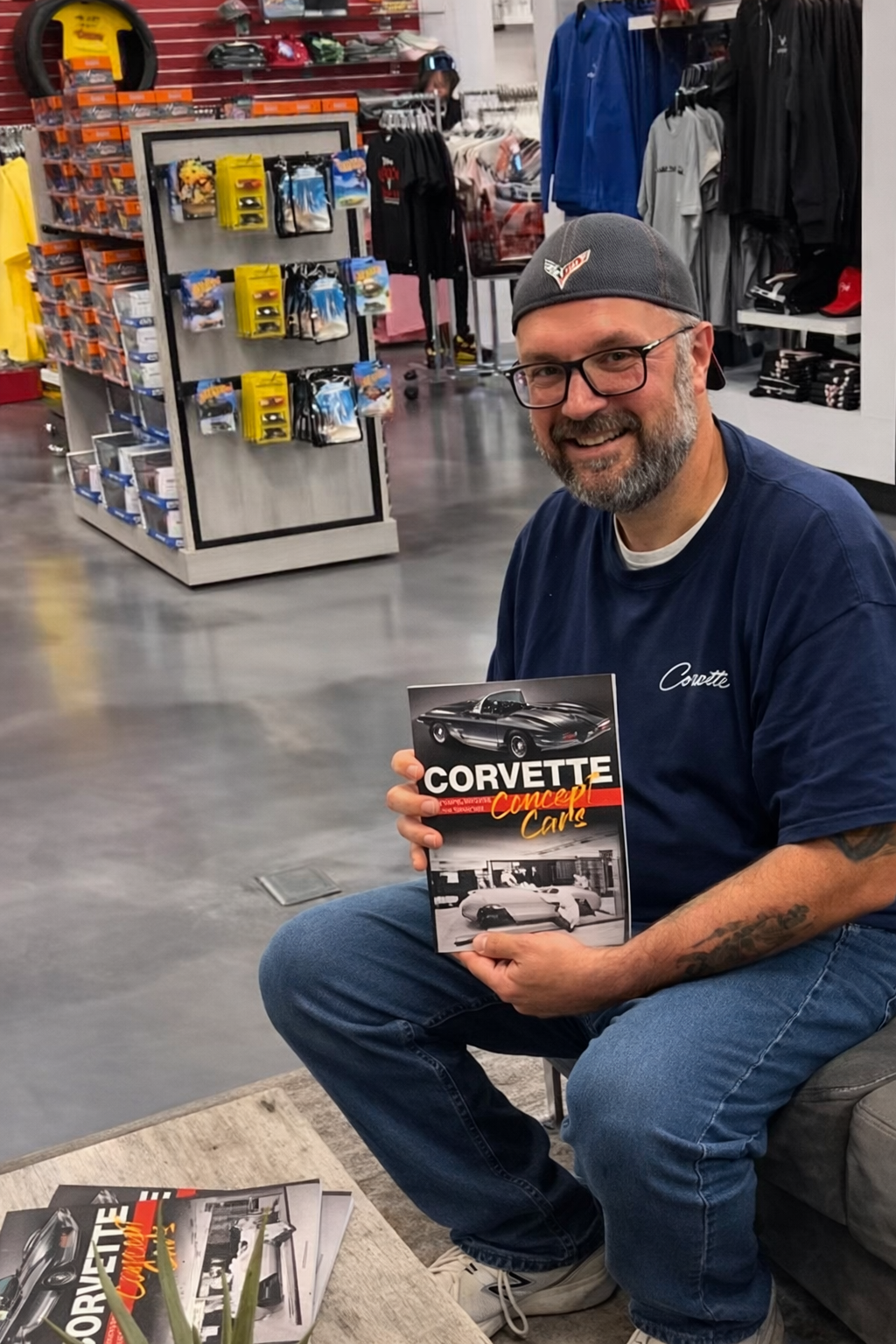
It is always a real privilege to see Corvette Concept Cars: Developing America’s Favorite Sports Car on the shelves at the National Corvette Museum, and I am honored to be part of the 2026 Bash weekend. If you are there on Friday, please stop by and say hello, share a story or two about your favorite Corvette, and if you pick up a copy of the book from the NCM gift shop, I would be glad to sign and inscribe it for you.
For UltimateCorvette.com readers, there is one additional reason to carve out a few minutes on Friday. UltimateCorvette.com creator and founder Scott Kolecki is scheduled to sign copies of his book, Corvette Concept Cars: Developing America’s Favorite Sports Car, on Friday, April 24 from 10:00 a.m. to 1:00 p.m., with the exact location still listed as to be determined on the official Bash schedule. Scott’s published author bio describes him as an automotive historian, journalist, and entrepreneur focused on preserving, documenting, and celebrating the complete history of America’s sports car through primary research, period documentation, and original storytelling. That is exactly the kind of perspective that fits Bash.
Just as important, this is a chance to support the Museum while you are there. If you stop by the signing, say hello, and pick up a copy of the book from the NCM gift shop, you are doing more than adding a strong Corvette title to your shelf. You are also supporting the institution that continues to preserve the hardware, history, and stories that make weekends like Bash possible. And that is a pretty good fit for the spirit of the event overall. The signing should not be the centerpiece of anyone’s Bash itinerary, but it absolutely belongs on the list.
Why this Bash feels bigger than a weekend event
The Bash is such a big event because it brings together every major part of the Corvette world in one place—owners, enthusiasts, Museum leadership, Corvette engineers, racers, historic cars, new performance hardware, and hundreds of Corvettes filling the grounds in Bowling Green. More than just a car show, it feels like a season-opening gathering for the entire hobby, blending insider access, Corvette history, road tours, track activity, and the kind of community that reminds you why the National Corvette Museum remains such an important home base for America’s sports car. (Image courtesy of Scott Koleck/author)
The best Corvette events remind you that the car’s story is not linear. It is engineering. It is racing. It is ownership. It is design. It is preservation. It is community. It is the assembly plant. It is the Museum. It is the track. It is the archive. What makes the 2026 NCM Bash look so strong is that it does not reduce Corvette culture to one of those things. It puts all of them on stage at once. The result is a three-day event that feels less like a spring gathering and more like a concentrated snapshot of where Corvette stands right now—and why people still care so deeply about where it goes next.
For UltimateCorvette.com, that is the real takeaway. Bash 2026 is not important just because it is busy. It is important because it is layered. You can go for the record-setting ZR1X and Z06 hardware. You can go for the racing names. You can go for the road tours and laps. You can go for the artifact talks, the 1983 Corvette, Neil Armstrong’s 1967, the cutaways, or the Museum’s new preservation push. However you come at it, the event offers a credible argument for why Bowling Green still sits at the center of the Corvette world. And if you were looking for the point in the calendar when Corvette season truly starts to feel alive, this year’s Bash looks like it may be the answer.
Every spring, the National Corvette Museum Bash reminds enthusiasts why Bowling Green remains the heartbeat of the Corvette world. More than a gathering, it is a packed, high-energy celebration of performance, history, community, and insider access—offering attendees an unmatched chance to experience America’s sports car from every possible angle.
The 2027 Chevrolet Corvette Grand Sport did not arrive all at once. It arrived in two acts, and that matters.
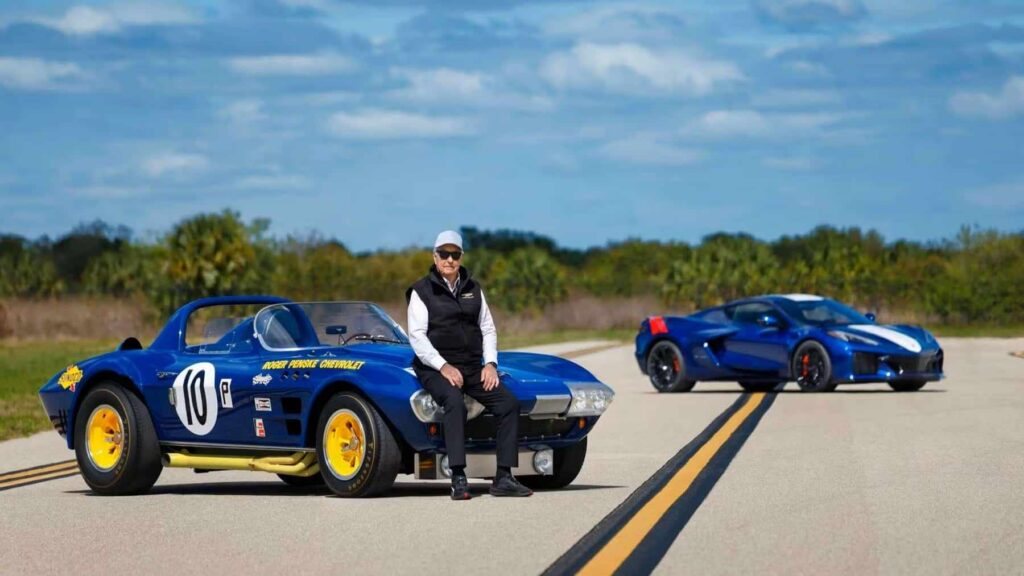
The first came on March 21, 2026, at the 74th Mobil 1 Twelve Hours of Sebring, where Chevrolet gave enthusiasts their first public look at the new Grand Sport in the most appropriate place imaginable. Sebring is not just another racetrack in Corvette history. It is one of the places where the Grand Sport name first earned its meaning, and Chevrolet leaned directly into that legacy by revealing the new C8 Grand Sport on the 62nd anniversary of Roger Penske and Jim Hall’s class win at Sebring in a C2 Corvette Grand Sport on March 21, 1964.
The second act came five days later. On March 26, 2026, Chevrolet pulled the curtain all the way back and formally revealed the car’s specifications, structure, positioning, and the bigger story behind it. That is where the announcement became much more than a heritage moment. It became one of the most important Corvette product reveals in recent memory, because the return of the Grand Sport also introduced Corvette’s new 6.7-liter LS6 small-block V-8 and confirmed that Chevrolet is reshaping the heart of the Corvette lineup for 2027.
Sebring Was the Right Place to Start
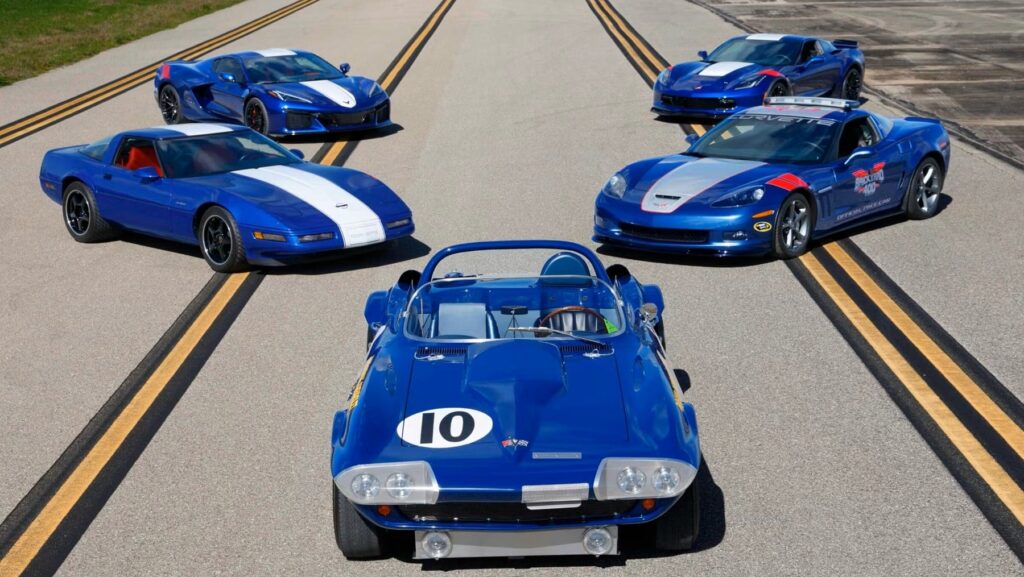
Corvette Grand Sport history came full circle at Sebring as Chevrolet brought together past and present on one of the most meaningful stages in the car’s racing legacy, from the original C2 Grand Sport to the newly revealed 2027 model. (Image courtesy of GM Media LLC.)
Chevrolet’s choice to debut the new Grand Sport at Sebring was deliberate, and frankly, it was smart.
Rather than opening with a sterile studio reveal, Chevrolet put the car in front of enthusiasts at one of Corvette racing’s sacred grounds and surrounded it with the generations that gave the badge its weight. The C8 Grand Sport appeared alongside its predecessors, including the original C2 Grand Sport, the 1996 C4 Grand Sport, the C6 Grand Sport, and the C7 Grand Sport, reinforcing the idea that this was not a marketing resurrection. It was a continuation of a Corvette formula that has repeatedly worked: give buyers a car that blends the broad capability and daily approachability of the standard Corvette with much of the visual drama, stance, and chassis edge of the higher-performance model.
That Sebring reveal also let Chevrolet establish the tone before the specifications ever arrived. The message was clear even before the press release filled in the blanks. Grand Sport was coming back not as a nostalgia exercise, but as a serious volume model in the C8 family. Chevrolet said as much in its Sebring material, calling the new Grand Sport a model built by and for enthusiasts and signaling that it would be a major part of the range rather than some limited-run sideshow.
The Formal Reveal Confirmed the Real Headline
A few days after its heritage-rich debut at Sebring, Chevrolet fully revealed the 2027 Corvette Grand Sport lineup, including the Grand Sport X seen here, giving enthusiasts their first detailed look at the car’s design, hardware, and expanded role in the C8 family. (Image courtesy of GM Media LLC.)
When Chevrolet issued the formal reveal on March 26, the biggest news was not simply that Grand Sport had returned. The biggest news was what powered it.
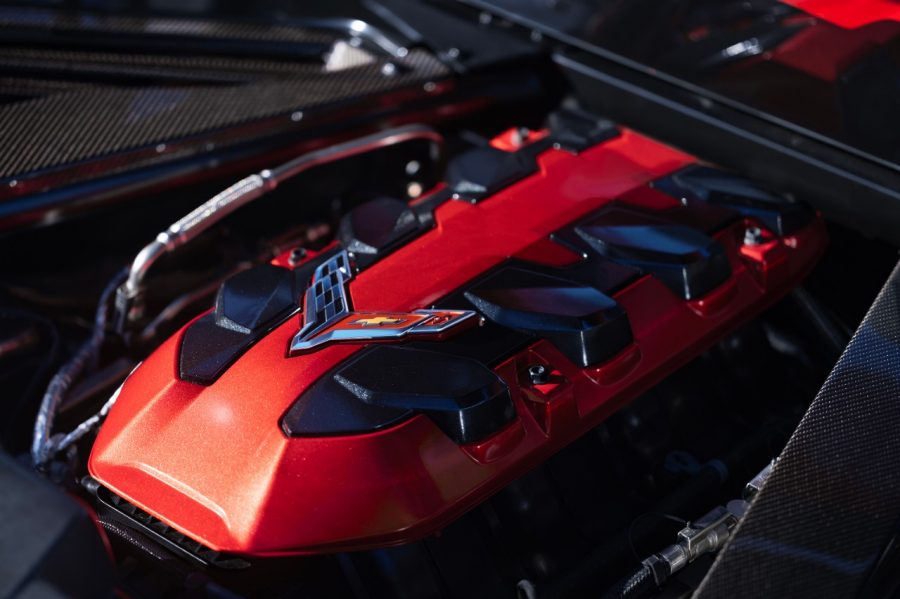
At the center of every 2027 Corvette Grand Sport is Chevrolet’s new naturally aspirated 6.7-liter LS6 V-8, rated at 535 horsepower and 520 lb-ft of torque. Chevrolet says the engine displaces 409 cubic inches, uses a 100 mm stroke, a 13.0:1 compression ratio, a 95 mm throttle body, and a tunnel-ram intake with high-velocity ports. GM also describes this engine as the start of the sixth generation of the Small Block V-8, which is significant well beyond this one model.
That last point is the one Corvette enthusiasts should really pay attention to. Chevrolet is not treating the pushrod small-block as a relic it is reluctantly dragging into the future. It is investing in it, modernizing it, and making it central to the Corvette lineup again. GM’s own engine deep dive says the LS6 will serve as the primary engine for the 2027 Stingray, Grand Sport, and Grand Sport X, which means this reveal was not just about adding another trim level. It was about redefining the core of Corvette’s mainstream performance lineup.
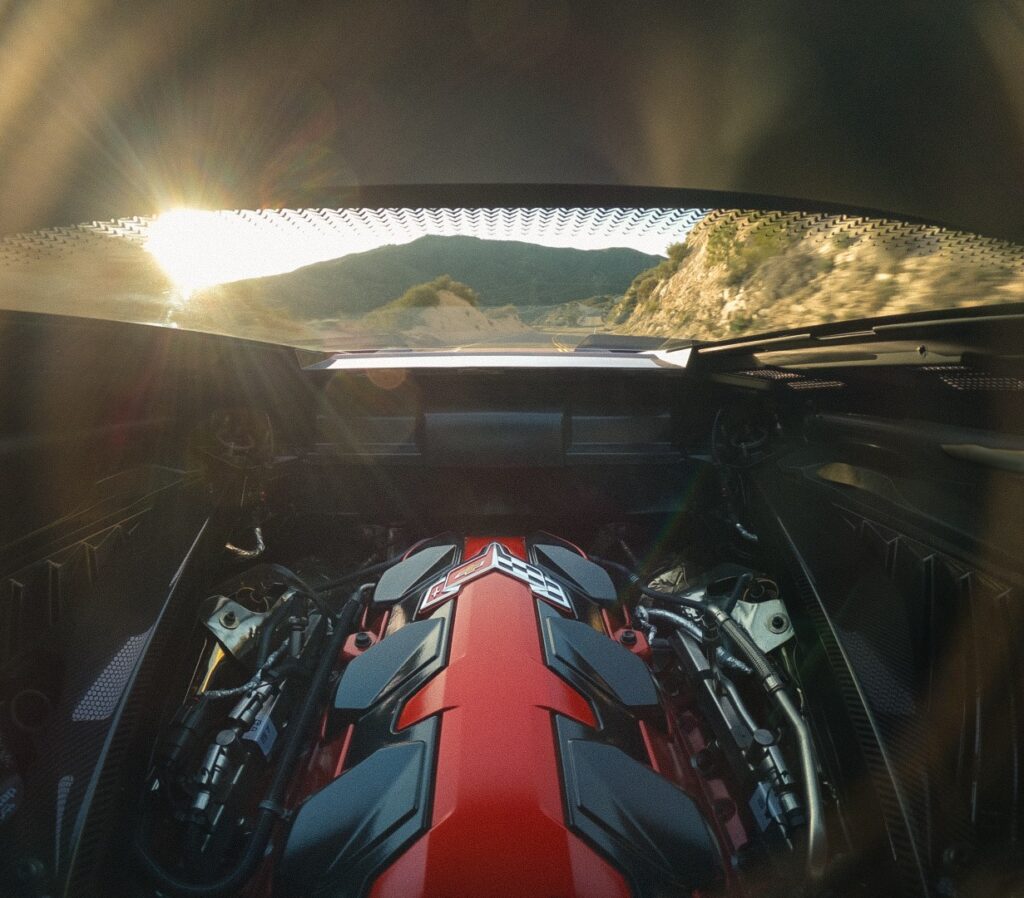
The formal reveal of the 2027 Corvette Grand Sport also introduced Chevrolet’s next-generation 6.7-liter LS6 small-block V-8, the naturally aspirated engine that now sits at the center of the car’s performance story. (Image courtesy of GM Media LLC.)
There is symbolism here too. GM says the LS6 will be assembled at Flint Engine Operations in Flint, Michigan, the same city where the first Corvette V-8s were assembled in 1955. Corvette has always lived in tension between reinvention and tradition. This announcement feels like Chevrolet trying to prove it can still do both at the same time.
Grand Sport Still Occupies Corvette’s Sweet Spot
In many ways, Chevrolet has stayed faithful to what Grand Sport has historically represented.
The new Grand Sport sits between the Stingray and the Z06, pairing the new LS6 with the wider body architecture and much of the more aggressive visual and chassis attitude Corvette buyers associate with the upper tier of the range. Chevrolet’s own product page describes the formula plainly: the power of the Stingray combined with the wider body, aerodynamics, and track-focused hardware of the Z06. That has been the Grand Sport recipe before, and Chevrolet clearly believes it still has real value in the mid-engine era.
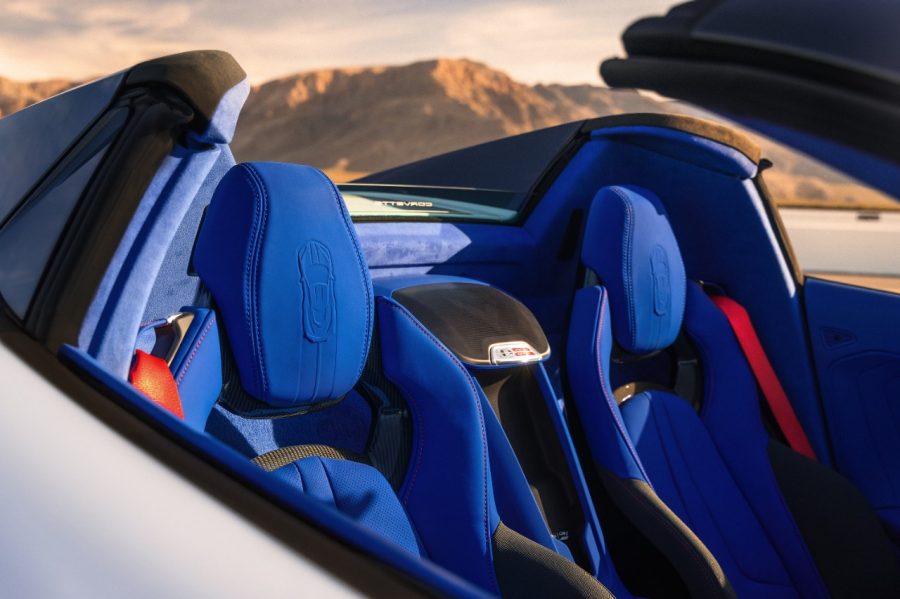
Beyond its performance credentials, the 2027 Corvette Grand Sport arrives with distinctive visual and interior cues, including striking blue upholstery, embossed headrests, and launch-specific trim details that give the new model a sharper aesthetic identity inside and out. (Image courtesy of GM Media LLC.)
Visually, the car gets the wide-body stance, integrated rear spoiler, large side inlets, forged aluminum wheels, and the familiar Grand Sport hash marks — though for the first time, Chevrolet has moved those hash marks to the rear of the car, a nod to the C8’s mid-engine layout. Admiral Blue Metallic also returns, which will instantly register with anyone who knows the visual language of earlier Grand Sports.
The standard chassis setup also reinforces Chevrolet’s attempt to keep Grand Sport broad in its appeal. Magnetic Ride Control is standard, along with a Touring suspension and Michelin Pilot Sport All Season 4 tires. Buyers who want more edge can step into the Z52 Sport Performance Package, which adds a firmer setup, Michelin Pilot Sport 4S summer tires, and iron brakes from the Z06. The Z52 Track Performance Package goes further with carbon-ceramic brakes, Michelin Pilot Sport Cup 2R tires, carbon aero, and an available quad center exhaust, which Chevrolet says is the first center-exit exhaust offered on a pushrod-engined C8.
Grand Sport X Expands the Formula
The 2027 Corvette Grand Sport X expands the Grand Sport formula into new territory, pairing Chevrolet’s next-generation LS6 small-block V-8 with electrified all-wheel-drive performance to create a more powerful and technologically ambitious interpretation of the badge. (Image courtesy of GM Media LLC.)
The March 26 reveal also confirmed something enthusiasts had been suspecting after Sebring: Grand Sport would not be a one-car story.
Chevrolet introduced the Grand Sport X, an electrified all-wheel-drive companion model that combines the 535-horsepower LS6 with a front-axle electric motor and compact battery derived from the ZR1X system. Chevrolet says the front motor contributes 186 horsepower and 145 lb-ft of torque, bringing total system output to 721 horsepower. In other words, the Grand Sport name now stretches across both a traditional rear-drive car and a hybrid AWD variant.
That is a meaningful shift in how Chevrolet is using the Grand Sport badge. Traditionally, Grand Sport has represented the purist’s middle ground — the car for the buyer who wanted more than a base Corvette but less complication than the flagship. Chevrolet still describes the standard Grand Sport as the purist’s choice, but Grand Sport X broadens the concept for modern Corvette buyers who want all-wheel-drive traction, additional performance, and the kind of electrified capability Chevrolet has already been building into the upper reaches of the C8 family.
The Grand Sport X also appears to signal a broader realignment in the lineup. Several major outlets have reported that Grand Sport X effectively takes over the territory previously occupied by the E-Ray in the 2027 range, though Chevrolet’s own public-facing language is more focused on describing Grand Sport X on its own terms than explicitly calling it a replacement.
The Latest Details Add Real Texture
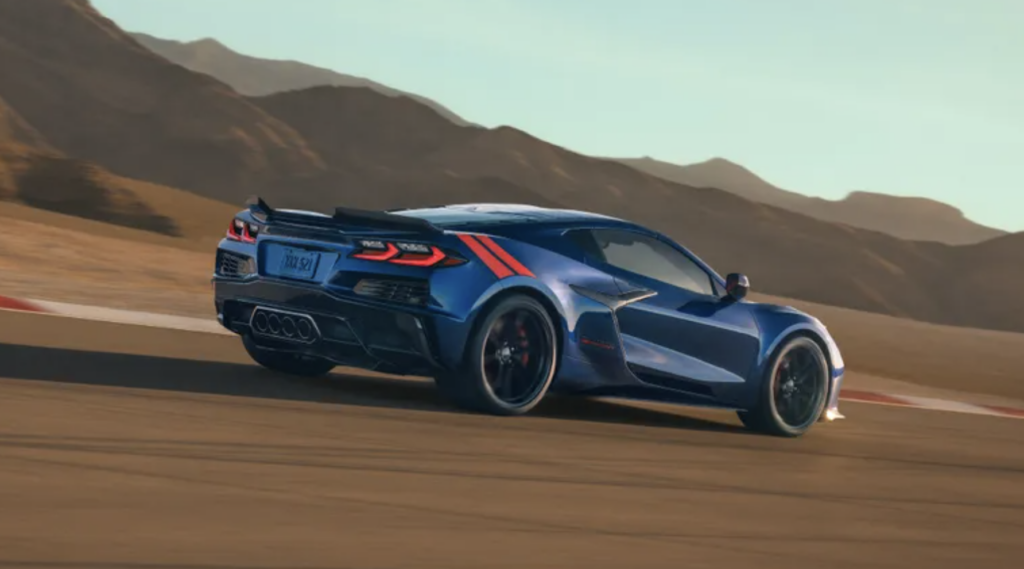
With its wide-body stance, rear-quarter Grand Sport hash marks, center-exit exhaust, and track-minded aero details, the 2027 Corvette Grand Sport distinguishes itself from other C8 variants by blending the visual aggression of Chevrolet’s higher-performance models with the more balanced, enthusiast-focused spirit that has long defined the Grand Sport name. (Image courtesy of GM Media LLC.)
Since the Sebring debut, Chevrolet has also filled in a number of smaller but still important details.
The company has shown a Launch Edition finished with a Santorini Blue-dipped interior, embossed headrests, special trim details, and unique badging that underline Chevrolet’s intent to give the Grand Sport a strong launch identity right out of the gate. Chevrolet has also emphasized that buyers will have a broad range of stripe and hash-mark combinations, suggesting that personalization will remain a meaningful part of the Grand Sport’s appeal.
Production is expected to begin in summer 2026, with sales following in the second half of the year, though Chevrolet has not yet released official pricing. Several outlets expect the Grand Sport to land around the mid-$90,000 range, but that remains informed industry expectation rather than confirmed Chevrolet guidance, so it should be treated that way until the company publishes final numbers.
Why This Matters Now
As the sun sets on one chapter of Corvette history and rises on another, the 2027 Corvette Grand Sport stands as a reminder that some of the most important Corvettes are the ones that honor the past while confidently carrying the story forward. (Image courtesy of GM Media LLC.)
The reason this story has continued to evolve beyond Sebring is simple: Sebring gave us the emotion, but March 26 gave us the substance.
And taken together, those two announcements tell a bigger story than either one could have told alone. Chevrolet used Sebring to anchor the Grand Sport in history, then used the formal reveal to explain why the badge still deserves to exist in the modern Corvette era. The result is a car that looks positioned to become one of the most relevant models in the 2027 lineup: a naturally aspirated, wide-body, mid-engine Corvette that aims squarely at the sweet spot many enthusiasts have always believed Corvette does best.
That may ultimately be the smartest thing Chevrolet has done here. It did not diminish the Sebring reveal by following it with a more formal announcement. It strengthened it. Sebring gave the Grand Sport its emotional legitimacy. The March 26 reveal gave it mechanical credibility. Put the two together, and the 2027 Corvette Grand Sport already looks like one of the defining Corvette stories of 2026.
Sources
General Motors / Chevrolet Newsroom — “Chevrolet Introduces 2027 Corvette Grand Sport at Sebring”
General Motors / Chevrolet Newsroom — “Grand Sport returns with 6.7-liter, 535-horsepower V-8”
General Motors / Chevrolet Newsroom — LS6 engine deep dive
Chevrolet.com — 2027 Corvette Grand Sport product page
Car and Driver coverage of the 2027 Corvette Grand Sport reveal
Sebring gave us the first look. Chevrolet’s full reveal gave us the real story. The 2027 Corvette Grand Sport returns with historic purpose, a new LS6 small-block V-8, and a bigger role in the Corvette lineup than many enthusiasts expected.
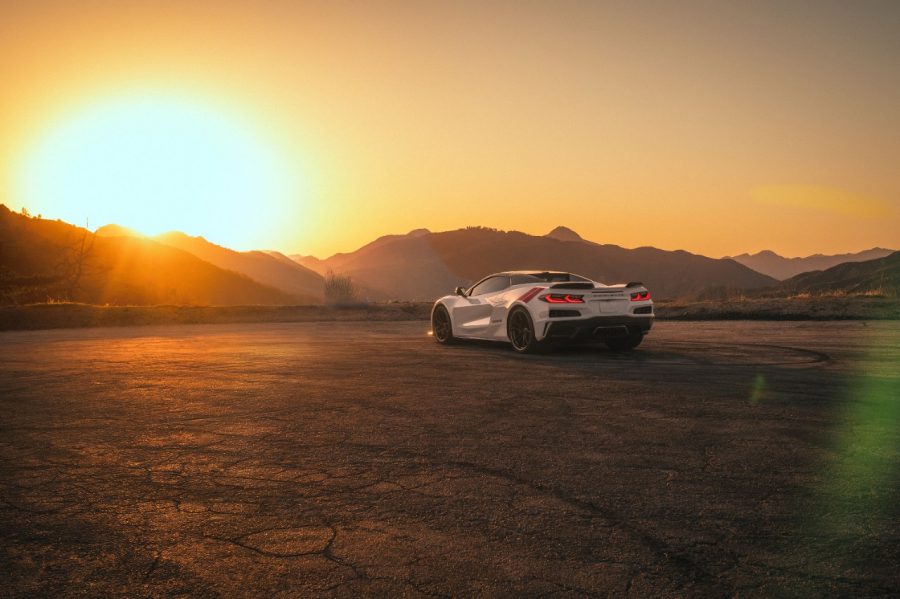
Chevrolet is preparing to honor a once-in-a-generation milestone—the 250th anniversary of the United States—with the introduction of its Stars & Steel Collection, a patriotic, design-forward lineup of special-edition vehicles for the 2026 model year. Rooted in American craftsmanship and purpose-driven symbolism, the collection blends modern Chevrolet performance with visual cues inspired by the American flag, while also supporting veterans and military families.
Spanning five nameplates—Corvette, Silverado EV, Silverado LD, Silverado HD, and Colorado—the Stars & Steel Collection features exclusive appearance treatments, curated interior and exterior color combinations, and premium content across each model. Every vehicle in the collection is proudly assembled in the United States, reinforcing Chevrolet’s longstanding domestic manufacturing footprint.
Corvette Stars & Steel Limited Edition: Just 250 Built
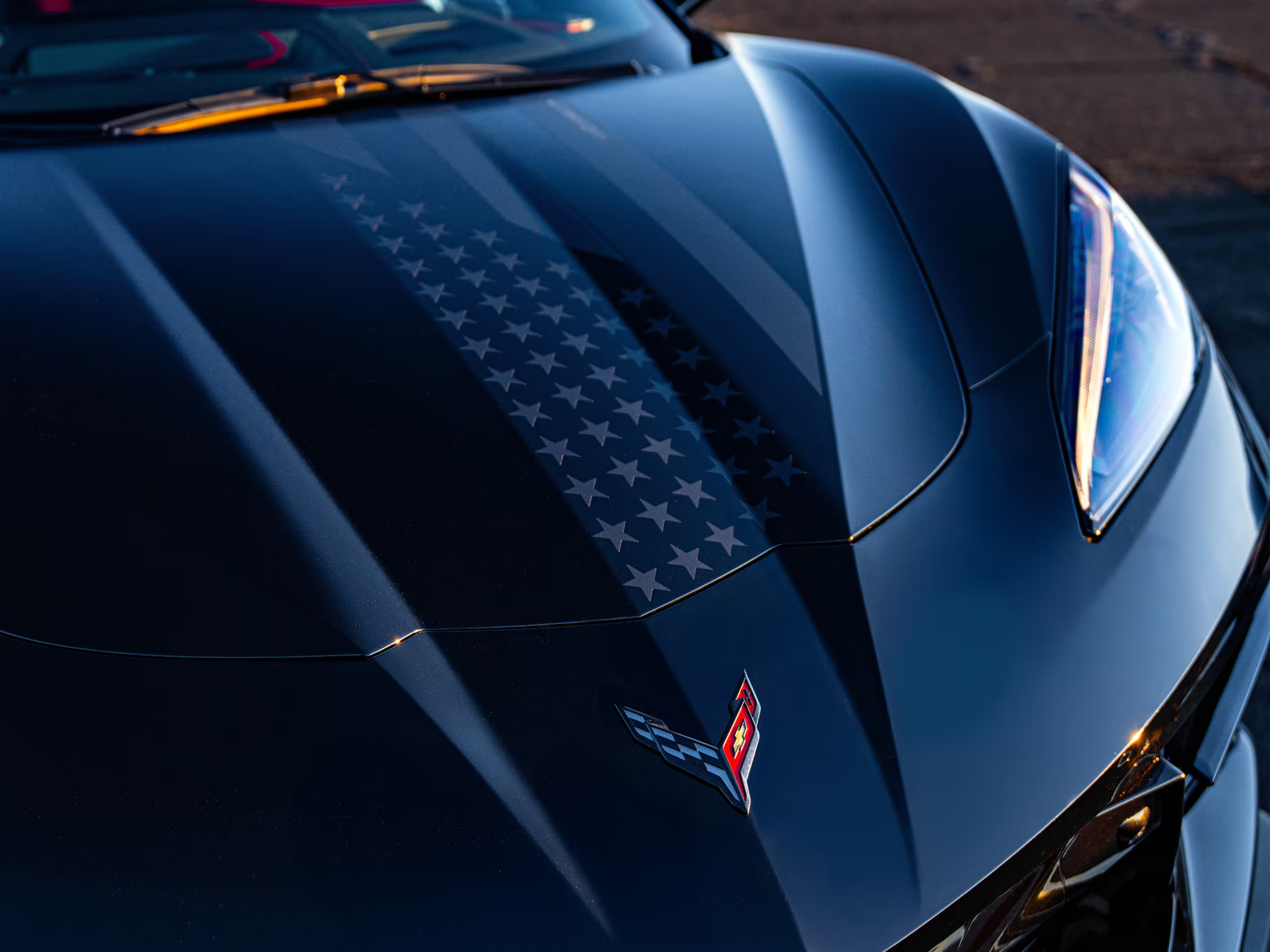
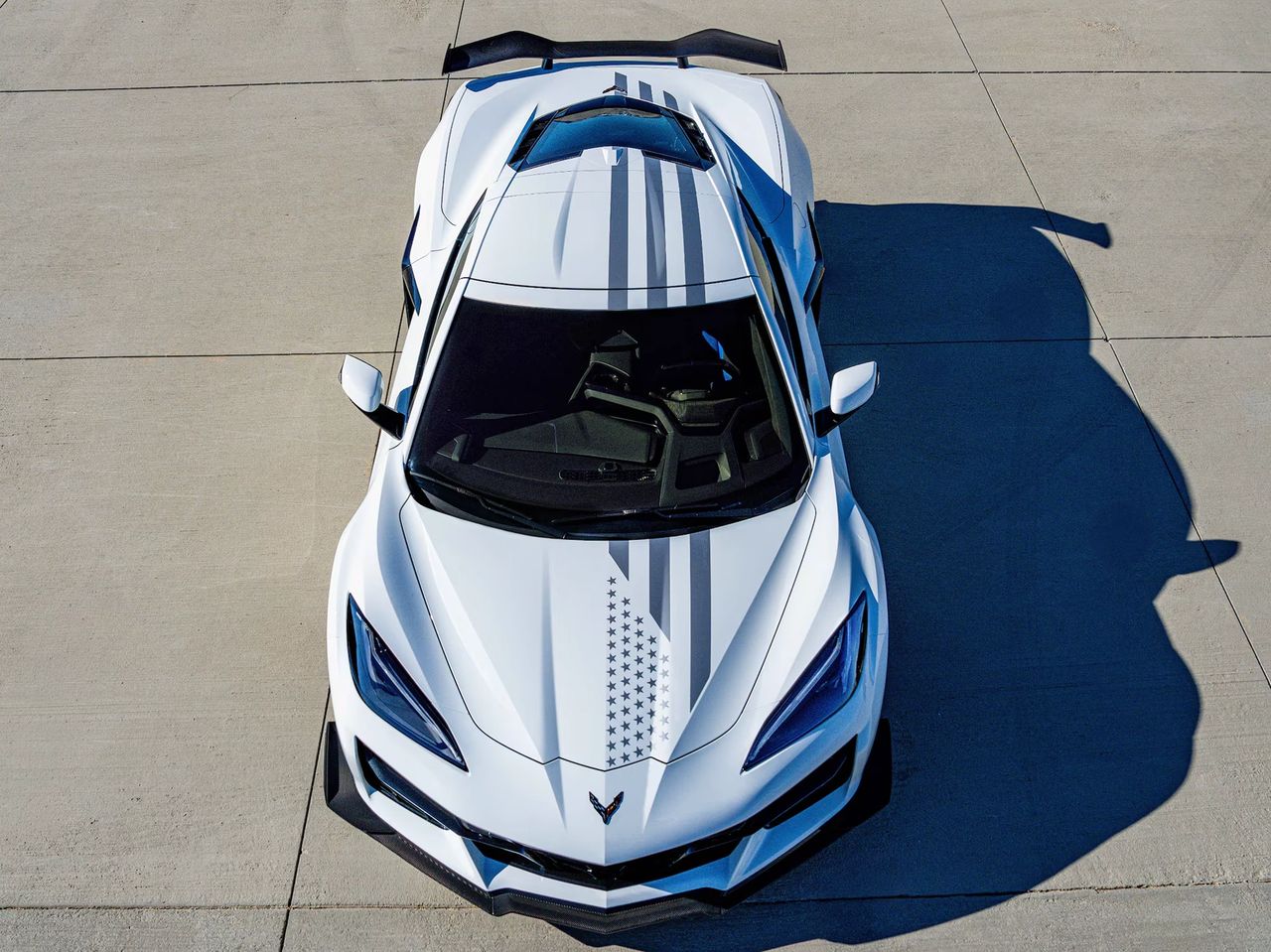
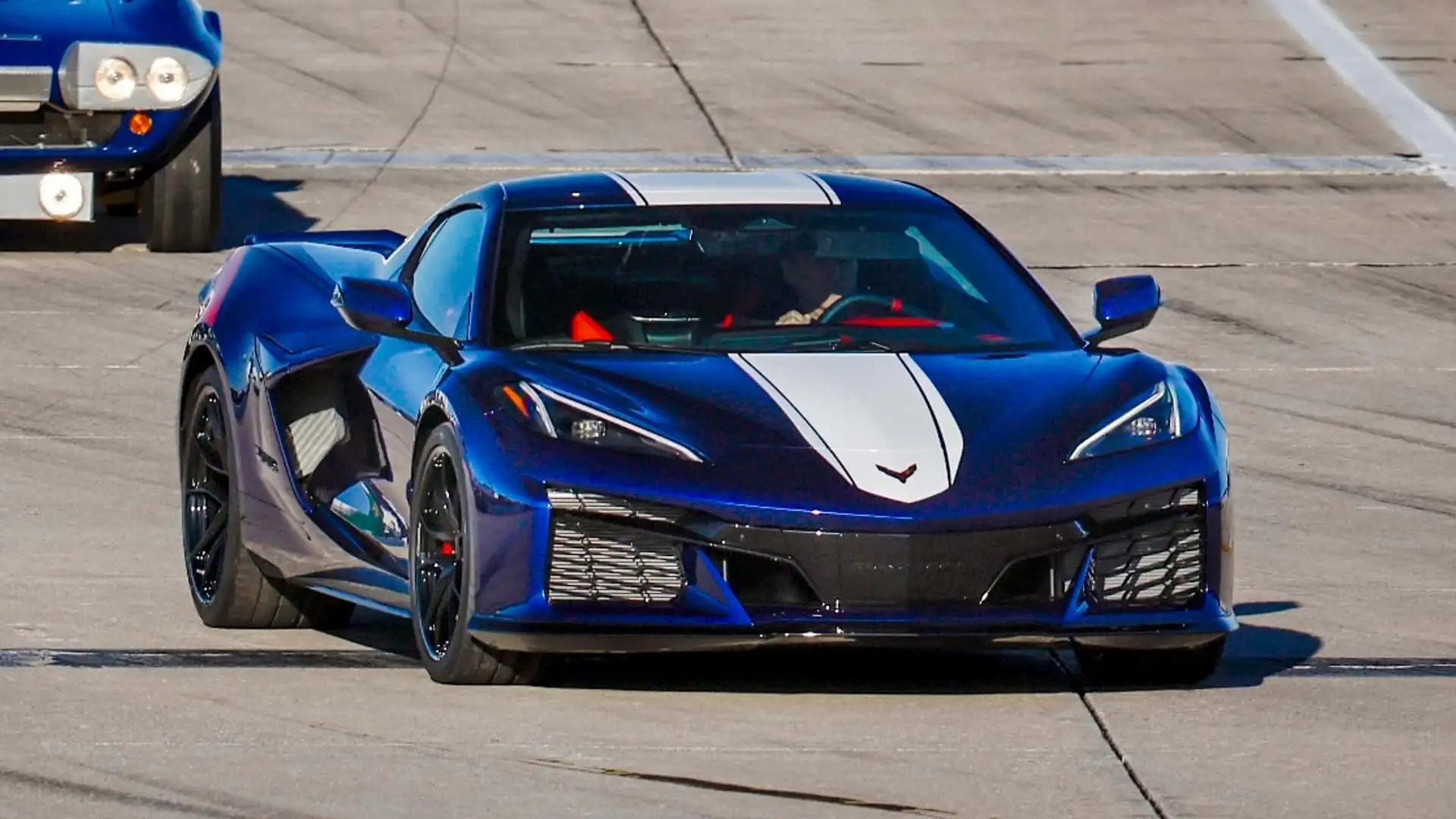
This overhead view captures the Stars & Steel theme exactly as Chevrolet intended: a clean Arctic White base punctuated by flag-inspired striping that runs nose-to-tail in a muted, metallic-looking gray (the “steel” element of the design). Front and center on the hood, the graphic transitions into a field of stars arranged as a stylized flag motif—subtle at a distance, unmistakably patriotic up close. The look is finished with the Corvette crossed-flags emblem on the nose, anchoring the package in brand identity while the Stars & Steel graphics do the commemorative heavy lifting. The overall effect is deliberate and modern—patriotism expressed through precision paintwork and restrained, premium finishes rather than loud color. (Source: GM Media)
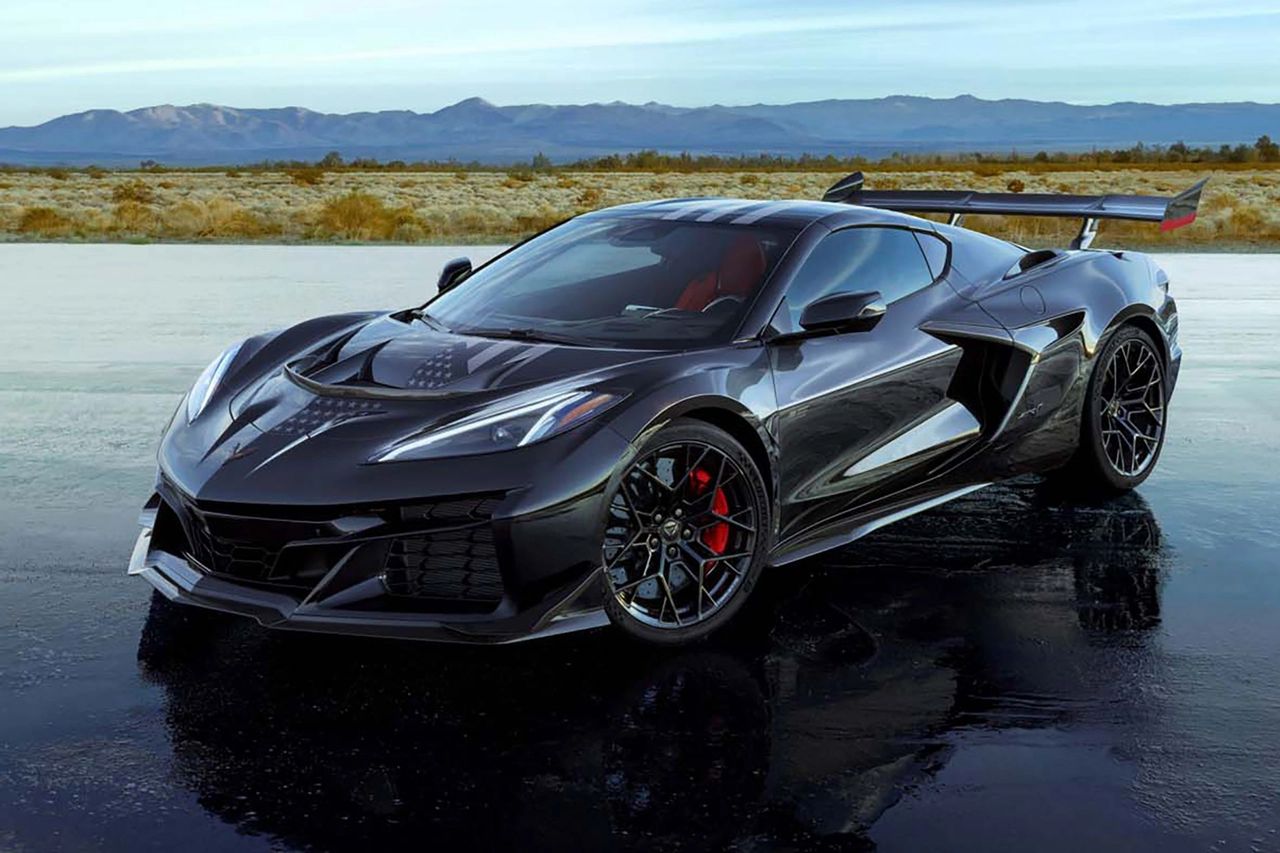
At the center of the collection is the Corvette Stars & Steel Limited Edition, the most exclusive offering in the lineup. Production will be capped at just 250 total units, making it the only Stars & Steel vehicle with a hard build limit. The edition will be available across the entire Corvette range—from Stingray through ZR1X—in both coupe and convertible form, restricted to 3LT and 3LZ trims.
Buyers will choose between two striking color combinations:
Arctic White exterior with Santorini Blue interior
Black exterior with Adrenaline Red interior
Each Corvette Stars & Steel Limited Edition includes:
Full-length American flag–inspired stripes in Satin Silver or Satin Black
Unique “250” flag graphics on the doors and spoiler ends (when equipped)
Serialized interior plaque and unique sill plates identifying build sequence
Black Gloss, Carbon-Flash, or available Carbon Fiber wheels, depending on model
Red accents throughout, including Edge Red brake calipers, red seat belts, red-stitched floor mats, and an Edge Red engine cover on select variants
Black exhaust tips and model-specific accessories
The result is a Corvette that balances subtle patriotism with unmistakable presence—commemorative without being overstated.
A One-of-One ZR1X for Charity
Chevrolet sold a one-of-one, bespoke 2026 Corvette ZR1X finished in the brand’s Stars & Steel theme for $2.6 million dollars at the Barrett-Jackson Scottsdale Winter Auction on Saturday, January 24, 2026—with a purpose behind the horsepower: 100% of the hammer price went to benefit the Tunnel to Towers Foundation. Chevrolet’s mission is to raise as much as possible for a nonprofit that supports injured veterans and the families of fallen first responders, including through mortgage-free homes and other direct assistance—making this ZR1X more than a headline car, but a high-impact fundraiser that moves the cause forward with every bid.
In addition to its production cars, Chevrolet built a one-of-one 2026 Corvette ZR1X featuring a bespoke Stars & Steel design. This unique example crossed the auction block at the Barrett-Jackson Scottsdale Winter Auction on January 24, 2026, raising a massive $2.6 million dollars, with 100 percent of the hammer price benefiting the Tunnel to Towers Foundation, a nonprofit supporting injured veterans, fallen first responders, and their families.
Chevrolet will also donate $250 per Stars & Steel vehicle sold to nonprofits that serve the veteran community.
Public Debut at the Army–Navy Game
The Stars & Steel Collection made its first public appearance at the 2025 Army–Navy Game presented by USAA, held December 13, 2025, at M&T Bank Stadium in Baltimore.
Baltimore delivered classic mid-December football weather for the 2025 Army–Navy Game at M&T Bank Stadium—cold, overcast, and unmistakably seasonal. Temperatures hovered in the low-40s at kickoff, with a light breeze rolling in off the harbor, creating the kind of crisp conditions that felt entirely appropriate for one of college football’s most tradition-rich events. The chill did nothing to dampen the atmosphere, as cadets and midshipmen filled the streets around the stadium hours before kickoff, reinforcing the ceremonial gravity that surrounds this rivalry every year.
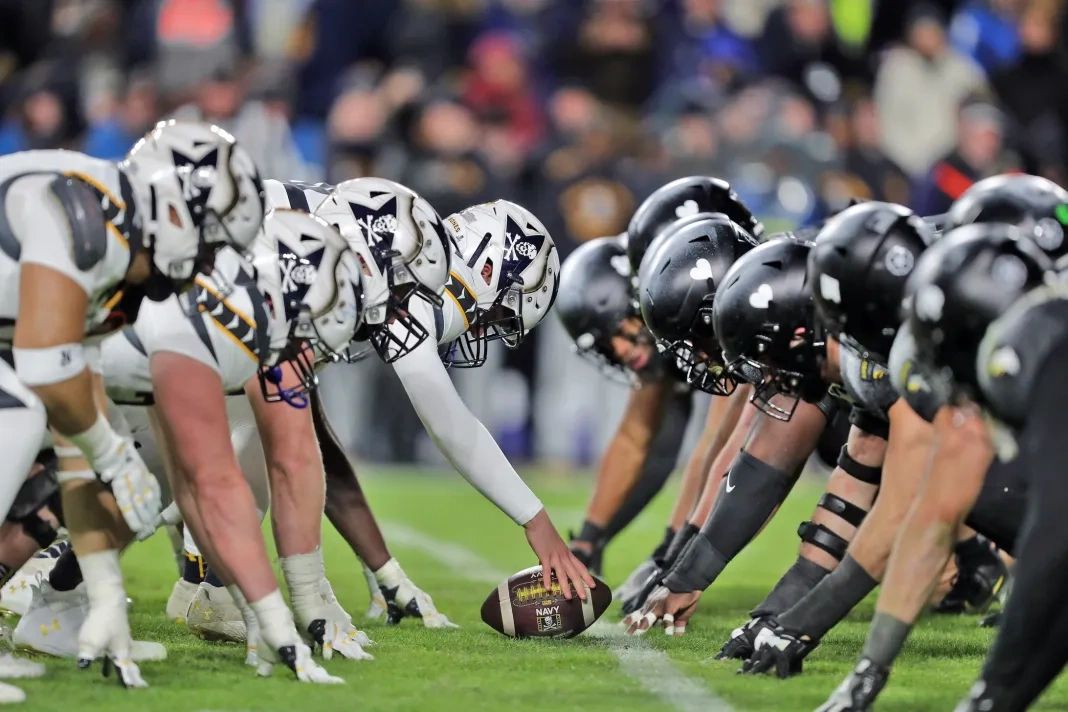
In the December 13, 2025 Army–Navy Game at Baltimore’s M&T Bank Stadium, Navy edged Army 17–16, pulling off a fourth-quarter rally to win the rivalry and secure the Commander-in-Chief’s Trophy. Army controlled the scoreboard for most of the day and took a 16–7 lead into the second half, but Navy’s defense steadily tightened the vise and kept the Midshipmen within striking distance. The defining sequence came late: after a tense goal-line moment that nearly unraveled with a fumble, Blake Horvath answered on the biggest down of the game—hitting Eli Heidenreich on an 8-yard touchdown pass on fourth-and-goal with 6:32 remaining to take the lead for good. From there, Navy’s defense closed the door, turning the final minutes into a stand of discipline and execution that matched the image perfectly—two lines squared up, everything decided in inches.
Inside the stadium, the turnout was strong, with tens of thousands of fans packing the stands for a tightly contested matchup that once again drew national attention. The pageantry was as prominent as the football itself—military flyovers, precision marching, and coordinated pregame ceremonies underscored the event’s deep ties to service and sacrifice. High-profile attendees were also on hand, including President Donald Trump, whose presence added to the sense that this was not just a game, but a nationally significant moment on the sports calendar.
Against that backdrop, Chevrolet’s Stars & Steel Collection made its first public appearance, aligning naturally with the event’s themes of patriotism, tradition, and American identity. While most of the imagery released to date comes from Chevrolet’s official photography, the visual narrative was clear: Stars & Steel Corvettes and trucks presented as modern symbols of American engineering, positioned within one of the country’s most enduring military traditions. The setting reinforced the collection’s intent—not as a flashy reveal, but as a measured, respectful debut tied to service, national pride, and a historic anniversary just one year away.
A Broader Chevrolet Statement
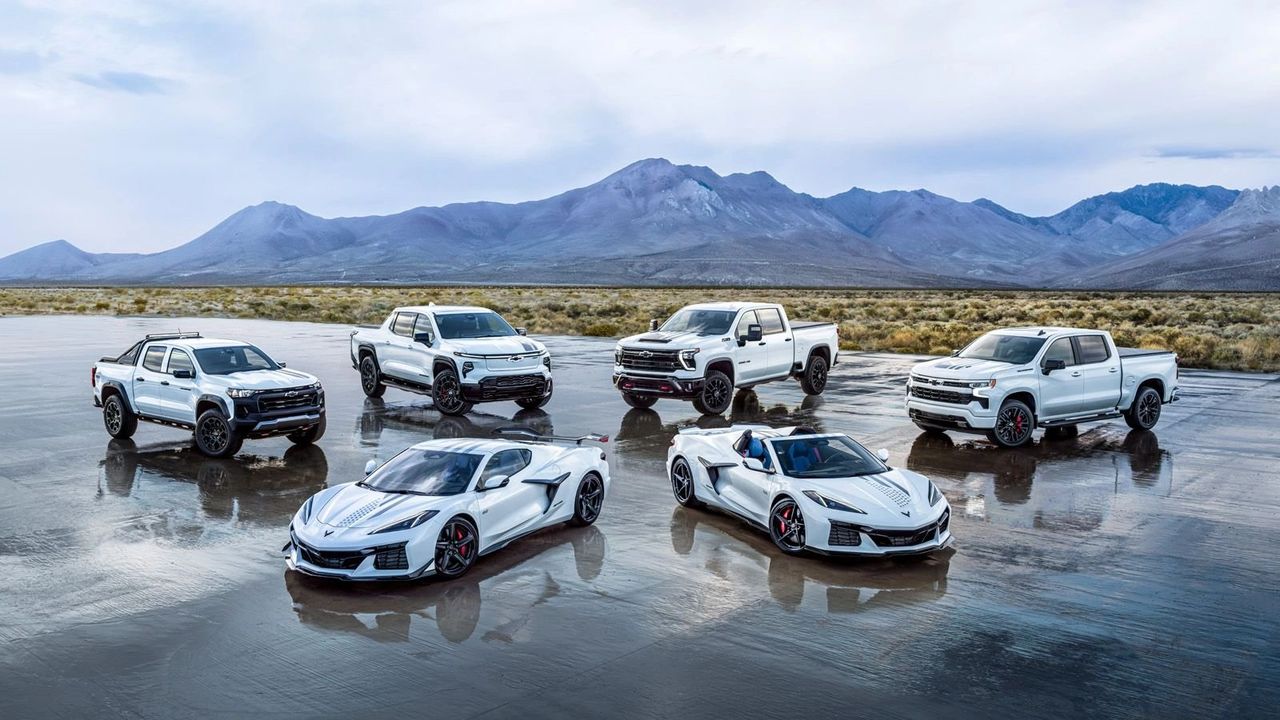
This group shot puts the Stars & Steel Collection into full context, showing how Chevrolet applied a unified patriotic design language across performance cars and trucks alike. Finished primarily in Summit White and Arctic White, each vehicle is accented with Satin Silver or Satin Black American flag–inspired striping and subtle “250” graphics, creating a cohesive visual identity that ties the lineup together without overwhelming the sheetmetal. The Corvettes anchor the image with low, aggressive stances and star-field hood graphics, while the Silverado and Colorado models translate the same Stars & Steel cues into a tougher, utility-focused form. Together, the lineup reflects Chevrolet’s intent with the collection: a modern, restrained celebration of America’s 250th anniversary that spans sports cars, trucks, and electrification under a single, unmistakably American theme. (Image source: GM Media LLC)
While the Corvette is the emotional centerpiece, the Stars & Steel Collection extends across Chevrolet’s truck portfolio as well, offering special editions and appearance packages that unify the lineup through shared design themes. Chevrolet notes that nearly 87 percent of Americans live within 10 miles of a Chevy dealership, reinforcing the brand’s deep roots in everyday American life.
For Corvette enthusiasts, however, the message is clear: this is a rare, historically anchored moment, and the Stars & Steel Limited Edition represents one of the most exclusive commemorative Corvettes Chevrolet has ever offered.
Chevrolet is tying Corvette to a major American milestone with the new Stars & Steel Collection, a limited-edition program that blends patriotism, exclusivity, and purpose. With just 250 Corvette examples planned and a charity-driven message behind the rollout, this is more than a graphics package—it is a commemorative statement.
Chevrolet gave Corvette enthusiasts their first official look at the 2027 Corvette Grand Sport on Saturday, March 21, 2026, at Sebring International Raceway, where the new car appeared alongside prior Grand Sport generations ahead of the Mobil 1 Twelve Hours of Sebring. Multiple outlets report that Chevy representatives confirmed the Grand Sport’s return for the 2027 model year and said fuller details are scheduled to arrive on Thursday, March 26.
On March 21, 2026, Chevrolet used the 74th Mobil 1 Twelve Hours of Sebring at Sebring International Raceway to bring together all five generations of Corvette Grand Sport—the original 1963 C2 Grand Sport, the 1996 C4 Grand Sport, the C6 Grand Sport, the C7 Grand Sport, and the newly unveiled 2027 C8 Corvette Grand Sport—in a moment that connected the badge’s racing-born past to its newest chapter. Seen together, the lineup underscored how the Grand Sport name has evolved from Zora Arkus-Duntov’s lightweight competition special into one of the most respected performance formulas in Corvette history, with Sebring serving as an especially appropriate backdrop for the C8 Grand Sport’s first official public appearance. (Image credit: Chevrolet)
The car shown at Sebring wore one of the most recognizable visual themes in Corvette history: Admiral Blue with a broad white center stripe and red hash marks on the rear quarters. Reports from the event also describe C7-style Cup-inspired wheels, restrained aero, and revised Grand Sport badging, all of which suggest Chevrolet is leaning hard into the badge’s traditional role as the sweet spot between the everyday Stingray and the more singularly focused upper-tier cars.
Just as important as the styling is what Chevrolet appears to be signaling underneath it. GM Authority reported that Chevy confirmed the 2027 Grand Sport will use GM’s “next generation V8,” a phrase that immediately elevates this debut from simple trim-level nostalgia to something much more important in the continuing evolution of the C8 platform. While some of the engine specifics circulating today still sit in rumor territory, the official acknowledgment of a next-generation V8 gives this Grand Sport debut real substance.
Set side by side, the original C2 Grand Sport and the new C8 Grand Sport make it easy to see what Chevrolet has preserved across more than six decades. The 1963 car established the formula: take Corvette’s core platform, sharpen it with real performance intent, and build something that feels unmistakably tied to competition without losing the identity of the street car beneath it. The C8 carries that same legacy forward, translating the Grand Sport idea into a mid-engine era while keeping the badge rooted in balanced performance, visual purpose, and a direct connection to Corvette’s racing DNA.
Sebring was the right place to do this, and not simply because it gave Chevrolet a high-visibility stage. The Grand Sport name has always carried more meaning than a stripe package, a badge, or a cosmetic nod to the past. It is one of the most historically loaded names in Corvette history, born from racing ambition and shaped by the idea that Corvette could be pushed further—lighter, sharper, more serious, and more connected to competition than the standard production car. Across multiple generations, that identity has remained intact even as the hardware changed.
That is what made the public debut of the 2027 Corvette Grand Sport at Sebring feel so deliberate. Sebring is not just another venue on the calendar. It is one of the most important endurance racing circuits in America, a place where engineering credibility still carries weight and where Corvette’s broader performance legacy has long had real context. By choosing this setting to unveil the new Grand Sport in front of enthusiasts and alongside earlier generations, Chevrolet was making a statement about continuity. This was not nostalgia for nostalgia’s sake. It was a reminder that Grand Sport still occupies a meaningful place in the Corvette hierarchy and still draws its identity from the same racing-bred spirit that defined the name in the first place.
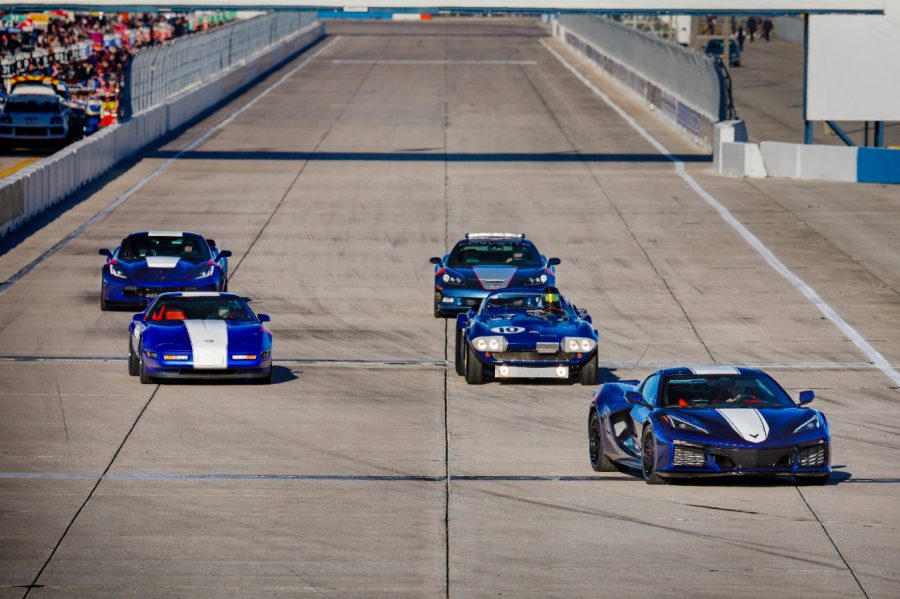
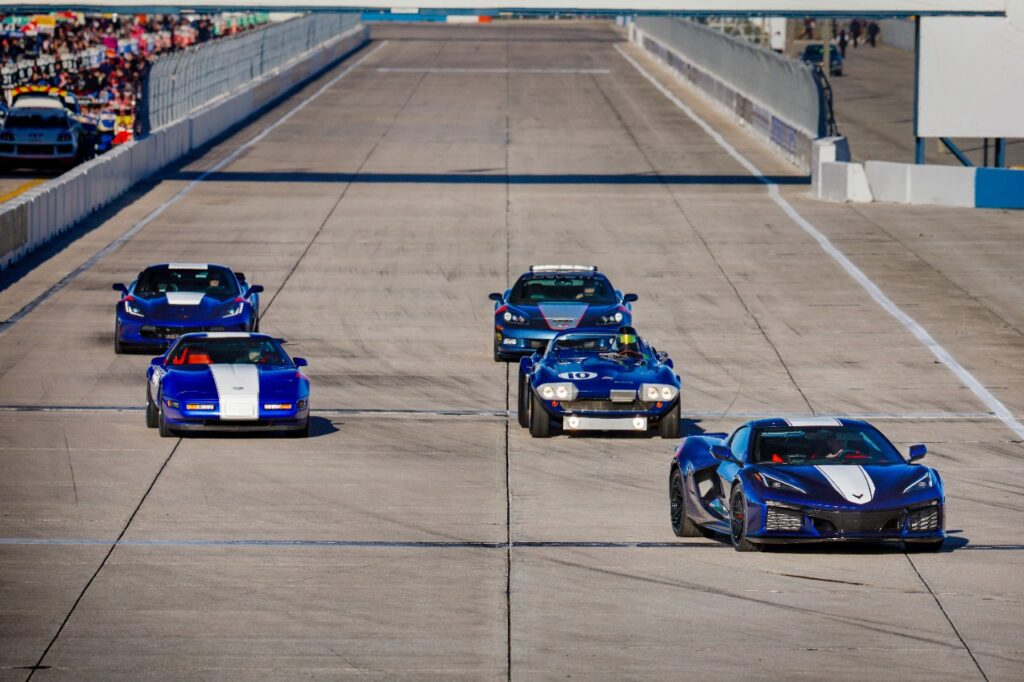
The new 2027 Corvette Grand Sport leads a Grand Sport parade lap at Sebring, with the C7, C6, 1996 C4, and original 1963 C2 following behind. The image captures the new car in motion with its predecessors rather than simply posing the full lineage together.
For now, the Sebring appearance functions as an opening volley rather than the complete story. Chevrolet has not yet laid every card on the table, and there is still more to learn about where this new Grand Sport fits within the broader 2027 Corvette lineup. But the central point is no longer speculative. The Grand Sport is back, it has officially entered the 2027 Corvette conversation, and Chevrolet has made clear that Sebring was only the first chapter.
Chevrolet has officially brought back one of the most meaningful names in Corvette history. The Grand Sport is returning, and its public debut signals far more than a nostalgic badge revival. It marks the opening of a new chapter in the Corvette story—one rooted in heritage, performance intent, and unmistakable purpose.
For the 2026 model year, Chevrolet offers ten standard, orderable exterior paint colors across the Corvette range (availability may vary slightly by trim and production constraints).
2026 Corvette Exterior Colors
Arctic White
Black
Torch Red
Red Mist Metallic Tintcoat
Riptide Blue Metallic
Hysteria Purple Metallic
Competition Yellow Tintcoat Metallic
Sebring Orange Tintcoat
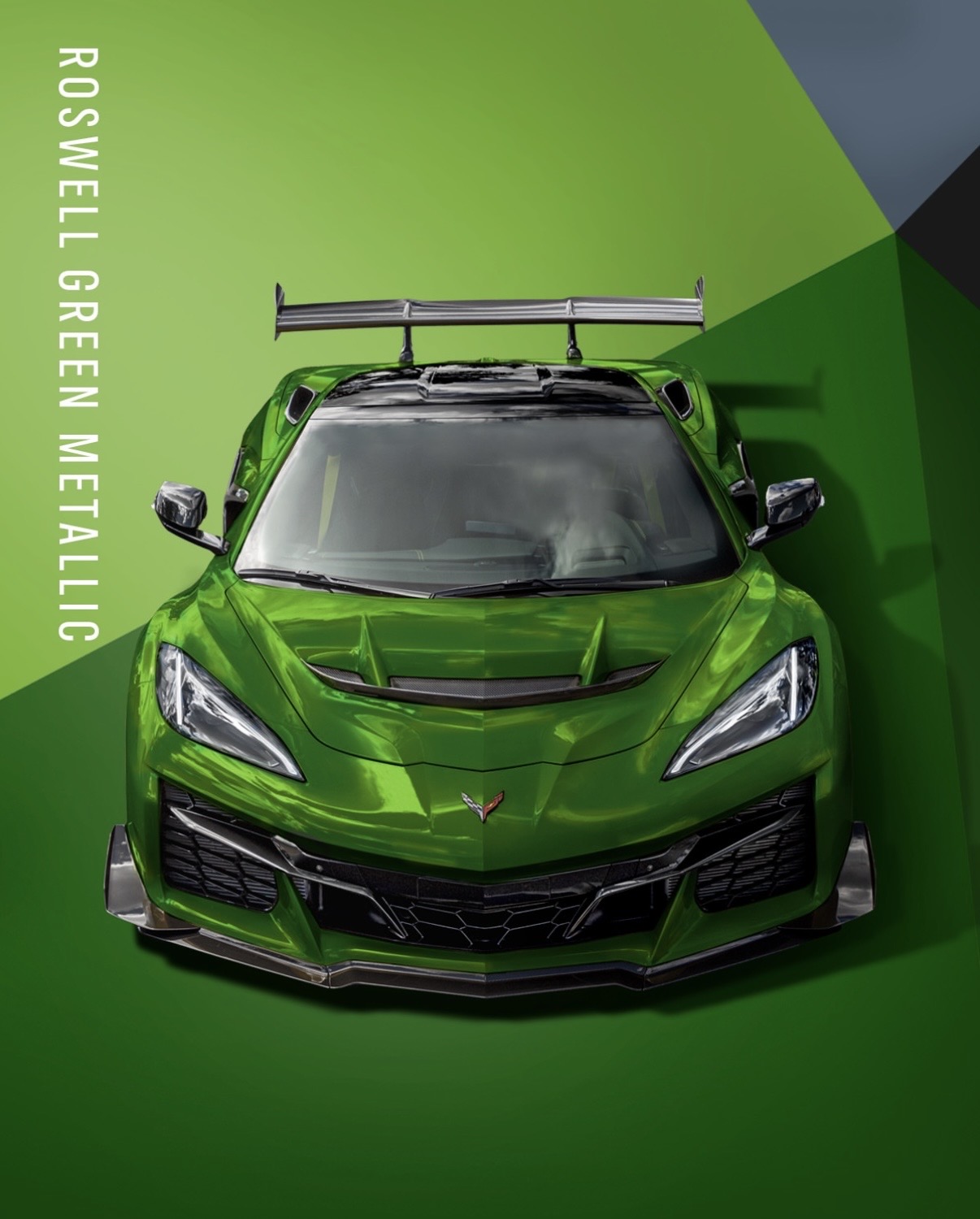
Roswell Green Metallic(new for 2026)
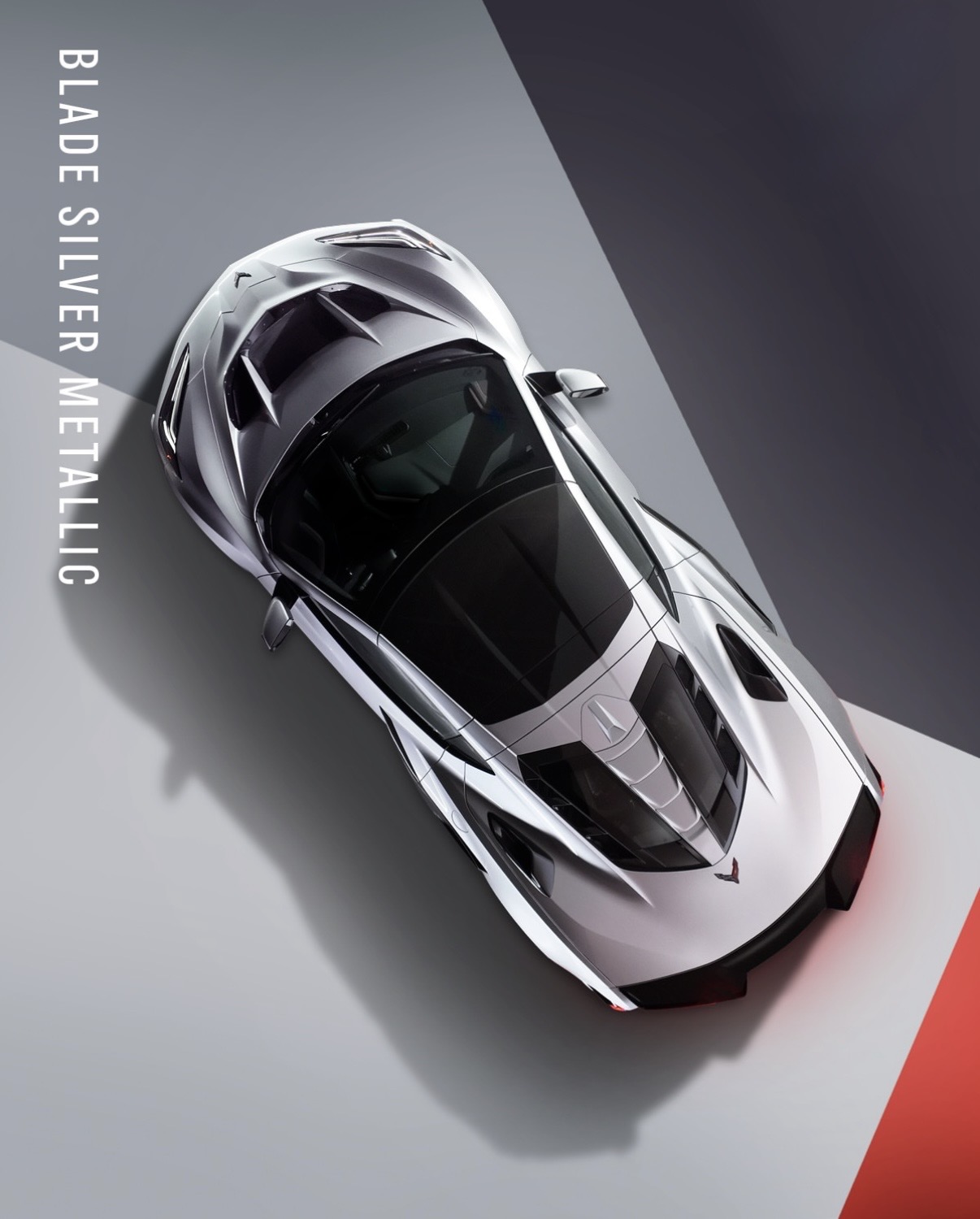
Blade Silver Metallic(new for 2026)
This palette preserves Corvette’s traditional anchors—white, black, and red—while continuing the C8 era’s willingness to embrace vibrant, expressive color. At the same time, it introduces two notable additions that reshape the lineup in meaningful ways.
What’s New for 2026
Roswell Green Metallic
Roswell Green Metallic makes an unmistakable first impression. Bright, modern, and unapologetically bold, the color amplifies the C8 Corvette’s sharp creases and aggressive stance while shifting character with the light—from vivid electric green in direct sun to a deeper, more sophisticated tone in shadow. It’s a statement color that feels contemporary and confident, perfectly suited to a Corvette designed to stand apart rather than blend in.
One of the most talked-about additions for 2026, Roswell Green Metallic brings a vivid, modern green into the Corvette catalog. Unlike darker heritage greens of the past, Roswell Green leans bright and energetic, with metallic content that causes the color to shift noticeably depending on lighting conditions.
In direct sunlight, it presents as bold and saturated; in shade or indoor lighting, it can appear deeper and more restrained. It’s a color that rewards seeing in person and reflects Chevrolet’s continued willingness to push the Corvette’s visual boundaries.
Blade Silver Metallic
Blade Silver Metallic delivers a refined, purpose-built look that feels both modern and timeless. The finish accentuates the C8 Corvette’s sculpted surfaces and sharp aerodynamics, allowing light and shadow to trace every crease with precision. Clean, understated, and effortlessly sophisticated, it’s a color that highlights the car’s engineering and form—proving that sometimes the most confident statement is restraint.
Silver has long been a Corvette mainstay, and Blade Silver Metallic reintroduces a clean, contemporary interpretation for 2026. This finish emphasizes the C8’s sharp surfacing and complex body lines without overpowering them, making it an ideal choice for buyers who want sophistication without visual excess.
Blade Silver also pairs exceptionally well with a wide range of interior colors and wheel finishes, reinforcing its role as a versatile, long-term classic within the lineup.
Colors No Longer Available for 2026
The arrival of new colors also means saying goodbye to others. For 2026, Chevrolet has removed two recent favorites from the order guide:
Rapid Blue
Sea Wolf Gray Tricoat
Both colors were strongly associated with earlier C8 model years, and their removal marks a clear visual reset as the Corvette lineup continues to evolve. For buyers cross-shopping late-production 2025 cars against early 2026 builds, this change alone may influence ordering decisions.
Understanding Corvette Paint Finishes (Why Finish Matters as Much as Color)
Not all Corvette paints are created equal. For 2026, finishes fall into three primary categories, each with distinct visual and ownership characteristics.
Gloss (Standard)
Single-stage or simple clear-coat finishes
Easy to maintain and repair
Typically included at no extra cost
Examples: Arctic White, Black, Torch Red
Metallic
Incorporates metallic flake for added depth and sparkle
Highlights body contours and edges
Often carries a modest upcharge
Examples: Riptide Blue Metallic, Hysteria Purple Metallic, Roswell Green Metallic, Blade Silver Metallic
Ownership note: Tintcoat finishes are visually striking but can be more complex to color-match during repairs. Understanding this upfront helps buyers make informed long-term decisions.
How These Colors Behave in the Real World
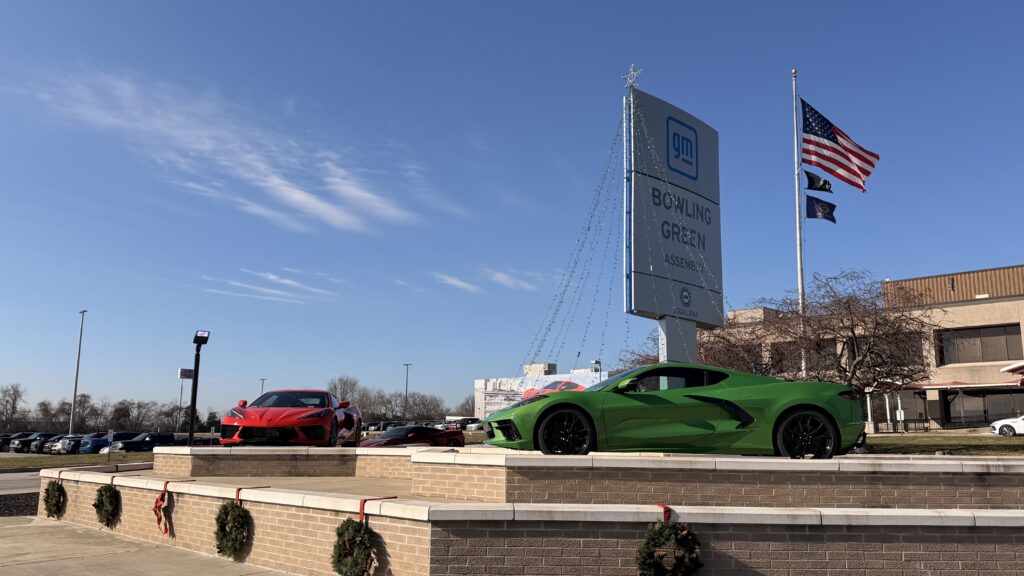
Captured on the grounds of Bowling Green Assembly in December 2025, this image offers a valuable real-world reference for how Roswell Green Metallic presents outside of studio lighting and configurator renders. In natural winter sunlight, the color reads vivid yet controlled—bright enough to command attention, but grounded by deeper undertones that prevent it from feeling overly loud. Set against neutral surroundings and alongside more traditional Corvette hues, Roswell Green reveals its true character: a modern, confident metallic that enhances the C8’s sculpted bodywork while remaining remarkably wearable. For buyers evaluating 2026 paint choices, this candid, real-world view underscores just how well Roswell Green translates from concept to reality. (Image source: ultimatecorvette.com)
Metallics and Lighting
Metallic paints—especially Roswell Green and Riptide Blue—can look dramatically different depending on lighting conditions. Sunlight brings out brightness and flake, while overcast or indoor lighting emphasizes darker undertones.
Tintcoats on Camera
Tintcoat colors like Red Mist and Sebring Orange tend to photograph exceptionally well, often appearing more vibrant in images than they do in person. This makes them favorites for owners who enjoy documenting their cars through photography or social media.
Timeless vs. Expressive Choices
Traditional colors such as Arctic White, Black, and Torch Red remain the safest long-term bets for resale consistency. Bolder hues often become more polarizing over time, but they also tend to define specific Corvette eras more clearly.
Why the 2026 Palette Matters
The 2026 Corvette color lineup represents a thoughtful recalibration rather than a radical overhaul. Chevrolet keeps its visual foundation intact while refining the edges—introducing fresh color where it counts and trimming options that have already had their moment.
With the addition of Roswell Green Metallic and Blade Silver Metallic, and the retirement of Rapid Blue and Sea Wolf Gray, 2026 becomes a clear inflection point in the C8 timeline. It’s a year that balances confidence with restraint, modern expression with Corvette tradition.
For buyers ordering new—and for enthusiasts tracking the Corvette’s visual evolution—the 2026 color palette tells a clear story: the Corvette isn’t chasing trends. It’s defining its own.
Tell us—what color would you choose for your 2026 Corvette?
For the 2026 model year, Chevrolet offers ten standard, orderable exterior paint colors across the Corvette range (availability may vary slightly by trim and production constraints). 2026 Corvette Exterior Colors This palette preserves Corvette’s traditional anchors—white, black, and red—while continuing the C8 era’s willingness to embrace vibrant, expressive color. At the same time, it introduces…
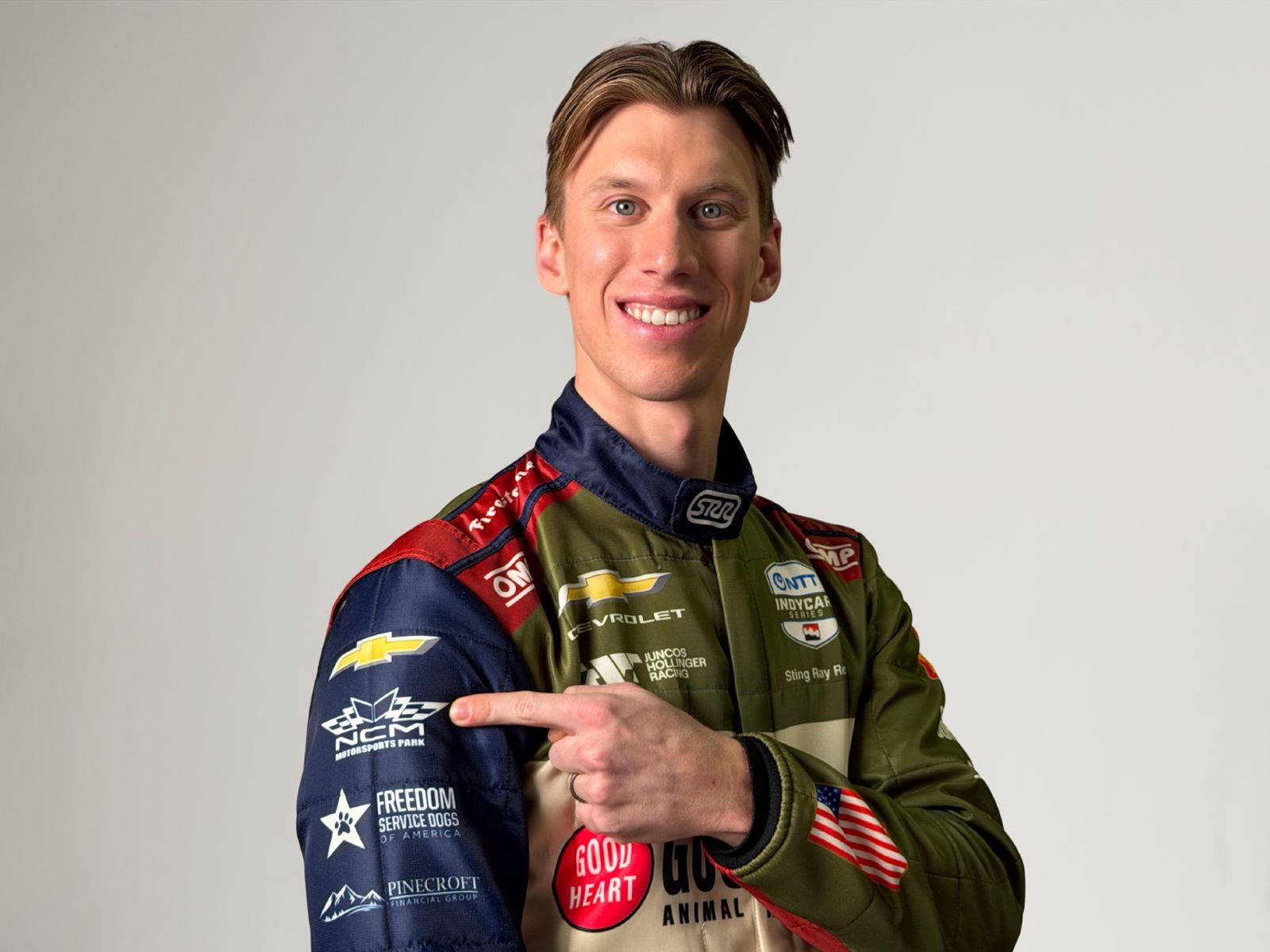
NCM Motorsports Park continues to strengthen its connection to professional motorsports with the announcement that IndyCar driver Sting Ray Robb has officially joined the park’s exclusive Driving Club. The move makes Robb the second active IndyCar driver and the third professional racer to become part of the Driving Club—further validating NCM Motorsports Park’s reputation as a serious training ground for elite drivers.
Located just down the road from the National Corvette Museum, NCM Motorsports Park has steadily evolved into one of the most technically respected road courses in the country. Its 3.2-mile layout features 23 demanding turns, blending high-speed sections with complex technical challenges that appeal equally to track-day enthusiasts and professional racers.
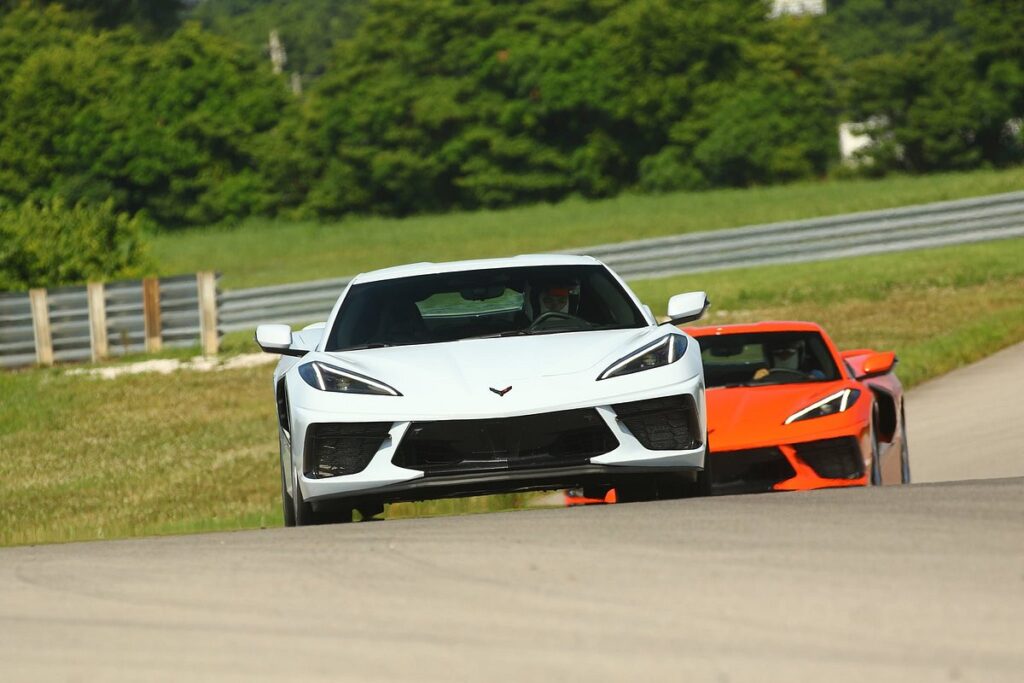
The Driving Club at NCM Motorsports Park is where Corvette performance stops being theoretical and starts being lived. With members enjoying exclusive access to the park’s demanding 3.2-mile, 23-turn road course, the club blends serious seat time with a true enthusiast community. From high-performance street cars like the C8 Corvette to advanced driver coaching and member-only track days, it’s a place built for drivers who want more than laps—they want progression, precision, and the freedom to explore what their cars can really do. (Image source: NCM Motorsports Park)
“We know we have something special here,” said Khristian Ervin, Driving Club Coordinator. “With 3.2 miles and 23 turns, our track is both technical and fun. It’s the perfect playground for driving enthusiasts while also offering the kind of challenging layout that professionals seek when training for competition.”
Robb echoed that sentiment, praising both the facility and its people. He described NCM Motorsports Park as a top-tier venue with a track that “demands real respect,” noting that the synergy between the facility, staff, and driving community made joining the Driving Club feel like a natural fit. Its proximity to Indianapolis also makes the park an ideal destination during the IndyCar offseason and between race weekends.
Among the highlights Robb pointed to were exclusive member days, the diversity of high-performance cars on track, and even the on-site karting circuit—which he described as a nostalgic throwback to his early racing roots. He also singled out the park’s signature Sinkhole turn as a particularly daunting and thrilling challenge, comparing its excitement favorably to Laguna Seca’s famed Corkscrew.
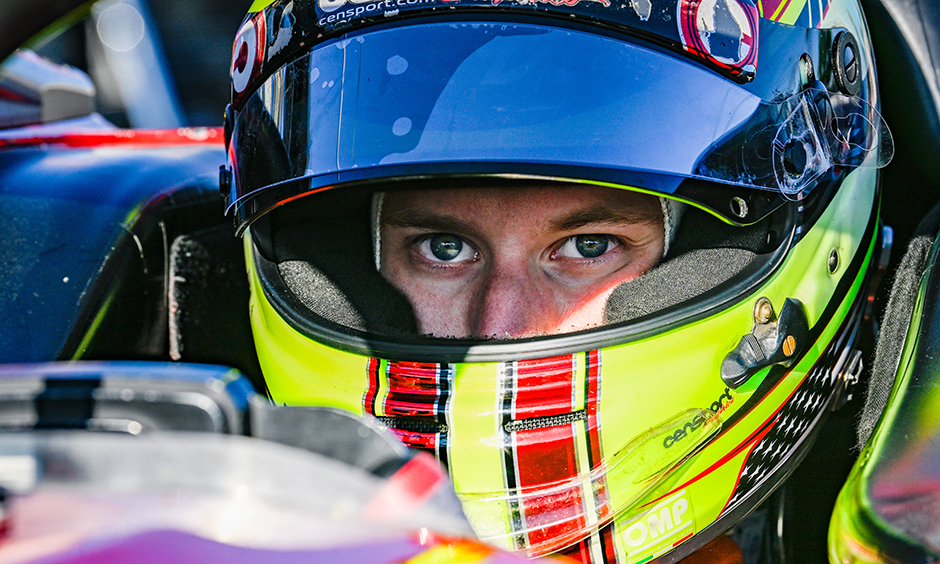
Sting Ray Robb began his professional driving career at a young age, rising through the competitive Road to Indy ladder after years of success in karting and junior formula categories. His breakthrough came with a championship-winning season in Indy Pro 2000, a title that helped propel him to the top level of American open-wheel racing. Robb now competes in the NTT INDYCAR SERIES, where he has earned a reputation for discipline, adaptability, and steady progression against some of the sport’s most experienced talent. Along the way, he has aligned himself with environments that prioritize development and precision, including his affiliation with NCM Motorsports Park. As a member of the park’s exclusive Driving Club, Robb uses the demanding 3.2-mile road course as a training and preparation ground. The partnership reflects a natural connection between a professional driver committed to growth and a facility built to challenge drivers at the highest level.
Beyond track time, Robb’s involvement is designed to be immersive. As part of the Driving Club, he will connect directly with members during special events and share insights with drivers looking to elevate their skills.
“Sting Ray’s membership is a tremendous asset to both the track and our Driving Club members,” said Morgan Watson, Marketing Director for NCM Motorsports Park. “This is only the beginning of a relationship that truly makes sense. We look forward to expanding our reach through strategic partnerships this season that bring value to the club and excitement to the sport.”
That partnership will also be highly visible throughout the racing season. NCM Motorsports Park branding will appear on Robb’s fire suit, spirit jerseys, and official team apparel. The MSP logo will also be featured on Robb’s branded die-cast cars sold at IndyCar events, extending the park’s presence directly to race fans nationwide.
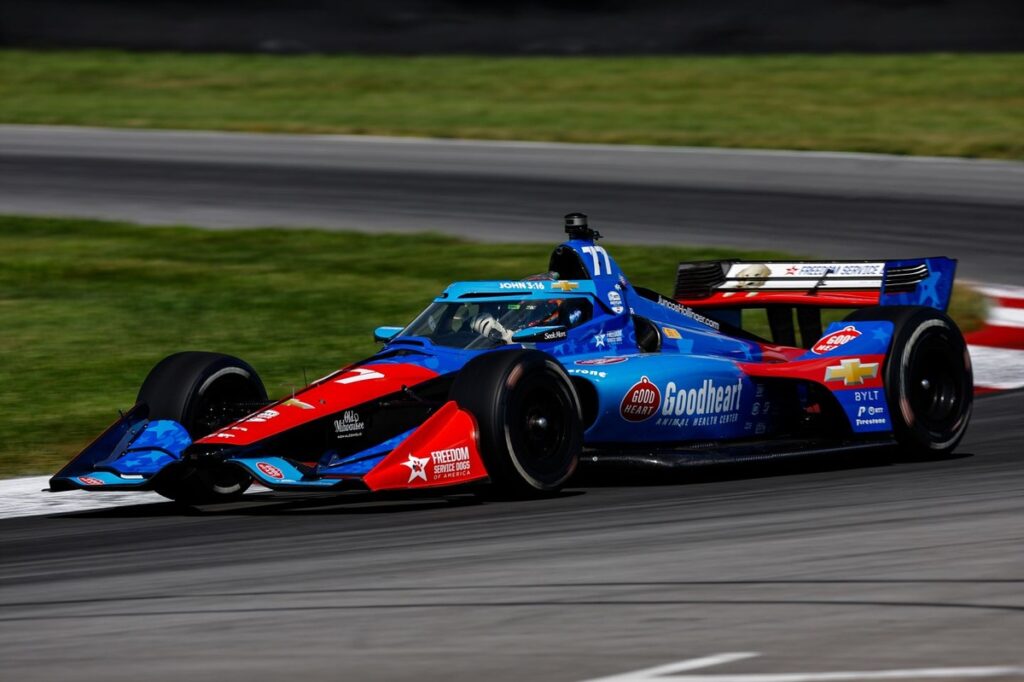
Inspired by Sting Ray Robb’s bold IndyCar livery, this striking paint scheme will carry over next year to one of the Corvettes at NCM Motorsports Park while Robb is competing on the IndyCar schedule. The design brings a direct visual connection between professional open-wheel racing and the high-performance driving experiences offered at the park, blending race-bred graphics with Corvette presence on track. It’s a purposeful crossover—one that allows guests and members to experience a Corvette that visually mirrors the energy, precision, and intensity Robb brings to IndyCar competition. More than just a wrap, it’s a rolling representation of the partnership between a rising IndyCar talent and a motorsports facility built for serious drivers.
Perhaps most exciting for Corvette enthusiasts, guests at NCM Motorsports Park will have the opportunity to drive a mid-engine Corvette Stingray wrapped in a custom livery inspired by Robb’s IndyCar design.
“Throughout the season, guests can select this specially wrapped car when they arrive at NCM Motorsports Park for a C8 Corvette driving experience,” Watson added. “The vehicle will be on display during the month of May while Sting Ray is competing at the Indianapolis Motor Speedway and will travel throughout the season as MSP and Robb activate at area races and events.”
At its core, this partnership underscores what NCM Motorsports Park continues to represent: a place where professional motorsports, Corvette heritage, and enthusiast culture intersect. By welcoming Sting Ray Robb into its Driving Club, the park reinforces its role not just as a destination, but as a community built around performance, precision, and a passion for driving.
NCM Motorsports Park continues to strengthen its connection to professional motorsports with the announcement that IndyCar driver Sting Ray Robb has officially joined the park’s exclusive Driving Club. The move makes Robb the second active IndyCar driver and the third professional racer to become part of the Driving Club—further validating NCM Motorsports Park’s reputation as…