
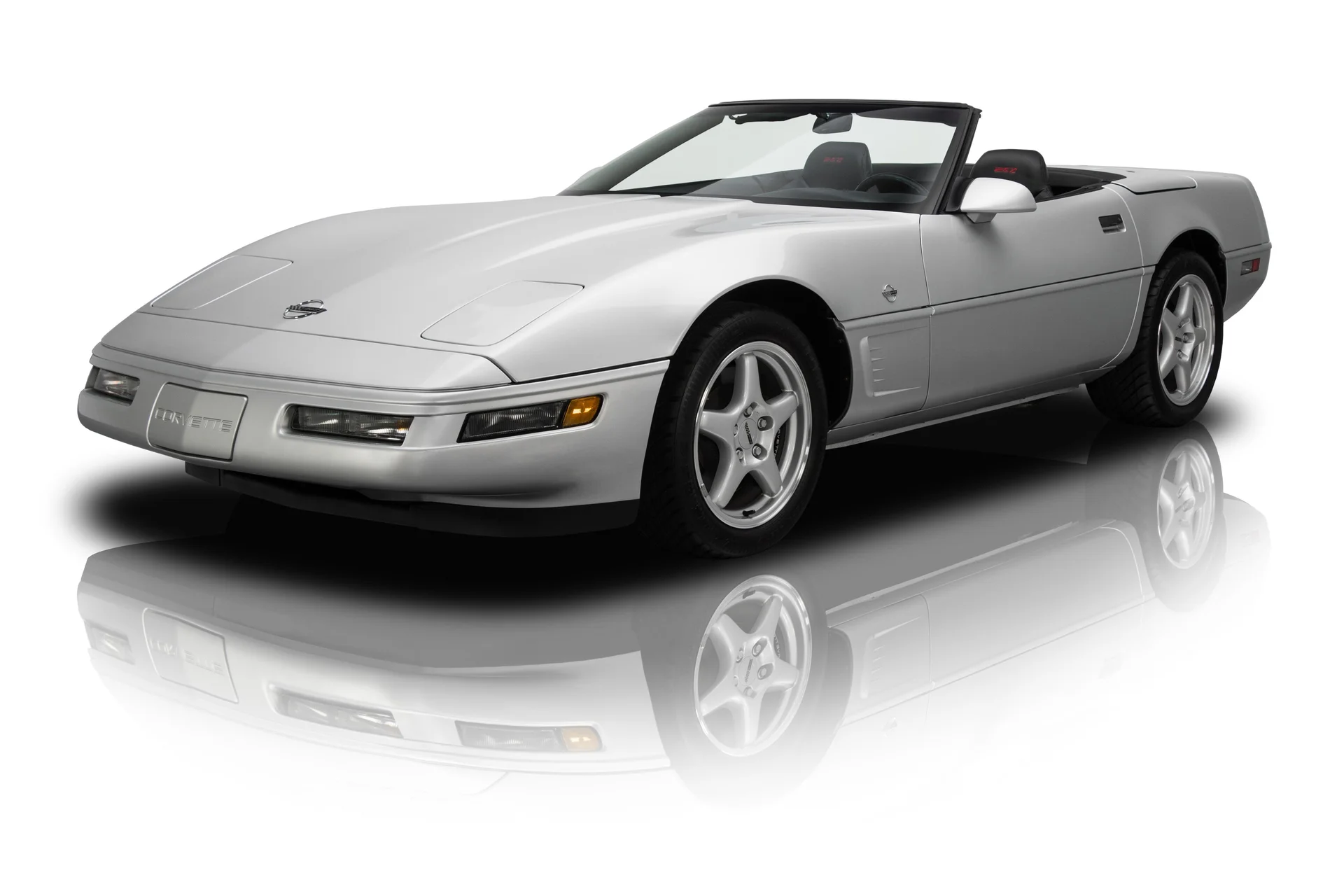
By the time the 1996 Corvette arrived, the C4 had become a fully realized sports car. Twelve years of steady development had sharpened the platform into something more refined, more capable, and more complete than ever. As the final year for both the C4 and the Gen II small-block in a Corvette, 1996 was more than a sendoff. It brought meaningful performance upgrades, a smarter chassis, the return of a true track-focused package, and special editions that honored Corvette’s legacy while hinting at where the car was headed next.
Widen the frame, and the story becomes even more compelling. The Bowling Green Assembly Plant was already being reworked for what came next, including hydroformed frame rails, a rear transaxle, and the new LS-series V-8. Under chief engineer Dave Hill, Chevrolet was closing out the C4 while pushing hard to bring the C5 to life. That makes 1996 a true pivot year—one era ending at full strength just as the next was beginning to take shape.
People, places, pulse: how the year came together
Bowling Green was more than the place where Corvettes were built. It was where the Corvette story had played out in real time since 1981, when the assembly plant opened on the north end of Corvette Drive. In 1994, the National Corvette Museum opened at the opposite end of that same road, just across KY-446. That placement was no accident. The museum was built close enough to the plant that enthusiasts could watch new Corvettes leave the factory and head down the road toward the place where the car’s history was preserved. It gave the area a different kind of energy. Instead of separating production from preservation, Bowling Green brought them together in one shared space, with each telling part of the same Corvette story.
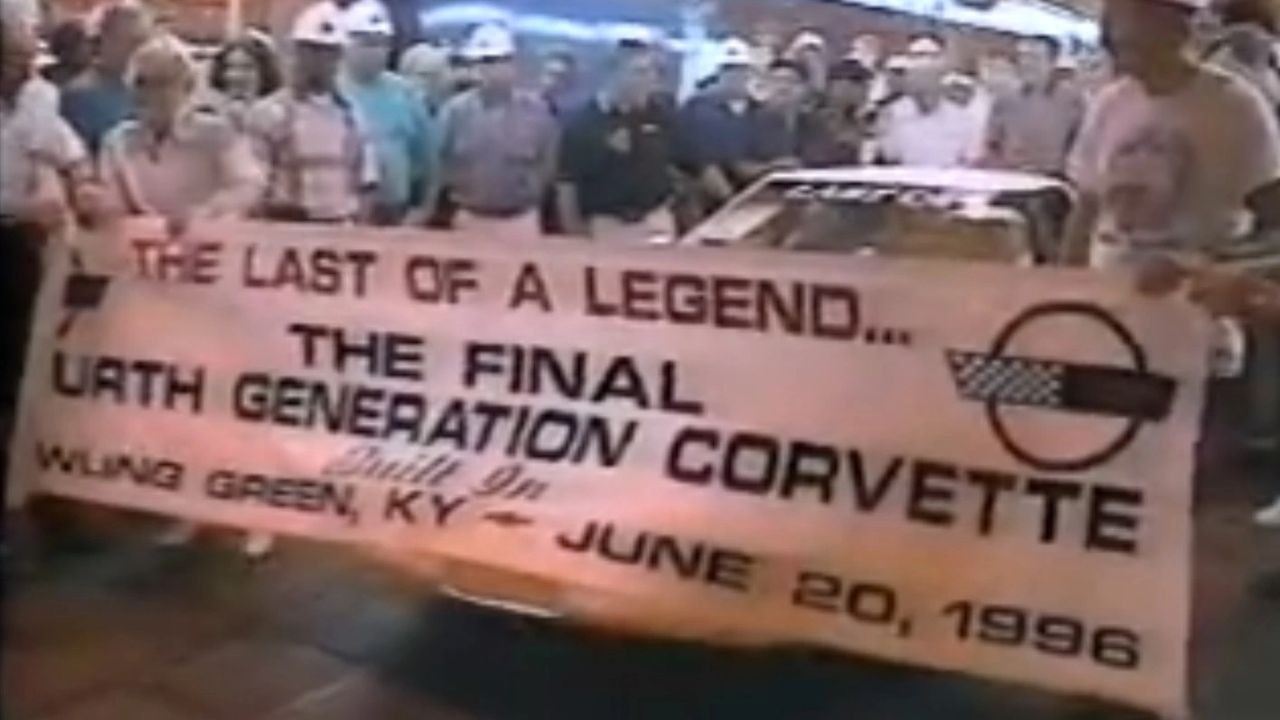
Inside the plant, the end of the C4 was not treated like a routine production milestone. It was marked by applause, plant-wide recognition, and the repeated flash of multiple photographers’ cameras as they documented the moment. Teams on the trim line eased the final cars forward with a care that felt almost ceremonial. People stepped away from their stations. Some climbed up for a better view. When the last C4 rolled off the line, it was met with handshakes and applause that lingered because nobody was quite ready for it to be over. Late June 1996 marked the end of the C4 era. Most sources place the final build date at June 20, 1996, a date supported by at least one period video and multiple owner accounts, though some later plant retrospectives cited June 30. At the National Corvette Museum and amongst much of the enthusiast community, June 20 has largely become the de facto anniversary. Either way, late June 1996 remains the bookend. After twelve model years of steady development, the C4 had become a fully realized sports car, and the people who signed those final cars knew exactly what they had just finished.
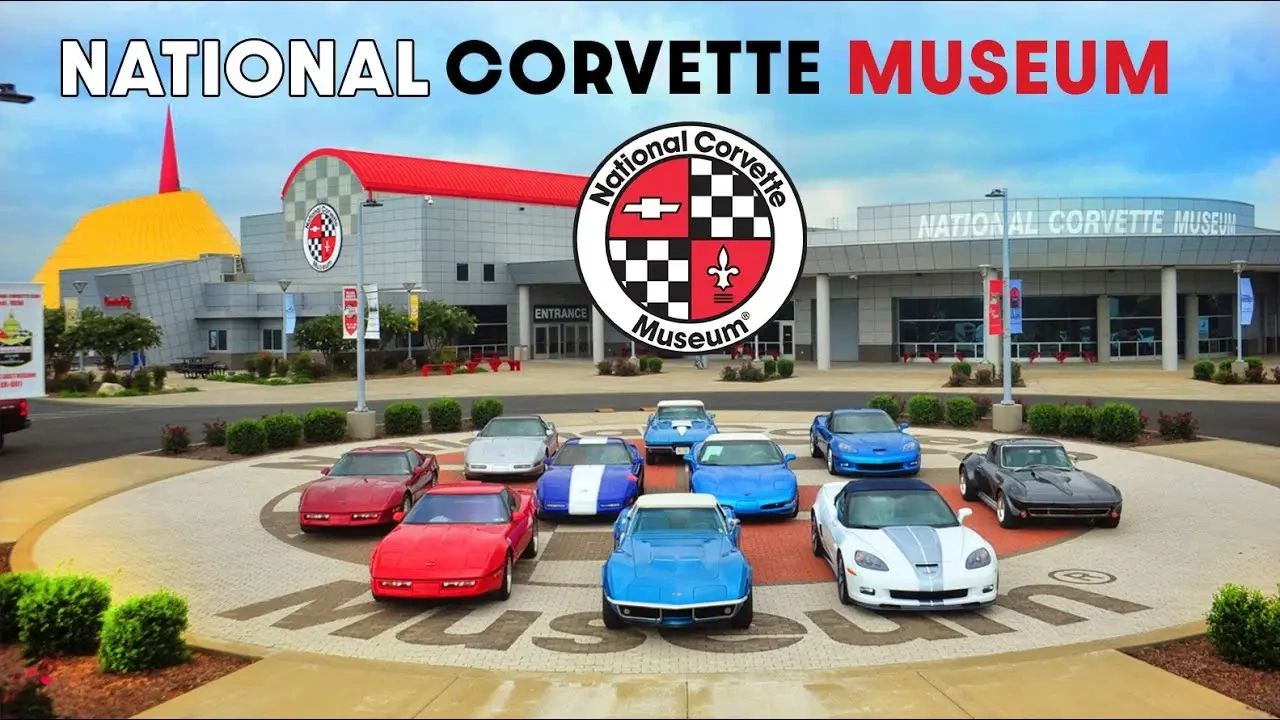
Across KY-446, the Museum supplied perspective. Its galleries, filled with Motorama-era fiberglass, Zora’s experimental hardware, and the evolving Shark lineage, reminded visitors that the C4 had not simply reached the end of its run. It had completed its assignment. Walk through those exhibits and the arc became clear: the car that redefined “modern” for Corvette in 1984 had matured into one that bowed out with the LT4, F45 real-time damping, and a final surge of confidence. The museum’s role was to preserve the memory. The plant’s role was to build the last great examples. With both standing just a few hundred yards apart, the transition felt deliberate rather than abrupt.
At the same time, the future was already taking shape. Dave Hill, only the third chief engineer in Corvette history, was working in a corporate climate that demanded restraint even as he pushed for an all-new fifth-generation car. The argument he and his team made was not cosmetic. It was structural. Hydroformed frame rails, a rear transaxle, and a new small-block family would fundamentally change the way the next Corvette was built, balanced, and driven. By then, that vision was already moving beyond sketches and presentations. Mules and mockups were proving the concept on Kentucky back roads, while Bowling Green itself was being reworked for a Corvette that would be assembled differently and engineered to feel more refined, more rigid, and more sophisticated in every meaningful way.
That is why the 1996 Corvette feels like a proper finale rather than a simple run-out year. The LT4 was not just a badge package. It was the Gen II small-block at its fullest, with better breathing, a stronger valvetrain, higher compression, and the kind of tuning that gave the car sharper response, where the LT1 began to fall off. F45 was not a gimmick either. It was a meaningful chassis upgrade that gave the C4 more composure and quicker reflexes. Even the return of the Z51 performance package on coupes felt intentional, a nod to the owners who still took these cars seriously. Chevrolet was doing something difficult in 1996. It was closing one chapter with real dignity while quietly laying the groundwork for the next one.
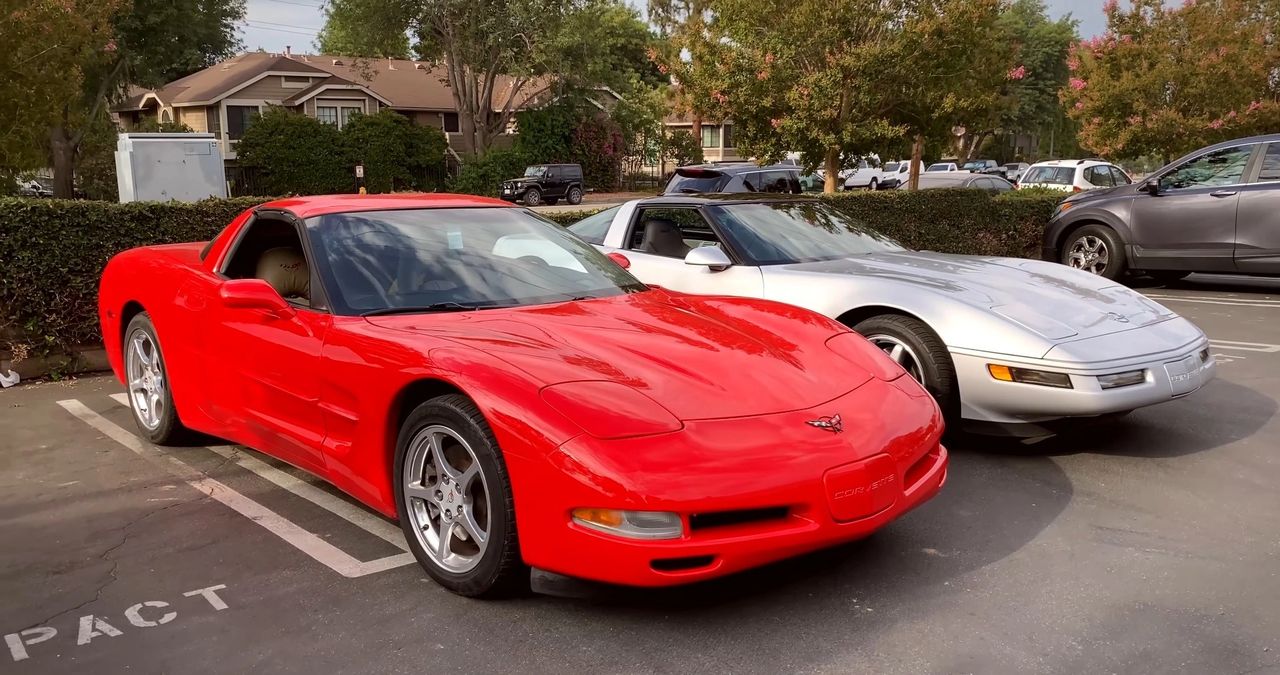
Stand on the sidewalk along KY-446, and the symbolism was almost impossible to miss. To one side, the plant completed a generation. To the other, the museum placed it in context. Between them, transporters moved back and forth, and the air often carried the faint smell of warm fiberglass and cut rubber. In that short stretch of road, the handoff felt real. The C4 ended with confidence, and the C5 waited just beyond it. Bowling Green, with the plant and museum facing the same story from different angles, made the transition feel clear and intentional.
What changed for the 1996 Model Year
1) Powertrain lineup simplified—and sharpened.
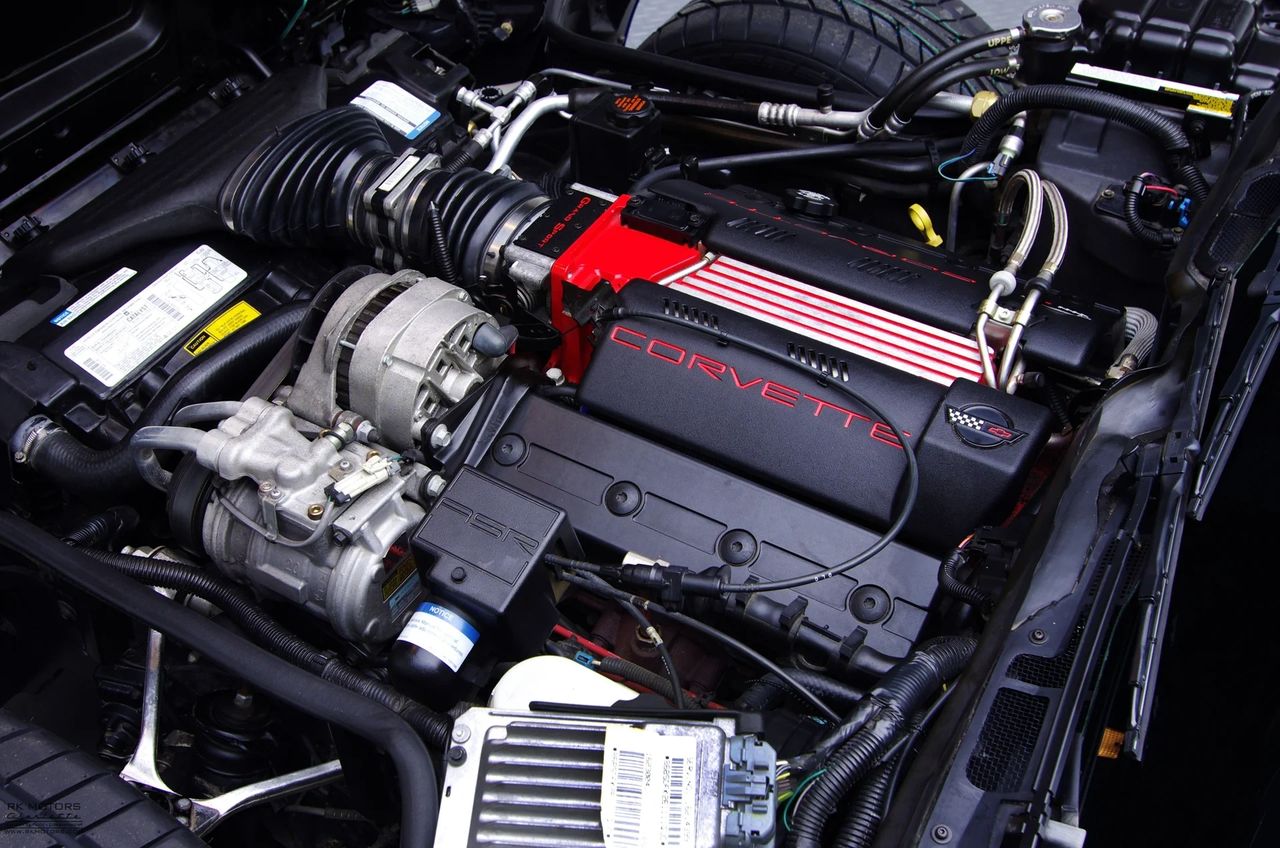
Chevrolet drew a clean line down the options sheet:
- LT1 + 4L60-E automatic (300 hp / 335 lb-ft): the effortless, long-legged Corvette.
- LT4 + ZF S6-40 six-speed (330 hp / 340 lb-ft): the higher-revving, more involved Corvette.
No cross-mixing. If you wanted a manual, you got the LT4. If you wanted an automatic, you stayed with the LT1. That decision reduced build complexity, made ordering dead simple, and—crucially—gave LT4 cars a distinct identity, right down to the 8,000-rpm tach with a 6,300-rpm redline.
What “fortified” meant in practice
- The fundamentals were familiar, but Chevrolet pushed them further in 1996. Both the LT1 and LT4 carried over the Gen II architecture, including reverse-flow cooling, sequential port fuel injection, and the front-drive ignition system. The LT4 then built on that foundation with stronger hardware, better-flowing aluminum heads, 1.6:1 rockers, a more aggressive cam profile, higher 10.8:1 compression, and a roller timing chain. The result was an engine that held onto its street manners while pulling harder and more cleanly at the top end.
- OBD-II arrived across the board in 1996. That may sound like a technical footnote, but it mattered in the real world. Cold-start, evaporative, and catalyst monitoring all became more sophisticated, drivability calibrations grew cleaner, and serviceability improved. Of all the C4s, the 1996 Corvette model feels the most modern when you plug in a scanner.
- The transmission story mattered, too. The 4L60-E automatic received calibration and converter durability updates that helped smooth part-throttle shifts and improve lockup behavior. On the road, the car feels newer than its spec sheet suggests.
- Gearing choices added another layer of intent. Manual LT4 cars used a 3.45 rear axle with limited-slip standard. Automatic cars came with a 2.59 axle unless ordered with the G92 performance axle ratio, which brought a 3.07 gear. It looks like a small change on paper, but it noticeably sharpened the way the LT1 responded off the line.
- The ratios were real, and so was the character.
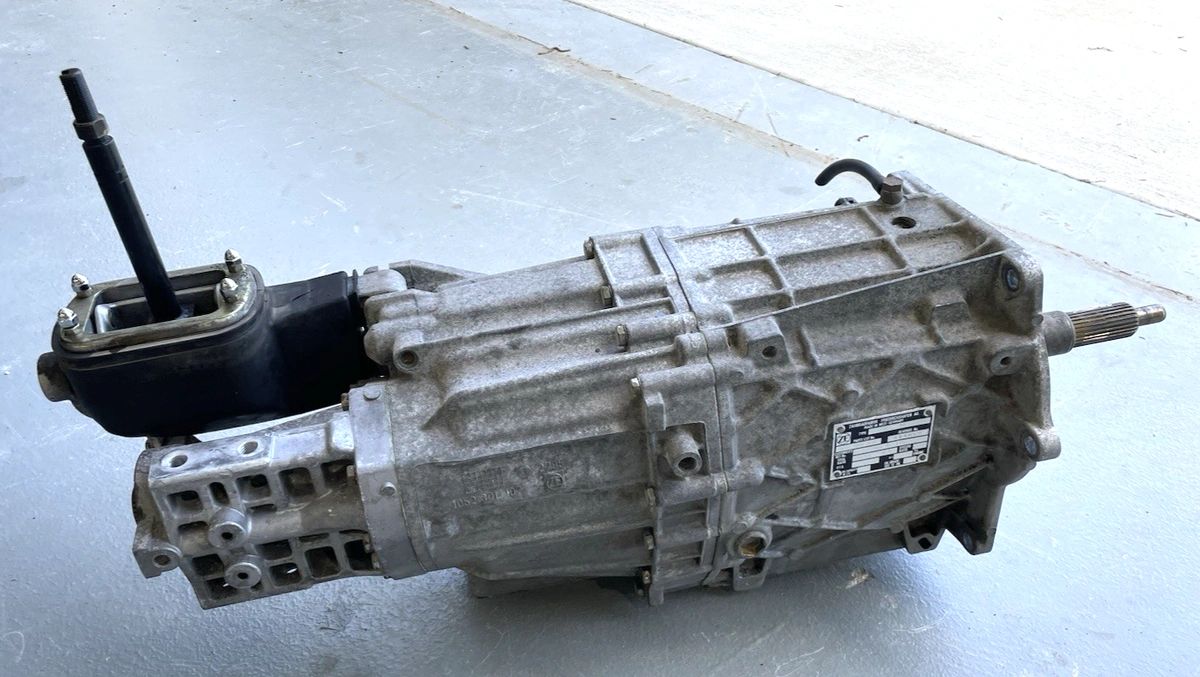
- ZF S6-40: close, well-defined gates; ratios that keep the LT4 on the cam (1st–6th approx. 2.68 / 1.80 / 1.29 / 1.00 / 0.75 / 0.50). Third is the hero gear; fifth is a proper passing gear.
- 4L60-E: the familiar 3.06 / 1.62 / 1.00 / 0.70 with a lockup converter that settles the car at highway speed. With 3.07s, it stops hunting and feels alert in everyday use.
- Thermal and lubrication discipline. All ’96s shipped with synthetic oil from the factory. LT4 cars lacked an external oil cooler, but the calibration and recommended lubricant supported sustained high-speed use better than earlier years.
- NVH and driveline polish. LT4 manuals retained the dual-mass flywheel and beefy driveline hardware from earlier ZF-equipped C4s, which is why a healthy ’96 six-speed feels tight, not tinny. The automatic’s updates cut the low-speed flare that earlier calibrations sometimes showed.
How it feels from the seat
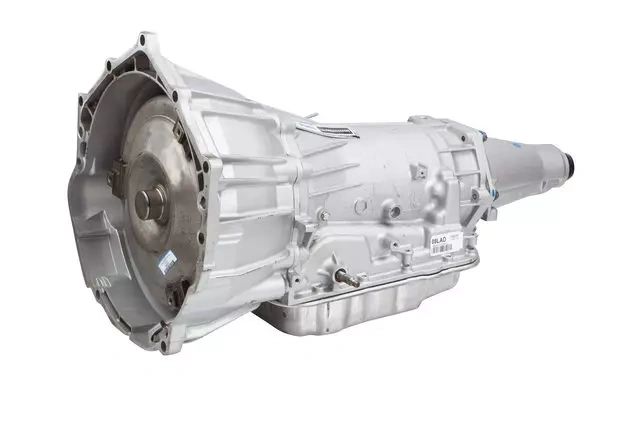
- LT1/4L60-E: relaxed, torquey, and deceptively quick. With 3.07s the car steps off with intent, then disappears into 0.70 overdrive and loafs. It’s the grand-touring spec—long-distance smooth, easy in traffic, effortlessly fast on a two-lane.
- LT4/ZF6: same basic character, brighter colors. The LT4’s extra breathing shows from 4,000 rpm up; it pulls cleanly to the 6,300-rpm red and makes the chassis feel lighter on its feet. The shifter has a decisive “click,” and the gearing keeps the engine in the fat of the curve when you’re working a back road.
Why the simplification mattered
Fewer combinations meant tighter calibration work, cleaner diagnostics, and clearer messaging to buyers. More importantly, it let Chevrolet finish the Gen II small-block on a high note while keeping the automatic car supremely livable. In a year already balancing closure and prologue, the powertrain lineup did both: fortified the C4’s best habits and hinted at the modernity that would define the C5.
2) The LT4’s engineering brief
GM was not chasing a flashy dyno number here. The goal was to improve the engine’s breathing, strengthen the hardware around it, and maintain the level of control needed for the Gen II small-block to live comfortably at a 6,300-rpm redline. That mattered because the LT1 already did its job well. It was tractable, torquey, and easy to live with, delivering the kind of broad, usable performance that made the late C4 such a capable street car. Chevrolet did not need to reinvent that formula. It needed to be refined.
That was the LT4’s assignment. Rather than changing the engine’s character, Chevrolet worked to extend it. The idea was to hold onto the LT1’s strong midrange torque, then keep the engine pulling cleanly and confidently from around 4,000 rpm to the shift point. Just as important, it had to do that without introducing the usual penalties. Idle quality still needed to be reasonable. Emissions compliance still mattered. Long-term durability and day-to-day service life could not be traded away in the name of a higher red line. In that sense, the LT4 was not a radical departure from the LT1. It was a more developed version of the same basic idea, engineered to do more at the top end without sacrificing the features that made the platform work everywhere else.
Airflow & valvetrain (where the horsepower comes from)
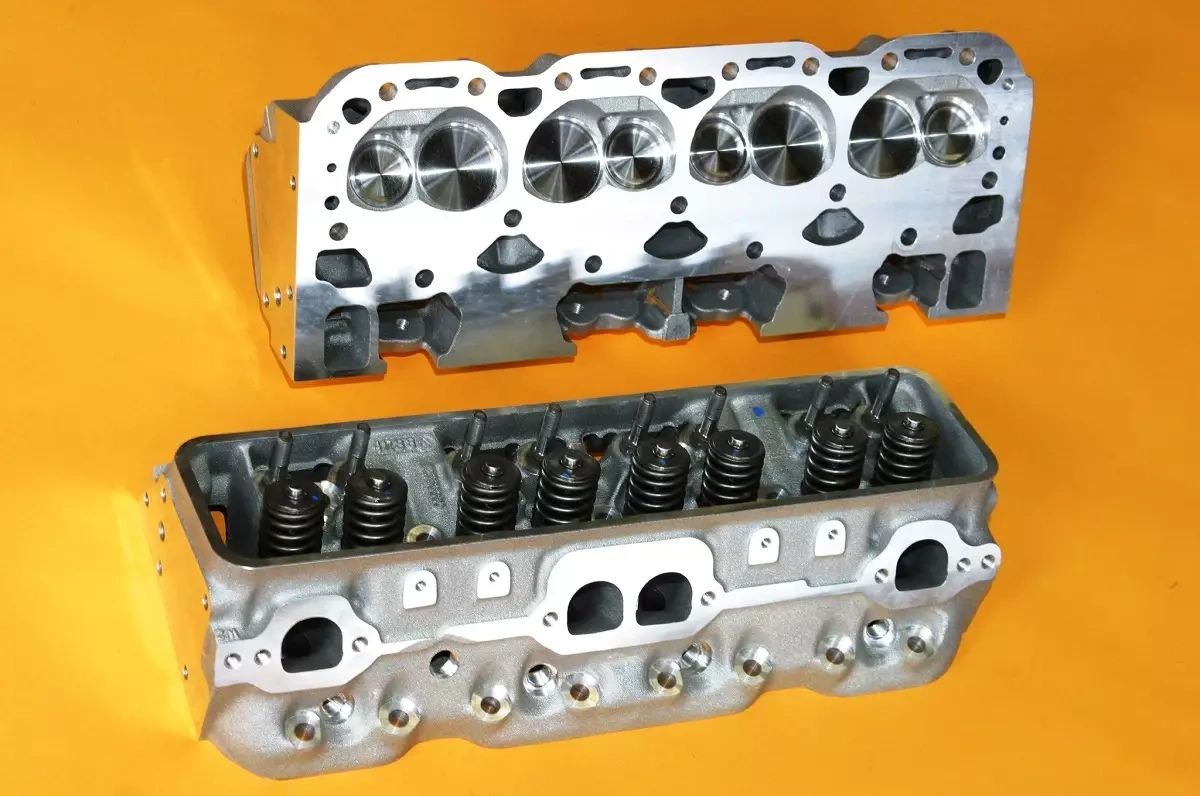
- Cylinder heads (aluminum, LT4-specific): Taller, straighter ports and a revised short-side radius reduce turbulence and bias more flow toward mid-lift—exactly where a street cam spends most of its time. The chambers were gently reshaped to keep the mixture motion stable at the LT4’s 10.8:1 compression.
- Bigger, lighter valves: 2.00-in intake / 1.55-in exhaust with hollow stems trim mass at the tip of the system (the most expensive place to carry weight). Less mass means less spring force is needed to control the valve at high rpm—so you get stability without the lash-hammer that kills guides.
- Ovate-(oval-)wire springs: Higher rate and better resistance to coil bind at the LT4’s added lift, without resorting to an aggressive installed height that would fret keepers and retainers.
- 1.6:1 roller rockers (Crane-supplied): The higher ratio is a quiet multiplier—lift goes up, and the valve sees a slightly quicker opening rate early in the event, which helps the port “wake up” sooner. Being full roller, they also cut friction and valvetrain temperature.
- Camshaft: Modest but meaningful—.476/.479-in lift and 203°/210° @ .050 (int/exh). That’s still street-friendly overlap, but paired to the heads and rockers, it creates a fatter midrange and a cleaner top-end than the LT1 ever had.
- Roller timing set: Quieter, tougher at sustained rpm, and more stable for spark control.
Induction, fuel, and spark (how it’s fed and managed)
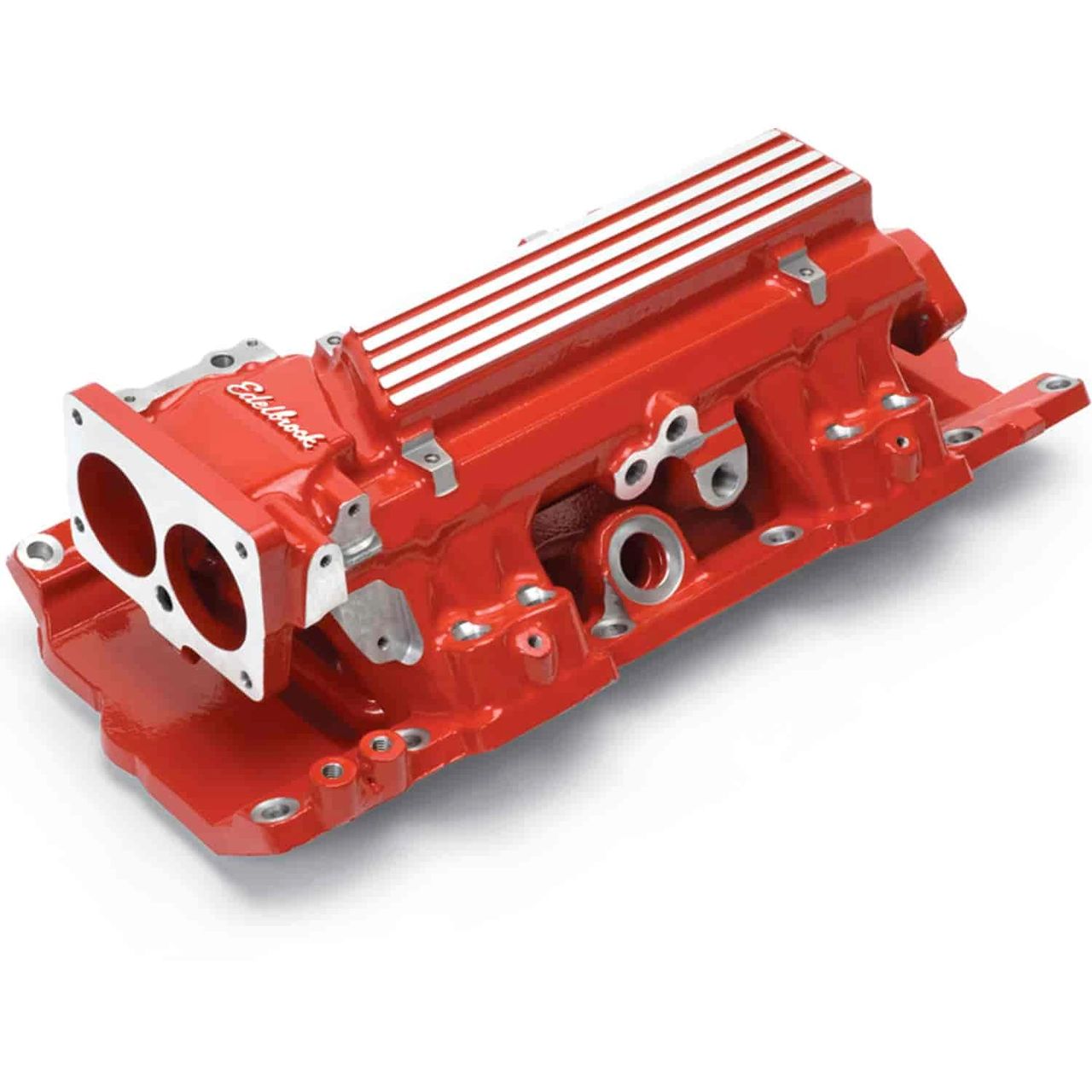
- High-flow intake manifold: Taller runners are port-matched to the LT4 heads, so there’s no step at the gasket face. You feel it as a stronger pull from about 4,000 rpm onward.
- Revised throttle body & calibration: The LT4 uses its own PCM tune (’96 is OBD-II), with higher fuel-cut, different spark tables, and knock-sensor logic that tolerates the extra compression without getting overcautious.
- MAF-based management (’94-’96): Mass-air cars respond cleanly to the LT4’s flow; transient fueling is tidier than early speed-density LT1s.
- Higher-flow injectors & fuel curve: Calibrated to keep duty cycle in a safe window at the raised redline, preserving spray quality where the LT1 was already near the edge.
Bottom-end & durability (why it survives at 6,300)
- Compression to 10.8:1 is enabled by reverse-flow cooling (Gen II signature), which cools the heads first. That lets you run more spark where the LT1 would have been knock-limited, especially under sustained load.
- Crank/gear/water-pump drive revisions: The LT4 got strengthened drive gears and a roller chain for more stable timing at rpm; less torsional noise means steadier spark with Opti-Spark.
- Select-fit bearings & balance: Tighter production control on bearing clearances and rotating balance cut friction and heat, which matters when you’re asking the same displacement to do meaningful work at higher piston speed.
- Factory synthetic oil fill: Part protection, part cooling strategy. Period engineers pointed out that the LT4’s lack of an external oil cooler was mitigated by the thermal headroom of synthetic at high road speeds.
Character change you can feel
- Idle and part-throttle remain well-mannered—no lumpy theatrics. The PCM, the MAF, and the mild seat timing keep the engine’s behavior composed.
- Midrange: The heads/rockers/cam combo thickens the center of the curve. Third gear becomes the “do-everything” gear on a two-lane.
- Top-end: Past 4,000 rpm the LT4 feels notably less strained; the last 1,500–2,000 rpm are useful instead of perfunctory. That’s why instrumented tests show similar 0–60s but higher trap speeds and top speed—the car carries speed better once it’s moving.
Visual & forensic tells (for authenticity)
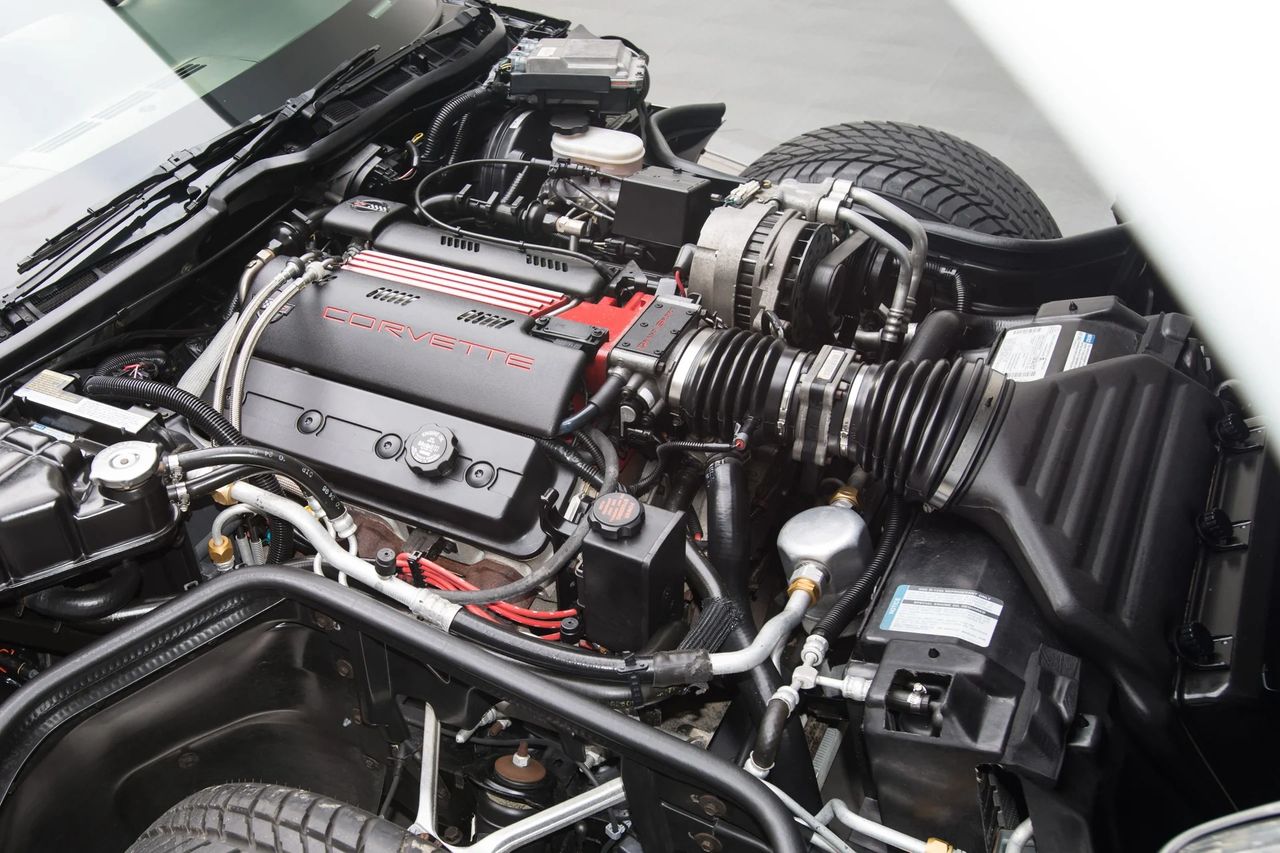
- Red intake manifold and red plug wires (factory “dress”) with LT4-specific casting and port match. Each LT4 also included a “Grand Sport” nameplate atop the throttle body,.
- 8,000-rpm analog tach with 6,300-rpm redline in the cluster.
- Manual only (MN6 ZF S6-40)—if it’s an automatic, it isn’t an LT4.
- LT4 PCM code & label and LT4-specific head/intake castings (for the concours crowd).
Why it matters in the C4 story
The LT4 isn’t a wild cam stuffed into an old engine; it’s systems engineering applied to a familiar package—airflow that matches cam timing, valvetrain that stays truthful at rpm, calibration that takes advantage of compression without tripping emissions, and durability tweaks so it does it again tomorrow. It’s the finished thought for the Gen II small-block and the right final note for a platform that always rewarded a well-tuned top half of the tach.
3) Selective Real Time Damping (RPO F45) replaces FX3
New for 1996, F45 used wheel sensors and a dedicated controller to adjust each shock individually in real time—roughly every 10 to 15 milliseconds—to better balance impact control and ride quality. If FX3 was the 1990–1995 version of the conversation, with the driver choosing the setting, F45 was the car making those decisions on its own unless you stepped in. It was one of those endgame refinements that made late C4s feel surprisingly modern.
4) Z51 Comes Back With Purpose (’96 Coupes Only)
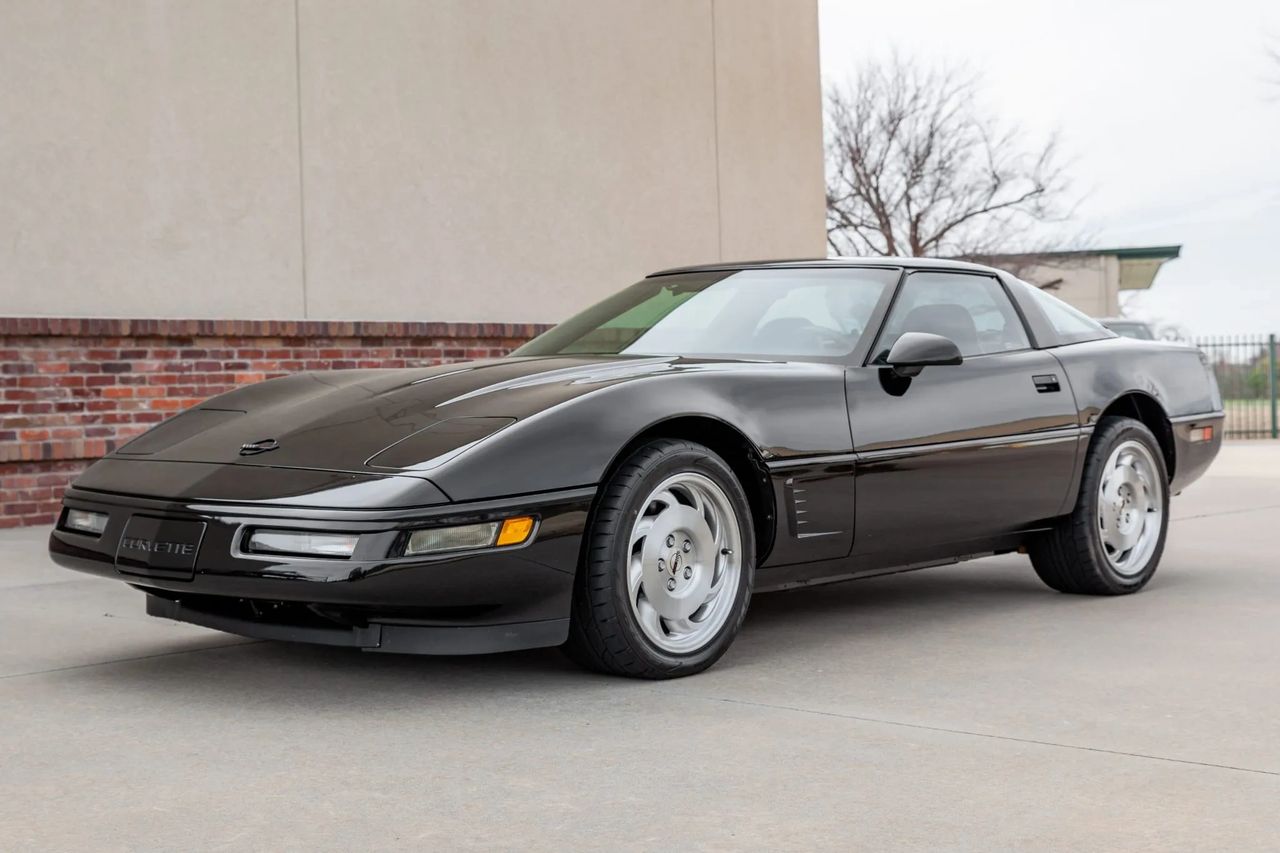
Chevrolet didn’t revive Z51 as a nostalgia badge; they brought it back to give the last-year C4 a factory autocross setup right out of the box. The package swapped the touring tune for fixed-rate Bilstein dampers, stiffer springs, firmer bushings, and larger stabilizer bars, then put the car on 17×9.5 wheels with P275/40ZR17s at all four corners. With the automatic, Z51 paired to G92’s 3.07 axle, so the car would step off cleanly; manuals kept the 3.45, which the LT4 used to real effect in second and third.
How it drives (and why)
- Turn-in & transient feel: The higher roll stiffness and firmer bushings take the last bit of slack out of the platform. Initial yaw is quicker, and the car takes a set with less heave before it starts working the tire. It reads as calmly aggressive—classic C4 honesty, just crisper.
- Mid-corner balance: Neutral if you’re tidy; gentle power-on push if you’re greedy with entry speed. Trail a breath of brake and it rotates; feed throttle and it plants. The wide-square tire setup helps the car respond the same in both directions, which is why Z51 shines between cones.
- Ride quality: You’ll feel the sharper low-speed damping over patchwork pavement. It’s not abusive, but it’s candid. On smooth roads, the car relaxes and covers ground with that long-legged C4 composure.
- Brakes & heat: The standard binders are fine for street and short runs. If you’re planning regular events, the J55 heavy-duty brakes (thicker rotors, more thermal headroom) are the right companion—period testers said as much—and good pads/fluids make the whole package come alive.
How it fits with the rest of the lineup
- Z51 vs. F45: Think of Z51 as the fixed, competition-leaning tune and F45 as the adaptive, road-biased tune. You chose one philosophy or the other. Z51 delivers the most immediate feel; F45 delivers the most bandwidth for mixed surfaces.
- Tires & alignment: Z51’s broader camber and toe windows let you dial in a bit more negative camber and a hair of toe-out up front for autocross without chewing up a road-trip. Keep pressures even side to side and sneak up on the balance; the platform will tell you when you’ve gone too far.
Gearing and character
- Automatic (3.07): First is short enough to get you cleanly out of a box; second does most of the work; the 0.70 overdrive keeps highway revs low.
- Manual (3.45): The ZF’s defined gates and that shorter axle mean third is the hero gear on most back roads. The LT4’s stronger top half makes the car feel lighter on its feet.
The point of Z51 in 1996
It’s a last-year Corvette that doesn’t coast. Z51 gave buyers a factory-sanctioned way to sharpen what the C4 already did best—steer with clarity, stay flat, put down power—and do so without turning the car into a buckboard. If you were the owner who packed a helmet next to an overnight bag, Z51 was Chevrolet’s way of saying, “We remember you.”
5) Transmission and Drivability Tweaks
4L60-E (automatic): what changed and how you feel it
- Smarter lockup logic. The torque-converter clutch applies more progressively and at more sensible times, so part-throttle cruising doesn’t “thump” into lockup or hunt on rolling terrain. You feel it as a calmer, more settled car at 40–60 mph and a steadier rpm needle on gentle grades.
- Cleaner shift scheduling. Calibrations trim the awkward light-throttle upshift/downshift dance that earlier cars could do in suburban traffic. It now holds a gear a beat longer when you tip in, and it doesn’t downshift at the first hint of an overpass.
- Refined line-pressure/accumulator tuning. The valve-body tweaks and pressure mapping take the edge off the 1–2 at small throttle, but keep authority when you’re in it. Net: less “slur” when you want precision, less “slam” when you’re loafing.
- Converter durability improvements. Revised friction materials and tighter control of apply rates mean less heat and less glaze in real-world use—good news for anyone who road-trips or sees a lot of stop-and-go.
- Better cold manners. On a chilly start, the box no longer feels half a step behind your right foot. Fluid warms, shifts clean, and the calibration stops calling attention to itself.
What it adds up to: the LT1/4L60-E combo in ’96 reads like a grand-touring answer—quietly decisive, less busy, and content to disappear into the background until you need a downshift. Order G92 (3.07) and the car steps off with intent but still settles into that long-legged overdrive on the highway.
ZF S6-40 (manual): known quantity, finished feel
- Defined gates, decisive engagements. By ’96, the ZF’s character is fully baked: short, mechanical throws with a positive “click” that makes second-to-third a joy instead of a prayer.
- Dual-mass flywheel civility. The flywheel/clutch package smooths idle and low-speed creep, so the car will crawl in traffic without chattering, yet still snaps to attention when you roll past 3,500 rpm.
- Ratio harmony with the LT4. The gear spread keeps the engine in the fat of the curve; third becomes the hero gear on a back road, fifth is a real passing gear, and sixth knocks the noise out of interstate miles.
- Driveline polish. Mount and NVH work across the platform mean fewer little shudders when you lug it, less resonance when you hold a steady 2,200–2,500 rpm, and cleaner rev-matching on downshifts.
What it adds up to: the LT4/ZF pairing feels finished. The engine’s extra breath makes the upper half of the tach useful; the gearbox lets you live there. It’s the combination that turns the C4 from “quick” into “alert,” without spoiling the car’s long-distance manners.
Bottom line: The 1996 Corvette didn’t just simplify the choices; it fortified both paths. The automatic car behaves like a newer machine—smoother, less fussy, easier to live with. The manual car delivers the most satisfying version of the analog C4 experience—clear gates, clean revs, and a driveline that finally feels as buttoned-down as the chassis.
6) Emissions/diagnostics modernized across the board
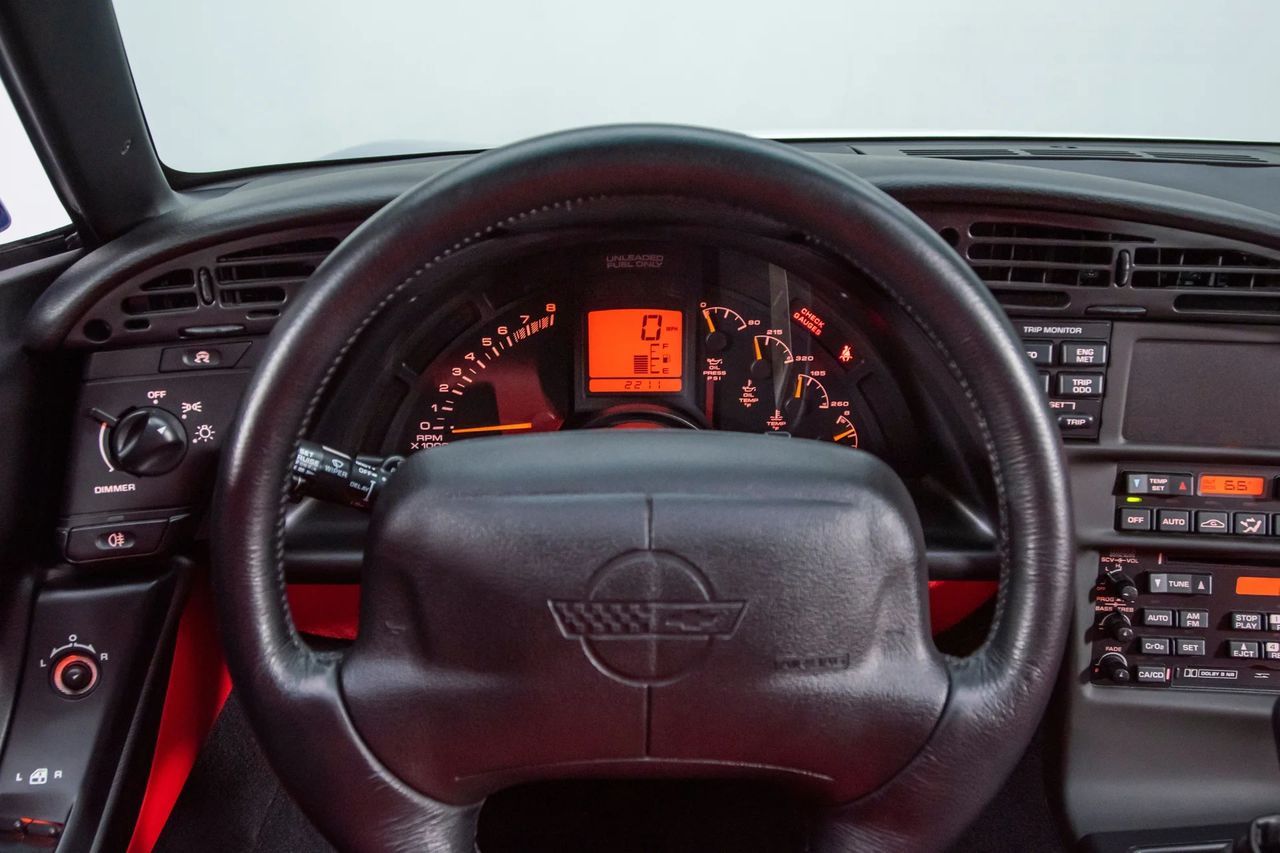
1996 is the year the C4 steps into the modern service bay. OBD-II becomes standard, and with it the Corvette gains a common language for diagnostics that finally matches its engineering.
- Standard port, standard codes. A 16-pin diagnostic link connector sits under the driver’s knee bolster. Any compliant scan tool can speak to it using the SAE J1962/J1979 protocol and read standardized P0xxx fault codes. GM-specific P1xxx “enhanced” codes are there too, so you get both the universal stuff and the deeper marque detail.
- Continuous monitoring. The PCM now runs a suite of self-tests in the background and sets readiness flags when each passes: misfire, fuel/air metering, oxygen sensor & heater, catalyst efficiency (thanks to post-cat O₂s), EGR, and EVAP purge/vent. When all monitors are “ready,” the car will pass an OBD-II–style inspection as long as no active faults remain.
- Better fault forensics. Trip a MIL (check-engine light) and the PCM stores freeze-frame data (engine load, rpm, coolant temp, vehicle speed) at the moment of failure. Early OBD-II also exposes Mode $06 results—raw test numbers for things like misfire counts and O₂ switch rates—useful for catching a marginal part before it becomes a hard fault.
- Sharper eyes on the hardware.
- Misfire detection watches crankshaft speed variation and flags individual cylinders—something OBD-I couldn’t do.
- Catalyst monitoring compares pre- and post-cat O₂ signals to verify the converter is actually storing oxygen and doing work.
- EVAP gets real integrity checks: purge/vent function and tank pressure behavior. (No pump yet in ’96; GM uses vacuum decay logic here.)
- EGR flow is validated by how the engine responds when the valve is commanded.
- Owner reality. Disconnect the battery, and your readiness monitors reset; you’ll need a full drive cycle—cold start, steady cruise, decel with fuel cut, a few minutes of idle—to flip them back to “ready” before an emissions test. The upside is real: drivability calibrations are cleaner, diagnostics are faster, and parts swapping gives way to targeted repairs.
- Gen II specifics still apply. You’re still dealing with the Opti-Spark era, but OBD-II makes it easier to separate an ignition hiccup from, say, an O₂ heater that’s gone lazy. On LT4 cars, the higher redline doesn’t confuse the system; the PCM and monitors were calibrated for the extra rpm.
Net: the ’96 Corvette is the most serviceable C4 to own. It uses modern tools, proves its emissions health with data rather than guesswork, and gives you (or your tech) exactly the breadcrumbs you need to fix it right the first time.
7) Color and trim that told a story
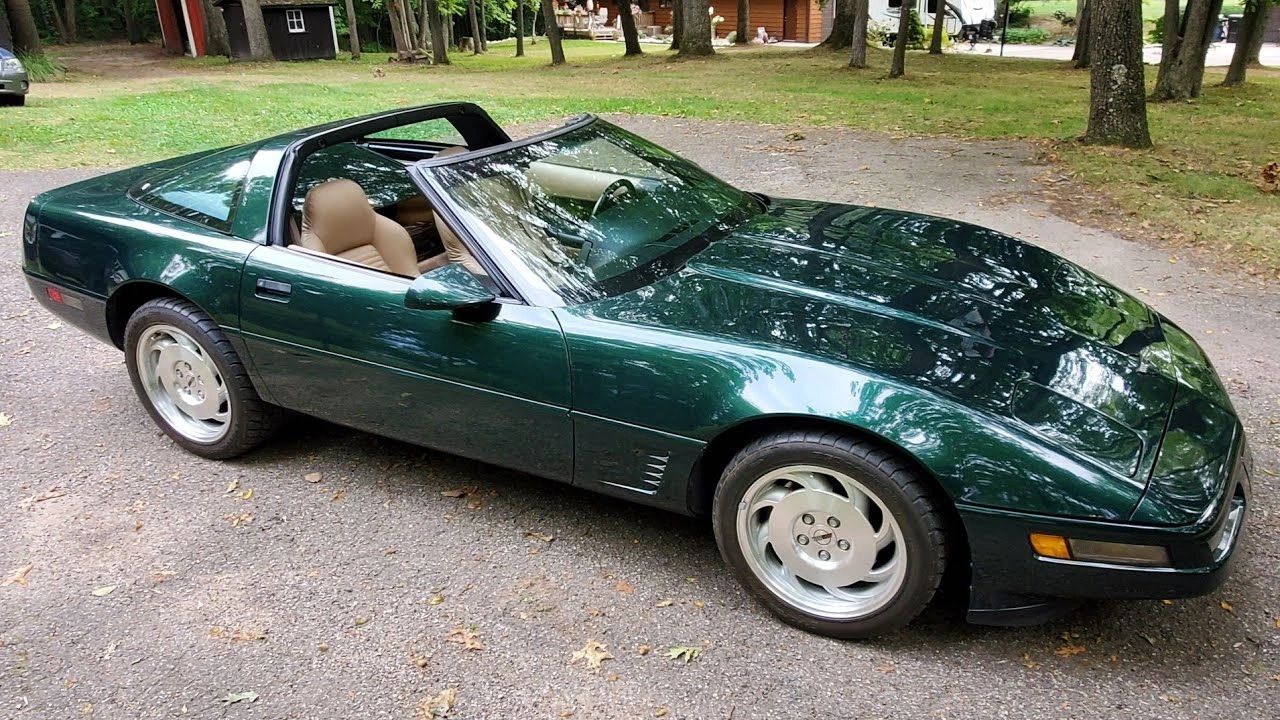
Nine colors, headlined by Sebring Silver Metallic, which proved wildly popular. Wheel choices and seat embroidery followed the new special editions (details below), but the broader palette reflected how Chevrolet wanted the car remembered: composed, grown-up, still willing to shout when you asked.
How the LT4 changed the drive (and how the press measured it)
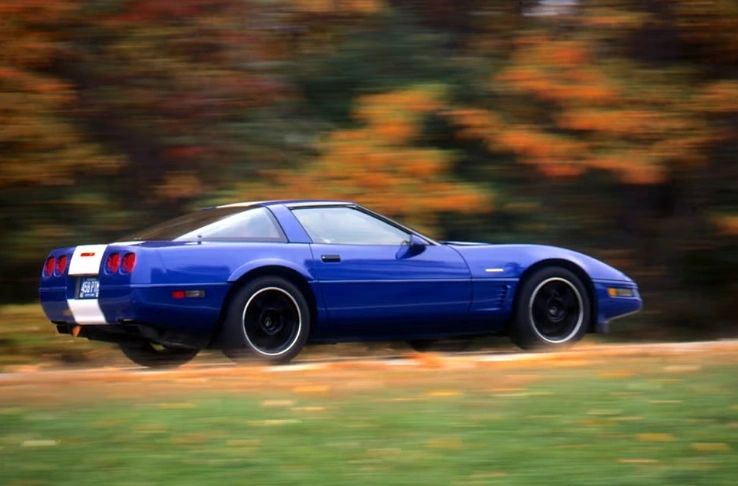
The best period snapshots are the instrumented tests. Car and Driver recorded a 0–60 time of 5.1 and a 13.7-sec/104-mph quarter for an LT4 Grand Sport, with top speed ~168 mph, and noted, with admirable candor, that the big Goodyears made the car harder to launch cleanly, demanding 4,000-plus rpm and committed clutch work. They also flagged the GS’s lack of an oil cooler for sustained top-speed running, quoting Corvette engineering manager Bob Applegate on the value of synthetic oil at those temperatures. Road & Track saw 5.2 to 60 and 13.7 @ 105.1, praising the repeatability and the ZF’s well-defined gates. The consensus reads like this: the stopwatch didn’t move by half a second, but the upper-midrange pull did, and the top-end told the truth.
From behind the wheel, the difference was real. An LT1 C4 delivered the kind of torque and tractability that made the car easy to enjoy anywhere. The LT4 kept that same basic character but added a stronger pull through the upper rev range, making the car feel more alive when driven hard. For the people who cared about the way a Corvette felt on a back road, that mattered more than a small number on a spec sheet.
Special Edition (Z15): the Collector Edition
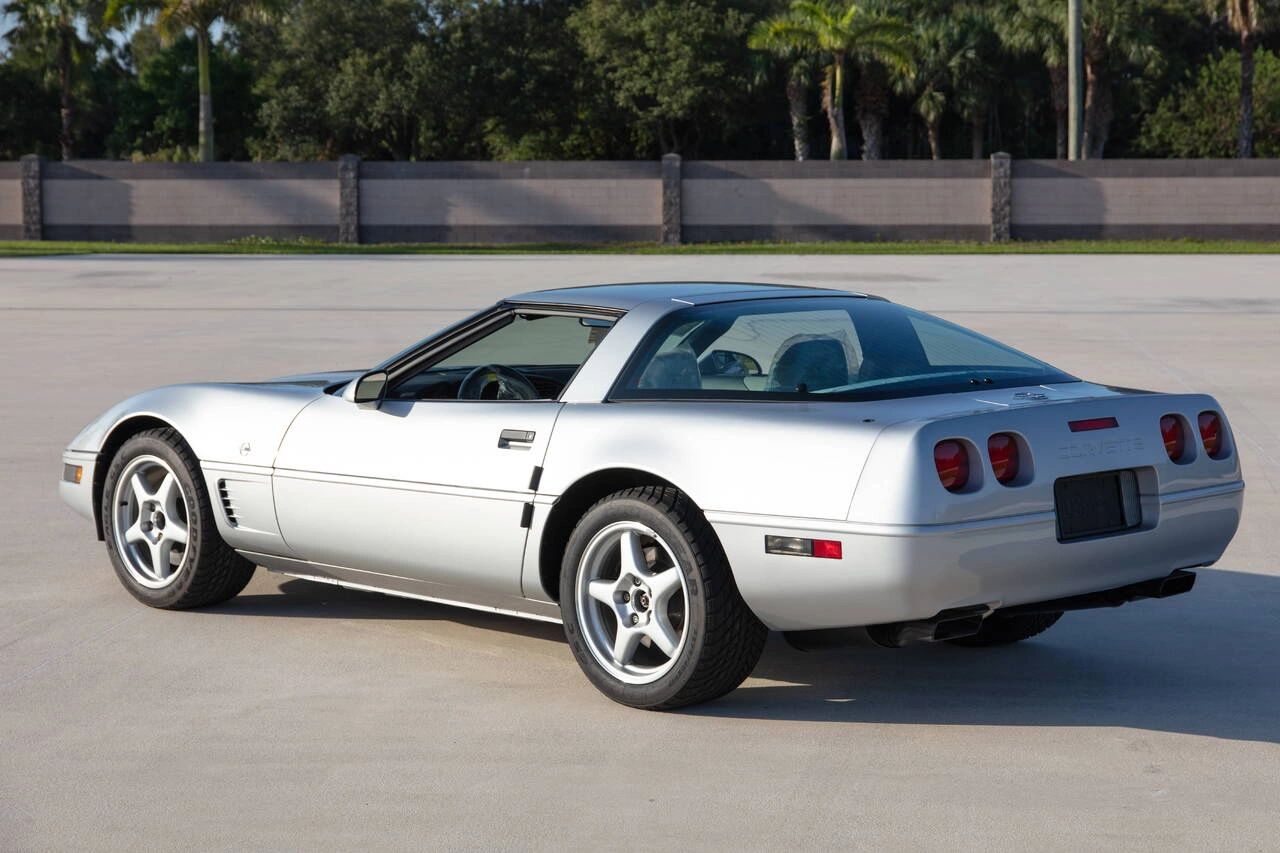
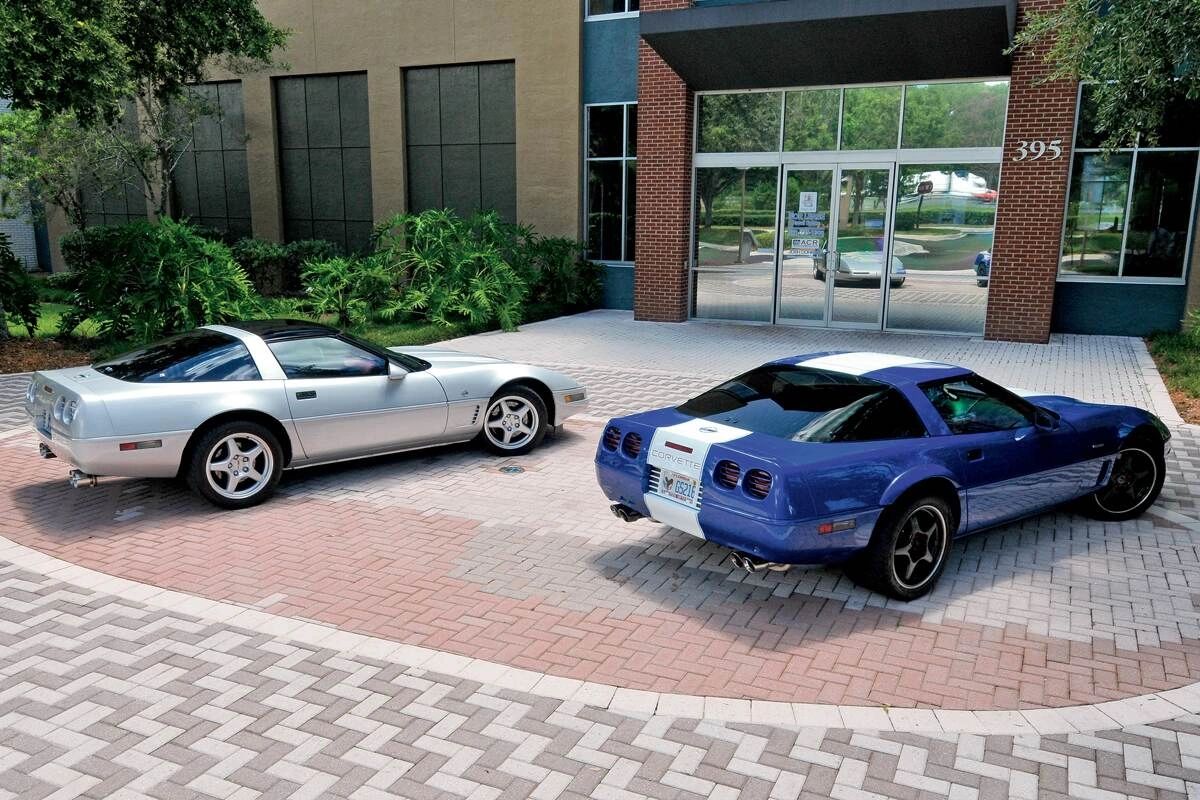
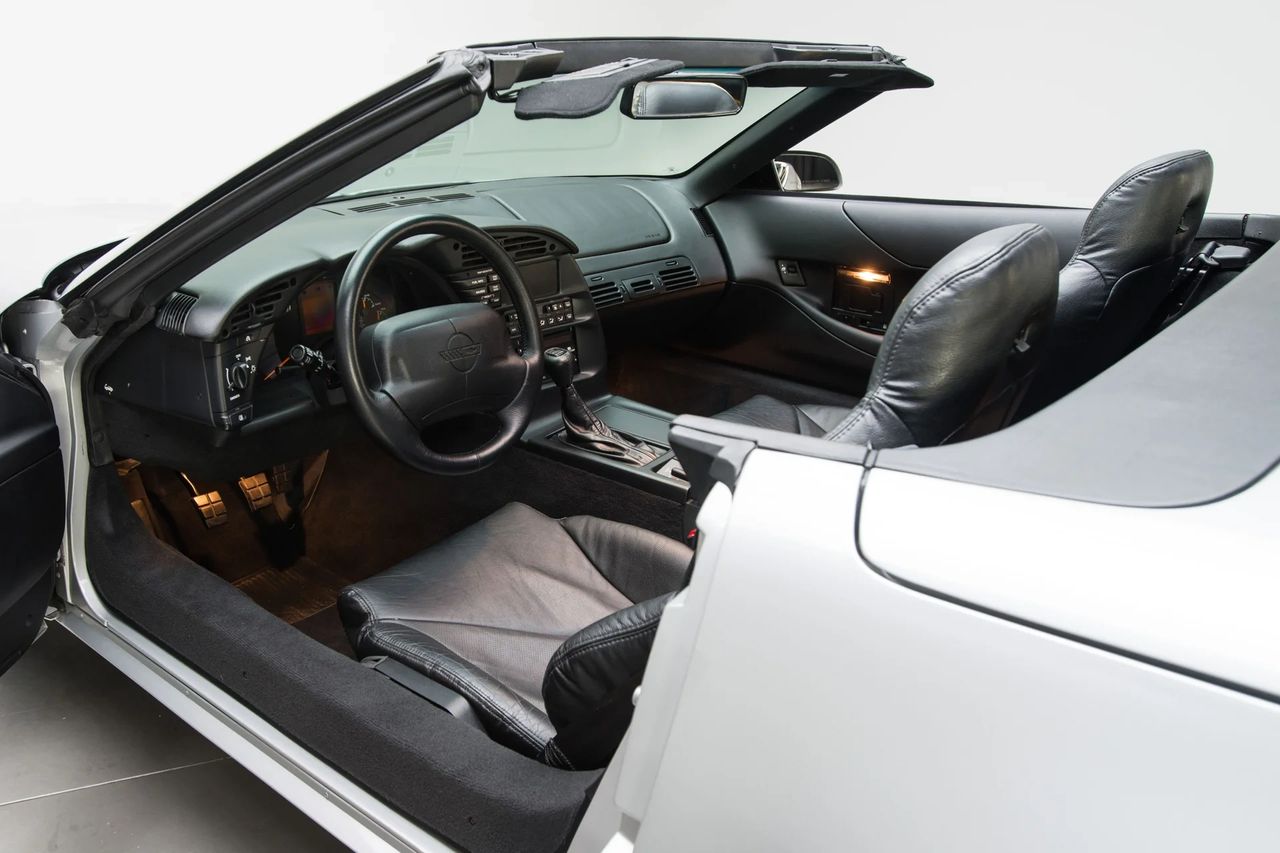
Chevrolet gave the C4 a proper sendoff in 1996, and the Collector Edition was a big part of that. Option code Z15 wrapped the final-year car in Sebring Silver Metallic and backed that color with a package of details that felt coordinated rather than forced. The silver-painted 17-inch five-spoke wheels, styled after those used on the ZR-1 and sized 17×8.5 up front and 17×9.5 in the rear, gave the car a more serious stance without pushing it into excess. Black brake calipers with bright “CORVETTE” lettering added just enough contrast, while the chrome Collector Edition badging on the body and the embroidered perforated sport seats inside made it clear this was not just another late C4 with a paint-and-sticker treatment.
What made the package work so well was its restraint. Chevrolet did not overplay the moment. The Collector Edition looked special, but it still looked like a Corvette first. That mattered. Offered on both the coupe and convertible for $1,250, it struck a tone that felt dignified, confident, and appropriately final. Buyers responded to that formula in real numbers. Chevrolet built 5,412 Collector Editions in all, including 4,031 coupes and 1,381 convertibles, which tells you the package landed exactly where it needed to. It was distinctive enough to matter, but tasteful enough that it never felt gaudy or overly commemorative.
The powertrain story also fits the car’s spirit. Collector Edition buyers were still buying a real driver’s Corvette, not a static appearance package. Depending on transmission, the car could be ordered as an LT1 with the 4L60-E automatic or as an LT4 with the ZF six-speed manual, and both combinations felt honest to the brief. One leaned more toward smooth, usable grand-touring refinement. The other gave the final-year C4 a sharper edge. Either way, the Collector Edition did not separate appearance from substance.
Inside, Chevrolet kept the trim choices tight and appropriate, with black, gray, or red interiors depending on configuration. That restraint helped the package hold together visually. Just as important, the Collector Edition required the 1SB or 1SD preferred equipment groups, so these cars generally carried the sort of equipment that makes late C4s feel complete and fully sorted. Taken as a whole, the Collector Edition was exactly what it needed to be: a last-year Corvette that looked composed on the road, credible on a show field, and collectible without trying too hard to announce itself.
Grand Sport (Z16): the love letter with a chassis
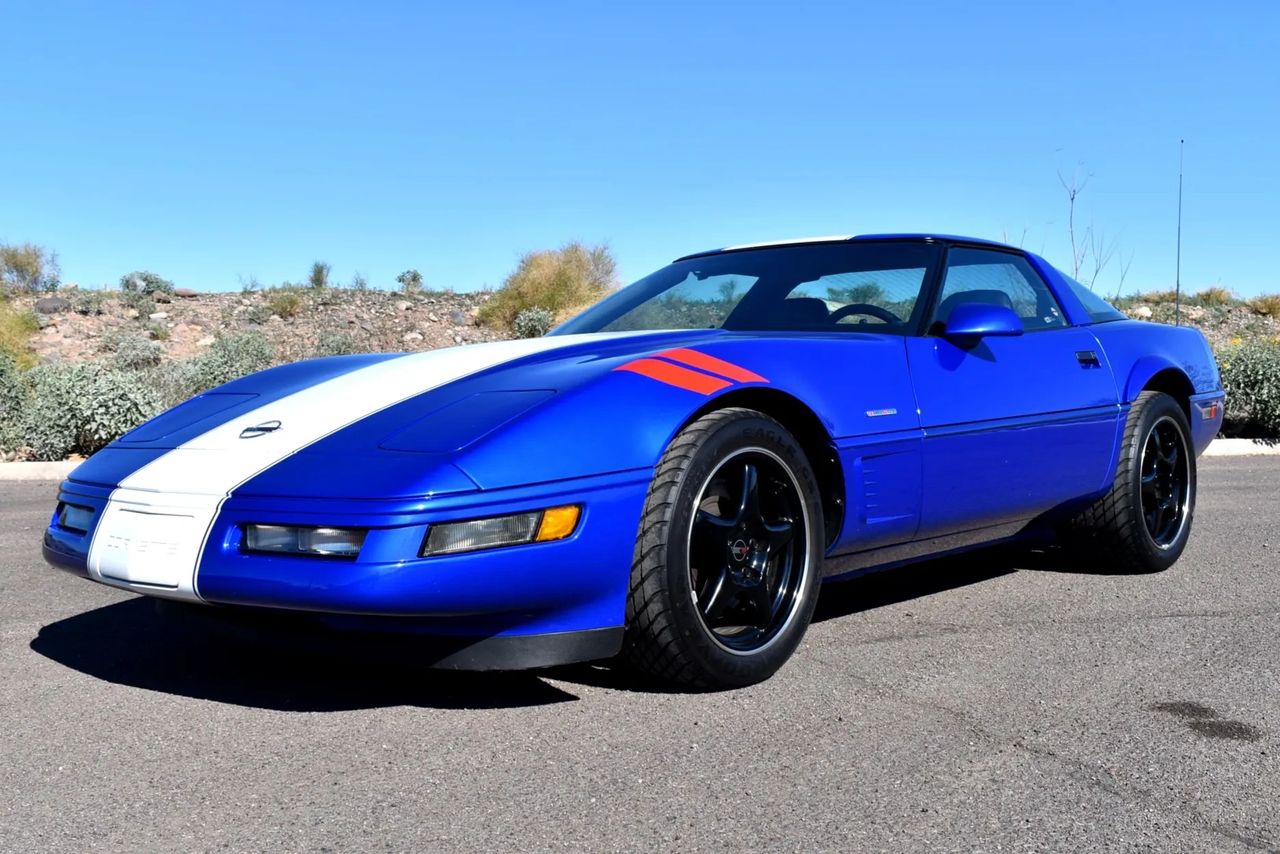
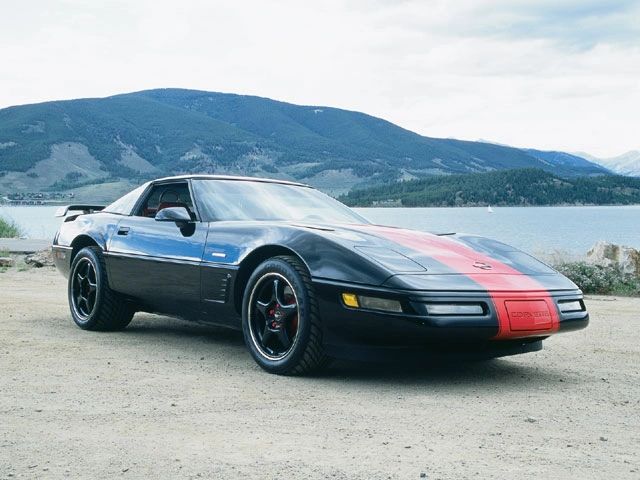
You cannot tell the Corvette story without talking about the Grand Sport, and Chevrolet understood that in 1996. When the name returned, it was not treated like a nostalgia exercise or a simple appearance package. Chevrolet made sure the car felt important at every level. The Admiral Blue paint, full-length white stripe, and red driver-side fender hash marks immediately tied the car back to the 1963 Grand Sport racers, giving the final-year C4 one of the most recognizable factory identities in Corvette history.
The mechanical side mattered just as much. Every 1996 Grand Sport came standard with the LT4 and the ZF six-speed manual, so the car’s performance credentials were built in from the start. Coupes received P275/40ZR17 front tires and massive P315/35ZR17 rears, a combination that required unique adhesively bonded rear flares to cover the added width. Convertibles kept 255/45ZR17 front and 285/40ZR17 rear tires, so they did not need the flares, but they still carried the same essential Grand Sport character. Inside, Chevrolet kept the theme tight with either black or red-and-black interiors, both finished with embroidered headrests that reinforced the car’s limited-production identity.
Provenance mattered here, too, and Chevrolet knew it. Like the ZR-1 before it, the Grand Sport received its own unique VIN sequence, a decision that helped preserve the model’s identity from the beginning and kept it crisp for collectors later on. Credit is often given to people inside GM, including John Heinricy, for helping make that happen. It was a small detail on paper, but it mattered in the real world because it confirmed that the Grand Sport was being treated as a distinct Corvette, not just a trim-and-paint exercise.
That sense of purpose carried over into how the car drove. The Grand Sport felt like the C4’s basic honesty turned up just enough to matter. Period testers noted that the huge rear Goodyears made hard launches an exercise in patience and commitment, but once the car hooked up, the LT4 pulled through the middle of the rev range with real authority. The chassis kept the driver engaged, the brakes inspired confidence, and the steering still delivered the kind of direct, unfiltered communication that had long been one of the C4’s greatest strengths. It did not feel ornamental. It felt focused.
Chevrolet priced the package accordingly, with a $3,250 premium for the coupe and $2,880 for the convertible. Production was capped at 1,000 units total, including 810 coupes and 190 convertibles. That was limited enough to make the car instantly significant, but substantial enough to ensure that the 1996 Grand Sport would become more than a last-year curiosity. It became the exclamation point at the end of the C4 story.
The 1996 range, by the numbers (because history is also data)
- Total production: 21,536 (Coupes 17,167; Convertibles 4,369).
- Collector Edition (Z15): 5,412.
- Grand Sport (Z16): 1,000 (810 coupes; 190 convertibles).
- LT4/MN6 (manual) volume: 6,359 (matches manual total; LT4 was manual-only).
- F45 Selective Real Time Damping: 2,896.
- Z51 Handling Package: 1,869 (coupe only).
- G92 Performance Axle (3.07 with automatic): 9,801.
- Extended-mobility (run-flat) tires (WY5): 4,945.
- Base pricing: Coupe $37,225; Convertible $45,060. Options: LT4 $1,450; Z15 $1,250; Z16 $3,250 (coupe)/$2,880 (conv).
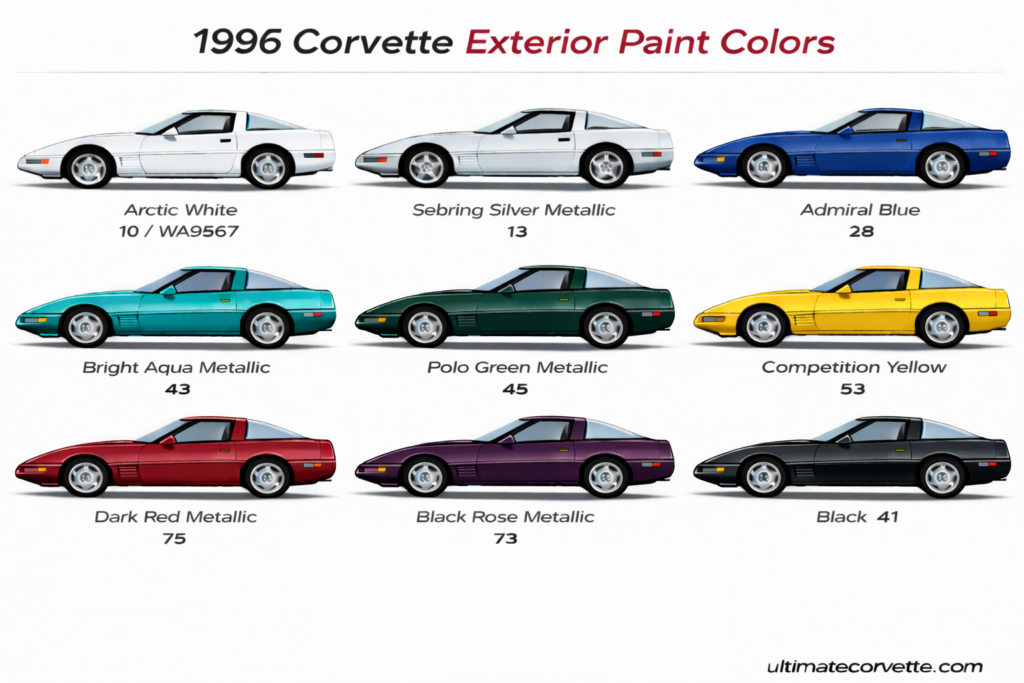
Colors: Dark Purple Metallic, Arctic White, Sebring Silver Metallic, Admiral Blue, Black, Bright Aqua Metallic, Polo Green Metallic, Competition Yellow, Torch Red. Sebring Silver was a runaway hit—roughly a quarter of ’96 production—with Torch Red and Black also strong; Admiral Blue is effectively tied to the 1,000 GS cars.
How to Spec a Perfect 1996 (with Hindsight)
If you want the quintessential late-C4 experience, an LT4 six-speed with F45 and J55 heavy-duty brakes is the sweet spot for real roads. Z51 is great if your commute includes cones and corner workers; just be candid about your pavement. The Collector Edition reads like the best “daily with provenance,” and a Grand Sport is exactly what it says on the decklid: the most iconic production C4, authenticated by its own VIN sequence and details you can spot from across a parking lot.
Why the 1996 Corvette Matters
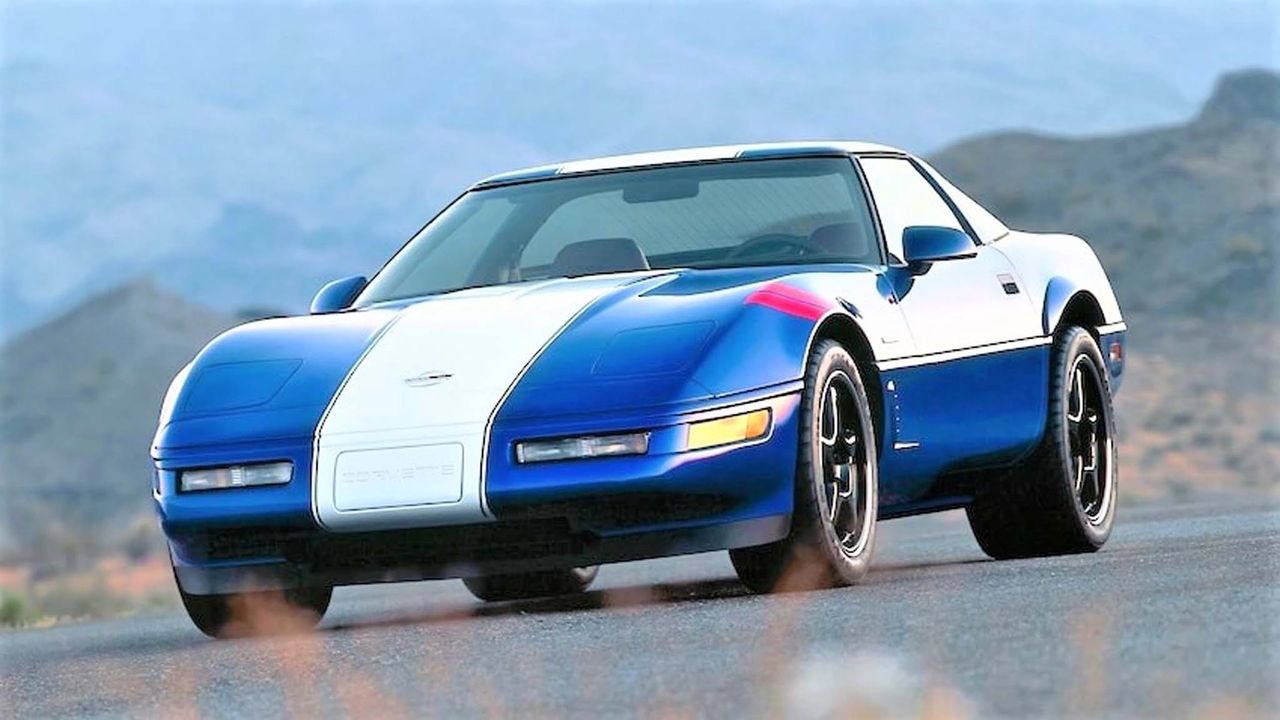
The lazy take on last year’s cars is that they coast to the finish. The ’96 Corvette doesn’t. It’s a platform that spent twelve seasons learning what worked, then chose to leave on purpose. The LT4 doesn’t chase a headline; it finishes the thought—better breathing, smarter valvetrain geometry, clean pull to 6,300 without running out of voice. F45 doesn’t reinvent the suspension; it smooths the last rough edges so the tire talks without shouting. Z51 comes back not as nostalgia but as a nod to the owner who keeps a helmet in the hatch and knows what a clean slalom feels like.
The special editions aren’t costumes; they’re punctuation. The Collector Edition says, “We remember,” and does it with restraint—Sebring Silver, five-spokes, quiet embroidery, the right kind of ceremony. The Grand Sport answers, “We’re not done,” with Admiral Blue, the white stripe, the red hashes, and the stance every C4 wanted from day one—LT4, six-speed, and the right rubber under it. One closes the book neatly; the other lights the fuse one more time.
Then the house lights dim and the next set rolls on: hydroformed rails, a torque tube and rear transaxle, LS1 waiting in the wings. None of that erases the C4; all of it makes sense because of it. Drive a good ’96, and you can already hear the C5 in the quiet—panels that don’t argue, structure that stays calm over bad pavement, steering that keeps its sentence structure when the surface loses its grammar. The car doesn’t feel new so much as finished.
That’s how a generation should end.
1996 Corvette — Key Specifications
Engines & Transmissions
- Base (Coupe/Convertible): LT1 5.7L V8 — 300 hp @ 5,000 rpm • 335 lb-ft @ 4,000 rpm; 4L60-E 4-spd automatic or ZF S6-40 6-spd manual. ABS and ASR traction control standard.
- Optional (’96 only): LT4 5.7L V8 — 330 hp @ 5,800 rpm • 340 lb-ft @ 4,500 rpm; 6-spd manual only. Standard on Grand Sport (Z16); optional on base/Collector Edition.
Performance (period ranges)
- 0–60 mph (LT1/LT4): ~5.2–5.7 s • ¼-mile: ~13.8–14.2 s @ ~100–104 mph (equipment dependent). (Consistent with factory ratings and contemporary tests.)
Chassis, Suspension & Brakes
- Structure: Uniframe with composite body; forged-aluminum control arms (F/R); independent 5-link rear; transverse composite leaf springs.
- Suspension choices:
- FE1 standard (Bilstein shocks, HD 4-wheel discs).
- F45 Selective Real Time Damping (electronically controlled shocks, driver-adjustable).
- Z51 Performance Handling (stiffer springs/bars/bushings; no EMT run-flats).
- Brakes: Power 4-wheel discs with Bosch ABS; dual airbags and ASR listed among standard safety features.
Wheels & Tires
- Base/Collector Edition: 17×8.5 in (F) / 17×9.5 in (R) with P255/45ZR-17 (F) / P285/40ZR-17 (R) Goodyear Eagles. EMT run-flats optional (not with Z51 or Grand Sport).
- Grand Sport (Z16): Coupe: 17×9.5 in (F) / 17×11 in (R) with P275/40ZR-17 (F) / P315/35ZR-17 (R); Convertible: 17×8.5 in (F) / 17×9.5 in (R) with P255/45ZR-17 (F) / P285/40ZR-17 (R). Coupe adds molded rear fender flares.
Dimensions & Capacities (factory)
- Wheelbase: 96.2 in • Length: 178.5 in • Width: 70.7 in (base) / 73.1 in (conv.)
- Height: 46.3 in (coupe) / 47.3 in (conv.) • Fuel capacity: 20.0 gal.
Special Editions
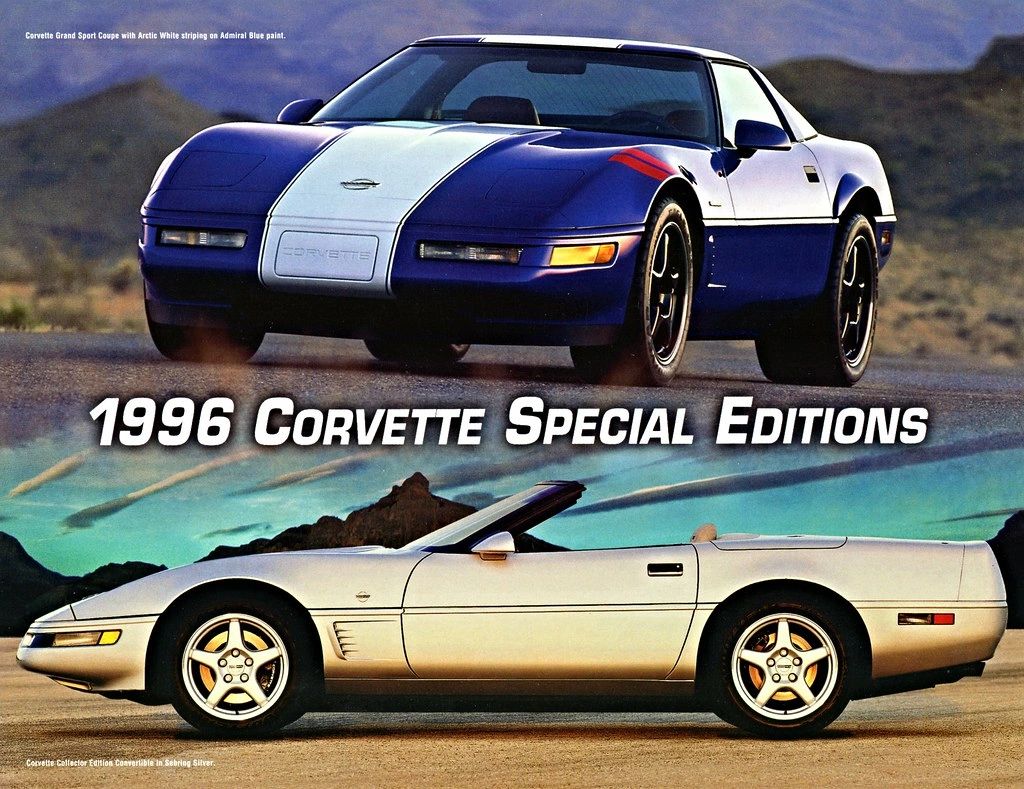
- Collector Edition (Z15): Sebring Silver Metallic, unique emblems, 5-spoke wheels; available with LT1 or LT4.
- Grand Sport (Z16): Admiral Blue with white center stripe and red hash marks; LT4/6-spd only; 1,000 built (810 coupes, 190 convertibles).
Why the 1996 Corvette Still Matters Today
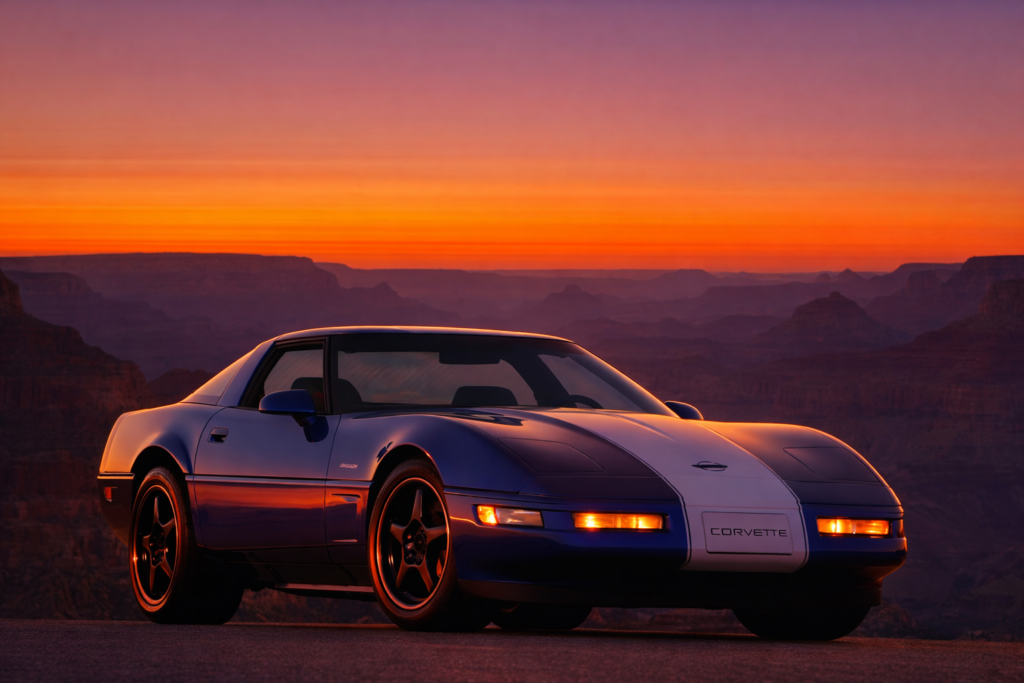
The 1996 Corvette still matters because it was not merely the end of the C4 story—it was the year Chevrolet finally showed the world exactly what the C4 had been working toward all along. By then, the fourth-generation Corvette was no longer the controversial new car that shocked traditionalists in 1984. It had matured into something far more important: a fully realized performance machine that helped drag the Corvette brand into the modern era. And in 1996, Chevrolet gave that generation the kind of sendoff it had earned. GM’s 1996 Corvette materials positioned the model year as the C4’s final act, and the factory brochure made clear that this was a Corvette lineup defined by performance, refinement, and heritage-conscious confidence.
A big part of that lasting significance comes from the LT4. Rated at 330 horsepower and 340 lb-ft of torque, and available only with the six-speed manual, it gave the final-year C4 real substance—not just ceremony. That matters historically because Corvette has always been at its best when the engineering speaks louder than the marketing, and the LT4 did exactly that. It was the most powerful regular-production small-block ever fitted to a Corvette at that point, and it reminded buyers that even at the end of a generation, Chevrolet still understood the assignment: if you are going to close a chapter on Corvette, you do it with meaningful hardware.
Then came the Grand Sport, and that is where 1996 rises above a typical farewell year. Chevrolet revived one of the most meaningful names in Corvette history and backed it up with real intent. Only 1,000 were built, and the package was more than visual theater—it was a heritage statement tied to performance, exclusivity, and identity. The factory brochure called it the highest-performance regular-production Corvette you could buy, and the model’s limited production run helped turn it into an instant landmark. More important, it established something Corvette would keep doing well in the years ahead: using its own history not as decoration, but as a way to sharpen the meaning of the current car.
The Collector Edition matters for a different reason. It gave Chevrolet a formal way to stop, look back, and acknowledge that the C4 had done the hard work. Production reached 5,412 units, but the number is only part of the story. Symbolically, the Collector Edition told enthusiasts that the C4 was no longer just the car that replaced the C3—it was the generation that modernized Corvette thinking. It brought sharper chassis development, more serious world-class performance ambitions, and the kind of structural and technological maturity that made the C5 possible. In other words, 1996 mattered because it closed the C4 era with a sense of completion, not apology.
That is why the 1996 Corvette still matters today. It was the year the C4 stopped asking to be understood and simply made its case. It delivered the LT4. It gave us the Grand Sport as a proper heritage icon reborn. It marked the end of the generation with the Collector Edition. And most of all, it handed the Corvette name to the future from a position of strength. The 1996 Corvette matters not just because it was the last C4, but because it proved the C4 had become something worthy of a deliberate, meaningful farewell. When you look at what Corvette became in the C5 era and beyond, it is impossible not to see 1996 for what it really was: the moment one generation finished the job and cleared the runway for the next.