There were certain years in each generation of Corvette’s history when the car stopped trying to be the loudest voice in the room and instead focused on being the most articulate. 1992 was that kind of year.
On paper, not much changed: the body was familiar, the interior still looked like late-’80s futurism, and the option sheet would have made a returning C4 owner feel right at home. But when drivers turned the key and set out through town, into a rainstorm, across a stretch of highway that usually made a sports car skittish, it became obvious that Chevrolet had spent the year turning the Corvette into a different animal. Quieter, more compliant, more secure in bad weather, and, most importantly, quicker in the ways that mattered day-to-day. The C4 wasn’t reborn; it was refined into its best self.
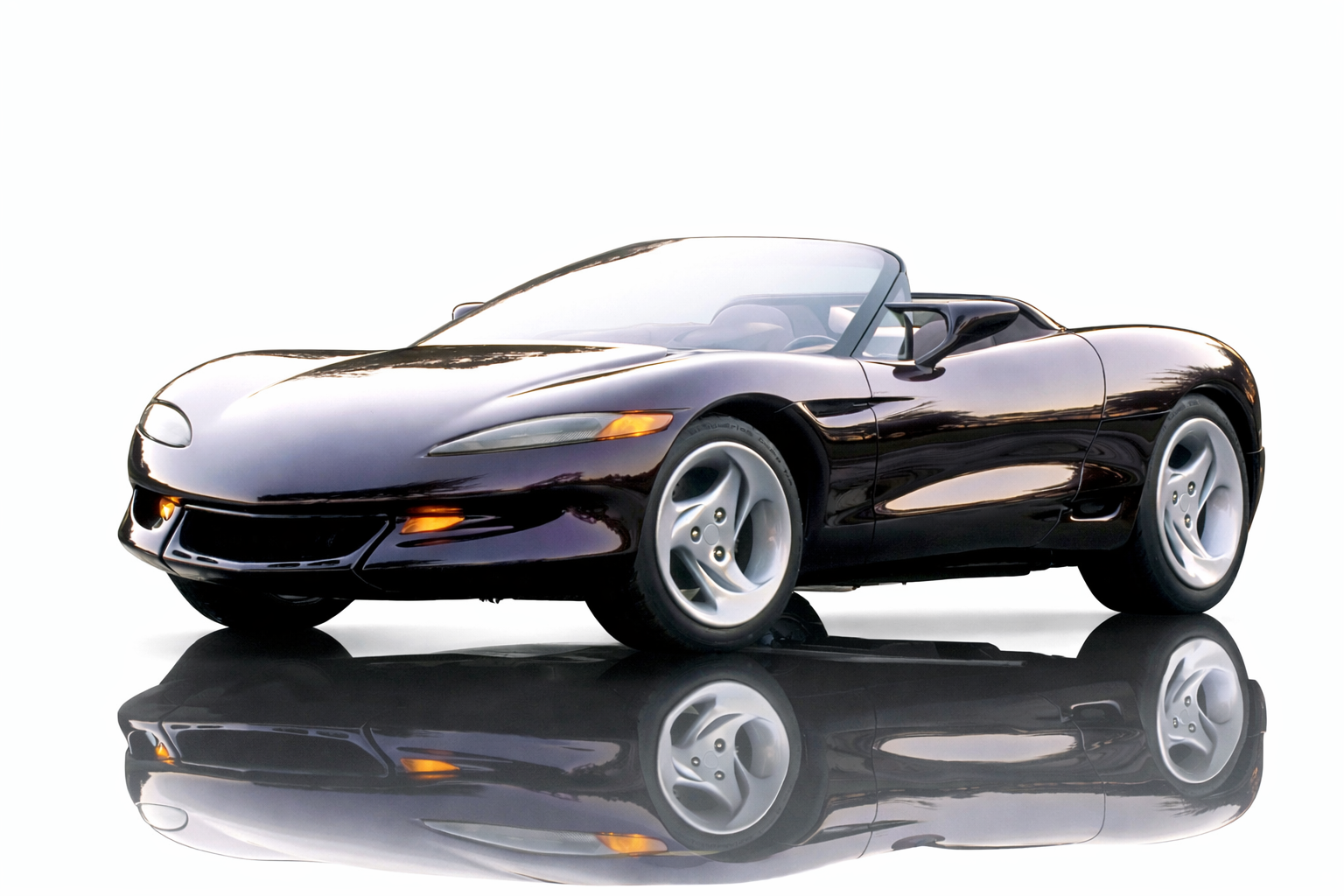
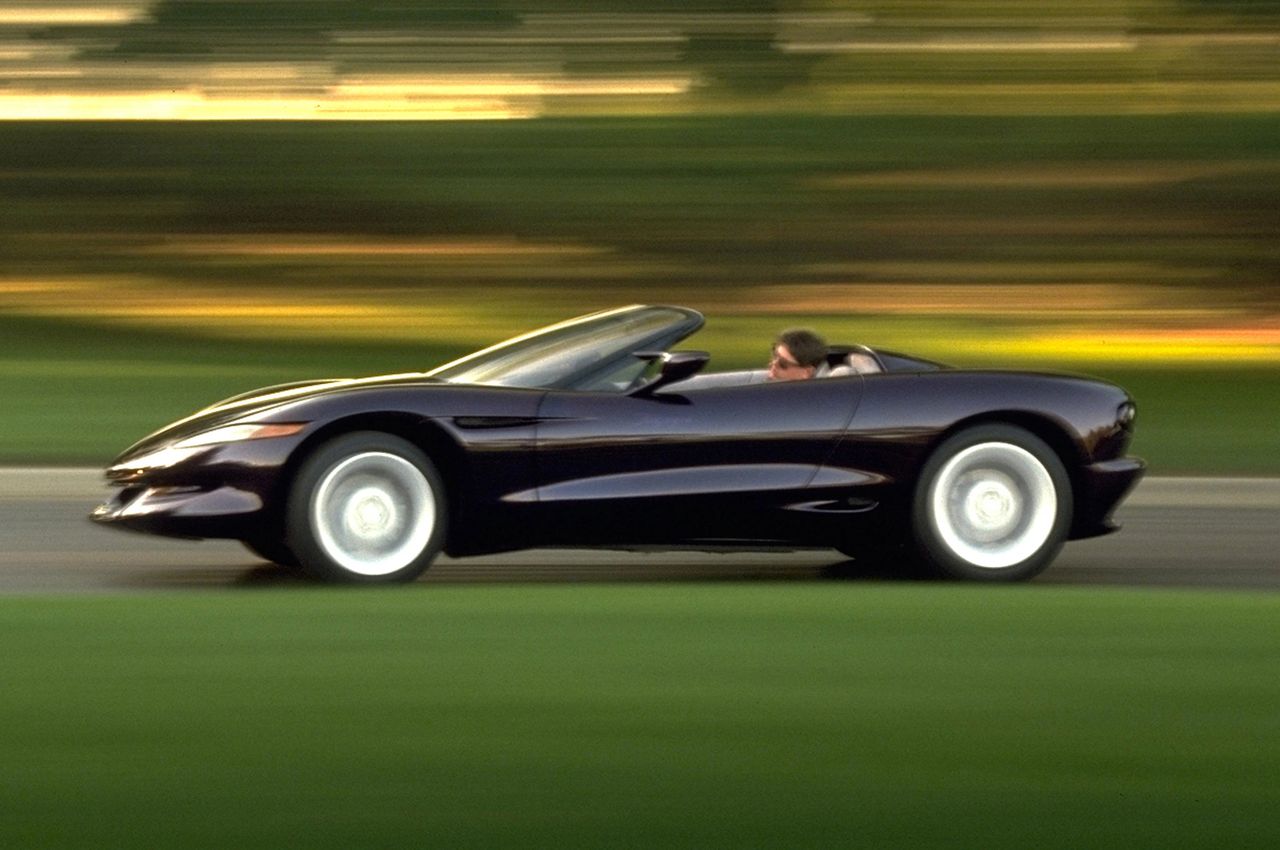
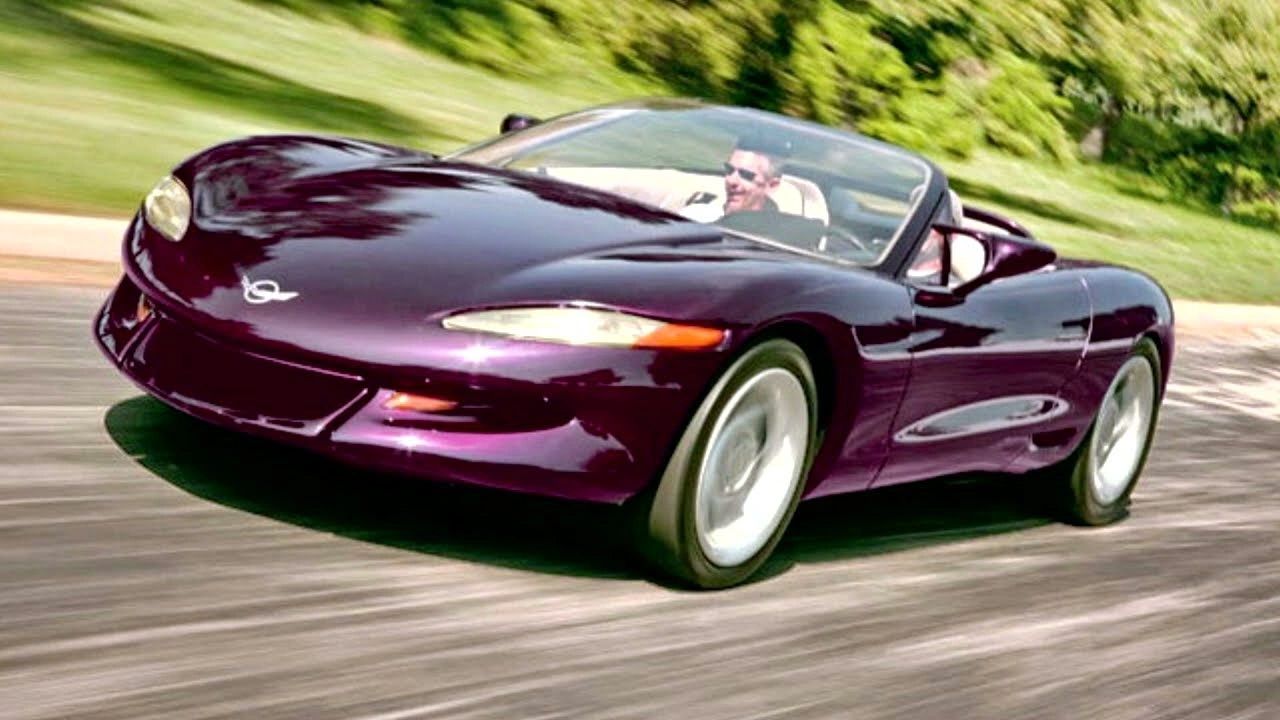
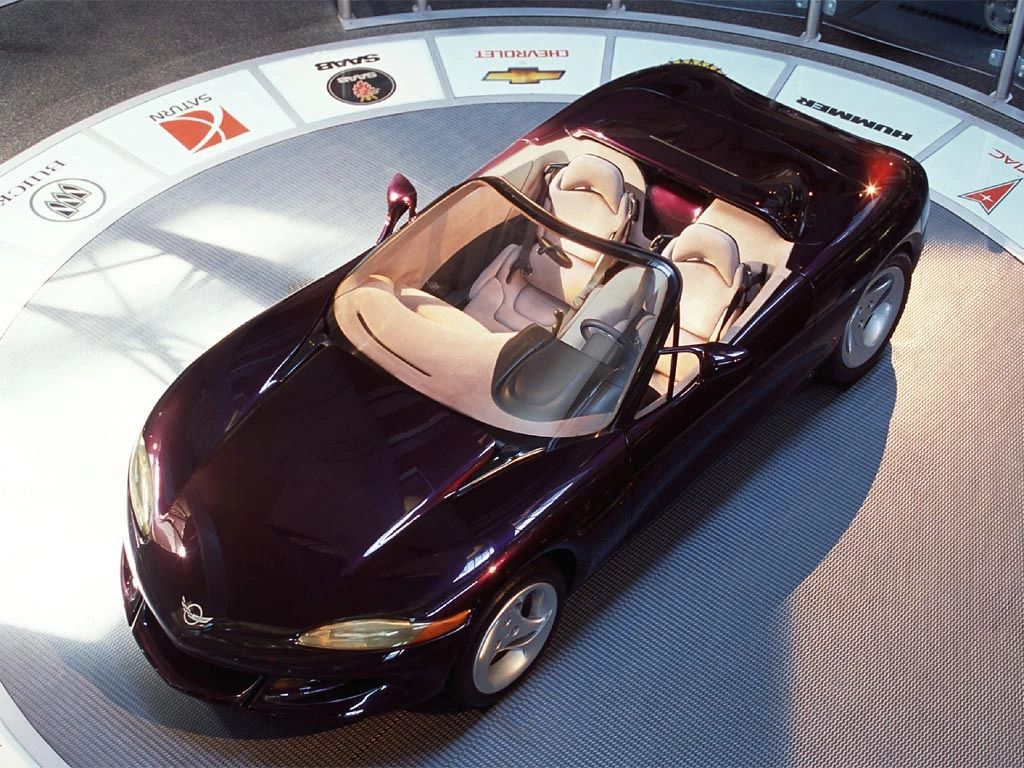
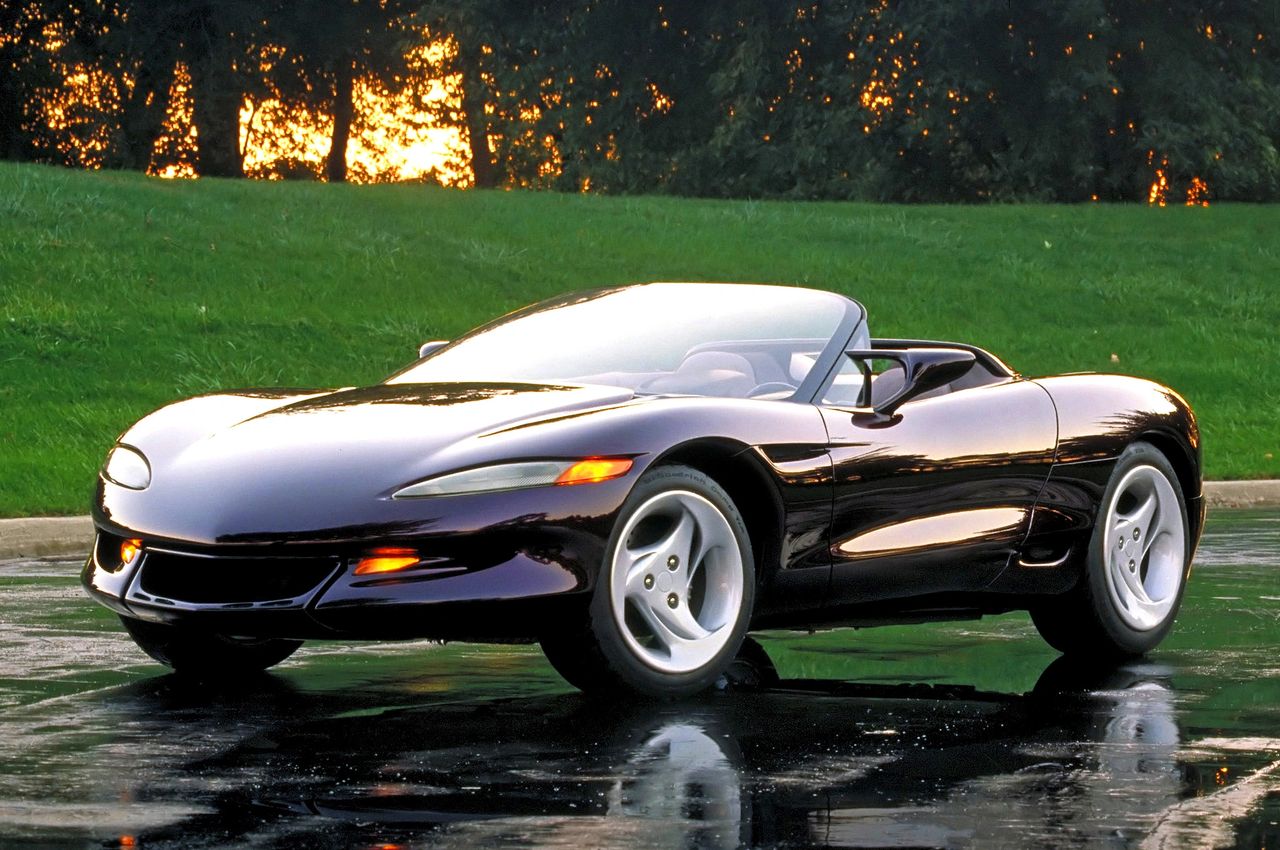
The loudest single ingredient in that transformation was three letters and a hyphen that dropped the hyphen: LT1. The new small-block replaced the long-serving L98 with 300 horsepower and 330 lb-ft, the biggest jump in base-car output since the C4’s launch. Around it, Chevrolet framed a remarkably modern driving experience—ASR traction control, new ZR-rated Goodyear GS-C rubber, improved sound deadening, tidier switchgear—that let the chassis feel composed where earlier C4s had felt nervy. And beyond the production car, Chevrolet made two statements about what the Corvette was and where it was going: it built the one-millionth example on July 2, 1992, tying the present back to 1953, and it rolled out Sting Ray III, a California-penned concept that looked a decade ahead and hinted at a transaxle future.
This is the story of how the 1992 model year —without a single new fender stamping—managed to move the Corvette forward.
A Year Lived Between Projects

By 1992, everyone inside Chevrolet knew the next-gen car—what would become the C5—was running behind schedule. Budgets were tight. Priorities elsewhere at General Motors had pushed hard decisions onto a handful of people who believed that a Chevrolet without a Corvette was a Chevrolet unmoored. Manufacturing executive Joe Spielman had walked into Chevrolet general manager Jim Perkins’ office with a rumor that the C5 might be killed. Perkins, a dyed-in-the-wool Chevy lifer, didn’t flinch. He did the thing old-school car people did when the spreadsheet said “no” and the product said “we must”: he found a way. “We put about two and a half million dollars of marketing money into the program,” Perkins admitted later, money that kept mule development alive and the team working toward hydroformed rails and a rear transaxle under a cut-and-shut C4 body. “We knew we had something.”
Those were C5 details, but they mattered here because 1992 was the year the existing Corvette started to feel like the car those mules promised. Chevrolet couldn’t get from C4 to the C5’s quantum leap without learning how to tame noise, vibration, harshness, and wet-weather insecurity. The LT1 car became the bridge: an old platform taught new tricks.
The LT1: Familiar Form, New Function
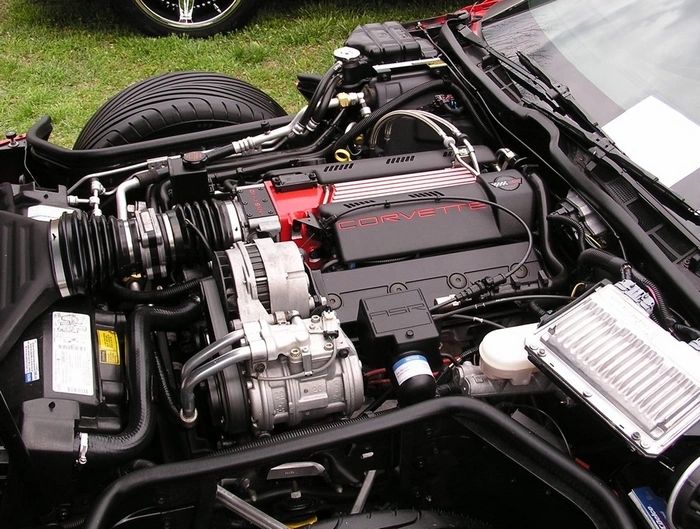
The LT1 was not simply an L98 with a bigger cam and a better tune. It was a major rethink of the small-block’s fundamentals. Peak output rose to 300 hp at 5,000 rpm and 330 lb-ft at 4,000, but the headline wasn’t the numbers—it was how the engine went about making them. Chevy engineers introduced reverse-flow cooling, sending coolant to the heads first, then down through the block. The benefit was thermodynamic headroom: cooler chambers meant more compression and spark lead without detonation. The engine breathed better via freer-flow heads and a cleaner, dual-cat exhaust path with an O2 sensor per bank; the cam profile and ignition strategy complemented a revised multi-port injection system. For the first time, Mobil 1 synthetic was the factory-specified oil, and the external oil cooler disappeared from the options list because the package no longer needed it for durability. Road & Track had called the LT1 “a major overhaul of the classic small-block,” praising the way it changed the car’s manners as much as its speed.
Drivers noticed the difference. The LT1 started cleanly hot or cold, idled with a purposeful smoothness that read “serious” without being fussy, and pulled in one continuous belt of torque instead of handing over a lump of shove and then begging for an upshift. It didn’t punish in bad weather; it allowed drivers to keep going through conditions that had once made earlier Corvettes feel like garage queens.
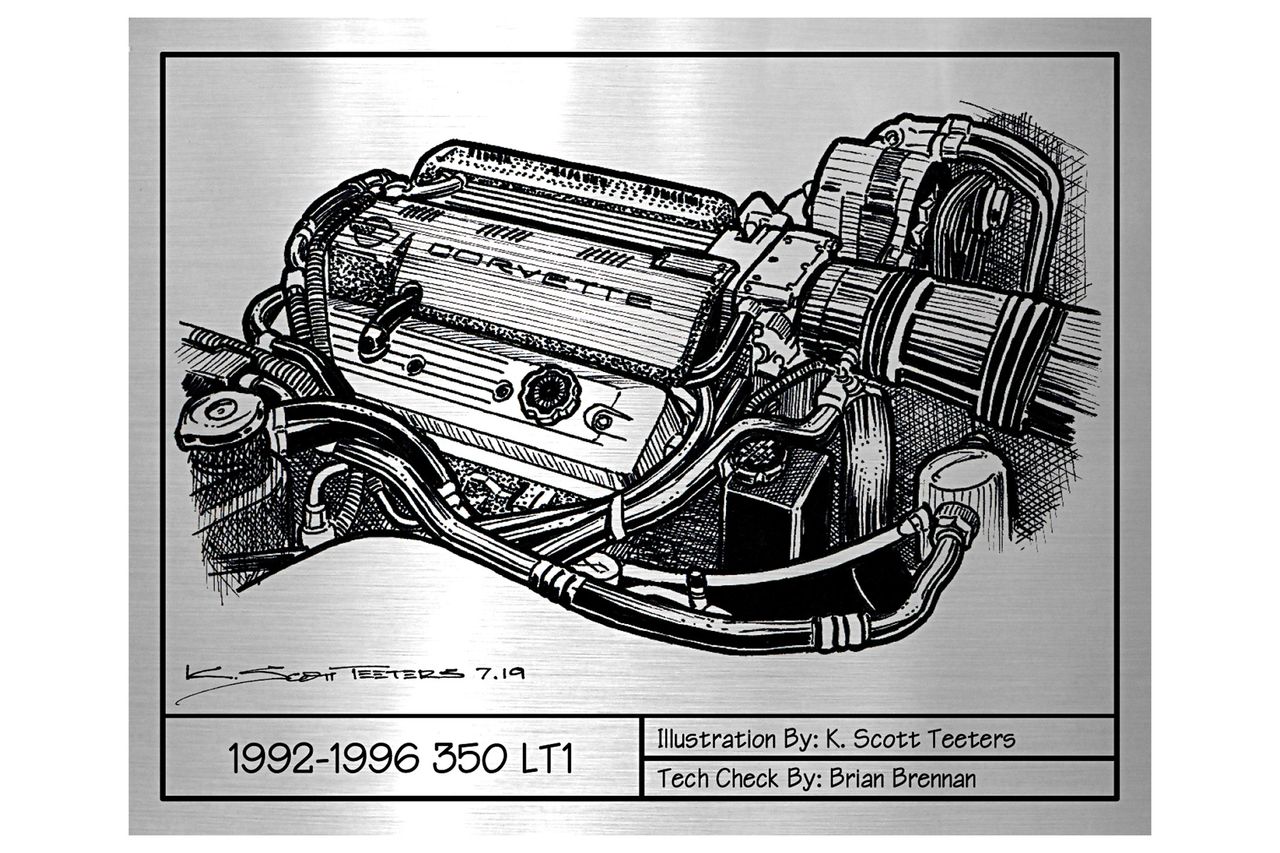
Not every new piece was perfect. The Opti-Spark distributor tucked beneath the water pump—chosen for packaging and precision—proved sensitive to moisture in early production, spawning a small industry of updates and replacements. But the LT1’s total system—the cooling strategy, the oil choice, the exhaust, the engine management—delivered a base Corvette that felt far more modern than the silhouette suggested.
ASR: Teaching an “Olympic Sprinter” to Waltz in the Rain
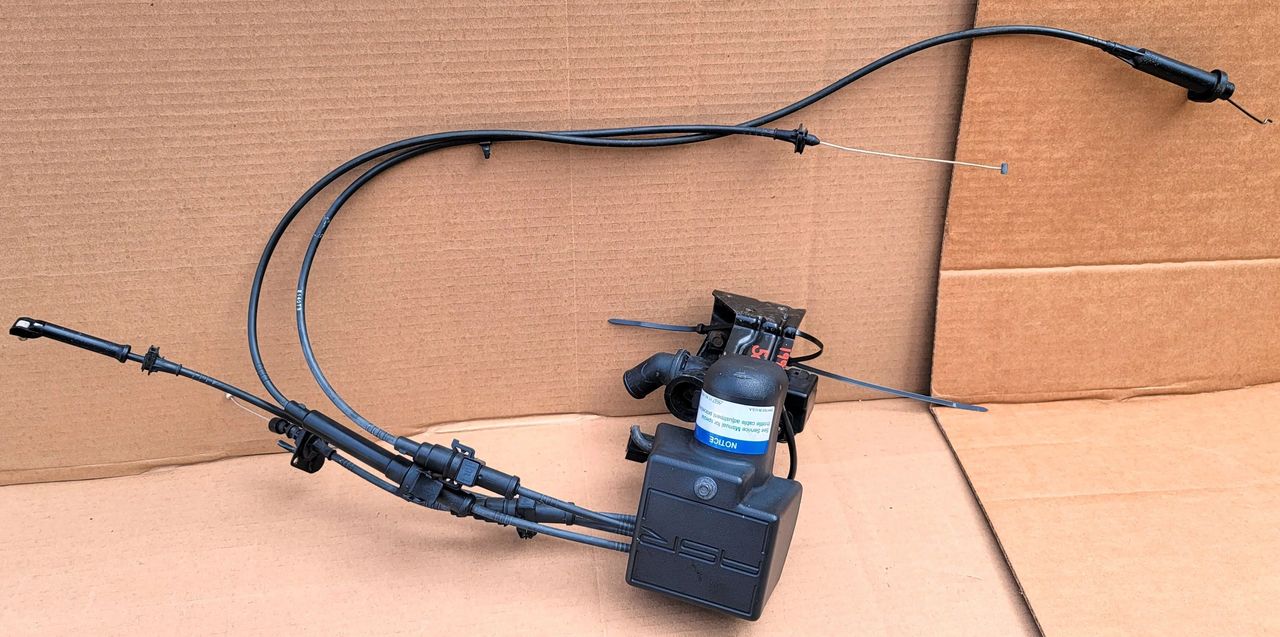
Engineers loved acronyms because they hid a lot of smart under a few letters. ASR—Acceleration Slip Regulation—was one of those. New for 1992 and standard across the line, ASR sat on the same sensor network as the anti-lock brakes and watched the rear wheels for over-speed relative to the fronts. When it saw wheel slip, it trimmed the throttle and spark and could apply the rear brakes independently to settle the car and restore traction. It wasn’t intrusive when the driver was in control; it was simply there in the background, saving trouble at moments where older Corvettes had asked for sainthood. In classic C4 fashion, it could be shut off with a console switch when a driver wanted the tail to breathe at an autocross.
Road & Track captured the effect in a single line: “a surprisingly effective traction-control system… makes the Vette much more driveable in bad weather conditions.” They went further, noting that refinements such as ASR and the new Corvette-exclusive radial tires “narrowed the performance gap” to the ZR-1. That was the part that sent ripples through Bowling Green and the dealer body. When the base car stepped far enough forward, the halo felt crowded.
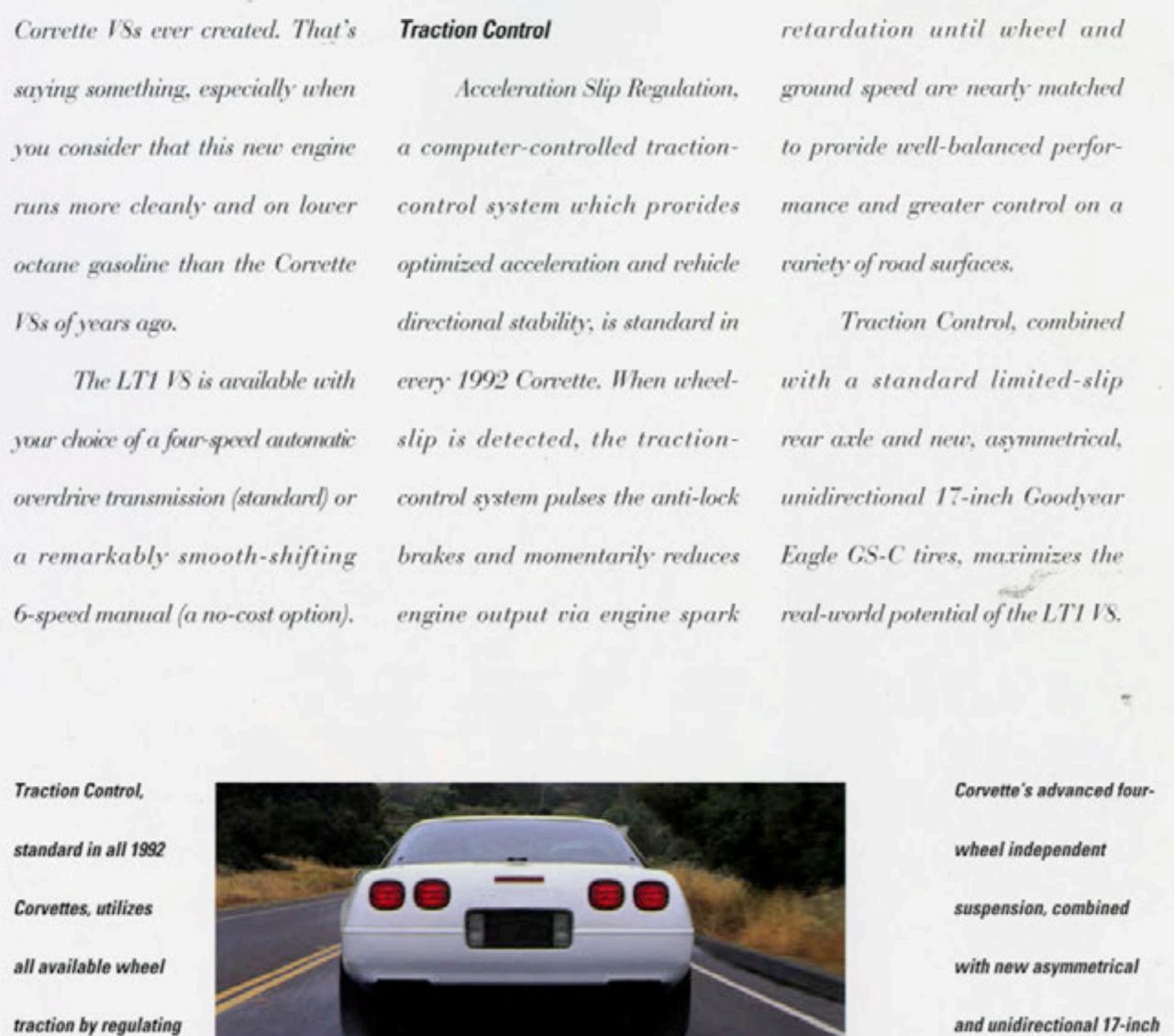
Chevrolet’s own literature leaned into the technology—not as a gimmick but as a guardrail for real drivers on real roads. The brochure’s ASR explainer was careful engineering prose—Acceleration Slip Regulation, throttle and spark intervention, brake application where needed—and it read like a company intent on selling performance you could actually use.
Pair ASR with the Goodyear Eagle GS-C tires—directional, asymmetric, Z-rated—and the C4 shook off the last bits of mid-’80s fragility on rough surfaces. The platform’s long-running virtues (rigidity, lateral grip, a willingness to communicate) came through without the old edge. The suspension still rode firmly, but isolation was up, and crashiness was down; the car tracked truer over seams and expansion joints, and the steering wheel didn’t chatter in a driver’s hands when the surface went off. If someone had lived with an early C4 and found it fatiguing after an hour on secondary roads, 1992 would have surprised them.
Same Skin, New Heart: The 1992 Corvette’s Look
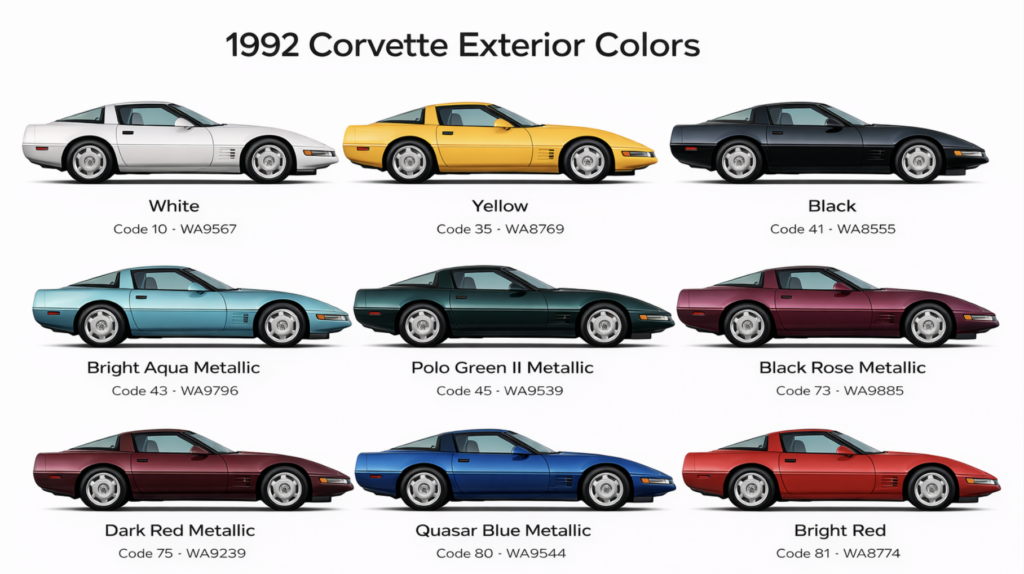
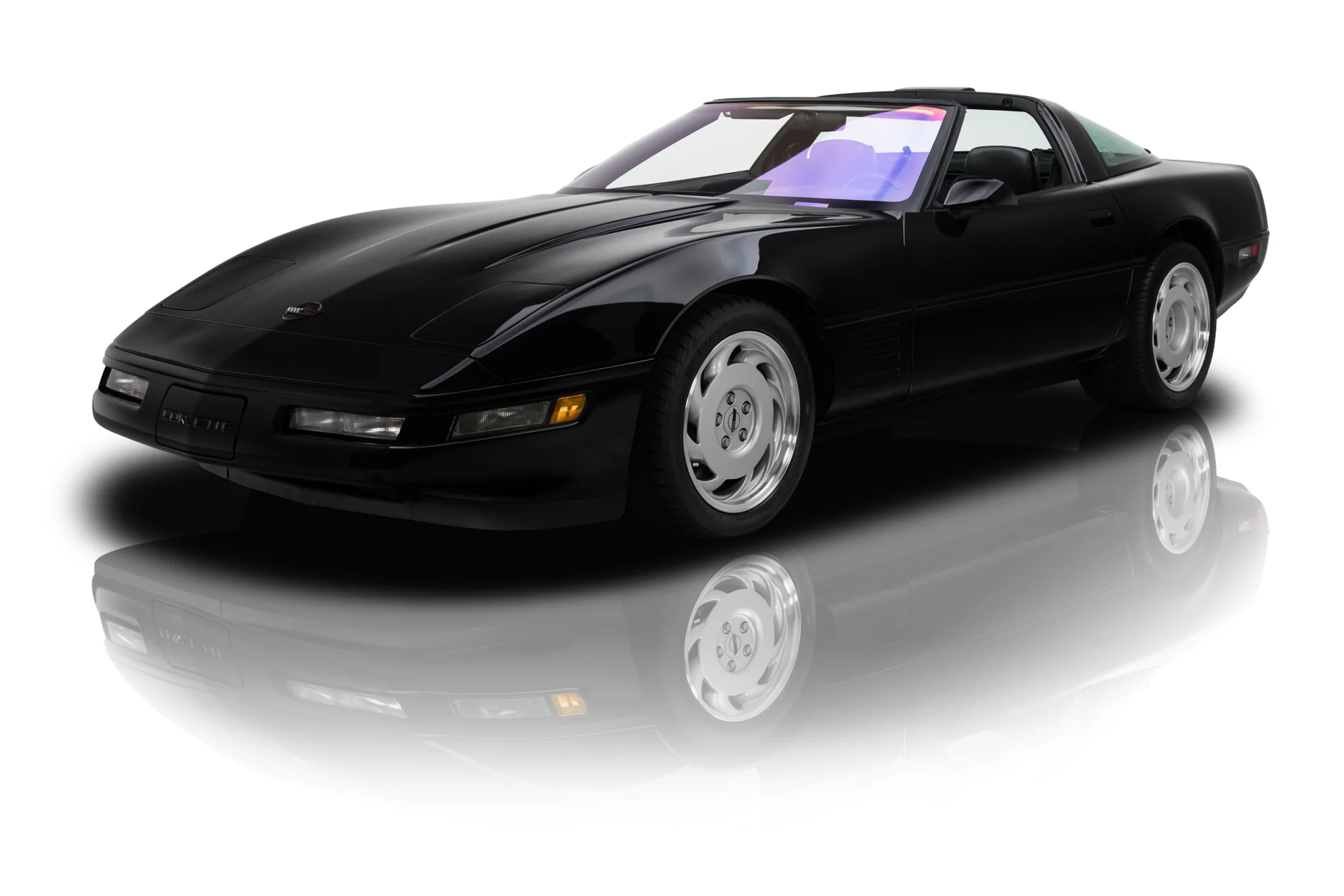
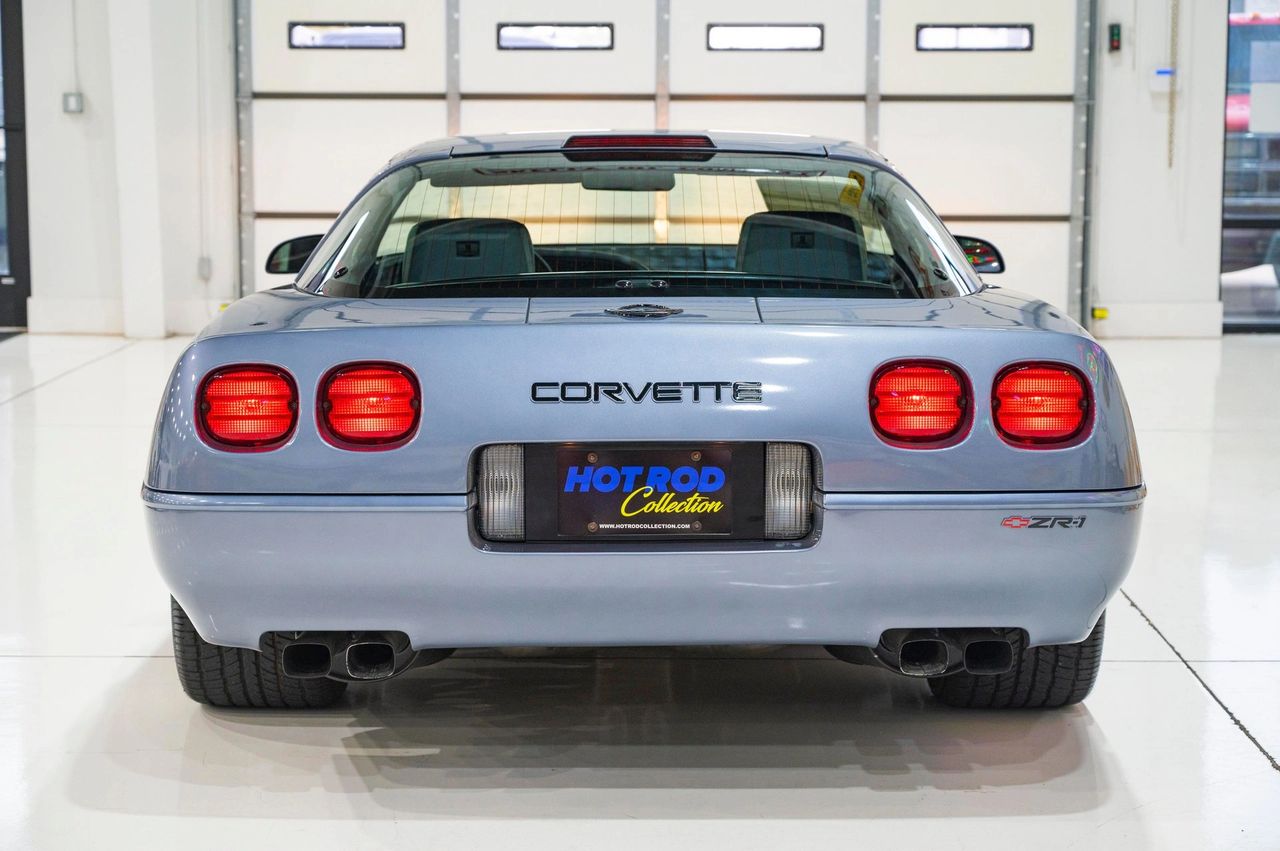
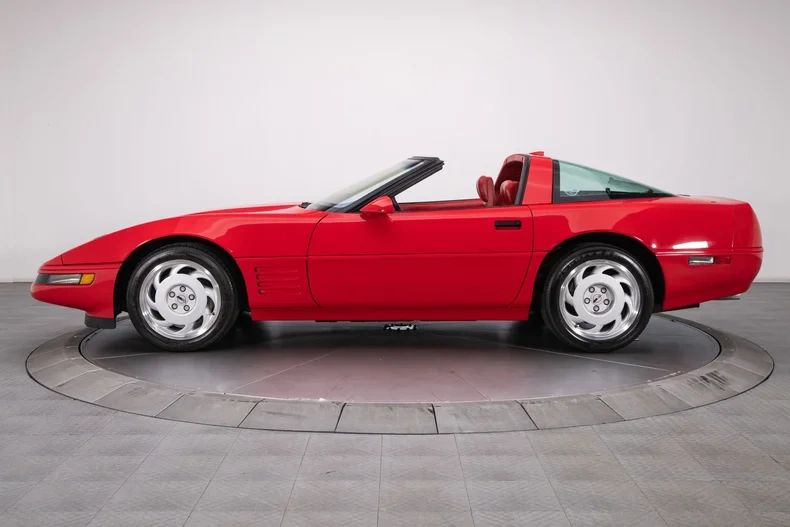
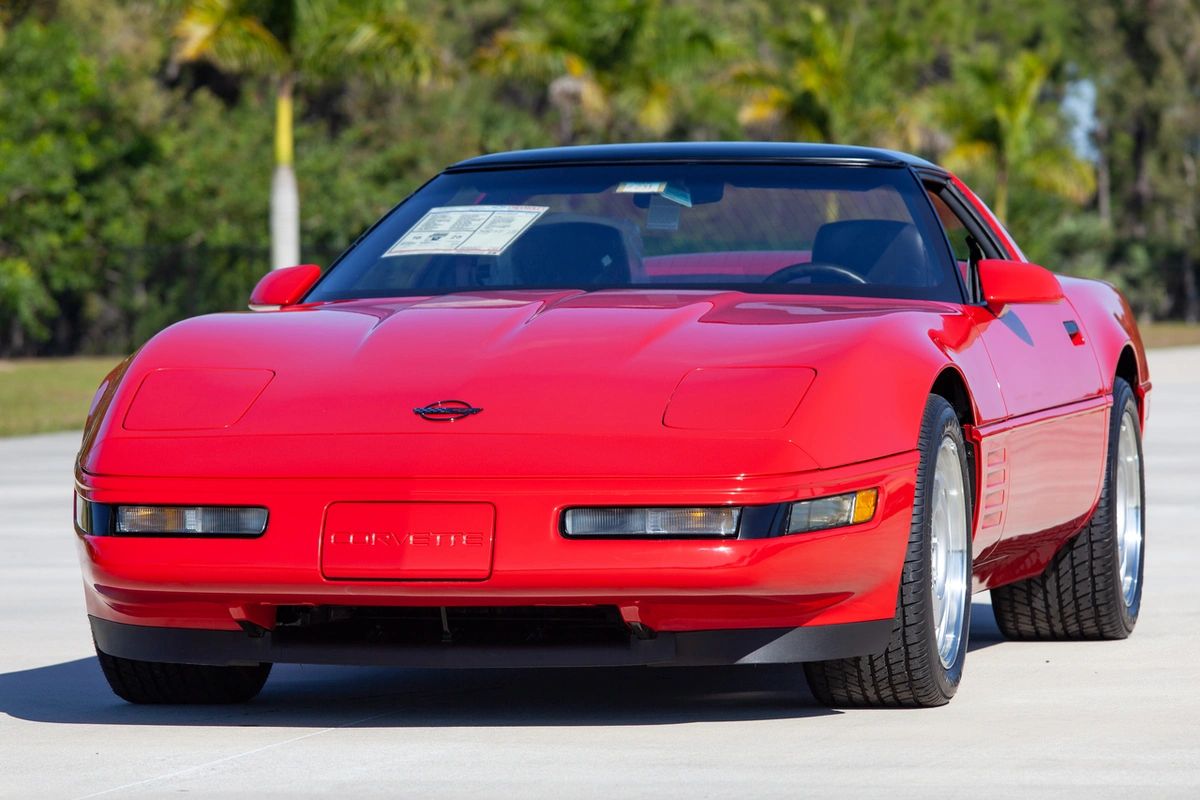
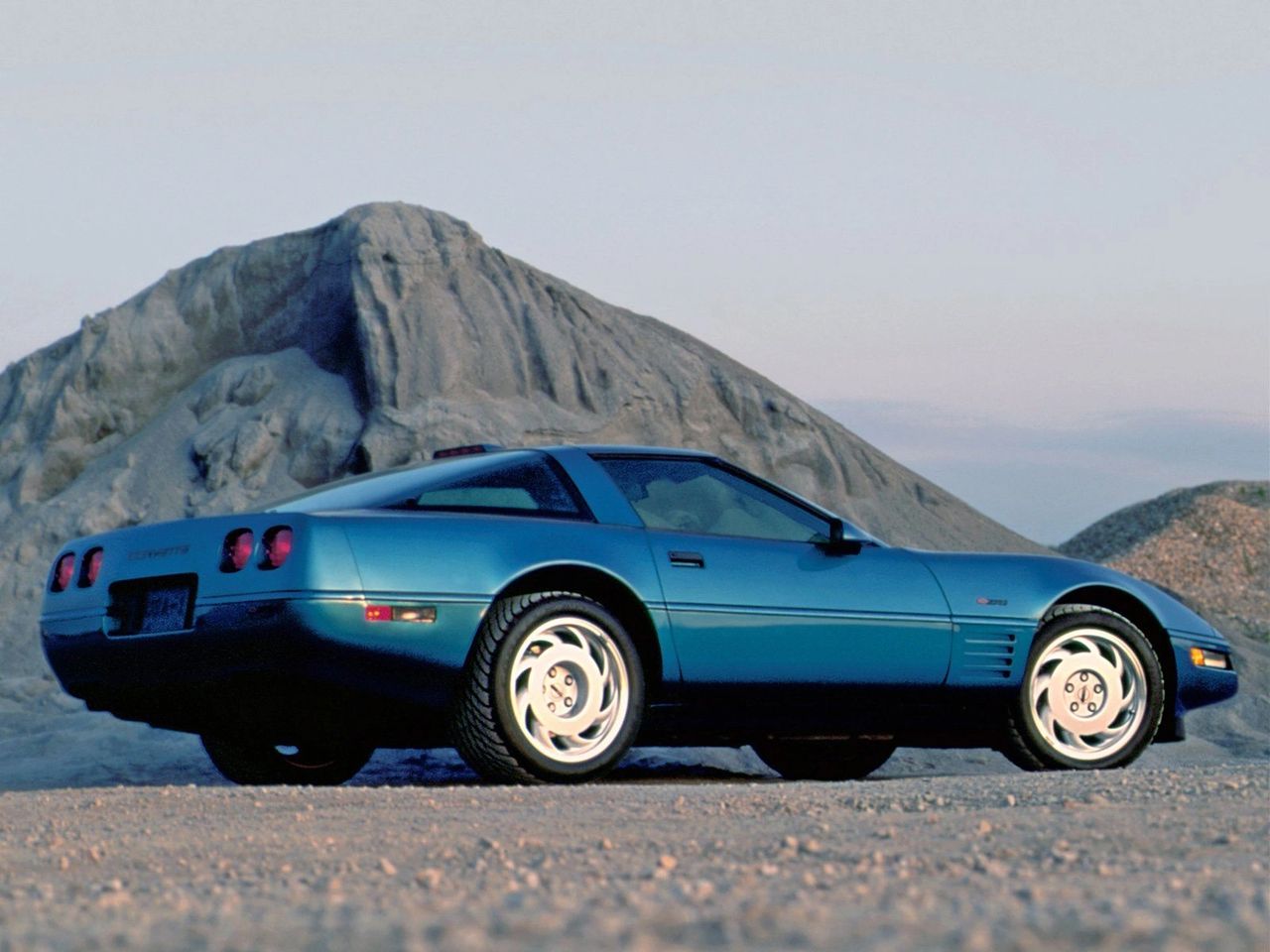
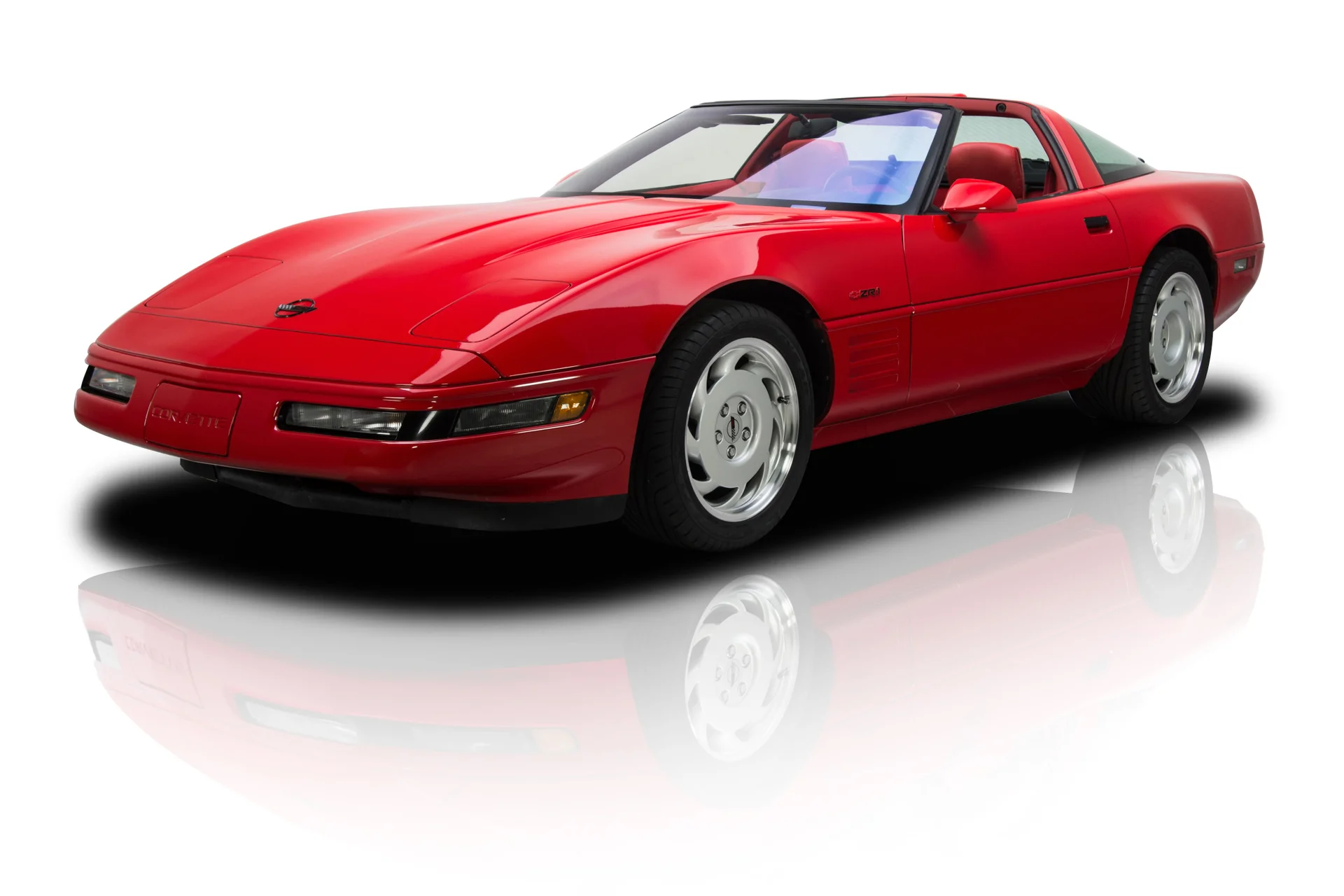
For 1992, the C4 kept the sleek “91 refresh” exterior—softer front and rear fascias, quad-rectangular tail lamps, and the scalloped front-fender gills—while the real revolution happened under the hood with the LT1. Visually, coupes and convertibles wore the same wind-tunneled profile on 17-inch alloys; ZR-1s continued with the subtly wider rear bodywork to cover 11-inch rims, plus discreet ZR-1 fender badges added above the gills. In short, the shape stayed modern and clean, and the details stayed purposeful.
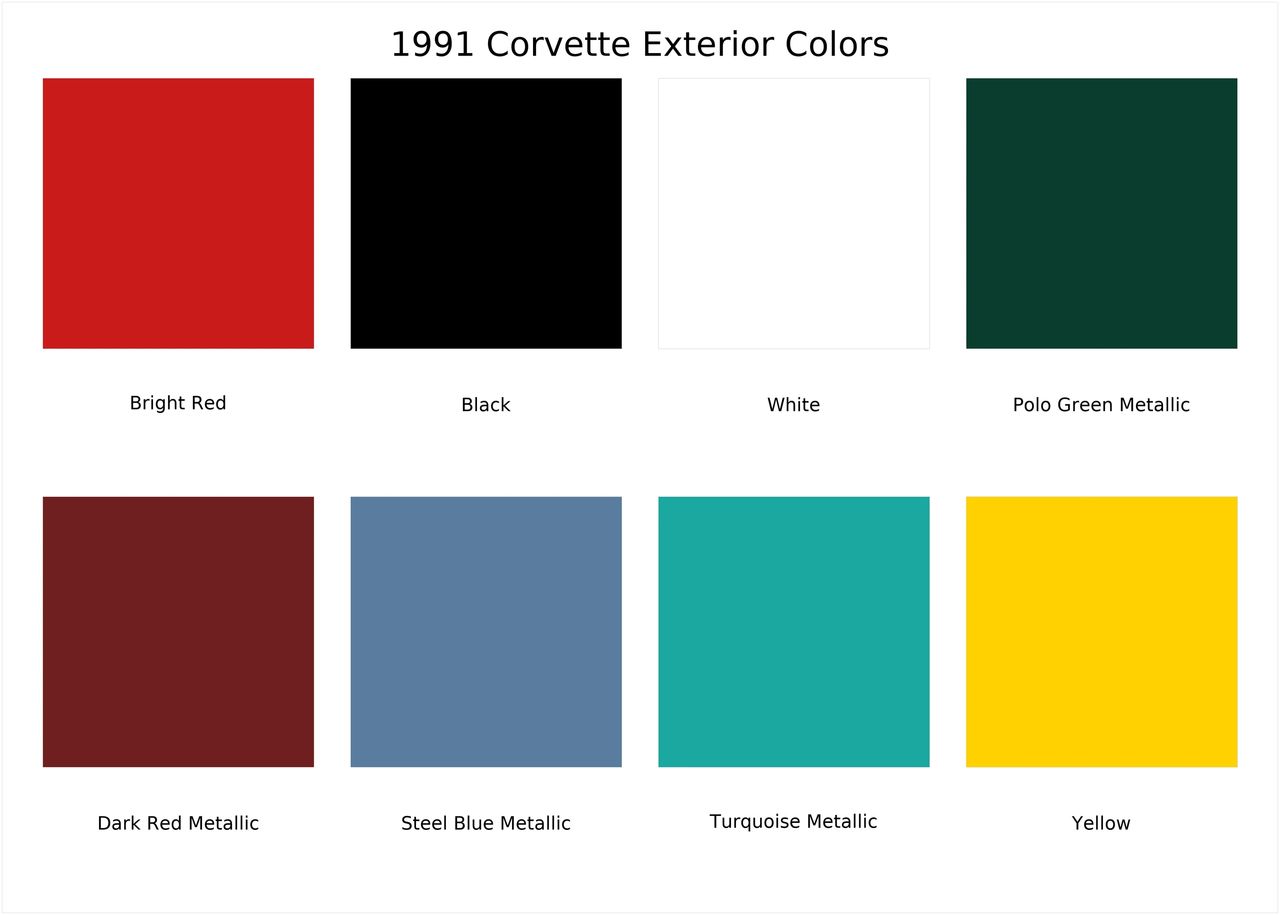
Colors & popularity (with GM codes): Chevrolet offered nine exterior choices—Arctic White (10), Black (41), Bright Red (81), Yellow (35), Bright Aqua Metallic (43), Polo Green II Metallic (45), Black Rose Metallic (73), Dark Red Metallic (75), and Medium Quasar Blue Metallic (80). Based on 1992 production totals (20,479 cars), Bright Red (81) was the most popular with 4,466 built (~21.8%), while Yellow (35) was the rarest regular-production color at 678 cars (~3.3%). These counts and codes match period production records and align with the National Corvette Museum’s color roster for 1992.
The Cabin and the Cues
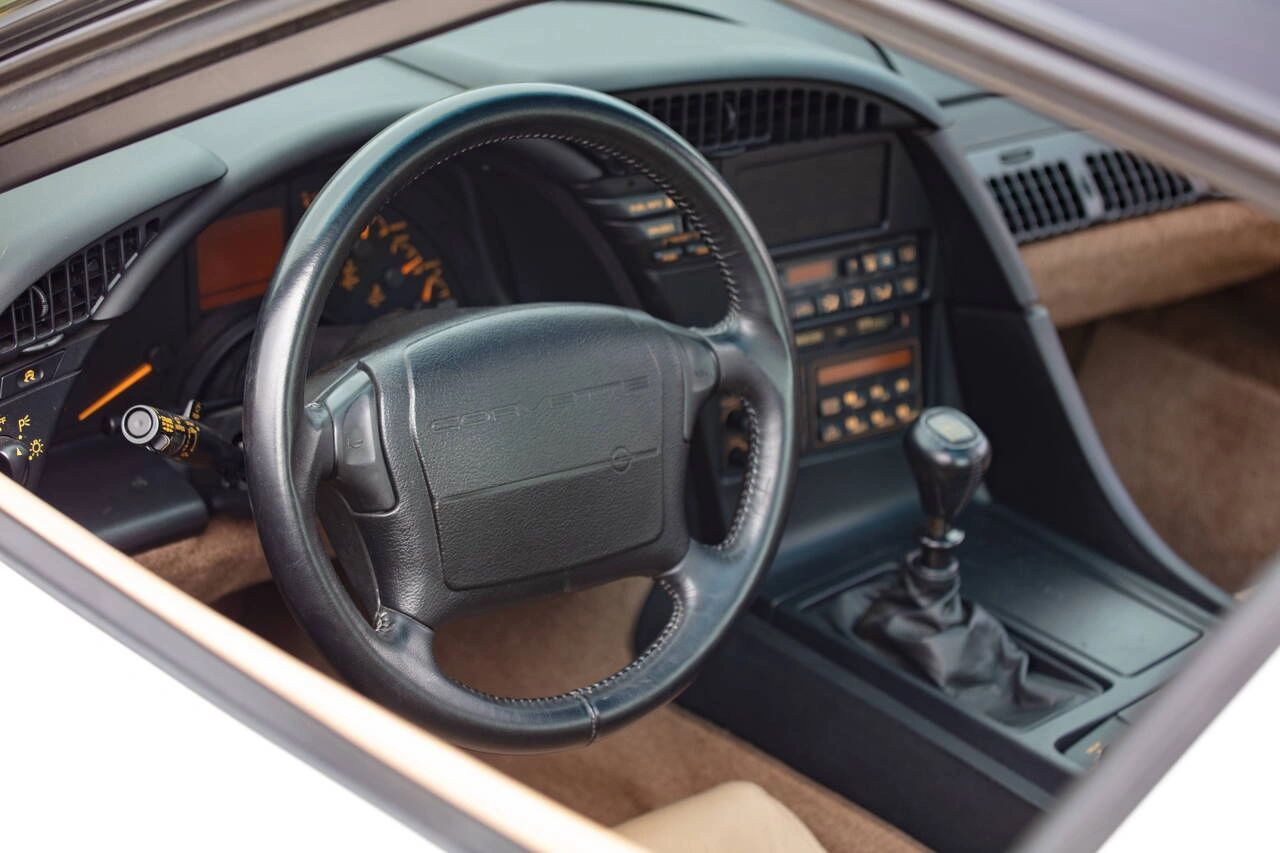
The Corvette’s maturity in 1992 was also visible in the places Chevrolet didn’t chase flash. The instrument cluster and center stack went to an all-black scheme that cleaned up the cockpit’s visual noise. Switchgear lost the gray-black mix that once made the dash look like a parts catalog. Weathersealing improved. There was more insulation in the doors and transmission tunnel, cutting down the tire roar that could turn a long day into a longer headache. The retained-accessory power logic—radio, windows—now cut with either door, a small tweak that reads as considered, not cost-cut. These touches made the car feel less like a weekend event and more like something an owner could live with five days a week and still want on Saturday.
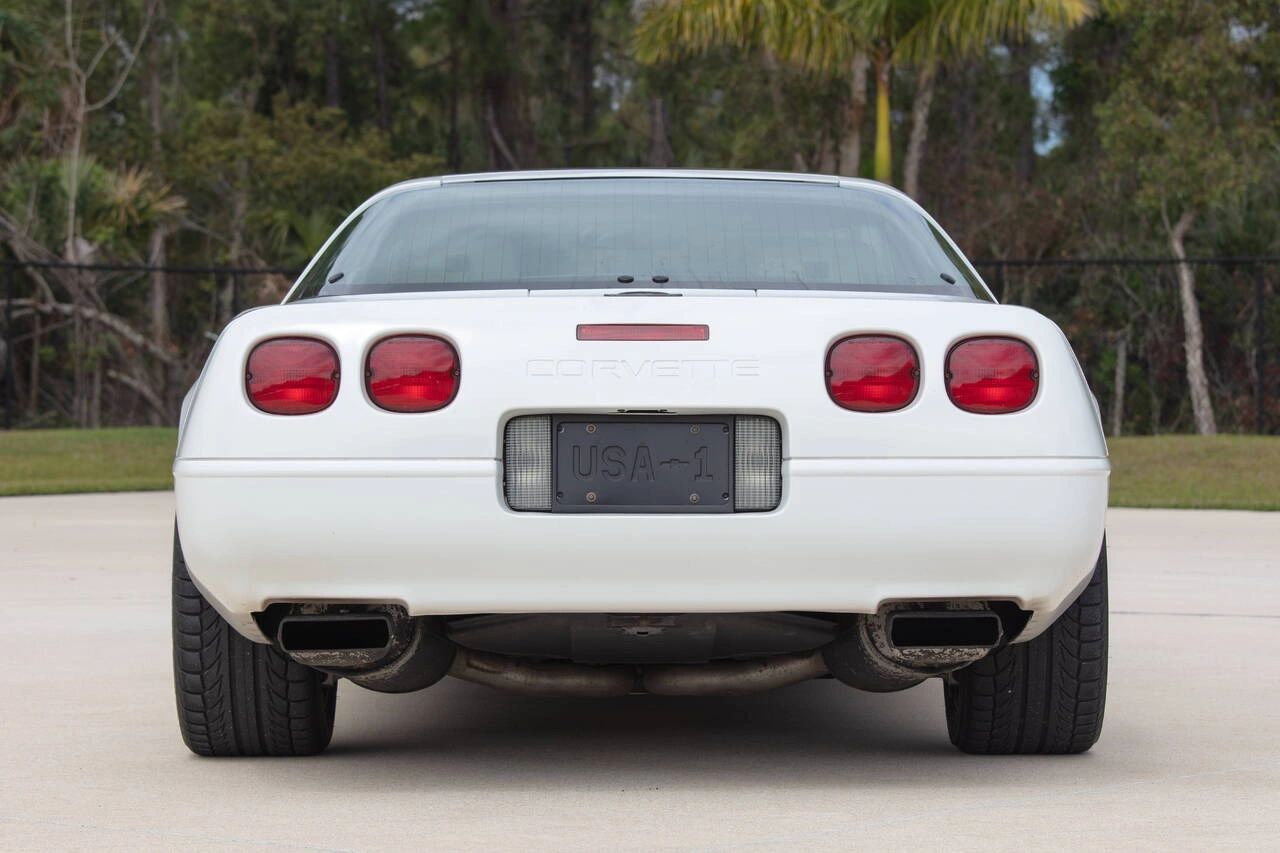
Outside, the changes were subtle. The exhaust outlets became two rectangular finishers in place of the old quad rounds. It was a slight visual widening of the tail and a more contemporary look. ZR-1s picked up fender badges to go with the still-massive 315-section rear tires, little tells for the faithful.
The ZR-1’s Dilemma
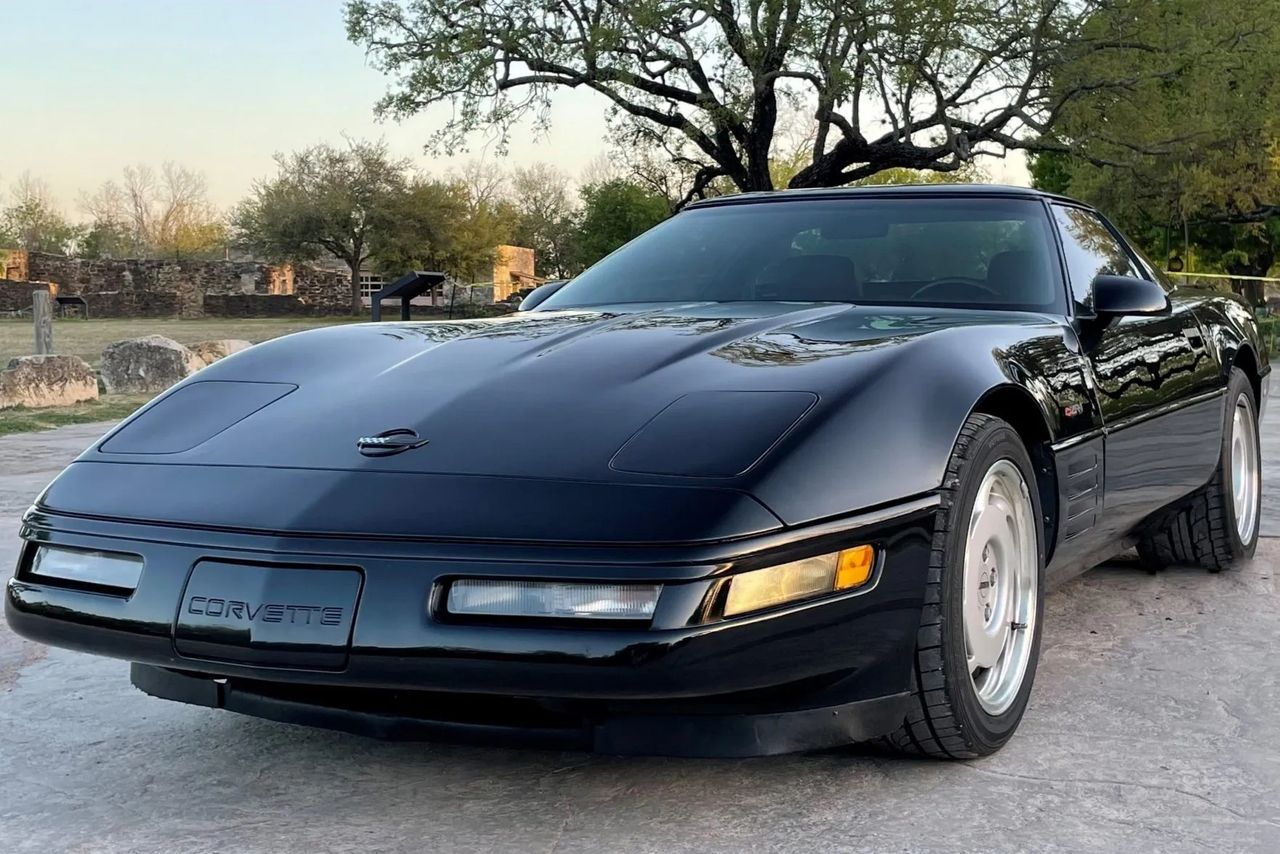
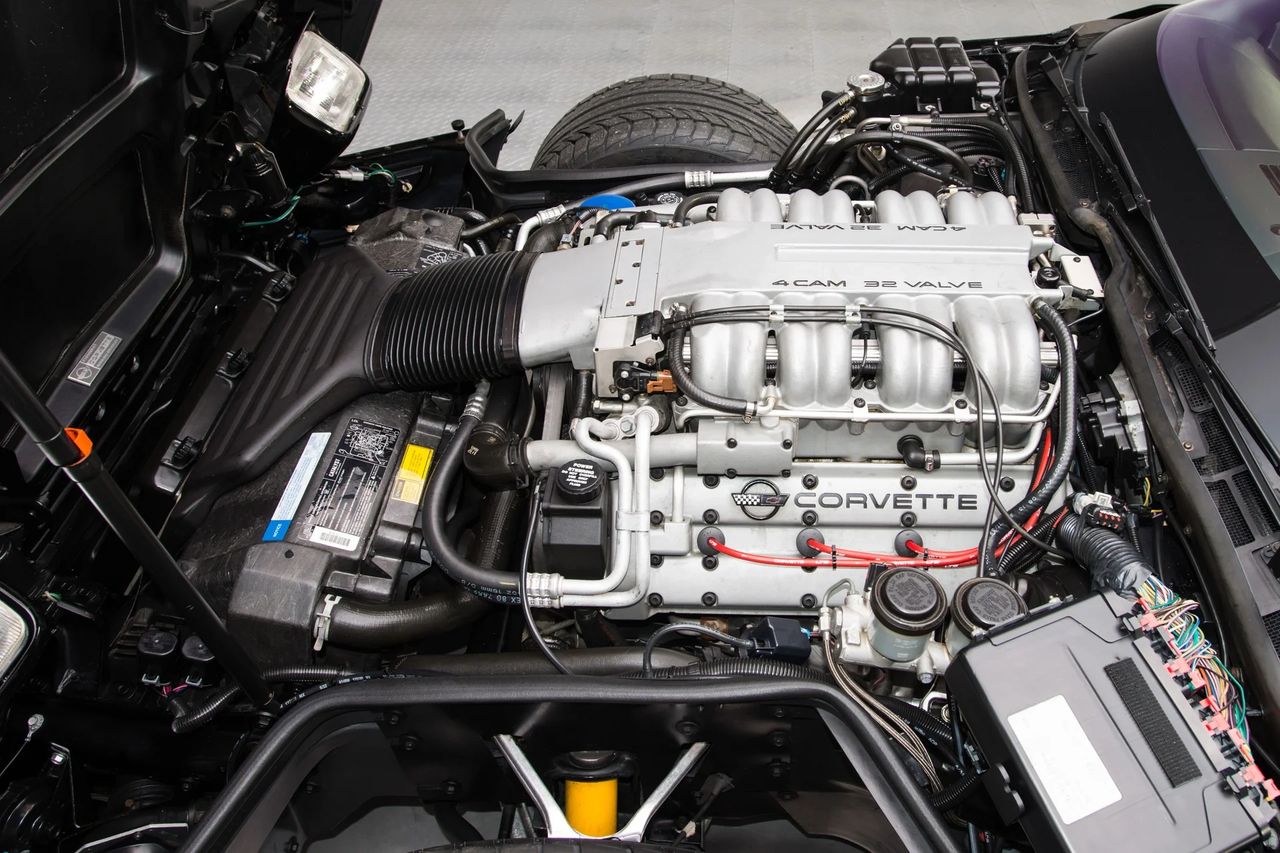
No one in Chevrolet Engineering set out to make the ZR-1 look redundant. The LT5 remained a marvel—Lotus-penned, Mercury Marine-built, 375 horsepower with the kind of big-rpm silk that a pushrod motor couldn’t replicate. On a runway or an autobahn, the ZR-1 had a top-end authority the LT1 couldn’t touch. But two sentences summarized the market reality in 1992: the LT1 was nearly as quick to 60 as the ZR-1 in real use, and the price delta was huge. Contemporary testing recorded a stock automatic LT1 at 5.2 seconds to 60 mph, while a recent-test ZR-1 sat at 4.9. That half-second was the longest in the world to purists; to a buyer staring down a monthly payment, it was a non-issue. Sales told the story: 502 ZR-1s in 1992.
The ZR-1 did not fail in product terms; it stumbled in context. The LT1’s breadth of ability, paired with the economy of the moment, squeezed a halo car that had been designed to run away from the base model’s acceleration and dynamically high-wire past its rough edges. When the base car’s edges were rounded off and its acceleration was right there with you in traffic, the halo had to lean on speed most people would never see. That was a tough sell in a recession.
Sting Ray III: California Dreams, Real-World Echoes
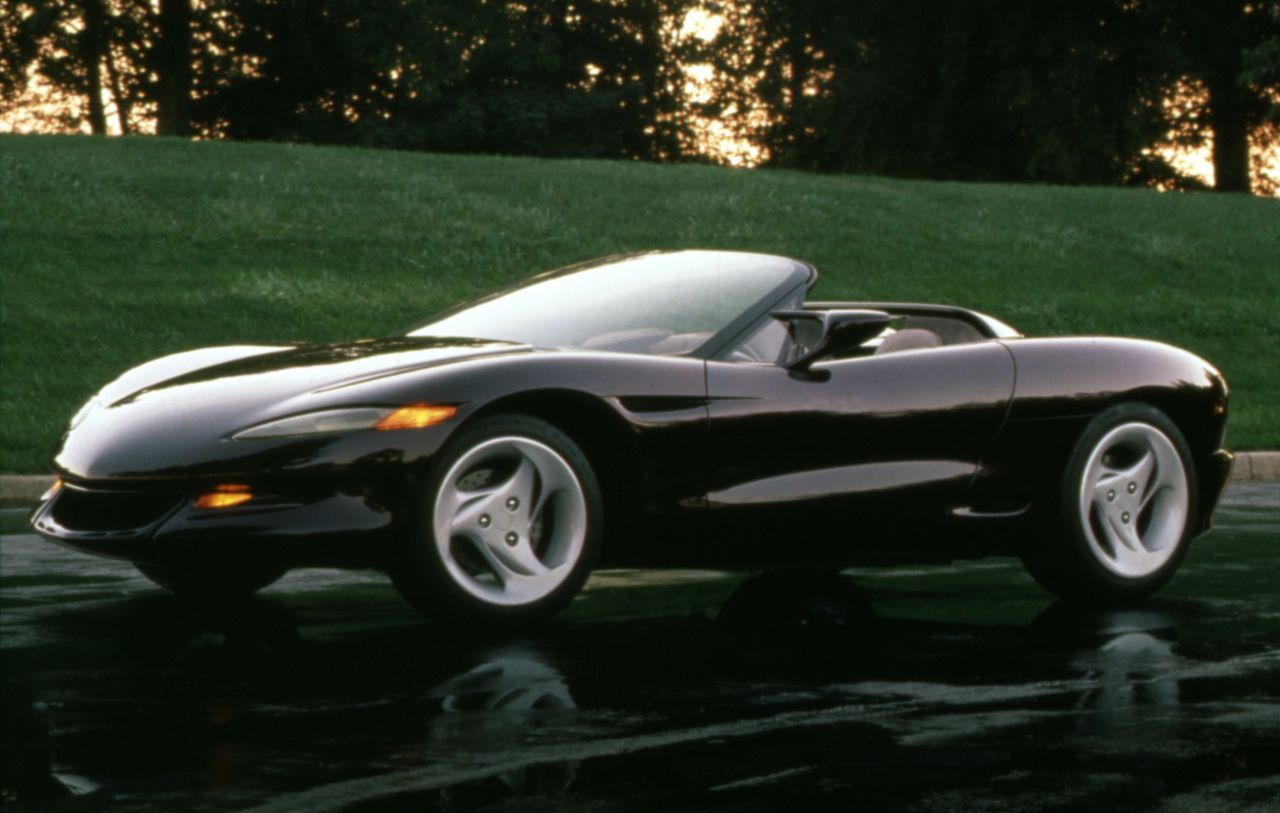
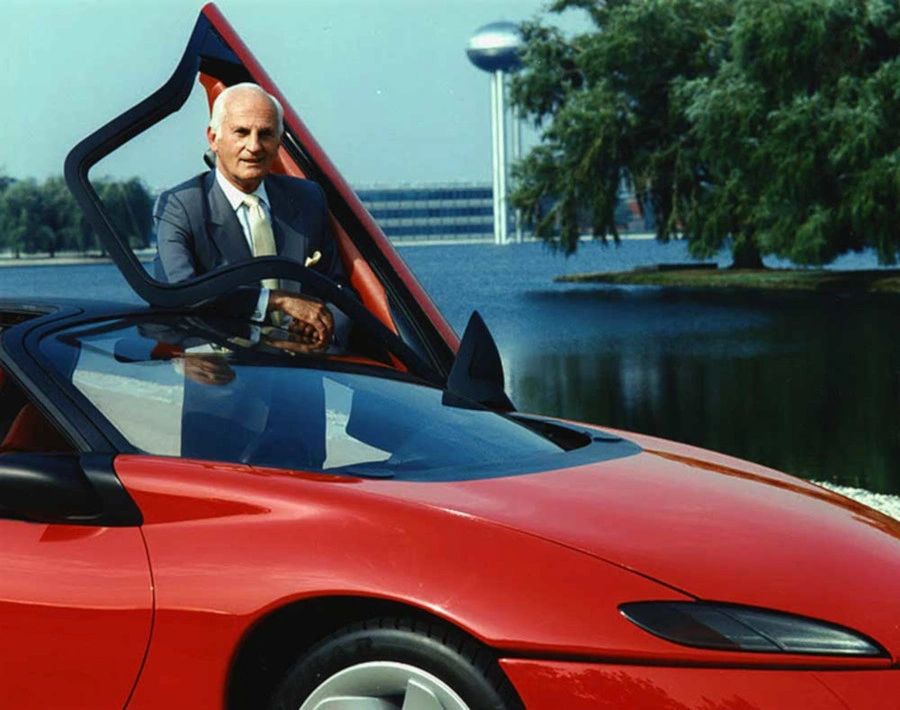
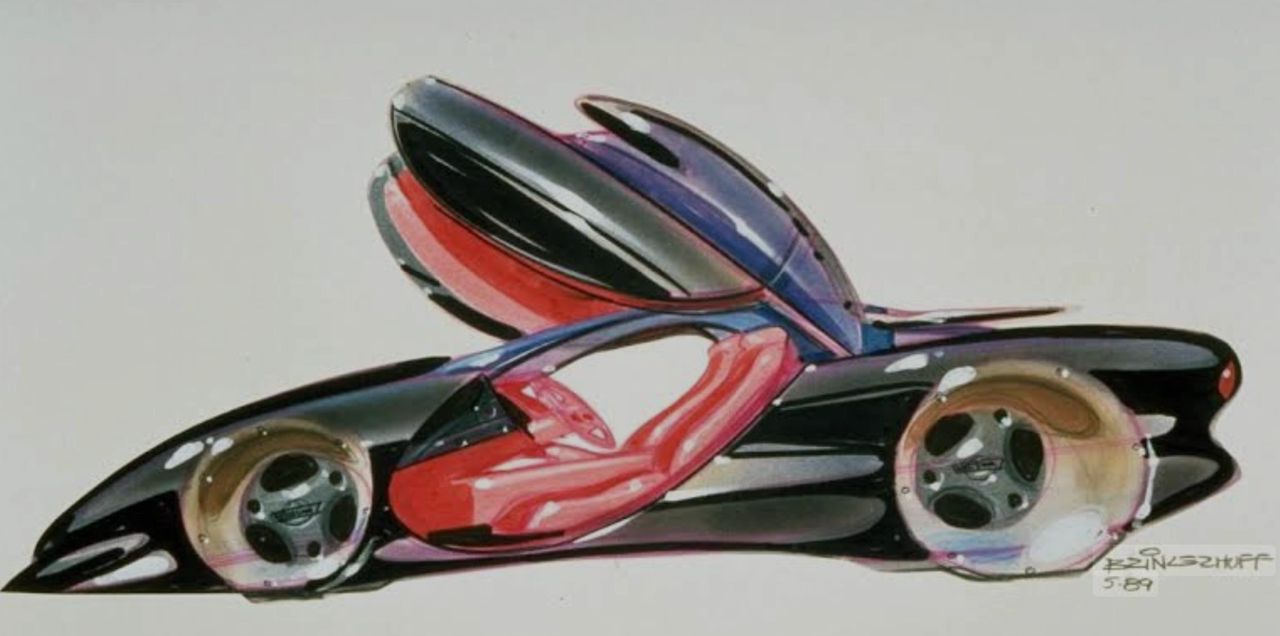
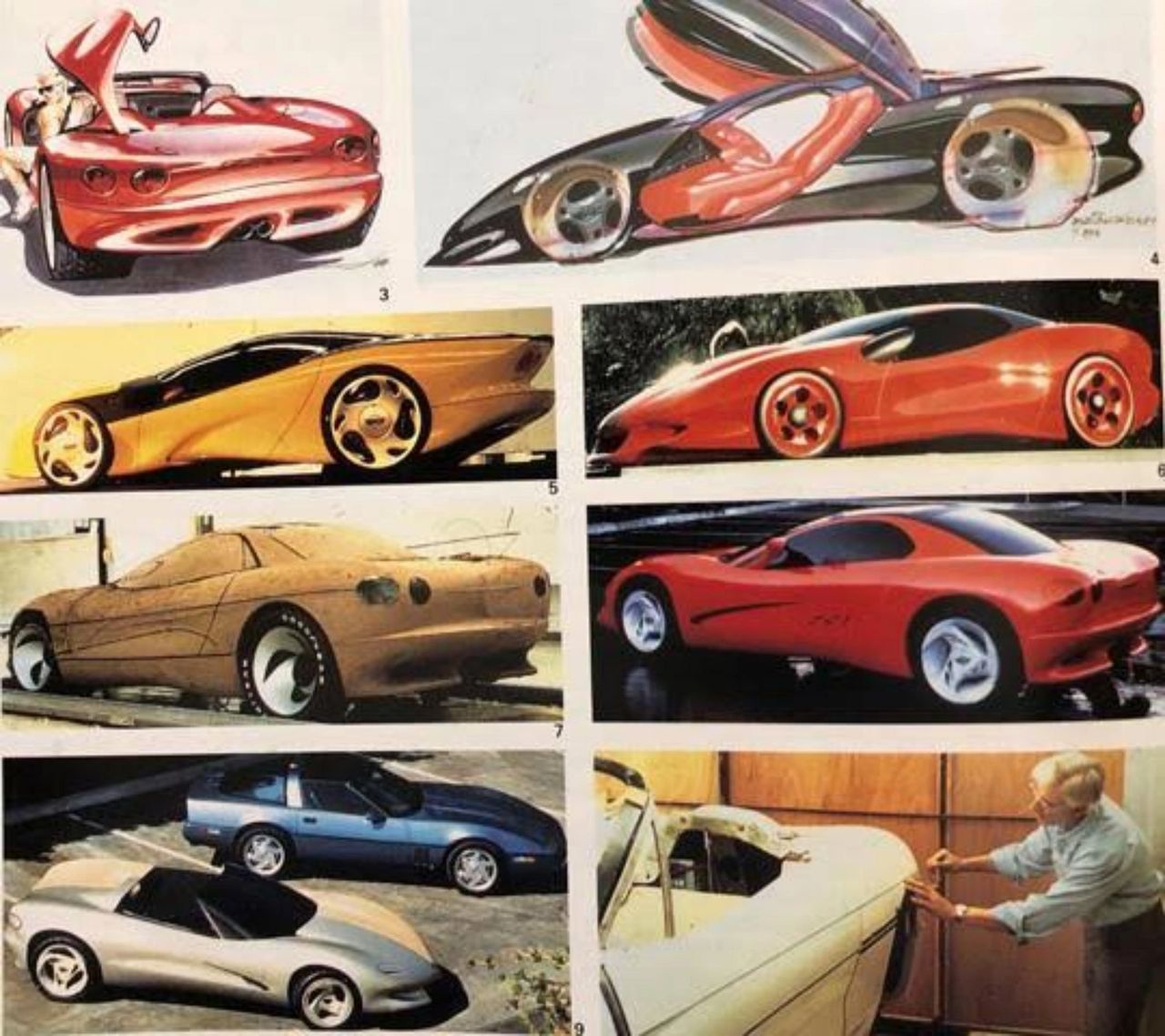
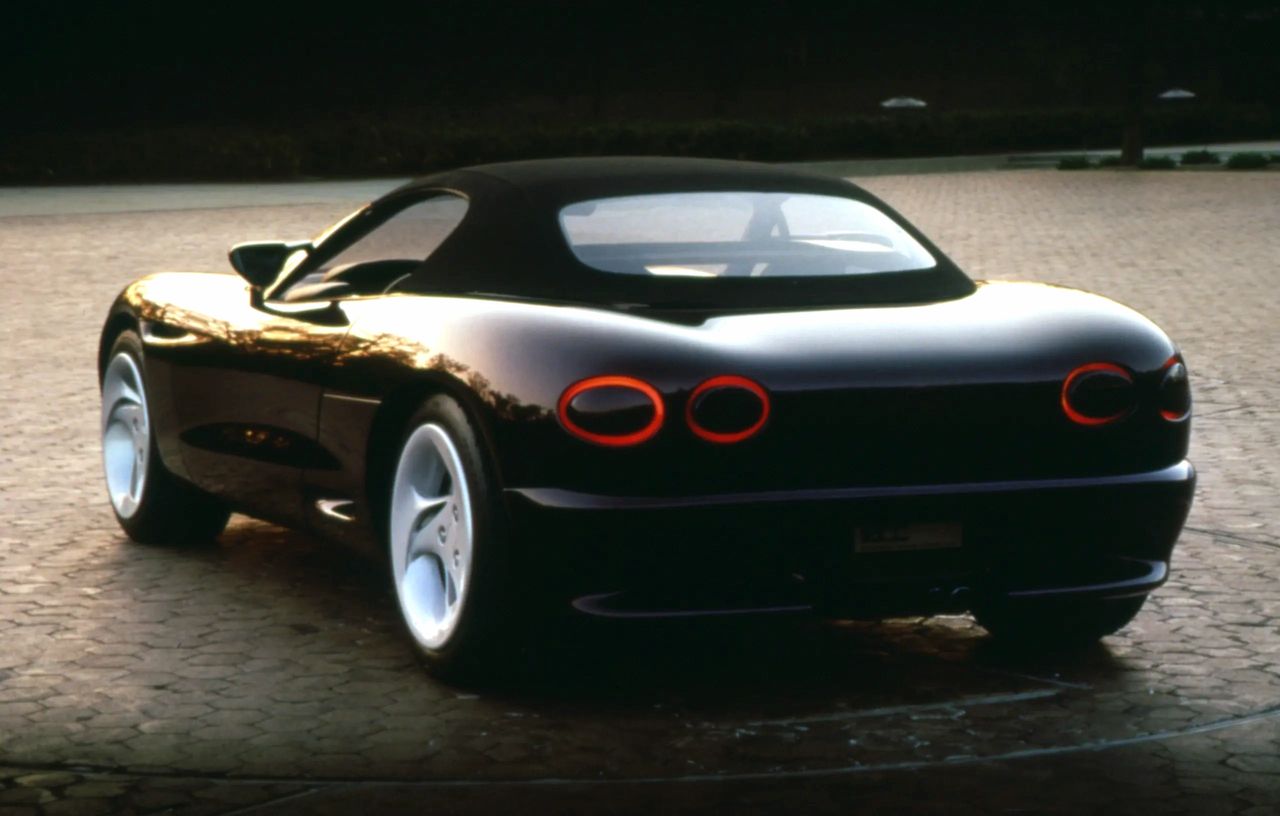
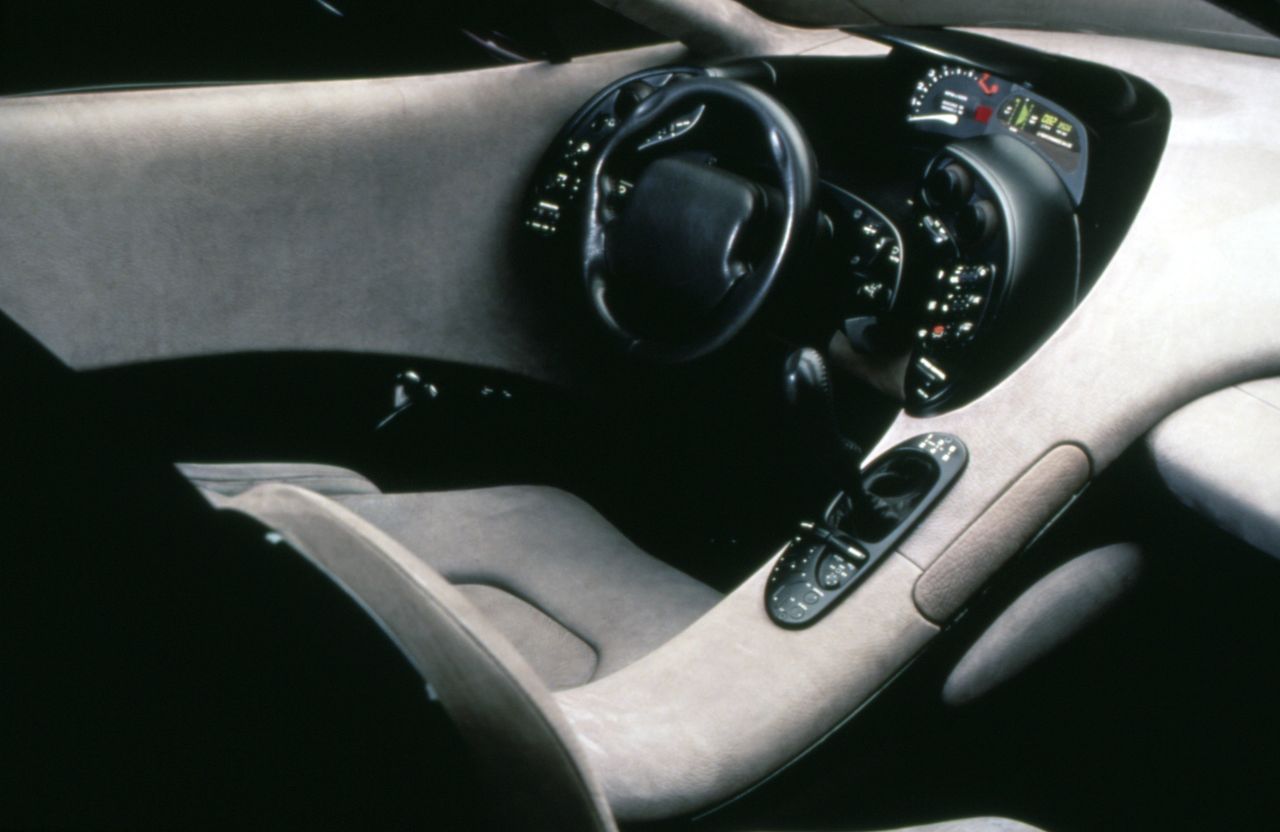
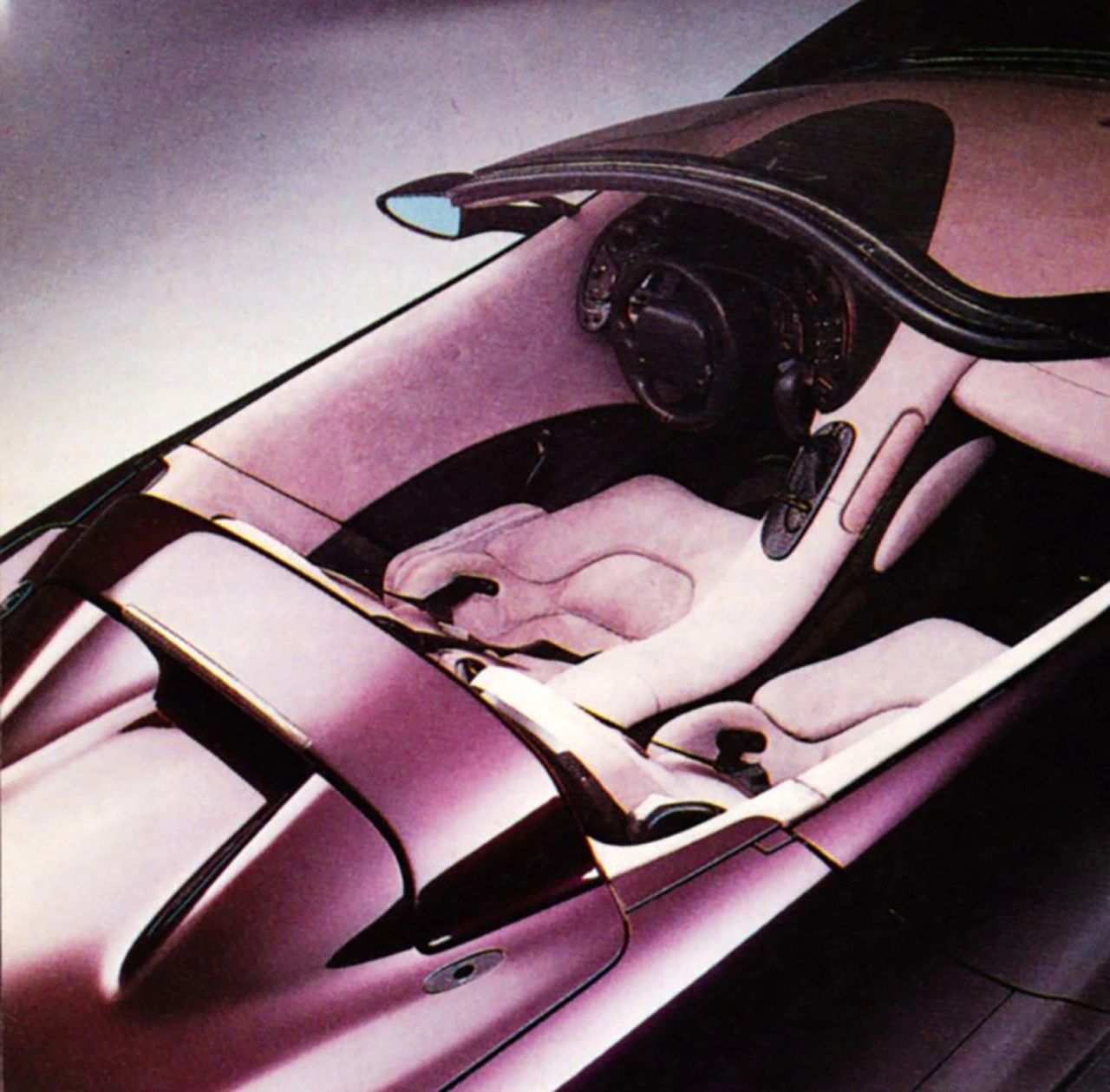
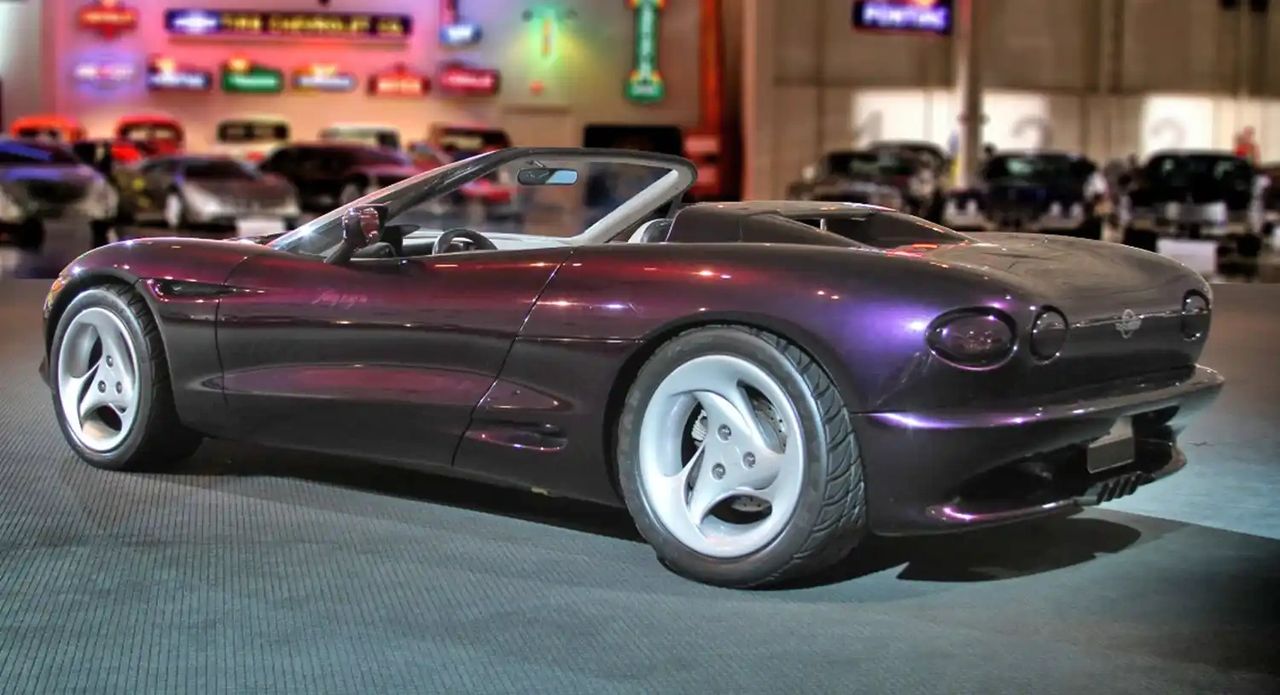
If the production Corvette’s 1992 story was refinement, the concept car story was provocation. Sting Ray III—the “California Corvette”—landed at the Detroit show with the swagger of a studio unafraid to poke the bear. Penned at GM’s Advanced Concept Center in Newbury Park under John Schinella and championed by GM design chief Chuck Jordan, SR-III put the idea of a rear-mounted transaxle and advanced chassis systems in the public square while re-imagining the Corvette’s face with fixed headlamps and tauter surfacing. MotorTrend’s retrospective captured the brief: futuristic, unapologetically show-car bold, and very much a west-coast take on a traditionally midwestern icon. It looked nothing like a nostalgia soak and everything like the C5’s coming thesis.
Design-history sources note that beyond the styling tease, SR-III’s package thinking was wildly ambitious for the time—active suspension, all-wheel steering, even explorations of night-vision rearward visibility—exactly the kind of blue-sky ideation a concept car should indulge. Many of those specifics would be toned down or deferred, but the transaxle idea didn’t die. The C5 would make it the Corvette’s core.
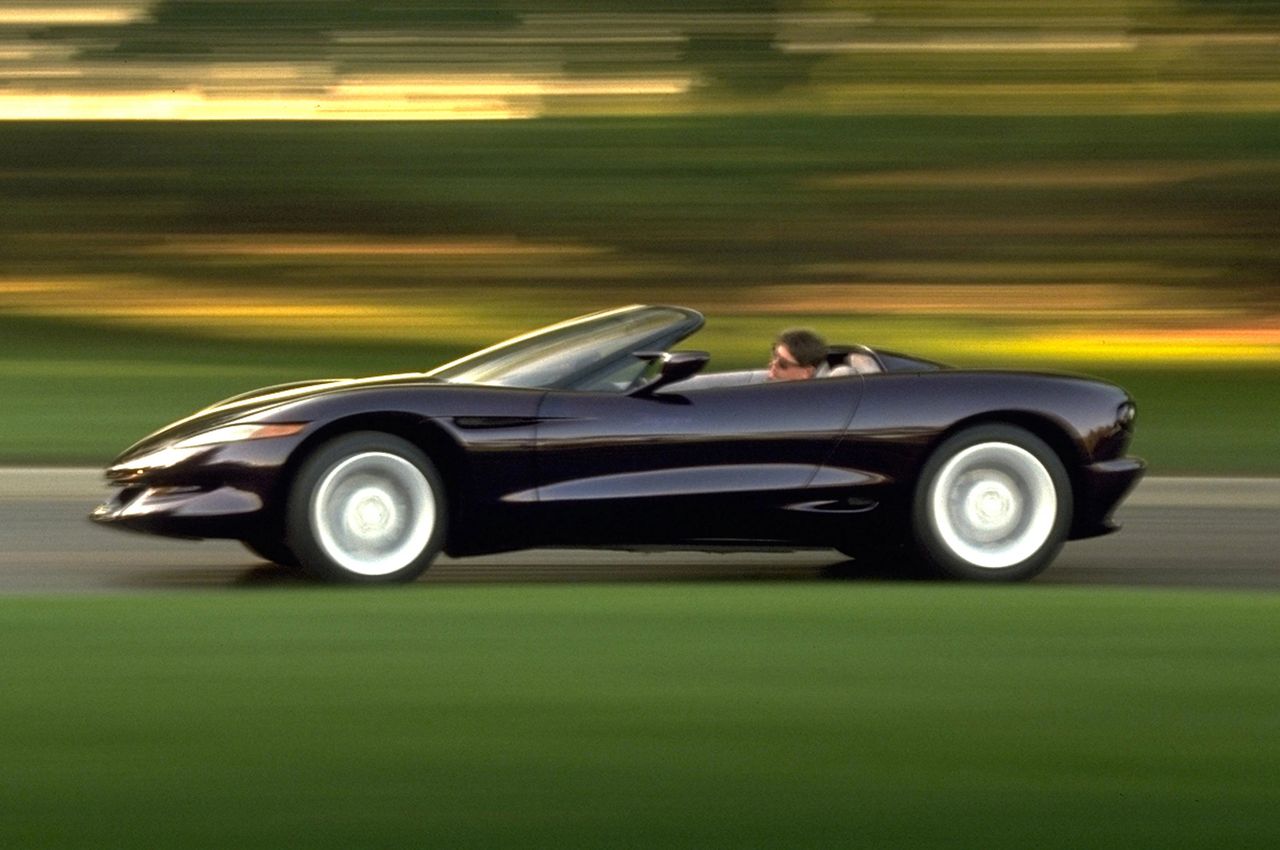
There was an easy line between the “black cherry” convertible that appeared in early mockups and the production convertible that followed later in the decade: a real trunk returned to the Corvette family with the C5 convertible and FRC, a usability fix so obvious in hindsight it was hard to believe how long the car had gone without it. Even SR-III’s stance language—the way the plan view tightened the waist and pulled the corners outward—reappeared in the C5 and carried forward. Concepts didn’t have to predict; they needed to expand. Sting Ray III expanded the conversation at exactly the right moment.
July 2, 1992: The One-Millionth Corvette
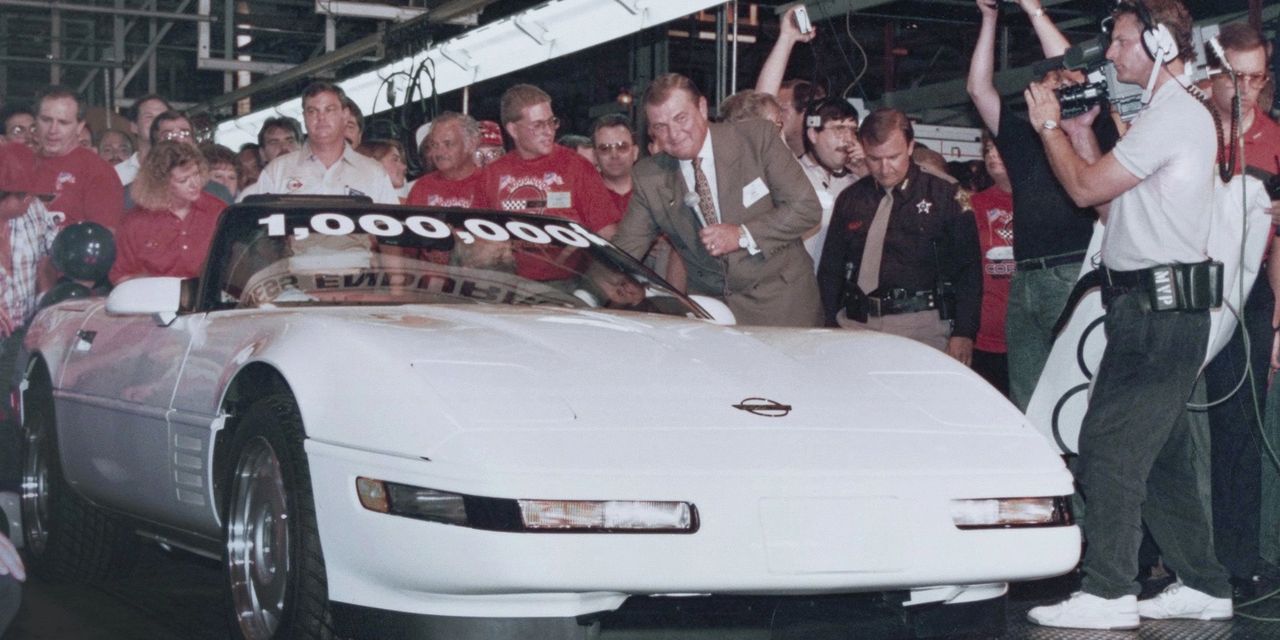
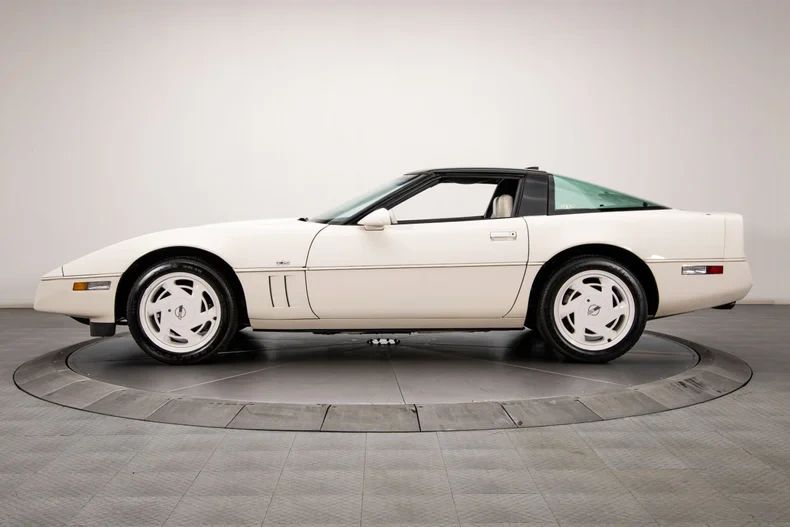
Milestones were best when they were specific. On a summer day in Bowling Green—July 2, 1992—a white convertible with a red interior rolled across the line and into the history books as Corvette No. 1,000,000. The colorway was deliberate—a callback to 1953—and the car carried signatures from the people who built it. Few production-year headlines resonated decades later with the same warmth. When the National Corvette Museum’s 2014 sinkhole swallowed the millionth car, among others, the image was an international gut-punch. The restoration that followed, funded with Chevrolet’s help, returned the car to the floor and, with it, a sense that this model year’s most public moment was more resilient than the rock beneath the Skydome.
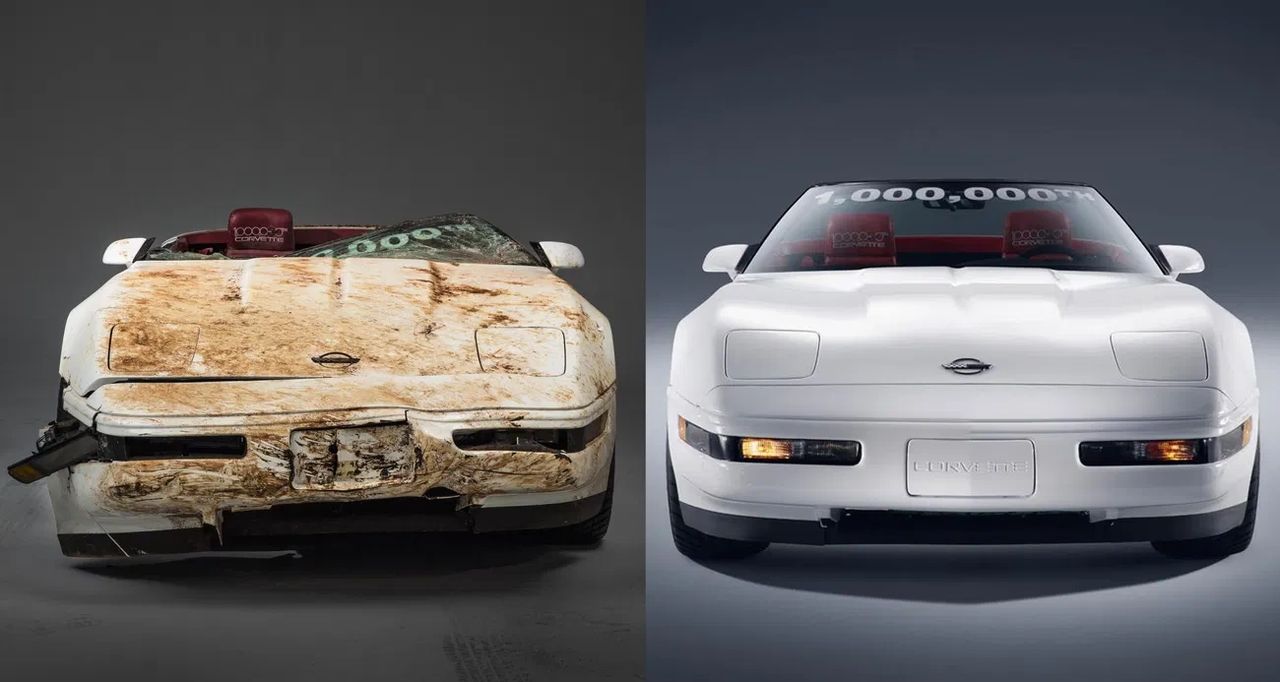
For those who stood in front of that car and looked at the signatures under the hood, what was on display was more than paint and leather. It was continuity. It was the idea that even in a year of budget triage and delayed dreams, the Corvette could still mark time in a way that mattered.
Why 1992 Mattered
If Corvette history were charted only by body changes and horsepower peaks, 1992 might have been overlooked. But 1992 was bones. It proved that discipline—cool a head before a block; give the driver traction before more tire; take noise out before dollars out—could move a car forward as decisively as a new platform. It was also a reminder that context mattered. The ZR-1’s excellence didn’t dim; the LT1’s excellence grew into its space. Buyers did what buyers always did: they rewarded the car that made their actual lives better, most often for the least money. Chevrolet read that room and adjusted its future accordingly. The C5 that arrived later carried forward the LT1’s priorities—usability, composure, breadth—just as surely as it carried forward SR-III’s architecture.
The year’s other two pillars—the Detroit-show concept and the millionth car—told the same story in different languages. Sting Ray III said, we’re not done making this car new. The millionth convertible said, we’ve been making this car long enough to matter to people who weren’t alive when it started. Put them together, and you get the Corvette’s trick in any era: balance the audacity of what’s next with the humility to honor what worked. In 1992, that balance was nailed.
1992 Corvette — Key Specifications
Quick Stats (Base vs. ZR-1)
- Base (Coupe/Convertible): 5.7L LT1 V8 — 300 hp @ 5,000 rpm • 330 lb-ft @ 4,000 rpm; ZF S6-40 6-speed or 4-speed automatic (4L60/TH700-R4); ABS and ASR traction control standard.
- ZR-1: 5.7L LT5 DOHC V8 — 375 hp @ 6,000 rpm • 370 lb-ft @ 4,800 rpm; ZF S6-40 6-speed only.
Performance (period figures)
- Base: ~0–60 mph 5.5–5.7 s, ¼-mile ~14.0–14.3 s @ ~100–102 mph (typical magazine ranges for LT1).
- ZR-1: Quicker than base in contemporary testing due to higher output. (Benchmarked against factory ratings and period tests.)
Chassis, Suspension & Brakes
- Structure: Uniframe with composite body panels; forged-aluminum control arms (F/R); independent 5-link rear; transverse composite mono-leaf springs; gas-pressurized shocks. ABS standard; ASR (Acceleration Slip Regulation) traction control added for 1992.
- Packages: Z07 Adjustable Suspension Package (’91–’95) combined Z51-type hardware with FX3 electronic selective ride (availability by body/trans).
Wheels & Tires
- Base: 17 × 9.5-in alloys (L/R specific) with P275/40ZR-17 Goodyear Eagles.
- ZR-1: 17 × 9.5-in (front) / 17 × 11-in (rear) with 275/40ZR-17 (F) and 315/35ZR-17 (R).
Dimensions & Weights (approx., factory data)
- Wheelbase: 96.2 in • Length: 178.5 in
- Width: 70.7 in (base) • 73.1 in (ZR-1)
- Height: 46.3 in (coupe) / 47.3 in (conv.) / 46.3 in (ZR-1)
- Curb weight: 3,317 lb (coupe) • 3,358 lb (conv.) • 3,503 lb (ZR-1)
- Fuel capacity: 20.0 gal.
Powertrain Details
- LT1 (base): OHV 2-valve; reverse-flow cooling; 10.5:1 compression; multi-port fuel injection; Mobil 1 factory fill.
- LT5 (ZR-1): Aluminum block/heads; 32-valve DOHC; 11.0:1 compression; unique 16-runner intake; twin-injector per cylinder (factory spec).
Paint & Trim (with GM codes; popularity snapshot)
- Colors offered (9): Arctic White (10), Black (41), Bright Red (81), Yellow (35), Bright Aqua Metallic (43), Polo Green II Metallic (45), Black Rose Metallic (73), Dark Red Metallic (75), Medium Quasar Blue Metallic (80).
- Most/least common: Bright Red (81) was the most popular in 1992 (4,466 cars ~21.8%), while Yellow (35) was the rarest regular-production color (678 cars ~3.3%). Totals out of 20,479 produced.
Why the 1992 Corvette Still Matters Today
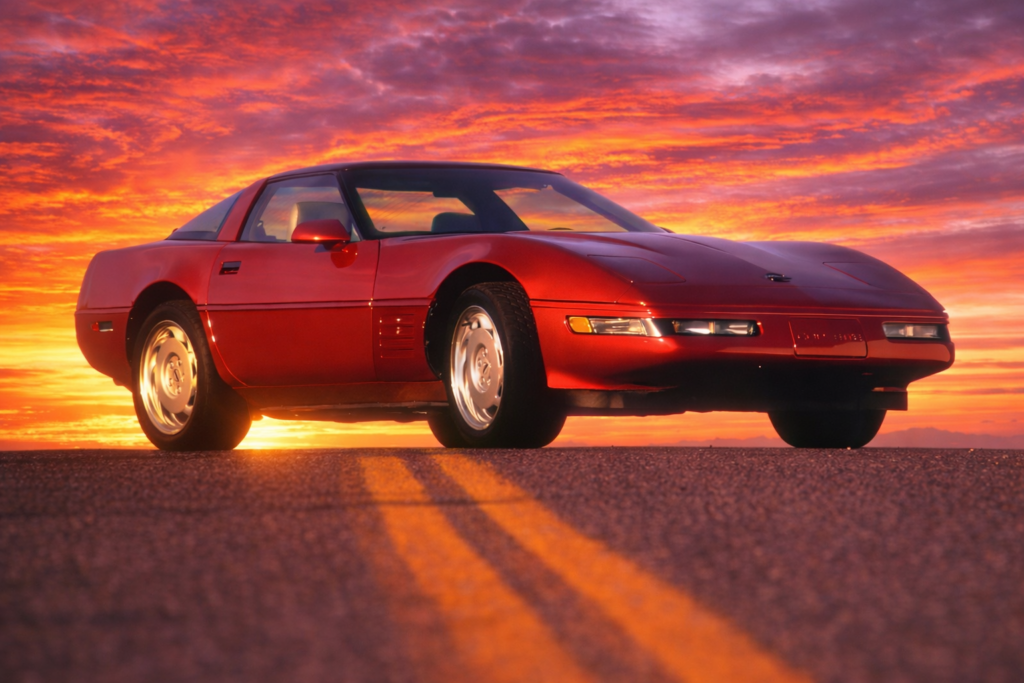
The 1992 Corvette represents one of those quiet but important inflection points in the car’s long history. At first glance, it looked familiar—still the unmistakable C4 shape that had been evolving since 1984. But beneath the surface, Chevrolet introduced the LT1, a thoroughly modern small-block that redefined Corvette performance for the decade that followed.
The LT1 was more than a horsepower bump. Its reverse-flow cooling system, higher compression, and modernized fuel injection allowed engineers to extract significantly more performance while maintaining durability and drivability. With 300 horsepower on tap, the Corvette instantly regained ground against the growing wave of high-performance imports and domestic rivals that had begun to challenge America’s sports car.
Equally important, 1992 helped solidify the C4 platform as a legitimate world-class performance machine. With the ZR-1 continuing as the technological halo—packing Lotus-engineered, 32-valve power—the standard Corvette now delivered performance that felt far closer to its exotic sibling than ever before. The gap between Corvette and Corvette ZR-1 had narrowed in spirit, if not specification.
Seen from today’s perspective, the 1992 Corvette marks the beginning of the modern small-block era that still defines the car. The LT1’s architecture and engineering philosophy laid the groundwork for the LS engines that would follow later in the decade—powerplants that would carry Corvette into an entirely new performance generation.
In that sense, the 1992 Corvette is not simply another model year in the C4 timeline. It is the moment when Corvette’s future engine strategy snapped into focus—where tradition, technology, and performance aligned to push America’s sports car confidently into the modern era.