Tag: Tom Peters

  • 2001 Corvette Overview: The Year the C5 Became a Legend

    2001 Corvette Overview: The Year the C5 Became a Legend

    The 2001 Chevrolet Corvette arrived at a pivotal moment in the history of America’s Sports Car.

    When the fifth-generation Corvette debuted for 1997, it represented one of the most comprehensive reinventions the nameplate had ever undergone. The C5 introduced an all-new hydroformed perimeter frame, a rear-mounted transaxle, a substantially stiffer structure, a more aerodynamic body, and the aluminum LS1 V8. It was faster, more comfortable, more practical, and more capable than the C4 it replaced. More importantly, it gave Chevrolet a genuinely modern foundation upon which the Corvette could grow.

    Over the next several years, Chevrolet methodically expanded that foundation. The convertible returned for 1998. The Fixed Roof Coupe followed in 1999, giving performance-minded buyers a lighter, stiffer alternative to the removable-roof hatchback coupe. Corvette Racing began campaigning the purpose-built C5-R at the highest levels of international endurance racing. Each of these developments moved the Corvette closer to becoming more than just a single sports car.

    By 2001, those individual pieces finally began to converge.

    Corvette Racing’s No. 2 Chevrolet Corvette C5-R claimed an historic overall victory at the 2001 Rolex 24 at Daytona
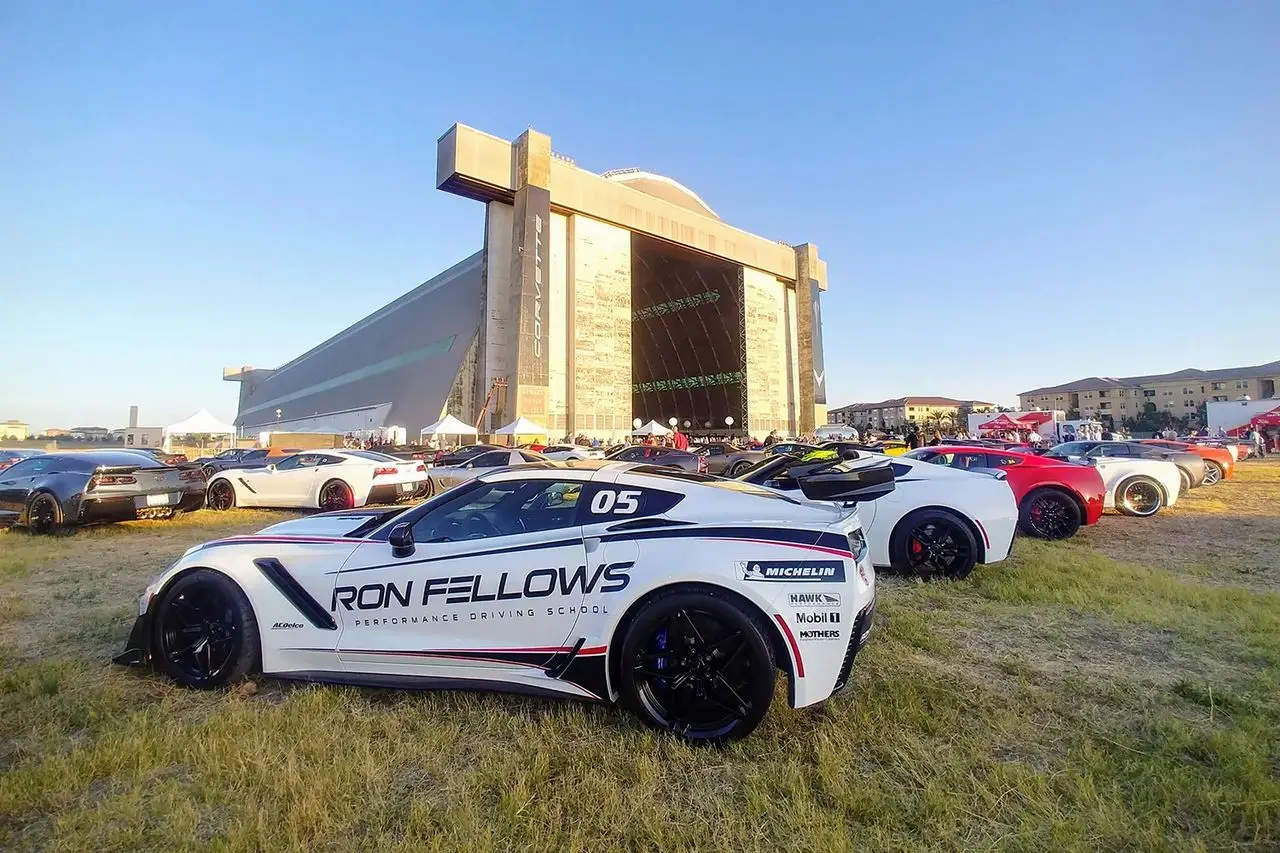
    Corvette Racing’s No. 2 Chevrolet Corvette C5-R claimed an historic overall victory at the 2001 Rolex 24 at Daytona, with Ron Fellows, Johnny O’Connell, Franck Fréon, and Chris Kneifel sharing the driving duties. Competing in the GTS class, the Corvette outlasted the entire field through relentless rain that flooded the cockpit and forced crews to drill drainage holes through the floorboards. The sister No. 3 Corvette, driven by Dale Earnhardt Sr., Dale Earnhardt Jr., Andy Pilgrim, and Kelly Collins, finished an impressive fourth overall—completing one of the most memorable weekends in Corvette Racing history. (Image credit: Richard Prince Photography)

    The standard coupe and convertible received more power, substantially more low-speed torque, better drivability, improved fuel economy, a stronger driveline, and a more sophisticated Active Handling system. The Fixed Roof Coupe was transformed into the all-new Z06, reviving one of the most significant option codes in Corvette history. On the racetrack, the C5-R won the Rolex 24 at Daytona overall, delivered Corvette Racing’s first factory class victory at the 24 Hours of Le Mans, and secured the program’s first American Le Mans Series team and manufacturer championships.

    Meanwhile, inside General Motors, the earliest work on the sixth-generation Corvette was already underway. Engineers and designers were studying everything the C5 had accomplished—and every area where it could still be improved. Lessons from the road-going Corvette, the Z06, and the C5-R would influence the direction of the C6 and eventually help create a much closer relationship between Chevrolet’s production and racing programs.

    The 2001 Corvette was therefore more than another annual update. It was the year the C5 matured into a complete family of performance cars, the year Corvette Racing established itself as a legitimate international force, and the year Chevrolet demonstrated that the Corvette could challenge the world without abandoning the qualities that had always made it uniquely American.

    It was the moment the fifth-generation Corvette moved beyond proving itself and began laying the foundation for a dynasty.

    The C5 Reaches Maturity

    2001 C5 Corvette Z06 three dimensional schematic.

    The culmination of product quality rarely happens overnight. By 2001, the C5 Corvette had benefited from four years of continual refinement, with Chevrolet steadily improving its structure, performance, comfort, and overall execution. The arrival of the Z06 represented the clearest expression of that evolution—a lighter, sharper, more purposeful Corvette that transformed the already accomplished C5 into one of the most capable American performance cars of its era.

    By the beginning of the 2001 model year, the C5 Corvette had already answered many of the questions that surrounded its launch.

    The completely redesigned 1997 coupe had demonstrated that Chevrolet could produce a Corvette with world-class structural rigidity, weight distribution, ride quality, braking, and high-speed stability. Its rear-mounted transaxle helped create a near-balanced mass distribution, while the hydroformed frame rails and one-piece composite floor structure delivered a level of solidity that earlier generations had struggled to achieve.

    The LS1 engine had also begun establishing the reputation that would eventually make the third-generation small-block one of General Motors’ most celebrated powertrain families. With an aluminum block and cylinder heads, deep-skirt construction, six-bolt main bearing caps, coil-near-plug ignition, and sequential fuel injection, the LS1 retained the compact external dimensions and pushrod simplicity associated with the Chevrolet small-block while introducing an entirely new level of efficiency and durability.

    The C5 was not perfect. Its interior materials remained a common target of criticism; its seats did not provide the lateral support many serious drivers wanted; and some enthusiasts viewed its styling as too restrained compared with the more flamboyant Corvettes of the past. The base car’s extended-mobility tires also contributed to road noise and ride harshness, while the early Active Handling system could feel intrusive when a capable driver began pressing the car near its limits.

    Even so, the C5’s fundamental engineering was exceptionally sound. Chevrolet did not need to begin again. The team could concentrate on refining the existing car, expanding its capabilities, and correcting the smaller shortcomings that became apparent through customer feedback, performance testing, and competition.

    That distinction is important. The 2001 Corvette was not the result of one dramatic redesign. It was the product of continuous development—hundreds of individual improvements working together to make an already accomplished automobile faster, safer, more durable, and easier to live with.

    Dave Hill, Corvette’s chief engineer, summarized the approach when Chevrolet announced the 2001 lineup: “We’ve expanded the envelope in every direction, especially with the new Z06.”

    A Three-Car Corvette Family

    The 2001 Corvette Coupe (silver), convertible (red), and Z06 coupe (yellow).
    For 2001, Chevrolet offered the Corvette in three distinct forms: the versatile hatchback coupe, the open-air convertible, and the new performance-focused Z06. Four years after the C5’s introduction, the platform had matured into the fully realized sports car GM had envisioned, combining refined styling, everyday usability, advanced engineering, and formidable performance. With the arrival of the 385-horsepower LS6-powered Z06, the 2001 lineup demonstrated the C5’s remarkable breadth—from comfortable grand tourer to genuine track-ready contender. (Image credit: GM Media LLC.)

    The 2001 Corvette lineup consisted of three distinct models, each built around a different interpretation of the sports-car experience.

    The removable-roof coupe remained the most versatile member of the family. Its large rear hatch, expansive cargo area, removable roof panel, and broad range of available equipment made it equally suitable for cross-country touring, daily driving, or an occasional weekend at the track. It was the Corvette for buyers who wanted performance without sacrificing the C5’s considerable practicality.

    The convertible offered much of the same mechanical capability with the added appeal of open-air driving. Unlike many convertibles of the era, it had been engineered alongside the coupe rather than derived from it as an afterthought. The C5’s strong central structure allowed Chevrolet to build the convertible without the excessive structural reinforcement that often added significant mass to competing roadsters.

    For 2001, Chevrolet revised the convertible top to improve sealing, reduce wind and road noise, and create a smoother appearance when raised. The car retained its conventional rear trunk, a feature that had returned to the Corvette with the C5 convertible after being absent from the model line since 1962.

    At the top of the range stood the new Z06. It used the basic fixed-roof body introduced for 1999, but almost every major mechanical system had been revised around a more focused mission. The Z06 was not intended to be the most luxurious Corvette, the most comfortable Corvette, or the most broadly appealing Corvette.

    It was engineered to be the fastest production Corvette Chevrolet had ever offered.

    The Significance of the Fixed Roof Coupe (FRC)

    2000 Corvette FRC
    The 1999–2000 Corvette Fixed Roof Coupe was the purest expression of the early C5—lighter, structurally stiffer, and more focused than the standard hatchback coupe. Originally positioned as a lower-cost performance model, the FRC ultimately became the foundation for the 2001 Corvette Z06, making it one of the most important transitional models in modern Corvette history.

    The Fixed Roof Coupe is sometimes treated as little more than the body style Chevrolet used when creating the Z06. In reality, it was one of the most important steps in the C5’s evolution.

    Chevrolet introduced the FRC for the 1999 model year as a lower-cost, lighter alternative to the hatchback coupe and convertible. Instead of the coupe’s removable roof and lift-up rear glass, the FRC used a permanently bonded roof panel, a conventional rear window, and a separate decklid that opened into a traditional trunk.

    Those changes produced the stiffest body structure in the Corvette lineup. Removing the large hatch opening and permanently closing the roof allowed the structure to resist twisting more effectively, creating a more stable platform for suspension tuning. The FRC was also lighter than the standard coupe and positioned as the most performance-oriented member of the range.

    Its commercial reception was modest. Many Corvette buyers preferred the versatility of the hatchback coupe or the open-air experience of the convertible, especially when the FRC’s lower initial price did not translate into the dramatic performance advantage some customers expected.

    From an engineering perspective, however, the FRC was nearly ideal.

    It offered the strongest C5 structure, the least mass, and the simplest packaging. Chevrolet already had the body it needed for a serious factory performance model. The challenge was no longer determining what shape that car should take.

    The challenge was deciding how far to push it.

    David Hill’s Corvette for the Purist

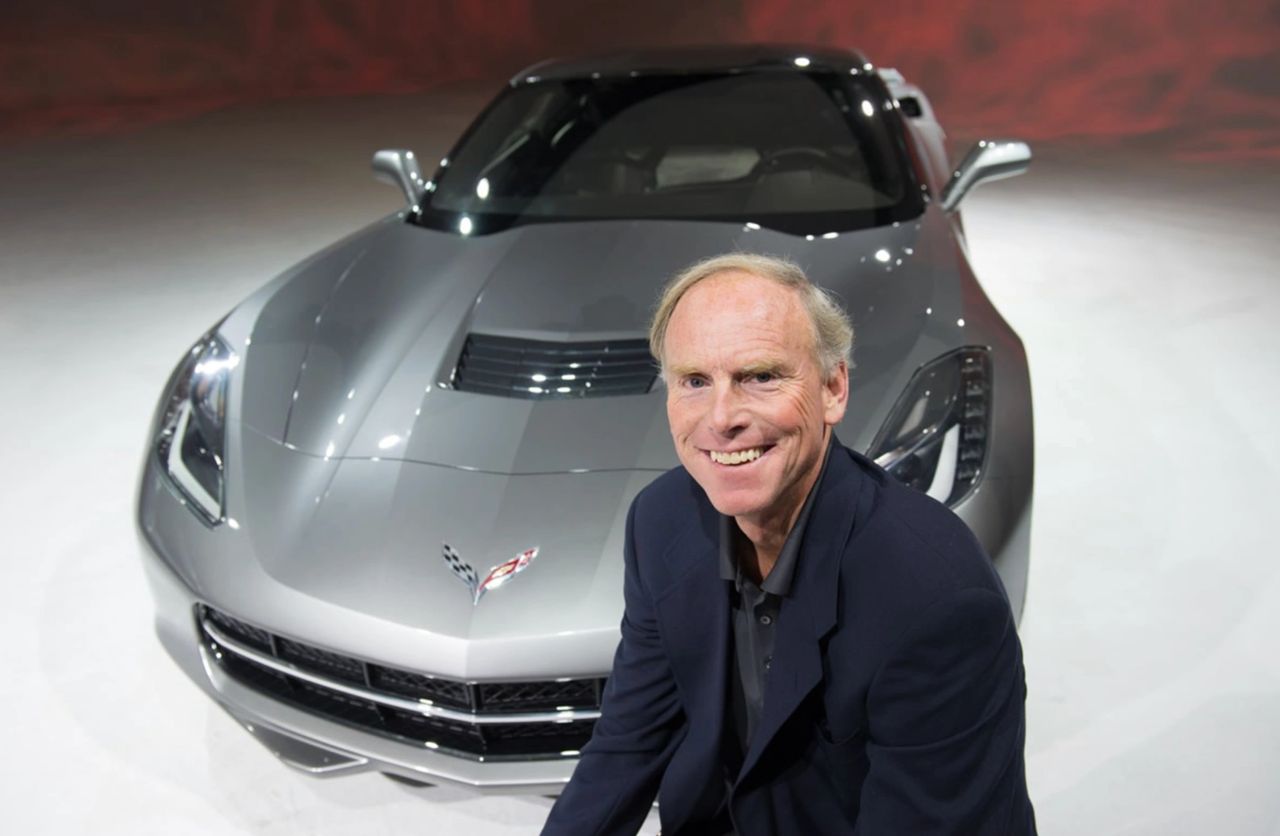
    Corvette Chief Engineer David Hill next to the 2001 C5 Corvette Z06.
    David Hill was one of the most influential engineering figures in modern Corvette history, guiding the program through a transformative period as the C5 matured into a world-class performance car. During his long career with General Motors, he served as Corvette chief engineer and helped refine the platform’s structure, handling, quality, and overall capability. Hill was also instrumental in creating the C5 Corvette Z06, championing a lighter, stiffer, more focused model built around serious performance. The result established the modern Z06 formula and set the standard for every high-performance Corvette that followed. (Image courtesy of GM Media LLC. / ChatGPT)

    Dave Hill understood that Corvette buyers did not all want the same automobile—and that attempting to satisfy every customer with a single configuration would inevitably compromise the car for everyone.

    Some buyers wanted a fast, refined grand tourer that could be enjoyed every day. They valued the removable roof panel, the convenience of an automatic transmission, a premium audio system, a compliant ride, and the long-distance comfort that made the standard C5 remarkably easy to live with. For these customers, the Corvette’s appeal came from its ability to deliver serious performance without demanding that every drive feel like a qualifying lap. They represented an essential part of the Corvette market, and Chevrolet had no intention of abandoning them.

    Hill also recognized that another group wanted something more concentrated. These customers were prepared to accept a firmer ride, greater road and exhaust noise, fewer body-style choices, and less day-to-day flexibility in exchange for quicker acceleration, sharper turn-in, greater grip, and more consistent behavior during sustained high-performance driving. They were not looking for additional luxury or a broader range of options. They wanted every meaningful component of the car to contribute to speed, control, durability, or driver confidence.

    They did not want a Corvette that merely looked fast.

    They wanted one engineered around the assumption that it would be driven hard—and driven hard repeatedly.

    That distinction mattered. A car capable of producing an impressive acceleration figure or generating strong cornering numbers during a brief test was not necessarily prepared for the prolonged thermal, mechanical, and dynamic demands of serious performance driving. The purist buyer wanted a Corvette that remained composed as speeds increased, that communicated clearly through the steering and chassis, and that behaved predictably when pushed near its limits. Performance could not be treated as a collection of isolated statistics; it had to define the character of the entire automobile.

    2001 C5 Corvette Convertible (left), Coupe (right), and Z06 Coupe models on display in a grassy field.
    For 2001, Chevrolet engineered each Corvette body style around a distinct kind of driver. The coupe offered the broadest balance of performance, comfort, cargo space, and open-air enjoyment through its removable roof panel, making it the most versatile choice in the lineup. The convertible emphasized style, refinement, and the experience of top-down grand touring without sacrificing the C5’s underlying speed and capability. The Z06, by contrast, was created for the enthusiast willing to trade some comfort and flexibility for lower weight, sharper responses, greater grip, and a more direct connection to the road. Together, the three models demonstrated how the same basic C5 architecture could support three very different interpretations of the Corvette experience.

    Rather than force every Corvette to satisfy both audiences, Chevrolet used the fixed-roof platform to separate the two missions. The coupe and convertible continued to evolve as exceptionally fast, comfortable grand-touring cars, preserving the versatility and refinement that had broadened the C5’s appeal. The Z06 would occupy a more specialized position: a purist’s Corvette in which nearly every significant engineering decision supported acceleration, handling, durability, reduced weight, or improved response.

    This approach also freed the engineering team from compromises that would have been unavoidable in the standard models. The Z06 did not need to be the quietest Corvette, the softest-riding Corvette, or the Corvette with the broadest menu of comfort and convenience features. It needed to be the most focused. Its value would come not from offering more of everything, but from removing distractions and concentrating the C5 architecture around a clearly defined performance objective.

    That clarity of purpose became one of the Z06’s greatest strengths. It gave the car a distinct identity within the Corvette lineup rather than allowing it to become merely a more powerful trim level. The Z06 was intended to feel different because its priorities were different. It asked more of its driver, but it also delivered a degree of immediacy, precision, and capability that the more broadly focused Corvette models were not designed to provide.

    In doing so, Hill and the Corvette team established a formula Chevrolet would repeat throughout later generations. The standard Corvette would continue to provide extraordinary everyday performance, comfort, and usability, while the Z06 would translate the same fundamental architecture into something more closely aligned with circuit driving and competition. The two models would not undermine one another. Instead, each would become more convincing because Chevrolet had given it a clearly defined mission.

    Reviving the Z06 Name

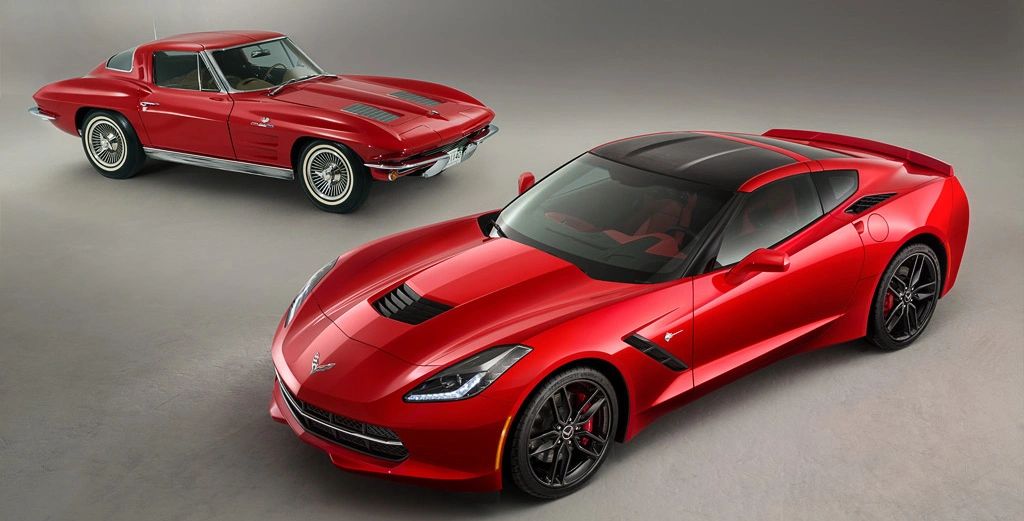
    The 1963 Corvette Z06 (left) and the 2001 Corvette Z06 (right).
    The 2001 Corvette Z06 was not a reinvention of the name, but the modern continuation of an idea first championed by Zora Arkus-Duntov in 1963. The original Z06 transformed the split-window Sting Ray into a competition-ready machine through purposeful engineering, reduced weight, and track-focused hardware. Nearly four decades later, the C5 Z06 carried that same philosophy forward with more power, sharper handling, and a renewed emphasis on performance above all else. Though separated by generations of technology, both cars were built around the same uncompromising principle: create the most capable Corvette possible, then let the driver discover its limits.

    The Z06 designation had not been selected simply because it sounded suitably technical.

    Its history reached back to 1963, when Zora Arkus-Duntov helped develop a special competition package for the newly introduced Sting Ray. At the time, General Motors remained publicly committed to the Automobile Manufacturers Association’s prohibition on direct factory participation in racing. Duntov nevertheless understood that private competitors would continue taking Corvettes to racetracks across the country.

    The original Z06 package allowed those customers to order many of the necessary competition components through a single regular production option. Depending upon configuration and timing, the package included heavy-duty brakes, a larger front stabilizer bar, stiffer springs and dampers, a large-capacity fuel tank, and other equipment intended for sustained competition.

    Only a small number of 1963 Corvettes were built with the original package, but the Z06 code came to represent something much larger than its production total. It symbolized Duntov’s conviction that a Corvette should be capable of competing directly from the showroom, even when corporate policy prevented Chevrolet from officially placing a racing team behind it.

    Reviving the designation for 2001 connected the new car to that philosophy. The modern Z06 would not be a homologation special in the narrowest sense, nor was it a stripped racing car wearing license plates. It retained air conditioning, leather seating, a Bose audio system, power accessories, and enough civility to function as everyday transportation.

    Its purpose, however, was unmistakable.

    Like the original, it was the Corvette Chevrolet built for owners who intended to explore the outer limits of the car’s performance.

    The LS6: Building a Better Small-Block

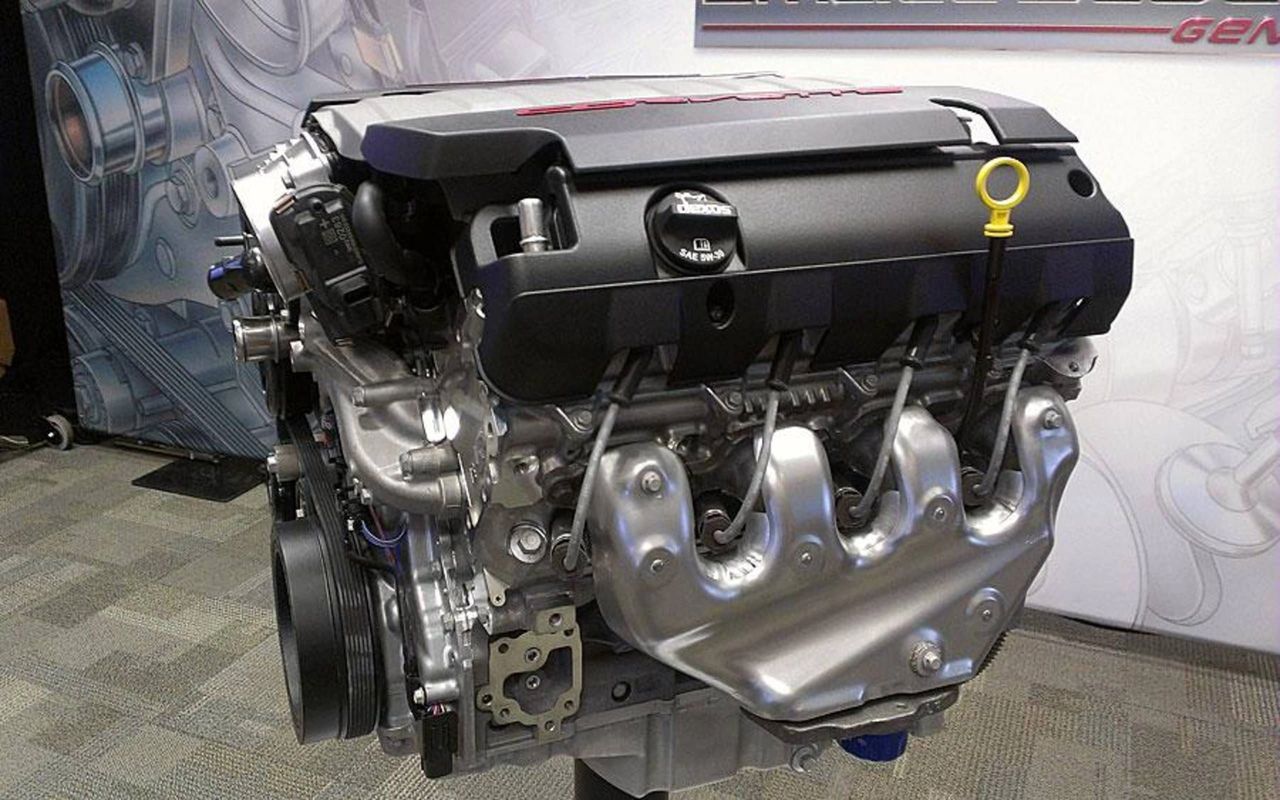
    The 2001 Corvette LS6 5.7-liter V8 engine.
    The 2001 Corvette Z06 introduced the LS6, a high-output evolution of Chevrolet’s aluminum 5.7-liter (346-cubic-inch) small-block V8. With a 10.5:1 compression ratio, higher-flow cylinder heads and intake system, a more aggressive camshaft, stronger valvetrain components, and improved lubrication, it produced 385 horsepower at 6,000 rpm and 385 lb-ft of torque at 4,800 rpm. Paired exclusively with a six-speed manual transmission, the LS6 transformed the lightweight fixed-roof Corvette into the quickest production Corvette offered to that point. Car and Driver recorded 0–60 mph in 4.3 seconds and a 12.7-second quarter-mile at 113 mph, with Chevrolet claiming a top speed of approximately 171 mph. More than a simple upgrade to the LS1, the LS6 gave the revived Z06 the power, durability, and track-focused character its historic designation demanded.

    At the heart of the 2001 Corvette Z06 was the new 5.7-liter LS6 V8.

    The LS6 shared its basic architecture with the LS1, but describing it as little more than a higher-output version of the standard Corvette engine understates the scope of its development. Chevrolet revised the block, pistons, cylinder heads, camshaft, valve springs, fuel injectors, intake system, crankcase ventilation, and exhaust system to create an engine that could produce substantially more power while enduring the sustained heat, speed, and mechanical loads associated with track driving.

    Output reached 385 horsepower at 6,000 rpm and 385 lb-ft of torque at 4,800 rpm—an increase of 35 horsepower and 20 lb-ft over the LS1 installed in the standard Corvette. The redline also increased from the LS1’s 6,000 rpm to 6,500 rpm, giving the LS6 a harder, more urgent upper-range character and allowing the driver to remain in each gear longer under acceleration.

    The LS6 retained the LS1’s lightweight cast-aluminum, deep-skirt block architecture, dry cast-iron cylinder liners, and six-bolt cross-bolted main-bearing caps. Its principal difference was found within the crankcase, where Chevrolet eliminated the LS1’s smaller machined bulkhead openings and incorporated larger cast-in windows between adjacent bays. These passages allowed displaced air to move more freely beneath the pistons, reducing pumping losses and improving the engine’s efficiency during sustained high-rpm operation. (Image credit: GM Media LLC.)

    The aluminum block incorporated cast-in windows between the crankcase bays. As the pistons moved downward, they displaced air within the crankcase, creating resistance beneath the rotating assembly. Allowing that air to move more freely between adjacent bays reduced pumping losses and the parasitic drag working against piston movement, helping the engine operate more efficiently at elevated speeds.

    Chevrolet cast the pistons from a stronger aluminum alloy and reshaped them with a subtle barrel profile. The revised design improved durability during sustained high-load operation while also reducing mechanical noise. Smaller combustion chambers in the cylinder heads raised the compression ratio from 10.1:1 to 10.5:1, while revised intake and exhaust ports allowed the engine to breathe more effectively.

    The 2001 LS6 used a more aggressive steel-billet camshaft—GM part number 12560950—designed to improve cylinder filling and sustain power near the engine’s 6,500-rpm redline. Its lobes produced 0.525 inch of valve lift on both the intake and exhaust sides, with 207 degrees of intake duration and 217 degrees of exhaust duration at 0.050-inch lift, ground on a 116-degree lobe-separation angle. Working with stronger valve springs and the LS6’s higher-flow cylinder heads, the camshaft gave the engine a harder, more urgent upper-rpm character while retaining the drivability expected of a production Corvette. (Image courtesy of EBay)

    A more aggressive steel-billet camshaft increased valve lift and extended the engine’s ability to move air at higher rpm. Stronger valve springs maintained control as the engine approached its elevated redline, while higher-capacity fuel injectors supplied the additional fuel required by the improved airflow. A revised intake manifold, freer-flowing exhaust system, and more effective crankcase ventilation further supported the engine’s increased output and its ability to sustain that performance.

    Individually, none of these changes defined the LS6. Its strength came from the way they functioned as a complete system. The result was an engine that did not simply produce more power than the LS1, but delivered that power with greater urgency, broader capability, and the durability required of a Corvette intended to perform far beyond the street.

    Controlling Oil Under Sustained Cornering

    One of the less glamorous LS6 improvements may also have been one of its most important.

    A high-performance engine must do more than produce a strong number during a brief dynamometer pull. It has to maintain lubrication, crankcase ventilation, temperature control, and oil return while the vehicle is accelerating, braking, and cornering at forces far beyond those encountered in ordinary driving.

    The Z06 was capable of generating approximately one lateral g on suitable pavement. At that level, oil inside the engine no longer behaves as it does during normal straight-line operation. It can collect in areas where it interferes with crankcase ventilation, increases consumption, or reduces the efficiency of oil return from the upper engine.

    Chevrolet relocated the positive crankcase ventilation system to the engine valley, where a unique aluminum valley cover incorporated composite oil-separation baffles and internal PCV passages. The revised arrangement limited the amount of oil drawn into the ventilation system during sustained cornering, reduced external plumbing, and eliminated several potential leak points.

    The cylinder heads were modified to improve oil drainback from the valvetrain area, helping return lubricant to the sump more efficiently during prolonged operation at elevated engine speeds. Although these revisions contributed little to the LS6’s outward appearance or headline specifications, they addressed the less visible challenges associated with maintaining oil control, crankcase ventilation, and mechanical consistency under demanding conditions.

    Together, these changes demonstrated that the LS6 had been developed around more than a peak horsepower figure. Its supporting systems were engineered to preserve performance under the heat, lateral loads, and repeated high-rpm operation encountered during sustained track use.

    A Historic Name, Recast

    1971 Corvette (left) and the 1970 Chevrolet Chevele (right) in front of a General Motors assembly plant.
    The LS6 designation first appeared on Chevrolet’s 454-cubic-inch big-block, most famously in the 1970 Chevelle SS, where it was rated at 450 gross horsepower and 500 lb-ft of torque. Equipped with high-flow rectangular-port cylinder heads, a solid-lifter camshaft, forged internal components, and an 800-cfm Holley carburetor, it became one of the defining engines of the muscle-car era. A revised LS6 appeared in the 1971 Corvette with aluminum cylinder heads and a 425-horsepower rating, giving Chevrolet’s sports car one of its final truly formidable big-block powerplants. Although the 2001 LS6 shared none of that engine’s architecture, Chevrolet revived the name to signal that the new Z06 carried the same uncompromising performance intent into a different era.

    The LS6 designation carried considerable historical weight within Chevrolet.

    It had first identified one of the most formidable engines of the muscle-car era: the 450-horsepower LS6 454 offered in the 1970 Chevelle, followed by a related 425-horsepower version in the 1971 Corvette. The modern LS6 shared no architecture with that earlier big-block, but the return of the name was deliberate.

    Much as the Z06 designation connected the 2001 Corvette to the competition-oriented Sting Ray of 1963, LS6 linked its engine to an earlier period of uncompromising Chevrolet performance. Together, the two names acknowledged that history without allowing the new car to become an exercise in nostalgia.

    The 2001 Z06 did not recreate the past. It advanced the same principle through lighter materials, greater efficiency, more sophisticated engineering, and performance that could be used repeatedly rather than merely advertised.

    The M12 Six-Speed Transmission

    The 2001 Z06 paired the LS6 exclusively with the M12 six-speed manual transaxle, a revised version of the Corvette’s rear-mounted transmission developed around more aggressive gearing. Ratios of 2.97:1, 2.07:1, and 1.43:1 in the first three gears—compared with 2.66:1, 1.78:1, and 1.30:1 in the standard six-speed—kept the LS6 closer to its strongest operating range during acceleration, while 0.84:1 and 0.56:1 overdrive ratios preserved reasonable highway cruising. Combined with the Corvette’s 3.42:1 final drive, the M12 sharpened the Z06’s response without altering the balanced rear-transaxle layout fundamental to the C5.

    The LS6 was paired exclusively with a new M12 six-speed manual transmission.

    No automatic was available. That decision immediately separated the Z06 from the rest of the Corvette lineup and reinforced the car’s driver-focused mission. Chevrolet was not merely limiting buyer choice for the sake of exclusivity; the M12’s ratios had been selected specifically to exploit the LS6’s power curve.

    First gear increased from the standard MM6 transmission’s 2.66:1 ratio to 2.97:1. Second changed from 1.78:1 to 2.07:1, while third increased from 1.30:1 to 1.43:1. Fourth remained direct at 1.00:1, with fifth and sixth also receiving shorter ratios than those used in the standard manual Corvette.

    The more aggressive gearing increased torque multiplication and kept the LS6 operating closer to the portion of its rev range where it produced the most power. First gear carried the Z06 to approximately 48 mph at redline, while second reached roughly 69 mph. The standard Corvette’s taller gearing produced higher theoretical speeds in the lower gears, but it did not accelerate through them with the same urgency.

    A transmission-temperature sensor monitored thermal loads and could warn the driver through the Driver Information Center if temperatures became excessive. Carbon blocker rings were installed on the forward gears to improve shift quality and durability, and a revised clutch provided greater clamping force with lower pedal effort.

    The larger Corvette driveline also received attention. Chevrolet replaced the earlier metal-matrix composite driveshaft with a stronger 6061-aluminum unit, increasing its diameter from 55 to 63 millimeters. Revised couplings improved durability on manual-transmission cars.

    Once again, the objective was not simply to make the Z06 quicker in a single acceleration test. It was to create a driveline capable of repeatedly managing the LS6’s output.

    Titanium Beneath the Car

    Rear view of a 2001 C5 Z06 Corvette at the south rim of the Grand Canyon, Arizona.
    Although most of the Z06’s titanium exhaust system is concealed in this rear view, it remains one of the car’s most significant engineering features. Beginning ahead of the rear axle and continuing through the mufflers, outlet pipes, and exhaust tips, the assembly was constructed from titanium rather than the stainless steel used beneath the standard coupe and convertible. Chevrolet stated that this was the first production use of a titanium exhaust system in a mass-produced automobile, and the change reduced weight by approximately 17.6 pounds while also allowing larger internal passages for improved flow. The result was an exhaust that did more than save mass: it helped the LS6 breathe more efficiently and gave the 2001 Z06 a sharper, more purposeful voice.

    The Z06’s exhaust system represented one of the most advanced uses of material anywhere in the 2001 Corvette.

    Beginning ahead of the rear axle and continuing through the mufflers, outlet pipes, and exhaust tips, the system was constructed from titanium. Chevrolet described it as the first production use of a titanium exhaust system in a mass-produced automobile.

    Titanium combined exceptional strength with substantially lower density than steel. The Z06 system weighed approximately 17.6 pounds less than the stainless-steel assembly used beneath the coupe and convertible, reducing the weight of that portion of the exhaust by roughly 50 percent.

    Larger internal passages also reduced restriction and backpressure, allowing the LS6 to expel exhaust gases more efficiently. Engineers carefully tuned the mufflers to produce a deeper, more aggressive sound without introducing excessive noise or resonance during ordinary driving.

    The titanium system was not an exercise in exotic materials intended solely to attract attention. It reduced mass, improved exhaust flow, and gave the Z06 a more distinctive character while demonstrating Chevrolet’s willingness to apply costly materials where they delivered a measurable performance advantage.

    A Comprehensive Weight-Reduction Program

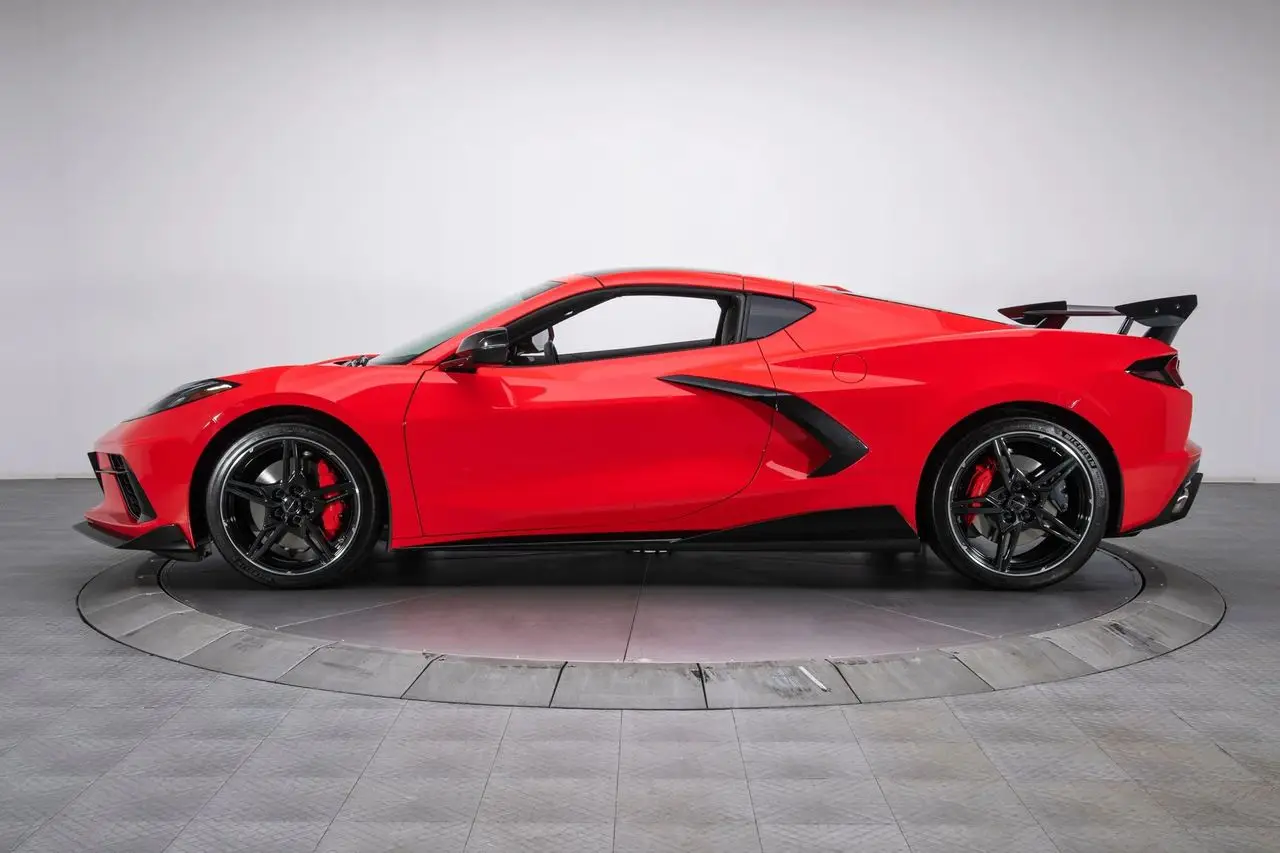
    Weight reduction influenced nearly every aspect of the 2001 Z06, beginning with the fixed-roof body visible here. Derived from the earlier C5 hardtop, the configuration eliminated the removable roof panel and large rear hatch of the standard coupe, replacing them with a permanently enclosed roof structure, thinner rear glass, and a conventional trunk opening. The result provided Chevrolet with a lighter, more rigid foundation before engineers removed additional mass through thinner glass, lighter wheels and tires, a compact battery, and the titanium exhaust system. Rather than reducing weight at the expense of refinement or structural integrity, the fixed-roof design allowed the Z06 to become both lighter and more responsive under demanding driving conditions.
    Weight reduction influenced nearly every aspect of the 2001 Z06, beginning with the fixed-roof body visible here. Derived from the earlier C5 hardtop, the configuration eliminated the removable roof panel and large rear hatch of the standard coupe, replacing them with a permanently enclosed roof structure, thinner rear glass, and a conventional trunk opening (not pictured). The result provided Chevrolet with a lighter, more rigid foundation before engineers removed additional mass through thinner glass, lighter wheels and tires, a compact battery, and the titanium exhaust system. Rather than reducing weight at the expense of refinement or structural integrity, the fixed-roof design allowed the Z06 to become both lighter and more responsive under demanding driving conditions. (Image credit: RK Motors / ChatGPT)

    The titanium exhaust formed only one part of the Z06’s weight-reduction strategy.

    Chevrolet installed thinner windshield and rear-window glass, substituted a smaller battery, and eliminated the heavier extended-mobility tires used on the standard coupe and convertible. The fixed roof and conventional trunk already gave the body a structural and mass advantage over the removable-roof hatchback.

    The Goodyear Eagle F1 Supercar tires developed for the Z06 were not run-flat designs. Removing the reinforced sidewall construction required by extended-mobility tires reduced unsprung and rotating mass while improving compliance and grip.

    Because the Z06 carried neither a spare tire nor run-flats, Chevrolet included a sealant-and-inflator kit for roadside punctures. This was an acceptable compromise for the car’s intended customer, even if it reduced the reassurance offered by the standard Corvette’s ability to continue driving after losing tire pressure.

    The completed Z06 weighed approximately 36 pounds less than the outgoing Fixed Roof Coupe and around 117 pounds less than the standard coupe. Depending on the test equipment and published specifications, curb weight generally ranged from 3,115 to 3,130 pounds.

    Paired with 385 horsepower, that produced a power-to-weight ratio of roughly 8.1 pounds per horsepower—better than any previous production Corvette and competitive with far more expensive machinery.

    The significance of the weight program was not the absolute number of pounds removed. It was the engineers who searched throughout the car for reductions that could be achieved without compromising the structure, the powertrain, or the basic usability expected of a production Corvette.

    FE4: A Suspension Unique to the Z06

    The 2001 Z06’s FE4 suspension combined firmer spring rates, revised stabilizer bars, and specially calibrated shocks to sharpen turn-in and better control body motion than the standard C5 setup. The result was a more immediate, composed chassis under hard braking and cornering—exactly what Chevrolet needed for its new track-focused Corvette.

    A common historical error is to describe the 2001 Z06 as using the optional Z51 Performance Handling Package found on the coupe and convertible.

    It did not.

    The Z06 received its own FE4 suspension, calibrated specifically around its lower mass, fixed-roof structure, wider tires, and circuit-oriented mission. The package included a larger front stabilizer bar, a stiffer rear transverse composite leaf spring, revised damping, and more aggressive camber settings.

    The additional negative camber helped keep the tires’ contact patches flatter as the body rolled during cornering. This improved grip and made the car’s responses more consistent near the limit, although it could also contribute to more pronounced tire wear when the car was used primarily for straight-line highway driving.

    The suspension was firmer than the standard FE1 setup and less forgiving over broken pavement. Chevrolet did not attempt to disguise that tradeoff. The Z06 was supposed to communicate more road texture and resist body movement more aggressively.

    Even so, the car remained remarkably usable. Period testers consistently noted that the ride was firm without becoming punishing and that the Z06 retained the C5’s long-distance stability. It did not behave like a racing car reluctantly adapted for the street.

    It behaved like a road car whose priorities had been rearranged around performance.

    Goodyear Eagle F1 Supercar Tires

    The 2001 Z06 introduced specially developed Goodyear Eagle F1 Supercar tires, sized P265/40ZR-17 at the front and P295/35ZR-18 at the rear. Mounted on wider forged-aluminum wheels, their performance-oriented compound and broad contact patches provided the grip needed to complement the FE4 suspension and 385-horsepower LS6. These tires were integral to the Z06’s transformation from a lightweight fixed-roof Corvette into a genuinely track-capable performance car. The center cap shown is not correct for the 2001 C5 Z06; however, this image was selected to highlight the Goodyear Eagle F1 Supercar tire, with the wheel included for visual reference only.

    The Z06’s forged-aluminum wheels measured 17 by 9.5 inches at the front and 18 by 10.5 inches at the rear—one inch wider than the corresponding wheels fitted to the standard Corvette. The staggered dimensions allowed Chevrolet to place more tire beneath the car without compromising steering response, while the forged construction provided the strength required for sustained high-load driving without adding unnecessary unsprung weight.

    Those wheels carried P265/40ZR-17 front and P295/35ZR-18 rear Goodyear Eagle F1 Supercar tires developed specifically for the new Z06. Their substantial width increased the available contact patch at both ends of the car, while the asymmetrical tread pattern was engineered to deliver high levels of dry-weather grip without making the Corvette unusable when the road turned wet. Chevrolet was not simply fitting a more aggressive tire to an existing chassis; the tire, wheel, and FE4 suspension calibrations were developed as an integrated system.

    Equally significant was the decision to abandon the Extended Mobility run-flat construction used by the standard Corvette. Run-flat tires offered obvious convenience, but their reinforced sidewalls also introduced additional weight and stiffness. By moving to a conventional high-performance tire, Chevrolet reduced unsprung mass and allowed the sidewalls to flex more progressively as cornering loads increased.

    That compliance improved more than ride quality. It allowed the tire to build lateral force in a more natural and predictable manner, giving the driver clearer information through the steering wheel and chassis as the car approached its limit. The resulting advantage was not merely greater peak adhesion, but a broader and more communicative performance envelope—one that made the Z06 easier to place accurately and more confidence-inspiring during repeated high-speed cornering.

    Chevrolet’s development testing indicated that the Z06 could lap a road course several seconds faster than the previous Fixed Roof Coupe. The additional output of the 385-horsepower LS6 accounted for part of that improvement, but power alone could not explain the difference. The wider wheels, purpose-developed tires, reduced mass, and more aggressive FE4 suspension allowed the Z06 to carry greater speed into a corner, maintain that speed more consistently through the middle, and begin applying power sooner on the way out.

    The complete package also made the car more composed during rapid transitions. Where a less developed chassis might overwhelm its tires or require the driver to wait for the body to settle, the Z06 responded immediately and remained balanced as loads moved from one side of the car to the other. Each component supported the next: the suspension controlled the platform, the forged wheels reduced unnecessary mass, and the Goodyears converted those improvements into usable grip.

    The tires reinforced one of the most important truths in performance engineering: horsepower produces meaningful lap-time improvement only when the rest of the automobile can use it. In the 2001 Z06, Chevrolet created a chassis capable of exploiting nearly everything the LS6 could deliver—and the result was a Corvette that felt faster not only in a straight line, but at every point around a racetrack.

    Brakes: Cooling Rather Than Size

    The 2001 C5 Z06 retained the Corvette’s four-wheel vented-disc brake system, but Chevrolet optimized the package for the lighter, more capable chassis. Red-painted calipers provided a visual distinction, while performance-oriented friction materials, grippier tires, and carefully calibrated ABS helped deliver exceptional stopping performance. Functional cooling ducts positioned ahead of the rear wheels directed air toward the rear brakes, improving temperature control during repeated high-speed stops.

    The 2001 Z06 did not receive the dramatically enlarged brake system that would distinguish later high-performance Corvettes. Instead, Chevrolet retained the basic four-wheel vented-disc arrangement used throughout the C5 lineup, relying on careful optimization of the existing hardware rather than introducing a completely new package.

    The rotor dimensions and caliper architecture were fundamentally shared with the standard Corvette, although the Z06’s calipers were painted red to provide an immediate visual distinction. More important than their appearance, however, was the environment in which the brakes operated. Performance-oriented friction materials, revised chassis calibration, lower vehicle mass, and the substantially greater grip of the Goodyear Eagle F1 Supercar tires allowed the system to perform at a level that exceeded what its familiar specifications might suggest.

    The most visible functional change appeared immediately ahead of the rear wheels. Openings incorporated into the rocker panels directed cooling air toward the rear brakes, helping the system shed heat during repeated high-speed stops. These ducts were not decorative additions. They were a direct response to the demands of sustained performance driving, where temperature management could become as important as rotor diameter or caliper size.

    That distinction is essential to understanding the Z06’s braking system. Larger brakes do not automatically produce shorter stopping distances during a single emergency stop. In that situation, braking performance is often limited primarily by tire adhesion, road conditions, weight transfer, and the calibration of the anti-lock braking system. Once the tires have reached the limit of their available grip, increasing rotor size alone cannot make the car stop appreciably sooner.

    Greater brake capacity becomes increasingly valuable when the system is asked to perform repeatedly. Each stop converts the car’s kinetic energy into heat, and that heat must be absorbed and dissipated before it overwhelms the pads, fluid, rotors, or calipers. If temperatures continue to rise, friction can diminish, pedal feel can deteriorate, and the system may begin to fade even though it performed perfectly during the first stop.

    Positioned in the rocker panels immediately ahead of the rear wheels, the C5 Z06’s brake ducts directed cooling air toward the rear brakes during sustained high-speed driving. Their purpose was not to increase one-time stopping power, but to control heat and reduce fade during repeated braking. It was a subtle but functional detail that reinforced the Z06’s track-focused engineering.

    The Z06’s rear brake-cooling ducts addressed precisely that sustained-use problem. By feeding additional air toward the rear rotors, Chevrolet improved the system’s ability to control temperatures over a series of demanding braking events. Combined with the car’s reduced curb weight, balanced chassis, aggressive tires, and carefully calibrated ABS, the ducts allowed the existing brake hardware to operate closer to its full potential for longer periods.

    This approach reflected the broader engineering philosophy behind the 2001 Z06. Chevrolet did not replace every component simply to create a longer list of exclusive specifications. Instead, the engineering team focused on areas that would yield meaningful improvements in actual performance. In the case of the brakes, better cooling and a more capable supporting package offered greater value than enlarging the hardware merely for appearance or marketing.

    Period testing demonstrated just how effective the complete system could be. MotorWeek recorded a 60-to-zero stopping distance of approximately 104 feet, while Car and Driver measured 152 feet from 70 mph. Differences in surface, temperature, tires, and testing procedure naturally produced different figures, but both results placed the Z06 firmly among the strongest-braking production cars of its era.

    The numbers also reinforced an important point: braking performance was never the product of the calipers and rotors alone. The Z06 stopped as well as it did because its tires generated exceptional grip, its lower mass reduced the energy that had to be managed, its chassis remained composed under load, and its cooling provisions helped preserve consistency. Chevrolet achieved outstanding results not by overwhelming the C5 with oversized hardware, but by making the entire car work together.

    Second-Generation Active Handling

    Close-up of the 2001 Corvette Z06 center console showing the Active Handling button, Selective Ride Control dial, and passenger airbag indicator.
    The C5 Corvette’s center console placed the Active Handling controls within easy reach of the driver, reinforcing the system’s role as an integral part of the car’s performance technology. The button allowed the driver to manage the stability-control system, while the adjacent selector reflected the broader effort to tailor the Corvette’s chassis behavior to different driving conditions. In the 2001 Z06, these controls gave drivers greater freedom to explore the car’s limits without completely abandoning the electronic safety net.

    The Z06’s mechanical grip was complemented by the second generation of Chevrolet’s Active Handling system, which became standard across the 2001 Corvette lineup.

    The system monitored steering angle, lateral acceleration, vehicle yaw, wheel speed, and other inputs to determine whether the car was following the driver’s path. When it detected developing understeer or oversteer, it could apply braking pressure to individual wheels and coordinate with traction control to help restore stability.

    Earlier versions had demonstrated the technology’s safety potential, but the intervention could feel abrupt during enthusiastic driving. For 2001, Chevrolet introduced a new Bosch brake-pressure modulator and revised the calibration to make the system smoother, faster, and less intrusive.

    Red 2001 Corvette driving through a snow-covered parking area as Active Handling helps stabilize the car during a controlled slide in winter conditions.
    The 2001 Corvette’s Active Handling system gave drivers an added measure of control when conditions became unpredictable. By monitoring steering angle, wheel speed, yaw, and lateral movement, it could apply braking pressure to individual wheels and help correct developing understeer or oversteer before the situation became more difficult to manage. On wet, icy, or snow-covered pavement, that added layer of stability could make the difference between a brief slide and a complete loss of control. (Image credit: MotorTrend)

    In many situations, the driver knew Active Handling had intervened only because a message appeared in the instrument display. Rather than dramatically cutting power or unsettling the chassis, the system applied a measured correction intended to preserve the car’s balance and momentum.

    Competitive Mode allowed experienced drivers to disable traction control while retaining the stabilizing functions of Active Handling. This provided greater freedom to manage wheelspin and throttle position without completely surrendering the electronic safety net.

    The system could not repeal the laws of physics, and Chevrolet never presented it as a substitute for sound judgment. What it provided was a wider margin for error—an especially valuable safeguard in a powerful, rear-drive sports car capable of approaching 170 mph.

    Identifying the 2001 Z06

    The 2001 Corvette Z06 did not rely on exaggerated styling to announce itself. Instead, Chevrolet gave the first-year Z06 a disciplined, functional appearance defined by its fixed-roof coupe profile, mesh front grilles, lightweight forged wheels, red brake calipers, Z06 fender badges, rear brake-cooling ducts, and titanium exhaust outlets. Every visual cue served a purpose, reinforcing the car’s mission as a lighter, more focused, and more capable evolution of the C5. The result was a Corvette that looked restrained at a glance, but unmistakably serious to anyone who knew what they were seeing. (Image credit: UltimateCorvette.com)

    Visually, the 2001 C5 Corvette Z06 remained remarkably restrained.

    It did not receive wider bodywork, an oversized rear wing, a deep front splitter, or the aggressive aerodynamic hardware that would later define high-performance Corvette variants. Its basic shape remained that of the Fixed Roof Coupe, preserving the clean proportions and disciplined profile already built into the C5 architecture.

    The differences were subtle, but none were accidental. Mesh grilles replaced the standard inserts in the front cooling openings, giving the nose a more purposeful appearance while supporting the car’s increased performance demands. Functional scoops positioned ahead of the rear wheels fed air toward the rear brakes, while the wider forged-aluminum wheels and Goodyear Eagle F1 Supercar tires filled the wheel openings more completely and gave the Z06 a lower, more planted stance.

    The red-painted brake calipers became one of the 2001 Z06’s most recognizable visual cues, adding a subtle but unmistakable performance signature behind the forged aluminum wheels. More than decoration, they helped distinguish the first-year Z06 from the standard Corvette while reinforcing the car’s more focused, track-oriented mission. Set against the silver wheels, the calipers provided a sharp contrast that hinted at the braking capability and engineering seriousness beneath the Z06’s otherwise restrained exterior.

    Red brake calipers became visible through the open-spoke wheels, adding a controlled flash of color without overwhelming the design. Beneath the hood, red engine covers identified the LS6, while small Z06 emblems on the front fenders replaced the standard Corvette badging and quietly announced that this was something different.

    The rear treatment followed the same philosophy. Four polished titanium exhaust outlets provided one of the clearest visual distinctions, their larger diameter and purposeful finish hinting at the lightweight system concealed beneath the car. Even here, Chevrolet resisted the temptation to turn the exhaust into an oversized decorative feature. It looked serious because it was functional.

    That restraint has helped the first-year Z06 age exceptionally well. It appears more focused than a standard C5 without looking exaggerated or disconnected from the original design. The performance hardware seems to belong to the car because it was integrated into the engineering from the beginning rather than applied afterward for effect.

    Chevrolet did not need to make the Z06 shout.

    Its numbers were loud enough.

    Inside the Z06

    Close-up of the 2001 Chevrolet Corvette Z06 instrument cluster, featuring a 7,000-rpm tachometer with Z06 branding, a 200-mph speedometer, red needles, checkerboard-pattern gauge faces, and a digital odometer reading 1,105 miles.
    The 2001 Corvette Z06 dashboard combined the familiar C5 instrument layout with a more performance-focused identity. Its 7,000-rpm tachometer, 200-mph speedometer, red needles, and subtle checkerboard background reinforced the car’s track-oriented character without compromising readability. The Z06 logo within the tachometer served as a subtle reminder that this was not a standard Corvette, but the most focused production C5 Chevrolet had yet to create.

    The interior received several model-specific details, although it remained recognizably C5.

    The instrument cluster used unique graphics and a tachometer calibrated around the LS6’s 6,500-rpm redline. The standard seats were trimmed in black leather and offered somewhat greater lateral support, with Z06 embroidery reinforcing the car’s identity.

    Buyers could also choose a black-and-Torch Red interior treatment that added red seat inserts and matching lower-cabin accents. Of the 5,773 Z06s produced for 2001, 1,661 received the black-and-red interior, while the remainder used the all-black treatment.

    Close-up of a black leather 2001 Chevrolet Corvette Z06 seat headrest featuring a red embroidered Z06 logo, with a red seat insert visible in the background.
    The embroidered Z06 emblem on the seat headrest gave the 2001 Corvette’s otherwise restrained cabin a distinct performance identity. Rendered in red against the black leather upholstery, it added a subtle but unmistakable reminder that this was Chevrolet’s most focused C5. Rather than transforming the interior with unnecessary decoration, the detail reinforced the Z06’s purposeful character through carefully placed branding.

    A Bose audio system with an in-dash CD player was fitted to nearly every car, and conveniences such as dual-zone climate control, power seating, memory functions, and electrochromic mirrors remained available or standard depending upon configuration.

    This equipment makes clear that the Z06 was never intended to be a bare-bones club racer. Chevrolet removed weight where it could do so intelligently, but it did not strip the cabin to painted metal or require buyers to tolerate an automobile unsuitable for normal use.

    The car’s shortcomings were largely inherited from the broader C5. The dashboard plastics lacked the visual and tactile quality found in many European competitors, the seats still did not hold occupants as firmly as the cornering capability suggested they should, and the cabin architecture emphasized function over ornamentation.

    Nonetheless, those criticisms were valid. They also became easy to forgive once the road began to curve.

    The Standard LS1 Corvette Gets Better

    Yellow 2001 Chevrolet Corvette coupe parked beside a wooded pond at sunset, shown from the front three-quarter angle with warm evening light reflecting across the bodywork.
    For 2001, the standard Corvette’s LS1 became more refined, more responsive, and more useful across the rev range. Its modest increase to 350 horsepower told only part of the story, as the revised intake manifold and broader torque curve gave the coupe stronger acceleration in everyday driving. The result was a Corvette that required fewer downshifts, responded more decisively at lower speeds, and felt noticeably more complete than the car it replaced.

    Although the Z06 dominated the headlines, the coupe and convertible received some of the most meaningful mechanical improvements introduced during the C5’s production run.

    The LS1’s output increased from 345 to 350 horsepower at 5,600 rpm. A five-horsepower gain may appear insignificant, especially beside the LS6’s 385-horsepower rating, but the peak figure revealed only a small part of what Chevrolet had accomplished. The more important changes occurred at lower revs, where most owners experienced the engine during daily driving.

    More Than Just Five Additional Horsepower

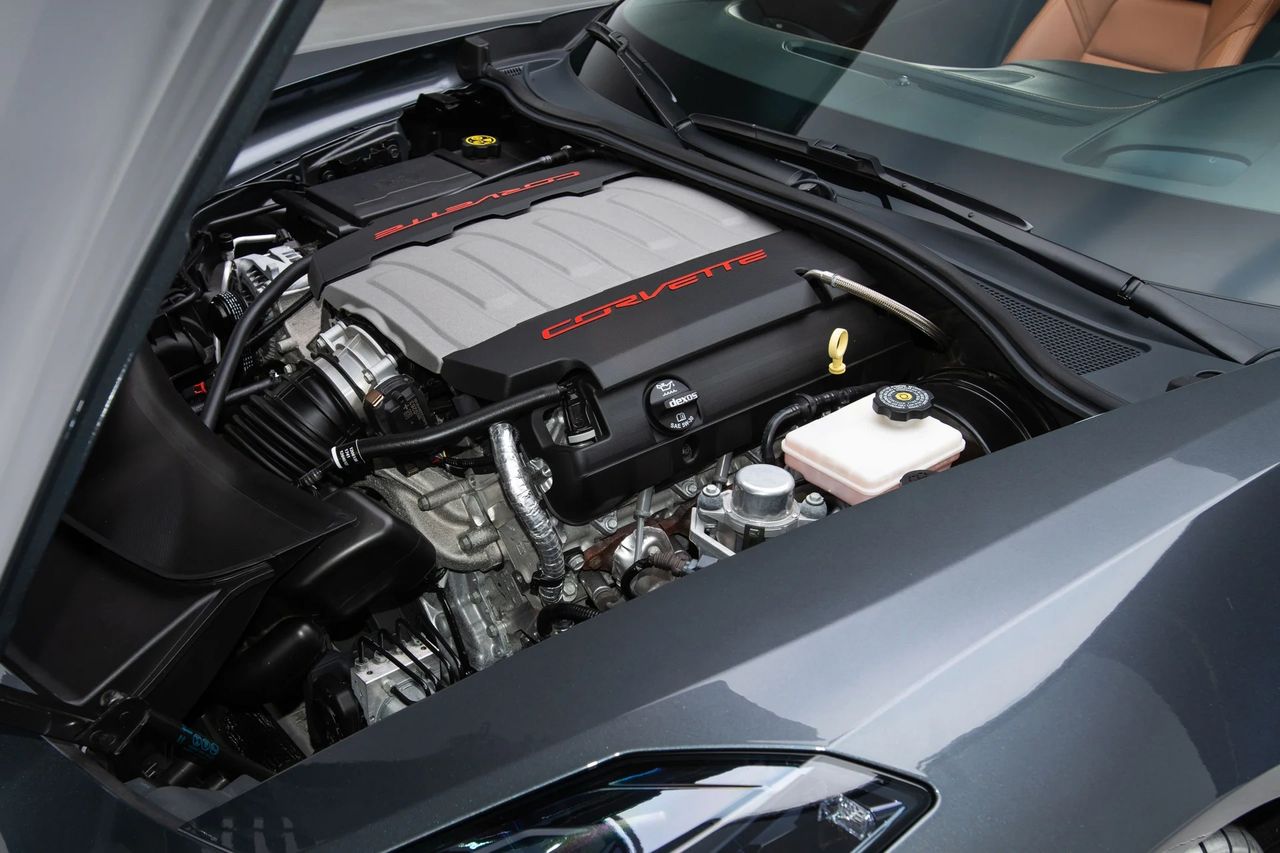
    Close-up of the 2001 Chevrolet Corvette LS1 engine bay, showing the black composite intake manifold, red Corvette lettering on the engine covers, throttle body, air intake assembly, and surrounding components in clean, restored condition.
    For 2001, the Corvette’s LS1 became a stronger and more complete engine, producing 350 horsepower while delivering noticeably more torque across the lower and middle portions of the rev range. A revised composite intake manifold improved airflow and helped broaden the engine’s response, giving the standard Corvette greater urgency without sacrificing its smoothness or everyday usability. The result was not a dramatic reinvention, but a carefully refined V8 that made the coupe and convertible quicker, more flexible, and more satisfying in nearly every driving situation.

    At the center of the improvement was a revised composite intake manifold featuring greater plenum volume and smoother internal runners. The new design reduced airflow restrictions and improved cylinder filling across a broader portion of the operating range. With the intake system doing more of the work, engineers were able to moderate portions of the camshaft profile without sacrificing peak output, producing an engine that was more flexible, more responsive, and easier to use.

    The revised LS1 did not suddenly become a different engine. It became a more complete version of the one Chevrolet had introduced with the C5 four years earlier.

    Automatic-transmission cars produced a maximum of 360 lb-ft of torque, while manual-transmission models reached 375 lb-ft. More important than either peak number was how quickly that torque became available. Chevrolet reported 300 lb-ft at only 1,000 rpm, 320 lb-ft by 1,400 rpm, and 340 lb-ft at 2,500 rpm.

    Those figures gave the 2001 Corvette an unusually broad reserve of usable power. The engine no longer needed to be pushed deep into the upper portion of the tachometer before it began to feel urgent. It responded strongly from just above idle, carried that strength through the middle of the rev range, and continued pulling toward its horsepower peak with the smooth, progressive delivery that had become one of the LS1’s defining qualities.

    Better Where Owners Used It

    For 2001, the Corvette convertible benefited from the same LS1 refinements that improved the coupe, including a revised intake manifold, stronger low- and mid-range torque, and a modest increase to 350 horsepower. Those changes made the open-top C5 more responsive in everyday driving, with better acceleration from lower engine speeds and less need to downshift when passing or climbing. The result was a convertible that retained its long-distance comfort and relaxed character while feeling quicker, more flexible, and more fully developed than earlier C5 models. (Image credit: GM Media LLC.)

    The difference was especially noticeable in ordinary driving. The 2001 Corvette required fewer downshifts when passing, accelerated more decisively when leaving a stop, and pulled with greater authority when exiting a corner or merging onto a highway. A driver could leave the transmission in a taller gear and rely on the engine’s torque rather than constantly searching for a lower ratio.

    That quality made the improvements particularly relevant to the majority of Corvette buyers. Approximately 55 percent of all 2001 Corvettes were equipped with the four-speed automatic transmission. For those owners, the broader torque curve delivered a more immediate and responsive car without requiring any change in driving style.

    Chevrolet estimated that the slowest configuration—an automatic-equipped Corvette with the standard rear axle—reached 60 mph approximately one-quarter second quicker than its 2000 counterpart. When paired with the optional 3.15:1 performance axle, the automatic could match the acceleration of the previous year’s manual-transmission car.

    The manual Corvette benefited differently. Its higher torque rating and stronger midrange made the six-speed gearbox easier to exploit, allowing the driver to carry a gear longer without sacrificing acceleration. The car remained rewarding when driven aggressively, but it also became less demanding when traffic, road conditions, or simple convenience called for a more relaxed approach.

    These changes reflected Chevrolet’s growing understanding of the C5 platform. By 2001, the engineering team was no longer correcting major weaknesses or proving the basic validity of the architecture. It was refining the relationship between the engine, transmission, gearing, chassis, and electronic controls so that the car performed more effectively in every environment.

    The standard Corvette also benefited from many of the same lessons that produced the LS6. Although the Z06 received the more aggressive engine specification, the development work behind that program improved the broader Corvette lineup. Better airflow, stronger low-speed torque, and more carefully calibrated power delivery made the coupe and convertible quicker without making them less civilized.

    That balance was important. The standard Corvette still had to function as a long-distance grand tourer, a daily driver, and an approachable performance car. It needed to idle smoothly, tolerate traffic, deliver respectable fuel economy, and remain comfortable enough to cross several states in a single day. The 2001 revisions strengthened its performance without compromising any of those qualities.

    The Z06 was the model built to attract attention, chase lap times, and reestablish one of the most important names in Corvette history.

    The standard Corvette became better in the places its owners used it every day.

    Shared Engineering Benefits

    The engineering relationship between the LS1 and LS6 reflected the broader philosophy behind the 2001 Corvette lineup. Development work performed for the higher-output Z06 did not remain isolated to a single model; improvements in airflow, intake design, calibration, and power delivery also informed the standard coupe and convertible. In turn, the durability, refinement, and proven architecture of the LS1 provided the foundation from which the LS6 could be developed. That exchange of engineering demonstrated that the three versions of the 2001 Corvette were not separate programs, but distinct expressions of the same increasingly mature C5 platform. (Image credit: GM Media LLC.)

    Several components developed or refined during the Z06 program improved the coupe and convertible as well.

    The standard LS1 adopted the new intake architecture and revised exhaust manifolds associated with the broader LS6 development effort. Manual-transmission cars received the stronger, lower-effort clutch and improved synchronizers, while every model benefited from the larger-diameter aluminum driveshaft.

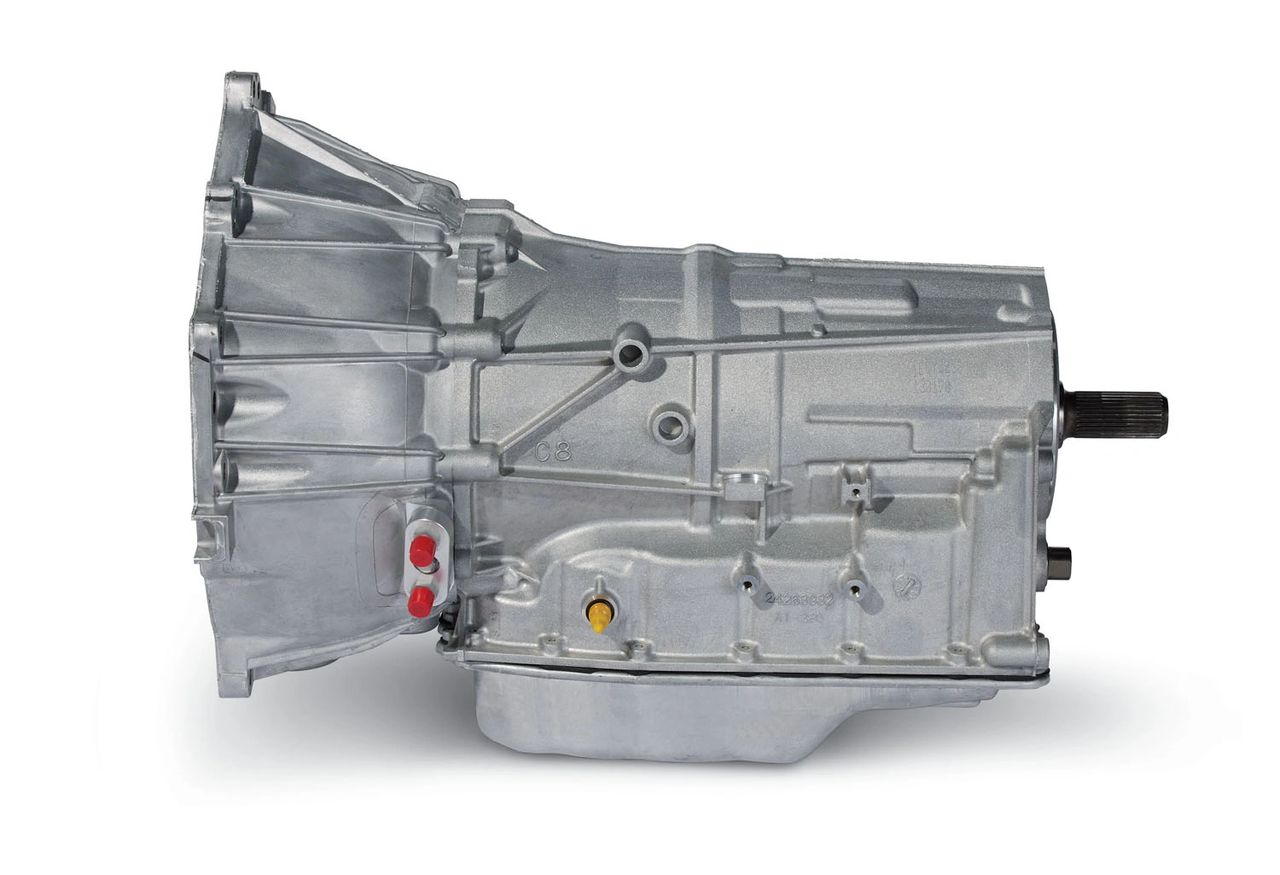
    The automatic transmission case was optimized to remove unnecessary material, reducing mass by approximately 3.3 pounds. A revised alternator pulley incorporated a clutch that helped reduce accessory disturbance at idle and diminished the tendency of automatic cars to creep forward.

    These were not the kinds of changes likely to dominate a showroom brochure, but they improved the ownership experience. The car shifted more smoothly, idled more cleanly, responded more strongly, and carried additional power through a more robust driveline.

    The relationship between the Z06 and the standard Corvette also illustrated an engineering principle that would become increasingly important to Chevrolet: developing an extreme variant can expose opportunities to improve the entire product line.

    The Z06 was not isolated from the rest of the program.

    Its development raised the standard for every 2001 Corvette.

    Performance With Greater Efficiency

    The additional performance did not come at the expense of fuel economy or emissions compliance.

    EPA estimates improved by approximately one mile per gallon in both city and highway driving, depending upon transmission and configuration. The manual-transmission Corvette’s tall overdrive ratios allowed the engine to operate at relatively low speed during highway cruising, preserving one of the C5’s most surprising strengths: exceptional long-distance efficiency for a car with its performance.

    Every 2001 Corvette also achieved National Low Emission Vehicle certification. That accomplishment is easy to overlook today, but it demonstrated how far electronically managed combustion, catalytic converters, airflow modeling, and engine calibration had advanced.

    Earlier generations of performance cars frequently required obvious compromises. More power could mean poor cold-start behavior, unstable idle quality, increased fuel consumption, limited durability, or difficulty meeting emissions requirements. The LS1 and LS6 showed that a modern V8 could become more powerful while simultaneously becoming cleaner and more efficient.

    Mobil 1 synthetic motor oil and an ACDelco oil filter displayed together, representing the lubricants and filtration products used to support the 2001 Corvette’s high-performance engine and extended oil-change intervals.
    Mobil 1’s role in the 2001 Corvette extended well beyond simple lubrication. As the car’s factory-fill synthetic oil, it worked in concert with Corvette’s oil-life monitoring system and GM’s extended maintenance strategy, helping support oil-change intervals of up to 15,000 miles or one year under normal conditions. Its resistance to heat, oxidation, and viscosity breakdown made it especially well-suited to the Corvette’s high-output V8, whether in daily driving or sustained high-performance use. In that sense, Mobil 1 was not just recommended for the Corvette—it was part of the broader engineering philosophy that allowed the car to deliver serious performance with modern durability and reduced maintenance demands.

    Chevrolet also extended the recommended oil-change interval for every 2001 Corvette from 10,000 to as much as 15,000 miles or one year under normal operating conditions. That recommendation did not rest upon mileage alone. The Corvette’s oil-life monitoring system evaluated operating factors that affected lubricant degradation, allowing the car to determine when service was required rather than relying exclusively upon a fixed schedule. The system still imposed a firm upper limit, and severe conditions—including dusty operation—could require substantially earlier changes.

    The longer interval was made possible in part by the Corvette’s established use of Mobil 1 synthetic motor oil, which had been factory-filled and recommended for the model since 1993. Synthetic lubricant offered greater resistance to oxidation, thermal breakdown, and viscosity loss than conventional oils of the period—qualities that were particularly valuable in an aluminum V8 capable of sustained high engine speeds, elevated oil temperatures, and significant cornering loads. GM’s use of Mobil 1 was therefore not simply a branding arrangement; the lubricant formed part of a larger engineering strategy in which the engine, lubrication system, electronic oil-life monitor, and prescribed maintenance schedule were validated to operate together.

    The extended interval also carried consequences beyond owner convenience. Fewer oil and filter changes reduced routine maintenance costs, lowered the volume of used lubricant requiring collection and recycling, and sent fewer discarded filters into landfills. Chevrolet could therefore improve the ownership experience while simultaneously reducing the Corvette’s environmental burden over its service life.

    The 2001 Corvette represented more than brute force. Its greater horsepower and acceleration existed alongside cleaner emissions, longer maintenance intervals, electronic monitoring systems, and the durability expected of a modern production automobile. Chevrolet was demonstrating that serious performance no longer had to demand constant adjustment, frequent service, or exemption from increasingly stringent regulatory standards. The C5 had matured into a car capable of delivering extraordinary speed while functioning with the reliability, efficiency, and everyday discipline expected of any contemporary Chevrolet.

    Comfort and Convenience Improvements

    Chevrolet also continued refining the quieter, more comfortable side of the C5, recognizing that the coupe and convertible still needed to function as usable road cars rather than narrowly focused performance machines.

    Additional insulation helped reduce unwanted noise and vibration without adding enough weight to compromise the Corvette’s performance character. The convertible received further attention with a revised top design that improved sealing and reduced wind intrusion, making open-top models more comfortable on longer drives and less prone to the familiar noise associated with removable roof structures.

    Chrome-finished exhaust tips became standard across the model range, giving the rear fascia a cleaner and more finished appearance. The change was largely cosmetic, but it reflected Chevrolet’s continued effort to make the standard Corvette feel more polished as the C5 entered the mature phase of its production run.

    Close-up of a black 2001 Chevrolet Corvette remote key fob with gray lock, unlock, and hatch-release buttons and a red panic button, displayed against a metallic abstract background.
    For 2001, Chevrolet introduced a smaller, more compact remote key fob that improved everyday convenience without changing its basic functions. The redesigned transmitter was easier to carry and continued to provide remote locking, unlocking, panic-alarm activation, and rear-hatch release. It was a minor update, but one that reflected Chevrolet’s broader effort to make the C5 Corvette more polished and user-friendly.

    Everyday convenience also improved through smaller details. A more compact remote key fob was easier to carry, while available electrochromic interior and exterior mirrors automatically reduced glare during nighttime driving. On the coupe and convertible, these mirrors were generally included within the upper preferred-equipment package alongside the head-up display, Twilight Sentinel automatic lighting, and the power telescoping steering column.

    The head-up display remained one of the C5’s most useful technologies. It could project speed, engine rpm, warning messages, and other vehicle information into the driver’s line of sight, reducing the need to look down at the instrument cluster during highway driving or more aggressive use. What had once seemed like an advanced novelty had become an important part of the Corvette’s driver-focused identity.

    Buyers could also continue tailoring the chassis to their priorities. Selective Real-Time Damping remained available for those who wanted electronically adjustable ride control, while the Z51 Performance Handling Package provided coupe and convertible buyers with a firmer suspension calibration without requiring them to move up to the more narrowly focused Z06.

    Two 2001 Chevrolet Corvettes shown together outdoors, one finished in Speedway White and the other in Quicksilver Metallic, photographed in a realistic parking-area setting with trees and open sky in the background.
    For 2001, Chevrolet expanded the Corvette’s color palette with two new finishes: Quicksilver Metallic and Speedway White. Both gave the C5 a cleaner, more contemporary look, but Speedway White proved especially significant on the first-year Z06, where production remained notably limited. Together, the two additions helped freshen the model line visually while reinforcing the more mature, polished character the 2001 Corvette had begun to achieve.

    Two new exterior colors—Quicksilver Metallic and Speedway White—joined the palette for 2001. Speedway White was especially notable on the Z06, where only 352 examples were produced in the color, making it one of the less common combinations from the model’s inaugural year.

    None of these changes fundamentally transformed the C5 interior or erased every criticism directed at its materials and presentation. They did, however, make the Corvette quieter, more polished, and easier to live with, reinforcing the growing distinction between the increasingly refined coupe and convertible and the more specialized, performance-driven Z06.

    What the Numbers Said

    aptured during Car and Driver testing in late summer 2000, this image shows the new 2001 Corvette Z06 being evaluated before its public arrival. The car’s composed stance and visible speed reflect the balance Chevrolet had achieved between reduced weight, greater power, and sharper chassis response. Even before the Z06 reached showrooms, it was already demonstrating that the C5 had evolved into a far more serious performance machine. (Image credit: Car & Driver)

    Chevrolet claimed the Z06 could accelerate from zero to 60 mph in four seconds and complete the quarter-mile in approximately 12 seconds under optimal conditions.

    Independent testing produced slightly more conservative—but still extraordinary—results.

    Car and Driver recorded zero to 60 mph in 4.3 seconds, a quarter-mile in 12.7 seconds at 113 mph, a top speed of 168 mph, 0.98 g of lateral acceleration, and a 70-to-zero braking distance of 152 feet. MotorWeek achieved 60 mph in 4.5 seconds, completed the quarter-mile in 13 seconds at 113 mph, and measured 60-to-zero braking in approximately 104 feet.

    Differences in weather, surface preparation, launch technique, mileage, and testing procedure explain much of the variation. What mattered was where those results placed the Corvette.

    The Z06 accelerated more quickly than the celebrated C4 ZR-1. Its measured cornering grip exceeded figures recorded by many contemporary exotics, including the Dodge Viper GTS and Ferrari 360 Modena. It stopped with the authority expected of a serious track car and approached 170 mph without forced induction, all-wheel drive, or an exotic multi-cam engine.

    The performance was impressive in isolation.

    Its price made it disruptive.

    Challenging the World for Less

    The 2001 Corvette Z06 entered a performance market defined by both domestic muscle and increasingly sophisticated European engineering. Against rivals from Dodge and Ford, as well as Porsche, BMW, and Ferrari, Chevrolet answered with a lighter, more focused C5 that delivered world-class acceleration, braking, and cornering performance without abandoning everyday usability. The Z06 did not rely on exotic construction, luxury branding, or an inflated price to make its case; it challenged the established hierarchy by proving that an American production car could compete credibly with some of the world’s most respected performance machines.

    The 2001 Corvette in a Changing Performance Market

    The performance-car market surrounding the 2001 Corvette was becoming increasingly sophisticated. Buyers could choose from a wider range of engineering philosophies than ever before, each offering a different interpretation of what a modern high-performance car should be.

    Porsche’s 996-generation 911 combined rear-engine traction, refined road manners, and decades of sports-car credibility. The newly introduced 911 Turbo added all-wheel drive and twin turbochargers, creating a level of speed and technical sophistication the Corvette could not directly replicate, but its price placed it well beyond the reach of most Z06 buyers.

    Ferrari’s 360 Modena delivered a more exotic experience through its mid-mounted, high-revving V8 and aluminum-intensive construction. Dodge’s Viper GTS approached performance from the opposite direction, using greater displacement, dramatic styling, and immense torque, but it demanded far more compromise in comfort, visibility, and everyday usability.

    Other competitors broadened the definition of performance still further. BMW’s E46 M3 combined a high-output six-cylinder engine, a deeply developed chassis, and a practical four-seat body. The Porsche Boxster S, Honda S2000, and Mercedes-Benz SLK32 AMG each brought a different interpretation of the modern roadster, emphasizing balance, precision, or forced-induction power.

    The Corvette could not match the interior finish, brand cachet, or mechanical theater of any of those cars, and it did not try to. Instead, Chevrolet concentrated on the qualities that had always defined the Corvette at its best: acceleration, braking, cornering grip, durability, cargo capacity, dealer support, and everyday drivability.

    That combination gave the Z06 unusual breadth. It could perform at a level associated with far more expensive machinery while remaining practical enough to drive daily, be serviced through a national dealer network, and be used for long-distance travel. Few rivals could match its balance of outright speed, accessibility, and ownership convenience.

    Chevrolet promoted the Z06 at approximately $47,500 before destination and other accounting adjustments, while period publications generally listed a normally equipped example at or just below $50,000. That was substantial money in 2001, but it remained only a fraction of the price commanded by many European cars the Z06 could equal—or defeat—on a racetrack.

    The Corvette had long been described as a performance value. The 2001 Z06 elevated that familiar claim into something more serious: an international challenge to the idea that world-class performance required an exotic badge or a six-figure price.

    Critical Reception

    When Automobile named the 2001 Corvette Z06 its Automobile of the Year, the award confirmed that Chevrolet had built far more than a faster C5. With 385 horsepower, a lighter fixed-roof structure, track-focused suspension tuning, and the kind of usable performance once reserved for far more expensive exotics, the Z06 represented the most complete expression of the fifth-generation Corvette to that point. These dramatic images captured both sides of its personality: an unmistakably American performance car rooted in Detroit and a world-class sports machine capable of delivering extraordinary speed with composure and precision.

    The automotive press responded with unusual enthusiasm.

    Automobile Magazine selected the Z06 as its 2001 Automobile of the Year. Editor-in-Chief Jean Jennings praised the car not as a promising American alternative but as a fully credible sports car capable of standing against the world’s best without requiring excuses or qualifications.

    Car and Driver acknowledged the familiar shortcomings of the C5 cabin and the Z06’s busy ride over rough pavement, but its test results made the larger conclusion unavoidable. The car delivered extraordinary speed, grip, balance, and braking for its price.

    MotorWeek similarly emphasized the combination of performance and usability. The Z06 was loud enough, firm enough, and responsive enough to feel special, yet it remained quiet and compliant enough to travel on ordinary roads without exhausting its occupants.

    This reception mattered because the Corvette had spent decades fighting a perception that it was fast primarily by American standards. Critics often admired its horsepower while questioning its refinement, braking, consistency, or ability to perform on complex roads.

    The C5 had already weakened that criticism.

    The Z06 made it exceedingly difficult to sustain.

    Production and Pricing

    The 2001 model year was a strong one for Bowling Green, with the plant turning out 35,627 Corvettes in total—15,681 coupes, 14,173 convertibles, and 5,773 Z06s. That mix tells the story of a factory building at full maturity: traditional Corvettes continued to sell in healthy numbers, while the all-new Z06 immediately established itself as a major part of the lineup and helped define the year. Inside the Bowling Green Assembly Plant, more than 1,025 employees worked alongside 58 robots to build the 2001 Corvette, underscoring just how sophisticated and efficient the operation had become by the time the C5 platform reached its stride. In many ways, these production results reflected the broader success of the 2001 Corvette itself—confident, refined, and finally operating at the level Chevrolet had intended from the start. (Image credit: GM Media LLC.)

    Chevrolet built 35,627 Corvettes for the 2001 model year, making it the strongest production year since 1985.

    The total included:

    • 15,681 removable-roof coupes
    • 14,173 convertibles
    • 5,773 Z06 fixed-roof coupes

    The Z06 therefore accounted for approximately 16 percent of total production during its introductory year—a significant share for a manual-only, performance-focused model.

    Automatic transmissions were installed in 19,608 coupes and convertibles, representing roughly 55 percent of total Corvette production. The remaining 16,019 cars used six-speed manuals, a figure that included every Z06.

    The standard coupe listed for approximately $40,000, while the convertible and Z06 both occupied the upper-$40,000 range depending upon published price point, destination charge, equipment, and changes during the model year.

    Popular equipment included polished-aluminum wheels, the head-up display, dual-zone climate control, power telescoping steering, and the upper preferred-equipment packages. A total of 7,817 standard coupes and convertibles received the Z51 Performance Handling Package, while 5,620 were equipped with Selective Real Time Damping.

    The R8C National Corvette Museum Delivery program also allowed buyers to take ceremonial delivery of their cars at the museum in Bowling Green, strengthening the relationship between the factory, the museum, and the enthusiast community surrounding the Corvette.

    The Z06 Color Breakdown

    This color chart brings together the full exterior palette available on the 2001 Corvette Z06, showing how each finish shaped the character of Chevrolet’s first-year C5 flagship. From familiar choices like Black, Torch Red, and Millennium Yellow to less common shades such as Speedway White, Quicksilver Metallic, and Dark Bowling Green Metallic, the lineup reflects both the breadth and maturity of the 2001 model range. Presented in side profile, the chart makes it easy to see how the Z06’s restrained, purposeful design carried over to every available color. (Image credit: Ultimate Corvette.com)

    The 5,773 first-year Z06s were offered in a comparatively focused range of colors.

    Black was the most popular, accounting for 1,719 cars. Torch Red followed with 1,623, while 1,345 were finished in Quicksilver Metallic. Chevrolet built 634 Millennium Yellow Z06s and only 352 in Speedway White.

    The rarity of Speedway White has made it one of the most immediately recognizable first-year combinations. Its clean appearance also emphasized the fixed-roof body’s shape and contrasted strongly with the dark wheels, grille openings, red brake calipers, and black rear window surround.

    Millennium Yellow required an additional charge because of its tinted-clearcoat process. The vivid finish suited the Z06’s personality and anticipated the close association between yellow Corvettes and the factory racing program.

    Interior selection was simpler. A total of 4,112 cars received the all-black cabin, while 1,661 combined black with Torch Red accents.

    Unlike later special editions, no exterior color created a mechanically distinct version of the car. The production totals nevertheless give each combination its own identity within the first-year Z06 story.

    The 2001 Corvette in an Uncertain America

    Set against a backdrop of recession, shaken consumer confidence, the aftermath of September 11, and a rapidly changing automotive marketplace, this image captures the world into which the 2001 Corvette was sold. While much of the industry leaned on aggressive incentives, light trucks, and shifting consumer priorities to maintain momentum, the Corvette remained a bright spot, with Chevrolet producing and selling 35,627 examples for the model year. The silver C5 in the foreground stands as a reminder that America’s sports car was not insulated from the uncertainty of its time, but it proved resilient within it. Even during one of the most unsettled periods in recent American history, the Corvette remained commercially strong, technically relevant, and important enough to help Chevrolet confidently carry it into the next generation.

    The 2001 Corvette entered production during an uncertain period for both the United States and its automobile industry.

    As the new model year began, the country was approaching the end of an extraordinary period of economic growth. The expansion that had begun in March 1991 lasted exactly ten years—the longest uninterrupted expansion then recorded in the official chronology of the American economy. By March 2001, however, business activity had peaked, and the United States had entered its first recession in a decade.

    The causes extended well beyond the automobile business. The technology-stock bubble had collapsed, corporate investment was weakening, manufacturing activity had contracted, and employers were becoming increasingly cautious. Industrial production had already begun to decline in 2000, leaving many manufacturers to confront softer demand, excess inventory, and growing pressure to reduce costs.

    On September 11, 2001, the United States endured one of the darkest days in its history as attacks on the World Trade Center, the Pentagon, and United Airlines Flight 93 claimed nearly 3,000 lives and permanently altered the nation’s sense of security. The images of the Twin Towers burning and collapsing became symbols of unimaginable loss, but the day was also defined by extraordinary courage, from first responders who rushed toward danger to ordinary people who helped strangers escape and comforted the injured. For those who lived through it, September 11 divided time into a before and an after, reshaping travel, business, public life, national policy, and the emotional character of an entire generation. Any history of the 2001 Corvette model year exists within that larger national story: the car itself was not shaped by the attacks, but it was built, sold, and experienced during a year marked by profound grief, uncertainty, sacrifice, and resilience. (Image courtesy of the Independent)

    The terrorist attacks of September 11 transformed that economic slowdown into something more immediate and deeply personal. In addition to the catastrophic loss of life, the attacks disrupted air travel, tourism, financial activity, commerce, and consumer behavior. Showroom traffic fell sharply in the days that followed as Americans absorbed the scale of what had happened and reconsidered purchases that suddenly appeared less urgent.

    The National Bureau of Economic Research ultimately dated the recession from March through November 2001. Because the contraction had begun months before September 11, the attacks cannot properly be described as its original cause. They did, however, deepen the downturn, intensify uncertainty, and threaten to turn a comparatively mild contraction into a more severe national economic crisis.

    The Corvette’s engineering program had been established long before any of these events. Its revised LS1, newly introduced LS6, second-generation Active Handling system, weight-reduction program, and Z06 development were products of decisions made during the closing years of the 1990s. The recession and terrorist attacks should therefore not be presented as influences upon the car’s design. They formed the environment in which the completed automobile reached dealerships, found buyers, and established its place in the market.

    The industry’s response to the post-September collapse in showroom activity was immediate and unprecedented. On September 19—just eight days after the attacks—General Motors introduced its “Keep America Rolling” campaign, offering zero-percent financing across much of its vehicle range. Competing manufacturers quickly followed with similarly aggressive financing, rebates, and other incentives.

    In the aftermath of September 11, General Motors launched its “Keep America Rolling” campaign to help restore consumer confidence and draw buyers back into showrooms. Built around aggressive financing incentives, the program became one of the most visible responses to the economic uncertainty of late 2001 and helped the auto industry regain momentum during an exceptionally difficult period. (Image credit: GM Media LLC.)

    The program helped produce a remarkable reversal. Vehicle purchases surged during the fourth quarter, even as unemployment increased and much of the manufacturing sector remained under pressure. October became an especially dramatic month, with automobile sales helping drive one of the largest monthly increases in American retail activity then recorded. Even models that were seldom discounted, including the Corvette, participated in the broader push to bring customers back into dealerships.

    By the end of the calendar year, approximately 17.18 million new cars and light trucks had been sold in the United States. That made 2001 the second-strongest sales year then recorded, trailing only the extraordinary results of 2000. It was a striking outcome for a year defined by recession, terrorist attacks, declining consumer confidence, and significant job losses.

    Those headline numbers did not mean that the automobile business was unchanged. Beneath the continued strength of the overall market, American buying habits were shifting decisively. Pickups, sport-utility vehicles, and other light trucks were claiming an increasingly large share of sales, while the traditional passenger car was losing ground. Manufacturers were directing greater investment toward trucks and SUVs because those vehicles combined growing consumer demand with substantial profit margins.

    A two-seat sports car consequently occupied an increasingly specialized corner of the market. The Corvette offered little of the practicality that was drawing buyers toward crew-cab pickups, family-oriented SUVs, and luxury utility vehicles. It was not transportation designed around cargo capacity, rear-seat accommodation, or an elevated driving position. Its continued commercial strength depended upon desirability rather than necessity.

    Chevrolet’s description of the Corvette as an “American icon” carried added weight in 2001, a year marked by national tragedy, economic uncertainty, and profound changes in consumer behavior following September 11. Buyers increasingly gravitated toward trucks and sport-utility vehicles, yet demand for America’s two-seat sports car remained remarkably strong: Bowling Green produced 35,627 Corvettes, making 2001 the C5’s strongest model year to that point. The result demonstrated that the Corvette’s appeal extended beyond nostalgia or symbolism—it remained a desirable, commercially healthy performance car during one of the most difficult and consequential periods in modern American history. (Image credit: GM Media LLC.)

    Against that backdrop, Bowling Green produced 35,627 Corvettes for the 2001 model year. The total included 15,681 coupes, 14,173 convertibles, and 5,773 Z06s. Those results placed the year among the strongest of the C5 era and demonstrated that Chevrolet could sustain substantial demand even as it expanded the range to three clearly differentiated models.

    The coupe remained the most versatile expression of the Corvette, combining its removable roof panel and generous rear storage area with the revised 350-horsepower LS1. The convertible served buyers who valued open-air touring and a more traditional sense of occasion. The Z06 addressed a different audience altogether, exchanging some convenience and comfort for reduced weight, increased structural rigidity, sharper responses, and the 385-horsepower LS6.

    That breadth mattered. Chevrolet was no longer asking one version of the Corvette to satisfy every customer. The three-model strategy allowed the division to serve buyers seeking a fast grand-touring coupe, an open roadster, or an uncompromising high-performance machine without abandoning the basic engineering and manufacturing efficiencies of the C5 platform.

    The Z06 accounted for slightly more than sixteen percent of total Corvette production during its first model year. That was a meaningful result for a car offered only with a manual transmission, a fixed roof, a more aggressive chassis, and fewer concessions to traditional luxury expectations. Its success suggested that a substantial portion of the Corvette audience wanted a more focused automobile and was willing to accept a narrower mission in exchange for greater capability.

    More broadly, the production total demonstrated that the Corvette was not surviving on heritage, nostalgia, or institutional habit. Nearly five decades after its introduction, it remained commercially healthy enough to justify dedicated manufacturing capacity, specialized engineering, continued motorsports investment, and the creation of an increasingly sophisticated performance hierarchy.

    That profitability was strategically important. Specialty cars exist within large corporations only when their value can be defended—not simply as symbols, but as products capable of generating revenue, strengthening the parent brand, and supporting future investment. The C5’s sustained sales gave Chevrolet the financial and institutional credibility required to continue improving the existing Corvette while simultaneously developing its successor.

    In that sense, the 2001 Corvette represented more than a successful model year. It proved that America’s sports car could remain relevant during a historic national crisis, a changing consumer market, and an industry increasingly dominated by trucks and utility vehicles. The C5 had matured into a profitable, internationally credible performance platform, and its success gave Chevrolet the foundation from which the sixth-generation Corvette could move forward.

    Corvette Racing Comes of Age

    The Corvette C5-R helped define 2001 as a breakthrough year for Corvette Racing, delivering major victories and establishing Chevrolet as a genuine force in international endurance competition.

    The production Z06 represented only one side of the Corvette performance story in 2001. The other unfolded on racetracks across North America and Europe, where Corvette Racing began converting the promise of the C5-R into sustained international success. Developed by Chevrolet and Pratt & Miller, the purpose-built endurance racer retained the basic identity of the production C5—a front-mounted V8, rear transaxle, composite bodywork, and unmistakable Corvette silhouette—but nearly every component had been adapted for competition. After two seasons spent learning how to survive the demands of long-distance racing, the team entered 2001 prepared to do more than demonstrate potential.

    Daytona: The First Breakthrough

    At the 2001 Rolex 24 at Daytona, Corvette Racing scored one of the most important victories in the program’s history. The No. 2 C5-R of Ron Fellows, Johnny O’Connell, Chris Kneifel, and Franck Fréon outlasted the faster prototype field to win both the GTS class and the race overall, completing 656 laps. The No. 3 Corvette—driven by Dale Earnhardt, Dale Earnhardt Jr., Andy Pilgrim, and Kelly Collins—finished fourth overall and second in class, giving Chevrolet a commanding 1–2 GTS result and confirming that the C5-R had become a world-class endurance racer.

    The season began at the Rolex 24 at Daytona, where Corvette Racing returned determined to finish what it had narrowly missed one year earlier. Pratt & Miller had continued refining the cars, improving durability, rehearsing pit procedures, and studying every area in which time or reliability could be gained. The No. 2 C5-R was driven by Ron Fellows, Johnny O’Connell, Chris Kneifel, and Franck Fréon, while the No. 3 brought Dale Earnhardt Sr. and Dale Earnhardt Jr. together with Andy Pilgrim and Kelly Collins.

    The race became a test of endurance in the most literal sense. Heavy rain reduced visibility, changed grip from lap to lap, and forced the crews to manage water entering the cockpits; at one point, a drain hole was drilled through the floor. When the leading prototype encountered mechanical trouble late in the event, the No. 2 Corvette was positioned to take advantage—not through luck, but because it had maintained pace, avoided major mistakes, executed clean stops, and preserved the car well enough to remain in contention.

    After 24 hours, the No. 2 C5-R crossed the finish line first overall, defeating not only the other GTS entries but every prototype in the race. The No. 3 finished fourth overall and second in class, completing an extraordinary result for a factory program still early in its development. Daytona gave Corvette Racing its first victory, and it came as an overall win at one of North America’s most demanding endurance events.

    The Earnhardt Connection

    The No. 3 Corvette C5-R team of Kelly Collins, Andy Pilgrim, Dale Earnhardt Jr., and Dale Earnhardt Sr. delivered one of the most memorable stories of the 2001 Rolex 24 at Daytona, finishing fourth overall and second in the GTS class. Their result complemented the No. 2 Corvette’s overall victory and helped make the race a defining early triumph for Corvette Racing.

    The presence of Dale Earnhardt Sr. and Dale Earnhardt Jr. brought Corvette Racing before an audience far larger than the traditional sports-car community. Their participation was not treated as a publicity exercise; both drivers learned the car, respected the demands of sharing it, worked within the team, and adapted quickly to endurance racing. Their fourth-place overall finish helped legitimize the C5-R program among NASCAR fans who might otherwise have paid little attention to it.

    The result took on a far deeper meaning two weeks later, when Dale Earnhardt Sr. was killed on the final lap of the Daytona 500. The Rolex 24 became the final completed race of his career, and the images of father and son sharing the yellow Corvette gained a permanent place in American motorsports history. The No. 3 car did not win Daytona, but its role in the story of the 2001 season remains inseparable from the program’s achievement.

    Le Mans and a Championship Season


    At the 2001 24 Hours of Le Mans, Corvette Racing achieved the breakthrough it had been chasing since the program’s launch, capturing its first class victory in the GTS category and finishing eighth overall. The result validated the C5-R on the world’s most demanding endurance stage, proving that Corvette was no longer simply an American performance icon, but a legitimate international force in sports car racing. It was one of the defining competitive achievements of the 2001 Corvette story and a major step in building the endurance-racing dynasty that followed.

    Corvette Racing carried its momentum through Sebring and toward the season’s central objective: the 24 Hours of Le Mans. Chevrolet had taken the C5-R to France in 2000 and shown promise, but the factory program had not yet secured the class victory required to establish itself against Europe’s most experienced endurance-racing organizations. That changed on June 17, 2001.

    The No. 63 C5-R, driven by Ron Fellows, Johnny O’Connell, and Scott Pruett, won the GTS category, while the No. 64 Corvette of Andy Pilgrim, Kelly Collins, and Franck Fréon finished second. The two yellow cars crossed the line together in formation, delivering a one-two class finish and the first Le Mans victory for Chevrolet’s official Corvette Racing program. Briggs Cunningham’s privately entered Corvette had won its class in 1960; the 2001 result proved that the factory-backed effort had become an international winner in its own right.

    The success continued through the American Le Mans Series, where Corvette Racing faced established opposition that included the Saleen S7-R and Dodge Viper GTS-R. By the end of the season, Chevrolet had secured its first ALMS manufacturer and team championships, completing a year defined by an overall victory at Daytona, a one-two class finish at Le Mans, and sustained success across the championship. More important than any single trophy, Corvette Racing had become a complete organization—one in which Chevrolet, Pratt & Miller, the drivers, engineers, engine program, and pit crews operated as a unified system.

    That maturity established the foundation for everything that followed. The lessons learned during the C5-R era carried directly into the C6.R, C7.R, C8.R, and Z06 GT3.R programs, transforming Corvette Racing from an ambitious factory effort into one of the most successful and enduring organizations in modern sports-car competition.

    Although the C5-R and the 2001 Corvette Z06 were often mentioned in the same breath, they were not the same car and were never intended to be. Both shared the fifth-generation Corvette’s basic silhouette, front-engine/rear-transaxle architecture, and the broader engineering philosophy that emphasized low weight, structural rigidity, and balanced performance, but the C5-R was a purpose-built endurance racer developed by Pratt & Miller for international competition, while the Z06 was a production road car engineered by Chevrolet for the street and track-day use. The Z06 benefited from lessons learned through racing—particularly in areas such as chassis tuning, weight reduction, and performance credibility—but it retained production-based construction, comfort features, and road-going usability that the race car did not. In that sense, the two cars were closely related in spirit and appearance, yet fundamentally different in mission: one was built to win at Le Mans, the other to bring a measure of that sharper, more focused character to Chevrolet showrooms.

    The production Z06 and the C5-R were not the same automobile in different clothing.

    The C5-R was a purpose-built competition machine constructed around racing regulations, endurance requirements, and serviceability. Its chassis, bodywork, engine, suspension, brakes, fuel system, aerodynamics, and safety structure were far removed from those of a showroom Corvette.

    The connection was nevertheless meaningful.

    Both used the C5’s front-engine, rear-transaxle philosophy. Both benefited from the production car’s balanced proportions and aerodynamic development. Both depended upon compact, naturally aspirated Chevrolet V8 power. Most importantly, the production and racing programs increasingly shared information, personnel awareness, and development priorities.

    Racing exposed components and systems to concentrated stress. It taught engineers how heat moved through the vehicle, how drivers responded to changes in balance, how aerodynamics affected stability in traffic, and how apparently minor packaging decisions influenced serviceability and durability.

    Production engineering worked in the opposite direction. The road car provided an efficient architectural foundation, advanced materials, manufacturing experience, and a recognizable identity that allowed the racer to remain unmistakably a Corvette.

    The relationship was not a simple matter of transferring one race-car component directly into a street car. It was a continuous exchange of knowledge.

    As later GM motorsports leadership explained, production cars made the race cars better, and racing made the production cars better.

    In 2001, that cycle began gaining real momentum.

    The Earliest Shape of the C6

    Early sketches such as this reveal how Tom Peters and the Corvette design team approached the C6 not as a rejection of the C5, but as a disciplined evolution of an already successful architecture. Peters, working with designers including Kirk Bennion, SangYup Lee, Chris Knack, and GM’s sculpting and aerodynamic teams, retained the C5’s long-hood, short-deck proportions, muscular fender forms, low cowl, and planted stance while tightening the body around a shorter, narrower package. The surfaces became sharper and more athletic, the wheel openings more pronounced, and the front end more compact—changes shaped as much by aerodynamic development as by styling intent. Peters later explained that the C5 was already highly refined, so progress came through the accumulation of many carefully considered improvements rather than one radical breakthrough; the result was a C6 that remained unmistakably Corvette while appearing leaner, more modern, and more globally competitive. (Image credit: GM Media LLC.)

    While the C5 was achieving its greatest successes, Chevrolet was already looking toward its successor.

    Development of the sixth-generation Corvette began around 2000. The program did not start from a blank sheet of paper, nor did Chevrolet intend to discard the C5’s successful front-engine, rear-transaxle architecture.

    Dave Hill later described the difference between the two development programs succinctly. Creating the C5 had required “a completely new invention from the ground up.” With the C6, there would be “less new invention and more working on excellence.” [8]

    That philosophy could only exist because the C5 had provided such a strong foundation. Engineers could focus on making the next Corvette smaller externally, more refined internally, quieter, more aerodynamically efficient, and more precise without sacrificing the performance, balance, cargo capacity, or structural strength customers valued.

    The team also cataloged the C5’s shortcomings. Cabin materials needed improvement. Wind and tire noise required further attention. The exterior dimensions could be tightened without reducing useful passenger space. Aerodynamic refinement would become increasingly difficult as engineers approached an already-low drag coefficient.

    The 2001 model year therefore occupied an unusual position. Chevrolet was still improving the C5 aggressively, but each improvement also clarified what the next Corvette would need to accomplish.

    The Z06 and the Emerging C6

    Tom Peters works alongside a full-size clay model of the C6 Corvette during the car’s early development, refining the proportions, surface transitions, and visual character that would carry Corvette into its sixth generation. The clay process allowed Peters and the design team to evaluate the car at full scale, preserving the essential identity of the C5 while creating a tighter, sharper, and more contemporary shape. (Image credit: GM Media LLC.)

    Tom Peters assumed design responsibility for the C6 within a development structure that brought the styling organization into unusually close contact with Dave Hill’s engineering team. The designers explored numerous themes while preserving enough Corvette identity to make the new car immediately recognizable, drawing selectively from earlier Sting Rays through peaked fenders, taut surfaces, and more disciplined proportions without turning the project into a retro exercise.

    Aerodynamics became one of the program’s most difficult challenges because the C5 was already highly efficient. Peters later described the process as accumulating base hits rather than discovering a single home run: the shortened front overhang, fenders, hood cutlines, mirrors, roof, rear deck, and underbody all had to contribute incremental gains. Fixed headlamps, a more centralized front opening, improved cooling, and reduced high-speed lift increasingly reflected lessons emerging from Corvette Racing as the road and competition programs developed in parallel.

    At the same time, the 2001 Z06 gave the future C6 a new production-performance benchmark. Its 385-horsepower LS6, lower mass, firmer chassis tuning, stronger braking, and heightened steering response demonstrated how much capability could be extracted from the existing architecture when comfort and convenience were no longer the only priorities. It also raised expectations for acceleration, grip, durability, and track performance in one coordinated package.

    Just as important, the Z06 proved that buyers would accept a more specialized Corvette. Chevrolet sold 5,773 first-year examples despite offering no automatic transmission, removable roof, convertible body, or broad selection of interior colors. That commercial success showed that a focused high-performance derivative could become a meaningful part of the Corvette business rather than merely serving as a low-volume engineering exercise or image builder.

    Later C5 Z06s would gain more power and additional refinements, but the 2001 model did the essential work: it established the modern Z06 formula. The C6 Z06, C7 Z06, and mid-engine C8 Z06 would become radically different automobiles, yet each inherited the same basic mission—reduce mass where possible, sharpen the chassis, increase sustained performance, and create a Corvette for drivers willing to prioritize capability over convenience.

    What the 2001 Corvette Still Did Not Fix

    For all of the C5’s mechanical sophistication, its interior remained one of the car’s clearest weaknesses. Hard plastics, dated switchgear, uneven material quality, and a dashboard shared too visibly with other General Motors products made the cabin feel less special than the performance beneath it deserved. By 2001, the basic design was also beginning to show its age, particularly when compared with increasingly polished European and Japanese competitors. The layout was functional and driver-focused, but its presentation lacked the refinement expected of a sports car competing on an international stage.

    A definitive assessment must acknowledge what remained unresolved.

    The C5 interior continued to trail the best European competitors in material quality, switchgear feel, and visual sophistication. The dashboard was functional and driver-focused, but too many surfaces appeared inexpensive for a car approaching or exceeding $50,000.

    The seats remained a particular weakness. Chevrolet added support to the Z06 design, but the cushions and bolsters still struggled to restrain occupants against the lateral forces the chassis could generate. Drivers often found themselves bracing against the steering wheel, console, or door during aggressive cornering.

    The standard car’s run-flat tires provided real roadside security but contributed to noise, impact harshness, and less progressive breakaway behavior. The Z06’s conventional tires improved those qualities but sacrificed the ability to travel any meaningful distance after a puncture.

    The Z06’s ride could become busy over rough pavement, and its additional negative camber could accelerate tire wear. The fixed-roof body also surrendered the hatchback coupe’s removable roof and larger cargo opening, compromises some buyers considered too significant for the performance gained.

    None of these shortcomings invalidated the car’s achievement. They revealed where the next generation needed to improve.

    In that sense, even the criticisms directed at the 2001 Corvette became part of the C6 development program.

    2001 Corvette Specifications at a Glance

    Standard Coupe and Convertible

    Engine: 5.7-liter LS1 OHV V8
    Construction: Aluminum block and cylinder heads
    Horsepower: 350 at 5,600 rpm
    Torque: 360 lb-ft with automatic; 375 lb-ft with manual
    Compression ratio: 10.1:1
    Transmissions: Four-speed automatic or MM6 six-speed manual
    Final-drive ratios: 2.73:1 standard automatic; 3.15:1 performance automatic; 3.42:1 manual
    Suspensions: FE1 standard, F45 Selective Real Time Damping, or Z51/FE3 Performance Handling
    Tires: P245/45ZR-17 front and P275/40ZR-18 rear extended-mobility tires
    Body styles: Removable-roof hatchback coupe or convertible
    Active Handling: Second-generation system standard

    Z06

    Engine: 5.7-liter LS6 OHV V8
    Construction: Aluminum block and cylinder heads
    Horsepower: 385 at 6,000 rpm
    Torque: 385 lb-ft at 4,800 rpm
    Compression ratio: 10.5:1
    Redline: 6,500 rpm
    Transmission: M12 six-speed manual only
    Final-drive ratio: 3.42:1
    Suspension: Z06-exclusive FE4
    Wheels: Forged aluminum, 17 x 9.5 inches front and 18 x 10.5 inches rear
    Tires: P265/40ZR-17 front and P295/35ZR-18 rear Goodyear Eagle F1 Supercar
    Body style: Fixed-roof coupe with conventional trunk
    Approximate curb weight: 3,115–3,130 pounds
    Factory performance claim: 0–60 mph in approximately four seconds
    Independent testing: Generally 4.3–4.6 seconds to 60 mph and 12.7–13.0 seconds through the quarter-mile
    Top speed: Approximately 168–171 mph

    Why the 2001 Corvette Still Matters Today

    As the sun sets on the C5 era’s most consequential model year, the 2001 Corvette stands as more than a great sports car—it marks the moment the entire Corvette program found its modern direction. The standard coupe and convertible had matured into more complete machines, the Z06 revived a legendary name and established the performance formula that still defines Corvette’s most focused road cars, and the C5-R proved on the world stage that Corvette Racing belonged among endurance racing’s elite. That is why the 2001 Corvette still matters today: it was the year Chevrolet aligned refinement, performance, racing credibility, and future development into one clear vision, creating the blueprint from which every Corvette since has benefited.

    The 2001 Corvette was not the most powerful C5, nor was it the final or most exclusive expression of the fifth-generation platform. Later Z06 models produced more horsepower, received additional chassis refinements, and ultimately delivered stronger performance on paper. Measured only by specifications, the 2002–2004 cars appear superior. Historically, however, the 2001 model was more consequential because it established the modern Corvette formula that the later cars merely refined.

    That importance extended well beyond the arrival of the Z06. The coupe and convertible became stronger, quicker, quieter, cleaner, and more efficient, while second-generation Active Handling became standard throughout the range. Chevrolet was learning how to use electronic technology not to isolate the driver, but to make more of the Corvette’s performance accessible without removing meaningful control. The 2001 lineup demonstrated how thoroughly the C5 architecture had matured and how much capability remained within the platform.

    The Z06 was the clearest expression of that progress. Its 385-horsepower LS6, FE4 suspension, forged wheels, Goodyear Eagle F1 Supercar tires, titanium exhaust, M12 gearing, fixed-roof structure, improved cooling, and reduced mass were not preliminary ideas awaiting completion. They formed a fully realized performance package that revived the Z06 designation after nearly four decades and returned it to its original purpose: creating a Corvette for drivers willing to prioritize sustained capability over convenience.

    It also transformed the fixed-roof coupe from an underappreciated and seemingly cost-conscious body style into the foundation for one of the most capable production cars available at any price. Chevrolet sold 5,773 examples during the first year despite offering no automatic transmission, removable roof panel, convertible body, or broad selection of interior colors. That commercial success proved that a focused Corvette could become a meaningful part of the business rather than merely serving as a low-volume engineering exercise or image builder.

    The Z06 further demonstrated that a track-oriented Corvette did not need to be crude, fragile, or inaccessible. It remained comfortable enough for regular use, durable enough for long-distance travel, and affordable relative to the exotic machinery it could challenge. That balance between exceptional performance and everyday usability became the defining principle followed by every Z06 that came afterward, from the C6 and C7 models to the radically different mid-engine C8 Z06.

    At the same time, Corvette Racing completed its transformation from an ambitious factory effort into a world-class organization. The C5-R earned an overall victory at the 2001 Rolex 24 at Daytona, followed by a one-two GTS class finish at the 24 Hours of Le Mans and the program’s first American Le Mans Series team and manufacturer championships. Those victories built more than a trophy collection. They created engineering knowledge, institutional confidence, and a competitive culture that carried forward into the C6.R, C7.R, C8.R, and Z06 GT3.R.

    That is why the 2001 Corvette still matters. It was the year the standard road cars, the Z06, the racing program, and the emerging C6 all began moving in the same direction. The C5 had already restored Corvette’s technical credibility; 2001 established the blueprint that continues to define the program today—an accomplished standard model, specialized high-performance derivatives, a serious international motorsports presence, and a continuous exchange of knowledge from racing to production and from one generation to the next. The year did not represent the conclusion of the C5’s success. It marked the beginning of everything that followed.


    This 2001 Corvette overview is lovingly dedicated to my friend and “brother,” Billy Quinn.

    I have been fortunate to know a few truly great friends in my lifetime, but very few people have understood or shared my passion for automobiles—and sports cars in particular—the way Billy does. We are kindred spirits in countless ways, from the values we place on life and family to the remarkable fact that we were born just five days apart. Those similarities may have helped bring us together, but it is the loyalty, trust, laughter, and shared experiences that have made our bond something truly special.

    Billy, thank you for your friendship, for the many miles we have traveled side by side, and for every adventure and memory we have collected along the way. More than a friend, you are family by choice—and that is a bond I will always value deeply. Here’s to the roads already behind us and, more importantly, to all the journeys still waiting ahead.

    The 2001 Corvette marked a defining moment in the C5’s evolution. With the arrival of the Z06, meaningful improvements across the lineup, and landmark victories in international competition, Chevrolet transformed an already accomplished sports car into a genuine performance benchmark—and laid crucial groundwork for the Corvette’s next generation and future.

  • 2009 CORVETTE STINGRAY CONCEPT

    2009 CORVETTE STINGRAY CONCEPT

    In the mid-to-late 2000s, General Motors was in free fall. After a $39 billion accounting-driven loss in 2007 and a further $30.9 billion loss in 2008, GM entered Chapter 11 on June 1, 2009—restructuring under U.S. government oversight. The triage that followed shed whole brands—Pontiac was phased out, Saturn was slated for closure, GM attempted (and ultimately failed) to sell Hummer before winding it down, and Saab was sold to Spyker in early 2010.

    Inside GM Design, however, there was a stubborn belief that Corvette had to point the way forward—even if the future was uncertain. Ed Welburn, then GM’s vice president of global design, quietly encouraged his staff to explore off-the-radar Corvette ideas. He even widened the aperture, inviting designers across GM’s global studios to submit sketches for what might become the next Stingray—a move he later described as an “explosion of emotion, passion and excitement” across the design staff.

    Corvette exterior design manager Kirk Bennion recalls how fast the ideas poured in: “within two weeks…over 300 sketches,” and it fell to him to receive and curate them for review. Tom Peters—design director for GM Performance Cars—was tasked with shaping the most resonant ideas into a single, audacious theme: a modern interpretation of the 1959 Stingray Racer and 1963 Split-Window Sting Ray, with just enough futurism to signal where Corvette might go next.

    Hollywood calls, and a concept gets a co-star credit

    The 2009 Corvette Stingray Concept (seen here as the character "Sideswipe") made its worldwide debut in the movie "Transformers: Revenge of the Fallen"
    The 2009 Corvette Stingray Concept (seen here as the character “Sideswipe”) made its worldwide debut in the movie “Transformers: Revenge of the Fallen”

    Momentum for a full-size build accelerated when director Michael Bay—fresh off the box-office success of the first Transformers film—asked GM for a Corvette to play the Autobot “Sideswipe” in the sequel “Transformers: Revenge of the Fallen.” GM was eager; the Camaro concept’s cameo as “Bumblebee” in the first film had sent awareness for the potential fifth-generation Camaro “up 97 percent,” Chevrolet general manager Ed Peper told the Chicago Auto Show audience.

    Welburn took the wraps off the result, the Corvette StingRay Concept, at the 2009 Chicago Auto Show. In his words, “This vision concept is part of the free exploration of future products that I encourage our creative and talented design teams to develop…[it] pays homage to the 1959 StingRay Racer and 1963 Corvette StingRay Split-Window Coupe.” For the movie work there were two cars: a running, on-camera version and a pristine styling mock-up that Welburn brought to Chicago “without all the wear and tear and scars of an action movie.”

    Consumers loved it. Over the show’s 10-day run, the StingRay was voted Best Concept Vehicle (39% of ballots) and also the “Vehicle I’d Most Like to Have in My Driveway” (12%)—rare double wins in the Chicago show’s Best of Show balloting.

    Design: a fusion of past icons and sharp-edged futurism

    The 2009 Corvette Stingray Concept featured a split rear window, which was done intentionally as a callback to the 1963 Corvette Sting Ray.  Interestingly, this same split rear window has been incorporated into the 2025 ZR1 and ZR1X models.  (Image courtesy of GM Media LLC,)
    The 2009 Corvette Stingray Concept featured a split rear window, which was done intentionally as a callback to the 1963 Corvette Sting Ray. Interestingly, this same split rear window has been incorporated into the 2025 ZR1 and ZR1X models. (Image courtesy of GM Media LLC,)

    Peters’ team took a greatest-hits tour of Corvette iconography and sharpened it. The split rear window—a deliberate callback to the 1963 Corvette Sting Ray —sat under a roof with a more pronounced double-hump profile than the C5/C6. The front and rear fender humps blended the C2 Sting Ray’s tautness with the C3’s “Shark” drama. The egg-crate-style grille and low, extended nose nodded to the ’59 Stingray Racer. The side coves and hood bulge exaggerated themes familiar from the contemporary C6. The result was unmistakably Corvette yet startlingly crisp—intentionally “pressed-suit” in the Bill Mitchell idiom.

    The proportions were bolder than a production C6: 3.1 inches longer, 5 inches lower, and 6.6 inches wider. It sat on enormous wheels and tires—20×9.5 with 275/30R20 up front and 21×13 with 355/30R21 at the rear—pushing visual mass to the corners. Beneath the reverse clamshell hood: a show-stopping, bell-crank front suspension presentation; out back: stock C6 hardware with modified wishbones and ZR1-spec discs. The body itself? Despite early talk of mixed composites, the built show car was all fiberglass, wrapped around a production C6 Corvette chassis—quick to fabricate and perfect for a one-off.

    The 2009 Corvette Stingray Concept on display at GM's Design Studio in Detroit, Michigan. The scissor doors are an addition that has not (to date) ever been incorporated into a production model Corvette, though many aftermarket companies have kits to convert the doors on C5 (and later) generations.  (Image courtesy of GM Media LLC.)
    The 2009 Corvette Stingray Concept on display at GM’s Design Studio in Detroit, Michigan. The scissor doors are an addition that has not (to date) ever been incorporated into a production model Corvette, though many aftermarket companies have kits to convert the doors on C5 (and later) generations. (Image courtesy of GM Media LLC.)

    Even its theater had theater. The Stingray Concept wasn’t content to simply sit under lights—it performed. The power-operated reverse clamshell hood wasn’t just a nod to race-car serviceability; it was a deliberate spectacle piece. Hinged at the front and lifting from the rear, it exposed the engine bay in one sweeping motion, creating the kind of stage reveal that auto-show designers dream about. It framed the mechanicals like an exhibit, reinforcing the idea that this was a technical showcase as much as a styling exercise.

    Then there were the scissor doors. Impractical for mass production? Perhaps. But absolutely intentional. They elevated ingress and egress into choreography, forcing crowds to pause, cameras to rise, and conversations to stop. Doors that pivot upward rather than outward change the way a car occupies space—suddenly it feels exotic, cinematic, almost supercar-adjacent. That was the point.

    Together, those elements underscored the concept’s dual identity. It was a design manifesto wrapped in Hollywood sheetmetal—a Corvette engineered not just to be seen, but to arrive.

    Powertrain: what “Hybrid Stingray” really meant

    Pop the engine cover and the story gets even more grounded: LS3—the familiar 6.2-liter small-block that powered the contemporary C6 Corvette. That choice matters because it reinforces what the Stingray Concept really was: a design and directional technology statement built on known, proven Corvette architecture, not an all-new propulsion prototype. Even in a car dripping with show-stand drama, GM anchored it with a parts-bin heart for reliability, packaging confidence, and—frankly—because show cars are often about message first and metallurgy second.

    Of course, the visual messaging in the engine bay helped fuel confusion. The rail covers wore “Hybrid Stingray” script, and in the context of 2009—when “hybrid” was the headline term for the industry’s future—that single word was enough to trigger a wave of breathless reporting. The key detail is what didn’t happen: GM never released a deep technical spec sheet for the concept that would substantiate a true hybrid system, and later, better-sourced contemporary retrospectives make it clear the car retained a stock LS3 rather than showcasing a bespoke hybrid drivetrain.

    So what did “Hybrid” actually mean here? Think of it as an “umbrella concept” (a catch-all term for new tech ideas), not a literal drivetrain description. It pointed to a menu of efficiency ideas GM wanted associated with Corvette’s future—things like cylinder deactivation and other strategies that could preserve V-8 character while reducing consumption in light-load or low-speed operation. In other words, it was “hybrid” in the marketing sense of blended priorities—performance plus efficiency—rather than “hybrid” in the Prius-style, motor-and-battery propulsion sense.

    For context, that era’s production C6 LS3 was rated at 430 hp and 424 lb-ft, or 436 hp and 428 lb-ft with the optional dual-mode exhaust—numbers that underline why GM didn’t need a complicated show-only powertrain to make the concept feel legitimate. The Stingray Concept’s powertrain wasn’t there to reinvent Corvette. It was there to keep the concept credible (an actual car versus an exterior design study) while the design—and the future-facing narrative—did the heavy lifting.

    Inside: fixing the C6’s pain points and forecasting the future cabin

    The interior of the 2009 Corvette Stingray Concept.  While the styling is exceptionally contemporary, even by today's standards, there is no mistaking that this design provided some of the design cues incorporated into the seventh-generation Corvette Stingray. (Image courtesy of GM Media, LLC.)
    The interior of the 2009 Corvette Stingray Concept. While the styling is exceptionally contemporary, even by today’s standards, there is no mistaking that this design provided some of the design cues incorporated into the seventh-generation Corvette Stingray. (Image courtesy of GM Media, LLC.)

    Corvette loyalists had been vocal about the C6’s interior, and GM knew exactly what they meant. The C6 delivered real performance, but the cabin didn’t always feel like it belonged in the same conversation as the car’s numbers—especially as buyers cross-shopped more premium, tech-forward competitors. The 2009 Stingray Concept responded to that critique almost point-by-point, using the cockpit as proof that the “future Corvette” wasn’t just about sharper bodylines—it was about elevating the driver’s environment to match the badge on the nose.

    Start with the fundamentals: deep-bolstered seats that look purpose-built, not generic. They telegraphed a more serious, modern sports-car posture—lower, more wrapped-in, more “you and the chassis are one unit.” Around them, the cabin surfaces leaned into sweeping carbon-fiber textures and brightwork accents, not as gimmicks, but as a clear move toward a more intentional, premium material strategy. It felt designed, layered, and architectural—less like a parts-bin cockpit and more like a coherent interior concept.

    Then came the tech, presented in a way that was unmistakably aimed at the criticism Corvette had been hearing. The Stingray Concept featured an early take on large-format infotainment, with navigation and media inputs integrated as a focal point rather than an afterthought. Today, that sounds normal—but in 2009, it signaled a Corvette that understood the modern expectations of daily usability: connectivity, clarity, and a center stack that didn’t look a generation behind.

    The most forward-looking cue was the customizable instrument cluster, with LED-rich lighting and a more configurable, information-dense layout. That detail matters because it shows the interior was being treated like an interface—not just gauges and needles, but a driver-focused display system that could evolve. It’s exactly the kind of mindset that would become more visible later, when the C7 arrived with a noticeably upgraded cabin philosophy: higher perceived quality, more modern screens, better materials, and a stronger sense of this is a flagship sports car.”

    Bottom line: the Stingray Concept’s interior wasn’t just prettier—it was a direct answer to the questions about interior design quality that consumers had been asking for generations. It looked and felt like the premium, high-tech cockpit Corvette fans had been asking for, and it proved GM was listening in the one place enthusiasts spend every mile: behind the wheel.

    The reveal: a superstar—but not a production promise

    Ed Wellburn, Vice President of Global Design at GM, introduces the new Corvette Stingray Concept in Chicago on February 11, 2009.
    Ed Wellburn, Vice President of Global Design at GM, introduces the new Corvette Stingray Concept in Chicago on February 11, 2009.

    The StingRay’s Chicago debut on February 11, 2009, landed with perfect timing. GM needed a shot of optimism—something bold, modern, and unmistakably Corvette—and Paramount’s summer release calendar was lining up for maximum exposure. Chicago gave both sides a high-profile stage in front of media, enthusiasts, and a broader audience that might not have followed engineering details but absolutely responded to a dramatic reveal and a memorable silhouette.

    Even with that momentum, Ed Welburn and the team kept the messaging disciplined. On stage, he framed the car as what it was: a “vision concept”—a design statement and an homage—not a thinly veiled production preview. That distinction mattered because the StingRay looked resolved enough that it could easily have been misread as a next-generation Corvette waiting quietly in the wings. GM essentially set guardrails around the hype: admire the direction, appreciate the tribute, but don’t mistake it for a program announcement.

    The movie-prop reality became even clearer in later accounts of the running car. It wasn’t treated like a development mule that needed to be pushed to its limits; it functioned more like a working show-and-film asset that could move under its own power when required. Reports noted it never went much beyond about 80 mph, and it even wore hand-cut, stylized tires built to look right under lights and cameras rather than perform like true high-speed rubber. That detail underscored the point: the StingRay was engineered for presence and storytelling first, because its primary job was to sell an idea.

    This is promotional artwork for Transformers: Revenge of the Fallen (2009), the sequel that doubled down on the franchise’s signature formula—towering Autobots, desert-scale action, and a metallic, industrial title treatment that made the whole thing feel like machinery at war. For GM, the film also served as a very visible Hollywood tie-in moment, with Chevrolet designs positioned as on-screen characters rather than background props—and that’s exactly where the 2009 Corvette Stingray Concept fit in: its sharp, futuristic silhouette became Sideswipe’s alternate form, giving the concept car a pop-culture platform that amplified its role as a design statement and helped cement it in enthusiast memory long after the auto-show lights went out. (Image source: Paramount)

    When Transformers: Revenge of the Fallen hit theaters that summer, the payoff followed. Sideswipe’s StingRay silhouette became one of the film’s most striking automotive forms—low, sharp, and instantly recognizable even in fast-cut action scenes. It fit neatly into the broader GM/Transformers strategy of the era, where vehicles weren’t just background props; they were characters and brand statements. Alongside the Camaro and other GM hardware that appeared in the franchise, the StingRay helped convert Hollywood screen time into mainstream attention, while the film benefited from real-world design that made the fantasy feel tangible.

    In the end, the Chicago reveal and the Transformers tie-in worked as a coordinated moment: a Corvette concept that captured attention, steered conversation, and made the future feel close—even as GM’s real-world circumstances demanded restraint.

    Legacy: the last “true” Corvette concept—and a bridge to C7/C8

    The 2009 Corvette Stingray Concept may not have been developed as a concept for the seventh-generation Corvette, but there is no denying that Tom Peters (and his team) were inspired by the car and, ultimately, incorporated much of its design "language" into the 2014 Corvette Stingray.  (Image courtesy of Corvette7.com)
    The 2009 Corvette Stingray Concept may not have been developed as a concept for the seventh-generation Corvette, but there is no denying that Tom Peters (and his team) were inspired by the car and, ultimately, incorporated much of its design “language” into the 2014 Corvette Stingray. (Image courtesy of Corvette7.com)

    The 2009 StingRay Concept is widely regarded as the last all-out Corvette concept to push design and tech ideas in a single, bespoke show car. Its surface language—a crisper press to the planes, the modernized split-window motif, and the bolder stance—influenced subsequent GM performance shapes, most visibly on the fifth-gen Camaro and, crucially, on the seventh-generation Corvette that followed. The National Corvette Museum puts it plainly: the car’s styling and all-new interior prototypes influenced the C7.

    Today, the StingRay lives on as part of the GM Heritage Collection, while the National Corvette Museum preserves the full-scale model built to test the design in three dimensions—tangible reminders of how, even in GM’s darkest hour, Corvette’s future was being quietly sketched, modeled, and filmed into the public imagination.

    Captured at the National Corvette Museum in early 2025, this photograph frames the 2009 Corvette Stingray Concept in profile—low, razor-edged, and unmistakably futuristic even more than a decade after its debut. The silver bodywork reflects the museum’s ambient lighting, highlighting the sharp character lines, dramatic side intake, and long, tapering roofline that previewed Corvette’s next design evolution. Parked beside a modern production Corvette, the concept reads exactly as it was intended: a directional statement bridging heritage and future intent. Even standing still on a polished museum floor, it carries the same presence it did on the Chicago show stage—part tribute, part Hollywood star, and part design manifesto. (Image courtesy of the author.)

    Deep-dive facts & figures (integrated recap)

    • Context & restructuring: GM’s 2007 record loss (~$39 billion), 2008 loss ($30.9 billion), and bankruptcy (June 1, 2009) frame the concept’s birth; GM shed or divested multiple brands as part of the turnaround.
    • Design process: Welburn opened Corvette ideation to global studios; Kirk Bennion says 300+ sketches arrived in two weeks; Peters synthesized the winning vision.
    From this angle, there's no denying the design cues lifted and incorporated into the 2009 StingRay Concept from earlier generations of Corvette.
    From this angle, there’s no denying the design cues lifted and incorporated into the 2009 StingRay Concept from earlier generations of Corvette.
    • Exterior cues: Split-window homage (’63), double-hump roof, C2/C3 fender drama, C6-inspired coves/bulge, 1959 Stingray Racer-influenced nose; 3.1″ longer / 5″ lower / 6.6″ wider than C6; 20×9.5/21×13 wheels with 275/30R20 and 355/30R21 tires.
    • Construction & chassis: All-fiberglass body on production C6 structure; bell-crank front and modified C6 rear with ZR1 discs.
    • Theater & access: Scissor doors and power reverse-clamshell hood for show and service access.
    • Powertrain: Stock LS3 V-8 (“Hybrid” label reflected efficiency tech brainstorming, not a true hybrid); period C6 LS3 baseline 430 hp/424 lb-ft (436/428 with performance exhaust).
    • Interior: Deep-bolstered seats, carbon fiber & chrome, LED lighting, large infotainment, and a customizable cluster that previewed C7’s step up in perceived quality.
    • Debut & reception: Revealed at Chicago Auto Show (Feb. 11, 2009); Best Concept (39%) and Driveway pick(12%) in Best of Show voting; Camaro’s Transformers halo effect included a 97% awareness jump, which Chevrolet cited on stage.
    • Movie fleet & multiples: Two physical cars (a working movie version and a pristine styling mock-up for display).
    • Where the cars are now: GM Heritage Center collection; full-scale model and exhibit interpretation at the National Corvette Museum.

    “This vision concept is part of the free exploration of future products… The Corvette has an amazing design lineage, and this StingRay concept pays homage to the 1959 StingRay Racer and 1963 Corvette StingRay Split-Window Coupe.”Ed Welburn, Vice President of GM Design
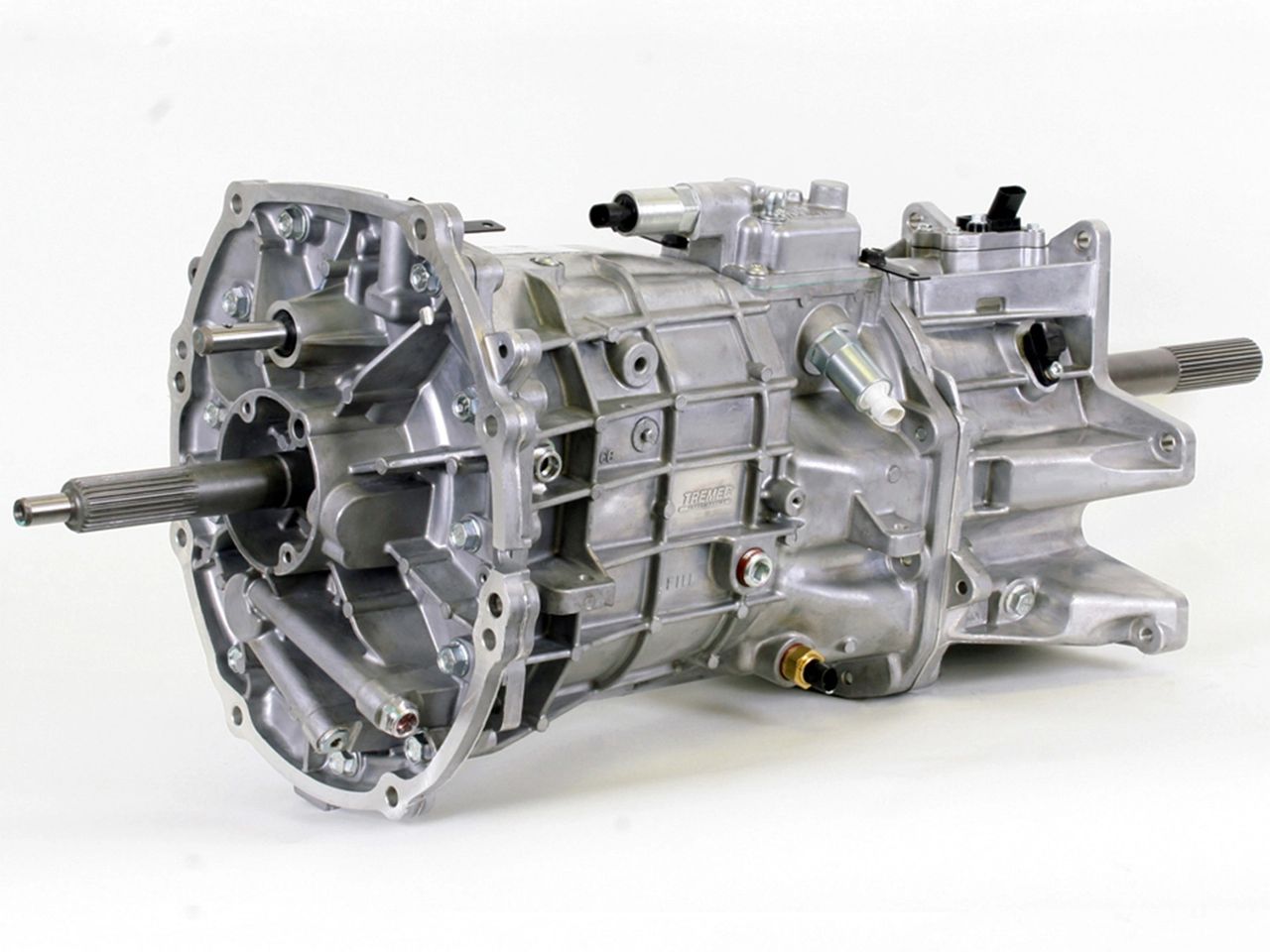
    “What you might not know is that after the movie, awareness for Camaro… jumped 97 percent.”Ed Peper, Chevrolet

    Notes on common misconceptions

    A stock LS3 engine powers the StingRay Concept.  Note the "Hybrid" labeling on the manifold covers. The StingRay Concept is NOT a hybrid vehicle.). (Image courtesy of the National Corvette Museum.)
    A stock LS3 engine powers the StingRay Concept. Note the “Hybrid” labeling on the manifold covers. The StingRay Concept is NOT a hybrid vehicle.). (Image courtesy of the National Corvette Museum.)

    Early coverage of the 2009 Stingray Concept created a couple of “sticky” myths that still float around forums and social posts today—mainly that the car wore a carbon-fiber body and that it was a true hybrid. Both ideas are understandable if you look at the context of the time, but neither description accurately reflects what the show car actually was.

    The carbon-fiber claim is a perfect example of how show-week shorthand turns into permanent “fact.” In 2009, carbon fiber was the buzzword for performance credibility, and the Stingray Concept’s surfaces—tight shutlines, sharp edges, dramatic vents—looked like the kind of thing you expect to be carbon. But later, better-sourced recollections and retrospectives clarified that the built display car was fiberglass, constructed over a C6-based structure, aligning it far more with traditional GM show-car practice than an exotic, carbon-skinned prototype.

    The hybrid misconception has a similar origin, and it’s even easier to see how it happened. GM’s official messaging and the magazine-cover language at the time leaned hard into future-facing themes: efficiency, smarter aerodynamics, advanced materials, next-gen powertrain thinking—basically an umbrella of “what’s coming next.” So when the word “Hybrid” appeared in prominent places, many readers naturally interpreted it as a literal description of the drivetrain. In reality, that label was more of a conceptual headline—a grab-bag of efficiency and technology ideas—rather than confirmation that the Stingray show car itself carried a full hybrid system.

    The clean way to frame it for readers is this: the 2009 Stingray Concept was a forward-looking design and technology statement, not a running proof-of-concept hybrid Corvette. The confusion isn’t surprising, but the distinction matters—because it changes how we understand the car’s purpose. It wasn’t built to demonstrate a finished propulsion breakthrough; it was built to signal direction, shape expectations, and stir the conversation about what a future Corvette could be.

    Why the 2009 Stingray Concept Still Matters

    The 2009 Corvette StingRay Concept Car on display at GM's Heritage Center in Sterling Heights, Michigan. (Image courtesdy of GM Media LLC.)
    The 2009 Corvette StingRay Concept Car on display at GM’s Heritage Center in Sterling Heights, Michigan. (Image courtesdy of GM Media LLC.)

    The 2009 Stingray Concept matters because it arrived at a moment when Corvette’s future felt uncertain. The global financial crisis had shaken the auto industry to its core. GM had entered bankruptcy. Programs were under review. In that climate, the Stingray wasn’t just another show car—it was a signal. Corvette was not retreating. It was recalibrating.

    Stylistically, the concept previewed a harder, more angular design language that would echo into the C7 generation. The sharp character lines, split-window-inspired rear glass, dramatic fender vents, and aggressive lighting signatures all pointed toward a Corvette that was evolving beyond the softer curves of the C6. Even if the production C7 Corvette Stingray didn’t mirror the concept panel-for-panel, the philosophical shift was clear: more technical. More assertive. More globally competitive.

    It also reframed how Chevrolet could talk about performance. The Stingray Concept folded efficiency, materials strategy, and advanced propulsion thinking into the Corvette narrative without diluting its identity. That balancing act—performance with responsibility—would become a defining theme of the next decade, culminating in technologies like cylinder deactivation, lightweight architecture strategies, and ultimately electrified Corvette variants.

    Most importantly, the Stingray Concept reminded enthusiasts of something fundamental: Corvette has always used show cars to test the emotional waters. From Motorama-era experiments to Bill Mitchell’s dream cars, GM has historically telegraphed intention through design studies. The 2009 Stingray fits squarely within that lineage. It wasn’t a production blueprint. It was a directional statement.

    And direction matters.

    Today, with the mid-engine C8 Corvette Stingray firmly established and electrification entering the Corvette conversation in very real ways, the 2009 Stingray Concept reads less like fantasy and more like a transitional artifact—a design and messaging bridge between eras. It captured a company in recovery, a brand redefining its trajectory, and a nameplate preparing to take its boldest step yet.

    The 2009 Corvette Stingray Concept was a bold reimagining of America’s sports car, blending unmistakable heritage with forward-looking design. Inspired by the iconic 1963 Sting Ray yet sharpened for a new era, it reignited excitement around Corvette’s future. More than a showpiece, it signaled that innovation and legacy would continue to define the brand’s evolution.

  • 2020 CORVETTE STINGRAY OVERVIEW

    2020 CORVETTE STINGRAY OVERVIEW

    On July 18, 2019, beneath the soaring arches of a World War II–era blimp hangar in Tustin, California, Chevrolet finally pulled the covers off a car that had existed for decades as rumor, prototype, and dream. The eighth-generation Corvette, designated C8, emerged into the spotlight as the first production mid-engine Corvette in history. It was a seismic moment — one that simultaneously honored Zora Arkus-Duntov’s long-held vision and rewrote the DNA of America’s sports car.

    For 66 years, Corvette had adhered to the same basic design formula: front-engine, rear-drive, small-block V-8. It was a recipe perfected over generations, honed on racetracks, refined in wind tunnels, and cherished on highways. But as Chief Engineer Tadge Juechter admitted bluntly, the C7 had taken that configuration as far as physics would allow. “We had taken (the) front-engine Corvette as far as it could go. The next level of performance demanded something new.” That something new was bold, risky, and unprecedented: a complete re-imagining of America’s favorite sports car.

    The 2020 Mid-Engine Corvette is revealed in Tustin, California on July 18, 2019.
    The 2020 Mid-Engine Corvette is revealed in Tustin, California on July 18, 2019.

    The timing of its arrival was almost surreal. What should have been a moment of unbroken triumph collided with real-world crises. A strike by the United Auto Workers in late 2019 delayed the start of production. Then, just as Bowling Green Assembly finally began building the C8 in February 2020, the COVID-19 pandemic shut down the world. Orders piled up. Dealers were overwhelmed. Buyers who had placed sizable deposits could only watch and wait.

    And yet, even as chaos swirled around it, the C8 Stingray emerged not only as a new Corvette, but as a declaration that Chevrolet could build a true supercar — and sell it for under $60,000.

    The Mid-Engine Dream Fulfilled

    The CERV I (left), the CERV II (right), and the CERV III were all early efforts by Corvette's engineers to create a mid-engine platform.  Zora Arkus-Duntov directly oversaw the creation of the CERV I & II models, while the CERV III was develop long after his retirement. (Image courtesy of GM Media LLC.)
    The CERV I (left), the CERV II (right), and the CERV III were all early efforts by Corvette’s engineers to create a mid-engine platform. Zora Arkus-Duntov directly oversaw the creation of the CERV I & II models, while the CERV III was develop long after his retirement. (Image courtesy of GM Media LLC.)

    To understand why the C8 mattered so deeply, one must trace Corvette history back through its most daring experiments. Zora Arkus-Duntov, the “Father of the Corvette,” had pushed for a mid-engine layout since the late 1950s. He believed it was the only way to keep Corvette competitive with Europe’s finest. Through the decades, GM teased enthusiasts with mid-engine prototypes: the CERV I in 1960, a rolling test bed for chassis concepts; the sleek CERV II in 1964, intended as a potential Le Mans contender; the radical XP-882 and XP-895 concepts of the early 1970s, which previewed layouts and body proportions that looked more Ferrari than Chevrolet. The 1977 Aerovette hinted at the exotic but never saw production. Even the CERV III of the late 1980s, with its twin-turbo V-8 and all-wheel drive, reminded fans of what could be — and what never would.

    But cost, tradition, and market positioning always intervened. Corvette was America’s attainable sports car, and Chevrolet wasn’t willing to gamble it on exotic architecture. Not until the limits of the front-engine layout were finally undeniable. The seventh-generation Corvette, the C7, had delivered staggering performance, but Juechter and his team knew they were boxed in. To move forward, the mid-engine leap could no longer be avoided.

    The Tustin Reveal

    Corvette owners, clubs, and organizations alike converged on the spacious hangar in Tustin, California, for the reveal of the 2020 Mid-Engine Corvette.
    Corvette owners, clubs, and organizations alike converged on the spacious hangar in Tustin, California, for the reveal of the 2020 Mid-Engine Corvette.

    The reveal itself was as theatrical as the car. A cavernous hangar, dramatic lighting, and a crowd of journalists and enthusiasts set the stage for what GM President Mark Reuss described as nothing less than Corvette’s rebirth. When the car rolled onto the stage, the audience gasped. Shorter hood, cockpit pushed dramatically forward, muscular haunches over massive rear tires — it was instantly clear this was no mere evolution.

    Chevrolet executives were quick to frame the shift. “Corvette has always represented the pinnacle of innovation and boundary-pushing at GM. The traditional front-engine vehicle reached its limits of performance, necessitating the new layout,” said Reuss. “In terms of comfort and fun, it still looks and feels like a Corvette, but drives better than any vehicle in Corvette history.”

    The most shocking moment of the night came at the end, when Chevrolet announced pricing. Base MSRP: $59,995. For a mid-engine car with performance figures that rivaled supercars ten times its price, the announcement sent shockwaves through the industry. While Porsche, Ferrari, and McLaren had long commanded six-figure sums for similar performance, Corvette once again held to its contract with enthusiasts: world-class performance at an attainable price.

    2020 CORVETTE Production Delays: Strikes, Shutdowns, and Restart

    Production of the 2020 C8 Mid-Engine Corvette halted in February 2020 as fear of the COVID pandemic spread like wildfire across the United States.  (Image courtesy of GM Media, LLC.)
    Production of the 2020 C8 Mid-Engine Corvette halted in February 2020 as fear of the COVID pandemic spread like wildfire across the United States. (Image courtesy of GM Media, LLC.)

    Even before the pandemic hit, the C8’s launch was complicated. A UAW strike in the fall of 2019 halted re-tooling of Bowling Green Assembly, delaying production until February 2020. Chevrolet marked the start of production with a tweet on February 3, accompanied by photos from the line. Buyers, some of whom had placed deposits the night of the reveal, finally had hope their cars were on the way.

    But barely a month later, COVID-19 forced General Motors to suspend operations. On March 18, 2020, the company announced that no more 2020 Corvette orders would be taken. Dealers were instructed to convert unbuilt orders into 2021 models. For a moment, it seemed the 2020 model year might become one of the shortest and rarest in Corvette history.

    By May, as case counts ebbed and the U.S. began reopening, Bowling Green cautiously restarted production. In August, the convertible variant entered assembly, proof that GM intended to honor its 2020 commitments. By September, reports surfaced of second shifts running deep into the night, with as many as 140 cars being built in a single day. In the end, 20,368 Corvettes were produced for 2020 — making it one of the rarest model years in modern Corvette history.

    A New Shape: Form Follows Function

    The C8’s styling was a revelation, but every angle was dictated by necessity. With the engine relocated behind the driver, the proportions shifted radically: a low hood, cabin thrust forward 16.5 inches, and wide rear quarters sculpted to manage airflow.

    Corvette Exterior Design Manager Kirk Bennion (Image courtesy of GM Media LLC.)
    Corvette Exterior Design Manager Kirk Bennion (Image courtesy of GM Media LLC.)

    Exterior Design Manager Kirk Bennion put it simply: “We worked very hard to incorporate low drag and manipulate downforce. Every line serves airflow, cooling, or stability.”

    The front end was defined by three large heat exchangers, channeling air to radiators and brakes. Massive side scoops funneled air to rear-mounted coolers. Underbody panels directed flow to generate stability, while the Z51 package added a rear spoiler capable of generating nearly 400 pounds of downforce.

    Despite the radical departure, Corvette DNA was preserved. Longtime design head Tom Peters described it best: “The new Corvette is the culmination of all that it has ever been, refined by all we’ve learned and imagined. Done correctly, something magic happens — it becomes timeless.”

    Distinctive cues marked the C8’s new era: low-profile LED headlights, hidden releases for doors and hatches, dual-element LED taillamps with animated turn signals, quad exhaust tips pushed to the outer edges, and a massive rear hatch that proudly displayed the LT2 engine through glass.

    Chevrolet offered 12 colors, including classics like Torch Red, Arctic White, and Black, alongside new hues like Rapid Blue, Zeus Bronze, and Accelerate Yellow. Torch Red proved dominant, accounting for a quarter of production, while Rapid Blue emerged as a fan favorite. Zeus Bronze, polarizing though it was, stood out as one of the rarest.

    Inside the Cockpit

    Interior of the 2020 Mid-Engine Corvette Stingray (Image courtesy of RK Motors)
    Interior of the 2020 Mid-Engine Corvette Stingray (Image courtesy of RK Motors)

    If the exterior was dramatic, the interior was revolutionary. Gone was the traditional American GT layout. In its place: a cockpit inspired by fighter jets. The steering wheel was squared off for improved sightlines, framing a 12-inch reconfigurable digital cluster. A narrow vertical strip of climate controls rose along the center console, recalling the switch stacks of aircraft cockpits.

    Materials were elevated throughout. Hand-stitched leather, aluminum and carbon-fiber trim, and stainless steel Bose speaker grilles replaced the plastics of previous generations. Buyers could choose from six interior themes — from Jet Black to Morello Red — and personalize further with six seatbelt colors and optional contrast stitching.

    Three seat options defined the experience. GT1 provided comfort for everyday use. GT2 blended long-distance touring support with racing cues, featuring carbon-fiber trim and dual-density foam. Competition Sport, the most aggressive, offered bolstering for track duty and materials inspired by racing harnesses and protective textiles.

    The overall effect was immersive. Drivers weren’t merely operating a machine; they were piloting it.

    The LT2: Jewel in the Center

    The Chevy LT2, a 6.2-liter small block V8 engine (Image courtesy of RK Motors)
    The Chevy LT2, a 6.2-liter small block V8 engine (Image courtesy of RK Motors)

    At the heart of the C8 was the LT2, a 6.2-liter small-block V-8 that represented both continuity and evolution. Rated at 490 horsepower and 465 lb-ft of torque in standard form — or 495 and 470 with the Z51 package — it was the most powerful base Corvette engine in history.

    For the first time, the base Corvette featured a dry-sump oiling system. Three scavenge pumps ensured lubrication even under sustained lateral loads beyond 1g, while also allowing the engine to be mounted lower in the chassis. The result: a reduced center of gravity and improved handling balance.

    Engineers treated the LT2 not just as a power plant but as a centerpiece. A 3.2-mm glass hatch displayed the engine, with details down to fasteners and heat shields designed for visual appeal. Jordan Lee, GM’s global chief engineer of small-block engines, summarized the philosophy: “Though now placed behind the driver, the LT2 gives the same visceral experience we all expect from Corvette.”

    The Dual-Clutch Transmission

    Tadge Juechter introduces the 2020 Corvette in Tustin, California.  (Image courtesy of GM Media LLC.)
    Tadge Juechter introduces the 2020 Corvette in Tustin, California. (Image courtesy of GM Media LLC.)

    For the first time in Corvette history, no manual was offered. Instead, Chevrolet partnered with Tremec to develop an eight-speed dual-clutch transmission. It was a controversial decision — Corvette had long been associated with manual shifting — but the reasoning was sound. The DCT delivered near-instant gear changes, maintained packaging efficiency, and provided both the convenience of an automatic and the engagement of paddle-shift control.

    Juechter explained: “The performance shift algorithms are so driver-focused, they can sense when you’re doing spirited driving — regardless of driving mode — and will hold lower gears longer for more throttle response.”

    Drivers also gained new tools. A double-paddle declutch feature allowed manual clutch disengagement. Drive modes expanded to include MyMode, which saved personalized settings, and Z Mode, named after Corvette’s storied performance packages, which provided instant access to aggressive configurations.

    Performance figures validated the choice: 0–60 mph in 2.8 seconds with Z51, quarter-mile runs in 11.2 seconds at 122 mph, and a top speed of 194 mph.

    The Chassis: Bedford Six and Beyond

    The 2020 Mid-Engine Corvette Stingray chassis assembly was aptly nicknamed the "Bedford Six"
    The 2020 Mid-Engine Corvette Stingray chassis assembly was aptly nicknamed the “Bedford Six”

    The C8’s chassis, designated Y2, was a clean-sheet design. At its core were six massive aluminum die-cast nodes, nicknamed the “Bedford Six” after the Indiana plant where they were produced. These structural elements tied the car together with remarkable rigidity, eliminating the need for a transverse leaf spring. In its place, Corvette engineers adopted coil-over suspension for greater flexibility and precision.

    Steering benefited from the forward-set cockpit, enabling a shorter, stiffer column and quicker ratio. The brake system adopted electronic eBoost assist, replacing vacuum with by-wire precision. Magnetic Ride Control, updated to version 4.0, became available for even faster damping response — adjusting every millisecond to road conditions.

    The result was a car that felt sharper, more responsive, and more stable than any Corvette before it.

    Practicality Intact

    2020 Corvette front-lift system
    2020 Corvette front-lift system

    Despite its exotic layout, the C8 remained faithful to Corvette’s promise of practicality. The coupe retained a removable targa roof. Luggage capacity, split between a front trunk and rear compartment, totaled 12.6 cubic feet — enough for two golf bags, a point Chevrolet proudly emphasized.

    The front-lift system, one of its most ingenious features, raised the nose 40 mm (1.6 inches) in less than three seconds and could memorize up to 1,000 GPS locations, automatically lifting at familiar obstacles like driveways or speed bumps. In Tour mode, ride comfort remained supple enough for cross-country travel. In every sense, this was still a Corvette you could live with daily.

    Convertible at the Kennedy Space Center

    2020 Corvette coupe (left), C8.R race car (middle) and the new 2020 C8 Convertible (right) on display at the Kennedy Space Center in Florida.
    2020 Corvette coupe (left), C8.R race car (middle) and the new 2020 C8 Convertible (right) on display at the Kennedy Space Center in Florida.

    Just months after the coupe’s reveal, Chevrolet unveiled the convertible version at NASA’s Kennedy Space Center, a nod to Corvette’s long association with astronauts. For the first time, Corvette offered a power-retractable hardtop. Folding in just 16 seconds at speeds up to 30 mph, it preserved both aerodynamics and visibility of the LT2 engine under glass.

    Reception and Demand

    The GT1, GT2 and Competition Sport Seats of the 2020 Corvette Stingray.
    The GT1, GT2 and Competition Sport Seats of the 2020 Corvette Stingray.

    Critical response was almost universally glowing. The C8 was praised for its performance, refinement, and value. It was named MotorTrend’s 2020 Car of the Year, with testers marveling at its stability and comfort at speed. Other outlets echoed the sentiment: the C8 wasn’t just a great Corvette — it was a world-class sports car.

    Owners embraced it with equal enthusiasm. Most opted for the Z51 Performance Package. The most popular configuration? A Torch Red coupe with Z51, GT2 seats, and the Performance Data Recorder. Nearly three-quarters of all 2020 Corvettes carried Z51, while more than half were ordered with front lift.

    Demand outstripped supply almost immediately. With production constrained by strikes and the pandemic, resale values skyrocketed, with many cars selling well over $100,000 on the secondary market.

    Legacy

    The 2020 Corvette Stingray was more than a generational change. It was a philosophical leap — one that fulfilled Zora Arkus-Duntov’s mid-engine dream, reset expectations of what Corvette could be, and established a foundation for future models like the Z06, E-Ray, and beyond.

    It launched into chaos, but it emerged triumphant. Against strikes, shutdowns, and global uncertainty, it proved that Corvette’s essence — value, ingenuity, and unrelenting performance — could survive even the most turbulent of times.

    Closing Thoughts

    The 2020 Mid-Engine Corvette Stingray (Image courtesy of RK Motors)
    The 2020 Mid-Engine Corvette Stingray (Image courtesy of RK Motors)

    To drive a 2020 Corvette today is to experience both engineering ambition and historical significance. It represents the end of one era and the beginning of another. Where earlier Corvettes proved America could build a sports car, the 2020 Corvette proved America could build a supercar — and sell it for the price of a loaded pickup.

    That is the enduring contract of the Corvette. Engine behind the driver, but heart still exactly where it belongs.

    The 2020 Corvette Stingray represented the most radical transformation (to date) in the model’s (then) 67-year history. With its long-anticipated mid-engine layout finally realized, Chevrolet didn’t merely reposition the engine—it redefined what a Corvette could be. The C8 blends supercar proportions, world-class performance, and everyday usability into a platform that shattered expectations and price barriers…

  • 2014 CORVETTE OVERVIEW

    2014 CORVETTE OVERVIEW

    If there’s a single model year that re-established just exactly what “Corvette” means, it’s the 2014 Corvette Stingray. The seventh-generation car didn’t just replace the C6; it rebooted America’s sports car around a new set of non-negotiables: an aluminum structure built in Bowling Green, a clean-sheet small block with direct injection and cylinder deactivation, driver-centric electronics that actually add to the experience, and a serious aero/cooling package that finally made every vent do real work. As General Motors VP of Global Design Ed Welburn framed it during the launch window, this car “needed to be a leaner, very fresh design that departed from some of the traditions… Is it at all controversial? Probably a bit. And that’s OK.” That willingness to break patterns—while staying unmistakably Corvette—became the guiding principle behind the C7’s design.

    Exterior: Form, Function, and the End of Fake Vents

    The Stingray’s hood extractor isn’t for show—it’s the pressure relief for a forward-tilted radiator, with canted vanes that pull hot air up and over the clamshell to cut front-axle lift. Finished in Carbon Flash, it’s a functional centerpiece that keeps temps in check and the nose planted when you’re really leaning on the car. (Image courtesy of RK Motors)
    The Stingray’s hood extractor isn’t for show—it’s the pressure relief for a forward-tilted radiator, with canted vanes that pull hot air up and over the clamshell to cut front-axle lift. Finished in Carbon Flash, it’s a functional centerpiece that keeps temps in check and the nose planted when you’re really leaning on the car. (Image courtesy of RK Motors)

    Spend a minute around the 2014 Corvette Stingray, and the intent is clear: this shape was drawn by what the car needs to do—cool, cut drag, and stay stable—then refined to resemble a Corvette. Every major surface was placed to manage local pressure zones and temperature, not just to “look fast.” The forward-angled radiator feeds a hood extractor whose vanes are deliberately canted to maximize and direct air flow as it exits over the clamshell while simultaneously reducing front-axle lift at speed. Engineers located the re-profiled side coves in a region of favorable airflow so they could vent wheel-well and under-hood pressure; the result is a measurable drag reduction—precisely the functional intent Bennion emphasized when he stated that these items “aren’t just aesthetic things that we bolt on.” The engineering brief was simple: converge the aero map and cooling map until they agree, then give the design team the surfacing to express it. GM’s aero lead, John Bednarchik, later described the goal as “make it look good and still function”—a system laid out around pressure, temperature, and flow continuity first, styling second.

    Those rear quarter inlets aren’t styling—on Z51-equipped C7s they feed ducting to the rear-mounted transmission and electronic limited-slip differential coolers, keeping temps in check during hard laps. Air is picked up from a high-pressure zone along the shoulder, pushed through the heat exchangers, and exhausted out the rear—sustaining performance and longevity. (On non-Z51 cars the openings are largely cosmetic.) (Image courtesy of RK Motors)
    Those rear quarter inlets aren’t styling—on Z51-equipped C7s they feed ducting to the rear-mounted transmission and electronic limited-slip differential coolers, keeping temps in check during hard laps. Air is picked up from a high-pressure zone along the shoulder, pushed through the heat exchangers, and exhausted out the rear—sustaining performance and longevity. (On non-Z51 cars the openings are largely cosmetic.) (Image courtesy of RK Motors)

    You see the system thinking even more clearly in Z51 form. The quarter-panel inlets are aligned with the external flow field, ducting air to rear auxiliary coolers—transmission on the driver’s side, differential on the passenger’s—and then out through rear-fascia exits. Those inlets, the specific Z51 under-tray and spoiler tuning, and the extractor’s vane geometry weren’t independent “add-ons”; they were iterated together (CFD, tunnel, and track) until the car could run a full session on a hot day without falling out of its thermal window. The result is why the C7’s aero reads as integrated hardware rather than applique: the ducts, outlets, and surface cambers are sized for the heat rejection the car actually generates.

    The C7’s faceted taillamps mark a clean break from Corvette’s round-lens tradition—dual LED elements with crisp light pipes framed in a deep, black-chrome bezel. Outboard, the functional aero extractor relieves pressure from the rear fascia, a reminder that every crease earned its place. Above it all, the spoiler packages a slim LED CHMSL, keeping the “third brake light” high and clean in the airstream. Sharp, technical, and purposeful—this is the Stingray’s new rear signature. (Image courtesy of RK Motors)
    The C7’s faceted taillamps mark a clean break from Corvette’s round-lens tradition—dual LED elements with crisp light pipes framed in a deep, black-chrome bezel. Outboard, the functional aero extractor relieves pressure from the rear fascia, a reminder that every crease earned its place. Above it all, the spoiler packages a slim LED CHMSL, keeping the “third brake light” high and clean in the airstream. Sharp, technical, and purposeful—this is the Stingray’s new rear signature. (Image courtesy of RK Motors)

    The rear design aesthetic—especially the lamps—carries that same functional spine, even as they became the most controversial visual change of the seventh-generation model. Moving away from the Corvette’s traditional twin round elements to a more three-dimensional, sculpted, trapezoidal lamp wasn’t a styling dare so much as a packaging and airflow decision: the spoiler/CHMSL (Center High-Mounted Stop Lamp) packaging and cooler-exit management set hard constraints for volume and wake control, and the team wanted a light signature that read “new Stingray” at a glance. Bennion’s line was that it had to “say Corvette, but say new Corvette,” and it had to live in the broader Chevrolet family without being a clone. Tom Peters has been frank about the process: they tried round lamps on the C7 and rejected them because they “made the car look old.” The final form pushed depth, lens sculpture, and LED emphasis to modernize the signature while leaving room for the aero and cooling paths to do their job.

    The 2009 Stingray Concept previewed the C7’s attitude: sharp creases over big rear haunches, a strong center spine, and a fastback canopy that pinched into a tapered tail. Its faceted surfacing and “boomerang” lamp graphics nudged Corvette away from round themes, paving the way for the C7’s angular, dual-element taillamps. You can also see the concept’s aero-minded cutlines and extractor motifs echoed in the C7’s functional hood and quarter vents. Even the centered quad-exhaust emphasis reads as an evolution of the concept’s tightly grouped rear treatment—more production-real, but the same modern, technical vibe. (Image courtesy of GM Media LLC)
    The 2009 Stingray Concept previewed the C7’s attitude: sharp creases over big rear haunches, a strong center spine, and a fastback canopy that pinched into a tapered tail. Its faceted surfacing and “boomerang” lamp graphics nudged Corvette away from round themes, paving the way for the C7’s angular, dual-element taillamps. You can also see the concept’s aero-minded cutlines and extractor motifs echoed in the C7’s functional hood and quarter vents. Even the centered quad-exhaust emphasis reads as an evolution of the concept’s tightly grouped rear treatment—more production-real, but the same modern, technical vibe. (Image courtesy of GM Media LLC)

    As for where that rear graphic vocabulary came from, there’s a clear design kinship with the 2009 Stingray Concept—a Tom Peters show car that previewed sharper creases, more faceted lamp volumes, and a stronger plan-view stance. GM never said “we lifted the lamps directly,” but Peters has acknowledged that the concept established a modern, crisper Corvette language the C7 could draw on. In other words, the production taillamps reflect less a one-to-one transplant and more the concept’s directional push toward faceted, dimensional housings integrated into an aerodynamically active rear end.

    Structure & Manufacturing: Aluminum, At Last—For Everyone

    The C7’s all-aluminum backbone—built in-house at Bowling Green—was the game-changer. Cast nodes, tailored extrusions, stampings, and a beefy center tunnel created clean load paths, making the structure about 100 lb lighter and over 50% stiffer than the old steel frame. That headroom let the suspension, NVH tuning, and even the convertible top behave like premium hardware rather than compromises. (Image courtesy of GM Media LLC)
    The C7’s all-aluminum backbone—built in-house at Bowling Green—was the game-changer. Cast nodes, tailored extrusions, stampings, and a beefy center tunnel created clean load paths, making the structure about 100 lb lighter and over 50% stiffer than the old steel frame. That headroom let the suspension, NVH tuning, and even the convertible top behave like premium hardware rather than compromises. (Image courtesy of GM Media LLC)

    The single biggest change under the skin was structural. For the first time in Corvette history, every standard model—base coupes and convertibles, and those fitted with the Z51 option—rode on an aluminum frame manufactured in-house at the Bowling Green Assembly Plant. The move wasn’t about bragging rights; it was about creating cleaner stiffness paths and a smarter mass distribution that let the interior, suspension, and even the convertible top operate in a different league.

    Ed Moss, then the engineering group manager for structure, explained that the team built the frame around five major aluminum parts per side, each optimized for its job. Material gauges varied from roughly 2 to 11 mm, a dramatic change from the one-thickness, one-piece hydroformed steel rails Corvette had used before. By tailoring thickness and section where the loads actually traveled, they pulled mass out of the quiet zones and put metal only where the car needed it.

    Says Moss, “For the C7, we decided to go with aluminum rather than steel since aluminum can provide significant weight advantages. Our job was to choose the right material and part-production process for each function. In this case, we came up with a structure that includes 10 castings, 38 extrusions, 76 stampings, and three hydroformed parts.”

    The 2014 Corvette Stingray was the reboot moment—new LT1 small-block, an aluminum backbone that was lighter yet over 50% stiffer, real aero with working heat extractors and brake-cooling side inlets, and a cockpit that finally matched the performance. As chief engineer, Tadge Juechter set the brief and drove the details: build a Corvette that was faster, smarter, and more livable without losing the raw feel. His team’s clean-sheet chassis, driver-mode electronics, 7-speed with active rev-match, and world-class interior moved America’s sports car into a new era. The result wasn’t just a new generation—it was a new standard. (Image courtesy of GM Media LLC)
    The 2014 Corvette Stingray was the reboot moment—new LT1 small-block, an aluminum backbone that was lighter yet over 50% stiffer, real aero with working heat extractors and brake-cooling side inlets, and a cockpit that finally matched the performance. As chief engineer, Tadge Juechter set the brief and drove the details: build a Corvette that was faster, smarter, and more livable without losing the raw feel. His team’s clean-sheet chassis, driver-mode electronics, 7-speed with active rev-match, and world-class interior moved America’s sports car into a new era. The result wasn’t just a new generation—it was a new standard. (Image courtesy of GM Media LLC)

    The metrics backed up the philosophy. The new frame came in about 99 pounds lighter and more than 50 percent stiffer than the outgoing steel setup—and that comparison held even when you put an open-roof C7 against a fixed-roof C6 Z06. As Corvette Chief Engineer Tadge Juechter stated in an exclusive interview with Car and Driver magazine, “We thought we could take today’s aluminum frame and tweak it. It turns out we had to scrap the whole thing and start over.” This proved to be a great strategy as starting over unlocked both a reduction in structural weight and an increase in structural rigidity simultaneously.

    That structural headroom paid off everywhere. The center tunnel was made beefier because it carried more of the torsional load in open-roof duty, which in turn let the suspension bushings be tuned for both precision and isolation without chasing squeaks or cowl shake. A mixed architecture—cast nodes where the cradles are mounted, straight extrusions where crash energy needed to be absorbed, and lightweight tubes where mass had to be kept out—let the team dial in local stiffness without adding pounds where they didn’t help. Tighter in-house manufacturing also improved tolerances, which reduced NVH and helped the convertible top package lower and seal better.

    This top-down view of the 2014 Corvette Stingray reveals its front-engine, rear-transaxle layout tied together by a rigid torque tube—key to near 50/50 weight distribution. An all-aluminum structure with hydroformed rails and cast nodes slashed mass while delivering a huge jump in torsional stiffness. With the LT1 up front, the 7-speed (or auto) at the rear, and short/long-arm suspension at each corner, the C7’s hardware was engineered for crisp turn-in, traction, and high-speed stability. (Image courtesy of GM Media)
    This top-down view of the 2014 Corvette Stingray reveals its front-engine, rear-transaxle layout tied together by a rigid torque tube—key to near 50/50 weight distribution. An all-aluminum structure with hydroformed rails and cast nodes slashed mass while delivering a huge jump in torsional stiffness. With the LT1 up front, the 7-speed (or auto) at the rear, and short/long-arm suspension at each corner, the C7’s hardware was engineered for crisp turn-in, traction, and high-speed stability. (Image courtesy of GM Media)

    The net effect was felt from the driver’s seat. Because the load paths were cleaner and the structure no longer relied on the roof panel for basic rigidity, the C7 coupe and convertible behaved like the same, unified car—not a coupe with the roof lopped off and extra shake added.

    Powertrain: LT1 (Gen V Small Block) and the Return of the Broad Torque Curve

    Heartbeat of the Stingray: the 6.2-liter LT1 V8—Gen-V small-block with direct injection, VVT, and AFM—rated at 455 hp (460 with the dual-mode NPP exhaust). (Image courtesy of RK Motors)
    Heartbeat of the Stingray: the 6.2-liter LT1 V8—Gen-V small-block with direct injection, VVT, and AFM—rated at 455 hp (460 with the dual-mode NPP exhaust). (Image courtesy of RK Motors)

    The 6.2-liter LT1 was the heartbeat of the 2014 Corvette Stingray, a Gen-V small-block that retained the compact pushrod layout but modernized everything that mattered inside the chambers. Direct injection fired a precisely metered spray into a sculpted piston bowl, which allowed Chevy to run high compression and aggressive spark without detonation; continuously variable valve timing on the single cam broadened the effective timing window across the rev range; and Active Fuel Management seamlessly dropped to four cylinders at light load to cut pumping losses. The supporting hardware was equally purposeful: high-tumble intake ports, oil-spray piston cooling, an aluminum block and heads, a composite intake tuned for midrange torque, and a cam-driven high-pressure fuel pump that gave the injectors the headroom they needed at high load. Tie it together, and you had SAE-certified output of 455 hp / 460 lb-ft with the standard exhaust—or 460 hp / 465 lb-ft with the vacuum-actuated dual-mode NPP system, which trimmed backpressure under demand while avoiding drone at cruise. As small-block chief Jordan Lee put it at the time, the LT1 was “a triumph of advanced technology,” delivering the most power and torque to date for a standard Corvette while topping the previous car’s highway efficiency.

    Small-Block Chief Engineer Jordan Lee, shown holding an LT1 piston, was the architect of the Gen-V small-block that powered the 2014 Stingray. He led the move to direct injection, continuously variable valve timing, and AFM—with a sculpted piston bowl and 11.5:1 compression—to deliver broader torque, higher efficiency, and SAE ratings up to 460 hp/465 lb-ft with NPP. Lee’s program set the baseline that made the C7 quicker and thriftier than the C6 while establishing the blueprint for today’s small-block family. (Image courtesy of AutoWeek)
    Small-Block Chief Engineer Jordan Lee, shown holding an LT1 piston, was the architect of the Gen-V small-block that powered the 2014 Stingray. He led the move to direct injection, continuously variable valve timing, and AFM—with a sculpted piston bowl and 11.5:1 compression—to deliver broader torque, higher efficiency, and SAE ratings up to 460 hp/465 lb-ft with NPP. Lee’s program set the baseline that made the C7 quicker and thriftier than the C6 while establishing the blueprint for today’s small-block family. (Image courtesy of AutoWeek)

    There was more under the skin than the headline features suggested. The LT1 kept the familiar 376-cu-in dimensions (4.06-in bore, 3.62-in stroke) but paired them with an 11.5:1 compression ratio and a spray-guided DI system running at over 2,000 psi, which improved charge cooling and combustion stability. A variable-displacement oil pump, low-friction internal components, and targeted oil-jet piston cooling reduced parasitic losses and helped thermal management. Corvette packaged the engine with two distinct oiling strategies: a conventional wet-sump for base cars and a track-ready dry-sump with a remote reservoir on Z51 models, which improved oil control during sustained lateral loads and added capacity for repeated hot laps. Exhaust flow benefitted from efficient manifolds and—on cars optioned with NPP—valves that opened under load for freer breathing and a harder-edged note.

    The bigger story wasn’t just the peak number; it was how the LT1 made its power. With 90 percent of peak torque available from 3,000–5,500 rpm, the engine felt preloaded everywhere—tip-in was crisp, midrange thrust was immediate, and real horsepower built barely off idle. That was the DI/VVT/AFM trio doing exactly what it was designed to do: DI’s cooler, denser in-cylinder charge fattened pressure early in the stroke, VVT kept airflow optimized as piston speeds climbed, and AFM trimmed pumping and friction losses when you were simply cruising. Contemporary instrumented tests captured what drivers felt from the seat: compared with the outgoing LS3, the LT1 didn’t just post bigger peaks; it filled in the curve between them, turning ordinary corner exits into slingshots—while NPP-equipped cars added a raucous bark the moment the valves swung open under load.

    Gen-V LT1 on display: an all-aluminum, deep-skirt block with cross-bolted mains (4.06-in bore/3.62-in stroke, 11.5:1 compression) and coil-near-plug ignition under composite covers for low mass and quiet. Thin-wall stainless exhaust manifolds feed close-coupled catalysts for rapid light-off, while the accessory drive and front cover packaging keep the engine compact in the bay. Base cars used a wet-sump, but Z51 models added a track-ready dry-sump with a remote reservoir to maintain oil pressure under sustained lateral loads.
    Gen-V LT1 on display: an all-aluminum, deep-skirt block with cross-bolted mains (4.06-in bore/3.62-in stroke, 11.5:1 compression) and coil-near-plug ignition under composite covers for low mass and quiet. Thin-wall stainless exhaust manifolds feed close-coupled catalysts for rapid light-off, while the accessory drive and front cover packaging keep the engine compact in the bay. Base cars used a wet-sump, but Z51 models added a track-ready dry-sump with a remote reservoir to maintain oil pressure under sustained lateral loads.

    The payoffs showed up at the pump, too. Despite the stronger output, LT1-equipped Stingrays posted better highway economy than the C6 they replaced—evidence that the combustion-system rethink wasn’t marketing fluff but real efficiency baked into the architecture. And while the LT1’s core recipe still underpins today’s small-block family, its first act in 2014 set the tone: modern combustion science wrapped in classic small-block packaging, delivering the broad, effortless torque band that makes a Corvette feel quick everywhere.

    Transmissions: 7 Speeds, Real Rev-Match, and a Better Auto (Later)

    Tremec TR-6070: the C7 Stingray’s seven-speed manual, essentially an evolved TR-6060 with an extra overdrive to stretch the ratio spread. It paired a twin-disc clutch with short throws and integrated Active Rev Matching, stacking 1–4 for performance and using 5–7 as progressively deeper cruise gears. In Z51 trim it worked with the electronic limited-slip to keep the LT1 on boil at corner exit while dropping revs on the highway. (Image courtesy of GM Media LLC)
    Tremec TR-6070: the C7 Stingray’s seven-speed manual, essentially an evolved TR-6060 with an extra overdrive to stretch the ratio spread. It paired a twin-disc clutch with short throws and integrated Active Rev Matching, stacking 1–4 for performance and using 5–7 as progressively deeper cruise gears. In Z51 trim it worked with the electronic limited-slip to keep the LT1 on boil at corner exit while dropping revs on the highway. (Image courtesy of GM Media LLC)

    When it came to transmission selection, there were two choices in 2014: the Tremec TR-6070 seven-speed manual with Active Rev Matching, or a Hydra-Matic 6L80 six-speed automatic with paddles. The 8-speed auto didn’t arrive until 2015, so shoppers of ’14s were picking between the most tech-forward manual Corvette had offered to that point and a proven torque-converter automatic calibrated to play nicely with AFM and the LT1’s broad torque curve.

    Why seven speeds? As Tadge Juechter’s team explained at launch, the point was to widen the usable spread without turning the car into an “overdrive experiment.” First through fourth were closely stacked for back-road and track work, with three overdrives (5th–7th) to pull highway revs down; 7th was intentionally a deep cruise gear. The TR-6070 used a twin-disc clutch and short throws, and its gear-state indicator was duplicated in both the cluster and the HUD. Active Rev Matching—toggled by the steering-wheel paddles—blipped the throttle on downshifts and trimmed torque on upshifts, making heel-and-toe optional without making it irrelevant. Launch control and Performance Traction Management were available, and Z51 cars paired the manual with an electronically controlled limited-slip differential that actively varied lock for corner entry and exit stability. (Yes, CAGS skip-shift was still present under light load, just as before.)

    Hydra-Matic 6L80: the six-speed automatic offered in the 2014 Stingray before the 8-speed arrived. A clutch-to-clutch unit with a lockup converter and TAPShift paddles, it was calibrated to play nicely with AFM and the LT1’s fat midrange—holding gears in Sport/Track, rev-matching on downshifts, and settling into low-rpm cruise on the highway. Proven, durable, and smarter than past Corvette autos. (Image courtesy of GM Authority)
    Hydra-Matic 6L80: the six-speed automatic offered in the 2014 Stingray before the 8-speed arrived. A clutch-to-clutch unit with a lockup converter and TAPShift paddles, it was calibrated to play nicely with AFM and the LT1’s fat midrange—holding gears in Sport/Track, rev-matching on downshifts, and settling into low-rpm cruise on the highway. Proven, durable, and smarter than past Corvette autos. (Image courtesy of GM Authority)

    The 6L80 automatic brought its own strengths. It was a clutch-to-clutch unit with a lockup converter, adaptive shift logic, manual TAPShift control via paddles, and calibrations that held gears longer in Sport/Track modes while cooperating with AFM during steady cruise. Downshifts were rev-matched and the mapping took advantage of the LT1’s midrange—more eager than past Corvette autos yet refined at part throttle. The result was an automatic that played well on a daily commute and didn’t embarrass itself on a back road.

    And despite internet lore, the manual wasn’t as rare in ’14 as many assumed—GM/NCM production tallies show 13,210 manuals versus 24,078 automatics (roughly 35% to 65%). In short: 2014 gave you a choice between a new-school, seven-ratio stick that rewarded engagement and a well-sorted six-speed automatic that maximized the LT1’s flexibility and the car’s efficiency.

    Exhaust: The NPP Option That Changed the Street Soundtrack

    The C7’s Mode Select knob puts the car’s personality at your fingertips—spin from Tour to Sport to Track (plus Eco/Weather) and it retunes throttle, steering, stability control, and—when equipped—Magnetic Ride and the NPP exhaust in one click. The knurled rotary and stitched-leather surround feel properly mechanical, while the electronic parking brake cleans up the console and saves weight. It’s everyday civility and pit-lane focus living side-by-side. (Image courtesy of RK Motors)
    The C7’s Mode Select knob puts the car’s personality at your fingertips—spin from Tour to Sport to Track (plus Eco/Weather) and it retunes throttle, steering, stability control, and—when equipped—Magnetic Ride and the NPP exhaust in one click. The knurled rotary and stitched-leather surround feel properly mechanical, while the electronic parking brake cleans up the console and saves weight. It’s everyday civility, and pit-lane focus living side-by-side. (Image courtesy of RK Motors)

    The regular production option NPP dual-mode system didn’t just make noise; it managed flow. Each rear canister housed two distinct paths: a longer, baffled route for attenuation and a short, straight-through route gated by a butterfly valve. A vacuum actuator—commanded by the engine controller through mode, load, and rpm—swung those valves, so the car could tiptoe on neighborhood streets and then uncork the LT1’s full “voice” the instant you rolled into the throttle. Calibration tied valve strategy to the Drive Mode Selector: Tour/Eco kept the quiet path dominant to complement AFM four-cylinder operation (minimizing the telltale low-frequency “beat”), while Sport/Track opened the bypass sooner and held it longer, sharpening pulses and reducing back pressure during extended pulls.

    Cold starts told their own story. The system favored a quicker light-off of the close-coupled catalysts, so even the quiet path had a purposeful bark for a few seconds before the idle settled and the valves reverted to their mapped state. Out on the highway, AFM (Active Fuel Management) and NPP worked together—valves biased closed to avoid boom, then snapped open with a decisive change in timbre the moment the LT1 saw real load. Around town, part-throttle transitions felt cleaner because the short path reduced pumping losses right where the engine’s broad torque curve wanted to breathe.

    Quad center exits aren’t just theater on the C7—they’re the punctuation mark for the available NPP dual-mode exhaust. Vacuum-actuated valves open under load and in Sport/Track, giving you a deeper, harder-edged bark and a verified bump of about +5 hp/+5 lb-ft; ease back to Tour and it hushes for neighborhood duty. It’s the rare factory system that looks the part and absolutely sounds it. (Image courtesy of RK Motors)
    Quad center exits aren’t just theater on the C7—they’re the punctuation mark for the available NPP dual-mode exhaust. Vacuum-actuated valves open under load and in Sport/Track, giving you a deeper, harder-edged bark and a verified bump of about +5 hp/+5 lb-ft; ease back to Tour and it hushes for neighborhood duty. It’s the rare factory system that looks the part and absolutely sounds it. (Image courtesy of RK Motors)

    Hardware details mattered. The entire assembly used corrosion-resistant stainless steel, from the 2.75-inch pipes to the perforated cores, with mass kept in check so you didn’t pay a weight penalty for theater. The center-exit quad tips weren’t just a signature; packaging them tight under the fascia shortened the final runs and preserved diffuser airflow—small gains in heat management and aero cleanliness that added up over a long session. Track noise compliance was part of the brief, too: the quiet path and the closed-valve map gave you a way to meet stricter sound caps on certain days without swapping parts.

    And yes, the gains were real, not brochure fiction. Chevrolet certified the dual-mode setup at +5 hp and +5 lb-ft of torque versus the standard system because the open bypass cut restriction in the power band you actually used. That’s why owners noticed more than volume: throttle response felt a half-step quicker, midrange pull came on with less “push,” and the soundtrack picked up the crackle and rip you expect from a high-compression, direct-injected small-block. Enthusiasts even discovered that pulling the exhaust-valve fuse would lock the system in its rowdiest personality—a testament to how central those valves were to the C7’s character. In 2014, the NPP option effectively built the most popular aftermarket mod into the car, then integrated it with the Stingray’s driving modes so the soundtrack matched the mission, minute by minute.

    Suspension & Steering: Composite “Leafs,” Mag Ride, and Stiff Where It Counts

    Up front, the C7’s aluminum cradle carries forged control arms, the solid-mounted electric steering rack, and the transverse composite spring—light, low, and a contributor to roll control. The yellow arrow points to the front shear panel/cross-brace tying the cradle side rails together to keep the pickup points locked in under cornering loads. Those long white diagonals are tension braces that route load into the body, while the dampers (35-mm Bilsteins standard, 45-mm with Z51, Mag Ride optional on Z51) do the fine work. Net effect: a stiff, lightweight front end that bites immediately and stays precise when you lean on it. (Image courtesy of Edmunds.com)
    Up front, the C7’s aluminum cradle carries forged control arms, the solid-mounted electric steering rack, and the transverse composite spring—light, low, and a contributor to roll control. The yellow arrow points to the front shear panel/cross-brace tying the cradle side rails together to keep the pickup points locked in under cornering loads. Those long white diagonals are tension braces that route load into the body, while the dampers (35-mm Bilsteins standard, 45-mm with Z51, Mag Ride optional on Z51) do the fine work. Net effect: a stiff, lightweight front end that bites immediately and stays precise when you lean on it. (Image courtesy of Edmunds.com)

    If you’ve ever heard “leaf springs” used as a knock against Corvettes, 2014 is the year that ends the argument. The transverse pieces are engineered composite springs—not truck leaves—and they delivered a bundle of advantages: low mounting, inherent anti-roll contribution, reduced unsprung mass, and packaging that supported a lower hoodline. Mike Bailey, vehicle systems engineer for chassis, put it bluntly: “We try not to say leaf… it’s an engineered composite spring.” The damper ladder was straightforward: 35-mm Bilstein monotubes standard, 45-mm Bilsteins with Z51, and Magnetic Ride Control (FE4) optional on Z51. The result was a car that rode better than it had any right to, yet still answered inputs with real authority.

    Steering was reworked from the ground up. Juechter’s team adopted electric assist and re-engineered everything from the wheel and tilt mechanism to the solid-mounted rack. Measured as a system, it was “five times stiffer than today’s,” he said at launch—and you feel that in the crisp initial bite and linear build. Moving to a 360-mm wheel—a genuinely race-adjacent diameter—tightened the driver interface, and achieving clear cluster/HUD visibility at that size required some clever packaging gymnastics.

    Brakes & Tires: Bigger Swept Area, Dual-Cast Rotors, Real Endurance

    Polished split-spoke wheels framed the C7’s Brembo hardware nicely—behind them you can see the slotted rotors and fixed four-piston calipers that delivered the car’s confident, repeatable stops. Many Z51 cars were fitted with black calipers, but color alone didn’t prove the package; the telltales were the larger, two-piece rotors and Z51-specific brake sizing. Paired with Michelin Pilot Super Sport ZP rubber, the setup looked premium and braked like it meant it. (Image courtesy of RK Motors)
    Polished split-spoke wheels framed the C7’s Brembo hardware nicely—behind them, you can see the slotted rotors and fixed four-piston calipers that delivered the car’s confident, repeatable stops. Many Z51 cars were fitted with black calipers, but color alone didn’t prove the package; the telltales were the larger, two-piece rotors and Z51-specific brake sizing. Paired with Michelin Pilot Super Sport ZP rubber, the setup looked premium and braked like it meant it. (Image courtesy of RK Motors)

    The C7 team was explicit: they engineered two distinct Brembo brake packages for two distinct missions. Every Stingray got fixed aluminum four-piston calipers and a big jump in swept area versus a base C6, while Z51 went further with larger rotors, more pad volume, and two-piece (dual-cast) rotors—aluminum hat with a cast-iron ring—to control weight and thermal growth. Corvette also moved from cross-drilled to slotted faces on performance trims to reduce crack propagation and improve gas/dust evacuation under repeated high-energy stops. With added cooling paths and track-biased ABS/PCM calibration, the result was repeatable stops and sprint-to-sprint consistency. Independent instrumented tests routinely measured 70–0 mph in the high-130-ft range for Z51 cars, and owners quickly learned why Z51 + Mag Ride became the default “driver’s spec.”

    Michelin’s Pilot Super Sport ZP—the C7’s co-developed run-flat—paired Corvette-specific construction with a compound that held pace when the laps piled on. Staggered 18/19s on base cars and 19/20s on Z51 delivered quick steering, strong bite, and real heat tolerance you felt in consistent lap times. It looked the part on the factory wheels and, more importantly, gripped like it.
    Michelin’s Pilot Super Sport ZP—the C7’s co-developed run-flat—paired Corvette-specific construction with a compound that held pace when the laps piled on. Staggered 18/19s on base cars and 19/20s on Z51 delivered quick steering, strong bite, and real heat tolerance you felt in consistent lap times. It looked the part on the factory wheels and, more importantly, gripped like it.

    Tires finished the system. The Michelin Pilot Super Sport ZP run-flats were co-developed with GM for the C7’s loads and aero balance, with 18/19-inch fitment on base cars and 19/20-inch on Z51. Beyond headline grip, they showed real heat tolerance—the kind that let drivers run through an HPDE day without the pedal lengthening or lap times drifting because compounds or carcasses overheated. In short, the numbers looked great on paper, and they held up when you were going fast enough to need the coolers.

    Aero & Cooling: Everything Vents, Nothing Pretends

    This quarter-panel intake on the C7 wasn’t decoration—it fed real hardware. On Z51/track-cooling cars, it directed ram air to the rear heat exchangers for the differential (and the transmission on Z51), with the air exiting through the rear fascia to keep temps in check over long sessions. The louvers shaped the stream, screened debris, and helped manage pressure so the driveline stayed in its thermal window. (Image courtesy of RK Motors)
    This quarter-panel intake on the C7 wasn’t decoration—it fed real hardware. On Z51/track-cooling cars, it directed ram air to the rear heat exchangers for the differential (and the transmission on Z51), with the air exiting through the rear fascia to keep temps in check over long sessions. The louvers shaped the stream, screened debris, and helped manage pressure so the driveline stayed in its thermal window. (Image courtesy of RK Motors)

    We’d all seen “vents” on cars that didn’t feed anything. The 2014 Stingray put an end to the cosplay. The hood extractor bled high-pressure air from the radiator into a low-pressure zone over the hood, trimming front lift and letting the radiator work harder lap after lap. The fender outlets relieved wheel-well pressure and helped pull hot air out of the engine bay—less lift, a touch less drag, and more stable front grip when the speeds climbed.

    Z51 models went further with real heat management. They added dedicated ducting and heat exchangers for the transmission and electronic limited-slip differential; those rear quarter-panel inlets weren’t decoration, they fed air across the coolers and out through the rear fascia. The package also brought subtle aero and underbody tweaks—small changes in splitters/deflectors and a low profile rear spoiler—to keep the car in its thermal window across a full session instead of just the first flyer.

    Juechter’s team chased the quiet gains, too. They moved mass rearward—battery and coolers included—to nudge static balance slightly rear-biased, closer to the race car’s ~48/52 target. You felt it in the way the car settled on power: better traction off slow corners, calmer high-speed stability, and cooling that kept braking and driveline responses consistent until the checkered flag.

    Driver Interface & Interior: Finally, Seats Worth Defending

    The C7 cabin finally felt world-class. Chevy wrapped the interior—stitched leather, real metal, and optional carbon fiber replaced the old molded plastics—while the driver-canted console and grab-bar gave the cockpit a purposeful, twin-cockpit look. (Image courtesy of RK Motors)
    The C7 cabin finally felt world-class. Chevy wrapped the interior—stitched leather, real metal, and optional carbon fiber replaced the old molded plastics—while the driver-canted console and grab-bar gave the cockpit a purposeful, twin-cockpit look. (Image courtesy of RK Motors)

    No area saw a bigger—or more overdue—transformation than the cockpit. Interior design manager Ryan Vaughn’s brief was a “fully wrapped” cabin: even on the base car you didn’t see bare molded-color plastic—surfaces were hand-stitched or soft-trimmed, with real metal switchgear where your fingers lived and optional carbon-fiber or sueded-microfiber where your eyes landed. The asymmetric console canted everything toward the driver, a rigid grab bar defined the passenger side, and the details finally felt premium: damped rotarys, a knurled Mode Select dial, and an electronic parking brake that cleaned up the tunnel.

    The GT bucket seats were standard across every 2014 Stingray trim—1LT, 2LT, and 3LT—on both coupe and convertible, with or without Z51.
    The GT bucket seats were standard across every 2014 Stingray trim—1LT, 2LT, and 3LT—on both coupe and convertible, with or without Z51.
    The Competition Sport bucket seats (RPO AE4) were a late-availability option on every 2014 Stingray—1LT/2LT/3LT, coupe and convertible, with or without Z51. Trim/material pairings varied by package (e.g., sueded-microfiber inserts on 1LT; additional leather/Nappa options on 2LT/3LT).
    The Competition Sport bucket seats (RPO AE4) were a late-availability option on every 2014 Stingray—1LT/2LT/3LT, coupe and convertible, with or without Z51. Trim/material pairings varied by package (e.g., sueded-microfiber inserts on 1LT; additional leather/Nappa options on 2LT/3LT).

    Seats were the other cornerstone. GM committed to two distinct architectures—the all-around GT chair and the Competition Sport (AE4) bucket with magnesium frames, deeper bolsters, and pass-throughs for harnesses. The team benchmarked Porsche and Recaro shells, then pressure-mapped bodies under track loads and handed both designs to Lear for production. The payoff was the rare Corvette seat that fit a wide range of bodies: real lateral support without the old compromise of “great if you’re small, punishing if you’re not.” (Heating/ventilation, memory, and adjustable lumbar/bolster support were available, and higher trims brought Nappa leather with tight, motorsport-style stitching.)

    Electronics rose to the same standard. The 8-inch reconfigurable cluster carried distinct Tour, Sport, and Track themes, each with the information hierarchy to match—bigger tach and shift lights when you were hunting apexes, more navigation/media emphasis when you weren’t. Interaction designer Jason Stewart summed it up: the job was to make advanced tech easy to find in normal driving, then loud and obvious when you needed it. A color head-up display (available) mirrored the essentials—gear, revs, speed, lap timing—so your eyes stayed up. The center MyLink screen tucked a small storage cubby behind a motorized panel, USB’d and cooled to keep devices out of the sun.

    Taken together, materials, seating, and interfaces finally aligned with the car’s capability. The C7 cabin felt purpose-built but livable—a place you could cross states in, then show up at an HPDE (High Performance Driver Education) event and never wish for a different seat, dial, or display.

    Convertible: Top-Down Without the “Convertibles Are Floppy” Asterisk

    Deep Emerald over Kalahari, top down, and every line of the C7 Stingray Convertible looks like it was drawn with a scalpel. Chrome split-five wheels, vented hood, and the clean tonneau give it that “grand tourer at rest, predator in motion” stance. It’s the open-air Stingray that marries couture color with track-honest hardware. (Image courtesy of RK Motors)
    Deep Emerald over Kalahari, top down, and every line of the C7 Stingray Convertible looks like it was drawn with a scalpel. Chrome split-five wheels, vented hood, and the clean tonneau give it that “grand tourer at rest, predator in motion” stance. It’s the open-air Stingray that marries couture color with track-honest hardware. (Image courtesy of RK Motors)

    Chevrolet rolled out the Stingray Convertible just weeks after the coupe, and the headline stayed refreshingly simple: no structural band-aids required. Because the C7’s aluminum frame was conceived from day one to serve both roofed and roofless duty, the convertible didn’t need heavy reinforcements or awkward braces to keep it tight. That paid off where it matters—on the road. Steering precision, ride/handling balance, and the car’s trademark lateral grip all carry over intact, so the open car feels like the coupe you drove the week before, only with a bigger slice of sky.

    The top itself underscores the “no-compromise” brief. It’s a fully electronic fabric roof that can be raised or lowered via the key fob and while rolling at neighborhood speeds (about 30 mph), which makes real-world use painless. A three-ply construction and a heated glass rear window tame wind roar, so you don’t get that “camping-tent at 80 mph” soundtrack older ragtops were infamous for. Stowed, the roof disappears neatly beneath a hard tonneau for a clean, sculpted profile; deployed, it seals up with the kind of refinement that makes long interstate stints feel effortless.

    Ed Welburn, the former General Motors' Vice President of Global Design, stands beside the seventh-gen Corvette, the quad-center exhaust and crisp rear graphic telegraphing purpose. The pairing captures the era’s mantra—taut surfacing, integrated aero, and a stance that looks fast standing still. It’s a portrait of the stewardship that pushed Corvette toward world-class fit, finish, and feel.
    Ed Welburn, the former General Motors’ Vice President of Global Design, stands beside the seventh-gen Corvette, the quad-center exhaust and crisp rear graphic telegraphing purpose. The pairing captures the era’s mantra—taut surfacing, integrated aero, and a stance that looks fast standing still. It’s a portrait of the stewardship that pushed Corvette toward world-class fit, finish, and feel.

    Design chief Ed Welburn connected the car to Corvette’s core identity: “The convertible has been a part of the heart and soul of Corvette since the very beginning in 1953… we designed and developed the coupe and convertible simultaneously… [so] open-top driving [comes] with no compromise in performance, technology or design.” That simultaneous development shows up in the details—identical chassis tuning philosophies, the same advanced driver interfaces, and the option sets enthusiasts actually want. The result is the first Corvette ragtop that truly drives like its hardtop twin, delivering the full Stingray experience—sound, speed, and precision—without asking you to trade away the thrill of top-down miles.

    The Z51 Package: The Driver’s Default

    Even Chevy’s option grid told you where the team’s head was. Z51—available on every trim and with either transmission—bundled the hardware you’d add anyway if you actually drive: dry-sump oiling for sustained g’s, an electronically controlled limited-slip differential (eLSD) to apportion torque under load, dedicated coolers for the diff and transmission, specific springs and anti-roll bars, stiffer 45-mm dampers, larger slotted Brembo brakes, staggered 19/20-inch wheels, and a unique aero set aimed squarely at high-speed stability. None of this was window dressing. Each piece solves a problem you encounter when a base car that’s already quick is pushed into repeated, high-temperature, high-load use.

    Layer on optional Magnetic Ride Control (FE4) and the Stingray does the split-personality trick better than cars wearing much bigger price tags. In Tour, it breathes with broken pavement like a proper grand tourer; click into Sport or Track and the car takes a set, rotates cleanly, and stays supported through direction changes without the brittle ride that used to come with“track package” badges. The beauty is how the systems talk to each other—damper control keeping the tire planted while the eLSD meters torque and the aero keeps the platform calm—so you get speed with confidence, not drama.

    The market validated the recipe. Out of 37,288 Corvettes built for 2014, 21,111 wore Z51 badges—about 57 percent of all Corvettes produced that year. And within that already committed group, 13,392 cars layered the Magnetic Ride Control option on top of Z51. That’s not a niche; that’s the center of gravity. Buyers didn’t just want the look or a louder exhaust—they wanted the engineering that let the car deliver its performance all day long, on a favorite back road or at a lapping day in July heat.

    Automobile Magazine named Tadge Juechter its 2014 “Man of the Year,” crediting him as the guiding force behind the seventh-generation Corvette Stingray. Only the fifth chief engineer in Corvette’s long history, Juechter was praised for “getting it right” by reimagining the car from top to bottom, not just fixing past complaints. The story highlights thoughtful engineering touches—like the seven-speed manual with rev-matching—and Juechter’s push for a serious interior that could stand up to 1-g days on track. It also frames the C7 as a product of focused leadership in a post-bankruptcy GM, with Juechter navigating corporate realities to secure the support Corvette needed. (Image courtesy of Patrick M. Hoey Photography)
    Automobile Magazine named Tadge Juechter its 2014 “Man of the Year,” crediting him as the guiding force behind the seventh-generation Corvette Stingray. Only the fifth chief engineer in Corvette’s long history, Juechter was praised for “getting it right” by reimagining the car from top to bottom, not just fixing past complaints. The story highlights thoughtful engineering touches—like the seven-speed manual with rev-matching—and Juechter’s push for a serious interior that could stand up to 1-g days on track. It also frames the C7 as a product of focused leadership in a post-bankruptcy GM, with Juechter navigating corporate realities to secure the support Corvette needed. (Image courtesy of Patrick M. Hoey Photography)

    Tadge Juechter’s “why” was straightforward: when the base car is already knocking on sub-4.0-second 0–60, generating north of 1.0 g in cornering, and stopping shorter than the outgoing model, the loads and temperatures you see in the real world—especially on track—demand top-flight lubrication and thermal management. Z51 bakes those answers in. Dry-sump keeps oil pressure stable under long sweepers and heavy braking, the extra coolers hold temperatures in the green session after session, the bigger slotted Brembos shed heat and resist fade, and the aero trims lift so the chassis isn’t fighting instability precisely when you need it calm.

    The upshot is practical as much as it is heroic. With Z51 and FE4, daily use doesn’t punish you, yet the car feels “switched on” the moment you ask for it—turn-in is crisper, mid-corner balance is more neutral, and on corner exit the eLSD makes power feel cleaner, not harsher. It’s the rare performance package that doesn’t just move numbers on a spec sheet; it broadens the car’s operating envelope. In a lineup that offered plenty of ways to personalize, Z51 wasn’t dressing—it was the blueprint for how the seventh-generation Stingray was meant to be driven.

    Performance: The Numbers That Made the Headlines

    MotorTrend’s 2014 take on the Z51 was simple: this isn’t a “base” Corvette, it’s a benchmark. The LT1’s broad shove, the eLSD’s clean corner exits, and the Z51 brake/tire package let the car string quick laps without drama, not just post one hero number. Steering is precise, body control stays calm, and—even on real street rubber—the chassis feels locked-in and repeatable. Net: showroom-stock speed with the polish of something far pricier. (Image courtesy of MotorTrend)
    MotorTrend’s 2014 take on the Z51 was simple: this isn’t a “base” Corvette, it’s a benchmark. The LT1’s broad shove, the eLSD’s clean corner exits, and the Z51 brake/tire package let the car string quick laps without drama, not just post one hero number. Steering is precise, body control stays calm, and—even on real street rubber—the chassis feels locked-in and repeatable. Net: showroom-stock speed with the polish of something far pricier. (Image courtesy of MotorTrend)

    Chevrolet’s early 3.8-second 0–60 claim for a Z51 manual wasn’t bluster; it was a preview of what the car reliably did in the wild. Early instrumented tests put Z51 coupes and convertibles with a 0-60 time of just 3.9 seconds, 12.2–12.3 seconds @ 117–118 in the quarter, north of 1.00 g on the skidpad, and a hard braking distance of right around ~138 ft from 70–0mph. The results held across body styles and over long miles, reinforcing that the structure and chassis—not the roof configuration—were doing the heavy lifting.

    Track work told the same story. At VIR’s Grand Course, a “regular” C7 Z51 lapped in the high-2:53s—brushing shoulders with the previous-gen Z06 and spoiling cars wearing much richer price tags. That single datapoint reframed the car: this wasn’t a fast-on-paper street special that wilted at speed; it was a bona fide track tool straight off the showroom floor.

    The why is straightforward. Z51 bundled the parts you’d add anyway if you drive: eLSD that meters power cleanly off corners, shorter gearing, extra diff and trans cooling, larger slotted Brembos that produced repeated sub-140-ft 70–0 stops, and a Michelin Pilot Super Sport ZP tire set (245/35ZR19 front, 285/30ZR20 rear) tuned specifically for the C7. Crucially, these were real-world run-flats, not hero-spec Cup rubber, yet they still delivered >1.00 g consistency and trustworthy braking. Add optional Magnetic Ride Control (FE4) and you get the neat trick of a car that cruises like a GT, rotates like something far more exotic, and repeats its best numbers without drama.

    Even GM’s own internal figures—1.03 g lateral and 107-ft 60–0 for specific test setups—telegraphed how serious the platform was. The pattern is consistent: launch control and the LT1’s broad torque curve make the headlines easy to reproduce; the eLSD and chassis tuning cash those checks at VIR; and the OE Michelin package proves it didn’t need ringer tires to shine. In short, the C7 Z51 arrived as the most capable standard Corvette at launch—not just once, not just in a straight line, but everywhere it counts.

    Driver Modes & the “12 Variables” Problem, Solved

    Track Mode put the business end of the C7 front and center: a big bar-tach with shift lights, lap delta with best/previous, and the Performance Timer ready to log 0–60, quarter-mile, and more. Steering, throttle, eLSD, Mag Ride, and exhaust all snapped to their most aggressive maps, while PTM let you tailor the safety net to the surface. It looked racy because it was—clear, legible, and built for dropping clean laps. (Image courtesy of MotorTrend)
    Track Mode put the business end of the C7 front and center: a big bar-tach with shift lights, lap delta with best/previous, and the Performance Timer ready to log 0–60, quarter-mile, and more. Steering, throttle, eLSD, Mag Ride, and exhaust all snapped to their most aggressive maps, while PTM let you tailor the safety net to the surface. It looked racy because it was—clear, legible, and built for dropping clean laps. (Image courtesy of MotorTrend)

    One of the smartest C7 ideas was hiding complexity behind the Driver Mode Selector. As Juechter put it at the time, there were “up to 12 variables” in play—steering effort, throttle mapping, stability and traction thresholds, eLSD logic, exhaust valves, rev-match behavior, shift strategy on autos, cluster theme, even damper tuning when equipped—and the answer wasn’t to scatter a dozen switches across the cockpit. You picked Weather, Eco, Tour, Sport, or Track, and the car coordinated itself.

    The 2014 Corvette Stingray gauge cluster set for "Sport" mode.  (Image courtesy of MotorTrend)
    The 2014 Corvette Stingray gauge cluster set for “Sport” mode. (Image courtesy of MotorTrend)

    In practice, it worked the way drivers actually used the car. Weather calmed the throttle, softened the steering, raised the nannies, and quieted the pipes. Eco leaned on cylinder deactivation and long upshifts without turning the chassis to mush. Tour was the default—quiet exhaust, relaxed mapping, supple damping—for eating miles. Sport woke the eLSD, sharpened the pedal, added weight to the wheel, opened the valves more often, and put useful information front-and-center in the cluster. Track went further: the biggest tach and shift lights, the firmest damping, the most aggressive eLSD logic, and access to Performance Traction Management sub-modes so you could dial grip to conditions. It even remembered preferences per key fob. Human factors first, tech story second—and it showed every time you rolled the dial.

    Pricing, Trims, and the Mid-Year Adjustment

    Chevrolet launched the C7 Stingray with a headline number: $51,995 for the coupe and $56,995 for the convertible, destination included. Demand spiked immediately—especially for Z51—and by March 2014 Chevy nudged the base car up by $2,000 and the Z51 package to $4,000. Buyers didn’t flinch; the market voted with its wallets.

    Trim logic (what each LT really bought you)

    1LT (essentials, no fluff): The core package gave you the LT1 V8, 7-speed manual with rev-match, Driver Mode Selector, the 8-inch MyLink infotainment with color cluster, Bluetooth, dual-zone climate control, keyless entry/start, rear camera, HID headlamps, power tilt/telescope column, and 8-way power GT seats in Mulan leather. Wheels were silver 18/19-inch alloys on Michelin Pilot Super Sport ZP run-flats. The coupe’s removable body-color carbon-fiber roof panel was standard.

    2LT (comfort and toys, the sweet spot): Built on 1LT, 2LT added a color head-up display, Bose 10-speaker Centerpoint audio, heated and ventilated seats, driver memory for seats/mirrors/column, auto-dimming interior mirror, theft-deterrent system, luggage shade and net for coupes, and HomeLink. The interior trim extended with more color coordination on the console and doors.

    3LT (full dress): This trim made the Stingray feel premium inside. It layered in custom leather wrapping for the dash, doors, and console, plus Napa leather on the GT seats. The instrument panel matched seat color, and embedded navigation was included. If you wanted the Corvette to feel like something from the luxury brands it was competing with, 3LT was the answer.

    Z51 Performance Package (available on any LT) The Z51 brought the track-day hardware: dry-sump oiling, shorter gear ratios, electronic limited-slip differential, bigger front brakes with slotted rotors, unique shocks/springs/bars, additional cooling circuits, aero tweaks, and staggered 19/20-inch wheels with Michelin Pilot Super Sport ZPs. Magnetic Ride Control and Performance Traction Management could be added on top of Z51, making it a serious turnkey track package.

    Must-know options

    • NPP Dual-Mode Exhaust: At $1,195, it gave you the split personality—quiet in Tour, rowdy in Sport/Track—and a small but certified bump in output. The take rate soared past 80%, making it nearly universal.
    • Seats: Standard GT seats came in Mulan (1LT/2LT) or Napa (3LT). The Competition Sport seats (RPO AE4) arrived later in the model year and were a must for track junkies thanks to magnesium frames, deep bolsters, and harness cutouts.
    • Roof menu (coupes): The standard body-color carbon-fiber roof could be swapped for transparent, visible carbon-fiber, or dual-roof packages (body-color + transparent or visible CF + transparent). This gave owners real freedom to lean toward GT comfort or motorsport edge without touching the drivetrain.

    How to spec it (sanity version) The smart buy for the driver’s car without blowing the budget was 1LT + Z51 (with NPP exhaust). For livability, gadgets, and comfort, 2LT was the sweet spot. For those who wanted the cabin to look and feel upscale every time they opened the door, 3LT with its full leather wrap delivered. And for the track crowd, the recipe was clear: Z51, Mag Ride, PTM, and AE4 seats.

    Production, Mix, and Color Story (2014 Model Year)

    Bowling Green built 37,288 Stingrays for 2014: 26,565 coupes, 10,723 convertibles. Transmission split favored the automatic (appx. 65%), which fits the “daily it, track it” brief more owners adopted. Z51 cars were 56.6% of production. NPP exhaust? 31,170 cars, which explains why a 2014 neighborhood sounds different than a 2013 one. Color winners: Torch Red (7,189), Arctic White (6,166), Black (5,932). Rarities—and 2014 signatures—include Lime Rock Green (1,577) and Cyber Gray (4,076), both one-year-only colors that collectors already watch.

    Interior Details That Matter

    C7 Stingray cockpit: thick-rim wheel, reconfigurable cluster with color HUD, 8-inch MyLink screen (with hidden cubby), and a 7-speed manual beside the drive-mode dial—all set in a fully wrapped, stitched cabin that finally feels premium.
    C7 Stingray cockpit: thick-rim wheel, reconfigurable cluster with color HUD, 8-inch MyLink screen (with hidden cubby), and a 7-speed manual beside the drive-mode dial—all set in a fully wrapped, stitched cabin that finally feels premium.

    What makes the 2014 Corvette’s interior succeed long-term isn’t simply the long-overdue step up in materials—it’s the way Chevrolet finally got the ergonomics right. The smaller, thicker-rimmed steering wheel sits perfectly in hand, putting you closer to the control feel you’d expect from Porsche or BMW benchmarks, and it frames a gauge cluster that gives you exactly the information you need, no more, no less. Layered on top is a full-color head-up display that projects tach, gear, and speed onto the windshield—an evolution of Corvette’s earlier HUDs that now mirrors key cluster data. The net result is less time glancing down, more time with eyes where they belong: out front.

    The center stack finally feels like it belongs in a modern sports car. Chevrolet’s MyLink infotainment system anchors the dash with an eight-inch screen, but the clever trick is the motorized panel that slides upward to reveal a hidden storage cubby and a USB port. It’s one of those rare “gimmicks” that proves genuinely useful, whether you’re stashing a wallet, a phone, or even just hiding a charging cable. Unlike past Corvette interiors, which often mixed tech with cost-cutting, the C7’s layout blends form with day-to-day function.

    The 2014 Corvette made audio a priority: a Bose 9-speaker setup came standard, while the optional 10-speaker system with a dedicated bass box finally delivered the kind of low-end depth the old C6’s thin door panels could never reproduce. It wasn’t just louder—it was cleaner, richer, and tuned for a quieter cabin that let the music come alive.
    The 2014 Corvette made audio a priority: a Bose 9-speaker setup came standard, while the optional 10-speaker system with a dedicated bass box finally delivered the kind of low-end depth the old C6’s thin door panels could never reproduce. It wasn’t just louder—it was cleaner, richer, and tuned for a quieter cabin that let the music come alive.

    Audio was another big step. The base nine-speaker Bose system set a respectable floor, but serious buyers gravitated toward the optional 10-speaker package with a dedicated bass box. That subwoofer worked with a redesigned door structure—thicker, stiffer, less prone to rattling—to deliver low-end presence the C6 could never muster. Music finally sounded full, detailed, and anchored, elevating long drives from tolerable to enjoyable.

    And then there’s the intangible: refinement. Corvette engineers targeted highway noise harshness as a must-fix, and the payoff is obvious. Drive a 2013 C6 and a 2014 C7 back-to-back, and the difference in road roar, wind rush, and cabin resonance is night and day. One feels busy and unrefined, the other settled and composed. For anyone who uses their 2014 Corvette beyond Saturday coffee runs—commuting, road trips, or cross-country rallies—that transformation alone is enough to answer the “Why C7?” question.

    The “Stingray” Name: Earned, Not Added

    C7 Corvette “Stingray” fender emblem — a modern, chrome reinterpretation of the classic fish motif, with blade-like surfacing and gill details that echo the car’s sharp lines.
    C7 Corvette “Stingray” fender emblem — a modern, chrome reinterpretation of the classic fish motif, with blade-like surfacing and gill details that echo the car’s sharp lines.

    While the Stingray badge carries enormous nostalgic pull, its revival for the C7 was not a casual decision. Inside GM, the name has always been treated as sacred ground. Tadge Juechter has said that Ed Welburn, then GM’s global design chief, was “extremely strong on this point” and refused to sign off unless the car genuinely deserved the name. Welburn made clear that Stingray stood for more than just a word on the fender: it represented “a combination of striking styling… and commensurate technology.”

    That litmus test forced the team to evaluate the C7 with ruthless honesty. The exterior design was sharper, more dramatic, and unmistakably Corvette while pushing the shape forward. The cabin was a leap ahead, finally wrapping the driver in materials and ergonomics that matched world-class benchmarks. Underneath, the all-new aluminum structure cut weight and added stiffness, while technologies like the reconfigurable digital cluster, Drive Mode Selector, and advanced chassis electronics put Corvette on a playing field it had never fully occupied before. Taken together, these elements convinced the leadership team that the seventh-generation car had, without question, earned the right to wear the badge.

    That decision wasn’t marketing bravado. It was leadership actively guarding brand equity—protecting one of Corvette’s most iconic identities until the product was strong enough to carry it forward. In doing so, they reaffirmed that Stingray is more than a name; it’s a standard every new Corvette must rise to meet.

    Pace Car Duty & Pop-Culture Moments

    A C7 Stingray on the Yard of Bricks: the 2014-model Corvette that paced the 97th Indianapolis 500 (May 26, 2013), wearing its “Official Pace Car” livery in Laguna Blue. By this point, Corvette had led the Indy 500 field 12 times—a record among production cars—stretching from the first in 1978 to this C7 outing. A fitting debut for the reborn Stingray at the Speedway. (Image courtesy of GM Media LLC)
    A C7 Stingray on the Yard of Bricks: the 2014-model Corvette that paced the 97th Indianapolis 500 (May 26, 2013), wearing its “Official Pace Car” livery in Laguna Blue. By this point, Corvette had led the Indy 500 field 12 times—a record among production cars—stretching from the first in 1978 to this C7 outing. A fitting debut for the reborn Stingray at the Speedway. (Image courtesy of GM Media LLC)

    Chevrolet didn’t let the buzz go to waste. The 2014 Stingray served as the 97th Indianapolis 500 Pace Car in Laguna Blue, marking the 12th time a Corvette has led the field. GM’s Jim Campbell tied the choice back to the development philosophy: “The 2014 Corvette Stingray’s performance was influenced by racing, making this prestigious assignment even more fitting.” The car needed no powertrain mods to serve as the official pace car—just the required safety gear. It sends a strong message to would-be consumers when your showroom car is capable enough to set the tone for the “Greatest Spectacle In Racing.”

    How It Drives (and Lives) in the Real World

    The 2014 Corvette Stingray comes alive where it matters most—the open road. Drop the top, feel the LT1 surge, and let the chassis breathe with every bend. It’s the perfect blend of daily usability and pure driving thrill, proving that Corvette performance isn’t confined to track days—it belongs to every road you take. (Image courtesy of MotorTrend)
    The 2014 Corvette Stingray comes alive where it matters most—the open road. Drop the top, feel the LT1 surge, and let the chassis breathe with every bend. It’s the perfect blend of daily usability and pure driving thrill, proving that Corvette performance isn’t confined to track days—it belongs to every road you take. (Image courtesy of MotorTrend)

    Specs and quotes are one thing; living with the car is another. What makes the C7 stand apart is its sheer bandwidth—the breadth of personalities it can inhabit without ever feeling compromised. In Tour, it’s a legitimate daily driver: cabin noise muted, the cylinder-deactivating AFM working in the background with zero drama, and Magnetic Ride smoothing out the cracked slabs of interstate in a way the old car simply couldn’t. You could knock out a long commute or a cross-state road trip and step out unruffled.

    But twist the dial to Sport or Track and the transformation is immediate. Steering effort builds naturally, the electronically controlled differential tightens its algorithms, exhaust valves swing open, and the reconfigurable cluster morphs into a pit-wall ally—big tach, bright shift lights, lap-timer logic. Tadge Juechter talked about “five times the steering stiffness,” and you feel it: corrections are clean, proportional, confidence-building. Add in Active Rev Match, which turns every downshift into a perfectly timed blip, and suddenly, anyone can drive like a hero without thrashing the gearbox.

    The “Stingray” name didn’t return out of nostalgia—it returned because the C7 had finally reached the level of refinement that matched the badge’s legacy. Where the C5 broke new ground with its transaxle layout and hydroformed frame, it still carried rough edges in ride, interior, and precision. The C7 tightened all of it: quicker, stiffer steering, a chassis that stayed composed under pressure, an LT1 powertrain blending efficiency with track-grade cooling, and an interior that at last felt fully realized with real materials and tech. Ed Welburn made it clear the name would only come back if the car truly deserved it, and in the C7’s balanced mix of performance, sophistication, and design, Chevrolet finally had a Corvette worthy of being called Stingray again.
    The “Stingray” name didn’t return out of nostalgia—it returned because the C7 had finally reached the level of refinement that matched the badge’s legacy. Where the C5 broke new ground with its transaxle layout and hydroformed frame, it still carried rough edges in ride, interior, and precision. The C7 tightened all of it: quicker, stiffer steering, a chassis that stayed composed under pressure, an LT1 powertrain blending efficiency with track-grade cooling, and an interior that at last felt fully realized with real materials and tech. Ed Welburn made it clear the name would only come back if the car truly deserved it, and in the C7’s balanced mix of performance, sophistication, and design, Chevrolet finally had a Corvette worthy of being called Stingray again.

    This duality is the C7’s genius. The C6 could feel like two cars—one supple and grand-touring, the other sharp but edgy, sometimes punishing. The seventh-generation Corvette dissolves that split personality. It’s a car that can play grand tourer, back-road weapon, or track toy at will, without forcing the driver to pick one at the expense of the other. That’s a meaningful, deliberate leap forward in Corvette evolution.

    What to Look For (Owner/Buyer Notes)

    • Z51 + FE4 Mag Ride is the sweet spot if you track or cannonball your favorite back road; the thermal capacity and damper bandwidth make pace easy to repeat. The take rates exist for a reason.
    • AE4 Competition Sport seats (late availability in the model year) are worth hunting if you’re broader-shouldered or serious about HPDE. The magnesium frame support is more than brochure talk.
    • NPP exhaust turns the soundtrack from “nice V8” into “how a Stingray should sound,” with the bonus power bump that GM certified. If you’re on the fence, don’t be.
    • Color one-yearersLime Rock Green and Cyber Gray—give 2014 a built-in collector hook. If you love them, this is the year.
    • Price context: launch pricing was a steal; the March 2014 increases don’t change the value argument but do matter for sticker archaeology and window-sticker decoding.

    2014 Corvette Stingray — Detailed Specifications

    Powertrain (Stingray coupe & convertible)

    • Engine: 6.2L LT1 small-block V8 (aluminum block/heads; DI, VVT, AFM). Output: 455 hp @ 6,000 rpm / 460 lb-ft @ 4,600 rpm (standard exhaust); 460 hp / 465 lb-ft with the optional dual-mode NPP performance exhaust.
    • Transmissions:
    • 7-speed Tremec TR-6070 manual with Active Rev Match. Base ratios: 2.66 / 1.78 / 1.30 / 1.00 / 0.74 / 0.50 / 0.42 Z51 manual ratios: 2.97 / 2.07 / 1.43 / 1.00 / 0.71 / 0.57 / 0.48 (both with 2.90R).
    • 6-speed Hydra-Matic 6L80 automatic with paddle shift (2014 only).
    • Fuel economy (EPA): 7-MT 17/29/21 mpg; 6-AT 16/28/20 mpg; fuel tank 18.5 gal.
    • Cooling & lubrication: Standard wet-sump; dry-sump oiling with added diff/trans coolers included in Z51.

    Chassis, steering, brakes, wheels/tires (Stingray)

    • Structure: All-aluminum frame (Bowling Green-built), ~99 lb lighter and 57% stiffer than the prior steel frame. 50/50 weight distribution.
    • Suspension: SLA (short/long arm) double wishbone front & rear; Driver Mode Selector; Active Handling/TC standard. Magnetic Selective Ride Control available (bundled with Z51).
    • Steering: ZF electric power rack-and-pinion; 37.7 ft curb-to-curb turning diameter.
    • Brakes (Brembo):
    • Standard rotors: 12.6 in front / 13.3 in rear (FNC-treated).
    • Z51 rotors: 13.6 in front (two-piece, slotted) / 13.3 in rear with enhanced brake cooling.
    • Wheels/tires:
    • Base Stingray: 18×8.5 front / 19×10 rear with Michelin Pilot Super Sport ZP 245/40ZR18 & 285/35ZR19.
    • Z51: 19×8.5 front / 20×10 rear with Michelin Pilot Super Sport ZP 245/35ZR19 & 285/30ZR20.

    Dimensions & capacities

    • Wheelbase: 106.7 in · Length: 177.0 in · Width: 73.9 in · Height: 48.6–48.9 in (body style).
    • Interior (both body styles): headroom ~38.0 in, legroom 43.0 in, shoulder ~55.2 in, hip ~53.7–54.0 in.
    • Cargo: Coupe 15.0 cu ft (hatch); Convertible 10.0 cu ft (trunk).
    • Curb weight (typical published figures): Coupe ~3,298 lb; Convertible ~3,362 lb; a Z51 manual test car: ~3,444 lb.

    Performance (factory & instrumented)

    • 0–60 mph: as quick as 3.8 s (manufacturer, with Z51). Independent tests commonly record ~3.9 s for Z51 manual coupes/convertibles.
    • Skidpad: ≥1.00 g achievable with Z51.

    Z51 Performance Package (available on coupe & convertible)

    Adds comprehensive track-focused hardware and aero:

    • eLSD (electronic limited-slip differential) with hydraulically actuated clutch pack and active torque-bias control.
    • Dry-sump oiling (higher oil capacity) plus integrated coolers for differential and transmission. Engine oil capacity increases from ~7.0 qt to ~9.75 qt with Z51.
    • Specific manual gear set (closer ratios listed above).
    • Unique aero package to improve high-speed stability.
    • Bigger Brembos with two-piece slotted front rotors and enhanced brake-cooling ducting.
    • Wheels/tires upsized to 19″/20″ (Michelin Pilot Super Sport ZP). Black-painted calipers included; red/yellow available.
    • Available Magnetic Selective Ride Control; includes Performance Traction Management (PTM) when Mag Ride is selected.

    Convertible-specific notes (Stingray & Z51)

    • Fully electronic fabric top with glass rear window; power-operable by key fob and while driving up to 30 mph; cycle time ~21 sec.
    • Cargo: 10.0 cu ft (top design does not intrude into trunk once stowed).
    • Typical instrumented deltas vs. coupe are minimal (e.g., 0–60 in ~3.9 s for Z51 manual coupe and convertible; convertible ~138 ft 70–0, about +1 ft vs. coupe)

    Quick reference (what changes when you check Z51)

    • Driveline: mechanical LSD → eLSD with active torque biasing.
    • Lubrication/cooling: wet-sump → dry-sump + diff/trans coolers; higher oil capacity.
    • Brakes: 12.6″/13.3″ rotors → 13.6″/13.3″ two-piece slotted with extra cooling.
    • Rolling stock: 18/19 with 245/40 & 285/35 → 19/20 with 245/35 & 285/30.
    • Ratios: standard TR-6070 set → closer Z51 set (above).
    • Aero & options: unique aero; Mag Ride/PTM availability tied to Z51.

    The Broader Context: Why 2014 Still Feels Current

    From split-window to sculpted carbon fiber, the Corvette Stingray has carried its name as a symbol of bold design and performance evolution. The 1963 Sting Ray debuted with razor-sharp lines, hidden headlamps, and that now-iconic split rear window—a car that redefined the American sports car in both style and engineering. Fast forward to 2014, and the seventh-generation Stingray brought the name back with equal weight: a lightweight aluminum structure, a high-tech LT1 V8, and aerodynamics drawn straight from the wind tunnel. Side by side, the two cars showcase how the Stingray spirit has endured—always sleek, always innovative, and always unmistakably Corvette. (Image courtesy of GM Media LLC)
    From split-window to sculpted carbon fiber, the Corvette Stingray has carried its name as a symbol of bold design and performance evolution. The 1963 Sting Ray debuted with razor-sharp lines, hidden headlamps, and that now-iconic split rear window—a car that redefined the American sports car in both style and engineering. Fast forward to 2014, and the seventh-generation Stingray brought the name back with equal weight: a lightweight aluminum structure, a high-tech LT1 V8, and aerodynamics drawn straight from the wind tunnel. Side by side, the two cars showcase how the Stingray spirit has endured—always sleek, always innovative, and always unmistakably Corvette. (Image courtesy of GM Media LLC)

    Every few Corvette generations, there’s a step change that makes the prior car feel like a charming relic. The 1963 Sting Ray did it with the independent rear suspension and design revolution. The 1997 Corvette did it with architecture and usability. The 2014 Corvette Stingray did it with the aluminum structure, the LT1’s modern combustion, and a cockpit that finally matched Corvette’s dynamic promise. You can feel the engineering discipline in the way the car works on a hot day, 20 minutes into a session, in the way the eLSD meters torque on corner exit, and in the way the cluster/HUD keeps your eyes forward.

    We give the final word to the people who engineered and designed the seventh-generation Stingray, because their candor explains why this car landed the way it did. Juechter on the scope:“We wanted a big upgrade… more like the change from C4 to C5 than the evolution from C5 to C6… as we got into it, it turned out to be even bigger than we thought.” Bennion on the aero: “They’re not just aesthetic things that we bolt on.” Vaughn on the interior: “It’s probably the single most upgraded area of the car.” And Bailey on the brakes and springs: “Two distinct brake systems for two distinct cars… It’s an engineered composite spring.” That’s a team not polishing a legacy, but rebuilding it in plain sight.

    If there’s a single model year that re-established just exactly what “Corvette” means, it’s the 2014 Corvette Stingray. The seventh-generation car didn’t just replace the C6; it rebooted America’s sports car around a new set of non-negotiables: an aluminum structure built in Bowling Green, a clean-sheet small block with direct injection and cylinder deactivation, driver-centric…