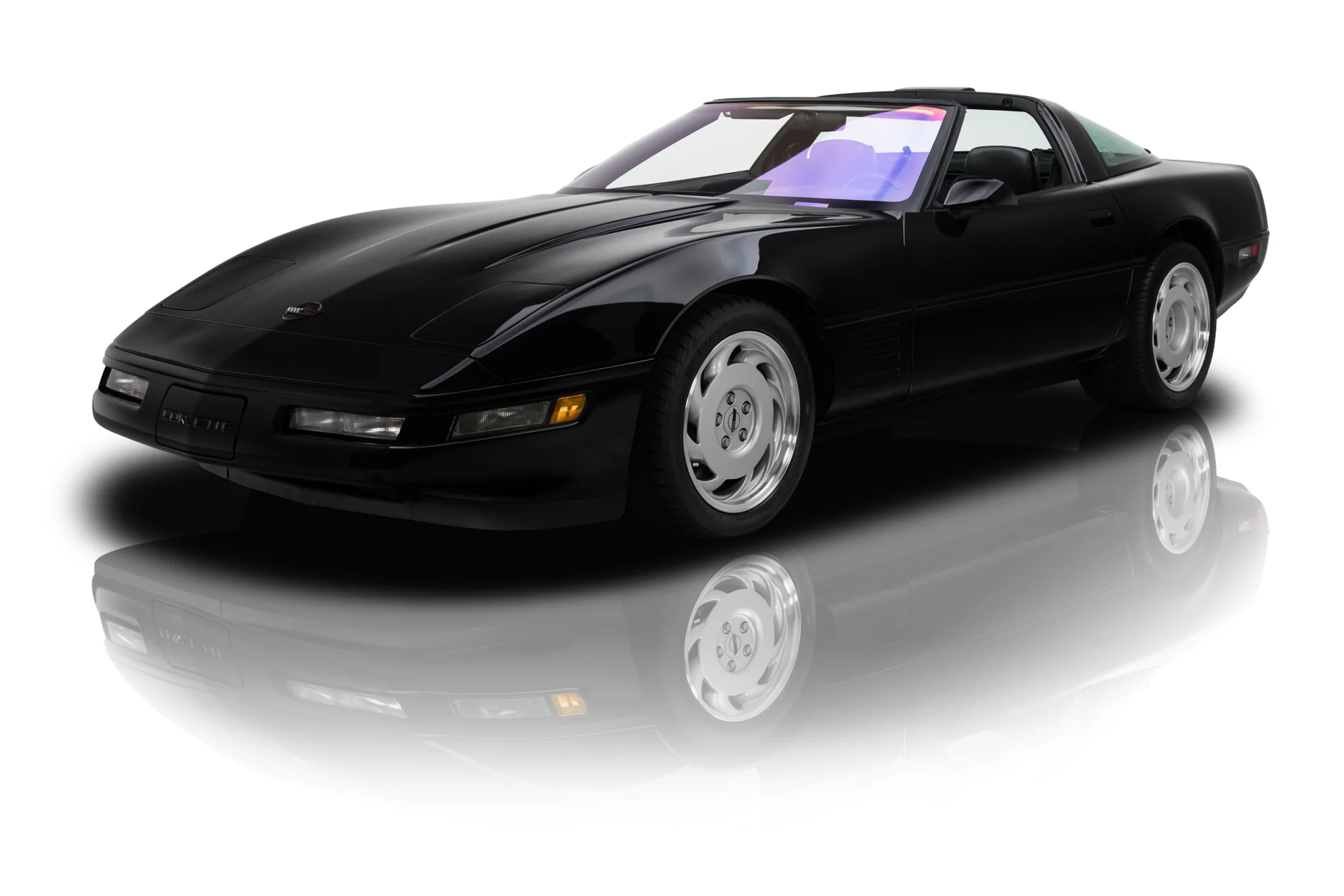
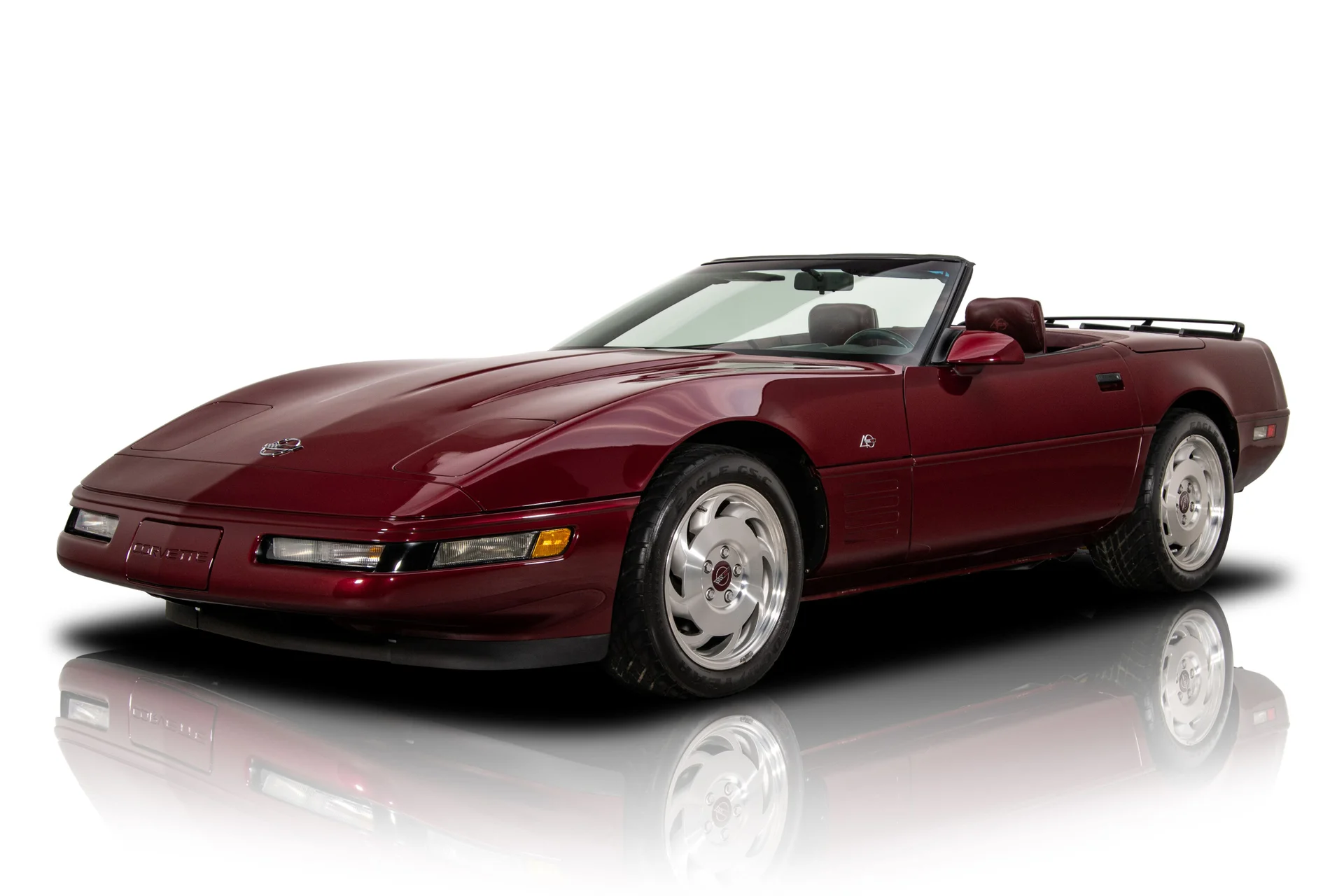
When Harley Earl first sketched his two-seat roadster in the early 1950s, he envisioned something bold for Chevrolet: a sleek, fiberglass-bodied sports car that would capture the glamour of post-war America. Yet even Earl himself could never have imagined how enduring his creation would become. Four decades after that modest unveiling at the 1953 Motorama in New York, Corvette was no longer just a curious“dream car made real.” It had become the longest-running, most iconic American sports car, a machine that not only held its own on the street but also earned global respect on the racetrack.
By 1993, the Corvette stood at a remarkable milestone—its 40th anniversary. Chevrolet recognized the moment with commemorative touches that honored Corvette’s heritage while continuing to refine the C4 generation. That year’s lineup reflected both celebration and performance ambition: a special 40th Anniversary package for collectors and enthusiasts, continued advancements in the base LT1-powered coupes and convertibles, and a more powerful ZR-1 that firmly reasserted its place as the “King of the Hill.” In many ways, the 1993 model year embodied the Corvette’s dual spirit—equal parts nostalgia and relentless pursuit of speed.
Setting the Stage: Corvette Turns Forty
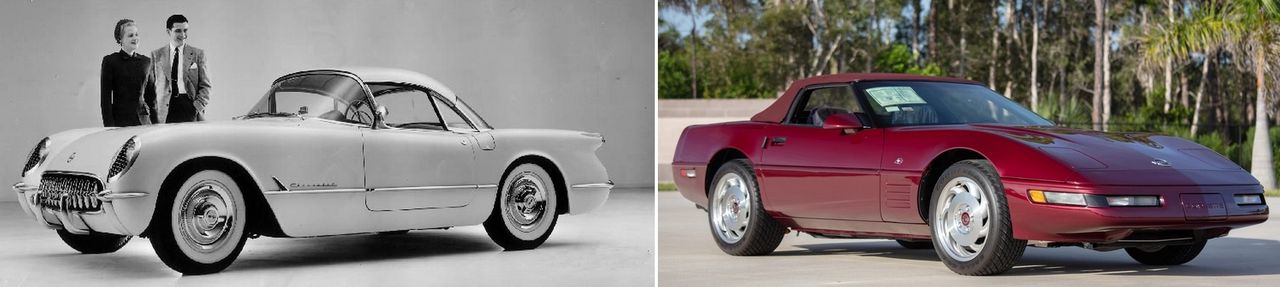
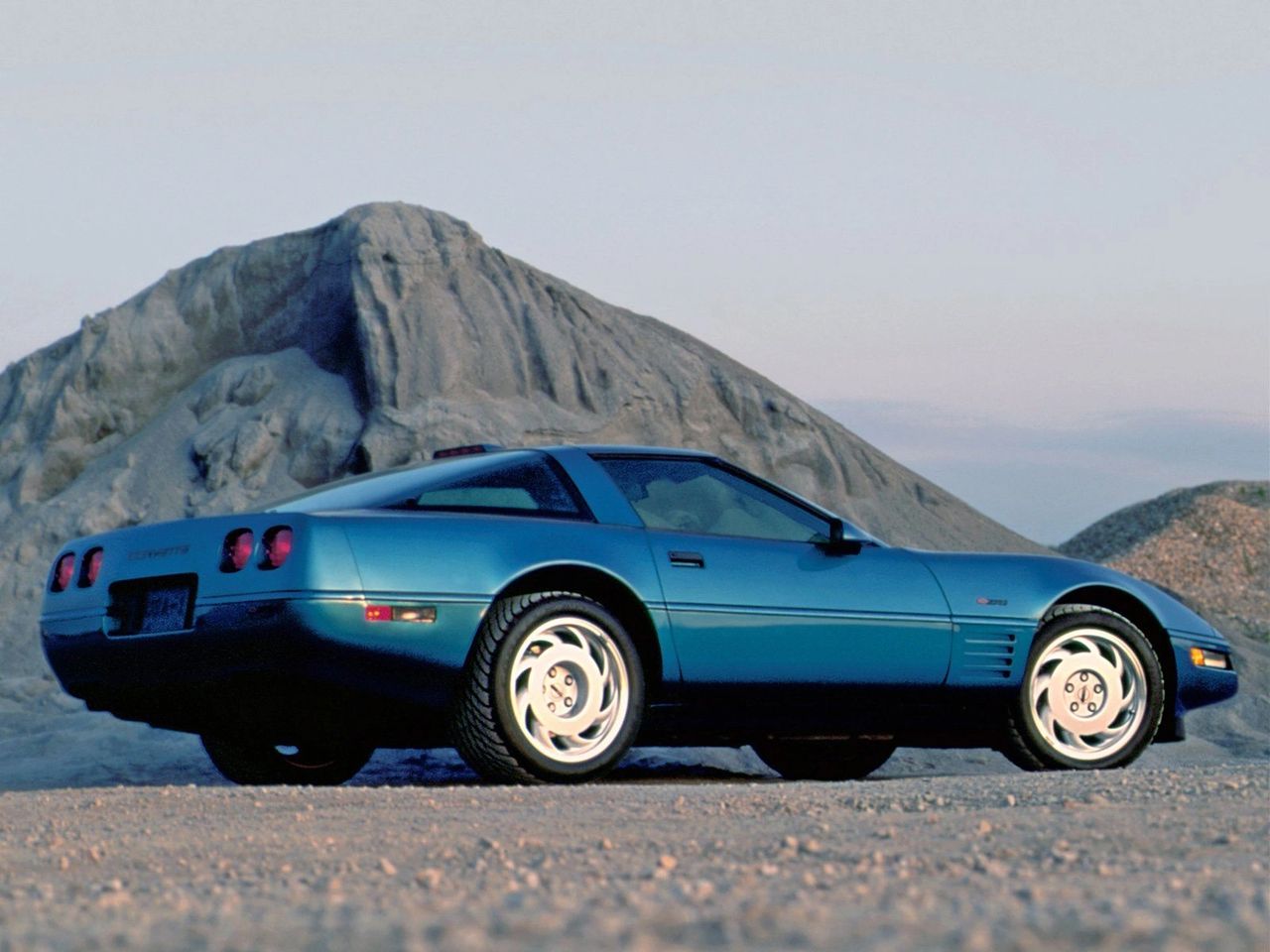
The Corvette of the early 1990s was a different creature than the chrome-laden C1 Harley Earl had conjured. By its fourth generation (introduced in 1984), the Corvette had become a thoroughly modern sports car. With its sleek wedge-shaped styling, advanced suspension systems, and increasingly sophisticated electronic controls, the C4 was aimed squarely at global competition from Porsche, Ferrari, and Nissan.
But the C4 had another role: it was the bridge between Corvette’s first 30 years—years often marked by bold experimentation, peaks and valleys of performance—and the modern era of engineering consistency and refinement. By 1993, the C4 had matured into a highly capable car. Chevrolet’s engineering teams, led by figures such as Dave McLellan (Chief Engineer, succeeding Zora Arkus-Duntov in 1975), continued to refine the car each year. Small but significant mechanical changes were introduced annually, often invisible to the casual eye but meaningful to performance drivers.
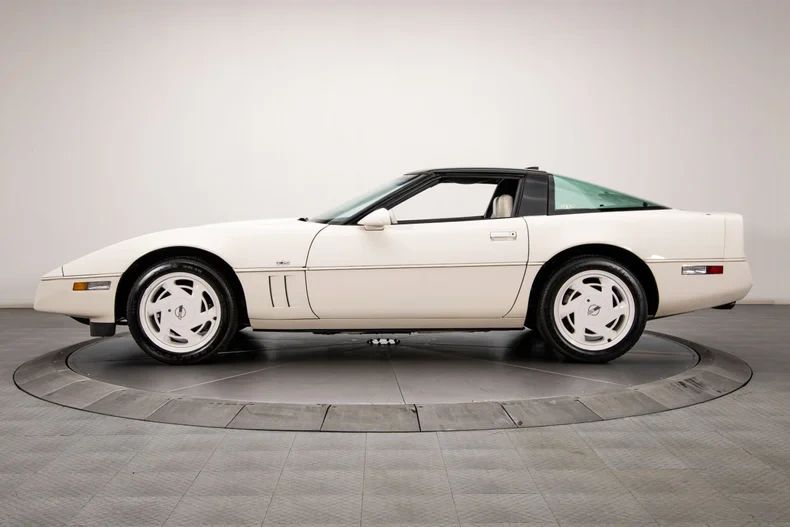
Against this backdrop came Corvette’s 40th birthday. The company had celebrated earlier milestones—the Silver Anniversary Edition of 1978, for example—but 1993 was a bigger moment. Corvette had not only survived but thrived for four decades. To mark the occasion, Chevrolet offered a distinctive package: the 40th Anniversary Edition Corvette.
The 40th Anniversary Edition (RPO Z25)
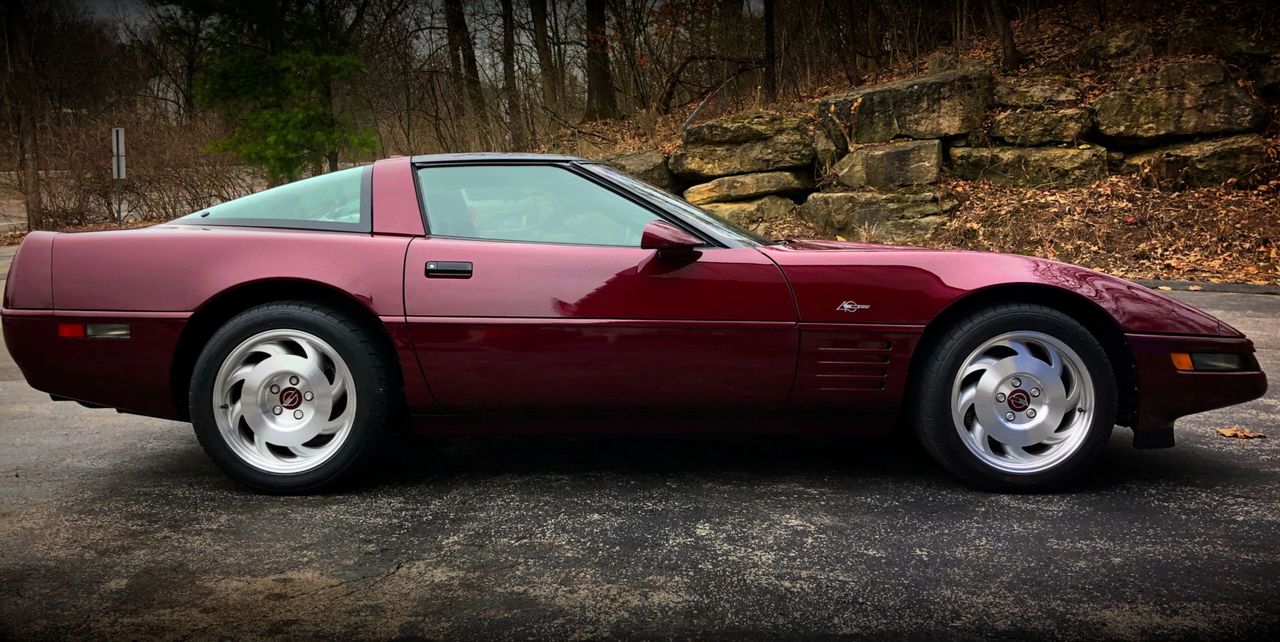
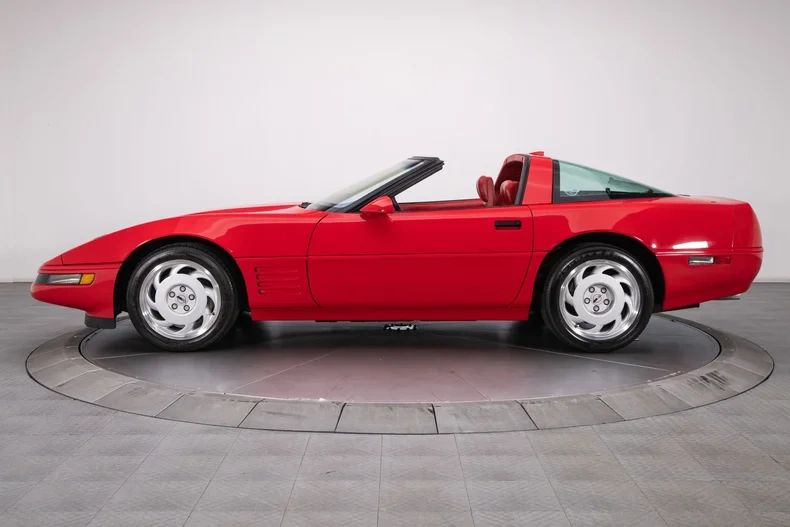
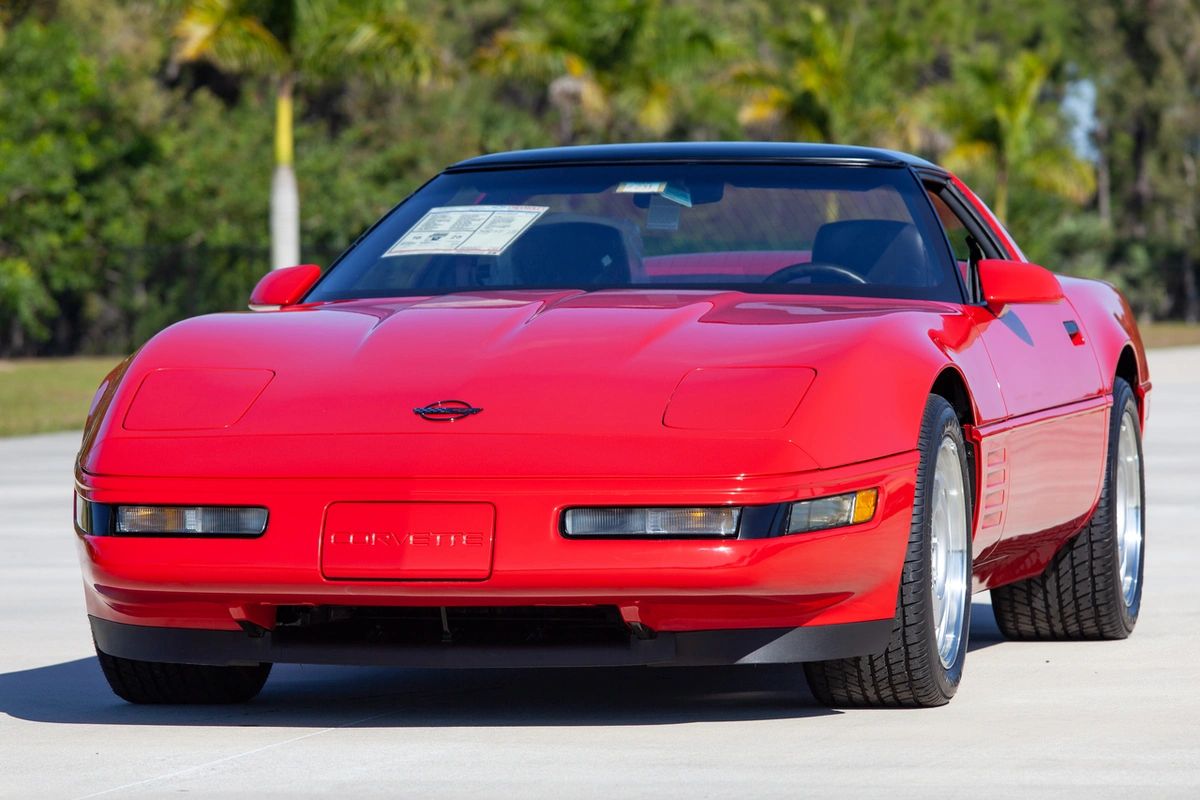
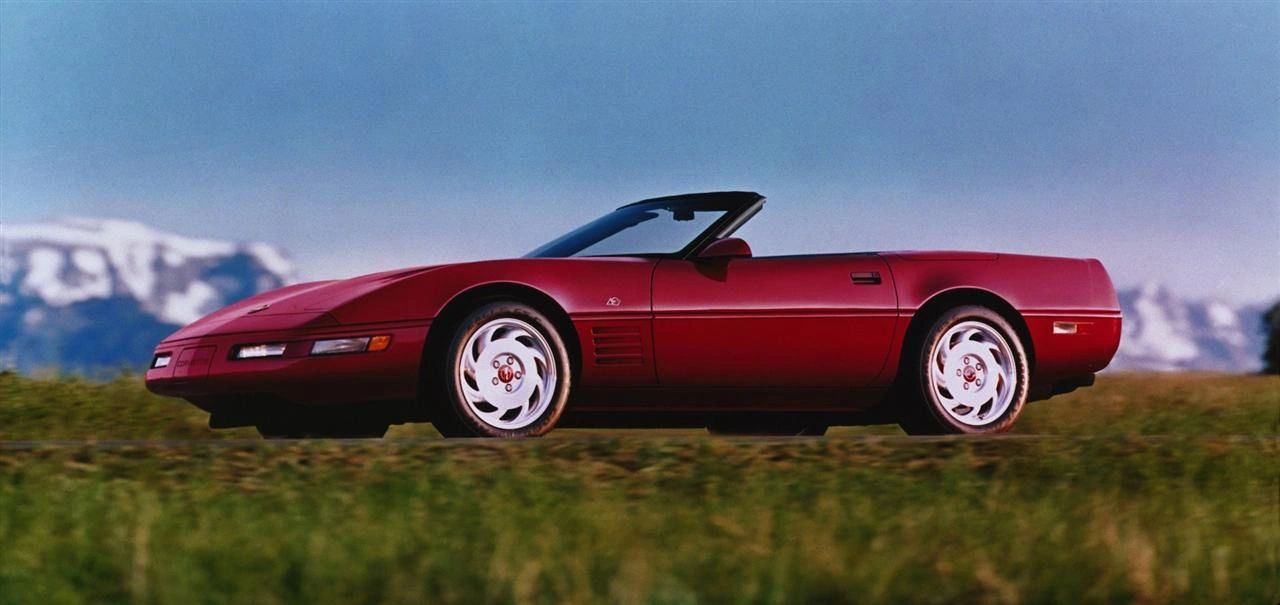
The centerpiece of the 1993 model year was the 40th Anniversary Edition, available on all body styles—including coupes, convertibles, and even the top-tier ZR-1. The option carried Regular Production Option (RPO) code Z25 and cost $1,455. For that, buyers received a striking Ruby Red Metallic exterior (paint code 68U), which was paired with matching Ruby Red leather sport seats. The headrests were embroidered with “40th Anniversary” script and emblems, while special brightwork badging adorned the car’s flanks, just above the beltline behind the front wheels.
It was a tasteful package—less flamboyant than some earlier anniversary cars but arguably more elegant. Ruby Red became one of the most memorable hues of the C4 era, and its exclusivity (only available in 1993) made it an instant collector’s choice. Approximately 6,749 Corvettes were ordered with the 40th Anniversary package, making it a visible but still relatively rare subset of the year’s production.
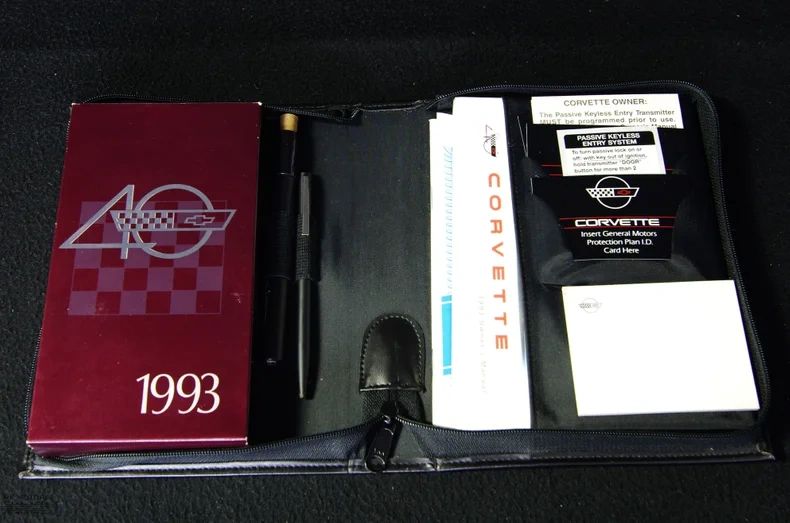
Inside, Anniversary cars carried the celebration theme with unique trim accents, while outside the paint glowed in sunlight, highlighting the C4’s crisp edges and low, athletic stance. For many enthusiasts, the Anniversary package represented the perfect blend of nostalgia and modern Corvette style.
Refinements to the Base Corvette
While the Anniversary package drew attention, the base 1993 Corvette itself was far from stagnant. Under the hood remained the LT1 engine, introduced in 1992. This 5.7-liter (350 cubic inch) small-block V8 represented one of the most advanced iterations of Chevy’s venerable engine architecture. Rated at 300 horsepower and 340 lb-ft of torque, the LT1 used advanced (for the era) electronic fuel injection, reverse-flow cooling (allowing higher compression), and other innovations to deliver strong performance.
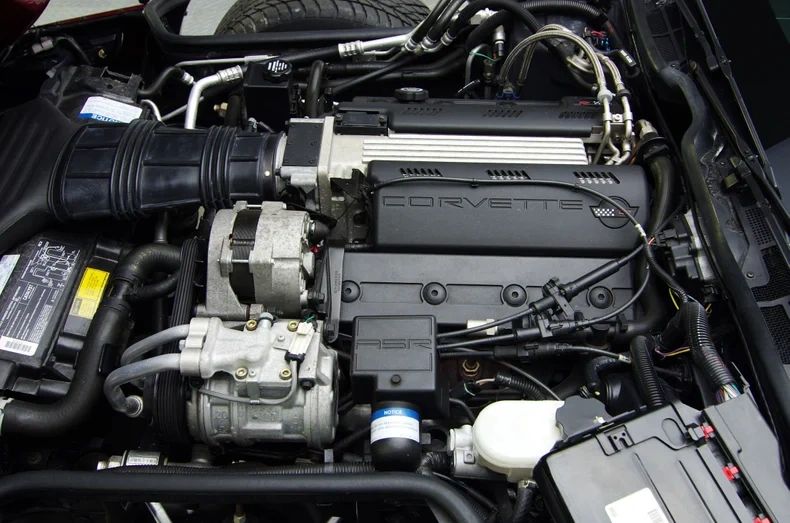
Although the LT1’s peak horsepower rating did not change for 1993, engineers refined the engine’s operation in meaningful ways. Noise reduction was a priority. The camshaft exhaust lobe profile was altered to reduce valve-closing velocity, which quieted operation while slightly boosting torque output (from 330 to 340 lb-ft). A two-piece self-damping heat shield replaced the earlier single stamping, further muting engine clatter. Even the valve covers were redesigned—new polyester units replaced the magnesium pieces from 1984–92, with improved gasket isolation to cut transmitted noise.
Transmission choices remained a four-speed automatic or a six-speed manual (standard with no extra charge). The ZF-sourced six-speed was beloved by enthusiasts for its crisp gear engagement and aggressive gearing, though many buyers still opted for the easier automatic.
Subtle but Significant Chassis and Wheel Changes
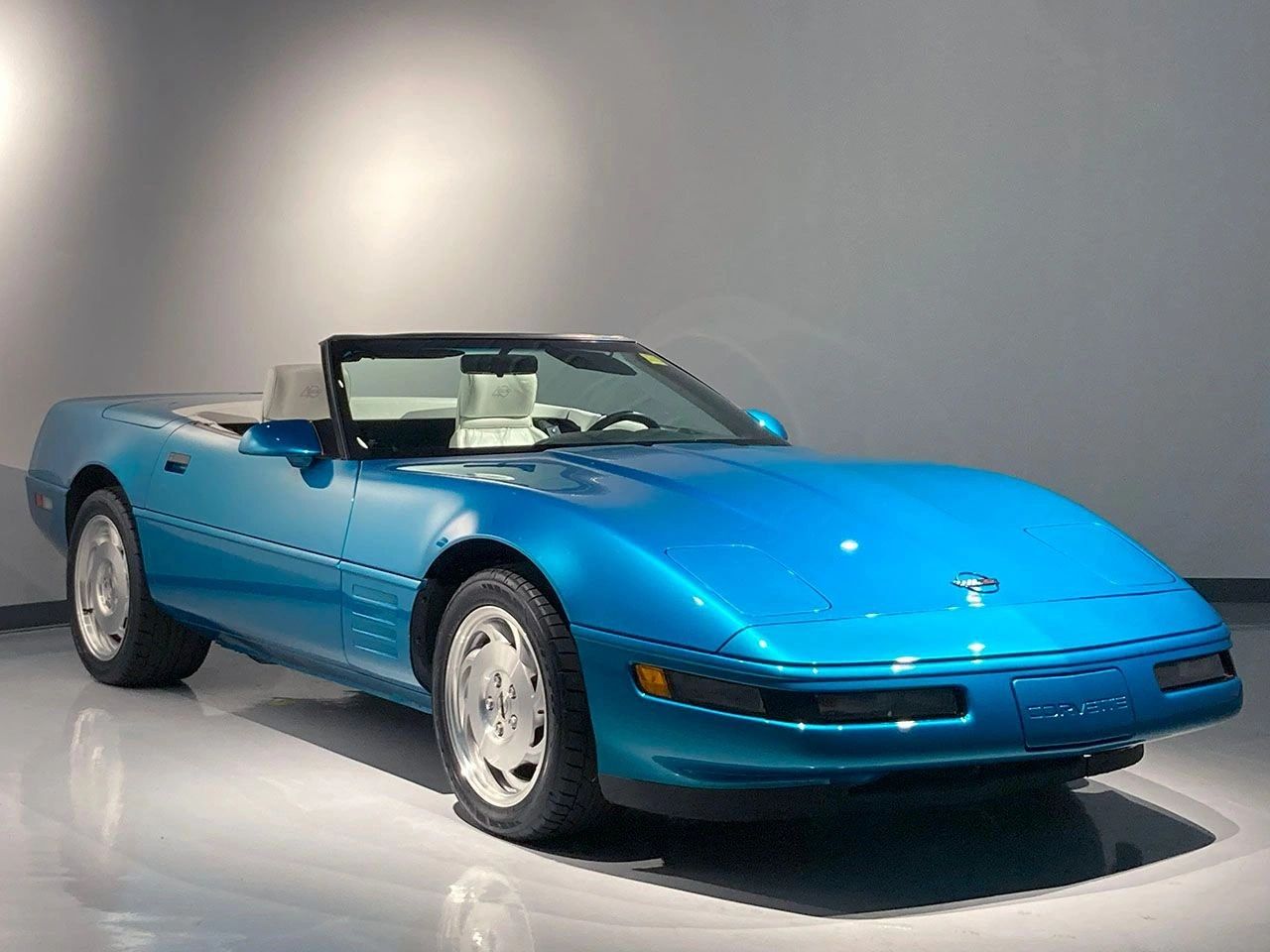
From the outside, the 1993 Corvette looked much like the 1992 model. Yet a closer inspection revealed subtle differences, especially in wheels and tires. The front wheels were narrowed slightly from 9.5 inches to 8.5 inches in width, paired with P255/45ZR17 tires (previously P275/40ZR17). The rear wheels, conversely, grew to wear wider P285/40ZR17 tires, improving rear traction.
Z07 SUSPENSION
Corvettes equipped with the Z07 adjustable suspension package retained 9.5-inch wheels all around, shod with P275/40ZR17 tires. Regardless of configuration, all Corvettes ran on Goodyear Eagle GS-C tires—exclusive to Corvette at the time—with a directional, asymmetric tread pattern engineered to handle both lateral and longitudinal loads. This tire technology, cutting-edge for its day, was part of what gave the C4 its exceptional handling balance. However, because the tires were designed for specific corners of the car, owners had to take care when replacing them—no tire was interchangeable from side to side or front to rear.
Suspension geometry remained largely unchanged, though the Corvette’s chassis had by now been honed into a precise instrument. Four-wheel independent suspension with forged aluminum components, available Selective Ride Control (RPO FX3), and massive four-wheel disc brakes with Bosch ABS made the 1993 Corvette a formidable corner carver.
Passive Keyless Entry: A First for Corvette

Perhaps the most forward-looking innovation of the 1993 Corvette was its introduction of Passive Keyless Entry (PKE). At a time when most cars still relied on traditional keys or rudimentary remote fobs, Corvette’s system was groundbreaking.
Instead of pressing a button to lock or unlock the doors, owners carried a small transmitter that broadcast a unique code. Antennas in the car (embedded in doors and, for coupes, in the rear hatch area) detected the signal when the driver approached. The Corvette then automatically unlocked the doors, illuminated the interior lights, and disarmed the security system. The system could even be programmed to unlock only the driver’s door or both doors. Coupes included an additional hatch release button on the transmitter.
This technology not only added convenience but also cemented Corvette’s reputation as a technology leader. PKE would remain standard equipment through the rest of the C4 generation and into the C5, making its debut here in 1993 especially noteworthy.
The Greenwood G572: Corvette Extreme
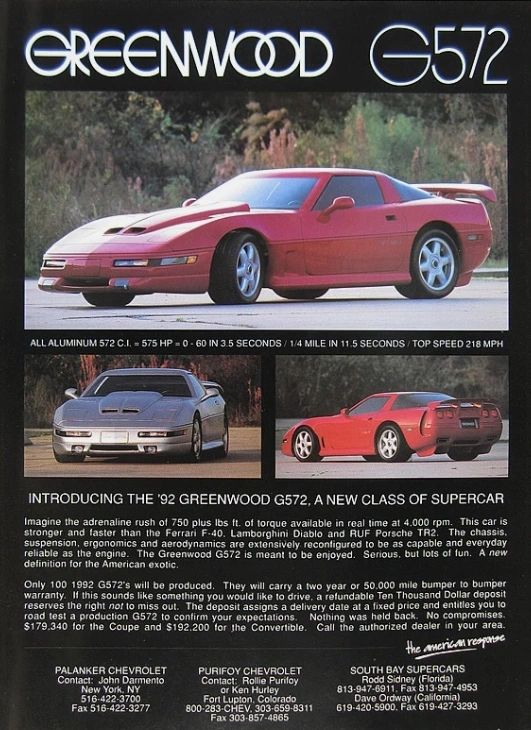
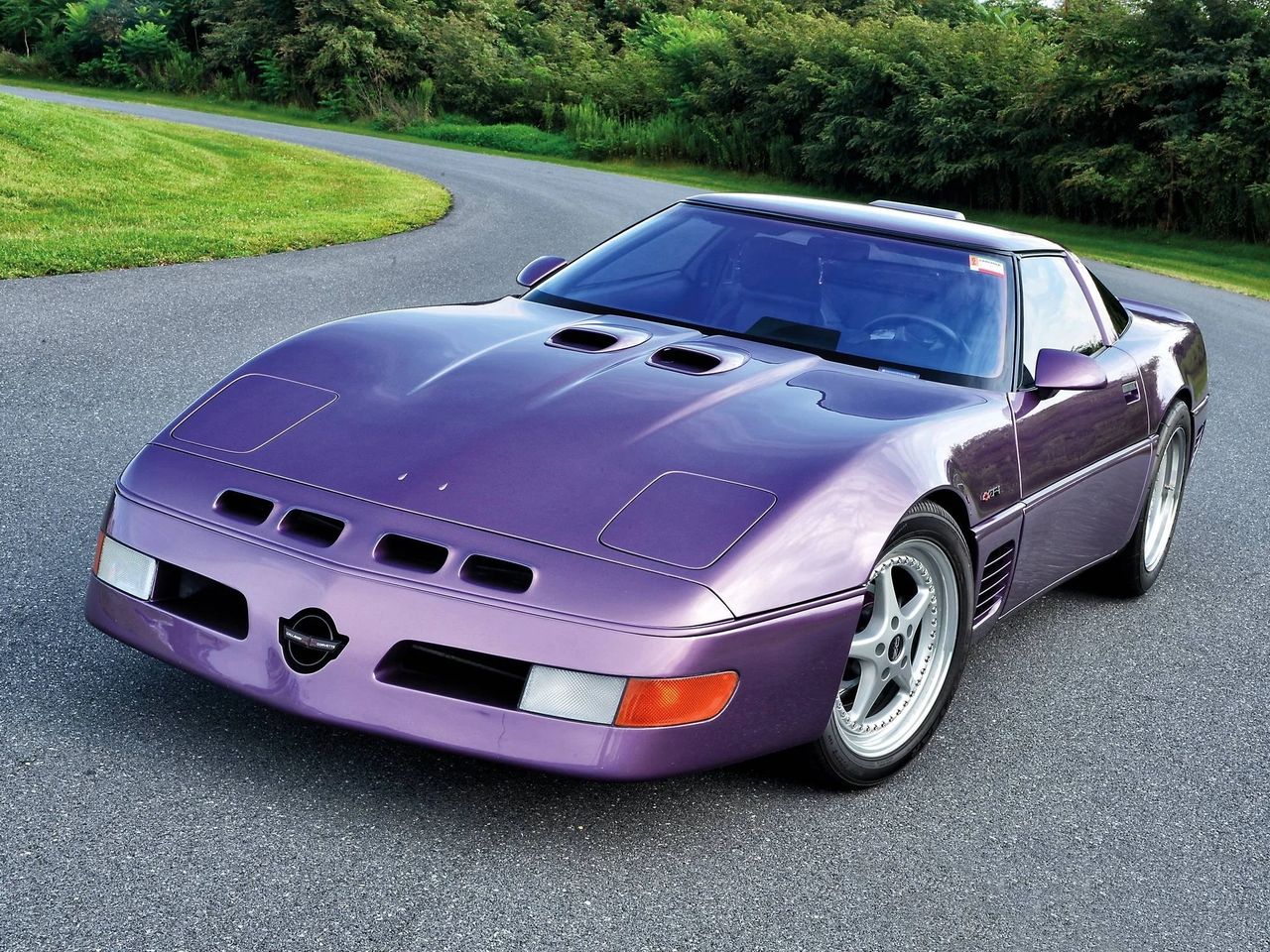
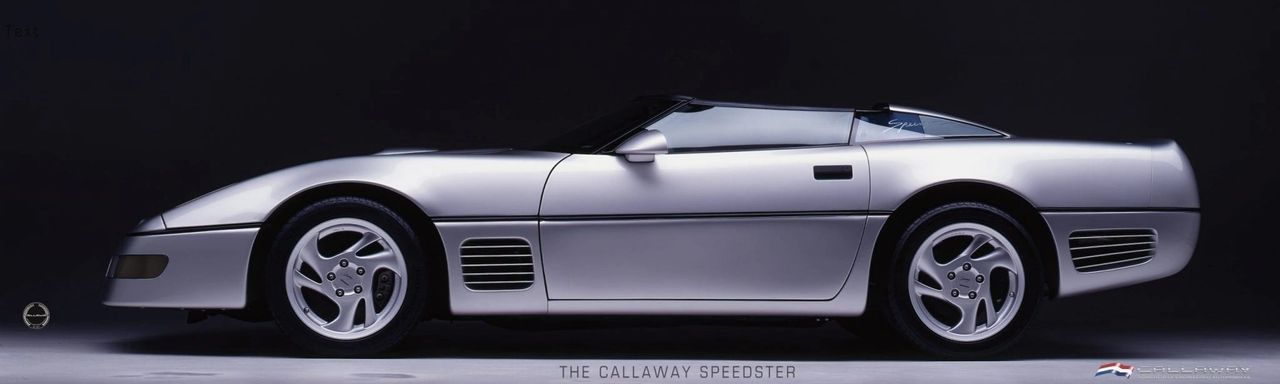
While Chevrolet’s own Anniversary package grabbed headlines, another Corvette variant offered in 1993 took performance to the outer limits. Florida-based Greenwood Automotive Performance—founded by racing legends Burt and John Greenwood—introduced the G572.
Named for its massive 572-cubic-inch (9.4-liter) V8, the Greenwood G572 produced an astonishing 575 horsepower and was capable of performance figures that rivaled supercars costing several times more. Zero to sixty took just 3.4 seconds; the quarter mile disappeared in 11.5 seconds at 135 mph. Top speed? A scarcely believable 218 mph.
To handle this output, Greenwood reinforced the Corvette’s chassis and fitted functional aerodynamic body panels. The result was a machine that looked and performed like a road-legal race car. But exclusivity came at a price—$179,333, a staggering sum in 1993. While production numbers were tiny, the G572 demonstrated how far the Corvette platform could be pushed and served as a dramatic counterpoint to the factory’s more refined offerings.
The 1993 ZR-1: King of the Hill, Re-Crowned
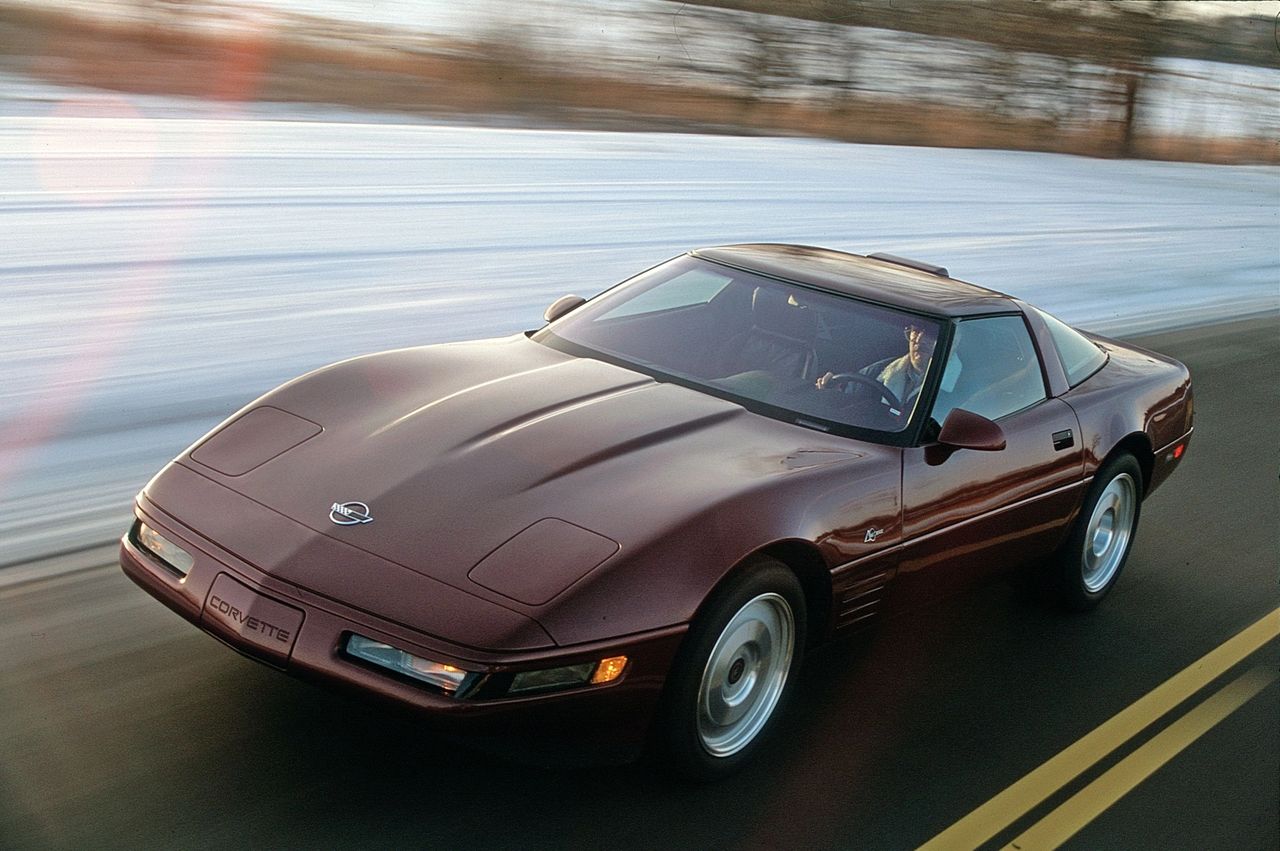
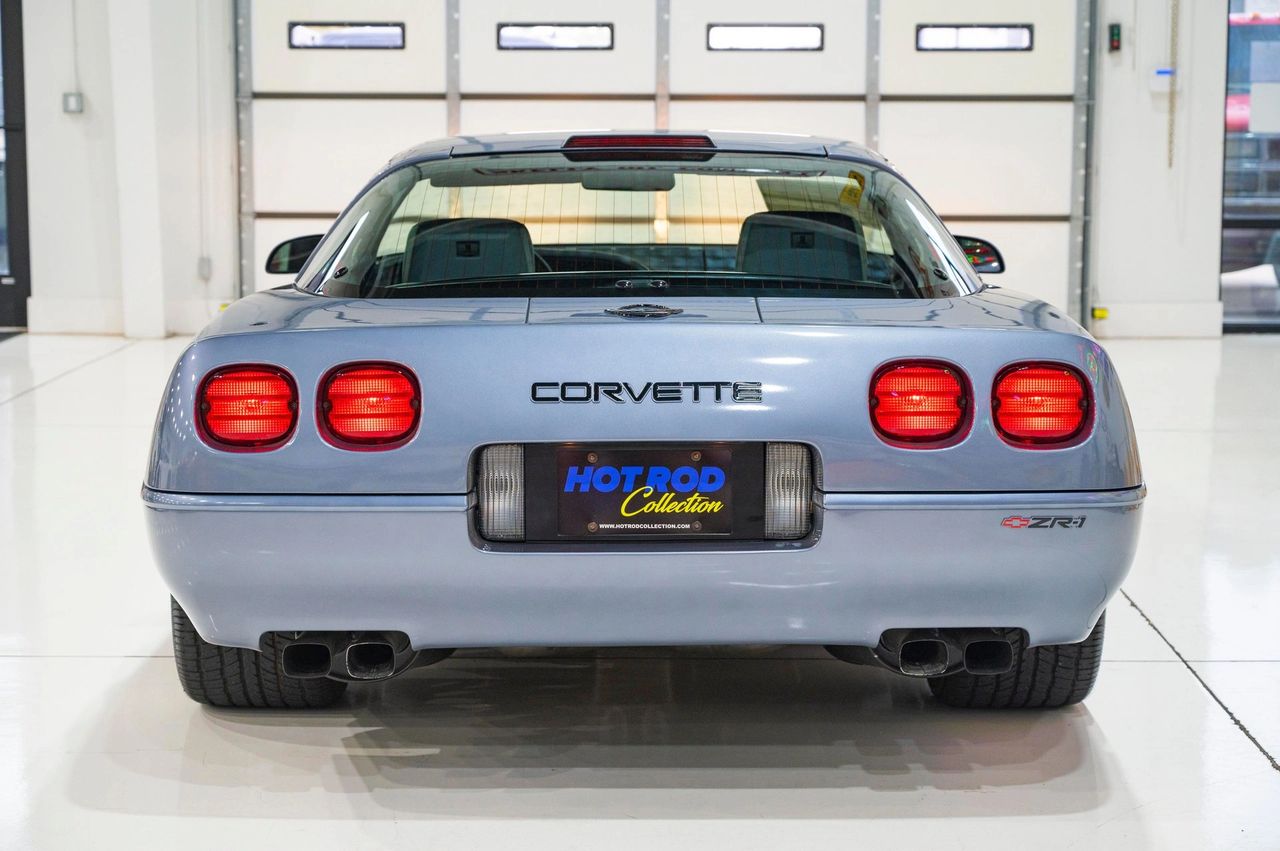
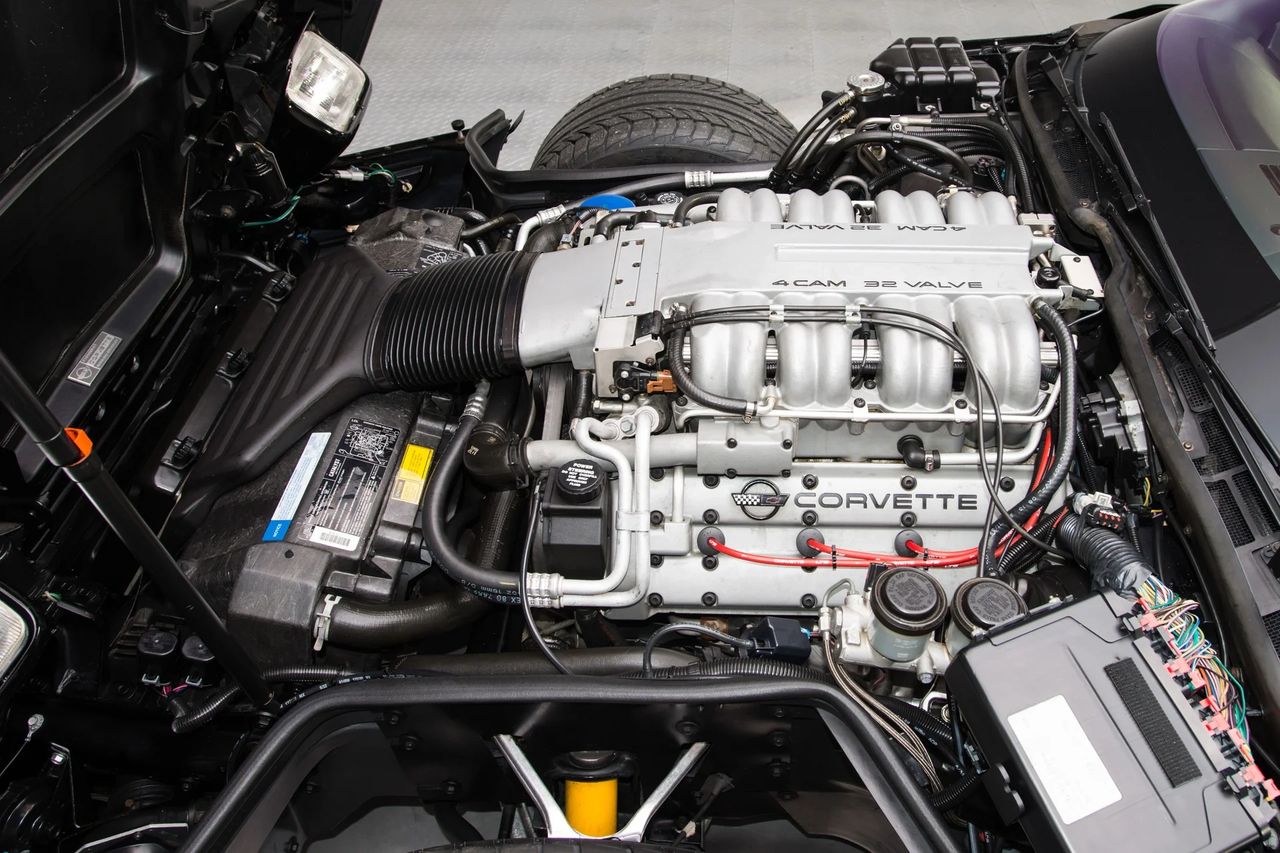
If the Greenwood G572 was an outlier, the production ZR-1 remained Chevrolet’s official halo car. Introduced in 1990, the ZR-1 had already established itself as a legend. With its Lotus-engineered LT5 V8—a 5.7-liter, all-aluminum, dual-overhead-cam masterpiece—the ZR-1 delivered exotic-car levels of performance and technology.
For 1993, the ZR-1’s LT5 received a substantial boost. Horsepower climbed from 375 to 405hp, while torque rose from 370 to 385 lb-ft. These gains came from improved cylinder head porting, a revised valvetrain, four-bolt main bearing caps, platinum-tipped spark plugs, and an electronic EGR system that improved emissions without sacrificing power. Mobil 1 synthetic oil became the factory-specified lubricant, underscoring the LT5’s advanced engineering.
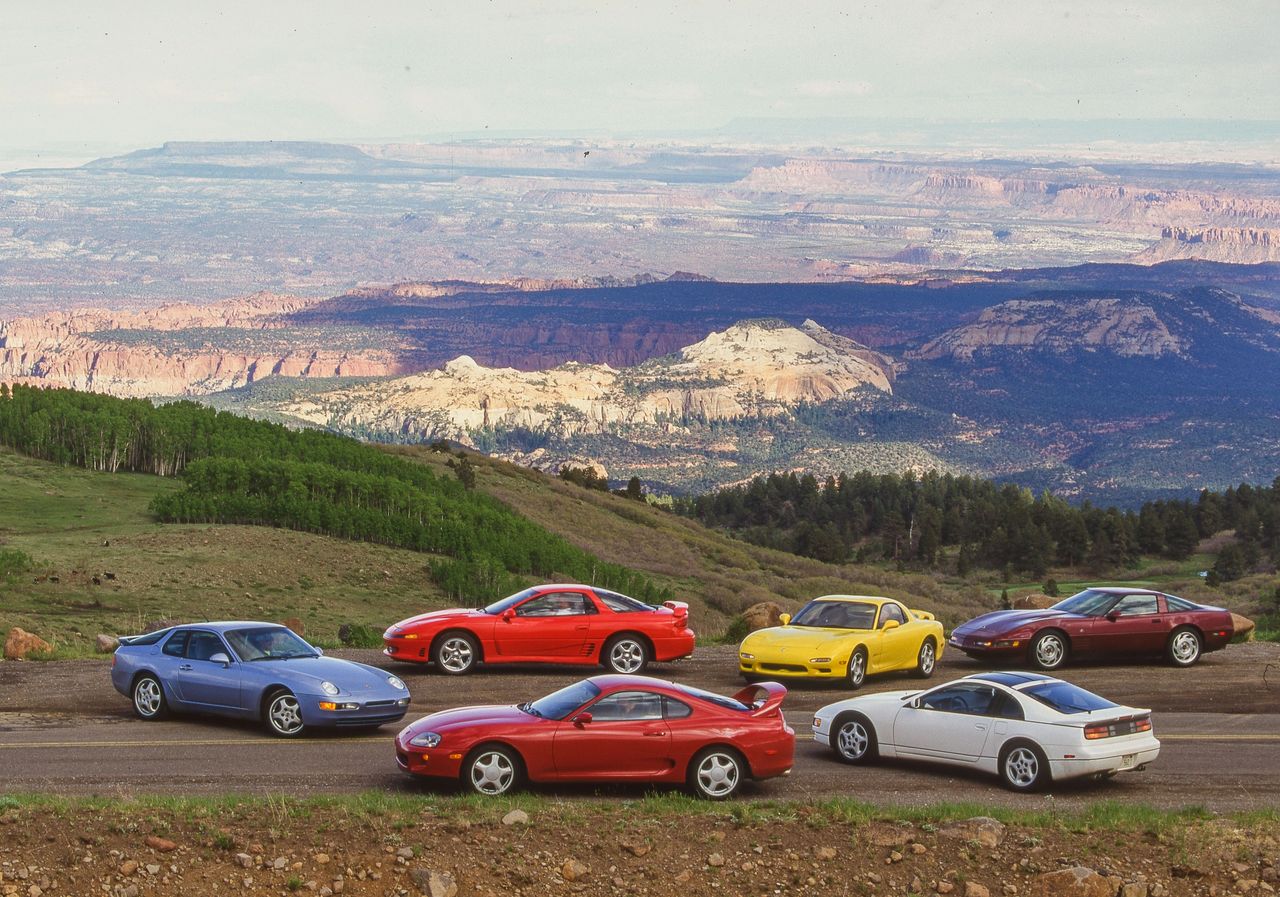
Performance was staggering. Motor Trend recorded 0–60 in 4.9 seconds and the quarter mile in 13.4 seconds at over 110 mph. Top speed reached 179 mph—faster than any production Corvette before it. Car and Driver named the ZR-1 the winner in its “Ten Best” issue for top speed performance, cementing its reputation.
Yet despite accolades, sales continued to slide. Just 448 ZR-1s were built in 1993, compared to thousands in its debut year. At nearly double the cost of a base Corvette (the ZR-1’s RPO added over $31,000 to the price), the car appealed to a niche audience. Still, those who bought one in 1993 acquired one of the most capable and collectible Corvettes of the decade.
Colors, Options, and Pricing
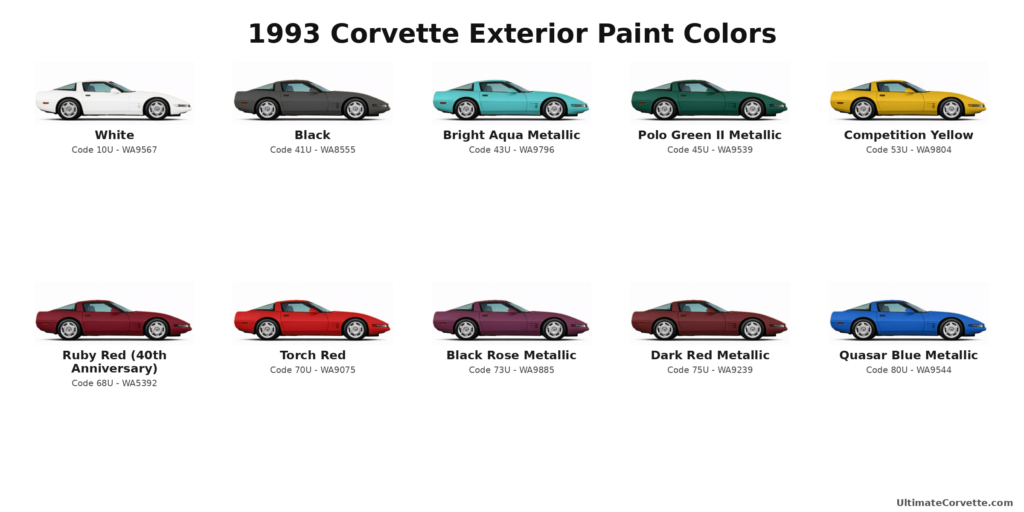
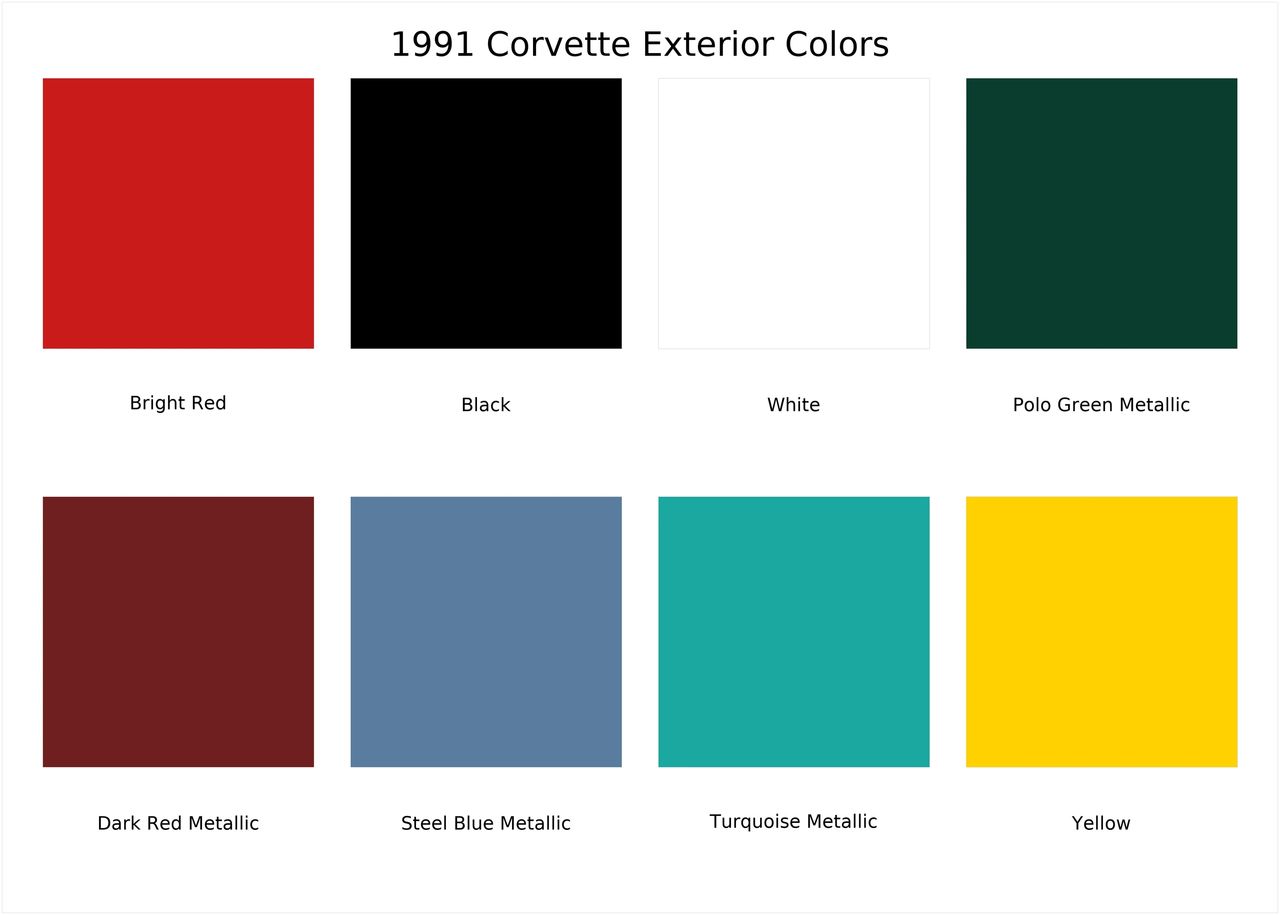
The 1993 Corvette was offered in ten exterior colors: Arctic White, Black, Bright Aqua Metallic, Polo Green II Metallic, Competition Yellow, Ruby Red, Torch Red, Black Rose Metallic, Dark Red Metallic, and Quasar Blue Metallic. Ruby Red dominated, accounting for 31% of all orders, thanks largely to the Anniversary package. Torch Red, Black, White, and Polo Green also proved popular.
Pricing started at $34,595 for the coupe and $41,195 for the convertible. Options included everything from electronic air conditioning controls (RPO C68, $205) to the FX3 selective ride system ($1,695). A six-speed manual transmission (RPO MN6) remained a no-cost option. Collectors could also opt for dual roof panels, auxiliary hardtops, Bose stereo upgrades, and more.
By far the most memorable option, however, was the Anniversary package. For less than $1,500, buyers could create a car that instantly stood out—something that has only grown in desirability over the decades.
Sales and Production
Chevrolet built 21,590 Corvettes for the 1993 model year. Of these, 15,898 were coupes and 5,692 were convertibles. The 40th Anniversary package accounted for 6,749 cars, while only 448 ZR-1s left the Bowling Green assembly line.
Interestingly, 1993 marked the first time since 1989 that Corvette sales increased year-over-year, reversing a downward trend. This reflected both the appeal of the Anniversary package and the general resurgence of interest in performance cars as the economy improved in the early 1990s.
VIN sequences for 1993 ran from 100001 through 121142 for standard Corvettes, while ZR-1 VINs ran separately from 800001 through 800448. Each car had its unique identifier stamped on the driver’s-side windshield pillar.
The 1993 Corvette in Retrospect
Looking back, the 1993 Corvette represents a pivotal year in C4 history. It was not a radical redesign year—those would come later with the C5 in 1997—but it was a year of refinement, celebration, and subtle innovation.
The LT1 base car was faster and quieter than ever, the ZR-1 reasserted its dominance, and the introduction of Passive Keyless Entry pointed the way toward future convenience features. The 40th Anniversary Edition wrapped it all in a commemorative package that honored Corvette’s heritage without descending into gimmickry.
Today, the 1993 Corvette holds a special place among collectors. Anniversary cars, especially well-optioned coupes and convertibles, are sought after. ZR-1s from this year, with their 405-horsepower LT5s, are particularly desirable, representing the most powerful ZR-1s short of the rare 1995 models. Even base coupes and convertibles showcase the LT1 platform’s maturity and the refinement of late-C4 engineering.
Four decades in, Corvette was not just surviving but thriving. It was still America’s Sports Car, still a world-class performer, and still evolving. The 1993 model year proved that Corvette’s story was far from finished—if anything, it was entering a new era.
1993 Corvette Specifications
Engine & Drivetrain
- Base Engine (LT1): 350ci (5.7L) small-block V8, 300 hp @ 5,000 rpm, 340 lb-ft torque @ 3,600 rpm
- ZR-1 Engine (LT5): 350ci (5.7L) all-aluminum DOHC V8, 405 hp @ 5,800 rpm, 385 lb-ft torque @ 5,200 rpm
- Bore x Stroke: 4.00 in x 3.48 in (both LT1 and LT5)
- Compression Ratio: 10.4:1 (LT1), 11.0:1 (LT5)
- Fuel System: Multi-port fuel injection
- Lubrication: Mobil 1 synthetic required for LT5
- Transmissions:
- Standard ZF six-speed manual (MN6)
- Optional 4-speed automatic (MD8)
Chassis & Suspension
- Layout: Front engine, rear-wheel drive
- Front Suspension: Independent, forged aluminum A-arms, coil springs, Bilstein shocks, anti-roll bar
- Rear Suspension: Independent, five-link, transverse fiberglass leaf spring, Bilstein shocks
- Brakes: 12-inch ventilated discs with aluminum calipers; Bosch ABS standard
- Steering: Rack-and-pinion, power-assisted
Wheels & Tires
- Base Coupe/Convertible:
- Front: 8.5 x 17 in, P255/45ZR17 Goodyear Eagle GS-C
- Rear: 9.5 x 17 in, P285/40ZR17 Goodyear Eagle GS-C
- Z07/Performance Package: 9.5 x 17 in wheels with P275/40ZR17 tires front and rear
- ZR-1: Same staggered setup as base, optimized for LT5 performance
Dimensions
- Wheelbase: 96.2 in
- Length: 178.5 in
- Width: 71.0 in
- Height: 46.7 in
- Curb Weight:
- LT1 Coupe: ~3,360 lbs
- LT1 Convertible: ~3,465 lbs
- ZR-1 Coupe: ~3,510 lbs
Performance
- LT1 (Base):
- 0–60 mph: ~5.4 seconds
- Quarter Mile: ~14.0 seconds @ ~100 mph
- Top Speed: ~160 mph
- ZR-1 (LT5, 405 hp):
- 0–60 mph: 4.9 seconds
- Quarter Mile: 13.4 seconds @ 110+ mph
- Top Speed: 179 mph
Fuel Economy (EPA)
- LT1 Manual: 17 mpg city / 25 mpg highway
- LT1 Automatic: 16 mpg city / 25 mpg highway
- ZR-1 Manual: 16 mpg city / 25 mpg highway
Production & VINs
- Total Production: 21,590
- Coupes: 15,898
- Convertibles: 5,692
- ZR-1: 448
- 40th Anniversary Package (Z25): 6,749 units
- VIN Range:
- Base: 100001 – 121142
- ZR-1: 800001 – 800448
Pricing (MSRP)
- Base Coupe: $34,595
- Base Convertible: $41,195
- ZR-1 Package: +$31,683 (total over $66,000)
- 40th Anniversary Package (Z25): $1,455
- Notable Options:
- FX3 Selective Ride Control: $1,695
- C68 Electronic Climate Control: $205
- C2L Dual Roof Panels: $950
- AQ9 Sport Leather Seats: $1,100
- U1F Delco-Bose CD Stereo: $1,219
Why the 1993 Corvette Still Matters
The 1993 Corvette represents a defining moment in the C4 era—when Corvette’s relentless push for modern performance finally aligned with its heritage. Celebrating the model’s 40th anniversary, Chevrolet honored the occasion with the special Ruby Red Metallic 40th Anniversary Package, a visual reminder that Corvette had evolved dramatically since the first car rolled out in 1953.
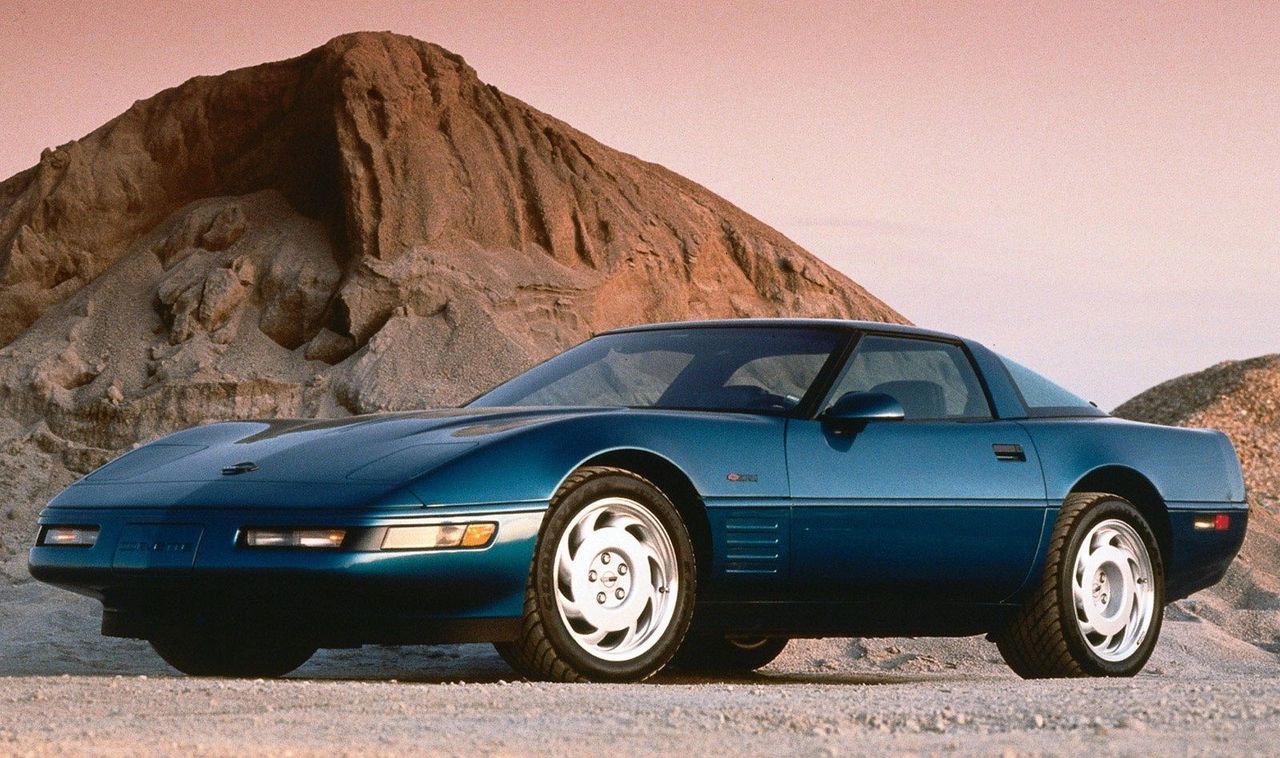
But the significance of the 1993 model year goes deeper than celebration. Under the hood, the LT1 small-block delivered a healthy 300 horsepower, continuing the engine renaissance that began in 1992. Even more remarkable was the still-formidable ZR-1, whose Lotus-designed LT5 V8 produced 405 horsepower—numbers that rivaled the world’s most respected supercars of the early 1990s.
By 1993, the C4 Corvette had matured into a highly refined performance machine. The once-controversial digital dashboards and sharp-edged styling of the 1980s had evolved into a balanced package combining speed, handling precision, and everyday usability. Corvette was no longer simply America’s sports car—it was a legitimate global performance contender.
Today, the 1993 Corvette stands as a snapshot of Corvette at forty: confident, technologically ambitious, and unapologetically performance-focused. It reminds us that the groundwork for the modern Corvette—one capable of challenging the world’s best—was laid long before the mid-engine revolution arrived.