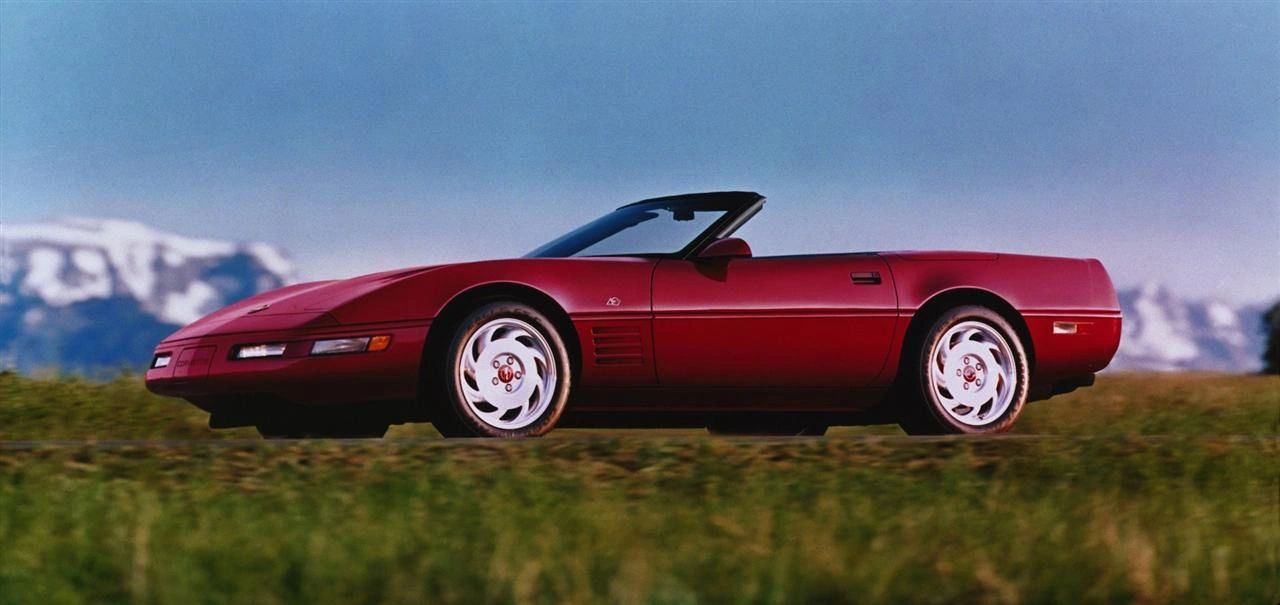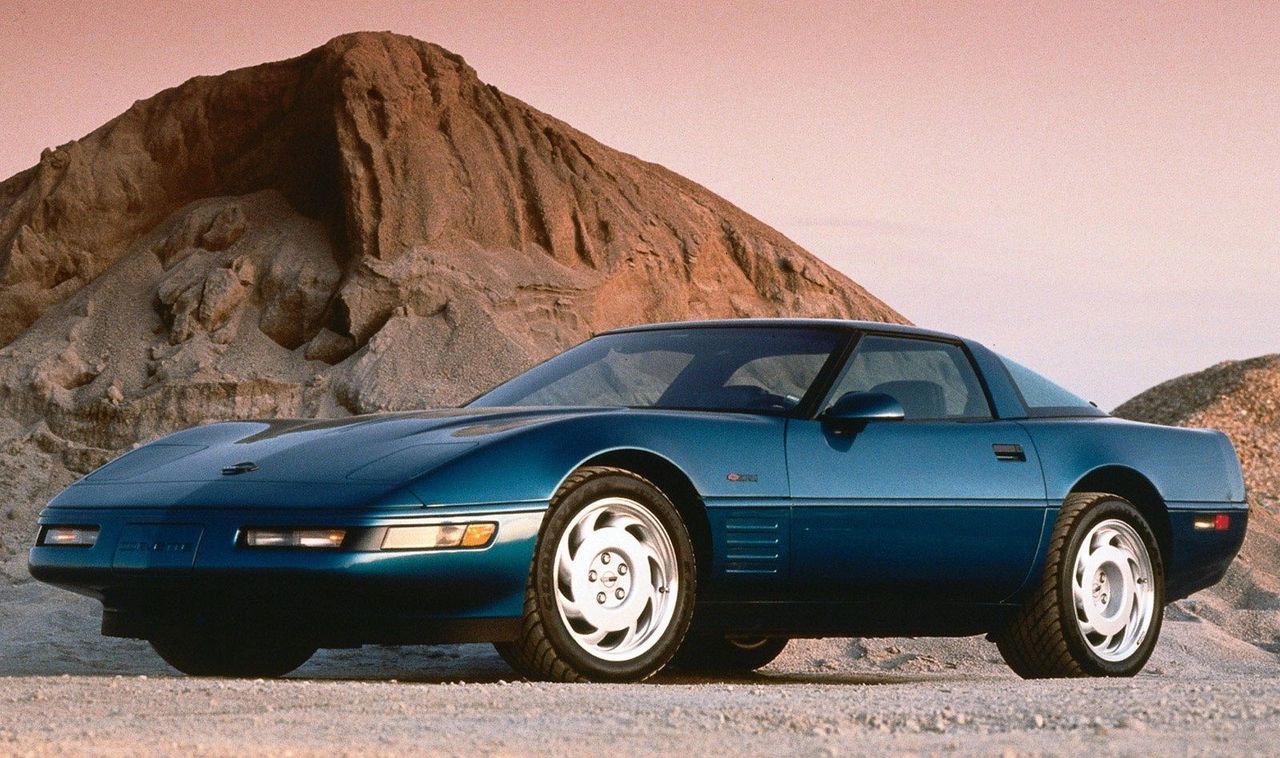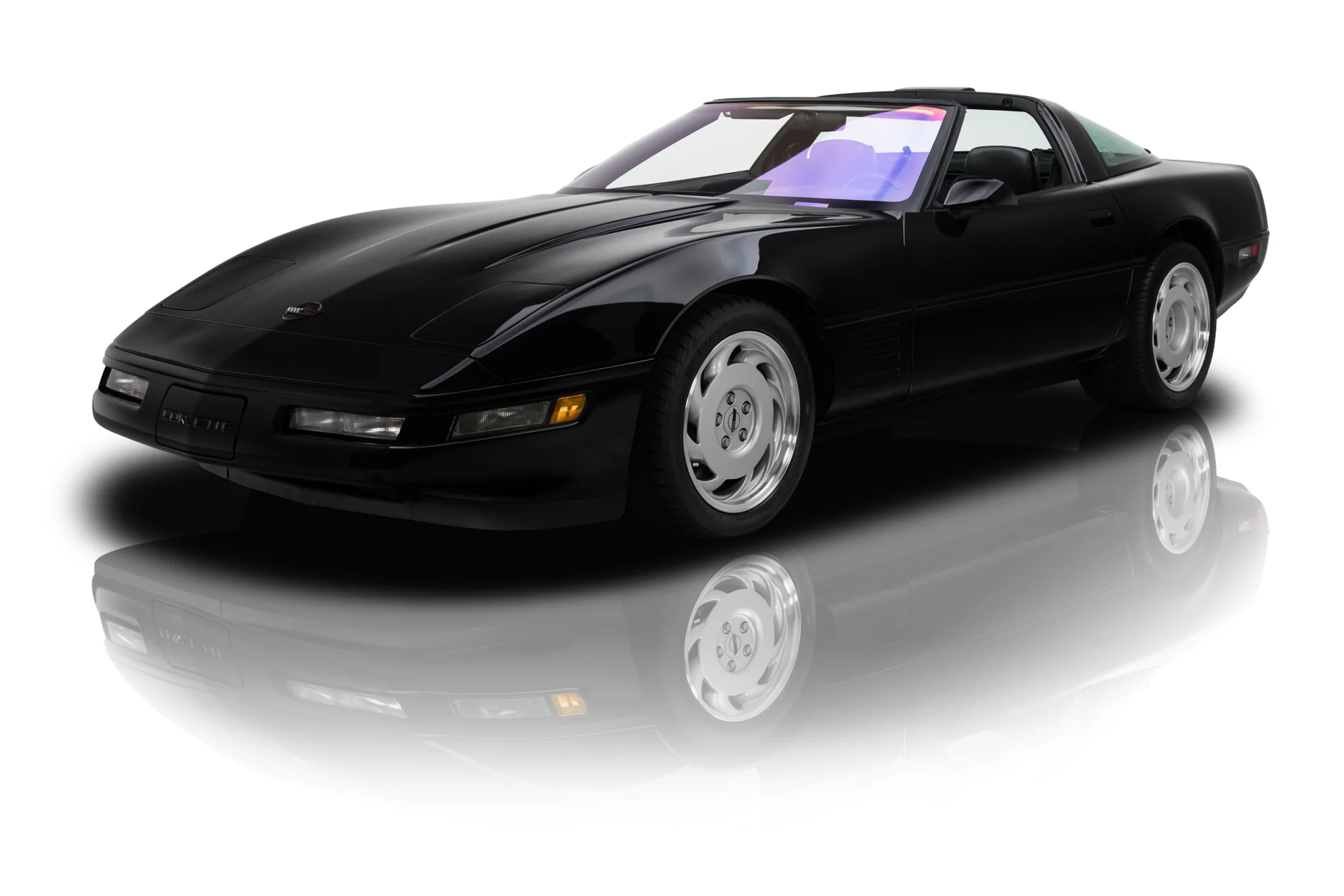
Tag: ZR-1

  • 1995 CORVETTE OVERVIEW

    1995 CORVETTE OVERVIEW

    By the mid-1990s the fourth-generation Corvette wasn’t chasing youth so much as perfecting experience. Eleven model years in, the C4 still launched like a slingshot and carved corners with the flinty precision that made it a chassis benchmark. Yet just offstage, a skunkworks within General Motors was already splitting its days and nights on the fifth-generation car—a clean-sheet coupe that wouldn’t hit showrooms until the 1997 model year. That tension defined 1995. Evolution over revolution. Polish over reinvention. This is the year Chevrolet made the C4 better in ways you feel more than see—and the year the fourth-generation ZR-1, America’s original modern supercar, took its final bow with a ceremony worthy of a monarch.

    There’s a temptation to reduce late C4s to option codes and production counts. But 1995 wasn’t merely an updated parts catalog; it was a philosophy. It was a team that had learned what Corvette owners actually lived with—the creaks, the chatter, the extra effort to snag reverse on a cold morning—and decided to fix what mattered most to them. The base model fourth-generation Corvette was a platform that could already out-corner its peers and, with a few key upgrades, would be able to stop with the same authority. And it was a factory willing to pause an assembly line to salute the end of a legend.

    Refining the LT1: Quieter, Stronger, Cleaner
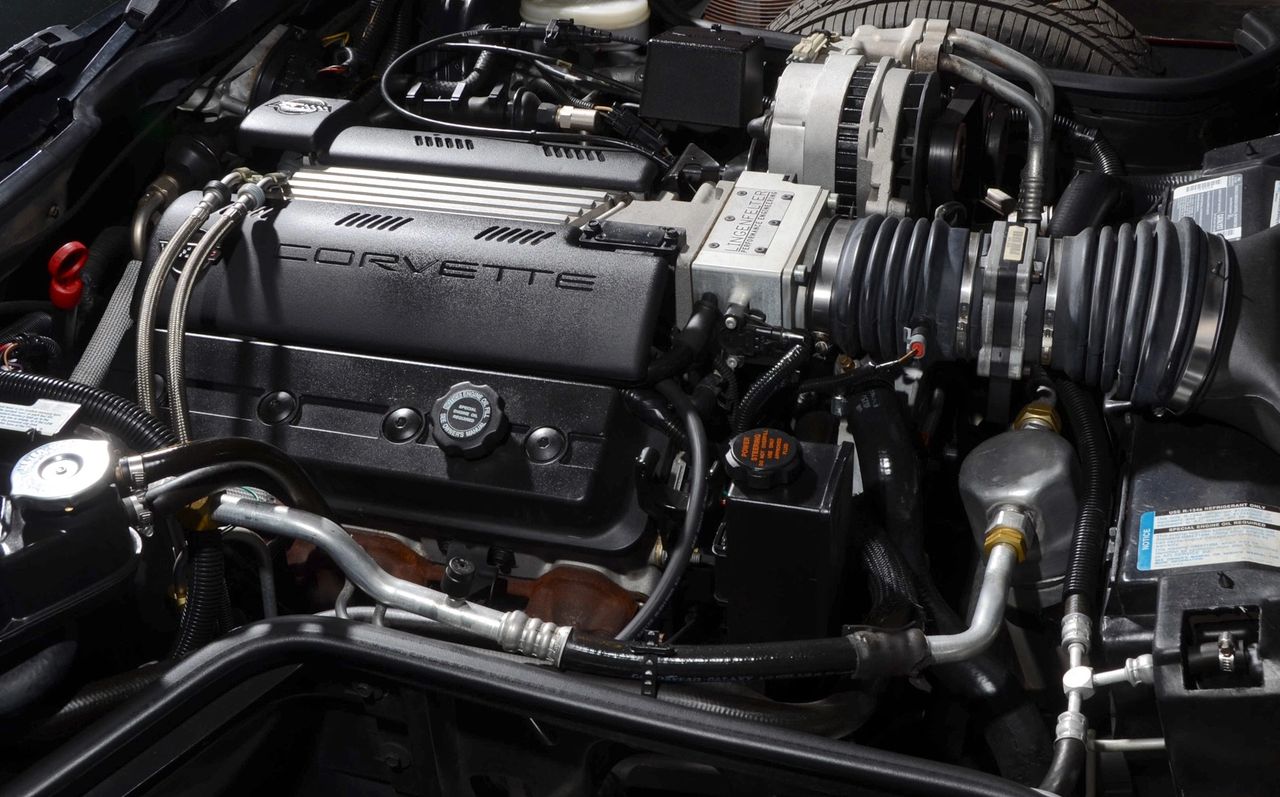
    The 1995 Corvette’s LT1 kept its 300 hp/340 lb-ft headline, but felt smarter and tougher thanks to quiet refinements—powdered-metal rods, ethanol-tolerant injectors, and calmer fan logic that sharpened drivability and durability. Paired with the year’s big-brake/ABS 5 rollout and cleaner 4L60-E or high-detent ZF shifts, the ’95 LT1 delivered the C4’s familiar punch with a more polished, everyday confidence. (Image courtesy of Motorcar Classics)
    The 1995 Corvette’s LT1 kept its 300 hp/340 lb-ft headline, but felt smarter and tougher thanks to quiet refinements—powdered-metal rods, ethanol-tolerant injectors, and calmer fan logic that sharpened drivability and durability. Paired with the year’s big-brake/ABS 5 rollout and cleaner 4L60-E or high-detent ZF shifts, the ’95 LT1 delivered the C4’s familiar punch with a more polished, everyday confidence. (Image courtesy of Motorcar Classics)

    On paper, the 5.7-liter LT1 returned unchanged at 300 horsepower and 340 lb-ft. In practice, the powerplant in the 1995 Corvette was tighter, tougher, and less fussy. GM’s move to powdered-metal connecting rods—by then fully resident in Corvette usage—wasn’t an enthusiast forum brag; it was metallurgy in service of longevity. Powdered-metal rods offer excellent dimensional uniformity and fatigue strength. When a V-8 lives between 5,000 and 6,000 rpm with regularity, consistency is not a luxury. It’s survival.

    Fuel delivery got smarter as well. The mid-’90s fuel pump reality was sifting towards ethanol blends showing up everywhere. Engineers responded with injectors more tolerant of alcohol content and specifically calibrated to reduce post-shutoff dripping—an unglamorous fix that trims evaporative emissions and makes hot restarts less dramatic and more “turn key, drive away.” Even the big electric fan—a staple of LT1 life—had its marching orders updated. Hardware and control strategy were tuned to hush the whir, the kind of NVH (Noise, Vibration, and Harshness) experience that can make a daily driver feel cheap or feel refined. In a car this honest about road texture, having a quieter fan mattered.

    None of those updates added a single “pony” to the engine’s output. They added confidence. You feel it in the way a 1995 LT1 settles into a hot idle, in the lack of fuel smell after a quick stop, in the sense that the bottom end is happy to be hammered again and again.

    And here’s the thing….the brochure didn’t sing about it. Owners did.

    Gates, Not Guesses: The ’95 Shift Upgrade
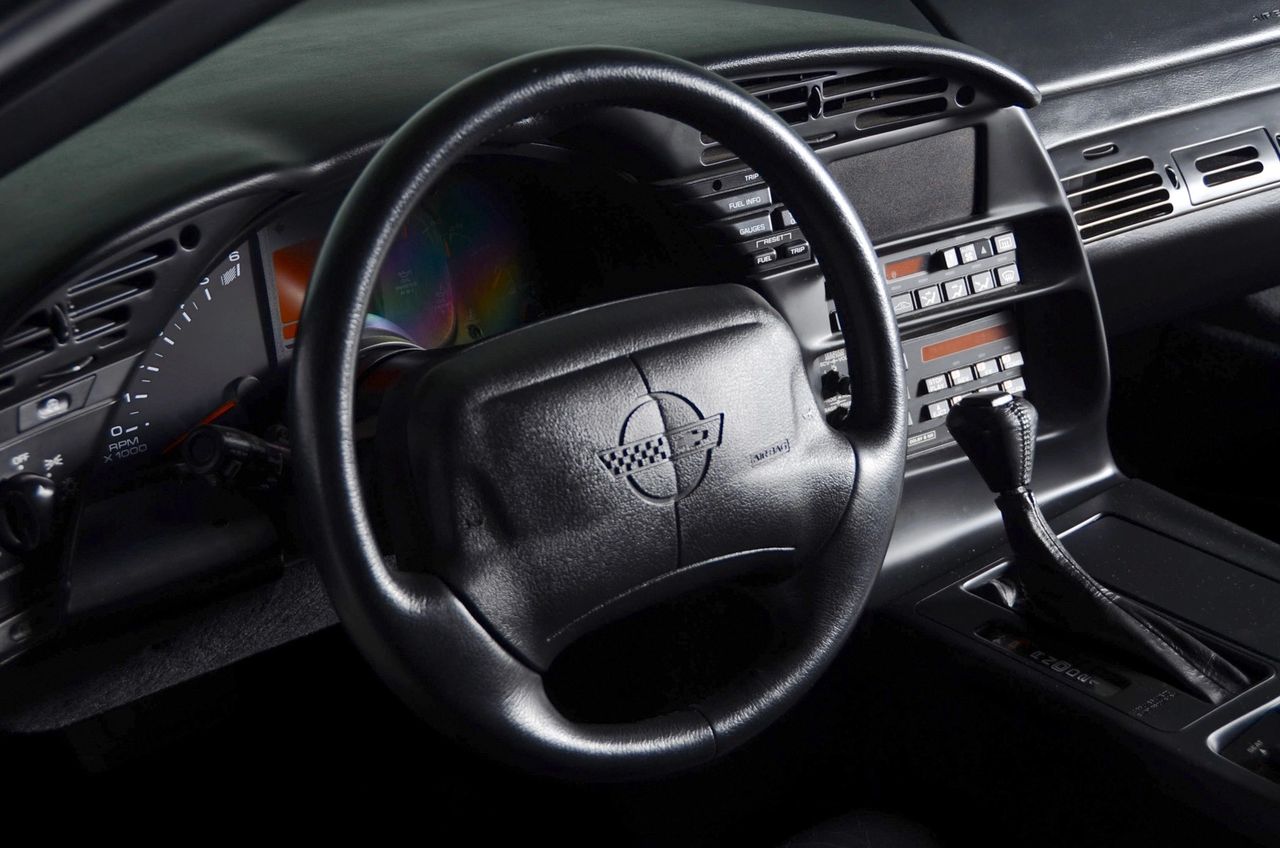
    The ’95 Corvette’s 4L60-E automatic was re-tuned with a lighter, stronger converter, so it hooks the LT1’s torque quicker and shifts cleaner in real-world driving. From the driver’s seat—airbag wheel, analog/digital cluster with the new ATF temp readout, and the console-mounted selector—the cockpit feels purposeful and modern, built to crush traffic and unwind a back road without drama. (Image courtesy of motorcarclassics.com)
    The ’95 Corvette’s 4L60-E automatic was re-tuned with a lighter, stronger converter, so it hooks the LT1’s torque quicker and shifts cleaner in real-world driving. From the driver’s seat—airbag wheel, analog/digital cluster with the new ATF temp readout, and the console-mounted selector—the cockpit feels purposeful and modern, built to crush traffic and unwind a back road without drama. (Image courtesy of motorcarclassics.com)

    The electronic four-speed automatic—4L60-E—was already a known quantity, but the 1995 calibration and hardware tweaks smudged out the last rough edges. Shift timing and pressure control came on cleaner. The torque converter shed weight while gaining strength, and you feel both at low speed: the car pulls into the throttle without that momentary pause you’d get in earlier calibrations, then locks with authority on the highway.
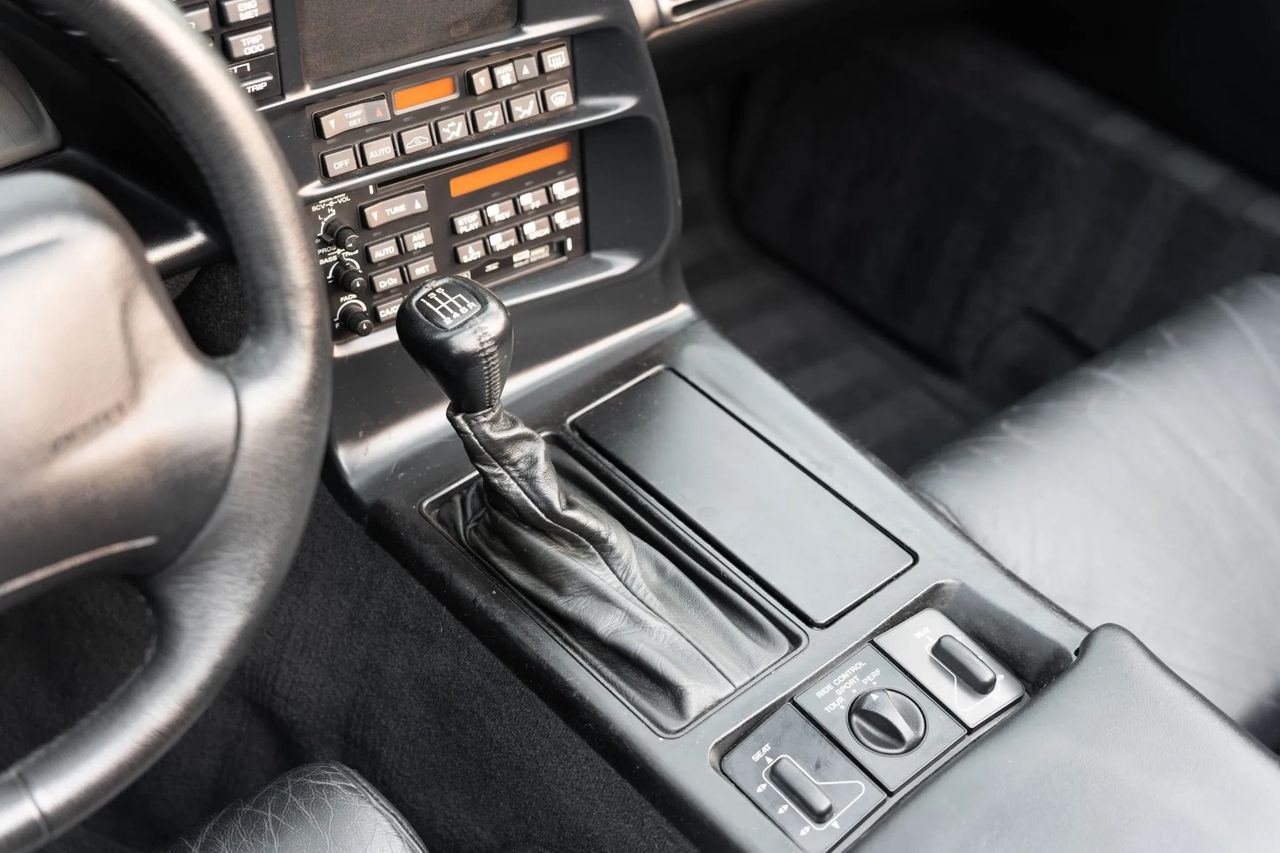
    The ’95 Corvette’s ZF S6-40 six-speed feels right at home here—short, mechanical throws capped by a leather-wrapped knob and the new high-detent reverse that replaced the fiddly lockout of ’94. It’s a driver’s interface first and foremost: slide across the gate, slot the gear, and the LT1 answers with crisp torque on command. (Image courtesy of bringatrailer.com)
    The ’95 Corvette’s ZF S6-40 six-speed feels right at home here—short, mechanical throws capped by a leather-wrapped knob and the new high-detent reverse that replaced the fiddly lockout of ’94. It’s a driver’s interface first and foremost: slide across the gate, slot the gear, and the LT1 answers with crisp torque on command. (Image courtesy of bringatrailer.com)

    For those who preferred three pedals, 1995 quietly fixed the C4’s most persistent annoyance: reverse. Gone was the 1994 reverse-lockout hardware. In its place came a high-detent reverse mechanism that made sliding the lever across the 5–R plane a deliberate, positive act instead of a “don’t-cross-the-wrong-fence” guess. On a handful of early ’95s, tolerances and spring rates made reverse too stout—owners reported abnormally high effort to push past the detent—so GM issued a running fix: an updated detent plunger/spring and a linkage adjustment procedure. Once corrected, the action felt as intended—clean, confident, and repeatable. It’s a small change that reads big in traffic and in the garage—less fishing, more doing—the kind of human-factor work late C4s specialized in: no posters, but plenty of gratitude from the people who lived with the car.

    The Year Big Brakes Went Mainstream
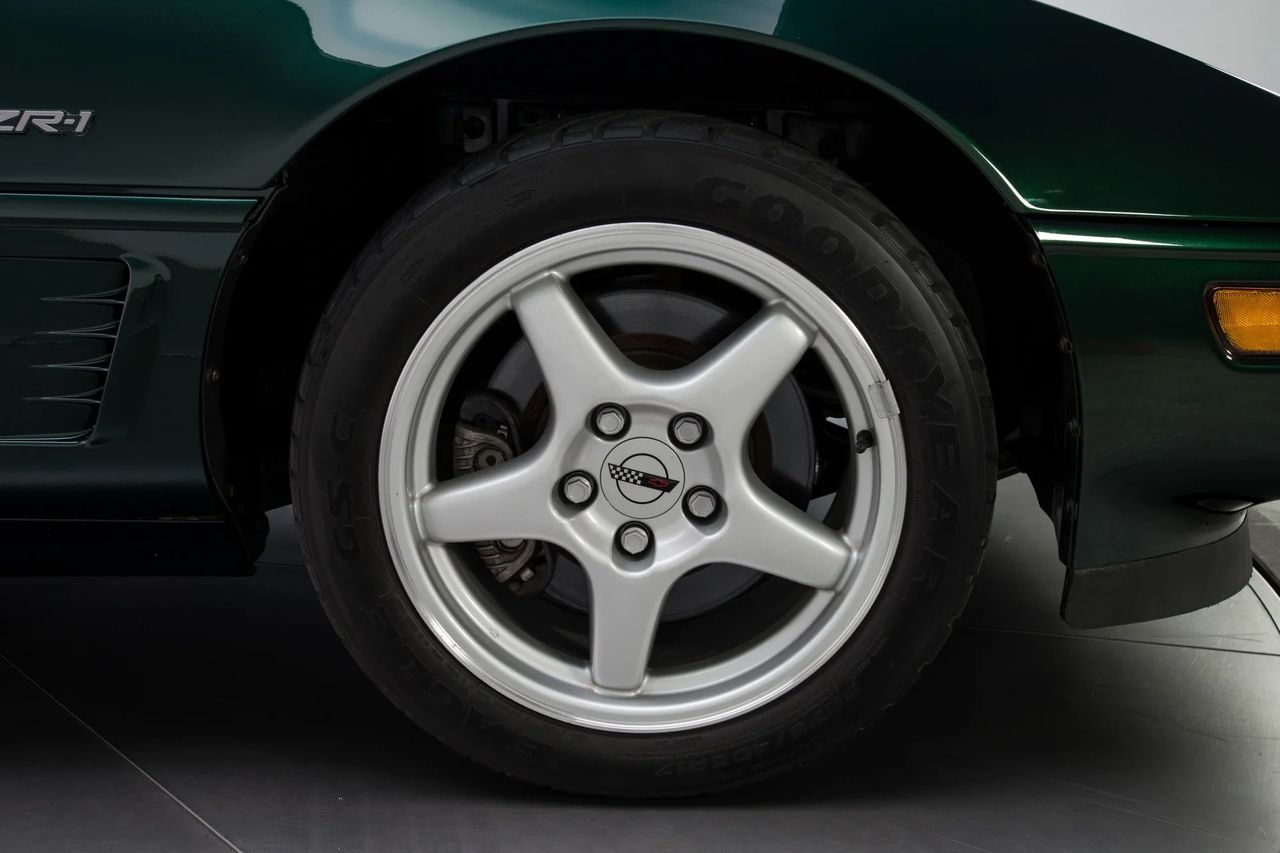
    or 1995, Corvette finally put big brakes on every car: ZR-1/Z07–spec 13-inch front rotors with stout PBR calipers, backed by Bosch ABS 5. The result is real heat capacity and cleaner modulation—pedal height stays consistent, stops stay straight, and threshold braking becomes confidence work, not bravery. It’s the year the C4’s stopping truly matches its going. (Image courtesy of RK Motors)
    or 1995, Corvette finally put big brakes on every car: ZR-1/Z07–spec 13-inch front rotors with stout PBR calipers, backed by Bosch ABS 5. The result is real heat capacity and cleaner modulation—pedal height stays consistent, stops stay straight, and threshold braking becomes confidence work, not bravery. It’s the year the C4’s stopping truly matches its going. (Image courtesy of RK Motors)

    Ask any C4 track rat to name the single best late-car upgrade, and one RPO code came back time after time: J55. For 1995, the heavy-duty front brake package—13-inch rotors, thicker hats, and real thermal capacity—graduated from ZR-1/Z07 exclusivity to standard on every Corvette. Paired with Bosch ABS 5, stopping finally matched going. Threshold braking became an exercise in confidence; the pedal stayed consistent lap after lap, rather than growing long and glassy with heat. The difference was not academic—it was the gap between braking into the apex and surrendering ten yards to nurse a fading system.

    ABS 5 also reshaped emergency stops. The controller cycled faster and with finer pressure modulation than earlier generations, allowing meaningful steering authority over mid-corner bumps and split-µ surfaces. Late C4s felt modern deep in the brake zone on broken pavement because the system maintained line stability while shedding speed: the car modulated, the chassis stayed settled, and the driver kept options. Added to the broader pad window and larger heat sink of the J55 hardware, fade resistance, pedal height, and repeatability became strengths rather than variables—exactly what a fast, confidence-led brake package should have delivered.

    Ride and Handling: Sanding the Rough Edges, Keeping the Edge

    The C4’s structural honesty—stiff backbone, aluminum control arms, short/long arm geometry that loved load—delivered world-class grip from day one. The critique, especially on broken pavement, was ride. For 1995, base-suspension cars received slightly lower front and rear spring rates and a switch to less-stiff de Carbon gas-charged shocks. This was not capitulation; it was control. Lower low-speed damping and spring rates quieted the jiggle and sharpened compliance over the chatter that defined everyday American asphalt. The chassis still talked to you, but it stopped shouting over the small stuff.
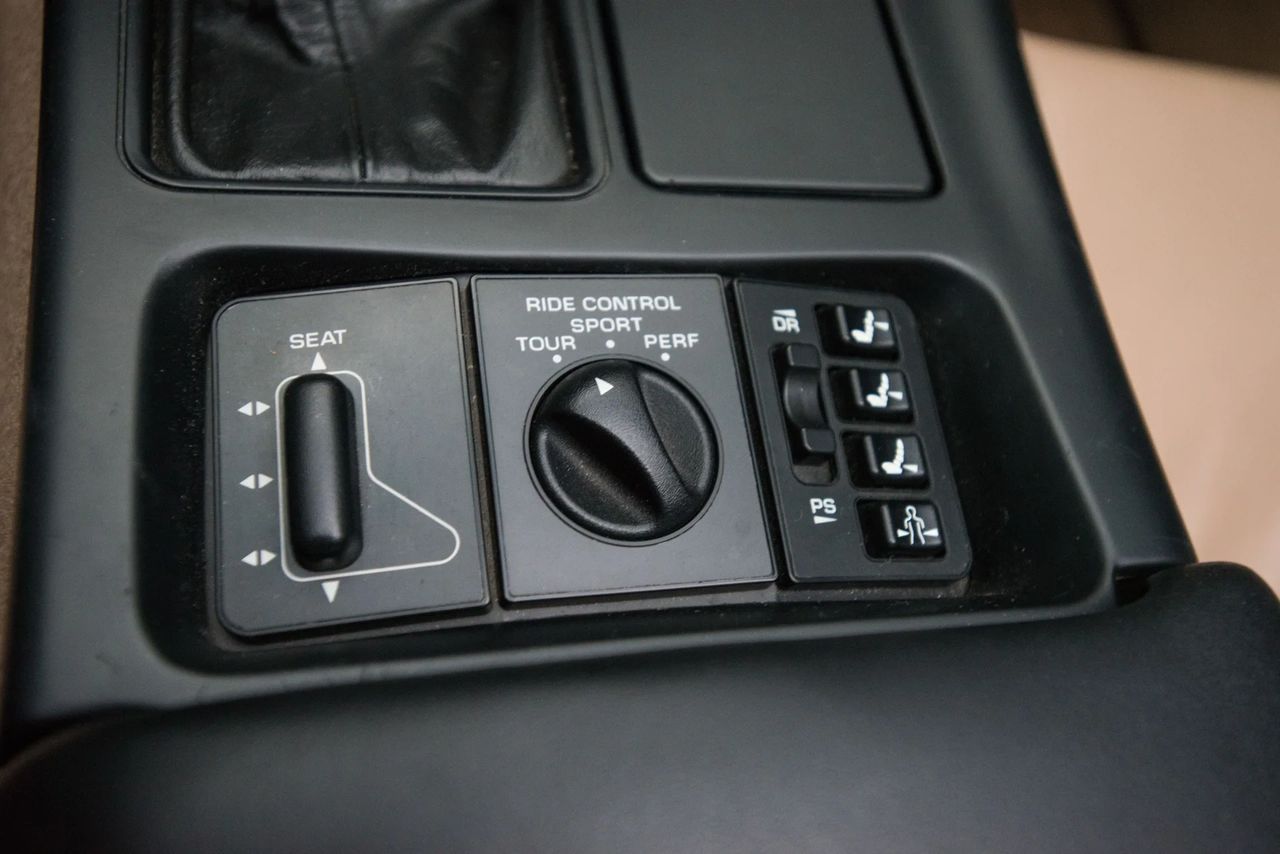
    FX3 Electronic Selective Ride Control pairs Bilstein electronically controlled dampers with a console dial—Tour, Sport, Perf—so the C4’s ride can match the road in seconds. Pick a mode and the system trims damping in real time via shock-mounted actuators, sharpening body control under speed, steering, and brake inputs without beating you up on rough pavement. It’s the late-C4 sweet spot: comfort when cruising, discipline when driven. (Image courtesy of RK Motors)
    FX3 Electronic Selective Ride Control pairs Bilstein electronically controlled dampers with a console dial—Tour, Sport, Perf—so the C4’s ride can match the road in seconds. Pick a mode and the system trims damping in real time via shock-mounted actuators, sharpening body control under speed, steering, and brake inputs without beating you up on rough pavement. It’s the late-C4 sweet spot: comfort when cruising, discipline when driven. (Image courtesy of RK Motors)

    If you ordered FX3 Electronic Selective Ride & Handling, the Bilstein adaptive dampers brought their own late-run refinement, but the real revelation is how cohesive a standard ’95 feels on a fast two-lane. You lift for the corner, load the outside front, lean into the throttle at the apex, and the car settles the way you always wished earlier C4s would settle—no hop, little head toss, and a sense that the platform is working with you, not demanding you drive around its moods.

    The Quiet Fixes Inside: Seats, Squeaks, and Skip-Skips
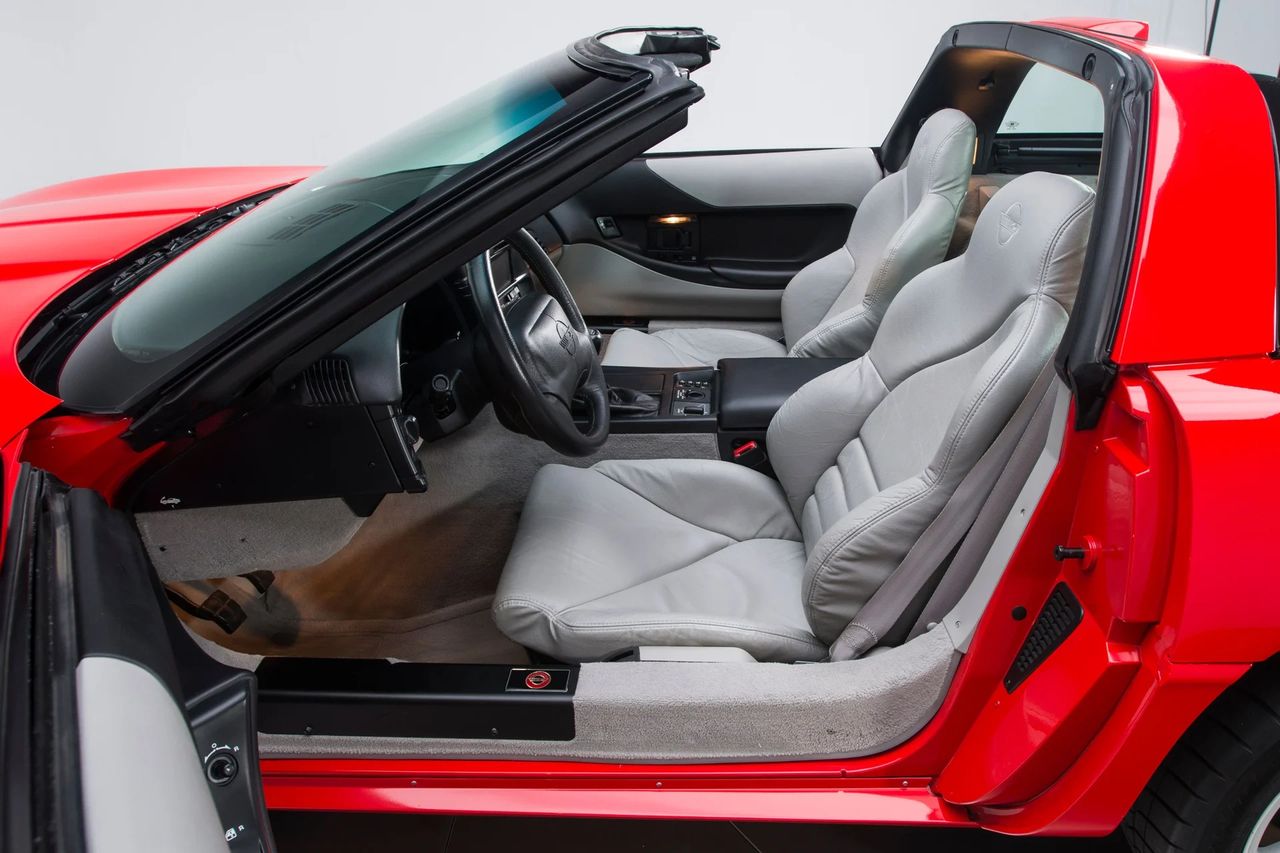
    For 1995, Corvette finally addressed the C4’s most common wear point: the seat bolsters. The sport buckets gained upgraded leather with French-seam stitching, spreading the load and resisting split seams while giving the cabin a cleaner, more tailored look. It’s a subtle change that pays off over time—better durability, tighter shape, and a genuinely upscale finish to the late-C4 interior. (Image courtesy of RK Motors)
    For 1995, Corvette finally addressed the C4’s most common wear point: the seat bolsters. The sport buckets gained upgraded leather with French-seam stitching, spreading the load and resisting split seams while giving the cabin a cleaner, more tailored look. It’s a subtle change that pays off over time—better durability, tighter shape, and a genuinely upscale finish to the late-C4 interior. (Image courtesy of RK Motors)

    Photos didn’t show what 1995 did for the cabin. Your back and ears did.

    Start with the sport seats. Earlier C4s were notorious for torn bolster seams—every bit of sliding in and out carved a little more life out of the stitching. For ’95, the sewing changed to “French” seams and did what good upholstery does: spread load, reduce stress risers, and hold shape. Ten years later, you could tell who had the late seats without asking.

    Then there were the squeaks and buzzes. Corvettes communicated; nobody wanted them to rattle. Engineers added adhesive-fabric straps in strategic spots, the Velcro-ish kind of restraint that preloaded small interfaces so they didn’t chatter. Add a stiffer mount for the radio/CD head unit—less skipping, less thump over expansion joints—and the whole cabin read tighter. A small nod to the faithful automatic crowd: 1995 added an ATF temperature readout in the cluster. It was the sort of subtle tell that this car had been built by people who ran laps on their lunch break and wanted you to have the same data they did.

    Tires and the $100 Credit That Made Sense

    Extended-mobility (run-flat) tires weren’t a novelty by 1995; they were good enough to trust. Chevrolet paired the option with something that felt almost subversive in the age of “pay more, get less”: RPO N84 spare tire delete, a $100 credit when you ordered extended-mobility rubber. You lost the spare, saved weight, and gained a small pocket of space. The safety engineers weren’t asleep at the switch; the area received specific reinforcement, so rear-impact energy management stayed to spec. It was a seemingly small decision that said a lot about where Corvette’s head was at—engineering first, gimmick last.

    Outside: A Subtle, Sharky Tell
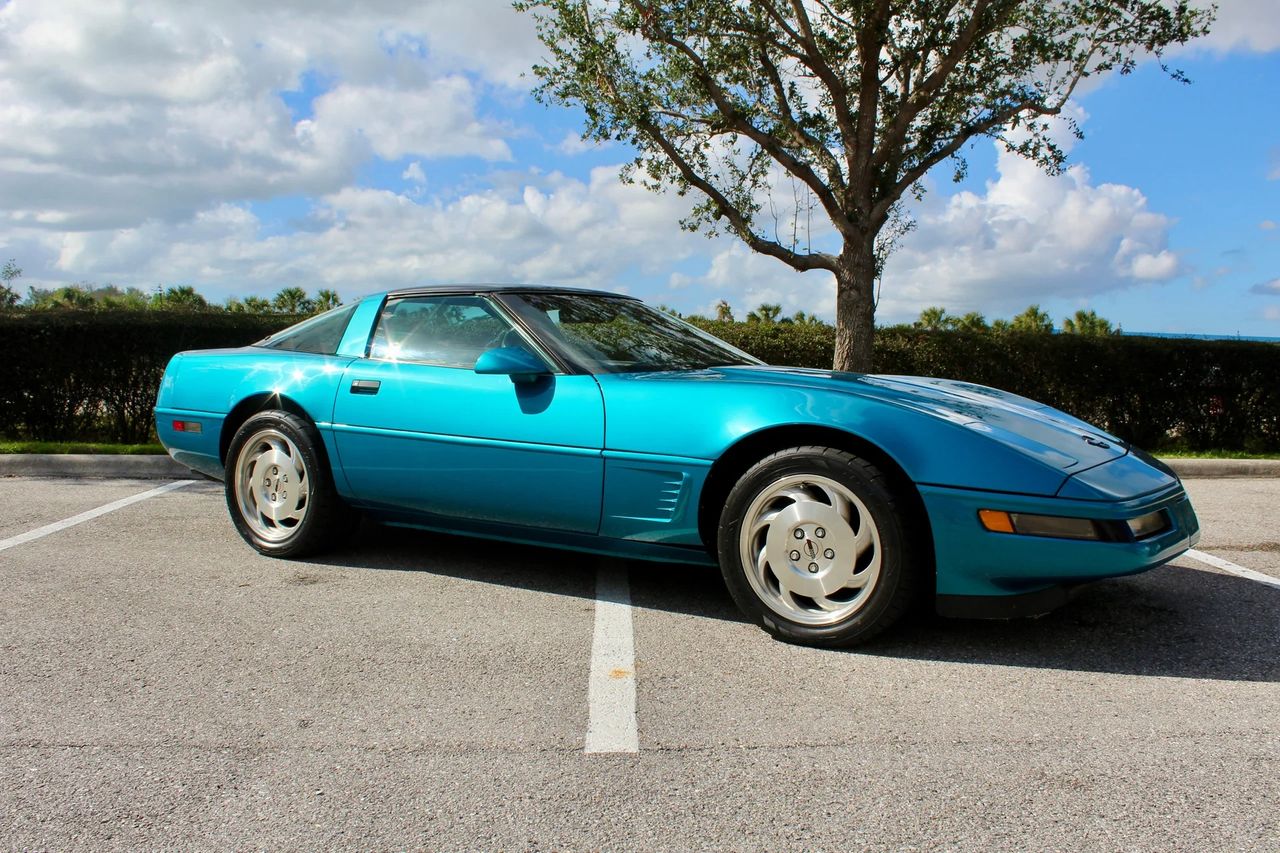
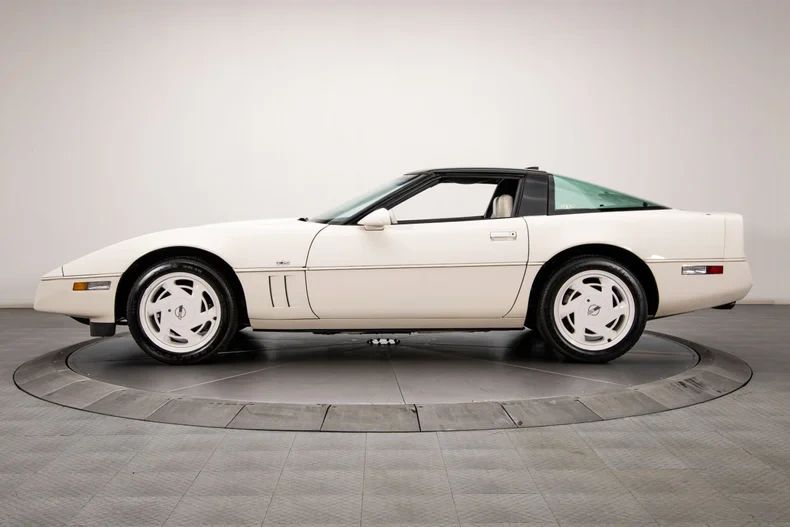
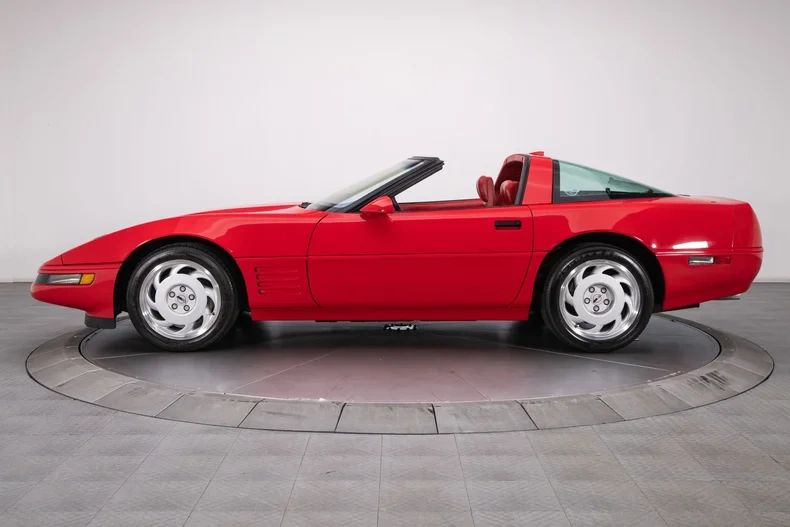
    For 1995, the C4’s front-fender vents lost the inset slats and adopted a cleaner, gill-style opening with a subtle, rolled surround. The change smooths the panel’s visual flow and gives the car a slightly longer, lower look—modernizing the profile without touching the classic long-hood/short-deck proportions. It’s the quickest visual tell you’re looking at a ’95.
    For 1995, the C4’s front-fender vents lost the inset slats and adopted a cleaner, gill-style opening with a subtle, rolled surround. The change smooths the panel’s visual flow and gives the car a slightly longer, lower look—modernizing the profile without touching the classic long-hood/short-deck proportions. It’s the quickest visual tell you’re looking at a ’95.

    There was an easy way to spot a 1995 Corvette in a sea of C4s: walk to the front quarter and look just aft of the wheel opening. Chevrolet reworked the fender “gills” from the earlier recessed slats into a cleaner, more integrated aperture with a soft, rolled surround—less add-on, more sculpture. The opening read longer and lower, visually stretching the car and tying the line back to the late-C1 shark gills without going retro. It was the same fender, same stance, but the surfacing felt tidier and more intentional, like the designers had gone back over the clay and knocked down the last sharp edge.

    That subtle reshaping also calmed the fender’s visual noise. Earlier slats could look inset and shadowy depending on the light; the ’95 treatment highlighted the panel in the same way the rest of the body did, so color flowed across the panel instead of breaking at the vent. In profile photos, it was the tell: the car looked a touch more modern, even though dimensions and proportions didn’t change by even a millimeter.
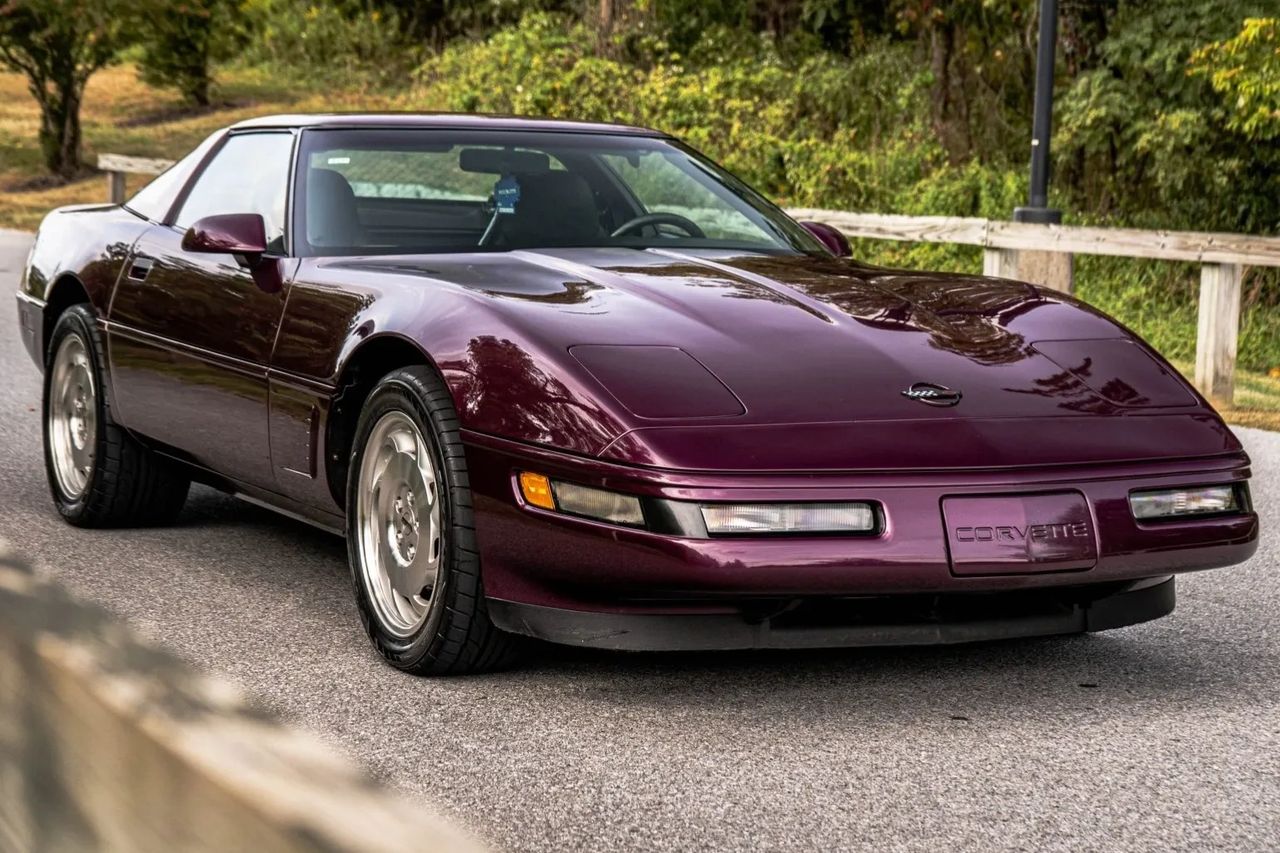
    New for 1995, Dark Purple Metallic gave the C4 a deep, blue-violet flop that flatters every compound curve—moody at dusk, jewel-like in sun. It replaced Copper and Black Rose and instantly became one of the late-run head-turners, with roughly 1,049 cars painted in the shade. Subtle it isn’t; period-correct and unforgettable, it absolutely is. (Image courtesy of bringatrailer.com)
    New for 1995, Dark Purple Metallic gave the C4 a deep, blue-violet flop that flatters every compound curve—moody at dusk, jewel-like in sun. It replaced Copper and Black Rose and instantly became one of the late-run head-turners, with roughly 1,049 cars painted in the shade. Subtle it isn’t; period-correct and unforgettable, it absolutely is. (Image courtesy of bringatrailer.com)

    Chevrolet paired the vent tweak with a handful of “live-with-it” updates outside. New wiper blades and revised arm geometry reduced lift and chatter at highway speeds—a small fix you noticed the first time rain hit at 75. And the paint deck gained a single, mood-setting hue: Dark Purple Metallic. It stepped in for Copper and Black Rose, bringing a deep, blue-violet flop that flattered the C4’s compound curves in a way the camera never quite captured. It was exactly what a late-run color should have been—fresh enough to turn heads, faithful enough to feel like it had always belonged.

    Colors People Actually Bought
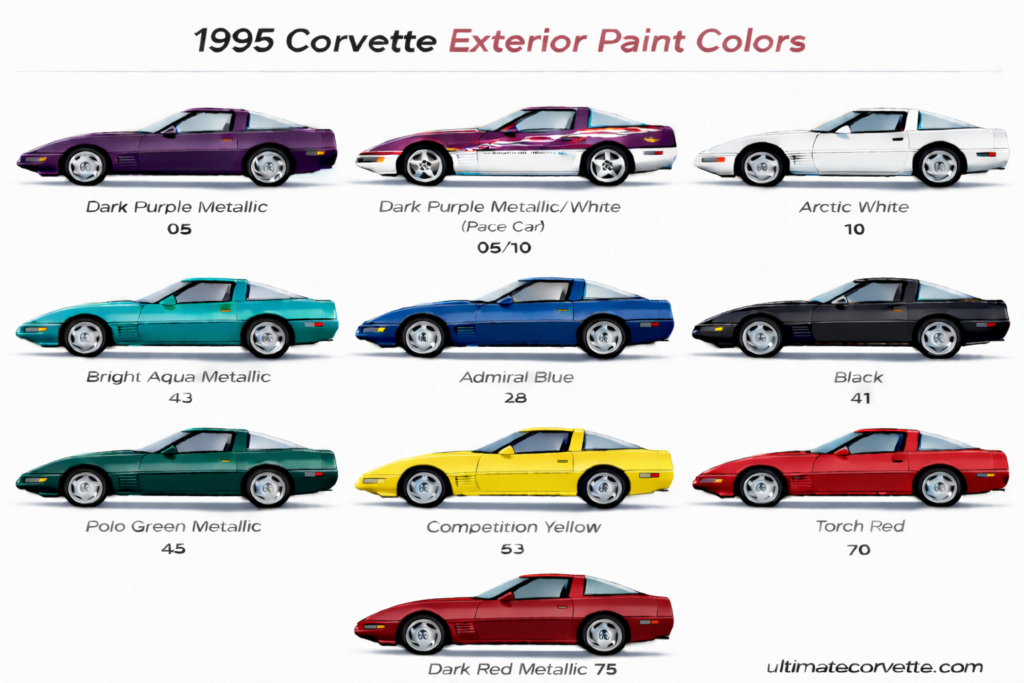
    1995 Chevrolet Corvette Exterior Paint Colors (and OEM Paint Color Codes)
    1995 Chevrolet Corvette Exterior Paint Colors (and OEM Paint Color Codes)

    If you showed up to a cruise-in and felt like you were drowning in Torch Red, there was a reason. Torch Red accounted for roughly 22% of 1995 production (4,500-plus cars), with Black and Arctic White right behind. Polo Green Metallic—the polite assassin’s color—held a strong fourth. At the rarer end were Admiral Blue, Competition Yellow, and the new Dark Purple Metallic, each flirting with the thousand-car mark. Pace Car replicas—two-tone Dark Purple over Arctic White—numbered 527 and looked like nothing else when you caught one in the sun. The mix told you who the ’90s Corvette buyer was: bold enough to wear color, practical enough to buy the ones that still looked fresh thirty years on.

    What It Cost—and How People Spec’d It

    Base price moved only slightly over 1994: $36,785 for the coupe, $43,665 for the convertible. The ZR-1’s option tally still read like a bank statement—$31,258 over a coupe—one reason the LT1 car nipped at its sales heels by the middle of the decade. Look at surviving window stickers, and you’ll see how owners lived: power seats almost everywhere (AG1/AG2), the blue-tint roof panel (24S) vastly preferred to bronze (64S), and a healthy take rate on FX3 for the folks who wanted to tune the ride with their right index finger.

    The 1995 Indy 500 Pace Car (and Z4Z Replicas)
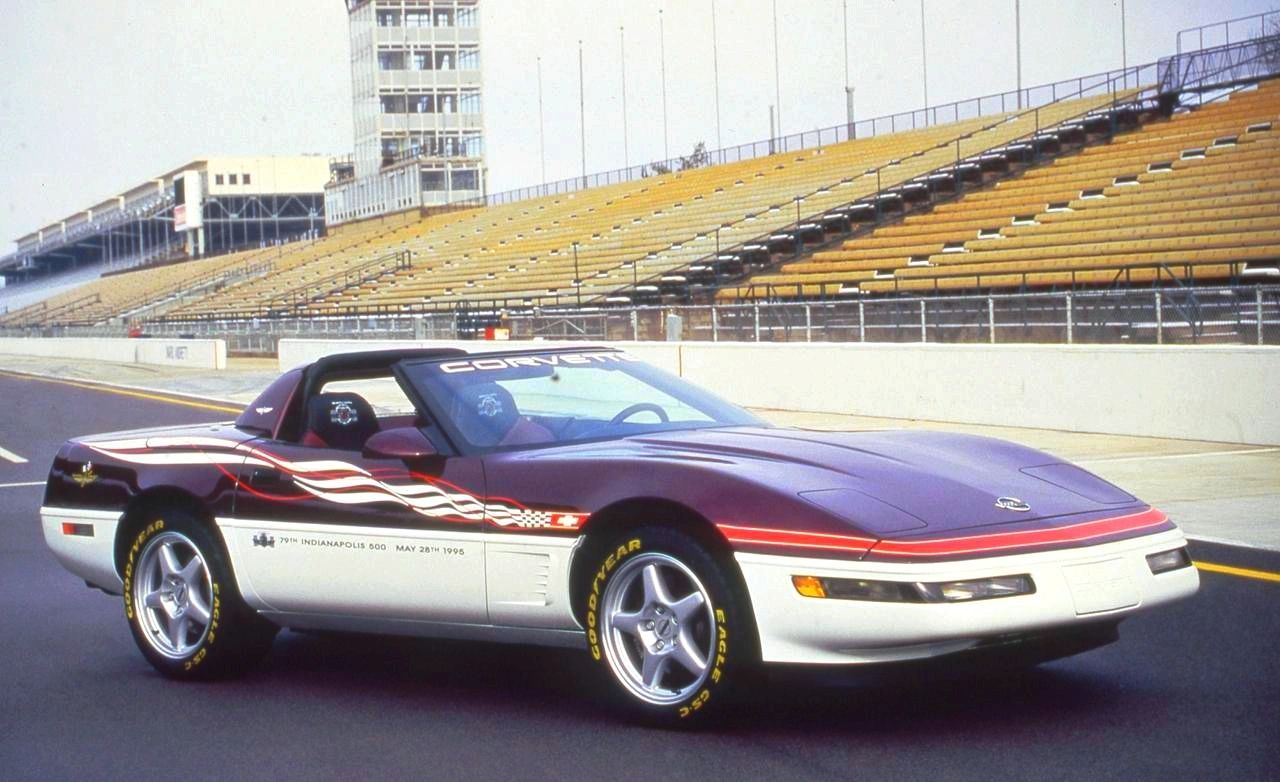
    This 1995 Corvette Pace Car—Dark Purple Metallic over Arctic White with wind-swept ribbon graphics—led the 79th Indianapolis 500 essentially stock, proof of how civilized and capable the late-C4 had become. Under the skin: LT1 torque, tidy chassis manners, and A/C cold enough for pit-lane crawls under a hot May sun. Chevrolet built 527 Z4Z Pace Car Replicas for the street, but the look you see here—white top, embroidered headrests, red pinstripe sweep—remains the poster shot: pure Motor Speedway theater on a car that could drive home afterward without breaking a sweat. (Image courtesy of GM Media LLC)
    This 1995 Corvette Pace Car—Dark Purple Metallic over Arctic White with wind-swept ribbon graphics—led the 79th Indianapolis 500 essentially stock, proof of how civilized and capable the late-C4 had become. Under the skin: LT1 torque, tidy chassis manners, and A/C cold enough for pit-lane crawls under a hot May sun. Chevrolet built 527 Z4Z Pace Car Replicas for the street, but the look you see here—white top, embroidered headrests, red pinstripe sweep—remains the poster shot: pure Motor Speedway theater on a car that could drive home afterward without breaking a sweat. (Image courtesy of GM Media LLC)

    The 79th Indianapolis 500 ran under heavy nostalgia and heavier sun, and the car leading the field was a near-stock 1995 Corvette convertible—the nameplate’s third time pacing the Brickyard. Chevrolet marked the moment with RPO Z4Z, a factory Pace Car Replica available only as a convertible. The look is unmissable: Dark Purple Metallic over Arctic White, a white top, swooping ribbon graphics, and embroidered headrests. Chevrolet built 527 examples; 87 handled race-week duty, 20 went overseas, and the balance were allocated to top-performing U.S. dealers. The package added $2,816 to a base convertible, but its visual drama made it feel like far more than a sticker sheet.
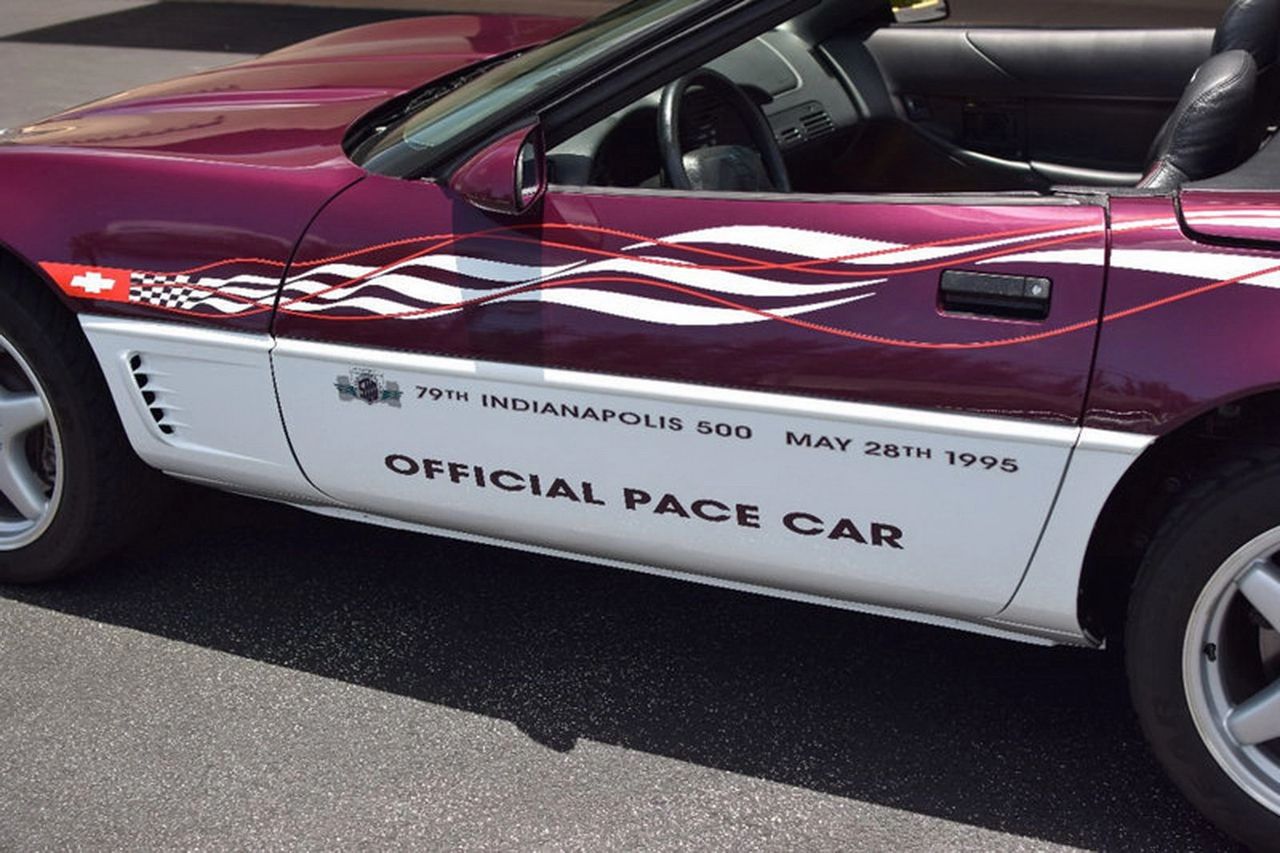
    Lettered like a pit-lane credential, the Z4Z’s flanks tell the whole story: “79th Indianapolis 500 — May 28th, 1995” riding above crisp “OFFICIAL PACE CAR” script. A red tracer threads through wind-swept ribbons that split Dark Purple Metallic from Arctic White, ending at the crossed-flags fender badge. The close-up also shows late-C4 cues—the clean side gills, body-color handle, and five-spoke alloys—wrapped in a livery that looks in motion even when parked.
    Lettered like a pit-lane credential, the Z4Z’s flanks tell the whole story: “79th Indianapolis 500 — May 28th, 1995” riding above crisp “OFFICIAL PACE CAR” script. A red tracer threads through wind-swept ribbons that split Dark Purple Metallic from Arctic White, ending at the crossed-flags fender badge. The close-up also shows late-C4 cues—the clean side gills, body-color handle, and five-spoke alloys—wrapped in a livery that looks in motion even when parked.

    Part of the appeal was what it didn’t change: the underlying car. By 1995, the LT1-powered C4 was the product of a decade of continuous refinement—tight body control, confident ABS/Traction Control, precise steering, and a cooling system you could trust in stop-and-go heat. That mattered at Indy. A nearly stock Corvette could idle on the pit lane with the A/C blasting, pace a field cleanly at speed, and then loaf home like a boulevard cruiser. The Z4Z didn’t exist to manufacture performance; it existed to spotlight a car that already had it, with manners to match.

    Collectors also respond to how cleverly Chevrolet framed the replica. The diagonal two-tone references a classic motorsport trope, but Dark Purple Metallic—new for 1995—made the car feel contemporary rather than retrospective. That purple wasn’t just a pace-car flourish either: across the entire model year, 1,049 Corvettes wore Dark Purple Metallic, outpacing several established hues. In that context, the Z4Z’s 527-unit tally reads as intentionally scarce—special enough to be collectible, common enough to be seen.
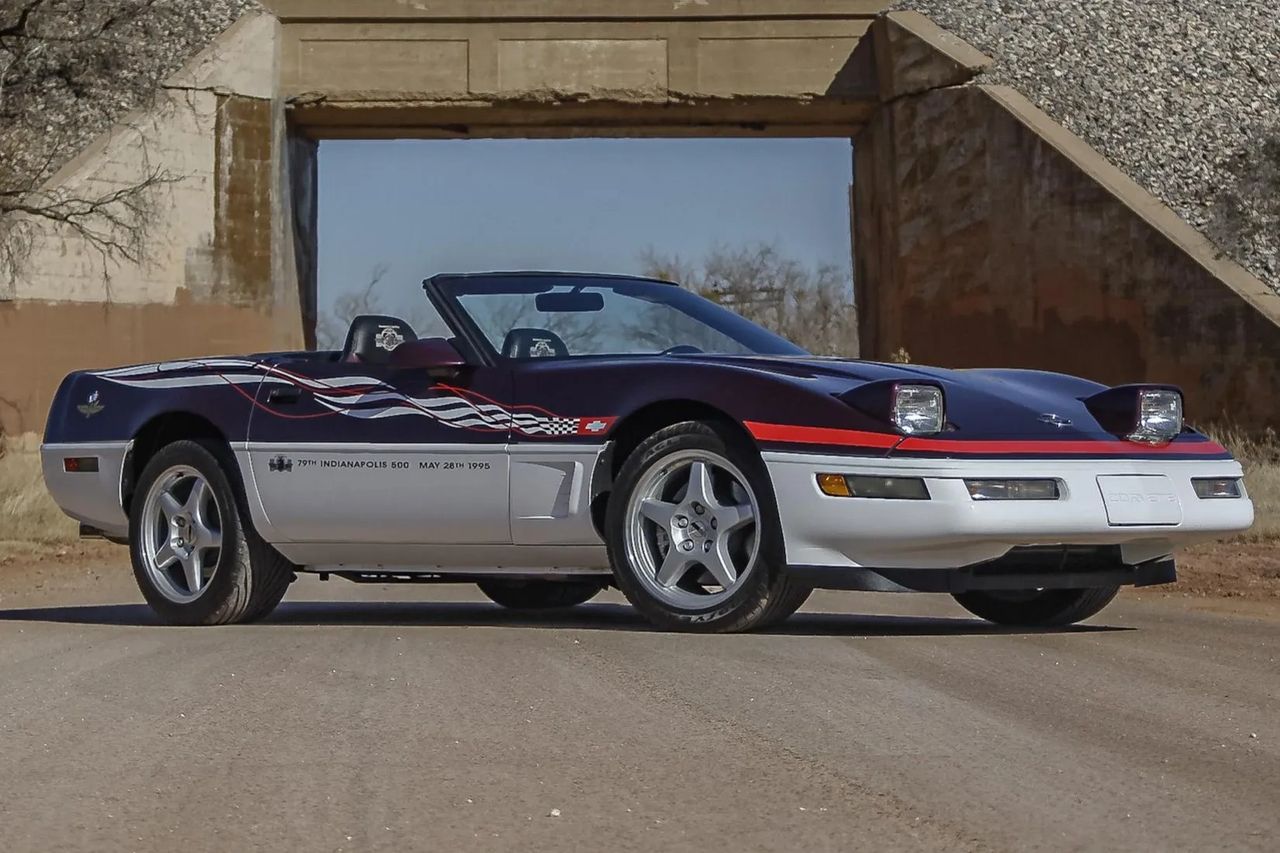
    As Indy-themed C4s go, the Z4Z is a sweet spot for collectors: low production, easy to live with, and still approachable money. Market-wise, driver-quality cars with average miles typically trade in the mid-teens (Hagerty pegs a “good” example around $16k), while exceptional, low-mile cars with full paperwork can push well into the $20s and occasionally crest $30k—a Mecum sale brought $34,100 in 2022. Recent auction floors show reality checks too; a Kissimmee car stalled at a $17,000 high bid in 2025. Provenance (festival or track-use docs), mileage under ~10k, untouched graphics, original wheels/tires, and complete books/window sticker move the needle; aftermarket paint or missing decals hold it back. With just 527 built, clean examples remain thin on the ground, which helps values stay resilient even as broader C4 prices fluctuate. (Image courtesy of bringatrailer.com)
    As Indy-themed C4s go, the Z4Z is a sweet spot for collectors: low production, easy to live with, and still approachable money. Market-wise, driver-quality cars with average miles typically trade in the mid-teens (Hagerty pegs a “good” example around $16k), while exceptional, low-mile cars with full paperwork can push well into the $20s and occasionally crest $30k—a Mecum sale brought $34,100 in 2022. Recent auction floors show reality checks too; a Kissimmee car stalled at a $17,000 high bid in 2025. Provenance (festival or track-use docs), mileage under ~10k, untouched graphics, original wheels/tires, and complete books/window sticker move the needle; aftermarket paint or missing decals hold it back. With just 527 built, clean examples remain thin on the ground, which helps values stay resilient even as broader C4 prices fluctuate. (Image courtesy of bringatrailer.com)

    And that, ultimately, is the late-C4 story: dual-purpose competence with a showman’s streak. The Z4Z cars gave the public a street-buyable slice of Indy pageantry, but the deeper message lived in the way a largely stock Corvette could do the ceremonial work without breaking a sweat—and do the real work, too. Pace-car paint made the statement loud; the LT1’s easy torque, the chassis’ polish, and the Corvette’s everyday usability made it true.

    Le Mans 1995: Blue-Collar Heroes in Yellow Light
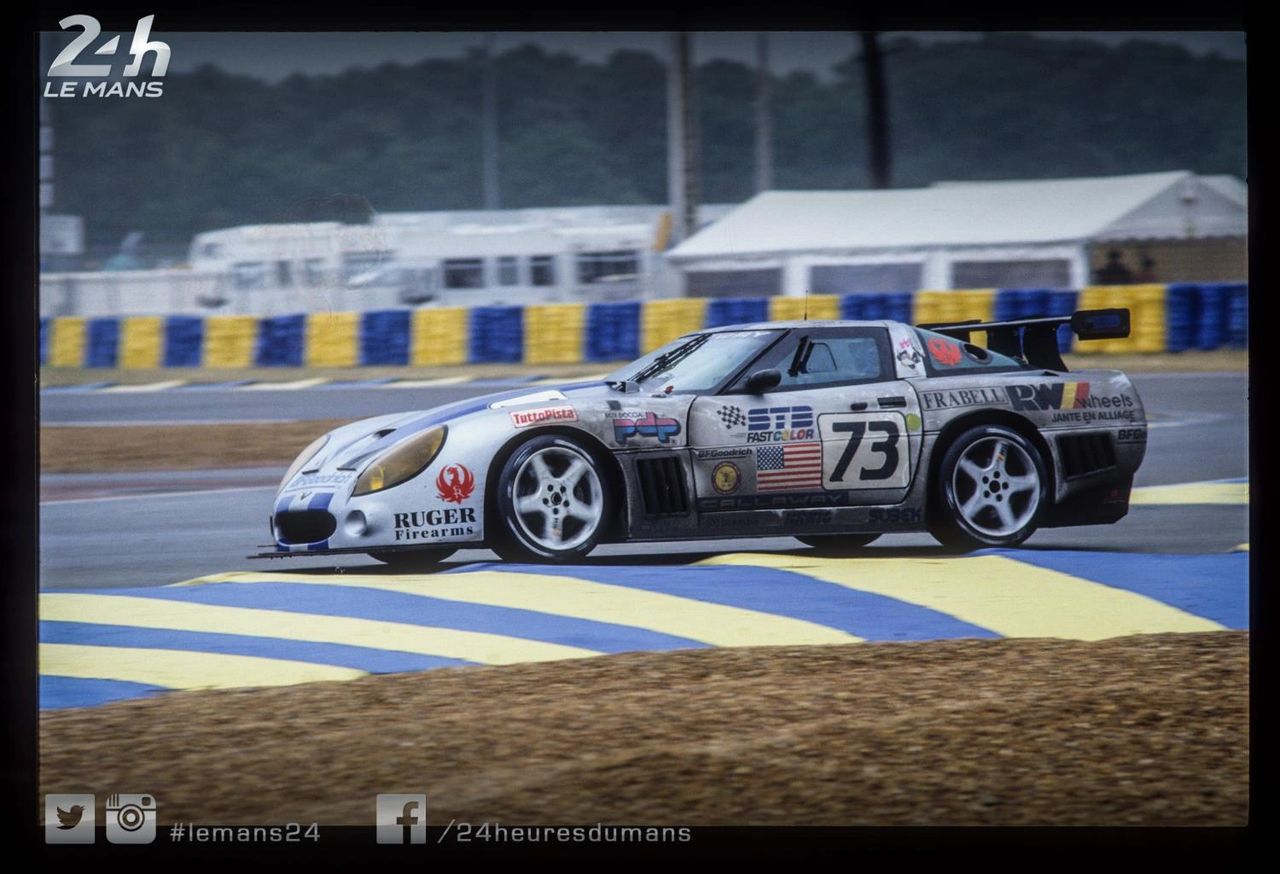
    Rain-polished curbs, yellow lights, and blue-collar thunder. Callaway’s #73 SuperNatural Corvette skims the Le Mans chicanes like a power tool on wet glass—front-engine torque tucked under a battered, stickered shell, rear wing carving spray into ribbons. The five-spokes blur, side vents inhale, and that long C4 hood points down the Mulsanne with purpose. Driven by Bertaggia/Unser/Jelinski, this was the GT2 grinder that climbed all night through traffic and weather, proving that an American V-8 with good hands and better discipline could dance in European rain—and finish on the GT2 podium for keeps.
    Rain-polished curbs, yellow lights, and blue-collar thunder. Callaway’s #73 SuperNatural Corvette skims the Le Mans chicanes like a power tool on wet glass—front-engine torque tucked under a battered, stickered shell, rear wing carving spray into ribbons. The five-spokes blur, side vents inhale, and that long C4 hood points down the Mulsanne with purpose. Driven by Bertaggia/Unser/Jelinski, this was the GT2 grinder that climbed all night through traffic and weather, proving that an American V-8 with good hands and better discipline could dance in European rain—and finish on the GT2 podium for keeps.

    Nobody alive forgets the weather at Le Mans in 1995. The light went silvery gray, the rain came in hard, wind-blown sheets, and the Circuit de la Sarthe turned into a master class in mechanical sympathy. Under that sodium-yellow glow at dusk, the fast way around wasn’t the bravest throttle but the softest hands—feeling the car skim, giving it just enough slip to clear traffic and just enough kindness to live another lap.

    In that chaos, the stories Corvette people tell live in the GT2 ranks. Callaway Competition rolled in with two production-based SuperNatural Corvettes—blue-collar tools dressed for a black-tie fight—and went to work. The #73 car, driven by Enrico Bertaggia, Johnny Unser, and Frank Jelinski, climbed from deep in the grid with the kind of wet-weather discipline you only learn the hard way: early brake releases into the rivered braking zones, patient throttle over the crown on the Hunaudières, and absolute trust through the kinks. When daylight returned to the pits, they were 9th overall and 2nd in GT2. The sister car shadowed that arc, grinding out clean sectors and unforced stops to finish 11th overall, 3rd in class—results that read modest on paper until you remember the conditions and the company.
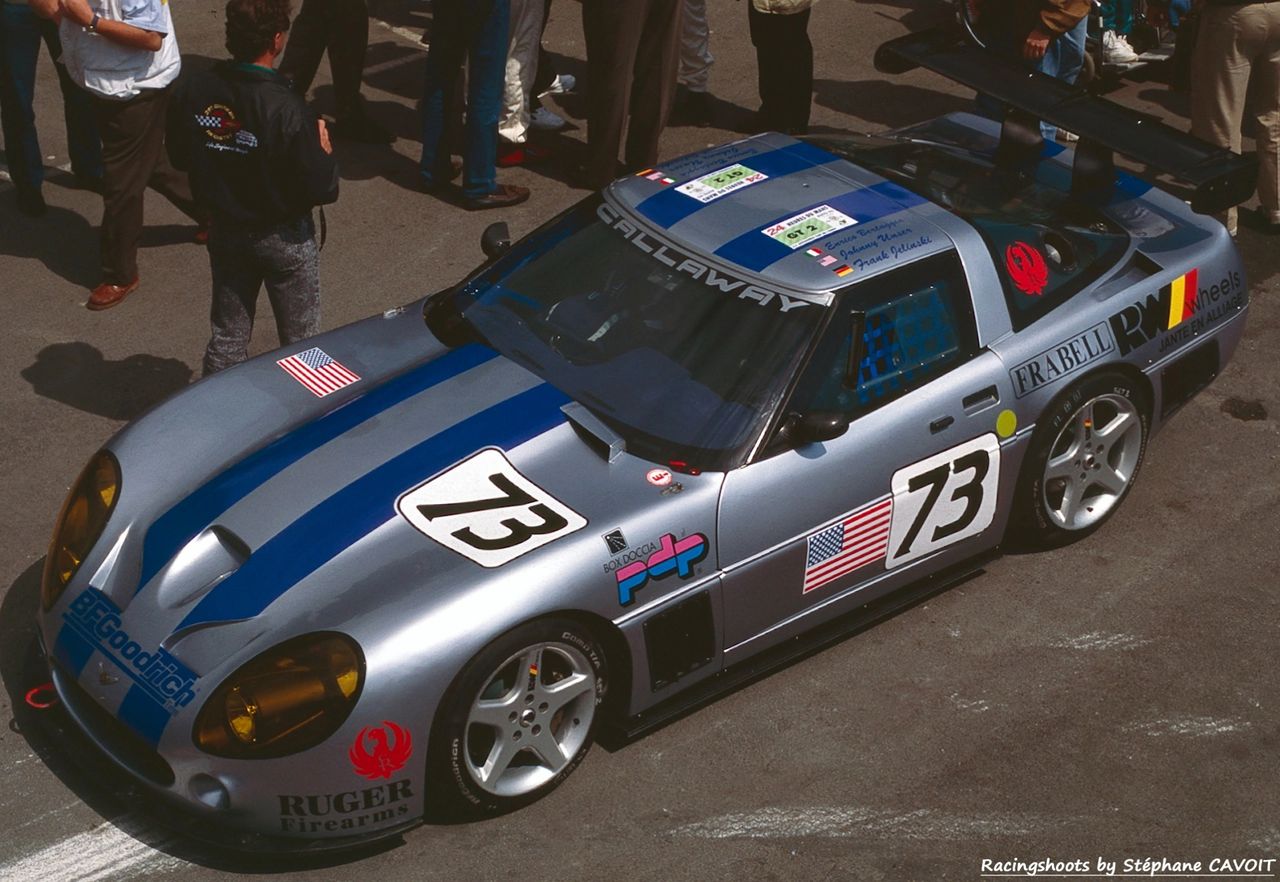
    Scrutineering tells the truth on #73. Roof stickers and driver flags march across the panel, CALLAWAY shouts from the visor, and the silver body with twin blue stripes looks purposeful, not pretty. Yellow headlamp film, a deep center duct, and a NACA scoop feeding the front brakes telegraph the brief. Big side extractors and a tall, single-plane wing square the C4’s shoulders, while five-spoke Speedlines tuck neatly under the arches. The sponsor set—BFGoodrich, Ruger, Frabell, RW Wheels—reads period-correct, but it’s the small stuff that sells it: tow eye peeking from the splitter, quick-release pins, hand-cut numbers. This is a car built for the long night, not the lawn.
    Scrutineering tells the truth on #73. Roof stickers and driver flags march across the panel, CALLAWAY shouts from the visor, and the silver body with twin blue stripes looks purposeful, not pretty. Yellow headlamp film, a deep center duct, and a NACA scoop feeding the front brakes telegraph the brief. Big side extractors and a tall, single-plane wing square the C4’s shoulders, while five-spoke Speedlines tuck neatly under the arches. The sponsor set—BFGoodrich, Ruger, Frabell, RW Wheels—reads period-correct, but it’s the small stuff that sells it: tow eye peeking from the splitter, quick-release pins, hand-cut numbers. This is a car built for the long night, not the lawn.

    What made it sing wasn’t just lap time; it was the way a front-engine American V-8 endured a European rain race. The Callaway cars were built around reliability and feel: broad, usable torque that let the drivers short-shift out of the slow stuff; gearing tall enough to stay calm on the long straights; brake packages they could nurse through the night without drama. In the garage, the operation looked exactly like a privateer should—handwritten pit boards, towels steaming on radiators, crews taping seams and wiping visors between fuel and tires—yet the execution was clinical. Tire calls were conservative, out-laps were tidy, and the cars kept their noses clean when prototypes sprayed sheets of water past Arnage.
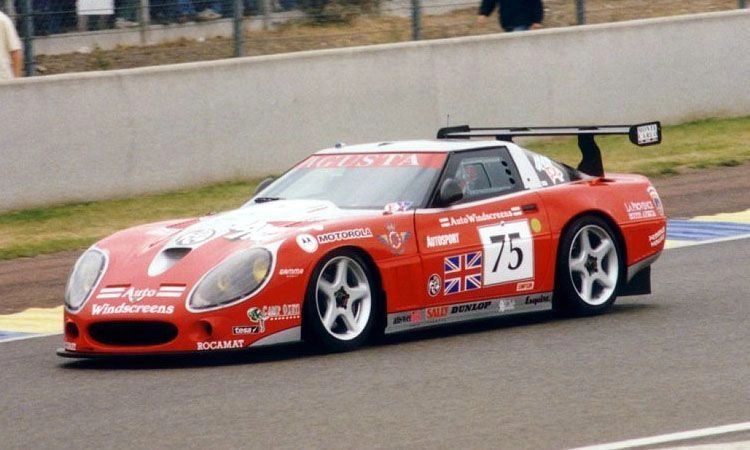
    Callaway brought two SuperNatural GT2 entries to La Sarthe alongside the headline #73: the #75 (shown in the picture) and #76 sister cars. In a race defined by rain and restraint, #75 did the blue-collar work—clean pit cycles, tidy stints, zero drama—and ground out a 3rd in GT2 and 11th overall, the kind of result you earn one disciplined lap at a time.  The #76 car showed flashes of the same pace but didn’t get the breaks; a long night of weather, traffic, and attrition ultimately sidelined it before the flag. Together, the two cars captured the Callaway brief in 1995: front-engine Corvette torque, privateer execution, and a refusal to flinch when the circuit turned to rivers.
    Callaway brought two SuperNatural GT2 entries to La Sarthe alongside the headline #73: the #75 (shown in the picture) and #76 sister cars. In a race defined by rain and restraint, #75 did the blue-collar work—clean pit cycles, tidy stints, zero drama—and ground out a 3rd in GT2 and 11th overall, the kind of result you earn one disciplined lap at a time. The #76 car showed flashes of the same pace but didn’t get the breaks; a long night of weather, traffic, and attrition ultimately sidelined it before the flag. Together, the two cars captured the Callaway brief in 1995: front-engine Corvette torque, privateer execution, and a refusal to flinch when the circuit turned to rivers.

    The result felt like a baton pass. Those weather-beaten, quietly professional finishes proved that a Corvette—properly prepared and intelligently driven—could be a 24-hour instrument, not just a sprint hammer. Within a few years, the factory-backed C5-R would arrive with Pratt Miller’s polish and start writing the big headlines. But the tone had already been set in 1995: blue-collar heroes in yellow light, doing the hard, unglamorous laps that turn a marque into a Le Mans contender.

    And that’s why 1995 still resonates. McLaren took the overall trophy, but Corvette people remember two cars that refused to flinch—front-engine thunder made gentle by good hands, finding grip where there shouldn’t have been any, and proving to everyone paying attention that America’s sports car belonged on the world’s toughest stage.

    Doug Rippie’s Lone 1995 CORvETTE ZR-1 at Le Mans
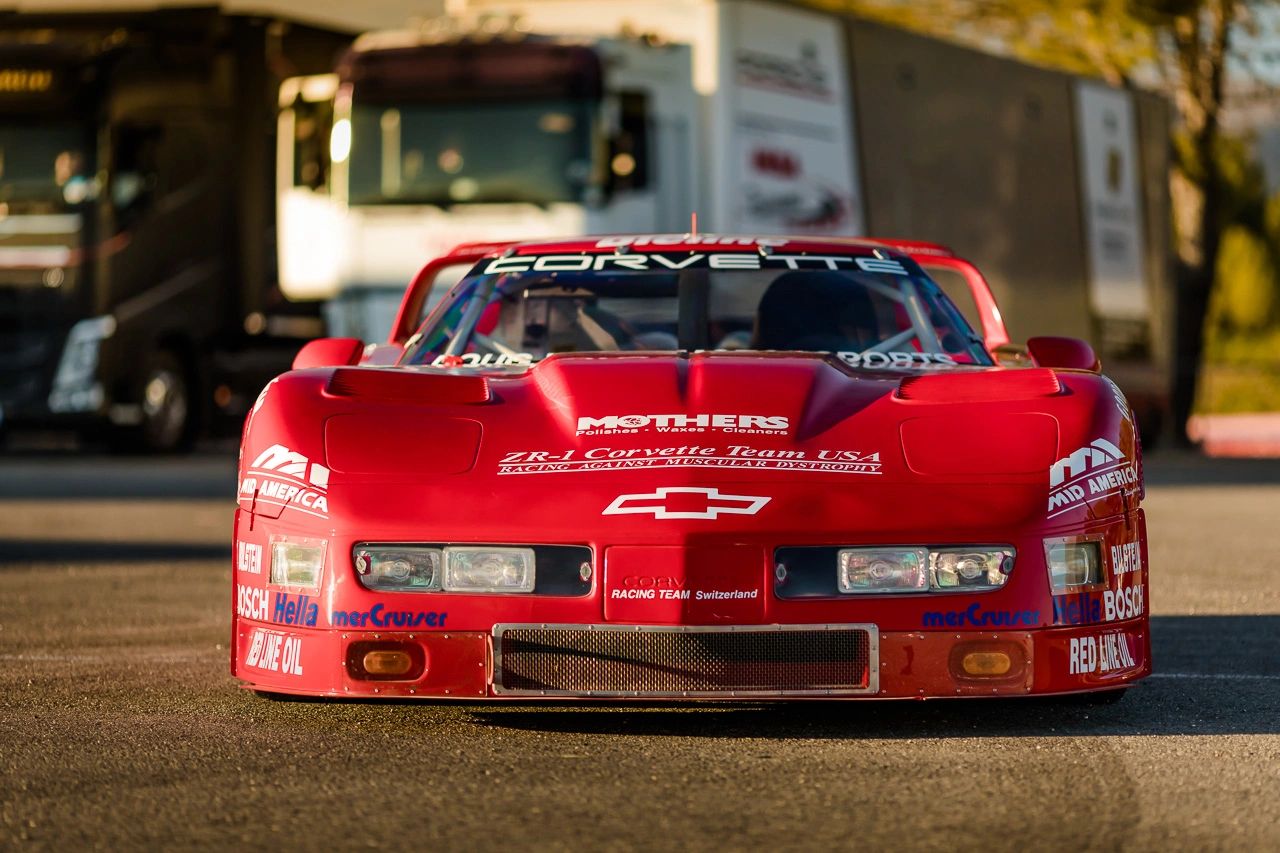
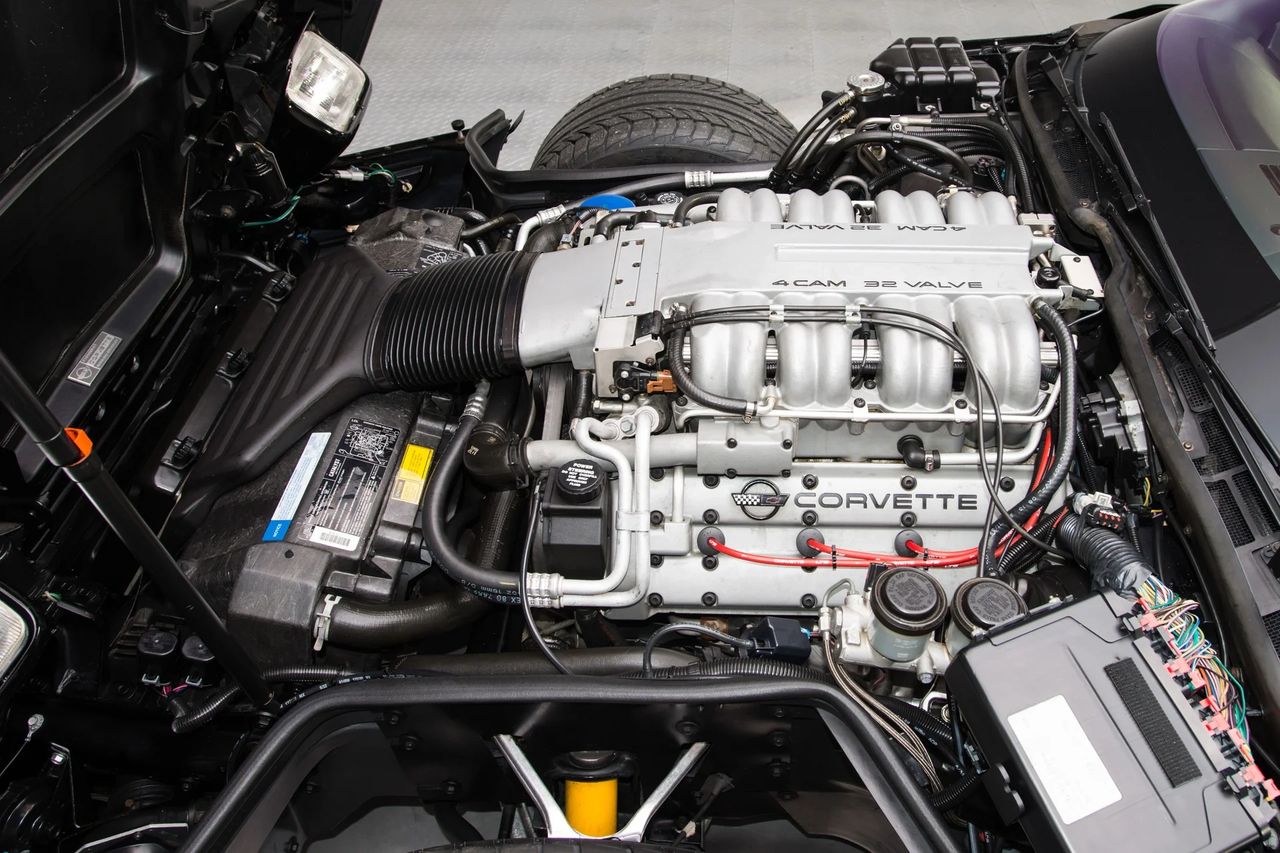
    Doug Rippie Motorsports took a single ZR-1 to Le Mans in 1995—the only C4 ZR-1 ever to start the 24—and trimmed it into a GT1 hammer: LT5 quad-cam V-8 breathing through a wide-mouth fascia, clear headlamp covers, big brakes, and aero you could measure with a ruler. It wasn’t a trailer queen; it mixed it with the class all day and deep into the night before an engine failure ended the run late. No trophy, but a statement: America’s quad-cam Corvette could qualify for, fight in, and very nearly finish the world’s roughest endurance race on privateer grit.
    Doug Rippie Motorsports took a single ZR-1 to Le Mans in 1995—the only C4 ZR-1 ever to start the 24—and trimmed it into a GT1 hammer: LT5 quad-cam V-8 breathing through a wide-mouth fascia, clear headlamp covers, big brakes, and aero you could measure with a ruler. It wasn’t a trailer queen; it mixed it with the class all day and deep into the night before an engine failure ended the run late. No trophy, but a statement: America’s quad-cam Corvette could qualify for, fight in, and very nearly finish the world’s roughest endurance race on privateer grit.

    In 1995, Doug Rippie Motorsports hauled the C4’s halo straight to La Sarthe—the only ZR-1 ever to start the 24. The car looked every inch the purpose-built GT1: clear headlamp covers over a shovel-nose fascia, deep hood extractors, a proper splitter, and that Lotus-designed LT5 quad-cam breathing through a wide mouth. The livery read like pit-lane roll call—Mothers, Mid America, Bosch, Red Line—but the stance said everything: low, wide, and unapologetically CORVETTE.

    The run was classic privateer grit. The DRM ZR-1 mixed it with the class through the wet night on tidy stops and honest pace before an engine problem ended the drive late. No trophy, but the point landed: a well-prepared, quad-cam C4 could qualify for, race in, and very nearly finish Le Mans. In the broader ’95 story, that effort feels like a handoff—the proof-of-concept that set the stage for the factory C5-R juggernaut to follow.

    The ZR-1’s Farewell: Long Live the King
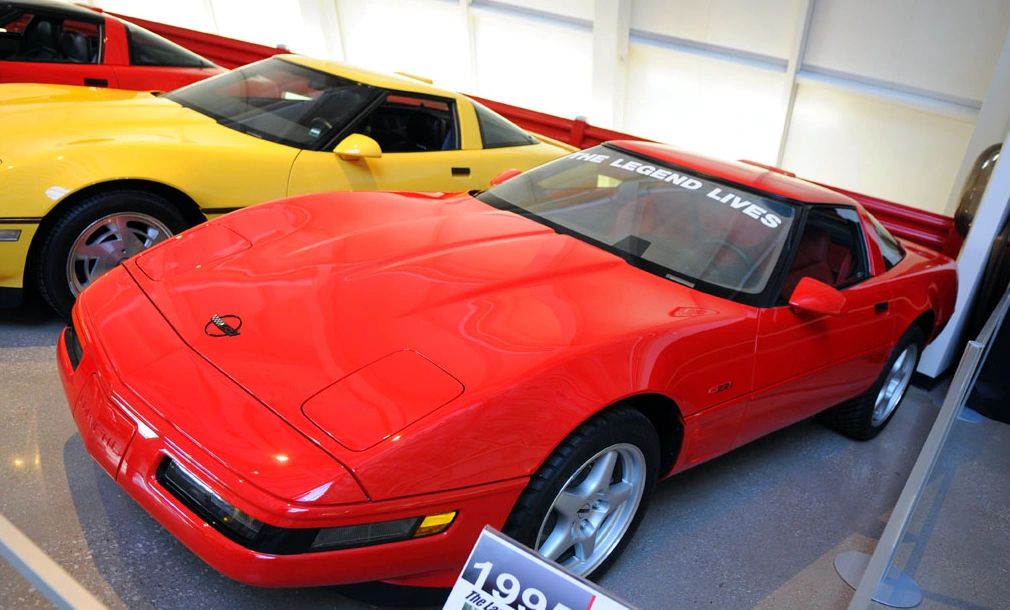
    This image shows the final 1995 Corvette ZR-1—the last C4 ZR-1 built—now preserved at the National Corvette Museum, identifiable by the windshield banner reading “The Legend Lives,” the slogan used for the model’s sendoff. Chevrolet ended ZR-1 production in 1995 after building 448 examples for the final model year, closing out a six-year run of the LT5-powered flagship. The 1995 ZR-1 used the 5.7-liter LT5 DOHC V8 rated at 405 horsepower and 385 lb-ft of torque, paired exclusively with a six-speed manual transmission. Contemporary accounts of the retirement ceremony note that the final Torch Red car was driven from the Bowling Green plant to the National Corvette Museum for permanent display.

    If the C4 democratized world-class handling, the ZR-1 redefined what an American supercar could be. Six model years; 6,939 cars; a Lotus-engineered, Mercury Marine-assembled LT5 with four cams, thirty-two valves, and a work ethic that made endurance records look like calendar invites. The final ZR-1 rolled off the Bowling Green line on Friday, April 28, 1995, and it didn’t sneak out a side door. The plant paused. The car—Torch Red, as if it could be anything else—was paraded off the line with Plant Manager Wil Cooksey and UAW’s Billy Jackson aboard. Jim Perkins, Chevrolet’s general manager and a man who could sell ice in Antarctica, took the wheel, checkered flag in hand. Riding shotgun across to the National Corvette Museum: Dave McLellan, the chief engineer who shepherded the C4 from square one into legend. It was equal parts celebration and salute.

    Why end it? Two truths converged. The 1996 emissions and onboard diagnostic standards made another year of LT5 prohibitively expensive. And the LT1 cars—cheaper, simpler, and increasingly mighty—were too good to ignore. Corvette people love to speculate about the path not taken: the higher-output LT5 evolutions (450-plus horsepower) that Lotus and GM explored, the prototypes that hinted at what might have been. But the market and the calendar set the terms. The ZR-1 had done its job. It changed minds. It dragged the world’s attention to a corner of Kentucky and made the Corvette name synonymous with speed, stamina, and civility. The king could retire; the kingdom was secure.

    And the epitaph had already been written in the present tense. As AutoWeek put it at the time: with rocket-sled acceleration, mastiff grip, and right-now brakes, the ZR-1 offered the largest performance envelope of any mass-produced American car, would trudge through gridlock with the A/C on “kill,” and, with a slight tailwind, run 180 mph. You don’t need a plaque for that. You need a long piece of road.

    Sales, VINs, and the Slow Fade to the Finale

    The numbers tell a polite truth. With the C5 looming, 1995 Corvette production settled at 20,742 units—15,771 coupes and 4,971 convertibles—even as dealers grew aggressive with their pricing. ZR-1 production stopped at 448 before the April ceremony. If you’re decoding a car today, the VIN blocks make life easy: base cars run 100001–120294; ZR-1s run 800001–800448. Don’t be surprised when serial ranges and total production totals don’t match exactly; number allocation doesn’t always run in a perfect, uninterrupted line. What matters is that the line, in the bigger sense, kept moving forward.

    How It Drives—Then and Now
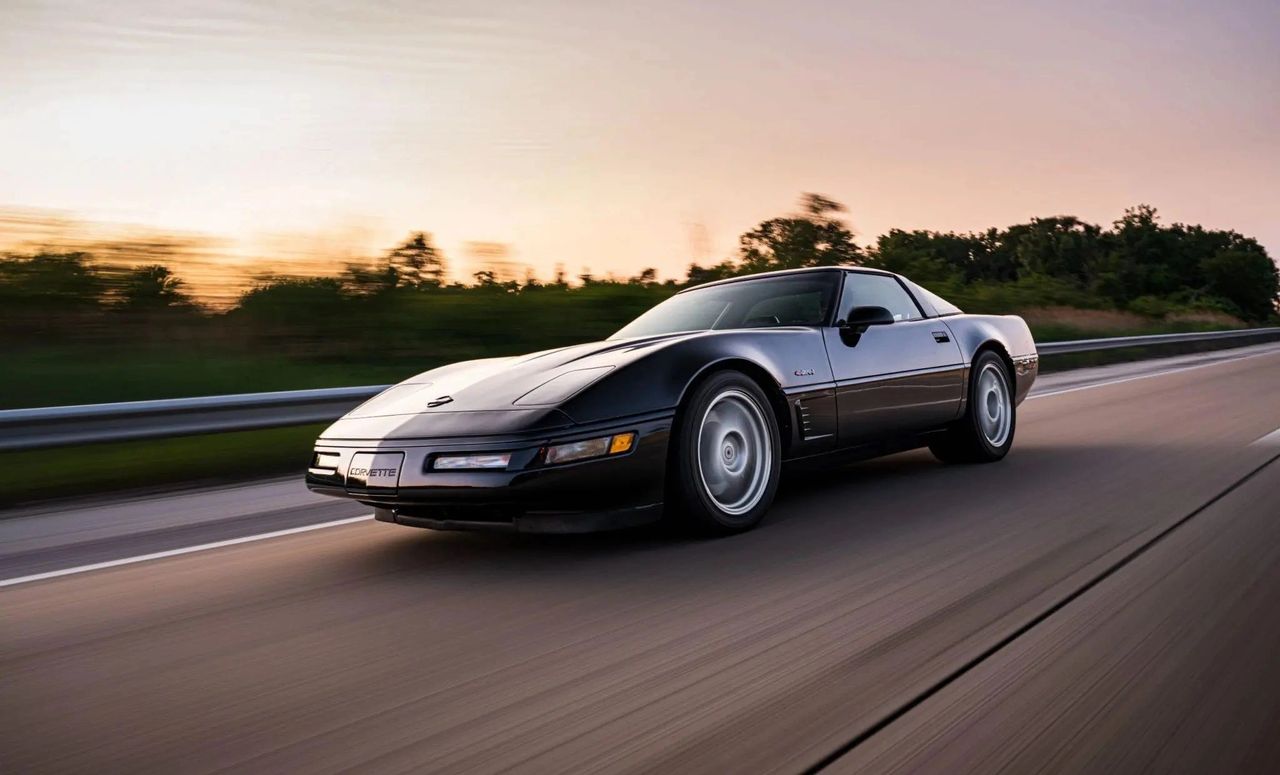
    The ’95 drives like a sorted idea. The LT1 fires clean, leans on its torque, and pulls with that lazy-quick surge that makes short shifts feel smart. Steering is keyed-in but unneedy—light off center, confident as you lean on it—and the base suspension trades chatter for conversation, smoothing the junk without dulling the edge. Roll into the middle pedal and J55/ABS 5 keeps the car square; you get a short stroke, a steady nose, and permission to brake later than you planned. Gear it up on the highway and the whole car relaxes—long legs, low revs, cabin quiet enough to hear the tires working. It’s not trying to impress you; it just gets every job right, which is the point.
    The ’95 drives like a sorted idea. The LT1 fires clean, leans on its torque, and pulls with that lazy-quick surge that makes short shifts feel smart. Steering is keyed-in but unneedy—light off center, confident as you lean on it—and the base suspension trades chatter for conversation, smoothing the junk without dulling the edge. Roll into the middle pedal and J55/ABS 5 keeps the car square; you get a short stroke, a steady nose, and permission to brake later than you planned. Gear it up on the highway and the whole car relaxes—long legs, low revs, cabin quiet enough to hear the tires working. It’s not trying to impress you; it just gets every job right, which is the point.

    Drive a healthy 1995 Corvette, and the point lands without a sales pitch. The LT1 snaps awake and settles into a steady heartbeat; the six-speed works like a well-oiled bolt, reverse clicking in with the certainty of a light switch. A good automatic behaves like a seasoned co-driver—quiet, decisive, always where you want it. On a fast two-lane, the base suspension irons the small stuff instead of broadcasting it; the car trades chatter for conversation. Lean hard on the J55/ABS 5, and the nose stays glued to your line—short pedal, tidy weight transfer, courage on tap.

    Inside, the French-seam sport seats still hold you like a handshake you trust. The radio doesn’t hop over railroad tracks, and the cabin refuses to rattle like a coffee can of sockets on a washboard. None of it is brochure fireworks; it’s the clean execution that turns speed into confidence. That was the ’95 then, and it’s why a well-kept one now still feels like a sorted instrument, not just a fast car.

    Why THE 1995 CORVETTE Matters
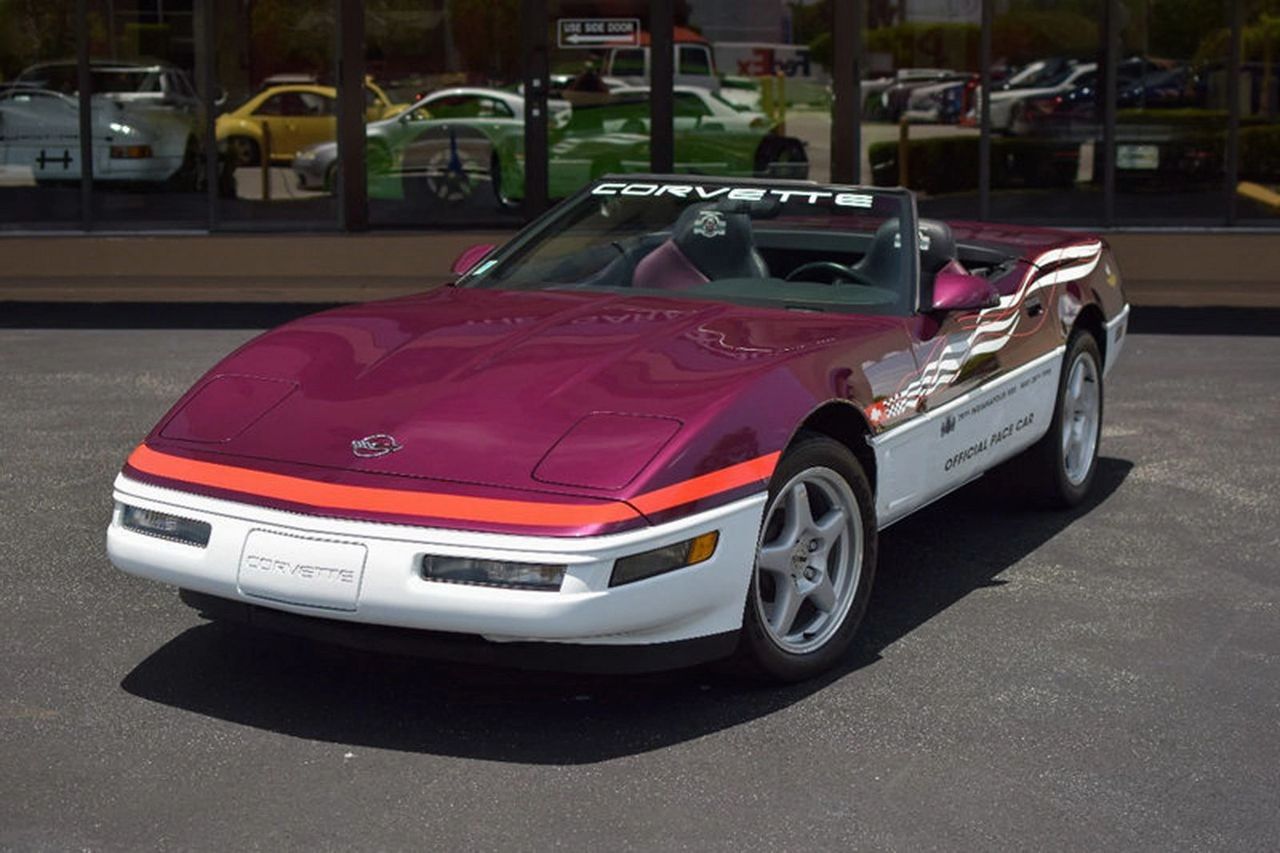
    Why ’95 mattered is parked right here. The late-C4 finally became the car Chevy had been chasing—LT1 torque that lit every time, ABS 5/J55 brakes you could lean on, and a chassis that filtered chatter instead of shouting it. The new “gill” side vents and cleaner nose sharpened the look, while the Indy Pace Car program put the polish on display for everyone to see. It was the ZR-1’s curtain call, the LT1’s sweet spot, and the year the Corvette proved it could be quick, durable, and civilized all at once—setting the table for the C5 to sprint.
    Why ’95 mattered is parked right here. The late-C4 finally became the car Chevy had been chasing—LT1 torque that lit every time, ABS 5/J55 brakes you could lean on, and a chassis that filtered chatter instead of shouting it. The new “gill” side vents and cleaner nose sharpened the look, while the Indy Pace Car program put the polish on display for everyone to see. It was the ZR-1’s curtain call, the LT1’s sweet spot, and the year the Corvette proved it could be quick, durable, and civilized all at once—setting the table for the C5 to sprint.

    Collectors chase stories as much as they chase cars, and the 1995 Corvete tells several good ones. It’s the last season where, in theory, you could cross-shop a ZR-1 and an LT1 on the same floor. It’s the year big brakes became a birthright for every buyer. It’s Indy, if you want a commemorative with presence that still makes kids point. It’s also the sweet spot for owners who drive: late-run quality, sensible NVH, better “live-with-it” bits, and braking that belongs on a modern highway. If you want a C4 that carries the lessons of the whole generation without the price tag of the halo, 1995 checks every box in a steady, confident hand.

    Epilogue: The Heir Apparent
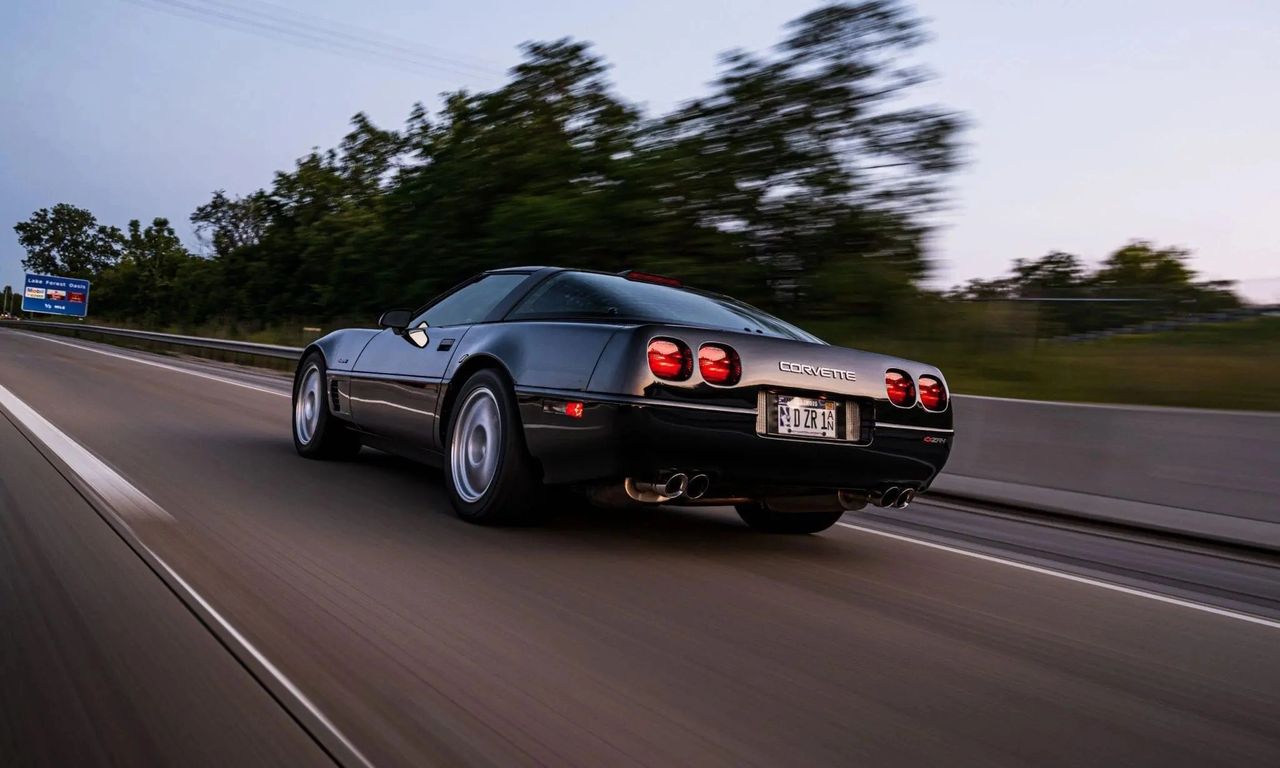
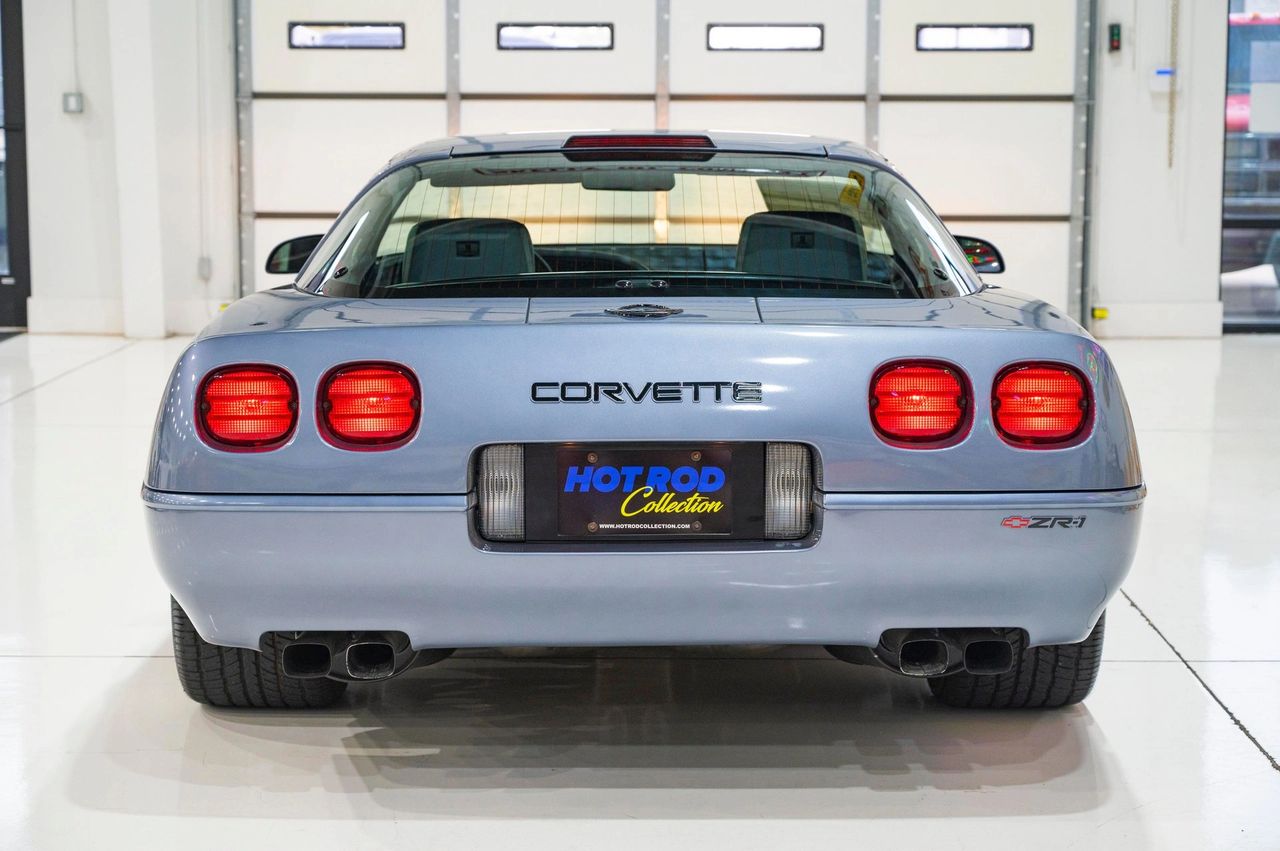
    Even as the 1995 ZR-1 slipped into the violet edge of the day, the LT5’s last note hung in the air like a promise. Four round taillights and four chrome tips faded to red fireflies, but the idea didn’t fade—the ZR-1 badge was never a period, only a comma. Engineers knew it, and the faithful did too: the recipe of durability, exotic power, and long-legged speed would return. Consider this shot the curtain call and the teaser—America’s quad-cam legend riding into the sunset so it could rise again when Corvette needed its ace.
    Even as the 1995 ZR-1 slipped into the violet edge of the day, the LT5’s last note hung in the air like a promise. Four round taillights and four chrome tips faded to red fireflies, but the idea didn’t fade—the ZR-1 badge was never a period, only a comma. Engineers knew it, and the faithful did too: the recipe of durability, exotic power, and long-legged speed would return. Consider this shot the curtain call and the teaser—America’s quad-cam legend riding into the sunset so it could rise again when Corvette needed its ace.

    When the line paused that afternoon in Bowling Green, the ZR-1’s farewell felt like an ending. It was. But you could already feel the future in the way the 1995 car went about its business. Make world-class performance easy to access. Make the everyday miles quiet, cooperative, and cool. Sweat the invisible details until the owner doesn’t notice them at all. That was the late-run C4’s promise. It became the C5’s identity. And it remains the Corvette’s defining trick: the long sprint from Motorama fantasy to daily-usable supercar.


    1995 Corvette: Deep-Spec Reference (Coupe & Convertible; ZR-1 where noted)

    Engine & Induction

    • Engine code: LT1 (RPO LT1), Gen II small-block V8
    • Displacement: 5,733 cc (350 cu in)
    • Block/heads: Cast iron block; aluminum cylinder heads
    • Bore × stroke: 4.00 in × 3.48 in (101.6 × 88.4 mm)
    • Compression ratio: ~10.5:1
    • Valvetrain: OHV, 2 valves/cyl; hydraulic roller lifters
    • Rated output: 300 hp @ 5,000 rpm; 340 lb-ft @ 4,000 rpm
    • Fuel system: Sequential port fuel injection (speed/density with MAP)
    • Ignition: OptiSpark distributor with crank-driven optical trigger (late-run spec)
    • Cooling & fans: Cross-flow radiator; electric primary fan with revised ’95 control/quiet hardware
    • Bottom-end notes (’95): Powdered-metal connecting rods; durability/NVH refinements
    • Exhaust: Dual undercar system with catalysts; quad rear outlets (’95 reroute minimizes heat soak/paint staining)

    ZR-1 (1995 carryover, early-year only)

    • Engine code: LT5 (RPO ZR1), 5.7L DOHC 32-valve V8
    • Output: 405 hp @ 5,800 rpm; 385 lb-ft @ 5,200 rpm
    • Induction: Sequential port; individual coil packs per bank; 4 cams, belt-driven

    Transmissions & Final Drives

    • Automatic: 4L60-E (RPO M30) electronic 4-speed; revised calibration & lighter/stronger converter in ’95
    • Manual: ZF S6-40 (RPO MN6) 6-speed
    • Ratios (typical LT1): 1st 2.68, 2nd 1.80, 3rd 1.31, 4th 1.00, 5th 0.75, 6th 0.50; Rev ~2.90
    • Reverse engagement: High-detent mechanism (’95 replaces ’94 lockout hardware)
    • Final drives (common LT1 setups):
    • Manual: 3.45:1 (std)
    • Automatic: 2.59:1 (std); 3.07:1 with RPO G92 Performance Axle Ratio
    • Clutch (manual): 11-in diaphragm, hydraulic actuation; dual-mass flywheel

    Chassis, Suspension & Steering

    • Structure: Uniframe/birdcage with bolt-on front/rear cradles; hatch-back coupe or soft-top convertible
    • Front suspension: SLA (short/long arm) with forged aluminum control arms; transverse composite leaf spring; monotube de Carbon gas shocks (’95 softer valving on base suspension)
    • Rear suspension: Upper/lower lateral links with trailing rod; transverse composite leaf spring; monotube de Carbon shocks
    • Selectable damping (opt): FX3 Electronic Selective Ride & Handling (Bilstein actuated, 3 modes)
    • Steering: Power rack-and-pinion, performance ratio; tilt column standard
    • Turning circle: ~38–40 ft curb-to-curb (tire/wheel dependent)

    Brakes (Big Brakes Go Standard in ’95)

    • System: 4-wheel discs with Bosch ABS 5; ASR traction control
    • Calipers/rotors (LT1 1995):
    • Front: 2-piston PBR calipers; ~13.0-in ventilated rotors (J55-spec hardware standard in ’95)
    • Rear: Single-piston sliding calipers; ~12.0-in ventilated rotors
    • Proportioning: Electronic via ABS/ASR logic; performance-oriented bias for stability under trail-brake

    Wheels & Tires

    • Standard alloys: 17-in cast aluminum “sawblade” or directional turbine design (finish varies)
    • Typical sizes (LT1):
    • Front tires: 255/45ZR-17
    • Rear tires: 285/40ZR-17
    • Run-flats (opt): WY5 Extended Mobility Tires (EMT)
    • Spare delete (opt): N84 Spare Tire Delete (requires WY5; nets ~$100 credit & small weight savings)
    • ZR-1 wheels/tires (reference): 17×9.5 in front, 17×11 in rear; 315-section rears with A-mold design

    Dimensions & Capacities

    • Wheelbase: 96.2 in (2444 mm)
    • Length: ~178.5 in (4530 mm)
    • Width: ~71.0 in (1803 mm)
    • Height: ~46.7 in (1186 mm) coupe; conv slightly taller with top up
    • Track: ~59.6 in front / 60.4 in rear (tire/wheel varies a tick)
    • Curb weight (approx):
    • Coupe (LT1): ~3,350–3,400 lb depending on options
    • Convertible (LT1): ~3,450–3,550 lb
    • ZR-1: ~3,550–3,600 lb
    • Fuel tank: 20.0 gal (75.7 L)
    • Hatch cargo (coupe): generous flat load floor; convertible uses rear well (smaller but usable)
    • Towing: Not rated; cooling/aero not configured for trailer duty

    Performance (Period Test Window; LT1)

    • 0–60 mph: ~5.2–5.5 sec (manual); ~5.7–6.0 sec (auto, axle-ratio dependent)
    • Quarter-mile: ~13.6–13.9 sec @ 102–104 mph (manual)
    • Top speed: ~165–170 mph (manual, gear/drag conditions)
    • 60–0 mph braking: ~115–125 ft (pads/tires swing results; ’95 big brakes markedly consistent)
    • Skidpad: ~0.90–0.95 g (tire compound & FX3 influence)
    • EPA fuel economy (typical): ~17/25 mpg (city/hwy) both transmissions, premium unleaded recommended

    Electrical/Controls

    • ABS/Traction: Bosch ABS 5 controller with integrated ASR
    • PCM: OBD-I strategy (’95 transitional refinements; 1996 goes OBD-II)
    • Gauges: 1995 cluster with ATF temperature readout for automatics; analog/digital hybrid display
    • Security: Factory VATS (Vehicle Anti-Theft System) with resistor key

    Interior & Ergonomics

    • Seats: Standard buckets; AQ9 sport seats optional with improved French-seam stitching (’95) to curb bolster tears; power adjustments AG1/AG2 widely ordered
    • Upholstery: Leather standard on most builds; colorways tied to exterior palettes; convertible gets specific trim/liner treatments
    • Audio: Delco-Bose with in-dash CD (U1F), reinforced head-unit mounting to reduce skip; power mast antenna
    • Rattle mitigation (’95): Added adhesive/Velcro straps in key cabin interfaces; additional isolators
    • Roof (coupe): Removable panel; 24S blue-tint or 64S bronze-tint top; C2L dual-panel package (both tops)
    • Convertible top: Fabric, heated glass rear window; optional CC2 auxiliary hardtop (limited take rate)

    Paint & Trim (1995)

    Standard colors: Arctic White, Black, Torch Red, Dark Red Metallic, Polo Green Metallic, Admiral Blue, Bright Aqua Metallic, Competition Yellow, Dark Purple Metallic (new). Special two-tone: Z4Z Indy 500 Pace Car Replica (Dark Purple Metallic over Arctic White with white top & ribbon graphics)

    1. Torch Red — 4,531
    2. Black — 3,959
    3. Arctic White — 3,381
    4. Polo Green Metallic — 2,940
    5. Dark Red Metallic — 1,437
    6. Dark Purple Metallic (new) — 1,049
    7. Admiral Blue — 1,006
    8. Competition Yellow — 1,003
    9. Bright Aqua Metallic — 909
    10. Z4Z Indy 500 Pace Car Replica (Dark Purple Metallic / Arctic White) — 527
    • Popular choices (’95 mix): Torch Red (~22%), Black (~19%), Arctic White (~16%), Polo Green (~14%); Dark Purple Metallic ~1k cars; Pace Car 527 units

    Options & Notables (selected RPOs)

    • FX3 Electronic Selective Ride & Handling (Bilstein)
    • G92 Performance Axle Ratio (3.07 on automatics)
    • UJ6 Low tire pressure warning indicator
    • WY5 Extended Mobility Tires (run-flats)
    • N84 Spare Tire Delete (requires WY5; –$100)
    • Z07 Adjustable Performance Handling Package (’95 availability limited; heavy-duty cooling/suspension mix)
    • Z4Z Indy 500 Pace Car Replica (convertible)
    • ZR1 Special Performance Package (coupe; early-’95 run only)

    Production, Pricing & VIN

    • Total ’95 production: 20,742
    • Coupe: 15,771
    • Convertible: 4,971
    • ZR-1 (’95): 448 (part-year; ZR-1 total ’90–’95: 6,939)
    • Base MSRP: Coupe $36,785; Convertible $43,665
    • ZR-1 option add: $31,258 (over coupe)
    • VIN blocks (’95):
    • Base coupe/convertible: 100001–120294 (serial allocation > production; skips occur)
    • ZR-1: 800001–800448

    Indy 500 Pace Car (Z4Z)

    • Configuration: Convertible only
    • Livery: Dark Purple Metallic over Arctic White; white top; ribbon graphics; embroidered headrests; specific trim
    • Build: 527 units; 87 used at Indy; 20 exported; remainder to top-performing U.S. dealers
    • Price add: $2,816 over base convertible

    What to Check (Buyer/Restorer CheckList)

    • OptiSpark health: Look for dry front cover, recent service, quality replacement parts
    • Cooling system: Clean coolant, proper fan engagement; radiator fins intact
    • ABS/ASR lights: Should prove-out and go out; Bosch 5 is robust but wiring/grounding matters
    • FX3 actuators (if equipped): Verify mode changes & no codes; actuators can stick
    • Seat bolsters: ’95 French seams hold up better, but foam wear still shows on high-mile cars
    • Roof panel seals (coupe): Wind noise/water leaks → new seals/adjustments fix it
    • Run-flats & N84: If spare is deleted, confirm tire date codes and condition; EMTs age out

    WHY THE 1995 CORVETTE STILL MATTERS TODAY
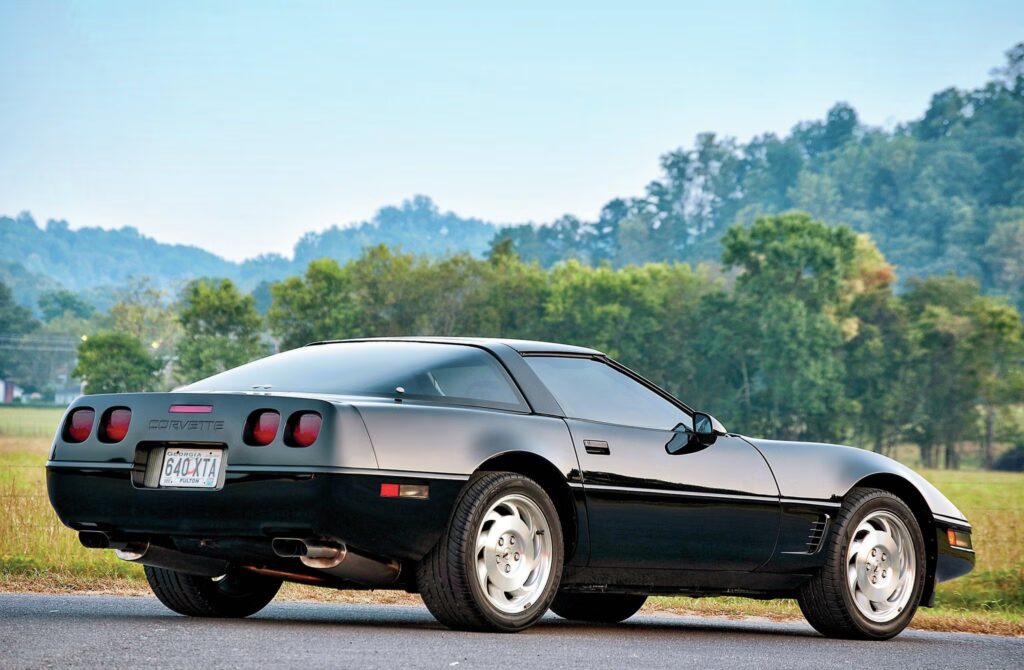
    The 1995 Chevrolet Corvette continues to represent one of the most advanced iterations of the fourth-generation Corvette. Future buyers considering a fourth-generation model would do well to explore both the 1995 and 1996 models as these last two model years provide some of the most complete, most capable, and most technologically developed Corvettes from this generation.

    The 1995 Corvette still matters today because it represents one of the most complete and confident expressions of the C4 generation. By this point, Chevrolet had spent more than a decade refining the platform, and it showed. The styling was sharp, the chassis was mature, the LT1 V8 delivered strong, dependable performance, and the overall driving experience felt far more polished than many people give it credit for. While earlier C4s introduced the world to a radically new Corvette, the 1995 model proved just how good that formula could become when the engineering, comfort, and performance all came together.

    It also matters because the 1995 Corvette sits in a fascinating place in Corvette history. It arrived just before the final sendoff of the C4 generation, which means it benefits from years of development while still carrying the unmistakable design language that defined the Corvette through much of the 1980s and 1990s. For enthusiasts today, that makes the 1995 model especially appealing. It offers classic C4 looks, real small-block power, proven road manners, and a driving experience that still feels engaging in a world increasingly shaped by technology and isolation.

    Most importantly, the 1995 Corvette still matters because it helped preserve the Corvette’s performance credibility during a period of transition. It kept America’s sports car relevant, desirable, and unmistakably bold while paving the way for what would come next. For owners, collectors, and longtime enthusiasts, the 1995 Corvette is more than just another model year. It is a reminder that refinement matters, that evolution matters, and that some of the most rewarding Corvettes are the ones that quietly got everything right.
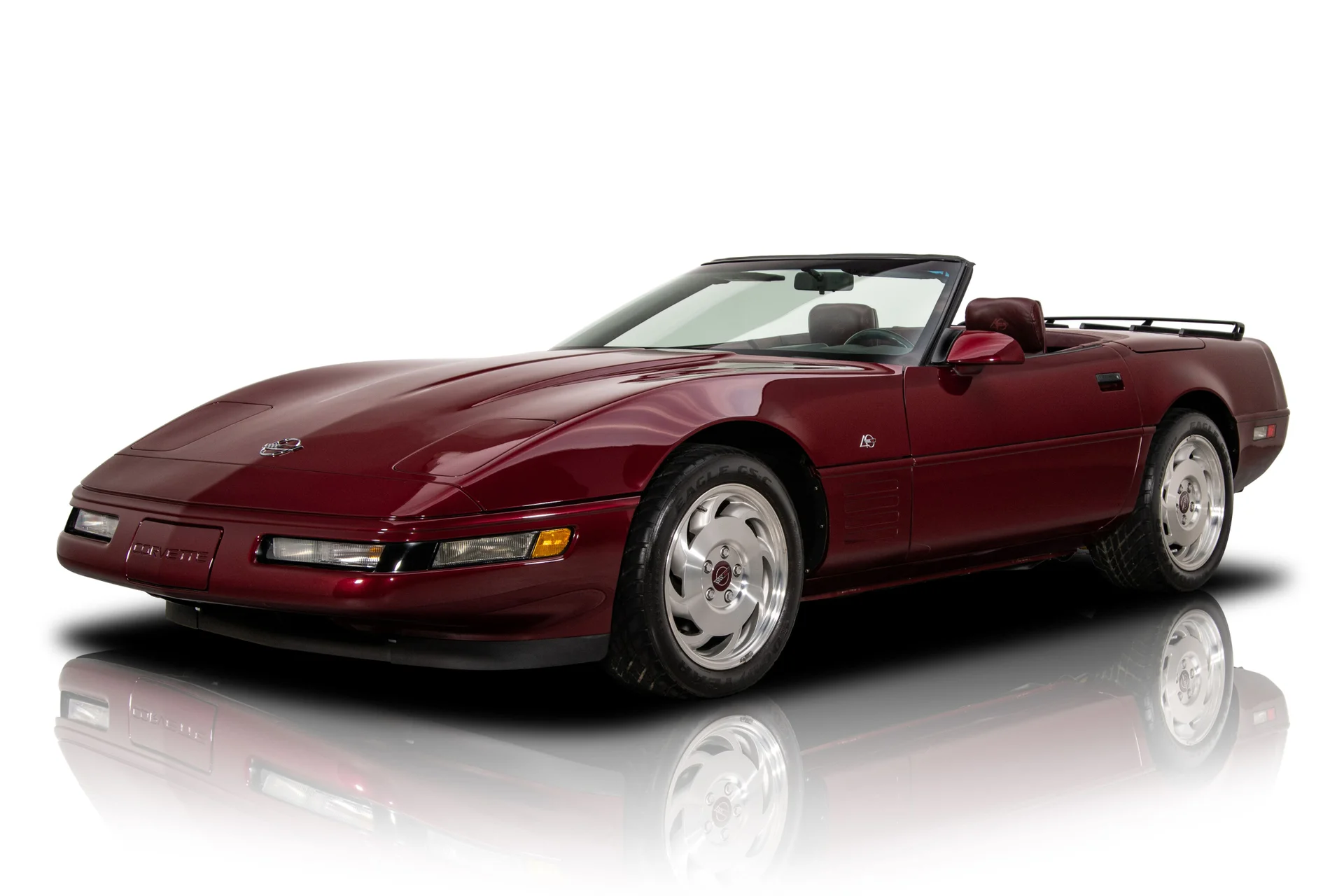
    The 1995 Corvette refined the C4 formula with sharper confidence, proven LT1 power, and one of the era’s most memorable color palettes. It was a car that felt mature, fast, and unmistakably Corvette, bridging the gap between the polished late-C4 years and the legends still to come.

  • 1993 CORVETTE OVERVIEW

    1993 CORVETTE OVERVIEW

    When Harley Earl first sketched his two-seat roadster in the early 1950s, he envisioned something bold for Chevrolet: a sleek, fiberglass-bodied sports car that would capture the glamour of post-war America. Yet even Earl himself could never have imagined how enduring his creation would become. Four decades after that modest unveiling at the 1953 Motorama in New York, Corvette was no longer just a curious“dream car made real.” It had become the longest-running, most iconic American sports car, a machine that not only held its own on the street but also earned global respect on the racetrack.

    By 1993, the Corvette stood at a remarkable milestone—its 40th anniversary. Chevrolet recognized the moment with commemorative touches that honored Corvette’s heritage while continuing to refine the C4 generation. That year’s lineup reflected both celebration and performance ambition: a special 40th Anniversary package for collectors and enthusiasts, continued advancements in the base LT1-powered coupes and convertibles, and a more powerful ZR-1 that firmly reasserted its place as the “King of the Hill.” In many ways, the 1993 model year embodied the Corvette’s dual spirit—equal parts nostalgia and relentless pursuit of speed.

    Setting the Stage: Corvette Turns Forty

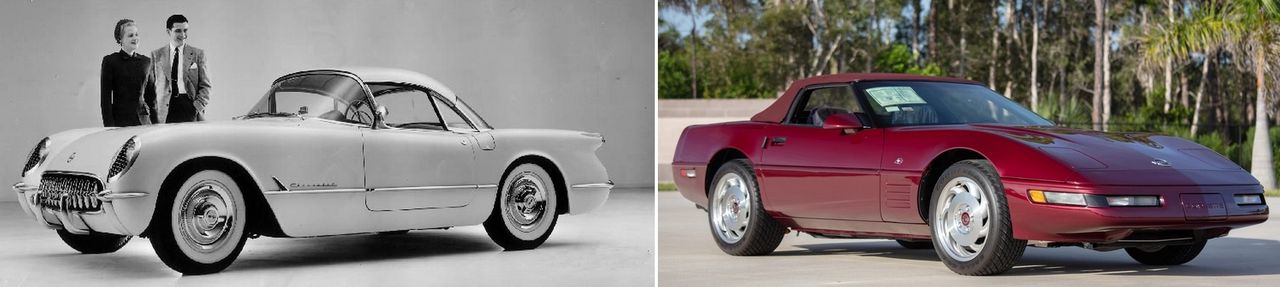
    This side-by-side neatly bookends Corvette’s first 40 years: at left, Harley Earl’s early C1—an elegant, fiberglass two-seater born in 1953—still wearing wire-style caps and the understated glamour that launched America’s Sports Car; at right, the 1993 40th Anniversary C4 in Ruby Red Metallic, its commemorative badges and matching interior celebrating the lineage. The contrast tells the story of progress—from Blue Flame six and Powerglide origins to an LT1-powered, world-class performer with available six-speed, ABS and traction control—yet the constants endure: low stance, long hood/short deck, and a singular focus on two-seat American performance. In one image you can see how Corvette evolved dramatically without ever losing its original soul.
    This side-by-side neatly bookends Corvette’s first 40 years: at left, Harley Earl’s early C1—an elegant, fiberglass two-seater born in 1953—still wearing wire-style caps and the understated glamour that launched America’s Sports Car; at right, the 1993 40th Anniversary C4 in Ruby Red Metallic, its commemorative badges and matching interior celebrating the lineage. The contrast tells the story of progress—from Blue Flame six and Powerglide origins to an LT1-powered, world-class performer with available six-speed, ABS, and traction control—yet the constants endure: low stance, long hood/short deck, and a singular focus on two-seat American performance. In one image, you can see how Corvette evolved dramatically without ever losing its original soul.

    The Corvette of the early 1990s was a different creature than the chrome-laden C1 Harley Earl had conjured. By its fourth generation (introduced in 1984), the Corvette had become a thoroughly modern sports car. With its sleek wedge-shaped styling, advanced suspension systems, and increasingly sophisticated electronic controls, the C4 was aimed squarely at global competition from Porsche, Ferrari, and Nissan.

    But the C4 had another role: it was the bridge between Corvette’s first 30 years—years often marked by bold experimentation, peaks and valleys of performance—and the modern era of engineering consistency and refinement. By 1993, the C4 had matured into a highly capable car. Chevrolet’s engineering teams, led by figures such as Dave McLellan (Chief Engineer, succeeding Zora Arkus-Duntov in 1975), continued to refine the car each year. Small but significant mechanical changes were introduced annually, often invisible to the casual eye but meaningful to performance drivers.

    Against this backdrop came Corvette’s 40th birthday. The company had celebrated earlier milestones—the Silver Anniversary Edition of 1978, for example—but 1993 was a bigger moment. Corvette had not only survived but thrived for four decades. To mark the occasion, Chevrolet offered a distinctive package: the 40th Anniversary Edition Corvette.

    The 40th Anniversary Edition (RPO Z25)

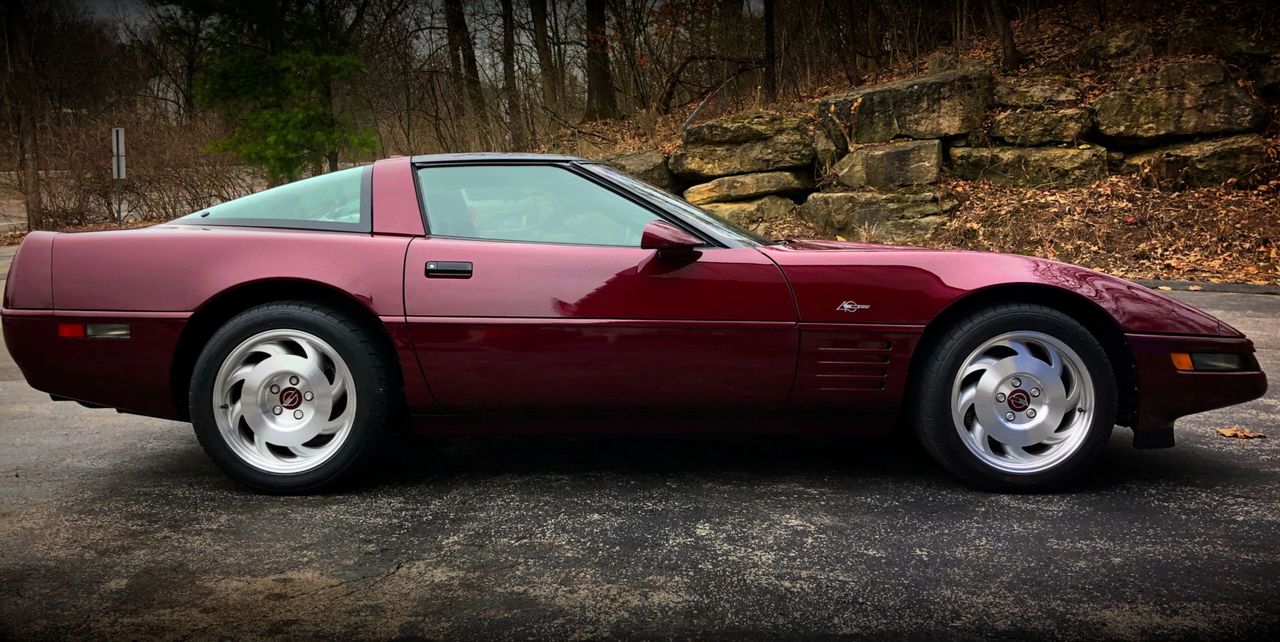
    Chevrolet marked Corvette’s ruby jubilee in 1993 with the 40th Anniversary Edition (RPO Z25)—a commemorative package offered on coupe, convertible, and even the ZR-1 that wrapped the C4 in rich Ruby Red Metallic with a matching Ruby leather cockpit. Subtle but classy details set it apart: “40th Anniversary” fender badges, embroidered seat headrests, color-keyed wheel center caps on the sawblade alloys, and (on ragtops) a Ruby cloth top. Under the skin it remained the sharp, 300-hp LT1 C4 we love—meaning the 40th is equal parts milestone and driver’s car, a tasteful celebration of four decades of America’s Sports Car. (Image courtesy of reddit user archaeauto)
    Chevrolet marked Corvette’s ruby jubilee in 1993 with the 40th Anniversary Edition (RPO Z25)—a commemorative package offered on coupe, convertible, and even the ZR-1 that wrapped the C4 in rich Ruby Red Metallic with a matching Ruby leather cockpit. Subtle but classy details set it apart: “40th Anniversary” fender badges, embroidered seat headrests, color-keyed wheel center caps on the sawblade alloys, and (on ragtops) a Ruby cloth top. Under the skin it remained the sharp, 300-hp LT1 C4 we love—meaning the 40th is equal parts milestone and driver’s car, a tasteful celebration of four decades of America’s Sports Car. (Image courtesy of reddit user archaeauto)

    The centerpiece of the 1993 model year was the 40th Anniversary Edition, available on all body styles—including coupes, convertibles, and even the top-tier ZR-1. The option carried Regular Production Option (RPO) code Z25 and cost $1,455. For that, buyers received a striking Ruby Red Metallic exterior (paint code 68U), which was paired with matching Ruby Red leather sport seats. The headrests were embroidered with “40th Anniversary” script and emblems, while special brightwork badging adorned the car’s flanks, just above the beltline behind the front wheels.

    It was a tasteful package—less flamboyant than some earlier anniversary cars but arguably more elegant. Ruby Red became one of the most memorable hues of the C4 era, and its exclusivity (only available in 1993) made it an instant collector’s choice. Approximately 6,749 Corvettes were ordered with the 40th Anniversary package, making it a visible but still relatively rare subset of the year’s production.

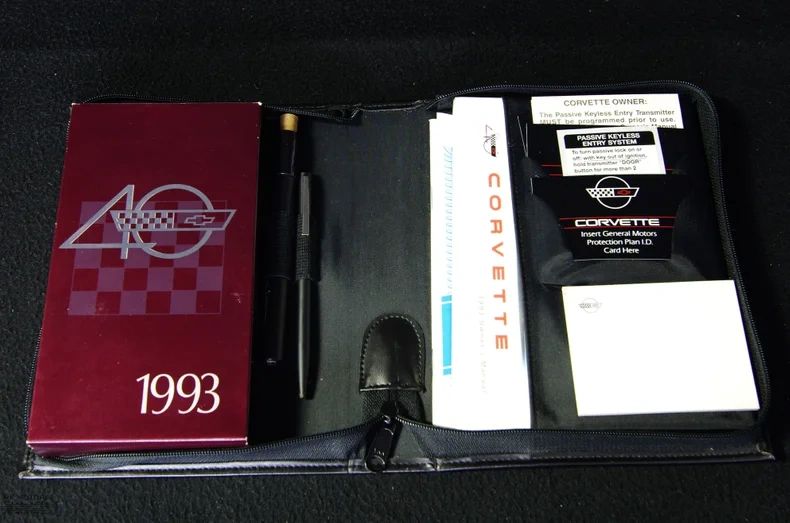
    Tucked neatly inside every 1993 Corvette owner’s portfolio was more than just the usual owner’s manual and warranty paperwork—it included a special VHS cassette commemorating the Corvette’s 40th Anniversary. Finished in the same Ruby Red theme that defined the milestone model, this tape wasn’t just packaging; it was a window into Corvette heritage. Owners could pop it into their VCR and relive four decades of America’s Sports Car—celebrating its racing triumphs, engineering innovations, and cultural impact. Today, that anniversary cassette has become one of the most nostalgic pieces of Corvette memorabilia, a reminder of when Chevrolet blended analog keepsakes with digital excitement to mark a milestone year.
    Tucked neatly inside every 1993 Corvette owner’s portfolio was more than just the usual owner’s manual and warranty paperwork—it included a special VHS cassette commemorating the Corvette’s 40th Anniversary. Finished in the same Ruby Red theme that defined the milestone model, this tape wasn’t just packaging; it was a window into Corvette heritage. Owners could pop it into their VCR and relive four decades of America’s Sports Car—celebrating its racing triumphs, engineering innovations, and cultural impact. Today, that anniversary cassette has become one of the most nostalgic pieces of Corvette memorabilia, a reminder of when Chevrolet blended analog keepsakes with digital excitement to mark a milestone year.

    Inside, Anniversary cars carried the celebration theme with unique trim accents, while outside the paint glowed in sunlight, highlighting the C4’s crisp edges and low, athletic stance. For many enthusiasts, the Anniversary package represented the perfect blend of nostalgia and modern Corvette style.

    Refinements to the Base Corvette

    While the Anniversary package drew attention, the base 1993 Corvette itself was far from stagnant. Under the hood remained the LT1 engine, introduced in 1992. This 5.7-liter (350 cubic inch) small-block V8 represented one of the most advanced iterations of Chevy’s venerable engine architecture. Rated at 300 horsepower and 340 lb-ft of torque, the LT1 used advanced (for the era) electronic fuel injection, reverse-flow cooling (allowing higher compression), and other innovations to deliver strong performance.

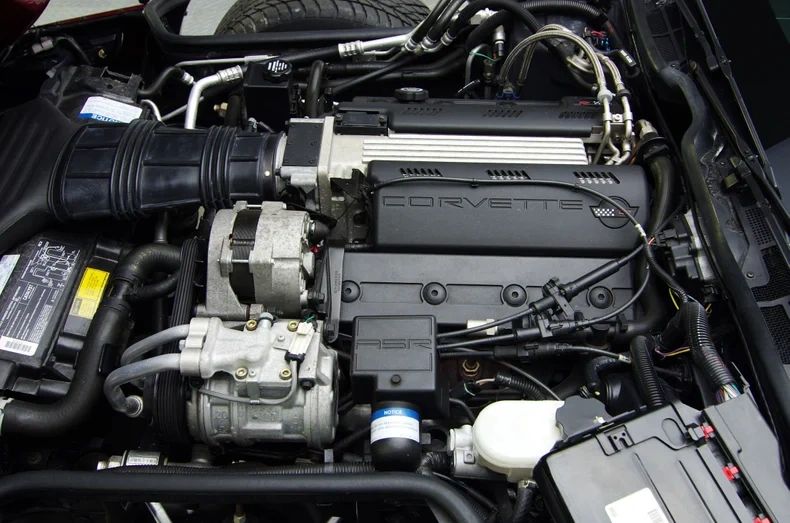
    Under the hood of the 1993 Corvette beats Chevrolet’s proven 5.7-liter LT1 V8, delivering 300 horsepower and 340 lb-ft of torque. This second-generation small-block featured advanced technology for its time, including a reverse-flow cooling system that allowed higher compression and improved efficiency while keeping operating temperatures in check. Mated to either a four-speed automatic or a ZF-sourced six-speed manual transmission, the LT1 provided the C4 with exhilarating acceleration and a broad, usable powerband. Combined with electronic fuel injection and modern engine management, it gave the 1993 Corvette a balance of performance, drivability, and reliability that cemented its reputation as a world-class sports car.
    Under the hood of the 1993 Corvette beats Chevrolet’s proven 5.7-liter LT1 V8, delivering 300 horsepower and 340 lb-ft of torque. This second-generation small-block featured advanced technology for its time, including a reverse-flow cooling system that allowed higher compression and improved efficiency while keeping operating temperatures in check. Mated to either a four-speed automatic or a ZF-sourced six-speed manual transmission, the LT1 provided the C4 with exhilarating acceleration and a broad, usable powerband. Combined with electronic fuel injection and modern engine management, it gave the 1993 Corvette a balance of performance, drivability, and reliability that cemented its reputation as a world-class sports car.

    Although the LT1’s peak horsepower rating did not change for 1993, engineers refined the engine’s operation in meaningful ways. Noise reduction was a priority. The camshaft exhaust lobe profile was altered to reduce valve-closing velocity, which quieted operation while slightly boosting torque output (from 330 to 340 lb-ft). A two-piece self-damping heat shield replaced the earlier single stamping, further muting engine clatter. Even the valve covers were redesigned—new polyester units replaced the magnesium pieces from 1984–92, with improved gasket isolation to cut transmitted noise.

    Transmission choices remained a four-speed automatic or a six-speed manual (standard with no extra charge). The ZF-sourced six-speed was beloved by enthusiasts for its crisp gear engagement and aggressive gearing, though many buyers still opted for the easier automatic.

    Subtle but Significant Chassis and Wheel Changes

    While 1993 marked the Corvette’s 40th Anniversary, the car itself carried forward with only subtle refinements from the previous year. The most notable change came in the form of added sophistication: a new electronically controlled six-speed automatic transmission replaced the older unit, offering smoother shifts and improved efficiency. Chevrolet also introduced a revised Passive Keyless Entry system, enhancing both security and convenience. Inside, the Corvette’s cockpit benefited from small but meaningful updates—refined seats, upgraded sound insulation, and improved switchgear—meant to make the driving experience more comfortable without altering the car’s unmistakable C4 character. Even the suspension tuning saw minor adjustments to balance ride comfort with the Corvette’s legendary handling prowess. In sum, the 1993 Corvette quietly honed the formula, blending high performance with the kind of refinements buyers expected in a world-class sports car.
    While 1993 marked the Corvette’s 40th Anniversary, the car itself carried forward with only subtle refinements from the previous year. The most notable change came in the form of added sophistication: a new electronically controlled six-speed automatic transmission replaced the older unit, offering smoother shifts and improved efficiency. Chevrolet also introduced a revised Passive Keyless Entry system, enhancing both security and convenience. Inside, the Corvette’s cockpit benefited from small but meaningful updates—refined seats, upgraded sound insulation, and improved switchgear—meant to make the driving experience more comfortable without altering the car’s unmistakable C4 character. Even the suspension tuning saw minor adjustments to balance ride comfort with the Corvette’s legendary handling prowess. In sum, the 1993 Corvette quietly honed the formula, blending high performance with the kind of refinements buyers expected in a world-class sports car.

    From the outside, the 1993 Corvette looked much like the 1992 model. Yet a closer inspection revealed subtle differences, especially in wheels and tires. The front wheels were narrowed slightly from 9.5 inches to 8.5 inches in width, paired with P255/45ZR17 tires (previously P275/40ZR17). The rear wheels, conversely, grew to wear wider P285/40ZR17 tires, improving rear traction.

    Z07 SUSPENSION

    Corvettes equipped with the Z07 adjustable suspension package retained 9.5-inch wheels all around, shod with P275/40ZR17 tires. Regardless of configuration, all Corvettes ran on Goodyear Eagle GS-C tires—exclusive to Corvette at the time—with a directional, asymmetric tread pattern engineered to handle both lateral and longitudinal loads. This tire technology, cutting-edge for its day, was part of what gave the C4 its exceptional handling balance. However, because the tires were designed for specific corners of the car, owners had to take care when replacing them—no tire was interchangeable from side to side or front to rear.

    Suspension geometry remained largely unchanged, though the Corvette’s chassis had by now been honed into a precise instrument. Four-wheel independent suspension with forged aluminum components, available Selective Ride Control (RPO FX3), and massive four-wheel disc brakes with Bosch ABS made the 1993 Corvette a formidable corner carver.

    Passive Keyless Entry: A First for Corvette

    One of the most forward-thinking features of the 1993 Corvette was its Passive Keyless Entry system, a technology well ahead of its time. Standard equipment on all models, it allowed owners to unlock the doors and hatch without pressing a button—simply by approaching the car with the fob in hand or pocket. Using proximity sensors, the Corvette could automatically recognize its owner and grant access, adding both convenience and a touch of high-tech sophistication. At a time when most cars still relied on conventional keys or basic remotes, the Corvette once again proved it was on the cutting edge of innovation, blending modern electronics with its legendary performance pedigree.
    One of the most forward-thinking features of the 1993 Corvette was its Passive Keyless Entry system, a technology well ahead of its time. Standard equipment on all models, it allowed owners to unlock the doors and hatch without pressing a button—simply by approaching the car with the fob in hand or pocket. Using proximity sensors, the Corvette could automatically recognize its owner and grant access, adding both convenience and a touch of high-tech sophistication. At a time when most cars still relied on conventional keys or basic remotes, the Corvette once again proved it was on the cutting edge of innovation, blending modern electronics with its legendary performance pedigree.

    Perhaps the most forward-looking innovation of the 1993 Corvette was its introduction of Passive Keyless Entry (PKE). At a time when most cars still relied on traditional keys or rudimentary remote fobs, Corvette’s system was groundbreaking.

    Instead of pressing a button to lock or unlock the doors, owners carried a small transmitter that broadcast a unique code. Antennas in the car (embedded in doors and, for coupes, in the rear hatch area) detected the signal when the driver approached. The Corvette then automatically unlocked the doors, illuminated the interior lights, and disarmed the security system. The system could even be programmed to unlock only the driver’s door or both doors. Coupes included an additional hatch release button on the transmitter.

    This technology not only added convenience but also cemented Corvette’s reputation as a technology leader. PKE would remain standard equipment through the rest of the C4 generation and into the C5, making its debut here in 1993 especially noteworthy.

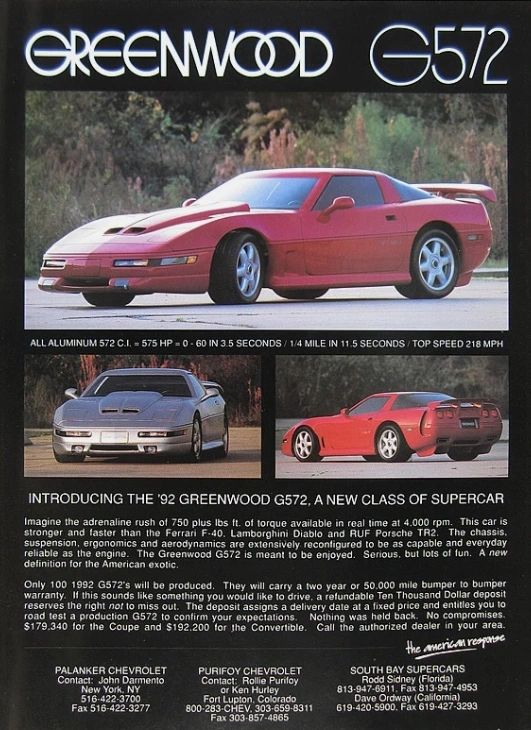
    The Greenwood G572: Corvette Extreme

    The 1992 Greenwood G572 was nothing short of an American supercar. Built on the foundation of the C4 Corvette, John Greenwood’s team transformed it into a high-speed weapon with an all-aluminum 572 cubic-inch V8 producing 575 horsepower and a staggering 750 lb-ft of torque. The result was world-class performance: 0–60 mph in just 3.5 seconds, a quarter-mile in 11.5 seconds, and a top speed of 218 mph—numbers that rivaled or exceeded exotic legends like Ferrari’s F40 and Lamborghini’s Diablo. With heavily reworked suspension, aerodynamics, and chassis tuning, the G572 was designed to be as refined as it was fast. Limited to just 100 examples, each carrying a $179,340 base price for the coupe and $192,200 for the convertible, the Greenwood G572 cemented itself as one of the most extreme, exclusive Corvettes of its era—a bold American answer to Europe’s best.
    The 1992 Greenwood G572 was nothing short of an American supercar. Built on the foundation of the C4 Corvette, John Greenwood’s team transformed it into a high-speed weapon with an all-aluminum 572 cubic-inch V8 producing 575 horsepower and a staggering 750 lb-ft of torque. The result was world-class performance: 0–60 mph in just 3.5 seconds, a quarter-mile in 11.5 seconds, and a top speed of 218 mph—numbers that rivaled or exceeded European legends like Ferrari’s F40 and Lamborghini’s Diablo. With heavily reworked suspension, aerodynamics, and chassis tuning, the G572 was designed to be as refined as it was fast. Limited to just 100 examples, each carrying a $179,340 base price for the coupe and $192,200 for the convertible, the Greenwood G572 cemented itself as one of the most extreme, exclusive Corvettes of its era—a bold American answer to Europe’s best.

    While Chevrolet’s own Anniversary package grabbed headlines, another Corvette variant offered in 1993 took performance to the outer limits. Florida-based Greenwood Automotive Performance—founded by racing legends Burt and John Greenwood—introduced the G572.

    Named for its massive 572-cubic-inch (9.4-liter) V8, the Greenwood G572 produced an astonishing 575 horsepower and was capable of performance figures that rivaled supercars costing several times more. Zero to sixty took just 3.4 seconds; the quarter mile disappeared in 11.5 seconds at 135 mph. Top speed? A scarcely believable 218 mph.

    To handle this output, Greenwood reinforced the Corvette’s chassis and fitted functional aerodynamic body panels. The result was a machine that looked and performed like a road-legal race car. But exclusivity came at a price—$179,333, a staggering sum in 1993. While production numbers were tiny, the G572 demonstrated how far the Corvette platform could be pushed and served as a dramatic counterpoint to the factory’s more refined offerings.

    The 1993 ZR-1: King of the Hill, Re-Crowned

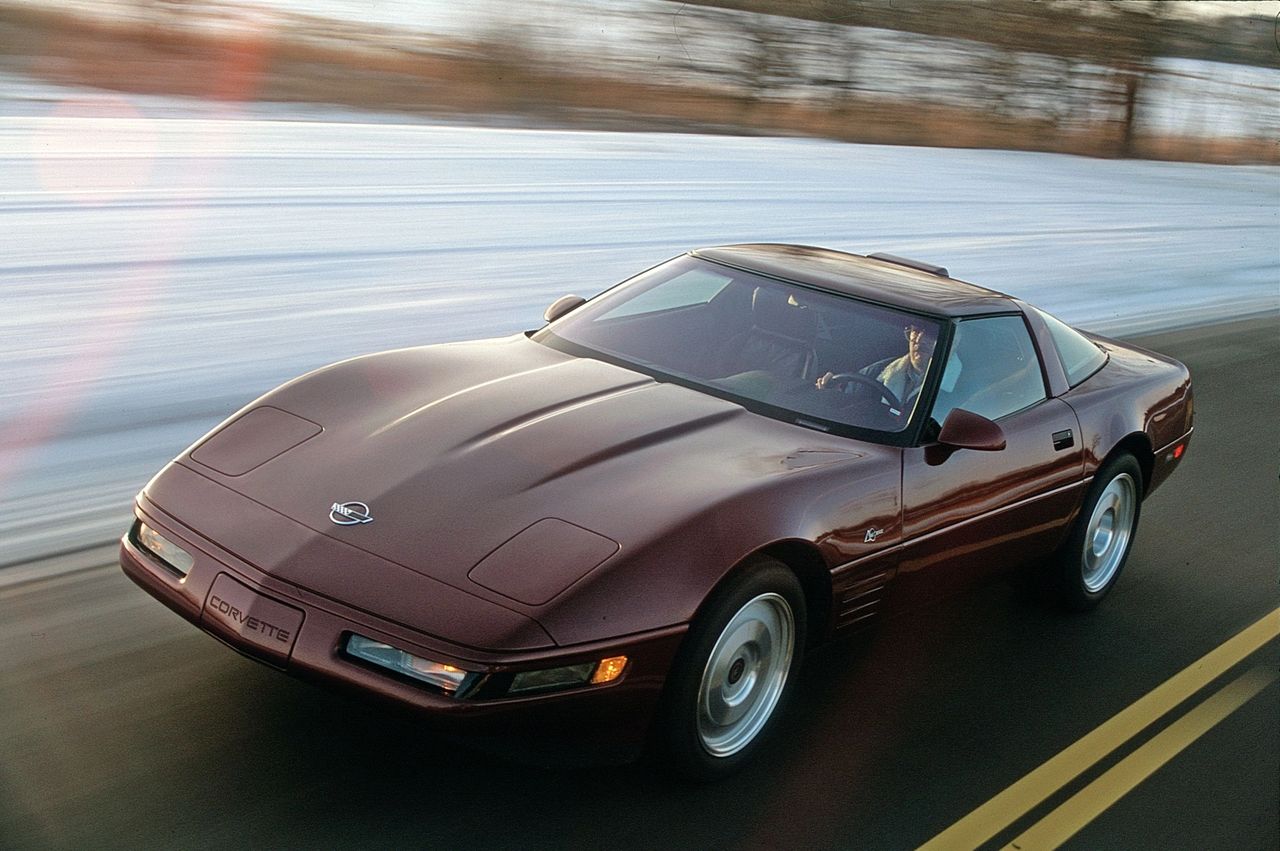
    The 1993 Corvette ZR-1, pictured here in striking Ruby Red Metallic, represented the pinnacle of C4 performance. Beneath its wide rear haunches lurked the Lotus-engineered, Mercury Marine–built LT5 V8, producing 405 horsepower and delivering blistering acceleration with a soundtrack all its own. With subtle exterior cues like the unique rear fascia and ZR-1 badging, the “King of the Hill” stood apart from the standard Corvette while retaining its timeless shape. On the open road—whether carving through snow-dusted landscapes or stretching its legs on the highway—the ZR-1 embodied Chevrolet’s vision of a world-class supercar that could rival Europe’s finest. (Image courtesy of Car & Driver magazine)
    The 1993 Corvette ZR-1, pictured here in striking Ruby Red Metallic, represented the pinnacle of C4 performance. Beneath its wide rear haunches lurked the Lotus-engineered, Mercury Marine–built LT5 V8, producing 405 horsepower and delivering blistering acceleration with a soundtrack all its own. With subtle exterior cues like the unique rear fascia and ZR-1 badging, the “King of the Hill” stood apart from the standard Corvette while retaining its timeless shape. On the open road—whether carving through snow-dusted landscapes or stretching its legs on the highway—the ZR-1 embodied Chevrolet’s vision of a world-class supercar that could rival Europe’s finest. (Image courtesy of Car & Driver magazine)

    If the Greenwood G572 was an outlier, the production ZR-1 remained Chevrolet’s official halo car. Introduced in 1990, the ZR-1 had already established itself as a legend. With its Lotus-engineered LT5 V8—a 5.7-liter, all-aluminum, dual-overhead-cam masterpiece—the ZR-1 delivered exotic-car levels of performance and technology.

    For 1993, the ZR-1’s LT5 received a substantial boost. Horsepower climbed from 375 to 405hp, while torque rose from 370 to 385 lb-ft. These gains came from improved cylinder head porting, a revised valvetrain, four-bolt main bearing caps, platinum-tipped spark plugs, and an electronic EGR system that improved emissions without sacrificing power. Mobil 1 synthetic oil became the factory-specified lubricant, underscoring the LT5’s advanced engineering.

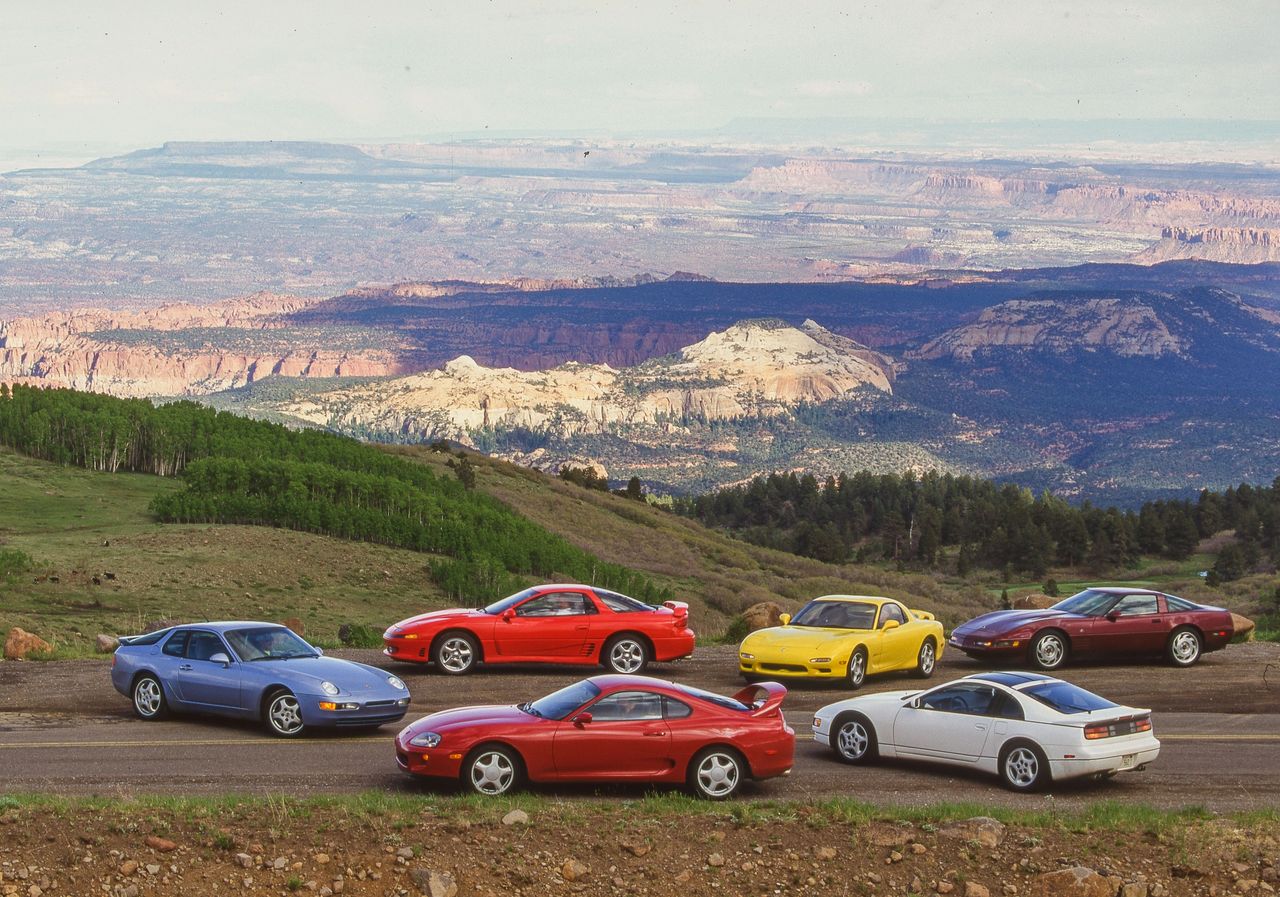
    For 1993, Car and Driver once again named the Corvette ZR-1 to its prestigious “10Best” list, cementing the King of the Hill’s reputation among the world’s elite performance cars. With its Lotus-engineered, 405-horsepower LT5 V8 and exotic-level performance, the ZR-1 stood proudly alongside the best sports cars Japan and Europe had to offer. It wasn’t just raw speed that earned it a spot—it was the way the Corvette blended world-class handling, long-distance comfort, and unmistakable American character. In fact, the ZR-1 would earn repeated recognition, appearing on Car and Driver’s 10Best roster six times during its production run, a testament to its enduring excellence. (Image courtesy of Car & Driver magazine)
    For 1993, Car and Driver once again named the Corvette ZR-1 to its prestigious “10Best” list, cementing the King of the Hill’s reputation among the world’s elite performance cars. With its Lotus-engineered, 405-horsepower LT5 V8 and exotic-level performance, the ZR-1 stood proudly alongside the best sports cars Japan and Europe had to offer. It wasn’t just raw speed that earned it a spot—it was the way the Corvette blended world-class handling, long-distance comfort, and unmistakable American character. In fact, the ZR-1 would earn repeated recognition, appearing on Car and Driver’s 10Best roster six times during its production run, a testament to its enduring excellence. (Image courtesy of Car & Driver magazine)

    Performance was staggering. Motor Trend recorded 0–60 in 4.9 seconds and the quarter mile in 13.4 seconds at over 110 mph. Top speed reached 179 mph—faster than any production Corvette before it. Car and Driver named the ZR-1 the winner in its “Ten Best” issue for top speed performance, cementing its reputation.

    Yet despite accolades, sales continued to slide. Just 448 ZR-1s were built in 1993, compared to thousands in its debut year. At nearly double the cost of a base Corvette (the ZR-1’s RPO added over $31,000 to the price), the car appealed to a niche audience. Still, those who bought one in 1993 acquired one of the most capable and collectible Corvettes of the decade.

    Colors, Options, and Pricing

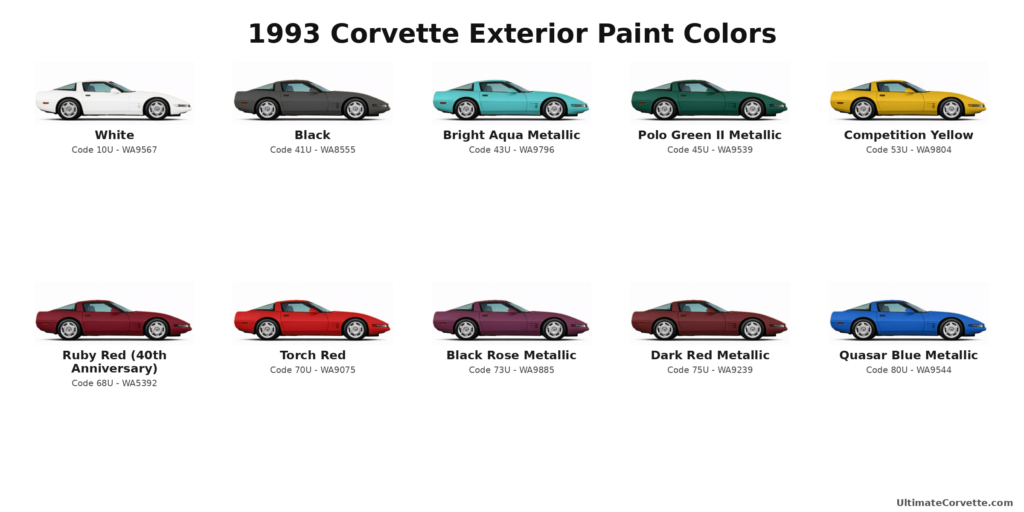
    1993 Corvette Exterior Paint Colors
    1993 Corvette Exterior Paint Colors

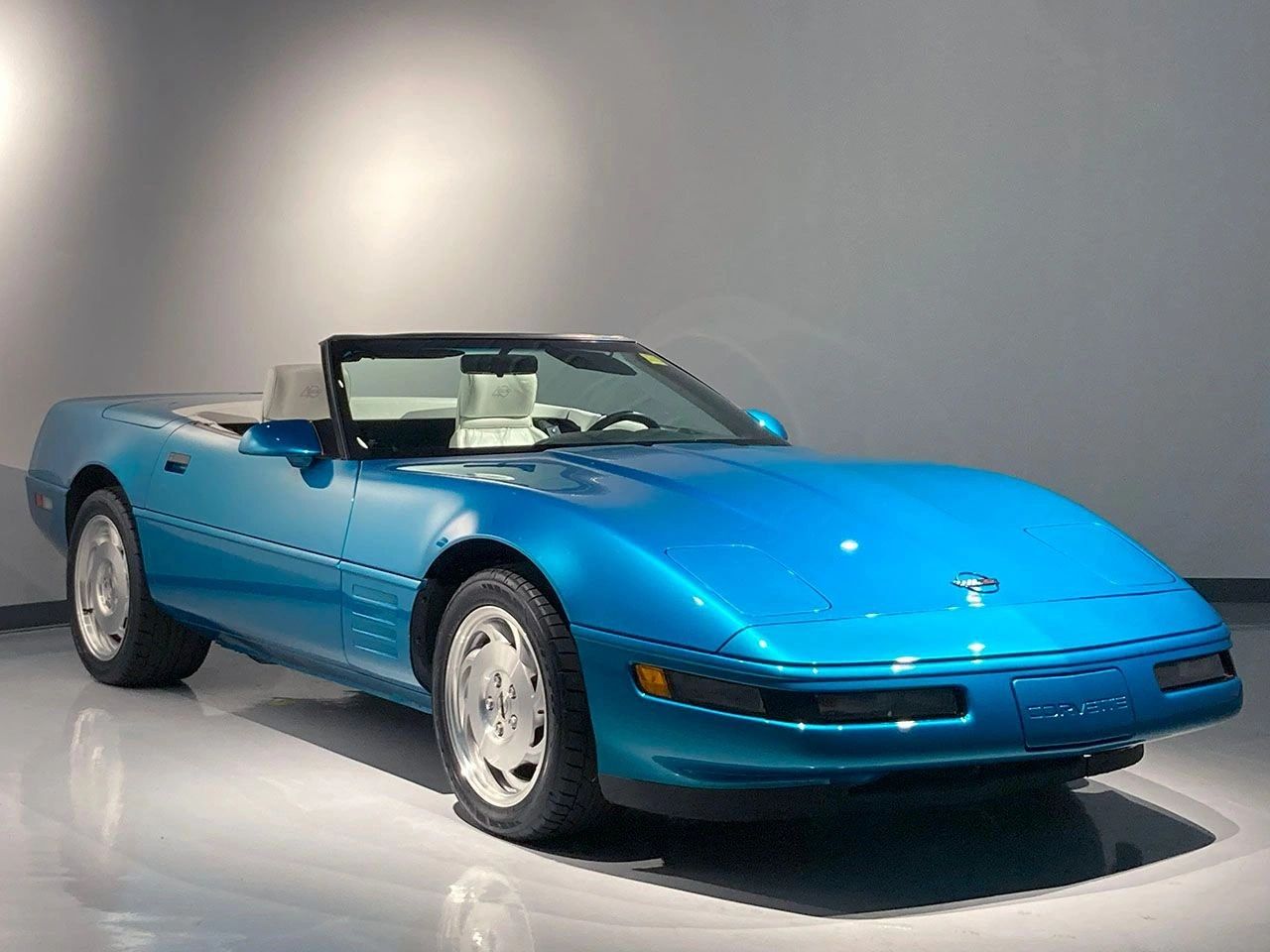
    The 1993 Corvette was offered in ten exterior colors: Arctic White, Black, Bright Aqua Metallic, Polo Green II Metallic, Competition Yellow, Ruby Red, Torch Red, Black Rose Metallic, Dark Red Metallic, and Quasar Blue Metallic. Ruby Red dominated, accounting for 31% of all orders, thanks largely to the Anniversary package. Torch Red, Black, White, and Polo Green also proved popular.

    Pricing started at $34,595 for the coupe and $41,195 for the convertible. Options included everything from electronic air conditioning controls (RPO C68, $205) to the FX3 selective ride system ($1,695). A six-speed manual transmission (RPO MN6) remained a no-cost option. Collectors could also opt for dual roof panels, auxiliary hardtops, Bose stereo upgrades, and more.

    By far the most memorable option, however, was the Anniversary package. For less than $1,500, buyers could create a car that instantly stood out—something that has only grown in desirability over the decades.

    Sales and Production

    Chevrolet built 21,590 Corvettes for the 1993 model year. Of these, 15,898 were coupes and 5,692 were convertibles. The 40th Anniversary package accounted for 6,749 cars, while only 448 ZR-1s left the Bowling Green assembly line.

    Interestingly, 1993 marked the first time since 1989 that Corvette sales increased year-over-year, reversing a downward trend. This reflected both the appeal of the Anniversary package and the general resurgence of interest in performance cars as the economy improved in the early 1990s.

    VIN sequences for 1993 ran from 100001 through 121142 for standard Corvettes, while ZR-1 VINs ran separately from 800001 through 800448. Each car had its unique identifier stamped on the driver’s-side windshield pillar.

    The 1993 Corvette in Retrospect

    The 1993 Corvette mattered because it celebrated the nameplate’s 40th anniversary with the Ruby Red (Z25) package while simultaneously elevating the ZR-1 to a ferocious 405 hp—proof the C4 could still run with the world’s best. It also ushered in upscale tech like Passive Keyless Entry, signaling Corvette’s blend of cutting-edge innovation and enduring heritage.
    The 1993 Corvette mattered because it celebrated the nameplate’s 40th anniversary with the Ruby Red (Z25) package while simultaneously elevating the ZR-1 to a ferocious 405 hp—proof the C4 could still run with the world’s best. It also ushered in upscale tech like Passive Keyless Entry, signaling Corvette’s blend of cutting-edge innovation and enduring heritage.

    Looking back, the 1993 Corvette represents a pivotal year in C4 history. It was not a radical redesign year—those would come later with the C5 in 1997—but it was a year of refinement, celebration, and subtle innovation.

    The LT1 base car was faster and quieter than ever, the ZR-1 reasserted its dominance, and the introduction of Passive Keyless Entry pointed the way toward future convenience features. The 40th Anniversary Edition wrapped it all in a commemorative package that honored Corvette’s heritage without descending into gimmickry.

    Today, the 1993 Corvette holds a special place among collectors. Anniversary cars, especially well-optioned coupes and convertibles, are sought after. ZR-1s from this year, with their 405-horsepower LT5s, are particularly desirable, representing the most powerful ZR-1s short of the rare 1995 models. Even base coupes and convertibles showcase the LT1 platform’s maturity and the refinement of late-C4 engineering.

    Four decades in, Corvette was not just surviving but thriving. It was still America’s Sports Car, still a world-class performer, and still evolving. The 1993 model year proved that Corvette’s story was far from finished—if anything, it was entering a new era.

    1993 Corvette Specifications

    Engine & Drivetrain

    • Base Engine (LT1): 350ci (5.7L) small-block V8, 300 hp @ 5,000 rpm, 340 lb-ft torque @ 3,600 rpm
    • ZR-1 Engine (LT5): 350ci (5.7L) all-aluminum DOHC V8, 405 hp @ 5,800 rpm, 385 lb-ft torque @ 5,200 rpm
    • Bore x Stroke: 4.00 in x 3.48 in (both LT1 and LT5)
    • Compression Ratio: 10.4:1 (LT1), 11.0:1 (LT5)
    • Fuel System: Multi-port fuel injection
    • Lubrication: Mobil 1 synthetic required for LT5
    • Transmissions:
    • Standard ZF six-speed manual (MN6)
    • Optional 4-speed automatic (MD8)

    Chassis & Suspension

    • Layout: Front engine, rear-wheel drive
    • Front Suspension: Independent, forged aluminum A-arms, coil springs, Bilstein shocks, anti-roll bar
    • Rear Suspension: Independent, five-link, transverse fiberglass leaf spring, Bilstein shocks
    • Brakes: 12-inch ventilated discs with aluminum calipers; Bosch ABS standard
    • Steering: Rack-and-pinion, power-assisted

    Wheels & Tires

    • Base Coupe/Convertible:
    • Front: 8.5 x 17 in, P255/45ZR17 Goodyear Eagle GS-C
    • Rear: 9.5 x 17 in, P285/40ZR17 Goodyear Eagle GS-C
    • Z07/Performance Package: 9.5 x 17 in wheels with P275/40ZR17 tires front and rear
    • ZR-1: Same staggered setup as base, optimized for LT5 performance

    Dimensions

    • Wheelbase: 96.2 in
    • Length: 178.5 in
    • Width: 71.0 in
    • Height: 46.7 in
    • Curb Weight:
    • LT1 Coupe: ~3,360 lbs
    • LT1 Convertible: ~3,465 lbs
    • ZR-1 Coupe: ~3,510 lbs

    Performance

    • LT1 (Base):
    • 0–60 mph: ~5.4 seconds
    • Quarter Mile: ~14.0 seconds @ ~100 mph
    • Top Speed: ~160 mph
    • ZR-1 (LT5, 405 hp):
    • 0–60 mph: 4.9 seconds
    • Quarter Mile: 13.4 seconds @ 110+ mph
    • Top Speed: 179 mph

    Fuel Economy (EPA)

    • LT1 Manual: 17 mpg city / 25 mpg highway
    • LT1 Automatic: 16 mpg city / 25 mpg highway
    • ZR-1 Manual: 16 mpg city / 25 mpg highway

    Production & VINs

    • Total Production: 21,590
    • Coupes: 15,898
    • Convertibles: 5,692
    • ZR-1: 448
    • 40th Anniversary Package (Z25): 6,749 units
    • VIN Range:
    • Base: 100001 – 121142
    • ZR-1: 800001 – 800448

    Pricing (MSRP)

    • Base Coupe: $34,595
    • Base Convertible: $41,195
    • ZR-1 Package: +$31,683 (total over $66,000)
    • 40th Anniversary Package (Z25): $1,455
    • Notable Options:
    • FX3 Selective Ride Control: $1,695
    • C68 Electronic Climate Control: $205
    • C2L Dual Roof Panels: $950
    • AQ9 Sport Leather Seats: $1,100
    • U1F Delco-Bose CD Stereo: $1,219

    Why the 1993 Corvette Still Matters

    1993 ZR-1 Corvette
    1993 ZR-1 Corvette

    The 1993 Corvette represents a defining moment in the C4 era—when Corvette’s relentless push for modern performance finally aligned with its heritage. Celebrating the model’s 40th anniversary, Chevrolet honored the occasion with the special Ruby Red Metallic 40th Anniversary Package, a visual reminder that Corvette had evolved dramatically since the first car rolled out in 1953.

    But the significance of the 1993 model year goes deeper than celebration. Under the hood, the LT1 small-block delivered a healthy 300 horsepower, continuing the engine renaissance that began in 1992. Even more remarkable was the still-formidable ZR-1, whose Lotus-designed LT5 V8 produced 405 horsepower—numbers that rivaled the world’s most respected supercars of the early 1990s.

    By 1993, the C4 Corvette had matured into a highly refined performance machine. The once-controversial digital dashboards and sharp-edged styling of the 1980s had evolved into a balanced package combining speed, handling precision, and everyday usability. Corvette was no longer simply America’s sports car—it was a legitimate global performance contender.

    Today, the 1993 Corvette stands as a snapshot of Corvette at forty: confident, technologically ambitious, and unapologetically performance-focused. It reminds us that the groundwork for the modern Corvette—one capable of challenging the world’s best—was laid long before the mid-engine revolution arrived.

    The 1993 Corvette marked a milestone year for America’s sports car, celebrating four decades of performance and innovation. Powered by the 300-horsepower LT1 V8 and joined by the formidable 405-horsepower ZR-1, the C4 Corvette continued refining its balance of technology, speed, and everyday drivability.

  • 1991 CORVETTE OVERVIEW

    1991 CORVETTE OVERVIEW

    With the arrival of the ZR-1 in 1990, the Corvette had once more been elevated to a stature that had been missing since the early seventies. The “King of the Hill” had arrived—and it had, by nearly every quantifiable metric, met or exceeded the expectations of enthusiasts and critics alike. Car and Driver magazine famously called it “at once the most exciting and responsible high-performance car ever conceived in Detroit,” a machine that felt“glued to the pavement” and “powered by equal parts lightning and solid rocket fuel.”

    That was the promise. 1991 revealed the complications.

    The sticker, the sizzle, and the subtlety problem

    When introduced in 1990, the ZR-1 was instantly recognizable from the rear—its wider body, massive tires, and exclusive square taillights set it apart from the base coupe, marking it as the true “King of the Hill.”  However, in 1991, Chevrolet refreshed the base model Corvette to include the same convex-shaped rear fascia, complete with squared off taillamp assemblies, further diminishing the already subtle distinguishing characteristics of the ZR-1. (Image courtesy of Hot Rod Collection)
    When introduced in 1990, the ZR-1 was instantly recognizable from the rear—its wider body, massive tires, and exclusive square taillights set it apart from the base coupe, marking it as the true “King of the Hill.” However, in 1991, Chevrolet refreshed the base model Corvette to include the same convex-shaped rear fascia, complete with squared-off taillamp assemblies, further diminishing the already subtle distinguishing characteristics of the ZR-1. (Image courtesy of Hot Rod Collection)

    The ZR-1’s arrival had been anticipated for so long that the earliest buyers happily paid over list price. Base ZR-1 MSRP in 1990 was $58,995 (the ZR-1 option alone cost roughly as much as a base coupe), and contemporary accounts confirm that six-figure out-the-door prices were not uncommon thanks to dealer markups.

    And yet, the very thing that made the ZR-1 sensational mechanically—the Lotus-designed, Mercury Marine-built, 32-valve LT5—arrived wrapped in a body that, to the casual eye, looked very much like a regular C4 Corvette. Yes, the 1990 ZR-1 had a distinctive convex rear fascia and square taillamps, wider rear quarters, and 315-section Goodyears on 11-inch-wide rims—details that were candy to trained eyes. But to the average passerby? It read “Corvette,” not “twice-the-price Corvette.” One period review put it bluntly:“It’s the world’s fastest Corvette, but it still looks like a Corvette.”

    Chevrolet complicated that perception further in 1991 by giving the base coupe and convertible a visual refresh that borrowed some of the ZR-1’s look: a smoother, slimmer front fascia with wraparound lamps and—crucially—an all-new rear fascia with the same convex theme and four rectangular taillamps. The ZR-1 retained its wider rear fenders and unique doors to house those massive 315s, and the high-mounted center stop lamp stayed up on the roof hatch. But the line between “King of the Hill” and “regular” blurred in traffic and across the Chevy showroom.

    For a halo car, that subtlety hurt. It’s one thing when a Testarossa looks nothing like a 348; it’s another when the mighty ZR-1 can be mistaken—at a glance—for an L98 coupe.

    Inside the 1991 CORVETTE ZR-1: what the badge really bought

    Beneath the hood of the 1991 Corvette ZR-1 lies its crown jewel: the 5.7L LT5 V8, co-developed with Lotus and hand-assembled by Mercury Marine. With dual overhead cams, 32 valves, and 375 horsepower, this exotic all-aluminum engine set the ZR-1 apart from every other Corvette of its era—earning it the title “King of the Hill.” (Image courtesy of RK Motors)
    Beneath the hood of the 1991 Corvette ZR-1 lies its crown jewel: the 5.7L LT5 V8, co-developed with Lotus and hand-assembled by Mercury Marine. With dual overhead cams, 32 valves, and 375 horsepower, this exotic all-aluminum engine set the ZR-1 apart from every other Corvette of its era—earning it the title “King of the Hill.” (Image courtesy of RK Motors)

    Under the skin, of course, the ZR-1 was anything but subtle. The LT5, developed with Lotus and assembled in Stillwater, Oklahoma by Mercury Marine, was an exotic for its day: all-aluminum block, DOHC/32 valves, an intricate induction with primary and secondary throttles, and a unique two-mode “valet” key that allowed the driver to lock out the secondaries for reduced output around town. Rated at 375 horsepower, it was unlike any small-block Chevrolet before it.

    Lotus engineering boss Tony Rudd explained it simply: having been asked to make a world-beating Corvette, his team concluded the only answer was to develop and assemble a completely new engine from scratch. The LT5 was the result: high-revving, refined, durable, and unflappable.

    And its durability wasn’t hype. On March 1, 1990, a showroom-stock ZR-1 prepared by Tommy Morrison’s team shattered long-standing endurance records at the Firestone test track in Fort Stockton, Texas—among them a 24-hour average of 175.885 mph while covering over 4,200 miles. Drivers John Heinricy, Jim Minneker, Stu Hayner, and others rotated stints at more than 180 mph. Heinricy later said, “It’s not a highlight of your career; it’s a highlight of your life.” Minneker added that at 180 mph, the ZR-1 felt “like riding down the freeway.”

    On paper and at full cry, the ZR-1 delivered. The problem was that 1991 would test how Halo hardware survives the market forces outside the test track.

    A new rival in the room — Viper

    When Dodge unveiled the 1991 Viper RT/10, it fired a direct shot across Corvette’s bow—especially at the reigning “King of the Hill,” the ZR-1. Where the ZR-1 showcased high-tech sophistication with its Lotus-designed LT5 and refined road manners, the Viper was raw and unapologetic: a brutal, V10-powered throwback to the muscle car ethos. With no roof, no side windows, and side pipes that could sear your calf, the Viper embodied pure excess, a brash counterpoint to the Corvette’s precision. Together, they defined two very different visions of American performance in the early ’90s—one polished and world-class, the other wild and untamed.
    When Dodge unveiled the 1991 Viper RT/10, it fired a direct shot across Corvette’s bow—especially at the reigning “King of the Hill,” the ZR-1. Where the ZR-1 showcased high-tech sophistication with its Lotus-designed LT5 and refined road manners, the Viper was raw and unapologetic: a brutal, V10-powered throwback to the muscle car ethos. With no roof, no side windows, and side pipes that could sear your calf, the Viper embodied pure excess, a brash counterpoint to the Corvette’s precision. Together, they defined two very different visions of American performance in the early ’90s—one polished and world-class, the other wild and untamed.

    In early 1991, Dodge confirmed what it had teased two years earlier: the production Viper was coming as a 1992 model. With 400 horsepower from its V-10 and looks that screamed “race car for the street,” the Viper was raw, visceral, and unapologetic. Chrysler president Bob Lutz pitched it as the modern AC Cobra, deliberately eschewing driver aids to keep it elemental. The press swooned. Suddenly, Corvette no longer had the American supercar conversation to itself.

    Chevrolet had forecast 4,000–8,000 ZR-1s annually. After the initial 1990 frenzy that saw 3,049 built, ZR-1 production dropped to 2,044 in 1991. The “new American supercar” badge had a second claimant, and buyers noticed.

    The base car gets better—and closer

    In the first design iteration of the C4 Corvette (including this 1988 Anniversary Edition seen here), the Corvette was still in its original C4 body styling form, first introduced in 1984. While the car already had the sharp, wedge-shaped look that defined the C4, there were several exterior styling elements specific to the initial design that would be re-imagined for the 1991 model year.  These elements included: A smooth and fairly plain front nose, with a flat, body-colored front bumper and narrow black rub strip that ran across the front and continued down the body sides. The turn signals were small rectangular units integrated low in the bumper. The sides were defined by a sharp body crease and the black rub strip that bisected the car all the way around. Side gills behind the front wheels were simple horizontal slats—thin, parallel louvers cut into the panel. The back end retained the flat panel with four round taillights set in a recessed, body-colored panel. The rear bumper was fairly vertical and squared off. Overall, the character of the first design iteration was angular, sharp-edged, and very much an '80s-era high-tech wedge design.  (Image courtesy of RK Motors.)
    In the first design iteration of the C4 Corvette (including this 1988 Anniversary Edition seen here), the Corvette was still in its original C4 body styling form, first introduced in 1984. While the car already had the sharp, wedge-shaped look that defined the C4, there were several exterior styling elements specific to the initial design that would be re-imagined for the 1991 model year. These elements included: A smooth and fairly plain front nose, with a flat, body-colored front bumper and narrow black rub strip that ran across the front and continued down the body sides. The turn signals were small rectangular units integrated low in the bumper. The sides were defined by a sharp body crease and the black rub strip that bisected the car all the way around. Side gills behind the front wheels were simple horizontal slats—thin, parallel louvers cut into the panel. The back end retained the flat panel with four round taillights set in a recessed, body-colored panel. The rear bumper was fairly vertical and squared off. Overall, the character of the first design iteration was angular, sharp-edged, and very much an ’80s-era high-tech wedge design. (Image courtesy of RK Motors.)
    For the 1991 design refresh, Chevrolet introduced a more rounded, sculpted front fascia with larger, wraparound cornering lights/turn signals. The nose gained more aerodynamic contours, softening the earlier wedge look. The rub strip was integrated more smoothly and color-keyed, giving the car a cleaner appearance. The side vents were redesigned into more aggressive, wraparound “sawblade”-style openings that looked deeper and more three-dimensional. The rear gained a smoother, more rounded bumper cover, with the license plate pocket reshaped and the taillights slightly more flush. The overall look was more integrated and less slab-sided. In essence, the updated styling gave the car a fresher, less dated appearance indicative of 1990s automotive styling.
    For the 1991 design refresh, Chevrolet introduced a more rounded, sculpted front fascia with larger, wraparound cornering lights/turn signals. The nose gained more aerodynamic contours, softening the earlier wedge look. The rub strip was integrated more smoothly and color-keyed, giving the car a cleaner appearance. The side vents were redesigned into more aggressive, wraparound “sawblade”-style openings that looked deeper and more three-dimensional. The rear gained a smoother, more rounded bumper cover, with the license plate pocket reshaped and the taillights slightly more flush. The overall look was more integrated and less slab-sided. In essence, the updated styling gave the car a fresher, less dated appearance indicative of 1990s automotive styling.

    Meanwhile, the standard 1991 Corvette was no longer standing still. The styling update modernized the face and tail. Body-side moldings went body-color. The “gill” openings behind the front wheels were recut into four horizontal strakes. Inside, a handful of usability updates arrived—most notably Retained Accessory Power (allowing power windows and audio to function for up to 15 minutes after key-off until a door opened), a low-oil warning in the Driver Information Center, and pre-wiring for a cellular phone.

    Under the skin, mufflers were enlarged to reduce backpressure and improve tone; a finned power-steering cooler was added; and the suspension menu was shuffled. RPO Z07 (“Adjustable Suspension Package”) combined the heavy-duty hardware of the old Z51 with the FX3 Selective Ride Control shocks, giving buyers a track-leaning yet street-tunable setup in one box.

    Horsepower? The stalwart L98 stuck around for one last year before the LT1’s 300-hp debut in 1992, but Chevy did squeeze the numbers a bit: 1991 cars were rated at 245 hp with the automatic and 250 with the ZF six-speed manual. In testing, the standard Corvette still ran hard with the day’s best Japanese GTs, even if its chassis still favored brute strength over delicacy.

    Add it up, and you can see how the value calculus shifted in 1991: the base Corvette looked fresher, drove better, and cost half as much. The ZR-1 was still extraordinary at full tilt—but Chevy had unintentionally made the base car feel close enough to blunt the halo’s glow.

    Sales reality and the C5 cloud on the horizon

    Jim Perkins, the charismatic Chevrolet general manager of the late 1980s and early 1990s, played a decisive role in saving the Corvette from extinction. At a time when GM leadership considered killing the program to cut costs, Perkins — himself a lifelong Corvette enthusiast — refused to let it happen. Alongside allies like Joe Spielman and Dave Hill, he diverted funds, rallied support inside GM, and kept the C5 development team alive in secret when resources were being stripped away. Without Perkins’ bold leadership and willingness to fight for America’s sports car, the Corvette legacy might have ended with the C4. (Image courtesy of GM Media LLC.)
    Jim Perkins, the charismatic Chevrolet general manager of the late 1980s and early 1990s, played a decisive role in saving the Corvette from extinction. At a time when GM leadership considered killing the program to cut costs, Perkins — himself a lifelong Corvette enthusiast — refused to let it happen. Alongside allies like Joe Spielman and Dave Hill, he diverted funds, rallied support inside GM, and kept the C5 development team alive in secret when resources were being stripped away. Without Perkins’ bold leadership and willingness to fight for America’s sports car, the Corvette legacy might have ended with the C4. (Image courtesy of GM Media LLC.)

    As 1991 wore on, GM’s financial picture darkened. The all-new Corvette program, initially expected to arrive in 1995, slipped deeper into the decade. Inside GM headquarters, there were even conversations about whether the Corvette program was worth the capital and engineering resources. Chevrolet general manager Jim Perkins, a believer to his very core, pushed back. He argued that killing Corvette meant killing Chevrolet’s soul. Perkins, along with manufacturing chief Joe Spielman, worked on the politics and budgets to keep the program alive. The C5 would eventually emerge, but not soon.

    Meanwhile, Corvette sales slid. The total 1991 production run was 20,639 units (14,967 coupes and 5,672 convertibles). The ZR-1’s 2,044-unit slice was a warning: the halo would not float on its own forever, not at that price, not without daylight between it and the base car.

    The 1991 details—what changed, what mattered

    • Exterior refresh: smoothed front fascia with integrated wraparound lamps; new rear fascia across all models adopting the ZR-1’s rectangular lamp theme; four horizontal front-fender strakes replacing earlier vertical louvers; body-side moldings painted in body color.
    • Wheels/tires: new 17-inch “sawblade” wheel design debuted; base cars wore 9.5-inch widths with P275/40ZR-17s, while ZR-1 rears remained 11 inches wide with P315/35ZR-17s under unique wider quarters.
    • Interior/UX: Retained Accessory Power, low-oil indicator, and phone pre-wire. On ZR-1s, the dash “Full Power” light moved adjacent to the valet key switch.
    • Powertrain: L98 stayed at 245 hp (auto) / 250 hp (manual). The LT5 in the ZR-1 remained at 375 hp.
    • Chassis: larger mufflers tuned for a richer note and lower backpressure; finned power-steering cooler added; RPO Z07 combined heavy-duty suspension with FX3 electronic damping.

    Racing, World Challenge, and the end of a factory idea

    Chevrolet’s factory-supported Corvette Challenge had ended after 1989. For 1991, Corvette participation continued in SCCA’s World Challenge series, but buyers no longer had the option of a factory-delivered, race-prepped car. If you wanted to race, you bought a Corvette and built it yourself. The big, loud factory statement had already been made at Fort Stockton, and it still resonated through 1991.

    Callaway: last year as an RPO, and the Speedster side-story

    The 1991 Corvette Callaway was a factory-option supercar that transformed the already potent C4 into a twin-turbocharged rocket. Built by Callaway Cars under RPO B2K, it featured a heavily modified 5.7L V8 producing 403 horsepower and 575 lb-ft of torque, paired with aggressive bodywork and unique “Aerobody” styling. With a top speed near 190 mph, it was one of the fastest street cars of its era. Benefiting from the Corvette’s refreshed styling, the 1991 Callaway also marked the final year the B2K package was offered as a regular production option, closing out a groundbreaking chapter in Corvette history.
    The 1991 Corvette Callaway was a factory-option supercar that transformed the already potent C4 into a twin-turbocharged rocket. Built by Callaway Cars under RPO B2K, it featured a heavily modified 5.7L V8 producing 403 horsepower and 575 lb-ft of torque, paired with aggressive bodywork and unique “Aerobody” styling. With a top speed near 190 mph, it was one of the fastest street cars of its era. Benefiting from the Corvette’s refreshed styling, the 1991 Callaway also marked the final year the B2K package was offered as a regular production option, closing out a groundbreaking chapter in Corvette history.

    1991 was the final year you could tick RPO B2K at your Chevy dealer and get your car shipped to Callaway Cars for the Twin-Turbo conversion under factory sanction. Just 71 were built that year. That brought the total B2K tally to just over 500 cars since its 1987 debut. It was the end of an era.

    Reeves Callaway, however, wasn’t finished. For 1991, he introduced the Callaway Twin-Turbo Speedster convertible—an ultra-limited (about ten cars) special with O.Z. wheels, a bespoke Connolly leather interior, and a radical double-bubble roof treatment. With 450 horsepower and 600 lb-ft of torque, it was outrageous even by Callaway standards and carried a six-figure price tag. It stood as a parallel vision of what the ultimate Corvette could be.

    The 1991 Callaway Speedster was one of the rarest and most striking Corvettes ever built, created as a showcase for Callaway’s design and engineering prowess. Based on the twin-turbocharged Corvette platform, the Speedster featured radical bodywork with a low, wraparound windshield, exposed roll hoops, and a distinctive open-air cockpit that set it apart from anything else on the road. Producing over 400 horsepower, it carried the same blistering performance as the Callaway Twin Turbo while presenting a concept-car look in street-legal form. Built in extremely limited numbers, the 1991 Speedster remains a collector’s jewel and a testament to Callaway’s bold vision during the C4 era.
    The 1991 Callaway Speedster was one of the rarest and most striking Corvettes ever built, created as a showcase for Callaway’s design and engineering prowess. Based on the twin-turbocharged Corvette platform, the Speedster featured radical bodywork with a low, wraparound windshield, exposed roll hoops, and a distinctive open-air cockpit that set it apart from anything else on the road. Producing over 400 horsepower, it carried the same blistering performance as the Callaway Twin Turbo while presenting a concept-car look in street-legal form. Built in extremely limited numbers, the 1991 Speedster remains a collector’s jewel and a testament to Callaway’s bold vision during the C4 era.

    VINs, production, and options

    1991 Corvette Exterior Paint Colors
    1991 Corvette Exterior Paint Colors
    • 1991 total production: 20,639 (14,967 coupes; 5,672 convertibles).
    • ZR-1 production: 2,044.
    • VIN ranges: For base 1991 Corvettes, the last six digits run from 100001 to 118595. For 1991 ZR-1s, Chevrolet used a separate ZR-1 sequence: 5800001 to 5802044.
    • Colors: Ten factory colors: White, Steel Blue Metallic, Yellow, Black, Turquoise Metallic, Dark Red Metallic, Quasar Blue Metallic, Bright Red, Polo Green Metallic, and Charcoal Metallic—with Bright Red the most popular.
    • Wheels: 17×9.5-inch aluminum “sawblade” design on base cars; ZR-1’s 11-inch rears remained unique.
    • RPO Z07: “Adjustable Suspension Package,” bundling heavy-duty suspension with FX3 shocks, coupe-only, and rare.

    Why the ZR-1 stumbled—and what 1991 taught Corvette

    The 1991 Corvette ZR-1 embodied the pinnacle of C4 performance, pairing the fresh styling updates of that year with its exotic, Lotus-designed 5.7L LT5 V8 producing 375 horsepower and a top speed over 170 mph. Nicknamed “King of the Hill,” it stood apart with wider rear bodywork, massive 315-series tires, and subtle badging that signaled its supercar status. However, its near-double price compared to a base Corvette, combined with the early ’90s recession and strong competition from abroad, meant that despite its groundbreaking engineering, the ZR-1 struggled to achieve the sales success Chevrolet envisioned.
    The 1991 Corvette ZR-1 embodied the pinnacle of C4 performance, pairing the fresh styling updates of that year with its exotic, Lotus-designed 5.7L LT5 V8 producing 375 horsepower and a top speed over 170 mph. Nicknamed “King of the Hill,” it stood apart with wider rear bodywork, massive 315-series tires, and subtle badging that signaled its supercar status. However, its near-double price compared to a base Corvette, combined with the early ’90s recession and strong competition from abroad, meant that despite its groundbreaking engineering, the ZR-1 struggled to achieve the sales success Chevrolet envisioned.

    The ZR-1’s 1991 headwind came from three directions:

    1. Price vs. Perception. The ZR-1 nearly doubled the price of a base coupe. Buyers expected a car that looked as radical as it performed. The resemblance to the base Corvette dulled its impact.
    2. The Viper changed the story. Dodge’s outrageous proportions, side pipes, and raw charisma stole headlines. For supercar money, many buyers wanted a car that shouted, not whispered.
    3. The base Corvette got better. The 1991 refresh made the regular car feel current, competent, and a much better value. The halo’s advantage narrowed.

    And yet, 1991 wasn’t doom. The ZR-1 continued to be a technological standard-bearer. The base car set up 1992’s LT1 leap. And inside GM, the fight to save the Corvette succeeded—just on a longer timeline. Chevrolet’s Jim Perkins and Joe Spielman fought to keep the program alive, and in the end, the C5 Corvette would prove them right.

    The 1991 ownership experience

    1991 ZR-1 Corvette (Image courtesy of GM Media LLC)
    1991 ZR-1 Corvette (Image courtesy of GM Media LLC)

    For owners, 1991 delivered a mix of familiar Corvette muscle and fresh refinement. The RAP feature for the windows and audio was one of those everyday conveniences that made the cockpit friendlier. The new mufflers deepened the L98’s voice, and the steering cooler was a thoughtful nod to track days and hot climates. Z07 cars were unapologetically stiff but tunable, proof that the Corvette could satisfy enthusiasts who demanded more. And for ZR-1 owners, the ritual of turning the valet key to “Full Power” and watching the dash light glow remained a thrill. The LT5’s pull above 5,500 rpm felt like no small-block before it—silky, insistent, and distinctly European in character.

    Quick Reference: 1991 Corvette Highlights (for the spec-hungry)

    • Production: 20,639 (14,967 coupes; 5,672 convertibles).
    • Engines: L98 5.7L TPI—245 hp (auto) / 250 hp (6-spd). ZR-1 LT5 5.7L DOHC—375 hp.
    • Transmissions: 4-spd auto with OD; ZF 6-spd manual.
    • Chassis options: FX3 electronic selective ride; Z07 Adjustable Suspension Package (HD bits + FX3, coupe only).
    • Styling: new front/rear fascias; ZR-1-style rectangular taillamps now on all Corvettes; ZR-1 retains wider doors/rear quarters and roof-mounted CHMSL; base cars integrate CHMSL into fascia.
    • Wheels/Tires: new 17-inch “sawblade” wheels; base P275/40ZR-17; ZR-1 rears P315/35ZR-17 on 11-inch rims.
    • Interior/UX: RAP windows/audio (up to 15 min), low-oil indicator, phone pre-wire; ZR-1 “Full Power” indicator relocated next to the valet key.
    • Exhaust/Steering: larger mufflers (reduced backpressure, richer tone); finned power-steering cooler.
    • B2K Callaway: last year as an RPO; sources cite either 62 or 71 cars—most specialist sources list 71.
    • ZR-1 VIN range (1991): last six digits 5800001–5802044 (2,044 cars). Correction: the oft-repeated “803049” end number belongs to 1990.

    1991 Corvette — Key Specifications

    Quick Stats (Base vs. ZR-1)

    • Base (Coupe/Convertible): 5.7L L98 TPI V8 — 245 hp @ 4,000 rpm • 345 lb-ft @ 3,200 rpm; 4-spd auto (TH700-R4) or ZF S6-40 6-spd manual. Bosch ABS II standard.
    • ZR-1: 5.7L LT5 DOHC V8 — 375 hp @ 6,000 rpm • 370 lb-ft @ 4,800 rpm; ZF S6-40 6-spd manual only.

    Performance (period ranges)

    • Base: ~0–60 mph 5.7–6.5 s, ¼-mile ~14.5–14.9 s @ ~96–98 mph (equipment/axle dependent).
    • ZR-1: Quicker than base in contemporary tests (same gears, higher power).

    Chassis, Suspension & Brakes

    • Structure: “Uniframe” with composite body panels; forged-aluminum control arms (F/R); independent 5-link rear; transverse composite monoleaf springs; gas-pressurized shocks; power rack-and-pinion steering. ABS (Bosch II) standard.
    • Packages:
    • Z07 Adjustable Suspension Package (new for ’91, coupe): combines heavy-duty Z51-type hardware with FX3 electronically adjustable damping.

    Wheels & Tires

    • Base: 17 × 9.5-in cast-aluminum wheels (left/right specific) with P275/40ZR-17 unidirectional Goodyear Eagles.
    • ZR-1: 17 × 9.5-in (front) / 17 × 11-in (rear) with 275/40ZR-17 (F) and 315/35ZR-17 (R).

    Dimensions & Capacities

    • Wheelbase: 96.2 inLength/Width/Height: ~178.5 / 74.0 / 46.7 in* (*overall width varies with wheel/tire; ZR-1 is wider at the rear)
    • Fuel capacity: 20.0 gal
    • Curb weight (examples): Base coupe ~3,2xx lb; ZR-1 ~3,465 lb.

    Powertrain Details

    • L98: 9.5:1 compression, Tuned Port Injection, roller lifters; premium unleaded recommended.
    • LT5 (ZR-1): Aluminum block/heads, 32-valve DOHC, 11.0:1 compression, unique 16-runner intake with two injectors per cylinder.

    Why 1991 matters now

    It’s easy to treat 1991 as an in-between year—more than 1990’s hysteria, less than 1992’s LT1 reboot. But it’s pivotal. It’s the moment when Chevrolet learned that halo cars must look the part as much as they are the part. It’s when product planners saw that a $30–40K Corvette had to carry the flag, because not enough buyers would pay double for numbers they couldn’t see. And it’s when GM’s internal advocates realized the only real answer was a truly new Corvette—architecturally, aesthetically, dynamically. The C5 we eventually got bore the fingerprints of those 1991 lessons.

    The ZR-1 was audacious: a clean-sheet DOHC V-8, a moonshot endurance record-breaker, a Corvette that could tangle with Ferraris. In 1991, it didn’t dominate the showroom. But it did lay the engineering and cultural groundwork for a Corvette that would, in time, conquer the world again.

    For 1991, Chevrolet refined the fourth-generation Corvette with cleaner bodywork, improved aerodynamics, and the kind of chassis balance that defined the mature C4 era. But the headline remained the mighty ZR-1—powered by the Lotus-designed LT5—America’s technological sledgehammer, proving the Corvette could run with the world’s best.