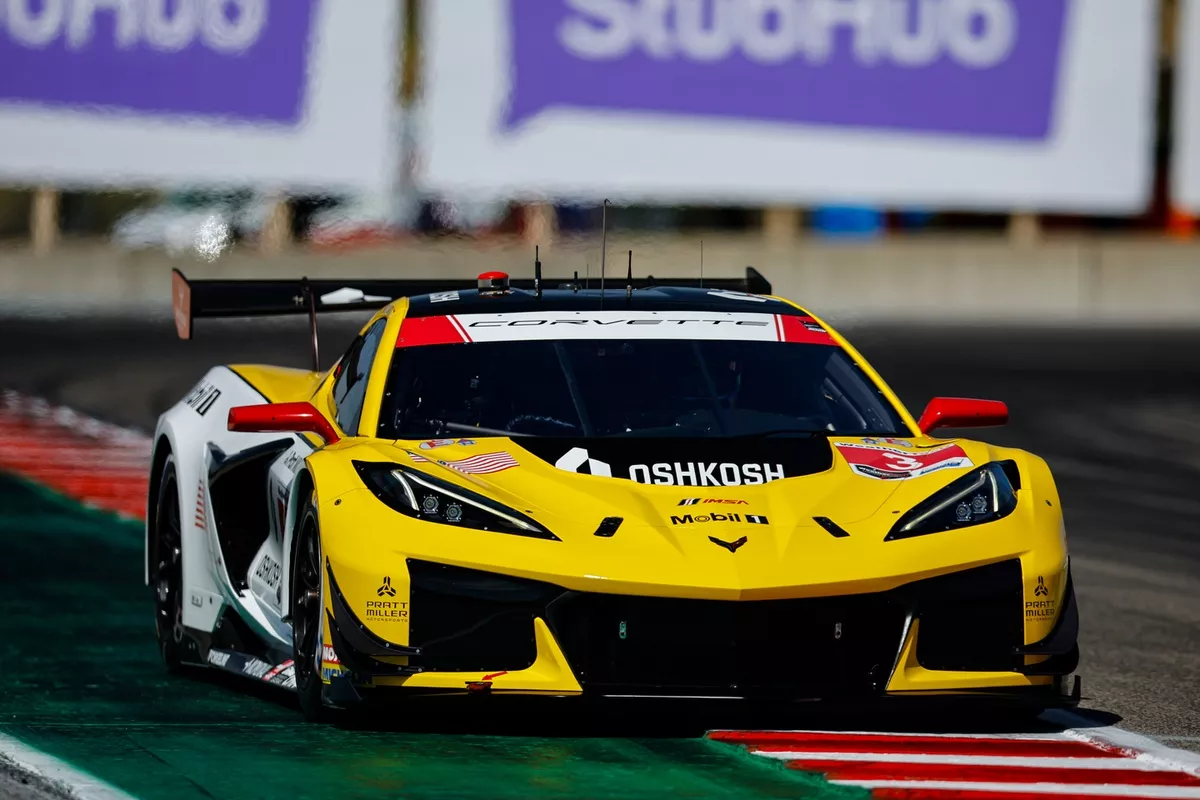
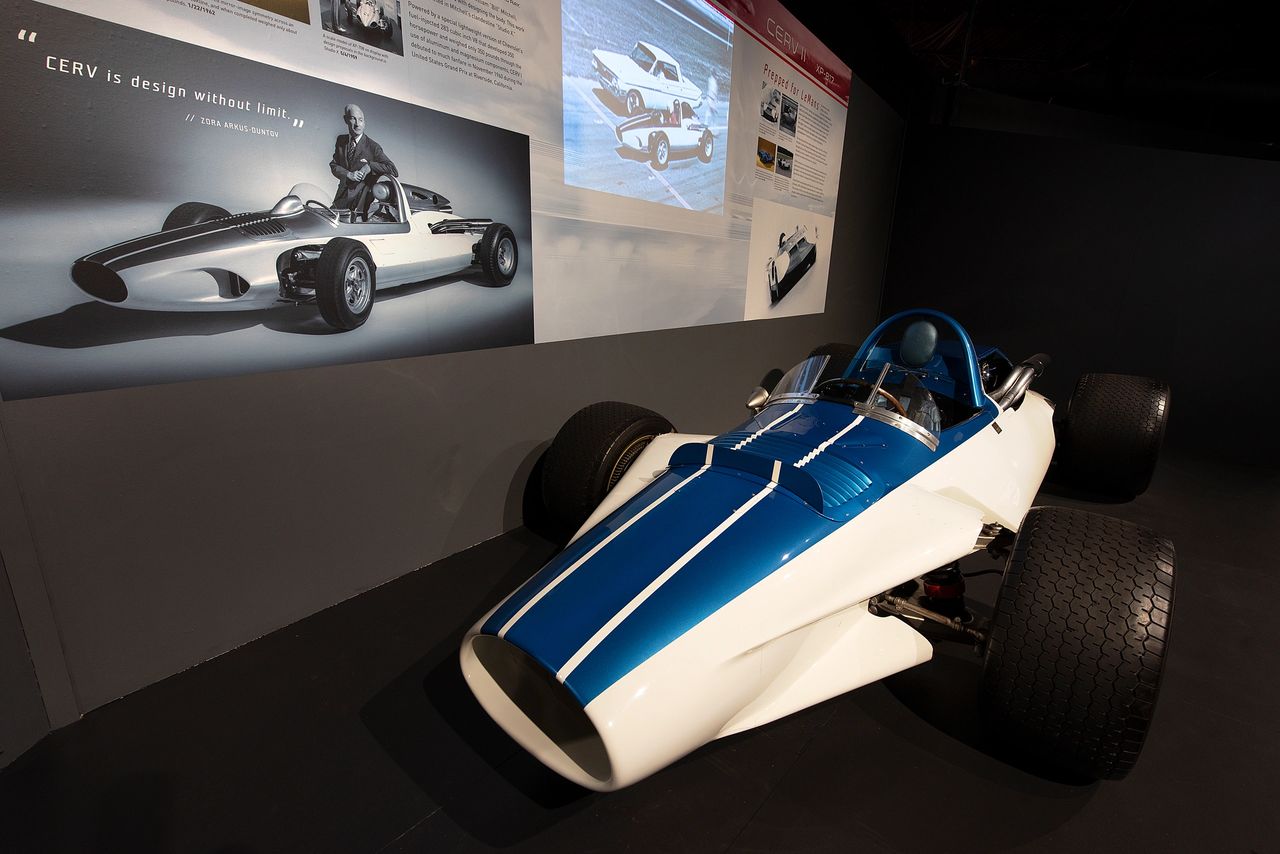
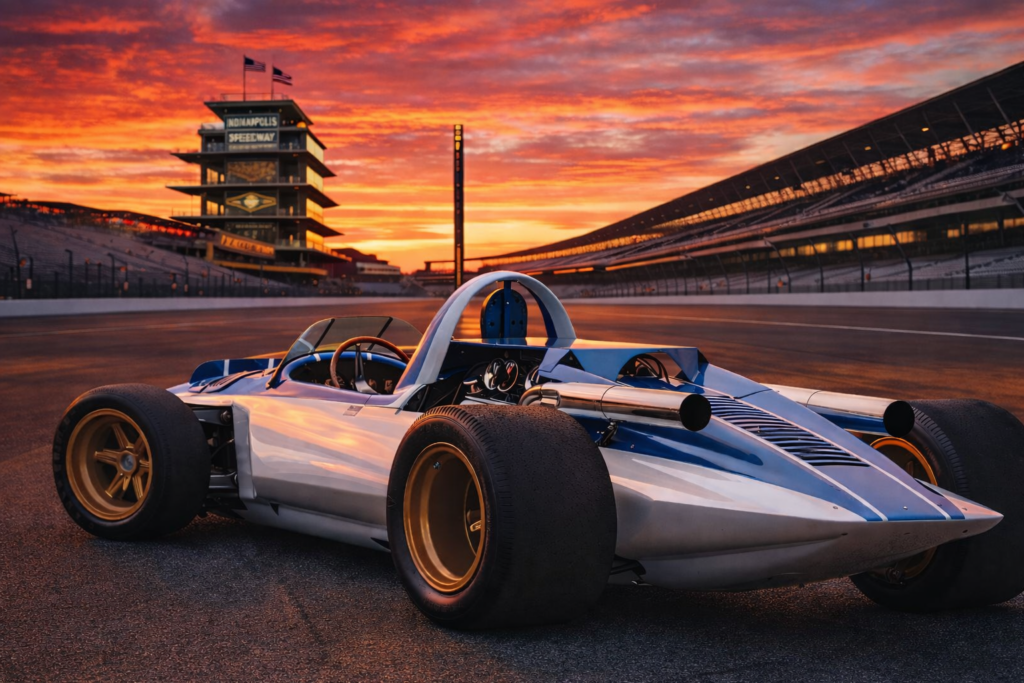
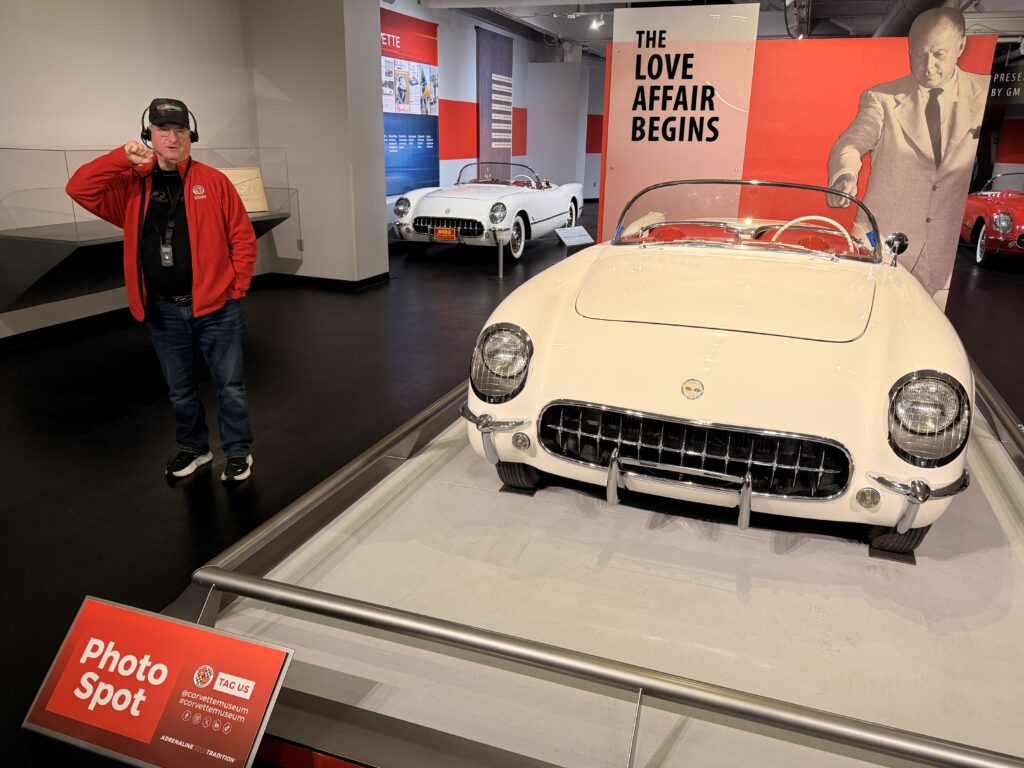
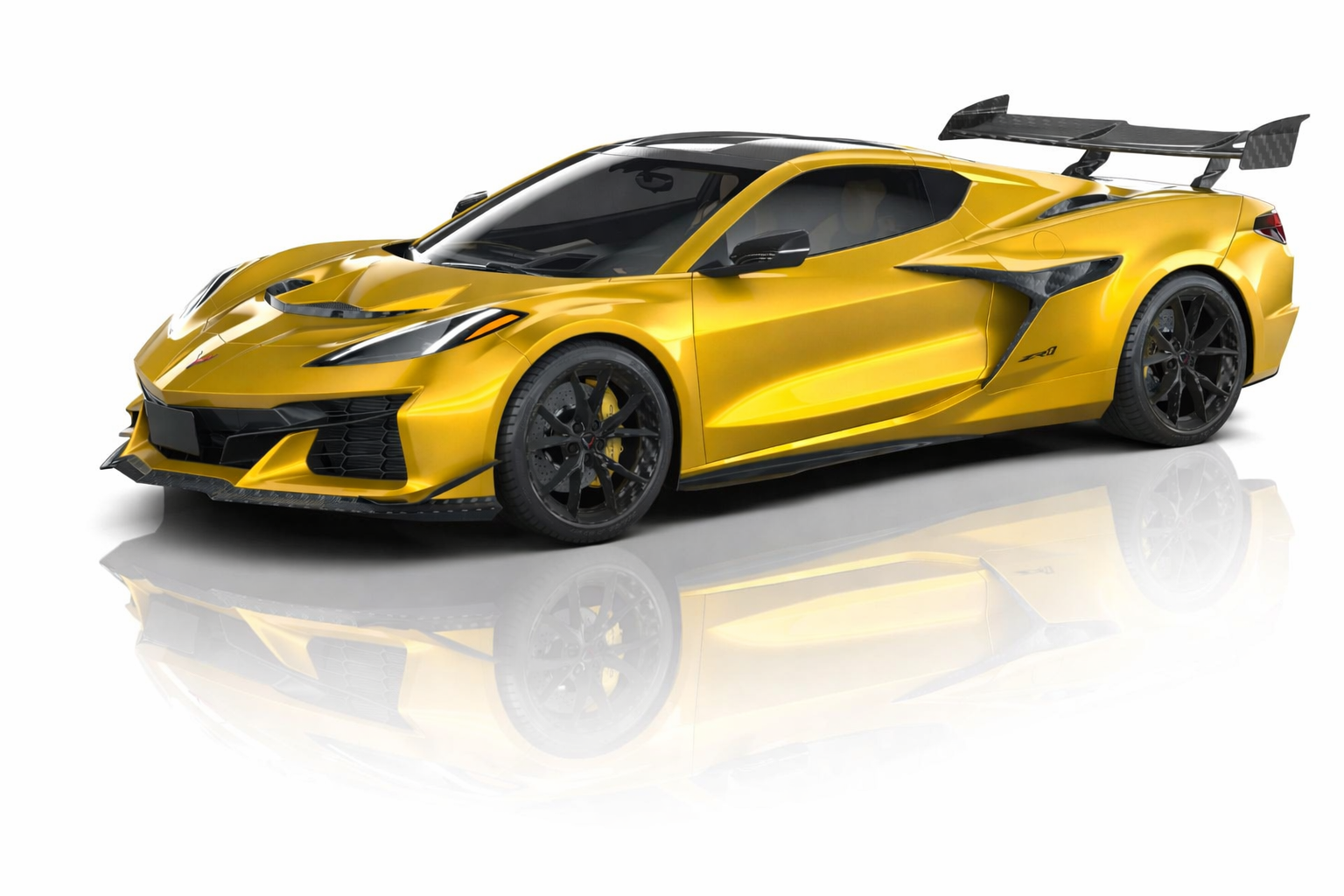
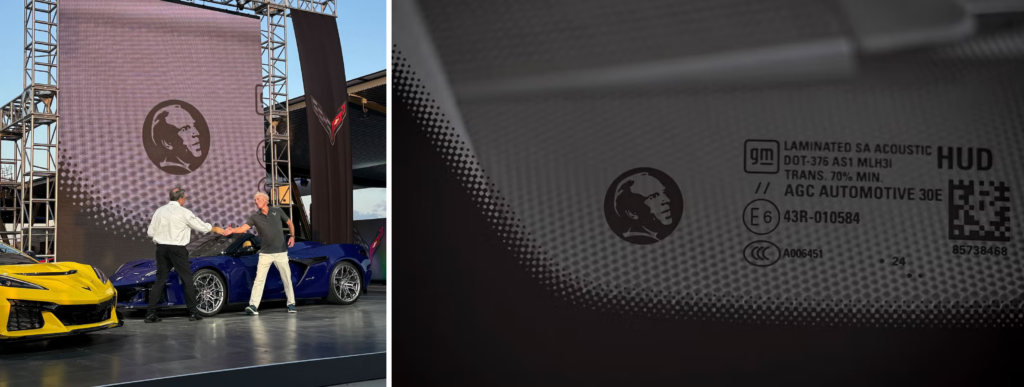
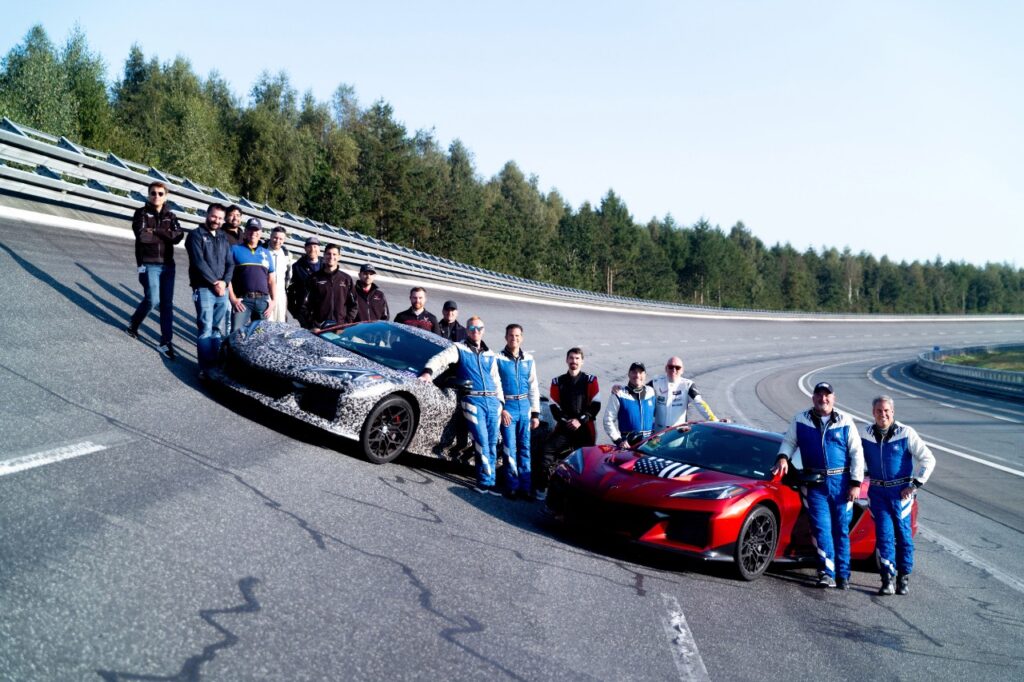
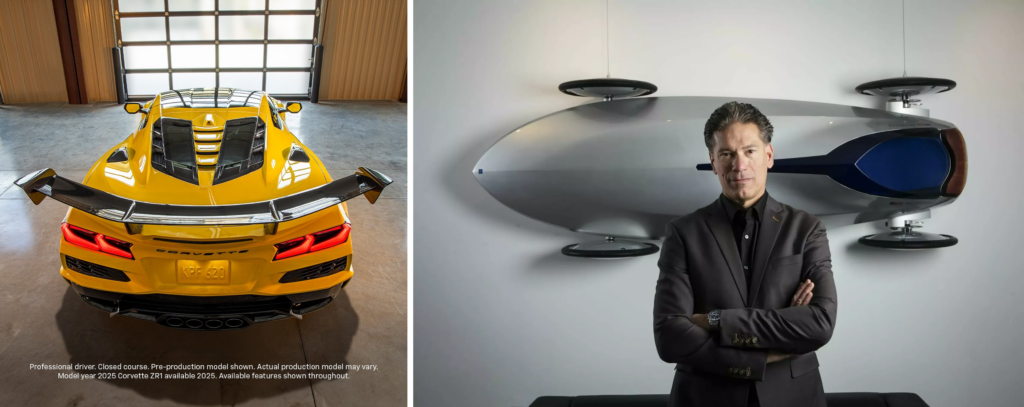
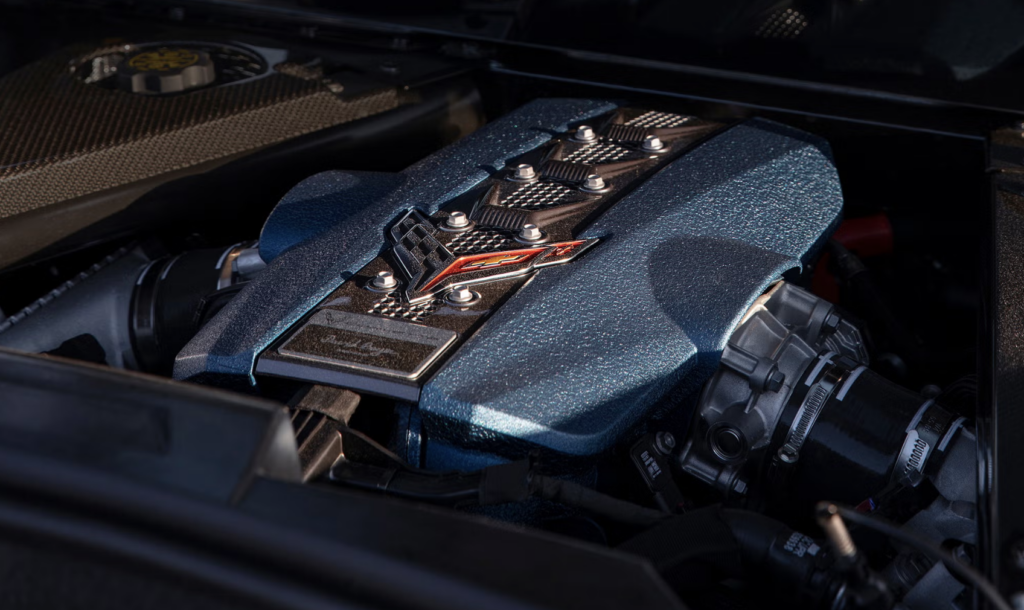
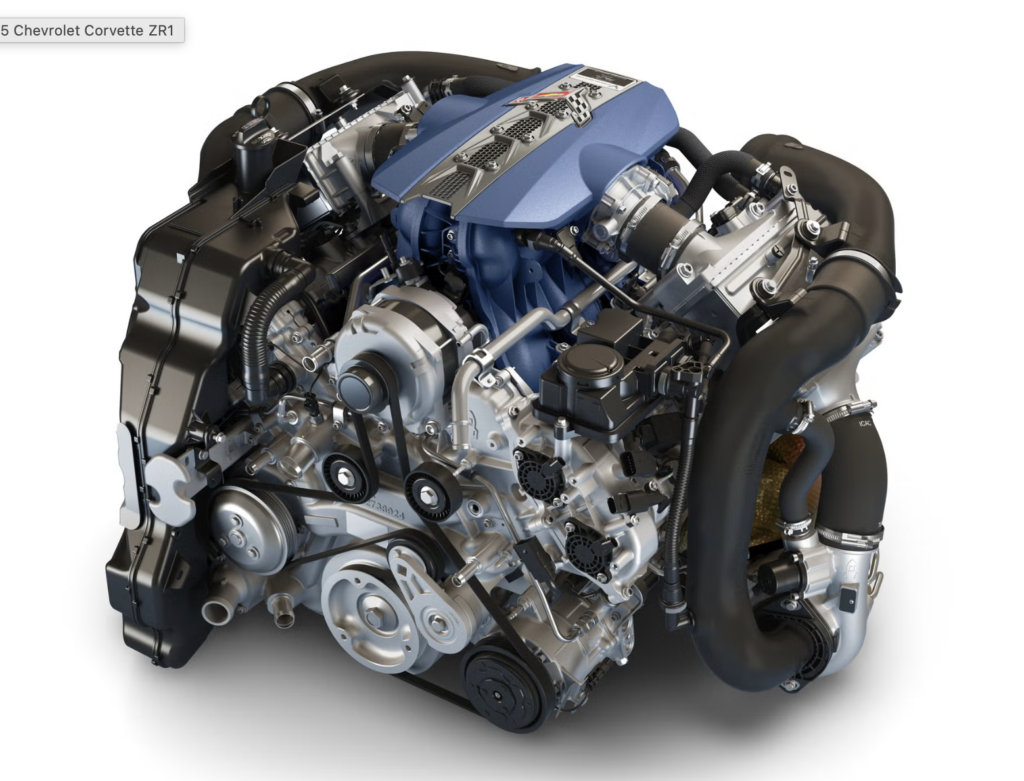
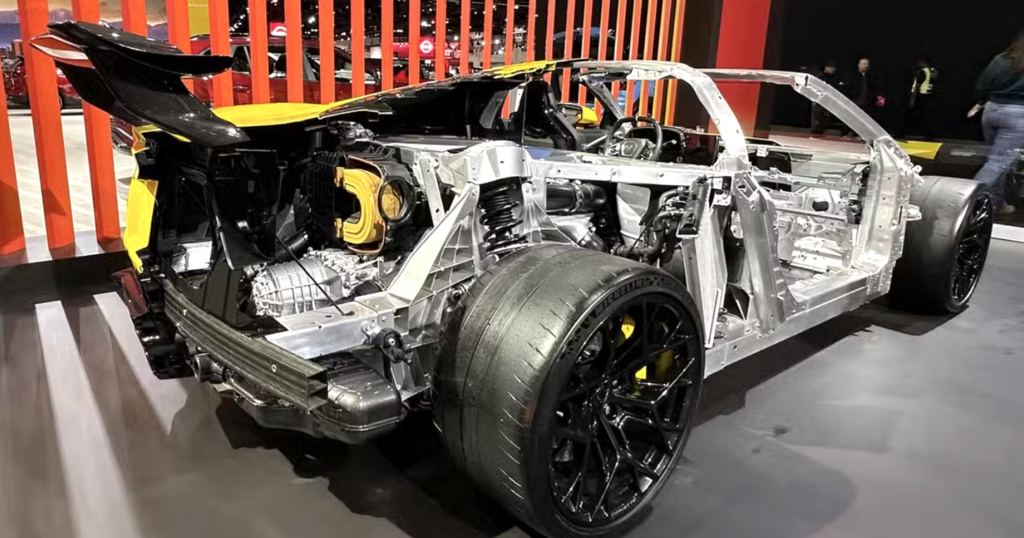
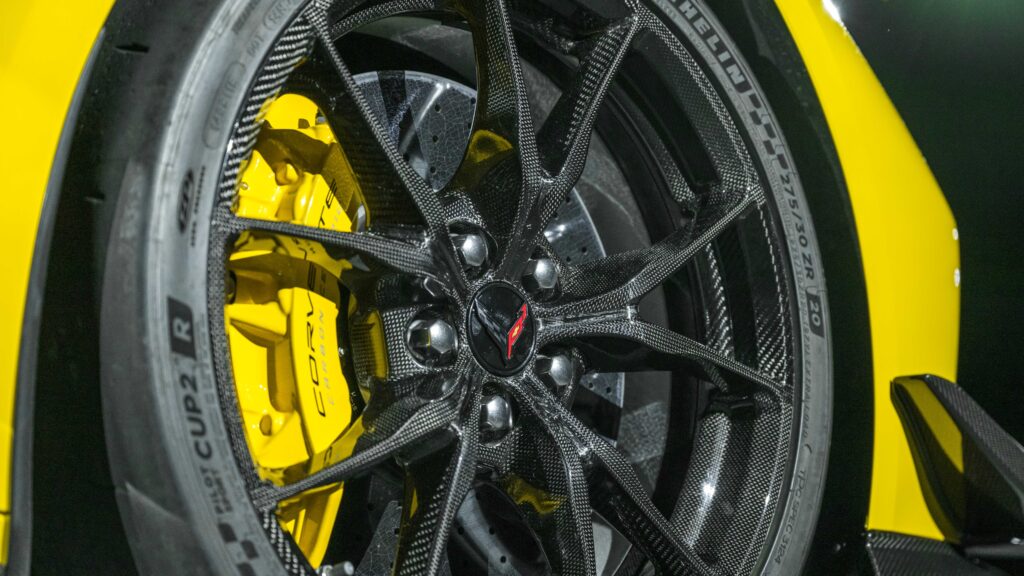
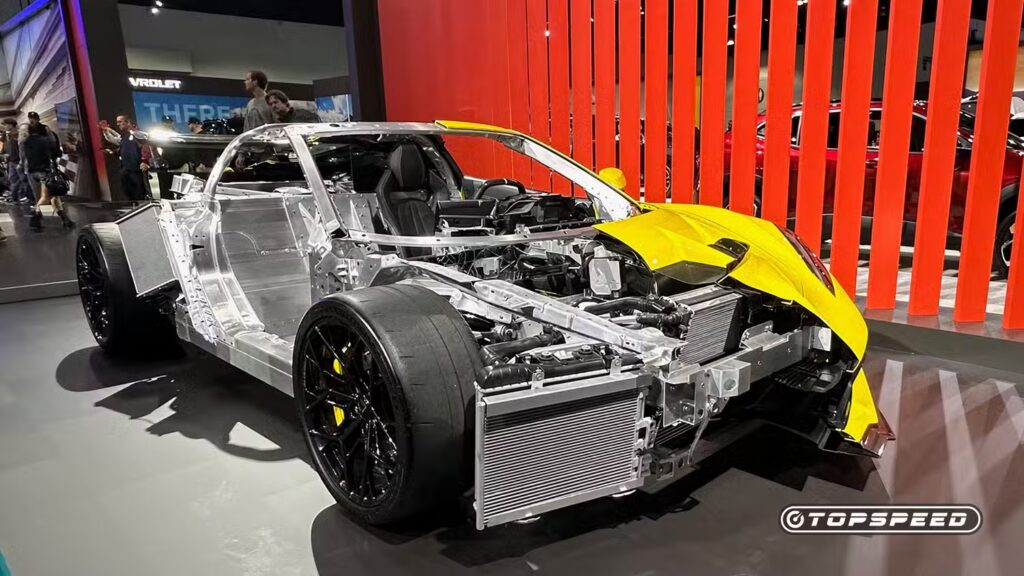
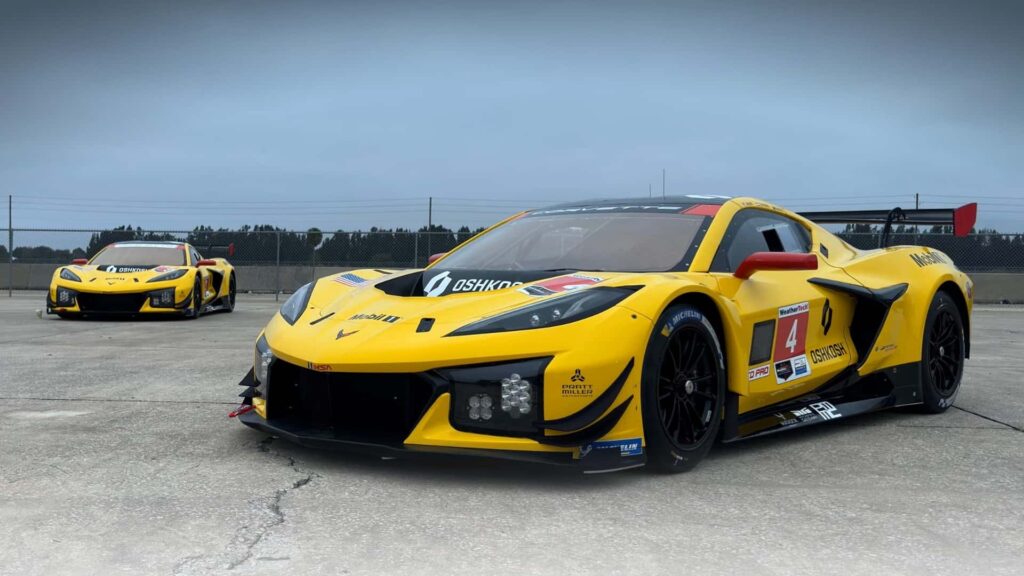
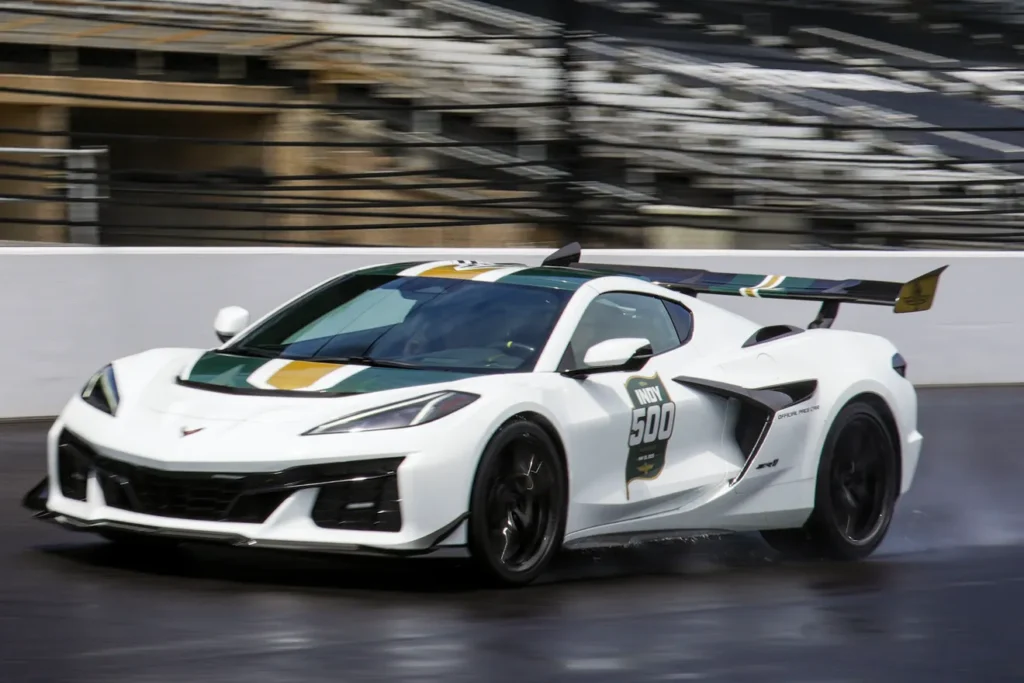
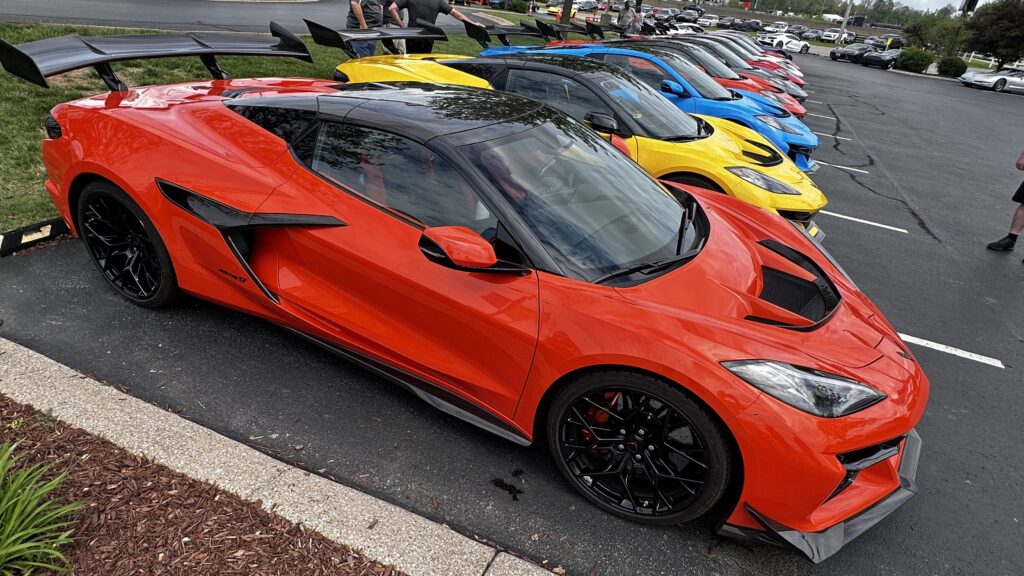
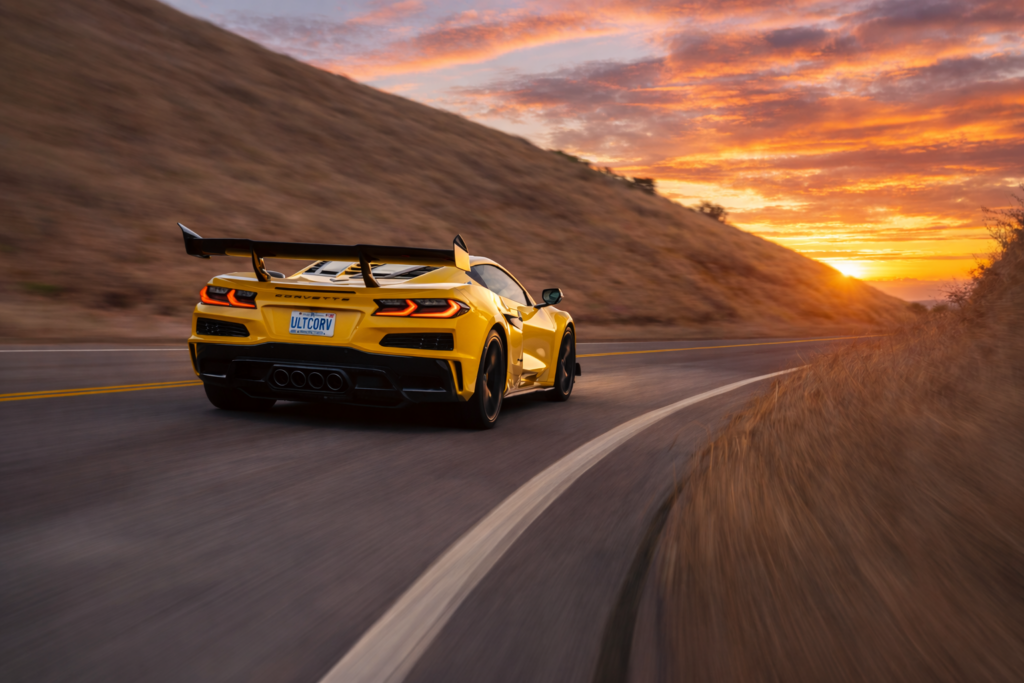
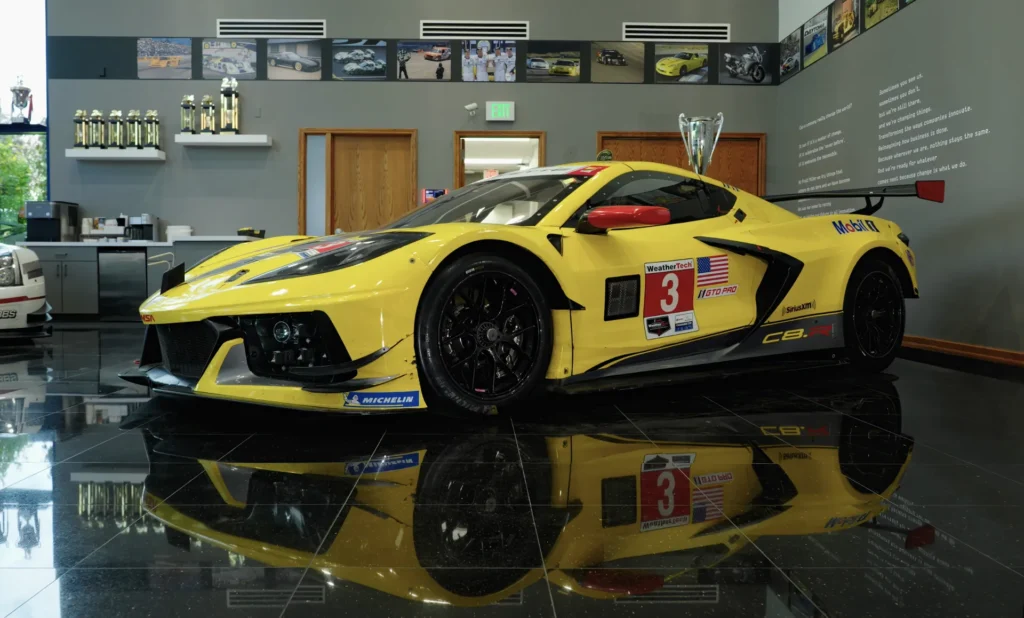
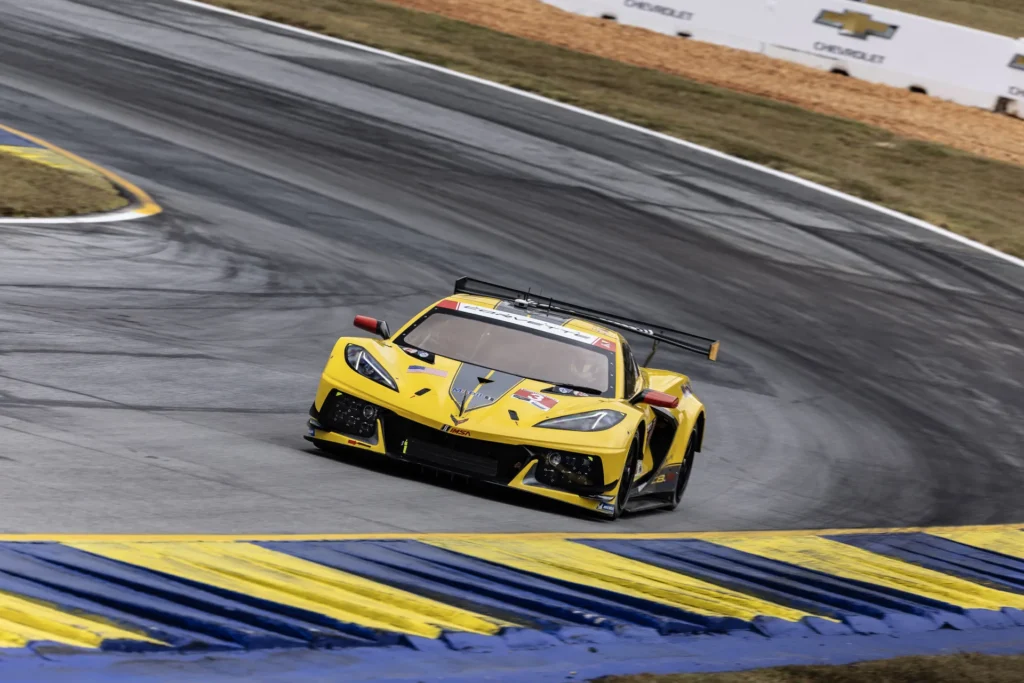
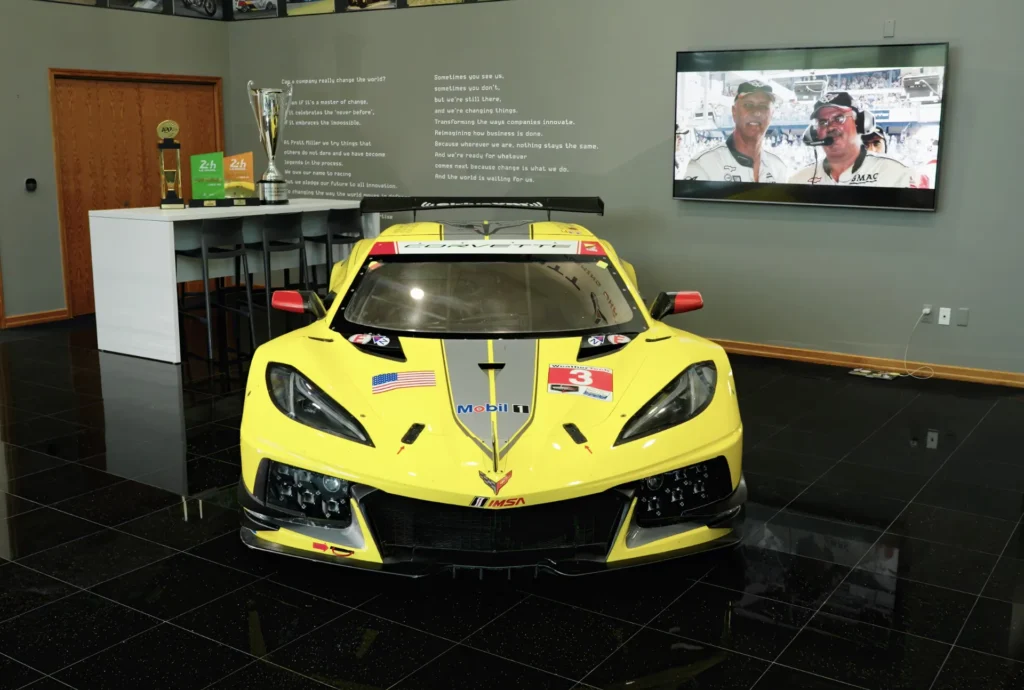
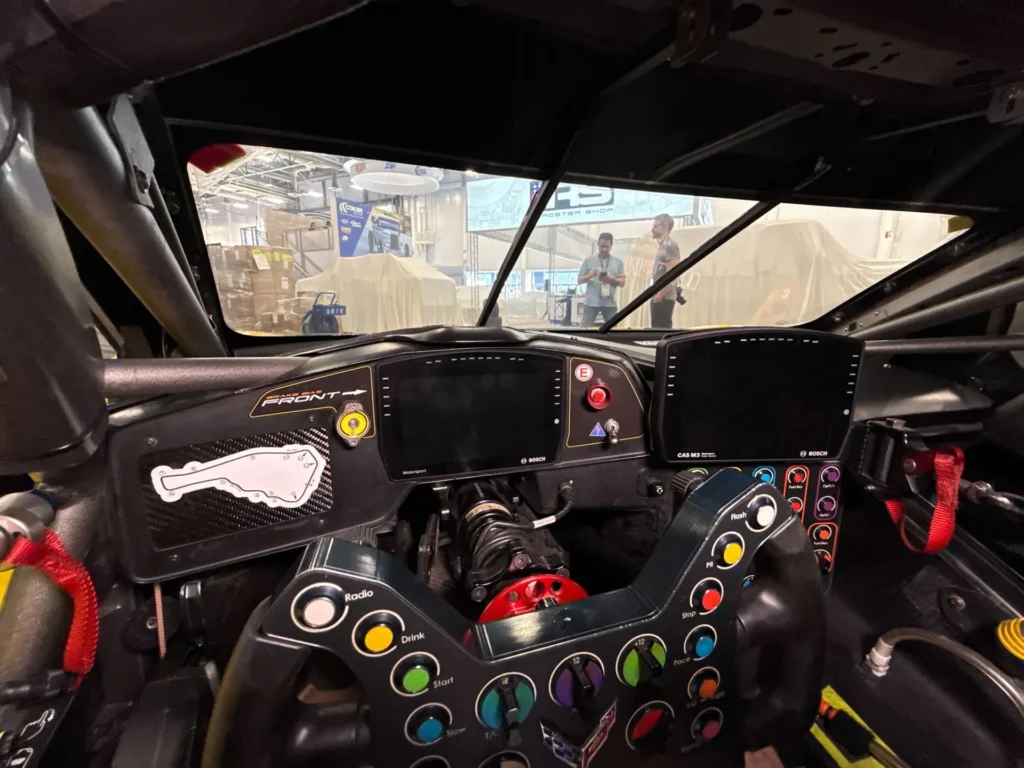
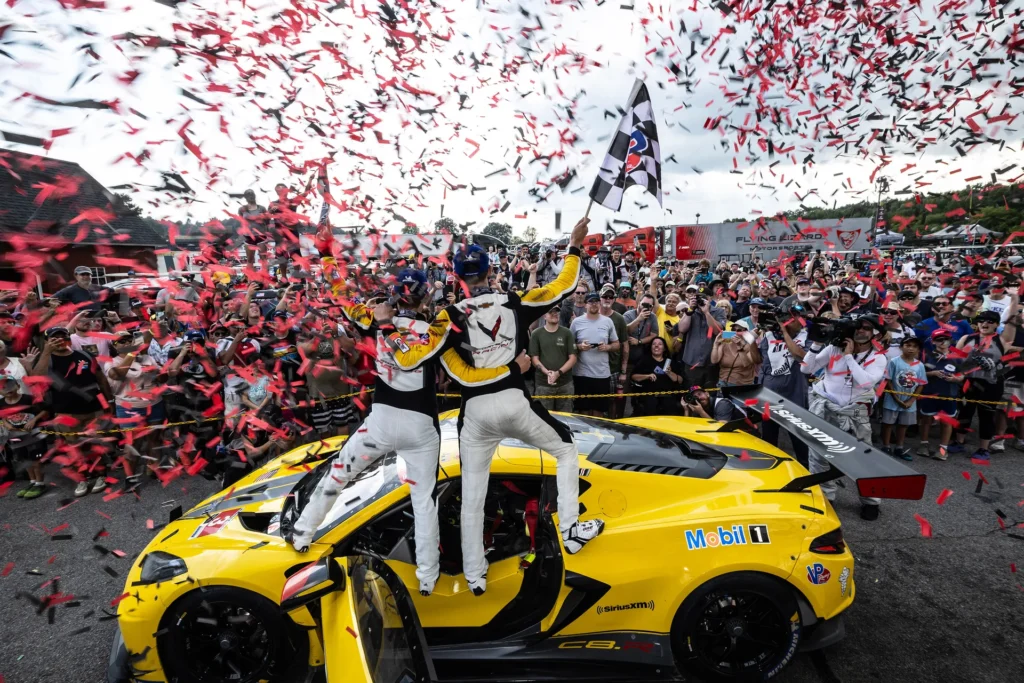
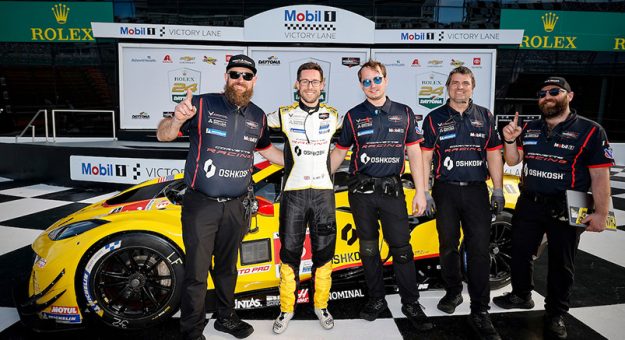
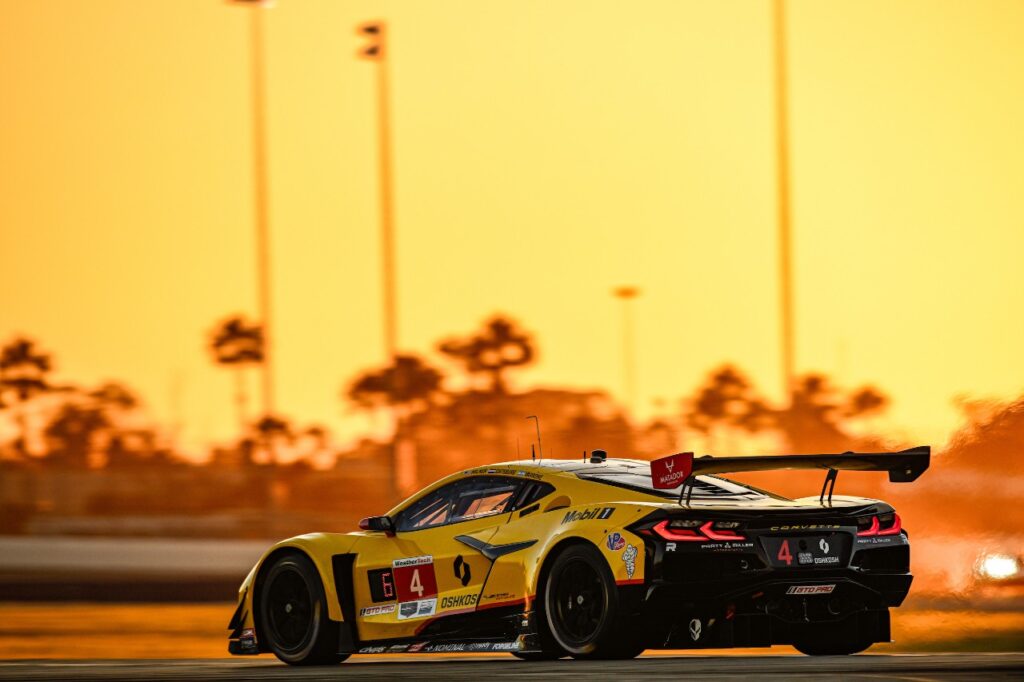
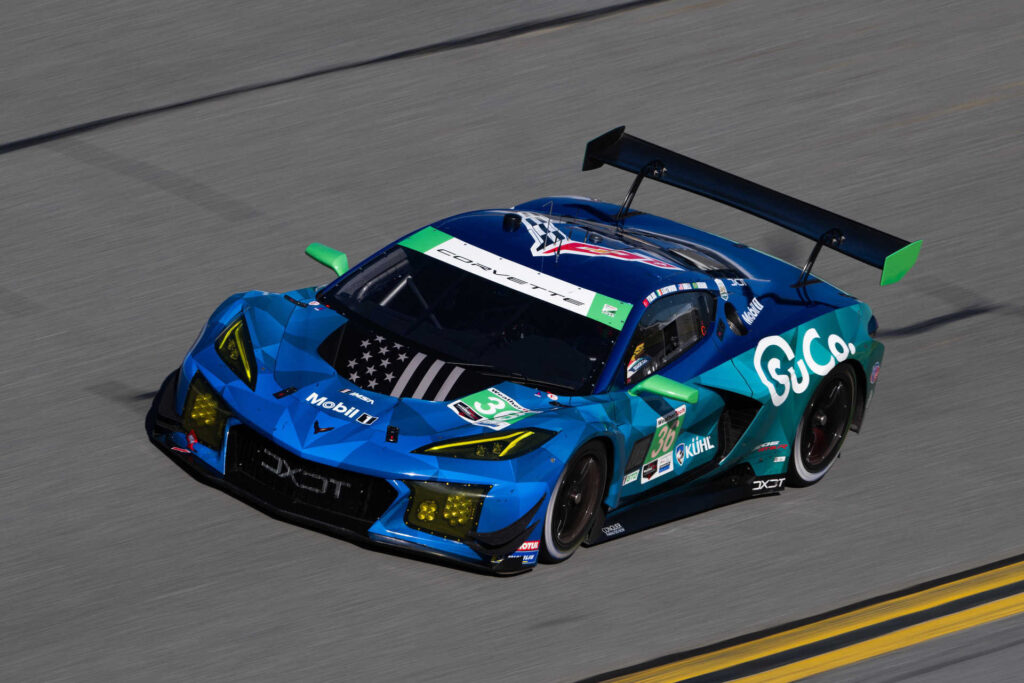
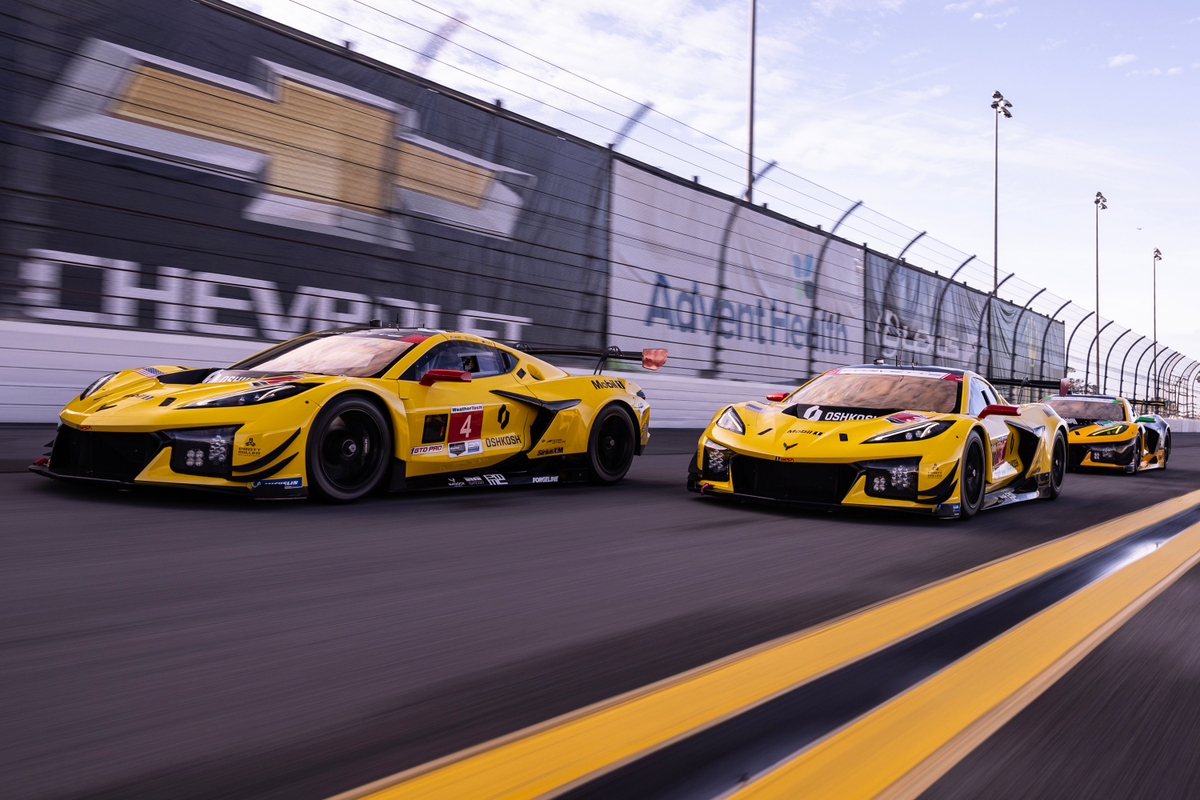
Corvette Racing did not leave Laguna Seca with the GTD PRO win, but it left Monterey with something nearly as important this early in the IMSA season: control of the championship conversation.
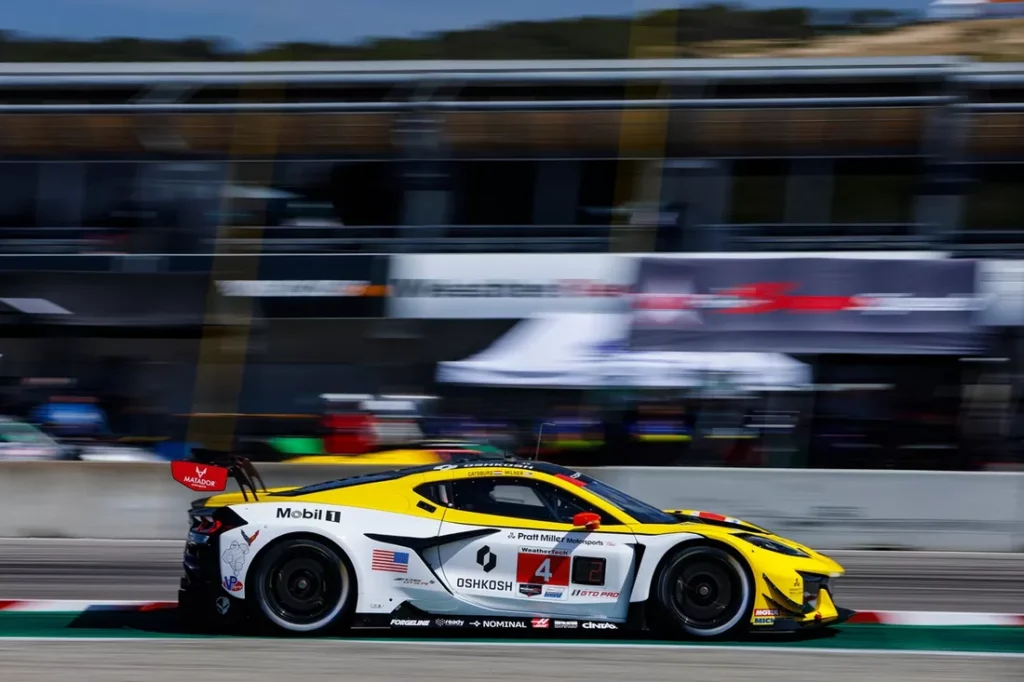
The No. 4 Corvette Racing by Pratt Miller Motorsports Chevrolet Corvette Z06 GT3.R of Tommy Milner and Nicky Catsburg finished second in GTD PRO after starting eighth in class, turning a difficult opening position into one of the team’s strongest results of the year. It was not a straightforward afternoon. Milner had to manage the usual Laguna Seca traffic and early contact, while the Pratt Miller crew quickly recognized that the race would likely be decided as much by pit timing and fuel strategy as outright speed.
That call proved critical. By moving the No. 4 Corvette onto an alternate strategy, the team gave Catsburg a chance to bring the car back into contention during the second half of the race. As the GTD PRO field cycled through stops and fuel-saving strategies began to unravel late, Catsburg was positioned to capitalize. He came home second, just behind the winning Ford Mustang GT3, securing another podium for the No. 4 team.
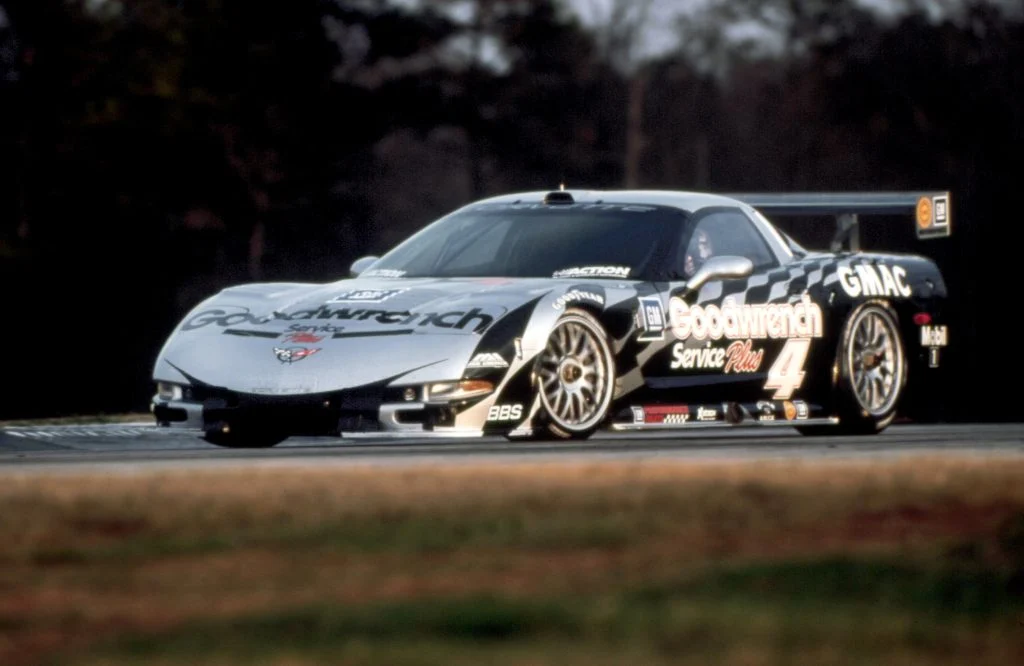
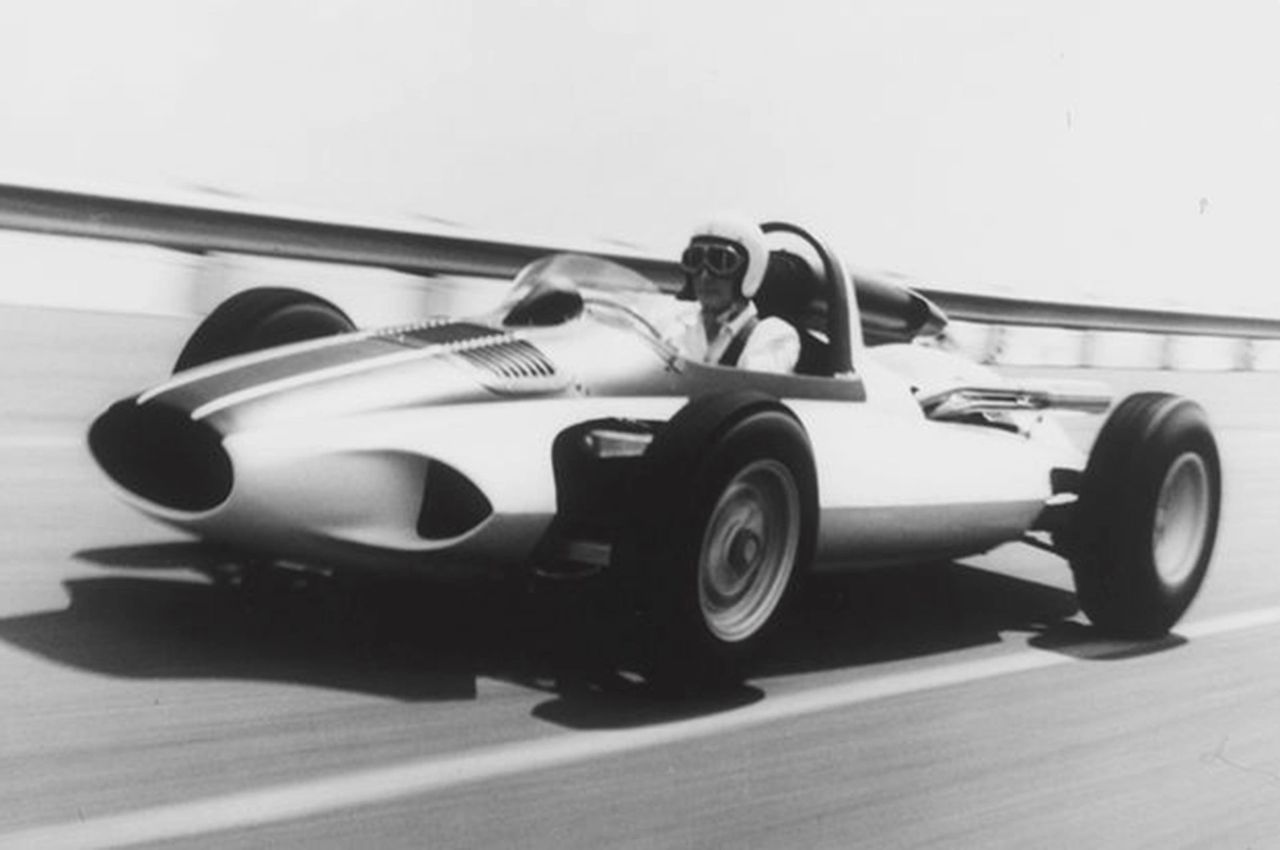
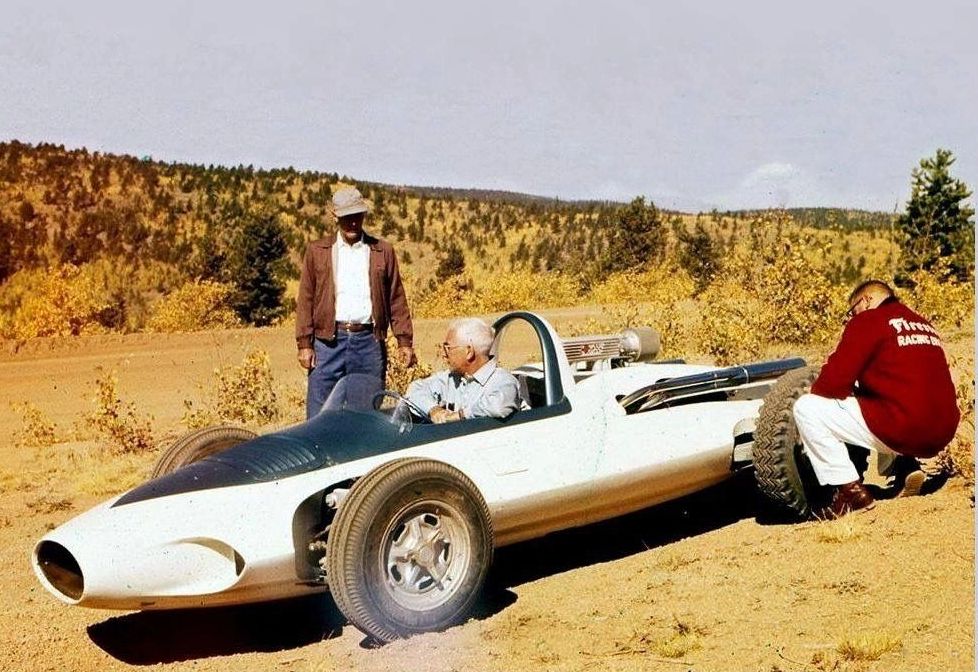
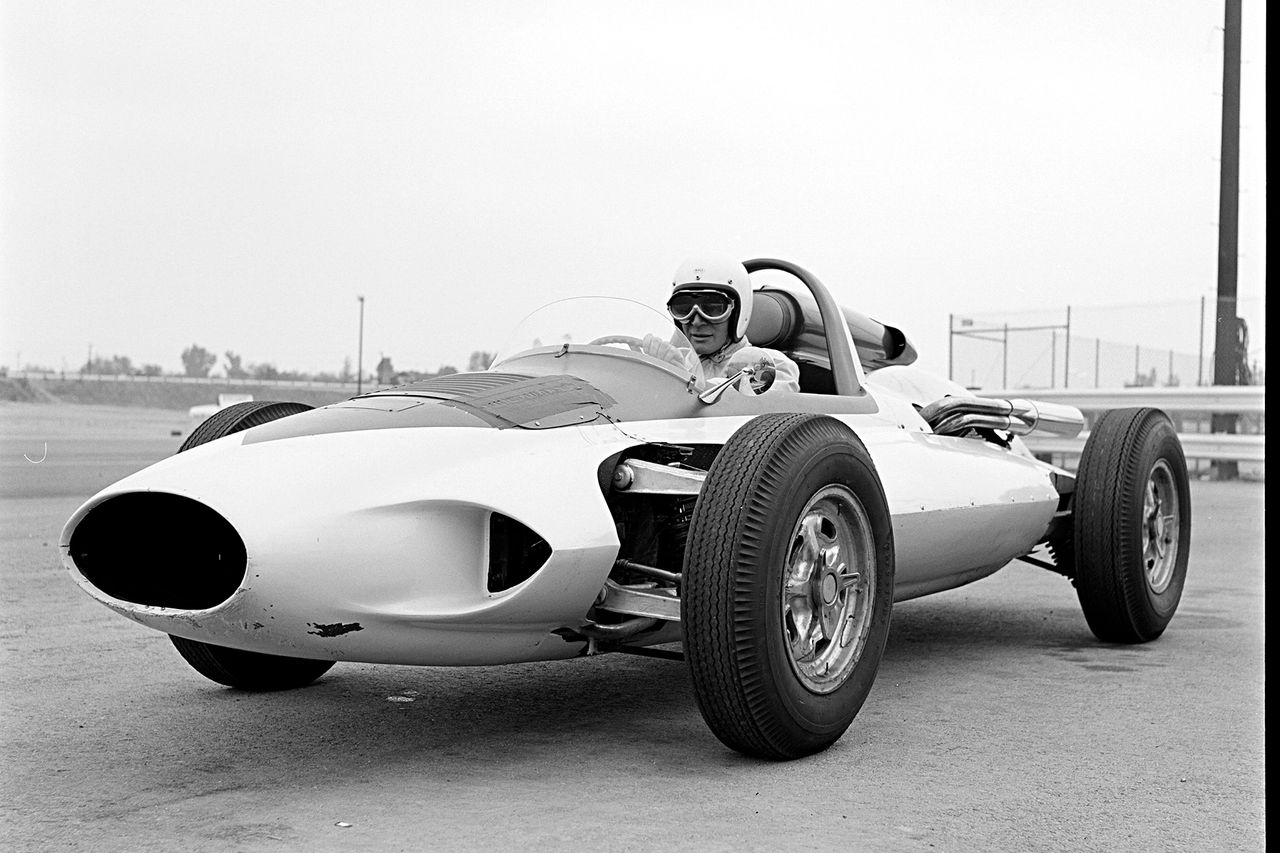
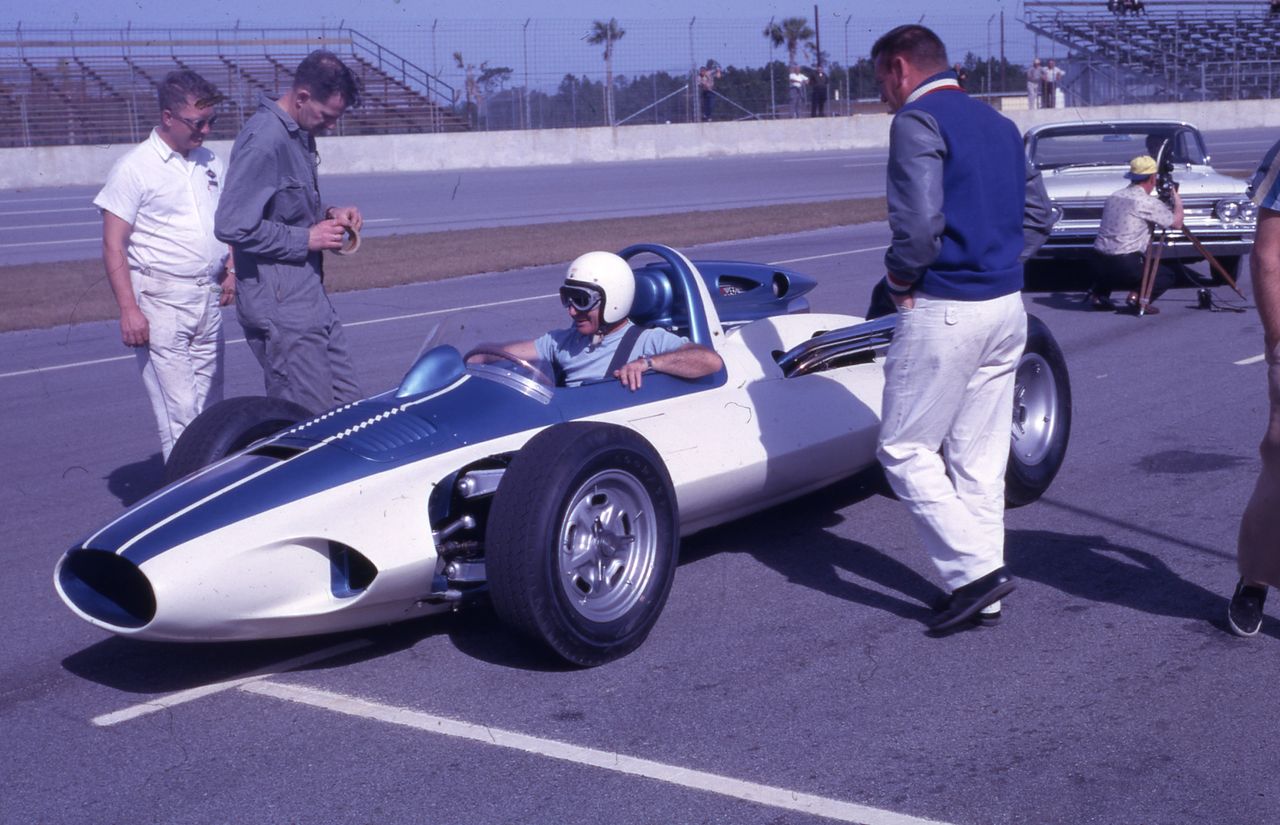
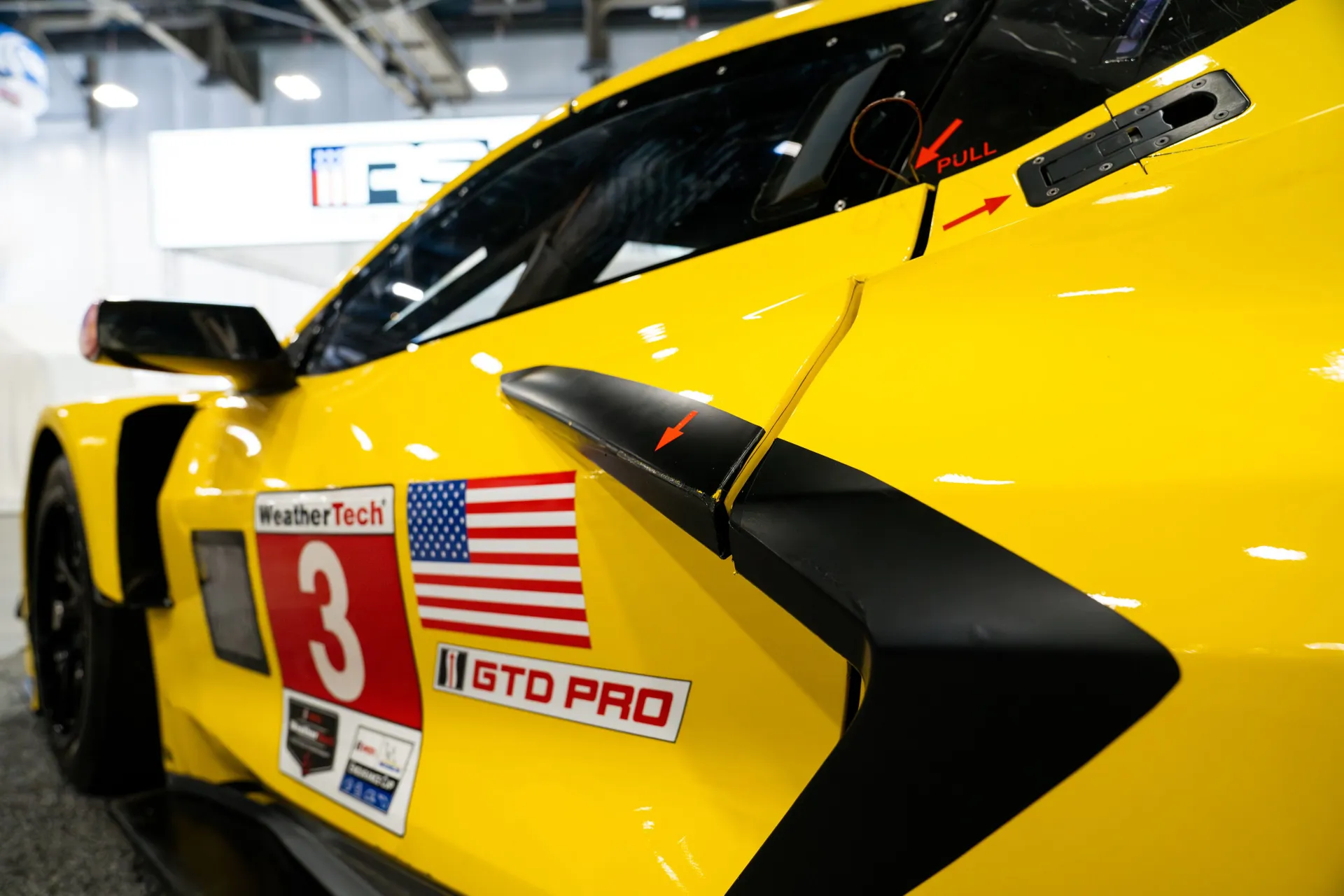
For the No. 4 Corvette Racing by Pratt Miller Motorsports Z06 GT3.R, Laguna Seca was a championship-building afternoon. Tommy Milner and Nicky Catsburg turned an eighth-place starting position into a second-place GTD PRO finish, using smart pit strategy and a disciplined closing run to stay in contention as the race became a fuel-and-timing exercise. The result gave the No. 4 Corvette its second straight podium and moved Milner, Catsburg, Chevrolet, and the Pratt Miller entry into the GTD PRO points lead. It was not the win they wanted, but it was the kind of measured, high-value result that defines a serious title campaign. (Image credit: Autosports.com)
More importantly, the finish moved Milner and Catsburg into the GTD PRO drivers’ championship lead. The No. 4 Corvette also took over the team standings, while Chevrolet moved to the top of the manufacturers’ championship. For a program still in the early stages of the Z06 GT3.R era, that is a meaningful marker.
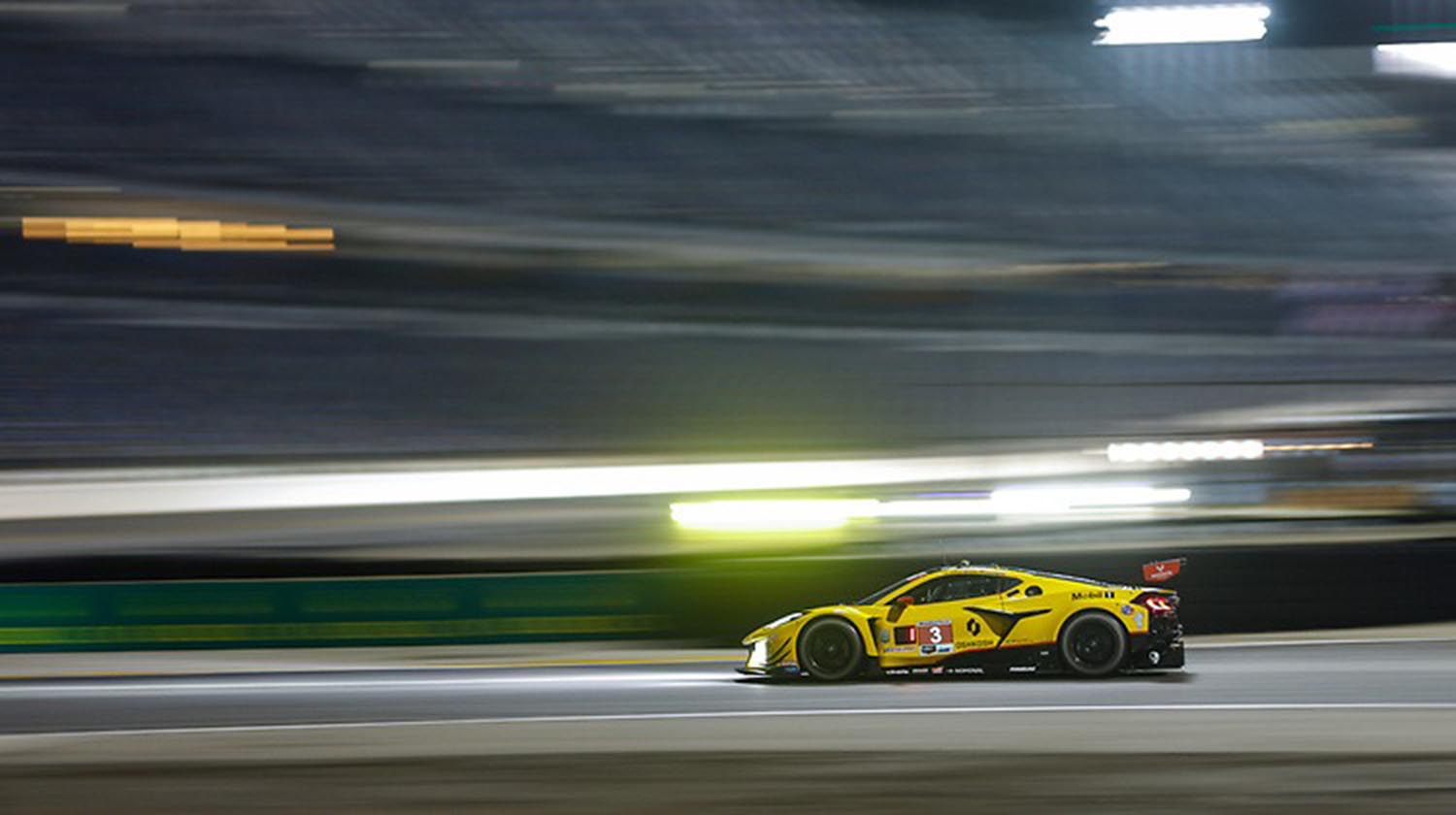
The sister No. 3 Corvette of Antonio Garcia and Alexander Sims also delivered a solid points-paying result, finishing fourth in GTD PRO. Their strategy played out differently, with Sims among the drivers trying to stretch fuel late in the race. When the caution they needed never came, the No. 3 Corvette slipped out of podium position but still gave Corvette Racing both factory-supported entries inside the top four.
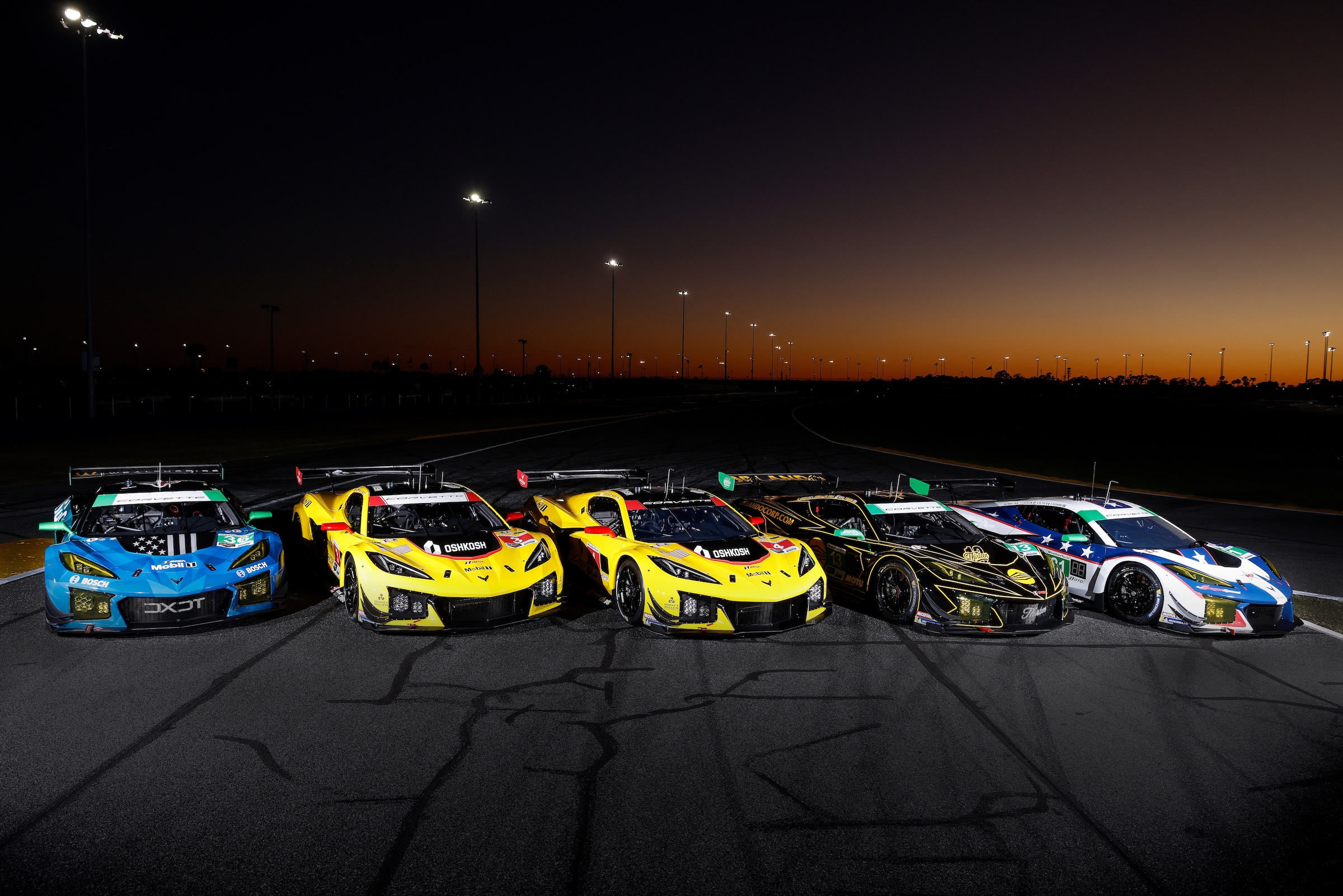
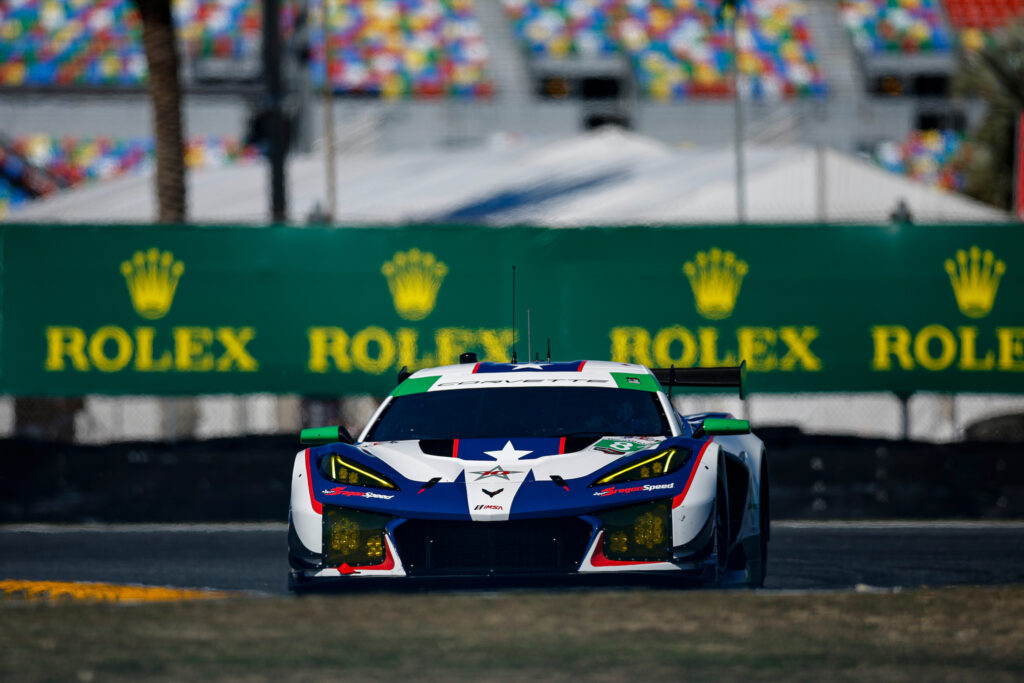
DragonSpeed’s No. 81 Corvette Z06 GT3.R had a quieter but useful afternoon at Laguna Seca, bringing the car home 11th in GTD after a cleaner run than some of its earlier-season outings. It was not the breakthrough result the team is chasing, but for a customer Corvette program still building rhythm with the Z06 GT3.R platform, finishing the race and gathering data represented a step in the right direction.
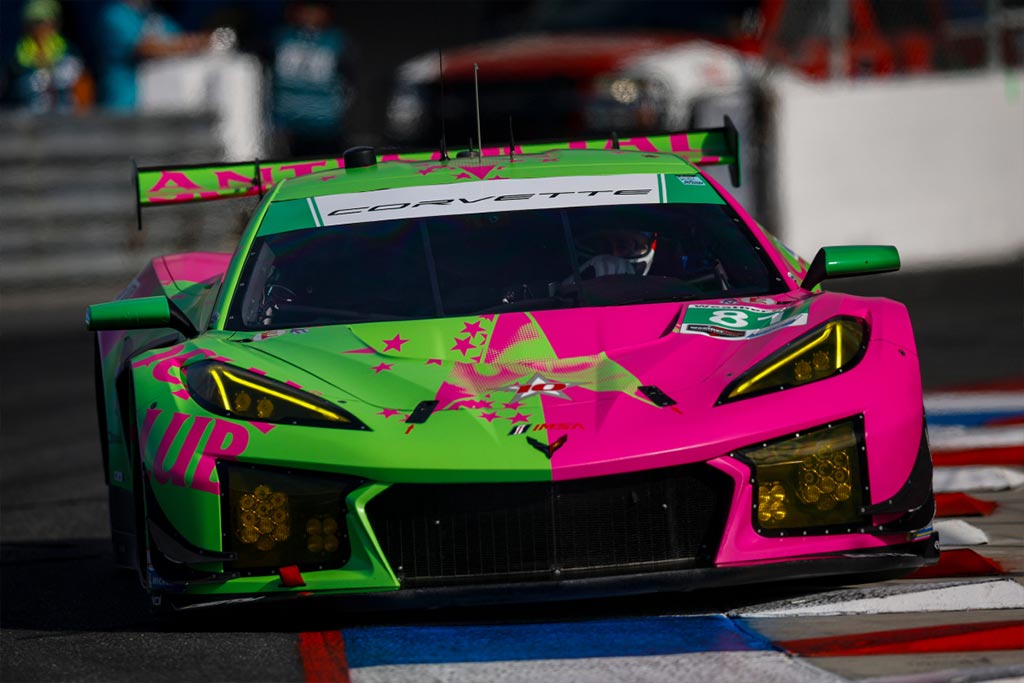
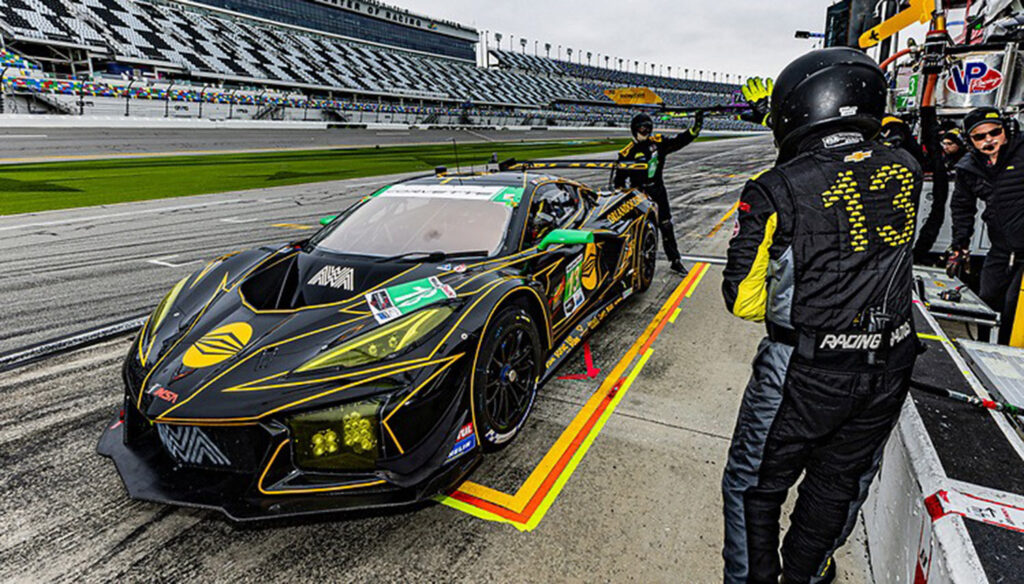
The customer Corvette programs had a more mixed afternoon. DragonSpeed’s No. 81 Corvette Z06 GT3.R finished 11th in GTD, giving the team a cleaner result after a difficult start to the season. The No. 13 13 Autosport Corvette retired with a mechanical issue, ending its day early.
Laguna Seca was not perfect for Corvette Racing, but it was productive. The Z06 GT3.R showed pace, the Pratt Miller pit stand made the right calls, and Corvette left California leading the GTD PRO title fight.
Corvette Racing turned a challenging Laguna Seca weekend into a championship-building result, with the No. 4 Z06 GT3.R landing on the GTD PRO podium and taking the points lead. The win slipped away, but Corvette’s two-car factory effort showed pace, strategy, and resilience when it counted.
The 1975 Chevrolet Corvette arrived at a moment when the entire American automotive industry was being forced to rethink some of its most basic assumptions. The new model year did not simply bring another round of styling tweaks, emissions adjustments, or horsepower reductions. It marked a much larger turning point. After years of mounting concern over the serious health risks and environmental contamination associated with leaded gasoline, the industry was moving toward a future without it. For Chevrolet, for Corvette, and for anyone who still believed in American performance, that shift was impossible to ignore.
Today, the end of leaded fuel feels like an obvious and necessary step. In the mid-1970s, however, it was anything but simple. For Corvette engineers — and really for the entire performance world — leaded gasoline had been part of the operating formula for decades. It was not some optional ingredient sitting on the margins. It helped make high-compression V8s practical. It allowed engines to tolerate aggressive spark advance, harder timing curves, and the kind of combustion pressures that had defined Corvette performance through the muscle-car era. Remove the lead, and the whole equation changed. Suddenly, the challenge was no longer just building power. It was building power that could survive on the new fuel, meet tightening emissions standards, and still feel worthy of the Corvette name.
The 1975 Corvette arrived at a turning point, and this Orange Flame (Code 70) T-top coupe captures that moment perfectly. With its long, sculpted C3 bodywork and removable roof panels, it still delivered the presence and drama buyers expected from America’s sports car—even as the era around it was changing. This was a Corvette shaped as much by adaptation as ambition, balancing style, comfort, and identity in a decade defined by transition. It’s the ideal starting point for understanding what 1975 was really about—and why the story deserves a closer look.
Tetraethyllead — better known simply as TEL — had been part of the American gasoline story since the 1920s for one very simple reason: it worked. By reducing knock, it allowed engineers to raise compression ratios and build more powerful engines without constantly fighting detonation. For decades, that made leaded gasoline a quiet but essential partner in the development of high-performance V8s. But by the 1970s, the other side of that bargain could no longer be dismissed. Lead coming out of vehicle exhaust was not just an environmental concern in some distant, theoretical sense. It was being tied to widespread public exposure and serious neurological harm, especially in children. Public concern was growing, the science was becoming harder to ignore, and regulatory pressure was moving quickly behind it.
For Corvette, the issue was not only philosophical or environmental. It also became brutally mechanical. Leaded fuel and catalytic converters simply could not live together. As catalysts moved from experimental or emerging emissions technology into required equipment, lead contamination became a deal-breaker because it could damage the catalyst and prevent it from doing its job. That left the industry facing one of the hardest transitions of the era. The same fuel chemistry that had made traditional high-performance tuning easier was now incompatible with the emissions hardware that would define whether a car could legally be sold.
That is why the 1975 model year played such a significant role in the brand’s evolution. Not because the Corvette suddenly became faster, louder, or more dramatic, but because the priorities behind the car were changing in real time. Corvette engineers now had to think beyond peak horsepower numbers and quarter-mile mythology. They had to make a performance car work inside a completely new rulebook, one shaped by ignition calibration, emissions controls, exhaust aftertreatment, evaporative systems, durability requirements, and day-to-day drivability. The 1975 Corvette still looked familiar from the outside, but underneath the skin, the “how” of Corvette engineering was being rewritten.
The End of an Era: Duntov Steps Away
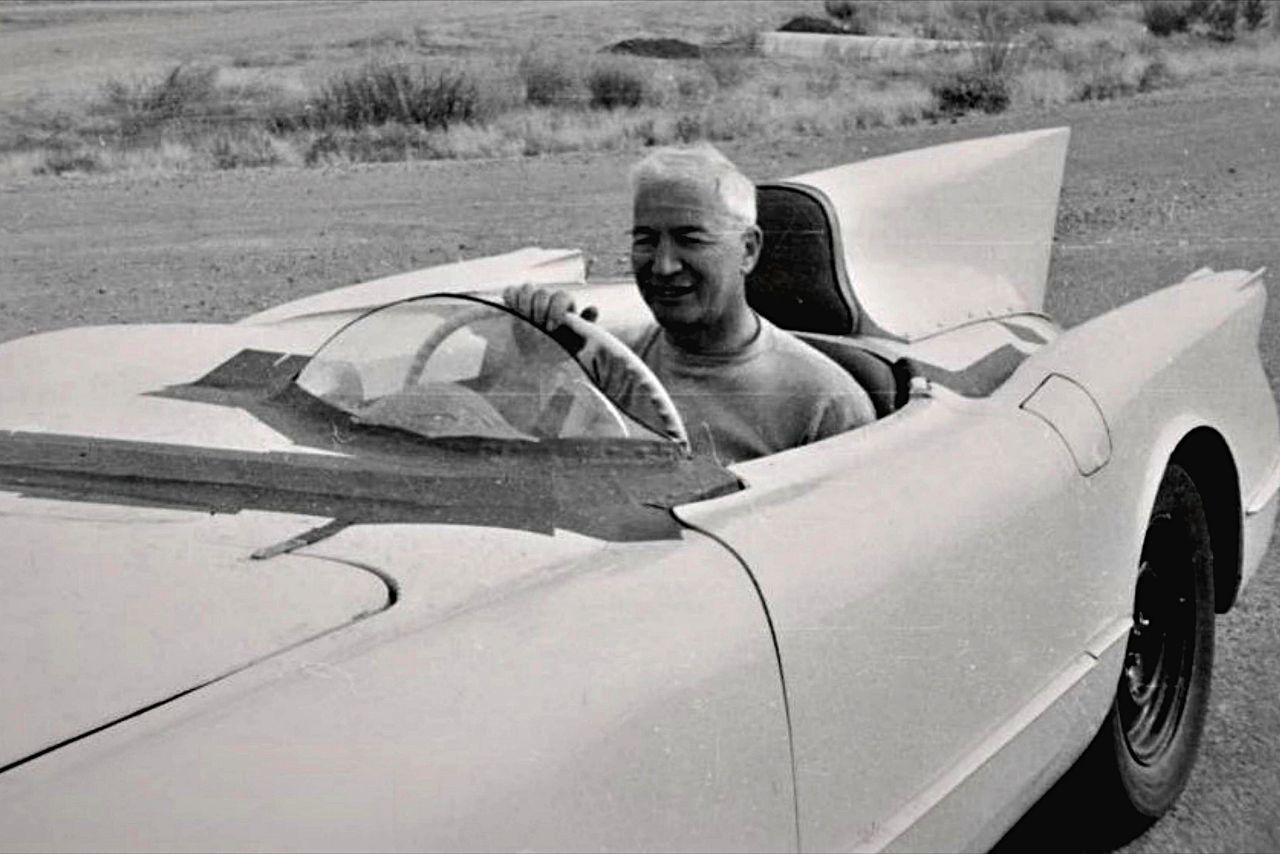
Zora Arkus-Duntov retired from Chevrolet in January 1975, closing a chapter that had defined Corvette engineering for more than two decades. In his final years with the program, his focus had shifted from raw performance to helping the Corvette navigate a rapidly changing regulatory environment—emissions compliance, unleaded fuel, catalytic converters, and safety-driven engineering compromises that were reshaping the car. Even as performance numbers fell, Duntov remained deeply engaged in protecting the Corvette’s technical integrity and long-term viability. His retirement marked not just a personnel change, but the symbolic end of the Corvette’s original, engineer-led performance era. (Image courtesy of GM Media LLC.)
Zora Arkus-Duntov — the man most responsible for giving the Corvette its performance soul — retired at the beginning of 1975 after more than two decades with General Motors. His connection to Corvette began in 1953, when he saw Harley Earl’s original Corvette prototype on GM’s Motorama stage in New York. For Duntov, that first encounter was more than professional curiosity. He recognized something in the car that many inside Chevrolet had not yet fully grasped. Beneath the fiberglass body and show-car excitement was the possibility of a true American sports car. Duntov saw it, understood it, and then did what he would spend the rest of his career doing: he pushed.
Later that same year, he joined Chevrolet after writing to Ed Cole with his observations about the Corvette prototype. In hindsight, the story almost feels too perfect to be real — the brilliant engineer essentially introducing himself by telling Chevrolet how to improve, strengthen, and possibly save its own sports car. But that is also why the story has endured. Corvette has always needed champions at the exact moments when the program was most vulnerable, and Duntov became the man inside General Motors who was willing to challenge the system from within.
Even while assigned to other work, Duntov began “fiddling on the side” with Corvette throughout 1953 and 1954, gradually shaping the car into something more serious than the attractive but underdeveloped roadster that had first appeared under the Motorama lights. By 1956, he had been named Chevrolet’s director of high-performance vehicle design and development, giving him a more formal role in the company’s growing performance ambitions. Still, despite his deep and constant involvement with Corvette, Duntov was not officially named Corvette’s Chief Engineer until 1968. That long gap says a great deal about the car’s strange early life. Corvette had become a symbol, a dream, and a marketing statement before it was fully supported as a dedicated engineering program with the authority it deserved.
By 1975, the man who had defined Corvette’s performance identity for an entire generation was stepping away. Given Duntov’s reputation, his personal investment in the car, and the extraordinary run of Corvettes he had helped guide into existence, it was entirely reasonable for people to wonder what would happen next. Replacing a chief engineer is one thing. Replacing the person many enthusiasts regarded as Corvette’s conscience was something else entirely.
That anxiety was not romanticized nostalgia. It was real. Corvette has been shaped by the personalities behind it more than almost any other American car. Duntov was never simply an administrator moving paper through the corporate system. He represented Corvette as a serious performance machine, and he fought for that idea again and again when it would have been easier to let the car become little more than a stylish boulevard cruiser. In 1975, with horsepower under pressure, emissions regulations tightening, fuel changing, and performance itself becoming increasingly difficult to defend, losing Duntov felt like losing Corvette’s fiercest advocate at precisely the moment the car needed one most.
The New Steward: David McLellan Takes the Wheel
This is one of the rare images that captures a real handoff moment—Dave McLellan and Zora Arkus-Duntov together, moving in the same direction, even as the Corvette’s priorities were shifting under them. Duntov represented the original performance-first era: horsepower, durability at speed, and the belief that Corvette had to prove itself the hard way. McLellan inherited that DNA, but his time would be defined by a different kind of fight—engineering a Corvette that could survive the late-’70s reality of emissions, fuel changes, noise regulations, and tighter safety standards without losing its identity. In that sense, this photo isn’t just two chief engineers traveling together; it’s the bridge between the Corvette’s raw muscle years and its more systems-driven, compliance-era evolution.
The person tasked with the challenging position—and the sizable shoes to fill—was David Ramsay McLellan, a man who had worked with Duntov and been groomed for the job after joining GM in 1959.
McLellan is often described as a “different kind of Corvette leader,” and that is exactly the right way to understand his arrival. In 1975, Corvette did not need another romantic. It needed a strategist. It needed someone who could look at a shrinking box of options and still find a way to keep the car coherent, credible, and worthy of the name. The assignment was no longer as simple as chasing a bigger horsepower number or winning an internal argument with raw performance. The real work was in managing trade-offs without letting them define the car’s entire personality. That required discipline. It required patience. It required an engineer who understood that Corvette’s identity had to be protected even as the rules, the fuel, the emissions requirements, and the business realities around it continued to shift. In McLellan’s era as Chief Engineer, leadership was not about dreaming louder. It was about navigating more clearly.
That is part of what makes McLellan’s preparation so interesting. He spent much of 1973 and 1974 at MIT’s Sloan School of Management at GM’s direction, a move that says a great deal about the kind of leadership General Motors believed it needed by the middle of the decade. This was not simply about making a talented engineer more technically capable. McLellan already had that foundation. GM was preparing him for the broader, more complicated world Corvette was entering — a world shaped by regulation, corporate planning, emissions compliance, budgets, timing, supplier realities, fuel economy concerns, and the long, often unforgiving chess game of product development. By the mid-1970s, protecting a performance car inside a major corporation required more than passion. It required someone who could speak engineering, management, and survival at the same time.
McLellan returned to Chevrolet as one of Duntov’s staff engineers, and when Duntov retired shortly thereafter, it was understood that McLellan would step into the role he had been carefully prepared to assume. Still, it is important to view his early tenure in the right context. McLellan would not place his full stamp on Corvette’s design language and engineering direction until the C4 era, when a clean-sheet opportunity finally gave him room to reshape the car in a more comprehensive way. The 1975 Corvette was not that kind of assignment. The C3 architecture was already established. The body, chassis, packaging, and much of the car’s basic personality had been locked in long before he took the chair. The market was changing, the regulations were tightening, and the performance landscape was becoming more difficult by the month. McLellan’s immediate job was not to reinvent Corvette overnight. It was to guide it through the turbulence without letting it lose its center.
Seen that way, 1975 becomes one of the most important years of leadership transition in Corvette history. The car was being passed from Zora Arkus-Duntov, the performance evangelist who had fought for Corvette’s soul, to Dave McLellan, the systems-minded engineer who would have to protect that soul in a very different world. Duntov had helped teach Corvette how to run. McLellan’s task was to make sure it could endure. And in the mid-1970s, that may have been the harder job.
A Corvette That Looked Familiar—Because the Revolution Was Underneath
At first glance, the 1974 and 1975 Corvettes appear nearly identical, sharing the same flowing body lines, T-top roof, and unmistakable long-hood silhouette. But while the overall shape remained consistent, the 1975 model introduced subtle yet meaningful changes that reflected the Corvette’s gradual evolution. Most visibly, black bumper pads were added at the outer corners of the front and rear fascias—an understated but functional response to new federal regulations requiring cars to withstand low-speed (5 mph) impacts without damage. Beneath the surface, the ’75 Corvette saw refinements in emissions control, ride quality, and safety, shifting the model toward a quieter, more civilized driving experience. Together, these updates marked the Corvette’s slow but steady move away from raw edge and toward a more integrated, modern feel—without abandoning its performance roots.
The 1975 Corvette looked almost identical to the 1974 model. That visual continuity was part of the year’s deception. If you judged 1975 by a quick glance, you missed what mattered.
The most notable exterior change was the introduction of front and rear bumper pads integrated into the soft bumpers—parking protection in a decade when even sports cars were being asked to behave like appliances in crowded lots. That small feature captured the era perfectly: the Corvette was still meant to be desired, but it was also expected to survive daily life.
The vertical front bumper guards, positioned on either side of the license plate area, were a distinctive and functional detail on mid-’70s Corvettes. Integrated into the urethane front fascia, these guards helped the car meet federal 5-mph impact regulations without compromising the Corvette’s sculpted nose design. Their presence added a subtle layer of protection while visually anchoring the front end with a bit of definition and symmetry.
Beyond the pads, both bumpers were modified structurally. The front bumper gained an inner honeycomb core for added rigidity. The rear bumper received inner shock absorbers intended to reduce damage in low-speed impacts. And perhaps most importantly for anyone who had ever stared at the back of a 1974, the 1975 rear bumper fascia became a single molded urethane component rather than two separate assemblies meeting down the centerline. That one change—though subtle on paper—mattered to owners because it eliminated the unsightly seam and misalignment issues common with earlier “two-piece meets in the middle” bumper designs. On previous models, the split rear bumper could shift or gap over time, especially after minor impacts or wear, leading to a sloppy appearance. The switch to a one-piece urethane cover with integrated bumper pads not only met new federal crash standards but also offered a cleaner, more durable solution that better maintained its fit and finish over time.
This was how 1975 operated: not by announcing change, but by layering it. The C3’s shape stayed dramatic and instantly recognizable, but its intent evolved. By 1975, Corvette had stepped away from its raw, race-inspired edge and moved toward a more finished, cohesive identity. The crisp aggression of chrome gave way to the seamless flow of urethane, and the Corvette settled into the mid-1970s with a sense of purpose that would’ve seemed out of place just a few years earlier.
The Convertible: A Farewell That Didn’t Feel Like One
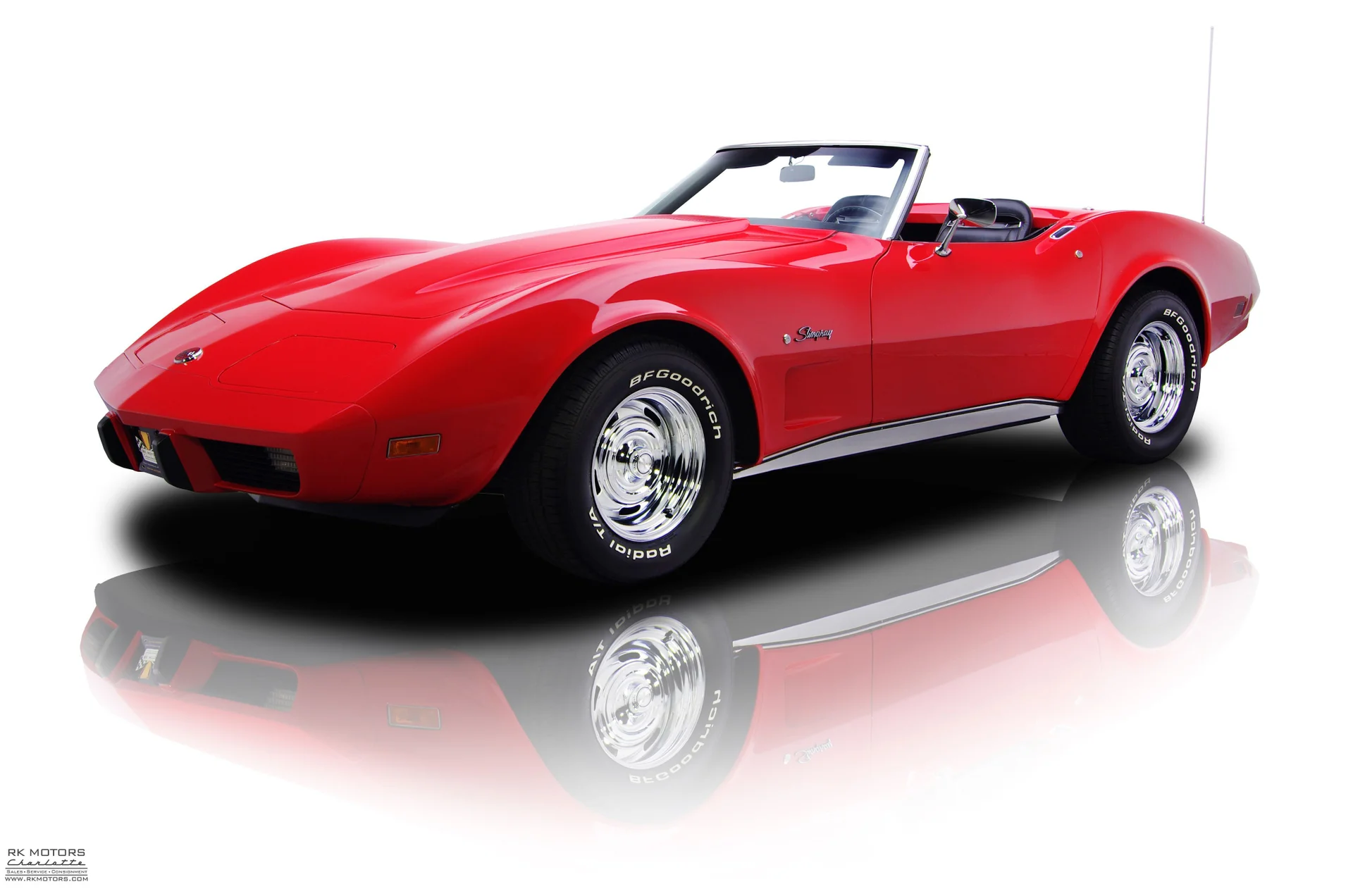
The 1975 Corvette marked the end of an era—it was the final year a convertible would be offered in the C3 generation. As safety concerns and shifting market trends took hold, Chevrolet quietly dropped the drop-top after this model year, making the ’75 convertible an instant milestone. For over a decade, the Corvette would be coupe-only, with the convertible not returning until 1986. In hindsight, the 1975 convertible stands as a graceful farewell to open-air Corvette motoring in the ’70s—its rarity and elegance only growing with time. (Image courtesy of GM Media LLC)
A significant milestone represented in the 1975 model year had nothing to do with what the Corvette introduced as a new option, but rather what it was about to eliminate as a production option for nearly the next decade.
The 1975 Corvette was the last of the third-generation Corvettes to be offered as both a coupe and a convertible. Convertible volumes had diminished year after year, and Chevrolet had already considered eliminating the option. But when the government threatened legislation that would have effectively banned fully open cars after 1975, it sealed the decision. Corvette convertible production was discontinued, and the last C3 ragtop rolled off the line in late July of 1975.
This was a critical distinction: the myth was that convertibles were outlawed. The reality was that the industry anticipated an unfavorable regulatory direction, and manufacturers used that forecast—combined with slowing convertible demand—to justify decisions they were already leaning toward. The proposed rules never materialized into the ban many feared, but by the time that became clear, the business case had been rewritten. The decision stood.
The Corvette was born as a convertible in 1953—an open-air roadster that set the tone for America’s sports car legacy. For over two decades, every Corvette model year carried on that tradition, offering a convertible option without interruption. From its fiberglass beginnings to its wind-in-your-hair appeal, the drop-top configuration became a defining trait of the Corvette’s early identity. That uninterrupted run would finally end in 1975, closing the chapter on a classic Corvette era. (Image courtesy of Silodrome)
Naturally, enthusiasts were not pleased. Corvette had been a convertible since its introduction in 1953. That open-car identity wasn’t optional in the emotional sense; it was foundational. Losing it felt like losing a piece of Corvette’s soul.
And yet another detail spoke to the era: 1975 was the last time in Corvette history that a convertible was actually less expensive than a coupe. That was such a mid-1970s twist—an iconic body style quietly priced below the “practical” option, right before it vanished for a decade.
In retrospect, the 1975 convertible occupied a strange space. Buyers at the time often assumed it would become instantly rare and financially untouchable. The Corvette convertible returned in 1986, and the collector’s story became more complicated. But rarity wasn’t the real point. The point was emotional and historical: 1975 was the year Corvette closed the roof—because the decade forced its hand.
Engines: Fewer Choices Than Years Past
The engine shown here is the 1975 Corvette’s base L48 350-cubic-inch V8, a small-block that delivered 165 horsepower and 255 lb-ft of torque. While modest by earlier Corvette standards, the L48 reflected the era’s shifting priorities toward emissions compliance and fuel economy. It came equipped with a 4-barrel carburetor and was mated to either a 3-speed automatic or a 4-speed manual transmission. Despite its lower output, the L48 offered smooth, reliable performance—and remained the most common engine choice for 1975 Corvettes. (source: RK Motors)
Engine options for the 1975 Corvette were more limited than any second– or third-generation Corvette that had come before it. GM briefly offered an optional big-block early in the model run, but it was dropped quickly, leaving the standard 165-horsepower 350 and the optional L82 205-horsepower 350 as the only available choices.
Not since the 1955 Corvette had consumers faced such a limited engine menu. And it was the first year since 1967 that only a single displacement was offered.
That fact carried weight. Corvette had trained its audience to think in tiers: base engine, high-performance small-block, then the big-block hammer for those who wanted to rewrite the road. In 1975, the tiers collapsed into two versions of the same idea—a 350 built to survive and a 350 built to still feel like a Corvette.
This was where the narrative often got misunderstood, because the horsepower numbers alone didn’t tell the full story. Yes, the numbers were down. Yes, enthusiasts felt the loss. But the deeper truth was that the nature of engine development changed. Instead of “how high can we push compression,” the questions became: How stable was the calibration? How well did it start? How did it behave in real-world temperature swings? How did it stay compliant as components wore? How did engineers protect the catalyst? How did they meet warranty expectations? How did they prevent drivability complaints from becoming costly reputational damage?
In 1975, Corvette became less of a single-minded hot rod and more of an engineered product for an era that demanded consistency.
The L48: The Corvette That Had to Work Every Day
Pictured here is the L48 350ci V8, the standard engine for the 1975 Corvette. Producing 165 horsepower, it was a product of the era’s tightening emissions standards and shifting performance expectations. While not a powerhouse by earlier Corvette standards, the L48 delivered smooth drivability and remained a dependable choice for the majority of buyers. It represented the Corvette’s effort to balance tradition with the realities of mid-‘70s regulation. (Image courtesy of futureclassicsnj.com)
The base L48 was the survival engine. It wasn’t built for glory runs. It was built to start, idle, behave, and keep doing so.
In the smog era, a base engine could not be fragile. It couldn’t require constant tuning. It couldn’t drift out of compliance easily. It had to be resilient to the reality that most owners would not adjust points, chase vacuum leaks with the patience of a saint, or tolerate an engine that behaved differently every time the weather changed.
So the L48 became the anchor. It was the engine that kept Corvette accessible and sellable. It was the engine that kept the Corvette from becoming a temperamental boutique car at exactly the moment the country was losing patience for temperamental anything.
The L82: The Version That Still Wanted to Be a Corvette
This is the 1975 Corvette’s optional L82 350-cubic-inch V8, a higher-performance alternative to the base engine. Rated at 205 horsepower and 255 lb-ft of torque, the L82 featured a higher 9.0:1 compression ratio, a performance camshaft, and a four-barrel carburetor for improved airflow and responsiveness. While still constrained by mid-‘70s emissions regulations, it offered a noticeable bump in performance over the L48, appealing to buyers who still wanted a taste of traditional Corvette muscle. In 1975, only about 15% of Corvettes were ordered with the L82, making it a more desirable and rare option today.
The L82 existed for a different buyer: the person who still wanted the Corvette to sharpen when asked.
With the L82, buyers paid for character. They paid for the version of the 1975 Corvette that still spoke in a slightly more aggressive dialect—stronger pull, a more willing top end, a tone that felt less apologetic.
And in 1975, that mattered because it signaled Chevrolet had not given up. The L82 wasn’t the late-’60s dream reborn. It was a realistic performance option engineered inside the rules. That might not have sounded romantic, but it was actually one of the most Corvette things imaginable: finding a way to preserve the spirit when the method had to change.
The Catalytic Converter: A New Era Under the Floor
For 1975, the Corvette adopted a catalytic converter for the first time—an emissions control milestone that reshaped the car’s exhaust system and performance profile. Located beneath the car and integrated into a new single-exhaust setup, the converter was designed to reduce harmful pollutants in compliance with tightening federal regulations. Its introduction meant the end of true dual exhausts for the time being, a change that reflected the industry’s broader shift toward cleaner, more regulated engines. While controversial among purists, the catalytic converter was a necessary step in the Corvette’s adaptation to a changing automotive landscape.
The 1975 model year was a significant one not only for Corvette but for American production automobiles as a whole: it was the year the catalytic converter was formally introduced and adopted broadly across U.S. manufacturers.
The catalytic converter was designed to convert toxic byproducts produced by internal combustion engines into less toxic substances via catalyzed chemical reactions. Compared to earlier emissions-control strategies, it was more effective and—crucially—more scalable. It also altered everything about how the Corvette breathed.
A key point remained front and center: this method of managing emissions may have prevented Corvette’s horsepower ratings from dropping even further than they had. That was the nuance many people missed. The converter wasn’t simply a power thief; it was a new tool in the emissions equation. It changed where the burden lived. It allowed engineers to consider different tuning strategies because the aftertreatment system was doing work downstream.
In 1975, the Corvette’s exhaust system was redesigned to accommodate a new emissions device—the catalytic converter. To make this work, a Y-pipe was introduced, merging the traditional dual exhaust headers into a single pipe that fed into the converter. This layout replaced the true dual-exhaust setup of earlier years, simplifying the system but also slightly muting performance and sound. It was a clear visual and mechanical sign of the Corvette adapting to a more regulated automotive world.
But there was no free lunch. Chevrolet understood that better than anyone, even if the 1975 sales literature tried to frame the change as progress. The brochure called it “Dual exhausts with catalytic converter” and reminded buyers that dual exhaust meant “less exhaust back pressure.” Chevrolet even claimed, “With the catalytic converter on the job, the factory can now tune your Corvette more toward performance and economy.” It was careful language for a difficult moment: technically optimistic, federally compliant, and written to reassure Corvette buyers that the car they loved had not been smothered by regulation.
Still, the hardware told a more complicated story.
For 1975, the Corvette no longer carried true dual exhaust in the traditional sense. Both manifolds fed into a Y-pipe, the exhaust passed through a single catalytic converter, and only then split again toward two mufflers and tailpipe assemblies. From the rear, the Corvette still gave owners the familiar visual signature of dual outlets. Underneath, however, the system had changed in a fundamental way.
For Corvette people, exhaust was never just plumbing. It was part of the car’s identity. It was the sound on startup, the pulse at idle, the look beneath the rear valance, and the mechanical honesty of a small-block Chevrolet exhaling through both sides of the car. In 1975, that voice was not silenced, but it was filtered. The Corvette still sounded like a Corvette, but the edge had been softened. The rawness had been reduced. Federal emissions compliance had become part of the exhaust note.
The catalytic converter also introduced a new ownership reality: heat. A mid-1970s Corvette already asked a lot of its cabin, floors, insulation, and surrounding components. The small-block, transmission tunnel, tight underbody packaging, and fiberglass structure all contributed to the car’s interior warmth. Add a converter beneath the floor, doing exactly what it was designed to do, and the environment under the car changed again. Owners felt it in hotter footwells, aging insulation, stressed shielding, and the slow wear that heat brings to anything living nearby.
None of this makes the 1975 Corvette less important. If anything, it makes the car more revealing. This was not Chevrolet giving up on Corvette. It was Chevrolet trying to keep Corvette alive inside a rulebook that had changed almost overnight. The catalytic converter cleaned up the exhaust stream and gave the engineers a legal path forward, but it also made the Corvette more managed, more mediated, and less instinctively raw than the cars that came before it.
The 1975 Corvette was still a Corvette. It was simply a Corvette learning how to breathe through the 1970s.
HEI Ignition: The Quiet Upgrade That Made the Whole Package Better
The 1975 Corvette introduced HEI (High Energy Ignition) as standard equipment—one of the most important ignition system upgrades of the era. Developed by GM, HEI replaced the conventional points-style distributor with a more powerful, maintenance-free setup that delivered a stronger spark for improved combustion. This not only enhanced cold starts and throttle response, but also contributed to better reliability and emissions performance. It was a major leap forward in drivability and helped set the stage for modern ignition systems.
Under the hood was a new breakerless electronic ignition system known as HEI (High Energy Ignition). Unlike the previously available transistor ignition systems, the HEI was the first Corvette ignition to feature a distributor that did not require a points and condenser setup.
This was one of the most important “living with it” improvements of 1975, and it didn’t get enough credit because it wasn’t sexy in the way big horsepower numbers were sexy. But in a compliance era, ignition stability was everything. Points wore. Dwell drifted. Performance became inconsistent. Emissions became inconsistent. Starting became inconsistent. Owners complained. Warranty claims climbed. The car’s reputation suffered.
HEI was Chevrolet engineering the Corvette to be less fragile—more modern, more dependable, more consistent—at the exact moment consistency became a legal and economic requirement.
For the first time in Corvette history, the 1975 model year featured a fully electronic tachometer. Replacing the older mechanical cable-driven system, the new setup received its signal directly from the HEI ignition system, improving accuracy and reliability. This modernized approach reduced mechanical complexity and allowed for smoother needle operation—just one more way the ’75 Corvette quietly embraced advancing technology beneath its familiar skin.
In conjunction with the new ignition, Chevrolet introduced the first electronic (instead of mechanical) tachometer drive. Where tachometers had previously been driven off the distributor, the new system translated an electrical signal into the output seen on the dashboard.
This particular detail, while arguably subtler than some of the more visible changes that were made to the 1975 Corvette, was still significant. It was a sign of Corvette’s transition into an era of greater electronic mediation. For all previous examples that predated the 1975 model year, the Corvette was still an analog experience, but it was beginning to rely on electrical architecture that would become normal in the decades to come.
Add to that the first appearance of the “Kilometers Per Hour” subtext beneath the “Miles Per Hour” on the speedometer—small, easy to dismiss, but emblematic of the time: standardization, global thinking, and the creeping presence of regulation and conformity even in America’s most iconic sports car.
The Other Changes That Told You This Car Was Built for the Mid-1970s Reality
New for 1975, Corvettes equipped with the optional L-82 engine wore a bold visual identifier: the L-82 hood emblem. Positioned prominently on the domed hood, this red-and-chrome badge let onlookers know this wasn’t just any small-block Corvette. It was a subtle yet proud nod to the car’s performance intent—offering buyers a touch of muscle-era spirit even as the Corvette adapted to a more regulated age.
Elsewhere on the 1975 Corvette, a headlights-on warning buzzer was added per federal mandate—another reminder that by the mid-1970s, the government wasn’t merely regulating what came out of the tailpipe; it was increasingly influencing how cars were expected to behave in the hands of normal drivers.
An internal bladder was added to the fuel tank to help prevent fuel vapors from escaping while also keeping air from entering and getting trapped—a piece of the emissions story that didn’t get the spotlight but absolutely belonged in any serious conversation about the 1975 model year. Emissions weren’t only about combustion; it was about evaporation. Corvette had to adapt at every point where hydrocarbons could enter the atmosphere.
Hood emblems featuring the engine designation “L82” were introduced in 1975, though many cars built that year did not include the emblem—a perfect micro-detail from the era of running changes and production variability.
The diagram illustrates Astro Ventilation, a fresh-air flow system introduced in earlier Corvettes and still present in the 1975 model. Designed to bring in outside air through the front vents and circulate it through the cabin before exiting out the rear, it eliminated the need for vent windows and gave the Corvette a cleaner, more modern side profile. By 1975, however, the system was less emphasized in marketing as t-top models and tighter emissions standards reshaped interior airflow dynamics. Still, Astro Ventilation remained part of the car’s functional DNA, quietly improving comfort in a cabin that was becoming increasingly refined.
And finally, 1975 was the last model year to feature Astro Ventilation, a system introduced with the 1968 C3. The end of Astro Ventilation was one of those details that seemed small until you realized it marked the closing of another early-C3 chapter. Corvette was gradually shedding parts of its 1968 identity, piece by piece, as the decade forced modernization.
Performance: The Numbers Were Down, but the Story Wasn’t Over
By 1975, the Corvette’s performance story was changing, but not ending. The focus was shifting from brute force to refinement and usability. While the era demanded compromises, the car’s essential character remained intact—long hood, short deck, low stance, and balanced chassis dynamics. It still felt like a sports car behind the wheel, with crisp steering, responsive handling, and a sense of purpose baked into the platform. What began as a reaction to regulation quietly became an evolution of the Corvette’s identity—less about raw numbers, more about the complete driving experience. (Image: hotcars.com)
There was no denying it: the 1975 model year marked a sharp downturn in Corvette horsepower. The base L48 engine delivered just 165 horsepower, and even the optional L82 topped out at 205—respectable, but far from the high-water marks of the late 1960s. Emissions regulations, unleaded fuel, and new noise and durability standards all played a role. It’s easy to write the year off as a low point. But the full story is more complicated.
Despite the drop in output, the Corvette’s fundamentals remained intact. The chassis architecture—fully independent suspension, low center of gravity, wide track, and rearward weight bias—still delivered balanced handling and good feedback. The car hadn’t lost its identity; it had lost power. On a back road, the 1975 model still drove like a sports car.
More importantly, the era demanded a shift in what performance meant. Drivability became a key metric. The new High Energy Ignition (HEI) system made starting easier and tuning more stable. Electronic tachometers provided more reliable feedback. Catalytic converters and a Y-pipe exhaust helped the car meet new standards without entirely strangling performance. In daily use, the car was smoother, quieter, and more consistent than earlier models.
Road test numbers reflected the lower output, but they didn’t tell the whole story. Corvette in 1975 wasn’t obsolete—it was transitioning.And the updates made that transition possible without sacrificing the car’s core dynamics.
Sales and Production: Corvette Demand Proved the Name Still Mattered
This 1975 Corvette ad leaned into the idea that a Corvette was more than a car—it was a canvas for personal expression. With bold styling, a long list of standard features, and a variety of options, it promised buyers the chance to build not just a vehicle, but a dream uniquely their own. (Image courtesy of GM Media LLC)
Despite the lack of dramatic year-to-year change, the 1975 Corvette continued to sell with remarkable strength. Chevrolet moved 38,465 Corvettes that year, just 297 units shy of the 1969 model year’s 38,762-car total — still, at that point, the highest production year Corvette had ever recorded. For a car operating in the middle of emissions constraints, fuel-economy pressure, insurance scrutiny, and a broader performance-market retreat, that was not a small achievement. It was proof that Corvette still had gravity.
The mix told an equally important story. Of those 38,465 cars, 33,836 were coupes. The convertible accounted for just 4,629 units, representing barely 12% of total production. As painful as it was for traditionalists, the numbers made Chevrolet’s decision easier to understand. The open Corvette had been part of the car’s identity since 1953, but by the mid-1970s, the buyer had clearly moved toward the coupe. The removable roof panels gave owners much of the open-air experience with better weather protection, better security, and a shape that had become one of the most recognizable profiles in American performance-car design.
That is one of the underrated truths of the 1975 Corvette. On paper, this should have been a vulnerable moment. Horsepower was down. The big-block was gone. The catalytic converter had arrived. The convertible was nearing the end of its first continuous run. And yet buyers kept showing up.
Chevrolet’s own 1975 brochure leaned into that tension. It called the Corvette “this year’s version of last year’s ‘Best All-Around Car,’” referencing its selection by Car and Driver readers, and closed the thought with the line, “Corvette makes excitement make sense.” That was not just ad copy. It was the argument Chevrolet needed to make in 1975. Corvette could no longer sell itself on brute force alone. It had to sell the total experience.
And it did.
By 1975, Corvette had grown beyond the output rating stamped on a specifications chart. It was design. It was identity. It was reward. It was the car you bought because it still looked like nothing else in the showroom, because it still carried the promise of something special, and because even in a compromised decade, it remained unmistakably separate from the ordinary Chevrolet lineup.
That was the real achievement. The Corvette survived the mid-1970s not because it escaped the era, but because it adapted without losing its emotional value. The numbers prove it. Buyers understood that the car had changed. They also understood that it was still a Corvette.
And in 1975, that was enough.
Options, Pricing, and the Corvette Buyer Profile in 1975
The 1975 Corvette wasn’t just about performance—it was about comfort, too. Bucket seats with optional leather, a tilt-telescopic steering column, power accessories, and available air conditioning all helped transform the C3 into a genuine long-distance cruiser. With its aircraft-inspired gauge cluster and center console layout, the cockpit delivered an experience that felt as refined as it was sporty. (Image: RK Motors)
If you wanted to understand how people actually bought the 1975 Corvette, you had to look past the horsepower rating and study the order sheet.
That was where the story became clearer.
Air conditioning was ordered on 31,914 cars, a remarkable number for a two-seat American sports car still carrying the emotional residue of the big-block era. Power steering appeared on 37,591 cars. Power brakes were selected on 35,842. Power windows went into 28,745 Corvettes. The tilt-telescopic steering column was chosen by 31,830 buyers, and the AM/FM stereo radio was installed in 24,701 cars. These were not fringe selections. They were mainstream buyer choices, and they said a great deal about where Corvette ownership had moved by the middle of the decade.
This was not Corvette selling out. It was Corvette growing up in public.
The 1975 buyer still wanted a sports car, but not necessarily a punishing one. Many wanted something they could drive regularly, take on trips, sit in comfortably, and enjoy without treating every mile like an act of mechanical devotion. That did not make the Corvette less serious. It made the Corvette more survivable. Chevrolet needed a healthy buyer pool at a time when the old performance formula was under pressure from emissions regulations, insurance costs, changing fuel expectations, and a market rapidly cooling toward traditional muscle. Comfort and convenience were not betrayals. They were part of the car’s defense mechanism.
Pricing added another strange wrinkle. The coupe carried a higher base price than the convertible, with Chevrolet listing the coupe at $6,797.10 and the convertible at $6,550.10. In emotional terms, the open Corvette had always felt like the more romantic car. In 1975, it was not the most expensive one. That inversion now reads almost like a farewell gesture: one last moment when the convertible remained available, still beautiful, still tied to the Corvette’s earliest identity, but no longer the dominant expression of what customers were actually buying.
The coupe had become the modern Corvette. The T-top body gave buyers enough open-air flavor to preserve the spirit of the roadster, while offering better security, better weather protection, and a more usable ownership experience. By 1975, that compromise was not viewed as a compromise by most buyers. It was the car they wanted.
And yet, Corvette had not completely turned its back on the serious driver. The FE7 Gymkhana Suspension remained available for buyers who wanted sharper responses, and Chevrolet still offered the more aggressive Z07 off-road suspension and brake package. The numbers were tiny — just 144 cars received Z07 — but the option’s presence still mattered in the larger story. Corvette was broadening, yes, but it was not abandoning its harder edge. It simply understood that not every customer needed to prove something every time they turned the key.
That is what makes the 1975 Corvette more interesting than its horsepower rating suggests. It was no longer a car defined only by maximum performance. It was becoming a more complete ownership proposition: part sports car, part personal reward, part long-distance companion, part rolling identity statement. The purist thread was still there for those who wanted it. But Chevrolet no longer built the Corvette around the assumption that every buyer was chasing the same experience.
By 1975, Corvette had learned something essential. Survival would not come from clinging to one narrow definition of performance. It would come from giving buyers enough Corvette to believe in, and enough comfort to keep coming back.
1975 Corvette Color Options: Inside and Out
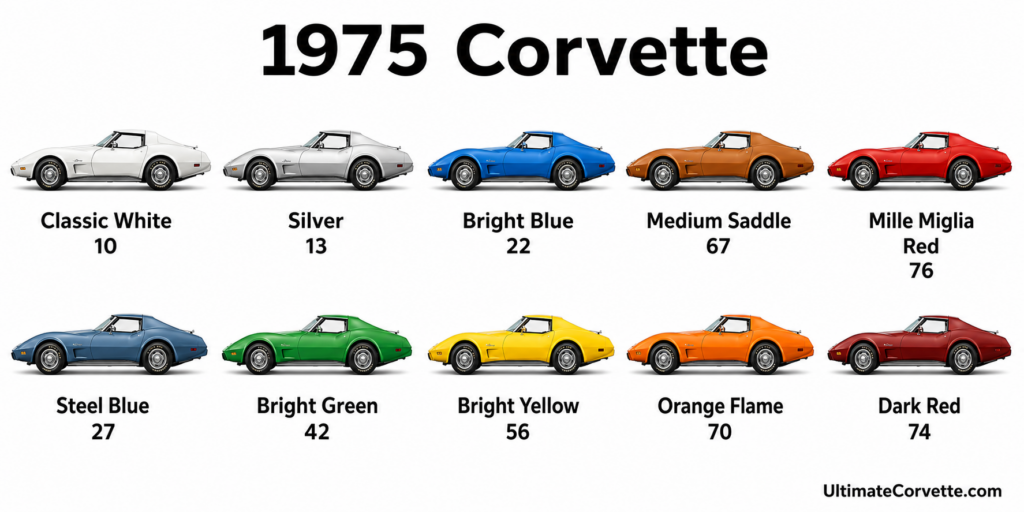
The 1975 Corvette arrived with a rich selection of factory paint colors that reflected both the era’s trends and Corvette’s evolving identity. A total of ten exterior colors were offered, ranging from bold shades like Mille Miglia Red, Bright Blue, and Bright Green, to more subdued and sophisticated tones like Silver, Classic White, and Steel Blue. New for the year was Medium Saddle Metallic, a deep bronze-gold hue that fit perfectly with the mid-1970s aesthetic. Each color was available with either a body-color or black urethane front and rear bumper, depending on the combination.
Interior choices were just as expressive, with a palette that included Black, Dark Red, Medium Saddle, Smoke, Silver, and Dark Blue. Buyers could select either vinyl or optional leather upholstery, and materials were updated for improved durability and appearance. The ability to pair almost any interior with any exterior paint gave owners a wide latitude for customization—whether they wanted a subtle monochrome look or a contrasting, high-impact combination.
This flexibility in color and trim was part of what made the 1975 Corvette feel personal. Even during a period of regulatory change, the car still offered enough individuality to reflect its driver’s personality.
Greenwood and IMSA: The Other Corvette Story Running in Parallel
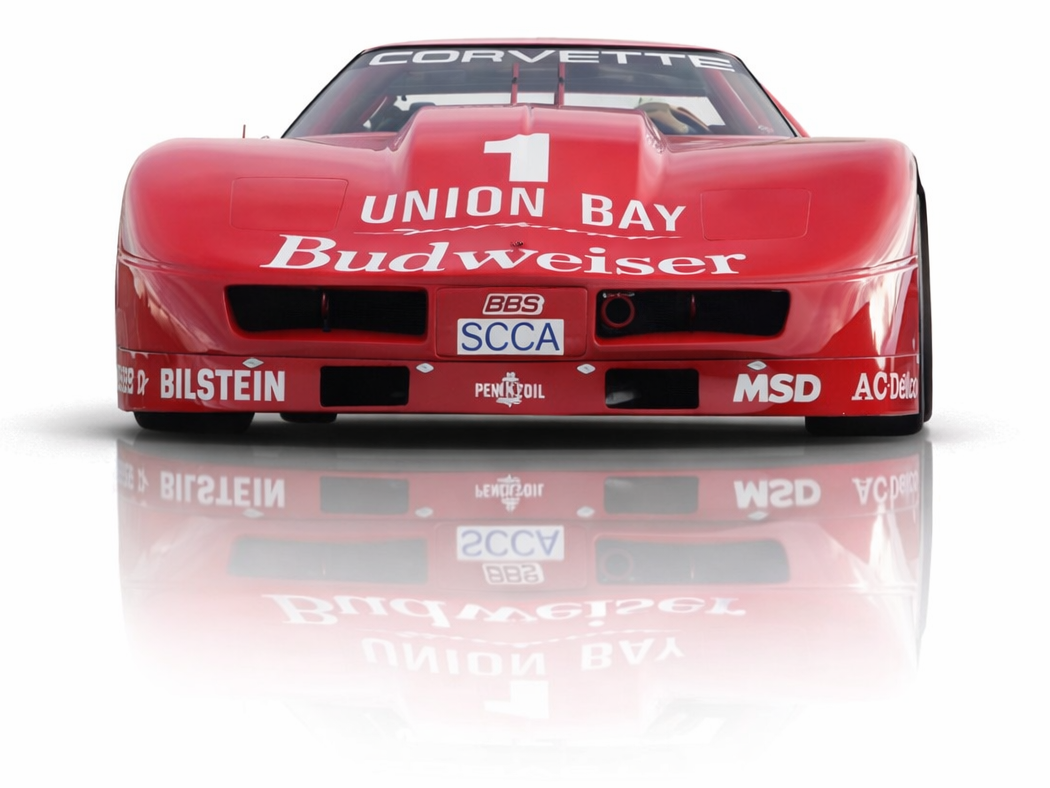
By the 1975 IMSA season, John Greenwood had firmly established himself as the torchbearer for Corvette performance at a time when the street car was being forced to evolve more quietly. While Chevrolet focused on compliance and survivability in the showroom, Greenwood was carrying the Corvette flag on track—showing up with wide, aggressive, unmistakably purposeful race cars that looked nothing like compromise. His IMSA Corvette wasn’t about nostalgia or rebellion; it was about proving, in real competition, that the Corvette platform still belonged in the fight. This car and this season set the tone for what Greenwood would represent throughout the mid-1970s: a relentless, privateer-driven commitment to keeping Corvette loud, visible, and competitive when it mattered most.
If you wanted to understand the other side of the 1975 Corvette story, you did not look only at the showroom. You looked to the racetrack.
The production Corvette was being engineered around an entirely new set of realities: catalytic converters, unleaded fuel, emissions calibration, federal compliance, and the long-term survival of the nameplate in a market that had turned hard against traditional performance. That work was essential. Without it, Corvette would have become a memory instead of a continuing program. But it also meant the production car could no longer deliver the same unfiltered, full-throttle experience that enthusiasts associated with the badge.
John Greenwood filled that gap in the most direct way possible.
Greenwood did not treat the Corvette as a nostalgic object or a compromised relic of the muscle-car years. He treated it as a platform still worth developing. While the production car was being quieted, cleaned up, and calibrated for the regulatory world of the 1970s, Greenwood took the Corvette into IMSA and kept pushing it in the one environment where speed, durability, aerodynamics, and engineering nerve still carried the argument.
His cars were not modified street Corvettes in the casual, bolt-on sense. They were purpose-built racing machines, developed around the brutal realities of endurance competition. They had to stay alive over long stints. They had to manage heat. They had to use tires intelligently. They had to brake lap after lap without surrendering. They had to remain stable at speeds far beyond anything the production car was expected to see.
The bodywork made the point before the engine even fired. The wide fenders were not decoration; they were there to cover serious tire. The aero was not styling drama; it was an attempt to settle the car at speed. The stance was not about showroom swagger; it was dictated by lap time, track width, and the demands of racing a big, powerful Corvette against sophisticated international machinery.
That is where Greenwood’s Corvettes become so important to the 1975 story. The showroom car was adapting to survive the decade. The racecar was reminding everyone what the platform could still become when the rulebook rewarded capability instead of restraint.
In that period, that distinction carried real weight. Corvette buyers could see that the production car had changed. They understood that horsepower had been reduced, emissions equipment had arrived, and the old muscle-car formula was no longer available in the same way. But Greenwood’s presence in IMSA kept the Corvette connected to something larger than its catalog rating. It gave enthusiasts proof that the basic architecture still had teeth. The name still belonged at Daytona, Sebring, and the other places where American performance had to prove itself in public.
That kind of visibility helped protect Corvette’s credibility during one of the most difficult chapters in its history. A performance car can survive a temporary drop in output if people still believe in what it represents. Greenwood helped preserve that belief. He showed that the Corvette had not been reduced to style alone. Beneath the emissions controls, the softer street tuning, and the altered expectations of the mid-1970s, a serious competition machine still waited to be extracted.
The 1975 Greenwood Corvette did more than race—it carried the brand when the showroom alone couldn’t do all the talking. While emissions regulations and federal compliance softened the production car’s outright performance, John Greenwood was proving in IMSA that the Corvette platform itself was still formidable. That mattered to buyers. Racing success and visibility reinforced credibility, reminding enthusiasts that the Corvette they could buy still shared DNA with a car battling at Sebring and Daytona. Greenwood’s presence on track created continuity at a moment when Corvette risked being defined by regulation rather than capability, helping preserve confidence in the nameplate and sustaining its performance image through one of the most transitional periods in the brand’s history.
That is why Greenwood belongs in any honest overview of the 1975 Corvette. The mid-1970s are too often summarized as a decline, but that only tells the showroom side of the story. On track, the Corvette platform was still being tested, refined, and pushed by people who understood its potential. Greenwood’s cars were loud, wide, fast, difficult, and demanding. They were also a necessary counterweight to the era’s more cautious production reality.
The factory Corvette was learning how to live within the new rules. Greenwood’s Corvette was making sure nobody forgot what the badge could do when performance remained the first priority.
Together, they explain 1975 more completely. One Corvette was adapting to preserve the future. The other was fighting to protect the legend.
This is why Greenwood belongs in any honest 1975 Corvette overview. The mid-1970s are often summarized as a performance downturn, but that only tells the showroom side of the story. On track, the Corvette platform was still being proven in real time—against real competition—by a team willing to invest the effort to make it fast and make it finish. The factory Corvette was learning compliance and longevity. Greenwood’s Corvette was demonstrating capability. Together, they explain the year more completely: one Corvette was adapting to survive the era, and the other was making sure nobody forgot what the badge could do when performance was the only requirement.
1975 Corvette Pricing, Options, and What Buyers Actually Chose
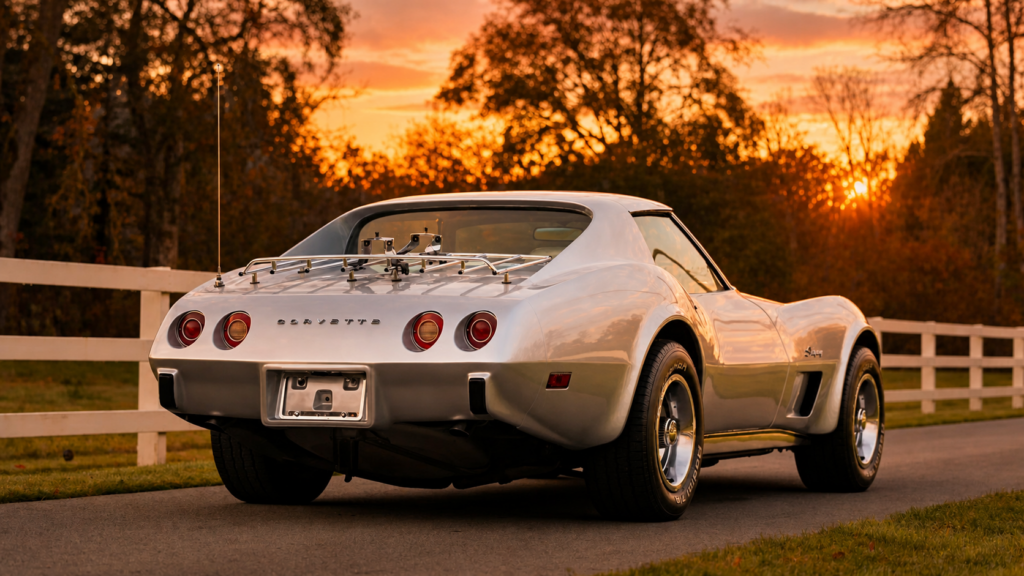
For most buyers in 1975, a Corvette still wasn’t purchased on a spec sheet—it was bought for the shape, the presence, and the feeling of owning America’s sports car. This example, finished in Medium Saddle (Code 67), captures the era’s shift toward style and day-to-day enjoyment: a bold color, long-hood stance, and that unmistakable C3 profile that turned heads even at idle. What mattered most was the total experience—comfortable, well-equipped, and visually dramatic—paired with the confidence that it was still a real Corvette, even in a changing performance landscape.
If the 1975 Corvette teaches anything about the mid-1970s, it’s that the Corvette buyer was changing right along with the car. The option sheet becomes a mirror of the era: still plenty of performance intent if you knew where to look, but a clear tilt toward comfort, convenience, and everyday drivability. In other words, Corvette wasn’t just surviving emissions and fuel realities—it was also learning how to remain desirable to people who wanted a sports car they could actually live with.
Start with pricing, because it tells a story all by itself. A base 1975 Corvette Sport Coupe (350ci, 165 hp, wide-ratio four-speed) carried a sticker price of $6,810.10, while the convertible—in its final year before the long hiatus—was actually less expensive at $6,550.10. That detail feels almost impossible through a modern lens, where corvettes are almost universally marketed as the premium experience. In 1975, the market logic was different. The coupe was increasingly the mainstream Corvette choice, and the convertible was an emotional holdover at a time when open cars were falling out of favor due to safety fears and rumored regulations.
Performance options still existed, but in 1975 they were chosen by a smaller, more deliberate group. The key mechanical upgrade was the L82 350ci, 205 hp engine—priced at $336—and its production count shows how niche “more performance” had become in the smog era: only 2,372 buyers checked that box. For the purist who wanted the most engaged version of the car, the M21 close-ratio four-speed was available (and effectively tied to the L82), with just 1,057 cars equipped that way. Meanwhile, the Turbo Hydra-Matic automatic dominated the transmission mix at 28,473 units—one of the clearest signals that by 1975, a large share of Corvette buyers valued effortless drivability over maximum involvement.
By 1975, convertible sales were collapsing across the industry, driven largely by looming federal safety proposals and public fear that open cars were on the way out. With proposed rollover protection standards and shifting compliance priorities, GM treated the Corvette convertible as a growing liability—expensive to certify, hard to defend in a changing regulatory climate, and increasingly out of step with buyer behavior. The result was a pivotal decision: Chevrolet dropped the Corvette convertible after 1975, effectively betting the model’s future on the coupe’s durability, packaging, and regulatory certainty.
Then there are the options that reveal the Corvette’s split personality—half boulevard grand tourer, half still-ready-to-fight sports car. Chevrolet offered the FE7 Gymkhana Suspension for a laughably low $7, and while only 3,194 cars received it, the mere existence of a low-cost handling package tells you Chevrolet still cared about the driver. At the far end of the spectrum sat the Z07 Off-Road Suspension and Brake Package, priced at $400 and ordered by just 144 buyers. That number is small, but it’s also proof: even in 1975, when the Corvette was being engineered around catalysts and compliance, there were still customers—and still engineers—who wanted something sharper, more serious, more capable when pushed.
Some of the most telling options are the ones that sound mundane, because they expose what owners worried about in the real world. The rear window defogger shows up in meaningful numbers, as does the heavy-duty battery—practical upgrades for a car expected to start reliably and be driven in more conditions than the old muscle-era weekend fantasy. The auxiliary hardtop for convertibles was ordered by more than half of ragtop buyers, which speaks to how these cars were being used: owners wanted the open experience, but they also wanted a more sealed, quieter, more weatherproof configuration when the season—or the highway—demanded it.
For 1975, the Corvette rode on steel-belted radial tires, most commonly supplied by Goodyear, marking a clear shift away from the bias-ply designs of the muscle-car era. These radials emphasized durability, stability, and predictable road manners over outright grip, aligning with the Corvette’s growing role as a high-speed grand tourer rather than a raw street racer. While less aggressive in appearance than earlier tires, they delivered improved ride quality, tread life, and everyday usability—traits buyers increasingly valued in the mid-1970s.
Even the tire choices tell a story. By 1975, most Corvettes rolled out on white-letter steel-belted tires, a subtle but important cultural shift. Lettered tires weren’t just an aesthetic—though they absolutely were that—they were a declaration that the car still had attitude, even if the horsepower numbers had been humbled by regulation.
If you read the 1975 option sheet as a simple list, you miss the point. The choices buyers made—air conditioning in huge numbers, power steering nearly everywhere, automatics dominating, a smaller but meaningful performance minority checking L82 and suspension boxes—tell you exactly what Corvette had become by the middle of the decade: a car that still looked like a sports car, still turned like a sports car, still carried the Corvette promise, but increasingly delivered it in a way people could live with every day. And in 1975, that ability to be both aspirational and usable wasn’t just a feature. It was a survival strategy.
1975 Corvette Pricing and Options Summary (for Reference)
Base Coupe (1YZ37): 33,836 built — $6,810.10
Base Convertible (1YZ67): 4,629 built — $6,550.10
L82 205 hp engine (RPO L82): 2,372 — $336.00
Close-ratio 4-speed (M21): 1,057 — $0.00
Automatic (M40 THM): 28,473 — $0.00
Air Conditioning (C60): 31,914 — $490.00
Power Steering (N41): 37,591 — $129.00
Power Brakes (J50): 35,842 — $50.00
Power Windows (A31): 28,745 — $93.00
Tilt-Telescopic Column (N37): 31,830 — $82.00
Rear Defogger (C50): 13,760 — $46.00
Gymkhana Suspension (FE7): 3,194 — $7.00
Z07 Off Road Suspension/Brakes: 144 — $400.00
Auxiliary Hardtop for Convertible (C07): 2,407 — $267.00
Vinyl Covered Aux Hardtop (C08): 279 — $350.00
AM/FM Stereo (U58): 24,701 — $284.00
AM/FM Radio (U69): 12,902 — $178.00
White-letter tires (QRZ): 30,407 — $48.00
White-stripe tires (QRM): 5,233 — $35.00
Why the 1975 Corvette Still Matters Today
The 1975 Corvette is easy to misread if you judge it only by the decade’s headlines. Built in the shadow of new regulations and shifting expectations, it proved the nameplate could adapt and endure without losing its identity, keeping the C3’s unmistakable shape while becoming a more livable, refined grand tourer. It wasn’t an ending—it was a reset, an inflection point where survival became part of the performance story. The Corvette’s harder edge continued in competition and enthusiast culture, even as the street car focused on drivability and compliance. And that continuity mattered, because Chevrolet’s steady investment through these transitional years set the foundation for the renewed performance and confidence that would follow as the decade moved toward its next chapter. (Image: hotcars.com)
The 1975 Corvette is easy to underestimate if you judge it only by the usual mid-1970s shorthand. Lower horsepower. New emissions equipment. Catalytic converters. Unleaded fuel. The final year of the convertible. The end of Zora Arkus-Duntov’s direct leadership. On paper, it can look like a year defined by things Corvette lost.
But that is not the full story.
What the 1975 Corvette actually represents is survival with intent. Chevrolet was not simply reacting to the decade. It was repositioning the Corvette so the car could endure it. The rules had changed. The fuel had changed. The market had changed. Buyer expectations had changed. And instead of letting those pressures dilute the car into irrelevance, Chevrolet found a way to keep Corvette recognizable, desirable, and commercially strong.
That is why 1975 matters.
It was the year the catalytic converter became part of the Corvette story, forcing a new exhaust layout and a new way of thinking about calibration, compliance, and drivability. It was the year unleaded fuel was no longer a future concern, but a daily operating reality. It was the year HEI ignition helped modernize the car’s starting, spark delivery, and everyday usability at a moment when clean running mattered more than ever. It was also the final year of the convertible’s first continuous production run, a decision that still feels emotional but made sense in the context of safety concerns, buyer trends, and the overwhelming popularity of the coupe.
And then there was Duntov.
His retirement at the end of the 1975 model year gave the moment an added sense of gravity. Corvette was already changing, but now the man most closely associated with its transformation into a true American sports car was stepping away. That could have marked an ending. Instead, it became a handoff. Duntov’s era had given Corvette its fighting character. The next chapter would require a different kind of discipline: strategic endurance, regulatory intelligence, and the ability to protect the car’s identity while the definition of performance itself was being rewritten.
That is the part of 1975 that deserves more respect. This was not Corvette surrendering to the times. It was Corvette learning how to survive them.
The street car became more refined, more livable, and more carefully managed. Buyers responded to that. They ordered air conditioning, power steering, power brakes, power windows, tilt-telescopic columns, better radios, and automatic transmissions in huge numbers because the Corvette had become more than a weekend weapon. It was a personal reward, a design statement, and a car people wanted to live with. The horsepower figure may have softened, but the desire did not.
At the same time, Corvette’s harder edge did not disappear. It simply showed up more clearly in other places. John Greenwood’s IMSA efforts kept the platform visible, aggressive, and credible in competition while the production car navigated emissions law, fuel changes, and federal expectations. That parallel story matters because it reminds us that the Corvette’s performance spirit was never extinguished. It was being expressed differently, depending on where the rules allowed it to breathe.
That is why the 1975 Corvette cannot be reduced to a single statistic. It was not just a low-horsepower C3. It was not just the last convertible before the long pause. It was not just Duntov’s farewell year. It was all of those things at once, and together they make 1975 one of the most revealing model years in Corvette history.
The 1975 Corvette still matters because it proved the car could adapt without disappearing into the decade around it. It kept the C3’s unmistakable shape. It preserved the Corvette’s emotional pull. It remained commercially strong. It gave buyers a version of the car that made sense for the world they were actually living in, while racing efforts kept the badge connected to speed, endurance, and credibility.
The Corvette did not outlast the mid-1970s by accident. It survived because Chevrolet made difficult choices before the program was cornered by them.
That is the legacy of 1975. It was not Corvette at its loudest, fastest, or most romantic. It was Corvette at one of its most important crossroads — a year when survival became part of the performance story.
And because the car survived that moment, everything that followed remained possible.
The 1975 Corvette marked one of the C3’s most important turning points, blending emissions-era adaptation, HEI ignition, catalytic converters, strong sales, and the final convertible before its long hiatus. Explore how Chevrolet preserved Corvette’s identity while reshaping it for a changing automotive world.
The Year Chevrolet Had to Prove the C5 Was No Fluke
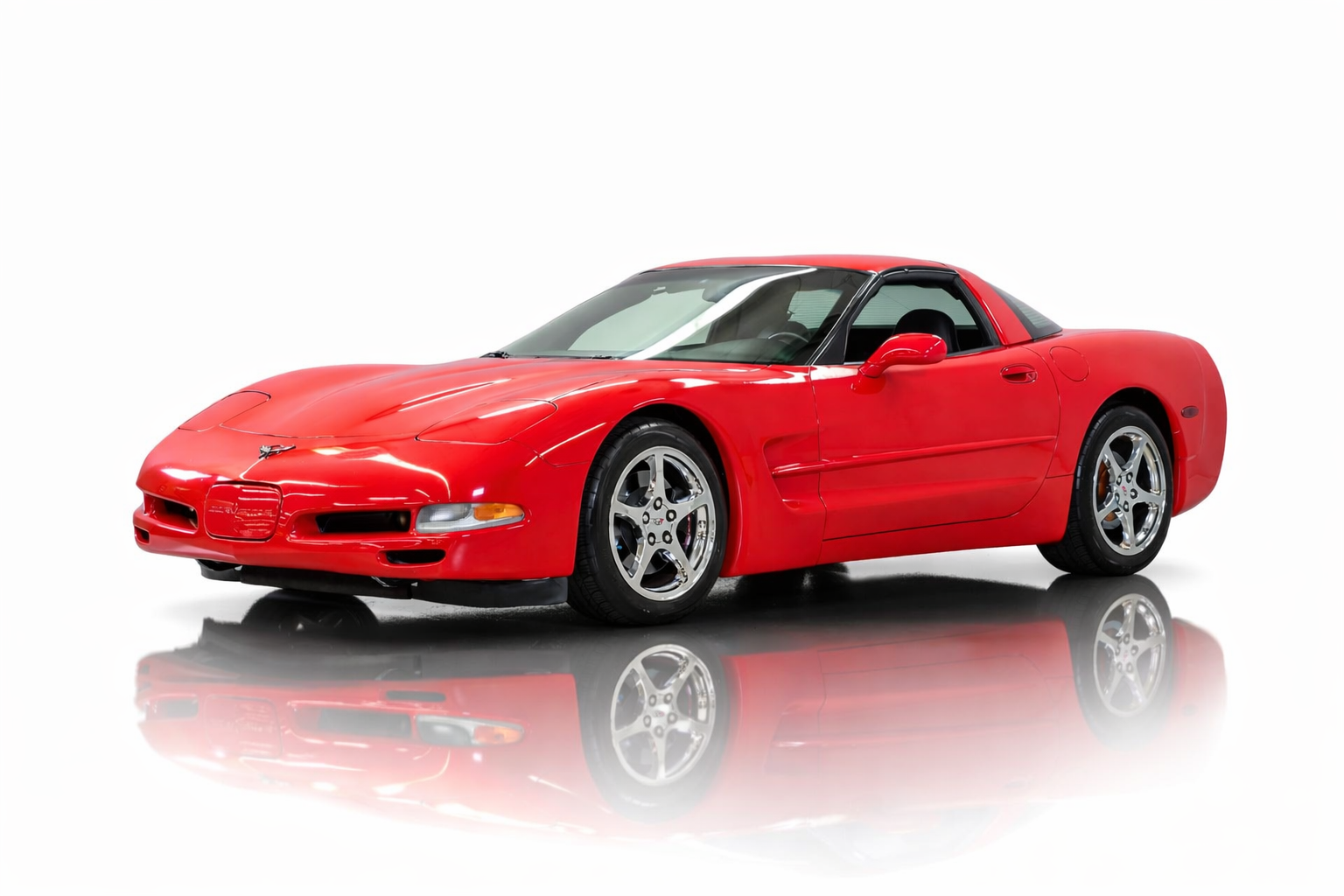
The 1998 Corvette was not asked to reinvent the franchise. Chevrolet had already done that in 1997. What 1998 had to do was something just as important: prove that the all-new C5 was not a one-year wonder, not a limited-launch success story inflated by novelty, and not a coupe-only achievement that would lose its structural rigidity the moment the roof came off. In that respect, the introduction of the 1998 model year was absolutely decisive. It brought about the first full-production season of the C5, reintroduced a convertible variant (which had always been part of the plan), introduced meaningful new technology, gave Chevrolet a high-profile Indianapolis 500 halo car, and closed the model year by pointing Corvette back toward serious factory-backed endurance racing. This was the year the C5 stopped being “the new Corvette” and started becoming the Corvette that reset expectations.
The sales mix tells part of that story. Chevrolet built 31,084 Corvettes in 1998, split between 19,235 coupes and 11,849 convertibles, meaning the open-car model accounted for approximately 38 percent of total production in its inaugural year. That was not a niche body style tacked onto a successful coupe. It was an immediate, meaningful part of the C5 story, and buyers responded like they had been waiting for it. At the same time, the car’s industry reception remained emphatic: the new-generation Corvette won Motor Trend’s 1998 Car of the Year, North American Car of the Year, and a Popular Science Best of What’s New grand prize, while Car and Driver put it on its 10Best list and praised the new convertible’s solidity, speed, and ease of use.
Chevrolet Did Not “Add” a Convertible. It Engineered One From the Beginning.
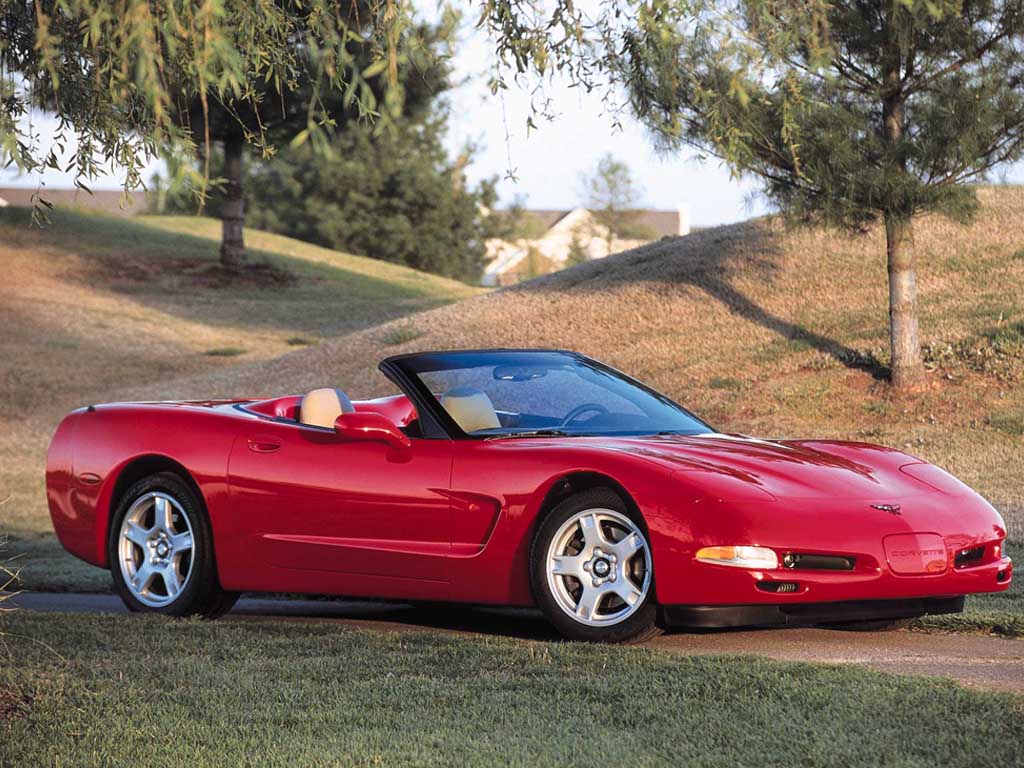
The return of the Corvette convertible in 1998 wasn’t an afterthought—it was part of the C5’s DNA from the very beginning. Unlike earlier generations that required heavy reinforcements after the fact, the C5 was engineered from day one to accommodate an open-top design. The result was a convertible that retained nearly all the structural rigidity of the coupe, avoided excessive weight gain, and delivered a level of refinement and performance that earlier Corvette convertibles simply couldn’t match.
As the heading states, the distinction matters because the 1998 convertible was not a compromise. Chevrolet said outright that Corvette engineers had designed the 1997 car as a “topless” vehicle from the start, which is exactly why the 1998 convertible arrived without the usual structural challenges that tend to follow open-air variants. John Middlebrook, a senior engineer at General Motors and one of the key figures behind the development of the C5 Corvette, went even further, stating that the new car was “more rigid than any of the world-class convertible sports cars that Chevrolet measured during Corvette development.” That was a bold claim, but period road tests backed up the basic point. Car and Driver found the C5 convertible unusually free of cowl shake and rattles, and recorded a torsional-rigidity figure of 21.3 hertz with the top down, only two hertz shy of the coupe with its roof panel in place.
Just as important, Chevrolet achieved that result without turning the convertible into a heavy, overbuilt afterthought. Car and Driver reported that the manual top helped keep weight in check and noted that the convertible was only one pound heavier than the coupe, according to Chevrolet’s specifications. That was a remarkable figure for the period, and it explains why the 1998 convertible never felt like a softer, less serious member of the family. It was still a C5 first. It just happened to let the sky in.
The Convertible’s Best Trick Was Practicality
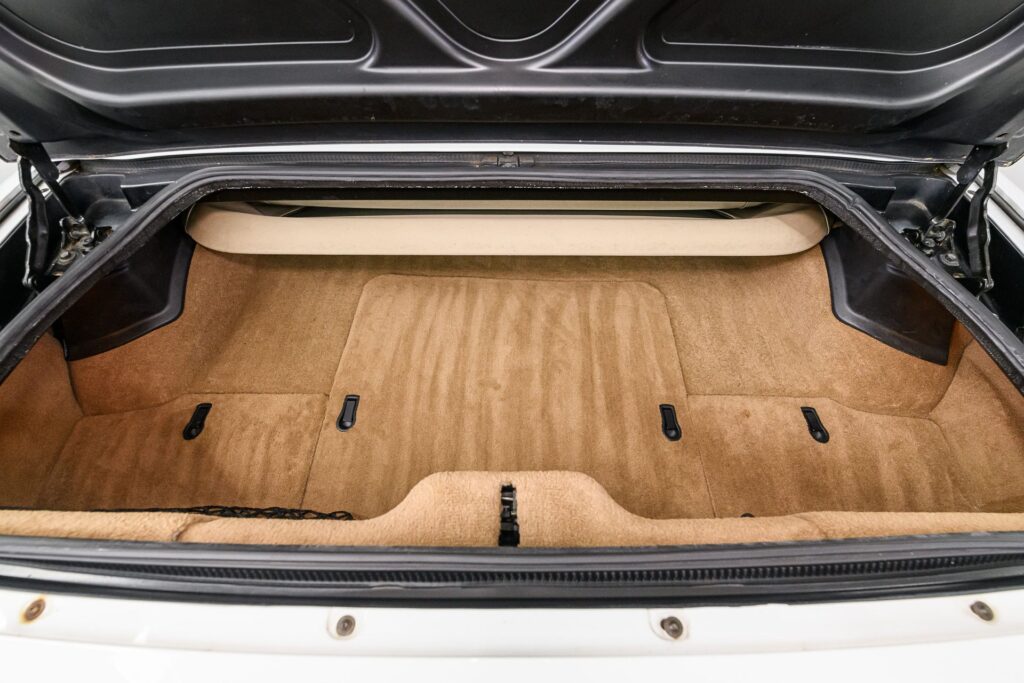
When Chevrolet introduced the 1998 Corvette Convertible, it gave the car something earlier open-air Corvettes had rarely offered in any meaningful way: a genuinely usable trunk. With 13.9 cubic feet of cargo space, the new compartment was impressively generous for a two-seat sports car, thanks in part to the compact manual folding top and the use of run-flat tires that eliminated the need for a spare. Contemporary reviewers noted that it could handle real luggage duty—up to two sets of golf clubs or enough bags for a week away—making the C5 convertible feel every bit as capable as it was exciting.
Chevrolet understood that if the new convertible was going to matter, it had to be more than pretty. So the 1998 Corvette convertible brought back something Corvette buyers had not had in an open car since 1962: a proper trunk accessible from the outside. Chevrolet’s own material bragged that it could hold two sets of golf clubs, while Motor Trend pegged the space at 13.9 cubic feet and emphasized how unusual that was in a real sports car. Car and Driver likewise noted how usable the trunk was and how much less space the manual top took up than a power arrangement would have. In other words, this was not just a Corvette with the roof removed. It was a Corvette that managed to be more livable while still looking sharper in profile with the top stowed.
The top itself was one of the most thoughtfully executed elements of the entire car. Chevrolet paired the cloth roof with a heated glass rear window, an express-down feature that partially lowered the side windows while releasing the tonneau cover, and a manual operation so efficient that Dick Almond famously summed it up: “We’re talking about seconds to take the top down.” Car and Driver put a number to it, timing the process at just 18 seconds and praising how cleanly it worked. This is significant because any awkwardness or complexity in the top’s operation would have compromised the car’s larger mission. Instead, the mechanism supported everything the C5 represented: a Corvette engineered not for gimmicks or unnecessary flourish, but to be more refined, more usable, and simply better in all the places that counted.
And visually, Chevrolet got it right. Motor Trend singled out the way the tonneau flowed into a waterfall section between the seats, explicitly connecting the car back to 1953-1962 Corvettes. That was more than nostalgia. It was a disciplined way to reintroduce an old Corvette cue in a body that otherwise looked modern, lower, cleaner, and far more resolved than the C4 convertible ever was. The 1998 roadster did not look like a roofless coupe. It looked like a Corvette that had been born open.
The LS1 and the Transaxle Layout Were Still the Heart of the Car
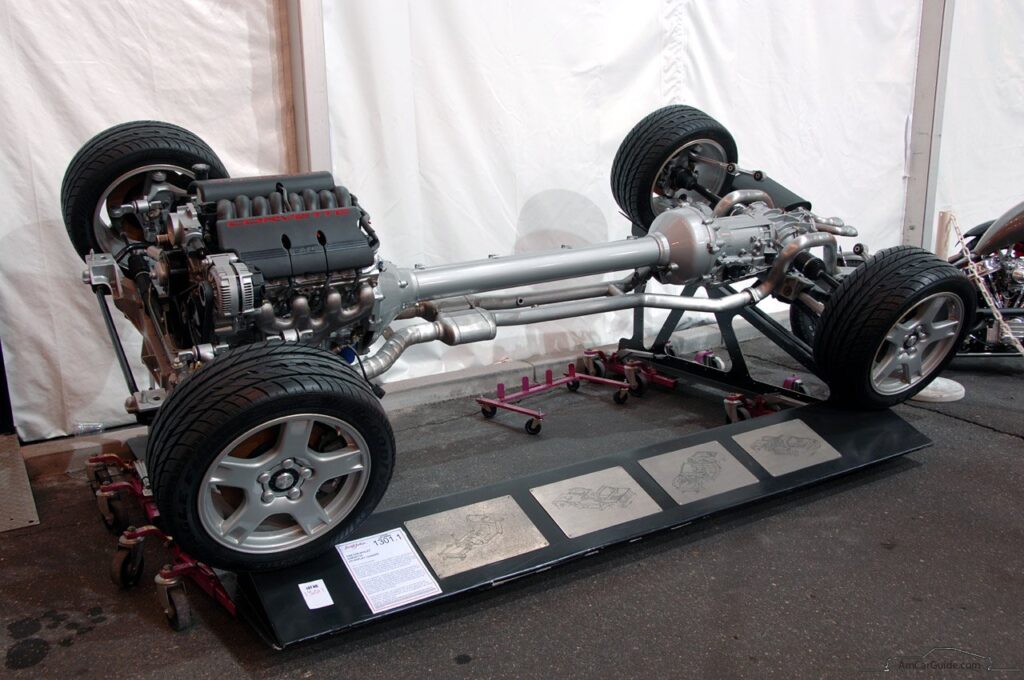
For 1998, the Corvette’s real story was still underneath the skin. The C5’s hydroformed steel frame, rear-mounted transaxle, and rigid torque-tube layout gave the car a far more balanced and sophisticated foundation than any previous Corvette, while the 5.7-liter LS1 V8 delivered 345 horsepower with the kind of smooth, effortless torque that made the whole package feel modern. Short/long-arm suspension at all four corners and composite transverse leaf springs remained part of the formula, but in the C5 they worked within a chassis that was dramatically stiffer, more refined, and far better organized. In the 1998 model year, that engineering mattered even more, because it proved the new convertible was not a compromise car at all, but a fully realized extension of the C5’s world-class platform.
Even with all the attention focused on the arrival of the convertible, the real foundation of the 1998 Corvette remained the engineering formula that had already made the C5 such a watershed car. The LS1 continued as the lone engine offering, rated by Chevrolet at 345 horsepower and 350 lb-ft of torque. Chevrolet quoted a top speed of 175 mph and a 0-to-60 time of about 4.7 seconds with the six-speed, while Motor Trend recorded 4.8 seconds to 60 in the coupe along with a 13.2-second quarter-mile at 109.3 mph. Car and Driver, in its 10Best writeup, made clear that the C5 had not simply become more polished and more refined. It was still legitimately fast. That distinction was important, because while the Corvette had become more civilized, it had not given up the performance character that gave the name its weight in the first place.
The LS1 also represented a philosophical win for the Corvette team. In Motor Trend’s Car of the Year coverage, project manager John Juriga said “the key deciding factor” in sticking with a pushrod layout was that it “could develop more power while occupying less space than a DOHC engine.” That was not backward thinking. It was targeted engineering. The aluminum LS1 block saved substantial weight compared to the old LT4, met the packaging demands of the new chassis, and helped the C5 achieve its near-ideal balance target. Motor Trend credited that combination with contributing to a 51/49 front-rear weight distribution.
Then there was the transaxle. Motor Trend put the point plainly: the C5 became the first Corvette to use a rear-mounted transaxle in order to reduce crowding in the footwell and preserve a more even weight distribution. A five-inch torque tube tied the engine to the rear-mounted gearbox, and Chevrolet’s own materials emphasized the resulting gains in packaging, ride quality, and refinement. By 1998, that layout no longer needed to be defended in theory. It was proving itself in the real world as the foundation of a Corvette that felt more expensive, more composed, and far more international in the best sense of that word.
Transmission choice revealed how buyers used the car. The four-speed automatic remained the dominant gearbox, appearing in 23,978 of the Corvettes built in 1998, or 77.1 percent of total production, while the six-speed manual accounted for 7,106 cars, or 22.9 percent. Chevrolet also installed the F45 real-time damping suspension on 8,374 cars, or 26.9 percent of production, and the Z51 handling package was included on 4,249 cars, or 13.7 percent. That mix says a lot. Buyers still wanted performance, but they were now buying a Corvette that had broadened its appeal without becoming generic.
Chevrolet Kept Making the Car Easier to Live With
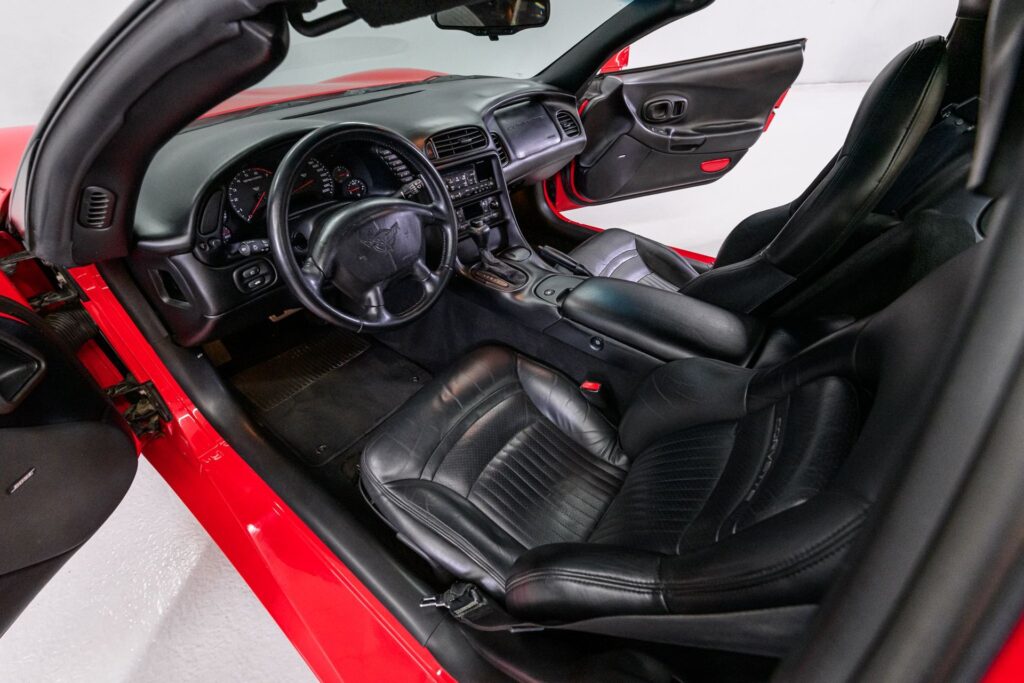
One of the clearest ways the 1998 Corvette distanced itself from the outgoing C4 and the generations before it was in the cabin, where Chevrolet moved decisively toward greater comfort, better technology, and far-improved day-to-day drivability. The C5 introduced a roomier cockpit with more legroom and footroom, lower door sills, and wider footwells, all of which made getting in and out, and spending real time behind the wheel, noticeably easier than in earlier Corvettes. At the same time, Chevrolet brought in features that gave the interior a much more modern character, including available dual-zone electronic climate control, an available head-up display, and an optional memory package that could store seat, mirror, radio, and HVAC settings. Taken together, those changes made the 1998 Corvette feel less like a sports car that demanded compromise and more like one that had finally learned how to combine serious performance with genuine comfort and usability.
One of the most underrated parts of the 1998 Corvette story is how clearly Chevrolet understood that convenience and credibility no longer had to be enemies. The C5 already felt like a better long-distance car than the C4, and for 1998, Chevrolet leaned into that sentiment. New-year features included an engine air-filter monitor, extended-life coolant, and a 10,000-mile recommended oil-change interval under prescribed conditions. Standard extended-mobility tires and the low tire-pressure warning system remained central to the package, which is why Chevrolet could continue to eliminate the spare tire while preserving cargo capacity. The result was a Corvette that was easier to use, easier to maintain, and less compromised in day-to-day life than most people expected from a two-seat American sports car in the late 1990s.
The cabin story mattered too. Motor Trend pointed to the more spacious interior, dramatically improved instrument presentation, easier entry, and far friendlier ergonomics. Car and Driver’s 10Best piece made the same case more bluntly, noting that the old Corvette’s raw muscle had finally been joined by refinement and practicality. Those were not throwaway compliments. For decades, Corvette defenders had to explain away its shortcomings. By 1998, the burden was shifting. Now critics had to explain why the Corvette was no longer easy to dismiss.
Active Handling Brought Corvette Into the Electronic-Chassis Era
Introduced on the 1998 Corvette as the new JL4 Active Handling option, Chevrolet’s system marked a major step forward in how the car behaved at the limit, because it could recognize when the Corvette was no longer following the driver’s intended path and then selectively apply individual brakes to help bring the chassis back into line. Using inputs from the steering-angle sensor, yaw-rate sensor, lateral accelerometer, ABS, and traction control, Active Handling gave the C5 a layer of intelligence no earlier Corvette had offered, helping reduce both understeer and oversteer without diluting the car’s core performance character. Just as important, Chevrolet understood this was still a Corvette, which is why the system was calibrated to intervene only when the limits had been exceeded and even offered a Competitive Driving mode that left Active Handling armed while relaxing traction control for more aggressive use. In practical terms, it revolutionized Corvette drivability by making the 1998 car faster to trust, easier to gather up in an emergency, and far more confidence-inspiring than the generations that came before it.
The most important technical change introduced during the 1998 model year was Active Handling, RPO JL4. Chevrolet announced it in November 1997, describing it as an optional chassis-control system that would become available on all Corvette models early in 1998, with the pace car package making it standard. Chevrolet was explicit about the system’s significance, stating that “No other sports car has a system like this,” and its technical description made clear that this was not a simple traction-control add-on. Active Handling monitored steering angle, yaw rate, and lateral acceleration, then selectively applied individual brakes to help stabilize the car when its actual path diverged from the driver’s intent.
What made the system important was not just what it did, but how it was tuned. Chevrolet said it gave the driver more latitude before intervention than rival systems, and it included a competition mode that disabled the traction-control portion to allow wheelspin in motorsport-style use. Mike Rizzo, one of the engineers behind the calibration, summed up the philosophy perfectly: “We never want to penalize a good driver for the deficiencies of a bad driver.” John Heinricy, deeply involved in the system’s development, was just as revealing when he said, “I wanted it to be a system I could drive at the track and wouldn’t want to turn it off.” That tells you everything about the mindset behind the 1998 Corvette. Chevrolet was not adding electronics to make the car timid. It was adding electronics to make the car smarter without dulling its edge.
The take rate shows that buyers recognized the value. Production data lists JL4 on 5,356 Corvettes, or 17.2 percent of the 1998 run. That is a healthy number for a mid-year-introduced performance-electronics option in 1998, and it also underscores how quickly Corvette buyers were willing to embrace new technology when it felt like it belonged in the car.
The Indianapolis 500 Pace Car Was a Big Moment, but the Details Matter
The 1998 Corvette Indianapolis 500 Pace Car captured an important moment for the nameplate, because it marked the first appearance of the new C5 generation at Indy and the fourth time Corvette had been selected to lead the field at the Speedway. Although Chevrolet’s original announcement named Greg Norman for pace-car duties, the car that actually paced the 82nd running of the Indianapolis 500 on May 24, 1998 was driven by 1963 Indy 500 winner Parnelli Jones. Visually, the car was impossible to miss, finished in special Radar Blue with vivid yellow Indy 500 graphics, matching yellow wheels, and yellow interior accents that were unique to the pace car treatment and not offered on a standard production Corvette. Mechanically, it remained close to factory stock, though Chevrolet added race-day equipment including a steel roll bar and strobe lights, while the program also introduced the new Active Handling system that would appear on the pace car and its limited-edition replicas. Chevrolet ultimately built 1,158 pace car replicas, giving collectors a version that stayed remarkably faithful to the car seen at Indianapolis. (Image courtesy of GM Media LLC)
The 1998 Indianapolis 500 pace car gave Chevrolet exactly the kind of national spotlight the new convertible deserved. The company announced in November 1997 that the all-new convertible would serve as the official ace car at the 82nd running of the Great American Race, marking Corvette’s fourth Indy 500 appearance after 1978, 1986, and 1995. Chevrolet described the actual pace car as essentially factory stock, requiring only a steel roll bar, strobe lights behind the seats, and enlarged tonneau bulges with clear lenses to package the warning lights. That is worth emphasizing because it directly contradicts the common tendency to treat the real pace car as a heavily modified special. Chevrolet’s own press material said the 345-horsepower LS1 street drivetrain was sufficient for the job as delivered.
The look, of course, was anything but subtle. Chevrolet’s pace-car press releases described a special Radar Blue exterior with bright yellow wheels, yellow graphics, and a yellow-and-black interior. Yet production and paint-code references usually list the 21U color as Radar Purple Metallic. That is one of those wonderfully strange Corvette details that make the 1998 pace car so memorable: even its color is part of the lore. Chevrolet’s marketing language leaned blue; the production documentation leans purple; owners and collectors have spent years arguing somewhere in between.
Inside, the 1998 Corvette Indy 500 Pace Car carried the same theme as the exterior by taking the standard C5 cockpit and giving it a far more dramatic, event-specific presentation. The basic dashboard, center stack, and driver-focused layout remained pure Corvette, but the cabin was set apart by its bold yellow seat inserts and Indy 500-branded floor mats, details that immediately tied the interior to the car’s Radar Blue and yellow pace car livery. It was a smart execution, because Chevrolet did not try to reinvent the C5’s already modern interior architecture. Instead, it used carefully placed color and branding to transform the cabin into something far more distinctive, giving the pace car a look that felt special the moment you opened the door. (Image source: Hemmings.com)
The replicas are another area where a careful review of the records is important. Chevrolet’s November 1997 press releases repeatedly said it planned to build 1,158 pace car replicas. But production references for the finished 1998 model year consistently show 1,163 Z4Z cars, matching the 1,163 total listed under 21U pace-car color production. So the cleanest way to say it is this: Chevrolet announced a 1,158-car plan, but the production data that enthusiasts and registries now rely on records 1,163 built. The package itself was generous, bundling the special paint and graphics with sport seats, memory package, dual-zone climate control, Bose audio, fog lamps, performance axle, and standard Active Handling. Chevrolet even noted unique neon-yellow stitching on the wheel, shifter, seats, and transmission-boot trim.
Even the pace-driver story has a twist. Chevrolet’s November 1997 announcement named Greg Norman as the driver, but the Indianapolis Motor Speedway’s official historical pace-car list records Parnelli Jones as the 1998 pace-car driver. That kind of discrepancy is exactly why the 1998 Corvette deserves a closer read than the usual shorthand summary. The year is full of details that were later simplified.
The 1998 Corvette Is Packed With the Sort of Collector Details People Love to Chase
Finished in Light Pewter Metallic, one of the new exterior colors introduced for the 1998 model year, this C5 wears the kind of understated finish that suited the new-generation Corvette especially well. Rather than relying on bright color or heavy ornamentation, Light Pewter emphasized the C5’s cleaner body lines, tighter surfacing, and more sophisticated overall shape, giving the car a refined, contemporary look that felt very much in step with Chevrolet’s broader rethink of the Corvette. Paired with five-spoke wheels, the combination only strengthens that impression, giving the car a crisp, modern stance that complements the more polished and technically advanced character the C5 brought to the nameplate.
This is also one of the most interesting C5 model years if you care about rare-option and color trivia. Chevrolet officially added Light Pewter Metallic and Medium Purple Pearl Metallic for 1998, while the optional N73 five-spoke magnesium wheels arrived as a serious enthusiast item. Corvette Action Center’s production data identifies those Speedline-made magnesium wheels as a 1998 addition, and the production numbers show 1,425 cars got them, or 4.6 percent of the total run. That is low enough to matter, especially when you remember how expensive they were and how many were later damaged, refinished, or replaced.
Then there are the rare colors. Production tables show just 15 Aztec Gold cars and 14 Navy Blue cars for 1998, making them rarer than the pace-car color and dramatically rarer than medium-volume colors like Nassau Blue, Fairway Green, or Medium Purple Pearl. Registry documentation adds that Aztec Gold ended after only 15 cars, including three convertibles, while Navy Blue emerged late enough in production to edge it as the rarest 1998 shade. Fairway Green, meanwhile, was discontinued on November 13, 1997. These are the kinds of details that separate a broad C5 overview from a real 1998 discussion, because they show how active Chevrolet still was behind the scenes even as the basic product had already become a success.
For 1998, Chevrolet delivered one of the most diverse and expressive color palettes of the C5 era—ranging from timeless staples like Arctic White and Black to bold, era-defining hues like Nassau Blue Metallic and Light Carmine Red Metallic. Unique offerings such as the Pace Car-exclusive Purple/Radar Blue and the rich Medium Purple Pearl Metallic added a layer of collectability, while colors like Aztec Gold and Fairway Green Metallic reflected the late-’90s push toward deeper, more sophisticated metallic finishes. Together, the palette perfectly captured the dual personality of the C5: refined grand tourer and unapologetic American performance car.
One of the best obscure details from the year has nothing to do with paint at all. In July 1998, the C5 Registry reported that Chevrolet had begun placing a build sheet in the front frame rail of every new C5, a delightful echo of the old mid-year practice of hiding build sheets on top of fuel tanks. That is the sort of small production note that becomes catnip for future restorers and NCRS-style document hunters, and it is exactly the kind of thing that makes 1998 such a rewarding year to study closely.
By the End of 1998, Corvette Was Already Looking Back to Racing
In 1998, Chevrolet made a pivotal announcement that signaled a return to its racing roots: Corvette would once again compete with full factory backing beginning in 1999. That commitment materialized through the all-new C5-R program, developed in partnership with Pratt & Miller, and aimed squarely at the fiercely competitive GT ranks of international endurance racing. The car was built to contest the GTS class in the IMSA-sanctioned American Le Mans Series (ALMS), which itself debuted in 1999 as the North American extension of the 24 Hours of Le Mans rulebook. Corvette Racing officially made its competition debut at the 1999 Rolex 24 at Daytona, marking the first time since the early 1960s that Chevrolet had fielded a truly factory-supported Corvette effort. While early results were modest as the team developed the car in real time, the significance of that moment cannot be overstated—it laid the foundation for what would become one of the most dominant and enduring factory GT racing programs in motorsports history. (Image credit: HotRod.com)
The final reason the 1998 model year matters so much is that it ended by pointing Corvette toward the next stage of its identity. In November 1998, Chevrolet announced that Corvette would return to factory-backed road racing with the C5-R, beginning in 1999 at the Rolex 24 at Daytona. John Middlebrook framed it as a restoration of purpose, saying, “The return of Chevrolet Corvette to the racetrack reinforces everything Corvette stands for.” Jim Campbell was even more direct: “Our primary focus is to improve the breed.” And Dave Hill connected the road car to the race program in the most important sentence of all: “The things that make it a great road car will also contribute to its success as a racecar.”
That announcement matters in any 1998 overview because it confirms what the best observers were already sensing. The C5 was not merely a better Corvette. It was a better platform. Chevrolet said Ron Fellows had already logged more than 4,000 miles in the C5-R using a significant number of production-based components. That meant the C5’s structure, layout, and general engineering logic were no longer just competitive in magazine comparisons. They were becoming the basis for a serious international endurance-racing effort. Once that happened, the story changed. Corvette was no longer asking for respect. It was building the tools to take it.
Why the 1998 Corvette Still Matters Today
The 1998 Corvette still matters because it proved the C5 was no one-year wonder. With the return of the convertible, the debut of Active Handling, and the launch of the factory-backed C5-R program, Chevrolet showed that Corvette’s fifth generation was built to do more than replace the C4. It was here to push the brand forward. Even now, the 1998 model stands as the year the C5 found its stride and the modern Corvette story really began. (Image courtesy of GM Media LLC / ChatGPT)
If 1997 was the breakthrough, 1998 was the confirmation. It proved the C5 coupe was not a one-shot success. It proved Chevrolet could build a genuinely rigid convertible without burying it under weight and excuses. It proved Corvette buyers would embrace new technology like Active Handling when it was engineered with the right philosophy. It gave the C5 its first full-year production footprint, its first true open-air variant, its first Indy 500 spotlight of the generation, and some of its strangest and most collectible color stories. And by year’s end, it helped set the stage for the C5-R, which would go on to change the way the world talked about Corvette in competition.
That is why the 1998 Corvette deserves to be remembered as far more than the year the convertible came back. It was the year Chevrolet demonstrated that the C5 architecture was flexible, durable, sophisticated, and ambitious enough to carry Corvette into an entirely different era. The car had the performance. It had usability. It had the engineering credibility. And now, for the first time in a long time, it also had the unmistakable sense that the people behind it knew exactly what they had built. The rest of the world would spend the next several years catching up.
The 1998 Corvette proved the C5 revolution was no fluke. With the debut of the long-awaited convertible, Indianapolis 500 pace car honors, groundbreaking engineering, and growing global credibility, Chevrolet’s sports car took a confident second-year leap forward. Explore the full story behind one of the most important Corvettes of its era.
“CERV I is design without limits. It is very fast. It is very sensitive. It amplifies all disturbances of steering and driver control, and all problems of transmitting power to the road. It is an admirable tool. It tells us, for example, what to put in Corvette, for the highest margin of safety for the driver.” — Zora Arkus-Duntov, Esquire, November 1961.
Prologue: Why a Mid-Engine “Research Vehicle” in 1960?
By the end of the 1950s, the center of gravity in top-tier racing had literally moved. Front-engine “roadsters” still thundered around Indianapolis, but in Europe, nimble mid-engine Coopers were rewriting the Formula One playbook. Zora Arkus-Duntov—already the driving intellectual force behind Chevrolet’s young sports car—saw the shift up close and understood what it meant: a mid-engine platform promised better weight distribution, a lower polar moment, and a clearer path to extracting all the tire had to give.
Inside General Motors, however, the 1957 Automobile Manufacturers Association (AMA) “ban” on factory-backed racing still hung like a storm cloud. Duntov’s answer was pure Zora—if he could not race, he would research. The Chevrolet Engineering Research Vehicle—CERV—would be a fully functional, single-seat, mid-engine machine built to racing standards but justified as an engineering instrument. It could go where no brochure-friendly test mule could and bring back data that would filter directly into Chevrolet’s production cars—especially Corvette.
The Birth of an Idea: From the “R-Car” and “Hillclimber” to CERV I
Work began in 1959 with a small, formidable team: Zora at the center, flanked by engineers Harold Krieger and Walt Zetye, with designers Larry Shinoda and Tony Lapine brought in as the packaging congealed. Krieger and Zetye were the hands-on translators of Zora’s philosophy into metal—mapping hard points, triangulating the chromoly spaceframe, sorting the kinematics of a fully independent suspension that would talk back at the limit. Shinoda and Lapine, working under Bill Mitchell’s watchful eye, took that ruthless packaging and wrapped it in a minimal fiberglass skin that was thin by design—just enough to manage airflow and keep the driver out of the slipstream, while leaving the mechanicals visible and accessible. The studio nickname captured the mood: this wasn’t a style exercise; it was a machine to be driven and read.
Bare fiberglass, a tiny windscreen, and a grinning engineer at the wheel—this is the no-nonsense testbed ethos that shaped Chevrolet’s experimental era. In 1955, Zora Arkus-Duntov stormed Pikes Peak in a thinly disguised ’56 Chevrolet and set a new production-class record, using the mountain as his laboratory for the fledgling small-block V-8. The brutality of that climb—heat, broken pavement, and tire slip at altitude—cemented his conviction to centralize mass and “listen to the tire,” a philosophy that would harden into the mid-engine CERV I. In many ways, this image is the prologue to Zora’s “design without limits.” (Image courtesy of GM Media LLC)
Internally, the project went by the plain “R-Car,” a catch-all label from Chevrolet Engineering that said everything and nothing. Around the design studios, though, it quickly picked up a more evocative moniker—“Hillclimber.” That wasn’t idle poetry. Zora had unfinished business on the mountain. He’d set a production-car record at Pikes Peak in 1955 in a disguised Chevrolet test mule, and the place had imprinted on him: long climbs, broken surfaces, and corners that punished any vagueness in chassis or tire. From the outset he wanted a car that could go back and take the overall—not just as a publicity stunt, but as a brutal proving ground. If a new Chevrolet single-seater could stay composed on the Peak, it would be composed anywhere.
Larry Shinoda’s April 26, 1960 rendering turns CERV-I—the Chevrolet Engineering Research Vehicle—into a lithe, Indy-inspired projectile. On black board, he punches up the essentials: razor nose, faired headrest, external headers, and knock-off magnesium wheels, all streaked with motion lines and bold “11” numerals. Look closer at the cockpit rim and you’ll see Zora Arkus-Duntov’s name hand-lettered—an explicit stamp that this was Zora’s vision and “rolling laboratory.” Rivet lines and vent slats telegraph aircraft logic; it’s classic Shinoda—clean, purposeful, and fast even at a standstill.
Dimensionally, Duntov sketched the car inside the broad Indianapolis envelope of the day—about a 96-inch wheelbase, open wheels, narrow overall width—so that, on paper at least, the door to the Speedway remained unlocked. He avoided painting himself into a formula corner: the layout and silhouette were Indy-correct if the rules ever mattered, but the powerplant could be anything the test program demanded. Even the cockpit ergonomics nodded to oval work; Zora specified dual brake pedals to enable left-foot braking and kept the controls dense and immediate. In effect, CERV I was packaged like a contemporary Champ car, then liberated from the constraints of a rulebook so it could chase whatever question the engineers needed answered that week.
Inside GM, where corporate policy still frowned on racing, Zora sold the car with a scientist’s logic. His pitch reduced to a sentence: build a vehicle that amplifies everything. Make it so light and so centralized that every steering input, every load transfer, every change in tire slip angle comes through louder and sooner. That thinking dictated the architecture. The driver, the dual fuel cells, and the engine cluster are tightly wrapped around the center of gravity to shrink the polar moment; a rigid, triangulated chromoly spaceframe so the suspension—not chassis flex—does the talking; an open-wheel, open-cockpit layout so engineers and drivers can literally watch the front tires and links at work. Even the driveline supported the experiment: a rear transaxle with a quick-change final drive let Krieger and Zetye swing from short-course gearing to high-speed ratios in minutes, not days, so the same chassis could map low-speed compliance in the morning and high-speed stability in the afternoon.
On a jig table in Chevrolet Engineering, Duntov’s group built CERV I’s chassis like an aircraft truss—thin-wall tubing, tight triangulation, and welded bulkheads to carry the mid-mounted small-block. Pickup points were drilled, shimmed, and slotted so the team could sweep camber gain, caster, roll centers, and anti-effects between runs. Independent suspension at both ends, quick 12:1 steering (2.3 turns lock-to-lock), and forward-mounted, low-compliance linkages were chosen to kill slop and kickback, not the feedback. Lightweight hardware—magnesium wheels and liberal use of aluminum—trimmed unsprung mass, allowing the steering “spoke” to speak with clarity. What you see in this photo is the purpose-built lab GM wanted: open cockpit, exposed tanks and plumbing, everything accessible for rapid changeovers—an engineer’s testbed designed to turn geometry experiments into hard data and, ultimately, better Corvettes. (Image courtesy of GM Media LLC)
Shinoda and Lapine’s bodywork followed that brief to the letter. The shell was purposefully thin, hand-laid fiberglass in just a few sections—white with blue center stripes and a single roll hoop—more instrument casing than automobile couture. Air management was pragmatic: a small nose to feed the front-mounted radiator, clean flanks, and intake scoops just aft of the driver’s head to stand the tall ram pipes Zora favored for mid-range torque. The result looked like what it was—a research tool built to run hard, change quickly, and accurately report on its strengths…and its weaknesses.
In Bill Mitchell’s studio, Larry Shinoda and Tony Lapine “skinned” Duntov’s spaceframe the way racers did—tight, thin, and only where structure demanded it. Working off the jig, they pulled a lightweight fiberglass shell over the hard points, carving a low cowl, tiny aero screen, faired headrest, and a clipped tail that bled drag without adding mass. Panels were kept simple and removable so engineering could reach the suspension, plumbing, and mid-mounted small-block between runs. Every scoop and cutout followed function—cooling, clearance, serviceability—so the CERV I’s body became what it needed to be: a fast, clean wrapper for testing ideas at speed. (Image courtesy of GM Media LLC)
Put together, those choices explain why the “Hillclimber” nickname stuck and why the “R-Car” code name sufficed for the paperwork. In the shop, it was a mountain-obsessed single-seater; in the memos, it was the Chevrolet Engineering Research Vehicle—a lab-on-wheels whose sensitivity was the point. And in Zora’s mind, it was both at once: a car packaged carefully enough to be eligible when circumstances allowed, and honest enough in its responses to improve every Chevrolet performance car, whether it ever saw a green flag or not.
Engineering Philosophy: Amplify Everything
The 1960 CERV I was designed to amplify ride and handling phenomena—both to expose problems and to validate solutions. Chevrolet’s own 1960 engineering write-up described it point-blank as a vehicle “for continuous investigations into automotive ride and handling phenomena under the most realistic conditions,” with the explicit goal of magnifying responses so engineers could study them directly. That same factory paper explains why the car was open-wheeled and open-cockpit: the driver and engineers needed an unobstructed view of the front wheels, suspension motion, and tire contact patches in real time.
To achieve the desired “high-gain” behavior, the team concentrated mass near the center of gravity. The driver, dual fuel cells (20 gallons total), and the powertrain were grouped around the middle of the car to lower the polar moment and sharpen responses. The resulting package wasn’t just quick; it was talkative—the kind of car that told you exactly what each corner was doing at the limit and punished ham-fisted inputs.
Structure and Suspension: Chromoly Bones, Fully Independent Limbs
CERV I rode on a welded 4130 chrome-moly tubular spaceframe—thin-wall tubes, close triangulation, and sheeted bulkheads for stiffness with minimal weight. All the hard points were built as test hardware: double-shear brackets, threaded inserts, and slotted/shimmed pickups so camber, caster, toe, anti-effects, and roll centers could be reset in minutes. Up front, unequal-length wishbones carried coil-over dampers and an anti-roll bar, tied to a quick 12:1 steering box (2.3 turns) with forward-mounted, low-compliance linkages. The rear used an independent layout with upper/lower links and radius members locating the mid-mounted powertrain; inboard brakes and magnesium wheels trimmed unsprung mass. Side-saddle tanks and removable panels kept mass centralized and service access easy, yielding a rigid, lightweight testbed that communicated clearly at speed. (Image courtesy of GM Media LLC)
At the heart of the 1960 CERV I sat a triangulated chrome-molybdenum tubular spaceframe, its long, slender members forming a rigid spine without the weight of a ladder frame. Contemporary company literature emphasized that the structure was stiff enough to let the suspension do the“talking,” rather than the chassis flex muddying the message. The frame, clothed in thin fiberglass, supported fully independent suspension at all four corners.
Up front, Chevrolet used a high-roll-center geometry with variable-rate coil springs and direct-acting, double-acting dampers. In back, the layout previewed what would become a Corvette hallmark: each rear wheel’s vertical motion was controlled by two lateral links—the upper link doubling as a driveshaft—with a separate fore-aft link to take driving and braking thrust. Variable-rate coils and direct-acting shocks were mounted diagonally. With adjustment provisions for camber and toe, the rear end could be tuned quickly to suit test objectives. This architecture directly informed the independent rear suspension that debuted on the 1963 Corvette Sting Ray.
Steering That Spoke Clearly
A plain, wood-rim three-spoke wheel sat at the heart of CERV I’s feedback loop—no assist, no filters, just geometry and metal. The quick 12:1 ratio (2.3 turns lock-to-lock) meant tiny inputs produced real front-wheel angle, letting the driver trim a line or catch a slide instantly. Forward-mounted, low-compliance linkages shortened the load path and kept lash out of the system, while generous caster and a small scrub radius built honest self-aligning torque without kickback. The result was high effort at walking pace but wonderfully alive at speed: surface texture, grip build, and the first hint of push or bite all arrived through the rim in real time.
Duntov and the team specified quick steering—12:1 with just 2.3 turns lock-to-lock—because they wanted fingertip authority at speed. Compared with the slower 16:1–20:1 boxes common in road cars of the day, this ratio meant tiny inputs produced meaningful front-wheel angle. On a light-nose, mid-engine mule, that was a feature, not a liability: the modest front axle load kept effort reasonable without assist, while the fast rack let the driver trim the line mid-corner and catch weight transfer the instant it began.
Geometry and compliance were treated like performance parts. Forward-mounted, “balanced” linkages shortened the load path and kept the tie-rods working in simple tension/compression, so the system didn’t wind up under load. The team chased near-zero bump steer through the suspension’s mid-travel, paired generous positive caster for self-centering and straight-line stability, and targeted a small scrub radius by aligning steering-axis inclination with wheel offset. Add in stiff, race-style joints and carefully chosen bushing durometers, and you had a front end that filtered almost nothing: surface texture, grip build-up, carcass squirm, and the first hint of push or bite all arrived through the rim in real time.
Seen head-on, the 1960 CERV I reveals the elegance of its simplicity. A narrow fiberglass shell wraps a chrome-moly spaceframe, with nothing extra to clutter its purpose—just suspension arms, open dampers, and a single oval intake feeding the mid-mounted small-block. There are no frills, no styling flourishes, only what Zora Duntov’s team needed to collect data at speed. The result is a car that looks as experimental as it was: a pure test instrument, reduced to its essential architecture.
The result matched Duntov’s philosophy to the letter. Instead of isolating the driver from kickback with slow ratios and soft rubber, they reduced the sources of kickback and kept the steering fast. The car still told you everything—only now the messages were clean, timely, and easy to act on, exactly the kind of feedback loop you need when you’re developing a chassis at the limit.
Brakes Designed for Stopping, Not Comfort
The 1960 CERV I ran inboard rear brakes to cut unsprung mass and improve the suspension’s ability to keep the tire planted. Drums—aluminum with cast-in iron braking surfaces—were drilled in the webs to shed heat; the linings were sintered iron. Brake balance was set at 57% front / 43% rear, and a dual-piston master cylinder kept one axle working if the other circuit failed—forward-looking hardware in 1960. Even the pedal box reflected dual purposes: there were two brake pedals (right and left) to accommodate left-foot braking for oval/Indy-style running.
The Powerplants: From Featherweight 283 to 377 and Beyond
A mid-mounted Chevrolet small-block sits like a lab experiment, wearing an independent-runner intake with eight velocity stacks and Hilborn-style mechanical fuel injection—barrel valve, individual injector lines, and all—for razor response and cylinder-by-cylinder tuning. The external oil tank and scavenge plumbing flag a dry-sump system, letting the engine ride low without oil starvation, while equal-length headers sweep into polished megaphones to clear heat and let the V-8 breathe. CERV I cycled through several engines during development—starting with a Rochester-injected 283, then high-output 327s, and ultimately an all-aluminum 377-cid package around the 500-hp mark—and the eight-stack, dry-sump hardware you see here matches that later 377-cid configuration. True to CERV I’s mission, every line, fitting, and linkage is exposed for fast changes and clean data at the track; it’s a purpose-built testbed disguised as an engine bay.
The 1960 CERV I’s original engine was a technical statement in itself: a lightweight, all-aluminum 283-cid small-block with Rochester fuel injection and a flock of mass-reduced ancillaries (aluminum water pump, starter, flywheel, pressure plate). Fully dressed, it weighed a startling ~350 pounds and made ~353 hp at 6,200 rpm—almost one horsepower per pound and roughly one horsepower per cubic inch, levels that were exotic in period. Period coverage makes clear what that meant in practice: with “350-plus horsepower and 1,600 pounds of car plus driver,” Ray Brock wrote in Hot Rod, the 1960 CERV I was “an outstanding performer.”
Power went through a rear transaxle hung behind the engine, with a Halibrand quick-change differential sandwiched by the inboard rear brakes. The quick-change let the team swap final-drive ratios rapidly; Chevrolet’s documentation refers to thirteen available gearsets, spanning 2.63 to 4.80:1—perfect for moving from a tight handling course to a high-speed oval in an afternoon.
In the tail of CERV I, the rear brakes live inboard, clamped to a Halibrand quick-change differential tucked between those big finned drums. The aluminum drums (with iron liners) act as heat sinks; their radial vanes pull air through at speed, shedding heat while moving heavy mass off the wheels to slash unsprung weight. Short half-shafts feed an independent rear suspension hung from double-shear pickups and a triangulated 4130 spaceframe cross-member, so the tires stay planted over bumps. You can just glimpse the pumpkin and input/yoke peeking past the transverse tube—the quick-change gear cover faces aft but is mostly hidden here—evidence of ratio swaps designed for rapid test work. It’s pure Duntov logic: centralize the mass, cool it hard, and let the suspension do its job.
The 1960 CERV I’s value as a rolling laboratory meant the powertrain was never static. By auction accounting it cycled through seven engine configurations, evolving from early Rochester-injected 283s and hot 327s to an ultimate all-aluminum 377-cid small-block with Hilborn mechanical injection and dry-sump lubrication. That final package combined light weight with razor response from the eight independent runners, and the low-mounted sump let the engine sit down in the chassis, trimming frontal area and helping stability at speed.
With the 377 in place, Duntov chased outright velocity on the five-mile banked circle at GM’s Milford Proving Ground. The team treated each run like a controlled experiment—swapping ratios in the Halibrand quick-change, adjusting ride height and alignment, and working tire pressures to keep the car planted as speeds climbed. Period accounts and later histories consistently credit the 1960 CERV I with a measured 206 mph, a figure enabled by tall gearing, clean packaging, and a low-compliance chassis that stayed calm as aero loads built.
Flat-out on GM’s five-mile banked circle at Milford, the 1960 CERV I stretched its legs during Zora Arkus-Duntov’s high-speed sessions. With the Hilborn-injected, all-aluminum 377 small-block, dry-sump plumbing, and tall ratios in the Halibrand quick-change, the mule recorded a measured 206 mph—a feat later retold as 208–209 mph. Shinoda’s lowered nose and tidied bodywork helped keep lift in check while the inboard-brake, low-compliance chassis stayed eerily calm, turning a home-grown testbed into a 200-plus-mph instrument. (Image courtesy of GM Media LLC.)
Ever the experimenter, Zora pushed further with forced induction. A TRW turbocharger system reportedly run to about 17 psi demanded new plumbing, heat management, and conservative fuel/ignition settings, but returned roughly 500 hp—enough to shift the limitation from power to aerodynamics. To keep the envelope safely open, Larry Shinoda lowered the nose and massaged the bodywork to reduce lift and tidy flow, ensuring the car remained stable while the team probed the outer edge of its speed potential.
Form Follows Function: The Fiberglass Shell
Shinoda and Lapine wrapped the chromoly skeleton and mid-ships engine in a sleek, hand-laid fiberglass body that was dramatically thinner than Corvette’s production panels—just enough structure to fair the shape through the air and cover the mechanicals. Completed in white with metallic blue center stripes, the shell weighed on the order of 80 pounds, and the whole car was a study in purposeful minimalism: a single roll hoop, a small screen, and air scoops just behind the driver’s head feeding the tall intake trumpets.
Dimensions were keyed to versatility: a 96-inch wheelbase and comparatively narrow tracks (about 53 in front / 50.5 in rear, depending on wheel and tire) kept the footprint within Indy’s norms while suiting tight road courses. Chevrolet’s own memo pegged the ready-to-run weight at roughly 1,600 pounds with driver; other period measurements cite ~1,450 pounds dry—both numbers consistent with the car’s featherweight reputation.
Testing the Thesis: Milford, Pikes Peak, Continental Divide, Riverside
Duntov didn’t build trailers—he built cars to be driven. At GM’s Milford high-speed track, Ray Brock reported the 1960 CERV I“in excess of 170 mph… beautifully [handling] despite 15–20 mph crosswind gusts,” confirming both aero cleanliness and the chassis’ high-speed manners.
Pikes Peak: The Hill That Named It
Zora Arkus-Duntov behind the wheel of the 1960 CERV I at Pikes Peak.
Late-season trials on Pikes Peak came next. Chevrolet never entered the July 4th Hill Climb with the car, but the late-fall test sessions told the team what they needed: on a 0.9-mile test segment, the times were comparable to the fastest championship cars that ran the full course each summer, proof that a mid-engine, high-power single-seater could survive—and thrive—on broken, climbing tarmac. Even so, the 1960 CERV I was more naturally suited to road-course and high-speed work than to gravelly hillclimbs, and Zora moved on.
Continental Divide Raceway: Making Tires Talk
At Continental Divide Raceways in Castle Rock, Colorado, Zora Arkus-Duntov used the 1960 CERV I not just on proving grounds but in front of crowds, demonstrating its capabilities in a dynamic setting. The track—opened in 1959 at an altitude just south of Denver—was a natural fit for Chevrolet’s “engineer as showman,” giving Duntov the chance to showcase the car’s mid-engine balance, quick steering, and independent suspension in a live environment. Period photos, like this one, show Zora at the wheel in full gear, the 1960 CERV I’s minimalist fiberglass body and exposed suspension arms underscoring its role as a research mule rather than a polished race car. Appearances like this helped cement Duntov’s reputation as both a visionary and an evangelist—willing to put prototypes through their paces in public displays to build excitement around Corvette engineering. (Image courtesy of GM Media LLC)
To deepen the tire learning, Zora partnered with Firestone at Continental Divide Raceway outside Castle Rock, Colorado. There, across two demanding weeks, Duntov, Dan Gurney, and Stirling Moss cycled through combinations of Firestone tires and Halibrand magnesium wheels, mapping how section width, aspect ratio, and compound affected turn-in, mid-corner balance, and exit traction. The work was seminal—helping to push open-wheel racing toward wider, lower-profile race tires in the 1960s.
Riverside, November 20, 1960: The Public Debut of the CERV I
When the 1960 CERV I made its public debut at Riverside Raceway in November 1960, it was more than a technical demonstration—it was a statement. Zora Arkus-Duntov rolled out his experimental mid-engine research vehicle before an audience of racers, journalists, and enthusiasts, showing that Chevrolet’s engineering department was thinking far beyond the showroom Corvette. With its cigar-shaped fiberglass body, exposed suspension arms, and mid-mounted small-block V8, the car looked closer to a Formula machine than anything built in Detroit. Duntov used the venue to underline CERV I’s role as a true engineering mule, capable of testing suspension geometry, aerodynamics, brakes, and powertrains at racing speeds. That Riverside appearance gave the public its first glimpse of what Corvette engineering was capable of, and it cemented the 1960 CERV I’s place as the prototype that pointed the way to the future.
Chevrolet’s racing hands were tied, but its eyes were wide open. On November 20, 1960, during the U.S. Grand Prix weekend at Riverside International Raceway, the 1960 CERV I made its public bow—officially labeled the Chevrolet Engineering Research Vehicle to keep the “R” word out of press copy. Duntov, Stirling Moss, and Dan Gurney turned laps; both Moss and Gurney were under 2:04 within a few tours—astonishing given that Moss’s GP lap record in a Lotus was just under 1:55. The point had been made: Chevrolet wasn’t racing, but it was absolutely doing race-level engineering.
What CERV I Was (and Wasn’t): A Racer’s Tool, Not a Race Entry
It bears underlining: the 1960 CERV I never raced. The AMA anti-racing policy still constrained GM, and Chevrolet carefully framed the car as a rolling laboratory. But in configuration, performance, and behavior, it was indistinguishable from a competitive mid-engine single-seater of its day. Indeed, Duntov proportioned the car to Indy eligibility, chased Pikes Peak times, hunted 200-mph stability, and brought in the very best drivers to help interpret the results—all under the banner of R&D.
The Anatomy of the Instrument: Details That Mattered
Wheels/Tires: Knock-off magnesium wheels from Halibrand carried a mix of narrow and progressively wider Firestone tires, depending on the test program. The switch to broader section widths and lower aspect ratios produced the very discoveries Zora was after: more contact patch at lean, different breakaway characteristics, and more definition in the car’s “language” to the driver.
Final Drive: The quick-change differential, framed by the inboard rear drums, let the team tailor the car from a short, second-gear slalom to a long straight without changing the entire gearbox. Chevrolet’s records cite 13 ratio choices from 2.63 to 4.80.
Steering & Pedals: The 12:1 steering spoke immediately. The dual-pedal brake arrangement enabled left-foot braking for certain tests, with the dual-circuit master cylinder bringing a layer of redundancy rare in the era.
Cooling & Induction: Tall ram pipes boosted mid-range torque (vital in a hillclimb or at corner exit). Side scoops aft of the driver’s head fed cool air; the front radiator kept mass centralized while enjoying undisturbed flow.
The Payoff: What the 1960 CERV I Taught—and What Corvette Kept
Two big, durable takeaways from CERV I made their way into Corvette’s DNA:
Independent Rear Suspension. The core link-and-half-shaft concept, with the driveshaft doubling as the upper link and a separate trailing/locating link for thrust, matured into the 1963 Sting Ray’s famous IRS—a system lauded for giving the Corvette a level of composure over broken pavement and consistency at the limit that its solid-axle predecessors couldn’t match.
Systems Thinking for Brakes & Tires. Zora’s insistence on unsprung mass reduction (inboard brakes), bias optimization (57/43 baseline), and tire-first handling tuning made Corvette a more sophisticated performance car in the 1960s and beyond. The move toward dual-circuit hydraulic safety, while not widespread in 1960, was a clear signal of where engineering culture was headed—and where production would end up as safety expectations rose later in the decade.
Beyond hard parts, the 1960 CERV I embedded a process in Chevrolet engineering: build purpose-designed, instrumented vehicles to answer high-risk, high-reward questions quickly—and listen to the tire. That process echoes through later Chevy experimental platforms (CERV II, CERV III, CERV IV) and, ultimately, the mid-engine production Corvette launched sixty years later.
Later Lives: Engines Swapped, Speeds Chased, Myths Made
Think of CERV I as a rolling dyno. Over its career, the spaceframe hosted seven small-block V-8 iterations—opening with Rochester-injected 283s and hot 327s, then graduating to an all-aluminum 377 set low in the chassis with a dry sump and Hilborn eight-stack injection. The team treated swaps like lab trials: heads, cams, induction, and ratios in the Halibrand quick-change were cycled to isolate what made speed and reliability. Ever curious, Duntov even plumbed a TRW turbocharger; at roughly 17 psi, the mule was credited with about 500 hp. With tall gearing and Shinoda-massaged bodywork, the package produced a measured 206 mph at Milford—proof that every engine configuration wasn’t just a power play, but a data point that shaped future Corvette road and race programs. (Image courtesy of Joe Kolecki/Kolecki Photography)
Because the 1960 CERV I was a tool, engines came and went as programs demanded. The Hilborn-injected 377 turned the car into a land-missile for high-speed tests; the brief turbocharged interlude proved both how much headroom the chassis had and how quickly aero lift became the limiting factor at ultra-high speeds—hence Shinoda’s low-nose revisions. Period reports and later histories converge on the canonical headline number: 206 mph at Milford. A dramatic Daytona run was even floated (with Bill France rumored to offer a bounty for a 180-mph lap), but that particular circus never set up its tent.
Over the years, the car’s original featherweight aluminum 283 separated from the chassis, and the engine found a life in other Chevrolet testbeds. That kind of parts fluidity was normal in R&D—what mattered was the data and the lessons, which stayed with Chevrolet even as components migrated.
The Public Story: From Secret Lab to Heritage Icon
On display at the Briggs Cunningham Automotive Museum in Costa Mesa, California, CERV I (foreground) sat alongside CERV II after GM gifted CERV I to the museum in 1972. Opened in 1966, the Costa Mesa museum became a showcase for Cunningham’s competition history and rare prototypes; when it closed in 1986–87, Miles Collier acquired the collection and moved it to Naples as the Collier Collection (now presented at the Revs Institute). Decades later, the 1960 CERV I crossed the Barrett-Jackson Scottsdale auction block in 2017 at $1.2M hammer ($1.32M with premium), and GM quietly repatriated the car to the GM Heritage Center—bringing the seminal testbed full circle.
Like most one-off engineering instruments, the 1960 CERV I lived with a death sentence from the day it was welded together. Prototypes are usually destroyed for liability, secrecy, and accounting reasons; they’ve served their purpose and take up space. Zora Arkus-Duntov fought that culture. He understood that the CERV I wasn’t just a mule but a record of ideas—geometry, packaging, data—the seed corn for everything that followed. Through his preservationist push, the car escaped the crusher and, in 1972, went to Briggs Cunningham’s museum in Costa Mesa, where it was displayed as a living piece of American racing technology rather than a discarded tool.
At Mid America Motorworks in Effingham, Illinois, Mike Yager kept CERV I not as a static relic but as a living piece of Corvette history. This photo captures Yager himself behind the wheel, surrounded by enthusiasts in his showroom. For a period, CERV I was a centerpiece of Yager’s collection, regularly shared with the Corvette community during events and gatherings. Its presence at Mid America symbolized how the car escaped the fate of most prototypes—rather than being crushed, it continued to inspire, educate, and connect generations of enthusiasts with Zora Duntov’s vision of a mid-engine Corvette. (Image courtesy of Mid America Motorworks)
When Cunningham’s collection transitioned, the 1960 CERV I was migrated to the Collier Collection and later spent time with Mike Yager at Mid America Motorworks, remaining visible to the public rather than disappearing into storage. In 2017, it surfaced at Barrett-Jackson Scottsdale and sold for $1.2M at the hammer ($1.32M with premium). Quietly and appropriately, General Motors stepped in to repatriate its landmark prototype to the GM Heritage Center in Sterling Heights—bringing the testbed back under the roof of the company that created it.
CERV I and the C8 Stingray—six decades apart yet joined by the same vision—make a powerful statement when photographed together. In the foreground, Zora Duntov’s 1960 experimental mule wears its cigar-tube body, magnesium wheels, and twin megaphones: a purpose-built test rig that probed the possibilities of a mid-engine Corvette. Behind it, the 2020 C8 represents the fulfillment of that dream, a production car born from lessons CERV I and its successors helped uncover. Parked nose-to-tail, they frame the story arc of Corvette innovation, from raw experiment to showroom reality.
There it sits today—not mothballed, but interpreted and cared for as a keystone in a straight line of development: from the 1959 Stingray Racer and the 1960s CERV programs to the 1990 CERV III and, ultimately, the 2020 C8 Stingray that finally made Duntov’s mid-engine vision a production reality. CERV I survives because someone inside believed the past was worth saving to inform the future.
A Closer Technical Walkaround (for the record)
Because CERV I is so often reduced to just a few “greatest-hits” factoids, it’s worth logging its factory-documented design choices plainly:
Purpose: A high-gain tool to study ride/handling“under amplified conditions,” with visual access to the front suspension and tires.
Layout:Mid-engine, single-seat, open-wheel/open-cockpit; fuel mass centralized (dual cells totaling 20 gal); radiator forward; engine air scoops behind the driver.
Chassis:Chrome-moly tubular spaceframe; fiberglass body panels (hand-laid, very thin); finished in white with blue stripes; single roll hoop.
Dimensions/Weight:96-in wheelbase; tracks ~53/50.5 in (front/rear, depending on setup); ~1,600 lb ready-to-run w/ driver per Chevrolet; ~1,450 lb dry per later documentation.
Suspension: Front: high roll-center geometry, variable-rate coils, direct-acting dampers. Rear: upper lateral link serving as half-shaft, lower lateral link, separate fore-aft link, diagonally mounted coils/dampers; adjustable for camber and toe.
Brakes:Inboard rear drums (aluminum drums with iron surfaces), drilled webs; 57/43 front/rear balance; dual-piston master cylinder; dual brake pedals (left/right).
Driveline: Rear transaxle with Halibrand quick-change diff; 13 ratio sets from 2.63 to 4.80:1; inboard rear brakes straddling the diff.
Engines: Began with aluminum 283 (≈353 hp, ≈350 lb); later 377 with Hilborn mechanical injection; experimental TRW turbo (≈500 hp); high-speed work culminating in 206 mph runs at Milford.
Public outings:Riverside U.S. Grand Prix weekend, Nov. 20, 1960; laps by Duntov, Moss, Gurney under 2:04 within a few tours.
Legacy: The Line from CERV I to Every Corvette Thereafter
From above, CERV I’s logic is obvious: driver, fuel, and engine mass packed tight around the center; a mid-ship small-block feeding a rear transaxle framed by inboard brakes and those fat, data-hungry tires. This is the blueprint that flowed straight into the Sting Ray’s independent rear suspension, later into the C5–C7 rear-transaxle Corvettes, and finally into the C8’s production mid-engine layout. One photo, three generations of Corvette thinking—Zora’s surveyor’s stake driven straight through the decades. (Image courtesy of Motor Authority)
It’s tempting to read CERV I as a glorious cul-de-sac—a brilliant prototype with nowhere to go while corporate policy frowned on racing. The truth is the opposite. CERV I was less a detour than a surveyor’s stake, hammered into Chevrolet’s landscape so future engineers would know exactly where “true north” lived. Its lessons—about where to put mass, how to let the suspension do the talking, how to bias a brake system, how to select and listen to tires—migrated outward to everything Chevrolet touched, especially Corvette.
You can see the fingerprints first in the 1963 Sting Ray. The independent rear suspension that defined the C2’s road manners didn’t drop from the sky; it grew from CERV I’s rear layout where the half-shaft served as the upper lateral link, a separate lower link controlled camber, and a fore-aft member took thrust. That basic division of labor—let each piece do one job cleanly—gave the Sting Ray composure over imperfect pavement and consistency at the limit. It also locked in a new mindset inside Chevrolet: solve handling with geometry and compliance, not brute stiffness and “band-aid tires” (using extra-wide or ultra-sticky rubber to cover up underlying chassis problems.)
Gold Halibrand magnesium, knock-off spinner, and Firestone rubber—CERV I’s rolling lab in a single frame. Zora used wheels like these to rapid-fire tire tests at Continental Divide Raceway, proving that grip and predictability start at the contact patch, not with “band-aid” rubber. The lighter mag wheel and inboard-brake setup cut unsprung mass so the suspension—and the tire—could do their best work. (Image courtesy of Motor Trend)
Brakes and tires were the other big early harvest. CERV I’s inboard rear drums cut unsprung mass and sharpened the way the suspension traced the road. The 57/43 baseline brake bias, the dual-circuit master cylinder, and even the two-pedal layout for left-foot braking weren’t gimmicks; they were the beginnings of a systems view that treated stopping, turning, and power-down as linked problems. Out on Continental Divide Raceway and other test venues, Zora’s tire programs with Firestone—and later, Goodyear—made a lasting cultural dent. By cycling through section widths, aspect ratios, and compounds and then reading what the car told him, he normalized something that now seems obvious: the tire is the first suspension element. That philosophy would shape Corvette setups for decades.
Packaging may be CERV I’s most durable gift. Centralizing the driver, fuel, and engine to shrink polar moment became second nature for Corvette engineers, even when a mid-engine street car wasn’t politically possible. You can draw a straight line from CERV I’s rear transaxle/quick-change mindset to the rear transaxle architecture on the C5–C7—a production solution that moved mass off the nose, improved fore-aft balance, and made the car more honest in fast transitions. And when the door finally opened to a production mid-engine Corvette, the C8 didn’t require a philosophical leap; it required execution. The fundamentals—cooling paths, serviceability around a mid-ship powertrain, the feel targets that come from a low polar moment—had been rehearsed, in spirit, since 1960.
Three chapters of the same idea: build a car to answer hard questions. CERV I (left) established the template—mass centralized around a mid-ship small-block, inboard brakes, quick-change gearing—so engineers could feel and measure how a chassis really works. CERV II (right) pushed the concept into powertrain architecture with a purpose-built mid-engine racer chassis and torque-splitting experiments that explored how to put big power down with composure at very high speed. CERV III (center) carried the torch into the electronics era—composites, computer-controlled chassis systems, four-wheel steering, and a twin-turbo DOHC V-8—showing how an integrated vehicle could be tuned as a system. Line them up and you can watch the progression from mechanical truth-telling to full systems engineering—the same arc that ultimately makes a production mid-engine Corvette possible. (Image courtesy of GM Media LLC)
The 1960 CERV I also seeded an organizational habit: when the question is big enough, build a rolling lab to answer it. That’s the throughline to CERV II (with Zora exploring four-wheel-drive torque paths and high-speed endurance packaging) and CERV III (composites, active systems, and advanced electronics that would echo in later production safety and stability controls). The names and technologies change; the pattern doesn’t. Create a purpose-built instrument, amplify the phenomena you care about, let great drivers and engineers interrogate it, then fold the truth back into the cars the public can buy.
And the ripple effect extends beyond hard parts. the 1960 CERV I normalized driver-in-the-loop development at Chevrolet. It brought world-class pilots into the program to translate the car’s language and forced engineers to chase measurable cause-and-effect rather than myth. That “test, measure, teach” cycle shows up later in everything from Corvette’s high-speed stability work to the track-packages that let owners feel real, engineered differences—Z07 brake and tire tuning, aero balance that stays with you as speed climbs, damper curves chosen to preserve the tire over a stint. None of that happens if your culture doesn’t value the disciplined curiosity CERV I demanded.
So yes, the car never took a green flag. But some of the most consequential “Corvettes” never wore VINs. Built under the cover of research in an era officially hostile to competition, the 1960 CERV I accelerated Chevrolet’s understanding of how a high-performance car should be packaged, suspended, braked, and shod—and it did so in Zora’s favorite way: at full song, with the best drivers of the day, on real circuits that forced real answers. The line it drew runs through the Sting Ray’s rear suspension, through the transaxle Corvettes of the modern era, and straight into the mid-engine C8—a production car that finally wears, for the world to see, the layout Zora proved in a white-and-blue single-seater six decades earlier.
Epilogue: Coming Home
In January 2017, General Motors bought back Zora Arkus-Duntov’s 1960 CERV I at Barrett-Jackson’s Scottsdale sale for $1.32 million ($1.2M hammer plus premium), then returned the car to the GM Heritage Center. GM confirmed the purchase and framed it as reclaiming a foundational piece of engineering history—the rolling laboratory that informed Corvette chassis, tire, and braking development and foreshadowed the mid-engine era. In GM’s words, they were “proud to have the CERV I back,” preserving it as a cornerstone of the company’s narrative and for permanent exhibition in the Heritage Collection. (Image courtesy of Architectural Digest)
That GM chose, in January 2017, to spend $1.32 million to bring CERV I back to the Heritage Center was more than an act of preservation; it was an act of continuity and self-recognition. Within days of the Barrett-Jackson hammer falling at $1.2 million (fee-inclusive $1.32M), GM confirmed the car was coming home—“GM is proud to have CERV 1 back,” said Heritage Center manager Greg Wallace—framing the purchase as an opportunity to reclaim a cornerstone of the company’s engineering DNA and to keep it in the institutional bloodstream that created it. The CERV I returned not as a museum curio but as a living syllabus, parked among the Stingray Racer, Mako Shark, and other mid-engine studies that trace a straight line from Zora’s rolling lab to today’s Corvette.
Once repatriated, the car didn’t retreat into a vault. It began doing what it has always done—teaching—this time in public. In 2020, the National Corvette Museum’s “The Vision Realized” exhibit put CERV I alongside the pantheon of mid-engine prototypes, a traveling seminar in how ideas become architecture and then production reality. NCM curators made it explicit: the display told “the story of Zora Arkus-Duntov’s dream of one day having a production mid-engine,” with CERV I on loan from the GM Heritage Center anchoring that story. Visitors, from school-age kids to retired engineers, could walk the timeline and see the experiment that started the rumor become the proof that became the car.
Under the lights at the National Corvette Museum in 2020, CERV I wasn’t just displayed—it was positioned as the prologue to the mid-engine Corvette story. On loan from the GM Heritage Center, the white-and-blue single-seater anchored a timeline that tied Zora’s “design without limits” philosophy directly to the production C8. This photograph was made while the Museum was temporarily closed during the COVID-19 pandemic—shot by Scott’s brother, Joe Kolecki (koleckiphoto.com )—for inclusion in Corvette Concept Cars: Developing America’s Favorite Sports Car (CarTech Books), available from the NCM Store. The result is equal parts history lesson and fuel for the next engineer, designer, or racer to pick up where Zora left off. (Image courtesy of Joe Kolecki/Kolecki Photography)
Beyond Bowling Green, the CERV I continues to surface at blue-chip marquees that treat engineering as art. Amelia Island staged a special Mid-Engine Corvette class in March 2020, gathering CERV I with its later siblings and experimental kin—a once-in-a-generation tableau that let crowds absorb, in one glance, six decades of Chevrolet’s mid-engine thinking. A few years earlier, the Lake Mirror Classic offered the rare spectacle of CERV I and CERV II together, a two-car master class in “what if?” and “what’s next?” that reminded onlookers how much of American innovation has been forged in skunkworks and on proving grounds.
Which is why the buy-back matters so much. GM didn’t simply purchase a historic chassis; it brought home a method—build a tool that amplifies truth, put it in the hands of brave drivers, and listen. Every time CERV I rolls into the National Corvette Museum, or out under the lights at Amelia, it restarts that conversation. You can see it in the faces pressed to the stanchions: design students sketching the body’s clean airflow, young engineers puzzling over the inboard brakes and diagonal springs, club racers tracing with their fingers the line from quick-change gearsets to a perfect final drive. The car that never took a green flag still waves one—inviting the next Zora, the next Shinoda, the next Krieger or Zetye—to step over the rope, ask better questions, and then go build the answer. In that sense, CERV I is not just back where it belongs; it’s exactly where it’s most dangerous and most useful—within reach of the next generation.
Why the CERV I Still Matters Today
As the sun drops behind Indianapolis Motor Speedway, the 1960 CERV I feels exactly where it belongs: on the edge of possibility. It was never just a race car, and never just an experiment. CERV I was Chevrolet’s rolling proof that bold engineering, fearless testing, and big ideas could change the future of the Corvette forever. Even standing still, it still looks like tomorrow.
The 1960 CERV I still matters because it reminds us that Corvette history was never built on production cars alone. Some of the most important chapters began in experimental machines designed to ask difficult questions before the public ever saw the answers. CERV I was one of those machines. It was not created to fill a showroom. It was created to push. To test. To prove.
That is what makes it so significant in the larger Corvette story. Under Zora Arkus-Duntov’s direction, CERV I gave Chevrolet a purpose-built platform for exploring weight, balance, handling, braking, and high-speed durability in ways a conventional road car could not. It was a rolling engineering argument for what Corvette could become when ambition outran convention. Long before the mid-engine Corvette became a production reality, long before advanced chassis tuning became part of the car’s modern identity, CERV I was already pointing in that direction.
It also matters because it reveals something essential about the people behind Corvette. This was not a program content to protect the status quo. It was led by engineers and thinkers willing to experiment, fail, learn, and keep moving. CERV I stands as physical proof that Corvette’s rise was driven as much by curiosity and courage as by horsepower.
Seen from today’s perspective, CERV I feels less like an outlier and more like an origin point. Its influence runs quietly but directly through decades of Corvette development, from racing research to advanced concept work to the eventual arrival of the production mid-engine C8. The shape changed. The technology evolved. But the underlying idea remained the same: if Corvette was going to lead, it had to be willing to explore.
That is why the CERV I still matters today. Not simply because it was first, and not simply because it was rare, but because it captured the experimental spirit that made everything after it possible. It was Corvette thinking ahead, years before the rest of the world could see where that thinking would lead.
This piece is dedicated to my friend and fellow Corvette enthusiast, Brad Burdick. Brad and I first met at the National Corvette Museum while I was researching my book, Corvette Concept Cars: Developing America’s Favorite Sports Car. We were introduced through a mutual friend who, like Brad, was part of the Museum team at the time. What began as a simple introduction in 2021 soon became a valued friendship, and over the years, Brad and I have shared countless conversations, ideas, and insights centered around our mutual passion for the Chevrolet Corvette.
Brad is the kind of person who makes the Corvette community better. He is deeply knowledgeable, generous with his time, and always willing to share what he knows with genuine enthusiasm. If you ever find yourself in Bowling Green and have the opportunity to tour the National Corvette Museum, I strongly encourage you to ask for Brad as your guide. He is not only a wealth of knowledge, but also one heck of a nice guy. I can promise you that you will be richer for the experience. – SK
In 1960, Chevrolet’s CERV I gave Zora Arkus-Duntov a rolling test bed for the ideas that would reshape Corvette performance. Lightweight, mid-engined, and built for experimentation rather than production, it was less a concept car than a declaration: Corvette’s future would be engineered by pushing far beyond the limits of the present.
There are certain Corvettes that arrive as model-year updates, and then there are Corvettes that arrive as declarations. The 2025 Chevrolet Corvette ZR1 is very much the latter. Yes, it is the most powerful production Corvette ever built. Yes, its hand-assembled 5.5-liter twin-turbocharged LT7 V8 produces 1,064 horsepower and 828 lb-ft of torque. Yes, Chevrolet ultimately confirmed a top speed of 233 mph, making it the fastest production car ever built by an American auto manufacturer. But those numbers, however staggering they may be, still do not explain why this car matters as much as it does. The real story of the 2025 ZR1 is not that Chevrolet built an outrageously fast Corvette. It is that Chevrolet finally built the Corvette that the C8 architecture was always pointing toward.
The C8 family always felt like it was building toward something bigger. Stingray proved the mid-engine Corvette was real. E-Ray expanded the formula and added a new layer of sophistication. Z06 brought world-class naturally aspirated intensity. And now the 2025 Corvette ZR1 arrives as the car that cashes in on the full promise of the architecture—1,064 horsepower, twin turbos, and a new summit for American performance. Seen together, this lineup is more than a range of sports cars. It is the clearest possible illustration of how Chevrolet used the C8 generation to stretch, refine, and ultimately redefine what a Corvette could be. (Image courtesy of GM Media LLC.)
The mid-engine Corvette was never just about appearance. It was never only about finally giving America’s sports car proportions that looked more at home among exotics, nor was it merely about changing the visual grammar of the badge after decades of front-engine familiarity. What the layout really created was engineering headroom. It gave Corvette a platform with balance, packaging, cooling, aero efficiency, and high-speed stability to chase a level of total performance that earlier generations could approach only in flashes. Stingray proved the architecture could work in production. Z06 proved it could sustain a genuinely world-class level of response and composure. E-Ray broadened the family and introduced an additional layer of sophistication. The ZR1 is where the Corvette team cashed in on the full promise of the C8 program. Chevrolet said as much at launch, framing the car as the next challenge for the same team that revolutionized Corvette with a mid-engine architecture.
That is why the 2025 ZR1 matters historically. This is not simply the latest King of the Hill. It is the car that proves the hill itself got taller. The C8 did not abandon Corvette tradition. It fulfilled one of the oldest ambitions in Corvette history: take the basic mission of America’s sports car and give it an architecture capable of carrying that mission into territory that once seemed permanently reserved for someone else. The ZR1 is the moment where that argument becomes impossible to dismiss.
To Understand the 2025 ZR1, You Have to Understand What ZR1 Means
Seen here on a C7 Corvette ZR1, this badge represents far more than a higher-performance trim level. For decades, the ZR1 name has marked the point in the Corvette lineage where Chevrolet stopped merely refining the platform and began pushing it to its limits—mechanically, historically, and philosophically. Every time the badge returns, it signals a Corvette engineered with sharper intent, less compromise, and a much greater burden of proof. (Image credit: HotCars.com)
The ZR1 badge has always carried a different kind of weight inside the Corvette world. Not merely faster. Not merely more expensive. Not simply the sharpest edge of a familiar formula. A ZR1 has historically meant something more serious than that—a Corvette developed with less patience for compromise and a much greater willingness to push the underlying platform toward its outer limit. It has never existed only to sit atop the range. It has existed to stretch the definition of the car beneath it.
That has been true from the beginning, even if the badge has expressed itself differently across eras. Every ZR1 reflected its moment: different technology, different pressures, different competition, different assumptions about what mattered most. Yet the assignment remained remarkably consistent. A ZR1 was there to harden the platform, sharpen it, and then ask more of it than seemed reasonable only a few years earlier. In some generations, that meant race-minded hardware and mechanical discipline. In others, it meant exotic engine architecture, supercharged authority, or a final deliberate overstatement at the close of an era. The details changed. The mission did not.
That is what separates the badge from the ordinary logic of a flagship trim level. In most performance hierarchies, the top model aggregates the best available parts into a single, expensive component. A ZR1 has historically carried a heavier burden of proof. It has been the Corvette that Chevrolet has used when it wanted to prove something—not just about the car, but about Corvette’s place in the wider performance conversation. It has also been the moment when Chevrolet stopped merely refining and started making a point. The 2025 ZR1 belongs squarely in that tradition, but it also pushes the tradition further than any ZR1 before it.
The C3 ZR1: Where the Philosophy Began
The original C3 ZR1 was where the philosophy of the badge first took shape. Introduced in 1970 as a low-volume, competition-minded option built around the LT-1 small-block, it was less about flash than function—heavy-duty hardware, sharper intent, and a clear bias toward serious driving. It did not yet carry the mythology later ZR1s would create, but it established the core idea that still defines the badge today: a Corvette engineered with less compromise, more discipline, and a stronger willingness to push the platform beyond the ordinary. (Image credit: Corvette Magazine)
The story starts in 1970, and it begins in a way that now feels perfectly suited to the Corvette world of that period: quietly, almost discreetly, with more substance than fanfare. The original C3-era ZR1 was not introduced as a halo car in the modern sense because the culture around Corvettes had not yet evolved to market halo cars the way it does now. Instead, the first ZR1 existed as a kind of coded signal to knowledgeable buyers—an option package for people who understood that the real story often lived deep in the order sheet rather than on the showroom placard.
Built around the LT-1 small-block, the original ZR1 emphasized mechanical capability. It leaned toward the hard parts, toward preparedness, toward the sort of heavy-duty thinking that matters most when a car is driven in anger rather than merely admired in passing. The package favored function over fashion, which is important because it established a value system that the badge would never fully abandon. From the beginning, ZR1 meant intent. It meant discipline. It meant a Corvette configured for people who cared more about what the car could endure and deliver than what it projected from a distance.
That first ZR1 can seem modest in hindsight only because later ZR1s became so much louder, more powerful, and more culturally visible. But the original mattered because it planted the seed of the idea. It established that there should be room in the Corvette story for a car that traded away some softness, some comfort, and some broad-market friendliness in exchange for a sharper and more serious kind of capability. The mythology had not arrived yet. The philosophy had.
The C4 ZR-1: The Car That Turned the Badge Into Legend
The C4 ZR-1 is the car that transformed the badge from an insider reference into a full-blown Corvette legend. With its Lotus-developed, Mercury Marine-built LT5 V8, wide-tail bodywork, and unmistakable sense of technical ambition, it announced that Chevrolet was no longer content to compete on familiar domestic terms alone. More than any ZR1 before it, the C4 made the name mean something larger: Corvette at its most advanced, most confident, and most determined to prove it belonged in a much bigger performance conversation. (Image credit: GM Media LLC.)
If the C3 planted the idea, the 1990 C4 ZR-1 turned it into mythology. This is the chapter that permanently changed the public meaning of the badge. The C4 ZR-1 did not merely revive an old name; it did so with enough technical ambition and confidence that the car immediately felt unlike anything Corvette had done before. The result was not simply a faster C4. It was a machine that seemed determined to redraw the perceived limits of Corvette engineering at the end of the 1980s.
At the center of that transformation was the LT5, the Lotus-developed and Mercury Marine-built V8 that gave the ZR-1 its singular identity. The engine mattered not only for its output, but also for what it represented. Here was a Corvette powerplant with a different intellectual footprint—more exotic in architecture, more globally legible in sophistication, and far more explicit in its mission to place Corvette in a new class of conversation. The standard Corvette was already serious. The ZR-1 was something else. It announced that Chevrolet was no longer content to compete only on familiar domestic terms. It wanted Corvette to have technical credibility on a much broader stage.
That is why the C4 ZR-1 still looms so large in Corvette memory. “King of the Hill” stuck because the phrase captured exactly what the car was trying to do: raise the summit of Corvette performance and make sure everyone noticed it had moved. After the C4 ZR-1, the badge no longer meant insider hardware for the people in the know. It now meant Corvette at its most ambitious, most technically assertive, and most globally self-confident.
The C6 ZR1: The Corvette That Entered the Supercar Fight
The C6 ZR1 was the Corvette that forced the rest of the supercar world to take America’s sports car more seriously. With its supercharged LS9, carbon-fiber bodywork, carbon-ceramic brakes, and brutally effective high-speed performance, it was not just another fast Corvette—it was the moment Chevrolet proved the badge could stand in truly elite company without apology. In many ways, the C6 ZR1 laid the modern foundation for everything the 2025 C8 ZR1 would become: more ambitious, more complete, and more determined to move the performance conversation in Corvette’s favor. (Image credit: AutoEvolution.com)
When the ZR1 returned in C6 form, it did so with a different accent and a different kind of force. Where the C4 ZR-1 leaned heavily on technical mystique, the C6 ZR1 felt more direct, more brutal, and more complete. If the earlier car announced Corvette’s ambition, the C6 ZR1 announced Corvette’s maturity. This was not an experiment in credibility. It was credibility already earned and then exercised to its fullest iteration yet.
The supercharged LS9 defined the car’s personality. There was nothing coy about it. The engine was a statement of intent in the classic American sense—massive output, immediate authority, and the kind of shove that made familiar benchmarks look newly vulnerable. But the historical importance of the C6 ZR1 was never just about the power figure. What made the car matter was the degree to which the rest of the package rose to meet it. Carbon fiber was not there as decoration. Carbon-ceramic brakes were not there as brochure jewelry. Magnetic Ride Control, aero development, and high-speed stability all combined to create a Corvette that no longer needed qualifiers attached to its greatness.
That was the breakthrough. The C6 ZR1 stepped into true supercar territory and did not apologize for how it got there. It did not mimic Europe. It did not ask for permission. It arrived as an American flagship, with its own engineering logic, visual language, and confidence. It changed the terms of the conversation around Corvette in a lasting way.
The C7 ZR1: The Final Front-Engine Overstatement
The 2019 Corvette ZR1 was the final and most aggressive expression of the front-engine Corvette formula. With its supercharged LT5 V8, towering output, massive aero, and unmistakable sense of escalation, it served as both a farewell and a benchmark—showing just how far Chevrolet could push the traditional layout before the mid-engine C8 changed everything. In that sense, the C7 ZR1 was not just a predecessor to the 2025 ZR1. It was the last great overstatement of the old order before Corvette’s next revolution began. (Image credit: HotCars.com)
By the time the C7 ZR1 arrived, the badge no longer needed to establish itself. Its role was different now. It had to close something out. In hindsight, that is part of what gives the C7 ZR1 its special force. This was not merely another range-topping Corvette. It was the last ZR1 of the front-engine era, and Chevrolet seemed fully aware of what that meant. The result felt less like a measured development step and more like a final deliberate escalation.
Everything about the car was turned up with purpose. The supercharged LT5, the towering output, the aggressive aerodynamic package, the thermal load, the visual intensity, the sense that every major system was being asked to tolerate more at once—it all pointed in the same direction. Chevrolet was not sending the traditional Corvette layout off with a nod and a handshake. It was giving it one final act of excess. More power. More heat. More downforce. More presence. More willingness to ask difficult things of the chassis, the cooling systems, and the aero all at once.
That is why the C7 ZR1 occupies such a specific place in Corvette history. It was the final front-engine ZR1, the last front-engine Corvette to sit at the absolute summit of the range, and the final chance for Chevrolet to show how far that architecture could be pushed before the mid-engine era changed the center of gravity of the program—literally and figuratively.
Why the C8 ZR1 Feels Different
The 2025 Corvette ZR1 is the culmination of everything the badge had been building toward for more than five decades. From the hard-edged discipline of the original C3 ZR1, to the technical ambition of the C4 ZR-1, to the supercar credibility of the C6 ZR1 and the final front-engine excess of the C7, each generation pushed the idea further. The C8 ZR1 is where those lessons converge without compromise—a 1,064-horsepower, twin-turbocharged statement that fully realizes the promise of the mid-engine Corvette and establishes a new summit for American performance. (Image credit: GM Meda LLC.)
The 2025 ZR1 inherits all that history, but it communicates it differently because it is doing more than extending a lineage. It is validating a long-debated idea. Earlier ZR1s were astonishing evolutions of the formula available to them. The C8 ZR1 is the full realization of a multi-generation structural and mechanical evolution. GM President Mark Reuss said plainly that moving the Corvette to a mid-engine layout created the real possibility of this level of performance, and that statement is not marketing fluff. It is the clearest way to understand the car. The ZR1 is not a miracle produced despite the C8’s architecture. It is what that architecture was for.
“Setting the top-speed record in the Corvette ZR1 is a true triumph for Corvette and for Chevrolet, and also an exhilarating, surreal experience for me personally. With the current generation’s switch to mid-engine, we knew the outstanding performance and balance made this a real possibility. To go over there and get it done is a testament to the power of ZR1, and to the incredibly talented team that developed and built it.”
-Mark Reuss, President of General Motors
That matters because Corvette has been haunted, in the best possible way, by the mid-engine question for decades. Zora Arkus-Duntov understood the appeal. Corvette history is filled with moments where the idea of a mid-engine platform resurfaced, whether through concepts, engineering exercises, or racing-influenced thinking. The front-engine Corvette still became a formidable world-class sports car, which is part of what made its arc so compelling. But the underlying question never went away: what would happen if Chevrolet finally gave Corvette the architecture its most ambitious engineers always knew could unlock more? The C8 answered the question. The ZR1 answers it emphatically.
The People Behind the 2025 Corvette ZR1
Seen here in the Corvette E-Ray, Tadge Juechter represents one of the most important leadership figures in modern Corvette history. Juechter joined General Motors in 1977, came onto the Corvette program in 1993, became assistant chief engineer in 1999, and then executive chief engineer in 2006—helping lead the brand through the C6, C7, and transformational C8 eras. By the time the 2025 Corvette ZR1 was revealed in July 2024, Chevrolet was already honoring him as he prepared to retire later that summer after 47 years with GM, including 31 years devoted to Corvette. In many ways, the arrival of the ZR1 felt like a fitting final exclamation point on a career that helped redefine what Corvette could be. (Image credit: GM Media LLC.)
The 2025 Corvette ZR1 marked two milestones at once: the summit of the C8 program and the closing chapter of Tadge Juechter’s time with Corvette. After 47 years at General Motors and 31 years on the Corvette program, Juechter was honored by Chevrolet at the ZR1 reveal and retired later that summer. The overlap gave the launch unusual historical weight. The ZR1 was not simply the next flagship in the range; it was the last major Corvette introduced under the engineer who helped guide the brand through the C6, C7, and mid-engine C8 eras. Chevrolet itself framed the car that way, tying Juechter’s career directly to the arrival of the fastest and most powerful production Corvette the company had ever built.
At the 2025 Corvette ZR1 reveal, GM President Mark Reuss publicly honored Tadge Juechter by tying the new flagship directly to the end of Juechter’s 47-year career at General Motors and 31 years with Corvette. Chevrolet then made that tribute permanent with the “Tadge Badge,” first shown on the ZR1’s rear glass as a quiet acknowledgment of the engineer who helped shape the C6, C7, and mid-engine C8 eras. Reuss put it plainly: “ZR1, and all Corvettes that follow, will wear this symbol commemorating his immense contributions and celebrating his legacy forever.” Beginning with the 2025 model year, that badge was extended across the Corvette lineup, appearing on Stingray, E-Ray, Z06, and ZR1 models alike.
Chevrolet underscored the point with the 2025 ZR1’s “Tadge Badge,” a tribute graphic built into the reveal car and later extended to 2025-model-year Corvettes. It was an appropriate choice. Juechter’s legacy is woven through the modern Corvette story, and the ZR1 arrived as the clearest final expression of the ambition that shaped his tenure: more performance, more capability, and a Corvette increasingly willing to push beyond the limits that once defined it.
Yet as with every truly important Corvette, the ZR1 was not the product of one personality or one department acting alone. Scott Bell framed the car publicly in the broadest strategic sense, presenting it as the next step in the same mid-engine progression that began with Stingray and moved through Z06 and E-Ray before arriving here at the top of the range. Chris Barber gave the program its most visible engineering voice once the hard numbers started landing, especially after the 233-mph run in Germany. He was not just explaining results after the fact; he was helping illustrate how ambitious the internal targets had been, how the car overachieved them, and how much confidence the chassis and aero gave the team at speeds that would have sounded absurd for a factory Corvette not very long ago.
No great Corvette is ever the work of one person, one department, or one bright idea in isolation. Cars like the 2025 Corvette ZR1 come together because engineers, designers, aerodynamicists, calibrators, test drivers, manufacturing teams, and program leaders all keep pulling in the same direction, often for years. It takes an enormous amount of coordination to turn a performance target into a finished machine, and the higher the target, the more people it takes to reach it. In that sense, the ZR1 is a reminder that even the most singular cars are built by teams. (Image source: GM Media LLC)
Phil Zak’s contribution sat in a different lane but was no less important. The ZR1 needed to look unmistakably more serious than the cars beneath it in the C8 family, yet avoid becoming visual noise. Zak’s team had to give the car its own identity while keeping every major gesture tied back to purpose, which is why the return of the split-window theme worked: not as nostalgia for nostalgia’s sake, but as a functional design element tied to heat extraction. David Caples helped make that same case from the aerodynamic side, presenting the ZR1 not as a car with dramatic aero attached to it, but as a fully integrated machine in which airflow, cooling, downforce, and stability were inseparable from the car’s appearance. By the time Tony Roma spoke publicly about the broader Corvette process, the picture was pretty clear: design, engineering, development, validation, and even the record-setting laps all stayed inside the Corvette program. That is part of what gives the ZR1 its coherence. It was shaped by Corvette people, and it was proven by Corvette people.
That makes the car feel especially coherent. The 2025 ZR1 does not read like an engine program with a body wrapped around it. It reads like a coordinated effort in which design, powertrain, aero, chassis, and validation were all working from the same brief. That is why the car feels integrated rather than merely dramatic. Even its most theatrical gestures tend to have an engineering justification.
Phil Zak, Design, and the Return of the Split Window
Phil Zak helped reintroduce the Corvette’s historic split rear window on the 2025 ZR1, but he did so with purpose rather than nostalgia alone. Under his direction, the feature returned as both a visual homage and a functional element, with the carbon-fiber spine aiding heat extraction from the engine compartment. It was exactly the kind of design decision a car like the ZR1 needed—dramatic, recognizable, and fully earned. (mage credit: GM Media LLC.)
Phil Zak’s role in this story deserves special attention because the split-window motif could have become a mistake in less disciplined hands. Chevrolet quoted Zak, making clear that the decision was not taken lightly precisely because the team understood how beloved the original 1963 split-window theme remains in Corvette culture. More importantly, the return of the split rear glass was not added purely for nostalgia. On the ZR1 coupe, the central carbon-fiber spine between the glass panels helps extract heat from the engine bay. That is the right way to revive a historic Corvette cue. It is not there simply to echo the past, but to show how history and innovation can strengthen each other when form and function converge.
That design philosophy extends beyond the split window. The car’s unique wheel treatments, exposed carbon-fiber elements, visible ducting, and altered bodywork are not random design motifs intended to give the car a more menacing appearance. They are the visual language of a Corvette that now has to function in a very different performance envelope. The shape of the 2025 ZR1 isn’t just about looking faster than the cars below it in the range. It is trying to survive the pressures created by 1,064 horsepower, 233 mph, and track-capable high-downforce operation.
Why Chevrolet Built the 2025 CORVETTE ZR1 This Way
The LT7 was never an afterthought. Chevrolet made clear that the ZR1’s twin-turbocharged 5.5-liter V8 grew from the same flat-plane-crank Gemini architecture as the LT6, and that the broader engine program was developed from early on to support both naturally aspirated and turbocharged versions. Rather than simply adding boost to the Z06’s engine, Chevrolet reworked and optimized virtually every major system for forced induction, making the LT7 the planned high-output expansion of the C8 Corvette’s evolving powertrain family. (Image credit: Chevrolet)
One of the most revealing aspects of Chevrolet’s official ZR1 story is the acknowledgement that the LT6 and LT7 programs were effectively intertwined from the beginning. The naturally aspirated 5.5-liter flat-plane-crank LT6 in the Z06 was never meant to represent the outer limit of the C8 engine strategy. Chevrolet described the LT7 as being built on the same Gemini architecture and later connected that engine family directly to the broader development stream that also fed the Z06 GT3.R race car. This reveals something critical: the LT7 was not some after-the-fact escalation born out of internet horsepower wars. It was always part of GM’s long-term vision for the engine program. It belonged there.
That also explains why Chevrolet did not simply add boost to the LT6 and call it a day. The LT7 required deep rethinking and optimization around forced induction, packaging, drivability, durability, and repeatability. Chevrolet’s official literature on the powerplant identifies dual 76-mm turbochargers, substantial integration work, and later technologies such as anti-lag control and the “maniturbo” exhaust manifold/turbo integration, which positions the turbochargers closer to the exhaust valves for improved response. This is not a story about easy horsepower, but rather about making massive horsepower behave like part of a complete car.
That distinction matters because the ZR1 was never supposed to be merely the loudest car in the lineup. Chevrolet wanted a factory Corvette capable of running with the world’s elite supercars while still behaving like a Corvette in the way it delivered speed, driver confidence, and repeatable performance. That is why so much of the development story revolves around systems integration rather than isolated hero numbers. The engine had to be overwhelming, yes, but the transmission, brakes, cooling, tire package, and high-speed stability all had to rise with it.
The LT7: A Landmark Corvette Engine
The LT7 is the engine that turns the 2025 Corvette ZR1 from an already serious performance car into something historically significant. Hand-built, twin-turbocharged, and built around Chevrolet’s 5.5-liter flat-plane-crank V8 architecture, it delivers a staggering 1,064 horsepower while preserving the high-revving, hard-edged character that defines the C8’s most ambitious powertrains. More than just a headline number, the LT7 represents the moment Corvette fully cashed in on the engineering potential of the mid-engine era. (Image source: Chevrolet)
At the center of the 2025 Corvette ZR1 sits one of the most significant engines in the history of the badge. The LT7 is a hand-built 5.5-liter twin-turbocharged DOHC flat-plane-crank V8 assembled at the Performance Build Center in Bowling Green, Kentucky. Chevrolet rates it at 1,064 horsepower at 7,000 rpm and 828 lb-ft of torque at 6,000 rpm, with an 8,000-rpm redline. It is the most powerful factory Corvette engine ever produced and, by Chevrolet’s description at launch, the most powerful V8 ever built in America by an auto manufacturer.
What makes the LT7 especially fascinating is that it did not abandon the personality that made the LT6 so special. This is not some low-revving, lazily boosted torque monster built to win bench-racing arguments and little else. It remains tied to the same fundamental Gemini logic: overhead cams, flat-plane crank, high-rpm character, and a sense that response matters almost as much as output. Chevrolet and GM have both emphasized that responsiveness was central to the boosted engine’s mission, which is why anti-lag calibration, integrated turbo packaging, and throttle immediacy became such important parts of its development and evolution.
In practical terms, the LT7 is important not just because it makes four-figure horsepower, but because Chevrolet appears to have worked carefully to keep the engine’s responses aligned with the rest of the C8 program. A twin-turbocharged V8 can easily become heavy in character—big power, but softer response, narrower feel, and less connection between throttle input and engine behavior. The LT7 was engineered to avoid that trap. Turbo selection, induction layout, and calibration strategy were all clearly directed toward preserving high-rpm urgency, fast response, and a usable delivery curve, so the engine would feel like a true extension of the flat-plane-crank 5.5-liter architecture rather than a boosted departure from it.
The Transmission, Driveline, and the Problem of Putting It Down
The 2025 Corvette ZR1 channels its 1,064 horsepower through an upgraded version of Chevrolet’s eight-speed dual-clutch transmission, a unit strengthened to handle the car’s far greater power, torque, and track-capable load demands. Just as important, the ZR1 remains rear-wheel drive, which keeps the car tied to the classic Corvette performance formula even as its capabilities move deeper into supercar territory. In a car like this, the transmission and driveline are not supporting characters—they are a major part of why the ZR1 can turn extreme output into repeatable, usable performance. (Image credit: Topspeed.com)
Power alone is easy to advertise and hard to deploy. One of the quiet achievements of the 2025 ZR1 is the engineering effort that went into making its output usable. Chevrolet said the eight-speed dual-clutch transmission was substantially upgraded to manage the new power level and the higher longitudinal and lateral loads the car was expected to see. That language is revealing. The transmission was not merely strengthened because the dyno number got bigger. It was strengthened because the entire operating envelope of the car changed.
That is what happens when Corvette transitions from a “very fast sports car” to something more akin to a modern supercar. Suddenly, every supporting system becomes critical. Clutch integrity, cooling, differential behavior, shift quality under load, thermal survivability, and repeatability stop being secondary considerations. They become part of the headline achievement. The ZR1’s rear-wheel-drive layout also makes the accomplishment more interesting. Chevrolet did not rely on front-axle assistance here. The car still channels all of this through the rear tires, which is part of why its balance of aero, electronics, rubber, and chassis control becomes so central to its successful operation both on the racetrack and the open road.
Chassis, Suspension, Braking, and Tire Strategy
The 2025 Corvette ZR1’s braking and tire package is every bit as serious as the engine it supports. Chevrolet fitted the car with standard eBoost-assisted carbon-ceramic discs measuring 15.7 x 1.5 inches up front and 15.4 x 1.3 inches in the rear, clamped by six-piston monobloc front calipers and four-piston monobloc rear calipers; Chevrolet also notes the front rotors are the largest ever fitted to a Corvette and says the system uses a new carbon-ceramic rotor manufacturing process for greater durability and lower operating temperatures. Tire specs are equally aggressive: the ZR1 rides on 275/30ZR20 front and 345/25ZR21 rearMichelins, with Michelin Pilot Sport 4S tires in standard form and the Michelin Pilot Sport Cup 2 R, a track-focused setup, available through the ZTK Performance Package. In plain terms, this is not exotic hardware for brochure effect—it is a braking and tire system sized for repeated high-speed deceleration, serious thermal load, and the kind of sustained grip required when a 1,064-horsepower Corvette is expected to run credibly on both the road and the racetrack.
The 2025 Corvette ZR1’s chassis deserves as much attention as its engine, because a car with this much speed is only as credible as the hardware that controls it. Chevrolet built the ZR1 around short-long-arm double-wishbone suspension at all four corners, Magnetic Ride Control 4.0, standard carbon-ceramic brakes, and a tire strategy that reflects the car’s split mission as both a road car and a far more serious track weapon. In standard form, the ZR1 rides on Michelin Pilot Sport 4S tires for a broader balance of grip and usability, while the available ZTK Performance Package shifts the emphasis toward circuit work with Michelin Pilot Sport Cup 2 R tires and more aggressive chassis tuning.
Those choices reveal how carefully Chevrolet defined the ZR1’s mission. In standard form, the car still had to function as a road-going flagship with enormous speed and a usable operating range. The available ZTK Performance Package moved the balance further toward dedicated track work, which helps explain the slight split in the published performance numbers. Chevrolet’s own figures show the ZTK-equipped car reaching 60 mph in 2.3 seconds and running the quarter mile in 9.6 seconds at 150 mph, while the lower-drag standard-aero version runs 0–60 in 2.5 seconds and the quarter in 9.7 seconds at 152 mph. That difference is not an inconsistency. It is evidence that Chevrolet was tuning two closely related versions of the same car for slightly different kinds of performance.
The standard carbon-ceramic brakes reinforce the same point. At this speed, the braking system has to do far more than survive a single dramatic stop. It has to manage heat, preserve pedal confidence, and deliver the same result lap after lap or pull after pull. The ZR1’s brakes were not fitted as exotic hardware for their own sake; they were necessary because sustained performance fundamentally changes the braking requirements. That kind of consistency under repeated high-load use is one of the traits that separates a legitimate top-tier performance car from a machine built mainly around a headline number.
Aerodynamics: The Bodywork Behind the Performance
One of the strongest indicators of how serious the ZR1 program really is can be found in how Chevrolet discussed the aero package. The company never treated aerodynamics like visual garnish. From launch onward, the car’s aero story was presented as central to its capability. In standard form, the ZR1 uses a lower-drag body treatment that still includes meaningful functional elements—front splitter work, brake-cooling features, rocker shaping, and carefully managed air paths. With the available Carbon Fiber Aero Package and ZTK Performance Package, the car becomes much more aggressive, adding a high-downforce rear wing, front dive planes, a hood gurney lip, underbody strakes, and stiffer suspension calibration. Chevrolet says the most aggressive configuration can produce more than 1,200 pounds of downforce at top speed.
“The ZR1 is the ultimate expression of aerodynamics, of horsepower, of exoticness, of styling.”
David Caples Corvette Aerodynamicist
That number matters not because it sounds impressive, though it certainly does, but because it tells you how seriously Chevrolet was designing for stability and control at the edge of the car’s envelope. A Corvette that can run 233 mph and still be expected to operate credibly on a road course cannot survive on power alone. It needs real aerodynamic authority. It needs confidence. It needs the kind of stability that makes monstrous speed feel usable rather than merely survivable.
This is also where the car’s visual character becomes easier to understand. The ZR1 does not wear aggressive aero because the team wanted it to look angry. It looks the way it looks because the car’s performance targets forced the shape in that direction. The most dramatic pieces exist because the operating envelope is dramatic.
Cooling: The Unseen Story Behind the Car
The 2025 Corvette ZR1’s cooling system is one of the clearest signs that Chevrolet engineered this car for sustained performance rather than a single headline run. Air entering the front grille is routed through the intercooler heat exchanger and then exhausted through the flow-through hood to lower charged-air temperatures while also increasing front downforce; additional carbon-fiber side-profile ducts channel cool air to the rear brakes, and carbon-fiber fresh-air inlets on top of the coupe’s rear hatch help reduce turbo compressor inlet temperatures. Even the split-window spine contributes by improving heat extraction from the engine compartment, which tells you how thoroughly the ZR1’s cooling strategy was integrated into the car’s overall shape. At this level, the radiators, charge-cooling hardware, ducting, and heat-management surfaces are not background details—they are a major reason a 1,064-horsepower, twin-turbo Corvette can repeat its performance with real credibility. (Image credit: TopSpeed.com)
Cooling is one of the least glamorous subjects in performance-car writing, and one of the most important. It is also one of the clearest ways the 2025 ZR1 announces itself as something more than merely a fast Corvette. Once output, load, and speed reach this level, thermal management stops being a supporting detail and becomes central to the car’s identity.
Chevrolet’s official descriptions of the ZR1 repeatedly returned to airflow management and heat extraction. The flow-through hood is not just visual theater; it helps evacuate air through the intercooler heat exchanger. Additional ducting manages brake cooling. The rear-hatch treatment and split-window spine contribute to engine-bay heat extraction. Even the side profile starts to make more sense when read through the lens of thermal necessity. This is what a matured mid-engine supercar program looks like. On a car like this, surfaces are not merely styled. They are assigned jobs.
That matters because cooling is often the dividing line between something that produces a headline run and something that survives repeated real use. The ZR1 was clearly engineered for the latter. Chevrolet’s whole public presentation of the car stressed not merely speed, but sustained capability. That is why the cooling story deserves a place near the center of the article rather than buried in a spec box. It is part of the reason the rest of the car is possible.
The Performance Claims, and Then the Proof
At ATP Automotive Testing Papenburg in Germany, GM President Mark Reuss drove the 2025 Corvette ZR1 to a 233-mph two-way average, establishing it as the fastest production car ever built by an American auto manufacturer. More than just a headline number, the run confirmed that the ZR1’s 1,064-horsepower, mid-engine formula was capable of delivering the kind of sustained high-speed performance Chevrolet had been chasing from the start. (Image courtesy of GM Media LLC.)
At launch, Chevrolet said the ZR1 would exceed 215 mph and run the quarter mile in less than ten seconds. Those early numbers sounded almost absurd – and quite impossible – attached to a production Corvette. Then the car started outperforming the early headline. In October 2024, GM announced that Mark Reuss had driven a 2025 Corvette ZR1 to a 233-mph two-way average at ATP Automotive Testing Papenburg in Germany, making it the fastest car ever built by an American auto manufacturer. GM also noted that this speed was unrivaled by any current production car priced under $1 million.
Just as revealing was the way Chevrolet and GM talked about that run afterward. Chris Barber, the ZR1 lead development engineer, said the car actually overachieved relative to internal expectations and admitted the team did not believe 233 was necessarily in the cards. That detail is important because it changes the flavor of the achievement. This was not a case of building to a neat round target and then presenting the target as destiny. The car beat what the team initially thought it might do.
Then came the acceleration validation. In December 2024, Chevrolet confirmed that the available-ZTK version of the ZR1 could reach 60 mph in 2.3 seconds and cover the quarter mile in 9.6 seconds at 150 mph, while the standard aero configuration could do 0–60 in 2.5 seconds and the quarter in 9.7 seconds at 152 mph. That split matters because it reveals how deeply tuned the car’s configurations are. The high-downforce car launches harder. The lower-drag car carries slightly more speed at the far end. That is not just fast. That is intelligently fast.
The Record Tour: Five U.S. Lap Records
Chris Barber, pictured here at VIR, became one of the key engineering faces of the 2025 Corvette ZR1 program—and at Road Atlanta, he backed that up with a 1:22.8 lap, the quickest production-car lap ever recorded there. Reflecting on the achievement, Barber said, “It’s pretty incredible to be that much faster than a Corvette that was already so fast,” a line that says a lot about both the new car and the standard set by the C7 ZR1 before it. His result reinforced a larger theme running through the ZR1 story: this car was not only engineered in-house, but also proven in public by the people who helped develop it. (Image credit: Chevrolet)
If the Papenburg run established the ZR1’s maximum-speed credibility, the lap-record tour established something just as important: breadth. In February 2025, GM announced that the ZR1 had set five U.S. production-car lap records during a track tour, with four different GM employees behind the wheel rather than a single celebrity ringer. The list is extraordinary: Watkins Glen Long Course in 1:52.7 with Bill Wise; Road America in 2:08.6 with Brian Wallace; Road Atlanta in 1:22.8 with Chris Barber; Virginia International Raceway Full Course in 1:47.7 with Aaron Link; and VIR Grand Course in 2:32.3, again with Link.
Those names matter almost as much as the times. Bill Wise was there as a chassis-controls performance engineer. Brian Wallace represented the vehicle-dynamics side. Chris Barber was already the public face of the car’s development. Aaron Link served as a global vehicle performance manager and put down two of the headline laps himself. GM leaned into this point for good reason. The ZR1’s record book was not built by outsourcing credibility. It was built by the people inside the program.
Two Corvette ZR1s charge through the Esses at Road Atlanta, one of the fastest and most demanding sections on the circuit and the same stretch where the 2025 ZR1 helped rewrite the track’s production-car record. It is the kind of corner sequence that exposes everything at once—balance, aero stability, confidence, and how effectively the chassis can carry speed under load. In the ZR1’s case, it became another place where Chevrolet proved this car was built for far more than straight-line headlines. (Image credit: Chevrolet)
That is a deeply Corvette way to prove a point. The brand has always been strongest when engineering confidence and public confidence line up cleanly. The lap-record campaign did exactly that. It showed not only that the car is devastatingly capable, but that the people who developed it trust it enough to put their own names on the numbers.
Racing Lineage Without Pretending
The relationship between the 2025 Corvette ZR1 and Pratt Miller Motorsports’ Corvette Z06 GT3.R is a clear example of technology transfer working both ways. Chevrolet said the GT3.R “takes the level of technology transfer between racing and production to a new level with more shared components and features than ever before,” beginning with the production aluminum chassis from Bowling Green, the same double-wishbone suspension layout, and a 5.5-liter flat-plane-crank V8 program in which the race engine shares more than 70 percent of its parts with the production Z06 engine, including major internal components such as the crankshaft, rods, cylinder heads, and fuel injectors. That shared development path helps explain why the ZR1 feels so motorsport-aware in its structure, aero, cooling, and overall systems integration: the road car and race car were not conceived as separate worlds, but as closely related expressions of the same mid-engine Corvette engineering philosophy.
The 2025 ZR1 does not require a dedicated ZR1 race car to justify a discussion of racing lineage. The lineage is already in the engineering DNA. GM later described the LT7 as part of the same Gemini family developed alongside the naturally aspirated flat-plane-crank engines used in the Z06 and the Z06 GT3.R race car. That is a meaningful point. The ZR1 is not a detached street-car fantasy built in parallel with Corvette racing. It is a machine that emerged from the same broader Corvette performance development ecosystem, now including serious international GT competition.
That relationship matters even beyond the engine family. The C8 era aligned Corvette’s production-car architecture more closely with the sort of logic long associated with modern sports-car competition. The mid-engine platform, the aero sophistication, the cooling demands, and the deep integration between chassis and powertrain all make the ZR1 feel like a road car shaped by a racing-aware culture, even if it was never intended to be a homologation special in the old-school sense.
And when GM emphasized that some of the ZR1’s lap records came at tracks with real motorsport credibility—including VIR’s Full Course, which it specifically noted is used in IMSA sports-car racing—it reinforced the point. The car’s record book was not assembled on novelty circuits chosen only for convenience or prime marketing opportunities. It has been repeatedly proven in places that matter to people who care about real performance.
Indianapolis, Symbolism, and Public Meaning
Corvette has always been more than a technical exercise; it has also been one of Chevrolet’s clearest public symbols, and that side of the 2025 ZR1 story came into sharp focus when Indianapolis Motor Speedway selected it as the Official Pace Car for the 109th Indianapolis 500. Michael Strahan was named honorary Pace Car driver, and Chevrolet leaned into the moment with an Arctic White ZR1 finished in Indianapolis 500 graphics, green-and-gold accent striping, the Carbon Aero package, and carbon-fiber wheels. On paper, pace-car duty is ceremonial, but in practice it remains one of the most visible endorsements an American performance car can receive, especially at Indianapolis, where Corvette and the Speedway have shared a long-running national-performance mythology. In that setting, the assignment said something meaningful about how the ZR1 was already being understood: not merely as the next faster Corvette, but as Chevrolet’s current engineering standard-bearer, a 233-mph flagship worthy of leading the field to green at one of the most recognizable events in motorsport. (Image credit: Chevrolet)
Corvette has always been more than a technical project. It has always also been a symbol. That symbolic dimension of the ZR1 story became especially visible in 2025 when Indianapolis Motor Speedway announced that the 2025 Corvette ZR1 would pace the 109th Indianapolis 500. On one level, that decision is ceremonial. On another, it says a great deal about how the car is already being understood in American performance culture.
The Corvette and Indianapolis have long shared a certain kind of national-performance mythology. For the ZR1 to take pace-car duty was fitting because it placed the most extreme Corvette ever produced in one of the most visible ceremonial roles American performance culture still has. It told the broader public what Corvette people already knew: this car is not just another faster variant. It is the visible standard-bearer for Chevrolet’s current engineering ambition.
Pricing, Availability, and the Value Argument
At the 2025 NCM Bash, the lineup of ZR1s made the point better than any pricing chart could. Yes, the new ZR1 is expensive by normal car standards, but Corvette has always been at its best when it delivers elite performance without wrapping itself in distance or exclusivity. Here, these cars were not hidden behind ropes or treated like untouchable museum pieces—they were parked out in the open, close enough for enthusiasts to study the details, compare configurations, and take in what Chevrolet had actually built. That accessibility is part of the Corvette value proposition too: not just extraordinary performance for the money, but a supercar-level machine still presented in a way that feels connected to the people who care about it. (Image credit: Scott Kolecki)
The ZR1’s importance would be secure even if it were simply powerful, fast, and expensive. What sharpens the story is that Chevrolet still found a way to position the car within Corvette’s long-established value argument. When pricing was announced in January 2025, the ZR1 started at $174,995 for the 1LZ coupe and $184,995 for the 1LZ hardtop convertible, destination included. That is serious money, but the performance it buys is even more serious. A 233-mph top speed, 0–60 in as little as 2.3 seconds, and quarter-mile capability in the nines puts the car in company that usually costs far more.
That has always been part of Corvette’s strength, and the ZR1 carries that tradition forward. Chevrolet did not build a bargain car here, but it did build a car whose performance forces comparison with machines priced deep into exotic territory. That is familiar Corvette territory, just at a much higher level than before. GM said it plainly when the 233-mph run was announced: the ZR1’s top speed was unmatched among current-production cars priced under $1 million. That does not make the car inexpensive. It makes it impossible to ignore both the value and the capability.
2025 Corvette ZR1 Specifications
Before we get to the closing section, the hardware deserves to be laid out cleanly because on a car like this the spec sheet is part of the narrative, not an interruption to it.
Model: 2025 Chevrolet Corvette ZR1 Assembly: Bowling Green Assembly Plant, Bowling Green, Kentucky Engine: LT7 twin-turbocharged 5.5-liter DOHC flat-plane-crank V8 Output: 1,064 hp at 7,000 rpm / 828 lb-ft at 6,000 rpm Redline: 8,000 rpm Induction: Twin 76-mm turbochargers Fueling: Direct injection with supplemental port fuel injection Transmission: 8-speed dual-clutch automatic Drivetrain: Rear-wheel drive 0–60 mph: As quick as 2.3 seconds with available ZTK package Quarter mile: As quick as 9.6 seconds at 150 mph Top speed: 233 mph two-way average confirmed by GM Suspension: SLA double-wishbone front and rear with Magnetic Ride Control 4.0 Brakes: Standard carbon-ceramic system Tires: Michelin Pilot Sport 4S standard / Michelin Pilot Sport Cup 2 R with ZTK Aero: Available Carbon Fiber Aero Package and ZTK package with more than 1,200 pounds of downforce at top speed Body styles: Coupe and hardtop convertible Dry weight: 3,670 pounds coupe / 3,758 pounds convertible Starting MSRP: $174,995 coupe / $184,995 hardtop convertible, including destination Notable firsts: First factory-turbocharged Corvette; most powerful factory Corvette ever; fastest car ever built by an American auto manufacturer.
Why the 2025 Corvette ZR1 Still Matters Today
The 2025 Corvette ZR1 represents the moment Corvette stopped chasing the world’s best and started standing comfortably among them. With the mid-engine platform fully realized and the LT7 delivering unprecedented performance, this car redefined what an American supercar could be. It didn’t just move the needle—it reset the expectations for the Corvette nameplate going forward. (Image credit: Andy Hedrick/ChatGPT)
The 2025 Corvette ZR1 matters because it is the point where decades of Corvette ambition finally converge without apology. The original ZR1 formula was always about giving Corvette its sharpest possible edge, but this car goes beyond that. It does not merely top the C8 lineup; it validates the entire mid-engine gamble. Everything Chevrolet promised when it moved Corvette’s center of gravity, rethought its proportions, expanded its engineering complexity, and asked traditionalists to trust the vision finds its clearest expression here. The ZR1 is what happens when Chevrolet stops treating Corvette like a great sports car that can occasionally scare exotic machinery and starts engineering it like an exotic-killer from the first sketch onward.
It also matters because of what it preserves. For all its technical sophistication, the ZR1 still feels tied to the same core Corvette instincts that made the nameplate matter in the first place: tremendous performance for the money, unmistakable American engineering swagger, and a willingness to make the establishment uncomfortable. The hardware changed. The architecture changed. Even the assumptions about what a Corvette engine should look like, rev like, and sound like changed. But the mission did not. The 2025 ZR1 still exists to prove that Chevrolet can build something bolder than convention expects. In that sense, it is not a break from Corvette history at all. It is one of the purest expressions of it.
And maybe that is the point that matters most. Every truly important ZR1 has moved the summit. The 2025 car does not simply move it up a little. It drags the entire mountain range upward. Chevrolet did not build a stunt here. It built a machine that closes one long chapter of Corvette aspiration and opens another with full conviction. This is the clearest proof yet that Corvette’s pursuit of world-class performance was never wishful thinking, never just bravado, and never dependent on borrowed legitimacy. It was a real engineering ambition waiting for the right architecture, the right people, and the right moment to come fully into focus. The 2025 Corvette ZR1 is that moment.
The 2025 Corvette ZR1 redefines American performance with a twin-turbo LT7 V8 delivering over 1,000 horsepower, advanced aerodynamics, and race-bred engineering. This is Corvette at its most extreme—where heritage, innovation, and outright speed converge. Here’s a deeper look at how Chevrolet built its most formidable production car ever.
Here’s the story of the 1984 DeAtley Corvette—the short-deadline, tube-frame C4 that dragged Corvette straight back into the center of American road racing.
When Chevrolet launched the fourth-generation Corvette in 1984, the company wanted the car to be seen doing what Corvettes do best: run at the front. The quickest path was not to incubate a brand-new “works” effort from scratch, but to lean on its reigning Trans-Am partner—Neil DeAtley’s Budweiser-backed team—fresh off a dominant ’83 season with Camaros. The ask came with a brutal timeline. In a matter of weeks, DeAtley’s group had to retire a proven championship platform and conjure a Corvette that could live with (and, ideally, beat) Ford’s ascendant Mercury Capris right out of the gate. The result was a small batch of purpose-built, tube-frame C4s that looked like showroom Corvettes from 20 feet away, but underneath were all business—hand-built racing machines that marked Corvette’s return to front-line, factory-connected Trans-Am combat in the C4 era.
The time pressure changes how you read everything that follows. This was not a laboratory program run in secrecy or comfort. It was a sprint across open ground, with fans and rivals watching, and with the just-launched C4’s reputation on the line. The cars were fast enough to win on debut. They were raw enough to require a season’s worth of public development. They were significant enough that, four decades later, their fingerprints are still visible on Corvette’s racing arc.
People First: DeAtley’s Roster and the Build Network
Neil DeAtley (driving) and his 1927 Ford Track-T Roadster (Image courtesy of Dean’s Garage)
Racing programs live or die on people. Neil DeAtley was a financier out of the Pacific Northwest with an appetite for going big—Budweiser on the flanks, proper engineering money in the cars, and star drivers in the seats. He also knew how to build a coalition fast. The public face was Budweiser red; the backbone was a flexible build pipeline that pulled in fabricators and specialists capable of turning an all-new production design into a competitive silhouette racer in weeks rather than months.
DeAtley’s 1984 Corvette effort paired experience with raw speed: David Hobbs and Willy T. Ribbs. Hobbs brought world-class racecraft and development savvy; Ribbs delivered fearless qualifying pace and race aggression. Together they translated Camaro momentum into C4 learning, wringing speed from the new tube-frame and keeping the Budweiser cars constantly in the fight.
The roster for 1984 threaded an interesting needle: established race-craft and media wattage (David Hobbs), blistering speed and swagger (Willy T. Ribbs), and a hungry young charger in Darin Brassfield. Others, including Michael Andretti and Jim Insolo, would intersect with the program as the season unfolded. There was a clever balance here. Hobbs brought development sensibility and feedback discipline. Ribbs brought raw pace and an edge that could drag a car up the order on talent alone. Brassfield personified the opportunity the program represented: the chance to make a national statement in a car that the whole country recognized.
DeAtley’s coalition extended beyond the cockpit. Speedway Engineering in Sylmar, California, fabricated the tube-frames—stout, serviceable, and built for the quick-change brutality of Trans-Am weekends. Corvette Creationz in Portland handled finish work on the bodies. Diversified Fiberglass supplied widened C4 panels originally developed with racing in mind. Dennis Fischer built compact, hard-spinning 310-ci small-blocks tailored to the series’ displacement/weight calculus. All of it came together like a film crew on location: highly specialized craftspeople working in parallel, feeding a shared calendar no one could slip.
New Platform, Steep Curve: Sorting the C4 in Public
Budweiser red, #29, and pure Trans-Am thunder—the DeAtley Camaro put big-bore brutality in a wind-tunnel suit. A tube-frame rocket with small-block V8, BBS wheels, and side-exit bark, it carried David Hobbs to front-row pace and crowd-pleasing slides. Northwest-backed, nationally feared: a quintessential ’80s Camaro racer.
On paper, the switch from the proven DeAtley Camaro to a brand-new C4 was a calculated risk. The C4’s proportions and independent rear suspension promised a higher ceiling than the outgoing F-body, but they came with a learning curve. In 1984, Trans-Am was not a patient classroom. Ford’s Capri program—Roush and a network of hardened suppliers—was exceptionally sorted, and the series schedule offered precious little testing time between events.
DeAtley’s Camaros were built for quick servicing and aggressive tuning, but when you’re learning a new platform’s quirks in public—on points-paying race weekends—the trial-and-error cycle can only be compressed so far. Contemporary accounts and later retrospectives alike point to the C4’s IRS (Independent Rear Suspension) — excellent in concept, but demanding in practice — as a recurring puzzle. Anti-squat/anti-dive targets, camber control under load, toe compliance, and the friction stack through bushings and joints—all of it had to be learned in the crucible. The upside was visible straightaway: mechanical grip, traction over bumps, and the ability to put power down off a corner when the window was right. The downside was sensitivity. A misstep on springs, bar, or ride height could send the car hunting for balance.
DeAtley pivoted fast when the Camaro hit an aero ceiling. With SCCA rules favoring tube-frame silhouettes and the new C4’s slipperier shape, the team green-lit a clean-sheet Corvette. They reused proven small-block hardware to compress timelines, built a rigid, quick-service chassis, and hung lightweight panels. The Corvette arrived within weeks—lower drag, more downforce, better cooling, and a clearer path to wins.
Even so, those early months gave fans a bracing demonstration of what a tube-frame Corvette could do when the pieces clicked. The cars rotated willingly on entry, could be hustled over curbs without shaking themselves apart, and—thanks to short gearing via the quick-change rear—leapt onto the meat of the V8’s torque as if yanked by a winch.
Opening Salvo: Brassfield at Road Atlanta
Opening day proved the point. On May 6, 1984 at Road Atlanta, Darin Brassfield’s bright-red No. 3 DeAtley Corvette seized the lead on lap 11 and never looked back, controlling the final 30 laps to win decisively. David Hobbs capped the statement with third, delivering a DeAtley 1–3 in the season opener. (Image courtesy of photographer Brent Martin)
The moment that proved the point—and instantly reset expectations—came on opening day. May 6, 1984, Road Atlanta: in his 22nd Trans-Am start, Darin Brassfield rolled out the bright-red No. 3 DeAtley Corvette and snatched the season’s first checkered flag. The pass for the lead came on lap 11; from there he controlled the race, leading the final 30 laps and winning by a yawning margin. David Hobbs brought another DeAtley Corvette home to complete a headline-friendly one-three.
That wasn’t just a debut win for a new car; it was an exclamation point that told Ford’s camp the Corvette was here and, in the right window, dangerous. In a series where momentum is everything, Road Atlanta gave the DeAtley group and Chevrolet something to build on: proof of concept, a datasheet of what worked, and a national storyline that married the new C4’s public launch to immediate on-track success.
A Hard Education and a Shifting Chessboard
Tom Gloy hustles the 7-Eleven Roush Mercury Capri up front, with the DeAtley Corvette visible in the background giving chase. New and largely unproven at the start of the 1984 Trans-Am campaign, the DeAtley C4 spent the year riding the ebbs and flows of development—quick enough to pester the Capris but still sorting itself out. Even when trailing, as in this shot, the Corvette remained a constant presence in the mirrors and a genuine threat race-to-race. (Image courtesy of Brent Martin)
It’s tempting to let that day define the whole season, but the 1984 story is richer—and messier. The DeAtley C4s remained a factor throughout the calendar, and the results sheets show the ebb and flow you’d expect from an all-new platform living against a highly developed Capri benchmark. Hobbs stood on the podium at Watkins Glen later that summer; Brassfield posted fast runs at West Coast venues even as reliability and setup gremlins occasionally encroached.
Ford, meanwhile, kept the pressure high and banked points—Tom Gloy and Greg Pickett among the headliners—delivering the manufacturers’ bragging rights. In one of racing’s ironies, the very Protofab organization that had been formed under Ford’s umbrella to answer DeAtley’s Camaro dominance in 1983 became a cornerstone of Ford’s 1984 Trans-Am resurgence—evidence of how quickly the power balance could flip in that era. The net effect for Chevrolet was clarity: to keep Corvette at the sharp end, the tube-frame C4 concept needed continued investment and iteration. That’s the line that runs forward from DeAtley—through other banners and evolutions—to the Corvette’s late-’80s Trans-Am bite.
Under the Skin: What Made the DeAtley C4s Tick
A DeAtley C4 is a wonderful contradiction: low, wide, and glamorous under the paddock sun, but every surface and junction betrays a decision made for speed, serviceability, or survival.
Architecture. The Speedway-built tube frame was the program’s beating heart—tight triangulation around the driver cell and front suspension pickups, with generous access to the engine bay and rear quick-change. Compared with the production C4 structure, the race chassis delivered stiffness, repairability, and the freedom to place mass where the setup team needed it. The steering gear and front geometry were built from race-proven catalog pieces: short/long arm control arms, adjustable uprights, big-bearing hubs, and the sort of bulletproof steering linkages that survive curb strikes at speed.
The independent rear. Out back, the C4’s IRS was rendered in competition-grade hardware. Coil-overs, braced carriers, and heavy-duty half-shafts replaced any hint of street compromise. The advantage was traction over imperfect surfaces and the ability to tune camber gain as the car compressed in long, loaded corners. The challenge was getting the toe curve civilized across bump and rebound so the car didn’t feel like a different animal at each end of a stint. When the engineers hit the window, the Corvette put power down like a sledgehammer and stayed planted over Riverside-style surface changes that could make a live axle skip.
Powertrain. Dennis Fischer’s 310-ci small-blocks were right-sized for the rulebook and the quick-change rear. Build a motor that’s happy to live between the meat of the torque curve and the top third of the tach, then let gearing put you there as often as possible. On paper, roughly 550 horsepower; on track, a fat middle and crisp throttle that worked with the M-22’s straight-cut reality. The Tilton hardware made clutch and starter service quick. The Franklin rear let the crew turn a gearing change into a coffee-length job.
Body and aero. The body wasn’t theater—it was a tool. Widened front/rear clips gave tire clearance and cooling volume; the front fascia was opened and ducted to feed the radiator and brakes; and the rear quarters were shaped to stabilize the wake and keep hot air moving. The panels popped off on Dzus fasteners—serviceable in seconds. When taken as a whole, even experienced observers can’t help reading the stance and assuming intimidation was the point. The real victory was the way those shapes kept the car cool, stable, and easy to work on at 9:30 p.m. under fluorescent paddock lights.
The cockpit. Peer into the surviving museum car and you see a working environment, not Instagram. A flat dash panel that made rewiring and instrument swaps straightforward. A stubby M-22 lever in easy reach. Labeled breakers and toggles. It’s the kind of cockpit that tells you exactly what life was like on a DeAtley weekend: focus on the next session; make changes you can feel; keep everything reachable, replaceable, and robust.
Four Built, Three Survive: The 1984 DeATLEY CORVETTE AT THE NCM
Mike Moss is the vintage-racing Corvette diehard who bought, campaigned, and then painstakingly restored one of the 1984 DeAtley C4 Trans-Am cars. In 2020 he donated the Union Bay/Budweiser-liveried No. 3 to the National Corvette Museum, handing over a binder of provenance and parts history along with the car. His gift preserves a rare, short-lived but pivotal chapter between the tube-frame era and the production C4’s arrival—so visitors can study exactly how the package was built to win. (Image courtesy of the National Corvette Museum)
Crucially, these weren’t one-off unicorns. Period accounts and later round-ups converge on the same tally: four DeAtley C4 Trans-Am cars were built, of which three still exist today. If you’ve walked the galleries of a certain tourist destination in Bowling Green recently, you’ve likely seen one of them. Mike Moss—who bought, vintage-raced, and then restored one of the DeAtley cars—donated it to the National Corvette Museum in 2020, wearing Union Bay/Budweiser colors and carrying with it a thick binder of provenance.
What moved the car from a private race shop to a public gallery is a story Moss tells plainly: after a Watkins Glen shunt, he spent years bringing the car back to“immaculately restored” condition—Scott Michael led the restoration, and master painter Tony Fernandez laid down the Budweiser red so flawlessly that Moss no longer wanted to risk the car in competition. Instead, he “gave back,” deciding America’s Sports Car should be shared with America, and that the only way to do it right was by placing the DeAtley Corvette at the National Corvette Museum. The car’s donation was announced on February 27, 2020, with plans to return it to display that April as the Museum’s Performing & Racing Gallery reopened.
The Moss/DeAtley car is more than a static display; it’s a memory anchor. It preserves the supplier network on a placard. It keeps the mechanical spec honest for future historians (tube-frame by Speedway Engineering, M-22 gearbox, Franklin quick-change, Dennis Fischer 310-cu-in small-block at ~550 hp). And it lets visitors stand at the rail and decode the philosophy with their own eyes: rugged where it needs to be rugged, light where it can afford to be light, and relentlessly optimized for the sprint-repair-sprint rhythm of Trans-Am life—now preserved in public view because one owner chose to hand the keys to the NCM in Bowling Green.
From Camaro Supremacy to Corvette Catalyst
In 1983, DeAtley’s Budweiser Camaros were the Trans-Am benchmark—front-row pace, multiple wins, and David Hobbs’ drivers’ title while helping Chevrolet secure the manufacturers’ crown. Yet the cars hit an aero ceiling and cooling limits on faster circuits. With SCCA tube-frame rules and the slipperier new C4 arriving, DeAtley pivoted to a Corvette for 1984.
To understand the significance, it helps to look upstream. In 1983, DeAtley’s Camaros had stampeded the field; it took an organized response to unseat them, and Ford found one in Protofab. By the time Corvette rolled into Trans-Am in 1984 wearing DeAtley red, the opposition had already re-armed. That chessboard explains a lot: why the early Corvette win at Road Atlanta read like a gauntlet-throw, why the midsummer grind was spent massaging setup and reliability in public, and why Chevrolet, in the seasons that followed, continued to refine the tube-frame C4 concept through other banners to reassert itself.
The DeAtley cars, then, are both time capsule and inflection point—proof that the new-shape Corvette could be weaponized for Trans-Am and a catalyst for the team- and supplier-shuffles that shaped the series for the rest of the decade. They bridge the gap between the iron-fisted Camaro of ’83 and the later Corvette standard-bearers that would carry the name forward.
Drivers at a Generational Crossroads
Generational crossroads, frozen on film: Sears Point, 1984—Tom Gloy’s Mercury Capri leads while the brand-new DeAtley C4 Corvette stalks from second. You can feel “racing as it used to be” in the open hillsides, hand-painted numbers, and cars that were loud, imperfect, and gloriously fast. The Capri represents the waning tube-frame era; the Corvette, the production-shape future still finding its feet. It was gritty and human—less corporate, more seat-of-the-pants—and that’s exactly why this series tugs so hard at the memory.
Look closely at the names and you see another layer of legacy. The 1984 driver roster sits at a nexus of generational change. Hobbs was by then a fixture of international racing and American television; his feedback loop with engineers could turn a chaotic test day into an actionable plan. Ribbs, explosive and uncompromising, would win plenty for Ford that season but would remain a pillar of the DeAtley story from 1983 through the Corvette transition. Brassfield’s Road Atlanta masterclass reads today like a thesis on seizing the moment—clean pass, relentless pace, and the composure to turn a high-pressure debut into a runaway. The guest appearances—Andretti, Insolo—remind you how fluid the series could be, how drivers and opportunities co-mingled in that period.
And hovering over it all is the DeAtley organization itself: a privateer-plus operation with manufacturer gravity, the kind of team that can sprint when the phone rings and the ask is “build us a Corvette, now.” That agility is worth underscoring. In series where rules reward optimization more than invention, real advantage often comes from speed of decision and speed of iteration. DeAtley’s 1984 effort is practically a case study.
The Textures of a Program—and Its Point
What stays with you, finally, are the textures: the loudness of a 310-inch small-block engineered to produce ~550 horsepower through an M-22’s straight-cut growl; the way a tube-frame C4 squats on its haunches cresting a rise, Goodyears biting, the independent rear working; the atmosphere of a DeAtley pit as crew members pop body-panel Dzus fasteners like piano keys to reach heat-soaked components and reset the car for the next session.
These Corvettes were more than a marketing exercise for a just-launched production car. They were living laboratories, built at pace, refined in the white heat of competition, and entrusted to drivers who could translate potential into points. The results ledger from 1984 doesn’t read like the press release of a championship race team, which is appropriate as the manufacturers’ trophy went elsewhere, but the DeAtley C4s did what they needed to do: they put the new Corvette back in the fight and lit the fuse for what came next.
Stand Next to One: Legacy Made Tangible
ChatGPT said: See it in person at the National Corvette Museum in Bowling Green: the DeAtley/Union Bay Budweiser C4 tube-frame racer. Its low, one-piece nose, flush lights, and period decals read like a Trans-Am time capsule. Stand inches away, study the aero details, and feel how Corvette racing reinvented itself in the mid-’80s. (Image courtesy of the author)
If you want to see the legacy in steel and fiberglass, go to the National Corvette Museum in Bowling Green and stand next to the Moss/DeAtley car. Read the placard, take in the panel fit, and peek at the rear quick-change. Follow the brake ducts with your eyes and imagine the heat coming off them after a qualifying run. Notice the service seams and ask yourself how quickly a crew could strip the nose, change a diff ratio, and get the car back out for a scuffed-tire run.
Then conjure that Sunday at Road Atlanta—the pass on lap 11, the final 30 laps led, and a Budweiser-red C4 sprinting under the bridge to the flag. For a brand-new generation of Corvette, it was the perfect opening argument.
Technical Specifications
Race Series: SCCA Trans-Am
Team Sponsors:
DeAtley Motorsports
Budweiser Racing
Union Bay Sportswear
Colors: Budweiser Red
Engine: 310 cu-in V8 engine by Dennis Fischer, rated at 550 HP NOTE: Lower engine displacement allows cars to be run at 2615 pounds (including 45 pounds of ballast)
Driveline/Suspension:
Tubeframe construction by Speedway Engineering, Sylmar (CA)
Front suspension and steering parts taken from race-proven manufacturers
Independent rear suspension, including coil-over shock-springs
Tilton bell housing
M-22 transmission
Franklin quick change differential using standard positraction or spool depending on course
Speedway Engineering hub carriers
Short track racing hubs and axles
Half shafts fabricated from DANA truck driveshafts
Tires: Goodyear 16×10 racing slicks
Why the 1984 DeAtley Corvette Still Matters Today
As the sun drops over Michelin Raceway Road Atlanta, the 1984 DeAtley Corvette looks like it’s charging straight out of a golden-hour postcard—low, wide, and unapologetically purpose-built. With its period-correct livery lit by the last warm light of day, the scene captures exactly what this car was made for: big speed, big presence, and that unmistakable Corvette attitude as the track turns dark and the story fades to black. (Image source: Author/ChatGPT)
The 1984 DeAtley Corvette matters because it proved the C4 wasn’t just a technological reset — it was a legitimate race platform. At a time when the Corvette nameplate was fighting to reclaim credibility in international competition, cars like this carried the banner. They showcased the stiffness of the new chassis, the advantages of modern suspension geometry, and the adaptability of the small-block V8 in professional motorsport.
Today, the DeAtley car stands as a symbol of Corvette’s mid-1980s resurgence — a reminder that the C4 generation wasn’t merely a design departure, but the foundation for the racing dominance that would follow in the decades ahead.
When the fourth-generation Corvette arrived for 1984, it didn’t take long for racers to recognize its potential. Among the most striking early competition builds was the 1984 DeAtley Corvette — a wide-bodied, purpose-built machine that translated Chevrolet’s all-new C4 platform into a serious SCCA and IMSA contender. Backed by Budweiser and Union Bay, and prepared…
Every so often, a Corvette shows up for sale that isn’t just “rare” in the usual collector-car sense—it’s rare because it was never meant to live a normal life in the first place. Corvette C8.R-005, one of only six C8.R chassis built by Pratt Miller for Corvette Racing’s GTE-era program, is currently listed on Hemmings Auctions. And that matters, because legit factory-developed race cars rarely surface in a public marketplace—especially with this kind of provenance and support story.
This isn’t a dressed-up track toy or a “race-inspired” build. The listing positions C8.R-005 as the real deal: an ex-Corvette Racing chassis with documented competition history, restored post-retirement, and stored at Pratt Miller’s facility in New Hudson, Michigan—about as close to “source code” as it gets in Corvette Racing circles.
What you’re actually buying (and why it’s different than any street C8)
Away from the chaos of pit lane, this shot tells the other side of the C8.R story—the engineering-first side. Sitting under the lights like a piece of modern sculpture, you can see how radically different a true factory race car is from any street C8: the exaggerated front dive planes, the deep side intakes feeding heat exchangers, the quick-service hardware, the massive rear wing, and the stance that looks more “prototype” than “production.” It’s a reminder that C8.R-005 isn’t just rare because it’s for sale—it’s rare because it represents the uncompromised version of Corvette, built to survive long stints, brutal curbs, and the kind of sustained punishment only endurance racing can deliver.
Start with the basics: C8.R was the factory-backed, mid-engine Corvette built to GTE regulations for top-level endurance racing. The listing notes that the C8.R shared overall length and wheelbase with a production Stingray, but it’s substantially reworked for competition—wider, lower, and far lighter, with a stated base weight of 2,745 lbs.
Then there’s the powertrain. According to the listing, C8.R-005 runs a GM LT6.R 5.5-liter, flat-plane-crank, naturally aspirated V8 with dry sump, rated at 500 horsepower at 7,400 rpm and 480 lb-ft of torque, paired with an Xtrac P529 six-speed sequential with Megaline paddleshift. That’s a fundamentally different experience than any street C8—more purpose, more noise, more immediacy, and far less forgiveness.
Provenance: Le Mans starts + an IMSA win record that reads like a résumé
Captured mid-corner and fully loaded, this image speaks to what the résumé actually looks like in motion. C8.R-005 isn’t defined by spec sheets or press releases—it’s defined by tire marks, curb strikes, and lap times earned the hard way. The stance, the aero working in unison, and the unmistakable Corvette Racing livery all underscore that this chassis didn’t just participate in IMSA—it performed. Wins and podiums come from consistency over long stints, from balance under braking, and from a car that drivers trust at the limit. This photo is the proof: C8.R-005 doing exactly what it was built to do.
The listing makes the provenance case clearly: C8.R-005 ran Le Mans in 2021 and 2022, and it logged 11 races in the 2023 IMSA SportsCar Championship with six podiums and two wins. It also notes a 6th-place finish at Le Mans in 2021.
Driver attribution is included as well, tying this chassis to names Corvette fans already know:
2021 Le Mans (#64): Tommy Milner, Nick Tandy, Alexander Sims
2022 Le Mans (#63): Antonio Garcia, Jordan Taylor, Nicky Catsburg
2023 IMSA (#3): Antonio Garcia, Jordan Taylor, Tommy Milner
For a collector, that matters. For an enthusiast? It’s the stuff you tell people about before you even open the trailer door.
Post-retirement status: restored, serviced, and backed by the people who built it
One of the coolest details in this photo isn’t even on the car—it’s on the screen in the upper right: Gary Pratt and Jim Miller, the minds behind Pratt Miller, the team that has quietly shaped modern Corvette Racing for decades. While the C8.R sits front-and-center like a piece of rolling weaponry, that monitor is a subtle reminder of the truth behind every great race car: people build these programs. Pratt and Miller didn’t just help “run” Corvette Racing—they helped define how it wins, how it evolves, and how it stays relevant across rule changes, eras, and expectations. In a story about C8.R-005 going to auction, their presence reinforces the car’s legitimacy: this chassis comes from the source, created by the very leadership that turned Corvette Racing into a benchmark.
Here’s another key detail that makes this listing stand out: the car is described as fully serviced and restored after the 2023 IMSA season, with specific post-program work called out—engine rebuild from GM Powertrain, gearbox overhaul, suspension crack check/service, brakes serviced, race prep, and a post-service shakedown.
The listing also emphasizes something you almost never see with a race car changing hands: ongoing access to Pratt Miller technical support and genuine parts availability (arranged separately as client-directed services). In plain language: you’re not just buying an artifact—you’re buying a machine that can be kept alive correctly, by the people who already know every inch of it.
The bigger picture: one of the last great GTE Corvettes
This is where the C8.R stops being “a Corvette” and becomes an experience—because the cockpit is pure race car: no comfort tech, no concessions, just a tightly packaged command center where every switch and dial exists to help the driver go faster and stay consistent over long stints. And the detail that absolutely hits home is the Road Atlanta track map on the dash—especially for us at Ultimate Corvette, where that place is sacred ground. It’s a perfect reminder that this isn’t a track-day street build; it’s a purpose-built machine designed to punish, reward, and thrill the moment you roll onto the circuit.
The listing frames the C8.R as the final Corvette race car built to GTE regulations, noting that many series have shifted to GT3 rules, which instantly gives the C8.R an “end of an era” kind of gravity. For collectors, that’s the historical hook. For fans, it’s the emotional one: this is a tangible piece of the chapter that bridged Corvette Racing’s modern dominance into the next ruleset.
Safety/tech: FIA-homologated safety systems; Bosch ECU/data and related electronics listed
Ultimate Corvette take
This is why a car like C8.R-005 hits different: it isn’t “rare” because it has a low build number or a special badge—it’s rare because it earned its reputation the hard way, out on the track, with the kind of intensity that turns machinery into memory. The confetti, the flag, the crowd pressed up against the ropes…that’s the moment every Corvette fan lives for, whether you’re in the grandstands, watching on a livestream, or replaying highlights at midnight like it’s a ritual. And now one of those real-deal Corvette Racing machines is stepping out of the paddock and into the collector world—still loud, still purposeful, still carrying the story with it. If you’ve ever called yourself a Corvette person, you already understand: this is the stuff we’re fans of.
We see plenty of “rare” Corvettes hit the market—low-mile ZR1s, final-year cars, museum deliveries, you name it. But a real, factory-campaigned race chassis—one of six—doesn’t come up in casual conversation, let alone on a public auction site. If you’ve ever wanted something that sits at the intersection of Corvette history, modern engineering, and legitimate motorsport provenance, this is exactly the kind of listing that deserves a spotlight.
Note: Hemmings includes a standard marketplace disclaimer that listing details are provided by the seller and haven’t been verified by Hemmings—so, as always, due diligence and inspection matter.
Every now and then, a Corvette appears for sale that stops even seasoned enthusiasts in their tracks. This is one of those moments. Corvette C8.R-005, a factory-built Pratt Miller race car with real-world endurance racing history, has surfaced at auction—offering a rare glimpse into the inner circle of Corvette Racing. Purpose-built, championship-proven, and never intended…
DAYTONA BEACH, FL – What began as a promising title defense for Corvette Racing in this year’s 64th Rolex 24 at Daytona has unfolded into a dramatic endurance spectacle, with fortunes swinging wildly in both GTD PRO and GTD competition as the iconic 24-hour event nears its conclusion.
Corvette Racing, campaigned by Pratt & Miller Motorsports, entered two factory-supported Corvette Z06 GT3.R machines in the GTD PRO class — the No. 3 of Antonio García, Alexander Sims and Marvin Kirchhöfer and the No. 4 driven by Tommy Milner, Nicky Catsburg and Nico Varrone. The team arrived off a strong off-season and secured GTD PRO pole with the No. 3 Corvette, marking a high point for the program before racing began.
Drama Strikes the No. 3 Corvette
After running strongly through the first 19 hours of the race, Corvette’s championship hopes took a severe blow with a mechanical failure on the No. 3 Corvette. While running second in class and still well in contention with roughly five hours remaining, the right-rear suspension of the car gave way. The car limped back to the garage for repairs, effectively knocking the No. 3 Corvette out of contention for a class victory.
The incident was a stark reversal of fortune for the trio of García, Sims and Kirchhöfer, who had led much of the race from the front row early on and appeared set for another strong Daytona result. This marks one of the most significant GTD PRO setbacks of the 2026 event.
No. 4 Corvette Keeps Fight Alive
While the No. 3 car’s misfortune dominated headlines, its sister entry, the No. 4 Corvette Z06 GT3.R, has continued to run competitively in the GTD PRO class following the setback. At the time of the latest updates, the No. 4 Corvette was reported to be leading the GTD PRO battle, holding off rivals as strategy and attrition begin to shape the closing hours of the race.
This performance underscores the depth of Corvette’s GT3 program: despite one car falling out of contention, the remaining factory entry remains very much in the hunt for a class victory.
GTD Class: Corvette Customers in the Mix
The GTD class — populated with privateer and customer Corvette Z06 GT3.R entries — has seen intense competition throughout the 24-hour race. At the latest checkpoints, the GTD class lead was held not by a Corvette but by the #96 Turner Motorsport BMW M4 GT3 EVO, riding a solid margin over rivals.
Corvette Z06 GT3.R customer efforts — such as DXDT Racing’s No. 36 Corvette — had shown strong pace in qualifying and throughout the event, with Corvette machinery historically competitive in GTD. However, as of the latest timing, the top spots in GTD had been shuffled by incidents, strategy calls and ongoing punishing night conditions.
Race Conditions and Overall Standings
The 2026 Rolex 24 has been heavily influenced by weather — including dense fog that delayed action overnight — and a string of cautions that have kept the field tightly bunched across classes. Prototype entries such as Porsche Penske Motorsport’s factory 963s have asserted dominance overall, but the GT battles have remained dynamic and unpredictable.
With approximately one and half hours remaining in the race, competition across GTD PRO and GTD remains fierce. The AMG, Porsche and Ferrari GT3 entries are pressing the Corvettes hard, while strategy, tire life and pit execution will be decisive in the final run to the flag.
With just 90 minutes remaining in the 2026 Rolex 24 at Daytona, the race has shifted from endurance to execution. What began as a promising, multi-car charge for Corvette Racing has been reshaped by overnight drama, mechanical heartbreak, and a relentless GT battle that refuses to settle. As the field sprints toward the checkered flag,…
DAYTONA BEACH, Fla. — Qualifying for the Rolex 24 at Daytona set the stage for another hard-fought endurance classic, and the five Corvette-entered teams produced a mix of headline-grabbing pace and strategically solid starting positions across both GTD PRO and GTD. With the grid now finalized, Corvette Racing and its customer partners head into the twice-around-the-clock marathon positioned to contend from multiple angles.
Corvette Racing celebrates a statement-making moment in Daytona Victory Lane after securing GTD PRO pole position for the Rolex 24 at Daytona. The No. 3 Corvette Racing by Pratt Miller Motorsports Chevrolet Corvette Z06 GT3.R delivered the pace when it mattered most, setting the tone for the twice-around-the-clock endurance classic. A strong qualifying result, a confident crew, and a Corvette ready to lead the field into one of the toughest races in motorsports.
The most eye-catching result came in GTD PRO, where Corvette Racing by Pratt Miller Motorsports locked down class pole. In the No. 3 Chevrolet Corvette Z06 GT3.R, Alexander Sims delivered a blistering lap to secure the Motul Pole Award, placing the car at the head of the GTD PRO field for Saturday’s start. Sims shares the No. 3 with Antonio Garcia and Marvin Kirchhöfer, and the trio’s qualifying performance reaffirmed Corvette’s outright speed in IMSA’s premier GT category.
#4: Corvette Racing by Pratt Miller Motorsports, Corvette Z06 GT3.R, GTD Pro: Tommy Milner, Nicky Catsburg, Nico Varrone
The sister No. 4 Corvette Z06 GT3.R, also entered by Corvette Racing by Pratt Miller Motorsports, qualified eighth in class. With Nicky Catsburg handling qualifying duties, the No. 4 crew—completed by Tommy Milner and Nico Varrone—secured a mid-pack starting spot that keeps the car within striking distance once endurance strategy and traffic management come into play.
The No. 36 DXDT Racing Chevrolet Corvette Z06 GT3.R flashes its qualifying pace at Daytona during sessions for the Rolex 24 at Daytona. A strong lap placed the DXDT Corvette near the sharp end of the GTD field, underscoring the team’s speed heading into the 2026 endurance classic. With qualifying complete, the focus now shifts from outright pace to execution, strategy, and survival over 24 demanding hours on the high banks of Daytona International Speedway.
In the highly competitive GTD category, Corvette customer teams showed encouraging pace and depth. DXDT Racing led the way for the customer entries, qualifying fourth in class with Charlie Eastwood setting the time in the No. 36 Corvette Z06 GT3.R. The result places DXDT firmly among the GTD frontrunners heading into race day.
Close behind, DragonSpeed continued its early progress with the Corvette platform by qualifying sixth in GTD. The No. 81 Corvette—shared by Giacomo Altoè, Henrik Hedman, Casper Stevenson, and Matteo Cairoli—earned a solid grid position that provides flexibility for pit strategy during the opening hours.
The No. 13 13 Autosport Chevrolet Corvette Z06 GT3.R heads down pit lane during qualifying for the Rolex 24 at Daytona. While the qualifying result placed the team deeper in the GTD field, Daytona has never been about a single lap. With 24 hours ahead, the focus now turns to clean execution, strategy, and endurance—areas where 13 Autosport has repeatedly proven it can fight its way forward when it matters most.
Rounding out the Corvette contingent, 13 Autosport qualified 16th in GTD with Orey Fidani behind the wheel. While the starting spot is deeper in the field, 13 Autosport enters the weekend with proven Daytona endurance credentials and will rely on consistency and clean execution to move forward over 24 hours.
Collectively, qualifying underscored the breadth of Corvette’s presence at Daytona: a class pole in GTD PRO, competitive top-10 pace throughout GTD, and multiple teams positioned to capitalize as the race inevitably evolves. When the green flag waves, all five Corvette entries will shift focus from outright speed to durability, traffic management, and strategy—hallmarks of success at the Rolex 24.
Sources IMSA WeatherTech SportsCar Championship – Official Qualifying Results Corvette Racing / Pratt Miller Motorsports – Team Communications CorvetteBlogger – Rolex 24 Qualifying Coverage NBC Sports – Rolex 24 at Daytona Qualifying and Grid Reports
Qualifying for the Rolex 24 at Daytona offered the first true competitive snapshot of where Corvette Racing stands heading into IMSA’s biggest endurance test. Across five Corvette Z06 GT3.R entries—spanning factory-backed efforts and customer teams—the results revealed outright speed, strategic starting positions, and the kind of depth that defines success at Daytona. This article breaks…
Corvette Racing has appointed Andrea Hidalgo as its new Program Manager, a pivotal leadership role within the storied Chevrolet motorsport organization, as the 2026 racing season gets underway. Hidalgo steps into the position at one of the sport’s most critical junctures — just days before the Roar Before the 24 and the iconic Rolex 24 At Daytona — as Corvette continues its evolution in global GT competition.
The announcement, confirmed by both IMSA.com and RACER, marks a significant internal promotion for Hidalgo, who has spent the better part of two decades advancing through technical and racing-oriented engineering roles at General Motors and within the Corvette racing ecosystem.
A long-time GM engineer and Corvette specialist, Andrea Hidalgo brings deep technical and competitive experience to the program manager post. Before her promotion, she served as Senior Race Engine Calibration, Development, and Track Support Engineer for the Corvette Z06 GT3.R program at GM’s Performance and Racing Center, a role that saw her deeply involved in engine calibration and customer team support for GT3 competition.
In that capacity, Hidalgo supported Corvette customer teams like TF Sport in the FIA World Endurance Championship for the past two seasons, as well as in select European Le Mans Series (ELMS) events in 2025, providing a blend of on-site engineering acumen and program-level strategic execution.
Her responsibilities included not only calibration and development but also helping implement controls strategies — work that was important as Corvette customer programs worked toward meeting evolving FIA GT3 engine regulations worldwide.
Andrea Hidalgo brings a deeply technical, engineer-driven perspective to her role as Program Manager for Corvette Racing. With years of hands-on experience supporting the Corvette Z06 GT3.R program—spanning engine calibration, trackside development, and customer racing operations—Hidalgo represents the modern evolution of Corvette Racing leadership: rooted in data, shaped by competition, and focused on execution. Her appointment signals General Motors’ continued emphasis on technical continuity and engineering excellence as Corvette competes on the global GT3 stage.
Before ascending to her most recent engineering leadership roles, Hidalgo spent multiple seasons embedded within the factory Corvette Racing program, particularly during the C8.R era, contributing across myriad technical disciplines. Her résumé extends back to 2008, when she first joined General Motors as an intern and subsequently became part of GM’s production engineering team in 2010 — laying the foundation for her later motorsports work.
Her technical expertise spans a broad engineering portfolio, including combustion, drivability, aftertreatment, diagnostic systems, and transmission development, a diverse skill set that has anchored her progression through increasingly complex roles at GM.
Academically, Hidalgo is grounded in rigorous mechanical engineering training: she holds a Master of Engineering in Global Manufacturing and Automotive Engineering from the University of Michigan, and a Bachelor of Mechanical Engineering from Stony Brook University in New York. During her undergraduate years, she was an active member of the Stony Brook Motorsports SAE Baja team — an early indicator of her sustained commitment to motorsports engineering.
Her new leadership role comes amid organizational turnover within the broader Corvette Racing program. Hidalgo replaces Jessica Dane, who departed General Motors earlier in January 2026. Reports from multiple outlets note that Corvette Racing has now seen three different program managers in as many years, reflecting broader shifts within GM Motorsports leadership over the past several seasons.
The 2026 IMSA season roars to life next weekend at Daytona International Speedway, where the world’s top sports car teams converge for the Roar Before the 24 and the iconic Rolex 24 At Daytona. As the first true test of the new season, Daytona sets the tone with equal parts speed, endurance, and unpredictability—demanding precision from cars, crews, and drivers alike. Under the lights and over 24 relentless hours, reputations are forged, weaknesses are exposed, and championship ambitions begin their long march forward. For Corvette Racing and its rivals, Daytona isn’t just the opener—it’s the proving ground.
Dane, who joined GM in 2024 after relocating from Australia, had been instrumental in expanding Corvette Racing’s GT3 presence on the global stage before her exit, including strategic involvement in expanding the program to major international events such as the Bathurst 12 Hour.
Hidalgo’s first official assignment as Program Manager will be overseeing Corvette Racing’s campaign at the 64th Rolex 24 At Daytona on January 24–25, a marquee endurance race that serves as the season opener for the IMSA WeatherTech SportsCar Championship.
Corvette’s program manager position is pivotal, combining managerial oversight with close technical interaction across engineering, strategy, and race operations. Past program managers, such as Doug Fehan — who led the team through much of its earlier success — helped shape Corvette’s legacy in endurance racing, including multiple overall and class victories at Daytona, Sebring, and Le Mans.
Hidalgo’s appointment signals Corvette Racing’s intent to maintain technical continuity and competitive rigor as it continues to navigate the complex demands of GT3 competition globally. Her combination of trackside experience, engineering depth, and institutional knowledge could prove integral as Corvette competes against a deep field of international manufacturers in 2026 and beyond.
Sources:
IMSA.com — “Andrea Hidalgo Appointed as Corvette Racing Program Manager.”
RACER — “Corvette Racing appoints Hidalgo as Program Manager.”
Sportscar365 — “Hidalgo Replaces Dane as Corvette Program Manager.”
V8Sleuth — “Jess Dane leaves General Motors.”
MidEngineCorvetteForum — Corvette historical context on program managers.
Corvette Racing has appointed Andrea Hidalgo as its new Program Manager, a pivotal leadership role within the storied Chevrolet motorsport organization, as the 2026 racing season gets underway. Hidalgo steps into the position at one of the sport’s most critical junctures — just days before the Roar Before the 24 and the iconic Rolex 24…