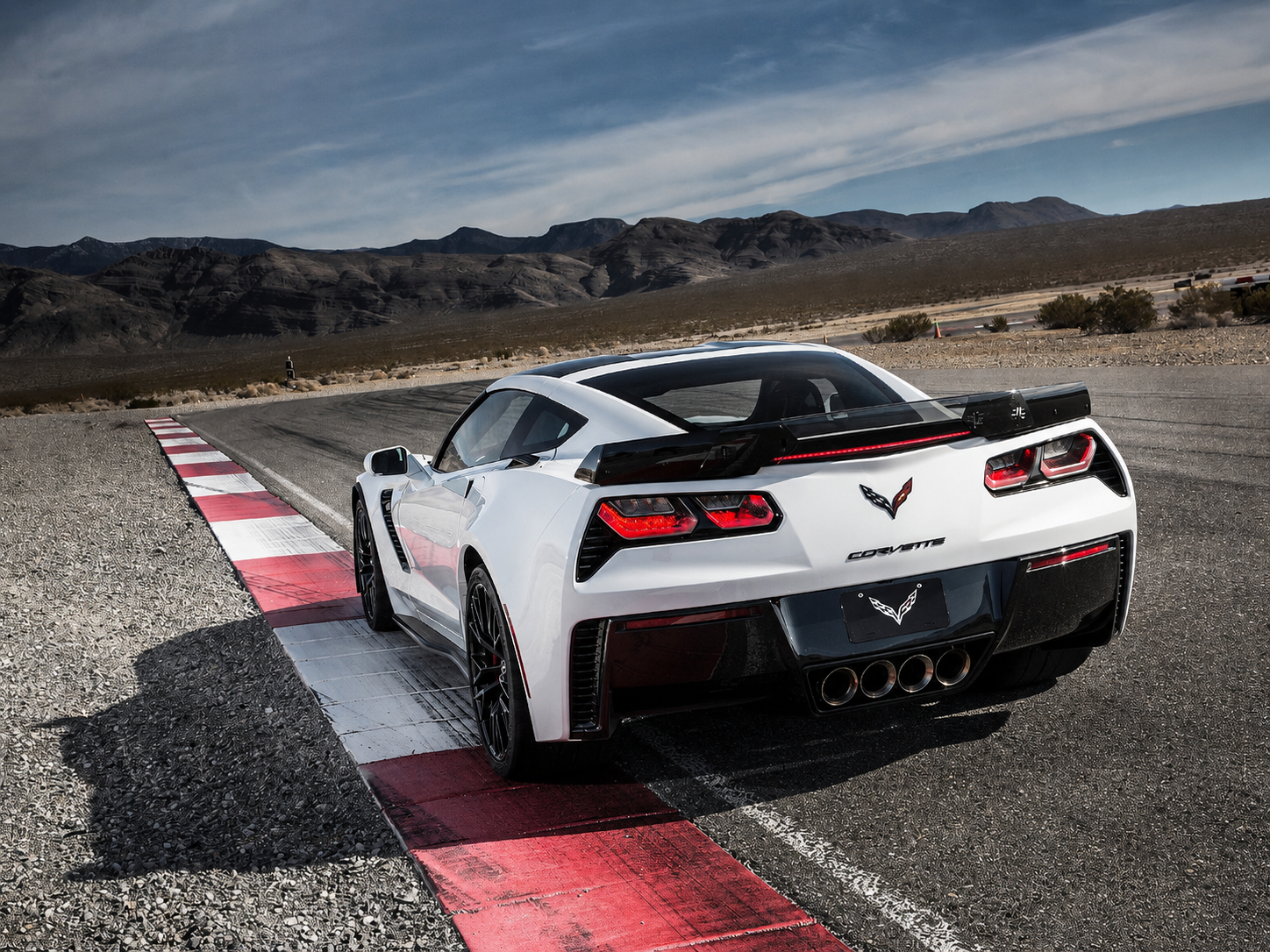
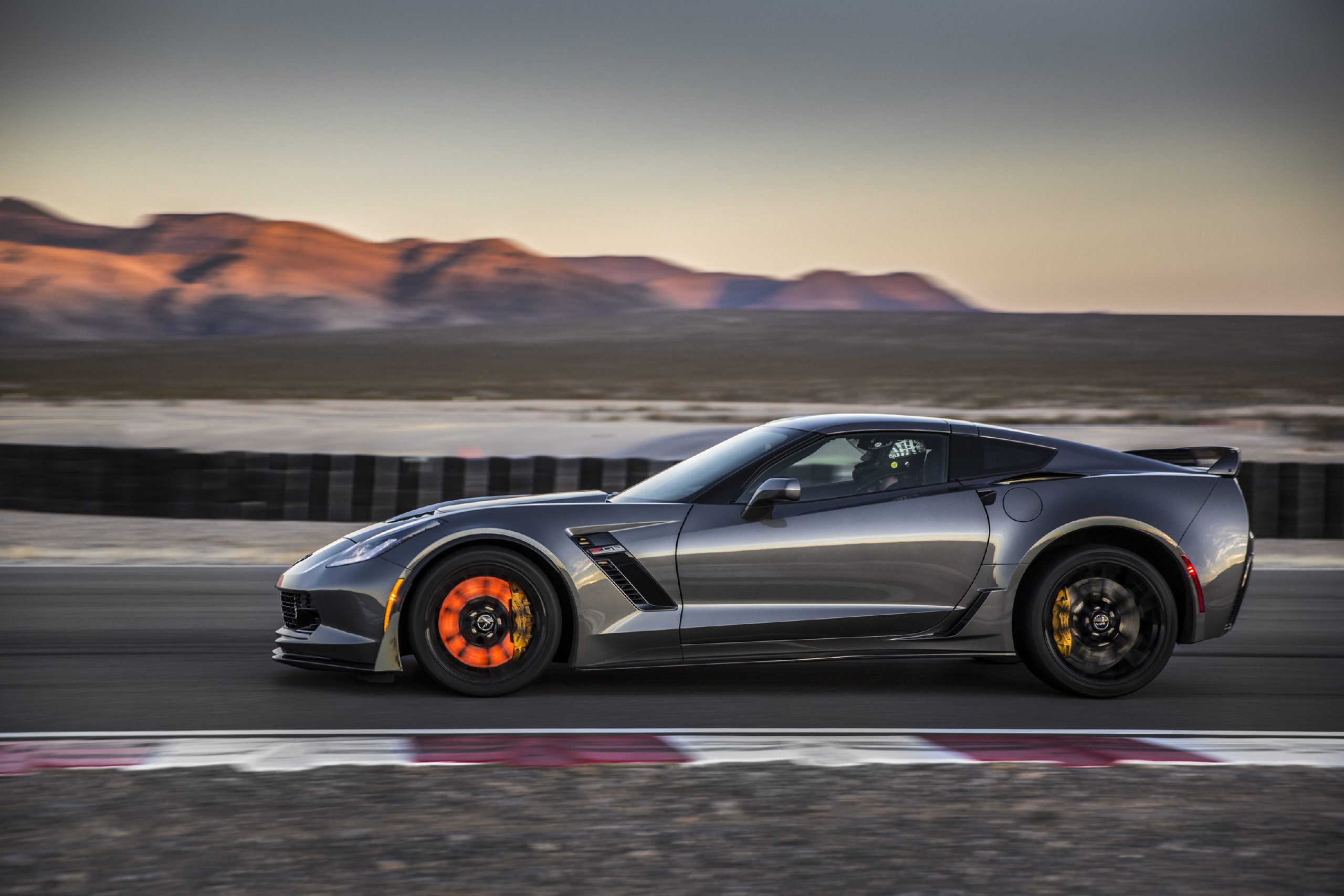
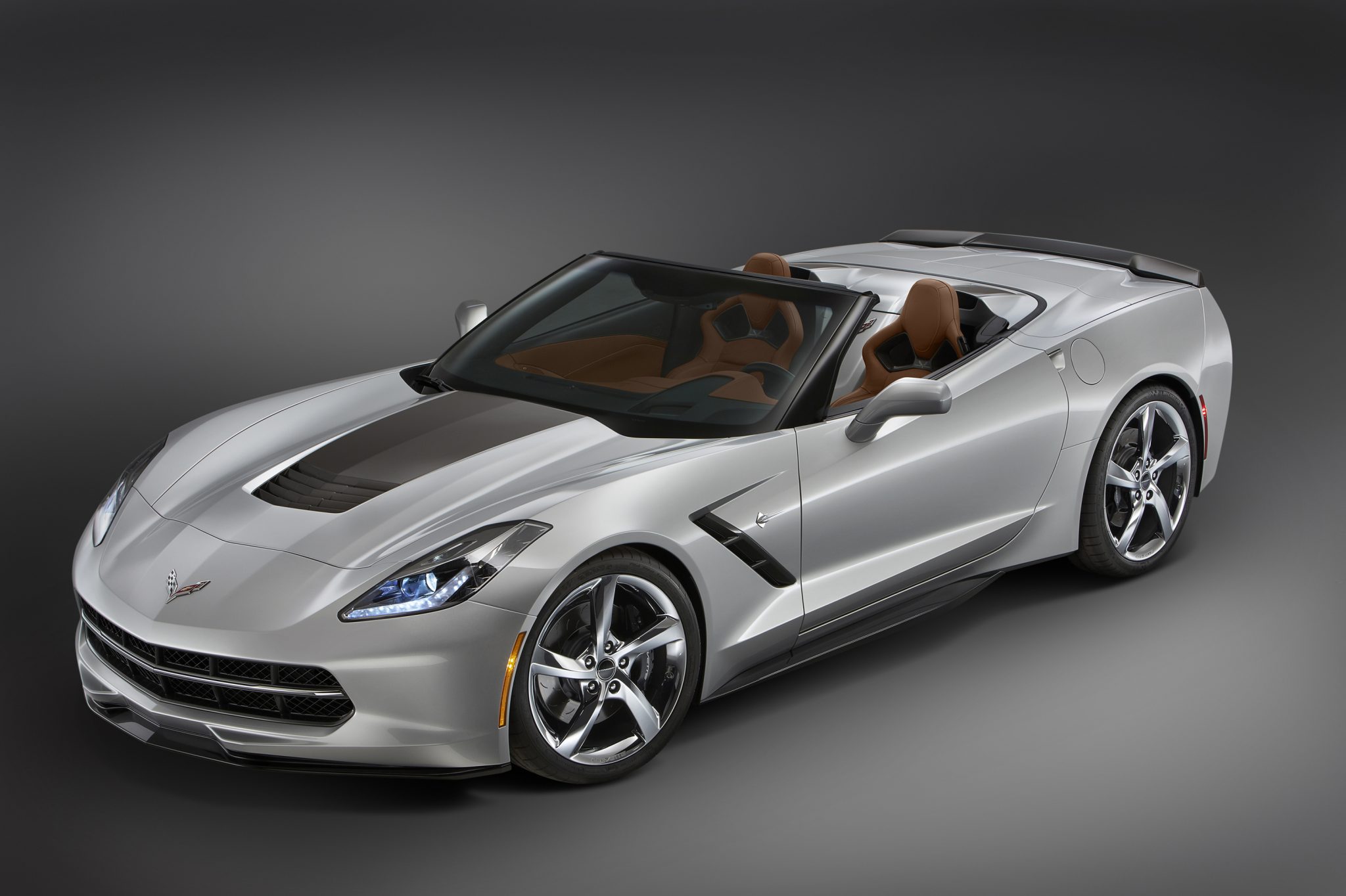
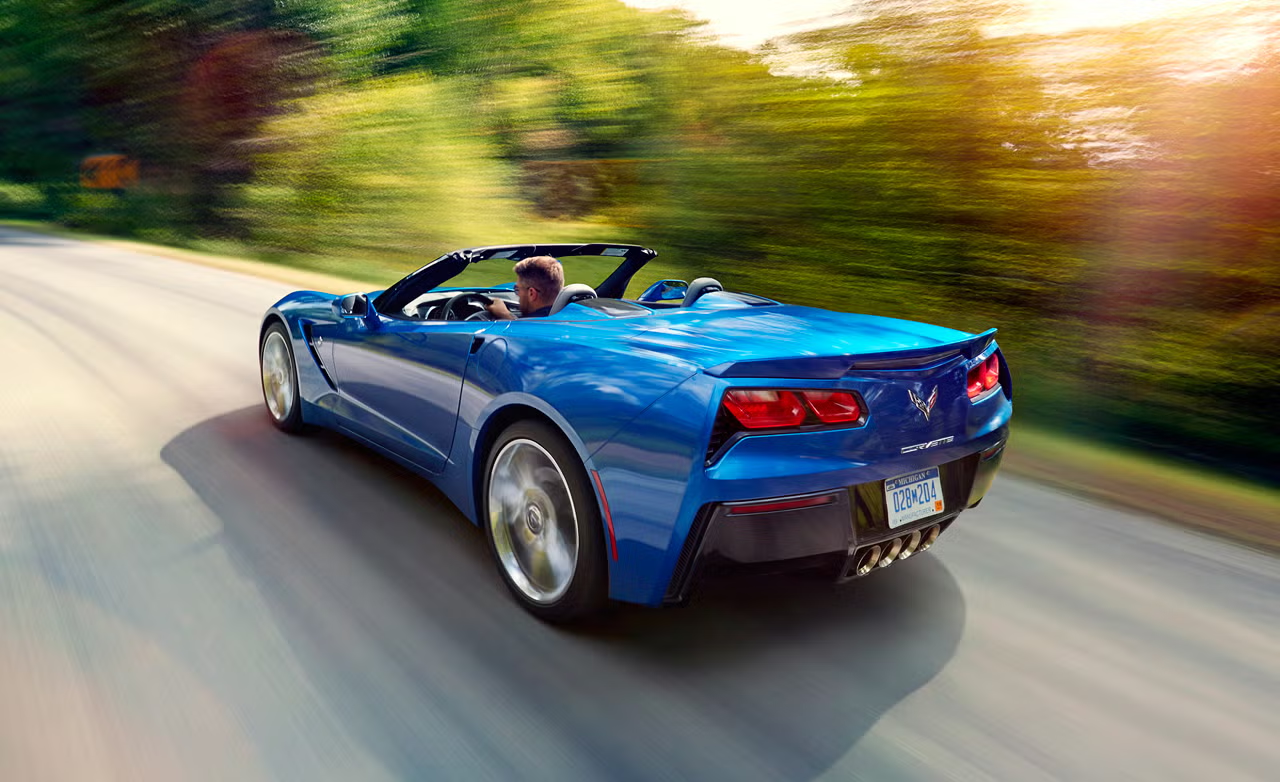
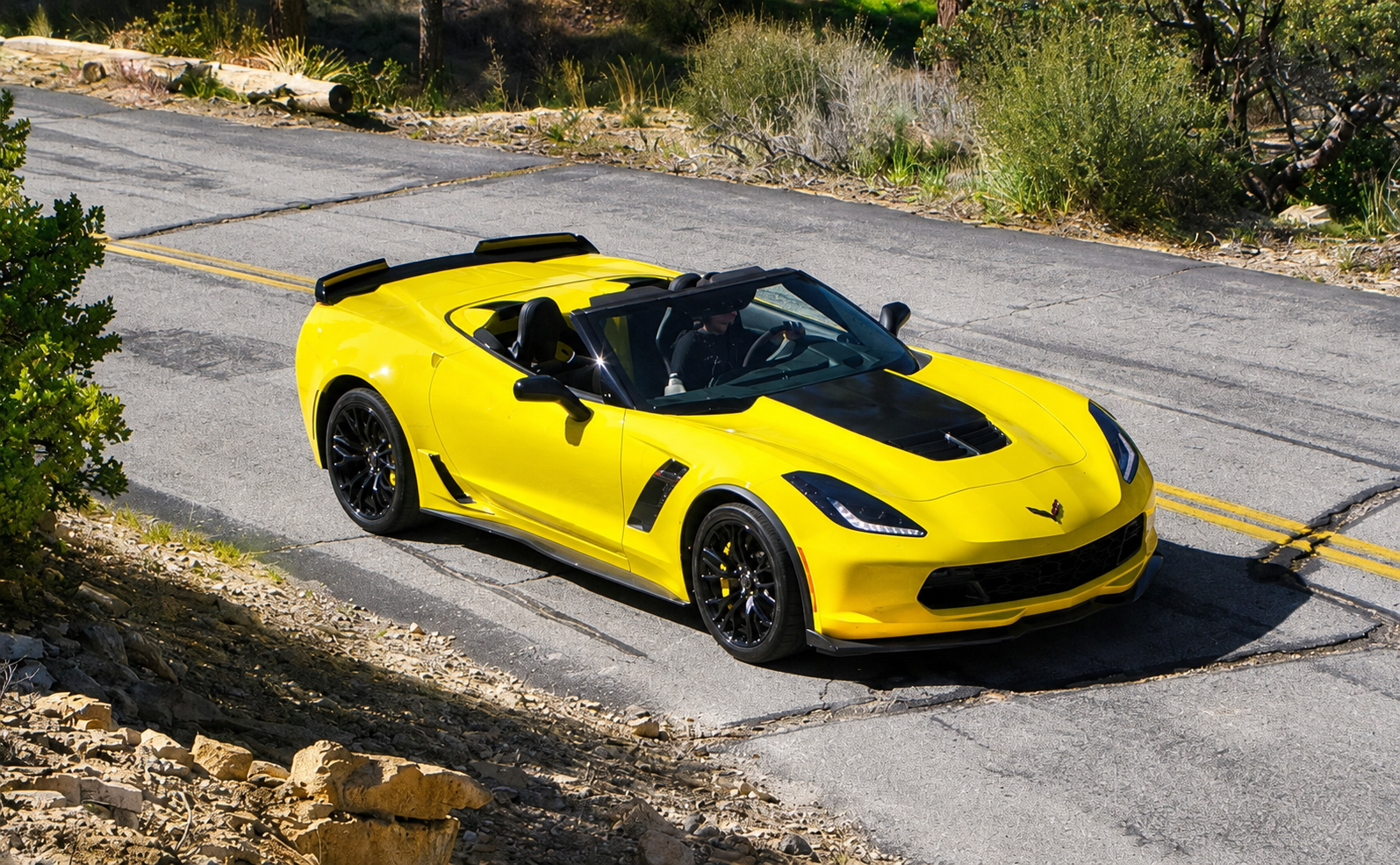
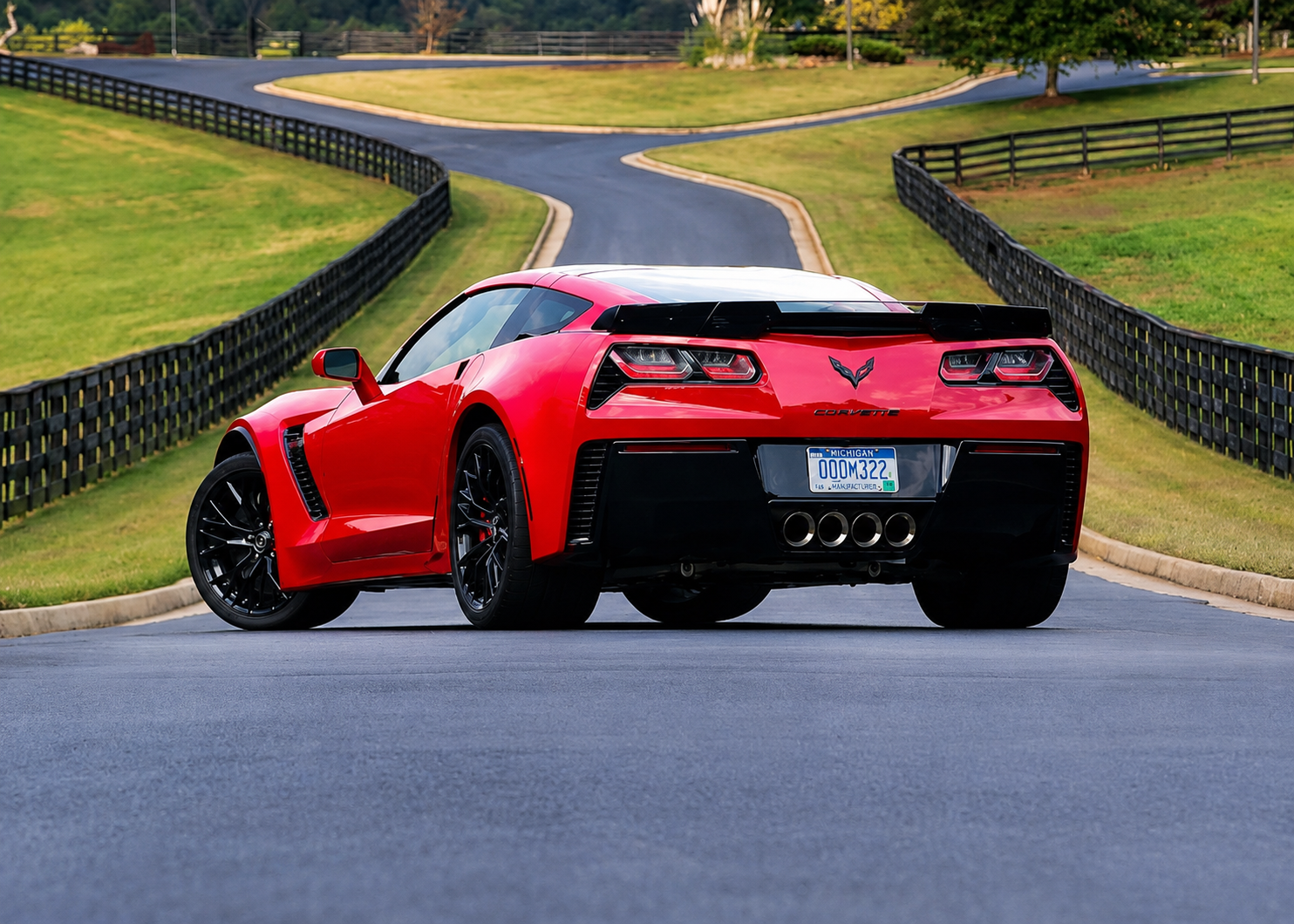
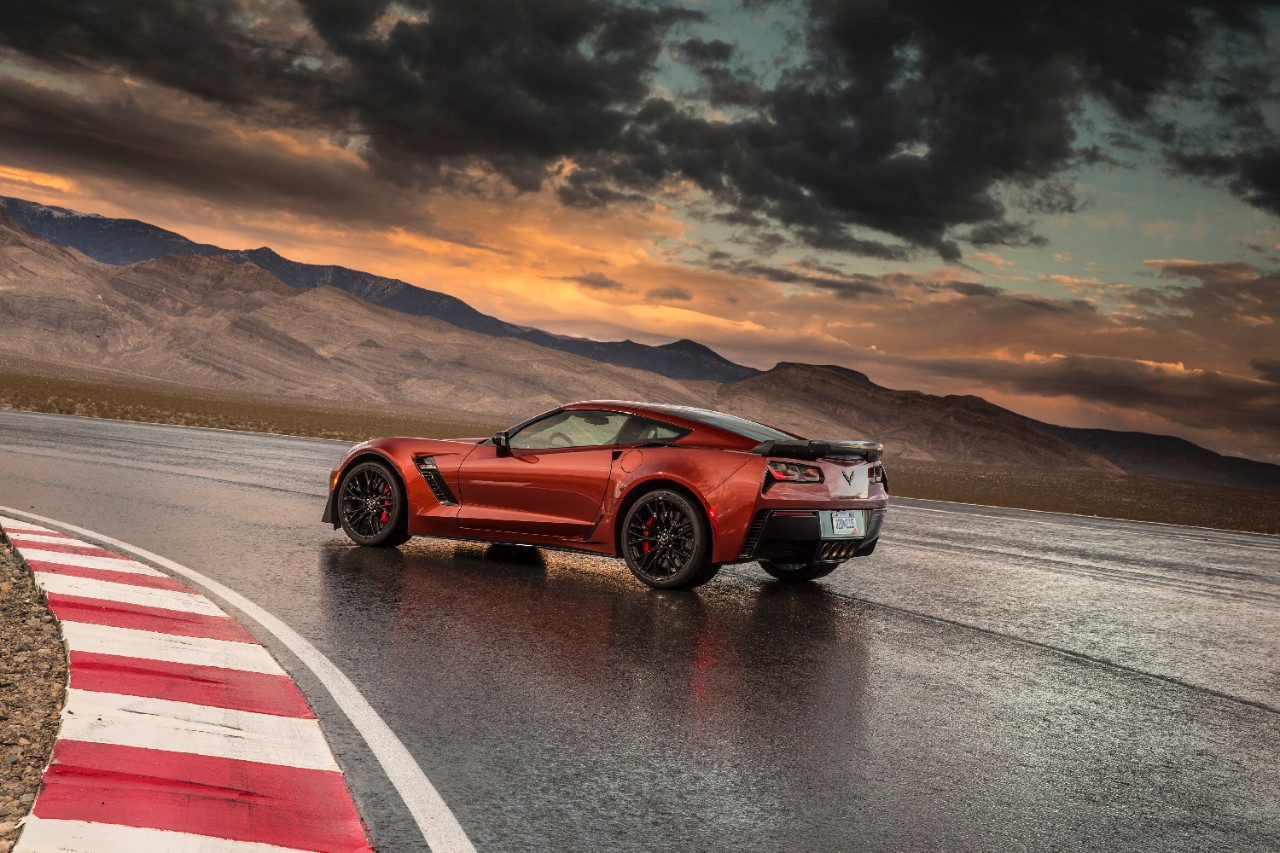
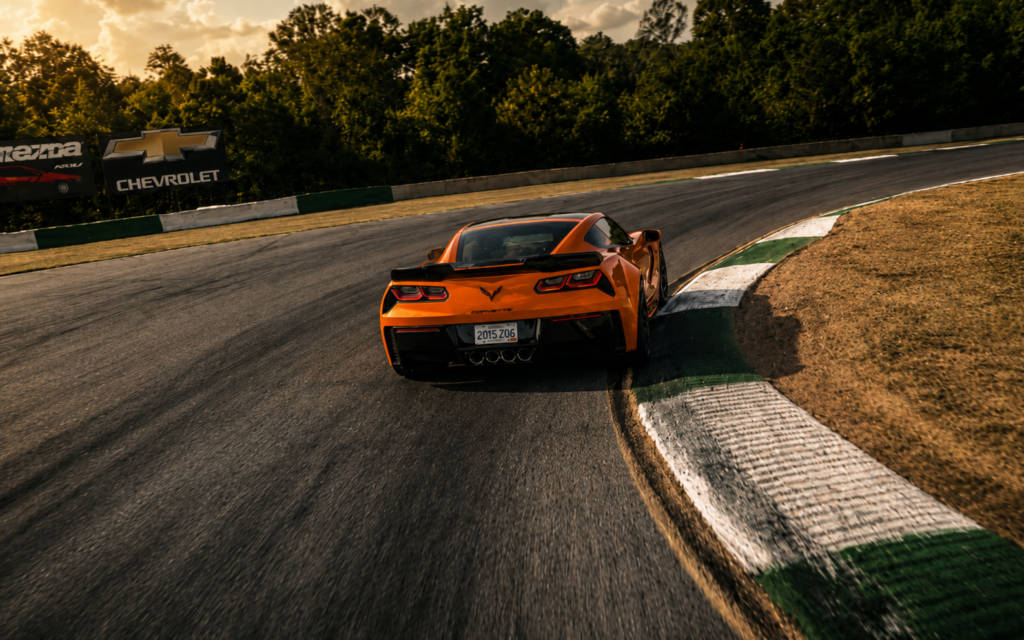
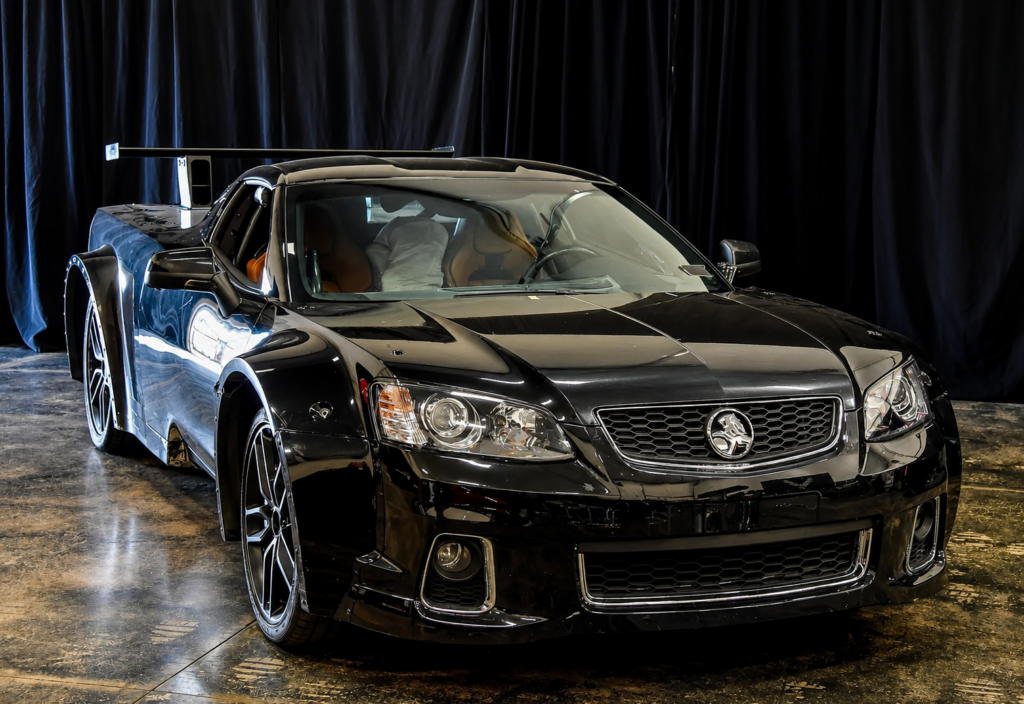
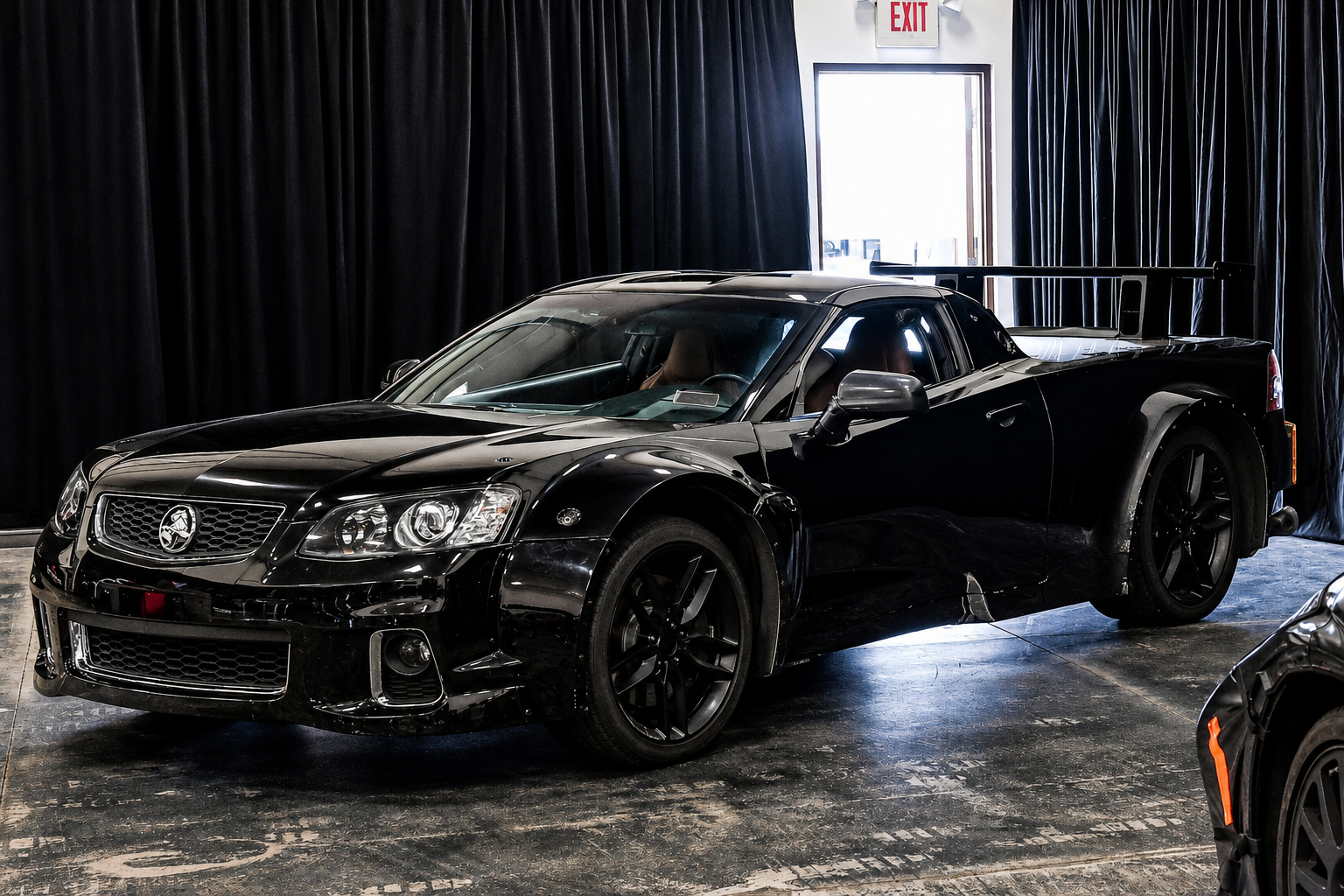
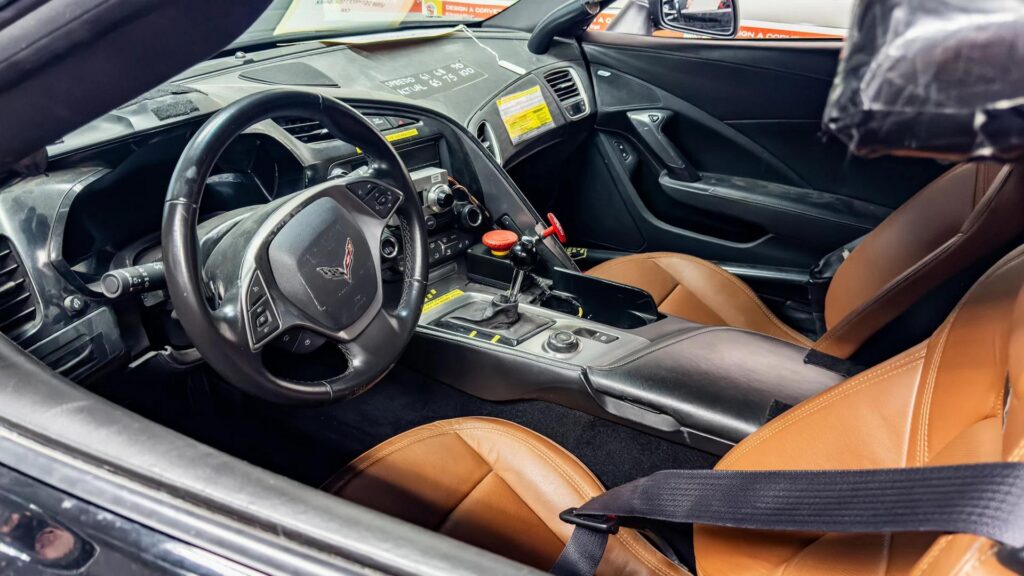
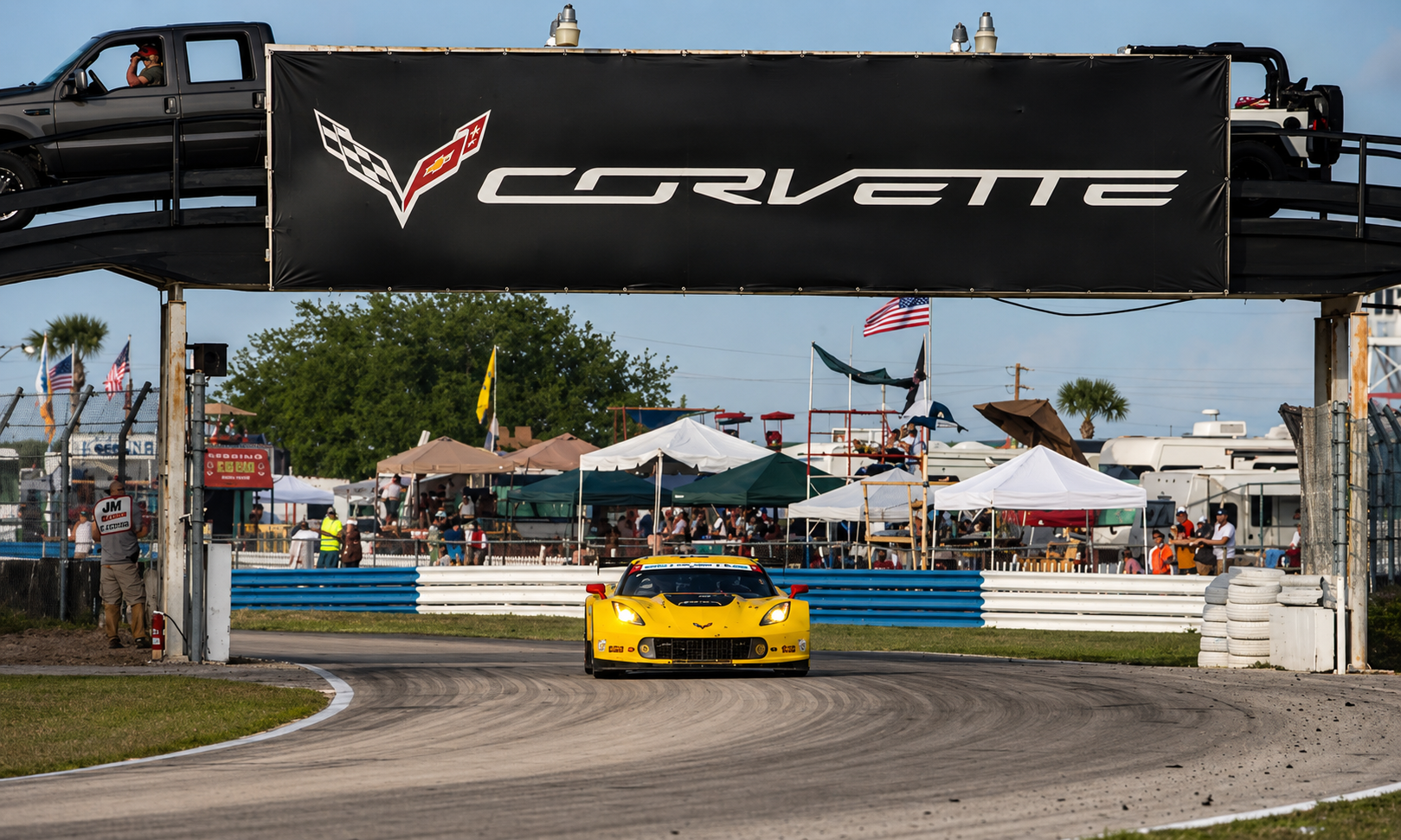
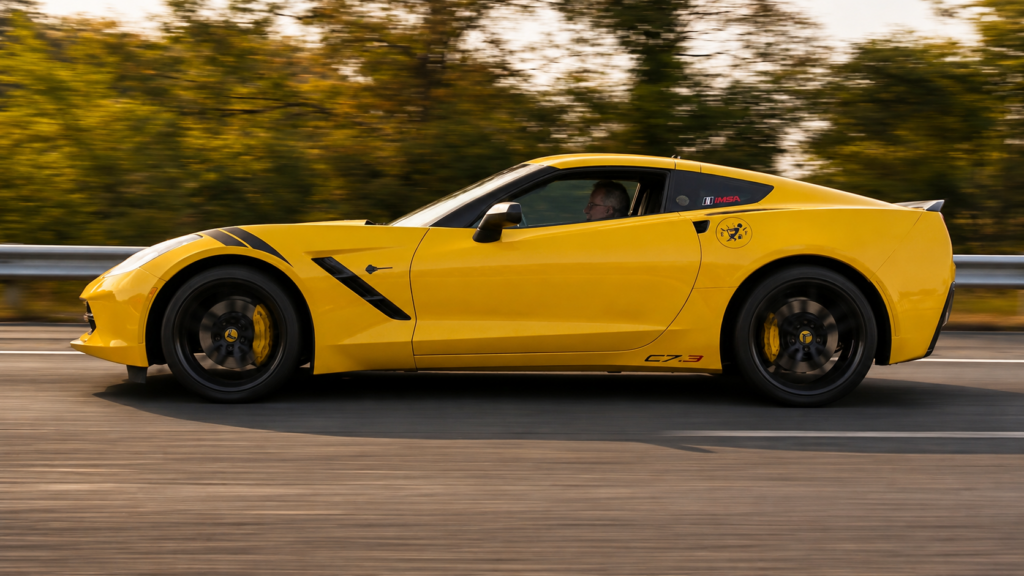
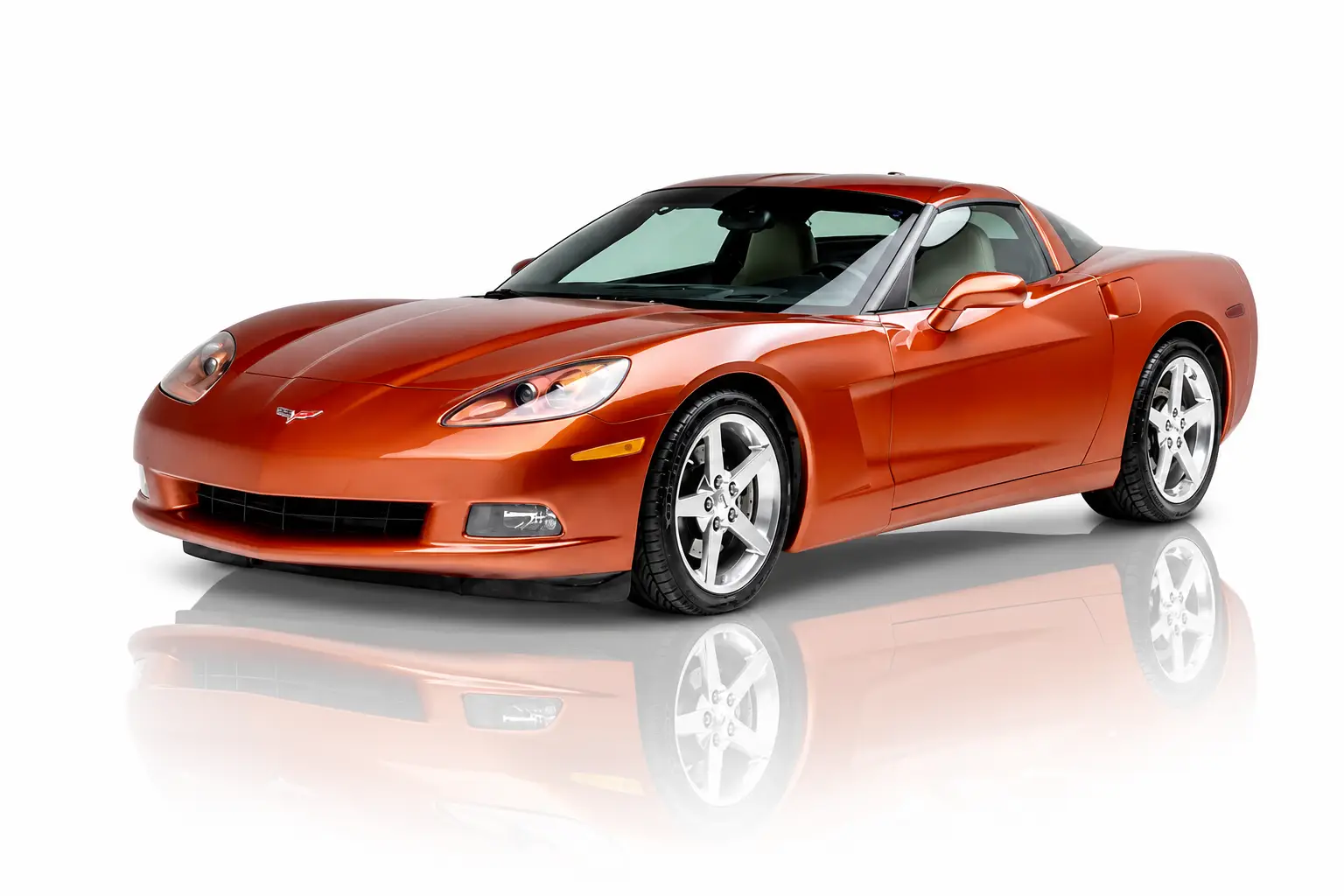
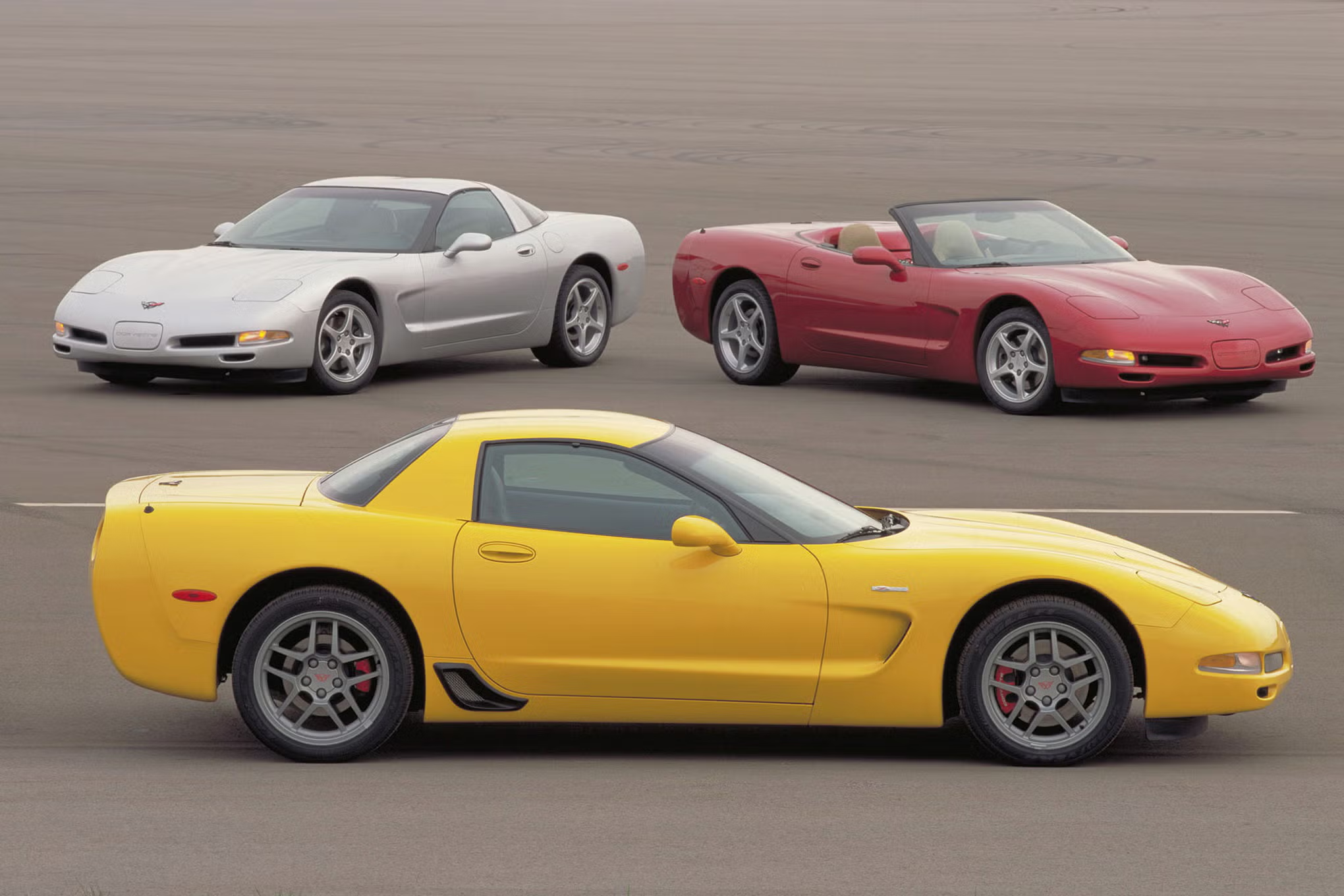
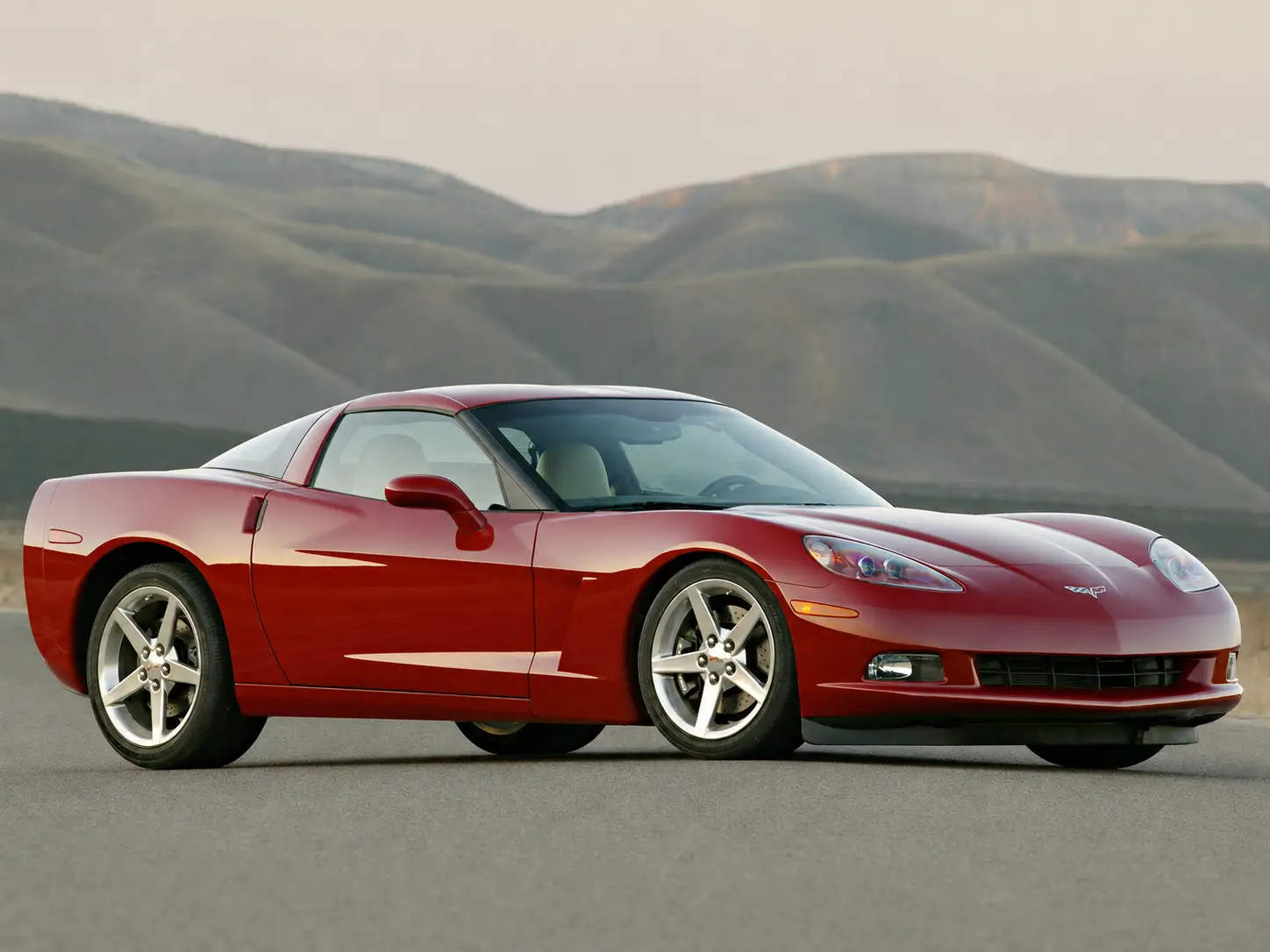
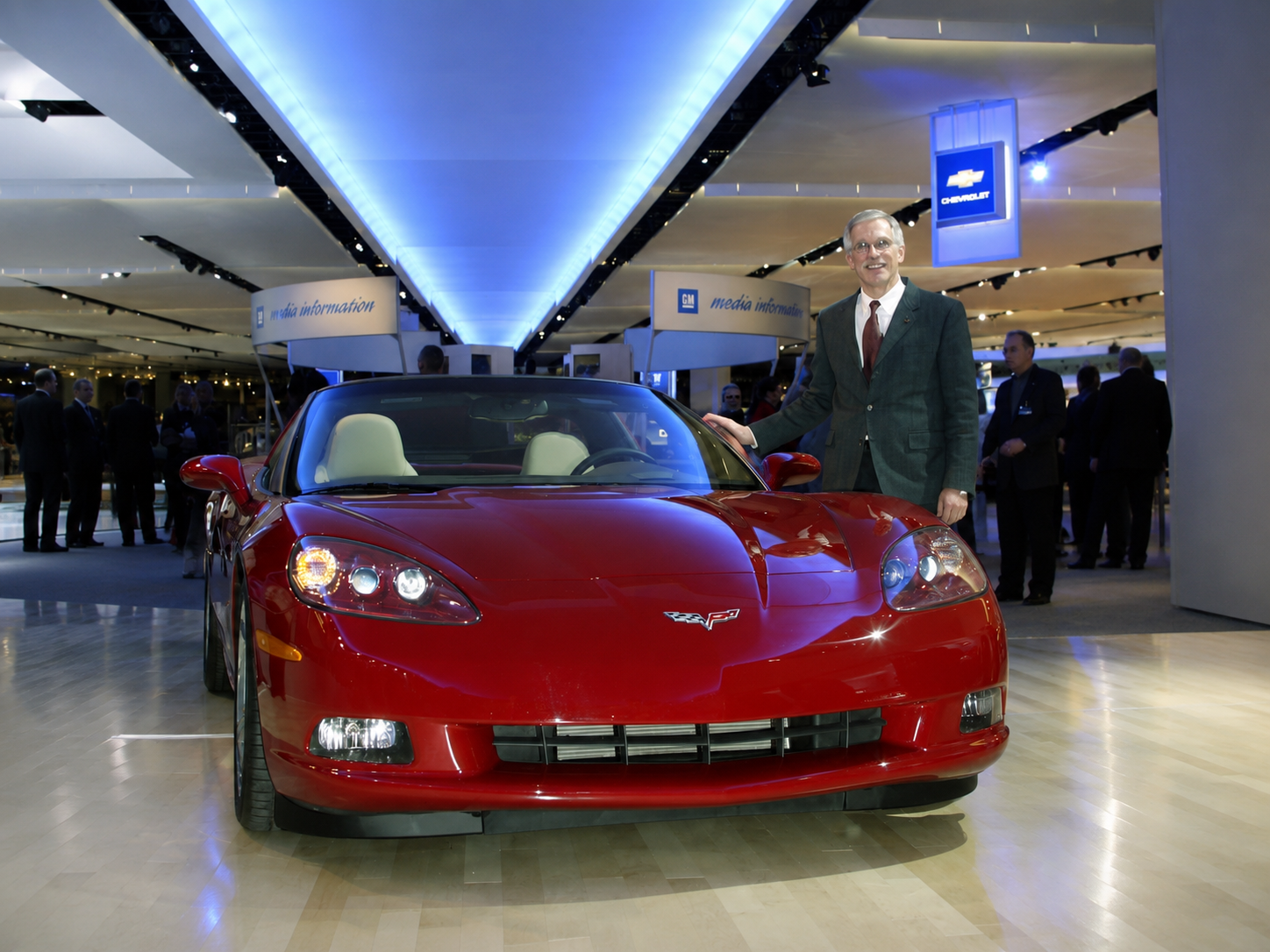
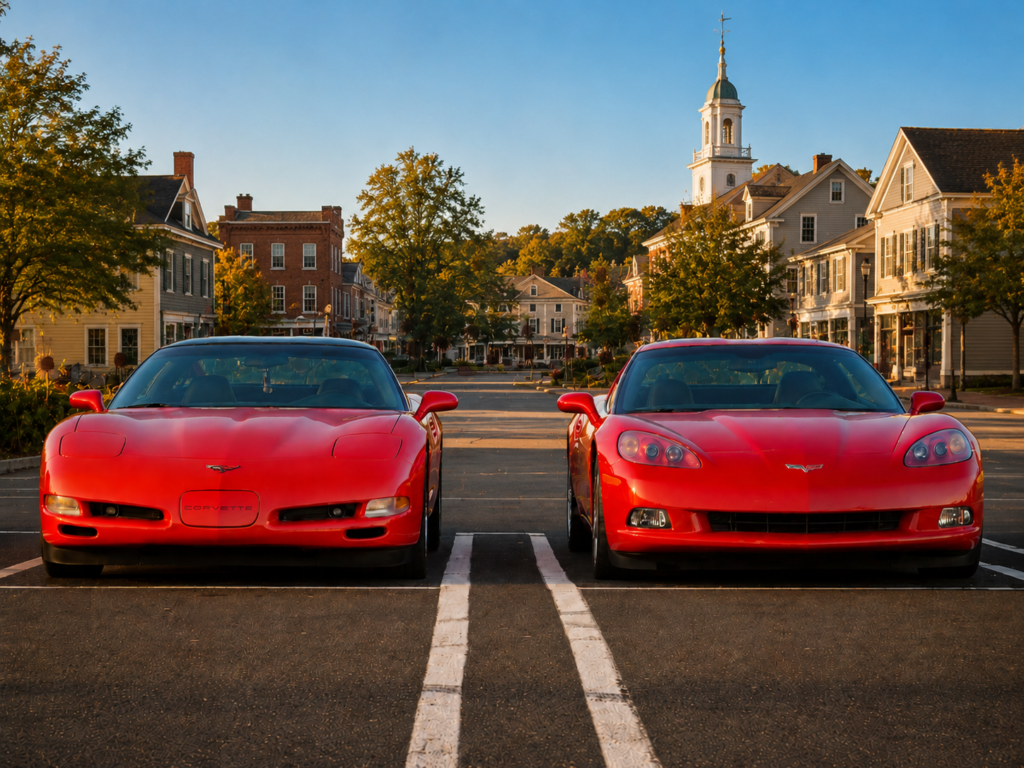
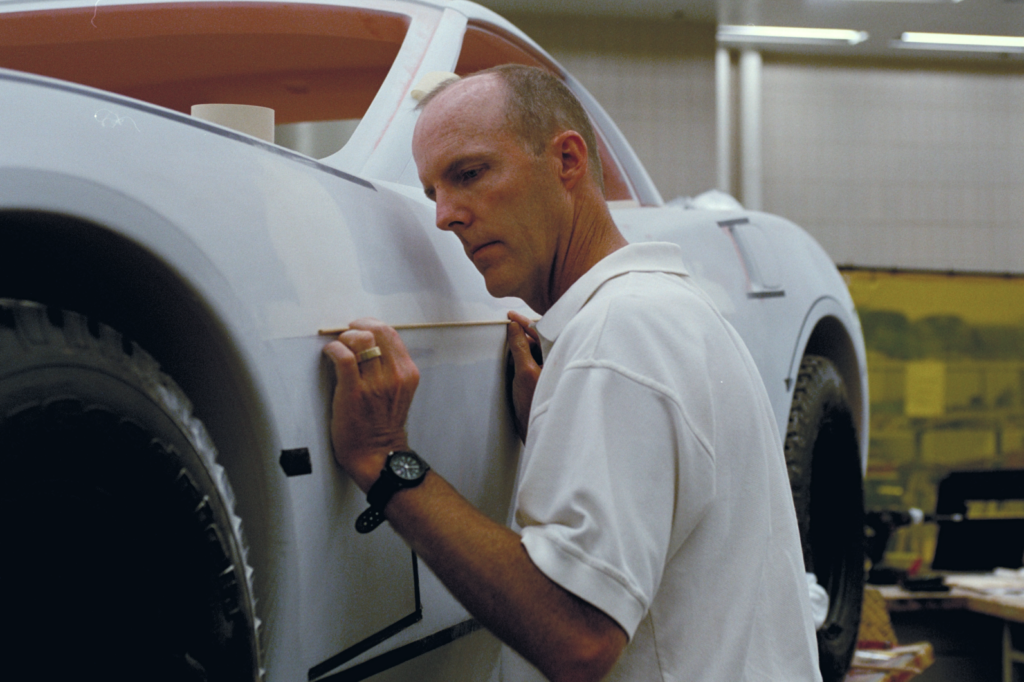
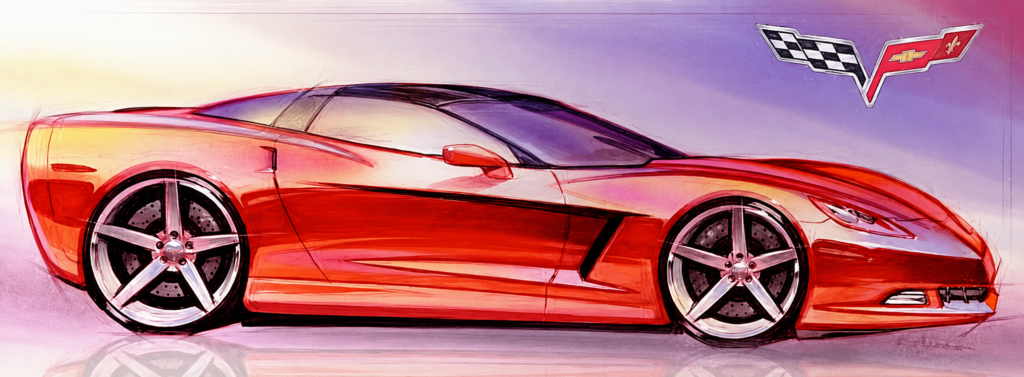
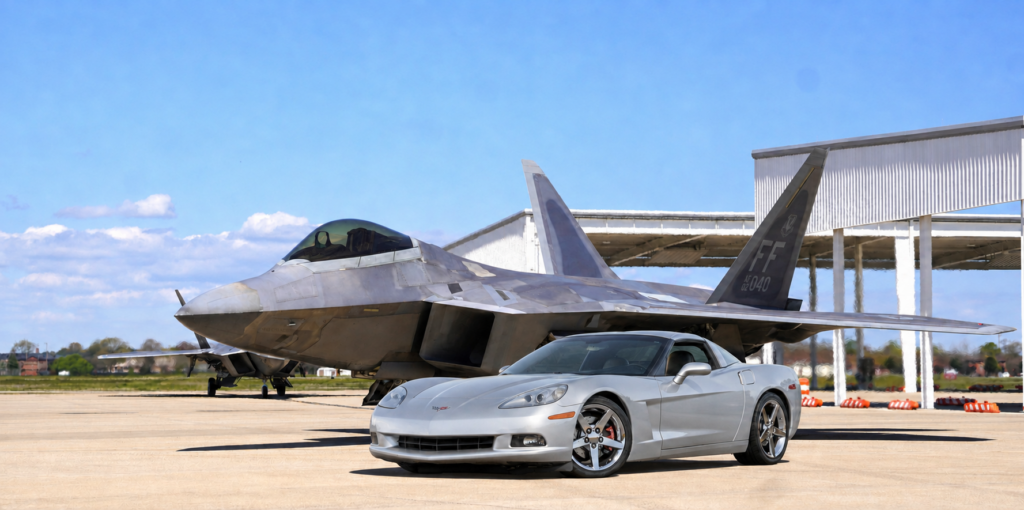
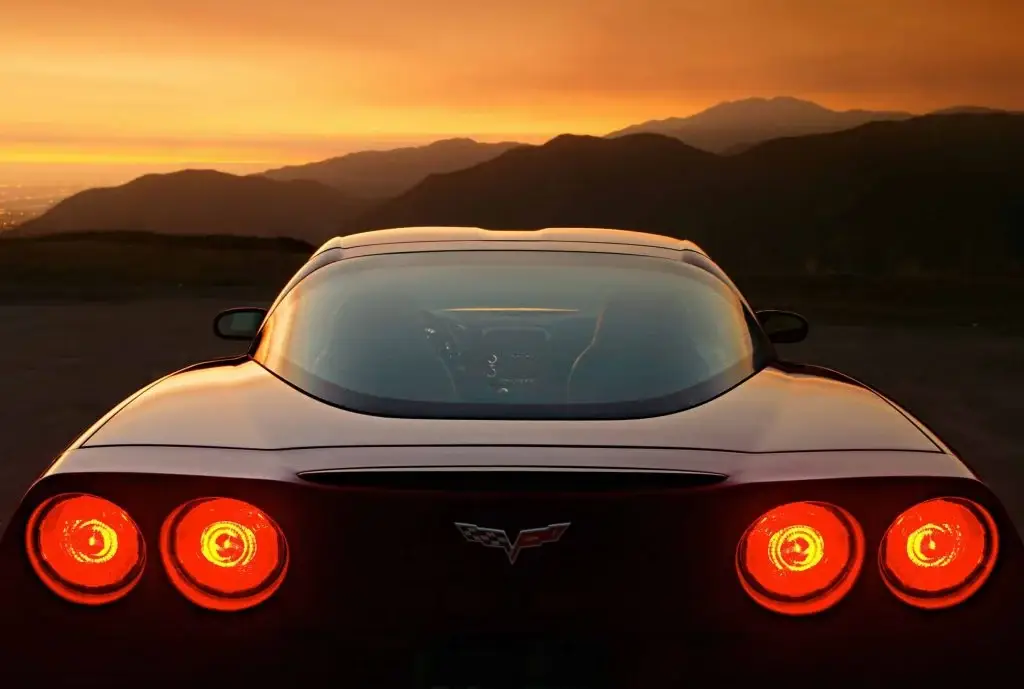
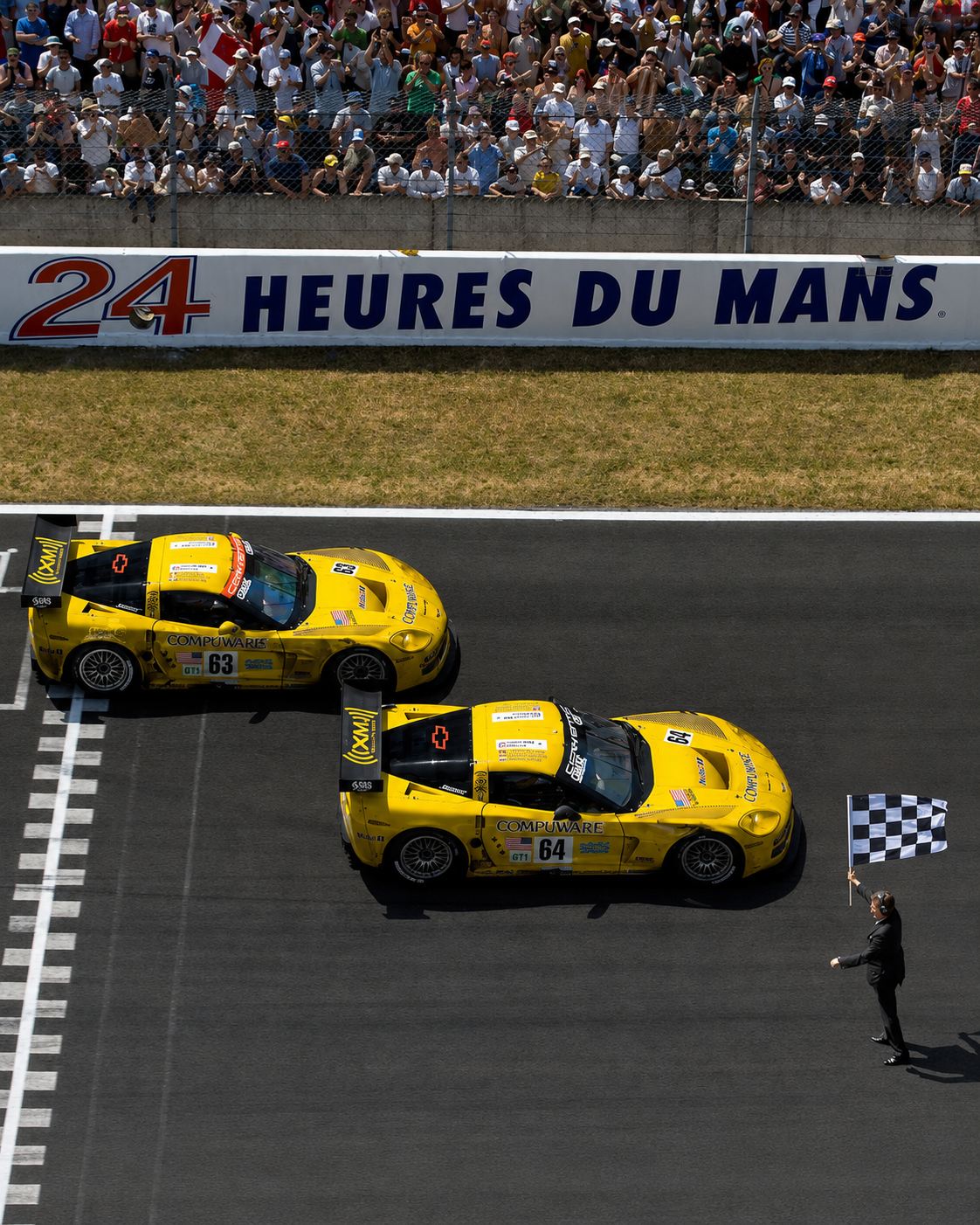
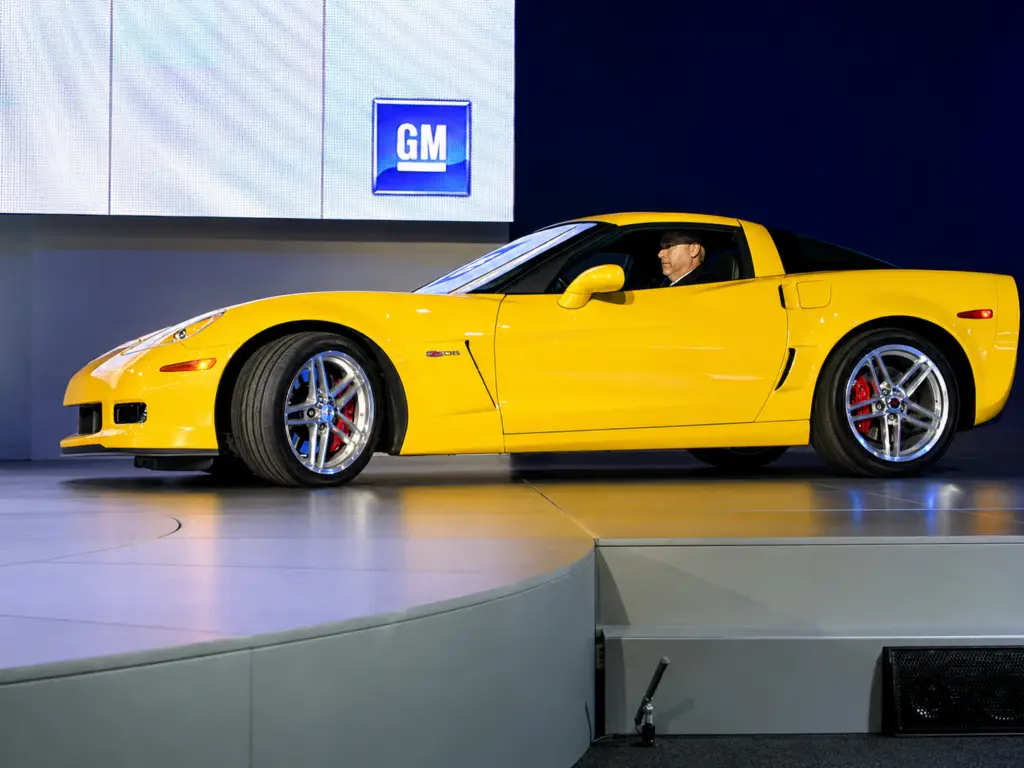
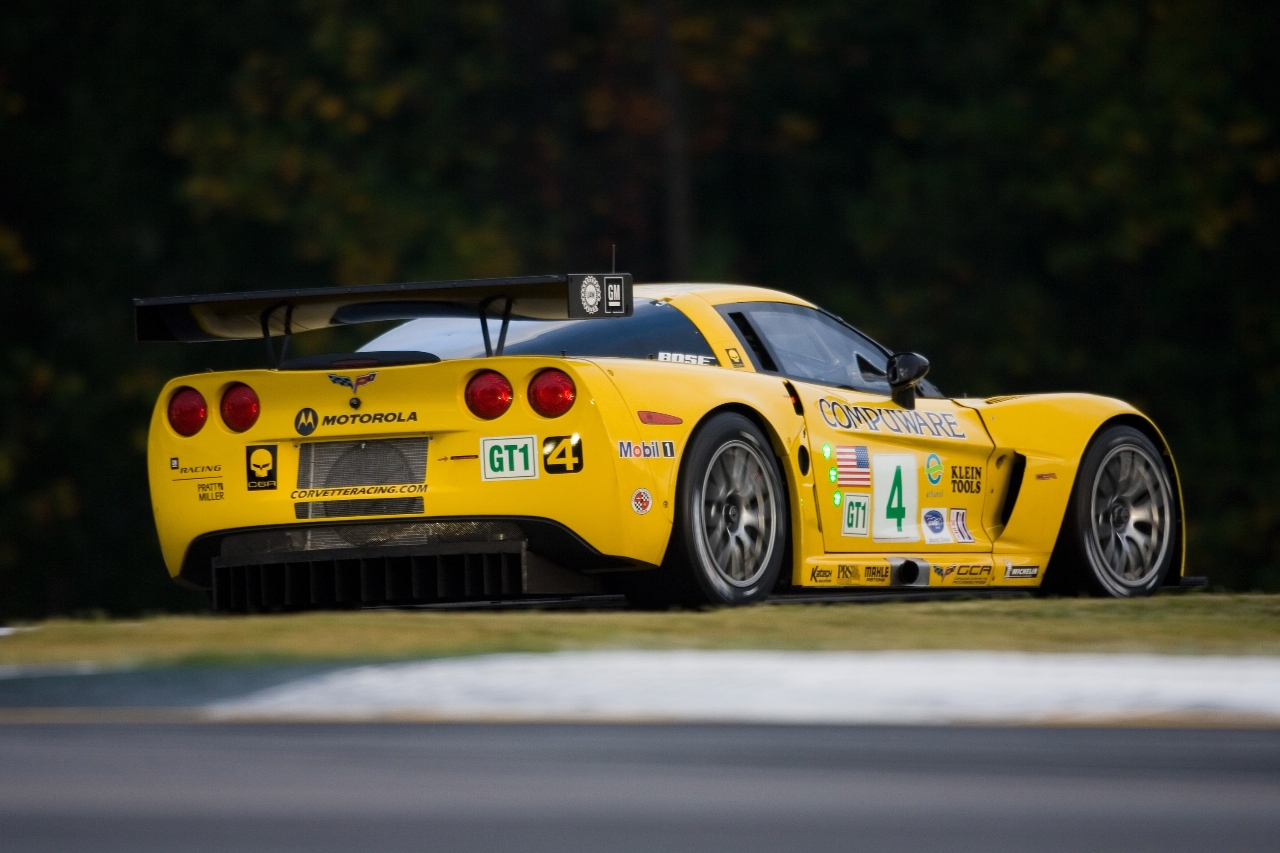
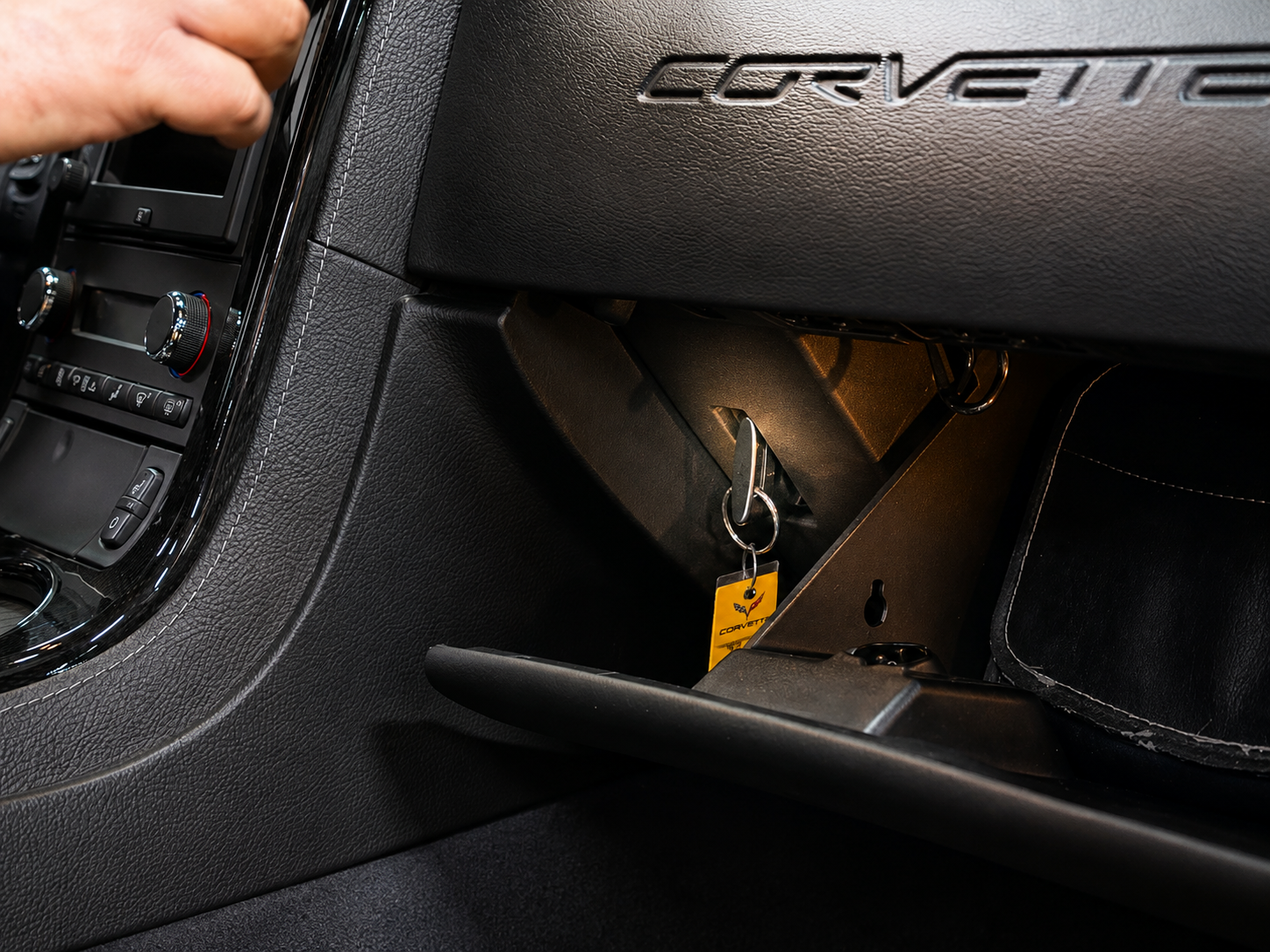
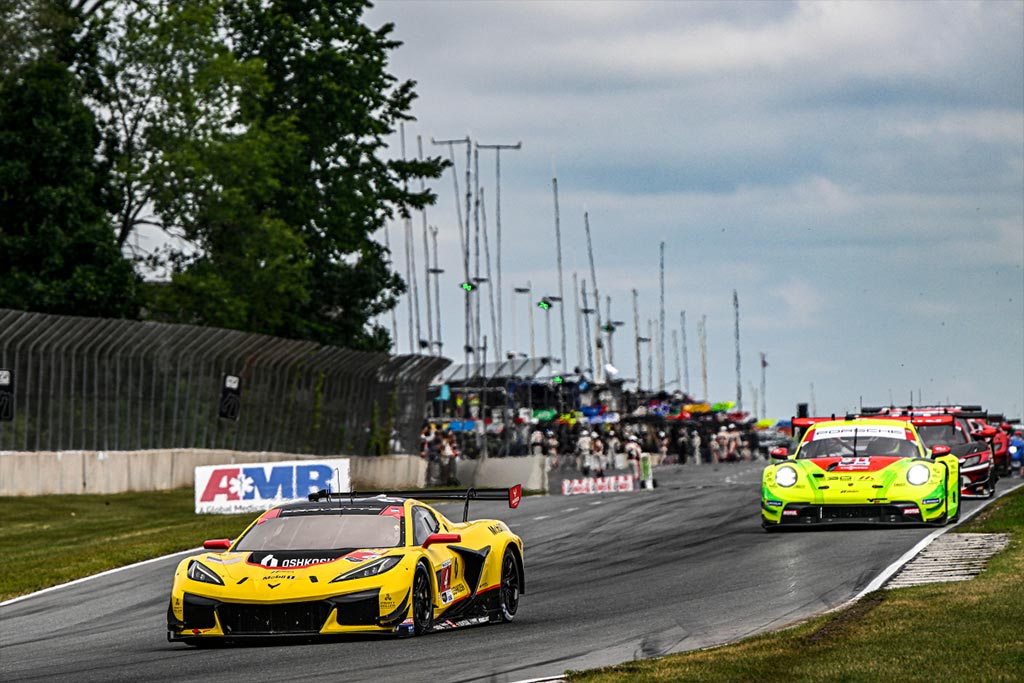
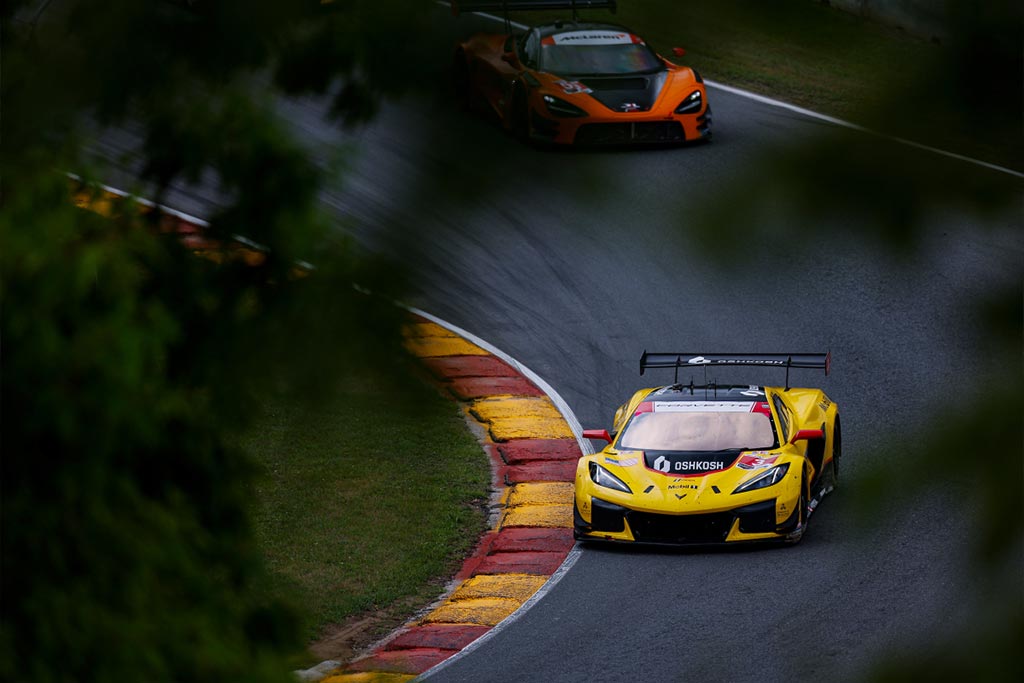
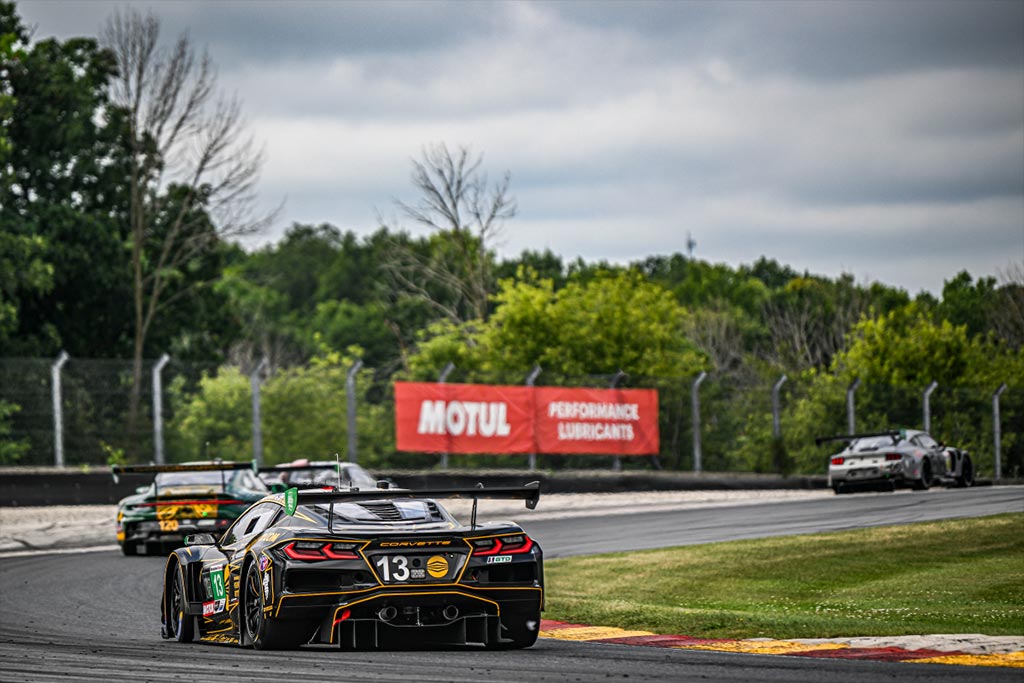
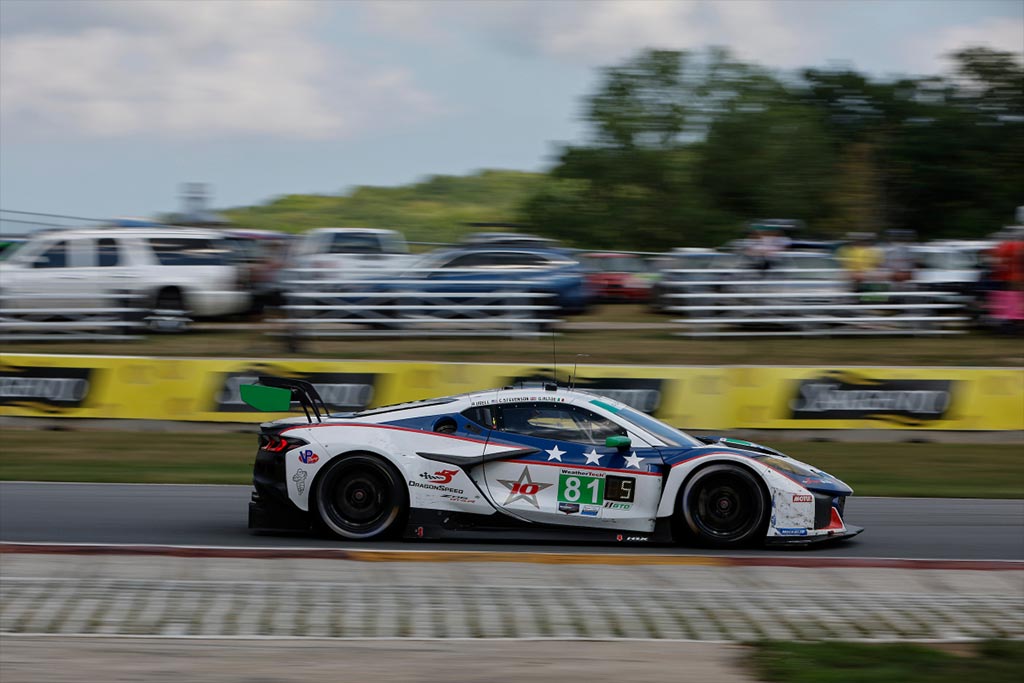
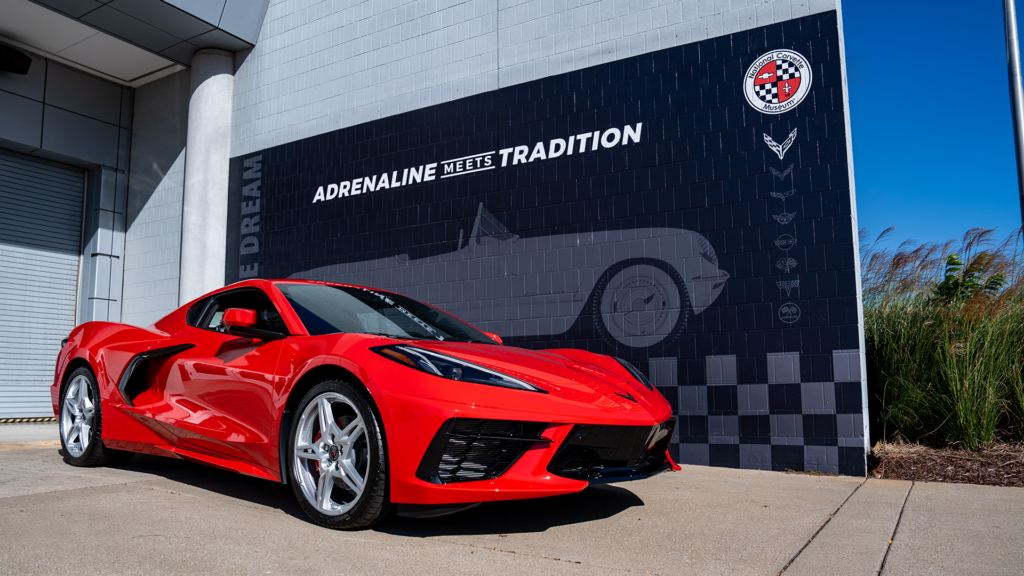
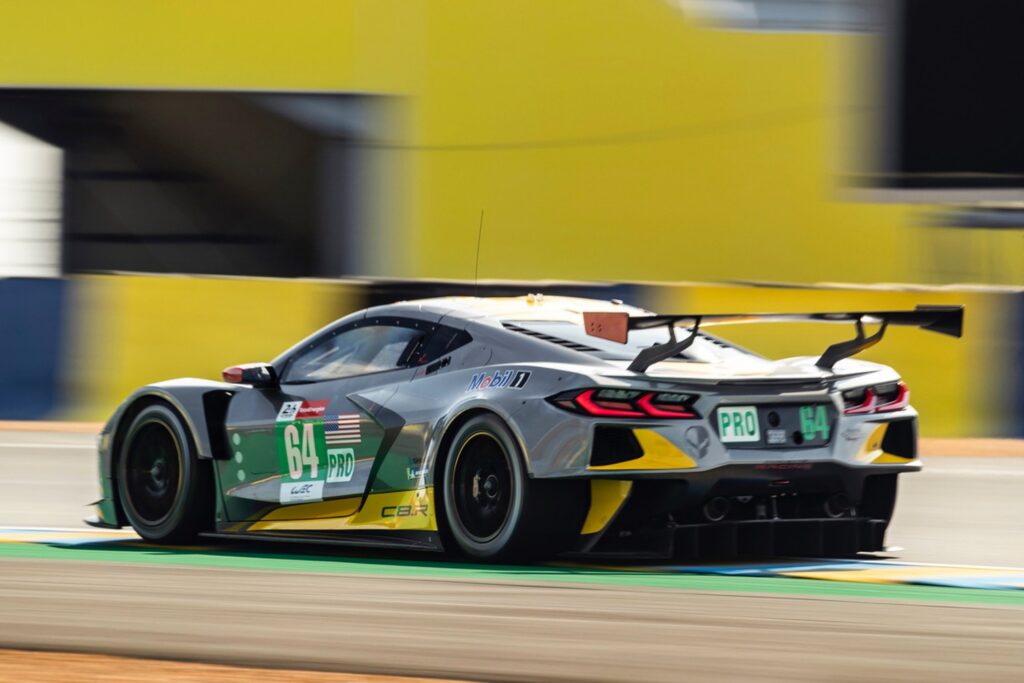
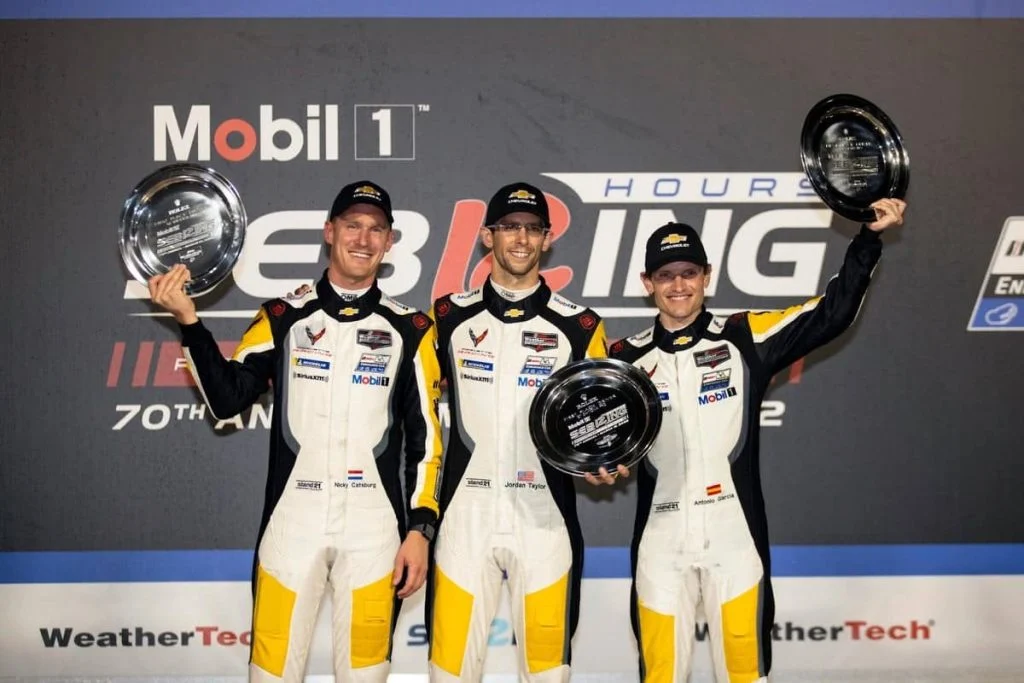
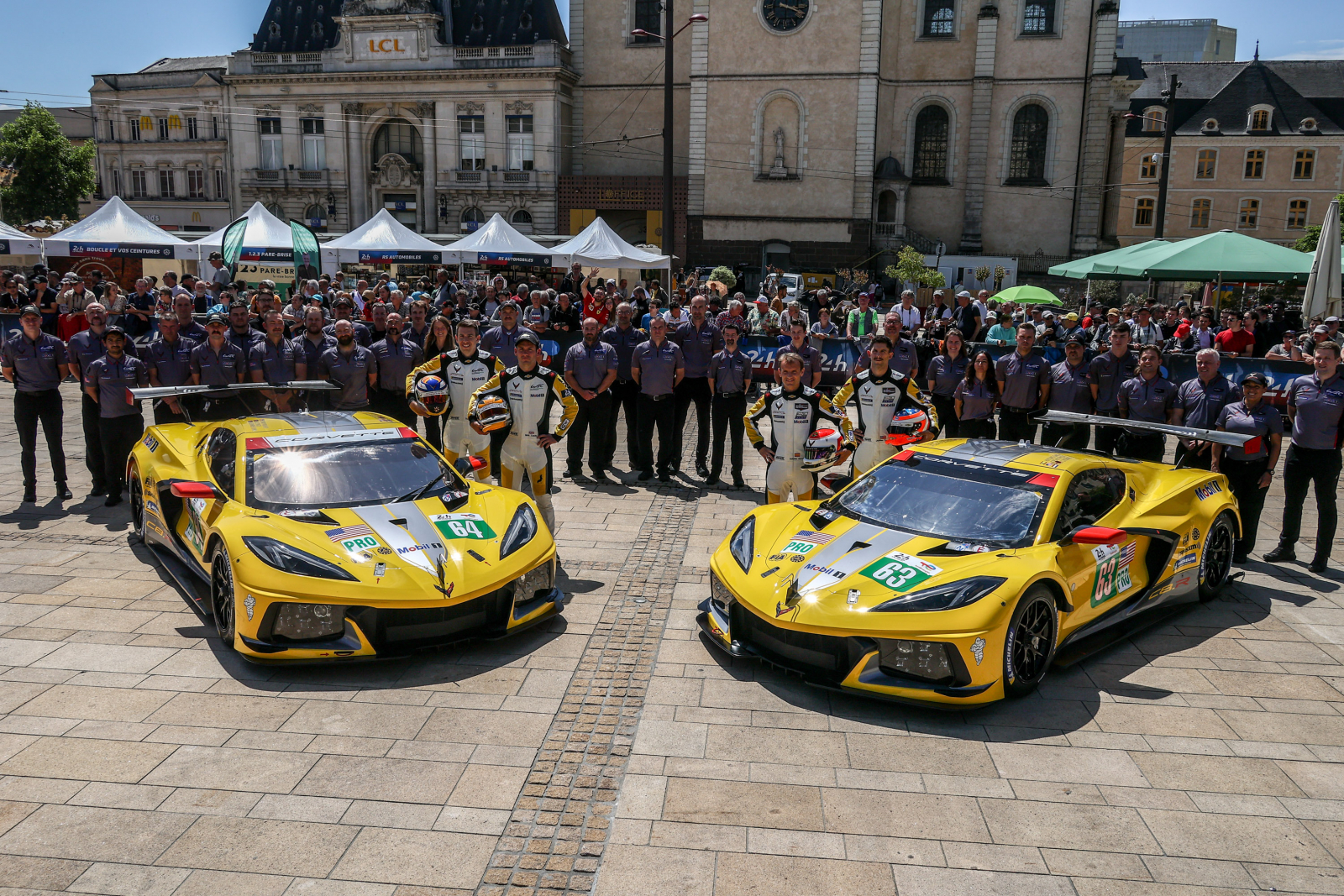
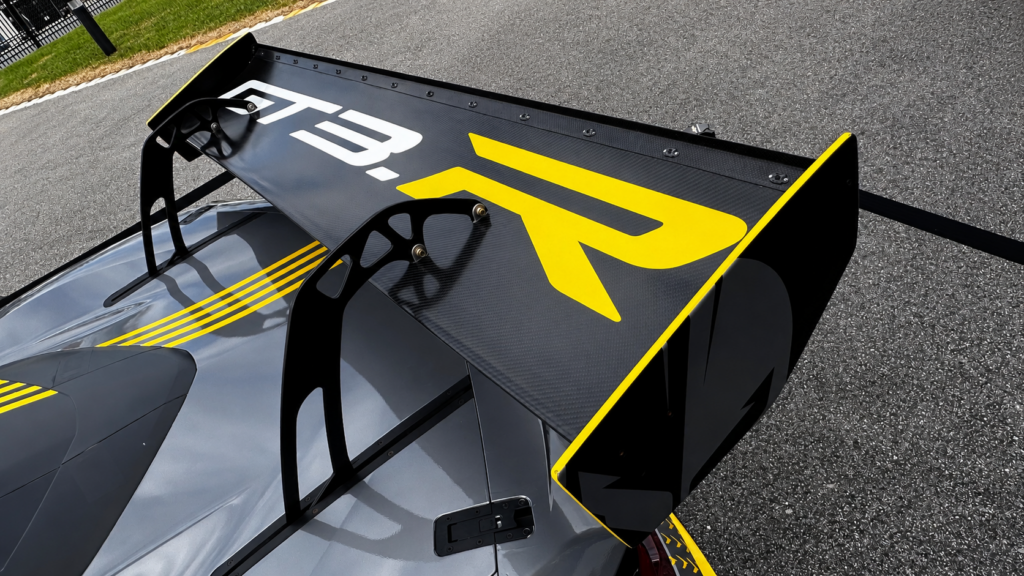
For nearly a quarter century, Corvette Racing operated according to a familiar and enormously successful formula. Chevrolet developed purpose-built racing Corvettes with Pratt Miller Engineering, surrounded those cars with some of the best engineers and drivers in sports-car racing, and then took them to Daytona, Sebring, Le Mans and virtually every other important endurance venue on the planet. The C5-R, C6.R, C7.R and eventually the mid-engine C8.R accumulated victories, championships and class wins while establishing Corvette as one of the most successful and recognizable names in modern GT racing.
The Corvette Z06 GT3.R represented something fundamentally different. Instead of building a racing Corvette primarily around Chevrolet’s own factory effort, the new program was conceived from the outset as a true customer-racing platform—one that could be purchased, campaigned and supported by independent teams anywhere in the world. It was Corvette’s entrance into the global GT3 marketplace and, perhaps more significantly, the beginning of a customer-racing program unlike anything Chevrolet had previously attempted with the modern Corvette.
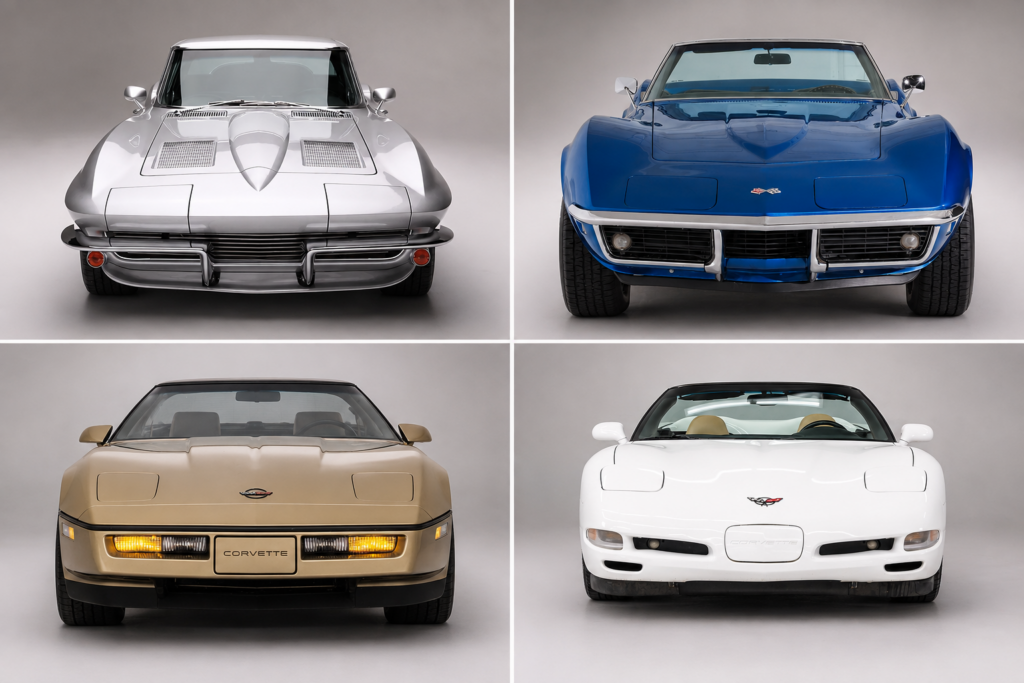
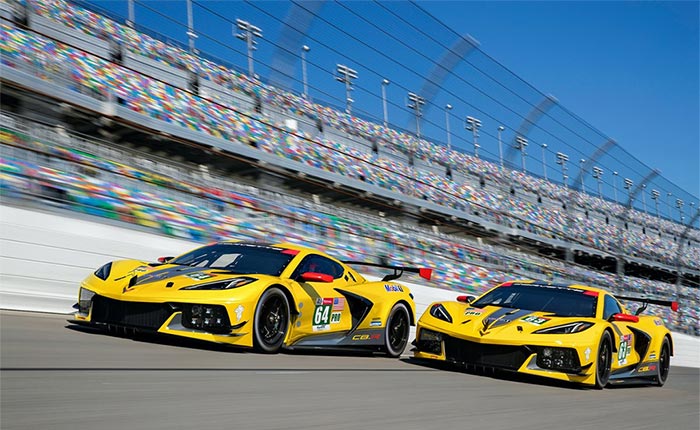
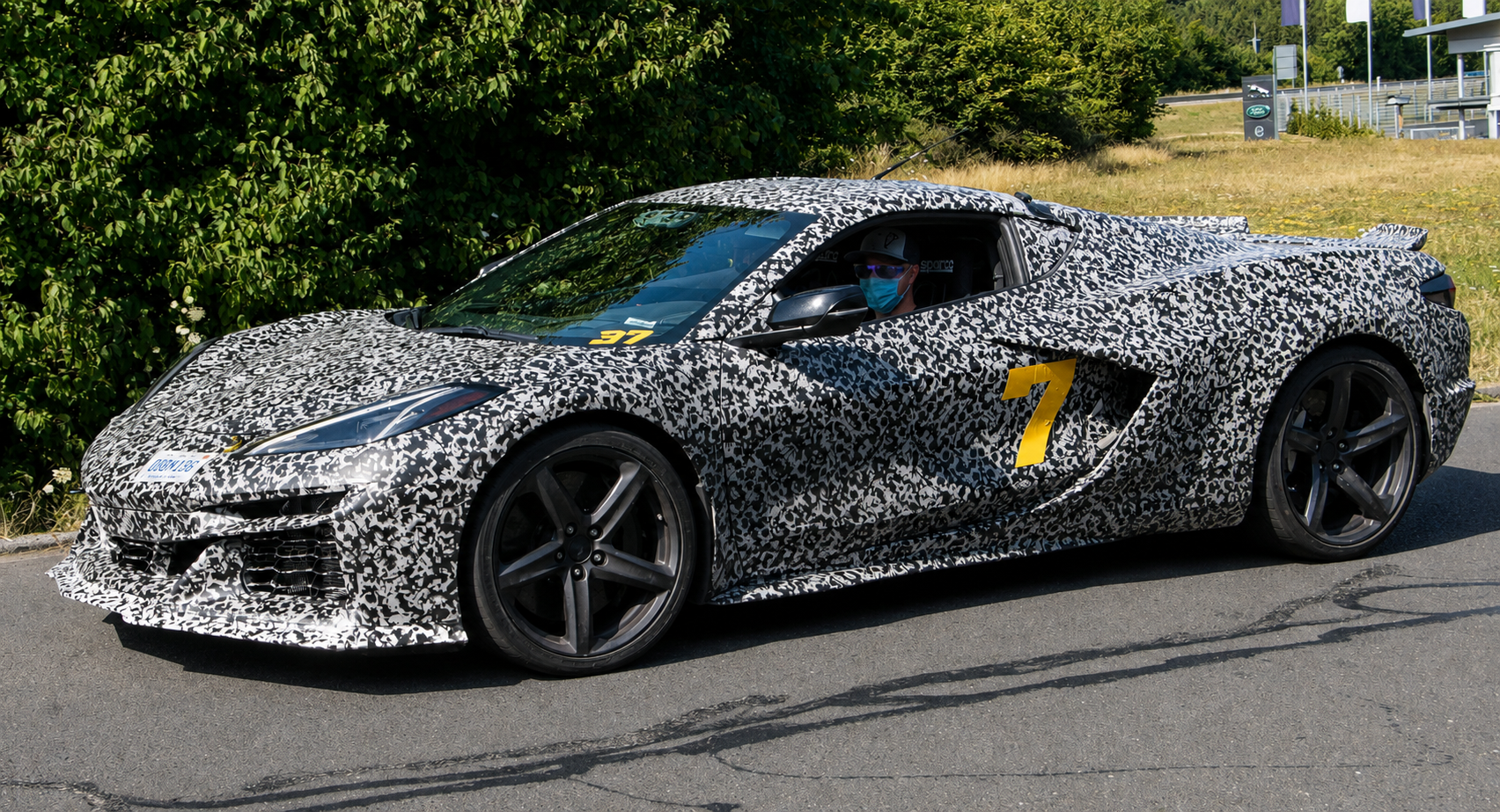
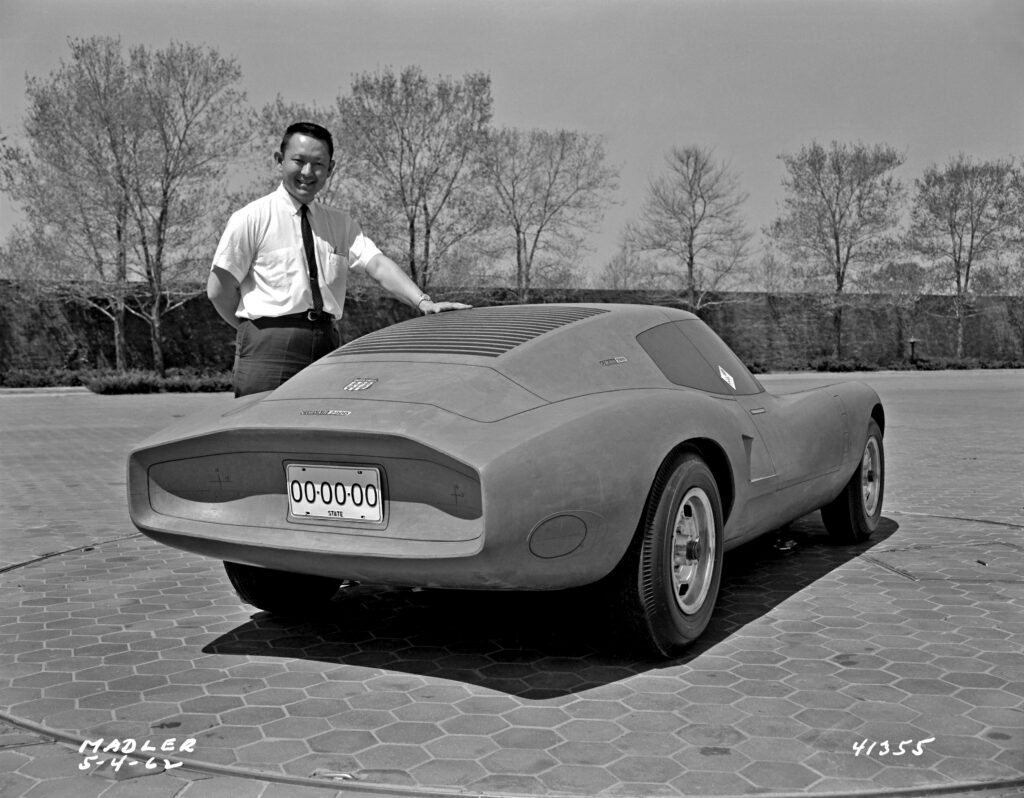
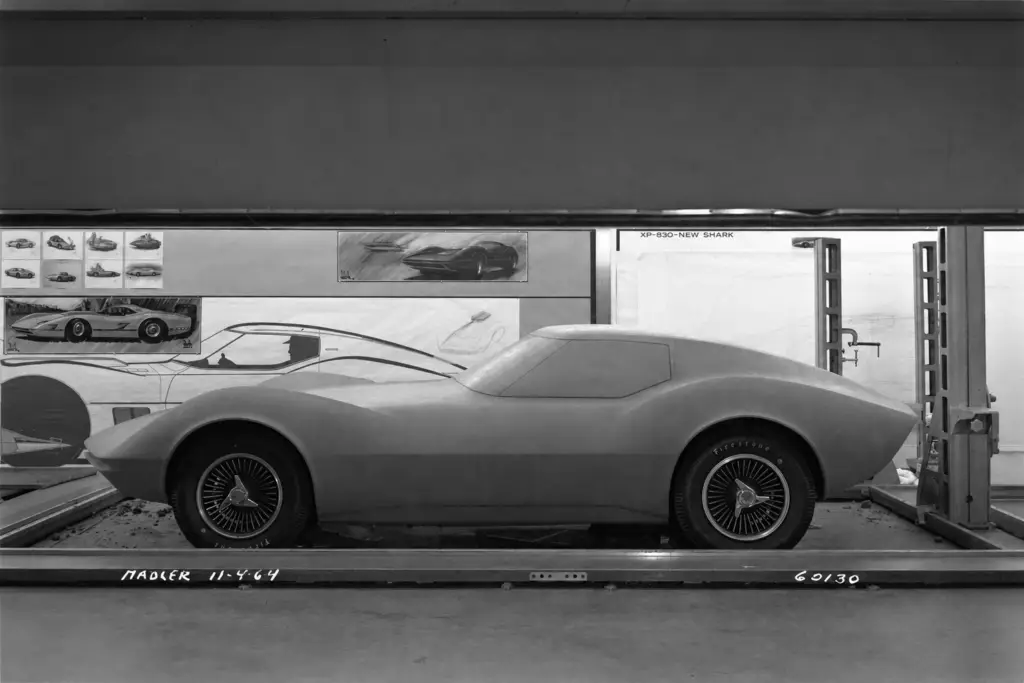
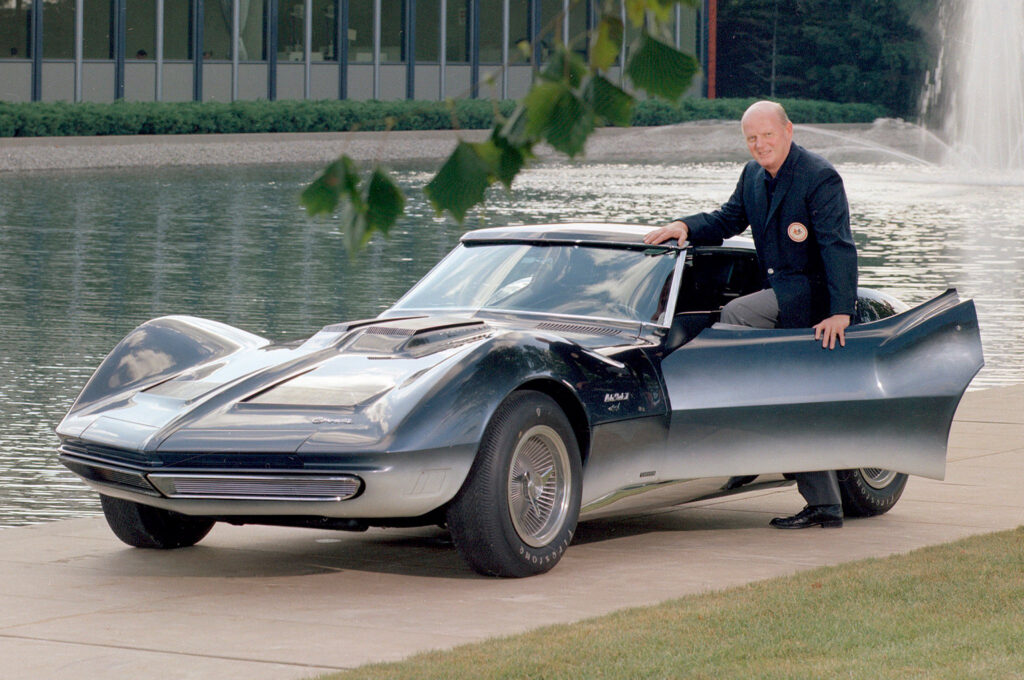
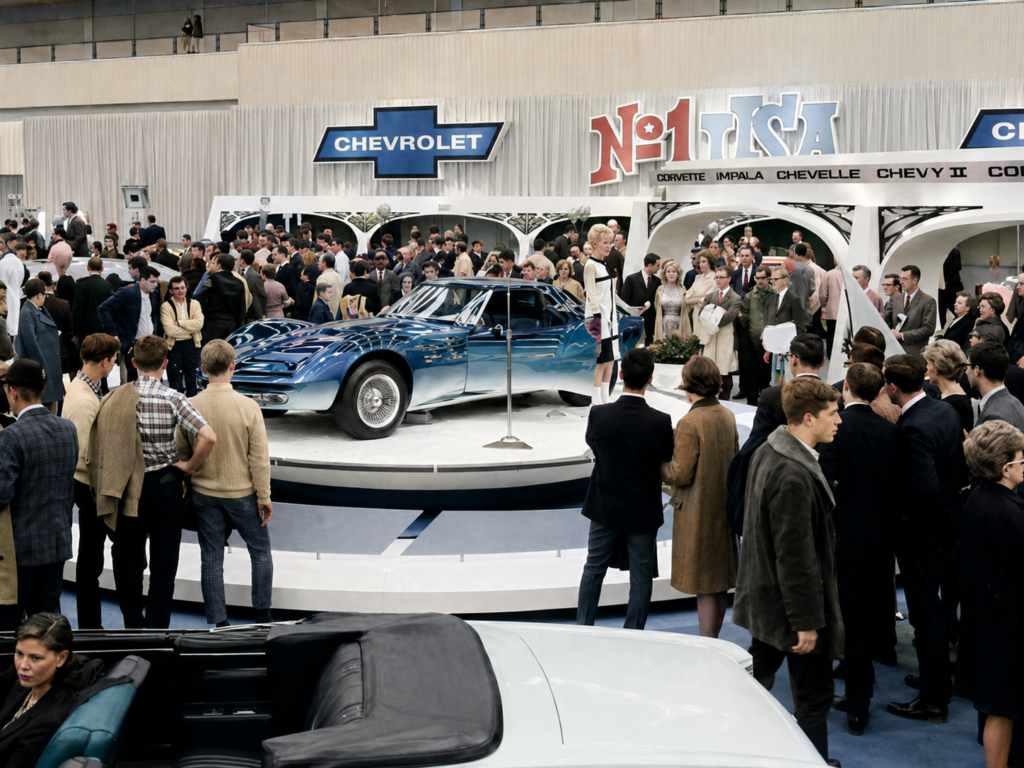
Parked outside Pratt Miller’s Michigan headquarters, four generations of Corvette race cars tell the story of one of the most successful partnerships in modern sports-car racing. From the C5-R through the C6.R, C7.R and C8.R, each generation pushed Corvette engineering forward while adding victories, championships and endurance-racing credibility that ultimately laid the groundwork for the Z06 GT3.R. (Image credit: Pratt Miller Motorsports)
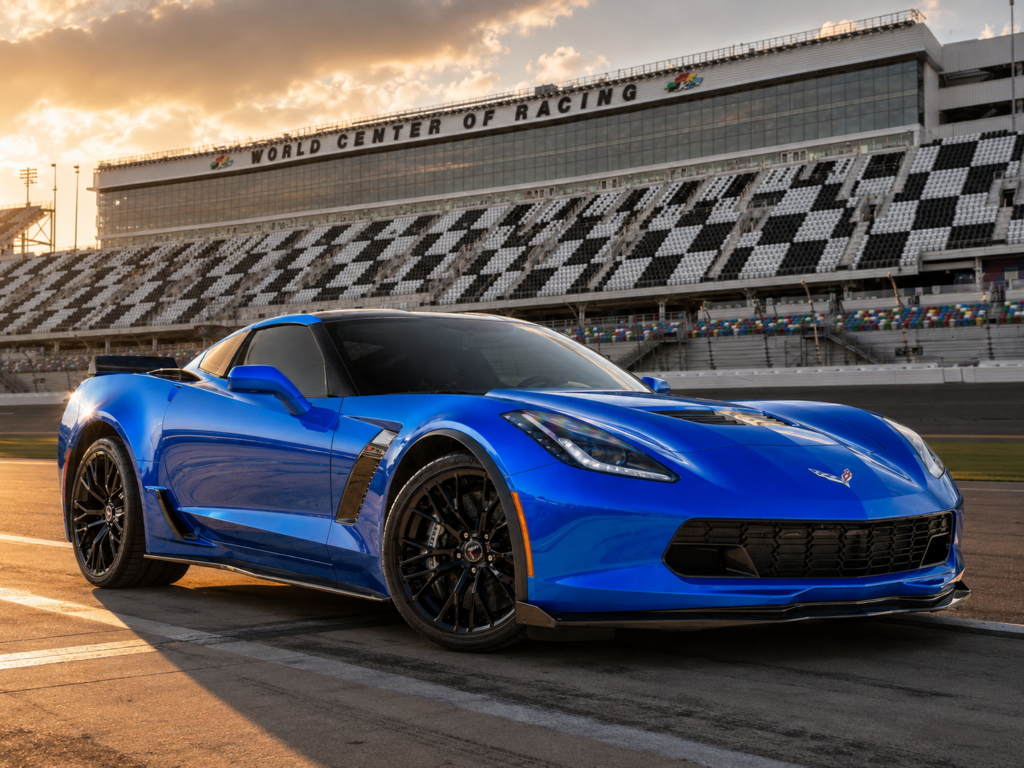
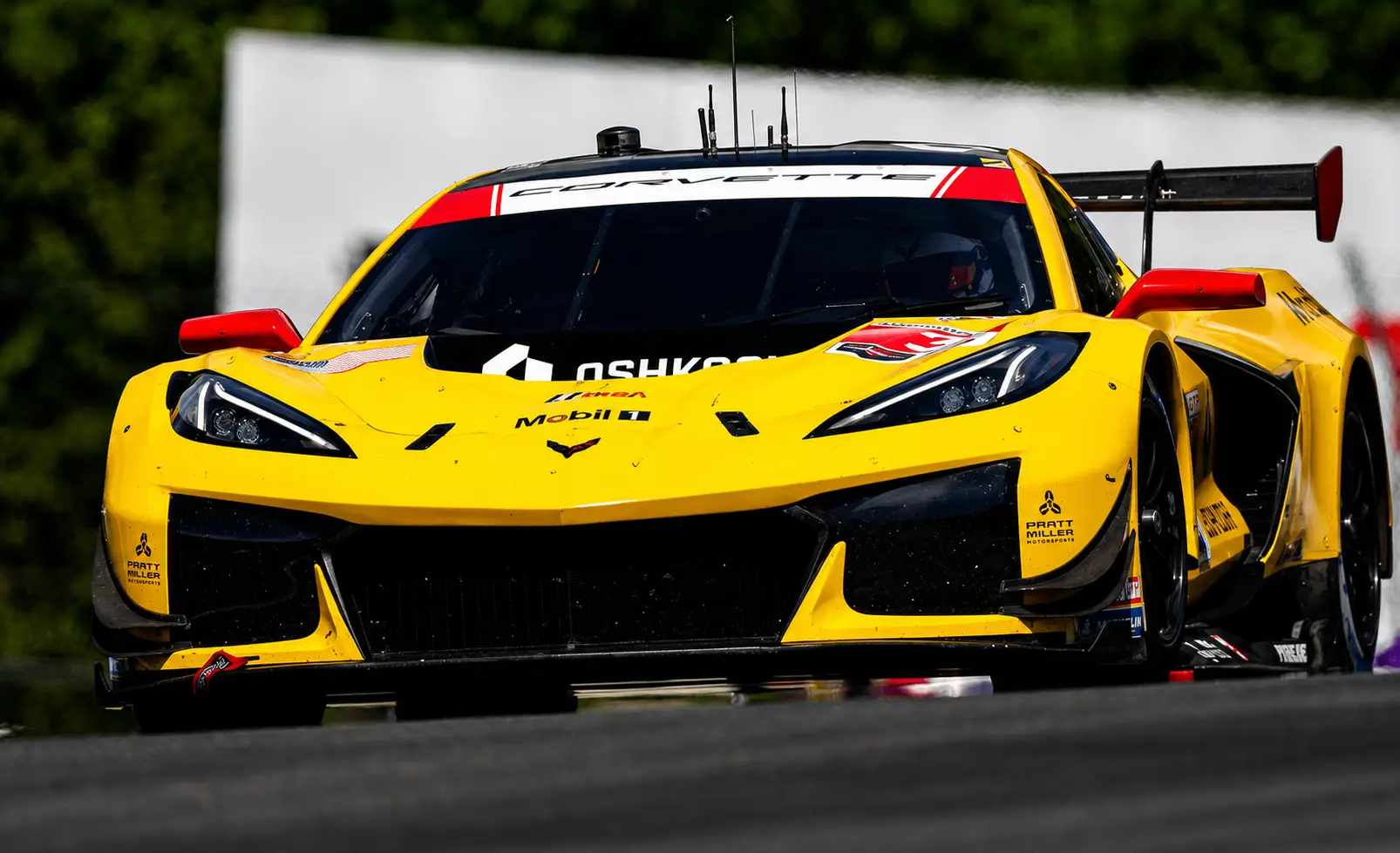
Chevrolet publicly unveiled the Z06 GT3.R at Daytona International Speedway on January 27, 2023, almost exactly one year before its planned competition debut in the 2024 Rolex 24 at Daytona. It was the first Corvette race car designed from the beginning to comply fully with the FIA’s international GT3 technical regulations, making it eligible for championships ranging from IMSA and the FIA World Endurance Championship to the various SRO-sanctioned GT World Challenge series around the world.
Although the car carries Chevrolet badges, its creation continued one of the longest and most productive technical partnerships in American motorsports. General Motors Competition Motorsports Engineering worked directly with Pratt Miller Engineering on the design and development of the GT3.R, with Pratt Miller serving as the car’s constructor and assuming responsibility for chassis preparation, assembly, development, and much of the competition engineering. Chevrolet and General Motors remained deeply involved through propulsion development, simulation, aerodynamic work, design, and building the customer-support structure needed once the cars began entering competition worldwide.
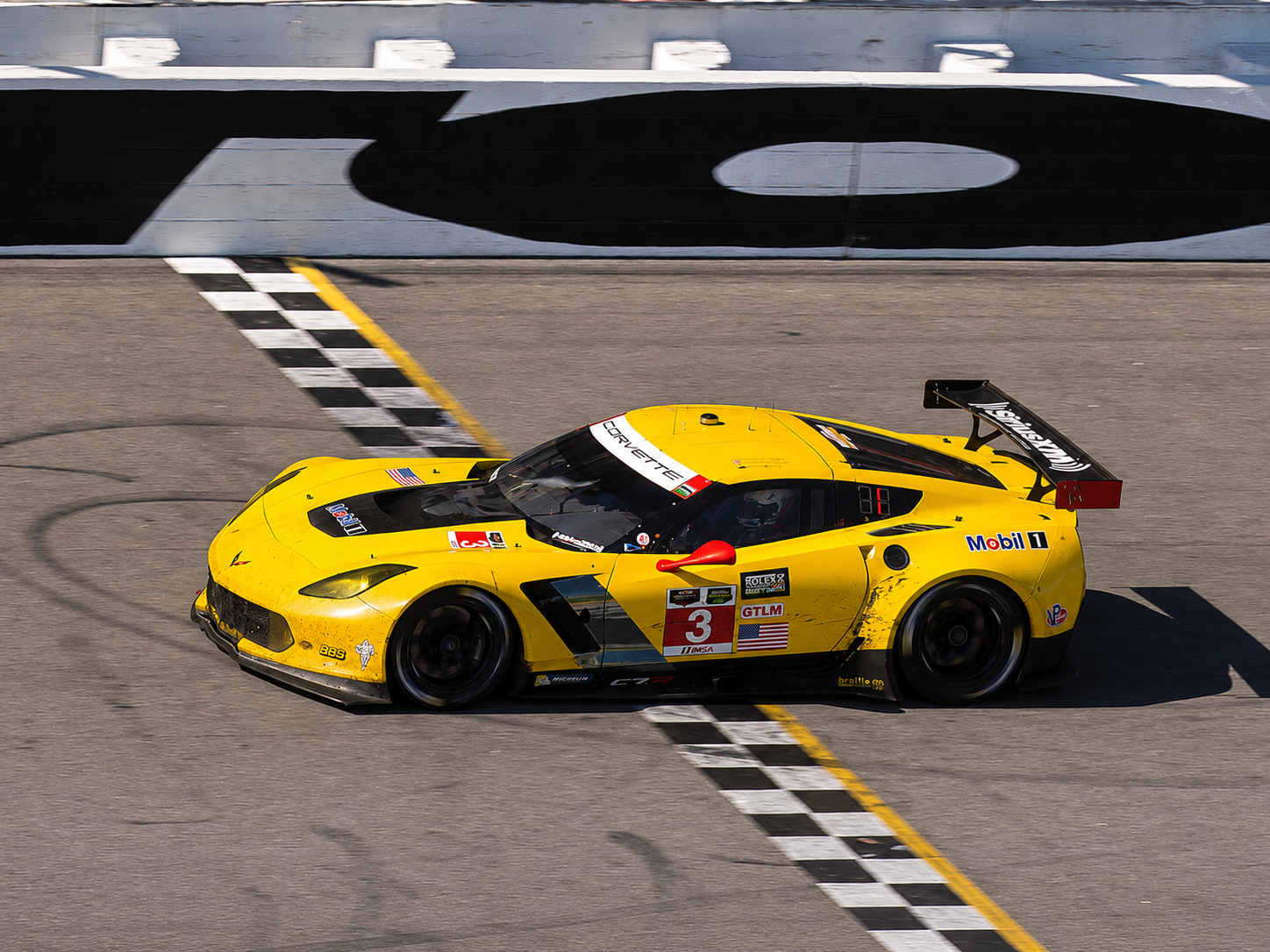
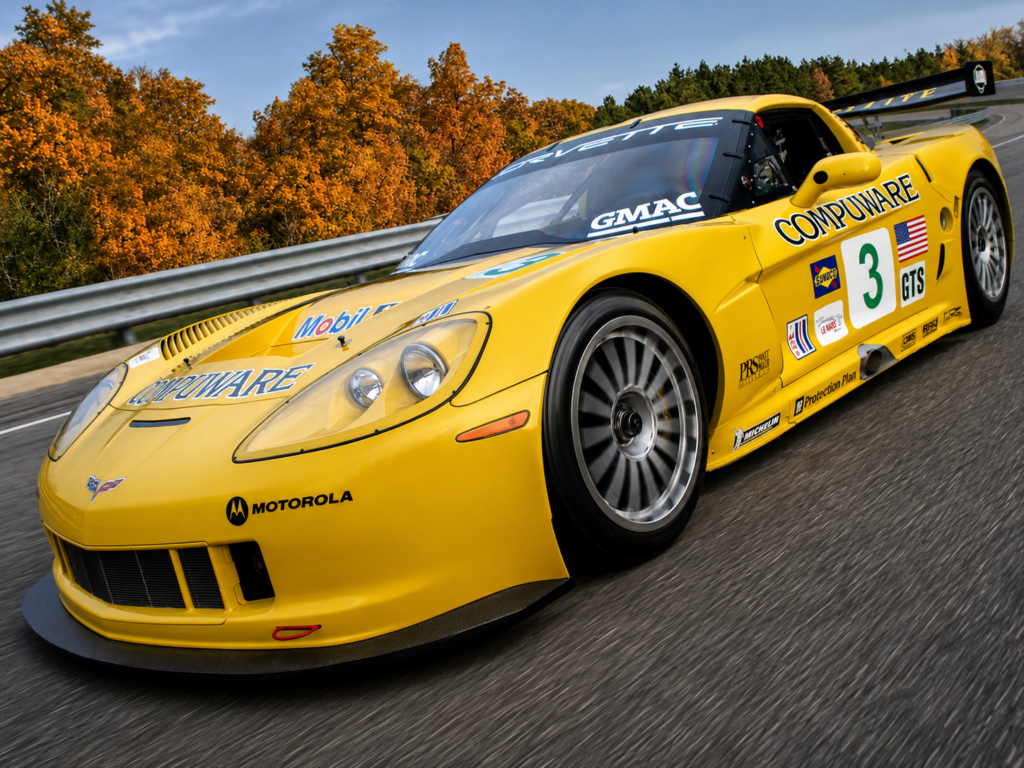
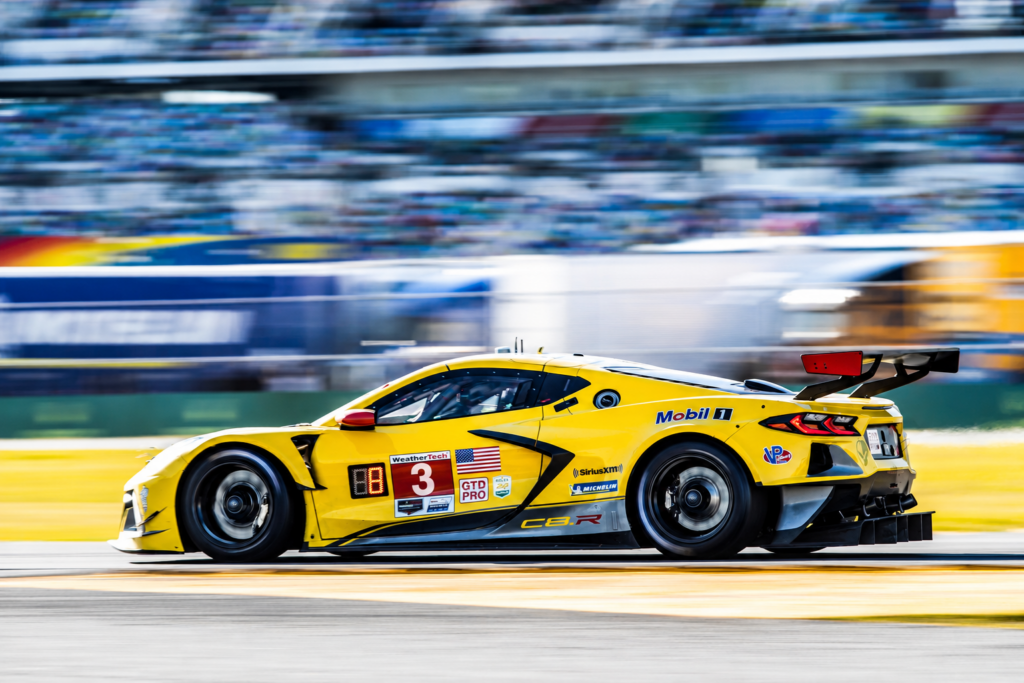
First introduced at the 2023 Rolex 24 at Daytona, the Corvette Z06 GT3.R was still a year away from making its competition debut, but Chevrolet was already putting its next-generation race car in front of the fans. Wearing the No. 03 development livery, the car offered an early look at the machine that would soon carry Corvette into the global GT3 era. (Image courtesy of the author)
That partnership was hardly new. Pratt Miller had already spent decades developing and operating Corvette’s factory racers, but the GT3.R changed the scope of the assignment. The company was no longer simply building race cars for the team charged with representing Chevrolet at the factory level. It now had to build cars that would perform for a wide variety of customers across different continents, under different sanctioning bodies, and with drivers ranging from seasoned professionals to Bronze-rated gentlemen competitors. In that respect, the GT3.R had to be more than fast. It had to be adaptable, serviceable, supportable, and durable.
A Race Car That Really Begins as a Corvette
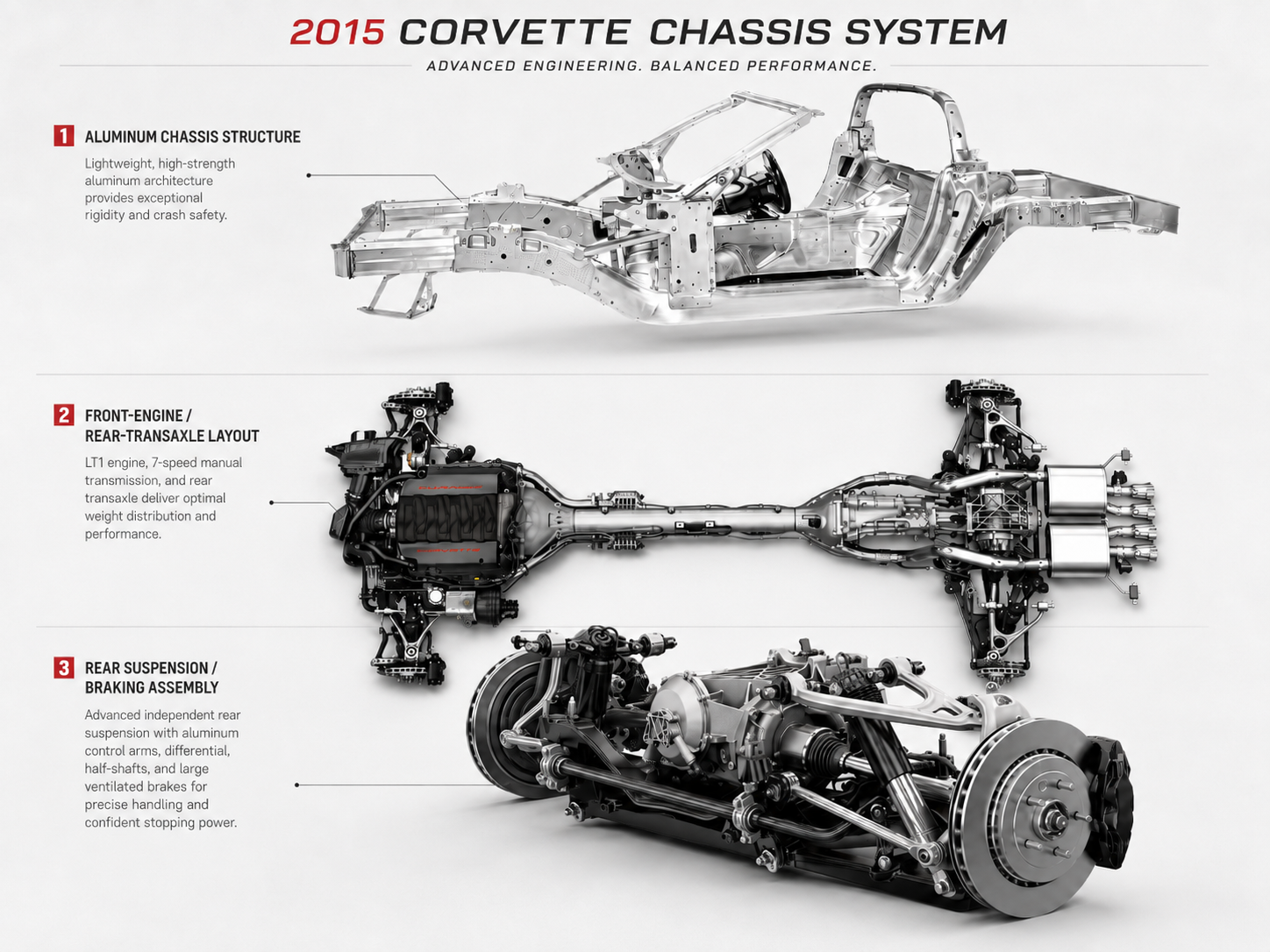
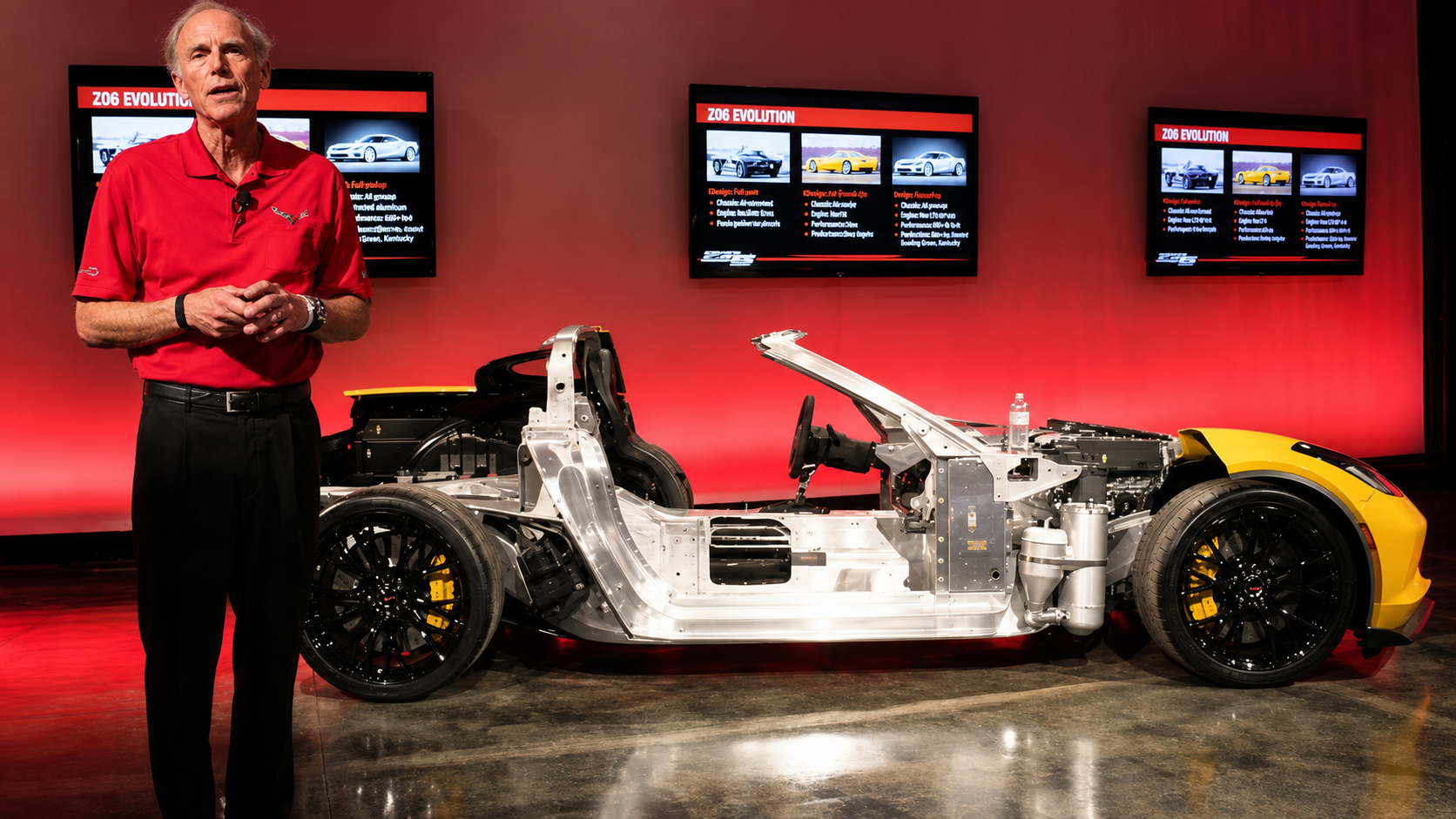
The Corvette Z06 GT3.R begins its life in the same place as every production Corvette: Bowling Green, Kentucky. Its aluminum chassis is assembled at the Corvette plant before being sent to Pratt Miller, where it is transformed into a fully developed GT3 race car with its roll cage, competition suspension, aerodynamics, electronics, and racing systems. That shared starting point gives the GT3.R a direct structural connection to the road-going Corvette, even before Pratt Miller begins the work that turns it into an international race machine. (Image credit: Tommy Milner)
One of the most interesting aspects of the Z06 GT3.R is just how direct its relationship is with the production C8 Corvette. Every GT3.R begins with an aluminum chassis originating from Chevrolet’s Bowling Green Assembly Plant, the same facility responsible for production Corvettes. From there, the structure is transported to Pratt Miller in Michigan, where the car is transformed into a full competition machine with a purpose-built steel roll cage, racing suspension, safety systems, bodywork and all of the equipment required for international GT3 competition.
The suspension retains the production Corvette’s basic double-wishbone architecture at both ends, although virtually every meaningful detail is optimized for racing. Springs, dampers, geometry adjustment and related hardware are all designed to provide the range of setup required for everything from tight street circuits to high-speed endurance venues. As with any GT3 car, the challenge is not merely producing maximum mechanical grip, but giving teams enough adjustability to work within the constantly changing Balance of Performance environment that defines the category.
The Z06 GT3.R retains the production Corvette’s basic double-wishbone suspension architecture, but virtually every component has been reworked for competition. Racing-specific dampers, springs, uprights, anti-roll bars, and extensive geometry adjustments let teams tune the car for dramatically different circuits, tire conditions, and Balance of Performance requirements. The result is a suspension package that preserves a genuine mechanical link to the road-going Z06 while providing the precision and adjustability demanded by international GT3 racing.
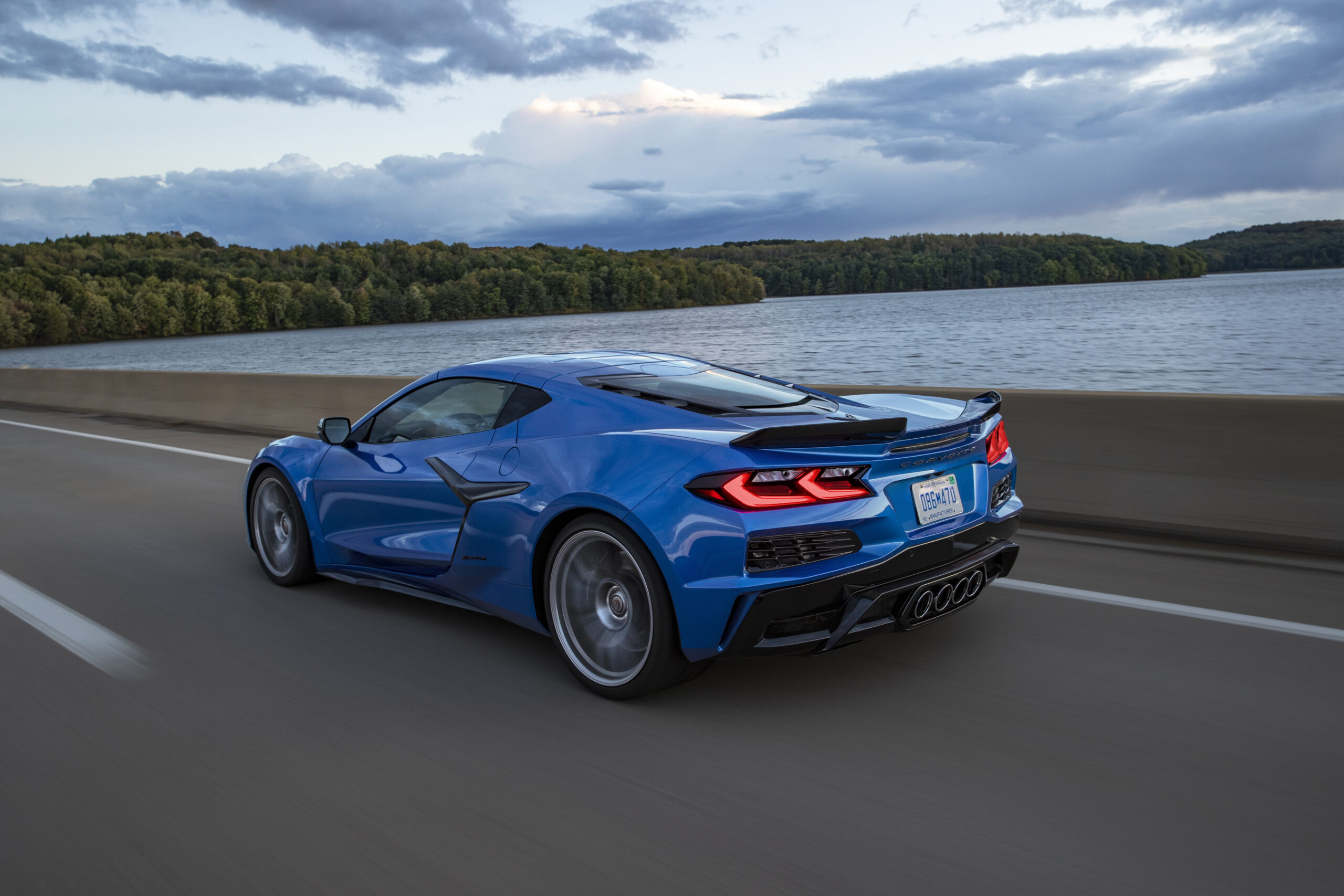
Aerodynamically, Chevrolet Motorsports engineers worked closely with GM Design to preserve the production Z06’s recognizable shape while delivering the downforce, cooling, and stability modern GT racing demands. Carbon-fiber bodywork, a large rear wing, an aggressive front splitter, and a competition-specific underbody diffuser separate the GT3.R from the road car, but the silhouette remains unmistakably Corvette. Even the large side openings ahead of the rear wheels trace directly back to the production Z06, where they serve as part of the cooling strategy for the mid-engine layout.
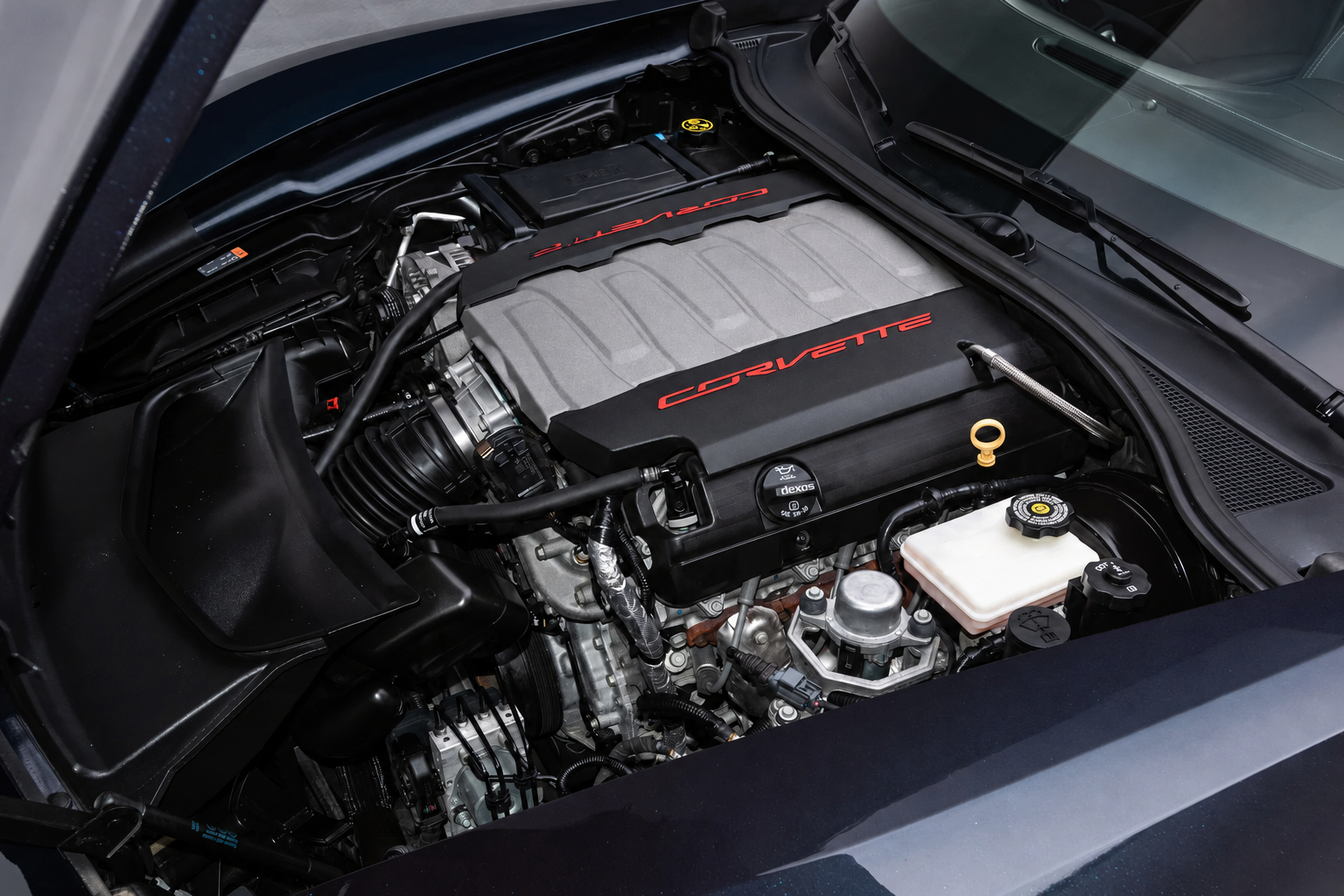
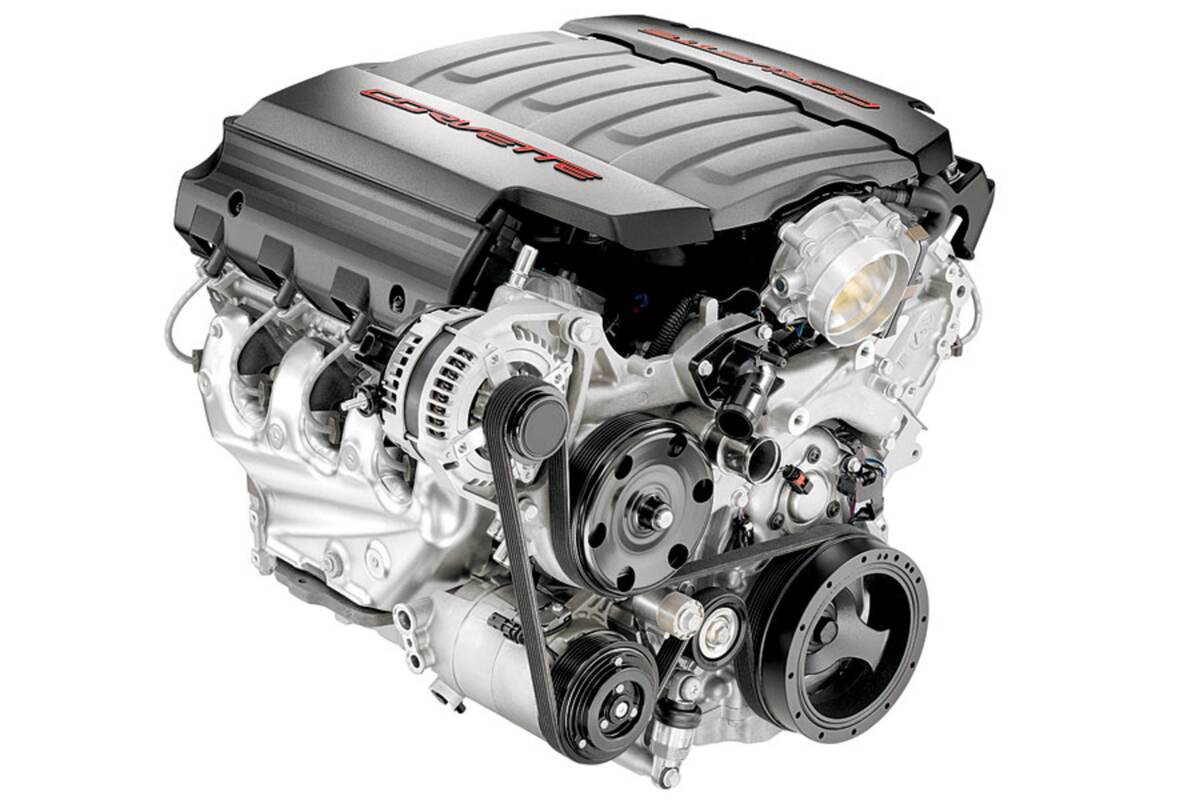
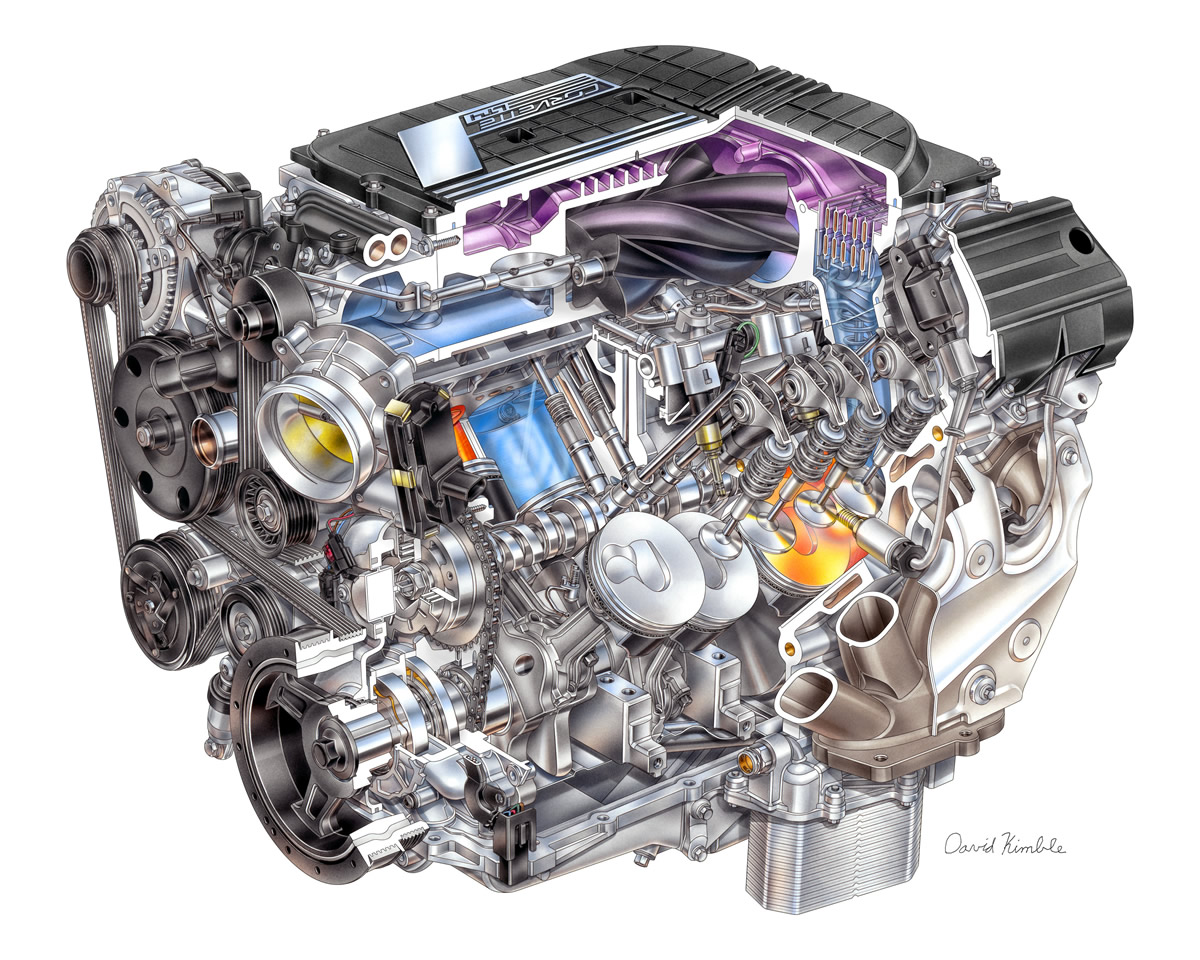
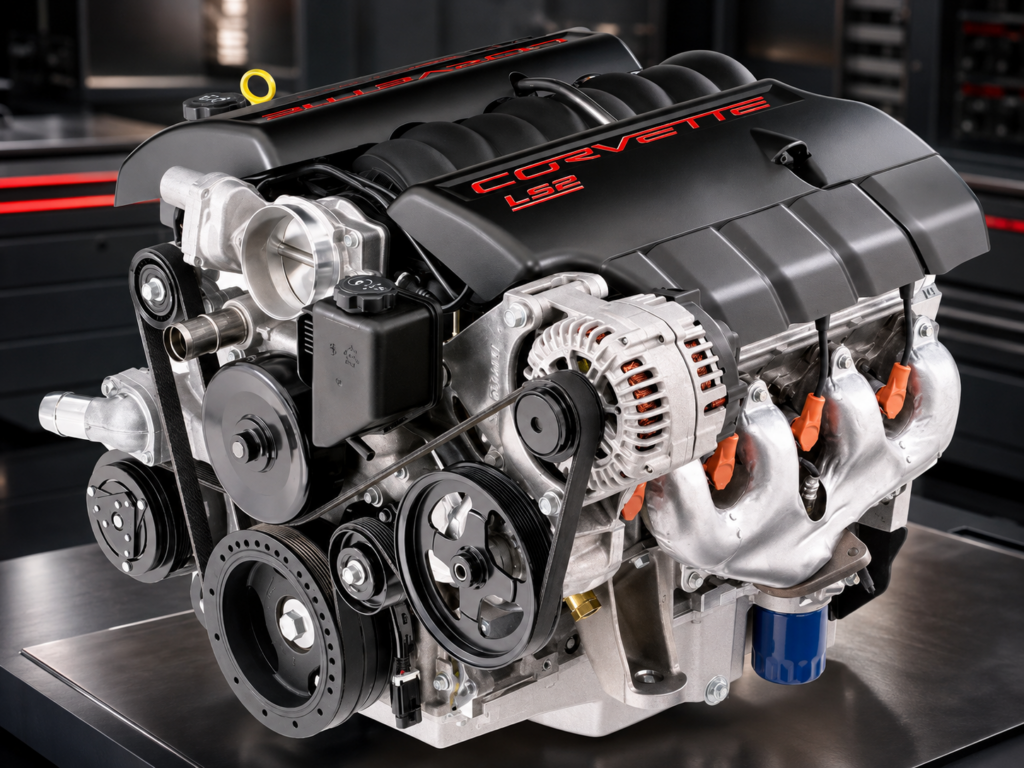
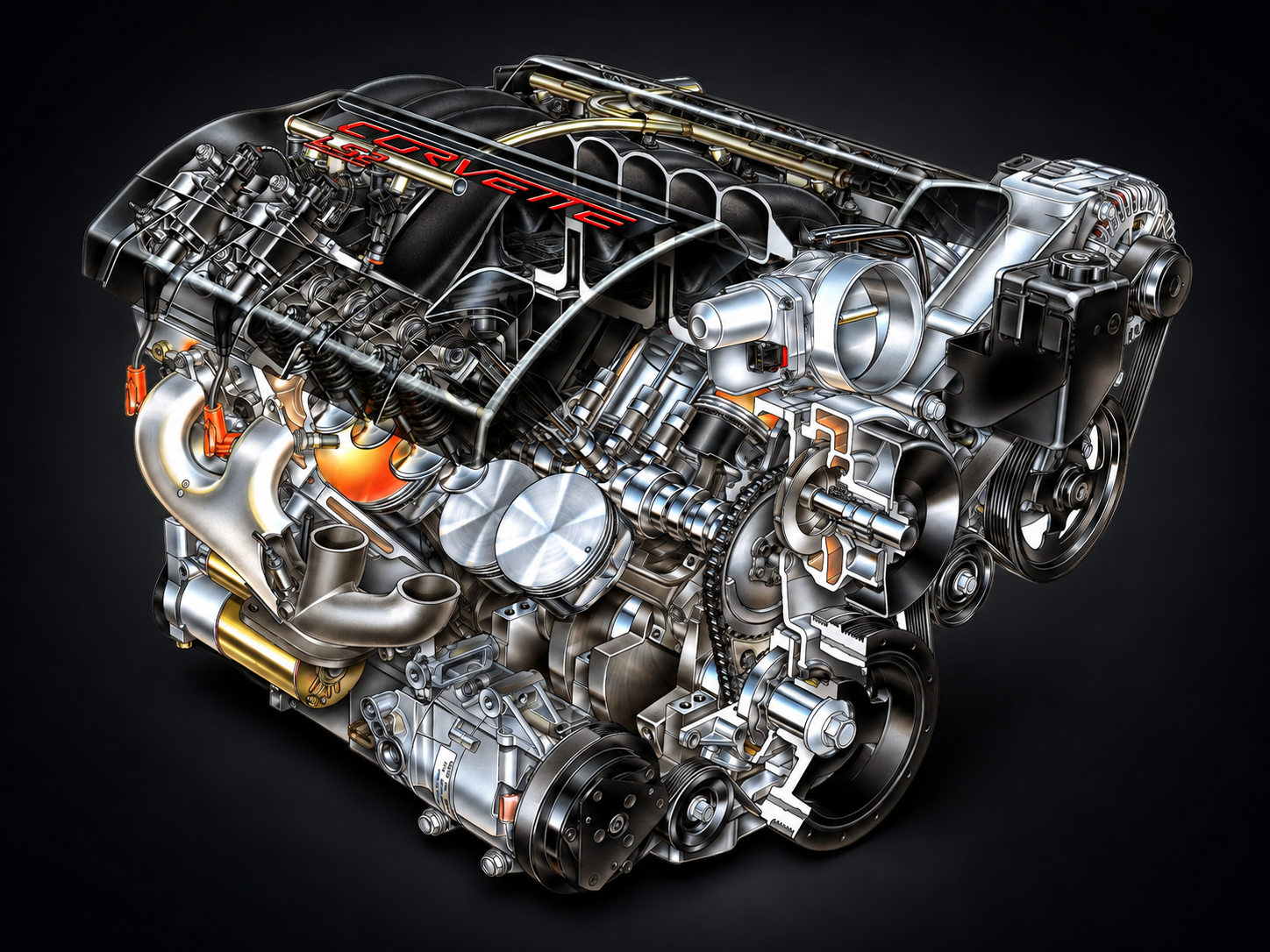
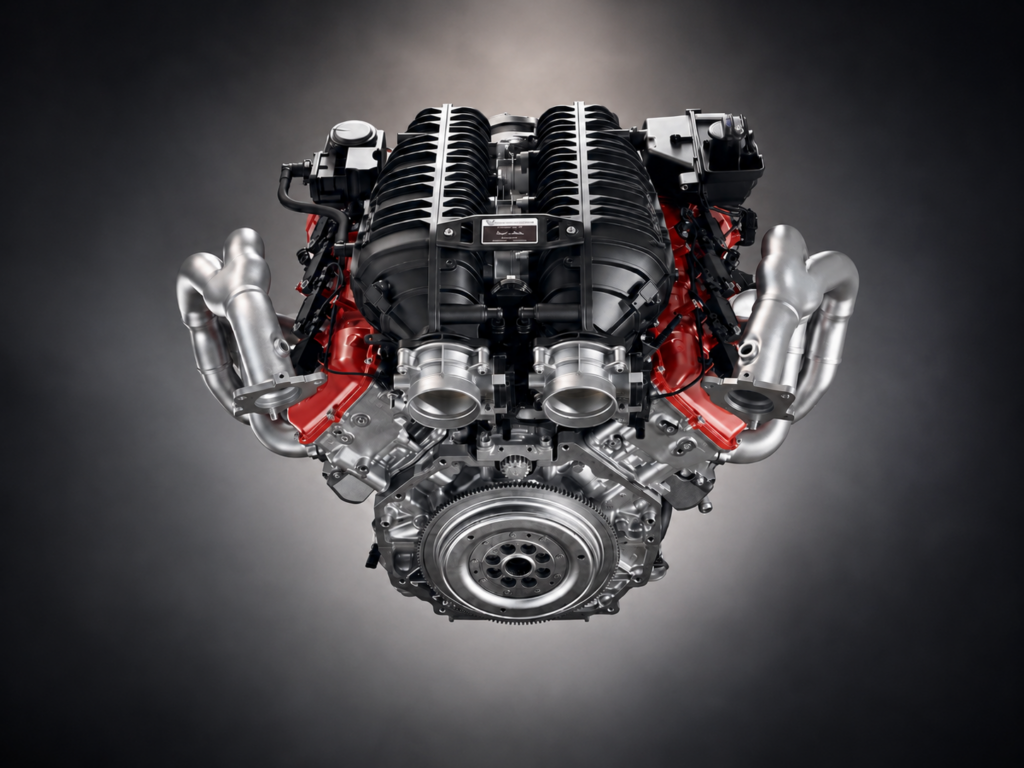
The engine creates an even stronger connection between road car and race car. Mounted behind the driver is a 5.5-liter naturally aspirated DOHC V-8 using the same flat-plane-crank architecture found in the production Z06’s LT6. In fact, development of this engine family began in competition with the C8.R before the production Z06 reached customers, making the relationship between the street and racing programs unusually circular. Racing informed the road car, and the road car then became the foundation for the next generation of racing Corvette.
At the heart of the Corvette Z06 GT3.R is a 5.5-liter, naturally aspirated, flat-plane-crank V-8 closely related to the production Z06’s LT6. Built from the same basic architecture and sharing more than 70 percent of its components with the road-car engine, the racing version is adapted for the demands of international GT3 competition. Under Balance of Performance regulations, output varies by series and event, but the engine typically operates in the 500- to 600-horsepower range.
The GT3.R engine originates from Chevrolet’s Performance Build Center in Bowling Green, the same facility responsible for production Z06 engines, and shares more than 70 percent of its components with the street-going LT6. Among the common pieces are the crankshaft, connecting rods, cylinder heads, fuel injectors, ignition coils, gaskets and numerous sensors. Racing versions are then prepared with competition-specific components and calibrations appropriate for GT3 use.
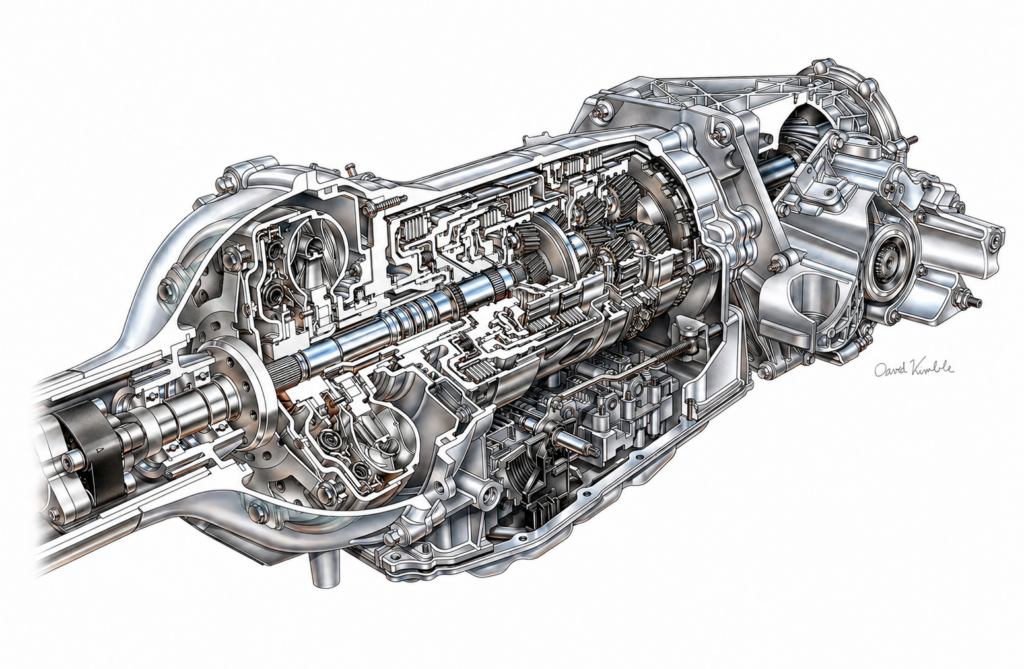
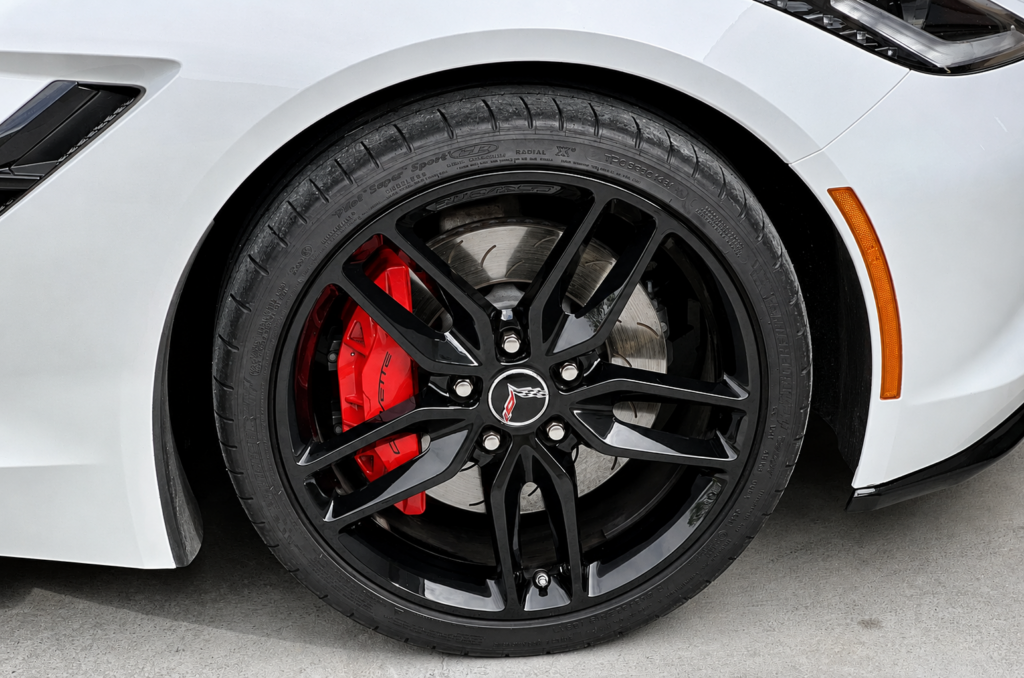
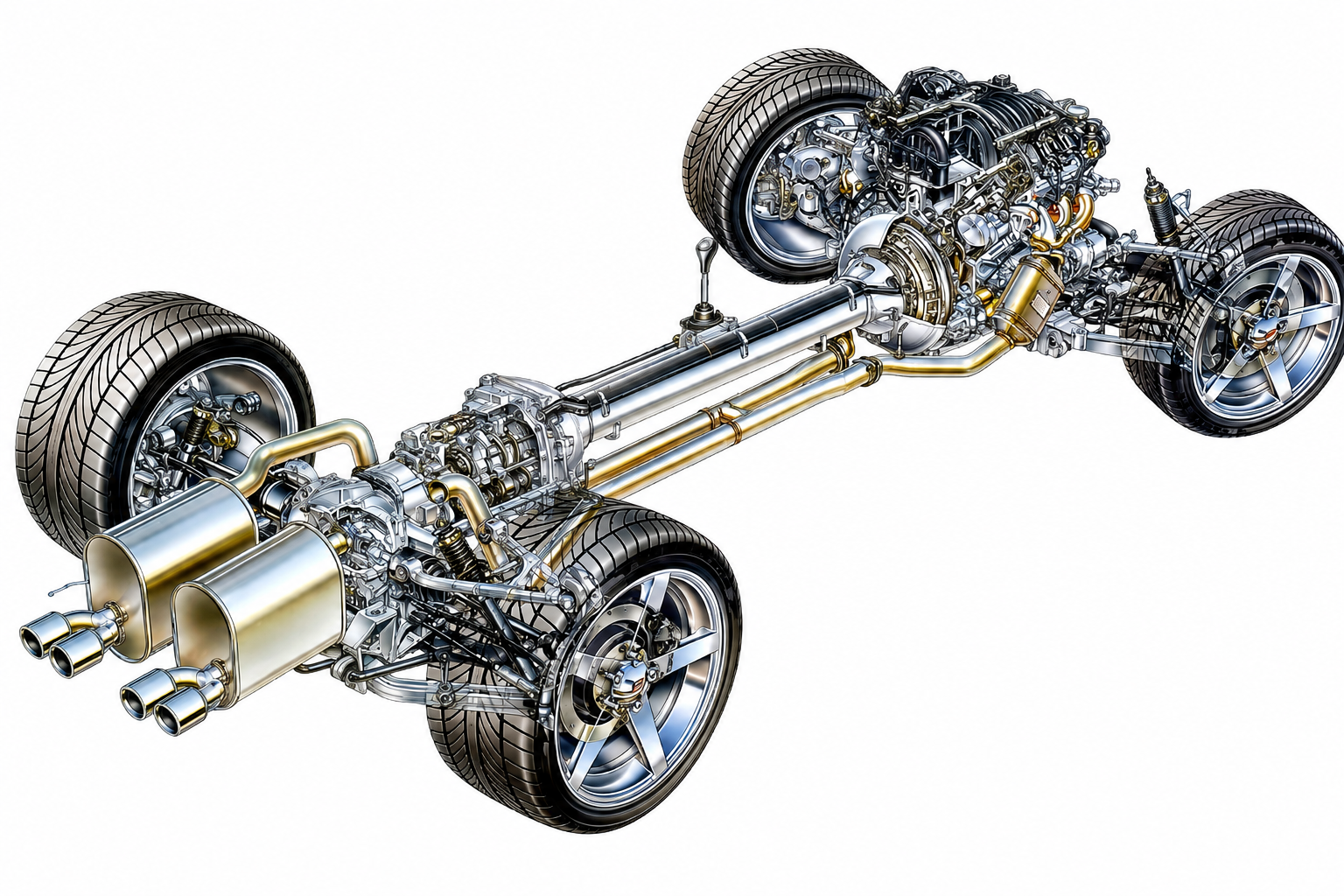
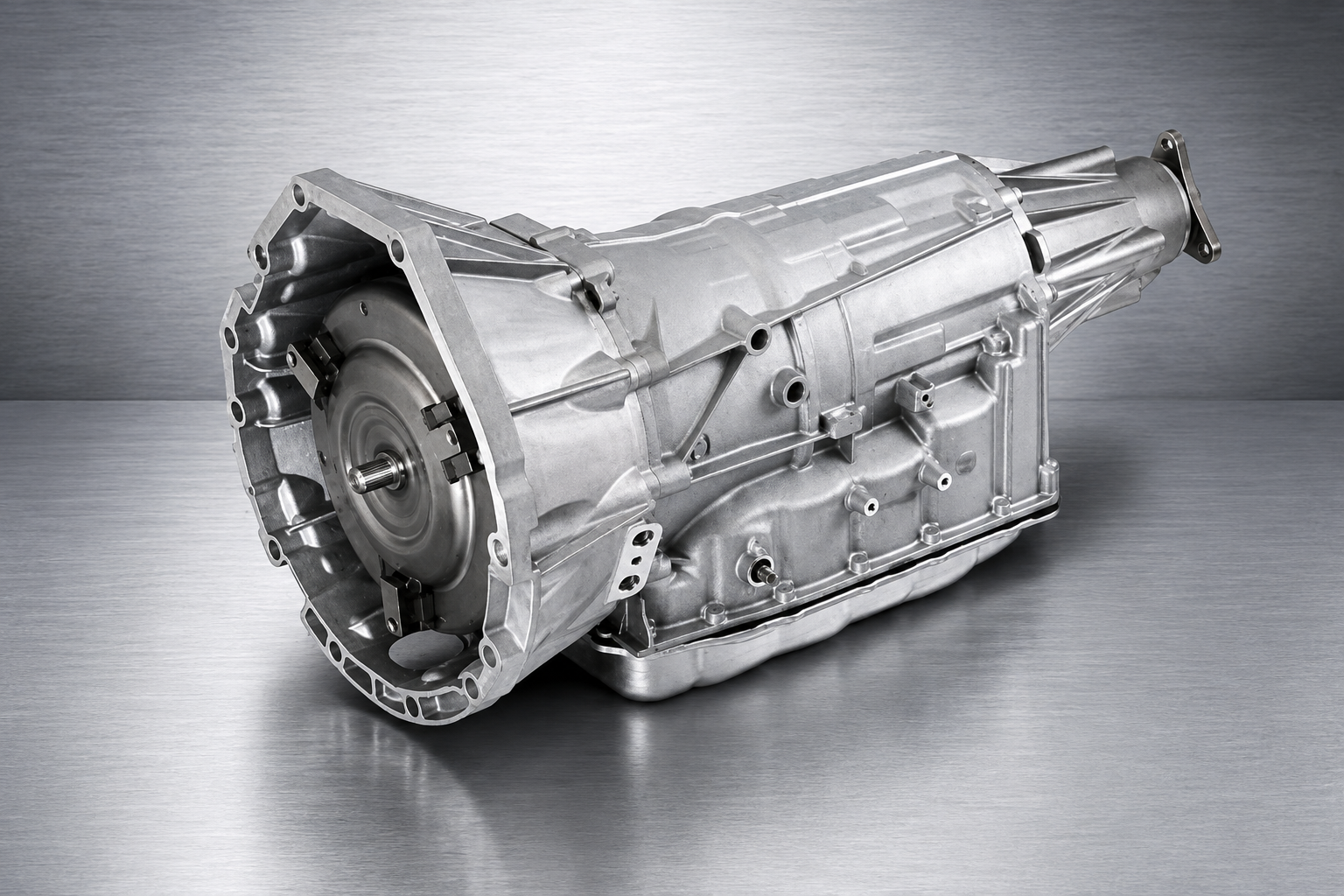
Under Balance of Performance regulations, output varies according to the series, event and sanctioning body, but the engine generally operates in the 500-to-600-horsepower range. Power is sent through an Xtrac six-speed sequential transaxle, while Bosch motorsport electronics and ABS, AP Racing brake components, 18-inch racing wheels and a competition-specific suspension complete the basic package. Different endurance, lighting, telemetry, cooling and safety configurations allow customers to tailor the same basic platform for IMSA, WEC, SRO and other championships.
That flexibility is central to understanding what Chevrolet and Pratt Miller were trying to accomplish. GT3 racing is not about creating a car specifically for one championship. It is about producing a platform that can be shipped virtually anywhere, adapted to local regulations and put into competition against the best customer racing cars built by Porsche, Ferrari, BMW, Mercedes-AMG, Aston Martin, Lamborghini, McLaren, Ford and others.
The Z06 gT3.R Corvette’s First Season: Learning in Public
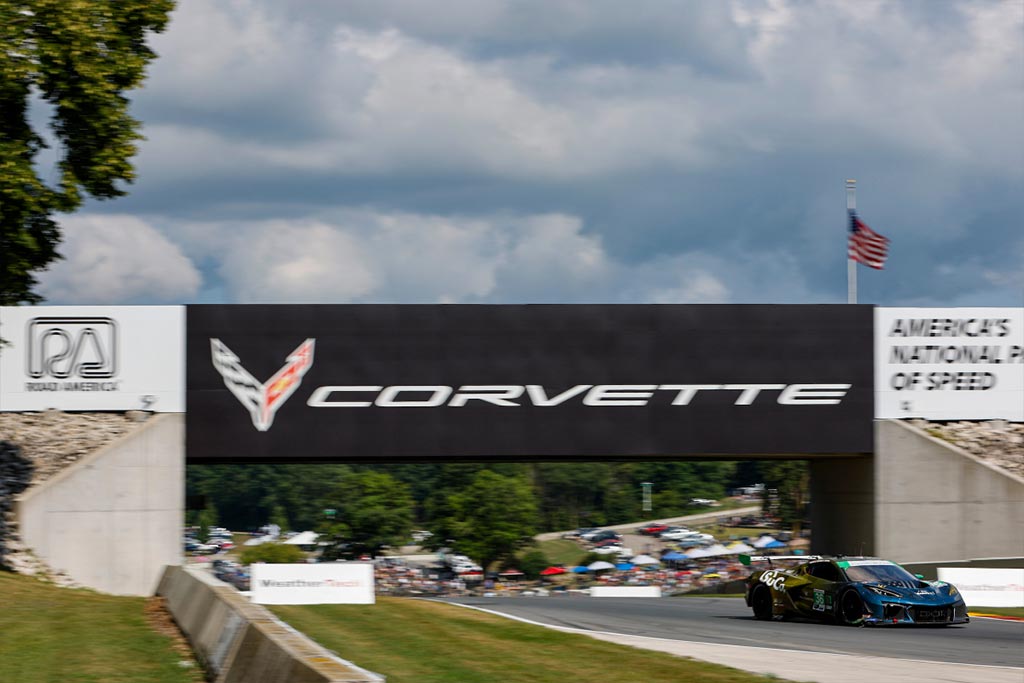
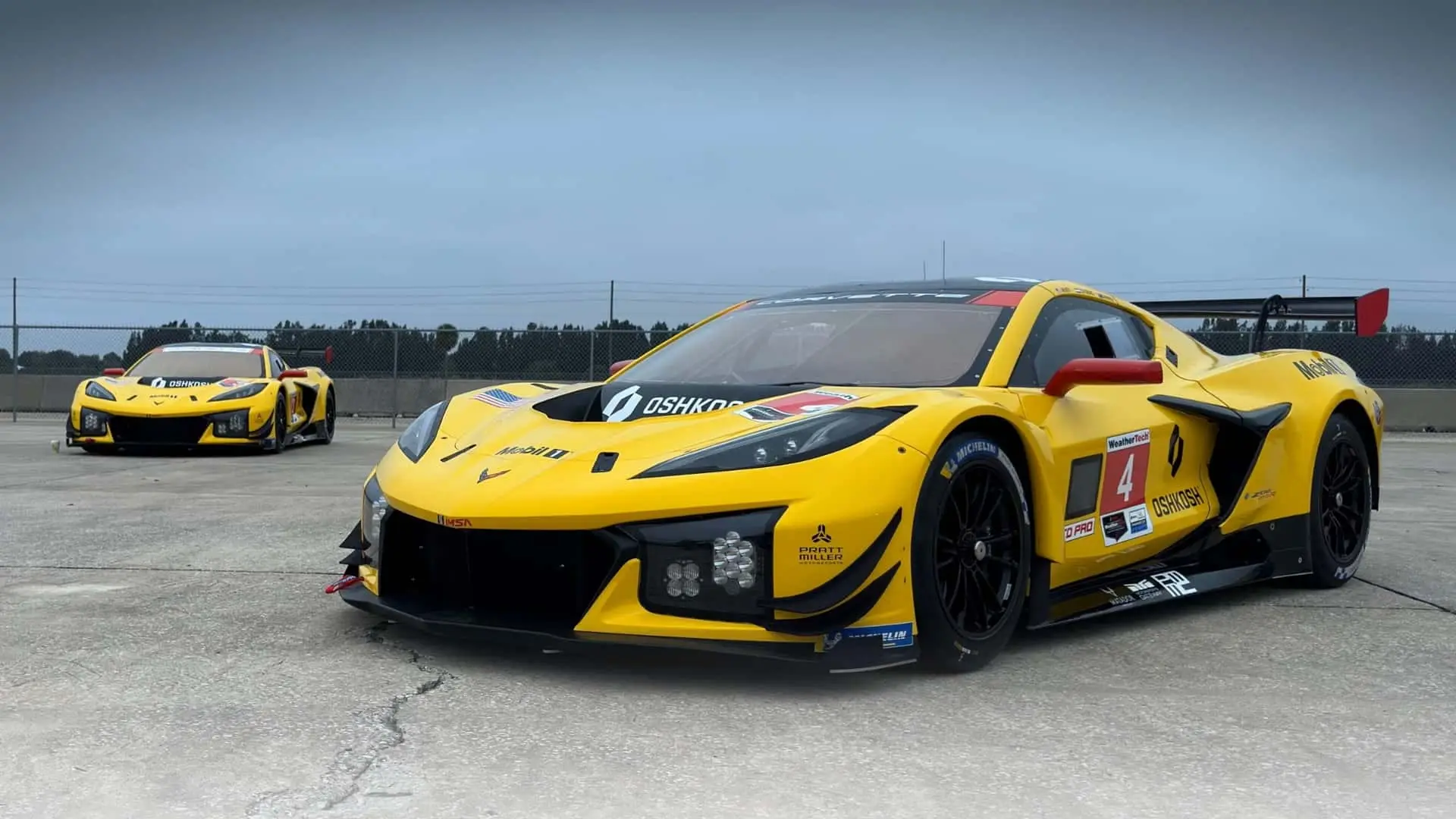
The 2024 Rolex 24 at Daytona marked the competition debut of the Corvette Z06 GT3.R and the beginning of a new era for Corvette Racing. Pratt Miller Motorsports fielded the factory-backed Nos. 3 and 4 Corvettes in GTD PRO, while AWA introduced two customer cars in GTD, giving Chevrolet four GT3.Rs on the grid for the car’s first race. The weekend quickly showed both the promise and the growing pains of an all-new program, but it also established the foundation for what would become a rapidly expanding global customer-racing effort. (Image credit: Richard Prince for Corvette Racing)
The Z06 GT3.R made its competition debut at the 2024 Rolex 24 at Daytona. Corvette Racing by Pratt Miller Motorsports entered two cars in IMSA’s GTD PRO category, while Canadian team AWA became the first true customer operation to receive GT3.Rs and entered two additional cars in GTD. AWA’s early driver roster included Orey Fidani, Matt Bell and Lars Kern in one entry, while Anthony Mantella and Corvette factory driver Nico Varrone were among those associated with the second.
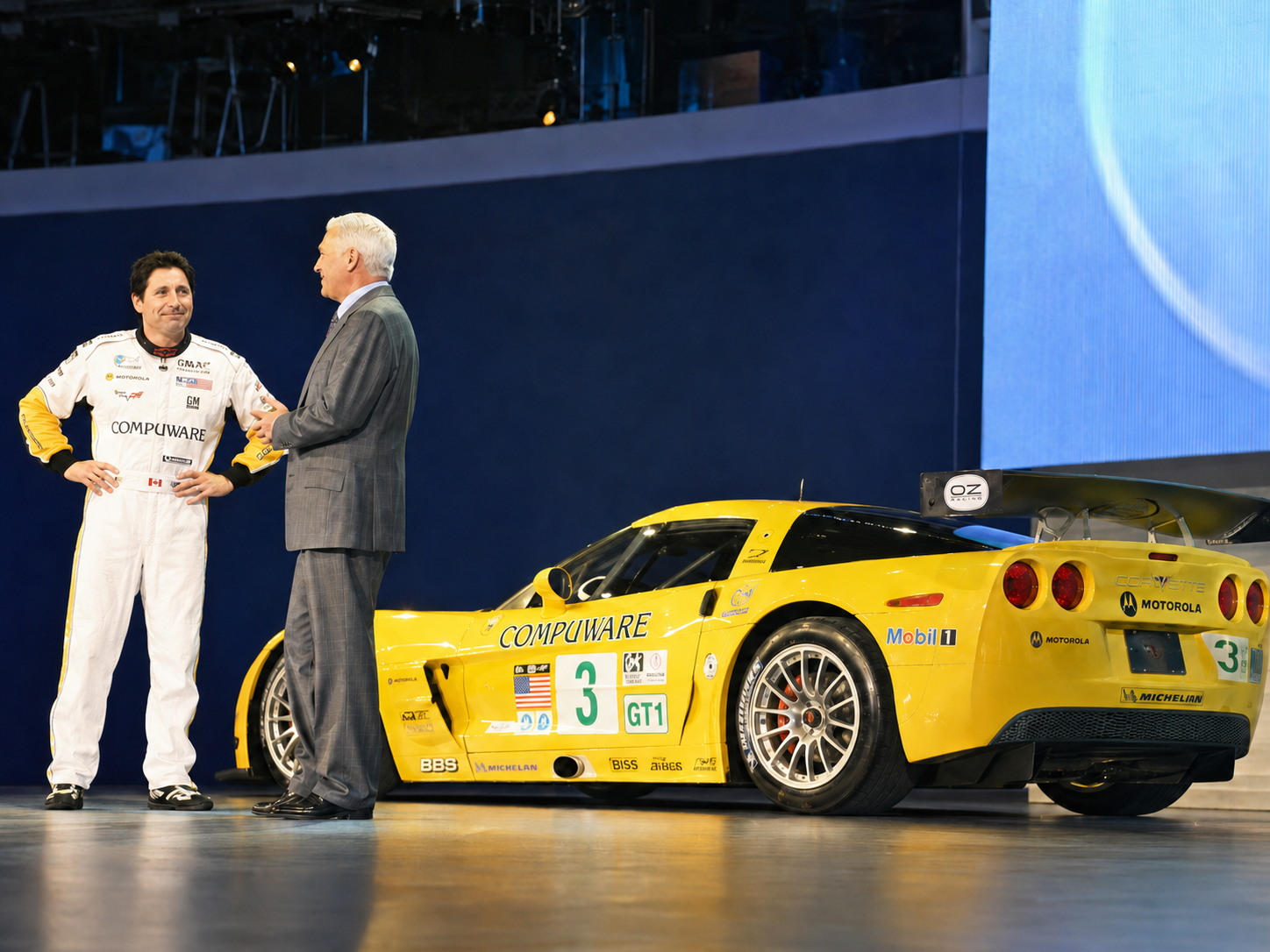
For Pratt Miller, the familiar yellow Nos. 3 and 4 Corvettes remained the center of the North American program. Antonio Garcia and Alexander Sims formed the primary pairing in the No. 3, while Tommy Milner and Nicky Catsburg shared the No. 4, with additional factory drivers rotating through the endurance events. The speed of the new car was apparent almost immediately, but so were the growing pains. Reliability and durability were not yet where Chevrolet and Pratt Miller wanted them to be, and the first season became as much about learning how the GT3.R behaved over long races as it was about collecting trophies.
That was not entirely unexpected. Unlike the mature C8.R, the GT3.R was a brand-new platform being operated simultaneously by factory-supported and customer teams, and every race generated more information about cooling, electronics, driveline durability, setup windows and serviceability. AWA would later characterize much of 2024 as a season devoted to improving reliability and learning the car. Even so, the GT3.R began proving its potential well before that first year was complete.
The Corvette Z06 GT3.R earned its first-ever victory at Circuit of The Americas in May 2024, when DXDT Racing’s No. 63 Corvette, driven by Tommy Milner and Alec Udell, broke through in GT World Challenge America. The win was more than an early milestone; it was the first proof that Corvette’s new customer GT3 platform could win outside the traditional factory-backed IMSA environment. From there, Milner and Udell went on to build one of the strongest runs of the season, turning COTA into the starting point for the GT3.R’s rapid rise.
The breakthrough came from outside traditional Corvette Racing. DXDT Racing introduced the GT3.R to GT World Challenge America in spring 2024, and its No. 63 Corvette, driven by Tommy Milner and Alec Udell, won at Circuit of the Americas on May 18, giving the car its first victory anywhere in the world. What followed was remarkable. Milner and Udell won their first eight GT World Challenge America races together, setting a Pro-class record for consecutive victories and quickly showing the new Corvette could compete in sprint-oriented GT racing as well as endurance competition. Despite missing the opening portion of the championship, they ultimately finished second in the Pro standings, while DXDT’s second Corvette also collected Pro-Am victories with Bryan Sellers and Bryson Morris.
The first IMSA victory came two months later at Canadian Tire Motorsport Park, where Garcia and Sims controlled the GTD PRO race in the No. 3 Corvette and led Milner and Catsburg home in the No. 4. The result gave Chevrolet a Corvette 1-2 and provided further confirmation that the car’s early developmental problems were beginning to give way to repeatable race-winning performance.
Taking Corvette Racing International
The TF Sport Corvette Z06 GT3.R combines unmistakable C8 proportions with the aggressive aero, cooling, and competition hardware required for international GT3 racing. Seen from above, the No. 82 car’s wide bodywork, large rear wing, sculpted airflow channels, and race-specific detailing make clear how far the production Z06 architecture has been pushed for endurance competition.
At the same time, TF Sport assumed responsibility for Corvette’s FIA World Endurance Championship effort. That arrangement illustrated Chevrolet’s new philosophy perfectly. Rather than operate its own factory WEC organization, Chevrolet supplied the cars, engineering support and technical infrastructure while an experienced independent team handled the day-to-day racing program.
The first season required patience, but TF Sport ended 2024 with meaningful momentum. At the season-ending Eight Hours of Bahrain, the team placed its Corvettes second and third in LMGT3, with the No. 81 of Tom Van Rompuy, Rui Andrade and Charlie Eastwood heading the Corvette contingent. The result did not erase the challenges of the first season, but it showed that the platform was becoming increasingly competitive as the teams and engineers learned how to extract performance from it.
The No. 81 TF Sport Corvette Z06 GT3.R earned its second FIA World Endurance Championship victory of 2025 at the 6 Hours of Fuji, with Tom Van Rompuy, Rui Andrade and Charlie Eastwood sharing the car. Eastwood brought the Corvette home just 1.990 seconds behind the leading Ferrari on the road, but a five-second penalty assessed to the Ferrari for a pit-stop infringement elevated TF Sport to the LMGT3 victory. The result gave the No. 81 crew its first win of the season, delivered Corvette’s second WEC LMGT3 victory of 2025, and kept both TF Sport Corvettes firmly in the championship fight heading toward the season finale.
In 2025, the program took another significant step forward. TF Sport won twice, beginning with the season-opening race in Qatar and adding another victory at Fuji. The two Corvettes eventually finished fifth and sixth in the LMGT3 team standings. The driver lineup mixed established Corvette professionals with customer racers and included Ben Keating, Jonny Edgar, Daniel Juncadella, Charlie Eastwood, Rui Andrade and Tom Van Rompuy.
Across the Atlantic, the Z06 GT3.R achieved an equally important milestone. AWA returned to the Rolex 24 in 2025 with Orey Fidani, Matt Bell, Lars Kern, and Marvin Kirchhöfer and won the GTD class. After the frustrations and developmental headaches of the first season, a customer-entered Corvette had captured one of the most prestigious endurance races in North America.
The 2025 IMSA season delivered the championship breakthrough the Corvette Z06 GT3.R program had been building toward. Antonio Garcia and Alexander Sims captured the GTD PRO Drivers Championship in the No. 3 Corvette Racing by Pratt Miller Motorsports Z06 GT3.R, while Pratt Miller secured the Teams Championship and Chevrolet claimed the Manufacturers Championship, completing a sweep of all three major GTD PRO titles. Garcia and Sims finished the year with six podium results, including a victory at Virginia International Raceway, and sealed the title with Daniel Juncadella at Petit Le Mans. The result gave Corvette its first GTD PRO championship, Chevrolet its 15th IMSA GT-class manufacturers title, and confirmed that the Z06 GT3.R had evolved from a promising new platform into a proven championship-winning race car in only its second full season of competition.
Pratt Miller’s 2025 IMSA campaign proved even more significant. Garcia and Sims won the GTD PRO Drivers Championship in the No. 3 Corvette, Pratt Miller captured the Teams Championship, and Chevrolet secured the GTD PRO Manufacturers Championship. It was the first IMSA GTD PRO championship for the Z06 GT3.R and Chevrolet’s 15th IMSA GT-class manufacturers title. Across the season, the two Pratt Miller cars accumulated nine podium finishes, turning the GT3.R from an ambitious new project into a proven championship-winning platform in only its second season.
The Z06 GT3.R Corvette Goes Global
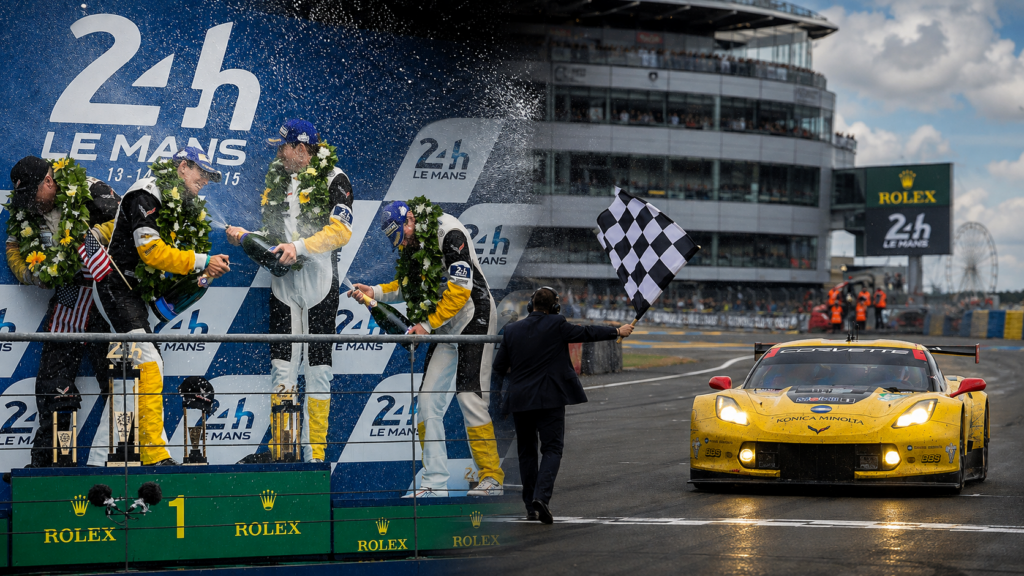
The 2026 season has underscored just how far the Corvette Z06 GT3.R program has come in only three years of competition. In the FIA World Endurance Championship, TF Sport delivered Corvette’s tenth class victory at the 24 Hours of Le Mans with the No. 33 Z06 GT3.R, while the sister Racing Team Turkey by TF entry followed with another LMGT3 victory at São Paulo. In IMSA, Corvette Racing by Pratt Miller Motorsports has remained at the center of the GTD PRO championship battle, with Tommy Milner and Nicky Catsburg leading the standings in the No. 4 Corvette heading into Petit Le Mans and Chevrolet also leading the manufacturers’ championship. What began as a new customer-racing platform in 2024 has matured into a race-winning, championship-contending program competing at the highest levels of GT racing worldwide. (Image credit GM Media, LLc.)
Other teams were already expanding the car’s footprint. Johor Motorsport Racing brought two Z06 GT3.Rs into GT World Challenge Asia in 2025, and Prince Jefri Ibrahim and Alexander Sims scored the team’s first victory at Sepang in only its second race with the Corvette. Ibrahim added further victories during the season, demonstrating that the car could compete successfully in the heat, humidity and circuit characteristics found across the Asian championship.
By 2026, Corvette’s GT3 customer roster had grown to include Corvette Racing by Pratt Miller Motorsports, TF Sport, 13 Autosport, DXDT Racing, Steller Motorsport, Johor Racing and Chouest Povoledo Racing. The lineup gave Chevrolet representation across North America, Europe and Asia and showed just how far the concept had traveled from the traditional factory-only Corvette Racing model.
Chouest Povoledo Racing carried the Corvette banner in the 2026 GT World Challenge America championship with Ross Chouest and Aaron Povoledo, while the former AWA operation evolved into 13 Autosport with Orey Fidani, Matt Bell and Lars Kern continuing with the platform. Each program approached the car from a slightly different angle, but collectively they provided Chevrolet and Pratt Miller with the breadth of real-world competition experience necessary for a serious global customer-racing operation.
The 2026 season has underscored just how far the Corvette Z06 GT3.R program has come in only three years of competition. In the FIA World Endurance Championship, TF Sport delivered Corvette’s tenth class victory at the 24 Hours of Le Mans with the No. 33 Z06 GT3.R, while the sister Racing Team Turkey by TF entry followed with another LMGT3 victory at São Paulo. In IMSA, Corvette Racing by Pratt Miller Motorsports has remained at the center of the GTD PRO championship battle, with Tommy Milner and Nicky Catsburg leading the standings in the No. 4 Corvette heading into Petit Le Mans and Chevrolet also leading the manufacturers’ championship. What began as a new customer-racing platform in 2024 has matured into a race-winning, championship-contending program competing at the highest levels of GT racing around the world.
The largest achievements of 2026, however, again came through Pratt Miller and TF Sport. In June, TF Sport delivered one of the defining victories of the entire Z06 GT3.R program when Ben Keating, Nicky Catsburg and Jonny Edgar drove the No. 33 Corvette to victory in the LMGT3 category at the 24 Hours of Le Mans. The win gave Corvette its tenth class victory at Le Mans and carried enormous significance because it was achieved not by the old factory Corvette Racing operation, but by a customer-style program using the very model Chevrolet had created to take Corvette racing around the world.
The No. 33 had started only 17th among 25 LMGT3 entries before working its way into contention over the course of the race. Keating completed the critical Bronze-driver running early, while Catsburg and Edgar took over much of the professional driving load as the event progressed. By the finish, the Corvette had delivered the sort of result Chevrolet envisioned when the GT3.R program was first announced: an internationally homologated customer race car capable of winning the biggest GT race in the world.
The sister Racing Team Turkey by TF Corvette subsequently won at Interlagos, and by late summer Corvette remained heavily involved in the WEC LMGT3 championship fight. At Fuji in September, the No. 34 Corvette finished third and the No. 33 fifth, maintaining the program’s position among the leading contenders in the category.
Back in IMSA, Pratt Miller entered the closing phase of 2026 in another title fight. Garcia and Sims won on the streets of Detroit in May, while Milner and Catsburg built their championship challenge around a season of consistent results. Their No. 4 Corvette finished second after a dramatic late battle with the Ford Mustang GT3 at Indianapolis in September. Heading into the season-ending Petit Le Mans at Road Atlanta, Milner and Catsburg lead the GTD PRO standings by 47 points, giving Corvette an opportunity to add another championship to a résumé that has grown rapidly since the GT3.R first appeared in competition.
A Different Kind of Corvette Racing
The No. 81 TF Sport Corvette Z06 GT3.R earned its second FIA World Endurance Championship victory of 2025 at the 6 Hours of Fuji, with Tom Van Rompuy, Rui Andrade and Charlie Eastwood sharing the car. Eastwood brought the Corvette home just 1.990 seconds behind the leading Ferrari, but a five-second penalty assessed to the Ferrari for a pit-stop infringement elevated TF Sport to the LMGT3 victory. The result gave the No. 81 crew its first win of the season, delivered Corvette’s second WEC LMGT3 victory of 2025, and kept both TF Sport Corvettes firmly in the championship fight heading toward the season finale.
The Z06 GT3.R may ultimately be remembered as one of the most consequential racing Corvettes ever built, not simply because of what it has won but because of what Chevrolet designed it to do. Previous generations carried Corvette Racing around the world as a factory program. The GT3.R allows Corvette Racing itself to spread around the world.
A Canadian organization can race one at Daytona. A British team can take one to Le Mans. An American SRO team can win eight consecutive races with one. A Malaysian organization can race Corvettes at Sepang and Fuji. The same basic car can compete in IMSA, WEC, GT World Challenge America and GT World Challenge Asia while receiving engineering and technical support from the same Chevrolet and Pratt Miller organization responsible for its original development.
The Corvette Z06 GT3.R has already proven itself on some of the biggest stages in sports-car racing, and its trajectory continues to point upward. At the time of this article’s publication, Corvette Racing by Pratt Miller Motorsports is one race away from potentially securing a second consecutive IMSA GTD PRO championship as the team prepares for the 2026 Petit Le Mans at Michelin Raceway Road Atlanta. Tommy Milner and Nicky Catsburg enter the season finale leading the GTD PRO Drivers Championship by 47 points in the No. 4 Corvette Z06 GT3.R, with Pratt Miller also leading the Teams Championship and Chevrolet holding a 68-point advantage in the Manufacturers Championship. A year after Antonio Garcia, Alexander Sims, Pratt Miller, and Chevrolet swept those same three titles, the GT3.R arrives at Road Atlanta with a chance to do it again.
Beneath all of that racing hardware remains an unusually strong connection to the Corvette customers can actually buy. The aluminum structure begins in Bowling Green. The 5.5-liter flat-plane-crank V-8 shares its architecture, and more than 70 percent of its components, with the production Z06 engine. Its proportions remain unmistakably C8 Corvette. Yet wrapped around those production roots is a racing machine engineered to survive Daytona, Sebring and Le Mans while competing against the best GT3 automobiles produced anywhere in the world.
Its first season exposed the inevitable difficulties that accompany an entirely new racing program. Its second produced a Daytona class victory and an IMSA championship. Its third has already delivered a Le Mans victory and championship fights on both sides of the Atlantic. For Chevrolet and Pratt Miller, the Z06 GT3.R represents the next evolution of a partnership that began more than a quarter century ago. For Corvette, it represents something larger still: the factory team is no longer the only face of Corvette Racing. The program has become global, customer-driven and considerably broader than anything that came before it.
Developed by Chevrolet and Pratt Miller Motorsports, the Corvette Z06 GT3.R transformed Corvette Racing into a true global customer program. Since its 2024 competition debut, it has won at Daytona, Le Mans and across multiple championships—while carrying the engineering DNA of the production Z06 onto the world stage.
Four-wheel disc brakes, six available engines, the final Rochester fuel-injected 327, and the arrival of big-block power transformed Chevrolet’s familiar second-generation sports car into the most complete Sting Ray yet.
From across a parking lot, the 1965 Corvette did not look like a revolution. Its basic shape had already stopped traffic for two years, and the revisions Chevrolet made for its third season were subtle enough that a casual observer could miss most of them. The familiar peaked fenders, hidden headlights, fastback roofline, and tightly drawn convertible body remained, as did the compact 98-inch wheelbase and the independent rear suspension that had defined the Sting Ray from the beginning.
From the driver’s seat, however, 1965 was anything but a minor update. Four-wheel disc brakes were now standard, finally giving the Corvette stopping power that matched the speed it had been accumulating since the V-8 arrived a decade earlier. A six-engine lineup stretched from an agreeable 250-horsepower 327 to the new 350-horsepower L79, the fierce fuel-injected L84, and, later in the model year, the 425-horsepower L78 396. By the time production ended, the Corvette had crossed into the big-block era without surrendering the small-block combinations that had made it such a versatile road car.
That breadth is the key to understanding the 1965 Corvette. Chevrolet did not force every buyer to accept the same definition of performance, nor did it turn the Sting Ray into an uncompromising race car simply to win a horsepower contest. It offered a comfortable automatic convertible, an air-conditioned L79 grand tourer, a high-winding fuel-injected coupe, and a brutal 396 roadster from the same order form, then allowed buyers to further shape each car with axle ratios, suspension choices, steering assistance, side exhausts, and an unusually deep selection of comfort equipment.
The result was a car that could be faster, easier to live with, or more specialized than any Corvette before it. Just as important, its major systems finally seemed to belong to the same automobile. The chassis introduced in 1963 had been excellent, the body remained one of General Motors’ greatest designs, and Chevrolet’s small-block V-8 had long since proven its worth. In 1965, the brakes caught up, the engine catalog reached its widest expression, and the first big block pointed directly toward what would come next.
The Sting Ray had not been reinvented. It had been completed.
The Sting Ray at Midpoint
From Revolution to Refinement
The 1963 Corvette Sting Ray did not merely update the Corvette—it redefined it, introducing a radical new shape, a dedicated coupe, and an advanced chassis with independent rear suspension. It was the opening statement for an entirely new generation, one that transformed America’s sports car in both appearance and capability. Just two years later, the 1965 Corvette would formalize that vision, combining the Sting Ray’s unforgettable design with four-wheel disc brakes, greater refinement, and big-block power to create a more complete American performance icon. (Image credit: GM Media LLC.)
The 1963 Corvette Sting Ray had been a clean break from the car it replaced. It brought a lower, sharper body; a fixed-roof coupe for the first time in Corvette history; a new ladder-type frame; and an independent rear suspension that used a fixed differential, articulated half-shafts, strut rods, trailing arms, and a transverse leaf spring. Beneath Bill Mitchell’s dramatic surface language was a fundamentally more sophisticated machine, one that moved Corvette closer to the European gran turismo ideal while remaining distinctly American in its construction and power.
That first-year car also left room for development. Chevrolet removed the coupe’s controversial split rear window for 1964, revised trim, improved ventilation, and continued sorting the details that always accompany a new body and chassis. The 1964 Corvette was a cleaner and more mature Sting Ray, but it still relied on drum brakes whose basic limitations became harder to ignore as engine output and real-world speeds climbed.
By 1965, Chevrolet did not need another styling upheaval. The Sting Ray was recognizable, successful, and still visually fresh, which allowed the engineers to spend their effort where owners would feel it most. The year’s story therefore lives less in the silhouette than in the relationship between the brake pedal, the steering wheel, the accelerator, and the road.
It also arrived at an interesting moment inside General Motors. The second-generation Corvette was only in its third model year, yet Bill Mitchell, Larry Shinoda, Zora Arkus-Duntov, and several engineering groups were already investigating what a future Corvette might become. Some of those ideas preserved the front-engine layout and pushed the body toward the form that would reach production in 1968; others moved the engine behind the driver or even behind the rear axle. The production Sting Ray was reaching maturity at the same time its possible successors were beginning to diverge.
The 1965 Corvette at a Glance
Category
1965 Corvette
Body styles
Two-passenger Sport Coupe and Convertible
Construction
Fiberglass-reinforced plastic body on a separate steel frame
Wheelbase
98.0 inches
Engine family
327-cubic-inch small-block V-8; midyear 396-cubic-inch Mark IV big-block V-8
Available output
250, 300, 350, 365, 375, or 425 horsepower
Transmissions
Three-speed manual, four-speed manual, or Powerglide automatic, depending on engine
Defining standard change
Four-wheel ventilated disc brakes
Major new options
L79 327/350, L78 396/425, and N14 side-mounted exhaust
Model-year endings
Final Corvette use of Rochester mechanical fuel injection; final year for several early C2 details
Production
23,564 cars: 8,186 coupes and 15,378 convertibles
Base price at introduction
$4,321 coupe; $4,106 convertible
The table captures the outline, but it also conceals the variety that made the year unusual. The base 327 and three-speed transmission were technically enough to buy a Corvette, yet few customers stopped there. Nearly nine out of ten cars received a four-speed, almost 85 percent were ordered with Positraction, and more than 22,000 carried an AM/FM radio. Buyers embraced both performance and comfort, often in the same automobile.
Production reached a new Corvette record even though a nationwide General Motors strike interrupted work in the autumn of 1964. Chevrolet ultimately built two more cars than its long-published total acknowledged, a small correction that would not be formally reflected until decades later. That obscure pair of convertibles says something important about 1965: the year is familiar enough to be widely documented, but detailed enough that old numbers and repeated assumptions still require careful sorting.
While the C2 Matured, the Next Corvette Took Shape
Two Futures Inside General Motors
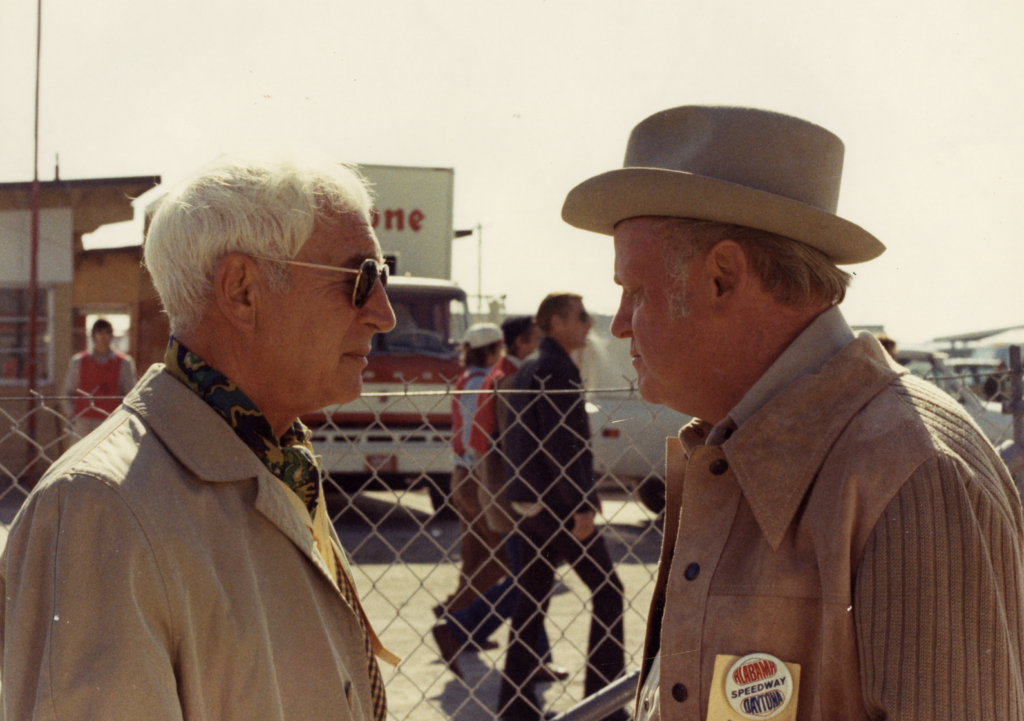
The Corvette had always existed at the intersection of styling and engineering, and no two men embodied that tension more visibly than Bill Mitchell and Zora Arkus-Duntov. Mitchell, General Motors’ vice president of Styling, understood the power of shape, proportion, and theater. Duntov, by then firmly established as Corvette’s chief engineer and most persuasive internal advocate, remained preoccupied with weight distribution, traction, cooling, aerodynamics, and the difficult business of turning ambitious layouts into machines that could survive hard use.
Their goals were not mutually exclusive, but their routes toward the next Corvette were different. Duntov continued exploring mid-engine competition machinery and the advantages that moving mass inward could offer. Mitchell’s organization, meanwhile, was developing a front-engine design statement whose exaggerated surfaces could be translated, at least in principle, into a production successor for the Sting Ray.
The projects that emerged are often compressed into one simple story in which Duntov designed a rear-engine Corvette while Mitchell designed the Mako Shark II. That version of history is convenient, but it blurs separate programs and assigns credit too casually. CERV II belonged to Duntov’s experimental performance work; XP-819 grew from Frank Winchell’s Chevrolet Research and Development group; and the Mako Shark II was a Styling project led by Mitchell and executed by Larry Shinoda.
None was a lightly disguised 1965 production car. They were test beds, counterproposals, and rolling arguments about what Corvette could become, created while the car customers could actually buy was still being refined in St. Louis. Seen together, they show how open the question of Corvette’s future remained.
Duntov and the Mid-Engine Question
While the 1965 Corvette represented the most complete expression yet of the Sting Ray, Zora Arkus-Duntov was already looking far beyond the limitations of the production car. Conceived in 1963 and first tested in 1964, his mid-engine, all-wheel-drive CERV II demonstrated just how ambitious his vision for Chevrolet performance had become. The Corvette on showroom floors was growing more capable, but Zora was already engineering the future. (Image credit: GM Media LLC.)
Duntov’s belief in the mid-engine layout was rooted in competition rather than novelty. Concentrating major masses between the axles could improve weight distribution and reduce polar moment, while placing more weight over the driven wheels aided traction. These were compelling advantages for a racing car, especially as tire, brake, and engine performance pushed speeds higher.
CERV II, developed in 1964, demonstrated the seriousness of that interest. It was a monocoque experimental racer with a 377-cubic-inch V-8 producing roughly 500 horsepower and an ambitious all-wheel-drive system intended to turn that output into forward motion. It was not a production prototype in the conventional sense, but it showed that Duntov’s group was thinking beyond the Corvette’s familiar front-engine architecture and beyond the limitations of a showroom program.
Getting from an experimental car to an affordable production Corvette was another problem entirely. A mid-engine road car needed a durable transaxle, effective cooling, acceptable luggage space, manageable heat and noise, serviceability, and a manufacturing plan that made sense at Corvette volumes. General Motors could engineer almost anything if cost were no object; the challenge was creating a component set that would survive big V-8 torque without forcing the Corvette into an entirely different price class.
Those obstacles did not end Duntov’s interest, but they explain why the 1968 production car retained a front engine. The conventional layout allowed Chevrolet to use proven engines and transmissions, preserve dealer service familiarity, and build upon the existing commercial foundation. For the moment, the more radical architecture remained in the experimental shop.
XP-819: Frank Winchell’s Rear-Engine Counterproposal
While Zora was pushing the mid-engine CERV II, Frank Winchell pursued an entirely different path toward the Corvette’s future. His XP-819 placed its Chevrolet V8 behind the rear axle to test whether a rear-engine layout could work in a serious American performance car. Styled by Larry Shinoda and ultimately unsuccessful, the radical prototype demonstrated that Corvette’s next great leap was being debated as vigorously as it was being engineered. (Image credit: Kolecki Photography)
XP-819 is sometimes folded into Duntov’s mid-engine campaign, but the car came from a different corner of Chevrolet. Frank Winchell, who led Chevrolet Research and Development, sponsored the project as a rear-engine counterproposal. Larry Shinoda shaped the body, and he later stated plainly that Duntov had nothing to do with XP-819, even though the project existed amid the same broad debate over future Corvette layouts.
The distinction is more than a matter of office politics. XP-819 placed a reverse-rotation 327 behind the rear axle, with a two-speed transaxle positioned ahead of it. That made it a rear-engine car, not a mid-engine one, and it produced a very different balance of masses than Duntov’s CERV II. Its long, low body hid an extreme mechanical arrangement that forced the design team to confront weight distribution, tire loading, cooling, and directional stability all at once.
The car was damaged during testing after its rear tires were fitted in the wrong direction for the load they were carrying. Its remains later passed through Smokey Yunick’s shop, and the prototype has since been painstakingly reconstructed. The survival story is fascinating, but XP-819’s larger importance lies in the argument it represented: Chevrolet was willing to challenge the production formula, even when the proposed answer proved less convincing than the question.
Mako Shark II: A Visible Preview of the C3
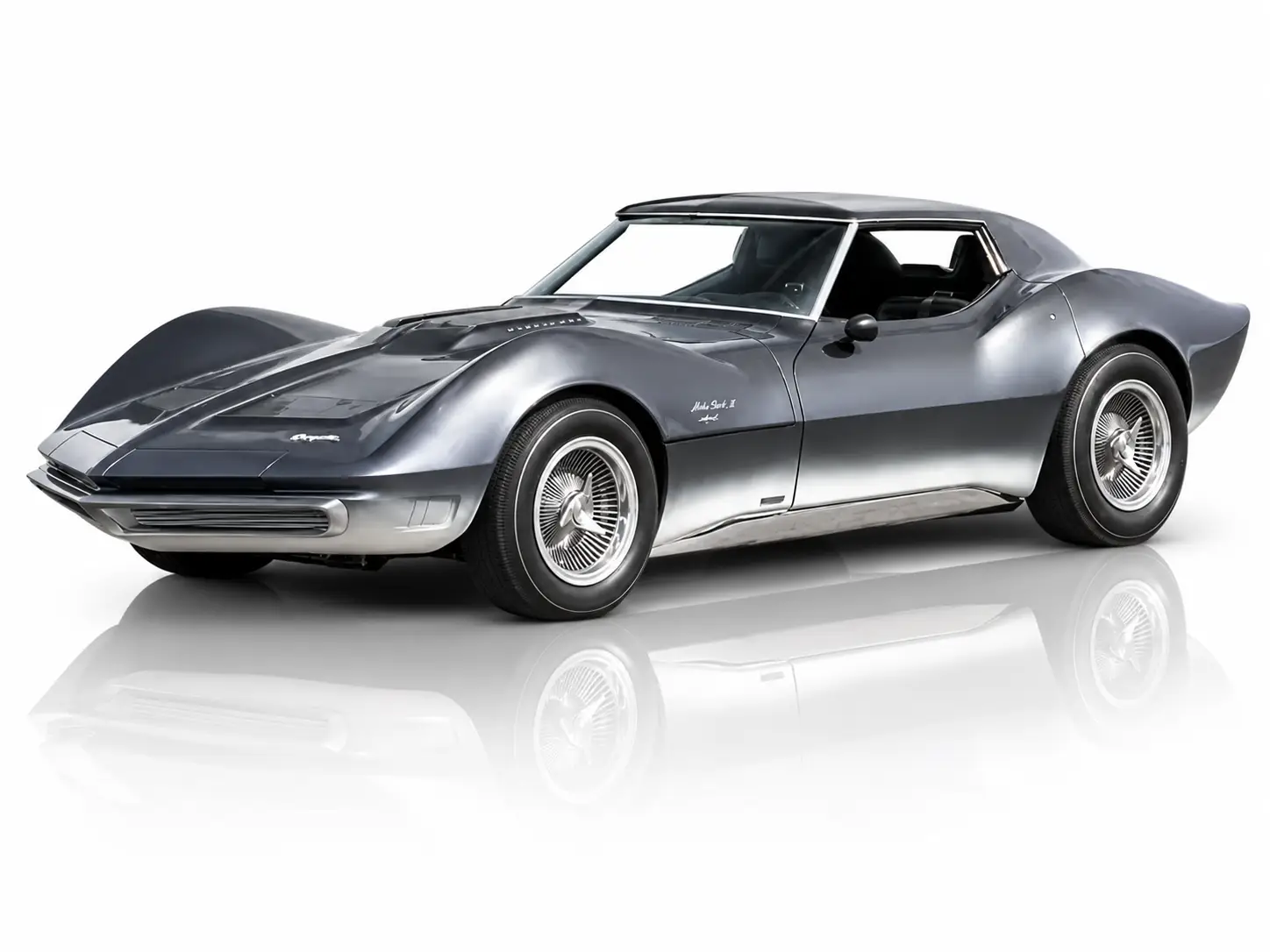
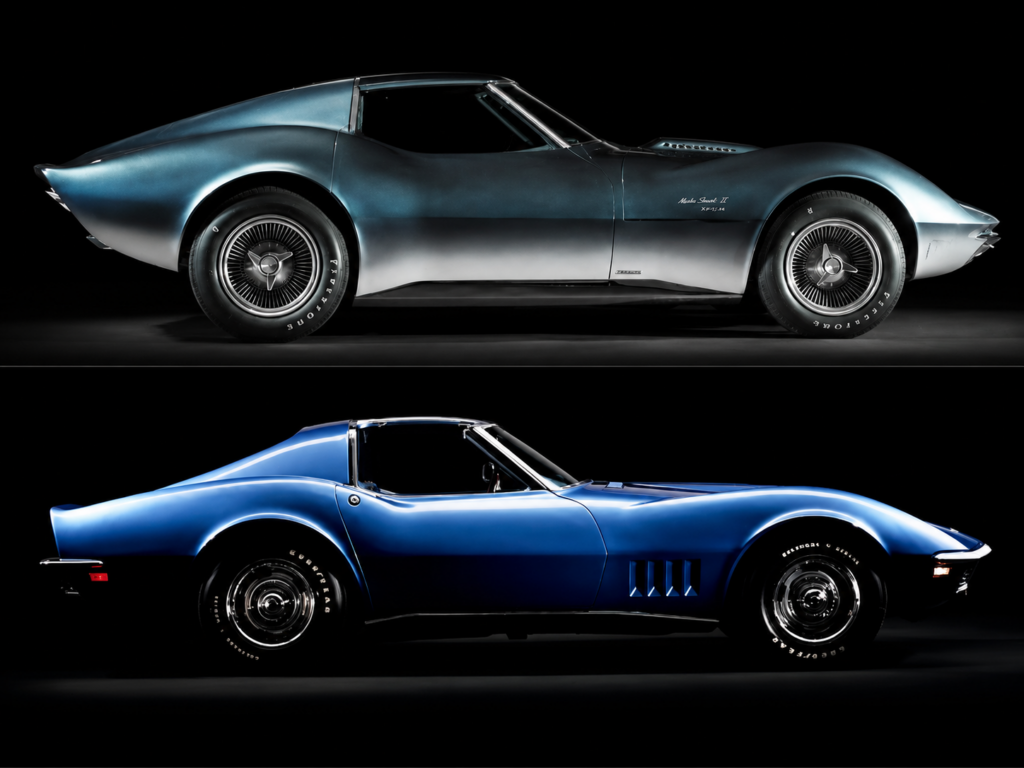
While Duntov and Winchell debated where the Corvette’s engine belonged, Bill Mitchell was defining what its future would look like. Created under his direction and unveiled in 1965, the Mako Shark II transformed Corvette design into something lower, more muscular, and overtly dramatic. Its pointed nose, sweeping fenders, and tightly drawn waist provided the visual foundation for the C3 Corvette that arrived in 1968. (Image credit: GM Media LLC.)
Where CERV II and XP-819 explored layout, Mitchell’s Mako Shark II explored desire. The project carried the experimental designation XP-830 and grew from Mitchell’s directive to create a Corvette show car in time for the New York International Auto Show in April 1965. Shinoda translated that brief into a body with a narrow waist, high and muscular fender peaks, a sharply pointed nose, and a tail that tapered as though the entire car had been pulled tight over its mechanical components.
The familiar photographs can make the Mako Shark II appear to be one car in several stages of development, but Chevrolet built two distinct versions. The first was a non-running show car created for display, complete with a highly theatrical interior, a squared steering wheel, and side-pipe treatments that belonged more to an auto-show fantasy than a production line. Its hood was marked for a Mark IV 396 even though no engine was installed beneath it.
The new concept car from Chevrolet, the Mako Shark II, at the Paris Motor Show, 1965. (Photo by Charles Edridge/Getty Images)
A separate running version appeared later with a 427-cubic-inch Mark IV V-8, a more conventional steering wheel, and numerous changes required to make the design functional. That car appeared at the Paris Motor Show and eventually evolved into the 1969 Manta Ray concept. The differences matter because photographs of the two are frequently mixed, creating a false impression that every exotic detail existed on a single, roadworthy machine.
The body’s dramatic color fade—from deep blue and gray along its upper surfaces into lighter silver-white below—reinforced the shark imagery that had become one of Mitchell’s favorite themes. More significant were the proportions. The pointed nose, deeply pinched center section, swelling fenders, and tapering rear would all be moderated for production, yet the essential movement of the form reached the third-generation Corvette.
The Mako Shark II was therefore both fantasy and forecast. Its interior and some of its exhaust details remained show-car theater, while its surface language gave the public a remarkably clear hint of what Chevrolet was preparing for 1968. In the spring of 1965, customers could walk into a dealership and buy the most mature version of the existing Sting Ray while seeing its successor take shape beneath the lights of an auto show.
Refining the Shape Chevrolet Already Had
Familiar Form, More Purposeful Detail
This Nassau Blue Sting Ray displays two of the visual details that defined the 1965 Corvette: the clean small-block hood and three vertical gills set into each front fender behind the wheel. The hood preserved the Corvette’s low, uninterrupted profile, while the revised gills gave the body a sharper, more purposeful appearance. Together, they remain among the quickest ways to identify a small-block 1965 Sting Ray.
The production Corvette did not borrow the Mako Shark II’s drama for 1965, nor did it need to. Instead, Chevrolet cleaned up the Sting Ray’s established form and gave several details a more purposeful appearance. The changes were visible enough to identify the year, but restrained enough to leave the body’s balance intact.
On small-block cars, the hood became a single smooth plane. The ornamental depressions that had remained after the 1963 hood’s false grilles disappeared, leaving a cleaner surface between the front fenders. It was a small change with a surprisingly large visual effect, because it removed one of the last decorative traces of the first-year Sting Ray.
The front fenders received three vertical vents behind each wheel in place of the 1964 car’s horizontal recesses. These openings were functional, allowing air to escape from the engine compartment, and their upright rhythm gave the sides a sharper identity. Along with the unique grille—black horizontal inner bars framed by a bright outer surround—they remain among the quickest ways to distinguish a 1965 car from the adjacent C2 years.
Chevrolet also revised the wheel covers and rocker-panel moldings. The optional cast-aluminum knock-off wheels carried dark gray paint between their fins, emphasizing the machined faces and spinner. As always with C2 Corvettes, seemingly small pieces of trim did more than decorate the body; they established a model-year fingerprint that restorers would later study with almost forensic care.
Two Hoods, Two Personalities
In 1965, the Corvette’s familiar Sting Ray profile gained a more muscular edge with the arrival of the L78 396-cubic-inch big-block V8. Its raised, sculpted hood was more than additional clearance for the new engine—it became an unmistakable declaration that the Corvette had entered a new era of performance. With 425 advertised horsepower beneath it, the shape warned everyone what was coming before the engine ever started.
The smooth hood defined the 1965 Corvette when production began, but it did not tell the whole model-year story. When the L78 396 arrived, its greater height and different induction packaging required a raised center section. Chevrolet answered with the now-famous power-bulge hood, creating an immediate visual dividing line between the small-block Sting Ray and the new big-block car.
The bulge was functional, but it was hardly anonymous. Paired with engine identification emblems and the harder-edged sound of the Mark IV, it announced that this was a different Corvette before the driver turned the key. The small-block car looked unusually clean and resolved; the 396 looked as though pressure were building beneath its fiberglass skin.
That contrast would become a recurring theme throughout the remaining C2 years. Big-block hoods grew more assertive as displacement and induction systems changed, while the small-block retained a lighter visual character. In 1965, the separation was new enough to feel like a midyear transformation rather than a settled Corvette convention.
Side-Mounted Exhaust Changes the Sting Ray’s Voice
The 1965 model year gave Corvette buyers a new way to make the Sting Ray look—and sound—even more serious: the factory N14 side-mounted exhaust system. Running beneath bright ribbed shields before exiting ahead of the rear wheels, the $134.50 option added considerable visual drama and an unmistakable V8 soundtrack. Only 759 Corvettes left St. Louis so equipped, making original 1965 side-pipe cars a rare sight today.
RPO N14 gave buyers another way to make the Corvette’s mechanical intent visible. Chevrolet described the side-mounted dual exhaust as equipment for off-road service and restricted it to cars ordered with an optional engine and four-speed transmission. The pipes ran beneath long covers at the rocker panels, placing the exhaust outlets ahead of the rear wheels and replacing the bright lower-body treatment used with conventional rear exhausts.
The change was not merely cosmetic. Moving the outlets beside the passenger compartment altered the sound and the experience of entering or leaving the car, especially after a hard drive had heated the covers. The side pipes gave the Sting Ray a competition-bred presence, but they also brought more noise and heat to a car that could otherwise be equipped as a surprisingly civilized grand tourer.
Only 759 buyers chose N14, which makes the original system far less common than its modern visibility might suggest. Reproduction side exhausts have since appeared on countless restored and modified C2s, so the presence of the hardware alone does not establish how a car left St. Louis. Factory documentation and the surrounding model-correct details remain essential.
A More Finished Interior
Chevrolet used 1965 to give the Sting Ray’s cockpit meaningful refinement without sacrificing its driver-focused character. Redesigned seats and inner door panels improved the cabin’s comfort and finish, while a painted radio-and-speaker surround replaced the earlier vinyl-covered treatment for a cleaner presentation. Options such as a telescopic steering column and teakwood steering wheel further elevated the driving environment. The result was a more mature interior—still unmistakably sporting, but increasingly worthy of Corvette’s growing status as a serious grand-touring machine. (Image credit: RK Motors)
The cabin changes were quieter, but they reflected the same effort to finish what Chevrolet had begun. Instrument faces changed to flat black, reducing glare and giving the deeply hooded gauges a more serious appearance. The areas around the radio and speaker bezel were painted rather than covered in vinyl, creating cleaner transitions across the center of the dashboard.
New seats were slightly larger and more supportive, with hard molded shells enclosing their backs. The door panels gained integrated armrests, and retractors made the seat belts less awkward to manage. None of these alterations transformed the tight C2 cockpit, but together they made it feel more deliberate and better resolved.
Buyers could take that interior in several directions. Genuine leather, power windows, a telescoping steering shaft, a teakwood steering wheel, air conditioning, tinted glass, and the Comfort and Convenience group could soften the Corvette’s harder edges. A convertible could be ordered with an auxiliary hardtop in addition to its folding top, while the coupe could carry the enormous 36-gallon fuel tank intended for long-distance use.
Compatibility mattered, because the most aggressive powertrains closed off some of those choices. Air conditioning was available with the 250-, 300-, 350-, and 365-horsepower engines, but not with the fuel-injected L84 or the L78 big block. Power steering was limited to the 250-, 300-, and 350-horsepower combinations. That made the L79 especially important: it was the strongest 1965 engine that could still be paired with both major comfort assists.
The Year the Corvette Learned to Stop
Chevrolet understood the significance of the Corvette’s new braking system and made it the centerpiece of this 1965 advertisement. A dramatic frontal view of the Sting Ray is paired with a detailed Delco-Moraine disc-and-caliper assembly, while the copy promotes four-wheel discs as standard equipment. Chevrolet emphasized resistance to heat, water, and fade—qualities that finally gave the Corvette stopping capability worthy of its performance.
Performance Had Outgrown the Old Brakes
The Corvette entered the 1960s with more engine than brake. Chevrolet’s drums could be made to work well for a single stop, and competition packages offered more aggressive linings, cooling provisions, and related hardware. Repeated hard braking, however, generated heat faster than the enclosed drums could shed it, changing pedal feel and increasing stopping distances just when a driver needed consistency most.
That weakness had become increasingly difficult to defend. The Sting Ray was capable of sustained high speeds, Chevrolet advertised it as a serious sports car, and road testers routinely measured it against Jaguars, Ferraris, Porsches, and other European machinery that had made disc brakes part of the modern performance vocabulary. A fast car that could not repeat its best stop without fade was no longer a complete performance car.
Chevrolet had experimented with disc brakes before 1965, but the third model year brought them to every production Corvette as standard equipment. The change was more important than a new piece of trim or another increment of horsepower because it improved every version of the car. A base-engine convertible benefited from the same fundamental braking architecture as a fuel-injected coupe or a 396 roadster.
Standard Delco-Moraine Four-Wheel Discs
With the wheel removed, the engineering behind the 1965 Corvette’s new braking system comes into clear view. A fixed Delco-Moraine four-piston caliper straddles the 11.75-inch ventilated rotor, providing the heat control and consistent stopping performance that Chevrolet’s earlier drum brakes could not match. Standard on nearly every 1965 Corvette, this four-wheel-disc system finally gave the Sting Ray braking capability equal to its speed.
The new Delco-Moraine system used an 11.75-inch ventilated cast-iron rotor at each wheel. Fixed two-piece calipers straddled those rotors, with four pistons and four friction segments at every corner. Chevrolet specified 461.2 square inches of total swept lining area and proportioned approximately 65 percent of the braking effort to the front, where weight transfer placed the greatest demand during a hard stop.
Ventilation was central to the design. Air passing through the internal rotor vanes carried heat away from the friction surfaces, while the exposed disc arrangement allowed additional cooling that a drum could not match. The pads rode in light contact with the rotors, helping keep the swept surfaces clean and keeping the system ready without the adjustment behavior associated with conventional drum shoes.
The factory chassis description identified the bonded friction material as woven asbestos, a period specification that should not be confused with later replacement compounds. Modern owners necessarily approach those materials differently, and many surviving cars have been rebuilt with contemporary pads, stainless-sleeved calipers, and replacement rotors. Those service changes can improve reliability without changing the architecture that made the original system so effective.
Because the rear wheels now used discs, Chevrolet provided a separate mechanical parking brake within a 6.5-inch drum formed at the center of each rear rotor. Pulling the parking-brake handle operated those small internal shoes independently of the hydraulic system. The arrangement allowed the primary brakes to be optimized for stopping while preserving a simple mechanical means of holding the car.
In its April 1965 “Corvette Sting Ray Road Test,”Motor Trend assistant technical editor Bob McVay examined a Corvette that had become substantially more refined without surrendering the performance that defined it. The headline development was Chevrolet’s new four-wheel disc-brake system, which delivered five consecutive 60-mph panic stops averaging 153.65 feet, with no fade, wheel lockup, or directional instability—evidence that the Corvette’s stopping capability had finally caught up with its speed. Beyond braking, McVay praised the car’s independent suspension, controllability, cockpit layout, engine choices, and improved everyday livability, presenting the 1965 Corvette as a far more complete sports car than its predecessors. In executive terms, the article’s message was clear: 1965 marked the point where Corvette’s raw performance was matched by equally serious braking, handling, refinement, and usability—turning an already fast car into a genuinely well-rounded American sports car. (Image credit: Motor Trend Magazine)
Period testing quickly demonstrated what the specifications promised. After approximately 1,500 miles in a 300-horsepower Corvette, Motor Trend conducted five panic stops from 60 mph. The car averaged 153.65 feet, with a shortest stop of 137 feet and a longest of 166 feet, and the testers reported no fade, directional instability, or wheel lockup. More telling than any single number was the repeatability: the Corvette could stop hard again without the system visibly coming apart beneath the driver.
The magazine described the brakes in exceptionally enthusiastic terms, but Chevrolet’s own durability projections should be treated as factory claims rather than independent guarantees. Pad and rotor life depended on use, maintenance, runout, sealing, and environmental conditions, just as it does today. What the road tests established was not infinite durability; it was that the Corvette’s production braking system had finally reached a level appropriate to the rest of the car.
One Circuit Standard, Two with Power Assist
One detail has been repeatedly muddled in later accounts. The standard manual disc-brake system retained a single hydraulic circuit. A divided-output, dual-reservoir master cylinder came with RPO J50 power brakes, giving the assisted system separate front and rear hydraulic circuits in addition to reduced pedal effort.
That makes the 1965 power-brake option more consequential than its name suggests. J50 was not simply a vacuum booster attached to an otherwise identical system; it changed the hydraulic redundancy as well. Chevrolet built 4,044 cars with power brakes, meaning most 1965 Corvettes left the factory with manual discs and the single-circuit master cylinder.
The distinction is particularly useful when inspecting a restored car. A dual-reservoir master cylinder on a manual-brake Corvette may be a sensible safety update, but it is not the standard 1965 configuration. Conversely, a car represented as factory power-brake equipped should carry the correct booster, master-cylinder arrangement, lines, and supporting documentation rather than a collection of added parts.
The Curious J61 Drum-Brake Credit
This September 1964 Chevrolet engineering page documents the braking system used on the 1965 Corvette, including the new four-wheel disc setup, internal parking brake, and RPO J50 power-brake arrangement. The factory illustration is especially valuable because it shows the caliper construction, wheel cylinders, brake linings, parking-brake hardware, and the divided-output master cylinder specified for J50-equipped cars. Alongside the drawings, Chevrolet listed the key dimensions, hydraulic ratios, pedal travel, and braking-force distribution, making the page one of the clearest period references for understanding exactly how the 1965 system was configured. (Image credit: GM)
For buyers who did not want the new discs, Chevrolet offered RPO J61, which substituted drum brakes and reduced the price of the car. The opening-model-year credit was $64.50, enough to make the option visible on an invoice but not enough to persuade many customers to give up the year’s most important standard feature. Only 316 cars were built that way.
J61 appears irrational if viewed only through modern enthusiasm for the disc system. In 1965, however, some buyers and fleet-minded owners preferred familiar hardware, while racers could have their own reasons for choosing a starting configuration they intended to modify. Replacement parts, service habits, and distrust of new mechanisms could also shape an order in ways that do not survive in a production total.
Its rarity has since reversed the original logic. The drum-brake car was cheaper when new, but a documented, correctly restored J61 Corvette is now an unusual artifact precisely because almost everyone made the more obvious choice. That does not make it the better-driving version; it makes it one of the clearest examples of rarity and desirability following different paths.
A Chassis Finally in Balance
This period track image captures exactly what the 1965 Corvette’s chassis finally delivered: a sports car whose braking, steering, suspension, and overall balance were working in concert. By 1965, the Sting Ray’s independent rear suspension, carefully tuned front geometry, and available quick-ratio steering gave the car the composure to carry speed through a corner without feeling crude or unfinished. Seen here loaded into a turn, the Corvette looks like what it had become—a car able to accelerate, change direction, and hold its line with a level of confidence that matched its performance. In the context of our article, this photograph helps show why the 1965 Sting Ray no longer felt like a fast car waiting for the rest of its chassis to catch up. (Image credit: Motor Trend)
The brake system worked because it joined a chassis that was already fundamentally sound. At the front, unequal-length control arms, coil springs, telescopic shock absorbers, and an anti-roll bar managed wheel movement. At the rear, the differential was fixed to the frame, half-shafts carried power to independently moving wheels, lateral struts controlled camber, trailing arms located the hubs, and a nine-leaf transverse spring supported the car.
That layout gave the Sting Ray advantages in ride, grip, and packaging, but it also gave Chevrolet room to tune several personalities into the same platform. Standard suspension settings suited ordinary road use; RPO F40 increased spring and damping rates for drivers willing to trade compliance for greater control. The special suspension was restricted to the L84 and L78 with a four-speed and Positraction, an indication that Chevrolet viewed it as part of a complete high-performance combination rather than a decorative option.
This image comes straight out of the visual world of Motor Trend’s April 1965 “Corvette Sting Ray Road Test,” where assistant technical editor Bob McVay evaluated Chevrolet’s updated sports car in real driving conditions rather than simply repeating factory claims. Photographed by Pat Brollier, the shot helps place the article in its proper setting: a serious road test that blended performance driving, engineering analysis, and firsthand impressions. In that context, the photograph is more than period eye candy—it is part of the evidence behind Motor Trend’s conclusion that the 1965 Corvette had become a more complete and convincing sports car. (Image credit: Motor Trend)
Manual steering came in two ratios, with 20.2:1 used for ordinary applications and a quicker 17.6:1 gear available in the appropriate performance configuration. Power steering also used the 17.6:1 ratio, reducing effort without turning the Corvette into a slow-response boulevard car. Depending on equipment, the wheel required either 3.4 or 2.92 turns from lock to lock.
On standard 7.75×15 tires, the 1965 Corvette still had less grip than a modern performance car and demanded respect near the limit. Its independent rear geometry could change toe and camber as bushings wore or alignment wandered, while big torque could overwhelm the available rubber. Yet with the brakes transformed, the chassis no longer felt as though one major system had been left behind. The Sting Ray could accelerate, change direction, ride, and stop as a coherent whole.
Six Ways to Power a Sting Ray
One Corvette, Six Interpretations
For 1965, Corvette gained the engine that fundamentally changed its performance hierarchy: Chevrolet’s 396-cubic-inch Turbo-Jet big-block V8. Rated at 425 horsepower, the L78 introduced a new level of straight-line performance to the Sting Ray and marked the beginning of Corvette’s big-block era. Its sheer size transformed the engine bay, while the bright Chevrolet Orange valve covers and distinctive “Turbo-Jet 425 HP” air-cleaner decal made it unmistakable beneath the hood. (Image credit: Bring a Trailer)
The arrival of the 396 tends to swallow the rest of the 1965 engine story, but Chevrolet’s greatest accomplishment may have been the range beneath it. Five versions of the 327 small block remained available, each with a distinct balance of output, maintenance, noise, cost, and compatibility. The big block then arrived as a sixth choice rather than an immediate replacement for everything Chevrolet already knew how to do well.
All six were overhead-valve V-8s, but the similarities could be misleading. Hydraulic-lifter engines rewarded owners who wanted to drive rather than adjust valve lash, while the solid-lifter L76, L84, and L78 accepted greater maintenance in exchange for more aggressive high-speed operation. Carburetion ranged from a tractable Carter four-barrel to large Holley units, and the L84’s Rochester mechanical injection remained a category of its own.
RPO
Displacement and induction
Compression
Valve gear
Horsepower
Torque
Production
Base
327 cu. in., Carter four-barrel
10.5:1
Hydraulic lifters
250 at 4,400 rpm
350 lb-ft at 2,800 rpm
2,551
L75
327 cu. in., Carter four-barrel
10.5:1
Hydraulic lifters
300 at 5,000 rpm
360 lb-ft at 3,200 rpm
8,358
L79
327 cu. in., Holley four-barrel
11.0:1
Hydraulic lifters
350 at 5,800 rpm
360 lb-ft at 3,800 rpm
4,716
L76
327 cu. in., Holley four-barrel
11.0:1
Mechanical lifters
365 at 6,200 rpm
350 lb-ft at 4,000 rpm
5,011
L84
327 cu. in., Rochester mechanical fuel injection
11.0:1
Mechanical lifters
375 at 6,200 rpm
350 lb-ft at 4,400–4,800 rpm
771
L78
396 cu. in., Holley four-barrel
11.0:1
Mechanical lifters
425 at 6,400 rpm
415 lb-ft at 4,000 rpm
2,157
The figures came from Chevrolet’s revised model-year powertrain information. Some factory publications placed the L79’s torque peak at 3,600 rather than 3,800 rpm, and the L84’s peak appears as both a range and a single 4,800-rpm figure in surviving material. Those minor inconsistencies do not change the character of either engine, but they are a useful warning against treating every period table as though Chevrolet issued it once and never revised it.
More important is what buyers actually chose. The 300-horsepower L75 was the volume leader, followed by the 365-horsepower L76 and the new L79. The base engine accounted for barely one Corvette in nine, while the fuel-injected L84 attracted fewer buyers than the big block despite having been the flagship small block. Performance mattered in 1965, but so did the price and manner in which it was delivered.
The 250- and 300-Horsepower Foundation
The 1965 Corvette’s standard engine was Chevrolet’s 327-cubic-inch small-block V8, rated at 250 horsepower and 350 lb-ft of torque. While it sat at the bottom of an increasingly formidable engine lineup, the base 327 still gave the Sting Ray strong performance, smooth power delivery, and the kind of everyday drivability that made the Corvette more than just a weekend toy. For buyers who didn’t need the added expense or temperament of the hotter optional engines, the 250-horsepower 327 offered an excellent balance of performance, reliability, and refinement. (Image credit: bringatrailer.com)
The standard 327 produced 250 horsepower at 4,400 rpm and 350 pound-feet of torque at only 2,800. Its Carter four-barrel, hydraulic lifters, and relatively modest state of tune made it the least dramatic engine in the catalog, but not an inadequate one. In a car weighing a little more than 3,100 pounds, the base V-8 delivered ample everyday performance with a broad torque curve and fewer demands on its owner.
It was also the only engine available with the standard three-speed manual transmission. That combination kept the advertised price as low as possible, although only a small minority of buyers were content to leave the car that way. The Corvette had become an aspirational purchase, and customers who had already stretched to buy one were often willing to add the equipment that made it feel special.
The L75 327 offered 1965 Corvette buyers an ideal step up from the standard 250-horsepower small-block without sacrificing everyday drivability. Rated at 300 horsepower and 360 lb-ft of torque, the carbureted 327 delivered strong, flexible performance while retaining the lighter, more balanced character that had long defined the Corvette’s small-block formula.
For $53.80 at the start of the model year, L75 raised output to 300 horsepower at 5,000 rpm and torque to 360 pound-feet at 3,200. It retained hydraulic lifters and a Carter four-barrel, preserving the base engine’s easy manners while giving the car more urgency through the middle and upper ranges. With 8,358 installations, it became the most popular engine in the lineup.
Both engines could be ordered with the two-speed Powerglide automatic, and both accepted power steering and air conditioning. In a convertible equipped for touring, the 300-horsepower 327 offered a particularly sensible combination of performance and civility. It would not win an argument based on peak output, but it made the Corvette an easier car to use in traffic, on vacation, or for the daily routines that horsepower tables tend to ignore.
A period Motor Trend test of a 300-horsepower car underscored that balance. The magazine recorded 0–60 mph in 7.5 seconds and a standing quarter mile in 15.8 seconds at 90 mph, figures that were strong without requiring a competition-style engine. The same car delivered the memorable brake performance discussed earlier, making it a better demonstration of the complete 1965 package than an engine-only test would suggest.
L79: The Street Engine Chevrolet Had Been Missing
The L79 was arguably one of the sweetest combinations available in the 1965 Corvette: a 327-cubic-inch small-block producing 350 horsepower, backed by 360 lb-ft of torque and an 11.0:1 compression ratio. Unlike the more aggressive solid-lifter L76, the L79 employed hydraulic lifters and a somewhat milder camshaft, giving owners much of the performance of Chevrolet’s hottest small-blocks without demanding quite as much attention in everyday use. Fed through a four-barrel carburetor, it delivered the kind of free-revving performance that made the 327 famous while remaining remarkably civilized on the street—a combination that has helped make the L79 one of the most desirable small-block engines of the Sting Ray era.
Historical note: The Rally Red 1965 L79 Corvette pictured here was once owned by aviation and Corvette legend Betty Skelton. Documentation associated with the car identifies Skelton as its owner after the Corvette had initially been assigned through Chevrolet’s Central Office; the car was equipped with the 327/350-horsepower L79 and a four-speed transmission.
If the L78 was the year’s sensation, the new L79 may have been its most intelligent engine. It combined the 11.0:1 compression ratio, aluminum intake manifold, large Holley four-barrel, and high-flowing character expected of a serious small block with hydraulic lifters that did not require periodic lash adjustment. Rated at 350 horsepower at 5,800 rpm and 360 pound-feet at 3,800, it gave away only 15 horsepower to the solid-lifter L76 while making fewer demands on the driver and owner.
The distinction could be heard as well as felt. A solid-lifter engine has a purposeful mechanical clatter, especially when cold, and its valve lash becomes part of normal maintenance. The L79 delivered much of the same urgency with a smoother, quieter valvetrain, allowing the engine to pull cleanly in ordinary driving and still come alive when the throttle opened far enough to bring the Holley fully into play.
Its camshaft was central to the compromise. The L79 used a high-performance hydraulic profile aggressive enough to support strong upper-rpm breathing without demanding the maintenance schedule of the L76. Chevrolet paired it with the equipment needed to take advantage of that breathing, including the aluminum intake and free-flowing induction that visually placed the engine closer to its solid-lifter sibling than to the 300-horsepower L75.
What made the L79 exceptional was not simply that it sat between two numbers on the order form. It could be combined with power steering and air conditioning, privileges denied to the L76 in the steering column and to the L84 and L78 in the air-conditioning column. A buyer could therefore order the strongest 1965 Corvette that accepted both forms of assistance and still receive a four-speed, Positraction, and an axle ratio suited to the intended use.
That made the L79 the natural grand-touring engine. It could idle through town without pretending to be a racing special, cruise long distances without asking its owner to carry a feeler gauge, and still produce 1.07 advertised horsepower per cubic inch. In a coupe with air conditioning, a telescoping steering shaft, leather, and the 3.08 highway axle, it became a fast cross-country machine; with shorter gearing and fewer amenities, it could take on a much harder personality.
In its January 1965 road test, Car and Driver used the 350-horsepower L79 Sting Ray to argue that the Corvette could stand up to far more expensive European machinery from Ferrari and Aston Martin. The magazine emphasized the L79’s strong acceleration, broad usable power, and everyday tractability, showing that Chevrolet’s small-block could deliver serious performance without the harsher manners of more radical solid-lifter engines. It was exactly the kind of engine that made the 1965 Sting Ray feel fast, sophisticated, and remarkably complete. (Image credit: Car and Driver Magazine / Image enhancement: ChatGPT)
Period writers recognized the breadth. Car and Driver placed an L79 Sting Ray in a deliberately provocative comparison with Ferrari and Aston Martin, using humor to make a serious point about the Corvette’s speed, equipment, and value. The Chevrolet did not possess the delicacy or pedigree of those European cars, but it could operate in their performance world while carrying a price and service network that made the comparison uncomfortable for the imported establishment.
Chevrolet built 4,716 L79 Corvettes, enough that the engine was not an exotic footnote but too few for it to become ordinary. Its $107.60 opening price sat closer to the L76’s $129.15 than to the L75’s $53.80, and buyers who cared only about the highest small-block rating could reasonably spend the extra amount for 365 horsepower. Those who understood how they would actually use the car found something more subtle: nearly all the speed, fewer rituals, and more ways to equip the rest of the Corvette.
For that reason, the L79 is often described today as the sweet spot of the 1965 lineup. The phrase can sound like collector shorthand, but it describes a real engineering balance. The engine did not win every specification column; it simply made the fewest compromises while remaining unmistakably fast.
L76: The Familiar Solid-Lifter Performer
The L76 327-cubic-inch V8 was one of the most serious small-block engines offered in the 1965 Corvette, producing 365 horsepower at 6,200 rpm and 350 lb-ft of torque. Fed by a Holley four-barrel carburetor and equipped with Chevrolet’s aggressive solid-lifter “30-30” camshaft, the L76 was built to rev and rewarded drivers who were willing to work the engine higher in the rpm range. It delivered nearly the performance of the fuel-injected L84 without the complexity or expense of Rochester injection, making it one of the most desirable high-performance small-block combinations of the Sting Ray era. Chevrolet built 5,011 Corvettes with the L76 in 1965, making it considerably more common than the 375-horsepower fuel-injected engine, but no less important to the Corvette’s growing performance reputation.
The L76 carried forward the established high-performance carbureted small-block formula. Its 327 used 11.0:1 compression, mechanical lifters, a large Holley four-barrel, and an aluminum intake to produce 365 horsepower at 6,200 rpm. Peak torque was 350 pound-feet at 4,000 rpm, slightly less than the L79’s rating but delivered by an engine intended to keep pulling at higher speed.
For an owner willing to maintain valve lash and live with a more assertive idle and valvetrain, the L76 remained compelling. It cost less than a quarter of the fuel-injection premium, required no familiarity with the Rochester unit, and was only ten horsepower shy of the L84’s advertised peak. Its carburetor could be tuned by mechanics who already understood high-performance Chevrolets, an advantage that grew more meaningful as the cars aged.
The 5,011 cars built with L76 made it the second-most popular engine of the year. That total is easy to understand: before the 396 arrived, it was the proven choice for buyers who wanted a competition-flavored small block without paying for injection. Even after the big block appeared, the L76 offered less front-end weight and a rev-happy character that brute displacement could not duplicate.
It also preserved the personality many drivers associated with a serious Corvette. The engine wanted rpm, the four-speed demanded participation, and the chassis rewarded a driver who carried speed rather than simply opening the throttle at the exit of every corner. In 1965, the small-block performance hierarchy did not collapse merely because something larger had arrived.
L84: The End of the Rochester Era
The L84 327-cubic-inch V8 represented the ultimate evolution of Chevrolet’s fuel-injected small-block in the C2 Corvette, producing 375 horsepower at 6,200 rpm and 350 lb-ft of torque at 4,600 rpm. Its Rochester mechanical fuel-injection system gave the engine exceptionally crisp throttle response and helped make the L84 one of the most sophisticated American performance engines of its day. It was also expensive—an additional $538 in 1965—which helped limit production to just 771 cars. More significantly, 1965 marked the end of Chevrolet’s original mechanical fuel-injection era, making the L84 both one of the most desirable Sting Ray engines and the final chapter in a technology that had helped define Corvette performance since 1957.
At the top of the small-block range sat RPO L84, the final Corvette application of Rochester mechanical fuel injection. Its 327 carried the same 11.0:1 compression ratio and 6,200-rpm horsepower peak as the L76, but the continuous-flow system replaced the carburetor and lifted output to 375 horsepower. That made it the strongest production small-block Corvette of the model year by rating and the last expression of a program that had begun in 1957.
The Rochester unit was an intricate mechanical analog computer. Outside air entered through ducting to an air meter, fuel moved through a high-pressure gear pump driven by a flexible shaft from the distributor, and eight brass nozzles delivered it near the intake ports. Airflow, engine speed, manifold conditions, and calibrated mechanical relationships determined how much fuel the engine received, all without an electronic sensor or digital control module.
When properly adjusted, the system offered crisp response and even distribution at a time when fuel injection remained exotic on an American production car. It also demanded knowledge. Vacuum leaks, worn components, incorrect linkages, or well-intentioned adjustments by someone unfamiliar with the system could turn an expensive advantage into a frustrating ownership problem.
Price did not help. The L84 cost $538 at the opening of the model year, five times the L79 premium and more than four times the price of the L76. The new 396, when it arrived, cost $292.70 and offered 50 more advertised horsepower plus 65 additional pound-feet of torque. Even allowing for the big block’s required equipment, the contrast made it clear how cheaply Chevrolet could create power through displacement compared with the precision machinery of mechanical injection.
Only 771 buyers selected L84, down sharply from the volumes Rochester injection had achieved earlier in the decade. The system’s disappearance after 1965 was not proof that it had failed; it showed that the economics and performance priorities had changed. Carburetors were becoming more capable, the Mark IV offered an easy path to spectacular output, and emissions, service, and cost pressures would soon favor other solutions.
Fuel injection did not return to a production Corvette until the 1982 model’s electronically controlled Cross-Fire system. By then, the method, purpose, and regulatory environment had changed entirely. The 1965 L84 therefore closed the first great Corvette fuel-injection chapter rather than merely pausing an unchanged technology.
That ending gives the L84 a significance beyond its rarity. It was the last of the high-winding Rochester-injected 327s, built in the same model year as the first production big block. One engine represented the most sophisticated version of Corvette’s recent past; the other made clear where the horsepower race was heading.
From the Mystery Motor to the Mark IV
The 1965 L78 396-cubic-inch Mark IV V8 changed the character of the Corvette almost overnight. Rated at 425 horsepower at 6,400 rpm and 415 lb-ft of torque at 4,000 rpm, the new “Turbo-Jet” big-block brought substantially more displacement and torque than any of the small-block engines that preceded it, giving the Sting Ray the kind of straight-line performance that would define the Corvette for the remainder of the decade. Offered as a $292.70 option, the L78 was installed in just 2,157 Corvettes, and 1965 would be the only year the 396 appeared in the model before Chevrolet moved to the 427 for 1966. More than simply another engine option, the L78 marked the Corvette’s transition into the big-block era. (Image credit: Over-Drive Magazine)
The Mark IV did not appear without ancestry, but its lineage is frequently simplified into the claim that Chevrolet dropped the 1963 “Mystery Motor” directly into the 1965 Corvette. The engine that appeared in NASCAR competition at Daytona in 1963 was the developmental Mark II, a racing program that explored the canted-valve cylinder-head layout and breathing strategy Chevrolet would keep refining. It was a bridge to the production big block, not the identical engine later sold as a 396.
The canted valves were the defining visual and functional idea. Rather than placing the intake and exhaust valves in neat parallel rows, Chevrolet angled them in multiple planes to improve airflow and make room for larger ports and valves. The resulting rocker layout looked disorderly enough to inspire the “porcupine” nickname, but the apparent chaos served a deliberate purpose: it allowed the combustion chambers to breathe at a level the older W-series 348 and 409 architecture could not easily match.
Developing that concept into a production engine required far more than changing bore and stroke. Chevrolet had to create blocks, heads, oiling, cooling, induction, and valvetrain components that could be manufactured in volume and survive the warranty expectations of ordinary cars. Tonawanda production and the broader 396 program spread those costs across full-size Chevrolets, Chevelles, and Corvettes, making the Mark IV viable in a way a Corvette-only engine never could have been.
For the Corvette, Chevrolet selected a particularly aggressive 396. It was not the milder 325- or 360-horsepower version available elsewhere in the division’s lineup, but a solid-lifter, high-compression engine developed to establish the new family’s performance authority. The result arrived late enough to divide the model year into before and after.
L78: The First Production Big-Block Corvette
Laid out piece by piece, this image offers a rare look at the fundamental architecture of Chevrolet’s Mark IV big-block V8. Visible here are the bare engine block, intake manifold, crankshaft, camshaft, pistons, connecting rods, rocker arms, pushrods, bearings, and water pump—components that together formed the basis of one of the most important performance engines of the 1960s. What makes the image so compelling is how clearly it shows the mechanical honesty of the design: big, heavy-duty parts engineered to handle serious horsepower and torque. For Corvette enthusiasts, it’s a reminder that the 396’s reputation was built not just on output, but on the robust hardware that made that performance possible. (Image credit: MotorTrend Magazine)
RPO L78 displaced 396 cubic inches through a 4.094-inch bore and a 3.76-inch stroke. It used 11.0:1 compression, a large Holley four-barrel on an aluminum intake manifold, mechanical lifters, a forged-steel crankshaft, impact-extruded aluminum pistons, a high-capacity oil pump, and the Mark IV’s canted-valve cylinder heads. Chevrolet rated it at 425 horsepower at 6,400 rpm and 415 pound-feet of torque at 4,000.
Those numbers changed the Corvette’s character more dramatically than the 50-horsepower advantage over L84 suggests. The additional 69 cubic inches produced a thicker surge of torque across the working range, and the engine did not require the same choreography of rpm to make the car feel fast. A small-block Sting Ray gathered itself and rushed toward redline; the L78 seemed to strike the drivetrain with a much larger hammer.
The engine brought weight and heat with its power. Its 22-quart cooling system was larger than the small block’s 19-quart arrangement, and its mass over the front wheels inevitably changed the car’s balance. Power steering and air conditioning were unavailable, leaving drivers to manage heavier low-speed steering and the heat of a high-compression engine without the comfort equipment offered on less demanding versions.
Chevrolet also required the L78 to be ordered as part of a system. It came only with a four-speed manual, Positraction, and K66 transistor ignition. Axle choice determined whether the car leaned toward road use or maximum acceleration, while the brakes, cooling, clutch, driveshaft, and rear axle all had to survive loads the original Corvette could never have imagined.
Visually, the power-bulge hood and engine emblems made the L78 difficult to mistake. Mechanically, the solid-lifter Mark IV, double-snorkel air cleaner, and crowded engine bay gave it an entirely different presence from the compact 327. At idle it sounded impatient; under load it delivered the kind of acceleration that made the available tires feel like the limiting component.
The L78 transformed the 1965 Corvette into a genuinely formidable straight-line performer, its 396-cubic-inch big-block producing a factory-rated 425 horsepower at 6,400 rpm and 415 lb-ft of torque at 4,000 rpm. With its solid-lifter camshaft, high-flow cylinder heads, and aggressive breathing, the L78 was built to make power at higher engine speeds and gave the Sting Ray performance that few production cars of the period could match. A much later demonstration of that capability came at the 2022 Pure Stock Muscle Car Drag Race, where a 1965 L78 Corvette squared off against a modified 1978 Camaro Z/28; after losing the first run when the Corvette struggled off the line, the big-block Sting Ray came back to win the next two races with sub-14-second quarter-mile passes. (Image credit: HotCars.com)
Period tests commonly placed the L78 near 5.7 seconds from 0–60 mph and around 14.1 seconds at approximately 103 mph through the standing quarter mile. Individual results varied with axle ratio, surface, weather, tire condition, and driver technique, while top-speed estimates depended heavily on gearing. With a 3.70 axle, testers found a car capable of roughly 136 mph, but the important result was not a single heroic number—it was that a showroom Corvette had entered a different class of effortless acceleration.
Chevrolet built 2,157 L78 Corvettes during the shortened portion of the model year in which it was available. That was nearly three times the full-year production of the fuel-injected L84 and strong evidence that customers understood the value proposition immediately. The L78 was less expensive than fuel injection, more powerful by every factory measure, and new enough to make an already conspicuous car feel like the beginning of something.
The big-block era had begun.
An Engine Was Really a Package
The power-team chart mattered because a 1965 Corvette engine could not be chosen in isolation. Each one brought requirements and exclusions that shaped the rest of the car. The result was less like selecting a single option and more like choosing a branch through Chevrolet’s ordering system.
Engine
Three-speed
Four-speed
Powerglide
Power steering
Air conditioning
Transistor ignition
327/250
Standard
Available
Available
Available
Available
—
L75 327/300
—
Available
Available
Available
Available
—
L79 327/350
—
Required
—
Available
Available
Available
L76 327/365
—
Required
—
—
Available
Available
L84 327/375 FI
—
Required
—
—
—
Available
L78 396/425
—
Required
—
—
—
Required
The table reveals why peak horsepower alone is a poor way to describe the range. An L75 automatic convertible and an L78 four-speed coupe shared a body, frame, and brake architecture, yet served almost opposite purposes. The L79 occupied the widest middle ground, while L76 and L84 buyers increasingly traded convenience for the specific feel of a high-rpm small block.
Rear-axle choices further altered each combination. The 3.36:1 ratio was standard, with 3.08, 3.55, 3.70, 4.11, and 4.56 ratios available where the engine and transmission permitted. Higher numerical ratios improved acceleration at the cost of engine speed and noise on the highway; the 3.08 ratio did the opposite. The more aggressive power teams and ratios required Positraction, which explains why 19,965 cars—nearly 85 percent of production—received G81.
Owners sometimes speak of axle ratio as though it were an obscure line on the build sheet. In a non-overdrive Corvette, it is one of the most powerful determinants of personality. A 4.56-geared small block feels frantic and immediate but busy on a long drive, while a 3.08-geared L79 settles into speed with far less commotion. Two cars with identical engines can therefore produce very different memories.
Three Speeds, Four Speeds, and Two
For 1965, the three-speed manual was still the Corvette’s standard transmission, but almost nobody left the dealership with one. Only about 1.7 percent of 1965 Corvettes were built with the three-speed, as the overwhelming majority of buyers opted for the more performance-oriented four-speed. That makes a surviving three-speed Sting Ray a genuine rarity today—a fascinating example of the Corvette in its most basic factory configuration during one of the model’s most important performance years.
The standard three-speed manual was available only with the base 250-horsepower engine. Its ratios were 2.58:1 in first, 1.48:1 in second, and direct drive in third. It performed the essential work and protected the base price, but it did not match what most buyers imagined when they ordered a Sting Ray.
RPO M20 supplied the familiar four-speed manual and appeared in 21,107 cars. Chevrolet matched a 2.56:1 low-gear version to the 250- and 300-horsepower engines and a closer 2.20:1 low gear to the L79, L76, L84, and L78. With three intermediate shifts before direct fourth, the transmission kept the high-performance engines closer to the portions of their torque curves where they worked best.
By 1965, the four-speed manual had become the transmission of choice for Corvette buyers, and this beautifully preserved interior shows exactly why it suited the Sting Ray so well. The floor-mounted chrome shifter, prominently displayed shift-pattern plate, and driver-focused center console reinforced the Corvette’s increasingly serious performance character, whether paired with one of Chevrolet’s small-block 327s or the new 396 big-block. More than 90 percent of 1965 Corvettes were equipped with a four-speed, making it overwhelmingly more popular than either the standard three-speed manual or optional Powerglide automatic—and an essential part of the classic mid-year Corvette driving experience.
At an opening price of $188.30, the four-speed wasn’t cheap, but the take rate suggests customers saw it as nearly essential. It placed the driver at the center of the experience, and its tightly spaced lever movement became as much a part of the C2’s identity as the twin-cowl dashboard. The linkage could be unforgiving when worn or misadjusted, yet a properly sorted unit gave the car the mechanical directness buyers expected.
Powerglide offered the opposite approach. The two-speed automatic cost $199.10 and was restricted to the 250- and 300-horsepower engines. Only 2,021 cars received it, a modest total but enough to demonstrate that the Corvette’s audience extended beyond drivers who wanted to manage every shift themselves.
The automatic has often been treated dismissively because it softened acceleration and limited engine choice. In period, however, it made the Corvette accessible to buyers who faced traffic, physical limitations, or simply preferred an easier touring car. A Powerglide Corvette did not cease being a Sting Ray; it represented one end of the same broad spectrum that contained the L78.
The M22 Rock Crusher Question
The M22 “Rock Crusher” became one of the most legendary manual transmissions in Corvette history because it was built to survive serious horsepower and hard use. Introduced during the mid-year era, the M22 was a heavy-duty close-ratio four-speed distinguished by its straighter-cut gears, which gave it greater strength—and the unmistakable gear whine that helped inspire its famous nickname. It was exactly the kind of gearbox Corvette needed as engine output continued climbing, especially with the arrival of big-block power. More than just a transmission option, the M22 represented the Corvette’s growing identity as a true high-performance machine, engineered not only to go fast, but to withstand the punishment that came with it. Even today, the Rock Crusher remains one of the most desirable and recognized driveline components ever fitted to America’s sports car. (Image credit: ultimatecorvette.com)
The heavy-duty M22 four-speed occupies an outsized place in 1965 Corvette mythology. Chevrolet listed a close-ratio heavy-duty transmission in its ordering material, engineering records support its use with the L78, and the production figure most often published is just 30 units. Its reduced gear-tooth helix angle produced the characteristic whine that later inspired the “Rock Crusher” nickname.
The difficulty is not proving that the transmission existed. It is treating every detail repeated about those 30 cars as equally settled. Surviving Chevrolet summary records do not provide the same clean confirmation available for high-volume options, and retrospective accounts sometimes mix engineering intent, pilot production, service parts, and regular production.
Price is one example. The opening option tables commonly repeated online have shifted columns and attached $171 to M22, but Chevrolet’s June 22 price list placed the heavy-duty four-speed at $236.95. That amount, rounded to $237 in many accounts, better fits the surviving factory material. A car represented as one of the original M22 Corvettes therefore requires documentation far stronger than the sound of its transmission or the presence of a familiar case.
For the buyer and restorer, the safest conclusion is appropriately narrow. The 1965 M22 was real, exceedingly rare, associated with the L78, and not adequately authenticated by transmission appearance alone. The often-published count of 30 is useful so long as it is presented as the accepted figure rather than an unquestionable result from an unbroken production ledger.
What the Road Tests Revealed
The August 1965 Car Life road test of the 396 Corvette Sting Ray captured exactly what Chevrolet was presenting to the public at this moment in Corvette history: a car that no longer had to choose between being a sophisticated sports car and a brutally fast performance machine. Car Life recognized the transformation, focusing not only on the arrival of the 396-cubic-inch big-block, but also on the Corvette’s new four-wheel disc brakes and the broader refinement of the Sting Ray package. Articles like this are especially valuable because they show how contemporary journalists experienced the car before decades of nostalgia colored the story—they were witnessing Chevrolet deliberately broaden Corvette’s personality, offering luxury, handling, braking capability and increasingly serious horsepower in the same automobile. The headline, “Above All Else, It’s Great Fun To Drive!”, may ultimately say it best: despite all the engineering and escalating performance, Chevrolet was still selling the Corvette first and foremost as an experience, and the enthusiast press clearly understood that message. (Image credit: CarLife Magazine)
Magazine numbers provide useful evidence, but they are not laboratory constants. A 1965 road test depended on the specific axle ratio, tire pressure and condition, fuel load, weather, surface, state of tune, accumulated miles, and willingness of the tester to abuse the clutch. A single tenth of a second can say less about the engine than it does about all the variables surrounding the run.
The broad pattern is nevertheless clear. The 300-horsepower car was quick, manageable, and notably balanced, reaching 60 mph in the middle-seven-second range while demonstrating the new brakes’ consistency. The L79 moved the Corvette into serious international-GT performance without saddling it with the most demanding service habits. The L78 then cut roughly two seconds from the base of that acceleration experience and delivered quarter-mile speeds above 100 mph.
Contemporary writers also noticed qualities the stopwatch did not capture. They discussed steering effort, cockpit heat, ride, noise, shifter action, and the way the short wheelbase could make the Corvette feel alive on imperfect roads. The reviews were often enthusiastic, but they did not describe a polished modern car. They described a compact American performance machine whose controls, sounds, and movements kept the driver involved.
That involvement varied by specification. A 300-horsepower Powerglide convertible could be docile enough for relaxed use, while a short-geared L76 demanded revs and an L78 demanded restraint. Chevrolet did not build one 1965 Corvette experience; it built a common platform from which buyers could create several.
The most important road-test result was therefore cumulative. Better brakes allowed testers to use the available acceleration with greater confidence, the established independent suspension gave the car credible road behavior, and the engine catalog let customers choose how much compromise they would accept. The numbers made headlines, but the relationship among the systems made the 1965 Corvette complete.
Building and Selling the 1965 Corvette
A Record Year Interrupted by a Strike
The 1965 Corvette entered production during a turbulent period at General Motors, with a major UAW strike interrupting work at the St. Louis assembly plant in the fall of 1964. Chevrolet’s own monthly production records effectively show October as a lost month, listing it simply as “Labor Strike,” and the stoppage constrained what otherwise was a very strong year for the Sting Ray. Even with that disruption, Chevrolet ultimately built 23,564 Corvettes for 1965—15,378 convertibles and 8,186 coupes—up from 22,229 cars in 1964, an increase of roughly six percent. Given the production momentum surrounding the C2 by this point, the strike almost certainly kept the final number from climbing considerably higher. (Image credit: Chevrolet / Image Enhancement: ChatGPT)
Chevrolet built the 1965 Corvette at the St. Louis Assembly Plant, where the second-generation car shared none of the high-volume efficiency associated with an ordinary full-size Chevrolet. Fiberglass body panels required different handling and finishing methods, option combinations varied widely, and much of the Corvette’s identity depended upon work that resisted being reduced to the fastest possible line speed. Even at record volume, it remained a specialized automobile inside the world’s largest car company.
Production began in August 1964, but a nationwide United Auto Workers strike against General Motors shut down work during much of the fall. Corvette serial records show the disruption clearly: the sequence advanced in August and September, then October passed without normal production before the line recovered. Demand did not disappear, and St. Louis spent the balance of the model year building toward a total higher than any Corvette had previously achieved.
For years, Chevrolet’s published count stood at 23,562 cars: 8,186 coupes and 15,376 convertibles. That figure matched the last serial number recorded at the apparent end of regular July production. In March 1991, Chevrolet corrected the total after confirming that two additional convertibles had been built in August 1965, extending the final sequential VIN from 123562 to 123564.
The accepted final count is therefore 23,564, consisting of 15,378 convertibles and 8,186 coupes. The correction is tiny—less than one-hundredth of one percent of production—but it explains why otherwise reputable references can differ by two cars. It also explains why simply adding figures from an older Chevrolet table does not always produce the number now regarded as correct.
In 1965, the convertible remained the body style most Corvette buyers wanted, accounting for 15,378 of the 23,564 Corvettes produced that year—roughly two-thirds of total production. The Sting Ray roadster combined genuine sports-car performance with the open-air character that had defined Corvette from the beginning, even as the coupe continued to gain its own following. Chevrolet would not see the balance finally tip in favor of the coupe until 1969, making the 1965 convertible part of an era when the open Corvette still clearly ruled the lineup.
The convertible remained the dominant body style, accounting for 65.3 percent of production. That preference was not surprising in a market that still understood the Corvette first as an open sports car, especially because the optional auxiliary hardtop could give the convertible greater seasonal usefulness. The coupe offered security, cargo access, and the unforgettable fastback roofline, but fewer than 35 percent of buyers selected it.
The year’s record did not result from the big block alone. L78 arrived too late to account for most production, and more than 21,000 cars carried a 327. Chevrolet succeeded because the entire line had become desirable: the Sting Ray shape remained potent, the powertrain range was unusually broad, and the standard disc brakes addressed one of the most persistent objections to the earlier cars.
What Buyers Actually Ordered
The order totals reveal a Corvette buyer who rarely accepted the advertised base car. The four-speed appeared in 21,107 cars, AM/FM radio in 22,113, and Positraction in 19,965. Whitewall tires went on 19,300 cars, while the Comfort and Convenience group appeared in 15,397. These were not fringe selections; they formed the equipment pattern of a typical 1965 Corvette.
Performance and luxury were not opposing camps. Air conditioning appeared in 2,423 cars even though the option was unavailable with the two most exotic engines, power windows went into 3,809, and 2,128 buyers selected leather upholstery. Another 3,917 cars received the telescoping steering shaft, allowing drivers to bring the wheel closer without changing the seat position, while 2,259 carried the teakwood steering wheel.
The removable hardtop gave the 1965 Corvette roadster a more formal, almost coupe-like appearance, while still preserving the open-air flexibility that many buyers wanted. Even so, it remained a relatively low-demand option because it added cost, took up storage space when removed, and duplicated much of what buyers already had in the standard folding soft top. Just as important, by 1965 the Sting Ray coupe had become an increasingly attractive alternative for customers who wanted a quieter, more weather-tight Corvette with a fixed roof from the start. In other words, the optional hardtop landed in an awkward middle ground—useful to some, but not compelling enough to win over most buyers.
Some options were inherently limited by body style or powertrain. The auxiliary hardtop was ordered for 7,787 convertibles, while the 36-gallon N03 tank could be fitted only to the coupe and found just 41 buyers. The F40 special suspension went into 975 cars, N14 side exhaust into 759, and the drum-brake substitution into 316. Rarity in these cases reflects both buyer preference and the number of configurations in which Chevrolet allowed the equipment to be ordered.
The P48 cast-aluminum knock-off wheel illustrates the difference between visibility and actual take rate. Its price of $322.80 approached eight percent of a base convertible’s opening MSRP, and only 1,116 buyers paid it. Because the wheels have become closely associated with the C2 in photography and restoration, they now appear far more common than the production figure suggests.
The option totals also expose errors in many secondary tables. When a column shifts, air conditioning becomes “special suspension,” power steering becomes “cast aluminum wheels,” or an engine count attaches itself to the wrong RPO. The numbers can still look plausible in isolation, which is why the entire sequence must be checked against Chevrolet’s descriptions rather than copied one row at a time.
Two Sets of Prices in One Model Year
At introduction, the 1965 Sport Coupe carried a base price of $4,321, and the Convertible began at $4,106. Those figures included the 250-horsepower 327, three-speed manual transmission, four-wheel disc brakes, vinyl upholstery, and the core equipment necessary to sell the car as a complete automobile. They did not describe what most customers ultimately paid after adding an upgraded engine, four-speed, radio, Positraction, tires, and comfort options.
This image captures President Lyndon B. Johnson signing the Excise Tax Reduction Act on June 21, 1965, legislation that directly affected the American auto market. For Corvette buyers, the key change was the reduction of the federal manufacturers’ excise tax on passenger cars from 10 percent to 7 percent, a cut designed to lower retail prices and stimulate sales. In practical terms, that meant the sticker price of a new 1965 Corvette dropped by roughly three percent, or about $110 on a base convertible and around $115 on a coupe, before options and delivery charges. It wasn’t a massive reduction, but it was enough to make America’s sports car a little more attainable at a time when demand for the Sting Ray was already running strong.
On June 21, 1965, President Lyndon B. Johnson signed the Excise Tax Reduction Act, reducing the federal manufacturers’ excise tax on automobiles from 10 percent to 7 percent. The automobile provision was effective retroactively to May 15, and domestic manufacturers agreed to pass the reduction through to retail prices. Chevrolet issued a revised Corvette price list dated June 22.
The revised list reduced the coupe to $4,233 and the convertible to $4,022. Options fell as well: L79 moved from $107.60 to $105.30, L84 from $538 to $526.60, and L78 from $292.70 to $286.45. The changes were not discounts caused by weak Corvette demand; they reflected federal tax policy in the final weeks of the model year.
Both sets of figures are therefore correct within their periods. The opening prices are the most familiar and provide a consistent basis for comparing the year’s options, while the June list documents what a late buyer could see after the tax change. A careful account should identify which schedule it is using rather than combine a reduced body price with an opening-model-year option price.
Price relationships explain several ordering decisions better than horsepower alone. The L79 cost roughly $108 at introduction, the L76 about $129, and the L78 about $293. The L84 required $538 before its supporting equipment was considered, making the fuel-injected small block one of the most expensive ways to add performance even before the big block made its value look extraordinary.
This image captures the market position the 1965 Corvette occupied better than a table of prices ever could. Parked between the Mustang, a compact American sporty car on one side, and far more expensive Ferrari and Aston Martin thoroughbreds on the other, the Sting Ray stood in a class almost by itself—more serious, more powerful, and more exotic than the new domestic pony cars, yet still far more attainable than the elite machines from Europe. That was the brilliance of Corvette in 1965: it delivered world-class performance and unmistakable presence without requiring the kind of money or maintenance commitment that came with most imported exotics. Chevrolet had managed to give buyers a car that felt exclusive, looked dramatic, and could run with some of the best in the world, all while being sold through an American dealer network.
The broader market placed those numbers in perspective. A Corvette was far more expensive than the new wave of compact sporty cars, including a well-equipped Mustang, but it remained dramatically less costly than most European exotics capable of matching its acceleration. The Sting Ray occupied a rare space: expensive enough to be aspirational, specialized enough to feel exotic, and supported by the dealer network and production resources of Chevrolet.
Eight Exterior Colors, Thousands of Personalities
For 1965, Chevrolet offered Corvette buyers a palette that ranged from understated to unmistakably bold, giving the Sting Ray very different personalities depending on the finish. Nassau Blue Metallic was by far the most popular choice, with 6,022 cars produced, followed by Glen Green Metallic and Rally Red, while sophisticated shades such as Silver Pearl Metallic and Milano Maroon Metallic gave the car a more upscale appearance. Ermine White, Goldwood Yellow, and Tuxedo Black rounded out the eight-color lineup, with black the rarest standard factory finish at just 1,191 cars. Taken together, the color chart reflects just how visually diverse the 1965 Corvette could be, from bright and extroverted to elegant and restrained.
Chevrolet offered eight solid exterior colors: Tuxedo Black, Ermine White, Rally Red, Nassau Blue, Goldwood Yellow, Glen Green, Milano Maroon, and Silver Pearl. Two-tone exterior combinations were not offered, allowing the Sting Ray’s uninterrupted surfaces to carry a single hue from nose to tail. Convertible buyers could then combine those colors with black, white, or beige folding tops, while interior trim created another layer of contrast.
Nassau Blue was the clear favorite, with a reported 6,022 cars. Glen Green followed at 3,782 and Rally Red at 3,688, while Milano Maroon accounted for 2,831 and Silver Pearl for 2,552. Ermine White reached 2,216, Goldwood Yellow 1,275, and Tuxedo Black 1,191.
Those published color totals add to 23,557, seven fewer than the corrected production total. The shortfall does not justify inventing an allocation for the missing cars, nor does it invalidate the relative pattern. It means the color counts should be presented as reported totals whose surviving record does not reconcile perfectly with final production.
Color changed the Sting Ray’s visual character more than its compact palette might imply. Nassau Blue and Silver Pearl emphasized the body’s highlights and creases, the greens and maroon gave it a richer grand-touring tone, and Rally Red made the car read as pure performance. Black could be spectacular, but the paint process and fiberglass substrate made preparation and panel alignment especially visible.
Interior choices included vinyl or genuine leather in several colors, with carpet, instrument-panel, and trim combinations selected to coordinate with the body. White upholstery could pair with different surrounding trim colors, creating combinations that are easy to oversimplify when decoding a restored car. The trim tag and factory ordering information are more reliable than assumptions about which pairing “looks right.”
St. Louis and the Other Corvette Body Builder
Although the Corvette bodies shown here are 1964 models, the photograph illustrates a production arrangement that continued through the 1967 model year. Beginning with January 1964 production, A.O. Smith Corporation in Ionia, Michigan, became a second source for finished Corvette bodies, supplementing Chevrolet’s own St. Louis body operation as demand for the Sting Ray continued to grow. Completed bodies were loaded onto specially configured railcars like these and shipped to St. Louis for final assembly, with A.O. Smith eventually supplying roughly half of the bodies required during the 1964–67 period. The arrangement ended at the end of the 1967 model year as Chevrolet prepared its St. Louis facilities for the redesigned 1968 Corvette.
St. Louis remained the point of final assembly, but it was not the only place where 1965 Corvette bodies took shape. To meet Sting Ray demand, Chevrolet contracted with the A. O. Smith Company in Ionia, Michigan, to produce a substantial share of C2 bodies from 1964 through 1967. Completed bodies were shipped to St. Louis, where they entered the final assembly process.
The arrangement is sometimes misunderstood as though A. O. Smith built complete Corvettes. It did not. The company supplied assembled and finished body structures, while Chevrolet installed them on frames, added powertrains and chassis components, completed the cars, and assigned the St. Louis VIN sequence.
Differences in bonding, markings, body-number tags, and small construction details can help specialists determine a body’s origin. Those cues should be read together rather than reduced to a single universal tell, particularly after six decades of repairs, replacement panels, repainting, and body swaps. Documentation and physical evidence are strongest when they point in the same direction.
The two-source body program reveals the commercial pressure behind the Sting Ray’s success. Chevrolet did not outsource bodies because the Corvette was fading; it needed help because demand had outgrown the capacity of the original process. The specialized car had become successful enough to require a second manufacturing stream without becoming ordinary enough to abandon fiberglass construction.
Advertising a More Complete Sports Car
Chevrolet made the 1965 Corvette’s new four-wheel disc brakes a centerpiece of its advertising, and these two period ads show exactly how aggressively the company promoted the upgrade. Rather than treating the brakes as a technical footnote, Chevrolet tied them directly to the Sting Ray’s identity as a serious high-performance sports car, emphasizing fade resistance, control, and confidence under demanding driving conditions. The messaging also reinforced the broader 1965 theme: Corvette was becoming more sophisticated without sacrificing the speed, character, and driving experience that had already made it America’s premier sports car. (Image credit: Chevrolet)
Chevrolet did not need to explain the Sting Ray shape from the beginning in 1965. The advertising could instead place the car in motion, stress the new disc brakes, describe the range of engines, and allow the 396 to supply its own sense of occasion. Photographs and illustrations presented a sophisticated road car as readily as an aggressive performance machine.
That dual identity matched how customers ordered the cars. The radio, whitewall tires, power windows, leather, and auxiliary hardtop were not accidental intrusions into an otherwise pure competition machine; they were part of the Corvette business model. Chevrolet could afford to develop serious engines and brakes because the same car appealed to buyers who wanted style, touring ability, and status.
The 396 sharpened the message without replacing it. It gave dealers a spectacular headline and gave Corvette a direct answer to the accelerating domestic horsepower race, but four out of five cars still used a small block. The showroom contained the halo car and the usable road car at the same time, often separated by only a few lines on an order form.
Competition and Reputation
Racing Without a Factory Team
This image captures the side of Corvette competition that survived after Chevrolet stepped away from organized racing: the world of private entrants, independent teams, and determined owner-drivers who kept the marque visible in serious events. The white-and-blue #2 Corvette Grand Sport evokes the same competitive spirit seen at Sebring in 1965, where George Wintersteen’s entry—shared by Peter Goetz and Ed Diehl—carried the Corvette name into endurance racing without the backing of a formal factory team. That distinction matters, because the car’s significance lies not in pretending Chevrolet was officially back on the grid, but in showing how Corvette’s racing reputation continued to be advanced by racers working outside the corporate structure. In the context of this section, the image stands as a visual reminder that Corvette’s competition story in 1965 was still being written—just by different hands.
General Motors’ 1963 withdrawal from organized racing did not remove Corvettes from competition. It changed who carried the flag. Independent owners, dealer-backed entrants, and experienced private teams continued developing and racing the cars, often with technical knowledge that had originated before the corporate ban.
The famous Grand Sports remained the most visible link to Duntov’s interrupted competition ambitions. At the 1965 12 Hours of Sebring, the Grand Sport entered by George Wintersteen and driven by Peter Goetz and Ed Diehl finished 14th overall after 175 laps. It was not a production 1965 Sting Ray and was not presented as one, but its presence kept the Corvette name connected to serious endurance competition.
SCCA racing presented a more complicated picture. At the 1965 American Road Race of Champions at Daytona—an event now included in the history of the SCCA Runoffs—Corvettes competed in a combined field that included A Production and B Production machinery. Don Yenko finished sixth overall and third in B Production behind two Shelby GT350s, while Bob Fryer’s Sting Ray appeared in the A Production order.
The results did not establish an uncontested Corvette dynasty, nor did they erase the challenge posed by Shelby’s Cobras and GT350s. They showed that private racers continued to find speed in the platform even without a formal Chevrolet team. The production car benefited from that association, but its 1965 significance does not depend upon rewriting every independent entry as a factory victory.
From American Sports Car to Credible GT
By 1965, the Corvette had earned the right to be considered alongside some of Europe’s most respected grand touring machines. Parked here with a Ferrari 275 GTB, Jaguar E-Type, and early Porsche 911, the Sting Ray no longer looks like an outsider—it looks like a peer, combining serious performance, sophisticated chassis engineering, and distinctive American character. The comparison was never about imitation; Corvette’s strength was delivering comparable excitement and capability on its own terms, with greater accessibility, easier serviceability, and a uniquely American approach to performance.
Competition had shaped Corvette development since the 1950s, yet the 1965 road car demonstrated a broader kind of credibility. Its independent suspension, compact dimensions, powerful V-8s, and new disc brakes allowed it to be discussed alongside European grand tourers without relying entirely on price or patriotism. The comparison could expose rough edges, but it no longer seemed absurd.
The Corvette remained unmistakably American. Its engines emphasized accessible torque and parts availability, the cockpit placed style ahead of perfect ergonomics, and the fiberglass body emerged from production methods far removed from hand-built European coachwork. It could also out-accelerate far more expensive cars, be serviced at a Chevrolet dealer, and cross a continent with a radio, heater, luggage, and—in the right specification—air conditioning.
That combination was the Sting Ray’s great strength. The car did not imitate a Ferrari, Jaguar, or Porsche in every detail; it challenged the assumption that sophisticated performance had to be imported. The standard discs closed one of the most obvious technical gaps, while the engine catalog gave buyers a kind of choice few exotic manufacturers could support.
The L78 pushed the argument toward raw power, but the complete lineup made it convincing. A sports car earns credibility not only by producing the quickest version, but by making the ordinary version feel purposeful. In 1965, even the 250-horsepower Corvette received the flagship’s body, chassis, and four-wheel braking system.
Identifying a 1965 Corvette
For 1965, Corvette VINs followed a 13-character format that identified the Chevrolet division, Corvette series, body style, model year, assembly plant, and individual production sequence. On this car, 194675S117811 decodes as a 1965 Corvette convertible assembled at St. Louis, with 117811 serving as its unique production sequence number.
Reading the VIN
The 1965 Corvette VIN contains thirteen characters and follows a structure used across Chevrolet’s passenger-car line. It identifies the manufacturer, Corvette series, body style, model year, assembly plant, and sequential production number. It does not encode the original engine, transmission, paint color, or optional equipment.
Consider the representative VIN 194375S100001. The first digit identifies Chevrolet, the following two digits identify the Corvette V-8 series, the next two identify the body, the sixth gives the model year, and the seventh identifies St. Louis. The final six digits are the production sequence.
Position
Example
Meaning
1
1
Chevrolet division
2–3
94
Corvette V-8 series
4–5
37 or 67
37 = Sport Coupe; 67 = Convertible
6
5
1965 model year
7
S
St. Louis final assembly
8–13
100001–123564
Sequential production number
A coupe VIN therefore begins 194375S, while a convertible begins 194675S. The sequence started at 100001 and ended at 123564 after the two August cars were added. Body-style totals cannot be inferred from blocks within that final sequence because coupes and convertibles moved through the same consecutive numbering system.
The VIN plate is located on the instrument-panel support below the glove box, in the area of the hinge pillar cross brace. Its attachment, characters, surrounding finish, and relationship to the body should be inspected carefully. A legitimate-looking number is only one part of identity; the plate must also belong plausibly to the structure carrying it.
Engine Assembly Codes
Chevrolet stamped the engine assembly information on a pad at the front of the block, typically recording the engine plant, assembly date, and application suffix. A partial VIN derivative was also applied to identify the engine with the car. Corrosion, machining, deck resurfacing, replacement blocks, and intentional restamping can all affect what survives.
The principal Corvette suffix applications for 1965 are shown below. They identify the engine and transmission combination, but dates and other characteristics still need to agree with the car. A correct suffix on an implausibly late block does not become original through typography alone.
Suffix
Original application
HE
327/250 with manual transmission
HF
L75 327/300 with manual transmission
HO
327/250 with Powerglide
HP
L75 327/300 with Powerglide
HT
L79 327/350 with four-speed
HH
L76 327/365 with four-speed
HG
L84 327/375 with four-speed
IF
L78 396/425 with four-speed
Casting numbers and dates provide supporting context. A block had to exist before it could be assembled into an engine, and the completed engine had to exist before the car’s final assembly. The exact lead time varied, so authentication depends on a plausible sequence rather than one universal number of days.
High-performance components add another layer. Intake manifolds, cylinder heads, carburetors or fuel-injection assemblies, distributors, exhaust manifolds, alternators, pulleys, and even fasteners can be dated or identified. Matching a catalog of numbers is useful, but the collective wear, finish, and provenance should make sense as a whole.
Trim Tags, Bodies, and Configuration
The body and trim tag records information different from the VIN. Depending on the surviving format, it identifies body style, body assembly sequence or source, trim, paint, and build scheduling information. It does not function as a complete option manifest, and it cannot by itself prove an L78, L84, M22, N14, or other mechanically significant RPO.
A. O. Smith and St. Louis bodies can carry different construction and tag clues. Specialists examine prefixes, body numbers, bonding methods, reinforcements, openings, seam treatment, and markings, but repairs can erase or imitate many of them. Body origin should be established through several consistent features rather than one remembered rule from an auction description.
The hood offers an obvious configuration check. A regular-production small-block car began with the smooth 1965 hood, while an original L78 required the raised big-block hood and surrounding identification. Since hoods are easily exchanged and big-block conversions have been popular for decades, the fiberglass panel can confirm consistency but cannot establish original powertrain status.
Side exhausts, knock-off wheels, teakwood steering wheels, auxiliary hardtops, and other desirable pieces are similarly portable. An accurately equipped car may have gained every part after delivery, while an authentically optioned car may have lost pieces over time. Factory paperwork is what separates original configuration from a model-correct reconstruction.
What the Numbers Cannot Tell You
No VIN decoder can explain how well a car has been repaired, whether its frame is straight, or whether its engine was assembled correctly. It cannot reveal a lifetime of overheating, racing, storage, or water intrusion. It also cannot decide whether a carefully restored non-original car will provide more pleasure than a documented artifact that is unpleasant to drive.
Authentication should serve the buyer’s purpose. For concours judging or investment-grade collecting, fine points of date, finish, fastener, and provenance can determine enormous differences in value. For a touring car, structural integrity, cooling, brakes, steering, and honest disclosure may be more important than a perfectly preserved chalk mark.
The dangerous car is not necessarily the one with replacement parts. It is the one whose story depends upon replacement parts being presented as original, or whose impressive codes distract from poor workmanship. A straightforward Corvette with a clear history gives its owner something rarer than an option: confidence in what was purchased.
1965 Corvette Specifications
Body, Dimensions, and Capacities
Specification
Sport Coupe
Convertible
Chevrolet model number
19437
19467
Seating
2
2
Wheelbase
98.0 in.
98.0 in.
Overall length
175.1 in.
175.1 in.
Body width
69.2 in.
69.2 in.
Maximum width
69.6 in.
69.6 in.
Overall height
49.6 in.
49.8 in.
Front tread
56.8 in.
56.8 in.
Rear tread
57.6 in.
57.6 in.
Base curb weight
3,135 lb.
3,145 lb.
Base shipping weight
2,980 lb.
2,985 lb.
Standard fuel capacity
20 U.S. gal.
20 U.S. gal.
Optional fuel capacity
36 U.S. gal. with N03
Not available
Dimensions are nominal factory figures for standard cars. Optional engines, transmissions, tops, air conditioning, wheels, tires, and other equipment changed actual curb weight. Fuel and fluids also explain why shipping and curb figures should not be interchanged.
The auxiliary 36-gallon tank replaced much of the coupe’s useful luggage space. Chevrolet installed a wheelhouse filler panel and a color-keyed fiberglass protective cover over the tank rather than the standard cargo-area carpet treatment. Its 41-car production reflects the specialized long-distance purpose and the practical sacrifice required to carry sixteen additional gallons.
Frame and Construction
Component
Factory specification
Body
Fiberglass-reinforced plastic panels and assemblies
Frame
Separate welded steel ladder-type frame
Crossmembers
Five
Engine location
Front, longitudinal
Drive
Rear-wheel drive
Final assembly
St. Louis, Missouri
Additional body source
A. O. Smith, Ionia, Michigan
The frame’s center section curved outward around the passenger compartment, helping lower the seating position and giving the body its narrow-waisted proportion. The fiberglass structure carried no conventional steel-roof load path, but it was not merely a decorative shell. Bonded panels, inner structures, mounting points, and the steel frame worked together to manage the loads and compromises of an open or closed two-seat body.
Frame condition remains one of the most important concerns in any surviving car. Rust can develop around kick-ups, crossmembers, body mounts, trailing-arm areas, and places where debris and moisture collect. A glossy body can conceal severe structural expense beneath it, making underside inspection more valuable than a flawless first impression.
Engine Specifications
RPO
Base
L75
L79
L76
L84
L78
Displacement
327 cu. in.
327 cu. in.
327 cu. in.
327 cu. in.
327 cu. in.
396 cu. in.
Bore
4.00 in.
4.00 in.
4.00 in.
4.00 in.
4.00 in.
4.094 in.
Stroke
3.25 in.
3.25 in.
3.25 in.
3.25 in.
3.25 in.
3.76 in.
Compression
10.5:1
10.5:1
11.0:1
11.0:1
11.0:1
11.0:1
Induction
Carter 4-bbl
Carter 4-bbl
Holley 4-bbl
Holley 4-bbl
Rochester mechanical FI
Holley 4-bbl
Valve lifters
Hydraulic
Hydraulic
Hydraulic
Mechanical
Mechanical
Mechanical
Horsepower
250 @ 4,400
300 @ 5,000
350 @ 5,800
365 @ 6,200
375 @ 6,200
425 @ 6,400
Torque
350 @ 2,800
360 @ 3,200
360 @ 3,800
350 @ 4,000
350 @ 4,400–4,800
415 @ 4,000
Opening option price
Standard
$53.80
$107.60
$129.15
$538.00
$292.70
Quantity
2,551
8,358
4,716
5,011
771
2,157
All horsepower and torque ratings are gross figures produced under the measurement conventions of the period, not the later SAE net standard. Accessories, exhaust, air cleaner, and test configuration affect the difference, so these figures should not be compared directly with modern net ratings. They remain the correct language for comparing engines within the 1965 catalog.
The base-engine quantity is derived from corrected total production after subtracting the five published optional-engine totals. Older sources sometimes show 2,549 because they begin with the former 23,562-car total. Adding the two late convertibles produces 2,551, assuming neither additional car carried an optional engine outside the already reported option totals.
Lubrication, Cooling, and Fuel
System
Specification
Small-block cooling capacity
Approximately 19 qt.
L78 cooling capacity
Approximately 22 qt.
Base and L75 oil refill
4 qt.; 5 qt. with filter change
L79, L76, and L84 oil refill
5 qt.; 6 qt. with filter change
L78 oil refill
Approximately 5 qt.; 6 qt. with filter change
Standard fuel tank
20 U.S. gal.
N03 coupe fuel tank
36 U.S. gal.
Fuel delivery, carbureted engines
Engine-driven mechanical pump
Fuel delivery, L84
Distributor-driven high-pressure gear pump within Rochester system
Factory capacities can vary with equipment, service replacement parts, drain time, and whether the system has been completely emptied. The dipstick, correct fill procedure, and actual cooling-system configuration should guide maintenance rather than a blind assumption that every modified car still matches its original table. Overfilling can be as unhelpful as underfilling, especially at sustained engine speed.
All six engines were designed for the high-octane leaded gasoline available in the mid-1960s, particularly the 11.0:1 performance versions. Fuel quality, ignition timing, compression condition, chamber deposits, temperature, and load affect detonation in modern use. Owners should tune the specific engine for available fuel rather than relying solely on a reproduction decal.
Transmission Ratios and Applications
Transmission
First
Second
Third
Fourth
Reverse
Application
Standard three-speed manual
2.58
1.48
1.00
—
2.58
Base 250-hp engine only
M20 wide-ratio four-speed
2.56
1.91
1.48
1.00
3.16
250- and 300-hp engines
M20 close-ratio four-speed
2.20
1.64
1.28
1.00
2.27
L79, L76, L84, and L78
M22 heavy-duty four-speed
2.20
1.64
1.28
1.00
2.27
Limited L78 application
M35 Powerglide automatic
1.82
1.00
—
—
1.82
250- and 300-hp engines
The four-speed’s option count includes the regular M20 installations, while the M22’s extremely small accepted total is normally listed separately. Gear ratios identify the intended family but do not authenticate a transmission. Main cases, extension housings, side covers, input shafts, internal gears, assembly stamps, and VIN derivatives all require inspection.
The Powerglide used a torque converter and two forward ranges, allowing the engine’s torque to cover a much wider spread than each manual gear. It was smooth and durable but sacrificed the close control and acceleration of the four-speed. In a market increasingly obsessed with manual-shift performance, its 2,021-unit total was enough to be meaningful without threatening the Corvette’s four-speed identity.
Rear Axles and Ratios
Ratio
General character and availability
3.08:1
Highway-oriented; limited to specified lower-output four-speed combinations
3.36:1
Standard general-purpose ratio
3.55:1
Intermediate performance ratio in applicable combinations
3.70:1
Popular performance compromise
4.11:1
Acceleration-oriented; greater highway rpm
4.56:1
Most aggressive listed ratio; specialized use
Availability depended upon engine, transmission, and Positraction requirements. The high-output combinations did not permit every ratio in the catalog, and the aggressive ratios were supplied with limited-slip equipment. Any build reconstruction should consult the factory power-team chart rather than assume that a listed ratio could accompany any engine.
RPO G91 identified the 3.08 highway ratio and appeared in 1,886 cars, while G81 identified Positraction and appeared in 19,965. The totals overlap because they describe different characteristics of the same final-drive assembly. Adding them together would count many cars twice and illustrates why option quantities cannot be used as simple mutually exclusive categories.
Suspension and Steering
Component
Specification
Front suspension
Independent, unequal-length control arms, coil springs, telescopic shocks, anti-roll bar
Approximately 3.4 turns or 2.92 turns lock to lock, depending on gear
F40 special suspension
Heavy-duty front and rear springs and shocks; heavy-duty front stabilizer bar
F40 production totaled 975 cars. Chevrolet restricted the package to the 375-horsepower L84 or 425-horsepower L78 when the four-speed and Positraction were also ordered. The limitation made it a high-performance system rather than a general handling option for every power team.
Alignment settings and ride height are essential to C2 behavior. A car can contain every correct component and still drive poorly if rear toe, camber, front caster, or steering linkage is wrong. Modern radial tires may also respond best to settings that differ slightly from factory bias-ply assumptions, provided the adjustment remains within safe mechanical limits.
Brakes
Component
Standard specification
Type
Four-wheel hydraulic fixed-caliper disc
Manufacturer
Delco-Moraine
Rotor diameter
11.75 in.
Rotor construction
Ventilated cast iron
Caliper
Two-piece fixed type, four pistons per wheel
Friction segments
Four per wheel
Total swept lining area
461.2 sq. in.
Front/rear effort
Approximately 65/35 percent
Parking brake
Mechanical 6.5-in. internal rear drums
Standard master cylinder
Single hydraulic circuit
J50 power-brake master cylinder
Divided-output dual circuit with vacuum assist
J61 alternative
Conventional drum-and-shoe brakes, front and rear
The standard discs required no periodic shoe adjustment, but they were not maintenance-free. Seal condition, piston travel, fluid age, hose integrity, rotor thickness, runout, wheel-bearing adjustment, and parking-brake setup all affected performance. The separate internal parking brake also needed attention independent of the hydraulic calipers.
J50 appeared on 4,044 cars and J61 on 316. Since the options served different purposes, a car could not be both a standard-disc example and a drum-substitution example, though later modifications may blur the original configuration. The master-cylinder arrangement remains an important authenticity and safety clue.
Wheels and Tires
Component
Specification
Standard wheel
15 x 5.5K steel, five lug nuts
P48 wheel
15 x 6L cast aluminum, adapter and spinner attachment
Standard tire
7.75 x 15, 4-ply-rated, rayon, blackwall, tubeless
P92 tire
7.75 x 15, rayon whitewall
T01 tire
7.75 x 15, nylon-cord gold stripe
Factory cold inflation
24 psi front and rear
Chevrolet supplied five wheels and tires, including the spare. The P48 knock-off design used a threaded adapter and spinner rather than attaching directly to the hub in the manner of a true center-lock racing wheel. Correct installation, lead-hammer technique, adapter side, thread direction, and inspection are critical because a decorative misunderstanding can become a loose wheel.
Factory tire pressures and construction describe period equipment, not every modern replacement. Radial dimensions, load ratings, wheel widths, speed ratings, and manufacturer recommendations must be considered together. A tire that fits inside the body while parked can still contact the fiberglass or suspension during steering and full travel.
Electrical Equipment
Component
Specification
System voltage
12 volts
Ground
Negative
Standard battery
61 amp-hour
Charging
Alternator system
K66 ignition
Full-transistor ignition for specified high-performance engines
Headlamps
Four sealed beams behind electrically operated rotating doors
K66 was available with the 350-, 365-, and 375-horsepower engines and required with the 425-horsepower L78. Chevrolet built 3,686 cars with the system. Its transistorized switching reduced the electrical load across the distributor points and supported reliable ignition at the engine speeds demanded by the higher-output combinations.
The rotating headlamp system remains one of the Sting Ray’s defining visual mechanisms and one of its recurring service points. Motors, limit switches, grounds, wiring, alignment, and door pivots must work together. A slow or mismatched pair of doors is often a system fault rather than proof that the motors themselves have failed.
Production, Prices, and Regular Production Options
Body and Engine Production
Category
Quantity
Share of total production
Sport Coupe
8,186
34.7%
Convertible
15,378
65.3%
Total
23,564
100.0%
Base 327/250
2,551
10.8%
L75 327/300
8,358
35.5%
L79 327/350
4,716
20.0%
L76 327/365
5,011
21.3%
L84 327/375 FI
771
3.3%
L78 396/425
2,157
9.2%
Percentages are rounded, and the six engine rows add to corrected production only when the base-engine count is adjusted to 2,551. Chevrolet’s older 23,562 total produces a 2,549-car base figure, which is why that number remains common. The optional-engine quantities themselves were not revised with a separate allocation for the two added convertibles.
The engine mix shows just how strongly the market had moved beyond the base specification. Nearly 89.2 percent of buyers paid for additional power, and 44.6 percent selected one of the three high-performance small blocks. Even with partial-year availability, the L78 accounted for 9.2 percent of all production and outsold the fuel-injected L84 by almost three to one.
Complete RPO and Price Table
The table below uses the widely published opening-model-year suggested retail prices so the options can be compared on one schedule. Chevrolet’s June 22, 1965 list reduced most prices after the federal excise-tax change; those late figures should not be mixed selectively with the opening amounts. M22 is the exception because the surviving June list provides the clearest factory price for that limited late-year transmission.
Code or item
Description
Quantity
Opening retail price
19437
Corvette Sport Coupe, 327/250 and three-speed
8,186
$4,321.00
19467
Corvette Convertible, 327/250 and three-speed
15,378
$4,106.00
—
Genuine leather seat trim
2,128
$80.70
A01
Soft Ray tinted glass, all windows
8,752
$16.15
A02
Soft Ray tinted windshield only
7,624
$10.80
A31
Power windows
3,809
$59.20
C07
Auxiliary hardtop for Convertible; price shown when supplied with folding top
7,787
$236.75
C48
Heater and defroster deletion
39
$100.00 credit
C60
Four-Season air conditioning
2,423
$421.80
F40
Special front and rear suspension
975
$37.70
G81
Positraction rear axle, applicable ratios
19,965
$43.05
G91
3.08:1 highway rear-axle ratio
1,886
$2.20
J50
Vacuum power brakes with divided-output master cylinder
4,044
$43.05
J61
Drum-and-shoe brakes replacing standard discs
316
$64.50 credit
K66
Full-transistor ignition
3,686
$75.35
L75
327-cu.-in. V-8, 300 hp
8,358
$53.80
L76
327-cu.-in. V-8, 365 hp
5,011
$129.15
L78
396-cu.-in. Mark IV V-8, 425 hp
2,157
$292.70
L79
327-cu.-in. V-8, 350 hp
4,716
$107.60
L84
327-cu.-in. V-8, Rochester fuel injection, 375 hp
771
$538.00
M20
Four-speed synchromesh manual transmission
21,107
$188.30
M22
Heavy-duty close-ratio four-speed manual
30*
$236.95†
M35
Powerglide automatic, 250- or 300-hp engine
2,021
$199.10
N03
36-gallon fuel tank, Sport Coupe only
41
$202.30
N11
Off-road dual exhaust system
2,468
$37.70
N14
Dual side-mounted exhaust, off-road service
759
$134.50
N32
Teakwood steering wheel
2,259
$48.45
N36
Telescoping steering shaft
3,917
$43.05
N40
Power steering, 250-, 300-, or 350-hp engine
3,236
$96.85
P48
Five 15×6 cast-aluminum knock-off wheels
1,116
$322.80
P91
7.75×15 nylon-cord blackwall tires
168
$15.70
P92
7.75×15 rayon-cord whitewall tires
19,300
$31.85
T01
7.75×15 nylon-cord gold-stripe tires
989
$50.05
U69
AM/FM pushbutton radio with power antenna
22,113
$203.40
Z01
Comfort and Convenience group
15,397
$16.15
* Thirty is the accepted published M22 quantity, but it does not carry the same unambiguous surviving Chevrolet summary support as the high-volume RPO totals. † M22 price is from Chevrolet’s June 22, 1965 schedule; a verified pre-reduction price has not been substituted from secondary tables.
The table explains why the price of an actual Corvette could move far beyond the headline MSRP. Begin with a $4,321 coupe, add L79, four-speed, Positraction, air conditioning, power steering, radio, leather, power windows, telescoping shaft, teakwood wheel, tinted glass, whitewalls, and knock-off wheels, and the options approach the price of another inexpensive Chevrolet. Freight, local taxes, license fees, and dealer-installed accessories could push the delivered amount higher still.
The same table also shows how little some defining equipment cost. Positraction was $43.05, the special suspension $37.70, and N11 off-road exhaust the same amount. Their low prices did not guarantee availability; the power-team chart and other option requirements controlled whether Chevrolet would accept the combination.
Deletion credits tell their own story. A buyer could save $100 by deleting the heater and defroster, but just 39 did so, reflecting both the inconvenience and the limited situations in which a stripped configuration made sense. J61 saved less and attracted 316 buyers, a larger group but still only 1.3 percent of production.
The radio was among the most expensive popular options at $203.40, yet 93.8 percent of cars received it. That extraordinary take rate demonstrates that buyers did not view performance purity as the Corvette’s only purpose. They expected their sports car to entertain them when the road did not.
Exterior Color Codes and Reported Production
Paint code
Exterior color
Reported quantity
Share of corrected production
AA
Tuxedo Black
1,191
5.1%
CC
Ermine White
2,216
9.4%
FF
Nassau Blue
6,022
25.6%
GG
Glen Green
3,782
16.1%
MM
Milano Maroon
2,831
12.0%
QQ
Silver Pearl
2,552
10.8%
UU
Rally Red
3,688
15.7%
XX
Goldwood Yellow
1,275
5.4%
The reported quantities total 23,557, leaving seven cars unaccounted for against corrected production. Percentages use the 23,564-car denominator and are rounded, so the displayed shares should not be expected to total exactly 100 percent. No surviving evidence used here establishes how the seven-car gap should be distributed.
Color names can create another restoration trap. A modern formula carrying the same name is not automatically identical to the original acrylic lacquer, and aging changes both paint and reference samples. Correct matching may require original protected areas, period formulas, spray-out cards, and judgment about how the finish should look under contemporary materials.
Convertible Tops and Interior Trim
Black was the standard folding-top color, with white and beige available at no additional charge. The C07 auxiliary hardtop could replace the folding top at no charge or be supplied in addition to it for the listed premium. Cars delivered with both gave owners an open summer configuration, weather protection for touring, and the cleaner roofline of a removable hard shell.
Vinyl was standard, while genuine leather added $80.70 and appeared in 2,128 cars. Interior colors included black, red, blue, saddle, silver, green, maroon, and white arrangements, with white seating paired to specified instrument-panel and carpet colors. Exact trim-code compatibility should be established from the body tag and factory chart rather than by applying the broad color list to every exterior paint.
Soft trim is among the easiest portions of a car to replace and one of the easiest to get subtly wrong. Grain, pleat shape, stitching, seat-foam profile, carpet texture, binding, hardware finish, and door-panel construction all influence authenticity. A correct color rendered in the wrong materials can change the cabin more than an obviously modern radio hidden in the glove box.
Why the 1965 Corvette Still Matters Today
The 1965 Corvette Sting Ray still matters today because it captured the moment when Chevrolet finally blended the Corvette’s dramatic styling with the kind of engineering sophistication that made it feel complete. It was the first year every Corvette came standard with four-wheel disc brakes, a change that didn’t just improve stopping power, but elevated the car’s credibility as a true world-class sports car. At the same time, the Sting Ray’s shape remains one of the most recognized and admired designs in American automotive history—clean, muscular, and unmistakably purposeful. More than sixty years later, the 1965 model still stands as proof that performance, beauty, and innovation can come together in a way that never really goes out of style.
The 1965 Corvette sits at the exact point where the second-generation story changes direction. The 1963 model remains the visual revolution, the car that introduced the Sting Ray coupe and one of the most recognizable shapes ever placed in a Chevrolet showroom. The 1967 model is often treated as the final and most developed C2, with its 427s and accumulated refinements. Between them, 1965 can look like a transitional year until the transition itself is examined.
The standard disc brakes were not a decorative milestone. They corrected a fundamental imbalance between speed and stopping, gave every engine version repeatable braking performance, and established a four-wheel disc architecture that remained with the Corvette for decades. They made the base car better, not simply the option sheet more impressive.
The engine range accomplished something equally important. L79 proved that serious performance did not have to require the most demanding maintenance or sacrifice the comfort equipment that made a road car usable. L84 brought Rochester mechanical fuel injection to a dignified close, L76 preserved the high-winding carbureted small-block tradition, and L78 opened a big-block era that would define the most powerful remaining years of the C2.
Those engines did not cancel one another. They allowed the Corvette to express several ideas at once: accessible sports car, American grand tourer, mechanically sophisticated small block, and displacement-driven muscle machine. Chevrolet sold all of them through a common design whose body looked familiar because it no longer needed to shout about every change.
The year also caught General Motors looking beyond the Sting Ray. CERV II explored Duntov’s mid-engine ambitions, XP-819 tested a rear-engine counterproposal from Frank Winchell’s group, and Mitchell and Shinoda’s Mako Shark II placed the shape of the next production Corvette in front of the public. The future remained unsettled in the engineering shops even as the current car reached its most balanced form.
Record production was the market’s verdict, but the 23,564-car total is not the reason the 1965 Corvette endures. It endures because the year brought the major elements into alignment. The design had presence, the chassis had sophistication, the cabin had become more usable, the brakes had authority, and the order form could satisfy almost any reasonable—or unreasonable—idea of how an American sports car should behave.
Later Corvettes would be faster, more comfortable, more precise, and easier to live with. Some would finally place the engine behind the driver, realizing a layout Duntov had pursued when that solution was far beyond the reach of a production 1965 Chevrolet. Progress does not diminish what the earlier car achieved; it clarifies the moment at which the pieces first came together.
That is the legacy of the 1965 Corvette. It did not replace the Sting Ray revolution. It finished the job.
The 1965 Corvette Sting Ray marked the moment Chevrolet’s revolutionary second-generation sports car became mechanically complete. Standard four-wheel disc brakes, six available engines, the final Rochester fuel-injected 327, and the arrival of the 425-horsepower 396 transformed a familiar shape into the most capable, versatile, and consequential Corvette Chevrolet had built.
With Indianapolis still to come and Petit Le Mans looming on the horizon, the No. 4 Corvette Z06 GT3.R remains just 23 points from the GTD PRO championship lead while Chevrolet controls the manufacturer standings.
Road Atlanta may be the race everyone is already anticipating, but Indianapolis cannot be treated simply as a stop along the way. The September 20 event is the penultimate round of the championship, and its points could determine whether Corvette arrives at Petit Le Mans chasing the title, defending the lead or attempting to recover from a costly afternoon at the Brickyard.
Milner and Catsburg Remain Within Striking Distance
Tommy Milner and Nicky Catsburg enter the final two races second in the GTD PRO Drivers Championship, only 23 points behind the leaders in the No. 4 Corvette Z06 GT3.R.
In the GTD PRO Drivers Championship, Tommy Milner and Nicky Catsburg enter Indianapolis second with 2,409 points. The No. 4 Corvette pairing trails championship leaders Connor De Phillippi and Neil Verhagen by only 23 points, leaving Milner and Catsburg close enough to erase the entire deficit with one strong qualifying session and race result.
Behind them, the championship picture is even more compressed. Andrea Caldarelli and Sandy Mitchell are third with 2,376 points, followed by Harry King and Nick Tandy at 2,365. Christopher Mies and Frederic Vervisch also have 2,365 points, meaning five driver pairings are separated by only 67 points at the top of the standings.
That lack of separation leaves little room for error. A slow pit stop, poorly timed caution, contact in traffic or mechanical problem could dramatically change the order before the championship reaches Road Atlanta. Conversely, a clean Indianapolis weekend could allow Milner and Catsburg to begin Petit Le Mans from the strongest possible position.
The No. 4 Corvette has reached the podium three times this season, including a second-place finish at WeatherTech Raceway Laguna Seca. Although its campaign has included some difficult weekends, the team has continued collecting enough points to remain a championship threat with two races remaining.
No. 4 Corvette Holds Second in the Team Championship
Championships are won by more than drivers alone. Corvette Racing by Pratt Miller Motorsports enters the final two rounds second in the GTD PRO Teams Championship, with qualifying, strategy and pit execution all carrying enormous weight.
The GTD PRO Teams Championship mirrors the battle between the drivers. Paul Miller Racing’s No. 1 BMW leads with 2,432 points, while the No. 4 Corvette Racing by Pratt Miller Motorsports entry occupies second with 2,409.
Pfaff Motorsports is third with 2,376 points, followed by the No. 77 AO Racing Porsche and No. 65 Ford Racing Mustang, which are tied at 2,365. Just as in the Drivers Championship, five teams remain packed within 67 points of the lead.
Qualifying will also carry added importance because IMSA awards championship points based on starting position. With the margins this narrow, the championship work will begin before the green flag falls. Every position gained—or lost—during qualifying could follow the team all the way to the final hours of Petit Le Mans.
Chevrolet Controls the Manufacturer Battle
Contributions from both factory Z06 GT3.Rs have carried Chevrolet to the top of the GTD PRO Manufacturers Championship with two races remaining.
Chevrolet’s strongest position can be found in the GTD PRO Manufacturers Championship. According to the official post-VIR IMSA standings, Chevrolet leads with 2,648 points, giving the Bowtie an 87-point advantage over BMW.
Ford sits another 11 points behind BMW with 2,550, followed by Porsche at 2,512 and Lamborghini at 2,484. Chevrolet therefore holds a 98-point advantage over Ford, a 136-point lead over Porsche and a 164-point margin over Lamborghini.
The manufacturer championship awards points based on the highest-finishing car from each brand, making both factory Corvettes important to Chevrolet’s position. The No. 3 Corvette of Antonio Garcia and Alexander Sims delivered Chevrolet’s GTD PRO victory on the streets of Detroit, while Milner and Catsburg have kept the No. 4 near the front of the championship throughout the season.
Chevrolet is pursuing its second consecutive GTD PRO manufacturer title and its 16th manufacturer championship in IMSA competition. Holding the lead is encouraging, but with two races and qualifying points still available, the title is far from secure.
The No. 3 Corvette Still Has a Job to Do
Antonio Garcia and Alexander Sims celebrate the No. 3 Corvette’s GTD PRO victory on the streets of Detroit. Although their driver-title opportunity has ended, the pairing remains critical to Chevrolet’s manufacturer championship and the No. 4 Corvette’s pursuit of the team and driver titles. In Picture: GM President Mark Reuss with winners #3: Corvette Racing by Pratt Miller Motorsports, Corvette Z06 GT3.R, GTD Pro: Antonio Garcia, Alexander Sims, with Eric Warren, GM Vice President, Global Motorsports Competiton and Jim Campbell, Performance & Motorsports at General Motors
Garcia and Sims stand seventh in the GTD PRO Drivers Championship with 2,238 points, matching the position of the No. 3 Corvette in the team standings. Their chance of winning the driver and team titles has ended, but their role in Corvette Racing’s championship pursuit remains significant.
A strong performance by the No. 3 can take points away from Chevrolet’s manufacturer rivals while helping the No. 4 in its battle with the leading BMW. Corvette Racing has spent decades demonstrating the value of operating as a complete team, and the final two races will demand that same coordinated effort.
Garcia and Sims will also have their own unfinished business. Neither driver has won at Indianapolis or Road Atlanta in the current IMSA configuration, and another victory would provide a satisfying conclusion to a season that has already included their triumph at Detroit.
Customer Corvettes Continue Their Own Championship Pursuits
Orey Fidani and Matt Bell’s No. 13 Corvette carries 13 Autosport into the closing rounds while Fidani continues pursuing a third consecutive Bob Akin Award.DXDT Racing’s distinctive No. 36 Corvette Z06 GT3.R attacks the undulating VIR circuit ahead of the final two IMSA rounds.DragonSpeed’s American-themed No. 81 Corvette will be shared by Giacomo Altoè and Casper Stevenson at Indianapolis.
Corvette will have five Z06 GT3.Rs competing at Indianapolis, with three customer entries joining the two factory-supported Pratt Miller cars. The group includes the No. 13 Corvette from 13 Autosport, DXDT Racing’s No. 36 and DragonSpeed’s No. 81.
Matt Bell and Orey Fidani stand seventh in the GTD driver and team standings with 1,888 points. Fidani, however, remains involved in a much closer individual battle as he pursues a third consecutive Bob Akin Award.
The award recognizes the highest-ranked Bronze-rated driver in GTD and includes an automatic invitation to the following year’s 24 Hours of Le Mans. Fidani enters Indianapolis second in the Akin standings, only 20 points behind Brendan Iribe.
DragonSpeed’s No. 81 Corvette stands 10th in the GTD Teams Championship with 1,698 points, while the No. 36 DXDT Racing entry occupies 13th with 1,552. Giacomo Altoè and Casper Stevenson will share the DragonSpeed Corvette at Indianapolis, where Stevenson returns after earning the GTD pole at the circuit one year ago. Mason Filippi will be joined in the DXDT Corvette by Canadian racer Robert Wickens.
Indianapolis Comes First
The No. 4 Corvette Z06 GT3.R crosses Indianapolis Motor Speedway’s famous Yard of Bricks. The 2026 Battle on the Bricks represents Corvette’s final opportunity to improve its championship position before Petit Le Mans.
The TireRack.com Battle on the Bricks is scheduled for Sunday, September 20, at 3:10 p.m. ET. Unlike the six-hour Indianapolis races held during the previous two seasons, the 2026 event returns to a two-hour, 40-minute sprint format.
That shorter distance will leave less time to recover from an early mistake or an unfavorable strategy call. Teams will need to execute cleanly from the opening lap, and the crowded multiclass field around Indianapolis Motor Speedway’s 2.439-mile, 14-turn road course will make traffic management another constant concern.
The race will air live on NBC beginning at 3 p.m. ET, with streaming coverage available through Peacock in the United States. IMSA’s official YouTube channel will provide international coverage.
Everything Leads to Road Atlanta
The No. 4 Corvette Z06 GT3.R charges across one of Michelin Raceway Road Atlanta’s dramatic elevation changes during Petit Le Mans. In 2026, the 10-hour race will once again decide the IMSA championships.
After Indianapolis, the championship will move to Michelin Raceway Road Atlanta for the season-ending Motul Petit Le Mans, scheduled for September 30 through October 3. The 10-hour endurance race will place the championship contenders into one of the most demanding environments on the IMSA calendar.
Road Atlanta combines elevation changes, heavy traffic, limited passing opportunities and the transition from daylight into darkness. Strategy can change repeatedly over 10 hours, but the championship may ultimately come down to the final pit stop, the final restart or one pass through the circuit’s high-speed closing sequence.
Corvette Racing will arrive with a legitimate chance to claim the GTD PRO Drivers and Teams championships, while Chevrolet remains in control of the Manufacturers Championship. The margins are close enough to create uncertainty, but the opportunity is unmistakable.
Before Corvette can fight for everything at Road Atlanta, it must first survive Indianapolis. If Milner, Catsburg and the No. 4 team can deliver a clean weekend at the Brickyard, Corvette Racing could enter Petit Le Mans with all three championships directly in front of it—and 10 hours remaining to finish the job.
Corvette Racing is charging toward the two remaining races of the 2026 IMSA season with three GTD PRO championships within reach. Discover where Tommy Milner, Nicky Catsburg, the No. 4 Corvette and Chevrolet stand—and what must happen at Indianapolis before the titles are decided at Petit Le Mans finale.
There are faster Corvettes, more powerful Corvettes, more technologically sophisticated Corvettes, and even a handful of model years that are rarer. Yet it is difficult to identify another year in Corvette history in which so much of the car’s future depended upon what happened next.
The 1955 Corvette entered its third model year in an extraordinarily vulnerable position. Chevrolet’s glamorous fiberglass roadster had generated tremendous attention when it debuted at the 1953 General Motors Motorama, but the excitement surrounding the show car had failed to translate into sustainable sales. Dealers were carrying unsold inventory, production had been dramatically curtailed, the St. Louis assembly operation was building Corvettes at only a fraction of its intended capacity, and there were legitimate reasons for General Motors executives to question whether America’s first postwar production sports car experiment was worth continuing.
What happened next in the Corvette’s early evolution would fundamentally tramsform the marquee’s place history. At the center of that transformation was Chevrolet’s compact new V8, developed under the direction of Edward N. Cole. Displacing 265 cubic inches, (a relatively lightweight engine by contemporary American V8 standards,) and producing 195 horsepower in Corvette trim, the new small-block finally gave the Corvette an engine capable of delivering the kind of performance its appearance had promised from the beginning.
The V8 alone did not save the Corvette. Its survival was the result of several forces converging at exactly the right moment: Ford’s introduction of the Thunderbird, Harley Earl’s determination to protect the car he had championed, Ed Cole’s push to modernize Chevrolet engineering, Zora Arkus-Duntov’s growing influence inside General Motors, and an emerging belief that competition could give Corvette the performance credibility it had lacked from the beginning. The 265-cubic-inch small-block did not create those forces, but it gave them something tangible around which to coalesce.
Visually, the 1955 Corvette remained closely tied to the car Chevrolet had introduced two years earlier. Beneath the fiberglass, however, its character was changing quickly. With real V8 power, a more serious engineering philosophy, and the first clear steps toward the performance identity that would eventually define the marque, Corvette was beginning to move beyond its origins as a striking two-seat showpiece and toward something far more consequential.
By 1955, Corvette had not yet become the American sports car we recognize today, but for the first time, Chevrolet had begun to understand what it would take to get there.
Corvette at the Edge
To appreciate the significance of the 1955 Corvette, it is important to understand just how uncertain the car’s future had become by the end of the previous model year. Only two years earlier, Corvette had been one of the great sensations of the General Motors Motorama, surrounded by crowds and celebrated as evidence that Chevrolet could build something far more adventurous than the conventional family automobiles for which the division was best known. By late 1954, however, the program was confronting the painful difference between attracting an audience and convincing enough of that audience to actually buy the car.
The idea behind Corvette had emerged from Harley Earl’s belief that General Motors needed an American sports car of its own. Earl had watched European machinery—particularly Jaguars and MGs—become increasingly visible in American road racing after World War II, including events such as Watkins Glen, and recognized an opportunity for GM to capture some of that excitement in a uniquely American form. Rather than simply copying the European formula, Earl envisioned an inexpensive two-seater that combined sports-car proportions with Chevrolet accessibility, American styling, and components that could be supported through the company’s enormous dealer network. Internally known as Project Opel, the effort was developed quietly by a small team working under Earl’s direction before ultimately being assigned to Chevrolet.
Seen here at its January 1953 Motorama debut inside New York’s Waldorf-Astoria Hotel, the original Corvette captured the public’s imagination almost immediately. Its low fiberglass body, two-seat configuration, and distinctly American interpretation of the European sports car made it one of the unquestioned stars of the show, convincing Chevrolet that the concept deserved a place in production. What followed over the next two model years would prove that creating excitement was only the first step; turning that excitement into a sustainable sports car would be far more difficult. (Image credit: GM Media LLC.)
The automobile that emerged from that program became the EX-122 show car. On January 17, 1953, Chevrolet introduced it to the public at the General Motors Motorama inside New York City’s Waldorf-Astoria Hotel, and the reaction was immediate. General Motors itself later characterized the Corvette as an instant success with the Motorama audience, and the enthusiasm was strong enough that the company committed to putting the car into production at remarkable speed.
It was easy to understand the fascination. The Corvette looked unlike anything else wearing a Chevrolet badge. Its low fiberglass body, deeply recessed grille, protected headlamps, flowing rear quarters, two-seat cockpit, and dramatically wrapped windshield gave the car the appearance of something far more exotic than the sedans and coupes occupying most Chevrolet showrooms. Even the choice of body material became part of the story: fiberglass allowed Chevrolet to avoid the enormous cost and lead time associated with conventional steel stamping dies while simultaneously giving Corvette a technological identity all its own.
In that respect, the original Corvette was an extraordinary achievement. Chevrolet had taken what was essentially a Motorama dream car and transformed it into a production automobile in a matter of months, an accomplishment that would have been difficult even without the unconventional fiberglass construction. The first production Corvette was completed at Flint, Michigan, on June 30, 1953, and only 300 were built during the abbreviated first model year. GM records describe those cars as being constructed virtually by hand on a pilot line, and all 300 were finished in Polo White with red interiors.
That speed of development, however, inevitably required compromise. Chevrolet did not possess a dedicated sports-car drivetrain waiting on the shelf, nor was there time to develop one from scratch before production began. Instead, engineers worked with existing Chevrolet hardware and modified it considerably for Corvette duty, an approach that made the car feasible but also created the contradiction that would define its first two years: Corvette looked considerably more exotic than much of the machinery underneath it.
The original Corvette’s 235.5-cubic-inch “Blue Flame” inline-six was heavily reworked from Chevrolet’s familiar Stovebolt architecture for sports-car duty, using three Carter side-draft carburetors and a higher-performance camshaft to produce 150 horsepower in 1953. Durable and technically interesting for its time, it nevertheless underscored the gap between the Corvette’s exotic appearance and its comparatively conventional Chevrolet drivetrain—a gap the 265-cubic-inch V8 would finally begin to close in 1955.
At the center of the original drivetrain was Chevrolet’s 235.5-cubic-inch overhead-valve inline-six, transformed into the Corvette’s Blue Flame Special. In 1953 specification, the engine used an 8.0:1 compression ratio and three single-barrel Carter side-draft carburetors, along with specific camshaft and valvetrain tuning, to produce 150 horsepower at 4,200 rpm and 223 lb-ft of torque at 2,400 rpm. Those figures represented a substantial improvement over the ordinary Chevrolet passenger-car six and demonstrated that engineers had made a serious effort to extract performance from the hardware available to them. Chevrolet’s own engineering specifications confirm both the 150-horsepower rating and the unusual three-carburetor arrangement.
The problem was not that the Blue Flame was a bad engine. It was durable, reasonably powerful by contemporary Chevrolet standards, and significantly more sophisticated in Corvette trim than its humble origins might suggest. The problem was the automobile surrounding it. Corvette’s low body, two-seat layout and Motorama styling created expectations that 150 horsepower from an inline-six could only partially satisfy, particularly among enthusiasts already familiar with European sports cars and powerful American V8s.
The situation became even more difficult because the six was paired exclusively with Chevrolet’s two-speed Powerglide automatic transmission. Powerglide was proven Chevrolet hardware and fit the accelerated production timetable, but it was a curious choice for a car being presented as a genuine sports machine. There was no clutch pedal, no floor-mounted gear lever, and none of the direct control over engine speed that drivers of Jaguars, MGs and other contemporary sports cars would have regarded as fundamental to the experience. GM’s original engineering documentation confirms that Powerglide was the only transmission specified for the 1953 Corvette.
Producing the first Corvette in 1953 forced Chevrolet into unfamiliar territory, particularly with its fiberglass body and largely hand-built assembly process at the temporary Flint, Michigan, production facility. Workers had to develop new methods for fitting, finishing, and assembling components that behaved very differently from the stamped-steel bodies used on conventional Chevrolet models. With just 300 cars completed, production remained slow, labor-intensive, and experimental, making the 1953 Corvette as much a manufacturing learning exercise as it was a new automobile. Those early challenges would directly shape the improved production methods Chevrolet adopted as Corvette manufacturing expanded. (Image credit: GM Media LLC.)
That mismatch became the central weakness of the early car. Corvette possessed the stance, seating position and visual drama of something that should have been capable of challenging the established sports cars of the day, but its drivetrain remained closely related to mainstream Chevrolet production. Even Chevrolet general manager Thomas Keating described the original concept as a sports car built in the “American tradition,” intended to combine beauty with comfort, convenience and performance. The idea itself was sound; the challenge was that, in its first production form, Corvette had not yet found the balance between those qualities that would eventually define it.
Fiberglass construction brought another set of compromises. The material had helped make Corvette possible in the first place, but producing complete automobile bodies from fiberglass at this scale was still unfamiliar territory for General Motors. The 1953 cars required substantial hand fitting and finishing, and production methods evolved as the first 300 automobiles moved through Flint. Panel alignment, surface quality and overall consistency could not yet match the mature steel-body manufacturing processes Chevrolet had spent decades refining, meaning the earliest Corvettes sometimes carried the unmistakable fingerprints of a program still learning how to build itself.
None of this diminished the importance of what Chevrolet had accomplished. The original Corvette proved that an American manufacturer could take an experimental fiberglass two-seater from a styling studio to the showroom and demonstrated that the public was fascinated by the idea. What it had not yet proven was whether enough people wanted to own that idea in its existing form. The tremendous Motorama reaction had encouraged Chevrolet to believe the demand was there, and the company prepared for 1954 accordingly.
Corvette’s move from its temporary Flint, Michigan, assembly operation to a newly prepared facility in St. Louis marked the transition from experimental, hand-built production toward something Chevrolet hoped could support the car as a genuine volume product. The final 1953 Corvette was completed in Flint on December 24, 1953; contrary to some retellings, the first 1954-model Corvettes were then assembled in St. Louis, with roughly 14–15 completed there before the end of December. The larger facility gave Chevrolet the ability to increase production dramatically—eventually reaching roughly 50 Corvettes per day—and 3,640 cars were built for the 1954 model year, more than twelve times the previous year’s total. Yet that new manufacturing capacity would soon expose a more serious problem: Chevrolet had learned how to build Corvettes far faster than it had learned how to sell them, leaving more than 1,100 cars unsold as 1954 came to a close. (Image credit: GM Media LLC.)
Production was moved from the Flint pilot operation to a renovated assembly facility in St. Louis, Missouri, where manufacture of the 1954 Corvette began in December 1953. The change represented much more than a new address. Chevrolet was preparing to turn Corvette from a largely hand-built, 300-car experiment into a legitimate production automobile, and GM’s own historical documentation states that the St. Louis operation was designed around an anticipated capacity of 10,000 Corvettes per year.
That number reveals just how optimistic Chevrolet had become. The 300 cars built in Flint had been proof of concept; St. Louis represented an expectation that Corvette could develop into a sustainable product with meaningful volume. Chevrolet ultimately manufactured 3,640 Corvettes for 1954, more than twelve times the inaugural-year total, while making incremental improvements to the car and even increasing Blue Flame output from 150 to 155 horsepower on later engines through a camshaft revision. Yet the fundamental formula remained unchanged: fiberglass roadster, six-cylinder engine, and Powerglide automatic transmission.
The production capacity was there. The cars were being built. Chevrolet had invested in Corvette as though the enormous enthusiasm surrounding the Motorama automobile would naturally become showroom demand once enough cars were available.
It did not.
By the end of 1954, Corvette was no longer simply an exciting experiment searching for its place inside Chevrolet. It had become a low-volume automobile occupying a production operation created with expectations far beyond the number of customers actually appearing at dealerships. For the first time since Harley Earl had set Project Opel in motion, the question facing General Motors was no longer what Corvette might eventually become, but whether it would be given enough time to become anything at all.
The 1954 Sales Crisis
This remarkable 1954 scene captures dozens of new Corvettes gathered in Chicago as part of Chevrolet’s Dealer Drive Away program, an image that perfectly reflects the optimism surrounding the car at the beginning of its second model year. Chevrolet was preparing to move Corvette beyond its limited-production debut and into something resembling a true production automobile, with St. Louis capable of building far more cars than Flint ever could. The sight of so many Corvettes assembled together suggested confidence that demand was ready to grow alongside production. By the end of 1954, however, Chevrolet would discover that public enthusiasm for the Corvette and the number of customers actually willing to buy one were two very different things.
Chevrolet produced 3,640 Corvettes during the 1954 model year, more than twelve times the 300 cars assembled during Corvette’s abbreviated inaugural year. On paper, that increase suggested progress. Production had moved from the temporary, almost experimental operation in Flint to St. Louis, where Chevrolet had prepared for an annual output approaching 10,000 cars and expected Corvette to begin functioning as something closer to a genuine production automobile.
The problem was that Chevrolet had solved the manufacturing challenge before it had solved the sales problem. The enthusiasm generated by the original EX-122 Corvette at the 1953 Motorama had convinced executives that there was a substantial market for an American sports car, but admiration beneath the bright lights of an auto show did not necessarily translate into customers willing to purchase one. Once St. Louis began producing Corvettes in meaningful numbers, the difference between public fascination and actual demand became impossible to ignore.
Price was part of the problem, although the story was more complicated than simply calling the Corvette expensive. Chevrolet reduced the advertised base price for 1954 to $2,774, but the Powerglide automatic—the only transmission available—added another $178.35, and commonly ordered equipment pushed the actual purchase price higher still. That placed Corvette well above many of the smaller British roadsters helping create America’s emerging sports-car culture, while buyers willing to spend more could look toward established European marques carrying considerably more competition heritage and sporting credibility.
Taken at Chevrolet’s St. Louis assembly plant, this photograph captures one of the defining problems of the 1954 Corvette: production had accelerated far more quickly than customer demand. Rows of newly completed Corvettes crowded the storage lot while they waited for shipment to dealers, a visible reminder that Chevrolet’s ambitious production plans had run headlong into sluggish sales and growing inventories. What had been intended as evidence that Corvette was becoming a genuine production automobile instead became an unmistakable symbol of the sales crisis that threatened the young sports car’s future.
The Corvette also demanded compromises that became harder to overlook once it was no longer a scarce novelty. There were no roll-up side windows, no exterior door handles, and no factory removable hardtop; weather protection depended upon the folding convertible top and detachable side curtains. Those characteristics could be forgiven in an exotic European roadster purchased specifically for its minimalist character, but they were more difficult for some customers to accept in a Chevrolet costing several thousand dollars. Corvette looked sensational, but living with one required considerably more accommodation than living with almost any conventional American automobile.
Then there was the drivetrain. Chevrolet’s 235-cubic-inch Blue Flame Six was hardly a bad engine, and development during 1954 increased Corvette output from approximately 150 to 155 horsepower. The larger problem was perception: an automobile presented as America’s sports car was still powered by an inline-six derived from Chevrolet’s passenger-car engine family and could be ordered with only a two-speed Powerglide automatic transmission.
To enthusiasts already familiar with MGs, Jaguars, Triumphs and other European sports cars, the absence of a manual transmission was particularly difficult to reconcile with Corvette’s intended mission. A sports car was supposed to involve its driver, and shifting gears was an integral part of that experience. Corvette possessed the shape, seating position and sense of occasion of a sports car, but its drivetrain continued to suggest that Chevrolet was designing as much for effortless boulevard cruising as it was for enthusiastic driving.
That contradiction exposed a larger problem: Chevrolet had not yet completely decided what Corvette was supposed to be. Was it a legitimate sports car intended to challenge the Europeans? Was it a glamorous boulevard cruiser designed primarily around styling and image? Was it a fiberglass technological showcase, or a low-volume halo car intended to attract people into Chevrolet showrooms?
Published in the summer of 1954, this advertisement quietly reflects the shift Chevrolet was trying to manage as Corvette production began to outpace demand. Its conspicuous emphasis on “volume production” signaled that the Corvette, which only a year earlier had been produced in tiny numbers and distributed with deliberate exclusivity, was now readily available through Chevrolet dealers. As inventories grew and sales failed to meet Chevrolet’s ambitious expectations, advertising increasingly had to transform the Corvette from an elusive dream car into one consumers could—and should—go out and buy. The headline said it best: stop dreaming and start driving.
In 1953 and 1954, the answer was some combination of all four, and Chevrolet’s marketing reflected much of the same uncertainty. The original strategy had emphasized exclusivity, celebrity ownership and carefully selected customers, an approach that made sense when only 300 cars existed but became far less useful when Chevrolet suddenly possessed the capacity to build thousands. Historical accounts also point to comparatively limited advertising and promotion during much of 1954, leaving Corvette without the clearly defined identity Chevrolet would later become exceptionally good at cultivating.
None of those weaknesses necessarily doomed the car individually. Together, however, they created a product that could attract a crowd almost anywhere it appeared while still leaving prospective buyers with legitimate reasons not to sign the order form. Corvette was visually unlike anything else wearing a Chevrolet badge, but appearance alone was proving insufficient to sustain the production volume GM had anticipated.
The consequences quickly became visible at dealerships. As 1954 progressed, Corvettes remained in inventory longer than Chevrolet expected, and the St. Louis operation could not simply continue producing cars at anything approaching its intended capacity while unsold examples accumulated across the dealer network. Rather than approaching the roughly 1,000 cars per month that the facility had been prepared to accommodate, total model-year production stopped at 3,640.
Even that proved to be too many. Historical estimates vary somewhat on the exact number, but more than 1,000 new 1954 Corvettes remained unsold as Chevrolet moved toward the 1955 model year—an extraordinary situation for a car that had generated such excitement barely a year earlier. Chevrolet had gone from being unable to build enough Corvettes for the people who wanted to see one to possessing significantly more Corvettes than its dealers could sell.
That surplus had an immediate effect on the next model year. Chevrolet had little reason to flood dealerships with another large run of cars that, externally, remained almost indistinguishable from the unsold 1954 models already sitting in inventory. Production therefore contracted dramatically, even as something enormously important was happening beneath the hood: Chevrolet’s new small-block V8 was about to give the Corvette the performance hardware it had lacked from the beginning.
Where the 1954 advertising had quietly stressed availability, this 1955 Corvette ad shifted the conversation toward performance. By introducing the new V8 so prominently, Chevrolet was trying to reach the buyers it had struggled to win before—enthusiasts who expected a true sports car to offer stronger acceleration, greater power, and a more serious mechanical package. In that sense, the ad served as a counterpoint to the previous year’s marketing approach: instead of merely assuring consumers that the Corvette could be bought, Chevrolet was now arguing that the Corvette had finally become the kind of car serious drivers had wanted all along. The V8 was not just a new option; it was Chevrolet’s clearest attempt to reposition the Corvette as a more legitimate American sports car.
Only 700 Corvettes were ultimately built for 1955, making it the second-lowest production model year in Corvette history, surpassed in rarity only by the original 300-car run of 1953. Put beside the 3,640 cars produced for 1954—and the far greater volume Chevrolet had originally envisioned for St. Louis—the number demonstrates just how uncertain the Corvette’s future had become.
Yet the meaning of those two low-production years could hardly have been more different. The 300 Corvettes built in 1953 represented the cautious beginning of an experiment Chevrolet hoped might succeed. The 700 built in 1955 represented something much more sobering: evidence that, barely two years after its celebrated debut, General Motors had legitimate reason to question whether that experiment had a future at all.
The Corvette was not yet dead, but by the end of 1954 it was unquestionably vulnerable. What happened next would determine whether Chevrolet’s fiberglass roadster became an interesting footnote of the Motorama era—or whether it finally evolved into the automobile its appearance had promised from the beginning.
Ford Brings the Thunderbird
When Ford publicly unveiled the Thunderbird at the Detroit Auto Show on February 20, 1954, it introduced a very different interpretation of the American two-seater Chevrolet had brought to market with the Corvette. Although Ford’s interest in building a sporty two-passenger car predated Corvette’s production debut, the finished Thunderbird emerged as a deliberate counterpoint: V8-powered from the outset, distinctly American in character, and designed to combine sporting appearance with greater comfort, convenience, and everyday usability. Ford ultimately described it less as an uncompromising sports car than as a “personal car,” giving buyers the style and excitement of a two-seater without many of the compromises that defined the early Corvette. In doing so, Ford was not simply copying Chevrolet’s idea—it was attempting to broaden its appeal, and the market would soon demonstrate just how effective that interpretation could be. (Image credit: Ford Motor Company)
While Chevrolet wrestled with disappointing Corvette sales and an increasingly uncomfortable inventory problem, Ford Motor Company was preparing an automobile that would fundamentally change the conversation surrounding America’s emerging two-seat market.
The Ford Thunderbird made its first public appearance on February 20, 1954, at the Detroit Auto Show, several months before the first production example rolled from Ford’s Dearborn assembly line on September 9. Sales officially began on October 22, 1954, as a 1955 model, placing the Thunderbird directly into a market Chevrolet had effectively created with Corvette less than two years earlier.
Comparisons between the two cars were inevitable. Both were stylish American two-seaters from Detroit’s largest manufacturers, both were intended to create excitement beyond the ordinary family automobile, and both occupied essentially the same broad conceptual space in the minds of buyers. Yet beneath those superficial similarities, Ford and Chevrolet had arrived at markedly different interpretations of what an American two-seat automobile should be.
This January 1954 Thunderbird design rendering offers a fascinating glimpse at how aggressively Ford’s stylists were still exploring the character of the new two-seater shortly before its public debut. The low profile, pronounced rear treatment, and proposed air cleaner protruding through the hood reveal a car that, at least on paper, leaned much more heavily toward the sporting side of the Thunderbird equation than the production version ultimately would. Designer John R. “Dick” Samsen (1927–2020), an aeronautical engineer who joined Ford Styling in 1952, was one of the designers who shaped the original Thunderbird. The hood treatment shown here was one of Samsen’s more adventurous proposals, devised when packaging the V8’s induction system threatened the exceptionally low hood line, but Ford rejected the exposed air-cleaner concept before production. (Image credit: Ford Motor Company / Original Art by John Samsen)
Ford’s original development brief was actually more sporting than the Thunderbird’s later reputation sometimes suggests. The company initially described the project internally as a “true Ford sports car,” specifying two-passenger seating, an Interceptor V8, balanced weight distribution, performance superior to competing automobiles, and a top speed exceeding 100 mph. As the car evolved toward production, however, Ford deliberately softened that mission, ultimately describing the Thunderbird as something more personal than an uncompromising sports car.
That distinction proved important. Ford did not simply try to reproduce the experience of a British MG, Jaguar, or Triumph with American styling. Instead, the production Thunderbird combined the visual excitement and intimacy of a two-seat roadster with mechanical components, comfort, and convenience that were familiar to American buyers.
Every 1955 Thunderbird left the factory with Ford’s 292-cubic-inch Y-block V8, giving Ford’s new two-seater V8 power as part of its basic identity rather than as an upgrade buyers had to select. That stood in contrast to the 1955 Corvette, where Chevrolet’s new 265-cubic-inch small-block V8 was technically optional, and the Blue Flame six remained available, even though nearly every buyer ultimately chose the V8. The distinction mattered: Ford introduced the Thunderbird already equipped with the type of engine American buyers associated with performance and prestige, while Chevrolet was still transitioning the Corvette away from the six-cylinder formula with which it had debuted. In a market where Corvette was struggling to establish its performance credibility, Thunderbird’s standard V8 reinforced Ford’s message that its new two-seater arrived fully formed around American expectations of power.
The differences were immediately apparent in the specification sheet. Every 1955 Thunderbird came with Ford’s 292-cubic-inch Y-block V8, equipped with a four-barrel carburetor and dual exhausts. It produced 193 horsepower when paired with the standard three-speed manual transmission and 198 horsepower with the optional Ford-O-Matic automatic; overdrive was also available with the manual transmission. The Thunderbird therefore arrived with the kind of V8 power that many enthusiasts had expected from the Corvette from the beginning.
Ford surrounded that performance with considerably more everyday civility. The Thunderbird offered roll-up side windows rather than the Corvette’s detachable side curtains, a removable fiberglass hardtop, a telescoping steering column and a comparatively finished cabin. Its suspension and much of its underlying hardware drew heavily from conventional Ford production engineering, giving the car a character that was sporty without requiring its owner to accept all of the compromises traditionally associated with a European-style roadster.
That formula connected with American consumers almost immediately. Ford had originally planned for roughly 10,000 Thunderbirds during the first model year, but demand exceeded those expectations, and 16,155 were ultimately sold. Against Chevrolet’s production of only 700 Corvettes for 1955, the difference was staggering and impossible for anyone inside General Motors to ignore.
The Thunderbird therefore demonstrated something critically important that Corvette’s disappointing 1954 performance had left open to question. Americans were willing to buy a stylish two-seat automobile in meaningful numbers; the market itself was not necessarily the problem. Ford had simply found a combination of appearance, V8 power, comfort, familiarity and usability that appealed to far more buyers than Chevrolet’s original Corvette formula had managed to reach.
It is here, however, that Corvette history is often compressed into a story that is considerably cleaner than the surviving evidence allows.
In 1955, Corvette and Thunderbird found themselves defining two different answers to the same question: what should an American two-seat performance car be? Ford’s immediate sales success with the V8-powered Thunderbird intensified the pressure on Chevrolet, while Corvette’s move to V8 power and a more serious performance identity showed that GM had no intention of surrendering the segment. The rivalry pushed both cars toward clearer identities—Thunderbird as the more refined personal car, Corvette as the more focused sports car—and helped establish a competitive dynamic that would influence each nameplate for years to come. (Image credit: UltimateCorvette.com)
The Thunderbird is often described as “the car that saved the Corvette,” usually implying that Chevrolet had already decided to cancel its sports car and reversed course only after seeing Ford’s success. There is genuine historical evidence that Corvette’s future was in serious jeopardy, but the precise sequence of events—and exactly how close Chevrolet came to terminating the program—has been described differently by people who were close to it.
Zora Arkus-Duntov himself left particularly powerful evidence of the uncertainty surrounding the car. In an internal memorandum dated October 15, 1954, he wrote that “By the looks of it, the Corvette is on its way out,” and argued that abandoning the car would amount to an admission that Chevrolet had failed to develop a saleable product. Whatever decisions had or had not formally been made in the executive offices, Duntov clearly believed the possibility of cancellation was real enough to demand an internal defense of Corvette’s continued existence.
Later recollections reinforce that interpretation, although they do not all describe the situation identically. Former Corvette chief engineer Dave McLellan recalled that Chevrolet had decided to discontinue Corvette after the 1955 model year and that Thunderbird’s extraordinary first-year sales made withdrawal from the segment an embarrassment Chevrolet could no longer easily accept. Other historical accounts have suggested that senior GM leadership never allowed the cancellation process to advance quite that far. The safest conclusion is not that Thunderbird single-handedly rescued a car already awaiting execution, but that Ford’s success made the argument for abandoning Corvette substantially more difficult to sustain.
The engine that changed Corvette’s trajectory for 1955 was Chevrolet’s new 265-cubic-inch small-block V8, developed under the direction of Chevrolet chief engineer Ed Cole, whose team created a compact, lightweight engine that would quickly become one of the most important powerplants in General Motors history. In Corvette specification, the new V8 produced 195 horsepower, giving Chevrolet’s sports car the stronger acceleration and broader performance capability it had lacked in its first two years. Zora Arkus-Duntov immediately recognized the engine’s potential for Corvette and became one of the strongest internal advocates for combining the new small-block with a more serious performance program, helping push Chevrolet toward hotter camshafts, improved induction, better exhaust flow, and chassis development that followed. Cole provided the engine architecture, while Duntov helped demonstrate how effectively it could transform Corvette into the performance car Chevrolet needed it to become. Together, their efforts gave the 1955 Corvette the mechanical foundation that would define the car’s evolution for decades. (Image credit: UltimateCorvette.com)
Just as importantly, Thunderbird did not create Corvette’s mechanical escape route. Chevrolet’s transformation of the car had begun before Ford’s new two-seater ever reached a customer.
Ed Cole’s small-block Chevrolet V8 was already under development independently of Thunderbird. Cole had been charged with developing a lightweight, low-cost Chevrolet V8 after becoming Chevrolet chief engineer in May 1952, well before Ford publicly revealed the Thunderbird. The engine that emerged from that program would become Chevrolet’s new 265-cubic-inch small-block for 1955 and, in a 195-horsepower specification, finally give Corvette the powerplant its appearance had always seemed to promise.
On December 16, 1953, Zora Arkus-Duntov committed his understanding of American performance culture to a three-page memorandum titled “Thoughts Pertaining to Youth, Hot Rodders and Chevrolet.” Addressed to Chevrolet Research and Development chief Maurice Olley, the letter warned that Ford had captured the loyalty of young enthusiasts and urged Chevrolet to respond with factory-engineered performance components built around its forthcoming V8 and the Corvette. More than an internal memo, it became an early strategic blueprint for Chevrolet’s emerging performance identity.
Duntov’s performance campaign also predated Thunderbird’s public introduction. On December 16, 1953—more than two months before Ford unveiled its new car—he wrote his now-famous memorandum, “Thoughts Pertaining to Youth, Hot Rodders and Chevrolet.” Duntov warned that America’s growing hot-rod culture was overwhelmingly associated with Ford and argued that Chevrolet needed to make its forthcoming V8 attractive to those performance-minded buyers. Significantly, the memo specifically contemplated a V8-powered Corvette for 1955 and advocated developing the components necessary to make Chevrolet competitive among racers and enthusiasts.
The chronology changes the nature of Thunderbird’s role in Corvette history. Ford did not arrive in 1954 and suddenly teach Chevrolet that Corvette needed a V8. Cole’s engine program was already well underway, Duntov was pushing Chevrolet toward a more serious performance identity, and work was moving toward installing the small-block in Corvette.
What Thunderbird supplied was proof of market potential. Ford combined two seats, distinctive styling, emotional appeal and American performance in a form thousands of consumers immediately understood. Its success demonstrated that Corvette’s poor sales did not mean Americans had rejected the domestic two-seater; Chevrolet simply had not yet developed the right version of the concept.
That evidence carried enormous weight inside a corporation competing with Ford for prestige as well as sales. Abandoning Corvette would have been easier to justify if the entire two-seat category had proven commercially insignificant. Walking away while Ford sold more than 16,000 Thunderbirds in its first year, however, would have meant conceding a highly visible market to Chevrolet’s most important domestic rival.
Thunderbird did not invent Corvette’s escape route, because Chevrolet engineers were already building it. The new V8, Duntov’s growing influence and the engineering work underway gave Chevrolet the means to transform Corvette; Thunderbird made following that path considerably more compelling and gave the company another powerful reason not to stop.
Edward N. Cole and a New Chevrolet
Chevrolet chief engineer Edward N. Cole sits behind the wheel of EX-122, the Corvette concept unveiled at GM’s 1953 Motorama in New York. Although the car still relied on Chevrolet’s Blue Flame six, Cole was already directing development of the lightweight V8 that would soon change Corvette’s fortunes. Two years later, his 265-cubic-inch small-block would finally give the Corvette the performance its shape had promised from the beginning.
Edward Nicholas Cole did not invent Corvette, but his influence over its survival is difficult to overstate. When he became Chevrolet chief engineer in May 1952, he inherited a division that sold automobiles in enormous numbers yet carried a comparatively conservative engineering image. Chevrolet’s durability and affordability were firmly established, but the division needed a stronger technical identity for the rapidly changing market ahead.
One of Cole’s central assignments was to develop a lightweight, inexpensive modern V8 suitable for mass production. The challenge suited a man whose favorite saying was reportedly, “Kick the hell out of the status quo.” Cole expanded Chevrolet’s engineering organization and encouraged a more aggressive culture in which new ideas could be developed quickly, tested thoroughly and placed into production at enormous scale.
The need for change was becoming increasingly obvious. Chevrolet’s existing six-cylinder engines were durable, economical and familiar to mechanics, but the American market was rapidly embracing V8 power. Ford, Oldsmobile, Cadillac, Chrysler and other manufacturers had already demonstrated the performance and marketing appeal of modern overhead-valve V8 engines.
Chevrolet needed an engine of its own, but Cole was not interested in creating another large, heavy and expensive American V8. The new engine had to be compact enough for multiple applications, light enough to improve vehicle performance and inexpensive enough to manufacture by the hundreds of thousands. Those requirements shaped the engine that became the Chevrolet small-block and helped separate it from many of its contemporaries.
Designing the Small-Block
Under Ed Cole’s direction, Chevrolet engineered the new 265-cubic-inch V8 to be compact, lightweight, inexpensive to manufacture, and capable of high engine speeds. Its oversquare design, short three-inch stroke, and innovative valvetrain produced 162 horsepower in standard form, 180 with Chevrolet’s Plus-Power package, and 195 in the 1955 Corvette. The engine finally gave Corvette the performance its appearance had always promised while establishing the small-block architecture that would define Chevrolet performance for generations. (Image credit: Chevrolet)
The original small-block displaced 265 cubic inches, or approximately 4.3 liters, using a 3.75-inch cylinder bore and an unusually short 3.00-inch stroke. That combination produced an oversquare design in which the cylinder bore was considerably larger than the distance traveled by the piston. The resulting geometry gave Chevrolet room for useful valve area while helping the engine breathe efficiently.
The short stroke also helped control piston speed at higher engine speeds, contributing to an engine that was more willing to rev than many contemporary American V8s. Its compact deck height reduced the overall height and width of the assembly, allowing the engine to occupy comparatively little space. That compactness would become particularly valuable when Chevrolet began adapting the engine to Corvette.
The cylinder heads combined efficient breathing with compact combustion chambers. Instead of using long rocker shafts spanning each cylinder bank, Chevrolet employed individual stamped-steel rocker arms mounted on spherical fulcrum balls. This reduced manufacturing complexity, eliminated the need for large rocker-shaft assemblies and established a valvetrain arrangement that would become familiar to generations of Chevrolet mechanics.
Lubrication was equally well conceived. Oil traveled through drilled lifters and hollow pushrods to reach the rocker arms, eliminating separate external feed lines and complicated rocker-shaft oil passages. The solution used components already essential to valve operation, allowing the lubrication system to remain simple, effective and particularly well suited to high-volume production.
Five main bearings supported the crankshaft, while hydraulic valve lifters reduced the need for routine valve adjustments. Lightweight pistons, efficient cooling passages and carefully developed cylinder heads contributed to an engine whose sophistication was concealed beneath a remarkably uncomplicated exterior. Each feature served the larger goal of combining performance, durability and manufacturing economy.
That simplicity became one of the small-block’s greatest strengths. The engine could be produced economically, serviced without unusual equipment and installed in an enormous range of vehicles. Its compact architecture also contained substantial performance potential beyond its original production specifications, giving Chevrolet room to increase output without abandoning the basic design.
Chevrolet’s small-block V8 officially entered production at Flint on July 9, 1954, when the first production engine was completed for the approaching 1955 model year. This view of the Flint manufacturing line reveals the scale of Ed Cole’s achievement: the compact 265 was conceived not as an exotic, low-volume performance engine, but as a lightweight and economical V8 that Chevrolet could build by the hundreds of thousands. That combination of intelligent engineering and mass-production efficiency transformed Chevrolet—and gave Corvette access to the engine that would secure its future.
The first production Chevrolet small-block V8 was built at Flint on July 9, 1954. It debuted publicly across the 1955 Chevrolet line, including Corvette, and became the foundation of an engine family that eventually surpassed 100 million units. Its enormous production legacy was still unimaginable in 1954, but the qualities that would make that longevity possible were already present in the original 265.
The 265 Finds Its Natural Home
The new V8 had been developed primarily for Chevrolet’s redesigned passenger cars rather than exclusively for Corvette. That broad production base allowed the low-volume sports car to benefit from an advanced engine program whose cost could be distributed across hundreds of thousands of mainstream automobiles. Chevrolet did not need to justify an exotic powerplant engineered solely for a car selling only a few hundred examples.
Although the new 265-cubic-inch V8 would transform Corvette, it was never conceived solely for Chevrolet’s sports car. Ed Cole and his engineering team developed the small-block as a modern, lightweight powerplant for Chevrolet’s broader 1955 passenger-car lineup, giving buyers stronger acceleration, more confident passing power, and a more responsive driving experience in everything from sedans and wagons to convertibles. Standard passenger-car applications produced 162 horsepower, while the available Plus-Power package raised output to 180. Corvette received its own 195-horsepower specification, using a four-barrel carburetor, higher-performance camshaft, and dual exhaust to exploit more of the engine’s potential. (Image credit: Chevrolet)
Instead, Corvette could draw upon proven mass-production architecture and adapt it for a more demanding purpose. A higher-performance camshaft, four-barrel carburetion and dual exhaust could extract greater output while preserving the engine’s essential durability, compactness and serviceability. The result combined specialized performance with components rooted in Chevrolet’s larger production system.
That approach would become central to Corvette philosophy for generations. Chevrolet could develop capable engines and components for broader production, improve and tune them for performance, and place them into a lighter two-seat automobile. Corvette could then demonstrate what Chevrolet engineering was capable of achieving when weight, power and purpose were brought together.
The 1955 Corvette became one of the earliest and purest expressions of that formula. The small-block did not merely fit within the car’s engine compartment; its compact size, light weight and performance potential made Corvette a natural showcase for the new design. Each product gave the other something it needed: Corvette gained credible power, while the small-block gained a highly visible performance platform.
The Corvette 265
The 1955 Corvette’s 265-cubic-inch V8 used a 3.75-inch bore and compact 3.00-inch stroke, an oversquare combination that encouraged quicker revving while reducing piston travel. In Corvette tune, it produced 195 gross horsepower at 5,000 rpm and 260 lb-ft of torque at 3,000 rpm, delivered through a four-barrel carburetor and dual exhaust. Five main bearings supported the crankshaft, while hydraulic lifters and lightweight stud-mounted rocker arms contributed to durability, easier servicing, and reduced valvetrain mass. Combined with the Corvette’s lightweight two-seat body, the new engine made the car more responsive, more flexible and far better suited to serious performance driving.
Corvette received a specialized version of the small-block producing 195 horsepower at 5,000 rpm and approximately 260 lb-ft of torque at 3,000 rpm. An 8.0:1 compression ratio, four-barrel carburetor, dual exhaust and higher-performance camshaft delivered substantially more power than the Blue Flame six while preserving the engine’s compact dimensions and relatively modest mass. The added power changed the character of the car without requiring Chevrolet to abandon the basic Corvette platform.
Chevrolet advertising emphasized the engine’s free-breathing design, four-barrel carburetion, dual exhaust and high-lift camshaft, presenting it as an extraordinarily modern powerplant. The language carried the usual confidence of 1950s advertising, but the transformation beneath it was real. For the first time, Corvette possessed an engine capable of fulfilling the performance promise its appearance had made from the beginning, giving Chevrolet’s sports car the mechanical foundation upon which its future identity could be built.
A Gold “V” Announces the Change
Chevrolet needed only a single letter to announce what lay beneath the hood. The enlarged gold V in the 1955 Corvette’s Chevrolet script identified the new 265-cubic-inch V8, giving an otherwise familiar exterior a subtle declaration of greater capability. Today, that small emblem marks the beginning of a relationship that would shape the Corvette’s character for generations. (Image courtesy of the author)
Chevrolet wanted buyers to recognize the new engine even when the hood was closed. On V8-powered 1955 Corvettes, an enlarged gold-colored V was incorporated into the Chevrolet script on the lower front fenders, identifying the cars equipped with the new small-block. Within a familiar emblem, Chevrolet had found a simple way to announce a substantial change.
The treatment was modest, particularly when measured against the significance of what lay beneath the hood. Someone passing a parked Corvette might notice little more than the gold letter catching the light, while an informed enthusiast would immediately understand its meaning. For the first time, the Corvette’s exterior openly advertised V8 power, giving the car a visible connection to the engine that would come to define it.
That connection was still new in 1955. Buyers had already been introduced to the Corvette as a six-cylinder sports car, and the V8 represented a change in what Chevrolet could offer them and what they could reasonably expect from the car. Over time, however, the relationship would become so fundamental that generations of enthusiasts would struggle to imagine a production Corvette powered by anything else.
Beneath the Corvette’s familiar fiberglass body, Chevrolet’s new 265-cubic-inch V8 changed the car’s prospects. Its 195 horsepower gave the 1955 model a stronger foundation for the performance ambitions its styling had already encouraged. The small-block was still at the beginning of its development, leaving Chevrolet considerable room to turn that initial promise into something more formidable.
The 265 would lead to the 283, followed by the familiar 327- and 350-cubic-inch small-blocks. Alongside that development came the big-block 396s, 427s and 454s, engines whose displacement figures became an enduring part of the Corvette vocabulary. Later generations would bring the LT and LS families, supercharged powerplants, flat-plane-crank V8s and the extraordinary engines developed for the mid-engine Corvette.
Across those generations, the technology would change almost beyond recognition. The way a Corvette produced its power, delivered it and translated it into performance would advance far beyond anything represented by the original 265. Yet the underlying relationship remained recognizable: a V8 engine at the center of the driving experience, shaping the car’s character as surely as its bodywork shaped its appearance.
Seen from that distance, the gold V carries a significance that its designers could scarcely have expressed through a piece of trim alone. It identified an engine option in 1955, but it also marked the beginning of an identity that would endure for generations. One small letter announced a change whose full meaning would take decades to unfold.
The Blue Flame’s Final Stand
Of the 700 Corvettes built for 1955, only a handful retained the 235-cubic-inch Blue Flame six, making them rare exceptions in the year V8 power took hold. With their distinctive triple carburetors, these cars carried Corvette’s original mechanical configuration through its final year of production. They closed an era that had lasted just three model years, preserving the engine that had brought Chevrolet’s sports car to the road before the small-block changed its future.
The arrival of the small-block did not immediately close the door on the Corvette’s original engine. A very small number of 1955 Corvettes were still built with the 235-cubic-inch Blue Flame inline-six, allowing the original powertrain one final appearance in the production lineup. Published histories have differed between six and seven examples; the seven-car accounting lists 693 V8 cars and seven six-cylinder cars, totaling 700 Corvettes for the model year.
The historical significance of those few cars extends well beyond their scarcity. They represent the final expression of the mechanical combination with which Chevrolet had introduced the Corvette only two years earlier. While the overwhelming majority of 1955 production embraced the new V8, these cars carried the original concept forward to the end of its brief production life.
Beneath their hoods remained the unusual triple-carburetor arrangement that had helped distinguish the Corvette’s Blue Flame from a more conventional Chevrolet six. The engine continued to work through the Powerglide automatic transmission, and the cars retained the earlier six-volt electrical system. Together, those features preserved a direct mechanical connection to the Corvettes of 1953 and 1954, even as the V8-equipped cars established a different direction.
That overlap makes the 1955 model year especially revealing. The original engine and its successor briefly occupied the same production lineup, allowing Corvette’s beginning and its emerging future to exist side by side. The balance between them was overwhelming, with the six-cylinder cars accounting for only a tiny fraction of the year’s total. The Blue Flame remained available, but the V8 had already become the defining choice.
After 1955, the inline-six disappeared from Corvette production, and V8 power became a constant across the generations that followed. Even when Chevrolet introduced electrification with the modern E-Ray, it retained the V8 and added an electric motor to complement it. The technology expanded the Corvette’s capabilities while preserving the engine configuration that had become inseparable from its identity.
The few six-cylinder Corvettes built in 1955 therefore occupy an unusual place in the car’s history. Mechanically, they belong to its beginning; chronologically, they stand within the year that established its future. They preserve the last moment when the Corvette could still leave the factory with the engine that had introduced it to the world, just as Chevrolet was discovering how much more the car might become.
Zora Arkus-Duntov Sees the Corvette
Zora Arkus-Duntov, seated here in a C1 Corvette test mule, brought a racing driver’s instincts directly into Chevrolet’s development work. His understanding of the car extended beyond engineering calculations to the way it responded, communicated, and inspired confidence on the road. Behind the wheel, he could measure the distance between what the Corvette was and what he believed it could become—and begin the practical work of closing that gap. (Image credit: GM Media LLC.)
The engine was only part of the transformation taking shape around the Corvette. Another force had entered General Motors two years earlier, bringing an understanding of performance that would prove as consequential as any individual mechanical component. Zora Arkus-Duntov saw possibilities in Chevrolet’s sports car that extended well beyond its initial execution, and he possessed the experience to recognize what stood between the car and those possibilities.
Duntov first encountered the Corvette publicly at the 1953 Motorama in New York. Its appearance fascinated him, presenting an American interpretation of the sports car that was immediately compelling. Yet his admiration came with an engineer’s questions and a racing driver’s expectations. The body suggested a kind of performance that the mechanical package beneath it had not yet fully realized.
Born in Belgium to Russian parents and raised largely in Europe, Duntov brought a background that differed considerably from the conventional path into General Motors engineering. He had studied engineering, competed as a racing driver and worked within the European performance world. His understanding of an automobile had developed through both formal education and practical experience, giving him a perspective that connected mechanical theory with the demands placed on a car at speed.
Long before Zora Arkus-Duntov became the driving force behind Corvette performance, he had already established himself as an engineer, entrepreneur and racer on both sides of the Atlantic. After settling in New York during World War II, Zora and his brother Yura founded ARDUN Mechanical, where they developed the now-legendary aluminum overhead-valve conversion for Ford’s flathead V8. Zora also twice attempted to qualify for the Indianapolis 500, in 1946 and 1947, before returning to Europe to work with British sports-car manufacturer Sydney Allard. There, engineering and competition became inseparable: Duntov helped develop Allard’s racing machinery and drove for the company at the 24 Hours of Le Mans in 1952 and 1953. By the time Chevrolet hired him in May 1953, Duntov was far more than an engineer—he was already a seasoned racer who understood firsthand what made a performance car fast, durable and competitive. (Image credit: GM Media LLC.)
His experience also reached into America’s hot-rodding culture. With his brother Yura, Duntov had developed the Ardun overhead-valve cylinder-head conversion for Ford’s flathead V8, a project that became an important part of his reputation among performance enthusiasts. That work connected him with people who saw an existing engine as an opportunity for further development. He understood their willingness to modify, experiment and keep searching for performance beyond what the factory had originally provided.
Those experiences gave Duntov a useful understanding of the emotional relationship between enthusiasts and their cars. Racing demanded results, engineering supplied the means to pursue them, and the driver ultimately experienced the success or failure of that work from behind the wheel. A sports car’s appeal depended on how convincingly those elements came together. Its appearance could create desire, but its behavior had to sustain it.
Viewed through that experience, the Corvette was both exciting and incomplete. Chevrolet had created a shape capable of attracting the attention of someone who already knew European sports cars intimately, an achievement that should not be underestimated. The remaining challenge was to give that shape the mechanical substance its appearance promised. For Duntov, the gap between the two was something engineering could address.
His response would prove more consequential than the criticism itself. Duntov wanted to help make the Corvette a credible performance car, applying what he knew to a machine whose potential had captured his imagination. Chevrolet had given him something worth believing in; he wanted to help give drivers the same conviction once they took the wheel.
Duntov Joins General Motors
When Zora Arkus-Duntov arrived at Chevrolet on May 1, 1953, Corvette was not yet his assignment so much as an opportunity he was determined to pursue. Working initially as an assistant staff engineer under Maurice Olley, Duntov quickly began inserting himself into the conversation surrounding Chevrolet performance, studying the new Corvette, identifying its shortcomings and advocating for a much more ambitious future than its modest first-year specification suggested. By the end of 1953, his now-famous internal memorandum, “Thoughts Pertaining to Youth, Hot Rodders and Chevrolet,” demonstrated how quickly he had recognized the larger opportunity: Chevrolet could use performance engineering and competition to capture the attention of an emerging generation of enthusiasts. The familiar image of Duntov behind the wheel of a Corvette came somewhat later, but it perfectly reflects the relationship he began building during those earliest years—less an engineer observing the car from behind a desk than one intent on understanding, developing and driving it himself. (Image credit: GM Media LLC.)
Zora Arkus-Duntov officially joined Chevrolet on May 1, 1953, entering the company as an assistant staff engineer and beginning what would become one of the most consequential engineering careers in Corvette history. He did not arrive at General Motors and immediately assume control of the Corvette program, nor was the car suddenly transformed by his presence. His influence developed progressively, earned through his engineering ability, his persistence and an unusually clear understanding of what Corvette would need to become if Chevrolet expected it to be regarded as something more than an attractive American roadster.
That point is sometimes lost in the mythology that has grown around Duntov and Corvette. Harley Earl remained the dominant creative force behind the car’s conception and styling identity, while Ed Cole occupied an increasingly important position within Chevrolet’s engineering leadership and broader product strategy. Around them were teams of engineers, designers, development specialists and technicians responsible for turning Corvette from Earl’s original vision into a repeatable production automobile. Duntov entered that established organization not as Corvette’s creator, but as an engineer who very quickly recognized both the potential of the car and the areas in which it fell short.
What Duntov brought to Corvette was something different: direction rooted in competition.
By the time he arrived at Chevrolet, he had already raced automobiles, engineered them, developed performance hardware and experienced firsthand what happened when machinery was pushed to—and sometimes beyond—its limits. He understood that a sports car earned its reputation differently from an ordinary passenger automobile. Styling could attract attention, and marketing could create desire, but neither could compensate for a car that lacked the mechanical substance expected by serious drivers. Corvette, as Duntov encountered it in the early 1950s, possessed enormous visual appeal and an unmistakable identity. What it did not yet possess was the complete performance character necessary to challenge the sports cars coming from Europe.
Before Chevrolet’s new small-block V8 ever reached a Corvette engine bay, it had to be engineered into existence piece by piece. Images like this capture the less glamorous but essential side of that transformation: precision machining, prototype development, and the painstaking work of turning Ed Cole’s compact V8 concept into a production engine capable of supporting Chevrolet’s broader performance ambitions. For Duntov, this was the hardware that could finally give Corvette the mechanical foundation it lacked. The 265 did more than add horsepower for 1955—it created an engine architecture that could be developed, modified, and pushed far beyond its original specification, exactly the kind of platform Chevrolet needed if Corvette was going to evolve into a serious performance machine.
More power was the obvious starting point, and the arrival of Chevrolet’s new small-block V8 for 1955 provided exactly the sort of foundation Duntov had been waiting for. The engine immediately expanded Corvette’s possibilities, replacing the limitations of the original six-cylinder powertrain with something lighter, more compact and far more capable of meaningful development. But Duntov understood that horsepower by itself would never be enough. A genuinely capable sports car had to function as a complete system, with the engine, chassis, suspension, brakes, cooling and drivetrain all capable of operating together when the car was being driven hard.
The chassis needed to respond predictably as speeds increased. Suspension behavior and weight distribution had to be considered as part of the performance equation rather than treated simply as matters of ride quality. Drivers needed access to a proper manual transmission, allowing them to exploit the engine rather than relying exclusively on the Powerglide automatic that had defined the earliest Corvettes. Brakes had to survive repeated hard use without rapidly surrendering their effectiveness, and cooling systems needed enough reserve capacity to cope with sustained high-speed operation. These were not abstract engineering exercises to Duntov. They were the basic requirements of a car that Chevrolet hoped would someday be taken seriously alongside established sports machines.
Just as significantly, Duntov believed Chevrolet had to prove Corvette’s capabilities in public.
Performance could not exist only in horsepower figures, advertising copy or dealer brochures. If Corvette was going to compete for credibility with European sports cars, Chevrolet needed to take it to the same places where those automobiles established their reputations: racetracks, speed trials and sanctioned competition. A car that could perform under those conditions possessed a legitimacy that could not simply be manufactured by a marketing department. Competition exposed weaknesses brutally, but it also provided engineers with information that ordinary street testing could never completely duplicate. For Duntov, racing was not merely promotional theater; it was an extension of the development process.
That philosophy increasingly shaped his relationship with Corvette. Within Chevrolet, Duntov became one of the car’s strongest advocates for greater power, better handling, stronger brakes, improved cooling, manual transmissions and a more serious approach to competition. He could translate the experience of a racer into the language of an engineer, identifying what a driver needed from the automobile and then helping define the mechanical changes required to deliver it. In doing so, he gave Corvette something it had not possessed during its earliest years: an increasingly coherent performance trajectory.
Duntov would eventually rise to become the engineering leader most enthusiasts associate with Corvette’s transformation into a world-class performance automobile, although that organizational evolution was still years away. In 1955, he was not yet the singular authority over Corvette that later histories sometimes suggest. He was still establishing his influence within Chevrolet, building support for his ideas and demonstrating that the Corvette could—and should—be developed far beyond the automobile introduced just two years earlier.
Yet by then, the direction was already becoming unmistakable. Corvette had begun life primarily as Harley Earl’s vision of what an American sports car might look like. Under Duntov’s growing influence, Chevrolet was beginning to confront the much more difficult question of what an American sports car needed to do.
The answer would ultimately redefine the Corvette.
The Famous Hot-Rod Memo
On December 16, 1953, Zora Arkus-Duntov sent Chevrolet Research and Development chief Maurice Olley a three-page memorandum titled “Thoughts Pertaining to Youth, Hot Rodders and Chevrolet.” In it, Duntov identified Ford’s powerful hold over America’s young performance enthusiasts and outlined how Chevrolet could challenge it through factory-engineered speed equipment, competition, and the Corvette. The document became one of the foundational statements of Chevrolet’s emerging performance identity. (Images credit: National Corvette Museum)
One of the clearest windows into Duntov’s thinking appeared before Chevrolet ever installed a V8 in a production Corvette. On December 16, 1953, the recently hired assistant staff engineer sent a three-page inter-organization memorandum to Maurice Olley, head of Chevrolet Research and Development. Titled “Thoughts Pertaining to Youth, Hot Rodders and Chevrolet,” the document read less like a casual collection of observations than an early blueprint for Chevrolet’s future performance identity.
When Duntov examined American hot rodding, he did not see a fringe pastime practiced by a handful of backyard mechanics. He saw a rapidly growing national movement supported by specialized magazines, organized competition, and an expanding industry devoted to speed equipment. He noted that roughly half a dozen widely circulated hot-rod publications had appeared within the preceding six years, and nearly every page introduced their readers to Ford. The result, he wrote, was a generation of enthusiasts “eating, sleeping and dreaming modified Fords” and learning Ford components “from stem to stern.”
That dominance represented something much larger than an advantage on a drag strip or dry lake. Duntov understood that the cars young people modified helped determine the brands they would purchase as their incomes increased. In his telling, an enthusiast might begin with a jalopy, progress to a secondhand Ford and eventually become the buyer of a new Ford. Chevrolet was not simply losing races or magazine coverage; it was allowing Ford to establish relationships with future customers years before those customers entered a new-car showroom.
Magazines such as Hot Rod formed an important part of the world Duntov was studying when he wrote his December 1953 memorandum. By then, hot rodding had developed its own national media, technical language, and rapidly expanding audience, with publications routinely teaching readers how to extract more horsepower, modify engines, and prepare cars for competition. The May 1953 issue of Hot Rod, promising readers “How to Double Your Chevy’s Horsepower,” illustrates both the appetite for performance information and the opportunity Duntov recognized. Young enthusiasts were not simply reading about automobiles—they were learning how to rebuild, modify and race them, developing brand loyalties in the process. Duntov’s letter grew from his recognition that Chevrolet needed to participate in that conversation directly, supplying the engineering, parts and competition credibility necessary to make the Bowtie as relevant to the emerging hot-rod generation as Ford had already become.
Duntov was equally vocal about how difficult it was to reverse that loyalty. Ford possessed decades of accumulated experience, an aftermarket already geared toward its products, thousands of enthusiasts developing its cars for competition, and a head start with its newer overhead-valve V8. Although hot rodders were attracted to new machinery, he observed that the cost and time required to develop an unfamiliar engine made them understandably conservative. A new Chevrolet V8 could not merely possess impressive specifications; it had to be easy to modify, supported from the beginning, and capable of producing successful results before enthusiasts exhausted their money or patience.
His proposed solution was direct and remarkably forward-looking. Chevrolet should engineer a range of high-performance components—including camshafts, valves, springs, manifolds and pistons—and make them available to the public. Duntov later expanded the idea beyond the engine, arguing that competition-oriented development should also include chassis components, lightweight materials and improved braking systems. Rather than forcing racers to discover every weakness through expensive trial and error, Chevrolet could provide the hardware required to make its machinery competitive from the outset.
Duntov’s answer was not simply to acknowledge the hot-rodding movement, but to give Chevrolet a way to participate in it deliberately. His proposal was to engineer performance into the system from the factory outward: develop stronger internal engine components, more aggressive camshafts, improved induction, better brakes and competition-oriented chassis hardware, then make those parts accessible to enthusiasts through Chevrolet itself. In effect, he wanted to shorten the distance between what racers were trying to build in their garages and what Chevrolet engineers were capable of developing inside GM. Corvette provided the ideal proving ground. Components could be tested under demanding conditions, refined through competition and then allowed to influence the broader Chevrolet performance catalog—turning enthusiast demand into a structured engineering program rather than leaving it entirely to the aftermarket.
Corvette offered a way to pursue that strategy without requiring Chevrolet to openly embrace every aspect of hot-rodding culture. Duntov acknowledged that a formal association between the division and speed might be considered “probably inadmissible,” but suggested that Corvette provided a “loophole.” Performance components developed as Regular Production Option items for Corvette would inevitably be recognized by hot rodders as the same parts they needed to improve other Chevrolets. He also understood that enthusiasts would race Corvettes whether Chevrolet encouraged them or not, and that even a relatively small number of competition cars could generate publicity far beyond their actual production volume.
That is what makes the memo so important. Duntov was not asking Chevrolet to advertise more aggressively to young people; he was explaining how the company could earn their loyalty by giving them the tools to succeed. When Chevrolet’s 265-cubic-inch small-block V8 entered production for 1955 and was installed in Corvette, it provided the compact, high-potential foundation his strategy required. Corvette could showcase the engine, competition could prove it, and factory-engineered performance parts could carry its influence into garages and racetracks across America.
The Birth of Chevrolet Performance Culture
In 1953, Corvette was still very much an automobile being defined in real time. Early testing at places like GM’s Milford Proving Ground gave Chevrolet engineers the opportunity to evaluate how the lightweight fiberglass roadster behaved beyond the controlled environment of the showroom, exposing both its strengths and the limitations that would shape its next phase of development. For Duntov, these early evaluations represented something more than routine validation. They offered a baseline from which Corvette could be transformed—an opportunity to study what the car already did well, identify where it fell short, and begin pushing Chevrolet toward the more serious performance capability he believed the Corvette was capable of achieving. (Image credit: GM Media LLC.)
Duntov’s memo did not create Chevrolet performance overnight, and it would be an exaggeration to suggest that a single engineer—or a single document—was responsible for everything that followed. Chevrolet was a massive organization, and its transformation into one of America’s dominant performance brands required the work of countless engineers, executives, racers, dealers and enthusiasts. What Duntov’s thinking reveals, however, is that the philosophy behind that transformation was already beginning to take shape before the 1955 Corvette had even reached dealer showrooms.
At the center of that philosophy was a remarkably simple idea: performance could sell automobiles even when the buyer never intended to race one.
A Chevrolet that won on Sunday could influence someone walking into a showroom on Monday, even if that customer had never attended a race in his life. A Corvette that set a speed record could alter the way people thought about Chevrolet as a brand. A small-block V8 that proved itself on a drag strip or road course could give an ordinary production sedan, coupe or convertible a halo of credibility simply because the same division had engineered both. Performance created aspiration, and aspiration had value far beyond the comparatively small number of cars that were actually used in competition.
Chevrolet’s new 265-cubic-inch small-block V8 arrived for 1955 as one of the most important engines in the company’s history—and the mechanical foundation upon which much of its emerging performance identity would be built. Compact, relatively lightweight, and engineered with substantial development potential, the new V8 transformed what Chevrolet could offer both in the showroom and in competition. In the Corvette, it finally provided the powerplant the car needed to begin evolving beyond its stylish but comparatively modest beginnings. Just as importantly, the small-block would soon become a favorite of racers and hot rodders, helping create the performance culture Duntov had already argued Chevrolet needed to embrace. (Image credit: GM Media LLC.)
Duntov also understood something Chevrolet would increasingly embrace: performance culture was not confined to complete automobiles. It lived in garages, machine shops and dealership parts departments just as much as it did on racetracks. A hotter camshaft, improved cylinder heads, better induction or other competition-oriented components sold across a parts counter could turn a young mechanic or hot rodder into a Chevrolet loyalist long before he was ready to buy a new Corvette. Give enthusiasts the tools to make their cars faster, and Chevrolet could become part of their identity.
That relationship between the factory and the enthusiast community would become one of the division’s greatest strengths. Chevrolet increasingly learned that racers and hot rodders were not simply customers at the edge of the market; they were influencers whose enthusiasm could shape broader perceptions of the brand. Their cars were seen at drag strips, local cruises, gas stations and neighborhood garages. Their successes became stories, and those stories helped build a reputation that conventional advertising could reinforce but never manufacture on its own.
By the early 1960s, the results of that developing culture were impossible to miss. Chevrolet had become synonymous with increasingly potent small-block and big-block engines, Super Sport models, drag racing, stock-car competition, and a steadily widening catalog of high-performance hardware. The division had learned to speak directly to enthusiasts, not merely by telling them that Chevrolet automobiles were exciting, but by continually giving them machinery capable of proving it.
What Duntov helped cultivate inside Chevrolet was not simply a faster Corvette, but an entire culture of performance that extended far beyond the factory gates. As Chevrolet’s engineering grew more serious, so did the enthusiasm of the people who bought, modified and raced its cars. Corvettes increasingly appeared in paddocks and pits with their hoods off, engines exposed and owners tuning them for the next run—a visible reflection of the relationship Duntov had argued Chevrolet needed to build with hot rodders and racers. By the latter half of the 1950s, that connection between factory engineering and grassroots competition was becoming one of the division’s defining strengths, helping turn Chevrolet from a maker of dependable transportation into a brand increasingly associated with speed, experimentation and winning.
The foundations for that identity were being laid in the middle of the previous decade, when Chevrolet was still better known for dependable family transportation than outright performance. The arrival of the small-block V8, Duntov’s growing influence, the division’s increasing awareness of the youth and hot-rod markets, and a willingness to test Chevrolet machinery in public competition all began pushing the company in a new direction.
And standing at the center of that transition was the 1955 Corvette.
It was still recognizably the same fiberglass two-seater Chevrolet had introduced only two years earlier, but underneath its familiar shape the character of the automobile was beginning to change. The V8 gave it the performance foundation it had lacked, while the ideas developing around it pointed toward something much larger than a single model-year improvement. The Corvette was becoming both a beneficiary of Chevrolet’s emerging performance culture and one of the principal vehicles through which that culture would be defined.
What began as an effort to make Chevrolet’s sports car faster was becoming something broader: the beginning of a performance identity that would eventually influence nearly every corner of the division.
Duntov Tunes the Chassis
As Zora Arkus-Duntov’s influence grew, Corvette development began extending well beyond the engine compartment. He pushed for chassis changes that improved steering response, cornering balance, and high-speed stability, helping transform the early Corvette from a stylish boulevard cruiser into a car that could begin to exploit the performance of Chevrolet’s new V8. Images like this capture that transition in physical form: the body may still have looked much like the original Motorama car, but underneath, engineers were steadily reshaping the Corvette into a more serious sports car. (Image credit: GM Media LLC.)
Duntov’s growing influence on Corvette was not limited to engines, horsepower, or the broader performance philosophy he was beginning to promote within Chevrolet. He was equally interested in what happened after the driver turned the steering wheel, applied the brakes, or carried speed into a corner. The earliest Corvette chassis had been engineered around relatively modest performance expectations, and some shortcomings became far more apparent when the car was driven aggressively. As Duntov began evaluating the Corvette from the perspective of a competition-minded driver, suspension behavior became another area demanding attention.
He experimented with suspension geometry, alignment settings and the location of rear-suspension components in an effort to make the Corvette more predictable as speeds increased. One frequently repeated recollection attributed to Duntov describes addressing conflicting handling characteristics through the addition of positive caster at the front and changes to the positioning of a rear spring bushing. Accounts of the precise configuration vary, and the details of individual development cars were not always documented with the clarity historians might prefer, but the larger engineering objective is unmistakable. Duntov was attempting to understand not simply whether Corvette could corner, but how it behaved as tire loading increased, weight transferred across the chassis and the driver approached the limits of adhesion.
That represented an important change in the way Corvette was being evaluated. Steering response mattered. Cornering balance mattered. The driver’s confidence in the automobile mattered. So did high-speed stability, particularly as Chevrolet prepared to give the Corvette considerably more power than its original chassis had been asked to manage. A car that felt acceptable at ordinary road speeds could behave very differently once another hundred horsepower—or substantially more—was introduced into the equation.
More horsepower has always had an unforgiving way of exposing weaknesses elsewhere in an automobile. More acceleration demands more of the drivetrain. Higher cornering speeds reveal deficiencies in suspension geometry and chassis balance. Greater terminal velocity places additional strain on brakes, tires, cooling, and aerodynamic stability. The arrival of the V8 for 1955 therefore did much more than improve Corvette’s straight-line performance. It raised the entire performance envelope of the automobile and, in doing so, gave Duntov and the Chevrolet engineering organization many more reasons to discover where the rest of the car needed improvement.
For Duntov, that discovery process was precisely the point. Corvette was beginning to be developed as an integrated performance automobile rather than simply a lightweight body fitted with a more powerful engine.
EX-87: The Experimental Corvette
The restored EX-87/5951 seen here reveals how dramatically Chevrolet modified the early Corvette while exploring the performance potential of its new small-block V8. More than a test mule, it represents the moment the Corvette began evolving from a stylish roadster into a serious performance machine—and, in a very real sense, when it truly became America’s sports car.
Among the most fascinating machines associated with this period of transformation is the experimental Corvette generally identified as EX-87. It has become an important part of Corvette lore because it represents the increasingly ambitious engineering work that was happening behind the scenes as Chevrolet explored how far the basic Corvette package—and particularly the new small-block V8—could be pushed.
As with many General Motors experimental automobiles from the period, however, the history of EX-87 requires some caution. Engineering cars were working tools, not museum pieces. They could be modified repeatedly, fitted with different engines and components, reassigned to new development programs, and sometimes rebuilt into configurations that bore little resemblance to the form in which they had begun. Components could migrate between vehicles, identification numbers could reflect internal engineering purposes rather than conventional production identities, and later restorations or personal recollections sometimes made individual chapters of these cars’ histories appear cleaner than they actually were.
What is far less ambiguous is what Chevrolet was attempting to learn.
EX-87 began with an experimental 265-cubic-inch Chevrolet small-block, but Duntov’s pursuit of 150 mph soon demanded more. Working with GM dyno engineer John Camden, Chevrolet enlarged the engine to 307 cubic inches, ported and polished the cylinder heads, raised compression to 9.23:1 and installed Duntov’s new long-duration camshaft, allowing the engine to reach 6,500 rpm without valve float. Development accounts place output at approximately 305 horsepower, although later specifications for the restored engine estimate 275 horsepower and 295 lb-ft of torque. Paired with a three-speed manual transmission, the engine helped propel EX-87 to a reported 163 mph at GM’s Arizona Proving Ground in late 1955 before being transferred to Corvette No. 6901 for Duntov’s NASCAR-certified 150.583-mph two-way average at Daytona.
The arrival of the small-block V8 quickly shifted the engineering question from whether the new engine could be installed in a Corvette. Once that had been established, engineers wanted to understand the potential of the combination. Higher-output engines were installed and evaluated. Gearing was altered to explore different performance objectives. Engineers investigated aerodynamic changes as speeds increased. Cooling, stability, and durability became more important because the Corvette was being asked to operate under conditions far removed from those envisioned for the original 1953 production car.
Duntov was deeply interested in that work because it allowed many of the ideas he had been advocating to be tested against measurable results. Instead of discussing performance theoretically, Chevrolet could change a component, run the car, measure the result, and decide what to do next. If additional power revealed instability, the chassis could be altered. If higher speeds produced excessive temperature, cooling could be addressed. If aerodynamic drag became the limiting factor, the body itself could become part of the experiment.
Zora Arkus-Duntov treated EX-87 not as a finished automobile, but as a working laboratory—one he could alter, test and refine while searching for the Corvette’s true performance potential. He used the car to evaluate increasingly powerful small-block V8s, suspension geometry, gearing, cooling, and aerodynamic changes, allowing measurable results to guide each successive improvement. EX-87 gave Duntov the experimental platform he needed to begin transforming the Corvette from an attractive two-seat roadster into a serious high-performance sports car. (Image credit: GM Media LLC.)
Corvette was becoming an engineering laboratory.
That may be the most important way to understand EX-87. The individual configuration of the car at any particular moment is fascinating, but the larger story is what its existence reveals about Chevrolet’s changing attitude toward Corvette. Engineers were no longer asking only how to manufacture the car successfully. Increasingly, they were asking how far it could go.
From Show Car to Speed Machine
Testing at GM’s Arizona Proving Ground delivered the result Duntov had been pursuing: EX-87 reached a reported 163 mph in December 1955. Its 307-cubic-inch small-block, Duntov-designed camshaft, ported cylinder heads, high-speed gearing, and aerodynamic modifications demonstrated the effectiveness of Chevrolet’s rapidly advancing performance-development program. Key components were subsequently transferred to 1956 Corvette No. 6901, which Duntov drove to a NASCAR-certified two-way average of 150.583 mph at Daytona in January 1956. (Image credit: GM Media LLC.)
The philosophical significance of that transition is difficult to overstate.
Only two years earlier, Corvette’s defining moment had taken place beneath the exhibition lighting of the Waldorf-Astoria Hotel, where the original Motorama car was presented as an exciting vision of what an American sports car might be. Its fiberglass body, low profile, and European-inspired proportions were intended to attract attention, and they succeeded spectacularly. Corvette entered public consciousness first as an object of design—something unexpected from Chevrolet and unlike virtually anything else an American manufacturer offered.
By the middle of the decade, Chevrolet engineers were beginning to subject related cars to an entirely different standard.
A Motorama automobile was judged by the reaction it created when the curtain came down and the public saw it for the first time. An experimental high-speed Corvette was judged by instrumentation, stopwatch readings, temperatures, pressures and the observations of the engineers and drivers who had just pushed it to its limits.
How fast would it go?
How stable would it remain as speed increased?
How effectively could it dissipate heat?
How much additional power could the chassis absorb?
What happened to braking effectiveness after repeated hard use?
What failed first?
After something failed, what needed to change before the car failed again?
Those were fundamentally different questions from the ones that had defined Corvette at its introduction. They reflected an automobile beginning to acquire a second identity—one rooted not simply in appearance, but in measurable capability. Each test created another opportunity to understand the car, and each weakness uncovered through development became another engineering problem that could potentially be solved.
To the customer walking into a Chevrolet dealership in 1955, much of that transformation remained invisible. The new V8 was obvious, and its effect on performance was immediately apparent, but the experimental work occurring behind GM’s doors was laying the foundation for Corvettes that would become progressively faster, more capable and more sophisticated.
Corvette had begun as a show car that Chevrolet decided to manufacture. It was now becoming an automobile Chevrolet engineers were deliberately attempting to make fast.
The Road to Daytona
In preparation for the February 1956 Daytona Speedweeks, Chevrolet transferred EX-87’s 307-cubic-inch engine and key high-speed development hardware into Corvette No. 6901, clothed in the new 1956 bodywork. During January testing on Daytona’s sands, Zora Arkus-Duntov completed opposing-direction runs that produced a NASCAR-certified two-way average of 150.583 mph—proving the Corvette could sustain the magic 150-mph mark rather than merely touch it with a favorable wind. When official competition followed in February, difficult beach conditions held Duntov to a 147.300-mph average, although he exceeded 150 mph in one direction and won the Modified Sports Car class. Together, those runs gave Chevrolet the performance credentials and national publicity needed to establish Corvette as a legitimate American sports car.
Duntov also understood that internal engineering numbers could only take Corvette so far. Chevrolet could know exactly how fast its development cars were, how much power their engines produced and how they performed under controlled testing, but none of those figures automatically created a public reputation. If Corvette was going to earn genuine performance credibility, Chevrolet eventually needed achievements enthusiasts could see, discuss and remember.
Daytona Beach offered exactly that kind of stage.
By the middle of the 1950s, Speedweeks had become one of the most visible gatherings in American motorsports, bringing together manufacturers, racers, mechanics and performance-equipment suppliers in an environment where speed itself was the attraction. The hard-packed Florida beach had already become synonymous with record attempts and high-speed competition, making Daytona an ideal place for Chevrolet to demonstrate publicly that Corvette’s transformation was becoming something far more substantial than an annual increase in advertised horsepower.
The development work undertaken through 1955 fed directly into Chevrolet’s preparations for Daytona. For the record attempt, EX-87’s specially developed 307-cubic-inch small-block and other high-speed hardware were transferred into Chevrolet engineering car No. 6901, which carried the newly introduced 1956 Corvette body. Although the resulting machine is sometimes described simply as EX-87 wearing 1956 body panels, it is more accurately understood as a separate development Corvette incorporating the powertrain and engineering lessons proven through EX-87.
By then, the objective had become considerably more ambitious than demonstrating that the V8-powered Corvette was merely quicker than the six-cylinder cars that preceded it. Chevrolet and Duntov were pursuing a number that carried enormous symbolic weight for an American production-based sports car of the period:
150 miles per hour.
Reaching that speed required far more than simply installing the strongest available engine and holding the throttle open. Power, gearing, aerodynamics, tires, cooling and stability all had to work together. The work Duntov had been pursuing—extracting more from the small-block, improving the chassis and understanding Corvette at sustained high speed—was converging toward a very public demonstration of what Chevrolet’s sports car could now accomplish.
In January 1956, during testing conducted ahead of the official Daytona Speedweeks competition, Duntov drove No. 6901 to a NASCAR-certified two-way flying-mile average of 150.583 mph. Averaging more than 150 mph in opposing directions was especially significant because it demonstrated that the result was not merely a wind-assisted peak in one direction. Chevrolet had produced repeatable, officially measured evidence that its rapidly evolving sports car could operate at a level previously associated with far more exotic machinery.
Zora Arkus-Duntov, international racing standout John Fitch and pioneering aviator and speed-record holder Betty Skelton gave Chevrolet a formidable three-driver presence at Daytona in 1956. Duntov captured the Modified Sports Car division, Fitch won the Production Sports Car class, and Skelton finished second while claiming the Women’s Sports Car division. Together, their results transformed Corvette’s performance potential into public proof—and gave Chevrolet the momentum to pursue a far more serious competition program. (Image credit: GM Media LLC.)
When the official Speedweeks competition followed in February, rough sand and strong winds prevented Duntov from repeating the earlier average. He nevertheless exceeded 150 mph in one direction and won the Modified Sports Car division with a two-way average of 147.300 mph. Accomplished international racer John Fitch won the Sports Car division in a more lightly modified Corvette with a 145.543-mph average.
The third member of Chevrolet’s Daytona team was Betty Skelton, one of America’s leading aerobatic pilots and already an accomplished aviation and automotive record-setter. Driving another largely production-based 1956 Corvette, Skelton averaged 137.773 mph, finished second in the Sports Car division and won the Women’s Sports Car division. Contemporary reporting described her performance as the fastest speed yet recorded by a woman on the Daytona beach, adding another highly visible achievement to Corvette’s growing competition résumé.
By the time Dick Thompson captured the 1956 SCCA C-Production championship, Corvette’s transformation was already gaining speed. The work begun in 1955—V8 power, purposeful chassis tuning and Zora Arkus-Duntov’s growing emphasis on competition—had been validated earlier that year when Duntov, John Fitch and Betty Skelton set speed records at Daytona Beach. Thompson’s championship completed the argument: Corvette had left its Motorama turntable-beauty-queen image behind and emerged as a serious American sports car capable of sustaining success across an entire racing season.
Dr. Dick Thompson also became central to Corvette’s expanding performance reputation during 1956, even though he did not participate in Chevrolet’s Daytona Speedweeks effort. Known as the “Flying Dentist,” Thompson campaigned a Corvette throughout the Sports Car Club of America season and captured the 1956 SCCA C-Production national championship. His success extended Chevrolet’s argument beyond straight-line speed, demonstrating that the increasingly capable Corvette could also win consistently in road-racing competition.
The 150.583-mph record did not suddenly materialize on the Florida sand. Its engineering roots reached directly into the transformation that had taken place during 1955: the arrival of the small-block V8, the increasing use of Corvette as an experimental platform, Duntov’s relentless interest in high-speed development and Chevrolet’s growing willingness to support an automobile that was beginning to demand much more serious engineering attention.
The small-block had created the opportunity. Duntov had supplied much of the ambition. Chevrolet was beginning to provide the resources necessary to turn both into measurable results.
Only a few years earlier, the central question surrounding Corvette had been whether Chevrolet could sell enough of them to justify keeping the car alive.
Now Duntov was asking an entirely different question:
How fast could they make it go?
The 1955 Corvette as the Beginning of the Racing Corvette
It would be misleading to describe the production 1955 Corvette itself as a fully developed racing car. It was not. Its drum brakes, solid rear axle, limited weather protection and relatively ordinary chassis components still reflected the compromises of the Corvette’s rapid original development.
But racing history is not defined only by cars that collect trophies. Some cars are important because they begin processes, reveal possibilities and give engineers a foundation worth developing. The V8-powered 1955 Corvette was precisely that kind of automobile.
Before the arrival of the 265-cubic-inch small-block, Corvette’s competition potential had been constrained by its engine. The Blue Flame Six could provide respectable performance by early-1950s standards, but it offered neither the power nor the development ceiling Chevrolet needed if Corvette was going to challenge the world’s established sports cars.
The 265 changed that equation. It made the Corvette quicker immediately, but its greater importance rested in what it made possible next. Chevrolet now had a compact, comparatively lightweight V8 that responded readily to higher compression, more aggressive camshafts, improved induction and other performance development.
With greater horsepower came an entirely new set of engineering demands. Higher speeds exposed weaknesses that had been less urgent before: brake fade, suspension movement, steering response, tire loading, fuel delivery, cooling and high-speed stability. Each limitation created another reason to improve the car.
That was precisely the process Zora Arkus-Duntov had begun driving in 1955. His work with V8-powered development cars was not simply an effort to produce an impressive top-speed figure. It was part of a broader campaign to determine what Corvette needed to become if Chevrolet intended to treat it as a genuine performance automobile.
The results soon moved beyond Chevrolet’s proving grounds. Early in 1956, Duntov, John Fitch and Betty Skelton carried Corvette to Daytona Beach, where their speed records gave the car highly visible performance credibility. Later that year, Dick Thompson’s SCCA C-Production championship demonstrated that Corvette could do more than produce a spectacular number on the sand—it could compete successfully across an entire racing season.
Those achievements belong more fully to the story of the 1956 Corvette, and we will explore them in greater depth there. For the purposes of 1955, their significance is that each grew directly from the transformation already underway.
The production 1955 Corvette was therefore not yet the finished racing Corvette. It was the point at which such a car became possible. Chevrolet finally possessed an engine with enough strength, flexibility and untapped potential to justify developing everything around it.
Corvette had begun 1955 as an attractive sports car whose long-term future remained uncertain. It ended the year with the mechanical foundation of a legitimate performance program—and with the first clear evidence that its days as little more than a Motorama turntable beauty queen were coming to an end.
The small-block V8 supplied the potential, but horsepower alone could not redefine the Corvette. Chevrolet still needed an effective way to place that power under the driver’s control and deliver it to the rear wheels. That brings us to another pivotal element of the 1955 transformation: the introduction of a three-speed manual transmission.
The Three-Speed Manual Finally Arrives
Late in 1955, this short floor-mounted shifter finally gave Corvette drivers direct control over the new small-block V8. Only approximately 75 cars are believed to have received the close-ratio three-speed, making it one of the year’s rarest—and most consequential—features. With V8 power up front and a manual between the seats, the essential Corvette formula was finally complete.
The new small-block V8 solved the greatest problem beneath the Corvette’s hood. The transmission remained.
For 1953, 1954 and most of 1955, every Corvette left the factory with Chevrolet’s two-speed Powerglide automatic. That choice had been understandable when the car was hurried into production using components already available within Chevrolet, but it had always conflicted with Corvette’s identity as a sports car.
Powerglide was reliable, familiar to Chevrolet dealers and perfectly acceptable in an ordinary passenger car. In the Corvette, however, its two forward ratios limited acceleration and left the driver with little control over how the engine delivered its power. That weakness became even more conspicuous once the 195-horsepower V8 arrived.
Duntov understood that the contradiction could not continue. European sports cars offered manual gearboxes that allowed drivers to select a lower gear before entering a corner, hold the engine near its power peak and control precisely when power reached the rear wheels. Corvette now possessed an engine capable of serious performance, but its transmission still treated the driver largely as a passenger.
Late in the 1955 model year, Chevrolet finally introduced a close-ratio three-speed manual for V8-powered Corvettes. Operated through a short, floor-mounted shifter, it used a 2.21:1 first gear, 1.31:1 second and direct-drive third. Those ratios kept the small-block within a more useful portion of its powerband while providing substantially greater control than Powerglide could offer.
The gearbox was hardly exotic, and three forward speeds already appeared modest beside the four-speed transmissions found in many European sports cars. Nevertheless, its importance cannot be measured by the number of gears it contained. It represented Chevrolet’s first serious acknowledgment that Corvette drivers expected to participate in the performance they had purchased.
Completing the Corvette Formula
By late 1955, the pieces that would define Corvette for generations had finally come together: a two-seat roadster, Chevrolet’s new small-block V8 and a floor-shifted manual transmission. Together, they transformed the Corvette from an attractive experiment into the blueprint for an American performance icon. The technology would evolve dramatically, but the essential Corvette formula was now complete.
Production records do not establish an exact total, but most authorities place the number of manual-equipped 1955 Corvettes between 70 and 80—commonly rounded to about 75. Against total production of just 700 Corvettes, the manual remained exceptionally rare, while Powerglide continued to account for the overwhelming majority of the year’s output.
Volume, however, tells only part of the story. For the first time, a Corvette buyer could combine two seats, a lightweight fiberglass body, V8 power, rear-wheel drive and a floor-shifted manual transmission in a single production automobile. The basic mechanical formula that would define Corvette for decades had finally come together.
The manual did more than improve the car’s responsiveness. It changed the relationship between the Corvette and its driver. Engine speed could be controlled deliberately, a gear could be held through a corner, and the small-block’s willingness to rev could finally be exploited directly rather than filtered through the decisions of an automatic transmission.
It did not suddenly transform the 1955 Corvette into a fully developed racing machine. The car still relied on drum brakes, a solid rear axle and a chassis rooted in Chevrolet passenger-car engineering. What the manual provided was another essential step away from the Corvette’s Motorama origins and toward the serious performance identity Duntov envisioned.
Chevrolet reinforced that direction in 1956 by making the three-speed manual standard equipment and moving Powerglide to the options list. The four-speed followed during 1957, beginning a lineage that would eventually include the Muncie four-speeds, Doug Nash 4+3, ZF six-speed, rear-mounted Tremec transaxles and the C7’s seven-speed manual.
All of those later transmissions were more sophisticated, but they followed the precedent established during the final months of 1955. Corvette no longer merely looked like a sports car and accelerated like one. At last, it allowed its driver to become part of the experience.
A New Twelve-Volt Electrical System
The arrival of Chevrolet’s 265-cubic-inch small-block V8 brought more than additional horsepower to the 1955 Corvette. V8-equipped cars also adopted a modern 12-volt electrical system, providing stronger cranking power and more dependable ignition and accessory performance. The handful of six-cylinder Corvettes retained six-volt electrics, making the new system another important part of the V8 car’s transformation. It wasn’t a glamorous improvement, but it was another sign that Chevrolet was developing the Corvette into a more capable and thoroughly modern sports car.
The small-block V8 required Chevrolet to modernize more than the Corvette’s powertrain. V8-powered 1955 models adopted a 12-volt electrical system, replacing the six-volt architecture used during the Corvette’s first two years.
This was part of a broader industry transition. As engines became more powerful and automobiles accumulated additional electrical equipment, six-volt systems offered less reserve capacity than manufacturers wanted. Twelve volts provided stronger cranking performance, reduced the current required to operate comparable electrical loads and created a more capable foundation for ignition, lighting and accessories.
The change involved considerably more than installing a different battery. The starter, generator, ignition components, bulbs and related electrical hardware all had to be compatible with the higher-voltage system. The V8 installation was therefore not merely an engine substitution; it required Chevrolet to reconsider several of the systems supporting it.
The small number of six-cylinder Corvettes produced for 1955 retained the earlier six-volt system. As a result, two Corvettes built in the same model year could belong to different electrical generations, depending on which engine sat beneath the hood. Engine selection now determined not only horsepower, but much of the car’s underlying electrical architecture.
Among the quieter but important changes made to the 1955 Corvette was the arrival of electrically operated windshield wipers on V8-powered cars. Earlier vacuum-operated units depended upon engine vacuum and could slow dramatically under acceleration—precisely when the driver needed a clear view of the road. Powered by the V8 Corvette’s new 12-volt electrical system, the electric wipers delivered steadier, more dependable operation. It was hardly the year’s most glamorous improvement, but it reflected the same effort that was making the Corvette faster, more capable, and increasingly complete.
The 1955 Corvette also adopted electric windshield wipers in place of the earlier vacuum-operated system. The improvement sounds minor until the limitations of vacuum wipers are considered.
Vacuum systems depended upon engine manifold vacuum to operate. When the throttle opened under hard acceleration, vacuum dropped—and the wipers could slow dramatically or nearly stop. The harder the driver pressed the accelerator, the less effectively the windshield might be cleared.
An electric motor eliminated that relationship. Wiper operation no longer depended upon throttle position or how hard the engine was working, giving the driver more consistent visibility in poor weather.
Electric wipers did not make the Corvette faster, and a 12-volt system did not provide the drama of a new V8. Both changes nevertheless made the automobile more dependable, more functional and better prepared for continued development. They were evidence that Chevrolet was beginning to treat Corvette as a complete production automobile rather than simply an attractive fiberglass experiment.
Tubeless Tires and the Work of Maturation
The 1955 Corvette adopted 6.70-15 tubeless tires, with Chevrolet supplying a fifth as a full-size spare. By eliminating the separate inner tube, the newer construction reduced opportunities for pinching, chafing, and heat buildup while allowing some punctures to release air more gradually. It was a modest but meaningful improvement, particularly as the new V8 encouraged Corvette drivers to explore speeds the original six-cylinder car could never convincingly reach. (Image credit: Hagerty)
The 1955 Corvette also adopted 6.70-15 tubeless tires, with Chevrolet supplying five so that the full-size spare matched the four tires mounted on the car. Like the year’s electrical improvements, their significance can be easy to overlook more than seven decades later. In its own time, however, tubeless construction represented an important step forward in tire design, reliability, and everyday usability.
Earlier tires relied upon a separate inner tube to contain pressurized air. The tube sat inside the tire carcass, while the tire itself provided the tread surface and structural strength. Tubeless construction eliminated that separate chamber, instead using the tire bead, wheel rim and an air-retaining inner liner to create the seal, with the valve stem mounted directly through the wheel.
Removing the inner tube also eliminated several potential failure points. Tubes could be pinched during installation, chafe against the inside of the tire or generate additional heat through friction as the tire flexed at speed. Tubeless tires were not immune to punctures or sudden failures, but a small object penetrating the tread could remain lodged in place and allow air to escape more gradually, giving the driver a better opportunity to recognize the problem before the tire lost pressure completely.
Tubeless tires spread rapidly across the American automobile industry in the mid-1950s, reflecting improvements in tire construction and the wheels needed to maintain an airtight seal. Their appearance on the Corvette kept Chevrolet’s sports car aligned with that broader modernization. Contemporary Chevrolet specifications identified five 6.70-15 tubeless tires as part of the Corvette package, confirming that the technology extended to the spare rather than being limited to the four corners of the car.
For Corvette, the change carried additional relevance. The new V8 increased the speeds the car could reach and encouraged drivers to explore more of its performance potential. Greater capability placed greater demands upon every component connecting the automobile to the road, including parts as ordinary and easily overlooked as its tires. More horsepower was meaningful only if the rest of the car could support it with reasonable consistency and confidence.
That broader pattern defines much of the 1955 Corvette’s importance. Chevrolet did not discard the existing automobile and begin again with an entirely new platform. The familiar fiberglass body, basic chassis architecture, and much of the original construction remained, allowing the company to preserve the expensive tooling, manufacturing processes, and financial investment already committed to a model whose future was still far from secure.
Instead, Chevrolet improved the Corvette through accumulation, addressing individual weaknesses while retaining the automobile enthusiasts already recognized. The new small-block V8 provided the performance the Corvette had lacked from the beginning. A 12-volt electrical system supported stronger starting and more dependable operation, electric windshield wipers corrected an irritating functional weakness, tubeless tires introduced newer road technology, and the late-arriving manual transmission finally gave drivers the direct control expected of a genuine sports car.
Apart from the V8, none of those changes appeared revolutionary when considered by itself. Tubeless tires, electric wipers or a higher-voltage electrical system could easily disappear beneath the larger story of horsepower and acceleration. Together, however, they addressed many of the shortcomings that had made the earliest Corvette feel unfinished and demonstrated that Chevrolet was beginning to develop the car as a complete automobile rather than simply preserving it as a striking design exercise.
The 1955 model was still not the fully matured sports car Corvette would soon become. Its underlying chassis remained conventional, its brakes were still drums and most examples continued to use the two-speed Powerglide automatic. It was nevertheless stronger, more responsive, more dependable and more thoughtfully engineered than the automobile Chevrolet had introduced only two years earlier. The transformation was occurring one system at a time, and by the end of 1955, those individual improvements were beginning to add up to something much larger.
A Familiar Chassis Under New Pressure
The 1955 Corvette’s basic chassis architecture changed very little, but the engine installed within it changed how the car carried its weight. Shorter, more compact, and lighter than the Blue Flame inline-six, the new 265-cubic-inch small-block V8 reduced the burden over the front wheels and helped bring weight distribution to approximately 52/48. The lighter nose improved steering response and made the Corvette more willing to change direction, revealing potential within a chassis that had previously been asked to do little more than support the car’s striking fiberglass body. (Image credit: American Dream Machines)
The 1955 Corvette retained the same basic chassis architecture used during its first two model years. Its fiberglass body rested upon a separate steel frame with a 102-inch wheelbase, unequal-length front control arms, coil springs, tubular shock absorbers, and a stabilizer bar. At the rear, a live axle hung from longitudinal leaf springs, while manual steering and hydraulic drum brakes completed a layout that was sturdy and conventional rather than technically adventurous.
What changed was the engine placed within that chassis. Chevrolet’s 265-cubic-inch small-block V8 was shorter, more compact and lighter than the Blue Flame inline-six it replaced, reducing the burden carried over the front wheels and improving the way the Corvette responded to driver input. Period references commonly place the V8 car’s weight distribution near 52 percent front and 48 percent rear—an encouraging balance for a front-engine American automobile of the period.
The improvement could be felt from behind the wheel. With less mass concentrated in the nose, the Corvette placed less demand upon its front tires during aggressive cornering, responded more willingly to steering input and changed direction with greater confidence. The new engine did not transform the existing chassis into a perfectly neutral racing platform, but it allowed more of the car’s underlying potential to emerge.
That added performance also exposed weaknesses that had been easier to tolerate when the Corvette ran on the six-cylinder engine. The live rear axle and relatively ordinary suspension remained less sophisticated than the arrangements found beneath some European sports cars, while the approximately 11-inch hydraulic drum brakes faced the increasingly difficult task of controlling a faster automobile. For normal road use, they remained adequate. Repeated braking from higher speeds proved much more challenging.
The 1955 Corvette retained four-wheel hydraulic drum brakes, one of the key chassis systems left essentially unchanged as Chevrolet transformed the car around its new small-block V8. Adequate for ordinary road use, the drums became a clear limitation as higher speeds generated more heat and increased the risk of brake fade during repeated hard stops.
Drum brakes retain heat within their enclosed structure. As temperatures rise, the friction between the shoes and drums can diminish, increasing stopping distances and producing brake fade. A system that appeared entirely acceptable during an ordinary drive could become progressively less effective after repeated hard deceleration—the exact operating environment Corvette would encounter as Chevrolet pushed the car toward serious competition.
Racing would soon make those limitations impossible to ignore. Competition placed the chassis, suspension and brakes under sustained loads that normal road use rarely duplicated, revealing where further development was required. Heavy-duty braking packages, improved drum designs, finned components and eventually four-wheel disc brakes would follow as Corvette’s performance continued to increase.
The chassis itself was not the story of the 1955 Corvette. Its significance came from how the new V8 changed the demands placed upon a familiar foundation. The small-block improved the car’s balance and responsiveness while also exposing areas that still needed attention, giving Chevrolet engineers both a more capable sports car and a clearer development path.
Color Gives the 1955 Corvette Greater Personality
For 1955, Chevrolet gave the Corvette a richer personality with three new exterior colors: Gypsy Red, Harvest Gold and the exceptionally rare Corvette Copper. Polo White remained the dominant choice, while Pennant Blue carried over from 1954 for a small number of early-production cars. Harvest Gold stood out with its green interior and dark green top, while Corvette Copper’s bronze-metallic finish gave the early bodywork an unexpectedly sophisticated character. With only 700 Corvettes built that year, every surviving example is scarce—but the low-production colors are truly exceptional. (Image credit: UltimateCorvette.com)
The 1953 Corvette had famously been available in only one production combination: Polo White with a red interior and black convertible top. That uniform appearance helped establish the image of America’s new sports car, but it also made the first Corvettes feel almost more like a fleet of Motorama display cars than automobiles shaped by individual customer preference.
Chevrolet began loosening those restrictions in 1954, adding Pennant Blue, Sportsman Red and Black to the returning Polo White. For 1955, the palette changed again as Chevrolet searched for ways to give the still-young Corvette greater visual personality and broaden its appeal.
Only Polo White and Pennant Blue returned from the previous year. Sportsman Red and Black disappeared, replaced by Gypsy Red, Harvest Gold and the exceptionally unusual Corvette Copper.
The expanded selection was especially effective because the Corvette’s basic body had changed so little. The same low nose, deeply recessed headlamps, wraparound windshield and rounded rear quarters could appear remarkably different depending upon the paint, interior, convertible top and wheel colors surrounding them.
Polo White remained the most frequently chosen finish, with approximately 325 of the 700 Corvettes believed to have been painted in the familiar color. Even so, that represented less than half of total production—a meaningful departure from 1953, when every Corvette had left the factory wearing white.
The traditional combination paired Polo White with a red interior, red-painted wheels and either a white or beige convertible top. It preserved the clean, almost nautical appearance of the original Corvette, but the gold “V” incorporated into the Chevrolet script on V8-powered cars gave the familiar white body a new visual signal that something more serious now lived beneath it.
Gypsy Red accounted for an estimated 180 cars and gave the Corvette a far more extroverted character. Warmer and slightly more orange in appearance than a deep crimson, it emphasized the body’s curves and gave the roadster a stronger sense of motion even when it was standing still.
Chevrolet generally paired Gypsy Red with a light beige interior, a white or beige top and red-painted wheels. The pale upholstery kept the combination from becoming overwhelmingly red, while the contrasting cockpit made the car appear brighter and more sophisticated with the top lowered.
Harvest Gold gave the 1955 Corvette one of its most distinctive and memorable color combinations, especially when paired with the contrasting green interior and dark green convertible top. Softer and more sophisticated than the brighter reds and blues of the period, it helped give the early Corvette a more upscale, almost custom-built character at a time when Chevrolet was broadening the car’s visual personality.
Harvest Gold was arguably the most distinctly 1950s combination of the group. Despite its name, the color appeared more like a warm yellow with a hint of gold than the darker metallic finish a modern buyer might imagine.
Approximately 120 cars are believed to have received Harvest Gold paint. Chevrolet paired the exterior with a yellow interior, dark green convertible top and yellow-painted wheels, with green trim providing additional contrast inside the cockpit.
It was an adventurous combination, particularly on a car whose survival was anything but certain. The dark green top played against the yellow-gold body in a way that was fashionable, optimistic and unmistakably tied to its period, while the body-color wheels helped carry the exterior color into the area behind the Corvette’s full wheel covers.
Pennant Blue was much less common, with approximately 45 examples believed to have been produced. The soft blue finish had already appeared in 1954 and gave the Corvette a calmer, more refined personality than either Gypsy Red or Harvest Gold.
Its accompanying details were equally distinctive. Pennant Blue cars were generally fitted with a dark beige interior, beige convertible top and—somewhat surprisingly—red-painted wheels, a small factory detail easily overlooked once the wheel covers were installed.
Then there was Corvette Copper.
Corvette Copper was one of the rarest and most distinctive colors offered on the 1955 Corvette, with only a tiny number of cars believed to have been finished in the shade. Its significance lies less in a mechanical or historical milestone than in what it represented: Chevrolet was beginning to give Corvette more personality, and Corvette Copper brought a richer, more sophisticated look than the brighter, more familiar colors of the era.
With only about 15 examples commonly attributed to the color, Corvette Copper has become the most celebrated finish associated with the 1955 model year. Its bronze-like metallic appearance gave the early fiberglass body a character entirely different from the crisp simplicity of Polo White or the brighter personalities of Gypsy Red and Harvest Gold. Generally paired with a dark beige interior, a white convertible top and bronze-painted wheels, the combination was relatively subdued by mid-1950s standards, yet it gave the Corvette an unusually sophisticated presence at a time when Chevrolet was still marketing the car largely through themes of youth, performance and open-road adventure.
The color also worked particularly well with the Corvette’s shape. Light moved across the rounded fenders and gently curved body panels differently than it did on the solid white, red or blue cars, allowing the copper finish to appear brighter and more metallic in direct sunlight while becoming considerably deeper across shaded areas. That visual richness helps explain much of the color’s appeal today, but rarity has amplified its reputation even further. What was once simply one of several available finishes has become one of the defining visual signatures of the 1955 Corvette.
However, the production numbers require some caution. Commonly repeated estimates identify approximately 325 Polo White cars, 180 Gypsy Red, 120 Harvest Gold, 45 Pennant Blue, and 15 Corvette Copper, figures that total only 685 automobiles against the model year’s 700-car production. Surviving General Motors documentation has not fully explained the discrepancy, and published totals have varied over the years. Those numbers are therefore best understood as historical estimates rather than precise factory accounting, particularly when used to authenticate or evaluate an individual car.
That uncertainty does little to diminish Corvette Copper’s standing among enthusiasts. If anything, the combination of extraordinary rarity, distinctive appearance, and incomplete surviving documentation has only added to its mystique, transforming a scarcely ordered 1955 paint choice into one of the most recognizable and desirable finishes of the early Corvette era.
Inside the 1955 Corvette, Chevrolet retained the clean, aircraft-inspired instrument layout of the early C1 while giving the cabin a more refined, coordinated appearance. This Corvette Copper example pairs its distinctive exterior finish with a light beige interior, body-color dashboard accents and abundant chrome, creating an upscale combination that feels remarkably sophisticated for Corvette’s third model year.
For collectors, the original exterior color is only part of the story. The corresponding interior, convertible top and wheel colors are equally important because repainting a Corvette in a rare shade does not recreate an authentic factory combination. That is particularly true with Corvette Copper and Harvest Gold cars, where documentation, physical evidence and expert judging can become critical in establishing whether a car actually left St. Louis wearing the combination it presents today. Their rarity creates an obvious incentive for later color changes, which makes provenance every bit as important as the quality of the restoration itself.
That creates one of the more interesting paradoxes surrounding rare automobiles. A color that attracted only a handful of buyers when new can become the combination collectors prize most generations later, even though the original customer was thinking about none of the things that now influence desirability. There was no concern about concours judging, production percentages or future auction values. The buyer was simply deciding whether the Corvette—and the color in which it was ordered—made sense alongside a new Ford Thunderbird, a Jaguar sports car or perhaps a more conventional Chevrolet sitting on the same showroom floor.
Today, those decisions are viewed through an entirely different lens. Original paint colors can influence restoration choices, judging results, desirability, and value nearly as much as engine and transmission specifications, particularly when the shade represents such a small portion of an already limited production run. A documented Corvette Copper or Harvest Gold car therefore carries significance beyond appearance alone; it preserves evidence of how Chevrolet began broadening Corvette’s identity and how a small number of buyers chose to personalize a car still searching for its place in the American market.
The 1955 palette ultimately tells a larger story than any individual color. Chevrolet began treating Corvette not simply as a single image to be reproduced, but as an automobile customers could make their own through combinations that gave the car very different personalities. The body had barely changed from the first production Corvettes, yet the car’s visual character had expanded dramatically. For a sports car still fighting to establish its identity, color became another sign that Corvette was evolving—and that America’s sports car no longer had to wear white to be recognized.
Performance Finally Matches Appearance
By 1955, the Corvette was finally beginning to perform the way it looked. With Chevrolet’s new 265-cubic-inch small-block V8 under the hood, acceleration improved dramatically, and top speed approached 120 mph, giving the car genuine high-speed credibility for the first time. Images like this capture that turning point perfectly: the Corvette was no longer simply a stylish fiberglass experiment, but the foundation of the performance car Chevrolet was determined to build. (Image credit: 1955 Issue of Motor Life)
The arrival of Chevrolet’s 265-cubic-inch small-block V8 fundamentally changed the way the 1955 Corvette performed. Period testing generally placed 0–60 mph acceleration in the mid-eight-second range, with published figures around 8.5 to 8.7 seconds depending on transmission, road conditions and test methodology. Road & Track testing is commonly cited at approximately 8.7 seconds to 60 mph, around 24.7 seconds to 100 mph and a maximum speed approaching 120 mph. Those numbers may appear modest when viewed through a modern lens, but in 1955 they represented a very different level of performance. The improvement over the outgoing six-cylinder Corvette was substantial, and the change went well beyond a stopwatch. The small-block pulled harder throughout the rev range, responded more eagerly to throttle and finally gave Corvette the kind of acceleration its styling had always promised.
That top speed deserves some historical context. A road car capable of approaching 120 mph in 1955 was genuinely fast, particularly when considered against the limitations of the period. Tire technology remained primitive compared with modern performance rubber, braking systems were far less capable, aerodynamic development was still evolving and the Corvette offered none of the electronic safeguards that drivers now take for granted. There were no anti-lock brakes, no stability control, no modern crash structures and certainly no aerodynamic systems engineered to keep the car planted at very high speeds. Reaching nearly 120 mph in a 1955 Corvette therefore demanded considerably more of both the automobile and its driver than the same speed would in a modern Corvette.
What makes that performance even more significant is how quickly Chevrolet’s ambitions were expanding. While the production Corvette was only beginning to establish itself as a legitimate high-performance road car, Zora Arkus-Duntov and Chevrolet engineering were already exploring development cars capable of exceeding 150 mph. That contrast says a great deal about where Corvette was headed. The 1955 model had finally reached the point where its performance matched its appearance, but inside Chevrolet, the people shaping its future were already looking far beyond 120 mph.
Production Falls to 700
With Corvette production falling to just 700 cars for 1955, every body that moved through St. Louis represented a program still fighting for survival. Yet beneath the familiar fiberglass shape, Chevrolet was transforming the car mechanically, with the new small-block V8 overwhelmingly replacing the Blue Flame six and setting Corvette on the performance path that would define its future. (Image credit: Chevrolet)
Chevrolet built only 700 Corvettes for the 1955 model year, a figure that needs to be understood in the context of the sales problem the company was trying to manage. This was not a deliberately planned boutique production run. Unsold 1954 inventory remained in the market, dealer demand was weak, and the nearly unchanged body made it difficult to distinguish the new 1955 model from discounted cars still sitting on showroom floors. Restricting production was therefore a practical business decision, but it also created one of the rarest production Corvettes ever built. Only the 300 examples produced for 1953 are rarer by model-year total.
What makes the 1955 Corvette especially significant is that its rarity coincided with one of the most important mechanical transitions in the car’s history. Of the 700 cars produced, the best-supported accounting identifies 693 equipped with Chevrolet’s new 265-cubic-inch V8 and just seven powered by the Blue Flame six. The numbers make Chevrolet’s direction unmistakable. Customers overwhelmingly chose the V8, and the engine that had carried Corvette through its first two model years was effectively finished.
Those seven six-cylinder cars are fascinating today precisely because they represent the configuration Chevrolet was leaving behind. Their significance is not that they were faster, more advanced or more desirable when new; it is that they were the last examples of the Corvette as originally conceived when Chevrolet hurried the Motorama dream into production. Collectors naturally celebrate firsts, but lasts can be equally revealing. The surviving six-cylinder 1955 cars preserve the final trace of Corvette’s original mechanical identity, while the 693 V8 examples point directly toward the performance culture that would define everything that followed.
That combination makes the 1955 Corvette a uniquely important transitional automobile. It retained the basic first-generation styling that traced directly back to the 1953 Motorama car, yet beneath the familiar fiberglass body Chevrolet had begun transforming Corvette into something fundamentally different. Production was falling, the program remained vulnerable, and the market had not yet fully embraced the car, but the mechanical foundation of the modern Corvette was finally in place.
Approximately 75 Manual Cars
Approximately 75 Corvettes are generally believed to have received the new three-speed manual transmission late in the 1955 model year, making the three-pedal layout shown here one of the rarest factory configurations of the early C1 era. More important than the number itself, the manual finally paired Chevrolet’s new small-block V8 with the kind of driver-controlled transmission enthusiasts expected from a true sports car, helping define the Corvette formula that would follow.
The three-speed manual transmission is rarer still. Approximately 75 examples are generally believed to have been equipped with the manual late in the 1955 model year, although exact totals remain difficult to verify because surviving production documentation from Corvette’s earliest years is incomplete compared with the records available for later generations. That uncertainty makes authentication especially important today, because an original manual-transmission 1955 Corvette carries substantial historical significance and considerable collector value.
The rarity of those cars also creates an obvious incentive for later conversions, which means a manual gearbox alone does not establish factory authenticity. Determining whether a particular Corvette actually left St. Louis with the three-speed requires careful examination of documentation, chassis details, drivetrain components and restoration history, with the strongest cars supported by evidence that extends well beyond the transmission currently installed.
Regardless of the precise number that ultimately proves correct, the factory-built manual cars represent one of the most important turning points in Corvette development. Pairing Chevrolet’s new small-block V8 with a driver-controlled transmission brought the car much closer to the enthusiast-oriented formula that would define Corvette for decades. In that sense, these rare 1955 examples mark the point where the modern idea of what a Corvette should be begins to come into focus.
Pricing the 1955 Corvette
Selling a Corvette in 1955 required Chevrolet dealers to make the case that the car was worth its premium price. With the six-cylinder model starting around $2,774 and the new V8 version at approximately $2,909 before additional equipment, the Corvette competed in a price range where buyers expected more than dramatic styling. The small-block V8 gave salesmen a much stronger argument, finally pairing the car’s showroom appeal with performance that helped justify the cost. (Image courtesy of the author.)
The 1955 Corvette was never an inexpensive automobile. The six-cylinder version carried a base price of approximately $2,774, while selecting Chevrolet’s new 265-cubic-inch V8 raised the figure to roughly $2,909, an increase of about $135. Powerglide, when listed separately in option pricing, added approximately another $178, and a buyer could push the final price higher still by selecting equipment such as the signal-seeking AM radio, heater, directional signals, whitewall tires, windshield washers, courtesy lighting and parking-brake warning equipment.
Those numbers placed Corvette in a difficult part of the market. A well-equipped example represented a substantial purchase at a time when buyers had no shortage of alternatives, including other sporting automobiles and considerably more practical conventional cars. That price made the shortcomings of the earliest Corvettes harder to overlook, because a customer spending sports-car money could reasonably expect performance, drivability and refinement that supported the image Chevrolet was selling.
The V8’s arrival helped close that gap. For a relatively modest increase over the six-cylinder car, buyers received a dramatic improvement in acceleration and an engine that finally gave Corvette performance more appropriate to its appearance and price. The Blue Flame let Chevrolet get Corvette into production, but the small-block made the financial argument easier to justify by giving customers something that felt much closer to the sports car they believed they were buying.
Chevrolet Advertising Discovers Horsepower
Chevrolet’s 1955 Corvette brochure made the new small-block V8 the centerpiece of the car’s sales pitch, describing its 195 horsepower as a “cyclone of power” while also emphasizing comfort, stability, and refinement. The message was clear: Corvette was no longer being sold on styling alone; Chevrolet was beginning to market performance as a core part of the car’s identity.
Advertising for the 1955 Corvette placed extraordinary emphasis on Chevrolet’s new small-block V8, and the reason was obvious. The body had changed very little from the previous year, which meant Chevrolet needed a compelling argument for customers to reconsider a car that still looked remarkably similar to unsold 1954 examples sitting on dealer lots. Horsepower became that argument. Brochure copy increasingly focused on acceleration, engineering sophistication and the compact efficiency of the new V8, shifting attention away from appearance alone and toward what the Corvette could actually do.
That represented an important change in the way Chevrolet marketed the car. The earliest Corvettes had been sold primarily through aspiration, exclusivity and styling, with the fiberglass body and Motorama-inspired shape carrying much of the message. By 1955, performance specifications were becoming central to the pitch. The Corvette was still beautiful, but beauty was no longer enough. Chevrolet now had an engine that allowed the advertising to promise something more tangible.
Horsepower was becoming part of Corvette’s identity.
That shift would only accelerate in the years that followed. Acceleration times, racing victories, fuel injection, competition equipment and increasingly sophisticated engineering would all become part of the language Chevrolet used to sell Corvette. The marketing vocabulary of the American sports car was developing alongside the hardware, and 1955 marked one of the first moments when Chevrolet could credibly advertise Corvette not simply as an exciting-looking automobile, but as a genuinely fast one.
The Corvette Begins to Influence Chevrolet
The Corvette’s influence on Chevrolet is clear in the path from the 1954 Corvette Nomad concept to the 1955 Chevrolet Nomad that followed into production. What began as a stylish Corvette-based dream car helped shape a far more practical two-door sport wagon, proving that ideas developed around Chevrolet’s halo sports car could migrate into the division’s mainstream lineup. It was an early example of Corvette doing more than standing alone as an image car; it was already helping Chevrolet define style, excitement, and aspiration across the broader brand.
The relationship between Corvette and Chevrolet was never entirely one-directional. Corvette obviously benefited from the enormous resources of the parent division, borrowing engines, transmissions, suspension concepts, electrical components, manufacturing knowledge and access to Chevrolet’s national dealer network. Yet as the program matured, Corvette increasingly began influencing Chevrolet in return, providing the division with ideas, imagery and engineering credibility that could extend far beyond the relatively small number of sports cars it actually sold.
The Nomad offers one of the clearest early examples. Styling developed for a Corvette-derived Motorama concept migrated into Chevrolet’s passenger-car lineup, demonstrating that ideas associated with the sports car could influence mainstream products. Performance soon followed the same path. Corvette gave Chevrolet a highly visible showcase for the small-block V8, allowing the division to associate the new engine with speed, sophistication and youthful enthusiasm in a way that an ordinary sedan could not achieve on its own.
That halo effect had value far beyond Corvette sales. A young customer who could not afford the sports car could still buy a V8-powered Chevrolet and feel connected to the same emerging performance culture. Duntov understood that relationship particularly well. Corvette did not need to outsell Chevrolet’s high-volume passenger cars to justify its existence if it could make those cars more desirable by strengthening Chevrolet’s overall image.
That dynamic remains central to Corvette’s role within Chevrolet. The car has always existed partly as a product and partly as a statement of what the division is capable of building, and by the mid-1950s Chevrolet was beginning to understand that the influence of Corvette could extend far beyond its own production numbers.
The Last Corvette of the Original Body
The 1955 Corvette was the last expression of the original Motorama-inspired body, carrying the familiar toothy grille, headlamp screens and clean, unbroken flanks that tied it directly to the car first introduced in 1953. For 1956, Chevrolet gave Corvette a far more functional and modern look, with exposed headlights, sculpted side coves, exterior door handles, roll-up windows and the availability of a removable hardtop. The result was a dramatic visual evolution in just one year, transforming Corvette from a beautiful but still somewhat fragile dream car into a much more mature and usable American sports car.
The 1955 Corvette occupies a unique place in the early history of the car because it was the final model year to retain essentially the complete exterior form of the original Motorama-inspired production Corvette. Its rounded body, screened headlights, familiar grille treatment and clean flanks still tied it directly to the shape introduced for 1953, giving the car an unmistakable visual connection to Corvette’s beginning.
That continuity would end with the 1956 model. Chevrolet substantially revised the design with a cleaner grille, exposed headlights, distinctive side coves, exterior door handles, and roll-up windows, making the car considerably more practical for everyday use. A removable hardtop also became available, further improving weather protection and helping transform the Corvette from an exotic-looking roadster into a more complete and usable sports car. Although the basic chassis architecture remained, the changes were significant enough that the 1956 Corvette feels like the beginning of a different phase of the C1.
That is what makes the 1955 car so compelling. Visually, it still belonged to the original Corvette conceived for Motorama, yet mechanically it was already moving toward the formula that would define the car for decades. Beneath the familiar body were Chevrolet’s new small-block V8, the arrival of the manual transmission and the beginnings of a much more serious performance identity.
The 1955 Corvette therefore sits almost perfectly between two eras. It wears the face of the car Chevrolet introduced in 1953, but beneath that familiar shape were the first recognizable elements of the mature Corvette beginning to emerge.
The 1955 Corvette in the Collector World
Not every collector-grade 1955 Corvette needs an exotic color or three-speed manual to be historically important. This remarkably original Polo White V8 example retains much of the character it left Chevrolet with, including its red interior and 265-cubic-inch small-block, showing why preservation and provenance can be just as desirable as outright rarity. With only 700 Corvettes produced in 1955, even the year’s most familiar color represents an exceptionally scarce chapter in Corvette history. (Image credit: MotorTrend)
Today, any authentic 1955 Corvette is a significant automobile. With only 700 examples produced, surviving cars appear far less frequently than later first-generation Corvettes, and differences in condition, provenance, originality and factory configuration can have a substantial effect on desirability. V8-powered cars carry the obvious historical importance of introducing Chevrolet’s small-block engine to Corvette, while original three-speed manual examples add another layer of significance because of their rarity and their role in moving the car toward a more traditional sports-car formula.
The seven known six-cylinder cars occupy an even more unusual place in the model year because they represent the final appearance of Corvette’s original drivetrain configuration. Rare colors such as Corvette Copper can further distinguish an individual car, particularly when supported by convincing documentation and an authentic factory combination. Those details matter in the collector market, where rarity, originality and provenance can separate one 1955 Corvette dramatically from another.
Even so, rarity should not overshadow the model year’s broader importance. A Polo White, Powerglide-equipped 1955 Corvette may appear relatively ordinary beside a manual-transmission Corvette Copper example, but it still belongs to the year in which Chevrolet finally gave Corvette the mechanical foundation it needed to survive. Every authentic 1955 represents that turning point, making the model important not simply because so few were built, but because those 700 cars came to represent a turning point in Corvette history.
Restoring a 1955 Corvette
Few 1955 Corvettes illustrate the upper end of the collector market better than this Corvette Copper roadster, one of only about 15 examples believed to have been produced in the color. Equipped with the 265/195-horsepower V8 and rare three-speed manual, this Bloomington Gold, NCRS Top Flight and Triple Diamond-certified example combined exceptional color, specification and provenance when it sold at Mecum Kissimmee in January 2025 for $214,500. It is a vivid demonstration of how documentation, factory configuration and extreme rarity can transform an already scarce 1955 Corvette into something extraordinary.
The rarity of the 1955 Corvette makes careful authentication especially important. Seven decades provide more than enough time for engines, transmissions, frames, body panels, interiors and trim to be replaced, and many of these cars spent years as ordinary used automobiles before anyone considered them historically important. Some were modified, others were raced, engines failed, transmissions were updated and damaged bodies were repaired. Later restorations sometimes attempted to return cars to factory specification, but not every restoration necessarily recreated the configuration in which that particular Corvette originally left St. Louis.
An expert restoration therefore requires far more than sourcing the correct-looking parts from a catalog. Build timing, casting dates, engine codes, chassis details, fasteners, finishes, hose routing and trim variations all matter, particularly on a car produced in such small numbers during a period when Corvette manufacturing was still evolving. The closer a restoration gets to factory-correct specification, the more important those details become, because small inconsistencies can reveal whether a component belongs to the car or was added later.
Claims involving the rarest configurations deserve even greater scrutiny. Original three-speed manual cars and the handful of six-cylinder examples carry substantial historical and monetary significance, which makes documentation and physical evidence especially important when authenticating them. The same applies to rare factory color combinations, where later repainting can make a car appear more unusual than it actually was when new.
Historical importance creates value, and value creates temptation. For that reason, the strongest 1955 Corvettes are not simply the ones restored most beautifully, but the ones whose history can be supported by documentation, component evidence and a restoration that respects what the car actually was.
Identifying the 1955 Corvette
For 1955, Corvette’s transformation could be identified both under the hood and on the body. Chevrolet’s new 265-cubic-inch small-block V8 gave the car the performance it had been missing, while the distinctive gold “V” incorporated into the fender script provided a subtle exterior clue that this was no longer the same Corvette buyers had seen in 1953 and 1954. Together, those two details mark the year Corvette began evolving from a stylish experiment into a genuine American performance car.
Visually, distinguishing a 1955 Corvette from a 1954 can require close attention because the two model years share essentially the same body design. On V8-powered cars, the easiest exterior clue is the gold V incorporated into the Chevrolet script on the front fenders, a small but important badge identifying the new engine beneath the hood. Beyond that detail, however, appearance alone can be misleading, particularly after decades of repainting, restoration and component replacement.
Mechanical inspection provides considerably more certainty. V8-equipped cars use Chevrolet’s new 265-cubic-inch small-block and the accompanying 12-volt electrical system, while the handful of six-cylinder cars retain the older Blue Flame architecture and six-volt electrics. Those differences help separate the two configurations, but they still do not prove that every component currently installed is original to the automobile.
The VIN plate on a 1955 Corvette is mounted on the driver-side door hinge pillar and provides one of the most important starting points for authenticating the car. On V8-equipped examples, the serial number begins with “V”, followed by the Corvette series designation, model year, St. Louis assembly code, and sequential production number—useful evidence when confirming that a car belongs to the exceptionally limited 700-unit 1955 production run.
The VIN is located on the driver-side door hinge pillar, and the serial sequence reflects the extraordinarily limited 700-car production run. Even so, VIN identification establishes the identity of the chassis rather than the complete originality of the finished car. A genuine 1955 Corvette can carry a later engine, replacement transmission, repaired body sections or restoration-era components added long after it left St. Louis.
For that reason, serious authentication requires examining the Corvette as a complete historical object rather than relying on a single badge, serial number, or drivetrain component. The strongest conclusions come from comparing the VIN, mechanical configuration, component dates, body details, and surviving documentation to determine not only whether the car is a genuine 1955 Corvette, but also how closely it still reflects the automobile Chevrolet originally built.
1955 Corvette Specifications
The 1955 Corvette retained the basic chassis and Motorama-inspired body introduced for 1953, but mechanically it was a very different automobile. Chevrolet’s new 265-cubic-inch small-block V8, a 12-volt electrical system for V8 cars and the late arrival of a three-speed manual transmission transformed the specification sheet even though the exterior remained largely unchanged. The factory brochure you supplied is an excellent period reference, although it predates or does not reflect several late running changes—most notably the manual transmission—so I cross-checked it against Chevrolet/AAMA specification material, period road-test data and established Corvette technical references.
General Specifications
Model: 1955 Chevrolet Corvette
Chevrolet model designation: 2934
Body style: Two-passenger open roadster
Engine location: Front
Drive: Rear-wheel drive
Assembly plant: St. Louis, Missouri
Construction: Glass-fiber-reinforced plastic body mounted on a separate steel frame
Total production:700 Corvettes
V8 production: Best-supported accounting used here: 693
Six-cylinder production: Best-supported accounting used here: 7
Approximate three-speed manual production:75 cars, all V8-powered
Base price, six-cylinder:$2,774
Base price, V8:$2,909
The seven-versus-six six-cylinder Corvette total deserves a note. Surviving sources differ by a single car, with some historical references stating six six-cylinder Corvettes and others seven. The 693 V8 / seven six-cylinder breakdown is the accounting we’ve used throughout this article, but we should acknowledge the uncertainty rather than present it as settled factory documentation.
Dimensions and Weight
Wheelbase:102.0 inches
Overall length:167.0 inches
Overall width:72.24 inches in detailed technical references
Front track:56.70 inches
Rear track:58.80 inches
Height at windshield: approximately 48.50 inches
Ground clearance:6.0 inches
Turning diameter, curb-to-curb: approximately 36.55 feet right / 36.93 feet left
Shipping weight, six-cylinder: approximately 2,695 pounds
Shipping weight, V8: approximately 2,665 pounds, without fuel/water and without radio or heater
Period road-test curb weight, V8/Powerglide: roughly 2,880 pounds, depending on equipment and test methodology.
Chevrolet’s consumer brochure rounded several of these measurements, listing a 70-inch width and 57/59-inch front/rear tread. The more detailed engineering specifications refine those numbers to 72.24 inches overall and 56.70/58.80 inches respectively, making the engineering figures preferable for a technical specification section.
265-Cubic-Inch “Turbo-Fire” V8
Configuration: 90-degree OHV V8
Block: Cast iron
Cylinder heads: Cast iron
Displacement:265 cubic inches / 4.34 liters
Bore:3.750 inches
Stroke:3.000 inches
Compression ratio:8.0:1
Advertised horsepower:195 hp at 5,000 rpm
Maximum torque:260 lb-ft at 3,000 rpm
Carburetion: Single Carter WCFB four-barrel
Early carburetor: Carter 2218S
Later carburetor: Carter 2351S
Valvetrain: Overhead valves, two valves per cylinder; Corvette engine used the higher-performance camshaft specification
Main bearings: Five
Exhaust: Dual exhaust
Fuel pump: Mechanical
Fuel pressure: approximately 4–5¼ psi
Crankcase capacity: approximately 4 quarts excluding filter
Firing order:1-8-4-3-6-5-7-2
Electrical system:12 volts
Battery: Delco 12-volt, nine-plate unit; approximately 50 amp-hour rating
Spark plugs: AC 43-5R specification appears in detailed technical references
Nominal ignition timing: approximately 4 degrees BTDC at idle.
The Corvette version of the new small-block was considerably hotter than Chevrolet’s normal passenger-car V8. Its four-barrel induction, camshaft, dual exhaust and 195-horsepower rating made it the most powerful Chevrolet version of the 265 offered at the beginning of the model year.
235.5-Cubic-Inch “Blue-Flame” Six
Configuration: Inline six-cylinder, OHV
Block: Cast iron
Displacement:235.5 cubic inches / approximately 3.86 liters
Bore: approximately 3.5625 inches
Stroke: approximately 3.9375 inches
Compression ratio:8.0:1
Chevrolet’s 1955 brochure rating:155 hp at 4,200 rpm
Torque: factory-derived references place it at approximately 225 lb-ft at 2,800 rpm
Carburetion: Three Carter YH side-draft one-barrel carburetors
Carburetor identification: Carter 2066SA / Chevrolet No. 3706989 commonly cited
Exhaust: Dual exhaust
Firing order:1-5-3-6-2-4
Electrical system:6 volts
Battery: Delco 15-plate, approximately 100 amp-hour rating.
You will find some modern specification tables listing the six at 150 hp rather than 155. Chevrolet’s own 1955 sales literature explicitly advertised 155 horsepower, and that is the figure I would use in the article while recognizing that secondary references have perpetuated both numbers.
Transmissions
Powerglide Automatic
Type: Two-speed automatic with torque converter
Selector: Floor-mounted
Positions: Park, Neutral, Drive, Low, Reverse
Low ratio: approximately 1.82:1
High: direct drive
Rear axle ratio:3.55:1
Availability: Used in all known six-cylinder cars and the overwhelming majority of V8 cars.
Three-Speed Manual
Type: Close-ratio three-speed manual
Availability: Introduced late in the model year; V8 only
Estimated production: approximately 75 cars
First gear:2.21:1
Second gear:1.31:1
Third gear:1.00:1
Clutch: Single dry-plate
Shifter: Short floor-mounted lever with white knob
Standard rear axle: generally 3.55:1
Rear axle code: AH for the conventional 3.55 manual application.
Some records identify a 3.27:1 manual-transmission axle code, but specialist references specifically caution that it may not actually have been installed in production 1955 Corvettes. I would leave 3.55:1 as the primary specification and avoid presenting the 3.27 as a confirmed production option.
Driveline and Rear Axle
Layout: Front engine, rear-wheel drive
Drive type: Hotchkiss drive
Propeller shaft: Single driveshaft with universal joints
Rear axle: Hypoid-type live axle
Standard final-drive ratio:3.55:1
Limited-slip differential: Not yet part of the regular 1955 Corvette specification; Positraction would become important later in C1 development.
Frame and Suspension
Frame: Box-section steel frame with substantial X-member bracing
Front suspension: Independent
Front geometry: Unequal-length upper and lower control arms
Front springs: Coil springs
Front stabilizer: Anti-roll/ride-stabilizer bar
Front dampers: Direct-acting hydraulic shock absorbers
Mechanically, the basic suspension layout remained closely related to the 1953–1954 cars. The major 1955 transformation occurred in the powertrain rather than through wholesale chassis redesign.
Steering
Type: Manual steering
Steering ratio:16:1
Steering wheel: Approximately 17¼ inches, two-spoke
Curb-to-curb turning diameter: approximately 36½–37 feet
Power steering: Not offered.
Brakes
Type: Four-wheel hydraulic drum brakes
Drum diameter:11 inches
Design: Self-energizing
Linings: Bonded
Parking brake: Mechanical pull-handle type
Power assist: None
ABS: None, obviously—braking remained entirely mechanical/hydraulic by modern standards.
Wheels and Tires
Wheel type: Steel disc wheels with safety rims
Wheel size: approximately 15 x 5 inches
Tires:6.70-15
Construction: Tubeless, an important change for the period
Number supplied: Five, including spare
Whitewalls: Optional
Whitewall option price: approximately $26.90.
Body and Weather Protection
Body material: Glass-fiber-reinforced plastic
Passenger capacity: Two
Doors: Wide doors with interior releases; no exterior door handles
Windshield: One-piece curved safety glass
Windshield rake: Chevrolet advertising quoted approximately 53 degrees
Side windows: Removable chrome-bound plastic side curtains with ventipanes
Convertible top: Manually operated fabric top with plastic rear window
Top storage: Concealed well behind the seats
Hood: Front-hinged
Luggage compartment: Rear trunk with spare-wheel well beneath the floor
Fuel tank: Chevrolet brochure—17 gallons; detailed technical sources generally list approximately 17.25 gallons
Cooling system: approximately 16 quarts without heater / 17 quarts with heater in detailed V8 specification references
Engine oil: approximately 4 quarts excluding filter for the V8
Seating: Two passengers.
Electrical Equipment
V8 cars:12-volt electrical system
Six-cylinder cars:6-volt electrical system
Windshield wipers: Electric rather than the earlier vacuum arrangement
Ignition: Shielded
Starter: Electric
Instrumentation: Included tachometer, speedometer and full round auxiliary gauges in the familiar early-C1 layout.
Period Performance — 265 V8 / Powerglide
This is where the 1955 specification sheet becomes particularly interesting. Period instrumented testing demonstrated how dramatically the V8 changed the Corvette.
Road & Track figures commonly associated with the 1955 V8 Corvette:
0–30 mph:3.2 seconds
0–40 mph:4.4 seconds
0–50 mph:6.4 seconds
0–60 mph:8.7 seconds
0–70 mph:11.3 seconds
0–80 mph:14.4 seconds
0–90 mph:18.9 seconds
0–100 mph:24.7 seconds
Standing quarter-mile: approximately 16.3 seconds
Top speed: approximately 119.1 mph.
Motor Life produced slightly different numbers, including approximately 8.5 seconds to 60 mph and roughly 16.5 seconds at about 85 mph through the quarter-mile. A later Road & Track comparison table listed the 1955 Powerglide Corvette at 8.7 seconds to 60, 16.5 seconds through the quarter and 116.9 mph maximum speed. Those differences are entirely believable for period road testing, where temperature, surface, car preparation, mileage and instrumentation could materially affect results.
For the overview, I would therefore summarize the V8 performance as:
0–60 mph: approximately 8.5–8.7 seconds
Quarter-mile: approximately 16.3–16.5 seconds
Quarter-mile trap speed: roughly 84–85 mph
0–100 mph: approximately 24.7 seconds
Top speed: approximately 117–119 mph
I would not give a definitive instrumented performance line for the seven six-cylinder 1955 cars. Later references often quote approximately 11 seconds to 60 mph and around 108 mph, but those numbers closely mirror testing of the preceding Blue Flame Corvette and are difficult to establish as results from an actual production 1955 six-cylinder test. For a historical article, it is better to distinguish those estimates from the well-documented V8 figures.
Factory Options and Prices
Directional signals: $16.75
Heater: $91.40
Signal-seeking AM radio: $145.15
Whitewall tires: $26.90
Powerglide automatic: $178.35 when separately priced
Parking-brake alarm: $5.65
Courtesy lights: $4.05
Windshield washer: $11.85.
Exterior Colors
The colors generally associated with 1955 production were Polo White, Gypsy Red, Harvest Gold, Pennant Blue and Corvette Copper. Common historical estimates place production at approximately 325 Polo White, 180 Gypsy Red, 120 Harvest Gold, 45 Pennant Blue and 15 Corvette Copper, although those totals account for only 685 of the 700 cars and should therefore be treated as estimates rather than definitive factory production records.
VIN and Engine Identification
V8 VIN format:VE55S001001 through VE55S001700
Six-cylinder VIN: The initial V was omitted
E: Corvette series/model designation
55: 1955 model year
S: St. Louis assembly plant
Final six digits: Sequential production number
VIN location: Driver-side door hinge pillar
FG engine suffix: 265/195 V8 with automatic
GR engine suffix: 265/195 V8 with three-speed manual
YG engine suffix: 235/155 six-cylinder with Powerglide
On paper, the 1955 Corvette still looked remarkably similar to the car Chevrolet had introduced two years earlier: the same 102-inch wheelbase, fiberglass roadster body, drum brakes, live rear axle and basic suspension architecture remained. The specification that changed everything was 265 cubic inches, 195 horsepower and 260 lb-ft of torque, followed late in the year by the availability of the three-speed manual.
Those numbers mark where the Corvette clearly stopped being merely the car Chevrolet showed at Motorama and began becoming the performance automobile we recognize today.
Why the 1955 Corvette Still Matters Today
There is something especially fitting about seeing the 1955 Corvette pointed toward an open road, because the 1955 model year marks the moment the car finally found direction. The Corvette had begun as an inspired idea—a Motorama dream translated, somewhat imperfectly, into production—but the arrival of Chevrolet’s small-block V8 and, later, a manual transmission gave that dream the mechanical purpose it had been missing. From that point forward, Corvette would no longer survive simply because it was beautiful or unusual; it would endure because Chevrolet had begun building a performance identity around it, one that could be tested, raced, refined, and pushed farther with every generation. In that sense, the road stretching into the distance is more than scenery. It is an appropriate symbol for 1955—the year Corvette stopped merely existing and truly began going somewhere.
The 1953 Corvette will always hold an unassailable place in history as the car that started it all. It introduced the name, the fiberglass body, the two-seat layout, and the distinctly American interpretation of a sports car that Harley Earl and his team had envisioned. But creating the Corvette and defining what the Corvette would ultimately become were two very different accomplishments, and it was during 1955 that those two ideas finally began to converge.
The importance of the 1955 Corvette rests less in any one specification than in the direction Chevrolet chose for the car. The new 265-cubic-inch V8 gave Corvette the power, character, and development potential its styling had promised from the beginning, while the late availability of a three-speed manual transmission finally gave drivers the direct mechanical involvement expected of a serious sports car. At the same time, Ed Cole, Zora Arkus-Duntov, and the engineers surrounding the program were beginning to think beyond simple model-year improvements. Corvette was becoming a platform that could be developed, tested, raced, and continually made better.
That shift in philosophy proved more important than the 1955 car’s modest production numbers. Chevrolet built only 700 Corvettes for the year, yet the small-block beneath the hood provided an engineering foundation that could grow almost immediately. Greater displacement, more aggressive tuning, fuel injection, increasingly sophisticated competition equipment, and substantially more horsepower would follow in remarkably short order. The 1955 Corvette therefore represented not the completion of Chevrolet’s sports car, but the moment the company finally created a mechanical formula capable of evolving with it.
Competition became part of that formula as well. The high-speed development work that grew out of the V8 program soon carried Corvette to Daytona, Sebring, SCCA competition, and increasingly ambitious experimental cars. Racing gave Chevrolet more than publicity; it provided an environment in which weaknesses could be exposed and engineering solutions developed under conditions far more demanding than ordinary road use. That relationship between competition and production engineering would become one of Corvette’s defining characteristics, eventually reaching from the earliest Duntov-led efforts to generations of factory-backed racing programs around the world.
The contrast with Ford’s Thunderbird also helped clarify what Corvette needed to become. Ford demonstrated that a stylish American two-seater could succeed commercially, but the Thunderbird increasingly pursued comfort and personal luxury while Chevrolet moved Corvette toward performance. Rather than attempting to beat Ford by building a better Thunderbird, Chevrolet gradually gave Corvette an identity of its own—lighter in purpose, more driver-focused, increasingly competition-oriented, and willing to sacrifice some conventionality in pursuit of performance. That distinction ultimately proved far more important than winning the sales comparison in 1955.
Seen from today’s perspective, the technology of the 1955 Corvette is understandably primitive. Its 195 horsepower, drum brakes, live rear axle, rudimentary weather protection, and three-speed manual belong unmistakably to another era. But measuring it against a modern Corvette misses the significance of what happened. The meaningful comparison is with the car Chevrolet had been building only a year earlier. In that context, the introduction of the small-block V8, improved electrical system, better weight distribution, continued chassis development, and the arrival of a manual transmission represented a substantial change in both capability and intent.
More importantly, Chevrolet began treating Corvette as something that should never remain static. Future generations would introduce independent rear suspension, four-wheel disc brakes, fuel injection, advanced composite construction, sophisticated electronics, magnetic dampers, transaxles, carbon-ceramic brakes, hybrid assistance, and eventually a complete move to a mid-engine layout. None of those developments can be traced mechanically to the 1955 car in any simplistic way, but all reflect the same fundamental philosophy that was beginning to take shape during this period: when Corvette reached the limits of what it could do, Chevrolet would improve the car rather than dilute its purpose.
That philosophy may be the most enduring legacy of 1955. Corvette would face economic downturns, emissions restrictions, fuel crises, changing regulations, corporate racing policies, and repeated internal debates about its future. Yet the program survived because its identity had become stronger than any single engine, chassis, or generation. Performance, continuous development, and the willingness to push Chevrolet engineering farther than conventional production cars required became central to what Corvette represented.
Only 700 examples were built in 1955, making it one of the rarest model years in Corvette history. Its importance, however, has little to do with rarity. The 1955 Corvette matters because it stands at the point where Chevrolet stopped merely preserving an interesting experiment and began building a genuine performance legacy around it.
The 1953 Corvette introduced America to the idea. The 1955 Corvette gave that idea the power, direction, and purpose to endure.
The 1955 Corvette was a turning point, transforming Chevrolet’s stylish roadster into a genuinely serious performance car. With the arrival of the small-block V8, stronger performance, and newfound credibility, Corvette finally began fulfilling its promise. The story of 1955 is where America’s sports car truly found its lasting performance identity.
This is not the kind of story we normally publish at Ultimate Corvette.
There will be no celebration of horsepower today, no discussion of engineering milestones, racing victories, rare options, production numbers or any of the extraordinary people who helped transform the Corvette into America’s sports car. There are other days for those stories, and there will be many more of them to come.
Today is September 11, 2026.
Twenty-five years have passed since a beautiful late-summer Tuesday morning became one of the darkest days in American history. For those of us old enough to remember September 11, 2001, the memories remain extraordinarily vivid. We remember where we were when we first heard that an airplane had struck the World Trade Center. We remember the confusion when the second aircraft appeared, and the terrible realization that what we were witnessing was not an accident. We remember watching the towers burn, watching people flee Lower Manhattan and, ultimately, watching buildings that had defined the New York skyline collapse before our eyes.
We remember the Pentagon. We remember the passengers and crew of United Airlines Flight 93, who learned what was happening elsewhere and fought back against their hijackers, preventing that aircraft from reaching its intended target before it crashed into a field near Shanksville, Pennsylvania. Most of all, we remember the people: those trying desperately to escape and those moving in the opposite direction because somebody inside needed their help.
The terrorist attacks of September 11 killed 2,977 people from more than 90 nations. Among them were 343 members of the New York City Fire Department, along with members of the New York Police Department, Port Authority Police Department and other emergency services who entered buildings thousands of others were desperately trying to escape.
One of those firefighters was a 34-year-old member of FDNY Squad 1 in Brooklyn named Stephen Gerard Siller.
His story would eventually intersect with the Corvette in a way nobody could possibly have imagined on the morning of September 11. Before we get there, however, we need to understand the man whose final journey would inspire one of America’s most recognizable charitable organizations.
Stephen Siller
Stephen Gerard Siller (1966–2001) was a devoted husband, father of five, brother and FDNY firefighter assigned to Brooklyn’s Squad 1. Orphaned as a child and raised largely by his older siblings, Stephen grew into a man deeply committed to family, faith and service. Those closest to him remembered someone who embraced life fully and lived by a simple principle passed down through his family: while we have time, let us do good.
Stephen Siller was the youngest of seven children born to Mae and George Siller, and he became familiar with loss at an age when most children should still feel protected from it. His father died when Stephen was eight years old. His mother died roughly a year and a half later, leaving Stephen to be raised with the help of his older siblings.
Family became one of the defining elements of his life. Stephen grew up, married his wife Sally and became the father of five children. He ultimately joined the New York City Fire Department, finding a profession centered on many of the same values that had helped shape him from childhood: service, loyalty, responsibility and the willingness to show up when others needed help.
On the morning of September 11, Stephen had finished his night tour with FDNY Squad 1. He was off duty and planning to meet three of his brothers for a round of golf when word came over his scanner that an aircraft had struck the North Tower of the World Trade Center.
Whatever plans existed for the rest of his day ended at that moment.
Stephen called Sally and asked her to tell his brothers that he would catch up with them later. He returned to Squad 1, collected his firefighting equipment and drove toward Lower Manhattan, where the scale of what was happening was still only beginning to become clear.
By the time he reached the Brooklyn-Battery Tunnel, now known as the Hugh L. Carey Tunnel, authorities had already closed it to vehicular traffic. Under almost any other circumstance, that would have been the end of the journey.
Stephen got out of his vehicle instead.
With approximately 60 pounds of firefighting gear strapped to his back, he began running through the tunnel on foot toward Manhattan and the burning World Trade Center. He emerged from the tunnel and continued toward the towers, where he joined his fellow firefighters from Squad 1.
Stephen Siller never came home.
There is something almost impossible to comprehend about that decision when considered from the comfortable distance of 25 years. Stephen’s shift was over. His wife and five children were waiting for him. His brothers expected to see him on a golf course that morning. He had every reason in the world to continue driving away from danger, yet the moment he realized people needed help, he turned around and went back.
When the road ended, he ran.
The Siller family has long associated Stephen’s life with a simple Franciscan expression he had grown up hearing: “While we have time, let us do good.”
Few statements could better describe the final hours of his life.
Turning Grief Into Purpose
In the aftermath of September 11, the Siller family faced an unimaginable choice: allow grief to define Stephen’s legacy or transform that loss into service. Frank Siller and his siblings chose the latter, establishing the Tunnel to Towers Foundation in their brother’s memory. What began as one family’s effort to honor Stephen soon became something much larger—a commitment to care for the families of fallen heroes, injured first responders and veterans, turning one extraordinary act of courage into countless acts of compassion.
The Siller family suffered the same devastating loss endured by thousands of families after September 11. There was no undoing what had happened and no replacing a husband, father, brother or friend. In time, however, Stephen’s family decided that his story could not be allowed to end beneath the rubble of the World Trade Center.
Frank Siller and the rest of the family began working to establish an organization that would keep Stephen’s spirit of service alive. The resulting Tunnel to Towers Foundation took its name directly from his final journey, from the tunnel he ran through to the Twin Towers he was trying to reach.
The foundation began modestly, but the idea behind it resonated almost immediately. In 2002, approximately 1,500 people participated in the first Tunnel to Towers 5K Run & Walk in New York City, retracing Stephen’s route from Brooklyn through the tunnel and toward Lower Manhattan.
Each year, thousands gather for the Tunnel to Towers 5K Run & Walk, retracing the final footsteps Stephen Siller took on September 11, 2001. Participants travel through the Hugh L. Carey Tunnel—formerly the Brooklyn Battery Tunnel—and emerge in Lower Manhattan, following the path Stephen took toward the World Trade Center. What began in 2002 as a tribute to one fallen firefighter has grown into a powerful annual tradition of remembrance, while raising money to support the families of fallen first responders, Gold Star families, catastrophically injured heroes and veterans.
The event grew dramatically in the years that followed. Firefighters, police officers, military veterans, families of the fallen and ordinary Americans began traveling the same path Stephen had taken on September 11. What emerged was something considerably more meaningful than a road race because the course itself became part of the memorial. Participants were not simply covering a distance. They were following Stephen Siller’s final footsteps.
On September 27, 2026, the 25th Tunnel to Towers 5K Run & Walk will once again begin in Brooklyn and travel through the same tunnel Stephen entered with his firefighting gear 25 years earlier. Tens of thousands of people are expected to participate.
They cannot change where Stephen’s journey ended, but each year they make certain the world remembers how and why it began.
A Mission That Continued to Grow
This image, captured during Tunnel to Towers’ 20th-anniversary observance in 2021, offers a powerful measure of just how far the Siller family’s mission had come. What began as a deeply personal effort to remember Stephen had grown into a national organization supporting America’s first responders, military heroes and their families. Frank Siller has repeatedly credited the people who continued to show up, year after year, telling participants: “You came out to serve those who serve… Thank you for showing up and doing good.” Twenty-five years after September 11, that gratitude remains central to the Tunnel to Towers story: ordinary people choosing to remember by helping others.
As Tunnel to Towers expanded, so did its mission. The foundation began assisting Gold Star families who had lost loved ones serving in the military and families of first responders killed in the line of duty. Through its Smart Home Program, it began constructing specially adapted, mortgage-free homes for catastrophically injured veterans and first responders, designing those homes around the individual needs of men and women whose lives had been permanently altered through their service to others.
The foundation’s work eventually expanded to include homeless veterans as well, providing housing assistance and support services intended to help those who had served the country regain stability and independence.
The individual stories are different, but the philosophy connecting them is remarkably consistent. Someone served. Someone sacrificed. A family was left carrying a burden it never expected to carry, and Tunnel to Towers tries to make certain that family does not carry it alone.
That mission is where another American institution eventually became part of Stephen Siller’s story.
The Chevrolet Corvette.
When America’s Sports Car Became Something More
The relationship between Chevrolet, Corvette, Barrett-Jackson and the Tunnel to Towers Foundation demonstrates how something genuinely positive can continue to emerge from the tragedy of September 11. By donating historically significant Corvettes for charity auctions, Chevrolet provided the cars, Barrett-Jackson provided the stage, and collectors responded with extraordinary generosity. Together, they transformed the passion surrounding America’s sports car into millions of dollars for Tunnel to Towers, helping the foundation support catastrophically injured veterans and first responders, Gold Star families and families of fallen first responders. It is one more way Stephen Siller’s sacrifice—and the sacrifices of so many others that day—continue to inspire people to do good. (Image credit: Barrett Jackson)
For 73 years, the Corvette has represented many things to those of us who love it. It has represented American ingenuity, performance and ambition. It became Chevrolet’s engineering laboratory, a championship-winning race car, an international performance benchmark and a cultural icon. For generations of owners, it has also represented something much more personal: the fulfillment of a dream, the reward for years of work or simply the incomparable pleasure of an open road disappearing beneath the nose of America’s sports car.
Every so often, however, an important Corvette becomes valuable for reasons that have very little to do with the automobile itself.
General Motors and Chevrolet have repeatedly used historically significant vehicles as fundraising instruments, placing special cars on the auction block and directing the proceeds toward charitable causes. One of the most meaningful of those relationships has been with Tunnel to Towers.
It is an interesting inversion of what normally happens at a collector-car auction. A bidder may arrive because a particular Corvette has extraordinary historical significance, a rare VIN or a place in the evolution of the marque. Yet when the hammer falls during one of these charity auctions, the value of the car becomes something else entirely. The money can become a home for a Gold Star family, specially adapted living space for an injured veteran or financial security for the family of a first responder who never made it home.
The Corvette becomes the mechanism rather than the destination.
That distinction has produced some extraordinary moments.
The First 2019 Corvette ZR1
In January 2018, Chevrolet donated the first retail-production 2019 Corvette ZR1 to benefit the Stephen Siller Tunnel to Towers Foundation. The 755-horsepower Corvette crossed the Barrett-Jackson Scottsdale auction block for $925,000, with Rick Hendrick placing the winning bid and the proceeds supporting the foundation’s programs. It was an early and highly visible example of Chevrolet using one of Corvette’s most desirable cars to help turn Stephen Siller’s legacy into meaningful assistance for America’s heroes and their families. (Image credit: Barrett Jackson)
In January 2018, one of the most formidable production Corvettes Chevrolet had ever created arrived at Barrett-Jackson’s Scottsdale auction.
It was the first retail-production 2019 Chevrolet Corvette ZR1.
Powered by Chevrolet’s supercharged LT5 V8 producing 755 horsepower, the C7 ZR1 represented the ultimate development of the front-engine Corvette platform. It was faster, more powerful and more technically sophisticated than any regular-production Corvette that had preceded it, and the significance of VIN 001 was immediately apparent to collectors.
Chevrolet, however, had another purpose in mind for the car.
The first retail ZR1 was offered as a charity vehicle, with its proceeds benefiting the organization then known as the Stephen Siller Tunnel to Towers Foundation. When the bidding was finished, Chevrolet dealer, collector and Hendrick Motorsports owner Rick Hendrick had purchased the car for $925,000.
Every dollar of the hammer price went to Tunnel to Towers.
For a car celebrated largely because of what it could do on a racetrack, that particular ZR1 accomplished something considerably more important without ever turning a wheel in competition.
And Chevrolet was not finished.
The Final Front-Engine Corvette
In June 2019, Chevrolet and Barrett-Jackson turned a landmark moment in Corvette history into an opportunity to do extraordinary good. The final C7 Corvette was auctioned for charity, with Rick Hendrick placing the winning $2.7 million bid and the proceeds benefiting the Stephen Siller Tunnel to Towers Foundation. The record-setting contribution demonstrated how Corvette’s desirability and historical significance could be harnessed for a purpose far greater than the automobile itself. (Image credit: Barrett Jackson)
By 2019, one of the longest chapters in Corvette history was rapidly approaching its conclusion.
Since production began in 1953, every Corvette had carried its engine ahead of the passenger compartment. The formula had evolved enormously over six decades, from the original Blue Flame six-cylinder roadster through fuel injection, big-block muscle cars, increasingly sophisticated chassis technology and eventually supercharged performance machines like the C7 ZR1.
Now Chevrolet was finally preparing to make the leap that Zora Arkus-Duntov and generations of Corvette engineers had investigated for decades.
The next Corvette would be mid-engine.
That meant the final C7 would represent far more than the end of another model generation. It would become the final production front-engine Corvette in an uninterrupted lineage stretching back 66 years.
Chevrolet decided that historically significant car would benefit Tunnel to Towers.
The actual final-production Corvette had not yet been assembled when the opportunity crossed the Barrett-Jackson Northeast auction block in June 2019. A representative black Z06 appeared at the sale while bidders competed for the right to own the real final C7 once it completed production at Bowling Green Assembly.
The bidding climbed rapidly before finally stopping at an extraordinary $2.7 million.
At the time, the result established a Barrett-Jackson record for an automaker-donated vehicle, but the number itself tells only part of the story. Tunnel to Towers said the contribution would allow its Smart Home Program to begin construction on additional mortgage-free homes for catastrophically injured service members.
In other words, one of the most important Corvette milestones of the modern era was used to create new beginnings for families who had already sacrificed more than most of us can imagine.
The final front-engine Corvette represented an ending.
What its auction proceeds provided was precisely the opposite.
Stars & Steel
Seven years later, Chevrolet returned to Barrett-Jackson with another extraordinary Corvette, although almost everything about America’s sports car had changed by then.
The engine had moved behind the passenger compartment. Corvette performance had entered territory once reserved almost exclusively for Europe’s most exotic machines, and sitting near the top of the new mid-engine hierarchy was the Corvette ZR1X.
The ZR1X paired the twin-turbocharged V8 power of the ZR1 with an electrically driven front axle, creating a 1,250-horsepower, all-wheel-drive hybrid capable of performance that would have seemed almost unimaginable during the C7 era.
For America’s 250th anniversary in 2026, Chevrolet created a bespoke, one-of-one Stars & Steel-inspired Corvette ZR1X, hand-finished in Dark Satin Steel paint by GM’s Design Fabrication team and accented throughout with patriotic detailing.
On January 24, 2026, that Corvette crossed the Barrett-Jackson Scottsdale auction block.
Once again, 100 percent of the hammer price was designated for Tunnel to Towers, and once again Rick Hendrick placed the winning bid.
The final number was $2.6 million.
By the time of the auction, General Motors and Chevrolet said their relationship with Tunnel to Towers over the preceding 12 years had already helped generate more than $11.6 million in support of wounded veterans and America’s heroes. The ZR1X auction added another $2.6 million to that extraordinary legacy.
The figures are impressive, but dollars alone can make a story like this feel unnecessarily abstract. What matters is what those dollars eventually become. They become mortgage-free homes. They become accessibility modifications for catastrophically injured veterans and first responders. They become housing and services for homeless veterans and financial security for families suddenly facing a future without someone they loved.
Cars built to travel very quickly have helped people rebuild their lives one careful step at a time.
That is a chapter of Corvette history every bit as worthy of preservation as any racing victory, production milestone or engineering breakthrough.
343 Homes for 343 Heroes
Behind the auction totals are real people whose lives have been permanently changed by sacrifice. Tunnel to Towers provides mortgage-free homes to Gold Star and fallen first-responder families and specially adapted smart homes to catastrophically injured veterans and first responders, transforming generosity into security, independence and a place to call home. For a family grieving the loss of a loved one, eliminating a mortgage can remove an enormous financial burden at a moment when simply rebuilding a life can seem overwhelming; for a severely injured hero, an accessible home can restore freedoms most of us take for granted. These are not symbolic gestures or ceremonial donations—they are tangible, life-changing acts that provide stability, dignity and the opportunity to move forward while ensuring that those who sacrificed so much in service to others are never left behind.
The 25th anniversary of September 11 gives the Tunnel to Towers mission particular significance in 2026.
To commemorate the 343 members of the FDNY who died on September 11, 2001, the foundation committed to delivering 343 mortgage-free homes during 2026, with one home representing each firefighter who answered the call that morning and never returned home.
Those homes are being provided through several Tunnel to Towers initiatives, including its Smart Home Program for catastrophically injured veterans and first responders, its Gold Star Family Home Program for families of fallen military heroes and its Fallen First Responder Home Program for families left behind when a first responder dies in the line of duty. In each case, the objective extends far beyond simply putting a roof over someone’s head. It is about providing security after loss, restoring independence after catastrophic injury and giving families room to begin rebuilding lives forever changed by sacrifice.
The scale of the undertaking is remarkable, but its true significance becomes clearer when the numbers are stripped away. Behind each of those 343 homes is a family with its own story—a spouse learning to navigate a future that was never supposed to happen, children growing up without a parent or a wounded veteran or first responder adapting to a body and a life profoundly changed in service to others.
Each home means a family receives a place where a child can sleep without a surviving parent worrying about how the mortgage will be paid. It can mean a catastrophically injured veteran is able to move independently through a kitchen, bedroom or bathroom specifically designed around injuries that changed virtually every aspect of daily life. For the family of a police officer, firefighter or other first responder who left for work expecting to come home at the end of the day, it removes at least one enormous uncertainty from a future suddenly filled with them.
And there is something especially powerful about the number itself.
Twenty-five years after 343 New York City firefighters ran toward the World Trade Center and gave their lives trying to save people they had never met, 343 other families will receive homes in their honor. The foundation cannot return those firefighters to the families who lost them, nor can any memorial undo what happened on September 11. But it can ensure that their sacrifice continues to produce something meaningful in the lives of others.
In that sense, these homes become more than houses. Each is a living memorial—one built not simply from wood, concrete and steel, but from remembrance, gratitude and the conviction that the best way to honor extraordinary sacrifice is through extraordinary service.
It is difficult to imagine a more tangible expression of “Never Forget.”
When Memory Becomes History
For children born years after September 11, remembrance begins with the stories we choose to pass down. A young girl placing a memorial flag beside the names of those lost represents something larger than a single act of tribute: the transfer of memory from one generation to the next. She cannot remember that morning herself, but through moments like this, she can learn what happened, understand the lives that were lost and recognize the courage and humanity that emerged from tragedy.
There is another reason this anniversary feels different.
An entire generation of Americans has now reached adulthood with no personal memory of September 11. For them, the Twin Towers exist primarily in photographs and video footage. The smoke over Lower Manhattan is something they have seen in documentaries and history lessons rather than something they watched unfolding on live television. Flight 93, the Pentagon and the names of the first responders who died that morning belong to history rather than lived experience.
That progression is inevitable, but it creates a responsibility for those of us who remember. Memories eventually become history, and history survives only when one generation considers it important enough to pass along to the next. As the distance between September 11 and the present continues to grow, “Never Forget” becomes more than a phrase. It becomes an obligation.
We need to continue telling these stories, and not simply the story of buildings falling. September 11 cannot be fully understood only through images of destruction, because some of the most important things that happened that day were acts of extraordinary courage and humanity. The horror of what happened is inseparable from the remarkable ways ordinary people responded to it.
Firefighters climbed stairwells while thousands of people were coming down them. Police officers entered buildings knowing they might not return. Passengers aboard Flight 93 learned what had happened elsewhere and decided to fight back. Strangers helped strangers. Doctors, nurses and emergency workers prepared for casualties on a scale they could scarcely imagine, while volunteers appeared wherever they were needed. Americans lined up to donate blood. Families searched hospitals and streets for people they loved. In the midst of one of the darkest days in our history, there were countless reminders of what human beings are capable of doing for one another.
For young Americans, September 11 is history rather than memory, but that does not make its lessons any less important. By participating in memorials, placing American flags and learning the stories of those who died and those who answered the call to help, a new generation becomes part of keeping that history alive. Someday, firsthand memories of September 11 will be gone entirely; when that day comes, the promise to Never Forget will belong to them.
Those are the stories younger generations deserve to inherit alongside the terrible images of that morning. They should know not only what was taken from us, but who stepped forward when others needed them most. They should understand that the names engraved into memorials belonged to husbands and wives, mothers and fathers, sons and daughters, friends and coworkers—people whose ordinary lives suddenly demanded extraordinary courage.
Stephen Siller’s story belongs within that larger history because his final decision captured something essential about the day. He had finished his shift. He could have remained safely where he was. Instead, when he learned that people were in danger, he retrieved his gear and headed toward Manhattan. When the Brooklyn Battery Tunnel prevented him from driving any farther, he put that gear on his back and continued on foot.
When he learned people were in danger, he went toward them.
Perhaps that is one of the most important lessons September 11 can offer a generation that did not witness it. Remembering the day should mean more than knowing the date, recognizing the photographs or understanding the sequence of events. It should mean remembering the choices people made when confronted by unimaginable circumstances—and recognizing that courage, compassion and service remain choices available to each of us.
Twenty-five years later, the foundation carrying the name of Stephen’s final journey continues to ask essentially the same question: Who needs us now, and what can we do to help?
That may ultimately be one of the most meaningful ways to ensure September 11 is never forgotten. We tell the next generation what happened, we teach them about the people who stepped forward, and then we show them that remembrance does not have to be passive. It can live in service, generosity and compassion. It can become something we do.
How You Can Help
Ultimate Corvette exists to preserve and celebrate the history of an automobile we love. Most days, that means telling stories about designers, engineers, racers, assembly plants, prototypes and the remarkable machines that have carried the Corvette crossed-flags emblem for more than seven decades.
Occasionally, however, Corvette history gives us an opportunity to point beyond the automobile.
This is one of those occasions.
If Stephen Siller’s story has moved you, or if you would simply like to help Tunnel to Towers continue supporting Gold Star families, families of fallen first responders, catastrophically injured veterans and first responders, and homeless veterans, we encourage you to learn more directly from the foundation.
Tunnel to Towers Foundation Learn more about Stephen Siller, the foundation and its programs: https://t2t.org/
Donate Directly to Tunnel to Towers Those wishing to make a contribution can do so through the foundation’s official donation page: https://t2t.org/donate/
Tunnel to Towers 25th Anniversary Learn more about the foundation’s programs and initiatives commemorating the 25th anniversary of September 11: https://t2t.org/25-anniversary/
2026 Tunnel to Towers 5K Run & Walk — New York City Learn more about the September 27 event that retraces Stephen Siller’s final journey: https://nycrun.t2t.org/
No donation is necessary to remember September 11, and remembrance should never be reduced to a financial contribution. But for those who wish to turn that remembrance into something tangible, Tunnel to Towers offers an opportunity to help families whose lives have been permanently altered by service and sacrifice.
That is precisely what Stephen’s family chose to do with their own grief.
Never Forget
At the National September 11 Memorial, flowers and flags rest beside the names of those who never came home. Each name represents an individual life—a son or daughter, husband or wife, parent, sibling, friend or colleague—whose absence has been carried by someone for twenty-five years. Visitors still come to place a flower, touch a name and stand quietly where words often seem inadequate. The memorial asks nothing more of us than to remember that behind the enormity of September 11 were thousands of individual human lives, each one loved, each one mourned and each one deserving to be remembered.
For 73 years, Corvette has represented American engineering, performance, competition, freedom, beauty and innovation. It has also represented the persistent belief that something already good can always be made better, an attitude that has pushed America’s sports car forward through eight generations and countless challenges.
Today, however, we are proud of the Corvette for an entirely different reason.
We are proud that automobiles we admire because of their historical significance have been used to help people whose sacrifices are far more significant than any automobile could ever be. We are proud that some of the most important Corvettes ever produced have generated millions of dollars for veterans, first responders and families who have lost someone in service to others. And we are proud that a small chapter of Corvette history has become intertwined with the extraordinary legacy of a New York City firefighter most of us never had the privilege to meet.
Twenty-five years have passed since September 11, 2001, but the responsibility to remember has not diminished with time.
At the FDNY Memorial Wall in Manhattan, a firefighter stands before a tribute to the 343 members of the New York City Fire Department who died on September 11, 2001. The number 343 has become inseparable from the history of that day, but this memorial reminds us that it represents far more than a statistic—it represents 343 individual firefighters who answered the call, entered unimaginable danger and never returned to the people who loved them. Twenty-five years later, their courage remains part of the identity of the FDNY and part of the solemn promise carried by all of us: Never Forget.
We remember the 2,977 people whose lives were taken that morning. We remember those who went to work and never came home, the passengers and crews aboard American Airlines Flight 11, United Airlines Flight 175, American Airlines Flight 77 and United Airlines Flight 93, those killed at the Pentagon and the thousands of people caught inside the World Trade Center.
We remember the firefighters, police officers, paramedics and other first responders who moved toward danger because someone on the other side of it needed them. We remember the families whose lives were divided forever into everything that happened before that Tuesday morning and everything that came afterward.
And today, we especially remember FDNY firefighter Stephen Gerard Siller of Squad 1: a husband, a father of five, a brother and a firefighter whose shift had already ended.
Stephen had every reason to go home that morning.
Instead, he strapped approximately 60 pounds of firefighting equipment to his back and ran through a tunnel toward people who needed his help.
The buildings he was running toward are gone, and Stephen has been gone for 25 years. Yet people are still following his footsteps. Families are receiving homes. Veterans are regaining independence. Children of fallen heroes are being cared for. First responder families are receiving help at the moment they need it most, and millions of Americans now know the story of a firefighter from Brooklyn who refused to turn away when others were in danger.
Perhaps that is what Never Forget must ultimately mean as September 11 moves farther from memory and deeper into history.
We should remember how these men and women died, certainly.
But we should also remember how they lived, what they did for others and what their examples continue to ask of us.
And while we still have time, we should continue to do some good in their name.
September 11, 2001 — Never Forget.
Twenty-five years after September 11, 2001, we remember the lives lost, the heroes who ran toward danger and the extraordinary legacy of service that followed. Through Stephen Siller, Tunnel to Towers and Corvette, this is a story of sacrifice, remembrance and what can happen when tragedy inspires people to do good.
By the end of the 1960s, Zora Arkus-Duntov had spent the better part of a decade trying to convince General Motors that the future of the Corvette belonged behind the driver. He oversaw a succession of experimental rear- and mid-engine programs, each exploring a slightly different solution to the same fundamental question: could Chevrolet transform the Corvette from a conventional front-engine sports car into something that more closely resembled the increasingly sophisticated competition being developed in Europe?
The answer, at least from an engineering standpoint, appeared increasingly to be yes. Duntov and his engineers had already demonstrated that Chevrolet could build a functional mid-engine performance car, but convincing General Motors to actually manufacture one was another matter entirely. Every rear- and mid-engine Corvette program developed to that point had eventually been rejected, and there was little indication that GM’s senior leadership had suddenly become more receptive to the idea.
Despite those realities, Duntov never abandoned the pursuit. Shortly after being promoted to Corvette Chief Engineer, he and his engineering division began developing another experimental prototype, one that would become the most complete expression yet of his vision for a mid-engine Corvette and, eventually, Chevrolet’s answer to Ford’s plans for the DeTomaso Pantera.
The new car carried the internal designation XP-882.
This early styling model shows the XP-882 while Chevrolet’s designers were still working through the proportions of Duntov’s new mid-engine architecture. The basic elements of the eventual concept are already evident—the low nose, forward-positioned cabin, broad stance, and prominent side intake—although the surfaces remain considerably more experimental than those of the finished car. It offers a rare look at the XP-882 before its shape was fully resolved, when Chevrolet Styling was still determining how radically the Corvette could change without losing its identity. (Image credit: GM Media LLC.)
For Duntov, the 1970 XP-882 Corvette Concept represented considerably more than another engineering exercise. He was approaching the final years of his career at General Motors, and he understood that the opportunity to create the Corvette he had envisioned for so long was beginning to narrow. If he could not convince Chevrolet to embrace a mid-engine architecture while he still controlled the engineering program, there was no guarantee anyone coming after him would continue the fight.
The XP-882 therefore had to accomplish something his earlier experimental cars had not. It could not simply demonstrate that a mid-engine Corvette was technically possible; it had to demonstrate that one could be packaged intelligently, styled convincingly and, perhaps most importantly, developed using enough existing General Motors hardware to make the program economically defensible.
That last requirement would shape nearly every aspect of the car.
Duntov and DeLorean
On February 1, 1969, John Z. DeLorean was appointed General Manager of Chevrolet, replacing Pete Estes and taking control of General Motors’ largest division at just forty-four years old. Already known for his aggressive product instincts and willingness to challenge convention, DeLorean arrived at Chevrolet with a reputation as one of GM’s most dynamic young executives. His first priority, however, was not developing the next Corvette, but correcting the quality and manufacturing problems surrounding the newly introduced third-generation model. His arrival would also place him directly in the path of Zora Arkus-Duntov’s continuing effort to move the Corvette toward a mid-engine future. (Image credit: GM Media LLC.)
The 1970 XP-882 was taking shape at a particularly complicated moment inside Chevrolet. On February 1, 1969, forty-four-year-old John Z. DeLorean replaced Pete Estes as Chevrolet General Manager, bringing with him a reputation as an unconventional executive who was willing to challenge traditional thinking when he believed the resulting product justified the risk.
Duntov initially viewed DeLorean’s arrival with considerable optimism. Here was a younger executive who had established himself as a product-minded leader and who, at least on the surface, appeared willing to entertain ideas that did not necessarily conform to General Motors’ traditional way of doing things. Duntov had spent years trying to find an executive champion for the mid-engine Corvette, and he hoped DeLorean might finally become the ally he needed.
There was, however, an immediate problem standing between Duntov and any discussion about the Corvette’s future. The current third-generation Corvette was experiencing significant quality problems, and the St. Louis manufacturing plant responsible for building the car had become a major concern for Chevrolet management.
Before DeLorean was willing to devote substantial resources to an entirely new Corvette architecture, he wanted the existing program brought under control. Duntov had been promoted to Corvette Chief Engineer only a few months earlier, but his talents had always been centered around engineering, vehicle dynamics and performance development rather than the day-to-day complexities of manufacturing operations.
When John Z. DeLorean took over as Chevrolet General Manager in 1969, his first priority was not advancing Duntov’s next Corvette, but fixing the one already in production. The third-generation Corvette was still struggling with quality-control and manufacturing issues at St. Louis, and DeLorean was unwilling to commit Chevrolet to an expensive new mid-engine program while those problems remained unresolved. His position put the XP-882 in direct conflict with the division’s immediate needs, forcing Duntov to wait while attention and resources were redirected to improving the existing C3. For DeLorean, the Corvette could not move forward until Chevrolet first regained control of the car it was already building.
DeLorean recognized that distinction and divided the problem accordingly. Duntov was tasked with identifying and correcting the engineering and design issues contributing to problems with the production Corvette, while DeLorean turned his attention toward the operational deficiencies within the St. Louis assembly plant itself.
The improvements were substantial. DeLorean invested heavily in the plant’s quality-control infrastructure while systematically addressing many of the problems that had plagued the facility, and within roughly a year the St. Louis operation had been transformed from one of General Motors’ poorest-performing plants into one of its better manufacturing facilities.
For the Corvette program, the turnaround was an important achievement. For Duntov, however, it also represented another period during which his attention was being divided between correcting the Corvette Chevrolet was already building and developing the Corvette he believed Chevrolet should build next.
Then, in the summer of 1969, circumstances became considerably more serious.
Duntov’s Race Against Time
In June 1969, while attending the wedding of Bunkie Knudsen’s daughter in Bloomfield Hills, Michigan, Zora Arkus-Duntov suffered a stroke that left him unable to speak for several weeks and forced him into months of therapy and gradual rehabilitation. Although he began returning to his responsibilities at General Motors little by little, his recovery kept him from fully engaging with the Corvette program during a critical stretch in the XP-882’s development. While Duntov was still recovering, John DeLorean temporarily canceled the XP-882 program in August, leaving the future of Zora’s latest mid-engine Corvette uncertain at precisely the moment he was least able to fight for it. By October 1969, Duntov had largely resumed his duties as Corvette Chief Engineer, but the episode had cost the program valuable time and reinforced another reality he could no longer ignore: with mandatory retirement only a few years away, his opportunity to see a mid-engine Corvette reach production was beginning to close. (Image credit: GM Media LLC.)
In June 1969, while attending the wedding of Bunkie Knudsen’s daughter in Bloomfield Hills, Michigan, Duntov suffered a stroke. The event left him unable to speak for several weeks and required months of therapy before he was able to regain his ability to communicate fluently.
For a man whose career had depended almost as heavily upon his ability to argue for his ideas as his ability to engineer them, the setback was considerable. Duntov had spent years persuading executives, challenging conventional thinking and relentlessly advancing his belief that the Corvette needed to become an increasingly serious performance automobile, and suddenly he found himself fighting simply to recover his own voice.
His return to General Motors was gradual. Duntov resumed his engineering responsibilities gradually throughout the rest of the year, but the stroke inevitably slowed his involvement with the Corvette program just as the XP-882 was beginning to take physical form.
By October 1969, he was again fully engaged in his responsibilities as Corvette Chief Engineer. His recovery had allowed him to return to the program he had spent so much of his career shaping, but it had also reinforced a reality that could no longer be ignored.
Duntov had approximately five years remaining before reaching General Motors’ mandatory retirement age of sixty-five. After spending years developing rear- and mid-engine prototypes only to see each of them rejected, he now had a finite amount of time remaining to convince Chevrolet that his vision deserved something more than another experimental engineering designation.
The XP-882 had become his best opportunity to do exactly that.
Engineering a Mid-Engine Powertrain
Shown here is the transverse V8 engine installation used in the XP-895 Reynolds Aluminum Corvette, the direct evolution of the XP-882. Though developed later, it reflects the same basic engineering idea that defined the XP-882 program: mounting a Chevrolet V8 sideways behind the passenger compartment to create a compact and workable mid-engine Corvette. The layout remains one of the clearest illustrations of how Duntov and his engineers adapted existing GM hardware to support their mid-engine vision. (Image credit: HotRod Magazine)
One of the largest obstacles facing the XP-882 program had nothing to do with horsepower. Chevrolet already possessed more than enough engine to create an extraordinarily potent mid-engine sports car, but General Motors had yet to develop the sort of dedicated transaxle Duntov needed to package that power properly behind the passenger compartment. The problem, then, was not finding enough performance. It was finding a way to deliver that performance through a drivetrain architecture GM had never developed specifically for a Corvette.
Creating an entirely new transmission for the XP-882 would have been possible, but doing so would have required a considerable investment in engineering, development, and tooling. A purpose-built automatic would have added substantial cost to a program already pushing Chevrolet into unfamiliar territory, while developing a manual transaxle would have demanded even more time and money. Duntov understood that every additional engineering requirement gave Chevrolet management another reason to question the project’s viability.
That reality forced him to approach the XP-882 differently. If the mid-engine Corvette depended upon General Motors approving an entirely new drivetrain before a viable prototype could even be completed, there was a very real possibility the program would be cancelled on cost alone. Duntov therefore began looking across GM’s existing parts inventory for hardware that might be adapted to serve a purpose for which it had never originally been intended.
The solution came from an unlikely source.
Duntov selected a 454-cubic-inch Chevrolet V8 as the foundation for the XP-882, ensuring the car had the power expected of a serious Corvette. Rather than mating that engine to a completely new transaxle, however, he turned to the Turbo Hydra-Matic 400-based front-wheel-drive transmission system developed for the Oldsmobile Toronado.
Shown here is the Oldsmobile Toronado front-wheel-drive system that helped make the XP-882 possible. Faced with the enormous cost of developing a dedicated mid-engine transaxle from scratch, Duntov and his engineers turned to this existing GM hardware as the basis for the Corvette concept’s unconventional drivetrain. By adapting the Toronado’s transmission technology to work with a transversely mounted Chevrolet V8, Chevrolet was able to create a compact mid-engine package without waiting for an all-new gearbox to be engineered. In many respects, this cutaway illustrates the corporate parts-bin ingenuity at the heart of the XP-882 program.
The Toronado had been engineered for an entirely different kind of automobile, but its drivetrain gave Duntov something enormously valuable: proven General Motors hardware capable of handling the considerable torque of a large-displacement V8 while transmitting that power through an unconventional layout. For the XP-882, that made it far more useful than its original application might have suggested. If the system could be successfully adapted, Duntov could avoid waiting for GM to create a dedicated mid-engine transmission before proving that the car itself worked.
Using hardware already familiar to the corporation also offered a strategic advantage. Duntov was not asking Chevrolet management to approve every component of the 1970 XP-882 from a blank sheet of paper. He was attempting to demonstrate that a mid-engine Corvette could be created, at least in prototype form, by intelligently reorganizing technology General Motors had already engineered and paid to develop.
That did not mean the Toronado transmission provided an easy solution.
When Duntov and his engineers tried to package the Chevrolet V8 in a more conventional orientation behind the passenger compartment, they immediately ran into a major problem. The engine sat too high in the available space, forcing the powertrain into direct conflict with the extremely low body profile Duntov wanted for the XP-882.
For a conventional automobile, that might have been little more than a packaging inconvenience. For the XP-882, it threatened one of the principal reasons for pursuing the mid-engine architecture in the first place. Duntov wanted a Corvette that could sit lower, look more purposeful, and take advantage of the freedom created by moving the engine away from the nose of the car. Allowing the engine package to force an unnecessarily tall rear body section would have compromised the very proportions he was trying to achieve.
The conflict also illustrated how tightly engineering and styling were beginning to overlap within the XP-882 program. Duntov could not simply position the mechanical components wherever they fit and ask Chevrolet Styling to disguise the resulting shape. The drivetrain had to work within the dimensions of the car, and the body had to reflect the advantages of moving the engine behind the passenger compartment.
Abandoning the 454 would have addressed part of the problem, but it would also have weakened the performance argument behind the 1970 XP-882. Abandoning the Toronado transmission would have returned Duntov to the costly problem he had been trying to avoid in the first place.
Instead, he chose a third option.
These patent drawings, filed under Zora Arkus-Duntov’s name, illustrate the type of compact drivetrain thinking that helped define the XP-882 program. Rather than rely on a conventional longitudinal layout, Duntov’s engineering concept reorganized the engine, transmission and final-drive components to make a mid-engine Corvette possible within an unusually tight package. The drawings show the mechanical relationships between the gearbox, differential, shafts and associated drive components, revealing just how much of the XP-882’s development depended on creative packaging rather than simply adding horsepower. They offer a rare look at the engineering logic behind Duntov’s effort to make a production-feasible mid-engine Corvette from hardware and ideas General Motors could realistically develop.
Duntov changed the orientation of the entire powertrain.
Rather than allowing the length and height of the engine-transmission package to dictate the shape of the XP-882, he and his engineers began reorganizing the drivetrain around the car itself. It was the kind of solution that characterized much of Duntov’s experimental work: if General Motors did not possess the exact component he needed, he would find another way to make the available hardware work.
That decision would become one of the defining pieces of engineering behind the XP-882.
Turning the Engine Sideways
This translucent cutaway reveals how tightly Chevrolet packaged the XP-882’s revolutionary mid-engine drivetrain. Rather than pointing front to rear, its V8 was mounted transversely behind the cockpit, with the valve covers running parallel to the rear axle. Power was routed through Duntov’s ingenious chain-and-bevel-gear arrangement to a centrally positioned differential, which drove the rear wheels through a pair of half-shafts. This image is an artistic rendering based on Zora Arkus-Duntov’s patent drawings, period photographs and the historical information currently available to us, and is intended to illustrate the drivetrain’s general placement and orientation rather than serve as a dimensionally exact factory cutaway.
To reduce the overall length and height of the drivetrain package, Duntov rotated the 454-cubic-inch V8 and installed it transversely behind the passenger compartment. By turning the engine sideways, his engineering team was able to make far greater use of the available lateral space while avoiding the excessive overall length that had drawn criticism on some of Chevrolet’s earlier mid-engine experiments.
The transmission was located behind the passenger compartment as part of the unusual drivetrain arrangement, while the final-drive hardware was positioned at the rear of the car. To connect the various components within the extremely confined space, the axle shafts passed through a tube incorporated into the engine’s oil-pan area, while the final-drive gears were centrally located inside an aluminum housing between the rear wheels.
It was an extraordinarily unconventional arrangement, but it addressed several of the problems that had threatened the viability of Duntov’s earlier mid-engine proposals. Rather than waiting for General Motors to develop a completely new drivetrain, the 1970 XP-882 used major components already in the corporation and reorganized them around the car’s needs.
There was still one obvious compromise. The Toronado-derived transmission was available only as an automatic, something that was less than ideal for a Corvette being developed under the direction of a man who viewed the automobile first and foremost as a serious driver’s machine.
The automatic shifter inside the XP-882 represented more than a concession to convenience—it reflected the limitations of the technology available at the time. Duntov’s team built the car’s innovative transverse drivetrain around components from the front-wheel-drive Oldsmobile Toronado, whose heavy-duty transaxle was offered only with an automatic transmission. Developing a suitable manual gearbox would have required considerable time and expensive new tooling, making the automatic the only proven, production-ready option available for the XP-882.
Duntov nevertheless understood that the first objective was proving the architecture. A manual gearbox could potentially be developed later if Chevrolet approved further development, but there would be little reason to engineer one if management never became convinced that the underlying mid-engine platform deserved to survive.
The XP-882 therefore moved forward with the automatic transmission. It was not Duntov’s perfect solution, but perfection was less important at that moment than producing a working automobile capable of demonstrating that the entire concept was feasible.
Just as importantly, the unusual drivetrain provided Duntov with another advantage he desperately needed.
It allowed him to make the XP-882 remarkably compact.
A 95.5-Inch Wheelbase
At 95.5 inches, the XP-882’s wheelbase was 2.5 inches shorter than the 98-inch platform beneath the 1969 production Corvette. That reduction reflected a much broader rethink of the car: instead of designing around a V8 positioned ahead of the cockpit, Duntov’s team mounted the engine transversely behind the seats, concentrating the major mechanical mass between the axles and creating a tighter, more compact package. The shorter wheelbase contributed to the prototype’s purposeful stance, while the mid-engine layout—not the wheelbase alone—promised the improved balance and responsiveness Duntov believed the next Corvette needed. This scaled comparison illustrates how dramatically Chevrolet’s experimental team was beginning to reshape the Corvette around an entirely different set of engineering priorities. (Image credit: UltimateCorvette.com).
One of the recurring criticisms directed toward earlier mid-engine Corvette prototypes was that the cars were simply too long. Packaging an engine, transmission and differential behind the passenger compartment could easily stretch the proportions of a car beyond what Chevrolet management considered appropriate for a Corvette.
Duntov was determined that the XP-882 would not suffer from the same criticism. By taking advantage of the transverse engine layout and fully utilizing the available space across the width of the car, his team was able to package the XP-882 around a wheelbase measuring just 95.5 inches.
That number was important for more than appearance. The shortened wheelbase demonstrated that a mid-engine Corvette did not need to become a long, awkward automobile simply because its drivetrain had been relocated behind the driver.
The efficiency of the packaging also allowed Duntov’s engineers to accomplish something that strengthened the argument for the XP-882 as a potentially usable production car. Despite the enormous 454-cubic-inch V8 positioned behind the passenger compartment, the engineers were still able to provide enough additional space at the rear of the car for a luggage compartment.
That detail might have seemed insignificant alongside the XP-882’s more dramatic engineering features, but it was exactly the kind of consideration that separated a serious production proposal from a laboratory experiment. Duntov was not simply trying to determine whether Chevrolet could make a mid-engine Corvette move under its own power; he was attempting to demonstrate that the architecture could support the basic expectations of someone who might actually own and use the car.
The XP-882 therefore became a far more complete engineering argument than many of the concepts that preceded it. The compact wheelbase addressed concerns about size, the Toronado-derived drivetrain reduced the need for prohibitively expensive new hardware, and the available luggage space demonstrated that moving the engine behind the driver did not necessarily require abandoning everyday practicality.
With the major mechanical elements finally established, Chevrolet’s designers could begin answering another equally important question.
What should a mid-engine Corvette actually look like?
Designing the XP-882
Before the XP-882 could become a finished prototype, its radically different proportions had to be worked out full-size in clay. Chevrolet’s designers used the model to refine the low nose, broad stance, fastback profile and tightly packaged mid-engine proportions while continually balancing appearance against Duntov’s engineering requirements. The process was deliberately hands-on, with stylists shaving, smoothing, and reshaping the surface as the design evolved from sketches into a three-dimensional form. By this stage, the XP-882 was beginning to look less like an engineering experiment and more like a Corvette that Chevrolet might realistically put before the public. (Image credit: GM Media LLC.)
Moving the Corvette’s engine from ahead of the passenger compartment to behind it fundamentally altered the proportions that had defined the car since 1953. The long hood, rearward-set cabin, and unmistakable front-engine stance that had become part of the Corvette’s visual identity could no longer serve as the foundation for the new car. Duntov understood that the engineering change was too significant for Chevrolet’s designers to simply disguise beneath familiar bodywork; the architecture itself had to inform the shape.
At the same time, neither Duntov nor Chevrolet Styling wanted the XP-882 to become an anonymous exotic that happened to wear a Corvette badge. The car needed to look advanced, but it also needed to feel like a logical continuation of the Corvette story. That meant preserving enough visual DNA to make the car immediately recognizable while still allowing its new mechanical layout to create an entirely different set of proportions.
That balance became one of the central challenges of the styling program. The XP-882 needed to look lower, broader and more sophisticated than the production Corvette, but it could not simply imitate the European mid-engine machinery that was beginning to influence performance-car design during the period. Chevrolet’s designers were being asked to create something forward-looking without abandoning the identity of the automobile they were trying to replace.
Working around Duntov’s engineering package, the styling group developed a body that was notably more compact and far more tightly drawn than the contemporary production car. The surfaces were clean and increasingly chiseled, with a low nose, broad shoulders and a fastback roofline that immediately separated the XP-882 from the long-hood Corvette formula that had defined every production model before it.
This full-size clay model shows the XP-882 remarkably close to its eventual form, with its low wedge nose, cab-forward proportions, and broad rear haunches already establishing the character of Chevrolet’s mid-engine Corvette experiment. Still, the design was not yet fully resolved: the rear air intakes needed further integration into the body sides, the roofline required a more graceful transition into the tail, and the rear deck had to be refined around the engine compartment and its distinctive louvered cover. Those areas were especially important because they had to visually manage the concentration of mechanical mass behind the cockpit without making the car appear heavy or awkward from the rear. The clay also demonstrates how GM Design used full-scale modeling to evaluate reflections, surface tension, and the relationship between the glass, fenders, and body openings in a way that drawings alone could not reveal. What emerged from this process was a more cohesive XP-882—one that looked purposeful and technically advanced while still retaining enough Corvette identity to remain unmistakably Chevrolet. (Image credit: GM Media LLC.)
The body was also shaped around the practical realities of the mid-engine layout. The passenger compartment moved forward, the rear bodywork became more substantial, and the car’s width took on greater visual importance because the drivetrain was now being packaged laterally behind the occupants. These proportions gave the XP-882 a completely different character without making it look disconnected from Chevrolet’s performance heritage.
One of the most distinctive features was the fastback roofline, which incorporated louvers across the rear section of the body. Beyond adding to the car’s futuristic appearance, the treatment reinforced the sense that the XP-882 was built around an entirely different mechanical arrangement than the production Corvette. The rear of the car no longer existed simply as a tapered tail behind a front-engine chassis; it now had to visually and physically accommodate the powertrain that sat immediately behind the driver and passenger.
The resulting design was far more resolved than many of Chevrolet’s earlier experimental mid-engine efforts. It retained the drama expected of a concept car, but the XP-882 did not look like a disconnected styling study or a purely theoretical exercise. Its proportions were deliberate, its surfaces were more production-oriented, and the relationship between the engineering and the bodywork was increasingly coherent.
That was important to Duntov because the XP-882 was intended to make a much stronger argument than simply proving that Chevrolet could build a mid-engine sports car. By this stage, he needed a vehicle that could make executives imagine what a production Corvette might look like if the company finally committed to the architecture.
The styling team succeeded in giving him exactly that.
The XP-882’s fastback roofline was more than a styling flourish; it formed the visual bridge between Corvette tradition and a fundamentally new mid-engine architecture. Its low, wedge-shaped nose, steeply raked windshield, forward-set cockpit, and broad rear haunches shifted the car’s visual mass rearward, clearly suggesting that the machinery—and the performance—now lived behind the passengers. Horizontal louvers extended the roofline across the rear deck while emphasizing the engine compartment beneath, giving the XP-882 the exotic, competition-bred presence of contemporary European mid-engine machines. At the same time, GM Design retained unmistakable Corvette cues—including four round taillamps, muscular fender forms and tightly sculpted bodywork—so the prototype remained recognizably Chevrolet rather than becoming an anonymous exotic. Duntov and the design team were not merely relocating the engine; they were exploring what Corvette could become when its proportions, aerodynamics and identity were reorganized around balance, compactness and high-speed capability instead of the familiar long-hood, front-engine formula. (Image credit: GM Media LLC.)
Even with the engine moved behind the passenger compartment, the XP-882 still carried enough Corvette character to make its purpose clear. It did not suggest that Chevrolet needed to abandon the Corvette and replace it with something unrelated; instead, it presented the possibility that the Corvette itself could evolve into something lower, wider, more compact and mechanically more sophisticated without losing the identity that had been built around the nameplate since 1953.
For Duntov, that was the point.
He had spent years arguing that the Corvette needed to become more technically ambitious if it was going to continue competing as a serious performance automobile. The XP-882 gave that argument a physical form. It was no longer a discussion about where the engine should sit or whether Chevrolet should consider an alternative drivetrain layout. The car now demonstrated how those engineering decisions could reshape the Corvette as a complete automobile.
Duntov enthusiastically approved the finished styling direction, and Chevrolet authorized the construction of two XP-882 prototypes. Work commenced during the spring of 1969, moving the program beyond sketches, clay models and packaging studies into the construction of actual running cars.
For the first time, the 1970 XP-882 appeared to be gaining real momentum. Duntov had an engineering package that worked, a body that gave the car a convincing Corvette identity, and approval to construct two prototypes for further development.
The mid-engine Corvette was no longer simply an idea being argued inside Chevrolet.
It was becoming real.
That progress, however, would prove short-lived. Within only a few months, and just as the XP-882 began to look more credible than any of Duntov’s earlier mid-engine proposals, the program was brought to an abrupt stop.
DeLorean Pulls the Plug
John DeLorean did not shut down the XP-882 in August 1969 because he was philosophically opposed to a mid-engine Corvette; he shut it down because the car carried the cost and risk of an entirely new automobile without yet delivering an equally clear advantage to the customer. The prototypes were still closer to advanced engineering exercises than production candidates: interior space was tight, luggage and fuel capacity were inadequate, the structure remained patched together, engine access was poor, no convertible was planned, and buyers would initially have been limited to an automatic transmission coupled to an unusually complex driveline. Chevrolet sales chief Joe Pike argued that the XP-882 would cost substantially more to build and sell while offering little or no immediate performance gain over the C3, creating a difficult profit case for DeLorean just as he assumed control of GM’s largest division. DeLorean’s preferred alternative—a Corvette built upon a shortened version of the inexpensive 1970 Camaro architecture—reflected the formula he had used successfully with Pontiac’s Grand Prix: share core hardware, invest in styling and perceived value, and protect division margins rather than finance a low-volume, clean-sheet platform. His rapid reversal when Ford’s mid-engine De Tomaso Pantera threatened Chevrolet’s performance image confirms the point: DeLorean had not rejected Duntov’s mid-engine layout on principle; he had decided that the XP-882’s practical shortcomings and financial exposure outweighed its value until competitive pressure changed the calculation.
In August 1969, while Duntov was still recovering from his stroke, John DeLorean temporarily cancelled the XP-882 program. Although Duntov had hoped Chevrolet’s new general manager would share his enthusiasm for a radically different Corvette, DeLorean was responsible for balancing that enthusiasm against the financial and manufacturing realities of one of General Motors’ largest divisions.
From DeLorean’s perspective, the concerns surrounding the XP-882 were substantial. Moving the Corvette to a mid-engine platform would require far more than building a successful prototype, and the cost of engineering the car for production, developing the necessary drivetrain components and modifying manufacturing processes could become enormous.
Chevrolet was also still addressing the problems surrounding the existing third-generation Corvette. With so much attention already being directed toward improving quality at the St. Louis plant, DeLorean was understandably reluctant to commit the division to an expensive new architecture when there was no guarantee the resulting automobile would produce enough additional performance—or enough additional sales—to justify the investment.
This image of a 1969 Corvette moving through the St. Louis assembly plant captures the less glamorous problem John DeLorean inherited: Chevrolet’s newest Corvette looked sensational, but its launch had exposed inconsistent fiberglass fit and finish, water and wind leaks, troublesome door hardware, temperamental vacuum-operated accessories and workmanship harshly criticized by the automotive press. Many of the worst faults had been addressed by 1969, yet the plant was simultaneously coping with labor-intensive body construction, record production volume and an April-to-June strike that created a substantial backlog and delayed the arrival of the 1970 model. DeLorean’s response was to stabilize before expanding—simplifying planned Corvette changes, reducing assembly complexity and overhead, and giving manufacturing more time to produce a consistently finished car rather than forcing another major undertaking into Chevrolet’s already congested development pipeline. In that environment, the XP-882 competed not only for funding, but also for the engineering, tooling and management attention urgently needed to protect the reputation of the C3 already reaching customers. The photograph therefore helps explain the timing of DeLorean’s decision: before Chevrolet could reinvent where the Corvette’s engine belonged, he believed the division first had to prove that it could reliably build the Corvette it already had. (Image credit: GM Media LLC.)
Instead of moving the Corvette toward an increasingly specialized platform, DeLorean began exploring ways to reduce the cost of building the car. Among the ideas considered was a next-generation Corvette that would utilize the newer and considerably less expensive Camaro chassis.
To Duntov, the philosophical difference between the two approaches could scarcely have been greater. He was attempting to make the Corvette more specialized, more technologically ambitious and more competitive with the world’s increasingly sophisticated performance automobiles, while Chevrolet management was simultaneously considering whether the next Corvette could become less expensive by sharing more of its underlying structure with a mass-produced Chevrolet.
Neither position existed in a vacuum. Duntov was responsible for advancing the Corvette’s performance and engineering capabilities, and he viewed the XP-882 as the logical next step in that pursuit. DeLorean, however, was responsible for an entire automobile division and had to evaluate the project not only as an engineering achievement, but also as an enormous manufacturing commitment—one carrying substantial costs, uncertain profitability and the financial consequences of creating an entirely new platform.
This photograph captures the XP-882 at one of the most revealing stages of GM Design’s process: a full-size clay model positioned on a precision surface plate, where its dimensions could be checked and its contours carved, built up and refined. Production-scale Firestone tires and slotted wheels gave the model a credible stance, while the large elevation drawing and smaller sketches on the wall allowed designers to compare their two-dimensional proposals with the shape taking form before them. The long banks of fluorescent lights were essential working tools, casting continuous highlights across the clay so that ripples, flat spots, and awkward transitions could be detected. The dark, reflective covering on the left rear quarter appears to simulate a finished painted surface, helping the team evaluate how light would travel across the fender crown and shoulder while the surrounding clay remained accessible for revision. Even at this intermediate stage, the XP-882’s defining elements were plainly visible—the broad rear haunches, long doors, intake ahead of the rear wheel, tapering boat-tail deck, louvered rear-window treatment, and four round taillamp openings—demonstrating how its final form emerged through repeated full-scale evaluation rather than from any single finished drawing. (Image credit: GM Media LLC.)
In August 1969, those broader realities worked against Duntov, and development of the XP-882 stopped. The cancellation brought an abrupt halt to a program that had already consumed years of his attention and represented one of his most serious attempts to move the Corvette beyond its traditional front-engine layout. For an engineer still recovering from a serious stroke—and increasingly aware that his remaining years at General Motors were steadily diminishing—the decision could easily have marked the end of his opportunity to see a mid-engine Corvette move any closer to production.
Fortunately for Duntov, events outside General Motors were beginning to shift the argument in his favor, creating a competitive threat Chevrolet could not ignore and giving him another opportunity to present the XP-882 to company leadership.
Ford was preparing to sell a mid-engine sports car of its own.
The Pantera Changes Everything
Ford’s relationship with Alejandro de Tomaso was far more consequential than a simple agreement to import an Italian sports car. By pairing De Tomaso’s mid-engine architecture and Italian styling with Ford power, corporate backing, and the Lincoln-Mercury dealer network, the Pantera promised to place an exotic-looking performance car within reach of American buyers on a scale no small European manufacturer could have achieved alone. That prospect threatened Corvette’s position as America’s most visible performance automobile, because Ford was preparing to offer the very configuration Duntov had spent years arguing represented Chevrolet’s future. Duntov used the Pantera announcement to bring Bill Mitchell and Alex Mair back to the dormant XP-882, transforming it from a suspended engineering program into Chevrolet’s most credible response and helping secure its hurried appearance at the 1970 New York International Auto Show. The Ford–De Tomaso partnership did not put a mid-engine Corvette into production, but it gave the XP-882 a second life and forced Chevrolet to consider whether it could afford to let a rival reach that future first.
Around the same time that DeLorean cancelled the XP-882, Ford announced plans to begin selling the DeTomaso Pantera through Lincoln-Mercury dealerships across North America. The announcement fundamentally changed the argument surrounding Duntov’s mid-engine Corvette because, for the first time, a major American competitor was preparing to offer customers the very architecture he had been advocating inside Chevrolet. The discussion was no longer centered exclusively on whether Chevrolet needed a mid-engine Corvette because its chief engineer believed the configuration represented the car’s future; Ford now appeared poised to bring that future directly into the American marketplace.
Duntov quickly recognized the opportunity. With the support of Bill Mitchell and Alex Mair, he argued that Chevrolet already possessed the foundations of a car capable of answering Ford’s new offering. More importantly, Duntov believed the XP-882 could outperform the Pantera, giving Chevrolet an opportunity not simply to respond to Ford, but to demonstrate that its own mid-engine program was already further advanced.
That competitive argument carried considerably more weight than Duntov’s earlier appeals had managed on their own. Chevrolet might have been willing to postpone a mid-engine Corvette indefinitely while the idea existed largely as Duntov’s personal engineering ambition, but the arrival of a competing mid-engine automobile made the consequences of inaction much harder to dismiss. As 1969 drew to a close, DeLorean reconsidered his decision and reinstated the XP-882 program.
Seen here at Ford World Headquarters around 1971, Alejandro De Tomaso was no newcomer to Ford; their relationship reached back to the Ford-powered Vallelunga of 1963 and later included the P70 racing project developed with Carroll Shelby. The connection became more formal in 1969, when Ford entered into a technical-services agreement with De Tomaso Automobili and Ghia that included the development of prototypes, show cars and limited-production specialty vehicles, along with opportunities for Ford personnel to train at the companies’ Italian facilities. Ford deepened its commitment in 1970 by acquiring an 80-percent interest in Ghia and Vignale and placing Lee Iacocca at the head of the combined operation, while De Tomaso continued directing his own automobile company. Under the arrangement created for the Pantera, De Tomaso’s organization oversaw the Italian side of the program, De Tomaso of America handled importation, and Ford retained American distribution rights through its Lincoln-Mercury division. This photograph captures the ambitious Argentine-born constructor at the center of a transatlantic business relationship that gave his relatively small company access to Ford’s engineering resources and American sales infrastructure.
There was, however, a condition attached to its resurrection. DeLorean wanted one of the prototypes completed in time for the 1970 New York International Auto Show, leaving Duntov and his engineering team only a limited window in which to transform the partially developed XP-882 into a finished automobile suitable for public display. The car could no longer remain an internal engineering exercise; it now had to represent Chevrolet before the public and the automotive press.
After years of attempting to convince Chevrolet management to embrace a mid-engine Corvette, Duntov finally had an opportunity to place one directly in front of the people who might determine its future. That opportunity came with tremendous pressure and virtually no room for delay. Before the XP-882 could challenge the Pantera—or change the direction of the Corvette—Duntov’s team first had to finish it.
Preparing the XP-882 for New York
Photographed on April 1, 1970—just one day before its surprise unveiling at the New York International Auto Show—the XP-882 appears essentially ready for its first encounter with the public. Chevrolet resurrected the dormant prototype in a tremendous rush, refinishing it in metallic silver and preparing its exterior to the standards expected of a major auto-show presentation, even though time did not permit installing a fully developed interior. The objective was not to disguise the car as a production-ready Corvette, but to present a sufficiently convincing vision of what Chevrolet could build if the mid-engine program moved forward. When the show opened the following morning, the XP-882 looked composed and deliberate, revealing almost nothing about the frantic effort required to place it there. (Image credit: GM Media LLC.)
Once DeLorean reinstated the XP-882 program, work resumed in earnest. Engineers continued refining the transverse powertrain and the packaging required to make it function, while Chevrolet’s designers brought the bodywork closer to the form that would appear in New York. When the prototype finally emerged, it ranked among the most dramatic automobiles produced by Chevrolet during Duntov’s tenure—not because it abandoned the Corvette formula, but because it reimagined that formula around an entirely different mechanical architecture.
The finished XP-882 was conceived strictly as a coupe, and its dimensions immediately distinguished it from the production 1970 Corvette. At approximately 174.5 inches long, the concept was eight inches shorter, yet its 75-inch width made it 5.8 inches wider. The result was a low, broad automobile whose proportions made the familiar front-engine Corvette appear almost conventional by comparison.
Equally striking was its weight. Published figures placed the 1970 XP-882 at approximately 2,595 pounds, nearly 700 pounds lighter than the production Corvette, despite its 400-cubic-inch V8, Toronado-derived automatic transmission, and the additional hardware required by its unusual drivetrain. That comparison came with an important qualification—the XP-882 was an experimental prototype rather than a fully equipped production automobile—but it still showed how much performance potential Chevrolet’s engineers believed they could extract from a smaller, lighter Corvette.
As the 1970 New York International Auto Show approached, the XP-882 had been transformed from a partially developed engineering prototype into the polished silver automobile Chevrolet was prepared to place before the public. Its finished paint, badging, brightwork, lettered Firestone tires and slotted aluminum wheels gave the car a convincing presence, concealing just how hurriedly it had been readied for its unexpected debut. Standing beside it are Chevrolet general manager John DeLorean and Zora Arkus-Duntov—the executive who had once halted the program and the engineer who had spent years arguing that a mid-engine Corvette represented the car’s future. Their differing responsibilities had repeatedly placed them on opposite sides of the XP-882 debate, yet both men understood what was about to be placed before the automotive world. The photograph captures a remarkably quiet moment before that exposure: the car was finished, the decisions had been made, and the future of Duntov’s mid-engine Corvette was about to pass beyond Chevrolet’s closed doors. (Image credit: GM Media LLC.)
The packaging revealed just how thoroughly the conventional layout had been reconsidered. The fuel tank was mounted low between the front wheels, with its filler cap positioned in the center of the front deck, while the engine and transmission were installed transversely immediately behind the passenger compartment. Instead of organizing the car around a long hood and front-mounted engine, nearly every major component had been repositioned to serve the mid-engine configuration.
At the rear, the tapering fastback bodywork and distinctive louvers concealed the tightly packaged powertrain while giving the 1970 XP-882 the appearance of something far more exotic than anything available in a Chevrolet showroom. Its silver finish accentuated the broad rear haunches and sharply defined surfaces, while the aluminum wheels—with ten ventilation slots near their rims—reinforced the car’s purposeful, highly engineered character.
The 1970 XP-882 did not look like a production Corvette, with its engine moved elsewhere. Its compact nose, forward-set cabin, low silhouette, and broad rear section were all direct expressions of the architecture beneath the body. Even so, Chevrolet’s designers preserved enough of the Corvette’s identity that there was little doubt what the XP-882 was intended to become. After years of arguing that a mid-engine Corvette could work, Duntov was finally ready to place the evidence before the public in the spring of 1970.
The “Corvette Prototype” Arrives
At the 1970 New York International Auto Show, the XP-882 was displayed with almost disarming simplicity beneath a placard that read only “Corvette Prototype.” No elaborate name or marketing campaign softened the message; Chevrolet placed a radically different, mid-engine vision of the Corvette directly in front of the public and let the car speak for itself. Its low, wedge-shaped profile and abbreviated proportions made clear that this was not a styling exercise built around the existing Corvette formula, but a serious attempt to redefine it. In that moment, the XP-882 looked less like an experiment and more like a preview of a Corvette Chevrolet might actually build. (Image credit: GM Media LLC.)
The XP-882 made its public debut on April 2, 1970, at the New York International Auto Show, arriving on the Chevrolet display after one of the more unlikely journeys of any Corvette concept developed to that point. Only months earlier, the program had been cancelled and its future appeared uncertain at best. Now, after DeLorean’s last-minute decision to resurrect the project, Duntov’s mid-engine Corvette was about to be placed directly in front of the people whose reaction might ultimately determine whether Chevrolet continued taking the idea seriously.
The decision to exhibit the 1970 XP-882 had come so late that Chevrolet had not even developed a proper public name for the car. Instead, the silver prototype was introduced simply as the “Corvette Prototype,” an unusually generic designation for an automobile that represented such a dramatic departure from nearly two decades of Corvette convention. Yet the lack of a carefully constructed name or marketing campaign may actually have reinforced the significance of what Chevrolet was showing. The message was clear: this was a Corvette, and Chevrolet was openly inviting the public to consider whether something like it might represent the car’s future.
For anyone familiar with the production Corvette, the differences were impossible to miss. Since 1953, every Corvette had been built around the same fundamental mechanical arrangement, with its engine positioned ahead of the passenger compartment and the familiar long hood becoming one of the car’s defining visual characteristics. The XP-882 abandoned that formula entirely. Its engine now sat behind the occupants, allowing Chevrolet’s designers to develop a shorter, wider, and considerably more compact body around the new mechanical package.
The result did not simply look like another Corvette with its proportions rearranged. The 1970 XP-882 presented an entirely different interpretation of what America’s sports car might become. Its broad stance, low profile and forward-positioned passenger compartment immediately communicated that the mechanical layout beneath the body was fundamentally different from the production model, yet the styling team had preserved enough of the Corvette’s familiar visual character to keep the car from becoming an anonymous experiment. Even standing still beneath the lights of the New York show, the XP-882 looked more purposeful, more exotic and considerably more advanced than anything carrying a Corvette badge in a Chevrolet showroom.
For decades, Ford and Chevrolet had used one another as both a target and an excuse to move faster. Ford answered the Corvette with the Thunderbird, Chevrolet responded to the Mustang with the Camaro, and each new performance program placed fresh pressure on the rival company to defend its image. When Ford joined forces with Alejandro de Tomaso to sell the mid-engine Pantera through Lincoln-Mercury dealerships, Duntov gained the competitive argument he needed to revive the canceled XP-882, prepare it for the 1970 New York show, and secure further development. The Pantera did not inspire Chevrolet’s mid-engine ambition—that pursuit was already years old—but it transformed the XP-882 from a disputed internal experiment into Chevrolet’s most immediate answer to a challenge arriving from Dearborn.
Its arrival in New York also brought the 1970 XP-882 face-to-face with the automobile that had played such an important role in saving it. Ford’s decision to offer the mid-engine DeTomaso Pantera through Lincoln-Mercury dealerships gave Duntov the competitive argument he needed to persuade DeLorean to reconsider canceling the program. Only a few months earlier, the Pantera represented the threat that had helped breathe new life into the XP-882. Now the two cars were effectively sharing the same stage, allowing the public to compare Ford’s answer to the emerging mid-engine sports-car market with Chevrolet’s own interpretation of the same idea.
For Duntov, the circumstances could scarcely have been more satisfying. He had spent years trying to convince General Motors management that a mid-engine Corvette deserved serious consideration, only to see one proposal after another rejected or abandoned before the public ever had an opportunity to judge it. The XP-882 was different. Chevrolet had finally placed one of its mid-engine Corvettes in front of thousands of potential customers, and the reaction was immediate.
The “Corvette Prototype” quickly became one of the most talked-about automobiles at the show. Rather than being overshadowed by the Pantera that had helped force its completion, the 1970 XP-882 reportedly drew even more attention, becoming an unexpected centerpiece of Chevrolet’s display and one of the sensations of the New York show. The very concept that Chevrolet management had questioned only months earlier was suddenly surrounded by people who appeared enthusiastic about seeing the Corvette transformed into something far more exotic than the car they already knew.
When the doors opened at the 1970 New York International Auto Show, the XP-882 became one of the event’s genuine surprises. Spectators encountered a Corvette that Chevrolet had not previewed, while the enthusiast press treated its appearance not as another distant styling exercise, but as a credible look at what the next Corvette might become. The response was immediate and overwhelmingly positive, with the car’s exotic proportions and unmistakable Corvette identity capturing the imagination of showgoers and fueling widespread speculation about an approaching production model. In the coverage that followed, the question was no longer whether Chevrolet could build a mid-engine Corvette, but how soon the public could buy one. (Image credit: GM Media LLC.)
That reaction carried significance far beyond the show floor. Until that moment, most of the debate surrounding Duntov’s mid-engine program had taken place inside General Motors, where engineers, designers, and executives argued over packaging, manufacturing costs, drivetrain development, and whether the Corvette actually needed such a radical change. The New York debut introduced another voice into that discussion: the public itself. Chevrolet had spent years questioning whether customers would accept a Corvette that abandoned its familiar front-engine configuration, and the response to the 1970 XP-882 suggested that at least some enthusiasts were more than willing to consider exactly that possibility.
For Duntov, who had only recently returned to full-time work following his stroke, the reception must have been particularly meaningful. The automobile sitting on Chevrolet’s display represented a project that had survived repeated resistance, his own serious health setback and an outright cancellation by the division’s general manager. Less than a year after the XP-882 appeared to be finished, the car was standing beneath the lights of one of the country’s most important auto shows while crowds gathered around it.
More importantly, the public reaction forced Chevrolet to look at the 1970 XP-882 differently. Until New York, the car remained an experimental engineering program whose future could be debated largely in terms of cost and technical feasibility. After New York, Chevrolet also had to contend with the fact that the mid-engine Corvette had generated genuine enthusiasm among the people who had seen it.
The XP-882’s appearance at the 1970 New York International Auto Show produced exactly the kind of reaction Duntov had hoped for. Visitors and the automotive press responded enthusiastically to its low, wide proportions and mid-engine layout, while the secrecy surrounding its development made Chevrolet’s unexpected “Corvette Prototype” one of the show’s genuine surprises. Enthusiast publications quickly began treating the XP-882 as more than a styling exercise, with speculation spreading that it might preview the next production Corvette and Road & Track presenting it to readers as the coming mid-engine model. That response could not guarantee the car a place on Chevrolet’s assembly line, but it gave Duntov something years of internal advocacy had not: public evidence that the Corvette’s identity could survive—and perhaps even benefit from—such a radical transformation. (Image credit: GM Media LLC.)
For the first time, Duntov had more than engineering data and his own considerable persistence supporting the argument for a mid-engine Corvette. He now had a completed automobile, a successful public debut, and an audience that appeared receptive to the idea. None of those things eliminated the substantial financial and engineering challenges still standing between the 1970 XP-882 Corvette Concept and a Chevrolet showroom, but they did make it considerably harder to dismiss the car as another experimental project with no relevance to Corvette’s future.
For a brief moment following the New York show, the XP-882 appeared to have accomplished something none of Duntov’s earlier mid-engine programs had managed. Chevrolet was no longer simply asking whether the concept could work; the company was beginning to consider what would be required to make it work as a production automobile.
After years of development, rejection and renewed persistence, Zora’s mid-engine Corvette had finally reached the public.
And, at least for the moment, the public seemed to want it.
Could This Finally Be It?
Motor Trend’s June 1970 cover captures just how quickly the XP-882’s New York debut transformed a closely guarded prototype into what much of the enthusiast press believed was Chevrolet’s next-generation Corvette. Presented beneath the deliberately provocative banner “CONFIDENTIAL,” the magazine’s feature treated the car as far more than a speculative design exercise, while Eric Dahlquist’s breathless account portrayed Chevrolet as having upstaged the DeTomaso Pantera before thousands of spectators in New York. The certainty spread quickly, with journalists beginning to identify the XP-882 as the likely 1973 Corvette even though Chevrolet had not yet approved the car for production; that internal approval, targeting the 1974 model year, reportedly followed in September 1970. The prediction ultimately proved decades premature, but this cover remains compelling evidence of how thoroughly the XP-882 convinced contemporary observers that the traditional front-engine Corvette was about to give way to something entirely new. (Image credit: Motor Trend)
Following the XP-882’s successful New York debut, the program briefly acquired something it had never possessed for very long: momentum supported by Chevrolet management. Published accounts indicate that DeLorean authorized funding to investigate a four-speed, big-block version of the car, suggesting that Chevrolet was prepared to look beyond the configuration hurriedly prepared for the show. It was not approval for production, but it shifted the conversation from whether the XP-882 could function as an effective display car to what it would require to become a more serious high-performance Corvette.
The prototype shown in New York had utilized the transversely mounted 400-cubic-inch small-block V8 and an automatic transmission derived from the Oldsmobile Toronado. That automatic had been central to making the XP-882 possible because it provided Duntov’s engineers with proven General Motors hardware that could be adapted without first creating an entirely new transaxle. It was an ingenious solution to an immediate problem, but it also limited the car at a time when many Corvette buyers still regarded a manual transmission as an essential part of the driving experience.
Developing a four-speed was therefore about more than adding another transmission choice. The transverse engine, chain drive, bevel gears and centrally positioned differential had been arranged as an interconnected system, which meant a manual gearbox could not simply be installed as though the XP-882 were a conventional front-engine Corvette. Clutch operation, gear selection, driveline loads, cooling and available space would all have to be reconsidered. Chevrolet’s willingness to fund that investigation indicated that the XP-882 was being evaluated as more than the hastily finished prototype that had surprised the New York crowds.
The proposed big-block version raised the performance potential even further, but it also introduced another layer of difficulty. A larger and heavier engine promised the kind of power expected from Chevrolet’s most ambitious Corvette, yet it placed additional demands on a package already criticized for its weight, complexity, and limited service access. The same development work that could make the 1970 XP-882 faster might also make it more expensive and more difficult to prepare for regular production. Even at its moment of greatest promise, the program remained a negotiation between what Duntov wanted the Corvette to become and what Chevrolet could realistically manufacture.
Seen here as a fully formed, drivable automobile rather than a static styling exercise, the XP-882 must have made a production mid-engine Corvette feel closer to Zora Arkus-Duntov than at any earlier point in his career. Two prototypes had been completed, testing had begun, and the overwhelmingly positive response in New York demonstrated that the public and enthusiast press were prepared to accept a Corvette that abandoned the familiar front-engine formula. Yet the closer the XP-882 moved toward production, the harder Chevrolet had to confront the cost of transforming its experimental structure into a durable, serviceable and profitable automobile requiring extensive additional engineering and tooling. For Duntov, that was the cruel tension embodied by the XP-882: he had proved that the car could exist and that people wanted it, but neither achievement could make the financial obstacles disappear. (Image credit: GM Media LLC.)
For Duntov, however, the situation felt remarkably close to the breakthrough he had pursued for years. He had a functioning mid-engine Corvette, an enthusiastic response from the public and press, renewed support from Chevrolet management, and authorization to investigate components that could move the car closer to production form. The 1970 XP-882 Corvette Concept survived solely because Duntov refused to let the idea disappear. For a brief period, Chevrolet appeared willing to invest in discovering where the idea might lead.
Unfortunately, enthusiasm on an auto-show floor could not eliminate the financial realities waiting beyond it. A production XP-882 would require far more than a refined prototype drivetrain; Chevrolet would need to engineer the car for durability, serviceability, regulatory compliance, and repeatable assembly while creating tooling for an architecture unlike the Corvette already moving through St. Louis. The division possessed an established manufacturing program built around the front-engine C3, and replacing it meant accepting the cost and disruption of an entirely new platform. No matter how persuasive the 1970 XP-882 appeared beneath the show lights, those expenses still had to be justified.
There was also renewed debate about the competitive threat that had helped revive the XP-882. Ford’s decision to distribute the DeTomaso Pantera through Lincoln-Mercury dealerships gave Duntov an opportunity to argue that Chevrolet could not afford to surrender the mid-engine performance market to a domestic rival. Others within Chevrolet could reasonably question whether the limited-volume Italian-built Pantera would ever threaten Corvette sales enough to warrant reinventing America’s most successful sports car. Answering Ford in a showroom display was one thing; rebuilding the Corvette around that response was something else entirely.
That was the obstacle Duntov could never resolve with engineering alone. The 1970 XP-882 proved Chevrolet could build a convincing mid-engine Corvette and showed the public was willing to accept one. What remained uncertain was whether the potential improvement in performance and image could return the enormous investment required to manufacture it. Duntov had made the automobile possible, but he could not make its necessity equally certain.
The XP-882’s Strongest Argument
Despite its striking presence and the enthusiasm it generated, the XP-882 never overcame the realities of transforming an experimental automobile into a profitable replacement for the C3 Corvette. Chevrolet would have needed to redesign much of the prototype’s structure, resolve its limited interior and luggage space, improve engine access, and prepare its complicated Toronado-derived drivetrain for reliable volume production—all while creating expensive new tooling and disrupting an established assembly program. Internal critics also questioned whether the car would initially deliver enough additional performance or attract enough buyers to justify that investment, particularly with no convertible and only an automatic transmission available in the near term. The XP-882 proved that Chevrolet could build a convincing mid-engine Corvette; it could not prove that abandoning the C3 made financial sense. (Image credit: GM Media LLC.)
The failure of the 1970 XP-882 Corvette Concept to reach production makes it easy to place the car among the many experimental Corvettes that promised a different future but delivered none. Doing so overlooks how much further Duntov and his engineers had carried the idea by 1970. The XP-882 was not merely another attempt to determine whether an engine could operate behind the passenger compartment. It brought engineering, packaging, and design together in a form that could be examined as a possible Corvette rather than simply an experimental machine.
Its transverse drivetrain was central to that achievement. By positioning the engine across the car and keeping it close to the rear axle, Duntov’s engineers contained the entire package within a 95.5-inch wheelbase, directly answering criticism that earlier mid-engine proposals had become too long. The arrangement gave the 1970 XP-882 the compact proportions Duntov wanted while concentrating the major drivetrain components behind the occupants. It was complicated, but it demonstrated that a large-displacement Chevrolet V8 did not automatically require an oversized mid-engine automobile.
The use of Toronado-derived hardware also demonstrated that Duntov was not approaching the project without regard for cost. Rather than waiting for General Motors to approve a purpose-built Corvette transaxle, his team adapted components the corporation already manufactured and understood. The resulting system was never free of compromise, but it allowed development to proceed and provided Chevrolet with a functioning vehicle from which more sophisticated solutions could be explored. Duntov had effectively used the existing parts inventory as a bridge between an ambitious idea and a tangible automobile.
The XP-882 also attempted to preserve qualities expected of a road-going Corvette. Its engineers provided space for luggage behind the drivetrain and arranged the major mechanical components so that the car could remain compact without becoming a pure competition machine. The accommodations were far from production-ready, and serious questions remained about passenger space, service access and everyday usability, but those issues were being confronted rather than ignored. The XP-882 was trying to determine whether a mid-engine Corvette could remain a usable Corvette, not merely whether it could become a faster one.
Chevrolet Styling completed the argument by giving the engineering package a form the public could understand. The low profile, wide stance, forward-positioned cabin, broad rear quarters and louvered fastback made no attempt to disguise the fact that the 1970 XP-882 Corvette Concept was fundamentally different from the production car. At the same time, its muscular surfaces, four round taillamps and unmistakable sense of purpose preserved enough Corvette character to keep the design from becoming an anonymous European imitation. The car looked advanced because its architecture demanded new proportions, but it still looked as though it belonged to Chevrolet.
That may have been the 1970 XP-882’s most persuasive accomplishment. It was not a loosely finished engineering mule asking observers to imagine what it might eventually become; it stood before them as a complete, visually convincing automobile. The drivetrain demonstrated that the configuration could function, the packaging showed that the concept could be contained within Corvette-sized dimensions, and the styling allowed people to picture the result in a Chevrolet showroom. The XP-882 never provided General Motors with every answer required for production, but it made the mid-engine Corvette far more difficult to dismiss as nothing more than one engineer’s impossible ambition.
Why the XP-882 Still Matters Today
The XP-882’s importance did not end when its development program did. It kept the questions of balance, packaging and mid-engine performance alive within Corvette engineering, waiting for later generations to answer them with better technology and fewer compromises. Today, it stands as proof that even a cancelled concept can exert a remarkably long pull on the future.
The easiest way to judge an experimental Corvette is to ask whether it ever reached production. By that standard, the XP-882 can appear to be another fascinating dead end—one more automobile that promised a different future before disappearing behind the doors of General Motors. That interpretation overlooks its larger contribution. The XP-882 moved the mid-engine Corvette from an engineer’s long-held ambition into the form of a credible Chevrolet automobile that management, the press and the public could evaluate for themselves.
Earlier experimental vehicles had allowed Duntov and his engineers to explore the performance advantages of placing the engine behind the driver, but the 1970 XP-882 Corvette Concept was expected to do considerably more. It had to accommodate passengers, provide some measure of luggage space, rely largely on components Chevrolet could realistically obtain and carry bodywork that could be accepted as a Corvette. Those requirements forced the project beyond the comparatively narrow objectives of a research vehicle. For perhaps the first time, Chevrolet was confronting the mid-engine Corvette as an entire automobile rather than simply an interesting mechanical arrangement.
The resourcefulness behind the XP-882 remains one of its most valuable lessons. With no suitable production transaxle readily available, Duntov’s engineering team reorganized existing Toronado-derived hardware around a transversely mounted 400-cubic-inch Chevrolet V8. The resulting drivetrain was complicated and hardly represented the ideal production solution, but it allowed Chevrolet to build, test and publicly display a functioning mid-engine Corvette without waiting for an entirely new transmission program. Its importance was never that future Corvettes should copy the system; it was that the system allowed Chevrolet to study a configuration that might otherwise have remained trapped on paper.
Just as important, the XP-882 exposed the distance separating a successful prototype from a successful production automobile. Its interior accommodations were limited, engine access presented obvious service concerns and the improvised drivetrain would have required considerable additional development before it could meet Chevrolet’s standards for durability, refinement and manufacturing cost. The prototype demonstrated that a mid-engine Corvette could be made to work, but it also revealed how much remained to be solved before that idea could support thousands of cars moving through an assembly plant. Those shortcomings were not evidence that the experiment had failed; they were part of the information the experiment existed to uncover.
This helps place the disagreement between Duntov and DeLorean in its proper context. Duntov was responsible for expanding the Corvette’s engineering and performance capabilities, while DeLorean had to determine whether Chevrolet could manufacture the result at a price customers would accept and a profit the corporation could justify. Both men could examine the same automobile and reach different conclusions without either misunderstanding what stood before them. The XP-882 remains an unusually clear example of the tension surrounding meaningful innovation: proving that something is possible is only the beginning of proving that it should be produced.
Its appearance at the 1970 New York International Auto Show nevertheless changed the status of the mid-engine Corvette. Until then, much of Duntov’s argument had remained inside General Motors, expressed through engineering studies, experimental vehicles and proposals presented to executives. The silver XP-882 placed that argument beneath the lights of a major international automobile show and allowed the public to imagine a Corvette without the long hood and familiar front-engine proportions that had defined it since 1953. Chevrolet did not commit to building the car, but it could no longer treat the idea as though it existed only in the private ambitions of its chief engineer.
The XP-882 also helped establish a design and engineering conversation that Chevrolet would continue revisiting long after the New York show had ended. Its basic premise reappeared in the XP-895, the Four-Rotor Corvette and the Aerovette, while later projects such as the Corvette Indy and CERV III returned to the same broader possibility with increasingly sophisticated technology. These automobiles did not form a single uninterrupted development program, nor should they be presented as though every component led directly to the next. Collectively, however, they preserved the mid-engine Corvette within Chevrolet’s institutional memory and prevented the idea from disappearing when any individual project was cancelled.
The XP-882 still matters today because it moved the mid-engine Corvette from theory into a functioning automobile, proving that Chevrolet could package a V8, drivetrain, passenger compartment, and usable road-car hardware within a compact Corvette-sized platform. Although cost and manufacturing realities prevented it from reaching production, the XP-882 demonstrated that moving the engine behind the driver did not require abandoning the Corvette’s identity. The 2020 C8 was not its direct mechanical descendant, but it fulfilled the fundamental argument Duntov’s prototype had made half a century earlier.
That legacy connects the XP-882 to the 2020 Corvette, although the relationship requires some historical discipline. The C8 was not a production version of the XP-882, and its longitudinally mounted engine, purpose-developed dual-clutch transmission and modern structure owed nothing directly to the earlier car’s improvised transverse drivetrain. Nearly half a century of engineering progress—and several generations of Corvette engineers—separated the two automobiles. What endured was the central argument the XP-882 had helped make tangible: there would eventually come a point when the traditional front-engine layout limited how much further Corvette performance could advance.
By the time Chevrolet developed the C8, it possessed the technology, manufacturing capability, and corporate commitment necessary to solve problems that had remained beyond the XP-882’s reach. The production car paired its rear-mid-mounted 6.2-liter V8 with an eight-speed dual-clutch transmission, provided luggage compartments at both ends, and retained the removable roof and everyday usability Corvette owners expected. Chevrolet also introduced it with a base price below $60,000, preserving the performance-for-the-money equation that had always separated the Corvette from more exclusive European machinery. The C8 succeeded because it addressed both the engineering and business arguments.
The XP-882 had already demonstrated that changing the engine’s location did not require Chevrolet to abandon the Corvette’s identity. Its forward-positioned passenger compartment, compact nose, broad rear quarters and visible emphasis on the machinery behind the seats replaced the traditional Corvette silhouette with proportions dictated by an entirely different architecture. The C8 would perform that same translation far more completely, retaining the small-block V8, driver-focused character and attainable performance that defined the Corvette without attempting to preserve every familiar line. Both cars understood that identity could survive mechanical change if the values beneath that identity remained intact.
The XP-882 therefore deserves to be remembered for more than the production program it narrowly failed to become. It captured Duntov’s persistence, demonstrated the ingenuity of his engineering organization, and forced Chevrolet to confront a future it was not yet prepared to enter. The 2020 Corvette did not validate every solution incorporated into the XP-882, nor did it transform the earlier prototype into a forgotten production blueprint. It confirmed something more fundamental: Duntov had correctly understood that the Corvette could eventually outgrow its original architecture without surrendering its essential character. The C8 was not the XP-882 finally placed into production; it was the production answer to the question the XP-882 had forced Chevrolet to take seriously fifty years earlier.
Before the C8 transformed Corvette forever, the XP-882 carried Chevrolet’s mid-engine ambitions onto the public stage. Born from Duntov’s relentless pursuit of better balance and greater performance, this striking prototype survived cancellation, corporate doubt and fierce competition. Read on to discover how it nearly rewrote Corvette history five decades early.
(This original article by Brad Burdick has been republished in its entirety with the express permission of the author.)
The Evidence Behind Chevrolet’s Lost VIN 001
For nearly twenty years, an unfinished 1953 Corvette sat forgotten in a shipping container behind a restoration shop in Tulsa, Oklahoma. To almost everyone who saw it, it was simply another early Corvette waiting its turn. Corey Peterson thought otherwise. Years spent studying Chevrolet engineering records eventually convinced him the neglected car was not simply an early Corvette. It might be the first production Corvette ever built.
For more than seventy years, many Corvette enthusiasts—and even historians—believed the first production Corvette no longer existed. When I first heard that someone may, in fact, have found it, I was intrigued to say the least. I began reading every article I could find, watched hours of videos of Corey discussing the car, and soon found myself caught up in the excitement of what could be one of the most important Corvette discoveries ever.
I first met Corey at the National Corvette Museum in August 2023, where the car was displayed during the Corvette Hall of Fame induction of John Amgwert. John is NCRS member #3, one of the organization’s founding members, and for approximately twenty-five years served as editor and principal writer of NCRS’s official publications and communications, including newsletters, magazines, judging materials, brochures and related documents. He is a recipient of the NCRS Lifetime Achievement Award and a member of the Corvette Hall of Fame. John specifically wanted this car onstage during his induction.
Car #3950 onstage during John Amgwert’s 2023 Corvette Hall of Fame induction.
The Cars That Were Destroyed
One reason this claim has been so difficult for many people to accept is the long-held belief that the earliest Corvette—or perhaps the earliest Corvettes—had been destroyed. John Amgwert’s 1993 article, “The Earliest Corvettes,” published in The Corvette Restorer (Summer 1993, Vol. 20, No. 1), helps clarify that point. The cars known to have been destroyed were the first two experimental Motorama “show car” prototypes, EX-52 and EX-53. That is not the same as saying Production Cars #1 and #2 were destroyed.
Chevrolet originally planned five experimental Corvettes under Project Opel, designated 852 through 856, although only three were completed as cars. Car 852 became EX-52, the principal Motorama show car displayed in the United States. Car 853 became EX-53, commonly known as the Canadian Motorama show car. Car 856 remained Chevrolet’s experimental development and test car at the Milford Proving Ground. These experimental cars were separate from the production Corvettes that began with VIN E53F001001.
Chevrolet records document the scrapping or destruction of the experimental Motorama show cars. No available document, however, has been identified that records the destruction of either of the first production Corvettes.
I believe much of the confusion began there. Over time, the destruction of the first two prototypes seems to have become blended with the assumed destruction of the first two production cars. Putting that distinction to rest does not prove VIN 001 survived, but it removes one of the main reasons many people believed it could not have survived.
Corey Peterson and the Search for #3950
Corey Peterson with Car #3950.
Corey Peterson is an accomplished Corvette historian with a particular focus on the earliest production cars. He co-founded the NCRS Bonneville Chapter in 1992—one of four people who established it—and has been a dedicated NCRS member for over 50 years. He was recently elected Regional Director for Region 6, a reflection of the respect he has earned through decades of research and contribution to the Corvette community. His focus on Corvette’s first years has given him an understanding of these cars that few people alive can match.
It was that expertise—combined with years of patient, methodical work through GM’s own internal documentation—that led him to a restoration shop in Tulsa, Oklahoma, and a car that had sat untouched for nearly twenty years. What he found there, and what he has assembled since, represents one of the most carefully documented automotive identity claims in Corvette history.
I had the privilege of spending a couple of days with Corey—not only to learn about his journey, but to examine the evidence on the car and review the historical Chevrolet documents that support what we now believe is the very first production Corvette, built on June 30, 1953. Corey’s detailed command of the records impressed me. He could cite a work order, explain why it was issued, and then walk over to the car and point to the physical evidence that matched it.
What follows is Corey Peterson’s story: the documents, the physical evidence and the process of elimination that led him to believe he has found VIN 001.
The author, left, reviewing Chevrolet documentation with Corey Peterson. Photo courtesy of Candace Balcom-Paulino.
When news of the discovery became public in 2023, the reaction was immediate. Some believed the evidence was compelling. Others remained skeptical. That skepticism is healthy. A claim this important deserves serious scrutiny.
Several experienced Corvette people examined the car during the years it sat at the Tulsa restoration shop and believed it was a very early 1953. But because of the unusual changes made to the body, they were not certain what they were seeing. It took Corey, years later, to locate and assemble the Chevrolet records that identify the surviving car as Engineering Car #3950—and raise the larger question of whether #3950 was VIN 001.
Despite the attention the car has received, no authoritative body has issued a definitive determination, and no contrary documentary identification has been publicly presented. Corey has repeatedly invited current NCRS officials, judges and recognized Corvette experts to examine the car and its supporting records.
Until now, the complete body of evidence has never been brought together and presented for the Corvette community to evaluate. NCRS judging is designed to determine whether a production Corvette has been restored correctly—not whether an early engineering and development car can be identified by piecing together factory records, documented engineering changes, and the surviving car itself. That’s the challenge this investigation presents. My hope is this article will encourage knowledgeable Corvette historians and enthusiasts to take a fresh look at the evidence and continue the investigation.
Identity, Originality and the Car as It Exists Today
The car does not exist today exactly as it left the assembly plant in Flint, Michigan. Its paint was stripped to bare fiberglass during earlier work on the car, leaving a mottled look that some people mistake for rust—even though fiberglass cannot rust. Its frame and engine are not original to the body, and the VIN plate was not attached when Corey acquired it. Those facts need to be stated plainly.
But they also raise an important distinction. Whether the car is configured today exactly as it left Flint is not necessarily the same question as whether the surviving body is the historically significant car Chevrolet knew as Engineering Car #3950.
Identity, configuration and originality are not the same thing. A replacement frame affects originality. A replacement engine affects configuration. Neither automatically answers the most important question in this investigation: Which body is this?
A Corvette Rushed Into Production
At the January 1953 Motorama, Chevrolet publicly committed to having the Corvette in production by June. That compressed what would normally have been a much longer development process—often years—into only a few months. Production began while many details were still being evaluated.
Several of the earliest Corvettes were retained within Chevrolet and GM for engineering and testing rather than being sold through normal dealerships. Chevrolet referred to much of this work as “design check”—installing and evaluating proposed parts or revisions on an actual car before approving them for broader production.
Where the First Nine Cars Went
The first nine production Corvettes did not all follow the same path. Three went to Chevrolet Engineering, three went to GM Engineering personnel, and three went to DuPont executives. Henry DuPont was a close friend of Harley Earl, the Father of the Corvette.
Production Car
Internal Assignment
#1
Chevrolet Engineering — #3950
#2
Chevrolet Engineering — #3951
#3
GM Engineering — ES-127-1
#4
J. Spencer Weed — DuPont friend
#5
Crawford Greenewalt — DuPont executive
#6
Henry B. DuPont — DuPont executive
#7
Chevrolet Engineering — #3953
#8
GM Engineering — ES-128-2
#9
GM Engineering — ES-129-3
Those assignments matter because some proposed revisions were later extended to other engineering Corvettes. A single modification may narrow the field to the engineering group, but no other known Corvette retains the complete pattern of documented changes found on Corey’s car. The records and the histories of the individual cars are then needed to narrow the field further.
Chevrolet’s Paper Trail for Engineering Car #3950
Chevrolet assigned the first production car the internal engineering number #3950. The “3” represented the 1953 model year, “9” identified Corvette, and “50” was the first number in the sequencing. The next Chevrolet Engineering car became #3951, while Production Car #7 became #3953.
A Production Development Car
A June 16, 1953 Chevrolet Engineering work order called for a Model 2934 Corvette Sport Roadster to be assigned #3950 and used as a Proving Ground development car, replacing experimental Corvette #856.
Chevrolet Engineering Work Order 19042, dated June 16, 1953, assigning Car #3950 as a Proving Ground development car to replace experimental Car #856.
A separate Chevrolet memo distinguished “the production Corvette, Car #3950” from experimental Corvette #856. The distinction matters: Chevrolet continued to identify #856 as experimental while calling #3950 the production Corvette.
Production Car #1 Goes to Work
A July 7 memorandum from H. F. Barr to Chevrolet Chief Engineer E. N. Cole reported that the “#1 Production Corvette” was undergoing a 1,000-mile break-in, with C. L. Caswell documenting complaints and suggested improvements. Three days later, Caswell submitted complaint sheets titled “Complaints on #3950 Corvette.” The two records provide another connection between Chevrolet’s No. 1 production car and Engineering Car #3950.
Page 1 of C. L. Caswell’s July 10, 1953 “Complaints on #3950 Corvette.”Sheet 2 of C. L. Caswell’s July 10, 1953 “Complaints on #3950 Corvette.”Sheet 3 of Caswell’s complaint report.
From Complaints to Changes
The complaint reports led to engineering discussions, proposed solutions, work orders and physical modifications. A July 28 work order called #3950 the “first production Design Check Car.”
Chevrolet Engineering Work Order 19013-22, dated July 28, 1953, identifying Car #3950 as the first production Design Check Car.
An August 6 supplement made the relationship even clearer, referring directly to:
“Car #3950 (#1 production).”
August 6, 1953 work-order supplement containing the key notation “Car #3950 (#1 production).”
That short line is one of the most important in the entire record. In Chevrolet Engineering’s own working paperwork, #3950 and Production Car #1 are identified as the same car.
As the first production car, it became Chevrolet’s primary test vehicle, generating complaints that led to suggested changes, engineering evaluations, work orders and modifications.
Engineering Review of the Fixes
Even Ed Cole, Chevrolet’s Chief Engineer, drove and evaluated the No. 1 Production Corvette. More importantly for identifying the car and its changes, an August 6, 1953 memorandum from T. J. Soroka to E. J. Premo stated that a group of proposed changes would be shown for approval on Corvette Car #3950 at the Experimental Garage. The listed items included the license-plate box appearance, gas-tank door, outside rear-view mirror, stronger quarter-panel mounting bracket, stronger deck-lid springs and changes intended to eliminate wear on the seat.
T. J. Soroka’s August 6, 1953 memorandum listing proposed changes to be shown for approval on Corvette Car #3950.
As Corey Peterson walked me through Chevrolet’s records, one thing became increasingly difficult to ignore. He had arranged the documents chronologically, and when viewed, the same engineering car kept appearing—first in a requisition, then in complaint reports, then in engineering memos, then in work orders. None of those documents was written to identify VIN 001. Together, however, they begin telling the story of the same engineering car—one Chevrolet’s own records repeatedly identify as #1 production.
Viewed individually, they looked like unrelated repairs. Viewed together, they looked like the unmistakable fingerprints of Chevrolet Engineering.
If Chevrolet’s records consistently identify Engineering Car #3950 as #1 production, the obvious question becomes: Was #1 production the car carrying serial number E53F001001? That is where the direct documentary record stops, and where the physical evidence, provenance and histories of the other early cars become essential.
The One-Piece Floor Pan
One of the most important physical facts about Corey’s Corvette is its one-piece floor pan. This is not a cosmetic feature, a piece of trim or a bolt-on part that could easily be transferred from one car to another. It is a major functional part of the fiberglass body itself—essentially the foundation of the body.
Steve Koss’s article, “General Motors Parts Fabrication,” published in The Corvette Restorer Magazine (Winter 1988, Vol. 14, No. 3), helps explain just how difficult that first design was to produce. Koss worked in GM’s Parts Fabrication group and described the floor pan as one of the major structural panels in the body. It was made as a five-cloth laminate that included the toe pan, dash panel and full tunnel. The first one required sixteen continuous hours of hand lay-up.
By 1953, the Parts Fabrication group was making about one and a half one-piece floor pans per day and was barely able to keep up, even while working weekends. To raise production to three floor pans per day, Chevrolet changed to eight separate sections—including the wheelhouses, tunnel, rocker panels and spare-tire compartment—which were placed into the large floor-pan mold and bonded together along their seams.
The dark form shown here is the mold used to create the floor pan—not a completed floor pan.One of the first few Corvettes on the Flint assembly line. Behind it is a stack believed to contain completed one-piece floor pans. (Image credit: GM)
The eight separate fiberglass sections positioned for assembly in the floor-pan mold. The pieces were bonded together along their seams.
A completed eight-piece floor pan. The bonded seams between the individual sections remain visible throughout the structure.
Based on Corey’s work with Lynn Libby and other early Corvette researchers, the one-piece floor was used only on roughly the first fifteen to twenty production cars. It does not identify the Tulsa body as #3950 by itself. It does something equally important: it places the body among a very small group of the earliest Corvettes built.
Accounting for the First Twenty Corvettes
The one-piece, hand-laid floor pan in Corey’s Corvette establishes that the body belongs within the very small group of approximately the first fifteen to twenty production Corvettes. Examining where those first twenty cars currently reside narrows the possibilities significantly.
Corey did not begin with the Tulsa car and try to make every fact fit. He worked through the earliest production Corvettes one by one, comparing ownership histories, engineering assignments, body construction and surviving documentation. The following list summarizes the best information presently available. “Documented” is used where the car’s present location or ownership has been established through Corey’s research; it does not imply that every detail of its history is complete. If anyone has additional or more recent information that would correct or update this list, please provide it so the record can be made as accurate as possible.
Car
Known disposition
20
Broadmoor Hotel courtesy car, Colorado Springs; current survival not fully confirmed.
19
Owned by George Walloff and later sold to Lynn Libby, documented in Pennsylvania.
18
Documented with Bruce Hanson in California.
17
Documented with Lynn Libby in Pennsylvania; formerly James Kochi of New Jersey.
16
Documented with Tom and Nancy Greve in Florida.
15
Documented in the Reale family; originally Anthony Reale of Pennsylvania.
14
Documented through the General Donald Yates/Stohlman Chevrolet history and later ownership records.
13
Documented with Greg Wynn in Arizona.
12
Documented in Illinois with longtime owner William Hiller.
11
Documented in Ohio.
10
No confirmed surviving history; status unknown, but no evidence it was an engineering car.
9
GM Engineering Car ES-129-3; documented with Randy Snyder in Indiana.
8
GM Engineering Car ES-128-2; documented in the Rinke collection in Michigan.
7
Chevrolet Engineering Car #3953; Chevrolet records directly identify it as E53F001007; reported to reside in Indiana.
6
DuPont executive car; documented in Pennsylvania.
5
DuPont executive Crawford Greenewalt’s car; documented in Michigan.
4
DuPont-associated car; documented in the Rinke collection in Michigan.
3
GM Engineering Car ES-127-1; body on a replacement frame in the Ressler family collection in Montana. The original frame was considered scrap due to extreme testing and is displayed at the National Corvette Museum as part of a cutaway exhibit by Kevin MacKay.
2
Chevrolet Engineering Car #3951; later converted into the 1955 V8 car and re-serialed EX-122; currently in New Jersey.
1
Chevrolet Engineering Car #3950; the subject of this investigation.
Eighteen of the first twenty production Corvettes are accounted for or documented. The two whose present survival is not fully established—Cars #10 and #20—were not among the six engineering cars identified in GM documentation. That does not prove the Tulsa car is #1, but it removes two otherwise unidentified cars from the engineering-car comparison.
The Car #003 Confusion
Car #003 had a particularly interesting life and later became central to the “oldest surviving Corvette” story. In 1969, Corvette News conducted a survey seeking the oldest surviving Corvette. Car #003 was the oldest known respondent to the survey at the time. Following extensive suspension stress testing by Chevrolet Engineering, the frame was removed due to concerns about fatigue. To ensure safety, a new frame and suspension components were installed, and the car is now in the Ressler family collection.
That finding did not prove Cars #001 and #002 had been destroyed. It meant only that #003 was the earliest car reported in that particular search.
The Physical Evidence on the Car
Chevrolet’s documents tell us what problems its engineers found and what changes they wanted. The surviving body allows those changes to be compared directly with the car.
Lowered “A” Point, Seat and Steering-Column Clearance
One of the earliest complaints involved driver leg clearance behind the large steering wheel. Chevrolet called for lowering the seat and lowering the “A” point—the platform on which the seat rests—by 3/4 inch. The corresponding area on Corey’s car is lowered precisely 3/4 inch.
The car also retains the enlarged dash opening associated with the effort to improve steering-column and driver-leg clearance. A September 21, 1953 Chevrolet Engineering memorandum states that Car #3950 was to be altered under Work Order 19013-29 to demonstrate improved knee room on the driver’s left side. The surviving car shows the related lowered seat platform, raised steering-column positioning and enlarged dash opening. The difference becomes clearer when the standard steering-column positioning in Car #073 is compared with the raised positioning and enlarged dash opening on Corey’s car. The importance is not merely that the seat sits differently. The fiberglass floor itself was modified to address a problem Chevrolet documented on #3950.
September 21, 1953 Chevrolet Engineering memorandum directing that Car #3950 be altered under Work Order 19013-29 to demonstrate improved driver knee room.Standard steering-column positioning in Corey Peterson’s 1953 Corvette #073, shown for comparison with the raised steering-column positioning and enlarged dash opening on Car #3950.The enlarged dash opening and raised positioning of the steering column on Corey’s car.Jakust’s July 29 memorandum includes the request to lower the seat platform—the “A” point—by 3/4 inch.The lowered seat platform photographed by Lloyd Miller more than twenty years ago, during the car’s unfinished restoration in Tulsa.The floor modification on Corey’s car today. The “A” point is lowered precisely 3/4 inch.
Gas-Filler Box and Door
The original gas-filler door hinge folded down into the filler-box cavity, directly interfering with access to the gas cap. The original arrangement shows the problem Chevrolet was trying to solve; the revised configuration on Corey’s car shows the engineering response.
Chevrolet work-order supplement authorizing the revised gas-tank filler box and hinge-cover unit on Car #3950.Exterior view of the original early gas-filler door arrangement.Original hinge arrangement inside the filler-box cavity. The hinge used was a modified Chevrolet passenger-car hinge.The revised design on Corey’s car. The door moves up and over the body panel, clearing the gas cap.
Trunk-Latch and License-Box Area
The original construction used roughly a dozen rivets around the mounting plate for the trunk latch and lock assembly. Here again, the Chevrolet document and the surviving body tell the same story: a rough early construction detail was reworked into the cleaner four-rivet arrangement still visible on the car.
Jakust’s July 29 memorandum, page 2, includes the instruction to remove rivets to improve the appearance of the license-box area.The rear license-box opening on Corey’s car. The half-circle identifies the larger area around the trunk-latch mounting plate that was altered when roughly twelve rivets were reduced to four.
Inside Rear-View Mirror Reinforcement
The complaint identifies the vibration problem, while the surviving mounting evidence beneath the dash shows where Chevrolet’s reinforcement was installed.
Chevrolet complaint record noting that the inside rear-view mirror vibrated badly above 20 mph.Physical mounting evidence beneath the dash on Corey’s car where the reinforcement strap was attached.
Motion-Picture Camera Mount
Not every modification was intended for later production. A September 8, 1953 work order authorized assistance in mounting a motion-picture camera on Car #3950 for a motion picture to be used for an SAE presentation. Unlike the production-oriented changes, this modification was made for a specific engineering assignment—and the four mounting holes remain visible in the deck lid.
Chevrolet Engineering Work Order 10388-65, dated September 8, 1953, authorizing the motion-picture camera installation on Car #3950.Camera-mount holes in the deck lid of Corey’s car.Closer view of the camera-mount holes.View showing all four deck-lid mounting holes.
Chevrolet used internal engineering numbers and production VINs as separate systems. The VIN plate associated with the Tulsa body reads E53F001001.
No known Chevrolet document has yet been found that places #3950 and E53F001001 together on the same page. However, Chevrolet’s records provide two important reference points. Its 1953 technical information states that the fourth Corvette built at Flint would carry serial number E53F-001004.
Separately, a Chevrolet requisition directly identifies Engineering Car #3953 as E53F001007—the seventh production Corvette. Those records establish the production sequence at both #4 and #7. Since Chevrolet repeatedly identified Engineering Car #3950 as “#1 production,” the corresponding serial number would be E53F001001. No single surviving document has yet been found that places #3950 and E53F001001 on the same line, but Chevrolet’s own records point consistently to that conclusion.
Chevrolet technical information explaining the 1953 Corvette serial-number sequence and identifying E53F-001004 as the fourth Corvette built at Flint.
The VIN Plate
When Corey Peterson purchased the disassembled Corvette, the VIN plate was among the parts in the boxes that came with the car. It was later attached to the driver’s door jamb with screws. During the first eight years of Corvette production, VIN plates were mounted with two screws and were routinely removed during paint work, repairs and restorations. It wasn’t until mid-1960 that Chevrolet began attaching VIN plates more permanently. Because those early VIN plates were attached with screws rather than permanent fasteners, the way the plate is attached today doesn’t prove it’s original—but it doesn’t prove it isn’t, either.
The VIN plate associated with the Tulsa body: CHEVROLET E53F001001.
That’s why some skeptics will naturally question the VIN plate. It’s a fair question. But the conclusion presented in this article isn’t based on the VIN plate alone. It’s based on the entire body of evidence—the Chevrolet Engineering documents, the documented engineering changes, the unique construction features of the car, and eliminating the other candidates.
Provenance: How the Tulsa Car Survived
The known provenance does not identify the body by itself, but it helps answer another question: Did this Corvette suddenly appear only after Corey assembled the #3950 documents?
The answer appears to be no. The body had been disassembled for decades and sat at Lloyd Miller’s Tulsa restoration shop for nearly twenty years before Corey connected the engineering paperwork to it. Photographs taken during prior ownership, before the car entered the restoration shop, show that several unusual body features were already present. At the time, those features were visible, but their significance was not yet understood because the supporting Chevrolet Engineering records had not been assembled.
Dashboard area photographed during prior ownership, showing the altered steering-column opening and related modifications already present before later restoration work.Rear license-box and trunk-latch area photographed during prior ownership, showing that the unusual body construction was already present.
When Corey retrieved the car from Tulsa, it remained disassembled and unfinished. The same unusual body features visible in the earlier photographs were still present, creating a visual timeline that predates Corey’s identification of the car through Chevrolet’s records.
Corey Peterson’s Corvette as it appeared when he retrieved it from Tulsa after years in an unfinished restoration. The body’s unusual features were already present, including the fuel filler door. Note: Lloyd Miller in the background of his shop.The car at the time Corey took possession in Tulsa, still disassembled and unfinished.
The earliest identified private owner was a woman in South Euclid, Ohio, in the 1970s, who represented the car as E53F001001. There remains a gap between the car’s last known GM activity and its appearance in the 1970s. The Manufacturer’s Statement of Origin was processed by Chevrolet Motor Division rather than by a delivering Chevrolet dealer, indicating the car entered company service instead of normal dealer distribution. The MSO would ordinarily have been surrendered when the first state title or registration was issued and would not be expected to survive. When Corey later acquired the car, he obtained a valid title through the customary lost-title process, including a bill of sale and state inspection of the car and serial number.
Questions Every Reader Should Ask
Could the VIN Plate Have Been Moved?
Yes. The fact the plate was among the loose parts that came with the car makes that a fair question. But the way the plate is attached today does not prove it is original, and it does not prove it is not. The plate has to be considered with the body’s construction, the documented engineering changes, Chevrolet’s records and the histories of the other early cars.
Does the Replacement Frame Disqualify the Car?
It affects originality, but not necessarily identity. Chevrolet records show that frame changes did occur among the earliest cars. The central question remains which fiberglass body survives.
Does the Replacement Engine Matter?
It matters to the car’s present configuration and restoration history, but it does not identify the fiberglass body Chevrolet modified in 1953. A February 1954 record also documents removal of #3950’s original engine. The car currently has a period-correct engine installed.
What About the NCRS?
Corey Peterson currently serves on the NCRS National Board as a Regional Director. He has repeatedly asked fellow NCRS officials, judges and members most knowledgeable about 1953 Corvette history to examine the car and review the supporting records. According to Corey, those who responded generally said they did not feel adequately informed to make a determination about a car this unusual.
The issue is not that the evidence has been rejected. It is that NCRS has no established process for evaluating a car like this. Its judging system is designed to determine whether a production Corvette has been restored correctly—not whether an early engineering and development car can be identified by bringing together factory records, documented changes and the surviving car itself. Corey has not asked anyone to accept his conclusion without examination. He has asked knowledgeable people to inspect the car, study the Chevrolet records and determine where the evidence leads. And no one would welcome a careful, qualified and independent examination more than Corey Peterson.
Conclusion
No single document, engineering change or physical feature can answer a question this important by itself. But when all of the evidence is placed together, it tells a remarkably consistent story.
The one-piece floor pan is an important place to begin. It is not cosmetic, trim or a bolt-on part that could easily have been moved from one car to another. It is a major functional part of the fiberglass body itself—essentially the foundation on which the rest of the body was built.
Its presence places Corey’s Corvette among the first twenty production Corvettes. Corey has documented where the majority of those first twenty cars currently reside. Eighteen are accounted for or documented, while the two whose present survival is not fully established were not among the six engineering cars identified in GM documentation. That does not prove the Tulsa body is #3950, but it narrows the possibilities significantly.
But the floor pan only tells us how early the body is. The engineering changes help tell us which early car it may be.
Chevrolet’s own records repeatedly return to Engineering Car #3950. It was requisitioned as a production-model development car to replace experimental Corvette #856. As the first production car, it became Chevrolet’s primary test vehicle, generating complaints that led to suggested changes, engineering evaluations, work orders and modifications. Most importantly, Chevrolet later referred to it directly as:
“Car #3950 (#1 production).”
Many of the changes described in those records can still be seen on Corey Peterson’s car today. They include the lowered “A” point and seating position, the enlarged steering-column clearance, the redesigned gas-filler box and door, the reworked trunk-latch mounting area, the mirror reinforcement, and the holes used to mount a motion-picture camera on the rear deck.
These are not simply unusual features that happen to appear on an early Corvette. They are physical responses to specific problems Chevrolet engineers identified, discussed and attempted to correct on #3950.
As Corey walked me through Chevrolet’s records, one thing became increasingly difficult to ignore. He had arranged the documents chronologically, and when viewed, the same engineering car kept appearing—first in a requisition, then in complaint reports, then in engineering memos, then in work orders. None of those documents was written to identify VIN 001. Together, however, they begin telling the story of the same engineering car—one Chevrolet’s own records repeatedly identify as #1 production.
There is still one distinction that must be stated honestly. No known Chevrolet document has yet been found that places Engineering Car #3950 and the complete serial number E53F001001 together on the same page. Chevrolet clearly identifies #3950 as “#1 production.” The conclusion that #1 production carried the first production serial number is the remaining inference.
But that inference does not stand alone. It is supported by the one-piece floor pan, the engineering changes still present in the body, Chevrolet’s repeated references to #3950, the histories of the other early cars and the fact no other known Corvette fits that complete pattern.
The question is no longer simply, “Could this be Engineering Car #3950?” It has increasingly become, “If this is not #3950, then which car is?”
History does not always give us every answer we would like. Sometimes all we can do is gather every piece of evidence we can find, put it together as honestly as possible, and ask which explanation best fits the facts.
After doing exactly that, I know where the evidence has led me.
In my opinion, Corey Peterson’s 1953 Corvette is Chevrolet Engineering Car #3950. Given the significant documented evidence, the inference that it is VIN E53F001001 has convinced me that it truly is VIN 001.
The search for Corvette’s first production car should not end with this article. It should continue until the Corvette community has looked carefully at the records, examined the car, and decided whether the evidence has finally brought us back to the beginning.
Because if this car is what the evidence says it is, then we are not simply recovering a missing chapter of Corvette history. We are standing in the presence of the car that began it all—the Holy Grail of America’s Sports Car: Corvette VIN 001.
Acknowledgments
This investigation would never have been possible without Corey Peterson. For years, Corey pursued a question many believed had already been answered, assembling Chevrolet engineering records, photographs, production information and physical evidence one piece at a time. His willingness to share that work and walk me through both the documents and the car made this article possible.
I also owe a sincere debt of gratitude to John Amgwert, whose lifetime of scholarship, leadership and commitment to historical accuracy helped establish many of the standards by which early Corvettes are studied today.
Historical Chevrolet documents reproduced in this article are courtesy of the GM Heritage Archive.
Finally, I want to thank everyone—whether they agree with the conclusion or not—who has spent time preserving Corvette history. Honest historical work depends on sharing evidence, asking difficult questions and being willing to follow the facts wherever they lead.
Author Note
Brad Burdick is a longtime Corvette enthusiast with a significant interest in the history of Corvette. He has owned C5, C6, C7 and C8 Corvettes. He considers Bob Bubnis, former Curator of Collections and Exhibits Manager at the National Corvette Museum, a friend and mentor in his passion for Corvettes. As stated throughout this article, I do not want this important issue to be left unresolved. It deserves continued attention rather than being quietly forgotten as a footnote in automotive history.
The author with Corey Peterson’s 1953 Corvette during his examination of the car and its supporting documentation.
Editorial Disclaimer
Ultimate Corvette recognizes and appreciates the considerable time, effort, and care that Brad Burdick and the other contributors have devoted to the research presented in this article. The views, interpretations, theories, and conclusions expressed herein are solely those of Mr. Burdick and the contributing researchers and do not necessarily reflect the views of Ultimate Corvette, its editors, or its staff.
Ultimate Corvette has not independently verified every claim or item of evidence presented and takes no formal position regarding the article’s conclusions. Its publication should therefore be understood neither as an endorsement nor as a rejection of the research, but as the presentation of a thoughtfully developed and extensively researched hypothesis worthy of consideration, continued investigation, and informed debate.
Future discoveries may corroborate, refine, or challenge the claims advanced in this work. By providing Mr. Burdick’s research with an additional platform, Ultimate Corvette seeks only to broaden awareness of the questions surrounding the identity of the first production Corvette and to help advance the historical discussion among enthusiasts, researchers, and historians.
Questions, comments, or requests for clarification concerning the research or its conclusions should be directed to Mr. Burdick through his primary website: The First Corvette.
Image Rights and Permissions
Unless otherwise specifically credited or noted, all images appearing in this article are the property of Brad Burdick and/or the other contributors to this work and are reproduced by Ultimate Corvette with permission. All rights are reserved by their respective owners, and no image may be copied, reproduced, distributed, or otherwise used without the prior permission of the applicable rights holder.
Painstakingly researched and written by Brad Burdick, this landmark investigation examines evidence that a long-overlooked 1953 Corvette may be Chevrolet’s lost VIN 001. Drawing upon factory records, engineering documents, physical modifications, and surviving provenance, the article reconstructs the extraordinary case for Car #3950 as the first production Corvette ever built.
The 2015 Corvette did not introduce a new generation, reinvent the Stingray, or fundamentally alter the architecture Chevrolet had unveiled one year earlier. It did something arguably more consequential.
It demonstrated just how far the seventh-generation Corvette could go.
When the C7 Corvette Stingray arrived for 2014, Chevrolet had already accomplished something remarkable. The new car retained the essential formula that had defined the Corvette for generations—a front-mounted V-8, two seats, rear-wheel drive, composite bodywork, and an attainable price—while addressing many of the weaknesses that had traditionally separated America’s sports car from its European competitors. Its structure was more sophisticated, its interior was dramatically better, its electronics were more capable, and its LT1 V-8 combined traditional small-block architecture with direct fuel injection, variable valve timing, and cylinder deactivation. The C7 was not simply faster than the Corvette it replaced. It was more complete.
Car and Driver named the all-new 2014 Chevrolet Corvette Stingray to its prestigious 10Best Cars for 2014, praising the C7 for combining formidable performance with a dramatically improved connection between car and driver. The Corvette dominated the magazine’s 10Best performance data, recording the group’s highest horsepower (460 hp), quickest quarter-mile (12.2 seconds at 117 mph), shortest 70–0 mph braking distance (146 feet), highest skidpad grip (1.08 g), and lowest center of gravity. Car and Driver did not officially rank its ten winners from first through tenth; although the Corvette was the performance standout, the editors informally described the Porsche Boxster/Cayman as the “winners among these winners.” (Image credit: Car and Driver)
The automobile industry noticed. The 2014 Corvette Stingray was named North American Car of the Year and collected a remarkable array of additional awards during its inaugural season. The challenge confronting Chevrolet for 2015 was therefore very different from the one it had faced while developing the C7. There was no need to rescue the Corvette, nor was there any reason to dramatically reinvent a platform that had only just arrived.
Instead, Chevrolet began exploiting it.
For 2015, the Stingray received an all-new eight-speed automatic transmission, the extraordinary Performance Data Recorder, 4G LTE connectivity, additional appearance options, revised equipment packaging, and two distinctive personalization packages. More importantly, the Z06 returned with a supercharged 650-horsepower LT4, unprecedented aerodynamic capability, massive brakes and tires, available carbon-ceramic rotors, an available automatic transmission, and—in a development that would have seemed almost contradictory during earlier Corvette generations—a removable roof panel or full convertible body.
The result was a Corvette family that could stretch from comfortable grand tourer to legitimate track weapon without abandoning the essential character that had made the C7 such an immediate success. Chevrolet’s own engineers described the Z06 as the most track-capable Corvette the company had ever produced, and period instrumented testing demonstrated that this was more than marketing language.
Yet another Corvette story was unfolding at exactly the same time.
This unusual-looking development mule, known internally as “Blackjack,” offered one of the earliest glimpses into the future direction of the Corvette. Built around heavily modified Holden bodywork, the deliberately crude prototype concealed something far more significant beneath its skin: Chevrolet was actively exploring a mid-engine architecture that would eventually redefine America’s sports car. While the production C7 was still pushing the traditional front-engine Corvette formula to extraordinary new heights, Blackjack demonstrated that General Motors was already looking beyond it—quietly laying the groundwork for what would ultimately become the C8 Corvette.
While the 650-horsepower Z06 models began reaching customers, and Corvette Racing was chasing victories at Daytona, Sebring and Le Mans, a bizarre-looking black engineering mule was operating behind closed doors at General Motors. Known internally as Blackjack, it placed its engine behind the passenger compartment and concealed its proportions beneath a mixture of Holden and Corvette bodywork. GM had actually begun that program in 2013, but photographs published in January 2015 gave the outside world its first hard evidence that the long-rumored mid-engine Corvette was no longer simply another concept or internal proposal.
The irony is almost perfect. During the same year Chevrolet demonstrated how extraordinarily capable the traditional front-engine Corvette could become, engineers were already developing the architecture that would ultimately replace it.
That combination makes 2015 one of the most consequential model years of the entire C7 era.
Advancing the Corvette Without Reinventing It
The 2015 Corvette existed because the 2014 Stingray had already established a remarkably strong foundation.
Its aluminum structure, rear-mounted transaxle, carbon-fiber hood and removable roof panel, short-long-arm suspension, transverse composite springs, electronically controlled differential (on performance models), and LT1 small-block gave Chevrolet an architecture that was both familiar and technologically ambitious. The exterior was dramatically more aggressive than the C6 it replaced, while the interior finally presented a level of materials, fit, technology, and driver orientation appropriate to the Corvette’s increasingly serious performance capabilities.
For 2015, Chevrolet resisted the temptation to make unnecessary stylistic changes. The Stingray’s basic shape remained essentially unchanged because the second model year was about expanding capability rather than correcting fundamental shortcomings.
The Corvette’s history shows a familiar pattern: each new generation arrives with a bold new design language, then matures through steady refinement before reaching its final and most fully developed form. That same evolutionary arc shaped the C7, just as it had the C2, C3, C4, C5, and C6 before it. From its first-year debut to its final iterations, the seventh-generation Corvette followed the same basic model of improvement—sharper engineering, more polished styling details, and increasingly focused performance. In that sense, the C7 was not a break from tradition, but the latest example of a development formula that has defined Corvette for decades.
That approach followed a pattern familiar throughout Corvette history. The first production year of a generation traditionally established the platform. Subsequent years allowed engineers to exploit it. The 1963 Sting Ray quickly led to increasingly potent fuel-injected and big-block C2s. The 1968 Corvette evolved dramatically during the long C3 generation. The C4 introduced in 1984 eventually produced the ZR-1 and Grand Sport. The C5‘s fundamental architecture ultimately supported the Z06 and C5-R, while the C6 evolved from the 400-horsepower 2005 coupe into the 505-horsepower Z06 and 638-horsepower ZR1.
The C7 followed the same principle, but the timetable was compressed.
Only a year after the Stingray entered production, Chevrolet introduced a Z06 powerful enough to eclipse the previous C6 ZR1 while simultaneously improving the standard Corvette’s transmission, electronics, connectivity and personalization. In effect, the second-year C7 lineup already contained much of the technological hierarchy that would define the generation.
As Corvette chief engineer, Tadge Juechter led the engineering effort that transformed the new C7 Stingray into the far more aggressive 2015 Corvette Z06. Developed in close parallel with the Corvette C7.R race car, the Z06 shared elements of its aluminum chassis architecture, aerodynamic strategy, cooling philosophy, and direct-injection technology, reflecting Juechter’s emphasis on transferring lessons from competition directly to the street. With its supercharged LT4 V-8 producing 650 horsepower and 650 lb-ft of torque, the finished Z06 represented what Juechter described at the time as the “most track-capable production Corvette ever.” (Image credit: CNET)
Tadge Juechter, then Corvette chief engineer, summarized the philosophy behind the Z06 in terms of making performance increasingly usable rather than merely increasing its numerical limits. Chevrolet wanted the driver to be able to exploit the available torque, grip and aerodynamic capability instead of simply advertising larger numbers. The foundational 2015 material captures that philosophy directly, including Juechter’s description of making Corvette’s performance “more accessible.”
That concept explains much of the 2015 Corvette.
The eight-speed automatic was not simply about adding gears. It was about making the car accelerate harder while consuming less fuel. The Performance Data Recorder was not simply another camera. It allowed an owner to study his or her driving with race-derived telemetry. Magnetic Ride Control did not merely stiffen the suspension. It continually altered damping to reconcile ride comfort with track capability. The Z07 package did not simply decorate the Z06 with more aggressive appendages. Those components generated measurable aerodynamic downforce.
The 2015 Corvette was therefore less about reinvention than integration.
Chevrolet was learning how to make extreme performance increasingly approachable.
Tom Peters, Kirk Bennion, and the Shape of the 2015 Corvette
Under Tom Peters’ direction, the C7 design team set out to make the Corvette look every bit as technically advanced and performance-focused as the engineering beneath it, moving deliberately away from the softer evolutionary relationship that had connected the C5 and C6. Its influences ranged from contemporary aerospace and motorsport to the increasingly aggressive visual language of the world’s premier exotic cars, but the objective was never simply to make the Corvette look more European—it was to create a distinctly American shape that could stand confidently beside them. Sharper creases, deeply sculpted body sides, pronounced fenders and highly visible functional vents gave the car a sense of tension and motion even at rest, while Corvette Racing helped reinforce the idea that airflow, cooling and aerodynamic management should become part of the exterior’s visual vocabulary. Peters’ team wanted the C7 to announce that Corvette had entered a new era, preserving enough familiar proportions to remain unmistakably a Corvette while abandoning the restraint that had defined much of the previous generation. The result was a design that looked faster, more technical, and more exotic than any production Corvette that had come before it. (Image credit: GM Media LLC.)
Tom Peters’ design organization had already given the seventh-generation Corvette one of the most dramatic shapes in the car’s history. The C7 still carried the visual DNA that had defined Corvette for generations—the long, low hood, pronounced front fenders, abbreviated rear deck, low seating position and unmistakable front-engine sports-car proportions—but almost everything about the way those elements were expressed had changed.
Where the C5 and C6 had evolved from their predecessors with a degree of visual continuity, the C7 deliberately broke from that pattern. Its surfaces were harder, its creases more pronounced, and its details more technical. The body was punctuated by functional openings, vents and extractors, while even the departure from Corvette’s traditional round taillamps signaled that Chevrolet was willing to challenge convention if doing so produced a more contemporary, more purposeful automobile.
The C7 increasingly looked less like a shape that had simply been sculpted around a mechanical package and more like a machine whose bodywork had been engineered as part of that package. That philosophy was already evident on the Stingray, but it became impossible to miss when Chevrolet introduced the 2015 Corvette Z06.
Form Follows Function
The 2015 Corvette Z06 was a textbook example of form following function, with much of its more aggressive appearance dictated directly by engineering requirements. Its widened fenders accommodated substantially larger tires, while enlarged grille openings, vents, ducts and the hood extractor managed the immense cooling and airflow demands created by the supercharged LT4 and sustained high-performance driving. Aerodynamic elements including the front splitter, rocker treatments and rear spoiler were shaped to control airflow and generate stability and downforce rather than simply provide visual drama. The result was a Corvette whose exterior effectively advertised its mechanical purpose—nearly every aggressive feature existed because the performance underneath demanded it.
Where the Stingray was aggressive, the Z06 was almost confrontational, with little attempt to disguise what the car had become. The widened body, enlarged cooling openings, deeper aerodynamic appendages, and enormous tires transformed the already dramatic C7 into something that looked much closer to a competition car made street legal than a conventional production Corvette that had merely received more horsepower.
That appearance was not accidental, nor was it merely cosmetic. The Z06’s front fenders were widened by approximately 2.2 inches, while the rear bodywork grew by roughly 3.15 inches. Those changes were necessary to package substantially larger wheels and tires beneath the body, but they also changed the visual character of the automobile as a whole.
The standard Stingray looked lean and athletic, while the Z06 looked planted, almost compressed against the pavement by the width of its track. From virtually any angle, the additional body width was evident, particularly through the dramatically swollen rear quarters and the way the tires filled the wheel openings.
The 2015 Corvette Z06’s dramatically wider stance was dictated by the need to put substantially more tire on the pavement. Its front fenders grew by roughly 2.2 inches, while the rear bodywork widened by about 3.15 inches, making room for P285/30ZR19 front tires and massive P335/25ZR20 rears mounted on 19 x 10- and 20 x 12-inch wheels. The result was not only a more aggressive visual presence, but a much broader contact patch that helped the Z06 translate its 650 horsepower into meaningful cornering and braking performance. Visually and mechanically, the wider body became one of the clearest signals that this was far more than a standard Stingray with additional power.
The rear bodywork wrapped around enormous P335/25ZR20 tires, while P285/30ZR19 rubber filled the front wheelhouses. The wheels themselves measured 19 x 10 inches in front and 20 x 12 inches at the rear, dimensions that would have seemed almost exotic on a road-going Corvette only a generation earlier. Chevrolet was no longer attempting to build a car that merely looked capable; the Z06 had been engineered around the physical requirements of generating and managing enormous levels of grip.
That widened stance also forced changes farther aft. The taillamps were pushed farther apart within a unique rear fascia, visually emphasizing the width of the car while accommodating the revised rear bodywork. The result was one of the broadest-looking Corvettes ever produced, particularly when viewed directly from behind, where the combination of wide tires, stretched fascia and rear aero hardware gave the car an unmistakably purposeful stance.
The front of the Z06 told the same story. The grille opening grew substantially because the LT4’s supercharged 6.2-liter V-8 created vastly greater thermal demands than the naturally aspirated LT1 in the Stingray, and additional cooling capacity was required not only for the engine but also for the transmission, differential, brakes and other systems expected to survive sustained high-speed track use.
In that sense, the Z06’s bodywork was not merely surrounding the mechanical components; it was actively supporting them. Tom Peters summarized the philosophy succinctly when he explained that “practically every exterior change served a functional purpose, as this beast needed more of everything,” a statement that could almost serve as the design brief for the entire automobile.
Few images communicate the 2015 Corvette Z06’s track capability as vividly as this one. Under hard braking, the front rotor is glowing orange from the enormous thermal energy being absorbed as the Z06 sheds speed, while the car remains composed under sustained circuit use. When equipped with the Z07 Performance Package, the Z06 uses massive 15.5-inch front and 15.3-inch rear carbon-ceramic matrix rotors, hardware engineered to deliver consistent braking performance lap after lap while also reducing unsprung weight.
The Z06 needed more air entering the car, more heat leaving it, more tire contacting the pavement, more brake capacity, more high-speed stability and more aerodynamic control. Each of those requirements exerted pressure on the exterior design, and Peters’ team allowed those engineering demands to remain visible rather than concealing them beneath a cleaner or more conservative shape.
The hood provided one of the clearest examples. A larger extractor helped evacuate hot air from the engine compartment while simultaneously contributing to aerodynamic management at the front of the car. Rather than allowing high-pressure air to accumulate beneath the hood and create lift, the vent provided a controlled path for that air to escape, meaning what initially appeared to be another aggressive styling flourish performed a very real function at speed.
The same philosophy extended along the sides of the car. Air-management devices around the front wheels, fenders and rocker panels were shaped to control turbulent air moving around the body, while the broader rear quarter panels were dictated in large part by tire width. The enlarged openings fed systems that required greater cooling, and even the visual brutality of the Z06—the sense that the car had been stretched, vented and carved open—was a consequence of its intended performance envelope.
The result was a Corvette whose appearance increasingly communicated how it worked. Chevrolet then gave customers the ability to take that philosophy even farther through three progressively aggressive aerodynamic configurations, each building upon the same basic body with increasingly serious hardware.
The standard Z06 already incorporated a front splitter, wheel-opening spats and a rear spoiler. These elements gave the base car a considerably more serious aerodynamic package than the Stingray while maintaining a degree of everyday usability and visual restraint relative to the more extreme configurations.
An available carbon-fiber aero package increased that emphasis with a more aggressive carbon-fiber front splitter, rocker extensions and a larger rear spoiler. Carbon fiber was not simply being applied as decorative trim; it was being used in areas where shape, stiffness and low mass were useful while visually reinforcing the car’s increasingly competition-oriented character.
Equipped with the Z07 Performance Package, the 2015 Corvette Z06 became an even more serious high-speed machine, pairing its already formidable chassis with carbon-ceramic brakes, Michelin Pilot Super Sport Cup 2 tires and the most aggressive aerodynamic configuration available from Chevrolet. Larger front splitter winglets and the adjustable rear spoiler center section substantially increased aerodynamic downforce, helping keep the Z06 planted and predictable through fast corners and heavy braking zones. On high-speed circuits such as Daytona International Speedway, where stability during sustained velocity and transitions between the banking and infield are critical, those aerodynamic and chassis enhancements allowed the Z06 to exploit far more of its 650-horsepower potential. The Z07 package effectively transformed an extraordinarily fast road car into a Corvette engineered to remain composed when speeds, braking loads and cornering forces reached genuine track-car territory.
The Z07 Performance Package took the concept to its extreme. Z07-equipped cars received larger front splitter winglets and an adjustable transparent center section—commonly described as a wickerbill—on the rear spoiler. The transparent material allowed Chevrolet to add rear aerodynamic surface area without completely obstructing rearward visibility, while the adjustable configuration gave the car another degree of tuning for high-speed use.
With the full Z07 aerodynamic configuration installed, Chevrolet stated that the Z06 generated more aerodynamic downforce than any production automobile General Motors had tested to that point. That claim illustrates just how far Corvette development had progressed, especially when compared with earlier generations in which production-car aerodynamic work had concentrated far more heavily on reducing drag, maintaining stability and controlling lift.
By the time the C7 Z06 arrived, Chevrolet engineers were deliberately using the body to generate meaningful downforce while simultaneously attempting to preserve the attributes that made a Corvette usable away from the racetrack. That duality became one of the most remarkable characteristics of the 2015 Z06.
Here was a 650-horsepower Corvette capable of wearing enormous tires, producing genuine aerodynamic downforce and generating performance that placed it among the most serious track-capable road cars in the world. Yet it could still be configured with heated and ventilated seats, navigation, an automatic transmission and, in convertible form, a power-operated roof.
The car did not demand that an owner accept race-car austerity in exchange for race-car capability. Chevrolet instead attempted to deliver both, combining an increasingly competition-focused exterior and chassis with the comfort, convenience and everyday usability expected of a modern flagship sports car.
The Z06’s exterior design therefore represented far more than a more aggressive interpretation of the Stingray. It demonstrated the extent to which the C7 platform had been conceived as an adaptable performance architecture, one whose basic proportions remained recognizable even as nearly every major surface could be altered when the mechanical requirements demanded it.
The Z06 was unmistakably a C7 Corvette, but it looked as though every component had been turned up several degrees. That visual transformation was appropriate because, beneath the surface, nearly every performance system had been pushed in exactly the same direction.
Atlantic and Pacific: Two Personalities for the Stingray
For 2015, Chevrolet used the Atlantic Design Package to explore a more refined, grand-touring interpretation of the C7 Corvette. Offered exclusively on Z51-equipped convertibles in 2LT or 3LT trim, the package combined distinctive visual details, chrome Torque Directional wheels, Shark Gray accents, a Z06-style front splitter, and fitted luggage to create a Corvette aimed as much at long-distance touring as outright performance. Inspired by the luxury and performance associated with private aviation and European vacation destinations, the Atlantic demonstrated how broadly Chevrolet could shape the personality of the new Stingray without changing its underlying character. With only 17 examples produced, it became one of the most unusual configurations of the 2015 Corvette lineup. (Image credit: Chevrolet)
At the same time Chevrolet was pushing the C7 toward the extreme performance represented by the Z06, it was exploring another aspect of the Corvette’s growing sophistication: personalization. The Atlantic and Pacific Design Packages represented an entirely different interpretation of what the seventh-generation Corvette could become, showing how much character could be created through carefully coordinated appearance and equipment choices.
Both had originated as concept vehicles displayed at the 2013 SEMA Show, where Chevrolet used the enormous aftermarket and enthusiast gathering to gauge reaction to different combinations of factory accessories, trim, wheels, graphics and interior treatments. The response was sufficiently positive that the company moved forward with production versions for the 2015 model year.
The significance of the two packages was not that they transformed the Stingray mechanically, because they did not. Instead, they demonstrated how dramatically the Corvette customer base—and Chevrolet’s understanding of that customer base—had broadened.
The Atlantic and Pacific design concepts first appeared at the 2013 SEMA Show, where Chevrolet used them to demonstrate just how flexible the new C7 Corvette platform could be. The silver Atlantic concept leaned into a more refined grand-touring personality, while the red Pacific concept emphasized a more aggressive, track-inspired look, effectively previewing the production design packages that would follow for 2015. SEMA, short for the Specialty Equipment Market Association, is the automotive aftermarket industry’s premier annual trade show in Las Vegas, bringing together manufacturers, builders, designers, media and retailers to showcase new products, customization trends and concept vehicles. For Chevrolet, it was the ideal stage to test enthusiast reaction, and the strong response to both cars helped move the themes from show-floor concepts to factory-backed production packages. (Images credit: Vette Vues Magazine)
Kirk Bennion, Corvette exterior design manager, explained that one of the C7 program’s objectives was to give owners enough flexibility “to tailor the car to their personality.” The Atlantic and Pacific packages took that idea and turned it into two deliberately different interpretations of the same basic automobile.
The Atlantic represented the grand-touring side of Corvette ownership. Available only on Z51-equipped convertibles in 2LT or 3LT trim, the package was conceived around a more polished, destination-oriented personality. Chevrolet described its inspiration in terms that evoked private aviation, European travel and upscale grand touring rather than pit lanes and timing transponders.
That influence was reflected in the details. The Atlantic incorporated a Z06-style front splitter, Shark Gray exterior vents, distinctive hood graphics and matching tonneau inserts. Chrome Torque wheels gave the car a more formal appearance than the darker performance-oriented wheel treatments appearing elsewhere in the Corvette catalog, while unique Stingray-branded details reinforced the sense that this was intended as a coordinated factory design rather than a random collection of accessories.
Splash guards and fitted luggage further emphasized the package’s touring character. There was a certain logic to that approach because the C7 convertible had already evolved into a remarkably competent long-distance automobile, offering substantial power, genuine sports-car handling, a comfortable cabin and the ability to lower the roof without surrendering the fundamental character of the Corvette.
The Atlantic package simply leaned into that personality. It dressed the car for the owner who imagined the Corvette as something to pack for a weekend away rather than something that necessarily needed a helmet in the luggage compartment, creating an image that was more coastal grand tourer than weekend track weapon.
The 2015 Corvette Pacific Design Package gave the Stingray a far more aggressive, track-inspired personality, emphasizing visual performance without altering the fundamental Z51 mechanical package beneath it. Offered on Z51-equipped coupes in 2LT or 3LT trim, it combined satin-black racing stripes, black Z51 wheels with red accents, red brake calipers, carbon-fiber ground effects, a visible carbon-fiber roof panel, Carbon Flash exterior trim and Competition Sport Seats. The effect was deliberately more purposeful than luxurious, using dark finishes, carbon fiber and motorsport cues to make the C7 look as though it belonged in the paddock even when parked on the street. Where the Atlantic package interpreted the Stingray as a sophisticated grand tourer, the Pacific presented the same basic Corvette as a sharper, more extroverted weekend performance machine. (Image credit: Chevrolet)
The Pacific package approached the Stingray from almost the opposite direction. Available only on Z51-equipped coupes in 2LT or 3LT trim, it was aimed at the enthusiast who wanted the car to communicate a stronger connection to the track even when it was sitting still.
Satin-black racing stripes immediately altered the car’s visual attitude. Black Z51 wheels with red accents, red brake calipers and carbon-fiber ground effects pushed the appearance farther toward motorsport, while a visible carbon-fiber roof panel continued the theme above the beltline. Carbon Flash exterior elements created a darker, more technical contrast against the body color and reinforced the sense that the package had been assembled with a much more aggressive visual purpose.
Inside, the Pacific continued the same theme with Competition Sport Seats and carbon-fiber appointments. Taken individually, none of those changes transformed the mechanical character of the Stingray, but together they gave the car a far different personality from the Atlantic.
The Atlantic and Pacific concepts were less about changing what the Corvette Stingray could do than demonstrating how dramatically Chevrolet could change what the car said about its owner. Chevrolet described personalization as one of the C7’s central design goals, and the two cars deliberately occupied opposite ends of that spectrum: the Atlantic transformed the convertible into a sophisticated grand-touring cruiser, drawing inspiration from the polished, jet-set atmosphere of European vacation destinations, while the Pacific recast the coupe as the visual embodiment of the West Coast weekend track enthusiast. Chrome, restrained contrasting accents, and an upscale open-air presentation gave the Atlantic a more cosmopolitan character; the Pacific answered with racing stripes, dark finishes, exposed carbon-fiber elements, and bold red accents that made it look ready for a paddock before it ever turned a wheel in anger. The point was not simply convertible versus coupe or cruiser versus track car. Chevrolet was demonstrating something larger: that the seventh-generation Corvette could serve as a canvas for genuinely different personalities, allowing two Stingrays built from the same basic design vocabulary to project almost completely different identities. The enthusiastic response to the SEMA concepts ultimately helped push both ideas into production for 2015, turning what began as a customization exercise into one of the clearest demonstrations of just how personal the C7 Corvette could become.
The Atlantic looked prepared for a long drive, while the Pacific looked prepared for a track day. That contrast was precisely the point, because Chevrolet was using essentially the same underlying Stingray to explore two different interpretations of Corvette ownership.
For much of Corvette history, buyers had selected colors, wheels, interiors and a relatively limited number of appearance options around a fairly fixed visual identity. By the C7 era, Chevrolet was beginning to treat the Corvette more like a customizable performance platform. A customer could start with essentially the same Stingray and push it toward grand touring, visual motorsport aggression or something closer to the standard car’s relatively restrained configuration.
The idea also reflected the growing importance of factory personalization in the performance-car marketplace. Corvette buyers had always modified their cars, and the aftermarket surrounding the model was enormous, but Chevrolet’s strategy with packages such as Atlantic and Pacific effectively brought part of that personalization process inside the factory ecosystem.
Rather than forcing owners to assemble a collection of aftermarket pieces after purchase, Chevrolet could offer a coordinated design whose components had been selected to work together visually. That was particularly important for the C7 because the design itself responded so strongly to small changes in trim.
Inside the Corvette Stingray Atlantic concept, Chevrolet deliberately softened the C7’s performance-first personality with an interior intended to feel more like a sophisticated grand-tourer than a weekend track car. The warm, richly finished cabin featured a suede-wrapped interior treatment, complemented by premium carpeting, unique sill plates, an embroidered Stingray center armrest and a wind deflector positioned behind the seats. Against the Blade Silver exterior, the rich brown upholstery created an almost tailored, luggage-grade atmosphere that reinforced Chevrolet’s private-jet inspiration for the car. Rather than making the Corvette feel more aggressive, the Atlantic demonstrated how the C7 could be personalized toward luxury, long-distance touring and open-air sophistication—the deliberate counterpoint to the harder-edged, carbon-fiber-intensive Pacific coupe.
Darkening the vents, changing the wheels, adding a splitter or introducing a contrasting stripe could significantly alter the way the car read visually. The C7’s sharp creases and functional openings gave accessory designers natural places to introduce contrast, allowing Chevrolet to create dramatically different personalities without changing the basic body.
The Atlantic and Pacific packages therefore sat at an interesting point within the 2015 Corvette lineup. At one extreme was the Z06, where form was being reshaped by the requirements of 650 horsepower, enormous tires, serious cooling demands and genuine aerodynamic downforce. At the other was the Stingray, where Chevrolet was demonstrating how much visual character could be created through carefully coordinated personalization.
Both approaches grew from the same underlying idea: the seventh-generation Corvette had become a remarkably flexible canvas. It could be configured as a relatively understated coupe, a luxurious convertible, a visually aggressive Z51, an Atlantic grand tourer, a Pacific track-inspired Stingray or a Z06 capable of performance that only a few years earlier would have seemed almost unimaginable for a regular-production Corvette.
The Atlantic package ultimately became especially unusual, with contemporary production compilations recording only 17 examples equipped with RPO ATI. That placed it among the rarest regular-production configurations of the C7 era and gave the package an importance beyond the number of cars Chevrolet actually sold.
If the Atlantic concept demonstrated how sophisticated the C7 could become, the Pacific concept pushed its cabin firmly in the opposite direction. Chevrolet carried the car’s West Coast, track-day personality inside with Competition Sport seats, a carbon-fiber trim package, and a flat-bottom steering wheel finished with carbon-fiber detailing, surrounding the driver with materials and shapes that visually reinforced the car’s more aggressive mission. The striking red-and-black treatment seen here adds another layer of theater, using the Stingray’s already driver-focused cockpit architecture as a canvas rather than redesigning it. Like the exterior, the Pacific’s interior was ultimately a demonstration of personalization—proof that carefully selected factory accessories, colors, and finishes could transform the character of a Stingray from a sophisticated grand tourer into something that looked and felt much closer to a weekend track machine.
The Atlantic and Pacific demonstrated that Corvette design in the C7 era was no longer focused solely on creating a single recognizable sports car. Peters, Bennion, and the broader design organization had created a shape capable of supporting multiple identities without losing the visual foundation that made each of them unmistakably a Corvette.
For the Z06, that flexibility allowed the body to grow wider, more vented, and more aerodynamically aggressive in response to engineering necessity. For the Atlantic and Pacific, it allowed one Stingray to evoke a polished transcontinental grand tourer while another suggested a weekend spent chasing lap times.
The underlying automobile remained the same, but the personality could be remarkably different. That versatility became one of the defining strengths of the C7 platform and helped explain why the 2015 lineup could accommodate such dramatically different interpretations of the Corvette without any of them feeling disconnected from the car’s larger identity.
The Technology That Changed the Corvette Experience
One of the most interesting new technologies available on the 2015 Corvette was Chevrolet’s Performance Data Recorder, better known simply as the PDR. Developed with help from Cosworth, the system gave Corvette owners a factory-integrated way to record video and driving data directly from the car, bringing a distinctly motorsports-flavored feature into the production lineup. As this image illustrates, the PDR could overlay information such as speed, gear selection, lap timing, and track position onto the recorded footage, making the Corvette feel more advanced and more purposeful than ever. It was one of the clearest signs that by 2015, the Corvette was evolving not just in performance, but in the technology it placed at the driver’s fingertips.
If one technology best illustrates just how quickly the Corvette was evolving by 2015, it was not the supercharger bolted atop the Z06’s LT4, nor was it the new eight-speed automatic transmission arriving across the lineup. Those technologies unquestionably changed what the Corvette could do, but another innovation changed something arguably more fundamental: the relationship between the Corvette and the person sitting behind its steering wheel.
It was a camera.
More specifically, it was Chevrolet‘s new Performance Data Recorder, a technology that effectively allowed the Corvette to watch itself being driven, record what it experienced and then give that information back to its owner. In an era when increasingly sophisticated electronics were beginning to transform the automobile, the PDR represented something far more interesting than another convenience feature. It took technology normally associated with professional motorsports and made it accessible from the dashboard of a production Corvette.
The Performance Data Recorder
Founded in 1958 by Mike Costin and Keith Duckworth, Cosworth built its reputation developing some of motorsport’s most influential engines and, over time, expanded that expertise into sophisticated vehicle electronics and data-acquisition systems. That background made the company a particularly natural partner for General Motors when Chevrolet developed the Corvette’s Performance Data Recorder. The resulting PDR and Cosworth Toolbox brought techniques rooted in professional motorsport telemetry into the hands of ordinary Corvette owners, allowing them to record, review and analyze their own driving in ways that had previously required specialized racing equipment.
The Performance Data Recorder, commonly abbreviated simply as PDR, was developed in partnership with Cosworth, the legendary British motorsports-engineering company whose relationship with Corvette extended well beyond this particular project. Cosworth identifies the Corvette PDR as a direct outgrowth of its long-term partnership with Corvette Racing, where sophisticated data acquisition and analysis had already become indispensable tools for understanding what both car and driver were doing on the circuit.
That lineage is important because the system was never intended to be merely an integrated dash camera. Chevrolet and Cosworth were essentially attempting to package a portion of the analytical capability used in competition into something a Corvette owner could operate without a race engineer, a laptop balanced on a pit wall or a trunk full of aftermarket electronics. Cosworth continues to support the earlier-generation Corvette PDR systems and describes its analysis software as a way of visualizing driver inputs, vehicle dynamics and track information together—the same fundamental philosophy introduced with the C7 system in 2015.
The original system combined a 720p high-definition forward-facing camera mounted within the windshield-header area, a dedicated telemetry recorder and GPS receiver, access to information flowing through the Corvette’s vehicle network, and a dedicated SD-card reader located inside the glovebox. The GPS system sampled position at a considerably higher rate than the car’s conventional navigation system, allowing the PDR to build a much more precise picture of where the Corvette was positioned on a circuit and what it was doing as it traveled around it. Chevrolet stated that an 8GB SD card could hold approximately 200 minutes of recorded driving, while larger cards substantially increased recording time.
Chevrolet mounted the PDR’s forward-facing 720p camera high in the windshield header, close to the Corvette’s centerline, giving it a clear view of the road ahead without interfering with the driver’s field of vision. Its placement helped the recorded footage approximate the driver’s perspective while allowing the system to capture track activity cleanly and consistently for later review.
More important than any single piece of hardware was the way those components worked together. The system could combine the video image with information already being generated by the Corvette itself, including vehicle speed, engine rpm, gear selection, braking input, steering information and lateral acceleration. Instead of watching an isolated video after a track session and trying to remember where the driver had braked or lifted, the owner could see the behavior of the car and the actions of the driver presented together.
Chevrolet provided several different ways to display that information depending upon how the owner intended to use the recording. Track Mode presented the richest performance overlay, including speed, engine rpm, g-force information, lap timing and positional data. Sport Mode reduced the amount of information on the screen while retaining the most important performance indicators, while Touring Mode removed the telemetry overlay almost entirely and allowed the PDR to function more like a conventional driving recorder. A separate Performance Mode concentrated on acceleration exercises and straight-line performance measurements rather than circuit analysis.
Once a recording had been completed, the owner could review the footage directly on the Corvette’s eight-inch center display while the vehicle was parked or remove the SD card and transfer the files to a computer. The latter opened the door to the Cosworth Toolbox software, which allowed recorded laps and vehicle data to be examined in substantially greater detail. Cosworth’s continuing support for these first-generation PDR files speaks to how serious the original system really was; this was not a disposable infotainment gimmick but the beginning of an entire Corvette data-analysis ecosystem that would continue evolving long after the C7 had left production.
The Corvette’s Performance Data Recorder menu was integrated directly into the C7’s center infotainment display, giving the driver straightforward access to the system without requiring separate equipment or external controls. From here, the driver could begin a recording, define a start/finish line for lap timing, review previously recorded sessions, select the desired telemetry overlay, and adjust system settings. The interface reinforced one of the PDR’s greatest strengths: despite the sophistication of the technology behind it, Chevrolet designed the system to be remarkably easy for an owner to use.
For the Corvette owner who actually took advantage of it, the possibilities were remarkable. A driver could run a session at VIR, Road Atlanta, Watkins Glen or a local club circuit, return to the paddock and study where a lap had been gained or lost. Braking points could be compared, corner speeds evaluated and different laps examined against one another, transforming the Corvette from the object being evaluated into part of the evaluation process itself.
That changed the nature of a track day. Historically, an enthusiast trying to improve his driving relied heavily upon memory, feel, stopwatch timing and perhaps the observations of an instructor standing alongside the circuit. By 2015, the Corvette itself could preserve an enormous amount of information about what had just happened and provide it almost immediately after the driver returned to the pits. The car had, in effect, acquired the rudimentary ability to become its own driving coach.
There was something particularly appropriate about that development occurring in the Corvette. For decades, Chevrolet had emphasized the relationship between the production car and the lessons learned through competition, sometimes through obvious hardware and sometimes through less visible engineering knowledge. PDR extended that relationship directly to the customer by giving the person who purchased a Corvette access to a simplified version of the analytical process that had become routine inside a professional racing program.
Valet Mode—and an Unexpected Legal Problem
Valet Mode gave 2015 Corvette owners a way to hand over the keys without surrendering complete control of the car. Activated through the infotainment system with a personal code, it could restrict access to selected vehicle functions and storage areas while also allowing the owner to monitor how the Corvette was being used while it was out of sight.
Chevrolet soon discovered that a system designed to watch a Corvette circulate a racetrack could serve another purpose entirely. The C7 already incorporated a Valet Mode, and for 2015 Chevrolet connected that functionality with the Performance Data Recorder so owners could see what happened to their Corvette after handing the keys to somebody else.
When activated through the car’s infotainment system, Valet Mode could restrict access to interior storage areas, disable portions of the infotainment system and, on PDR-equipped cars, automatically record video and vehicle information while someone else was driving. The idea addressed a concern that is probably familiar to virtually anyone who has ever reluctantly handed the keys of an expensive performance car to a stranger: Where exactly is my car going, and what are they doing with it once it disappears around the corner?
Corvette product manager Harlan Charles summarized the idea better than any lengthy marketing explanation ever could:
“Think of it as a baby monitor for your car.”
The description was amusing because it was also remarkably accurate. Corvette owners have never been especially famous for emotional detachment from their cars, and Chevrolet understood its audience well enough to turn that protectiveness into a product feature. The PDR meant an owner could potentially see whether the car had simply been moved to a parking space or whether somebody had decided that possession of the keys constituted an invitation to conduct an unscheduled road test.
However, Chevrolet had not fully anticipated one complication. The original PDR configuration could record cabin audio as well as video, and when that capability was automatically incorporated into Valet Mode, it created an entirely different issue. The Corvette was no longer simply recording what the vehicle was doing; it could also record conversations occurring inside the cabin without the occupants necessarily realizing that they were being recorded.
Laws governing the recording of private conversations vary between jurisdictions, and GM recognized that the audio portion of Valet Mode could therefore create legal problems for owners. The concern was not theoretical. GM’s own February 2015 service bulletin, PI1416, specifically stated that operation of the PDR in Valet Mode raised concerns under laws governing the recording of private conversations without consent. Dealers were instructed to reprogram the PDR module so that audio functionality was removed whenever Valet Mode was active.
The original version of the 2015 Corvette’s Valet Mode introduced an unexpected problem: when paired with the Performance Data Recorder, the system could record cabin conversations without the occupants necessarily knowing they were being recorded, potentially conflicting with state laws governing consent to audio recording. In September 2014, General Motors advised owners to refrain from using the feature until an update could be implemented—or, if they did use it, to notify the vehicle’s occupants and obtain their consent beforehand. GM ultimately addressed the issue by reprogramming the PDR to disable audio recording whenever Valet Mode was active, while leaving the system’s video and vehicle-data recording capabilities intact. (Image credit: Chevrolet)
Importantly, the correction did not eliminate the PDR itself or remove its usefulness as a track and driving recorder. It specifically addressed the audio component while the system was functioning in Valet Mode, allowing the Corvette to continue recording the visual and vehicle information that made the feature useful without creating the same concern about recording private conversations. GM’s bulletin confirms that the recorded information remained stored on the SD card in the glovebox and could still be reviewed through the Corvette’s display.
It is a small episode when viewed against the enormous engineering story of the C7, but it is also a fascinating one. Chevrolet had introduced a production-car feature sophisticated enough that the technology briefly advanced faster than some of the assumptions surrounding how that technology would be used. The resulting correction became an early example of something that would become increasingly common throughout the automobile industry: software and connectivity creating questions that engineers could not solve purely with horsepower, aerodynamics or mechanical design.
4G LTE and the Connected Corvette
The Corvette’s rearview mirror became another small but important part of the C7’s increasingly connected interior. On OnStar-equipped 2015 Corvettes, controls built into the bottom of the mirror provided direct access to voice commands, an OnStar Advisor, and emergency assistance, while 2LT and 3LT Stingrays and 2LZ and 3LZ Z06 models also incorporated automatic dimming to reduce glare from headlights approaching from behind. It was a relatively small piece of hardware, but one that neatly combined visibility, convenience, and access to the Corvette’s growing suite of connected services. (Image credit: ultimatecorvette.com)
PDR was only part of the Corvette’s rapidly expanding digital environment. For 2015, Chevrolet also introduced OnStar with 4G LTE connectivity and a built-in Wi-Fi hotspot, turning the Corvette into something that would have seemed almost absurdly futuristic only a generation earlier. Rather than relying exclusively upon a passenger’s phone to provide an internet connection, the vehicle itself could serve as the communications hub, subject to the applicable OnStar and data services. OnStar continues to describe the basic advantage of the integrated hotspot in essentially the same terms: the connection is built into and powered by the vehicle rather than depending upon the battery and antenna of a handheld device.
In isolation, putting Wi-Fi into a Corvette might seem almost trivial compared with the introduction of a 650-horsepower Z06 during the same model year. Taken together with everything else happening inside the C7, however, it represented a profound shift. The Corvette now had an eight-inch touchscreen, configurable digital instrumentation, GPS navigation, selectable drive modes, electronically controlled chassis systems, sophisticated performance-management software, an available integrated video and telemetry recorder and a cellular data connection capable of turning the car into its own hotspot.
Only two model years earlier, Chevrolet had still been building the C6.
The transition from the C6 to the C7 brought one of the most dramatic interior improvements in modern Corvette history, because Chevrolet finally gave the cabin the same sense of purpose and sophistication that the exterior and chassis had already achieved. Where the C6 interior could still feel somewhat dated in its design, materials and overall presentation, the C7 introduced a far more driver-focused cockpit with improved surfaces, better fit and finish, and a layout that felt much more intentional. Technology took an equally significant step forward, with every C7 receiving an 8-inch reconfigurable digital driver display, complemented by a more advanced center infotainment system, touchscreen controls and an increasingly sophisticated collection of configurable vehicle information. Taken together, those changes did not merely freshen the Corvette’s cabin—they helped transform it from an interior that often felt like a compromise into one that finally felt worthy of the performance car surrounding it.
That short distance between generations helps explain why the 2015 Corvette feels like such an important moment in the model’s history. The Corvette had not abandoned the mechanical qualities that had always defined it; the steering wheel was still connected to a machine powered by a large-displacement V8, and the driver remained very much at the center of the experience. What changed was the amount of information moving around that driver and the sophistication with which the car could interpret, record and present it.
The best technology in the C7 did not attempt to replace the driver. Instead, it increasingly gave the driver tools that had previously existed outside the automobile, whether that meant sophisticated chassis controls helping manage the car at the limit or a telemetry system showing precisely what had happened after the lap was finished. That philosophy would eventually become commonplace among serious performance cars, but in 2015 Chevrolet was already demonstrating how deeply digital technology could be incorporated into the Corvette without stripping away the analog sensations that made people want to drive one in the first place.
The Corvette was becoming digital, but it had not stopped being mechanical. More importantly, Chevrolet was beginning to understand that those two ideas did not have to exist in opposition to one another. The technology could make the Corvette easier to understand, easier to analyze and, in the right hands, easier to drive well while leaving the fundamental experience—the driver, the road and the car between them—very much intact.
A More Complete Interior
By 2015, the Corvette’s interior felt far more completely envisioned than anything Chevrolet had delivered in the previous generation, with the steering wheel, configurable digital instrumentation, center display, materials, and controls all working together as parts of a single design rather than as separate pieces. The result was a cockpit that finally felt intentional from every angle—modern, driver-focused and sophisticated enough to complement the performance beneath it instead of merely accommodating it. (Image credit: RK Motors)
One of the most important achievements of the C7 had already occurred before the 2015 model year began: Chevrolet had finally given the Corvette an interior that felt worthy of the performance beneath it. That was more significant than it might sound today because, for years, the cabin had been one of the easiest places for critics to attack an otherwise extraordinary sports car. The C5 was enormously capable but carried switchgear, plastics and finishes that too often reminded occupants that they were still sitting in a mass-produced General Motors product, while the C6 improved the formula without completely closing the gap between the Corvette and the increasingly sophisticated European sports cars against which it was being compared.
The C7 represented a conscious effort to end that conversation, and Chevrolet approached the interior as something more than a collection of upgraded materials. The architecture itself became considerably more purposeful, wrapping the instrument panel and center stack around the driver and creating a much stronger visual separation between the driver’s environment and the passenger side of the car. The passenger remained very much part of the experience, but there was no mistaking who the cockpit was designed around; controls, displays, and major vehicle functions were concentrated toward the person behind the steering wheel, making the Corvette feel much more like a dedicated performance machine.
These displays neatly illustrate one of the C7’s most interesting interior features: Chevrolet’s Drive Mode Selector, which allowed the Corvette’s digital instrumentation and underlying vehicle calibrations to change with the way the car was being used. Touring was the balanced everyday setting, designed to deliver the most relaxed and comfortable mix of throttle response, steering feel, and general road manners, while Sport sharpened the Corvette’s personality with quicker responses and more aggressive performance-oriented calibrations. Track was the most serious of the group, intended for closed-course driving and hard use, with the most aggressive setup for the car’s performance systems and the most competition-minded instrument display. Beyond the modes shown here, Weather was designed to help the Corvette manage slippery conditions with more cautious throttle and stability-control behavior, while Eco prioritized efficiency by adjusting the car’s responses and, on automatic cars, encouraging fuel-saving shift behavior. Taken together, those modes gave the C7 a much broader range of personalities than earlier Corvettes had ever offered, allowing the same car to feel composed, efficient, or genuinely track-focused depending on the driver’s needs. (Image credit: UltimateCorvette.com)
Technology played an equally important role in that transformation. An eight-inch reconfigurable digital driver display was used across the C7 lineup, allowing the information presented directly ahead of the driver to change with vehicle settings and driving conditions rather than remaining fixed in the manner of a conventional analog instrument panel. The center stack added another eight-inch color touchscreen running Chevrolet’s MyLink interface, bringing navigation, audio, communications and vehicle settings together in a far more integrated system than Corvette owners had previously experienced. By 2015, that same screen could also serve as the interface for technologies such as the available Performance Data Recorder, making the center display part of the Corvette’s performance toolkit rather than simply an entertainment system. Later C7 documentation continued to describe the Corvette around this combination of an eight-inch MyLink touchscreen and a fully wrapped, technology-focused cockpit.
The changes were just as apparent in the surfaces surrounding those displays. Chevrolet made a much greater effort to eliminate the expanses of hard, inexpensive-looking plastic that had generated so much criticism in previous generations, replacing them with soft-touch materials and offering a much broader selection of leather, genuine aluminum, carbon-fiber trim and sueded microfiber depending upon equipment and configuration. The result was not merely a cabin that photographed better; the places an owner actually touched—the steering wheel, center console, instrument-panel surrounds, door panels and seating surfaces—felt more substantial and more deliberately finished. Chevrolet would later describe the C7 Z06 interior as being fully wrapped in premium soft-touch materials, a philosophy that had already been fundamental to the Stingray’s interior transformation.
The 3LZ package represented the most fully appointed version of the 2015 Corvette Z06 interior, building on the equipment already included with 2LZ while adding a considerably richer level of finish. Chevrolet specified a custom leather-wrapped instrument panel, door armrests, and center console; Napa leather seat inserts; and a sueded-microfiber upper interior treatment that extended across areas such as the headliner, visors, windshield surround, and A-pillars. Combined with the technology and comfort features already included lower in the trim hierarchy—including heated and ventilated seats, memory functions and the Z06’s available infotainment and performance technology—the result was a cabin that demonstrated just how far Chevrolet was willing to push the Corvette beyond its traditional role as a performance-first sports car. (Image credit: RK Motors)
Trim levels allowed buyers to take that idea considerably further. The 3LT package expanded the use of premium leather across additional interior surfaces, creating a cabin that could be configured much more luxuriously than had traditionally been expected of a Corvette, while the Z06 offered its own progression through the 1LZ, 2LZ and 3LZ equipment groups. That range was important because Chevrolet was no longer treating every Corvette buyer as though they wanted exactly the same kind of interior. A customer could build a relatively straightforward performance car, move toward a more luxurious grand-touring environment, or combine the richer materials with the considerably more serious capabilities of the Z06.
The seating philosophy reflected the same thinking. Chevrolet offered the GT seat for owners who wanted a balance between lateral support, everyday comfort and the ability to spend several hours in the car without feeling as though they had climbed into a competition shell. For drivers whose priorities leaned more heavily toward track use, the Competition Sport Seat used more aggressive bolstering to hold the driver and passenger in place under higher cornering loads. The distinction became particularly meaningful in the Z06, where the additional grip and cornering capability could expose the limitations of a less heavily bolstered seat much more quickly. Chevrolet continued to identify Competition Sport seats as part of the C7’s track-focused equipment well into the generation’s production.
The Driver Mode Selector gave the 2015 Corvette something earlier generations had never really possessed: the ability to substantially change the character of the car with a simple turn of a dial. Five settings—Weather, Eco, Tour, Sport and Track—allowed the Corvette to tailor as many as 12 performance variables, influencing systems such as throttle response, steering effort, transmission behavior and, when equipped, Magnetic Ride Control and other chassis functions. Tour served as the balanced everyday setting, while Sport and Track progressively sharpened the car for more aggressive driving; Weather helped manage power delivery on slippery surfaces, and Eco prioritized fuel efficiency. More than a convenience feature, the selector helped give the C7 a genuine range of personalities, allowing the same Corvette to adapt convincingly from a long highway drive to a wet commute or a day at the racetrack.
Just as important, the C7 interior was designed around the understanding that the Corvette itself had become considerably more complicated. The Driver Mode Selector could alter numerous vehicle systems, the configurable instrumentation could present different information depending upon how the car was being used, and technologies such as navigation, Bluetooth connectivity, OnStar, the Performance Data Recorder, and eventually 4G LTE meant that the driver was interacting with far more software than any Corvette owner of the previous generation had encountered. Chevrolet’s challenge was therefore not simply to add technology, but to organize it in a way that did not overwhelm the basic act of driving.
That did not mean every problem disappeared. Rearward visibility remained compromised by the Corvette’s low roofline, wide rear structure and dramatic bodywork, while the high center console and strongly wrapped cockpit could make the interior feel intimate, particularly when finished in darker colors. The growing number of menus, configurable displays and electronic systems also introduced a learning curve that simply had not existed in earlier Corvettes, and although the quality of the materials represented an enormous improvement, Chevrolet was still building a relatively attainable American sports car rather than attempting to recreate the interior of a Bentley or an Aston Martin.
Nor did it need to. The achievement of the C7 was not that Chevrolet had suddenly transformed the Corvette into a traditional luxury car, but that an owner no longer had to excuse the cabin because everything happening underneath it was so good. The interior had finally become part of the Corvette’s appeal rather than the price one paid to access its performance, and by 2015 the combination of better materials, genuinely supportive seating, increasingly sophisticated electronics and a cockpit designed unapologetically around the driver had made the cabin one of the clearest demonstrations of how far the Corvette had evolved.
The 6.2-Liter LT1—and the Supercharged LT4
The 2015 Corvette offered two very different expressions of Chevrolet’s fifth-generation small-block V-8. The Stingray continued with the naturally aspirated 6.2-liter LT1 introduced with the C7 a year earlier, while the new Z06 received the supercharged 6.2-liter LT4, an engine that shared the LT1’s basic architecture but was engineered to survive—and exploit—far greater cylinder pressures. Both displaced 376 cubic inches and retained the compact cam-in-block, two-valve-per-cylinder configuration that had defined generations of Chevrolet small-blocks, yet the difference between them demonstrated just how broad the performance envelope of that architecture had become.
The LT1: 455 Horsepower as the Starting Point
The 2015 Corvette Stingray was powered by Chevrolet’s 6.2-liter LT1 V-8, a naturally aspirated evolution of the Small Block that combined traditional pushrod architecture with direct fuel injection, continuously variable valve timing and Active Fuel Management. Rated at 455 horsepower and 460 lb-ft of torque in standard form—or 460 horsepower and 465 lb-ft with the available performance exhaust—the LT1 delivered the broad torque curve and immediate throttle response that helped define the C7 Stingray’s character. Z51-equipped cars also received a dry-sump lubrication system to maintain consistent oil delivery during sustained high-g cornering. As C7 Corvettes have aged, one minor cosmetic issue has become fairly common: the red CORVETTE lettering on the LT1’s fuel-rail covers can chip, flake or peel away over time, likely due to a combination of age, adhesion and repeated underhood heat cycling. The issue is cosmetic rather than mechanical, and repainting the recessed lettering or installing replacement inserts has become a common solution among owners.
In standard form, the Stingray’s LT1 produced 455 horsepower at 6,000 rpm and 460 lb-ft of torque at 4,600 rpm, numbers that increased to 460 horsepower and 465 lb-ft with the dual-mode NPP performance exhaust. For 2015, Chevrolet folded that performance exhaust into the Z51 Performance Package, meaning every Z51-equipped Stingray received not only the more assertive exhaust note but the modest increase in output that came with it.
Those numbers told only part of the story because the LT1 represented a substantial modernization of the traditional Chevrolet small-block. Direct fuel injection delivered fuel directly into the combustion chamber, continuously variable valve timing let the engine adjust cam timing across a broader operating range, and Active Fuel Management could deactivate four cylinders during steady, light-load cruising. Chevrolet combined those technologies with an 11.5:1 compression ratio, an unusually high figure for a large-displacement production V-8 intended to provide both everyday tractability and sustained performance.
Chevrolet did not abandon the architecture that had made the Corvette so effective in the first place. The LT1 remained a pushrod V-8 with its camshaft in the block, keeping the engine physically compact despite its 6.2-liter displacement. That mattered in a Corvette because engine dimensions affected far more than packaging under the hood; keeping the powerplant low helped Chevrolet maintain the C7’s low hoodline and contributed to the low center of gravity that was central to the car’s handling philosophy. Chevrolet itself emphasized the relationship between the compact engine package, hood height and vehicle center of gravity when introducing the C7 powertrain.
The Z51 Performance Package developed that foundation for more sustained performance use. In addition to its specific suspension, larger brakes, performance gearing and electronic limited-slip differential, Z51 incorporated a dry-sump lubrication system, additional transmission and differential cooling, and the NPP performance exhaust. The dry-sump system was particularly important on a car expected to sustain significant lateral loads because it helped maintain reliable oil delivery during prolonged hard cornering rather than relying upon oil remaining around a conventional sump pickup.
Seen outside the car, the LT1 reveals just how much of the C7’s performance was packed into Chevrolet’s familiar compact Small Block footprint. Its cast-aluminum block used six-bolt, cross-bolted nodular-iron main bearing caps surrounding a forged-steel crankshaft, with forged powdered-metal connecting rods and hypereutectic aluminum pistons completing the rotating assembly. Aluminum rectangular-port cylinder heads sat above the 4.065-inch bore and 3.622-inch stroke, while oil-spray piston cooling helped manage temperatures under demanding operating conditions. The result was an engine that retained the relatively simple, compact packaging that had long made the Chevrolet Small Block so effective while incorporating the materials and internal construction expected of a modern high-performance V-8. (Image credit: Chevrolet)
The result was an engine with an unusually broad personality. Driven gently, the LT1 could take advantage of cylinder deactivation, direct injection, and variable valve timing to behave with a level of efficiency and civility that would once have seemed unlikely from a 376-cubic-inch Corvette engine. Press the accelerator harder, and those concerns disappeared almost instantly, replaced by the linear throttle response, broad torque delivery, and naturally aspirated character that had long been part of the Corvette experience. Chevrolet didn’t make the LT1 sophisticated merely to add technology; each system existed because it improved performance, efficiency, drivability, or packaging.
That balance may be the best way to understand the LT1. It was thoroughly modern where modern technology offered a meaningful advantage, yet intentionally conventional where Chevrolet believed the existing small-block formula still worked. Rather than replacing the pushrod V-8 with something more complicated simply because competitors had moved toward overhead-cam architectures, Corvette engineers continued refining the advantages they already possessed: compact dimensions, relatively low mass, strong low- and mid-range torque and an engine package that fit naturally within the Corvette’s proportions.
The LT4: 650 Horsepower Changes the Conversation
The 2015 Corvette Z06’s supercharged 6.2-liter LT4 V-8 transformed the C7 from an already formidable sports car into something approaching supercar territory. SAE-certified at 650 horsepower at 6,400 rpm and 650 lb-ft of torque at just 3,600 rpm, the LT4 produced 190 more horsepower than the Stingray’s available 460-horsepower LT1 and, at its introduction, made the Z06 the most powerful production automobile General Motors had ever offered. Just as impressive was the breadth of that power: Chevrolet reported that the LT4 was already producing approximately 457 lb-ft of torque near idle and 625 lb-ft by 2,800 rpm, giving the Z06 tremendous thrust long before the engine reached its horsepower peak. The result was an extraordinarily flexible powerplant that could deliver immediate acceleration at road speeds while continuing to pull with remarkable authority toward redline—a defining characteristic of the 2015 Z06 and one of the principal reasons its performance represented such a dramatic leap beyond the standard Stingray.
The LT4 took that same basic philosophy and pushed it into an entirely different performance category. In the 2015 Z06, Chevrolet’s supercharged 6.2-liter V-8 produced an SAE-certified 650 horsepower at 6,400 rpm and 650 lb-ft of torque at only 3,600 rpm, making the new Z06 the fastest and most powerful production Corvette Chevrolet had yet offered. The numbers alone were extraordinary, but the way the engine produced them was equally important: rather than building a highly specialized high-rpm engine, Chevrolet created a small-block capable of generating enormous torque across a broad portion of the operating range.
Although the LT4 shared the Gen V small-block foundation with the Stingray’s LT1, simply adding a supercharger was never going to be enough. Compression was reduced from the LT1’s 11.5:1 to 10.0:1, while the engine received forged aluminum pistons, stronger Rotocast A356T6 aluminum cylinder heads, lightweight titanium intake valves, and strengthened internal components designed to tolerate the additional heat and cylinder pressure created by forced induction. The Z06 also used a standard dry-sump lubrication system with greater cooling capacity, reflecting the expectation that this engine would spend considerably more time operating near the limits of the chassis.
The 2015 Corvette Z06’s LT4 relied on an Eaton TVS R1740 positive-displacement supercharger, a compact unit engineered to move a tremendous volume of air without requiring the physical size of the larger blower used on the previous-generation ZR1. Eaton’s R1740 employs a four-lobe rotor design with a 160-degree twist, an arrangement intended to improve airflow efficiency, reduce pulsation, and provide the immediate boost response that is one of the defining characteristics of a TVS supercharger. Eaton rates the R1740 for a typical maximum operating speed of 18,000 rpm, a peak pressure ratio of 1.8, and airflow approaching 1,986 kg per hour under its specified test conditions, illustrating how much air the relatively small supercharger could supply to the LT4. That combination of compact packaging, high rotor speed, and efficient airflow was critical to the Z06’s ability to deliver enormous low- and mid-range torque without sacrificing the sharp throttle response expected of a Corvette. (Image credit: Eaton)
At the center of the package sat a compact 1.7-liter Eaton R1740 TVS supercharger mounted in the valley between the cylinder heads. Its relatively modest displacement was deliberate. The unit could spin at up to roughly 20,000 rpm, about 5,000 rpm faster than the larger supercharger used on the C6-generation ZR1’s LS9, allowing the smaller rotors to come up to speed quickly and begin producing meaningful boost earlier in the engine’s rev range. Chevrolet also redesigned the airflow path to reduce turbulence and heat, allowing the supercharger to deliver the airflow the LT4 needed without requiring a much taller engine package.
Packaging was one of the most impressive parts of the achievement. Even with the supercharger and intercooler assembly mounted atop the engine, Chevrolet stated that the LT4 stood only about one inch taller than the naturally aspirated LT1. That allowed engineers to preserve the Corvette’s low hood profile rather than allowing the supercharger to dictate the proportions of the car, an especially important consideration in a front-engine sports car where every additional inch of height works against both visibility and aerodynamic goals.
The LT4 also retained the same three major efficiency technologies introduced with the LT1—direct injection, Active Fuel Management and continuously variable valve timing—an unusual combination in a supercharged engine producing this level of power. That tells us something important about what Chevrolet was attempting with the Z06. The objective was not simply to create an engine that produced an enormous dyno number; it had to idle in traffic, cruise on the highway and behave like a production Corvette when the driver was not asking for all 650 horsepower.
When the driver did ask for it, however, the difference between the LT1 and LT4 became impossible to miss. The C6 Z06 and its naturally aspirated 7.0-liter LS7 had developed much of their character around immediate throttle response and an engine that rewarded the driver for working through the rev range. The 2015 Z06 delivered a different kind of experience: 650 lb-ft of torque arriving at only 3,600 rpm meant that enormous thrust was available without waiting for the engine to climb toward redline. Throttle application therefore became as much a question of available traction as engine response, because the rear tires were being asked to manage a level of torque that earlier production Corvettes simply had not produced.
Beneath the supercharger, the 2015 Z06’s LT4 remained fundamentally a 376-cubic-inch (6.2-liter) Gen V Small Block V-8, using a 4.065-inch bore and 3.622-inch stroke, but its internal construction was engineered specifically to withstand the much greater cylinder pressures created by forced induction. The cast-aluminum block employed six-bolt nodular-iron main bearing caps around a forged-steel crankshaft, while forged powdered-metal steel connecting rods and forged-aluminum pistons replaced the less heavily stressed components used in the naturally aspirated LT1. Its A356-T6 Rotocast aluminum cylinder heads used 65.5cc combustion chambers, contributing to a 10.0:1 compression ratio, while a hydraulic-roller valvetrain operated through 1.81:1 rocker arms. The LT4 also incorporated direct fuel injection and the Corvette Z06’s dry-sump lubrication system, allowing the compact pushrod V-8 to withstand sustained high-load operation while preserving the low overall height and compact dimensions that remained fundamental advantages of Chevrolet’s Small Block architecture. (Image credit: David Kimble/Chevrolet)
That changed the personality of the Z06 in a fundamental way. The engine could still pull hard toward its 6,600-rpm redline, but the defining sensation was the sheer breadth of its power delivery—the feeling that the LT4 did not need to be coaxed into its strongest operating range because enormous torque was already waiting for the driver. The supercharger did not replace the underlying small-block character so much as magnify it, combining the compact dimensions and low-rpm strength of the traditional Chevrolet V-8 with airflow and cylinder pressures that pushed the architecture into genuine supercar territory.
In that sense, the LT1 and LT4 represented two sides of the same engineering argument. The naturally aspirated LT1 demonstrated how much performance, efficiency and everyday usability Chevrolet could extract from a relatively simple 6.2-liter pushrod V-8, while the LT4 demonstrated how much farther the same basic philosophy could be pushed when forced induction, stronger internal components and additional cooling were brought into the equation. By 2015, Chevrolet had stretched the front-engine, rear-drive Corvette to 650 horsepower and 650 lb-ft of torque, a level of output that would have seemed almost unimaginable in a production Corvette only a generation earlier.
It was also beginning to expose the next engineering problem. Once an engine could deliver that much torque so early and so consistently, producing more power was no longer the only challenge; getting that power to the pavement became increasingly important. The LT4 therefore represented both a high-water mark for the traditional Corvette formula and a preview of the physics Chevrolet would ultimately have to confront if it intended to push the car substantially farther.
Seven-Speed Manual or Eight-Speed Automatic
The 2015 Corvette was one of those unusual automobiles in which the transmission choice could fundamentally change the car’s personality without making either version obviously inferior. Chevrolet offered two very different ways to access the C7‘s performance, and by 2015 the old assumption that the manual transmission was automatically the enthusiast’s choice was beginning to break down.
For drivers who wanted maximum involvement, both the 2015 Corvette Stingray and the new Z06 could be ordered with the TREMEC TR-6070 seven-speed manual transmission, a gearbox developed specifically for the C7 generation. Its seven forward ratios let Chevrolet provide closely spaced gearing where acceleration mattered while using tall overdrive ratios for more relaxed highway cruising, but its defining feature was Active Rev Matching. Controlled through paddles mounted behind the steering wheel, the system anticipated the driver’s next gear selection and automatically adjusted engine speed to smooth both upshifts and downshifts, effectively performing the throttle-blipping portion of a traditional heel-and-toe downshift while leaving clutch and gear-lever operation entirely in the driver’s hands. The system could also be switched off for drivers who preferred to manage rev matching themselves. Most remarkably, Chevrolet retained the three-pedal manual in the 650-horsepower Z06, demonstrating that even as the new eight-speed automatic became the quicker transmission on paper, the company remained committed to offering the tactile, mechanical interaction that had long been central to the Corvette driving experience. (Image credit: RK Motors)
Chevrolet retained the Tremec seven-speed manual introduced with the C7, complete with driver-selectable Active Rev Matching. Paddle controls on the steering wheel could activate or deactivate the system, allowing the computer to automatically match engine speed during downshifts—and even assist during upshifts—while still retaining a conventional clutch pedal and manually operated shifter. The seven ratios also allowed Chevrolet to combine closely spaced performance gears with a tall cruising gear, giving the Corvette the flexibility to feel aggressive when driven hard without sacrificing relaxed highway operation.
For enthusiasts, it represented an intriguing compromise between old and new. The driver still selected the gear and operated the clutch, preserving the mechanical involvement that had traditionally been such an important part of the Corvette experience, but the electronics could execute the throttle blip associated with a practiced heel-and-toe downshift. Drivers who preferred to handle that technique themselves could simply deactivate the system.
Importantly, the Z06 retained that three-pedal arrangement even with 650 horsepower and 650 lb-ft of torque passing through the drivetrain. Chevrolet was not yet prepared to abandon the traditional manual-transmission sports-car experience simply because electronic gearboxes were becoming faster, and the presence of a seven-speed manual in a Corvette with that level of performance would become an increasingly significant part of the C7’s legacy.
But the major transmission news for 2015 was the automatic.
The 8L90 Eight-Speed Automatic
For 2015, Chevrolet introduced the Hydra-Matic 8L90 eight-speed automatic, giving both the Stingray and Z06 a transmission capable of combining everyday refinement with genuinely serious performance. Unlike the dual-clutch gearboxes becoming common in exotic cars of the period, the 8L90 remained a conventional torque-converter automatic, but its electronically controlled shifts were exceptionally quick and could be commanded manually through steering-wheel-mounted paddles. In the Z06, the transmission was engineered to cope with the LT4’s immense 650 lb-ft of torque, while its closely spaced intermediate ratios helped keep the supercharged V-8 in the heart of its powerband during hard acceleration. The result was an automatic Corvette that no longer represented the softer alternative to the manual; in outright acceleration, it became the faster one. (Image credit: RK Motors)
The new Hydra-Matic 8L90 replaced the six-speed automatic used in the 2014 Stingray and became available across the 2015 Corvette lineup, including the Z06. This was not simply another ratio added to the existing transmission. GM developed a substantially more sophisticated eight-speed unit intended to improve acceleration, shift speed, fuel economy and highway refinement while fitting within essentially the same packaging space available for the previous gearbox.
The 8L90 incorporated four gearsets and five clutches within that compact installation envelope. Extensive use of aluminum and magnesium helped make the transmission more than eight pounds lighter than the six-speed it replaced despite the addition of two forward ratios, while Chevrolet claimed the new transmission could contribute an efficiency improvement of as much as five percent.
Its ratio spread was considerably broader as well. First gear was an aggressive 4.56:1, providing substantially greater torque multiplication when launching the car from a stop, while eighth gear dropped to 0.65:1 for relaxed high-speed cruising. Between those extremes, the additional ratios let the transmission keep the engine closer to the part of its powerband best suited to whatever the driver was asking the Corvette to do.
Kavoos Kaveh, GM’s global chief engineer for eight-speed automatics, emphasized the unusual combination of benefits:
“It offers greater performance and efficiency, while weighing less than the transmission it replaces.”
The sophistication was equally apparent in the transmission’s electronic controls. The 8L90’s controller continuously evaluated vehicle speed, throttle position, engine load and other operating parameters to determine when and how aggressively to execute each shift. Chevrolet claimed that wide-open-throttle upshifts could occur as much as 0.08 second faster than those of the Porsche 911’s dual-clutch transmission used for comparison—a remarkable claim for a conventional torque-converter automatic in an era when dual-clutch gearboxes were generally regarded as the benchmark for shift speed.
The significance of the 8L90 became even clearer when the cars were tested for outright acceleration. In the Z06, the automatic could exploit the LT4’s enormous torque while executing shifts faster and more consistently than even a highly skilled driver could manage with the seven-speed manual. As a result, the automatic Z06 was not merely easier to drive quickly; it was actually the quicker configuration under maximum acceleration.
That represented a genuine cultural shift for the Corvette. For decades, the automatic had generally been regarded as the easier transmission, the cruising transmission or the choice for owners less concerned with maximum driver involvement. By 2015, choosing the automatic no longer meant accepting slower acceleration in exchange for convenience. The distinction had instead become one of experience: the manual offered greater physical involvement, while the automatic offered extraordinary consistency and outright speed.
This cutaway illustration reveals the compact complexity of GM’s 8L90 eight-speed automatic transmission, showing how four planetary gearsets and five clutch assemblies were packaged within a housing designed to occupy essentially the same space as the six-speed automatic it replaced. The internal architecture allowed eight forward ratios without a corresponding increase in size, while extensive use of lightweight materials—including aluminum and magnesium components—helped reduce overall mass. Its wide 4.56:1 first-gear ratio provided strong initial torque multiplication, while the 0.65:1 eighth gear reduced engine speed during highway cruising. In the 2015 Corvette, the 8L90 combined this broad ratio spread with sophisticated electronic controls and a torque-converter design capable of handling the substantial output of both the naturally aspirated Stingray and supercharged Z06. (Image credit: David Kimble/Chevrolet)
With the 8L90 doing the shifting, Chevrolet stated that a properly equipped 2015 Corvette Z06 could accelerate from 0–60 mph in 2.95 seconds, making it the first production Corvette with an officially quoted sub-three-second sprint to 60 mph. It was an extraordinary benchmark for a front-engine, rear-wheel-drive automobile and compelling evidence that the automatic transmission had evolved from a convenience option into a genuine performance weapon.
Chassis, Suspension, and Brakes
The 2015 Corvette’s aluminum chassis was the foundation that allowed the C7 to combine genuine everyday usability with performance that would have been unimaginable for a production Corvette only a generation earlier. Built around a lightweight, exceptionally rigid aluminum structure, the chassis supported short-long-arm independent suspension at all four corners, transverse composite springs and a rear-mounted transaxle that helped achieve near-ideal front-to-rear weight distribution. That basic architecture gave Chevrolet engineers a remarkably stable platform on which to layer increasingly sophisticated hardware, including Magnetic Ride Control, an electronic limited-slip differential, Performance Traction Management and progressively more aggressive suspension, braking and tire packages on the Z51 and Z06. More important, the chassis was engineered as a complete system rather than simply as a structure to carry a powerful engine; suspension geometry, drivetrain placement, braking capacity, aerodynamics and electronic controls were all developed to work together. The result was a Corvette that felt substantially more precise, composed and confidence-inspiring at the limit while remaining comfortable and civilized enough for long-distance driving—one of the clearest examples of how completely the C7 had evolved beyond the traditional image of the Corvette as a great engine surrounded by an adequate chassis. (Image credit: UltimateCorvette.com / GM)
Underneath its dramatic bodywork, the 2015 Corvette retained the core chassis architecture introduced with the C7 a year earlier: short-long-arm independent suspension at all four corners, cast-aluminum control arms, transverse composite leaf springs, a rigid aluminum structure and the rear-mounted transaxle layout that helped distribute mass more evenly between the front and rear of the car. The basic ingredients were shared throughout the lineup, but Chevrolet used increasingly sophisticated suspension, braking, cooling and electronic-control hardware to transform that common foundation from an extremely capable road car into something capable of sustained track use.
The C7’s aluminum frame was central to that capability. Its stiffness provided a stable platform from which the suspension could work, while the Corvette’s long-established use of lightweight transverse composite springs allowed engineers to reduce mass without abandoning the packaging advantages of the arrangement. By 2015, however, the mechanical hardware represented only part of the story. Increasingly sophisticated electronic systems were becoming integral to the way the Corvette generated and managed grip.
Stingray and Z51
The Z51 Performance Package gave the 2015 Corvette Stingray a substantially more track-oriented braking system than the standard car. Both versions used four-piston fixed calipers at the front and rear, but the base Stingray relied on 12.6-inch front rotors and 13.3-inch rear rotors, while Z51 increased the front diameter to 13.6 inches and used 13.3-inch rear rotors, with the Z51 discs receiving the distinctive slotted surfaces visible here. The larger front rotors increased available braking surface and thermal capacity, while the slots helped clear gases and brake debris from the pad-to-rotor interface during repeated hard use. Z51 also incorporated dedicated brake-cooling provisions, making the package better suited to sustained track driving where repeated high-speed stops generate considerably more heat than normal street use. Chevrolet described the Z51’s dual-cast slotted rotors as providing greater swept area and improved cooling compared with the previous-generation Grand Sport, underscoring that the upgrade was intended not merely to shorten a single stopping distance, but to maintain consistent braking performance lap after lap.
The standard Stingray used 35mm Bilstein monotube dampers, while the Z51 Performance Package upgraded the car with larger 45mm dampers and a collection of components intended to make repeated high-performance driving possible rather than merely improve a single acceleration or cornering number. Z51 was therefore considerably more comprehensive than a traditional suspension package.
Among its upgrades were larger performance brakes, dry-sump engine lubrication, additional transmission and differential cooling, performance-oriented gearing, larger 19-inch front and 20-inch rear wheels and tires, aerodynamic additions and an electronic limited-slip differential. For 2015, Chevrolet also bundled the dual-mode performance exhaust into the Z51 package, increasing the LT1’s output while giving the car a more aggressive exhaust character when conditions called for it.
The electronic limited-slip differential, or eLSD, was considerably more sophisticated than a conventional mechanical limited-slip unit. An electronically controlled hydraulic clutch could vary the amount of differential locking between the rear wheels according to conditions rather than relying upon a fixed mechanical response. The system continually considered information such as throttle position, steering input, vehicle speed, lateral acceleration and the selected Driver Mode, allowing differential behavior to change depending upon what the Corvette was doing at that moment.
That flexibility became particularly important when the eLSD worked in combination with the Corvette’s stability-control system and available Performance Traction Management. Instead of treating traction control, differential locking and chassis behavior as unrelated functions, the C7 increasingly managed them as parts of an integrated vehicle-dynamics system. The objective was not simply to prevent wheelspin, but to help the driver put as much usable power to the pavement as conditions allowed.
Chevrolet Performance’s Magnetic Ride Control Calibration offered C7 Corvette owners a factory-engineered way to sharpen the behavior of cars already equipped with Magnetic Ride Control without replacing any hardware. Available for select 2014–2018 models, the recalibration revised the system’s compression and rebound strategies, temperature compensation tables, and damping algorithms to improve ride quality, steering response, body control, and overall chassis balance. Touring and Sport modes gained better compliance and more controlled responses over imperfect pavement, while Track mode delivered more linear behavior near the limits of adhesion, more precise turn-in, and improved stability under throttle. At an original MSRP of $350, it was a relatively inexpensive software-based upgrade that let Chevrolet extract more capability from the C7’s already sophisticated adaptive suspension system. (Image credit: Chevrolet)
Available Magnetic Selective Ride Control added another layer of adaptability. Rather than depending exclusively on fixed damper characteristics, the system circulated magnetorheological fluid through electronically controlled dampers. Applying an electromagnetic field altered the behavior of microscopic metallic particles suspended in the fluid, changing damping force extremely quickly and allowing the suspension to respond continually to road conditions and driver inputs.
Chevrolet’s third-generation Magnetic Ride Control system reacted substantially faster than earlier versions, giving engineers considerably more latitude in how the Corvette behaved. In normal driving, the suspension could remain compliant enough for long-distance touring. As speeds and lateral loads increased—or as the driver selected a more aggressive operating mode—the dampers could exert greater control over body motion and wheel movement.
That breadth became one of the defining accomplishments of the C7. A properly equipped Stingray could cover hundreds of interstate miles in relative comfort, arrive at a road course, change several electronic settings and become a remarkably competent track car without requiring any mechanical alterations. The Corvette was increasingly becoming one automobile capable of serving several very different roles rather than forcing its owner to accept a permanent compromise in favor of either comfort or outright performance.
Z06: More of Everything
Although the base Stingray and the Z06 shared the same fundamental C7 architecture, Chevrolet gave each car a very different mission—and a very different presence. The Stingray was the pure sports car of the range, cleaner and more restrained in its bodywork, with proportions and details that emphasized balance, precision, and everyday usability. The Z06 took that same basic shape and transformed it into something far more aggressive, adding wider fenders, larger air openings, more purposeful aerodynamic elements, and a noticeably more muscular stance that immediately signaled its higher-performance intent. Seen together, the relationship between the two is obvious, but so is the escalation: the Stingray looked athletic and refined, while the Z06 looked like a car engineered to dominate a racetrack.
The Z06 magnified nearly every element of that philosophy. Magnetic Ride Control became standard, while Performance Traction Management, launch control, and the electronic limited-slip differential received calibrations developed specifically around the dramatically greater output of the supercharged LT4. Springs, dampers, anti-roll control, tires, brakes, cooling, and aerodynamic loading all had to work together because 650 horsepower was useful only if the chassis could translate it into acceleration, braking, and cornering performance.
Braking capacity increased accordingly. The standard Z06 employed large two-piece steel rotors measuring approximately 14.6 inches in diameter at the front and 14.4 inches at the rear, with six-piston front and four-piston rear calipers. The two-piece construction helped control mass while providing the thermal capacity required by a car capable of repeatedly reaching very high speeds and then shedding that speed under heavy braking.
For buyers who wanted to use the Z06 even more aggressively, the Z07 Performance Package raised braking capability another level by substituting carbon-ceramic matrix rotors measuring about 15.5 inches at the front and 15.3 inches at the rear. Carbon-ceramic brakes offered exceptional resistance to heat and fade during sustained track use while also reducing unsprung and rotating mass. Chevrolet quoted a reduction of about 23 pounds compared with the standard Z06 braking system, an unusually valuable weight saving because it occurred at the wheels rather than within the vehicle’s sprung mass.
The 2015 Corvette Z06 backed its 650-horsepower performance with substantially more tire and braking capacity than the Stingray, riding on massive 285/30ZR19 front and 335/25ZR20 rear Michelin performance tires. Standard Z06 braking came from Brembo, with 14.6-inch front rotors clamped by six-piston calipers and 14.4-inch rear rotors with four-piston calipers, giving the car tremendous stopping power even before stepping up to the Z07 package. The Z07 Performance Package, like the car pictured here, raised the stakes with huge 15.5-inch front and 15.3-inch rear carbon-ceramic rotors, reducing unsprung mass while improving fade resistance during repeated high-speed stops. Z07 cars also received ultra-sticky Michelin Pilot Sport Cup 2 tires, completing a chassis package engineered to exploit the Z06’s extraordinary cornering and braking capability on track. (Image credit: RK Motors)
Tire development was equally important. The Z06 wore P285/30ZR19 front and P335/25ZR20 rear tires, dimensions that made the enormous rear contact patches visually obvious even before the car began moving. The Z07 package went further with Michelin Pilot Super Sport Cup 2 tires, a track-focused compound developed to generate substantially greater dry-weather grip than a conventional high-performance street tire, although that capability necessarily came with compromises in cold temperatures, wet-weather performance and tread life.
When combined with its additional aerodynamic downforce, those tires helped Chevrolet claim approximately 1.2 g of lateral acceleration for a Z07-equipped Z06. Numbers at that level would have been extraordinary for virtually any road-going automobile only a few years earlier, and they demonstrated how far Corvette development had moved beyond the old stereotype of an American sports car whose engine substantially exceeded the capabilities of its chassis.
By 2015, the Corvette was no longer simply placing enormous horsepower inside a relatively affordable two-seat package and asking the driver to manage the consequences. Its suspension, brakes, differential, tires, aerodynamics and electronic controls had been developed as an interconnected system capable of exploiting an increasingly large percentage of the performance available from the engine. There were still situations in which 650 horsepower could overwhelm the available traction—as there always will be in a powerful rear-wheel-drive automobile—but the C7 Z06 possessed a chassis sophisticated enough to challenge some of the most serious performance cars in the world on far more than horsepower alone.
The 2015 Corvette Convertible
The 2015 Corvette Z06 Convertible brought open-air driving to the most powerful production Corvette Chevrolet had ever built. With the same 650-horsepower supercharged LT4 and essentially the same chassis capability as the coupe, it delivered genuine Z06 performance without requiring the structural compromises that had traditionally accompanied high-output convertibles. Its return also carried historical weight, marking the first factory Z06 convertible since the exceptionally rare 1963 model.
By the time the seventh-generation Corvette arrived, the idea that a convertible had to be the compromised member of the sports-car family was becoming increasingly outdated. Chevrolet had engineered the C7 architecture from the outset to accommodate both coupe and convertible configurations rather than developing the open car later and attempting to restore rigidity after removing the roof. Its aluminum structure was sufficiently stiff that both versions could share essentially the same foundation while preserving the precision and composure expected of a modern Corvette.
The Stingray convertible therefore retained far more than the appearance of its coupe counterpart. Buyers still received the 6.2-liter LT1 V-8, could specify the Z51 Performance Package and Magnetic Ride Control, and for 2015 could pair the car with Chevrolet’s new eight-speed automatic. The power-operated fabric roof could be lowered remotely with the key fob and raised or lowered while the Corvette was moving at speeds of up to approximately 30 mph.
That combination gave the Stingray convertible genuine dual-purpose character. It could deliver the open-air experience buyers expected from a Corvette roadster without surrendering the sophisticated chassis, braking, transmission and suspension technology that had transformed the C7 into such a capable sports car. The old formula of treating the convertible as the softer, heavier alternative was rapidly disappearing.
For most manufacturers, that would have been an ambitious enough achievement. Chevrolet went considerably further for 2015 by applying the same philosophy to the most powerful and track-focused Corvette in the lineup, creating something the company had not offered in more than half a century: a Z06 convertible.
The First Z06 Convertible Since 1963
The 2015 Corvette Z06 Convertible marked the return of an open-air Z06 for the first time since 1963, reconnecting Chevrolet’s modern supercar with one of the rarest configurations in Corvette history. Of the 199 Corvettes equipped with the original Z06 package in 1963, only one was built as a convertible, making the pairing shown here especially significant. More than half a century later, the 2015 Z06 Convertible revived that idea with 650 horsepower, modern chassis technology, and performance essentially equivalent to the coupe. Pictured together, the 1963 and 2015 Z06 convertibles bookend an extraordinary chapter in Corvette history. (Image credit: UltimateCorvette / RK Motors / RM Sothebys / ChatGPT)
The historical connection reached back to the original Z06 Special Performance Equipment package introduced for 1963. Only 199 Corvettes were ultimately ordered with the competition-oriented package that year, and Chevrolet records indicate that just one was a convertible, making the 2015 model the first factory-offered open Z06 since that exceptionally rare car.
Previous generations had made such a combination difficult. Removing the fixed roof from a high-performance structure traditionally required additional reinforcement to control flex under braking, cornering and acceleration loads, and that reinforcement added mass exactly where engineers trying to build a track-capable car did not want it. The C7’s aluminum architecture fundamentally changed what Chevrolet could accomplish.
Corvette chief engineer Tadge Juechter explained that advances in computer-aided engineering, metallurgy and manufacturing had finally allowed Chevrolet to create a lightweight open structure capable of supporting the loads generated by the new Z06. Development of the aluminum frame involved more than 17,000 computer-generated structural iterations and approximately 186,000 hours of computational modeling, with engineers using extrusions, hollow cast nodes, variable-thickness rails, adhesives, welding and Flowdrill fasteners to place strength where it was needed without simply adding material everywhere.
For Tadge Juechter, the 2015 Z06 Convertible was possible because the C7’s aluminum structure finally eliminated many of the compromises traditionally associated with an open-roof performance car. The convertible required no additional structural reinforcement simply because its roof folded away, allowing Chevrolet to retain essentially the same 650-horsepower powertrain, chassis tuning and performance capability offered by the Z06 coupe. Pictured here beside an exposed C7 aluminum chassis and a series of “Z06 Evolution” displays, Juechter helps illustrate just how fundamental that lightweight structure was to the Z06 program. The result was something Corvette engineers had been unable to offer for generations: a genuine Z06 convertible engineered as a high-performance car first, rather than a softened open-air derivative of the coupe. (Image credit: Standford Business)
The result was a Z06 convertible that required no additional structural reinforcement solely because its roof folded away. The principal structural changes involved mounting provisions for the power top and revised seatbelt attachment points, while Chevrolet described the C7 aluminum structure as approximately 20 percent stiffer than the fixed-roof C6 Z06 chassis. Packaging the folding top did require another engineering solution: because the power tonneau occupied space used by the coupe’s transmission and differential cooling ducts, those air intakes were relocated to the underside of the convertible.
None of that required Chevrolet to soften the mechanical specification. The convertible retained the 650-horsepower, 650-lb-ft supercharged LT4, essentially the same chassis tuning and the same available Z07 Performance Package with Michelin Pilot Sport Cup 2 tires, carbon-ceramic brakes and aggressive aerodynamic hardware. It was not conceived as a grand-touring interpretation of the Z06 coupe; it was a Z06 whose roof happened to fold away.
Period testing reinforced how successful the engineering had been. Car and Driver weighed an automatic Z07 convertible at 3,613 pounds, only 55 pounds heavier than the automatic Z07 coupe it had tested, while recording 1.17 g on the skidpad, a 134-foot stop from 70 mph, 0–60 mph in 3.1 seconds and an 11.3-second quarter-mile at 126 mph. For a 650-horsepower open car to remain that close to the coupe in acceleration, braking and lateral grip demonstrated just how far Corvette structural engineering had advanced.
Performance in Period Testing
Car and Driver’s 2015 10Best assessment praised the C7 Stingray as the best Corvette yet, highlighting its LT1 V-8, exceptional grip, communicative steering and brakes, and dramatically improved interior. Just as importantly for the open car, the magazine made no distinction in its enthusiasm for the two body styles, noting that the convertible and coupe impressed equally. That was significant praise for a Corvette convertible that no longer felt like the compromised alternative to the fixed-roof car, but rather another expression of the same highly capable C7 platform. (Image credit: Car and Driver)
Even the standard 2015 Stingray was operating at a performance level that would have seemed remarkable for a regular-production Corvette only a generation earlier. Car and Driver tested an eight-speed-automatic Stingray convertible at 3.7 seconds from 0–60 mph, 8.3 seconds to 100 mph and approximately 12.0 seconds through the quarter-mile at 119 mph. The same car stopped from 70 mph in 136 feet, generated 1.04 g on the skidpad and still carried an EPA highway rating of 29 mpg.
That combination captured how much broader the Corvette’s abilities had become. Chevrolet was selling a naturally aspirated, front-engine American sports car capable of running a 12-second quarter-mile, exceeding one lateral g and returning highway fuel economy comparable with many ordinary passenger cars. The familiar Corvette value argument remained, but the C7 was becoming increasingly difficult to dismiss simply as a less expensive alternative to more exotic machinery.
The Z06 pushed the numbers into another category entirely. Car and Driver’s automatic Z07 coupe reached 60 mph in 2.9 seconds, covered the quarter-mile in 11.0 seconds at 126 mph, produced 1.19 g on the skidpad and stopped from 70 mph in only 128 feet. At the time, the lateral-acceleration and braking results established production-car records for the magazine.
When Car and Driver tested the 2015 Corvette Z06 Convertible with the eight-speed automatic and Z07 Performance Package, it found remarkably little performance penalty for choosing the open car. The Z06 Convertible reached 60 mph in 3.1 seconds, ran the quarter-mile in 11.3 seconds at 126 mph, generated 1.17 g on the skidpad and stopped from 70 mph in 134 feet. Just as impressive, the magazine reported no discernible handling difference between the coupe and convertible, praising the open car’s structural rigidity and enormous grip despite its folding roof. In their assessment, removing the roof and adding an automatic did little to dilute the essential Z06 experience. (Image credit: Felix Salazar / Car and Driver)
Chevrolet’s own development testing produced similarly dramatic figures. GM recorded 0–60 mph in 2.95 seconds and a 10.95-second quarter-mile at 127 mph with the automatic Z07, along with approximately 1.20 g of lateral acceleration and a 99.6-foot stop from 60 mph. The seven-speed manual remained extraordinarily quick at 3.2 seconds to 60 mph and 11.2 seconds through the quarter-mile, also reaching 127 mph.
The difference between the two transmissions reflected the changing character of modern performance cars. The eight-speed automatic could exploit the LT4’s enormous torque with rapid, closely spaced shifts and deliver the quickest possible acceleration, while the seven-speed manual preserved the clutch pedal, deliberate gear selection and active rev-matching experience many Corvette buyers still wanted. One favored the stopwatch; the other placed more of the process in the driver’s hands.
On a road course, horsepower was only part of the Z06 story. The Z07 Performance Package added Michelin Pilot Sport Cup 2 tires, carbon-ceramic brakes, revised chassis calibration and aerodynamic hardware capable of producing meaningful downforce, while the convertible remained remarkably close to the coupe with 1.17 g, a 3.1-second run to 60 mph and the same 126-mph quarter-mile trap speed. Chevrolet had created a Corvette family capable of delivering genuine supercar acceleration without limiting buyers to a single transmission, roof configuration or level of driver involvement.
The Limits of the Package
One of the few significant controversies surrounding the early C7 Z06 involved thermal management during sustained track use. Under prolonged high-load conditions—particularly in hot weather and often in automatic-equipped cars—some owners and testers found that coolant, oil, or transmission temperatures could climb high enough to trigger warning messages and, in some cases, reduced-power operation. The issue did not undermine the Z06’s extraordinary straight-line speed, grip, or braking capability in normal driving, but it did expose the challenges of managing heat in a 650-horsepower supercharged Corvette pushed hard on a road course. GM ultimately addressed the concern with updated cooling-related service measures and revised calibration for qualifying cars, making the overheating issue an important, if frustrating, footnote in the 2015 Z06 story. (Image credit: General Motors)
For all of its extraordinary capability, the early C7 Z06 was not without weakness. Sustained track use exposed thermal-management limitations in some cars, particularly during prolonged high-load operation in high ambient temperatures and especially in examples equipped with the eight-speed automatic. Coolant, engine-oil or transmission temperatures could climb high enough to trigger warnings and, under some conditions, reduced-power operation.
The severity was not uniform. Ambient temperature, circuit layout, engine speed, session length and driving style all affected the amount of heat generated, which helped explain why some owners could run their cars hard without difficulty while others encountered problems during extended sessions. The automatic’s closely spaced ratios could keep the LT4 operating at higher engine speeds for longer periods, increasing the thermal load during sustained track driving.
General Motors eventually addressed the issue formally. A technical bulletin explained that the manual-transmission Z06 cooling package had been engineered around professional-level running on what Chevrolet considered a typical racetrack at approximately 86 degrees Fahrenheit, while acknowledging that tighter circuits, higher ambient temperatures and sustained high engine speeds could create more severe conditions. GM also recognized that automatic-equipped cars could approach thermal limits more quickly under certain circumstances.
The overheating controversy became especially significant because it challenged one of the Z06’s central selling points: its credibility as a Corvette engineered for serious track use. Owners who encountered temperature warnings or curtailed sessions questioned whether a car equipped with the Z07 package, extensive cooling hardware and competition-oriented components should require drivers to manage session length so carefully. Chevrolet maintained that the Z06 had been validated under defined track and temperature conditions, but the debate exposed the gap that can exist between controlled engineering targets and the far broader range of conditions encountered by owners. In retrospect, the episode remains one of the few substantial blemishes on an otherwise extraordinary performance program, and an important part of understanding the early C7 Z06 in its entirety. (Image credit: General Motors)
In 2021, Chevrolet established special coverage for qualifying 2015–2018 Z06 models that experienced track-related overheating. The program included updated cooling hardware for affected cars and revised automatic-transmission shift calibration intended to reduce sustained engine speeds and associated heat generation during track operation.
The controversy became part of the early Z06’s history, but it existed at the outer edge of an extraordinarily ambitious performance envelope. Chevrolet was simultaneously managing heat from a supercharged 650-horsepower engine, transmission, differential and brakes while packaging sophisticated aerodynamics and cooling systems into a relatively compact front-engine sports car. The limitations exposed under extreme use do not erase the Z06’s accomplishments, but they belong in any complete account of the car.
The broader 2015 Corvette lineup remained remarkable in its range. It stretched from a 29-mpg Stingray convertible capable of exceeding one lateral g to a 650-horsepower Z06 that could reach 60 mph in less than three seconds, with coupe and convertible bodies, seven-speed manual and eight-speed automatic transmissions, and everything from relatively restrained road-car specifications to the competition-minded Z07 package. By 2015, Corvette was no longer relying primarily on horsepower-per-dollar to establish its credibility; it had developed into a family of genuinely world-class performance cars built around one exceptionally adaptable architecture.
Pricing and Equipment
Chevrolet’s 2015 Corvette brochure presented the C7 not simply as a single sports car, but as a broad performance lineup that could be tailored from an attainable Stingray to a highly specialized Z06. Alongside its dramatic photography and performance messaging, the brochure detailed the growing range of trims, packages, colors, wheels, interior treatments and chassis options that allowed buyers to build a Corvette around their own priorities. That flexibility also meant pricing could vary considerably, with a relatively accessible base Stingray at one end of the spectrum and a heavily optioned Z07-equipped Z06 capable of reaching well into six-figure territory at the other. (Image credit: Chevrolet)
One of the more remarkable aspects of the 2015 Corvette was how aggressively Chevrolet priced the car relative to its capability, although the numbers require some explanation because prices changed during the model year. When first introduced, the standard Stingray coupe carried a $53,000 base price before the $995 destination charge, while the Z51 coupe started at $58,000. The convertible option added $5,000 in either configuration, placing the standard open car at $58,000 and the Z51 convertible at $63,000 plus destination charges. In February 2015, Chevrolet raised coupe pricing: the standard Stingray increased to $55,995 including destination, the Z51 coupe to $60,995, and the Z06 coupe from its original $78,995 figure to $79,995. The convertible prices were not included in that particular increase.
The relatively straightforward starting prices concealed enormous configurability. Stingray buyers could move from the standard 1LT equipment group to 2LT for $4,160 or 3LT for $9,450, adding progressively more robust interior appointments and convenience equipment. Beyond the trim level itself, buyers could specify the $1,795 Magnetic Selective Ride Control system on Z51 cars, the new eight-speed automatic for $1,725, Competition Sport Seats for $1,995—or $2,495 with suede inserts—and numerous wheel, roof, brake-caliper, interior and exterior appearance options. The new Performance Data Recorder was packaged with navigation for $1,795, giving Corvette buyers access to onboard video and vehicle-performance telemetry technology that remained unusual even among considerably more expensive sports cars.
Chevrolet’s 2015 Corvette brochure also made clear just how much visual and functional personalization was available below the bodywork. Stingray buyers could choose among several 18-/19-inch and 19-/20-inch wheel designs in finishes ranging from Sterling Silver and black to machined aluminum and chrome, while Z51-equipped cars gained their own split five-spoke selections and additional appearance choices. Z06 models stepped up to wider 19 x 10-inch front and 20 x 12-inch rear wheels, offered in Pearl Nickel, black, Spectra Gray and chrome finishes. Brake-caliper choices added another layer of customization, with Dark Gray Metallic, black, red, and yellow finishes available depending on model and brake package, allowing buyers to give even the Corvette’s braking hardware a distinct visual identity. (Image credit: Chevrolet)
Chevrolet also used the 2015 model year to demonstrate just how far the Stingray could be personalized through the Atlantic and Pacific Design Packages. The Atlantic Design Package, offered on Z51 convertibles in 2LT or 3LT trim, leaned toward grand touring with its Z06-style splitter, Shark Gray accents, chrome Torque wheels, custom luggage and other appearance details; it added approximately $6,350 to the car. The Pacific Design Package approached the Stingray from the opposite direction, combining a Z51 coupe with carbon-fiber ground effects, a visible carbon-fiber roof, Competition Sport Seats, red brake calipers, black racing stripes and other track-inspired details for roughly $7,100. These were expensive packages, but they also illustrated Chevrolet’s increasingly sophisticated approach to Corvette personalization, allowing two mechanically related Stingrays to leave Bowling Green with remarkably different personalities.
The Z06 began at another level entirely. Chevrolet originally announced the Z06 coupe at $78,995 and the convertible at $83,995, both including the $995 destination charge, figures that immediately attracted attention given the car’s 650 horsepower and the performance benchmarks Chevrolet was targeting. From there, the 1LZ could be upgraded to 2LZ for $3,270 or 3LZ for $8,650, while buyers could add Competition Sport Seats, carbon-fiber interior trim, premium paint, alternate wheels, the eight-speed automatic and the $1,795 navigation/PDR system. Even before touching the major performance packages, it was easy to add well over $10,000 to the base price simply by building a more luxurious or heavily optioned Z06.
Then there was the Z07 Performance Package. At $7,995, Z07 added the carbon-ceramic braking system, Michelin Pilot Super Sport Cup tires and the Z06’s most aggressive adjustable aerodynamic configuration, but ordering it also required one of the available ground-effects packages. The detailed 2015 pricing sheet listed Carbon Flash ground effects at $2,995 and visible carbon-fiber ground effects at $3,995, pushing the effective cost of a Z07-equipped build still higher. Add 3LZ, Competition Sport Seats, the automatic transmission, PDR/navigation, premium paint and other appearance equipment, and the arithmetic quickly carried a Z06 beyond $100,000. A 3LZ Z07 was no longer an inexpensive automobile by any conventional measure, but neither was it competing with conventional automobiles.
That distinction defines the 2015 Corvette’s value proposition better than its base price alone. A Stingray beginning in the mid-$50,000 range delivered acceleration, braking and cornering performance capable of troubling cars carrying substantially higher price tags, while a six-figure Z07-equipped Z06 was being judged against machinery from Porsche, Ferrari and other exotic manufacturers that could cost two or three times as much. Chevrolet had not abandoned the traditional Corvette formula of delivering extraordinary performance for the money; it had expanded the scale on which that formula operated. By 2015, the Corvette could be configured as a relatively attainable 455-horsepower sports car, a sophisticated grand-touring convertible or a carbon-ceramic-braked, 650-horsepower track weapon—and all three emerged from the same basic C7 architecture.
Colors and Second-Year Production
Chevrolet produced 34,240 Corvettes for the 2015 model year, a substantial total for a two-seat sports car and further evidence that the seventh-generation Corvette had found an enthusiastic audience. Stingray production accounted for 25,587 cars, divided between 20,757 coupes and 4,830 convertibles, while Chevrolet built 8,653 Z06 models—6,980 coupes and 1,673 convertibles. Put another way, slightly more than one out of every four Corvettes built for 2015 was a Z06. Considering the Z06’s significantly higher price and far more aggressive performance mission, its roughly 25-percent share of total production represented a remarkable level of demand for the most extreme member of the lineup.
The option data provides an equally revealing look at what C7 customers wanted. Approximately 53 percent of Stingray buyers selected the Z51 Performance Package, moving their cars beyond the standard specification with additional cooling, larger brakes, performance gearing, a dry-sump oiling system and other chassis upgrades. Z06 customers proved similarly willing to move farther up the performance ladder, with roughly 39 percent selecting the Z07 Performance Package. Interior choices followed the same pattern: nearly 69 percent of Z06 buyers chose the top-level 3LZ equipment group, while comparatively few settled for the entry-level 1LZ specification. The C7 was attracting buyers who were willing to spend beyond the advertised base price to obtain more performance, technology and luxury.
Kai Spande joined the Bowling Green Assembly Plant as plant manager in September 2015, beginning what would become one of the most visible and well-regarded leadership tenures in modern Corvette production. A longtime General Motors employee with extensive manufacturing and engineering experience in both the United States and Europe, Spande arrived in Kentucky during a particularly strong period for the C7 Corvette, with Stingray and Z06 production demonstrating just how enthusiastically buyers had embraced the seventh generation. He also brought a genuine personal connection to Corvette, having owned several examples and worked with Corvette-related components earlier in his GM career. During the years that followed, Spande became a familiar presence within the Corvette community while overseeing Bowling Green through continued C7 production, major plant expansion, and eventually the historic transition to the mid-engine C8. Pictured here on the Bowling Green assembly floor, his arrival in 2015 added another important figure to the manufacturing story behind America’s sports car.
Few options demonstrate that tendency more clearly than the NPP dual-mode performance exhaust, which appeared on approximately 30,896 of the 34,240 Corvettes produced—roughly 90 percent of the entire model-year run. On Stingrays, the system helped raise LT1 output from 455 to 460 horsepower while using electronically controlled valves to alter exhaust flow and sound according to driving conditions and selected modes. Its extraordinary take rate suggests that buyers considered the louder, more expressive exhaust character nearly fundamental to the C7 experience rather than an indulgent accessory. By 2015, the sound of a Corvette had become another configurable part of the car’s personality.
Exterior-color production showed a different side of the same buyer base. Chevrolet offered ten colors, with Arctic White leading at 6,461 cars, followed by Torch Red at 5,625, Shark Gray Metallic at 5,130 and Black at 5,128. Those four colors alone accounted for nearly two-thirds of production. The remainder consisted of Laguna Blue Tintcoat at 3,015, Crystal Red Tintcoat at 2,191, Velocity Yellow Tintcoat at 2,065, Blade Silver Metallic at 1,791, and Daytona Sunrise Orange Metallic and Night Race Blue Metallic at 1,417 each. Arctic White represented approximately 18.9 percent of production, Torch Red 16.4 percent, while Shark Gray and Black each captured roughly 15 percent.
For 2015, Chevrolet refreshed the Corvette palette with two striking new finishes: Shark Gray Metallic and Daytona Sunrise Orange Metallic, replacing Cyber Gray Metallic and Lime Rock Green Metallic. Shark Gray gave the C7 a sophisticated, technical appearance that emphasized its sharp body lines, while Daytona Sunrise Orange delivered a far more extroverted look that played dramatically across the car’s sculpted surfaces. The contrast between the two colors captured the breadth of the C7’s personality, allowing buyers to choose between contemporary restraint and unmistakable visual drama.
The palette also evolved for 2015. Shark Gray Metallic and Daytona Sunrise Orange Metallic were new, replacing the outgoing Cyber Gray Metallic and Lime Rock Green Metallic. Shark Gray proved immediately successful, becoming the third-most-popular color in its first year and finishing only two cars ahead of Black. Daytona Sunrise Orange occupied the opposite end of the spectrum: considerably less common, but visually dramatic and particularly effective at emphasizing the C7’s sharply creased body surfaces. Alongside Laguna Blue, Velocity Yellow, Crystal Red and the perennial Torch Red, it ensured that buyers who wanted their Corvette to announce its presence still had plenty of opportunity to do so.
Taken together, the production figures reveal a Corvette audience increasingly comfortable treating the C7 as both a serious performance machine and a premium automobile. Buyers disproportionately chose Z51, Z07, 3LZ and NPP rather than stopping at the least expensive configuration, while the color mix leaned heavily toward white, gray and black shades familiar across the contemporary luxury-car market. At the same time, Chevrolet continued to offer the saturated reds, blues, yellows, and oranges traditionally associated with America’s sports car. The 2015 Corvette could therefore be configured as an understated grand tourer or an unapologetically extroverted performance car, and the production numbers show that customers enthusiastically embraced both interpretations.
The C7.R and the 2015 Z06: One Development Philosophy, Two Different Jobs
The 2015 Corvette Z06 was one of the clearest examples yet of Chevrolet using its racing program to directly shape the production car. Lessons learned with the C6.R and developed further through the C7.R influenced the Z06’s aerodynamics, cooling strategy, chassis development, and brake management, including similar front splitters, rocker treatments, and front- and rear-brake cooling ducts. The connection went deeper than appearance: the Z06 and C7.R shared the same production-based aluminum frame architecture, while Corvette Racing’s experience with functional venting, airflow management and high-speed stability helped engineers refine the road car for sustained performance rather than simply greater horsepower. Chevrolet described the process as a continuous exchange between track and street, with racing knowledge improving the production Corvette and those production advances in turn providing a stronger foundation for the next race car. The result was a Z06 whose evolution was inseparable from Corvette Racing—a 650-horsepower road car developed with many of the same engineering priorities that shaped the C7.R competing at Daytona, Sebring, and Le Mans. (Image credit: Chevrolet)
Corvette’s connection to motorsport was anything but ceremonial in 2015. Chevrolet developed the production Z06 and Corvette Racing’s C7.R in parallel, describing the two as representing the closest relationship yet between its road-going and racing Corvettes. They were never intended to be mechanically identical, but they emerged from the same engineering program, sharing structural architecture, aerodynamic strategies and many of the lessons already incorporated into the C7 Stingray.
At the center of that relationship was the aluminum frame produced at Bowling Green. Both the Z06 and C7.R used the same production-based aluminum structure, with advanced manufacturing techniques including laser welding, aluminum spot welding and Flowdrill fasteners helping produce a C7.R chassis Chevrolet described as 40 percent stronger than the outgoing C6.R. Their aerodynamic relationship was equally visible in similar splitters, rocker treatments, brake-cooling provisions and airflow management, but racing regulations created a major mechanical divide: while the Z06 used the supercharged 6.2-liter LT4, GTE rules limited the C7.R to 5.5 liters and prohibited forced induction.
The connection was therefore far more sophisticated than simply transferring racing hardware into a street car. Chevrolet used competition to develop its understanding of aerodynamics, cooling, braking, suspension behavior, structural stiffness and vehicle dynamics, while advances required for the production C7 gave Corvette Racing a stronger and more sophisticated foundation from which to develop the C7.R. The Z06 and race car performed very different jobs, but their simultaneous development demonstrated how thoroughly the road and racing programs had become intertwined.
Corvette Racing opened the 2015 season in emphatic fashion with a GT Le Mans victory at the Rolex 24 At Daytona, where Antonio García, Jan Magnussen and Ryan Briscoe drove the No. 3 Corvette C7.R to the class win. After 24 hours and 725 laps—roughly 2,581 miles—the race came down to a sprint, with García crossing the line just 0.478 seconds ahead of the second-place BMW. The No. 4 Corvette C7.R also finished on the podium in third, giving Chevrolet two cars among the top three in class. It was an ideal start to a season that would ultimately see Corvette Racing capture victories at Daytona, Sebring and Le Mans. (Image credit: Richard Prince Photography)
That philosophy produced extraordinary results when the 2015 racing season opened at the Rolex 24 At Daytona. Antonio García, Jan Magnussen and Ryan Briscoe drove the No. 3 Corvette C7.R to GTLM victory after completing 725 laps and 2,581 miles, with García crossing the finish line only 0.478 second ahead of the second-place BMW. The No. 4 Corvette of Oliver Gavin, Tommy Milner and Simon Pagenaud finished third, putting both factory C7.Rs on the class podium at one of North America’s most important endurance races.
Two months later, the No. 3 combination of García, Magnussen and Briscoe won again at the Twelve Hours of Sebring, completing 330 laps and approximately 1,221 miles. Corvette Racing had now captured GTLM honors at Daytona and Sebring in succession, giving the C7.R victories in the first two major endurance contests of the year. With those two American classics secured, attention shifted to the race that had defined so much of Corvette Racing’s international reputation: the 24 Hours of Le Mans.
Le Mans nearly unraveled before the race even began. During qualifying, Jan Magnussen suffered a severe accident in the No. 63 C7.R after a small piece of debris entered the pedal box and caused a throttle malfunction; Magnussen escaped injury, but the damaged Corvette could not be repaired in time to compete. That left the entire factory effort resting on the No. 64 C7.R of Oliver Gavin, Tommy Milner and Jordan Taylor, which had qualified only seventh among the GTE Pro entries.
Corvette Racing arrived at the 2015 24 Hours of Le Mans expecting to field two C7.Rs, but the No. 63 Corvette was withdrawn before the race after a heavy qualifying crash left the car too badly damaged to repair in time. That placed Corvette’s hopes squarely on the No. 64 C7.R of Oliver Gavin, Tommy Milner, and Jordan Taylor. The trio responded with a remarkably disciplined run, keeping the Corvette in contention through 24 hours of relentless competition before claiming victory in the GTE Pro class. The win gave Corvette Racing its eighth class victory at Le Mans and provided one of the defining moments of the C7.R program—a single remaining Corvette carrying the fight and delivering on endurance racing’s biggest stage. (Image credit: Richard Prince Photography)
The remaining Corvette responded with one of the defining victories of the C7.R era. Gavin, Milner and Taylor worked their way through the field and completed 337 laps and 2,864.5 miles, ultimately winning GTE Pro by five laps and giving Corvette Racing its eighth class victory at Le Mans. Combined with the earlier wins at Daytona and Sebring, the result completed endurance racing’s unofficial Triple Crown, making Corvette Racing the first sports-car team in 15 years to win all three events in the same year.
The Triple Crown did not translate into domination of the entire 2015 championship. García and Magnussen finished third in GTLM competition in the No. 3 Corvette, and that car likewise ended the season third in the team standings after its brilliant opening stretch gave way to a more difficult second half. Corvette Racing therefore left 2015 without the season-long GTLM championship, an important distinction from the championships the C7.R would capture in subsequent years.
That contrast gives the 2015 season much of its character. The C7.R was not unbeatable at every circuit, nor was the production Z06 simply a racing Corvette wearing license plates, but both cars demonstrated how effectively Chevrolet had merged its road and competition engineering programs. In the same year that customers could purchase the 650-horsepower Z06, its racing counterpart won Daytona, Sebring and Le Mans—a remarkably appropriate validation of the development philosophy behind the most track-focused Corvette Chevrolet had yet offered.
While the C7 Reached Its Peak, the C8 Was Already Taking Shape
In January 2015, Car and Driver published what became the earliest widely circulated spy images of Chevrolet’s mysterious mid-engine Corvette development mule. Photographed from above, the bizarre black prototype—later known as Blackjack—combined Holden-derived bodywork, Corvette components and an oversized rear wing, offering the first tangible evidence that Chevrolet had moved beyond decades of mid-engine concepts and into genuine road-going development. At the time, the images raised more questions than they answered, but in hindsight they captured the first public glimpse of the architecture that would ultimately become the C8 Corvette. (Image credit: Chris Doane Automotive / Car and Driver Magazine)
Perhaps the most fascinating part of the 2015 Corvette story was something virtually no customer could see. General Motors was already developing its replacement, and the work taking place behind closed doors would ultimately lead Corvette farther from its traditional formula than at any previous point in the car’s history.
That fact gives the 2015 Corvette an unusual place in the history of the marque. From the outside, the C7 appeared to represent Chevrolet’s fullest commitment yet to the front-engine Corvette, with the Stingray having restored considerable excitement to the nameplate and the new Z06 pushing production-car performance into territory once reserved for far more exotic machinery.
Corvette Racing was reinforcing the same message on circuits around the world. Everything visible about the program suggested that Chevrolet was continuing to refine, improve and extract greater performance from the architecture that had defined the Corvette for generations.
Behind closed doors, however, Chevrolet was preparing for something very different. Even as the C7 was approaching the height of its capabilities, a small group of engineers was already determining how Corvette might survive once the traditional layout finally reached the limits of what they believed it could realistically deliver.
Zora Arkus-Duntov spent much of his Chevrolet career pursuing the idea that Corvette’s ultimate evolution might require moving the engine behind the driver, a philosophy explored repeatedly through experimental programs such as the CERV cars and later mid-engine Corvette studies. The XP-882, shown here with Duntov, became one of the most important late-career expressions of that ambition, with development beginning in 1968 and a public debut at the 1970 New York Auto Show. Its transverse-mounted small-block V-8 and mid-engine architecture represented a radical departure from the production Corvette, and the basic program later evolved into additional experimental cars, including the Reynolds Aluminum and Four-Rotor Corvettes. Although Duntov continued championing the concept, he retired from General Motors in 1975 without seeing a mid-engine Corvette reach production. (Image credit: GM Media LLC.)
The idea of placing the Corvette’s engine behind its occupants was certainly not new. Zora Arkus-Duntov had spent decades investigating alternatives to the conventional front-engine layout, and Chevrolet’s experimental history included machines such as the CERV prototypes, the XP-882 and the Aerovette.
Those cars reflected a recurring belief inside Corvette engineering that moving the engine rearward might eventually provide advantages that could not be achieved indefinitely with the traditional configuration. Again and again, however, the production Corvette remained front-engined, and the more radical experimental cars became fascinating branches of development rather than the beginning of a new production lineage.
That nearly changed before the C7.
During the latter years of C6 development—particularly as Chevrolet pushed the supercharged C6 ZR1 toward production—Tadge Juechter and his team were becoming increasingly aware that simply adding more power to the traditional layout would eventually deliver diminishing returns. The transmission had already been moved to the rear of the car, leaving the engine as the largest remaining mass that could be relocated, and the engineering argument for placing it behind the occupants increasingly centered on weight distribution, traction and expanding Corvette’s performance envelope rather than simply creating something exotic.
During the 2006–2008 period, Chevrolet seriously explored a mid-engine architecture for what could have become the seventh-generation Corvette. GM Design developed a full-size clay model and numerous scale studies as Corvette engineers examined how relocating the engine behind the occupants could improve traction, weight distribution and the car’s long-term performance potential. The rendering shown here is not known to be an official General Motors design; rather, it is an independent interpretation from Car and Driver Magazine representative of the type of mid-engine Corvette being discussed during that era. The actual GM program nevertheless gained meaningful internal momentum before the global financial crisis and the company’s 2009 bankruptcy brought expensive new vehicle programs under intense financial pressure. The mid-engine C7 effort was subsequently shelved, forcing Chevrolet to pursue a more evolutionary front-engine architecture instead, but the engineering philosophy behind the project would re-emerge several years later and ultimately reach production with the C8. (Image credit: Car and Driver)
By the 2007–2008 period, the team had done meaningful planning around the possibility of making the C7 a mid-engine Corvette, and although senior management had historically been skeptical, Juechter later recalled that the engineering case eventually became persuasive enough to gain internal support.
Its timing could scarcely have been worse.
The global financial crisis struck just as General Motors was approaching one of the most precarious periods in its history, rapidly turning long-range product ambitions into questions of basic corporate survival. GM entered into emergency financing arrangements with the U.S. Treasury in late 2008, was required to submit increasingly aggressive restructuring plans, and by the spring of 2009 was operating under severe liquidity constraints while federal officials evaluated whether the company could remain viable. When those restructuring efforts proved insufficient, the old General Motors filed for Chapter 11 bankruptcy protection on June 1, 2009; a newly reorganized GM acquired substantially all of its operating assets on July 10. Under those conditions, expensive new vehicle architectures became extraordinarily difficult to justify, and Juechter has said the bankruptcy effectively locked down product spending and forced Corvette engineering to abandon its immediate mid-engine ambitions.
General Motors’ 2009 bankruptcy brought development of the company’s pre-C7 mid-engine Corvette proposal to an abrupt halt, not because the engineering case had collapsed, but because GM no longer had the financial flexibility to pursue such an expensive architectural leap. As the company fought for survival during the financial crisis, high-cost future programs became difficult to justify, and Corvette development was redirected toward a more conservative, lower-risk front-engine path that ultimately became the C7. That decision effectively shelved what had been a serious internal effort to rethink Corvette’s layout for the next generation. Even so, the bankruptcy did not kill the mid-engine idea outright; it merely delayed it until GM had regained the resources, confidence and organizational stability to revisit it. In that sense, 2009 interrupted the mid-engine Corvette program, but it did not end the larger vision that would eventually resurface and reach production with the C8.
The mid-engine Corvette was therefore one of the casualties of the crisis, but the engineering argument behind it had not been disproven. Corvette’s team was forced to retrench, shelving the architecture it had been studying and developing what became the C7 around a more evolutionary front-engine platform that could be brought to market within GM’s new financial reality.
Juechter later described the period as one in which the team was effectively forced to postpone its aspirations, not abandon them, and that distinction is important: the question inside Corvette engineering was no longer whether a mid-engine layout offered advantages, but when the company would once again have the resources and institutional confidence to pursue it. The C7 emerged from that reset as a remarkable continuation of the traditional Corvette formula, while the more radical idea remained dormant only temporarily.
What ultimately became the C7 therefore evolved around a more familiar front-engine architecture. That decision did not make the seventh-generation Corvette conservative, because its aluminum structure, advanced electronically controlled chassis systems, increasingly sophisticated aerodynamics and modern powertrains allowed Chevrolet to push the traditional configuration farther than any previous production Corvette.
Had General Motors not been forced into bankruptcy in 2009, the architecture beneath the 2015 Corvette Z06 might have been very different. Chevrolet had already been seriously exploring a mid-engine configuration for the car that was expected to become the C7, but the financial crisis forced GM to retreat from that expensive clean-sheet program and develop the seventh-generation Corvette around a more evolutionary front-engine platform instead. That decision ultimately gave us the extraordinary 650-horsepower Z06 we know today, but it also means the car represents a fascinating alternate-history moment in Corvette development: its performance mission may have remained much the same, while its fundamental layout could have changed completely. In another financial reality, the 2015 Z06 might have arrived not as the ultimate expression of the traditional front-engine Corvette, but as the first production mid-engine Corvette. The bankruptcy delayed that transformation by several years, allowing the C7 Z06 to become both a technological summit for the old architecture and, in hindsight, one of its final great statements.
By the time the 2015 Z06 arrived, that philosophy had produced an extraordinary automobile. The supercharged LT4 delivered 650 horsepower and 650 lb-ft of torque, placing the C7 firmly among the most powerful and capable performance cars available at any price.
Yet even before customers could experience the Z06 for themselves, Corvette engineering had resumed its investigation of the alternative. By 2013—the same year Chevrolet publicly revealed the C7 Stingray—Tadge Juechter and a tightly restricted group of engineers were already working with genuine hardware for the Corvette that would eventually follow it.
The project was no longer merely an internal conversation about what a future Corvette might someday become. Chevrolet had built a functioning development vehicle, and although almost nothing about its appearance suggested the shape of the production car to come, its underlying architecture represented the beginning of the most fundamental transformation in Corvette history.
Its codename was Blackjack.
Blackjack
Among the more intriguing development vehicles connected to the seventh-generation Corvette was the so-called Blackjack test mule, an unusual machine created to help engineers evaluate future Corvette hardware beneath a very unconventional disguise. Built to conceal what was really being developed, Blackjack looked nothing like the finished production car, yet it played an important behind-the-scenes role in the path that ultimately led to the C8. For Corvette enthusiasts, it remains a fascinating reminder that some of the most important chapters in a car’s story are written long before the public ever sees the final shape.
Blackjack looked ridiculous because it had to. A normal disguised prototype would have been almost impossible to conceal effectively because moving the engine from ahead of the passengers to behind them fundamentally changed the proportions of the automobile.
Manufacturers routinely hide future cars beneath camouflage, altered body panels and pieces borrowed from existing production vehicles. Those techniques can obscure styling details, but they are far less effective when the entire relationship between the passenger compartment, axles and powertrain has changed.
A conventional C7 body could not simply be stretched over a mid-engine platform and expected to fool anyone familiar with sports-car architecture. The cabin position, rear body volume and relationship between the driver and rear axle would immediately have suggested that something far more significant than a normal model update was taking place underneath.
So Chevrolet approached the problem from almost the opposite direction. Instead of trying to make Blackjack appear normal, engineers made it so strange that interpreting its actual purpose became considerably more difficult.
The result resembled a mutant Australian utility vehicle assembled from whatever parts were available. Holden-derived bodywork formed the front of the mule, recognizable C7 elements surrounded the passenger compartment, and crudely fabricated panels concealed the mechanical package behind the occupants.
Seen from this angle, Blackjack’s wonderfully awkward proportions make its engineering purpose almost impossible to miss. The exaggerated rear bodywork, dramatically widened stance, and enormous wing were secondary to the real objective: giving Chevrolet’s engineers a functioning platform on which to develop and evaluate a mid-engine Corvette before anything resembling the eventual production C8 existed. Beneath its Holden-derived disguise, the mule incorporated C7-related components along with a Porsche-sourced dual-clutch transmission, making it far less a prototype of the finished car than a rolling laboratory for proving the architecture itself.
Rather than looking like the next Corvette, Blackjack looked like an experimental one-off that had escaped from an obscure corner of General Motors engineering. That was precisely what Chevrolet wanted, because anyone who encountered the car had to first determine what they were looking at before they could begin guessing what it might actually represent.
Juechter later explained the thinking behind the disguise with characteristic simplicity, noting that conventional camouflage could not hide mid-engine proportions and that the team therefore decided to make the vehicle look like a ute. The bizarre appearance was not evidence that the program was unserious; it was evidence of how seriously Chevrolet was attempting to protect what the engineers were doing underneath.
At this stage, Blackjack’s job was not to predict what the production C8 would look like. Its appearance was largely irrelevant because the mule existed primarily to answer much more fundamental questions about the architecture, suspension geometry, structural behavior and dynamic characteristics of a mid-engine Corvette.
Nor did every mechanical component need to represent something General Motors eventually intended to manufacture. Blackjack initially used an adapted Porsche PDK transmission because the production dual-clutch transaxle that would ultimately be developed for the C8 did not yet exist.
The interior of Blackjack was every bit as revealing as its improvised exterior, combining recognizable C7 Corvette components with the unmistakable clutter of a working development mule. Production pieces such as the steering wheel, seats, door panels and portions of the dashboard remained in place, while the center stack was overtaken by test equipment, auxiliary controls, warning labels and an emergency shutoff—clear evidence that this was an engineering tool rather than a finished prototype. Even the handwritten speed reference on the dash reinforced the car’s experimental nature, offering a rare glimpse into the practical, sometimes decidedly unglamorous environment in which the mid-engine Corvette was being developed. (Image credit: Chevrolet)
The Porsche transmission therefore served as engineering equipment rather than a preview of the production powertrain. It allowed Chevrolet to create a functioning development platform with which the team could begin learning how a mid-engine Corvette behaved while other components of the eventual production program were still years from completion.
What mattered first was the foundation. Moving the engine behind the occupants altered far more than the physical location of the powertrain, because the change affected nearly every major relationship governing how the car would behave.
The distribution of mass changed substantially, as did the relationship between the driver, engine and axles. Suspension loads, weight transfer, structural requirements and packaging considerations all had to be reconsidered around an arrangement fundamentally different from the Corvette Chevrolet had spent decades refining.
The development team needed to understand how the new configuration would react under acceleration, braking and cornering. It also needed to determine how the chassis would respond when suspension loads entered the structure from different locations and when considerably more of the automobile’s mass was concentrated near the rear axle.
Computer modeling could establish theories and provide enormously useful direction, but eventually those theories had to become physical behavior. Engineers needed an actual vehicle moving across actual pavement so that calculations could be compared against what drivers, instrumentation and suspension hardware were telling them.
Blackjack provided that laboratory. Its crude appearance concealed a machine performing some of the most consequential engineering work ever undertaken during Corvette development.
Even one of Blackjack’s strangest visual features existed for a legitimate engineering reason. The enormous rear wing was mounted upside down, an arrangement that looked absurd until the aerodynamic problem the engineers were attempting to solve was understood.
Photographs of Blackjack at speed reveal what the mule was ultimately built to do: accumulate real-world development miles under conditions that could expose strengths and weaknesses far more effectively than a laboratory ever could. Here, running hard on a rain-soaked test surface, the car offered engineers an opportunity to evaluate how the unfamiliar mid-engine layout behaved as available grip diminished and weight transferred under acceleration, braking and cornering. Wet-weather testing was especially valuable for understanding balance, stability and the interaction between the chassis and its electronic controls. Stripped of any pretense of being a showpiece, Blackjack was doing exactly what mattered most—turning an ambitious engineering concept into something Chevrolet could eventually trust at speed.
The Holden-derived nose generated substantial lift at speed. Because those aerodynamic forces affected suspension behavior, Chevrolet needed a way to establish a more useful pitch balance before the team could evaluate the developing chassis with any meaningful consistency.
Ordinarily, a rear wing is designed to produce downforce. On Blackjack, engineers inverted the wing so that it generated lift at the rear, helping counter the lift produced by the front bodywork and allowing the team to establish the aerodynamic balance it needed for suspension development.
It was an extraordinary-looking solution to a perfectly rational engineering problem. More importantly, it demonstrated that almost nothing about Blackjack’s external appearance should be interpreted in the same way one would evaluate a normal prototype.
The exposed engine bay of the Blackjack development mule offers a rare look at the decidedly unglamorous hardware behind Chevrolet’s move to a mid-engine Corvette. Rather than the carefully finished presentation of a production car, the compartment is dominated by structural bracing, wiring, control modules, suspension hardware, cooling components, and prototype fabrication—evidence of a vehicle built to test packaging and function rather than appearance. Its improvised character is precisely what makes Blackjack so fascinating: beneath the disguise, Chevrolet engineers were working through the fundamental architecture that would eventually define the C8 Corvette. In photographs like this, the future of America’s sports car can be seen taking shape one bracket, harness, and test component at a time.
The body did not need to be attractive, and the interior did not need to resemble a production Corvette. The transmission did not need to come from General Motors, and even the aerodynamic devices did not need to perform the function anyone looking at them would normally expect.
The architecture was the experiment. Everything surrounding it existed to make that experiment possible and to allow engineers to begin answering questions that could not be resolved using the conventional C7 platform.
In that sense, Blackjack was more important for what it allowed Chevrolet to learn than for anything the mule itself was intended to become. It was an engineering bridge between decades of mid-engine Corvette experimentation and a production program that was finally beginning to move beyond sketches, concepts and canceled proposals.
January 2015: The Secret Begins to Escape
By January 2015, the secrecy surrounding Chevrolet’s mid-engine Corvette program was beginning to crack. Spy photographs of the bizarre Holden Ute-based development mule—later publicly identified as Blackjack—appeared online, providing some of the first tangible evidence that GM was doing far more than merely considering a mid-engine Corvette on paper. At the time, the mule’s strange proportions, enormous rear wing, and heavily modified bodywork invited plenty of speculation, but the photographs made it increasingly difficult to dismiss the mid-engine rumors as fantasy. What the public could not yet know was that beneath Blackjack’s deliberately misleading exterior, Chevrolet engineers were already developing the architecture that would ultimately become the C8 Corvette.
For nearly two years, Chevrolet managed to keep that work largely beyond public view. Then, in January 2015, the outside world finally obtained unmistakable evidence that something very unusual was occurring within Corvette development.
Spy photographers captured the strange black mule near a General Motors facility, and the images immediately generated questions because the vehicle was so difficult to categorize. What appeared at first glance to be some heavily modified Holden utility vehicle contained enough recognizable Corvette elements—and sufficiently unusual proportions—to suggest a far more provocative possibility.
Car and Driver published photographs of the mule and treated them as evidence that Chevrolet’s long-rumored mid-engine Corvette had advanced beyond concepts and internal speculation. For Corvette enthusiasts following the story at the time, Blackjack represented the first tangible indication that the idea might finally have escaped the conceptual stage.
The photographs showed a machine that seemed deliberately contradictory. Holden pieces, C7 components, fabricated bodywork and an enormous rear wing appeared together on a vehicle that clearly was not intended to become any recognizable production model in its existing form.
As photographs published by Car and Driver began circulating in early 2015, Blackjack moved from whispered rumor to something enthusiasts could actually study. Its cobbled-together Holden Ute body, exaggerated proportions, exposed fasteners, and enormous rear wing gave it the appearance of a rolling Frankenstein experiment, yet beneath that disguise were increasingly obvious clues to what Chevrolet was developing. The mule’s altered proportions, rearward mass, revised cooling requirements, and completely reworked structure were already pointing toward the basic packaging philosophy that would define the C8 Corvette. What looked crude and almost improvised from the outside was, in reality, one of the clearest early glimpses yet of the mid-engine Corvette taking physical form. (Image credit: Chris Doane Automotive)
In hindsight, the photographs of Blackjack documented an enormously important moment in Corvette history. The public had effectively caught a glimpse of the architecture that would eventually bring nearly seven decades of front-engine Corvette development to an end, even though virtually nothing about the crude Holden-based mule revealed what the finished automobile would ultimately look like. Its appearance was deliberately misleading, but the engineering beneath it pointed toward a very different future.
The timing is what makes the story especially significant. In 2015, Chevrolet was publicly showcasing the C7 as one of the most advanced and capable Corvettes it had ever produced, while privately developing a mid-engine successor that had already been underway since 2013. That chronology is important because it dispels the idea that the C8 was conceived as a reaction to limitations discovered only after the 650-horsepower Z06 reached customers. Chevrolet was already investigating a fundamentally different Corvette architecture while the C7 program itself was still comparatively young.
What the Z06 did illustrate was the increasingly difficult physics confronting Corvette engineers as performance continued to rise. Sending 650 horsepower and 650 lb-ft of torque exclusively through the rear tires demanded sophisticated suspension development, increasingly capable tire technology and advanced electronic traction management. The C7 proved that Chevrolet could make the traditional front-engine Corvette extraordinarily fast, but moving the engine behind the occupants offered another path forward—one with the potential for greater static mass over the driven wheels, improved launch traction and new opportunities in weight distribution, aerodynamics, structure and packaging.
Years later, Popular Mechanics recalled an exchange that neatly captured the engineering crossroads. After driving the C7 Z06, writer Ezra Dyer told Corvette chief engineer Tadge Juechter that making the car substantially quicker seemed likely to require a mid-engine layout. Juechter already knew where that reasoning led; while journalists and enthusiasts were beginning to reach the conclusion from behind the wheel of the newest Corvette, his engineering team was already exploring the solution with Blackjack.
For a brief period, then, two very different Corvette philosophies existed simultaneously within General Motors. The visible Corvette represented the culmination of decades spent refining the front-engine formula, while Blackjack—assembled from Holden bodywork, Corvette components and experimental hardware—was teaching Chevrolet how to build the Corvette it had never built before. One program demonstrated how far the existing architecture could still be pushed; the other was quietly establishing the foundations of the car that would ultimately replace it.
2015 Ownership: Recalls, Heat, and the First-Year 8L90
No definitive account of the 2015 Corvette should pretend the car was flawless. The C7 had already represented a major technological step forward when the Stingray arrived for 2014, and the addition of the Z06, the LT4, expanded electronic controls and the new eight-speed automatic only increased the complexity of the platform for 2015.
Most owners never experienced every issue associated with the model year, and several of the safety recalls involved only very small production batches. Even so, these concerns form an important part of the historical record because they show where the first full year of the expanded C7 lineup encountered the practical realities of manufacturing, heat management and increasingly sophisticated driveline technology.
Early Safety Recalls
This technical overview illustrates the three narrowly defined NHTSA recall campaigns associated with early-production 2015 Corvettes, identifying the specific areas of the car involved in each action. The driver frontal airbag assembly, rear suspension toe-link outer ball joint, and rear parking-brake cable recalls affected just 89, 43, and approximately 783 Corvettes respectively, underscoring how limited these campaigns were relative to total model-year production. Each issue was tied to a specific production window rather than a universal defect across the 2015 Corvette lineup. For owners and prospective buyers, the graphic reinforces why a VIN-specific recall check remains the most reliable way to determine whether an individual Corvette was affected. (Image credit: UltimateCorvette.com)
Several recalls affected relatively small groups of early-production 2015 Corvettes, and their narrow build windows are important to understand. These were not broad defects shared by every 2015 Corvette; rather, they were production-specific problems that GM identified within particular groups of cars and addressed through targeted campaigns.
One involved the rear suspension toe-link outer ball joint on 43 U.S. Corvettes built between September 26 and October 2, 2014. An improperly tightened joint could loosen in service and potentially separate, creating a loss of rear-wheel control that could reduce vehicle stability and increase the risk of a crash. The concern was serious because rear suspension geometry plays a direct role in maintaining directional control, but the extremely limited production window meant the issue applied to only a small fraction of total 2015 Corvette production.
Another campaign involved 89 Corvettes produced during a short August 2014 manufacturing period and centered on the driver’s frontal airbag assembly. The airbag backplate could fracture during deployment, potentially compromising the way the restraint system functioned during a collision. Again, this was not a design flaw affecting the entire model year, but rather a narrowly defined production problem isolated to specific vehicles.
A separate parking-brake recall affected approximately 783 cars built between August 20 and September 4, 2014. In those vehicles, one of the rear parking-brake cables could be improperly seated, potentially leaving the parking brake acting on only one rear wheel instead of both. The parking brake could therefore provide less holding force than intended, particularly on an incline, creating the possibility of unintended vehicle movement if the car was not otherwise secured.
Taken together, these early recalls illustrate the difference between a model-year problem and a production-batch problem. None of the campaigns represented a universal deficiency in the 2015 Corvette, which is why evaluating an individual car by VIN remains considerably more useful than simply assuming every example was affected.
For today’s buyer, recall history should be part of the same due diligence applied to service records, accident history and maintenance. NHTSA continues to recommend checking a vehicle’s VIN directly because recall applicability is vehicle-specific, and completed campaigns can generally be confirmed through dealer or federal records.
The 8L90 Shudder
This diagram highlights the internal components most closely associated with the well-known 8L90 transmission shudder issue that affected many automatic-equipped 2015 Corvettes. It also summarizes GM’s service recommendation under TSB 18-NA-355, which called for a triple drain-and-fill fluid exchange using blue-label Mobil 1 Synthetic LV ATF HP to address the condition. For owners, it provides a concise visual reference to both the hardware involved and the factory-prescribed corrective approach.
The introduction of the 8L90 eight-speed automatic represented one of the most significant mechanical changes to the 2015 Corvette. It replaced the previous six-speed automatic and gave both Stingray and Z06 buyers a much more modern transmission with closer ratios, quicker shifts and an additional overdrive range intended to improve both performance and efficiency.
Its long-term service history, however, became one of the better-known ownership concerns associated with automatic C7 Corvettes. General Motors eventually issued technical guidance addressing a torque-converter-clutch shudder that could affect 2015–2019 Corvettes equipped with the M5U version of the 8L90.
Owners typically described the condition as a vibration or oscillation occurring under light throttle at relatively steady road speeds. The sensation could resemble driving across a series of shallow rumble strips, making the problem easy to notice but not necessarily easy to diagnose because driveline vibration can originate from tires, wheels, engine operation, torque-converter behavior or several other sources.
For 2015 Corvettes equipped with the 8L90 automatic, GM’s later corrective procedure for torque-converter shudder called for replacing the original fluid with blue-label Mobil 1 Synthetic LV ATF HP, using a repeated drain-and-fill process to achieve the required concentration of new fluid. A complete service commonly includes fresh fluid along with a new transmission filter and pan gasket, helping ensure that contaminated or degraded fluid is removed while restoring proper filtration before the transmission is returned to service.
GM Technical Service Bulletin 18-NA-355 specifically identified certain 2015–2019 Corvettes equipped with LT1 or LT4 engines and the 8L90. Later revisions of the diagnostic procedure called for a complete transmission-fluid exchange using the updated Mobil 1 Synthetic LV ATF HP fluid where applicable, reflecting GM’s evolving understanding of how the original fluid formulation interacted with torque-converter-clutch operation.
The distinction between a technical service bulletin and a safety recall is important. A bulletin provides dealers with diagnostic and repair guidance for a recognized service condition; it does not mean that every vehicle covered by the bulletin automatically suffers from that condition.
That is particularly relevant to the 2015 Corvette. Many automatic cars have accumulated substantial mileage without developing a persistent shudder, while others have required fluid service or further diagnosis.
For anyone considering a surviving 2015 automatic today, the transmission deserves particular attention during a road test. Light-throttle cruising at highway and suburban speeds can help reveal the characteristic vibration, while service documentation showing that the updated fluid procedure was performed can provide useful context about how the car has been maintained.
The 8L90 issue should therefore be treated neither as insignificant nor as an automatic reason to avoid the transmission. It is better understood as one of the early service challenges associated with a new and considerably more sophisticated automatic gearbox entering Corvette production for the first time.
Z06 Thermal Management
This infographic illustrates just how much heat is generated throughout a high-performance Corvette when it is driven at or near its limits, from the engine and supercharger to the brakes, catalytic converter and transaxle. It provides a useful visual reminder that extraordinary performance always brings extraordinary thermal demands, especially in a street-legal car expected to survive both daily driving and track use. Just as importantly, it helps explain why cooling capacity and heat management became such central topics in discussions surrounding the C7’s ultimate performance envelope. (Original Data Credit: Car and Driver / Image credit: UltimateCorvette.com)
The more controversial issue surrounding the 2015 Z06 involved sustained track temperatures. Unlike the narrowly defined recalls, this concern went directly to the way Chevrolet had positioned the new Z06: as a road-legal Corvette capable of delivering extraordinary performance during serious circuit use.
Under many conditions, it fulfilled that promise. With 650 horsepower and 650 lb-ft of torque, enormous braking capability, exceptional grip and increasingly sophisticated chassis electronics, the Z06 could deliver performance that would have seemed nearly unimaginable in a production Corvette only a generation earlier. Sustained high-speed operation, however, revealed the enormous thermal load created by the complete powertrain package, particularly in cars equipped with the eight-speed automatic.
MotorTrend documented the problem during repeated track testing. In one retest, Randy Pobst reported that engine output began falling significantly as temperatures climbed, with the oil-temperature gauge approaching 320 degrees Fahrenheit after several hard laps before a cool-down lap brought temperatures back under control. The magazine had also encountered substantial supercharger heat soak during earlier testing, demonstrating that under certain conditions the LT4 could generate heat faster than the car’s cooling systems could reject it.
Tadge Juechter subsequently explained that automatic-transmission cars generally produced more heat than manual-transmission examples and could therefore reach protective operating limits sooner. He also noted that the Z06’s performance targets had been developed around ambient temperatures of approximately 86 degrees Fahrenheit or below, although MotorTrend reported experiencing temperature-related power reduction even during testing conducted in cooler weather.
That distinction became central to the controversy. Owners had purchased a Corvette marketed heavily around its track capability and reasonably expected that performance to remain available through extended sessions. From an engineering standpoint, however, the issue was more complicated than simply determining whether the Z06 could complete a track day. Thermal management is a balance between the heat a vehicle produces and the amount it can dissipate through airflow, coolant, oil, transmission fluid and available heat-exchanger capacity.
The 2015 Z06 pushed that balance exceptionally hard. Its supercharged 6.2-liter LT4 produced enormous power from a compact package, yet the production car still had to accommodate air conditioning, emissions equipment, catalytic converters, crash protection, passenger comfort, luggage capacity, street-legal ride height and a factory warranty. Unlike the C7.R race car, which could be optimized almost entirely around competition, the production Z06 had to idle in traffic, commute comfortably and meet regulatory requirements while still delivering near-race-car performance when driven onto a circuit.
Under prolonged high-load operation—particularly with elevated ambient temperatures or the additional heat generated by the automatic transmission—the car could eventually reach thresholds at which its engine-management system reduced output to protect the powertrain. The resulting debate became an important part of the early C7 Z06’s reputation and placed greater attention on cooling capacity and thermal management as Chevrolet continued refining the platform.
None of that diminishes what the 2015 Z06 accomplished. Its acceleration, braking, cornering capability and outright lap-time potential remained extraordinary. If anything, the thermal issue demonstrated just how close Chevrolet had pushed the front-engine Corvette architecture to its practical limits: the more power the engineers extracted and the more sustained performance they demanded from the car, the more difficult it became to manage the resulting heat within a street-legal package.
That is the more complete way to understand the 2015 Z06. It was an extraordinary automobile operating at an unprecedented performance level for Corvette, but it was also a first-year combination of new supercharged hardware, a new automatic transmission and extreme output. Some of the limitations exposed under sustained track use became part of the engineering lessons Chevrolet carried forward as development of the C7 continued.
Why the 2015 Corvette Still Matters Today
The 2015 Corvette still matters today for a very simple reason: it remains a genuinely usable high-performance car in the modern world. Whether you look at the Stingray or the Z06, these cars still offer performance that feels seriously fast by current standards, along with technology, refinement and road manners that make them practical to own rather than merely admire. Just as importantly, they continue to represent a point in Corvette history where world-class capability was available at a price far more attainable than many of the exotic cars they were built to challenge.
The 2015 Corvette occupies a particularly important position in the history of America’s sports car because it represents both an arrival and a beginning. It was only the second model year of the seventh-generation Corvette, yet Chevrolet had already moved well beyond simply establishing the credibility of the new Stingray. The 2014 Corvette had proven that the C7 was a legitimate world-class sports car, one capable of competing with contemporary offerings from Porsche, Ferrari, BMW and others without relying solely on the traditional Corvette argument of delivering exceptional performance for the money. By 2015, Chevrolet was no longer attempting to demonstrate that the new Corvette belonged in that company. Instead, the engineering team began showing just how much capability could be extracted from the platform.
In that respect, 2015 was the year the C7 truly came into its own. At one end of the lineup stood the naturally aspirated Stingray, producing between 455 and 460 horsepower depending on exhaust configuration and combining genuine sports-car performance with a removable roof panel, impressive highway efficiency, sophisticated electronics and enough comfort and cargo capacity to serve as a legitimate everyday automobile. Equipped with the Z51 Performance Package, that same basic Corvette became considerably more serious, gaining the cooling, braking, differential, suspension and lubrication hardware necessary to survive sustained high-performance driving without sacrificing the road manners that made the standard Stingray so usable.
At the opposite end of the spectrum was the returning Z06, and it fundamentally altered the conversation surrounding the Corvette. Its supercharged LT4 produced 650 horsepower and an equally staggering 650 lb-ft of torque, figures that not long before would have belonged almost exclusively to highly specialized exotics costing several times as much. Yet horsepower was only part of the story. Available carbon-ceramic brakes, enormous Michelin tires, Magnetic Ride Control, Performance Traction Management, an electronically controlled limited-slip differential and genuine aerodynamic downforce allowed the chassis to exploit levels of performance that earlier Corvettes simply could not approach with the same degree of composure. With the available eight-speed automatic, Chevrolet demonstrated that the Z06 could accelerate from zero to 60 mph in less than three seconds. The Corvette was no longer merely entering supercar territory on paper; it was producing the objective performance numbers to substantiate the claim.
If the track-focused side of Corvette history reminds us how hard Chevrolet was pushing the platform, the 2015 Pacific concept shows that performance was never the whole story. It represented a different but equally important Corvette idea: a car that could still deliver speed and presence while leaning into style, comfort and the kind of long-distance glamour that makes you want to keep driving long after the destination stops mattering. That is part of why the Pacific vision still feels relevant today, because the Corvette has always been at its best when it can be both an event and a companion.
Perhaps the most compelling characteristic of the 2015 Corvette, however, was the remarkable amount of choice Chevrolet continued to offer its customers. This was still a Corvette that could be configured around the driver’s priorities rather than forcing every buyer into a narrowly defined performance formula. A traditionalist could order a seven-speed manual transmission and remain deeply involved in the mechanical process of driving the car. Another buyer could select the new eight-speed automatic and achieve quicker acceleration while enjoying effortless cruising. A Z06 customer could choose the removable-roof coupe or, for the first time in more than half a century, a full convertible. Meanwhile, the Stingray could be configured as a relatively understated grand tourer, an aggressively optioned Z51 track-day car, a luxury-oriented Atlantic convertible or a motorsport-inspired Pacific coupe.
That diversity tells us a great deal about where Corvette stood by the middle of the 2010s. It was no longer necessary for Chevrolet to define the car around a single interpretation of performance. The same basic platform could accommodate drivers who wanted long-distance comfort, weekend track capability, open-air touring, show-car personalization or outright supercar performance. More importantly, the underlying engineering was sophisticated enough that none of those identities felt artificial. The Corvette had evolved into a genuinely broad performance platform rather than simply a sports car offered with different trim packages.
The technology inside the car reinforced that evolution. The 2015 Corvette could automatically match engine speed during manual shifts, electronically manage differential locking, alter suspension damping in milliseconds, adjust traction and stability systems based on driving conditions, change the character of its exhaust and record high-definition video accompanied by GPS-based performance telemetry. The Performance Data Recorder, developed with Cosworth, effectively placed a motorsports-style data acquisition system inside a production Corvette. An owner could drive to a racetrack, record laps, review braking points and cornering loads, and then analyze that data after the session.
The 2015 Corvette still matters because it belongs to the final generation in which drivers could choose to shift a Corvette for themselves. The C7’s seven-speed manual kept alive that wonderfully mechanical ritual of working the clutch, choosing the gear and feeling the drivetrain respond directly to your own timing and touch—an experience the mid-engine C8 would leave behind. For all the technology and performance packed into the seventh-generation car, there was still something wonderfully old-school at its core: the Corvette asked its driver to participate. And as the years pass, that connection may become one of the C7’s most treasured qualities.
And yet, for all of that technology, the C7 still retained the fundamental mechanical character that had defined Corvette for generations. The driver could still depress a clutch pedal, move a physical shifter through its gates and control a naturally aspirated small-block V-8 mounted ahead of the passenger compartment. The steering wheel still sat behind an unmistakably long hood. The transmission remained mounted at the rear of the car as part of the traditional Corvette transaxle layout. In a period when performance automobiles were becoming increasingly digitized, the C7 managed to incorporate sophisticated electronic systems without allowing them to completely overwhelm the underlying mechanical experience.
That combination would not last forever.
The eighth-generation Corvette would eventually relocate the engine behind the occupants, replace the traditional manual transmission entirely with an eight-speed dual-clutch gearbox and fundamentally alter the physical experience of driving a Corvette. Those changes did not make the C8 any less authentic. In fact, they represented the culmination of ideas that Corvette engineers—beginning with Zora Arkus-Duntov—had explored for decades. The mid-engine configuration allowed Chevrolet to attack traction, weight distribution, aerodynamics and packaging problems that had become increasingly difficult to overcome as output continued climbing.
But the arrival of the C8 also gave the C7 an additional layer of historical significance. It became the final expression of the front-engine Corvette architecture that had defined the automobile since 1953, and the 2015 model year sits almost perfectly at the intersection between the Corvette that had been and the Corvette that was coming.
The 2015 Corvette matters because it stands near the closing chapter of a story that had been unfolding since 1953: seven generations of front-engine, rear-wheel-drive Corvettes refining the same fundamental idea. That evolution would ultimately reach its performance zenith with the 2019 ZR1, but by 2015 the C7 had already become an extraordinary summation of everything Chevrolet had learned about making the traditional Corvette formula faster, sharper and more sophisticated. In that sense, the 2015 model was more than simply another year in Corvette history—it belonged to the final generation of the architecture that had defined the car for more than six decades. What came next would reinvent the Corvette, but the C7 represented the culmination of everything that came before it.
From that perspective, the 2015 Corvette becomes much more than an especially powerful version of the C7. It was technologically sophisticated enough to embarrass far more expensive contemporary machinery while remaining mechanically connected to generations of Corvettes that preceded it. Its pushrod V-8 remained ahead of the driver. Its transmission remained behind the passenger compartment. Its overall proportions—long hood, short rear deck, low roofline and pronounced rear haunches—were unmistakably Corvette. Most importantly for many enthusiasts, its manual transmission still required the driver to actively participate in extracting the performance the car could deliver.
At the same time, the technology embedded throughout the 2015 Corvette was already pointing toward the increasingly integrated future of performance-car engineering. Electronic differential control, adaptive damping, multiple driver modes, sophisticated traction management, telemetry, aerodynamic development and computer-controlled powertrain systems were no longer secondary features. They had become an essential part of making 455, 460 or 650 horsepower genuinely usable. Chevrolet was learning to manage performance as an entire vehicle system rather than treating horsepower, chassis tuning and aerodynamics as largely separate disciplines.
The racing program illustrated that philosophy perhaps better than anything else. During the same model year Chevrolet was delivering the new Z06 to customers, Corvette Racing campaigned the C7.R through one of the most memorable endurance-racing seasons in the program’s history. Victories at Daytona, Sebring and the 24 Hours of Le Mans reinforced the connection Chevrolet had spent decades cultivating between its competition program and the production Corvette. The similarities between the road-going Z06 and the C7.R were not simply cosmetic; both cars emerged from shared aerodynamic studies, structural development and an engineering culture in which racing continued to serve as an important proving ground for ideas that ultimately influenced the production automobile.
The 2015 season demonstrated that the C7.R was more than an impressive new race car—it had become a genuine endurance-racing force. The No. 3 Corvette of Antonio Garcia, Jan Magnussen and Ryan Briscoe followed its GTLM victory at the Rolex 24 at Daytona with another class win at the Twelve Hours of Sebring, the run pictured here, giving Corvette Racing victories in the opening two great American endurance races of the year. Corvette would then carry that momentum across the Atlantic, where the C7.R captured GTE Pro victory at the 24 Hours of Le Mans, completing a remarkable year in which Chevrolet proved the seventh-generation Corvette could translate its production-car engineering philosophy into success at the highest levels of international sports-car racing. For the 2015 Corvette story, those victories mattered because they reinforced something Corvette had spent decades building toward: the road car and race car were no longer distant relatives, but increasingly convincing expressions of the same performance identity.
The 2015 Le Mans victory was especially appropriate. After the No. 63 Corvette was eliminated following its qualifying accident, the No. 64 C7.R of Oliver Gavin, Tommy Milner and Jordan Taylor carried the entire factory effort through the race and delivered the GTE Pro class victory. In a year when the production Z06 was being described as the most track-capable Corvette Chevrolet had ever built, the C7.R was simultaneously proving the broader Corvette engineering philosophy at the most famous endurance race in the world. Few model years provide such a clean alignment between what Chevrolet was selling in the showroom and what the Corvette name was accomplishing on the racetrack.
That is what makes the 2015 model year such an important hinge point in Corvette history. It perfected many of the ideas that Chevrolet had been developing for decades—lightweight construction, front-engine/rear-transaxle balance, small-block V-8 power, motorsports-driven engineering and extraordinary performance at a comparatively attainable price—while simultaneously introducing technologies and engineering philosophies that would influence the Corvette generations that followed.
The Stingray demonstrated that Corvette could deliver genuine sophistication without becoming detached or clinical. The Z06 demonstrated that a production Corvette could compete directly with some of the world’s most serious supercars without abandoning the small-block V-8 or the traditional front-engine architecture. The C7.R reinforced the credibility of the entire program by translating Corvette engineering into victories at Daytona, Sebring and Le Mans. And behind closed doors, the Blackjack development mule demonstrated that Chevrolet already understood that the next great leap forward would require something fundamentally different.
For all the attention naturally given to first-year Corvettes, final-year models and limited-production halo cars, the 2015 Corvette deserves to be recognized as one of the defining model years of the modern era. It was not the beginning of the C7, nor was it the end. Instead, it was the point at which the promise of the seventh-generation Corvette became fully visible.
Perhaps the most important measure of the 2015 Corvette is not found in a specification sheet, but in the experiences these cars continue to create for the people who own and drive them. Corvette has always offered something remarkable: the chance to own a genuinely special automobile without requiring the kind of wealth traditionally associated with cars of this caliber, and then to become part of a community built around the shared enjoyment of driving it. Seeing this 2015 Stingray headed toward the National Corvette Museum in Bowling Green feels particularly appropriate, because it connects the place where Corvette’s history is preserved with one of the cars still out there actively adding to that history. More than a decade later, that may be the best explanation for why the 2015 Corvette still matters—it was built to be driven, enjoyed, shared, and remembered. (Image credit: Scott Kolecki / UltimateCorvette.com)
By 2015, Chevrolet no longer needed to prove that the C7 was good enough to compete with the best sports cars in the world. The Stingray had already established that point. What Chevrolet demonstrated during the car’s second model year was something considerably more important: just how extraordinary the Corvette could become when every element of the platform—engine, chassis, aerodynamics, electronics, racing development and driver technology—was allowed to work together.
And while the C7 was reaching those new heights, the Corvette’s next revolution was already quietly taking shape.
There are friendships that develop slowly, almost without notice, until one day you look around and realize the person who once happened to live across the street has somehow become part of the architecture of your life. More than ten years ago, when Cliff moved into the house across from mine, I could not possibly have known that I was meeting someone who would eventually become one of my closest friends, my partner in more adventures than either of us could probably count, and, in every way that actually matters, family.
Over the years, we have managed to find plenty of ways to get ourselves into trouble together. We have played music, discovered a shared appreciation for bourbon and whiskey—and occasionally demonstrated considerably more enthusiasm than restraint—and traveled thousands of miles across the country by car and motorcycle. We have laughed until we could barely breathe, gotten lost, found our way again, told stories that have somehow become better with every retelling, and accumulated the kind of memories that cannot be planned because the best ones usually happen somewhere between where you intended to go and wherever you actually ended up.
Corvettes eventually became another part of that story. In 2022, Cliff and I did something that probably surprised absolutely nobody who knew us: we bought matching C7 Corvettes. His was a 2015 Stingray, mine a 2016, officially cementing the title I had already begun using for him—my Corvette twin brother. We have since put countless miles beneath those cars together, but the miles themselves are not really what I remember most. I remember the conversations over radios, the fuel stops that somehow became an hour long, the roads we discovered because neither of us was quite ready to turn toward home, and the simple pleasure of looking in the mirror and seeing your best friend’s Corvette running right there with you.
And somewhere along the way, those cars opened another door. They connected us even more deeply to a Corvette community that has given both of us friendships, experiences and memories extending far beyond the machines themselves. Our immediate circle has become part of our shared story, as have the countless people we have met at shows, museums, events and somewhere out on the road. That may ultimately be one of the greatest things Corvette ownership has given us—not simply extraordinary cars, but another excuse to experience life together and another community in which to do it.
So, Cliff, this 2015 Corvette Overview is for you.
I hope that somewhere within these pages you discover something new about the car sitting in your garage. I hope you come away knowing a little more about the engineers who created it, the decisions that shaped it, the victories and challenges that defined its year, and the remarkable place it occupies in Corvette history. And because I know you well enough to know you will be looking, I should probably warn you that there may be a few Easter eggs buried along the way—little things placed here specifically for the guy who has shared so much of this journey with me.
But more than anything, I hope this article reminds you that your 2015 Stingray represents something much larger than horsepower, production numbers or engineering specifications. For me, that car will always be inseparable from the memories we have created around it and from a friendship I treasure more deeply than I probably say often enough. The Corvette has given us some remarkable adventures, but the greatest gift has never been the cars. It has been having someone beside me with whom I could share all of it.
Thank you for every mile, every song, every glass raised, every ridiculous story, every road trip, every late-night conversation and every adventure still waiting somewhere ahead of us. Thank you for being the friend I can share literally anything with, the constant companion who has been there through so many chapters of my life, and the brother I never expected to find living across the street.
Here’s to whatever road comes next.
Your friend always, – S
The 2015 Corvette arrived at a pivotal moment in the history of America’s sports car. With the Stingray gaining momentum, the return of the Z06, a new eight-speed automatic, expanding technology and performance that pushed the C7 deeper into exotic-car territory, 2015 became one of the most consequential years of the seventh generation. Here’s the…
When Chevrolet unveiled the sixth-generation Corvette at the North American International Auto Show in Detroit in January 2004, the car arrived carrying an unusually complex assignment. It had to replace one of the most successful Corvettes ever produced, advance America’s sports car into a new century, compete credibly against the finest performance machines in the world, and accomplish all of it without sacrificing the qualities that had made the outgoing C5 such a transformative success.
That was no small challenge.
The fifth-generation Corvette had done far more than modernize Chevrolet’s aging sports car when it debuted for the 1997 model year. Its hydroformed frame rails, rigid central backbone, rear-mounted transmission, improved weight distribution, composite body construction, and all-new LS1 V-8 established a foundation that fundamentally changed how the Corvette performed, how it drove, and how it was perceived. The C5 was comfortable enough to cross the country, practical enough to carry meaningful luggage, and powerful enough to challenge cars costing considerably more.
The sixth-generation Corvette did not arrive to rescue a struggling nameplate—it had to replace one of the most successful Corvettes ever built. The C5 had already delivered a stronger chassis, greater comfort, real-world practicality, and international credibility, while the 405-horsepower Z06 had pushed Corvette performance to a level few believed possible at its price. For the C6 to succeed, it had to preserve everything enthusiasts loved about the C5 while becoming smaller, sharper, faster, and sophisticated enough to move the Corvette forward without diminishing the generation it replaced. (Image credit: Chevrolet)
The arrival of the C5 Z06 in 2001 elevated the platform even further. By the final year of production, its 405-horsepower LS6 engine, reduced mass, firmer suspension, and competition-oriented hardware had transformed the Z06 into one of the most formidable road-going Corvettes ever built. At the same time, the C5-R race car had restored the Corvette’s international credibility by winning championships and major endurance races at Daytona, Sebring, and Le Mans.
The men and women developing the sixth-generation Corvette therefore understood that they were not correcting a failed automobile. They were advancing an architecture that had already proven remarkably successful.
The C6 would retain the C5’s core engineering philosophy, including its hydroformed frame rails, enclosed center tunnel, rear-mounted transaxle, short-long-arm suspension layout, transverse composite springs, composite body panels, and near-even weight distribution. Yet virtually every major component surrounding that philosophy was reconsidered, redesigned, recalibrated, or replaced.
The body was shorter and narrower, but the wheelbase was longer. The suspension configuration remained familiar, but Chevrolet stated that none of the individual suspension components carried over unchanged from the C5. The interior was entirely new. The engine grew from 5.7 to 6.0 liters. The brakes, wheels, tires, steering, electronics, aerodynamics, structural reinforcements, and driver interfaces were all extensively revised.
The 2005 Corvette arrived as the successor to one of the most successful generations in the car’s history. Rather than abandon the proven architecture of the C5, Chevrolet refined it—creating a shorter, sharper, more sophisticated sports car with greater power, improved technology, and the capability to carry Corvette confidently into a new era. (Image credit: Chevrolet)
The result was not a revolution in the manner of the C5. It was something subtler and, in several respects, more difficult to achieve: a comprehensive refinement of an already successful idea.
The 2005 Corvette was evolutionary by intent, but it was never timid.
Advancing the Corvette Without Abandoning It
David Hill stands with the all-new 2005 Corvette at the North American International Auto Show, the public debut of Chevrolet’s sixth-generation sports car. As Corvette’s chief engineer, Hill helped guide the transition from the groundbreaking C5 to a sharper, more refined C6—one that carried forward the strengths of its predecessor while setting the stage for the next great chapter in Corvette history.
Development of the C6 proceeded under Corvette chief engineer Dave Hill, who had also led the C5 program and understood how much potential remained in the architecture his team had introduced in 1997.
Rather than discard the C5’s structure and begin again, Hill’s team focused on making the next Corvette more compact, more agile, more structurally refined, and more sophisticated. Chevrolet wanted the car to feel smaller from behind the wheel without materially reducing passenger space or undermining the practicality that had distinguished the C5 from many of its competitors.
The finished C6 measured 174.6 inches long, 72.6 inches wide, and approximately 49.1 inches tall. Its wheelbase measured 105.7 inches. Compared with the C5, the new car was 5.1 inches shorter and 1.1 inches narrower, while its wheelbase grew by 1.1 inches.
Those changes significantly altered the proportions of the car.
The front sections of the hydroformed frame rails were shortened by 2.4 inches, while the front bumper beam was made more compact. At the rear, Chevrolet reduced length through more efficient placement of the energy-absorbing material and a shorter bumper and fascia structure. The wheels were pushed visually toward the corners, reducing the amount of bodywork extending beyond them and giving the Corvette a more concentrated stance.
Viewed side by side, the transition from the C5 to the C6 is immediately clear. The C5 favored broad, flowing surfaces and a long, rounded profile, while the C6 tightened those same Corvette fundamentals into a shorter, sharper, more athletic form. Exposed headlamps, more pronounced fender peaks, a crisper front fascia, and reduced overhangs gave the sixth-generation car a more modern, purposeful design language without severing its connection to the generation that came before it.
The C5 had been sleek, broad, and relatively long. The C6 looked tighter and more athletic, as though the body had been drawn more closely around its mechanical components.
The smaller exterior did not result in a correspondingly smaller cockpit. Efficient packaging and the longer wheelbase preserved approximately the same passenger space, while the coupe retained an exceptional 22.4 cubic feet of cargo capacity beneath its rear hatch. Even with the removable roof panel secured beneath the hatch, Chevrolet designed space for smaller items to be stored underneath it.
The published base curb weight for the coupe was approximately 3,179 pounds, while the convertible weighed approximately 3,199 pounds. The C6 therefore delivered larger wheels, stronger brakes, additional electronics, greater sound insulation, and a more substantial interior without becoming significantly heavier than the car it replaced. Chevrolet’s original preliminary specification sheet listed a higher estimated coupe weight, but the lower 3,179-pound figure became the commonly published base curb weight for the production car.
The reduction in length also brought the Corvette’s overall footprint closer to that of the Porsche 911, a comparison Chevrolet encouraged. The intention was clear: the new Corvette was being positioned not merely as the successor to another Chevrolet, but as a direct competitor to the world’s established performance cars.
Tom Peters and the Shape of the C6
Tom Peters brought more than two decades of GM design experience to the 2005 Corvette, having begun in GM’s Advance Design Studio in 1980 and later contributed to the Corvette Indy concept and an early C5 proposal. For the C6, Peters served as Vehicle Chief Designer and, for the first time, held full design responsibility for a production Corvette. Here, he is shown checking the bodyside feature line and surface transition on a full-size clay model—part of the hands-on process used to evaluate shapes that digital renderings could not fully convey. Working with lead designer Kirk Bennion and a hand-picked team of sculptors, Peters gave the C6 tighter proportions while preserving its unmistakable Corvette identity. His team’s most visible departure—the return to exposed headlamps—helped give the 2005 Corvette its contemporary character and established the visual foundation for the sixth generation. (Image credit: GM Media LLC.)
The exterior design was led by Tom Peters, the C6’s chief designer, working with lead designer Kirk Bennion and the broader Corvette design team. Peters held overall design responsibility for the program, while Bennion played an especially important role in translating its themes into the finished exterior and guiding the extensive aerodynamic development.
Peters was not attempting to produce a literal retro design. Instead, he studied the attributes that made the 1963–1967 Sting Ray so powerful and enduring. Those midyear Corvettes were defined by dramatic fender forms, a narrow central body, an aircraft-like cockpit, and a sense of motion that remained visible even when the cars were stationary.
Those qualities, rather than individual pieces of trim, informed the C6.
This GM-supplied rendering captures the C6 Corvette at a stage when its production theme had become clearly recognizable. The profile compresses the C5 formula into a tauter shape, emphasizing shorter overhangs, a longer wheelbase, peaked fenders, and a low fastback roof. Large wheels pushed toward the corners, the sculpted side vent, and the rising bodyside line communicate stability and forward motion, while the exposed-headlamp treatment signals the generation’s decisive break with four decades of pop-up lights. Although the individual artist is not identified in surviving published credits, the rendering documents how GM’s designers translated the C6 program’s goals—smaller exterior dimensions, stronger surface tension, and an unmistakable Corvette identity—into visual form. (Image credit: GM Media)
The new Corvette retained the long-established side extractors, muscular fenders, twin-cockpit greenhouse, round taillamps, and centrally grouped exhaust outlets. However, each of those elements was interpreted through sharper surfaces and more tightly controlled proportions.
The bodyside coves became cleaner and more architectural. Rather than surrounding the opening with the softer, rounded forms found on the C5, the C6 used intersecting creases and controlled transitions to create a more technical appearance. The feature remained unmistakably Corvette, but it appeared functional rather than decorative.
The front fenders were raised slightly and given more pronounced peaks. The beltline became sharper. The removable roof panel retained the Corvette’s familiar dual-bubble character, but the shape of the greenhouse was more clearly separated from the lower body, creating the impression of a jet-fighter canopy resting on a muscular fuselage.
Tom Peters looked beyond the automotive world when shaping the sixth-generation Corvette, drawing inspiration from the purposeful forms of the F-22 Raptor. The influence appeared most clearly in the C6’s reversed side scoops, which recalled a fighter jet’s air intakes, and in the canopy-like treatment of its glass hatch and roof. Peters translated those aerospace cues into a smaller, tighter Corvette whose surfaces conveyed speed even while standing still. The result was not a literal imitation of the aircraft, but an interpretation of the same relationship between aerodynamic function and visual drama.
That aircraft influence was intentional. Peters specifically compared the profile to the angular but carefully contoured form of the F-22 Raptor. The comparison was not based simply on visual drama. Like a military aircraft, the Corvette needed to look purposeful because virtually every surface was being shaped by a functional requirement.
The rear glass tapered more aggressively toward the deck, while the rear fender lines continued inward to create a defined boattail effect. The rear fascia was shorter, lighter in appearance, and framed by a black upper spoiler and lower diffuser. Four circular exhaust tips emerged from the center of the diffuser, visually connecting them with the four round taillamps above.
The 2005 Corvette retained the model’s familiar four-lamp rear treatment while moving away from the distinctly oval taillights of the C5. Although the C6 lenses were still subtly elongated rather than perfectly circular, their more rounded appearance restored a stronger visual connection to one of Corvette’s most recognizable design signatures. Set into a cleaner, more tightly sculpted rear fascia, the lamps emphasized the car’s width without making the design feel heavy. The result respected Corvette tradition without turning the new C6 into an exercise in literal retro styling. (Image credit: GM Media LLC.)
The taillamps themselves returned to a more nearly circular shape after the slightly ovalized treatment used on the C5. Chevrolet regarded the relationship between the four lamps and the license-plate opening as one of the Corvette’s essential visual identifiers.
The rear of the C6 was still broad, but it no longer appeared as massive as the C5. The surfaces were tighter, the taper was more pronounced, and the black diffuser reduced the perceived depth of the lower fascia.
The finished car was clearly related to the C5, but it did not look like a simple reskin. It was shorter, sharper, more expressive, and more deliberate.
The End of the Hidden Headlamp
No design decision attracted more attention than Chevrolet’s elimination of the retractable headlamps. The change immediately distinguished the 2005 Corvette from the car it replaced, giving the C6 a more contemporary face while removing a feature that many enthusiasts had come to regard as inseparable from the Corvette’s identity.
From the arrival of the C2 in 1963 through the final C5 of 2004, every production Corvette concealed its headlamps when they were not in use. The surrounding bodywork changed dramatically across those four generations, and the mechanisms evolved from rotating and rising assemblies to electrically operated pop-up units, but the underlying design principle remained intact. Hidden lamps allowed each Corvette to present a smooth, uninterrupted nose while preserving the dramatic transformation that occurred when the lights were activated. After more than four decades, the feature had become so closely associated with the Corvette that its elimination on the 2005 C6 represented one of the generation’s most consequential visual departures.
Every production Corvette built from 1963 through 2004 concealed its headlamps when they were not in use. The arrangement had survived the C2, C3, C4, and C5 generations, even as the mechanisms, body shapes, and methods of operation evolved. After more than four decades, retractable headlamps had become one of the longest-running visual traditions associated with America’s sports car.
The 2005 model therefore became the first Corvette since 1962 to use exposed headlamps. Although fixed lamps were hardly unprecedented in Corvette history—the first-generation cars had always carried their lights in view—the decision represented a dramatic break from the appearance established by the 1963 Sting Ray and carried through every subsequent generation.
When Dave Hill asked Corvette Racing what changes would make the C6 a better foundation for competition, Doug Fehan’s team specifically requested eliminating the retractable headlamps. The C5-R required custom fixed lighting for endurance racing because raised lamps disrupted airflow; Fehan later described flip-up headlights as essentially “air brakes” at Le Mans. Fixed assemblies reduced drag, weight, mechanical complexity, and potential failure points, while rapidly advancing xenon HID technology provided superior illumination in a more compact package. Chevrolet’s decision to introduce exposed headlamps on the 2005 Corvette was therefore more than a styling departure—it was a direct example of knowledge moving from the C5-R racing program into the production C6. (Image credit: GM Media LLC.)
The reaction among enthusiasts was immediate and often emotional. Some viewed the exposed lamps as an unnecessary rejection of tradition, while others recognized that retractable headlamps had become increasingly difficult to justify on a modern performance car. Tom Peters later acknowledged that the proposal generated considerable discussion within General Motors as the design team weighed the Corvette’s established identity against the functional and visual requirements of the new car.
The final choice was driven primarily by function, and the argument for fixed headlamps did not come from the production-car team alone. As Chevrolet began developing the C6, Chief Engineer Dave Hill asked Corvette Racing what changes would make the next production Corvette a better foundation for competition. According to Corvette Racing Program Manager Doug Fehan, the team returned with three principal requests: replace the retractable headlamps with fixed units, provide a single frontal air intake in place of the C5-R’s divided arrangement, and revise the car’s profile to support improved downforce.
The headlamp request reflected lessons learned with the C5-R. Production-style retractable lamps would have projected directly into the airflow whenever the car competed at night, creating a substantial aerodynamic penalty on high-speed circuits such as Le Mans. The C5-R therefore used purpose-built fixed lighting, and Fehan later characterized raised flip-up lamps as little more than air brakes at Le Mans. Integrating fixed lamps into the C6 production body gave the racing program a cleaner and more aerodynamically useful starting point for the forthcoming C6.R.
“First of all, we have to lose the flip-up headlights… Those friggin’ flip-up headlights were basically air brakes at Le Mans.”
—Doug Fehan, former Corvette Racing program manager, in “Corvette Racing: Once an Upstart, Now a Cornerstone of Worldwide Endurance Racing,” Grassroots Motorsports, February 2022.
The same decision produced meaningful benefits for the road car. Fixed headlamps offered lower weight, reduced mechanical complexity, improved lighting performance, and better nighttime aerodynamics. They also supported the C6 design team’s larger objective of creating a Corvette that appeared leaner, tighter, and more purposeful than the C5.
Eliminating the retractable system removed the doors, motors, pivots, linkages, actuator wiring, and packaging required to raise the previous assemblies through the bodywork. It also eliminated the aerodynamic interruption created whenever the C5’s lamps were raised into the airflow. Without those mechanisms occupying the upper corners of the nose, the designers gained greater freedom to shape the hood and front fenders around smaller, more precisely positioned lighting components.
The C6 used xenon high-intensity-discharge projector lamps for its low beams and tungsten-halogen projectors for its high beams. The projectors were housed beneath clear polycarbonate covers shaped to follow the contours of the front fenders, allowing the assemblies to become part of the body rather than interrupting it. Parking lamps, side-turn markers, and daytime-running lamps were incorporated into the same enclosures, while chrome rings surrounded the principal projectors and body-colored lower bezels visually connected each assembly to the surrounding sheet-molded-composite bodywork.
The 2005 Corvette’s factory headlamp assembly marked one of the C6’s most visible breaks with tradition, introducing the first exposed headlamps on a production Corvette since 1962. Beneath each clear polycarbonate enclosure, Chevrolet combined an HID xenon projector for the low beam with a tungsten-halogen projector for the high beam; chrome rings framed both projectors, while the parking lamps, side-turn markers, and daytime-running lamps were incorporated into the same housing. A factory-painted, body-colored bezel helped integrate the assembly into the surrounding fender rather than making it appear as a separate component. Chevrolet cited lower weight, reduced mechanical complexity, better illumination, improved nighttime aerodynamics, and flash-to-pass capability among the advantages of abandoning the C5’s retractable system. Although controversial among enthusiasts, the fixed assemblies supported the C6’s leaner proportions and gave the new generation a face that could not be mistaken for its predecessor.
The fixed configuration also provided an immediate flash-to-pass function that did not require headlamp doors to open before the lights could be seen. More consistent projector alignment and improved illumination further strengthened the practical argument for the change. What appeared to be a purely stylistic departure was therefore closely connected to visibility, packaging, aerodynamic efficiency, mechanical simplification, and the requirements of endurance racing.
Together with the center-mounted grille, sculpted hood bulge, and raised fender peaks, the exposed lamps gave the C6 a face that was unmistakably different from the C5. Their elongated clear covers followed the sweep of the fenders, while the body-colored internal treatment prevented the assemblies from appearing as unrelated components placed on top of the car. The result retained enough familiar Corvette proportion to preserve the car’s identity while making the new generation recognizable at a glance.
Development of the 2005 Corvette progressed from one-third-scale models to approximately 400 hours of full-size testing in General Motors’ Aerodynamics Laboratory in Warren, Michigan. Engineers used the tunnel to refine airflow around the C6’s shorter body, wider tires, cooling openings, underbody, and rear surfaces while controlling both drag and aerodynamic lift. The work was particularly demanding because the shorter overhangs and wider rear tires naturally worked against aerodynamic efficiency. Chevrolet ultimately reported a drag coefficient of 0.286—rounded to 0.28 in promotional material—while also improving the high-speed stability of the finished car. (Image credit: GM Media LLC.)
Aerodynamics remained central to the entire design. Chevrolet devoted more than 400 hours of wind-tunnel testing to the C6—reportedly more than GM had previously committed to any production car—and promoted a coefficient of drag rounded to 0.28. Contemporary reporting placed the production figure more precisely at 0.286, reflecting how narrowly the finished car missed the development team’s exact 0.28 target.
That result was especially notable because several of the C6’s basic requirements worked against reducing drag. The car had a larger engine with greater cooling demands, wider rear tires, shorter front and rear overhangs, and a body that was approximately five inches shorter overall than the C5. At the same time, the aerodynamic program had to control lift and provide the stability and confidence expected of a Corvette capable of operating at very high speeds. Corvette Racing’s request for a revised profile was part of that same development conversation, although its effect on the shape and performance of the C6.R extended beyond the production headlamp decision.
The C5 employed a completely “bottom-breathing” cooling system, drawing all radiator airflow from beneath its smooth, grilleless nose. For 2005, the C6 adopted a hybrid arrangement in which approximately 60 percent of the cooling air entered through a functional center grille and the remaining 40 percent came from below. The revised system accommodated the greater cooling requirements of the 6.0-liter LS2 while allowing Tom Peters and his team to restore an expressive, egg-crate-style grille inspired by earlier Corvettes. The change therefore served both engineering and design, preserving underbody airflow while giving the more powerful C6 a stronger cooling path and a more distinctive face. (Images courtesy of GM Media LLC.)
Cooling requirements played an equally important role in shaping the new front end. The C5 production car had relied on a completely bottom-fed—or “bottom-breathing”—system in which radiator air entered from beneath the nose. The C6 adopted a hybrid arrangement, with approximately 60 percent of the cooling airflow entering through the center grille and the remaining 40 percent arriving from below.
The center opening also reflected the racing program’s request for a cleaner, more useful frontal intake arrangement than the divided openings of the C5-R. Although the exact cooling and ducting requirements differed between the production C6 and the C6.R, the broader objective was shared: provide a more direct path for the air required by the engine, brakes, and other systems while reducing unnecessary aerodynamic disruption. The full effect of that request would become more apparent in the competition car, where airflow had to be divided among combustion, radiator, brake, and cockpit-cooling duties.
The C6’s center-mounted grille marked a clear departure from the C5’s smooth, “bottom-breathing” nose. Its functional opening supplied approximately 60 percent of the engine’s cooling airflow, with the remaining 40 percent entering from below. The egg-crate pattern referenced Corvettes of the 1950s and the 1963–1967 Sting Ray era, giving the new car a more expressive face without turning it into a retro design.
For Peters and the design team, the center grille created an opportunity to restore a more expressive face while meeting the thermal demands of the 6.0-liter LS2 engine. Its egg-crate texture referenced earlier Corvettes without turning the C6 into a retro design, while its functional opening supplied most of the cooling air the production car required. The grille, exposed headlamps, and more sharply defined fenders consequently worked together as styling elements, aerodynamic surfaces, and functional components.
The exposed lamps may have been controversial, but they belonged to a much larger effort to reduce mass, drag, mechanical complexity, and visual bulk. Their adoption improved illumination and gave the sixth-generation Corvette a face of its own, but it also demonstrated the increasingly close relationship between the production Corvette and the factory racing program. More than any other single exterior feature, the fixed headlamps showed how the demands of Le Mans could directly influence the Corvette driven on the street.
A More Complete Interior
If the exterior of the C5 had aged gracefully, its interior had become the car’s most frequently cited weakness by the end of the generation.
The fifth-generation cockpit remained spacious, comfortable, and intelligently arranged, but its appearance was dominated by dark molded plastic, broad uninterrupted surfaces, and buttons, knobs, and trim pieces that did little to distinguish the Corvette from less expensive General Motors products. Its seats favored long-distance comfort over firm lateral restraint, and the overall presentation did not always convey the sophistication suggested by the chassis or the car’s price.
From left to right, the C5 and C6 interiors reveal Chevrolet’s effort to preserve the Corvette’s driver-focused dual-cockpit theme while giving the newer car a cleaner, more contemporary presentation. The C5 cabin relies on a button-dense center stack, broad dark surfaces, and a visibly outlined passenger-airbag panel, whereas the C6 introduces a more integrated dashboard, a simplified center stack framed by metallic trim, and a concealed airbag door. Although both interiors retain familiar Corvette cues, the C6 feels more cohesive, more technically sophisticated, and better suited to the car’s increasingly international aspirations.
The C6 interior represented a substantial improvement, but it was not a rejection of everything that had come before. Eric Clough, the C6’s lead interior designer, and his team retained the Corvette’s traditional dual-cockpit arrangement while working toward three stated objectives: preserving the C5’s effective ergonomics, improving material quality, and assembling the cabin with greater precision.
A flowing upper line wrapped around the instrument panel, visually connecting the two sides of the cockpit. The driver’s instruments were enclosed within a more tightly defined pod, while the passenger side became cleaner and more open. The radio, climate controls, and other frequently used buttons were arranged in more orderly groups and fitted more cleanly into the center stack, reducing the visual clutter and uneven transitions found in the outgoing car.
Material quality received equal attention. Chevrolet covered the instrument panel and portions of the doors with a soft, foam-backed cast-skin material whose lower-gloss surface reduced reflections and gave the cabin a more substantial appearance. Aluminum trim plates with a finely textured surface added contrast, while anodized-aluminum accents appeared on functional pieces such as the manual-transmission shift knob and the electronic interior door-release buttons. Two-tone color combinations and a wider distribution of the selected interior color also helped relieve the predominantly black atmosphere associated with many C5 cabins.
The C6 instrument cluster retained the Corvette’s traditional emphasis on large, immediately readable analog gauges but reorganized them into a cleaner, more symmetrical arrangement. A prominent tachometer and 200-mph speedometer dominate the display, flanked by separate oil-pressure, coolant-temperature, voltage, and fuel gauges, while the central digital Driver Information Center provides operating messages and vehicle data. Silver bezels, revised graphics, and red-orange needles gave the 2005 cockpit a sharper, more contemporary appearance without abandoning the Corvette’s familiar six-gauge layout.
The basic instrument arrangement remained familiar, but nearly every element was refined. The speedometer and tachometer grew by five millimeters, their graphics became simpler, and satin-finished aluminum bezels surrounded the principal gauges. White light-emitting diodes improved daytime and nighttime contrast, while the Driver Information Center expanded to a two-line display capable of presenting fuel range, average fuel economy, trip information, tire pressures, oil life, warnings, and other vehicle data.
The available head-up display became considerably more sophisticated. Rather than offering a single fixed presentation, it provided three selectable formats: Street, Track 1, and Track 2. Street mode could display speed, audio information, transmission position, warning indicators, and turn-by-turn navigation instructions when the navigation system was fitted. The two Track formats added performance information, including a circular or linear tachometer, engine-condition readings, a shift indicator, and a real-time lateral-acceleration display.
Although its monochromatic graphics appear dated today, the 2005 Corvette’s available head-up display was remarkably advanced for its time. Projected into the driver’s line of sight, it could present road speed, engine rpm, turn-signal and high-beam indicators, key engine readings, a performance shift light, and warning information without requiring the driver to look down at the instrument panel. Its configurable Street and Track modes—complete with a real-time lateral-acceleration meter—made the system especially valuable during performance driving and represented a substantial evolution of the HUD technology previously offered in the C5.
The feature proved exceptionally popular. Chevrolet’s final production records show that the head-up display was installed in 34,356 of the 37,372 Corvettes produced for 2005—approximately 91.9 percent of the model year’s total production.
The C6 also brought the Corvette further into the emerging digital age. An AM/FM radio with a CD player and MP3 capability was standard, while available equipment included an upgraded Bose system, an in-dash six-disc changer, XM Satellite Radio, and OnStar. For the first time in a Corvette, buyers could order a factory-installed navigation system. Its 6.5-inch color touchscreen used a DVD containing mapping data for the United States and Canada, while multilingual voice recognition reflected Chevrolet’s intention to make the C6 credible beyond its traditional domestic market.
Other available equipment included heated seats—the first offered in a production Corvette—a memory system, an automatically dimming mirror, and a power-telescoping steering column with manual tilt adjustment. These features were not remarkable in the most expensive European grand tourers, but their availability helped broaden the Corvette beyond the narrowly defined role of a weekend performance car.
The 2005 C6 introduced newly designed seats intended to improve upon the C5’s combination of comfort, limited lateral support, and relatively flexible seatback structure. Chevrolet used a two-layer composite frame mounted on an aluminum base to increase stiffness while reducing weight, and reshaped the cushions and bolsters to provide better support during spirited driving. The new seats were more substantial and better integrated with the revised cabin, although period testers still found their lateral support insufficient for the C6’s considerable cornering capability.
The seats themselves were redesigned rather than merely reupholstered. Chevrolet retained a two-layer composite frame supported by an aluminum base, but the cushions were lengthened and the bolsters made more supportive. The standard seats provided six-way power adjustment with manual backrest recline, while the available sport seats added power-adjustable lumbar support and side bolsters for both occupants, along with head-and-torso side-impact airbags. Contemporary tests from Car and Driver, MotorTrend, and MotorWeek generally regarded the new seats as a clear improvement over those in the C5, particularly in their ability to hold the driver in place.
Smaller accommodations received similar attention. The two cupholders were covered by a tambour-style sliding door and were designed to retain containers during hard acceleration, braking, and cornering. The center-console compartment grew large enough to hold a cellular telephone, sunglasses, and several compact-disc cases, while storage pockets were added to both doors. Additional sound insulation, improved seals, and the new indexing side windows also contributed to a quieter and more finished driving environment.
The 2005 C6 replaced the Corvette’s conventional ignition key with a dashboard-mounted electronic rocker switch operated in conjunction with the new Keyless Access transmitter. Its illuminated upper section started the engine, while the lower positions controlled accessory operation and engine shutdown, giving the C6 a distinctly modern interface that was still uncommon in American cars at the time.
The most obvious technological departure was the elimination of the conventional ignition key and mechanical door handles. The Keyless Access system recognized a transmitter carried by the driver, allowing the doors to unlock and unlatch when the concealed exterior touch pad was pressed. Inside, electronic release buttons replaced conventional door handles, while a rocker-style control on the instrument panel started or stopped the engine when the transmitter was present and the brake or clutch pedal was depressed.
Chevrolet retained mechanical safeguards in case electrical power was lost. Emergency release handles beside the seats allowed occupants to open the doors from inside, while a mechanical key could open the rear hatch so that a separate cargo-area release could unlatch the driver’s door from outside. The frameless side windows automatically lowered slightly when either door opened and returned to their fully raised position after the door closed, clearing the weather seals and improving sealing pressure.
The first-year system also introduced an unusual operating requirement on manual-transmission cars. A 2005 Corvette equipped with the six-speed manual had to be placed in reverse to complete the shutdown sequence; otherwise, the car remained in accessory mode and displayed a “SHIFT TO REVERSE” message. It was a small but memorable peculiarity of Chevrolet’s first attempt to replace the Corvette’s conventional key with a fully electronic starting system.
Because the C6 relied on electronic door releases, Chevrolet provided a mechanical access sequence for use when battery power was lost. The emergency key stored in the Keyless Access transmitter could open the rear hatch through a lock cylinder above the license plate; once the cargo area was accessible, pulling the manual release tab on the driver’s side of the rear compartment mechanically unlocked and unlatched the driver’s door. It was a carefully concealed but essential safeguard within an otherwise thoroughly electronic access system.
The concern for everyday operation extended beyond the cockpit. The forward-hinged hood was 15 percent smaller, 35 percent lighter, and 40 percent stiffer than the C5 hood, allowing it to latch securely from a single closing position. The rear hatch required less effort and incorporated a power-operated cinching latch that pulled it tightly against the seals.
The C6 cabin did not suddenly acquire the material richness of a contemporary Porsche 911. Some hard plastic remained, and not every reviewer was convinced by the metallic finishes or the relatively conservative dashboard design. Yet the interior no longer seemed disconnected from the sophistication of the car beneath it. It was more attractive, more precisely assembled, easier to use, better equipped, and far more appropriate to a Corvette that increasingly expected to be judged against the world’s best sports cars.
The 6.0-Liter LS2
The 2005 Corvette’s 6.0-liter LS2 V-8 produced 400 horsepower at 6,000 rpm and 400 lb-ft of torque at 4,400 rpm, giving the standard C6 nearly the output of the outgoing C5 Z06’s specialized LS6. Evolved from the 5.7-liter LS1, the LS2 retained the familiar 3.62-inch stroke but enlarged the cylinder bore from 3.90 to 4.00 inches, increasing displacement to 364 cubic inches. Revised cylinder heads, a higher-flow intake, improved exhaust breathing, and an increased 10.9:1 compression ratio broadened the engine’s torque delivery while preserving the compact dimensions and relatively low mass of Chevrolet’s small-block architecture. With the six-speed manual transmission, the LS2 helped propel the 2005 Corvette from zero to 60 mph in approximately 4.2 seconds.
The defining mechanical feature of the 2005 Corvette was its new LS2 V-8—the first production application of General Motors’ fourth-generation small-block architecture and, at the time, the most powerful engine ever fitted as standard equipment in a Corvette.
The final standard C5 used the 5.7-liter LS1, rated at 350 horsepower and 360 pound-feet of torque. The 2004 Z06’s more specialized LS6 produced 405 horsepower and 400 pound-feet, but that output remained exclusive to Chevrolet’s highest-performance Corvette. For 2005, nearly the same power became standard in every Corvette coupe and convertible.
The LS2 displaced 6.0 liters, or 364 cubic inches. Chevrolet obtained the additional displacement by increasing the cylinder bore from 3.90 to 4.00 inches while retaining the LS1’s 3.62-inch stroke. Compression increased to 10.9:1, and Chevrolet recommended 93-octane premium fuel for maximum performance, although premium was not listed as an absolute requirement.
Output rose to 400 horsepower at 6,000 rpm and 400 pound-feet of torque at 4,400 rpm, with a 6,500-rpm maximum engine speed. Those matching horsepower and torque figures became a natural focus of Chevrolet’s marketing, but their significance went beyond symmetry: compared with the standard 2004 LS1, the LS2 gained 50 horsepower and 40 pound-feet. It was only five horsepower short of the outgoing Z06’s LS6 while equaling its peak torque.
Although the LS2 retained the small-block’s compact 90-degree, cam-in-block, two-valve-per-cylinder configuration, it was more than an enlarged LS1. Its new 319-T5 aluminum block casting used cast-in-place iron cylinder liners, a deep skirt extending below the crankshaft centerline, cross-bolted main-bearing caps, revised oil galleries, and externally mounted knock sensors that were easier to service than the sensors previously located beneath the intake manifold. The camshaft-position sensor moved from the rear of the block to the front, creating space for the revised oil passages.
The LS2’s revised aluminum block increased cylinder bore diameter to 4.00 inches, raising displacement to 6.0 liters while retaining the LS1’s 3.62-inch stroke. Inside, new flat-top pistons used lower-tension rings to reduce friction, while fully floating wrist pins improved smoothness and reduced mechanical noise. LS6-derived cylinder heads featured raised intake ports and unshrouded combustion chambers, complemented by a higher-lift camshaft and upgraded valve springs. Together, these changes raised compression to 10.9:1 and helped the LS2 deliver stronger airflow, improved efficiency, and reliable performance at its higher 6,500-rpm redline.
The aluminum cylinder heads were derived from designs developed for previous Z06 engines. Raised intake ports and combustion chambers that reduced valve shrouding improved airflow and mixture motion, while 2.00-inch intake valves, 1.55-inch exhaust valves, stronger valve springs, and a higher-lift camshaft supported the engine’s increased airflow and operating speed. A 90-millimeter single-blade throttle body supplied the engine, and the revised controller incorporated the electronic-throttle functions that had required a separate control module on the LS1. Eliminating that separate module reduced complexity and allowed faster communication between the engine controller and throttle actuator.
Internally, the LS2 used flat-top pistons with lower-tension rings to reduce friction. Full-floating wrist pins improved refinement, while a stronger timing chain and long-life iridium-tipped spark plugs contributed to durability and reduced maintenance. More efficient individual ignition coils required less electrical energy to produce a comparable spark, and the crankcase-ventilation arrangement moved the PCV system away from the rocker covers and into the block valley, following a configuration previously used on the LS6.
A newly designed “wingless” aluminum oil pan replaced the C5’s broader gull-wing design. Cast-in baffling improved control of the oil supply during high-rpm operation and sustained lateral acceleration, an advantage confirmed through Chevrolet’s track testing. The revised pan reduced specified capacity from 6.5 to 5.5 quarts—5.2 liters—with a dry filter, but the lower capacity did not represent reduced protection; Chevrolet reported that the new pan controlled the available oil more effectively under demanding maneuvers.
The exhaust manifolds were also redesigned. Their wall thickness decreased from four millimeters to three, making them approximately one-third lighter while improving airflow by about four percent. Advances in catalyst construction allowed Chevrolet to use one close-coupled converter for each cylinder bank instead of the LS1’s four-converter arrangement, reducing backpressure and eliminating the previous secondary-air-injection system. More gradual exhaust-pipe bends, larger inline mufflers, and Chevrolet’s tri-flow muffler arrangement further improved flow while addressing unwanted resonance between approximately 1,500 and 2,400 rpm.
A smaller, lighter water pump incorporated improved sealing, and Chevrolet’s engineering release documented a seven-kilogram—approximately 15-pound—mass reduction for the automatic-transmission version of the engine. That qualification matters: the figure applied specifically to the automatic configuration cited by Chevrolet and should not be presented as a universal LS1-to-LS2 weight difference for every installation.
The LS2 demonstrated why Chevrolet continued to develop the pushrod small-block while many competitors adopted physically larger overhead-camshaft engines. Its compact exterior dimensions allowed it to sit low in the Corvette’s engine compartment without requiring a tall hood, while its displacement produced a broad, accessible torque curve. The result was an engine that could operate smoothly in everyday traffic, cruise at low engine speed, and still deliver performance that had belonged to the Z06 only one model year earlier.
Manual or Automatic at No Additional Charge
The 2005 Corvette’s powertrain operated as an integrated system extending from the front-mounted engine through a rigid torque tube to the rear transaxle, differential, and half-shafts. Supporting systems included a lower-restriction induction path, electronic throttle control, revised fuel delivery, and carefully engineered cooling and lubrication circuits. Close-coupled catalytic converters and a redesigned dual exhaust with longitudinal mufflers improved flow while reducing weight and packaging complexity. Together, these components created a compact, balanced powertrain layout that contributed to the C6’s responsiveness, efficiency, and refined road manners. (Image credit: GM Media LLC.)
The LS2 was paired with either a Tremec T56 six-speed manual transmission or a Hydra-Matic 4L65-E four-speed automatic. Chevrolet described the manual as standard and the automatic as optional, but both were listed as no-cost selections for 2005. This reversed the arrangement used on the standard 2004 C5 coupe and convertible, for which the automatic carried no additional charge while the six-speed manual was a $915 option. The Z51-specific manual was included as part of the $1,495 Z51 Performance Package rather than priced as a separate transmission option.
The standard T56 used ratios of 2.66:1 in first, 1.78:1 in second, 1.30:1 in third, 1.00:1 in fourth, 0.74:1 in fifth, and 0.50:1 in sixth. Reverse was 2.90:1, and every manual Corvette used a 3.42:1 final-drive ratio. The exceptionally tall sixth gear reduced engine speed during highway cruising and helped the Corvette combine strong acceleration with comparatively economical long-distance operation.
Tremec T56 Six-Speed Manual: The 2005 Corvette’s rear-mounted T56 manual transaxle used a hydraulic clutch and a short-throw shifter, with power reaching it through the rigid torque tube from the front-mounted engine. Standard gearing was 2.66:1 in first, 1.78:1 in second, 1.30:1 in third, 1.00:1 in fourth, 0.74:1 in fifth and 0.50:1 in sixth, with a 2.90:1 reverse ratio and 3.42:1 final drive. Corvettes equipped with the Z51 Performance Package received a closer-ratio version using 2.97, 2.07, 1.43, 1.00, 0.71 and 0.57 ratios, respectively, along with a 3.28:1 reverse ratio while retaining the 3.42:1 final drive. The Z51 gearing kept the engine more closely within its strongest operating range during acceleration, while both versions used overdrive fifth and sixth gears to reduce engine speed during highway cruising.
Chevrolet revised more than the ratios and internal calibration. The gear lever was shortened by one inch, synchronizer travel was reduced by 10 percent, and new linkage and shift-rail bearings were intended to provide shorter, smoother, and more positive shifts. Computer-Aided Gear Selection, commonly known as CAGS or “skip shift,” was retained; under certain low-speed, light-throttle conditions, it directed the driver from first gear into fourth to improve fuel-economy performance.
Manual cars ordered with Z51 received the MZ6 version of the T56. Its first three gears were numerically higher—2.97:1, 2.07:1, and 1.43:1—followed by direct-drive fourth at 1.00:1, a 0.71:1 fifth, and a 0.57:1 sixth. Reverse was 3.28:1, while the final drive remained 3.42:1. The lower first-through-third gearing increased torque multiplication and kept the LS2 closer to its strongest operating range during acceleration. Fifth was slightly taller than the standard transmission’s 0.74 ratio, while sixth was less extreme than the standard gearbox’s very tall 0.50 overdrive.
The Z51 manual also included a transmission cooler to improve durability during sustained high-speed and track operation. Chevrolet fitted the same cooling provision to base manual-transmission cars built for Europe, where extended high-speed driving was a more realistic operating requirement.
Hydra-Matic 4L65-E Four-Speed Automatic: The optional 4L65-E was a strengthened development of the C5’s 4L60-E, revised to accommodate the greater torque demands of the new LS2 while retaining fully electronic shift and torque-converter control. Its ratios were 3.06:1 in first, 1.63:1 in second, 1.00:1 in third and 0.70:1 in fourth, with a 2.29:1 reverse ratio; the standard final-drive ratio was 2.73:1, while a 3.15:1 performance axle was available for stronger acceleration. Chevrolet also incorporated Performance Algorithm Shifting, which recognized more aggressive driving and adjusted shift timing to hold gears longer and respond more readily during spirited use. Like the manual, the automatic was mounted at the rear as part of the Corvette’s transaxle layout, contributing to the car’s near-balanced front-to-rear weight distribution.
The automatic was the Hydra-Matic 4L65-E, a strengthened development of the C5’s 4L60-E. It retained four forward ratios—3.06:1, 1.63:1, 1.00:1, and 0.70:1—but received internal revisions intended to handle the LS2’s additional output. Five-pinion planetary gearsets replaced the earlier four-pinion arrangement, distributing loads across more gears, while low-friction washers between the gearsets supported sustained high-speed operation.
Additional thermal protection came from a four-plate transmission-fluid cooler. If fluid temperature reached approximately 260 degrees Fahrenheit—127 degrees Celsius—the control system kept the torque-converter clutch applied except briefly during shifts, limiting the additional heat that could otherwise be generated by converter slip.
The 4L65-E also used Performance Algorithm Shifting. Rather than following only an economy-oriented shift schedule, its electronic controller recognized performance driving and selected or retained gears appropriate to harder acceleration and cornering. It was calibrated to shift at higher engine speeds than the C5’s 4L60-E so that the automatic could take advantage of the LS2’s additional power and 6,500-rpm operating range.
Automatic cars came with a 2.73:1 final-drive ratio, while a 3.15:1 performance axle was available for $395. Of the 22,380 automatic Corvettes produced, 15,112 received the 3.15 axle and 7,268 retained the standard 2.73 ratio.
Although a six-speed manual remained central to the Corvette’s enthusiast appeal, most 2005 buyers selected the 4L65-E automatic: 22,380 of the 37,372 cars built, or 59.9 percent of production. That preference reflected the C6’s expanding role as both a serious performance car and a comfortable grand tourer suited to everyday driving. The cabin shown also contains one of the inaugural C6’s most recognizable details—the distinctive steering-wheel design used only for 2005 and replaced by a different wheel for 2006. Together, the automatic shifter and one-year steering wheel make this interior immediately identifiable as belonging to the first model year of the sixth-generation Corvette.
The final production totals demonstrate that the automatic remained the majority choice. Chevrolet built 22,380 automatic cars, representing 59.9 percent of the 37,372-unit model-year total. Another 6,358 received the standard-ratio MM6 six-speed, while 8,634 used the Z51-specific MZ6 transmission. Combined manual production was therefore 14,992 cars, or 40.1 percent.
The 4L65-E was considerably more sophisticated than an ordinary four-speed automatic, but its limited number of ratios made it the part of the 2005 powertrain that aged most quickly. Chevrolet addressed that limitation for 2006 by replacing it with a six-speed automatic offering steering-wheel-mounted manual-shift controls. The first-year C6 automatic was therefore both an important improvement over the C5 unit and a one-year transitional arrangement between the Corvette’s four-speed past and its six-speed automatic future.
Chassis, Suspension, and Brakes
The C6 chassis refined the Corvette’s proven backbone architecture around hydroformed steel frame rails, supplemented by aluminum and magnesium structural and chassis components to combine strength with comparatively low weight. Although the body was more than five inches shorter than the C5’s, the wheelbase grew by 1.2 inches, allowing the wheels to be pushed farther toward the corners while improving stability and interior space. The front-mounted engine, rigid torque tube, and rear transaxle were integrated into the structure, helping the Corvette maintain its near-balanced weight distribution. Combined with redesigned suspension mounting points and greater structural rigidity, the chassis gave the 2005 Corvette a more precise, composed character without sacrificing its usefulness as a road car. (Image credit: GM Media LLC.)
Although the C6 retained the C5’s basic suspension architecture, almost nothing attached to it was carried over unchanged. The new car continued to use short-long-arm independent suspension at all four corners, with cast-aluminum upper and lower control arms, transverse composite springs, stabilizer bars, and monotube dampers, but Chevrolet redesigned the cradles, control arms, knuckles, springs, dampers, bushings, stabilizer bars, and steering gear for the new generation.
Greater clearance within the hub knuckles and dampers allowed more suspension travel, while directional control-arm bushings and revised steering and suspension geometry improved both ride isolation and cornering control. Front caster increased by one degree, giving the C6 greater straight-line stability and reducing the front end’s tendency to wander when the tires encountered grooves or ruts in the road surface.
The objective was not simply to make the new Corvette stiffer. Chevrolet wanted greater body control, stronger grip, reduced road noise, and a calmer, more settled ride, allowing the C6 to operate as a serious performance car without sacrificing its usefulness as a long-distance grand tourer or an everyday driver.
Three suspension configurations let buyers choose where their Corvette would sit within that range. The standard suspension offered the broadest balance between ride comfort and precise handling, absorbing imperfect roads without surrendering the immediacy expected of a sports car.
The optional F55 Magnetic Selective Ride Control gave the 2005 Corvette a suspension that could adapt continuously rather than relying on fixed damper settings. Its magnetorheological dampers responded almost instantly to road conditions, vehicle speed, and steering inputs, improving body control and high-speed stability while reducing impact harshness. The console-mounted selector allowed the driver to choose Tour for a smoother, more compliant ride or Sport for firmer response and a stronger connection to the road. Chevrolet recalibrated the system for the C6 to create a more noticeable distinction between the two settings, broadening the Corvette’s ability to function as both a comfortable grand tourer and a focused performance car.
F55 Magnetic Selective Ride Control added magnetorheological dampers capable of adjusting their resistance almost instantaneously in response to changing road conditions. Drivers could choose between Tour and Sport settings, and Chevrolet recalibrated the system for the C6 to create a more noticeable difference between the two modes.
The third choice was the $1,495 Z51 Performance Package, which functioned as a coordinated performance system rather than a simple spring-and-damper upgrade. It included more aggressive springs and dampers, larger stabilizer bars, Goodyear Eagle F1 Supercar Extended Mobility tires, larger cross-drilled brake rotors, performance-oriented transmission gearing or axle ratios, and additional transmission and power-steering cooling for sustained high-speed use.
Standard brake rotors measured 12.8 inches at the front and 12.0 inches at the rear, while Z51 increased those dimensions to 13.4 and 13.0 inches, respectively. All 2005 Corvettes used power-assisted four-wheel disc brakes with ABS, while traction control and Active Handling worked alongside the braking system to provide an integrated electronic safety net without unnecessarily interrupting performance driving.
Every 2005 Corvette rode on 18-by-8.5-inch front wheels and 19-by-10-inch rear wheels, carrying P245/40ZR-18 tires in front and P285/35ZR-19 tires at the rear. Standard and Magnetic Ride cars used Goodyear Eagle F1 GS-2 Extended Mobility tires, while Z51 substituted Eagle F1 Supercar Extended Mobility tires with an asymmetrical tread pattern, retaining the same nominal dimensions.
The 2005 Corvette’s Z51 Performance Package gave buyers a much sharper, more track-focused version of the standard C6 without forcing them into a separate model. For $1,495, it added firmer springs and shocks, larger stabilizer bars, bigger cross-drilled brake rotors with more aggressive pads, extra cooling for sustained high-performance driving, and Goodyear Eagle F1 Supercar Extended Mobility tires in place of the standard rubber. Depending on transmission choice, it also brought performance-oriented gearing that helped the car feel more immediate and more responsive under acceleration. The result was a Corvette with noticeably stronger grip, better brake stamina, and a more serious edge on a road course—serious enough that Chevrolet’s own testing showed a Z51-equipped C6 could run remarkably close to the outgoing C5 Z06. (Image credit: Car and Driver)
Chevrolet’s racetrack testing showed that a Z51-equipped C6 could nearly equal the lap times of the outgoing C5 Z06. That did not make Z51 a literal replacement for the lighter and more specialized fixed-roof Z06, but it demonstrated how dramatically the overall performance threshold of the standard Corvette platform had advanced.
Buyers responded strongly to the expanded range of chassis choices. Chevrolet built 15,345 Corvettes with Z51, representing 41.1 percent of production, while another 9,041 cars—24.2 percent—received Magnetic Selective Ride Control; combined, the two optional systems appeared on nearly two-thirds of all 2005 Corvettes.
The 2005 Corvette Convertible
The 2005 Corvette Convertible brought the new C6 generation into open-air form without sacrificing the sharper, more refined character that defined the coupe. Cleanly styled and more tightly drawn than its predecessor, it preserved the long-hood, short-deck proportions that had always made a Corvette roadster look right, while introducing a more modern and disciplined shape. Chevrolet engineered the convertible alongside the coupe from the beginning, giving it the same core performance character rather than treating it as a secondary variation. The result was an open Corvette that looked fresh, purposeful, and unmistakably like the start of a new chapter. (Image credit: GM Media LLC.)
Chevrolet engineered the sixth-generation Corvette as an open car from the outset rather than treating the convertible as a coupe with its roof removed. Coupe production began in late summer 2004, with convertible production following in the fall, and the open car incorporated an aluminum windshield frame, a rear bulkhead, and structural provisions developed specifically to preserve ride, handling, and refinement.
The resulting weight penalty was remarkably small. The convertible’s base curb weight was approximately 3,199 pounds—only 20 pounds more than the commonly published 3,179-pound figure for the coupe and 49 pounds less than the 2004 C5 convertible.
Seen together, the 1962 and 2005 Corvette convertibles bookend a meaningful moment in the car’s history, as the 2005 model reintroduced an optional power-operated soft top for the first time since 1962. More than four decades apart, they reflect two very different interpretations of the open Corvette, yet both marked important steps in the evolution of Chevrolet’s signature American sports car.
For the first time since 1962, Corvette buyers could order a power-operated soft top, although an easily operated manual roof remained standard. Once the front header latch was released, a single dashboard control completed the power top’s raising or lowering cycle in 18 seconds, and the mechanism added only 14 pounds compared with the manual arrangement.
Both roof systems used five-layer Twillfast fabric intended to improve durability, insulation, and appearance. The raised top was shaped to conceal more of its underlying structure, while the heated glass rear window was 18.5 percent larger than the one used in the 2004 convertible, improving rearward visibility.
Indexed side windows helped seal the cabin against wind and water, while extensive computer airflow modeling influenced the windshield frame and surrounding bodywork. Particular attention was given to reducing the frequencies that interfered with conversation, making top-down driving more comfortable during longer trips rather than limiting the convertible’s appeal to short recreational drives.
The 2005 Corvette Convertible offered approximately 10.4 cubic feet of trunk space with the top raised, enough for weekend luggage or everyday essentials. When the roof was lowered, the stowed top reduced usable capacity to roughly 5 cubic feet, but the power-operated mechanism consumed no more cargo room than the standard manual arrangement.
Published trunk capacity was approximately 10.4 cubic feet with the roof raised, with roughly 5 cubic feet remaining when the top was stowed. The power mechanism occupied no more luggage space than the manual system, meaning buyers did not surrender additional cargo capacity by selecting the electrically operated roof.
The power top quickly became the preferred configuration. Of the 10,644 convertibles built for 2005, 7,541—70.8 percent—were equipped with it, despite its $1,995 additional cost.
Convertible buyers were not excluded from the C6’s major performance or technology options. Z51, Magnetic Selective Ride Control, navigation, XM Satellite Radio, OnStar, and the other major equipment choices offered on the coupe were also available on the open car.
This was not a softened or ornamental version of the Corvette. It retained the same fundamental powertrain, chassis systems, performance options, and electronic controls as the coupe, adding open-air capability with only a minimal increase in weight.
Performance in Period Testing
With a top speed of 186 mph and a 0-to-60 time of 4.2 seconds, the new C6 backed up its cleaner styling and stronger refinement with numbers that placed it squarely in world-class company. It was fast enough to challenge far more expensive sports cars, yet still did so at a price that remained one of the Corvette’s greatest strengths. (Image credit: GM Media LLC.)
On paper, the 2005 Corvette possessed nearly everything required to challenge machinery costing substantially more. Its LS2 produced 400 horsepower and 400 pound-feet of torque, while the car combined a factory curb weight of roughly 3,200 pounds with large brakes, wide tires, efficient aerodynamics, and a near-even front-to-rear weight distribution. On the road and racetrack, the numbers proved to be more than advertising.
Results naturally varied with the individual car, surface, mileage, driver, and launch technique, but the pattern was remarkably consistent. Contemporary manual-transmission Z51 test cars generally reached 60 mph in approximately 4.1 to 4.3 seconds and completed the quarter-mile in roughly 12.6 to 12.7 seconds, with trap speeds extending well beyond 110 mph. Motor Trend, for example, recorded 4.3 seconds to 60 mph and a 12.7-second quarter-mile at 112.3 mph.
One of the most revealing period tests came from Car and Driver, which placed a Z51-equipped Corvette against the new Porsche 911 Carrera. The Corvette reached 60 mph in 4.1 seconds, completed the quarter-mile in 12.6 seconds at 114 mph, generated 0.98 g on the skidpad, and lapped GingerMan Raceway in 1:35.65—2.3 seconds quicker than the Porsche.
The comparison was not a simple story of the Corvette overwhelming the 911 in every measurable or subjective category. The Porsche stopped from 70 mph in 150 feet compared with the Corvette’s 164 feet, moved through the lane-change test more quickly, and received stronger evaluations for steering feel, brake response, body control, and the confidence it inspired over imperfect pavement. Its controls felt more precise, its chassis remained calmer when the road became unsettled, and its shifter operated with greater ease and accuracy.
Car and Driver’s December 2004 “Corvette vs. 911” comparison placed the new Z51-equipped C6 directly against the Porsche 911 Carrera, one of the world’s most respected sports-car benchmarks. The Porsche earned stronger marks for steering feel, braking, and chassis polish, but the Corvette countered with quicker acceleration, slightly greater lateral grip, a faster lap at GingerMan Raceway, and a dramatically lower price. The Corvette ultimately won the comparison by a single point, demonstrating that the new C6 could compete credibly with Europe’s best while preserving the extraordinary value that had long defined America’s sports car. (Image credit: Car and Driver)
The Corvette countered with substantially greater power, quicker acceleration, slightly higher lateral grip, and the faster road-course lap. It was also remarkably comfortable at highway speeds, carried more standard convenience equipment, and offered performance that approached the threshold of a contemporary supercar while starting at $44,245—far below the Porsche’s $70,065 base price.
That price difference shaped the final result. Because the Porsche’s base price was 58 percent higher, Car and Driver expanded the value category within its scoring system, and the Corvette ultimately won the comparison by a single point. The Porsche remained the more polished and communicative machine in several important respects, but its advantage was not large enough to overcome the Corvette’s combination of speed, capability, equipment, comfort, and cost.
The significance of the comparison extended beyond the final score. The C6 had not suddenly become a Porsche built in Kentucky, nor was Chevrolet attempting to duplicate the character of the 911. Instead, the Corvette had advanced far enough to compete directly with one of the world’s most respected sports cars, matching or surpassing it in several objective measures while costing tens of thousands of dollars less.
That represented a meaningful change in the Corvette’s position. The C6 no longer needed to be defended merely as a powerful American alternative with an attractive price; it had become a legitimate participant in the international sports-car conversation, with performance strong enough to force the established European benchmarks to answer it.
Pricing and Equipment
This image captures the 2005 Corvette at the point where Chevrolet’s sales success, Bowling Green craftsmanship, and unusually personal ownership experience came together. The first-year C6 generated 37,372 sales, including 26,728 coupes, as buyers responded to its stronger performance, cleaner styling, expanded equipment, and remarkable value. The visitors examining this Precision Red coupe inside the Bowling Green Assembly Plant suggest that it may have been connected to the R8C Museum Delivery program, although the photograph alone cannot confirm that. R8C allowed customers to order their Corvette through a Chevrolet dealer but take delivery at the nearby National Corvette Museum, where the experience included a personalized vehicle presentation, detailed orientation, and a closer connection to the people and place responsible for building the car. Just 831 buyers selected R8C for 2005—approximately 2.2 percent of production—making scenes like this representative of an increasingly important part of the Corvette sales experience: purchasing the car was not simply a transaction, but an event owners wanted to remember.
Chevrolet announced a starting MSRP of $44,245 for the 2005 Corvette coupe and $52,245 for the convertible, with both figures including an $800 destination charge. Those prices were particularly striking because the six-speed manual transmission was now standard, the new car offered considerably more power and equipment, and Chevrolet priced comparably configured manual-transmission models below their 2004 predecessors.
The standard-equipment list reflected the broader mission of the C6. In addition to the LS2 and six-speed manual, every Corvette received staggered 18- and 19-inch wheels, xenon low-beam headlamps, Keyless Access with push-button starting, automatic headlamps, cabin-air filtration, a power hatch pull-down, and an audio system capable of playing CDs and MP3 files. The four-speed automatic remained available as a no-cost alternative rather than an added-price option.
The 2005 Corvette buyer’s guide reveals how thoroughly Chevrolet equipped the first-year C6, beginning with the 400-horsepower LS2, six-speed manual transmission, Active Handling, Keyless Access with push-button start, xenon headlamps, staggered 18- and 19-inch wheels, and a fully independent suspension. Buyers could tailor the car through options such as the four-speed automatic, F55 Magnetic Selective Ride Control, polished aluminum wheels, navigation, XM Satellite Radio, OnStar, and the convertible’s power-operated soft top. The Z51 Performance Package was especially significant, adding performance-tuned tires, springs, shocks, stabilizer bars, cross-drilled brake rotors, additional cooling, and transmission-specific gearing for drivers seeking near-Z06 levels of track capability. Together, these choices allowed the C6 to function as anything from a comfortable, technology-rich grand tourer to a serious weekend performance car. (Image credit: Chevrolet)
The options list demonstrated how far the Corvette had moved beyond the relatively sparse equipment traditionally associated with serious performance cars. XM Satellite Radio cost $325, OnStar approximately $695, the Bose DVD-navigation system $1,400, and the convertible’s power-operated roof $1,995. The Z51 Performance Package added $1,495, while F55 Magnetic Selective Ride Control cost $1,695.
Production totals show that most buyers did not approach the new Corvette as a stripped-down performance purchase. The 1SB Preferred Equipment Group appeared on 22,319 coupes and 10,306 convertibles, for a combined total of 32,625 cars—approximately 87.3 percent of the entire 37,372-car production run. Its principal additions included the head-up display, memory functions, power-telescoping steering column, heated seats, auto-dimming mirrors, HomeLink, and the premium Bose audio system with a six-disc changer.
Other option totals reinforce the same pattern. Polished aluminum wheels appeared on 27,080 Corvettes, XM Satellite Radio on 21,896, and OnStar on 19,634. These were not isolated indulgences selected by a small group of luxury-oriented buyers; they became defining elements of how the first-year C6 was commonly ordered.
Chevrolet’s production table separates the navigation system between two radio codes. URB, described as the Bose premium DVD-navigation system, appeared on 14,215 cars, while U3U—listed as the Bose DVD-navigation system with MP3 capability—appeared on another 4,676. Together, the entries account for 18,891 Corvettes, or approximately 50.5 percent of 2005 production, illustrating how quickly factory navigation became part of the model’s premium identity.
Introduced in September 1995 for 1996 model-year deliveries, the R8C Museum Delivery Program allowed buyers to order their Corvette through any Chevrolet dealer but take delivery at the National Corvette Museum in Bowling Green rather than through a conventional dealership handoff. In 2005, the experience added just $490 to the price of the car ($1,695 today, as of August 2026). The program includes a personalized welcome, a VIP guided museum tour with the owner’s Corvette displayed on Corvette Boulevard, a detailed vehicle orientation and formal delivery presentation, a special door-jamb decal, personalized interior and wall plaques, a one-year family museum membership, and a commemorative photograph outside the Museum. More than simply changing where the keys were handed over, R8C transformed the purchase of a new Corvette into a carefully staged ownership milestone tied directly to the people, place, and history behind America’s sports car. (Image courtesy of the author)
The National Corvette Museum’s R8C delivery program was selected by 831 buyers. Rather than receiving their cars through a conventional dealership handoff, those owners traveled to Bowling Green for a personalized museum delivery experience that connected the purchase of the car with the plant, the museum, and the larger history of the marque.
That relationship was unusual within the broader automobile market. For many owners, purchasing a Corvette was not simply a transaction but a personal milestone, and museum delivery allowed the beginning of ownership to become part of the story surrounding the car itself.
Colors and First-Year Production
For 2005, Chevrolet offered eleven exterior colors across the C6 Corvette model year, although not all eleven were available simultaneously as the palette evolved during production. The lineup ranged from traditional Corvette shades such as Arctic White, Black, Precision Red, Victory Red, and Millennium Yellow to more expressive finishes like Daytona Sunset Orange Metallic, Le Mans Blue Metallic, Magnetic Red Metallic II, and Red Jewel, giving buyers a broad mix of classic, technical, and high-impact choices. Together, those colors helped define the first-year C6’s identity and showed how Chevrolet was positioning the new Corvette as both a serious performance car and a more refined, contemporary sports car. (Image courtesy of the author)
Chevrolet offered eleven exterior colors across the full 2005 model year, although the lineup changed as production progressed. Precision Red was discontinued in October 2004, while Victory Red became available after October, meaning the final production record contains more colors than a buyer would have found on a single order sheet at any one point in the year.
The complete palette consisted of Arctic White (10U), Le Mans Blue Metallic (19U), Precision Red (27U), Black (41U), Velocity Yellow (45U), Machine Silver Metallic (67U), Daytona Sunset Orange Metallic (71U), Victory Red (74U), Millennium Yellow (79U), Red Jewel (80U), and Magnetic Red Metallic II (86U). Black led production with 7,995 cars, followed by Machine Silver Metallic with 6,865, Victory Red with 5,617, Le Mans Blue Metallic with 3,759, Magnetic Red Metallic II with 3,404, Daytona Sunset Orange Metallic with 2,981, Millennium Yellow with 2,002, Arctic White with 1,968, Precision Red with 1,304, Velocity Yellow with 760, and Red Jewel with 717. Together, those totals account for every one of the 37,372 Corvettes built for the model year.
Black represented 21.4 percent of production, while Machine Silver Metallic accounted for another 18.4 percent, making neutral colors the dominant choices during the C6’s first year. Victory Red finished third at 15 percent, followed by Le Mans Blue Metallic at 10.1 percent and Magnetic Red Metallic II at 9.1 percent. Daytona Sunset Orange Metallic captured 8 percent, while each of the remaining colors accounted for less than 6 percent of production.
The red selections require additional explanation because Chevrolet used three distinctly different red finishes during the model year. Precision Red appeared on early-production cars before giving way to the brighter Victory Red, which ultimately became the far more popular choice, while Red Jewel occupied the deeper, more luxurious end of the spectrum. Chevrolet’s final 2005 production documentation identifies paint code 80U as Red Jewel; although later C6 literature frequently associates 80U with the Monterey Red name, Red Jewel is the appropriate designation when discussing the official 2005 production record.
Chevrolet’s brochure framed the C6 color story with the simple declaration, “All Corvettes are not red,” presenting the new car in finishes that changed its personality from restrained and technical to bright and unmistakably extroverted. The accompanying availability chart also showed that exterior color was not an isolated decision, as certain combinations depended on body style, interior trim, or transmission choice. As an early piece of C6 marketing, the spread helped position the 2005 Corvette as a more individualized and premium product rather than a one-specification performance machine. (Image credit: Chevrolet)
The breadth of the palette gave the first C6 several very different visual personalities. Black and Machine Silver Metallic emphasized the car’s tighter proportions and more technical appearance, while Victory Red preserved one of Corvette’s most familiar identities. Daytona Sunset Orange Metallic brought greater definition to the new fender lines and body creases, while Le Mans Blue Metallic reinforced the relationship between the production Corvette and Chevrolet’s increasingly successful racing program.
Bowling Green ultimately produced 37,372 Corvettes for 2005, divided between 26,728 coupes and 10,644 convertibles. Coupes accounted for approximately 71.5 percent of production, with convertibles representing the remaining 28.5 percent, and the final 2005 Corvette came off the assembly line on September 8, 2005.
That total represented an increase of 3,308 cars—or approximately 9.7 percent—over the 34,064 Corvettes built for the final C5 model year. It was a healthy beginning for an all-new generation, particularly because Chevrolet was asking buyers to accept several major visual departures, including exposed headlamps and a shorter, more tightly drawn body, while the outgoing C5 and its Z06 remained highly respected.
The first-year total was not an explosive sales surge, but it did not need to be. The 2005 model successfully established the new platform, proved that buyers would embrace the C6’s revised design and expanded capability, and gave Bowling Green the foundation from which the Z06 and the remainder of the sixth-generation Corvette family would soon emerge.
The C6.R Arrives (Alongside the 2006 Z06)
The 2005 C6.R carried Corvette Racing into the sixth-generation era with the difficult task of succeeding the extraordinarily successful C5-R. Developed by Chevrolet and Pratt & Miller Engineering alongside the new production Corvette, it combined a lighter, more compact body with revised aerodynamics, extensive cooling, and a purpose-built 7.0-liter racing engine designed for the sustained demands of endurance competition. Finished in Corvette Racing’s unmistakable yellow livery, the C6.R gave the new road car immediate international credibility and began proving its potential almost as soon as it reached the track.
The production Corvette represented only one half of Chevrolet’s sixth-generation program. While engineers prepared the new C6 for showrooms, Corvette Racing and Pratt & Miller Engineering were developing the car that would carry the same design language into the most demanding endurance races in the world.
The new C6.R faced the unenviable task of replacing one of the most successful competition Corvettes ever built. By Chevrolet’s accounting at the beginning of 2005, the C5-R had accumulated 35 victories, three class wins at the 24 Hours of Le Mans, four championships, and a remarkable overall victory at the 2001 Rolex 24 at Daytona. It had done more than win races; it had transformed Corvette Racing from an ambitious factory program into one of the defining forces in international GT competition.
The Corvette C6.R made its public debut on January 10, 2005, at the North American International Auto Show in Detroit, where GM Vice Chairman Bob Lutz introduced the car and Corvette Racing driver Ron Fellows drove it onto the stage. Appearing alongside the forthcoming 2006 Corvette Z06, the C6.R underscored Chevrolet’s increasingly close relationship between production-car development and its factory racing program. The new racer had already completed approximately a year of testing and carried the difficult responsibility of replacing the enormously successful C5-R, which had earned 35 victories, three Le Mans class wins, and four championships. Although purpose-built for competition, the C6.R retained meaningful production roots, including hydroformed frame rails related to those used at Bowling Green and a 7.0-liter engine architecture developed alongside the Z06’s LS7. Chevrolet also retained the six drivers responsible for the team’s undefeated 2004 season, dividing Fellows, Johnny O’Connell, Max Papis, Oliver Gavin, Olivier Beretta, and Jan Magnussen between its two cars. The Detroit unveiling made Chevrolet’s intentions clear: the C6.R was not merely a replacement race car, but the competition expression of the entire sixth-generation Corvette program.
Chevrolet formally unveiled the C6.R in Detroit on January 10, 2005, after approximately a year of testing and development. Its competition debut was scheduled for the 12 Hours of Sebring that March, giving the team only a short interval between the public introduction and the first serious test of the new car. Harry Turner, GM’s group manager for road racing, called it “the best sports car we’ve ever built,” while acknowledging that the C5-R had established an extraordinarily high standard for its successor.
Although the C6.R was not simply a showroom Corvette fitted with a roll cage and racing tires, its connection to the production car was real. The race car’s hydroformed frame rails came from the same manufacturing process that supplied the Corvette Assembly Plant in Bowling Green, and its structure began with the production car’s basic frame-rail and center-tunnel concept before Pratt & Miller added the cage, composite floor, and competition-specific reinforcements required for endurance racing.
The new C6 body created opportunities as well as problems. Compared with the C5, the production C6 was shorter overall but rode on a longer wheelbase, leaving engineers with reduced front and rear overhangs and a different set of proportions around which to manage airflow, cooling, stability, and downforce. Those considerations became especially important at Le Mans, where the car needed to remain stable at close to 180 mph on the Mulsanne Straight without carrying so much aerodynamic drag that it sacrificed speed.
The C6.R arrived at Le Mans carrying legitimate questions about whether the sixth-generation Corvette’s altered proportions could be turned into an effective endurance-racing package. Compared with the outgoing C5-R, the new car was approximately five inches shorter overall yet rode on a longer wheelbase, forcing Corvette Racing and Pratt & Miller to rethink packaging, airflow, downforce, and high-speed stability for the 180-mph Mulsanne Straight. Any uncertainty disappeared when the No. 64 C6.R won the GT1 class in the car’s first Le Mans appearance, followed across the line by the No. 63 Corvette to complete a remarkable one-two finish. Rather than weakening the successor to the celebrated C5-R, the new dimensions ultimately became part of a cleaner, more aerodynamically efficient package that proved itself at the most important endurance race in the world. (Image credit: Richard Prince / Corvette Racing)
The production car’s flush headlamps, cleaner nose, and inherently lower-drag body gave the racing team a promising foundation. A front splitter and rear wing completed the visible transformation, while computational fluid-dynamics studies and extensive track testing allowed engineers to tune the car for the low-drag requirements of Le Mans or the greater downforce demanded at tighter circuits. Chevrolet reported that the resulting lift-to-drag balance was better than that of the outgoing C5-R, demonstrating that the C6’s shorter body did not prevent it from becoming a more aerodynamically effective race car.
Development of the C6.R also took place alongside the forthcoming 2006 Corvette Z06, creating one of the closest working relationships yet between Chevrolet’s production and racing organizations. Information moved in both directions through aerodynamics, cooling, chassis analysis, safety, weight reduction, engine durability, and high-speed testing, rather than flowing exclusively from the racetrack into the road car. Dave Hill, Corvette chief engineer and performance-cars vehicle-line executive, described the process as a genuine two-way exchange in which the production and competition teams learned from one another.
The relationship was particularly evident in the 7.0-liter small-block architecture developed for the C6.R and the new Z06. Both engines used dry-sump lubrication, CNC-ported aluminum cylinder heads, titanium valves and connecting rods, forged-steel crankshafts, and plate-honed cylinder bores, although the individual components and calibrations were tailored to entirely different operating environments. The race engine existed to survive repeated full-throttle operation under competition rules, while the LS7 in the Z06 also had to satisfy emissions, noise, drivability, warranty, and long-term durability requirements.
When Chevrolet unveiled the 2006 Corvette Z06 alongside the C6.R in January 2005, it was making a deliberate statement about the future of the Corvette program. Rather than treating racing and production as separate worlds, Chevrolet used the Detroit introduction to show how closely the two cars had been developed, with each informing the other in areas such as aerodynamics, cooling, chassis engineering, weight reduction, and high-speed durability. The connection was especially clear in their 7.0-liter V-8 architecture, as both the race car and the new Z06 drew from the same basic small-block philosophy and shared advanced features such as dry-sump lubrication, CNC-ported aluminum cylinder heads, titanium valves, and forged internal components. They were not identical machines, of course, but they were built from the same engineering mindset. Presented together, the C6.R and Z06 showed that Corvette had become a far more integrated performance program, with lessons from the racetrack helping shape the best production Corvette Chevrolet had ever offered.
That distinction is significant because the road-and-race relationship was never based on the claim that the two cars were identical. Instead, the C6.R and Z06 shared an engineering philosophy: reduce unnecessary weight, move air efficiently, control heat, build structural strength where it was needed, and create an engine capable of delivering sustained performance rather than a brief burst of impressive power. The parts differed, but the questions confronting the engineers were often the same.
The C6.R’s first race at Sebring immediately demonstrated that the new car would not inherit the C5-R’s dominance without resistance. Aston Martin arrived with the new DBR9 and won the GT1 class on its competitive debut, providing Corvette Racing with a serious international rival and ensuring that the opening season would be defined by genuine competition rather than a ceremonial passing of the torch.
Three months later, the balance shifted at Le Mans. The No. 64 C6.R driven by Oliver Gavin, Olivier Beretta, and Jan Magnussen won the GT1 class, while the sister Corvette finished second, giving Chevrolet a one-two result in the C6.R’s first appearance at the race. For a new competition car to arrive at Le Mans and immediately reproduce the kind of result that had defined the C5-R era was an extraordinary validation of the entire program.
The C6.R’s first American Le Mans Series season began with a warning shot from Aston Martin, which won GT1 at Sebring while the two new Corvettes finished second and third. Corvette Racing answered by winning each of the remaining nine rounds, including Petit Le Mans and the Laguna Seca finale, where the team completed another one-two finish. Oliver Gavin and Olivier Beretta claimed the GT1 drivers’ championship with 196 points, while Ron Fellows and Johnny O’Connell finished second with 177, giving Corvette Racing a complete sweep of the top two positions. Chevrolet also secured the GT1 manufacturer, team, and pit-crew championships, making the C6.R a dominant championship winner in its first season of competition. (Image credit: Dan Vaughn, ConceptCarz.com)
The success continued throughout the American Le Mans Series season. Gavin and Beretta won six of the ten rounds and shared the GT1 drivers’ championship, while Magnussen joined them for the endurance events, including their victory at Petit Le Mans. Corvette Racing also secured the GT1 team and manufacturer championships, making the C6.R a championship-winning successor in its first year rather than a promising new car still waiting to mature.
The importance of those results extended far beyond trophies and championship tables. The velocity-yellow C6.R gave the production Corvette immediate international credibility, becoming a familiar presence in advertisements, enthusiast magazines, dealership displays, and museum exhibits. Even Le Mans Blue carried a stronger meaning in that environment, connecting the road car’s color palette with Chevrolet’s increasingly visible presence in European endurance racing.
More significantly, the C6.R confirmed that racing had become part of Corvette’s institutional identity. This was no longer an occasional marketing venture or a privately supported effort operating at a distance from Chevrolet’s production engineers; it was a sustained factory program in which racing, design, powertrain development, and vehicle engineering formed part of the same culture.
The production C6 and the C6.R were built for different worlds, but they expressed the same priorities. Each emphasized low weight, aerodynamic efficiency, structural integrity, dependable power, effective cooling, and the ability to remain composed at speeds and loads that exposed weaknesses quickly. The C6.R did not merely advertise the new Corvette—it demonstrated, under the unforgiving conditions of endurance racing, the seriousness with which Chevrolet now approached America’s sports car.
First-Year Ownership and the Roof-Panel Recall
The 2005 Corvette’s Keyless Access system included a dedicated transmitter pocket inside the glove box for situations in which the key fob’s battery was too weak for the car to recognize it normally. Placing the transmitter in this concealed slot allowed the vehicle to detect the fob at close range so the driver could use the push-button starting system. It was a small but important detail for first-year C6 owners learning to navigate the Corvette’s new electronic access and starting procedures.
As the first production year of an entirely new generation, the 2005 Corvette developed a character that later C6 models would not completely share. Its LS2 engine, four-speed automatic, one-year steering-wheel design, early electronic architecture, and original color palette all distinguish it from the Corvettes that followed, giving the inaugural C6 a recognizable identity within the generation.
The new electronics also required owners to learn a slightly different relationship with the car. Keyless Access, push-button starting, electronic door releases, and indexed side windows replaced several familiar mechanical interactions, making the Corvette feel more advanced but also placing greater importance on battery condition and knowledge of the emergency procedures built into the car. The owner’s manual explained that a weak transmitter could be placed in a dedicated glove-box pocket to start the engine, while a complete loss of vehicle power required owners to use the manual door-release handles beside the seats or the driver-door release cable inside the rear compartment.
The indexed windows were another small but important part of that learning curve. Each window automatically lowered slightly when its door opened and returned to its fully raised position after the door closed, allowing the glass to clear the weather sealing before reseating itself. If battery power was interrupted, the indexing function could require reinitialization, making the procedure one of those practical details that experienced C6 owners quickly learned.
A more serious issue emerged around the removable roof panel. General Motors notified NHTSA in December 2009 of a safety defect involving certain 2005–2007 Corvettes equipped with removable roofs, as well as certain 2006–2007 Z06 models, creating NHTSA campaign 09V-491 and GM recall 09230. The concern centered on the adhesive joining the outer roof panel to its supporting frame, which could weaken and allow the two pieces to separate.
A partial separation could announce itself through snapping noises over bumps, increased wind noise, water entering the headliner, poor panel fit, or visible movement when a door or hatch was closed. A complete failure carried a much greater risk because the outer roof skin could detach while the Corvette was moving and become a hazard to traffic behind it. General Motors’ remedy was not simply to reapply adhesive but to have dealers install a redesigned roof panel at no charge.
The campaign did not mean that every 2005 coupe was recalled, nor did inclusion within the published production range automatically establish that a particular car required the repair. General Motors instructed dealers to verify eligibility through the vehicle’s identification and campaign history before beginning work, specifically noting that not every Corvette within the listed VIN breakpoints was involved. The 2009 action also followed an earlier recall, NHTSA campaign 06V-181, which addressed roof separation on certain 2005–2006 Corvettes equipped with body-color removable panels.
For a current owner or prospective buyer, the sensible course is to check the VIN through Chevrolet or NHTSA and confirm that every applicable recall has been completed. Owners should also inspect the panel for unusual movement, poor alignment, unexplained wind noise, moisture intrusion, or evidence that an earlier repair was performed improperly.
The roof-panel campaign remains part of the 2005 Corvette’s ownership history, but it should not be allowed to define the entire car. Properly maintained examples continue to offer the combination of LS2 performance, long-distance comfort, usable cargo capacity, and everyday practicality that made the first C6 so compelling when it was new. Its first-year details require a little more knowledge and attention, but those same details have also made the 2005 Corvette one of the most distinctive models of the sixth-generation era.
Why the 2005 Corvette Still Matters Today
The 2005 Corvette still matters because it established the shape, capability, and philosophy that carried Chevrolet’s sports car through one of its most successful modern eras. Its shorter body, longer wheelbase, exposed headlamps, tightly drawn surfaces, and more purposeful stance moved the Corvette decisively beyond the C5 without abandoning the proportions that had defined the marque for decades. More than twenty years later, the first-year C6 remains visually contemporary, mechanically accessible, and fast enough to feel relevant in modern traffic. It was not merely the beginning of another Corvette generation; it was the foundation upon which the Z06, ZR1, Grand Sport, and an extraordinary period of international racing success would soon be built. (Image credit: GM Media LLC.)
The 2005 Corvette does not occupy the same historical position as the original 1953 roadster, the 1963 Sting Ray, or the first mid-engine C8. It did not overturn the Corvette’s established architecture, nor did it ultimately become the fastest, most powerful, or most exclusive member of the sixth generation. Its continuing significance comes from something less dramatic but equally important: it demonstrated how comprehensively Chevrolet could improve an already successful formula without sacrificing the qualities that made the Corvette distinctive.
That achievement remains visible in the car today. The C6 was shorter, narrower, and more aerodynamic than the C5, yet it preserved generous passenger room and exceptional cargo capacity. Its 6.0-liter LS2 placed 400 horsepower and 400 pound-feet of torque in every coupe and convertible, bringing the standard Corvette to within five horsepower of the outgoing C5 Z06 while matching its peak torque. The chassis retained the Corvette’s proven suspension layout, but its individual components, geometry, bushings, dampers, springs, stabilizer bars, and steering system were substantially reconsidered for the new generation.
The exposed headlamps broke with a production tradition that had extended from 1963 through 2004, but they reduced weight, drag, and mechanical complexity while giving the C6 an identity unmistakably separate from the car it replaced. Shorter overhangs and a longer wheelbase produced tighter proportions and a more compact road presence, while the available Z51 Performance Package brought the standard Corvette remarkably close to the track capability of the preceding Z06. The result was a car that respected Corvette history without allowing tradition to prevent meaningful progress.
Its contemporary performance helps explain why the original C6 remains so compelling. With the Z51 package and six-speed manual transmission, Car and Driver recorded a 4.1-second sprint to 60 mph, a 12.6-second quarter-mile at 114 mph, and 0.98 g of lateral grip. The Corvette also lapped GingerMan Raceway 2.3 seconds faster than the Porsche 911 Carrera tested alongside it and ultimately won the comparison by a single point. Those figures established the 2005 Corvette as far more than an impressive automobile for its price; they placed it in direct competition with some of the world’s most respected sports cars.
“An American Revolution” was more than an advertising line for the 2005 Corvette—it was Chevrolet’s declaration that the C6 represented a meaningful leap forward in the history of America’s sports car. The slogan fit because the new Corvette did not merely replace the C5; it sharpened the car’s design, performance, technology, and everyday usability in a way that made the entire program feel renewed. There was also something deeply patriotic about the message, because Corvette has always occupied a uniquely American space: built in Kentucky, powered by a big-displacement V-8, and shaped by the idea that world-class performance did not have to come from Europe. To own a Corvette was, and still is, to participate in a distinctly American tradition of speed, freedom, optimism, and mechanical self-confidence. In that sense, the campaign worked so well because it was not trying to invent an identity for the C6—it was simply giving a memorable name to what the car already was. (Image credit: Chevrolet)
Value was nevertheless central to its identity. Chevrolet announced the coupe at $44,245, including destination, and included a 400-horsepower V-8, six-speed manual transmission, large staggered wheels and tires, xenon low-beam headlamps, Keyless Access, push-button starting, and a level of everyday practicality uncommon among cars with comparable performance. It could accelerate with extraordinary force, carry luggage for a serious road trip, cruise comfortably for long distances, and return respectable highway fuel economy. Few automobiles combined those abilities so convincingly, and fewer still did so at anything approaching the Corvette’s price.
The 2005 model also matters because of everything its architecture made possible. The C6.R won the GT1 class at Le Mans and helped secure the ALMS GT1 team and manufacturer championships during its first season. At the same time, Chevrolet was preparing the 505-horsepower Z06, whose aluminum frame, 7.0-liter LS7, dry-sump lubrication, and competition-oriented construction demonstrated how far the basic sixth-generation concept could be extended. The Grand Sport and supercharged ZR1 would carry that development still further during the years that followed.
Time has not erased the first-year C6’s shortcomings. Its steering lacked the clarity and communication of the contemporary Porsche 911, its seats did not provide all the lateral support its chassis deserved, and its improved interior still fell short of the material richness offered by more expensive European competitors. The four-speed automatic also became dated almost immediately when Chevrolet introduced a six-speed automatic for 2006. Today, those limitations help define the 2005 model as a product of its period, but they do not diminish the scale of what Chevrolet accomplished.
The 2005 Corvette still matters because progress is not always defined by abandoning the past; sometimes it comes from understanding which ideas deserve to endure. The first C6 carried forward the front-engine, rear-drive character that had shaped Corvette for generations, then refined it into something smaller, sharper, faster, and more internationally credible. It proved that tradition could remain relevant when tempered by discipline, technology, and the willingness to evolve. More than two decades later, the LS2-powered C6 stands as a reminder that an automobile need not reinvent everything to change what becomes possible next. (Image credit: GM Media LLC. / Color Alteration: ChatGPT)
More than two decades after its introduction, the 2005 Corvette remains one of the clearest expressions of the traditional Corvette formula: a compact pushrod V-8 mounted low and behind the front axle, a rear-mounted transaxle, rear-wheel drive, a removable roof, substantial luggage space, and performance capable of challenging far more expensive machinery. It belongs to an era before increasingly complex driver interfaces and the Corvette’s eventual transition to a mid-engine layout, yet it possesses enough refinement and technology to remain entirely usable as a modern performance car.
That balance is ultimately why the 2005 Corvette still deserves attention. It preserved the front-engine character that had defined the marque for more than half a century while creating the foundation for some of the most formidable production and racing Corvettes Chevrolet had yet built. Before the 505-horsepower Z06, the wide-bodied Grand Sport, and the supercharged ZR1, there was the original LS2-powered C6—a Corvette that showed how much performance, sophistication, and versatility could still be extracted from a proven idea.
Everything the sixth generation later became began with the 2005 Corvette.
The 2005 Corvette did more than launch the sixth generation—it sharpened Chevrolet’s sports car for a new era. With 400 horsepower, tighter proportions, modern technology, renewed racing success, and the Z06 already taking shape, the first C6 laid the foundation for one of Corvette’s most extraordinary chapters in its history.
Road America has never required much help producing drama. Its long straights, heavy braking zones, high-speed corners, elevation changes, and narrow margins have made the 4.048-mile Wisconsin circuit one of the most demanding stops on the IMSA WeatherTech SportsCar Championship calendar. For 2026, IMSA expanded the event into a six-hour endurance race, and the additional distance delivered exactly what might have been expected: changing strategies, repeated cautions, damaged race cars, and a finishing order that remained unsettled until the final minutes.
Through it all, Corvette Racing by Pratt Miller Motorsports emerged with an important result. Tommy Milner and Nicky Catsburg drove the No. 4 Chevrolet Corvette Z06 GT3.R to third place in GTD PRO, returning the car to the podium while dramatically reducing the team’s championship deficit.
The weekend began with both factory Corvettes positioned near the front of an exceptionally tight GTD PRO field. Alexander Sims qualified the No. 3 Corvette third with a 2:04.264 lap, while Milner placed the No. 4 sixth. The numerical difference looked larger than the actual performance gap; Milner’s Corvette remained closer to Sims than Sims was to the class pole.
The No. 3 factory Corvette works through traffic at Road America, where four-class competition and repeated restarts demanded constant judgment from every driver. Antonio Garcia and Alexander Sims remained competitive until contact sent Sims into the Turn Three gravel trap, leaving the team six laps down and ultimately 10th in GTD PRO. (Image credit: Corvette Racing)
When the six-hour race began Sunday, Milner settled the No. 4 into the lead group and avoided the incidents that quickly began interrupting the event. Two full-course cautions occurred during the opening hour, and a third caution later reshaped several classes as teams were caught by a closed pit lane, penalties, or competing fuel strategies.
Milner and Catsburg remained disciplined. Milner handled the opening portion before turning the Corvette over to Catsburg, who drove the middle phase of the race. At the three-hour mark, the No. 4 ran second in GTD PRO behind the pole-sitting No. 77 AO Racing Porsche 911 GT3 R. The Corvette did not appear to possess a decisive pace advantage, but it remained firmly in contention through clean driving, accurate pit work, and a race strategy centered on surviving long enough to attack at the finish.
That approach became increasingly valuable as the race unraveled around them.
The No. 9 Pfaff Motorsports Lamborghini Temerario GT3 moved to the front through a combination of consistent pace, well-timed pit calls, and favorable caution periods. Andrea Caldarelli and Sandy Mitchell ultimately delivered the new Temerario its first IMSA victory and its first North American race win. Nick Tandy and Harry King finished second in the No. 77 Porsche, while Milner brought the No. 4 Corvette home third as the race ended under caution following another late incident.
The No. 13 Autosport Corvette Z06 GT3.R presses through a tightly grouped GTD field during the six-hour contest at Road America. Matt Bell, Lars Kern, and Orey Fidani overcame late contact and a significant loss of position to finish seventh, while Fidani reclaimed the lead in the Bob Akin Award standings.
Catsburg believed the final result understated the Corvette’s potential. A late yellow, he explained after the race, likely removed the team from a possible second-place finish or even a fight for the victory. Still, the No. 4 crew had executed without a meaningful error. Every pit stop was completed cleanly, the car remained undamaged, and Milner and Catsburg collected the points available to them rather than sacrificing the result in a desperate attempt to force an opportunity.
The same fortune did not follow the sister Corvette.
Sims and Antonio Garcia divided the first four hours in the No. 3 Z06 GT3.R and remained part of the competitive GTD PRO field. With just under two hours remaining, however, contact following a restart sent Sims into the gravel at Turn Three and damaged the Corvette’s right-rear corner. The Pratt Miller crew returned the car to competition, but it lost six laps during the recovery and repairs. Garcia and Sims were eventually classified 10th in GTD PRO.
DragonSpeed’s No. 81 Corvette Z06 GT3.R carried its American-themed livery near the front of the GTD field throughout much of the afternoon. Giacomo Altoé, Casper Stevenson, and Alec Udell narrowly missed the podium after IMSA ruled that a late pass occurred after the final caution had been displayed, leaving the team fourth. (Image credit: IMSA)
The customer Corvette teams experienced similarly eventful afternoons. DragonSpeed produced its strongest finish of the season with the No. 81 Corvette shared by Giacomo Altoé, Casper Stevenson, and Alec Udell. Altoé appeared to complete a pass for third shortly before the final caution, but IMSA’s review determined that the move occurred after the yellow had been displayed. The ruling placed the No. 81 fourth in GTD—still an encouraging result after the car remained among the class leaders for much of the race.
The No. 13 Corvette entered by 13 Autosport finished seventh in GTD after Matt Bell, Lars Kern, and Orey Fidani overcame late contact and a significant loss of track position. Bell recovered 11 positions during his closing double stint, while the result returned Fidani to the lead of the Bob Akin Award standings. That championship carries particular significance because its winner receives an automatic invitation to the following year’s 24 Hours of Le Mans.
DXDT Racing’s No. 36 Corvette also lost a possible top result through contact. Mason Filippi and Robert Wickens completed double stints before Charlie Eastwood took over for the finish. Eastwood was running seventh when another car struck and spun the Corvette, dropping it to 14th in GTD. Wickens’ participation also marked another competitive outing for the Corvette equipped with the hand-control system developed to accommodate the injuries he sustained in 2018.
DXDT Racing’s No. 36 Corvette races beneath Road America’s Corvette bridge, one of the circuit’s most recognizable visual landmarks. The entry showed considerable promise with Mason Filippi, Robert Wickens, and Charlie Eastwood, but late contact spun Eastwood from seventh and dropped the Corvette to 14th in GTD. (Image credit: Corvette Racing)
For the No. 4 team, the podium carried consequences extending well beyond the trophy. Milner and Catsburg entered Road America 108 points behind GTD PRO championship leaders Connor De Phillippi and Neil Verhagen. After the Paul Miller Racing BMW finished 11th, the Corvette pairing left Wisconsin only 15 points from the lead. Chevrolet also increased its advantage in the GTD PRO Manufacturers Championship to 105 points with three races remaining.
Corvette Racing has won its class eight times at Road America, but Sunday’s third-place finish was not built upon dominance. It came from restraint, consistency, rapid work in the pit lane, and the ability to remain intact through six hours of increasingly aggressive racing. The No. 4 Corvette did not leave Elkhart Lake with the victory, but it departed with something nearly as valuable: a clean race car, another podium, and a championship fight that had been transformed in a single afternoon.
The battle resumes August 23 at Virginia International Raceway, where Milner, Catsburg, and the No. 4 Corvette will arrive no longer trying to rescue their season, but positioned to take control of it.
CORVETTE Z06 GT3.R POST-RACE DRIVER QUOTES
TOMMY MILNER, NO. 4 CHEVROLET CORVETTE Z06 GT3.R:“A great points today for us. The 77 in front of us was already close to us and is even closer to us now. But we did make some headway on the BMW. That’s racing. Some years nothing goes your way, some years everything goes your way and sometimes it’s up and down. It seems like it’s that way for a lot of cars this year… some ups and downs. You have to make the most of these weekends that are in your favor and take the points when you can get them. I’m a bit disappointed in the general driving standards across the board. The fans deserve a little bit more than that after last year and now in a six-hour race. But I was very happy with our Corvette today. We did everything right with good strategy and good pit stops. No issues today at all, so I’m very proud of the team for that.”
(On the race length) “It’s so cool to do six hours here. It’s the right track for a longer endurance race like this one. The fans here are amazing. I think the number is like 31 percent more fans this year than last year. It is, in my opinion, the best IMSA racing track we go to all year long. Some events may be a little better and some tracks are more exciting in some ways. But when you think about multi-class racing, Road America is the best. You’ve got big, long brake zones, nice high-speed sections. This is a staple of sports car racing and should be for a long time.”
NICKY CATSBURG, NO. 4 CHEVROLET CORVETTE Z06 GT3.R:“I think we got unlucky with one of the yellows late because otherwise I think we would have finished P2 or in the fight for P1. But that’s just the way IMSA is sometimes. It can be a little bit of a lottery. But the main thing is that our pitlane work was amazing. The guys did great today. The car is like new! Tommy didn’t touch anyone! It’s a very good day for us and a good points haul. This is exactly how we planned to do it. We didn’t want to take big risks. It’s a bit of an eye-opener today, the way you can get results in IMSA, as well. I’m really happy and pleased with the crew work. All our stops were on it. We do need to look at some stuff to improve. It seems some of the others are able to save a lot of fuel and beat us in the pitlane. We’ll figure that out, and it’s been a great day today.”
ALEXANDER SIMS, NO. 3 CHEVROLET CORVETTE Z06 GT3.R:“There were a lot of cars and not a lot of space. All through Turn One, it was very congested and we got through there OK. It felt even more congested going into Three. I knew I had a Porsche on the inside of me, and then I was right behind the 65. He was holding mid-track and so I braked to the outside and in hindsight that was the wrong thing to do. It was a bit messy. I also don’t sit here and think I wasn’t smart for doing it. I took a risk and it didn’t pay off this time. But I’m very pleased for the 4 car guys. They closed up so much in the points with the BMW’s troubles. It seems like we had a long list of issues in this race with refueling, with radio and whether or not we could have made it into the pitlane with Antonio on a late call. Unfortunately Road America is still a place where I haven’t had a good result. I love it but I need to get a good result here next year.”
CASPER STEVENSON, NO. 81 CHEVROLET CORVETTE Z06 GT3.R:“I’m happy with the result even though we were close to the podium. We were in the mix all day, which was a great feeling. I feel we got a bit unlucky with so many people taking gambles that weren’t in the fight and then with all the yellows they were in the fight. We managed to still overcome that.”
ALEC UDELL, NO. 81 CHEVROLET CORVETTE Z06 GT3.R:“The key in IMSA is always track position. Casper did a great job in qualifying to put the car toward the front. Being there and being able to fight there, you can control the race a lot better. There was some pit stop strategy there at the end, but the team called a great race and we were on the right strategy all the way through. We had great stops each time and a really good car. Giacomo had a couple of really awesome restarts to put us back in the fight with a couple of cars that took a gamble on strategy. That’s how it is. Sometimes you get lucky. We played a very clean-cut race and I’m really happy for the performance of the DragonSpeed guys. I know they’ve been pushing hard for this kind of result all year.”
MATT BELL, NO. 13 CHEVROLET CORVETTE Z06 GT3.R:“There were some positives to take away from today. We won the Akin award and retook the lead in the championship, which is our primary objective to get back to Le Mans. But there was a much better result on the table for us today. The crew did an amazing job. Lars had a fantastic stint and Orey did a great job to get us to third with two hours. Then there was IMSA carnage again on a restart. I got contact from the rear that put me into someone on the front which dropped me from third to last. I think we had the win in the cards today. 13 Autosport gave me the best GTD car today. The Corvette was on fire all weekend. It’s a result that’s gotten away. That’s bittersweet but happy to walk away with the Akin lead.”
ROBERT WICKENS, NO. 36 CHEVROLET CORVETTE Z06 GT3.R: “The team has done an amazing job. Just to get the hand controls into the car for this weekend was a huge undertaking. My first stint was not my best product, per se. But in the second stint I was much happier with the car. The team made a setup change on the pitstop, which was amazing they could do that in the race. It really transformed the car for my second stint and I made up four or five spots so that was fun going door-to-door and racing hard out there. We were struggling a lot for rear grip, kind of entry to middle and exit of the corner. We made a change to the front end of the car and that helped a lot.”
Road America’s new six-hour IMSA enduro delivered everything its expanded format promised: speed, strategy, attrition, and late-race chaos. Through it all, Corvette Racing’s No. 4 Z06 GT3.R survived intact, returned to the GTD PRO podium, and transformed a widening championship deficit into a genuine title fight for the closing rounds.
There are Corvette model years that feel like a launch, and there are model years that feel like a landing. The 2022 Corvette was the latter—the point at which the C8 stopped being viewed primarily as the radical new mid-engine Corvette and began establishing itself as the Corvette’s new normal.
That change marked an important turning point. When Chevrolet unveiled the eighth-generation Corvette in July 2019, nearly every conversation about the car began and ended with the location of its engine. After more than six decades of front-engine production, the Corvette had adopted the basic architecture associated with Ferrari, Lamborghini, McLaren, and the world’s most sophisticated racing machinery. It was a transformation so fundamental that the early C8 was often discussed more as an idea than as an automobile.
By 2022, however, the big idea had already been proven. The mid-engine layout worked. The cabin was no longer regarded as an experiment. The eight-speed dual-clutch transmission had demonstrated that it was not merely a concession to modernity but one of the car’s defining strengths. Owners had accumulated real miles, dealers had learned the product, and buyers were no longer asking whether Chevrolet could build a credible mid-engine Corvette. They were deciding which version they wanted.
Viewed from left to right, these images capture the expanding scope of the Corvette program during calendar-year 2022. Throughout the year, camouflaged E-Ray prototypes underwent development and validation testing, quietly previewing the first electrified, all-wheel-drive Corvette. In September 2022, production of the 670-horsepower C8 Z06 began for the 2023 model year, opening the next high-performance chapter of the mid-engine era. Across that same racing season, the C8.R competed through a demanding period of transition in both IMSA and the FIA World Endurance Championship. Together, these developments demonstrate why the 2022 Corvette story extended far beyond the Stingray alone—a broader history we will explore throughout this overview.
At the same time, the 2022 Corvette story extended well beyond the Stingray carrying a 2022 vehicle identification number. Calendar year 2022 became one of the most consequential periods in the C8’s development. Chevrolet was preparing the 670-horsepower Z06 for production, engineers were validating the Corvette variant that would become the first all-wheel-drive and electrified Corvette, and Corvette Racing was taking the C8.R into a new international campaign shaped by changing regulations and increasingly global ambitions.
In other words, two Corvette stories were unfolding simultaneously. The 2022 Corvette Stingray represented the maturation of the original C8 formula, while the Z06, E-Ray, and racing program revealed just how much performance potential Chevrolet had built into the platform from the beginning.
Taken together, they made 2022 the year the C8 Corvette stopped being a single revolutionary model and began becoming a complete family of cars.
The Long Road to a Mid-Engine Corvette
Seen together, the CERV I, CERV II, and CERV III trace the decades-long evolution of Chevrolet’s mid-engine ambitions. That pursuit began with Zora Arkus-Duntov, whose experimental CERV program explored the balance, traction, aerodynamics, and racing potential of placing the engine behind the driver. Although production reality remained decades away, each successive car carried his vision forward, gradually closing the distance between engineering experiment and road-going Corvette. The C8 did not invent the mid-engine Corvette—it fulfilled the future Duntov had begun pursuing generations earlier.
The Corvette’s move to a mid-engine configuration was not a sudden attempt to imitate European exotics. It was the result of an engineering argument that had been unfolding inside General Motors for generations.
Zora Arkus-Duntov, the engineer whose influence helped transform the early Corvette from a stylish boulevard cruiser into a legitimate performance car, recognized the advantages of placing the engine behind the driver decades before the C8 entered production. Through experimental vehicles such as the Chevrolet Engineering Research Vehicles—better known as the CERV I and CERV II—Duntov and his colleagues explored the traction, balance, packaging, and aerodynamic possibilities offered by a mid-engine platform.
Those vehicles were never direct production proposals in the conventional sense. They were laboratories—machines built to answer questions about chassis configuration, suspension geometry, cooling, weight distribution, and the future of high-performance automobiles. Later concepts, including the rotary-powered XP-882 and the technologically ambitious CERV III, kept the idea alive even as Chevrolet continued developing increasingly capable front-engine production Corvettes.
The resistance to a mid-engine Corvette was never simply a matter of engineering conservatism. Chevrolet had to protect the qualities that made the Corvette successful in the first place. The car needed to remain fast but also be usable. It needed enough luggage space for a road trip, sufficient ground clearance for ordinary streets, and a cabin that could accommodate owners who were not built like professional racing drivers. Most importantly, it needed to deliver world-class performance without abandoning the value proposition that had always set Corvette apart from traditional exotics.
Every generation of Corvette pushed the front-engine layout farther. The C5 introduced a hydroformed frame, rear-mounted transaxle, and dramatically improved chassis structure. The C6 refined that formula, while the C7 brought advanced aerodynamics, direct injection, sophisticated electronic controls, and performance variants capable of competing with almost anything in the world.
Yet the limits were becoming increasingly clear. As power climbed, the front-engine Corvette’s ability to put that power to the pavement became one of the platform’s defining constraints. Adding more horsepower was comparatively easy. Using it effectively—particularly from a standing start and during corner exit—was becoming more difficult.
Tadge Juechter joined the Corvette program in 1993, became assistant chief engineer in 1999, and ultimately assumed leadership as the car’s executive chief engineer in 2006. Over the decades that followed, he helped guide Corvette through the C6 and C7 generations before overseeing its most transformative evolution: the development of the mid-engine C8. Working with a deeply experienced engineering team, Juechter turned the architecture long envisioned by Zora Arkus-Duntov into a practical, attainable production Corvette—an achievement that now stands as the defining legacy of his remarkable career. (Image credit: GM)
Tadge Juechter understood that challenge better than almost anyone. Juechter joined the Corvette program in 1993, became its assistant chief engineer in 1999, and was appointed executive chief engineer in 2006. During his tenure, he helped oversee the maturation of the C6, the development of the C7, and ultimately the most dramatic architectural change in Corvette history.
Under Juechter’s leadership, the mid-engine Corvette was not developed merely to produce exotic proportions or an attention-grabbing launch. The architecture was intended to give the program room to grow. By moving the engine behind the passenger compartment, Chevrolet improved rear-wheel traction, centralized the car’s mass, and opened new possibilities for aerodynamics, cooling, suspension design, and future powertrains.
Just as important, the team preserved the car’s everyday usefulness. The C8 retained front and rear luggage compartments offering a combined 12.6 cubic feet of cargo capacity. The coupe kept a removable roof panel that could be stored in the rear compartment, while the convertible gained a fully retractable hardtop that did not consume the primary luggage space. The driver still sat in a comfortable, climate-controlled cabin rather than an uncompromising racing cell.
That balance was the C8’s real achievement. Chevrolet had not merely built an inexpensive alternative to a European supercar. It had created a mid-engine automobile that still behaved like a Corvette: powerful, approachable, practical enough to use, and attainable enough to be driven rather than hidden.
The 2020 Stingray introduced that formula. The shortened 2020 production run and the industry-wide upheaval that followed prevented the first two C8 model years from ever settling into anything resembling normal production. By 2022, however, the engineering foundation was established, customers understood the car, and Chevrolet could begin refining the details rather than defending the decision to move the engine.
Launching the 2022 Corvette Stingray
Chevrolet introduced the 2022 Corvette Stingray on June 9, 2021, against the unmistakable backdrop of Detroit’s Belle Isle circuit. The presentation brought the production Stingray together with the C8.R and the newly announced IMSA GTLM Championship Edition, visually reinforcing the growing connection between Corvette’s road and racing programs. More than a routine model-year unveiling, the event celebrated the C8’s successful transition to mid-engine performance while previewing the colors, equipment, and racing-inspired identity that would define the 2022 lineup. (Image credit: GM)
Chevrolet introduced the 2022 Corvette Stingray on June 9, 2021, during the week of the Detroit Grand Prix on Belle Isle. The setting was intentional. Instead of treating the new model year as a routine collection of colors and option changes, Chevrolet connected it directly to the C8.R and Corvette Racing’s championship-winning first season with the mid-engine race car.
The centerpiece was the 2022 Corvette Stingray IMSA GTLM Championship Edition. Chevrolet initially announced plans to build 1,000 left-hand-drive examples, although final production records show that 1,007 cars received the package. It was available on 3LT coupes and convertibles equipped with the Z51 Performance Package and was offered in two race-inspired configurations: Accelerate Yellow with gray graphics, reflecting the No. 3 C8.R, or Hypersonic Gray with yellow accents, reflecting the No. 4 car.
The package included a high-wing rear spoiler, Carbon Flash exterior mirrors, black rocker extensions, yellow brake calipers, black Trident-design wheels, Jake-logo center caps, and Corvette Racing graphics. Inside, the cars received a Strike Yellow and Sky Cool Gray color combination, GT2 seats, yellow seat belts, and a numbered plaque. Chevrolet priced the Championship Edition package at $6,595, making it more than just a simple decal package yet still accessible to dedicated Corvette Racing enthusiasts.
The 2022 IMSA GTLM Championship Edition placed Corvette’s production and competition identities side by side, pairing race-inspired Stingrays with the championship-winning C8.R machines that inspired them. The connection extended beyond shared colors, graphics, and aerodynamic attitude: both cars emerged from the same mid-engine architecture and a development culture in which road-car engineering and motorsports continually informed one another. Together, they demonstrated that Corvette Racing was not merely a marketing exercise—it remained an essential proving ground for the technology, durability, and performance character carried into every production Corvette.
The special edition also served as a snapshot of the relationship between Corvette’s production and racing programs. Laura Klauser, General Motors’ sports car racing program manager, and her team were overseeing the C8.R’s transition into an evolving global racing environment. The Championship Edition gave street-car buyers a tangible connection to that effort at a moment when the production Corvette and its racing counterpart shared more visual and architectural DNA than at any previous point in the nameplate’s history.
Chevrolet expanded the 2022 Corvette Stingray palette with three distinctive new finishes: Hypersonic Gray Metallic, Caffeine Metallic, and Amplify Orange Tintcoat. Ranging from understated and technical to rich and unconventional—or unapologetically bold—the new colors demonstrated how dramatically paint could reshape the character of the C8’s angular, mid-engine design.
Beyond the Championship Edition, the 2022 Stingray received three significant new exterior colors. Hypersonic Gray Metallic replaced Shadow Gray, Amplify Orange Tintcoat succeeded Sebring Orange, and Caffeine Metallic introduced an unusually rich bronze-brown tone to the C8 palette. The complete color range also included Black, Arctic White, Ceramic Matrix Gray Metallic, Silver Flare Metallic, Torch Red, Red Mist Metallic Tintcoat, Rapid Blue, Elkhart Lake Blue Metallic, and Accelerate Yellow Metallic.
These additions were more consequential than paint changes sometimes appear. The C8’s body is highly sensitive to color. Its deep side intakes, sharply defined fenders, horizontal body lines, and contrasting aerodynamic elements can make the same basic design appear elegant, technical, aggressive, or almost theatrical. Hypersonic Gray emphasized the car’s architecture. Amplify Orange highlighted its exotic proportions. Caffeine Metallic offered something more understated and mature.
The complete 2022 Corvette Stingray exterior color palette, with factory paint codes. (Image courtesy of the author)
Chevrolet also made the low-profile rear spoiler and front splitter associated with the Z51 appearance available on non-Z51 Stingrays. That decision gave buyers greater freedom to separate the car’s appearance from its mechanical configuration. An owner who wanted the visual attitude of the aero components without the complete track-oriented package could now order the car accordingly.
Pricing began at $62,195 for the coupe and $69,695 for the retractable-hardtop convertible, including destination charges. Chevrolet opened the initial order process on July 1, 2021, with model-year production scheduled to begin during the third quarter. Although the advertised base price had risen from the C8’s original sub-$60,000 launch figure, the Stingray remained an extraordinary proposition: a 490-horsepower mid-engine sports car with a sophisticated dual-clutch transmission and supercar-level acceleration for considerably less than almost any direct competitor.
Refinement Without Reinvention
The 2022 Corvette Stingray continued to rely on the naturally aspirated 6.2-liter LT2 V8, producing 490 horsepower in standard form and 495 horsepower with the available performance exhaust. For the new model year, Chevrolet revised the direct-injection system, updated the engine calibration, and expanded the operating range of Active Fuel Management to improve emissions performance, efficiency, and overall refinement. The result was not a more powerful engine, but a more polished version of the C8’s defining mechanical centerpiece—one that preserved the immediate response, broad torque, and unmistakable character of a traditional Corvette V8.
The 2022 Stingray did not receive a headline-grabbing power increase, and it did not need one. Its naturally aspirated 6.2-liter LT2 V8 continued to produce 490 horsepower and 465 lb-ft of torque with the standard exhaust. Cars equipped with the NPP performance exhaust were rated at 495 horsepower and 470 lb-ft.
For 2022, Chevrolet revised the direct-injection fuel system, recalibrated the engine, and expanded the operating range of Active Fuel Management. The changes were primarily intended to improve emissions performance, idle quality, and efficiency without reducing output or changing the character of the engine.
That character remained central to the Stingray’s appeal. The LT2 was derived from Chevrolet’s long-running small-block V8 architecture, but its installation in the C8 required extensive changes. Mounted behind the passenger compartment, the engine used a low-profile intake arrangement, dry-sump lubrication, and cooling systems designed around the demands of the new layout. The result was an engine that delivered immediate throttle response and a broad wave of torque without relying on turbochargers to generate its performance.
The LT2 also preserved an important connection to Corvette history. At a time when many competing performance cars were moving toward smaller turbocharged engines, the Stingray retained the sound, response, and mechanical directness of a large-displacement naturally aspirated V8. It was modern in its management systems and packaging, but familiar in the way it built power.
The 2022 Corvette Stingray’s M1L eight-speed dual-clutch transmission was developed around the C8’s mid-engine architecture, combining near-instant gear changes with the smooth operation required for everyday driving. Using separate wet clutches for odd- and even-numbered gears, the Tremec-built transaxle could preselect the next ratio before the shift occurred, minimizing interruption in power delivery. More than an alternative to a traditional manual, the M1L was a central part of the C8’s acceleration, balance, and modern supercar character.
All 2022 Stingrays used the M1L eight-speed dual-clutch transmission. Developed with Tremec for the C8’s rear transaxle configuration, the transmission employed two clutches to preselect the next gear, allowing shifts to occur with almost no interruption in power delivery. In automatic operation, it could behave smoothly enough for traffic and long-distance travel. In manual mode, steering-wheel-mounted paddles gave the driver direct control with shift speeds no conventional manual gearbox could match.
The absence of a manual transmission remained controversial among traditionalists, but the dual-clutch unit was fundamental to what the C8 had become. It contributed to the car’s acceleration, allowed the engine to remain within its most effective operating range, and gave the control systems much greater authority over traction and vehicle dynamics. Rather than treating the transmission as a substitute for something the Corvette had lost, the engineering team treated it as an enabler of the new platform.
With the Z51 Performance Package, Chevrolet claimed a 0–60 mph time of 2.9 seconds. That number placed the Stingray in territory once reserved for all-wheel-drive exotics and extremely specialized performance machines. More important, the acceleration was repeatable and accessible. The driver did not need to manage wheelspin through delicate throttle modulation or execute a perfect manual launch. The engine, transmission, electronic differential, tires, and launch-control strategy worked as a coordinated system.
One Performance Foundation, Three Trim Levels
Chevrolet offered the 2022 Stingray in 1LT, 2LT, and 3LT trim levels, each available as a coupe or convertible. The trims did not represent different engine outputs or fundamentally different versions of the car. Instead, they allowed buyers to choose how much technology, comfort, and interior finish they wanted, all around the same basic performance architecture.
The 1LT interior preserved the C8’s essential driver-focused architecture, including its digital instrument cluster, central touchscreen, leather seating, and distinctive cockpit divider, while leaving several premium convenience features to the 2LT and 3LT trims. Most visibly, there are no head-up-display controls beside the steering wheel because the 1LT was not equipped with a HUD. It also did without the Performance Data Recorder, connected navigation, heated and ventilated seats, heated steering wheel, driver-memory settings, and several enhanced camera and driver-awareness systems. The result was a cleaner, more straightforward cabin for buyers who wanted the complete Stingray driving experience without paying for equipment they might not use.
The 1LT remained the most direct path into the C8. It included the LT2 engine, dual-clutch transmission, digital instrument display, Chevrolet infotainment system, removable roof panel on the coupe, and the essential chassis and structural content that defined every Stingray. For an owner primarily interested in the driving experience—or one who intended to direct the budget toward Z51 hardware and exterior options—the 1LT was anything but a stripped car.
The 2LT retained the same LT2 V8, dual-clutch transmission, chassis, and standard GT1 seating found in the 1LT, but added a substantial layer of comfort, technology, and driver awareness. Its equipment included a color head-up display, connected navigation, Performance Data Recorder, 14-speaker Bose audio system, Rear Camera Mirror, and HD front and rear cameras. Heated and ventilated seats with power lumbar and bolster adjustment, a heated steering wheel, driver and passenger memory settings, wireless phone charging, power-folding mirrors, Side Blind Zone Alert, and Rear Cross Traffic Alert made the 2LT especially well suited to owners who intended to drive their Corvette regularly. It was not a faster Stingray than the 1LT—it was a more comprehensively equipped one.
The 2LT added the equipment that made the Corvette easier to use as an everyday automobile. Features such as the head-up display, Performance Data Recorder, navigation, heated and ventilated seats, upgraded audio system, additional driver-assistance technology, and enhanced visibility equipment addressed the realities of living with a low, wide mid-engine car. This was the trim that made the Corvette feel less like an occasional indulgence and more like a genuine grand tourer.
The 3LT package included every comfort, technology, and driver-awareness feature found in the 2LT, then elevated the cabin through materials and craftsmanship rather than additional performance hardware. Standard GT2 seats brought genuine Napa leather, carbon-fiber trim, and a more sculpted appearance, while the custom interior package wrapped the upper instrument panel, doors, and center console in leather and added sueded-microfiber trim overhead. It also opened the door to the C8’s most expressive interior color combinations, including the blue-and-black treatment shown here. Like the 2LT, the 3LT was no faster than the 1LT—but it presented the Stingray as a more convincingly premium, exotic-caliber automobile.
The 3LT retained the 2LT’s technology while substantially upgrading the cabin materials. Additional leather wrapping and richer surface treatments gave the cockpit a more handcrafted appearance. Because the C8 interior surrounds the driver with a tall center console, sweeping instrument panel, and prominent structural forms, those material changes had a greater visual effect than they might in a more conventional cabin.
The seat choices provided another layer of personalization. GT1 seats emphasized comfort and accessibility. GT2 seats added more pronounced bolstering and premium construction without becoming difficult to live with. Competition Sport seats provided the greatest lateral support for track use and aggressive driving. As with the trim levels, the choice was less about declaring one seat objectively superior and more about matching the car to the owner’s intended use.
Z51 and the Hardware That Mattered
The Z51 Performance Package transformed the 2022 Stingray from an already formidable road car into a more track-capable and repeatable performance machine. It added FE3 performance suspension, an electronic limited-slip differential, a shorter 5.17:1 final-drive ratio, larger Brembo brakes, heavy-duty cooling, Michelin Pilot Sport 4S summer tires, and the NPP dual-mode exhaust—which raised LT2 output to 495 horsepower and 470 lb-ft of torque. A functional front splitter and rear spoiler completed the package, improving high-speed stability while giving the car a more purposeful appearance. Magnetic Ride Control was not included with Z51, but remained available as a separate option for owners seeking adaptive damping alongside the package’s performance hardware. (Image credit: GM)
The Z51 Performance Package was the most important mechanical option available on the Stingray. It added performance-oriented suspension tuning, larger Brembo brakes, an electronic limited-slip differential, a shorter performance rear-axle ratio, enhanced cooling, Michelin Pilot Sport 4S summer tires, the NPP performance exhaust, and functional aerodynamic components.
No single component defined Z51. Its value came from the way the parts worked together.
The Z51 Performance Package gave the 2022 Corvette Stingray a meaningful braking upgrade, pairing larger rotors with four-piston Brembo monobloc calipers at all four corners. The added thermal capacity improved resistance to fade during repeated high-speed stops, giving the car greater consistency and confidence during track sessions, mountain driving, and other sustained performance use. Rather than simply shortening one emergency stop, the Z51 system was engineered to deliver strong, predictable braking lap after lap.
The larger brakes increased thermal capacity during repeated high-speed stops. The additional cooling supported sustained operation under track conditions. The electronic limited-slip differential could actively manage torque distribution across the rear axle, improving stability under braking and helping the car deploy power during corner exit. The summer tires increased dry grip, while the axle ratio and transmission calibration sharpened acceleration.
The package did not turn the Stingray into a Z06, nor was it intended to. What it did was increase repeatability. A standard Stingray was already extremely fast on the street. A Z51-equipped car was better prepared to sustain that performance through a full track session, a demanding mountain drive, or repeated hard use in high temperatures.
Magnetic Selective Ride Control could be ordered with or without Z51, giving buyers the ability to combine adaptive damping with either chassis configuration. The magnetorheological dampers continuously adjusted to road conditions and driving inputs, allowing the car to provide more disciplined body control when driven aggressively without becoming unnecessarily harsh during ordinary use.
The available front lift system addressed a less glamorous but equally real element of supercar ownership. By raising the front of the car to clear steep driveways, ramps, and abrupt transitions, it reduced the anxiety associated with using a low vehicle in the real world. It did not improve a lap time, but it often determined whether an owner felt comfortable driving the car to a particular destination.
That distinction says something important about the C8. Chevrolet understood that usability was not separate from performance. A car that is too delicate, too inconvenient, or too intimidating to drive regularly cannot fully deliver on its capabilities. The 2022 Stingray’s most successful options were often those that helped it perform one moment and integrate into ordinary life the next.
What Buyers Chose—and What Those Choices Revealed
Although the retractable hardtop was introduced with the C8 rather than added for 2022, it played a major role in expanding the convertible’s appeal during the model year. The power-operated roof gave buyers the security, refinement, and coupe-like appearance of a fixed top while preserving open-air driving and the Corvette’s rear cargo capacity. By eliminating many of the traditional compromises associated with a soft-top convertible, Chevrolet transformed the open-roof Stingray from a secondary body style into one of the C8 lineup’s most desirable configurations. (Image credit: GM)
Chevrolet built 25,831 Corvettes for the 2022 model year. Of those, 13,451 were coupes and 12,380 were convertibles, producing a remarkably close 52.1-to-47.9-percent split.
That near-even division between body styles marked a significant shift from earlier generations, when the convertible generally represented a much smaller share of production. The C8 retractable hardtop changed the calculation. It offered open-air driving without the visual or security compromises associated with a traditional fabric roof, and its operation did not eliminate the car’s primary rear luggage compartment. The convertible was no longer a secondary derivative. It had become one of the C8’s core identities.
The trim breakdown was equally revealing. Chevrolet produced 3,982 cars in 1LT form, accounting for 15.4 percent of the model-year total. The 2LT represented 11,060 cars, or 42.8 percent, while the 3LT accounted for 10,789 cars, or 41.8 percent. More than four out of every five buyers, therefore, selected one of the two upper trims.
That was not the behavior of a market interested only in obtaining the least expensive mid-engine car available. Buyers were adding technology, premium materials, upgraded seating, and convenience equipment because they viewed the Stingray as a complete ownership proposition. The C8 was not merely being purchased for a single spectacular acceleration run. Owners expected to travel in it, commute in it, display it, track it, and live with it.
Like the fighter aircraft framed above it, a Z51-equipped 2022 Corvette was engineered to perform repeatedly under demanding conditions—not merely to deliver one dramatic burst of speed. Larger brakes, additional cooling, performance suspension, an electronic limited-slip differential, summer tires, and the shorter final-drive ratio gave the Stingray greater durability, sharper response, and more consistent performance during sustained high-load driving. The result was a Corvette better prepared to withstand the heat, braking forces, and repeated acceleration of track use while remaining fully usable on the road.
The option rates reinforced the same conclusion. Approximately 68.6 percent of 2022 Corvettes received the Z51 Performance Package. The NPP performance exhaust appeared on 86.9 percent, while the front lift system was installed on 58.8 percent. Magnetic Ride Control paired with Z51 appeared on 11,757 cars, representing 45.5 percent of total production. The Performance Data Recorder was installed in 22,167 cars—an extraordinary 85.8-percent take rate for equipment originally conceived as a specialized driver-development and track-analysis tool.
Buyers also showed a strong preference for familiar Corvette colors. Torch Red led production with 4,147 cars, followed by Arctic White with 3,603. Hypersonic Gray, new for 2022, finished close behind with 3,291 examples, demonstrating how quickly the metallic gray connected with buyers. Red Mist Metallic Tintcoat accounted for 3,274 cars, while Black appeared on 2,766. At the opposite end of the spectrum, Caffeine Metallic was selected for only 385 cars, making it the rarest exterior color of the model year.
Most production remained in the United States, where Chevrolet delivered 23,503 of the 25,831 cars. Canada received 1,014, while additional cars were allocated to Mexico, the Middle East, Japan, Europe, Australia, and New Zealand. Chevrolet built 442 right-hand-drive Corvettes, evidence that the C8 was becoming more than an American performance car exported in limited numbers. It was being engineered and distributed as an increasingly global product.
The National Corvette Museum’s R8C Museum Delivery program allows buyers to take delivery of their new Corvette in Bowling Green, just steps from the assembly plant where it was built. More than a handoff, the experience turns ownership into an event—complete with a personalized delivery, museum access, and a direct connection to Corvette history. (Image credit: National Corvette Museum)
The National Corvette Museum’s R8C delivery program accounted for 1,146 cars. For those owners, the transaction became part of the experience: traveling to Bowling Green, seeing the museum and assembly complex, and taking delivery near the plant where every production Corvette had been built since 1981.
The numbers tell a consistent story. Buyers did not simply accept the mid-engine Corvette. They embraced its most sophisticated forms. They selected convertibles almost as frequently as coupes, favored the premium trims, ordered the performance hardware, and invested heavily in personalization.
By 2022, the novelty of the engine’s location was no longer carrying the car. The product itself was.
Bowling Green Under Pressure
In the early morning hours of December 11, 2021, a violent EF3 tornado tore through Bowling Green with winds approaching 150 mph, destroying homes, businesses, and entire neighborhoods while claiming 17 lives across Warren County. The National Corvette Museum was spared significant structural damage; its collection remained secure, and employees were safe, though the amphitheater area was damaged and the facility temporarily closed as crews restored power and cleared debris. Across Interstate 65, the NCM Motorsports Park suffered a far harsher blow as roofs and exterior walls were ripped from buildings, garages and storage structures were heavily damaged, debris was scattered for more than half a mile, and several vehicles were struck or displaced. Nearby, Bowling Green Assembly sustained extensive roof and infrastructure damage, while more than one hundred completed or partially built Corvettes were ultimately deemed unsalvageable. For a community inseparably linked to America’s sports car, the storm was more than a production disruption—it was a night of terrible loss that tested the resilience of Bowling Green, its people, and the institutions that preserve Corvette’s legacy.
The 2022 Corvette was built during a period when consistency could not be taken for granted.
The global automotive industry was still dealing with semiconductor shortages, transportation problems, supplier disruptions, and the lingering effects of the COVID-19 pandemic. Corvette production was particularly vulnerable because every car came from a single plant: General Motors’ Bowling Green Assembly facility in Kentucky.
Then, in the early morning hours of December 11, 2021, a devastating tornado passed through Bowling Green. The storm damaged the assembly plant, the surrounding community, and portions of the nearby National Corvette Museum Motorsports Park. More than one hundred completed or partially completed 2022 Corvettes inside the facility were damaged beyond repair. Contemporary reports placed the number at approximately 122, although early accounts varied as the plant assessed the damage.
The destruction occurred in the middle of a model year already facing overwhelming demand. Chevrolet halted production while the building was inspected and repaired, then resumed operations with the added burden of replacing damaged equipment and managing an unstable supply chain.
Temporary parts constraints led to additional shutdowns in March and April 2022. Chevrolet confirmed that both shifts would be idled during the week of March 21, with production expected to resume the following week. Another interruption arrived in late April, adding further pressure to a schedule that was already being adjusted around the transition to the 2023 model year.
Constraints could also affect how individual cars were configured. Equipment availability changed as particular components moved on and off restriction, forcing some customers to choose between delaying an order and accepting a build without a desired option. For historians and future collectors, that makes the build records of 2022 cars particularly important. Two Stingrays ordered at different points in the year could reflect not only different customer preferences, but different realities within the production system.
Despite those difficulties, Bowling Green completed 25,831 cars before 2022-model production ended on May 13, 2022. Production of the 2023 Stingray began the following Monday, May 16.
That total was not simply a measure of demand. It represented the ability of the plant, its workforce, suppliers, and the broader Corvette organization to continue building a complex, highly personalized sports car through one of the most disrupted manufacturing periods in modern automotive history.
The Z06 Becomes Real
By the time Chevrolet issued its October 26 reveal notice, anticipation surrounding the first mid-engine Corvette Z06 had been building for nearly two years. Camouflaged prototypes had been photographed testing at the Nürburgring and near Le Mans, while the unmistakable sound captured in Chevrolet’s teaser videos fueled reports of a high-revving, flat-plane-crank V8 derived from the C8.R racing program. Automotive media scrutinized every intake, aerodynamic surface, exhaust note, and spy photograph, speculating about horsepower, engine speed, carbon-fiber wheels, and an even more extreme Z07 package. Chevrolet carefully sustained that excitement through brief audio clips, disguised track footage, and the promise of a worldwide film premiere titled Putting the World on Notice. When the Z06 finally emerged on October 26, 2021, its 670-horsepower LT6, 8,600-rpm redline, and track-focused engineering proved that the C8 architecture could support a genuinely world-class American supercar.
Although the Stingray was the only Corvette carrying a 2022 model-year designation, the development and launch of the 2023 Z06 became one of the defining Corvette stories of calendar-year 2022.
Chevrolet had officially revealed the new Z06 on October 26, 2021. What followed was a year of final validation, public demonstrations, production preparation, charity auctions, customer anticipation, and an extraordinary level of scrutiny. The Stingray had proven that Chevrolet could build a convincing mid-engine Corvette. The Z06 now had to prove that the architecture could support a genuine American supercar.
General Motors unveiled the 2023 Corvette Z06 on October 26, 2021, through the global premiere of Putting the World on Notice. The presentation introduced the wider, more aggressively sculpted C8 Z06 in both coupe and retractable-hardtop convertible form, powered by the 670-horsepower, flat-plane-crank LT6 V8. More than a new Corvette variant, the Z06 announced Chevrolet’s intention to challenge the world’s most accomplished exotic cars with a uniquely American, naturally aspirated supercar. (Image credit: Chevrolet)
The responsibility rested with the team led by Tadge Juechter and a broad group of engineers specializing in powertrain development, aerodynamics, chassis control, thermal management, manufacturing, and motorsports. Mark Reuss, General Motors’ president and a committed high-performance enthusiast, served as one of the program’s most visible executive advocates. Together, they positioned the Z06 not as a modified Stingray, but as a separate expression of the C8 platform.
Its defining component was the LT6 engine.
The 5.5-liter naturally aspirated V8 abandoned the traditional pushrod configuration used by the Stingray’s LT2 in favor of dual overhead camshafts, four valves per cylinder, and a flat-plane crankshaft. It produced 670 horsepower at 8,400 rpm and 460 lb-ft of torque at 6,300 rpm, with an 8,600-rpm redline. At its introduction, Chevrolet identified it as the most powerful naturally aspirated V8 offered in a production automobile.
Developed alongside lessons learned from the C8.R racing program, the 5.5-liter LT6 represented the most radical production engine in Corvette history. Its dual-overhead-cam, 32-valve architecture and flat-plane crankshaft allowed it to produce 670 horsepower at 8,400 rpm, 460 lb-ft of torque, and an 8,600-rpm redline without supercharging or turbocharging. Hand-assembled at Bowling Green’s Performance Build Center, the LT6 gave the C8 Z06 the immediate throttle response, rapid-revving character, and unmistakable exhaust note of a purpose-built exotic engine.
That specification represented a philosophical departure from every previous production Corvette engine. Rather than using large displacement, supercharging, or turbocharging to generate massive low- and mid-range torque, the LT6 relied on airflow, reduced rotating mass, and engine speed. Its flat-plane crankshaft allowed a firing order and exhaust pulse arrangement suited to high-rpm breathing, while its oversquare bore-and-stroke dimensions helped the engine rev with an urgency unlike the familiar cadence of a traditional small-block.
Yet the LT6 was not an attempt to erase Corvette history. It extended the same principle that had always driven the best versions of the car: apply the most effective technology available to produce performance that could challenge far more expensive machinery.
The engine’s relationship to the C8.R was critical. Corvette Racing had been competing with a racing version of the same basic 5.5-liter, flat-plane-crank architecture since the C8.R’s 2020 debut. The competition engine was not identical to the production LT6, but the racing program exposed the architecture to endurance events, heat cycles, vibration, sustained high rpm, and the unforgiving operational demands of international sports-car competition.
That did not mean the Z06 received a racing engine with license plates attached. It meant that Chevrolet had already spent years learning how the configuration behaved under pressure before the first customer car reached production.
Each LT6 was hand-assembled at the Performance Build Center within the Bowling Green plant. The process reinforced the engine’s specialized nature and connected each unit to the technicians responsible for its assembly.
The rest of the Z06 was developed around the engine’s capabilities. Its body measured 3.6 inches wider than the Stingray’s, accommodating broader wheels, 345-section rear tires, and larger side openings required to feed additional air into the cooling system. A shorter 5.56:1 final-drive ratio helped keep the LT6 in its high-rpm operating range, while revised transmission calibration matched the engine’s very different torque curve.
As the 2022 model year drew to a close, the Stingray had already proven the strength of the C8 platform—but the next chapter was rapidly approaching. The 2023 Z06 stood on the horizon as the car that would push that foundation into far more serious performance territory, signaling that Corvette’s mid-engine evolution was only beginning.
Even in its standard form, the Z06 incorporated larger brakes, additional cooling capacity, model-specific suspension calibration, and bodywork designed to generate useful aerodynamic stability. Buyers seeking the most aggressive configuration could select the Z07 Performance Package.
Z07 added carbon-ceramic brakes, Michelin Pilot Sport Cup 2 R ZP tires, specific Magnetic Ride Control calibration, and an available carbon-fiber aerodynamic package. With the complete aero configuration installed, Chevrolet claimed 734 pounds of downforce at 186 mph. Available carbon-fiber wheels reduced total unsprung and rotating mass by approximately 41 pounds, improving steering response, acceleration, braking, and the suspension’s ability to follow the road surface. Chevrolet reported lateral acceleration of up to 1.22 g for the Z07-equipped car.
Those numbers were impressive, but the deeper achievement was integration. The wider tires, brakes, differential, dampers, cooling systems, aerodynamics, transmission, and engine had to operate as one vehicle. The Z06 could not merely feel like a powerful Stingray. It needed to feel coherent at speeds where minor weaknesses become major problems.
The 70th Anniversary and the First Z06 Auctions
Chevrolet marked seven decades of Corvette history with the 2023 Corvette 70th Anniversary Edition, offered in exclusive White Pearl Metallic Tri-coat and Carbon Flash Metallic finishes. Available on both the Stingray and Z06, the package added distinctive striping, unique wheels, red brake calipers, commemorative badging, special interior details, and a coordinated luggage set. More than a cosmetic tribute, the edition connected the mid-engine C8 to a lineage that began in 1953—celebrating how far America’s sports car had come without losing sight of the heritage that made it possible. (Image credit: Chevrolet Newsroom)
Chevrolet used 2022 to connect the forthcoming Z06 with another important milestone. On January 24, the company announced the Corvette 70th Anniversary Edition, which would be available on 2023 Stingray 3LT and Z06 3LZ coupes and convertibles.
The package commemorated the seven decades separating the first Corvette’s 1953 debut from the 2023 model year. It included exclusive exterior colors, distinctive striping, special wheels, anniversary badging, red brake calipers, unique interior details, and a coordinated luggage set. The first retail-production Z06 would be built as a 70th Anniversary Edition model.
At the 2022 Barrett-Jackson Scottsdale Auction, the first retail-production 2023 Corvette Z06 crossed the block for an extraordinary $3.6 million. The 70th Anniversary Edition was driven onto the stage by retired Corvette Racing driver Oliver Gavin before Rick Hendrick placed the winning bid, setting a Barrett-Jackson record for a manufacturer-donated charity vehicle. Every dollar benefited Operation Homefront, transforming the arrival of the first customer Z06 into both a historic Corvette moment and a powerful show of support for America’s military families.
Five days after the announcement, the rights to that first retail-production Z06 crossed the Barrett-Jackson auction block in Scottsdale. Retired Corvette Racing driver Oliver Gavin drove the car onto the stage, and Rick Hendrick ultimately placed the winning bid of $3.6 million. Hendrick, the chairman and chief executive officer of Hendrick Automotive Group and owner of Hendrick Motorsports, had already acquired several historically significant first-production Corvettes at charity auctions. The full Z06 bid benefited Operation Homefront, an organization supporting military families.
In April, Hendrick also paid $1 million for the first retail-production Z06 convertible, with proceeds benefiting the Thurgood Marshall College Fund. Together, the two auctions generated $4.6 million for charity before regular customer deliveries had begun.
At Barrett-Jackson’s Palm Beach Auction on April 9, 2022, the first retail-production 2023 Corvette Z06 convertible brought a $1 million winning bid. Rick Hendrick secured the right to configure and receive the historic VIN 001 car, with the entire purchase price benefiting the Thurgood Marshall College Fund’s Teacher Quality & Retention Program for aspiring K–12 educators. Combined with the $3.6 million raised by the first retail Z06 coupe earlier that year, Chevrolet’s first two customer Z06 models generated an extraordinary $4.6 million for charity before regular production had even begun.
The events created enormous visibility, but they also illustrated the unusual position the Z06 occupied. It was simultaneously a new production automobile, a symbol of Corvette’s 70-year history, a flagship for American engineering, and a cultural artifact valuable enough to raise millions before its first owner had driven it home.
Production began in limited quantities during September 2022. The first completed cars began shipping to dealerships in early November, finally moving the Z06 from years of engineering, testing, speculation, and carefully managed previews into customer hands.
The volumes were initially small, and the demand was extraordinary. Chevrolet temporarily stopped accepting additional orders after determining that the existing pipeline would fill the available 2022 calendar-year production slots. That scarcity produced frustration, but it also reflected the magnitude of what the team had created.
The Z06 did more than add power to the C8 range. It validated the entire decision to move the Corvette’s engine. The architecture had not been developed simply to make the Stingray quicker from a stop. It had been created so that a car like the Z06 could exist.
The E-Ray Develops in Public
This camouflaged prototype captures the Corvette E-Ray during its 2022 development phase, when Chevrolet was still validating what would become the first electrified, all-wheel-drive Corvette. Hidden beneath the wrap was a major new branch of the C8 family, one that signaled Corvette’s future would extend beyond the Stingray and Z06 alone. Although the E-Ray would not be officially unveiled until January 2023 as a 2024 model, images like this offered an early look at the careful testing and refinement that shaped one of the most important performance Corvettes of the modern era. (Image credit: carscoops.com)
While the Z06 commanded most of the attention, another Corvette was being developed more quietly.
During 2022, camouflaged wide-body C8 prototypes were photographed testing at the Nürburgring and elsewhere. They resembled the Z06 in width but lacked its center-mounted exhaust outlets and carried subtle differences that suggested another powertrain was under development. Contemporary reports increasingly identified the prototypes as an electrified, all-wheel-drive Corvette commonly referred to as the E-Ray.
At the time, many details remained speculative. Reports correctly anticipated an electric motor driving the front axle and the Stingray’s LT2 V8 powering the rear, but other predictions—including the possibility of plug-in capability—proved inaccurate. The distinction is important. The 2022 test cars confirmed that Chevrolet was actively validating an electrified Corvette, but the production specifications did not become official until January 17, 2023.
When Chevrolet finally revealed the 2024 Corvette E-Ray, it confirmed that the car combined the Stingray’s 495-horsepower LT2 with a front electric motor producing 160 horsepower and 125 lb-ft of torque. Total system output was rated at 655 horsepower. A 1.9-kWh lithium-ion battery was mounted within the structural tunnel between the seats, and the system replenished itself through regenerative braking and normal driving rather than external charging.
The resulting e-AWD system gave the Corvette front-wheel drive for the first time. It also produced the quickest acceleration figure Chevrolet had claimed for a production Corvette to that point: 0–60 mph in 2.5 seconds and a quarter-mile in 10.5 seconds.
During July 2022, camouflaged E-Ray prototypes repeatedly circulated the Nürburgring Nordschleife, returning to Chevrolet’s nearby technical center between runs for adjustments before resuming testing late in the day. Contemporary reports and footage documented the development laps, but Chevrolet released no verified lap time, top speed, or instrumented acceleration figure from those sessions—making any claimed Nürburgring time speculative. The testing instead represented the difficult work of calibrating the Corvette’s new electrified all-wheel-drive system, including power delivery, traction, braking, thermal management, and chassis behavior across one of the world’s most demanding circuits. When the production E-Ray was revealed six months later, the results became clear: 655 combined horsepower, a Chevrolet-estimated 2.5-second sprint to 60 mph, and a 10.5-second quarter-mile. (Image credit: Chevrolet)
Yet the E-Ray was not developed simply to win a launch-control comparison. The electric front axle provided traction on wet, cold, and imperfect surfaces where a powerful rear-drive car could not always use its full output. Standard carbon-ceramic brakes, Magnetic Ride Control 4.0, and all-season tires supported a broader mission than the Z06’s uncompromising track focus.
Tadge Juechter described the E-Ray as a Corvette intended to provide greater all-season confidence, while lead development engineer Mike Kutcher and the engineering team calibrated the battery and motor for rapid deployment and recovery of energy. It was a performance hybrid rather than an economy-focused one—a car that used electrification to increase capability instead of replacing the V8 experience.
The front motor also enabled a limited Stealth Mode, allowing the car to move at low speeds under electric power for short distances. This was not meaningful electric-only transportation in the conventional sense. It was a practical feature for quietly leaving a neighborhood or garage before the LT2 came to life.
In retrospect, the E-Ray prototypes circulating during 2022 revealed the breadth of the C8 program. Chevrolet was developing two radically different high-performance variants on the same platform at the same time. The Z06 pursued engine speed, aerodynamics, and track performance. The E-Ray used electrification and all-wheel drive to expand traction, acceleration, and year-round usability.
Neither car was an afterthought. Both had been made possible by decisions embedded in the C8’s structure years earlier.
Corvette Racing Goes Global
The No. 3 Corvette C8.R remained the centerpiece of Corvette Racing’s North American campaign in 2022, competing in IMSA’s newly formed GTD Pro class after years in the outgoing GTLM category. Adapted to meet GT3-based regulations, the car carried Corvette into a transitional season that demanded new tires, revised performance parameters, and a different competitive framework. Even as the rules changed around it, the C8.R continued to demonstrate the speed, durability, and engineering depth that had made Corvette Racing one of the most respected programs in international sports-car competition. (Image credit: antoniogarcia.com)
The production cars told only part of the 2022 story. Corvette Racing entered the year facing one of the most significant transitions in the program’s modern history.
Since its factory return in 1999, Corvette Racing had become one of the world’s most successful sports-car operations. Developed in partnership with Pratt Miller Engineering, the program had accumulated victories at Daytona, Sebring, Le Mans, and throughout the American Le Mans Series and IMSA competition. Its yellow race cars had become as central to the modern Corvette identity as crossed-flags emblems and small-block V8s.
The arrival of the mid-engine C8.R in 2020 represented another major departure. Chevrolet had designed the race car alongside the production C8, allowing both programs to benefit from shared architectural development. The C8.R won the IMSA GT Le Mans manufacturers’, drivers’, and team championships during its first season, providing the basis for the Championship Edition offered for 2022.
The racing environment, however, was changing. IMSA discontinued the GTLM category after 2021 and replaced it with GTD PRO, a class based on global GT3 regulations. The C8.R had been constructed for the outgoing GTE rules rather than GT3, so Chevrolet had to adapt the existing car to compete during the transition.
Changes included revised aerodynamics, reduced engine output, antilock braking, driver-assistance systems permitted by GT3 regulations, and customer-specification Michelin tires rather than the confidential development tires used in GTLM. Those revisions changed the way the car behaved and forced the team to learn a new competitive framework while racing against established GT3 machinery.
In 2022, Corvette Racing committed to its first full season in the FIA World Endurance Championship, fielding the No. 64 C8.R for Nick Tandy and Tommy Milner in the final year of the LMGTE Pro class. The program immediately proved competitive against Ferrari and Porsche, earning a breakthrough class victory at the 6 Hours of Monza through disciplined driving and a perfectly executed fuel-saving strategy. Its strongest opportunity at the 24 Hours of Le Mans ended when Alexander Sims was forced into the barriers on the Mulsanne Straight following contact from an LMP2 car, but the season still established Corvette as a credible full-time presence on the world stage. More than an overseas expansion, the campaign demonstrated that the C8.R could compete across dramatically different circuits, formats, and conditions while carrying Corvette Racing into a broader international future. (Richard Prince/Chevrolet Photo).
At the same time, Chevrolet committed to the C8.R’s first full-season FIA World Endurance Championship campaign. For the first time in Corvette Racing’s history, the program would contest complete seasons in both IMSA and the WEC.
The organizational challenge was enormous. Corvette Racing split its resources between a single full-season IMSA entry and a separate WEC car, while preparing two C8.Rs for the 24 Hours of Le Mans. The American No. 3 entry would be led by Antonio García and Jordan Taylor, with Nicky Catsburg joining for endurance events. The WEC No. 64 brought together Tommy Milner and Nick Tandy, with Alexander Sims added for Le Mans.
García, a Spanish endurance-racing veteran, had been part of Corvette Racing since 2009 and had built a reputation for speed, consistency, and exceptional racecraft. Taylor, a second-generation American racer and son of championship-winning driver and team owner Wayne Taylor, joined the factory Corvette program in 2020. Catsburg brought extensive international GT experience and had already proven himself in Corvette endurance competition.
Milner had been a Corvette Racing fixture since 2011 and had won at both Le Mans and Sebring. Tandy arrived with an overall Le Mans victory and extensive factory Porsche experience, while Sims contributed years of international GT and prototype competition. This was not a collection of celebrity names assembled for publicity. It was a group built to manage traffic, changing conditions, tire degradation, mechanical sympathy, and the mental strain of races measured in hours rather than laps.
Learning GTD PRO the Hard Way
Corvette Racing returned to winning form at the 2022 Mobil 1 Twelve Hours of Sebring, where the No. 3 C8.R of Antonio García, Jordan Taylor, and Nicky Catsburg captured victory in the new GTD Pro class. It was an important result for the program, proving that the mid-engine Corvette could adapt and win even as IMSA’s rules and class structure evolved around it. More than just another trophy, the Sebring win reaffirmed Corvette Racing’s toughness, speed, and endurance credibility at one of the most demanding circuits in American motorsports.
The season began with the Rolex 24 at Daytona, where the converted C8.R faced its first GTD PRO race. The event exposed the scale of the adjustment. The Corvette lacked straight-line performance relative to portions of the field and experienced mechanical difficulties, eventually finishing sixth in class.
Daytona made clear that prior GTLM success did not guarantee immediate GTD PRO dominance. The team was competing with a car adapted to a ruleset for which it had not originally been designed, using different tires, revised aerodynamics, and a performance balance intended to equalize several very different automobiles.
Corvette Racing responded at the 12 Hours of Sebring.
The Florida circuit is among the most physically punishing permanent tracks in the world. Its concrete sections, abrupt surface changes, heavy braking zones, and relentless traffic test far more than outright speed. A car must remain mechanically intact while drivers, engineers, strategists, and pit crews execute for half a day without allowing small problems to become decisive ones.
García, Taylor, and Catsburg delivered exactly that kind of performance. The No. 3 Corvette led 247 of the race’s 323 laps and won GTD PRO by 5.464 seconds. It was the first victory for the C8.R in its revised configuration and the twelfth Sebring class win in Corvette Racing history.
The podium celebration captured the reward for a near-flawless day in which the No. 3 Corvette led 247 of 323 laps and delivered Corvette Racing its 12th class victory at Sebring. For Nicky Catsburg, Jordan Taylor, and Antonio García, the trophies represented more than the result itself—they reflected twelve hours of precise pit work, disciplined strategy, and relentless execution across Sebring’s punishing concrete surface. It was a defining moment in Corvette Racing’s transitional 2022 season, proving that the team’s championship culture remained intact even as the technical rules surrounding the C8.R changed.
The victory mattered because it was earned through adaptation. Corvette was not operating from a position of established technical advantage. The team had to understand the control tire, manage the car’s revised braking systems, learn how the Balance of Performance affected race strategy, and compete against cars developed specifically around GT3 regulations.
The remainder of the IMSA season demonstrated how competitive that environment had become. The No. 3 continued collecting valuable results, but Corvette did not secure the inaugural GTD PRO championship. The season was therefore not one of overwhelming statistical dominance. It was something more instructive: a year in which the organization absorbed a new formula, proved it could still win one of endurance racing’s hardest events, and gathered the knowledge required for the next phase of the program.
A Full World Championship Campaign
Photographed by Corvette Racing’s Richard Prince in Place de la République, at the heart of Le Mans, this image captures the full Corvette Racing contingent during the traditional pre-race pesage—the public technical and administrative scrutineering that formally opens Le Mans week. The No. 63 and No. 64 C8.Rs stand alongside their drivers, engineers, mechanics, and support personnel, emphasizing the enormous collective effort required to place two factory Corvettes on the grid for the 90th running of the 24 Hours. More than a team portrait, the scene connects Corvette Racing directly with the city and its fans, celebrating a program preparing to pursue its ninth class victory on endurance racing’s greatest stage. (Image credit: Richard Prince Photography)
The WEC effort exposed Corvette Racing to a different collection of circuits, strategic demands, and competitors. Instead of making selected appearances at Le Mans and occasional overseas rounds, the team committed to the complete championship.
That decision brought Corvette into sustained competition at tracks where the program had comparatively little recent experience. It also required the team to operate across international logistics, regulatory structures, and race formats while sharing technical resources with the IMSA effort.
The centerpiece remained the 24 Hours of Le Mans.
For Corvette, Le Mans has always been more than another race. Its combination of history, international visibility, extreme speed, and mechanical attrition makes it one of the clearest measures of a manufacturer’s competence. Corvette Racing had already earned multiple class victories there, helping establish the C5-R, C6.R, and C7.R as internationally respected competition cars.
The 2022 race initially offered reason for optimism. Both C8.Rs showed competitive speed, and the program appeared capable of fighting for a GTE Pro victory. Le Mans, however, has never rewarded expectation.
Both Corvettes ultimately retired. The loss was particularly painful because the result did not reflect the pace the team had demonstrated. One car suffered mechanical trouble, while the other sustained terminal damage in an incident. Years of preparation were undone within the compressed and often brutal logic of endurance racing.
That disappointment could have defined the international season. Instead, Corvette responded at Monza.
Only weeks after both C8.Rs retired from the 24 Hours of Le Mans, Corvette Racing rebounded with a dramatic LMGTE Pro victory at the 6 Hours of Monza on July 10, 2022. Nick Tandy and Tommy Milner kept the No. 64 Corvette within striking distance through disciplined fuel management, then inherited the lead when the No. 52 Ferrari was forced to make a late splash-and-dash stop on the penultimate lap. The result delivered Corvette its first victory of its inaugural full-season FIA World Endurance Championship campaign.
The six-hour race developed into a strategic contest in which fuel management became as important as outright speed. Nick Tandy and Tommy Milner brought the No. 64 C8.R into contention, and the closing laps became a calculation of pace, remaining fuel, and track position. The Corvette reached the finish and secured the GTE Pro victory in dramatic fashion.
Winning at Monza did not erase Le Mans, nor did it need to. It proved something different: the team could recover. It could take the operational knowledge gathered through a demanding international campaign, place itself in position, and execute when the opportunity arrived.
That resilience has always been one of Corvette Racing’s defining qualities. The program’s reputation was not built solely through victories. It was built through its response to failures, accidents, unfavorable regulations, and the thousand unpredictable events that make endurance racing different from every other form of motorsport.
Racing Toward the GT3 Era
As Corvette Racing entered the 2022 season, Chevrolet had already announced that the C8.R’s successor would be the new Corvette Z06 GT3.R—a purpose-built, globally homologated customer race car scheduled to debut in 2024. Development continued throughout the year, culminating in the GT3.R’s first on-track test in September 2022 and signaling Corvette Racing’s coming transition from a factory-focused program to a broader international presence supported by customer teams. (Image courtesy of the author)
The adapted C8.R was always an interim solution. Chevrolet had already announced development of the Corvette Z06 GT3.R, a new customer racing car intended to comply fully with global GT3 regulations beginning in 2024.
The Z06 GT3.R would use a production-based version of the LT6 engine architecture, along with chassis and aerodynamic lessons drawn from the C8.R. Unlike the traditional factory-only Corvette Racing model, it would be available to approved customer teams, allowing Corvettes to compete in GT3 championships around the world.
That made 2022 a bridge between eras. The C8.R was completing the GTE story while learning the realities of GTD PRO, and Chevrolet was preparing to move Corvette racing into a customer-supported global structure.
For production-car owners, the significance extended beyond trophies. The racing program provided an environment in which ideas about cooling, aerodynamics, engine durability, braking, control systems, serviceability, and driver ergonomics could be tested under extraordinary pressure. Not every racing component migrated directly to the road car, but the knowledge moved through the organization.
The Stingray, Z06, E-Ray, C8.R, and forthcoming GT3.R were not isolated projects carrying a common badge. They were branches of the same engineering program.
The 2022 Stingray in Technical Detail
Technical blueprint graphic showing key dimensions and specifications of the 2022 Chevrolet Corvette Stingray.
Beneath its composite body panels, the 2022 Stingray was built around a mixed-material structure designed to provide the stiffness required by both the coupe and convertible. Short-long-arm double-wishbone suspension was used at all four corners, with forged and cast aluminum components chosen to balance strength, mass, and production cost.
The standard car employed a mechanical limited-slip differential, while Z51 models received the electronically controlled unit. Electric power-assisted steering used a 15.7:1 ratio, and available Magnetic Selective Ride Control adjusted damping continuously according to road conditions and vehicle behavior.
Standard Stingray brakes used four-piston Brembo calipers with 12.6-inch front and 13.6-inch rear rotors. The Z51 package increased rotor diameter to approximately 13.3 inches in front and 13.8 inches at the rear while using monobloc four-piston calipers at both ends.
Every Stingray used staggered wheels and tires. The front wheels measured 19 by 8.5 inches and carried 245/35ZR19 tires, while the rear wheels measured 20 by 11 inches with 305/30ZR20 tires. Standard cars used Michelin Pilot Sport All Season 4 rubber, while Z51 brought Pilot Sport 4S summer tires.
The car’s 107.2-inch wheelbase was contained within an overall length of approximately 182.3 inches. It measured 76.1 inches wide and just 48.6 inches tall. Those dimensions created the C8’s low, cab-forward stance without making it dramatically longer than the C7 it replaced.
The LT2 displaced 6,162 cubic centimeters through a 4.06-inch bore and 3.62-inch stroke. Its aluminum block used cast-in iron cylinder liners, while the two-valve overhead-valve cylinder heads incorporated variable valve timing. The engine’s 11.5:1 compression ratio, direct injection, dry-sump oiling, and 6,600-rpm redline reflected the blend of traditional architecture and modern control that defined the Stingray.
The eight-speed dual-clutch transaxle used tightly spaced lower gears for acceleration and extremely tall upper ratios for relaxed cruising. Its 5.17:1 final-drive ratio worked with the transmission’s internal gearing to provide both the hard launch expected of the car and reasonable engine speed during highway travel.
Fuel capacity was 18.5 gallons. Combined front and rear cargo volume measured 12.6 cubic feet, and the cabin provided 42.8 inches of legroom—an important number in a car intended to accommodate a wide range of drivers rather than only those who fit the physical profile of a racing professional.
These specifications explain part of the Stingray’s character, but not all of it. The car succeeded because none of its individual systems operated in isolation. The engine’s torque, the transmission’s shift logic, the differential’s response, the suspension geometry, the brake-by-wire system, and the stability controls were calibrated as a single performance network.
That integration allowed the Corvette to behave differently according to circumstance. It could navigate traffic without protesting, settle into a long highway drive, absorb imperfect pavement, and then become dramatically more alert when placed in Sport, Track, or a personalized Z Mode.
This breadth—not any single performance statistic—was the defining achievement of the 2022 Stingray.
Key Specifications
Vehicle configuration
Generation: Eighth-generation Corvette, commonly identified as the C8
Body styles: Two-door coupe with a removable roof panel or two-door convertible with a power-retractable hardtop
Assembly location: General Motors Bowling Green Assembly Plant, Bowling Green, Kentucky
Engine
Engine designation: LT2
Configuration: Naturally aspirated 90-degree V8
Displacement: 6.2 liters
Exact displacement: 6,162 cc
Approximate displacement: 376 cubic inches
Bore: 4.06 inches, or 103.25 mm
Stroke: 3.62 inches, or 92.0 mm
Compression ratio: 11.5:1
Block construction: A319-T7 cast aluminum with cast-in iron cylinder liners and nodular-iron main bearing caps
Cylinder-head construction: Cast aluminum
Combustion-chamber volume: 59 cc
Valvetrain: Overhead-valve design with two valves per cylinder
Camshaft location: Single camshaft mounted within the engine block
Valve timing: Dual-equal variable valve timing
Intake-valve diameter: 2.13 inches, or 54 mm
Exhaust-valve diameter: 1.59 inches, or 40.4 mm
Intake valves: Hollow-stem construction
Exhaust valves: Sodium-filled construction
Fuel delivery: High-pressure direct injection
Throttle body: 87-mm electronically controlled single-bore unit
Cylinder-management system: Active Fuel Management, capable of deactivating four cylinders under lighter operating loads
Standard firing order: 1-8-7-2-6-5-4-3
Active Fuel Management firing sequence: 1-7-6-4
Maximum engine speed: 6,600 rpm
Engine-management system: GM E99 electronic control module
Model-year changes: The 2022 LT2 received an upgraded direct-injection system, revised engine calibration, and a broader Active Fuel Management operating range.
Engine output
Standard exhaust:
490 horsepower at 6,450 rpm
465 lb-ft of torque at 5,150 rpm
NPP dual-mode performance exhaust:
495 horsepower at 6,450 rpm
470 lb-ft of torque at 5,150 rpm
The NPP system used electronically controlled valves to alter exhaust flow and sound according to the selected drive mode, engine load, and driver input.
Lubrication and cooling
Lubrication system: Dry-sump
Piston cooling: Dedicated oil-spray jets
Engine-oil capacity with filter: 7.5 quarts, or 7.1 liters
Clutch arrangement: Electronically controlled wet dual-clutch system
Driver controls: Fully automatic operation or manual shifting through steering-wheel-mounted paddles
First gear: 2.905:1
Second gear: 1.759:1
Third gear: 1.220:1
Fourth gear: 0.878:1
Fifth gear: 0.653:1
Sixth gear: 0.508:1
Seventh gear: 0.397:1
Eighth gear: 0.329:1
Reverse: 2.632:1
The tightly spaced lower ratios supported acceleration, while the extremely tall seventh and eighth gears reduced engine speed during highway cruising.
Final drive and differential
Standard effective final-drive ratio: 4.89:1
Z51 effective final-drive ratio: 5.17:1
Standard differential: Mechanical limited-slip differential
The Z51 electronic differential varied clutch engagement according to throttle position, steering input, vehicle speed, yaw, wheel slip, and the selected drive mode, improving both corner-entry stability and power delivery at corner exit.
Suspension
Front suspension: Short-long-arm double-wishbone arrangement
Front lower control arms: Cast-aluminum L-shaped design
Rear upper control arms: Forged aluminum
Rear lower control arms: Cast-aluminum L-shaped design
Dampers: 46-mm monotube shock absorbers
Standard suspension: FE1 touring suspension
Standard suspension with Magnetic Ride Control: FE2
Z51 performance suspension: FE3
Z51 suspension with Magnetic Ride Control: FE4
Magnetic Ride Control used magnetorheological fluid and electronically managed damping to adjust each shock absorber continuously.
Available front lift raised the front of the car by approximately two inches in less than three seconds at speeds below approximately 24 mph. Its location-memory function could automatically recognize frequently encountered obstacles.
Steering
Type: Variable-ratio rack-and-pinion steering
Power assistance: Electric
Steering ratio: 15.7:1
Turning circle without Magnetic Ride Control: Approximately 38.1 feet
Turning circle with Magnetic Ride Control and Active Steer Stops: Approximately 36.4 feet
The steering system was mounted ahead of the front axle and calibrated specifically around the C8’s rearward weight distribution.
Brakes
General configuration: Four-wheel ventilated disc brakes with electronic brake boost
Caliper supplier: Brembo
Standard front calipers: Four-piston, two-piece fixed calipers
Standard rear calipers: Four-piston monobloc fixed calipers
Z51 front and rear calipers: Four-piston monobloc fixed calipers
Standard front rotors:
12.6 inches in diameter
1.18 inches thick
321 x 30 mm
Standard rear rotors:
13.3 inches in diameter
1.02 inches thick
339 x 26 mm
Z51 front rotors:
13.6 inches in diameter
1.18 inches thick
345 x 30 mm
Z51 rear rotors:
13.8 inches in diameter
1.06 inches thick
350 x 27 mm
Z51 increased both braking capacity and resistance to heat buildup during repeated high-speed stops.
Wheels and tires
Front-wheel dimensions: 19 x 8.5 inches
Rear-wheel dimensions: 20 x 11 inches
Bolt pattern: 5 x 120 mm
Front-tire size: 245/35ZR19
Rear-tire size: 305/30ZR20
Standard tire: Michelin Pilot Sport All Season 4
Z51 tire: Michelin Pilot Sport 4S high-performance summer tire
Wheel construction and finish varied according to the wheel design selected, with multiple painted, polished, machined-face, and accessory wheel options offered during the model year.
Z51 Performance Package
FE3 performance suspension with track-oriented calibration
Electronic limited-slip differential
5.17:1 effective final-drive ratio
Larger Brembo brakes
Additional engine and transmission cooling
NPP dual-mode performance exhaust
Michelin Pilot Sport 4S summer tires
Functional front splitter
Performance rear spoiler
Z51-specific chassis and electronic-control calibration
The package was designed around repeatable performance rather than a single acceleration run, giving the Stingray the cooling, braking, traction, and tire capacity required for sustained track use.
Factory performance
Chevrolet-quoted 0–60 mph time with the Z51 Performance Package: 2.9 seconds
Chevrolet-quoted quarter-mile time: 11.2 seconds
Maximum factory-quoted top track speed: Up to 194 mph
Top speed varied with body style, aerodynamic equipment, temperature, altitude, tire specification, and vehicle configuration.
Approximate maximum lateral acceleration with Z51 equipment: 1.03 g
Launch Control coordinated engine output, clutch engagement, transmission operation, traction management, and the electronic differential to provide consistent standing-start acceleration.
Exterior dimensions
Wheelbase: 107.2 inches, or 2,722 mm
Overall length: Approximately 182.3 inches, or 4,630 mm
Overall width without mirrors: 76.1 inches, or 1,934 mm
Overall height:
Coupe: Approximately 48.6 inches
Convertible: Approximately 48.6 inches
Front track: Approximately 64.9 inches, or 1,648 mm
Rear track: Approximately 62.4 inches, or 1,586 mm
Front overhang: Approximately 40.8 inches
Rear overhang: Approximately 34.4 inches
Published ground clearance:
Between the axles: Approximately 3.2 inches
Beneath the front axle: Approximately 5.3 inches
Beneath the rear axle: Approximately 5.0 inches
Approach angle at base curb weight: Approximately 8 degrees
Departure angle at base curb weight: Approximately 13.8 degrees
Interior dimensions
Headroom: 37.9 inches
Legroom: 42.8 inches
Shoulder room: 54.4 inches
Hip room: 52.0 inches
Seating capacity: Two
Available seats: GT1, GT2, or Competition Sport
Instrument display: 12-inch reconfigurable digital driver-information display
Center display: Eight-inch Chevrolet Infotainment touchscreen
Weight and distribution
Chevrolet-published base dry weight: Approximately 3,366 pounds for the coupe
Actual curb weight varied according to body style, trim level, wheels, seats, suspension, and optional equipment.
The rearward weight bias helped the Stingray transfer power to the pavement during acceleration while reducing the traction limitations associated with earlier front-engine Corvettes.
Fuel and capacities
Fuel-tank capacity: 18.5 gallons, or 70 liters
Recommended fuel: Premium unleaded for maximum performance
Total cargo volume: 12.6 cubic feet
Cargo areas: Separate front and rear storage compartments
Engine-oil capacity with filter: 7.5 quarts
Factory wheel-nut torque specification: 140 lb-ft
EPA-estimated fuel economy: 16 mpg city, 24 mpg highway, and 19 mpg combined; actual economy varied significantly with conditions and driving style.
Coupe roof and cargo configuration
The coupe’s removable roof panel could be stored within the rear cargo compartment.
The rear trunk was designed to accommodate the roof panel, while the front compartment provided additional storage for smaller luggage.
Combined cargo volume remained 12.6 cubic feet.
Convertible roof system
Power-retractable two-piece hardtop
Six electric motors controlled roof operation
The top could be raised or lowered in approximately 16 seconds.
Roof operation was possible at vehicle speeds of up to approximately 30 mph.
Unlike many convertibles, the C8’s primary rear cargo space remained available whether the roof was raised or lowered.
Why the 2022 Corvette Matters
The 2022 Corvette Stingray stands as one of the clearest demonstrations that Chevrolet’s mid-engine gamble had paid off. By then, the C8 was no longer surviving on novelty; it had matured into a fast, refined, highly configurable sports car that owners could drive, tour, track, and enjoy without surrendering the accessibility that has always defined Corvette. Its relevance continues today because nearly everything that followed—the Z06, the E-Ray, and the expanding performance reach of the C8 platform—was built upon the engineering foundation the 2022 Stingray had already proven. More than a successful model year, it was the moment Corvette showed that its future was not only secure, but more ambitious than ever.
The 2022 Corvette does not occupy the same historical position as the first C8 Stingray, the first Z06, or the first electrified Corvette. It was not the model year that introduced Chevrolet’s long-awaited mid-engine architecture, nor was it the moment when every major branch of the C8 family had reached customer hands.
Its importance lies in the way those stories began to converge.
By 2022, the Stingray had moved beyond the novelty of its engine placement and matured into a broadly understood, deeply configurable sports car. Buyers were no longer approaching the C8 simply because it was new; they were choosing among premium trim levels, the Z51 Performance Package, Magnetic Ride Control, the front-lift system, racing-derived technology, and two genuinely desirable body styles. Chevrolet had created a Corvette that could be tailored as a relatively straightforward performance car, a long-distance grand tourer, or a serious track-day machine without compromising the integrity of the underlying platform.
That growing confidence was reflected in the way customers embraced both the coupe and retractable-hardtop convertible. The C8 was no longer selling on the strength of a single configuration or headline specification. It had become a complete product line—one broad enough to appeal to traditional Corvette loyalists, first-time buyers, and drivers who might previously have looked exclusively toward European performance marques.
Bowling Green continued building the car amid tornado damage, supply-chain constraints, component shortages, production interruptions, and demand that remained greater than the plant could readily satisfy. Corvette Racing simultaneously adapted the C8.R to a changing regulatory landscape while undertaking its first full-season FIA World Endurance Championship campaign. On the road-car side, the 2023 Z06 began translating its extraordinary engineering promise into production reality, while camouflaged E-Ray prototypes demonstrated that electrification and all-wheel drive were already advancing through Chevrolet’s development program. The Z06 brought a hand-built, 670-horsepower LT6 V8 capable of reaching 8,600 rpm, while the E-Ray would later emerge as the first electrified, all-wheel-drive production Corvette.
Each of those developments traced back to the same foundational decision. The C8 had never been engineered merely as a familiar Stingray with its engine relocated behind the passengers. It had been conceived as an expandable architecture with the structural strength, cooling capacity, aerodynamic potential, electrical capability, and electronic sophistication necessary to support multiple forms of Corvette performance.
That is what became unmistakably clear during 2022.
In the end, the 2022 Corvette Stingray will be remembered not simply for what it was on paper, but for what it felt like to experience. For those fortunate enough to buy one, drive one, or even spend meaningful time behind the wheel, it offered something that all great Corvettes have promised at their best: the sense that American performance could still stir the soul, challenge expectations, and make an ordinary stretch of road feel memorable. It was a car born at the intersection of heritage and reinvention, confident enough to honor its name while bold enough to redefine it. And for that reason, the 2022 Stingray remains more than a milestone in Corvette history—it remains a reminder that the story is still being written.
The mid-engine Corvette was no longer an unanswered question, an engineering experiment, or a dramatic break with tradition that still needed to justify itself. It was a successful production sports car, an evolving international racing platform, the basis of a 670-horsepower naturally aspirated supercar, and the foundation for an electrified all-wheel-drive grand tourer. Chevrolet had not simply changed where the engine lived; it had fundamentally expanded what a Corvette could be.
That makes the 2022 model year more significant than its place between major debuts might initially suggest. It was the year the C8 stopped feeling like a singular revolution and began revealing itself as something larger: the opening movement of an entirely new era.
The mid-engine Corvette had landed. More importantly, it had survived the turbulence surrounding its arrival, earned the confidence of its customers, and begun stretching toward possibilities that would once have seemed incompatible with the Corvette name.
And as 2022 drew to a close, one truth had become impossible to ignore: the C8 had already changed Corvette forever—and it had only begun to show the world what it could become.
The 2022 Corvette marked the moment the C8 truly came of age. From the refined Stingray and expanding production story to the development of the Z06, E-Ray, and Corvette Racing’s global campaign, the year revealed the platform’s extraordinary depth. Read on to discover how Corvette’s remarkable future took shape.
Few concept cars have left an imprint as lasting as the 1965 Mako Shark II. When General Motors unveiled the radical Corvette study in New York during the spring of 1965, the car did more than attract a crowd beneath the exhibition lights. It announced that Chevrolet was preparing to move beyond one of the most admired sports-car designs of its generation and enter a new era defined by exaggerated proportion, sculptural surfaces, and an altogether more aggressive interpretation of the Corvette identity.
Internally designated XP-830, the Mako Shark II provided the public with an unusually direct glimpse of the design philosophy that would shape the third-generation Corvette. Its influence became unmistakable when the new production car appeared for 1968, but the XP-830 was never simply a disguised production proposal. It was more extreme than that—part prediction, part experiment, and part declaration of General Motors Styling Staff’s ability to transform an automobile into an object that communicated speed and power before its engine had even started.
Nothing about the 1965 Mako Shark II appeared passive. Its body seemed to stretch forward under its own momentum, beginning with a prow so thin and sharply drawn that it appeared to part the air rather than push against it. The body contracted dramatically through the doors, creating a narrow center section between high, muscular fenders. Behind the cockpit, the roof and rear body tapered inward before terminating in a tail unlike anything Chevrolet had previously offered.
The 1965 Mako Shark II was more than a sensational concept car—it was Chevrolet’s dramatic preview of Corvette’s future. Developed under Bill Mitchell and shaped by Larry Shinoda’s team, the third-generation Corvette established the visual foundation for the third-generation Corvette while becoming an enduring icon in its own right, with its predatory proportions, sculpted bodywork, and marine-inspired finish. (Image courtesy of GM Media LLC.)
Its effect depended less upon decoration than proportion. The Mako Shark II did not need racing stripes, elaborate brightwork, or external badging to explain itself. The height of the fenders, the depth of the waist, the length of the nose, and the tension carried through its surfaces made its intentions clear. It looked fast because the entire body appeared to have been pulled, compressed, and stretched by movement.
The graduated finish intensified the illusion. Deep blue and blue-gray covered the upper surfaces before fading into metallic pewter and silver, then into a pale lower body. The progression echoed the natural countershading of a mako shark: dark across the back and lighter beneath. Rather than dividing the automobile with a conventional two-tone break, the color transition flowed across the body, visually connecting its roof, fenders, doors, and lower flanks.
Under exhibition lighting, those colors changed constantly. The upper body could appear nearly black from one angle, then reveal blue and metallic gray as the light moved across it. The lighter lower surfaces sharpened the contraction through the doors and made the fenders appear heavier and more powerful. The paint was not merely applied to the form. It participated in the form, revealing contours that might otherwise have disappeared into shadow.
That was what made the XP-830 so important. It was not simply another glamorous object created for an auto-show turntable. It was a promise that Corvette was preparing to leave the familiar behind. The future of America’s sports car was no longer being hinted at through minor styling exercises. It was being presented openly, dramatically, and without apology.
America, Corvette, and the Need for Something New
A Performance Culture in Full Acceleration
By the mid-1960s, America’s fascination with speed had exploded into a full-fledged performance culture. Cars such as the Pontiac GTO, Ford Mustang, and Dodge’s muscular intermediates brought aggressive styling and increasingly powerful engines within reach of ordinary buyers. Horsepower became a measure of freedom, status, and identity, while Detroit’s escalating rivalry transformed streets, drag strips, and showrooms into battlegrounds for performance supremacy.
The Mako Shark II appeared at a moment when American enthusiasm for performance was expanding far beyond the traditional sports-car market. By the middle of the 1960s, horsepower had become part of the nation’s popular vocabulary. Drag racing, cruising, engine modifications, performance-option packages, custom wheels, and increasingly powerful street cars were shaping how younger buyers understood the automobile.
Detroit responded with remarkable speed. Pontiac’s GTO demonstrated that an intermediate car could become a cultural event when equipped with a large engine, aggressive marketing, and the right visual attitude. Oldsmobile’s 4-4-2 offered a more polished interpretation of the same formula, while Chrysler’s competition-oriented Hemi engines strengthened the company’s image through success on drag strips and stock-car circuits.
The Ford GT40 emerged from Henry Ford II’s determination to challenge—and ultimately defeat—Ferrari at the 24 Hours of Le Mans. Developed as a purpose-built endurance racer, it carried America’s growing obsession with speed onto the international stage, where Ford sought not merely victory but technical and cultural supremacy. After early setbacks, the GT40 broke Ferrari’s six-year winning streak with a dominant 1-2-3 finish at Le Mans in 1966, beginning four consecutive Ford victories.
Ford was simultaneously pursuing an international performance identity. Its GT40 program was created with the explicit goal of defeating Ferrari at the 24 Hours of Le Mans, committing American resources and engineering ambition to one of Europe’s most prestigious competitions. Although victory remained elusive when the Mako Shark II debuted, the effort demonstrated that Detroit’s performance ambitions were no longer confined to domestic showrooms or quarter-mile acceleration.
The Ford Mustang, introduced in April 1964, added another dimension. Its runaway success proved that style, personalization, and youthful image could matter as much as mechanical sophistication. The Mustang did not need to be an uncompromising performance car in every configuration. It only needed to make buyers feel that they were purchasing something personal, modern, and connected to a faster-moving culture.
These developments changed the relationship between styling and performance. A car’s speed was no longer communicated solely through an engine specification or a timed acceleration run. It was expressed through stance, proportion, hood treatments, body contours, wheel openings, instruments, exhaust outlets, and every other visual signal that suggested capability. Styling had become a form of horsepower in its own right.
Chevrolet had already secured Corvette’s status with the second-generation Sting Ray, whose dramatic styling, independent rear suspension, and expanding performance options made it one of America’s most desirable sports cars. But as the mid-1960s market became increasingly driven by horsepower, racing credibility, and visual aggression, the next Corvette could not merely preserve that success—it had to push the design farther and give future buyers an even more dramatic vision of American performance. (Image credit: bringatrailer.com)
That environment created both an opportunity and a problem for Corvette. Chevrolet already possessed one of the most visually arresting automobiles in America. The second-generation Sting Ray had arrived for 1963 with hidden headlamps, independent rear suspension, sharply defined fenders, a low beltline, and a fastback coupe body that looked unlike anything else in an American showroom. It gave Corvette a powerful identity rooted neither in imitation nor nostalgia.
Success, however, creates its own burden. The Sting Ray had been so widely admired that its successor could not simply be different. It had to advance Corvette without appearing to abandon the qualities that had made the existing car successful. It needed to be more modern without becoming fashionable, more dramatic without becoming theatrical, and more aggressive without losing the visual discipline that gave the Sting Ray its authority.
Bill Mitchell and the Evolution of the Shark
Bill Mitchell (1912–1988), seen here with the 1959 Sting Ray Racer, was one of the most influential automotive designers in General Motors’ history. After succeeding Harley Earl as GM’s design chief, Mitchell steered the company toward lower, leaner, and more sculptural automobiles defined by strong proportions and restrained ornamentation. His personal passion for Corvette produced the Sting Ray Racer, the Mako Shark concepts, and the design direction that shaped both the C2 and C3 generations. Bold, demanding, and intensely competitive, Mitchell believed Corvette should always look as powerful and exciting as its performance promised. (Image courtesy of GM Media LLC.)
Bill Mitchell understood that even the most celebrated design enjoyed only a limited period in which it could feel genuinely new. As vice president of General Motors Styling Staff, Mitchell had succeeded Harley Earl as GM’s dominant design authority, but his aesthetic preferences differed from those of his predecessor. Earl often favored broad forms, bright ornamentation, aerospace references, and carefully staged corporate spectacle. Mitchell retained the drama while pushing GM design toward automobiles that appeared lower, leaner, and more tightly controlled.
Mitchell admired pronounced fenders, restrained trim, sharp body creases, long hoods, and surfaces that conveyed tension. He believed the wheels should remain visually important and that the body surrounding them should communicate motion rather than simply enclose mechanical components. Corvette became one of his most personal design interests because its low volume, fiberglass construction, and performance mission allowed him to explore ideas with greater freedom than he could on a conventional Chevrolet sedan.
The 1959 Stingray Racer provided one of the clearest early expressions of that philosophy. Built using the chassis of the abandoned Corvette SS racing program, the Stingray Racer placed the occupants between pronounced wheel forms beneath a body that appeared exceptionally low and tightly drawn. Its influence was visible in the production Sting Ray that followed, although the road car necessarily adopted a more practical roof, cabin, and body structure.
The original Mako Shark, designated XP-755, debuted in 1961 as Bill Mitchell’s dramatic interpretation of a Corvette shaped by the speed and predatory character of a mako shark he had caught off Florida. Developed under Mitchell’s direction, the concept combined a pointed nose, exposed side exhaust, sculpted fenders, and an iridescent blue upper body that gradually faded into white, reproducing the shark’s natural countershading. More than a spectacular show car, the first Mako Shark helped establish the marine-inspired design language that would influence the 1963 Sting Ray and later evolve into the far more radical Mako Shark II. (Image courtesy of GM Media LLC.)
The original Mako Shark, designated XP-755, carried Mitchell’s interests in another direction. Created under his direction and closely associated with Larry Shinoda, the first Shark incorporated an extended pointed nose, a more theatrical roof treatment, exposed side pipes, a periscope-style rearview system, and the graduated blue-to-white finish that became inseparable from the Mako name.
General Motors describes the original car’s basic lines and coloration as having been inspired by a mako shark Mitchell caught off the Florida coast. The dark upper body and pale underside reproduced the fish’s natural countershading, creating a connection between Corvette and one of the ocean’s fastest predators.
The connection was more than a naming exercise. Mitchell saw in the shark a visual model for an automobile that could appear sleek without seeming delicate, organic without becoming soft, and predatory without relying upon excessive ornamentation. The XP-755 transformed the shark into a design philosophy—one in which a Corvette could resemble a living form shaped by speed.
Larry Shinoda, a General Motors designer working under Bill Mitchell and one of the key figures shaping Corvette’s emerging visual identity, later remembered that the paint technology required to create the original fade was exceptionally challenging. He nevertheless called the finished car “a real show-stopper,” while emphasizing that the broader shark theme originated with Mitchell and that many of the ideas later associated with the Mako Shark II had already been explored on the first Mako Shark.
Bill Mitchell had every reason to be proud of the Sting Ray Racer and the original Mako Shark. By 1964, however, he was already looking beyond both designs. The second-generation Corvette had established a powerful new identity, but Mitchell understood that success could not become an excuse for repetition. He wanted the next concept to advance the shark theme, push proportion and surface development much farther, and define an entirely new generation of America’s sports car. (Image courtesy of GM Media LLC.)
By 1964, however, Mitchell was ready to move beyond both the XP-755 and the production Sting Ray. The C2 had established a powerful identity, and the first Mako Shark had amplified it into something more theatrical, but repeating either design would only diminish its impact. The next concept needed to reset expectations rather than refine an established formula.
Mitchell wanted a car capable of interrupting the conversation. It needed to stand beneath the lights of an international automobile show and make the surrounding machinery appear suddenly conventional. It had to remain recognizably Corvette while presenting a shape more sculptural, more aggressive, and more advanced than anything Chevrolet had previously shown.
The shark theme would continue, but the automobile carrying it would be entirely new.
Creating the XP-830
Studio III and the People Behind the Design
The GM Design Center provided the setting in which some of Chevrolet’s most consequential experimental automobiles were conceived, but the Mako Shark II took shape in the more secluded Chevrolet Studio III. Led by Larry Shinoda, with John Schinella, Allen Young, Dennis Wright, and others contributing, the studio operated with unusual independence and close oversight from Bill Mitchell. That protected environment allowed the XP-830 team to pursue its extreme proportions and sculptural surfaces before production requirements began reshaping the concept into the third-generation Corvette. (Image credit: General Motors)
The Mako Shark II emerged from one of the most accomplished automotive design organizations in the world. General Motors Styling Staff operated through a disciplined process in which sketches, renderings, scale models, full-size clay, fiberglass bodies, trim studies, engineering packages, and running prototypes gradually transformed an idea into a physical automobile.
Designers established the theme and basic proportions, but clay modelers determined how those ideas behaved at full scale. Tape lines defined edges and transitions. Models were studied beneath controlled studio lighting and rolled outdoors so that executives could evaluate reflections, stance, and surface continuity under natural light. A change measured in fractions of an inch could determine whether a fender appeared powerful or merely heavy.
Mitchell frequently protected important Corvette programs from the broader design organization. Restricted workspaces allowed small groups to pursue experimental ideas without exposing them prematurely to committees or divisional review. The best-known example was the original Studio X, the small basement operation used for advanced projects during the late 1950s, but the XP-830 was developed later in a separate Chevrolet Studio III housed in a warehouse across from the main GM Technical Center facilities.
Chevrolet Studio III operated with much of the same protected, experimental spirit that had defined Bill Mitchell’s earlier Studio X. Physically separated from GM’s main Styling operations, the studio gave Larry Shinoda and his team room to develop advanced projects with fewer interruptions and less exposure to the broader corporate review process. That relative isolation encouraged bolder thinking and helped produce work ranging from the Mako Shark II to the Astro concepts, including the full-size clay shown here. (Image courtesy of GM Media LLC.)
Larry Shinoda was placed in charge of Studio III, with John Schinella, then an assistant designer within Chevrolet Styling, serving as his principal assistant. Shinoda later identified Allen Young and Dennis Wright as two additional designers who “did a lot of the work.” Together, the group developed the Mako Shark II, the Astro concepts, the GS II-B, and the successful design proposal that helped shape the 1968 Corvette.
That description is important because the 1965 Mako Shark II is too frequently presented as the uninterrupted work of a single designer. Mitchell supplied the authority, broad direction, and many of the essential instructions. Shinoda led the studio, interpreted Mitchell’s intentions, and coordinated the proposal. Allen Young shared direct design responsibility, while Schinella, Wright, modelers, engineers, fabricators, painters, and interior specialists helped resolve the hundreds of individual decisions required to create the finished automobile.
The National Corvette Museum records the XP-830 as having been designed by Larry Shinoda and Alan Young under Mitchell’s direction. Shinoda was ideally suited to translate Mitchell’s intentions. He was not only a gifted stylist but an experienced hot rodder with a practical understanding of engines, wheel placement, chassis layout, and mechanical packaging. He understood that a performance car needed to look credible before it moved and possessed an instinctive feel for stance—the relationship between wheel size, overhang, roof height, body mass, and the way an automobile appeared to sit on the road.
Larry Shinoda’s leadership on the Mako Shark II drew upon years of experience developing some of General Motors’ most progressive experimental automobiles. Seen here with the 1962 Corvair Monza GT clay model, Shinoda helped explore the low roofline, integrated passenger compartment, pronounced wheel forms, and tightly controlled surfaces that broadened GM’s design vocabulary during the early 1960s. Although the mid-engine Monza GT differed fundamentally from the front-engine Mako Shark II, it provided an important laboratory for ideas Shinoda would later refine as he and Alan Young shaped the XP-830 under Bill Mitchell’s direction. (Image courtesy of GM Media LLC.)
His earlier work had already touched many of the most consequential Corvette and Chevrolet projects of the Mitchell era. He contributed to the Stingray Racer, the production C2, the original Mako Shark, and the Corvair Monza GT and SS concepts. Those projects allowed him to explore low cabins, pronounced wheel forms, sharply controlled surfaces, and the integration of the passenger compartment into the body.
The National Corvette Museum also credits Shinoda with playing a major role in the execution of the 1963 Sting Ray, the car that most helped Corvette establish its own uniquely American visual identity. His later work at Ford, particularly on the Boss 302 Mustang, further demonstrated his ability to give a performance automobile a clear and disciplined visual purpose.
The XP-830 interior was also a collaborative undertaking. The source material identifies George Angersbach, John Schettler, and Suzanne Vanderbilt among the interior specialists involved. The cabin, instruments, seating, controls, materials, and trim were related to the exterior but required their own design expertise. Mitchell again retained final approval, while Shinoda coordinated the overall program.
These interior design drawings reveal how completely the XP-830 Mako Shark II carried its futuristic identity into the cockpit. A deeply integrated instrument panel, sweeping center console, fixed bucket seats, and tightly enclosed driver environment made the cabin feel less like a conventional Corvette interior and more like the command center of an advanced experimental machine. (Images courtesy of GM Media LLC.)
Painters faced an equally difficult assignment. The blue-gray-to-silver finish required the transition between colors to remain smooth across surfaces that expanded and contracted dramatically along the length of the body. Metallic content, spray density, pearlescence, overlap, and the direction of the fade all affected how the finished car appeared beneath show lighting.
Mitchell’s expectations were demanding and frequently subject to revision. A surface that had taken days to model could be changed after a brief review if it failed to produce the correct reflection. A feature that worked in a drawing could be rebuilt after appearing too heavy at full scale. The XP-830 was therefore not the product of one sudden inspiration. It was the result of concentrated judgment, repeated correction, and an unusually capable group working under a powerful design authority.
From Mitchell’s Brief to a Full-Size Automobile
John Schinella’s early rendering captures the Mako Shark II before its final surfaces were fully resolved, yet the concept’s essential character is already unmistakable. The knife-edged nose, elevated fender peaks, tightly drawn center body, and low integrated cockpit translate Bill Mitchell’s design brief into a dramatic study of speed, tension, and mechanical presence. (Image courtesy of GM Media LLC.)
Mitchell’s central requirements were unusually clear. He wanted a narrow center section, a genuine coupe body, a tapered tail, an upper structure that blended with the lower body rather than looking like a roof placed upon it, and wheels whose fenders remained visually distinct while still appearing organically connected to the automobile.
Those instructions described relationships rather than individual decorations. Mitchell was not beginning with the shape of a grille, lamp, vent, or emblem. He was defining how the major volumes of the car should expand, contract, and interact. The center would be slender. The wheels and fenders would be prominent. The roof would be absorbed into the body. The tail would taper rather than terminate as a broad vertical mass.
Shinoda later called the Mako Shark II “truly a Bill Mitchell-inspired car,” identifying its narrow Coke-bottle waist and pronounced fenders as Mitchell’s central ideas. He also acknowledged that the relationship between design and engineering was different during this period: design established the major parameters first, after which engineering was expected to work within them.
This image is a faithful recreation of several original Mako Shark II design drawings displayed during the development of the concept’s early full-size clay models. Because the surviving artwork was visible only within a period photograph—and at an angle that obscured its true proportions—the three views were carefully redrafted to preserve their essential forms and present them more clearly. Although the original display was not signed by Larry Shinoda, his signature has been included here as a respectful tribute to the central role he played in shaping the XP-830—not as a claim that he personally created or signed the original drawings.
Development began during 1964, giving the team little more than a year to prepare the first full-size version for the 1965 show season. That timetable was demanding because nearly every component had to be designed or modified specifically for the automobile. Sketches and renderings had to become scale models, full-size clay, a fiberglass body, fitted trim, special glass, a complete interior, and eventually a mechanically operational second version.
A full-size styling buck helped establish the relationship between the chassis, wheel placement, occupants, engine compartment, cockpit, and the exaggerated front and rear forms. Once those assumptions had been established, the clay model allowed the team to evaluate the surfaces at actual scale.
A rare look at the Mako Shark II in its styling-buck phase: a steel-tube armature and foam sections mapping out the car’s dramatic stance, deep fender tunnels, and knife-edge beltline before clay ever touched the surface. This is how Mitchell and Shinoda proved proportions in three dimensions—locking in the show car that would set the template for the C3 Corvette. (Image courtesy of GM Media LLC)
This stage was especially important because the 1965 Mako Shark II relied so heavily upon reflection and changing curvature. The transition from the narrow doors into the rear fenders could not appear abrupt or accidental. The front fenders needed enough height to dominate the composition without becoming swollen. The roof had to remain visually light while still enclosing a usable passenger compartment. The tail needed to taper dramatically without making the car appear fragile.
The shape was also constrained by a broadly recognizable Corvette package. Although the XP-830 was an experimental automobile, it still needed to account conceptually for a front-mounted engine, transmission, occupants, wheels, suspension, and a Corvette-sized wheelbase. Mitchell was not asking the studio to hide those requirements. He wanted the designers to transform them visually until the car appeared lower, longer, and more aggressively angular than its underlying architecture suggested.
The Mako Shark II program was developed through two distinct full-scale concepts, each serving a different purpose. The first (left) was conceived strictly as a static exhibition model, allowing Bill Mitchell’s team to present the XP-830 in its most dramatic and uncompromised form. A second version was then reshaped around the mechanical, cooling, visibility, suspension, and packaging requirements necessary to create a functioning automobile. Together, the two cars documented the critical transition from pure design statement to drivable Corvette prototype.
The first car was built primarily as a non-running styling model. Its purpose was to establish the design in its most concentrated form, free from many of the compromises that would accompany a functioning automobile. Work on a second, operational Mako Shark II proceeded afterward, requiring the team to reconsider the concept around an engine, driveline, cooling system, steering, suspension movement, exhaust routing, fuel delivery, wiring, and a usable driver environment.
This distinction between the two cars would become one of the most important elements of the XP-830 story. The static model represented the dream with few concessions. The running version revealed how much of that dream could survive when the automobile was required to move.
Filed on March 21, 1966, and granted on October 25, U.S. Design Patent D206,063 formally protected the Mako Shark II’s ornamental vehicle-body design. The patent named William L. Mitchell as inventor and General Motors Corporation as assignee, reflecting Mitchell’s executive authorship of the program. Its side, plan, front, and rear views preserve the XP-830’s defining proportions—the narrow waist, pronounced fenders, low integrated roof, pointed nose, and sharply tapered tail—in a precise technical record stripped of paint and exhibition drama.
The design was later protected through U.S. Design Patent D206,063. Filed on March 21, 1966, and granted on October 25, the patent identified William L. Mitchell as inventor and General Motors Corporation as the original assignee. Its side, plan, front, and rear views preserved the essential relationships of the Mako Shark II without the distraction of paint, exhibition lighting, or photographic perspective.
The patent’s attribution reflected Mitchell’s executive authorship and authority over the program rather than documenting every person involved. Viewed today, its drawings provide one of the clearest records of the XP-830’s underlying architecture: a narrow central body suspended between four pronounced wheel forms, an exceptionally low roof, a pointed nose, and a rear structure that contracted dramatically behind the occupants.
The Design That Made the Mako Shark II Unique
Proportion, Surface, and the Appearance of Movement
The Mako Shark II represented the fullest expression of General Motors’ creative design process, transforming Bill Mitchell’s broad vision into a cohesive automobile through the combined work of designers, sculptors, modelers, fabricators, engineers, and craftsmen. Every surface—from its knife-edged nose and towering fenders to its compressed waist and tapering tail—was studied, shaped, and refined to communicate speed before the car ever moved. The finished XP-830 was not simply styled; it was sculpted into one of the most dramatic and influential Corvette concepts ever created. (Image courtesy of GM Media LLC.0
The Mako Shark II’s most important design element was not its nose, roof, paint, vents, or side exhaust. It was the relationship between its major volumes. Every memorable detail depended upon an underlying composition that made the body appear to expand and contract along its length.
The front began with an exceptionally thin leading edge. Rather than presenting an upright grille or a large vertical surface, the body projected forward as a shallow wedge, with the primary openings integrated low into the front. Concealed headlamps maintained the uninterrupted surface when not in use, allowing the nose to appear complete without exposed lighting hardware.
Viewed from the side, the nose seemed almost unsupported as it extended ahead of the front wheels. That visual extension made the passenger compartment appear farther rearward than the dimensions alone would suggest. It also gave the car the long-hood posture Mitchell considered essential to a powerful sports car.
The Mako Shark II’s knife-edged nose was designed to appear as though it sliced through the air rather than pushed against it. Concealed headlamps, low-mounted openings, and the sharply defined central form preserved an uninterrupted wedge profile, giving the XP-830 an exceptionally low, predatory stance. (Image courtesy of GM Media LLC.)
Behind the pointed prow rose a pronounced hood dome. The feature established a strong central axis, implied the presence of substantial power, and divided what might otherwise have become a broad, flat surface between the fenders. Light collected along the dome while the surrounding body fell away toward the wheel openings.
The front fenders climbed sharply over the wheels and remained visible from the cockpit as high crests. They made the central hood and nose appear lower by comparison and established the undulating profile that became one of the car’s defining characteristics. From outside, the body seemed to rise and fall around its mechanical components rather than simply enclose them.
The body then contracted dramatically through the doors. This narrow center section gave the XP-830 its familiar Coke-bottle plan view, although the description understates the severity of the form. The Mako Shark II did not simply curve inward. Its torso appeared tightly compressed between the front and rear wheel masses.
That contraction transformed the apparent dimensions of the automobile. By removing visual mass from the center, the designers made the fenders appear broader and more muscular without creating a body that was uniformly wide. The doors seemed stretched between the wheels, and the rear quarters appeared to swell outward under stored mechanical force.
The wheels therefore became structural elements in the composition. They were not hidden beneath a smooth enclosing shell. Each wheel occupied a visually distinct mass, with the body gathering around four widely established contact points. The result made the car look planted despite the extraordinary lightness of the nose and roof.
The Mako Shark II’s roofline was conceived as an extension of the body rather than a separate cabin placed above it. Its broad B-pillars sweep rearward into the tapered center structure, framing a bank of horizontal louvers that visually replaces the rear glass and carries the roof into the tail with remarkable continuity. The result is a cockpit that appears carved into the car’s sculpture, with the greenhouse, rear deck, and surrounding fenders reading as one integrated form. (Image courtesy of GM Media LLC.)
Above the waist, the passenger compartment was compressed into a low, dark volume. The windshield, roof, side glass, pillars, and rear body flowed together rather than reading as a cabin stacked upon a lower body. The nearly flat roof minimized the greenhouse and allowed the surrounding fenders to dominate.
The dark glazing further reduced the apparent mass of the cabin. Instead of looking like an upright enclosure, the cockpit appeared carved into the automobile. High sills and a broad center structure placed the occupants deep within the body, creating the impression of a command position rather than an airy passenger compartment.
Behind the occupants, the roof and upper body narrowed toward the centerline. This boat-tail treatment gave the rear structure a sense of aerodynamic extension before the shape ended abruptly at a truncated surface. The combination of gradual taper and sudden termination created visual tension: the body appeared to be moving toward a point that had been cut away before it could fully form.
Sharp projections at the rear corners framed that termination and carried the fender lines rearward. They suggested marine anatomy without becoming literal tailfins. The rear therefore remained broad and muscular at the wheels while the roof and central body appeared narrow and light.
A bank of horizontal louvers covered the rear glass. Their practical value was limited because they restricted rearward visibility even when adjusted, but architecturally they strengthened the car’s horizontal emphasis and visually connected the rear window to the vents and ribbed details used elsewhere.
The Mako Shark II’s exaggerated width was concentrated over its front and rear wheels, while the body contracted sharply through the doors and passenger compartment. That alternating expansion and compression created its unmistakable Coke-bottle profile, making the fenders appear even more muscular while giving the center of the car a taut, almost pinched appearance. (Image courtesy of GM Media LLC.)
The Mako Shark II was therefore best understood as one continuous exercise in proportion. The knife-edge nose drew the eye forward. The fenders expanded outward and upward. The body contracted through the center. The rear quarters swelled again before the roof and tail narrowed toward the centerline. The automobile appeared to inhale and exhale along its length.
This was the source of its movement. The car did not look fast merely because it was low or pointed. It looked fast because its surfaces appeared to have been displaced by pressure—as though air, speed, and mechanical force had shaped the body around the wheels and cockpit.
The Shark Finish, Cockpit, and Technical Theater
Bill Mitchell is seen here alongside the Mako Shark II, whose extraordinary blue-to-silver finish became as important to its identity as the shape itself. Inspired by the natural countershading of a mako shark, the dark upper body gradually dissolved through metallic gray into a pale lower surface, emphasizing the car’s sculpted fenders, narrow waist, and flowing contours. Under changing light, the finish gave the XP-830 an almost living quality, reinforcing Mitchell’s vision of a Corvette that appeared predatory even while standing still. (Image courtesy of GM Media LLC.)
The celebrated paint finish reinforced every major element of the body. Dark blue-gray covered the roof, hood, and upper fenders before fading through metallic gray, pewter, silver, and finally a pale lower body. The transition reproduced the countershading of the original Mako Shark while connecting the two concepts visually despite their fundamentally different forms.
A hard color break would have divided the XP-830 into separate upper and lower bodies. The gradual fade accomplished the opposite. It preserved the automobile as a single uninterrupted sculpture while allowing each surface to react differently as light moved across it.
The dark upper body gave the car visual weight and emphasized its spine. Metallic gray rolled across the shoulders and fenders, where the changing curvature caused the color to brighten and recede. Silver gathered along the lower doors and rocker areas, sharpening the narrow center section and separating the body from the pavement.
The finish therefore performed some of the work normally assigned to creases, moldings, and trim. It traced the car’s changing volumes without interrupting them. Under natural light, the fenders could move from dark blue to bright silver within a single reflection, making the body appear almost alive.
The famous story that Mitchell’s mounted shark was secretly repainted to match the automobile remains part of GM design folklore. It has been repeated for decades, including by people associated with the studios, but it is best understood as an unverified legend rather than a documented fact. Its endurance nevertheless reveals something important about Mitchell’s reputation: he demanded a specific visual effect, and the people working for him were believed capable of extraordinary ingenuity to achieve it.
The first Mako Shark II’s interior was created for visual impact rather than road-going practicality, allowing GM’s designers to push the cockpit far beyond conventional Corvette thinking. Its aircraft-inspired steering yoke, dense arrangement of gauges and switches, deeply integrated dashboard, and fixed seating transformed the non-running show car into a futuristic design statement—one intended to make the familiar automobile interior seem instantly outdated.
Inside, the Mako Shark II extended the same philosophy into a tightly integrated driver environment. Deep bucket seats, high sills, a prominent center structure, and a wraparound instrument panel made the occupants appear contained by the automobile. Controls and instrumentation were arranged to give the cockpit an aircraft-influenced character without becoming completely disconnected from the driving task.
The non-running model used a small rectangular steering control with several secondary functions incorporated into it. The device looked futuristic but was poorly suited to the large steering angles required by an ordinary road car. It demonstrated the static model’s purpose: the cockpit was intended to make familiar controls appear obsolete, not prove that every proposed solution was ready for daily use.
Much of the informational instrumentation was positioned on the passenger side, while the principal driver display concentrated on the tachometer and speedometer. Warning lamps monitored major fluid levels, open doors, and other vehicle conditions. Shinoda later described the interior as a molded, wraparound environment and suggested that the industry could have pushed its early ergonomic ideas farther than it did.
The seats were fixed, but the accelerator and brake pedals moved together on an adjustable control board. The steering column could also be positioned to meet the driver. Instead of requiring occupants of different sizes to move the seat, the concept brought the controls toward them—an idea that anticipated adjustable pedal systems used decades later.
The second Mako Shark II replaced the first model’s theatrical steering yoke and dense, exhibition-oriented instrumentation with a conventional round wheel and a more practical control layout suited to a drivable automobile. Its broad center console and deeply integrated cockpit retained the futuristic character of the original, but the controls were reorganized around actual operation rather than visual spectacle. The result was still unmistakably experimental, yet far closer to the environment required for a functioning Corvette. (Image courtesy of GM Media LLC.)
The operational car carried fiber-optic lamp monitors that allowed the driver to confirm whether the exterior lights were functioning. The same basic principle appeared on the production Corvette for 1968, providing a direct example of an experimental feature making its way from the show car into customer use.
Other equipment was more theatrical. The roof panel could raise to improve access to the low cockpit. The entire front body tilted forward, exposing the engine compartment while preserving an uninterrupted surface across the hood and fender tops. Small service ports allowed basic fluids to be checked without opening the entire front clip.
Retractable protection devices, adjustable rear louvers, auxiliary brake-warning panels, concealed license-plate hardware, and a deployable rear aerodynamic device contributed to the sense that nearly every conventional component could be reconsidered. Some of these mechanisms were inherited from earlier Mitchell concepts, while others belonged specifically to the XP-830 program.
Not every feature was practical, nor was it intended to be. The Mako Shark II existed partly to test public reaction and partly to provoke designers and engineers into imagining solutions beyond the limits of current production. Shinoda later defended that role, noting that the public often thinks in terms of the present while advanced-design teams are expected to think about the future.
The XP-830 was therefore more than an exterior styling exercise. It presented a complete imagined environment in which the shape, paint, controls, access systems, service features, and warning equipment worked together to suggest a new relationship between driver and automobile.
Two Mako Shark IIs
The New York Show Car
The Mako Shark II made its public debut at the 1965 New York International Automobile Show, where its razor-edged nose, towering fenders, pinched waist, and blue-to-silver finish immediately distinguished it from the production cars surrounding it. Presented as Chevrolet’s vision of Corvette’s future, the XP-830 drew intense attention and gave the public its first clear look at the design language that would shape the third-generation Corvette. More than a show-floor spectacle, its unveiling marked the moment Bill Mitchell’s most ambitious shark-inspired concept entered the public imagination. (Image colorized using ChatGPT.)
There were two principal Mako Shark II automobiles, and distinguishing between them is essential to understanding the program. The first was a full-size, non-running styling model completed for the spring 1965 show season. It presented the design with the fewest compromises and carried several of the features most closely associated with period photographs of the XP-830.
The static car made its public introduction at the New York International Automobile Show in April 1965. Its appearance was an immediate sensation, confronting an audience already familiar with flamboyant Detroit concepts yet still managing to look radically different from the machinery surrounding it.
This first version wore the elaborate square-section side-exhaust treatment that appeared to descend from the front fenders into broad ribbed housings beneath the doors. The arrangement extended the visual weight of the front body downward and rearward, emphasized the narrowness of the cabin, and gave the car an overtly mechanical character.
The first Mako Shark II was a full-size, non-running styling model created to present Bill Mitchell’s vision in its most uncompromising form. Its square-section side-exhaust treatment, deeply pinched waist, towering fenders, and sharply tapered profile emphasized visual drama over mechanical practicality. Although this version never operated under its own power, it established the essential design language that would define the later running car and heavily influence the third-generation Corvette. (Image courtesy of GM Media LLC.)
Precisely how that exhaust would have functioned on a driven automobile was never fully resolved because the static model did not require a complete answer. Heat shielding, passenger protection, ground clearance, noise control, and long-term durability remained secondary to the visual effect. The pipes looked functional enough to suggest extraordinary power while remaining primarily pieces of exhibition theater.
The rectangular steering control served a similar purpose. Combined with the deep cabin, warning lamps, switches, and other experimental equipment, it presented the occupants with an environment that felt more like the command station of an advanced aircraft than the interior of an existing Chevrolet.
The non-running model could preserve these ideas because it did not have to cope with steering effort, suspension movement, engine heat, cooling airflow, exhaust temperatures, or the structural demands of road use. It needed to survive transportation, photography, exhibition, and public scrutiny, but it did not need to behave as a complete automobile.
Its lack of mechanical operation did not diminish its importance. Freed from the compromises demanded by movement, the first XP-830 presented the Mako Shark II in its purest form. It established the proportions, paint, posture, and emotional character that made the concept unforgettable.
General Motors also understood that the car’s reach depended upon photography. Myron Scott, the Chevrolet publicist credited with suggesting the Corvette name in 1953, helped create a series of widely circulated images pairing the Mako Shark II with model, singer, and actress Conny Van Dyke.
Seated low in the cockpit, Conny Van Dyke turns the Mako Shark II from sculpture into something inhabited—her gaze meeting the camera while the car’s razor nose and side exhaust underline its menace. It’s a cool, composed moment that sells the Shark II as both attainable fantasy and living design. (Image courtesy of GM Media LLC)
The photographs gave the car human scale and connected it with youth, fashion, glamour, and the aspirational culture of the mid-1960s. They also preserved details of the original static model that became especially important after the automobile was returned to General Motors and dismantled.
The loss was typical of an era in which concept vehicles were often treated as temporary corporate tools rather than permanent historical artifacts. Once the running version was available to assume the show-car role, the first body occupied space, required maintenance, and had been superseded by a more useful automobile.
As a result, many of the most famous images of the Mako Shark II document a car that no longer exists. The pointed nose, extraordinary side pipes, aircraft-style controls, precise color transition, and uncompromised rear treatment survive primarily through photographs, drawings, patent views, and later recreations.
The Running Car Meets Mechanical Reality
1965 Paris Motor Show: the Mako Shark II stops foot traffic on GM’s stand. Under the hall’s skylights, its knife-edge nose, sunken headlamps, and boattail flanks look otherworldly—drawing journalists, executives, and curious showgoers into the cockpit. In Paris, the Corvette future felt immediate, and Europe took notice.
The second Mako Shark II was constructed as a functioning automobile. Completed during the autumn of 1965, it was presented to the press before making its European debut at the Paris Auto Salon in October. From there, it appeared at additional European events, placing an unapologetically American vision of performance before audiences accustomed to Ferrari, Jaguar, Maserati, Aston Martin, and other established marques.
The operational version retained the fundamental design: the narrow waist, prominent fenders, low roof, pointed nose, hood dome, hinged roof panel, tapering rear structure, and shark-inspired finish. Some of the theatrical equipment, however, was revised so that the automobile could be driven.
The rectangular steering control was replaced by a conventional round wheel, with major functions relocated to more familiar positions. The square-section side exhaust also disappeared. Instead, the pipes were routed beneath the car and exited through highly styled boxed and finned outlets at the rear, preserving a technical appearance without placing an elaborate hot exhaust system directly below the doors.
Shinoda later recalled that the operational car initially carried a 425-horsepower 396-cubic-inch big-block and was subsequently changed to a ZL-1-style 427. Because surviving accounts occasionally confuse the engine histories of the two Mako Sharks and the later Manta Ray, the exact sequence has not always been reported consistently. What is clear is that Chevrolet ensured the running XP-830 possessed genuine big-block authority rather than merely implying performance through badges and proportion.
The drivable 1965 Mako Shark II was powered initially by Chevrolet’s new 396-cubic-inch Mark IV big-block V-8, factory-rated at 425 horsepower in its highest-performance Corvette specification. With solid lifters, high-flow cylinder heads, a four-barrel carburetor, and roughly 415 lb-ft of torque, the engine delivered the sound, heat, and forceful acceleration expected from Chevrolet’s most serious performance machinery. Power was routed through a three-speed Turbo Hydra-Matic automatic transmission, giving the XP-830 genuine operating capability rather than merely the appearance of speed. Some accounts indicate that the car later received a 427-cubic-inch engine as Chevrolet’s big-block program evolved, but the 396 established its original mechanical identity. (Image courtesy of GM Media LLC.)
Once the concept began moving, however, its design encountered the limits of physics. The long, low nose and sweeping upper surfaces generated front-end lift at speed. Small aerodynamic devices were added to improve stability, demonstrating that a form capable of appearing aerodynamic was not automatically aerodynamically balanced.
Visibility presented another problem. The front fender crests that looked so dramatic from outside the automobile restricted the driver’s view from the low seating position. Rearward vision through the louvered glass was also poor, reinforcing the distinction between an architectural feature that strengthened the exterior and a window that needed to serve an actual driver.
Cooling proved equally difficult. A big-block engine generated substantial heat beneath a body whose thin nose and limited openings had been shaped primarily for visual effect. Additional openings and ducting were required, exposing one of the recurring conflicts in performance-car development: the same surfaces that created the desired appearance could interfere with the airflow needed to sustain the machinery beneath them.
Placed beside the Ferrari 275 GTB, the Mako Shark II reveals just how differently Chevrolet interpreted high-performance design in the mid-1960s. The Ferrari relied on graceful proportion, restrained surfacing, and competition-bred elegance, while the XP-830 was broader, lower, and far more theatrical—its towering fenders, sharply pinched waist, and predatory nose communicating power through visual exaggeration. Rather than imitate Europe, the Mako Shark II presented an unmistakably American vision of the future: muscular, dramatic, and entirely confident in its own identity.
These limitations did not make the running Mako Shark II a failure. They made it more valuable. The car became a rolling laboratory that identified the exact areas where the show-car design would have to change before it could become a production Corvette, from outward visibility and cooling to service access, structural integrity, and the operation of its more ambitious mechanical features.
Its value extended well beyond engineering. After its completion in October 1965, the running Mako Shark II traveled through Europe, appearing in Paris before continuing to London, Turin, Brussels, and Geneva. In each setting, the car represented something distinctly American. It did not attempt to imitate the smaller, more restrained sports cars produced by Ferrari, Jaguar, Aston Martin, or Maserati. Instead, it arrived with exaggerated proportions, a sweeping body, dramatic color, and the promise of Chevrolet big-block power—an unmistakable expression of GM’s confidence at the height of the American concept-car era.
The new Mako Shark II concept car from Chevrolet at the Paris Motor Show in 1965.
The response demonstrated that the Corvette was beginning to transcend its image as merely an American performance car. European audiences were accustomed to sophisticated coachwork and prestigious sporting machinery, yet the Mako Shark II offered a different interpretation of the grand touring automobile: broader, more theatrical, and deliberately sculptural. Its presence on the European show circuit helped establish the Corvette as an international design statement, while giving observers an early preview of the shapes and proportions that would soon define Chevrolet’s next production generation.
One of the most frequently repeated episodes from the tour involved Fiat leader Giovanni Agnelli, for whom special arrangements were reportedly made to drive the Mako Shark II at an airport near Turin. The precise details of his impressions have not been preserved as clearly as the drive itself, but the invitation was significant. Agnelli occupied a central position in the European automobile industry and had access to virtually any important performance car of the period; his interest in driving Chevrolet’s experimental Corvette reflected the attention the XP-830 commanded even among Europe’s most influential automotive figures.
These photographs capture the Mako Shark II during its 1965 European tour, where Chevrolet’s radical XP-830 concept was presented as an international design statement rather than merely an American show car. Photographed on an airfield near Turin, the car drew the attention of Fiat leader Giovanni Agnelli, whose interest extended beyond a formal inspection to time behind the wheel. Against the restrained industrial setting, the Mako Shark II’s exaggerated fenders, sweeping profile, and dramatic proportions looked even more futuristic, underscoring how far its design departed from the European sports cars of the period. The encounter demonstrated that Corvette had begun to command serious attention from some of Europe’s most influential automotive figures. Together, these images preserve an important moment when Chevrolet’s experimental sports car proved that American design could capture imaginations far beyond its home market. (Images courtesy of GM Media LLC.)
Whether Agnelli’s time behind the wheel was treated as a serious evaluation or simply an opportunity to experience an extraordinary automobile, the episode reinforced the Mako Shark II’s reach. This was no longer a styling exercise admired only within General Motors or on the American show circuit. It had become an object of international fascination—one that demonstrated how rapidly the Corvette was capturing the imagination of enthusiasts, designers, executives, and performance-minded drivers far beyond the United States.
Public reaction was important because the design of the next Corvette had not been completely frozen when the Mako Shark II began appearing. Shinoda later explained that the reaction to the show car could still influence the production program and that differences remained between the static model, running automobile, and emerging road car.
The XP-830 was therefore neither a meaningless fantasy nor a literal promise. It occupied the productive space between them. It gave Chevrolet the opportunity to present an uncompromised idea, observe the response, and then determine which elements possessed enough strength to survive production.
From Mako Shark II to the Third-Generation Corvette
The 1965 Mako Shark II established the design language that would become unmistakable when the third-generation Corvette reached production for 1968. The concept’s pointed nose, pronounced fenders, pinched waist, and tapering rear profile were softened and reworked around visibility, cooling, manufacturing, and everyday use, but the central character survived. Together, the two cars demonstrate how Chevrolet transformed an uncompromising showpiece into one of the most recognizable production Corvettes ever built.
Henry Haga, Zora Arkus-Duntov, and the Work of Translation
Once Chevrolet selected the Mako Shark II’s design philosophy for the next Corvette, the program entered a more difficult phase. Creating an unforgettable concept was one challenge. Preserving its emotional force through manufacturing, durability, regulation, mechanical packaging, and customer use was another.
Responsibility for that translation moved into the Chevrolet 2/3 studio led by Henry Haga. Haga had become chief of the studio in 1963 and was widely respected for his command of proportion and his ability to refine an exciting design without draining it of character.
Henry Haga became one of the pivotal figures in translating the Mako Shark II’s dramatic show-car language into a production-ready Corvette. Working alongside designers such as Dick Ruzzin and the broader Chevrolet studio team, Haga refined the concept around visibility, occupant space, mechanical packaging, manufacturing tolerances, and everyday usability without surrendering its emotional impact. His ability to balance Bill Mitchell’s uncompromising design vision with Zora Arkus-Duntov’s engineering requirements helped preserve the XP-830’s pointed nose, muscular fenders, pinched waist, and unmistakable stance in the 1968 Corvette. (Image courtesy of GM Media LLC.)
The National Corvette Museum describes Haga as leading the effort to productionize the third-generation Corvette. His assignment was to reshape the Mako Shark II around mechanical components and manufacturing variables that did not have to be considered when building a one-off prototype.
Haga did not simply replace Shinoda’s design with something safer. His task was to identify which relationships made the XP-830 compelling and preserve them while negotiating away the impractical elements. That required an extraordinary number of revisions, many of which were individually subtle but collectively essential.
Zora Arkus-Duntov brought the engineering discipline required to make those judgments. Duntov respected the value of a dramatic design in maintaining Corvette’s public appeal, but he was unwilling to ignore compromised visibility, lift, cooling, occupant space, or mechanical access. His objections were not attacks on styling. They reflected his responsibility for ensuring that Corvette remained credible as a performance automobile.
Zora Arkus-Duntov viewed the Mako Shark II with a mix of admiration and pragmatism. He respected Bill Mitchell’s bold styling vision and recognized the concept’s value in keeping Corvette exciting and forward-looking. At the same time, the engineer in him remained grounded, aware that many of its dramatic features would never make it into production. For Duntov, performance always came first, and while he appreciated the show car’s impact, his focus was on translating its spirit into a Corvette that could deliver on the road. In that sense, he saw the Mako Shark II as a vital bridge—an inspiring design exercise that helped shape the production C3 while reminding everyone that engineering credibility was just as important as stunning looks. (Image courtesy of GM Media LLC)
The relationship between Mitchell and Duntov was often contentious because the two men began from different priorities. Mitchell considered visual impact essential to Corvette’s identity. Duntov insisted that the car’s dynamic behavior justify its appearance. Each could view the other’s demands as an intrusion, yet Corvette benefited from the tension between them.
Haga became an effective intermediary. He maintained a strong relationship with Duntov while understanding which proportions Mitchell considered non-negotiable. When the high front fenders created unacceptable sightline problems, Haga lowered them without eliminating their presence. The result remained recognizably descended from the Mako Shark II but no longer placed theatrical exterior form entirely ahead of the driver’s ability to see the road.
Zora Arkus-Duntov and Bill Mitchell were two forceful personalities whose competing visions frequently placed them at odds: Duntov viewed the Corvette primarily as a serious performance machine, while Mitchell defended the authority of styling and visual drama. Their most famous battle involved the 1963 split rear window, which Duntov condemned for restricting visibility and Mitchell fiercely protected as an essential part of the Sting Ray’s design. Although their disagreements could become heated—and neither man was known for quietly surrendering his position—their relationship was less a personal feud than a productive professional rivalry. Ultimately, Mitchell gave the Corvette its unmistakable presence, while Duntov supplied the engineering credibility to make it more than merely beautiful. (Image courtesy of GM Media LLC.)
The roof and rear structure required equally significant changes. The XP-830’s boat-tail upper body and louvered rear glass looked extraordinary but offered poor visibility and little practical usefulness. The production coupe instead adopted a recessed, near-vertical backlight between broad rear shoulders—often described as a sugar-scoop treatment.
Removable roof panels gave the coupe an open-air character without requiring a conventional folding top, while the removable rear window enhanced ventilation and created another link between coupe and convertible driving. This arrangement produced the first production Corvette equipped with twin removable roof panels, establishing a feature that would become closely associated with the nameplate.
The doors, sills, glass, weather seals, bumpers, lighting systems, cooling passages, body attachments, and service access all required production solutions. Panels had to be molded consistently, fitted within acceptable tolerances, sealed against water, assembled in a practical sequence, and repaired after years of use.
The body also had to accommodate the established Corvette chassis and much of the C2’s mechanical architecture. Carrying forward the existing frame, suspension principles, engines, and transmissions controlled cost and development risk, but it imposed fixed relationships upon a shape that had originally been conceived with greater freedom.
The 1968 Corvette production vehicle replaced the Mako Shark II’s dramatic louvered rear treatment with a recessed, near-vertical backlight set between broad rear shoulders. Often described as the “sugar-scoop” rear window, the new arrangement improved rearward visibility while preserving the concept’s tapered roofline and muscular haunches. It was a clear example of Chevrolet refining the show car’s most theatrical ideas into a form better suited to production and everyday use.
The third-generation Corvette had initially been expected earlier, but the complexity of transforming the show car into a roadworthy automobile contributed to the decision to continue the C2 through the 1967 model year. The additional development time was necessary, although the 1968 Corvette still experienced the kinds of quality and assembly difficulties that can accompany an ambitious new body and interior.
What Survived and What Had to Change
The relationship between the Mako Shark II and the 1968 Corvette Stingray is impossible to miss, because the production car clearly translated the concept’s dramatic design language into something Chevrolet could actually build and sell. The long pointed nose, pronounced fender peaks, tapered waist, muscular rear haunches, and aggressive overall stance all carried forward, giving the 1968 Stingray an unmistakable show-car pedigree. While the production Corvette was necessarily softened and adapted for real-world use, its visual DNA remained rooted in the Mako Shark II’s bold, futuristic vision. In many ways, the 1968 Stingray stands as the closest showroom expression of a Corvette dream car ever put into production.
When the third-generation Corvette reached production for 1968, its relationship to the Mako Shark II was unmistakable. The pointed nose, concealed headlamps, high fender lines, narrow center section, broad rear quarters, low cockpit, and tapering overall posture all survived in moderated form.
The production car did not reproduce the concept surface for surface. Its body was fuller where structure and occupant space required additional volume. Its fenders were lower and softer. The doors were more conventional, the roof was taller, the glass more practical, and the rear architecture fundamentally revised.
Yet the essential visual rhythm remained intact. The body still expanded over the front wheels, narrowed through the doors, and swelled again over the rear quarters. The cabin remained visually subordinate to the fenders. The nose still projected forward with relatively little mass beneath it, and the rear still appeared to contract rather than terminate as a conventional box.
The static model’s square-section side pipes disappeared, although production side exhaust became available. The rectangular steering control, powered roof mechanism, adjustable rear louvers, retractable bumpers, concealable license plate, and numerous other exhibition features did not survive.
The Mako Shark II’s forward-tilting front clip was also abandoned for the C3. A production hood provided more conventional engine access while reducing structural complexity and the cost of repairing minor front-end damage. The principle of opening the entire front body would later return on the C4 Corvette in a far more developed form.
Even the most radical concept-car ideas have a way of resurfacing once engineering and production technology catch up with the designer’s imagination. The C4 Corvette’s forward-hinged clamshell hood was far more practical and restrained than the dramatic assembly fitted to the Mako Shark II, yet the family resemblance is unmistakable. Both designs lifted the Corvette’s entire front body section to expose the engine, suspension, and underlying structure as a unified mechanical display. Nearly two decades later, the C4 transformed one of the Mako Shark II’s most theatrical features into a functional production signature.
Other ideas reached the street more directly. Fiber-optic lamp monitoring appeared in the 1968 Corvette. The deeply integrated cockpit, high center console, removable roof panels, concealed exterior hardware, and emphasis upon placing the driver within the automobile rather than above it all reflected lessons explored by the XP-830.
TThe resulting C3 was not simply a watered-down version of the Mako Shark II. It was the production translation of that concept—one that preserved its essential shape and visual drama while adapting every surface and mechanism to meet the real-world demands of visibility, cooling, serviceability, tooling, assembly, regulation, durability, and everyday ownership.
That distinction is fundamental to appreciating both automobiles. The XP-830 showed what Corvette could become when design was permitted to lead with few immediate constraints. The C3 demonstrated how much of that vision could be retained once the constraints were restored.
The result remained in production from 1968 through 1982—fourteen model years during which the automobile, regulatory environment, and performance market changed almost beyond recognition. The same basic silhouette carried the Corvette from the big-block performance peak of the late 1960s through emissions regulations, insurance pressure, fuel crises, reduced compression ratios, new bumper requirements, and the changing expectations of the 1970s.
This graphic illustrates the visual evolution of the C3 Corvette from the 1965 Mako Shark II through the final 1982 production model, showing just how closely the production car remained tied to its concept-car origins. From the knife-edged nose and dramatic proportions of the XP-830 to the progressively refined shapes of the later Stingrays, the lineup makes clear that the C3’s long production run was rooted in one of the most influential design studies in Corvette history. Taken together, these six profiles tell the story of a concept so strong that it shaped an entire generation of America’s sports car.
The C3’s details evolved continuously. Chrome bumpers gave way to body-colored energy-absorbing fascias. The rear window eventually expanded into a large fastback backlight. Front and rear spoilers altered the body’s aerodynamic presentation, while interior, chassis, engine, and trim changes kept the automobile viable.
Through each transformation, however, the Mako Shark II’s underlying composition remained visible. The narrow waist, powerful wheel forms, long nose, low cockpit, and muscular rear quarters proved adaptable enough to survive circumstances the XP-830’s designers could not have anticipated.
That endurance became one of the concept’s greatest achievements. The Mako Shark II did not merely influence one attractive production model. It supplied a design language strong enough to define Corvette through one of the longest and most turbulent generations in its history.
From Mako Shark II to Manta Ray
The 1969 Manta Ray evolved from the drivable Mako Shark II, carrying Bill Mitchell’s marine-inspired design philosophy into a more mature and production-oriented form. Revised rear bodywork, flying buttresses, functional side exhaust, and experimental aerodynamic features gave the concept a distinct identity while preserving the dramatic proportions of the original XP-830. More than a renamed show car, the Manta Ray extended one of Corvette history’s most influential design experiments into a new decade. (Image courtesy of GM Media LLC.)
The running Mako Shark II did not disappear when the production C3 model reached the street. In 1969, General Motors, under the direction of Bill Mitchell (who had come to believe that the Mako Shark II had lost its “distinctive edge” as a concept vehicle given its physical similarities to the production Stingray), returned the automobile to the design studios and transformed the Mako Shark II into a revised concept car known as the Manta Ray.
The conversion altered the front and rear treatments while preserving the underlying XP-830. The louvered boat-tail rear was replaced by a more production-oriented arrangement with flying buttresses surrounding a recessed backlight. The lower body, grille, spoiler, exhaust, and other details were revised, allowing the car to continue serving as an advanced showcase of styling and engineering.
General Motors confirms that the 1965 Mako Shark II was returned to the design studio and renamed the 1969 Manta Ray. The company also notes that the revised car featured more production-realistic side pipes, along with rear decklid panels that raised during braking to serve as reflective auxiliary warning devices.
The Manta Ray’s name continued Mitchell’s fascination with marine forms. Where the mako shark suggested speed, aggression, and a pointed, predatory shape, the manta ray offered a broader, more flowing source of inspiration. The revised body was less visually severe than the original XP-830 but remained unmistakably part of the same lineage.
The Manta Ray’s front end represented a deliberate evolution of the Mako Shark II’s sharper, more aggressive face. Its revised nose was broader and more integrated, with rectangular headlamp elements, cleaner horizontal openings, and a more controlled treatment of the fender peaks that gave the car a flatter, more mature appearance. While the Mako Shark II looked like a predatory concept pushing toward production, the Manta Ray refined that language into something smoother and more cohesive. The result preserved the underlying drama of the earlier car while giving the front end a distinctly late-1960s, forward-looking identity.
The conversion also ensured that the operational Mako Shark II survived. The static New York show model had been dismantled, but its running counterpart remained valuable enough to update rather than destroy. Today, the Manta Ray preserves the physical foundation of the XP-830 program within the GM Heritage Collection.
That survival presents an unusual historical paradox. The most extreme Mako Shark II—the static model most people recognize from the famous publicity photographs—no longer exists. The surviving automobile is the operational version after its transformation into another concept.
Modern recreations have attempted to restore the lost first car using period photographs, patent drawings, and other surviving records. Their construction demonstrates how difficult the original automobile was to resolve. Every transition had to be recreated without the benefit of complete tooling, engineering data, or an original body from which measurements could be taken.
Those projects also reveal how much the Mako Shark II continues to occupy the imagination. Enthusiasts are not merely attracted to its connection with the C3. They remain fascinated by the concept as an independent object—an automobile whose proportions were so complete that the design remains compelling even when separated from the production car it inspired.
The Manta Ray survives today as part of the GM Heritage Collection, preserved as the final evolution of the running Mako Shark II rather than as a separate, newly constructed concept. Its dramatic bodywork, revised nose, buttressed rear deck, external exhaust treatment, and distinctive blue-to-silver finish remain intact, allowing the car to document both the original XP-830 design and its 1969 transformation. The collection is no longer based at the former GM Heritage Center in Sterling Heights; General Motors relocated its Heritage operations to a substantially larger facility in Grand Blanc Township, Michigan. Although the center is currently closed to the general public, the Manta Ray remains under GM’s care as one of the company’s most historically significant Corvette concepts. (Image courtesy of GM Media LLC.)
The XP-830 also established an important model for later Corvette concepts. It demonstrated that an experimental automobile could be radical enough to provoke conversation while remaining recognizably connected to the production nameplate. Later cars—including the mid-engine Astro II, XP-882, Four-Rotor, Aerovette, Indy, and CERV concepts—would operate within a similar space between fantasy, engineering exploration, and future production intent.
Some would influence individual technologies. Others would test alternative engine placements, structures, aerodynamics, or control systems. None followed the exact path of the Mako Shark II, but all benefited from the precedent it established: a Corvette concept could be more than a decorated production car. It could serve as an argument about what Corvette might become.
Why the 1965 Mako Shark II Still Matters Today
Bill Mitchell understood that the Mako Shark II could do more than preview another Corvette—it could redefine what the Corvette was allowed to become. His vision pushed the program beyond convention, using exaggerated form, theatrical proportion, and unmistakable presence to establish a design language bold enough to carry Chevrolet’s sports car into an entirely new era. In Mitchell’s hands, the concept became a declaration that Corvette’s future would not be shaped by restraint but by confidence. The Mako Shark II was his proof that the next generation could remain unmistakably American while still commanding the world’s attention. (Image courtesy of GM Media LLC.)
The Mako Shark II remains important because it made the future visible. Most concept cars hint at possibilities through details that may or may not reach production. The XP-830 went farther. It gave the public a recognizable preview of the next Corvette’s fundamental identity three years before customers could purchase it.
That relationship between concept and production was neither literal nor superficial. Chevrolet did not simply transfer a grille, lamp, or fender vent from the show car to the assembly line. It adopted the XP-830’s underlying philosophy: a narrow body gathered between powerful wheel forms, a low cabin integrated into the sculpture, and a long pointed nose balanced by muscular rear quarters.
The concept also demonstrated the value of excess. Many of its individual features were impractical. The towering fenders compromised visibility. The rear louvers restricted the view behind the car. The side exhaust was too elaborate for the static model to operate. The rectangular steering control was unsuitable for normal driving, and the thin front body presented difficult cooling and aerodynamic problems.
Yet those excesses forced the production team to identify what truly mattered. Had the Mako Shark II begun as a restrained and immediately practical proposal, the final Corvette might have become less memorable with every subsequent compromise. Because the concept began so far beyond the requirements of production, Haga, Duntov, and the broader development organization could remove a great deal while preserving a powerful idea.
The car, therefore, stands as an especially clear example of productive friction between design and engineering. Mitchell’s studio created an automobile that engineering could not accept in its exact form. Duntov’s objections forced the design to confront visibility, airflow, stability, packaging, and driver use. Haga’s production studio found the middle ground.
None of those disciplines could have created the final result alone. Design without engineering might have produced a beautiful but unusable object. Engineering without design might have created a capable but emotionally anonymous sports car. Production discipline without either might have reduced the program to what was easiest to manufacture.
The Mako Shark II matters because the disagreement did not end in surrender. Mitchell did not get every theatrical feature he wanted. Duntov did not receive the smaller, more function-led Corvette he might have preferred. Haga did not simply soften the automobile until every objection disappeared. The C3 emerged from negotiation, carrying the emotional power of the show car and the mechanical credibility required of a Corvette.
The XP-830 also reminds us that automotive design is rarely the work of one celebrated individual. Mitchell supplied the vision and corporate authority. Shinoda translated that vision and led the special studio. Allen Young shared direct responsibility for the design, while John Schinella, Dennis Wright, interior specialists, sculptors, modelers, engineers, fabricators, painters, and craftspeople turned the idea into two physical automobiles.
Henry Haga then led a different team through the equally important work of production translation. Duntov and Chevrolet Engineering exposed the weaknesses created by the concept’s extreme proportions and developed the systems required to make the next Corvette function. The final production car became stronger because each group challenged the others.
This collaborative authorship does not diminish Mitchell or Shinoda. It makes the achievement more impressive. The Mako Shark II possessed an idea powerful enough to survive reinterpretation by dozens of specialists, corporate approval, engineering objections, tooling realities, federal requirements, and fourteen years of production evolution.
Its cultural relevance also extends beyond Corvette. The XP-830 represented a period when American automobile companies possessed the resources, institutional confidence, and public audience required to create concepts whose principal purpose was to provoke imagination. These automobiles were not focus-grouped previews assembled from predictable market data. They were arguments made in fiberglass, paint, metal, glass, and light.
Photographed by Myron Scott beside teenage model Connie Van Dyke, a recent Miss Teen America winner, the Mako Shark II was presented as the Corvette for a younger and more ambitious generation. The pairing was deliberate: both the car and the model embodied youth, confidence, style, and the promise of a future that looked very different from the America of the early 1950s. With its low roofline, sweeping fenders, and almost impossibly dramatic proportions, the XP-830 signaled that America’s sports car would evolve alongside the generation preparing to inherit it. This was more than a publicity photograph—it was a carefully constructed image of renewal, positioning the Corvette not as a product of the past, but as a machine already reaching toward the world ahead. (Image courtesy of GM Media LLC.)
The Mako Shark II argued that an American sports car did not need to imitate Europe to achieve international significance. It could be broader, more aggressive, more theatrical, and more deeply connected to Detroit’s own design culture. It could embrace a large front-mounted V-8 and exaggerated long-hood proportions while still presenting a level of sculptural sophistication equal to the world’s most admired automobiles.
It also demonstrated that nature could inspire a machine without being copied literally. The XP-830 did not resemble a shark because it carried fins, teeth, or obvious marine decoration. Its connection came through countershading, tension, muscular volume, a pointed prow, and the sense of a body shaped for rapid movement.
That approach has remained relevant throughout subsequent Corvette history. Later generations have continued to use pronounced fenders, tightly controlled cabins, sharply defined front forms, and surfaces that communicate performance before the mechanical specifications are known. The details change, but the conviction that Corvette should possess an unmistakable visual identity remains.
Even the mid-engine C8, despite abandoning the traditional long-hood architecture that defined the Mako Shark II and every production Corvette it directly influenced, continues the XP-830’s larger mission. It presents Corvette not as a cautious evolution of the familiar but as an automobile willing to reconsider its proportions in pursuit of a more ambitious future.
That may be the Mako Shark II’s most enduring lesson. Its significance is not confined to the Coke-bottle waist, the shark-fade paint, the high fenders, or the production C3. It demonstrated that Corvette’s identity could survive dramatic change so long as the result remained bold, purposeful, and emotionally immediate.
Six decades after its debut, the XP-830 still appears to be moving even when viewed in a motionless photograph. The prow reaches forward. The fenders rise around the wheels. The doors draw inward under tension. The cockpit sinks into the body, and the tail contracts as though the entire automobile is being pulled through the air.
Few concept cars have maintained that authority. Many appear inseparable from the fashions, materials, and technological optimism of the period that produced them. The Mako Shark II certainly reflects the mid-1960s, but it is not imprisoned by them. Its proportions remain coherent, its stance remains convincing, and its sense of purpose has not faded.
Larry Shinoda later observed, “I don’t know of many other show cars of that era which made such an impact or have stood the test of time so well.”
That assessment has only become more accurate with time. The Mako Shark II was not merely a show car, a technological exhibit, or a preview of the 1968 Corvette. It was the moment when General Motors made Corvette’s next identity visible in its most concentrated form.
In the end, the Mako Shark II was never just a concept car. It was a statement of faith—faith in design, faith in possibility, and faith that the Corvette could become something bolder, sharper, and more emotionally powerful than it had ever been before. Every hand that shaped it, from Bill Mitchell’s sweeping vision to the designers, modelers, engineers, and craftsmen who gave that vision form, helped point America’s sports car toward a future it might never otherwise have reached. Seen here driving into the horizon, the Mako Shark II becomes more than a machine; it becomes a metaphor for motion itself, a symbol of a Corvette program moving relentlessly forward, carrying its past with it while refusing to be limited by it. That is its legacy: not simply that it inspired the C3, but that it proved the Corvette’s future would always belong to those bold enough to imagine it first.
It showed what could happen when design was permitted to reach beyond immediate practicality, when engineering was strong enough to challenge rather than erase that vision, and when production specialists understood that compromise did not have to mean anonymity.
The 1965 Mako Shark II still matters because it was more than a shape. It was a statement of intent—Corvette’s future revealed in advance, carrying enough conviction to define an automobile for the next fourteen years and enough visual power to remain unforgettable long after the world it predicted had arrived.
Unveiled in 1965, the Mako Shark II was more than a spectacular show car—it was Chevrolet’s vision of Corvette’s future. Born from Bill Mitchell’s ambition and shaped by Larry Shinoda’s team, its predatory proportions, experimental technology, and unmistakable influence on the C3 changed America’s sports car forever in profound ways.
On July 13, 2024, Alexander Sims delivered a record-setting qualifying performance in the No. 3 Corvette Z06 GT3.R at Canadian Tire Motorsport Park. His extraordinary lap did more than place Corvette Racing at the front of the GTD PRO field—it provided the clearest indication yet that Chevrolet’s new GT3 contender was ready to convert its considerable speed into a breakthrough victory.
Less than 24 hours later, that prediction would become reality.
A Record-Setting Lap at Canadian Tire Motorsport Park
On July 12, 2024, Alexander Sims delivered a blistering qualifying performance in the No. 3 Corvette Z06 GT3.R at Canadian Tire Motorsport Park. His record-setting 1:14.373 lap secured the GTD PRO pole, shattered the previous class benchmark, and positioned Corvette Racing for its breakthrough victory the following day. (Image courtesy of IMSA)
Qualifying for the 2024 Chevrolet Grand Prix took place on the fast, demanding 2.459-mile circuit traditionally known as Mosport. A brief interruption at the beginning of the 15-minute GT session added urgency, but Sims appeared completely unfazed once the track returned to green.
Driving the No. 3 Corvette Racing by Pratt Miller Motorsports Z06 GT3.R, Sims produced a succession of increasingly fast laps. He saved his best for the closing moments, recording a time of 1 minute, 14.373 seconds at an average speed of 119.027 mph.
The lap secured the GTD PRO pole and broke Jack Hawksworth’s existing class record by 0.656 seconds—an enormous improvement in a form of racing where qualifying positions are often separated by hundredths or thousandths of a second. Sims also finished 0.267 seconds ahead of Hawksworth’s No. 14 Lexus RC F GT3, giving Corvette a decisive advantage at the head of the field.
It was a spectacular demonstration of the driver’s commitment and the car’s capability. Canadian Tire Motorsport Park is one of North America’s fastest road courses, rewarding aerodynamic stability, confidence through high-speed corners, and the ability to carry momentum without exceeding the narrow margin between a perfect lap and a costly mistake.
On July 13, Sims and the new Corvette put every element together.
A New Kind of Corvette Race Car
Developed jointly by Chevrolet and Pratt Miller Motorsports, the 2024 Corvette Z06 GT3.R marked Corvette Racing’s transition into the global GT3 era. Built around the C8’s mid-engine architecture, it used a naturally aspirated 5.5-liter flat-plane-crank V8 derived from the production Z06 and was engineered to compete in major sports-car championships worldwide. Pratt Miller campaigned two factory-supported entries in IMSA’s GTD PRO class, while customer teams expanded Corvette’s presence internationally. The result was a purpose-built racer that preserved Corvette’s production-car connection while opening an entirely new chapter in the program’s competition history. (Image courtesy of Pratt Miller Motorsports)
The significance of the pole extended well beyond a single qualifying session. The Z06 GT3.R was still in its first season of international competition and was making its first appearance at Canadian Tire Motorsport Park.
Unlike the factory-focused C8.R it replaced, the Z06 GT3.R was developed to comply with international GT3 regulations and to be sold to professional and amateur customer teams competing in racing series worldwide. It represented a major change in Chevrolet’s motorsports strategy and the beginning of a new era for Corvette Racing.
The race car retained a meaningful connection to the road-going Corvette Z06. Its naturally aspirated 5.5-liter, double-overhead-cam V8 used a flat-plane crankshaft architecture derived from the production LT6 engine. Chevrolet stated that more than 70 percent of the racing engine’s components were shared with the production Z06 powerplant, including its crankshaft, connecting rods, cylinder heads, fuel injectors, coils, gaskets, and numerous sensors.
The Z06 GT3.R also employed a six-speed sequential racing transaxle, lightweight carbon-fiber bodywork developed in the wind tunnel, and a motorsports-specific double-wishbone suspension. It was unmistakably a purpose-built racing machine, but one closely connected to the engineering and identity of the production C8 Corvette Z06.
Speed Without the Breakthrough
With Alexander Sims shown here leading the field during qualifying, the image captures the moment Corvette Racing finally translated its pace into a statement lap at Canadian Tire Motorsport Park. In the races leading up to CTMP, the Corvette Z06 GT3.R had already shown flashes of front-running speed and even collected earlier pole positions, but the team had struggled to turn that raw pace into a complete race-winning performance. Sims’ record-setting qualifying run in the No. 3 Corvette demonstrated just how far the program had come in a short time. More importantly, it signaled that Corvette Racing was no longer just fast—it was ready to contend for the breakthrough victory that had been building all season. (Image courtesy of IMSA)
By the time Corvette Racing arrived in Canada, the Z06 GT3.R had already demonstrated considerable qualifying speed. Nicky Catsburg had earned a GTD PRO pole at WeatherTech Raceway Laguna Seca, and Antonio García had placed the No. 3 Corvette on pole for the Chevrolet Sports Car Classic in Detroit.
Results, however, had not consistently reflected the car’s pace.
As is common during the first season of an entirely new racing platform, Corvette Racing encountered a combination of bad luck, operational challenges, and new-car reliability issues. Both Pratt Miller entries had reached the podium, but neither had secured the Z06 GT3.R’s first IMSA victory. Through the opening half of the season, third place remained the best race result achieved by either factory Corvette.
That history gave Sims’ record-setting Canadian lap greater importance. It was not merely another pole position. It showed that the team’s development work was producing measurable gains and that the Z06 GT3.R could establish the pace at one of the most demanding circuits on the IMSA calendar.
The remaining question was whether Corvette Racing could finally convert that speed into a complete race weekend.
From Record-Setting Pole to Historic Victory
On July 14, 2024, Antonio García and Alexander Sims delivered a landmark victory for Corvette Racing at Canadian Tire Motorsport Park, converting Sims’ record-setting pole into the first IMSA win for the Corvette Z06 GT3.R. The No. 3 Corvette led 109 of 113 laps and capped the breakthrough with a dramatic Corvette 1-2 finish in GTD PRO. It was the moment the new GT3-era Corvette officially announced itself as a winner. (Image courtesy of IMSA)
On July 14, 2024, Alexander Sims and Antonio García provided the answer.
Starting from pole, the No. 3 Corvette dominated the GTD PRO portion of the Chevrolet Grand Prix. Sims controlled the opening half of the race before turning the car over to García, who maintained Corvette’s advantage through the closing stages.
Together, they led 109 of the race’s 113 laps and survived a late full-course caution that erased García’s comfortable lead. After the final restart, García held off the sister No. 4 Corvette Z06 GT3.R of Tommy Milner and Nicky Catsburg, winning by just 0.408 seconds.
The result delivered the first IMSA WeatherTech SportsCar Championship victory for the Corvette Z06 GT3.R—and Corvette Racing made the occasion even more significant by finishing first and second in GTD PRO.
It was also Corvette Racing’s 13th IMSA victory at Canadian Tire Motorsport Park, adding another chapter to the program’s exceptional record at the historic Canadian circuit.
The Lap That Announced Corvette’s Arrival
Alexander Sims celebrates after securing the GTD PRO pole at Canadian Tire Motorsport Park on July 13, 2024. His record-setting lap in the No. 3 Corvette Z06 GT3.R shattered the previous class benchmark and set the stage for Corvette Racing’s breakthrough victory the following day. (Image courtesy of IMSA)
In retrospect, Sims’ qualifying performance on July 13 was the moment the weekend changed from promising to historic. His lap established a new GTD PRO record, secured the best possible starting position, and demonstrated that the Z06 GT3.R possessed the speed necessary to lead the class.
The following day confirmed that the new Corvette also had the reliability, execution, and race pace needed to win.
Every major racing program has a moment when potential becomes proof. For the Corvette Z06 GT3.R in IMSA competition, that moment began with Alexander Sims’ record-setting lap at Canadian Tire Motorsport Park.
What is your favorite qualifying performance in Corvette Racing history? Tell us below—and let us know where Sims’ record-breaking lap ranks among the program’s greatest single-lap achievements.
Please be sure to visit Ultimate Corvette on Facebook for even more Corvette Racing history, breaking news, feature stories, enthusiast discussion, and our quick, down-and-dirty Fact of the Day posts for readers who want the essentials in a hurry. Follow the page, join the conversation, share your favorite Corvette memories, and stay connected with everything happening throughout the Ultimate Corvette community.
Alexander Sims’ record-setting Corvette lap at Canadian Tire Motorsport Park did more than secure pole position—it announced the arrival of the new Z06 GT3.R. Set on July 13, 2024, the blistering run foreshadowed Corvette Racing’s breakthrough victory less than 24 hours later. Here’s how one qualifying lap changed the weekend.
On July 12, 1967, the final second-generation Chevrolet Corvette rolled off the assembly line in St. Louis, closing the book on one of the most celebrated chapters in Corvette history. With that car, the legendary C2 Corvette—known throughout the enthusiast community as the Midyear Corvette—came to an end after just five model years.
Its production run was brief, but the C2’s influence has proven nearly impossible to match.
The Final 1967 Corvette
Finished in Silver Pearl with a black interior, the final second-generation Corvette embodied the character of the 1967 Sting Ray at its most refined. Its L36 427-cubic-inch V8, close-ratio four-speed manual transmission, factory air conditioning, side exhaust, and red stripe tires made it a fitting farewell to the Midyear generation. Rather than ending quietly, the C2 era concluded with a beautifully equipped big-block coupe that represented both the sophistication and performance Chevrolet had built into the Sting Ray over five remarkable model years.
The final C2 is identified as VIN 194377S122940, the last 1967 Corvette coupe produced. Finished in Silver Pearl with a black interior, it was no stripped-down farewell car. Instead, Chevrolet built it with a particularly desirable collection of performance and comfort options.
Under its distinctive big-block hood was the L36 427-cubic-inch V8, rated at 390 horsepower. It was paired with an M21 close-ratio four-speed manual transmission and also featured factory air conditioning, side-mounted exhaust, power steering, a telescopic steering column, AM/FM radio, tinted glass, Positraction, and red stripe tires.
It was a remarkably appropriate finale: a beautifully optioned big-block Corvette that represented much of what had made the second-generation Sting Ray so desirable.
How the C2 Transformed America’s Sports Car
The 1967 Corvette represented the C2 at its most refined, combining dramatic Sting Ray styling with sharper handling, four-wheel disc brakes, and an exceptional range of small- and big-block engines. It helped redefine America’s sports car as something more sophisticated, capable, and internationally credible. By the end of the Midyear era, Corvette had evolved from a stylish roadster into a true world-class performance machine. (Image credit: mecum.com)
When the C2 debuted for the 1963 model year, it represented far more than a routine redesign. It fundamentally changed the direction of the Corvette.
The new generation introduced the Sting Ray name to a production Corvette, gave buyers the first factory-built Corvette coupe, and replaced the earlier solid rear axle with a sophisticated independent rear suspension. Its hidden headlamps, sharply creased fenders, aircraft-inspired cockpit, and dramatic fastback profile created a visual identity unlike anything else on American roads.
The one-year-only 1963 split-window coupe became the immediate icon, but the C2 was never merely a styling exercise. Chevrolet continued refining the platform throughout its five-year lifespan, improving its brakes, handling, engine lineup, and overall usability.
Four-wheel disc brakes became standard for 1965, giving the Corvette stopping performance more appropriate for its growing speed. That same year, Chevrolet introduced the Mark IV big-block V8 to the Corvette, beginning an escalation in performance that would define the final years of the Midyear era.
By 1966 and 1967, buyers could order brutally powerful 427-equipped Corvettes capable of challenging some of the fastest production cars in the world.
Why the 1967 Corvette Remains So Desirable
Beneath the hood of the last C2 Corvette was Chevrolet’s L36 427-cubic-inch Turbo-Jet V8, rated at 390 horsepower. Paired with an M21 close-ratio four-speed manual transmission, the big-block delivered the effortless torque and commanding performance that had come to define the closing years of the Midyear era. It was an entirely fitting powerplant for the last 1967 Corvette ever built—refined enough for the road, but still unmistakably muscular. (Image credit: mecum.com)
The 1967 Corvette Sting Ray occupies a special place in Corvette history because it represented the C2 in its most mature and fully developed form.
For its final model year, Chevrolet carefully simplified the exterior design. Decorative trim was reduced, functional five-slot fender vents appeared behind the front wheels, and big-block cars received the unforgettable raised Stinger hood. The result was a cleaner, more purposeful appearance that many enthusiasts consider the finest expression of the original Sting Ray design.
The available engine lineup was equally impressive. Buyers could choose between 327-cubic-inch small-block engines rated at 300 or 350 horsepower, along with several versions of the 427 big-block. These included the 390-horsepower L36, the triple-carbureted L68 and L71, and the legendary competition-oriented L88.
Only 20 L88-equipped Corvettes were produced for 1967, making it one of the rarest and most valuable production Corvettes ever built.
The End of the Midyear Era
As the sun set on July 12, 1967, it also set on the second-generation Corvette. The final Silver Pearl Sting Ray brought the five-year Midyear era to a close, leaving behind one of the most influential designs in American automotive history. Its combination of sculpted styling, independent rear suspension, four-wheel disc brakes, and formidable big-block power had permanently redefined what America’s sports car could be. The C2 was finished—but its legacy was only beginning. (Image credit: mecum.com)
Chevrolet produced 22,940 Corvettes for the 1967 model year, including 8,504 coupes and 14,436 convertibles.
Those numbers are not extraordinarily low by collector-car standards, yet the final-year C2 has become one of the most coveted Corvettes in the marque’s history. Its appeal cannot be explained through production figures alone.
The C2 combined breakthrough engineering, race-bred credibility, breathtaking design, and an extraordinary range of available performance. It helped transform the Corvette from an appealing American roadster into a legitimate world-class sports car.
The Midyear Corvette lasted only from 1963 through 1967, but it established a benchmark that nearly every Corvette generation since has been expected to honor. For many enthusiasts, it remains the purest expression of what a classic Corvette should be: bold, muscular, technically ambitious, and unmistakably American.
Would the 1967 Corvette Sting Ray make your list of the five greatest Corvettes ever built? Tell us below—and let us know which engine, body style, exterior color, and interior combination you would choose.
Please be sure to visit Ultimate Corvette on Facebook for even more Corvette history, breaking news, feature stories, enthusiast discussion, and our quick, down-and-dirty Fact of the Day posts for readers who want the essentials in a hurry. Follow the page, join the conversation, share your Corvette stories, and stay connected with everything happening throughout the Ultimate Corvette community.
The final 1967 C2 Corvette: Assembled on July 12, 1967.
On July 12, 1967, the final C2 Corvette rolled off the St. Louis assembly line, ending the legendary Midyear era. Finished in Silver Pearl and powered by a 427-cubic-inch V8, that last Sting Ray became a fitting finale to one of Corvette’s most influential generations.
The 2001 Chevrolet Corvette arrived at a pivotal moment in the history of America’s Sports Car.
When the fifth-generation Corvette debuted for 1997, it represented one of the most comprehensive reinventions the nameplate had ever undergone. The C5 introduced an all-new hydroformed perimeter frame, a rear-mounted transaxle, a substantially stiffer structure, a more aerodynamic body, and the aluminum LS1 V8. It was faster, more comfortable, more practical, and more capable than the C4 it replaced. More importantly, it gave Chevrolet a genuinely modern foundation upon which the Corvette could grow.
Over the next several years, Chevrolet methodically expanded that foundation. The convertible returned for 1998. The Fixed Roof Coupe followed in 1999, giving performance-minded buyers a lighter, stiffer alternative to the removable-roof hatchback coupe. Corvette Racing began campaigning the purpose-built C5-R at the highest levels of international endurance racing. Each of these developments moved the Corvette closer to becoming more than just a single sports car.
By 2001, those individual pieces finally began to converge.
Corvette Racing’s No. 2 Chevrolet Corvette C5-R claimed an historic overall victory at the 2001 Rolex 24 at Daytona, with Ron Fellows, Johnny O’Connell, Franck Fréon, and Chris Kneifel sharing the driving duties. Competing in the GTS class, the Corvette outlasted the entire field through relentless rain that flooded the cockpit and forced crews to drill drainage holes through the floorboards. The sister No. 3 Corvette, driven by Dale Earnhardt Sr., Dale Earnhardt Jr., Andy Pilgrim, and Kelly Collins, finished an impressive fourth overall—completing one of the most memorable weekends in Corvette Racing history. (Image credit: Richard Prince Photography)
The standard coupe and convertible received more power, substantially more low-speed torque, better drivability, improved fuel economy, a stronger driveline, and a more sophisticated Active Handling system. The Fixed Roof Coupe was transformed into the all-new Z06, reviving one of the most significant option codes in Corvette history. On the racetrack, the C5-R won the Rolex 24 at Daytona overall, delivered Corvette Racing’s first factory class victory at the 24 Hours of Le Mans, and secured the program’s first American Le Mans Series team and manufacturer championships.
Meanwhile, inside General Motors, the earliest work on the sixth-generation Corvette was already underway. Engineers and designers were studying everything the C5 had accomplished—and every area where it could still be improved. Lessons from the road-going Corvette, the Z06, and the C5-R would influence the direction of the C6 and eventually help create a much closer relationship between Chevrolet’s production and racing programs.
The 2001 Corvette was therefore more than another annual update. It was the year the C5 matured into a complete family of performance cars, the year Corvette Racing established itself as a legitimate international force, and the year Chevrolet demonstrated that the Corvette could challenge the world without abandoning the qualities that had always made it uniquely American.
It was the moment the fifth-generation Corvette moved beyond proving itself and began laying the foundation for a dynasty.
The C5 Reaches Maturity
The culmination of product quality rarely happens overnight. By 2001, the C5 Corvette had benefited from four years of continual refinement, with Chevrolet steadily improving its structure, performance, comfort, and overall execution. The arrival of the Z06 represented the clearest expression of that evolution—a lighter, sharper, more purposeful Corvette that transformed the already accomplished C5 into one of the most capable American performance cars of its era.
By the beginning of the 2001 model year, the C5 Corvette had already answered many of the questions that surrounded its launch.
The completely redesigned 1997 coupe had demonstrated that Chevrolet could produce a Corvette with world-class structural rigidity, weight distribution, ride quality, braking, and high-speed stability. Its rear-mounted transaxle helped create a near-balanced mass distribution, while the hydroformed frame rails and one-piece composite floor structure delivered a level of solidity that earlier generations had struggled to achieve.
The LS1 engine had also begun establishing the reputation that would eventually make the third-generation small-block one of General Motors’ most celebrated powertrain families. With an aluminum block and cylinder heads, deep-skirt construction, six-bolt main bearing caps, coil-near-plug ignition, and sequential fuel injection, the LS1 retained the compact external dimensions and pushrod simplicity associated with the Chevrolet small-block while introducing an entirely new level of efficiency and durability.
The C5 was not perfect. Its interior materials remained a common target of criticism; its seats did not provide the lateral support many serious drivers wanted; and some enthusiasts viewed its styling as too restrained compared with the more flamboyant Corvettes of the past. The base car’s extended-mobility tires also contributed to road noise and ride harshness, while the early Active Handling system could feel intrusive when a capable driver began pressing the car near its limits.
Even so, the C5’s fundamental engineering was exceptionally sound. Chevrolet did not need to begin again. The team could concentrate on refining the existing car, expanding its capabilities, and correcting the smaller shortcomings that became apparent through customer feedback, performance testing, and competition.
That distinction is important. The 2001 Corvette was not the result of one dramatic redesign. It was the product of continuous development—hundreds of individual improvements working together to make an already accomplished automobile faster, safer, more durable, and easier to live with.
Dave Hill, Corvette’s chief engineer, summarized the approach when Chevrolet announced the 2001 lineup: “We’ve expanded the envelope in every direction, especially with the new Z06.”
A Three-Car Corvette Family
For 2001, Chevrolet offered the Corvette in three distinct forms: the versatile hatchback coupe, the open-air convertible, and the new performance-focused Z06. Four years after the C5’s introduction, the platform had matured into the fully realized sports car GM had envisioned, combining refined styling, everyday usability, advanced engineering, and formidable performance. With the arrival of the 385-horsepower LS6-powered Z06, the 2001 lineup demonstrated the C5’s remarkable breadth—from comfortable grand tourer to genuine track-ready contender. (Image credit: GM Media LLC.)
The 2001 Corvette lineup consisted of three distinct models, each built around a different interpretation of the sports-car experience.
The removable-roof coupe remained the most versatile member of the family. Its large rear hatch, expansive cargo area, removable roof panel, and broad range of available equipment made it equally suitable for cross-country touring, daily driving, or an occasional weekend at the track. It was the Corvette for buyers who wanted performance without sacrificing the C5’s considerable practicality.
The convertible offered much of the same mechanical capability with the added appeal of open-air driving. Unlike many convertibles of the era, it had been engineered alongside the coupe rather than derived from it as an afterthought. The C5’s strong central structure allowed Chevrolet to build the convertible without the excessive structural reinforcement that often added significant mass to competing roadsters.
For 2001, Chevrolet revised the convertible top to improve sealing, reduce wind and road noise, and create a smoother appearance when raised. The car retained its conventional rear trunk, a feature that had returned to the Corvette with the C5 convertible after being absent from the model line since 1962.
At the top of the range stood the new Z06. It used the basic fixed-roof body introduced for 1999, but almost every major mechanical system had been revised around a more focused mission. The Z06 was not intended to be the most luxurious Corvette, the most comfortable Corvette, or the most broadly appealing Corvette.
It was engineered to be the fastest production Corvette Chevrolet had ever offered.
The Significance of the Fixed Roof Coupe (FRC)
The 1999–2000 Corvette Fixed Roof Coupe was the purest expression of the early C5—lighter, structurally stiffer, and more focused than the standard hatchback coupe. Originally positioned as a lower-cost performance model, the FRC ultimately became the foundation for the 2001 Corvette Z06, making it one of the most important transitional models in modern Corvette history.
The Fixed Roof Coupe is sometimes treated as little more than the body style Chevrolet used when creating the Z06. In reality, it was one of the most important steps in the C5’s evolution.
Chevrolet introduced the FRC for the 1999 model year as a lower-cost, lighter alternative to the hatchback coupe and convertible. Instead of the coupe’s removable roof and lift-up rear glass, the FRC used a permanently bonded roof panel, a conventional rear window, and a separate decklid that opened into a traditional trunk.
Those changes produced the stiffest body structure in the Corvette lineup. Removing the large hatch opening and permanently closing the roof allowed the structure to resist twisting more effectively, creating a more stable platform for suspension tuning. The FRC was also lighter than the standard coupe and positioned as the most performance-oriented member of the range.
Its commercial reception was modest. Many Corvette buyers preferred the versatility of the hatchback coupe or the open-air experience of the convertible, especially when the FRC’s lower initial price did not translate into the dramatic performance advantage some customers expected.
From an engineering perspective, however, the FRC was nearly ideal.
It offered the strongest C5 structure, the least mass, and the simplest packaging. Chevrolet already had the body it needed for a serious factory performance model. The challenge was no longer determining what shape that car should take.
The challenge was deciding how far to push it.
David Hill’s Corvette for the Purist
David Hill was one of the most influential engineering figures in modern Corvette history, guiding the program through a transformative period as the C5 matured into a world-class performance car. During his long career with General Motors, he served as Corvette chief engineer and helped refine the platform’s structure, handling, quality, and overall capability. Hill was also instrumental in creating the C5 Corvette Z06, championing a lighter, stiffer, more focused model built around serious performance. The result established the modern Z06 formula and set the standard for every high-performance Corvette that followed. (Image courtesy of GM Media LLC. / ChatGPT)
Dave Hill understood that Corvette buyers did not all want the same automobile—and that attempting to satisfy every customer with a single configuration would inevitably compromise the car for everyone.
Some buyers wanted a fast, refined grand tourer that could be enjoyed every day. They valued the removable roof panel, the convenience of an automatic transmission, a premium audio system, a compliant ride, and the long-distance comfort that made the standard C5 remarkably easy to live with. For these customers, the Corvette’s appeal came from its ability to deliver serious performance without demanding that every drive feel like a qualifying lap. They represented an essential part of the Corvette market, and Chevrolet had no intention of abandoning them.
Hill also recognized that another group wanted something more concentrated. These customers were prepared to accept a firmer ride, greater road and exhaust noise, fewer body-style choices, and less day-to-day flexibility in exchange for quicker acceleration, sharper turn-in, greater grip, and more consistent behavior during sustained high-performance driving. They were not looking for additional luxury or a broader range of options. They wanted every meaningful component of the car to contribute to speed, control, durability, or driver confidence.
They did not want a Corvette that merely looked fast.
They wanted one engineered around the assumption that it would be driven hard—and driven hard repeatedly.
That distinction mattered. A car capable of producing an impressive acceleration figure or generating strong cornering numbers during a brief test was not necessarily prepared for the prolonged thermal, mechanical, and dynamic demands of serious performance driving. The purist buyer wanted a Corvette that remained composed as speeds increased, that communicated clearly through the steering and chassis, and that behaved predictably when pushed near its limits. Performance could not be treated as a collection of isolated statistics; it had to define the character of the entire automobile.
For 2001, Chevrolet engineered each Corvette body style around a distinct kind of driver. The coupe offered the broadest balance of performance, comfort, cargo space, and open-air enjoyment through its removable roof panel, making it the most versatile choice in the lineup. The convertible emphasized style, refinement, and the experience of top-down grand touring without sacrificing the C5’s underlying speed and capability. The Z06, by contrast, was created for the enthusiast willing to trade some comfort and flexibility for lower weight, sharper responses, greater grip, and a more direct connection to the road. Together, the three models demonstrated how the same basic C5 architecture could support three very different interpretations of the Corvette experience.
Rather than force every Corvette to satisfy both audiences, Chevrolet used the fixed-roof platform to separate the two missions. The coupe and convertible continued to evolve as exceptionally fast, comfortable grand-touring cars, preserving the versatility and refinement that had broadened the C5’s appeal. The Z06 would occupy a more specialized position: a purist’s Corvette in which nearly every significant engineering decision supported acceleration, handling, durability, reduced weight, or improved response.
This approach also freed the engineering team from compromises that would have been unavoidable in the standard models. The Z06 did not need to be the quietest Corvette, the softest-riding Corvette, or the Corvette with the broadest menu of comfort and convenience features. It needed to be the most focused. Its value would come not from offering more of everything, but from removing distractions and concentrating the C5 architecture around a clearly defined performance objective.
That clarity of purpose became one of the Z06’s greatest strengths. It gave the car a distinct identity within the Corvette lineup rather than allowing it to become merely a more powerful trim level. The Z06 was intended to feel different because its priorities were different. It asked more of its driver, but it also delivered a degree of immediacy, precision, and capability that the more broadly focused Corvette models were not designed to provide.
In doing so, Hill and the Corvette team established a formula Chevrolet would repeat throughout later generations. The standard Corvette would continue to provide extraordinary everyday performance, comfort, and usability, while the Z06 would translate the same fundamental architecture into something more closely aligned with circuit driving and competition. The two models would not undermine one another. Instead, each would become more convincing because Chevrolet had given it a clearly defined mission.
Reviving the Z06 Name
The 2001 Corvette Z06 was not a reinvention of the name, but the modern continuation of an idea first championed by Zora Arkus-Duntov in 1963. The original Z06 transformed the split-window Sting Ray into a competition-ready machine through purposeful engineering, reduced weight, and track-focused hardware. Nearly four decades later, the C5 Z06 carried that same philosophy forward with more power, sharper handling, and a renewed emphasis on performance above all else. Though separated by generations of technology, both cars were built around the same uncompromising principle: create the most capable Corvette possible, then let the driver discover its limits.
The Z06 designation had not been selected simply because it sounded suitably technical.
Its history reached back to 1963, when Zora Arkus-Duntov helped develop a special competition package for the newly introduced Sting Ray. At the time, General Motors remained publicly committed to the Automobile Manufacturers Association’s prohibition on direct factory participation in racing. Duntov nevertheless understood that private competitors would continue taking Corvettes to racetracks across the country.
The original Z06 package allowed those customers to order many of the necessary competition components through a single regular production option. Depending upon configuration and timing, the package included heavy-duty brakes, a larger front stabilizer bar, stiffer springs and dampers, a large-capacity fuel tank, and other equipment intended for sustained competition.
Only a small number of 1963 Corvettes were built with the original package, but the Z06 code came to represent something much larger than its production total. It symbolized Duntov’s conviction that a Corvette should be capable of competing directly from the showroom, even when corporate policy prevented Chevrolet from officially placing a racing team behind it.
Reviving the designation for 2001 connected the new car to that philosophy. The modern Z06 would not be a homologation special in the narrowest sense, nor was it a stripped racing car wearing license plates. It retained air conditioning, leather seating, a Bose audio system, power accessories, and enough civility to function as everyday transportation.
Its purpose, however, was unmistakable.
Like the original, it was the Corvette Chevrolet built for owners who intended to explore the outer limits of the car’s performance.
The LS6: Building a Better Small-Block
The 2001 Corvette Z06 introduced the LS6, a high-output evolution of Chevrolet’s aluminum 5.7-liter (346-cubic-inch) small-block V8. With a 10.5:1 compression ratio, higher-flow cylinder heads and intake system, a more aggressive camshaft, stronger valvetrain components, and improved lubrication, it produced 385 horsepower at 6,000 rpm and 385 lb-ft of torque at 4,800 rpm. Paired exclusively with a six-speed manual transmission, the LS6 transformed the lightweight fixed-roof Corvette into the quickest production Corvette offered to that point. Car and Driver recorded 0–60 mph in 4.3 seconds and a 12.7-second quarter-mile at 113 mph, with Chevrolet claiming a top speed of approximately 171 mph. More than a simple upgrade to the LS1, the LS6 gave the revived Z06 the power, durability, and track-focused character its historic designation demanded.
At the heart of the 2001 Corvette Z06 was the new 5.7-liter LS6 V8.
The LS6 shared its basic architecture with the LS1, but describing it as little more than a higher-output version of the standard Corvette engine understates the scope of its development. Chevrolet revised the block, pistons, cylinder heads, camshaft, valve springs, fuel injectors, intake system, crankcase ventilation, and exhaust system to create an engine that could produce substantially more power while enduring the sustained heat, speed, and mechanical loads associated with track driving.
Output reached 385 horsepower at 6,000 rpm and 385 lb-ft of torque at 4,800 rpm—an increase of 35 horsepower and 20 lb-ft over the LS1 installed in the standard Corvette. The redline also increased from the LS1’s 6,000 rpm to 6,500 rpm, giving the LS6 a harder, more urgent upper-range character and allowing the driver to remain in each gear longer under acceleration.
The LS6 retained the LS1’s lightweight cast-aluminum, deep-skirt block architecture, dry cast-iron cylinder liners, and six-bolt cross-bolted main-bearing caps. Its principal difference was found within the crankcase, where Chevrolet eliminated the LS1’s smaller machined bulkhead openings and incorporated larger cast-in windows between adjacent bays. These passages allowed displaced air to move more freely beneath the pistons, reducing pumping losses and improving the engine’s efficiency during sustained high-rpm operation. (Image credit: GM Media LLC.)
The aluminum block incorporated cast-in windows between the crankcase bays. As the pistons moved downward, they displaced air within the crankcase, creating resistance beneath the rotating assembly. Allowing that air to move more freely between adjacent bays reduced pumping losses and the parasitic drag working against piston movement, helping the engine operate more efficiently at elevated speeds.
Chevrolet cast the pistons from a stronger aluminum alloy and reshaped them with a subtle barrel profile. The revised design improved durability during sustained high-load operation while also reducing mechanical noise. Smaller combustion chambers in the cylinder heads raised the compression ratio from 10.1:1 to 10.5:1, while revised intake and exhaust ports allowed the engine to breathe more effectively.
The 2001 LS6 used a more aggressive steel-billet camshaft—GM part number 12560950—designed to improve cylinder filling and sustain power near the engine’s 6,500-rpm redline. Its lobes produced 0.525 inch of valve lift on both the intake and exhaust sides, with 207 degrees of intake duration and 217 degrees of exhaust duration at 0.050-inch lift, ground on a 116-degree lobe-separation angle. Working with stronger valve springs and the LS6’s higher-flow cylinder heads, the camshaft gave the engine a harder, more urgent upper-rpm character while retaining the drivability expected of a production Corvette. (Image courtesy of EBay)
A more aggressive steel-billet camshaft increased valve lift and extended the engine’s ability to move air at higher rpm. Stronger valve springs maintained control as the engine approached its elevated redline, while higher-capacity fuel injectors supplied the additional fuel required by the improved airflow. A revised intake manifold, freer-flowing exhaust system, and more effective crankcase ventilation further supported the engine’s increased output and its ability to sustain that performance.
Individually, none of these changes defined the LS6. Its strength came from the way they functioned as a complete system. The result was an engine that did not simply produce more power than the LS1, but delivered that power with greater urgency, broader capability, and the durability required of a Corvette intended to perform far beyond the street.
Controlling Oil Under Sustained Cornering
One of the less glamorous LS6 improvements may also have been one of its most important.
A high-performance engine must do more than produce a strong number during a brief dynamometer pull. It has to maintain lubrication, crankcase ventilation, temperature control, and oil return while the vehicle is accelerating, braking, and cornering at forces far beyond those encountered in ordinary driving.
The Z06 was capable of generating approximately one lateral g on suitable pavement. At that level, oil inside the engine no longer behaves as it does during normal straight-line operation. It can collect in areas where it interferes with crankcase ventilation, increases consumption, or reduces the efficiency of oil return from the upper engine.
Chevrolet relocated the positive crankcase ventilation system to the engine valley, where a unique aluminum valley cover incorporated composite oil-separation baffles and internal PCV passages. The revised arrangement limited the amount of oil drawn into the ventilation system during sustained cornering, reduced external plumbing, and eliminated several potential leak points.
The cylinder heads were modified to improve oil drainback from the valvetrain area, helping return lubricant to the sump more efficiently during prolonged operation at elevated engine speeds. Although these revisions contributed little to the LS6’s outward appearance or headline specifications, they addressed the less visible challenges associated with maintaining oil control, crankcase ventilation, and mechanical consistency under demanding conditions.
Together, these changes demonstrated that the LS6 had been developed around more than a peak horsepower figure. Its supporting systems were engineered to preserve performance under the heat, lateral loads, and repeated high-rpm operation encountered during sustained track use.
A Historic Name, Recast
The LS6 designation first appeared on Chevrolet’s 454-cubic-inch big-block, most famously in the 1970 Chevelle SS, where it was rated at 450 gross horsepower and 500 lb-ft of torque. Equipped with high-flow rectangular-port cylinder heads, a solid-lifter camshaft, forged internal components, and an 800-cfm Holley carburetor, it became one of the defining engines of the muscle-car era. A revised LS6 appeared in the 1971 Corvette with aluminum cylinder heads and a 425-horsepower rating, giving Chevrolet’s sports car one of its final truly formidable big-block powerplants. Although the 2001 LS6 shared none of that engine’s architecture, Chevrolet revived the name to signal that the new Z06 carried the same uncompromising performance intent into a different era.
The LS6 designation carried considerable historical weight within Chevrolet.
It had first identified one of the most formidable engines of the muscle-car era: the 450-horsepower LS6 454 offered in the 1970 Chevelle, followed by a related 425-horsepower version in the 1971 Corvette. The modern LS6 shared no architecture with that earlier big-block, but the return of the name was deliberate.
Much as the Z06 designation connected the 2001 Corvette to the competition-oriented Sting Ray of 1963, LS6 linked its engine to an earlier period of uncompromising Chevrolet performance. Together, the two names acknowledged that history without allowing the new car to become an exercise in nostalgia.
The 2001 Z06 did not recreate the past. It advanced the same principle through lighter materials, greater efficiency, more sophisticated engineering, and performance that could be used repeatedly rather than merely advertised.
The M12 Six-Speed Transmission
The 2001 Z06 paired the LS6 exclusively with the M12 six-speed manual transaxle, a revised version of the Corvette’s rear-mounted transmission developed around more aggressive gearing. Ratios of 2.97:1, 2.07:1, and 1.43:1 in the first three gears—compared with 2.66:1, 1.78:1, and 1.30:1 in the standard six-speed—kept the LS6 closer to its strongest operating range during acceleration, while 0.84:1 and 0.56:1 overdrive ratios preserved reasonable highway cruising. Combined with the Corvette’s 3.42:1 final drive, the M12 sharpened the Z06’s response without altering the balanced rear-transaxle layout fundamental to the C5.
The LS6 was paired exclusively with a new M12 six-speed manual transmission.
No automatic was available. That decision immediately separated the Z06 from the rest of the Corvette lineup and reinforced the car’s driver-focused mission. Chevrolet was not merely limiting buyer choice for the sake of exclusivity; the M12’s ratios had been selected specifically to exploit the LS6’s power curve.
First gear increased from the standard MM6 transmission’s 2.66:1 ratio to 2.97:1. Second changed from 1.78:1 to 2.07:1, while third increased from 1.30:1 to 1.43:1. Fourth remained direct at 1.00:1, with fifth and sixth also receiving shorter ratios than those used in the standard manual Corvette.
The more aggressive gearing increased torque multiplication and kept the LS6 operating closer to the portion of its rev range where it produced the most power. First gear carried the Z06 to approximately 48 mph at redline, while second reached roughly 69 mph. The standard Corvette’s taller gearing produced higher theoretical speeds in the lower gears, but it did not accelerate through them with the same urgency.
A transmission-temperature sensor monitored thermal loads and could warn the driver through the Driver Information Center if temperatures became excessive. Carbon blocker rings were installed on the forward gears to improve shift quality and durability, and a revised clutch provided greater clamping force with lower pedal effort.
The larger Corvette driveline also received attention. Chevrolet replaced the earlier metal-matrix composite driveshaft with a stronger 6061-aluminum unit, increasing its diameter from 55 to 63 millimeters. Revised couplings improved durability on manual-transmission cars.
Once again, the objective was not simply to make the Z06 quicker in a single acceleration test. It was to create a driveline capable of repeatedly managing the LS6’s output.
Titanium Beneath the Car
Although most of the Z06’s titanium exhaust system is concealed in this rear view, it remains one of the car’s most significant engineering features. Beginning ahead of the rear axle and continuing through the mufflers, outlet pipes, and exhaust tips, the assembly was constructed from titanium rather than the stainless steel used beneath the standard coupe and convertible. Chevrolet stated that this was the first production use of a titanium exhaust system in a mass-produced automobile, and the change reduced weight by approximately 17.6 pounds while also allowing larger internal passages for improved flow. The result was an exhaust that did more than save mass: it helped the LS6 breathe more efficiently and gave the 2001 Z06 a sharper, more purposeful voice.
The Z06’s exhaust system represented one of the most advanced uses of material anywhere in the 2001 Corvette.
Beginning ahead of the rear axle and continuing through the mufflers, outlet pipes, and exhaust tips, the system was constructed from titanium. Chevrolet described it as the first production use of a titanium exhaust system in a mass-produced automobile.
Titanium combined exceptional strength with substantially lower density than steel. The Z06 system weighed approximately 17.6 pounds less than the stainless-steel assembly used beneath the coupe and convertible, reducing the weight of that portion of the exhaust by roughly 50 percent.
Larger internal passages also reduced restriction and backpressure, allowing the LS6 to expel exhaust gases more efficiently. Engineers carefully tuned the mufflers to produce a deeper, more aggressive sound without introducing excessive noise or resonance during ordinary driving.
The titanium system was not an exercise in exotic materials intended solely to attract attention. It reduced mass, improved exhaust flow, and gave the Z06 a more distinctive character while demonstrating Chevrolet’s willingness to apply costly materials where they delivered a measurable performance advantage.
A Comprehensive Weight-Reduction Program
Weight reduction influenced nearly every aspect of the 2001 Z06, beginning with the fixed-roof body visible here. Derived from the earlier C5 hardtop, the configuration eliminated the removable roof panel and large rear hatch of the standard coupe, replacing them with a permanently enclosed roof structure, thinner rear glass, and a conventional trunk opening (not pictured). The result provided Chevrolet with a lighter, more rigid foundation before engineers removed additional mass through thinner glass, lighter wheels and tires, a compact battery, and the titanium exhaust system. Rather than reducing weight at the expense of refinement or structural integrity, the fixed-roof design allowed the Z06 to become both lighter and more responsive under demanding driving conditions. (Image credit: RK Motors / ChatGPT)
The titanium exhaust formed only one part of the Z06’s weight-reduction strategy.
Chevrolet installed thinner windshield and rear-window glass, substituted a smaller battery, and eliminated the heavier extended-mobility tires used on the standard coupe and convertible. The fixed roof and conventional trunk already gave the body a structural and mass advantage over the removable-roof hatchback.
The Goodyear Eagle F1 Supercar tires developed for the Z06 were not run-flat designs. Removing the reinforced sidewall construction required by extended-mobility tires reduced unsprung and rotating mass while improving compliance and grip.
Because the Z06 carried neither a spare tire nor run-flats, Chevrolet included a sealant-and-inflator kit for roadside punctures. This was an acceptable compromise for the car’s intended customer, even if it reduced the reassurance offered by the standard Corvette’s ability to continue driving after losing tire pressure.
The completed Z06 weighed approximately 36 pounds less than the outgoing Fixed Roof Coupe and around 117 pounds less than the standard coupe. Depending on the test equipment and published specifications, curb weight generally ranged from 3,115 to 3,130 pounds.
Paired with 385 horsepower, that produced a power-to-weight ratio of roughly 8.1 pounds per horsepower—better than any previous production Corvette and competitive with far more expensive machinery.
The significance of the weight program was not the absolute number of pounds removed. It was the engineers who searched throughout the car for reductions that could be achieved without compromising the structure, the powertrain, or the basic usability expected of a production Corvette.
FE4: A Suspension Unique to the Z06
The 2001 Z06’s FE4 suspension combined firmer spring rates, revised stabilizer bars, and specially calibrated shocks to sharpen turn-in and better control body motion than the standard C5 setup. The result was a more immediate, composed chassis under hard braking and cornering—exactly what Chevrolet needed for its new track-focused Corvette.
A common historical error is to describe the 2001 Z06 as using the optional Z51 Performance Handling Package found on the coupe and convertible.
It did not.
The Z06 received its own FE4 suspension, calibrated specifically around its lower mass, fixed-roof structure, wider tires, and circuit-oriented mission. The package included a larger front stabilizer bar, a stiffer rear transverse composite leaf spring, revised damping, and more aggressive camber settings.
The additional negative camber helped keep the tires’ contact patches flatter as the body rolled during cornering. This improved grip and made the car’s responses more consistent near the limit, although it could also contribute to more pronounced tire wear when the car was used primarily for straight-line highway driving.
The suspension was firmer than the standard FE1 setup and less forgiving over broken pavement. Chevrolet did not attempt to disguise that tradeoff. The Z06 was supposed to communicate more road texture and resist body movement more aggressively.
Even so, the car remained remarkably usable. Period testers consistently noted that the ride was firm without becoming punishing and that the Z06 retained the C5’s long-distance stability. It did not behave like a racing car reluctantly adapted for the street.
It behaved like a road car whose priorities had been rearranged around performance.
Goodyear Eagle F1 Supercar Tires
The 2001 Z06 introduced specially developed Goodyear Eagle F1 Supercar tires, sized P265/40ZR-17 at the front and P295/35ZR-18 at the rear. Mounted on wider forged-aluminum wheels, their performance-oriented compound and broad contact patches provided the grip needed to complement the FE4 suspension and 385-horsepower LS6. These tires were integral to the Z06’s transformation from a lightweight fixed-roof Corvette into a genuinely track-capable performance car. The center cap shown is not correct for the 2001 C5 Z06; however, this image was selected to highlight the Goodyear Eagle F1 Supercar tire, with the wheel included for visual reference only.
The Z06’s forged-aluminum wheels measured 17 by 9.5 inches at the front and 18 by 10.5 inches at the rear—one inch wider than the corresponding wheels fitted to the standard Corvette. The staggered dimensions allowed Chevrolet to place more tire beneath the car without compromising steering response, while the forged construction provided the strength required for sustained high-load driving without adding unnecessary unsprung weight.
Those wheels carried P265/40ZR-17 front and P295/35ZR-18 rear Goodyear Eagle F1 Supercar tires developed specifically for the new Z06. Their substantial width increased the available contact patch at both ends of the car, while the asymmetrical tread pattern was engineered to deliver high levels of dry-weather grip without making the Corvette unusable when the road turned wet. Chevrolet was not simply fitting a more aggressive tire to an existing chassis; the tire, wheel, and FE4 suspension calibrations were developed as an integrated system.
Equally significant was the decision to abandon the Extended Mobility run-flat construction used by the standard Corvette. Run-flat tires offered obvious convenience, but their reinforced sidewalls also introduced additional weight and stiffness. By moving to a conventional high-performance tire, Chevrolet reduced unsprung mass and allowed the sidewalls to flex more progressively as cornering loads increased.
That compliance improved more than ride quality. It allowed the tire to build lateral force in a more natural and predictable manner, giving the driver clearer information through the steering wheel and chassis as the car approached its limit. The resulting advantage was not merely greater peak adhesion, but a broader and more communicative performance envelope—one that made the Z06 easier to place accurately and more confidence-inspiring during repeated high-speed cornering.
Chevrolet’s development testing indicated that the Z06 could lap a road course several seconds faster than the previous Fixed Roof Coupe. The additional output of the 385-horsepower LS6 accounted for part of that improvement, but power alone could not explain the difference. The wider wheels, purpose-developed tires, reduced mass, and more aggressive FE4 suspension allowed the Z06 to carry greater speed into a corner, maintain that speed more consistently through the middle, and begin applying power sooner on the way out.
The complete package also made the car more composed during rapid transitions. Where a less developed chassis might overwhelm its tires or require the driver to wait for the body to settle, the Z06 responded immediately and remained balanced as loads moved from one side of the car to the other. Each component supported the next: the suspension controlled the platform, the forged wheels reduced unnecessary mass, and the Goodyears converted those improvements into usable grip.
The tires reinforced one of the most important truths in performance engineering: horsepower produces meaningful lap-time improvement only when the rest of the automobile can use it. In the 2001 Z06, Chevrolet created a chassis capable of exploiting nearly everything the LS6 could deliver—and the result was a Corvette that felt faster not only in a straight line, but at every point around a racetrack.
Brakes: Cooling Rather Than Size
The 2001 C5 Z06 retained the Corvette’s four-wheel vented-disc brake system, but Chevrolet optimized the package for the lighter, more capable chassis. Red-painted calipers provided a visual distinction, while performance-oriented friction materials, grippier tires, and carefully calibrated ABS helped deliver exceptional stopping performance. Functional cooling ducts positioned ahead of the rear wheels directed air toward the rear brakes, improving temperature control during repeated high-speed stops.
The 2001 Z06 did not receive the dramatically enlarged brake system that would distinguish later high-performance Corvettes. Instead, Chevrolet retained the basic four-wheel vented-disc arrangement used throughout the C5 lineup, relying on careful optimization of the existing hardware rather than introducing a completely new package.
The rotor dimensions and caliper architecture were fundamentally shared with the standard Corvette, although the Z06’s calipers were painted red to provide an immediate visual distinction. More important than their appearance, however, was the environment in which the brakes operated. Performance-oriented friction materials, revised chassis calibration, lower vehicle mass, and the substantially greater grip of the Goodyear Eagle F1 Supercar tires allowed the system to perform at a level that exceeded what its familiar specifications might suggest.
The most visible functional change appeared immediately ahead of the rear wheels. Openings incorporated into the rocker panels directed cooling air toward the rear brakes, helping the system shed heat during repeated high-speed stops. These ducts were not decorative additions. They were a direct response to the demands of sustained performance driving, where temperature management could become as important as rotor diameter or caliper size.
That distinction is essential to understanding the Z06’s braking system. Larger brakes do not automatically produce shorter stopping distances during a single emergency stop. In that situation, braking performance is often limited primarily by tire adhesion, road conditions, weight transfer, and the calibration of the anti-lock braking system. Once the tires have reached the limit of their available grip, increasing rotor size alone cannot make the car stop appreciably sooner.
Greater brake capacity becomes increasingly valuable when the system is asked to perform repeatedly. Each stop converts the car’s kinetic energy into heat, and that heat must be absorbed and dissipated before it overwhelms the pads, fluid, rotors, or calipers. If temperatures continue to rise, friction can diminish, pedal feel can deteriorate, and the system may begin to fade even though it performed perfectly during the first stop.
Positioned in the rocker panels immediately ahead of the rear wheels, the C5 Z06’s brake ducts directed cooling air toward the rear brakes during sustained high-speed driving. Their purpose was not to increase one-time stopping power, but to control heat and reduce fade during repeated braking. It was a subtle but functional detail that reinforced the Z06’s track-focused engineering.
The Z06’s rear brake-cooling ducts addressed precisely that sustained-use problem. By feeding additional air toward the rear rotors, Chevrolet improved the system’s ability to control temperatures over a series of demanding braking events. Combined with the car’s reduced curb weight, balanced chassis, aggressive tires, and carefully calibrated ABS, the ducts allowed the existing brake hardware to operate closer to its full potential for longer periods.
This approach reflected the broader engineering philosophy behind the 2001 Z06. Chevrolet did not replace every component simply to create a longer list of exclusive specifications. Instead, the engineering team focused on areas that would yield meaningful improvements in actual performance. In the case of the brakes, better cooling and a more capable supporting package offered greater value than enlarging the hardware merely for appearance or marketing.
Period testing demonstrated just how effective the complete system could be. MotorWeek recorded a 60-to-zero stopping distance of approximately 104 feet, while Car and Driver measured 152 feet from 70 mph. Differences in surface, temperature, tires, and testing procedure naturally produced different figures, but both results placed the Z06 firmly among the strongest-braking production cars of its era.
The numbers also reinforced an important point: braking performance was never the product of the calipers and rotors alone. The Z06 stopped as well as it did because its tires generated exceptional grip, its lower mass reduced the energy that had to be managed, its chassis remained composed under load, and its cooling provisions helped preserve consistency. Chevrolet achieved outstanding results not by overwhelming the C5 with oversized hardware, but by making the entire car work together.
Second-Generation Active Handling
The C5 Corvette’s center console placed the Active Handling controls within easy reach of the driver, reinforcing the system’s role as an integral part of the car’s performance technology. The button allowed the driver to manage the stability-control system, while the adjacent selector reflected the broader effort to tailor the Corvette’s chassis behavior to different driving conditions. In the 2001 Z06, these controls gave drivers greater freedom to explore the car’s limits without completely abandoning the electronic safety net.
The Z06’s mechanical grip was complemented by the second generation of Chevrolet’s Active Handling system, which became standard across the 2001 Corvette lineup.
The system monitored steering angle, lateral acceleration, vehicle yaw, wheel speed, and other inputs to determine whether the car was following the driver’s path. When it detected developing understeer or oversteer, it could apply braking pressure to individual wheels and coordinate with traction control to help restore stability.
Earlier versions had demonstrated the technology’s safety potential, but the intervention could feel abrupt during enthusiastic driving. For 2001, Chevrolet introduced a new Bosch brake-pressure modulator and revised the calibration to make the system smoother, faster, and less intrusive.
The 2001 Corvette’s Active Handling system gave drivers an added measure of control when conditions became unpredictable. By monitoring steering angle, wheel speed, yaw, and lateral movement, it could apply braking pressure to individual wheels and help correct developing understeer or oversteer before the situation became more difficult to manage. On wet, icy, or snow-covered pavement, that added layer of stability could make the difference between a brief slide and a complete loss of control. (Image credit: MotorTrend)
In many situations, the driver knew Active Handling had intervened only because a message appeared in the instrument display. Rather than dramatically cutting power or unsettling the chassis, the system applied a measured correction intended to preserve the car’s balance and momentum.
Competitive Mode allowed experienced drivers to disable traction control while retaining the stabilizing functions of Active Handling. This provided greater freedom to manage wheelspin and throttle position without completely surrendering the electronic safety net.
The system could not repeal the laws of physics, and Chevrolet never presented it as a substitute for sound judgment. What it provided was a wider margin for error—an especially valuable safeguard in a powerful, rear-drive sports car capable of approaching 170 mph.
Identifying the 2001 Z06
The 2001 Corvette Z06 did not rely on exaggerated styling to announce itself. Instead, Chevrolet gave the first-year Z06 a disciplined, functional appearance defined by its fixed-roof coupe profile, mesh front grilles, lightweight forged wheels, red brake calipers, Z06 fender badges, rear brake-cooling ducts, and titanium exhaust outlets. Every visual cue served a purpose, reinforcing the car’s mission as a lighter, more focused, and more capable evolution of the C5. The result was a Corvette that looked restrained at a glance, but unmistakably serious to anyone who knew what they were seeing. (Image credit: UltimateCorvette.com)
Visually, the 2001 C5 Corvette Z06 remained remarkably restrained.
It did not receive wider bodywork, an oversized rear wing, a deep front splitter, or the aggressive aerodynamic hardware that would later define high-performance Corvette variants. Its basic shape remained that of the Fixed Roof Coupe, preserving the clean proportions and disciplined profile already built into the C5 architecture.
The differences were subtle, but none were accidental. Mesh grilles replaced the standard inserts in the front cooling openings, giving the nose a more purposeful appearance while supporting the car’s increased performance demands. Functional scoops positioned ahead of the rear wheels fed air toward the rear brakes, while the wider forged-aluminum wheels and Goodyear Eagle F1 Supercar tires filled the wheel openings more completely and gave the Z06 a lower, more planted stance.
The red-painted brake calipers became one of the 2001 Z06’s most recognizable visual cues, adding a subtle but unmistakable performance signature behind the forged aluminum wheels. More than decoration, they helped distinguish the first-year Z06 from the standard Corvette while reinforcing the car’s more focused, track-oriented mission. Set against the silver wheels, the calipers provided a sharp contrast that hinted at the braking capability and engineering seriousness beneath the Z06’s otherwise restrained exterior.
Red brake calipers became visible through the open-spoke wheels, adding a controlled flash of color without overwhelming the design. Beneath the hood, red engine covers identified the LS6, while small Z06 emblems on the front fenders replaced the standard Corvette badging and quietly announced that this was something different.
The rear treatment followed the same philosophy. Four polished titanium exhaust outlets provided one of the clearest visual distinctions, their larger diameter and purposeful finish hinting at the lightweight system concealed beneath the car. Even here, Chevrolet resisted the temptation to turn the exhaust into an oversized decorative feature. It looked serious because it was functional.
That restraint has helped the first-year Z06 age exceptionally well. It appears more focused than a standard C5 without looking exaggerated or disconnected from the original design. The performance hardware seems to belong to the car because it was integrated into the engineering from the beginning rather than applied afterward for effect.
Chevrolet did not need to make the Z06 shout.
Its numbers were loud enough.
Inside the Z06
The 2001 Corvette Z06 dashboard combined the familiar C5 instrument layout with a more performance-focused identity. Its 7,000-rpm tachometer, 200-mph speedometer, red needles, and subtle checkerboard background reinforced the car’s track-oriented character without compromising readability. The Z06 logo within the tachometer served as a subtle reminder that this was not a standard Corvette, but the most focused production C5 Chevrolet had yet to create.
The interior received several model-specific details, although it remained recognizably C5.
The instrument cluster used unique graphics and a tachometer calibrated around the LS6’s 6,500-rpm redline. The standard seats were trimmed in black leather and offered somewhat greater lateral support, with Z06 embroidery reinforcing the car’s identity.
Buyers could also choose a black-and-Torch Red interior treatment that added red seat inserts and matching lower-cabin accents. Of the 5,773 Z06s produced for 2001, 1,661 received the black-and-red interior, while the remainder used the all-black treatment.
The embroidered Z06 emblem on the seat headrest gave the 2001 Corvette’s otherwise restrained cabin a distinct performance identity. Rendered in red against the black leather upholstery, it added a subtle but unmistakable reminder that this was Chevrolet’s most focused C5. Rather than transforming the interior with unnecessary decoration, the detail reinforced the Z06’s purposeful character through carefully placed branding.
A Bose audio system with an in-dash CD player was fitted to nearly every car, and conveniences such as dual-zone climate control, power seating, memory functions, and electrochromic mirrors remained available or standard depending upon configuration.
This equipment makes clear that the Z06 was never intended to be a bare-bones club racer. Chevrolet removed weight where it could do so intelligently, but it did not strip the cabin to painted metal or require buyers to tolerate an automobile unsuitable for normal use.
The car’s shortcomings were largely inherited from the broader C5. The dashboard plastics lacked the visual and tactile quality found in many European competitors, the seats still did not hold occupants as firmly as the cornering capability suggested they should, and the cabin architecture emphasized function over ornamentation.
Nonetheless, those criticisms were valid. They also became easy to forgive once the road began to curve.
The Standard LS1 Corvette Gets Better
For 2001, the standard Corvette’s LS1 became more refined, more responsive, and more useful across the rev range. Its modest increase to 350 horsepower told only part of the story, as the revised intake manifold and broader torque curve gave the coupe stronger acceleration in everyday driving. The result was a Corvette that required fewer downshifts, responded more decisively at lower speeds, and felt noticeably more complete than the car it replaced.
Although the Z06 dominated the headlines, the coupe and convertible received some of the most meaningful mechanical improvements introduced during the C5’s production run.
The LS1’s output increased from 345 to 350 horsepower at 5,600 rpm. A five-horsepower gain may appear insignificant, especially beside the LS6’s 385-horsepower rating, but the peak figure revealed only a small part of what Chevrolet had accomplished. The more important changes occurred at lower revs, where most owners experienced the engine during daily driving.
More Than Just Five Additional Horsepower
For 2001, the Corvette’s LS1 became a stronger and more complete engine, producing 350 horsepower while delivering noticeably more torque across the lower and middle portions of the rev range. A revised composite intake manifold improved airflow and helped broaden the engine’s response, giving the standard Corvette greater urgency without sacrificing its smoothness or everyday usability. The result was not a dramatic reinvention, but a carefully refined V8 that made the coupe and convertible quicker, more flexible, and more satisfying in nearly every driving situation.
At the center of the improvement was a revised composite intake manifold featuring greater plenum volume and smoother internal runners. The new design reduced airflow restrictions and improved cylinder filling across a broader portion of the operating range. With the intake system doing more of the work, engineers were able to moderate portions of the camshaft profile without sacrificing peak output, producing an engine that was more flexible, more responsive, and easier to use.
The revised LS1 did not suddenly become a different engine. It became a more complete version of the one Chevrolet had introduced with the C5 four years earlier.
Automatic-transmission cars produced a maximum of 360 lb-ft of torque, while manual-transmission models reached 375 lb-ft. More important than either peak number was how quickly that torque became available. Chevrolet reported 300 lb-ft at only 1,000 rpm, 320 lb-ft by 1,400 rpm, and 340 lb-ft at 2,500 rpm.
Those figures gave the 2001 Corvette an unusually broad reserve of usable power. The engine no longer needed to be pushed deep into the upper portion of the tachometer before it began to feel urgent. It responded strongly from just above idle, carried that strength through the middle of the rev range, and continued pulling toward its horsepower peak with the smooth, progressive delivery that had become one of the LS1’s defining qualities.
Better Where Owners Used It
For 2001, the Corvette convertible benefited from the same LS1 refinements that improved the coupe, including a revised intake manifold, stronger low- and mid-range torque, and a modest increase to 350 horsepower. Those changes made the open-top C5 more responsive in everyday driving, with better acceleration from lower engine speeds and less need to downshift when passing or climbing. The result was a convertible that retained its long-distance comfort and relaxed character while feeling quicker, more flexible, and more fully developed than earlier C5 models. (Image credit: GM Media LLC.)
The difference was especially noticeable in ordinary driving. The 2001 Corvette required fewer downshifts when passing, accelerated more decisively when leaving a stop, and pulled with greater authority when exiting a corner or merging onto a highway. A driver could leave the transmission in a taller gear and rely on the engine’s torque rather than constantly searching for a lower ratio.
That quality made the improvements particularly relevant to the majority of Corvette buyers. Approximately 55 percent of all 2001 Corvettes were equipped with the four-speed automatic transmission. For those owners, the broader torque curve delivered a more immediate and responsive car without requiring any change in driving style.
Chevrolet estimated that the slowest configuration—an automatic-equipped Corvette with the standard rear axle—reached 60 mph approximately one-quarter second quicker than its 2000 counterpart. When paired with the optional 3.15:1 performance axle, the automatic could match the acceleration of the previous year’s manual-transmission car.
The manual Corvette benefited differently. Its higher torque rating and stronger midrange made the six-speed gearbox easier to exploit, allowing the driver to carry a gear longer without sacrificing acceleration. The car remained rewarding when driven aggressively, but it also became less demanding when traffic, road conditions, or simple convenience called for a more relaxed approach.
These changes reflected Chevrolet’s growing understanding of the C5 platform. By 2001, the engineering team was no longer correcting major weaknesses or proving the basic validity of the architecture. It was refining the relationship between the engine, transmission, gearing, chassis, and electronic controls so that the car performed more effectively in every environment.
The standard Corvette also benefited from many of the same lessons that produced the LS6. Although the Z06 received the more aggressive engine specification, the development work behind that program improved the broader Corvette lineup. Better airflow, stronger low-speed torque, and more carefully calibrated power delivery made the coupe and convertible quicker without making them less civilized.
That balance was important. The standard Corvette still had to function as a long-distance grand tourer, a daily driver, and an approachable performance car. It needed to idle smoothly, tolerate traffic, deliver respectable fuel economy, and remain comfortable enough to cross several states in a single day. The 2001 revisions strengthened its performance without compromising any of those qualities.
The Z06 was the model built to attract attention, chase lap times, and reestablish one of the most important names in Corvette history.
The standard Corvette became better in the places its owners used it every day.
Shared Engineering Benefits
The engineering relationship between the LS1 and LS6 reflected the broader philosophy behind the 2001 Corvette lineup. Development work performed for the higher-output Z06 did not remain isolated to a single model; improvements in airflow, intake design, calibration, and power delivery also informed the standard coupe and convertible. In turn, the durability, refinement, and proven architecture of the LS1 provided the foundation from which the LS6 could be developed. That exchange of engineering demonstrated that the three versions of the 2001 Corvette were not separate programs, but distinct expressions of the same increasingly mature C5 platform. (Image credit: GM Media LLC.)
Several components developed or refined during the Z06 program improved the coupe and convertible as well.
The standard LS1 adopted the new intake architecture and revised exhaust manifolds associated with the broader LS6 development effort. Manual-transmission cars received the stronger, lower-effort clutch and improved synchronizers, while every model benefited from the larger-diameter aluminum driveshaft.
The automatic transmission case was optimized to remove unnecessary material, reducing mass by approximately 3.3 pounds. A revised alternator pulley incorporated a clutch that helped reduce accessory disturbance at idle and diminished the tendency of automatic cars to creep forward.
These were not the kinds of changes likely to dominate a showroom brochure, but they improved the ownership experience. The car shifted more smoothly, idled more cleanly, responded more strongly, and carried additional power through a more robust driveline.
The relationship between the Z06 and the standard Corvette also illustrated an engineering principle that would become increasingly important to Chevrolet: developing an extreme variant can expose opportunities to improve the entire product line.
The Z06 was not isolated from the rest of the program.
Its development raised the standard for every 2001 Corvette.
Performance With Greater Efficiency
The additional performance did not come at the expense of fuel economy or emissions compliance.
EPA estimates improved by approximately one mile per gallon in both city and highway driving, depending upon transmission and configuration. The manual-transmission Corvette’s tall overdrive ratios allowed the engine to operate at relatively low speed during highway cruising, preserving one of the C5’s most surprising strengths: exceptional long-distance efficiency for a car with its performance.
Every 2001 Corvette also achieved National Low Emission Vehicle certification. That accomplishment is easy to overlook today, but it demonstrated how far electronically managed combustion, catalytic converters, airflow modeling, and engine calibration had advanced.
Earlier generations of performance cars frequently required obvious compromises. More power could mean poor cold-start behavior, unstable idle quality, increased fuel consumption, limited durability, or difficulty meeting emissions requirements. The LS1 and LS6 showed that a modern V8 could become more powerful while simultaneously becoming cleaner and more efficient.
Mobil 1’s role in the 2001 Corvette extended well beyond simple lubrication. As the car’s factory-fill synthetic oil, it worked in concert with Corvette’s oil-life monitoring system and GM’s extended maintenance strategy, helping support oil-change intervals of up to 15,000 miles or one year under normal conditions. Its resistance to heat, oxidation, and viscosity breakdown made it especially well-suited to the Corvette’s high-output V8, whether in daily driving or sustained high-performance use. In that sense, Mobil 1 was not just recommended for the Corvette—it was part of the broader engineering philosophy that allowed the car to deliver serious performance with modern durability and reduced maintenance demands.
Chevrolet also extended the recommended oil-change interval for every 2001 Corvette from 10,000 to as much as 15,000 miles or one year under normal operating conditions. That recommendation did not rest upon mileage alone. The Corvette’s oil-life monitoring system evaluated operating factors that affected lubricant degradation, allowing the car to determine when service was required rather than relying exclusively upon a fixed schedule. The system still imposed a firm upper limit, and severe conditions—including dusty operation—could require substantially earlier changes.
The longer interval was made possible in part by the Corvette’s established use of Mobil 1 synthetic motor oil, which had been factory-filled and recommended for the model since 1993. Synthetic lubricant offered greater resistance to oxidation, thermal breakdown, and viscosity loss than conventional oils of the period—qualities that were particularly valuable in an aluminum V8 capable of sustained high engine speeds, elevated oil temperatures, and significant cornering loads. GM’s use of Mobil 1 was therefore not simply a branding arrangement; the lubricant formed part of a larger engineering strategy in which the engine, lubrication system, electronic oil-life monitor, and prescribed maintenance schedule were validated to operate together.
The extended interval also carried consequences beyond owner convenience. Fewer oil and filter changes reduced routine maintenance costs, lowered the volume of used lubricant requiring collection and recycling, and sent fewer discarded filters into landfills. Chevrolet could therefore improve the ownership experience while simultaneously reducing the Corvette’s environmental burden over its service life.
The 2001 Corvette represented more than brute force. Its greater horsepower and acceleration existed alongside cleaner emissions, longer maintenance intervals, electronic monitoring systems, and the durability expected of a modern production automobile. Chevrolet was demonstrating that serious performance no longer had to demand constant adjustment, frequent service, or exemption from increasingly stringent regulatory standards. The C5 had matured into a car capable of delivering extraordinary speed while functioning with the reliability, efficiency, and everyday discipline expected of any contemporary Chevrolet.
Comfort and Convenience Improvements
Chevrolet also continued refining the quieter, more comfortable side of the C5, recognizing that the coupe and convertible still needed to function as usable road cars rather than narrowly focused performance machines.
Additional insulation helped reduce unwanted noise and vibration without adding enough weight to compromise the Corvette’s performance character. The convertible received further attention with a revised top design that improved sealing and reduced wind intrusion, making open-top models more comfortable on longer drives and less prone to the familiar noise associated with removable roof structures.
Chrome-finished exhaust tips became standard across the model range, giving the rear fascia a cleaner and more finished appearance. The change was largely cosmetic, but it reflected Chevrolet’s continued effort to make the standard Corvette feel more polished as the C5 entered the mature phase of its production run.
For 2001, Chevrolet introduced a smaller, more compact remote key fob that improved everyday convenience without changing its basic functions. The redesigned transmitter was easier to carry and continued to provide remote locking, unlocking, panic-alarm activation, and rear-hatch release. It was a minor update, but one that reflected Chevrolet’s broader effort to make the C5 Corvette more polished and user-friendly.
Everyday convenience also improved through smaller details. A more compact remote key fob was easier to carry, while available electrochromic interior and exterior mirrors automatically reduced glare during nighttime driving. On the coupe and convertible, these mirrors were generally included within the upper preferred-equipment package alongside the head-up display, Twilight Sentinel automatic lighting, and the power telescoping steering column.
The head-up display remained one of the C5’s most useful technologies. It could project speed, engine rpm, warning messages, and other vehicle information into the driver’s line of sight, reducing the need to look down at the instrument cluster during highway driving or more aggressive use. What had once seemed like an advanced novelty had become an important part of the Corvette’s driver-focused identity.
Buyers could also continue tailoring the chassis to their priorities. Selective Real-Time Damping remained available for those who wanted electronically adjustable ride control, while the Z51 Performance Handling Package provided coupe and convertible buyers with a firmer suspension calibration without requiring them to move up to the more narrowly focused Z06.
For 2001, Chevrolet expanded the Corvette’s color palette with two new finishes: Quicksilver Metallic and Speedway White. Both gave the C5 a cleaner, more contemporary look, but Speedway White proved especially significant on the first-year Z06, where production remained notably limited. Together, the two additions helped freshen the model line visually while reinforcing the more mature, polished character the 2001 Corvette had begun to achieve.
Two new exterior colors—Quicksilver Metallic and Speedway White—joined the palette for 2001. Speedway White was especially notable on the Z06, where only 352 examples were produced in the color, making it one of the less common combinations from the model’s inaugural year.
None of these changes fundamentally transformed the C5 interior or erased every criticism directed at its materials and presentation. They did, however, make the Corvette quieter, more polished, and easier to live with, reinforcing the growing distinction between the increasingly refined coupe and convertible and the more specialized, performance-driven Z06.
What the Numbers Said
aptured during Car and Driver testing in late summer 2000, this image shows the new 2001 Corvette Z06 being evaluated before its public arrival. The car’s composed stance and visible speed reflect the balance Chevrolet had achieved between reduced weight, greater power, and sharper chassis response. Even before the Z06 reached showrooms, it was already demonstrating that the C5 had evolved into a far more serious performance machine. (Image credit: Car & Driver)
Chevrolet claimed the Z06 could accelerate from zero to 60 mph in four seconds and complete the quarter-mile in approximately 12 seconds under optimal conditions.
Independent testing produced slightly more conservative—but still extraordinary—results.
Car and Driver recorded zero to 60 mph in 4.3 seconds, a quarter-mile in 12.7 seconds at 113 mph, a top speed of 168 mph, 0.98 g of lateral acceleration, and a 70-to-zero braking distance of 152 feet. MotorWeek achieved 60 mph in 4.5 seconds, completed the quarter-mile in 13 seconds at 113 mph, and measured 60-to-zero braking in approximately 104 feet.
Differences in weather, surface preparation, launch technique, mileage, and testing procedure explain much of the variation. What mattered was where those results placed the Corvette.
The Z06 accelerated more quickly than the celebrated C4 ZR-1. Its measured cornering grip exceeded figures recorded by many contemporary exotics, including the Dodge Viper GTS and Ferrari 360 Modena. It stopped with the authority expected of a serious track car and approached 170 mph without forced induction, all-wheel drive, or an exotic multi-cam engine.
The performance was impressive in isolation.
Its price made it disruptive.
Challenging the World for Less
The 2001 Corvette Z06 entered a performance market defined by both domestic muscle and increasingly sophisticated European engineering. Against rivals from Dodge and Ford, as well as Porsche, BMW, and Ferrari, Chevrolet answered with a lighter, more focused C5 that delivered world-class acceleration, braking, and cornering performance without abandoning everyday usability. The Z06 did not rely on exotic construction, luxury branding, or an inflated price to make its case; it challenged the established hierarchy by proving that an American production car could compete credibly with some of the world’s most respected performance machines.
The 2001 Corvette in a Changing Performance Market
The performance-car market surrounding the 2001 Corvette was becoming increasingly sophisticated. Buyers could choose from a wider range of engineering philosophies than ever before, each offering a different interpretation of what a modern high-performance car should be.
Porsche’s 996-generation 911 combined rear-engine traction, refined road manners, and decades of sports-car credibility. The newly introduced 911 Turbo added all-wheel drive and twin turbochargers, creating a level of speed and technical sophistication the Corvette could not directly replicate, but its price placed it well beyond the reach of most Z06 buyers.
Ferrari’s 360 Modena delivered a more exotic experience through its mid-mounted, high-revving V8 and aluminum-intensive construction. Dodge’s Viper GTS approached performance from the opposite direction, using greater displacement, dramatic styling, and immense torque, but it demanded far more compromise in comfort, visibility, and everyday usability.
The 2001 Corvette Z06 entered a remarkably diverse performance-car market, competing against machines that approached speed from very different directions. The Dodge Viper GTS offered greater power and a far more brutal personality, while the mid-engine Ferrari 360 Modena wrapped comparable straight-line performance in aluminum construction, Italian exoticism, and a price several times greater than the Corvette’s. The Mercedes-Benz SLK32 AMG emphasized supercharged torque, luxury, and automatic-transmission convenience; the Porsche Boxster S relied upon exceptional balance and mid-engine precision; and the Honda S2000 delivered a high-revving, lightweight driving experience built around involvement rather than overwhelming power. BMW’s new 333-horsepower E46 M3 came closest to matching the Z06’s combination of acceleration, handling, refinement, and everyday usability, while adding a rear seat and genuine grand-touring practicality. Yet the 385-horsepower Z06 stood apart by delivering performance that challenged the Viper and Ferrari, while remaining lighter, less expensive, and substantially more powerful than most of its European and Japanese contemporaries—a combination that made it one of the defining performance bargains of its generation.
Other competitors broadened the definition of performance still further. BMW’s E46 M3 combined a high-output six-cylinder engine, a deeply developed chassis, and a practical four-seat body. The Porsche Boxster S, Honda S2000, and Mercedes-Benz SLK32 AMG each brought a different interpretation of the modern roadster, emphasizing balance, precision, or forced-induction power.
The Corvette could not match the interior finish, brand cachet, or mechanical theater of any of those cars, and it did not try to. Instead, Chevrolet concentrated on the qualities that had always defined the Corvette at its best: acceleration, braking, cornering grip, durability, cargo capacity, dealer support, and everyday drivability.
That combination gave the Z06 unusual breadth. It could perform at a level associated with far more expensive machinery while remaining practical enough to drive daily, be serviced through a national dealer network, and be used for long-distance travel. Few rivals could match its balance of outright speed, accessibility, and ownership convenience.
Chevrolet promoted the Z06 at approximately $47,500 before destination and other accounting adjustments, while period publications generally listed a normally equipped example at or just below $50,000. That was substantial money in 2001, but it remained only a fraction of the price commanded by many European cars the Z06 could equal—or defeat—on a racetrack.
The Corvette had long been described as a performance value. The 2001 Z06 elevated that familiar claim into something more serious: an international challenge to the idea that world-class performance required an exotic badge or a six-figure price.
Critical Reception
When Automobile named the 2001 Corvette Z06 its Automobile of the Year, the award confirmed that Chevrolet had built far more than a faster C5. With 385 horsepower, a lighter fixed-roof structure, track-focused suspension tuning, and the kind of usable performance once reserved for far more expensive exotics, the Z06 represented the most complete expression of the fifth-generation Corvette to that point. These dramatic images captured both sides of its personality: an unmistakably American performance car rooted in Detroit and a world-class sports machine capable of delivering extraordinary speed with composure and precision.
The automotive press responded with unusual enthusiasm.
Automobile Magazine selected the Z06 as its 2001 Automobile of the Year. Editor-in-Chief Jean Jennings praised the car not as a promising American alternative but as a fully credible sports car capable of standing against the world’s best without requiring excuses or qualifications.
Car and Driver acknowledged the familiar shortcomings of the C5 cabin and the Z06’s busy ride over rough pavement, but its test results made the larger conclusion unavoidable. The car delivered extraordinary speed, grip, balance, and braking for its price.
MotorWeek similarly emphasized the combination of performance and usability. The Z06 was loud enough, firm enough, and responsive enough to feel special, yet it remained quiet and compliant enough to travel on ordinary roads without exhausting its occupants.
This reception mattered because the Corvette had spent decades fighting a perception that it was fast primarily by American standards. Critics often admired its horsepower while questioning its refinement, braking, consistency, or ability to perform on complex roads.
The C5 had already weakened that criticism.
The Z06 made it exceedingly difficult to sustain.
Production and Pricing
The 2001 model year was a strong one for Bowling Green, with the plant turning out 35,627 Corvettes in total—15,681 coupes, 14,173 convertibles, and 5,773 Z06s. That mix tells the story of a factory building at full maturity: traditional Corvettes continued to sell in healthy numbers, while the all-new Z06 immediately established itself as a major part of the lineup and helped define the year. Inside the Bowling Green Assembly Plant, more than 1,025 employees worked alongside 58 robots to build the 2001 Corvette, underscoring just how sophisticated and efficient the operation had become by the time the C5 platform reached its stride. In many ways, these production results reflected the broader success of the 2001 Corvette itself—confident, refined, and finally operating at the level Chevrolet had intended from the start. (Image credit: GM Media LLC.)
Chevrolet built 35,627 Corvettes for the 2001 model year, making it the strongest production year since 1985.
The total included:
15,681 removable-roof coupes
14,173 convertibles
5,773 Z06 fixed-roof coupes
The Z06 therefore accounted for approximately 16 percent of total production during its introductory year—a significant share for a manual-only, performance-focused model.
Automatic transmissions were installed in 19,608 coupes and convertibles, representing roughly 55 percent of total Corvette production. The remaining 16,019 cars used six-speed manuals, a figure that included every Z06.
The standard coupe listed for approximately $40,000, while the convertible and Z06 both occupied the upper-$40,000 range depending upon published price point, destination charge, equipment, and changes during the model year.
Popular equipment included polished-aluminum wheels, the head-up display, dual-zone climate control, power telescoping steering, and the upper preferred-equipment packages. A total of 7,817 standard coupes and convertibles received the Z51 Performance Handling Package, while 5,620 were equipped with Selective Real Time Damping.
The R8C National Corvette Museum Delivery program also allowed buyers to take ceremonial delivery of their cars at the museum in Bowling Green, strengthening the relationship between the factory, the museum, and the enthusiast community surrounding the Corvette.
The Z06 Color Breakdown
This color chart brings together the full exterior palette available on the 2001 Corvette Z06, showing how each finish shaped the character of Chevrolet’s first-year C5 flagship. From familiar choices like Black, Torch Red, and Millennium Yellow to less common shades such as Speedway White, Quicksilver Metallic, and Dark Bowling Green Metallic, the lineup reflects both the breadth and maturity of the 2001 model range. Presented in side profile, the chart makes it easy to see how the Z06’s restrained, purposeful design carried over to every available color. (Image credit: Ultimate Corvette.com)
The 5,773 first-year Z06s were offered in a comparatively focused range of colors.
Black was the most popular, accounting for 1,719 cars. Torch Red followed with 1,623, while 1,345 were finished in Quicksilver Metallic. Chevrolet built 634 Millennium Yellow Z06s and only 352 in Speedway White.
The rarity of Speedway White has made it one of the most immediately recognizable first-year combinations. Its clean appearance also emphasized the fixed-roof body’s shape and contrasted strongly with the dark wheels, grille openings, red brake calipers, and black rear window surround.
Millennium Yellow required an additional charge because of its tinted-clearcoat process. The vivid finish suited the Z06’s personality and anticipated the close association between yellow Corvettes and the factory racing program.
Interior selection was simpler. A total of 4,112 cars received the all-black cabin, while 1,661 combined black with Torch Red accents.
Unlike later special editions, no exterior color created a mechanically distinct version of the car. The production totals nevertheless give each combination its own identity within the first-year Z06 story.
The 2001 Corvette in an Uncertain America
Set against a backdrop of recession, shaken consumer confidence, the aftermath of September 11, and a rapidly changing automotive marketplace, this image captures the world into which the 2001 Corvette was sold. While much of the industry leaned on aggressive incentives, light trucks, and shifting consumer priorities to maintain momentum, the Corvette remained a bright spot, with Chevrolet producing and selling 35,627 examples for the model year. The silver C5 in the foreground stands as a reminder that America’s sports car was not insulated from the uncertainty of its time, but it proved resilient within it. Even during one of the most unsettled periods in recent American history, the Corvette remained commercially strong, technically relevant, and important enough to help Chevrolet confidently carry it into the next generation.
The 2001 Corvette entered production during an uncertain period for both the United States and its automobile industry.
As the new model year began, the country was approaching the end of an extraordinary period of economic growth. The expansion that had begun in March 1991 lasted exactly ten years—the longest uninterrupted expansion then recorded in the official chronology of the American economy. By March 2001, however, business activity had peaked, and the United States had entered its first recession in a decade.
The causes extended well beyond the automobile business. The technology-stock bubble had collapsed, corporate investment was weakening, manufacturing activity had contracted, and employers were becoming increasingly cautious. Industrial production had already begun to decline in 2000, leaving many manufacturers to confront softer demand, excess inventory, and growing pressure to reduce costs.
On September 11, 2001, the United States endured one of the darkest days in its history as attacks on the World Trade Center, the Pentagon, and United Airlines Flight 93 claimed nearly 3,000 lives and permanently altered the nation’s sense of security. The images of the Twin Towers burning and collapsing became symbols of unimaginable loss, but the day was also defined by extraordinary courage, from first responders who rushed toward danger to ordinary people who helped strangers escape and comforted the injured. For those who lived through it, September 11 divided time into a before and an after, reshaping travel, business, public life, national policy, and the emotional character of an entire generation. Any history of the 2001 Corvette model year exists within that larger national story: the car itself was not shaped by the attacks, but it was built, sold, and experienced during a year marked by profound grief, uncertainty, sacrifice, and resilience. (Image courtesy of the Independent)
The terrorist attacks of September 11 transformed that economic slowdown into something more immediate and deeply personal. In addition to the catastrophic loss of life, the attacks disrupted air travel, tourism, financial activity, commerce, and consumer behavior. Showroom traffic fell sharply in the days that followed as Americans absorbed the scale of what had happened and reconsidered purchases that suddenly appeared less urgent.
The National Bureau of Economic Research ultimately dated the recession from March through November 2001. Because the contraction had begun months before September 11, the attacks cannot properly be described as its original cause. They did, however, deepen the downturn, intensify uncertainty, and threaten to turn a comparatively mild contraction into a more severe national economic crisis.
The Corvette’s engineering program had been established long before any of these events. Its revised LS1, newly introduced LS6, second-generation Active Handling system, weight-reduction program, and Z06 development were products of decisions made during the closing years of the 1990s. The recession and terrorist attacks should therefore not be presented as influences upon the car’s design. They formed the environment in which the completed automobile reached dealerships, found buyers, and established its place in the market.
The industry’s response to the post-September collapse in showroom activity was immediate and unprecedented. On September 19—just eight days after the attacks—General Motors introduced its “Keep America Rolling” campaign, offering zero-percent financing across much of its vehicle range. Competing manufacturers quickly followed with similarly aggressive financing, rebates, and other incentives.
In the aftermath of September 11, General Motors launched its “Keep America Rolling” campaign to help restore consumer confidence and draw buyers back into showrooms. Built around aggressive financing incentives, the program became one of the most visible responses to the economic uncertainty of late 2001 and helped the auto industry regain momentum during an exceptionally difficult period. (Image credit: GM Media LLC.)
The program helped produce a remarkable reversal. Vehicle purchases surged during the fourth quarter, even as unemployment increased and much of the manufacturing sector remained under pressure. October became an especially dramatic month, with automobile sales helping drive one of the largest monthly increases in American retail activity then recorded. Even models that were seldom discounted, including the Corvette, participated in the broader push to bring customers back into dealerships.
By the end of the calendar year, approximately 17.18 million new cars and light trucks had been sold in the United States. That made 2001 the second-strongest sales year then recorded, trailing only the extraordinary results of 2000. It was a striking outcome for a year defined by recession, terrorist attacks, declining consumer confidence, and significant job losses.
Those headline numbers did not mean that the automobile business was unchanged. Beneath the continued strength of the overall market, American buying habits were shifting decisively. Pickups, sport-utility vehicles, and other light trucks were claiming an increasingly large share of sales, while the traditional passenger car was losing ground. Manufacturers were directing greater investment toward trucks and SUVs because those vehicles combined growing consumer demand with substantial profit margins.
A two-seat sports car consequently occupied an increasingly specialized corner of the market. The Corvette offered little of the practicality that was drawing buyers toward crew-cab pickups, family-oriented SUVs, and luxury utility vehicles. It was not transportation designed around cargo capacity, rear-seat accommodation, or an elevated driving position. Its continued commercial strength depended upon desirability rather than necessity.
Chevrolet’s description of the Corvette as an “American icon” carried added weight in 2001, a year marked by national tragedy, economic uncertainty, and profound changes in consumer behavior following September 11. Buyers increasingly gravitated toward trucks and sport-utility vehicles, yet demand for America’s two-seat sports car remained remarkably strong: Bowling Green produced 35,627 Corvettes, making 2001 the C5’s strongest model year to that point. The result demonstrated that the Corvette’s appeal extended beyond nostalgia or symbolism—it remained a desirable, commercially healthy performance car during one of the most difficult and consequential periods in modern American history. (Image credit: GM Media LLC.)
Against that backdrop, Bowling Green produced 35,627 Corvettes for the 2001 model year. The total included 15,681 coupes, 14,173 convertibles, and 5,773 Z06s. Those results placed the year among the strongest of the C5 era and demonstrated that Chevrolet could sustain substantial demand even as it expanded the range to three clearly differentiated models.
The coupe remained the most versatile expression of the Corvette, combining its removable roof panel and generous rear storage area with the revised 350-horsepower LS1. The convertible served buyers who valued open-air touring and a more traditional sense of occasion. The Z06 addressed a different audience altogether, exchanging some convenience and comfort for reduced weight, increased structural rigidity, sharper responses, and the 385-horsepower LS6.
That breadth mattered. Chevrolet was no longer asking one version of the Corvette to satisfy every customer. The three-model strategy allowed the division to serve buyers seeking a fast grand-touring coupe, an open roadster, or an uncompromising high-performance machine without abandoning the basic engineering and manufacturing efficiencies of the C5 platform.
The Z06 accounted for slightly more than sixteen percent of total Corvette production during its first model year. That was a meaningful result for a car offered only with a manual transmission, a fixed roof, a more aggressive chassis, and fewer concessions to traditional luxury expectations. Its success suggested that a substantial portion of the Corvette audience wanted a more focused automobile and was willing to accept a narrower mission in exchange for greater capability.
More broadly, the production total demonstrated that the Corvette was not surviving on heritage, nostalgia, or institutional habit. Nearly five decades after its introduction, it remained commercially healthy enough to justify dedicated manufacturing capacity, specialized engineering, continued motorsports investment, and the creation of an increasingly sophisticated performance hierarchy.
That profitability was strategically important. Specialty cars exist within large corporations only when their value can be defended—not simply as symbols, but as products capable of generating revenue, strengthening the parent brand, and supporting future investment. The C5’s sustained sales gave Chevrolet the financial and institutional credibility required to continue improving the existing Corvette while simultaneously developing its successor.
In that sense, the 2001 Corvette represented more than a successful model year. It proved that America’s sports car could remain relevant during a historic national crisis, a changing consumer market, and an industry increasingly dominated by trucks and utility vehicles. The C5 had matured into a profitable, internationally credible performance platform, and its success gave Chevrolet the foundation from which the sixth-generation Corvette could move forward.
Corvette Racing Comes of Age
The Corvette C5-R helped define 2001 as a breakthrough year for Corvette Racing, delivering major victories and establishing Chevrolet as a genuine force in international endurance competition.
The production Z06 represented only one side of the Corvette performance story in 2001. The other unfolded on racetracks across North America and Europe, where Corvette Racing began converting the promise of the C5-R into sustained international success. Developed by Chevrolet and Pratt & Miller, the purpose-built endurance racer retained the basic identity of the production C5—a front-mounted V8, rear transaxle, composite bodywork, and unmistakable Corvette silhouette—but nearly every component had been adapted for competition. After two seasons spent learning how to survive the demands of long-distance racing, the team entered 2001 prepared to do more than demonstrate potential.
Daytona: The First Breakthrough
At the 2001 Rolex 24 at Daytona, Corvette Racing scored one of the most important victories in the program’s history. The No. 2 C5-R of Ron Fellows, Johnny O’Connell, Chris Kneifel, and Franck Fréon outlasted the faster prototype field to win both the GTS class and the race overall, completing 656 laps. The No. 3 Corvette—driven by Dale Earnhardt, Dale Earnhardt Jr., Andy Pilgrim, and Kelly Collins—finished fourth overall and second in class, giving Chevrolet a commanding 1–2 GTS result and confirming that the C5-R had become a world-class endurance racer.
The season began at the Rolex 24 at Daytona, where Corvette Racing returned determined to finish what it had narrowly missed one year earlier. Pratt & Miller had continued refining the cars, improving durability, rehearsing pit procedures, and studying every area in which time or reliability could be gained. The No. 2 C5-R was driven by Ron Fellows, Johnny O’Connell, Chris Kneifel, and Franck Fréon, while the No. 3 brought Dale Earnhardt Sr. and Dale Earnhardt Jr. together with Andy Pilgrim and Kelly Collins.
The race became a test of endurance in the most literal sense. Heavy rain reduced visibility, changed grip from lap to lap, and forced the crews to manage water entering the cockpits; at one point, a drain hole was drilled through the floor. When the leading prototype encountered mechanical trouble late in the event, the No. 2 Corvette was positioned to take advantage—not through luck, but because it had maintained pace, avoided major mistakes, executed clean stops, and preserved the car well enough to remain in contention.
After 24 hours, the No. 2 C5-R crossed the finish line first overall, defeating not only the other GTS entries but every prototype in the race. The No. 3 finished fourth overall and second in class, completing an extraordinary result for a factory program still early in its development. Daytona gave Corvette Racing its first victory, and it came as an overall win at one of North America’s most demanding endurance events.
The Earnhardt Connection
The No. 3 Corvette C5-R team of Kelly Collins, Andy Pilgrim, Dale Earnhardt Jr., and Dale Earnhardt Sr. delivered one of the most memorable stories of the 2001 Rolex 24 at Daytona, finishing fourth overall and second in the GTS class. Their result complemented the No. 2 Corvette’s overall victory and helped make the race a defining early triumph for Corvette Racing.
The presence of Dale Earnhardt Sr. and Dale Earnhardt Jr. brought Corvette Racing before an audience far larger than the traditional sports-car community. Their participation was not treated as a publicity exercise; both drivers learned the car, respected the demands of sharing it, worked within the team, and adapted quickly to endurance racing. Their fourth-place overall finish helped legitimize the C5-R program among NASCAR fans who might otherwise have paid little attention to it.
The result took on a far deeper meaning two weeks later, when Dale Earnhardt Sr. was killed on the final lap of the Daytona 500. The Rolex 24 became the final completed race of his career, and the images of father and son sharing the yellow Corvette gained a permanent place in American motorsports history. The No. 3 car did not win Daytona, but its role in the story of the 2001 season remains inseparable from the program’s achievement.
Le Mans and a Championship Season
At the 2001 24 Hours of Le Mans, Corvette Racing achieved the breakthrough it had been chasing since the program’s launch, capturing its first class victory in the GTS category and finishing eighth overall. The result validated the C5-R on the world’s most demanding endurance stage, proving that Corvette was no longer simply an American performance icon, but a legitimate international force in sports car racing. It was one of the defining competitive achievements of the 2001 Corvette story and a major step in building the endurance-racing dynasty that followed.
Corvette Racing carried its momentum through Sebring and toward the season’s central objective: the 24 Hours of Le Mans. Chevrolet had taken the C5-R to France in 2000 and shown promise, but the factory program had not yet secured the class victory required to establish itself against Europe’s most experienced endurance-racing organizations. That changed on June 17, 2001.
The No. 63 C5-R, driven by Ron Fellows, Johnny O’Connell, and Scott Pruett, won the GTS category, while the No. 64 Corvette of Andy Pilgrim, Kelly Collins, and Franck Fréon finished second. The two yellow cars crossed the line together in formation, delivering a one-two class finish and the first Le Mans victory for Chevrolet’s official Corvette Racing program. Briggs Cunningham’s privately entered Corvette had won its class in 1960; the 2001 result proved that the factory-backed effort had become an international winner in its own right.
The success continued through the American Le Mans Series, where Corvette Racing faced established opposition that included the Saleen S7-R and Dodge Viper GTS-R. By the end of the season, Chevrolet had secured its first ALMS manufacturer and team championships, completing a year defined by an overall victory at Daytona, a one-two class finish at Le Mans, and sustained success across the championship. More important than any single trophy, Corvette Racing had become a complete organization—one in which Chevrolet, Pratt & Miller, the drivers, engineers, engine program, and pit crews operated as a unified system.
That maturity established the foundation for everything that followed. The lessons learned during the C5-R era carried directly into the C6.R, C7.R, C8.R, and Z06 GT3.R programs, transforming Corvette Racing from an ambitious factory effort into one of the most successful and enduring organizations in modern sports-car competition.
Road Car and Race Car: Related but Different
Although the C5-R and the 2001 Corvette Z06 were often mentioned in the same breath, they were not the same car and were never intended to be. Both shared the fifth-generation Corvette’s basic silhouette, front-engine/rear-transaxle architecture, and the broader engineering philosophy that emphasized low weight, structural rigidity, and balanced performance, but the C5-R was a purpose-built endurance racer developed by Pratt & Miller for international competition, while the Z06 was a production road car engineered by Chevrolet for the street and track-day use. The Z06 benefited from lessons learned through racing—particularly in areas such as chassis tuning, weight reduction, and performance credibility—but it retained production-based construction, comfort features, and road-going usability that the race car did not. In that sense, the two cars were closely related in spirit and appearance, yet fundamentally different in mission: one was built to win at Le Mans, the other to bring a measure of that sharper, more focused character to Chevrolet showrooms.
The production Z06 and the C5-R were not the same automobile in different clothing.
The C5-R was a purpose-built competition machine constructed around racing regulations, endurance requirements, and serviceability. Its chassis, bodywork, engine, suspension, brakes, fuel system, aerodynamics, and safety structure were far removed from those of a showroom Corvette.
The connection was nevertheless meaningful.
Both used the C5’s front-engine, rear-transaxle philosophy. Both benefited from the production car’s balanced proportions and aerodynamic development. Both depended upon compact, naturally aspirated Chevrolet V8 power. Most importantly, the production and racing programs increasingly shared information, personnel awareness, and development priorities.
Racing exposed components and systems to concentrated stress. It taught engineers how heat moved through the vehicle, how drivers responded to changes in balance, how aerodynamics affected stability in traffic, and how apparently minor packaging decisions influenced serviceability and durability.
Production engineering worked in the opposite direction. The road car provided an efficient architectural foundation, advanced materials, manufacturing experience, and a recognizable identity that allowed the racer to remain unmistakably a Corvette.
The relationship was not a simple matter of transferring one race-car component directly into a street car. It was a continuous exchange of knowledge.
As later GM motorsports leadership explained, production cars made the race cars better, and racing made the production cars better.
In 2001, that cycle began gaining real momentum.
The Earliest Shape of the C6
Early sketches such as this reveal how Tom Peters and the Corvette design team approached the C6 not as a rejection of the C5, but as a disciplined evolution of an already successful architecture. Peters, working with designers including Kirk Bennion, SangYup Lee, Chris Knack, and GM’s sculpting and aerodynamic teams, retained the C5’s long-hood, short-deck proportions, muscular fender forms, low cowl, and planted stance while tightening the body around a shorter, narrower package. The surfaces became sharper and more athletic, the wheel openings more pronounced, and the front end more compact—changes shaped as much by aerodynamic development as by styling intent. Peters later explained that the C5 was already highly refined, so progress came through the accumulation of many carefully considered improvements rather than one radical breakthrough; the result was a C6 that remained unmistakably Corvette while appearing leaner, more modern, and more globally competitive. (Image credit: GM Media LLC.)
While the C5 was achieving its greatest successes, Chevrolet was already looking toward its successor.
Development of the sixth-generation Corvette began around 2000. The program did not start from a blank sheet of paper, nor did Chevrolet intend to discard the C5’s successful front-engine, rear-transaxle architecture.
Dave Hill later described the difference between the two development programs succinctly. Creating the C5 had required “a completely new invention from the ground up.” With the C6, there would be “less new invention and more working on excellence.” [8]
That philosophy could only exist because the C5 had provided such a strong foundation. Engineers could focus on making the next Corvette smaller externally, more refined internally, quieter, more aerodynamically efficient, and more precise without sacrificing the performance, balance, cargo capacity, or structural strength customers valued.
The team also cataloged the C5’s shortcomings. Cabin materials needed improvement. Wind and tire noise required further attention. The exterior dimensions could be tightened without reducing useful passenger space. Aerodynamic refinement would become increasingly difficult as engineers approached an already-low drag coefficient.
The 2001 model year therefore occupied an unusual position. Chevrolet was still improving the C5 aggressively, but each improvement also clarified what the next Corvette would need to accomplish.
The Z06 and the Emerging C6
Tom Peters works alongside a full-size clay model of the C6 Corvette during the car’s early development, refining the proportions, surface transitions, and visual character that would carry Corvette into its sixth generation. The clay process allowed Peters and the design team to evaluate the car at full scale, preserving the essential identity of the C5 while creating a tighter, sharper, and more contemporary shape. (Image credit: GM Media LLC.)
Tom Peters assumed design responsibility for the C6 within a development structure that brought the styling organization into unusually close contact with Dave Hill’s engineering team. The designers explored numerous themes while preserving enough Corvette identity to make the new car immediately recognizable, drawing selectively from earlier Sting Rays through peaked fenders, taut surfaces, and more disciplined proportions without turning the project into a retro exercise.
Aerodynamics became one of the program’s most difficult challenges because the C5 was already highly efficient. Peters later described the process as accumulating base hits rather than discovering a single home run: the shortened front overhang, fenders, hood cutlines, mirrors, roof, rear deck, and underbody all had to contribute incremental gains. Fixed headlamps, a more centralized front opening, improved cooling, and reduced high-speed lift increasingly reflected lessons emerging from Corvette Racing as the road and competition programs developed in parallel.
At the same time, the 2001 Z06 gave the future C6 a new production-performance benchmark. Its 385-horsepower LS6, lower mass, firmer chassis tuning, stronger braking, and heightened steering response demonstrated how much capability could be extracted from the existing architecture when comfort and convenience were no longer the only priorities. It also raised expectations for acceleration, grip, durability, and track performance in one coordinated package.
Just as important, the Z06 proved that buyers would accept a more specialized Corvette. Chevrolet sold 5,773 first-year examples despite offering no automatic transmission, removable roof, convertible body, or broad selection of interior colors. That commercial success showed that a focused high-performance derivative could become a meaningful part of the Corvette business rather than merely serving as a low-volume engineering exercise or image builder.
Later C5 Z06s would gain more power and additional refinements, but the 2001 model did the essential work: it established the modern Z06 formula. The C6 Z06, C7 Z06, and mid-engine C8 Z06 would become radically different automobiles, yet each inherited the same basic mission—reduce mass where possible, sharpen the chassis, increase sustained performance, and create a Corvette for drivers willing to prioritize capability over convenience.
What the 2001 Corvette Still Did Not Fix
For all of the C5’s mechanical sophistication, its interior remained one of the car’s clearest weaknesses. Hard plastics, dated switchgear, uneven material quality, and a dashboard shared too visibly with other General Motors products made the cabin feel less special than the performance beneath it deserved. By 2001, the basic design was also beginning to show its age, particularly when compared with increasingly polished European and Japanese competitors. The layout was functional and driver-focused, but its presentation lacked the refinement expected of a sports car competing on an international stage.
A definitive assessment must acknowledge what remained unresolved.
The C5 interior continued to trail the best European competitors in material quality, switchgear feel, and visual sophistication. The dashboard was functional and driver-focused, but too many surfaces appeared inexpensive for a car approaching or exceeding $50,000.
The seats remained a particular weakness. Chevrolet added support to the Z06 design, but the cushions and bolsters still struggled to restrain occupants against the lateral forces the chassis could generate. Drivers often found themselves bracing against the steering wheel, console, or door during aggressive cornering.
The standard car’s run-flat tires provided real roadside security but contributed to noise, impact harshness, and less progressive breakaway behavior. The Z06’s conventional tires improved those qualities but sacrificed the ability to travel any meaningful distance after a puncture.
The Z06’s ride could become busy over rough pavement, and its additional negative camber could accelerate tire wear. The fixed-roof body also surrendered the hatchback coupe’s removable roof and larger cargo opening, compromises some buyers considered too significant for the performance gained.
None of these shortcomings invalidated the car’s achievement. They revealed where the next generation needed to improve.
In that sense, even the criticisms directed at the 2001 Corvette became part of the C6 development program.
2001 Corvette Specifications at a Glance
Standard Coupe and Convertible
Engine: 5.7-liter LS1 OHV V8 Construction: Aluminum block and cylinder heads Horsepower: 350 at 5,600 rpm Torque: 360 lb-ft with automatic; 375 lb-ft with manual Compression ratio: 10.1:1 Transmissions: Four-speed automatic or MM6 six-speed manual Final-drive ratios: 2.73:1 standard automatic; 3.15:1 performance automatic; 3.42:1 manual Suspensions: FE1 standard, F45 Selective Real Time Damping, or Z51/FE3 Performance Handling Tires: P245/45ZR-17 front and P275/40ZR-18 rear extended-mobility tires Body styles: Removable-roof hatchback coupe or convertible Active Handling: Second-generation system standard
Z06
Engine: 5.7-liter LS6 OHV V8 Construction: Aluminum block and cylinder heads Horsepower: 385 at 6,000 rpm Torque: 385 lb-ft at 4,800 rpm Compression ratio: 10.5:1 Redline: 6,500 rpm Transmission: M12 six-speed manual only Final-drive ratio: 3.42:1 Suspension: Z06-exclusive FE4 Wheels: Forged aluminum, 17 x 9.5 inches front and 18 x 10.5 inches rear Tires: P265/40ZR-17 front and P295/35ZR-18 rear Goodyear Eagle F1 Supercar Body style: Fixed-roof coupe with conventional trunk Approximate curb weight: 3,115–3,130 pounds Factory performance claim: 0–60 mph in approximately four seconds Independent testing: Generally 4.3–4.6 seconds to 60 mph and 12.7–13.0 seconds through the quarter-mile Top speed: Approximately 168–171 mph
Why the 2001 Corvette Still Matters Today
As the sun sets on the C5 era’s most consequential model year, the 2001 Corvette stands as more than a great sports car—it marks the moment the entire Corvette program found its modern direction. The standard coupe and convertible had matured into more complete machines, the Z06 revived a legendary name and established the performance formula that still defines Corvette’s most focused road cars, and the C5-R proved on the world stage that Corvette Racing belonged among endurance racing’s elite. That is why the 2001 Corvette still matters today: it was the year Chevrolet aligned refinement, performance, racing credibility, and future development into one clear vision, creating the blueprint from which every Corvette since has benefited.
The 2001 Corvette was not the most powerful C5, nor was it the final or most exclusive expression of the fifth-generation platform. Later Z06 models produced more horsepower, received additional chassis refinements, and ultimately delivered stronger performance on paper. Measured only by specifications, the 2002–2004 cars appear superior. Historically, however, the 2001 model was more consequential because it established the modern Corvette formula that the later cars merely refined.
That importance extended well beyond the arrival of the Z06. The coupe and convertible became stronger, quicker, quieter, cleaner, and more efficient, while second-generation Active Handling became standard throughout the range. Chevrolet was learning how to use electronic technology not to isolate the driver, but to make more of the Corvette’s performance accessible without removing meaningful control. The 2001 lineup demonstrated how thoroughly the C5 architecture had matured and how much capability remained within the platform.
The Z06 was the clearest expression of that progress. Its 385-horsepower LS6, FE4 suspension, forged wheels, Goodyear Eagle F1 Supercar tires, titanium exhaust, M12 gearing, fixed-roof structure, improved cooling, and reduced mass were not preliminary ideas awaiting completion. They formed a fully realized performance package that revived the Z06 designation after nearly four decades and returned it to its original purpose: creating a Corvette for drivers willing to prioritize sustained capability over convenience.
It also transformed the fixed-roof coupe from an underappreciated and seemingly cost-conscious body style into the foundation for one of the most capable production cars available at any price. Chevrolet sold 5,773 examples during the first year despite offering no automatic transmission, removable roof panel, convertible body, or broad selection of interior colors. That commercial success proved that a focused Corvette could become a meaningful part of the business rather than merely serving as a low-volume engineering exercise or image builder.
The Z06 further demonstrated that a track-oriented Corvette did not need to be crude, fragile, or inaccessible. It remained comfortable enough for regular use, durable enough for long-distance travel, and affordable relative to the exotic machinery it could challenge. That balance between exceptional performance and everyday usability became the defining principle followed by every Z06 that came afterward, from the C6 and C7 models to the radically different mid-engine C8 Z06.
At the same time, Corvette Racing completed its transformation from an ambitious factory effort into a world-class organization. The C5-R earned an overall victory at the 2001 Rolex 24 at Daytona, followed by a one-two GTS class finish at the 24 Hours of Le Mans and the program’s first American Le Mans Series team and manufacturer championships. Those victories built more than a trophy collection. They created engineering knowledge, institutional confidence, and a competitive culture that carried forward into the C6.R, C7.R, C8.R, and Z06 GT3.R.
That is why the 2001 Corvette still matters. It was the year the standard road cars, the Z06, the racing program, and the emerging C6 all began moving in the same direction. The C5 had already restored Corvette’s technical credibility; 2001 established the blueprint that continues to define the program today—an accomplished standard model, specialized high-performance derivatives, a serious international motorsports presence, and a continuous exchange of knowledge from racing to production and from one generation to the next. The year did not represent the conclusion of the C5’s success. It marked the beginning of everything that followed.
This 2001 Corvette overview is lovingly dedicated to my friend and “brother,” Billy Quinn.
I have been fortunate to know a few truly great friends in my lifetime, but very few people have understood or shared my passion for automobiles—and sports cars in particular—the way Billy does. We are kindred spirits in countless ways, from the values we place on life and family to the remarkable fact that we were born just five days apart. Those similarities may have helped bring us together, but it is the loyalty, trust, laughter, and shared experiences that have made our bond something truly special.
Billy, thank you for your friendship, for the many miles we have traveled side by side, and for every adventure and memory we have collected along the way. More than a friend, you are family by choice—and that is a bond I will always value deeply. Here’s to the roads already behind us and, more importantly, to all the journeys still waiting ahead.
The 2001 Corvette marked a defining moment in the C5’s evolution. With the arrival of the Z06, meaningful improvements across the lineup, and landmark victories in international competition, Chevrolet transformed an already accomplished sports car into a genuine performance benchmark—and laid crucial groundwork for the Corvette’s next generation and future.